
Contributed by John Bergman-McCool
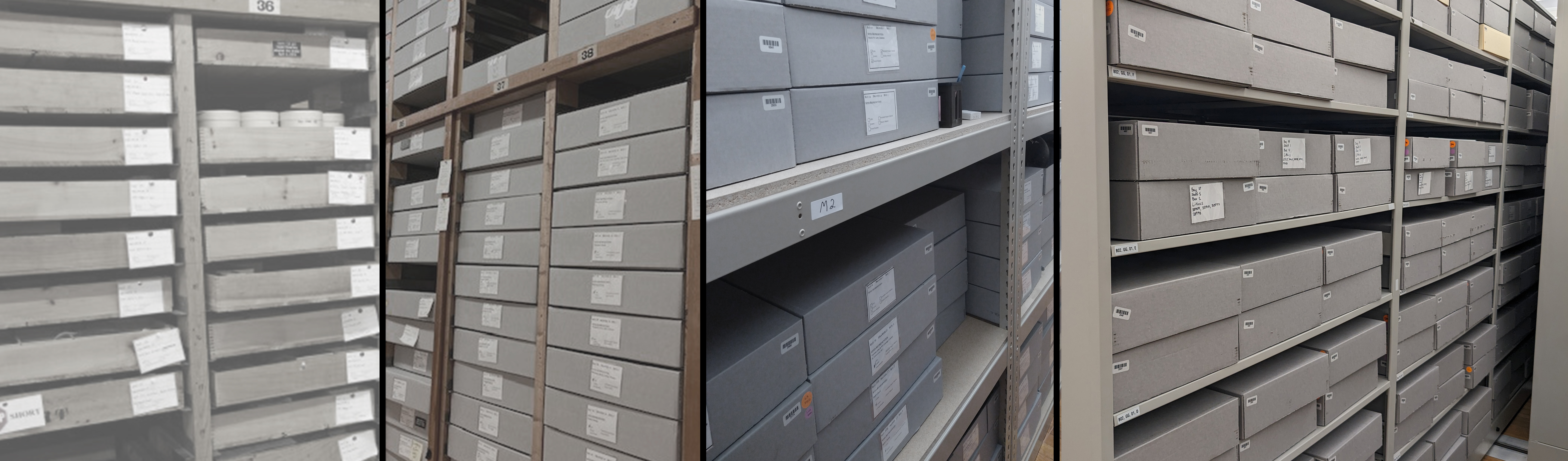
In January 2024 renovations to our collection housing were completed, finalizing a process that started in March 2023. To accommodate the demolition of existing shelving and installation of new condensing metal shelving, the collection was moved out of the basement in early 2023. With the project completed and several months of living with the move behind us, this seems like a good time for a brief recap. Perhaps some of our planning can help other institutions that have a collection move on the horizon.
During initial planning for the renovation, we faced two scenarios for moving the collection. The first was to move the collection offsite. The second, involved keeping the collection onsite within portions of the building that were not renovated. We needed to make viable plans for both options while decisions about construction phases and timelines were being made.
We identified several challenges to moving the collection offsite. Some of the largest hurdles included the high cost of offsite storage, the massive time commitment required for packing the collection for an offsite move and conducting a post-move inventory and condition reporting of the collection. A second round of inventory and condition reporting would need to be done after the collection was moved back into the building.
Keeping the collection onsite raised other concerns. Temporary housing would need to be big enough to house the collection. We would only be allowed in the building during designated windows when it was safe for us to enter, therefore the temporary housing area would need to be locked and monitored by cameras. The space would need to be environmentally controlled to the best of our ability. We also contemplated whether construction could lead to a catastrophic accident that would damage the building and collection.
The benefits and challenges of each scenario were taken into consideration within the larger framework of the construction plan. Ultimately, it was decided to keep the collection onsite in temporary housing. Although it came with some complications, it resulted in huge savings and a greater degree of control over the moving process when compared to moving the collection off-site.
Inventory and rehouse
The move started with an inventory and rehousing project that was carried out between 2017 and 2021. The project has been covered in previous blog posts. To summarize, Peabody staff conducted a 100% inventory of collections housed in aging wooden drawers in our basement. The inventory collected basic information; a description, count and provenience. Once inventoried, the items were rehoused in archival boxes with lids. While the wooden storage bays didn’t allow for stacking, future storage could take advantage of the ability to stack boxes.
The archival boxes were about half the size of the wooden drawers. Boxes were therefore much lighter and in most cases two boxes existed where previously there was one drawer.
Barcode and Weigh
During the planning onsite and offsite moves, we identified the first floor as the likeliest location for temporary housing if we were moving the collection inside the building. We knew the collection was heavy, but in the basement the collective weight of the collection was never a concern. Now, the ability of the building to hold the weight of the collection boxes was an important question that needed to be answered.
Equally important was how we would maintain physical control (i.e. knowing where everything in the collection is) over the collection boxes and their contents. This portion of the collection comprises nearly 3,000 boxes containing roughly 500,000 items. It was necessary to come up with an efficient way of tracking each item’s movement. Updating records at the item level within our existing database would take an incredible amount of time. Our database at the time supported barcodes at the item level, a process that would be no different than updating each item individually. We decided to assign barcodes to each box and track the box locations using a separate barcode tracking program (Orca Scan).
Over the summer of 2020, with the help of two great interns the collection was weighed and barcoded. The barcode data included the original location within the wooden storage (home location), weight, how many spaces the box would occupy in temporary housing, and any additional notes.
Results
Armed with the weight data, we were able to organize the collection so that the weight was equally distributed over the entirety of the first floor. This information also helped us organize the collection in the newly renovated basement. Now, heavy boxes are located on shelves at waist height, making for safer lifting. Lighter boxes are housed on higher and lower shelves.
Tracking box locations with barcodes worked well for the most part and was a net positive over tracking individual item locations. A 5% inventory of barcodes after the move resulted in no errors. However, errors have been found in the system since we moved the collection back into the basement. These have resulted from location errors entered into the database, as well as errors and inconsistencies entered into Orca Scan. I would recommend checking for inconsistencies in the original location data before making the move.
Using the barcode program in addition to the database to find items on the fly was time consuming, but not unreasonable. Tracking movement has been more challenging. Some movements were simple, like moving a box from one location to another. Other moves involved unpacking dense boxes and giving the removed items their own barcodes or emptying an entire box, deleting the barcode, and giving each unpacked item a new barcode. Processing so much data has required the use of formulas in Excel, and it is hard to find and analyze errors when looking at 115,000 item records.
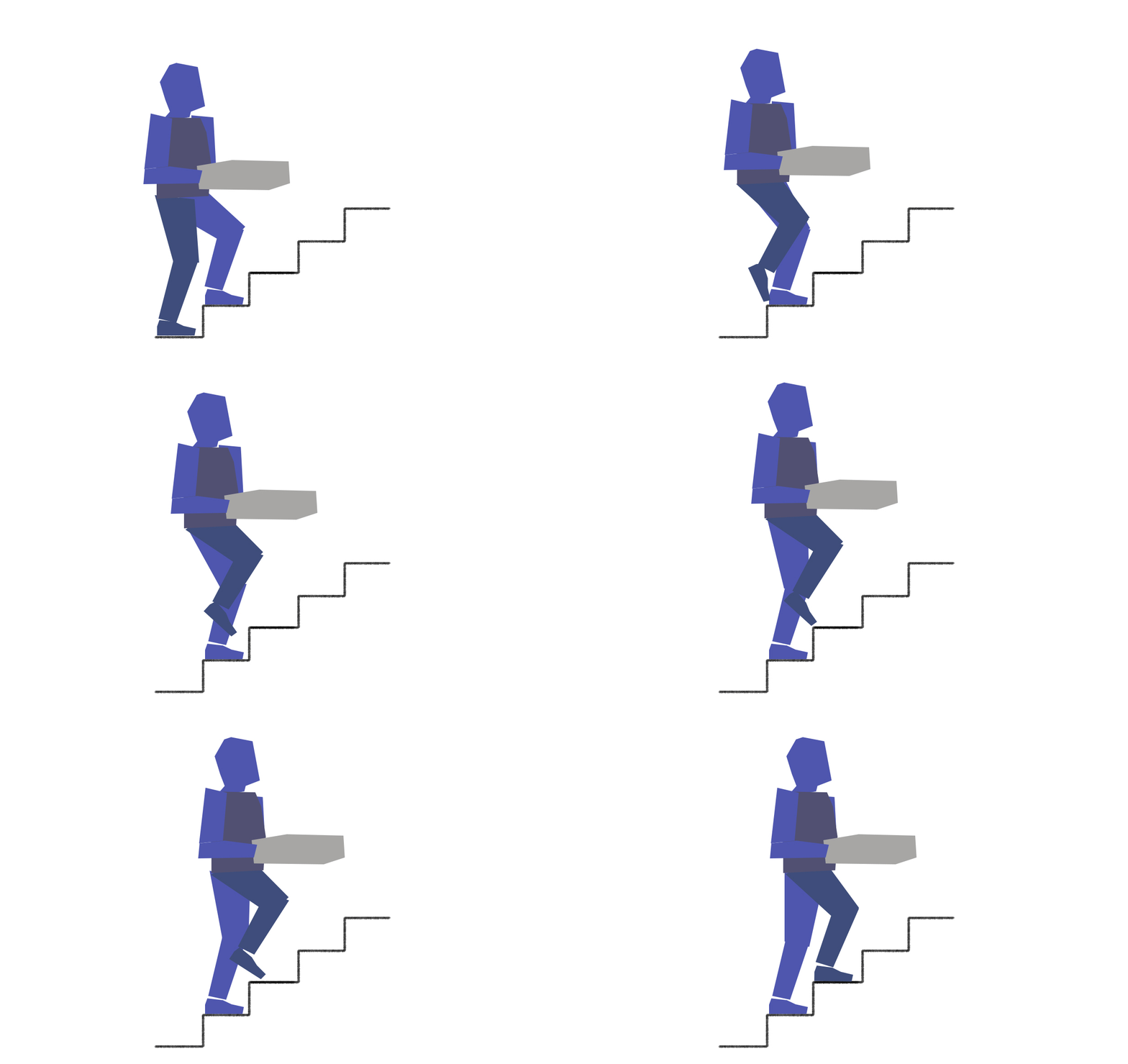
That wraps up this brief summary of our experience moving the collection. It was the culmination of years of planning and months of preparing and implementing. I’m happy to report that 600,000 items moved one or more times up and down one or two flights of stairs resulted in nothing being damaged. Hopefully some of the issues we encountered can help inform other institutions researching a move.

 The Peabody