Dig This 2026: New Discoveries at the Samuel Phillips Jr. Mansion House

Contributed by Katie Lincoln, Andover Summer Session Archaeologist

If you were to ask an archaeologist what the hardest part of the job is, you might expect them to answer with something physically demanding, like digging holes or spending late nights cleaning and classifying artifacts.

For many archaeologists, however, the hardest part of our jobs is translating tiny fragments of material culture into stories about people from the past – and finding ourselves in those stories along the way.

For example, how can one small ceramic fragment say something about those who made and used it? What can the presence or absence of certain objects change how we think about people? How do we know that our conclusions are correct and culturally sensitive?

Phillips Academy Summer Session students grappled with these questions as they embarked on their own archaeological dig this past July. Tasked with excavating a Revolutionary War-era mansion belonging to Phillips Academy’s founder, Samuel Phillips Jr., students took on the responsibility of collecting artifact data and interpreting it – both in their final written assignments and in their final exhibition. At every step, they were asked not just to identify what they found, but to imagine the students, staff, and community members who came before them and left these things behind.
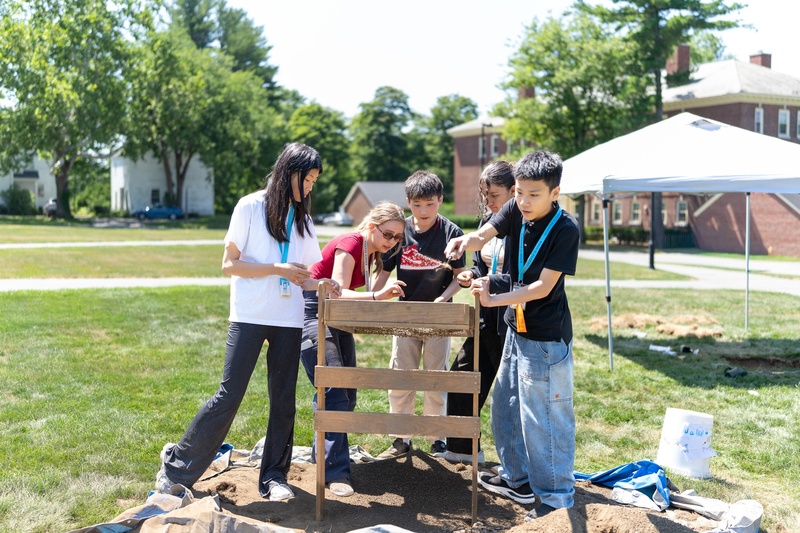
Katie Lincoln close-looking at excavated objects with students

Over the course of their four-week-long excavation on Phillips Academy’s West Quad, students uncovered a wide variety of artifacts. As part of an assignment new to the Dig This! course this year, students were asked to use an artifact to make a broad interpretation about past life in Andover, at Phillips Academy, or at the Mansion House – and, in doing so, to draw a line between their own experience as students and the experience of the students whose lives they were piecing back together.

Their presentations exceeded expectations, revealing just how closely these summer session students came to identify with nineteenth and twentieth century Andover residents.
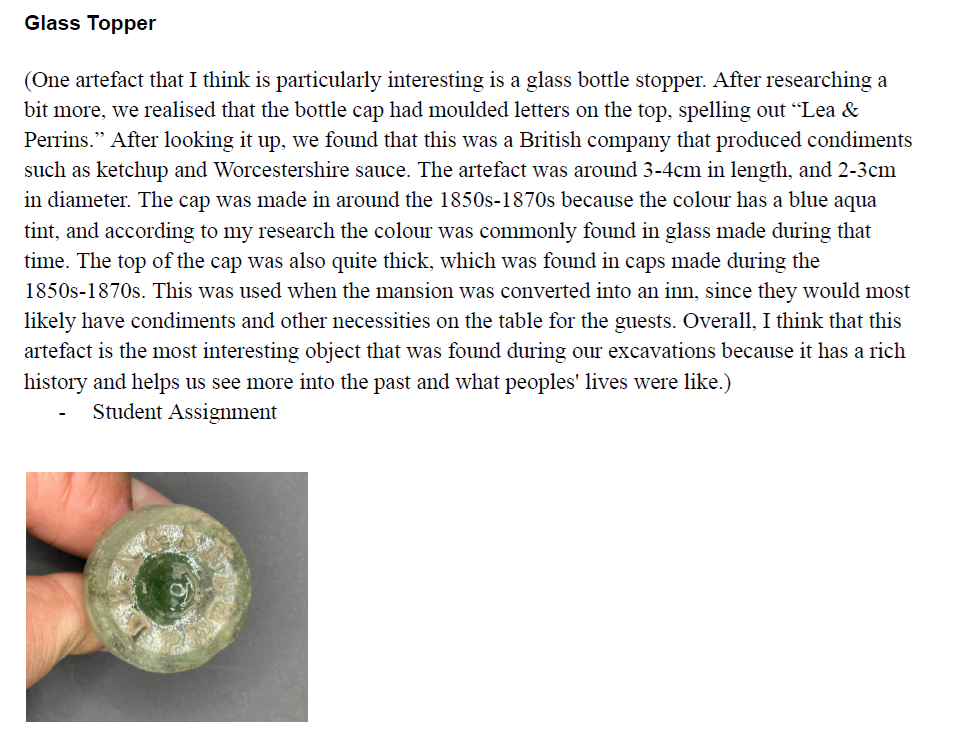
Example of a student assignment

Pencil ends and early twentieth-century print type, for instance, became evidence of a shared reality: students worked hard, even in their dorms, whether in 1926 or 2026. Looking at the worn-down pencils, our students recognized their own late nights in someone else’s.

A ceramic sherd with “HILL” transfer-printed on it told a similar story. Interpreted as nineteenth-century refined earthenware, likely part of a mug decorated with the Phillips Academy school seal, it was paired with a Worcestershire sauce bottle cap and various other glass artifacts. Students read this cluster of objects as evidence of meals shared at the Mansion House when it functioned as an inn and tavern – and imagined nineteenth-century Phillips students gathered there with friends and neighbors. Students identified that this experience was not so different from how they themselves might share a meal at Paresky Commons after a long day.

Overall, this summer’s excavation was a success. Students learned and mastered archaeological field methods including site mapping, artifact identification, and field paperwork. Most importantly, however, students learned how to use artifacts to speak to past peoples and experiences. More than that, they learned how to pull apart historical narratives and find themselves inside them – recognizing a fellow student’s hard work, worry, and routine across a gap of one or two hundred years.

We thank the students of the 2026 Mansion House Field Crew, and we look forward to incorporating more interpretive analysis in future iterations of the Dig This! Course.
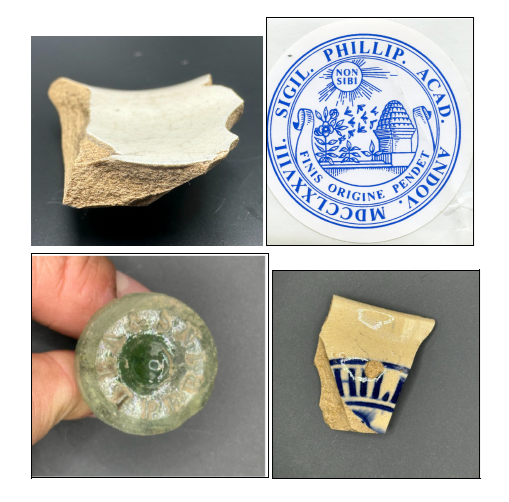
Items excavated by students this summer

Do You ATALM?

Contributed by Ryan J. Wheeler

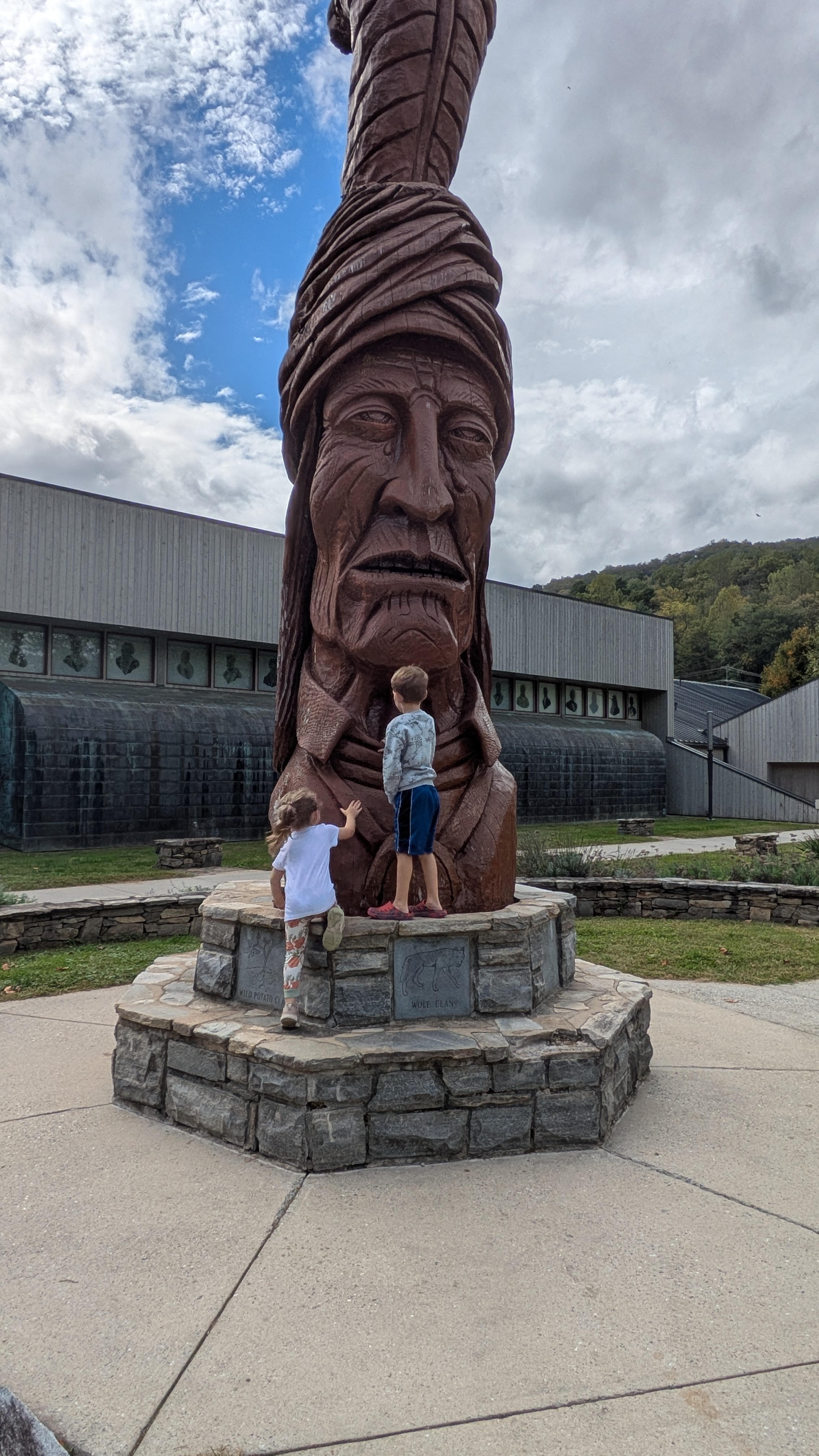
It was really fun to encounter Peter Toth’s monumental wood carving of Sequoyah outside the Museum of the Cherokee People. Toth created over 70 of these sculptures as part of his Trail of the Whispering Giants project. I met the artist in 1983 when he was carving a tribute to the Seminole on Fort Lauderdale beach.

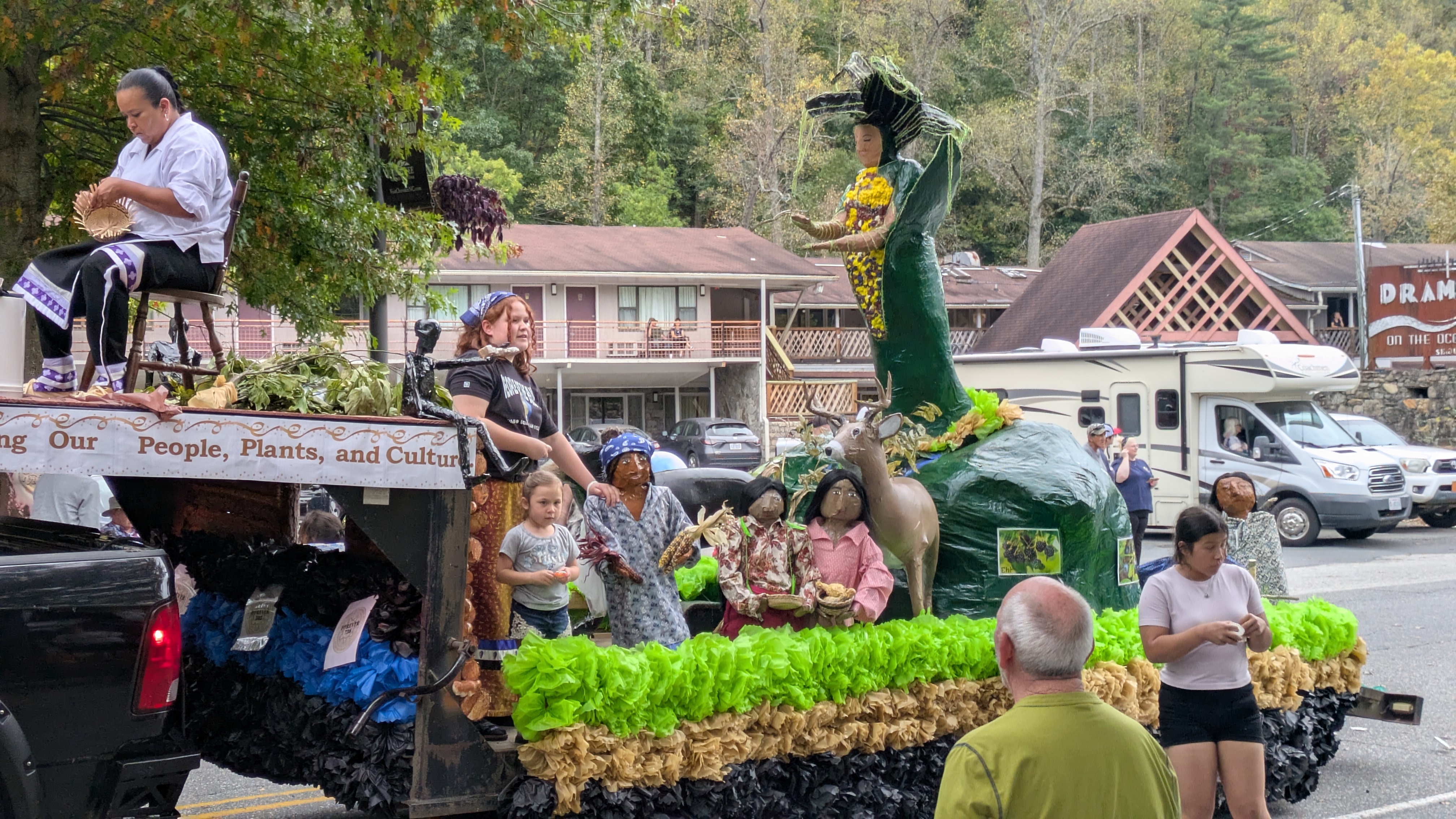
Four members of the Peabody Institute team attended the 2025 Association of Tribal Archives, Libraries, and Museums (ATALM) conference held in Cherokee, North Carolina this October, continuing our tradition of sending personnel that goes back about a decade. This year’s conference saw over 1,000 museum, archive, and library professionals convene at the meeting facilities of the Eastern Band of Cherokee Indians, coinciding with the festivities of the 113th Cherokee Indian Fair. The fair featured a parade, agricultural and cultural events, stick ball, an art show, and more.

The Cherokee Day parade featured contestants in the Miss Cherokee pageant, lots of agriculture themed floats, marching bands, a drum line. And candy. So. Much. Candy!

Back at the conference, attendees had lots of opportunities to network and learn at expert sessions and demonstrations. Highlights for the Peabody team were visits to the Museum of Cherokee People, Qualla Arts & Crafts Mutual Co-op, the Oconaluftee Indian Village, the informal NAGPRA networking session, the Repatriation Talking Circle, and One Square Inch of Ceremony (and additional workshops with Lily Hope, Tlingit artist, educator, and community facilitator). Marla Taylor, Peabody curator of collections, participated in the session Institutional Approaches to NAGPRA Duty of Care, along with colleagues from museums, universities, and the Muscogee (Creek) Nation.

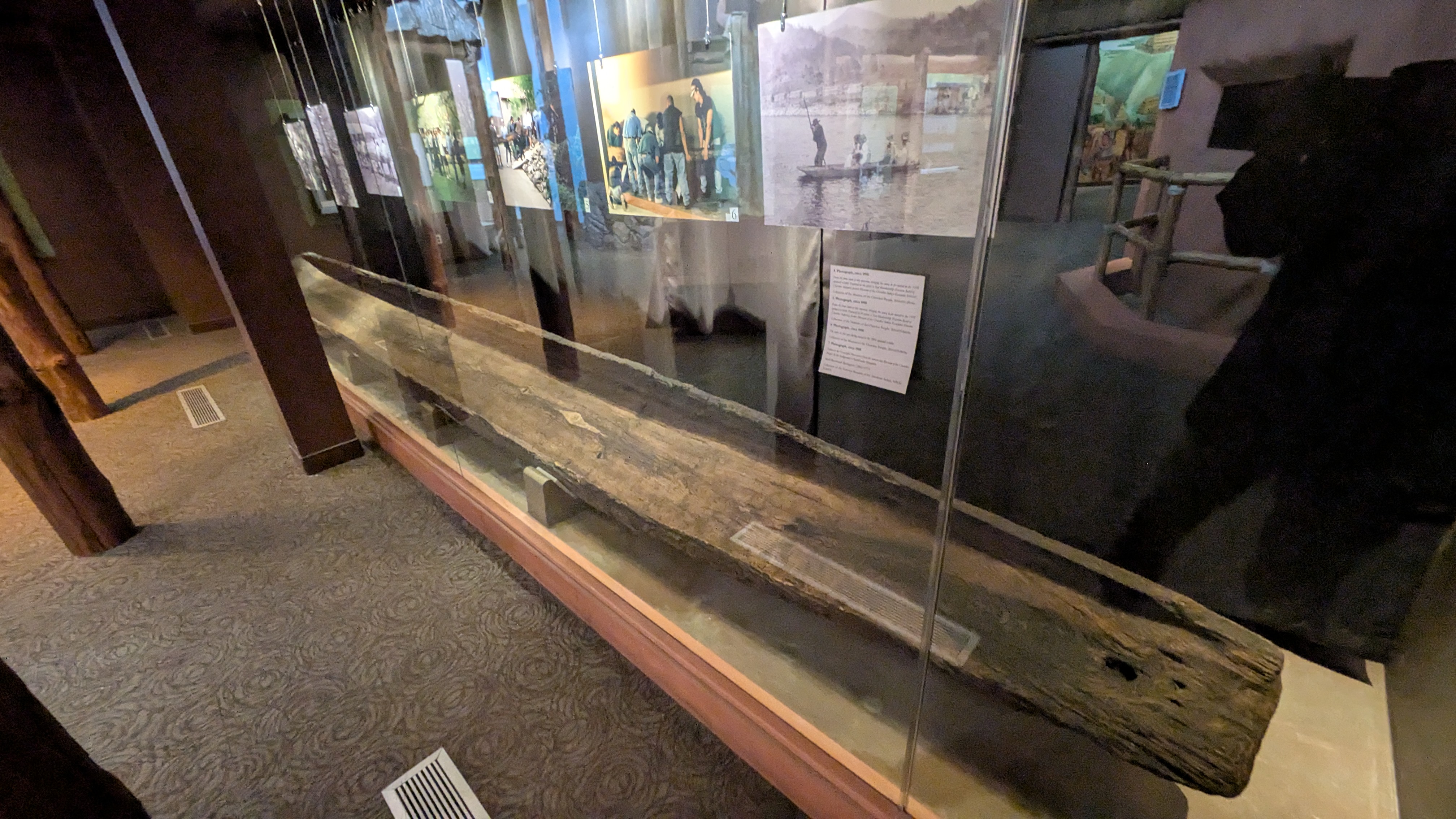
Canoes are everywhere! Exciting to see this dugout canoe at the Museum of the Cherokee People. The museum, one of the earliest Tribal museums in the US, has a series of great interpretive panels questioning how best to tell the Cherokee story. For example, why do museums always begin with PaleoIndians? Back to the canoe–this great example of a dugout is about 200 years old and was found in the 1970s on the Chattahoochee River near Helen, Georgia.

Many great meals were shared as well, but the best part was reconnecting with old friends, meeting colleagues regularly seen on Zoom in person, and making new friends. If you haven’t attended an ATALM conference, we highly recommend it!

Building Renovations: The Sequel

Contributed by Marla Taylor

What happens when a project is successful but doesn’t quite resolve the larger storyline or need?  A sequel!

I share with you – Peabody Building Renovations: the Sequel.

The first phase of the work, completed in early 2024, focused on improving collections care.  This included new shelving, an HVAC system, updated security, and an elevator in the building. To facilitate this, the entire collection had to be moved to temporary storage and back again. Phase I was a huge amount of work for all of the Peabody staff and I can confidently say that the collection is now in a better environment than it was before.

This next phase will largely ignore the collections spaces and instead focus on updating classrooms, creating offices, and modernizing systems. By using the space more efficiently, we will create two additional classrooms for use by Peabody educators or PA faculty.  Staff members will have discrete office spaces and there will be room to grow.

One of the biggest improvements will be the addition of an HVAC system to the classrooms and office spaces.  As someone who has worked in these spaces for as long as I have, I would have to say that this is the part that I am looking forward to the most.  Currently, it can be really hot in the summer (over 80 degrees in the classroom) and quite chilly in the winter.  We all have our methods to deal with the discomfort, but I am excited to have air conditioning!

All of this of course comes with some disruption to our regular activities.  Staff will once again be moved to a temporary location and access to the collection will be restricted.

As of December 1st, Peabody collections will be largely unavailable and classroom spaces will be out of commission.  Repatriation work and collections inquiries from Tribal communities will be prioritized but other access will be restricted.  Please contact me, mtaylor@andover.edu, with any questions or requests.

PA classes may be taught in a modified format with limited collections based on availability.  Please contact Lainie Schultz, Curator of Education, to request a class.

The Peabody should be back in commission by September of 2026.  I will be able to share periodic updates on the process through the blog and we are so excited to welcome you into our updated space next year.  Stay tuned!

If you are interested in supporting Phase 2, please contact Jen Pieroni, Director for Advancement Initiatives, Office of Academy Resources.