Archaeology with No Thumbs

Contributed by Lainie Schultz

Sometimes it’s hard to be an archaeologist. You tell people what you do and watch their excitement dim as you say “No. Not dinosaurs.”  Sometimes people think you’re Indiana Jones, so that’s a little better, but then you have to explain that actually looting’s not ok, and maybe we should discuss the ethics of collecting? Plus, you’ve never once fought a Nazi. (You do, however, wear an awesome hat.)

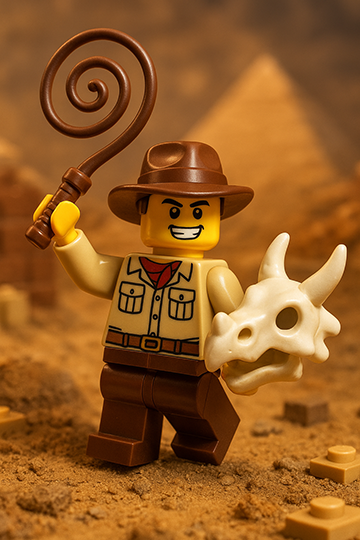
Not an archaeologist. (Via ChatGPT. I didn’t even need to prompt the pyramid.)

Some would argue this is the greatest real-world problem archaeologists today face. Incredibly, hope for the field has finally arrived – and it’s all thanks to LEGO.

FIRST® LEGO® League (FLL) is a global program designed to encourage children in hands-on STEM learning. Among its major activities is the FIRST LEGO League Challenge, an annual competition for students aged 9-16 that has them working in teams to design, build, and code their own LEGO robot and complete a research-driven Innovation Project that identifies and solves a real-world problem related to a specific scientific theme. This year, the Challenge theme was UNEARTHED, inviting FLL teams to learn about the field of archaeology, identify a real-world problem faced by archaeologists, and propose an innovative solution.

Never have archaeologists been so popular! As soon as the Challenge kicked off, the Peabody began receiving requests from teams hoping to meet with an archaeologist and find out what challenges they’d want to see solved. And, of course, we weren’t remotely alone in this. I had a lot of fun this fall checking in with colleagues at other institutions, as we collectively realized how big the FLL Challenge is. The Society of American Archaeologists (SAA) even convened a panel of experts (including our own Ryan Wheeler!) for a webinar specifically designed for participants in the UNEARTHED season, just to help manage all the requests people were receiving. Exploring Archaeological Challenges: A Webinar for FIRST® LEGO® League and Robotics Teams was recorded and posted on the SAA’s YouTube channel, massively eclipsing in viewership all the channel’s other recordings combined.

We also heard from teams once they had their projects and were ready for feedback on the problems they’d selected and the solutions they’d proposed. Projects broadly sought either to help archaeologists do their jobs more easily with sustainable solutions, or to help non-archaeologists better understand the field and access archaeological information. Ideas included such products as a Swiss Army trowel, and an artifact cleaning and processing machine with residue-testing capabilities. They sought to help people grasp the size of ancient monuments through comparison with a football stadium for scale, and harnessed the sun to power absolutely anything you could imagine. They ranged in size, scope, and ambition, and all were far more sophisticated than I have represented here.

We might have initially been both a little concerned and a little amused when we first learned about this competition (an FLL reel Ryan found on Instagram had a lot more fire and explosions than we generally like to associate with archaeology!), but the projects that teams have come up with have truly been impressive. Most impressive of all has been the amount of thought and attention these young students have put into learning about the field of archaeology, and the care they have put into making it better for the future. I can only imagine what might be the long-term impacts of this program on the next generation of archaeologists.

Though perhaps their biggest problem will be convincing people that, no. Usually they do have thumbs.

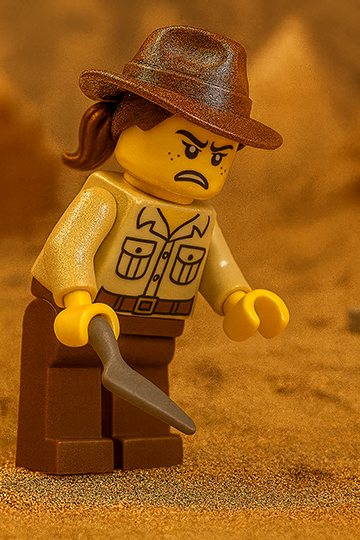
Knees help, too. (Made with ChatGPT)

The Not So Amazing Peabody Heist(s)

Contributed by Ryan J. Wheeler

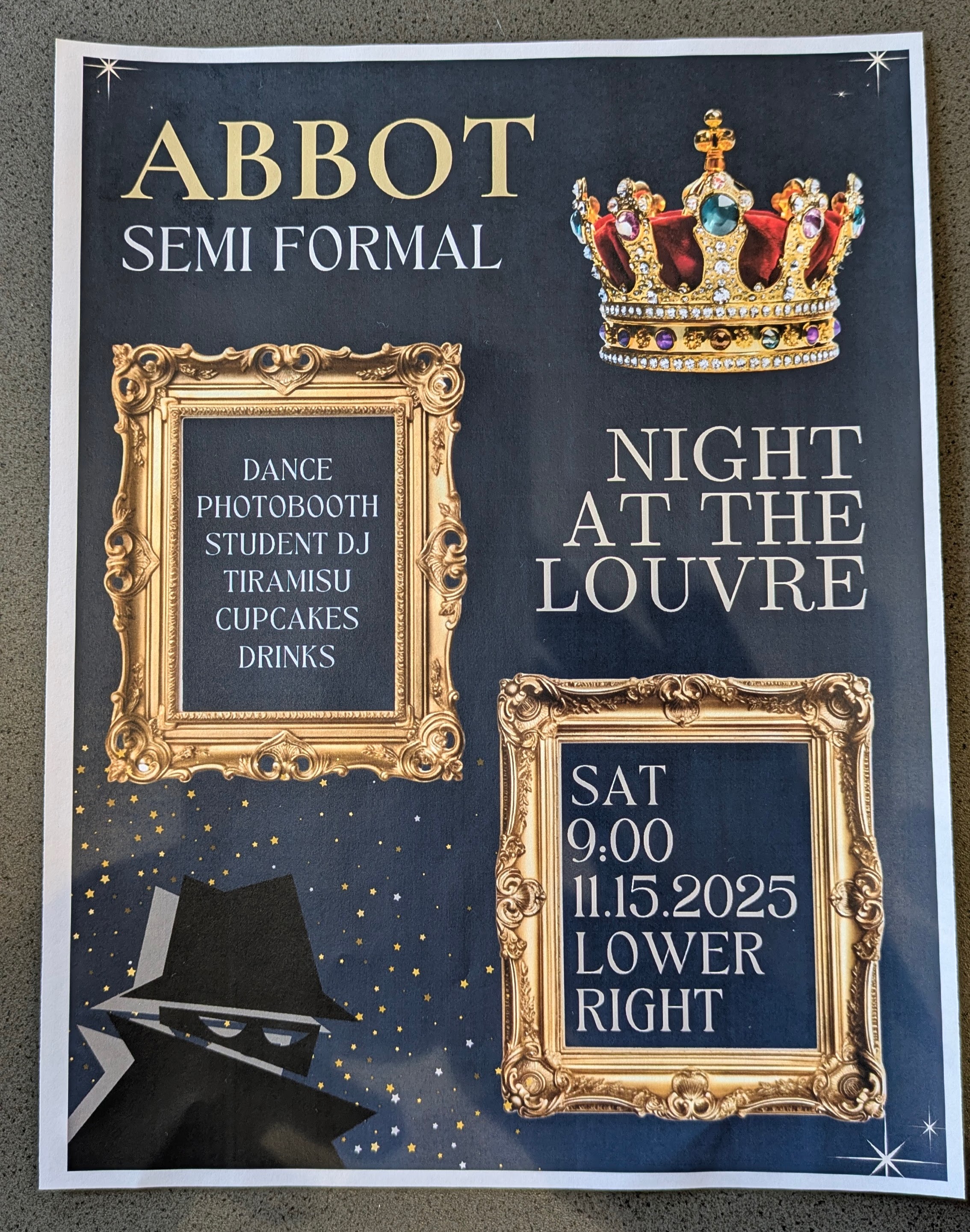
Flyer for a dance at Phillips Academy capitalized on the Louvre heist, November 2025.

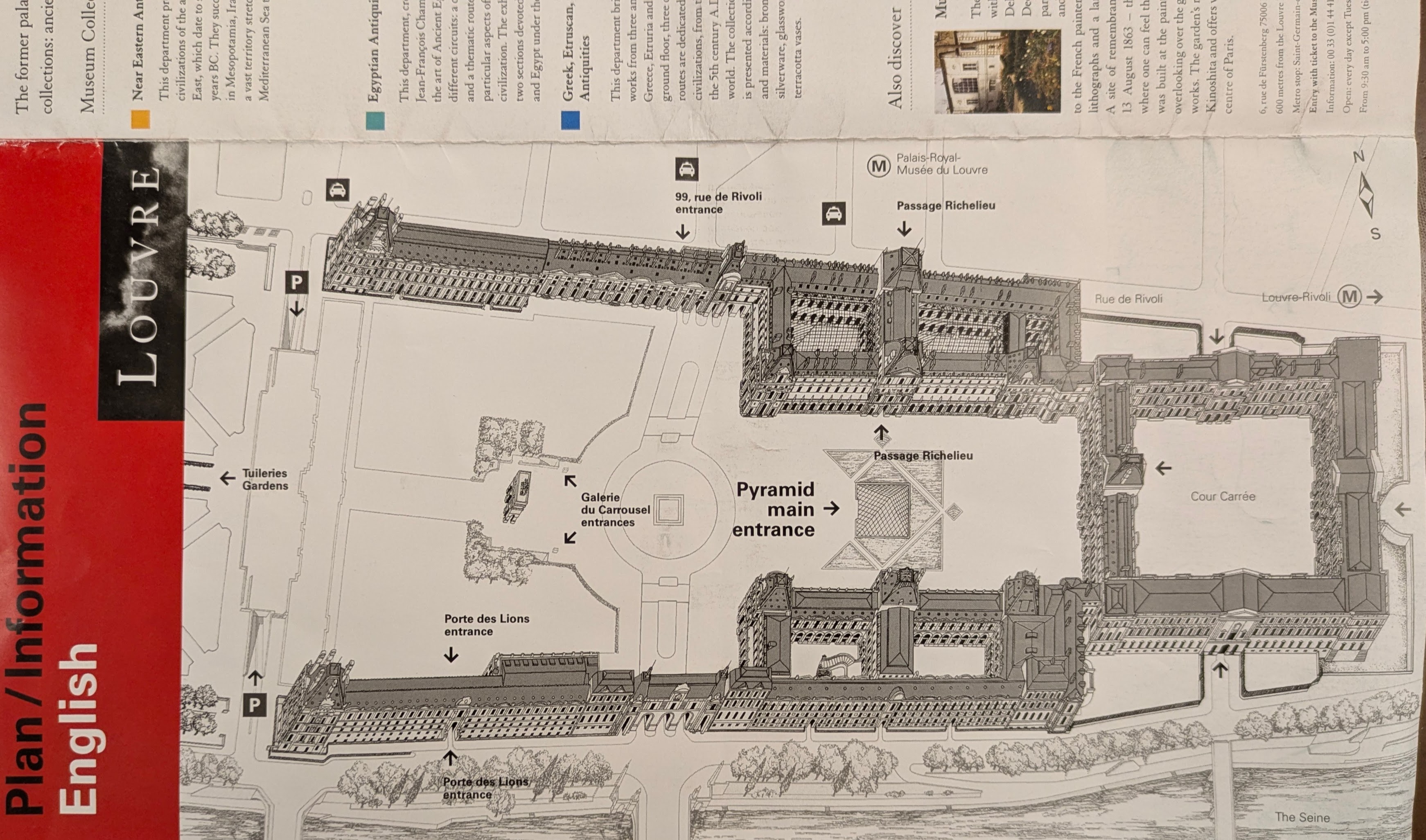
The brazen theft of crown jewels from the Louvre on October 19, 2025 fed the ongoing public fascination with museum heists. From details like which mobile work platform was used to access the museum to issues with security, there was almost endless interest and speculation. Even the dapper high school student mistaken for a French detective captured the world’s attention. Not surprisingly, the museum heist is a classic movie and tv trope from the recent The Mastermind (2025) to How to Steal a Million (1966) to the multiple versions of The Thomas Crown Affair (1968, 1999—and apparently a new one in production!), and many others. Fictional literature about heists could occupy a library. Even students here at Phillips Academy hosted a Louvre heist-themed dance! The exciting and glittery portrayals of museum heists, however, often veer far from the real blend of cunning, avarice, ineptitude, and the real mess that museum thefts leave in their wake. Just a few days before the Louvre heist, thieves gained access to the Oakland Museum’s storage spaces, taking over 1,000 objects, including many Native American items.

Plan of the Louvre from Phillips Academy student trip, 2015.

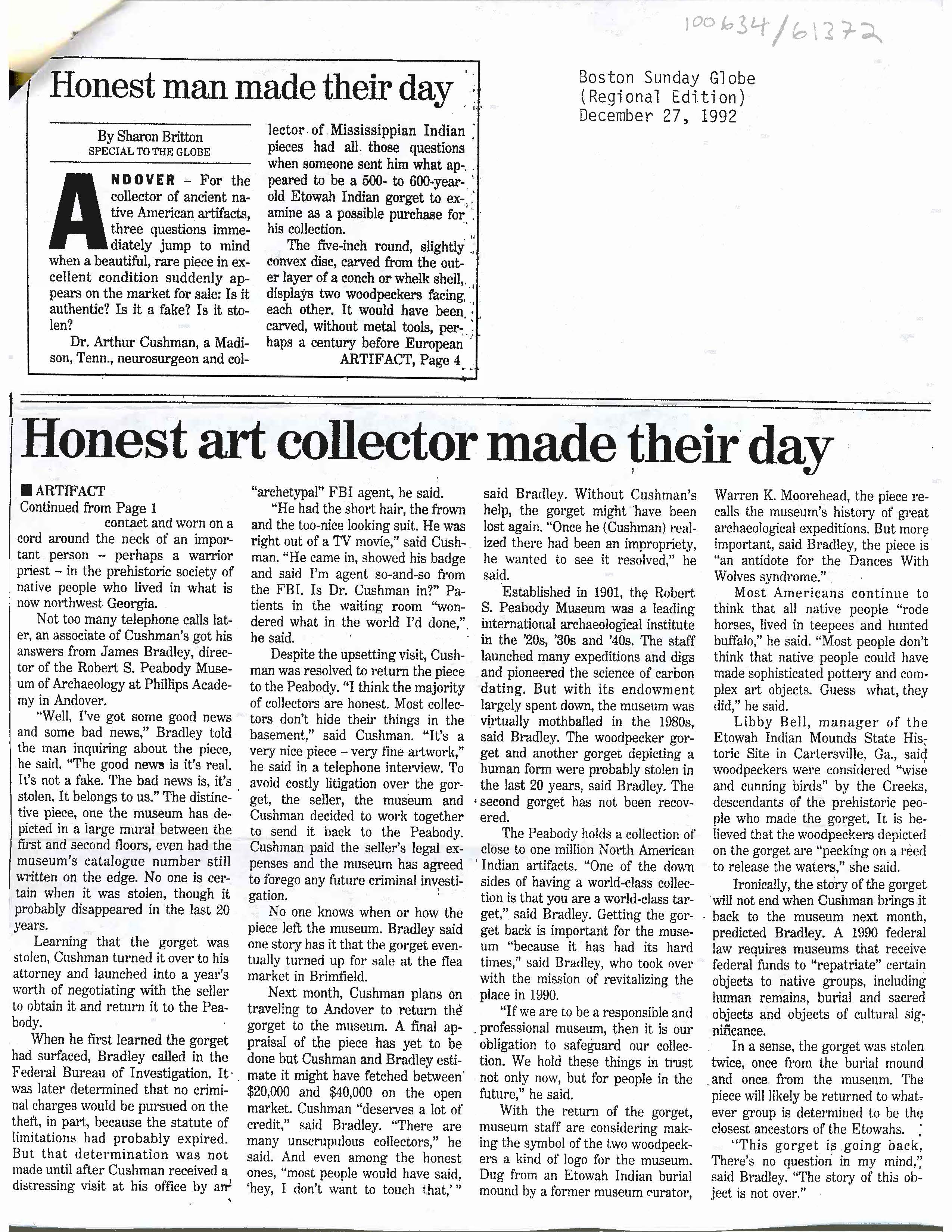
When I joined the Peabody Institute in 2012, former director Jim Bradley told me to be on alert for missing items, presumed stolen at some unknown point in the museum’s past. Early in Jim’s tenure as director, he had been involved in the recovery of a shell gorget from the Etowah site in Georgia. Since that time several collectors have returned items from Etowah and Maine, and others have been tracked down with the aid of the FBI art crimes team. What we now understand is that the Peabody Institute experienced two thefts—one in late 1970 or early 1971, and another in 1986.

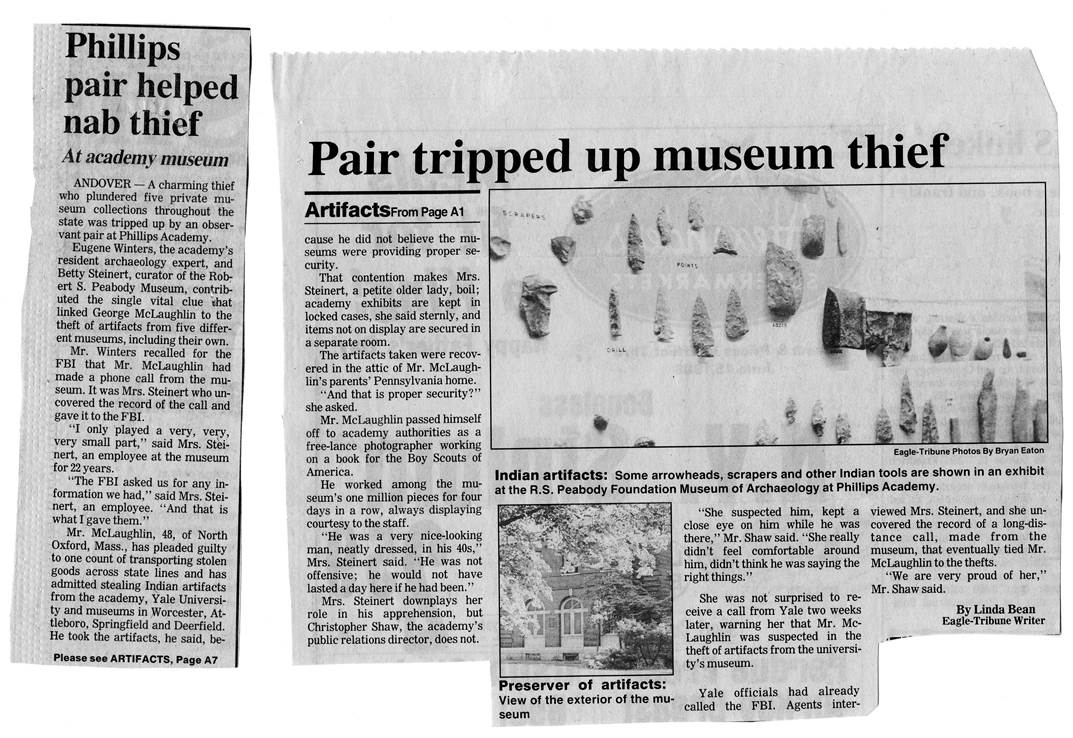
Eagle-Tribune article from 1986 recounts George McLaughlin’s theft of artifacts from the Peabody Museum.

Marla Taylor and John Bergman-McCool recount the theft by George McLaughlin in 1986 in their 2020 blog post. McLaughlin gained access to the Peabody’s collection housing areas at a time when the institution lacked professional staff. That made it easier, but he also stole from other museums across New England and several private collectors. He was ultimately caught by the FBI and prosecuted, but not before removing most of the catalog numbers from the thousands of stone tools that he had taken. It was unclear what McLaughlin’s plans were, but it seems he was readying items for sale. And while the FBI arrest prevented that, to this day we have a large number of items that have lost their original provenience—in other words, a big mess.

Boston Sunday Globe article recounts the return of the Etowah shell gorget (December 27, 1992).

I’ve shared before about an earlier theft at the Peabody Institute (also, see my article in the April 2018 SEAC newsletter). Based on correspondence, we are confident that items from Georgia and Maine were stolen in late 1970 or early 1971 while exhibits were being refreshed and updated. These items had been on display when they were photographed to illustrate Dean Snow’s 1976 book The Archaeology of North America. It seems like they were taken while awaiting reinstallation in the exhibits. As I mentioned above, a number of these items have been returned, either by conscientious collectors or through an investigation by the FBI art crimes team, begun in January 2018 when one of the Etowah items was returned to us. Many of these items are funerary objects and subject to repatriation under the Native American Graves Protection & Repatriation Act (NAGPRA). Their continued absence complicates those repatriation efforts.

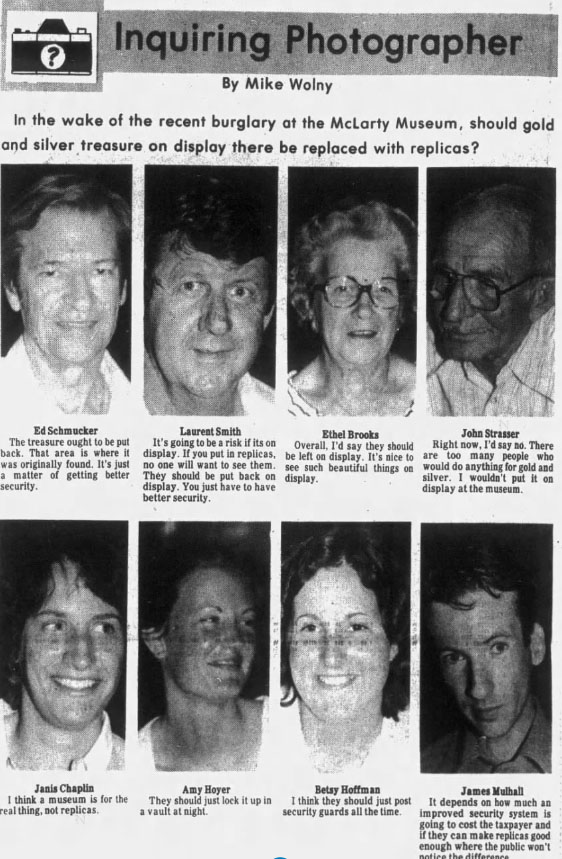
The Indian River Press Journal sought reader opinions about the 1980 theft of Spanish shipwreck treasure from the McLarty Museum and if treasure items should continue to be exhibited (Friday, March 8, 1980, page 8).

Unlike the glamourous (or humorous) fictional depictions of museum heists, these are often crimes of opportunity, driven by greed or misguided ideas about the role of museums in caring for and sharing art and culture. I think one example from my past career as Florida’s state archaeologist aptly captures the stupidity of the museum heist. Our collections in Florida included impressive holdings recovered from the shipwrecks of Spanish treasure galleons. Loans to the McLarty Museum near the survivor’s camp of the 1715 fleet wreck included gold coins and gold bars. In 1980, thieves defeated locks and security systems, but when confronted with the reality of disposing of a gold bar, things took a weird turn. They used a hack saw to begin cutting a gold bar into more saleable (or tradeable) pieces before being apprehended. The gold bar was recovered, but the saw cut end remains at large. During our annual 100% inventory of precious metals and coins our outside auditor frequently questioned what was going on with the clearly chopped up gold, so much so that we finally tucked some of the paperwork and news coverage with the piece to allay fears that we were helping ourselves. The thief in that case ultimately criticized press coverage, telling the court that he was “by no means a professional burglar” and that the theft was just a “reckless impulse.” So, enjoy that museum heist movie or book, but remember, it’s a far cry from the real mess made by these thefts.

24-25 Peabody Annual Report is LIVE!

Contributed by Emma Lavoie

Our Peabody annual report for academic year 2024-2025 has just been released online! This report features educational participation at the Peabody, including over 1,600 students and 30 Phillips Academy instructors. In addition, our report features institutional highlights, updates on our collections and NAGPRA work, collaborations with students and researchers, and more!

Thank you to everyone who supported the completion of another wonderful year at the Peabody!

You can read the report in its entirety HERE.

Trapping a giant

Contributed by John Bergman-McCool
In a past blog post, I shared that we regularly monitor glue traps for signs of insect activity around our building. The traps are not a method for controlling insect populations, rather, they alert us to the presence of unwanted pests that pose a danger to the collections. When unwanted bugs are found we have a set of tools we can employ to remove them while minimizing risk to the health of our collection and colleagues. These tools include vacuuming and freezing collections.

Now, I imagine that many readers (probably most of you) are not excited by pictures of bugs, but earlier this fall, we trapped an unknown insect that I felt was worthy of the spotlight.

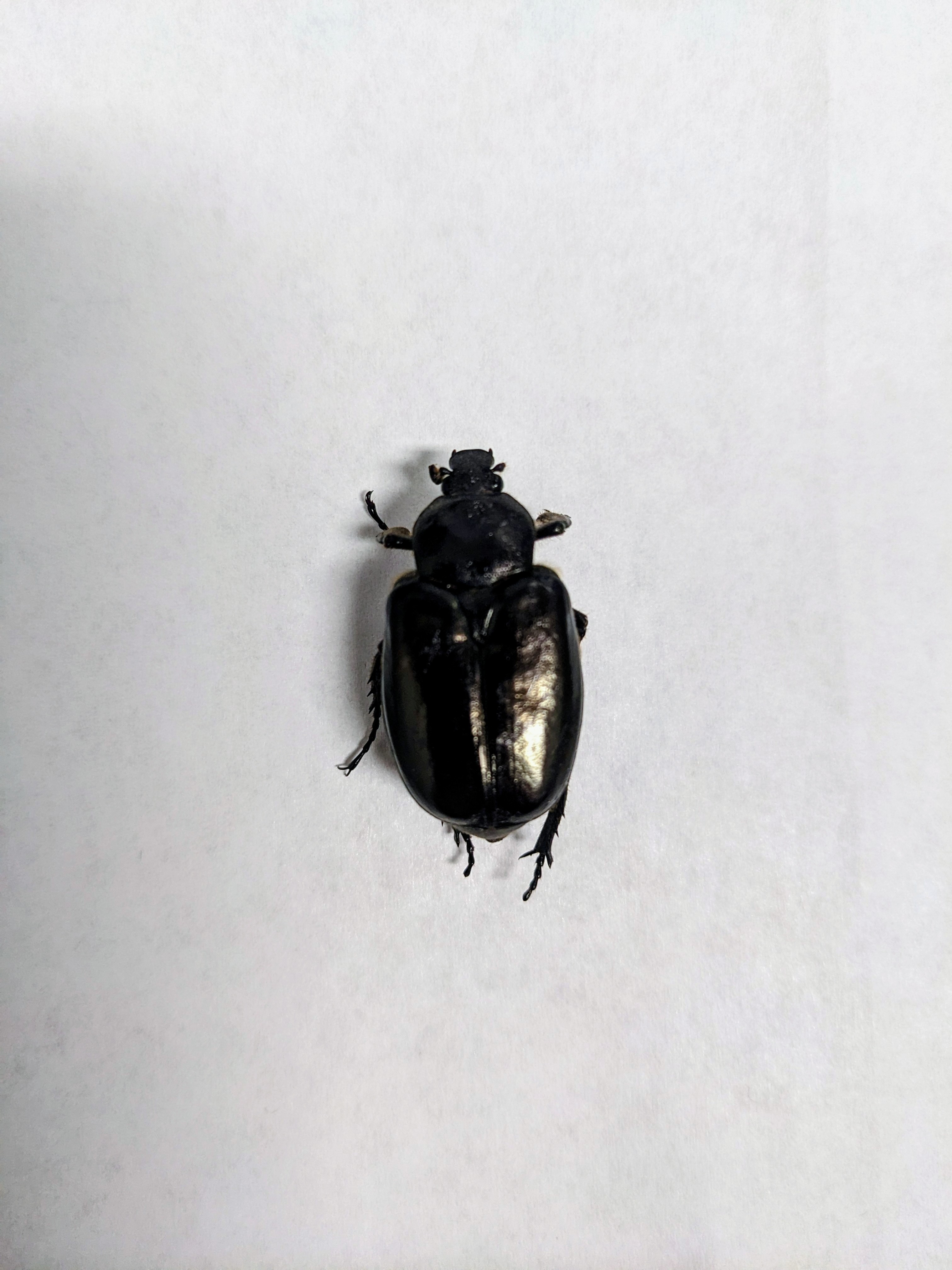
Unknown Beetle removed from glue trap for easier identification

This remarkable beetle is the largest insect that I’ve seen in our traps. Beyond it’s massive size, any new or unknown bug is cause for excitement for a few reasons. First, we typically see the same three or four insects throughout the year. Second, we need to find out whether the insect is cause for alarm.

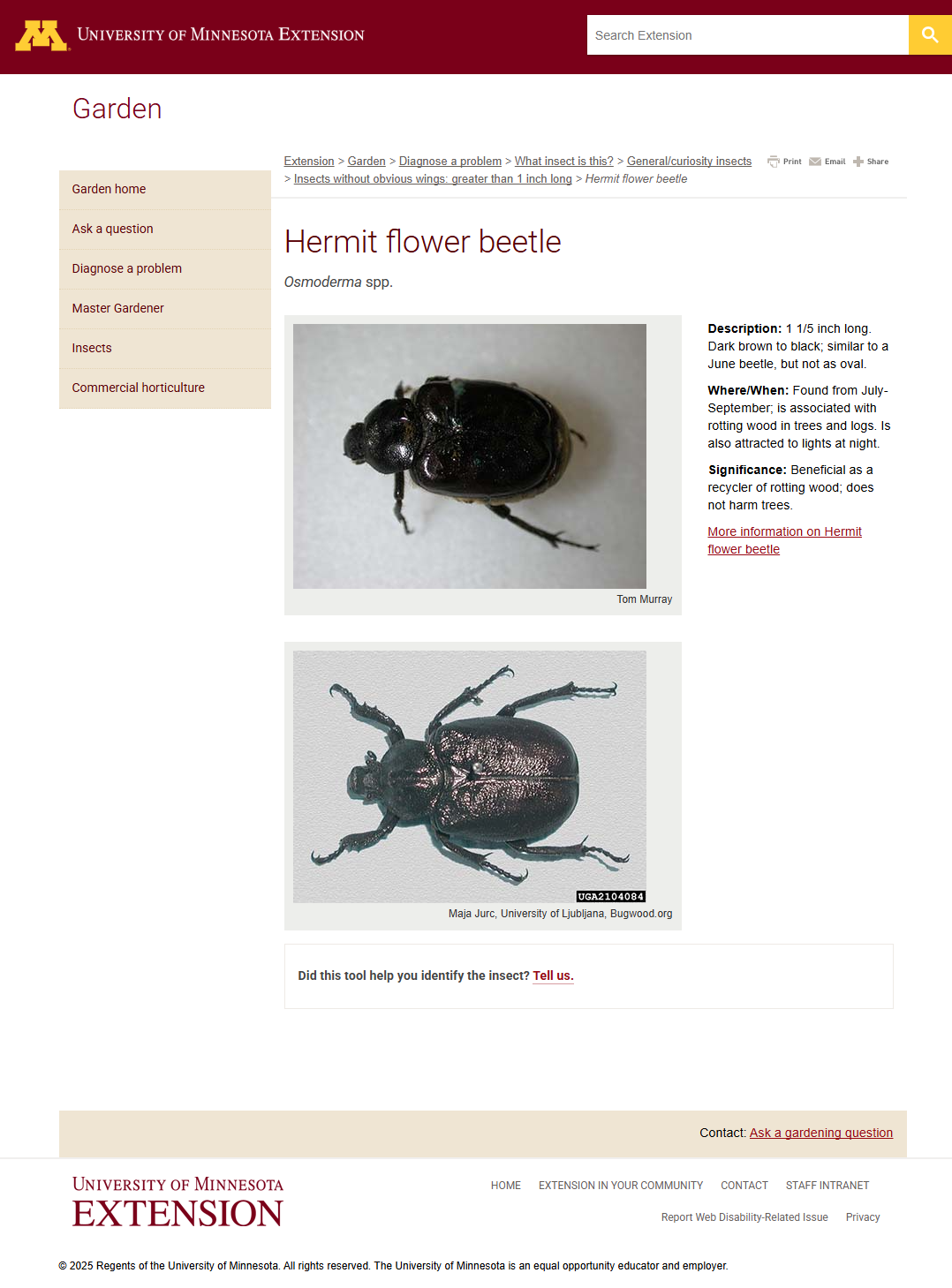
I snapped a few pictures and loaded them into Google’s ‘search by image’ function. Pretty quickly I learned that this guy is a Hermit Flower Beetle (or that is my best guess). They pose no danger to the collection. The larva live inside dead or rotting logs and play an important role in recycling wood and the nutrient cycle. The adults are frequently found around flowers. Somehow this one wandered into our building and ended up in one of our traps.

The University of Minnesota Extension webpage is a helpful identification resource

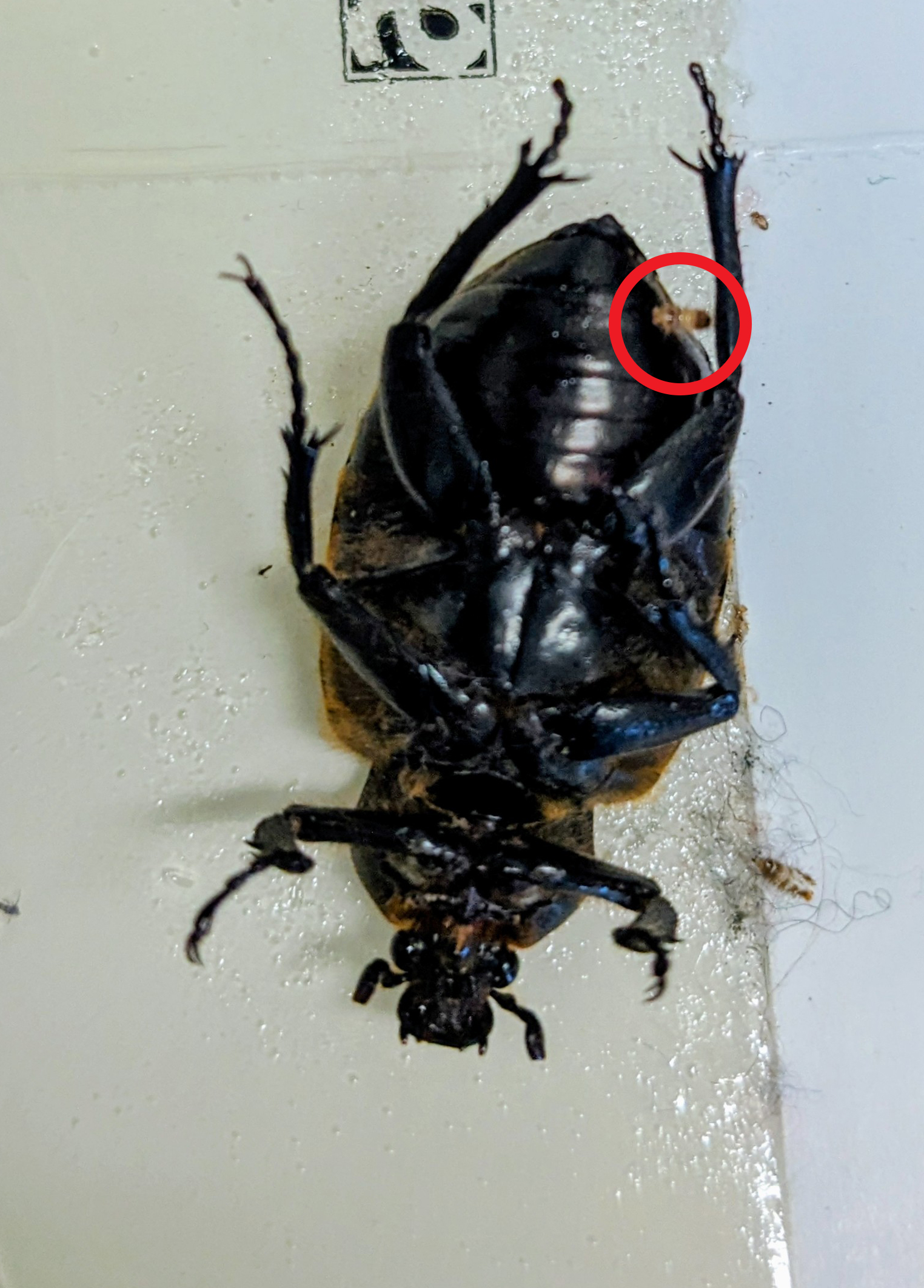
Unfortunately, once in our trap, the beetle died and became a food source for a carpet beetle, an insect we absolutely do not want in our collection. Even if an insect is not actively detrimental, it can always pose a risk.

Previously unknown Hermit Flower Beetle still in glue trap with carpet beetle outlined in red

Who Are These People?

Contributed by Ryan Wheeler

As we prepare updated Native American Graves Protection & Repatriation Act (NAGPRA) summaries and the required notices following claims and decisions about affiliation we are frequently confronted with the names of collectors. Some of these are quite familiar to us, Warren K. Moorehead, for example, who was our first curator and then our director. We recognize that the names of collectors often hold significant clues that may help make connections between now widely distributed holdings—what we refer to as “split and shared collections,” or aid in understanding localities or other entanglements. I’ve started developing short biographies of some of the collectors, with the hope that knowing when and where they were active might inform some of these other considerations. To develop the biographies, I usually rely on genealogical information to fill in birth and death dates, geography, personal and professional connections, and other details. Many of these collectors were in contact with Warren Moorehead and their names appear in his correspondence files or in his books, especially those volumes that highlight collectors and collections. In other cases, the collectors have some connection to our parent organization, Phillips Academy—either as students, alumni, or faculty. Here are a few recent biographies:

Byington’s advertisement in The Philatelic West, 1928.

Edward Spencer Byington (often styled as E.S. Byington) was a civil engineer in DeQueen, Sevier County, Arkansas (1866-1941). He worked for several railroad companies, including DeQueen & Eastern. Byington often bought and sold artifacts, and his ads can be found in several publications—see for example, The Philatelic West (1926), and Hobbies, the Magazine (1931). One of Byington’s ancestors was Cyrus Byington, an early settler and missionary to the region, who had traveled to the area with Choctaw people being forced from their homes in Mississippi. E.S. Byington was an affiliate of Warren K. Moorehead and advocated for establishment of an “Association of Indian Relic Collectors & Dealers.” Correspondence with Moorehead indicates he was collecting artifacts during railroad construction and maintenance. Byington is listed as the source of at least 131 items in the Peabody Institute holdings.

McWhorter (far right) with interpreter Thomas Hart (far left) and Yellow Wolf, October 1908–from McWhorter’s book Yellow Wolf: His Own Story (1940)

Lucullus Virgil McWhorter (often styled as L.V. McWhorter) was an American farmer and rancher, frontiersman, and writer who was a regular source of Native American material heritage for Warren K. Moorehead at the Peabody Institute (1860-1944). McWhorter compiled information on Indigenous communities and history of the Pacific Northwest, and is generally regarded as an advocate and ally of the Native American individuals and tribes that he worked with, including Yellow Wolf and the Nez Perce. See Washington State University for the McWhorter papers and finding aid, which frequently mention Moorehead: https://archiveswest.orbiscascade.org/ark:80444/xv98497. McWhorter is listed as the source of at least 507 items in the Peabody Institute holdings.

Diné silverwork illustrated in Enduring Visions, the exhibit catalog co-authored by Donnelley Erdman.

Donnelley Erdman (1938-2024) was a graduate of Phillips Academy (Class of 1956), an architect and instructor at Rice University. In 1978-79 he was involved in an exhibition of Southwestern material culture at the Aspen Center for the Visual Arts, Aspen, Colorado. See Philip M. Holstein and Donnelley Erdman (1979) Enduring Visions: One Thousand Years of Southwestern Indian Art, Aspen Art Museum (exhibit catalog). Erdman is listed as the source of at least 195 items in the Peabody Institute holdings.

The cover of Stilwell’s 1911 catalog.

Lucien White Stilwell (often styled as L.W. Stilwell) was born in New York and grew up in Wisconsin (1843-1932). Following graduation from Ripon College, Stilwell moved to Cairo, Illinois and engaged in the grocery business. Throughout the 1860s and 1870s he was engaged in the grocery business via several partnerships, briefly worked for the Elgin Watch Company before relocating to Deadwood, South Dakota in 1879. In Deadwood, Stilwell was involved in banking, but it was here that he began to develop and expand his business in buying and selling Native American and natural history items. Throughout the 1880s he frequently advertised in collecting magazines, including Young Oologist, Mason’s Coin Collectors Magazine, The Agassiz Association Journal, The Museum, Hoosier Naturalist, The Philatelic West, and others, as well as short publications on geology. In the early 1900s he published catalogs advertising his “Indian Relic and Curio” establishment. He sold his business to Kenneth J. Crawford Company in 1928. Condensed from a longer biography by John N. Lupia III: https://www.numismaticmall.com/encyclopedic-dictionary-of-numismatic-philatelic-biographies/stilwell-lucien-white Stilwell is listed as the source of at least 18 items in the Peabody Institute holdings.

Welcome to the NEMA Conference!

Contributed by Marla Taylor

The New England Museum Association (NEMA) held their annual meeting in November in Manchester, New Hampshire. Billed as a Wellness Check: A Holistic View of Museums in the First Quarter Century, topics ranged from how climate change can affect collections to telling LGBTQ stories to supporting mental health for museum staff. It was illuminating and validating to hear so many colleagues exploring how to make their museums as welcoming, financially sustainable, and diverse as possible.

John Bergman-McCool, the Peabody’s Collections Coordinator, and I had the opportunity to share about the collections move that was part of the recent building project. Our session, Barcodes and Graph Paper, was well attended and we hope people were able to take away a nugget of advice or experience that will help them. It was a pleasure to be able to share this information alongside an amazing colleague who was invaluable to the process.

I was also a part of a session that focused on resources for museum professionals who are interested in engaging with best practices for stewarding Indigenous collections. Along with several incredible colleagues, I shared information about the Indigenous Collections Care (ICC) Guide and the Northeast NAGPRA Community of Practice (NECP).

Local Contexts was also a part of our panel. If you are in the museum world and don’t know about Local Contexts and their work – you should. “Local Contexts is a global initiative that supports Indigenous communities with tools that can reassert cultural authority in heritage collections and data. By focusing on Indigenous Cultural and Intellectual Property and Indigenous Data Sovereignty, Local Contexts helps Indigenous communities repatriate knowledge and gain control over how data is collected, managed, displayed, accessed, and used in the future.” (https://localcontexts.org/)

I am proud to be a part of the ICC Guide and NECP. Both of those communities are valuable resources to museum professionals and NAGPRA practitioners.

It was an honor to be a part of both of these sessions!

Do You ATALM?

Contributed by Ryan J. Wheeler

It was really fun to encounter Peter Toth’s monumental wood carving of Sequoyah outside the Museum of the Cherokee People. Toth created over 70 of these sculptures as part of his Trail of the Whispering Giants project. I met the artist in 1983 when he was carving a tribute to the Seminole on Fort Lauderdale beach.

Four members of the Peabody Institute team attended the 2025 Association of Tribal Archives, Libraries, and Museums (ATALM) conference held in Cherokee, North Carolina this October, continuing our tradition of sending personnel that goes back about a decade. This year’s conference saw over 1,000 museum, archive, and library professionals convene at the meeting facilities of the Eastern Band of Cherokee Indians, coinciding with the festivities of the 113th Cherokee Indian Fair. The fair featured a parade, agricultural and cultural events, stick ball, an art show, and more.

The Cherokee Day parade featured contestants in the Miss Cherokee pageant, lots of agriculture themed floats, marching bands, a drum line. And candy. So. Much. Candy!

Back at the conference, attendees had lots of opportunities to network and learn at expert sessions and demonstrations. Highlights for the Peabody team were visits to the Museum of Cherokee People, Qualla Arts & Crafts Mutual Co-op, the Oconaluftee Indian Village, the informal NAGPRA networking session, the Repatriation Talking Circle, and One Square Inch of Ceremony (and additional workshops with Lily Hope, Tlingit artist, educator, and community facilitator). Marla Taylor, Peabody curator of collections, participated in the session Institutional Approaches to NAGPRA Duty of Care, along with colleagues from museums, universities, and the Muscogee (Creek) Nation.

Canoes are everywhere! Exciting to see this dugout canoe at the Museum of the Cherokee People. The museum, one of the earliest Tribal museums in the US, has a series of great interpretive panels questioning how best to tell the Cherokee story. For example, why do museums always begin with PaleoIndians? Back to the canoe–this great example of a dugout is about 200 years old and was found in the 1970s on the Chattahoochee River near Helen, Georgia.

Many great meals were shared as well, but the best part was reconnecting with old friends, meeting colleagues regularly seen on Zoom in person, and making new friends. If you haven’t attended an ATALM conference, we highly recommend it!

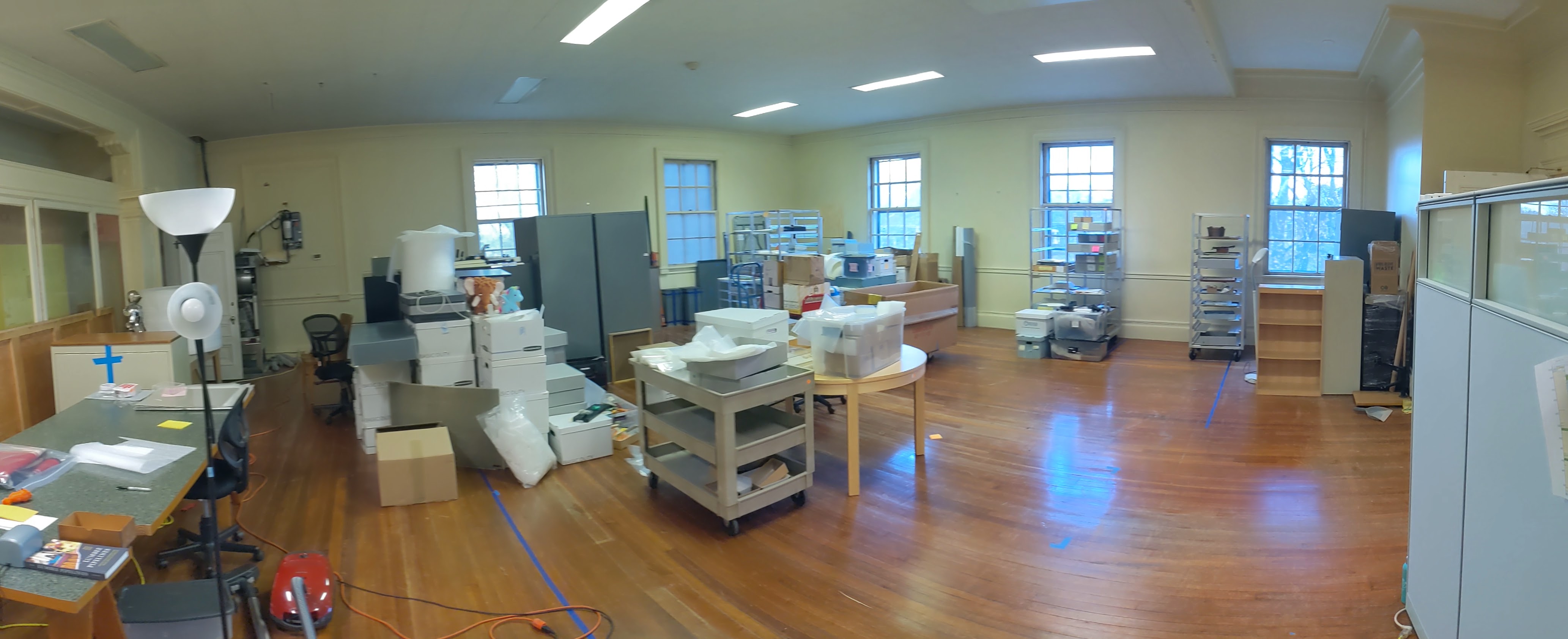
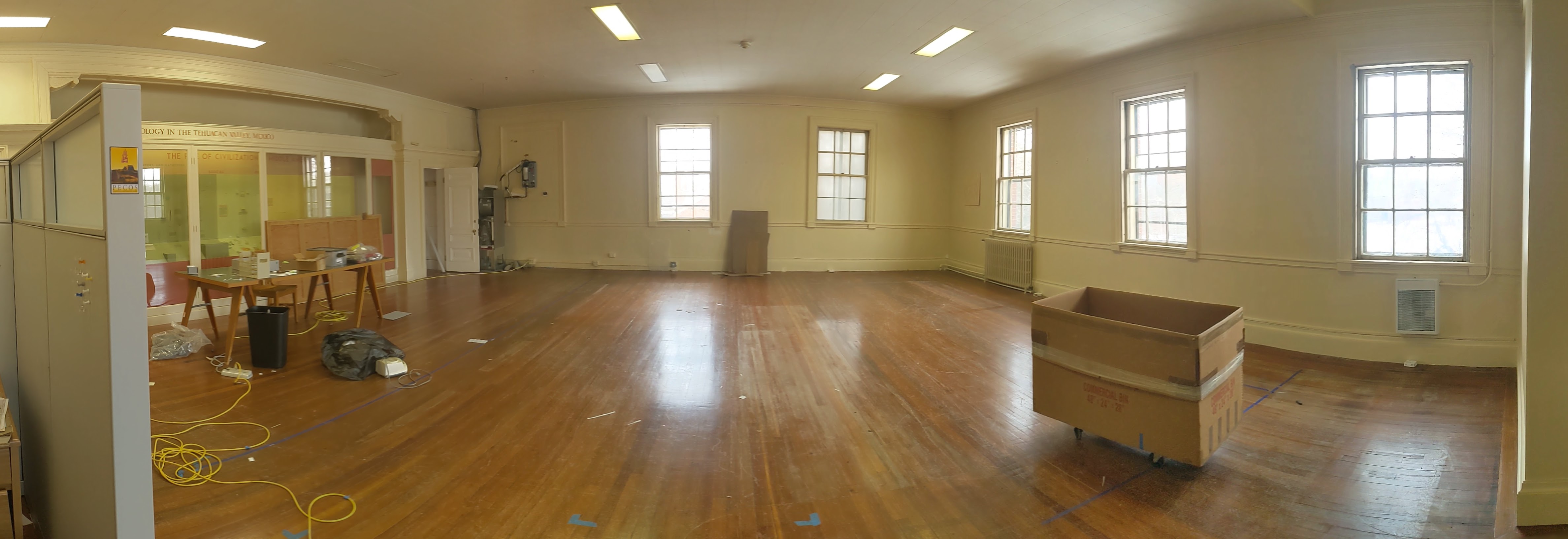
Building Renovations: The Sequel

Contributed by Marla Taylor

What happens when a project is successful but doesn’t quite resolve the larger storyline or need?  A sequel!

I share with you – Peabody Building Renovations: the Sequel.

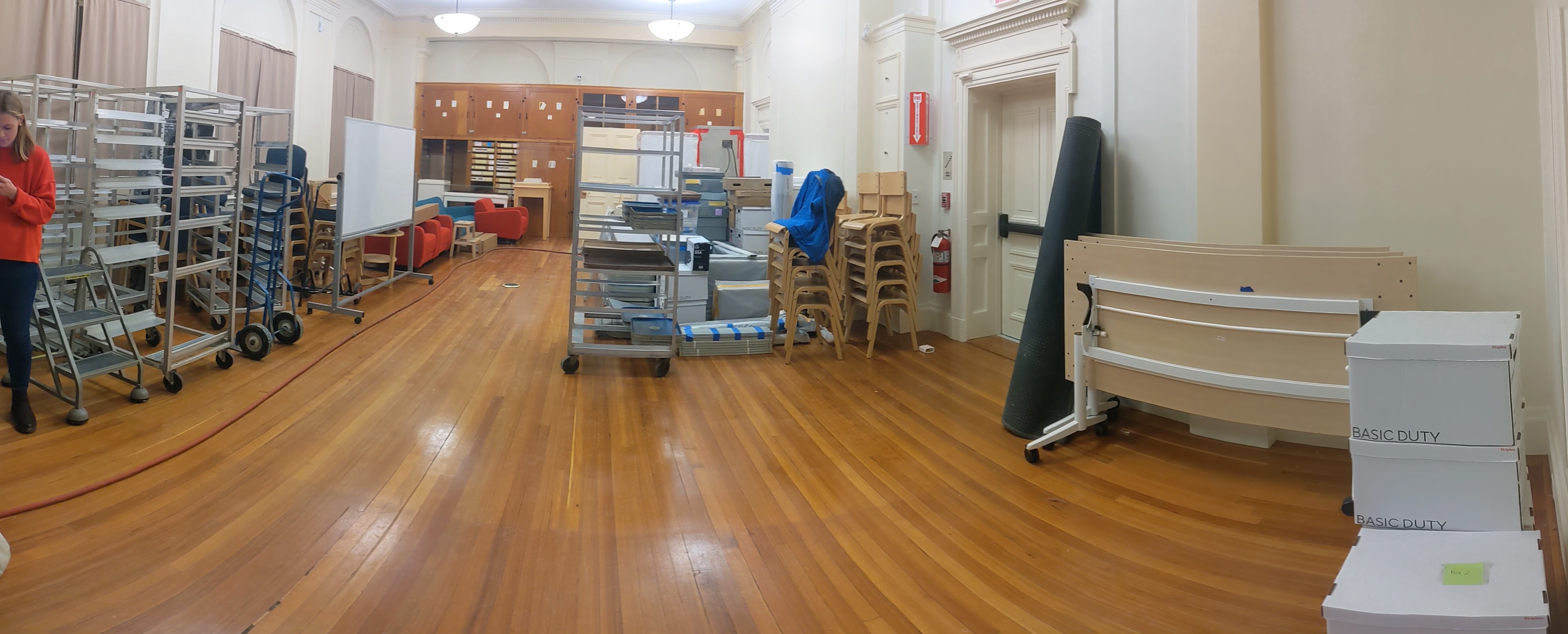
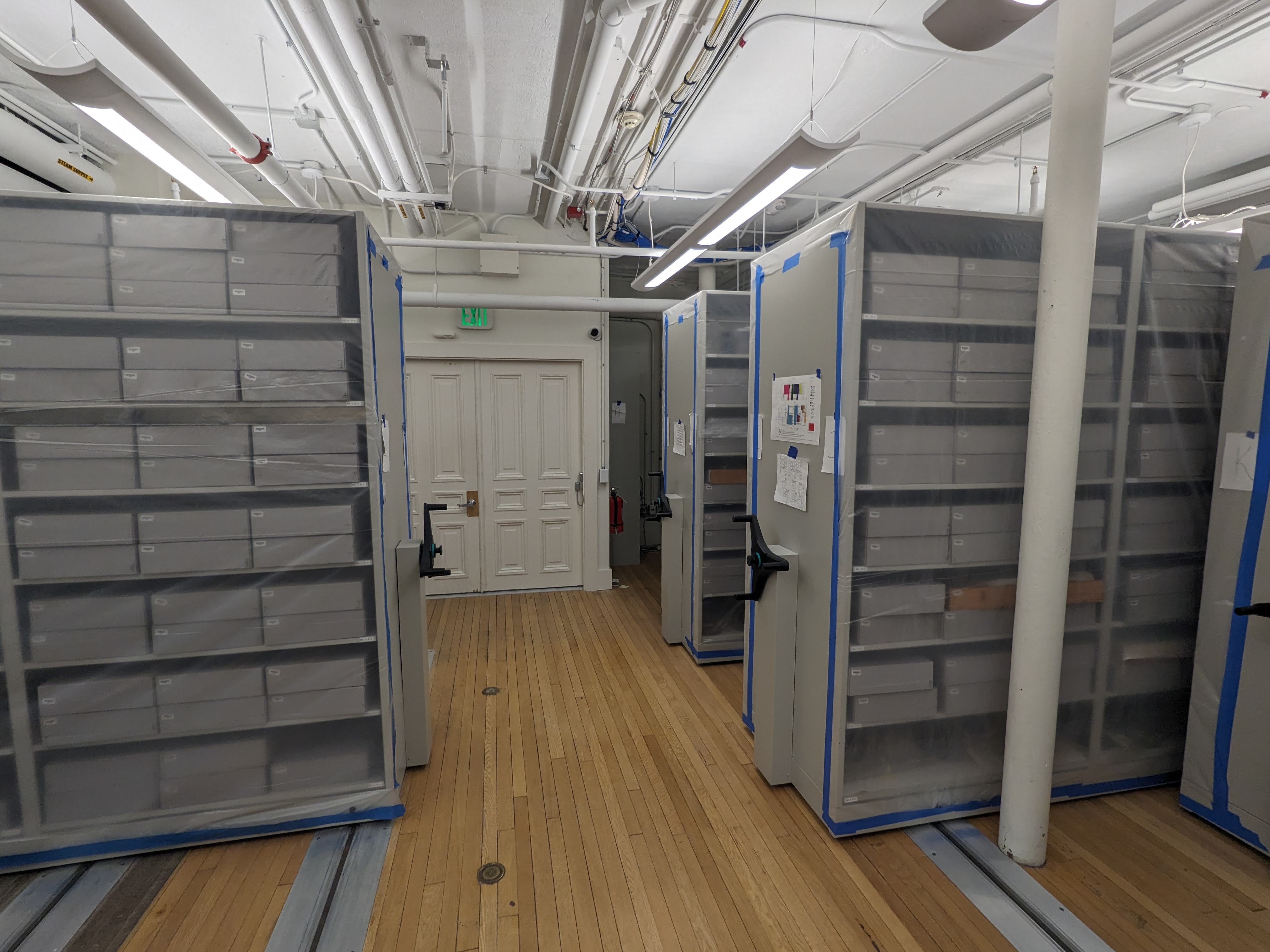
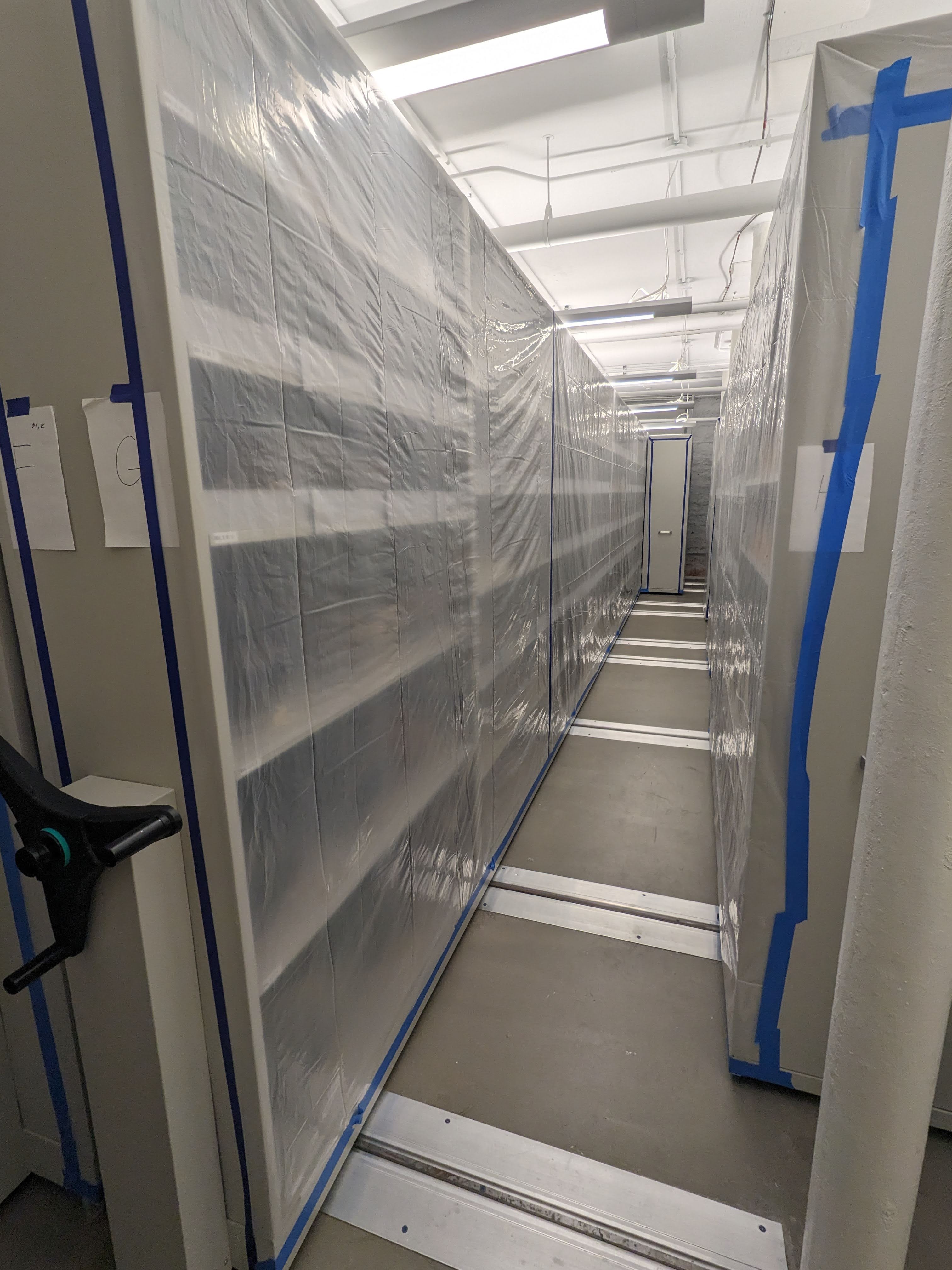
The first phase of the work, completed in early 2024, focused on improving collections care.  This included new shelving, an HVAC system, updated security, and an elevator in the building. To facilitate this, the entire collection had to be moved to temporary storage and back again. Phase I was a huge amount of work for all of the Peabody staff and I can confidently say that the collection is now in a better environment than it was before.

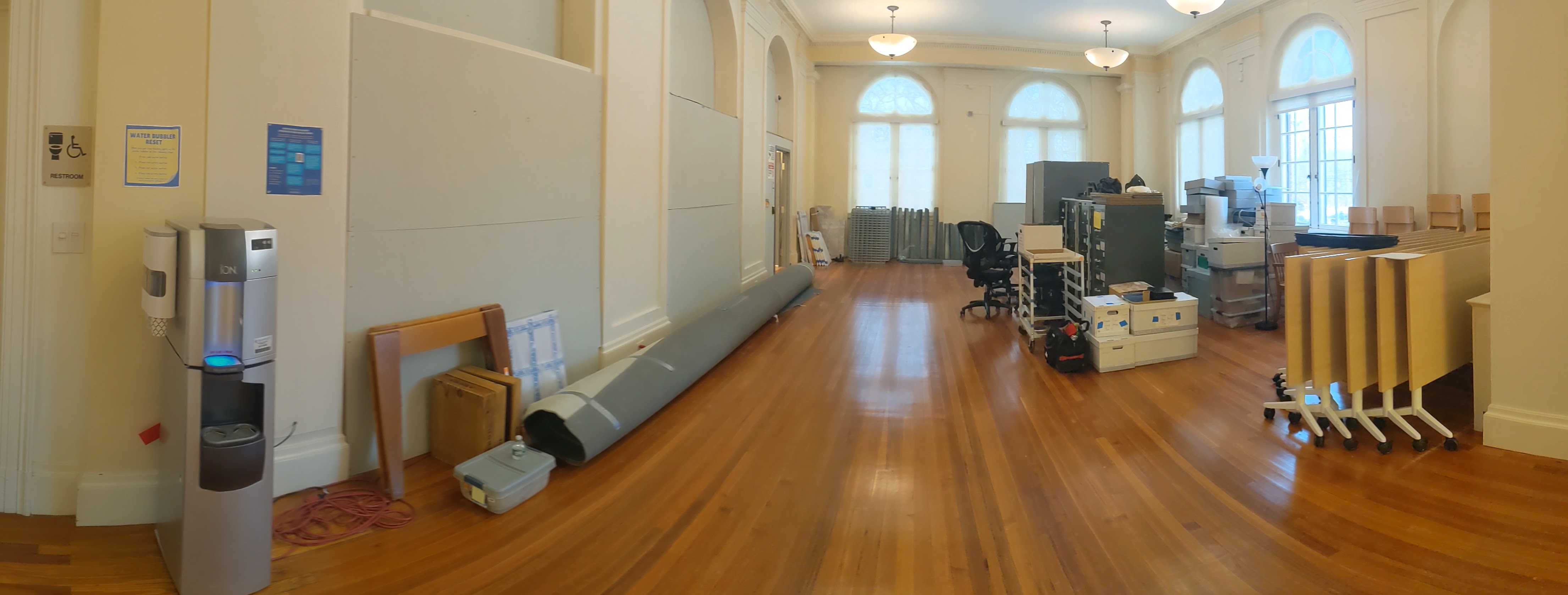
This next phase will largely ignore the collections spaces and instead focus on updating classrooms, creating offices, and modernizing systems. By using the space more efficiently, we will create two additional classrooms for use by Peabody educators or PA faculty.  Staff members will have discrete office spaces and there will be room to grow.

One of the biggest improvements will be the addition of an HVAC system to the classrooms and office spaces.  As someone who has worked in these spaces for as long as I have, I would have to say that this is the part that I am looking forward to the most.  Currently, it can be really hot in the summer (over 80 degrees in the classroom) and quite chilly in the winter.  We all have our methods to deal with the discomfort, but I am excited to have air conditioning!

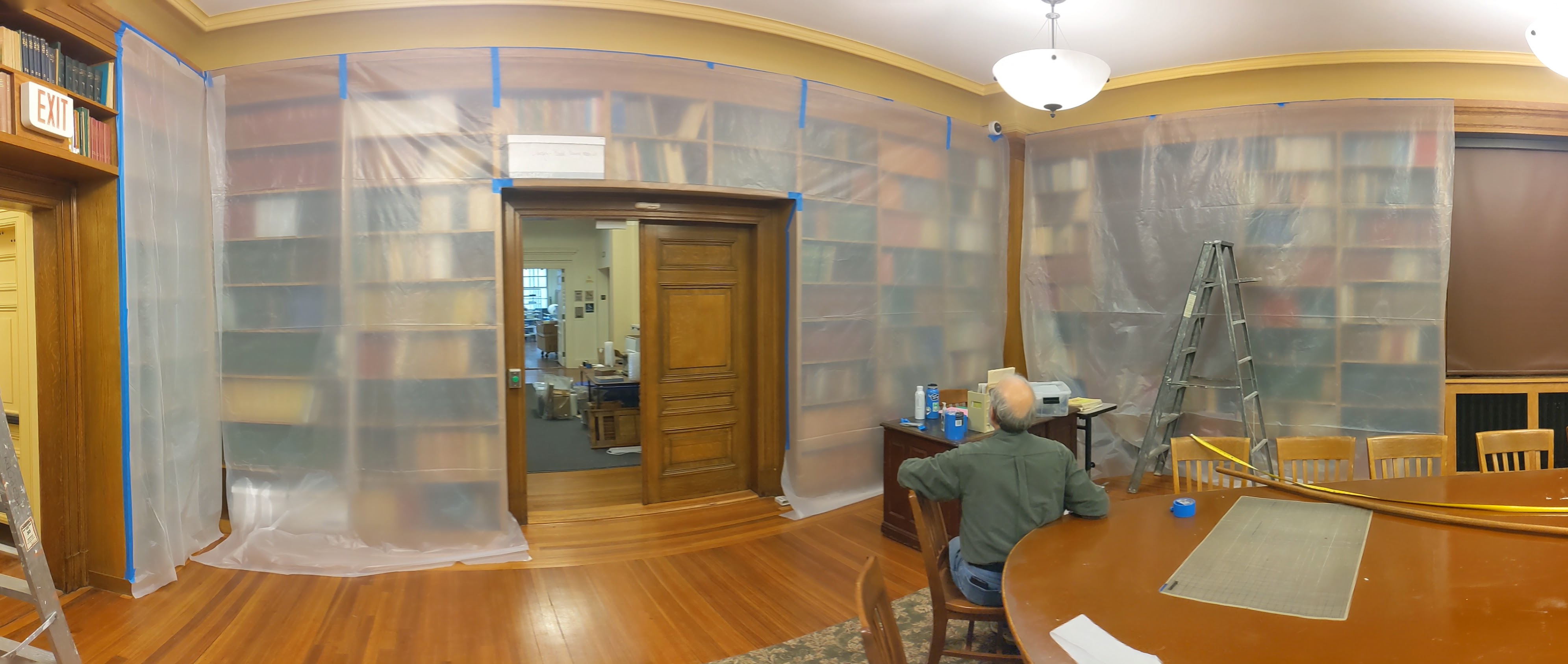
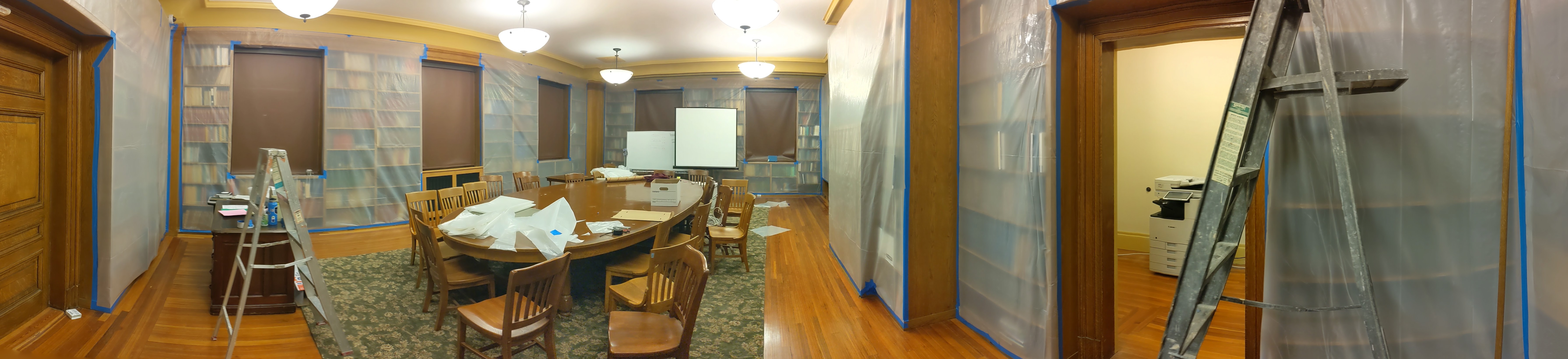
All of this of course comes with some disruption to our regular activities.  Staff will once again be moved to a temporary location and access to the collection will be restricted.

As of December 1st, Peabody collections will be largely unavailable and classroom spaces will be out of commission.  Repatriation work and collections inquiries from Tribal communities will be prioritized but other access will be restricted.  Please contact me, mtaylor@andover.edu, with any questions or requests.

PA classes may be taught in a modified format with limited collections based on availability.  Please contact Lainie Schultz, Curator of Education, to request a class.

The Peabody should be back in commission by September of 2026.  I will be able to share periodic updates on the process through the blog and we are so excited to welcome you into our updated space next year.  Stay tuned!

If you are interested in supporting Phase 2, please contact Jen Pieroni, Director for Advancement Initiatives, Office of Academy Resources.

Tales from The Phillipian, PART 2: Dinosaurs, Turtle Racing, and Spirits

Contributed by Emma Lavoie

Peabody staff always get excited when we unearth hidden stories from the Peabody Institute’s past. The Phillipian Archives is one such place that has held many a story. First printed in 1857, The Phillipian is a weekly student newspaper that continues today at Phillips Academy Andover. The student paper describes itself as “completely uncensored and entirely student-run,” offering a snapshot of what campus life is like both past and present, and in the case of this blog, some of the most outrageous and bizarre activities related to the Peabody.

As promised, we hope you enjoy PART 2!

Peabody Card Catalog and Reading Room

In 1903, a reading room with library was opened on the second floor of the Peabody, furnished with easy-back chairs, a large center table, writing tables, and a few large lounging chairs. There was a list of rules included in this Phillipian article for students using the reading room:

  • Observe suitable quiet
  • That others may not be disturbed while reading
  • Not to cut, tear or in any way deface the periodicals
  • To remove hats and caps while in the room

By 1904, a Phillipian article stated the reading room as “well filled nearly every hour…the attendance averages about three hundred a day or nearly the entire school.”

Image from the Peabody Archives of the old reading room.
From the same vantage point – the current Peabody Library. Note: the original card catalog system now covers the original fireplace.

In 1904, work began on an index card catalog for the Peabody Institute’s library. This catalog would be similar to the Library of Congress plan which was being used at the time in the Seminary Library (but the catalog ended up being Dewey Decimal, arrgh!) This index card catalog is still occasionally used today at the Peabody Institute, though the entire library is catalogued in the North of Boston Library Exchange.

The original card catalog is still in use at the Peabody today!

Rumor Has It (Dinosaurs in the Chapel and Turtle Racing)

There had been rumors of turtle racing in the Peabody basement and other areas on campus. Mention of one turtle (named Alec) being kidnapped in a 1935 article may prove these rumors as true! Don’t worry, Alec was returned safe and sound.

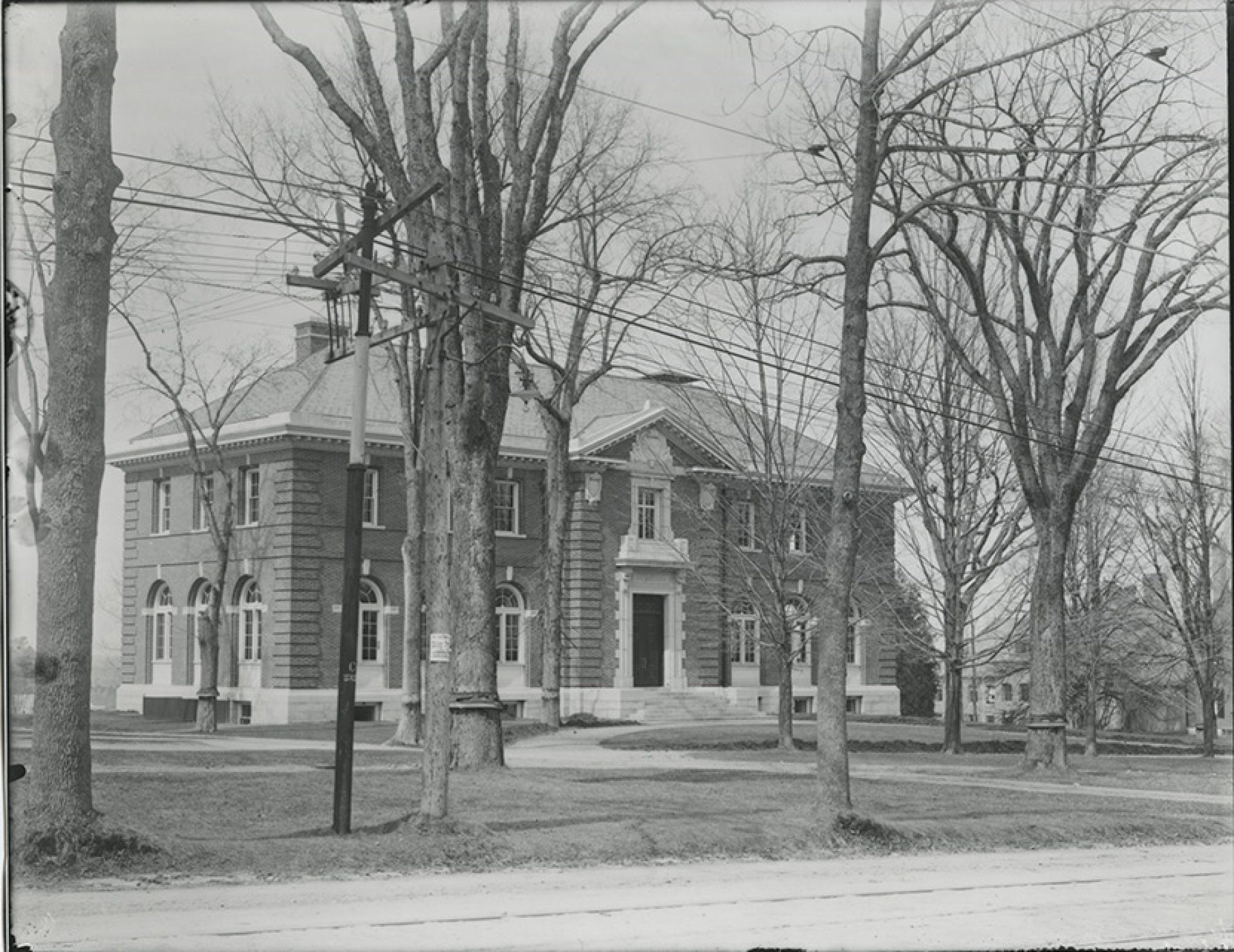
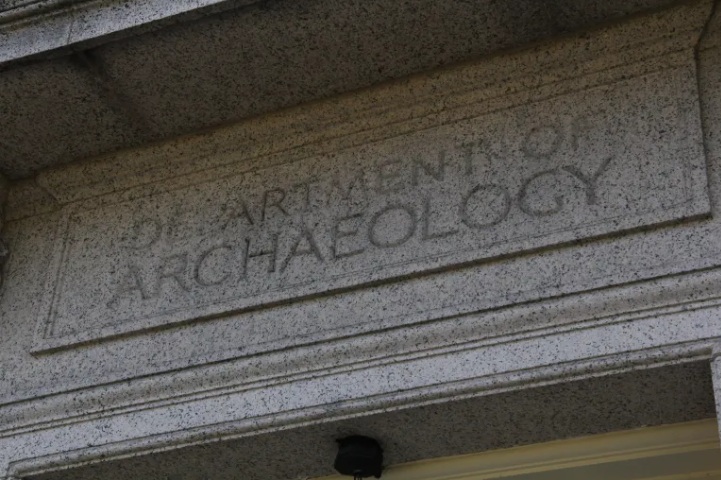
In a “This Andover” column of The Phillipian in 1941, the Archaeology Department (now the Peabody Institute) was supposedly spreading rumors that several prehistoric dinosaurs live in the Cochran Chapel organ pipes.

“It is they [the dinosaurs], the rumor goes on having it, that furnish Dr. Pfatteicher’s lowest notes during Sunday services.”

Flute Recitals by the Peabody Director

On several occasions, Peabody Director, Dr. Charles Peabody performed flute recitals for students in the Academy chapel. On January 20th in 1915, Peabody was joined by Dr. Carl F. Pfatteicher, who played the organ. Pfatteicher was the director of music at the time, a post he held until 1947. During his time at Phillips Academy, he facilitated choir, glee club, and a small orchestra. Many of these groups met and practiced in the Archaeology Building or Peabody House. I think it’s safe to say that Dr. Charles Peabody and Dr. Carl Pfatteicher were good friends. The music played at this recital were the following:

Sonata in C Major – Mozart

Tres Lent from Sonata in G Major – Guillaume Lekeu

Barcarolle – Harold Nasan

Invocation – Eugene Lacroix

Fun Fact: Dr. Carl F. Pfatteicher was asked to help select the bells to be placed in the newly constructed Memorial Bell Tower on campus. He enjoyed giving regular carillon concerts, playing the bells sometimes at dawn. Many students did not appreciate this and one year managed to lock Dr. Pfatteicher in the tower.

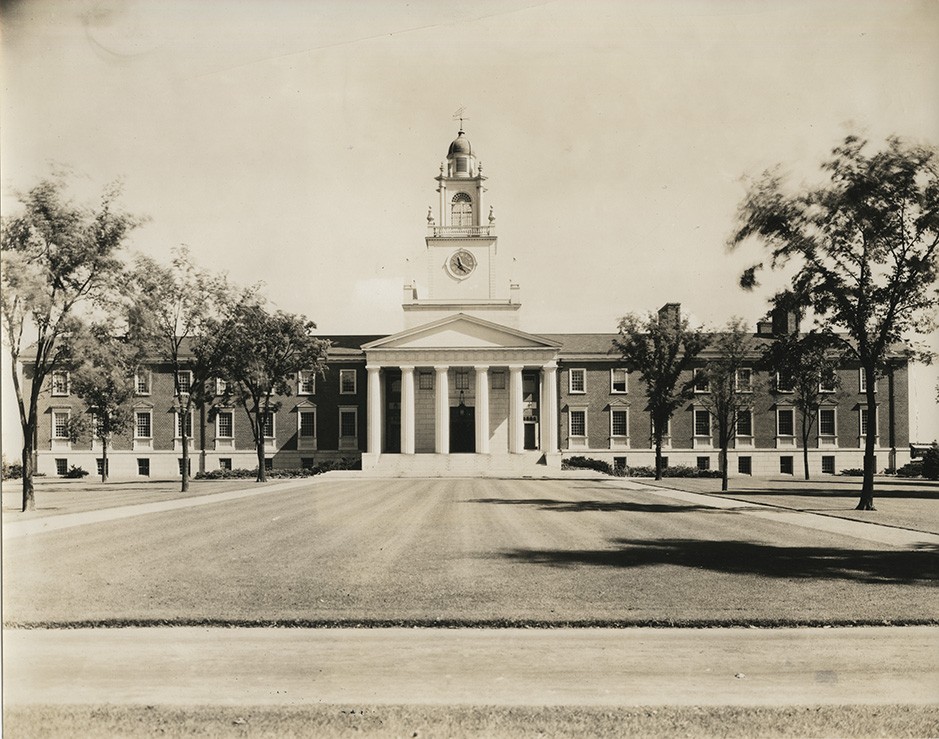
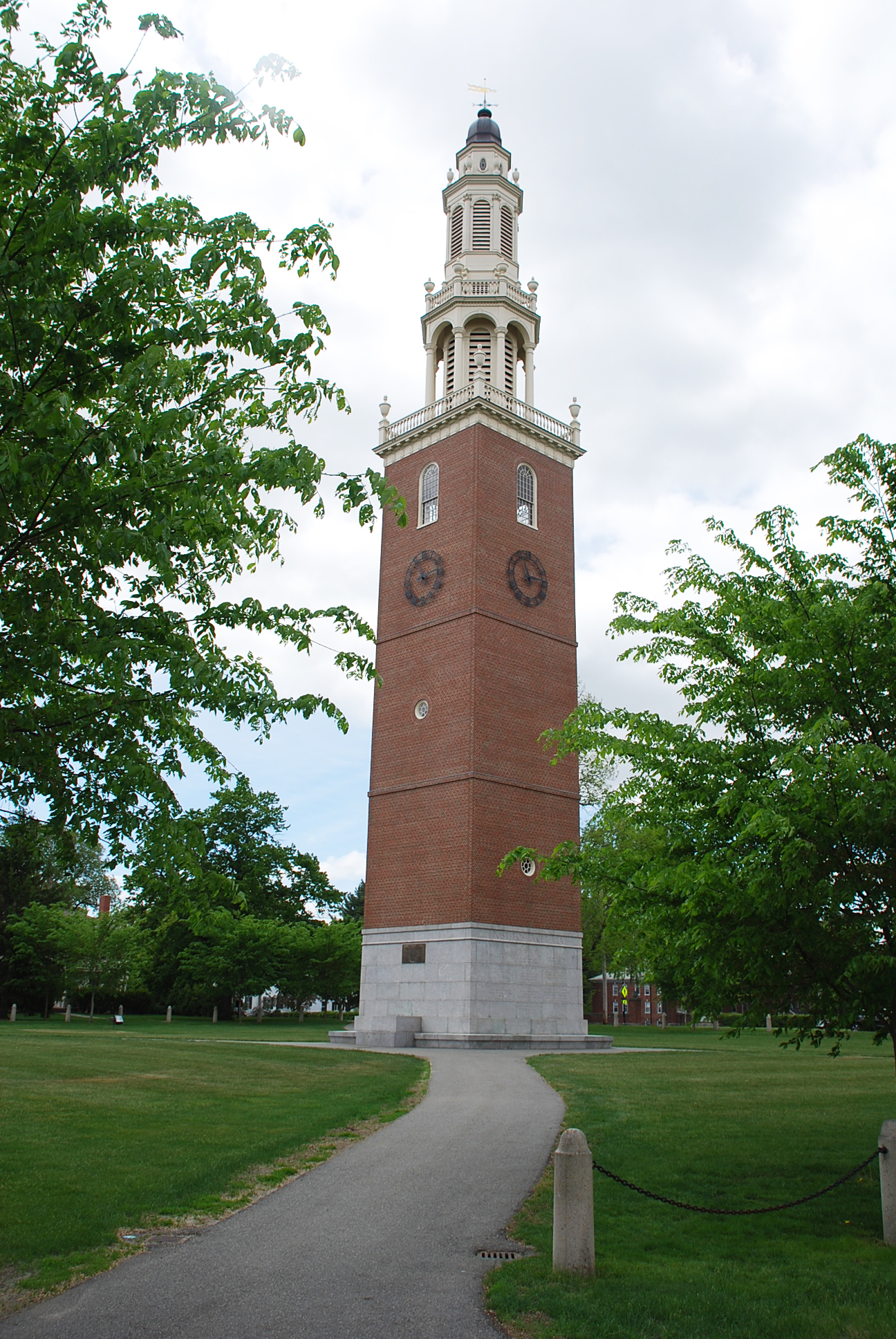
Memorial Bell Tower, Phillips Academy Andover
Completed in 1922 by architect Guy Lowell
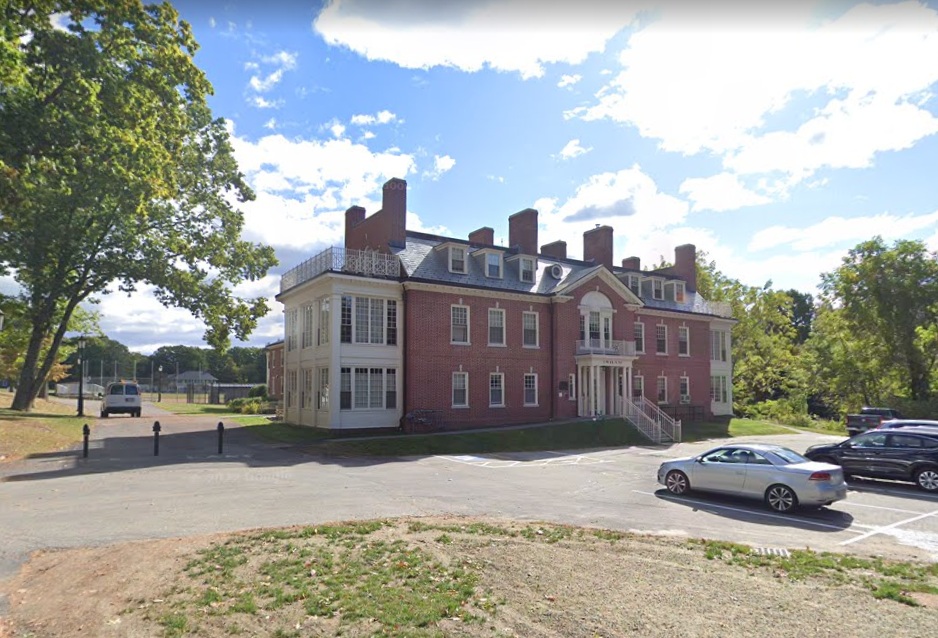
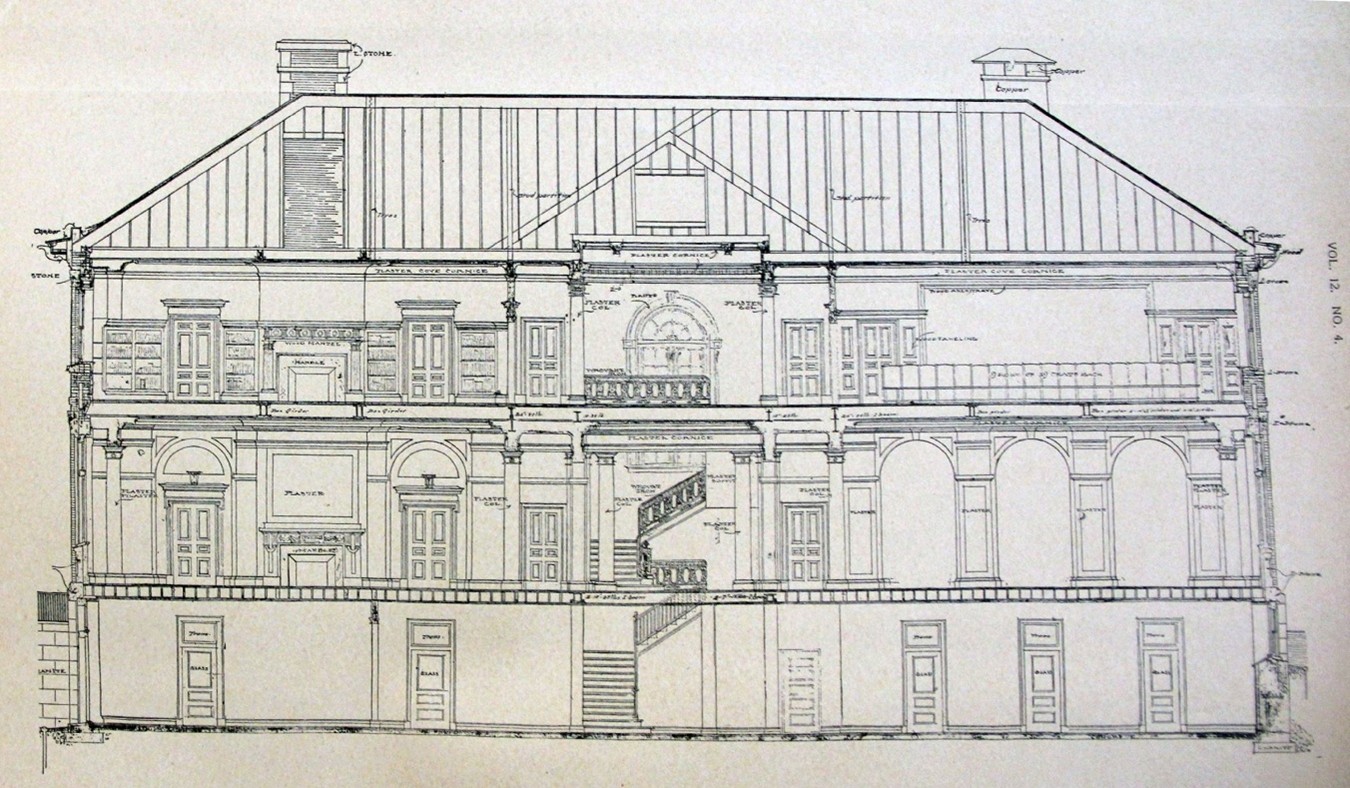
(the same architect of the Peabody building!)

“A Place for Students to Gather” – Clubs Find a Home at the Peabody

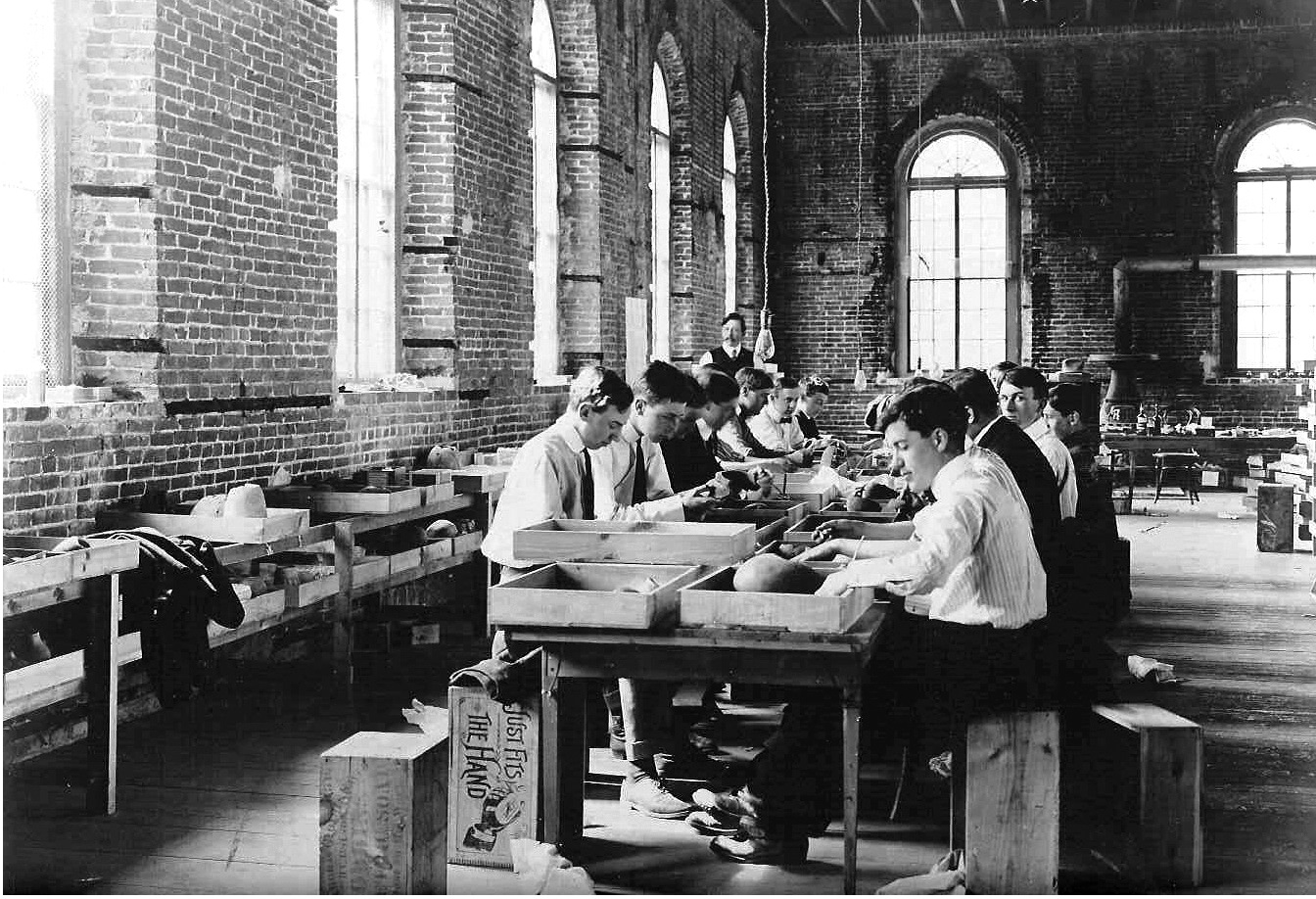
The Peabody was founded with three goals in mind – to educate students about the world of archaeology, to promote archaeological research, and to be a place for students to gather. As part of this vision, students and student clubs have been utilizing the Archaeology Building since its inception in 1903. Below are just a few examples of student club communications in The Phillipian related to the Peabody.

Class of 1910 in front of the Department of Archaeology (later known as the Peabody Institute of Archaeology.)

An advertisement in a 1904 column mentions organizing a student Rifle Club at the Archaeology Building and reporting to the office of Peabody Curator, Mr. Moorehead for those interested in shooting practice.

Courtesy of The Phillipian archives.

Fun Fact: The Sub-Target Rifle Machine and similar target practice devices were popular in the early part of the 20th century. They recorded information about marksmanship, position of the gun, etc. without firing live rounds.

In 1904, a dark room was provided for the Camera Club, located in the basement of the Peabody. The Phillipian stated the space “is thoroughly equipped and is as fine as can be found in New England.” Before Phase 1 of the Peabody Project began, much of the original dark room space was still intact. One of my personal favorite details was the original carved signatures still on the wall left by past Camera Club students.

Original dark room at the Peabody before the recent building renewal project.
Student signatures on the wall of the dark room at the Peabody.
Note – that’s not 2009, it’s 1909!

Mandolin and Banjo Club were some of the music clubs that met in the Archaeology Building for auditions, meetings, and practices. Glee Club was another student organization that commonly gathered at the Peabody and communications for this club are seen throughout the decades of The Phillipian.

I love seeing such a close connection between the Peabody and the Music Department, especially now that we’re neighbors with the new Music building, Falls Hall!

Glee Club communication in 1910.

As we’ve seen above, many campus Arts organizations spent time at the Peabody. The Dramatic Club would meet to discuss scripts for upcoming plays and hold individual trials for those looking to participate in performances.

Dramatic Club communication from 1912.

Other clubs such as Chess, Astronomy, Spanish, Philo Congress, Bible Class, Foreign Missions, Yale Club, Harvard Club, Stamp Club, Nature Club, Forum, and Mirror all met at the Peabody throughout the first half of the 1900s. Even The Phillipian and football team held gatherings at one point. By the 1950s we see the Peabody becoming more active in exhibitions and many of these clubs move to other locations on campus, many finding a home at the Peabody House behind the Archaeology Building.

“…where his spirit still lives.”

Jumping ahead to 2011, a Phillipian article features Halloween traditions and campus lore passed down over the decades of PA’s history. The Peabody is mentioned to experience “frequent slamming doors, moving items and eerie noises that creak through the attic floors.” The strange activities convinced Peabody staff that the building was haunted by Warren K. Moorehead (1866-1939). Moorehead was the first curator at the Peabody from 1901 to 1924 and became the Peabody’s second director from 1924 to 1938.

The Peabody has many interesting stories of these experiences over the years. One story mentioned in The Phillipian, depicts a foreman being locked in the back stairwell. I can personally share that my first Reunion Weekend with the Peabody I experienced an alum being locked in one of our bathrooms during an event (the locks were on the inside of the door…) I considered this my “welcome” initiation from Moorehead, as the newest member to the Peabody team.

Over the years, our director has written notes to Moorehead to communicate our intentions and care of the building along with updates of upcoming changes such as our building renewal project. These notes are stored behind a plaque commemorating Moorehead, located by the front doors of the building. Much of the activity has quieted since writing these notes.

Plaque commemorating Warren K. Moorehead.

Revisit Visit

Contributed by John Bergman-McCool

Figure 1. Visiting researcher, Dr. Rademaker taking samples for isotope analysis.

Last May the Robert S. Peabody Institute hosted visiting researcher, Dr. Kurt Rademaker. Dr. Rademaker is an Associate Professor and Director of the Center for the Study of the First Americans Laboratory at Texas A&M University. His research interests include early human ecology and settlement dynamics of the central Andean highlands.

Dr. Rademaker came to the Peabody to view materials collected by Richard “Scotty” MacNeish from the Ayacucho Valley in the Andean highlands. Between 1969 and 1972, MacNeish led an interdisciplinary team that searched for evidence of the origins of agriculture and civilization in South America.

Based on previous work conducted on the Peruvian coast, MacNeish and others hypothesized that agriculture originated in Peru’s Andean highlands. The Ayacucho Valley encapsulates diverse habitats spanning a range of elevations. It also contains dry caves with long stratigraphic sequences, two criteria MacNeish utilized in his study of the origins of agriculture in the Mexico’s Tehuacán Valley.

Botanical remains discarded by humans, including domesticated plants, can be well-preserved in dry caves, while long stratigraphic sequences give archaeologists the ability to see how things change over long spans of time. MacNeish was looking for evidence of human cultural development, including domesticated plants across time and habitats.

Figure 2. Pikimachay Cave as seen from the east.

Interestingly, and unrelated to the question of plant domestication, MacNeish’s summary of excavations at one site, Pikimachay, concluded that humans and now-extinct Pleistocence animals may have interacted. This was based on the presence of artifacts and extinct animal remains in the same pre-ceramic stratigraphic layer. The claim was supported by radiocarbon dating which returned dates of roughly 14,000 and 23,000 years before present. However, this conclusion has always been somewhat controversial since the dating methods do not meet scientific standards of quality control, not to mention they contradicted widely held notions of the peopling of the Americas.

Radiocarbon dating, at the time, required a large amount of sample material. MacNeish gathered material from several sources spanning a wide area. In the intervening years, isotope analysis has improved to the point where only one gram of sample material is needed. Now a single bone with clear stratigraphic origin can be sampled.

Additionally, sample preparation can now isolate carbon from the item being dated and remove carbon from the surrounding sediment. Previous methods couldn’t parse these sources and may have resulted in dating the burial environment. This can help determine if the sample was moved from it’s original stratigraphy by burrowing animals or other natural forces.

The story of when people arrived in the Americas has changed over time as new discoveries led archaeologists to question existing hypotheses. At the time of MacNeish’s Ayacucho project, the commonly held belief was that the first people arrived at the end of the Ice Age, by way of the Beringia land bridge and ice-free corridors. The earliest evidence of human presence was at Clovis, New Mexico, dated 13,250 to 12,800 years before present. His discovery meant that people may have arrived in North America much earlier if they were established in Peru 14,000 to 23,000 years ago.

Revisiting MacNeish’s Ayacucho materials offers an intriguing opportunity to confirm his findings. Recent work has revealed that the stone tools found in the lowest strata (see figure 3) were naturally occurring and not made by people, perhaps ruling out the oldest dates MacNeish obtained. However, the researchers confirmed that human-made tools and cut animal bones are present in earlier layers (strata h, h and h1).

Figure 3. Stratigraphy from the South Room in Pikimachay. Samples will be taken from pre-ceramic layers. Layers above the pre-ceramic strata are heavily disturbed by pot hunting, animal activity and construction from animal corrals.

Dr. Rademaker has proposed sampling as many animal bones as possible from pre-ceramic stratigraphic layers. If any remains are from the Pleistocene Epoch, then MacNeish’s results will be supported and will add further support to a pre-clovis peopling of the Americas. If the remains are younger, from the Holocene Epoch, then it is likely that they were deposited in lower strata through some manner of disturbance.

Figure 4. Pikimachay samples arrayed for processing.

During Dr. Rademaker’s visit he spent several days reviewing archival materials including field notes, radiocarbon sample data and correspondence. The final day of the visit, Dr. Rademaker collected a sub-set of samples; roughly 1/3 of the total proposed. The bones they were taken from are quite old and may not contain the collagen necessary for isotope analysis. If these samples prove to have viable collagen and they return good dates, Dr. Rademaker will return to collect the remaining samples.