Oak River Foundation Supports Peabody Collections with $100,000 Grant

Contributed by Ryan Wheeler

The Peabody Museum received a grant of $100,000 from the Oak River Foundation of Peoria, Ill., to support work pertaining to the intellectual and physical control of the museum’s collections.

IMG_9137_edited
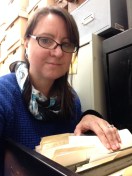
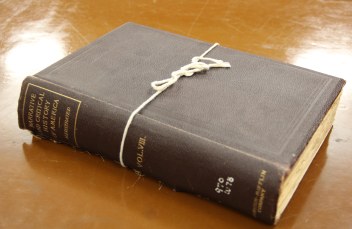
A portion of the Peabody’s archive.

The first year of funding will support the work of a museum archivist who will organize the Peabody archives, which contain significant materials related to work by Warren Moorehead, Doug Byers, Fred Johnson, Scotty MacNeish, and others. This project will facilitate digitization of archival collections through our partnership with the Boston Public Library’s Digital Commonwealth, a statewide consortium of libraries, museums, archives, and historical societies from across Massachusetts. Researchers regularly use our archives, and this project will aid in locating materials and making collections more broadly available.

IMG_5590_edited
Students with some of the ceramic figurines from Scotty MacNeish’s excavations in Mexico’s Tehuacán Valley.

The second year of funding will support the process of cataloging the Peabody’s significant object collections related to Scotty MacNeish’s excavations in Mexico, Peru, and the American Southwest, as well as collections from the Northeast. We also hope to substantially increase the number of records in the museum’s database and include all cataloged artifacts in our online catalog, PastPerfect (http://peabody.pastperfect-online.com/40391cgi/mweb.exe?request=random).

The work supported by the Oak River Foundation is just a small part of the overall effort to increase physical and intellectual control of the Peabody’s collections. We hope this gift will inspire others to support work to better catalog, document, and make accessible the Peabody’s world-class collections of objects, photographs, and archival materials. If you would like to support this work, please contact me at 978-749-4493 or rwheeler@andover.edu.

Peabody Student Symposium

IMG_9042_editedJoin the Peabody and the Gene Winter Chapter of the Massachusetts Archaeological Society for a night highlighting student work and research. Three groups of students will present their research ranging from historic preservation to 3D printing artifacts to 19th century portrayals of Native Americans.

Tuesday, February 16, 7:00pm

Robert S. Peabody Museum of Archaeology, corner of Main and Phillips streets, Andover, Mass.

Peabody Strengthening Relationship with Pueblo of Jemez

Contributed by Lindsay Randall

The Peabody Museum has begun the collaborative process of reexamining our relationship with the Pueblo of Jemez. The Peabody’s involvement with the Jemez dates back 100 years—to the period from 1915 through 1929 when Alfred V. Kidder and his colleagues conducted excavations and ethnographic studies of the Pecos and Jemez pueblos. Consultations under the Native American Graves Protection and Repatriation Act (NAGPRA) in the 1990s rekindled the relationship and launched the Pecos Pathways expeditionary learning program at Phillips Academy. Pecos Pathways has been the centerpiece of the Andover-Jemez relationship since 1998, but we’ve seen a host of other collaborative efforts since then, including the recent visits by potters Dominique and Maxine Toya and their friends.

10336852_10154112165645034_6780009494536355039_n

Dominique Toya works with PA students in Mr. S. Thayer Zaeder’s ceramics class.

The goal of this critical assessment is to ensure that the partnership is maintained in a coherent and consistent manner, despite the changing needs and desires of the partners through time. We want to focus on sustaining and growing the relationship and enhancing its impact through the exchange of knowledge, resources, and individuals from each community. Initially we are working with the Education Department at Jemez, but we will expand the conversations to include other members of the tribe, such as those in the Department of Natural Resources who oversee all tribal archaeological work.

We recently began conversations with Janice Tosa, research associate and student program outreach manager for Jemez Pueblo, and Leander Loretto, student outreach coordinator for Jemez Pueblo, about how we might modify and expand our joint educational offering. A main focus in the conversations has been on creating programming that supports and advances our learning objectives in a more tangible manner, while also being sustainable. Looking at unique and creative ways in which adult members of each community can be engaged and utilized is another area that we are exploring.

We look forward to working with our friends at Jemez Pueblo on this exciting project!

Above Clockwise: Janice Tosa shows off her love of the Boston Red Sox’s; Leander Loretto screens for artifacts on the Mashentucket Pequot Reservation; A Pecos Pathways group prepares to hike up San Diego Mesa.

Family Drop-in Days at the Peabody

25_IMG_7969_edited

Drop in for a fun-filled morning of archaeology activities at the Peabody!

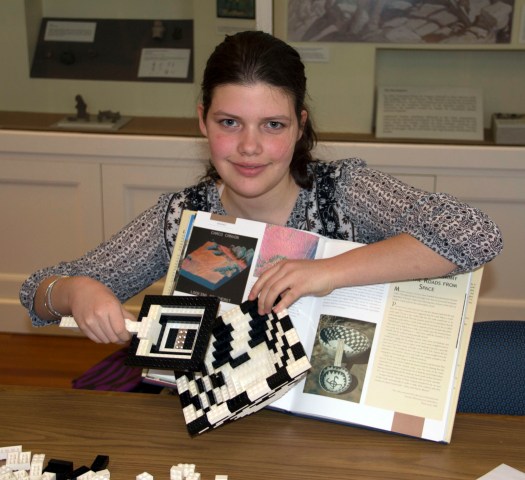
Build a LEGO model of your favorite ancient ruin, examine stone tools close up, play Native American musical instruments, and make your own Hohokam style etched shell. All families are welcome to join us; there’s something for every age!

Friday, February 19 from 9:00am to 12:00 noon and Friday, March 25 from 9:00am to 12:00 noon.

Robert S. Peabody Museum of Archaeology, corner of Main and Phillips streets, Andover, Mass.

Call 978.749.4490 or e-mail rspeabody@andover.edu for more information.

Box Us In! Abbot Academy Association Funds Archival Boxes for Peabody Collections

SampleBoxes2                 SampleBoxes

Contributed by Bonnie Sousa

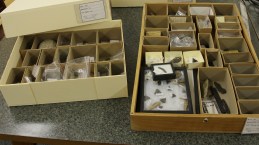
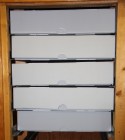
Peabody archaeology collections storage will undergo an ambitious upgrade made possible by a grant from the Abbot Academy Association, continuing Abbot’s tradition of boldness, innovation, and caring. The Peabody Museum received $45,746 to fund 3,000 archival boxes to replace deteriorating wooden drawers where collections are currently housed. Boxes eliminate contamination from wood debris in addition to improving accessibility and portability. Heavy or large artifacts such as stone axes and ceramic vessels will be stored on open shelving.

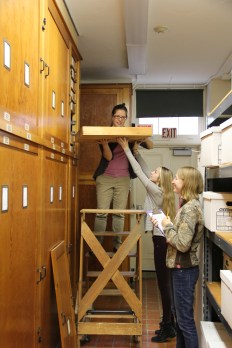
The project will be split over three years and will use the museum’s existing workforce of Phillips Academy work duty students, college interns, and adult and student volunteers guided by the collections management team of Marla Taylor and Bonnie Sousa. Archival boxes are a first step in a broader collections storage plan to consolidate museum collections and improve environmental conditions.

Storage_Marla&Students

Stay Woke: Finding Prejudice in the Research Process

stay woke

Contributed by Lindsay Randall

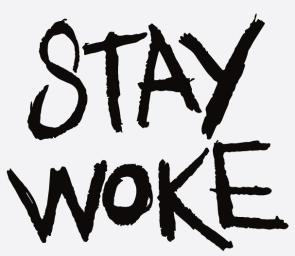
Stay Woke: Deriving from “stay awake,” to stay woke is to keep informed of what going on around you in times of turmoil and conflict, specifically on occasions when the media is being heavily filtered.

In the past few years, the Peabody Museum has collaborated with members of the Phillips Academy community on projects that not only have benefited the Academy’s students, but also have allowed us as professionals to learn new ways to look at a variety of topics and issues that are beyond our areas of expertise.

For example, recently the Peabody partnered with the Oliver Wendell Holmes Library to create a 50-minute workshop for students that will be part of the school’s programming for Martin Luther King Jr. Day in January. The process we followed in developing this workshop was quite interesting, since the way in which librarians Liza Oldham, Beth Tompkins, and Stephanie Aude view or think about issues is very different from how I approach the same topics. It was exciting to sit together, throw ideas around, and build on one another’s suggestions to create a workshop that will enlighten and engage PA students.

We began our development process by agreeing on the focus of the workshop: digital landscapes (the librarians’ expertise), with a particular emphasis on Native Americans (my expertise). Then we began generating ideas. One was to concentrate on the issue of mascots or native people as costumes. Another was to focus on how Native Americans are represetneted in the media. Next, Stephanie mentioned it would be interesting to investigate how subjects are tagged in blogs or other online resources. From there, Beth started talking about how the Library of Congress tags subjects and mentioned some that she felt were problematic.

IMG_5932

Librarians Liza Oldham and Beth Tompkins and I meeting 

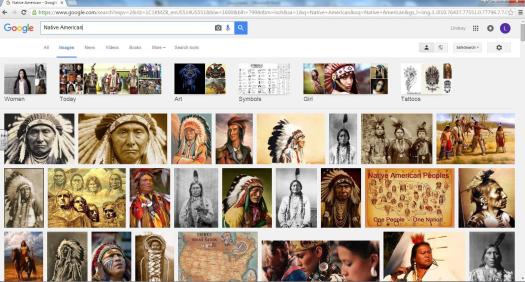
I then brought up a Google image search activity that I had performed with students regarding how native people are perceived. If you enter “African American,” “Asian American,” or almost any other racial group as a search term in Google, you will receive contemporary photos. If you enter “Native American” as a search term, most of the images you will receive are from the 1800s. This means the manner in which Google generates its images, although unintentional, reinforces the damaging belief that native people only live in the past and do not exist today.

AfricanAmerican

Screen grab of Google image search for “African American

NativeAmerican

Screen grab of Google image search for “Native American”

After conducting additional Google image searches and looking at some of the search terms or categories in the Library of Congress, we decided to focus the workshop on how digital resources related to Native Americans were categorized and grouped, and compared that to other groups. Approaching race in the United States in this manner seamlessly melded our two areas of focus into a simple yet cutting-edge way to look at race in our society. Such a multifaceted approach and understanding of the complexities of race in the United States and elsewhere is critical for our students to have if they are to become global citizens.

Here is the description of our workshop that the Office of Community and Multicultural Development (CAMD; https://www.andover.edu/StudentLife/CAMD/Pages/default.aspx) will be sharing campus wide in its MLK Jr. Day programming materials:

Stay Woke: Finding Prejudice in the Research Process 

Contemporary prejudice is often insidious. It doesn’t announce itself with a clear sign – “Look at this clearly defined racism!” – but rather creeps in, makes itself at home, and becomes such a part of everyday life that it’s hard to see. Understanding the prejudices that are built into the digital and organizational landscapes we use constantly, like Google and libraries, is vital to modern ethical development. Through hands-on activities and discussions, participants will begin to explore the complex issues surrounding this topic and improve their awareness and digital literacy.

We are very excited to run this workshop, and I look forward to sharing more about it and its outcomes with everyone in January!

Peabody Receives Toomey Foundation Award for Upcoming Symposium

Contributed by Ryan Wheeler

The Toomey Foundation for the Natural Sciences awarded the Peabody Museum $5,000 to support “The Archaeology, Art, and Iconography of Florida’s Watery Landscapes,” a symposium to be held at the 81st annual meeting of the Society for American Archaeology (SAA), scheduled to take place this April in Orlando, Fla. Organized by Joanna Ostapkowicz of National Museums Liverpool and Peabody Museum director Ryan Wheeler, the symposium will include a number of presentations highlighting sites, excavations, and objects from waterlogged deposits that allowed preservation of wood and other perishable materials.

SAA_2016003.jpg

The symposium was inspired by conversations between Ostapkowicz and Wheeler after they met at the SAA meeting in 2013 and recognized that archaeological sites in Florida had produced an amazing array of carved wooden artifacts, but that many of these ancient American Indian objects were understudied. Since then, Ostapkowicz and Wheeler have collaborated on a project that seeks better radiocarbon dates, wood identification, and physical documentation of four wood carvings from Hontoon Island and Tomoka River in central Florida. The Hontoon owl totem—a six-foot-tall, stylized carving discovered in the 1950s—is among the sculptures being studied and has been selected as the emblem of the SAA meeting in April.

The symposium will feature Lee Newsom of Pennsylvania State University and Vernon J. Knight of the University of Alabama as discussants, and will include the following presentations:

“ ‘Totem’ Owls, Otters and Pelicans: 14C Dating Central Florida’s Prehistoric Sculptures,” presented by Joanna Ostapkowicz, Ryan Wheeler, Lee Newsom, Fiona Brock, and Christophe Snoeck

“Wood Preservation Dilemmas of Florida’s Prehistoric Saltwater Sites: Famous Key Marco and Recent Weedon Island,” presented by Phyllis Kolianos

“The Original Spaghetti Junction: Using Canoe Locations to Trace Routes of an Ancient Transportation Network in Florida,” presented by Julia Byrd

“Mortuary Ritual at the Fort Center Mound-Charnel Pond Complex (8GL12): New Insights from an Accidental (Re)Discovery,” presented by Daniel Seinfeld

“The Pineland Site Complex: A Southwest Florida Coastal Wetsite,” presented by Karen Walker and William Marquardt

“The Karst Spring Vent as Receptacle with Meaning: Chassahowitzka Headsprings Weeden Island Period Dolphin Fin Effigy,” presented by Michael Arbuthnot and Michael Faught

“Fort Center’s Iconographic Bestiary: A Fresh Look at Fort Center’s Zoomorphic Wood Carvings,” presented by S. Margaret Spivey

“Early Archaic through Middle Archaic Design Elements on Artifacts from the Basin at Little Salt Spring (8SO18), Sarasota County, Florida,” presented by Steven Koski and John Gifford

IMG_6095
Joanna Ostapkowicz measures the Hontoon owl totem in its display at the National Park Service’s Timucuan Ecological Preserve, Jacksonville, Fla., December 2014.

Race and Identity in Indian Country

The end of fall term means the (temporary) end to one of my favorite collaborations – Marcelle Doheny’s Race and Identity in Indian Country course.

During the fall 2015 term, 11 Phillips Academy students explored the complicated relationship between Native Americans, museums and archaeology. Topics included scientific racism, federal Indian policies, museum collection practices, and the Native American Graves Protection and Repatriation Act (NAGPRA).  The culmination of the course was to use the Peabody collection to re-present the stories in our main exhibit gallery with a more inclusive voice.

Curator of education Lindsay Randall and I co-taught the class with Ms. Doheny. We were able to join most of the class discussions and provide perspective from our archaeology and museum experiences. I also enjoyed making the collection accessible to the students as they worked to create their final projects.

Watching the final presentations of the student’s revised exhibitions during assessment week was the perfect culmination to the term. Every group succeeded in reimaging how Native Americans are traditionally presented in an archaeology museum, moving beyond stone tools and ceramic pots. The students highlighted the continuity of native cultures despite the history of racism and dispossession.

I loved being a part of this course and look forward to being involved again next year!

IMG_9612
Final presentations!

History Class Meets Wampanoag Leader

Contributed by Lindsay Randall5db7be91c83fdc0a56e7800a9944a838

Image of Edith Andrews taken from patch.com http://patch.com/rhode-island/bristol-warren/massasoit-memorial-takes-step-forward 

On November 6, students in Marcelle Doheny’s Race and Identity in Indian Country course met with Edith Andrews of the Wampanoag Tribe of Gay Head (Aquinnah).

That morning, I left my house early to pick up Edith at her home in North Dartmouth. The two-hour drive back to Andover was full of laughter as Edith has a wicked sense of humor. After we arrived, the entire museum staff, along with some of our colleagues from the OWHL, joined Edith and me for lunch at Paresky Commons, where she regaled us with stories about her family, including the fact that her children had attended private school and that her grandchildren were studying at Dartmouth and the University of Southern New Hampshire. We also laughed over her story about her husband’s attempt to clear out clutter during a move, inadvertently leaving behind a first edition of Margaret Mitchell’s Gone with the Wind. We were all instructed to keep an eye out for the gray, clothbound volume in used-book stores on Cape Cod.

Edith’s conversation with students gave them a firsthand look at NAGPRA—the Native American Graves Protection and Repatriation Act—from the American Indian perspective. The passage of NAGPRA in 1990 signaled a shift in the disciplines of archaeology and museology. Not only did the Act create a process for tribes to claim the return of human remains, funerary objects, sacred items, and objects of cultural patrimony, but also it caused museum personnel and archaeologists to start changing how they think about and interact with descendant communities. Collaborative projects and indigenous archaeology are now fairly common. Despite that, there are significant challenges to compliance with NAGPRA, including difficulties in affiliating museum collections with contemporary tribes, lack of land for reburial of human remains, divergent interpretations of the law, and the sheer volume of human remains and funerary objects in museum collections. For example, a 2010 Government Accountability Office audit concluded that many federal agencies had not complied with the Act.

Students listened to Edith talk about her experience as a former Massachusetts Commissioner on Indian Affairs in the 1980s—the days just before the passage of NAGPRA, when every local law enforcement agency was storing human remains that could be repatriated and reburied under state law—as well as the use of the term “Native American” instead of “American Indian.” We all were particularly struck when Edith discussed the reluctance of museums to return funerary objects and items of cultural patrimony, even though these are clearly covered by the Act. She talked about the significant loss of Wampanoag material culture that began in the 17th century when Puritan colonists raided native graves for “pretties” (essentially grave goods and burial offerings) and how this continued throughout King Philip’s War, when trophies were taken by colonists and sent back to England. Most notable was a wampum belt, composed of white and purple shell beads, that is thought to be in the British Museum. Edith asked why the Wampanoag couldn’t expect the return of some of these items for display in their tribal museum.

Students in Race and Identity in Indian Country spent the fall term confronting the fraught history of American Indians. Major themes covered were scientific racism, government policy, and the role of museums in the near genocide of Native people. Edith’s visit was a reminder that American Indians are still here—as individuals and vibrant communities—and that repatriation is more than a fight over property, but one that cuts to the core of personal and community identity, health, and well-being.

After the students departed for sports and other commitments, Edith and I began our return trip to North Dartmouth. When I was pulling into her driveway she remarked that although she was glad to be home because it was home, she was sad that the day was done as she had very much enjoyed our wonderful students.

For more information on the Wampanoag Tribe of Gay Head (Aquinnah): http://www.wampanoagtribe.net/Pages/index