Naturhistorisches Museum Wien

Contributed by Lainie Schultz
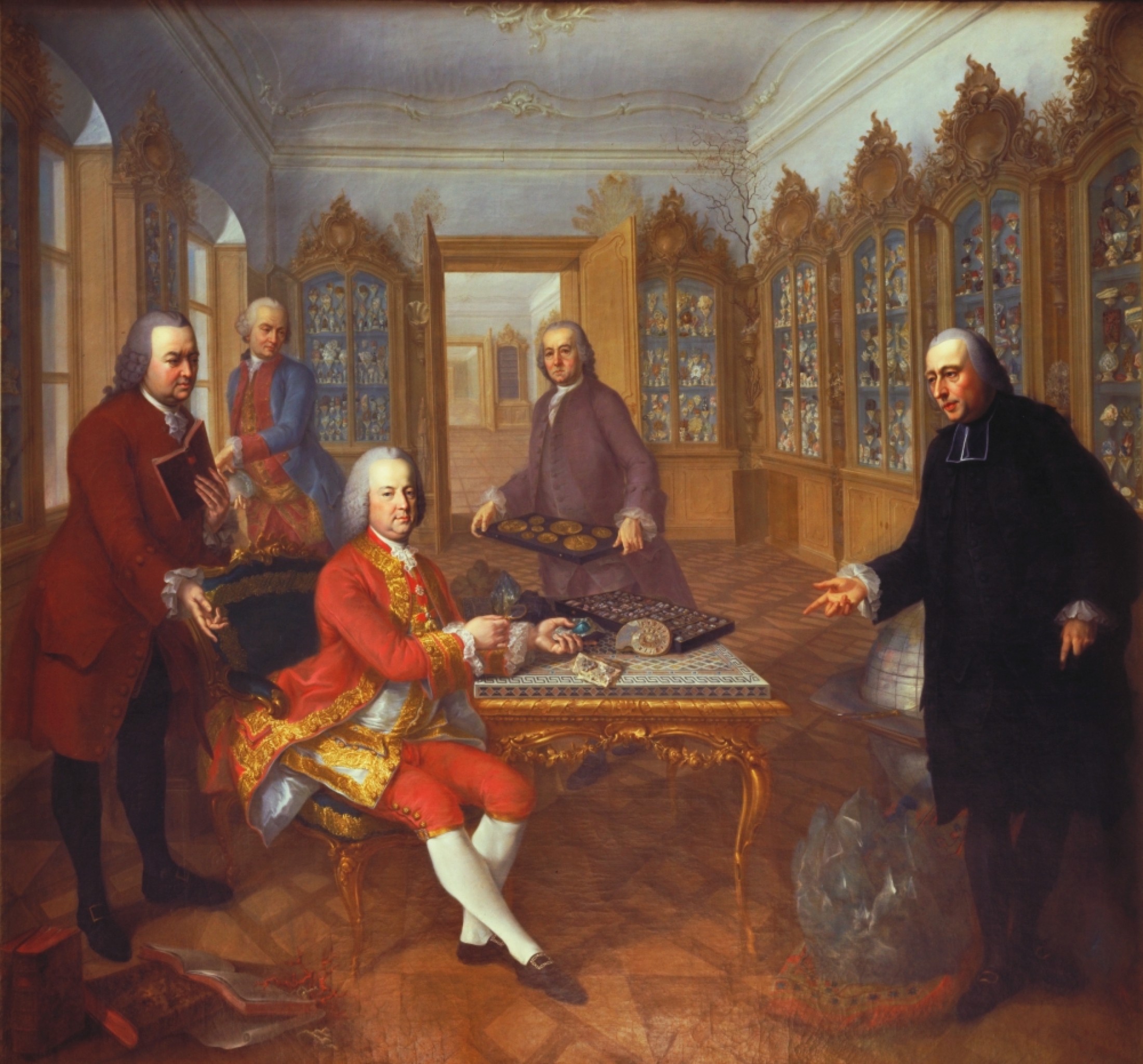
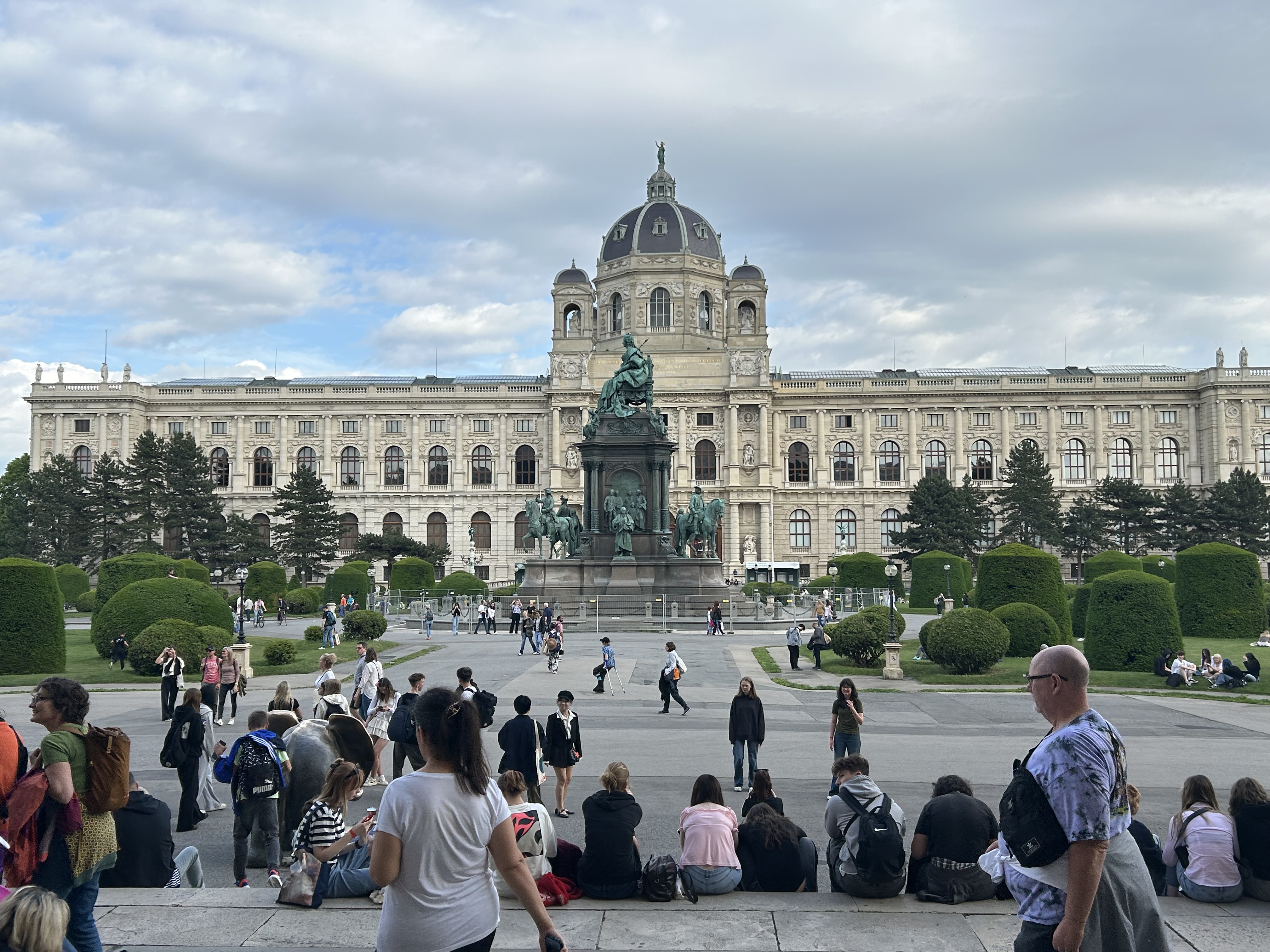
Emperor Franz I and his natural science advisors

This summer I went to visit a friend in Vienna. I hadn’t seen her in [*cough*] years, so my inspiration was mainly just to hang out with her. It was only after I had my plane tickets and the trip was drawing near that I actually started looking into what there was to do in Vienna.

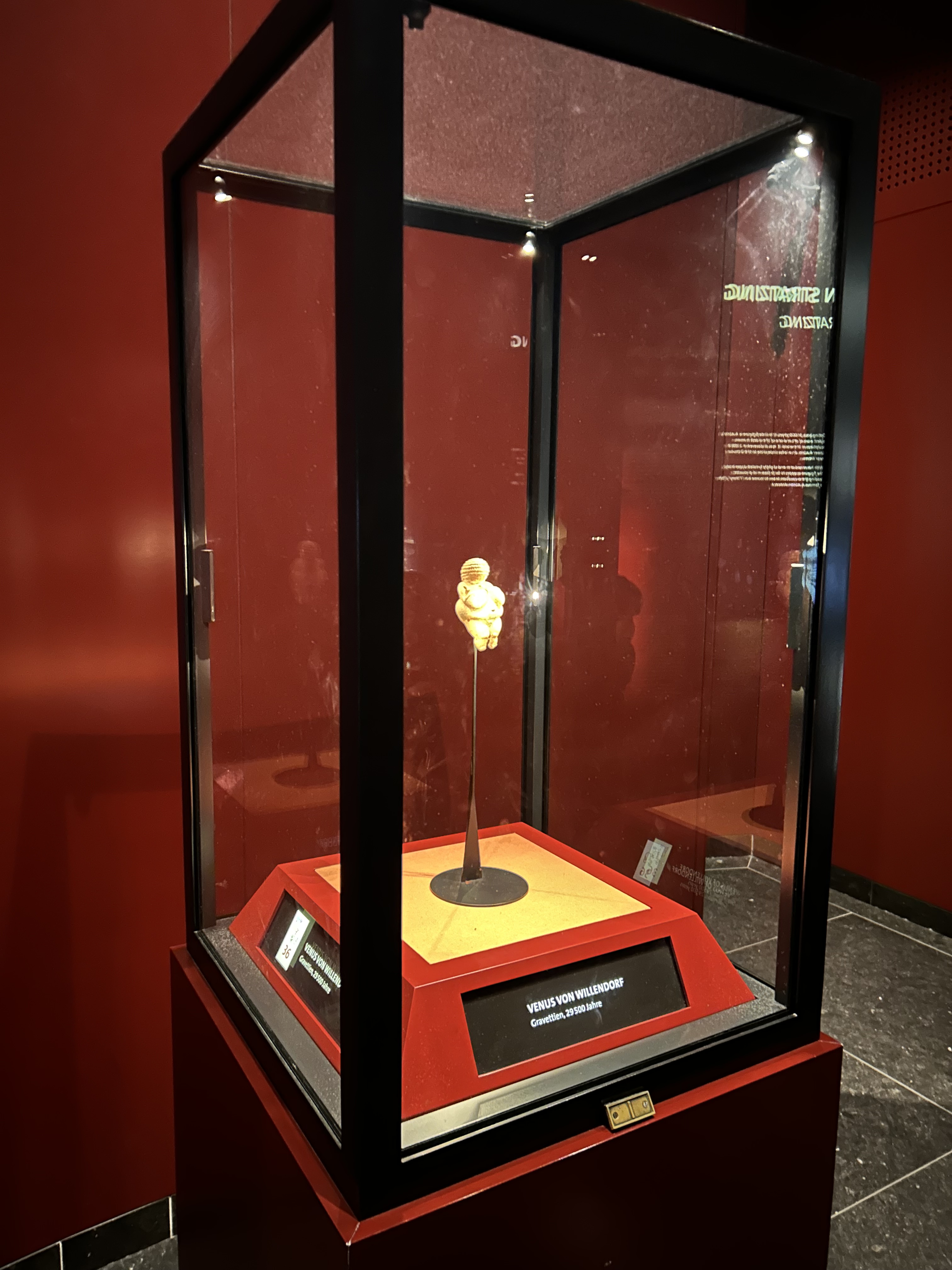
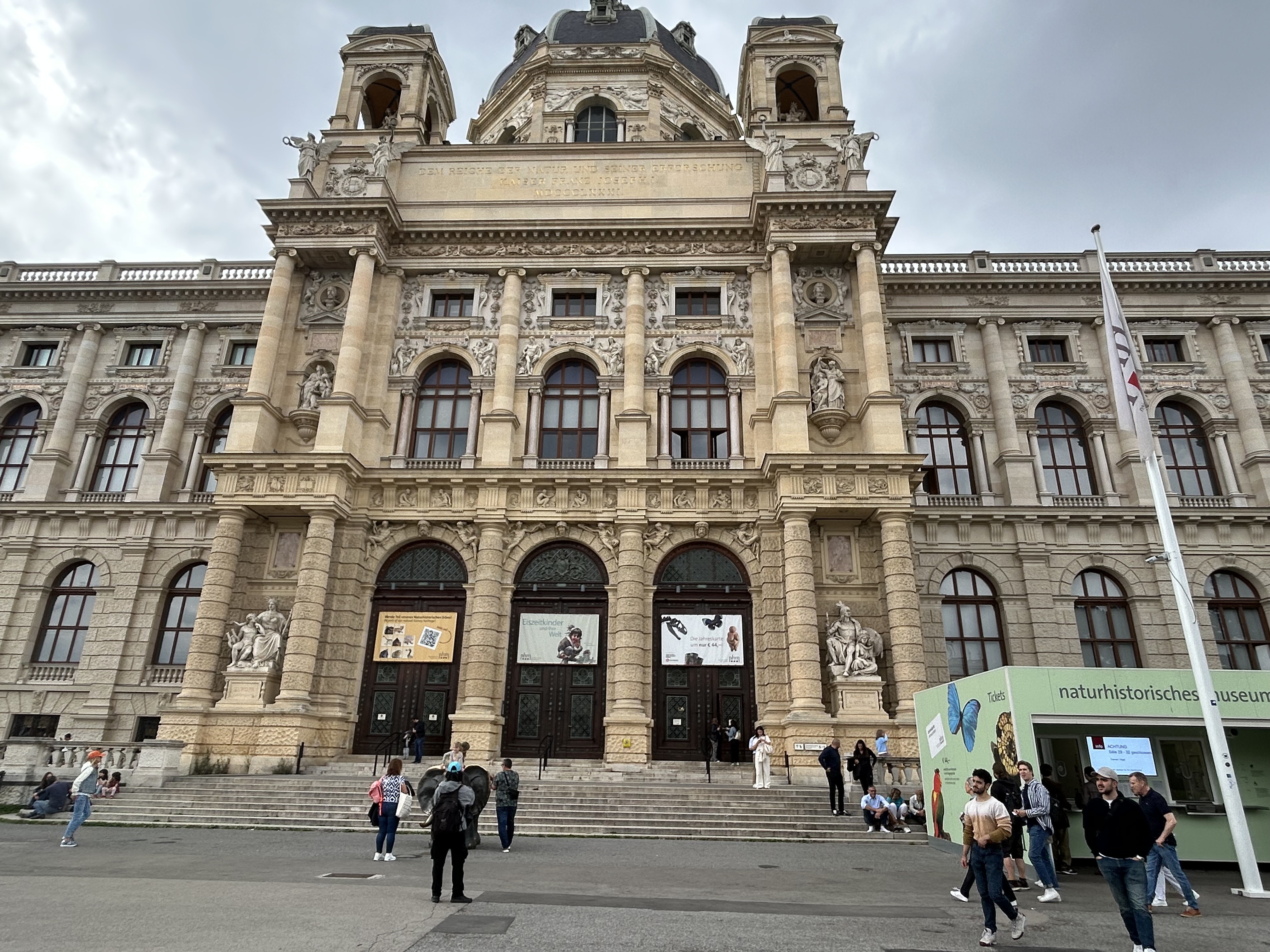
Turns out, the Venus of Willendorf is there. For a museum nerd I don’t tend to visit that many museums when I travel, but the Venus of Willendorf is famous enough (there’s even a cast of the original here at the Peabody) and I am nerd enough for that to justify seeking her out. This meant dragging my friend to the Naturhistorisches Museum Wien.

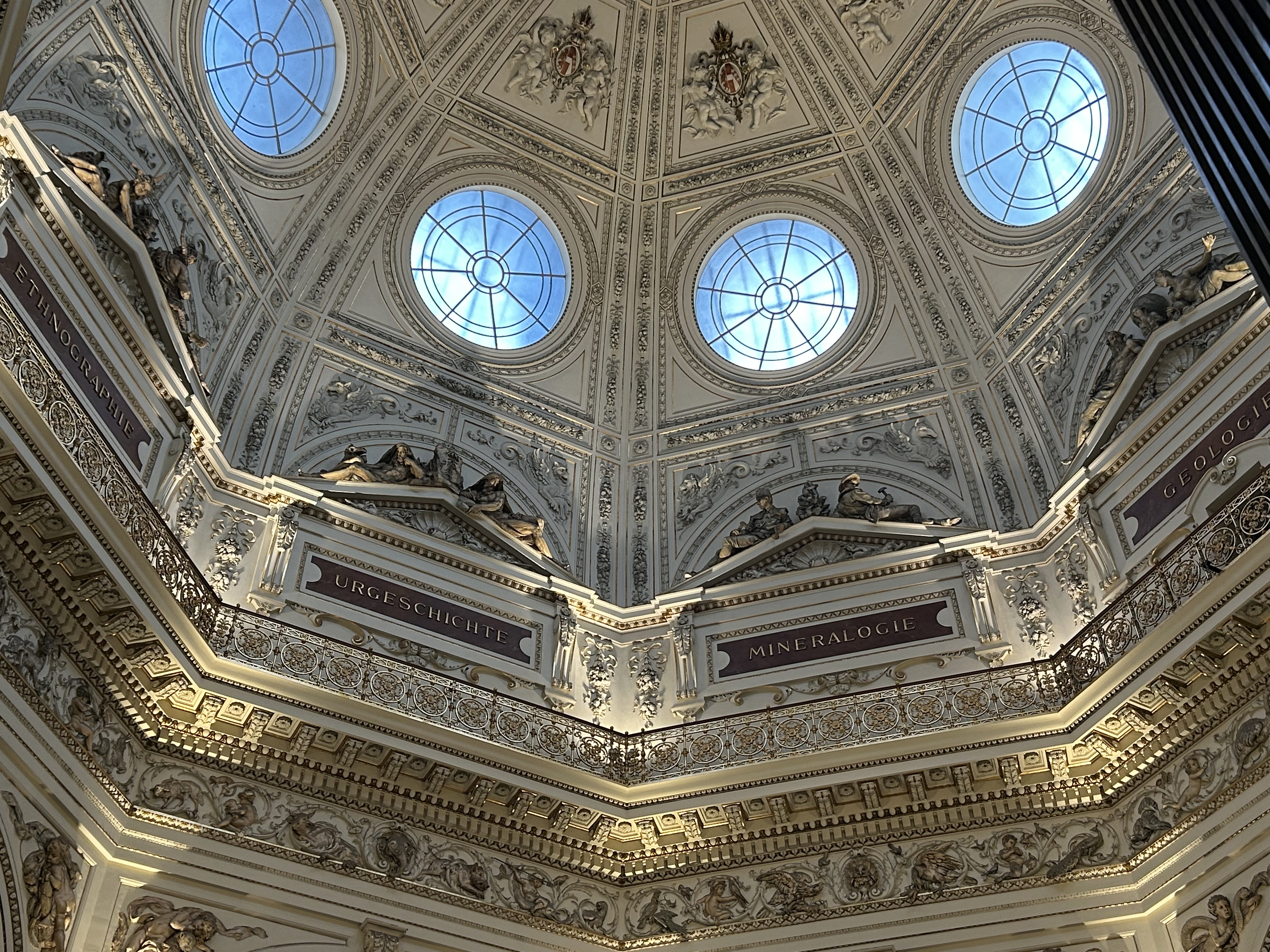
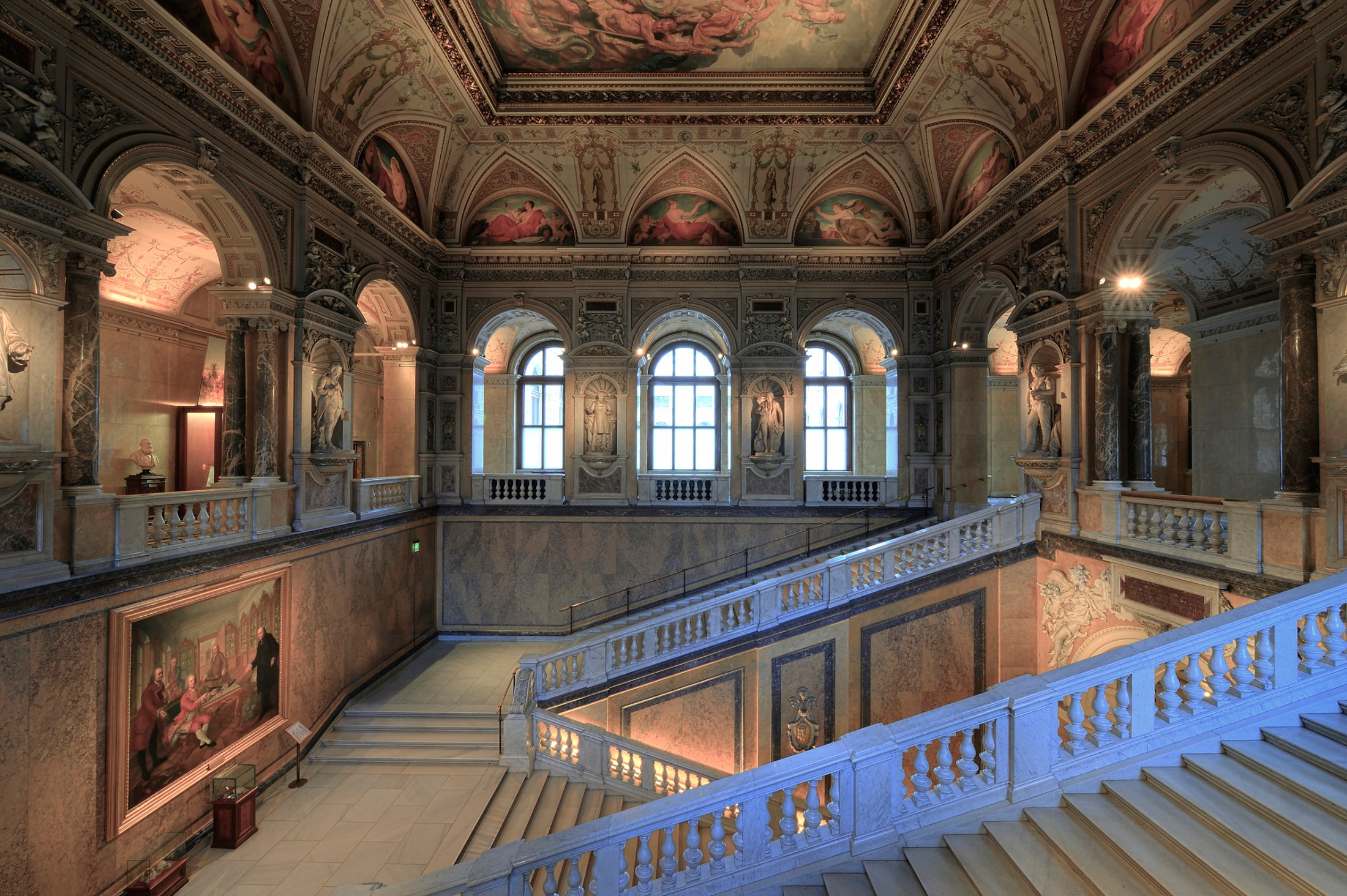
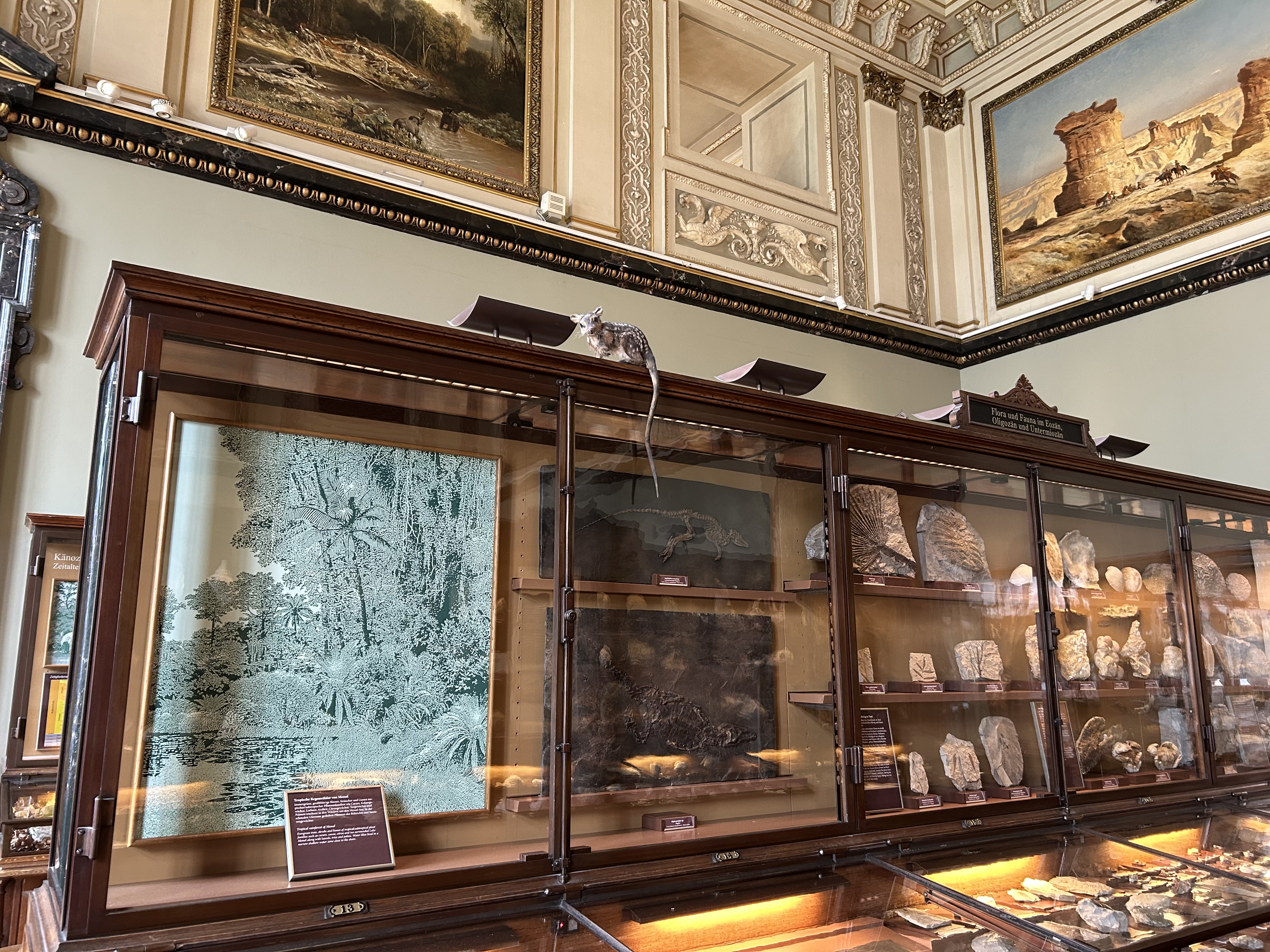
If you had asked me beforehand what I expected of the place, I’m not sure what I would have said. I’m familiar enough with the broad-strokes histories of museums and their ties to imperialism: As nations started to push further and further out into the world during the Age of Exploration, voyagers brought back evidence of their encounters with new environments in new places, creating displays that combined minerals, plants, animals, and man-made “curiosities.” These collections offered opportunities for viewers to learn about the world, as centered by their home locations, but equally they offered opportunities for displayers to demonstrate their status and wealth, the power of their influence and access – not just how they saw the world but how they wanted others to see them in it. If you look for it, this history is written into the architecture and design of museums, and I have been academically trained to look for it. So maybe if you had asked me beforehand what I expected of the Naturhistorisches Museum I would have said “nothing new.”

Reader, I was wrong.

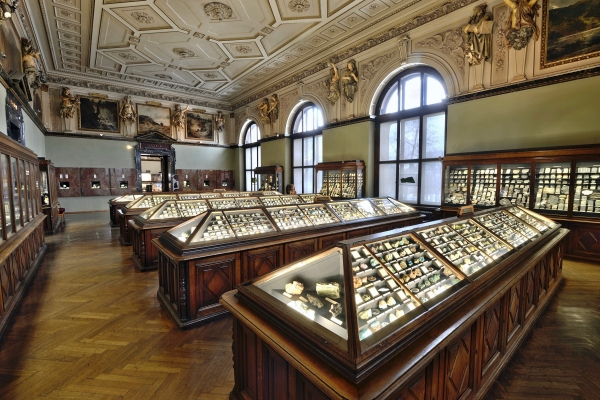
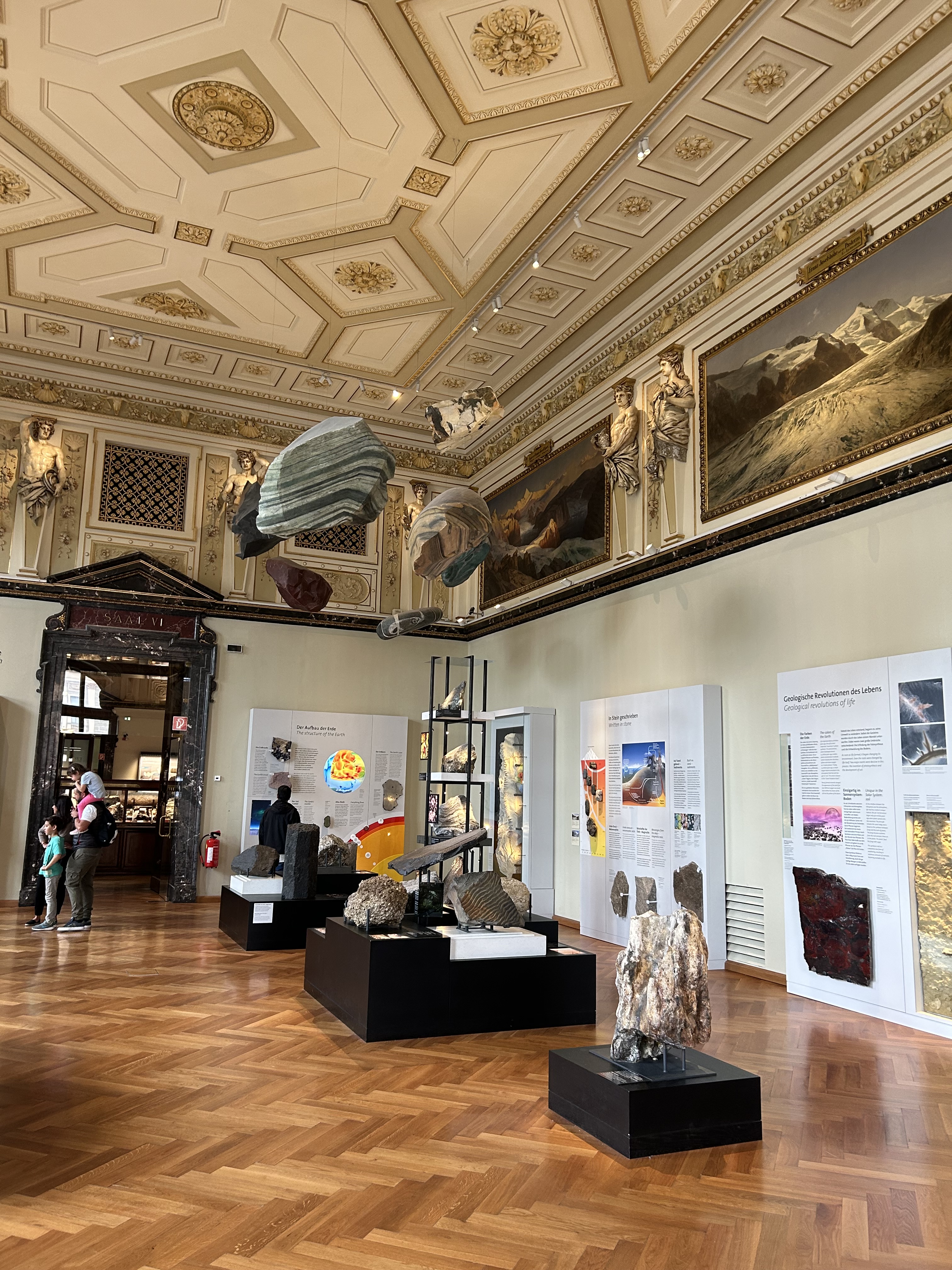
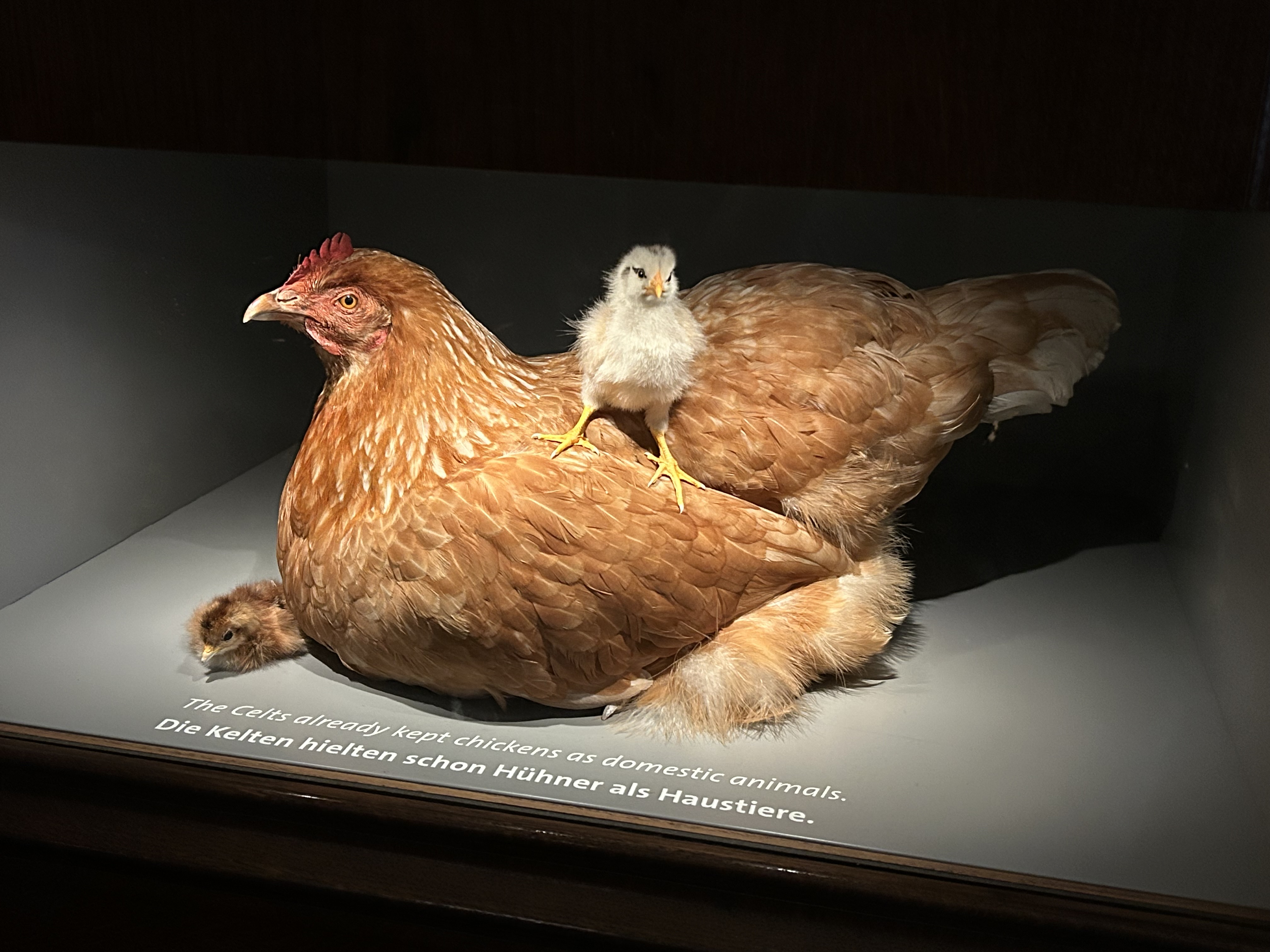
This place was every piece of museum history I had ever learned, jacked up on steroids. It was everything I had been taught to expect dialed up to a ten, with a little extra more thrown in just for fun. It was contemporary best practice crammed into 19th century display cases surrounded by imperial displays of awe and wonder, and I was there for every moment of it. Just please don’t ask me much about the exhibits themselves! I was far too distracted to notice.

Neither my photos nor even the museum’s does this place justice. Try exploring a bit more with some select collections, online exhibits, or a virtual tour.
New Mexico Adventures

Contributed by Marla Taylor

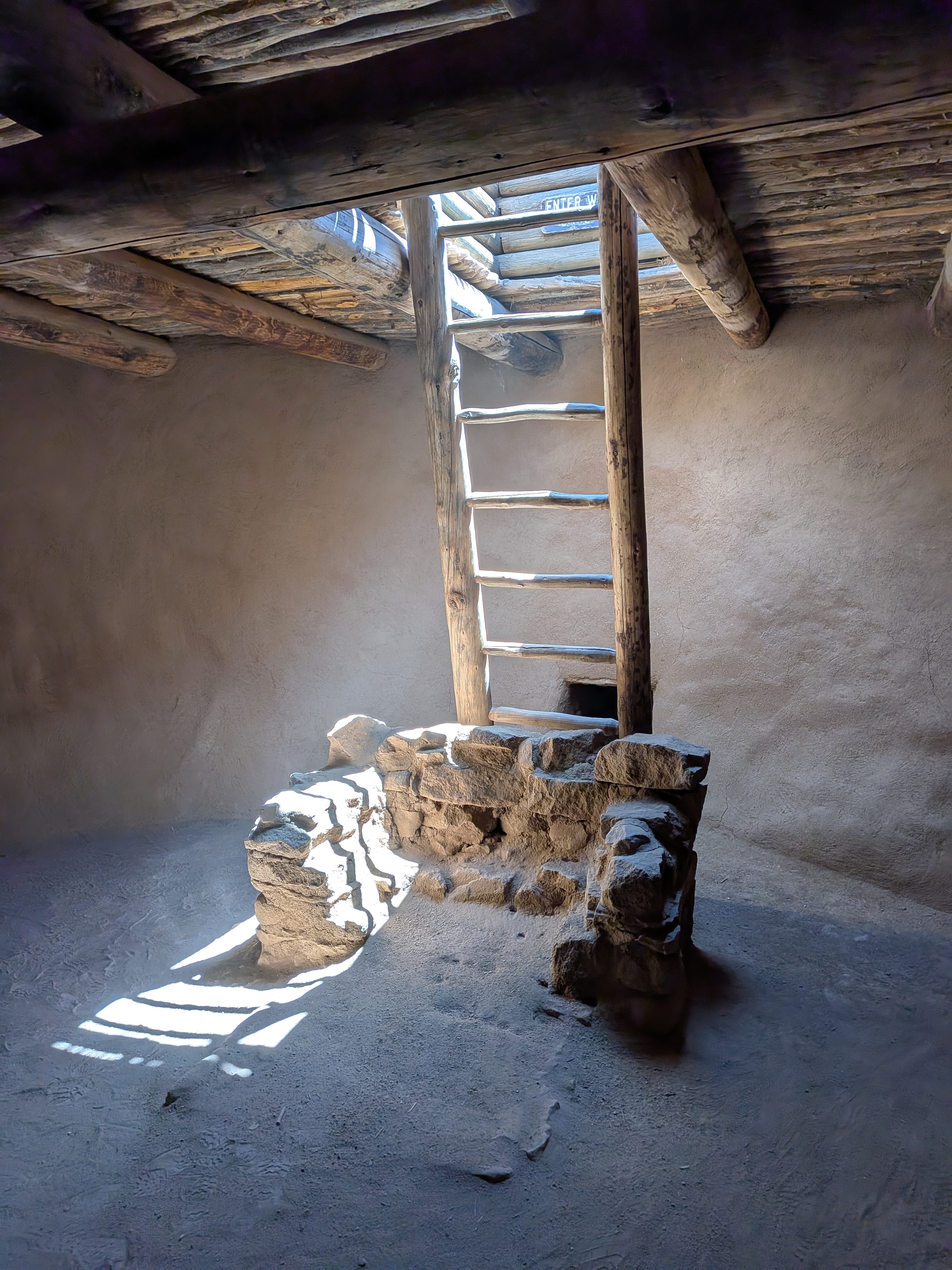
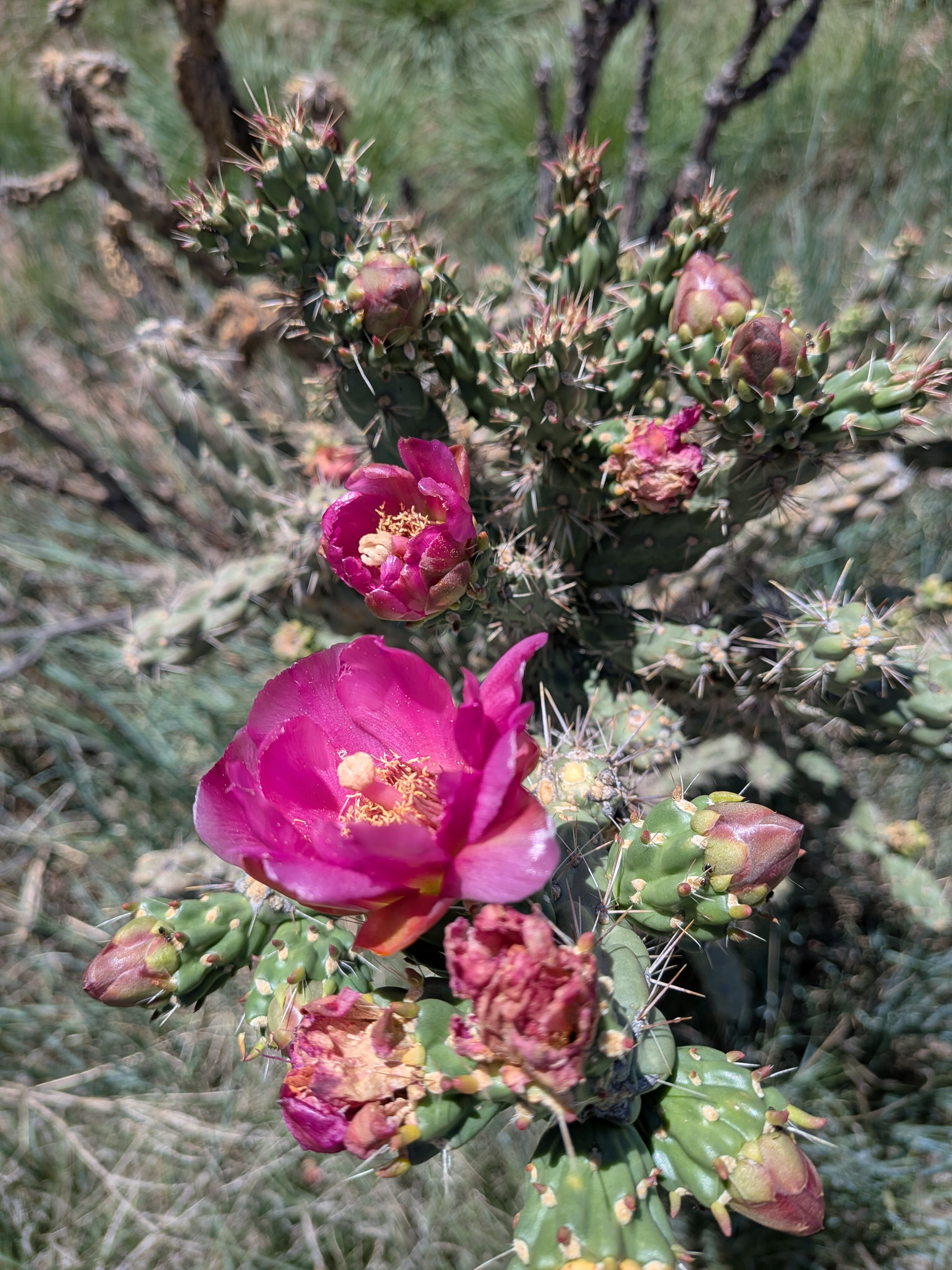
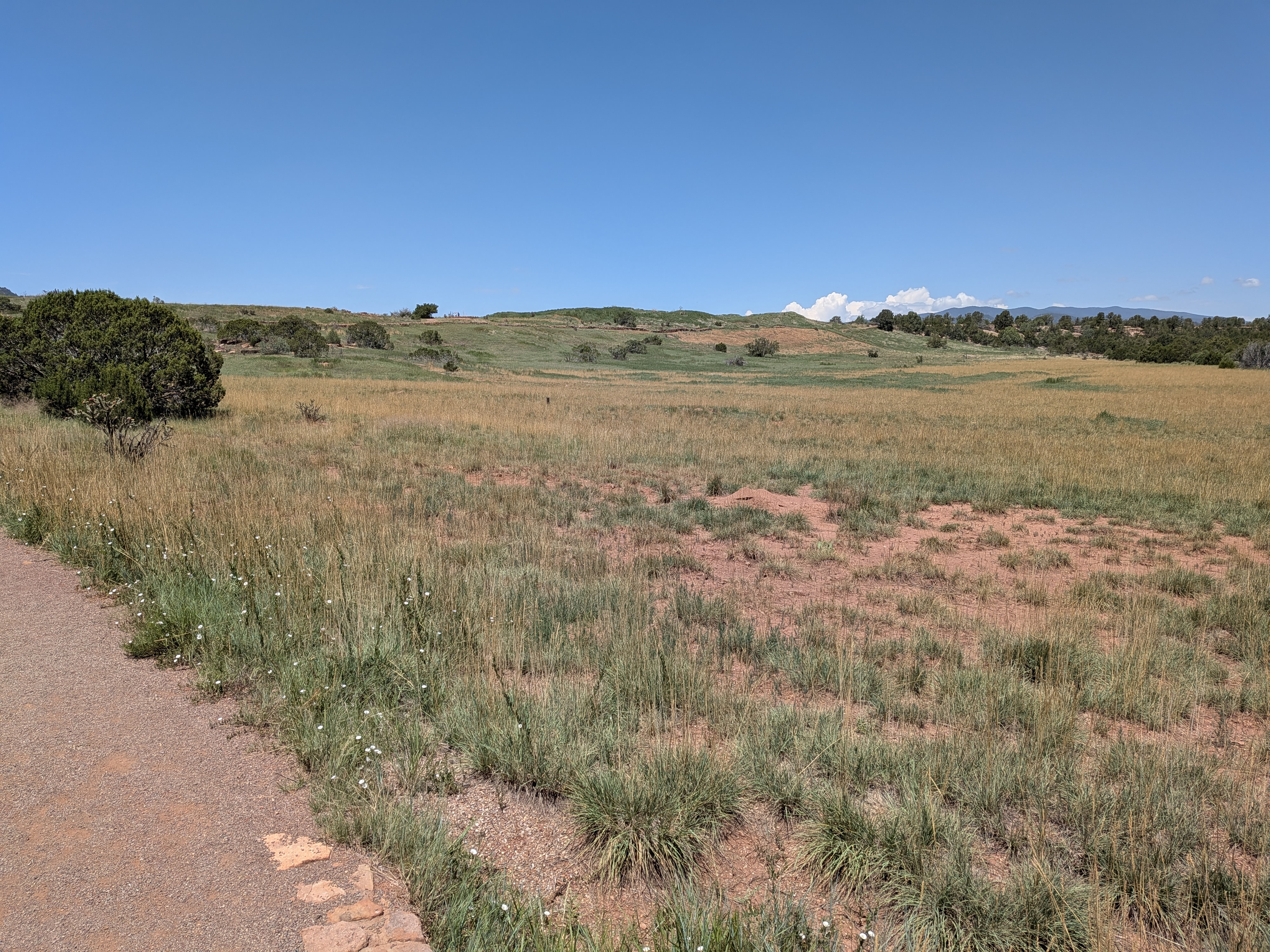
Did you know how beautiful New Mexico is?  I had the opportunity to travel to the Albuquerque and Santa Fe areas this July and can definitely recommend making the trip.

The Peabody Institute actually has a long relationship with New Mexico.  In the 1920s, Alfred Kidder excavated Pecos Pueblo on behalf of Phillips Academy (what is now the Peabody Institute).  The ripple effects of that work included repatriation work with the Pueblo of Jemez, a long-term loan with the Pecos National Historical Park, inter-institutional collaboration, relationships with Jemez artists, and incredible learning opportunities for the students at Phillips Academy. 

While I had been to the Pueblo of Jemez before this summer, I had not had the opportunity to see the Pecos archaeological site or Pecos National Historical Park before.  It was truly a pleasure to experience the site in-person and get an understanding of how Pecos sits in the landscape.  I was also able to view their wonderful exhibit, spend time with the Museum Curator to view the collections on loan from the Peabody, and meet several dedicated park staff members.  I am grateful for the opportunity to spend that time with them all.

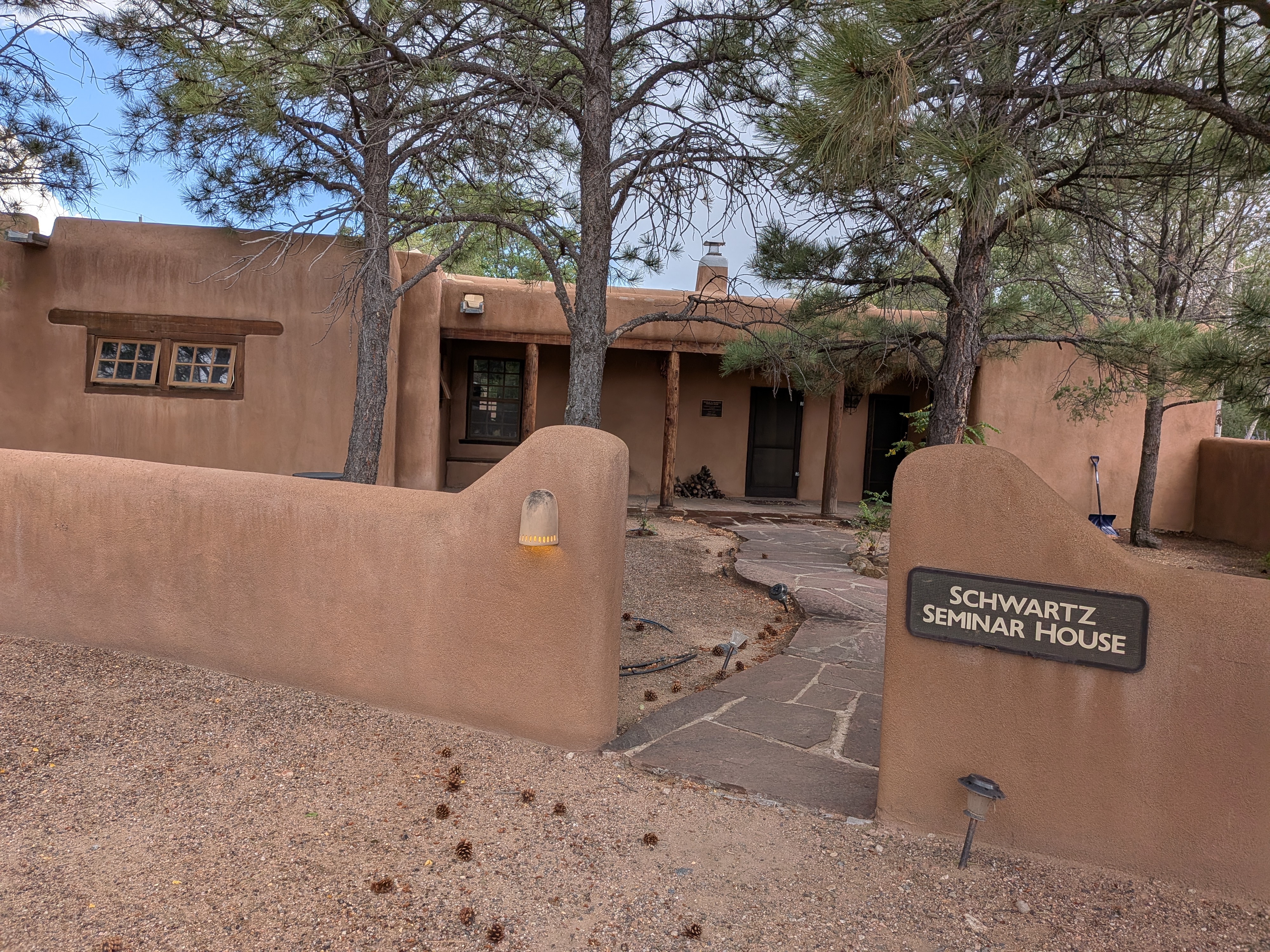
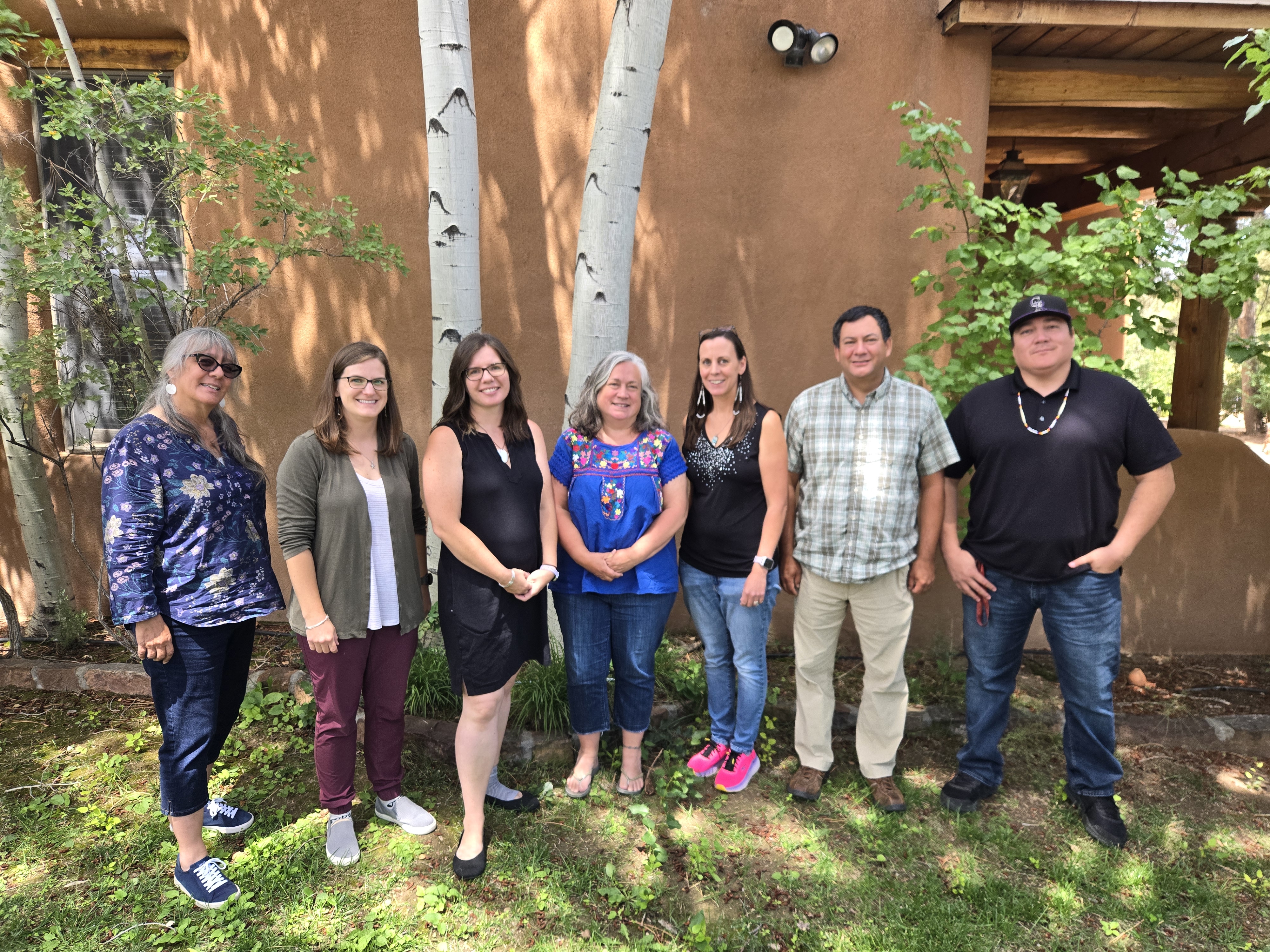
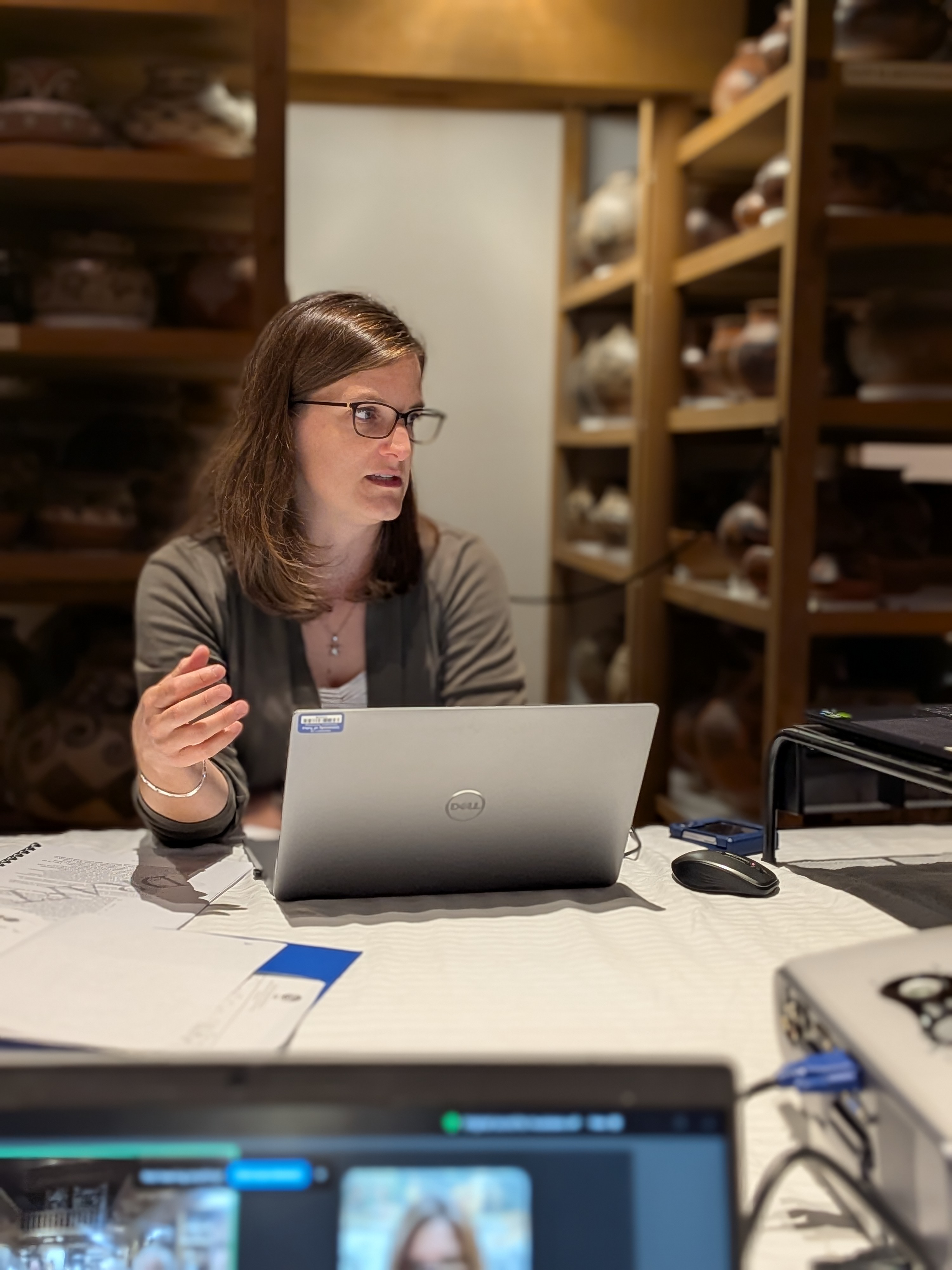
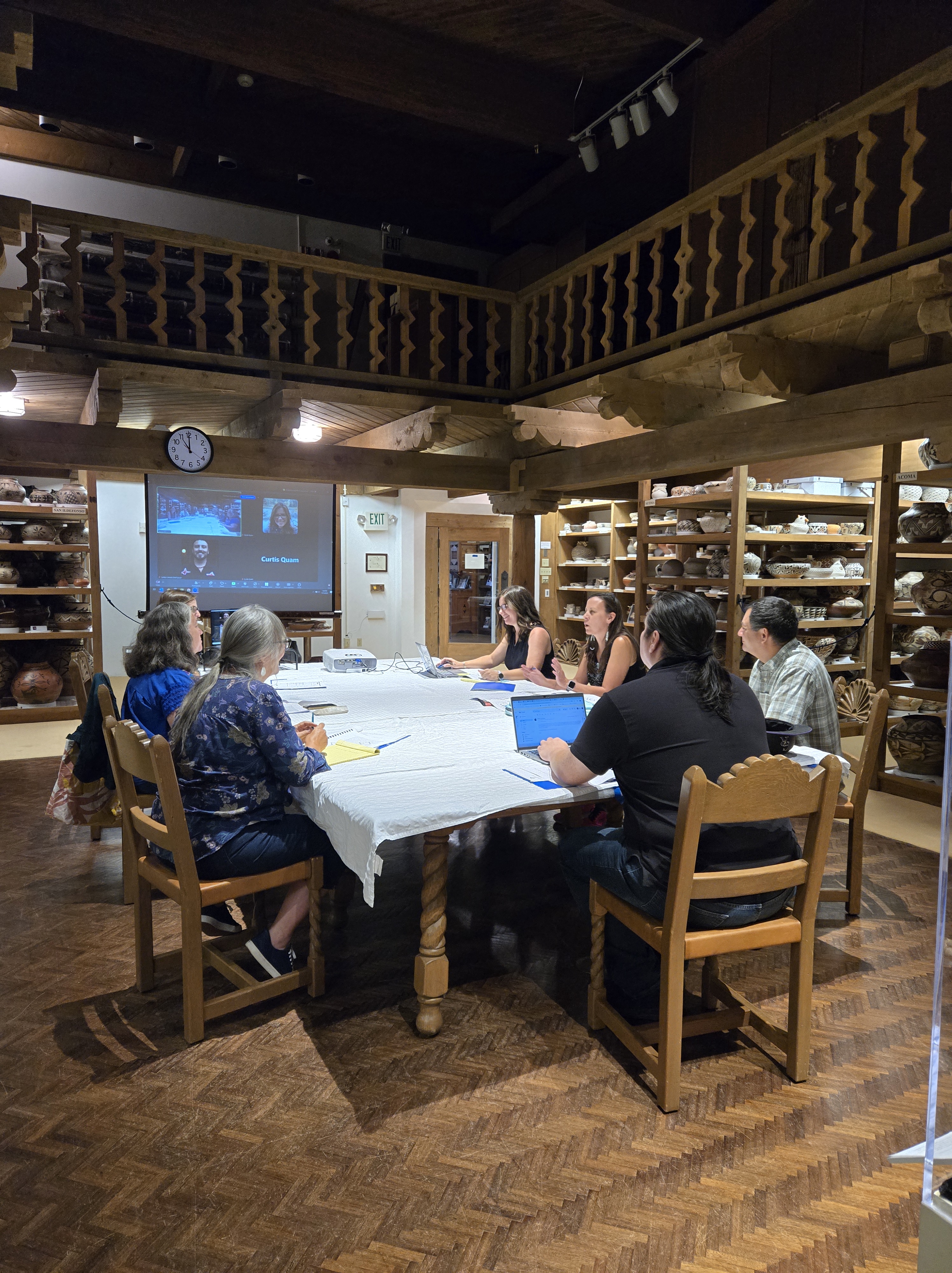
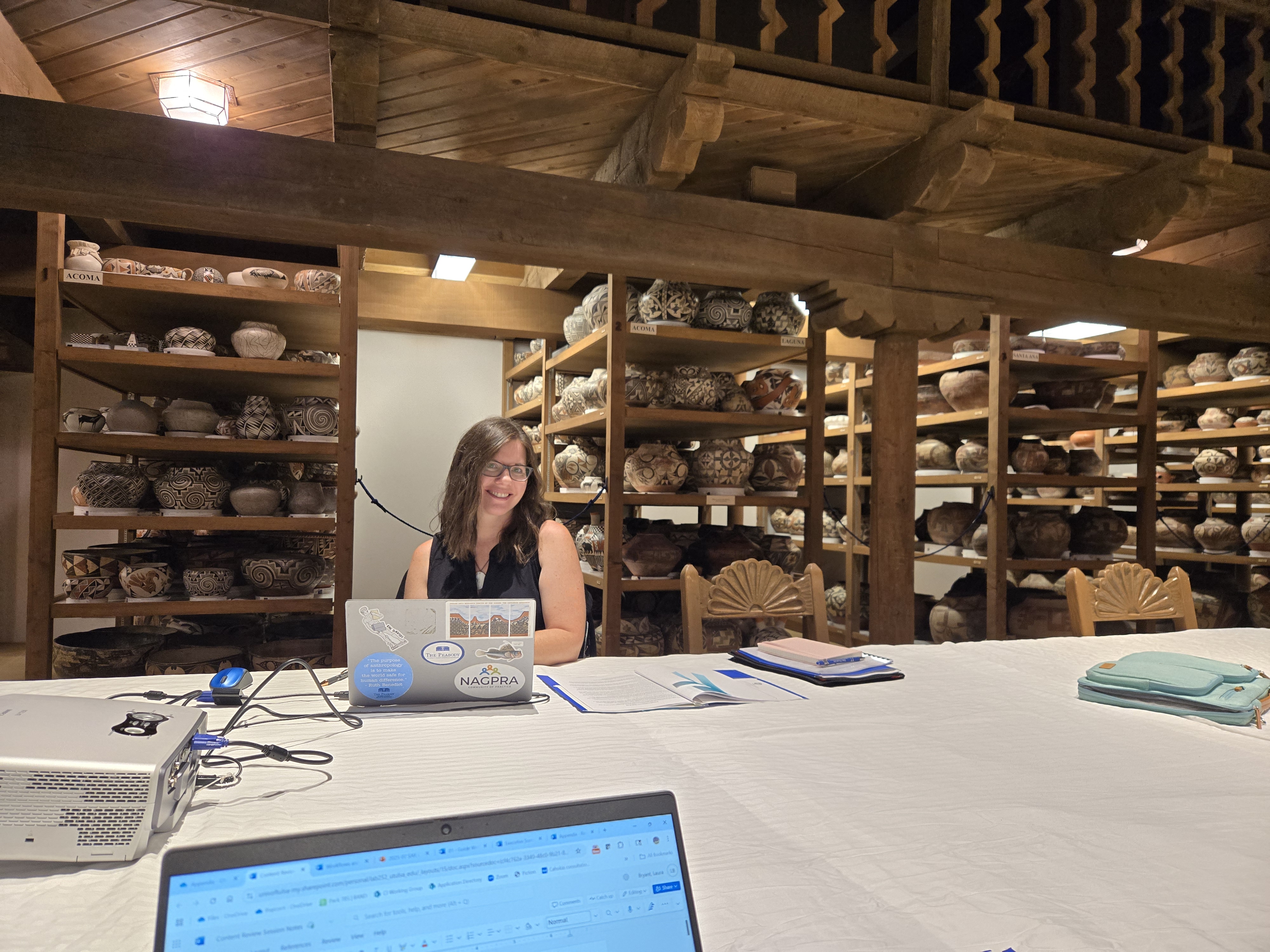
After my time at Pecos, I went to the School for Advanced Research in Santa Fe to facilitate the final review session of the Indigenous Collections Care (ICC) Guide.  This is a project that I have been working on for awhile and it was excited to be entering the final stages.  Although the review session had to be rescheduled due to complications with our IMLS grant, we had a wonderful group of people to discuss the ICC Guide and help us move forward into the final stages of development.

The ICC Guide provides a framework to respect and recenter collections stewardship practices around the needs and knowledge of Indigenous community members. The Guide speaks to individuals engaged in collections stewardship within museums and collecting institutions.  It is aimed specifically at museum professionals, emerging and established, and individuals who are seeking clarification, support, and validation to pursue culturally appropriate care.

Next steps are to send the Guide out for copy-editing and graphic design.  A final version will be ready to be shared in the summer of 2026.

My time in New Mexico was amazing and I hope you can visit there sometime soon!

Red Sox 2025 Native American and American Indian Celebration

Contributed by Ryan Wheeler

Early this summer we learned from our friend and colleague David Shane Lowry about the Red Sox Native American & American Indian pride night at Fenway—purchasing tickets for the game on August 6 included a Native theme jersey, with some proceeds supporting Native American Lifelines.

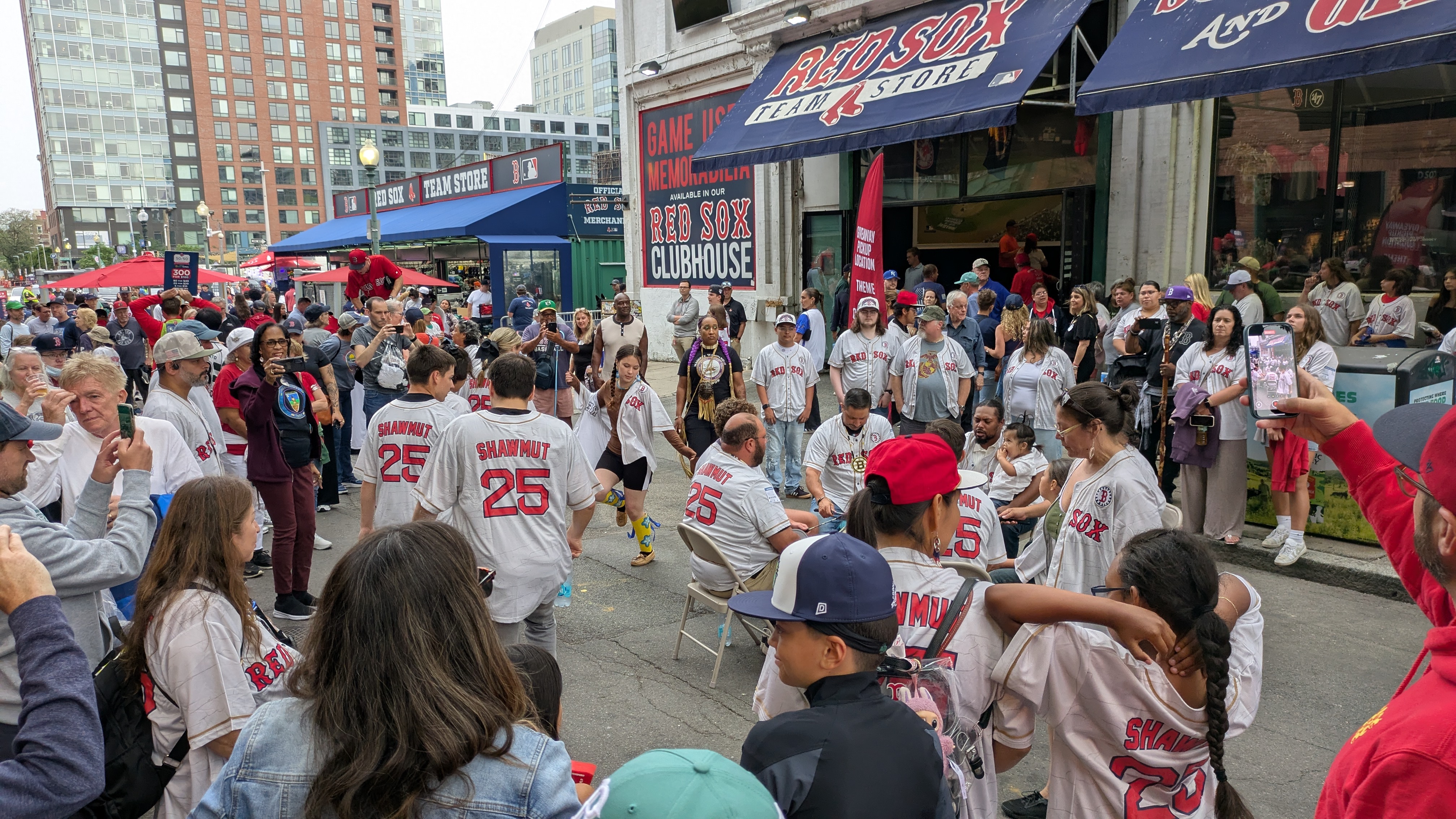
Fans wearing their Shawmut jerseys enjoying the drum circle before the game on August 6, 2025.

According to the Red Sox website, “The jersey design is inspired by Eastern Woodland ancestors whose names were once known, and contemporary Native artists Sage Carbone and Brittney Walley. The back of the jersey features “Shawmut” on the name plate, derived from the Algonquian word “Mashauwomuk” which refers to present-day Boston.”

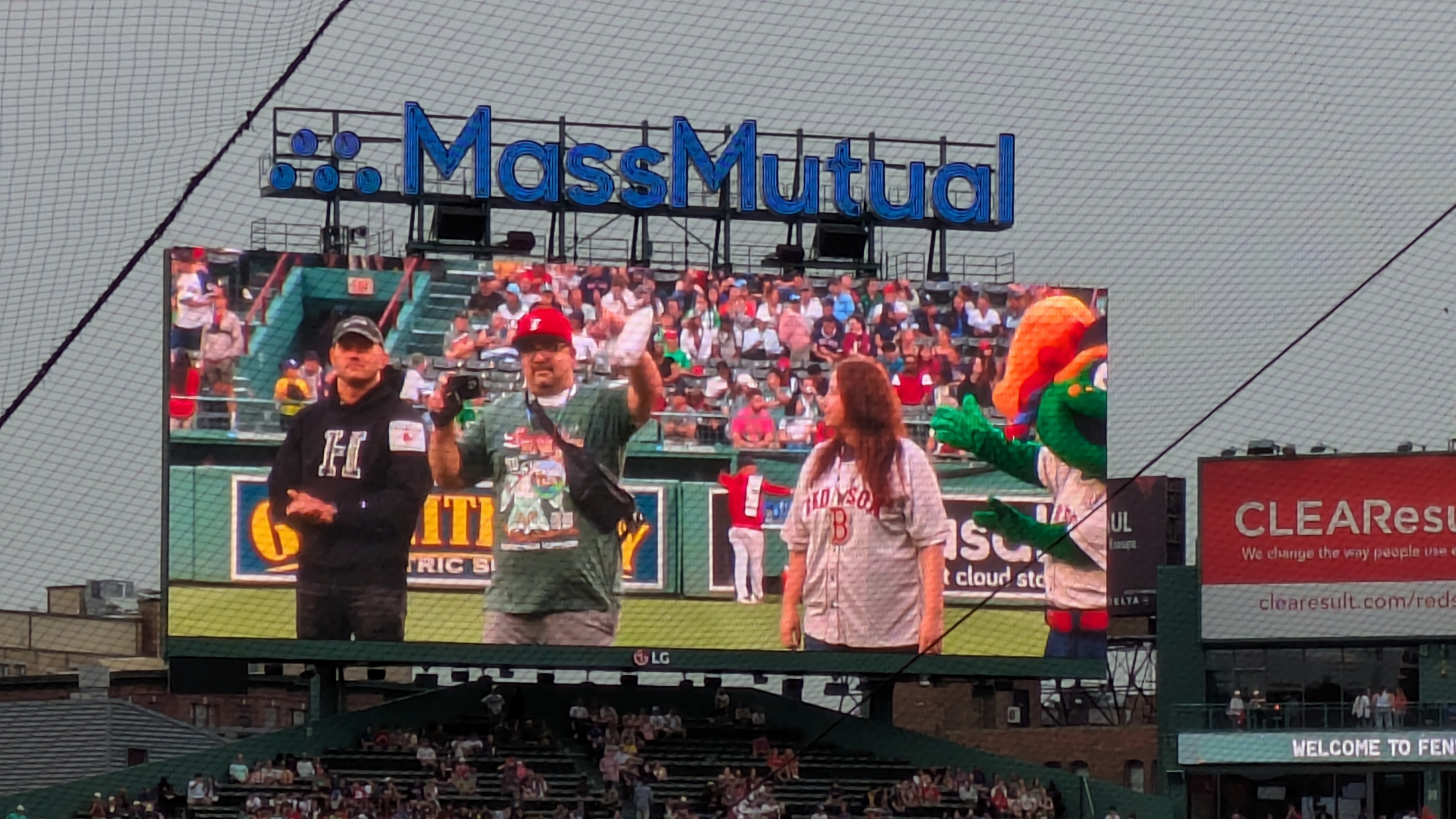
Along with the jersey, which my son and I were excited about, pre-game activities included a drum circle and on-field recognition of about 30 local Native American leaders and educators.

Recognition of Native leaders and educators before the game–David Shane Lowry waves to the crowd.

It was a good game against Kansas City, despite a rare Red Sox loss this season. The Native theme night got me wondering about Native Americans and the Red Sox, and baseball in general—beyond Jim Thorpe.

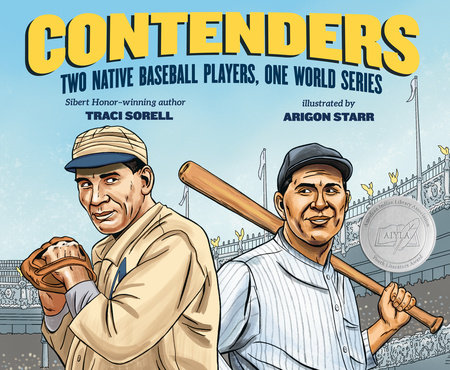
After a little research, I learned a lot—for example, recently Traci Sorell and Arigon Starr published a graphic novel Contenders: Two Native Baseball Players, One World Series, which tells the true story of John Meyers and Charles Bender, who in 1911 became the first Native baseball players to face off in a World Series. There’s a great academic article by Jeffrey Powers-Beck that explores the history of Native Americans and baseball, which begins with Louis Francis Sockalexis in 1897—decades before Jackie Robinson broke the color-barrier in MLB. About 50 Native American tribal citizens who have or continue to play baseball, as well as many others with Indigenous heritage—Baseball Almanac has a list: https://www.baseball-almanac.com/legendary/american_indian_baseball_players.shtml

Cover art from Contenders: Two Native Baseball Players, One World Series, the true story of John Meyers and Charles Bender, who in 1911 became the first Native baseball players to face off in a World Series.

Charlie Vascellaro’s 2012 article The Real Indians of Baseball explains that Indian boarding schools—including the infamous Carlisle Indian Industrial School—added baseball to their curriculum and produced many of the Native American players in the minor and major leagues. As Tribes and families continued to resist forced removal of children and the boarding school era waned, fewer Native players joined MLB. Looking at the Baseball Almanac list, almost all Native players played games before 1950, with a minority playing since then. Many were nicknamed “chief,” and in some cases became the models for derogatory team names, like the Cleveland Indians (now the Guardians), inspired by Penobscot player Louis Sockalexis.

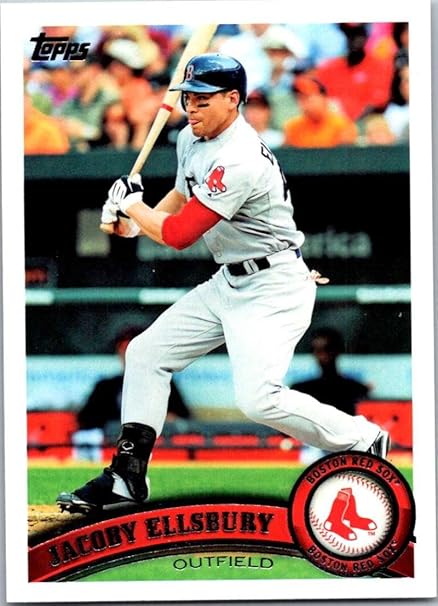
2011 Topps Baseball Series 2#351 Jacoby Ellsbury Boston Red Sox Official MLB Trading Card.

And what about the Red Sox? Well, I was delighted to learn that Jacoby Ellsbury played for the Boston Red Sox from 2007 through 2013. An enrolled member of the Colorado River Indian Tribes, Ellsbury is the first Native American of Navajo descent to play Major League Baseball. Jacoby Ellsbury played for the Sox in two World Series appearances, winning the championship in both 2007 and 2013. After signing with the New York Yankees, several injuries and a contract dispute sidelined Ellsbury in 2019. According to NDNsports.com, Ellsbury was recently elected to the Oregon State Athletics Hall of Fame—his home state—and despite some truly impressive stats and records, missed the 2024 vote for the National Baseball Hall of Fame.

We look forward to the next Native pride event at Fenway and wearing our jerseys to the next game. Play ball!

Further reading

Powers-Beck, Jeffrey. ‘Chief’: The American Indian Integration of Baseball, 1897-1945. American Indian Quarterly 25, no. 4 (2001): 508–38. http://www.jstor.org/stable/1186015.

Vascellaro, Charlie. The Real Indians of Baseball. American Indian Magazine 13, no. 2 (2012): https://www.americanindianmagazine.org/story/real-indians-baseball

Sorell, Traci (author), Arigon Starr (illustrator). Contenders: Two Native Baseball Players, One World Series. (2023). Kokila, https://www.amazon.com/Contenders-Native-Baseball-Players-World/dp/0593406478

A ‘Key’ Find at the Samuel Phillips Jr. Mansion House, 2025 Excavations.

Contributed by Katie Lincoln

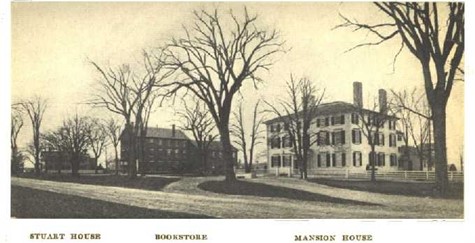
Almost every summer since 2016, young archaeologists from Phillips Academy’s summer session program embark on a mission to excavate the site of the eighteenth century Samuel Philips Jr. Mansion House, located on the West Quad of campus. The infamous Mansion House was built in 1782 by the academy’s founder and stood for 105 years, before burning down in 1887. News articles from the period suggest that the demise of the Mansion House was a result of arson; many speculating that the proprietor, Charles Carter, started the fire. During its long period of occupation, the Mansion House served as not only a home, but later an inn and tavern for students, community members, and travelers. The site’s long history and relatively undisturbed context creates an ideal setting for archaeological excavation and student learning.

Over the past seven years, students have succeeded in discovering portions of the house, including multiple chimneys and a basement feature. This year, students set out with high expectations, choosing to place four excavation units in spaces just outside of the Mansion and two units in the southwest portion of the quad, near the sites of historic outbuildings, a nineteenth century printing house, and an early nineteenth century pathway.

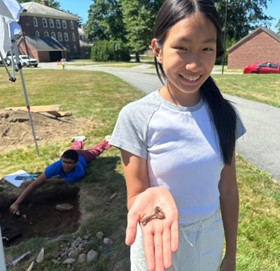
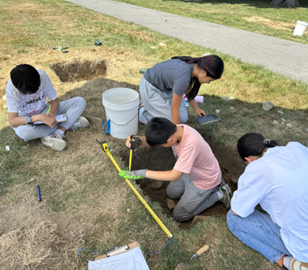
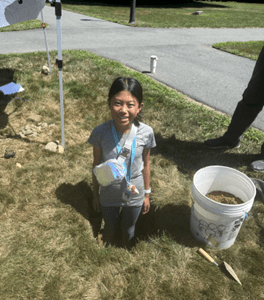
Students in each excavation team had a blast taking turns performing the primary tasks of an archaeologist: digging, screening, measuring, and note-taking. Many, if not all, students even got to unearth artifacts from their units! Some of our favorites included a small ferrous key, an impressed glass tumbler, and half a pair of scissors which all came from the two excavation units placed in the southwest portion of the quad.

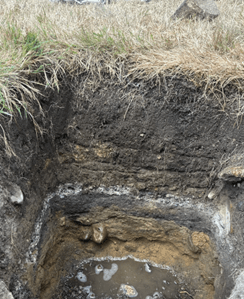
Further excavation in this area revealed a feature relating to the historic pathway present on early nineteenth century maps of campus. Pictured below is a dense, gravelly layer of soil discovered at 40 cm. This layer, interpreted here as the pathway, was intermixed with nineteenth century materials including glass, brick fragments, and some ceramic.

Students excavating the other four units in the northern portion of the quad found shallow cultural layers followed by a sterile C horizon, between 20 and 35 cm. While the artifact density of these units was limited, students still enjoyed finding an abundance of brick, metal nails, and some small ceramic fragments. The very shallow deposits found in these units informed the team that no building activity likely occurred in these areas. Additionally, the relatively low artifact density suggests that these areas were not regularly used like in a dooryard or garden area.

Overall, students in the 2025 field program successfully applied archaeological methods to ‘unlock’ more of the mysteries surrounding the Samuel Phillips Jr. Mansion House. This year’s field season serves to inform of the deep cultural deposits in the southwest portion of the quad and the significant research potential it could provide for future field seasons.

Thanks to the entire student field crew and cheers to a wonderful field season!