Wrapping up Peabody History

Contributed by Marla Taylor

Did you know that the building that houses the Peabody Institute was built between 1901 and 1903? Designed by well-known Boston architect Guy Lowell, the building was designed to be the home of the Phillips Academy Department of Archaeology. Over the past 120 years, the department has transitioned into the Peabody Institute.

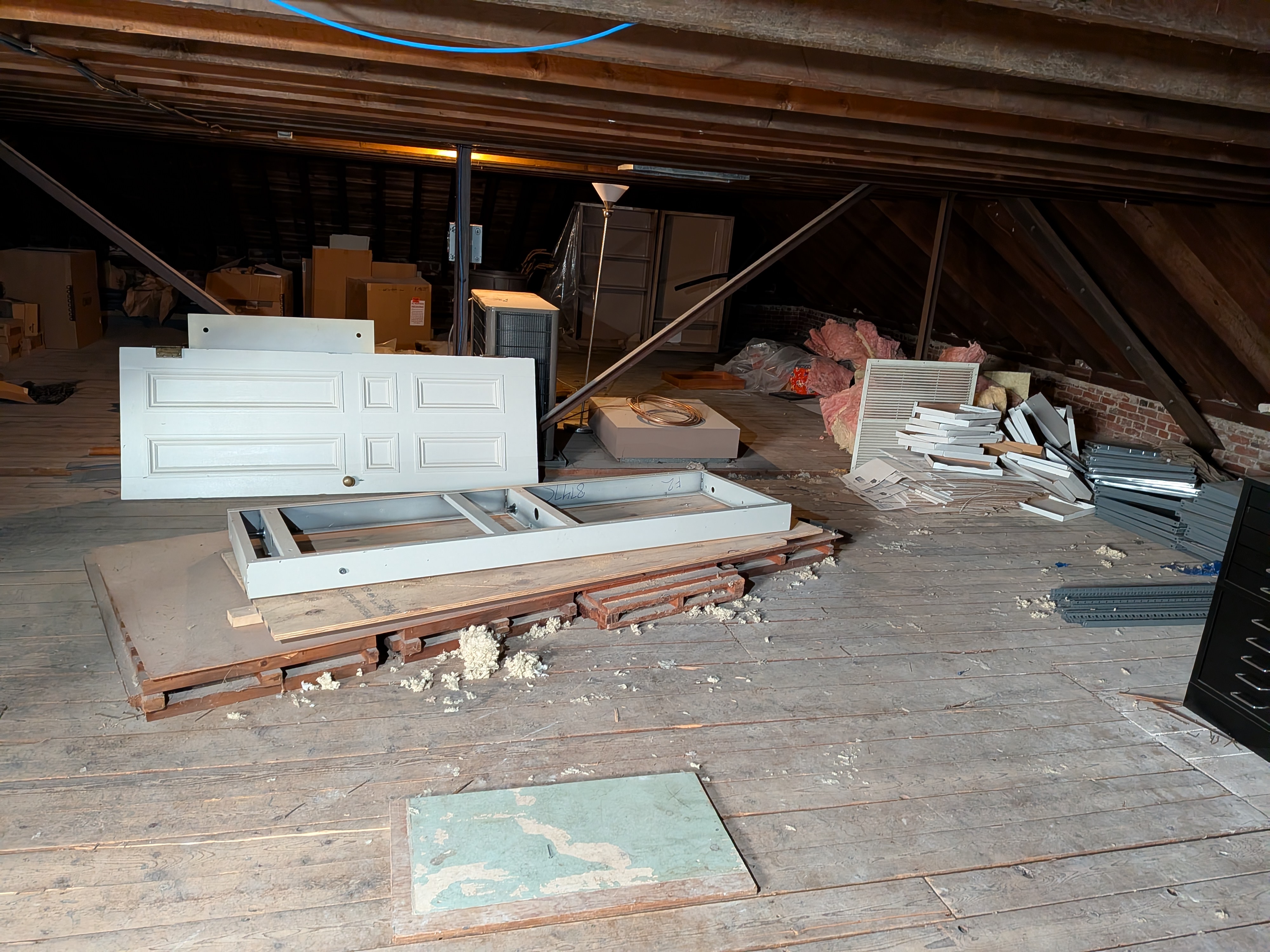
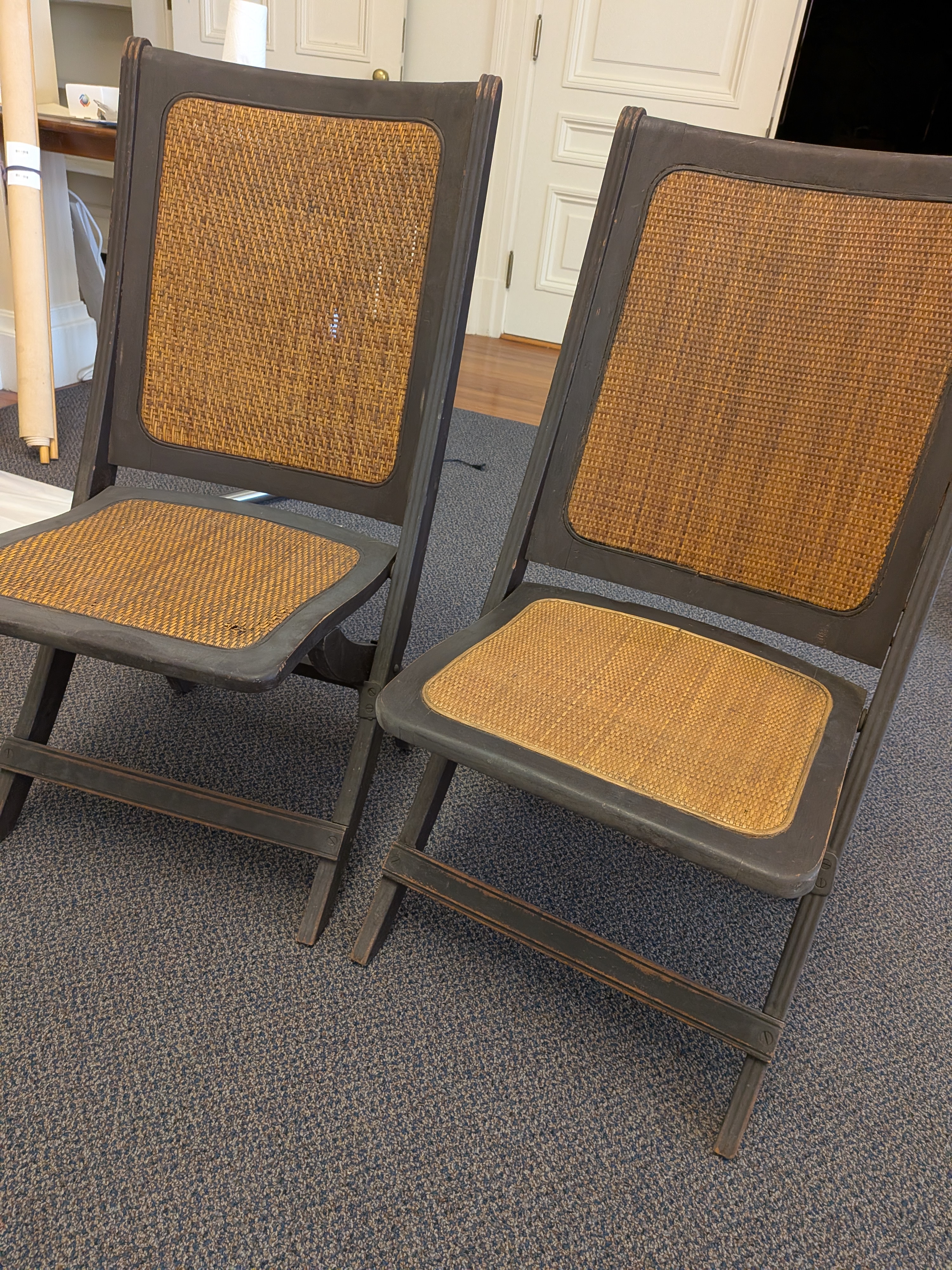
As anyone who has lived in the same house for a long time can attest – it is really easy to accumulate stuff (both valuable items and less-than-helpful clutter). Like a well-loved home, the Peabody certainly had its fair share of stuff that needed to be sorted and rehomed before the current building project could get underway. The best stuff had been kept in the attic.

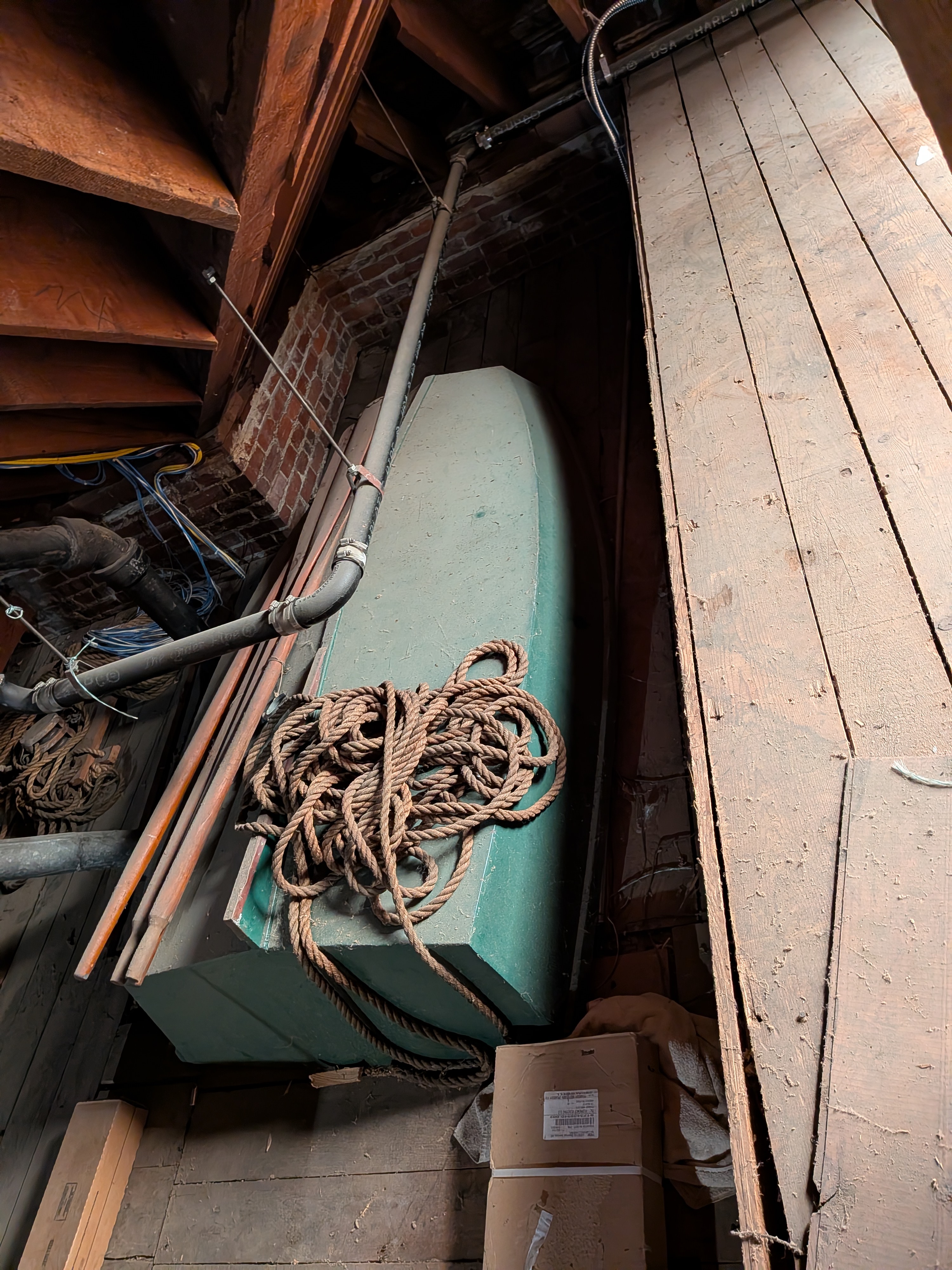
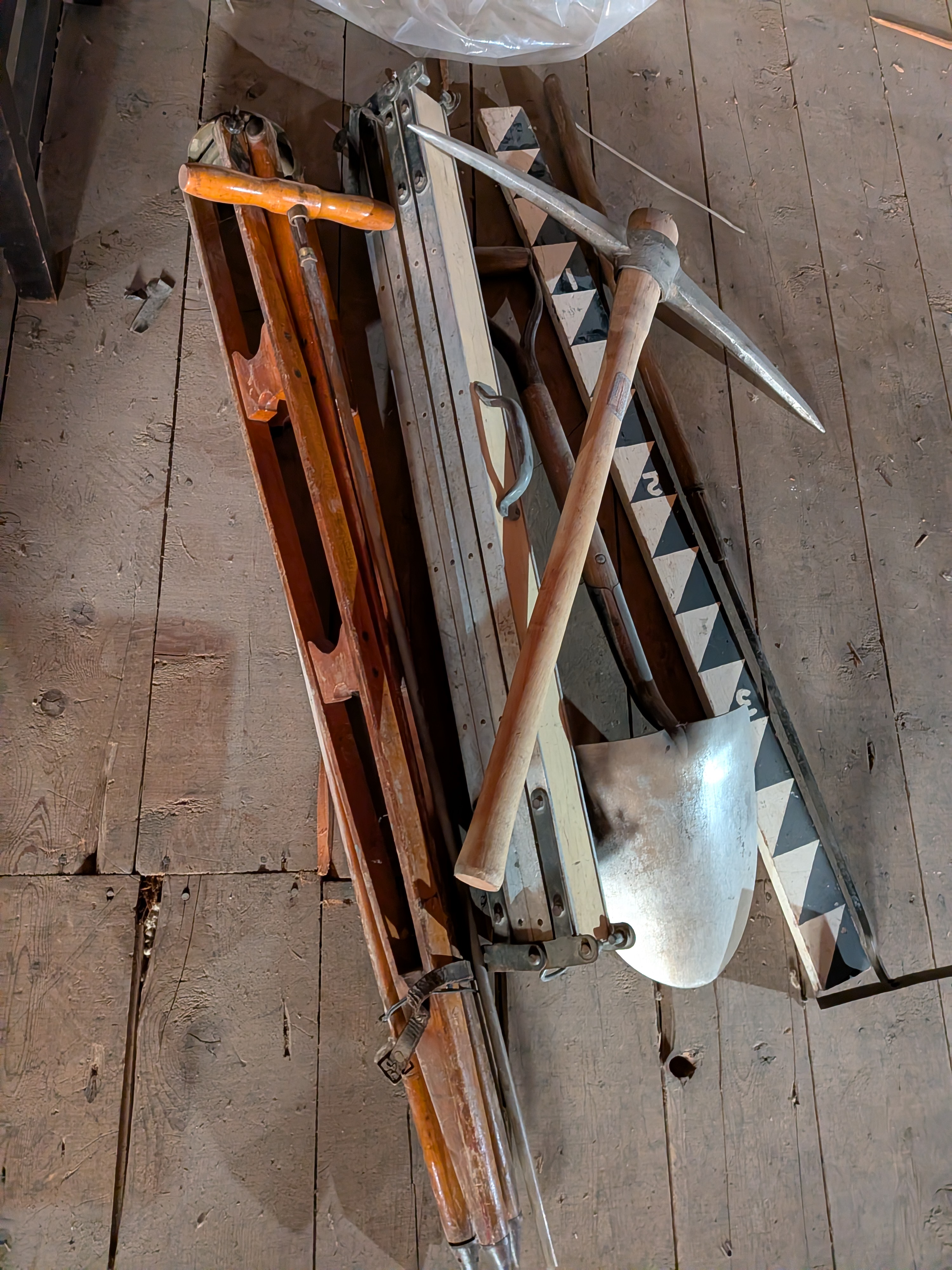
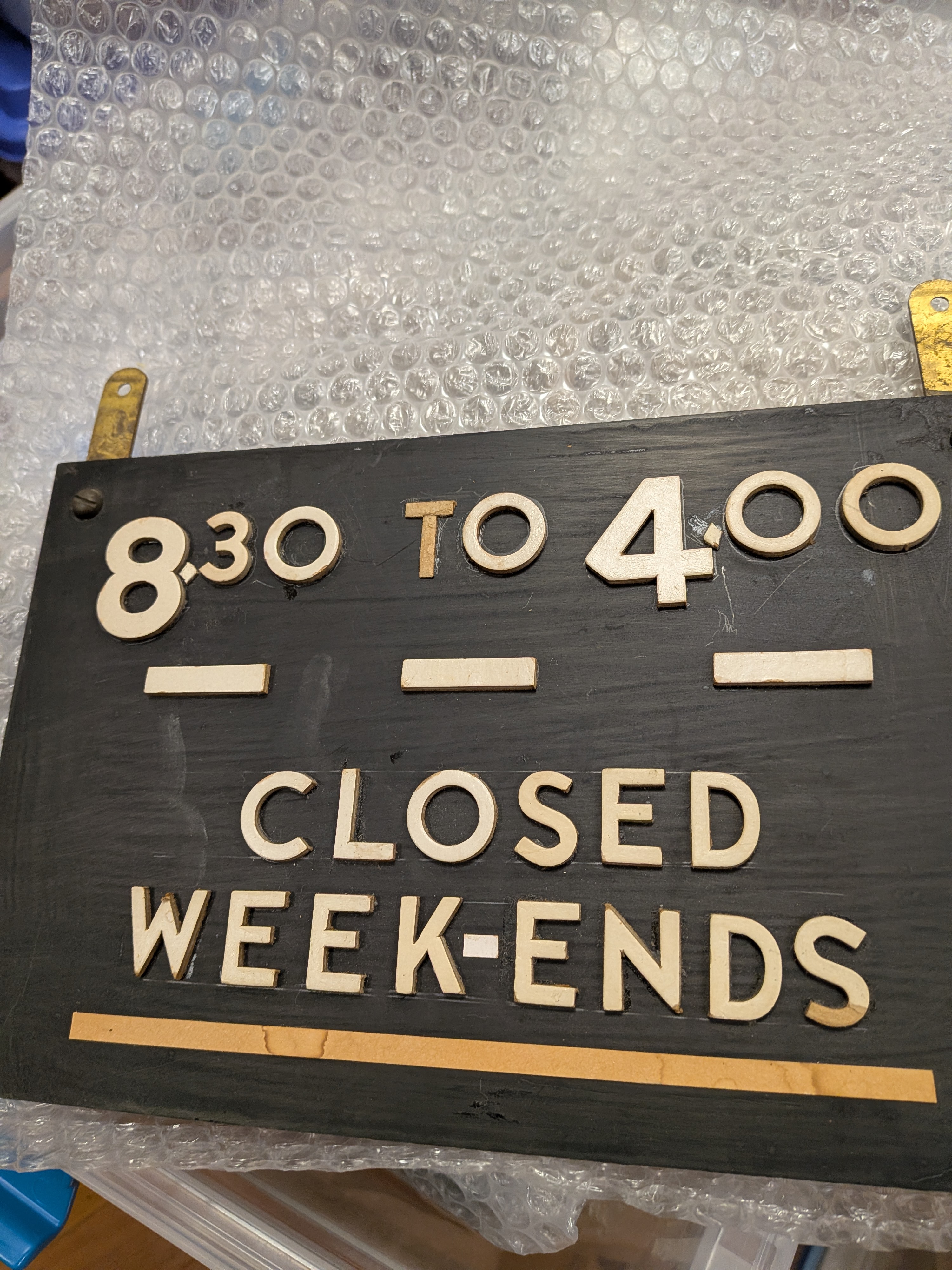
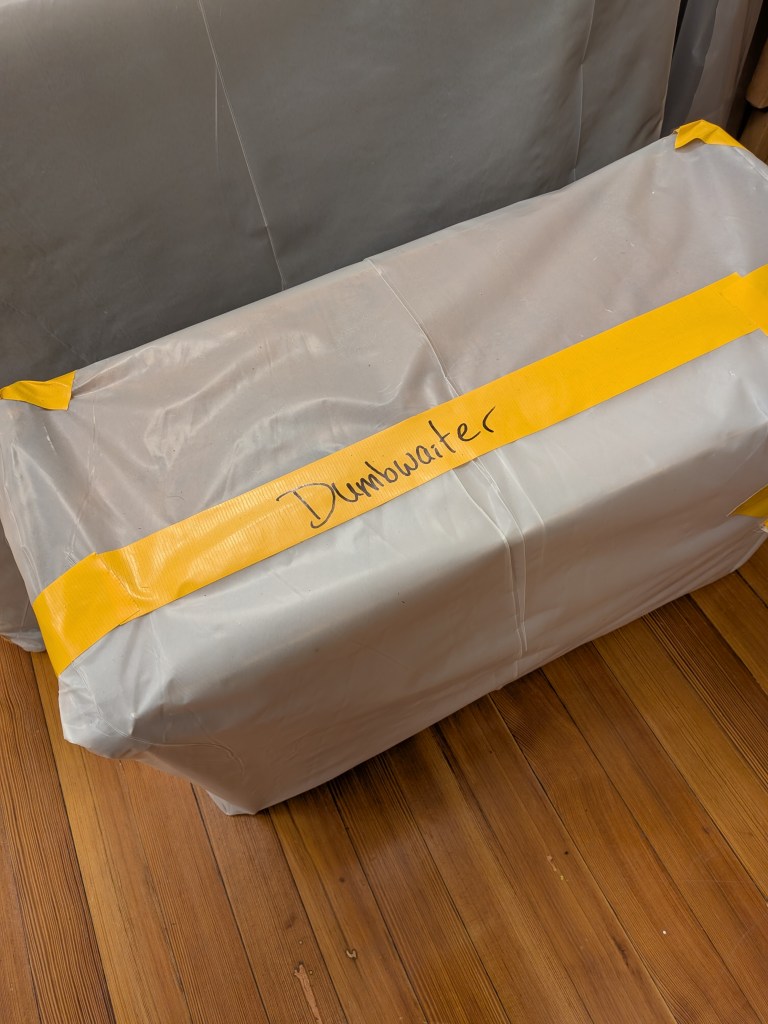
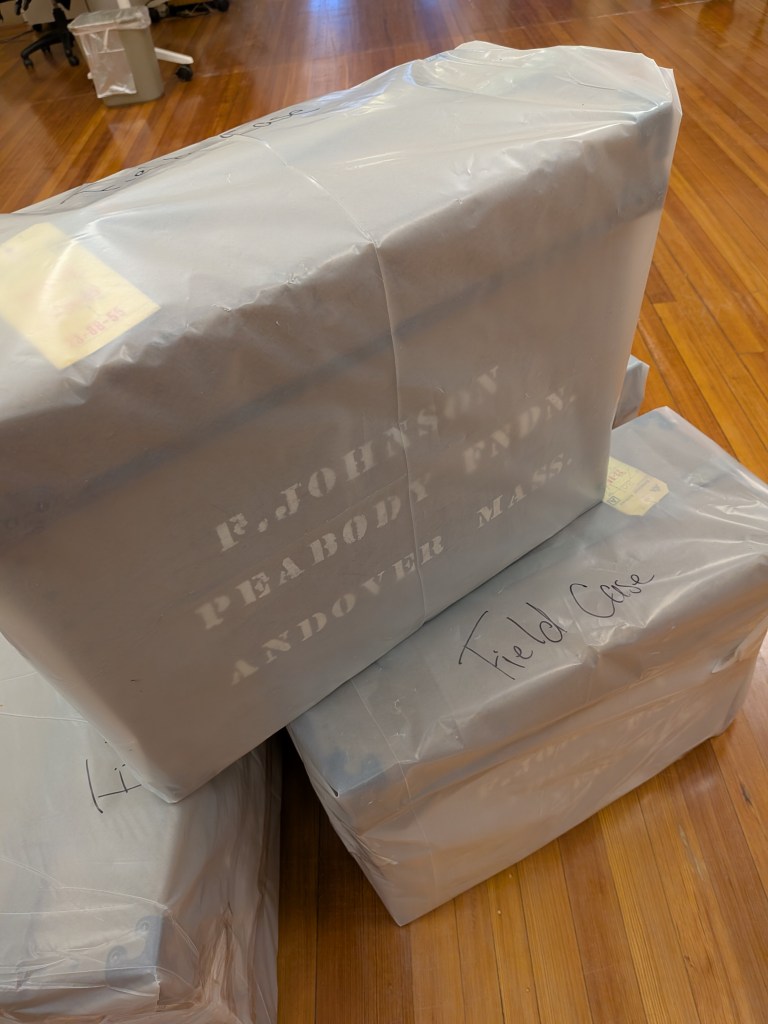
Attics always have a reputation (you know what I mean) and the Peabody’s attic is a special one. If you are over 5’6”, you better watch your head. The corners are as dark as you imagine. And yes, sometimes there are bats. However, there are also piles of old archaeological field equipment, a dumb-waiter, traveling trunks and some incredible pieces of institutional history that needed to be preserved before the building project.
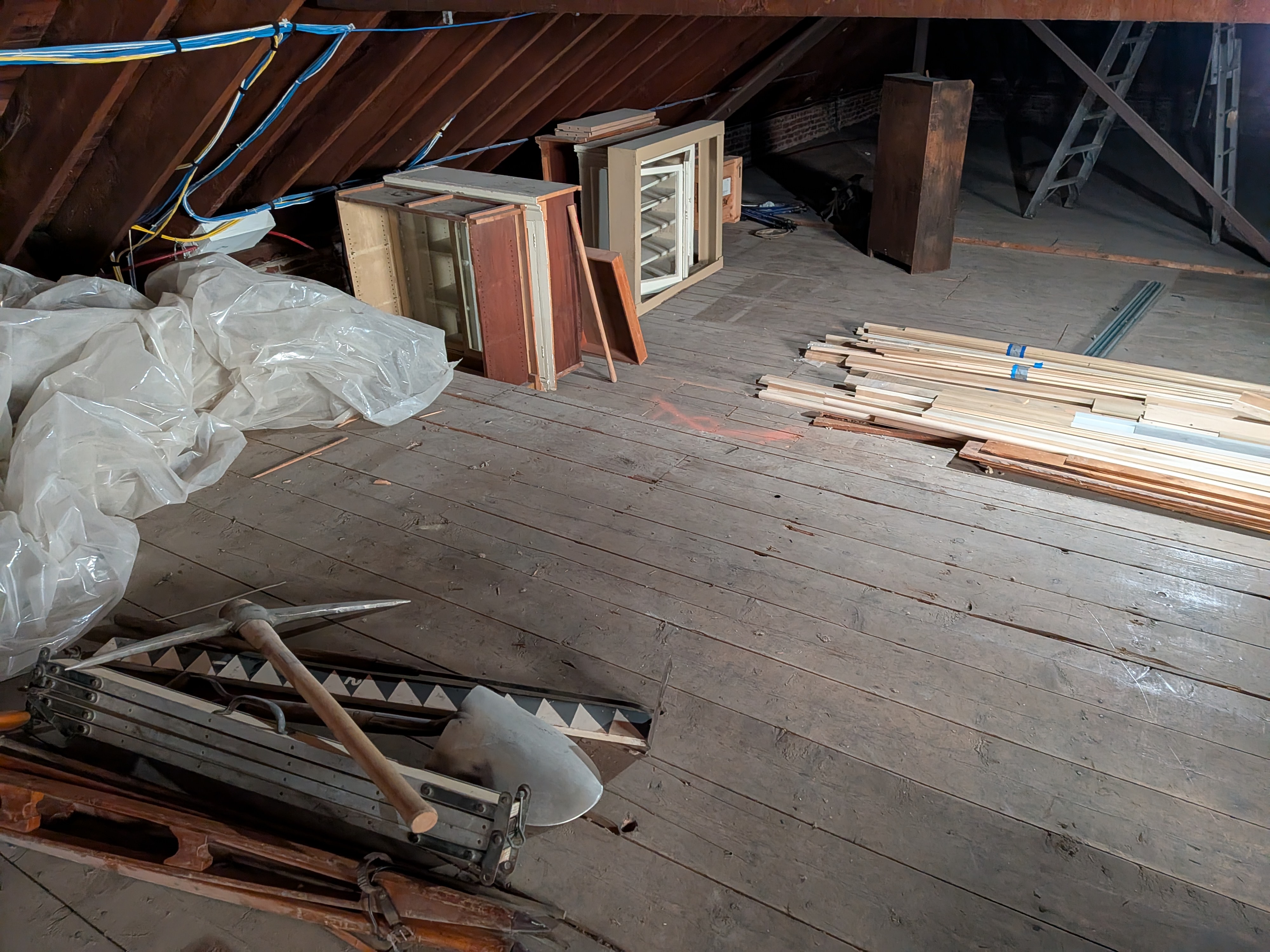
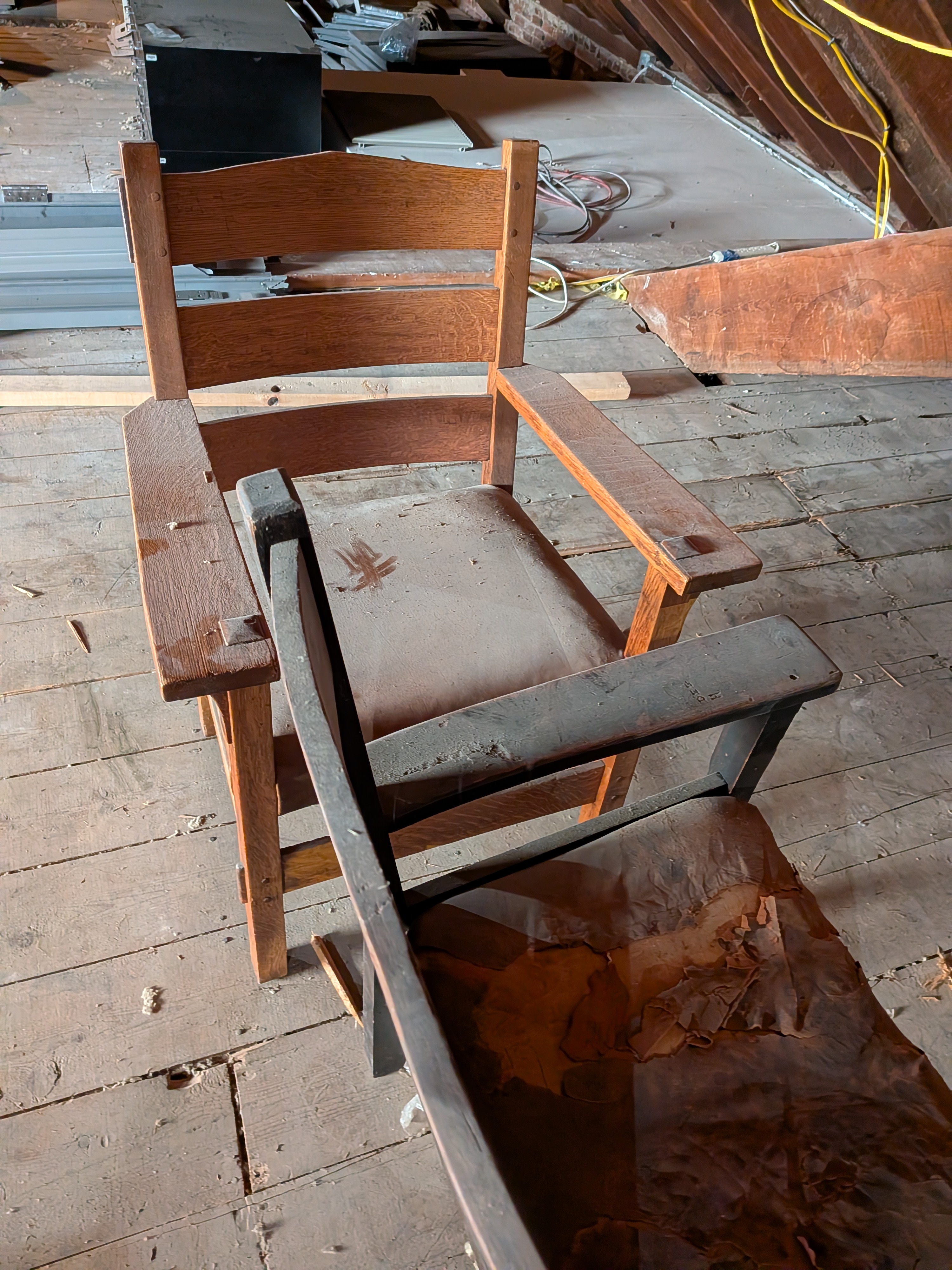
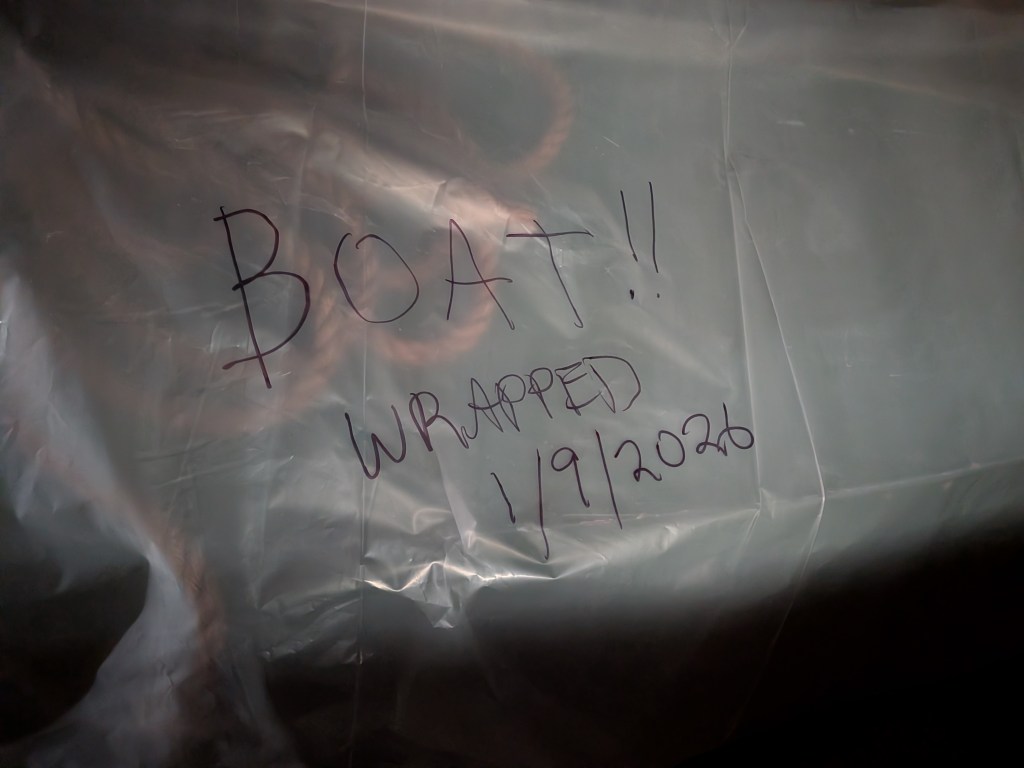
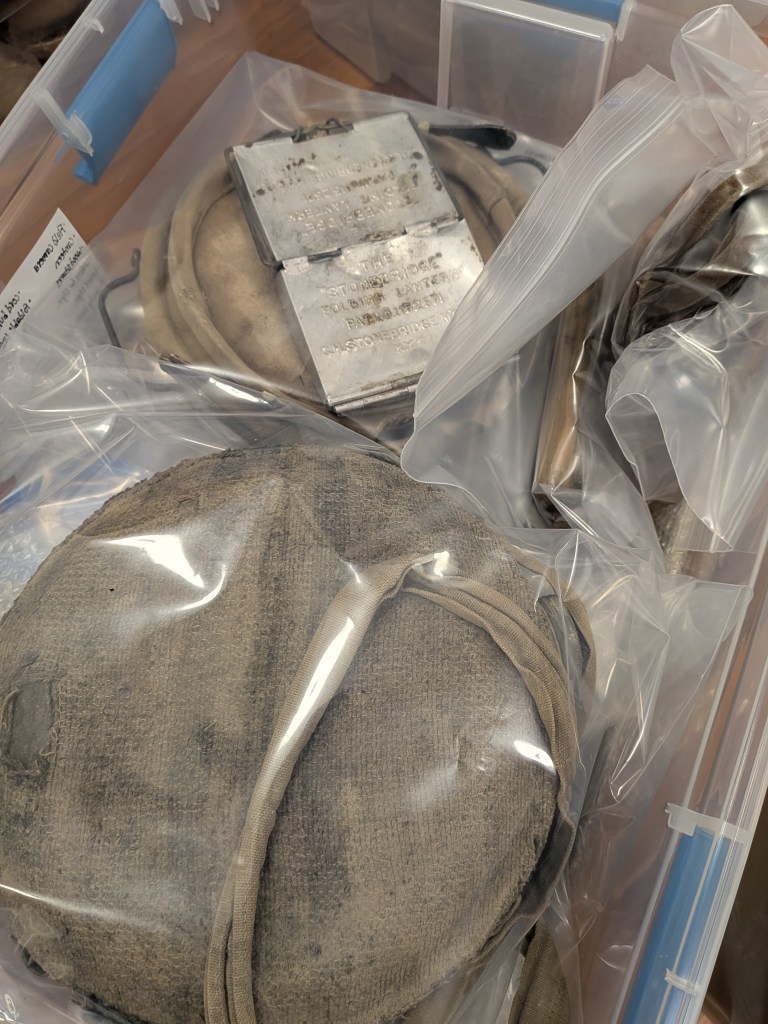
Everything was lovingly wrapped in plastic – it wasn’t always pretty (you try wrapping a pickaxe!) – and clearly labeled for the future. Who knows what future Peabody staff will do with these items, but I am relieved that they will have the opportunity to engage with these echoes of history.
January 2026 Building Update

Contributed by John Bergman-McCool

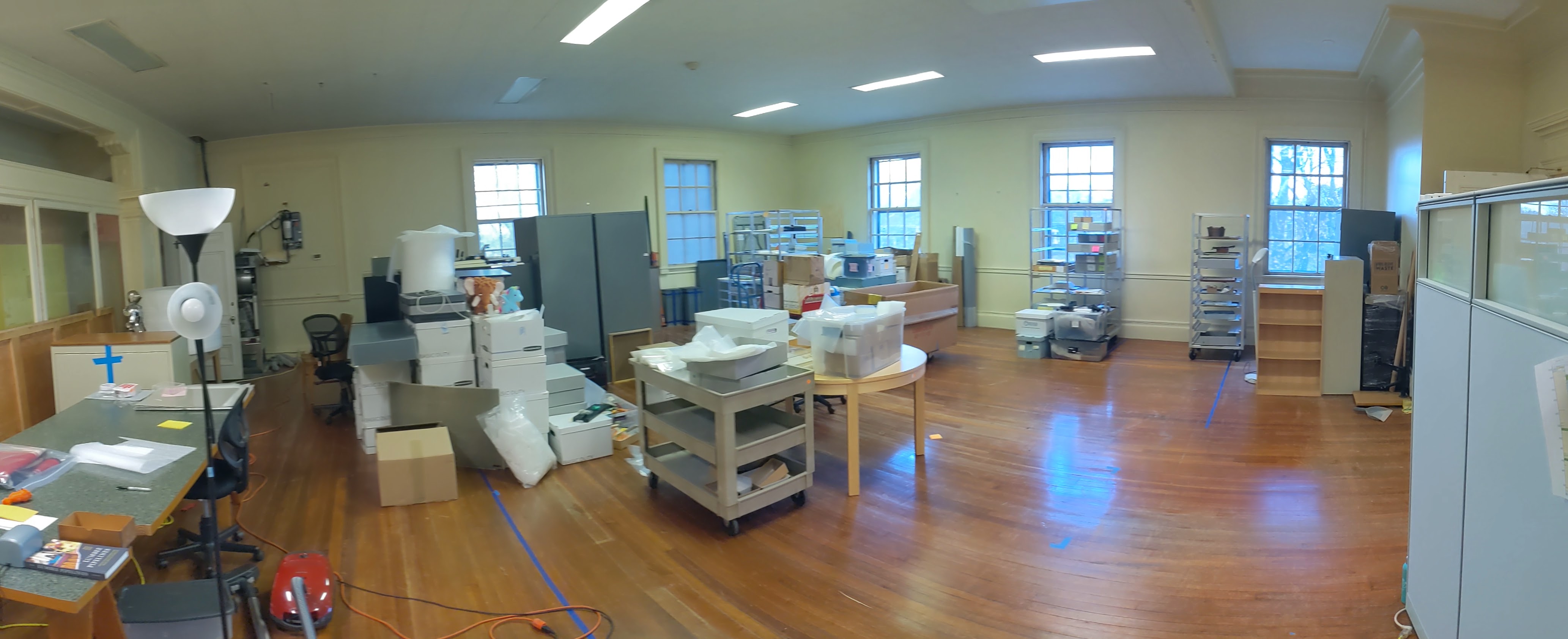
With construction in our building slated to start this month we have been busy packing up the Peabody. The collections are staying onsite in the recently renovated basement, but everything else that isn’t nailed down from the first floor through the attic has been moved to our temporary office in George Washington Hall (known on campus as “GW”) or to an offsite storage facility.

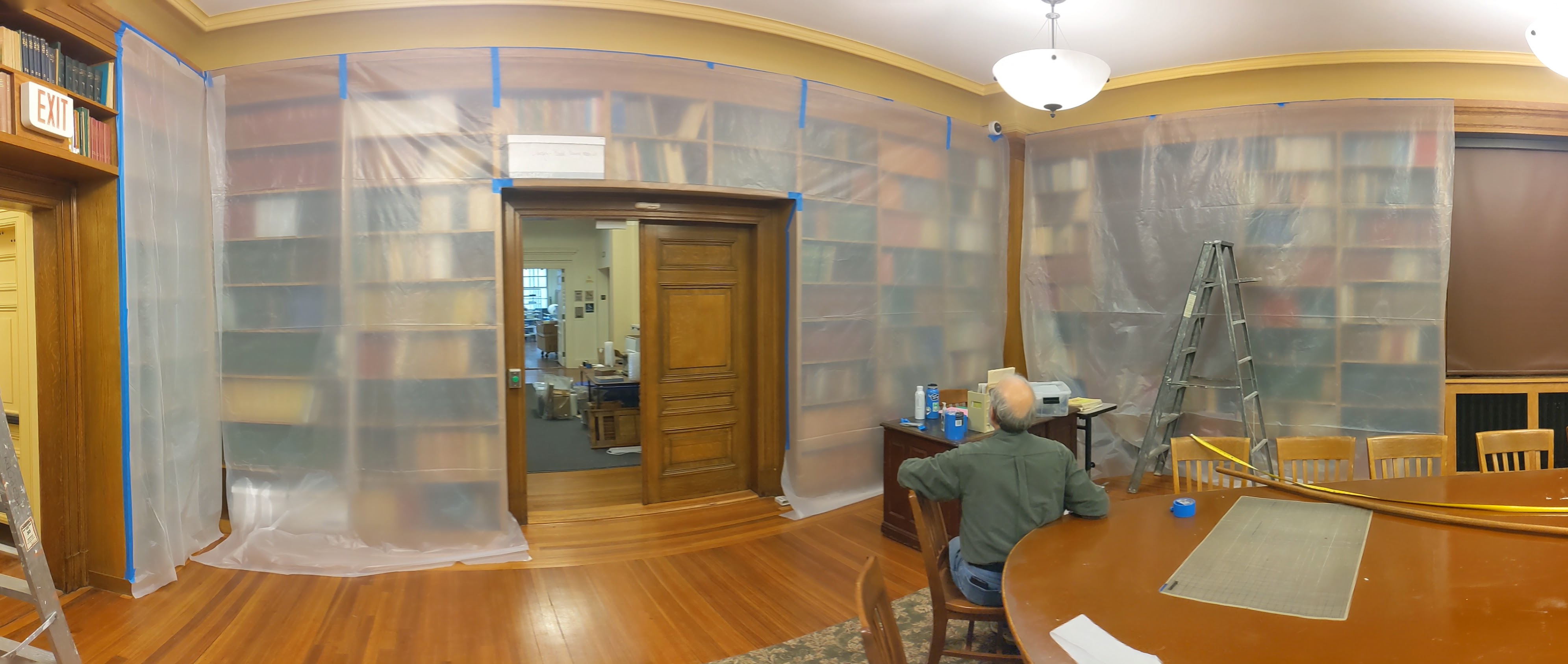
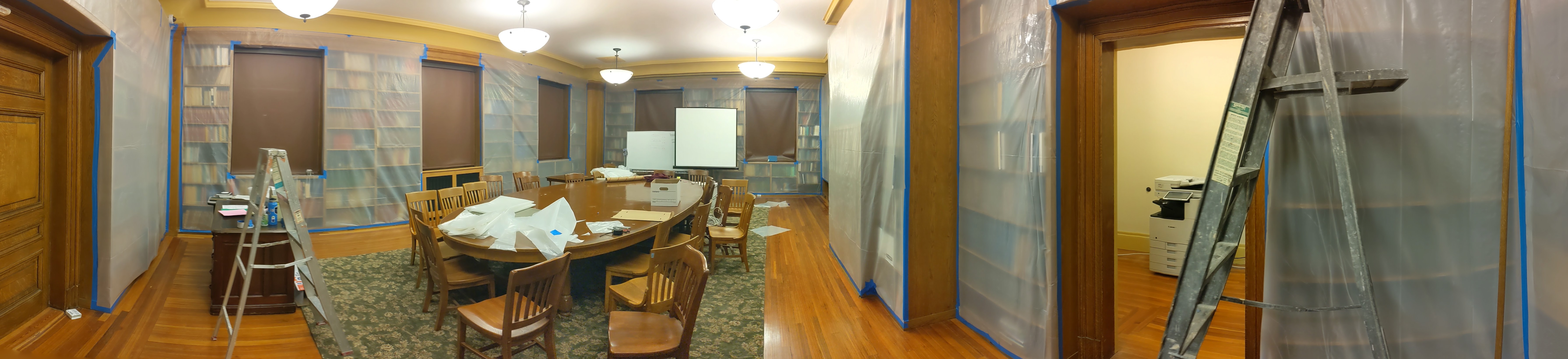
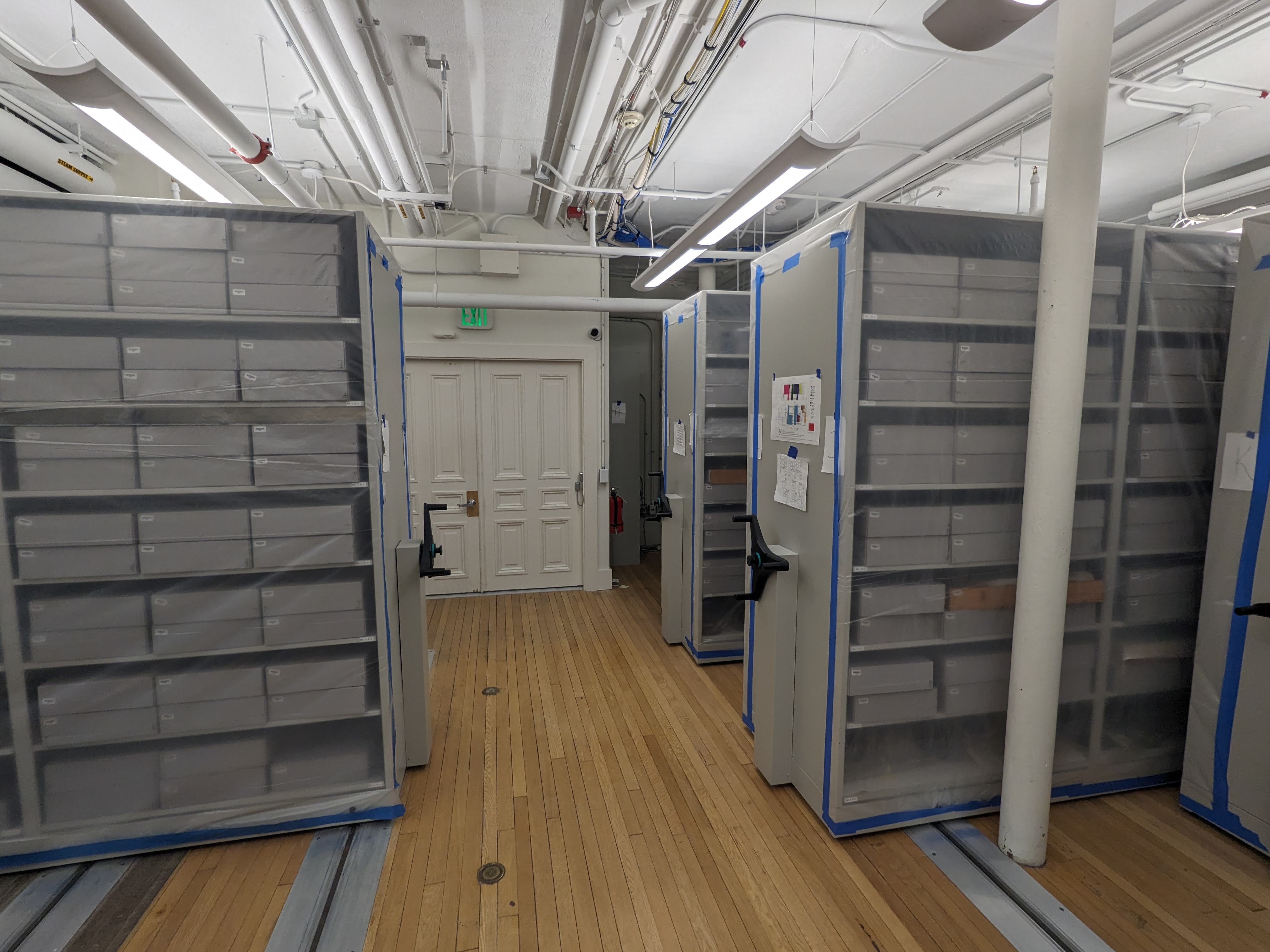
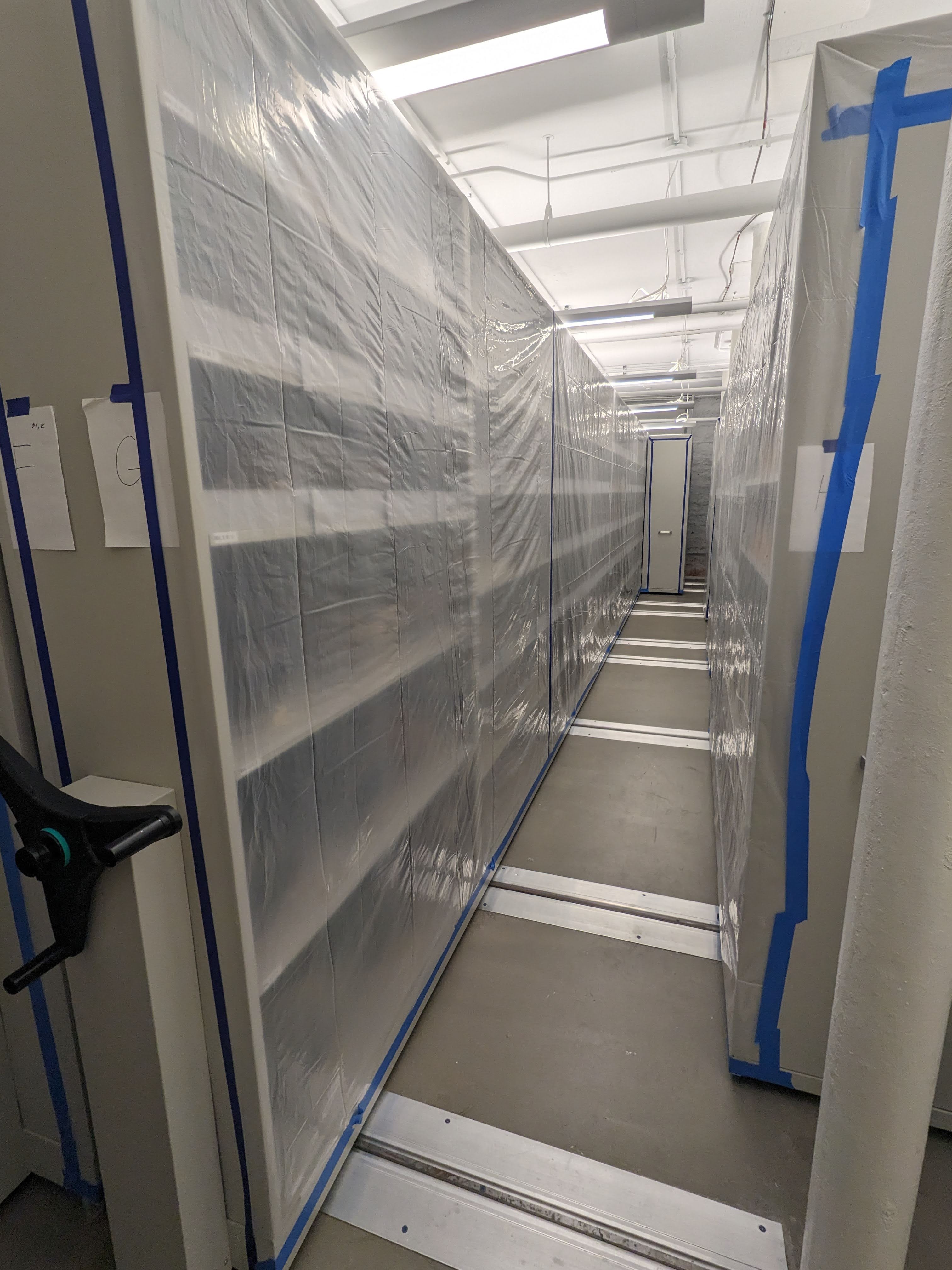
In addition to packing, we have taken steps to protect the collections during construction. Though very little construction is planned in the basement, renovations in the rest of the building will inevitably result in dust and small bits of debris in the collections areas. To keep everything clean, and avoid weeks of post construction cleaning, we have covered the metal shelving in plastic sheeting. The library has been prepared in a similar fashion.

This week, we made the move to our temporary office in the former Dean of Student’s Office in GW Hall. We’re thankful to have been welcomed by many of our new neighbors. Stop by and say hi if you are in the area.

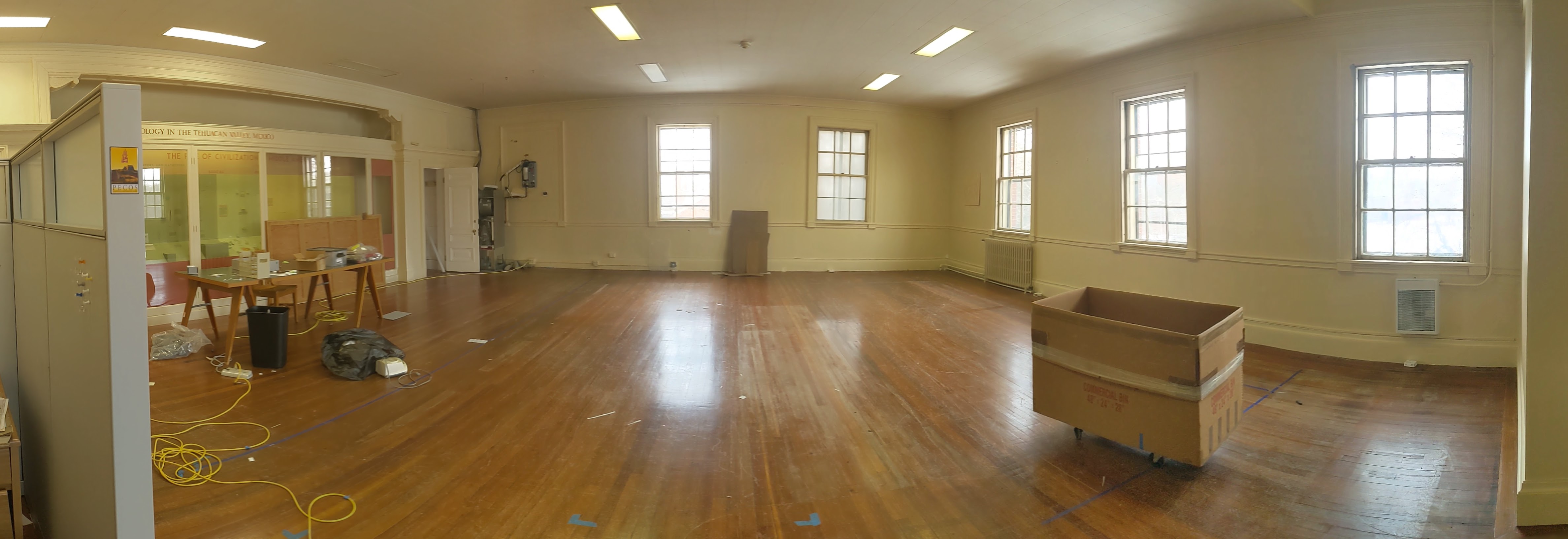
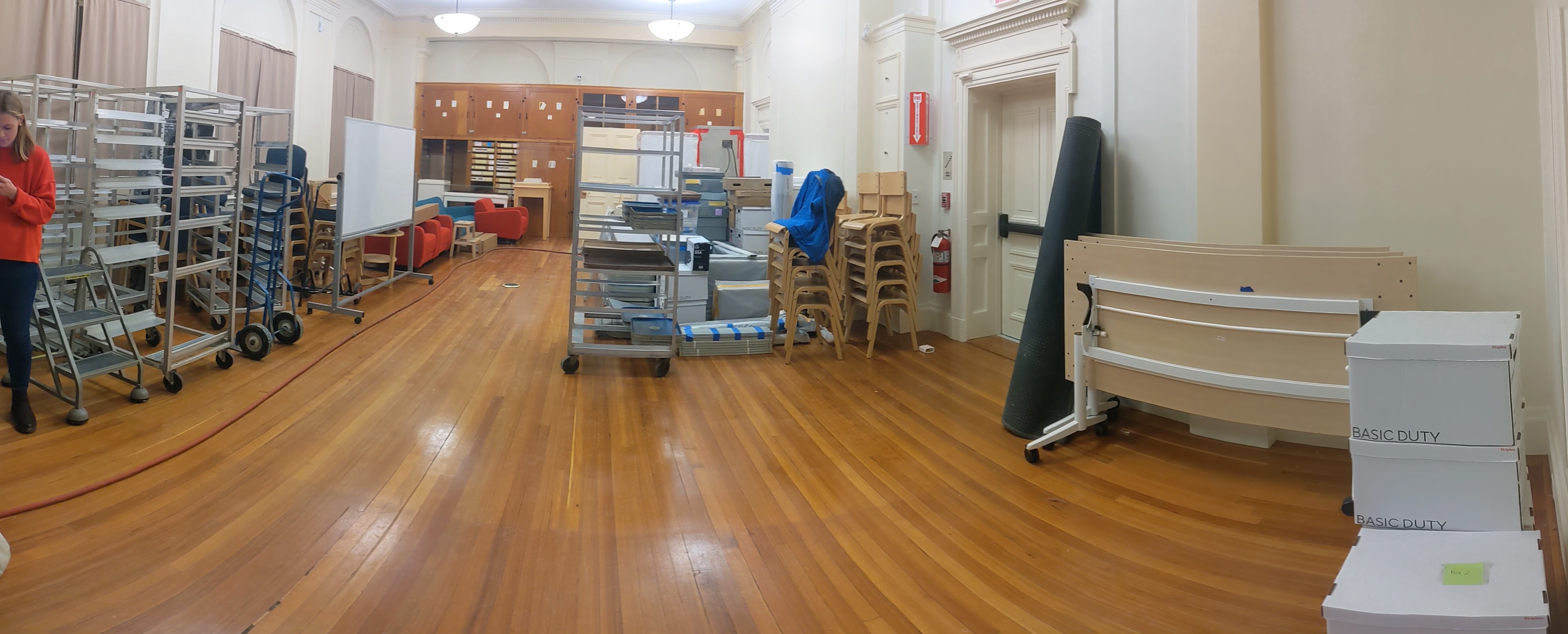
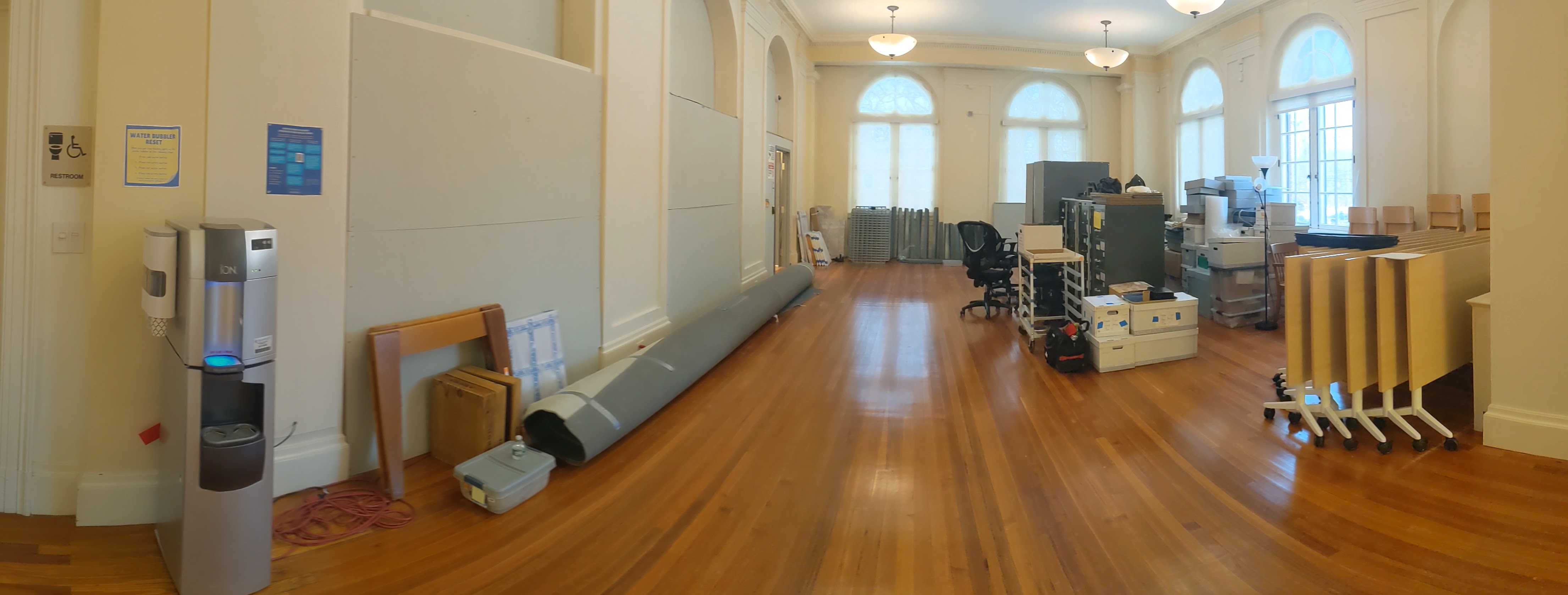
Now for some pictures of the preparations:

Room 207:

Library:

South Gallery:

Hornblower Gallery:

Basement:

Why We Started the AAS Blog

Contributed by Jack Angelo ’26

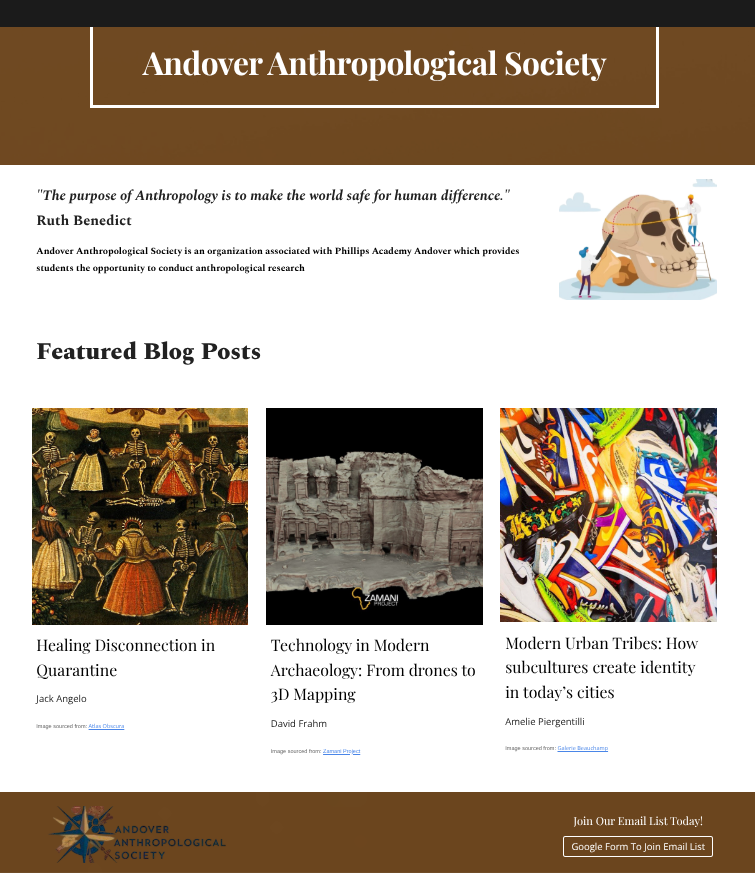
Homepage of the AAS blog site

My name is Jack Angelo and I am a board member and Blog Lead in Andover’s Anthropological Society, a student club we created here at Phillips Academy last year. I first became interested in Anthropology because of the many different topics it could cover, allowing someone to perform curiosity-based research about whatever subject matter interests them. When the other board members and I created the club, we knew most of our members’ research and curiosity would be directed towards our more major projects working in tandem with the Peabody Institute. But, understanding that the larger, focused research projects did not allow total intellectual freedom for the whole club, and that it did not spread our club’s messaging to the whole campus, we decided to create the Andover Anthropological Society Blog Site.

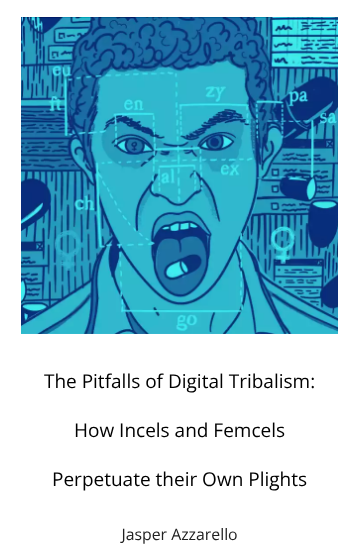
Our blog has now run for almost nine months and has served as an amazing display of the various topics our members are interested in, such as Corporate Consumerism in America, The Rise of Digital Tribalism, and the History of Art in Quarantine. Each post reflects what genuinely interests our writers, allowing people to contribute to the club without having to take part in our larger projects. In this way, the blog has developed into exactly the kind of free representational space we hoped for.

Additionally, the blog is a public source for anybody to read to understand our club’s messaging or to just further their interest in anthropology. We wanted to make sure that what we’re doing in AAS isn’t limited to the people who show up to meetings. By putting our work online, we’re giving the whole Andover community access to the topics we’re exploring and the research our members are doing. If someone’s curious about anthropology but doesn’t know where to start, or if they just want to read about a specific topic, the blog is there for them.

Ultimately, the AAS Blog is about making anthropology accessible. We wanted to create something that anyone could engage with, regardless of whether they’re in the club or have any background in the field. By keeping our work public and covering topics that connect to everyday life, we’ve built a resource that’s open to the entire Andover community.