This winter I have been exploring and learning a new online platform – PowToon.
PowToon is a digital platform that is used to create fully customized videos for a variety of audiences. The videos can be short or long (max 20 min) and can include cartoon elements or real images and video.
My first video is targeted toward new faculty at the school who may not know how they can work with the Peabody. An engaging, fun video – in addition to our course catalogue – will hopefully bring new collaborations and faculty to the Peabody.
I am excited to continue learning this program and producing videos to highlight and augment our educational initiatives and digital programs such as Diggin’ In.
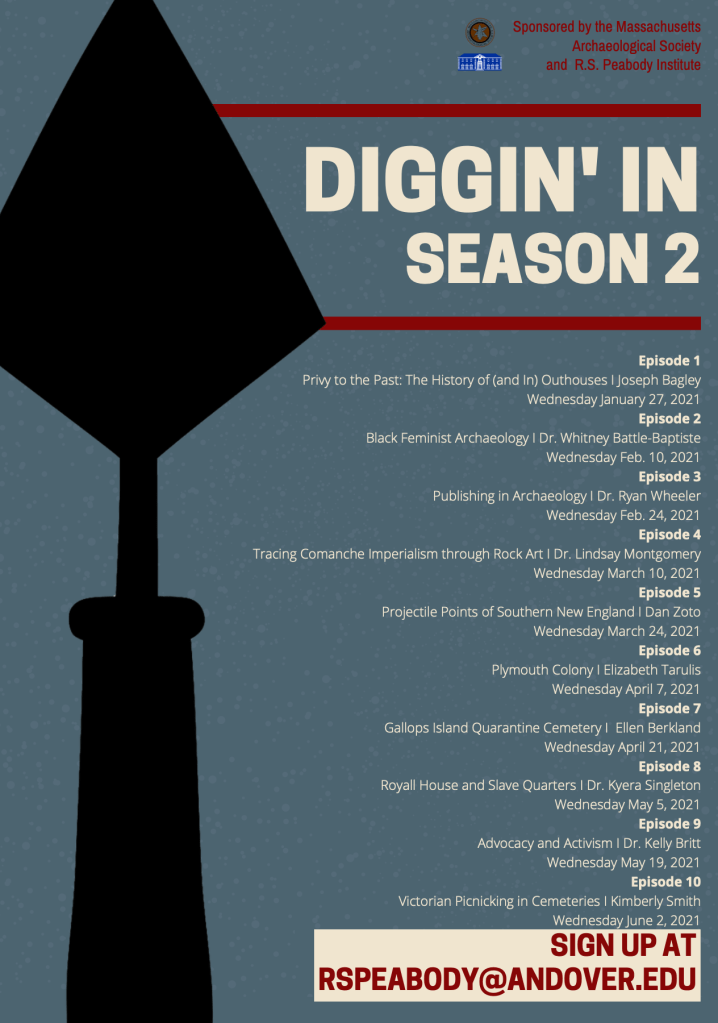
We are tremendously excited to announce the continuation of Diggin’ In: Digital Conversations with Archaeologist. Co-hosted by the Peabody Institute and the Massachusetts Archaeological Society the lecture series brings leading experts and their work directly to our viewers. All lectures are free and open to the public.
Building on the success of the inaugural season of Diggin’ In, which reached over 1000 individuals, Season 2 promises to continue to be especially robust. Outstanding scholars such as Dr. Whitney Battle-Baptist, Dr. Lindsay Montgomery, and Kimberly Smith will cover fascinating topics ranging from Black feminist archaeology, to Comanche rock art, to the artifact patterning of the Victorian practice of picnicking in cemeteries.
Join us on Wednesday January 27, 2021 for the launch of the new season with Joe Bagley, Boston City Archaeologist for his talk Privy to the Past: The History of (and in) Privies. All lectures begin at 1:30 pm.
If you want to attend one or all of these lectures, please sign up at rspeabody@andover.edu to get on the ZOOM invitation list.
Each episode will be recorded and uploaded to YouTube afterwards.
Last fall I had the opportunity to work with students and faculty in Outdoor Pursuits in a unique way. Ranbel Sun, Stephanie Cormier, and Miriam Villanueva learned that I knew about a terrestrial ship wreck that the students could visit and asked me to join them on their planned outing to Crane Beach, where the wreck has rested for over 100 years.
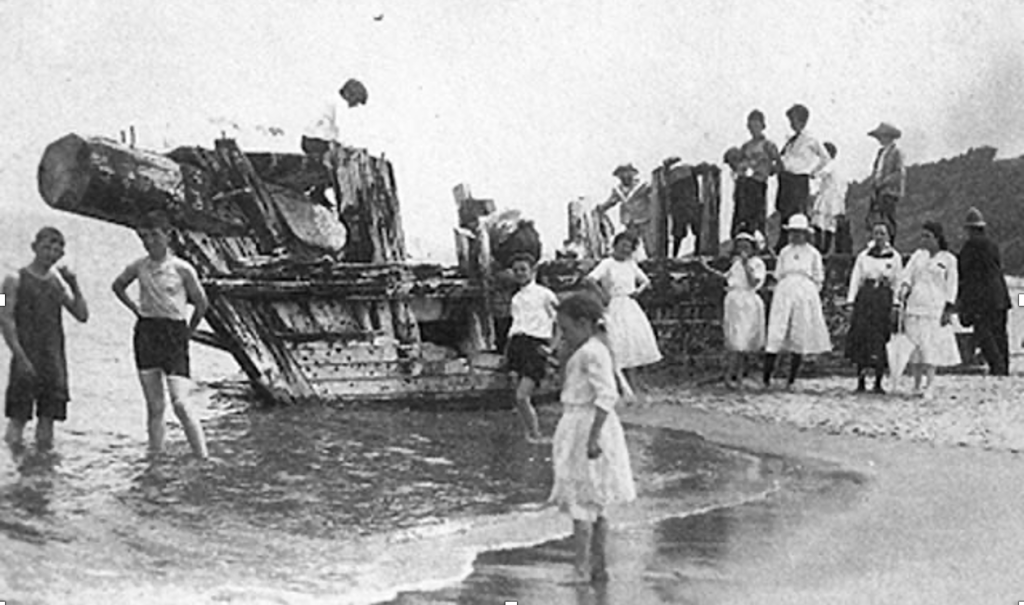
Outdoor Pursuits visiting the Ada K. Damon in 2019
The shipwreck that we visited was of the Ada K. Damon in Ipswich, MA. It is a great place to bring students to learn more about maritime archaeology since it is accessible at low tide. Salem State University and partner SEAMAHP have also done field schools at the site.
The Ada K. Damon was a schooner built in 1875 by H.A. Burnham Boat Building (still in operation today!). By 1909, the owner was Captain A.K. Brewster who had sold his property and used the proceeds, along with all his savings, to invest in the ship.
It a bout of terrible luck, it was during her first voyage for Brewster that the Ada K. Damon was wrecked. She was caught in what locals called the “Great Christmas Snowstorm.” That storm was also responsible for destroying many other ships on Cape Ann.
Since 1909, she has sat on the sands of Crane Beach at the base of Steep Hill and become quite a tourist attraction for visitors.
Sadly, due to the strong surf that resulted from Hurricane Teddy, the Ada K. Damon has been broken up and strewed across the beach.
Both Dave Robinson, the current state underwater archaeologist for Massachusetts, and his predecessor Vic Mastone will survey the damage.
While I hope that the damage isn’t too extensive and that I will be able to bring future students back to this shipwreck, it does serve as an example about the fragility of archaeological sites.
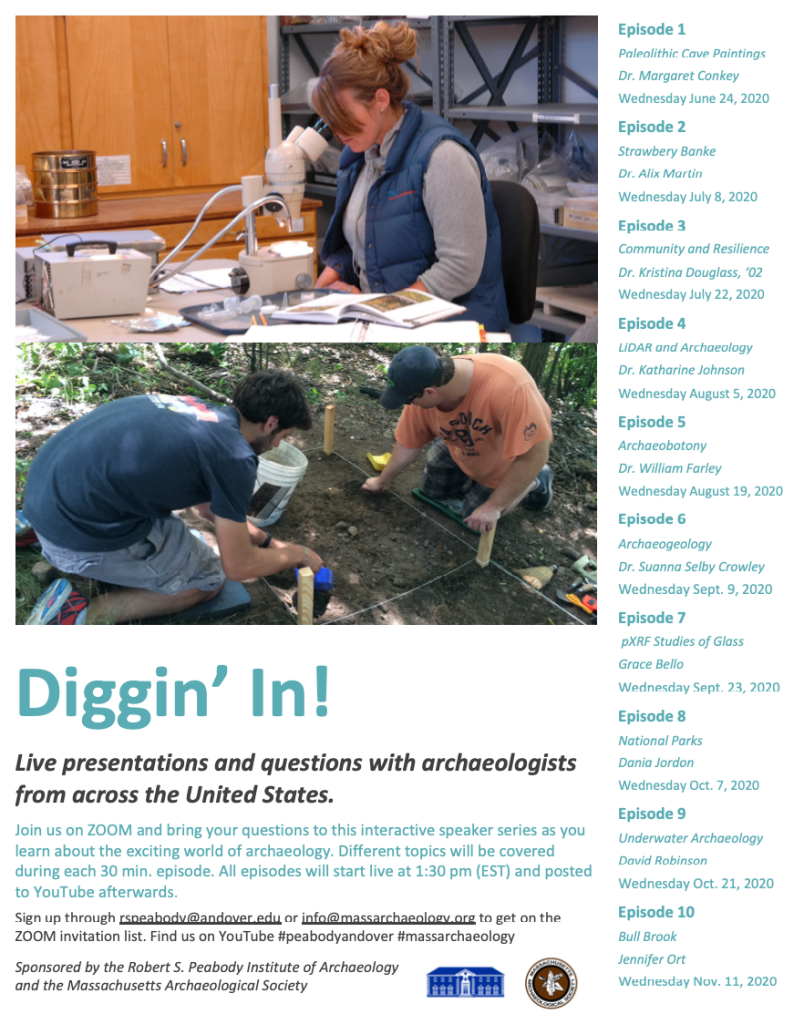
Part of the missions of both R.S. Peabody Institute and the Massachusetts Archaeological Society is to engage and connect with all who are interested in archaeology. Since we are unable to do this in person, both institutions are excited to announce our joint digital speaker series: Diggin’ In.
This series show cases live presentations with archaeologists from across the United States who will take questions directly from you!
Different topics will be covered during each 30 min episodes, which start live at 1:30 pm (EST) every other Wednesday and then will be posted to YouTube afterwards.
Sign up through the following emails to get on the ZOOM invitation list:
While we are excited to welcome all our speakers digitally to our campus and community, we are particularly pleased to have Dr. Meg Conkey and Dr. Kristina Douglass join us.
In addition to her work at University of California, Berkeley and in France, Dr. Conkey is also a current member of the R.S. Peabody’s advisory board.
And while Phillips Academy might be unfamiliar to some of our speakers, that is certainly not the case for Dr. Kristina Douglass who graduated from PA in 2002. It will be fun to welcome her “home” even if it is remotely.
The Digital Resource Spotlight series will highlight a variety of heritage-based organizations that offer unique activities that educators and parents may want to explore. We hope that you find our compilations helpful as you navigate this new educational landscape.
The Florida Public Archaeology Network (FPAN) is a premier educational resource for educators looking to incorporate easy, hands-on activities. Many of their lessons can easily be restructured to fit the current online learning model that many private and public schools are adapting to. They are also clear and straightforward, which makes them a perfect tool for the numerous parents who are finding themselves suddenly acting as their children’s teacher.
Their 130 page guide Beyond Artifacts is a trove of useful lesson plans that could readily be duplicated in a students home, with online guidance from the teacher. Want to study archaeology during lunch? They have a Peanut butter and Jelly Excavation lunch, which can even be followed up by a cookie excavation. YUM!!!!
In addition to the broad archaeology lessons they also offer more topical ones focused on prehistoric, historic, and underwater archaeology.
One of my favorite lessons that they ha is one called Stone Silent. It allows student to collect demographic data from a local cemetery. This is a perfect lesson as it will help everyone to get outside (which we all desperately need) while still practicing social distancing since there are probably not many people wandering cemeteries for fun right now.
FPAN has many other resources to offer, so be sure to check out all of them here.
As we all adapt to our new normal, the Peabody has compiled a list of various institutions that offer digital resources, from virtual tours to artifact images. If you are a caregiver at home with children, these can be used to enhance their educational experiences as you work to continue their learning.
And for those who simply are looking for something to do now that everyone has extra time on their hands (I’m sure no one misses their long commutes into work and sitting in traffic though), experiencing new and exciting things can be a perfect way to combat boredom!
National Women’s History Museum: This museum has a variety of online exhibits such as Breaking In: Women in STEM and Fashioning Yourself!
Museum of the Rockies: In this YouTube video Michael Fox and Dr. Shane Doyle explain why in August the town of Crow Agency becomes the Tipi Capitol of the World.
Canadian Museum of History: This museum offers numerous online exhibits including Inuit Prints from Cape Dorset and Archaeological Mysteries in the Ottawa Area.
British Museum: The largest museum in the United Kingdom offers a digital tour of some of their most impressive collections.
The Louvre: Three virtual tours are offered on Egyptian Antiquities, Remains of the Louvre’s Moat, and the Galeried’Apollon.
National Museum of Anthropology: One of Mexico’s premiere institutions that houses numerous archaeological artifacts that have been digitized and shared with the public.
Blarney Castle: If you were sad to miss out on gathering with friends and strangers for St. Patrick’s Day, or just have a fondness for old castles, Blarney Castle has incredible 360-degree tours of the interior and grounds of the castle.
We also understand that after being cooped up in your house, you might not want to stay indoors, even virtually. So if you find yourself just needing to leave the confines of your house for a bit,our friends at the National Park Service have created a way to virtually escape the walls around you atfive differentNational Parks.
We’ll be posting other resources that can be used and explored during this unique situation, so check back with us often!
We have had a very busy couple of days this month as the Society for Historical Archaeology held their annual international conference in Boston – and of course the Peabody was in the thick of things!
The Peabody hosted a table at the SHAs Public Archaeology event at the Boston Public Library. Throughout the event there was a steady stream of conference attendees as well as families with children interacting with the fifteen different activity stations.
However, I do have to give a particular shout out to Mike Adams from the Museum of Science (and former Peabody intern) for his unique activity that had visitors make their own fishweir before testing it in water with robotic fish. It was super cool – and I really want to steal his idea!
Robotic fish zipping through a fishweir
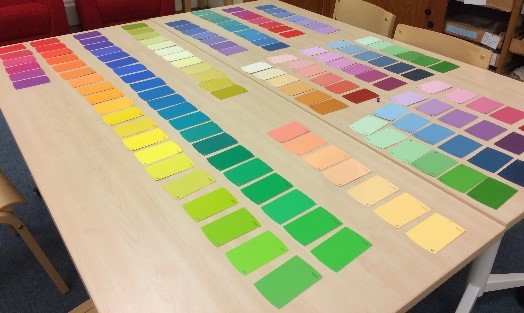
For our activity, the Peabody brought a Munsell themed game that asked visitors to put different color hues in order. There was even sets that changed from one color to another if someone was feeling very confident in their color gradient identifying skills. And while archaeologists typically only focus on brownish-yellow (or yellow-brownish?) colors, I figured that we’d expand our color palate for the game to include more visually appealing ones.
Different sets of colors used in the Munsell sorting game.
In addition to the sorting activity, we had a Munsell bookmark making table. Children and adults got to use stamps and hole punchers of different designs to decorate their paint chip bookmarks. This was a big hit with visitors of all ages.
Making a paint chip bookmark
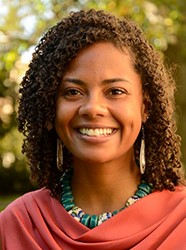
I also had the opportunity to meet Dr. Kristina Douglass ’02 who is an archaeologist at Penn State. Her research focuses on human-environment interactions on Madagascar, which I am excited to learn more about. I plan to read this article about radiocarbon dates and the human settlement on Madagascar by Dr. Douglass soon. Our meet up was lovely – but way to short! I look forward to getting to know her better in the future – maybe SHA 2022 in Philadelphia?
Dr. Kristina Douglass ’02
In the book room, I had the opportunity to talk with the wonderful people representing Berghahn Books about their work and mine. The generously gave me a copy of their newest book Experiencing Archaeology, which is designed for high school level classes. I cannot wait to dive into the book to explore how the Peabody might utilize their activities!
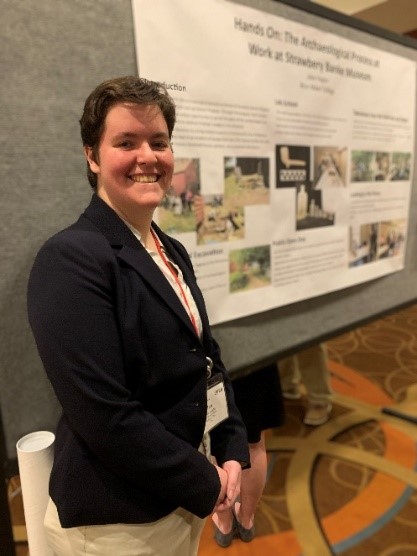
However, one of the most rewarding moments of the conference was when I got to see Alex Hagler ’16 present their poster, which focused on their work at Strawbery Banke Museum during summer 2018. To learn more about the work Alex conducted at the museum, check out their blog post.
Alex is a senior at Bryn Mawr College and is studying Classical Archaeology. I must say that I am very proud of their achievements and often can be found taking any opportunity to embarrass them by talking about them to anyone and everyone. But that happens when one has known someone since they were in the 6th grade.
Alex Hagler ’16 presenting at the SHA poster session
The end of slavery in Massachusetts rests with the court cases of two enslaved people: Mum Bett and Quok Walker. While both individals are discussed in the Salem State University course that we support during the summer, it is the Quok Walker case that we are most excited to revisit next year.
For the 2019 iteration of the class, Dr. Bethany Jay and I changed the focus of the course to look at the “long” nineteenth century through the lens of African-Americans and archaeology. This decision was made so that the class could better support history educators as they navigate new changes to the Massachusetts Frameworks.
Part of the process of examining the nineteenth century and it’s impact on the experiences of African Americans through events like the Civil War and Reconstruction, is to better understand specific events prior to 1800, and Quok Walker’s legal case is one of the most important.
Most people do not realize that Massachusetts was the first colony to create laws legalizing slavery. The economy of Massachusetts and New England was heavily dependent on West Indian slavery; enslaving native people in New England and importing Africans into the colony was common practice in the 1700s as well. It was not until the American Revolution, when enslaved people began using the colonists’ language demanding freedom from England, that the legality of slavery changed in Massachusetts.
In 1781, Quok Walker ran away from Nathaniel Jennison to a farm owned by Seth and John Caldwell. After Jennison and others captured and beat Walker, he used the legal system to prove his freedom. This is because his original owner had promised to free Walker.
Over the course of the three trials, it was declared that Walker was in fact “a Freeman and not the proper Negro slave” and the state Supreme Court also found that the state’s Constitution was not compatible with the institution of slavery. These decisions, while not codifying the abolishment of slavery into state law, made slavery legally untenable in the state. Thus, Massachusetts, the first state to allow slavery, became the first to legally end it.
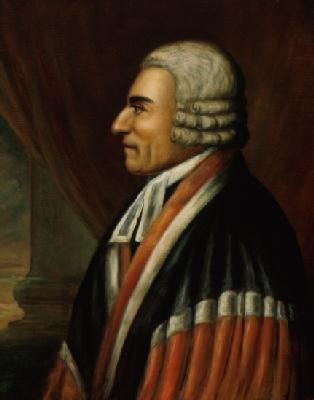
Chief Justice William Cushing who presided over the Walker case as Massachusetts chief justice, before he became a member of the Supreme Court for the newly formed country.
With the change in focus for the Salem State University class, we added new partners, including Ellen Berkland, archaeologist for the Department of Conservation and Recreation (DCR). While working with Berkland regarding the DCR property Camp Meigs – which is the place outside of Boston where the African American Mass 54th regiment was encamped before fighting in the Civil War – she informed Dr. Jay and I that DCR had a property that was related to the life of Walker and proposed that we might bring our 2020 class to dig at the site.
And to say that Dr. Jay and I were excited would be an understatement! Why? Because that is the land that Quok Walker lived on after he gained his freedom. The idea that we might be able to find objects that are connected to him and could help historians and others better understand his life is an exhilarating opportunity!
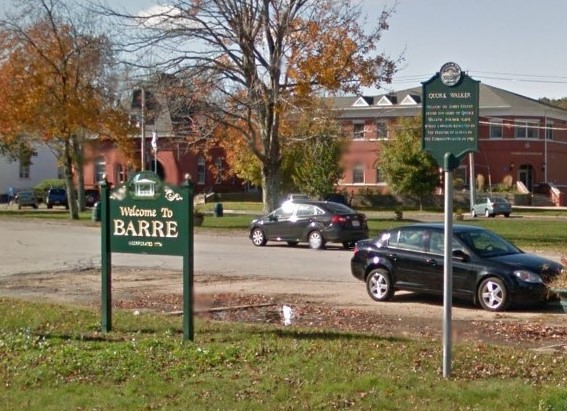
Barre, MA has a plaque near the town commons that commemorates Quok Walker.
There was quite the hustle and bustle at the Peabody on Thursday, February 21st. Dozens of children and their parents stopped by during their school vacation to partake in our archaeology themed open house. For three hours visitors engaged with a variety of activity stations set up around the building, each with a different theme.
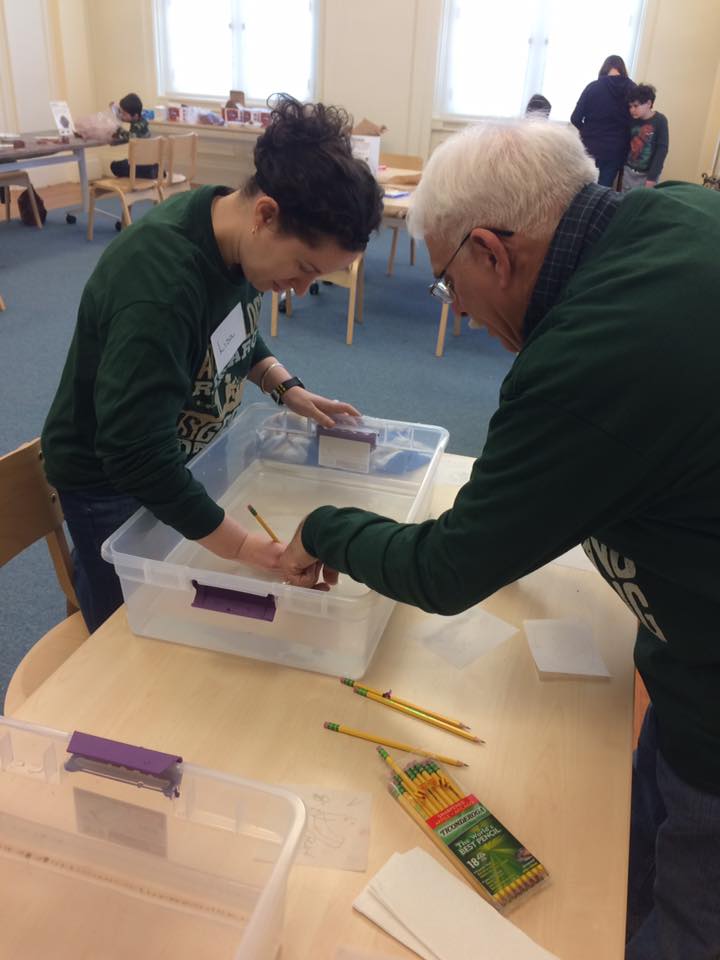
One of the most interesting experiences that visitors could try out was learning to write underwater! Vic Mastone, Massachusetts’s State Underwater Archaeologist, brought his expertise to the event and set up a station that highlighted tools that archaeologists use when excavating shipwrecks and other submerged sites. All the kids enjoyed playing with the special water proof paper and the giant tubs of water!
Vic Mastone teaching future archaeologists how to write on mylar under water.
The other stations included LEGO model design, creating a “cave” painting, decorating Greek paper vases, making nets out of yarn, and crafting small clay vessels.
And the day could not have been done without my team of expert volunteers. They enjoyed engaging with everyone who stopped by – and even had a little fun with the activities themselves! Thank you to all who helped make the event such a success!!!!
Vic teaching fellow volunteer Lisa how to write underwater.
On Thursday, February 21 we will be hosting our Family Fun with Archaeology event. This free event will have activities such as building Lego models of ancient ruins, playing Native American musical instruments, making a clay pot, and more.
Since we have run the program a few times, I have been thinking of ways that we might add new activities for kids and adults to do together.
One of the new interactive activities for families is creating a fishing net. Fishing has played a vital role in New England’s history, from the First People to today. Ancient nets were made of various plant fibers and used in a variety of ways to catch fish in rivers.
While talking with Ellen Berkland, archaeologist for the Department of Recreation and Conservation, about an archaeology event at Maudsley State Park in Newburyport, MA that she hosted in October, she mentioned that she had included net making. I was instantly intrigued!
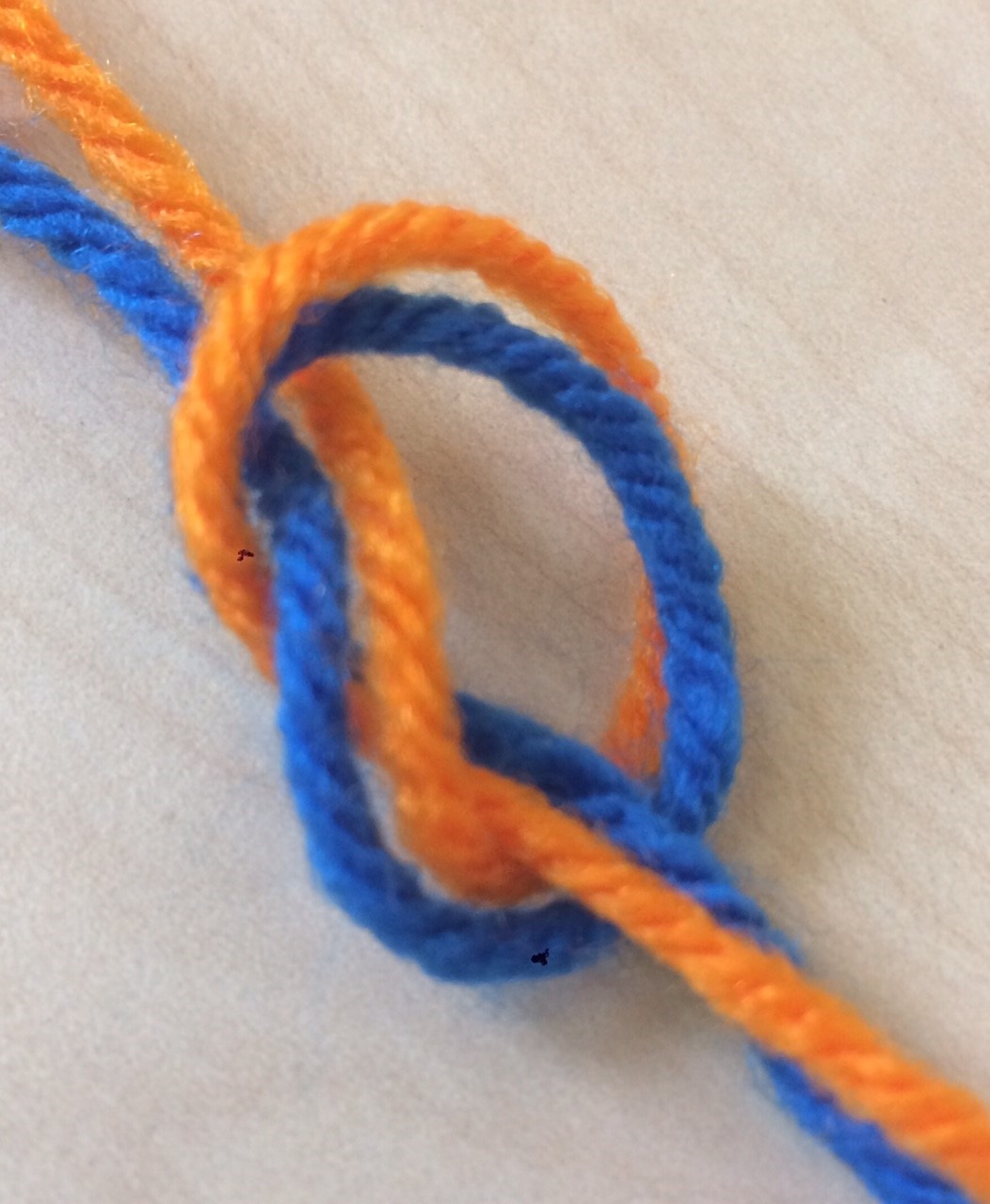
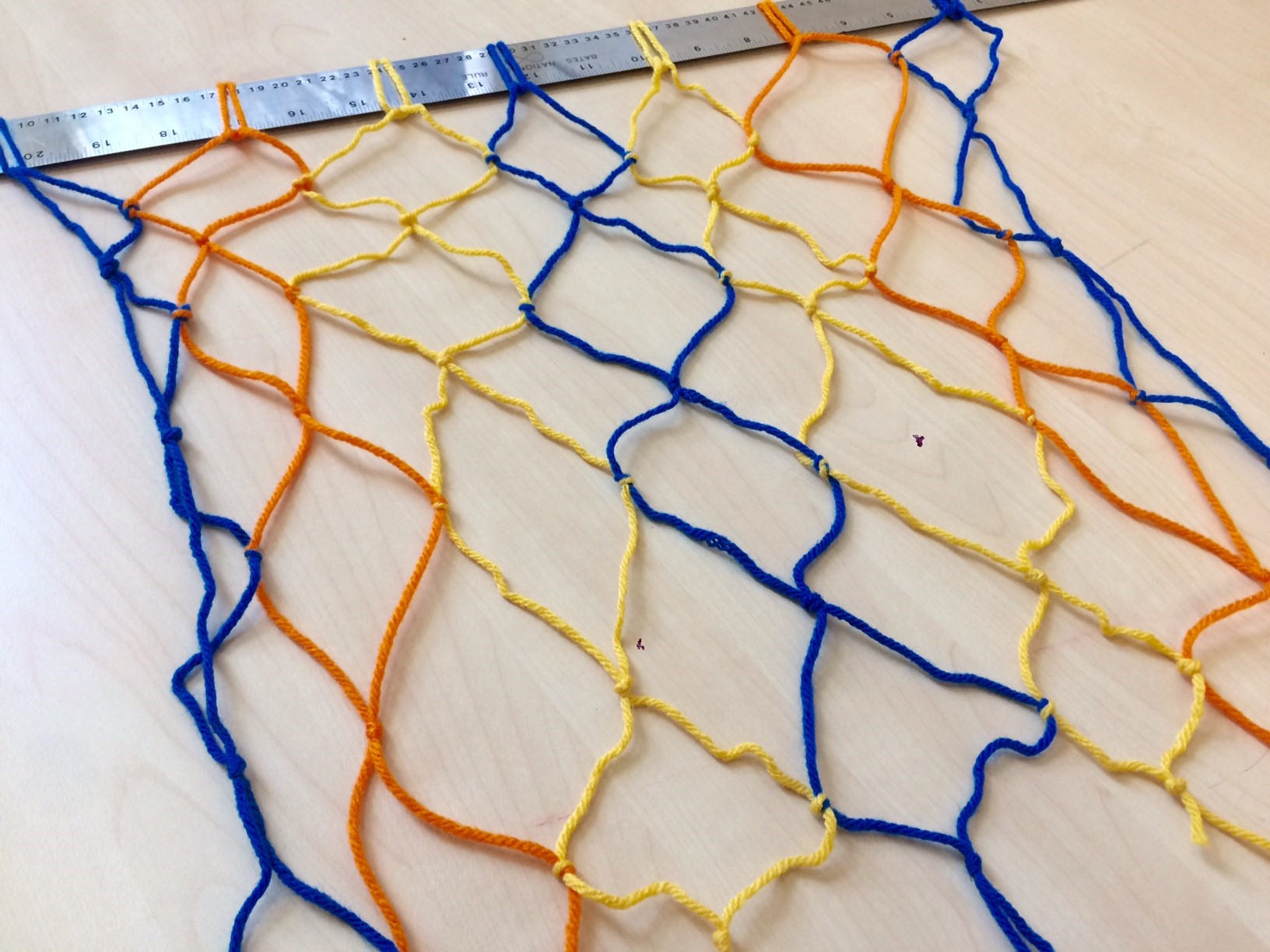
After talking with Ellen and googling “net making,” as well as watching a few YouTube videos, I settled on using the simple overhand knot to make the net. I also decided to use different color strings to help make it easier for people to see what strings they are working with.
Overhand knot
Here is my attempt at making a net – I think it looks pretty good for a first time!
If you want to try your hand at this or other crafts, come to the Peabody next month!








 The Peabody