Welcome to the NEMA Conference!

Contributed by Marla Taylor

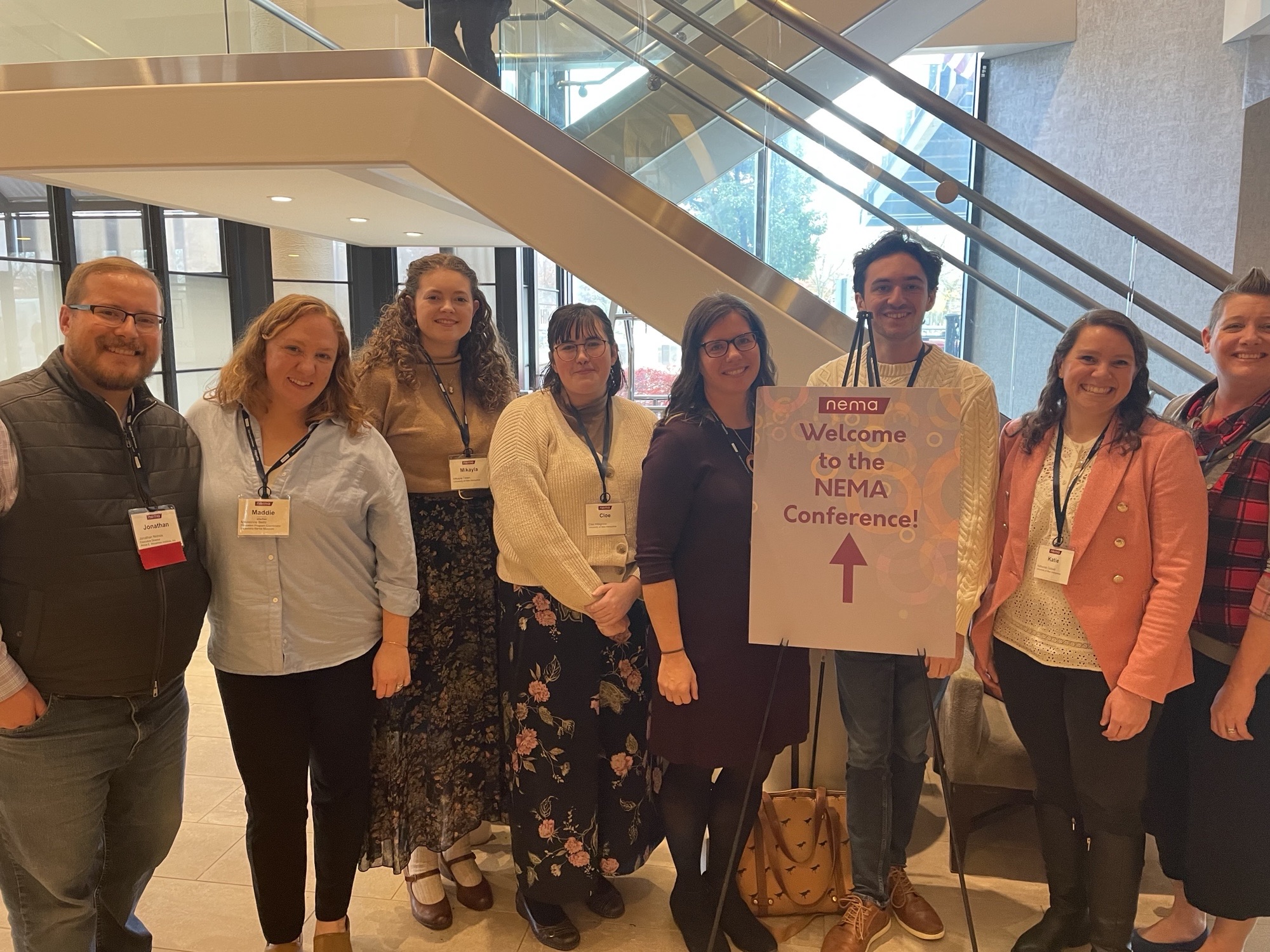
The New England Museum Association (NEMA) held their annual meeting in November in Manchester, New Hampshire. Billed as a Wellness Check: A Holistic View of Museums in the First Quarter Century, topics ranged from how climate change can affect collections to telling LGBTQ stories to supporting mental health for museum staff. It was illuminating and validating to hear so many colleagues exploring how to make their museums as welcoming, financially sustainable, and diverse as possible.

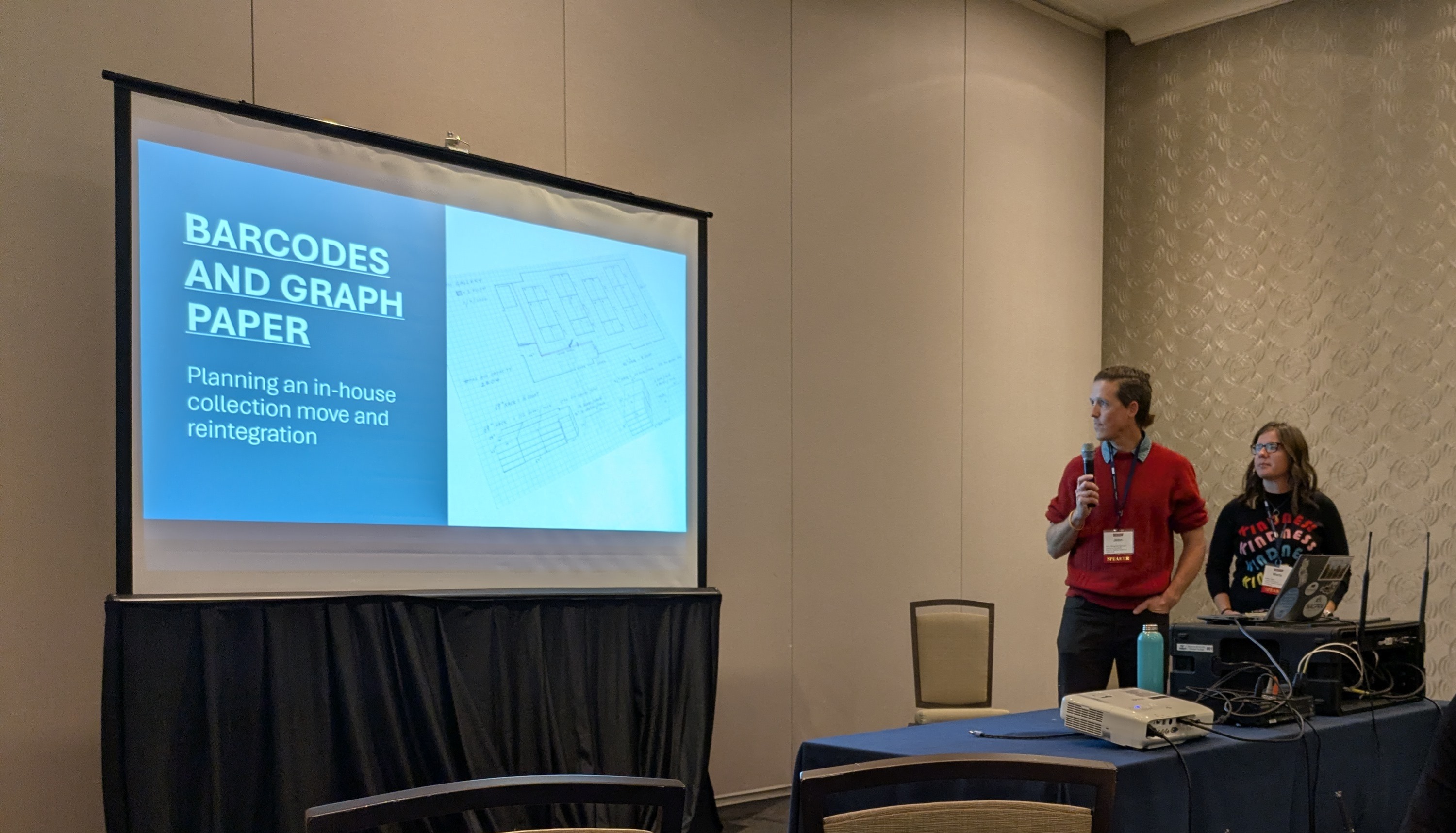
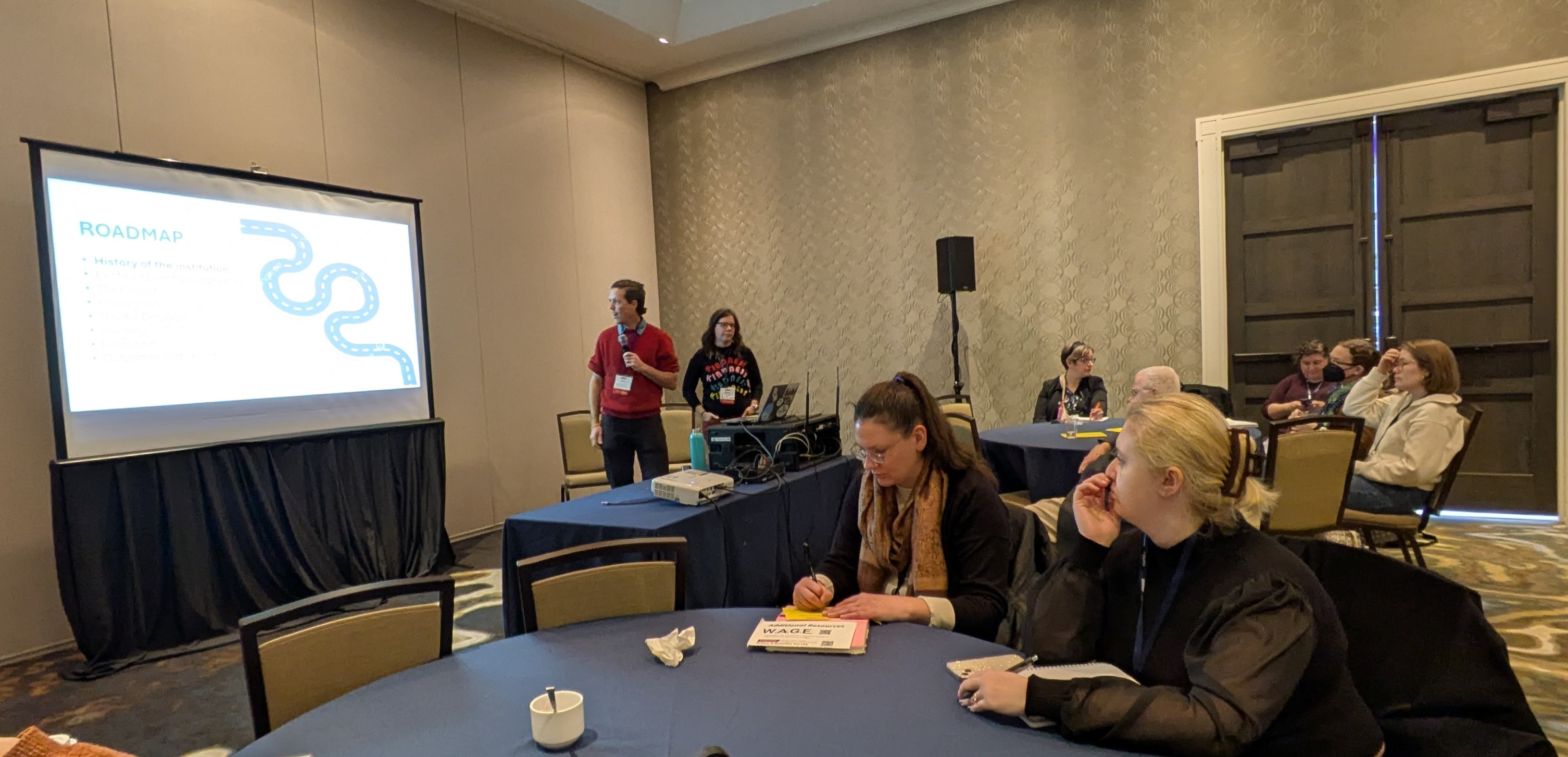
John Bergman-McCool, the Peabody’s Collections Coordinator, and I had the opportunity to share about the collections move that was part of the recent building project. Our session, Barcodes and Graph Paper, was well attended and we hope people were able to take away a nugget of advice or experience that will help them. It was a pleasure to be able to share this information alongside an amazing colleague who was invaluable to the process.
I was also a part of a session that focused on resources for museum professionals who are interested in engaging with best practices for stewarding Indigenous collections. Along with several incredible colleagues, I shared information about the Indigenous Collections Care (ICC) Guide and the Northeast NAGPRA Community of Practice (NECP).

Local Contexts was also a part of our panel. If you are in the museum world and don’t know about Local Contexts and their work – you should. “Local Contexts is a global initiative that supports Indigenous communities with tools that can reassert cultural authority in heritage collections and data. By focusing on Indigenous Cultural and Intellectual Property and Indigenous Data Sovereignty, Local Contexts helps Indigenous communities repatriate knowledge and gain control over how data is collected, managed, displayed, accessed, and used in the future.” (https://localcontexts.org/)
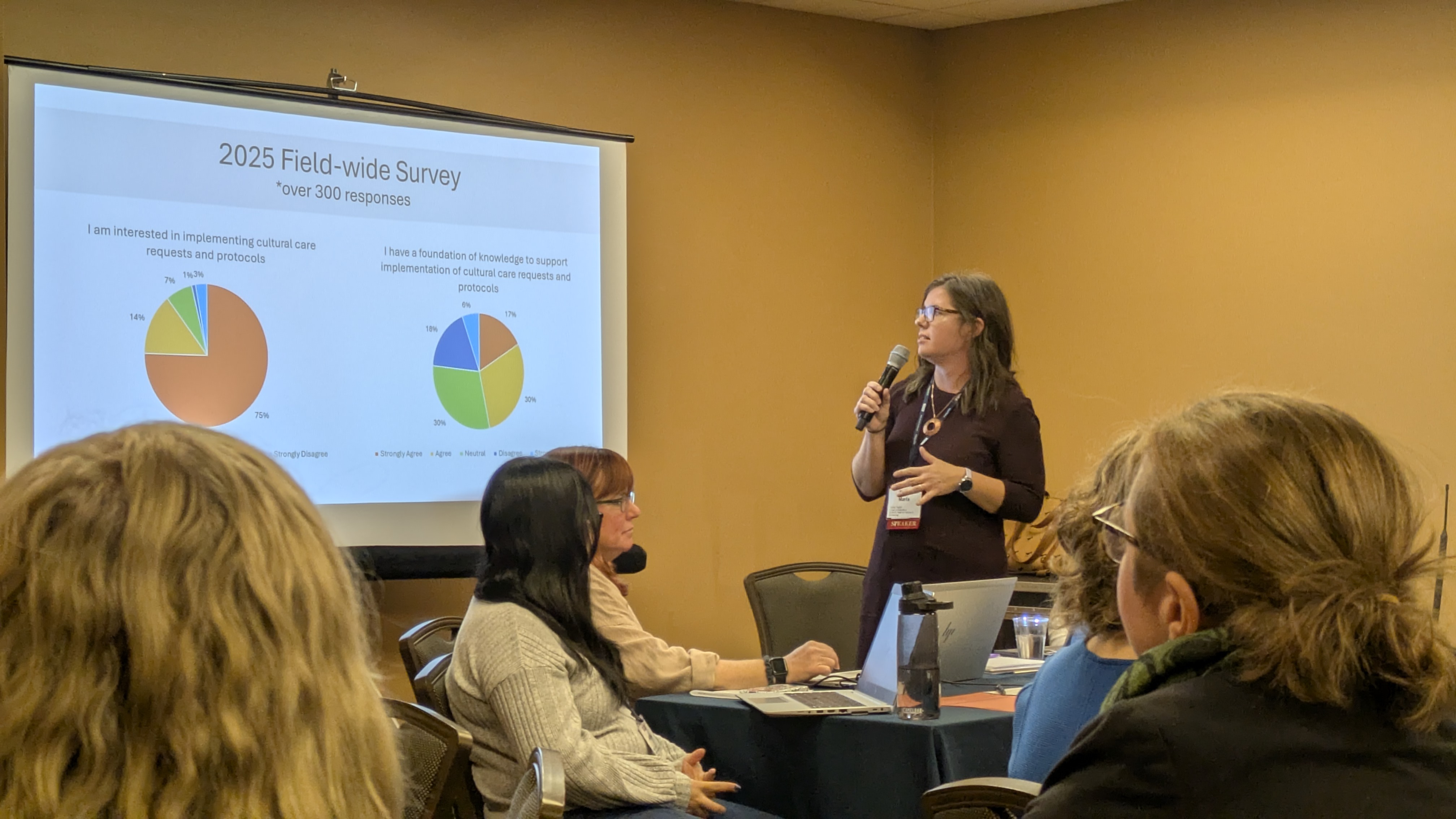
I am proud to be a part of the ICC Guide and NECP. Both of those communities are valuable resources to museum professionals and NAGPRA practitioners.

It was an honor to be a part of both of these sessions!
Do You ATALM?

Contributed by Ryan J. Wheeler

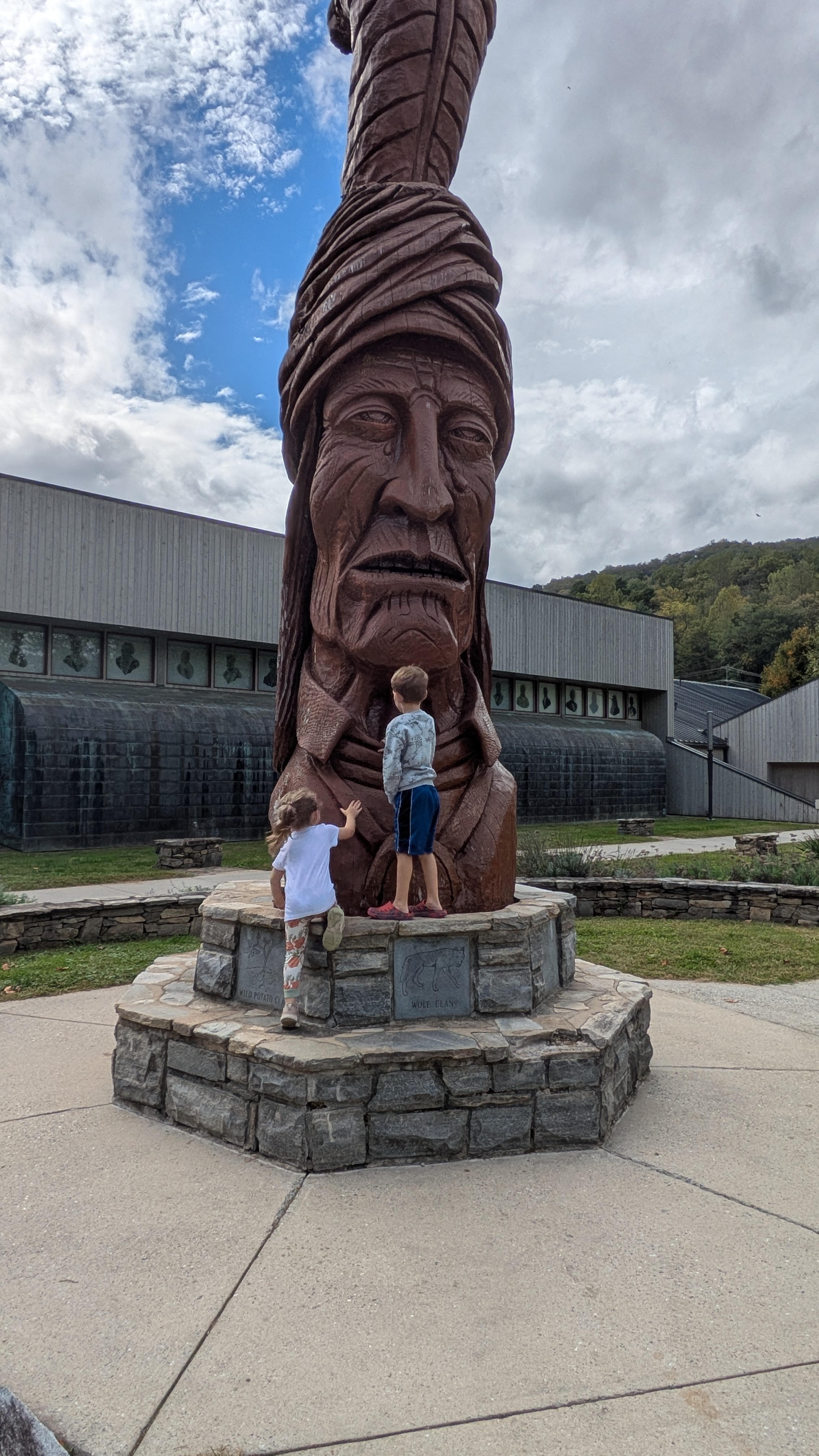
It was really fun to encounter Peter Toth’s monumental wood carving of Sequoyah outside the Museum of the Cherokee People. Toth created over 70 of these sculptures as part of his Trail of the Whispering Giants project. I met the artist in 1983 when he was carving a tribute to the Seminole on Fort Lauderdale beach.

Four members of the Peabody Institute team attended the 2025 Association of Tribal Archives, Libraries, and Museums (ATALM) conference held in Cherokee, North Carolina this October, continuing our tradition of sending personnel that goes back about a decade. This year’s conference saw over 1,000 museum, archive, and library professionals convene at the meeting facilities of the Eastern Band of Cherokee Indians, coinciding with the festivities of the 113th Cherokee Indian Fair. The fair featured a parade, agricultural and cultural events, stick ball, an art show, and more.

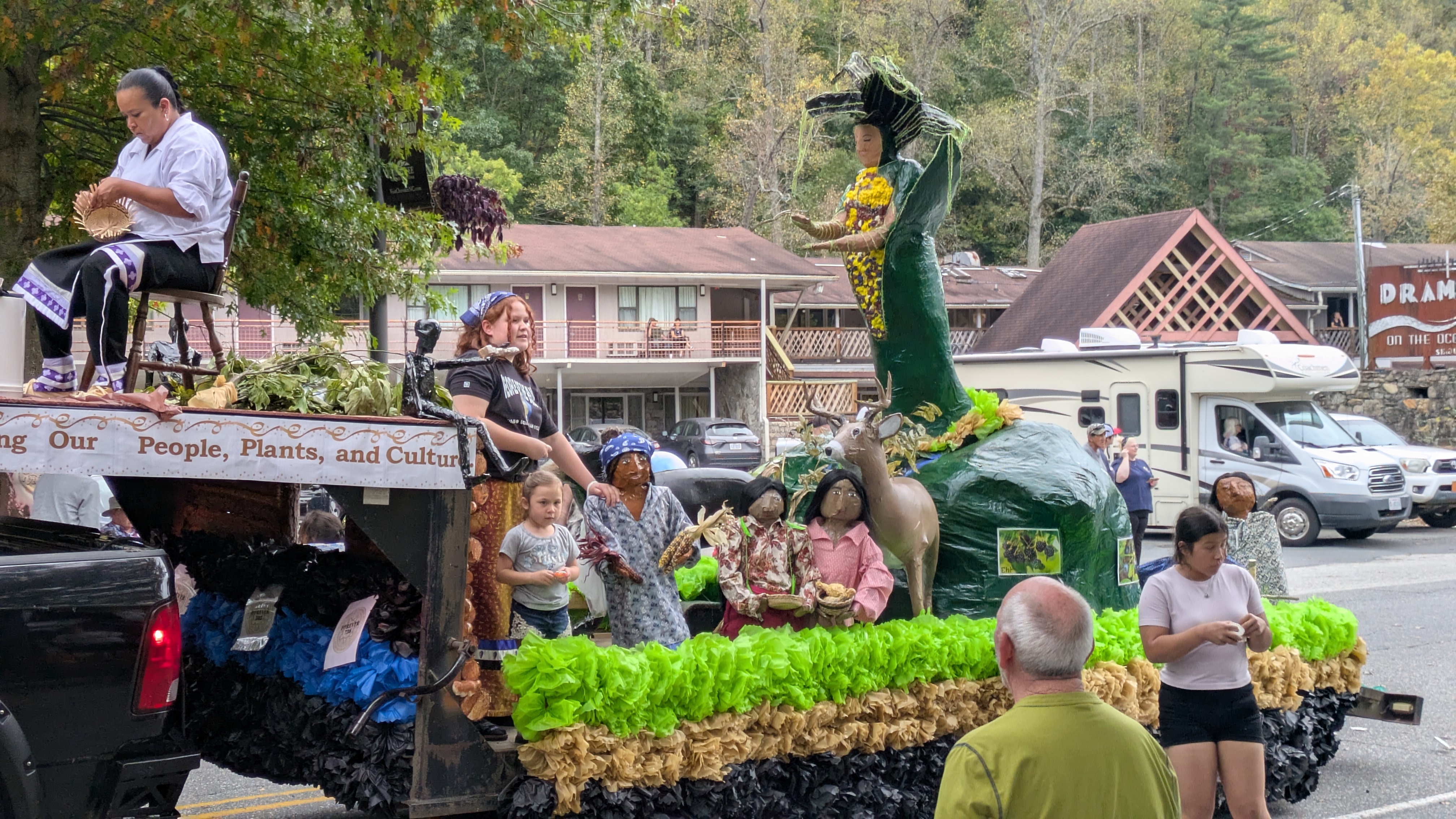
The Cherokee Day parade featured contestants in the Miss Cherokee pageant, lots of agriculture themed floats, marching bands, a drum line. And candy. So. Much. Candy!

Back at the conference, attendees had lots of opportunities to network and learn at expert sessions and demonstrations. Highlights for the Peabody team were visits to the Museum of Cherokee People, Qualla Arts & Crafts Mutual Co-op, the Oconaluftee Indian Village, the informal NAGPRA networking session, the Repatriation Talking Circle, and One Square Inch of Ceremony (and additional workshops with Lily Hope, Tlingit artist, educator, and community facilitator). Marla Taylor, Peabody curator of collections, participated in the session Institutional Approaches to NAGPRA Duty of Care, along with colleagues from museums, universities, and the Muscogee (Creek) Nation.

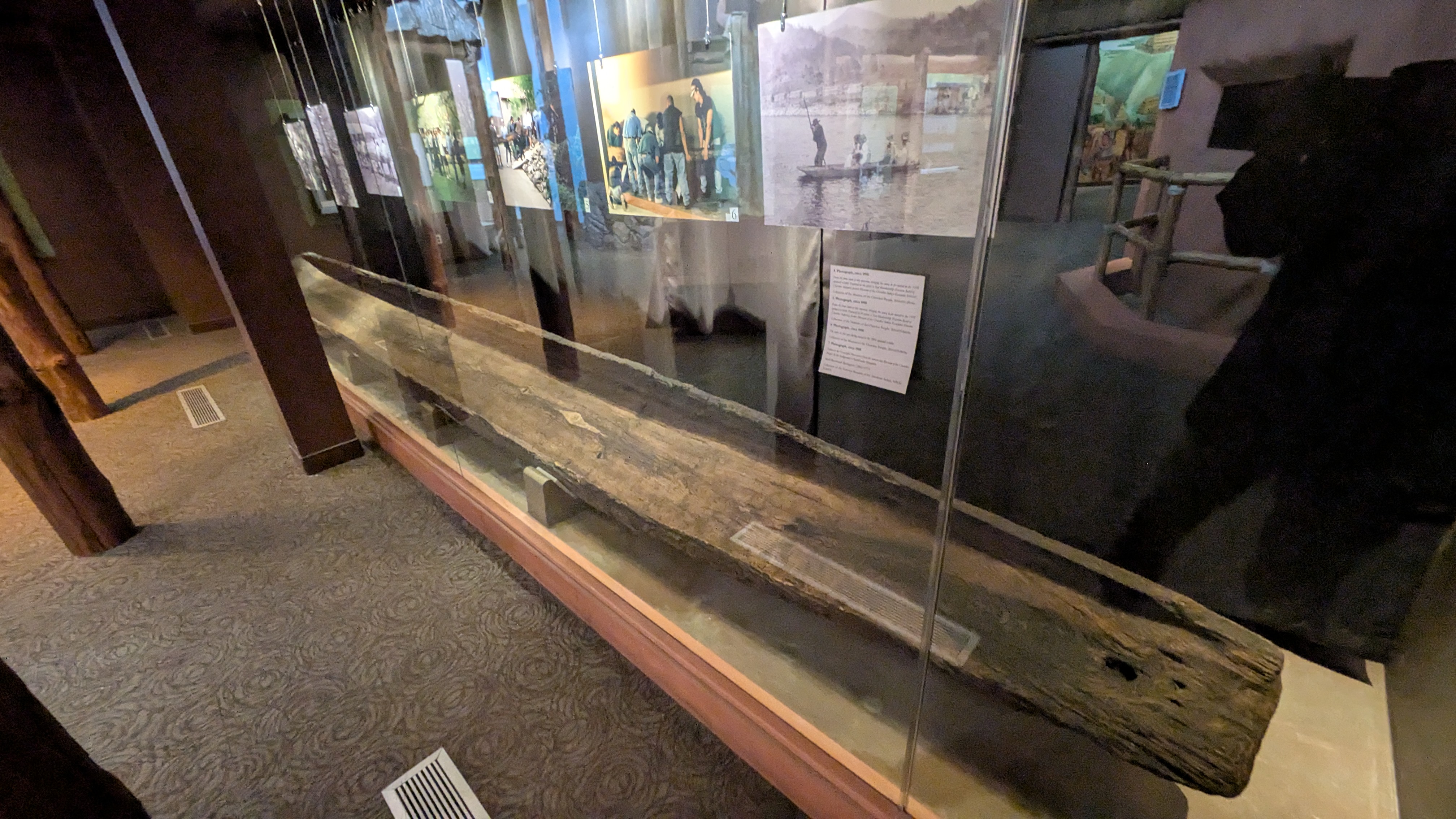
Canoes are everywhere! Exciting to see this dugout canoe at the Museum of the Cherokee People. The museum, one of the earliest Tribal museums in the US, has a series of great interpretive panels questioning how best to tell the Cherokee story. For example, why do museums always begin with PaleoIndians? Back to the canoe–this great example of a dugout is about 200 years old and was found in the 1970s on the Chattahoochee River near Helen, Georgia.

Many great meals were shared as well, but the best part was reconnecting with old friends, meeting colleagues regularly seen on Zoom in person, and making new friends. If you haven’t attended an ATALM conference, we highly recommend it!