Who Are These People?

Contributed by Ryan Wheeler

As we prepare updated Native American Graves Protection & Repatriation Act (NAGPRA) summaries and the required notices following claims and decisions about affiliation we are frequently confronted with the names of collectors. Some of these are quite familiar to us, Warren K. Moorehead, for example, who was our first curator and then our director. We recognize that the names of collectors often hold significant clues that may help make connections between now widely distributed holdings—what we refer to as “split and shared collections,” or aid in understanding localities or other entanglements. I’ve started developing short biographies of some of the collectors, with the hope that knowing when and where they were active might inform some of these other considerations. To develop the biographies, I usually rely on genealogical information to fill in birth and death dates, geography, personal and professional connections, and other details. Many of these collectors were in contact with Warren Moorehead and their names appear in his correspondence files or in his books, especially those volumes that highlight collectors and collections. In other cases, the collectors have some connection to our parent organization, Phillips Academy—either as students, alumni, or faculty. Here are a few recent biographies:
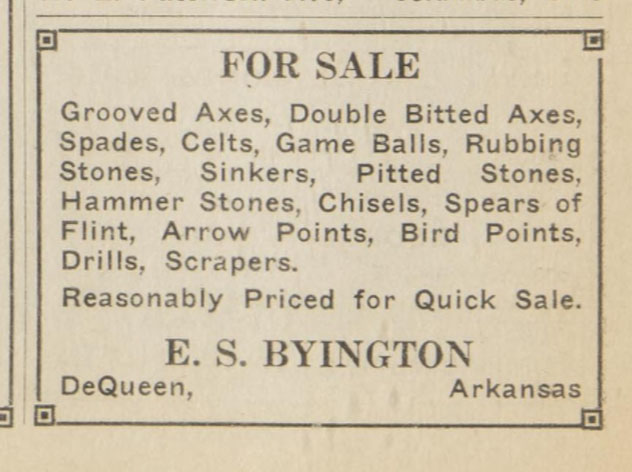
Byington’s advertisement in The Philatelic West, 1928.

Edward Spencer Byington (often styled as E.S. Byington) was a civil engineer in DeQueen, Sevier County, Arkansas (1866-1941). He worked for several railroad companies, including DeQueen & Eastern. Byington often bought and sold artifacts, and his ads can be found in several publications—see for example, The Philatelic West (1926), and Hobbies, the Magazine (1931). One of Byington’s ancestors was Cyrus Byington, an early settler and missionary to the region, who had traveled to the area with Choctaw people being forced from their homes in Mississippi. E.S. Byington was an affiliate of Warren K. Moorehead and advocated for establishment of an “Association of Indian Relic Collectors & Dealers.” Correspondence with Moorehead indicates he was collecting artifacts during railroad construction and maintenance. Byington is listed as the source of at least 131 items in the Peabody Institute holdings.
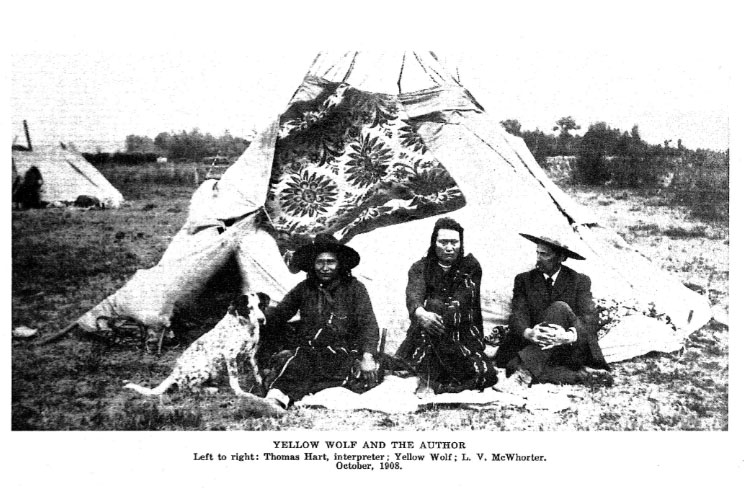
McWhorter (far right) with interpreter Thomas Hart (far left) and Yellow Wolf, October 1908–from McWhorter’s book Yellow Wolf: His Own Story (1940)

Lucullus Virgil McWhorter (often styled as L.V. McWhorter) was an American farmer and rancher, frontiersman, and writer who was a regular source of Native American material heritage for Warren K. Moorehead at the Peabody Institute (1860-1944). McWhorter compiled information on Indigenous communities and history of the Pacific Northwest, and is generally regarded as an advocate and ally of the Native American individuals and tribes that he worked with, including Yellow Wolf and the Nez Perce. See Washington State University for the McWhorter papers and finding aid, which frequently mention Moorehead: https://archiveswest.orbiscascade.org/ark:80444/xv98497. McWhorter is listed as the source of at least 507 items in the Peabody Institute holdings.
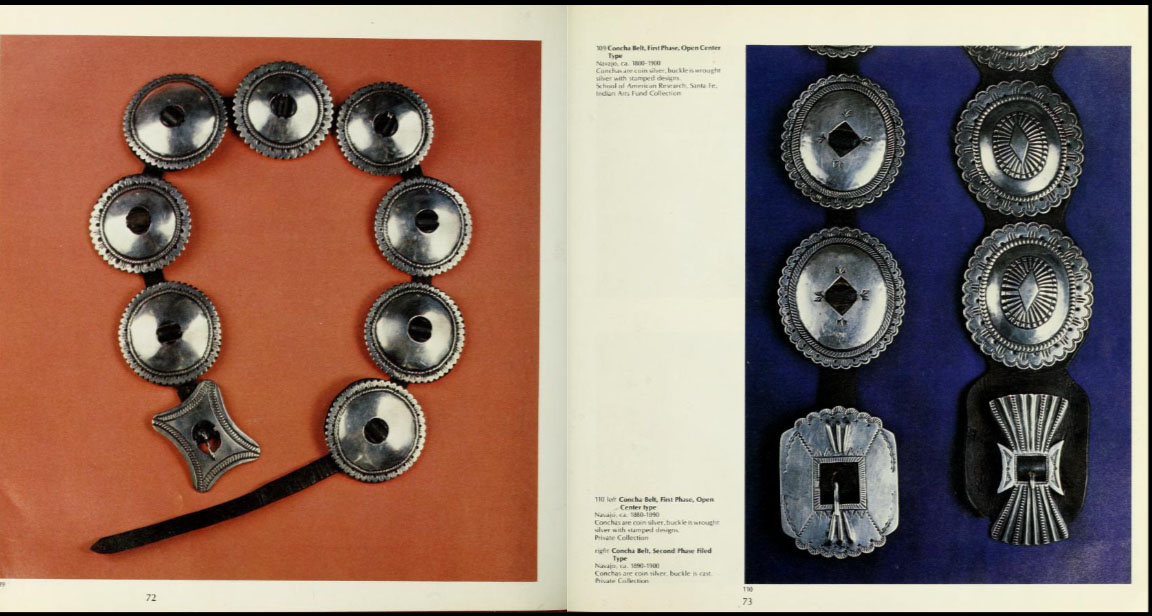
Diné silverwork illustrated in Enduring Visions, the exhibit catalog co-authored by Donnelley Erdman.

Donnelley Erdman (1938-2024) was a graduate of Phillips Academy (Class of 1956), an architect and instructor at Rice University. In 1978-79 he was involved in an exhibition of Southwestern material culture at the Aspen Center for the Visual Arts, Aspen, Colorado. See Philip M. Holstein and Donnelley Erdman (1979) Enduring Visions: One Thousand Years of Southwestern Indian Art, Aspen Art Museum (exhibit catalog). Erdman is listed as the source of at least 195 items in the Peabody Institute holdings.
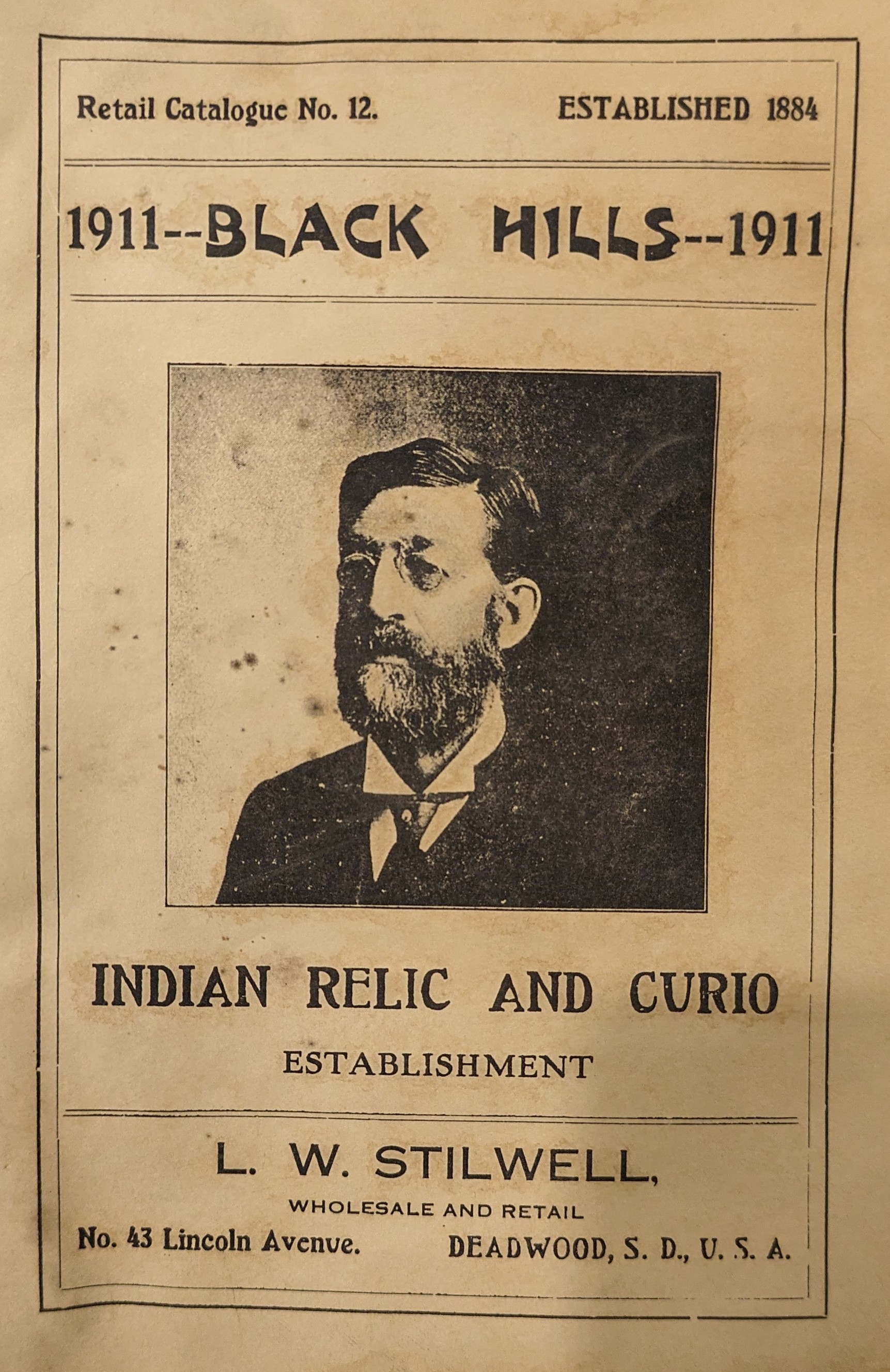
The cover of Stilwell’s 1911 catalog.

Lucien White Stilwell (often styled as L.W. Stilwell) was born in New York and grew up in Wisconsin (1843-1932). Following graduation from Ripon College, Stilwell moved to Cairo, Illinois and engaged in the grocery business. Throughout the 1860s and 1870s he was engaged in the grocery business via several partnerships, briefly worked for the Elgin Watch Company before relocating to Deadwood, South Dakota in 1879. In Deadwood, Stilwell was involved in banking, but it was here that he began to develop and expand his business in buying and selling Native American and natural history items. Throughout the 1880s he frequently advertised in collecting magazines, including Young Oologist, Mason’s Coin Collectors Magazine, The Agassiz Association Journal, The Museum, Hoosier Naturalist, The Philatelic West, and others, as well as short publications on geology. In the early 1900s he published catalogs advertising his “Indian Relic and Curio” establishment. He sold his business to Kenneth J. Crawford Company in 1928. Condensed from a longer biography by John N. Lupia III: https://www.numismaticmall.com/encyclopedic-dictionary-of-numismatic-philatelic-biographies/stilwell-lucien-white Stilwell is listed as the source of at least 18 items in the Peabody Institute holdings.
New Mexico Adventures

Contributed by Marla Taylor

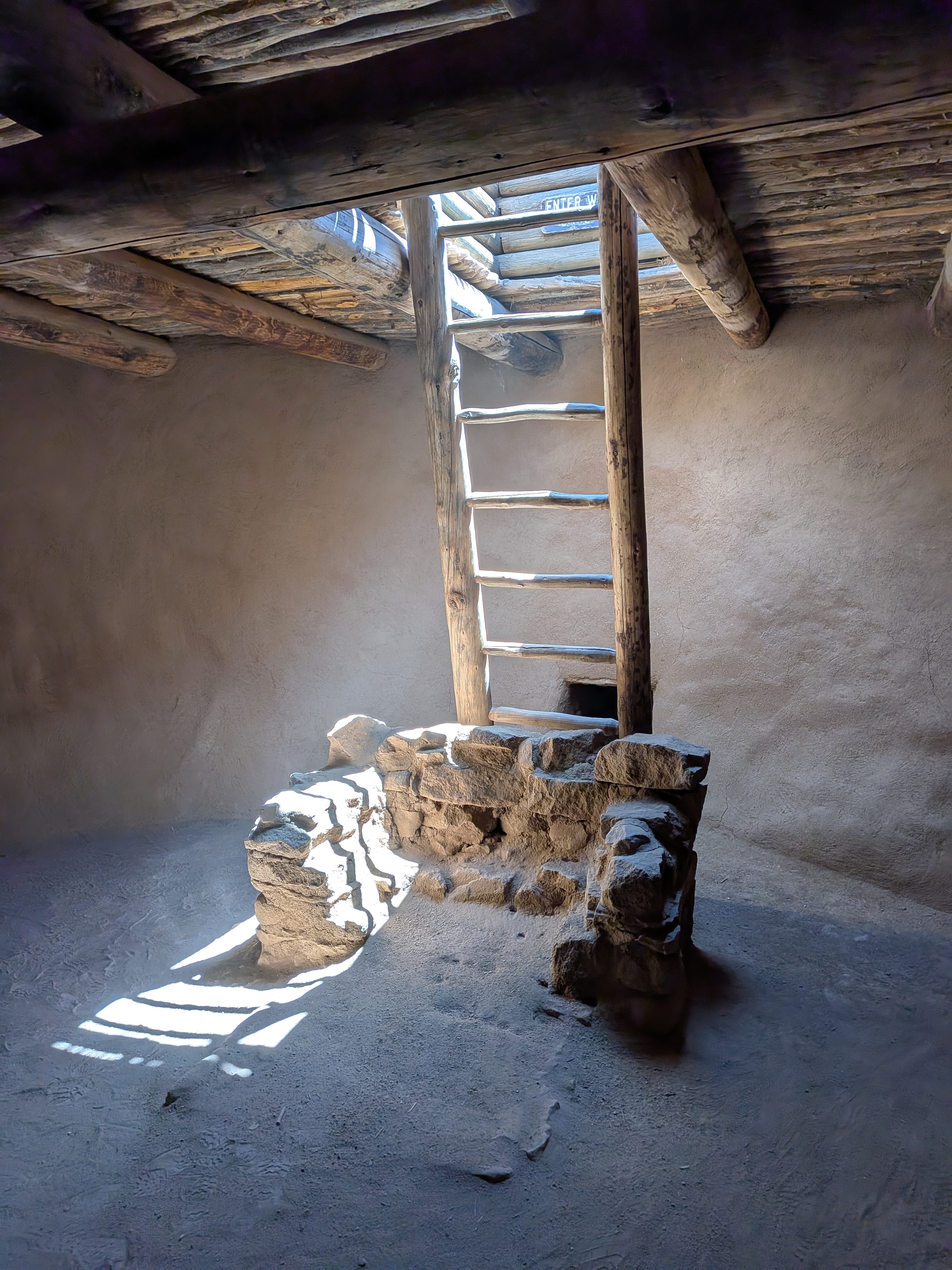
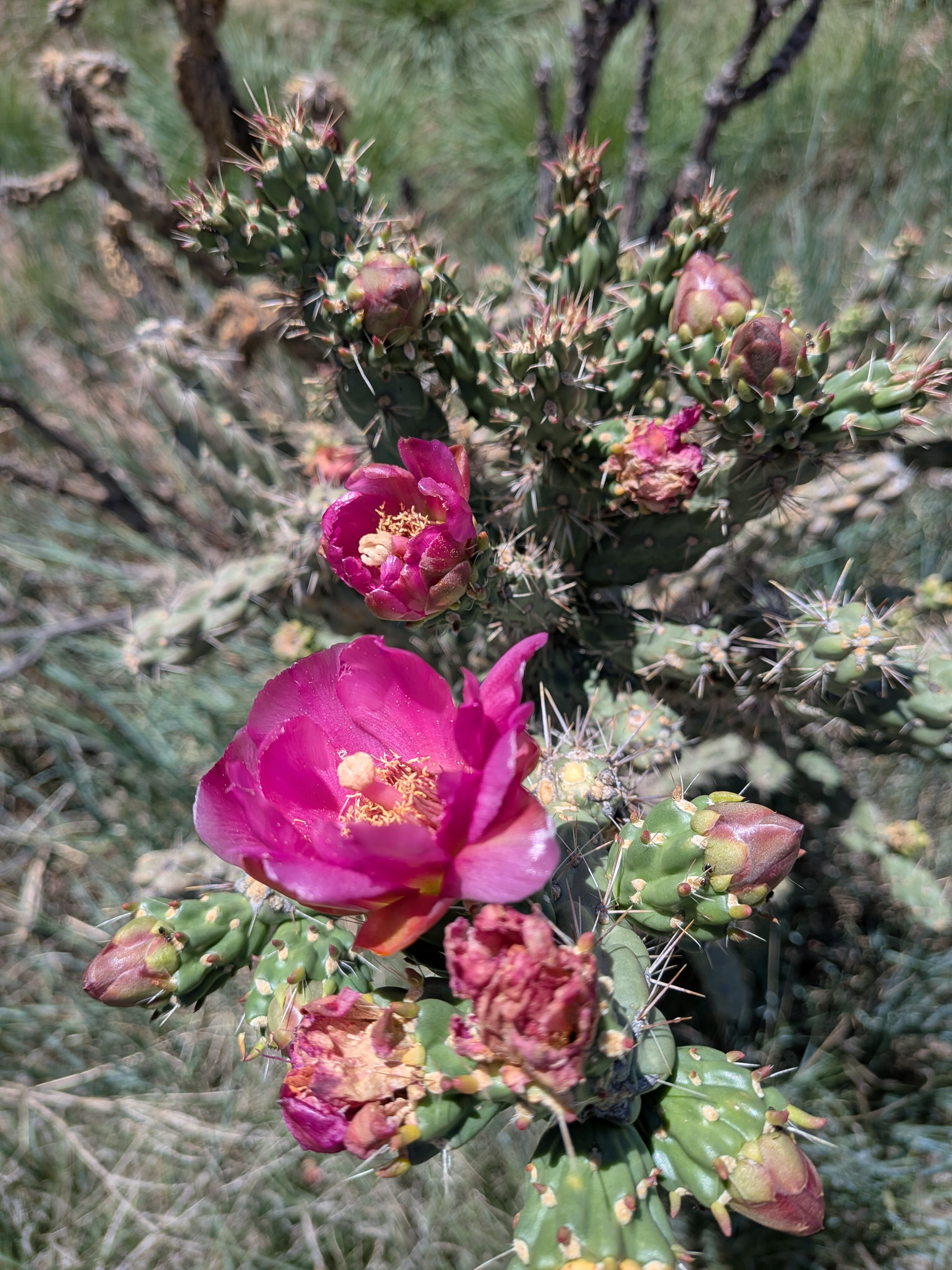
Did you know how beautiful New Mexico is?  I had the opportunity to travel to the Albuquerque and Santa Fe areas this July and can definitely recommend making the trip.

The Peabody Institute actually has a long relationship with New Mexico.  In the 1920s, Alfred Kidder excavated Pecos Pueblo on behalf of Phillips Academy (what is now the Peabody Institute).  The ripple effects of that work included repatriation work with the Pueblo of Jemez, a long-term loan with the Pecos National Historical Park, inter-institutional collaboration, relationships with Jemez artists, and incredible learning opportunities for the students at Phillips Academy. 

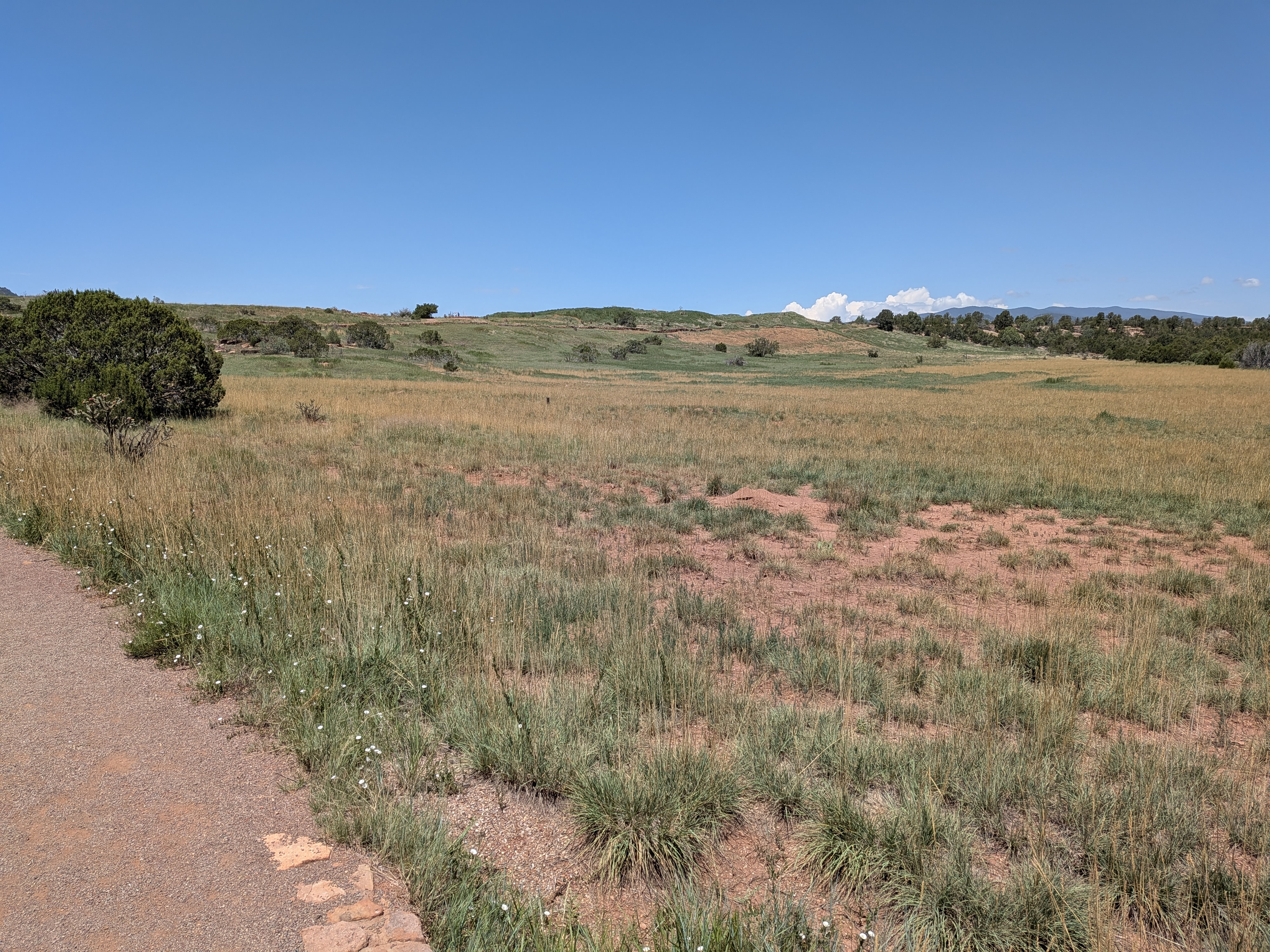
While I had been to the Pueblo of Jemez before this summer, I had not had the opportunity to see the Pecos archaeological site or Pecos National Historical Park before.  It was truly a pleasure to experience the site in-person and get an understanding of how Pecos sits in the landscape.  I was also able to view their wonderful exhibit, spend time with the Museum Curator to view the collections on loan from the Peabody, and meet several dedicated park staff members.  I am grateful for the opportunity to spend that time with them all.

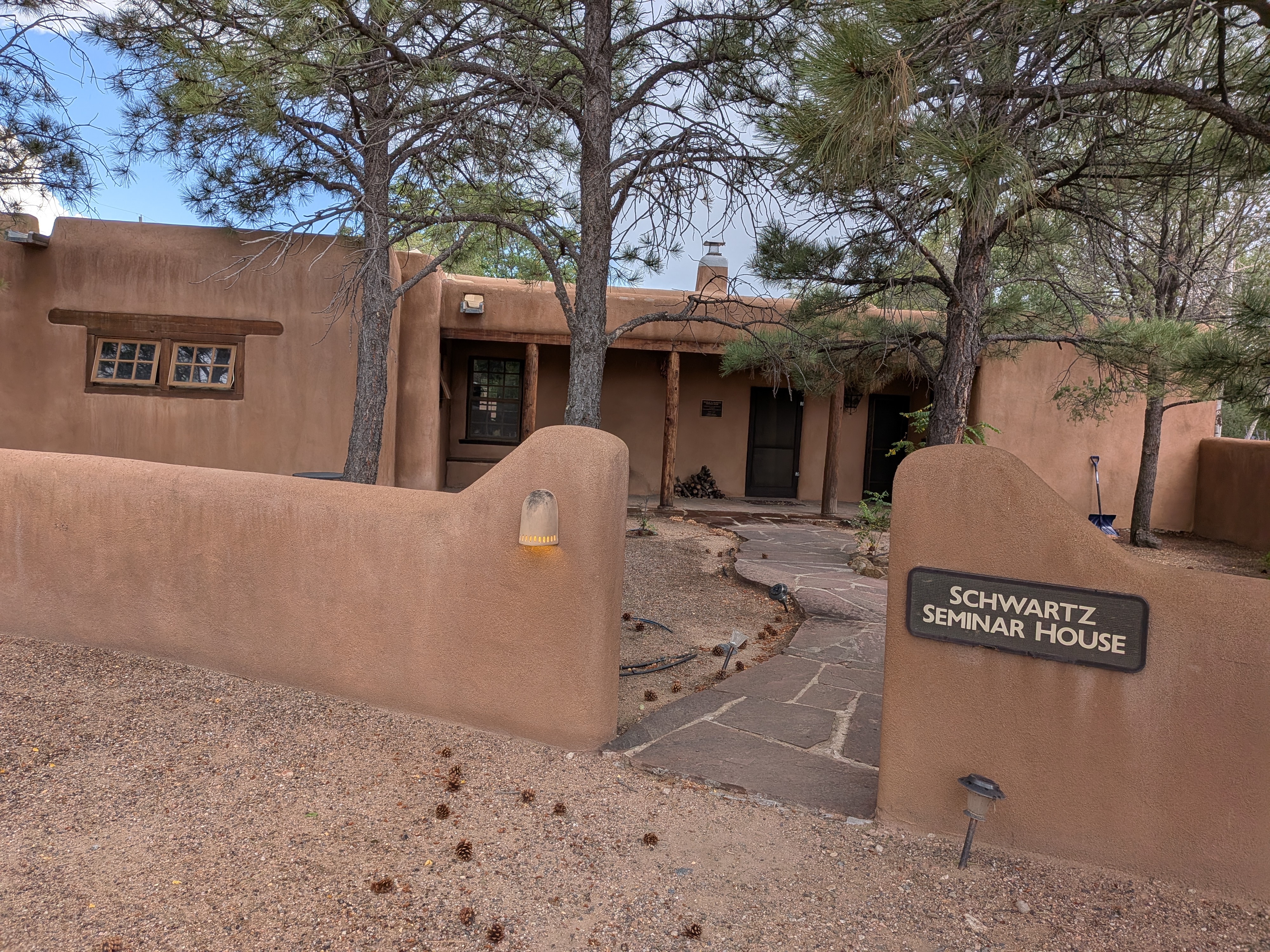
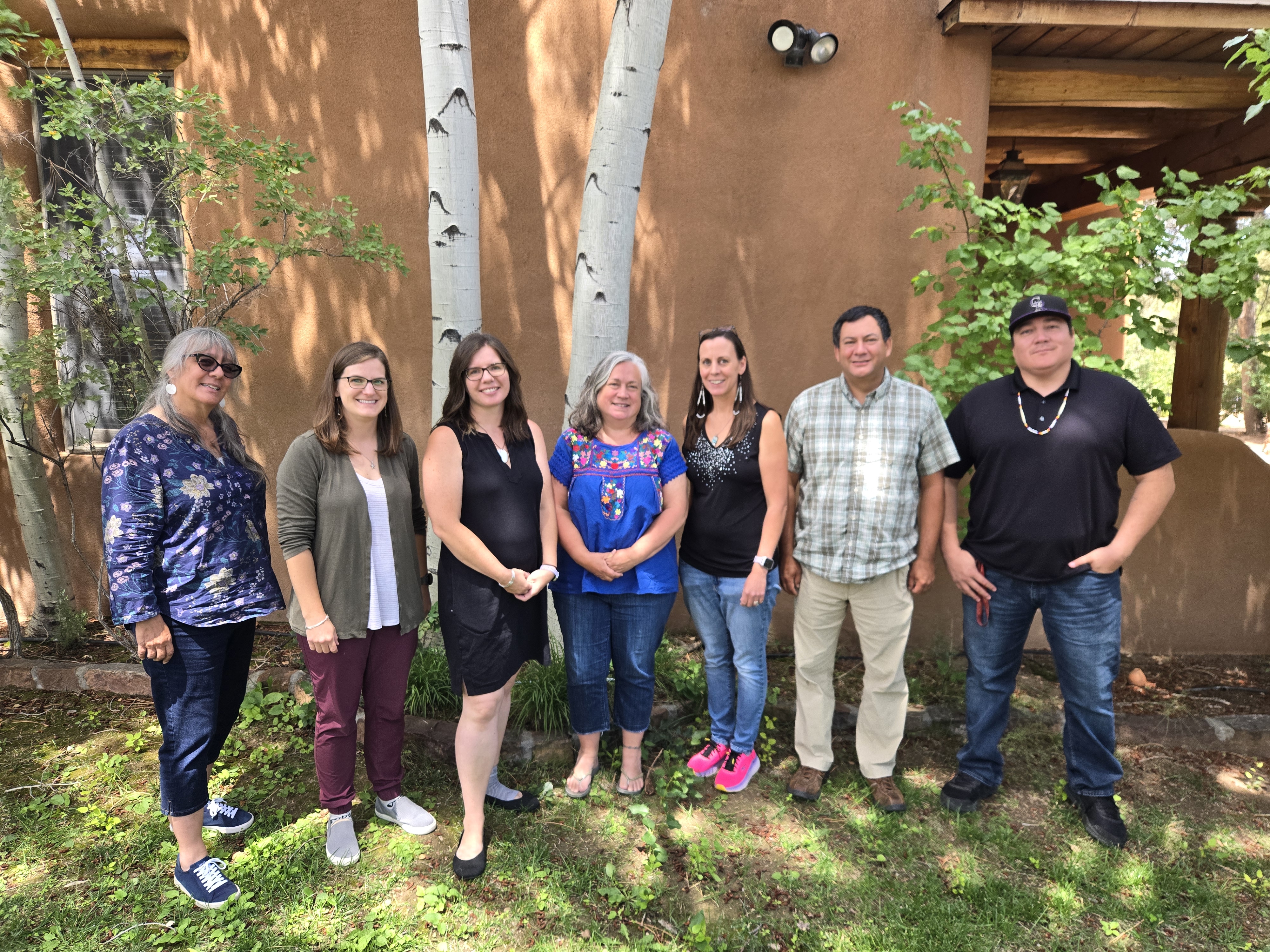
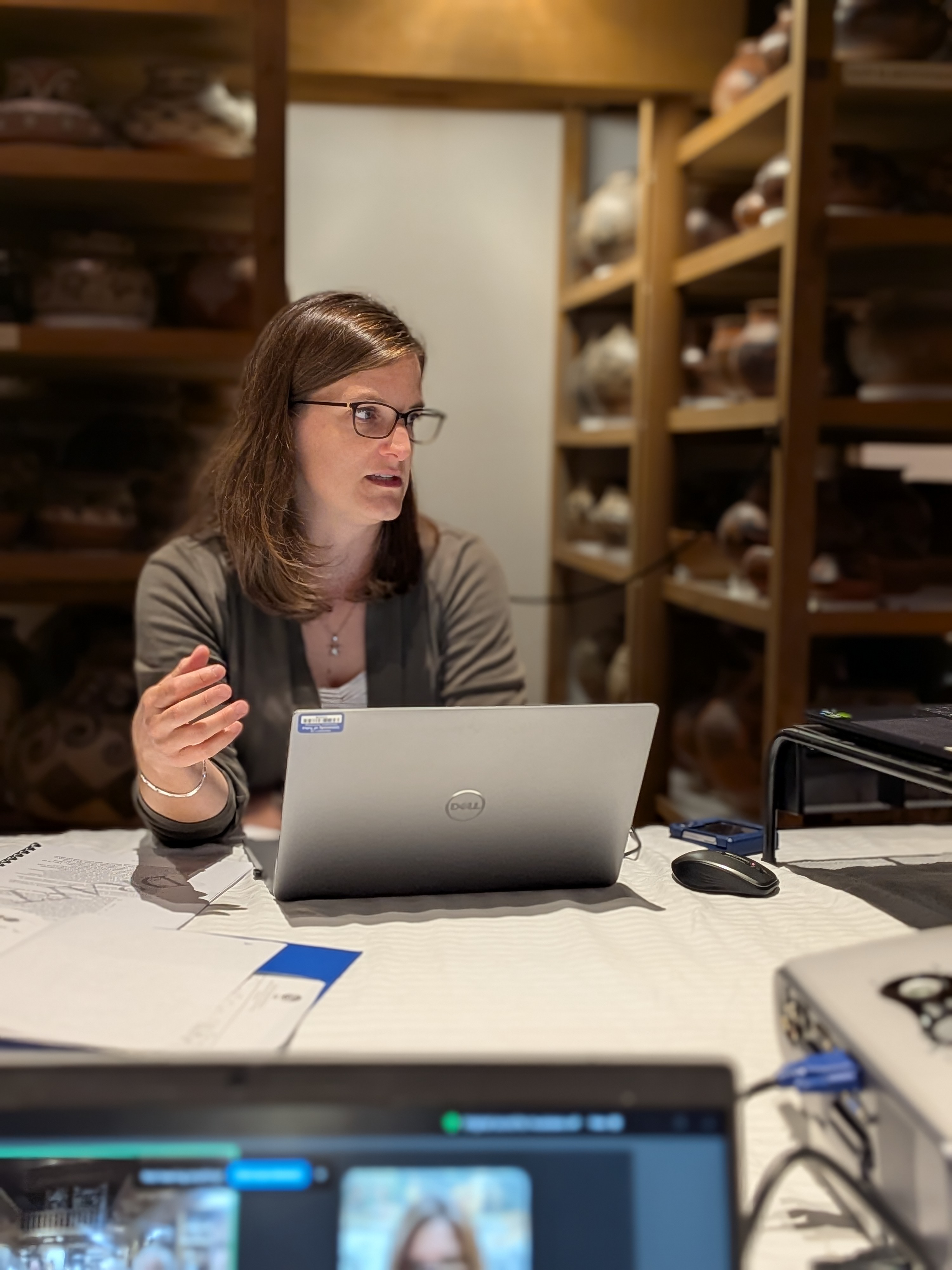
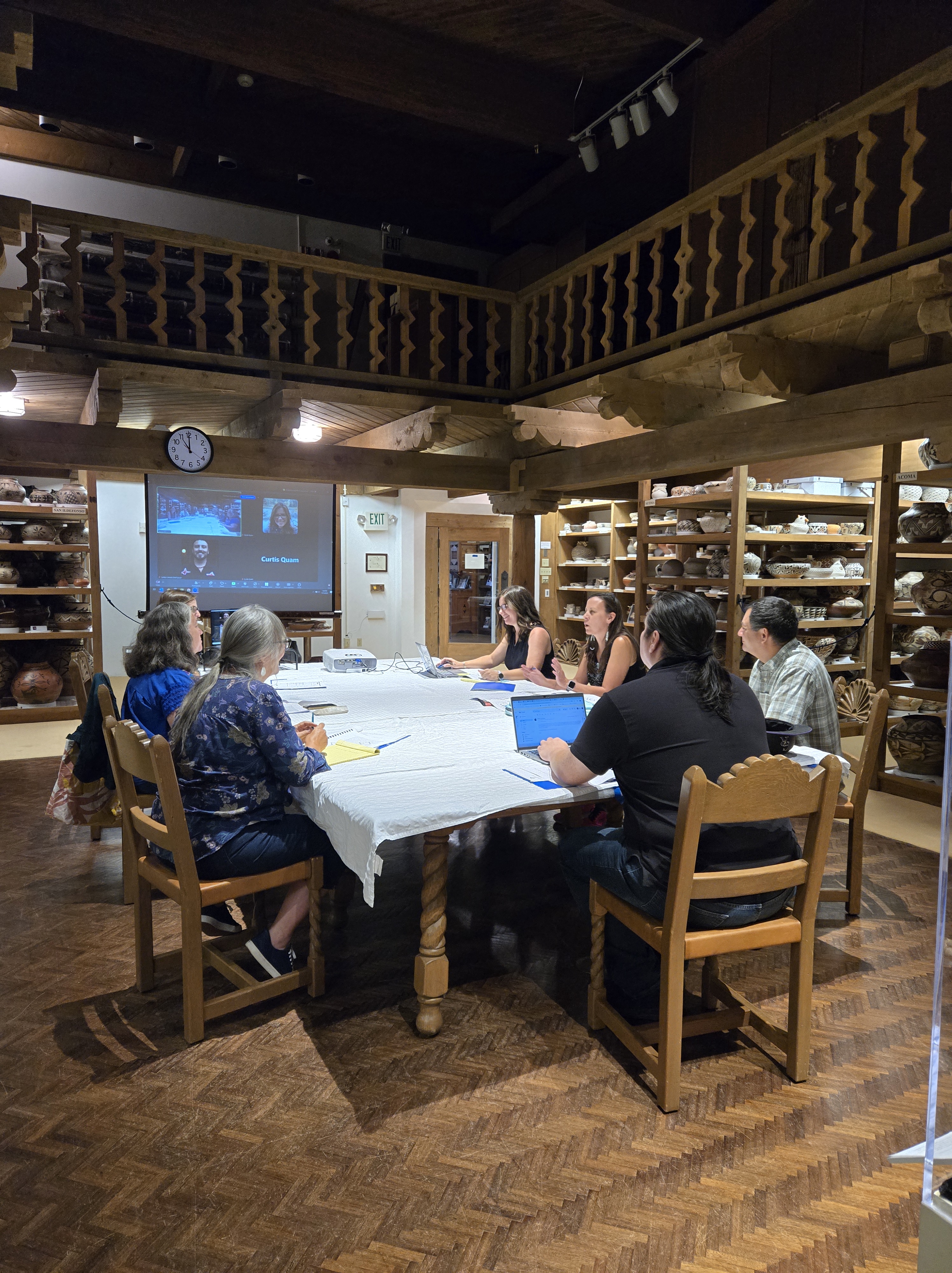
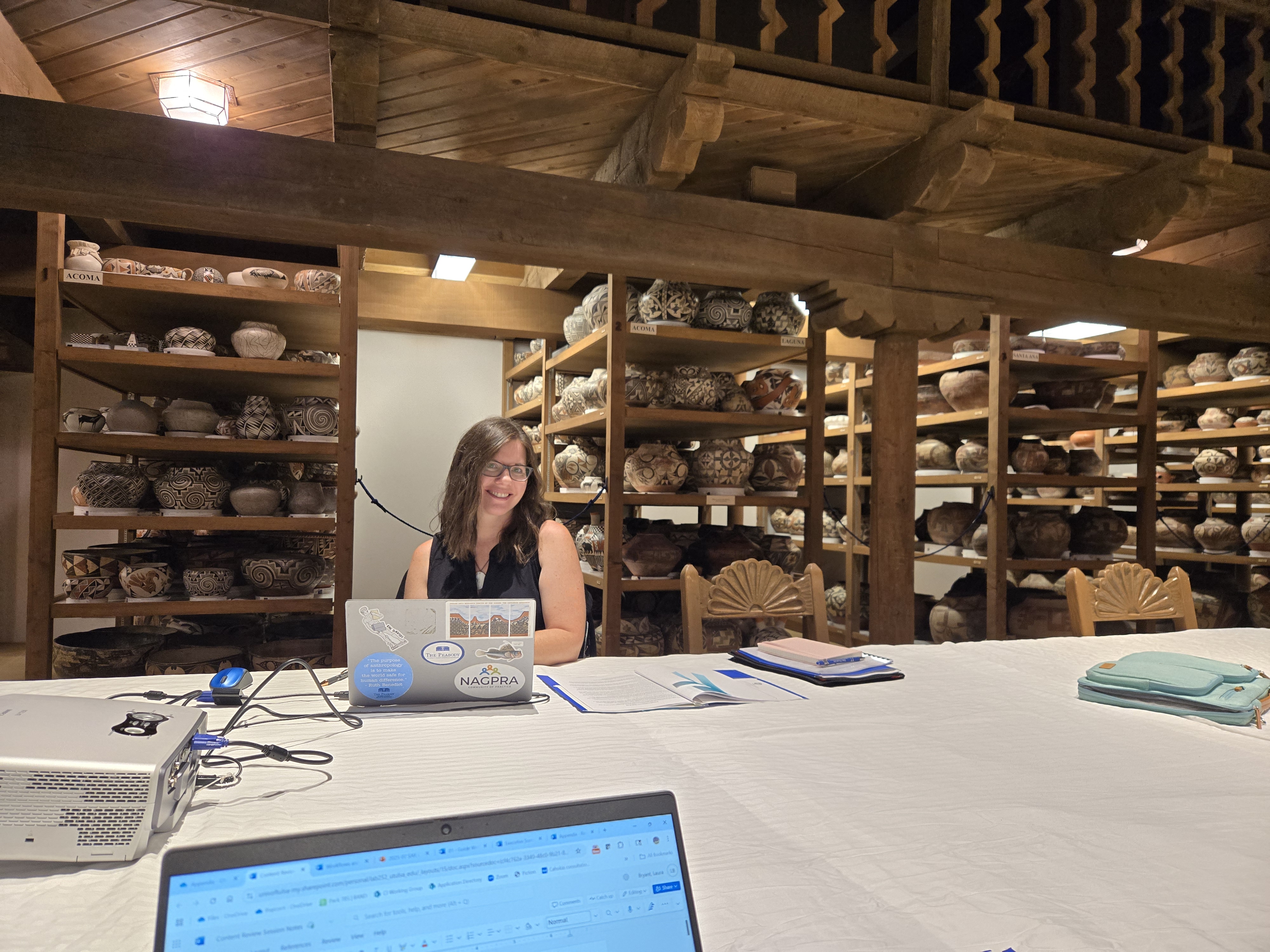
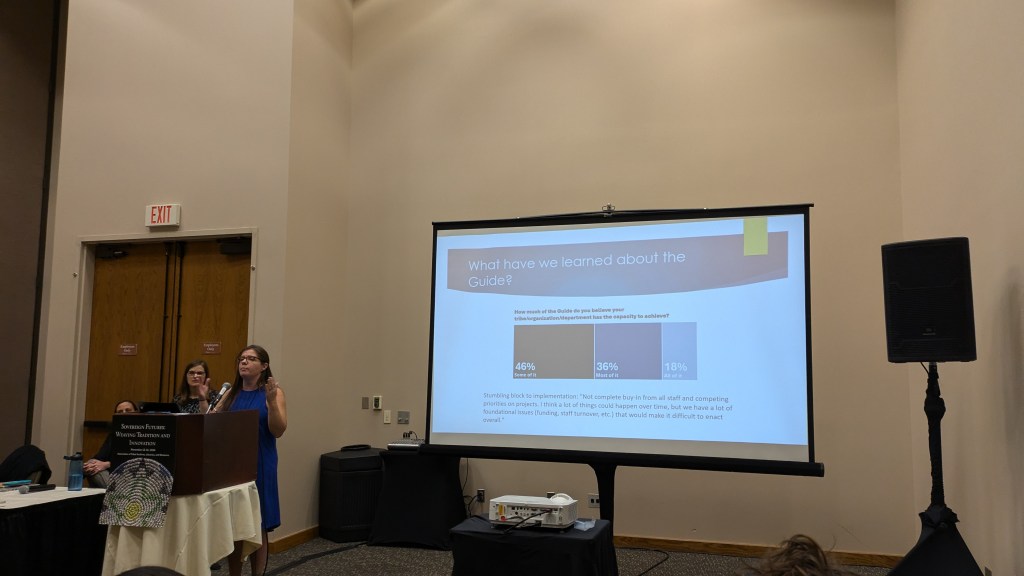
After my time at Pecos, I went to the School for Advanced Research in Santa Fe to facilitate the final review session of the Indigenous Collections Care (ICC) Guide.  This is a project that I have been working on for awhile and it was excited to be entering the final stages.  Although the review session had to be rescheduled due to complications with our IMLS grant, we had a wonderful group of people to discuss the ICC Guide and help us move forward into the final stages of development.

The ICC Guide provides a framework to respect and recenter collections stewardship practices around the needs and knowledge of Indigenous community members. The Guide speaks to individuals engaged in collections stewardship within museums and collecting institutions.  It is aimed specifically at museum professionals, emerging and established, and individuals who are seeking clarification, support, and validation to pursue culturally appropriate care.

Next steps are to send the Guide out for copy-editing and graphic design.  A final version will be ready to be shared in the summer of 2026.

My time in New Mexico was amazing and I hope you can visit there sometime soon!

Red Sox 2025 Native American and American Indian Celebration

Contributed by Ryan Wheeler

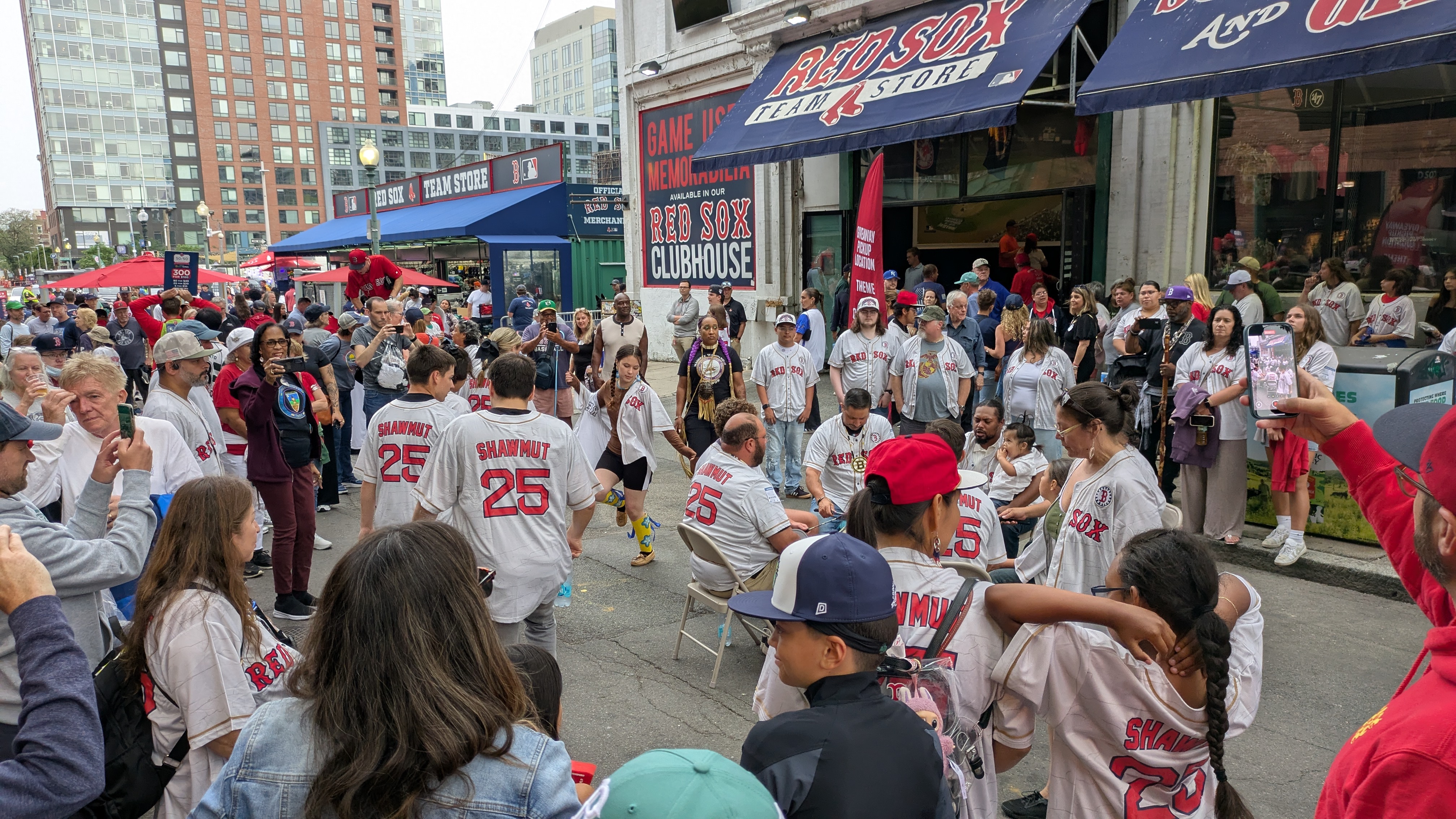
Early this summer we learned from our friend and colleague David Shane Lowry about the Red Sox Native American & American Indian pride night at Fenway—purchasing tickets for the game on August 6 included a Native theme jersey, with some proceeds supporting Native American Lifelines.

Fans wearing their Shawmut jerseys enjoying the drum circle before the game on August 6, 2025.

According to the Red Sox website, “The jersey design is inspired by Eastern Woodland ancestors whose names were once known, and contemporary Native artists Sage Carbone and Brittney Walley. The back of the jersey features “Shawmut” on the name plate, derived from the Algonquian word “Mashauwomuk” which refers to present-day Boston.”

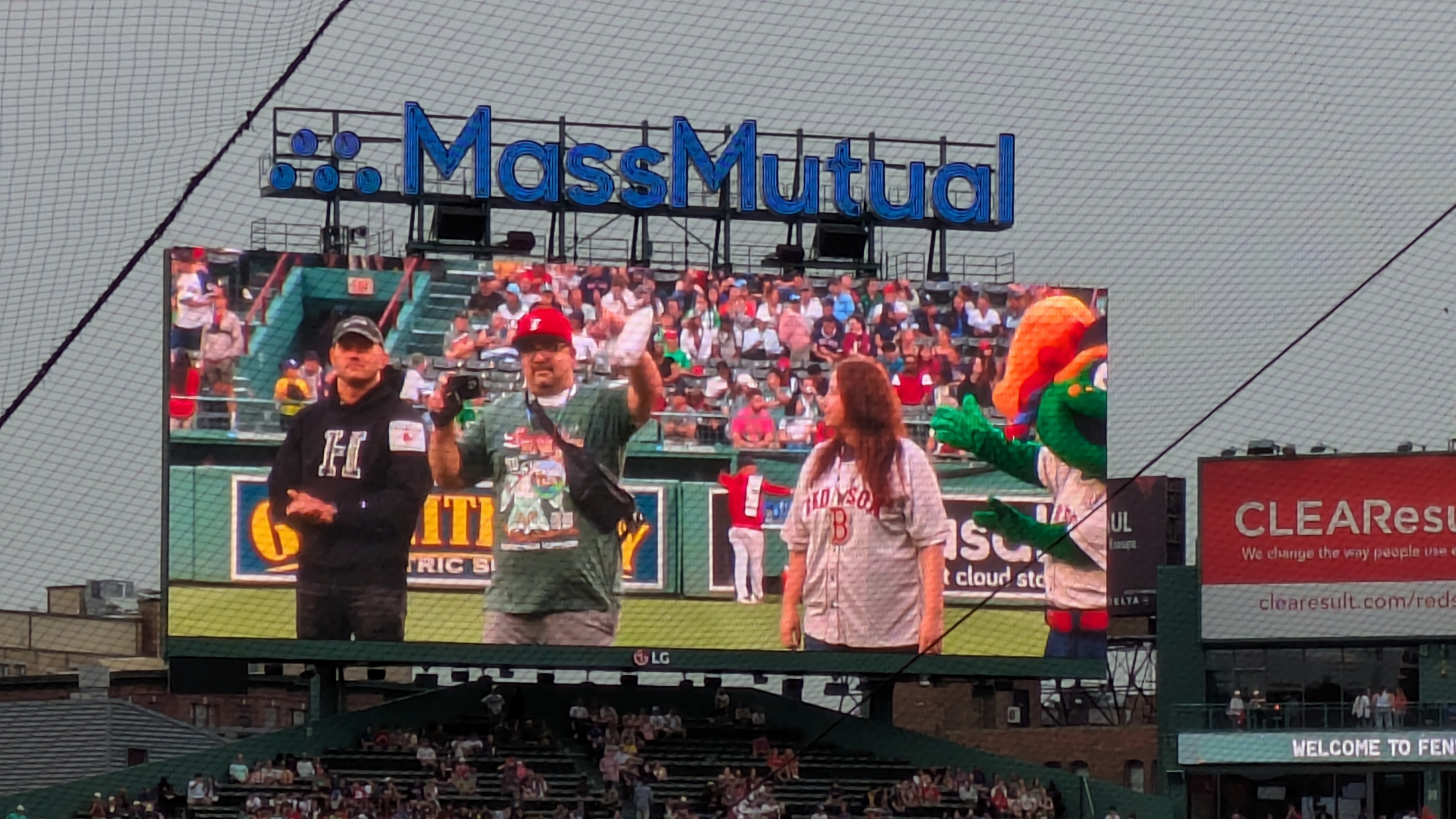
Along with the jersey, which my son and I were excited about, pre-game activities included a drum circle and on-field recognition of about 30 local Native American leaders and educators.

Recognition of Native leaders and educators before the game–David Shane Lowry waves to the crowd.

It was a good game against Kansas City, despite a rare Red Sox loss this season. The Native theme night got me wondering about Native Americans and the Red Sox, and baseball in general—beyond Jim Thorpe.

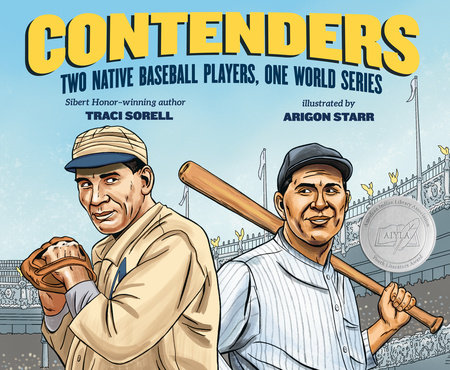
After a little research, I learned a lot—for example, recently Traci Sorell and Arigon Starr published a graphic novel Contenders: Two Native Baseball Players, One World Series, which tells the true story of John Meyers and Charles Bender, who in 1911 became the first Native baseball players to face off in a World Series. There’s a great academic article by Jeffrey Powers-Beck that explores the history of Native Americans and baseball, which begins with Louis Francis Sockalexis in 1897—decades before Jackie Robinson broke the color-barrier in MLB. About 50 Native American tribal citizens who have or continue to play baseball, as well as many others with Indigenous heritage—Baseball Almanac has a list: https://www.baseball-almanac.com/legendary/american_indian_baseball_players.shtml

Cover art from Contenders: Two Native Baseball Players, One World Series, the true story of John Meyers and Charles Bender, who in 1911 became the first Native baseball players to face off in a World Series.

Charlie Vascellaro’s 2012 article The Real Indians of Baseball explains that Indian boarding schools—including the infamous Carlisle Indian Industrial School—added baseball to their curriculum and produced many of the Native American players in the minor and major leagues. As Tribes and families continued to resist forced removal of children and the boarding school era waned, fewer Native players joined MLB. Looking at the Baseball Almanac list, almost all Native players played games before 1950, with a minority playing since then. Many were nicknamed “chief,” and in some cases became the models for derogatory team names, like the Cleveland Indians (now the Guardians), inspired by Penobscot player Louis Sockalexis.

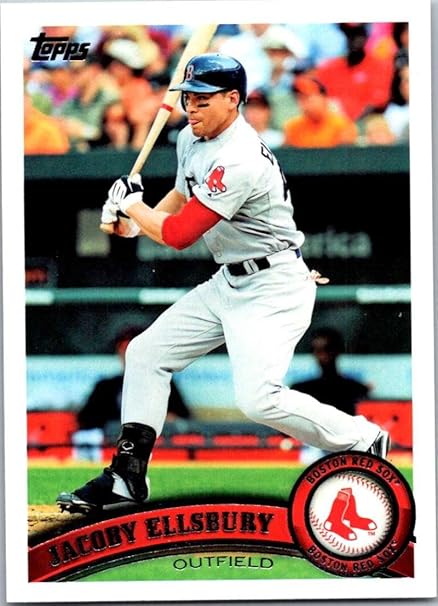
2011 Topps Baseball Series 2#351 Jacoby Ellsbury Boston Red Sox Official MLB Trading Card.

And what about the Red Sox? Well, I was delighted to learn that Jacoby Ellsbury played for the Boston Red Sox from 2007 through 2013. An enrolled member of the Colorado River Indian Tribes, Ellsbury is the first Native American of Navajo descent to play Major League Baseball. Jacoby Ellsbury played for the Sox in two World Series appearances, winning the championship in both 2007 and 2013. After signing with the New York Yankees, several injuries and a contract dispute sidelined Ellsbury in 2019. According to NDNsports.com, Ellsbury was recently elected to the Oregon State Athletics Hall of Fame—his home state—and despite some truly impressive stats and records, missed the 2024 vote for the National Baseball Hall of Fame.

We look forward to the next Native pride event at Fenway and wearing our jerseys to the next game. Play ball!

Further reading

Powers-Beck, Jeffrey. ‘Chief’: The American Indian Integration of Baseball, 1897-1945. American Indian Quarterly 25, no. 4 (2001): 508–38. http://www.jstor.org/stable/1186015.

Vascellaro, Charlie. The Real Indians of Baseball. American Indian Magazine 13, no. 2 (2012): https://www.americanindianmagazine.org/story/real-indians-baseball

Sorell, Traci (author), Arigon Starr (illustrator). Contenders: Two Native Baseball Players, One World Series. (2023). Kokila, https://www.amazon.com/Contenders-Native-Baseball-Players-World/dp/0593406478

PA Pueblo Pottery-Making Workshops

Contributed by Emma Lavoie

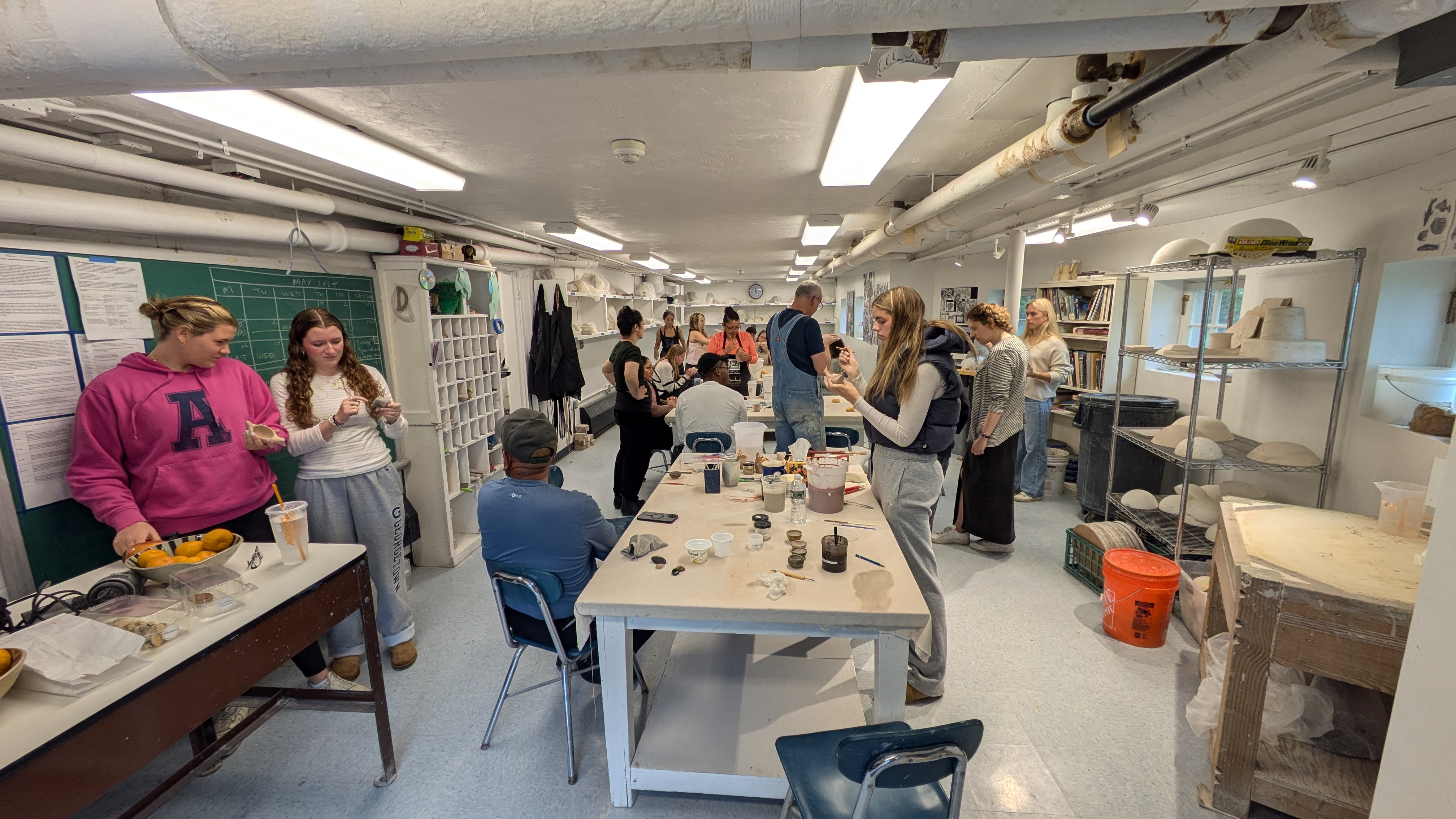
Ceramic students participating in pottery-making workshops

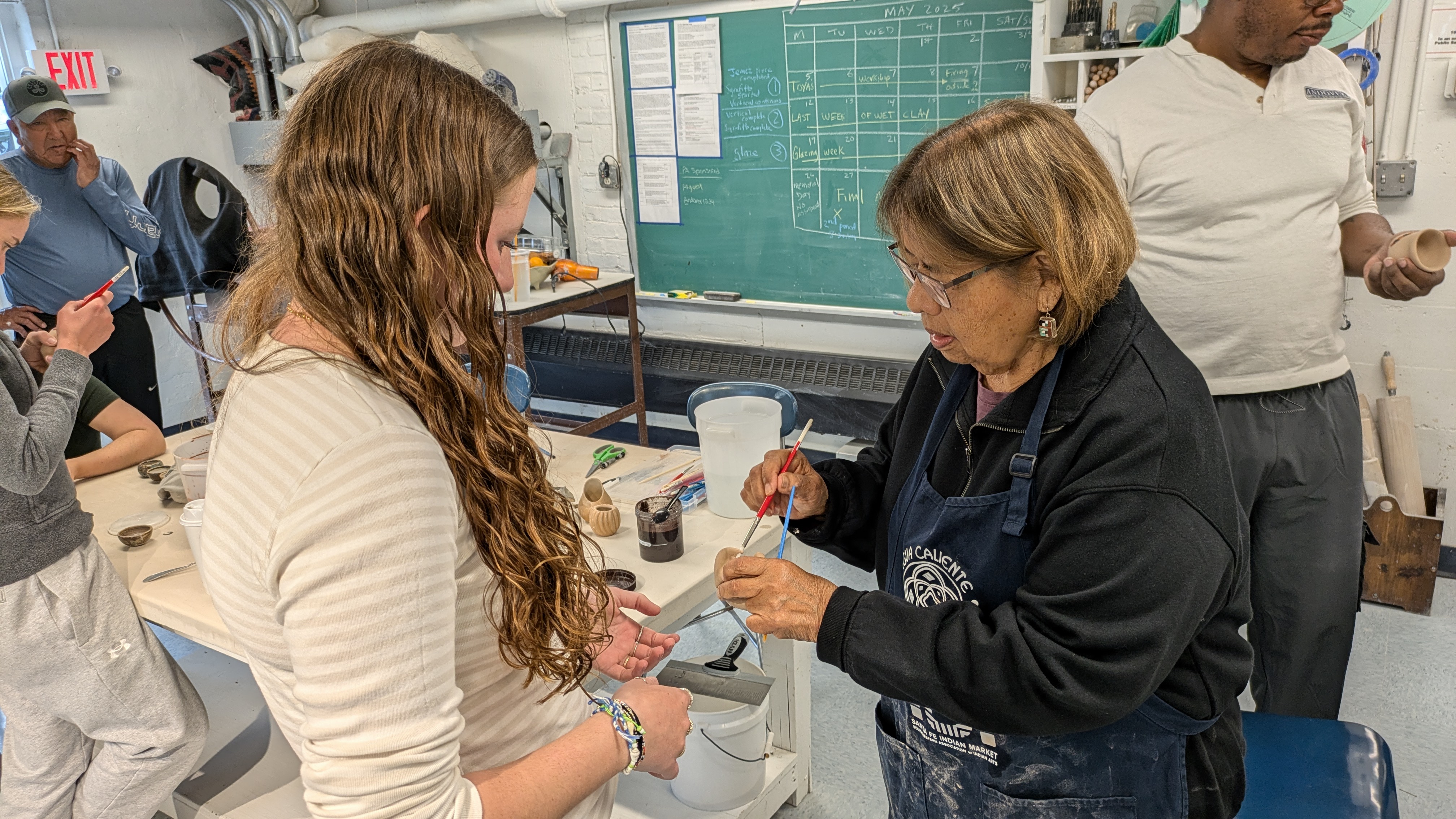
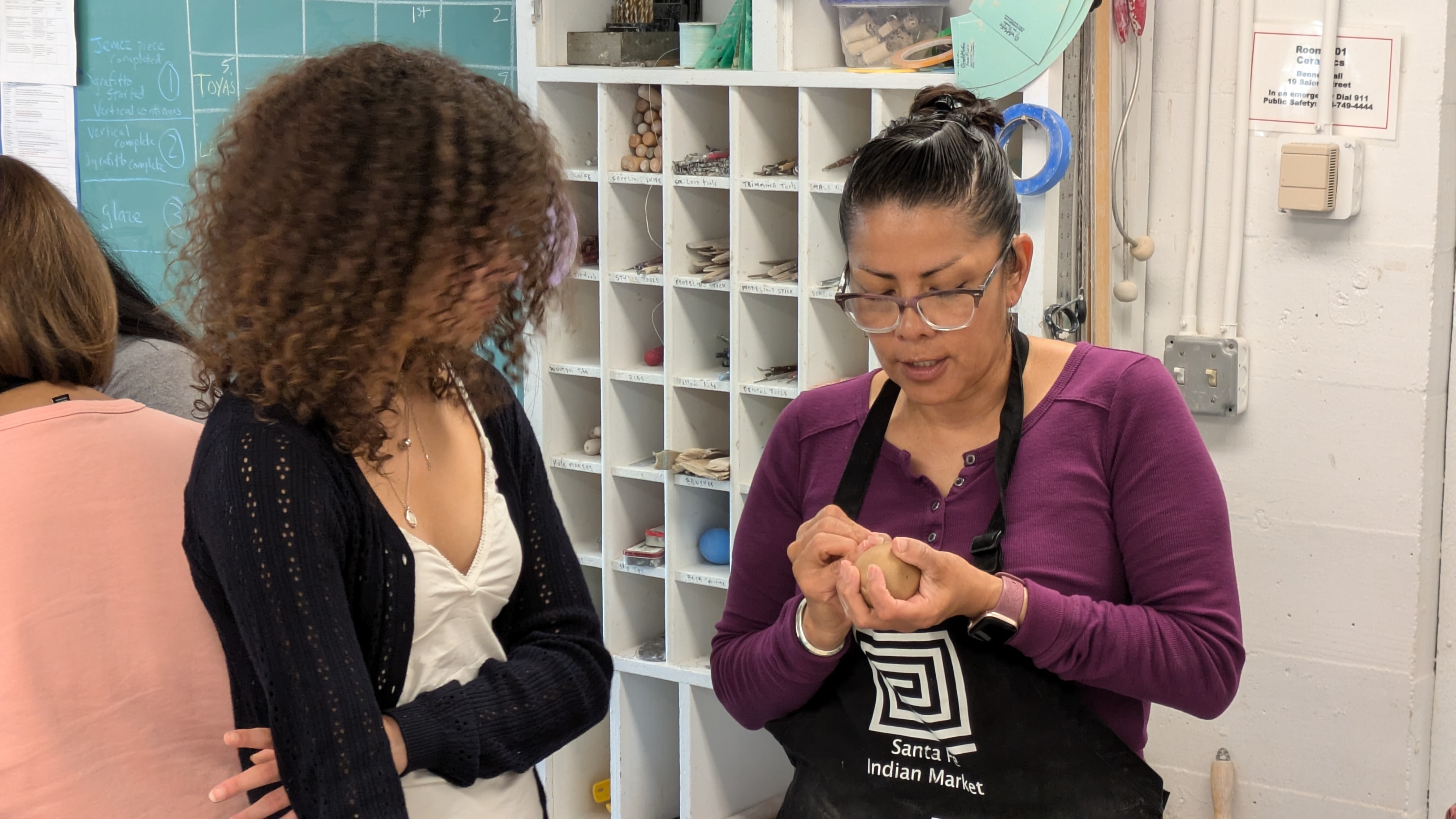
We were honored to have the Toya family back this Spring term for their annual visit to conduct week long, hands-on workshops on Pueblo pottery-making with Thayer Zaeder’s studio ceramic students.

Each year students have the opportunity to make their own pieces using native clays and temper from New Mexico and traditional decorative techniques of painting and polishing. The workshops culminate in a traditional Jemez firing.

Students walk away with an unforgettable keepsake of their time as well as a greater appreciation for contemporary Indigenous art and culture.

We are so grateful for all the time and expertise the Toya family has shared with PA students!

Check out this video by PA’s Communications team highlighting the Toya’s work on campus.

Maxine Toya working with a student on painting their piece.
Mia Toya working with a student on polishing their piece.

Pecos Eagle Bone Flutes: Past, present, and future

Contributed by Alberto Agudo (’25)

I stumbled upon the Pecos bone flutes on a bright September afternoon that was supposed to be about beaver pelts and fur trade ledgers. My history class had followed Ms. Doheny to the Robert S. Peabody Institute for a lecture, but after the talk I lingered and asked the speaker, Dr. Lainie Schultz, whether the museum kept any musical instruments. That single question carried me into the archives, where Curator Marla Taylor opened a drawer and revealed two slender bones—one golden eagle, one hawk—pierced and polished, flutes waiting in perfect silence.

Music has framed my life since I was four in Madrid: first as a hobby, then as devotion, from my early passion for Romantic music to the shimmering modernism of Debussy, whose Masques I played at fifteen beneath the stone arches of Dubrovnik’s Rector’s Palace. Yet nothing in my previous musical experience had prepared me for the quiet authority of these flutes. Their accession records were almost empty, their makers unnamed, but the Tribal Historic Preservation Officer of Jemez Pueblo had granted permission for their study. Phillips Academy’s Abbot Independent Scholar program let me transform my curiosity into a full-term research project under the supervision of Dr. Schultz and Dr. Elizabeth Aureden from the music department.

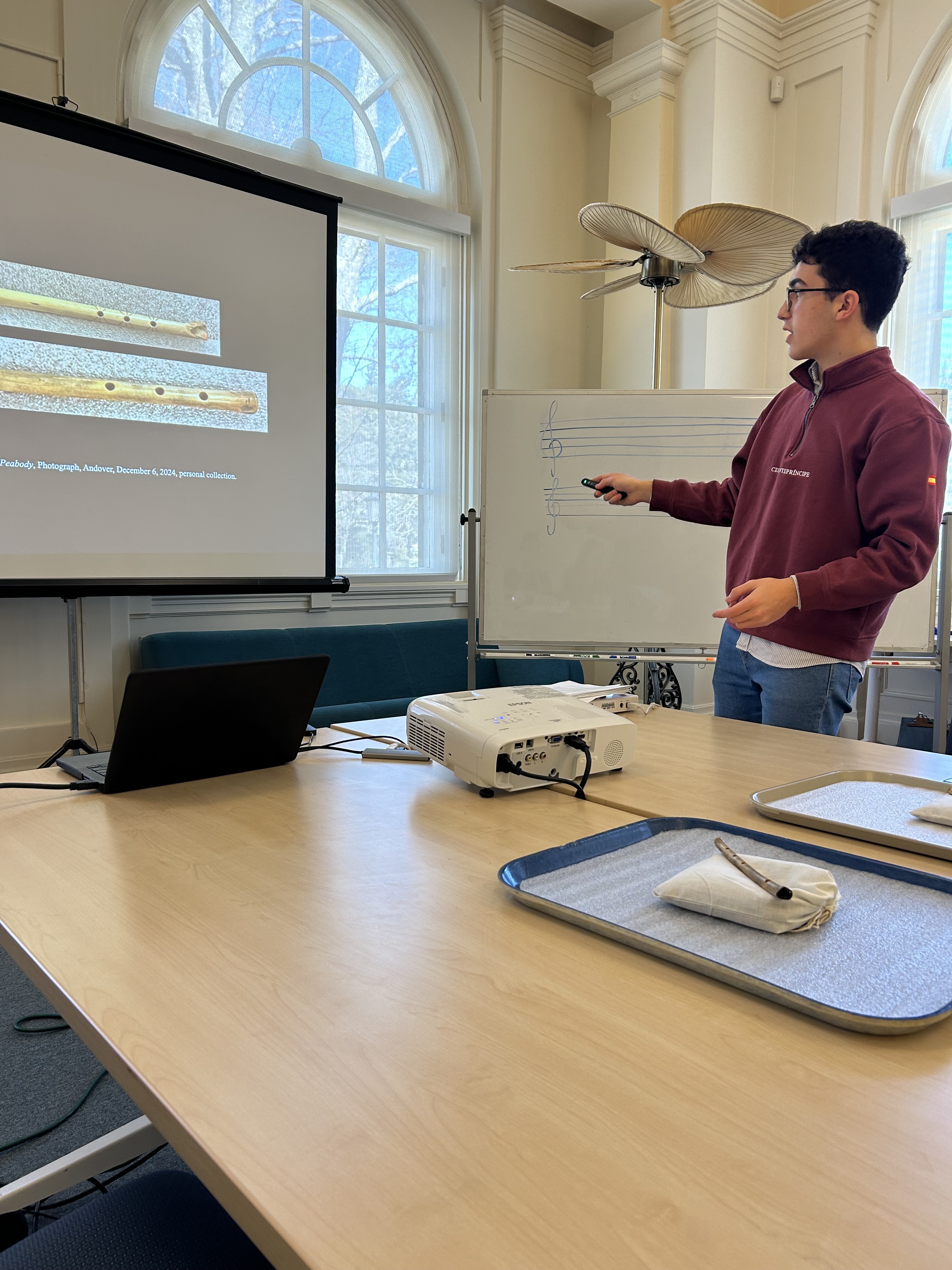
The work began with patient looking. The eagle bone flute—just under twenty centimeters—bears four clean finger-holes; the hawk bone flute is shorter, its stops conical and ringed by three tiny oblique grooves. My initial efforts left me frustrated—despite my solid musical background, I couldn’t answer any of my research questions. Guided by Indigenous scholars, I began to understand the silence and endless questions as a wise teacher. By combining archival materials with present-day Indigenous resources, chiefly from Jemez musician Marlon Magdalena, I built a relationship with the eagle bone flute and experienced the music as something much deeper than pure sound.

In his song “Eagle’s Blessings,” which I shared during my presentation to the Massachusetts Archaeological Society in April, Marlon brings the flute to life. When I first heard it, I was nearing the end of my research, which had been mostly historical and archival. I had tried to learn about other Indigenous music, but this performance tied everything together. Throughout the term, I feared profaning the cultural or religious significance of the eagle bone flute. I understood its sacredness, and as a religious person involved in interfaith activities, I recognize the importance of respecting religious artifacts.

Marlon’s explanation before he played brought everything into focus. He explained that eagle bones are sacred, held only by tribal members and used to lift prayers skyward. When he played, I felt how, through his breath, he gave life back to the eagle and honored her. Suddenly, the silence became understandable. Even though I could not draw solid scientific conclusions, I forged a connection I will never forget.

This project has awakened a passion for ethnomusicology that I am now exploring with the music department, under the guidance of Ms. Ángela Varo-Moreno, studying the presence of LGBTQ+ subcultures in techno music. I would like to end by thanking everyone at the Peabody, at Phillips Academy Andover, and at Pecos and Jemez Pueblos—and other Indigenous communities—who have safeguarded the knowledge that reached me and made this project possible. It has been a gift I will always keep in my heart.

Alberto presenting his final project at the Peabody, finishing up his independent study.

Fusing Glass with Hopi Artist, Ramson Lomatewama

Contributed by Emma Lavoie

Last month we were delighted to welcome back Ramson Lomatewama to Phillips Academy Andover (PA) where he worked with students and campus community members in fused glass workshops.

Ramson Lomatewama is an award-winning Hopi glass artist, kachina doll carver, jewelry maker, and published poet from Hotevilla, Arizona. This is his second year working with the Peabody Institute to bring fused glass workshops to the PA campus community. Ramson has also participated in various virtual, and in-person talks at PA, sharing his poetry, art, and life stories with students and the broader public. You can view these virtual talks on our Peabody YouTube page.

Ramson speaking to one of the fused glass community workshops.

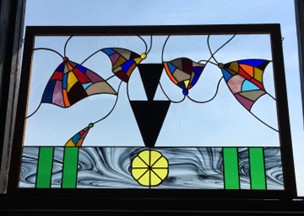
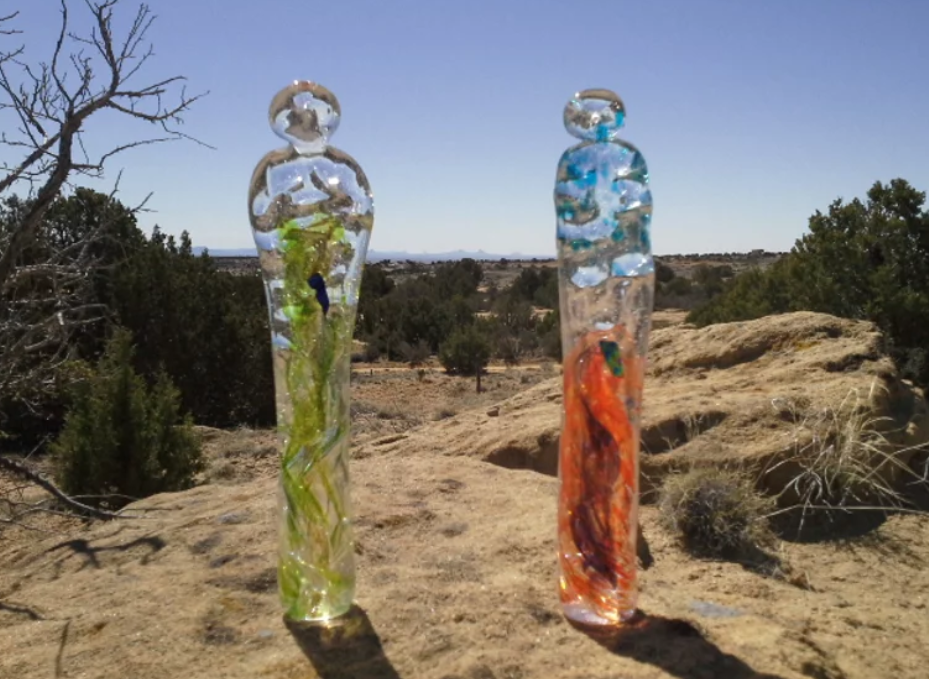
Ramson creates stained glass, blown glass, and fused glass art. Ramson’s glass art is viewed as “a contemporary expression of ancient and artistically rich people… evoking a beautiful, yet humbling mindscape which we all long to find.” He is the first hot glass artist from the Hopi Tribe. Ceremonies and cultural activities continue to play a major role in his life. He has showed works at the Santa Fe Indian Market, the Museum of Northern Arizona, Fusing Traditions, a traveling exhibition, and the San Diego Museum of Man (now known as the Museum of Us).

Stained glass artwork by Ramson Lomatewama.
Blown glass ‘spirit figure’ sculptures by Ramson.
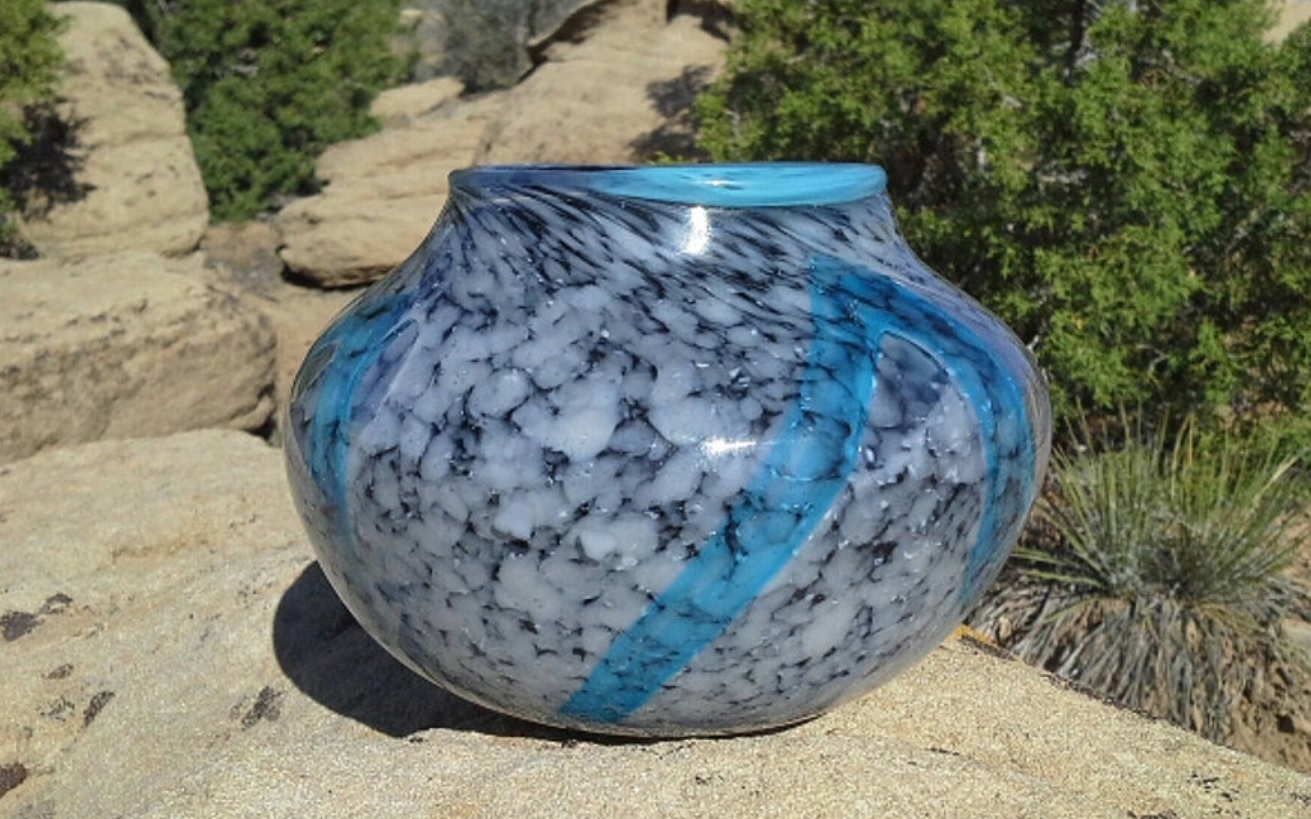
Blown glass vessel by Ramson.

Ramson is an educator on several levels. Early in his career, he was a middle school and high school teacher, and for many years, served as adjunct faculty at North Central College in Naperville, Illinois. Ramson also taught glass art for Hopitutuqayki (The Hopi School), an arts apprenticeship program located on the Hopi reservation. Ramson’s studio, Hotevilla Glassworks, is the first and only Hopi owned working glass studio. Check it out here!

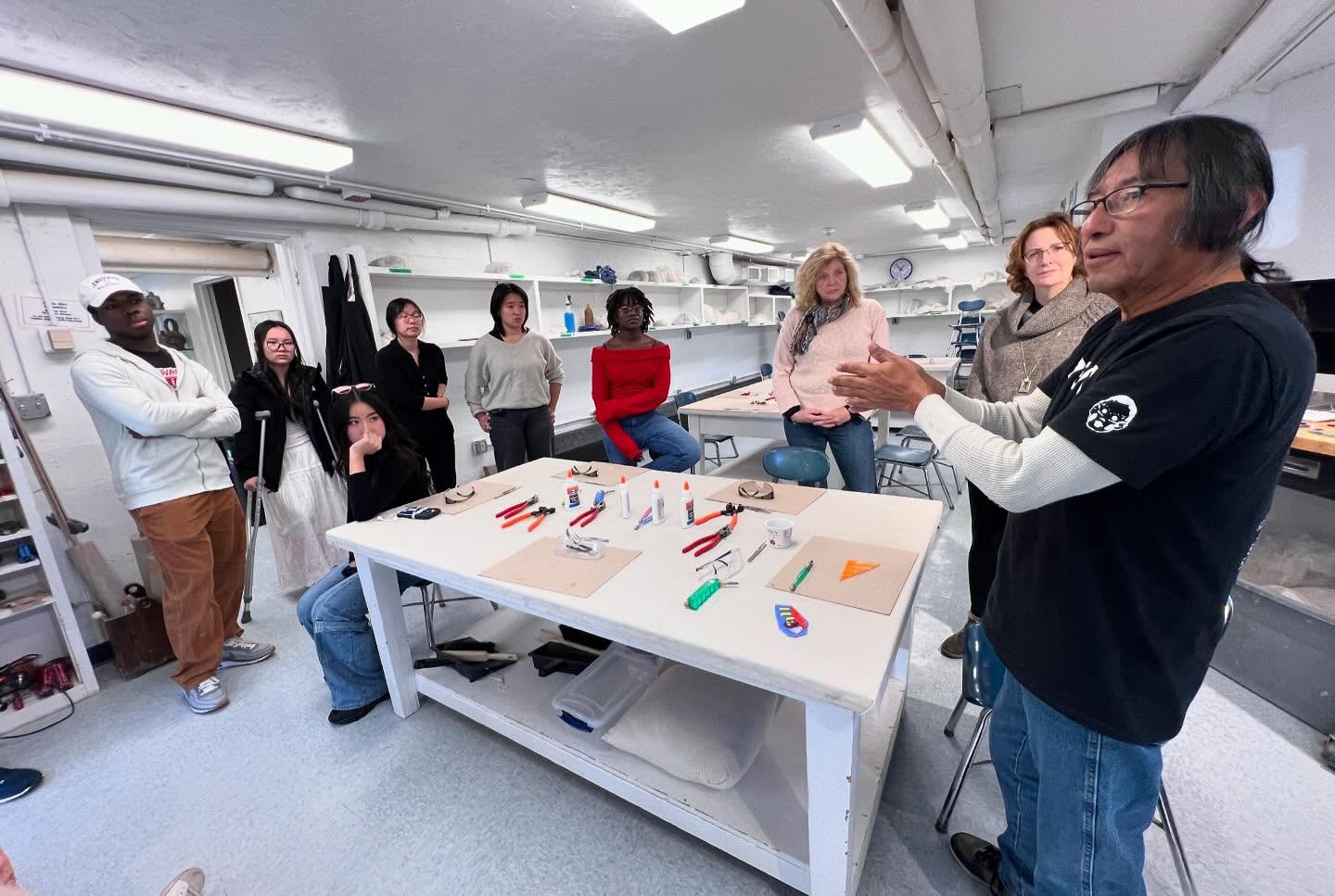
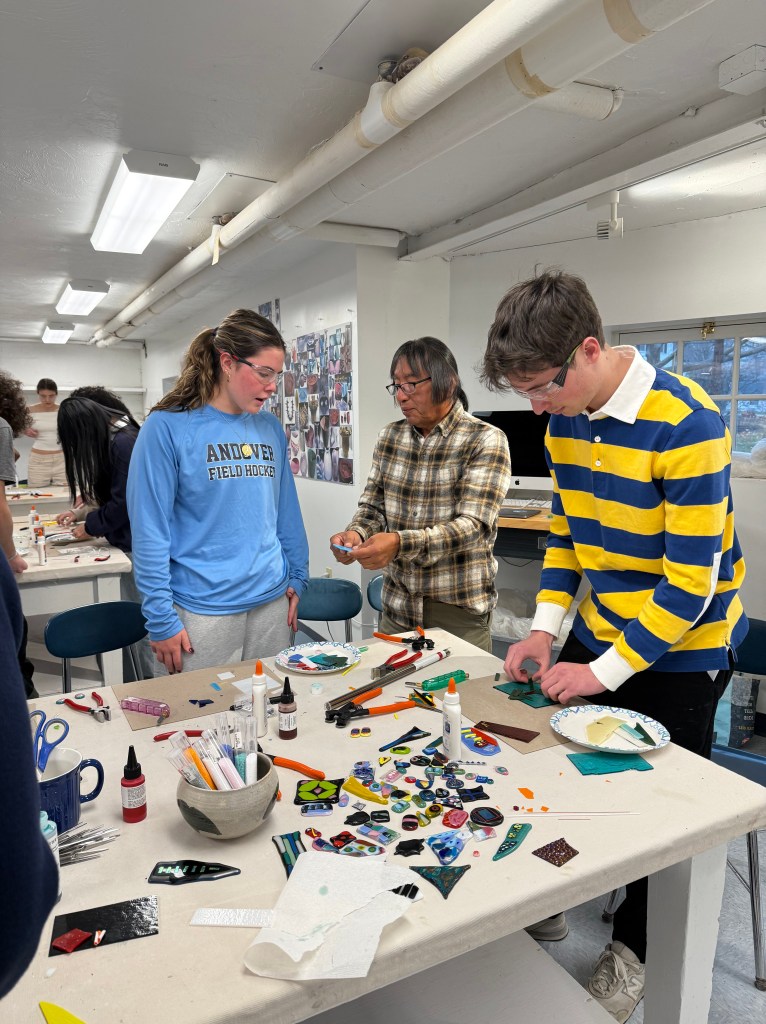
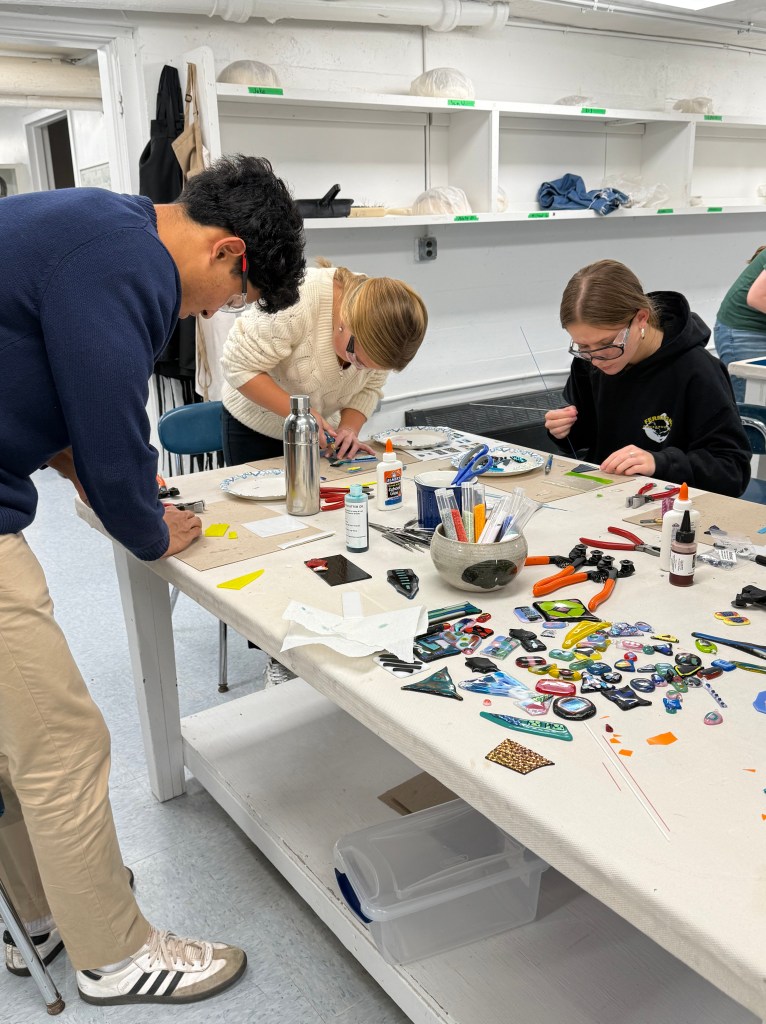
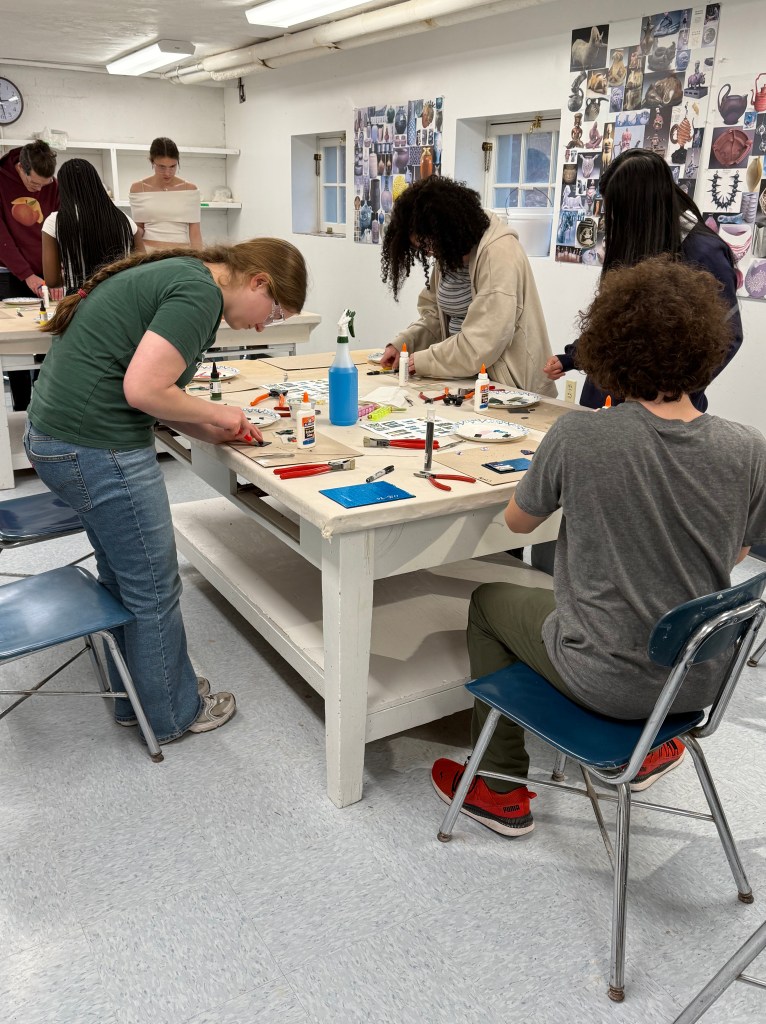
Students at work, creating their own fused glass pieces in their class workshops.

Working with fused glass seemed a little daunting at the beginning of the workshops, but a quick demonstration by Ramson with helpful instructions gave students the courage and motivation to dive in. The plethora of glass pieces to work with – stringers, millefiori, frit, swizzle sticks, dichroic, and ribbons – came in many shapes, textures, and colors. Students worked side by side creating their pieces of art, asking Ramson questions about his techniques and listening to stories about his life and art journey.

“Working with fused glass, you need to be prepared to forfeit control…” was Ramson’s important insight that would hold true from assembling our glass pieces to the final kiln firing of our pieces. No matter the shape or size of your glass piece – after firing – it would melt down to around 6mm thick. Ramson calls this the “6mm rule.” I found it best to go into a fused glass design with no plan, as your final product would tend to come out a little different from what you’d imagine… most of the time it would look even better!

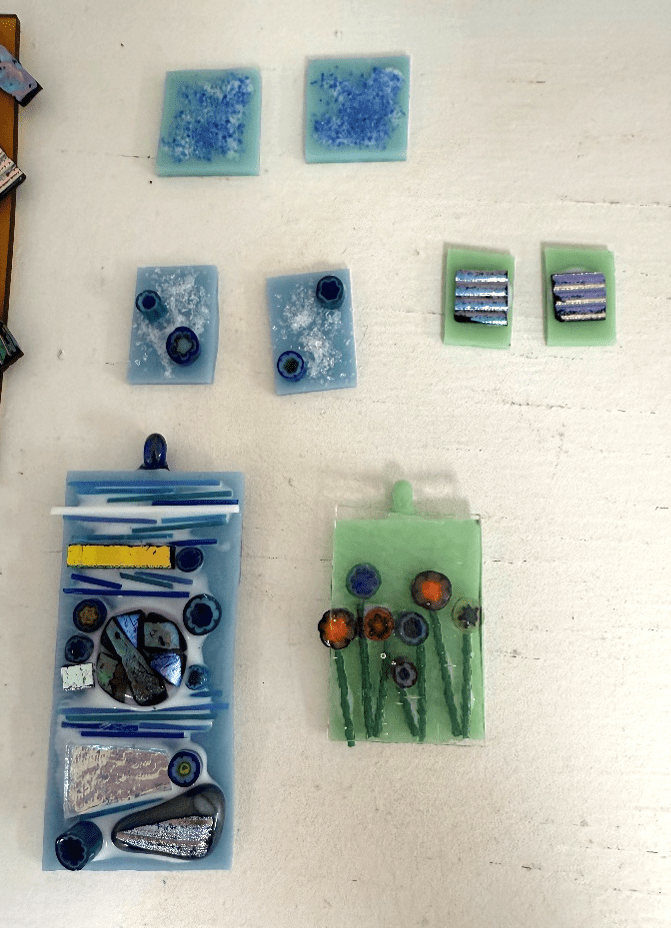
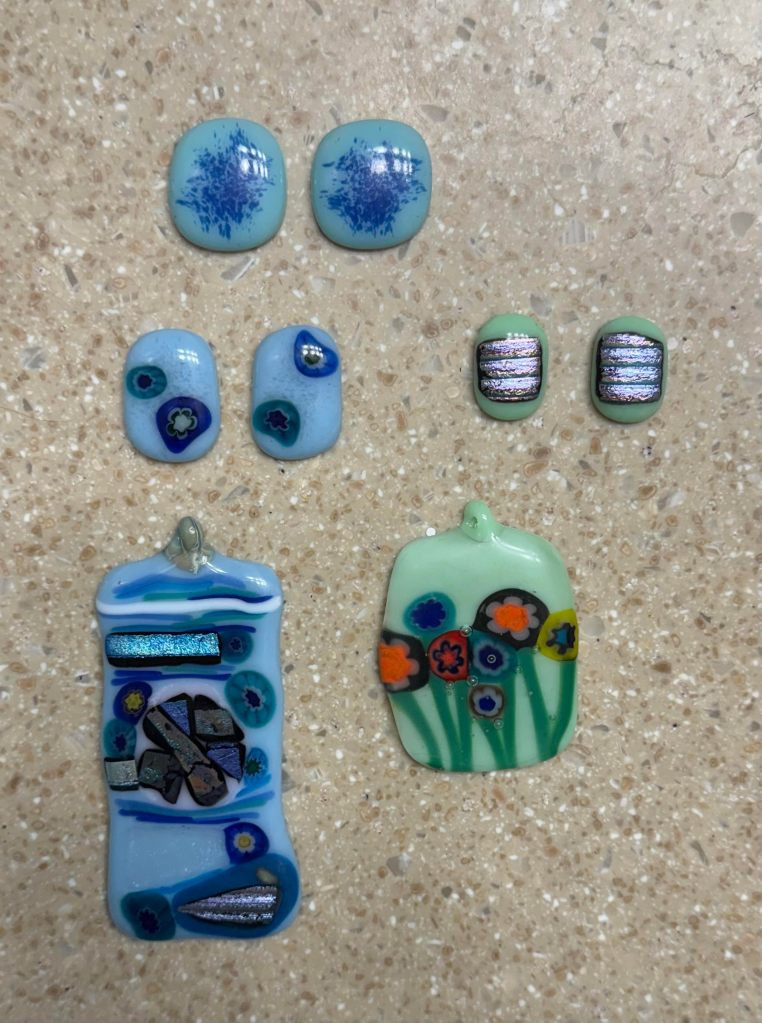
This year I created two pendants and (hopefully) some pieces to assemble into earrings. You can see my “before and after” photos of my glass pieces at the end of this blog. In the meantime, see below for some finished pieces by PA community members.
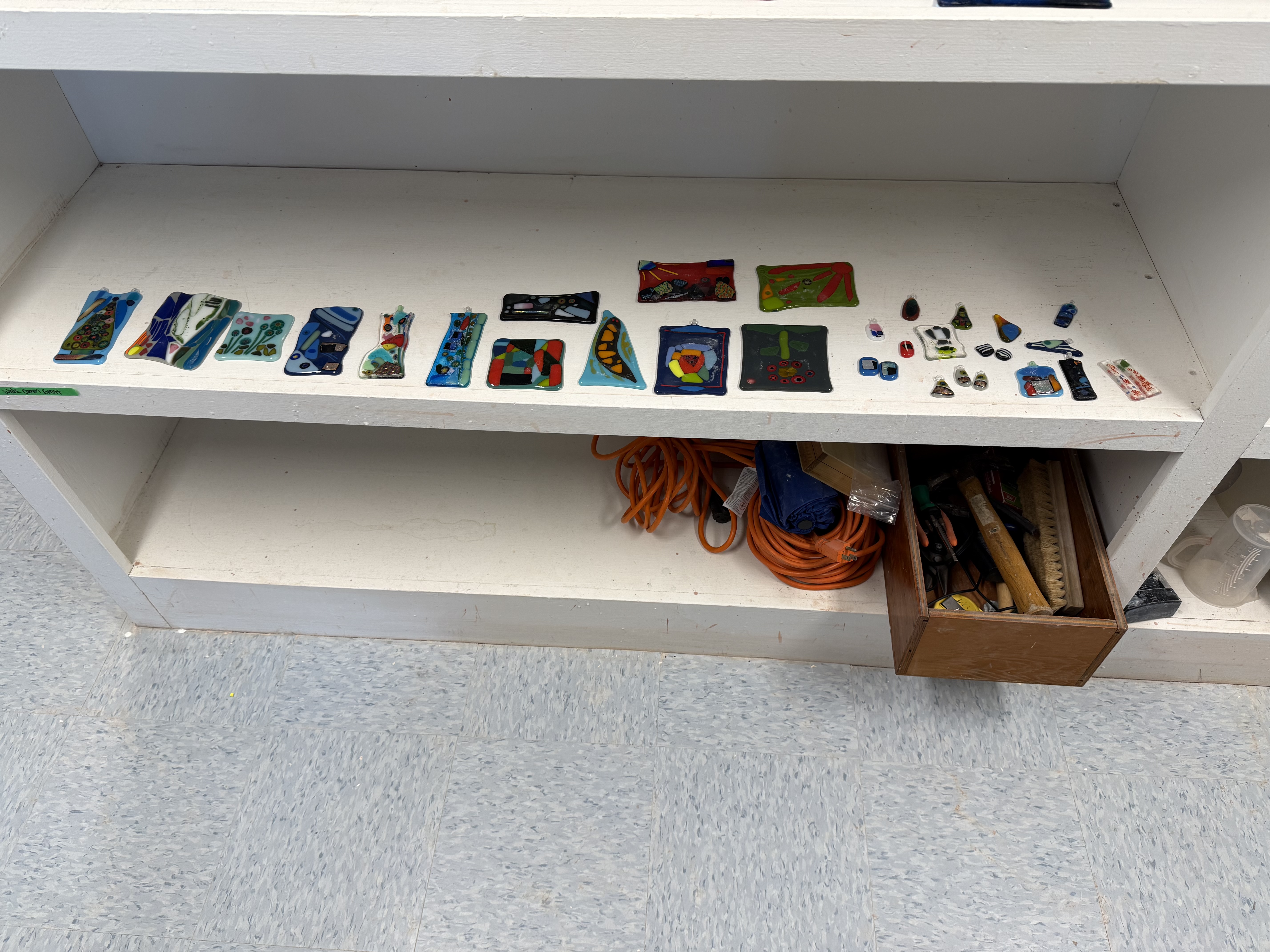
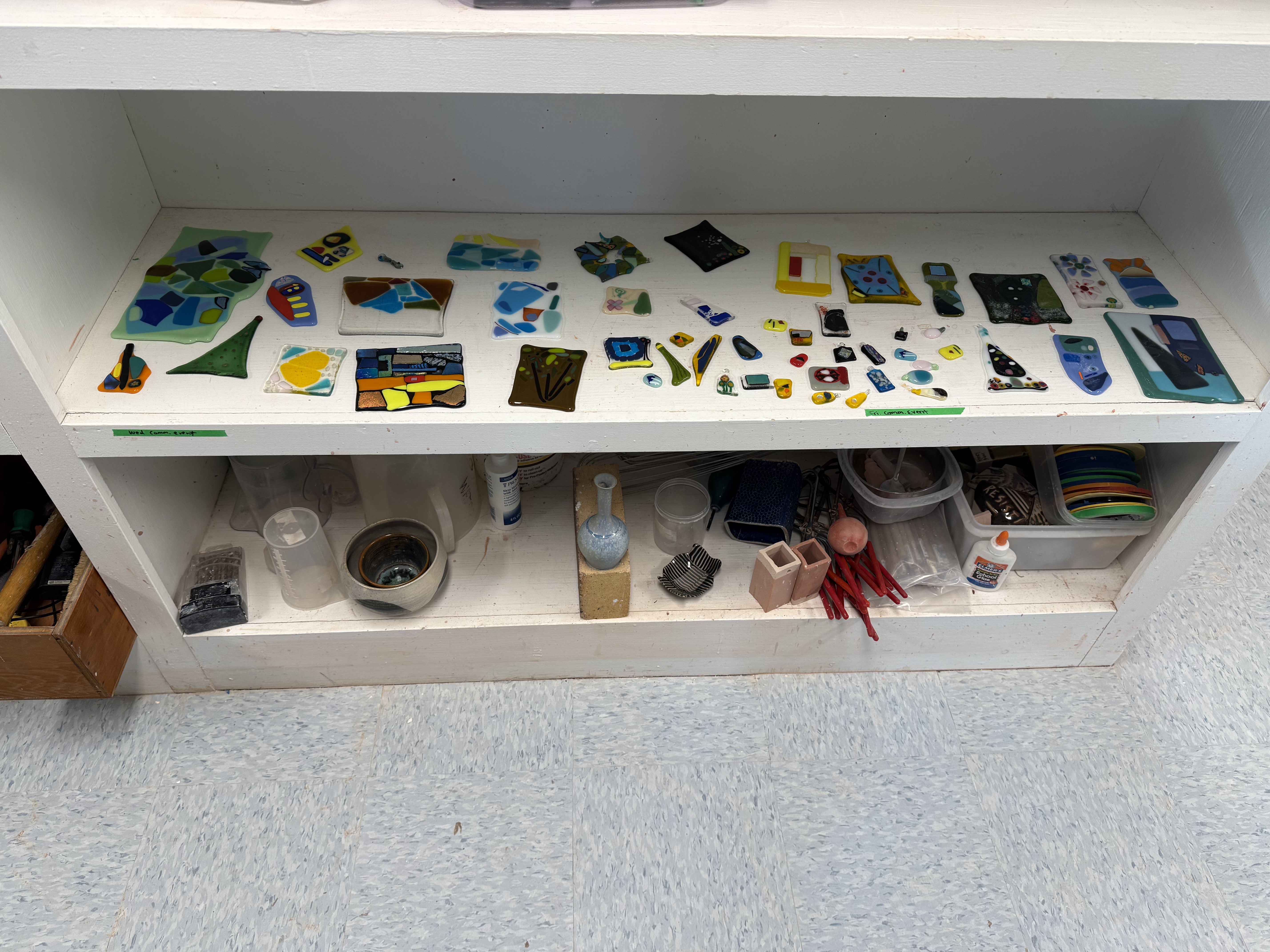
Finished fused glass pieces from the PA community workshops.

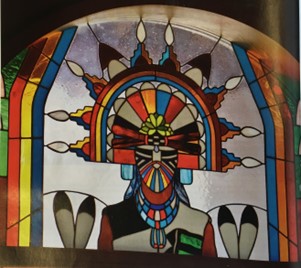
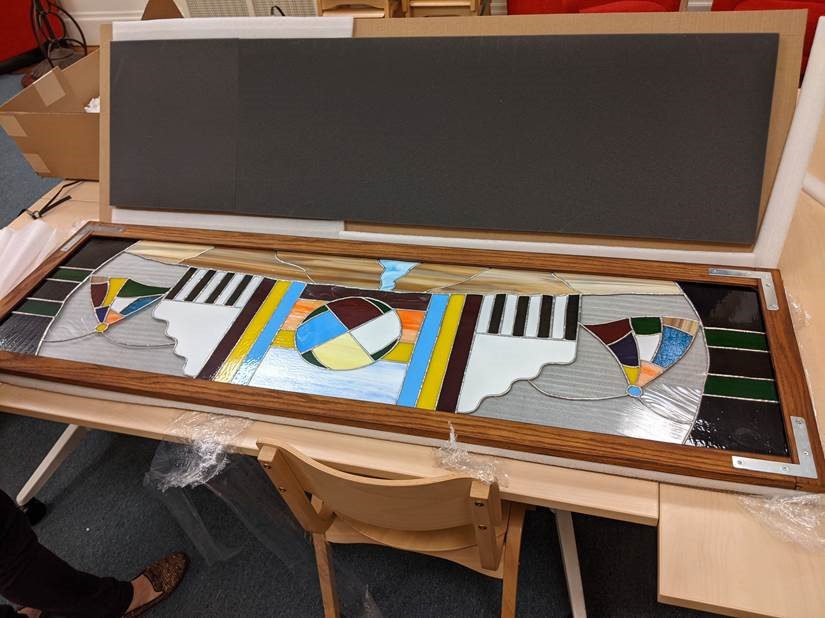
We are very fortunate to have acquired a stained-glass piece that Ramson created for the Peabody. We look forward to completing its installation in the Peabody’s front transom window once the next iteration of the building renovation is complete.

Ramson’s stained glass piece, commissioned by the Peabody.

We are very grateful for the time that Ramson dedicates to working with and educating our PA students and campus community! We hope to have him back next year! For more information about Ramson and the PA fused glass workshops, check out this article by the Andover Magazine (i.e. page spread #10-11, Digging Deeper article).

My fused glass pieces – before and after!

New Acquisition: Wampum Belts

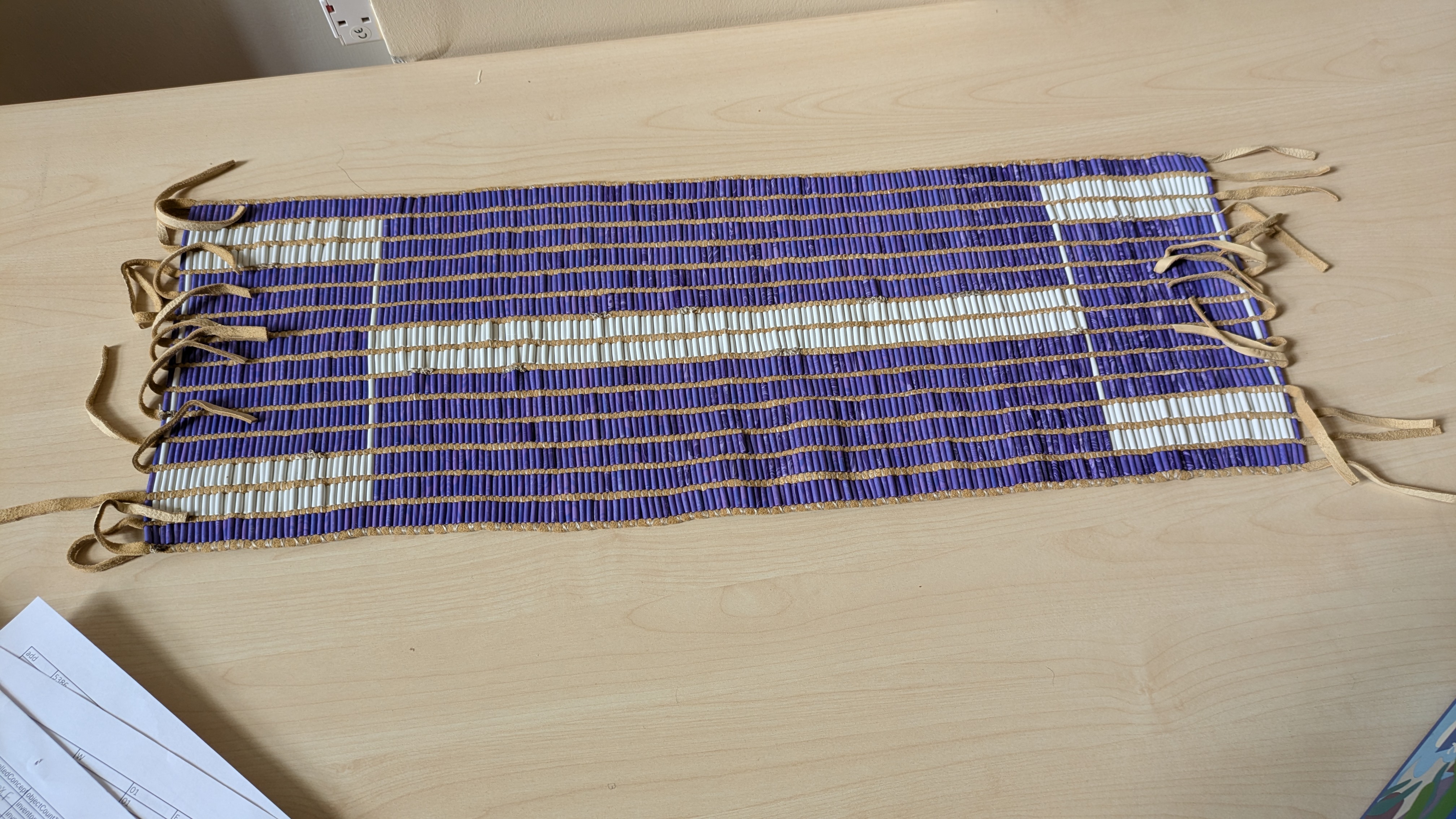
Earlier this year the Peabody Institute was fortunate to add two impressive wampum belt replicas to its collection of contemporary Native American art.

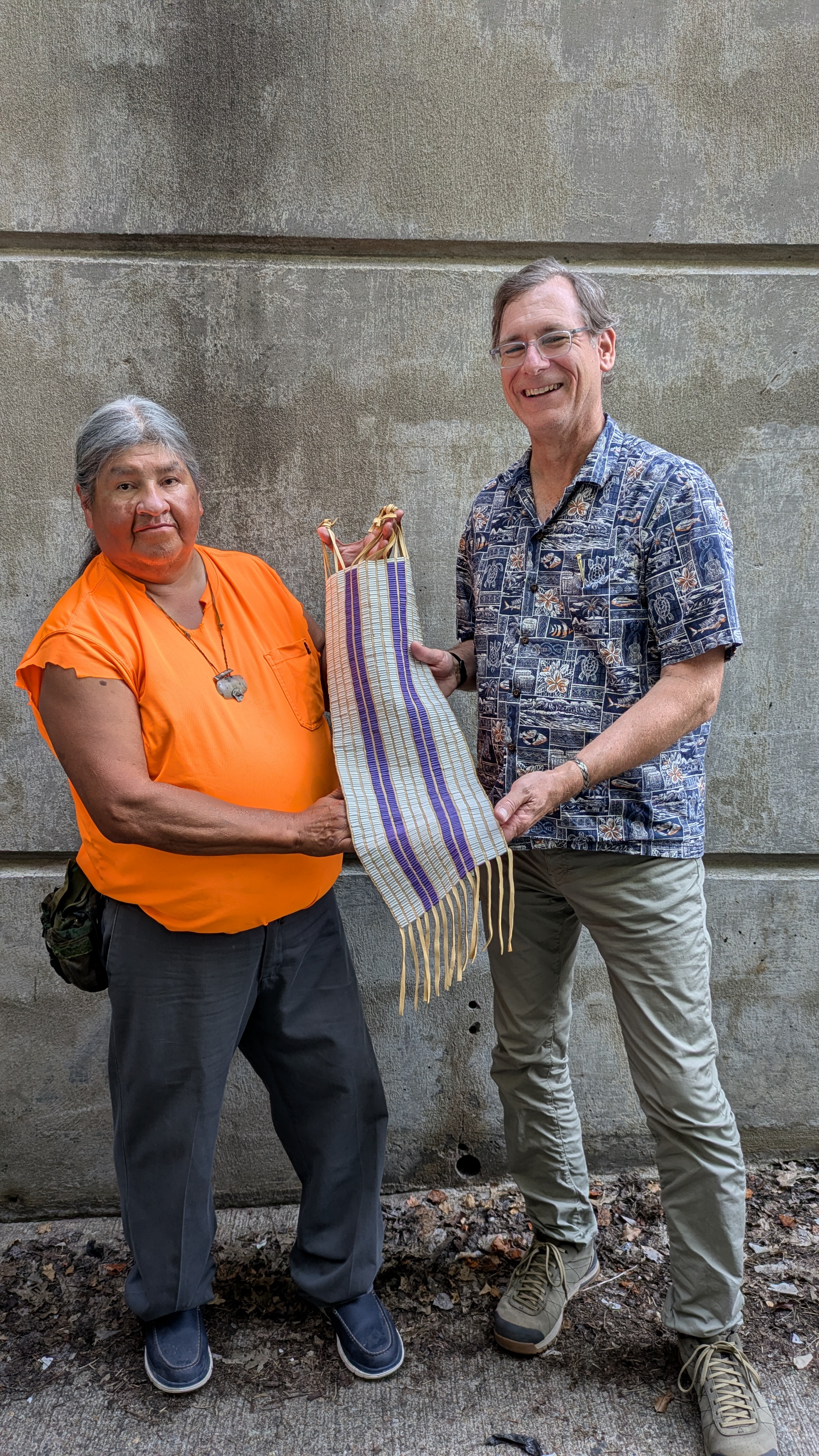
Tony Gonyea, Faith Keeper, Onondaga Nation presents Gaswéñdah, a two row wampum belt replica to Peabody director Ryan Wheeler.

Tony Gonyea, Faith Keeper of the Onondaga Nation, is well known for crafting modern wampum belt replicas, melding traditional designs and techniques with modern materials. A 2014 article by Wendy Gonyea on the Onondaga Nation’s website tells us that Tony’s oñgwehoñwe name is Wah’hasoñhdah, “He’s adding on.” Tony explains that to create a belt, “It takes hours upon hours into the evening. Working a little at a time, but when a belt is finished the end product is amazing.  It feels nearly as powerful as the original.”

Tony Gonyea’s friendship belt replica.

Both belts have already made appearances in community programs and classes, and we anticipate that Tony’s belts will remain popular with Peabody Institute visitors.

Fall Time = Conference Time

Contributed by Marla Taylor

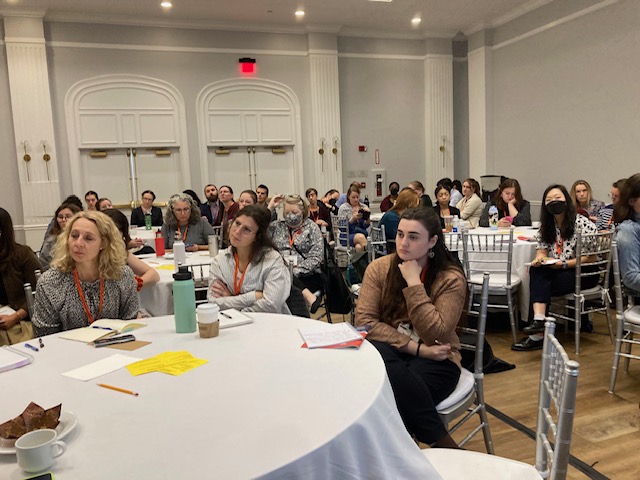
Over the past month I have had the good fortune to represent the Peabody Institute at two professional conferences. Learning from others in a shared space can be really energizing and informative. I also really enjoy attending conferences and getting to connect with colleagues that I usually only see in a tiny Zoom window on my computer screen. 

First, I attended the New England Museum Association (NEMA) Annual Conference in Newport, Rhode Island. NEMA is a great conference that brings together people in the area to discuss a wide range of museum-related topics. This year, I noticed more sessions that focused on telling LGBTQ+ stories, exploring ‘hidden histories,’ and how institutions can support emerging professionals.

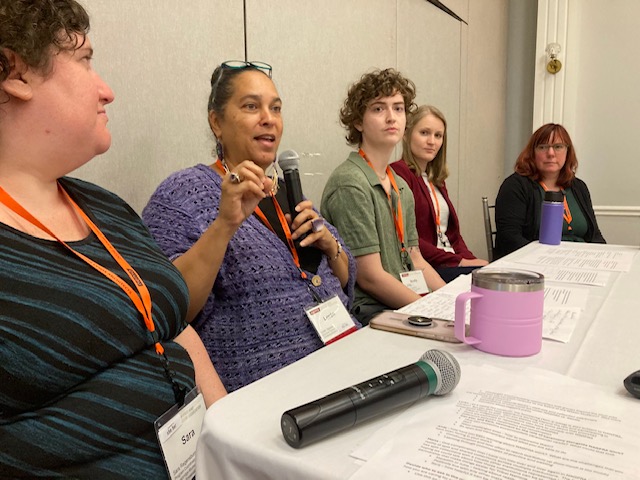
I was the facilitator for a panel titled Implementing NAGPRA: A Conversation with NAGPRA Practitioners. The panel was composed of individuals who are part of the Northeast NAGPRA Community of Practice and was a conversation to demystify the repatriation process, learn from colleagues, and identify opportunities for collaboration. The session was well attended and we had a fabulous conversation amongst ourselves and with the audience. 

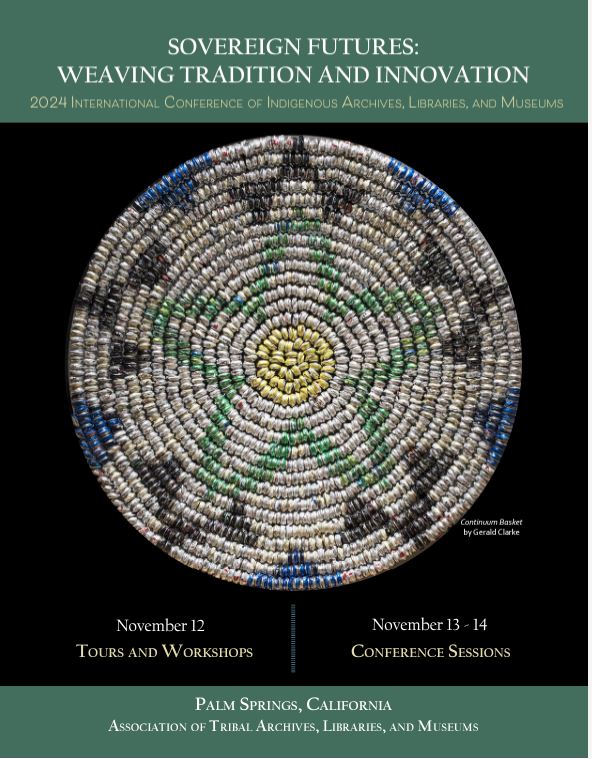
After a short (but long) day in Newport, I traveled the following week to Palm Springs, California for the Association of Tribal Archives, Libraries, and Museums (ATALM) Annual Conference. I love ATALM. It is a conference full of helpful information on everything from repatriation to pesticide management in collections to archival management. I appreciate that so many of the conversations really center on uplifting Indigenous voices and perspectives in all aspects of museum and cultural heritage work. It is a space that is invigorating and inspiring to me as a professional.

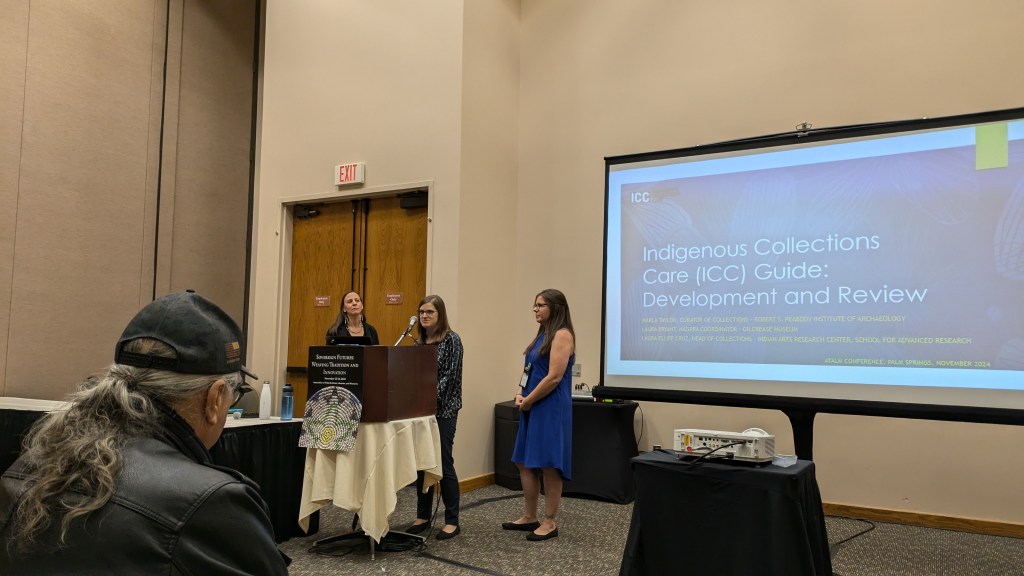
I was part of a session at ATALM to share information about the review process for the development of the ICC Guide. That session was well attended and we received lots of supportive feedback. 

The fall season tends to be super hectic with all the conference travel, but it is a great way to connect with the larger profession.

Kay WalkingStick/Hudson River School + Peabody Institute

Contributed by Marla Taylor

What do, parfleche, ceramics, paintings, and basketry all have in common? They are all currently on display at the Addison Gallery of American Art here at Phillips Academy as part of the Kay WalkingStick/Hudson River School exhibition.

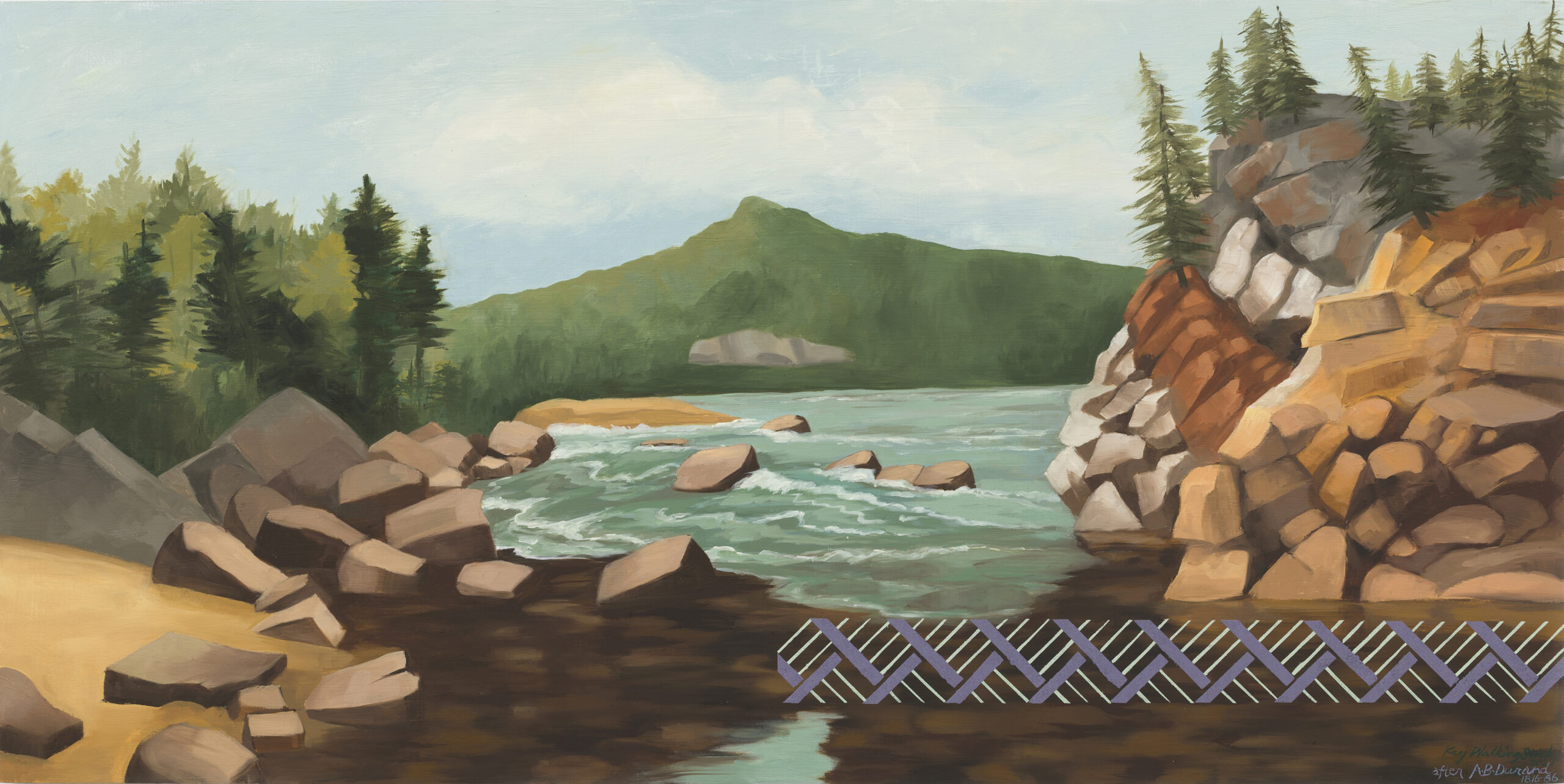
Kay WalkingStick (Cherokee) is a contemporary artist and educator known for her landscape paintings. This exhibition originated at the New-York Historical Society and has been joined by over a dozen pieces from the Addison’s permanent collection as well as three from the Peabody Institute.
In another wonderful collaboration with the Addison Gallery, the Peabody loaned two Mohican culture baskets and a vessel made by Wampanoag artist Ramona Peters to be placed in dialogue with Kay’s work. The items were thoughtfully selected and contribute to an intentional conversation between traditional painting techniques and Indigenous art.

You can explore the exhibition yourself through virtual tour.

We really appreciate the opportunity to collaborate with the Addison and highlight pieces from the Peabody Institute. Check it out if you are in the area!

Kay WalkingStick, Durand’s Homage to the Mohawks, 2021. Oil on panel. Colby College Museum of Art, Waterville, Maine; The Lunder Collection. Photo by JSP Art Photography. Copyright Kay WalkingStick

Never Whistle At Night: Indigenous Folklore (highlights from the Peabody Collection)

Contributed by Emma Lavoie

The change in season brings a time for storytelling and passing down traditions. The winter months are a prime time for sharing scary stories due to colder weather keeping people inside and gathered together.

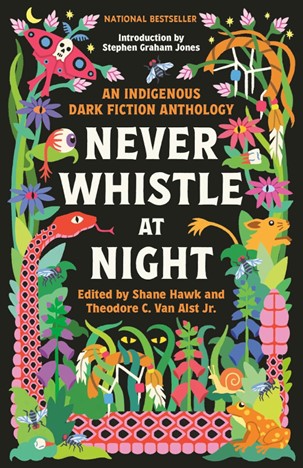
In honor of Indigenous Peoples’ Day (October 14) and upcoming National Native American Heritage Month (November), we’re highlighting some folklore inspired by the Indigenous dark fiction anthology, Never Whistle at Night. This book is comprised of 26 short stories that explore aspects of Indigenous horror, beliefs, traditions, and folklore. These stories are told by a variety of Indigenous authors (see complete list below), edited by Shane Hawk (Cheyenne & Arapaho Tribes of Oklahoma) and Theodore C. Van Alst Jr. (Mackinac Bands of Chippewa and Ottawa Indians), and introduced by Stephen Graham Jones (Blackfeet Nation).

Contributing Authors

Norris Black (Haudenosaunee, Tyendinaga Mohawk Territory)

Amber Blaeser-Wardzala (White Earth Nation)

Phoenix Boudreau (Chochenyo)

Cherie Dimaline (Métis Nation of Ontario)

Carson Faust (Edisto Natchez-Kusso Tribe of South Carolina)

Kelli Jo Ford (Cherokee Nation of Oklahoma)

Kate Hart (Chickasaw/Choctaw in Arkansas)

Shane Hawk (Cheyenne & Arapaho Tribes of Oklahoma)

Brandon Hobson (Cherokee Nation Tribe of Oklahoma)

Darcie Little Badger (Lipan Apache Tribe of Texas)

Conley Lyons (Comanche)

Nick Medina (Tunica-Biloxi Tribe of Louisiana)

Tiffany Morris (Mi’kmaw)

Tommy Orange (Cheyenne and Arapaho Tribes of Oklahoma)

Mona Susan Power (Standing Rock Sioux Tribe)

Marcie R. Rendon (White Earth Band of the Minnesota Chippewa Tribe)

Waubgeshig Rice (Wasauksing First Nation)

Rebecca Roanhorse (Navajo Nation)

Andrea L. Rogers (Cherokee Nation)

Morgan Talty (Penobscot Indian Nation)

D.H. Trujillo (Pueblo)

Theodore C. Van Alst Jr. (Mackinac Bands of Chippewa and Ottawa Indians)

Richard Van Camp (Dene Nation)

David Heska Wanbli Weiden (Lakota)

Royce Young Wolf (Hiraacá, Nu’eta, and Sosore, ancestral Apsáalooke and Nʉmʉnʉʉ)

Mathilda Zeller (Inuit)

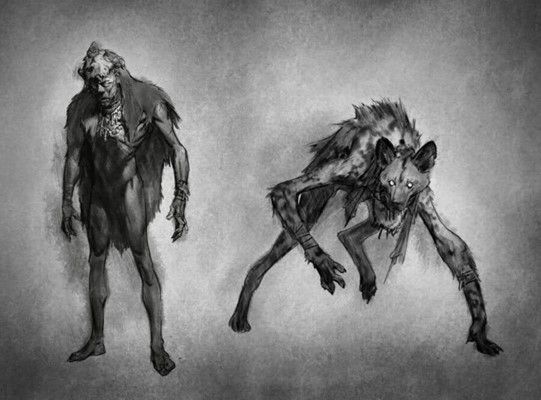
The title of the anthology refers to a belief common in many Indigenous cultures that whistling at night can attract malevolent entities. The act of night whistling is forbidden by many Native American cultures due to a shape-shifting entity, known as a “Skinwalker” or “Stekini” that responds to the call, causing harm to those who encounter it.

Skinwalker – Image courtesy of DoubleOurEfforts/reddit

Native cultures use storytelling to pass down knowledge and history, including folklore. Scary stories often carry deeper meanings, serving as lessons and warnings. Some of my favorite stories from this book were: Kushtuka, Quantum, Snakes are Born in the Dark, Before I Go, and Dead Owls.
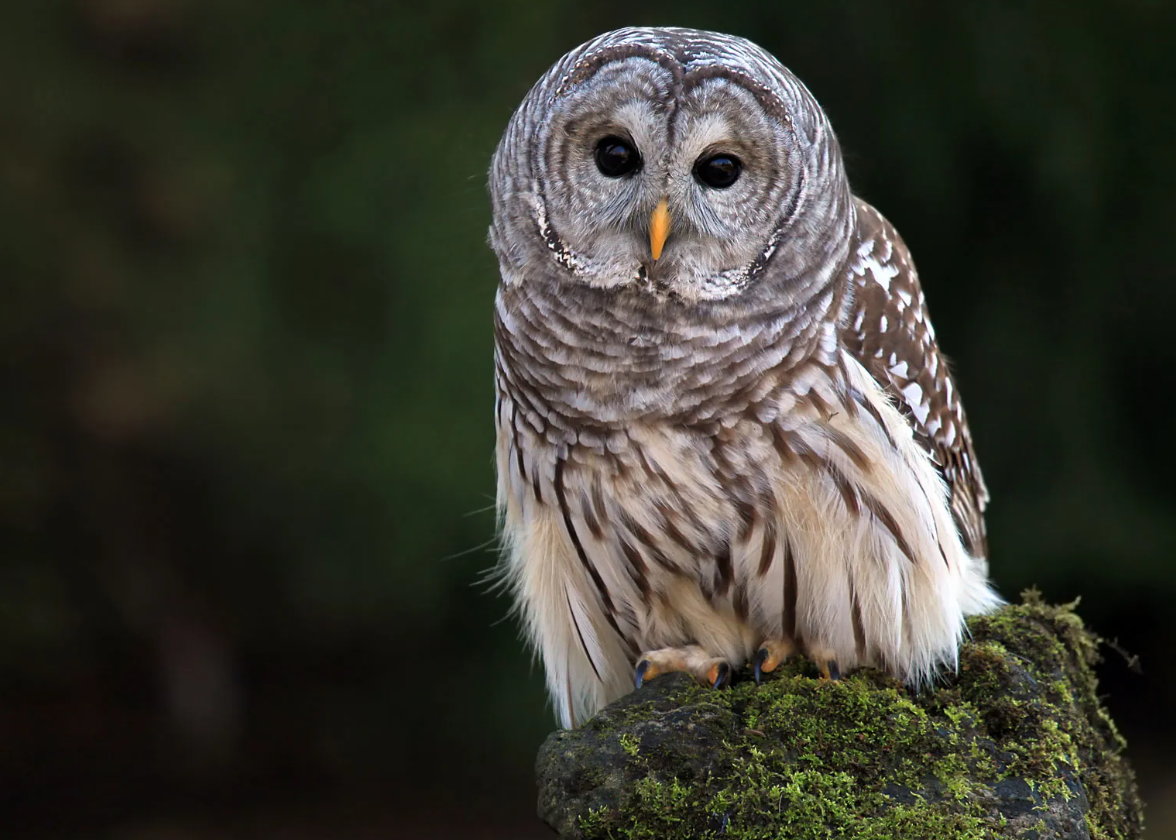
Several stories in the book share a common subject – the owl. Interpretations of owls can be found across different Native American tribes, with some viewing owls more negatively than others. There are several items in the Peabody collection that highlight the owl form, their meanings varying significantly between different Indigenous cultures and locations. Here are just a few for you to explore!
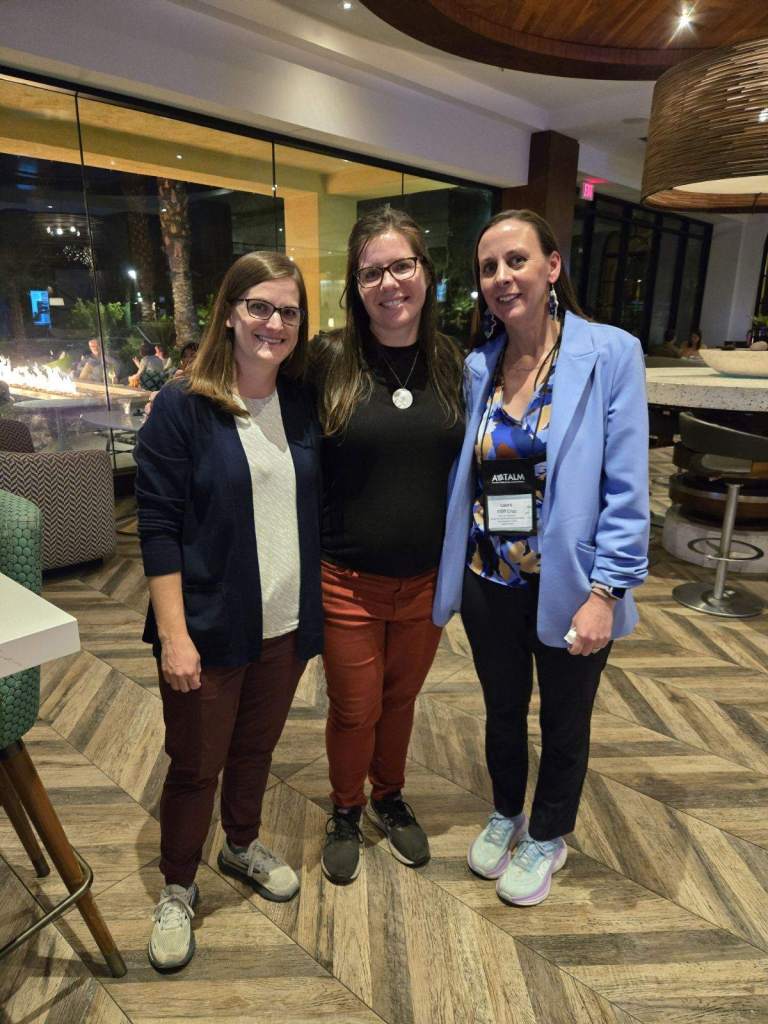
Image courtesy of © Megan Lorenz/Dreamstime.com

Owls are often associated with death and the spirit world, seen as messengers or harbingers of bad luck reflected in their nocturnal habits. Seeing an owl, particularly during the day can be a sign of death or misfortune. Some tribes consider owls as spirits of the deceased or that they might not be real birds at all, but shapeshifters. The sound of an owl’s hoot is seen as a call to the spirit world or a way to connect with ancestors.

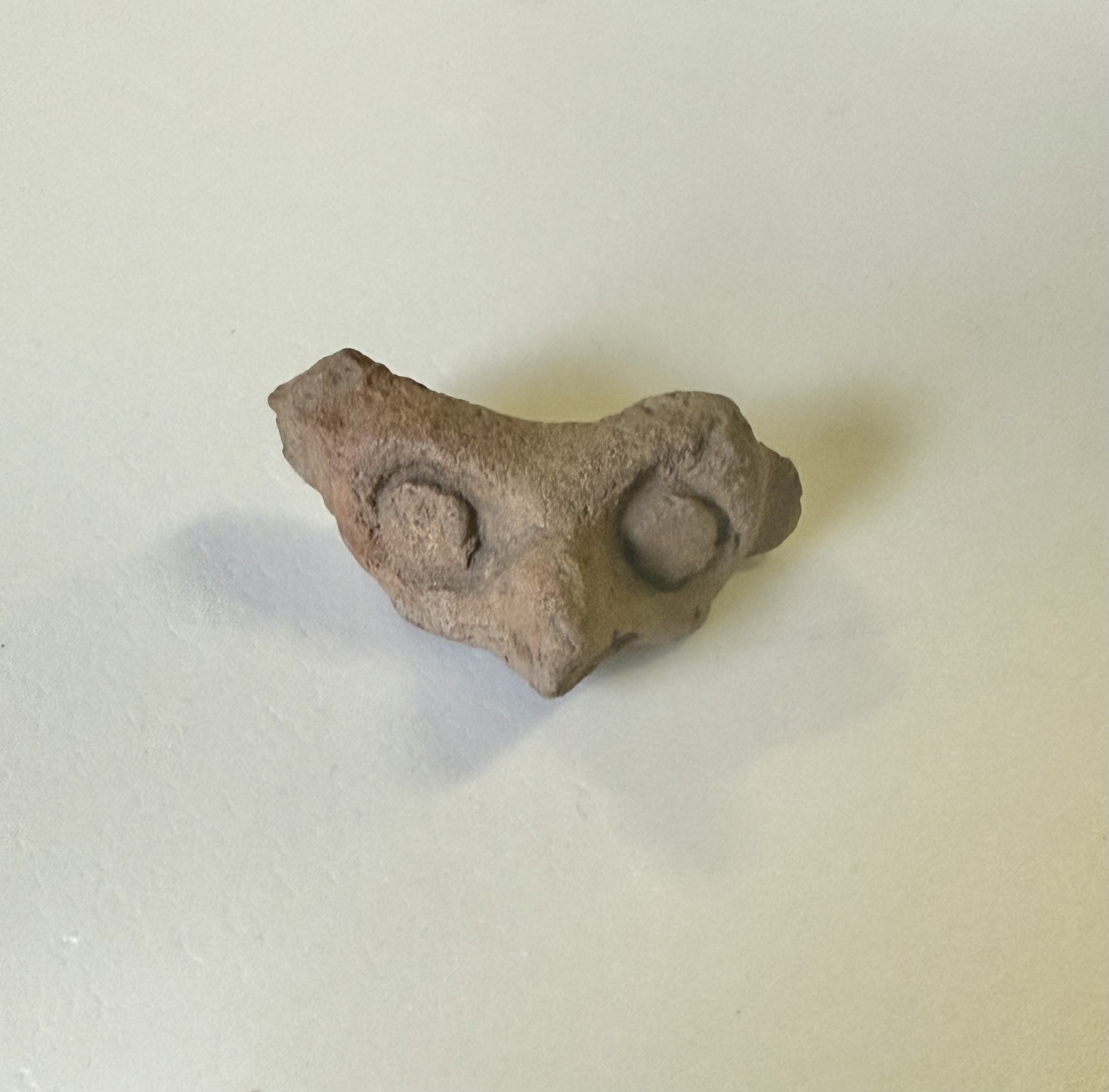
Owl Effigy (2018.2.1266) – Fragment of an owl effigy from the Valley of Mexico. Warren K. Moorehead compared this item to clay effigies from the Etowah village site in his 1932 book Etowah Papers: Exploration of the Etowah Site in Georgia.

Owl Effigy (2018.2.1266), Peabody Collections

Folklore of the Valley of Mexico believe in a witch known as “La Lechuza” who shapeshifts in the form of an owl that preys on people who are disobedient, unbaptized, or who harm others. Check out this episode on La Lechuza from the podcast, History Uncovered.

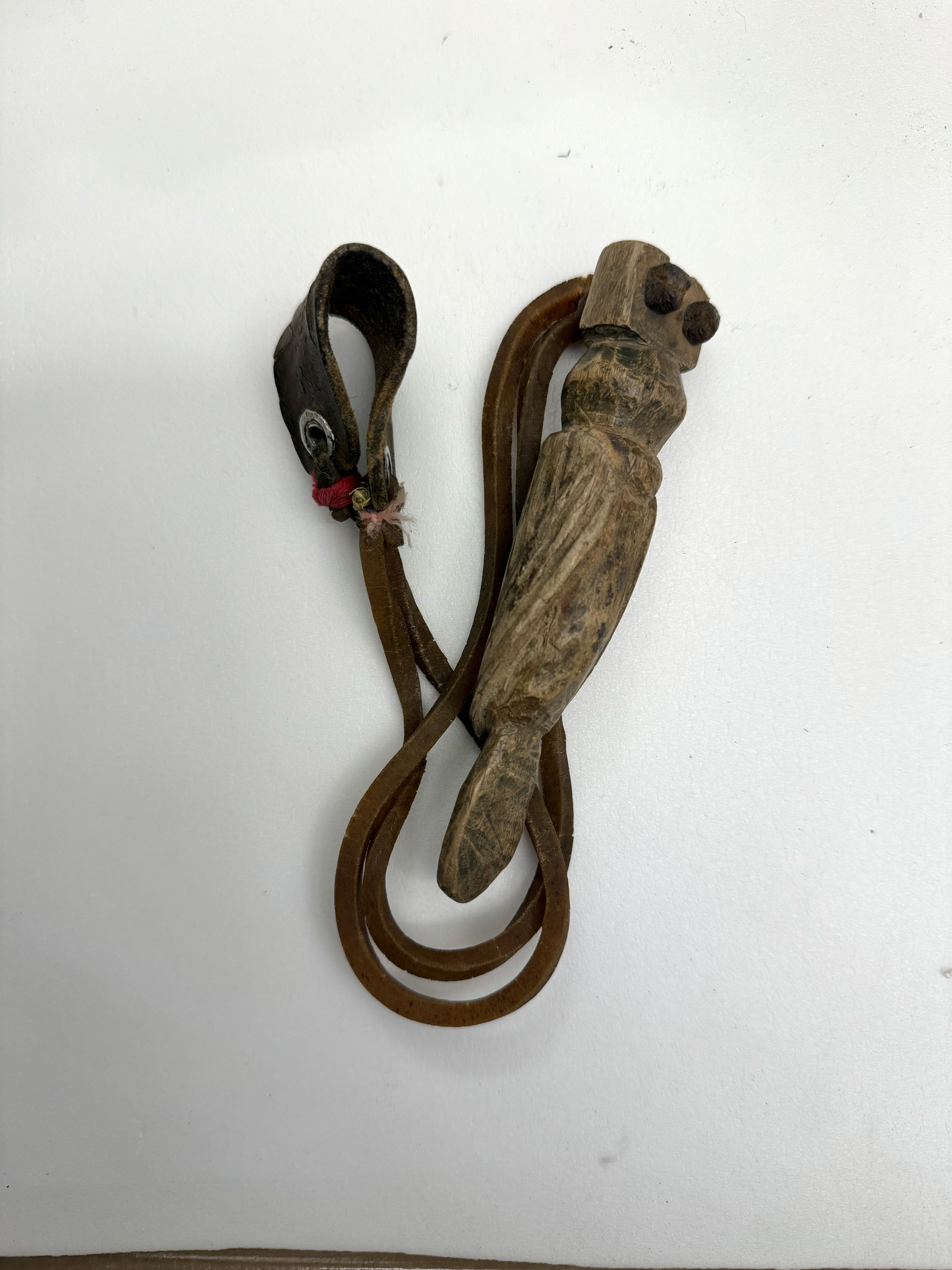
Owl Effigy Slingshot (97.1.53) – From the Ixil Maya community in Chajul, El Quiché, Guatemala. Used by men and boys to hunt birds, though it is common to hunt with a blowgun.

Owl Effigy Slingshot (97.1.53), Peabody Collections

Other tribal beliefs revere owls as symbols of wisdom and intuition, as well as carriers of ancient knowledge and protection.

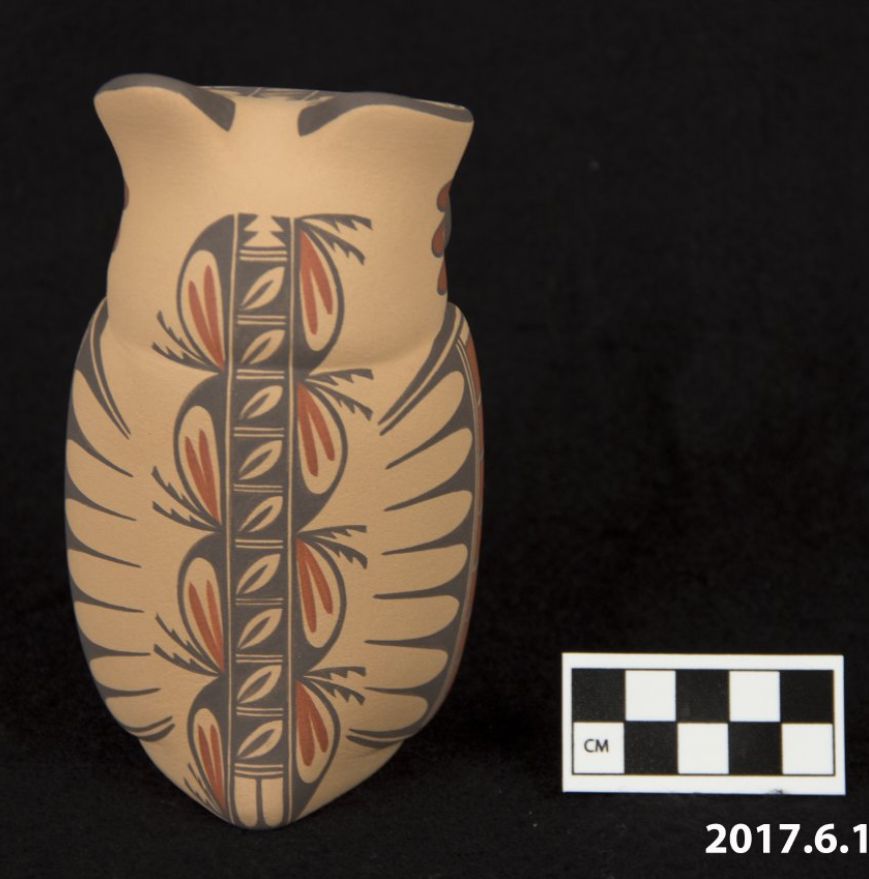
Ceramic Owl Figurine (2017.6.1) – Ceramic piece by Maxine Toya from the Pueblo of Jemez, New Mexico. In Pueblo culture, owls are seen as protectors. The ceramic owl design is built by stacking and smoothing hand coils of clay. The piece is both carved and painted, the feathers on the front being carved into the clay. Painted designs are intricate using symbols of rain, clouds, and feathers. These designs are all matte and painted with clay slips with only the eyes being polished.

Ceramic Owl Figurine (2017.6.1), Peabody Collections

Maxine Toya is well known for her figurative pottery (the first piece of pottery Maxine created was an owl!) Maxine is one of several pottery artists from the Pueblo of Jemez that visit Phillips Academy campus each spring to work with students in ceramic classes. You can read more about these visits here and here!

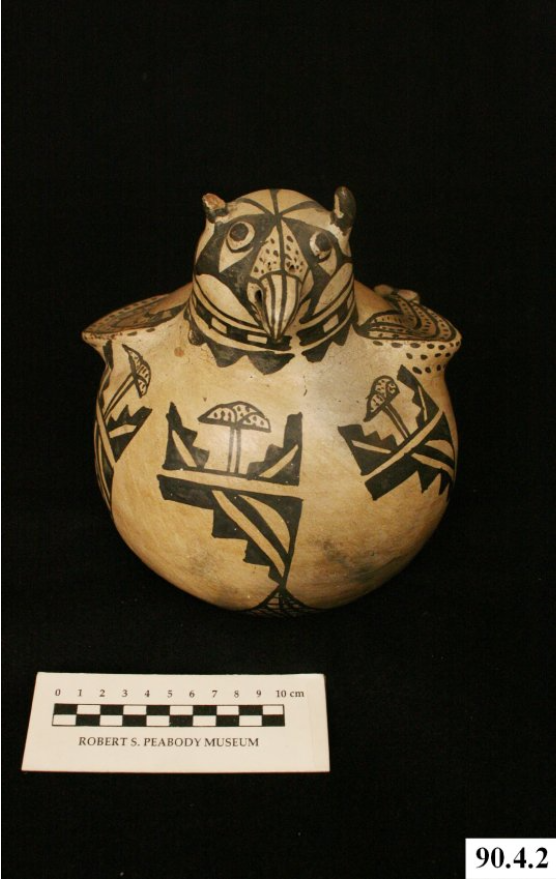
Ceramic Owl Effigy Jar (90.4.2) – Globular body in black on white design with vessel opening located at owl beak. Owl facial features at neck, wings at sides and tail at back. The globular shape is the most recognizable characteristic of pottery from Cochiti Pueblo, New Mexico.

Ceramic Owl Effigy Jar (90.4.2), Peabody Collections

Owls are featured in Cochiti Pueblo pottery, often associated with the god of death and spirit of fertility, Skeleton Man.

Exciting News! – Never Whistle at Night, Part II: Back for Blood is currently accepting submissions from emerging Indigenous writers. This is the second book in the Never Whistle at Night series.