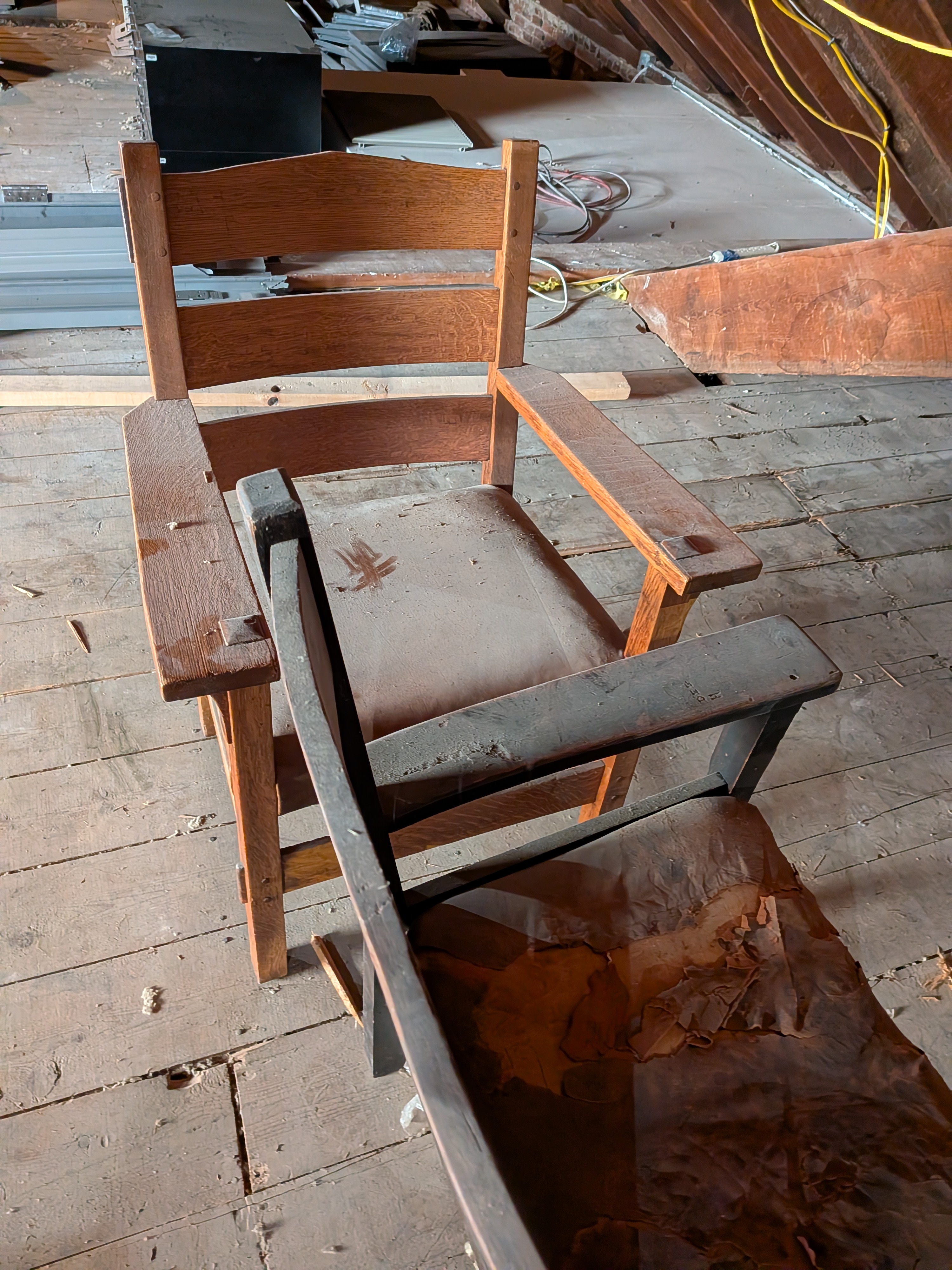
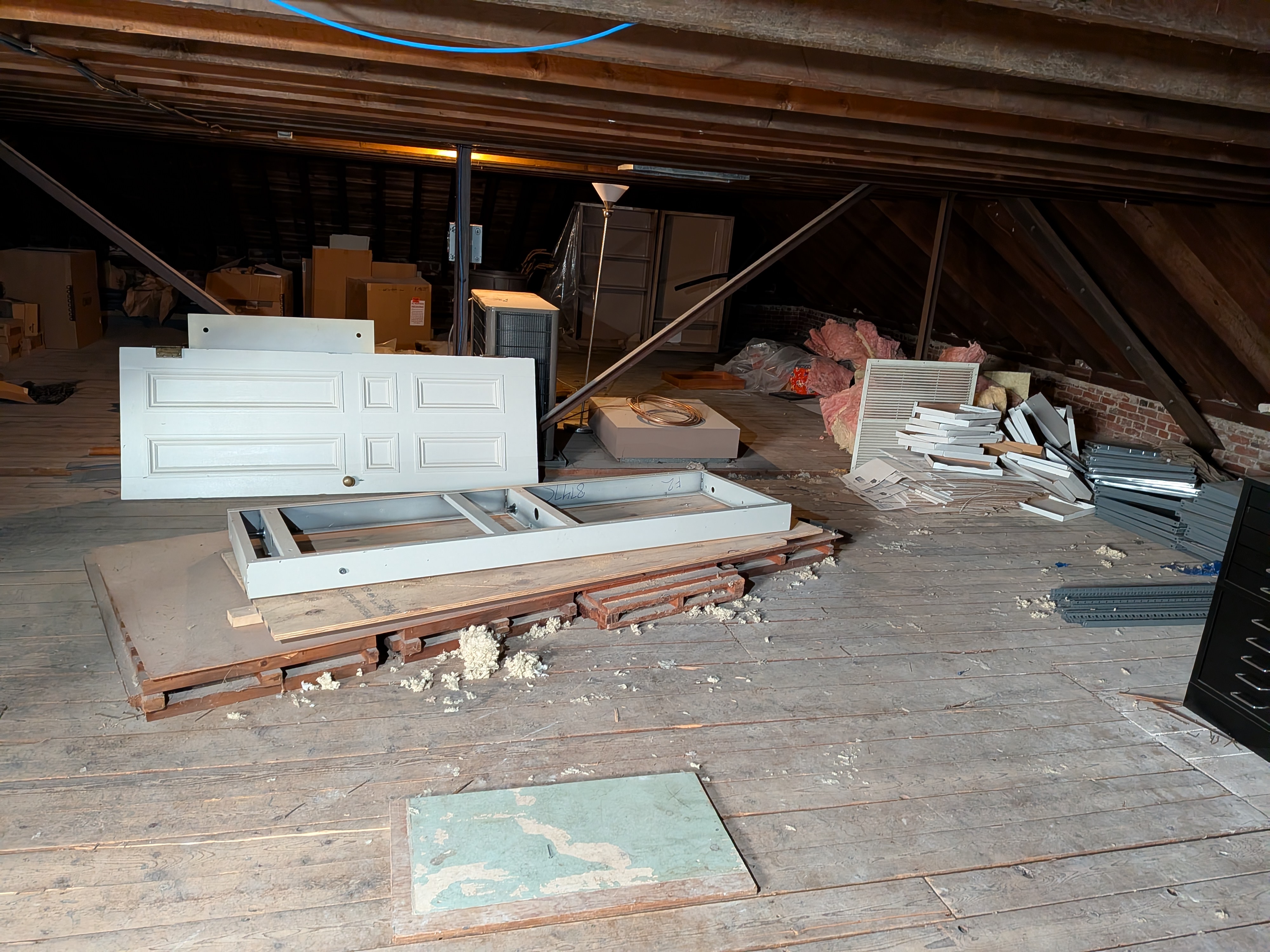
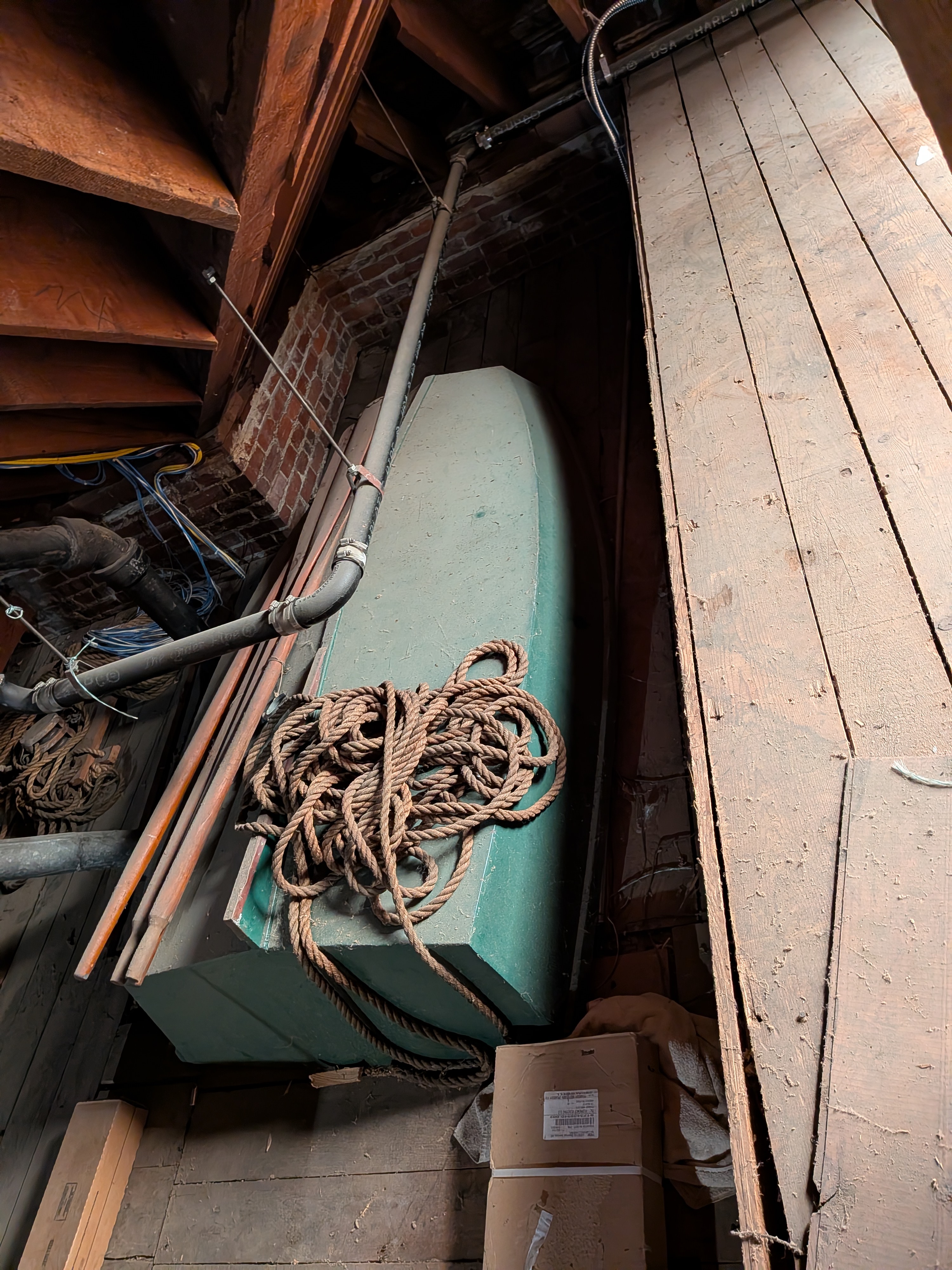
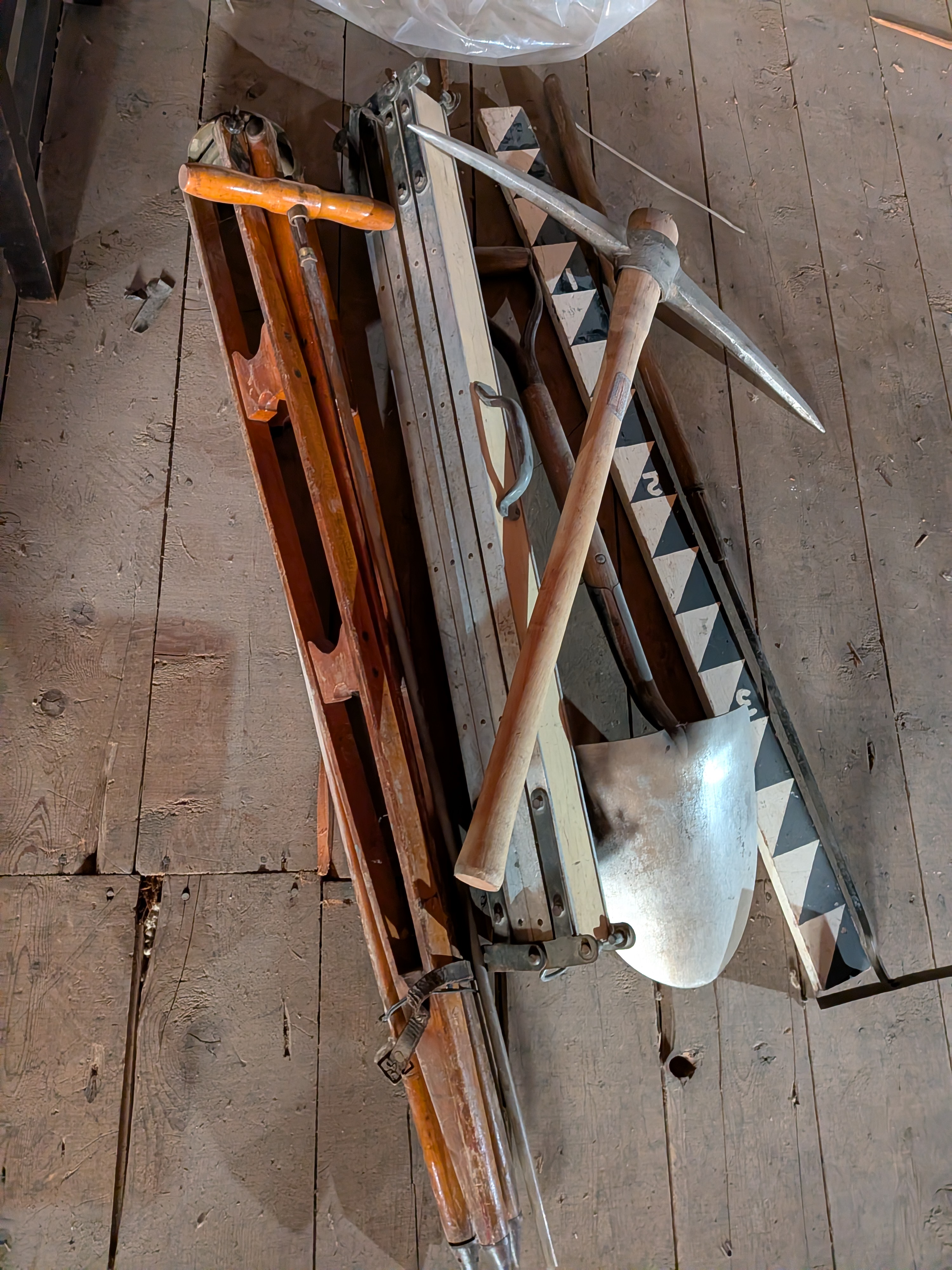
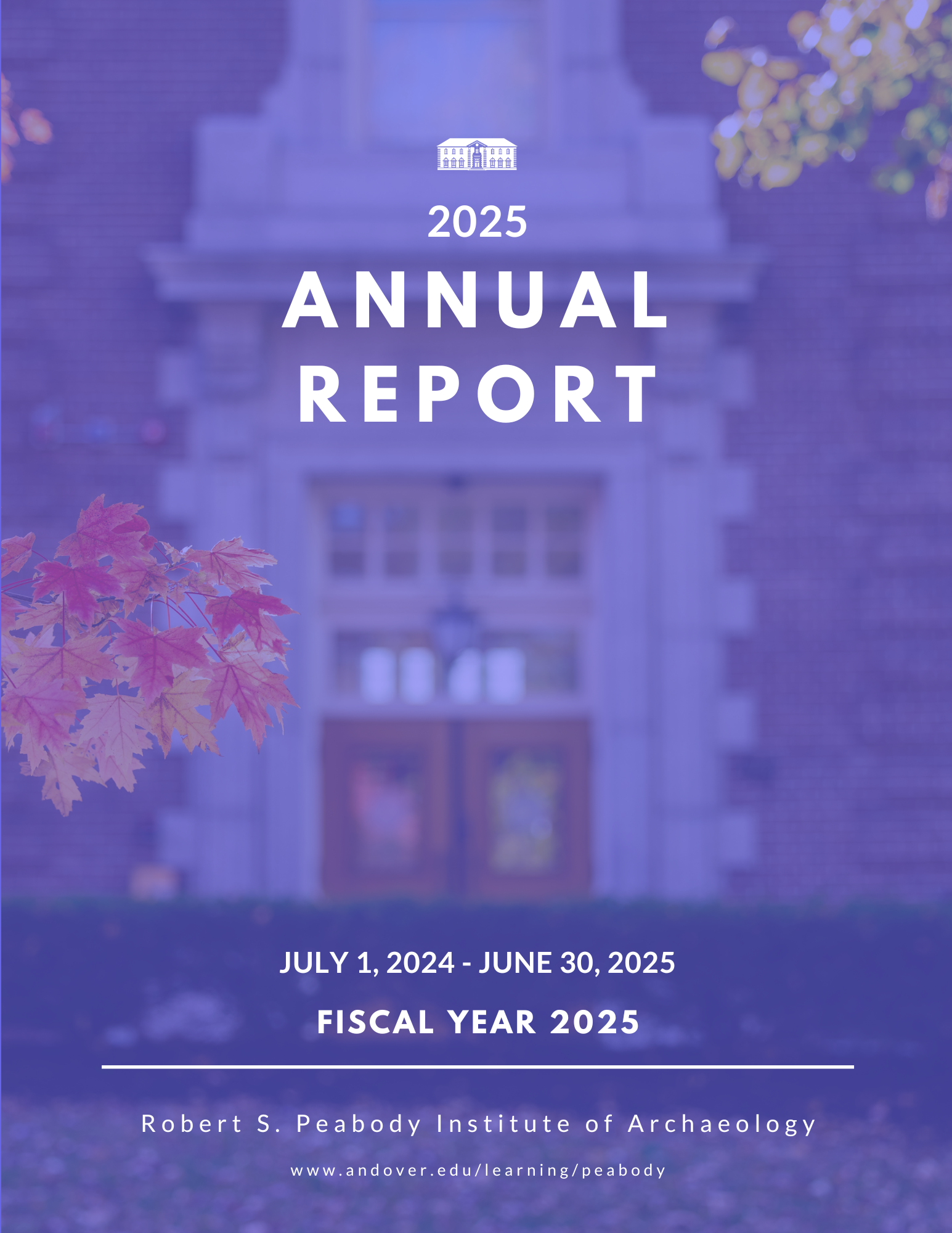
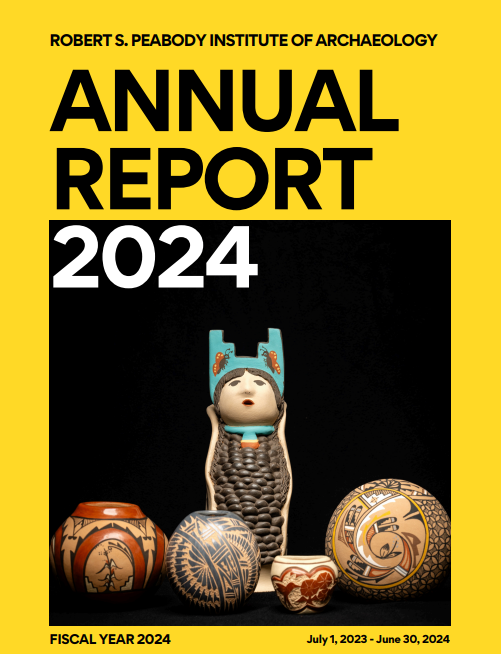
Our Peabody annual report for academic year 2024-2025 has just been released online! This report features educational participation at the Peabody, including over 1,600 students and 30 Phillips Academy instructors. In addition, our report features institutional highlights, updates on our collections and NAGPRA work, collaborations with students and researchers, and more!
Thank you to everyone who supported the completion of another wonderful year at the Peabody!
What happens when a project is successful but doesn’t quite resolve the larger storyline or need? A sequel!
I share with you – Peabody Building Renovations: the Sequel.
The first phase of the work, completed in early 2024, focused on improving collections care. This included new shelving, an HVAC system, updated security, and an elevator in the building. To facilitate this, the entire collection had to be moved to temporary storage and back again. Phase I was a huge amount of work for all of the Peabody staff and I can confidently say that the collection is now in a better environment than it was before.
This next phase will largely ignore the collections spaces and instead focus on updating classrooms, creating offices, and modernizing systems. By using the space more efficiently, we will create two additional classrooms for use by Peabody educators or PA faculty. Staff members will have discrete office spaces and there will be room to grow.
One of the biggest improvements will be the addition of an HVAC system to the classrooms and office spaces. As someone who has worked in these spaces for as long as I have, I would have to say that this is the part that I am looking forward to the most. Currently, it can be really hot in the summer (over 80 degrees in the classroom) and quite chilly in the winter. We all have our methods to deal with the discomfort, but I am excited to have air conditioning!
All of this of course comes with some disruption to our regular activities. Staff will once again be moved to a temporary location and access to the collection will be restricted.
As of December 1st, Peabody collections will be largely unavailable and classroom spaces will be out of commission. Repatriation work and collections inquiries from Tribal communities will be prioritized but other access will be restricted. Please contact me, mtaylor@andover.edu, with any questions or requests.
PA classes may be taught in a modified format with limited collections based on availability. Please contact Lainie Schultz, Curator of Education, to request a class.
The Peabody should be back in commission by September of 2026. I will be able to share periodic updates on the process through the blog and we are so excited to welcome you into our updated space next year. Stay tuned!
If you are interested in supporting Phase 2, please contact Jen Pieroni, Director for Advancement Initiatives, Office of Academy Resources.
Peabody staff always get excited when we unearth hidden stories from the Peabody Institute’s past. The Phillipian Archives is one such place that has held many a story. First printed in 1857, The Phillipian is a weekly student newspaper that continues today at Phillips Academy Andover. The student paper describes itself as “completely uncensored and entirely student-run,” offering a snapshot of what campus life is like both past and present, and in the case of this blog, some of the most outrageous and bizarre activities related to the Peabody.
As promised, we hope you enjoy PART 2!
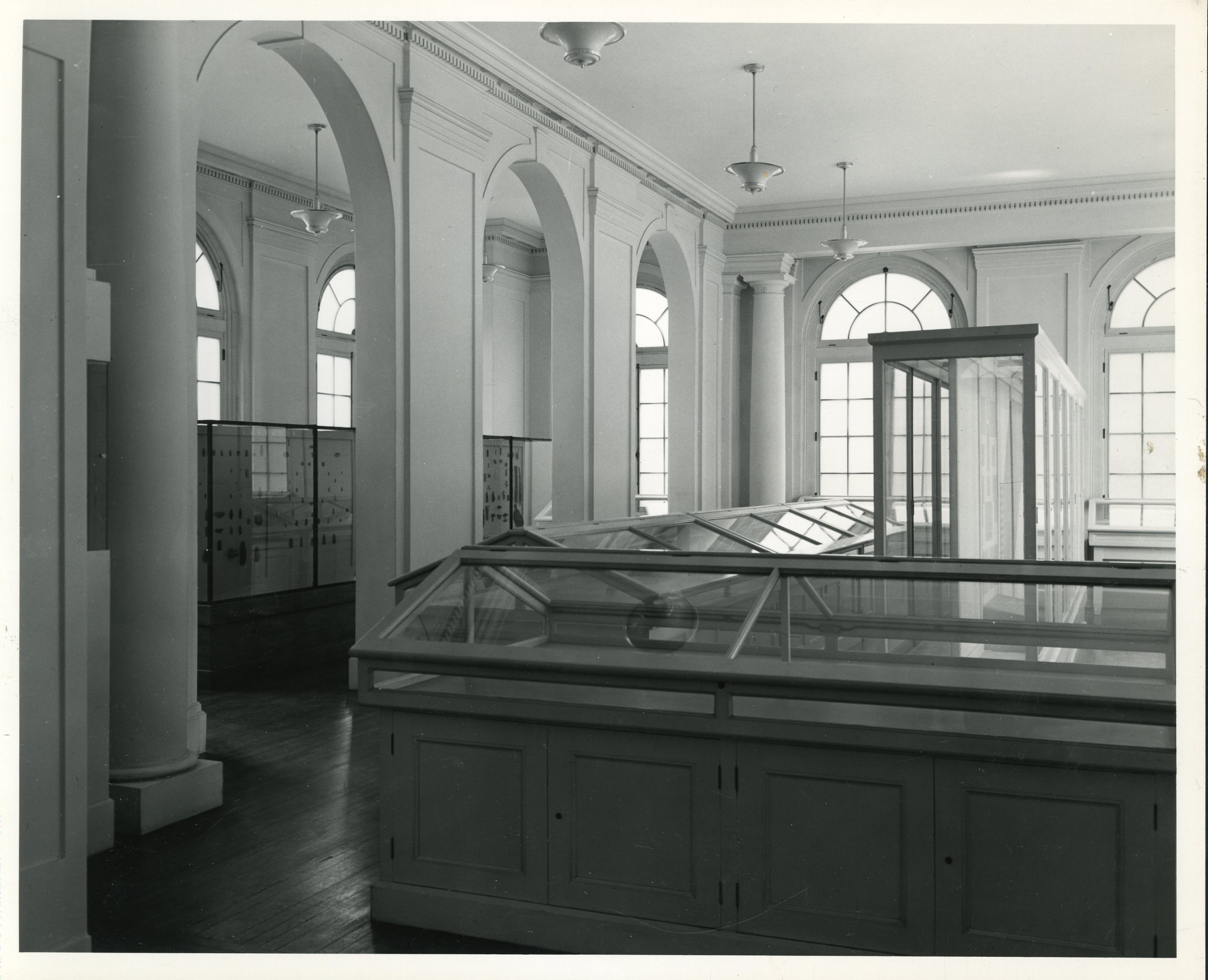
Peabody Card Catalog and Reading Room
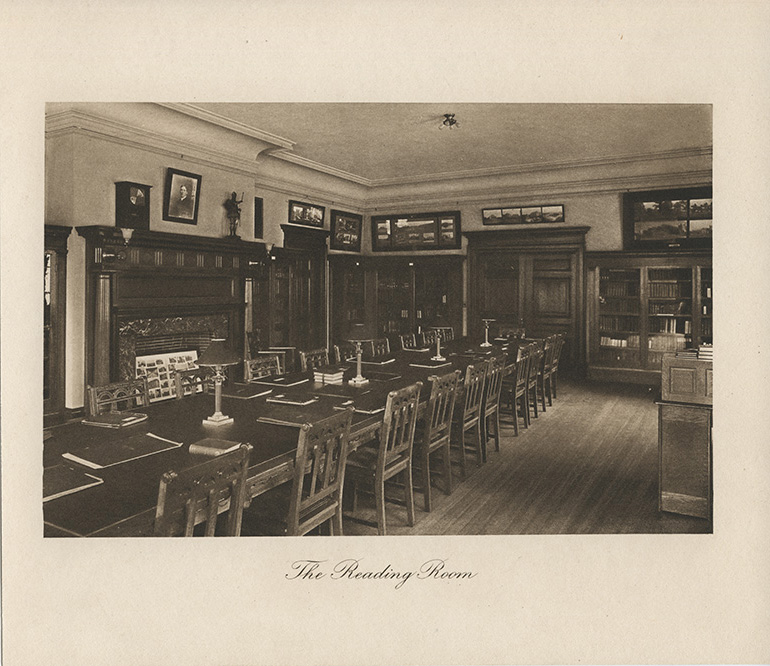
In 1903, a reading room with library was opened on the second floor of the Peabody, furnished with easy-back chairs, a large center table, writing tables, and a few large lounging chairs. There was a list of rules included in this Phillipian article for students using the reading room:
Observe suitable quiet
That others may not be disturbed while reading
Not to cut, tear or in any way deface the periodicals
To remove hats and caps while in the room
By 1904, a Phillipian article stated the reading room as “well filled nearly every hour…the attendance averages about three hundred a day or nearly the entire school.”
Image from the Peabody Archives of the old reading room.
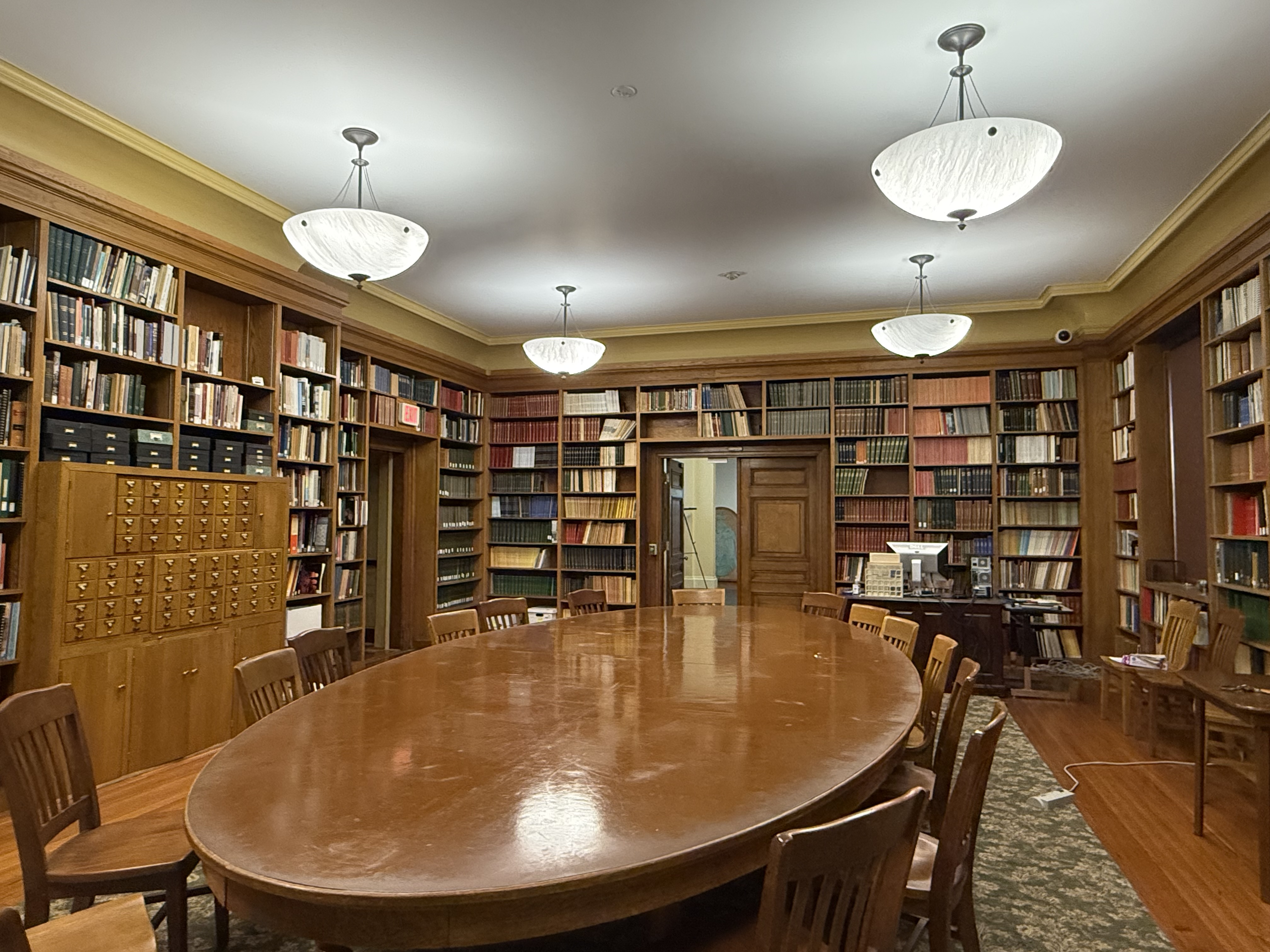
From the same vantage point – the current Peabody Library. Note: the original card catalog system now covers the original fireplace.
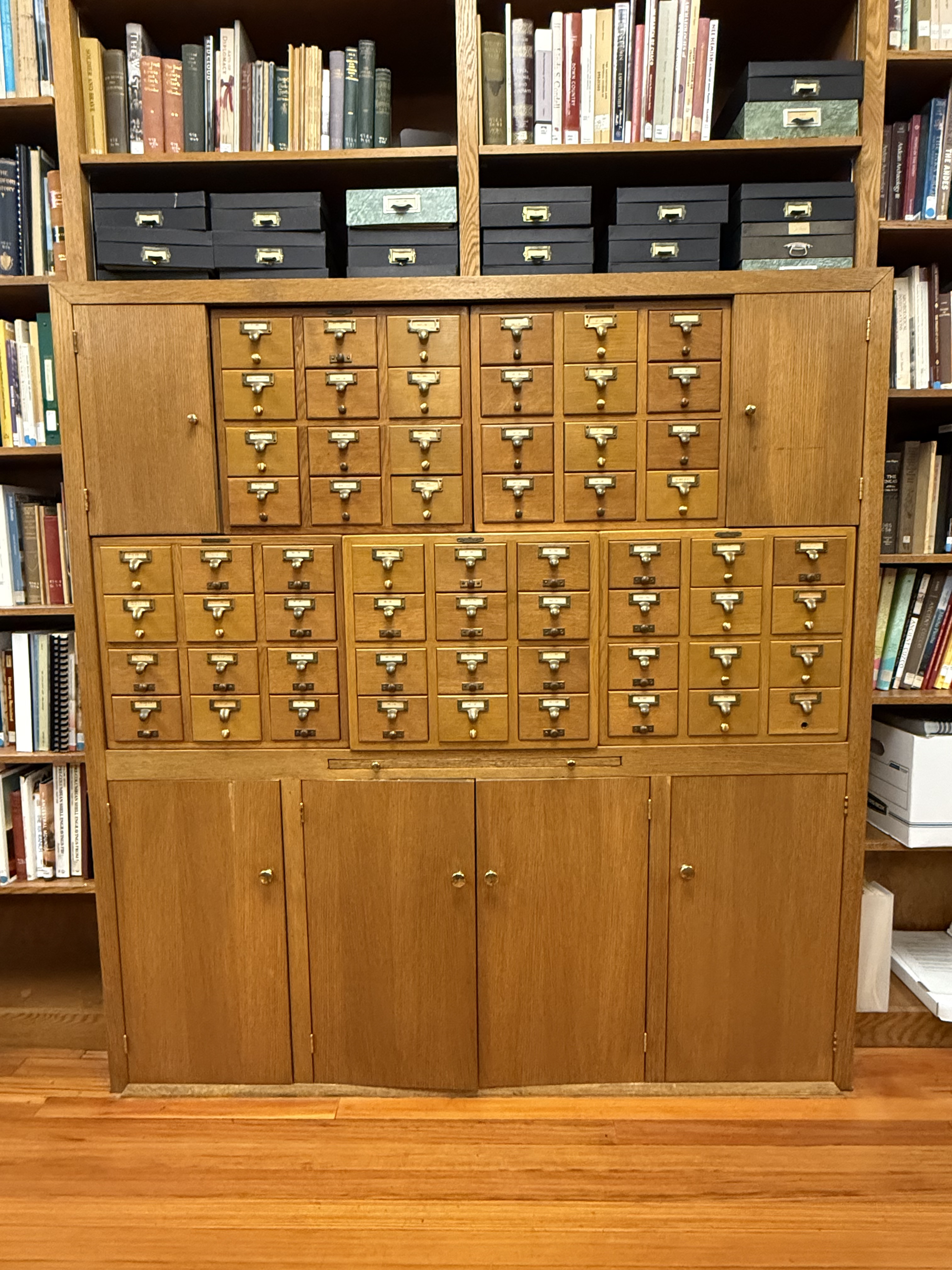
In 1904, work began on an index card catalog for the Peabody Institute’s library. This catalog would be similar to the Library of Congress plan which was being used at the time in the Seminary Library (but the catalog ended up being Dewey Decimal, arrgh!) This index card catalog is still occasionally used today at the Peabody Institute, though the entire library is catalogued in the North of Boston Library Exchange.
The original card catalog is still in use at the Peabody today!
Rumor Has It (Dinosaurs in the Chapel and Turtle Racing)
There had been rumors of turtle racing in the Peabody basement and other areas on campus. Mention of one turtle (named Alec) being kidnapped in a 1935 article may prove these rumors as true! Don’t worry, Alec was returned safe and sound.
In a “This Andover” column of The Phillipian in 1941, the Archaeology Department (now the Peabody Institute) was supposedly spreading rumors that several prehistoric dinosaurs live in the Cochran Chapel organ pipes.
“It is they [the dinosaurs], the rumor goes on having it, that furnish Dr. Pfatteicher’s lowest notes during Sunday services.”
Flute Recitals by the Peabody Director
On several occasions, Peabody Director, Dr. Charles Peabody performed flute recitals for students in the Academy chapel. On January 20th in 1915, Peabody was joined by Dr. Carl F. Pfatteicher, who played the organ. Pfatteicher was the director of music at the time, a post he held until 1947. During his time at Phillips Academy, he facilitated choir, glee club, and a small orchestra. Many of these groups met and practiced in the Archaeology Building or Peabody House. I think it’s safe to say that Dr. Charles Peabody and Dr. Carl Pfatteicher were good friends. The music played at this recital were the following:
Sonata in C Major – Mozart
Tres Lent from Sonata in G Major – Guillaume Lekeu
Barcarolle – Harold Nasan
Invocation – Eugene Lacroix
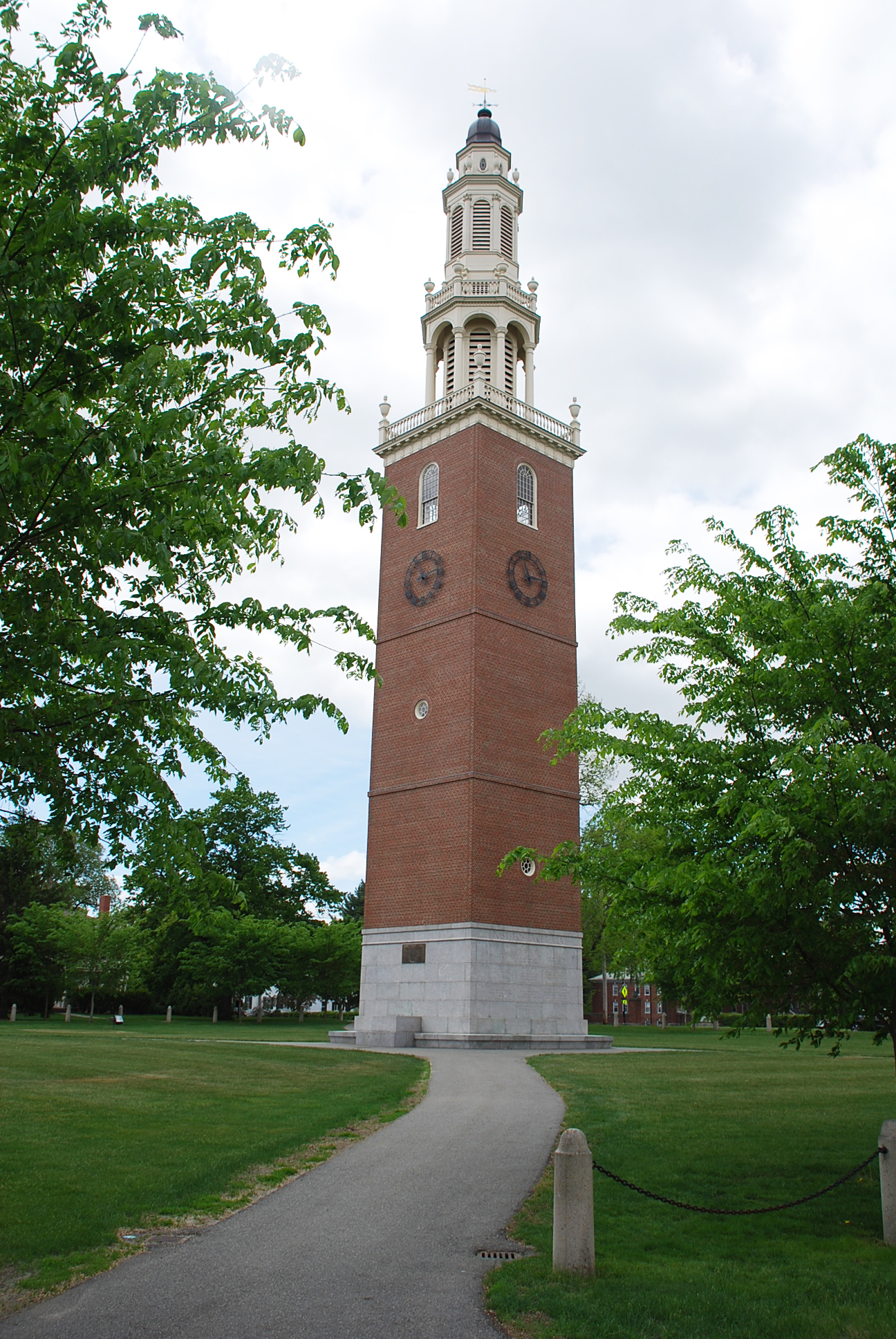
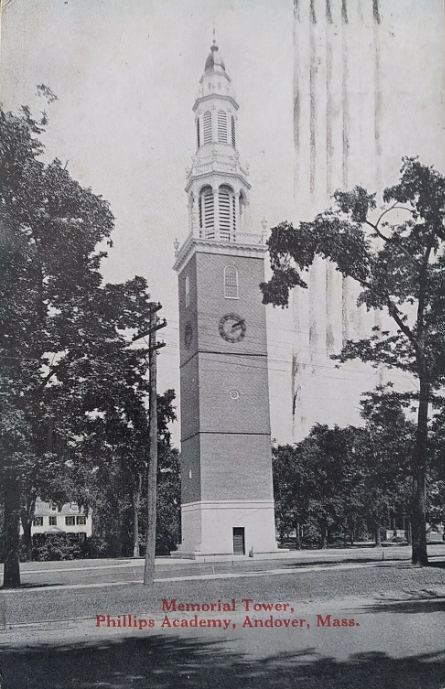
Fun Fact: Dr. Carl F. Pfatteicher was asked to help select the bells to be placed in the newly constructed Memorial Bell Tower on campus. He enjoyed giving regular carillon concerts, playing the bells sometimes at dawn. Many students did not appreciate this and one year managed to lock Dr. Pfatteicher in the tower.
Memorial Bell Tower, Phillips Academy Andover Completed in 1922 by architect Guy Lowell (the same architect of the Peabody building!)
“A Place for Students to Gather” – Clubs Find a Home at the Peabody
The Peabody was founded with three goals in mind – to educate students about the world of archaeology, to promote archaeological research, and to be a place for students to gather. As part of this vision, students and student clubs have been utilizing the Archaeology Building since its inception in 1903. Below are just a few examples of student club communications in The Phillipian related to the Peabody.
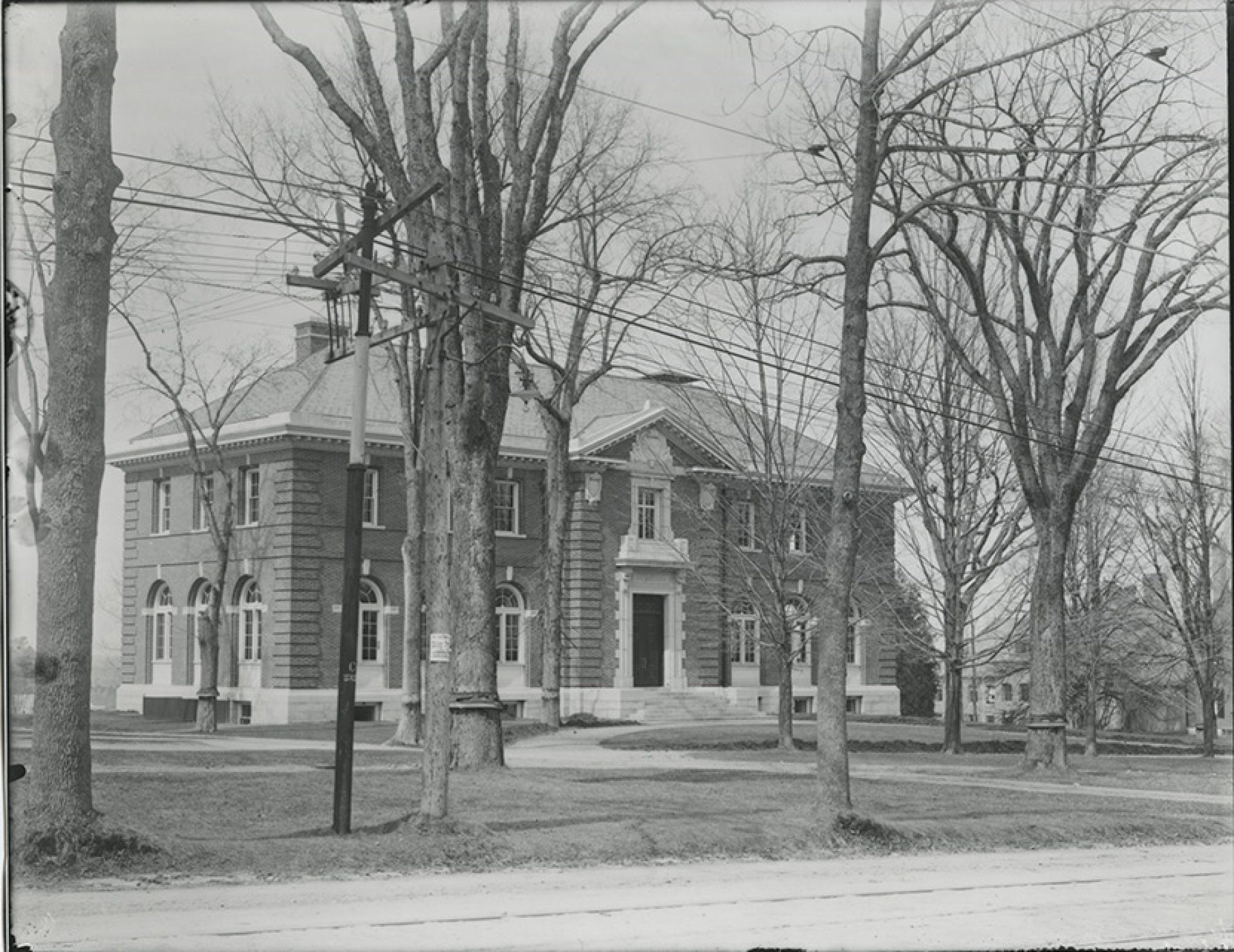
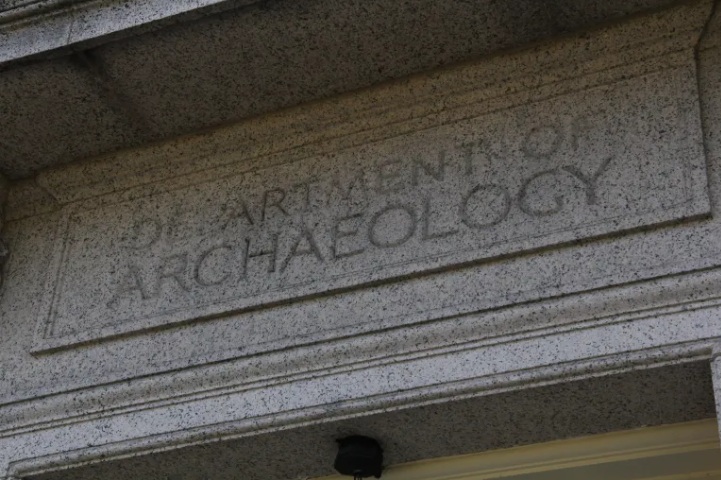
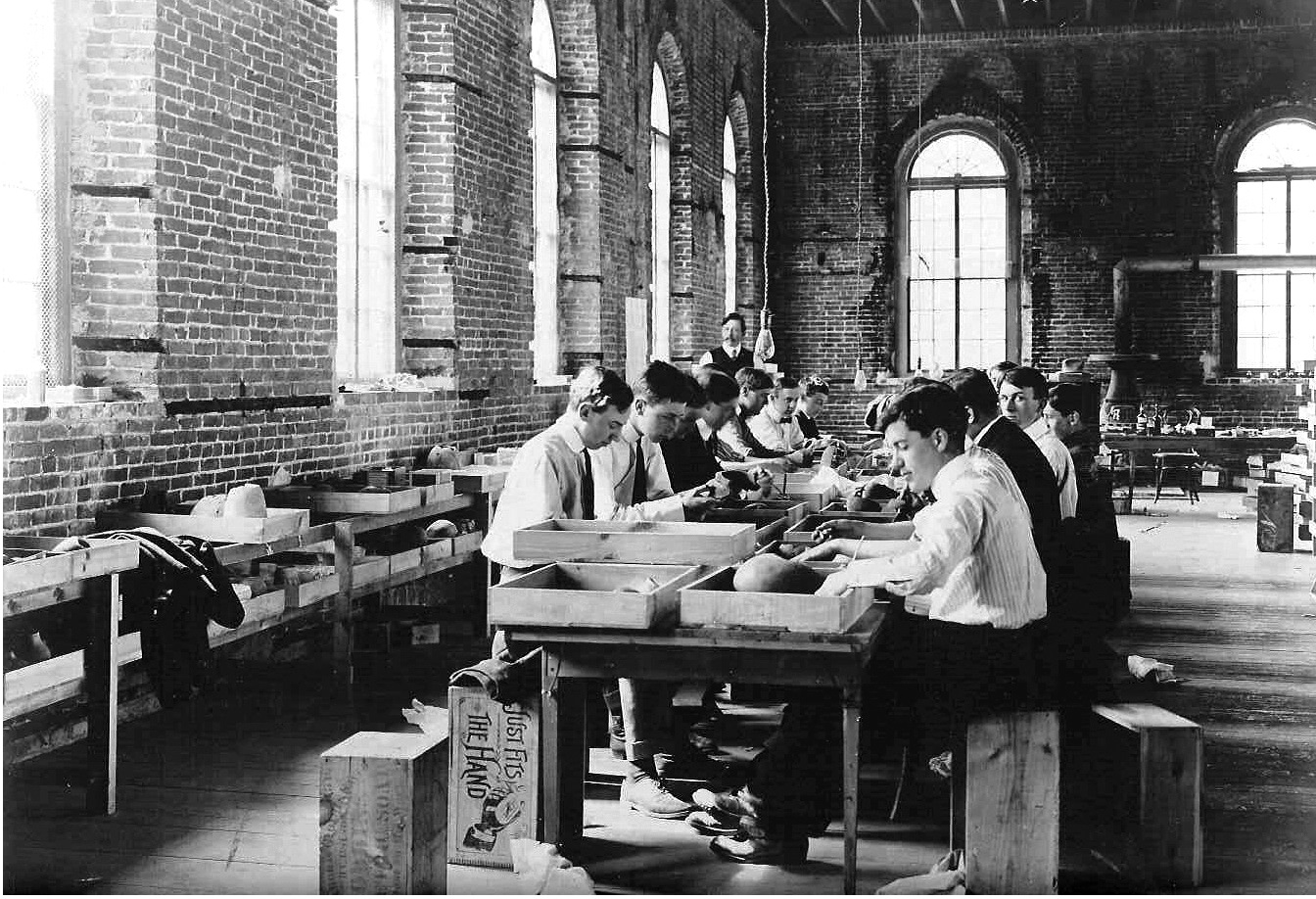
Class of 1910 in front of the Department of Archaeology (later known as the Peabody Institute of Archaeology.)
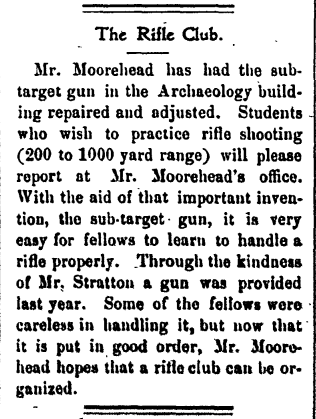
An advertisement in a 1904 column mentions organizing a student Rifle Club at the Archaeology Building and reporting to the office of Peabody Curator, Mr. Moorehead for those interested in shooting practice.
Courtesy of The Phillipian archives.
Fun Fact: The Sub-Target Rifle Machine and similar target practice devices were popular in the early part of the 20th century. They recorded information about marksmanship, position of the gun, etc. without firing live rounds.
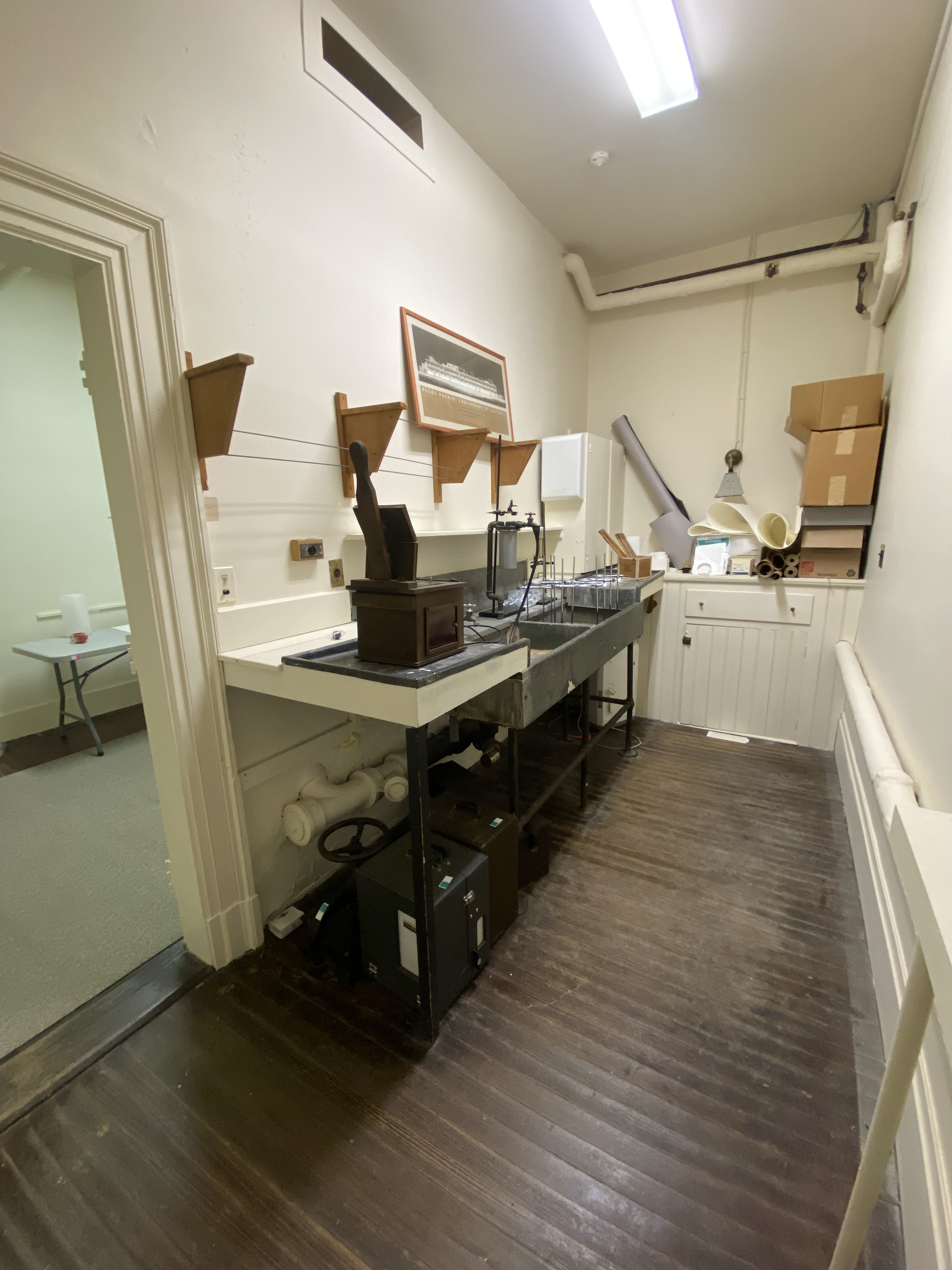
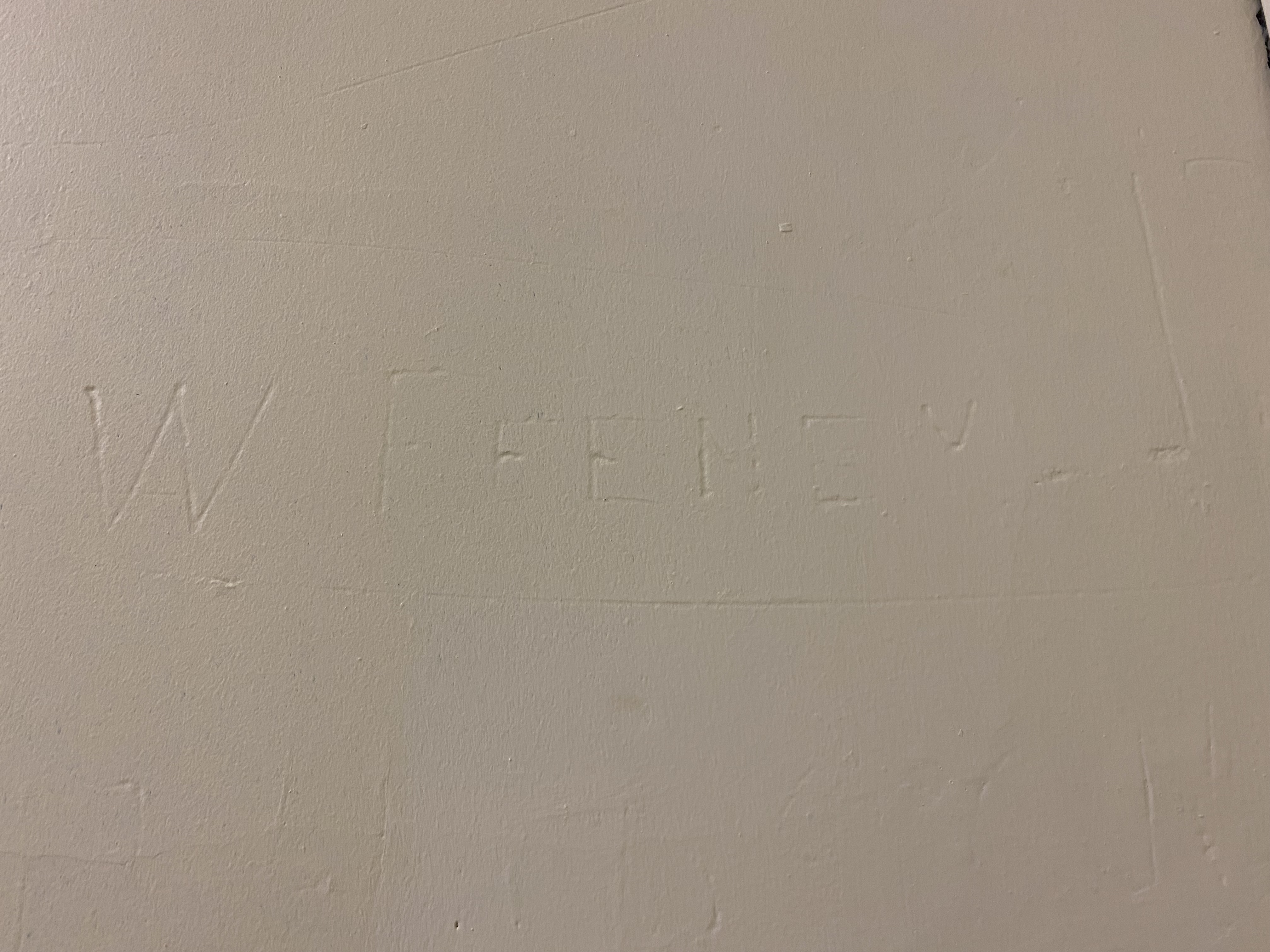
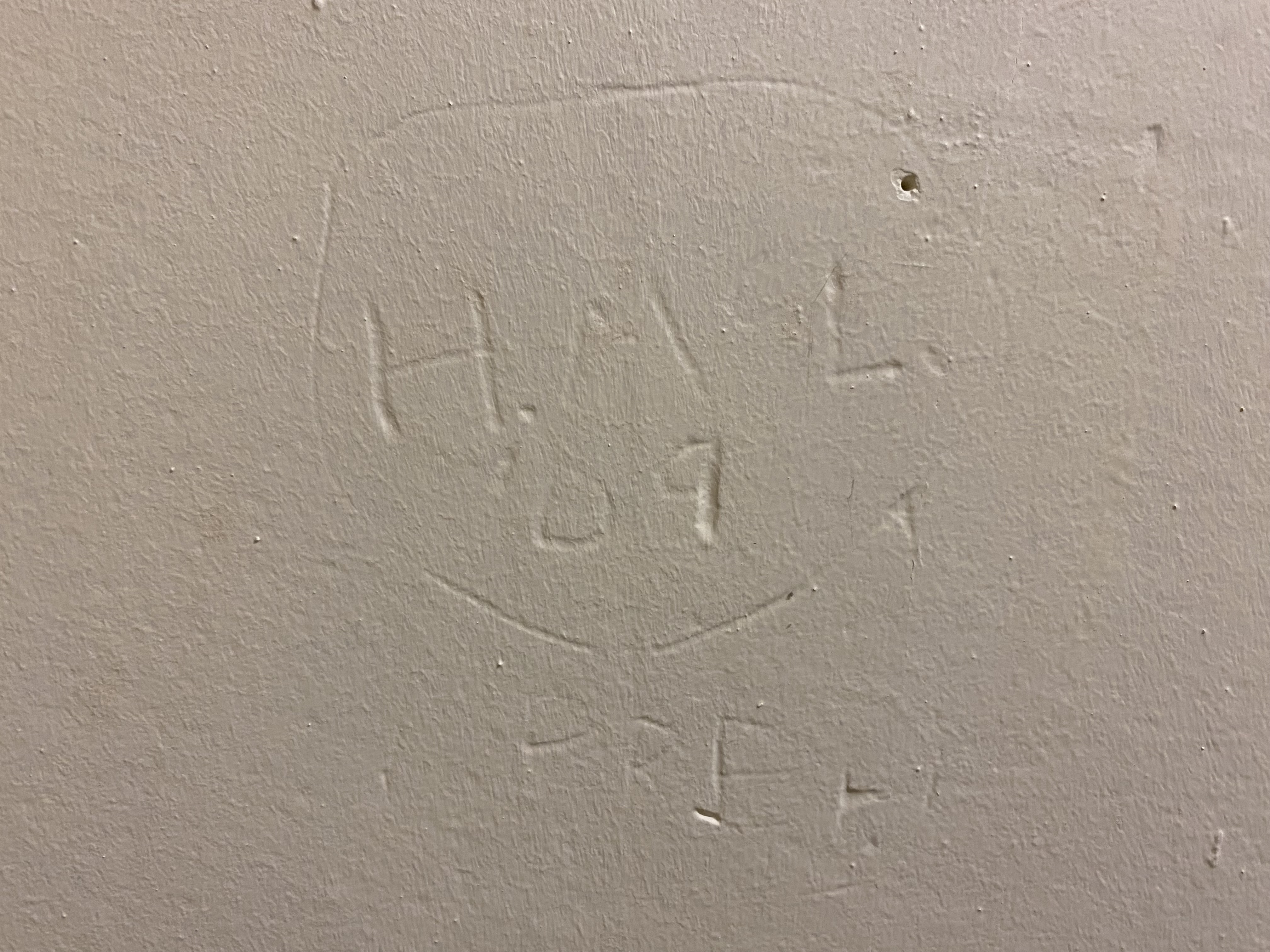
In 1904, a dark room was provided for the Camera Club, located in the basement of the Peabody. The Phillipian stated the space “is thoroughly equipped and is as fine as can be found in New England.” Before Phase 1 of the Peabody Project began, much of the original dark room space was still intact. One of my personal favorite details was the original carved signatures still on the wall left by past Camera Club students.
Original dark room at the Peabody before the recent building renewal project.
Student signatures on the wall of the dark room at the Peabody. Note – that’s not 2009, it’s 1909!
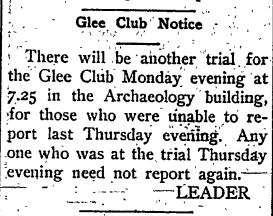
Mandolin and Banjo Club were some of the music clubs that met in the Archaeology Building for auditions, meetings, and practices. Glee Club was another student organization that commonly gathered at the Peabody and communications for this club are seen throughout the decades of The Phillipian.
I love seeing such a close connection between the Peabody and the Music Department, especially now that we’re neighbors with the new Music building, Falls Hall!
Glee Club communication in 1910.
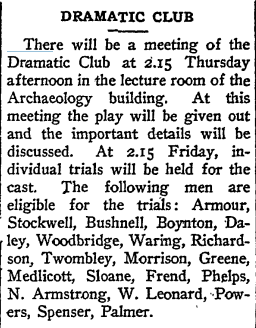
As we’ve seen above, many campus Arts organizations spent time at the Peabody. The Dramatic Club would meet to discuss scripts for upcoming plays and hold individual trials for those looking to participate in performances.
Dramatic Club communication from 1912.
Other clubs such as Chess, Astronomy, Spanish, Philo Congress, Bible Class, Foreign Missions, Yale Club, Harvard Club, Stamp Club, Nature Club, Forum, and Mirror all met at the Peabody throughout the first half of the 1900s. Even The Phillipian and football team held gatherings at one point. By the 1950s we see the Peabody becoming more active in exhibitions and many of these clubs move to other locations on campus, many finding a home at the Peabody House behind the Archaeology Building.
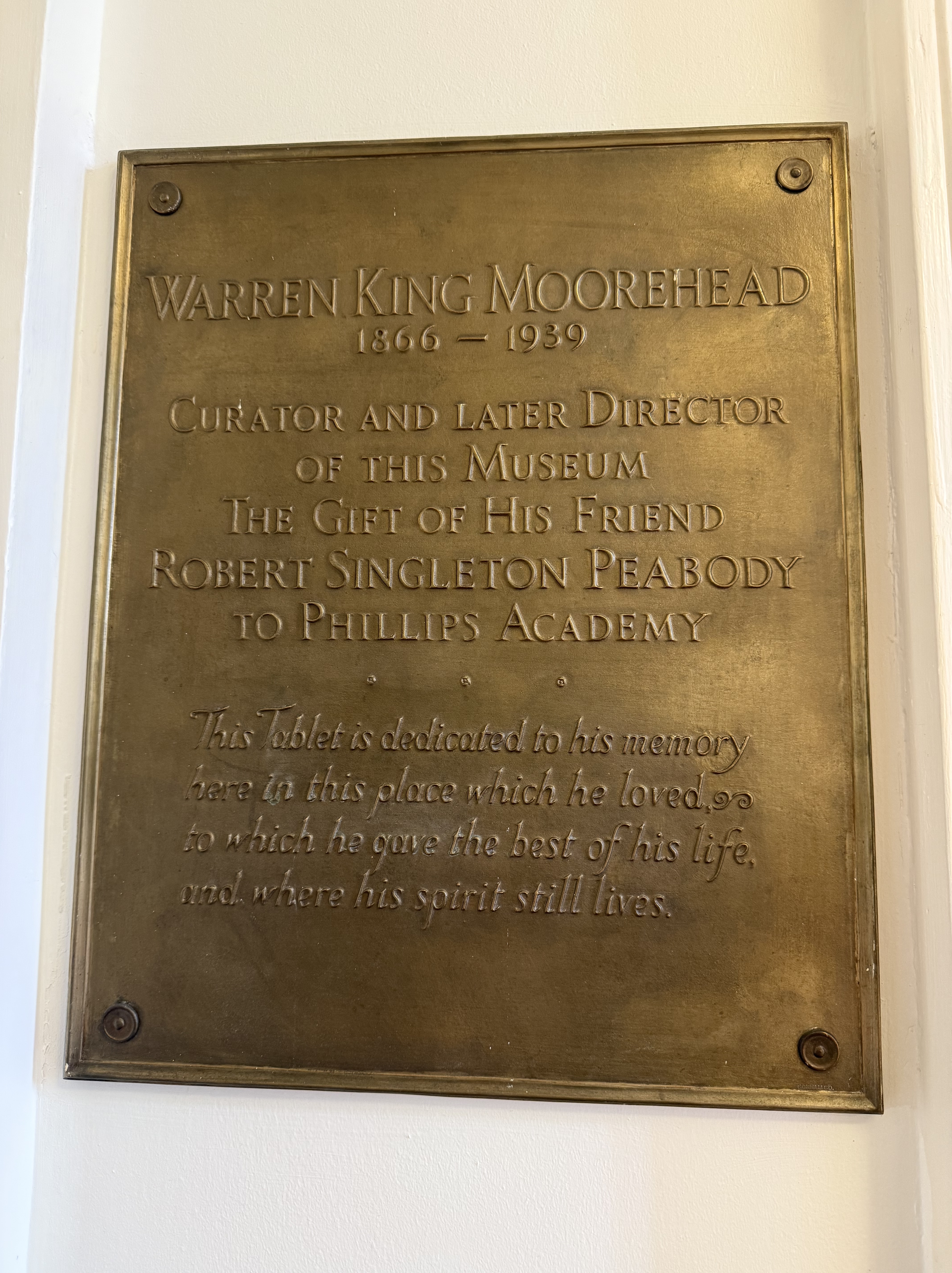
“…where his spirit still lives.”
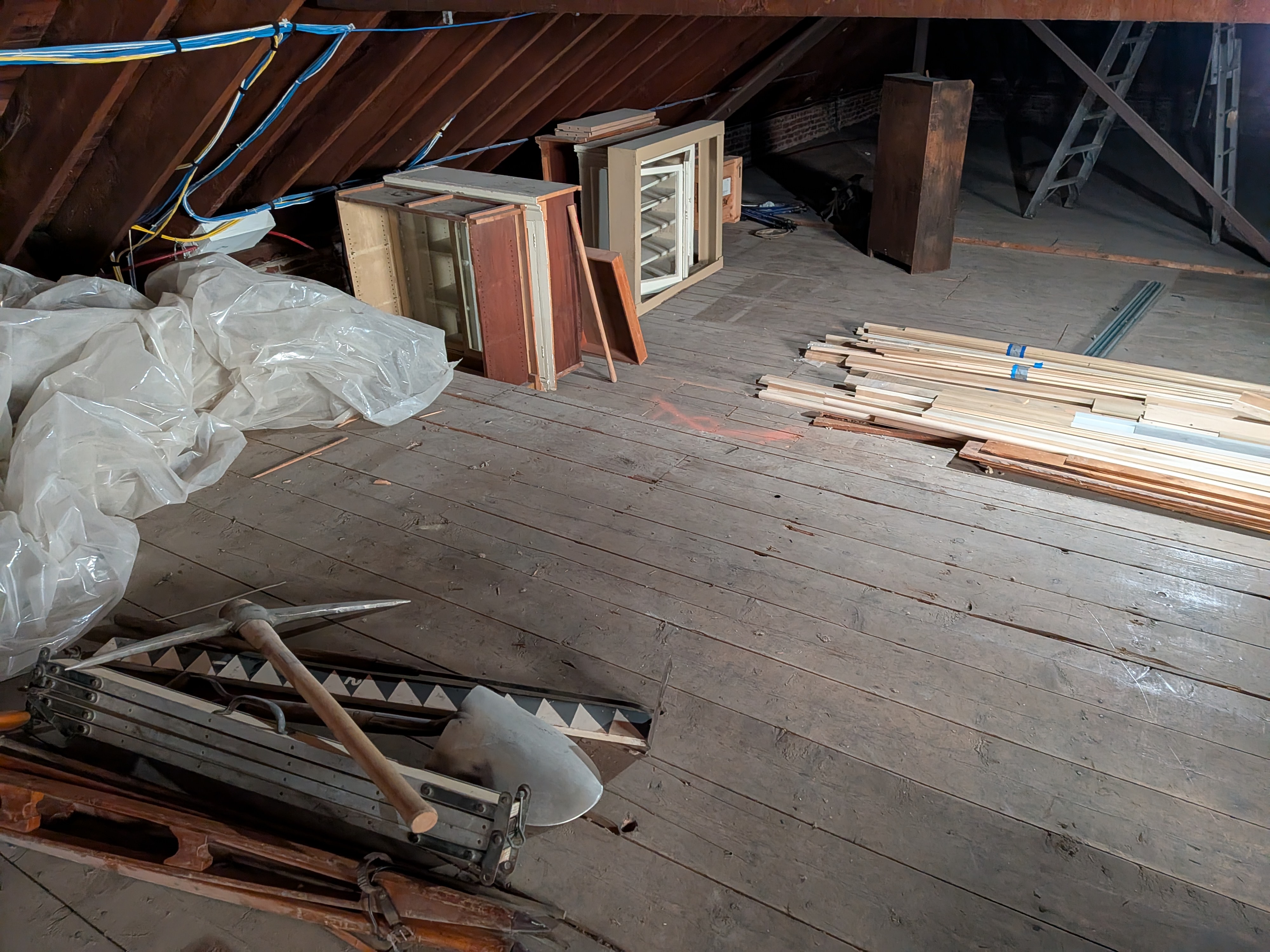
Jumping ahead to 2011, a Phillipianarticle features Halloween traditions and campus lore passed down over the decades of PA’s history. The Peabody is mentioned to experience “frequent slamming doors, moving items and eerie noises that creak through the attic floors.” The strange activities convinced Peabody staff that the building was haunted by Warren K. Moorehead (1866-1939). Moorehead was the first curator at the Peabody from 1901 to 1924 and became the Peabody’s second director from 1924 to 1938.
The Peabody has many interesting stories of these experiences over the years. One story mentioned in The Phillipian, depicts a foreman being locked in the back stairwell. I can personally share that my first Reunion Weekend with the Peabody I experienced an alum being locked in one of our bathrooms during an event (the locks were on the inside of the door…) I considered this my “welcome” initiation from Moorehead, as the newest member to the Peabody team.
Over the years, our director has written notes to Moorehead to communicate our intentions and care of the building along with updates of upcoming changes such as our building renewal project. These notes are stored behind a plaque commemorating Moorehead, located by the front doors of the building. Much of the activity has quieted since writing these notes.
Peabody staff always get excited when we unearth hidden stories from the Peabody Institute’s past. The Phillipian Archives is one such place that has held many a story. First printed in 1857, The Phillipian is a weekly student newspaper that continues today at Phillips Academy Andover. The student paper describes itself as “completely uncensored and entirely student-run,” offering a snapshot of what campus life is like both past and present, and in the case of this blog, some of the most outrageous and bizarre activities related to the Peabody.
In a few months, the Peabody Institute will be undergoing Phase 2 of some much-needed renewal work. The building and collections will be off-line Winter and Spring terms. The Peabody will continue to support modified classroom lessons and student activities, outside of the Peabody building. Student requests to access collections will be considered on a case-by-case basis.
In honor of the upcoming building project, this (part 1) blog shares some of the Peabody building’s history.
A Special Place at the Corner of Phillips and Main
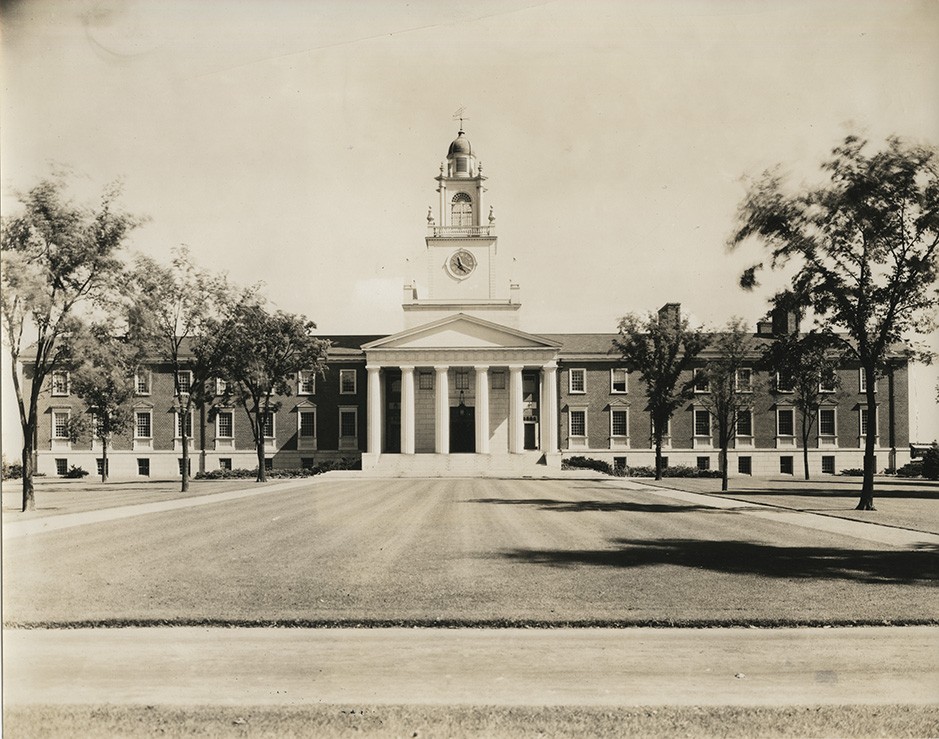
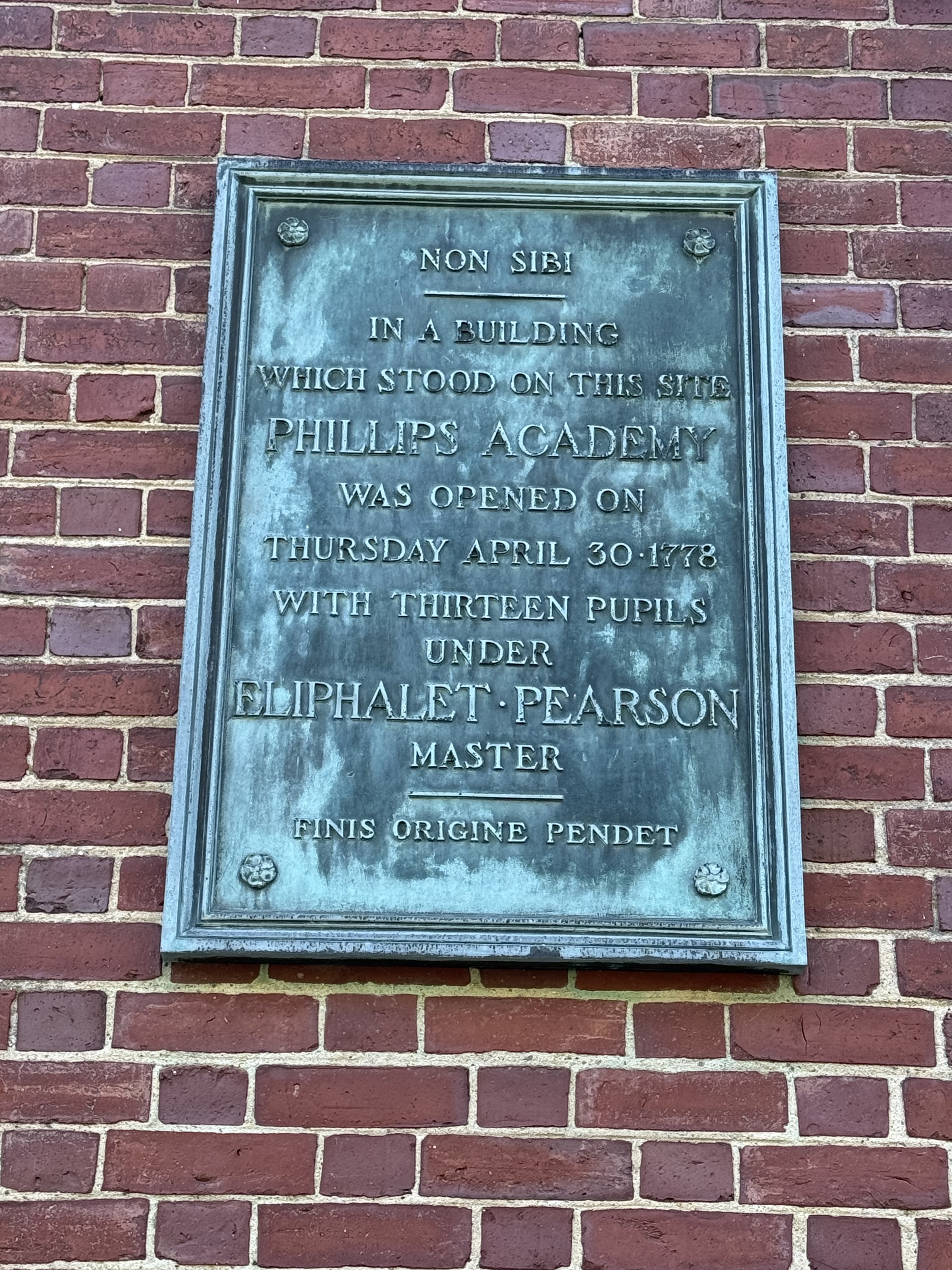
The first Founder’s Day for Phillips Academy was held in October 1913. At this time a bronze plaque was unveiled and placed on the Peabody Insitute building (known then as the Archaeology Department) commemorating the site where the first school-building on campus was opened in 1778. This plaque can still be seen on the Peabody building today!
Bronze plaque on the Peabody Institute building exterior from 1913.
The site at the corner of Phillips and Main streets has an interesting history, one that began well before the Peabody. The site first housed the 1778 carpenter’s shop used as the first classroom building at Phillips Academy.
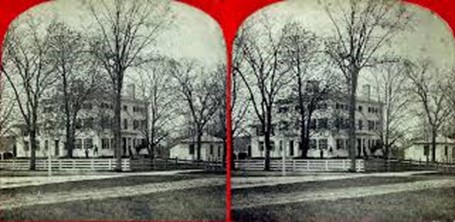
Around 1845, the shop was moved from the site and eventually razed. Samuel Farrar, treasurer of Phillips Academy and the Andover Seminary, built a three-story, Federal-style house on the location. The house has since been moved further down on Phillips Street and is known as Farrar House.
Farrar House – Image courtesy of Andover Historic Preservation, Memorial Hall Library, Andover, MA
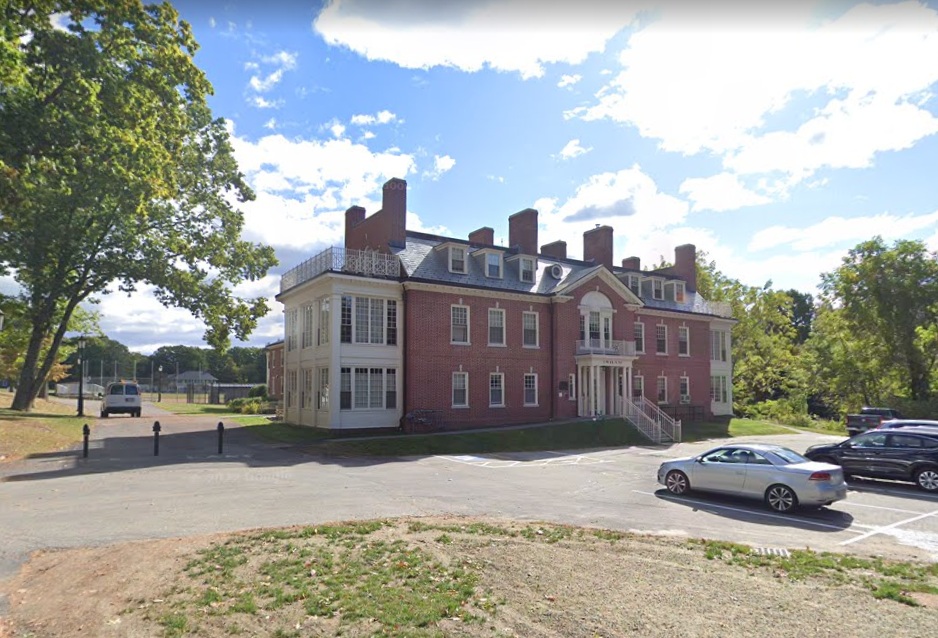
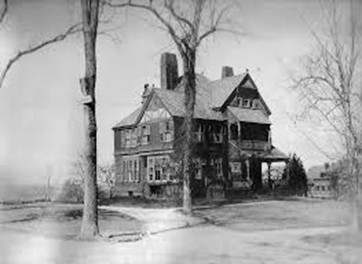
In 1882, a home was built on the site for J. Wesley Churchill, a professor at the Andover Theological Seminary. Later in 1901, the house was moved to another location on Main Street to make way for the new Archaeology Building which later became the Peabody. The house is known as Churchill House on campus today.
Churchill House – Image courtesy of Andover Historic Preservation, Memorial Hall Library, Andover, MA
In a Phillipian article from 1917, the history of Founder’s Day and the significance of the 175 Main street site is shared, noting a 1916 dedication of the new Peabody House by Dr. Charles Peabody (first Peabody Director and son of the Archaeology Department’s founder, Robert S. Peabody).
In this column, it was mentioned that ceremonies were not held to celebrate Founder’s Day as “this year, more than at any other time, matters of lesser importance should give way to more serious questions.” This was in reflection of the current impact of the Spanish Influenza and WWI.
Smoke Talks (Smoking and collections don’t mix…)
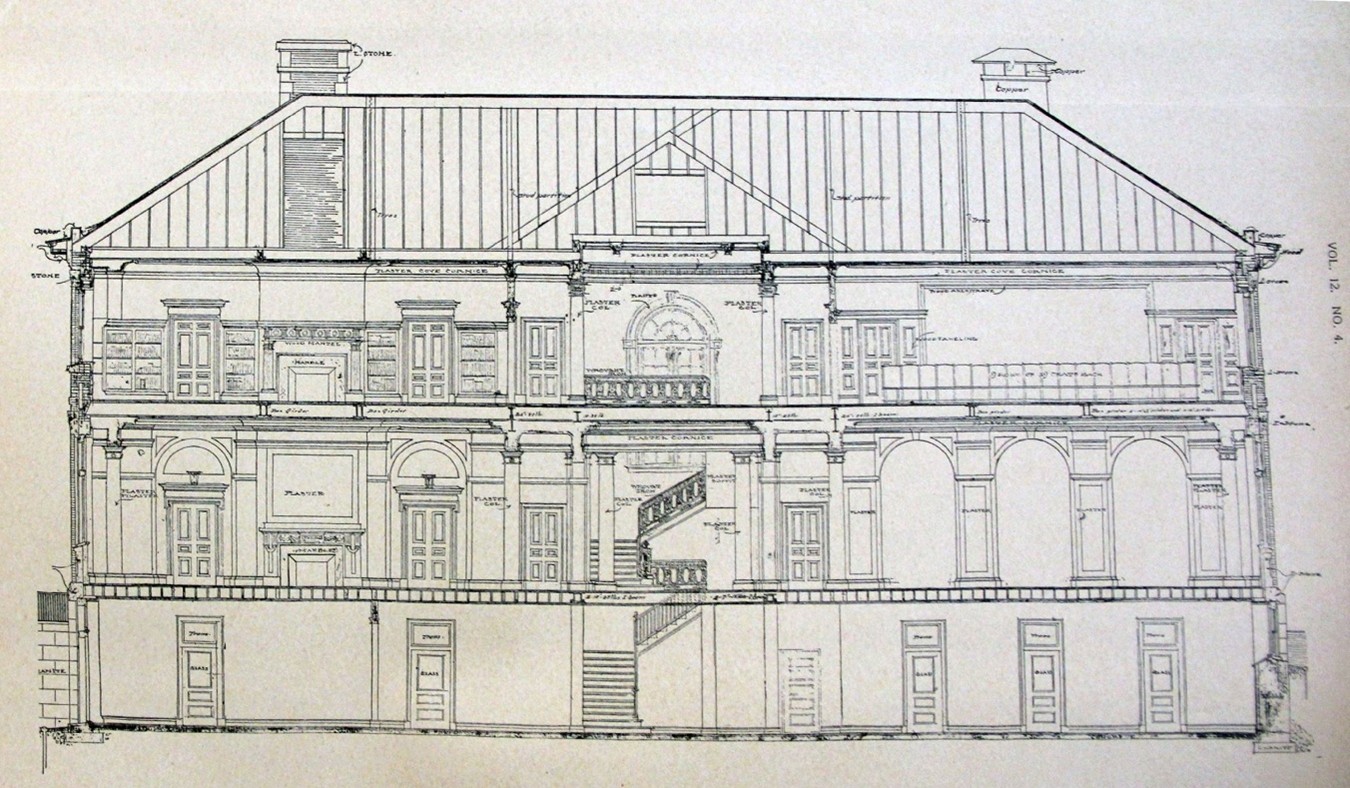
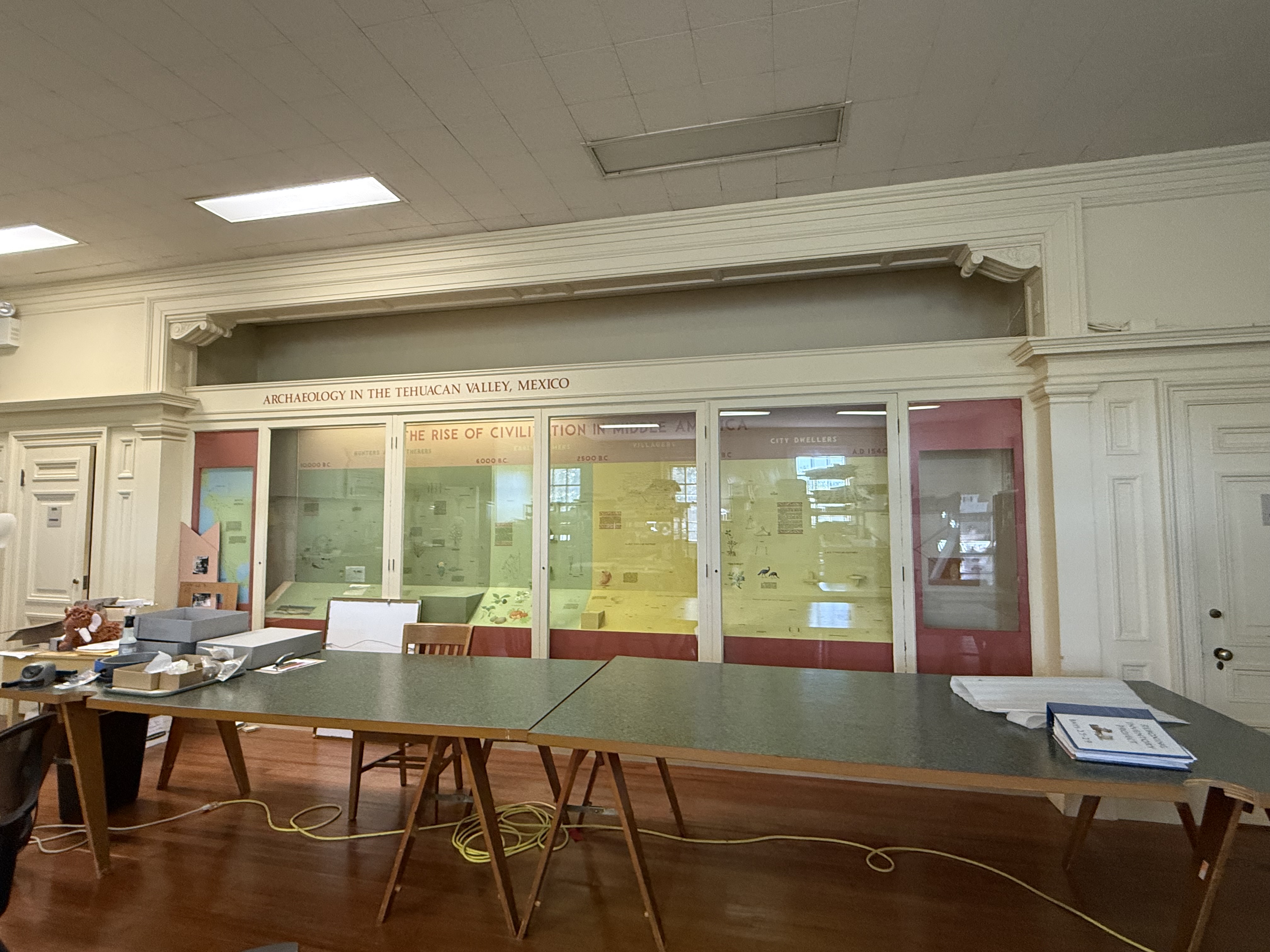
In the early years of the new Department of Archaeology building, Curator Warren K. Moorehead would give “smoke talk” lectures on the second floor of the building. Some of the original molding from the proscenium arch is still visible today at the Peabody. Beyond these lectures, student clubs would hold their own “smoke talks” in the Peabody, which served as the Student Union building for many years on campus. How did these lectures get their name? For the cigars smoked during these meetings by students and speakers alike!
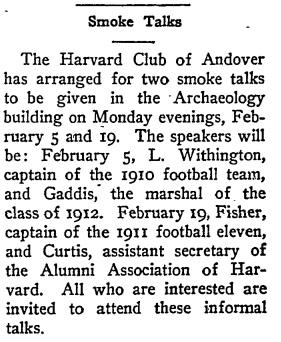
A column from The Phillipian in 1912
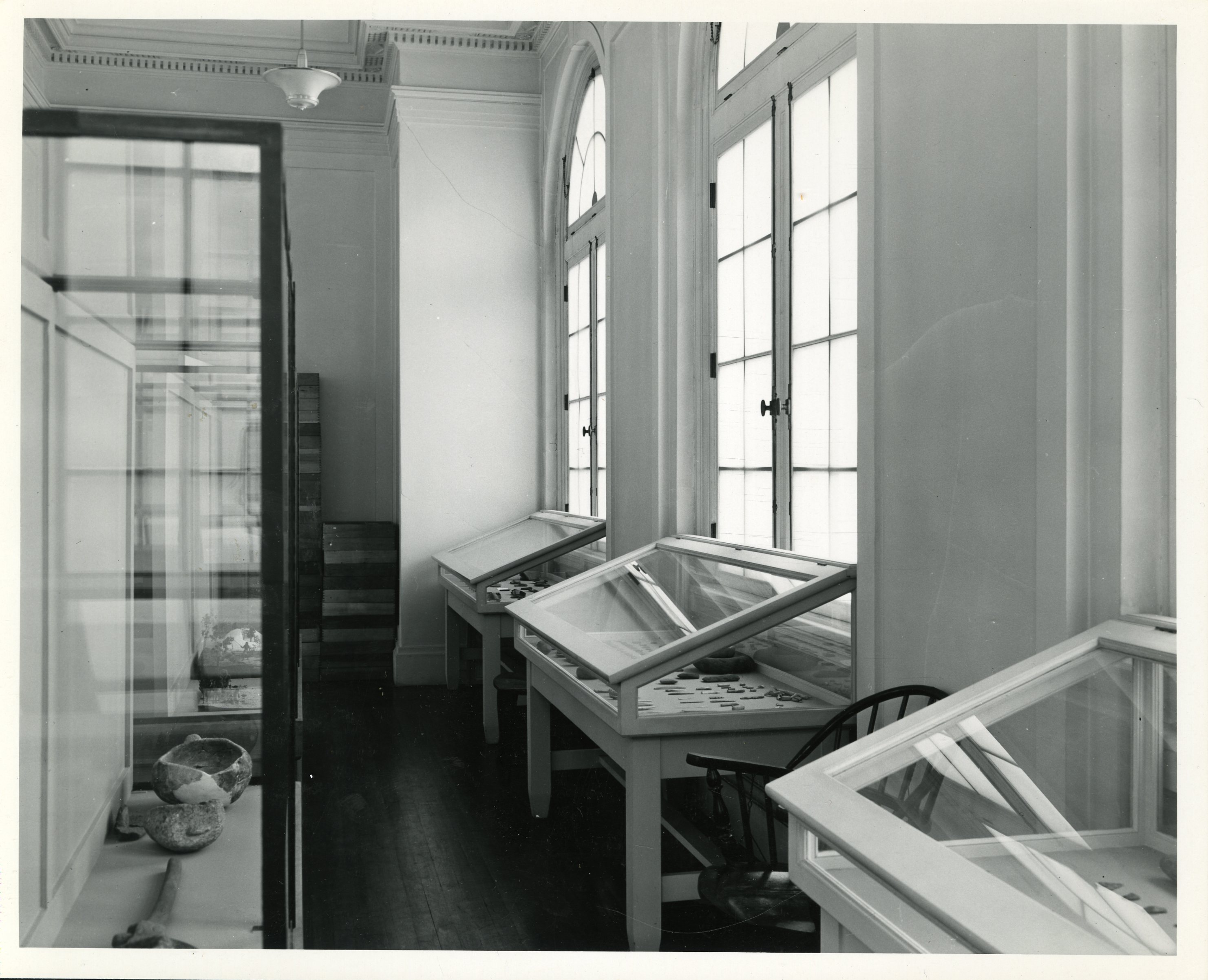
Features of the old proscenium arch can still be seen at the Peabody today. In 1967, an exhibit wall with case was placed in the middle of the arch.
A Grill in the Basement (Now they’re pushing their luck…)
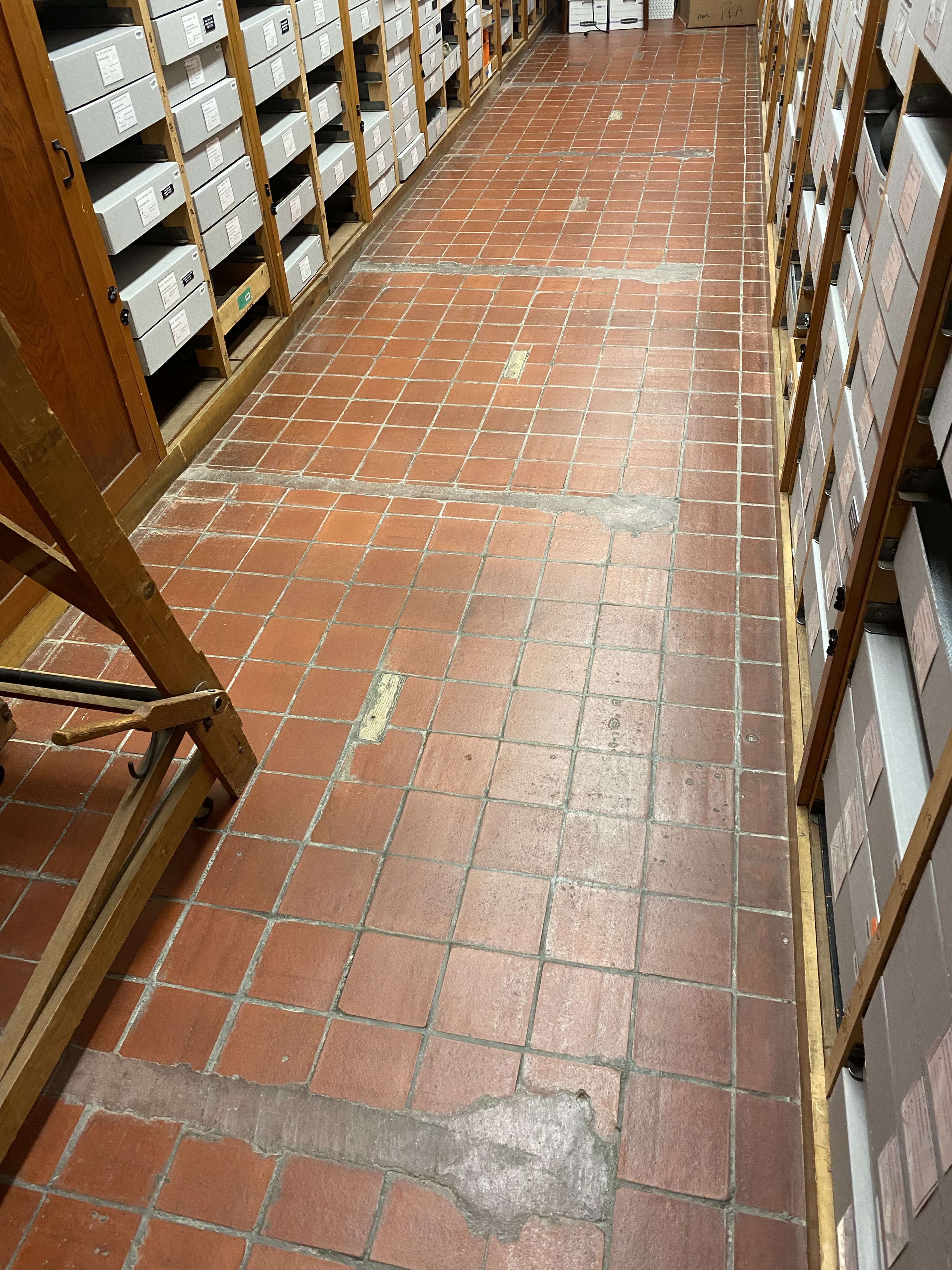
Beginning in 1913, The Phillipian mentions meetings at “the Grill” in the basement of the Peabody (known as the Department of Archaeology at the time). At one point, the Peabody had a kitchen complete with grill, stall seats, and tables for student gatherings. Improvements were made in 1913 giving the space a new red tile floor, dark brown wood paneling around the walls, a new stove, and a large suction flue to draw out heat and odors. In the past the odors of students’ cooking would circulate upstairs disturbing the Peabody staff.
Later in 1915, the Grill was moved to the newly constructed Peabody House located behind the Department of Archaeology building. The new space included a kitchen with large grill and private dining room for special dinners and banquets. There rooms are similar in design to the original grill room in the Archaeology Building.
Before Phase 1 of the Peabody Building Project, the original red tile floor from the Student Union Grill room was still visible in the basement of the building. In the photo you can see where the booths and tables made up the seating stalls.
Peabody House….and Fire(Well, it was bound to happen at some point…)
The Peabody House was opened in 1916 as an extension of the Department of Archaeology with the intent of giving students a building for their own use. Construction of the building used some of the funds contributed by Robert S. Peabody, founder of the Archaeology department at Phillips Academy and donor of the Archaeology Building. An article from The Phillipian describes the new building with an exterior of brick and stone, “which will correspond with the style of architecture of the Archaeology building and the new dormitories.” The first floor housed a student lounge and reading room with a large fireplace and large French windows. The second floor was similar in design to the first floor with space for the late Robert S. Peabody’s books and a large portrait of him. The room was used for club meetings as well as student assemblies and special banquets.
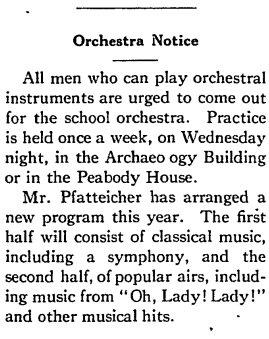
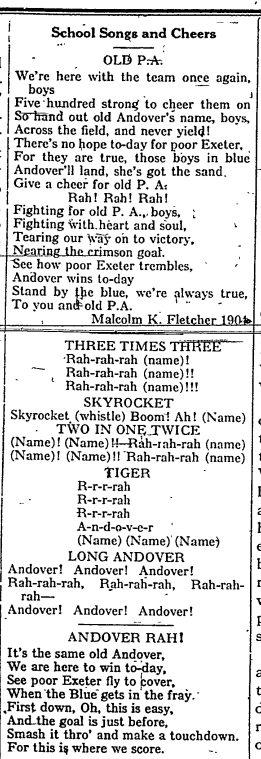
Some activities held in the Peabody House, highlighted in The Phillipian, are a notice to join the school Orchestra, with practices held once a week in the Archaeology Building or Peabody House. My personal favorite was an announcement to students for a mass meeting at the Peabody House to practice school songs and cheers. One entry from 1917 describes three hundred men present at the evening meeting called by head cheerleader, Howard Smith.
Two columns from 1917 advertising for the orchestra and sharing PA cheers and songs!
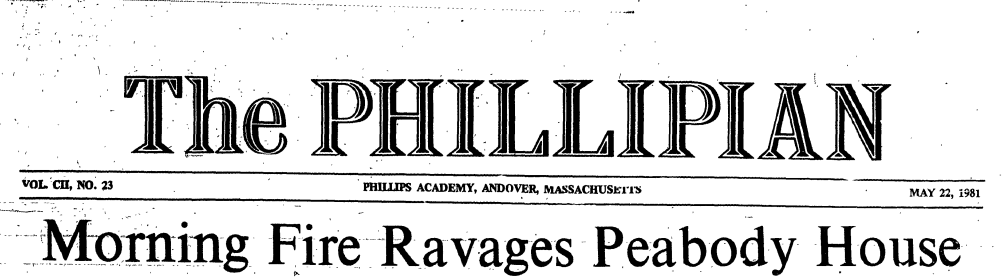
Jumping ahead to several decades later, headlines read “Morning Fire Ravages Peabody House.” In the early hours of May 18, 1981, a fire broke out in the Peabody House, destroying the first and second floors as well as the attic. There were no reported injuries, however, many of the Afro-Latino American Society’s possessions were lost on the second floor. Faulty electrical wiring is suspected to be the cause of the fire.
“[I was in] awe at how extremely hot the flames were, how much smoke there was and how terrifying it was to see the fire’s power.” – Headmaster Theodore R. Sizer
“[There was] steam and yellow light and flames bursting out of the roof.” – PA Student, Upper
We hope you enjoyed PART 1 of this two-part blog post. Stay tuned for PART 2, coming next month! To be continued…
Did you know how beautiful New Mexico is? I had the opportunity to travel to the Albuquerque and Santa Fe areas this July and can definitely recommend making the trip.
The Peabody Institute actually has a long relationship with New Mexico. In the 1920s, Alfred Kidder excavated Pecos Pueblo on behalf of Phillips Academy (what is now the Peabody Institute). The ripple effects of that work included repatriation work with the Pueblo of Jemez, a long-term loan with the Pecos National Historical Park, inter-institutional collaboration, relationships with Jemez artists, and incredible learning opportunities for the students at Phillips Academy.
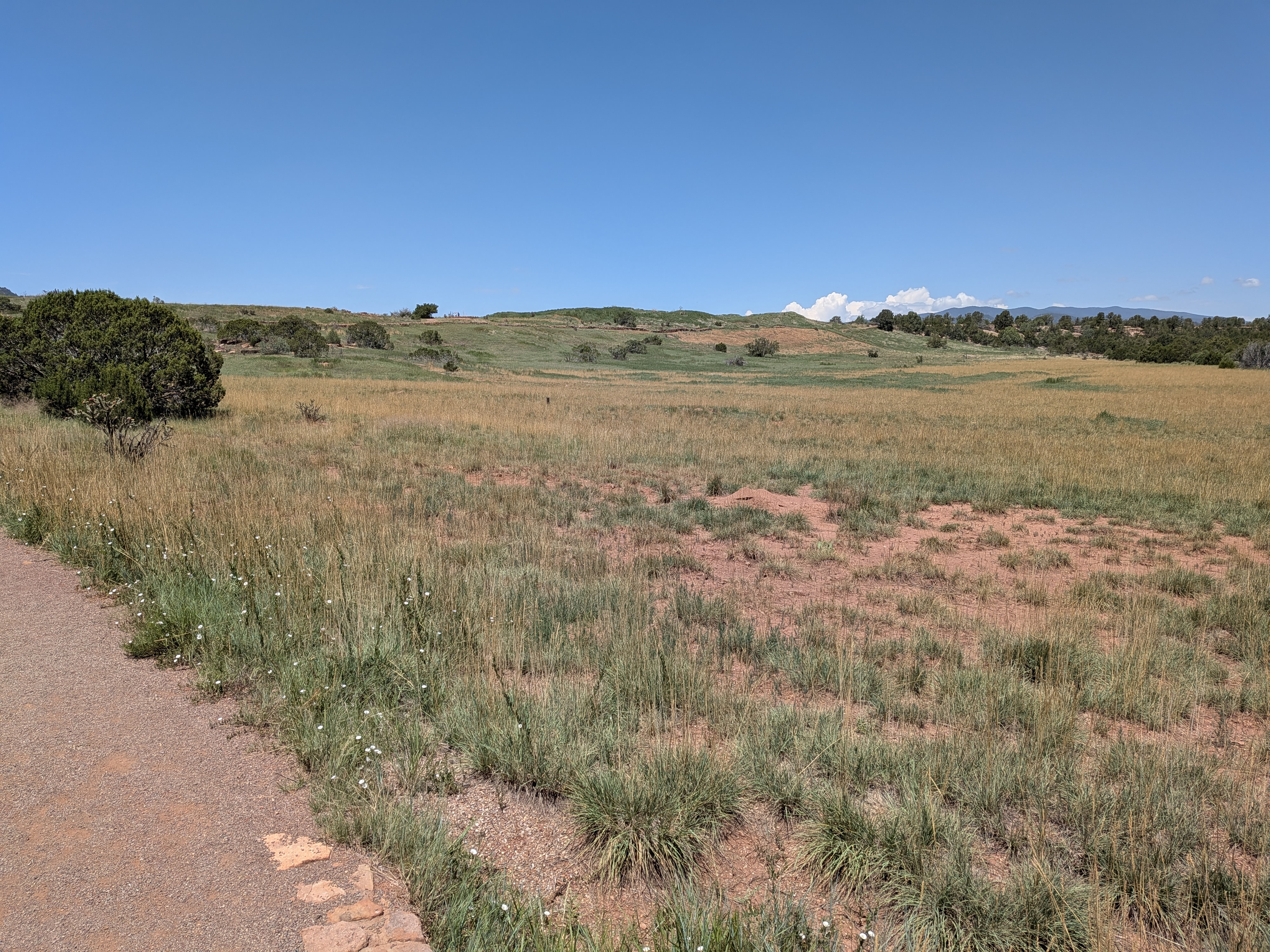
While I had been to the Pueblo of Jemez before this summer, I had not had the opportunity to see the Pecos archaeological site or Pecos National Historical Park before. It was truly a pleasure to experience the site in-person and get an understanding of how Pecos sits in the landscape. I was also able to view their wonderful exhibit, spend time with the Museum Curator to view the collections on loan from the Peabody, and meet several dedicated park staff members. I am grateful for the opportunity to spend that time with them all.
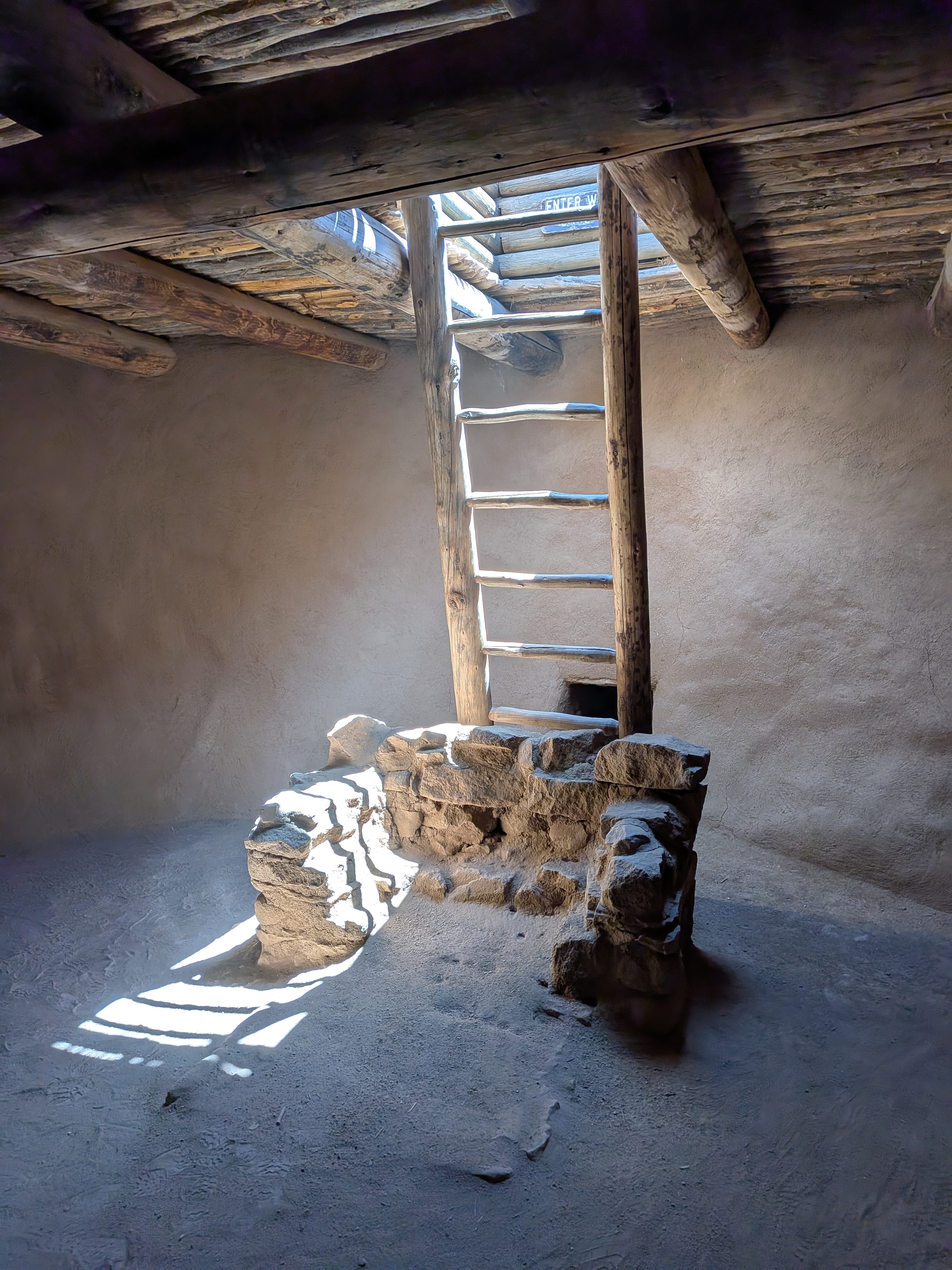
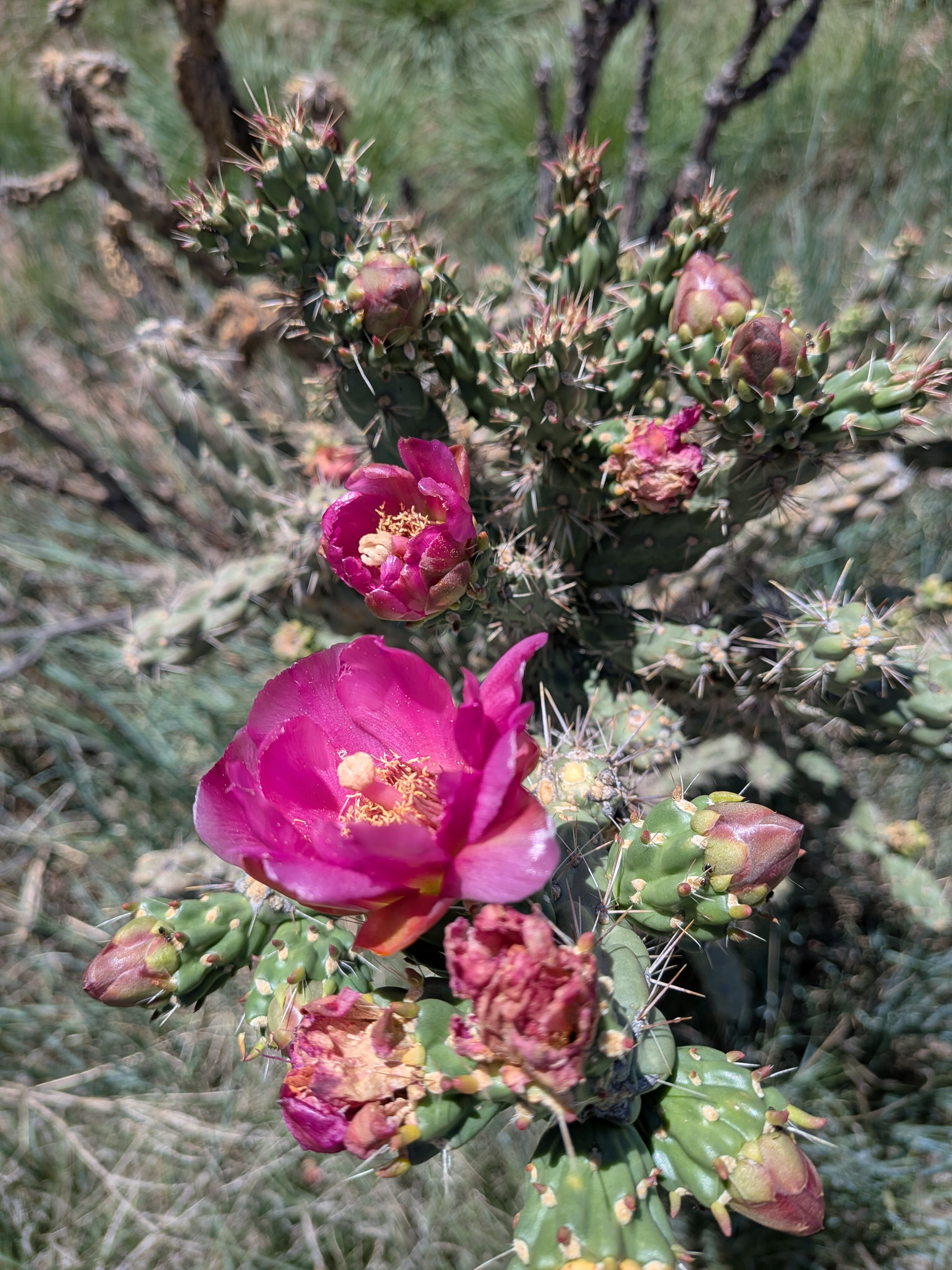
Inside the kiva at PecosCactus flowers!The view from Pecos
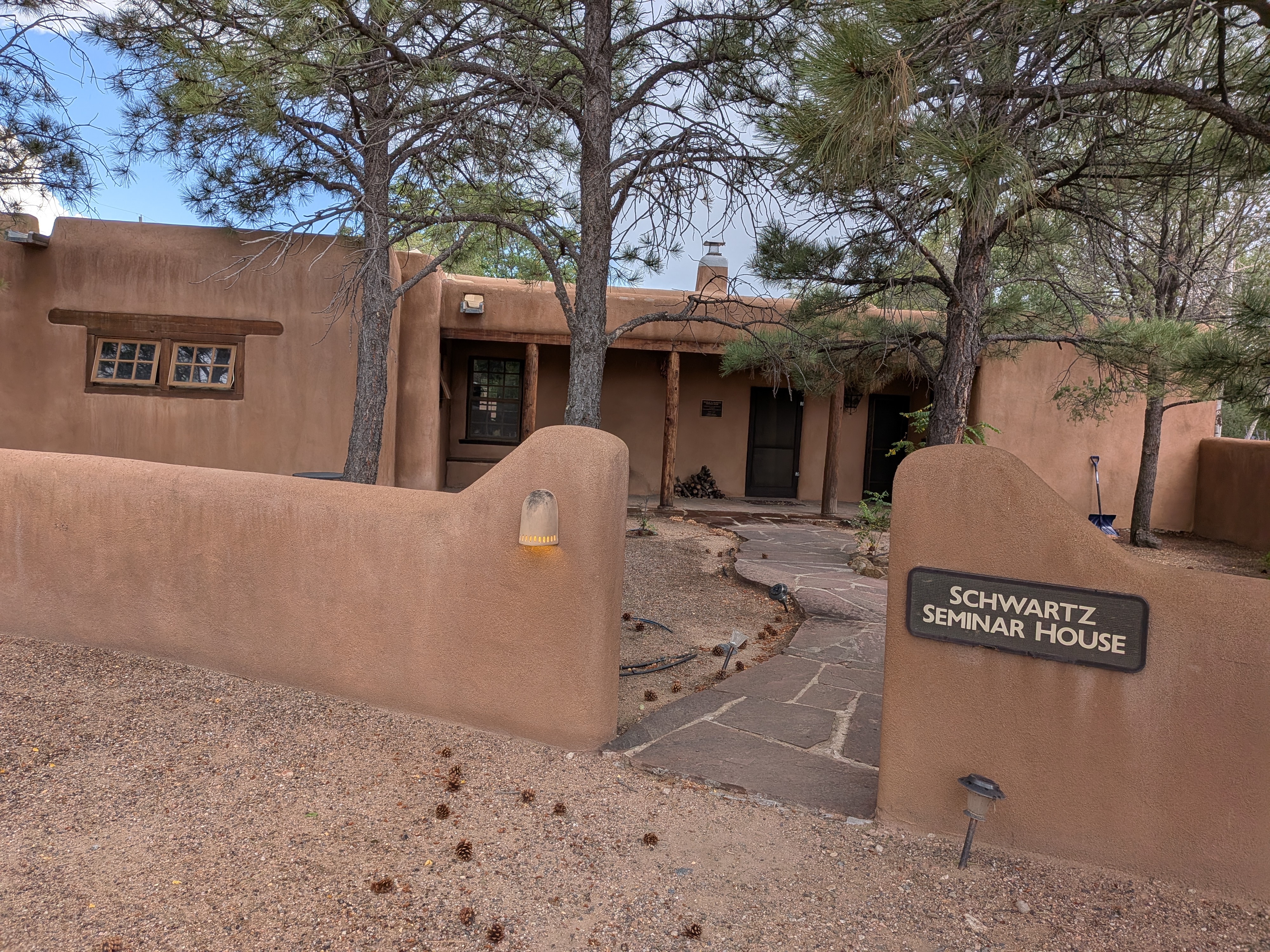
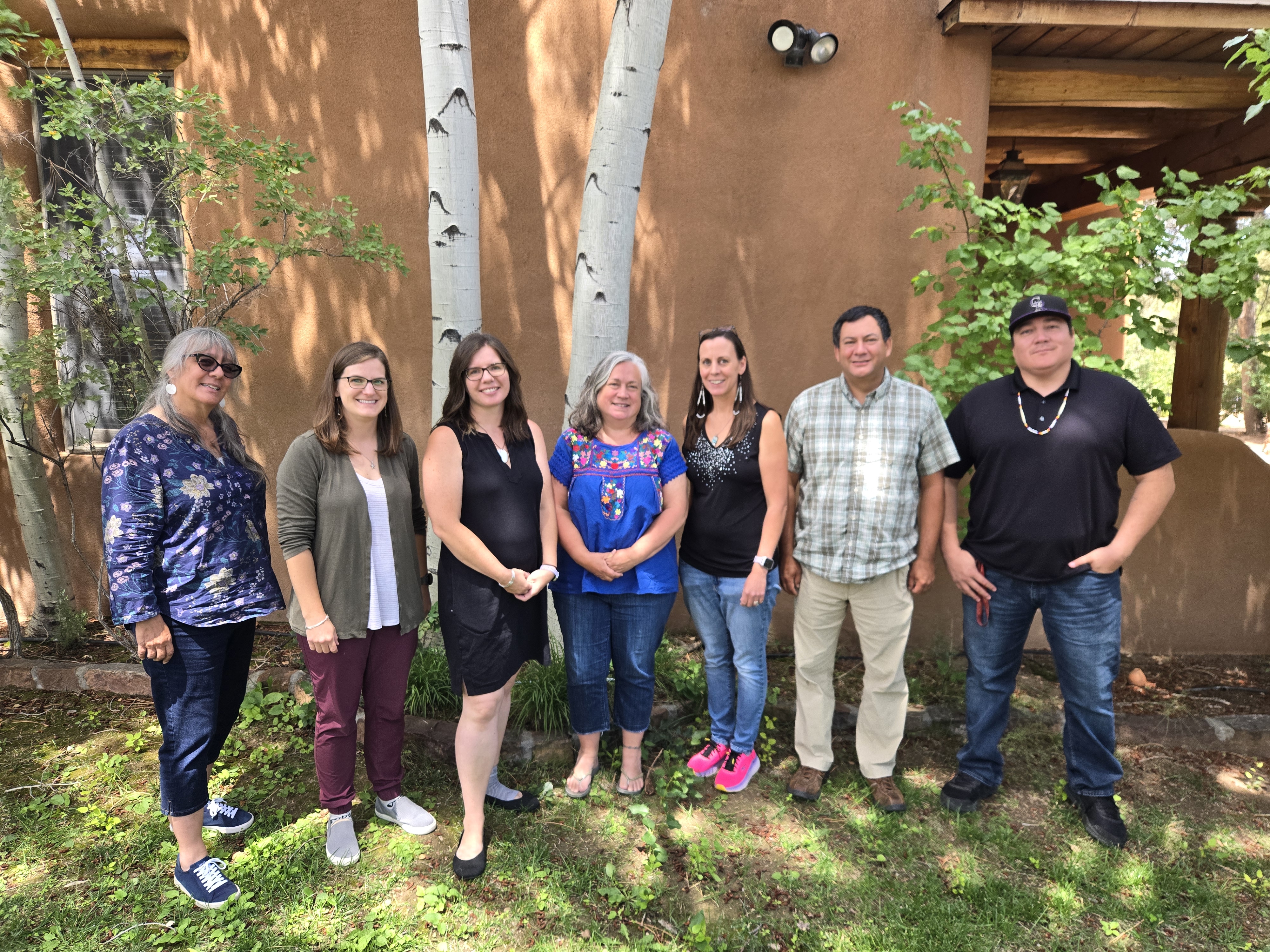
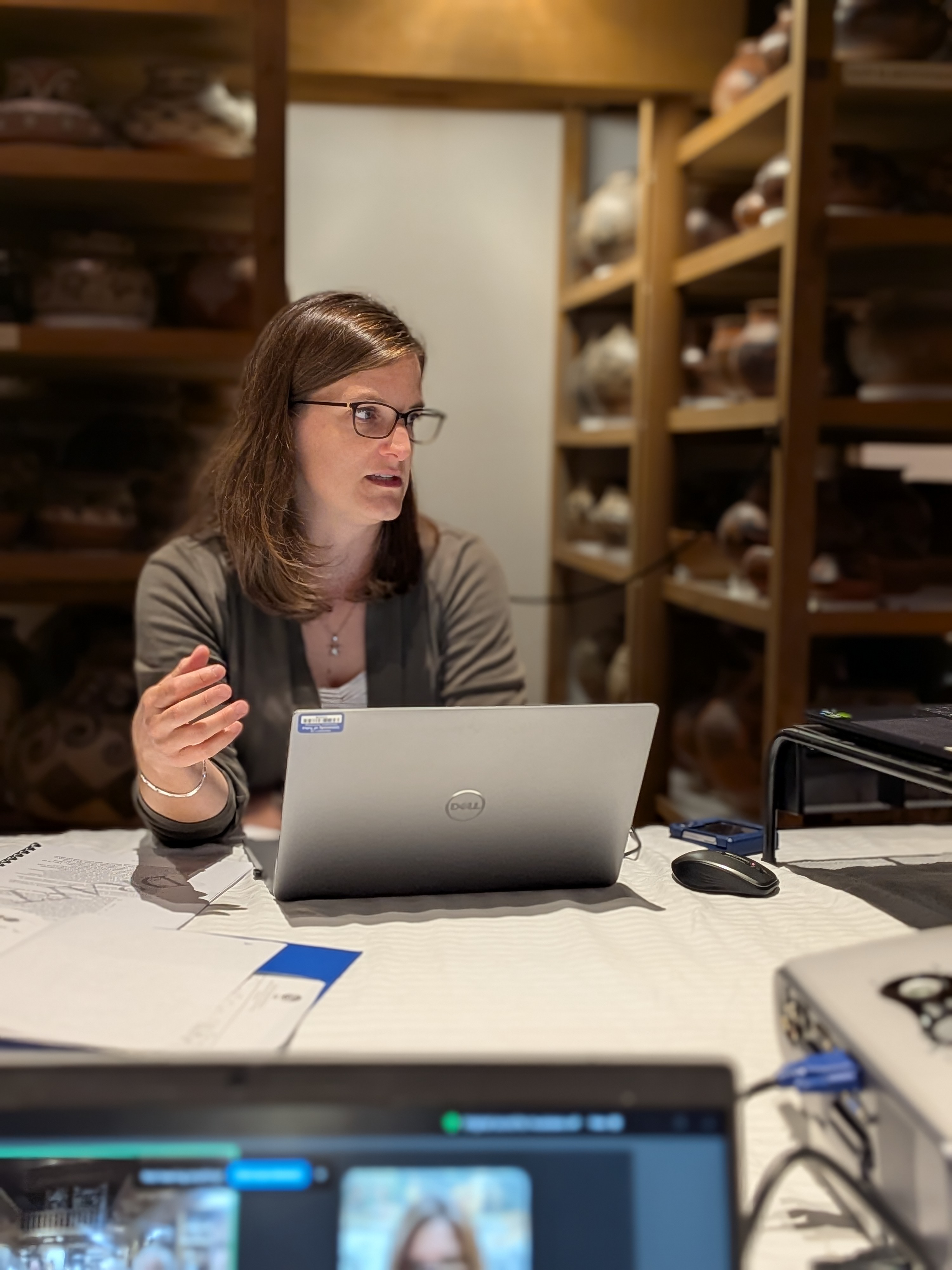
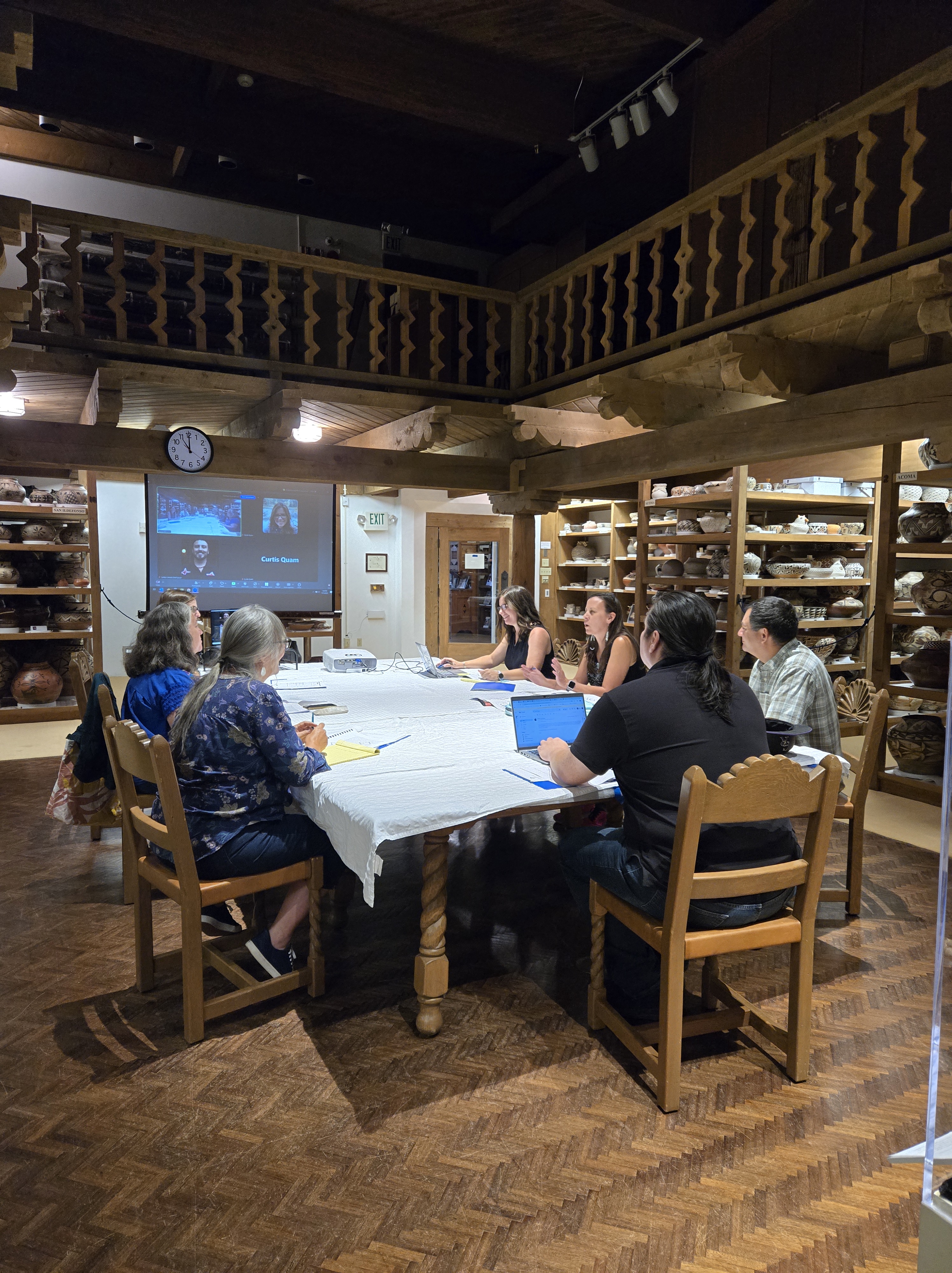
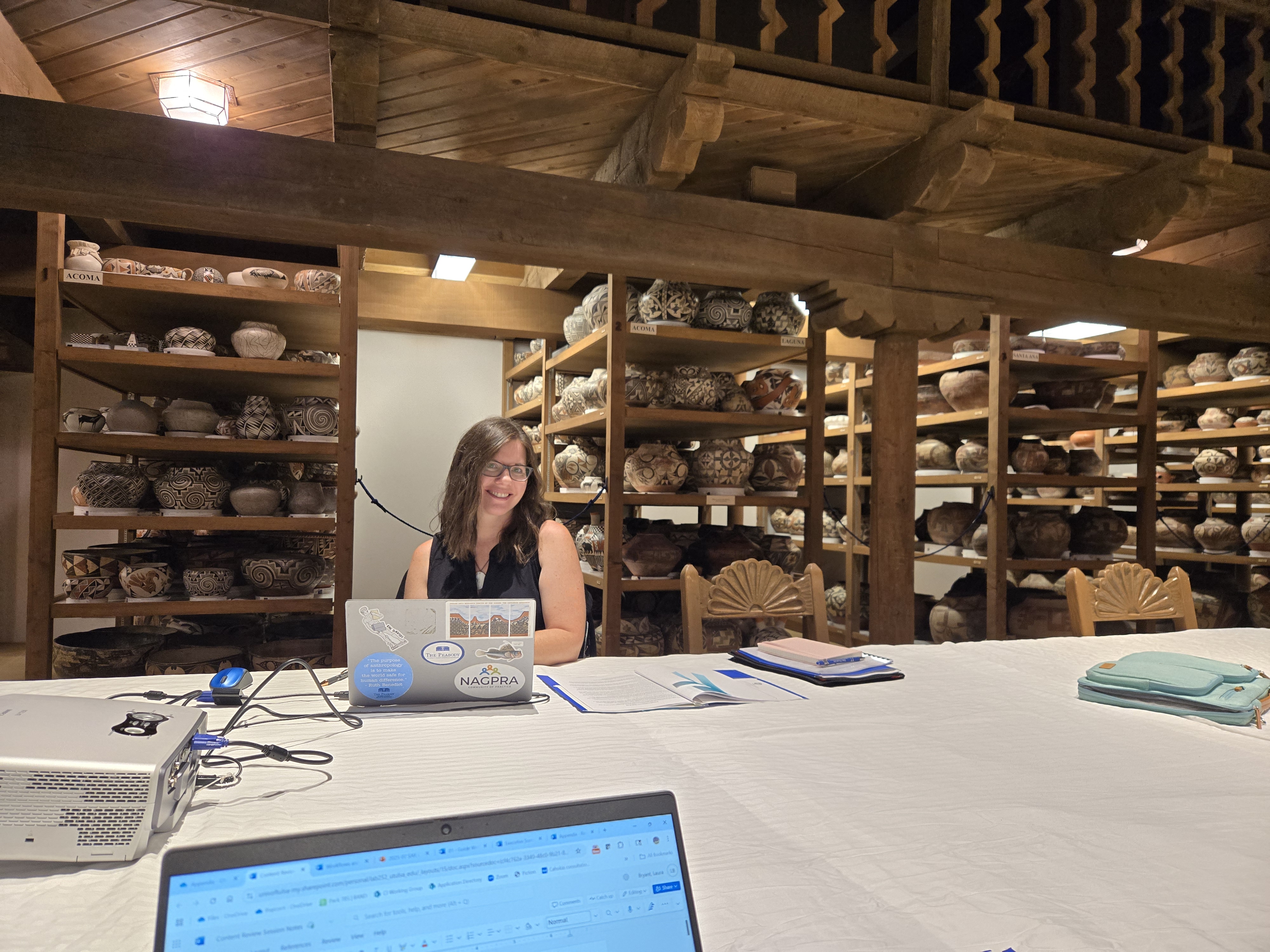
After my time at Pecos, I went to the School for Advanced Research in Santa Fe to facilitate the final review session of the Indigenous Collections Care (ICC) Guide. This is a project that I have been working on for awhile and it was excited to be entering the final stages. Although the review session had to be rescheduled due to complications with our IMLS grant, we had a wonderful group of people to discuss the ICC Guide and help us move forward into the final stages of development.
The ICC Guide provides a framework to respect and recenter collections stewardship practices around the needs and knowledge of Indigenous community members. The Guide speaks to individuals engaged in collections stewardship within museums and collecting institutions. It is aimed specifically at museum professionals, emerging and established, and individuals who are seeking clarification, support, and validation to pursue culturally appropriate care.
Next steps are to send the Guide out for copy-editing and graphic design. A final version will be ready to be shared in the summer of 2026.
My time in New Mexico was amazing and I hope you can visit there sometime soon!
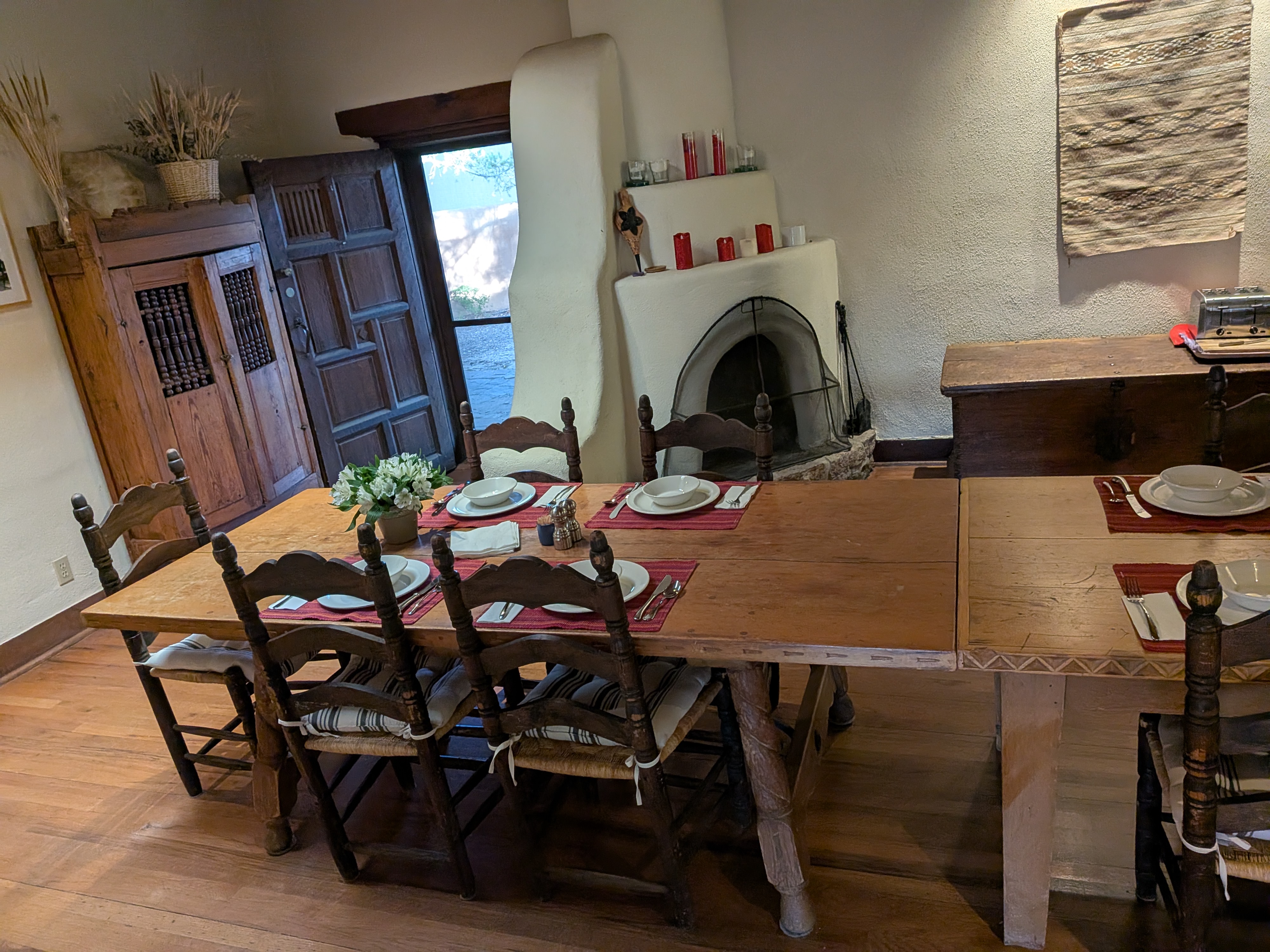
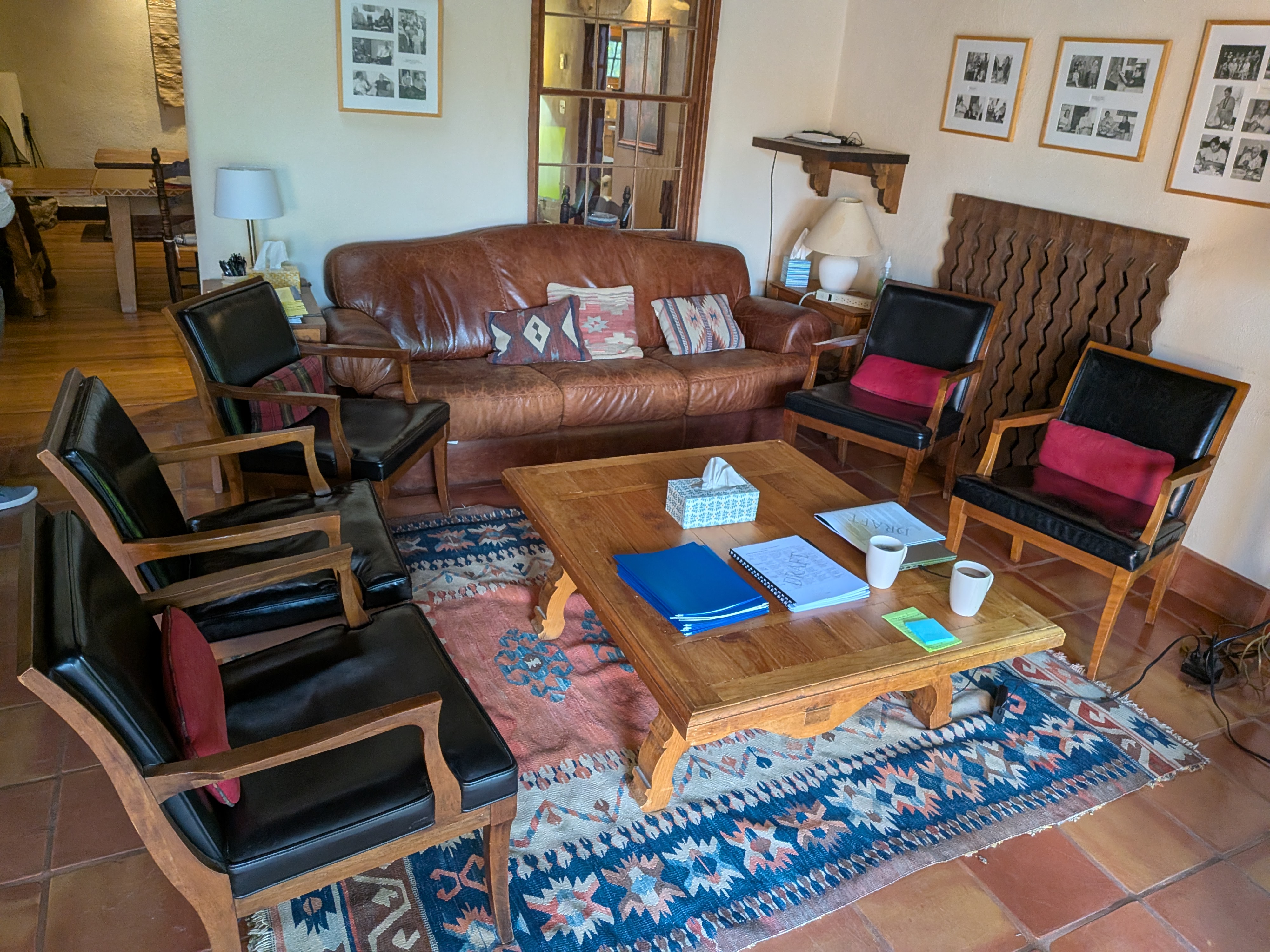
SAR Seminar HouseThe ICC Guide review groupSAR Seminar HouseICC co-facilitator, Laura BryantMeeting at the Indian Arts Research Center at SARSAR Seminar House
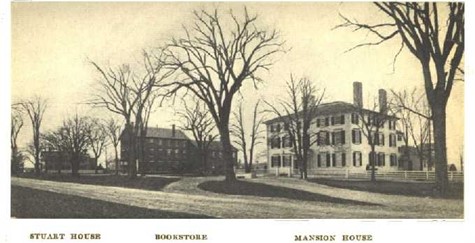
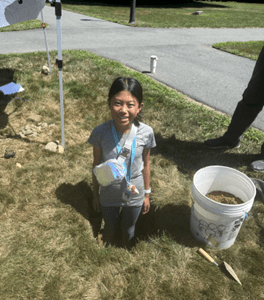
Almost every summer since 2016, young archaeologists from Phillips Academy’s summer session program embark on a mission to excavate the site of the eighteenth century Samuel Philips Jr. Mansion House, located on the West Quad of campus. The infamous Mansion House was built in 1782 by the academy’s founder and stood for 105 years, before burning down in 1887. News articles from the period suggest that the demise of the Mansion House was a result of arson; many speculating that the proprietor, Charles Carter, started the fire. During its long period of occupation, the Mansion House served as not only a home, but later an inn and tavern for students, community members, and travelers. The site’s long history and relatively undisturbed context creates an ideal setting for archaeological excavation and student learning.
Over the past seven years, students have succeeded in discovering portions of the house, including multiple chimneys and a basement feature. This year, students set out with high expectations, choosing to place four excavation units in spaces just outside of the Mansion and two units in the southwest portion of the quad, near the sites of historic outbuildings, a nineteenth century printing house, and an early nineteenth century pathway.
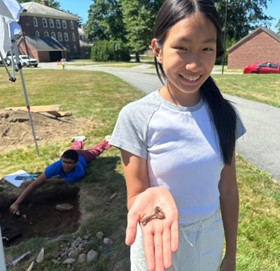
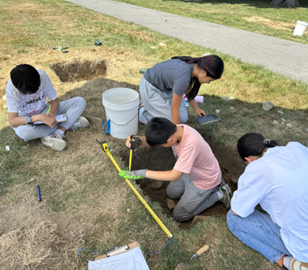
Students in each excavation team had a blast taking turns performing the primary tasks of an archaeologist: digging, screening, measuring, and note-taking. Many, if not all, students even got to unearth artifacts from their units! Some of our favorites included a small ferrous key, an impressed glass tumbler, and half a pair of scissors which all came from the two excavation units placed in the southwest portion of the quad.
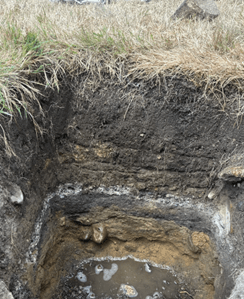
Further excavation in this area revealed a feature relating to the historic pathway present on early nineteenth century maps of campus. Pictured below is a dense, gravelly layer of soil discovered at 40 cm. This layer, interpreted here as the pathway, was intermixed with nineteenth century materials including glass, brick fragments, and some ceramic.
Students excavating the other four units in the northern portion of the quad found shallow cultural layers followed by a sterile C horizon, between 20 and 35 cm. While the artifact density of these units was limited, students still enjoyed finding an abundance of brick, metal nails, and some small ceramic fragments. The very shallow deposits found in these units informed the team that no building activity likely occurred in these areas. Additionally, the relatively low artifact density suggests that these areas were not regularly used like in a dooryard or garden area.
Overall, students in the 2025 field program successfully applied archaeological methods to ‘unlock’ more of the mysteries surrounding the Samuel Phillips Jr. Mansion House. This year’s field season serves to inform of the deep cultural deposits in the southwest portion of the quad and the significant research potential it could provide for future field seasons.
Thanks to the entire student field crew and cheers to a wonderful field season!
Our Peabody annual report for academic year 2023-2024 has just been released! This report features educational participation at the Peabody, building project updates, work duty, and more! In addition, our annual report features new acquisitions, institutional highlights, and workshops along with updates on our collection and NAGPRA work. Thank you to everyone who supported the completion of another wonderful year at the Peabody!
The fence around the Peabody is gone and there are no more contractors in the building. It has been great to be back in the space for the past few days.
But, the work is nowhere near done! Peabody staff are hard at work moving the collection back into the updated areas. This is no easy task and won’t be complete for at least a couple months.
The Peabody looks forward to welcoming back the PA students and broader community in the spring term. We can’t wait to show you what has been accomplished!
It is finally happening – the Peabody Institute building project is underway!
It has been quite a whirlwind preparing for this project over the past months (planning began in earnest about a year ago).
Since my last update, the full collection has been relocated within the building, asbestos has been remediated, the old storage bays have been demolished, and staff transitioned to working at small folding tables. We made the move to our temporary office space on-campus and are beginning to settle in.
So much credit goes to the Peabody staff members (and past interns) who collaborated to facilitate keeping the collection safe and organized during this process – thank you all!
We will keep you updated on progress as we are able.
This project will rely on philanthropic support from our donor community. To help advance this critical renovation, please contact Beth Parsons, director for museums and educational outreach, at 978-749-4523 or bparsons@andover.edu.
The Peabody is currently in the pre-construction phase of a much-needed building update! This is Phase 1 of a two-phase project.
The project has three main goals:
Replace the current basement shelving (that was constructed in the very early 1900s) with modern mobile shelving
Provide HVAC and sprinklers for the collections areas
Install an elevator and meet other code compliance issues
The Peabody staff have been working diligently to ensure the safety of all the collections during this work. We have coordinated with the construction company, security vendors, tribal partners, and our Phillips Academy project manager to make the project a success. There is still a lot to do – and construction hasn’t even started yet!
Here are some photos of the work as it has been happening:
This project will rely on philanthropic support from our donor community. To help advance this critical renovation, please contact Beth Parsons, director for museums and educational outreach, at 978-749-4523 or bparsons@andover.edu.