New Mexico Adventures

Contributed by Marla Taylor

Did you know how beautiful New Mexico is?  I had the opportunity to travel to the Albuquerque and Santa Fe areas this July and can definitely recommend making the trip.

The Peabody Institute actually has a long relationship with New Mexico.  In the 1920s, Alfred Kidder excavated Pecos Pueblo on behalf of Phillips Academy (what is now the Peabody Institute).  The ripple effects of that work included repatriation work with the Pueblo of Jemez, a long-term loan with the Pecos National Historical Park, inter-institutional collaboration, relationships with Jemez artists, and incredible learning opportunities for the students at Phillips Academy. 

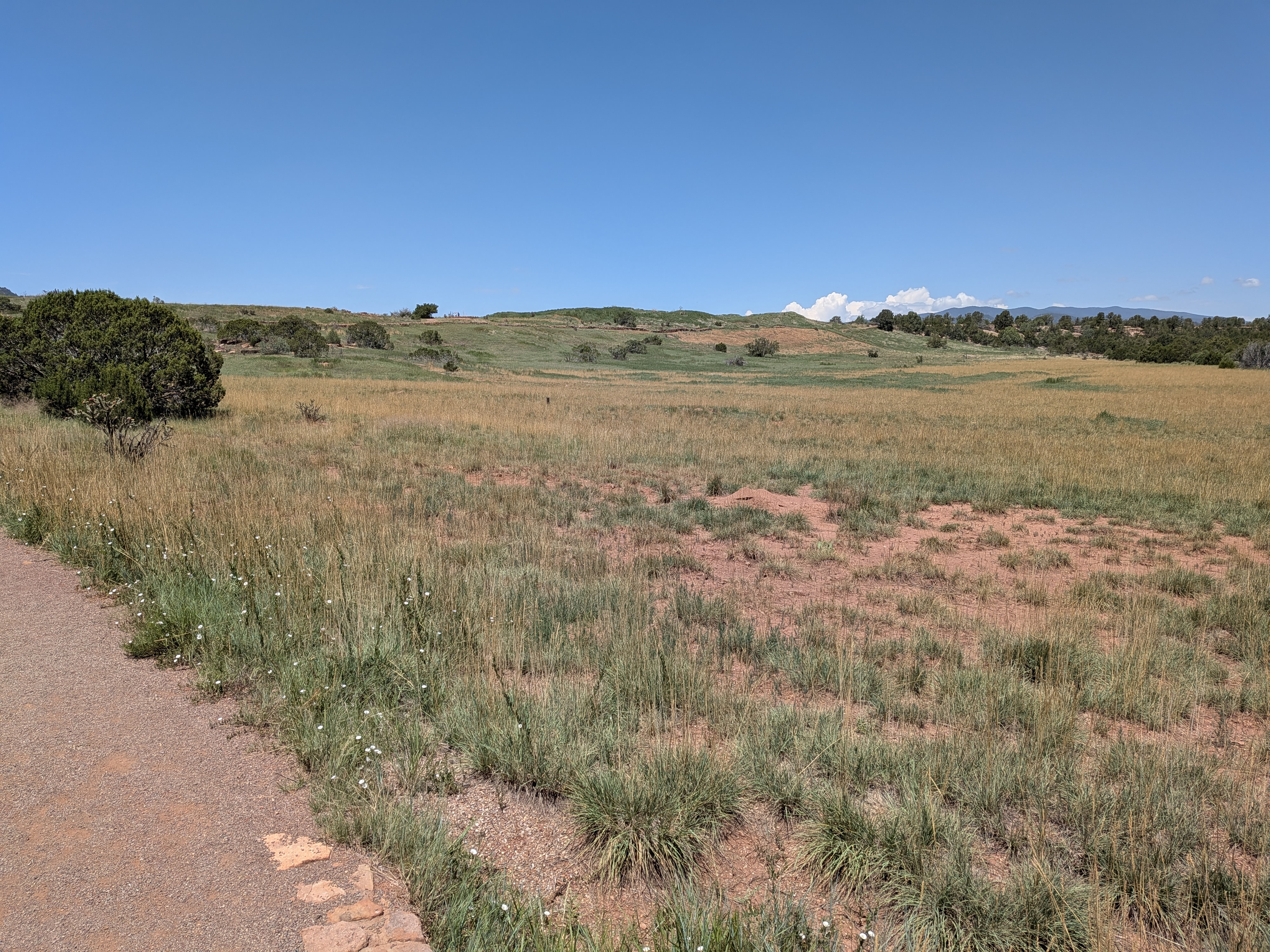
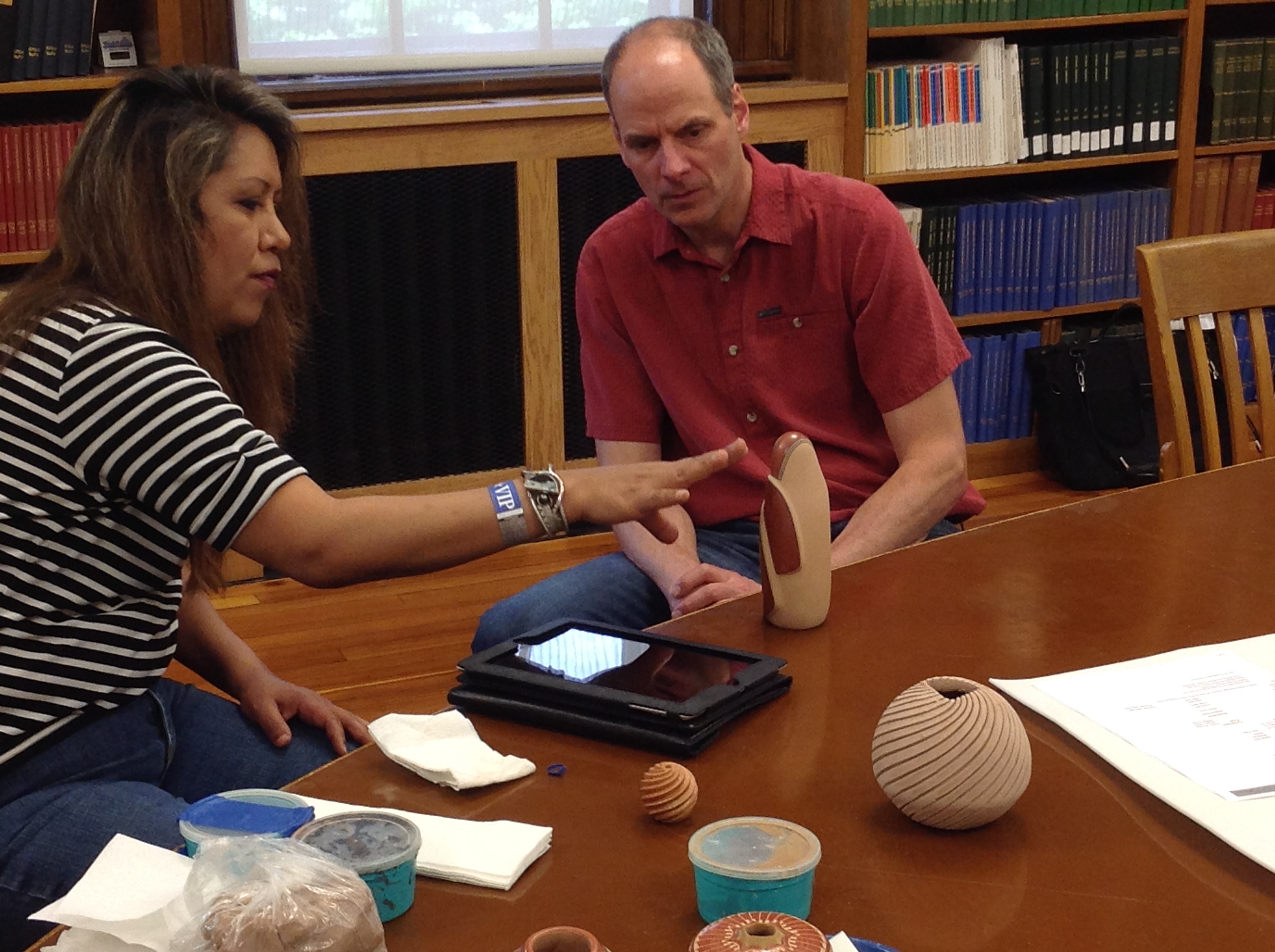
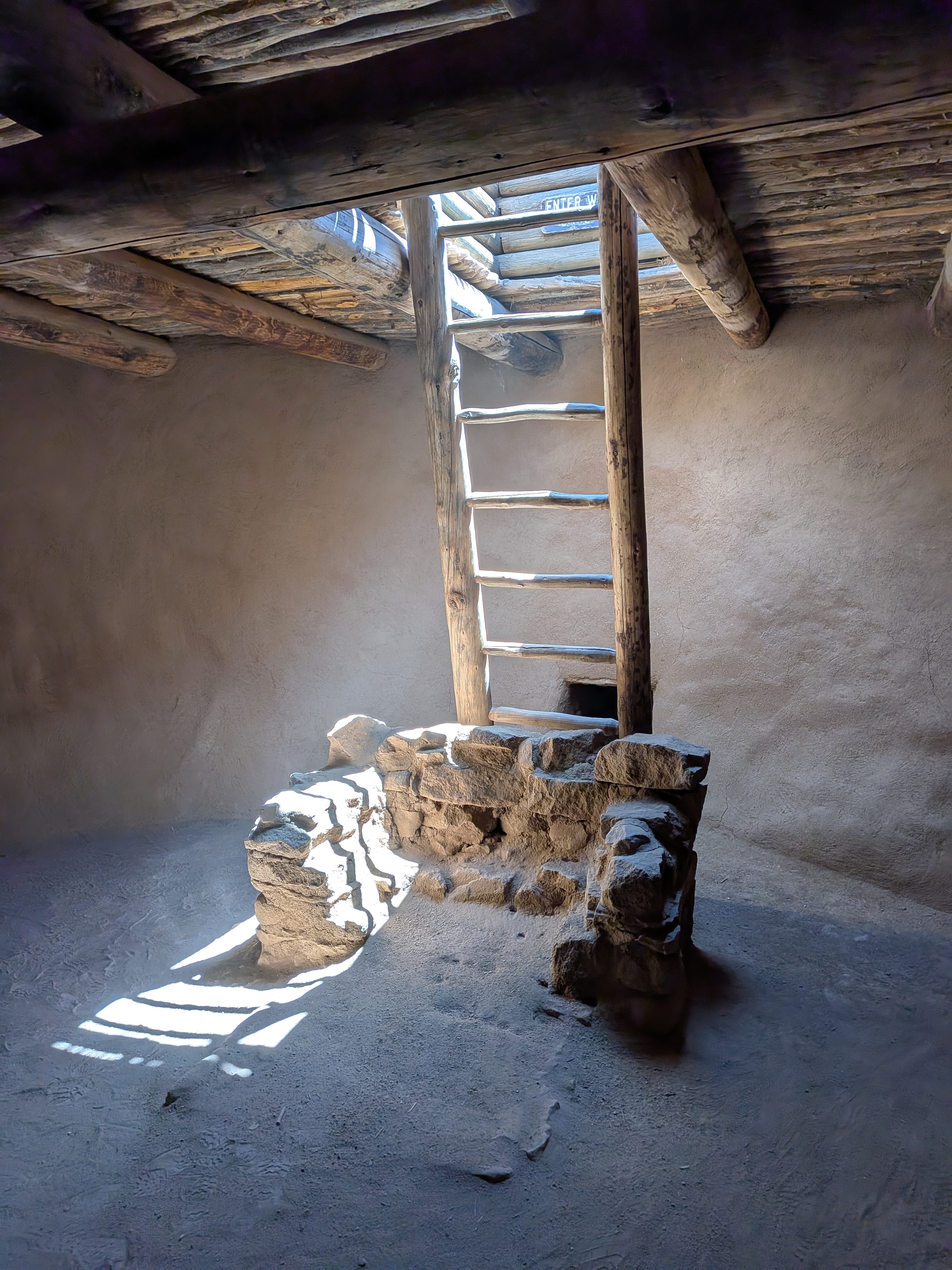
While I had been to the Pueblo of Jemez before this summer, I had not had the opportunity to see the Pecos archaeological site or Pecos National Historical Park before.  It was truly a pleasure to experience the site in-person and get an understanding of how Pecos sits in the landscape.  I was also able to view their wonderful exhibit, spend time with the Museum Curator to view the collections on loan from the Peabody, and meet several dedicated park staff members.  I am grateful for the opportunity to spend that time with them all.
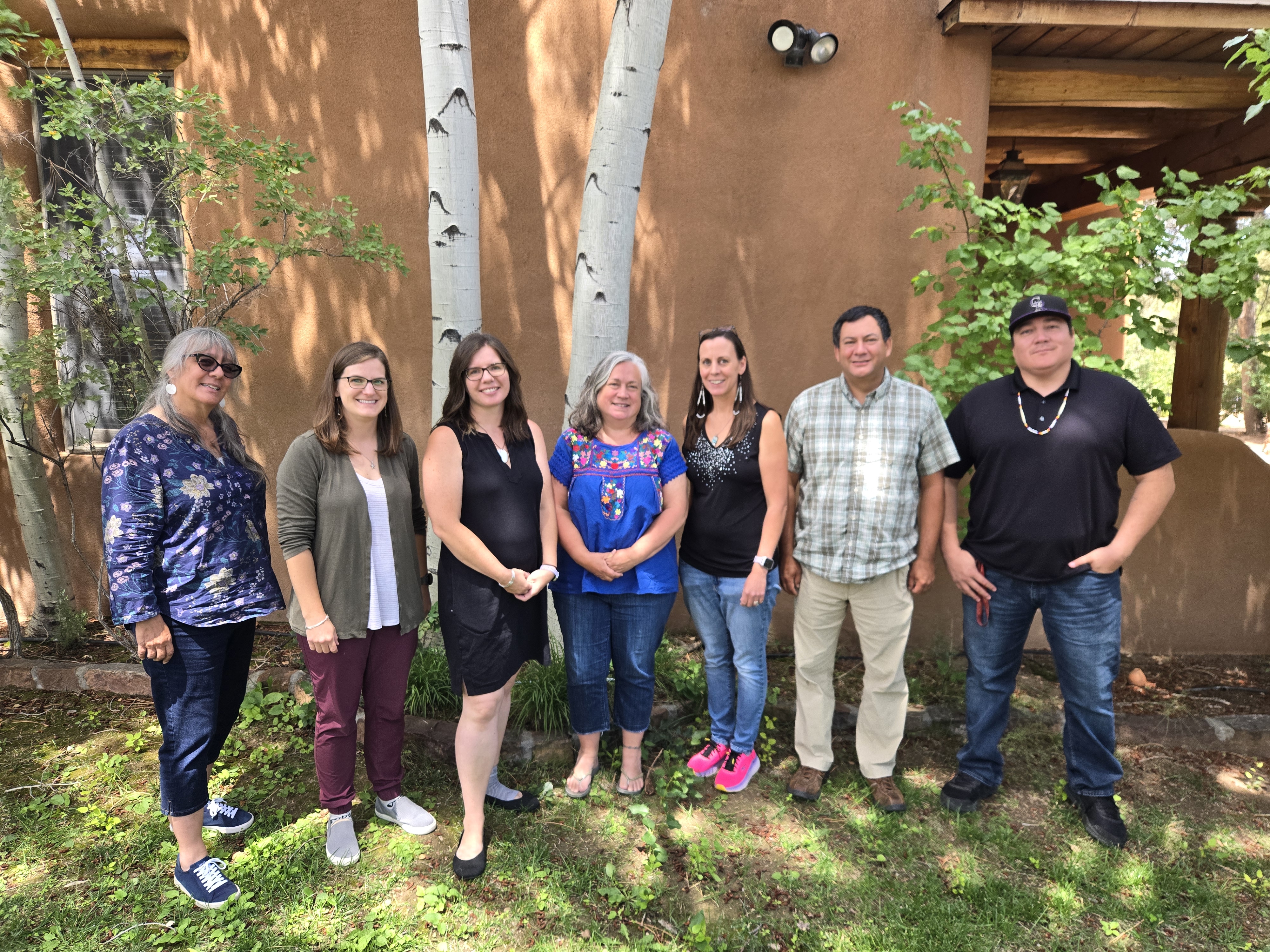
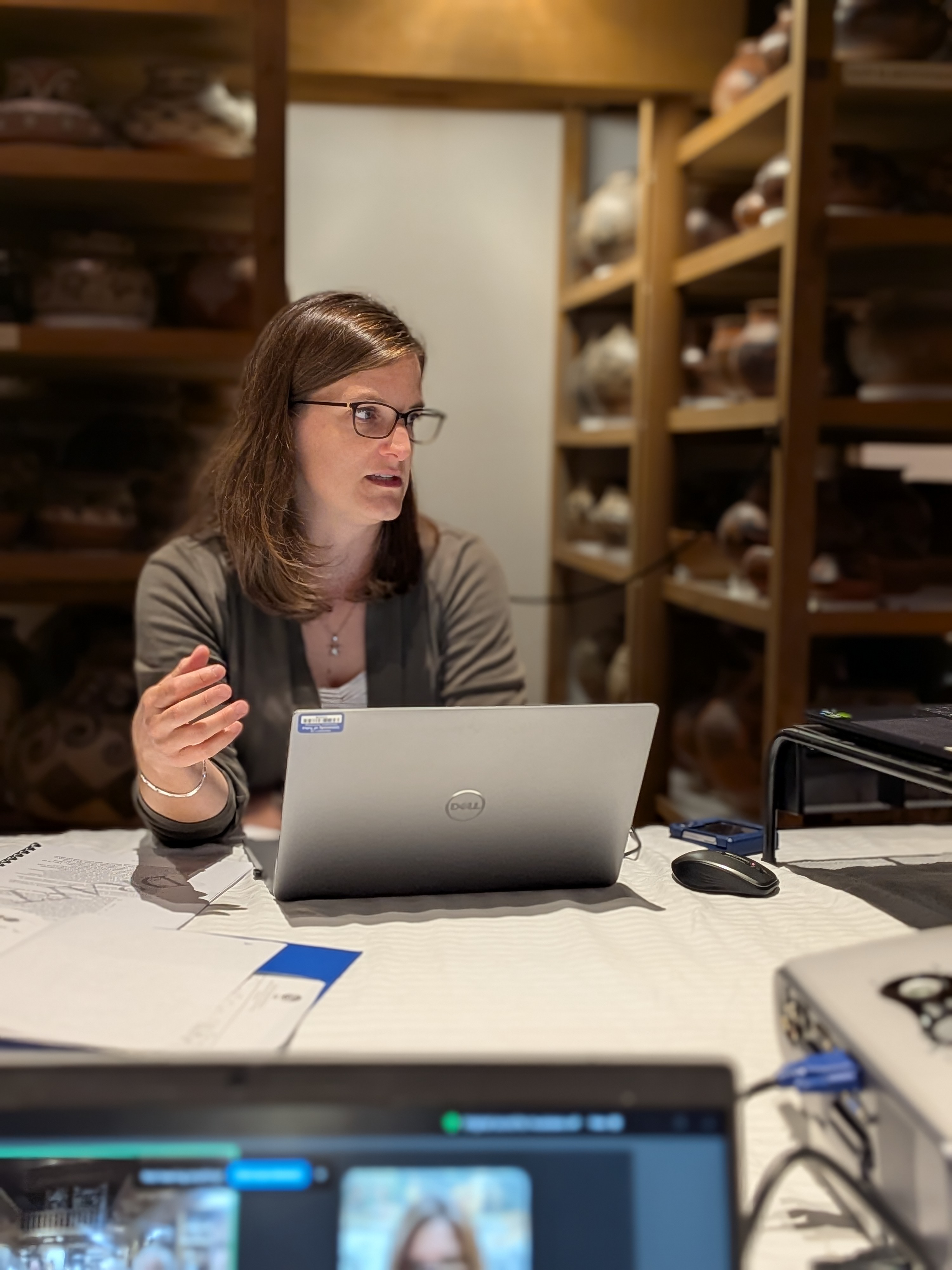
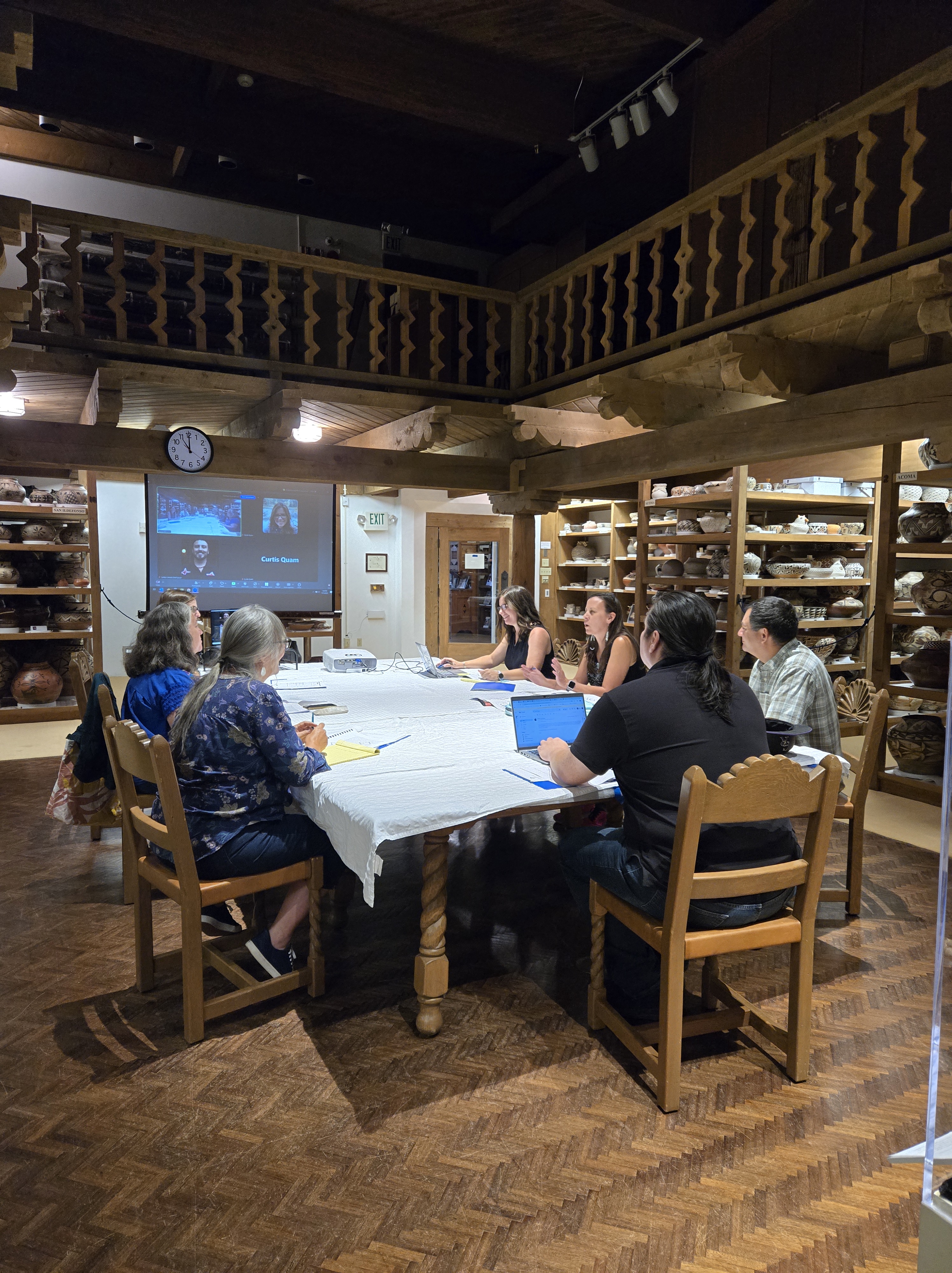
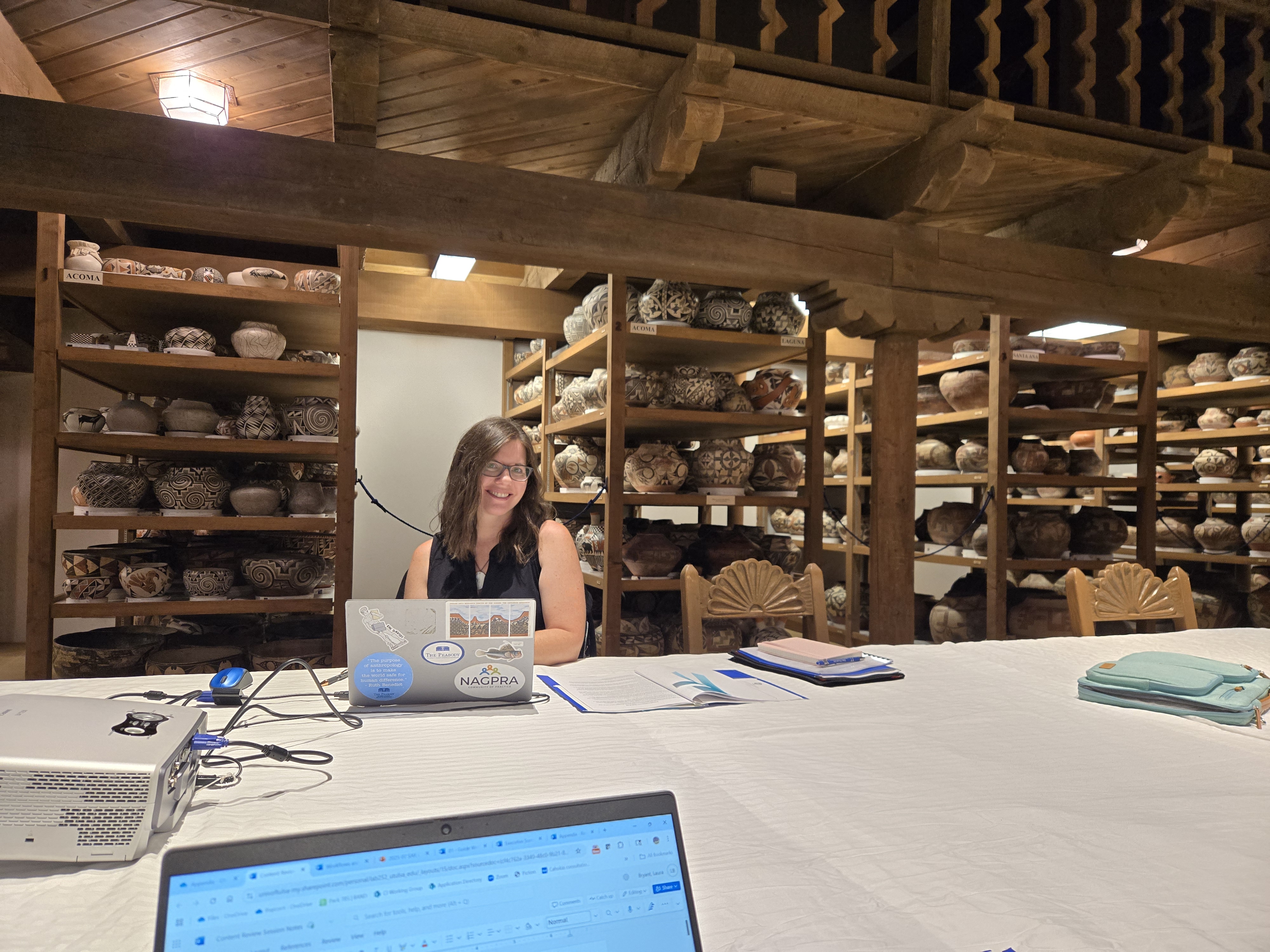
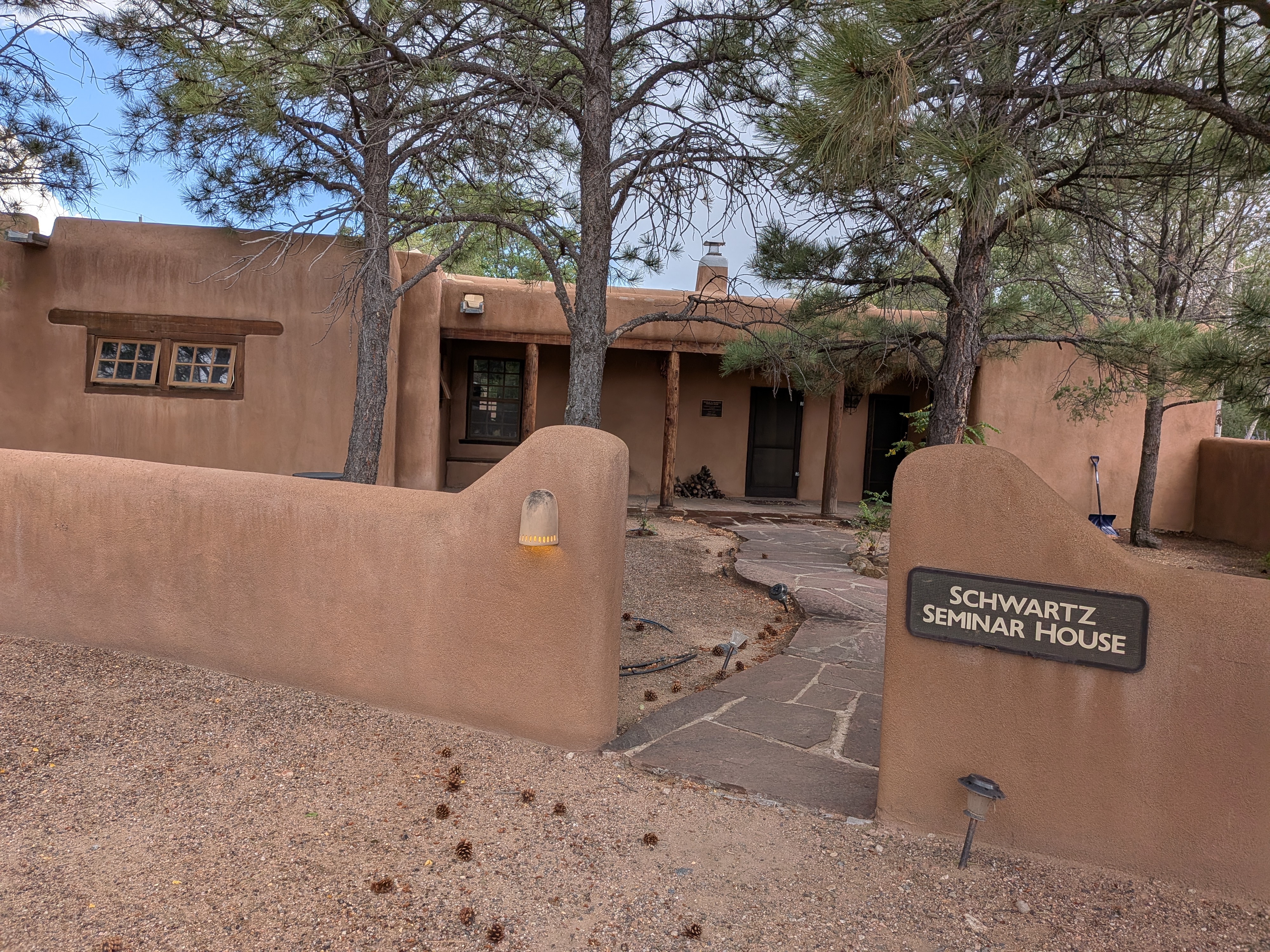
After my time at Pecos, I went to the School for Advanced Research in Santa Fe to facilitate the final review session of the Indigenous Collections Care (ICC) Guide.  This is a project that I have been working on for awhile and it was excited to be entering the final stages.  Although the review session had to be rescheduled due to complications with our IMLS grant, we had a wonderful group of people to discuss the ICC Guide and help us move forward into the final stages of development.

The ICC Guide provides a framework to respect and recenter collections stewardship practices around the needs and knowledge of Indigenous community members. The Guide speaks to individuals engaged in collections stewardship within museums and collecting institutions.  It is aimed specifically at museum professionals, emerging and established, and individuals who are seeking clarification, support, and validation to pursue culturally appropriate care.

Next steps are to send the Guide out for copy-editing and graphic design.  A final version will be ready to be shared in the summer of 2026.

My time in New Mexico was amazing and I hope you can visit there sometime soon!
Congratulations Emma!
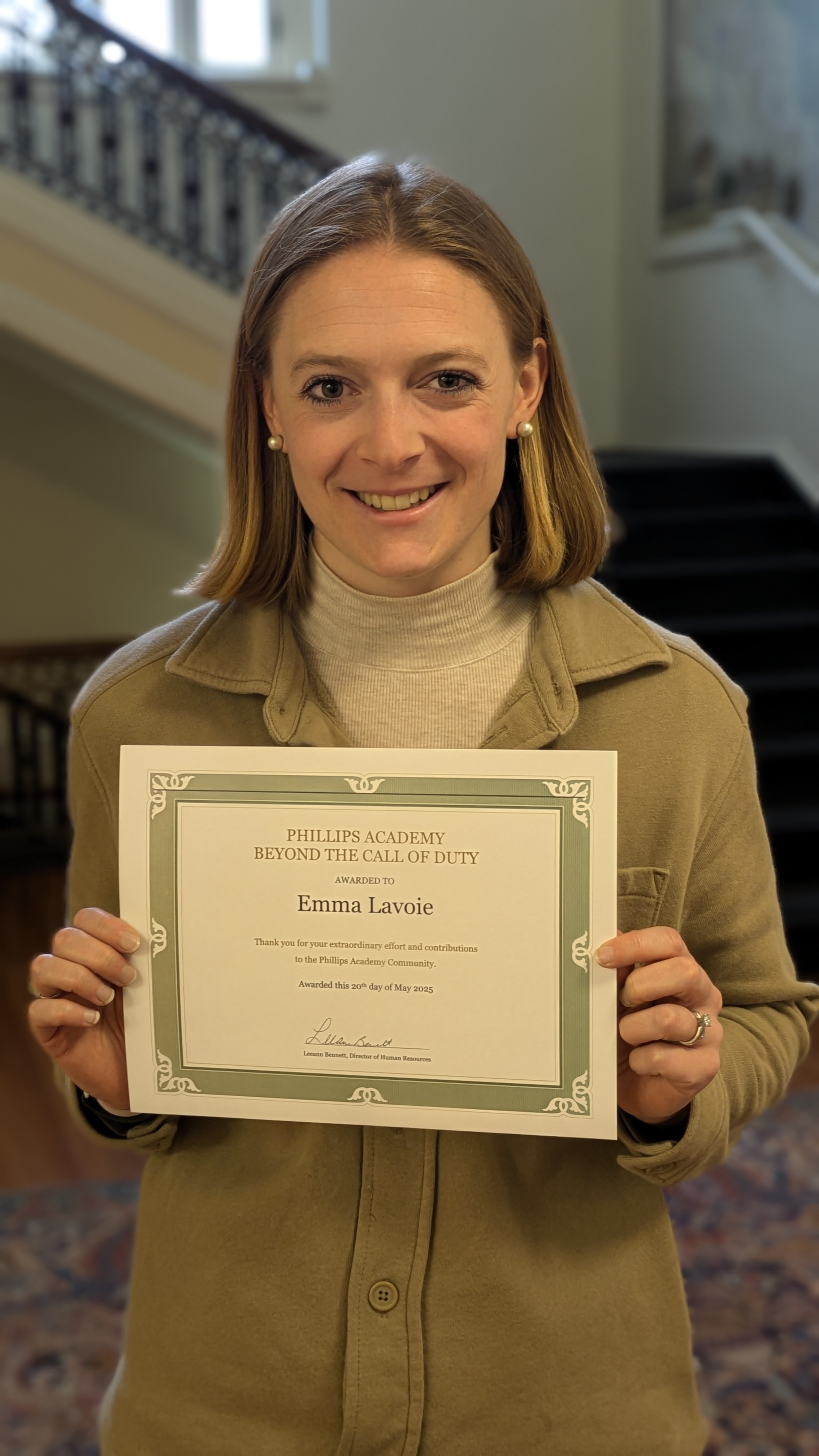
The Peabody’s own Emma Lavoie was recognized with Phillips Academy’s Beyond the Call of Duty Award at the spring staff and administrators award celebration on May 20!

Emma shows off her Beyond the Call of Duty Award.

The award announcement states, “The Beyond the Call of Duty Award is designed to acknowledge and celebrate staff who demonstrate exceptional support/customer service to colleagues within their own department, across campus, our students, parents or alumni.  All nominees should embody the non-sibi spirit!”

This describes Emma precisely! Emma’s job title is staff assistant, responsible for business and communication here at the Peabody, but she does so much more–Emma has taught lessons and helped with lessons, produces beautiful communication and social media pieces, cataloged material culture, organizes travel for staff members and visitors, keeps us organized, networks with other programs and departments on campus, comes early or stays late to help with events (which she has often planned and organized), serves on the Phillips Academy staff council, and much, much more.

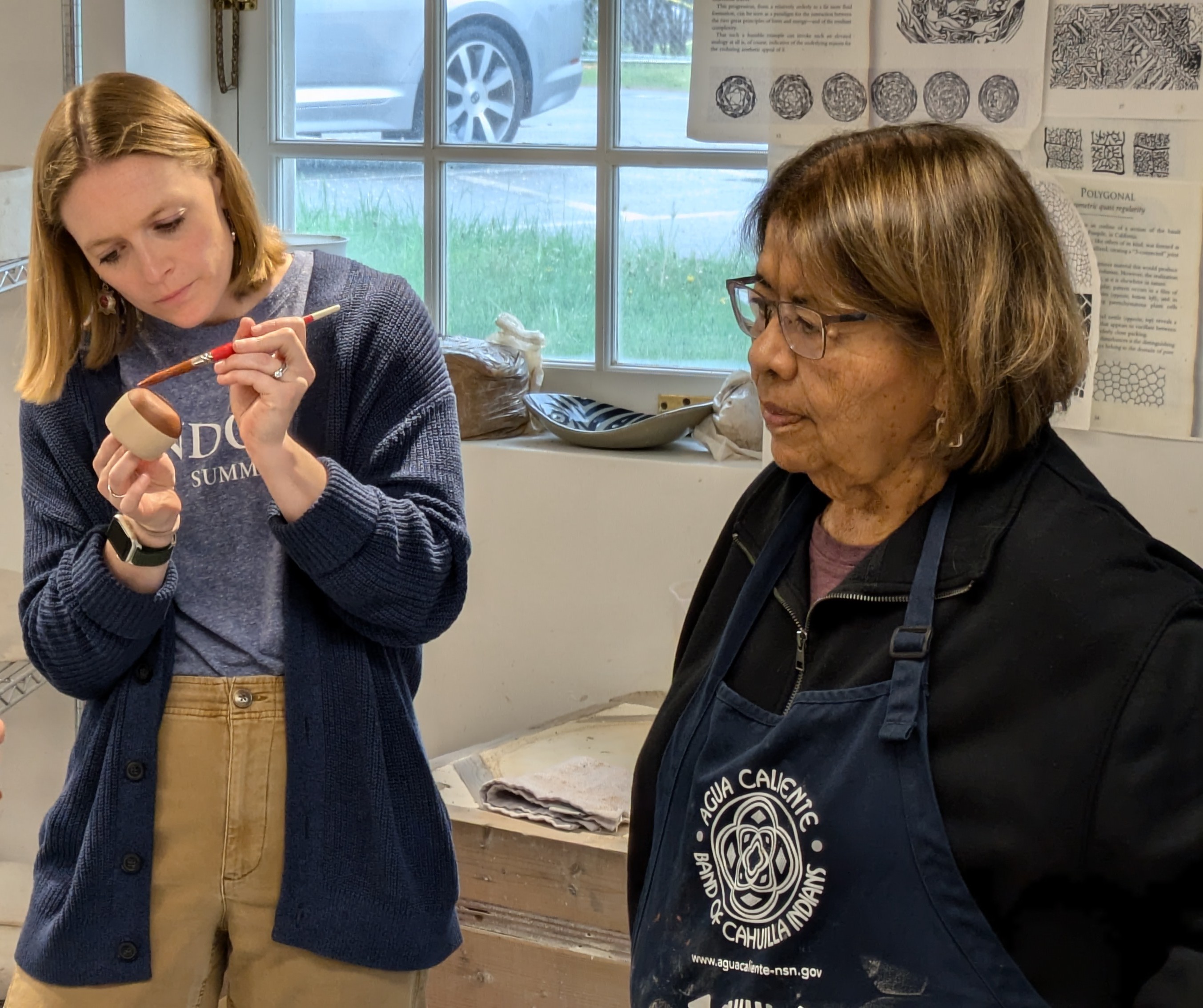
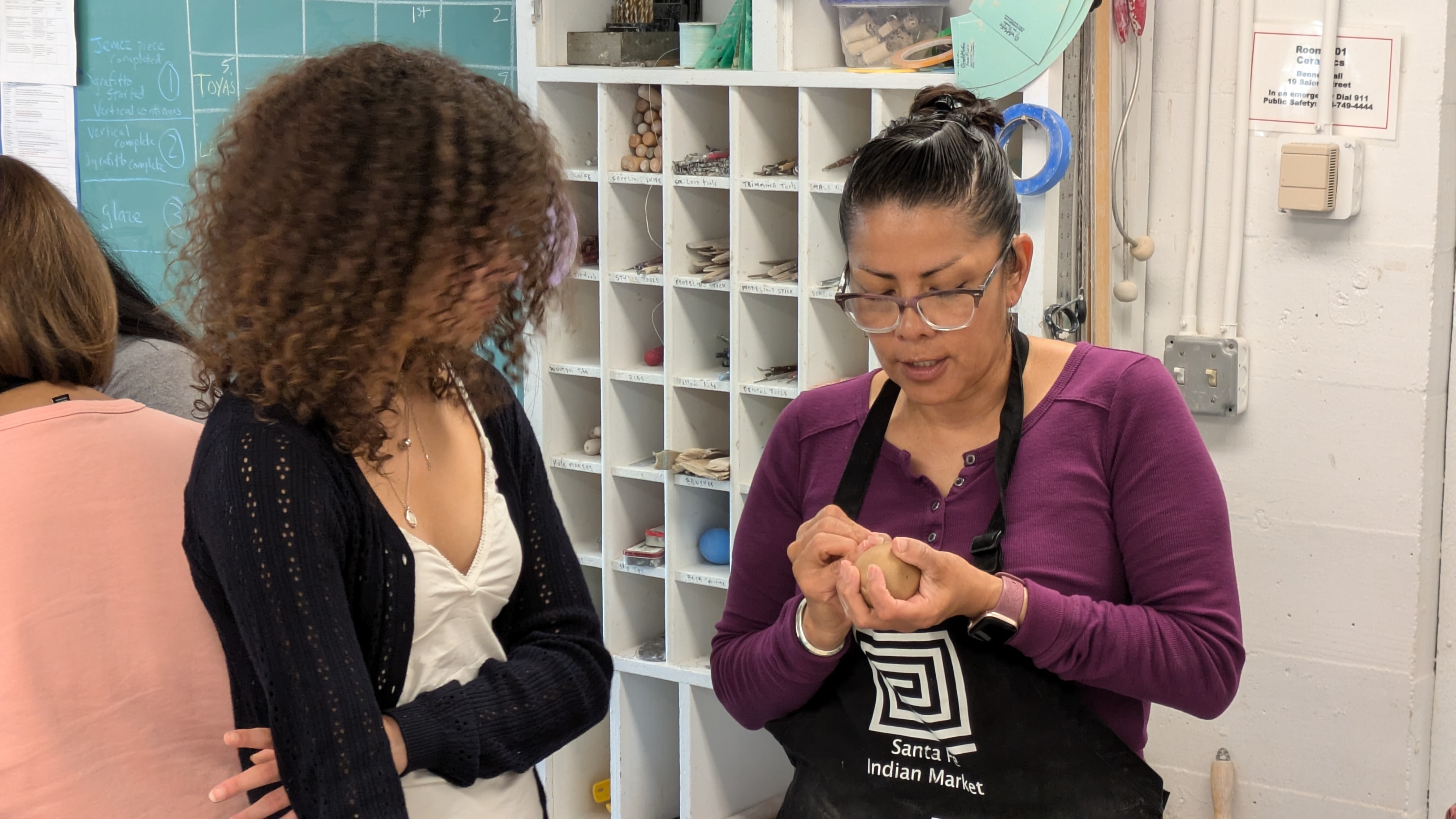
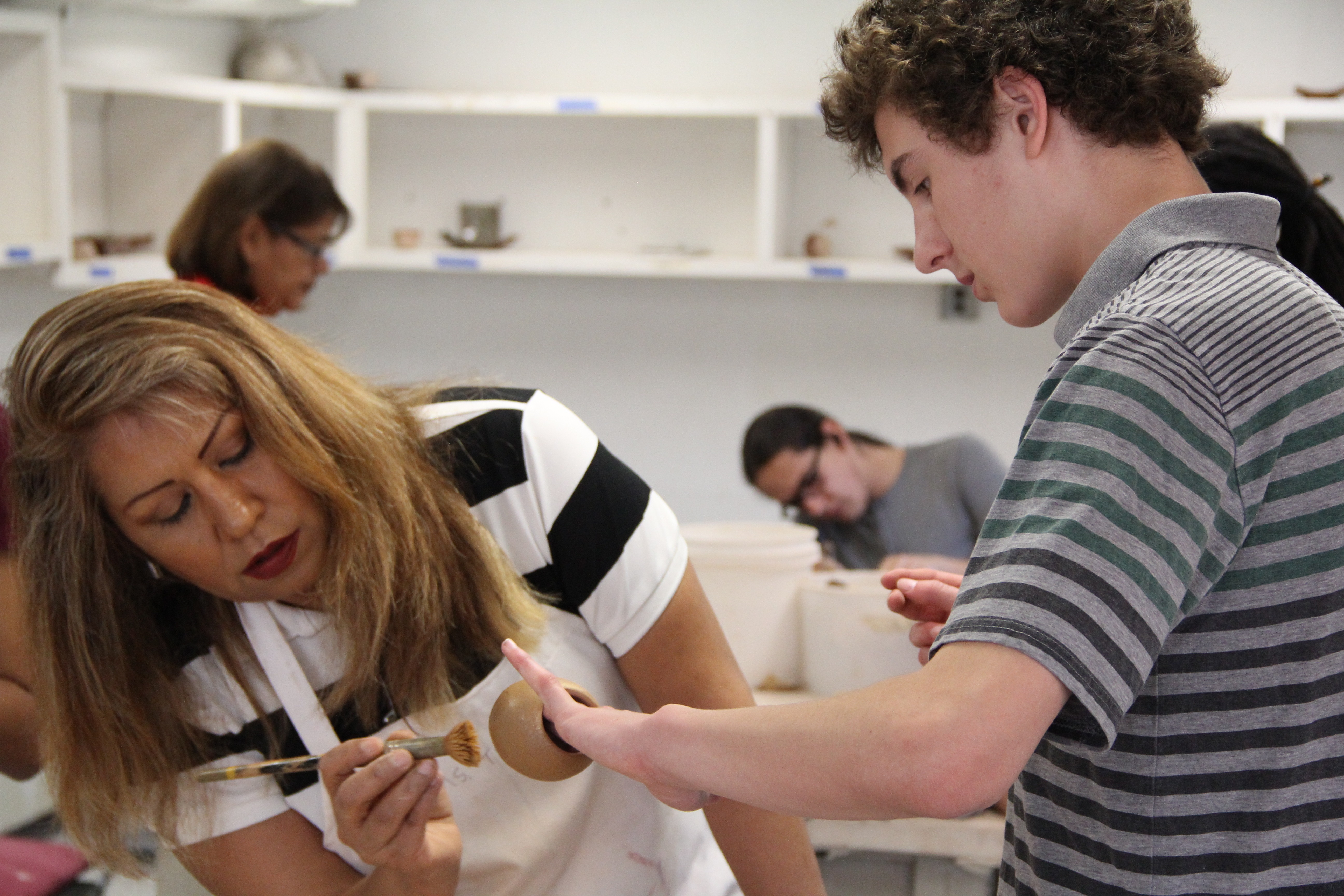
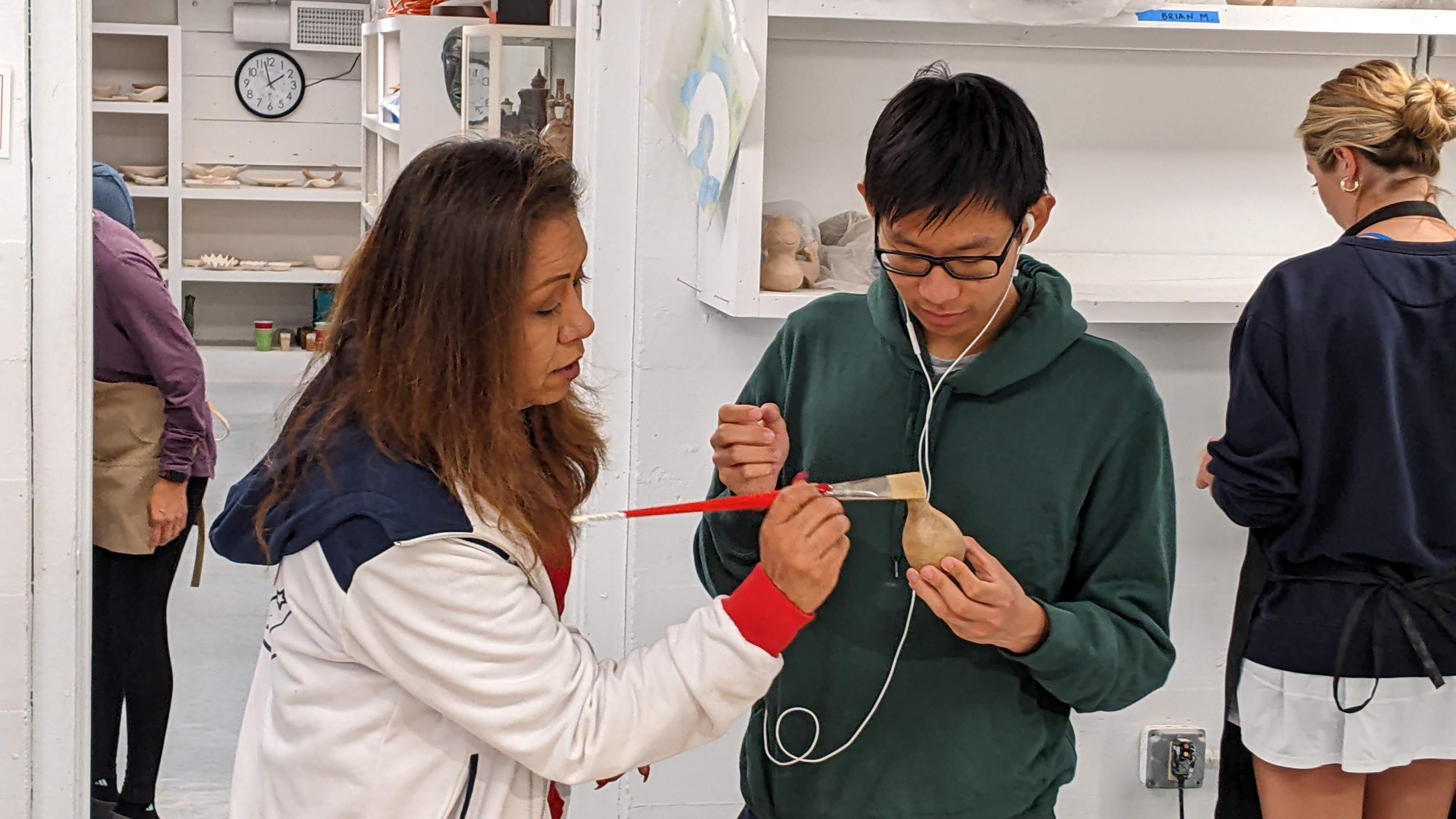
Emma decorating her ceramic creation under the watchful eye of Maxine Toya–Emma makes all the travel arrangements for visiting Native artists, like the Toya Family, Pueblo of Jemez.

Award recipients will receive two days added to their vacation bank as well as a gift of PA apparel from the Campus Closet.

Congratulations Emma!

PA Pueblo Pottery-Making Workshops

Contributed by Emma Lavoie

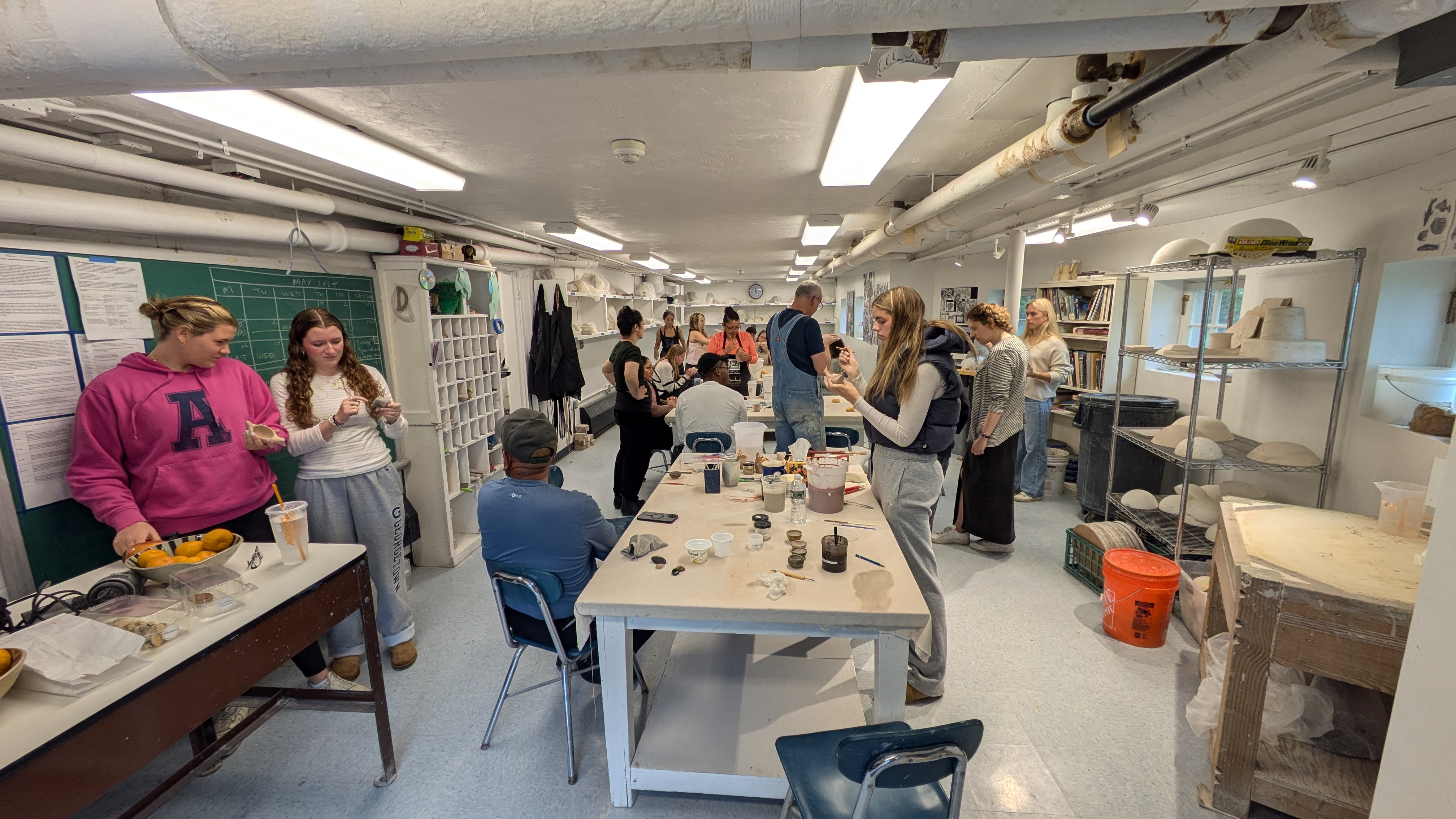
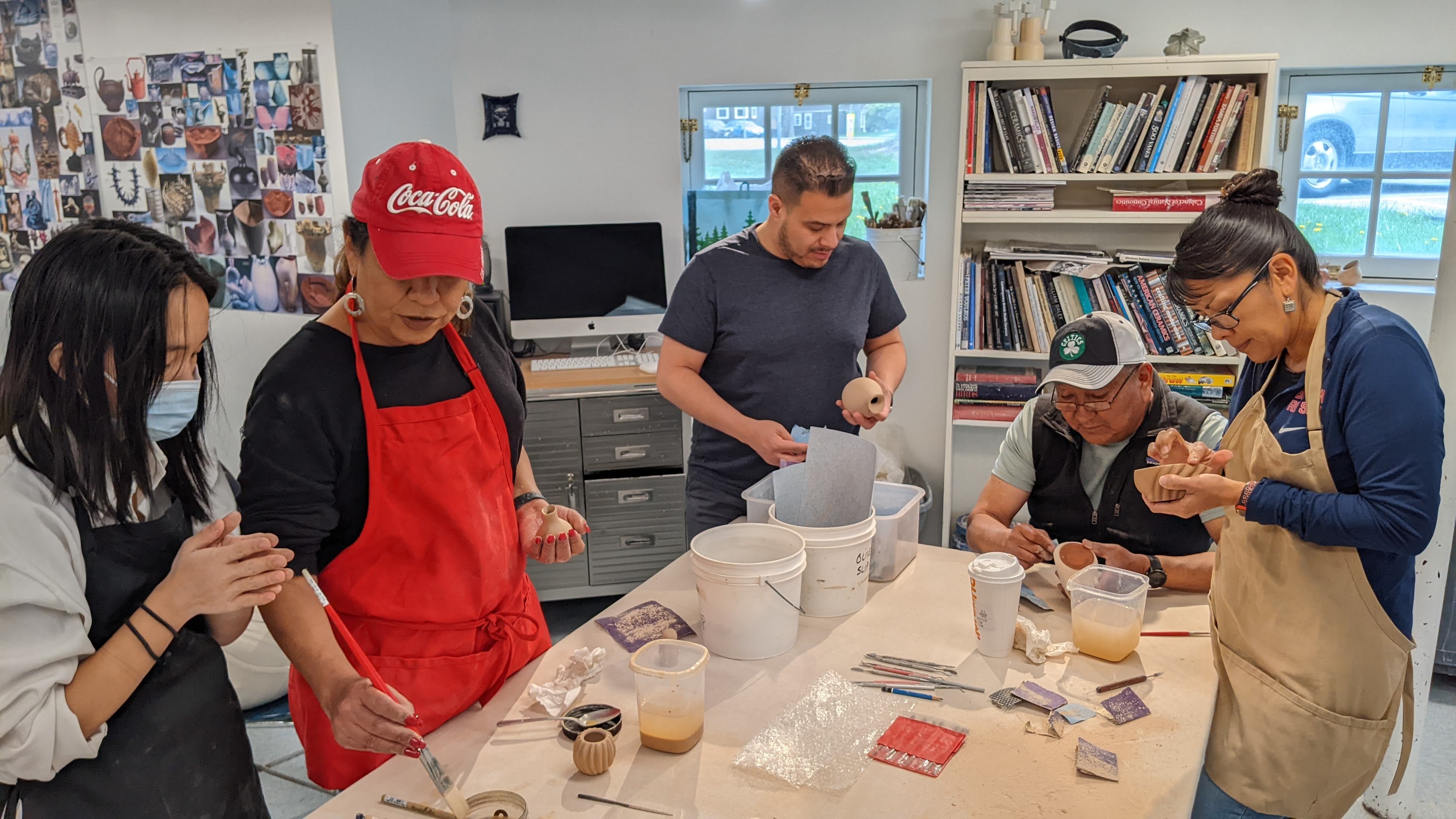
Ceramic students participating in pottery-making workshops

We were honored to have the Toya family back this Spring term for their annual visit to conduct week long, hands-on workshops on Pueblo pottery-making with Thayer Zaeder’s studio ceramic students.

Each year students have the opportunity to make their own pieces using native clays and temper from New Mexico and traditional decorative techniques of painting and polishing. The workshops culminate in a traditional Jemez firing.

Students walk away with an unforgettable keepsake of their time as well as a greater appreciation for contemporary Indigenous art and culture.

We are so grateful for all the time and expertise the Toya family has shared with PA students!

Check out this video by PA’s Communications team highlighting the Toya’s work on campus.

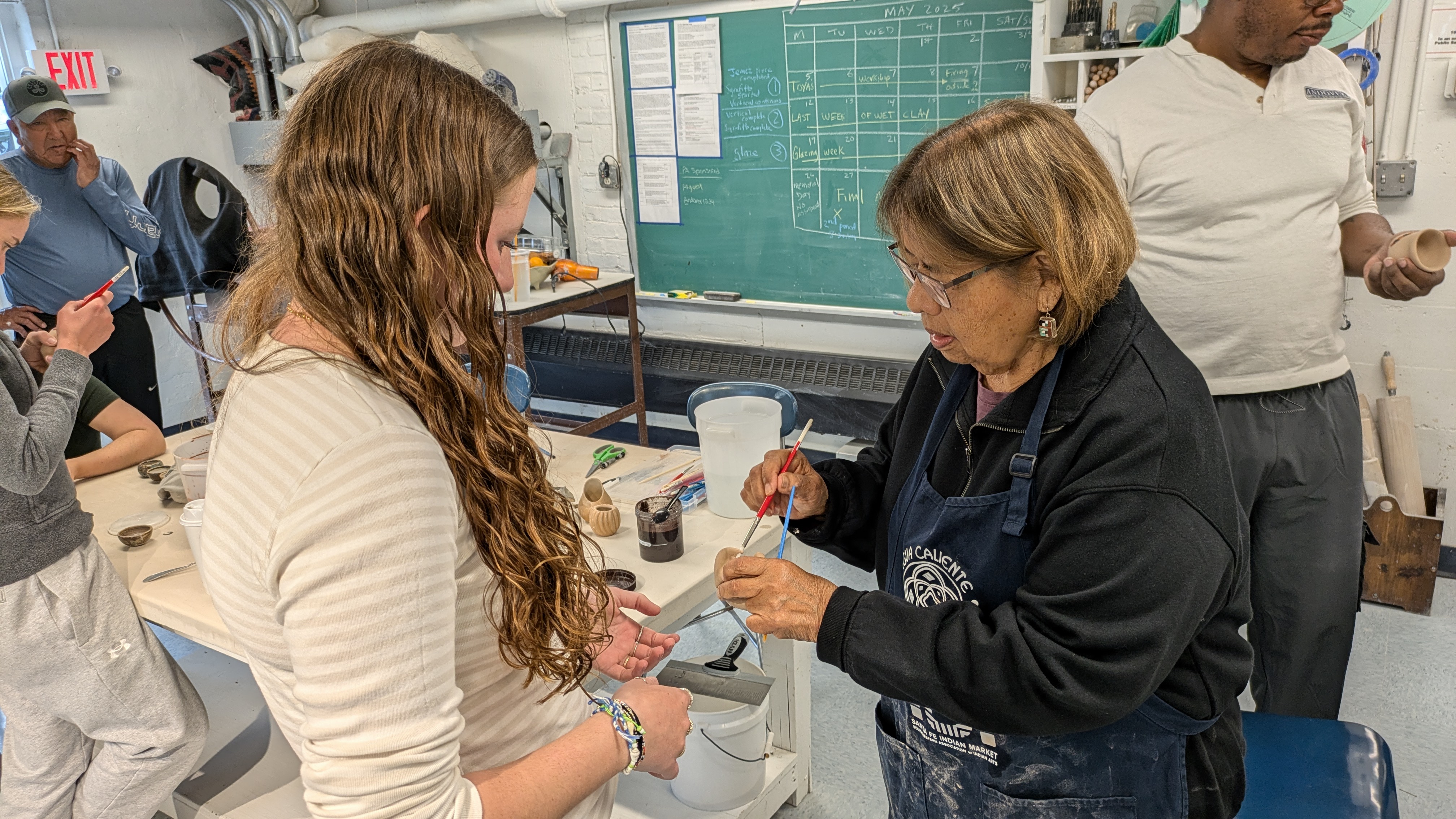
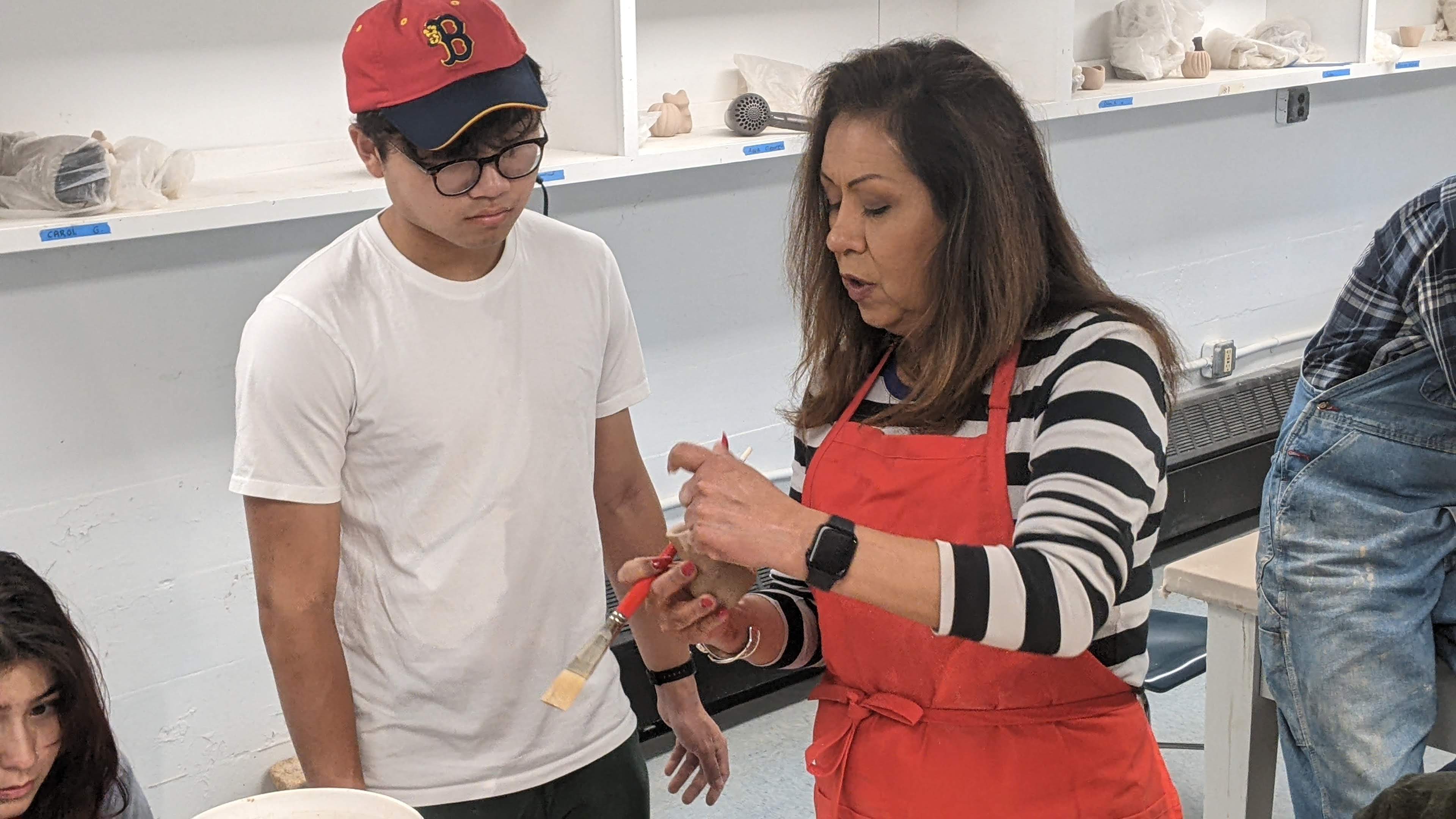
Maxine Toya working with a student on painting their piece.
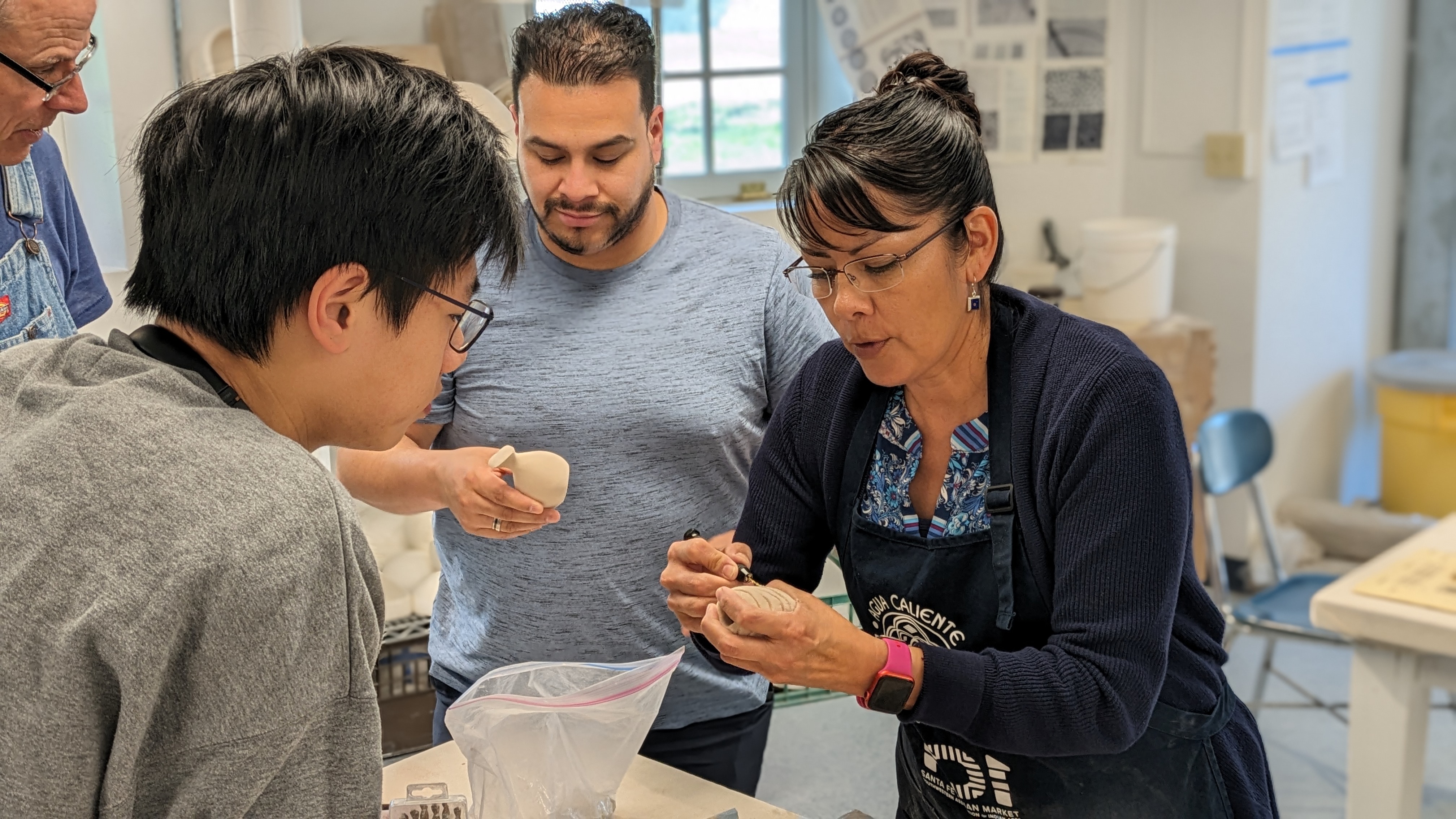
Mia Toya working with a student on polishing their piece.

New Acquisitions: Mia Toya Butterfly Vessel

Contributed by Ryan Wheeler

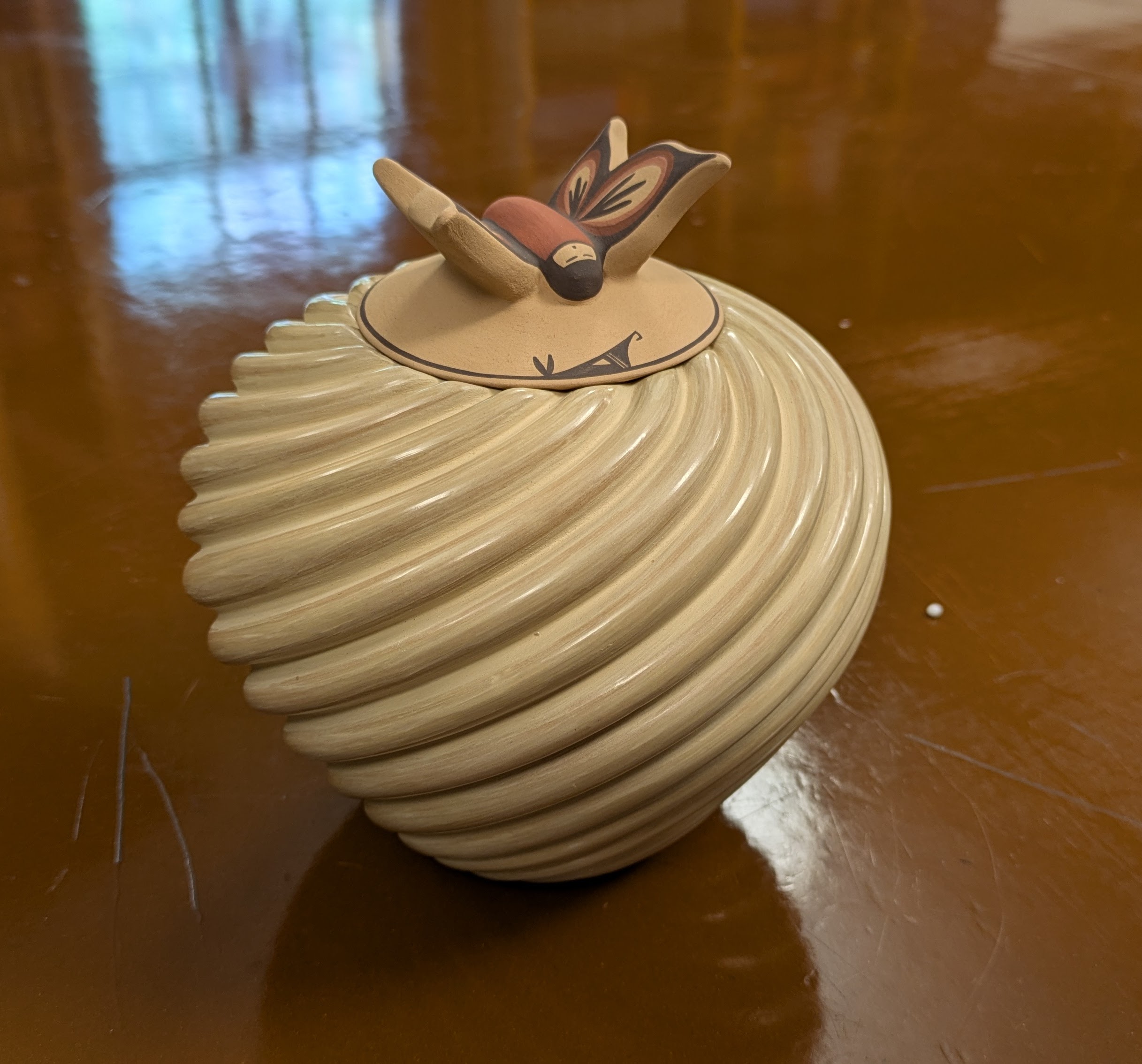
Mia Toya’s melon swirl vessel with distinctive butterfly lid. I particularly like the creamy slip, which sets this piece apart from others in the Peabody collections.

Early this fall–just after Santa Fe Indian Market–we were fortunate to add to the Peabody Institute collections this lovely melon swirl vessel by Mia Toya (Pueblo of Jemez). Mia and her family have a long relationship with the Peabody and Phillips Academy, regularly coming to campus to conduct week-long workshops on Pueblo pottery making with students in Thayer Zaeder’s studio ceramics classes.

Mia helps a student perfect their piece in Thayer Zaeder’s campus ceramics studio, May 2024.

Mia is a member of the Corn Clan and was inspired to continue the long lived tradition of working with clay from many members of her family who are well known artists, including her mom Maxine, grandmother Marie G. Romero, aunt Laura Gachupin, and her sister Dominique. Mia began working with clay at the age of 14 and continues to add her unique style of art to this day, constructing pieces using hand coiling methods, stone polished slips, and figural elements like her distinctive butterfly lids.

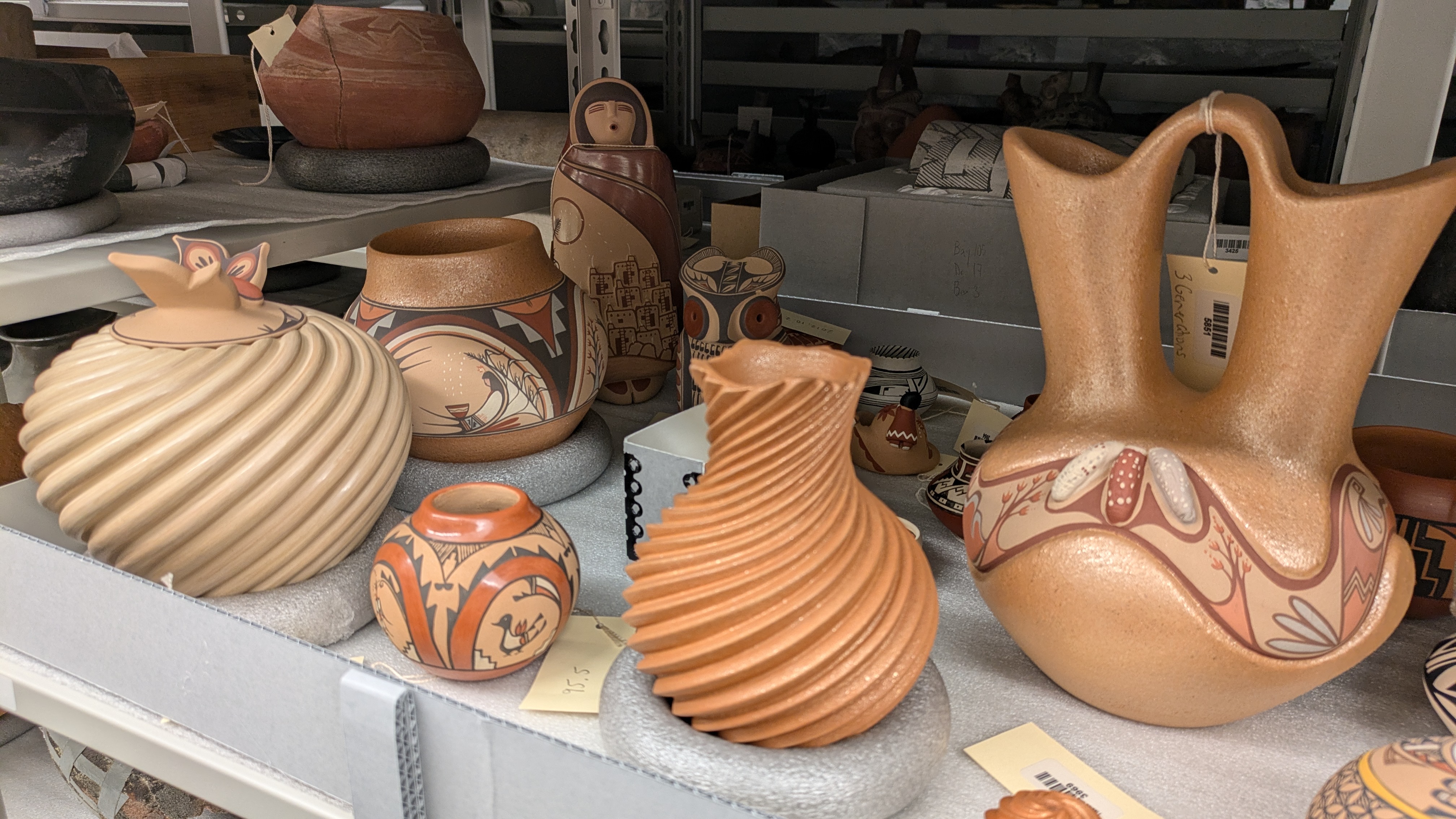
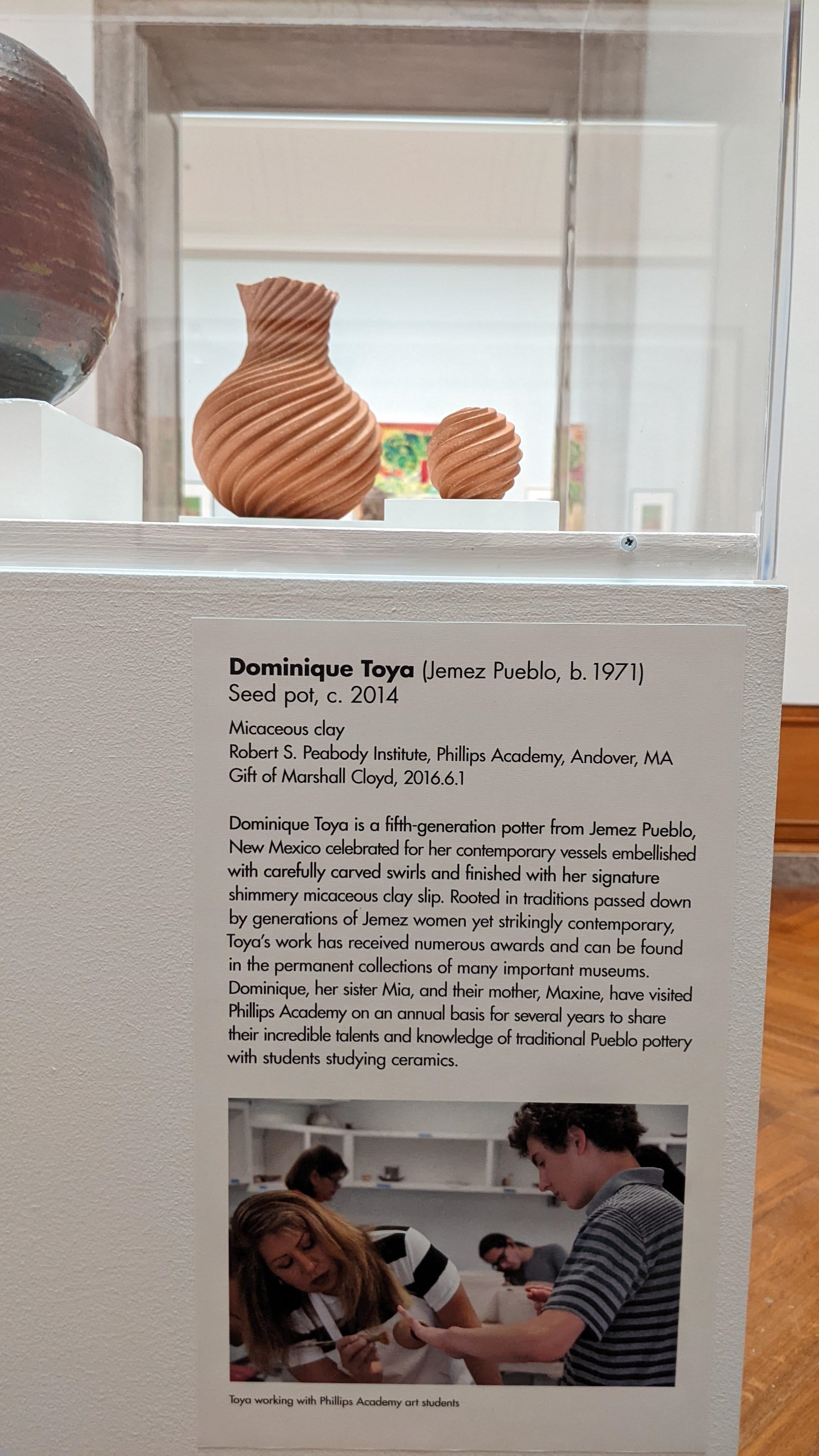
Mia’s piece (far left) joins other Toya Family creations in the Peabody Institute collections, including collaborations between Dominique and Maxine Toya, Maxine’s storyteller and owl figures, Dominique’s distinctive micaceous swirl vessels, and a piece by Mia’s grandmother Marie G. Romero (second from the left).

Watching Mia work with students, its not surprising that in addition to being an accomplished artist, she’s also an educator. Mia teaches second grade at Jemez Day School. A Bureau of Indian Education social media post from 2016 includes a quote from Mia, reflecting on becoming a National Board Certified teacher, “I always knew I wanted to teach in this school–to serve the kids in my community and be one of their role models. Being a National Board Certified teacher helps me give my best to my students, community, and Tribe every day.”

Dominique Toya

Contributed by Ryan J. Wheeler

I’ve sat down several times to write this. It’s hard, for a couple of reasons. Dominique will always remain a remarkable person, funny, talented, generous of spirit, and with a laugh that made everyone around her soar. I think I’ve delayed writing because I feared I wouldn’t find the right words. Also, I was afraid that with the words would come a finality.

Dominique demonstrates the addition of mica to a student’s piece, May 2016.

Last month saw the passing of a truly remarkable individual. We remain shocked and saddened by the loss of Dominique Toya (1971-2023), who we have been fortunate to know since 2013. Dominique was a fifth generation potter, born to the Corn Clan at the Pueblo of Jemez. Dominique’s particular style of pottery saw the fusion of traditional methods and materials with innovative shapes and surface treatments. Collaboration with her family and other artists produced stunning and innovative results.

Dominique shares points out the polished details on her mom’s town crier figure to Phillips Academy ceramics instructor Thayer Zaeder, May 2014.

Dominique and her mom Maxine and sister Mia, often with other friends and family, traveled to Andover every year since 2014 to share Pueblo pottery making with Phillips Academy students, faculty, and friends. These weeklong workshops allowed students to make their own ceramic pieces with clay from New Mexico, finished, decorated, guided, and encouraged by the Toya Family. One year I conducted interviews with students following the finale of the class—an open-air firing. Considering all that Phillips Academy has to offer, I was a bit surprised when many of the students said their time with Dominique and her family was their best Andover experience. I shouldn’t have been surprised. Dominique was far more than a gifted artist; she was an ambassador of Indigenous art, and above all, a generous teacher.

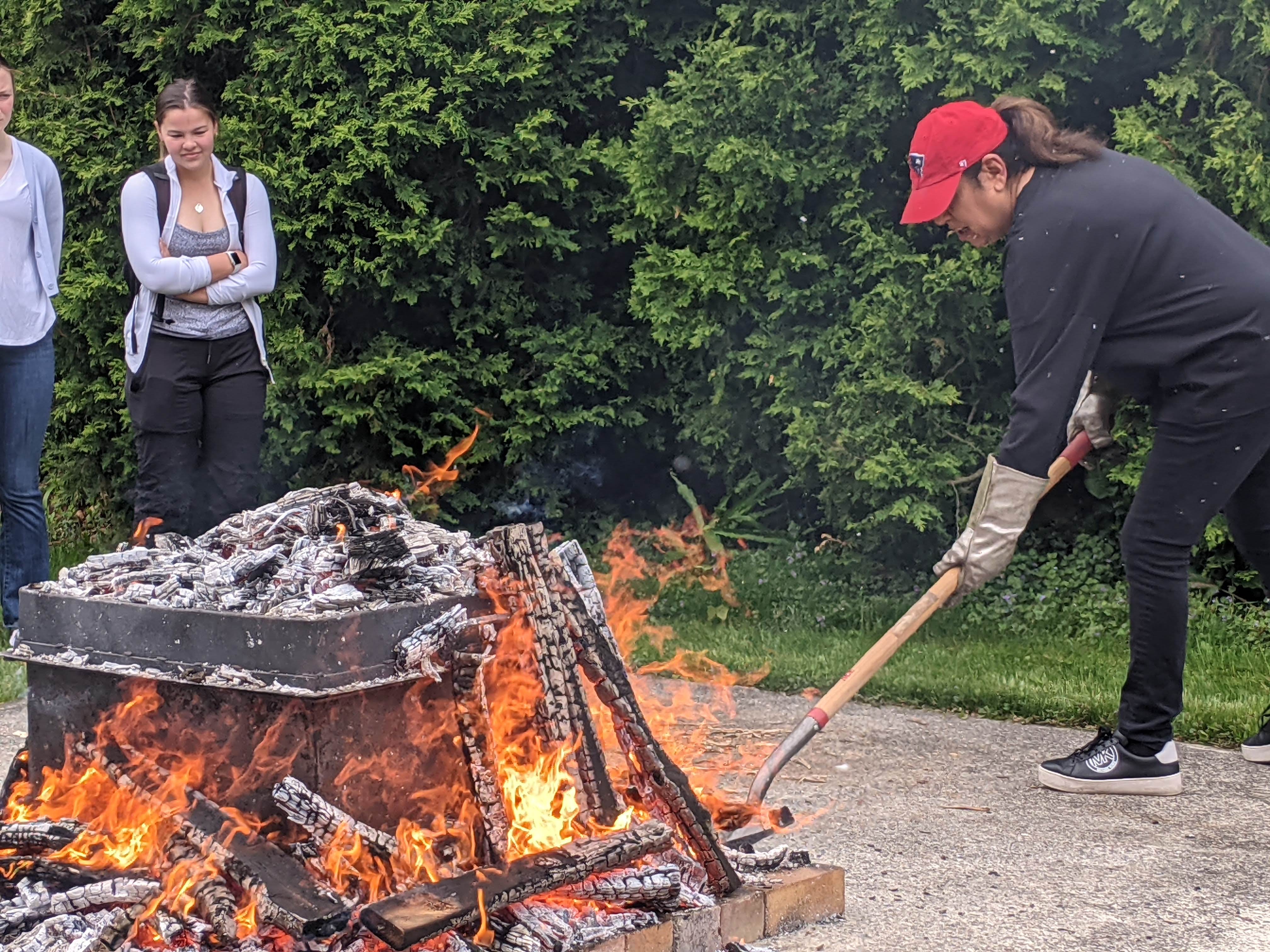
Dominique tends the open air pottery firing at the end of May 2022’s weeklong workshop as students look on.

I cherish the Toya Family’s time on campus, Dominique’s laughter and sense of humor, but also watching her help students design and complete pieces, often helping them figure out how to solve problems or challenges (often ones that they had created!). Dominique played a big role in many communities–she was involved in the Southwestern Association for Indian Arts, from exhibiting and frequently winning awards at the annual Santa Fe Indian Market, judging and mentoring, to service on the SWAIA board. Dominique also was a drag performer and frequently traveled to participate in the International Court System, including the Imperial Sovereign Court of New Mexico, where she was crowned Empress 10. The International Court System is a venerable and well-known LGBTQ organization, raising funds for social issues, education, and other charitable causes. Dominique and her mom often donated their pieces for those fundraising efforts. During the Jemez and Pecos feast days, Dominique and her family prepared traditional foods, like Jemez enchiladas and oven bread, welcoming friends and visitors into their home to celebrate.

Dominique shares some tips on finishing a piece with an Academy student, May 2023.

I’m grateful that Dominique chose to be part of the Peabody Institute and Phillips Academy communities as well. Dominique, you taught us all a lot about art, Indigenous art, clay, the magic of mica, the business (and politics) of Native American art, but most of all, the art of being yourself. I’ll end with some of the student reflections from the Toya Family workshop in 2017: “Working with the Pueblo potters is really fun—we learned a lot and they have an amazing sense of humor.” “To be able to incorporate these techniques into my pieces gave me a new level of respect for pottery.” “This is one of the best things I’ve done all term, actually all year.” “These artists are so cool and they really care about their art and about your art.” Dominique, thank you for sharing and Godspeed.

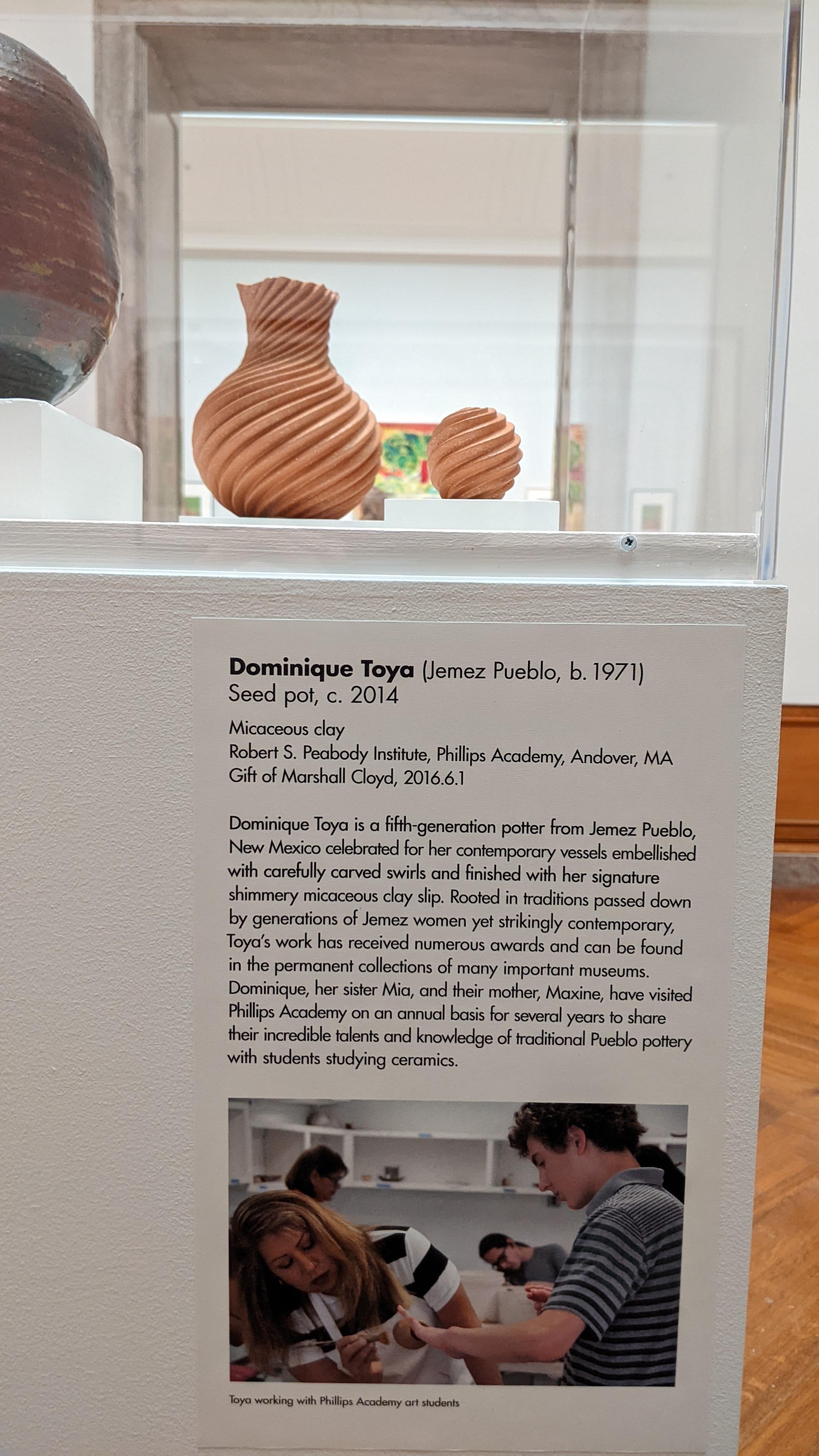
The Peabody Institute is fortunate to have several of Dominique’s pieces, including these two swirl vessels that were featured in the spring 2023 show “Women in Abstraction” at the Addison Galley of American Art.

If you’d like to learn a little more about Dominique, this is a great article from New Mexico Magazine: https://www.newmexicomagazine.org/blog/post/dominique-toya/

New Acquisition: Three Generations

Contributed by Ryan Wheeler

The Peabody has several amazing pieces of pottery made by members of the Toya Family of Jemez Pueblo. On their first visit to the Peabody in 2013, Maxine and Dominique Toya noticed a small vessel on our open shelving. What caught their attention was a delicately painted corn stalk, representing their clan. They wondered aloud who might have used these design, and we were all delighted to find that Maxine’s mom and Dominique’s grandmother, Marie G. Romero, had made the piece. Marshall Cloyd ’58 generously helped us acquire several of Dominique’s creations, including a small seed jar with distinctive carved ribs and mica slip. Since then we have added a number of wonderful pieces to the Peabody collection, including one of Maxine’s owl figures and a collaboration featuring Dominque’s beautifully crafted vessel bearing Maxine’s hand painted deer and corn stalk designs.

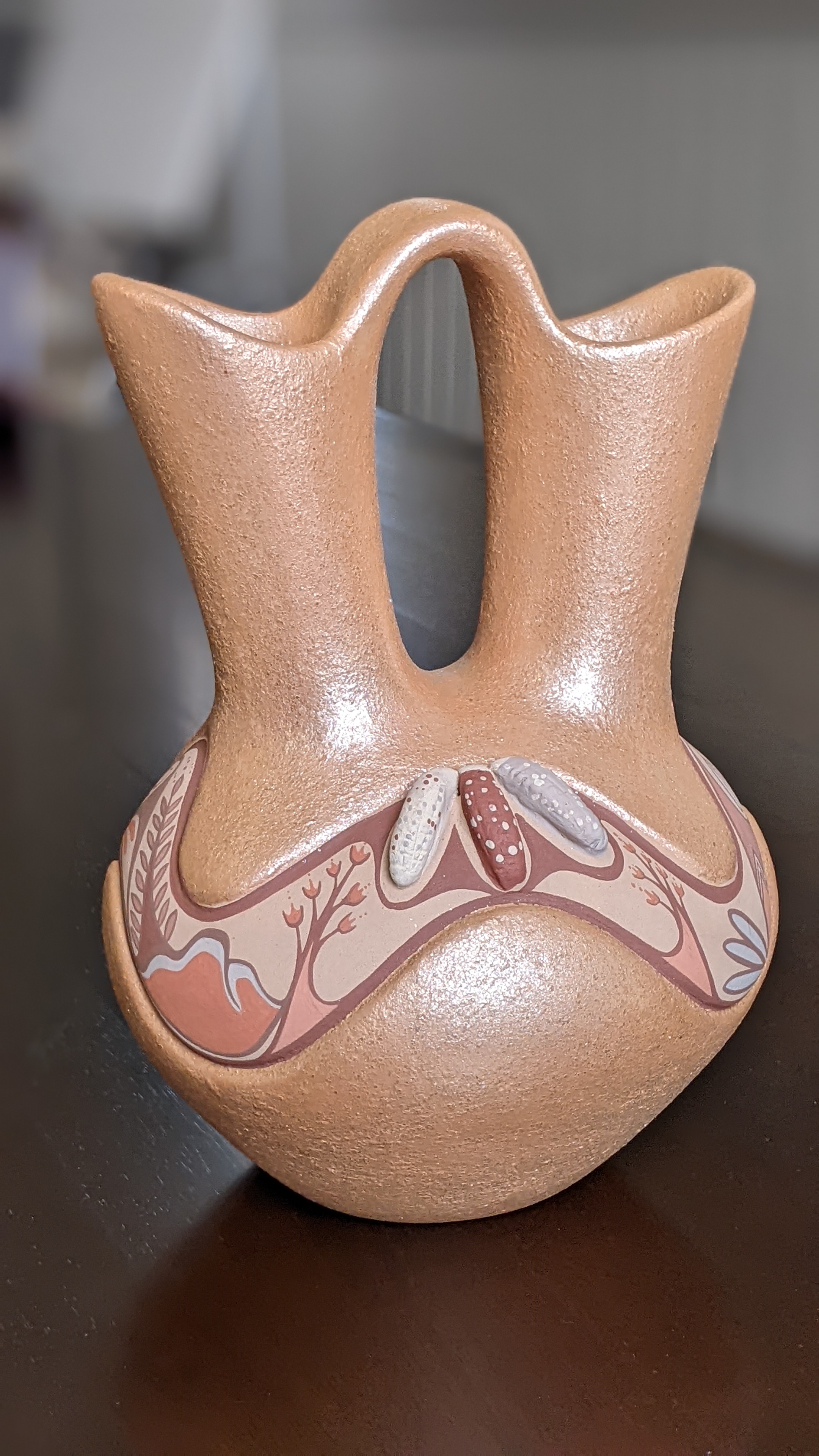
In May, we acquired a special piece called Three Generations. Dominique said, “this was the last wedding vase my grandmother, the late Marie G. Romero, created before she passed away. My mom and I have kept it sitting at our studio until we finally decided to finish her. I’m going to sand her and apply mica on the top and bottom and mom will paint a design in the middle where the band is and paint the ears of corn. This piece will be called Three Generations and will be the only piece that is signed by me, my mom, and I’ll sign my grandmother’s name since she created her.” The Toyas fired Three Generations on April 3 and brought her to us during their workshop with students in May. This is a large piece, at least 11 inches tall, and the overall shape, finishing, and delicate painting is truly impressive. Dominique commented that, “my mom outdid herself again with the amazing painting!!!” and we couldn’t agree more!

Pueblo Revolt at ASECS

Contributed by Ryan Wheeler

At this year’s American Society for Eighteenth Century Studies (ASECS) conference, I had the opportunity to participate in the roundtable Teaching the Global Eighteenth Century. Phillips Academy instructor in history and social sciences Natalya Baldyga and I presented Assimilation, Acculturation, Catachresis, and Syncretism: Employing Archaeology to Foreground Indigenous Resistance in the Spanish Southwest, sharing our experiences teaching the Pueblo Revolt of 1680 to History 200 classes at the Academy.

Contemporary Indigenous artist Jason Garcia’s take on the Pueblo Revolt combines traditional materials and methods with graphic designs depicting Po’Pay, the architect of the revolt, as a comic book superhero. These two pieces are in the collection of the Robert S. Peabody Institute of Archaeology–you can see the vessel on the right in the inaugural exhibition of the Smithsonian’s National Museum of the American Latino.

If you are not familiar with the Pueblo Revolt, it is a pivotal moment in the history of the Southwest and the modern descendants of those who fought Spanish colonization at the end of the seventeenth century. Our abstract has a little more information on the Revolt and our approach:

Using the case study of the Pueblo Revolt of 1680, our presentation illustrates how archaeological artifacts can be employed to unsettle and decenter colonial narratives by refocusing the North American story of the early eighteenth century on Indigenous peoples of the Spanish Southwest. Too often, Anglophone histories associate the long eighteenth century in the Americas with English colonialism in general, and with the American Revolution in particular. We ask students to consider instead the “first American Revolution,” in which the Pueblo Peoples, led by the Tewa religious leader Po’pay, confronted missionaries and soldiers in the Spanish borderlands of what is now New Mexico. In our classes, students explore both artifacts from the Pueblo Revolt and contemporary Puebloan artistic responses to the historical event, foregrounding Indigenous resistance and survival over tales of erasure and domination. This approach both reorientates students’ understanding of colonial North American history towards wider global narratives of European expansion, and, perhaps more importantly, introduces students to multiple ways that Indigenous peoples adapted to, resisted, and overcame the efforts to erase their cultural identities and physical existence.

Drs. Wheeler and Baldyga also celebrated their anniversary during the conference.

The Peabody Institute has long offered various versions of a Pueblo Revolt lesson, but the current iteration has greatly benefitted from Dr. Baldyga’s experience and training. Together we’ve developed the lesson, typically delivered in the world history survey course for tenth grade, providing students with anthropological concepts, like assimilation and catachresis, that they can use in other settings, as well as foregrounding contemporary Indigenous perspectives and objects directly related to the Revolt. Conversations with other participants in the workshop were productive, especially in their pedagogical approach to topics like the production of sugar.

Tsankawi

Following up on my September 7, 2022 post about our family visit to Arizona and New Mexico, specifically about hikes at Petroglyph National Monument in Albuquerque, I wanted to share another highlight: Bandolier National Monument. We learned a lot by visiting the National Park Service interpretive center and hiking through the amazing Ancestral Puebloan sites in Frijoles Canyon, including more petroglyphs, and cavates—expanded hollows in the volcanic rock that formed parts of living rooms and storage structures.

Tsankawi–an Ancestral Pueblo part of Bandolier National Monument in New Mexico.

We got up early to drive from Jemez Springs to Santa Fe, allowing for a good visit to Bandolier. As we drove through Valles Caldera—another National Park Service site with tremendous cultural significance to Walatowa, the Pueblo of Jemez—we made a note that we needed to come back to explore on foot. Impressive deposits of obsidian and volcanic tuff lined parts of the highway in this area, a testament to the volcanic activity that produced the caldera some 1.25 million years ago. Part of our reason for the earlier departure was that the parking area at Frijoles Canyon fills up early, so we wanted to make sure we got in. It was worth it, as the recent rains had many desert plants in bloom amidst the Ancestral Pueblo ruins, culturally connected to many of the modern day Pueblo communities in both New Mexico and Arizona.

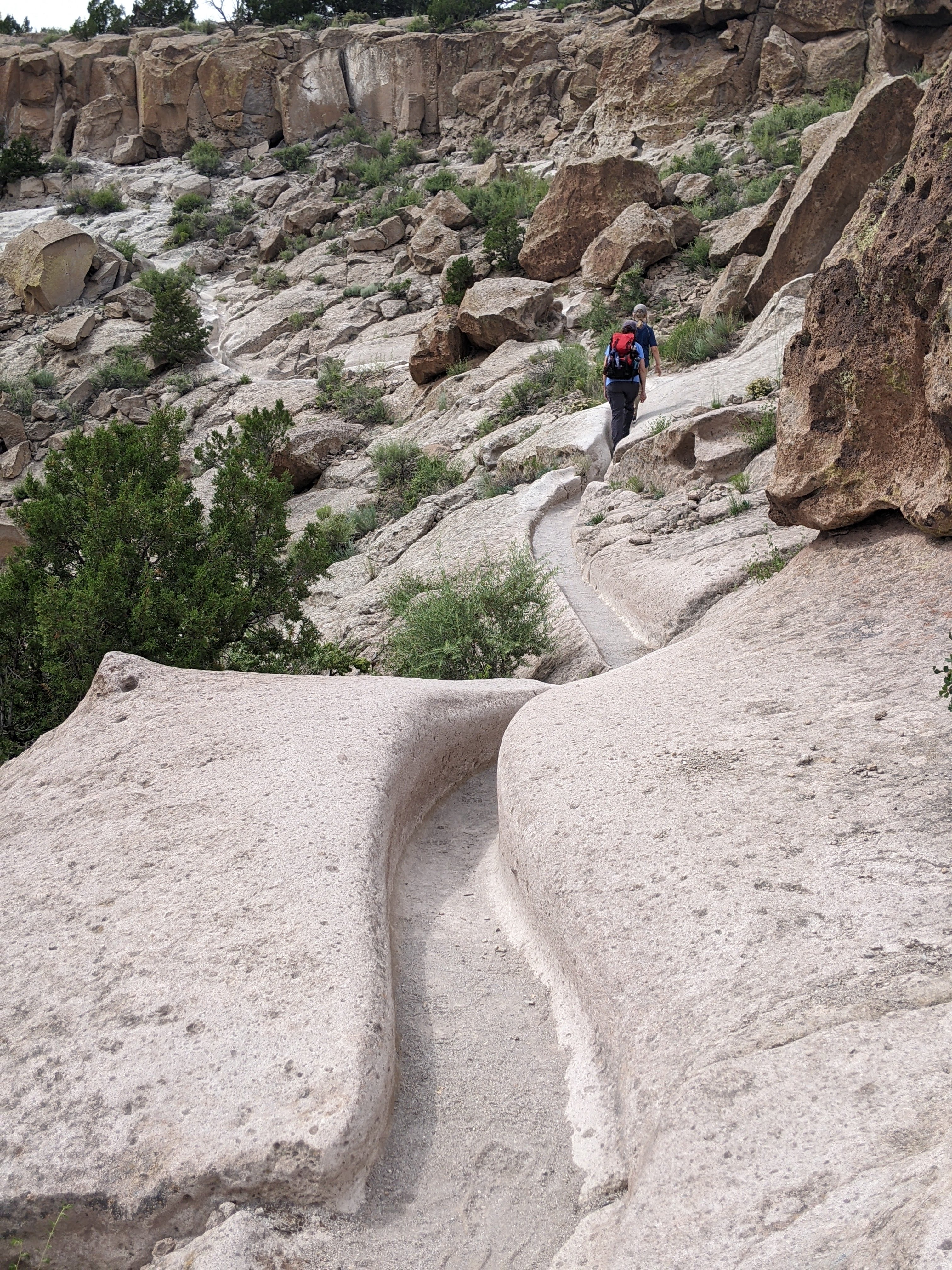
The deeply inscribed trail at Tsankawi, carved and worn into the soft volcanic rock of the mesa.

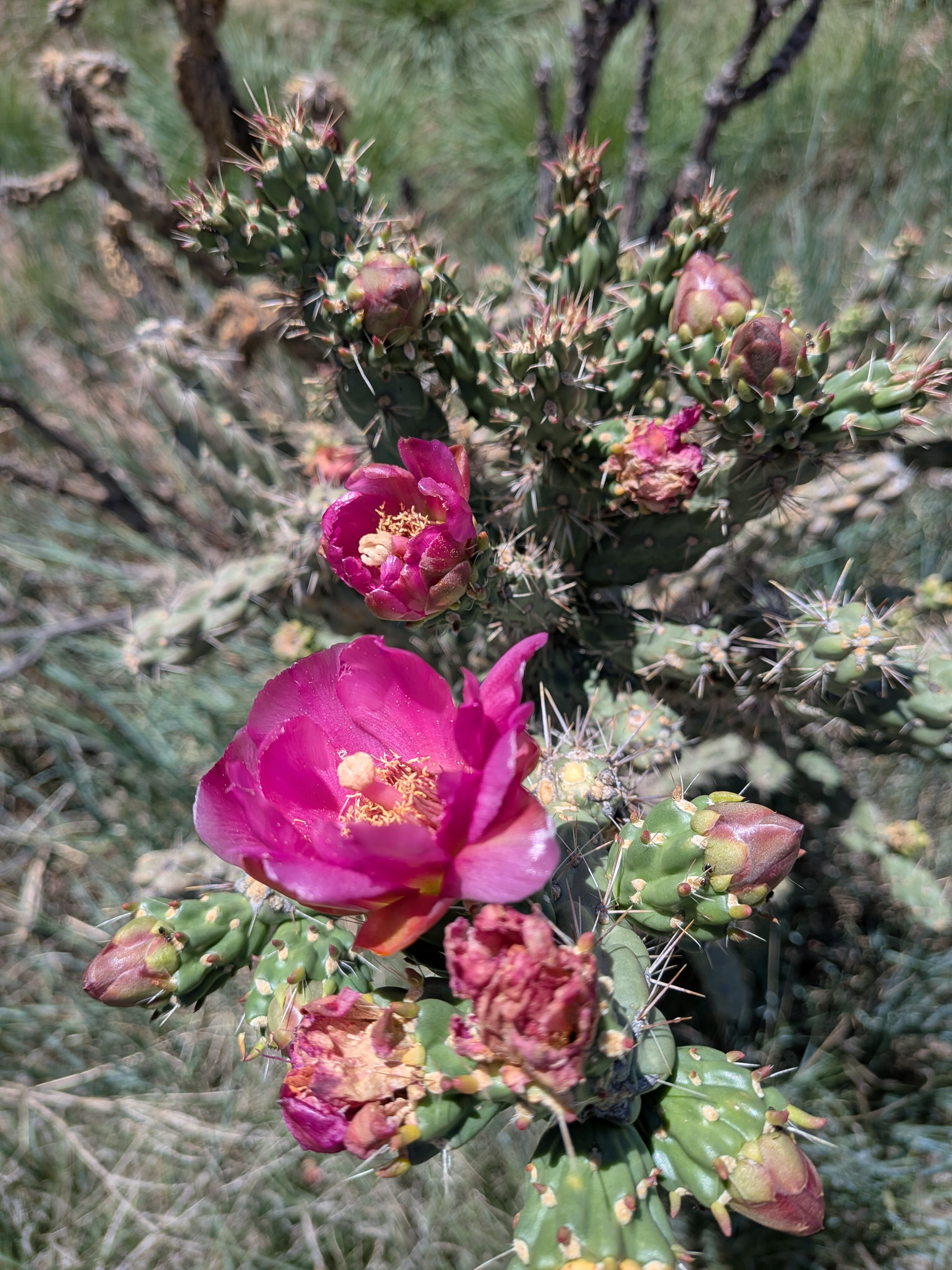
The rangers at the NPS interpretive center also recommended that we visit Tsankawi, another unit of the national monument and another Ancestral Pueblo, that we would pass on our way into Santa Fe—though it’s not particularly well marked or easy to find. We are grateful for this recommendation, as the hike through this largely unreconstructed Ancestral Pueblo had some amazing features. In Tewa the name for Tsankawi means “village between two canyons at the clump of sharp, round cacti.”

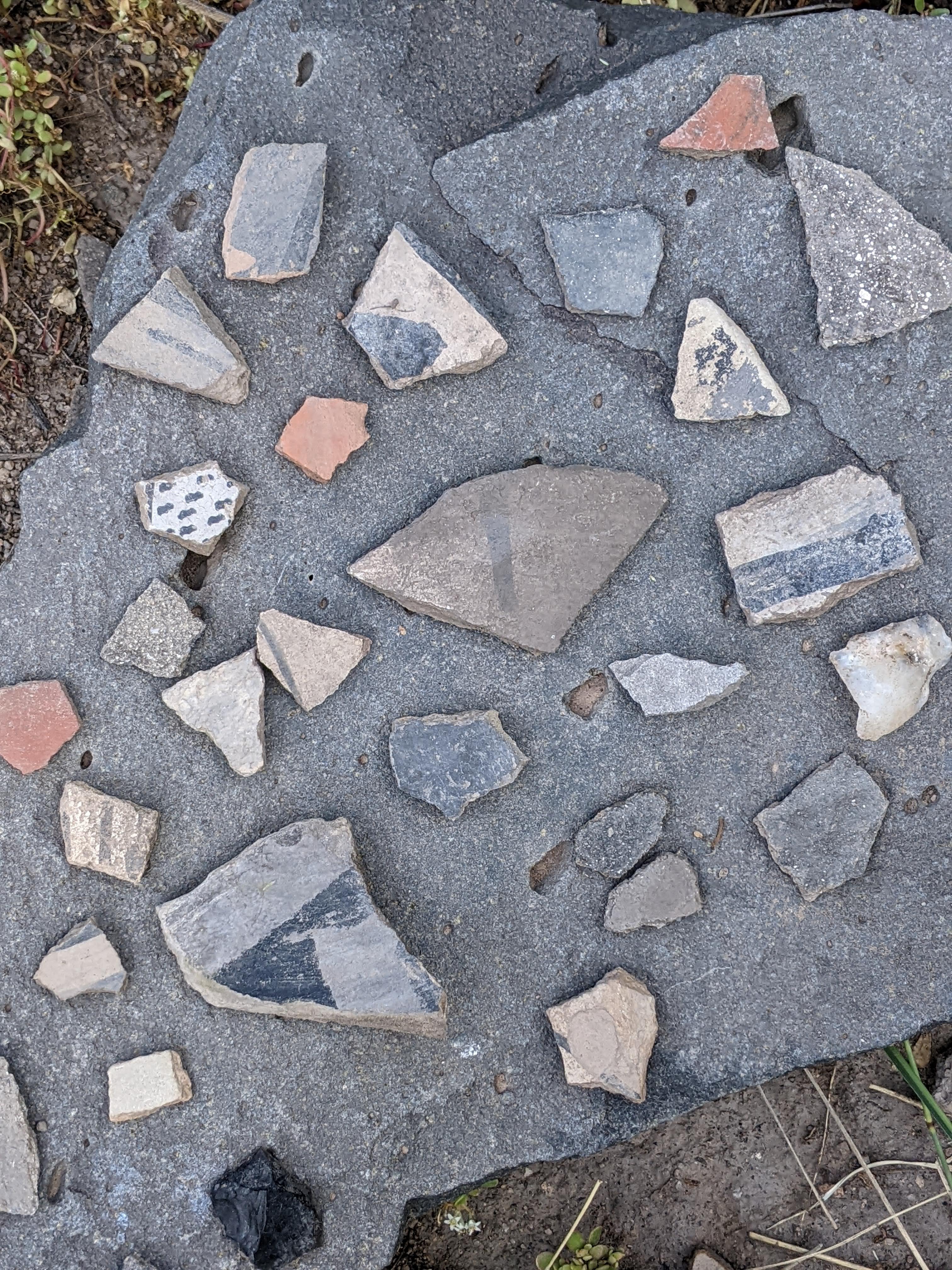
Ceramic sherds and an obsidian fragment on the surface of the Ancestral Pueblo Tsankawi. The only other visitors to the Pueblo reminded us not to take anything–we bonded over this moment.

Tsankawi is situated on another volcanic mesa and requires climbing some ladders to access much of the Ancestral Pueblo. Once on the mesa, visitors find the ruins of an ancient Pueblo village, more of the cavates like those in Frijoles Canyon, petroglyphs, as well as a deeply inscribed trail that leads along the top and sides of the mesa. This feature was what really captured my attention, because it was clearly an ancient feature of the place. Following the trail, it became clear that you were literally following in the footsteps of the Ancestral Pueblo people who once lived here and whose modern descendants live nearby in places like the Pueblo of San Ildefonso.

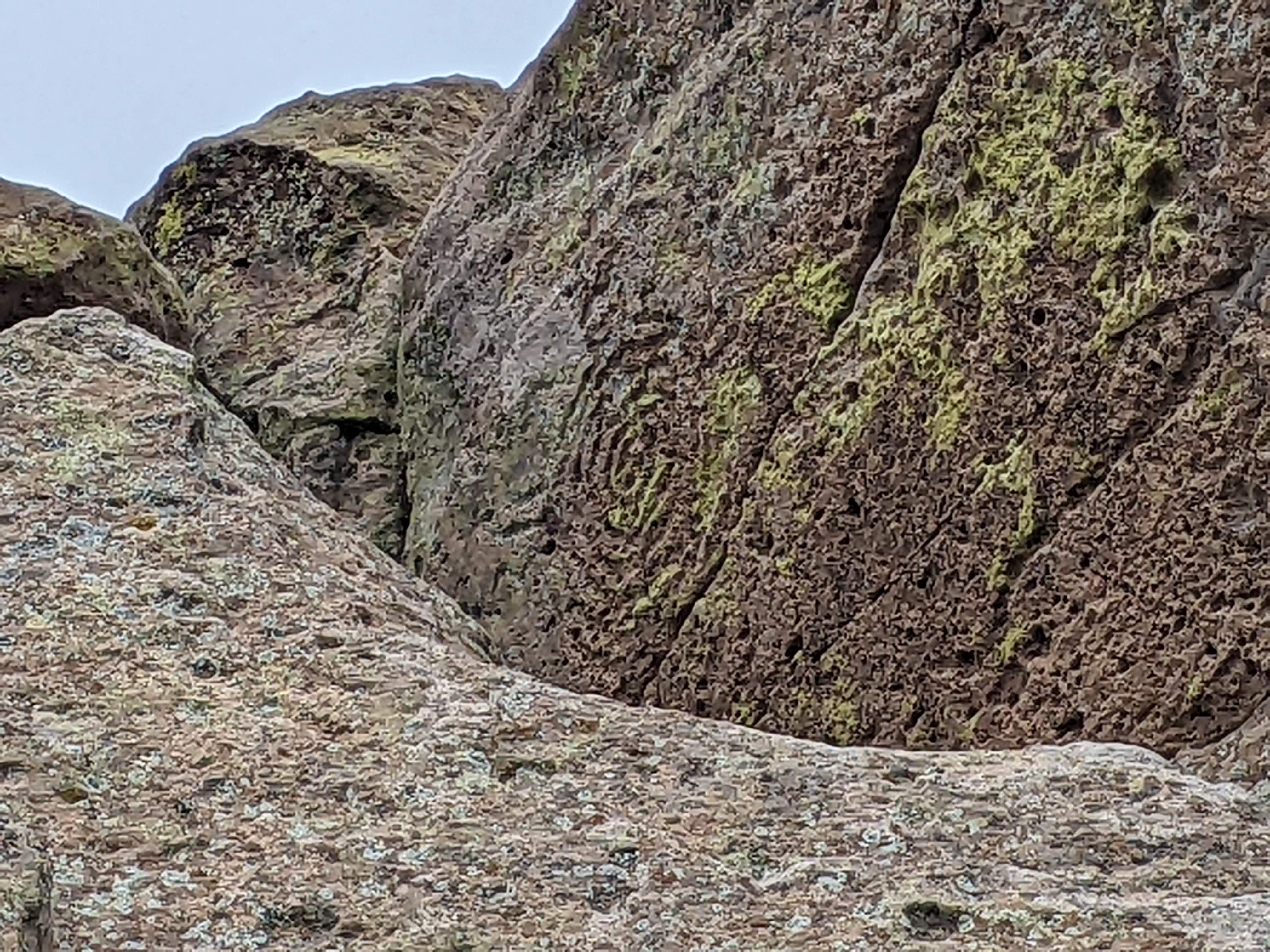
Petroglyphs at Tsankawi.

Perhaps not surprisingly, it was sherds of jet-black pottery from Tsankawi that archaeologist Edgar Lee Hewitt asked Maria and Julian Martinez to replicate for museum exhibits early in the twentieth century. Their experiments to replicate the pottery and then their own innovations launched Maria’s career as the famous potter of San Ildefonso Pueblo and the black-on-black pottery with shiny, abstract designs still sought after today. Early in Maria’s career, Peabody Institute staff member Carl Guthe worked with her to write Pueblo Pottery Making: A Study at the Village of San Ildefonso, published in 1924 by Yale University Press. This was part of Alfred Kidder’s broader Pecos Pueblo project—based out of the Peabody Institute from 1915 to 1929—and an acknowledgment of the connections between modern Pueblo communities and their ancestors. Guthe’s research also brought several of Maria and Julian’s pieces into the museum, including a marvelous platter and a rare demonstration set with examples of each stage in the manufacture of the black-on-black pottery. Several of these pieces are on loan to the Addison Gallery of American Art for an upcoming exhibit Women and Abstraction: 1741-Now.

Petroglyph National Monument

Contributed by Ryan Wheeler

This summer included a family vacation to parts of Arizona and New Mexico. That meant a drive and some short hikes in Petrified Forest National Park and the Painted Desert, as well as time in Albuquerque and Santa Fe and points in between. Unfortunately, COVID preempted our attendance at the Santa Fe Indian Market, but we are already planning a short visit next summer!

Image of human hand petroglyphs carved on dark volcanic rock at Petroglyph National Monument, New Mexico.
Petroglyphs at Piedras Marcados Canyon, part of Petroglyph National Monument, Albuquerque, New Mexico. Photo by Ryan Wheeler, April 12, 2019.

Petroglyph National Monument is one of the places that I was looking forward to revisiting with my family. Most of the petroglyphs here were made by Native Americans, but there are some added by the Spanish, cowboys, or other visitors. I had a chance to make a visit during the Society for American Archaeology’s annual meeting in 2019, but at that time I had only went to the interpretive center (no actual petroglyphs there, but a great introductory film) and one of the canyons with petroglyphs—Piedras Marcadas, literally “marked stones.” According to the National Park Service, there are about 400 petroglyphs visible at Piedras Marcadas, but that’s only one of three separate locales within the monument. What struck me most during that 2019 visit was the proximity to suburban Albuquerque. The canyon is literally in the backyard of a residential neighborhood! What we learned during our recent visit was that community activism in the 1980s had helped save the petroglyphs and create the monument in 1990—not all that long ago.

View of Albuquerque from Boca Negra Canyon, August 2022.

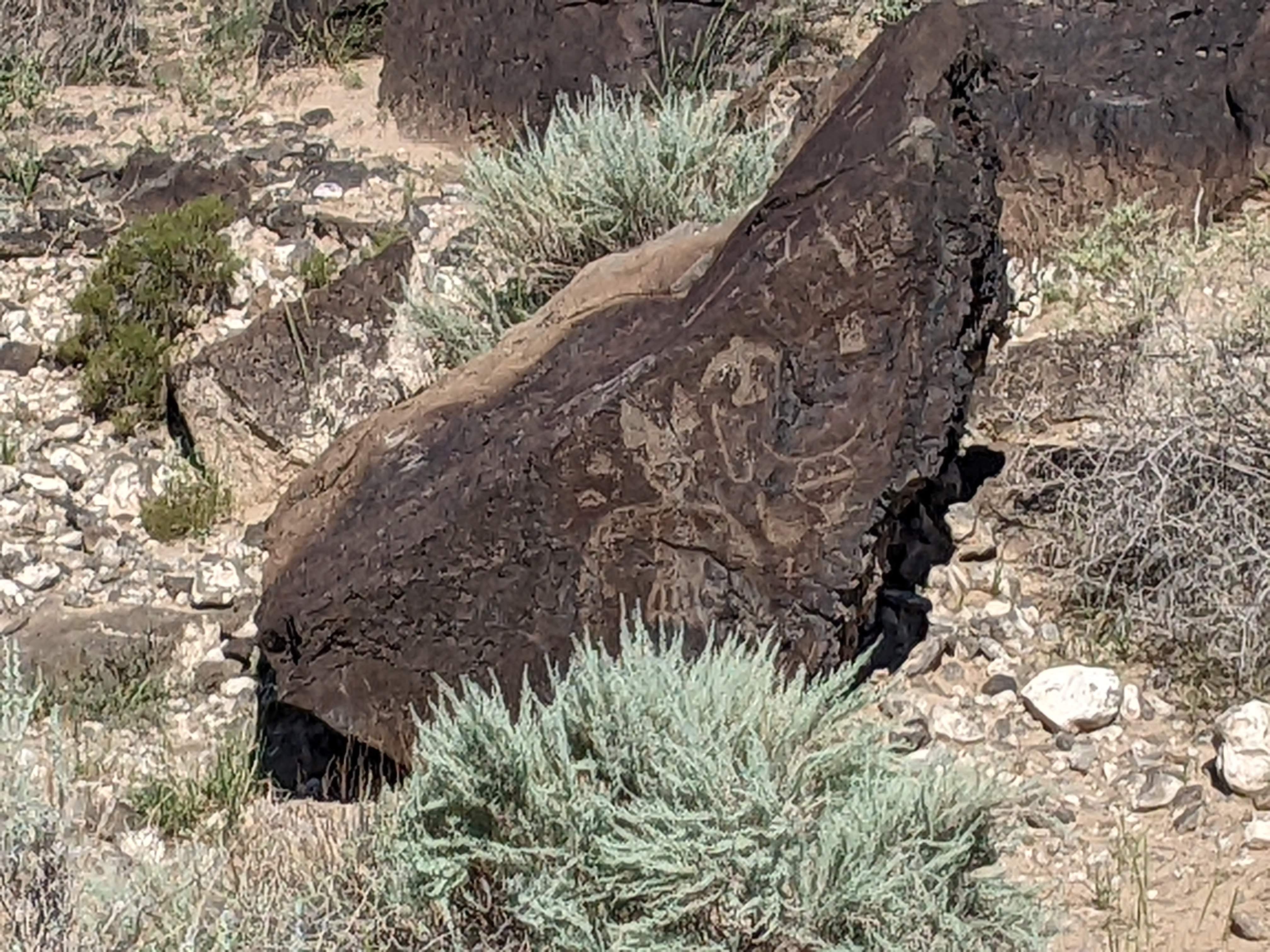
This summer we decided to visit Rinconada Canyon, which is only about a mile from the Petroglyph National Monument interpretive center. The park service says you can see about 300 petroglyphs at Rinconada. Despite being right off Unser Boulevard, this site doesn’t have a residential development right next door, so it feels a little bit wilder. The loop trail took us past the canyon wall, which is littered with volcanic boulders. The boulders have a desert varnish of blacks and dark browns, making a good surface for the inscribed petroglyphs that expose the lighter colored rock below the surface. One of the most interesting parts of the monument is the decision not to interpret the meanings of the glyphs, though you can learn a little about this from Native Americans interviewed in the interpretive center film. We went early enough that we didn’t get baked.

Macaw and geometric petroglyphs, Boca Negra Canyon, August 2022.

On a bit of a whim, we decided to visit Boca Negra Canyon, the third petroglyph site in the monument. While apparently only having 100 or so petroglyphs that can be viewed by visitors, this was really the most spectacular of the three locales. At Boca Negra you climb up the mesa and really have an opportunity to get close to the petroglyphs. It’s a little more up and down of a hike, but worth it for the views and the chance to see the petroglyphs close up. The geology of the area is fascinating too. The inscribed boulders are the product of a volcanic eruption around 130,000 years ago. Magma poured out of vents and fissures in the area, creating a sheet of basaltic rock over the softer Santa Fe Formation. The softer sediments on which the volcanic rocks were deposited slowly eroded away, leaving the broken boulders.

Petroglyphs at Rinconada Canyon, August 2022.

The petroglyphs at all three monument locations were made by ancestors of the modern Pueblo people, dating between 400 and 700 years ago, though some are much older. The petroglyphs have been dated based on weathering, but also variations in style and content. There are birds, insects, animals, hands, humanoids, spirals, and other geometric forms. The petroglyphs remain culturally significant to Pueblo people and other Native Americans in the region.