Over the past month I have had the good fortune to represent the Peabody Institute at two professional conferences. Learning from others in a shared space can be really energizing and informative. I also really enjoy attending conferences and getting to connect with colleagues that I usually only see in a tiny Zoom window on my computer screen.
First, I attended the New England Museum Association (NEMA) Annual Conference in Newport, Rhode Island. NEMA is a great conference that brings together people in the area to discuss a wide range of museum-related topics. This year, I noticed more sessions that focused on telling LGBTQ+ stories, exploring ‘hidden histories,’ and how institutions can support emerging professionals.
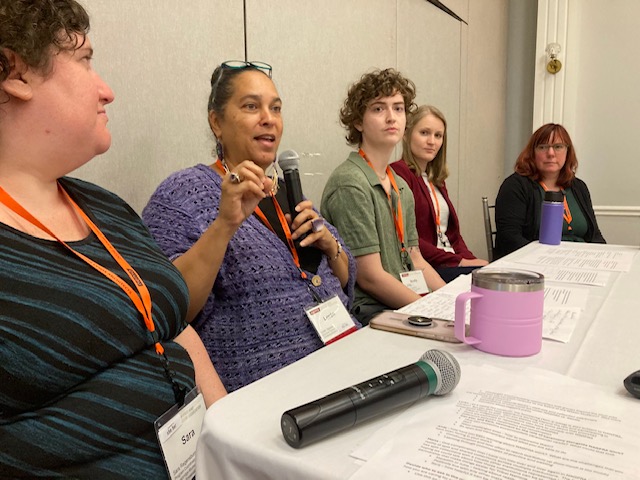
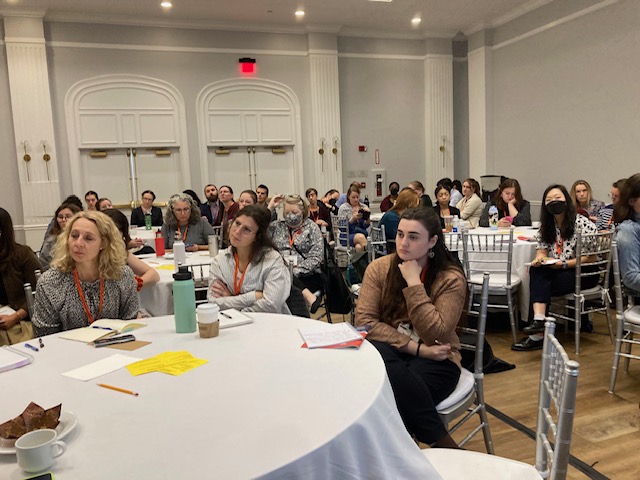
I was the facilitator for a panel titled Implementing NAGPRA: A Conversation with NAGPRA Practitioners. The panel was composed of individuals who are part of the Northeast NAGPRA Community of Practice and was a conversation to demystify the repatriation process, learn from colleagues, and identify opportunities for collaboration. The session was well attended and we had a fabulous conversation amongst ourselves and with the audience.
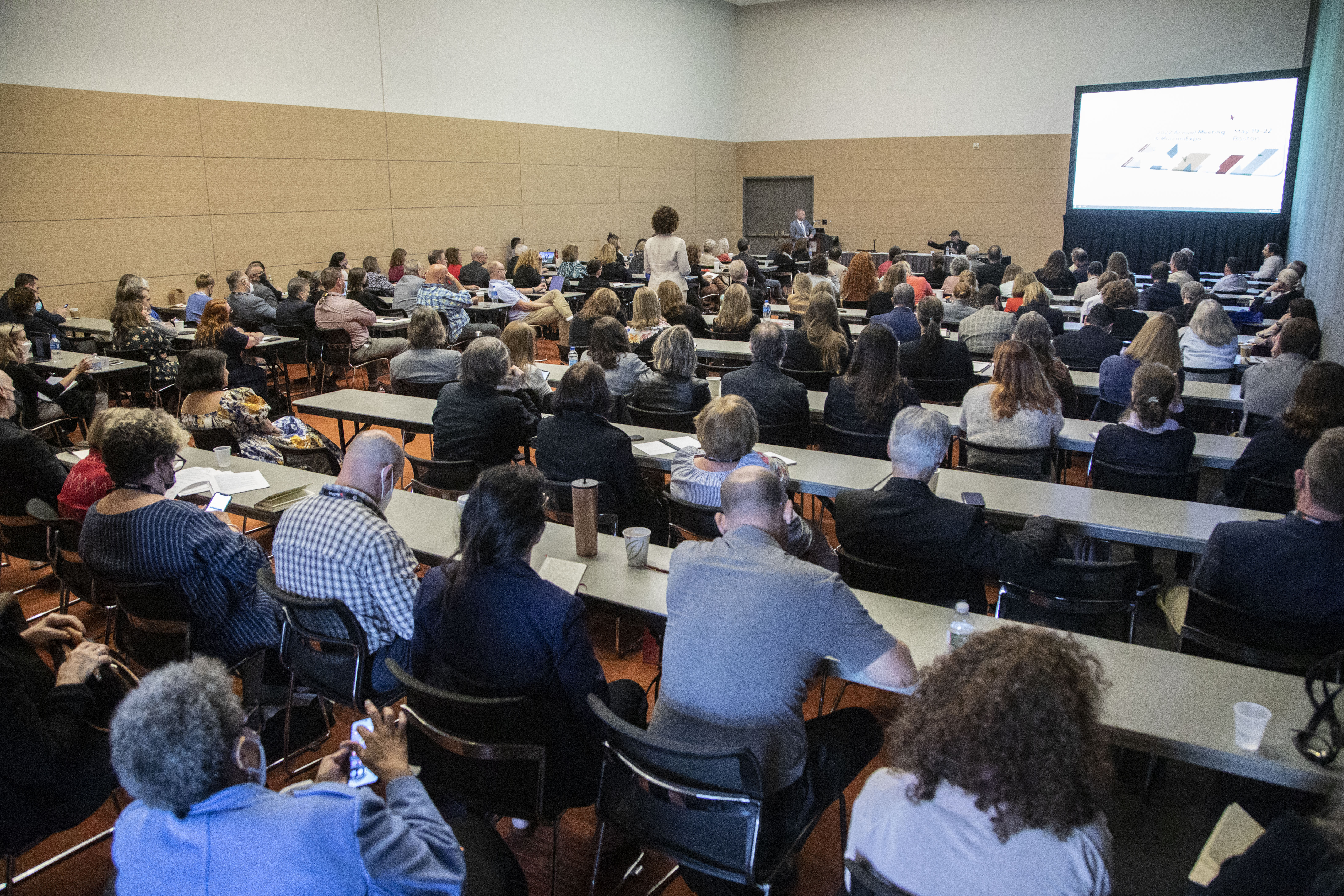
NEMA Session Panel SpeakersNEMA Session Audience
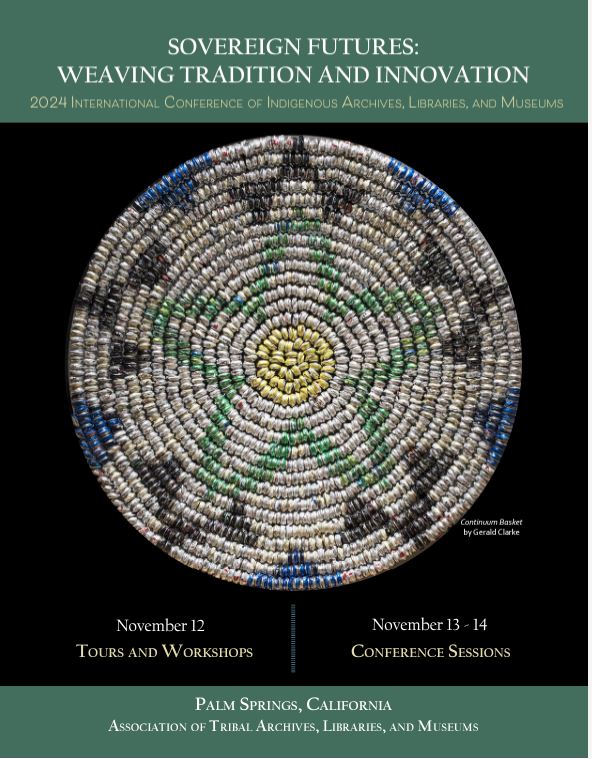
After a short (but long) day in Newport, I traveled the following week to Palm Springs, California for the Association of Tribal Archives, Libraries, and Museums (ATALM) Annual Conference. I love ATALM. It is a conference full of helpful information on everything from repatriation to pesticide management in collections to archival management. I appreciate that so many of the conversations really center on uplifting Indigenous voices and perspectives in all aspects of museum and cultural heritage work. It is a space that is invigorating and inspiring to me as a professional.
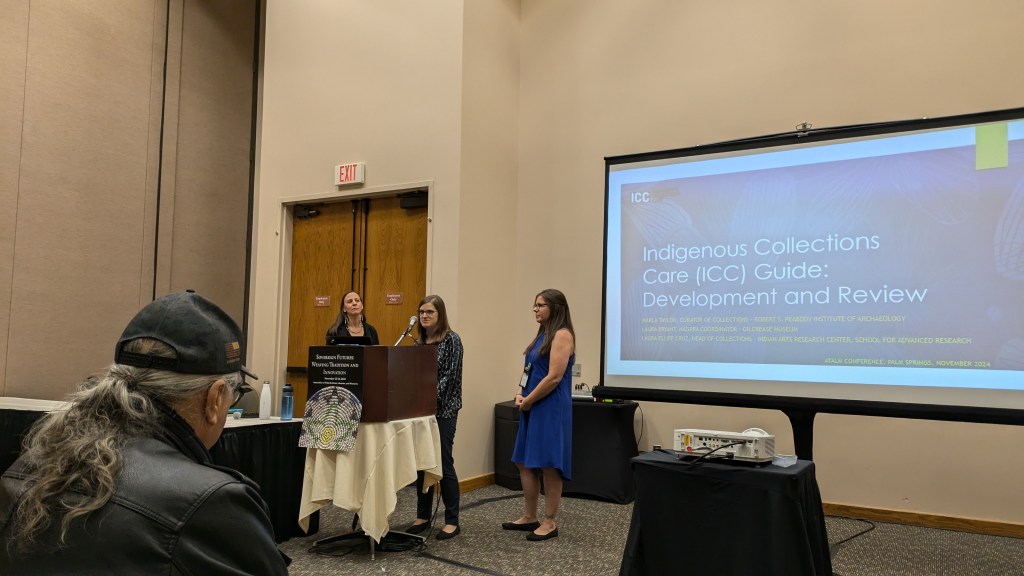
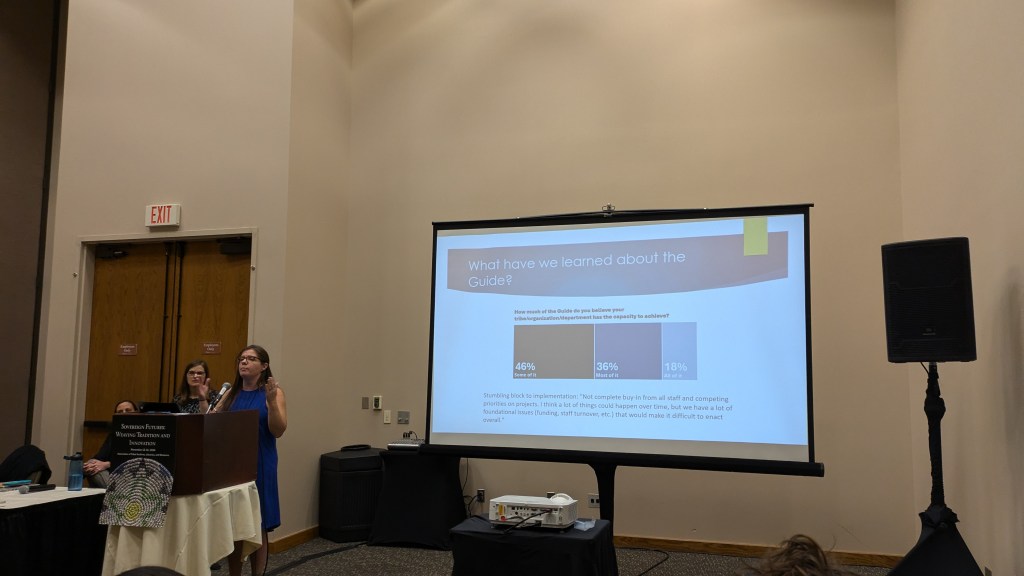
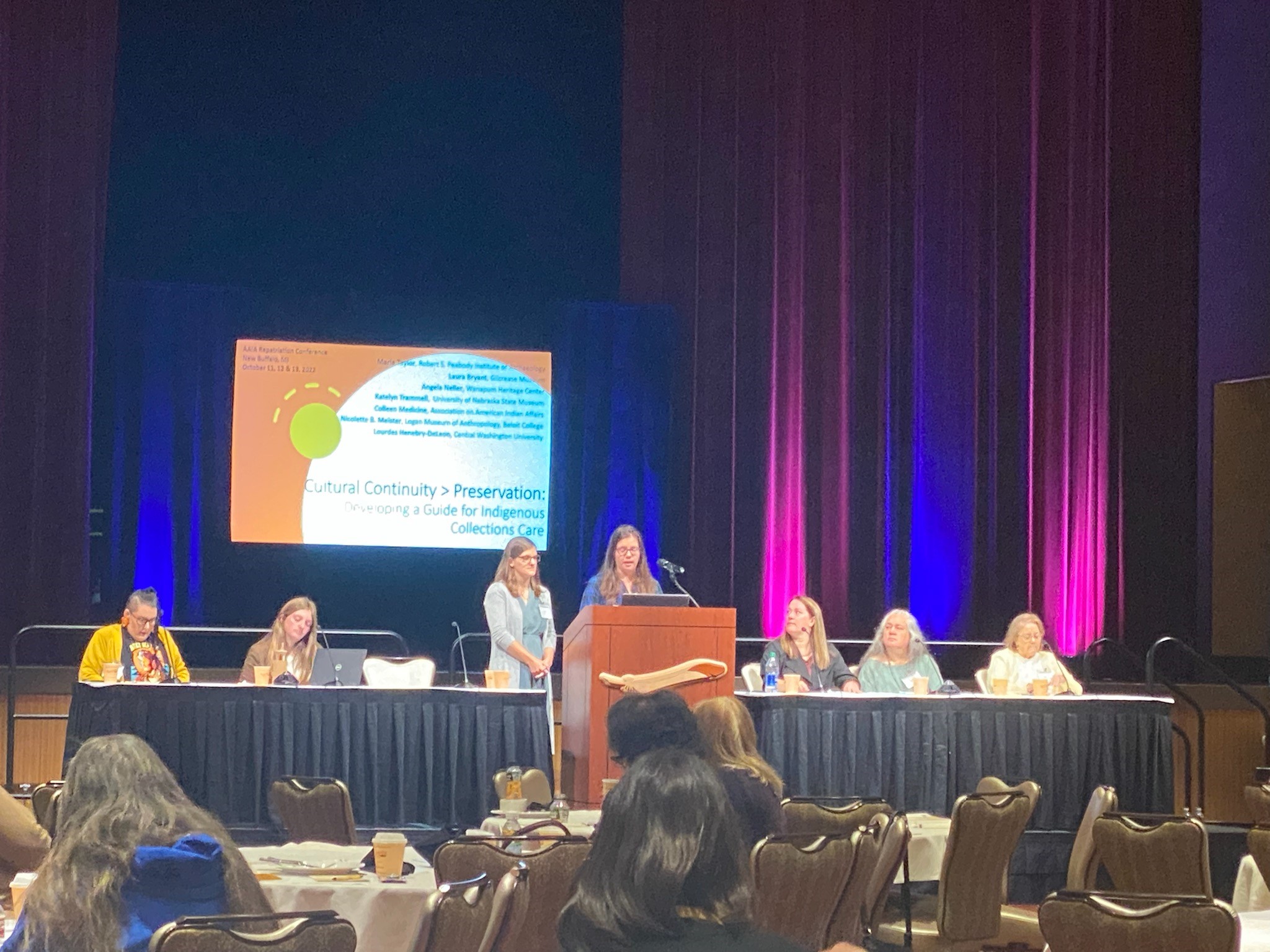
I was part of a session at ATALM to share information about the review process for the development of the ICC Guide. That session was well attended and we received lots of supportive feedback.
The fall season tends to be super hectic with all the conference travel, but it is a great way to connect with the larger profession.
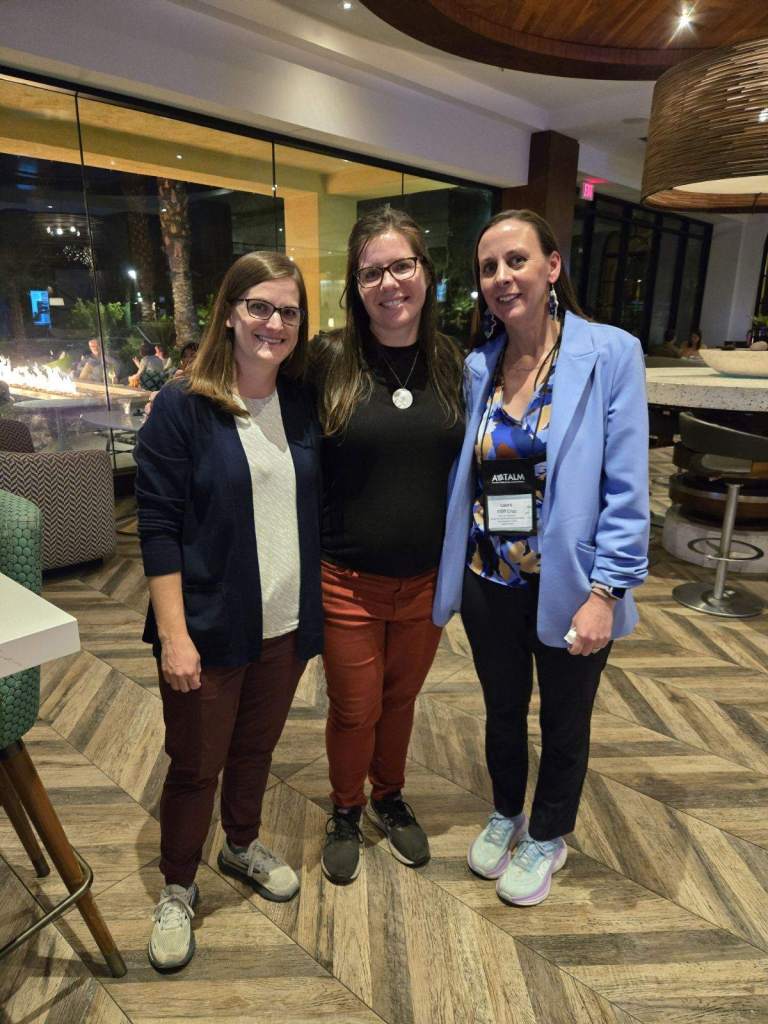
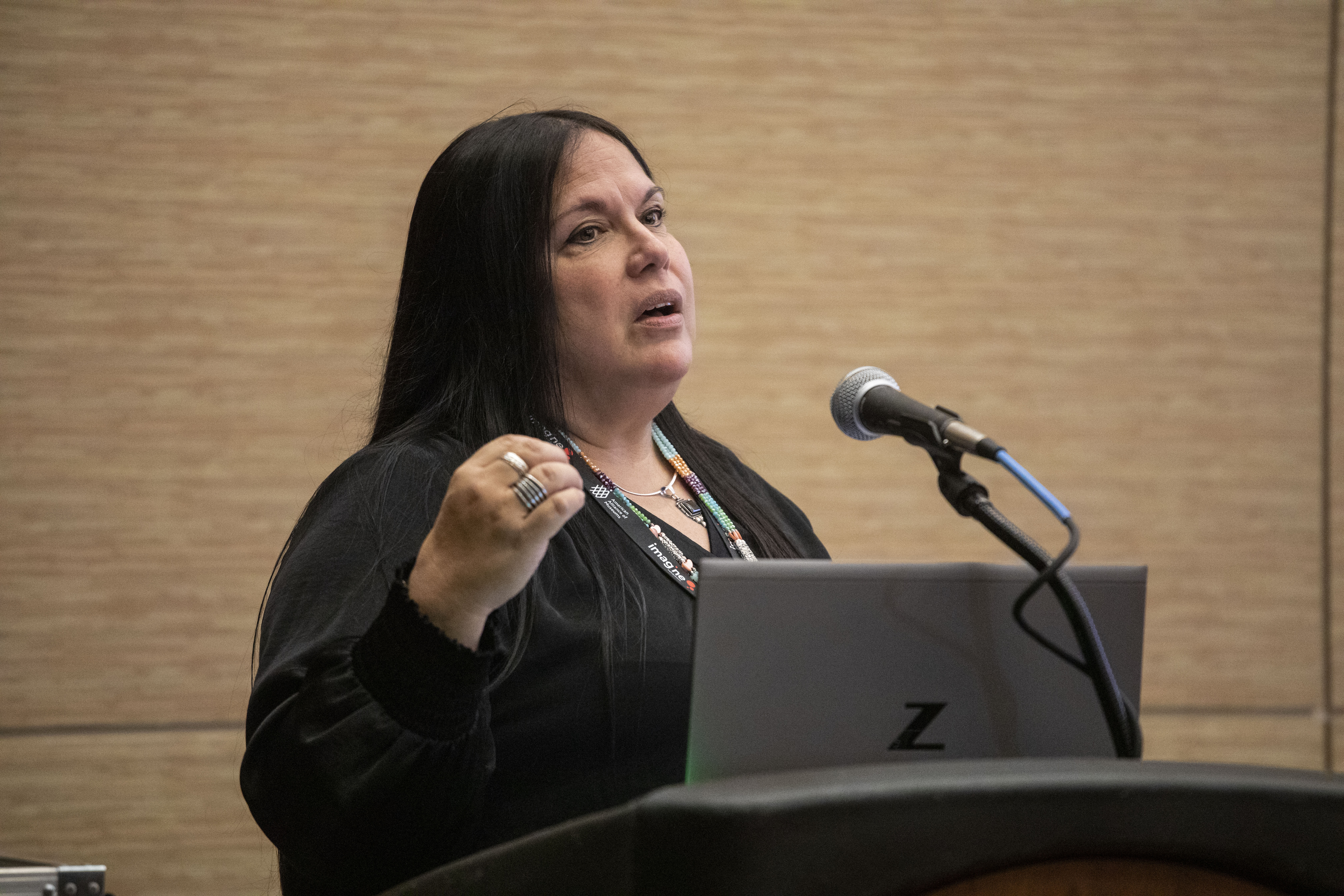
Presenting at ATALMMy co-presenters and IPresenting at ATALM
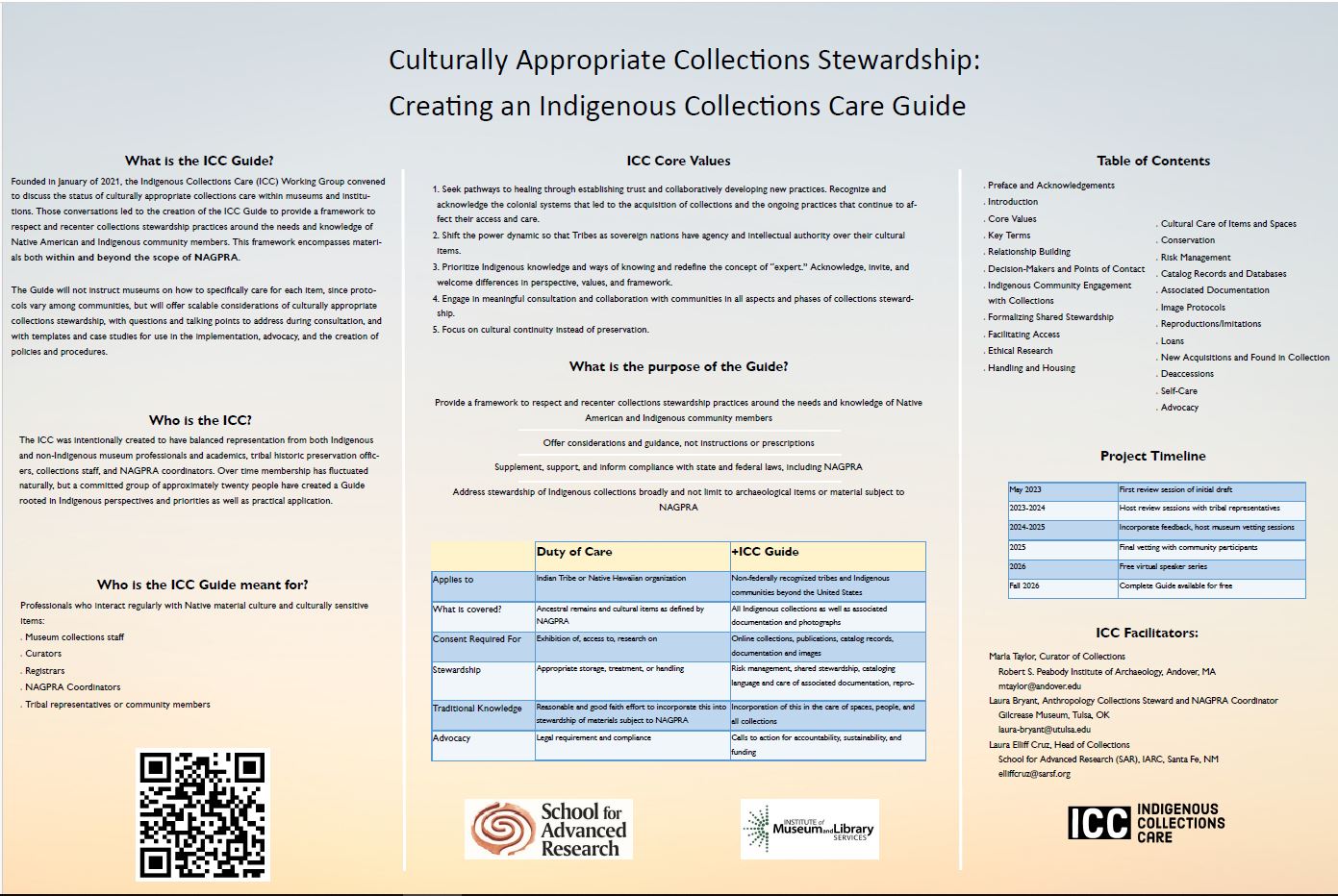
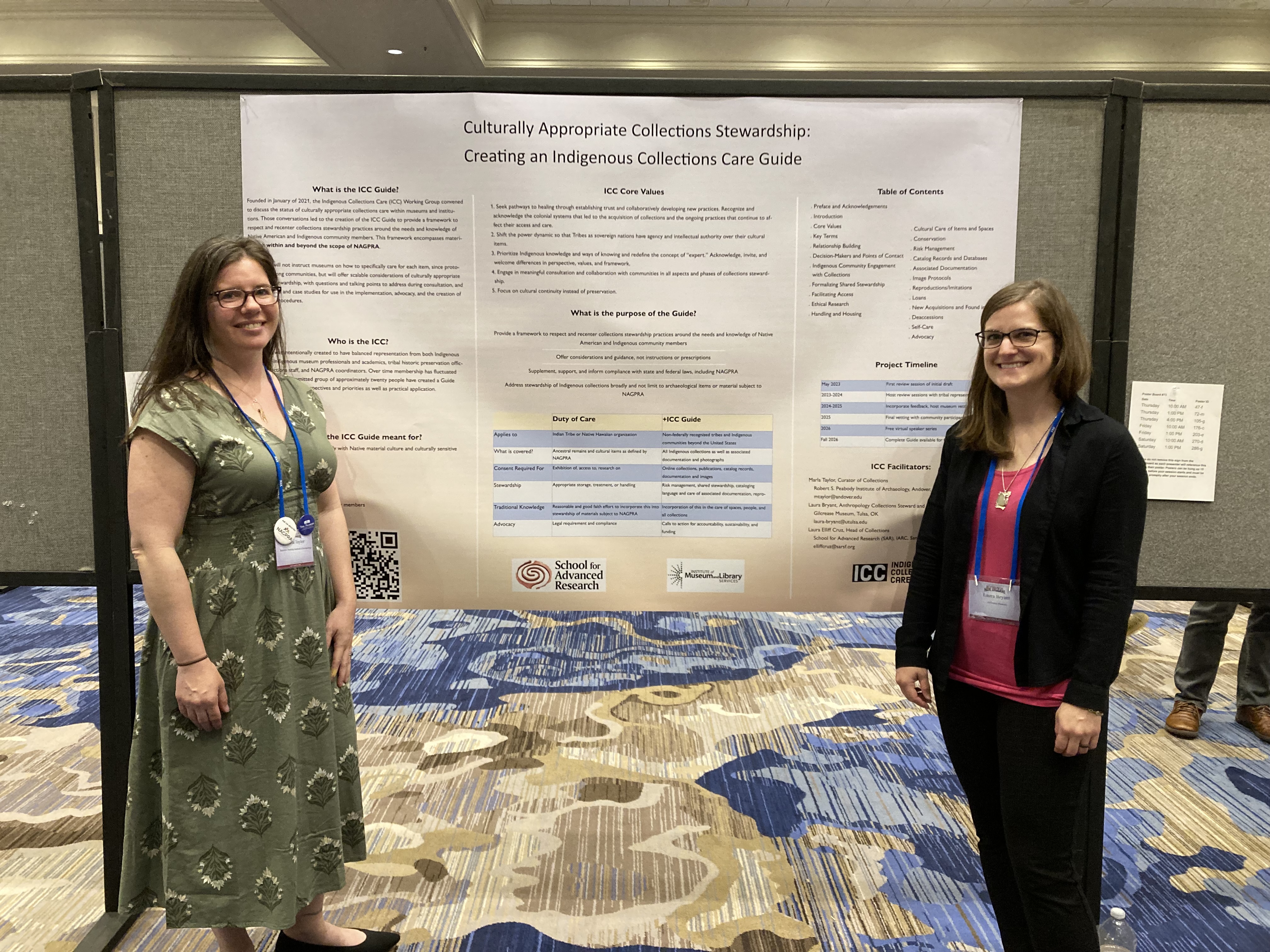
At the SAA meeting in New Orleans, I had the pleasure of representing the Indigenous Collections Care (ICC) Guide in the poster session – In Search of Solutions: Exploring Pathways to Repatriation for NAGPRA Practitioners (Part V): NAGPRA in Policy, Protocol, and Practice.
The ICC poster discussed the development of the ICC Guide, what is covered in the document, and how it can support NAGPRA compliance. The ICC Guide provides a framework to respect and recenter collections stewardship practices around the needs and knowledge of Native American and Indigenous community members. This framework encompasses materials both within and beyond the scope of NAGPRA.
I was excited for the opportunity to share the ICC Guide project with an archaeological audience. I had so many positive conversations with folks and really enjoyed connecting with everyone. It was a great conference and great experience!
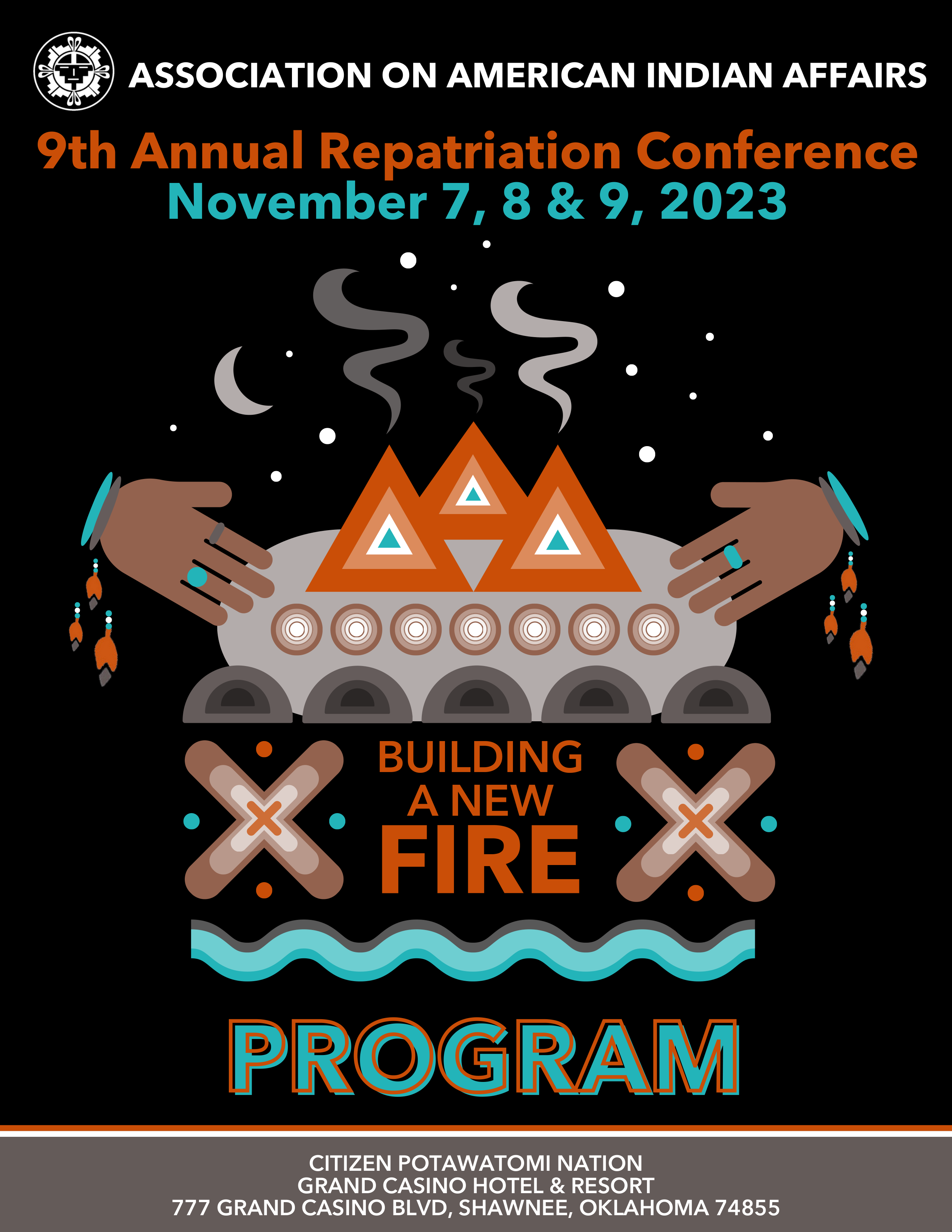
The Association on American Indian Affairs, helmed by Shannon O’Loughlin, hosted the 9th annual repatriation conference at the grand resort of the Citizen Potawatomi Nation in Shawnee, Oklahoma. The Peabody Institute was one of fifteen organizations that helped sponsor the three-day conference. Much of the focus was on compliance with the Native American Graves Protection & Repatriation Act (NAGPRA), federal legislation passed in 1990 that made it possible for Tribal Nations to reclaim their ancestors, funerary belongings, as well as several other types of cultural items from museums and federal agencies. About 300 people attended in person, with another 300 online.
This year’s theme–Building a New Fire–focused participants on how museums, agencies, and Tribal Nations could prepare for the new repatriation regulations promulgated by the Department of the Interior, the implications of the passage of the Safeguard Tribal Objects of Patrimony (STOP) Act and international repatriation, as well as numerous case studies and panel discussions. Highlights include conversations with some of the journalists that have been covering NAGPRA compliance this year from ProPublica and other news outlets, a keynote talk by Angeline Boulley, author of Warrior Girl Unearthed and Firekeeper’s Daughter, as well as training on NAGPRA compliance by Melanie O’Brien, manager of the National Park Service’s repatriation program.
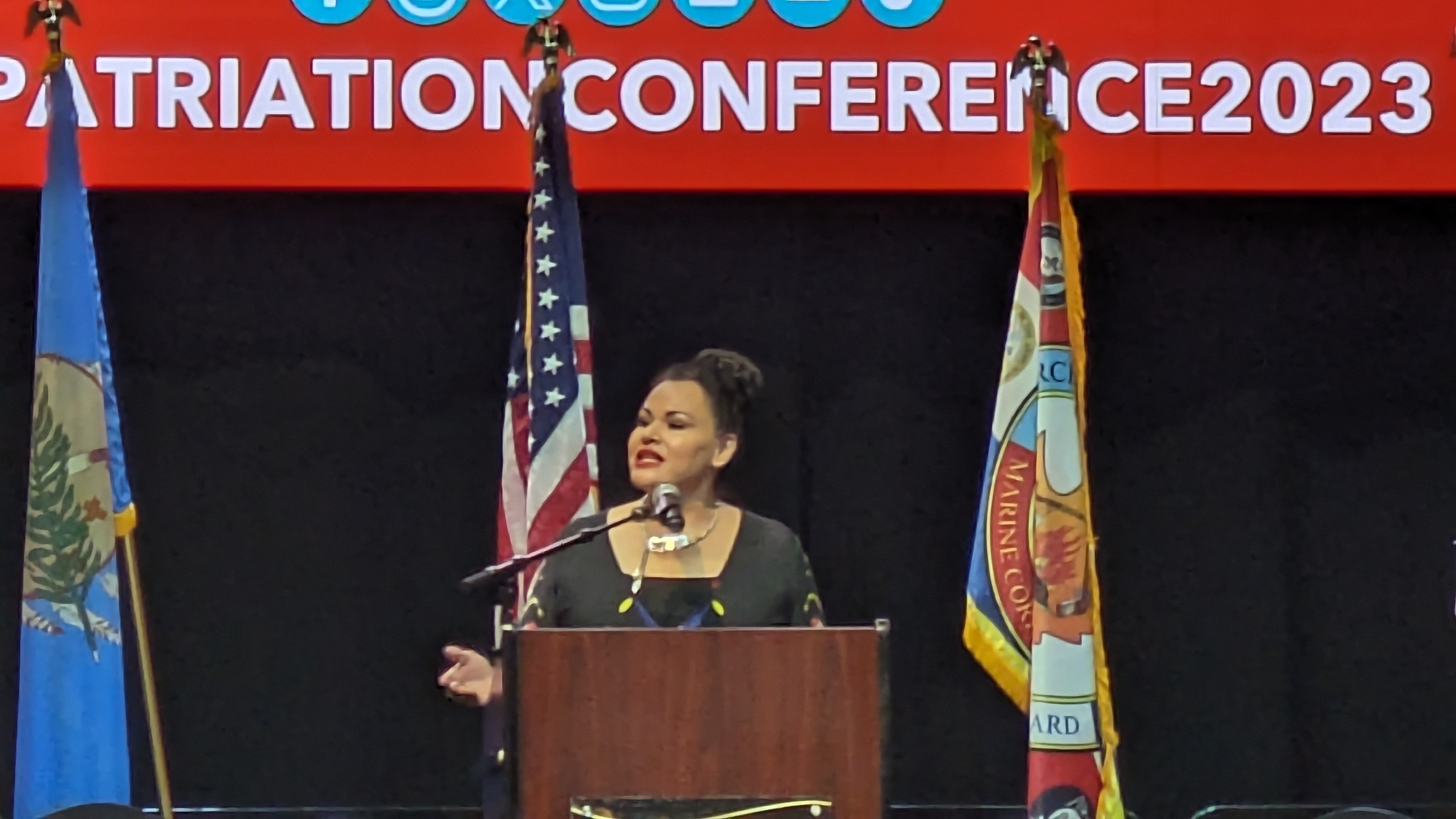
Angeline Boulley shares Warrior Girl Unearthed, her young adult novel that explores one young woman’s experience with repatriation.
I was happy to participate in the session “Well That is What it Says, But…: A Policy Focused Discussion of NAGPRA and its Application in Medical Examiner and Coroner Offices,” organized by Megan Kleeschulte, Doctoral Candidate at the University of Tennessee, Knoxville, and featuring Dr. Ellen Lofaro, Director of Repatriation at the University of Tennessee, Knoxville and William Johnson, Saginaw Chippewa, Curator and Operations Manager for the Ziibiwing Center of Anishinabe Culture & Lifeways. Megan’s work focuses on medical examiner and coroner compliance with NAGPRA, which varies as much as the local and state structures that govern these forensically focused offices.
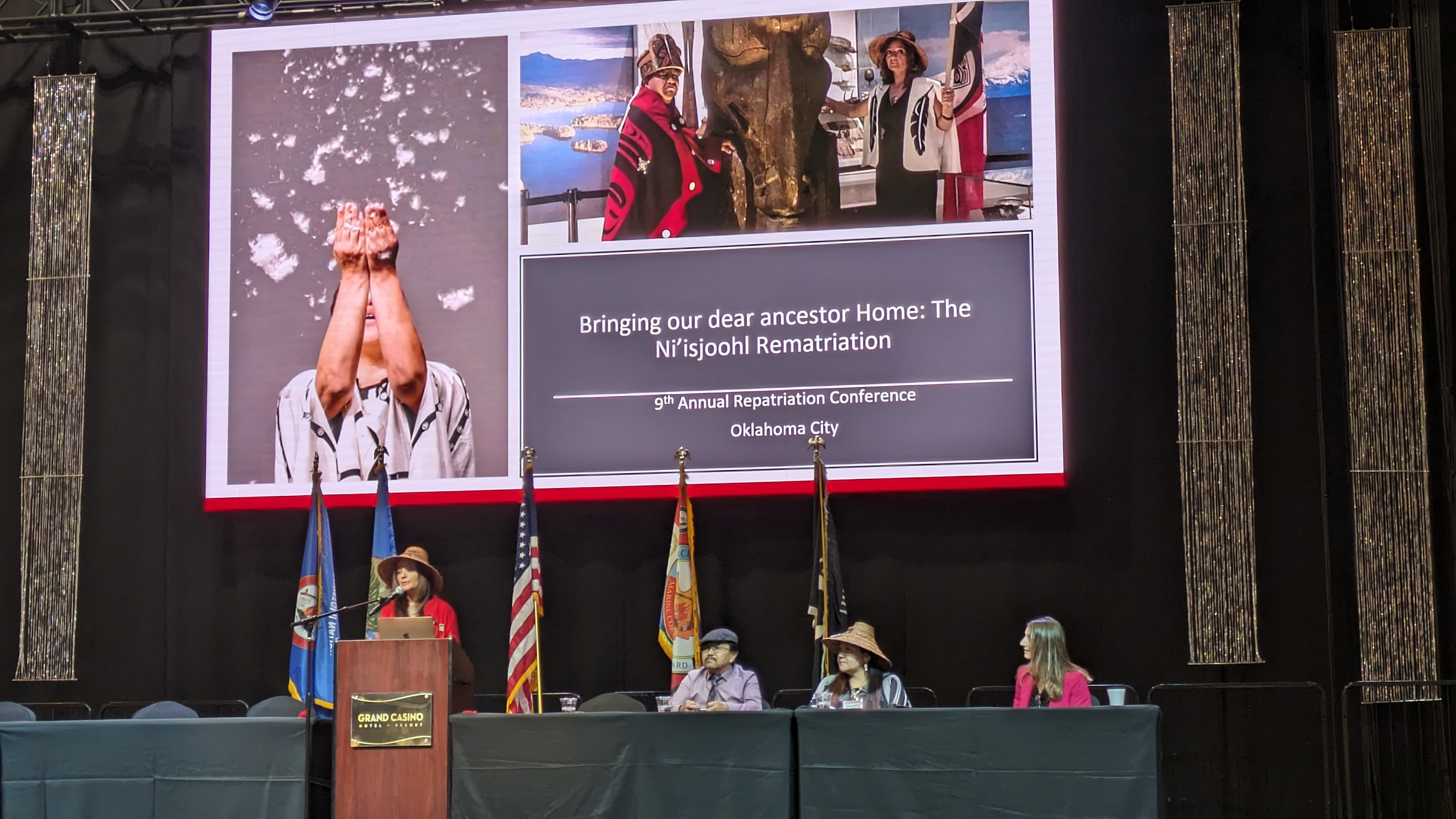
Participants in the session “Hlaa Hiyukwhl Gwildim-Goodam Dim Dip Luu-diyaltkwhl Hli Haykwhl Ganiye’etgum – Preparing to Bring Our Ancestors Home: Rematriation of the Wilps Ni’isjoohl Memorial Pole from Scotland to Nisga’a Lands.”
The conference was also a great opportunity to connect with old friends and make new connections. Since the Covid pandemic, a lot of consultation has happened over the phone or on Zoom, so being in the same place with friends and colleagues was a blessing. Shannon hinted that future conferences might be focused regionally, with even greater emphasis on connecting Tribal Nations with the institutions and agencies that are holding their ancestors and belongings. Whatever the future holds, I’m looking forward to participating. It’s special to be able to gather with others all working on repatriation and build on that shared experience.
Last November, I attended the AAIA Repatriation Conference in New Buffalo, Michigan. There were many tremendous speakers, but the one that really sticks out in my memory was Angeline Boulley. She does not work in the world of repatriation, but held the room in her hands as she spoke to us. I so vividly remember Angeline speaking to us all at the conference – she earned a standing ovation and my presentation had to follow that!
Angeline is a citizen of the Sault Ste. Marie Tribe of Chippewa Indians, and storyteller who writes about her Ojibwe community in Michigan’s Upper Peninsula. She had recently published her book Firekeeper’s Daughter (a #1 New York Times Bestseller) and was giving us a tease of her next book, Warrior Girl Unearthed.
At the time, I had not read Firekeeper’s Daughter and quickly purchased myself a copy. I LOVED it. The story was a fresh take on a murder mystery/adventure. The main character, Daunis, is a biracial unenrolled tribal member whose cultural knowledge can contribute to protecting her community. Sprinkled throughout the book are Ojibwe words, phrases, and cultural teachings in a way that only augments and enriches the story being told. I highly recommend it to you all! (and ignore the young adult classification – this is a complex story that is not always appropriate for younger readers)
Warrior Girl Unearthed is powerful in a different way. Grounded in the complicated reality of repatriation and missing and murdered Indigenous women (MMIW), this novel can feel a little heavy at times. Angeline uses the book in part to educate her readers about NAGPRA and repatriation and in part to build a new adventure around preventing a plot to profit off robbed Indigenous graves. While an explanation of NAGPRA does not always make compelling reading, the story itself is exciting and multi-faceted. Angeline once again interweaves Ojibwe words and cultural teachings in an effective way. And that is maybe the best thing about the book – the Ojibwe culture is just a part of who the main character is. She is just living her life and interfacing with her cultural teachings in a way that does not feel contrived but is instead natural. That feels novel and under-represented in young adult literature.
Her words and her books have left an impression on me and I encourage you to pick up a copy yourself.
October/November is conference season! I was an active participant in multiple conferences over the past couple months and really enjoyed connecting with colleagues after the worst of COVID.
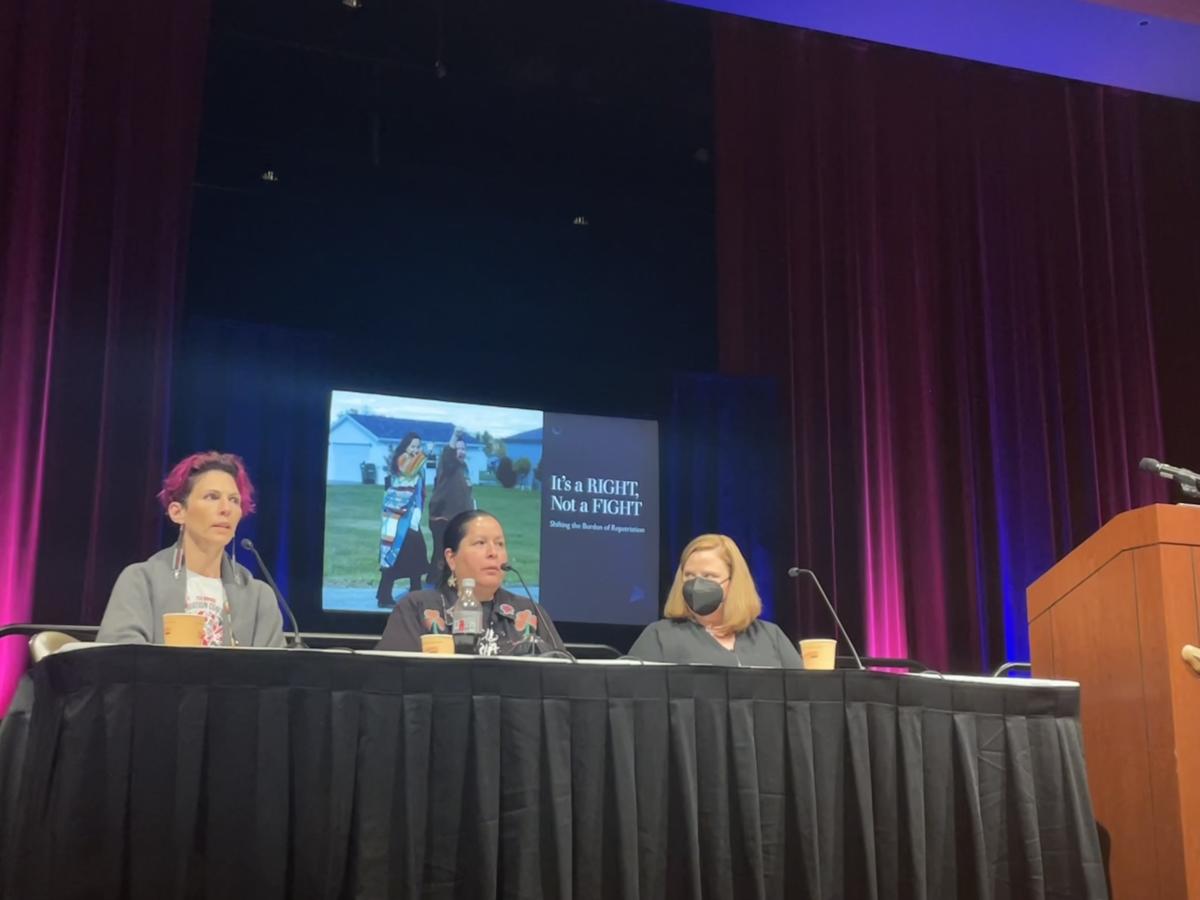
First, I attended the Association on American Indian Affairs (AAIA) 8th Annual Repatriation Conference in New Buffalo, Michigan. The conference “brings together Native Nations, museums, artists, spiritual leaders, academics, lawyers, federal and state agencies, international institutions, collectors and others to work together to reactivate relationships with the past to create a world where diverse Native cultures and values are lived, protected and respected.”
It was a fantastic experience. The Repatriation Conference is a space where I greeted so many colleagues with hugs and made new and important connections. The speakers shared meaningful perspectives and insights and I am proud to be a part of that community. Oh, and the sunrise ceremony by the host Pokagon Band of Potawatomi was an invigorating way to start the day!
The second conference (only one week later!) was the 2022 International Conference of Indigenous Archives, Libraries, and Museums hosted by the Association of Tribal Archives, Libraries, and Museums (ATALM) in Temecula, California. I love ATALM as an experience. I learn so much from those sessions and surrounding myself with innovate professionals, both Indigenous and non-Indigenous, who work so hard to prioritize Indigenous voices and perspectives. A couple of shout-outs to my favorite presentations – Traditional plant-based methods for pest control and Your Neighborhood Museum.
At both the Repatriation Conference and ATALM, I was a presenter and shared the work that colleagues and I have done to create the Indigenous Collections Care (ICC) Working Group and Guide. The ICC is a group of both Indigenous and non-Indigenous museum professionals and academics, Tribal Historic Preservation Officers, collections staff, and NAGPRA coordinators who are working to create a Guide as a reference tool for people who interact regularly with Native American collections. The Guide will offer scalable considerations and templates for implementation, advocacy, and creation of policies and procedures for all areas of collections stewardship. This project has been a major focus of mine over the past couple years and I am proud to share our work with the broader community.
The third and final conference in my marathon was the New England Museum Association 2022 Annual Conference. Now, I was admittedly a little exhausted after traveling from New Hampshire to Michigan to New Hampshire to California and back home to New Hampshire so I only attended NEMA for a day to be a speaker. This session was slightly different and focused on demystifying decolonization/Indigenizing museum collections stewardship. I was joined by colleagues from the Boston Children’s Museum and The Trustees of the Reservation for this conversation. We received positive feedback from everyone and I hope it inspired someone to take a step forward in this work.
While I really did love the opportunity to connect with other professionals, I am happy to be done with conferences for the year! And I have to admit, I am already planning my schedule for 2023…
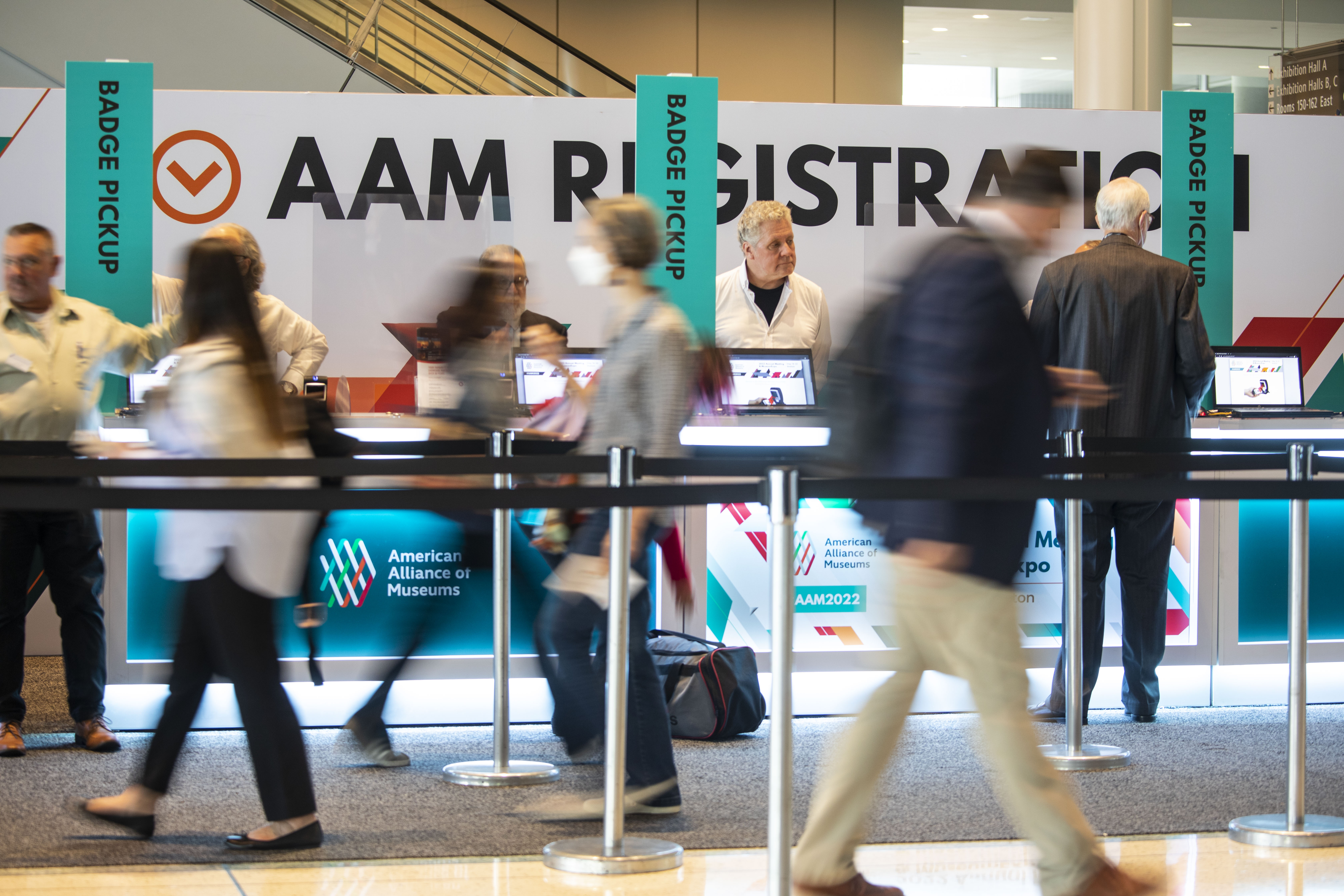
The American Alliance of Museums (AAM) held their Annual Meeting in Boston in May. Like many other conferences, this was the first in-person meeting in two years. The Peabody Institute was fortunate enough to present our work in a few different formats.
I was part of two sessions – Research Requires Consultation and Centering Culturally Appropriate Care: Re-examining Stewardship of Native American Cultural Items.
The session discussing research presented the Peabody Institute’s research policy that requires consultation and approval from an authorized tribal representative as part of any application for access to collections. You can find details about the policy here. My co-presenters were the NAGPRA Coordinator for the Osage Nation and the Senior Director of Heritage and Environmental Resources for the Seminole Tribe of Florida. Together we discussed the power of respecting tribal sovereignty by requiring these conversations about all levels of research into the cultural heritage of Native American communities.
Centering Culturally Appropriate Care presented the work of the Indigenous Collections Care Working Group (ICC) that I co-founded with my colleague Laura Bryant, Anthropology Collections Manager and NAGPRA Coordinator at the Gilcrease Museum in Tulsa, OK. The ICC has been working to develop a Guide as a reference tool for people (including museum professionals) who interact regularly with Native American collections, including those at all levels of experience and exposure. We are excited to be focusing on this conversation and developing a resource that is truly needed in the museum world. You can learn more about our work here.
Alt text: A busy registration deskAlt text: A speaker at a podiumAlt text: A full session roomAlt text: Attendees seated at tablesAlt text: Attendees in the poster hall
But I was not the only one from the Peabody Institute presenting at AAM!
Ryan Wheeler, Peabody Institute director, was part of a session called #NoMoreStolenAncestors: Repatriation and the NMAI Act. Facilitated by the Seminole Tribe of Florida, the session explored the issues with curating human remains, obstacles to repatriation, ways to improve the process. The Seminole have been pushing for policy change at the Smithsonian Institution’s National Museum of Natural History and has had some success. You can learn about their work here, here, and here.
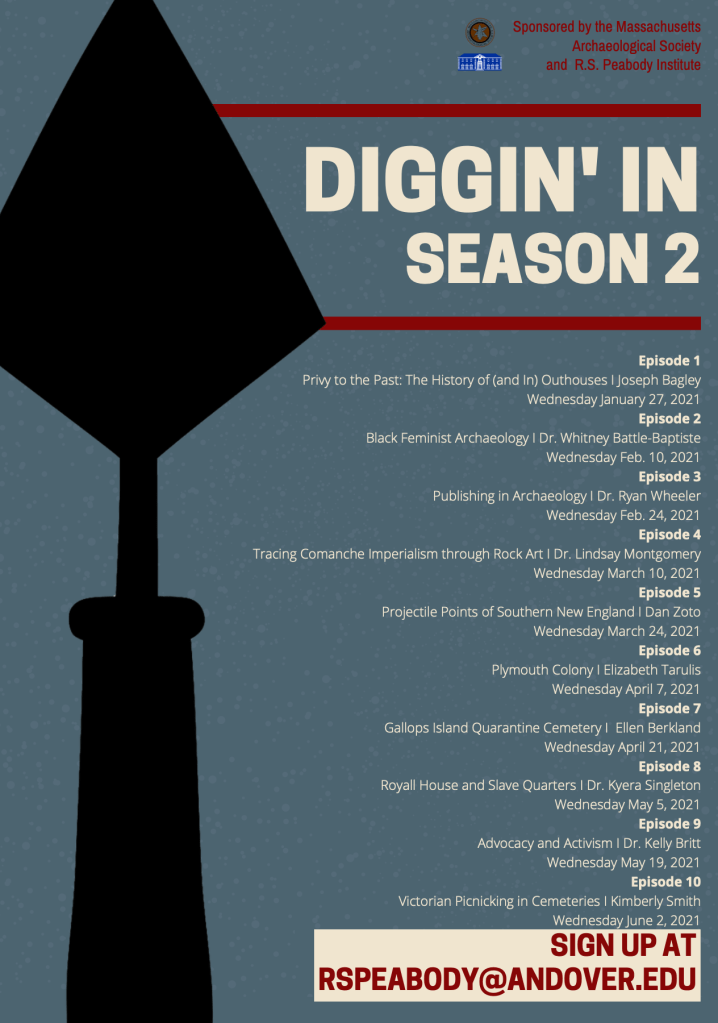
Lindsay Randall, curator of education, co-authored a poster examining the explosive growth in digital technologies in small organizations and how it can be used to deliver high-quality content to museum audiences. The poster shone a spotlight on the Diggin’ In series produced by the Peabody Institute and the Massachusetts Archaeological Society. You can find all the Diggin’ In talks on the Peabody’s YouTube channel here.
It was an honor to share our work with our colleagues in the museum field and receive such supportive feedback. We look forward to presenting at many more conferences – hopefully in person!
We are tremendously excited to announce the continuation of Diggin’ In: Digital Conversations with Archaeologist. Co-hosted by the Peabody Institute and the Massachusetts Archaeological Society the lecture series brings leading experts and their work directly to our viewers. All lectures are free and open to the public.
Building on the success of the inaugural season of Diggin’ In, which reached over 1000 individuals, Season 2 promises to continue to be especially robust. Outstanding scholars such as Dr. Whitney Battle-Baptist, Dr. Lindsay Montgomery, and Kimberly Smith will cover fascinating topics ranging from Black feminist archaeology, to Comanche rock art, to the artifact patterning of the Victorian practice of picnicking in cemeteries.
Join us on Wednesday January 27, 2021 for the launch of the new season with Joe Bagley, Boston City Archaeologist for his talk Privy to the Past: The History of (and in) Privies. All lectures begin at 1:30 pm.
If you want to attend one or all of these lectures, please sign up at rspeabody@andover.edu to get on the ZOOM invitation list.
Each episode will be recorded and uploaded to YouTube afterwards.
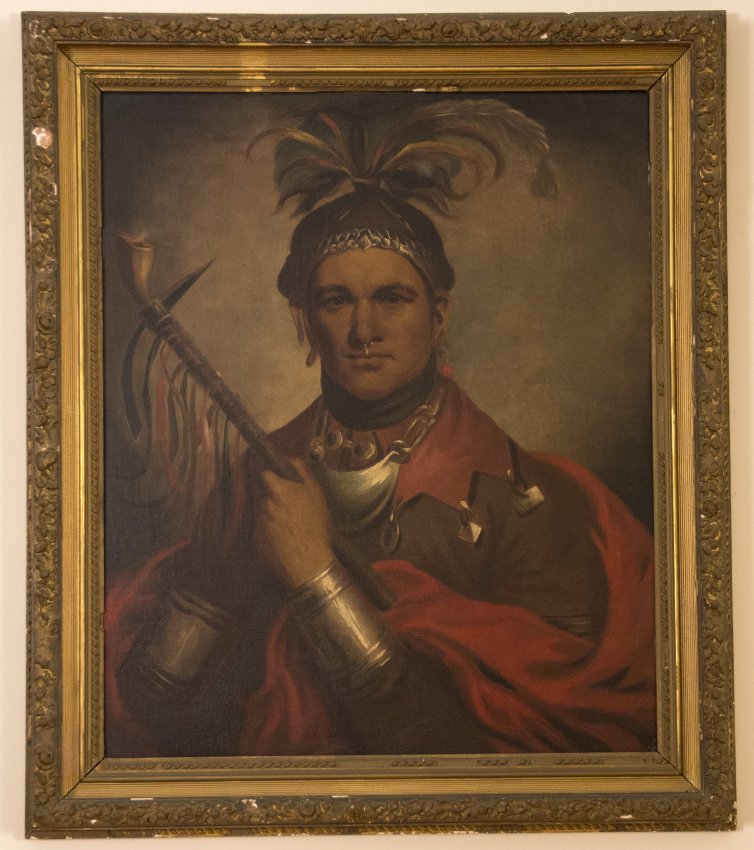
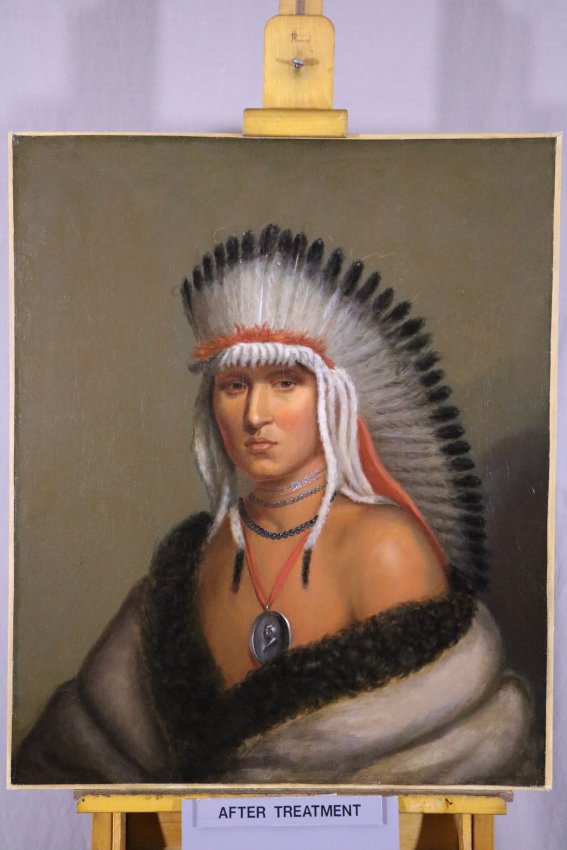
Three distinctive oil paintings attributed to artist Henry Inman (1801-1846) are among the collections of the Robert S. Peabody Institute of Archaeology. These paintings are part of a larger group of portraits created by Inman to produce the hand colored lithographs that appeared in the three volumes of The History of Indian Tribes of North America (1836-1844) by Thomas McKenney and James Hall. Specifically, the Peabody paintings depict Petalesharo (90.181.10), Ki-On-Twog-Ky, or Cornplanter (90.181.11), and Mohongo and Child (90.181.12). The source material for the Inman paintings were original works created principally in Washington DC by portrait painter Charles Bird King (1785-1862). The bulk of the King originals were destroyed in a fire in 1865.
Henry Inman’s portrait of Ki-On-Twog-Ky, or Cornplanter.
Today, original editions of the McKenney and Hall volumes and individual lithographs are valuable and highly sought after, but at the time the project was not a financial success. Many of the Inman portraits (at least 100 or more) were given to the Tilestone and Hollingsworth Paper Company of Milton, MA, who had supplied paper for the book project. The families of Edmund Tilestone and Amor Hollingsworth made a gift of the paintings to the Harvard Peabody Museum of Archaeology and Ethnology in 1882. In the late 1970s and early 1980s the Harvard museum sold many of the Inman paintings in their collection, ultimately retaining twenty-five.
Henry Inman’s portrait of Petalesharo after a recent cleaning.
Comparison with the list of Harvard’s original holdings indicates that the three Inman portraits at the Robert S. Peabody Institute of Archaeology did not come from that source. The frames also are quite different; the paintings at Harvard have simple wood frames, with descriptive plaques affixed, while those at the Robert S. Peabody Institute of Archaeology have ornate frames with gold leaf. In correspondence on file, former museum director Richard S. MacNeish told then director James Bradley that the paintings were part of the original gift from Robert S. Peabody. Stebbins and Renn (2014:288) report that Harvard received 107 of the Inman paintings from the Tilestone and Hollingsworth heirs, but that Inman had originally painted 117 and the whereabouts of the remaining paintings is unclear. It is possible that Robert S. Peabody acquired the three paintings when they were exhibited in Philadelphia.
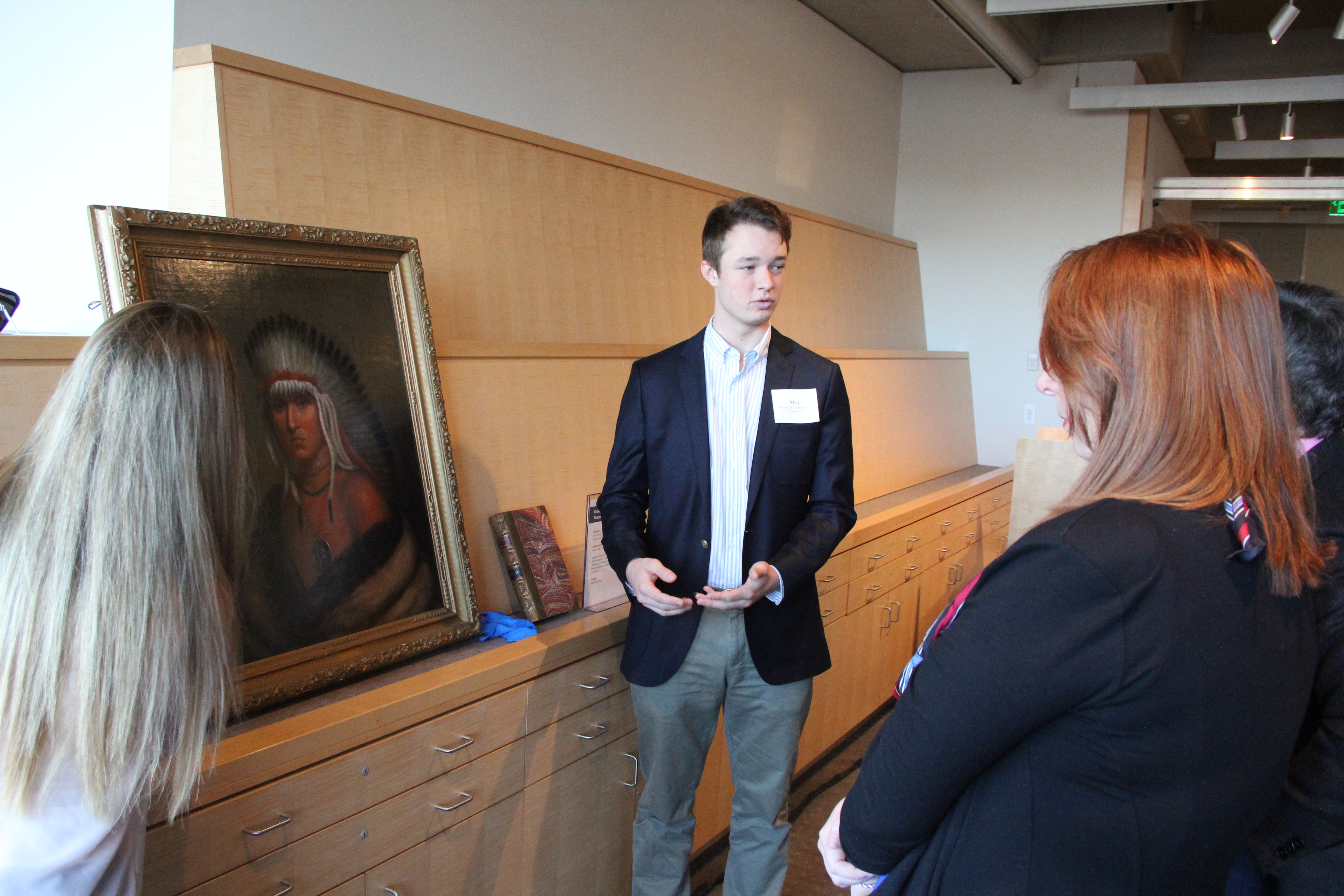
Phillips Academy students share their independent research on the Henry Inman paintings with members of the Board of Trustees.
The paintings reflect the classical style of portraits painted in the nineteenth century, and do not attempt to portray people in an imagined “primitive” setting as the photographs of Edward S. Curtis do at the end of the century. Clothing and personal items reflect the blend of traditional and Anglo-European attire resulting from varying levels of cultural assimilation. History and Social Sciences instructor Marcelle Doheny uses the paintings in her senior elective, Race and Identity in Indian Country, and they were part of an independent student project in 2015-2016 that examined Anglo-European portrayals of Native Americans.
Henry Inman’s portrait of Mohongo and child in storage at the Peabody.
The biographical notes that accompany the McKenney and Hall publication provide additional details about the lives of these individuals, at least as documented by the editors. Mohongo’s (1809-1836) story is particularly striking, as she was one of a group of Osage persuaded to make a European tour in 1827. While in Europe, she gave birth to twins, but only one survived. The tour organizer, who had brought the Osage to Europe to perform as a Wild West Show, was arrested for debt in Paris, leaving the rest of the party to fend for themselves. Ultimately, the Marquis de Lafayette learned of the situation and arranged for passage back to North America. During the sea voyage more members of the party perished, but Mohongo and her child survived, ultimately arriving in Norfolk, Virginia, where Charles Bird King painted their portrait. We believe that the peace medal worn by Mohongo depicts Andrew Jackson, who was president at the time. Mohongo and her child made their way back to Missouri. The book, An Osage Journey to Europe, 1827-1830: Three French Accounts edited and translated by William Least Heat-Moon and James K. Wallace, documents the episode.
Several exhibits—for example, the Indian Gallery of Henry Inman, which toured museums from 2006 to 2012—have assembled small collections of the extant Inman paintings, but the examples at the Peabody have never been included, likely because curators and art historians have not known about them.
Other Sources
Christie’s East. 1981. American Paintings and Watercolors of the 18th, 19th and 20th Centuries (auction catalog). New York.
Ewers, John C. 1954. Charles Bird King, painter of Indian visitors to the nation’s capital. Annual Report of the Board of Regents of the Smithsonian Institution, 1953. Pp. 463-473. Publication 4149. Government Printing Office, Washington DC.
Gerald Peters Gallery. 2008. Henry Inman, Twenty-four Indian Portraits (catalog). New York.
Gerdts, William H., and Carrie Rebora. 1987. The Art of Henry Inman. National Portrait Gallery, Smithsonian Institution, Washington, DC.
Stebbins, Theodore E., Jr., and Melissa Renn. 2014. American Paintings at Harvard, Volume 1: Paintings, Watercolors, and Pastels by Artists Born before 1826. Harvard Art Museums and Yale University Press, New Haven.
Viola, Herman J. 1976. The Indian Legacy of Charles Bird King. Smithsonian Institution Press and Doubleday & Company, New York.
Viola, Herman J. 1983. Indians of North America: Paintings by Henry Inman from the D. Harold Byrd, Jr. Collection. Buffalo Bill Historical Center, Cody, WY.
Last week, members of the Peabody staff made their way down to Washington D. C. to attend the 83rd annual meeting of the Society for American Archaeology! This society is the largest organization for archaeologists who conduct work in North and South America. It was founded in 1934 and had its very first meeting at Phillips Academy in December 1935. Today, the SAA is comprised of over 7000 members. The annual meeting of the SAA lasts for four days. Archaeologists from all over the Americas get together to present papers and posters pertaining to their research, conduct symposiums related to current issues in and directions for the field of archaeology, and many institutions and vendors rent space in the book room to promote their organizations.
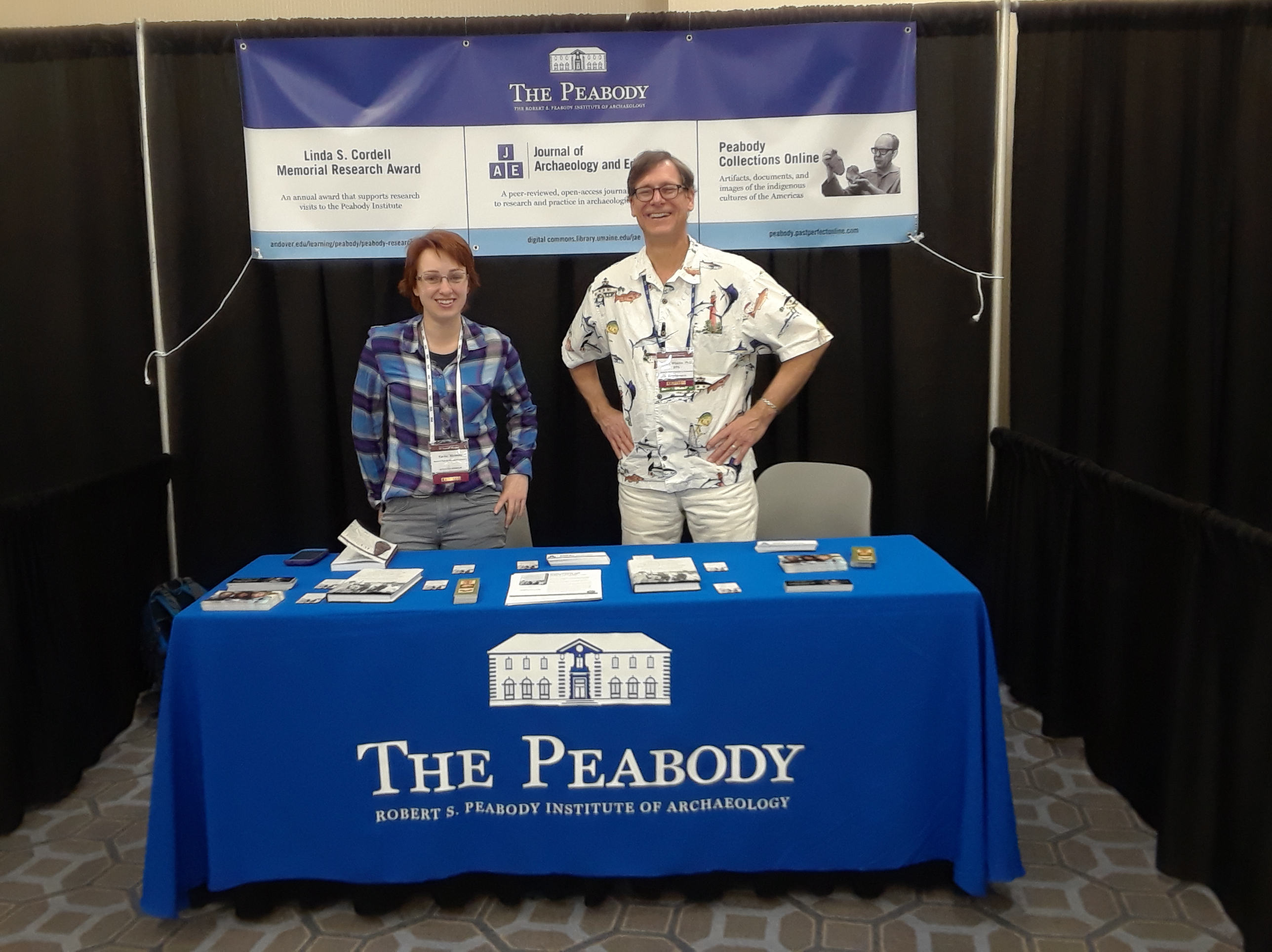
Dr. Wheeler and Rachel behind the Peabody’s table.
This was my primary task at the SAA meeting this year. The Robert S. Peabody Institute had a table in the exhibition hall manned by Peabody staff members. This is a great way for other conference attendees to stop by and talk to us about what is going on at the Institute, find out whether or not we have collections that researchers are interested in, and learn more about our online collections, Cordell Scholarship award and the Journal of Archaeology & Education. There was also an order form for anyone who interested in purchasing our new book, Glory, Trouble, and Renaissance at the Robert S. Peabody Museum of Archaeology. All in all, working the table was a great experience. It was awesome getting to talk to fellow archaeologists who might not have ever crossed my path if not for the Peabody table.
Dr. Wheeler and his former advisor Dr. Barbara Purdy
In addition to the educational and networking benefits that come along with attending conferences, the SAA is also a great place to get to see former colleagues and friends who have gone their own ways. I had the chance to see so many people that I never get to see anymore because in the world of archaeology, people can work with you one year and then go work halfway across the world the next! People I know came from St. Louis, Albany, New York City, Virginia, New Mexico and even Hawaii! I saw colleagues from my very early days as an archaeologist in New York, as well as friends that I had made working on projects all the way down in Virginia. It was very enjoyable to have my multiple spheres of friends finally collide in one space.
Dr. Ryan Wheeler with Ted Stoddard, whose collections are housed at the Peabody!
Because the conference was in Washington, D.C., it also provided the opportunity to see museums in the area. The main museum I had wanted to see was the National Museum of African American History and Culture. Unfortunately, everyone else in the city wants to go there too, and even though we tried to grab tickets at 6:30 AM, there were none to be had. I walked the mall with some friends anyway. The weather was gorgeous, passing 80 degrees! The cherry blossoms and sun were out and it was a great day to walk around outside and see the various monuments (which look much better in the sun and heat than they did the last time I was in D.C. in January 2016 with clouds and rain).
Check out those cherry blossoms blooming!
I finally made my way to the Smithsonian National Museum of Natural History. I’ve somehow never been to this one before, and I’m very glad that I went. The museum had numerous exhibits, including precious gems and rock formations, dinosaurs, a human origins exhibit, an osteology exhibit and even an exhibit showcasing mummies from Egypt. The collection of faunal skeletons in the Osteology Hall was particularly fascinating. It’s amazing to see how similar many creatures are when they are stripped down to just bone.
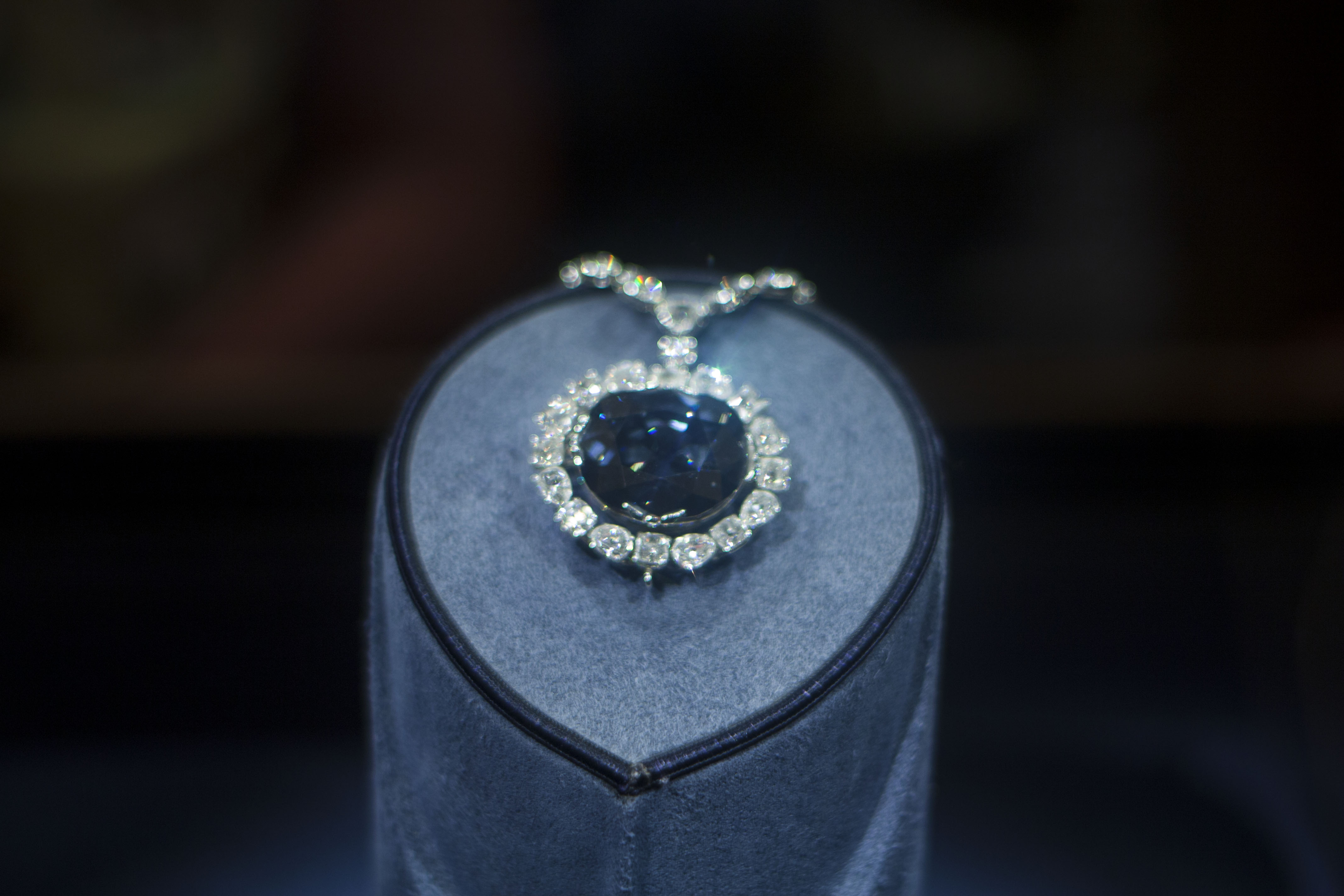
The Hope Diamond housed at the National Museum of Natural History.
The four days spent in D.C. for the SAA were amazing and I hope a good time was had by all who attended. It was a nice break from the daily routines I have here at the Peabody!
The Inventory Specialist position is supported by a generous grant from the Oak River Foundation of Peoria, Ill. to improve the intellectual and physical control of the institute’s collections. We hope this gift will inspire others to support our work to better catalog, document, and make accessible the Peabody’s world-class collections of objects, photographs, and archival materials. If you would like information on how you can help please contact Peabody director Ryan Wheeler at rwheeler@andover.edu or 978 749 4493.
Scholars, museum professionals, educators and interested members of the public gathered at Salem State University for a symposium that delved into the history and implications of slavery in New England. Essex Heritage organized this event to be interactive and engaging. In addition to scholars they also invited the participants to explore the topic through breakout sessions and facilitated activities.
Beth Beringer of Essex Heritage invited me to lead one of the activities. During the morning session I lead participants through our History 200 lesson, The Little Spots Allow’d Them. Participants explored how landscapes can and have shaped human behavior using archaeological data from Isaac Royall’s Ten Hills Farm in Medford, Mass. (now the Royall House and Slave Quarters).
Curator of Education Lindsay Randall leads her break out group through the interactive activity
The program then shifted to exploration of the difficult discussions that arise when confronting northern slavery. The experts on this panel had a diverse background as historians, professors, and museum professionals. They focused on meaningful strategies that could be used to engage any audience – classroom, museum goers, or the public – in a substantive manner.
Keynote speaker (and ChuBbs Woodrow Randall enthusiast) Dr. Joanne Pope Melish spoke about the often complex relationship that New England had with the institution of slavery. She focused on the impact that this history has had on the region and its legacy today. Melish was also quick to point out that “rich men did not own slaves. Slaves made men rich” and how we need to shift the typical narratives used when engaging with students in any setting.
There also was a group of museum educators who talked about their unique ways of engaging the public in the history of slavery in New England. Maryann Zujewski from Salem Maritime National Park has been working with Dr. Bethany Jay of Salem State University to reframe their interpretive tours so that they are not simply ADDING black people to history, but that they and other minorities are becoming more integrated in a meaningful and natural manner. Olivia Searcy discussed how she has helped to create the educational programming for the Royall House and Slave Quarters Museum in a manner that has focused on the history of the enslaved people at the site. The Caribbean Connections program from the House of the Seven Gables is a duel language program, described by Ana Nuncio as innovative in its outreach to minority groups in a community which might not otherwise feel welcomed in a museum setting.
At the end of the day participants could self-select into a variety of breakout sessions to dive further into a topic of interest.
This symposium was very important and offered me a great deal of new information and ways of thinking. I am already furiously at work on how to integrate all that I learned into the lessons and activities that I teach. I hope that another symposium of this kind will be offered again and I anxiously await word from my friends at Essex Heritage!












 The Peabody