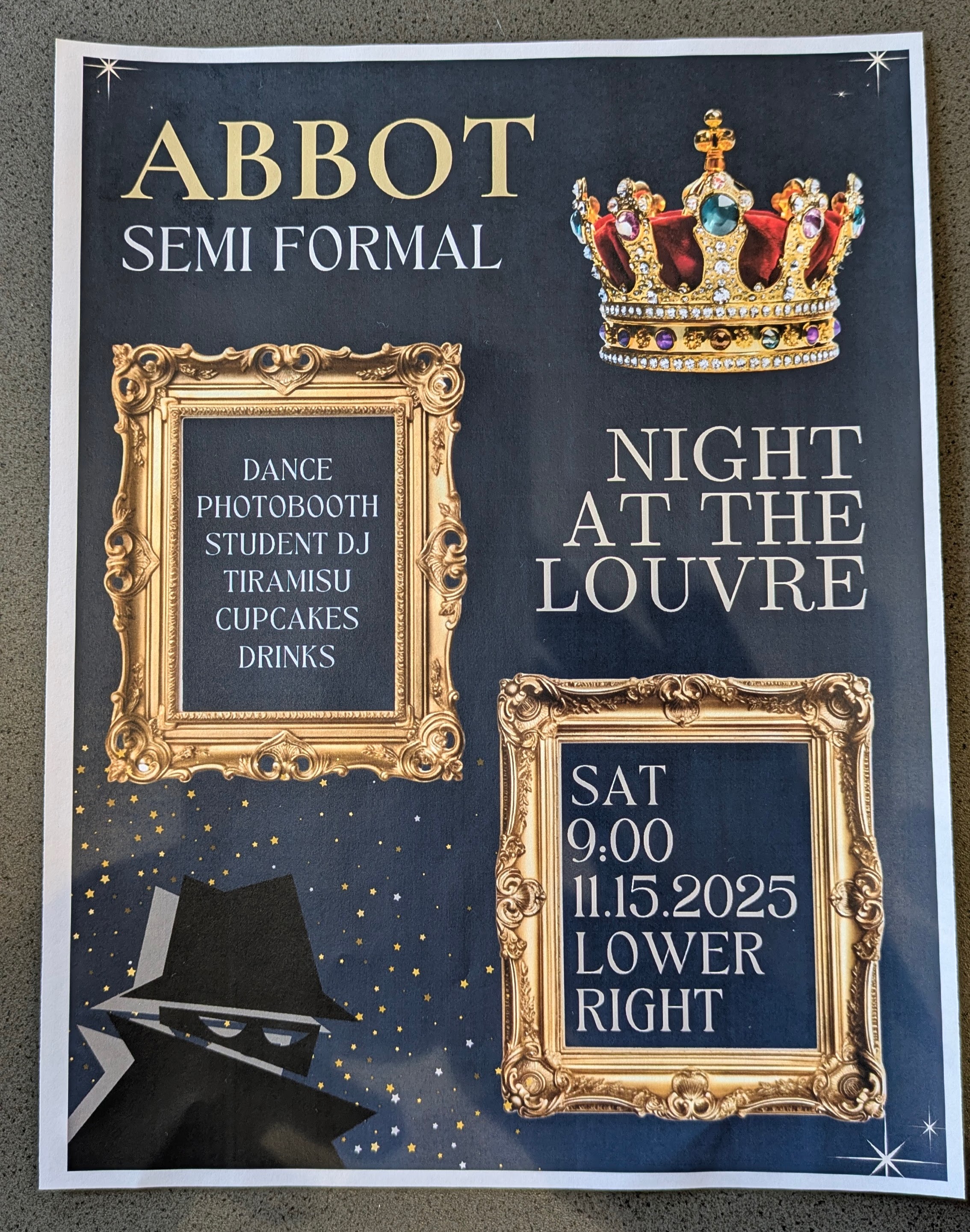
Flyer for a dance at Phillips Academy capitalized on the Louvre heist, November 2025.
The brazen theft of crown jewels from the Louvre on October 19, 2025 fed the ongoing public fascination with museum heists. From details like which mobile work platform was used to access the museum to issues with security, there was almost endless interest and speculation. Even the dapper high school student mistaken for a French detective captured the world’s attention. Not surprisingly, the museum heist is a classic movie and tv trope from the recent The Mastermind (2025) to How to Steal a Million (1966) to the multiple versions of The Thomas Crown Affair (1968, 1999—and apparently a new one in production!), and many others. Fictional literature about heists could occupy a library. Even students here at Phillips Academy hosted a Louvre heist-themed dance! The exciting and glittery portrayals of museum heists, however, often veer far from the real blend of cunning, avarice, ineptitude, and the real mess that museum thefts leave in their wake. Just a few days before the Louvre heist, thieves gained access to the Oakland Museum’s storage spaces, taking over 1,000 objects, including many Native American items.
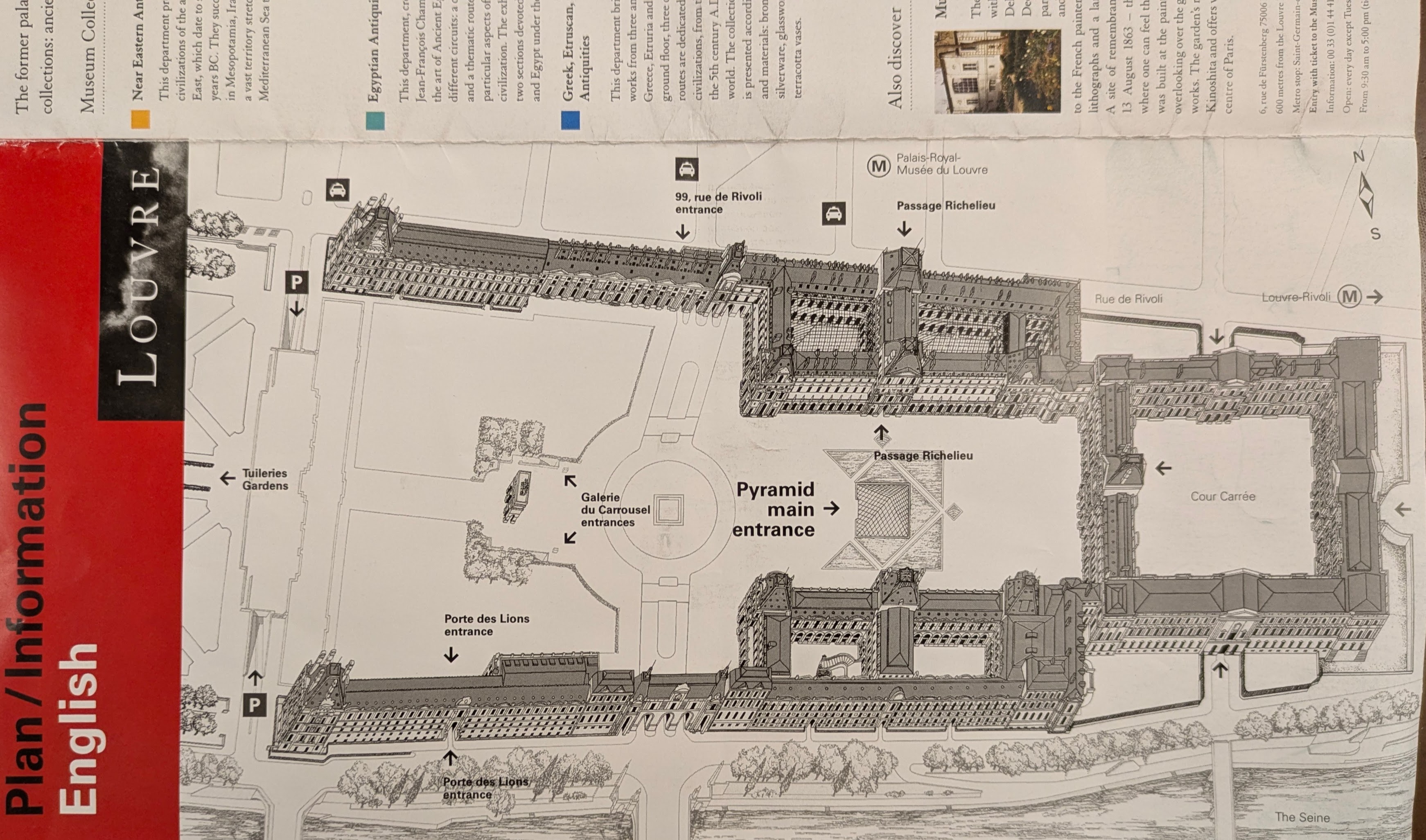
Plan of the Louvre from Phillips Academy student trip, 2015.
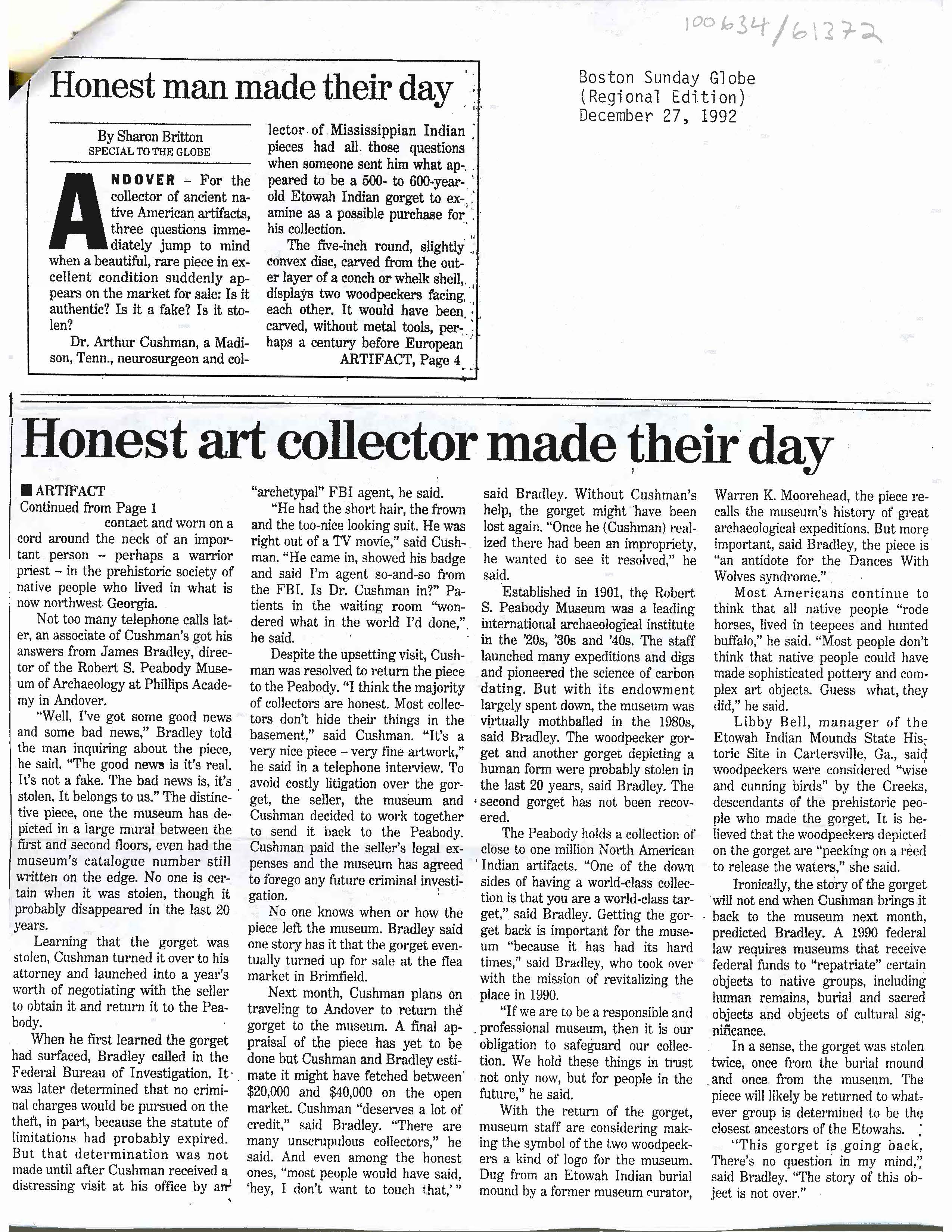
When I joined the Peabody Institute in 2012, former director Jim Bradley told me to be on alert for missing items, presumed stolen at some unknown point in the museum’s past. Early in Jim’s tenure as director, he had been involved in the recovery of a shell gorget from the Etowah site in Georgia. Since that time several collectors have returned items from Etowah and Maine, and others have been tracked down with the aid of the FBI art crimes team. What we now understand is that the Peabody Institute experienced two thefts—one in late 1970 or early 1971, and another in 1986.
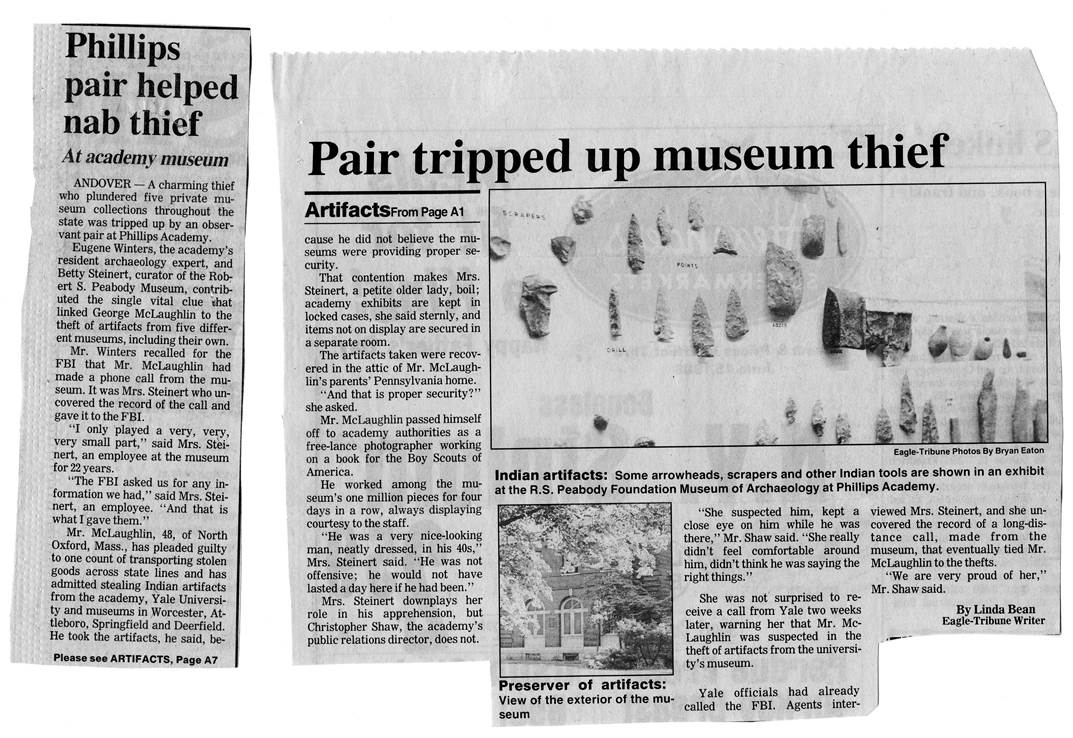
Eagle-Tribune article from 1986 recounts George McLaughlin’s theft of artifacts from the Peabody Museum.
Marla Taylor and John Bergman-McCool recount the theft by George McLaughlin in 1986 in their 2020 blog post. McLaughlin gained access to the Peabody’s collection housing areas at a time when the institution lacked professional staff. That made it easier, but he also stole from other museums across New England and several private collectors. He was ultimately caught by the FBI and prosecuted, but not before removing most of the catalog numbers from the thousands of stone tools that he had taken. It was unclear what McLaughlin’s plans were, but it seems he was readying items for sale. And while the FBI arrest prevented that, to this day we have a large number of items that have lost their original provenience—in other words, a big mess.
Boston Sunday Globe article recounts the return of the Etowah shell gorget (December 27, 1992).
I’ve shared before about an earlier theft at the Peabody Institute (also, see my article in the April 2018 SEAC newsletter). Based on correspondence, we are confident that items from Georgia and Maine were stolen in late 1970 or early 1971 while exhibits were being refreshed and updated. These items had been on display when they were photographed to illustrate Dean Snow’s 1976 book The Archaeology of North America. It seems like they were taken while awaiting reinstallation in the exhibits. As I mentioned above, a number of these items have been returned, either by conscientious collectors or through an investigation by the FBI art crimes team, begun in January 2018 when one of the Etowah items was returned to us. Many of these items are funerary objects and subject to repatriation under the Native American Graves Protection & Repatriation Act (NAGPRA). Their continued absence complicates those repatriation efforts.
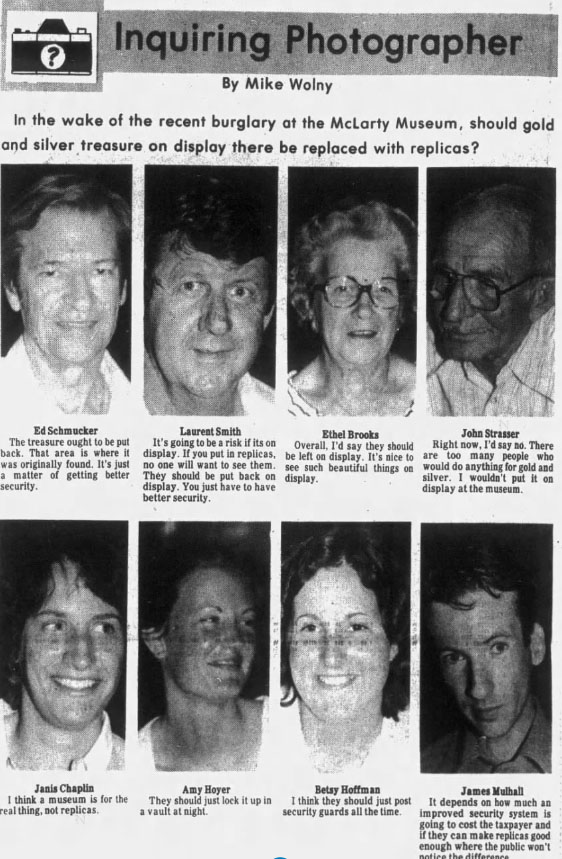
The Indian River Press Journal sought reader opinions about the 1980 theft of Spanish shipwreck treasure from the McLarty Museum and if treasure items should continue to be exhibited (Friday, March 8, 1980, page 8).
Unlike the glamourous (or humorous) fictional depictions of museum heists, these are often crimes of opportunity, driven by greed or misguided ideas about the role of museums in caring for and sharing art and culture. I think one example from my past career as Florida’s state archaeologist aptly captures the stupidity of the museum heist. Our collections in Florida included impressive holdings recovered from the shipwrecks of Spanish treasure galleons. Loans to the McLarty Museum near the survivor’s camp of the 1715 fleet wreck included gold coins and gold bars. In 1980, thieves defeated locks and security systems, but when confronted with the reality of disposing of a gold bar, things took a weird turn. They used a hack saw to begin cutting a gold bar into more saleable (or tradeable) pieces before being apprehended. The gold bar was recovered, but the saw cut end remains at large. During our annual 100% inventory of precious metals and coins our outside auditor frequently questioned what was going on with the clearly chopped up gold, so much so that we finally tucked some of the paperwork and news coverage with the piece to allay fears that we were helping ourselves. The thief in that case ultimately criticized press coverage, telling the court that he was “by no means a professional burglar” and that the theft was just a “reckless impulse.” So, enjoy that museum heist movie or book, but remember, it’s a far cry from the real mess made by these thefts.
Did you know how beautiful New Mexico is? I had the opportunity to travel to the Albuquerque and Santa Fe areas this July and can definitely recommend making the trip.
The Peabody Institute actually has a long relationship with New Mexico. In the 1920s, Alfred Kidder excavated Pecos Pueblo on behalf of Phillips Academy (what is now the Peabody Institute). The ripple effects of that work included repatriation work with the Pueblo of Jemez, a long-term loan with the Pecos National Historical Park, inter-institutional collaboration, relationships with Jemez artists, and incredible learning opportunities for the students at Phillips Academy.
While I had been to the Pueblo of Jemez before this summer, I had not had the opportunity to see the Pecos archaeological site or Pecos National Historical Park before. It was truly a pleasure to experience the site in-person and get an understanding of how Pecos sits in the landscape. I was also able to view their wonderful exhibit, spend time with the Museum Curator to view the collections on loan from the Peabody, and meet several dedicated park staff members. I am grateful for the opportunity to spend that time with them all.
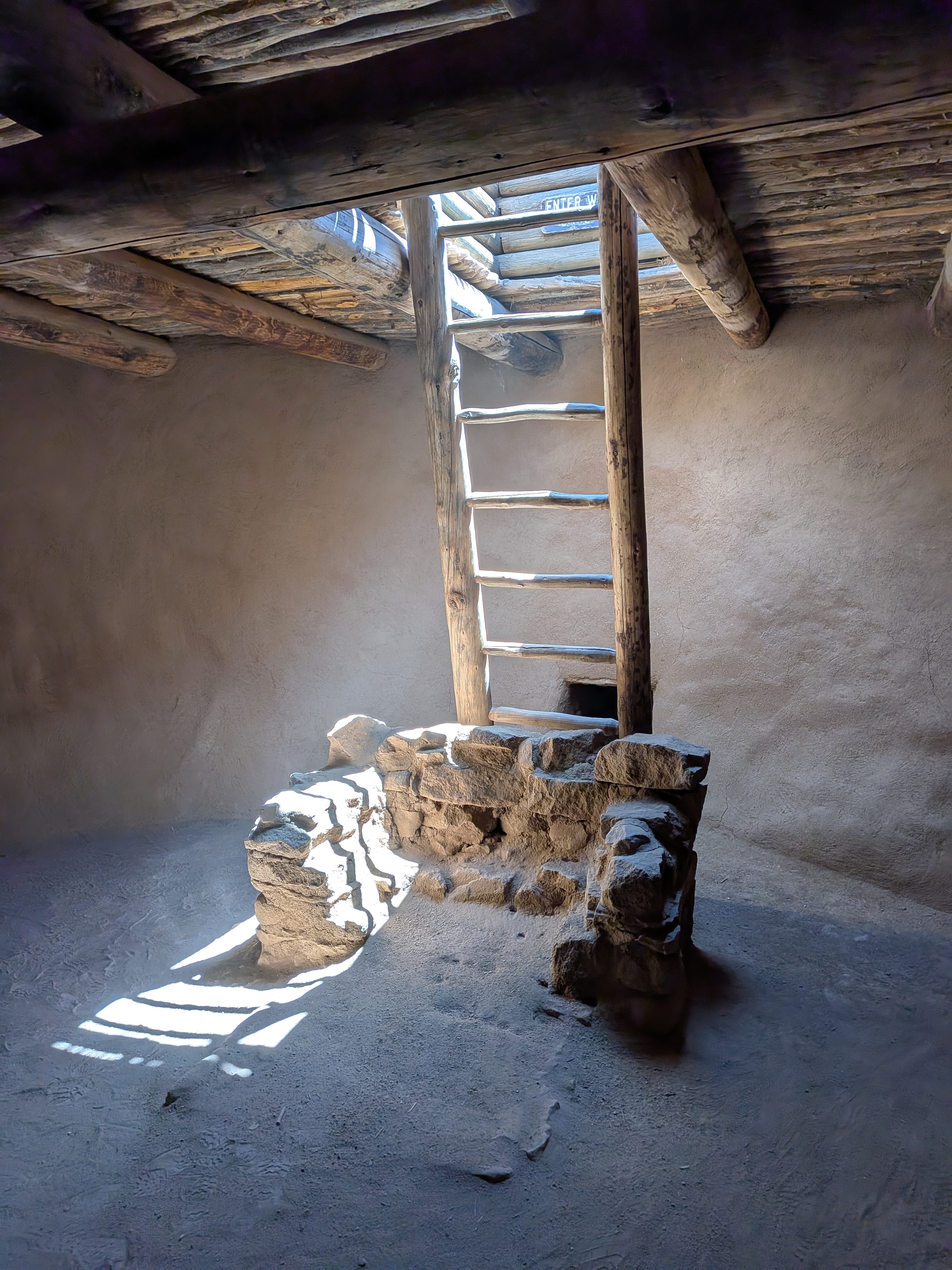
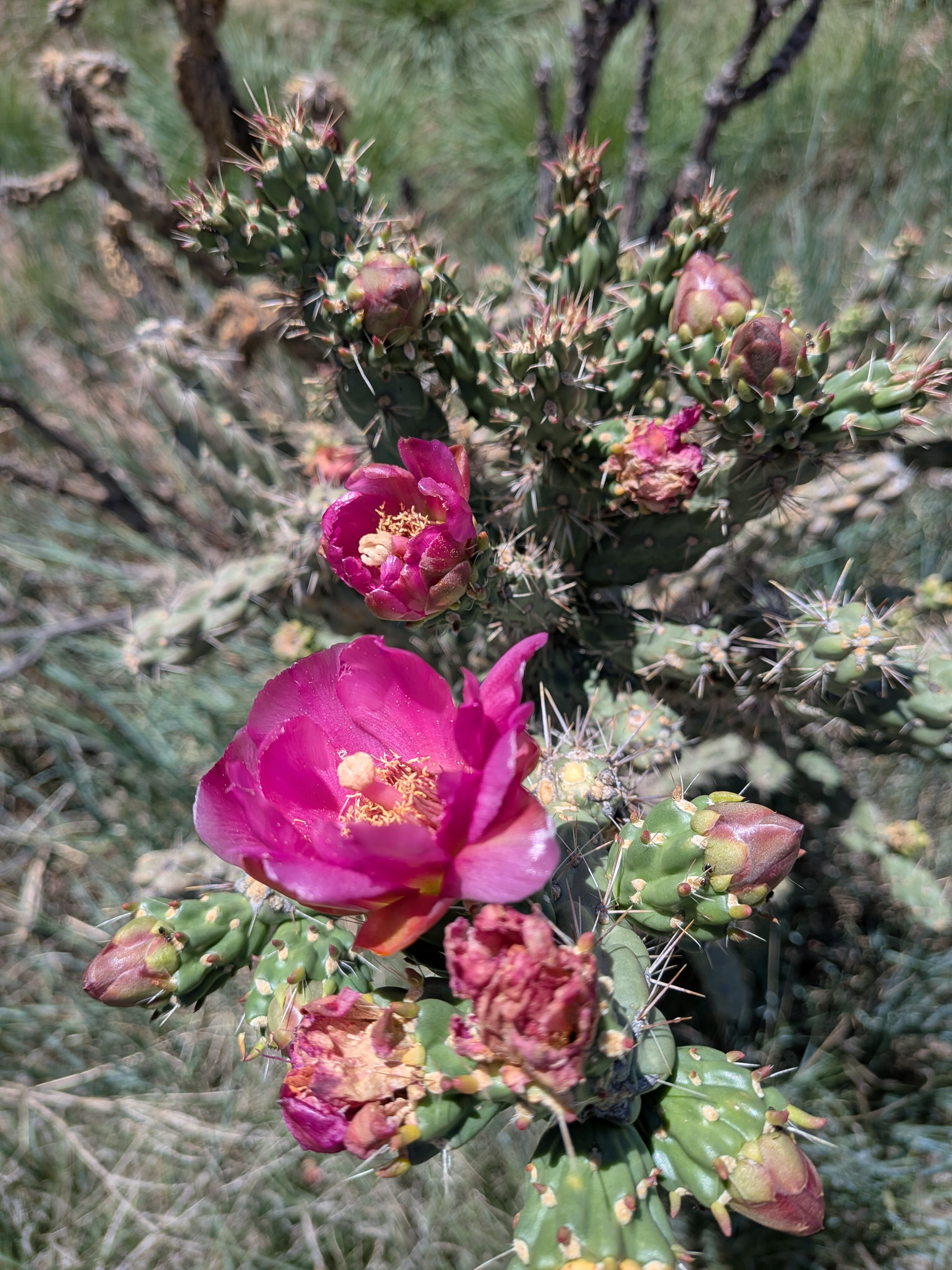
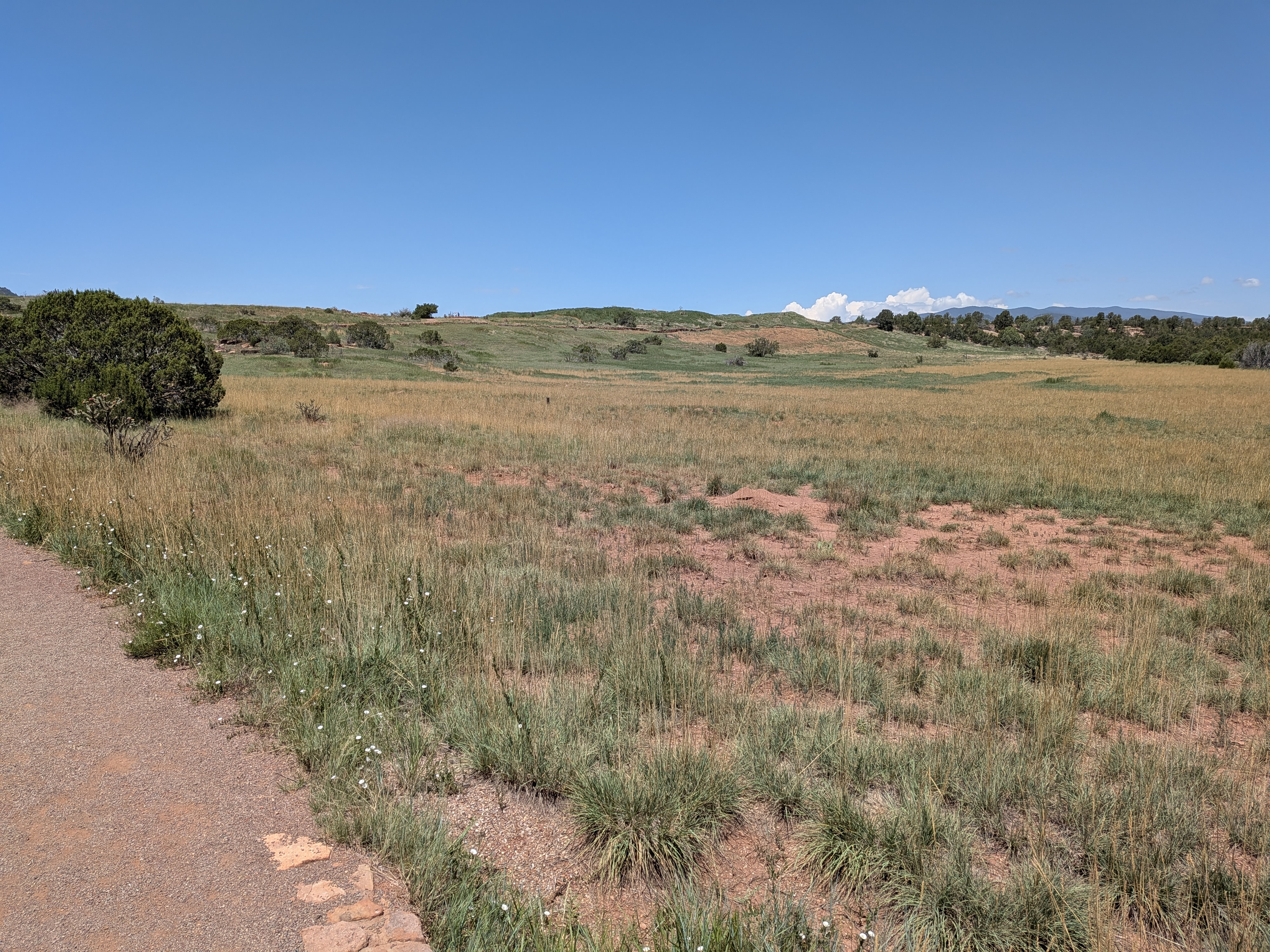
Inside the kiva at PecosCactus flowers!The view from Pecos
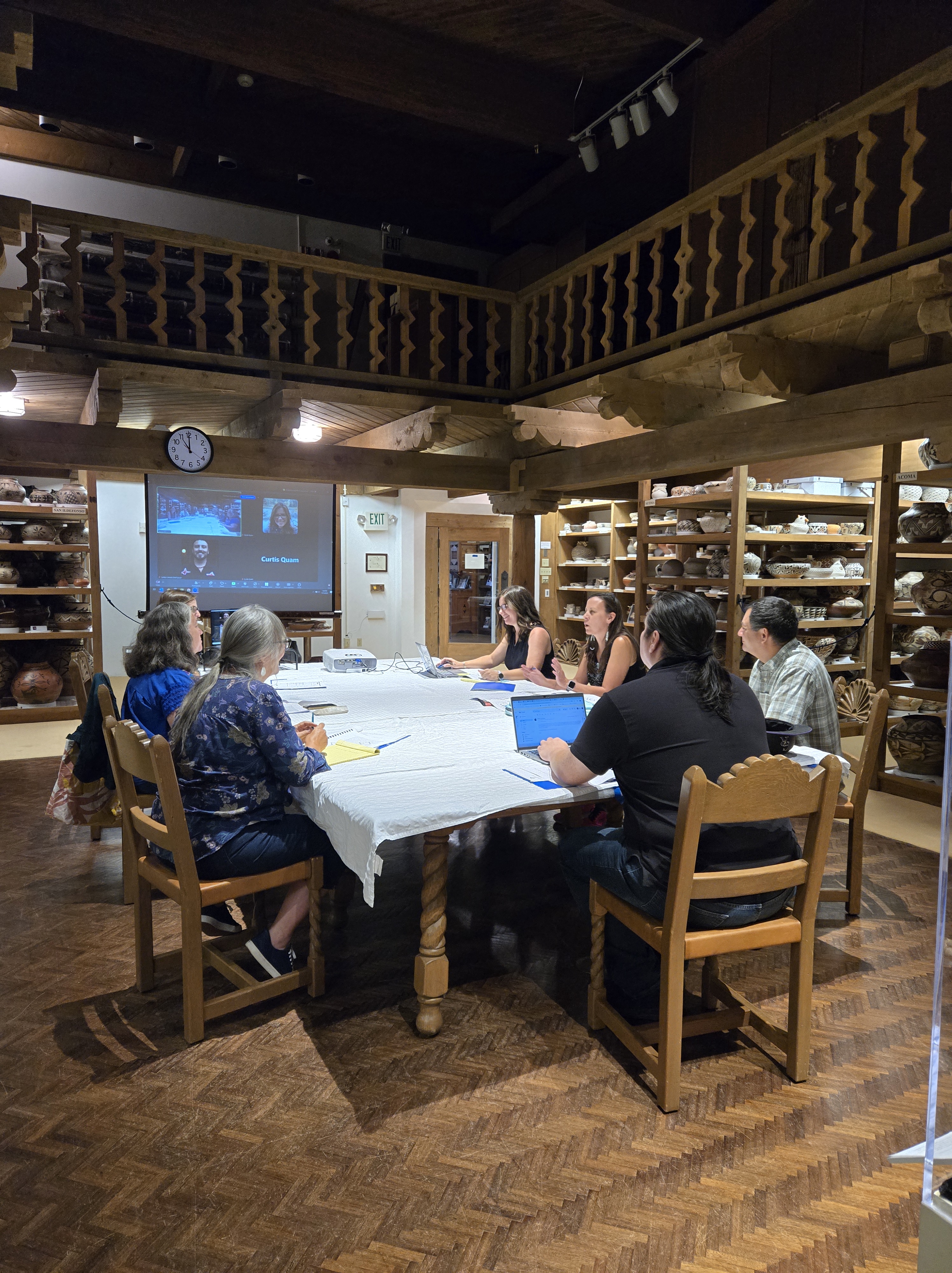
After my time at Pecos, I went to the School for Advanced Research in Santa Fe to facilitate the final review session of the Indigenous Collections Care (ICC) Guide. This is a project that I have been working on for awhile and it was excited to be entering the final stages. Although the review session had to be rescheduled due to complications with our IMLS grant, we had a wonderful group of people to discuss the ICC Guide and help us move forward into the final stages of development.
The ICC Guide provides a framework to respect and recenter collections stewardship practices around the needs and knowledge of Indigenous community members. The Guide speaks to individuals engaged in collections stewardship within museums and collecting institutions. It is aimed specifically at museum professionals, emerging and established, and individuals who are seeking clarification, support, and validation to pursue culturally appropriate care.
Next steps are to send the Guide out for copy-editing and graphic design. A final version will be ready to be shared in the summer of 2026.
My time in New Mexico was amazing and I hope you can visit there sometime soon!
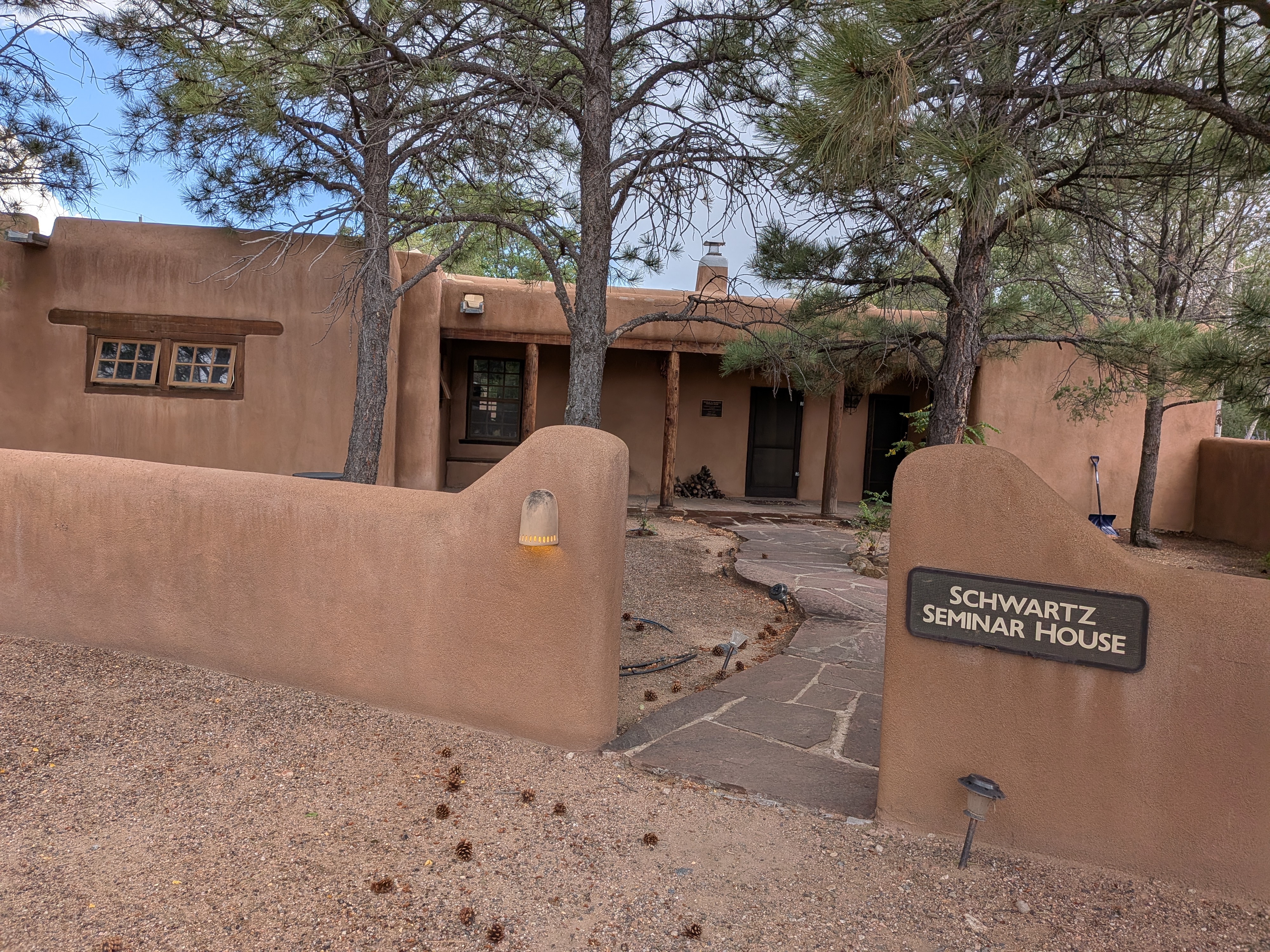
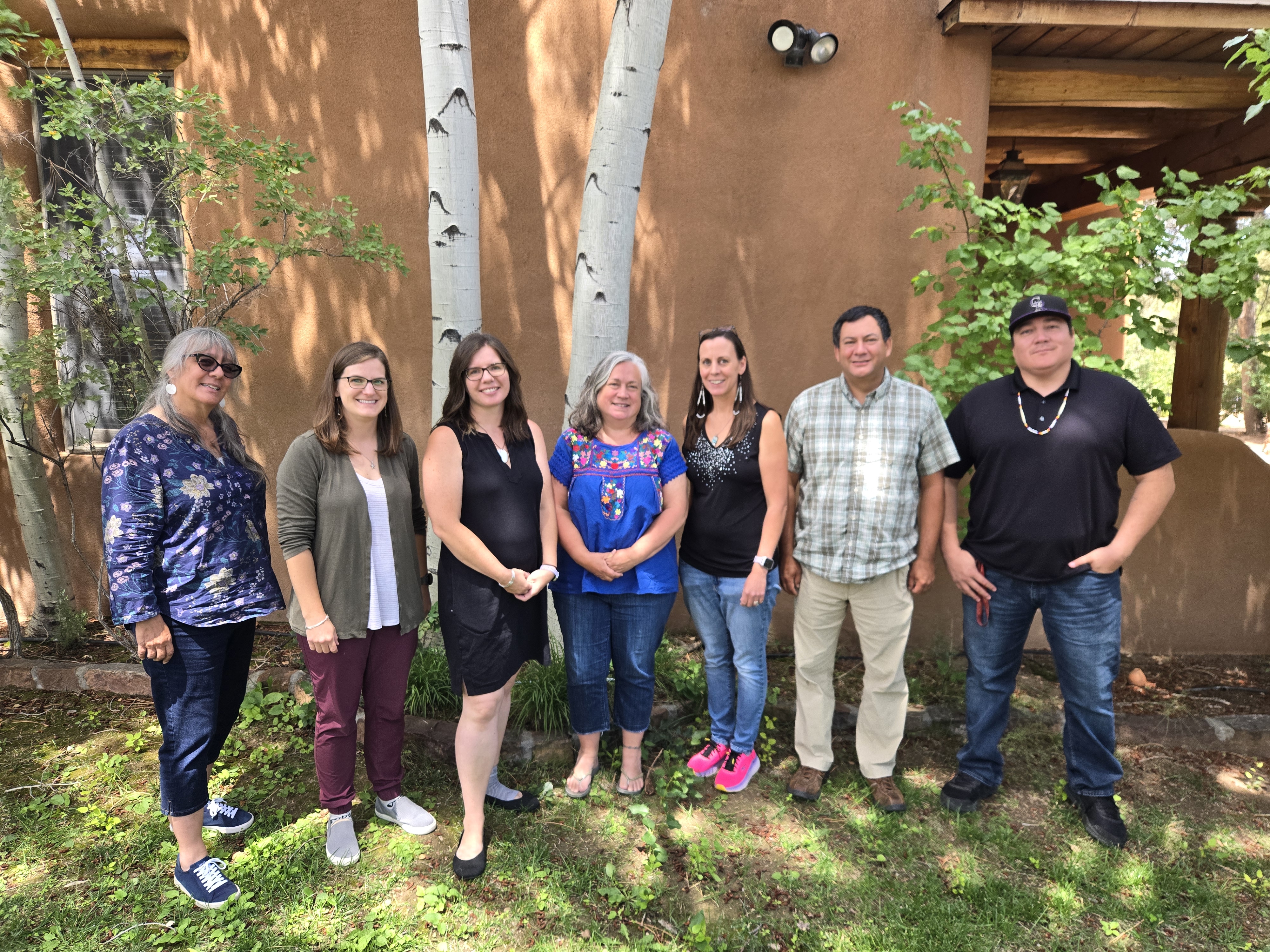
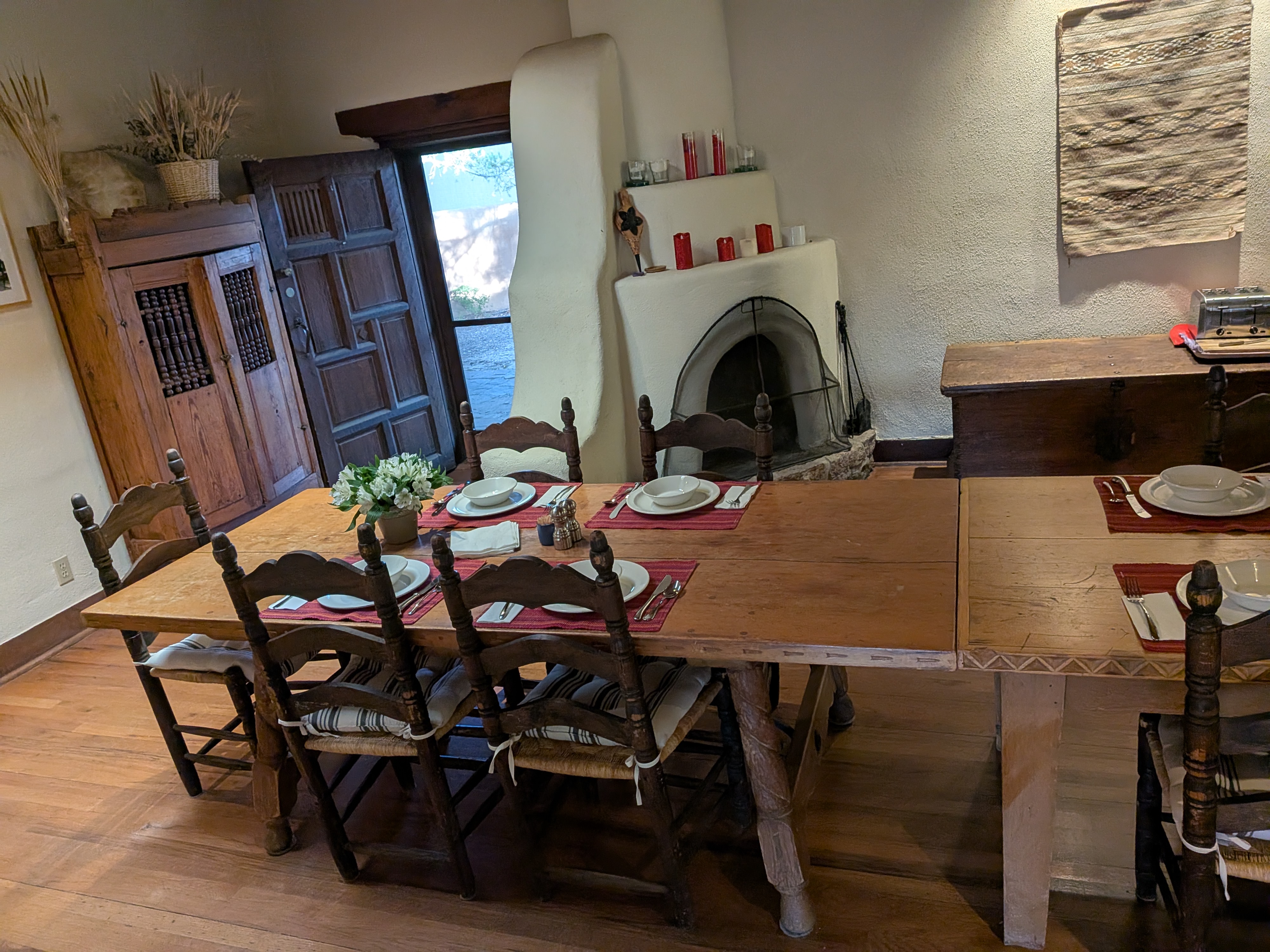
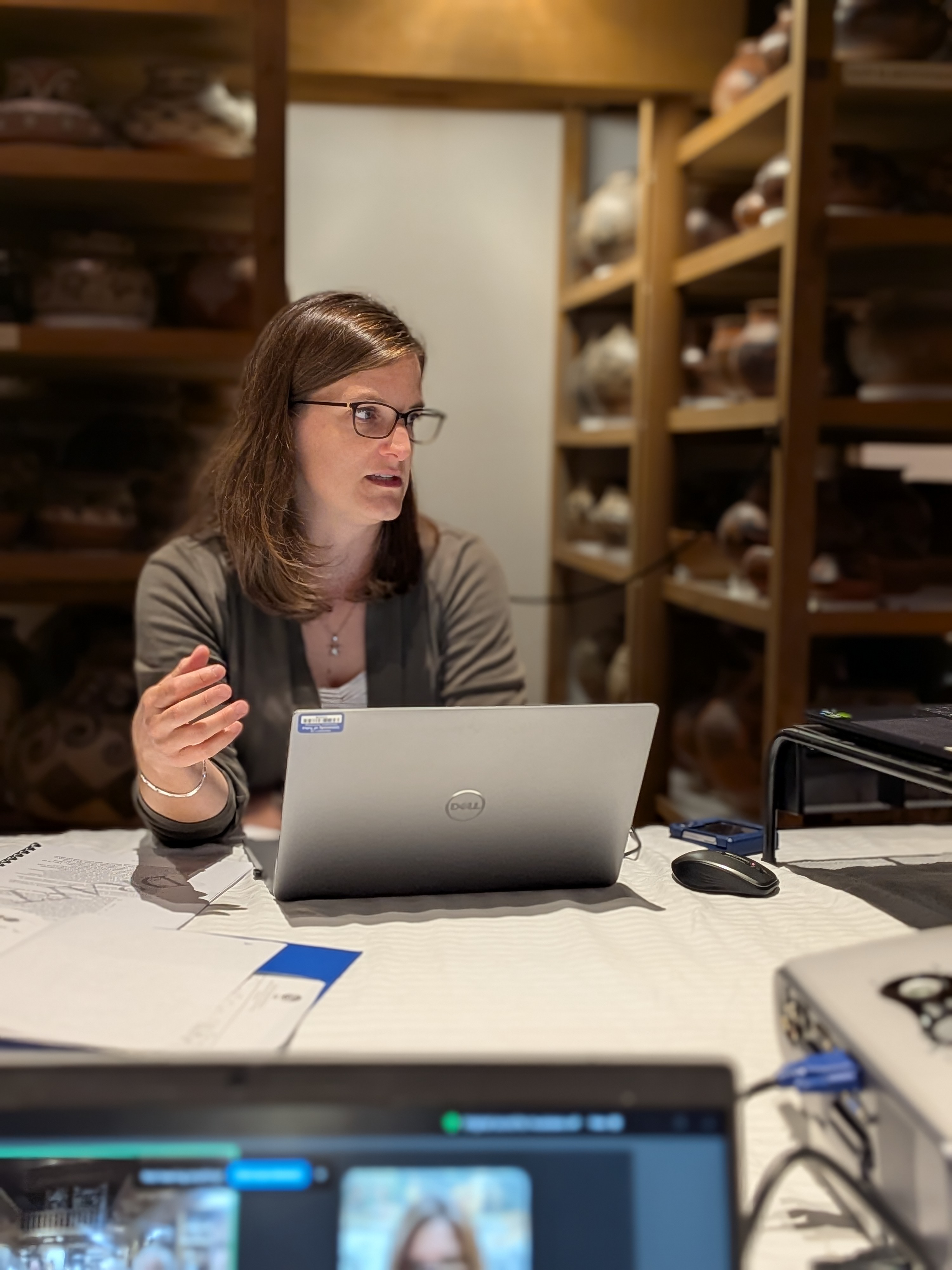
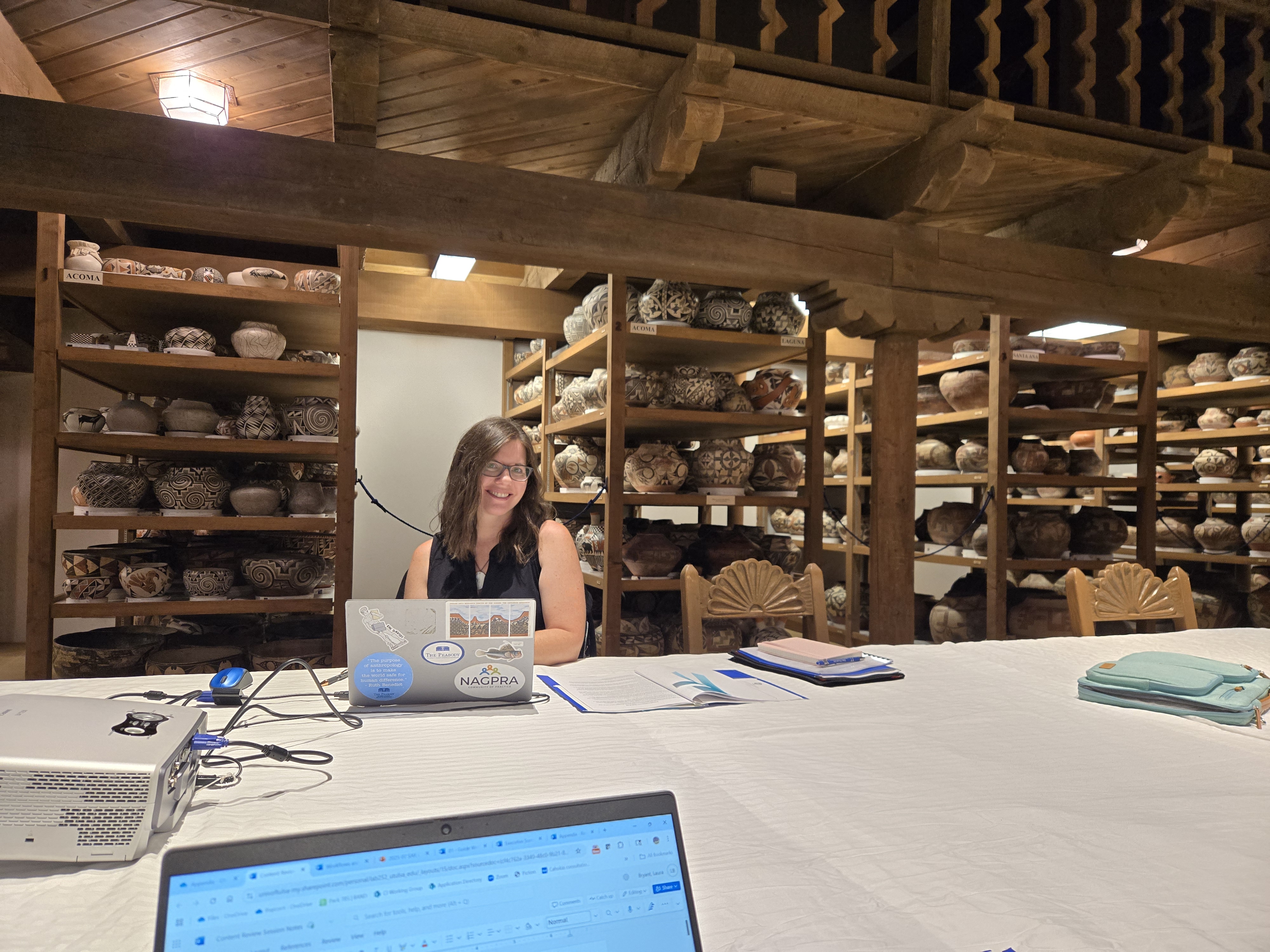
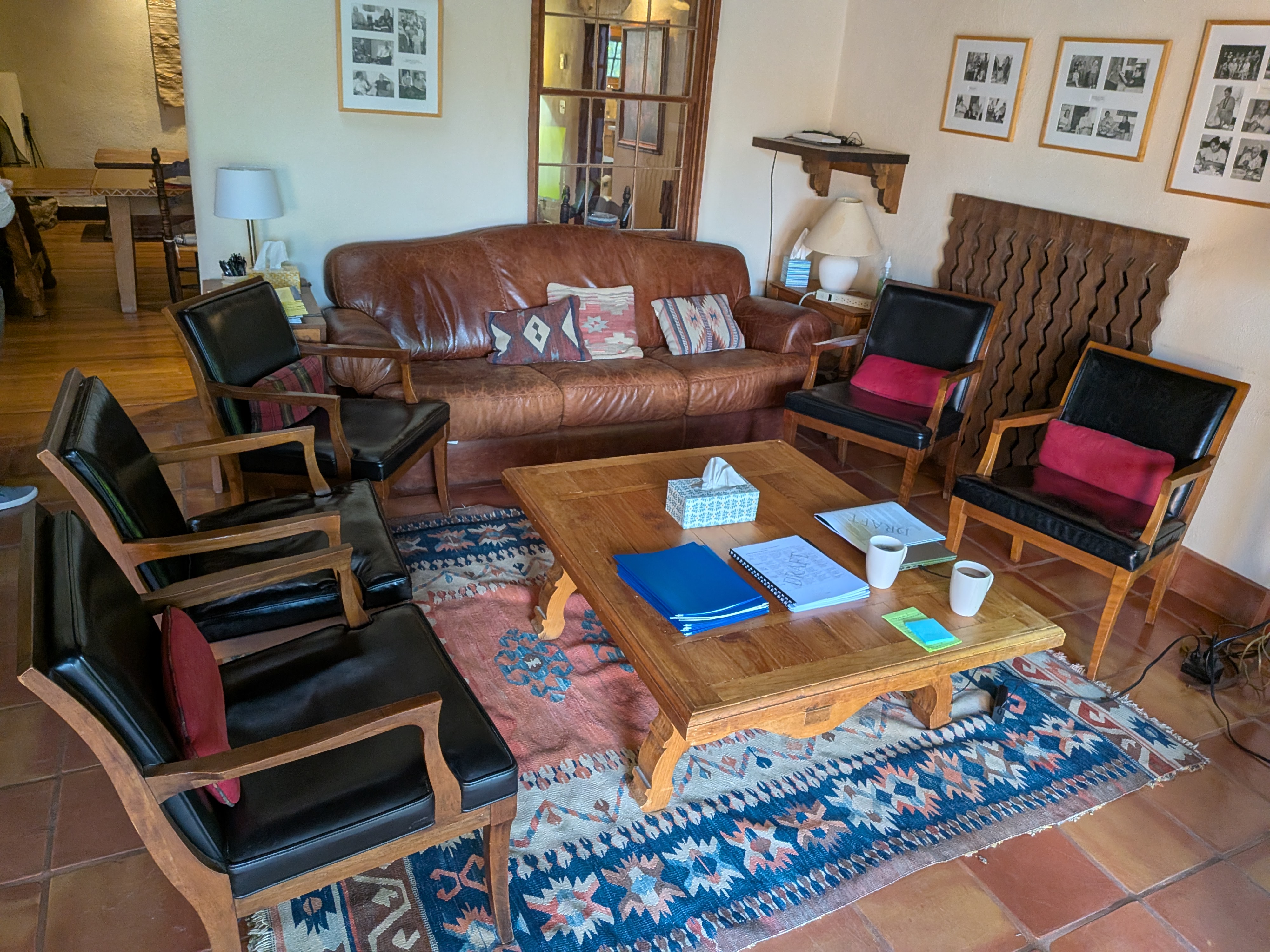
SAR Seminar HouseThe ICC Guide review groupSAR Seminar HouseICC co-facilitator, Laura BryantMeeting at the Indian Arts Research Center at SARSAR Seminar House
This year marked the 10th annual repatriation conference organized by the Association on American Indian Affairs (AAIA). The conference was hosted at the end of February by the Tunica-Biloxi Tribe’s Paragon Resort in Marksville, Louisiana. The Peabody Institute of Archaeology was one of several co-sponsors, celebrating ten years of the conference, dedicated to learning and sharing our work in repatriation.
Melanie O’Brien, program manager of the National Park Service NAGPRA program, leads training at the annual repatriation conference.
A highlight of the conference is spending time with friends and colleagues from Tribes, federal agencies, and museums who all share in the day to day work of repatriation. While NAGPRA and repatriation have made headlines over the course of the last year, with reporting by ProPublica and many local news outlets, as well as the attention garnered by the new regulations and duty of care provisions, most people don’t completely understand the behind the scenes and day to day work involved in repatriation. Spending time with other engaged in the work is really meaningful. It’s also a great opportunity to meet new people and learn new things.
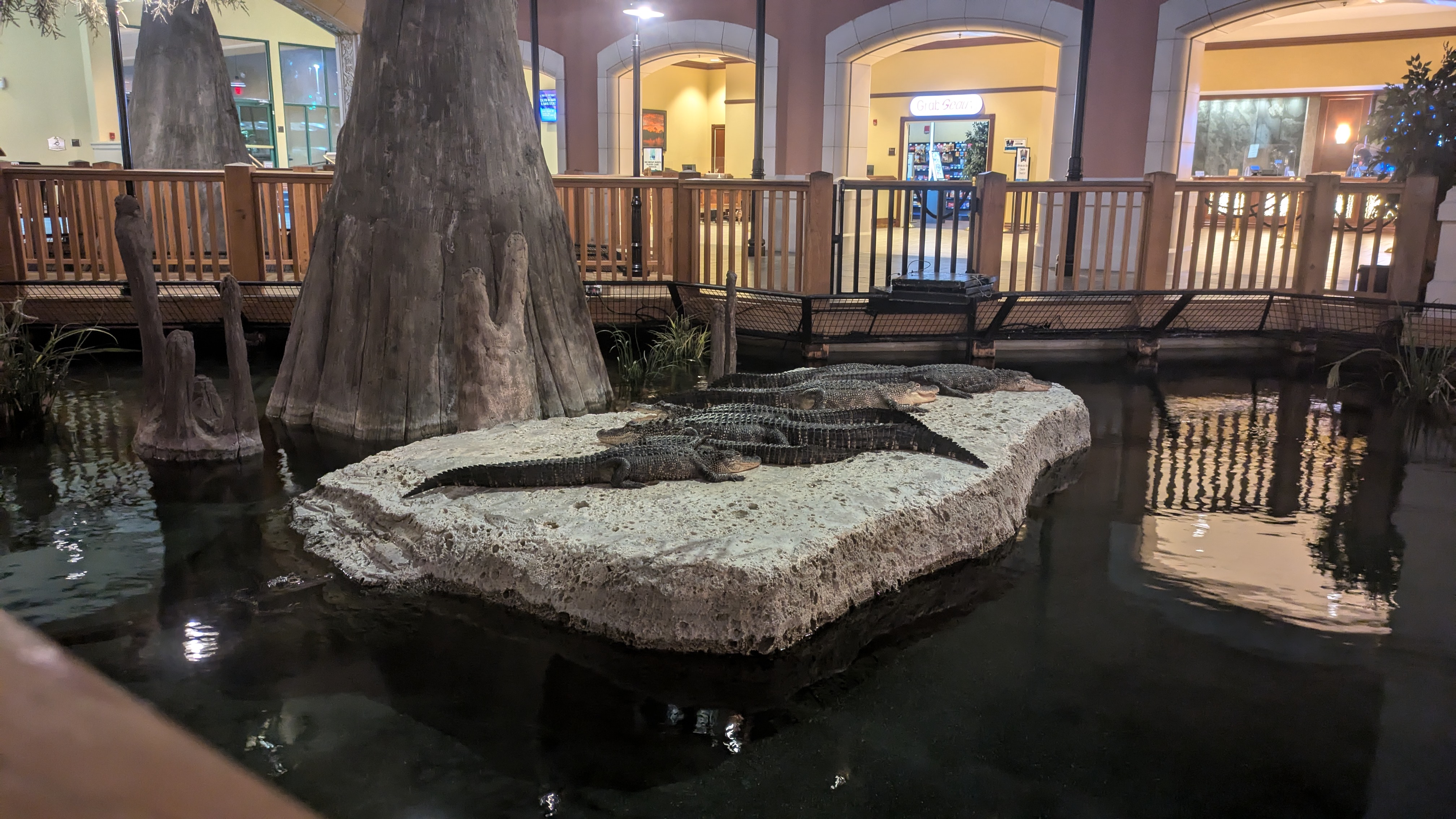
A fun feature of the Tunica-Biloxi Tribe’s resort and casino is a replica bayou in the lobby complete with about twenty alligators (we counted, or tried to).
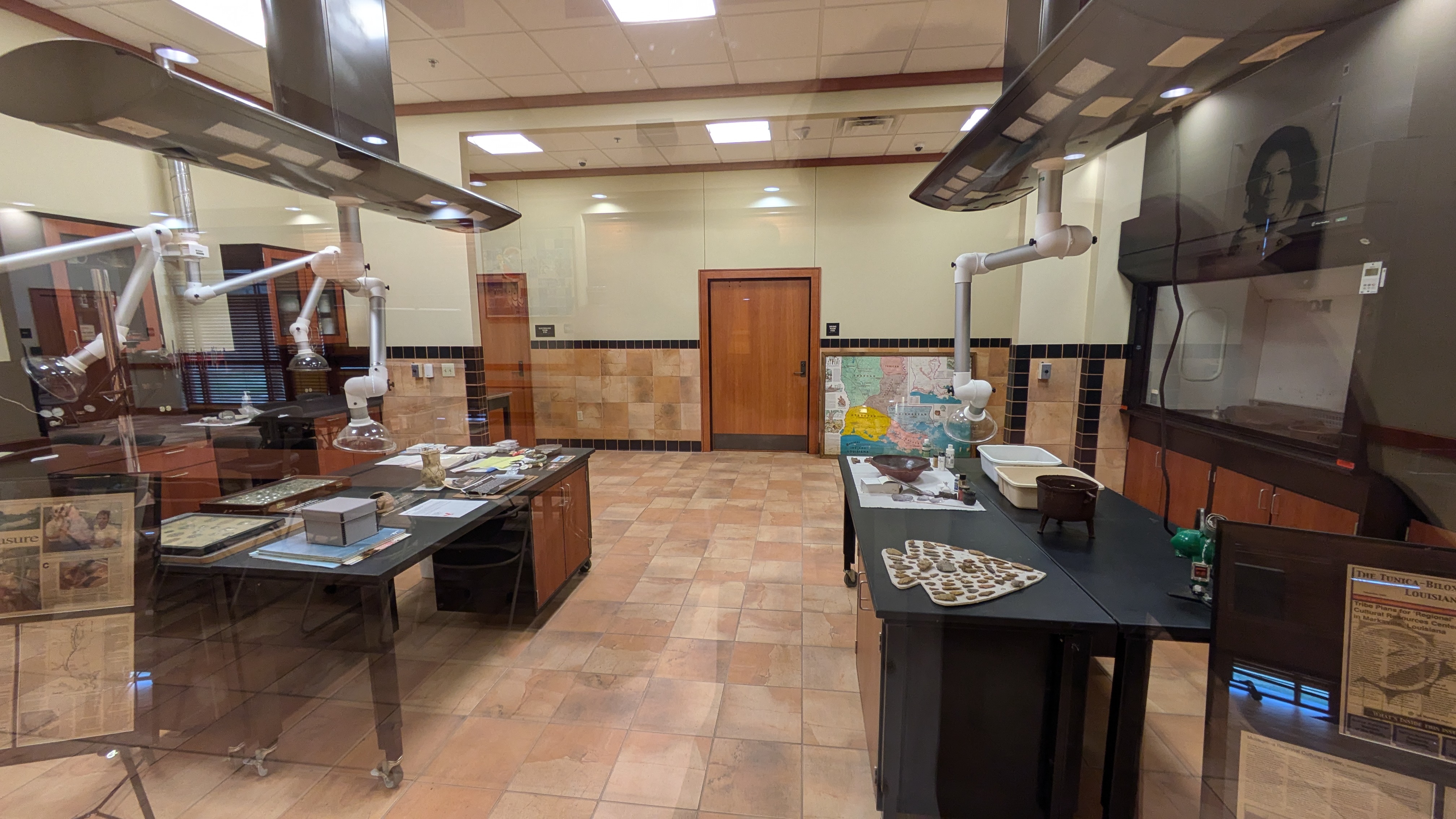
Another highlight was an opportunity to visit the Tunica-Biloxi Tribe’s museum and cultural center, which features the Tunica Treasure. The Tunica Treasure was found by looters in the late 1960s who disturbed a Tunica cemetery in West Feliciana Parish. The treasure included late eighteenth century trade goods and Native-made items, including one of the largest caches of glass beads in the Western Hemisphere. The Tribe’s success in recovering the historic belongings in state court helped them regain federal recognition, which had been lost during the federal government’s termination era. While some might be surprised to see burial items displayed, its important to remember that each Tribe makes their own decisions about what happens with their cultural heritage, reflecting their sovereignty.
Conservation lab built and operated by the Tunica-Biloxi Tribe in their work to preserve the Tunica Treasure.
Over the past month I have had the good fortune to represent the Peabody Institute at two professional conferences. Learning from others in a shared space can be really energizing and informative. I also really enjoy attending conferences and getting to connect with colleagues that I usually only see in a tiny Zoom window on my computer screen.
First, I attended the New England Museum Association (NEMA) Annual Conference in Newport, Rhode Island. NEMA is a great conference that brings together people in the area to discuss a wide range of museum-related topics. This year, I noticed more sessions that focused on telling LGBTQ+ stories, exploring ‘hidden histories,’ and how institutions can support emerging professionals.
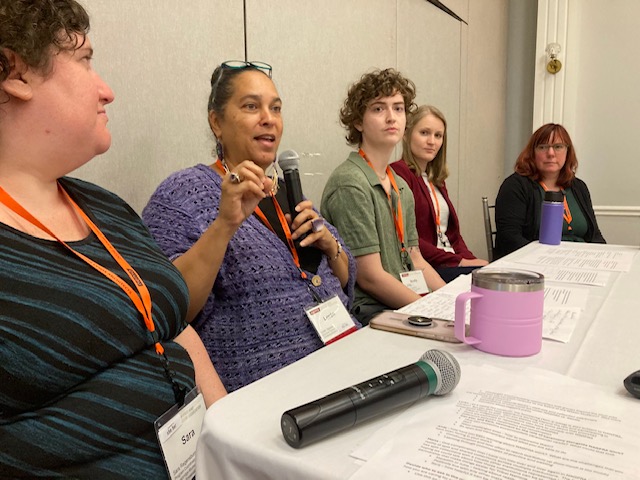
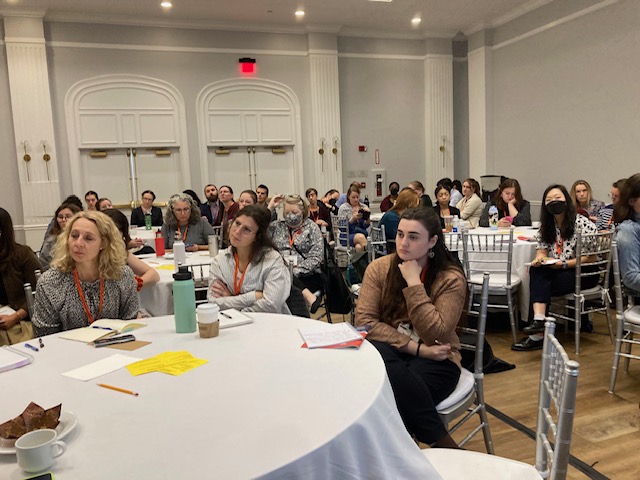
I was the facilitator for a panel titled Implementing NAGPRA: A Conversation with NAGPRA Practitioners. The panel was composed of individuals who are part of the Northeast NAGPRA Community of Practice and was a conversation to demystify the repatriation process, learn from colleagues, and identify opportunities for collaboration. The session was well attended and we had a fabulous conversation amongst ourselves and with the audience.
NEMA Session Panel SpeakersNEMA Session Audience
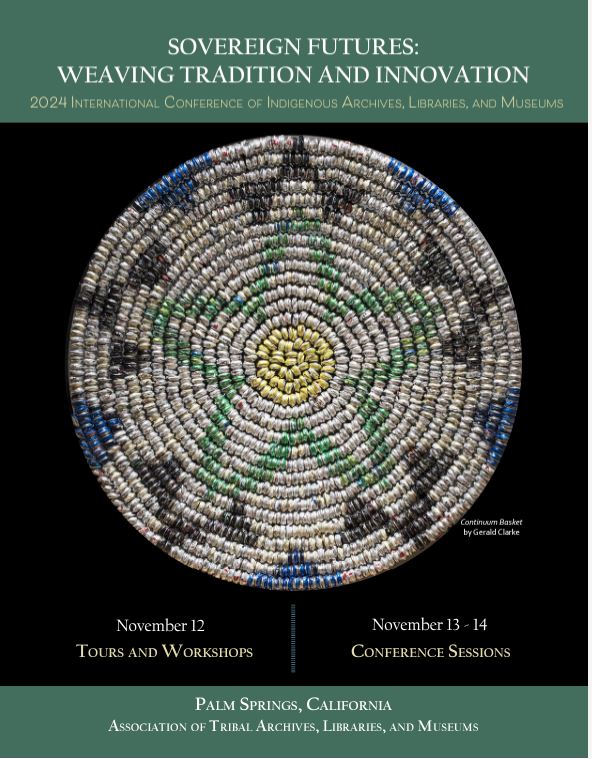
After a short (but long) day in Newport, I traveled the following week to Palm Springs, California for the Association of Tribal Archives, Libraries, and Museums (ATALM) Annual Conference. I love ATALM. It is a conference full of helpful information on everything from repatriation to pesticide management in collections to archival management. I appreciate that so many of the conversations really center on uplifting Indigenous voices and perspectives in all aspects of museum and cultural heritage work. It is a space that is invigorating and inspiring to me as a professional.
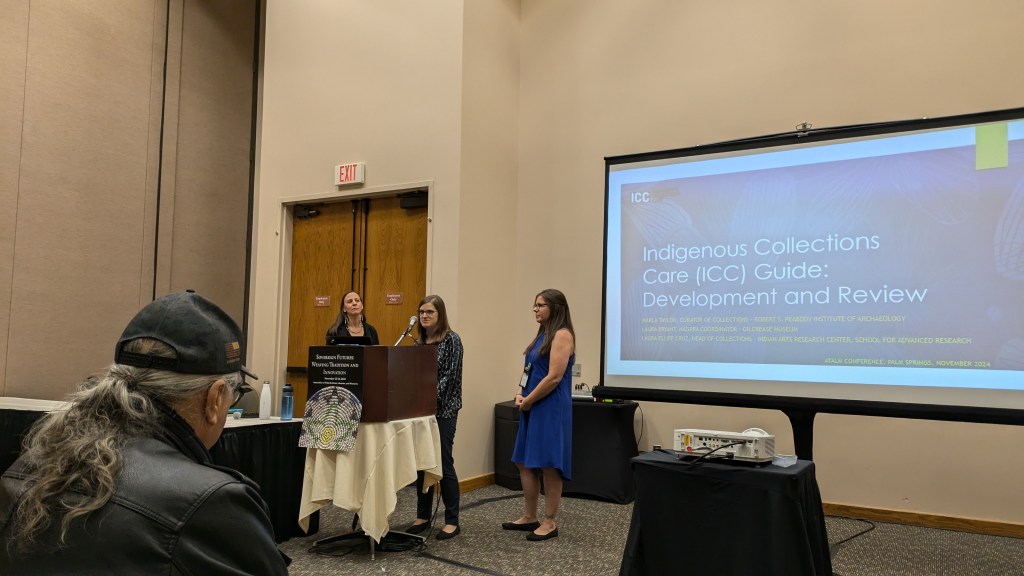
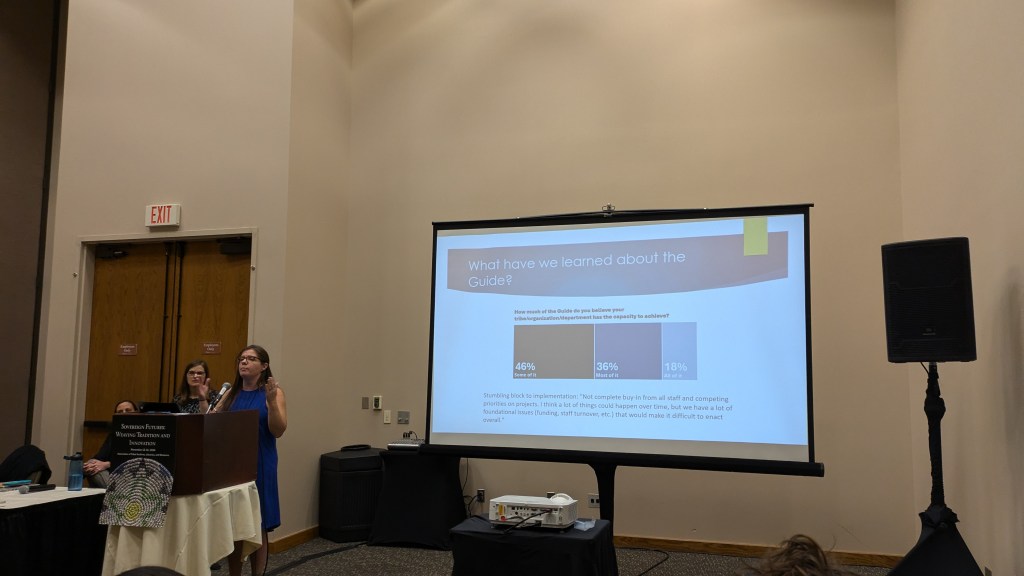
I was part of a session at ATALM to share information about the review process for the development of the ICC Guide. That session was well attended and we received lots of supportive feedback.
The fall season tends to be super hectic with all the conference travel, but it is a great way to connect with the larger profession.
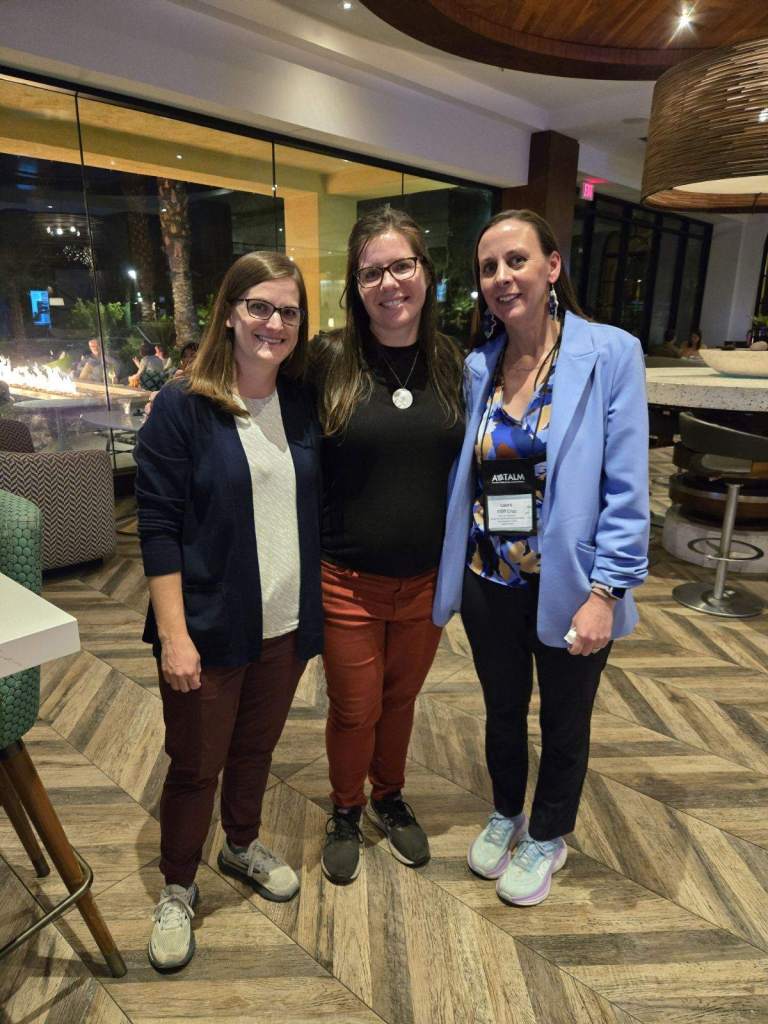
Presenting at ATALMMy co-presenters and IPresenting at ATALM
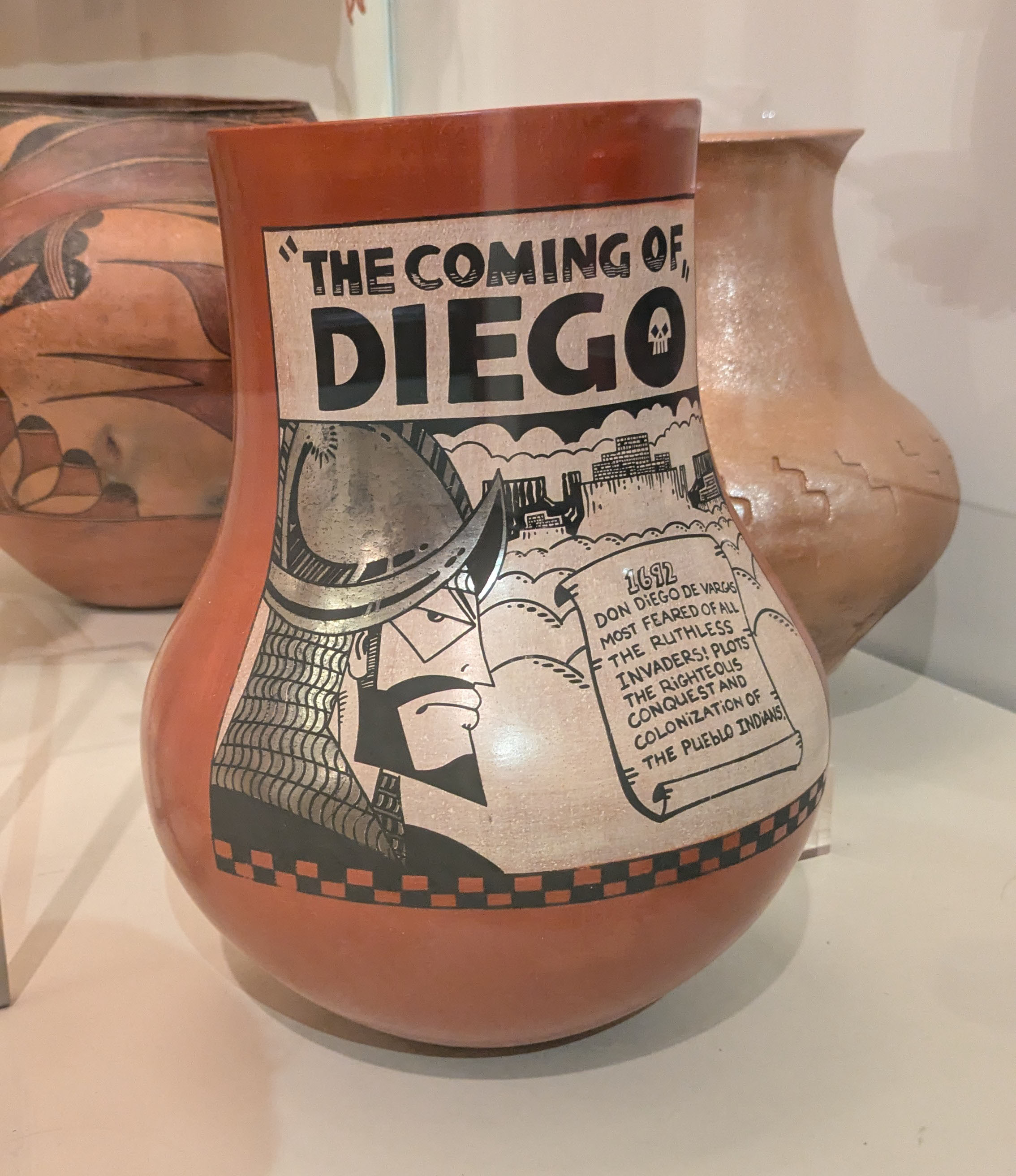
June brought a family trip to London, including a visit to the British Museum. Many websites list the top ten items that you should not miss at the museum, and the British Museum itself has a leaflet with their recommended highlights. The British Museum is sort of ground zero for archaeology, anthropology, and colonialism, as well as mounting calls for repatriation (many people are surprised that the British Museum is prevented from repatriating cultural items by law, and can only deaccession items that are deemed duplicates, damaged, or no longer of public interest). A surprise was a number of pieces by contemporary artists that stand in juxtaposition to items from the past. It was particularly neat to encounter several ceramic pieces by Diego Romero in the case along with older and ancient pieces of Pueblo pottery. After the visit, I decided that I’d shared my own British Museum top ten list and my own repatriation recommendations.
Diego Romero’s contemporary Pueblo pottery commemorates the Pueblo Revolt of 1680; at the British Museum Romero’s work appears with older and ancient pieces.
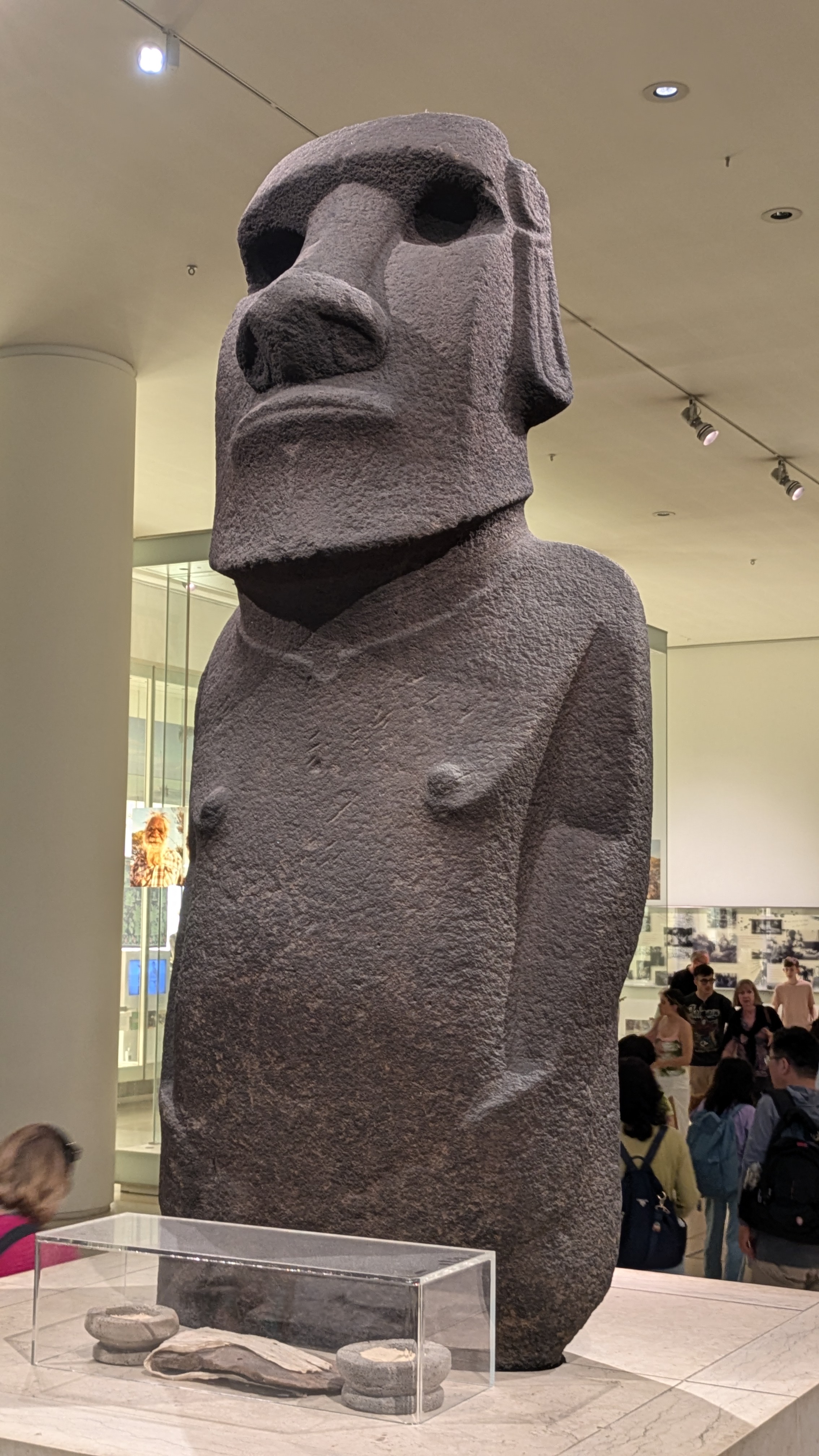
No. 1 Hoa Hakananai’a (meaning ‘lost, hidden, or stolen friend’)
Hoa Hakananai’a is one of two Moai from Rapa Nui (Easter Island) held by the British Museum. According the exhibit text, both Moai were taken from Rapa Nui in 1868 by Commodore Richard Powell and the crew of a British survey ship, HMS Topaze. The Admiralty presented Hoa Hakananai’a to Queen Victoria, who ultimately gave him to the British Museum, rejoining Moai Hava, who went directly from the Admiralty to the museum. Near the base of the colossal figure of Hoa Hakananai’a are offerings made by representatives from Rapa Nui. The Rapa Nui requested repatriation in 2019 and the exhibit text explains that conversations about return are ongoing.
Should the British Museum repatriate Hoa Hakananai’a and Moai Hava? Yes.
No. 2 Parthenon Marbles
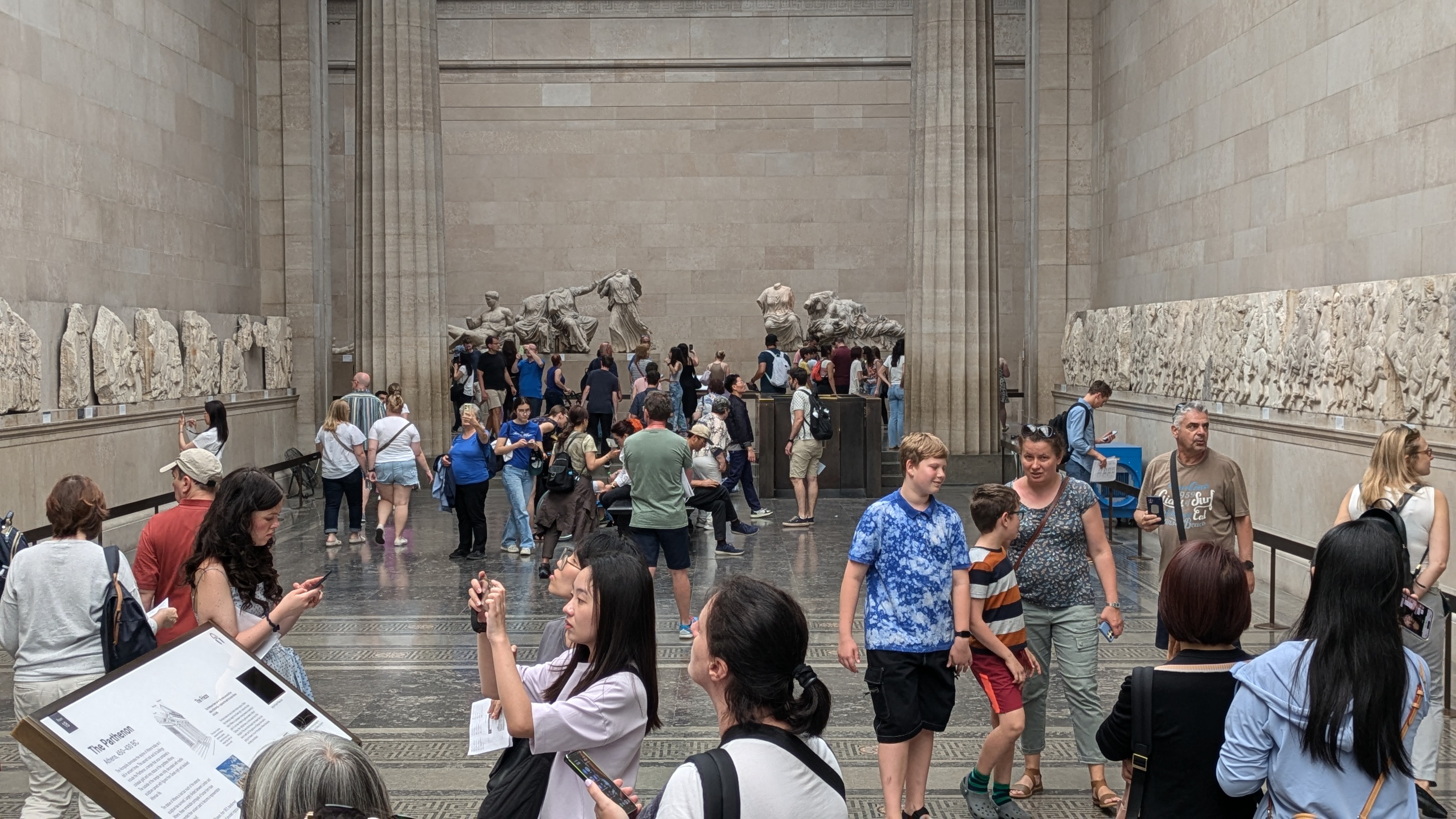
Perhaps central to requests for repatriation of cultural items from the British Museum are the sculpted frieze panels from the Parthenon–long called the Elgin Marbles, after the individual who originally took the panels. These impressive carvings once adorned the Parthenon–the Temple of Athena–on the Acropolis in Athens and date from nearly 2,500 years ago. The pamphlets that are usually available to explain why the panels shouldn’t be repatriated were all gone by the time we were there, but the British Museum website explains, “It is universally recognised that the sculptures that survive are best seen and conserved in museums.” Is it? The website goes on to note that in 2009, a new museum was constructed in Athens to showcase the panels. Greece has asked for the return of the carvings numerous times. Two notes from our visit. First, our friend Bill, a big comic and graphic novel connoisseur, noted that the so-called “South Metopes,” the panels depicting a battle between centaurs and Lapiths at the marriage feast of Peirithoos, followed the graphic, sequential storytelling now best known from comic books. Once he pointed this out, it completely changed my appreciation for the panels. Secondly, if you look out the windows of Gallery 18, where the sculptures and carvings are exhibited, you could see someone making breakfast in a flat directly behind the museum. I found the juxtaposition of these culturally and politically charged items with the quotidian of daily life to bring the entire, global conversation about the marbles into stark relief.
The gallery featuring the Parthenon Marbles was a popular destination when we visited in June.
Should the British Museum repatriate the Parthenon Marbles? Yes.
No. 3 Hopewell platform pipes
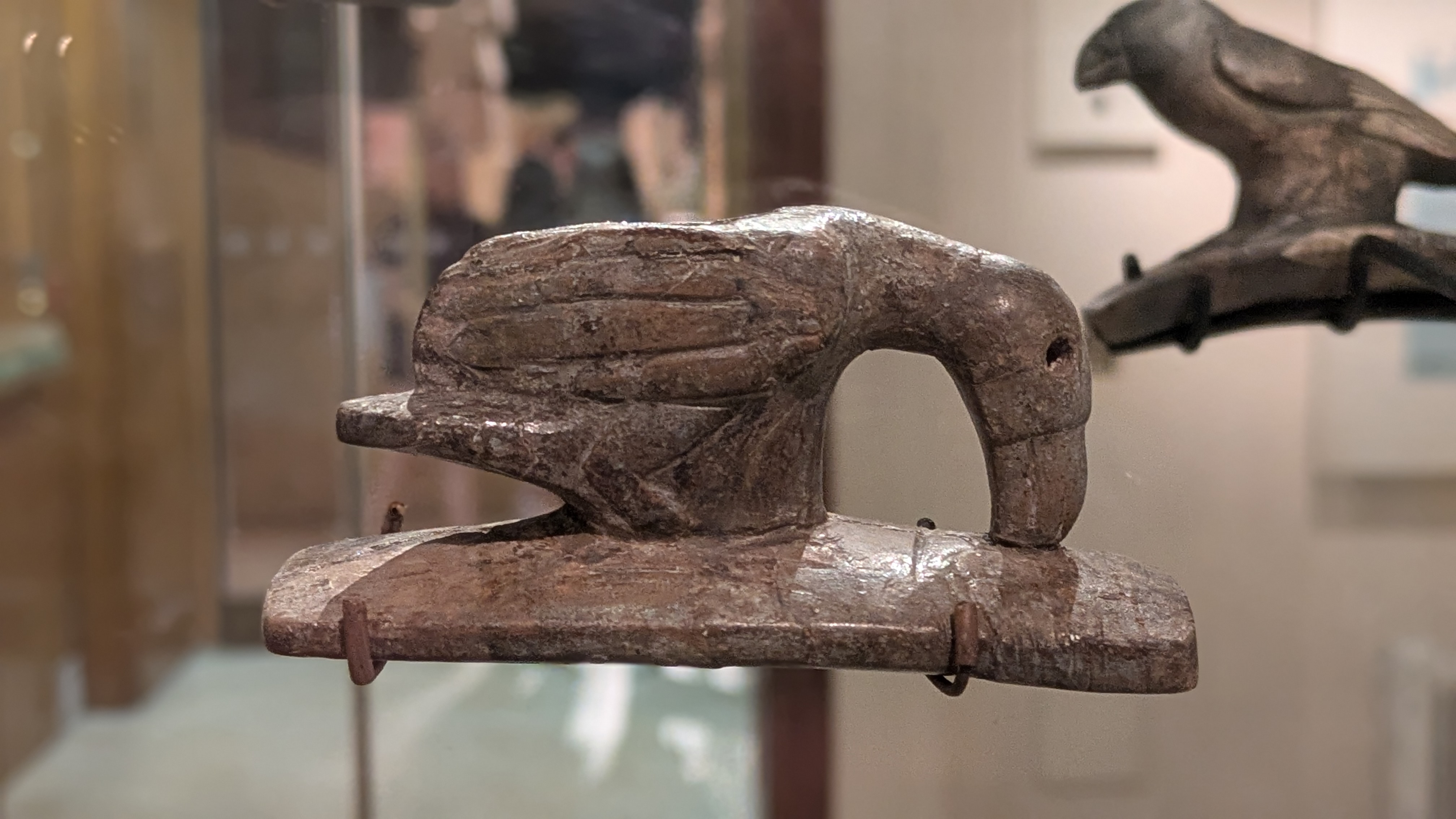
I’m definitely deviating from the top ten lists provided by the British Museum and other writers at this point, but for a student of archaeology of the Southeastern United States, I was really looking forward to seeing the Hopewell platform pipes. The Hopewell pipes, of stone, with beautifully carved birds and animals in miniature, were removed from Mound City in Ohio by E.G. Squier and Edwin Davis–remember Squier and Davis? Authors of 1848’s Ancient Monuments of the Mississippi Valley, one of the earliest archaeological publications of the Smithsonian Institution, sent this remarkable group of nearly fifty carvings abroad. According to the catalog for the 1977 exhibition Sacred Circles, “These little sculptures have a meaning that far outstrips their size. One feels their importance. It has something to do with the salient presentation of each animal, quail, hawk, bear, panther, snake, beaver or squirrel.” Acknowledging the high arts, architecture, and far-flung influences of the Hopewell, UNESCO recently designated eight of these monumental earthwork complexes as world heritage sites. Many institutions in the United States hold material heritage of Hopewell, and consultation with Tribes and Nations, as well as affiliations are beginning to happen.
Hopewell platform pipes from Ohio displayed at the British Museum.
Should the British Museum repatriate the Hopewell platform pipes? Yes.
No. 4 Sutton Hoo ship burial
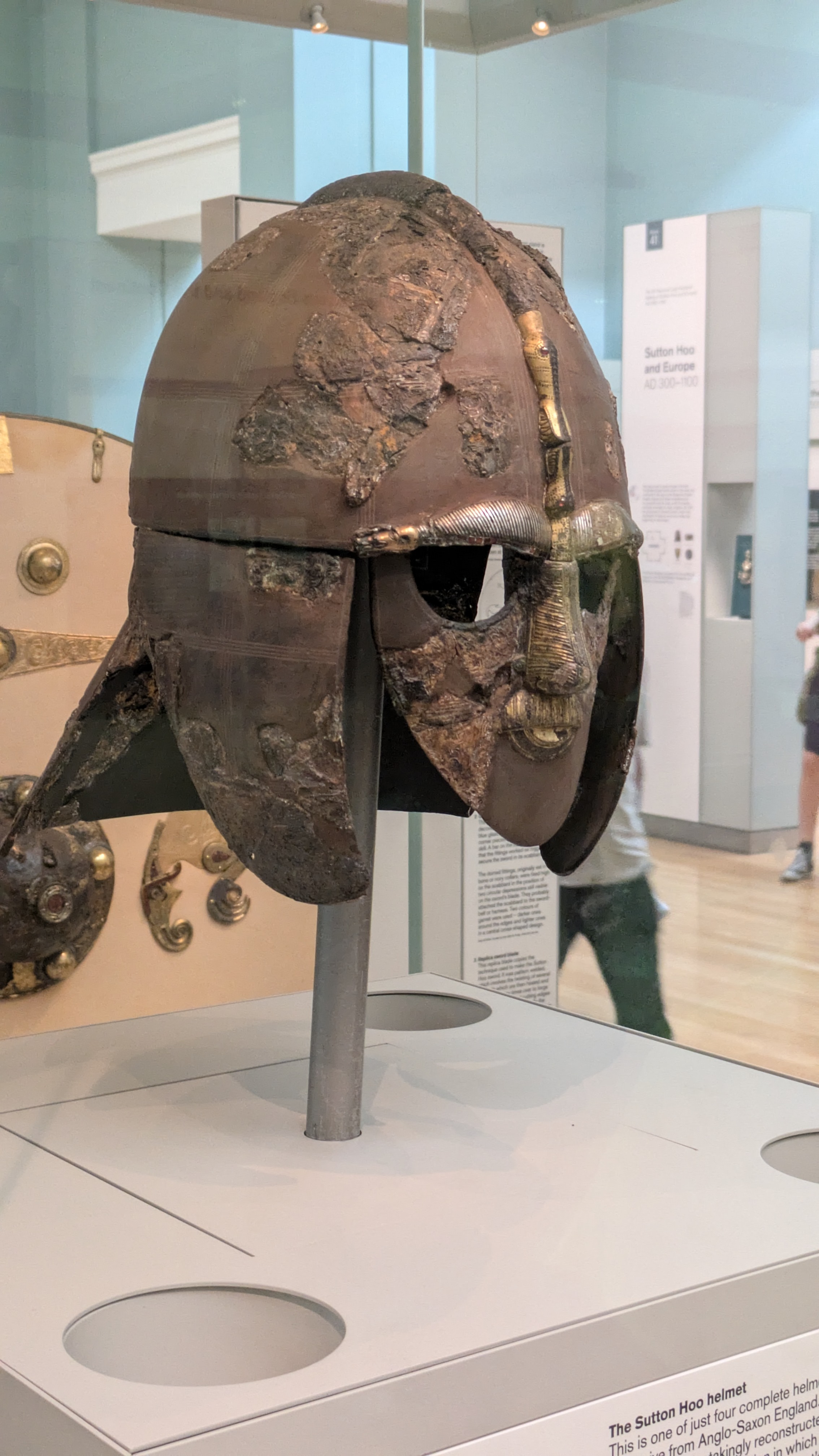
I was excited to see the items from the seventh century Sutton Hoo ship burial. In 1939, in Suffolk, avocational archaeologist Basil Brown worked with landowner Edith Pretty to excavate the remains of an Anglo-Saxon ship burial, including a trove of weapons and jewels, including gold and garnet items and a fabulous portrait helmet of iron and copper alloy, that some have thought might be King Raedwald of East Anglia.
The Sutton Hoo portrait helmet.
Many learned a little about Sutton Hoo from the 2021 Netflix movie The Dig starring Carey Mulligan and Ralph Fiennes. Sadly The Dig didn’t tell us much about the discovery or the project itself, even changing elements of the story and characters, like Mercie Lack and Barbara Wagstaff, teachers and amateur photographers who volunteered to help and captured amazing images of the fragile and rapidly deteriorating find (they became a man in the movie–why?). Okay, so, you probably are thinking Sutton Hoo, Suffolk, solidly in England, no question of repatriation, right? Well, a 2020 blog on Cultural Restitution called for the return of the Sutton Hoo helmet and other items from the ship burial to regional and local museums. The blog, based on an argument forwarded by historian James Barr, notes all the reasons the British Museum would oppose such a repatriation–Edith Pretty donated the items to the museum, the 1963 act that prohibits repatriation, as well as environmental and ethical concerns. Interestingly, we encountered a similar position in 2014 after the Peabody Institute of Archaeology’s repatriation of Mesolithic era painted pebbles to France’s National Museum of Archaeology (Édouard Piette, who had discovered the pebbles and donated them to the national museum, stipulated that they should never leave the so-called Piette Room). We felt pretty good about the repatriation, but upon visiting the area where the pebbles were found, locals complained that the pebbles weren’t coming home to them, but rather hoarded in Paris. Hmmm, good questions.
Should the British Museum repatriate the Sutton Hoo ship burial? Yes.
No. 5 Lewis Chessmen
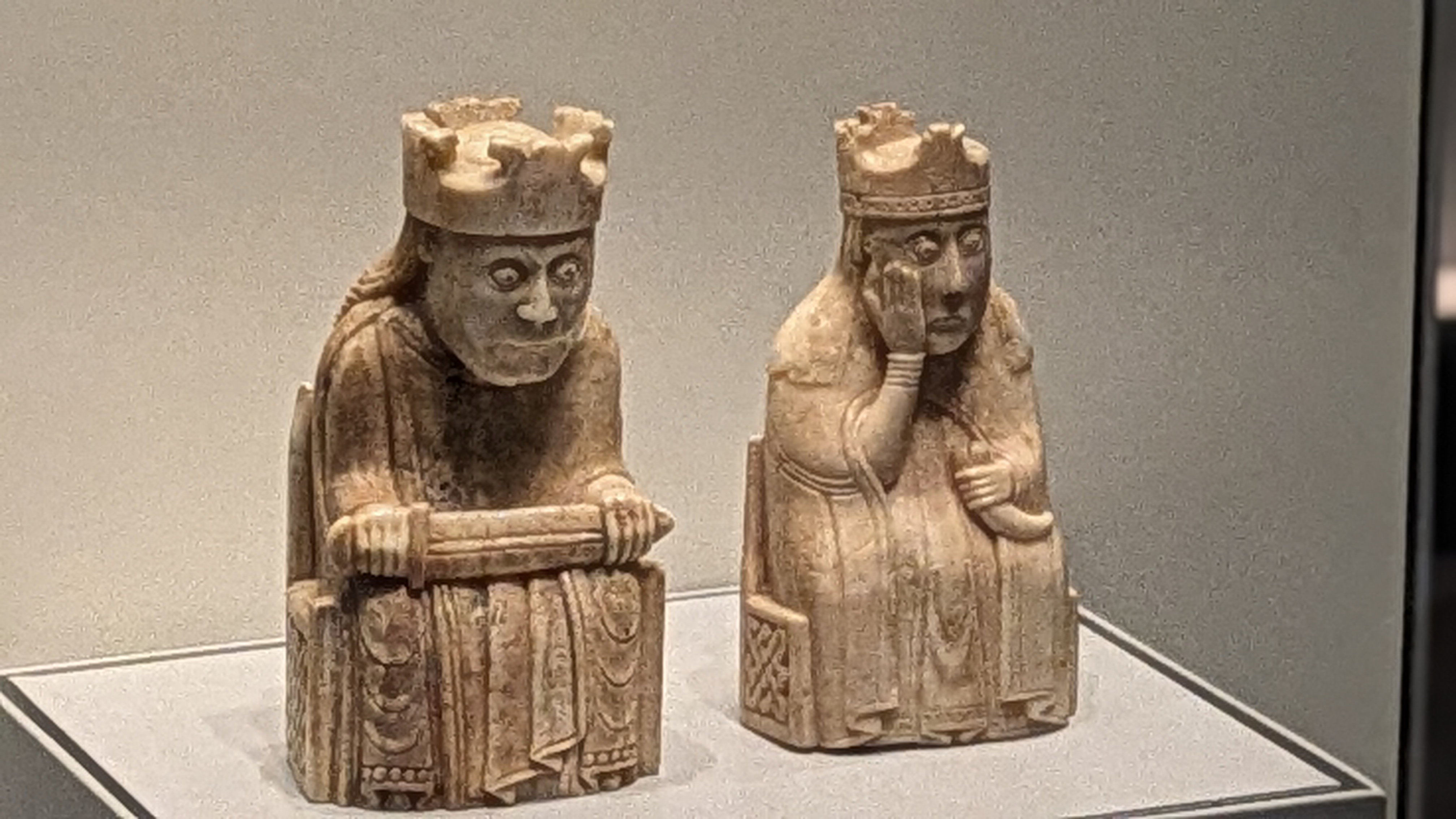
A Lewis Chessmen queen seems to be considering her plight.
A gallery or two over from Sutton Hoo and you find the twelfth century Lewis Chessmen, carved of walrus ivory and found in the nineteenth century in the Outer Hebribean Isle of Lewis in Scotland. Some went to the National Museum of Scotland–we saw them on our trip in 2017–but the bulk were sold to the British Museum. The source of the ivory and where the figures were made (maybe Norway!) is debated, but they are delightful, including berserkers chomping on their shields and queens doing what only could be described as a medieval face palm. You might think, wait, these are from the UK, so all good for the British Museum to keep, right? I wasn’t too surprised, however, to see that there have been efforts to return the chessmen not only to Scotland, but in 2010 Scottish MP Angus MacNeil called for the chessmen to return to Museum nan Eilean (museum of the islands) at Lews Castle in Stornoway, the major town of the Outer Hebrides. A 2017 Global Heritage blog post notes, “Recognition that the Lewis Chessmen are part of the heritage of the Western Isles of Scotland has come in the last few years after much lobbying, when the British Museum decided to loan six chess pieces to the Museum nan Eilean.”
Should the British Museum repatriate the Lewis Chessmen? Yes.
No. 6 Rosetta Stone
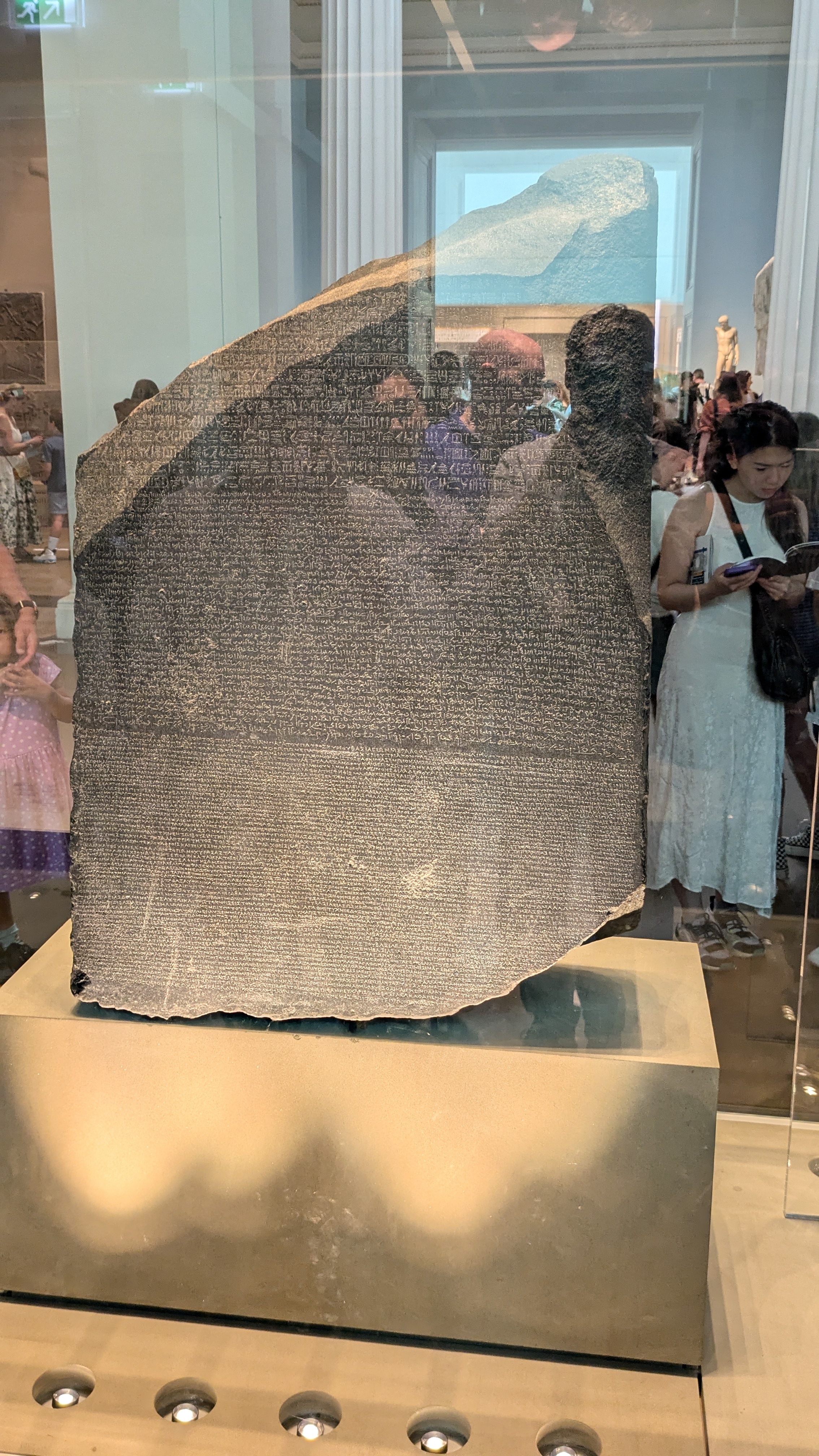
The Rosetta Stone was one of the more popular objects–I lament that I didn’t get a photo of the three young men capturing a selfie.
The Rosetta Stone is sort of like the British Museum’s Mona Lisa–a lot of people were crammed in to get a look and it’s a little smaller than you think it will be. A group of young men in their 20s did a selfie. The Rosetta Stone includes translations of a text in three writing systems–classical hieroglyphics, Demotic script (a simplified hieroglyphics), and Ancient Greek. This allowed nineteenth century scholars–especially French archaeologist Jean-Francois Champollion–to crack the code of ancient Egyptian hieroglyphics, earning the Rosetta Stone a place in archaeology’s top ten. In 2022, Monica Hanna, dean at the Arab Academy for Science, Technology & Maritime Transportation, organized a petition calling for the repatriation of the Rosetta Stone, noting, “the British Museum’s holding of the stone is a symbol of Western cultural violence against Egypt.” The petition garnered over 4,000 signatures. Zahi Hawass, well-known Egyptian archaeologist–circulated a similar petition–which got over 100,000 signatures. According to reporting in 2022, the British Museum argued that an 1801 treaty included legally transferred ownership of the famous tablet.
Should the British Museum repatriate the Rosetta Stone? Yes.
No. 7 North West palace of Ashurnasirpal gate
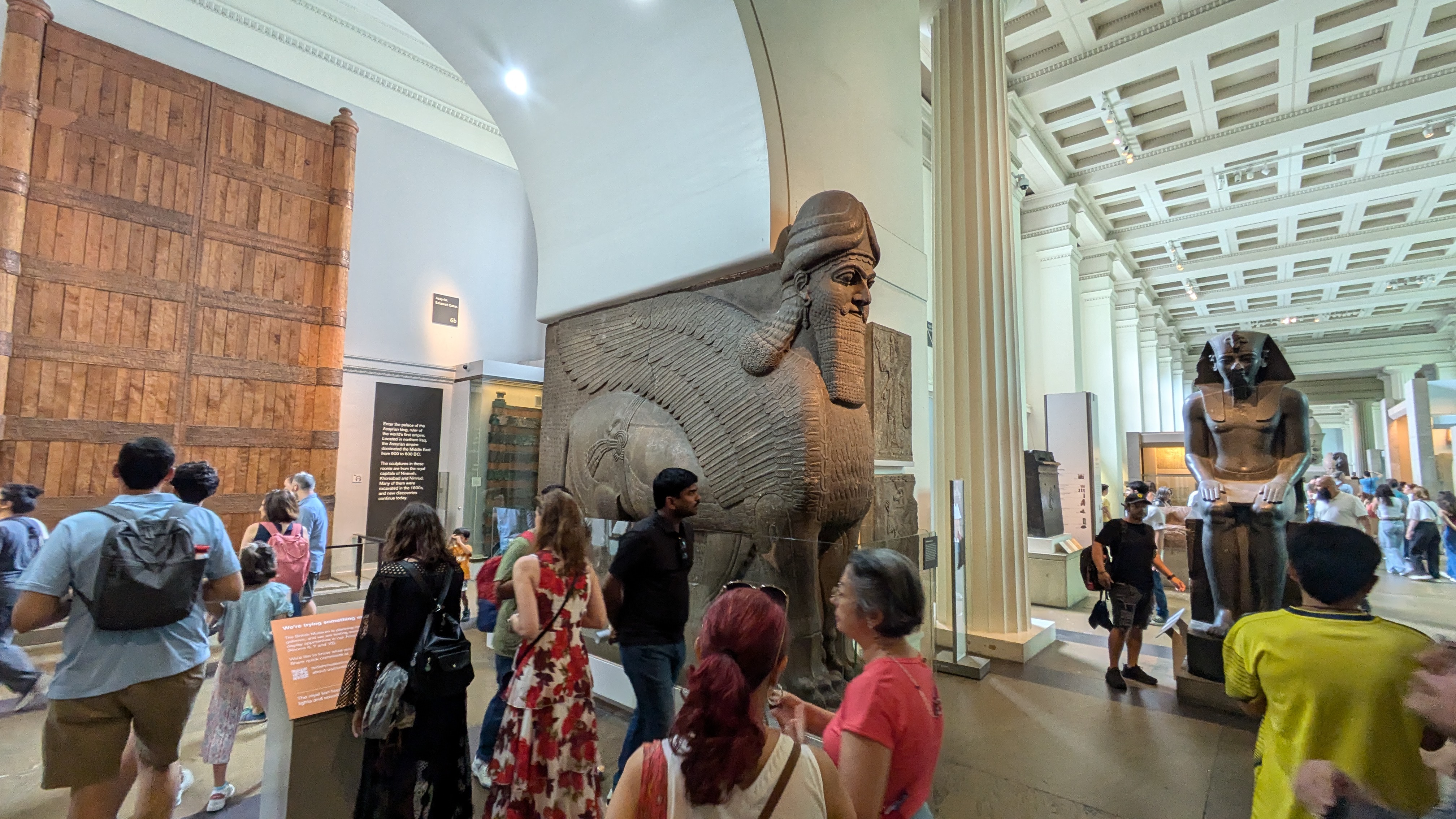
The lamassu figure from Ashurnasirpal’s palace throne room entrance is paired with the replica of the Balawat Gate (to the left in this picture).
Of all the cultural treasures housed at the British Museum, the Ashurnasirpal gate is perhaps one of the most striking. I first learned about these massive carvings of winged human-headed lions (or lamassu) guardians from the royal palace at Nimrud (modern northern Iraq) in grad school. The late Barbara Barletta taught a fantastic art history course on Ancient Mesopotamia and Egypt. The tests were very different from those in archaeology, and were based around projected slides that corresponded to questions on the test. I became proficient at making quick sketches in my notes so I could keep track of which architectural features and cultural items were which. Erected during the reign of neo-Assyrian king Ashurnasirpal II, almost 3,000 years ago, the figure was excavated by Sir Austen Henry Layard in 1851. A similar, perhaps matching figure is at the Met in New York. I can’t find any specific calls for repatriation by governments of Iraq, but they have been increasingly involved in the return of looted cultural items, including cuneiform tablets that landed at the Museum of the Bible and Cornell University. In 2023 Iraqi-American artist Michael Rakowitz offered his 2018 sculpture The Invisible Enemy Should Not Exist–his version of a massive lamassu–in exchange for repatriation of the Ashurnasirpal carving. An article about Rakowitz’s offer indicate that he specifically wanted to see the return of the Ashurnasirpal carving to respond to the destruction of a lamassu dating to 700 BCE at the Nergal Gate in Nineveh, which was purposely destroyed by the Islamic State in 2015.
Should the British Museum repatriate the Ashurnasirpal gate? Yes.
No. 8 Aztec serpent pectoral
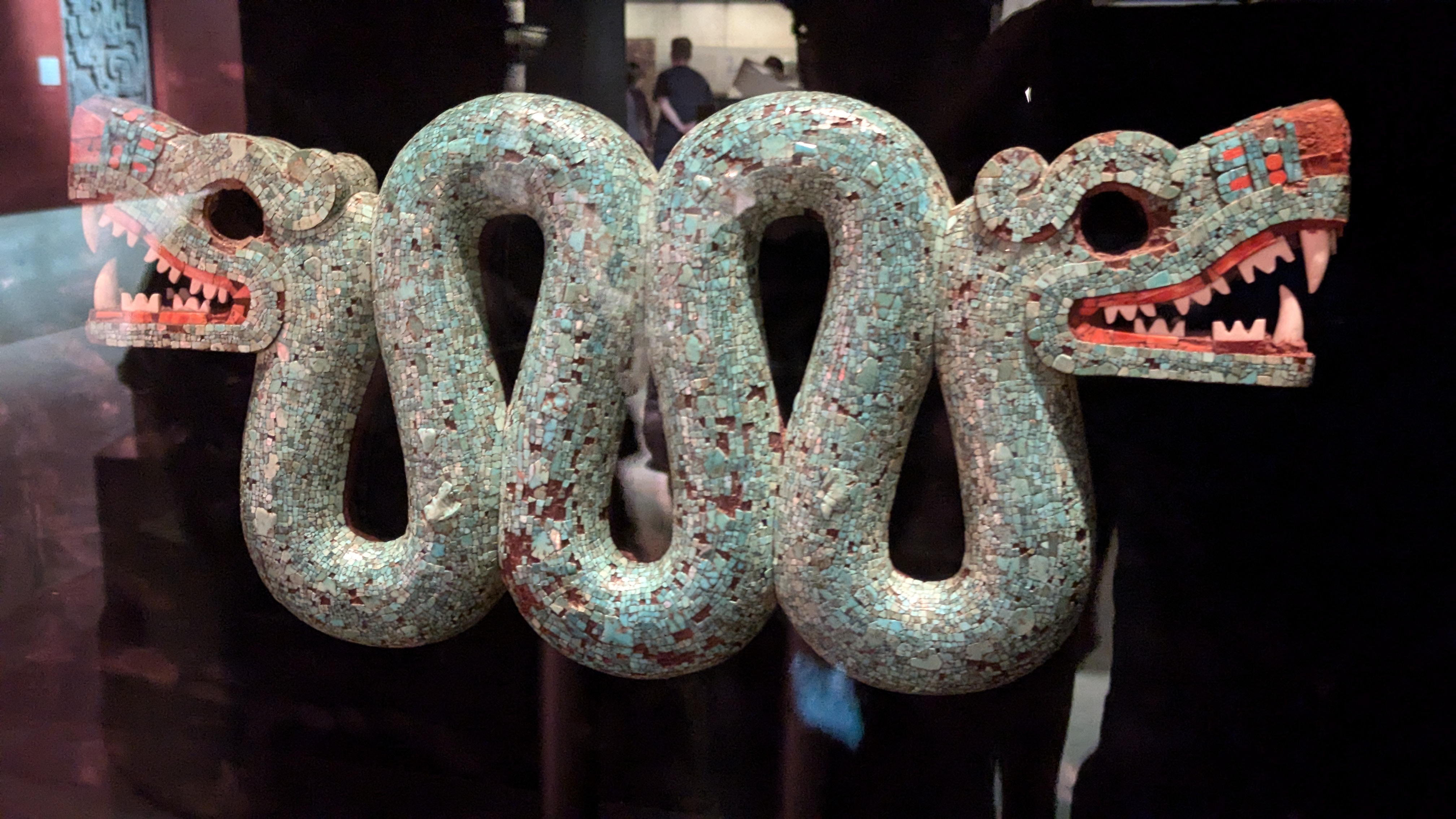
The mosaic on the Aztec serpent (or caterpillar!) pectoral is made of thousands of chips of turquoise with spondylus shell highlights.
The serpent pectoral is one of several turquoise mosaics from Mesoamerica associated with the Aztec and Mixtec of central Mexico, dating from 1,400 to 1,521. Carved of cedar wood, the undulating body of the double-headed serpent is covered with an intricate mosaic of turquoise and shell. The back side is flat, and unadorned, leading most to describe this as a pectoral, which could have been worn suspended on the chest of a person or larger statue. A catalog note by Vila Llonch notes, “The Nahuatl term ‘coatl’ can be translated as both serpent and twin. The Mexica considered serpents to be powerful, multifaceted creatures that could bridge the spheres (the underworld, water and sky) owing to their physical and mythical characterisitics.” Joshua Fitzgerald offers another interpretation, suggesting the pectoral is not a snake, but rather a caterpillar, representing less bad omens, and more a physical representation of how to think about life stages. The pectoral was purchased by the British Museum from a dealer, representing “an Italian gentleman” in 1894, after considerable negotiations about the price, as well as intrigue involving Duchessa Massimo (Teresa Maria Doria-Pamphili-Landi) and the Massimo Family of Rome. It’s almost impossible to look at a book about the Aztecs or Mesoamerican archaeology without encountering the mosaic pectoral–it’s famous! I can’t find specific instances of Mexico calling for the return of the mosaic pectoral, but a 2022 article by Amah-Rose Abrams points out increasing opposition by Mexico to international auctions, as well as a legacy of protecting cultural heritage from pilfering and removal that dates back to at least 1911, following the Mexican Revolution. In that piece, Mexico’s culture minister, Alejandra Frausto Guerrero, is quoted, stating “any piece of national heritage that is permanently outside the country, not temporarily for an exhibition or cultural cooperation, comes from an illegal act.”
Should the British Museum repatriate the Aztec serpent pectoral? Yes.
No. 9 Nisga’a house pole
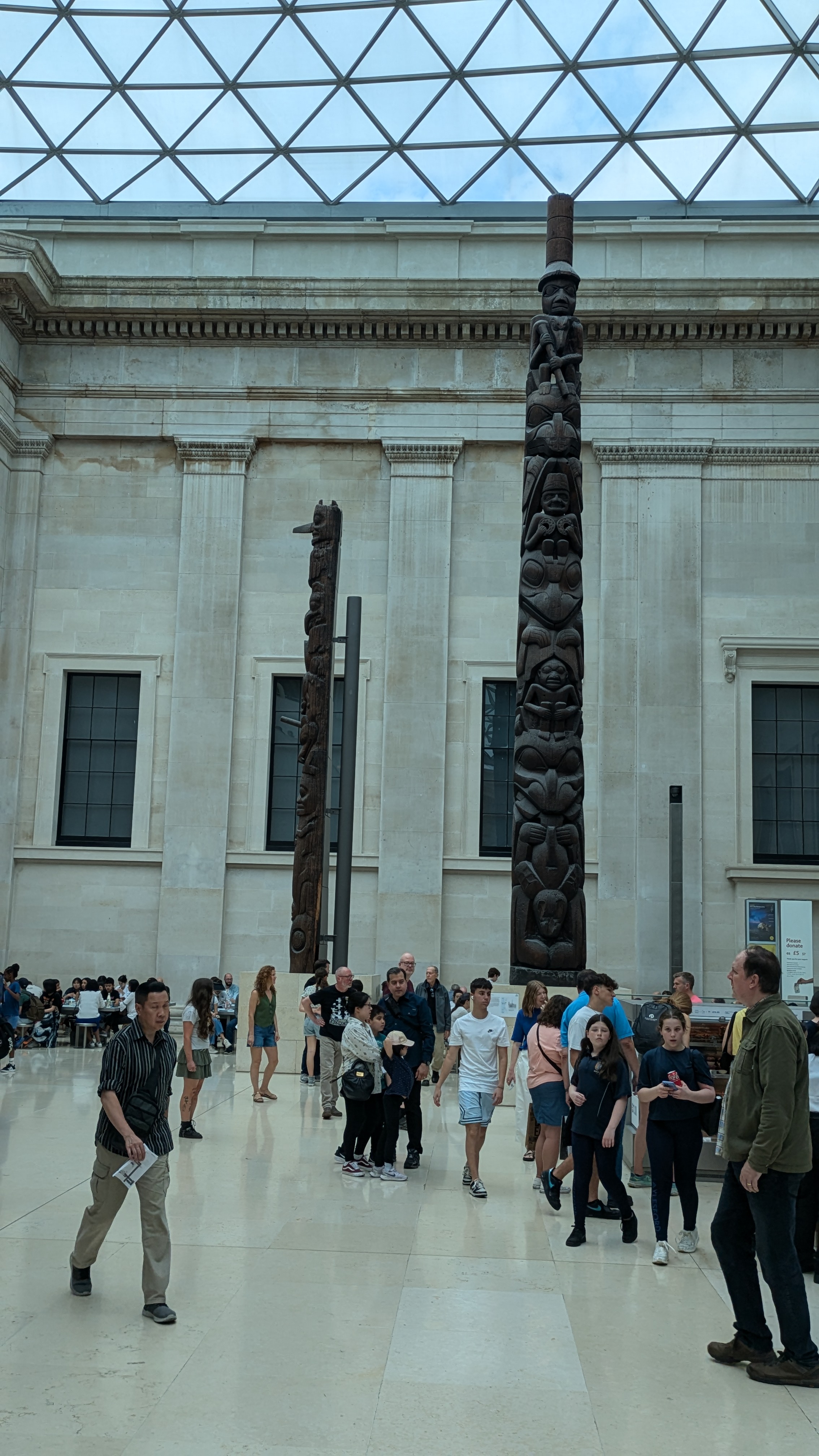
The Nisga’a and Haida house poles overlooking the British Museum lunch area.
Two house poles–what many might call totem poles–occupy an area near where you can have lunch at the British Museum. One is Haida, the other Nisga’a, from Angeedaw on the Nass River in British Columbia. I was particularly interested to see the Nisga’a house pole, since a presentation at the November 2023 AAIA repatriation conference highlighted the rematriation of another Nisga’a house pole from the National Museums of Scotland. Both pts’ann were taken by anthropologist Marius Barbeau, who was commissioned to acquire these items from the UK museums. The online entry for the Nisga’a pole includes this text:
The receipt in the Canadian Museum reads: ‘M.Barbeau Nass River Aug 30 1932. [To] Smith and his clan For totem pole of Eagle-Beaver, their property, which they cede in complete clan agreement without further claim (assuming responsibility of division of price between themselves) to M.Barbeau for his disposal according to authority received. Received payment in full (signed) William Smith his mark. (witness) Albert Allen. $310’ The difference in sale and cost figures being accounted for by travel and other expenses?
Apparently, similar documents exist for the rematriated pts’ann, but family stories contradict the receipted account, according to an October 17, 2023 story in IndigiNews. That story–and the presentations at the November repatriation conference–explained that these pts’ann were carved as memorials to deceased family members and are considered more than objects, but as ancestors themselves. The Angeedaw pts’ann is about 25 feet tall with carvings of mythological creatures, an eagle, and beavers.
Should the British Museum repatriate the Nisga’a house pole? Yes.
No 10 Citico shell gorget
Note–I’m not including any images of the shell gorget, as this is so clearly a funerary item.
In a case near the Hopewell pipes described above was a beautiful example of a Citico style shell gorget. I was surprised to encounter this cultural item at the British Museum, as I had become quite familiar with these objects in repatriation work here at the Robert S. Peabody Institute of Archaeology. These gorgets, made from the outer whorl of a large whelk shell and depicting stylized rattlesnakes, appear almost exclusively in burials of the late Mississippian era in the southeastern United States. A similar gorget from Etowah, a major mound complex near Atlanta, Georgia, was on exhibit at the Smithsonian’s National Museum of Natural History when I was there last summer. All of the examples from Etowah and Little Egypt here at the Peabody are awaiting repatriation, either as associated or unassociated funerary objects. My degree of familiarity with these gorgets increased in 2018 when we began working with the FBI to recover several stolen shell gorgets–which was partially successful. That work led me to scour publications, auction catalogs, and online auctions for shell gorgets in the hopes of recognizing one of the stolen ones. Helpful in all that is an exhaustive catalog of shell gorgets compiled by Jeffrey P. Brain and Philip Phillips, published by the Harvard Museum Press in 1996. The British Museum example, which apparently came to the museum in 1884 from William Bragge, does not appear in the Brain and Phillips catalog. Bragge was a nineteenth century engineer, antiquarian, and collector, with a specialty in tobacco; the British Museum holds 1,899 objects that are related to Bragge’s collecting efforts, including objects from far-flung Indigenous cultures, often pipes or smoking-related paraphernalia.
Should the British Museum repatriate the Citico shell gorget? Yes.
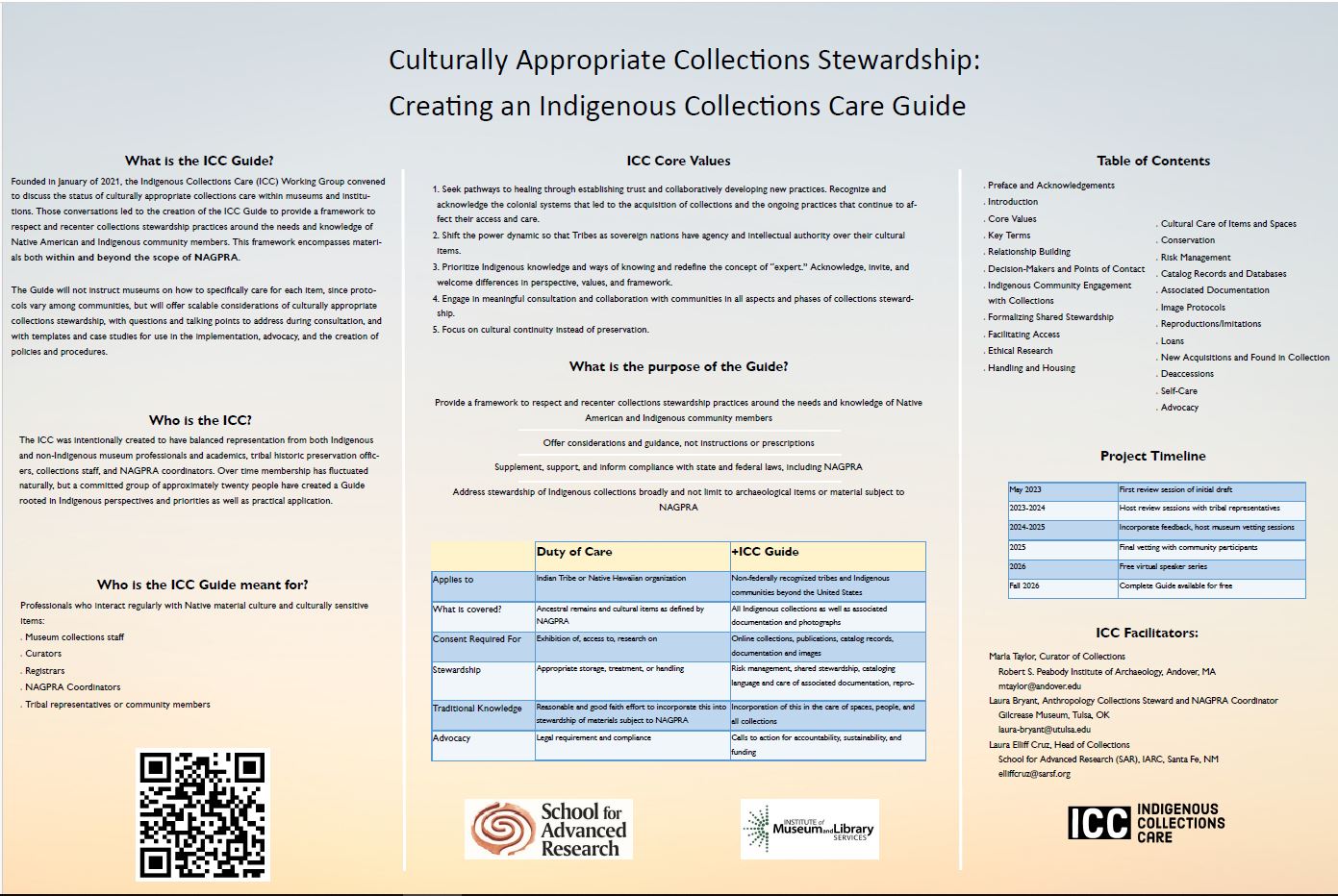
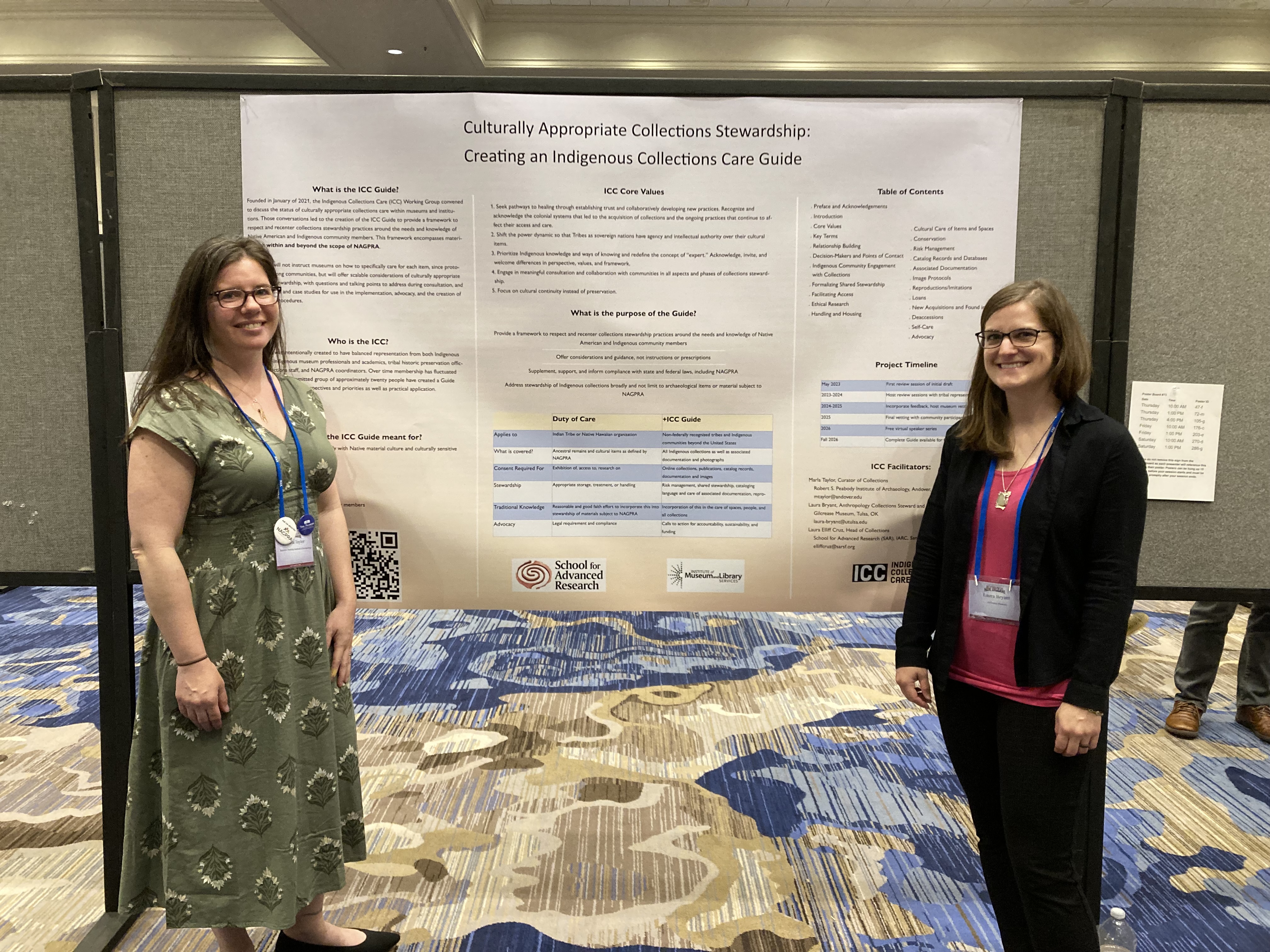
At the SAA meeting in New Orleans, I had the pleasure of representing the Indigenous Collections Care (ICC) Guide in the poster session – In Search of Solutions: Exploring Pathways to Repatriation for NAGPRA Practitioners (Part V): NAGPRA in Policy, Protocol, and Practice.
The ICC poster discussed the development of the ICC Guide, what is covered in the document, and how it can support NAGPRA compliance. The ICC Guide provides a framework to respect and recenter collections stewardship practices around the needs and knowledge of Native American and Indigenous community members. This framework encompasses materials both within and beyond the scope of NAGPRA.
I was excited for the opportunity to share the ICC Guide project with an archaeological audience. I had so many positive conversations with folks and really enjoyed connecting with everyone. It was a great conference and great experience!
Revised regulations for the Native American Grave Protection and Repatriation Act (NAGPRA) went into effect January 2024. NAGPRA was passed in 1990 and requires museums to repatriate Native American ancestral remains, funerary belongings, sacred items and items of cultural patrimony back to Tribal communities. The Peabody has shared how we think about the law and the associated labor (emotionally and intellectually) in past blog posts.
The revised regulations streamline the requirements and process for repatriation, require updates from museums, eliminate the category of “culturally unidentifiable human remains,” and establishes a Duty of Care for museums holding materials subject to repatriation. It is that last change that is having the biggest ripple effect throughout the museum world.
The Duty of Care clause of the regulations (43 CFR 10.1(d)) state that a museum must [highlights are mine for emphasis]:
Consultwith lineal descendants, Indian Tribes, or Native Hawaiian organizations on the appropriate storage, treatment, or handling of human remains or cultural items;
Make a reasonable and good-faith effort to incorporate and accommodate the Native American traditional knowledge of lineal descendants, Indian Tribes, or Native Hawaiian organizations in the storage, treatment, or handling of human remains or cultural items; and
Obtain free, prior, and informed consent from lineal descendants, Indian Tribes, or Native Hawaiian organizations prior to allowing any exhibition of, access to, or research on human remains or cultural items. Research includes, but is not limited to, any study, analysis, examination, or other means of acquiring or preserving information about human remains or cultural items. Research of any kind on human remains or cultural items is not required by the Act or these regulations.
These words are incredibly powerful and are resonating, with mixed reaction, across the museum field. Many news outlets have covered the reaction of several large museums to these regulations:
While covering exhibitions can feel drastic and extreme, I would argue that it is a direct result of insufficient consultation efforts and a false dichotomy between NAGPRA and non-NAGPRA collections. Because museums only need consent to display materials subject to NAGPRA (ancestral remains, funerary belongings, sacred items, or items of cultural patrimony), covering displays is an acknowledgement that those institutions have not done their due diligence to identify items subject to the law in their collections. They thought they understood what was covered by NAGPRA and utilized the rest of the collection to suit their own goals. This approach has fed into the underlying tension between Tribes and museums for decades.
I strongly recommend this podcast from Today Explained for an introduction to the topic and an honest conversation: Fight at the Museum (2/22/2024)
What does all of this mean for the Peabody Institute? Honestly, not much will change.
About six years ago, Peabody staff decided to remove all exhibitions from display. We recognized that our staff (all non-Native) were not the right people to determine what stories could be told through the collection. We understood that Native voices were essential to the process and that it would be irresponsible to move forward with exhibitions that lacked those voices.
The Peabody also has an established research policy that requires consultation and support before access is provided to any portion of the collection. This approach actually goes beyond the Duty of Care clause within NAGPRA and applies to all areas of the collection. In the nearly three years we have had this policy, I have not seen a meaningful decrease in research activity.
In my opinion, these changes are long overdue and I am happy to see a tangible shift in the power dynamics back to Tribes around their cultural material. I am proud of the work that that Peabody Institute has done and I am confident that we will continue to move in a positive direction.
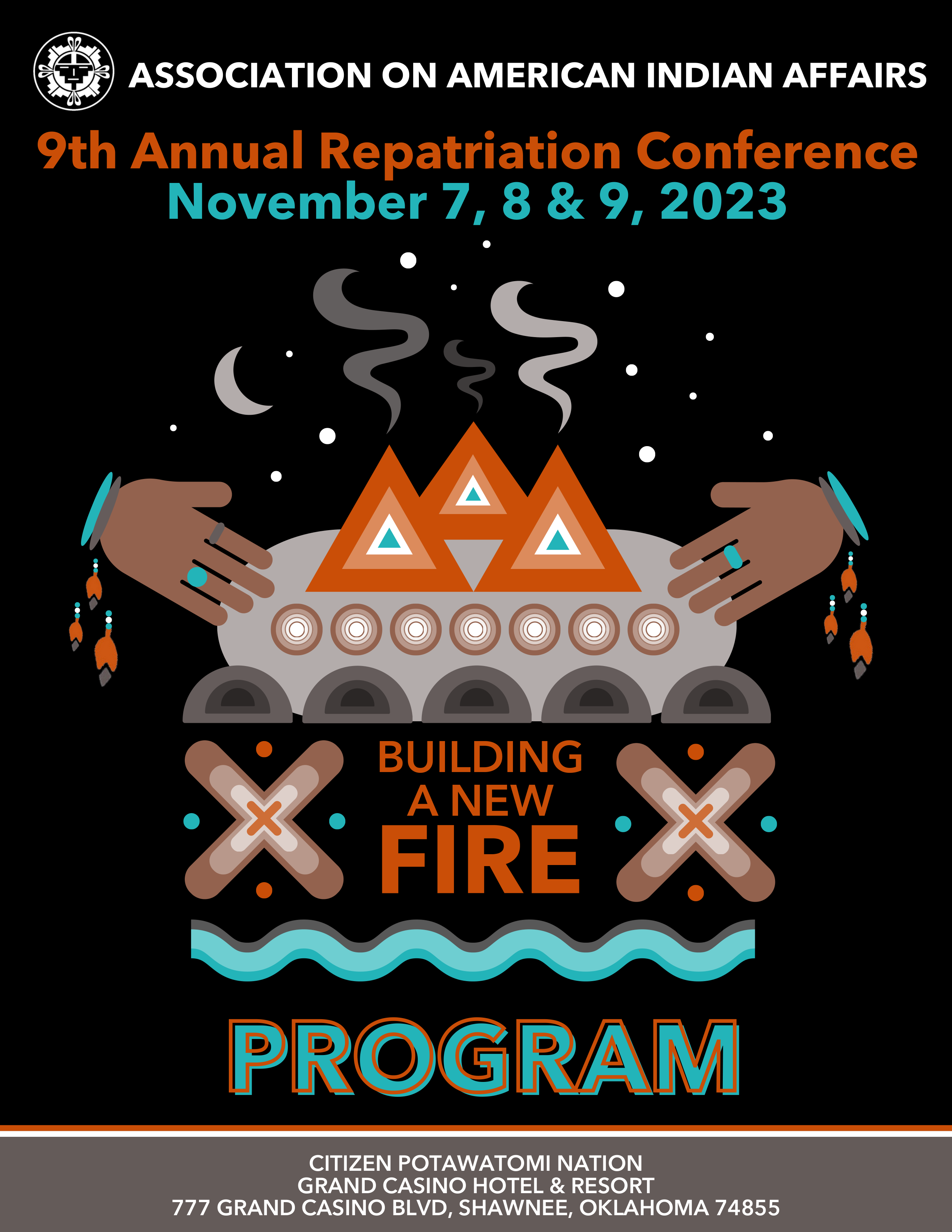
The Association on American Indian Affairs, helmed by Shannon O’Loughlin, hosted the 9th annual repatriation conference at the grand resort of the Citizen Potawatomi Nation in Shawnee, Oklahoma. The Peabody Institute was one of fifteen organizations that helped sponsor the three-day conference. Much of the focus was on compliance with the Native American Graves Protection & Repatriation Act (NAGPRA), federal legislation passed in 1990 that made it possible for Tribal Nations to reclaim their ancestors, funerary belongings, as well as several other types of cultural items from museums and federal agencies. About 300 people attended in person, with another 300 online.
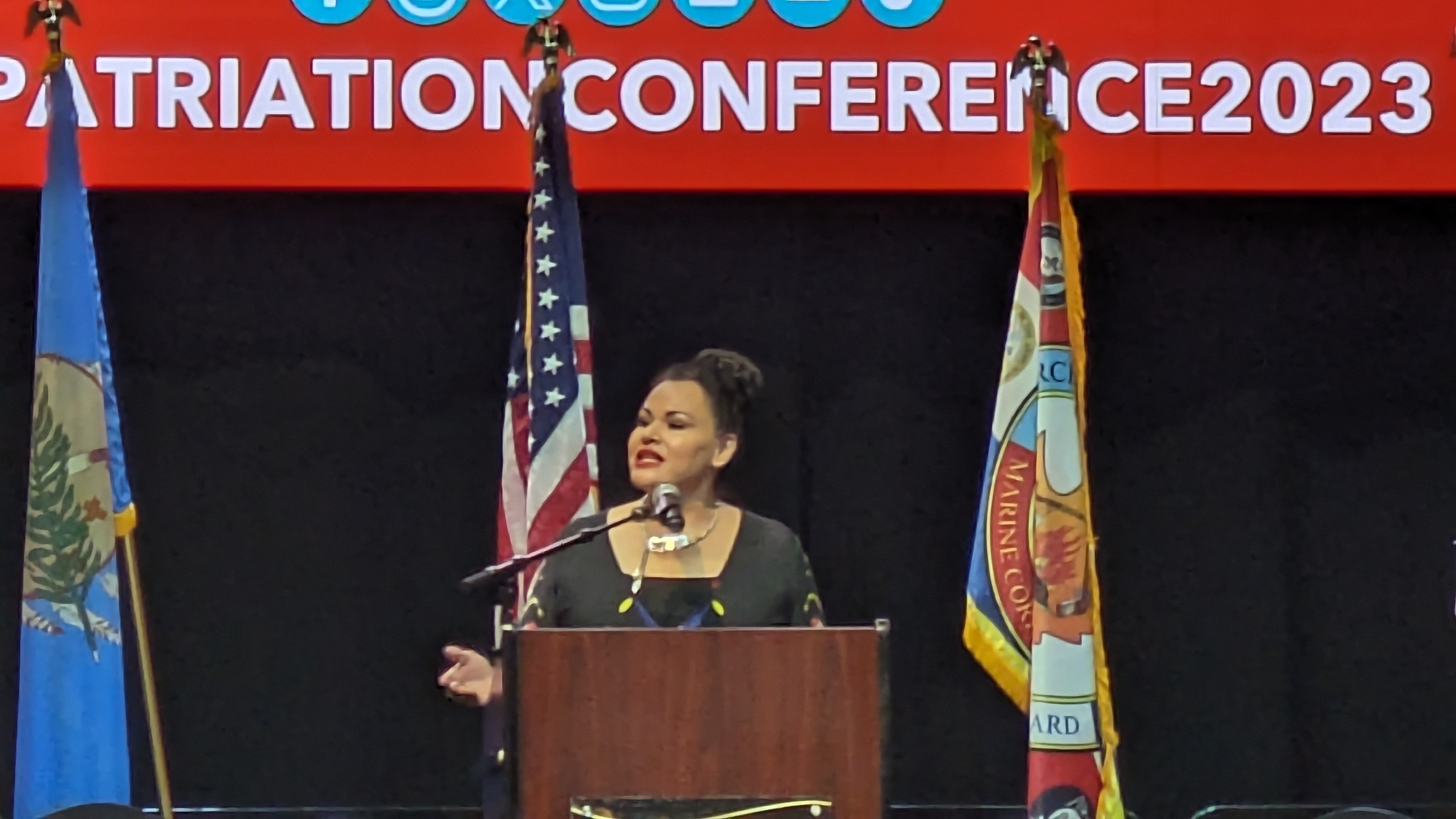
This year’s theme–Building a New Fire–focused participants on how museums, agencies, and Tribal Nations could prepare for the new repatriation regulations promulgated by the Department of the Interior, the implications of the passage of the Safeguard Tribal Objects of Patrimony (STOP) Act and international repatriation, as well as numerous case studies and panel discussions. Highlights include conversations with some of the journalists that have been covering NAGPRA compliance this year from ProPublica and other news outlets, a keynote talk by Angeline Boulley, author of Warrior Girl Unearthed and Firekeeper’s Daughter, as well as training on NAGPRA compliance by Melanie O’Brien, manager of the National Park Service’s repatriation program.
Angeline Boulley shares Warrior Girl Unearthed, her young adult novel that explores one young woman’s experience with repatriation.
I was happy to participate in the session “Well That is What it Says, But…: A Policy Focused Discussion of NAGPRA and its Application in Medical Examiner and Coroner Offices,” organized by Megan Kleeschulte, Doctoral Candidate at the University of Tennessee, Knoxville, and featuring Dr. Ellen Lofaro, Director of Repatriation at the University of Tennessee, Knoxville and William Johnson, Saginaw Chippewa, Curator and Operations Manager for the Ziibiwing Center of Anishinabe Culture & Lifeways. Megan’s work focuses on medical examiner and coroner compliance with NAGPRA, which varies as much as the local and state structures that govern these forensically focused offices.
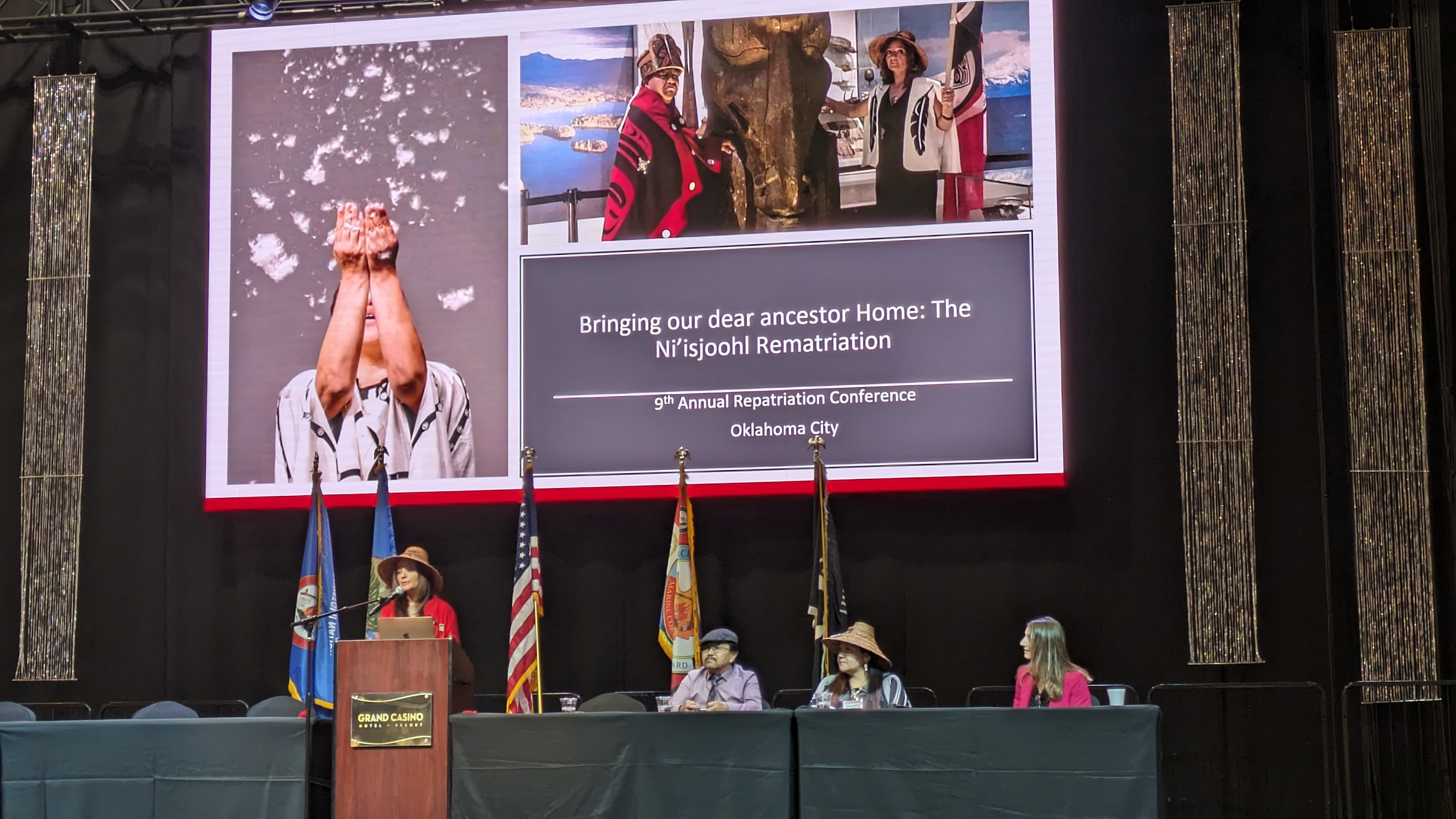
Participants in the session “Hlaa Hiyukwhl Gwildim-Goodam Dim Dip Luu-diyaltkwhl Hli Haykwhl Ganiye’etgum – Preparing to Bring Our Ancestors Home: Rematriation of the Wilps Ni’isjoohl Memorial Pole from Scotland to Nisga’a Lands.”
The conference was also a great opportunity to connect with old friends and make new connections. Since the Covid pandemic, a lot of consultation has happened over the phone or on Zoom, so being in the same place with friends and colleagues was a blessing. Shannon hinted that future conferences might be focused regionally, with even greater emphasis on connecting Tribal Nations with the institutions and agencies that are holding their ancestors and belongings. Whatever the future holds, I’m looking forward to participating. It’s special to be able to gather with others all working on repatriation and build on that shared experience.
Last November, I attended the AAIA Repatriation Conference in New Buffalo, Michigan. There were many tremendous speakers, but the one that really sticks out in my memory was Angeline Boulley. She does not work in the world of repatriation, but held the room in her hands as she spoke to us. I so vividly remember Angeline speaking to us all at the conference – she earned a standing ovation and my presentation had to follow that!
Angeline is a citizen of the Sault Ste. Marie Tribe of Chippewa Indians, and storyteller who writes about her Ojibwe community in Michigan’s Upper Peninsula. She had recently published her book Firekeeper’s Daughter (a #1 New York Times Bestseller) and was giving us a tease of her next book, Warrior Girl Unearthed.
At the time, I had not read Firekeeper’s Daughter and quickly purchased myself a copy. I LOVED it. The story was a fresh take on a murder mystery/adventure. The main character, Daunis, is a biracial unenrolled tribal member whose cultural knowledge can contribute to protecting her community. Sprinkled throughout the book are Ojibwe words, phrases, and cultural teachings in a way that only augments and enriches the story being told. I highly recommend it to you all! (and ignore the young adult classification – this is a complex story that is not always appropriate for younger readers)
Warrior Girl Unearthed is powerful in a different way. Grounded in the complicated reality of repatriation and missing and murdered Indigenous women (MMIW), this novel can feel a little heavy at times. Angeline uses the book in part to educate her readers about NAGPRA and repatriation and in part to build a new adventure around preventing a plot to profit off robbed Indigenous graves. While an explanation of NAGPRA does not always make compelling reading, the story itself is exciting and multi-faceted. Angeline once again interweaves Ojibwe words and cultural teachings in an effective way. And that is maybe the best thing about the book – the Ojibwe culture is just a part of who the main character is. She is just living her life and interfacing with her cultural teachings in a way that does not feel contrived but is instead natural. That feels novel and under-represented in young adult literature.
Her words and her books have left an impression on me and I encourage you to pick up a copy yourself.
Nearly three years ago, I co-founded the Indigenous Collections Care (ICC) Working Group along with Laura Bryant, Anthropology Collections Steward and NAGPRA Coordinator for the Gilcrease Museum in Tulsa, OK. Along with Laura Elliff Cruz, Head of Collections at the Indian Arts Research Center (IARC) in Santa Fe, NM and other group members, the ICC has been working to create an accessible reference tool for professionals who interact regularly with Native American collections.
The ICC grew out of our desire to incorporate the collections care requests of Indigenous communities into our institutional practice and policy. The working group was formed in late 2020 and is composed of approximately 20 people (both Indigenous and non-Indigenous museum professionals and academics, Tribal Historic Preservation Officers, and NAGPRA coordinators) who actively participate in monthly meetings on the creation of an Indigenous Collections Care Guide.
The ICC Guide will not instruct museums on how to specifically care for each item, since protocols vary among communities, but will offer scalable considerations of culturally appropriate collections stewardship, with questions and talking points to address during consultation, and with templates and case studies for use in implementation, advocacy, and the creation of policies and procedures.
In order to facilitate robust review of the ICC Guide by tribal communities, the ICC partnered with an incredible institution, the School for Advanced Research (SAR) in Santa Fe, NM.
I am excited to share that SAR received an IMLS National Leadership Grants for Museums of $175,587 for the IARC’s creation of the Indigenous Collections Care Guide. to support the museum field with an accessible reference tool for museum professionals who interact regularly with Native American collections. The guide will provide museums with a framework to recenter collections stewardship practices around the needs and knowledge of Indigenous community members. At the conclusion of the project, 175 tribal community representatives and museum professionals will have had a voice in the development of the guide, which will be made freely available for tribal community representatives and museums of all sizes. The IMLS reported receiving forty-eight applications for this opportunity, and SAR was one of nineteen projects to receive funding.
What does this mean for the Peabody Institute? Well, first it means that I will be super busy for the next few years! It also means that the Peabody Institute is continuing our leadership role in the broader museum and archaeological conversations around ethical collections stewardship and relationships with tribal communities.
I will keep you posted as work continues over the next few years!
School for Advanced Research
The School for Advanced Research (SAR), a 501(c)(3) nonprofit educational institution, was established in 1907 to advance innovative social science and Native American art. Its sixteen-acre residential campus sits on the ancestral lands of the Tewa people in O’gah’poh geh Owingeh, or Santa Fe, New Mexico. Visit sarweb.org
Institute of Museum and Library Services
The mission of IMLS is to advance, support, and empower America’s museums, libraries, and related organizations through grantmaking, research, and policy development.
The agency carries out its charge as it adapts to meet the changing needs of our nation’s museums and libraries and their communities. IMLS’s mission is essential to helping these institutions navigate change and continue to improve their services. Visit imls.gov



 The Peabody