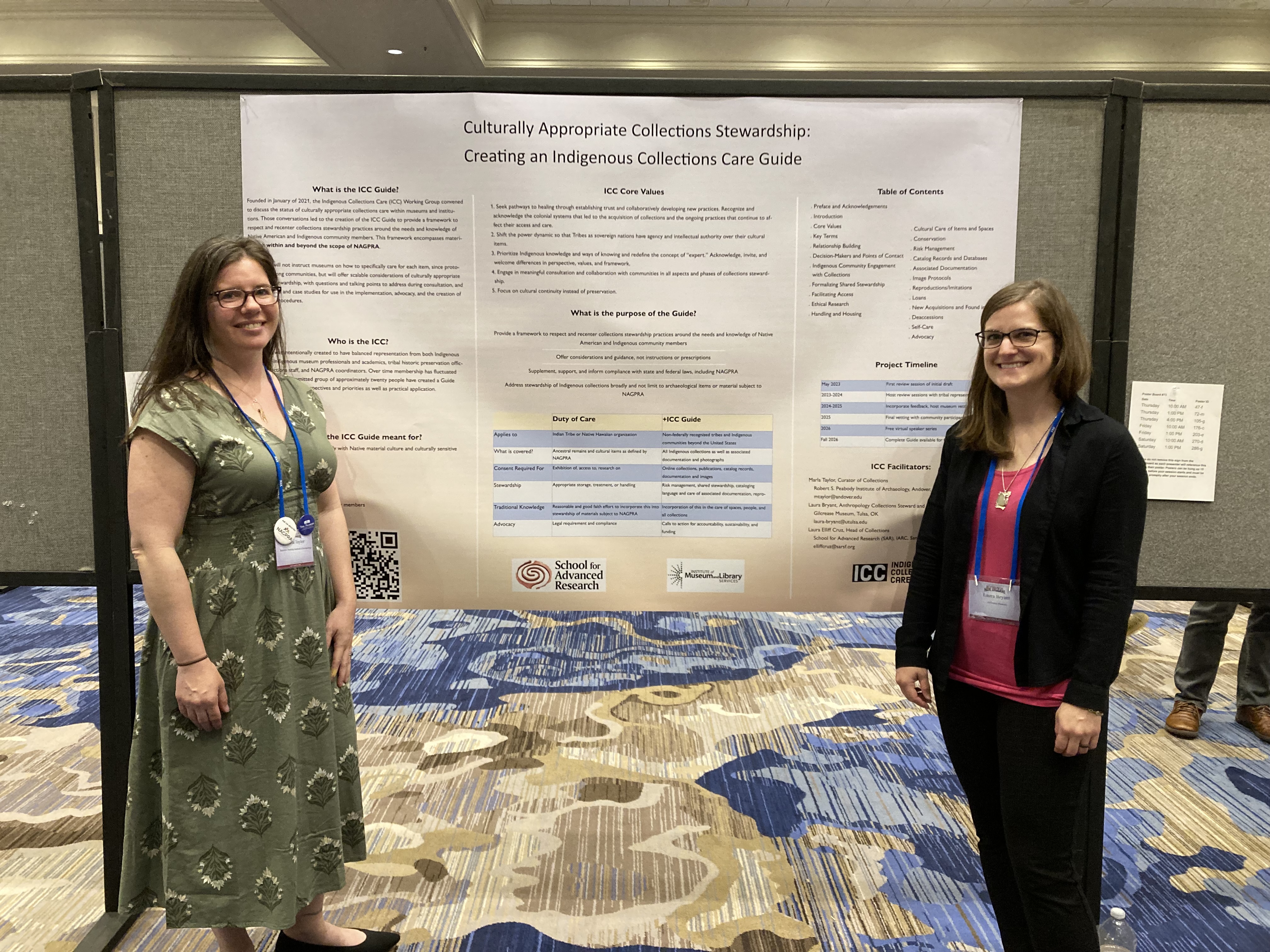
At the SAA meeting in New Orleans, I had the pleasure of representing the Indigenous Collections Care (ICC) Guide in the poster session – In Search of Solutions: Exploring Pathways to Repatriation for NAGPRA Practitioners (Part V): NAGPRA in Policy, Protocol, and Practice.
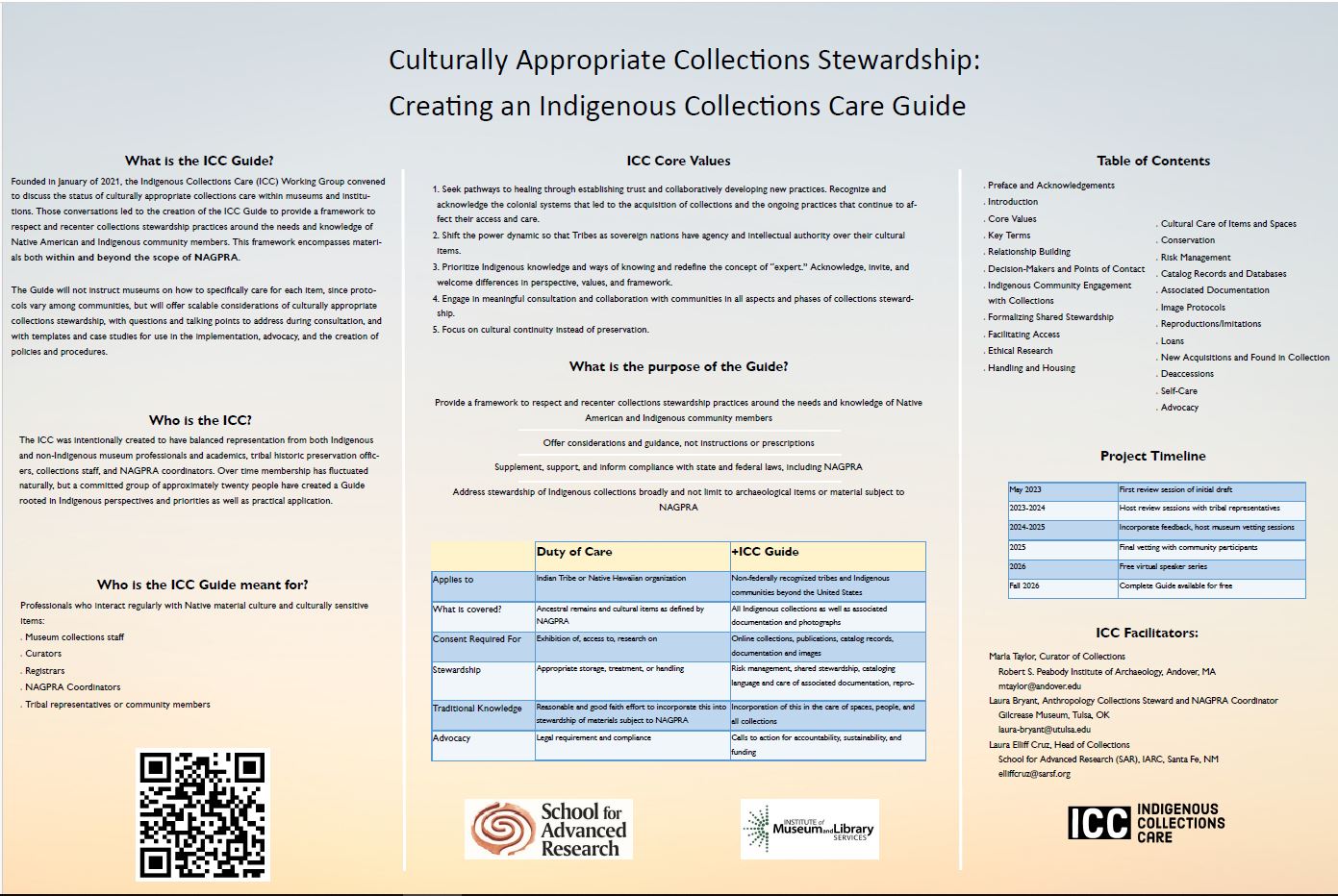
The ICC poster discussed the development of the ICC Guide, what is covered in the document, and how it can support NAGPRA compliance. The ICC Guide provides a framework to respect and recenter collections stewardship practices around the needs and knowledge of Native American and Indigenous community members. This framework encompasses materials both within and beyond the scope of NAGPRA.
I was excited for the opportunity to share the ICC Guide project with an archaeological audience. I had so many positive conversations with folks and really enjoyed connecting with everyone. It was a great conference and great experience!
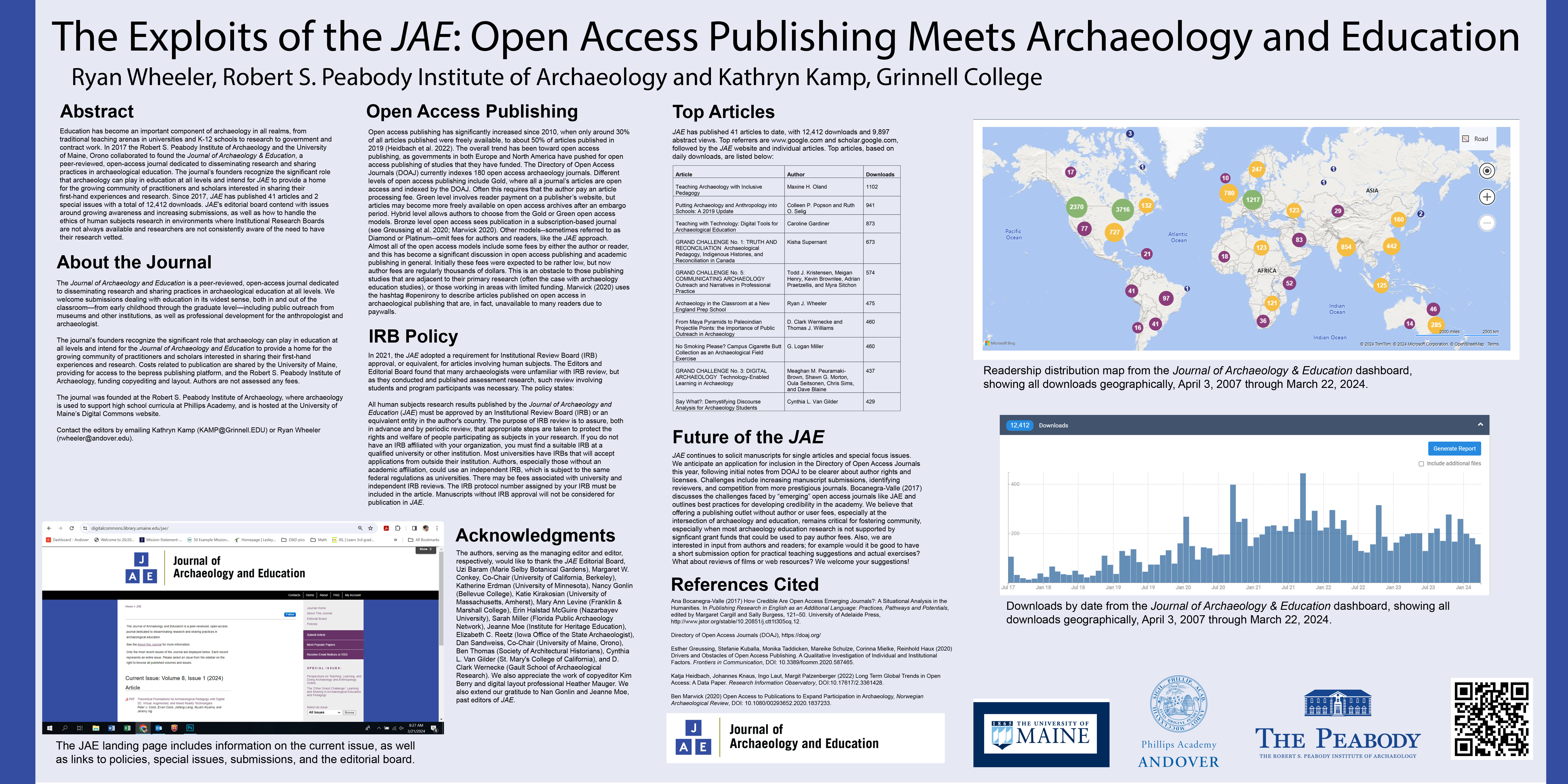
Poster sessions are a great way to share information and connect with people at the annual meeting of the Society for American Archaeology. Exhibitors have two hours to share their research and projects, connecting at length with attendees that stop by to chat–a bit less pressure than the regular sessions and symposia! At the recent 89th annual meeting of the SAA, the Journal of Archaeology & Education was represented at the Thursday afternoon posters after hours session. For those that couldn’t make it, here are some highlights of our poster:
JAE poster from the recent SAA annual meeting.
Abstract
Education has become an important component of archaeology in all realms, from traditional teaching arenas in universities and K-12 schools to research to government and contract work. In 2017 the Robert S. Peabody Institute of Archaeology and the University of Maine, Orono collaborated to found the Journal of Archaeology & Education, a peer-reviewed, open-access journal dedicated to disseminating research and sharing practices in archaeological education. The journal’s founders recognize the significant role that archaeology can play in education at all levels and intend for JAE to provide a home for the growing community of practitioners and scholars interested in sharing their first-hand experiences and research. Since 2017, JAE has published 41 articles and 2 special issues with a total of 12,412 downloads. JAE’s editorial board contend with issues around growing awareness and increasing submissions, as well as how to handle the ethics of human subjects research in environments where Institutional Research Boards are not always available and researchers are not consistently aware of the need to have their research vetted.
About the Journal
The Journal of Archaeology and Education is a peer-reviewed, open-access journal dedicated to disseminating research and sharing practices in archaeological education at all levels. We welcome submissions dealing with education in its widest sense, both in and out of the classroom—from early childhood through the graduate level—including public outreach from museums and other institutions, as well as professional development for the anthropologist and archaeologist.
The journal’s founders recognize the significant role that archaeology can play in education at all levels and intend for the Journal of Archaeology and Education to provide a home for the growing community of practitioners and scholars interested in sharing their first-hand experiences and research. Costs related to publication are shared by the University of Maine, providing for access to the bepress publishing platform, and the Robert S. Peabody Institute of Archaeology, funding copyediting and layout. Authors are not assessed any fees.
The journal was founded at the Robert S. Peabody Institute of Archaeology, where archaeology is used to support high school curricula at Phillips Academy, and is hosted at the University of Maine’s Digital Commons website. Contact the editors by emailing Kathryn Kamp (KAMP@Grinnell.EDU) or Ryan Wheeler (rwheeler@andover.edu).
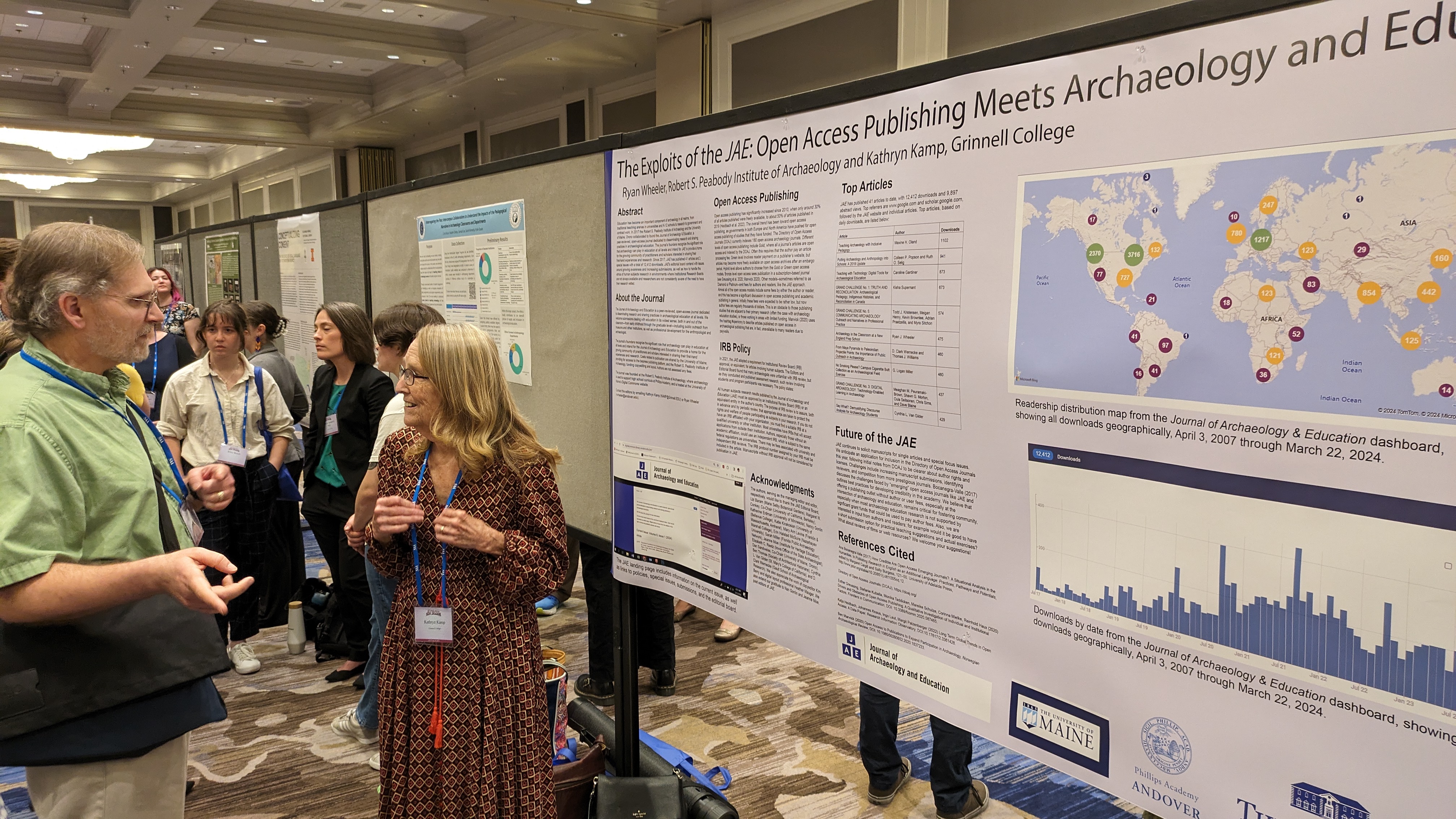
JAE editor Kathryn Kamp talks to attendees at the poster session.
Open Access Publishing
Open access publishing has significantly increased since 2010, when only around 30% of all articles published were freely available, to about 50% of articles published in 2019 (Heidbach et al. 2022). The overall trend has been toward open access publishing, as governments in both Europe and North America have pushed for open access publishing of studies that they have funded. The Directory of Open Access Journals (DOAJ) currently indexes 180 open access archaeology journals. Different levels of open access publishing include Gold, where all a journal’s articles are open access and indexed by the DOAJ. Often this requires that the author pay an article processing fee. Green level involves reader payment on a publisher’s website, but articles may become more freely available on open access archives after an embargo period. Hybrid level allows authors to choose from the Gold or Green open access models. Bronze level open access sees publication in a subscription-based journal (see Greussing et al. 2020; Marwick 2020). Other models–sometimes referred to as Diamond or Platinum–omit fees for authors and readers, like the JAE approach. Almost all of the open access models include some fees by either the author or reader, and this has become a significant discussion in open access publishing and academic publishing in general. Initially these fees were expected to be rather low, but now author fees are regularly thousands of dollars. This is an obstacle to those publishing studies that are adjacent to their primary research (often the case with archaeology education studies), or those working in areas with limited funding. Marwick (2020) uses the hashtag #openirony to describe articles published on open access in archaeological publishing that are, in fact, unavailable to many readers due to paywalls.
IRB Policy
In 2021, the JAE adopted a requirement for Institutional Review Board (IRB) approval, or equivalent, for articles involving human subjects. The Editors and Editorial Board found that many archaeologists were unfamiliar with IRB review, but as they conducted and published assessment research, such review involving students and program participants was necessary. The policy states:
All human subjects research results published by the Journal of Archaeology and Education (JAE) must be approved by an Institutional Review Board (IRB) or an equivalent entity in the author’s country. The purpose of IRB review is to assure, both in advance and by periodic review, that appropriate steps are taken to protect the rights and welfare of people participating as subjects in your research. If you do not have an IRB affiliated with your organization, you must find a suitable IRB at a qualified university or other institution. Most universities have IRBs that will accept applications from outside their institution. Authors, especially those without an academic affiliation, could use an independent IRB, which is subject to the same federal regulations as universities. There may be fees associated with university and independent IRB reviews. The IRB protocol number assigned by your IRB must be included in the article. Manuscripts without IRB approval will not be considered for publication in JAE.
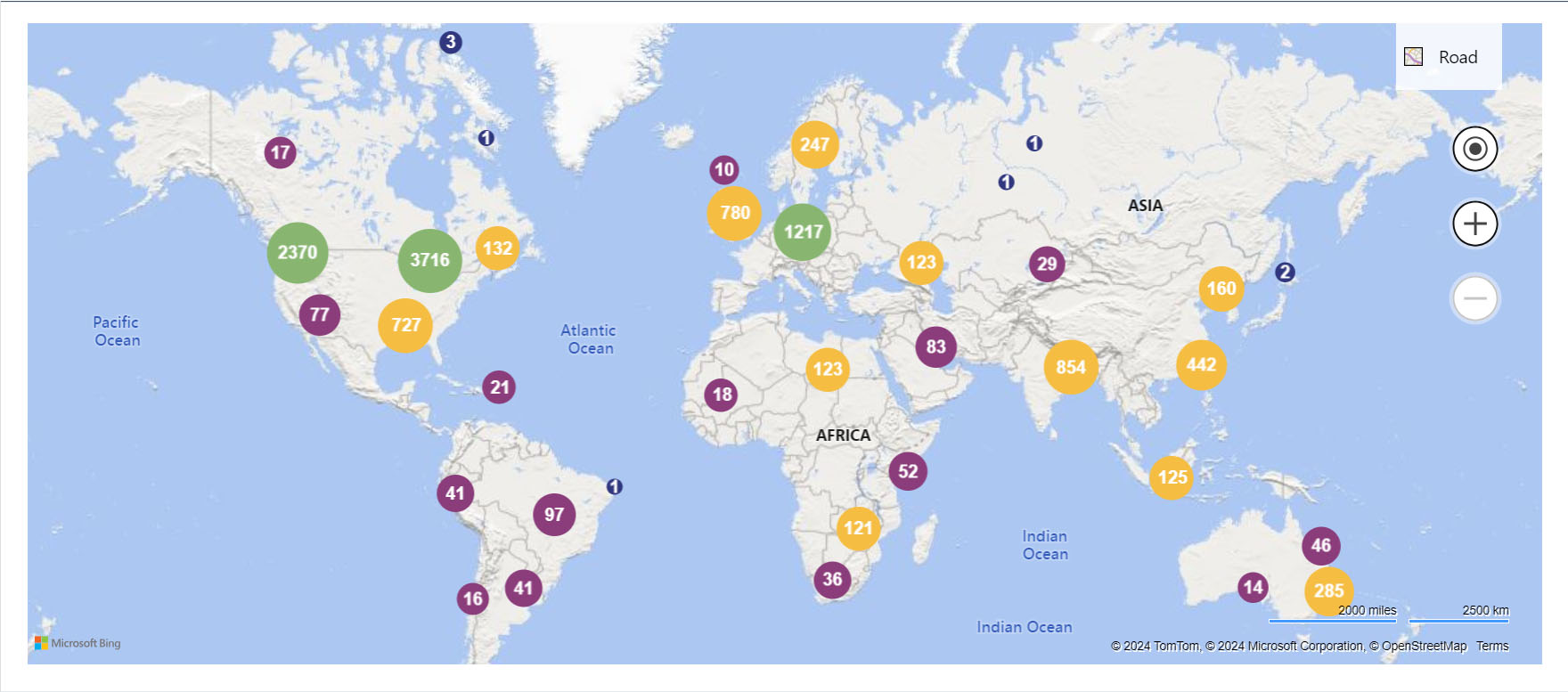
Geographic depiction of downloads from the JAE dashboard.
Top Articles
AE has published 41 articles to date, with 12,412 downloads and 9,897 abstract views. Top referrers are http://www.google.com and scholar.google.com, followed by the JAE website and individual articles. Top articles, based on daily downloads, are listed below:
JAE continues to solicit manuscripts for single articles and special focus issues. We anticipate an application for inclusion in the Directory of Open Access Journals this year, following initial notes from DOAJ to be clearer about author rights and licenses. Challenges include increasing manuscript submissions, identifying reviewers, and competition from more prestigious journals. Bocanegra-Valle (2017) discusses the challenges faced by “emerging” open access journals like JAE and outlines best practices for developing credibility in the academy. We believe that offering a publishing outlet without author or user fees, especially at the intersection of archaeology and education, remains critical for fostering community, especially when most archaeology education research is not supported by significant grant funds that could be used to pay author fees. Also, we are interested in input from authors and readers; for example would it be good to have a short submission option for practical teaching suggestions and actual exercises? What about reviews of films or web resources? We welcome your suggestions!
JAE managing editor ready to engage attendees at the poster session.
References Cited
Ana Bocanegra-Valle (2017) How Credible Are Open Access Emerging Journals?: A Situational Analysis in the Humanities. In Publishing Research in English as an Additional Language: Practices, Pathways and Potentials, edited by Margaret Cargill and Sally Burgess, 121–50. University of Adelaide Press, http://www.jstor.org/stable/10.20851/j.ctt1t305cq.12.
Esther Greussing, Stefanie Kuballa, Monika Taddicken, Mareike Schulze, Corinna Mielke, Reinhold Haux (2020) Drivers and Obstacles of Open Access Publishing. A Qualitative Investigation of Individual and Institutional Factors. Frontiers in Communication, DOI: 10.3389/fcomm.2020.587465.
Katja Heidbach, Johannes Knaus, Ingo Laut, Margit Palzenberger (2022) Long Term Global Trends in Open Access: A Data Paper. Research Information Observatory, DOI:10.17617/2.3361428.
Ben Marwick (2020) Open Access to Publications to Expand Participation in Archaeology, Norwegian Archaeological Review, DOI: 10.1080/00293652.2020.1837233.
The Peabody has a long history with the Society for American Archaeology (SAA), dating back to the origins of the society in the mid-1930s. Carl Guthe, who had served as Alfred Kidder’s assistant on excavations at Pecos Pueblo, organized the society in 1934 and the first meeting was held at Phillips Academy a year later. Connections between the Peabody and SAA continued throughout the twentieth century and still exist today.
In 2020, the Peabody and the SAA partnered to create a new award honoring individuals and organizations dedicated to archaeology and education. The Robert S. Peabody Institute of Archaeology Award for Archaeology and Education recognizes excellence of individuals or institutions in using archaeological methods, theory, and/or data to enliven, enrich, and enhance other disciplines, and to foster the community of archaeology education practitioners. The Peabody Award will spotlight these contributions and promote teaching ideas, exercises, activities, and methods across the educational spectrum, from K-12 through higher education and including public education broadly conceived. Diving with a Purpose was the inaugural award winner in 2021.
I’ve had the honor of helping to create the Peabody Award as chair of the SAA’s teaching awards subcommittee, and to help launch the Binford Family Award for Teaching Critical Thinking in Archaeology, which is new this year. The Binford Family Award encourages curriculum development with a deliberate focus on teaching critical thinking and scientific reasoning skills in archaeology courses at any level, to reward individuals or institutions that develop excellent examples of such curricula, and to promote the sharing of ideas and materials relating to these efforts.
Both the Peabody and Binford awards include a $1,000 prize. Nominations are open to both members and non-members of SAA, as well as those based in the United States or internationally. The nomination deadline is December 1, 2021.
Details about each award and how to make a nomination can be found on the SAA website:
In August, the Society for American Archaeology (SAA) announced its newest education award, the Robert S. Peabody Institute of Archaeology Award for Archaeology and Education.
The Robert S. Peabody Institute of Archaeology Award for Archaeology and Education recognizes the excellence of individuals or institutions in using archaeological methods, theory, and/or data to enliven, enrich, and enhance other disciplines, and to foster the community of archaeology education practitioners. The Peabody Award will spotlight these contributions and promote teaching ideas, exercises, activities, and methods across the educational spectrum, from K-12 through higher education and public education.
Peabody Advisory Committee member and recent chair Dan Sandweiss ’75 proposed the award to the PAC and SAA. Both organizations agreed that it was a great opportunity to honor those involved in archaeology and education, joining the Journal of Archaeology & Education as another important tool for creating community among those engaged in these endeavors.
One important criterion is that nomination documentation must include materials—like activities or lesson plans—that can be shared with the broader community via SAA’s website.
The award description indicates that anyone may submit a nomination and that nominees do not have to be members of the SAA. Both individuals and programs are eligible. The award committee offered this list as examples of activities that might distinguish a nominee, including archaeology service learning programs, popular archaeology writing, adult or youth training programs, lessons or lesson plans for K-12 educators, archaeological outreach programming, oral history projects, lifelong learning classes or programs, archaeology camp experiences, and collaborative work with other educators or institutions around archaeological pedagogy.
The deadline for submitting a nomination is December 1, 2020 and submission information and guidelines are on the SAA website for the Robert S. Peabody Institute of Archaeology Award in Archaeology and Education. Peabody director Ryan Wheeler is serving as the SAA’s Teaching Awards committee chair and can be contacted with questions about the Peabody Award.
In April the University Press of Florida published Iconography and Wetsite Archaeology of Florida’s Watery Realms, my new book, co-edited with Oxford’s Joanna Ostapkowicz. Watery Realms highlights current research on sites and artifacts preserved in anaerobic environments throughout Florida. This blog reproduces some of the book’s first chapter, which recounts the origins of the volume and some of the exciting research presented.
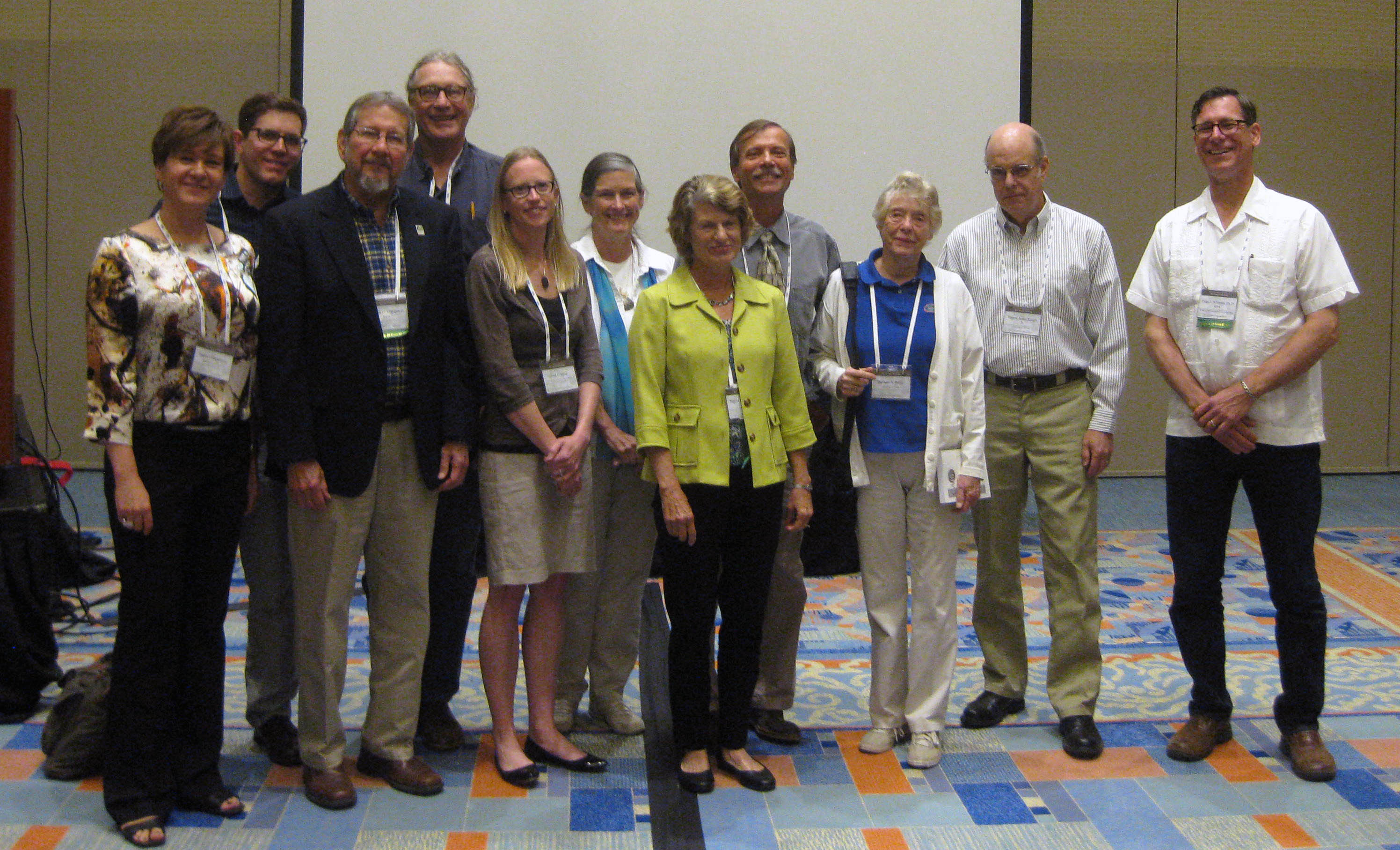
Presenters at the 2016 Society for American Archaeology symposium The Archaeology, Art, and Iconography of Florida’s Watery Landscapes with Barbara A. Purdy. From left: Joanna Ostapkowicz, Dan Seinfeld, Bill Marquardt, Michael Faught, Julia Duggins, Karen Jo Walker, Phyllis Kolianos, Steven Koski, Barbara Purdy, Jim Knight, and Ryan Wheeler.
The book grew out of the symposium The Archaeology, Art, and Iconography of Florida’s Watery Landscapes that we organized at the 81st annual meeting of the Society for American Archaeology (SAA) in Orlando, Florida, not terribly far from some of the amazing sites being discussed. By coincidence, the icon of the 2016 SAA meeting was the Hontoon/Thursby owl, which was the focus of our conference presentation and recent study. This made the venue doubly relevant in highlighting the importance of Florida wetland archaeology. As the session grew into the Watery Realms book, it expanded to include other contributors and has inspired new collaborations. A generous grant from the Toomey Foundation for the Natural Sciences helped underwrite the symposium and ensure that presenters from graduate programs, government agencies, cultural resource management firms, universities, and museums were able to attend. William Marquardt, a co-presenter on the wetsite resources of the Pineland site with Karen Jo Walker, volunteered to write a chapter for the book on the interesting corpus of wooden anthropomorphic figurines from southern Florida. Rick Schulting, who was involved in the strontium isotope analysis of the Hontoon/Thursby carvings in our study, linked with Julia Duggins over ways to test her ideas about Florida canoes and watersheds, a project that secured a Wenner-Gren Foundation grant. Plans for future collaborations on the anthropomorphic figurines and Key Marco material are also under way. Our discussants Jim Knight and Lee Newsom pointed out many of the ways the presenters could connect their work and explore Florida’s wetsite art.
Archaeologists Christine Newman and Ray McGee excavating the Lake Pithlachocco canoe site, 2000. Dugout canoes like these figure prominently in the Watery Realms book.
The idea for the symposium emerged through a rather circuitous route. It began at the SAA’s 78th annual meeting in Hawaii, where I first meet Joanna Ostapkowicz. We were participants in a general session called By Design: Iconography in Social and Cosmological Negotiations, which included an interesting array of papers on everything from Dorset art to Egyptian textiles. Our papers contributed to enlarging the geographical scope to Florida (Wheeler: “Thinking about Animals in Ancient Florida”) and the Caribbean (Ostapkowicz: “The Sculptural Legacy of the Jamaican Taino”). Before and after the session we talked about how many iconographic wood carvings were known from Florida, from Key Marco to Fort Center and everything in between. Joanna suggested that the techniques she had been using with Caribbean wood carvings might have interesting applications in Florida. Many of the Caribbean pieces had traces of pigments and adhesives that were modified over relatively long periods of time. Some of this could be understood with a combination of microscopic examination and AMS dating. She also suggested that it might be possible to use isotopic analysis to understand the origin of a piece and how it could have been moved during its use life. In responding to slides in Ryan’s presentation, Joanna said something that was intriguing, namely that none of the carvings bore much similarity to Caribbean pieces, the potential connections between these geographically close areas remaining a hotly debated topic in some circles of Florida archaeology. We agreed to collaborate and decided that the Hontoon/Thursby and Tomoka carvings would be a good pilot study. We secured a National Environment Research Council (UK) grant to undertake AMS radiocarbon dating on the four sculptures. The results of that collaboration are explored in Chapter 9 of Watery Realms and in our recent article in the Journal of Archaeological Science: Reports. During our field trip to visit the Hontoon/Thursby and Tomoka carvings, we linked with many colleagues who are doing research on Florida’s wetsites, both collections-based study and reanalysis, and learned of new discoveries. After canvassing people about their work and interest, we decided to organize the SAA symposium.
Barbara Purdy during excavations at Hontoon Island, 1980 (left) and revisiting the Container Corporation of America site in Marion County, Florida, in 2017. Courtesy of Barbara A. Purdy.
That is not really the whole story, however, as there was another person in the audience of our symposium who deserves a lot of credit for modern studies of Florida’s wetsites, wooden artifacts, and iconography. Nearly all of the presenters that day mentioned Barbara Purdy, professor emerita of the University of Florida. She led a statewide investigation of dugout canoe finds from the 1970s until her retirement in 1992, maintaining extensive files and documentation on hundreds of canoes. She also led excavations at Hontoon Island in the 1980s to probe the wetsite deposits there, followed by a project at Lake Monroe, where I had my first taste of wetsite archaeology as a graduate student in the 1990s. In fact, I tracked down several canoes with Purdy and fellow grad student Ray McGee in the early 1990s; this work prefigured my involvement in the Lake Pithlachocco canoe site some ten years later. In 1991, Purdy published a compendium of Florida’s wetsites in Art and Archaeology of Florida’s Wetlands, building on her statewide survey of wetsites in 1981. That book was followed by Indian Art of Ancient Florida, a survey of Florida’s American Indian art with photographer and curator Roy Craven. It is most appropriate that the Watery Realms book is dedicated to Barbara Purdy, a pioneer of Florida’s wetsite archaeology and studies of wooden artifacts and carvings. Purdy encouraged an appreciation of canoes as fascinating artifacts in their own right that embody information about past lifeways and deserve care and study. Purdy organized and hosted several international wetsite conferences that resulted in important proceedings on the subject and created a community of scholars dedicated to the documentation and preservations of wetsite artifacts. She has continued to advocate for more recognition for Florida wetsites. Archaeologists still avoid damp and low areas during surveys and seldom think about intentional prospecting for these important sites. That is changing, however, largely due to her work, which introduced many of us as students and professionals to the hidden world of wetsite archaeology.
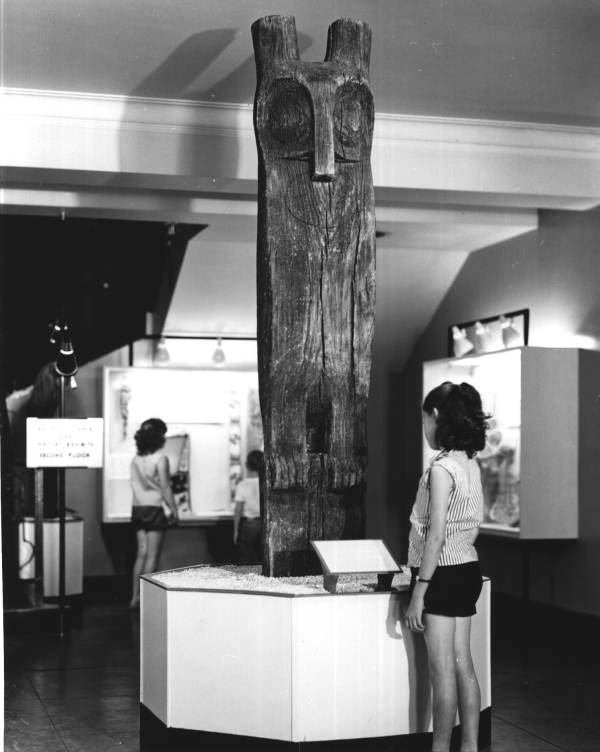
The Hontoon Island owl carving displayed at the Florida State Museum (now Florida Museum of Natural History), shortly after it was found in the St. Johns River, circa 1955. Black & white photoprint. State Archives of Florida, Florida Memory. Accessed 13 May. 2019.
The rest of Chapter 1 introduces the environment of Florida and gives a brief overview of the other eight chapters, as well as some thoughts about major themes covered in the book and prevalent in wetsite archaeology. Copies are available from Amazon.com and directly from the University of Press of Florida.
This time of year usually sees a blog post about our attendance at the annual meetings of the Society for American Archaeology (SAA). The meetings are held in late March or April and attract thousands of archaeologists from around the world who share their research, connect with old friends, buy books in the exhibit hall, and generally revel in our discipline. The Peabody and Phillips Academy have a long history with the SAA and its annual meeting. The first ever annual meeting of the Society was held at Phillips Academy in December 1935. Doug Byers, the long-time director of the Peabody, served as the editor of American Antiquity, the Society’s flagship publication. Richard “Scotty” MacNeish was president of SAA.
Petroglyphs at Piedras Marcados Canyon, part of Petroglyph National Monument, Albuquerque, New Mexico. Photo by Ryan Wheeler, April 12, 2019.
Peabody personnel have continued to be involved with SAA. Staff members and members of the Peabody Advisory Committee regularly present papers and posters in the annual meeting sessions. Since 2017 we have had a booth in the annual meeting’s exhibit hall to promote the Linda S. Cordell Memorial Research Award, our book Glory, Trouble, and Renaissance at the Robert S. Peabody Museum of Archaeology, the Journal of Archaeology & Education, and generally network with folks in attendance. This year’s meeting was much the same, with lots of comradery with old and new friends, some great New Mexican cuisine, sightseeing at Petroglyph National Monument, and a visit to Albuquerque’s Red Planet Comics, a Native American-owned comic book store.
The difference this year, however, was that our discipline and the Society for American Archaeology have run headlong into issues of sexual harassment and discrimination that have garnered headlines everywhere from the film industry to tech and science sectors, often under the umbrella of #MeToo. These issues have been prevalent in archaeology for decades, and two of the papers in the session that I participated in, Sins of Our Ancestors (and of Ourselves), highlighted the contributions of women in museums and archaeology, and how their voices have often been excluded, their work co-opted, or their names simply excised or omitted from the record.
Name tag and program book from the 84th annual meeting of the Society for American Archaeology.
Shortly before the Society’s annual meeting this year news circulated about a Title IX investigation of a prominent archaeologist at the University of Alaska Anchorage. According to news stories published at the end of March 2019, the Title IX investigation into sexual discrimination and sexual harassment found accusations from nine women all credible. The professor was denied emeritus status, and students and faculty were advised to alert authorities if the professor was encountered on campus. This professor apparently registered for the SAA annual meeting on-site. Not long after this, at least three survivors encountered him at the conference and reported his presence to the meeting organizers. Michael Balter, a journalist who has reported on #MeToo in science and who was at the conference for a session on this topic, also reported the individual’s presence and ultimately escorted the professor out of the meetings. He, however, returned later.
While the above is troubling, it’s only the beginning of the story. The current furor in archaeology centers on the Society for American Archaeology’s response to what happened at the meeting. The initial response was sluggish at best and often misguided. Michael Balter, the journalist who ejected the professor, was himself kicked out of the conference by the meeting organizers. Ultimately, over 2,300 people (many SAA members) signed an open letter to the Society that castigates the SAA for its response and demands action.
Apologies to the survivors were late in coming and there has been a general disregard for how this event has impacted all survivors of harassment and abuse who were at the meeting. Social media posts by the Society have blamed others or presented distorted timelines. It’s left many of us wondering how we can encourage the next generation of archaeologists to attend these meetings if they aren’t safe spaces, let alone continue our own support for an organization that is willing to tolerate sexual harassment and all its attendant hurt, trauma, and pain. At least three of the survivors have gone public with their experiences at the conference, including their interactions with SAA professional staff and leadership. Their posts on social media continue to raise concerns.
The SAA’s new president, Joe Watkins, issued an apology via a video message and letter on April 18. Comments on social media indicate that the apology was well received by some, but not all. Watkins, in his letter to SAA members, promises that the Society “will create a body to examine the short-comings in our sexual harassment policy of 2015 and the anti-harassment policy of 2018” and “do our best to ensure that this does not happen again.” He does, however, acknowledge that the recommendations of task forces have often been ignored by SAA leadership in the past.
If you want to learn more about what happened at the meeting and in the ensuing weeks, take a look at these articles by Lizzie Wade, Kerry Grens, as well as Kristina Kilgrove’s resignation as chair of the SAA media relations committee, and follow Norma Johnson on Twitter: https://twitter.com/nmj428
UPDATE 4/26/2019: See Kristina Kilgrove’s blog for a timeline of events.







 The Peabody