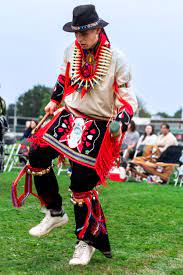
Last month, the Peabody Institute sponsored a day trip to Harvard University for Phillips Academy students. The 25th Annual Powwow was hosted by the Harvard University Native American Program (HUNAP). After a three-year hiatus due to the Covid-19 pandemic, the HUNAP program was able to welcome the return of their Powwow.
Flyer for HUNAP’s 25th Annual Powwow
This year’s theme for the HUNAP Powwow was Protect Indigenous Futures! The event was held on Orange Shirt Day, a national day of remembrance and reconciliation for victims of residential schools, which sought to separate Native children from their families and forcibly assimilate them. The Powwow honored survivors and victims of residential schools throughout Canada and the United States.
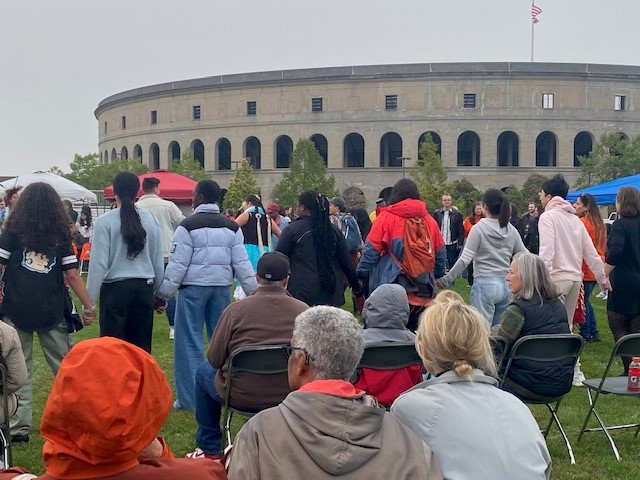
The Powwow ceremony is an Indigenous gathering with traditional dances and music held by Tribal nations from the New England area. The event welcomed hundreds of attendees from Harvard, neighboring Native communities, and the Greater Boston area.
Photos from the HUNAP Powwow Photos by Catherine Dondero and Courtesy of Harvard University
Students took part in community dances, which welcomed all event attendees into the arena to dance together. Many PA students took part in these community dances and got to experience the ceremony traditions first-hand.
PA students participating in community dances
This event was a wonderful opportunity for students to experience Indigenous cultural traditions and ceremonies. Students also had the opportunity to connect with Indigenous students, community members, HUNAP students, and Tribal nations from the Greater Boston area, New England, and those visiting from other parts of the United States and Canada.
Want to hear more about this event from the students’ perspective? Check out this article from Phillips Academy’s student paper, The Phillipian.
For more details about the HUNAP 25th Annual Powwow, explore this article from The Harvard Gazette and video coverage of the event by Harvard University.
Last November, I attended the AAIA Repatriation Conference in New Buffalo, Michigan. There were many tremendous speakers, but the one that really sticks out in my memory was Angeline Boulley. She does not work in the world of repatriation, but held the room in her hands as she spoke to us. I so vividly remember Angeline speaking to us all at the conference – she earned a standing ovation and my presentation had to follow that!
Angeline is a citizen of the Sault Ste. Marie Tribe of Chippewa Indians, and storyteller who writes about her Ojibwe community in Michigan’s Upper Peninsula. She had recently published her book Firekeeper’s Daughter (a #1 New York Times Bestseller) and was giving us a tease of her next book, Warrior Girl Unearthed.
At the time, I had not read Firekeeper’s Daughter and quickly purchased myself a copy. I LOVED it. The story was a fresh take on a murder mystery/adventure. The main character, Daunis, is a biracial unenrolled tribal member whose cultural knowledge can contribute to protecting her community. Sprinkled throughout the book are Ojibwe words, phrases, and cultural teachings in a way that only augments and enriches the story being told. I highly recommend it to you all! (and ignore the young adult classification – this is a complex story that is not always appropriate for younger readers)
Warrior Girl Unearthed is powerful in a different way. Grounded in the complicated reality of repatriation and missing and murdered Indigenous women (MMIW), this novel can feel a little heavy at times. Angeline uses the book in part to educate her readers about NAGPRA and repatriation and in part to build a new adventure around preventing a plot to profit off robbed Indigenous graves. While an explanation of NAGPRA does not always make compelling reading, the story itself is exciting and multi-faceted. Angeline once again interweaves Ojibwe words and cultural teachings in an effective way. And that is maybe the best thing about the book – the Ojibwe culture is just a part of who the main character is. She is just living her life and interfacing with her cultural teachings in a way that does not feel contrived but is instead natural. That feels novel and under-represented in young adult literature.
Her words and her books have left an impression on me and I encourage you to pick up a copy yourself.
In July I enrolled in an online course, Policies for Managing Collections, through Museum Studies LLC. Their organization offers online museum study courses taught by experts in the field. They also offer a range of professional services to cultural institutions.
Over the four-week course, instructor John Simmons led our investigation of the purpose and function of collection management policies (CMPs). Simply stated, collections management includes everything that cultural institutions do to collect items, care for them, and make them available to the public. A CMP is a collection of policies that guide collection management activities and clarify who is responsible for making collections-related decisions.
The Policies for Managing Museum Collections text book. It’s a good read that I highly recommend.
In addition to myself, there were a handful of museum professionals from a diverse range of cultural institutions who were enrolled in the course. Each week we reviewed the different sections or policies typically included in a CMP. We were tasked with looking at the specific needs and critical issues facing our own institutions and we met remotely for discussions on the week’s readings.
Assignments were submitted to a forum and included writing sections of a CMP, critiquing a museum’s response to policy-related problems, and enumerating the policies required by our individual museums. Along with our instructor’s feedback, student responses regularly generated interesting discussions. In general, there were many opportunities to share knowledge with our peers and learn from each other’s experiences.
Some of the personal takeaways from the course included:
-A CMP should include a section on your institution’s legal organization or governing authority.
-No two CMPs are the same. Each CMP should be written with the specific structure, needs, and collection focus of the museum in mind. When writing a CMP, another institution’s policy can be informative, but it shouldn’t be copied.
-A CMP can be a stand-alone document, or it can be a collection of many separate policy documents.
-Policy is different from procedure. Policy provides the rules and guidelines for carrying out collection management duties. Procedures spell out how policy is followed on a day-to-day basis and should largely be excluded from policy documents. Exceptions to this rule include controversial collections management procedures such as deaccessioning. These procedures can be quite thorny and can be detailed in CMPs.
-CMPs are living documents. If a policy is not working, it can be reviewed and changed, but you’ll need a policy for reviewing and changing your policies.
The course was very informative and led me to think about our institution, its legal organization, and our collection in new ways.
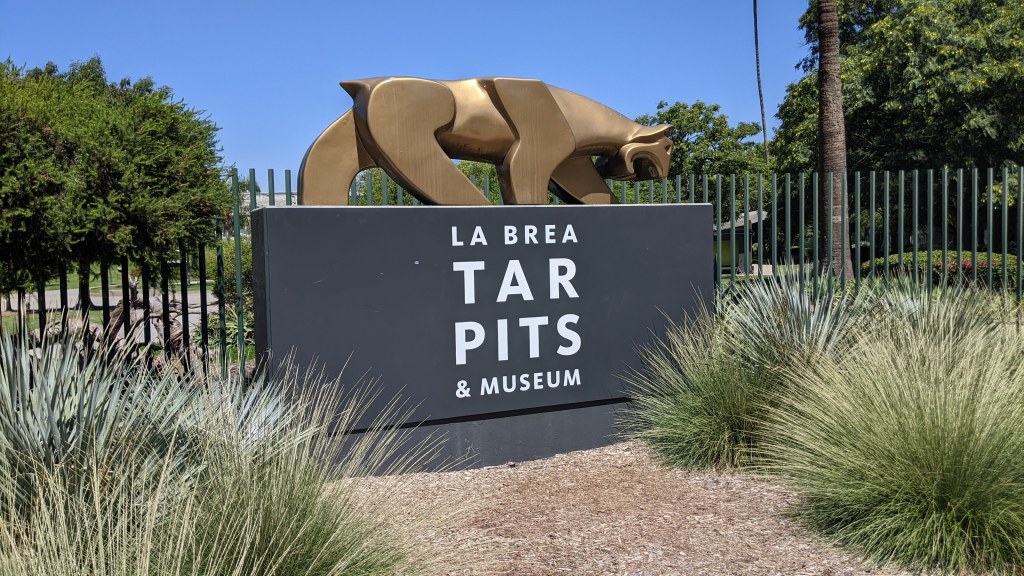
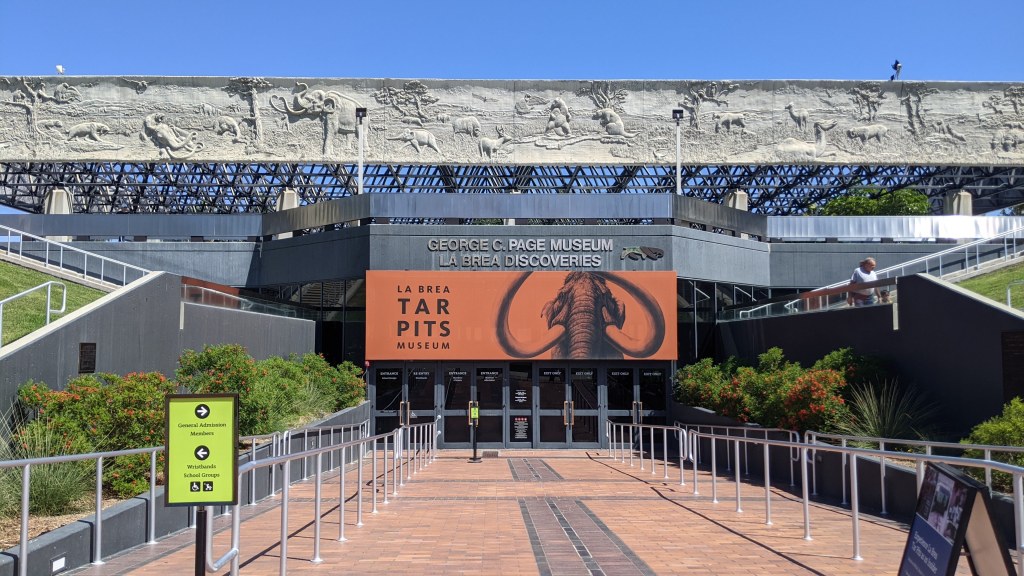
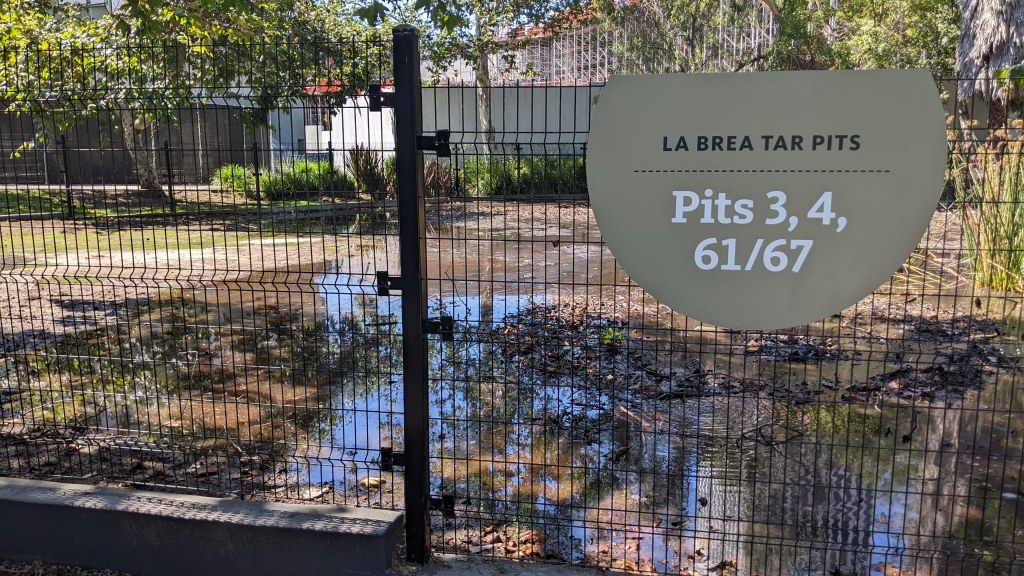
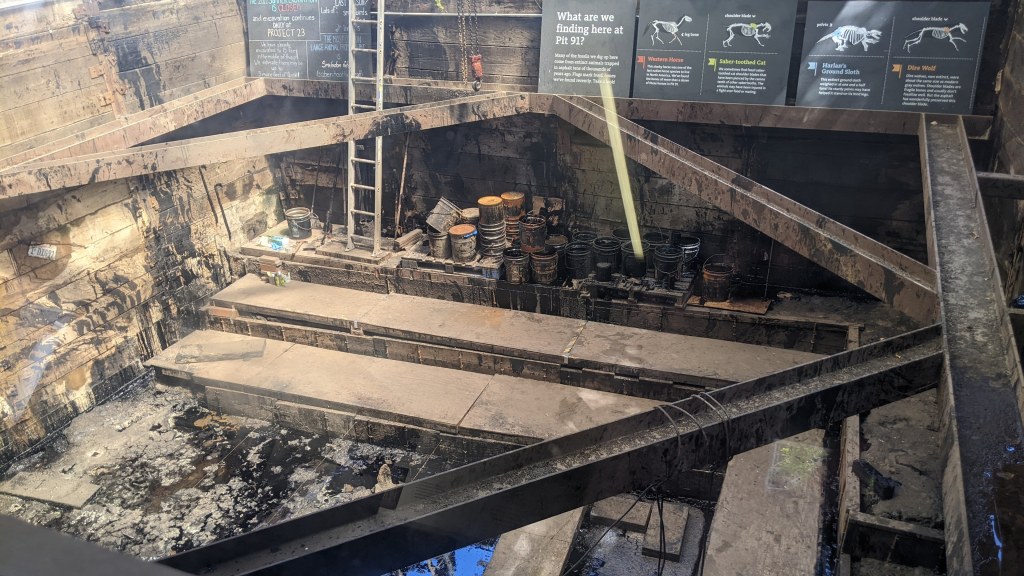
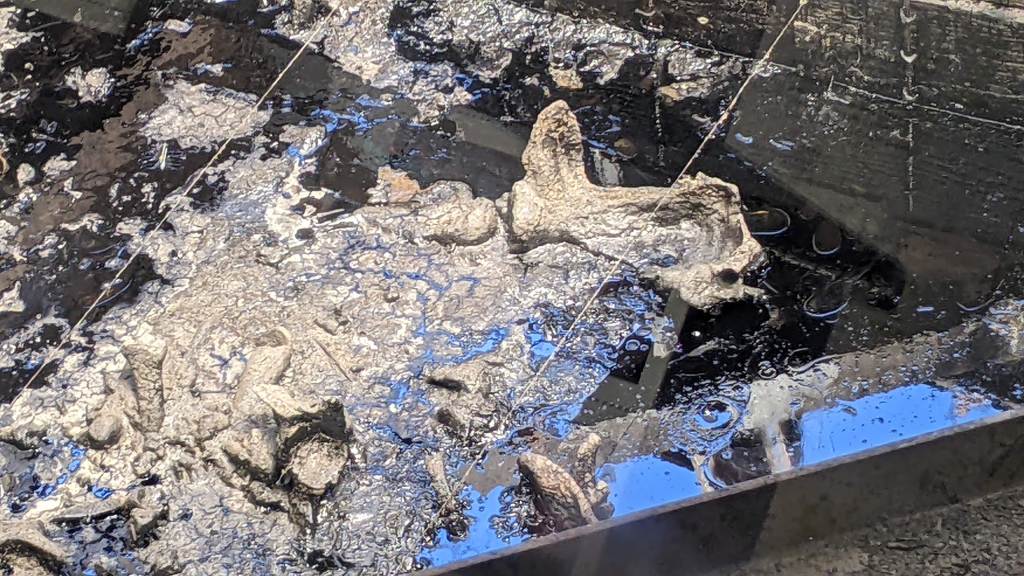
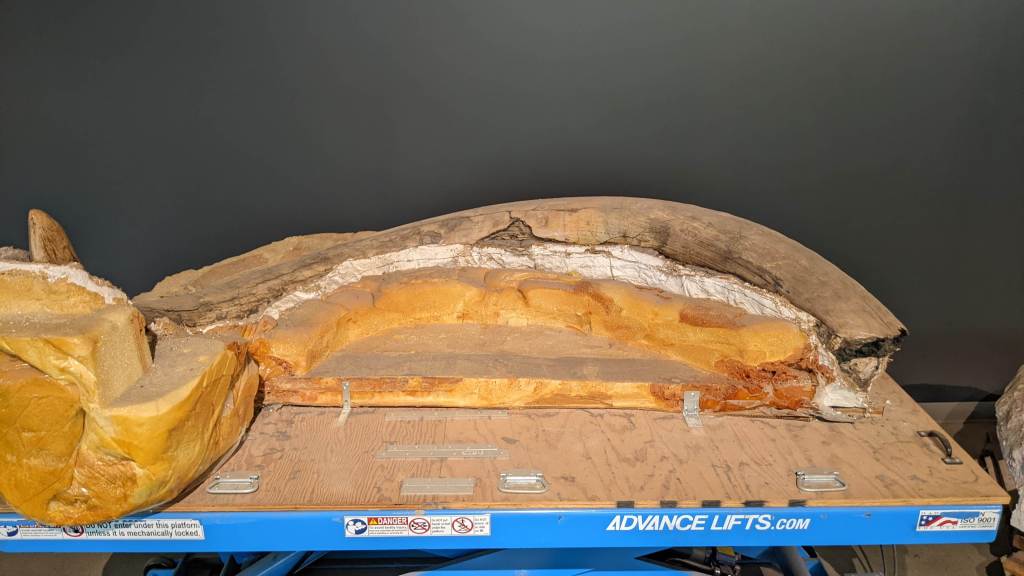
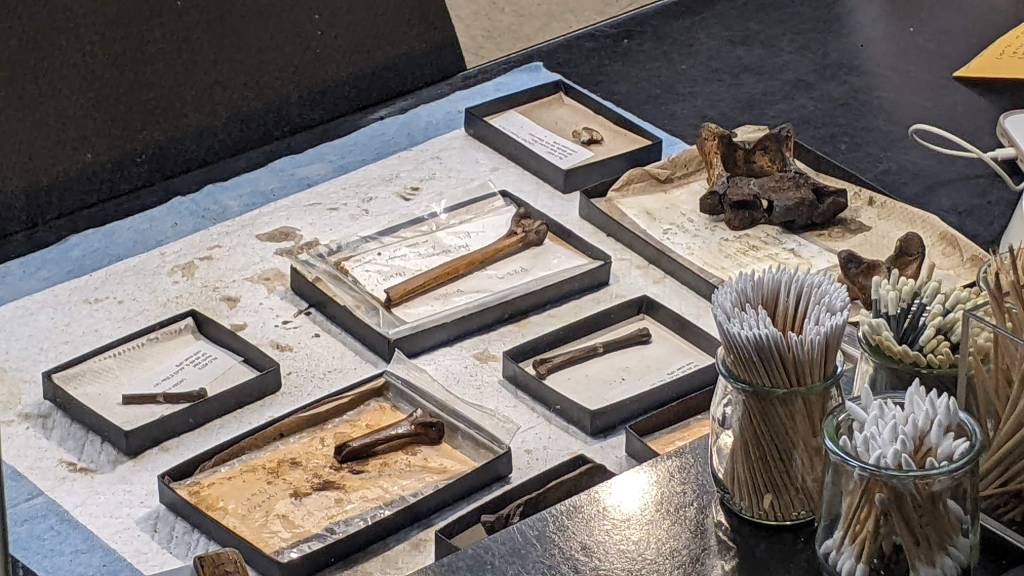
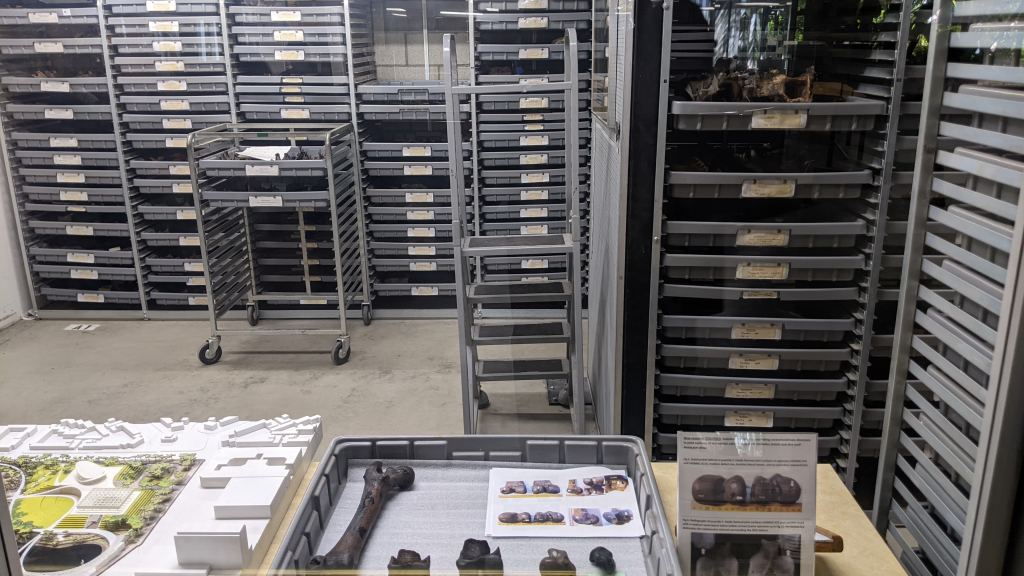
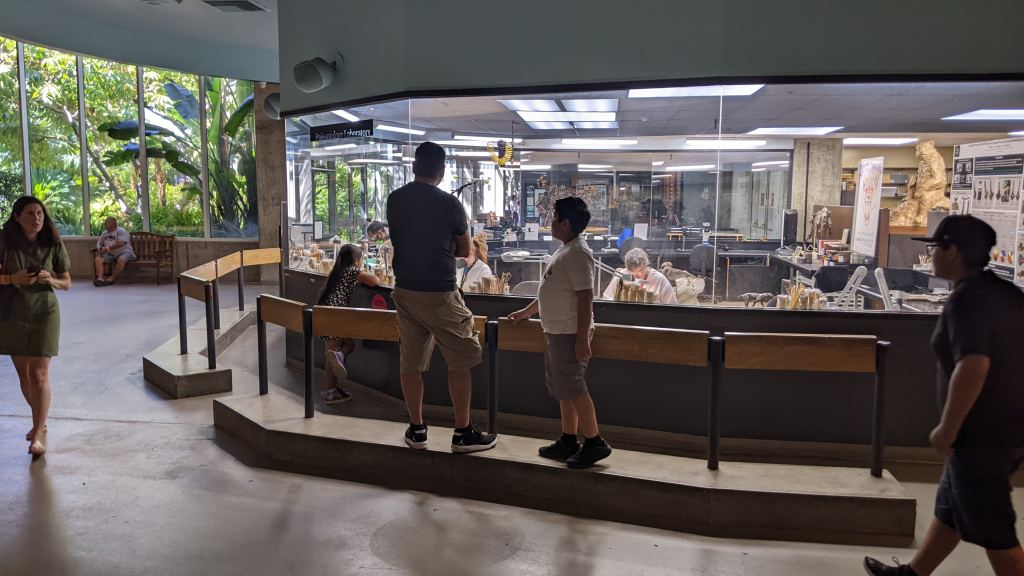
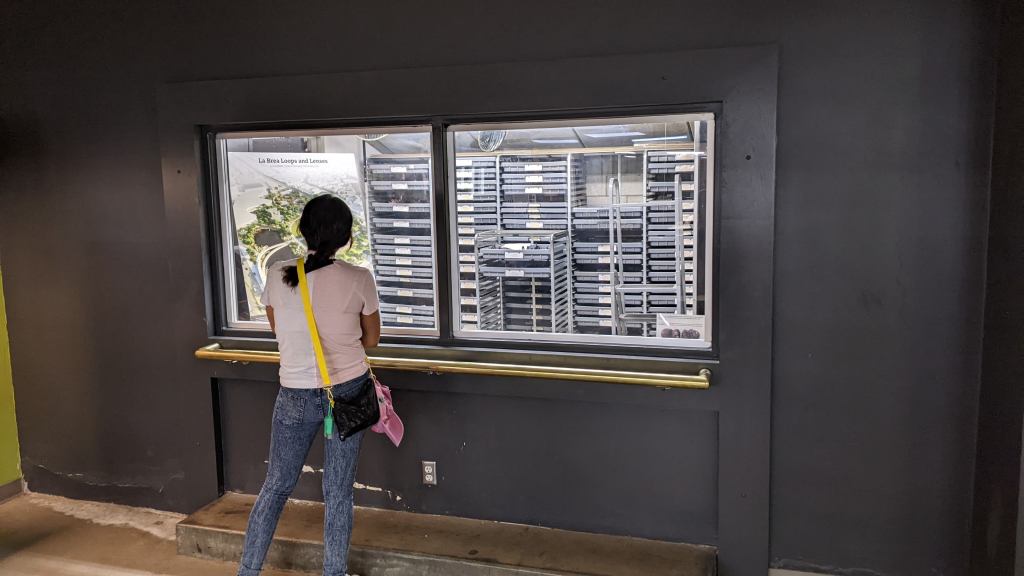
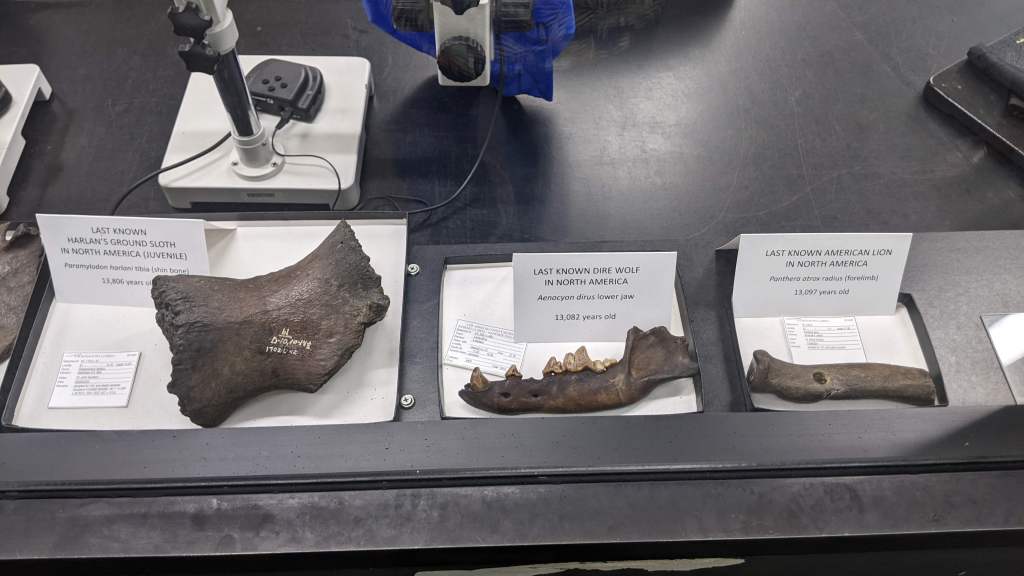
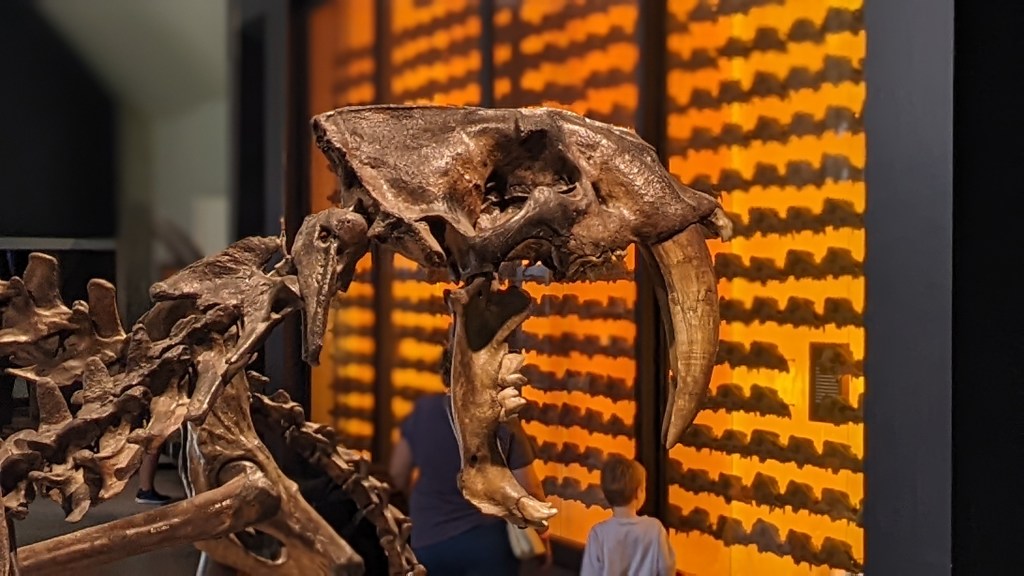
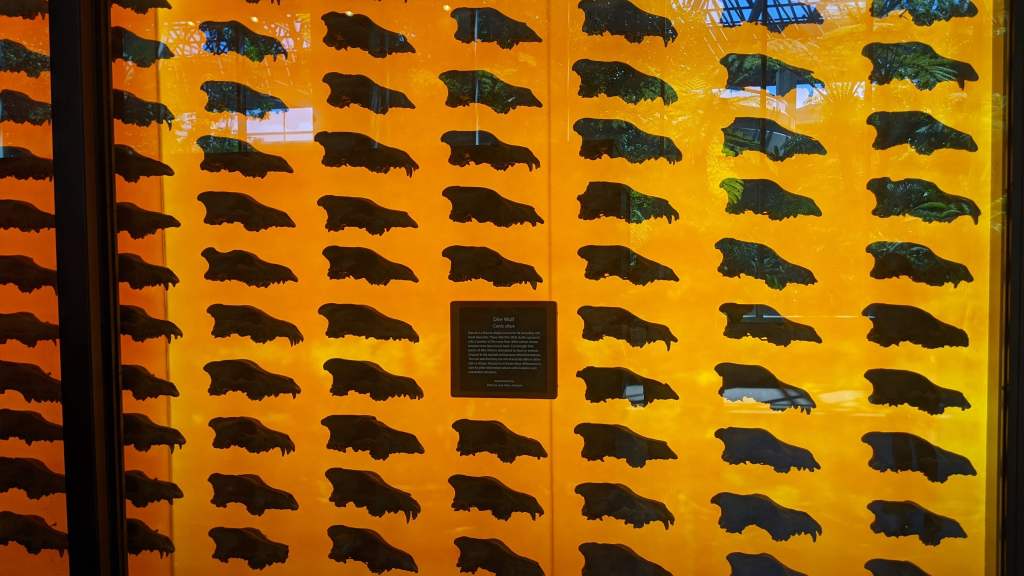
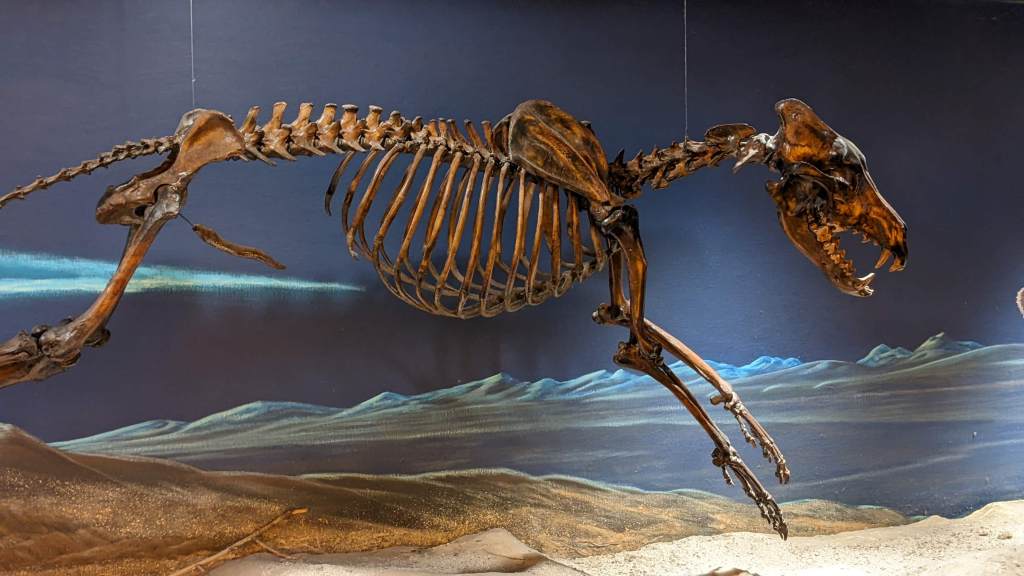
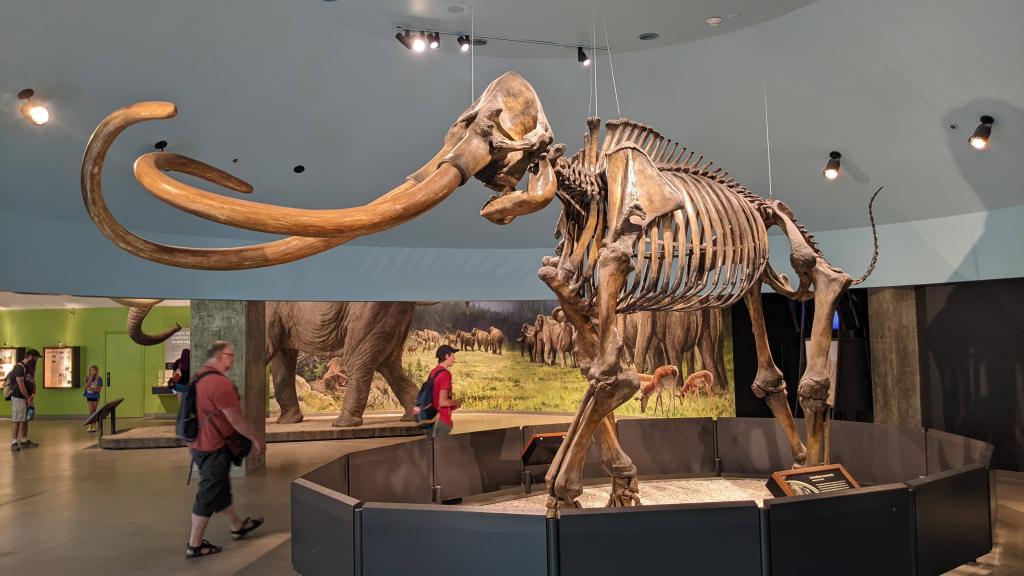
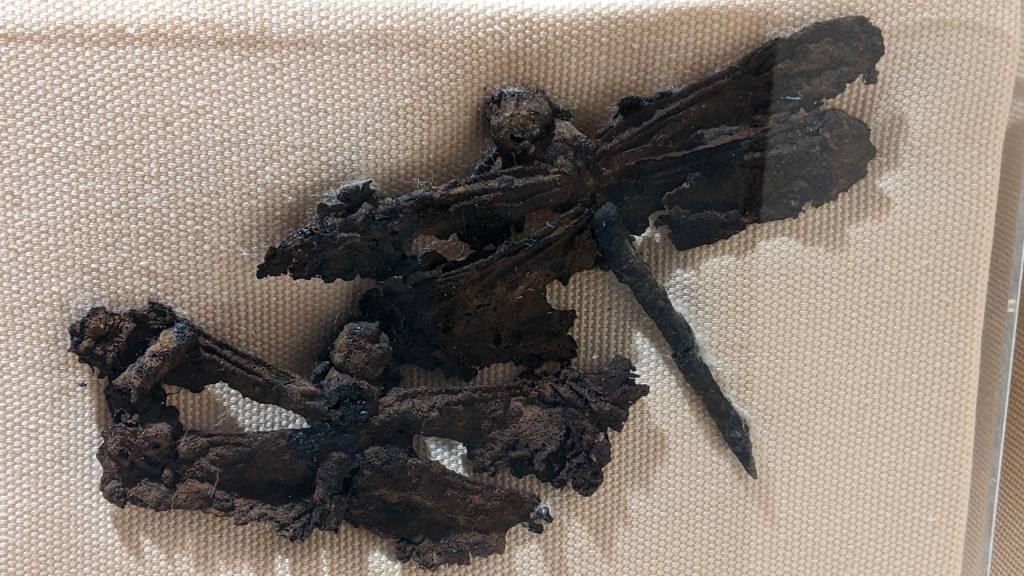
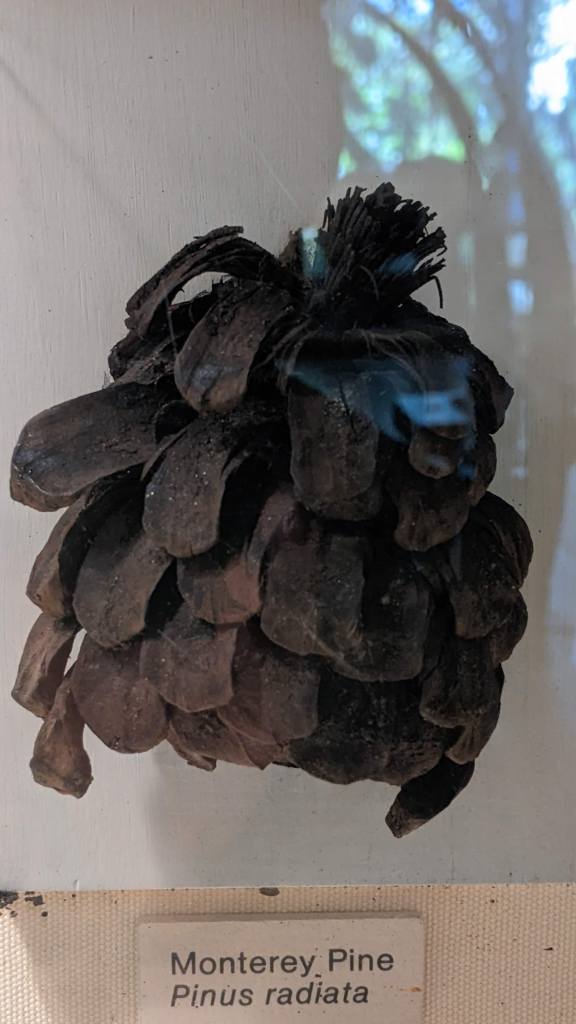
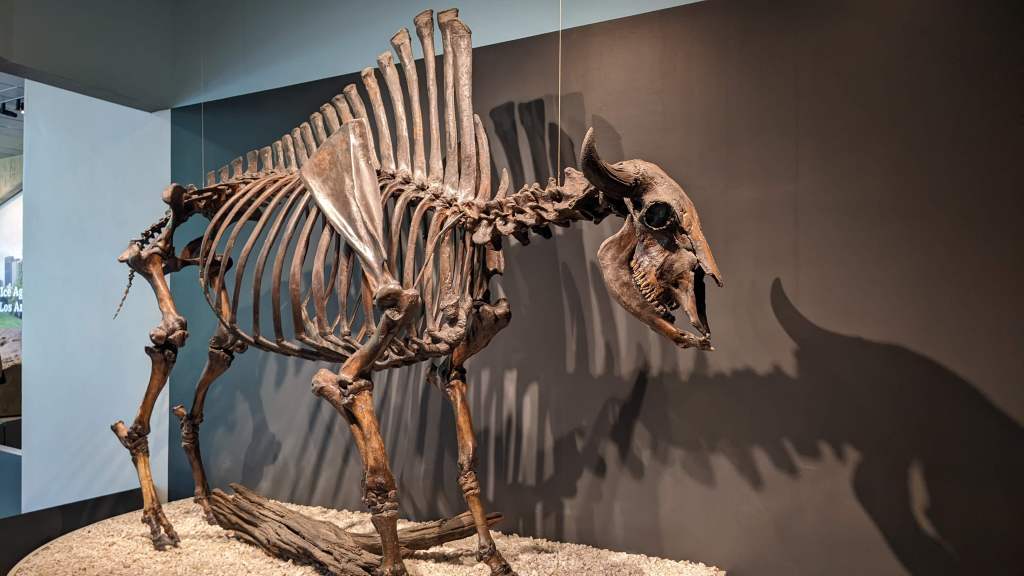
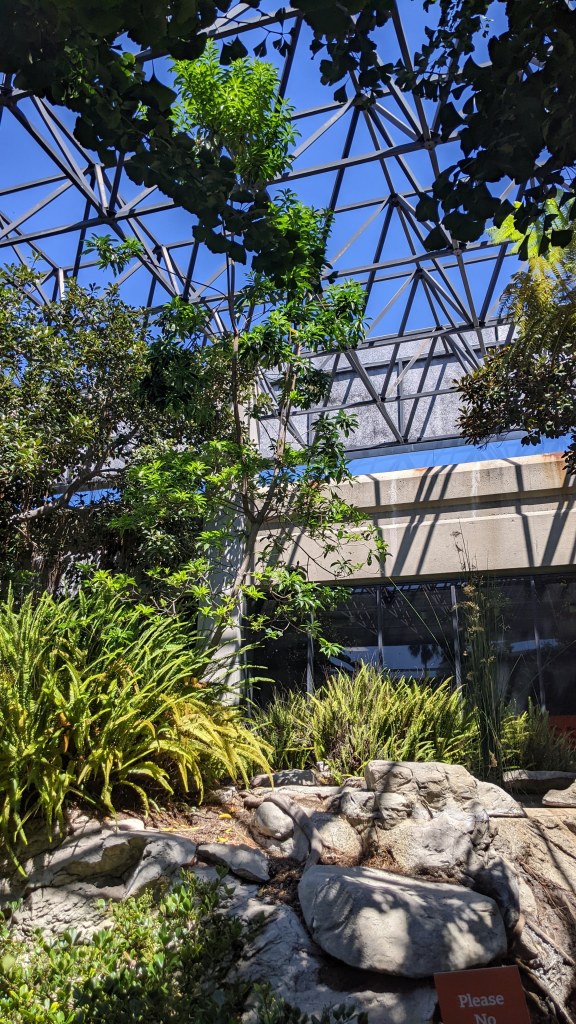
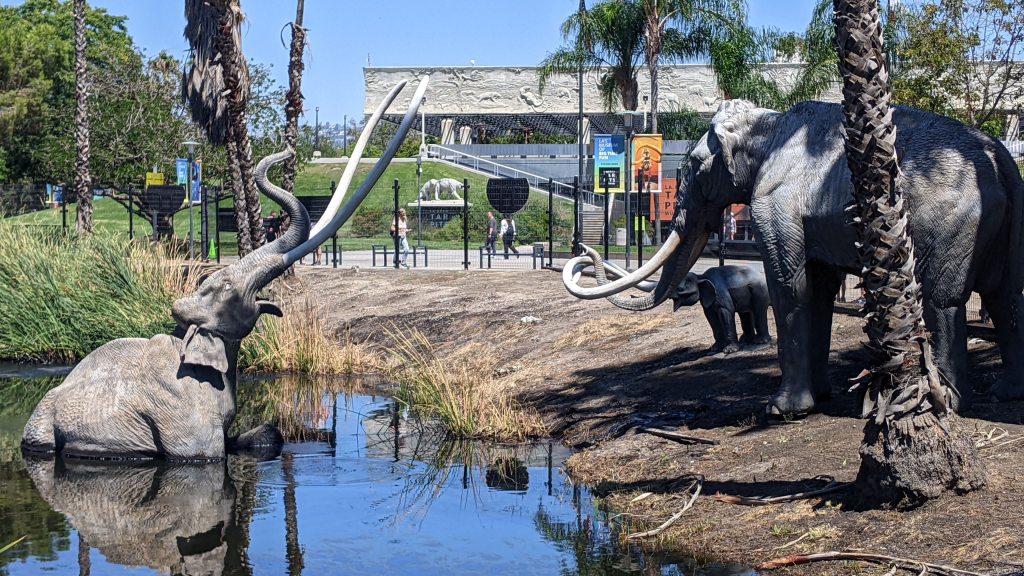
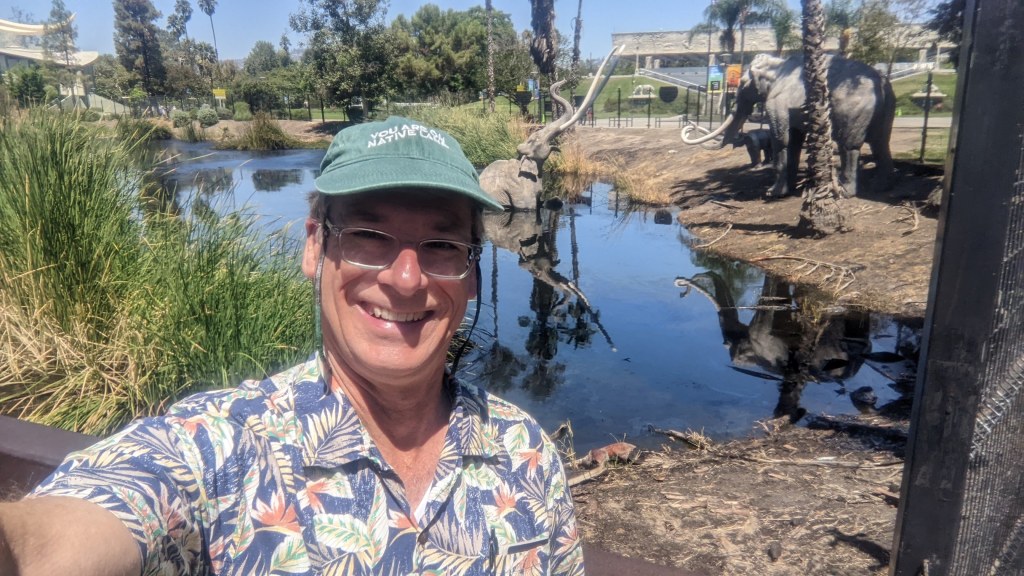
One of the best things about travel is visiting museums, especially those that are new to me! In August, I traveled to California for some great events for Andover alumni, students, and new families. As a newbie to Los Angeles, I was wowed by the Mediterranean Revival architecture and, top on my list of museums to visit, La Brea Tar Pits and Museum. The tar pits are actually asphalt that have been bubbling up from subterranean oil fields for about 240,000 years. Animals attracted to water accumulating on top of the tar pits were frequently trapped in the sticky goo, becoming part of the fossil record. The victims of the tar rarely remained intact, so there are lots of bones, but few complete animal skeletons. Exhibits in the museum, built around a recreated Pleistocene forest, has lots of examples of the animals recovered from the tar pits, including bison and mammoths—hallmarks of the Rancholabrean fauna—as well as dire wolves, saber tooth cats, birds, and even insects. You can watch scientists cleaning fossils inside the museum after visiting the tar pits, including at least one active excavation. The gift shop has lots of fun stuff, including resin casts of saber tooth cat teeth, stuffed animals, and books on the tar pits.
Since the Peabody staff moved to the School Room in Abbot Hall, I’ve been fascinated by the history of Abbot Academy and what remains of the school’s campus. As we work in the very heart of the Abbot Academy campus, I can’t help but notice the many features and tangible details left since the merger of Abbot and Phillips in 1973.
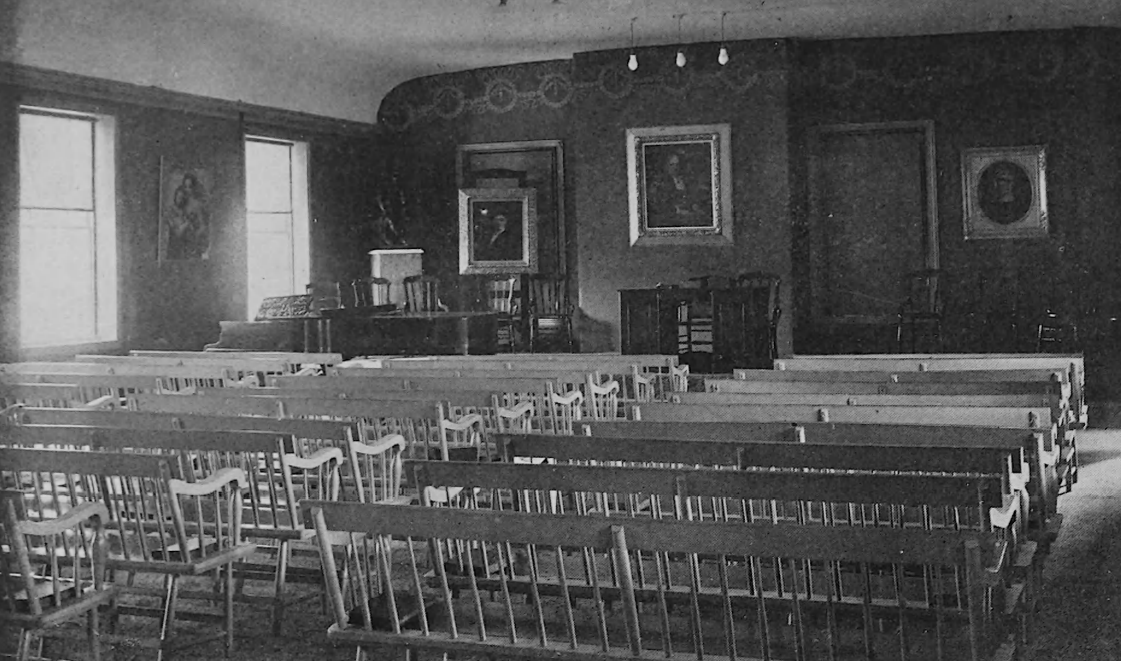
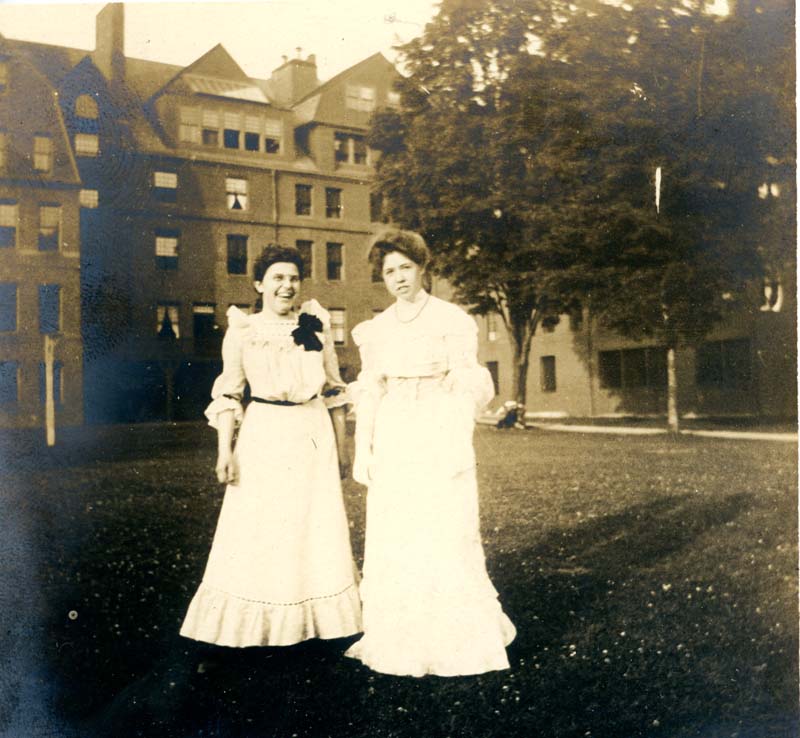
The very School Room in which our staff currently resides was once an assembly room for all the Abbot Academy students to gather, known as the “Hall” and later as the “Chapel.” Within this same building are many rooms with remnants of old chalk boards as well as photographs of Abbot students from throughout the school’s history. These photographs inspired this next entry of the Behind the Photograph blog series and although many do not have specific provenance or further information provided, they represent what life and education was like at Abbot Academy during a rapidly changing America.
The “Hall” at Abbot Hall, now known as the School Room, circa 1906.
Students gather in the “Chapel” at Abbot Hall, now known as the School Room, circa 1945.
Abbot Academy was one of the first educational institutions in New England for girls and women. Founded through the financial support of Sarah Abbot, the Academy opened in May 6, 1829 with seventy students and continued as an independent preparatory school for female boarding and day students until the merger of the two schools in 1973. Today the campus continues to be used by the combined school where many of its buildings and stories remain.
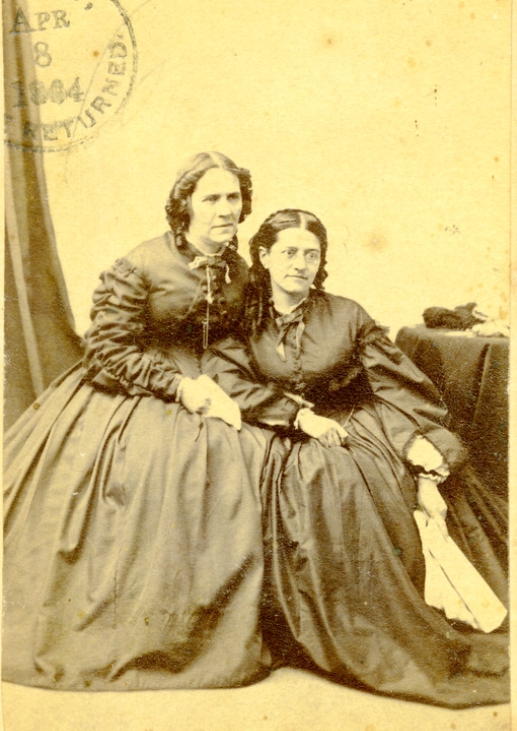
Sarah Abbot, Founder of Abbot Academy
Although many were hesitant at its reception and Victorian society questioned the need to educate women, Abbot Academy quickly became an example of women’s accomplishment. Some believed its curriculum even surpassed the all-male Phillips Academy up the hill. One particular era of note was Abbot’s “golden age” under the McKeen sisters, headmistresses Philena and Phebe (Abbot Academy, 1859-1892).
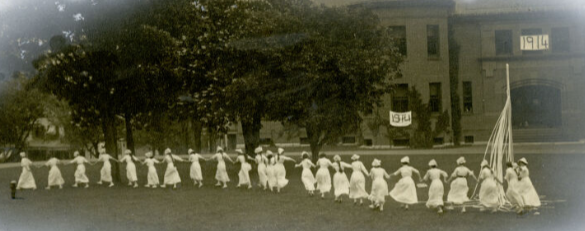
The sisters brought about many changes at Abbot including the expansion of buildings, strict schedules for students, world language classes, student involvement in the surrounding community, lecture opportunities, emphasis on art education, and so much more. The Abbot Circle was created with the construction of Draper Hall in 1890. Abbot Hall was also moved to frame the new grass plot. Activities such as commencement and winding the Maypole were staged on the lawn and became traditions for years to come.
The Abbot Circle, framed by Abbot Hall (left), Draper Hall (center), and the old Davis Hall (right), (1890-1892)
Abbot Academy Class of 1914 with Maypole on Abbot Circle
Draper Hall contained the parlors, library and reading room, music rooms, studio and infirmary, dining room, and student dormitories. Abbot Hall was later altered to make space for laboratories, an art studio, and an exhibition gallery.
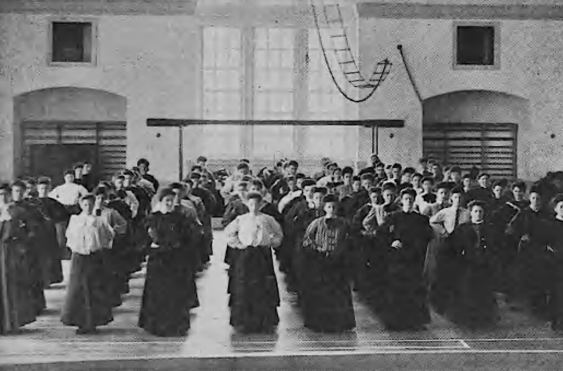
Many of the McKeen traditions continued, even after the sisters departed Abbot in 1892. In the early 1900s, McKeen Hall was built on the original site of Davis Hall. This new building was dedicated to the memory of the McKeen sisters and used as a study hall, classrooms, and gymnasium that doubled as an assembly room named Davis Hall.
Davis Hall (located in McKeen Hall) doubled as both a gymnasium and assembly space for students. At one point there was even an organ in the upper loft of the space! (1912-1925)
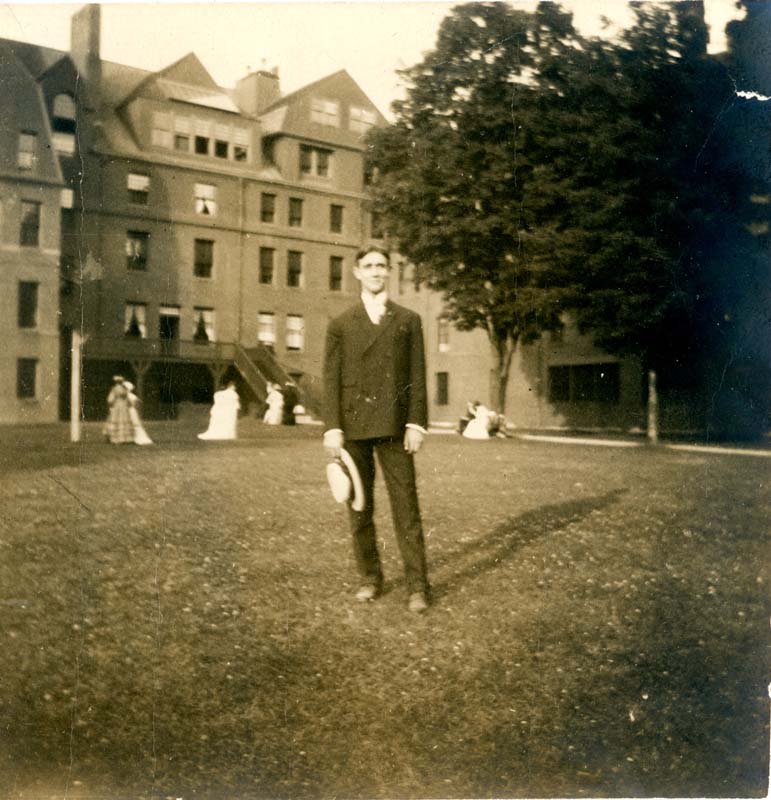
As Abbot faced new challenges such as the Great Depression and two World Wars, the school isolated itself, however, this only kept out new waves of change as women’s colleges and public schooling became a permanent fixture in American society. Students described these years as isolating, strict, and confining. Students had a rigid dress code, curfews, and could not speak to boys (especially those from Phillips Academy).
A Phillips Academy boy and Abbot Academy girls standing in the same place, but never together.
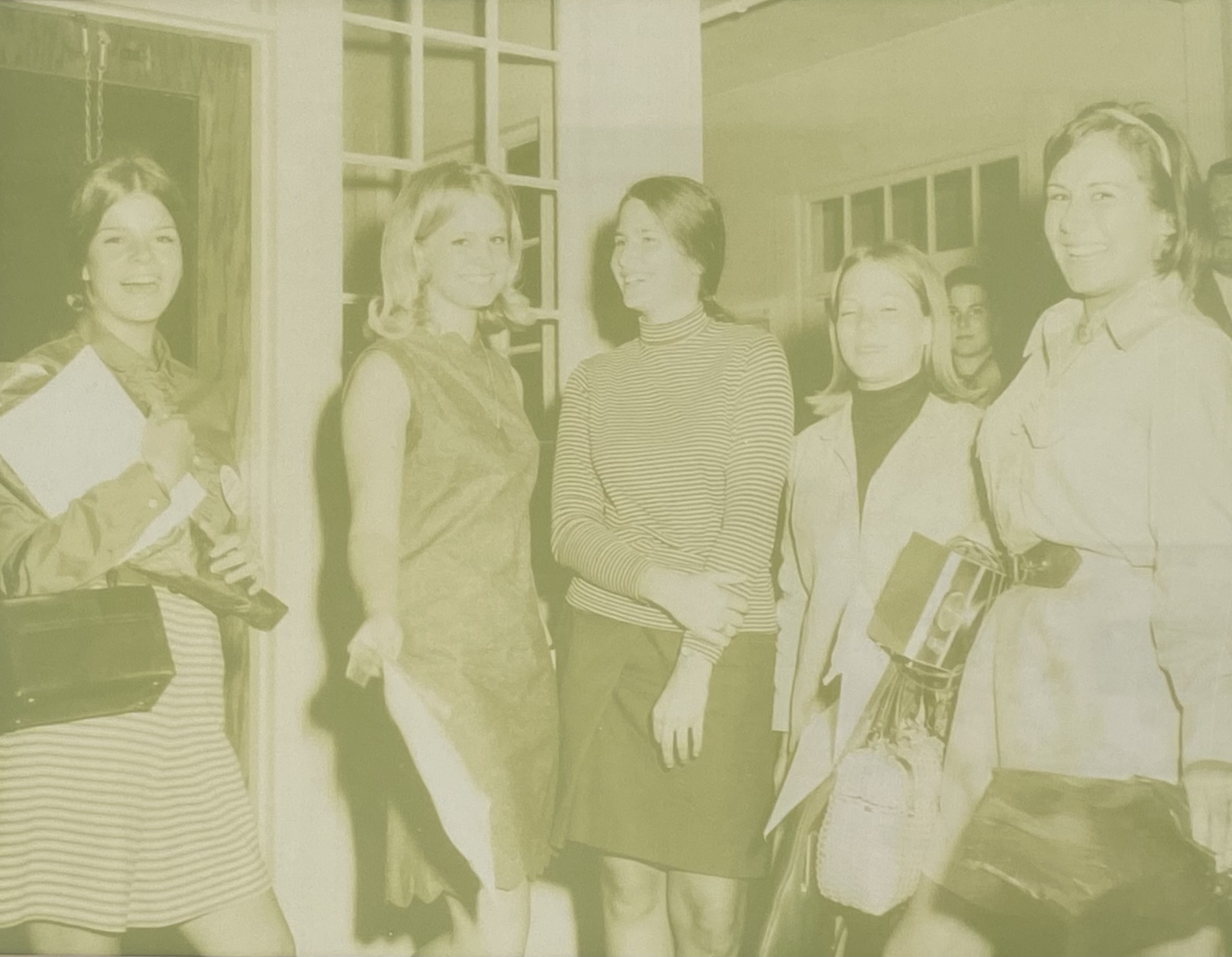
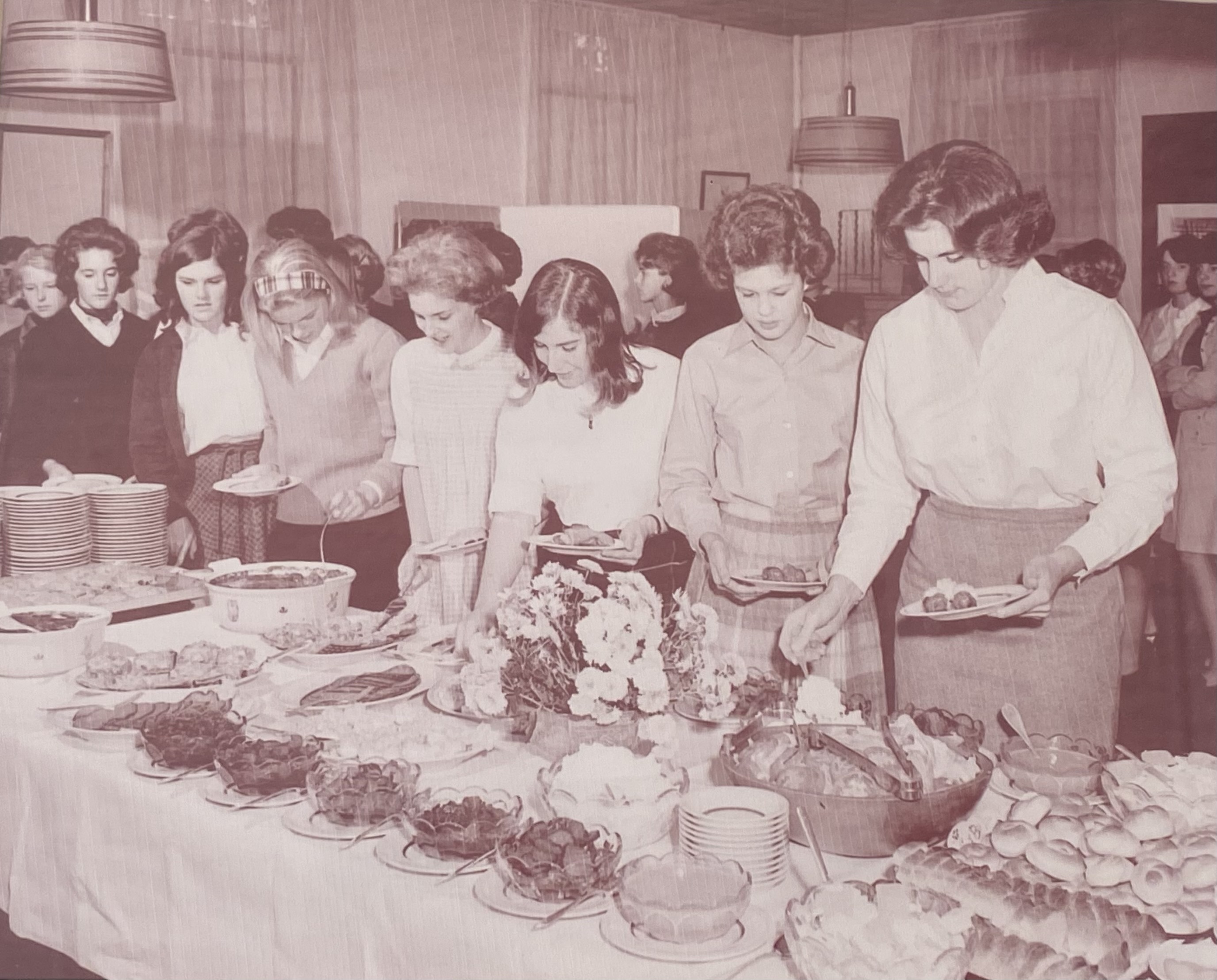
After World War II, the Academy experienced a jump in enrollment and opened its doors more widely to minority groups of women. As a result, the academic excellence of the Abbot school improved and applications to the school increased in the 1950s and 1960s. The strict rules of the past were gone by the 1960s, giving female students more independence and featuring more chaperoned dances and interactions with the Phillips Academy boys.
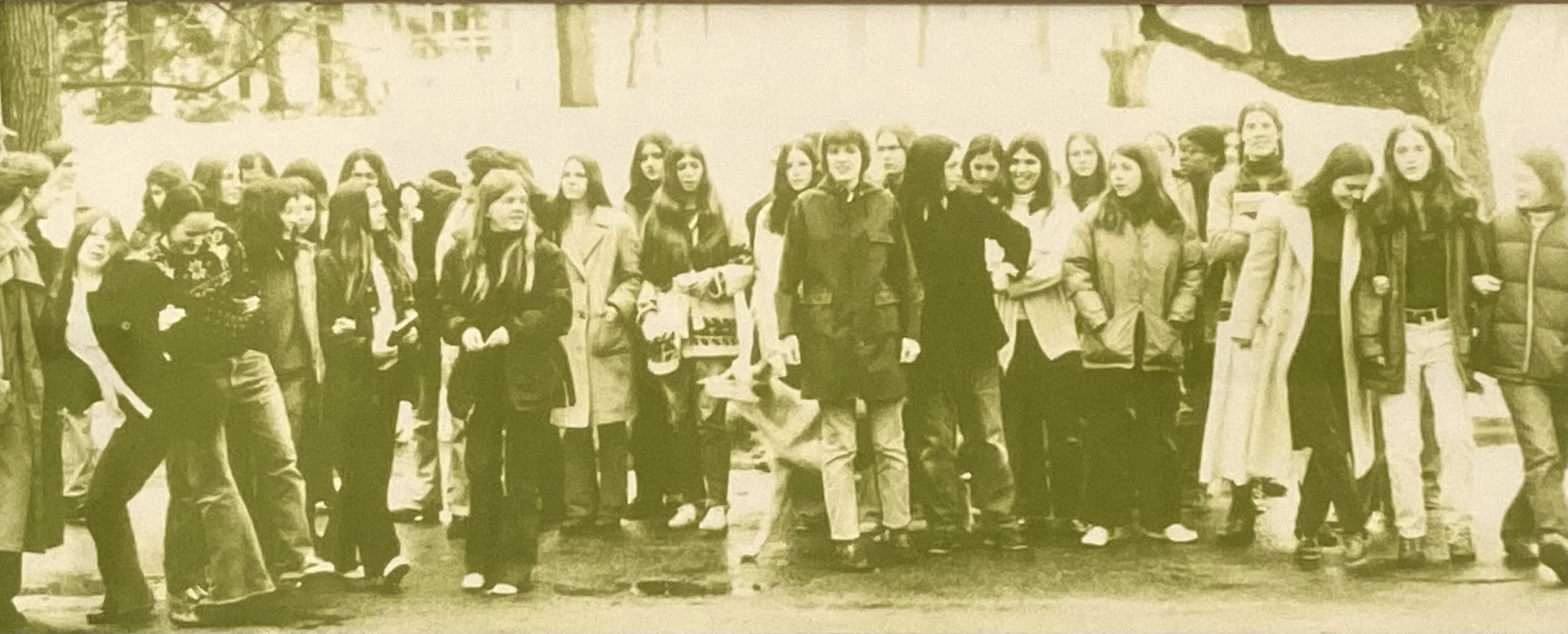
By the late 1960s, many colleges and universities were becoming coeducational institutions. As a result, along with other factors such as shared history and common activities, Abbot Academy and Phillips Academy merged on June 28, 1973. Many Abbot traditions were included in the combined school, such as Parents Weekend. The Phillips Academy headmaster at the time, John Kemper, believed the merger was “practical, ethical, and educationally sound.” The Peabody had already opened Richard “Scotty” MacNeish’s archaeology course to Abbot women as preparations for the merger were being made. This year, we celebrate 50 years of the Abbot Academy and Phillips Academy merger!
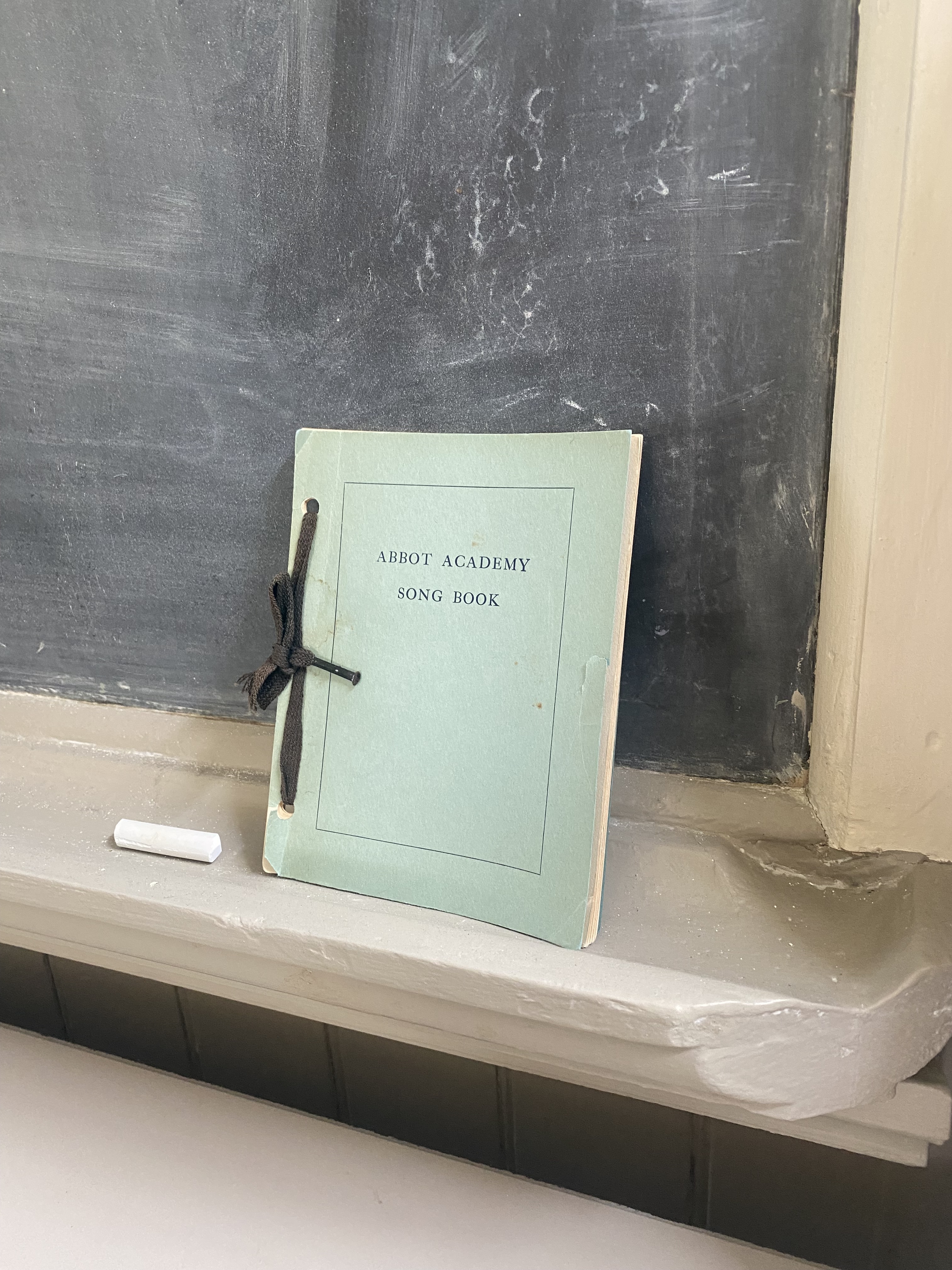
In additon to all the wonderful and candid photographs that decorate the walls in Abbot Hall, my favorite find was an Abbot Academy Song Book. This book is filled with a variety of school songs, marches, sport songs, serenades and salutes, rounds, parting hymn, and Bradford songs remembered by past Abbot Academy alumni. What really brought this find full circle for me was listening to past Abbot Academy alumni sing these songs during our 2023 reunion weekend.
There’s something special about the Abbot Academy campus and I’ve truly enjoyed calling this place home for the last several months. There is so much history here and I hope I provided a small glimpse of this history by sharing the photographs that adorn Abbot Hall.
For more photographs related to Abbot Academy and student life check out the Abbot Collections online archive here!
Additional Reading on the History of Abbot Academy
Academy Hill: The Andover Campus, 1778 to the Present. New York: Princeton Architectural Press, 2000.
Dominique, Robert A. Phillips Academy Andover, Massachusetts: An Illustrated History of the Property (including Abbot Academy). Wilmington, MA: Hampshire Press, 1990.
Roberts, Paige. “Abbot Hall, 1828-1829, at Phillips Academy.” Clio: Your Guide to History. December 5, 2019. Accessed June 22, 2023. https://theclio.com/entry/88419
Nearly three years ago, I co-founded the Indigenous Collections Care (ICC) Working Group along with Laura Bryant, Anthropology Collections Steward and NAGPRA Coordinator for the Gilcrease Museum in Tulsa, OK. Along with Laura Elliff Cruz, Head of Collections at the Indian Arts Research Center (IARC) in Santa Fe, NM and other group members, the ICC has been working to create an accessible reference tool for professionals who interact regularly with Native American collections.
The ICC grew out of our desire to incorporate the collections care requests of Indigenous communities into our institutional practice and policy. The working group was formed in late 2020 and is composed of approximately 20 people (both Indigenous and non-Indigenous museum professionals and academics, Tribal Historic Preservation Officers, and NAGPRA coordinators) who actively participate in monthly meetings on the creation of an Indigenous Collections Care Guide.
The ICC Guide will not instruct museums on how to specifically care for each item, since protocols vary among communities, but will offer scalable considerations of culturally appropriate collections stewardship, with questions and talking points to address during consultation, and with templates and case studies for use in implementation, advocacy, and the creation of policies and procedures.
In order to facilitate robust review of the ICC Guide by tribal communities, the ICC partnered with an incredible institution, the School for Advanced Research (SAR) in Santa Fe, NM.
I am excited to share that SAR received an IMLS National Leadership Grants for Museums of $175,587 for the IARC’s creation of the Indigenous Collections Care Guide. to support the museum field with an accessible reference tool for museum professionals who interact regularly with Native American collections. The guide will provide museums with a framework to recenter collections stewardship practices around the needs and knowledge of Indigenous community members. At the conclusion of the project, 175 tribal community representatives and museum professionals will have had a voice in the development of the guide, which will be made freely available for tribal community representatives and museums of all sizes. The IMLS reported receiving forty-eight applications for this opportunity, and SAR was one of nineteen projects to receive funding.
What does this mean for the Peabody Institute? Well, first it means that I will be super busy for the next few years! It also means that the Peabody Institute is continuing our leadership role in the broader museum and archaeological conversations around ethical collections stewardship and relationships with tribal communities.
I will keep you posted as work continues over the next few years!
School for Advanced Research
The School for Advanced Research (SAR), a 501(c)(3) nonprofit educational institution, was established in 1907 to advance innovative social science and Native American art. Its sixteen-acre residential campus sits on the ancestral lands of the Tewa people in O’gah’poh geh Owingeh, or Santa Fe, New Mexico. Visit sarweb.org
Institute of Museum and Library Services
The mission of IMLS is to advance, support, and empower America’s museums, libraries, and related organizations through grantmaking, research, and policy development.
The agency carries out its charge as it adapts to meet the changing needs of our nation’s museums and libraries and their communities. IMLS’s mission is essential to helping these institutions navigate change and continue to improve their services. Visit imls.gov
This summer, 23 young archaeologists set out to investigate one of the first buildings constructed by Samuel Phillips Jr. after he founded Phillips Academy. During the first week of the Andover Summer program, the students of the Lower School’s Dig This course were introduced to the story of the Mansion House and the mysterious fire that destroyed it in 1887. According to primary accounts, the fire seemed to have started in two different places in the house. This account was made even more suspicious by sources that said the caretakers, Mr. and Mrs. Carter, had their bags packed the day of the fire and walked away with insurance money. With this interesting piece of information, the students were excited to uncover more clues about the Mansion House and the people who inhabited it. The students worked in groups of 3 to 4 at six excavation units. These units were spread across the site in areas that, using past excavation results and Ground Penetrating Radar maps, had a good chance of finding evidence of the Mansion House.
Figure 1. Commemorative Plaque of the Mansion House
The first day of excavations was met with enthusiasm, apprehension, and later exhaustion as the students realized how much work goes into opening a unit. Nonetheless, we persevered and by the end of the first week of excavations many groups had already finished Level 1. Some had even found glass and metal artifacts which, of course, created healthy competition between groups and motivated the students as they continued in the second week of excavations.
Figure 2. Two students working in Excavation Unit 1
During the second week, things got interesting. The students working in Excavation Unit 5 came across an 1802 “Draped Bust” Liberty penny which caused a ripple of excitement for both the students and the instructors. This coin gave an important terminus post quem (TPQ) for the level and showed the students how old the artifacts we were finding really were.
Additionally, in Excavation Unit 2 Level 2, a brick feature began to reveal itself in the northeast corner. This unit was placed near a 2018 excavation unit that uncovered part of a chimney, so it is likely these features were related and Unit 2 uncovered another part of the chimney which helps in understanding how large the chimneys would have been and the layout of the Mansion House. The images below show the brick feature when it began to be discovered in Level 2 and the brick feature in Level 3 before backfilling.
Figure 3. Brick feature in Excavation Unit 2 Level 2Figure 4. Brick feature in Excavation Unit 2 Level 3.
The third and final week of excavations supported the archaeological adage that you always find the most interesting stuff right before you’re going to leave a project. This week, two new features were discovered. One was in Excavation Unit 6, which was intended to find one of the foundational walls of the structure. This feature also included a brick, though it is unclear if it relates to another chimney of the house. There was also a large stone and some smaller stones found near it, though, likely not enough to constitute a foundational wall of the building.
Figure 5. Students working in Excavation Unit 6
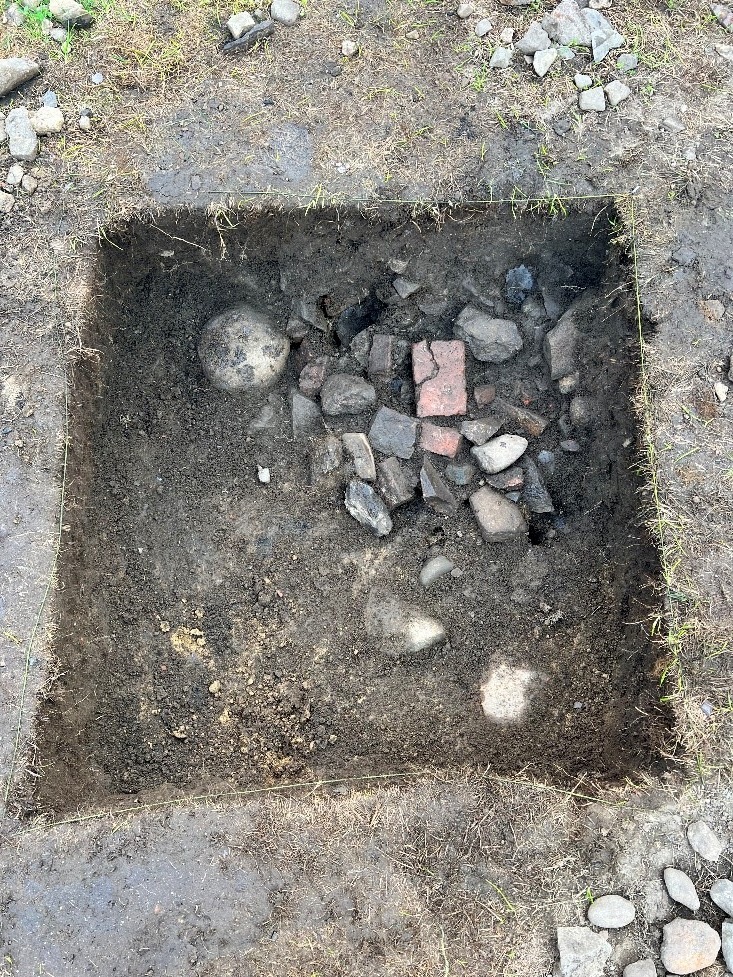
That being said, one of the biggest finds of the project included a huge rectangular stone with other large stones overlapping it. This feature was found in Excavation Unit 1 which was placed north of Excavation Unit 2 in the hopes of uncovering part of the foundation of the house. Given the size of the stone and the overlapping rock around it, it is pretty likely that this feature relates to the foundation or a wall of the Mansion House. On the last day of excavations this unit surprised us further by containing a large amount of metal artifacts in the southwest corner of the unit. A fork, a hinge, a handle, and a plethora of other artifacts were uncovered in the last level of this unit. We probably could have found more in the next level if we didn’t have to backfill the next day. This unit is definitely one to revisit in future years!
Figure 6. Stone feature in Excavation Unit 1 Level 3.
While neither unit contained a feature, Excavation Unit 3 and Excavation Unit 4 contained a lot of charcoal and mortar. Excavation Unit 3 specifically had extremely dark, somewhat ashy soil which was likely due to the fire. Ideally future Dig This! classes will uncover more of this ashy, dark soil and the data can be compiled to give a better understanding of how the fire destroyed the mansion house.
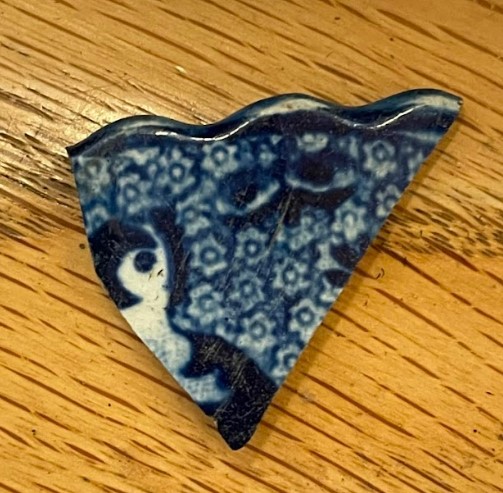
During the last week of the course, the students were busy washing their artifacts and picking a few to display at their end of the year exhibition. These artifacts included a locking mechanism, large nails, blue transfer print ceramics, a marble, a hinge, and a fork! All of the artifacts found during this summer’s course were transferred to the Peabody Institute to be cataloged and analyzed with the rest of the Mansion House artifacts.
Figure 7. Fork found in Excavation Unit 1Figure 8. Ceramic sherd found in unit 2.Figure 9. Locking mechanism found in unit 5.
Overall, the students had a great summer excavating the Mansion House and learning how to be archaeologists by following proper archaeological methods and recording techniques. I look forward to seeing what next summer’s Dig This class will find!
Hello, my name is Mike Agostino and I am a volunteer here at the Peabody Institute of Archeology. I am a recently retired scientist from the field of bioinformatics. My work in this field, for over 30 years, concerned the analysis of gene and protein sequences. I love the field so much that I am presently an instructor on the subject for the Harvard Extension School. I am also writing the second edition of a textbook I published on this topic more than 12 years ago.
Peabody volunteer, Mike, analyzes various projectile points in the Peabody collection.
As a resident of Andover, I frequently went past the Peabody and often wondered what treasures it held. When a good friend, Richard Davis, said he volunteered here and told me about the work, I immediately wanted to join him. To say this is a dream come true is not an exaggeration. I have always been interested in archaeology and spent many years looking down on the ground for the artifacts people said were all around us. But I never found any! To work with and learn about dozens, if not hundreds of specimens each day is amazing. As I hold these objects in my hands, I try to imagine their history: was it careful fabrication by an adult expert, or was it made during a learning period of a youngster? Was it used to bring home a meal, build a boat or dwelling, or for the creation of clothes? Did it come from local stone, or did it travel many miles to be found at a new locale? My imagination is further enhanced or tempered by the kind and knowledgeable staff of the Peabody who are training and patiently helping me identify what is in my hand. I have only been at the Peabody for less than two years and there is so much to learn!
After years as a scientist, I feel right at home with my principal responsibilities: the careful handling, description, cataloging, and storage of the specimens. Attention to detail is absolutely required and very satisfying. We record their identities, or best guesses because many are just fragments. The intact specimens are something to behold. Some arrowheads or axes are impossibly beautiful, and the precision of shaping and symmetry with such a hard material is just astounding. The skills of the people, past and present, are just amazing.
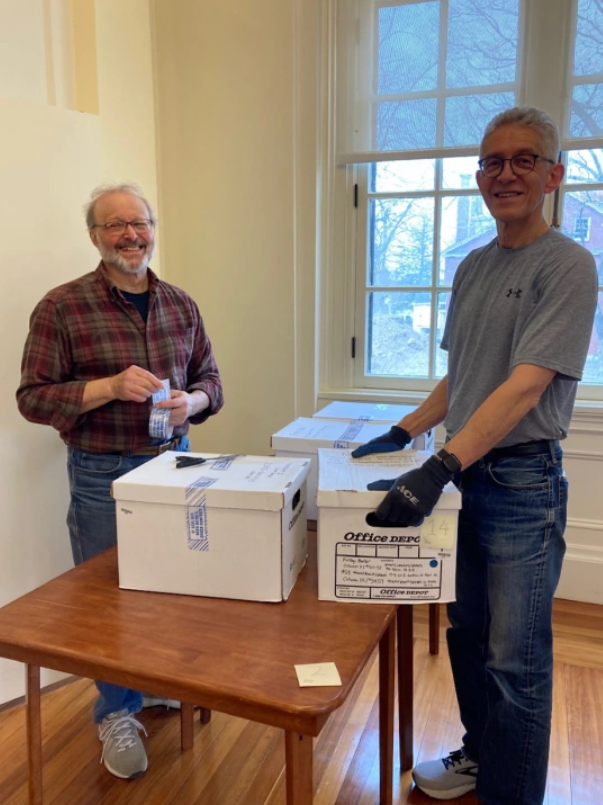
Peabody volunteers, Richard (left) and Mike (right), moving boxes for the Peabody’s building project.
I have also helped with activities associated with the huge renovation project of the building (for pictures and updates, see the blog postings by Marla Taylor). I am impressed with how everyone has remained calm considering hundreds of boxes, and specimens too large for boxes, had to be carefully moved up one or two floors from the basement to temporary locations elsewhere in the building. With the absence of an elevator, I helped move many boxes up the stairs out of harm’s way. My smart watch said I went up 80 flights of stairs one day! And I am only there one day a week, so the staff had a monumental challenge. We are now waiting for the renovations to be completed and then we will return the specimens to a much-improved setting. Even with the new elevator, reshelving hundreds of boxes won’t be easy, but I am looking forward to the project and the “new” institute.
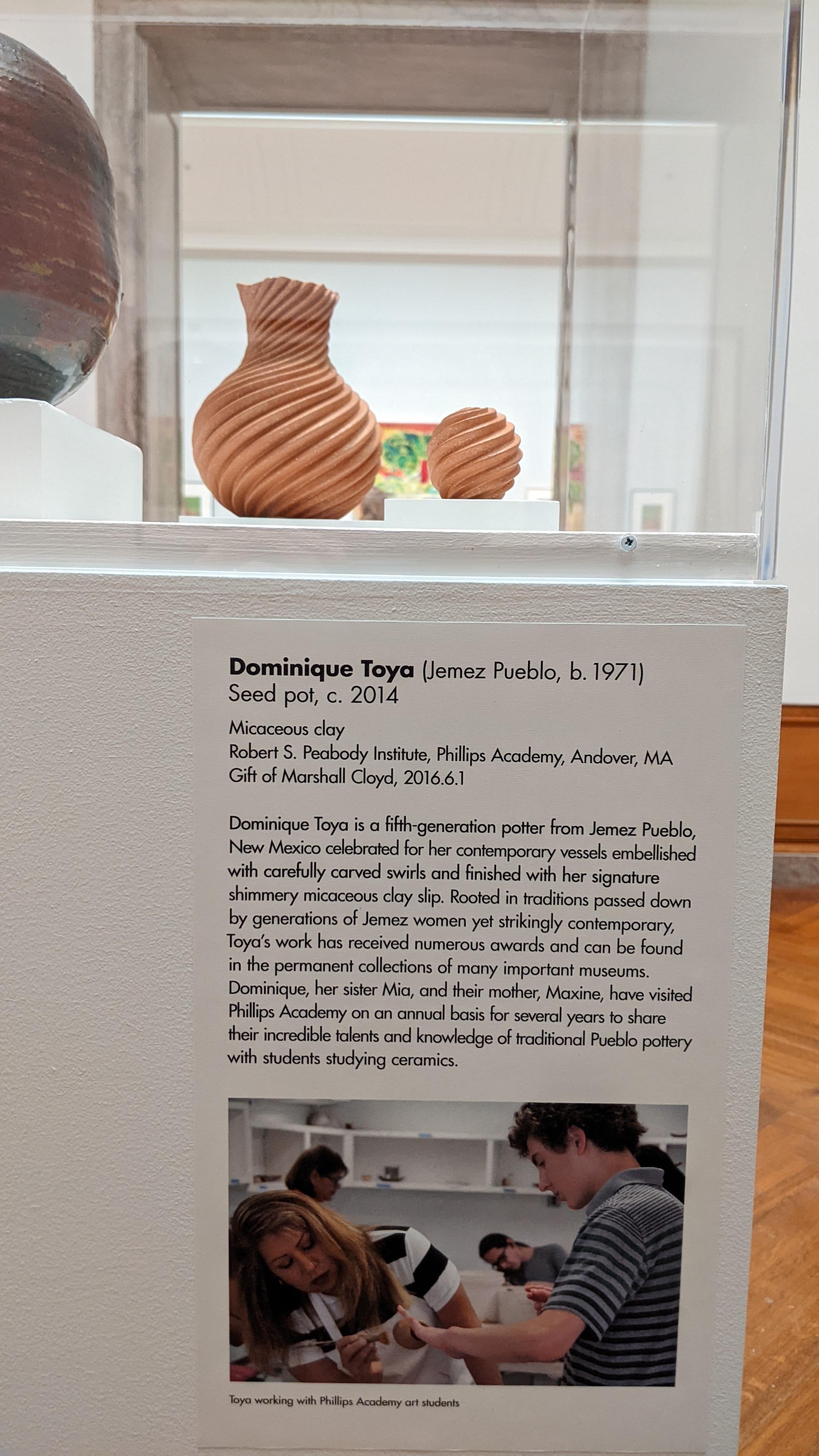
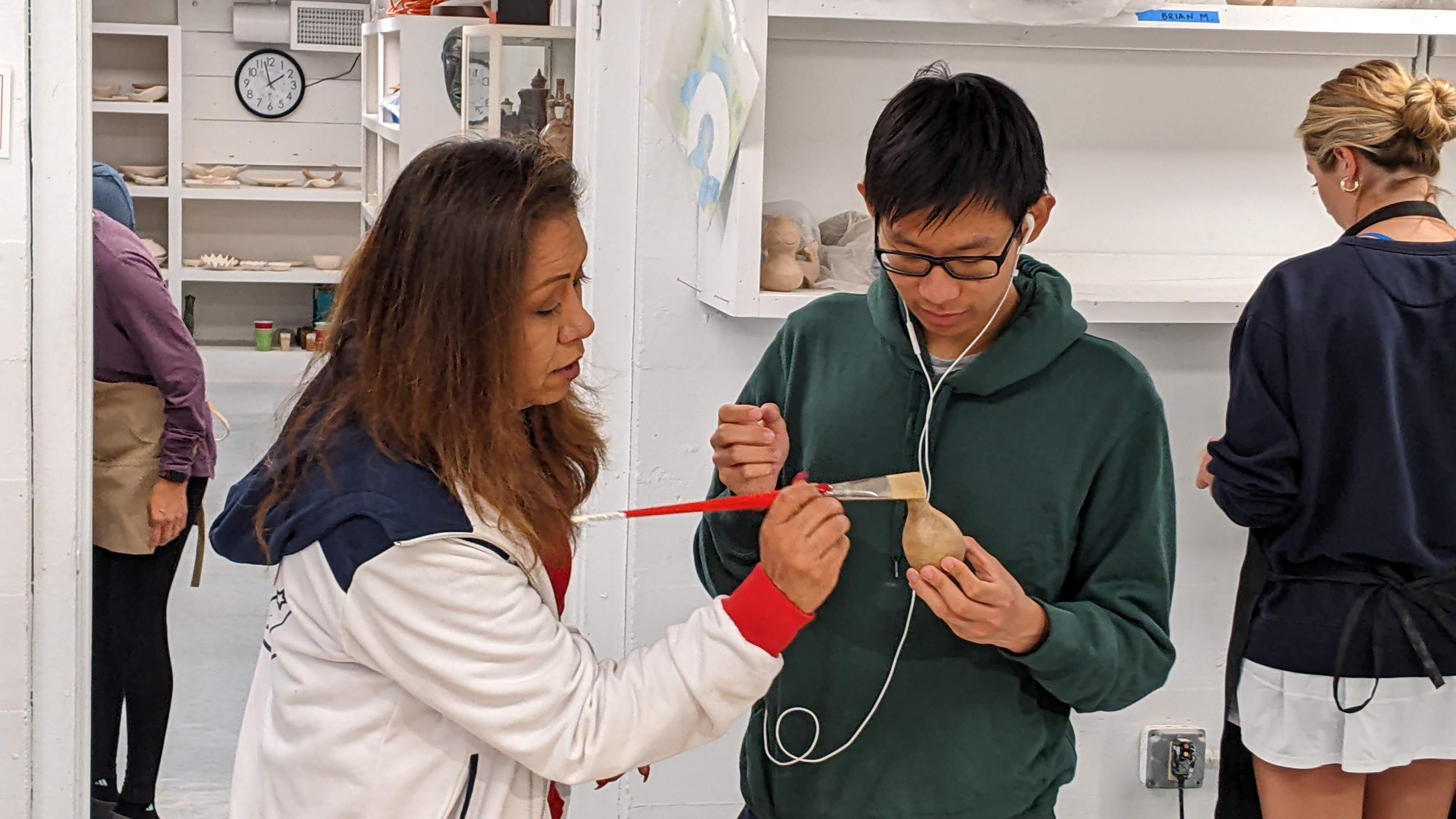
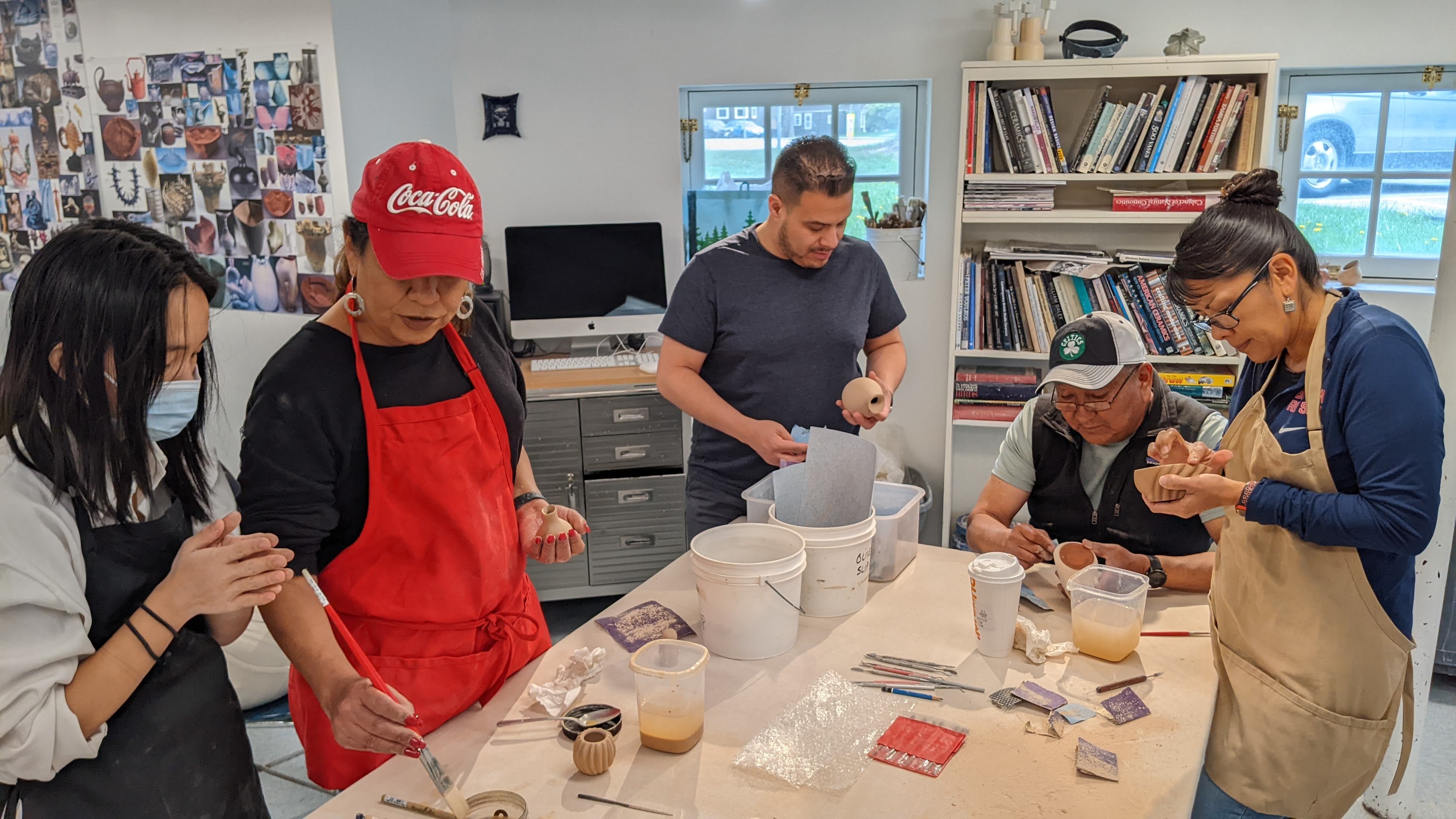
The Peabody has several amazing pieces of pottery made by members of the Toya Family of Jemez Pueblo. On their first visit to the Peabody in 2013, Maxine and Dominique Toya noticed a small vessel on our open shelving. What caught their attention was a delicately painted corn stalk, representing their clan. They wondered aloud who might have used these design, and we were all delighted to find that Maxine’s mom and Dominique’s grandmother, Marie G. Romero, had made the piece. Marshall Cloyd ’58 generously helped us acquire several of Dominique’s creations, including a small seed jar with distinctive carved ribs and mica slip. Since then we have added a number of wonderful pieces to the Peabody collection, including one of Maxine’s owl figures and a collaboration featuring Dominque’s beautifully crafted vessel bearing Maxine’s hand painted deer and corn stalk designs.
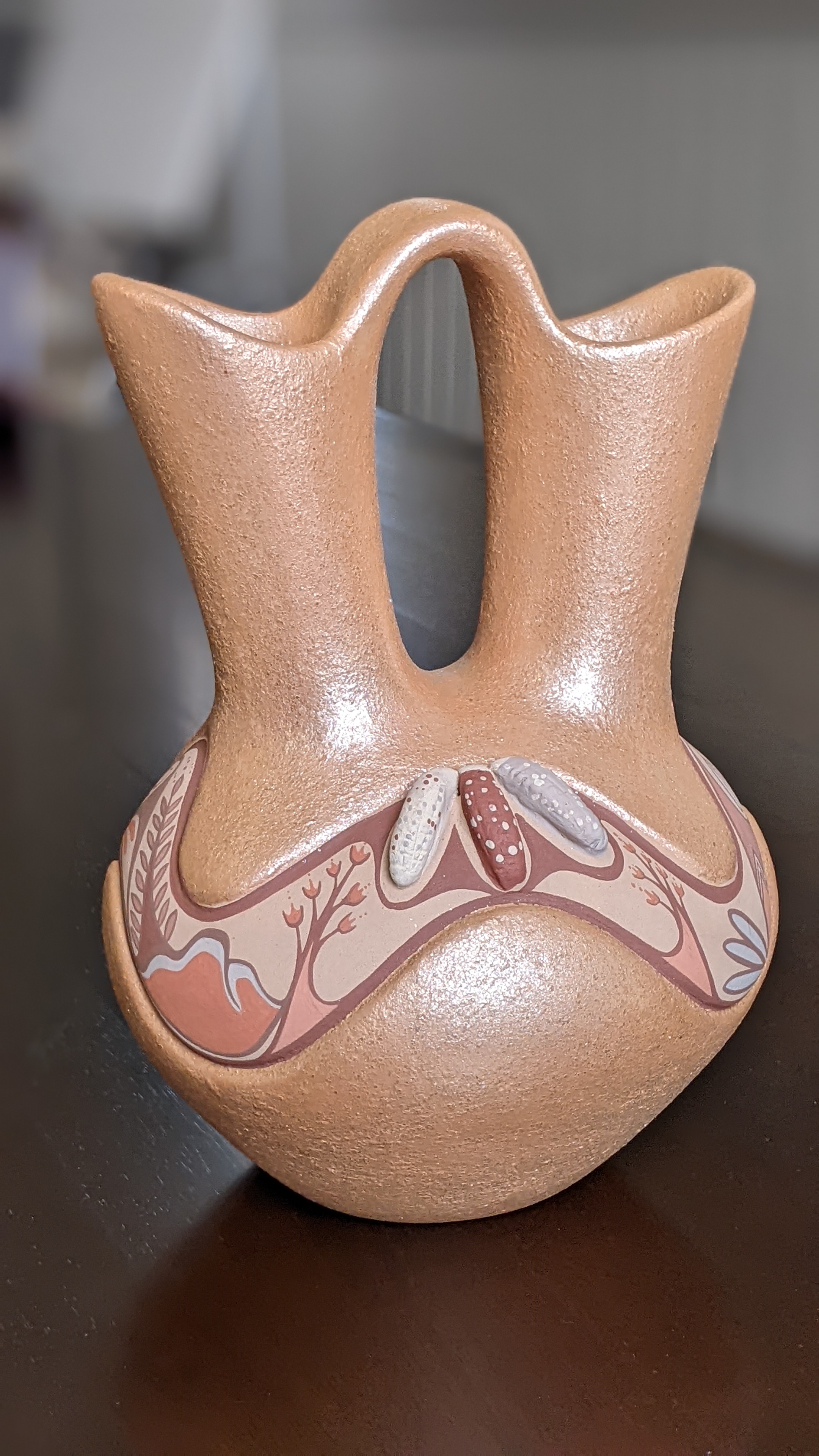
In May, we acquired a special piece called Three Generations. Dominique said, “this was the last wedding vase my grandmother, the late Marie G. Romero, created before she passed away. My mom and I have kept it sitting at our studio until we finally decided to finish her. I’m going to sand her and apply mica on the top and bottom and mom will paint a design in the middle where the band is and paint the ears of corn. This piece will be called Three Generations and will be the only piece that is signed by me, my mom, and I’ll sign my grandmother’s name since she created her.” The Toyas fired Three Generations on April 3 and brought her to us during their workshop with students in May. This is a large piece, at least 11 inches tall, and the overall shape, finishing, and delicate painting is truly impressive. Dominique commented that, “my mom outdid herself again with the amazing painting!!!” and we couldn’t agree more!
We may be down (the road, on Abbot campus) but were not out! As everyone on campus has probably seen there is a big ol’ fence surrounding the Peabody Institute, concealing dirt mountains, front loaders, and a bunch of contractors. This has been going on since April, boy time flies! Despite being out of the building for the last several months (and for several months to follow) we are still here and still part of teaching and learning at Phillips Academy, albeit in a more restricted fashion. Most recently, our director Ryan Wheeler and I helped out the Andover Summer Session with a few different classes. Supplementing the classes with knowledge and items from our collection to enhance the learning of the summer students.
One class was Ella Houlihan’s Intro to Bio class. The students were learning about human evolution, and the Peabody has just the collection to help teach this topic. We brought over about 15 skull casts from all over the hominid family tree and tasked the students to develop their own traits, categories, and potential connections. From there we went over what scientist use to group skulls and layout the human family tree. Pointing out that it’s all rather complicated and even the professionals do not agree.
Students analyze various skull casts in a class activity
We also helped teach a couple classes in Dr. Tessa Hite’s class Mapping our World: The Art and Science Behind Maps. We went over the basic history of Andover, how it moved from Indigenous proprietorship to English ownership. To tie into that we covered concepts of colonization and decolonization, how one culture or society can impose themselves onto another and how efforts are undertaken to amend this. From there we had the students use maps to compare European versus Native American town names (think Mattapoisett vs Andover) and then research the original Indigenous place names. This was done to prompt questions such as “What does, or doesn’t this map tell us” Or “why does it feel empty with Native based town names?” This was done to get the students thinking about the reasoning behind the way the maps are set up and used.
The Peabody is more than happy to help in classes whenever we have an opportunity! Even with more restricted access to the collection, we can get creative and pull something together, as long as you don’t mind the dust!



























 The Peabody