Beyond Work Duty

Contributed by Peabody Student Volunteer, Anthony Chung Yin Woo

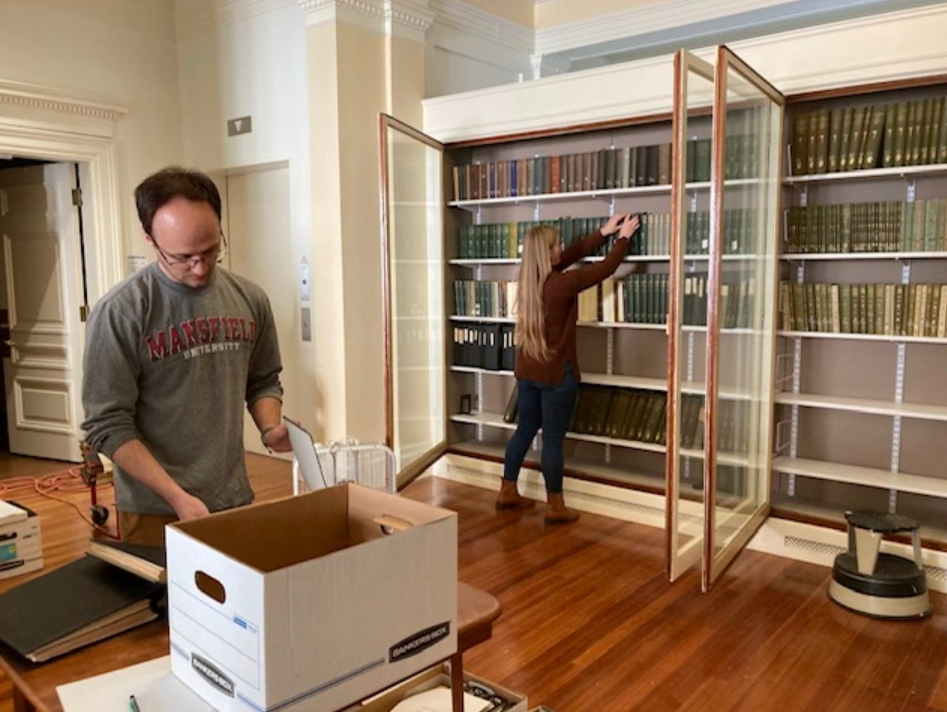
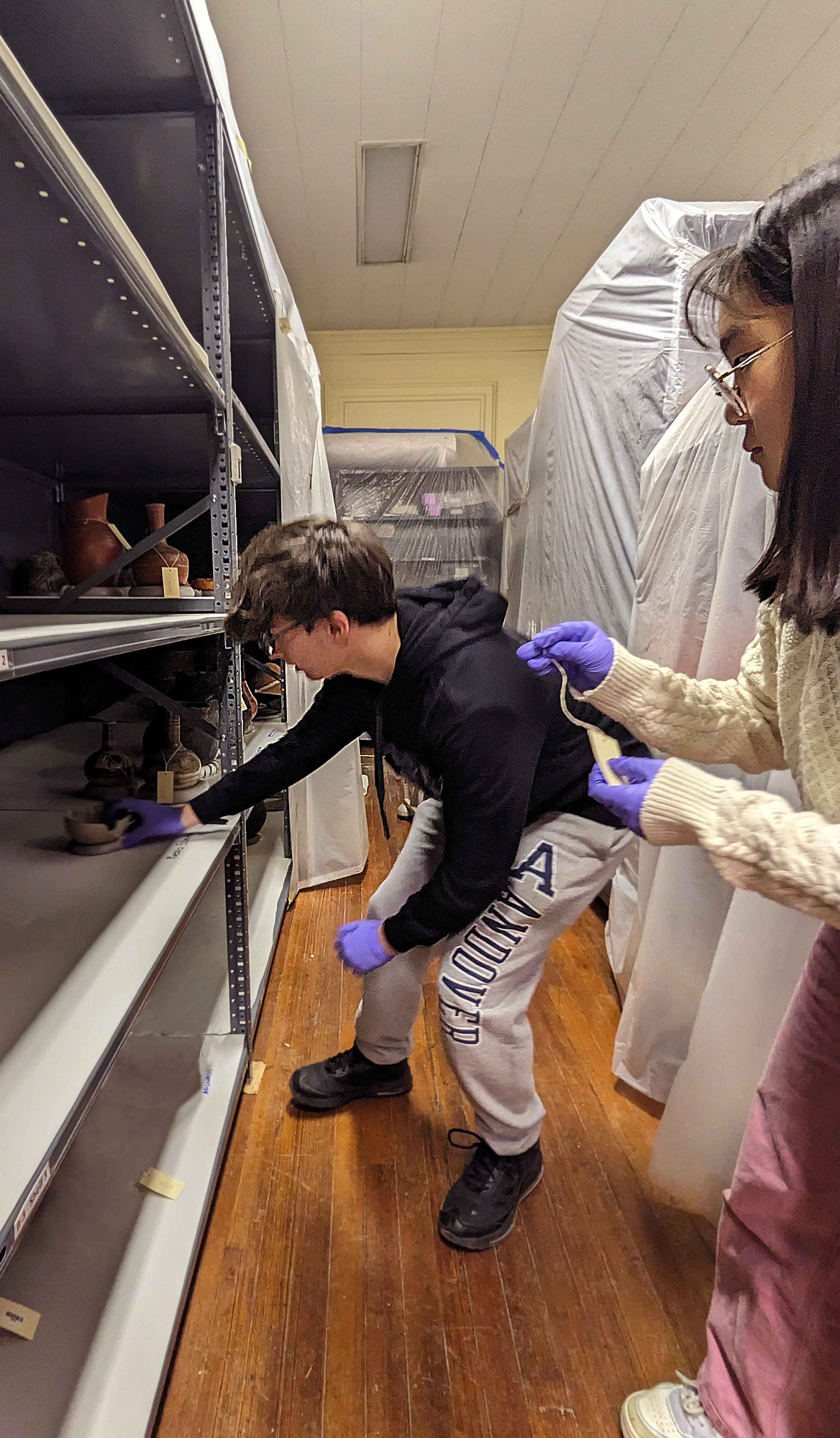
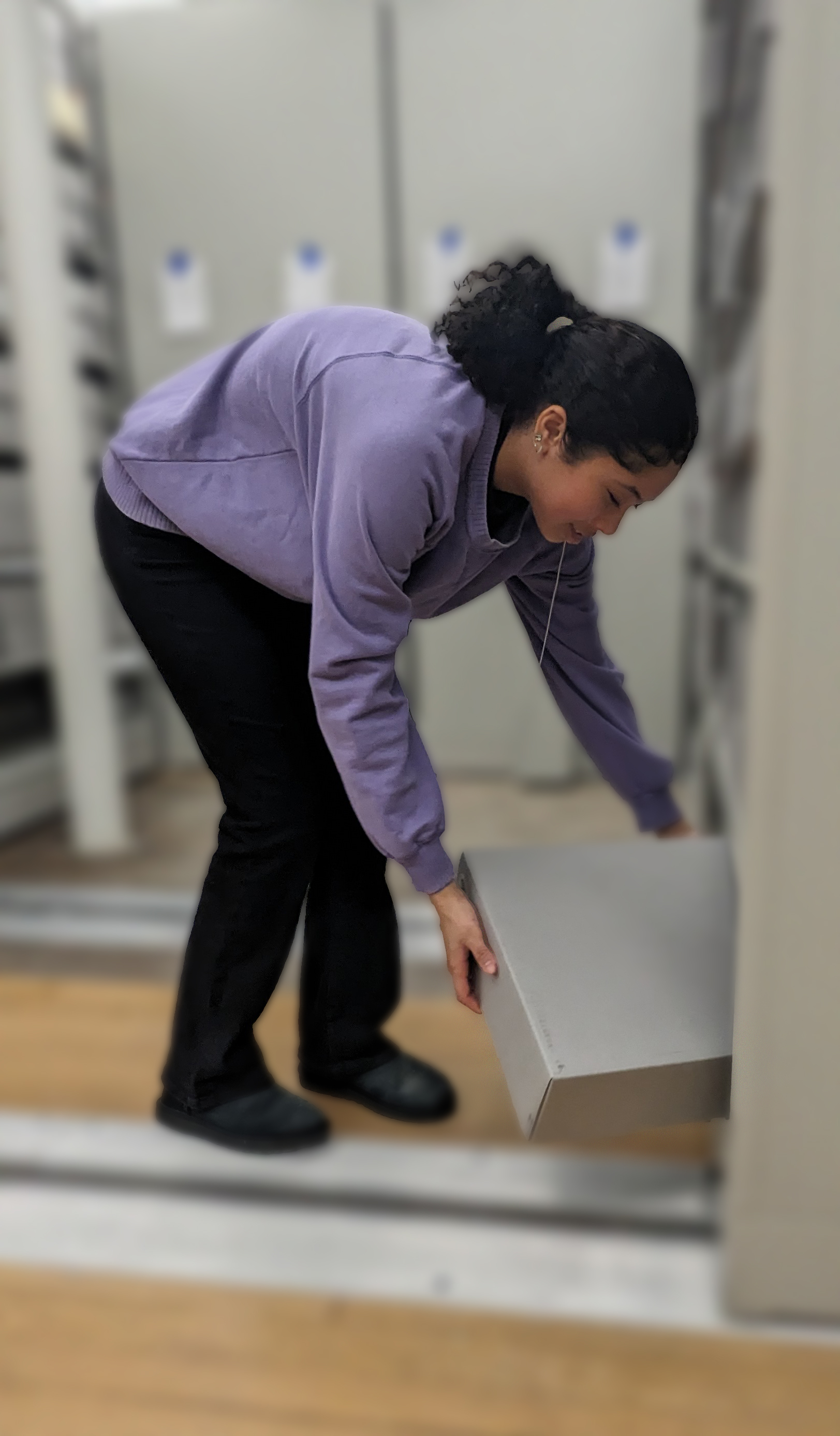
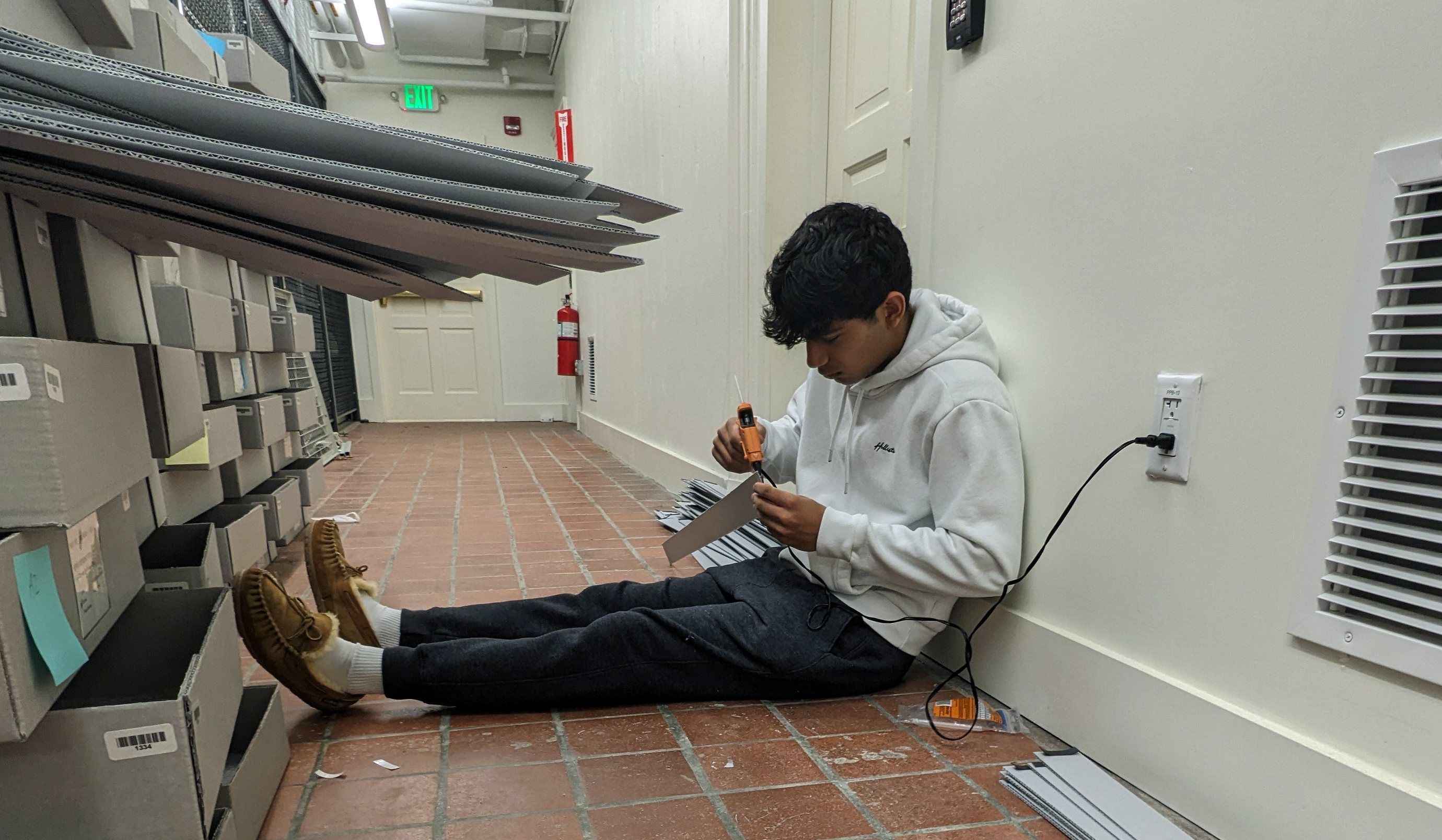
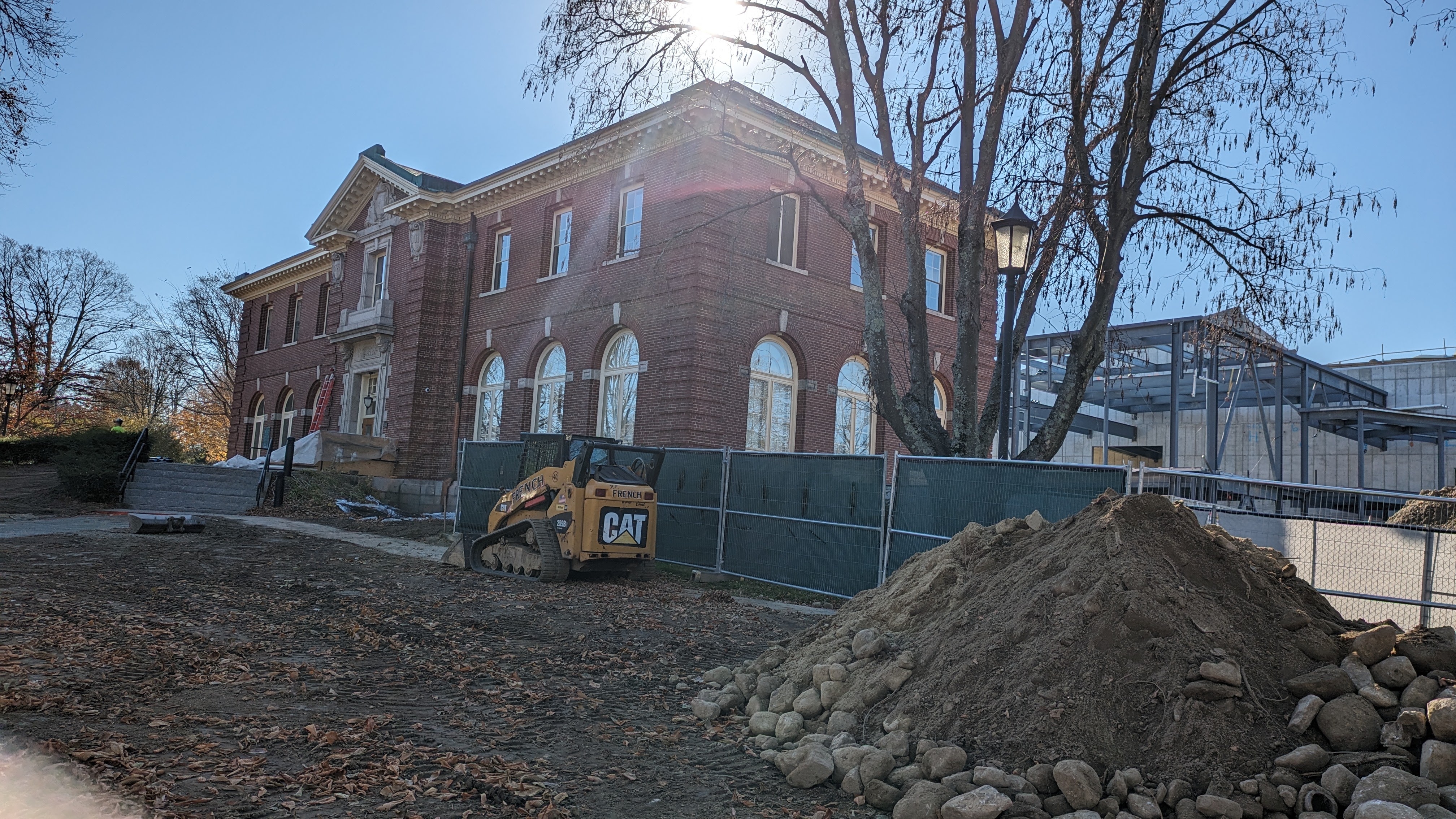
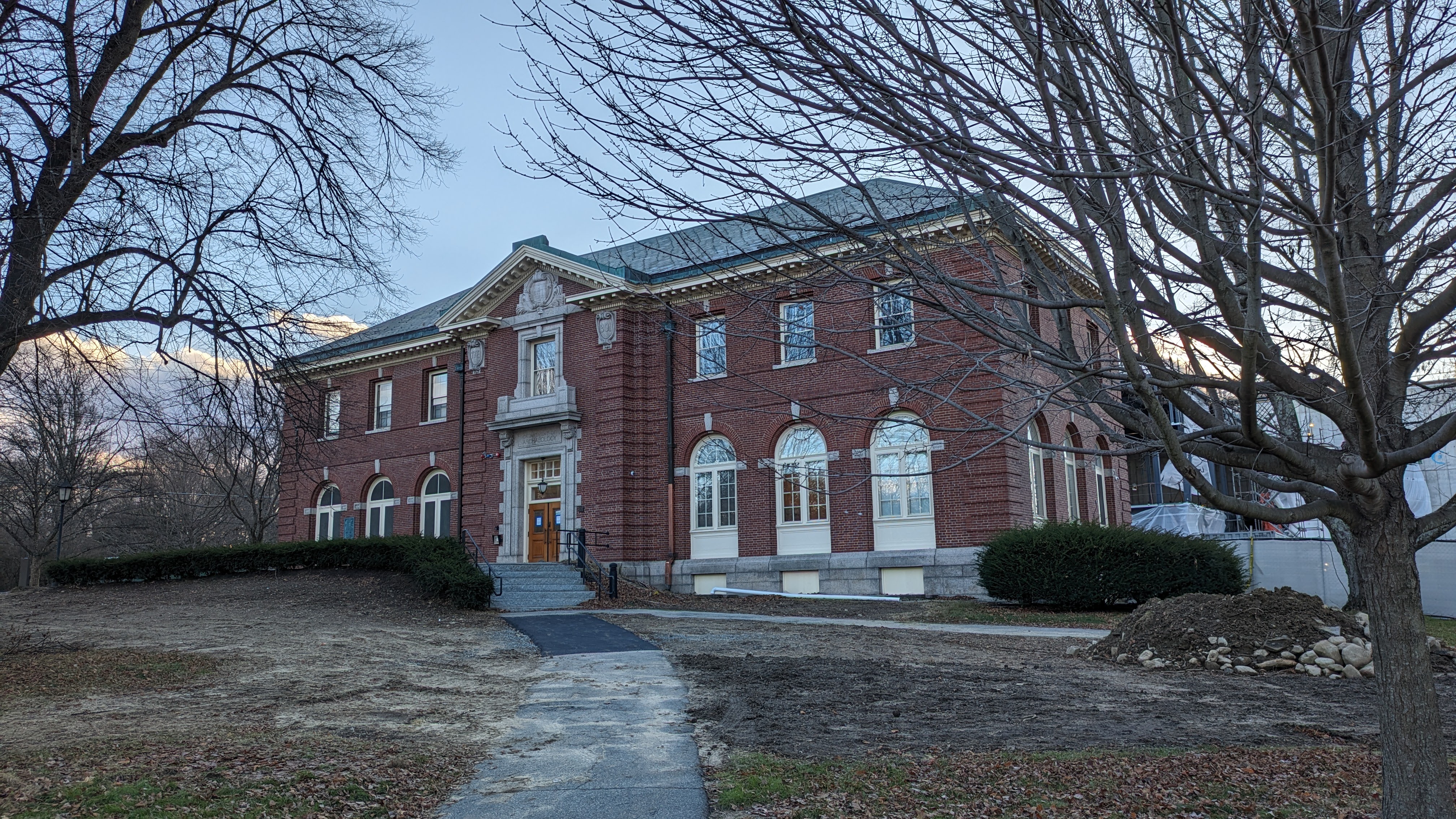
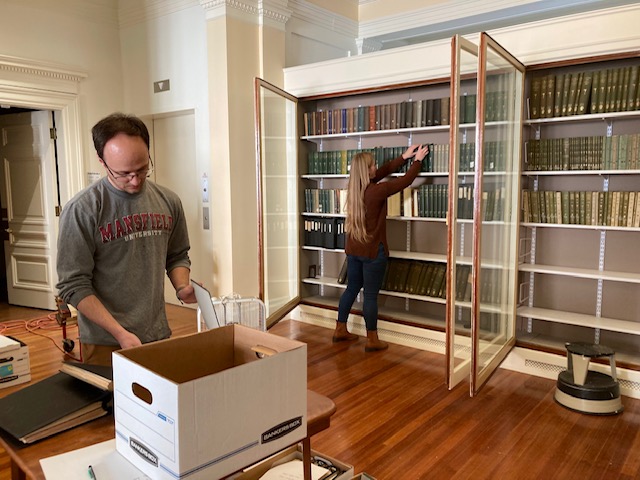
In the fall term of tenth grade, I first joined the Peabody as a work duty student before returning as a student volunteer during my upper senior year. Working at the Peabody has given me an in depth behind the scenes look into running a museum, exposing me to the challenges in caring for a collection. When participating in preparation works for the building renovation project last winter, I learned about some of the technical complexities that museum workers have to go through in order to responsibly safeguard the collection. Having had the great opportunity to attend the Peabody Board of Advisors meeting in the fall as a student representative, I was also exposed to some of the administrative complexities behind museum work.

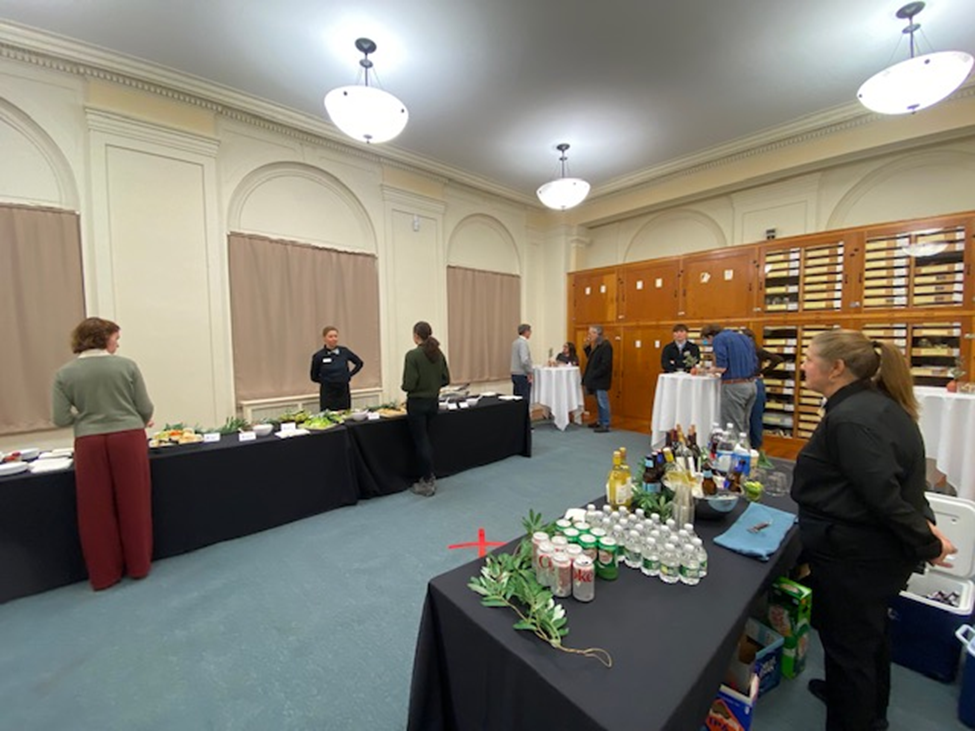
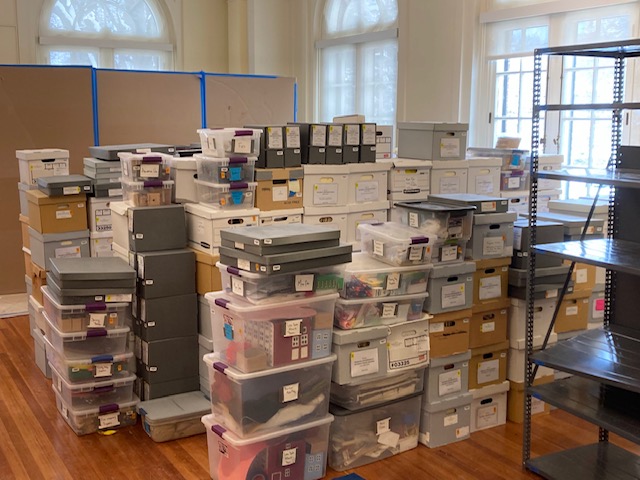
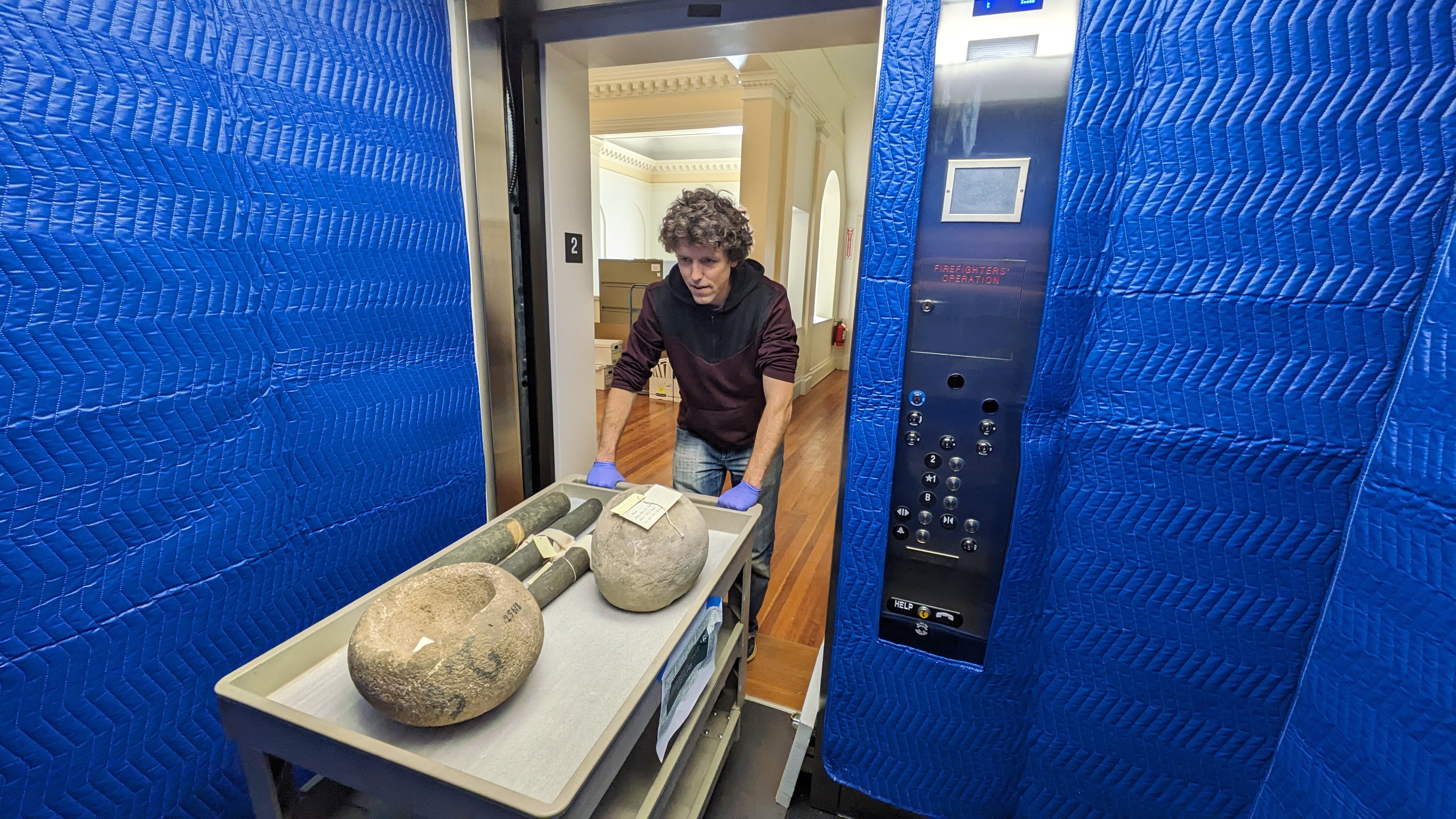
A complete revamp of the basement area meant that we had to come up with creative solutions when it came to temporarily rehousing the collection within museum premises. Armed with a tape measure and a rough floor plan, we navigated all protruding columns and bulky built in radiators in the southern first floor gallery to mark up the approximate location for a separated temporary storage space with individual climate monitoring, while maintaining the required three foot hallway for access to the fire exit located at the back of the building. Additionally, previously underutilized spaces had to be optimized to fit in more durable, weather resistant objects, allowing me to foray into the expansive attic as I removed sawhorses and large glass tubes from the basement.

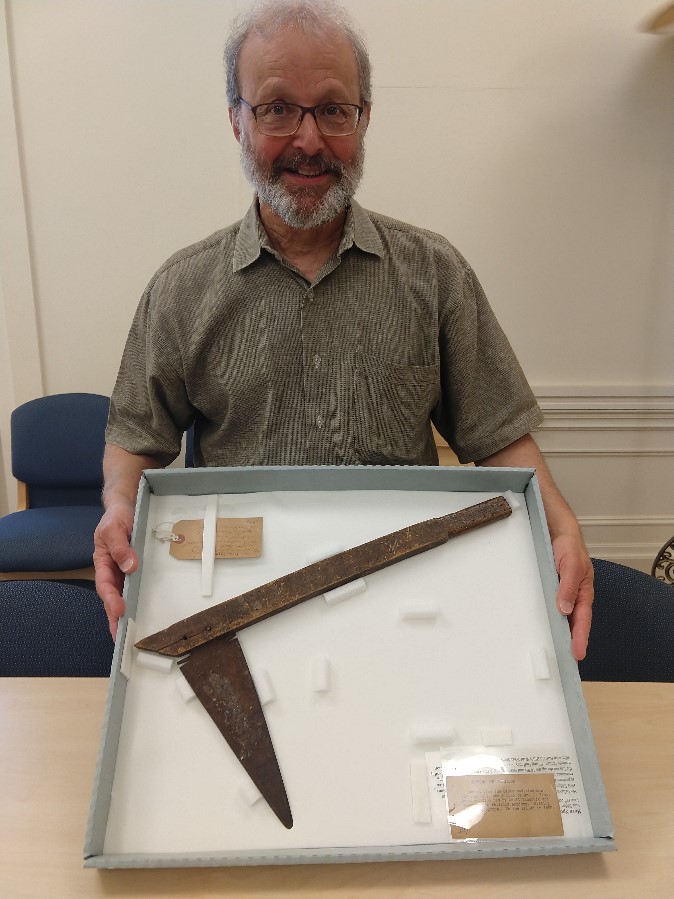
In spite of the physically and mentally draining task of completely clearing out the basement, moments of excitement rewarded me throughout the process. Under the empty wooden bays, for example, I found tiny matchboxes from the 1940s, cool items which alluded to the museum’s own history. A Spencer Delineascope, manufactured by Bell and Howell found in the basement, spoke to the great advancements made in projection technology since the 1930s, as the bulky object was moved slowly up the stairs. Only when it was removed from the little room under the stairs to the basement was when I could truly appreciate the size of the museum’s safe and its obsolescence in a time when the entire collection was kept behind locked doors.

Direction Booklet for the Peabody’s Delineascope
The Peabody’s old safe.

Learning about the 3D printed replicas of the intricate molding on the gallery ceilings also made me appreciate the museum as a historically significant space itself, allowing me to understand that preserving the space’s spirit through attention to detail was crucial even as the building is physically altered to facilitate better learning in the future through greater accessibility.

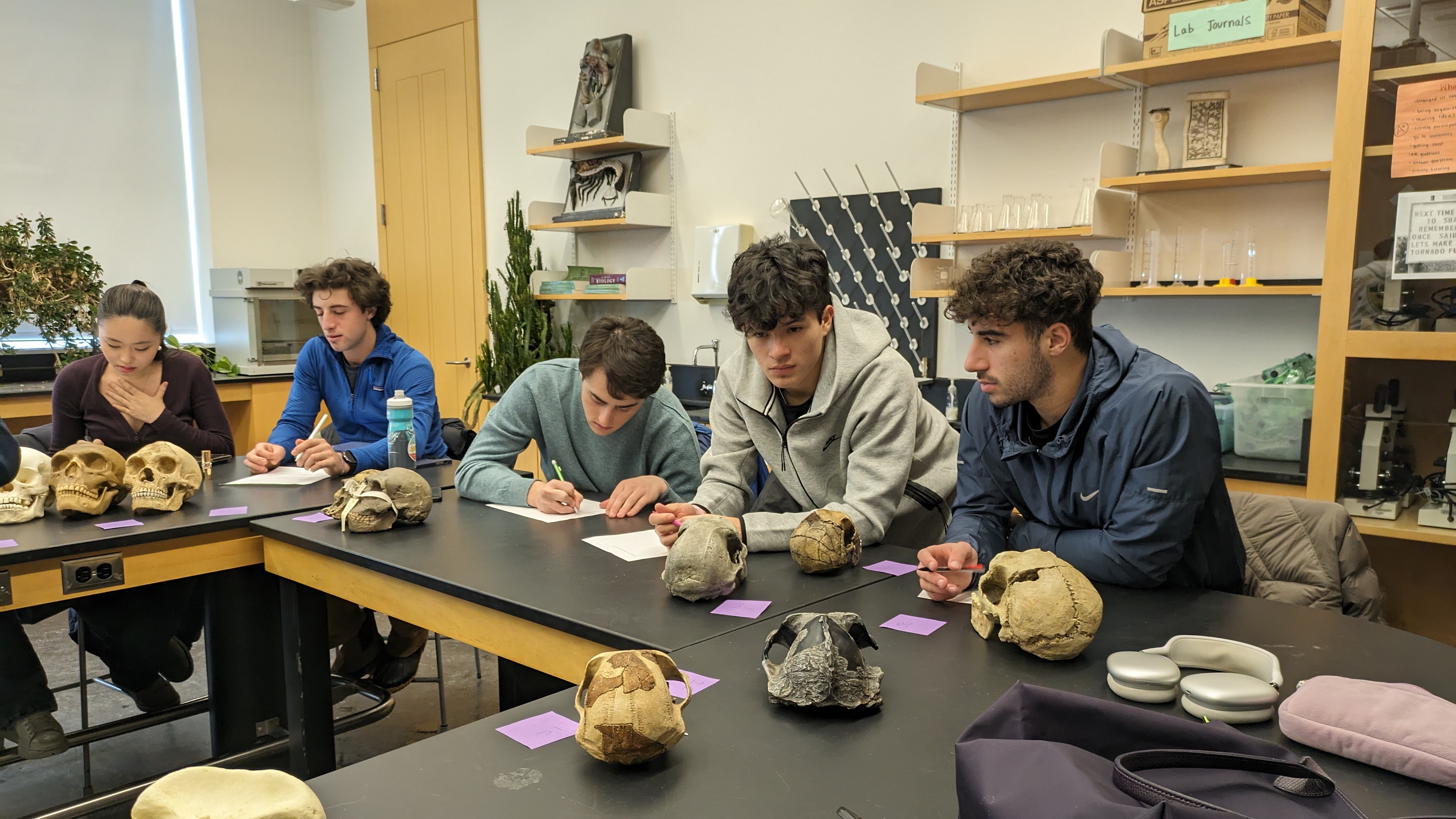
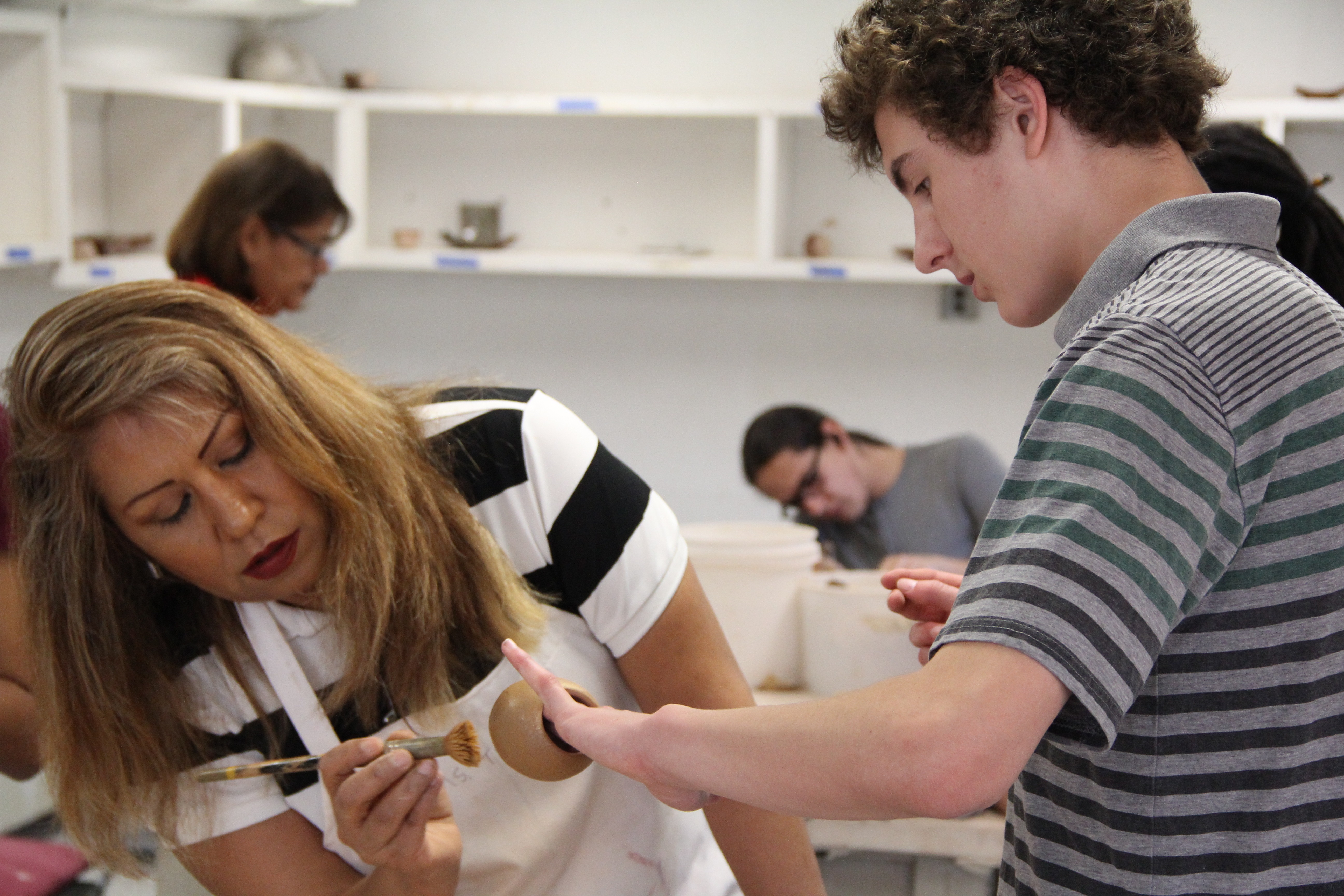
Attending the Peabody Advisory Committee meeting allowed me to better contextualize my work as a volunteer as I watched experts across disciplines partake in the collaborative process of museum governance. It was especially interesting for me to hear about the cross-institutional connections brought by Hopi artist Ramson Lomatewama, and I was particularly happy to share my experience at the communal fused-glass making workshop, which was enthusiastically attended by both faculty members and students. Going through items on the agenda, such as the adoption of a new mission statement, as well as the advisory board’s renaming (form the Peabody Advisory Committee to Peabody Board of Advisors), while less captivating than the discussion on the Peabody’s educational program and future student engagement opportunities, were nevertheless just as relevant to the student experience. As I look forward to returning to the updated building on Main Street in the winter, both as a student volunteer and as a member of this year’s Human Origins cohort, I am constantly reminded of the care demonstrated by the Peabody’s staff as well as the Peabody Board of Advisors towards the collection, the museum, and the greater community as a whole, manifested in the meticulous attention to word choice in the advisory board’s mission statement drafting process.

My fused glass piece before kiln firing.

Summer School

Contributed by Nick Andrusin

I already did 6 years of school, what’s one more class! This summer I had the opportunity to do some professional development with the Peabody, and I was more than happy to take advantage of the chance to learn something new. Museum Study LLC is a service that offers online courses and virtual lectures on a variety of museum related topics, from collections management to administration.

Museum Study online professional development – Home

After some painful humming and hawing (I was informed I can only do one at a time…Marla…) I decided on Foundations of Community Engagement, taught by the awesome Dr. Shannyn Palmer.

Museum Study Instructor Shannyn Palmer

My background is in public history, and part of my role at the Peabody is engaging with the community, so it was a good fit. The class lasted for the month of July and was virtual. Each week involved multiple readings on how different museums have incorporated community engagement, how it’s been done successfully (or unsuccessfully in a few cases), and the philosophy behind ethical engagement with museum communities. We would have questions and assignments to fill out, and then we would meet once a week virtually to discuss what we learned. The class was small, but the conversations were interesting, with participants from a variety of museums.

Just what is community engagement? Well, not to use a circular definition, but it’s how a museum engages with its communities. How much, what methods, which groups specifically, etc. The particulars will vary from project to project, but it all centers on connecting, collaborating, and co-creating with the group. Not just having them sign off on the project but allowing them the opportunity to be meaningfully involved in the planning and/or execution. Again, depending on the specific context of the exhibit or project. A big aspect of the class was the idea that this is not a perfect science and there is no one size fits all solution. It’s something that needs to be practiced and adapted to different situations. If a museum is doing an exhibit on a specific local community for example, that community should be involved from the outset, and at multiple levels of the project. Otherwise, what little involvement they do have may be tokenistic and the exhibit could be inauthentic or potentially offensive.

As largely public institutions, museums live and breathe on how well they engage their communities. Therefore, this engagement being ethical and non-tokenistic is a big deal. Between the modern-day ramifications of white supremacy and colonization, as well as the Covid-19 pandemic, museums are at a bit of an impasse. Questions about whom museums serve and what they should and shouldn’t do are becoming more common. Their roles are evolving as they determine their purpose. Ethical community engagement is the right way to ensure the museum is not failing the groups and individuals served.

The Peabody is an interesting museum in this case, because we haven’t created exhibits for the last couple of decades. Therefore, our community doesn’t really include your typical idea of museum visitors. However, the students and faculty of Phillips Academy absolutely fit the definition of our community. As well as the Native communities we work with during repatriation. Ergo when the Peabody does community engagement, we seek to collaborate with these groups in balanced and effective ways.

Overall, it was an interesting class with a great professor! I am very grateful to the Peabody for the chance at some professional development!  This was just a taste of what it offered; one blog is far too short to go into detail on everything. If I piqued your curiosity, you will just have to check out the class for yourself….

Map Quest

The Peabody has recently acquired several examples of Indigenous art, with the goal of enriching our education collection. Raven Makes Gallery is an art gallery based in Sisters, Oregon, dedicated seeking to “work directly with artists to bring American Indian, or Native American, First Nations and Alaska Native art to the unique setting of Central Oregon and cultivate a deeper awareness about fine artists and their communities.”

The Gallery features original pieces made primarily by Indigenous artists from North America, but also has pieces that come from Indigenous people all over the world. It’s an amazing gallery and their website is definitely worth poking around for those who are interested.

Native American Art Gallery – Raven Makes Gallery

Super cool stuff, right? Here’s where we come in. This year the gallery presented “The Homeland Collection, year three.” It was a collection of 88 antique maps (think like, nineteenth century settler maps) that served as a canvas for 22 Indigenous artists from all over the world to incorporate into their own work. The Peabody purchased two of these pieces!

The Homelands Collection, 3rd Ed, Raven Makes Gallery Exhibit– Homelands Collection

The maps are a powerful visual representation of re-indigenization/decolonization in artwork. Maps are interesting to look at, but there are questions: what is the reason they are made, who are they made for, who are they made by? Maps like those in the Raven Makes Gallery collection may have been designed with settlers and land prospectors in mind. The maps were used to impose colonizer culture and world views on Indigenous people. The illustrated borders would have had little to no input by Native communities, on land that they were the stewards of to begin with. So, this project has been an opportunity to shift the narrative. Turning tools of colonization into a representation of decolonization. Flipping it on its head! A physical reminder that Native people have been here for at least tens of thousands of years before these maps were “needed.”

The Peabody has a large collection of items from Alaska and the Southwest, so these two pieces made the most sense to grab. We are excited to have the opportunity to support Native artists and strengthen our education collection! We hope to use these to create interesting conversations about the creation and usage of maps in our history!

The first is Isuqwiq Pisuraa (Hunting Seals) II by Heather Johnston (Alutiiq). The map is an 1827 depiction of south-western Alaska by Philippe Vandermaelen, showing the routes of artic explorers in the late 1700s.

The second piece is Kachinas’ Territory by Wilmer Kay (Hopi). The map is an 1862 depiction of the Southwest made during the Civil War by A.J. Johnson.

PA Students Visit Harvard’s 25th Annual Powwow

Contributed by Emma Lavoie

Last month, the Peabody Institute sponsored a day trip to Harvard University for Phillips Academy students. The 25th Annual Powwow was hosted by the Harvard University Native American Program (HUNAP). After a three-year hiatus due to the Covid-19 pandemic, the HUNAP program was able to welcome the return of their Powwow.

Flyer for HUNAP’s 25th Annual Powwow

This year’s theme for the HUNAP Powwow was Protect Indigenous Futures! The event was held on Orange Shirt Day, a national day of remembrance and reconciliation for victims of residential schools, which sought to separate Native children from their families and forcibly assimilate them. The Powwow honored survivors and victims of residential schools throughout Canada and the United States.

The Powwow ceremony is an Indigenous gathering with traditional dances and music held by Tribal nations from the New England area. The event welcomed hundreds of attendees from Harvard, neighboring Native communities, and the Greater Boston area.

Photos from the HUNAP Powwow
Photos by Catherine Dondero and Courtesy of Harvard University

Students took part in community dances, which welcomed all event attendees into the arena to dance together. Many PA students took part in these community dances and got to experience the ceremony traditions first-hand.

PA students participating in community dances

This event was a wonderful opportunity for students to experience Indigenous cultural traditions and ceremonies. Students also had the opportunity to connect with Indigenous students, community members, HUNAP students, and Tribal nations from the Greater Boston area, New England, and those visiting from other parts of the United States and Canada.

Want to hear more about this event from the students’ perspective? Check out this article from Phillips Academy’s student paper, The Phillipian.

For more details about the HUNAP 25th Annual Powwow, explore this article from The Harvard Gazette and video coverage of the event by Harvard University.

Reading Angeline Boulley

Contributed by Marla Taylor

Last November, I attended the AAIA Repatriation Conference in New Buffalo, Michigan. There were many tremendous speakers, but the one that really sticks out in my memory was Angeline Boulley. She does not work in the world of repatriation, but held the room in her hands as she spoke to us. I so vividly remember Angeline speaking to us all at the conference – she earned a standing ovation and my presentation had to follow that!

Angeline is a citizen of the Sault Ste. Marie Tribe of Chippewa Indians, and storyteller who writes about her Ojibwe community in Michigan’s Upper Peninsula. She had recently published her book Firekeeper’s Daughter (a #1 New York Times Bestseller) and was giving us a tease of her next book, Warrior Girl Unearthed.

At the time, I had not read Firekeeper’s Daughter and quickly purchased myself a copy. I LOVED it. The story was a fresh take on a murder mystery/adventure. The main character, Daunis, is a biracial unenrolled tribal member whose cultural knowledge can contribute to protecting her community. Sprinkled throughout the book are Ojibwe words, phrases, and cultural teachings in a way that only augments and enriches the story being told. I highly recommend it to you all! (and ignore the young adult classification – this is a complex story that is not always appropriate for younger readers)

Warrior Girl Unearthed is powerful in a different way. Grounded in the complicated reality of repatriation and missing and murdered Indigenous women (MMIW), this novel can feel a little heavy at times. Angeline uses the book in part to educate her readers about NAGPRA and repatriation and in part to build a new adventure around preventing a plot to profit off robbed Indigenous graves. While an explanation of NAGPRA does not always make compelling reading, the story itself is exciting and multi-faceted. Angeline once again interweaves Ojibwe words and cultural teachings in an effective way. And that is maybe the best thing about the book – the Ojibwe culture is just a part of who the main character is. She is just living her life and interfacing with her cultural teachings in a way that does not feel contrived but is instead natural. That feels novel and under-represented in young adult literature.

Her words and her books have left an impression on me and I encourage you to pick up a copy yourself.    

Back to School

Submitted by John Bergman-McCool

In July I enrolled in an online course, Policies for Managing Collections, through Museum Studies LLC. Their organization offers online museum study courses taught by experts in the field. They also offer a range of professional services to cultural institutions.

Over the four-week course, instructor John Simmons led our investigation of the purpose and function of collection management policies (CMPs). Simply stated, collections management includes everything that cultural institutions do to collect items, care for them, and make them available to the public. A CMP is a collection of policies that guide collection management activities and clarify who is responsible for making collections-related decisions.

The Policies for Managing Museum Collections text book. It’s a good read that I highly recommend.

In addition to myself, there were a handful of museum professionals from a diverse range of cultural institutions who were enrolled in the course. Each week we reviewed the different sections or policies typically included in a CMP. We were tasked with looking at the specific needs and critical issues facing our own institutions and we met remotely for discussions on the week’s readings.

Assignments were submitted to a forum and included writing sections of a CMP, critiquing a museum’s response to policy-related problems, and enumerating the policies required by our individual museums. Along with our instructor’s feedback, student responses regularly generated interesting discussions. In general, there were many opportunities to share knowledge with our peers and learn from each other’s experiences.

Some of the personal takeaways from the course included:

-A CMP should include a section on your institution’s legal organization or governing authority.

-No two CMPs are the same. Each CMP should be written with the specific structure, needs, and collection focus of the museum in mind. When writing a CMP, another institution’s policy can be informative, but it shouldn’t be copied.

-A CMP can be a stand-alone document, or it can be a collection of many separate policy documents.

-Policy is different from procedure. Policy provides the rules and guidelines for carrying out collection management duties. Procedures spell out how policy is followed on a day-to-day basis and should largely be excluded from policy documents. Exceptions to this rule include controversial collections management procedures such as deaccessioning. These procedures can be quite thorny and can be detailed in CMPs.

-CMPs are living documents. If a policy is not working, it can be reviewed and changed, but you’ll need a policy for reviewing and changing your policies.

The course was very informative and led me to think about our institution, its legal organization, and our collection in new ways.

La Brea Tar Pits

Contributed by Ryan Wheeler

One of the best things about travel is visiting museums, especially those that are new to me! In August, I traveled to California for some great events for Andover alumni, students, and new families. As a newbie to Los Angeles, I was wowed by the Mediterranean Revival architecture and, top on my list of museums to visit, La Brea Tar Pits and Museum. The tar pits are actually asphalt that have been bubbling up from subterranean oil fields for about 240,000 years. Animals attracted to water accumulating on top of the tar pits were frequently trapped in the sticky goo, becoming part of the fossil record. The victims of the tar rarely remained intact, so there are lots of bones, but few complete animal skeletons. Exhibits in the museum, built around a recreated Pleistocene forest, has lots of examples of the animals recovered from the tar pits, including bison and mammoths—hallmarks of the Rancholabrean fauna—as well as dire wolves, saber tooth cats, birds, and even insects. You can watch scientists cleaning fossils inside the museum after visiting the tar pits, including at least one active excavation. The gift shop has lots of fun stuff, including resin casts of saber tooth cat teeth, stuffed animals, and books on the tar pits.

Behind the Abbot Photographs… and a song book!

Contributed by Emma Lavoie

Since the Peabody staff moved to the School Room in Abbot Hall, I’ve been fascinated by the history of Abbot Academy and what remains of the school’s campus. As we work in the very heart of the Abbot Academy campus, I can’t help but notice the many features and tangible details left since the merger of Abbot and Phillips in 1973.

The very School Room in which our staff currently resides was once an assembly room for all the Abbot Academy students to gather, known as the “Hall” and later as the “Chapel.” Within this same building are many rooms with remnants of old chalk boards as well as photographs of Abbot students from throughout the school’s history. These photographs inspired this next entry of the Behind the Photograph blog series and although many do not have specific provenance or further information provided, they represent what life and education was like at Abbot Academy during a rapidly changing America.

The “Hall” at Abbot Hall, now known as the School Room, circa 1906.
Students gather in the “Chapel” at Abbot Hall, now known as the School Room, circa 1945.

Abbot Academy was one of the first educational institutions in New England for girls and women. Founded through the financial support of Sarah Abbot, the Academy opened in May 6, 1829 with seventy students and continued as an independent preparatory school for female boarding and day students until the merger of the two schools in 1973. Today the campus continues to be used by the combined school where many of its buildings and stories remain.

Sarah Abbot, Founder of Abbot Academy

Although many were hesitant at its reception and Victorian society questioned the need to educate women, Abbot Academy quickly became an example of women’s accomplishment. Some believed its curriculum even surpassed the all-male Phillips Academy up the hill. One particular era of note was Abbot’s “golden age” under the McKeen sisters, headmistresses Philena and Phebe (Abbot Academy, 1859-1892).

The McKeen sisters, headmistresses Philena and Phebe McKeen. Image courtesy of the Phillips Academy Andover Archives

The sisters brought about many changes at Abbot including the expansion of buildings, strict schedules for students, world language classes, student involvement in the surrounding community, lecture opportunities, emphasis on art education, and so much more. The Abbot Circle was created with the construction of Draper Hall in 1890. Abbot Hall was also moved to frame the new grass plot. Activities such as commencement and winding the Maypole were staged on the lawn and became traditions for years to come.

The Abbot Circle, framed by Abbot Hall (left), Draper Hall (center), and the old Davis Hall (right), (1890-1892)
Abbot Academy Class of 1914 with Maypole on Abbot Circle

Draper Hall contained the parlors, library and reading room, music rooms, studio and infirmary, dining room, and student dormitories. Abbot Hall was later altered to make space for laboratories, an art studio, and an exhibition gallery.

Many of the McKeen traditions continued, even after the sisters departed Abbot in 1892. In the early 1900s, McKeen Hall was built on the original site of Davis Hall. This new building was dedicated to the memory of the McKeen sisters and used as a study hall, classrooms, and gymnasium that doubled as an assembly room named Davis Hall.

Davis Hall (located in McKeen Hall) doubled as both a gymnasium and assembly space for students. At one point there was even an organ in the upper loft of the space! (1912-1925)
Students playing field hockey on the Abbot grounds. As a previous field hockey player myself, I just love this photo! “The twenty-three acres of grounds allow plenty of room for these sports close at hand.”

As Abbot faced new challenges such as the Great Depression and two World Wars, the school isolated itself, however, this only kept out new waves of change as women’s colleges and public schooling became a permanent fixture in American society. Students described these years as isolating, strict, and confining. Students had a rigid dress code, curfews, and could not speak to boys (especially those from Phillips Academy).

A Phillips Academy boy and Abbot Academy girls standing in the same place, but never together.

After World War II, the Academy experienced a jump in enrollment and opened its doors more widely to minority groups of women. As a result, the academic excellence of the Abbot school improved and applications to the school increased in the 1950s and 1960s. The strict rules of the past were gone by the 1960s, giving female students more independence and featuring more chaperoned dances and interactions with the Phillips Academy boys.

By the late 1960s, many colleges and universities were becoming coeducational institutions. As a result, along with other factors such as shared history and common activities, Abbot Academy and Phillips Academy merged on June 28, 1973. Many Abbot traditions were included in the combined school, such as Parents Weekend. The Phillips Academy headmaster at the time, John Kemper, believed the merger was “practical, ethical, and educationally sound.” The Peabody had already opened Richard “Scotty” MacNeish’s archaeology course to Abbot women as preparations for the merger were being made. This year, we celebrate 50 years of the Abbot Academy and Phillips Academy merger!

In additon to all the wonderful and candid photographs that decorate the walls in Abbot Hall, my favorite find was an Abbot Academy Song Book. This book is filled with a variety of school songs, marches, sport songs, serenades and salutes, rounds, parting hymn, and Bradford songs remembered by past Abbot Academy alumni. What really brought this find full circle for me was listening to past Abbot Academy alumni sing these songs during our 2023 reunion weekend.

There’s something special about the Abbot Academy campus and I’ve truly enjoyed calling this place home for the last several months. There is so much history here and I hope I provided a small glimpse of this history by sharing the photographs that adorn Abbot Hall.

For more photographs related to Abbot Academy and student life check out the Abbot Collections online archive here!

Additional Reading on the History of Abbot Academy

Academy Hill: The Andover Campus, 1778 to the Present. New York: Princeton Architectural Press, 2000.

Dominique, Robert A. Phillips Academy Andover, Massachusetts: An Illustrated History of the Property (including Abbot Academy). Wilmington, MA: Hampshire Press, 1990.

Lloyd, Susan McIntosh. A Singular School: Abbot Academy, 1828-1973. Hanover, NH: University Press of New England, 1979.

McKeen, Phebe Fuller. Annals of Fifty Years: A History of Abbot Academy, Andover, Mass., 1829-1879. Andover, MA: W.F. Draper, 1880.

McKeen, Philena. Sequal to Annals of Fifty Years: A History of Abbot Academy, Andover, Mass., 1828-1892. Andover, MA: W.F. Draper, 1897.

Roberts, Paige. “Abbot Hall, 1828-1829, at Phillips Academy.” Clio: Your Guide to History. December 5, 2019. Accessed June 22, 2023. https://theclio.com/entry/88419

Creating an Indigenous Collections Care Guide

Contributed by Marla Taylor

Nearly three years ago, I co-founded the Indigenous Collections Care (ICC) Working Group along with Laura Bryant, Anthropology Collections Steward and NAGPRA Coordinator for the Gilcrease Museum in Tulsa, OK. Along with Laura Elliff Cruz, Head of Collections at the Indian Arts Research Center (IARC) in Santa Fe, NM and other group members, the ICC has been working to create an accessible reference tool for professionals who interact regularly with Native American collections.

The ICC grew out of our desire to incorporate the collections care requests of Indigenous communities into our institutional practice and policy. The working group was formed in late 2020 and is composed of approximately 20 people (both Indigenous and non-Indigenous museum professionals and academics, Tribal Historic Preservation Officers, and NAGPRA coordinators) who actively participate in monthly meetings on the creation of an Indigenous Collections Care Guide.

The ICC Guide will not instruct museums on how to specifically care for each item, since protocols vary among communities, but will offer scalable considerations of culturally appropriate collections stewardship, with questions and talking points to address during consultation, and with templates and case studies for use in implementation, advocacy, and the creation of policies and procedures.

In order to facilitate robust review of the ICC Guide by tribal communities, the ICC partnered with an incredible institution, the School for Advanced Research (SAR) in Santa Fe, NM.

I am excited to share that SAR received an IMLS National Leadership Grants for Museums of $175,587 for the IARC’s creation of the Indigenous Collections Care Guide. to support the museum field with an accessible reference tool for museum professionals who interact regularly with Native American collections. The guide will provide museums with a framework to recenter collections stewardship practices around the needs and knowledge of Indigenous community members. At the conclusion of the project, 175 tribal community representatives and museum professionals will have had a voice in the development of the guide, which will be made freely available for tribal community representatives and museums of all sizes. The IMLS reported receiving forty-eight applications for this opportunity, and SAR was one of nineteen projects to receive funding.

You can see the announcement and learn more about the project here.

What does this mean for the Peabody Institute? Well, first it means that I will be super busy for the next few years! It also means that the Peabody Institute is continuing our leadership role in the broader museum and archaeological conversations around ethical collections stewardship and relationships with tribal communities.

I will keep you posted as work continues over the next few years!

School for Advanced Research

The School for Advanced Research (SAR), a 501(c)(3) nonprofit educational institution, was established in 1907 to advance innovative social science and Native American art. Its sixteen-acre residential campus sits on the ancestral lands of the Tewa people in O’gah’poh geh Owingeh, or Santa Fe, New Mexico. Visit sarweb.org

Institute of Museum and Library Services

The mission of IMLS is to advance, support, and empower America’s museums, libraries, and related organizations through grantmaking, research, and policy development.

The agency carries out its charge as it adapts to meet the changing needs of our nation’s museums and libraries and their communities. IMLS’s mission is essential to helping these institutions navigate change and continue to improve their services. Visit imls.gov

Here’s the Dirt on Andover Summer’s Dig This! 2023

Contributed by Mikala Hardie

This summer, 23 young archaeologists set out to investigate one of the first buildings constructed by Samuel Phillips Jr. after he founded Phillips Academy. During the first week of the Andover Summer program, the students of the Lower School’s Dig This course were introduced to the story of the Mansion House and the mysterious fire that destroyed it in 1887. According to primary accounts, the fire seemed to have started in two different places in the house. This account was made even more suspicious by sources that said the caretakers, Mr. and Mrs. Carter, had their bags packed the day of the fire and walked away with insurance money. With this interesting piece of information, the students were excited to uncover more clues about the Mansion House and the people who inhabited it. The students worked in groups of 3 to 4 at six excavation units. These units were spread across the site in areas that, using past excavation results and Ground Penetrating Radar maps, had a good chance of finding evidence of the Mansion House.

Figure 1. Commemorative Plaque of the Mansion House

The first day of excavations was met with enthusiasm, apprehension, and later exhaustion as the students realized how much work goes into opening a unit. Nonetheless, we persevered and by the end of the first week of excavations many groups had already finished Level 1. Some had even found glass and metal artifacts which, of course, created healthy competition between groups and motivated the students as they continued in the second week of excavations.

Figure 2. Two students working in Excavation Unit 1

During the second week, things got interesting. The students working in Excavation Unit 5 came across an 1802 “Draped Bust” Liberty penny which caused a ripple of excitement for both the students and the instructors. This coin gave an important terminus post quem (TPQ) for the level and showed the students how old the artifacts we were finding really were.

Additionally, in Excavation Unit 2 Level 2, a brick feature began to reveal itself in the northeast corner. This unit was placed near a 2018 excavation unit that uncovered part of a chimney, so it is likely these features were related and Unit 2 uncovered another part of the chimney which helps in understanding how large the chimneys would have been and the layout of the Mansion House. The images below show the brick feature when it began to be discovered in Level 2 and the brick feature in Level 3 before backfilling.

The third and final week of excavations supported the archaeological adage that you always find the most interesting stuff right before you’re going to leave a project. This week, two new features were discovered. One was in Excavation Unit 6, which was intended to find one of the foundational walls of the structure. This feature also included a brick, though it is unclear if it relates to another chimney of the house. There was also a large stone and some smaller stones found near it, though, likely not enough to constitute a foundational wall of the building.

Figure 5. Students working in Excavation Unit 6

That being said, one of the biggest finds of the project included a huge rectangular stone with other large stones overlapping it. This feature was found in Excavation Unit 1 which was placed north of Excavation Unit 2 in the hopes of uncovering part of the foundation of the house. Given the size of the stone and the overlapping rock around it, it is pretty likely that this feature relates to the foundation or a wall of the Mansion House. On the last day of excavations this unit surprised us further by containing a large amount of metal artifacts in the southwest corner of the unit. A fork, a hinge, a handle, and a plethora of other artifacts were uncovered in the last level of this unit. We probably could have found more in the next level if we didn’t have to backfill the next day. This unit is definitely one to revisit in future years!

Figure 6. Stone feature in Excavation Unit 1 Level 3.

While neither unit contained a feature, Excavation Unit 3 and Excavation Unit 4 contained a lot of charcoal and mortar. Excavation Unit 3 specifically had extremely dark, somewhat ashy soil which was likely due to the fire. Ideally future Dig This! classes will uncover more of this ashy, dark soil and the data can be compiled to give a better understanding of how the fire destroyed the mansion house.

During the last week of the course, the students were busy washing their artifacts and picking a few to display at their end of the year exhibition. These artifacts included a locking mechanism, large nails, blue transfer print ceramics, a marble, a hinge, and a fork! All of the artifacts found during this summer’s course were transferred to the Peabody Institute to be cataloged and analyzed with the rest of the Mansion House artifacts.

Overall, the students had a great summer excavating the Mansion House and learning how to be archaeologists by following proper archaeological methods and recording techniques. I look forward to seeing what next summer’s Dig This class will find!