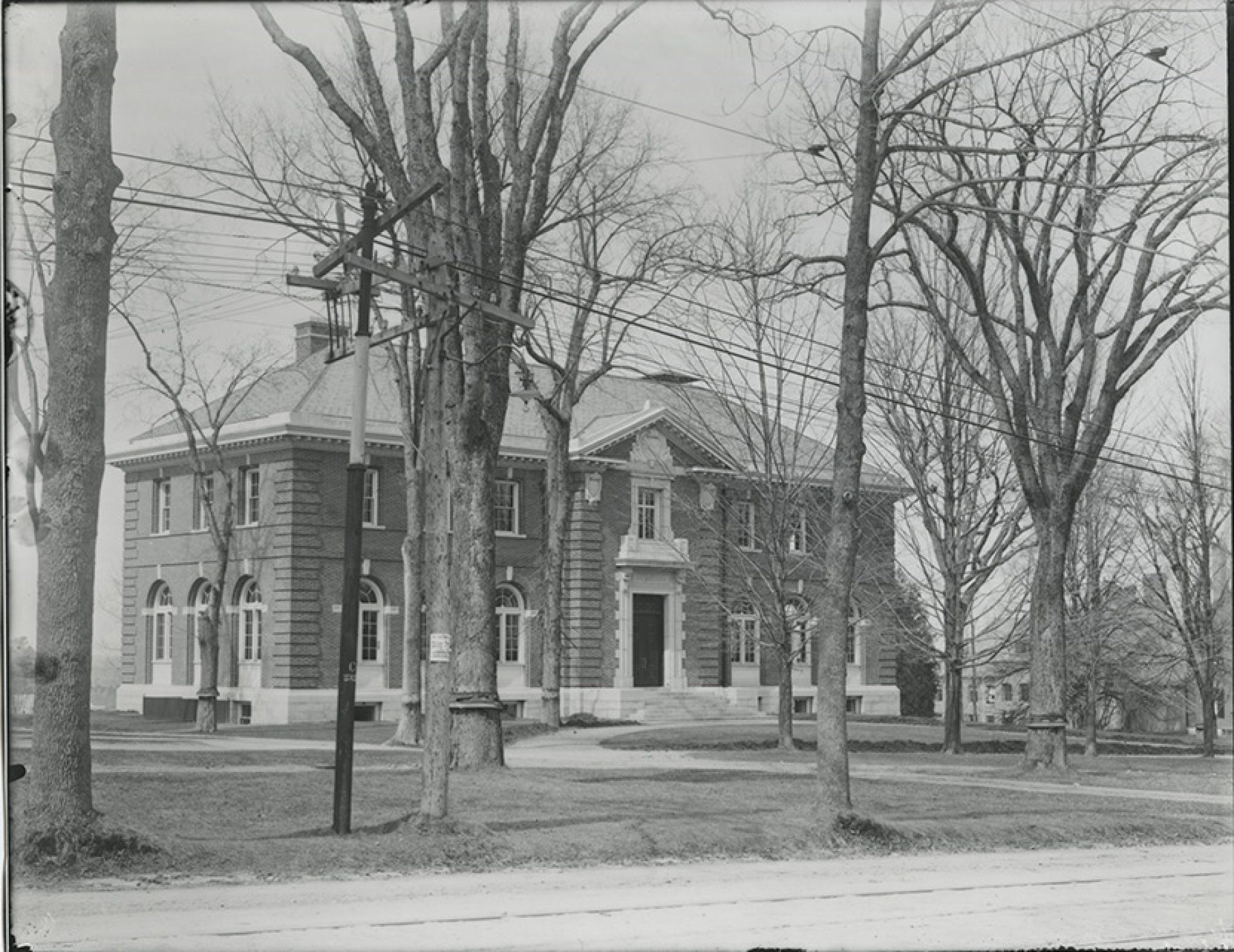
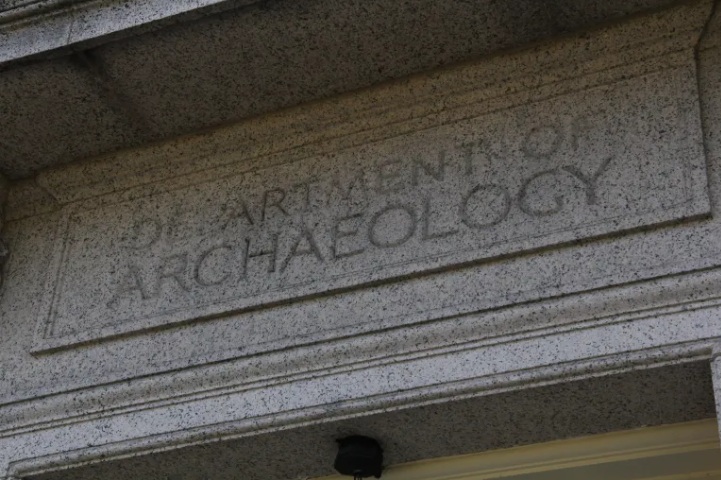
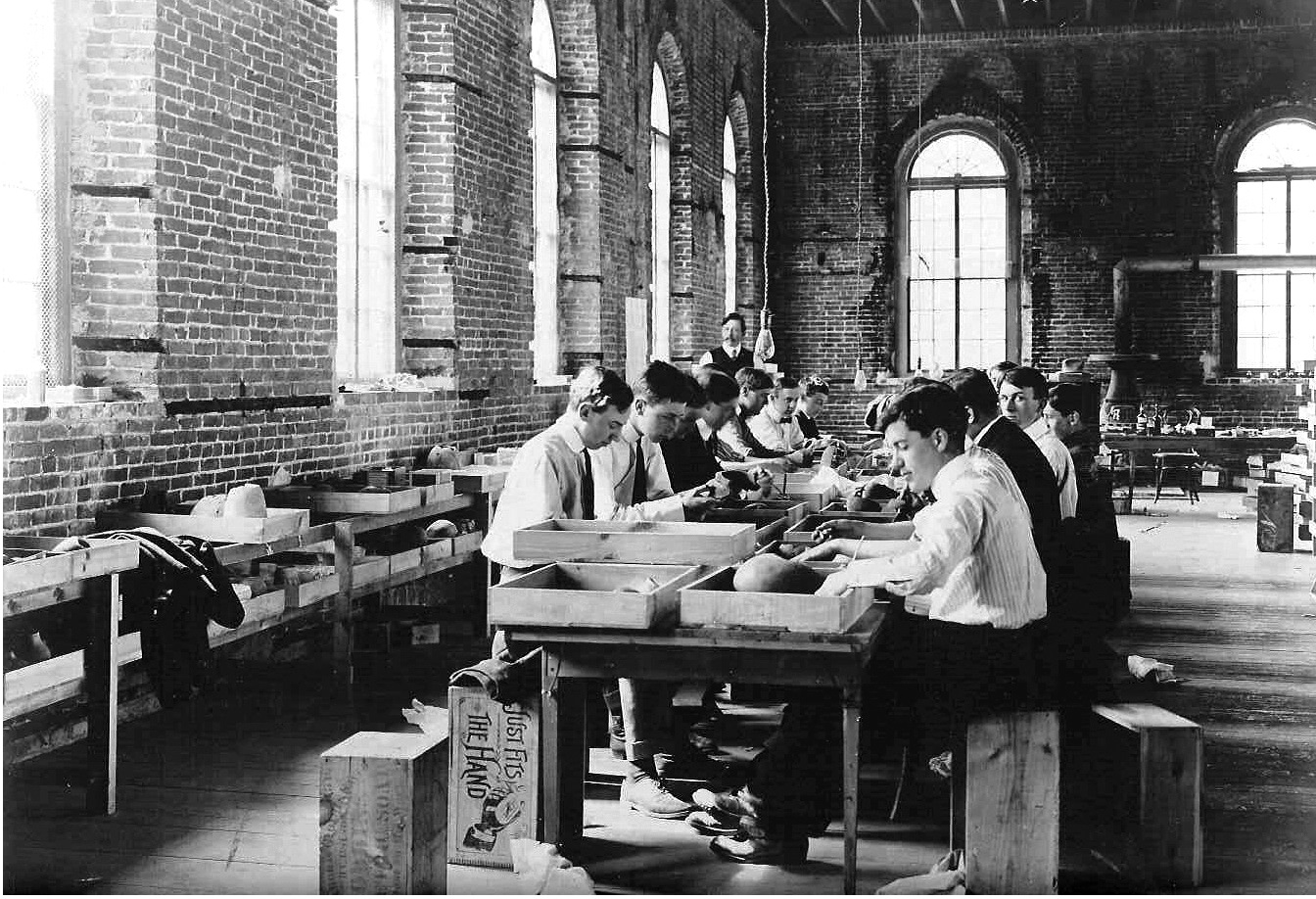
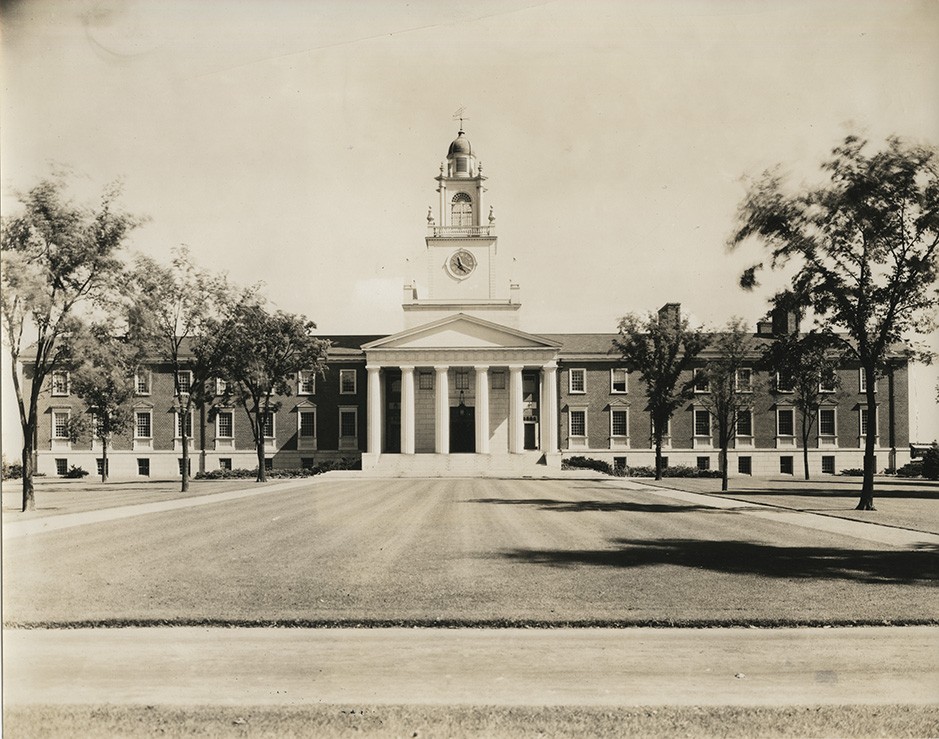
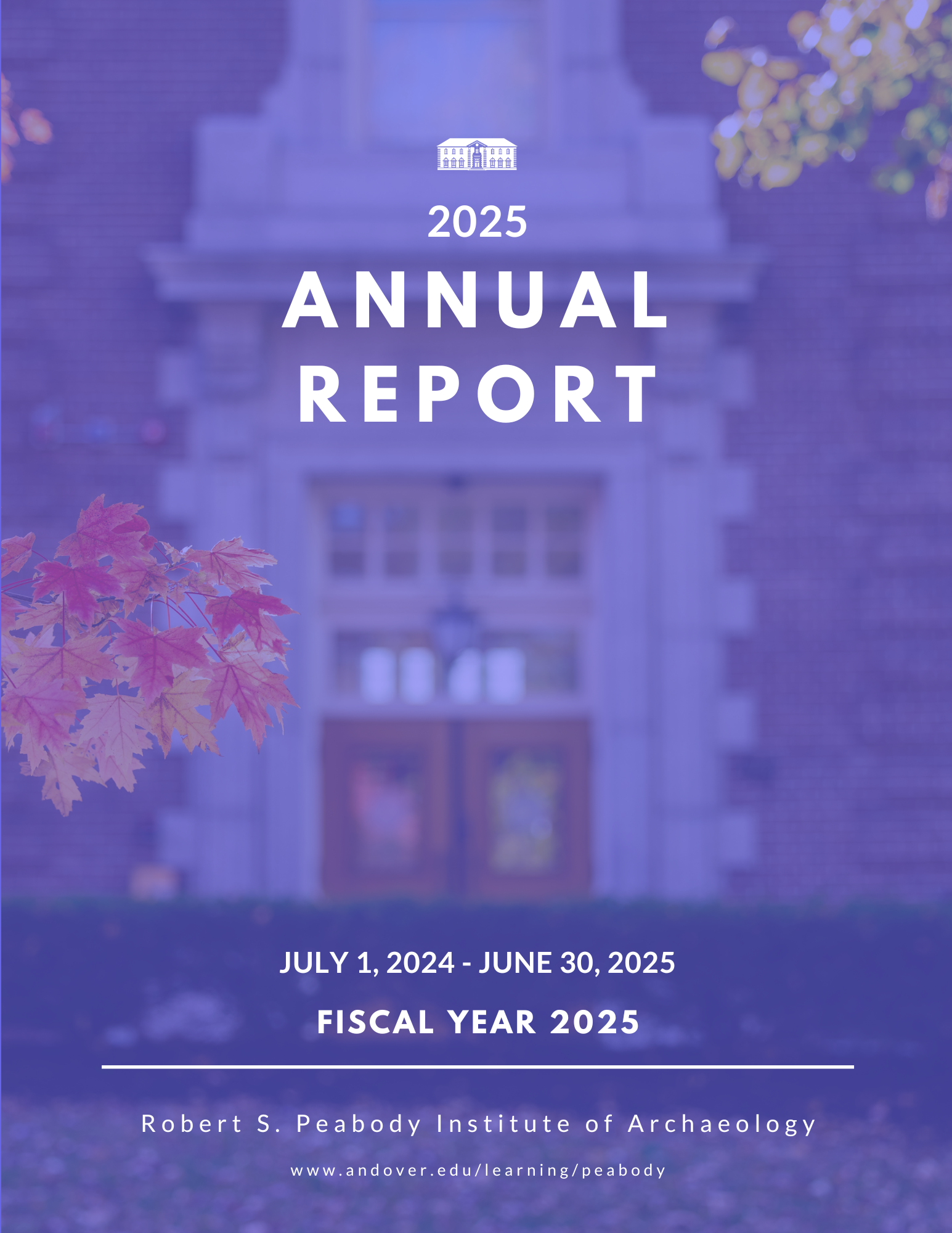
24-25 Peabody Annual Report is LIVE!

Contributed by Emma Lavoie

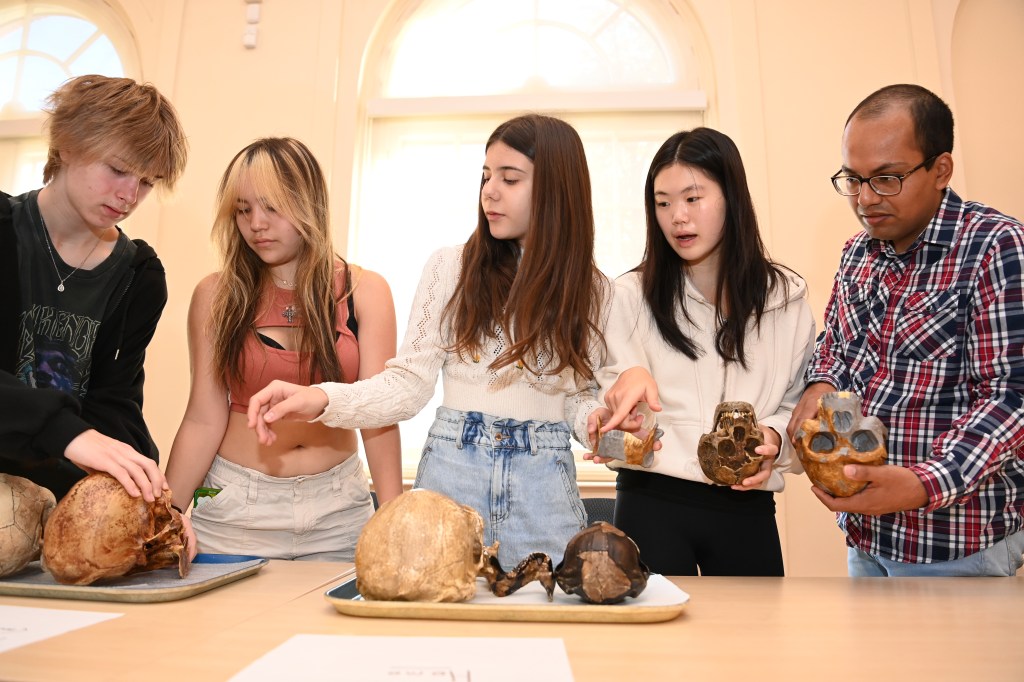
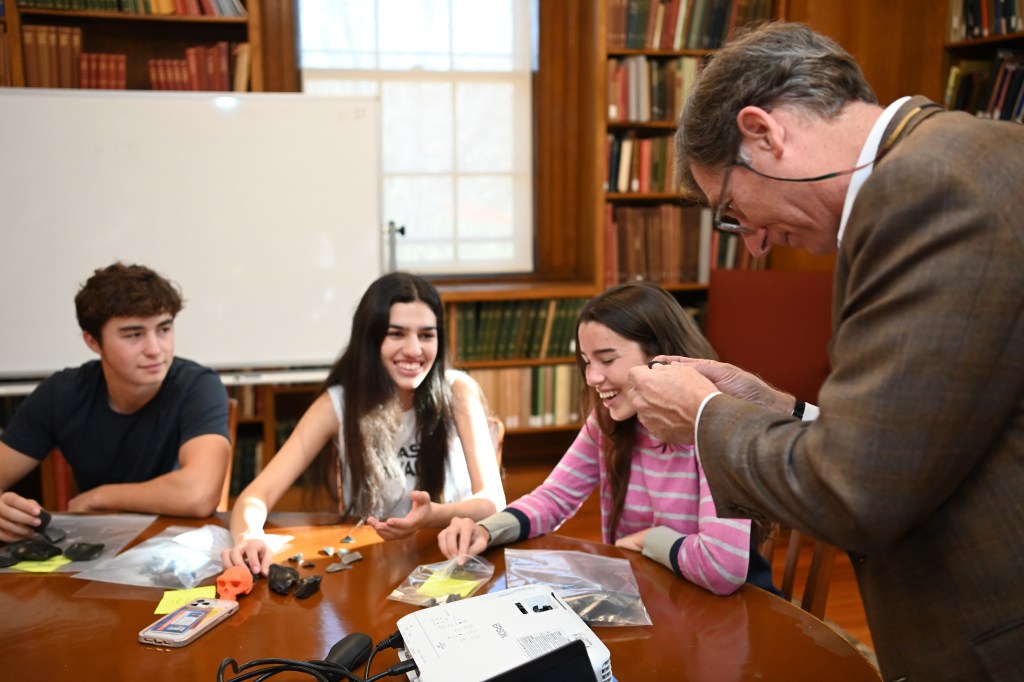
Our Peabody annual report for academic year 2024-2025 has just been released online! This report features educational participation at the Peabody, including over 1,600 students and 30 Phillips Academy instructors. In addition, our report features institutional highlights, updates on our collections and NAGPRA work, collaborations with students and researchers, and more!

Thank you to everyone who supported the completion of another wonderful year at the Peabody!

You can read the report in its entirety HERE.

Tales from The Phillipian, PART 2: Dinosaurs, Turtle Racing, and Spirits

Contributed by Emma Lavoie

Peabody staff always get excited when we unearth hidden stories from the Peabody Institute’s past. The Phillipian Archives is one such place that has held many a story. First printed in 1857, The Phillipian is a weekly student newspaper that continues today at Phillips Academy Andover. The student paper describes itself as “completely uncensored and entirely student-run,” offering a snapshot of what campus life is like both past and present, and in the case of this blog, some of the most outrageous and bizarre activities related to the Peabody.

As promised, we hope you enjoy PART 2!

Peabody Card Catalog and Reading Room

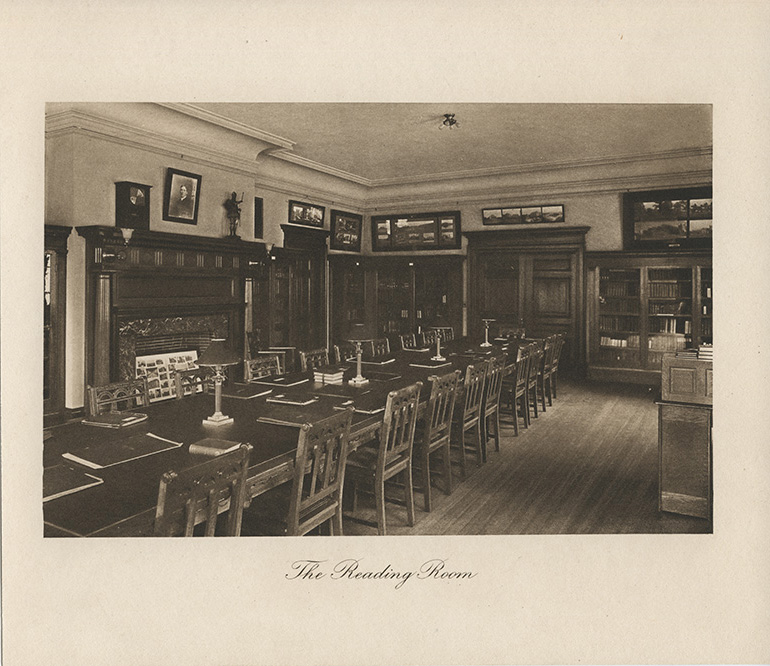
In 1903, a reading room with library was opened on the second floor of the Peabody, furnished with easy-back chairs, a large center table, writing tables, and a few large lounging chairs. There was a list of rules included in this Phillipian article for students using the reading room:

  • Observe suitable quiet
  • That others may not be disturbed while reading
  • Not to cut, tear or in any way deface the periodicals
  • To remove hats and caps while in the room

By 1904, a Phillipian article stated the reading room as “well filled nearly every hour…the attendance averages about three hundred a day or nearly the entire school.”

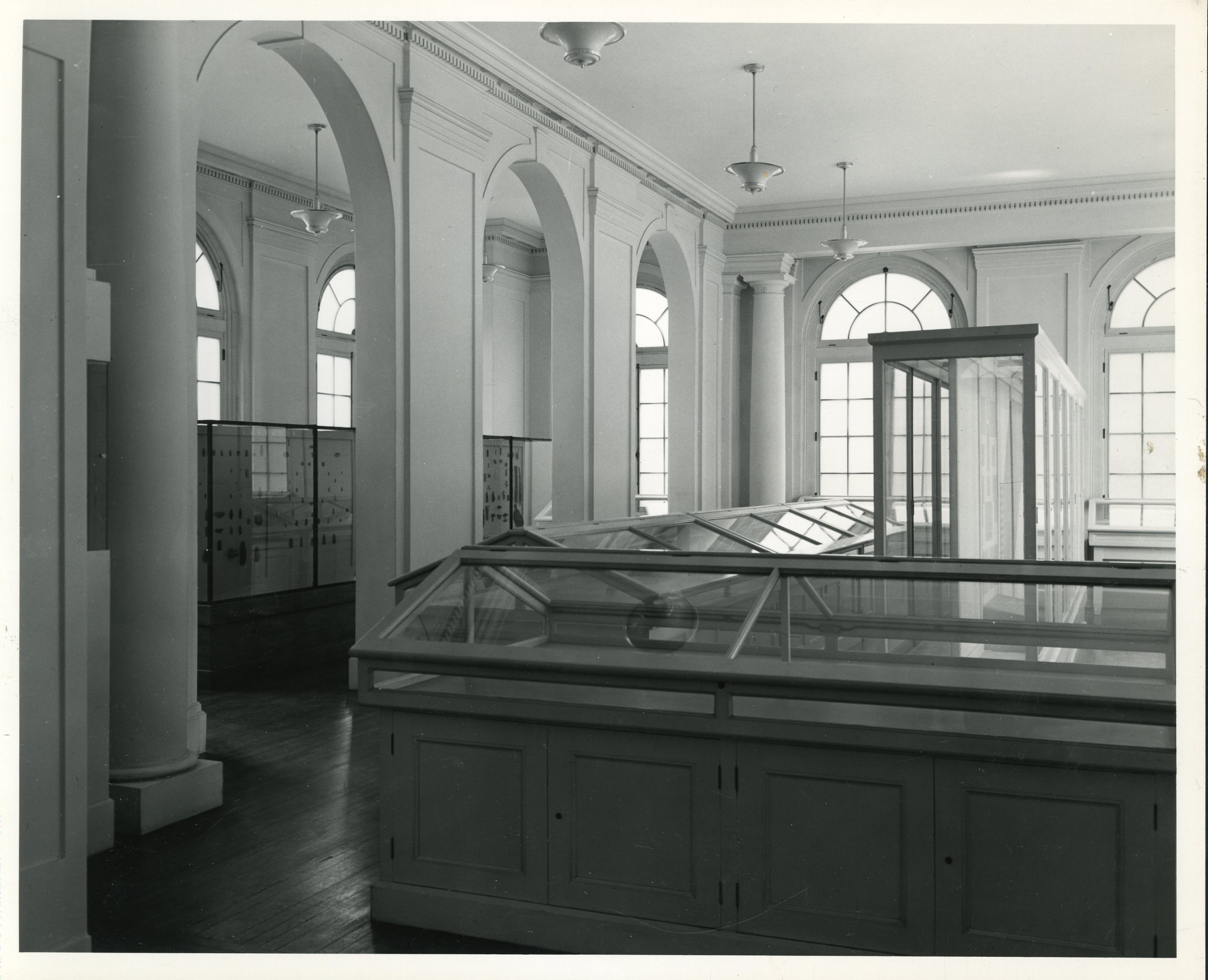
Image from the Peabody Archives of the old reading room.
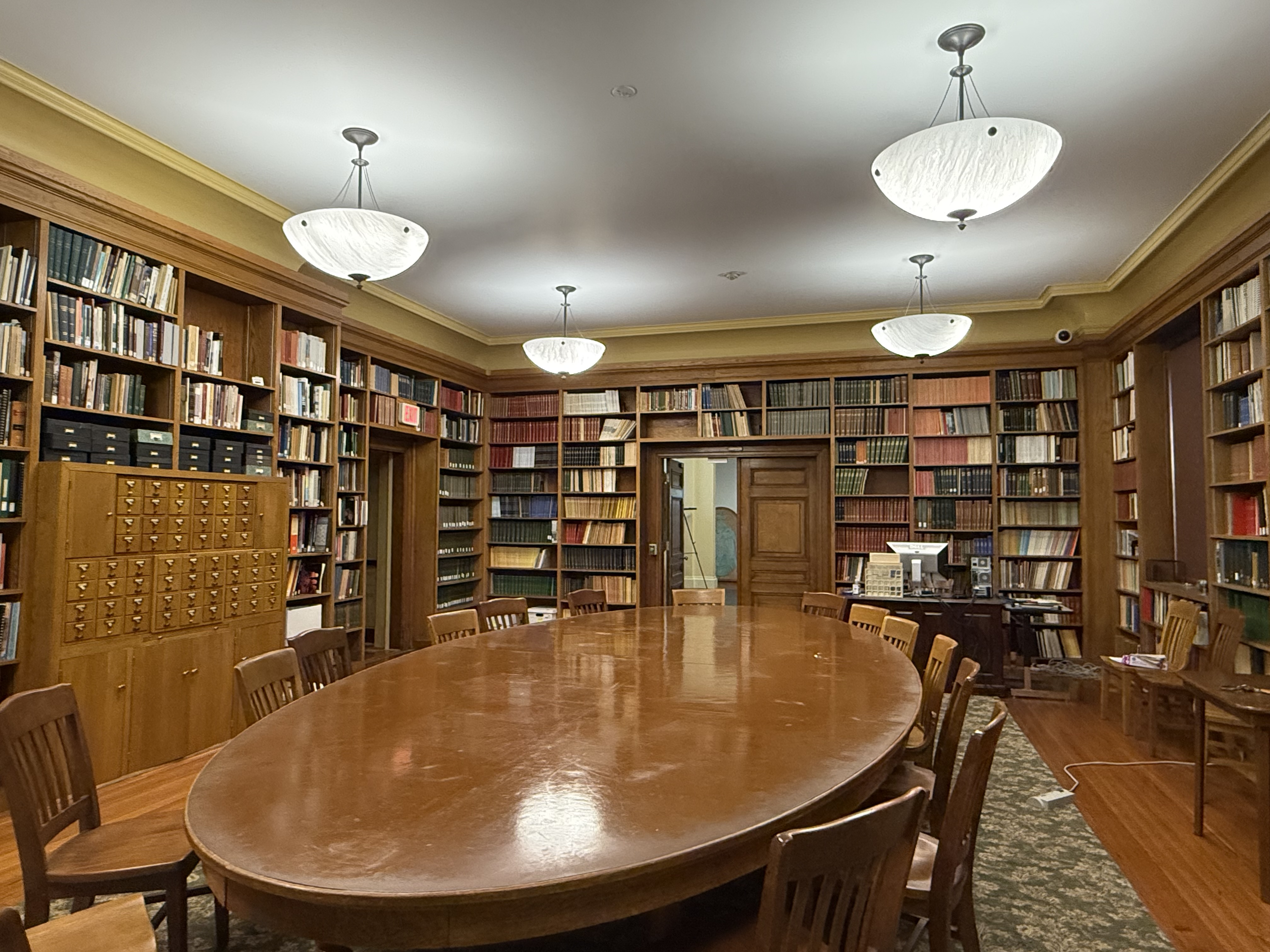
From the same vantage point – the current Peabody Library. Note: the original card catalog system now covers the original fireplace.

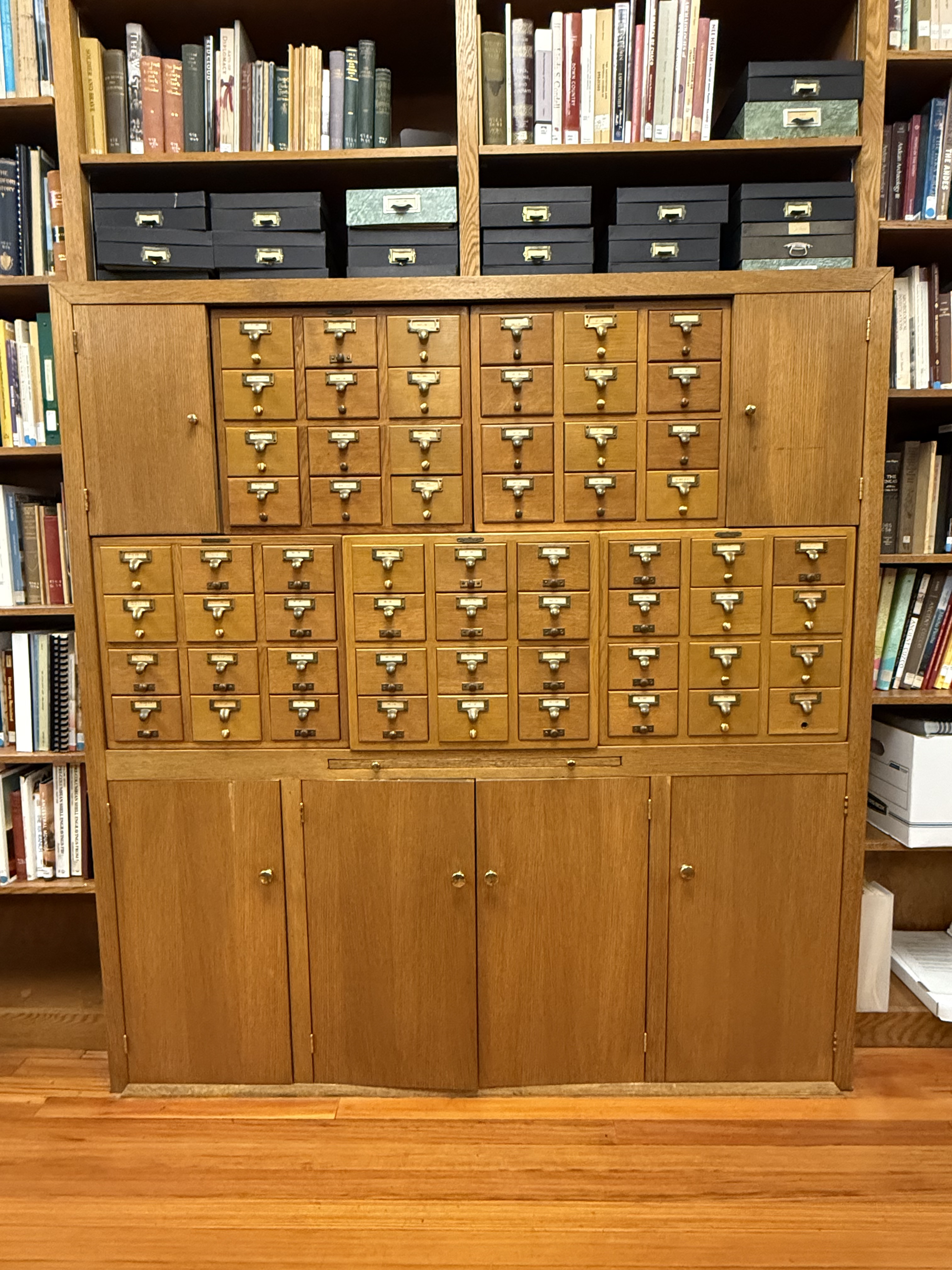
In 1904, work began on an index card catalog for the Peabody Institute’s library. This catalog would be similar to the Library of Congress plan which was being used at the time in the Seminary Library (but the catalog ended up being Dewey Decimal, arrgh!) This index card catalog is still occasionally used today at the Peabody Institute, though the entire library is catalogued in the North of Boston Library Exchange.

The original card catalog is still in use at the Peabody today!

Rumor Has It (Dinosaurs in the Chapel and Turtle Racing)

There had been rumors of turtle racing in the Peabody basement and other areas on campus. Mention of one turtle (named Alec) being kidnapped in a 1935 article may prove these rumors as true! Don’t worry, Alec was returned safe and sound.

In a “This Andover” column of The Phillipian in 1941, the Archaeology Department (now the Peabody Institute) was supposedly spreading rumors that several prehistoric dinosaurs live in the Cochran Chapel organ pipes.

“It is they [the dinosaurs], the rumor goes on having it, that furnish Dr. Pfatteicher’s lowest notes during Sunday services.”

Flute Recitals by the Peabody Director

On several occasions, Peabody Director, Dr. Charles Peabody performed flute recitals for students in the Academy chapel. On January 20th in 1915, Peabody was joined by Dr. Carl F. Pfatteicher, who played the organ. Pfatteicher was the director of music at the time, a post he held until 1947. During his time at Phillips Academy, he facilitated choir, glee club, and a small orchestra. Many of these groups met and practiced in the Archaeology Building or Peabody House. I think it’s safe to say that Dr. Charles Peabody and Dr. Carl Pfatteicher were good friends. The music played at this recital were the following:

Sonata in C Major – Mozart

Tres Lent from Sonata in G Major – Guillaume Lekeu

Barcarolle – Harold Nasan

Invocation – Eugene Lacroix

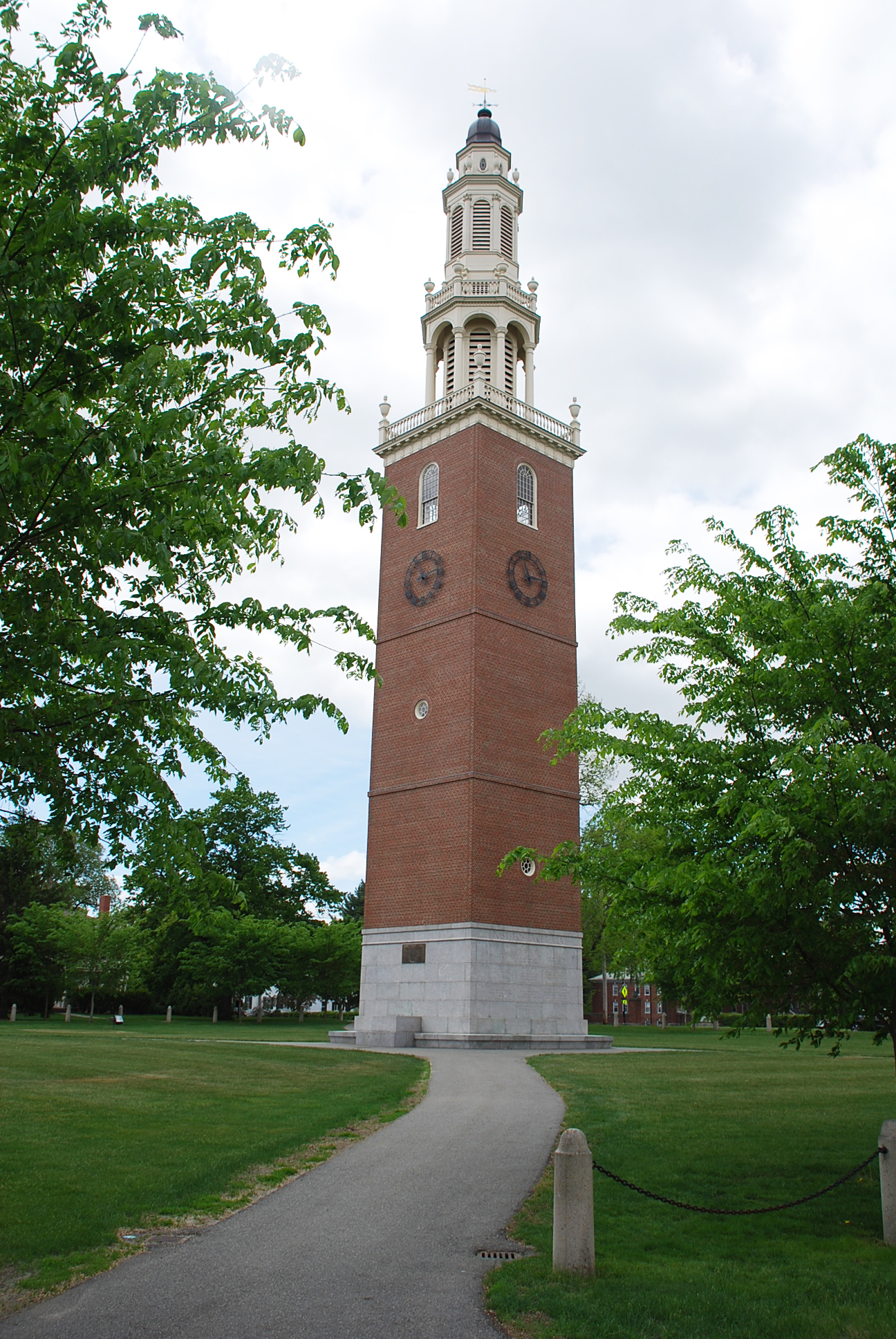
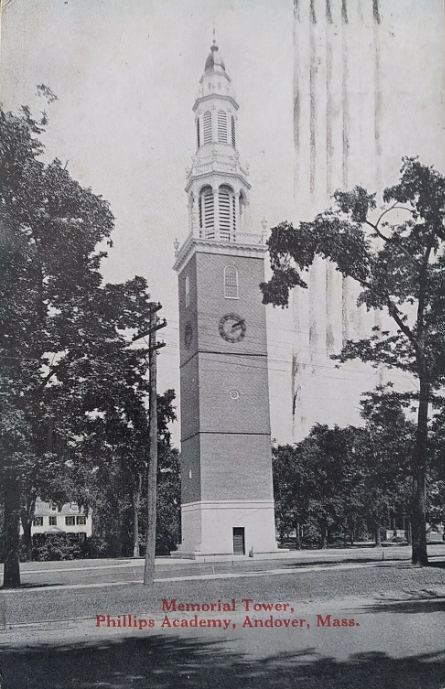
Fun Fact: Dr. Carl F. Pfatteicher was asked to help select the bells to be placed in the newly constructed Memorial Bell Tower on campus. He enjoyed giving regular carillon concerts, playing the bells sometimes at dawn. Many students did not appreciate this and one year managed to lock Dr. Pfatteicher in the tower.

Memorial Bell Tower, Phillips Academy Andover
Completed in 1922 by architect Guy Lowell
(the same architect of the Peabody building!)

“A Place for Students to Gather” – Clubs Find a Home at the Peabody

The Peabody was founded with three goals in mind – to educate students about the world of archaeology, to promote archaeological research, and to be a place for students to gather. As part of this vision, students and student clubs have been utilizing the Archaeology Building since its inception in 1903. Below are just a few examples of student club communications in The Phillipian related to the Peabody.

Class of 1910 in front of the Department of Archaeology (later known as the Peabody Institute of Archaeology.)

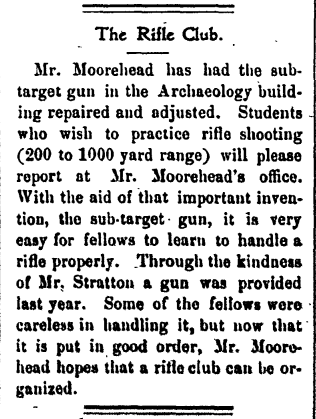
An advertisement in a 1904 column mentions organizing a student Rifle Club at the Archaeology Building and reporting to the office of Peabody Curator, Mr. Moorehead for those interested in shooting practice.

Courtesy of The Phillipian archives.

Fun Fact: The Sub-Target Rifle Machine and similar target practice devices were popular in the early part of the 20th century. They recorded information about marksmanship, position of the gun, etc. without firing live rounds.

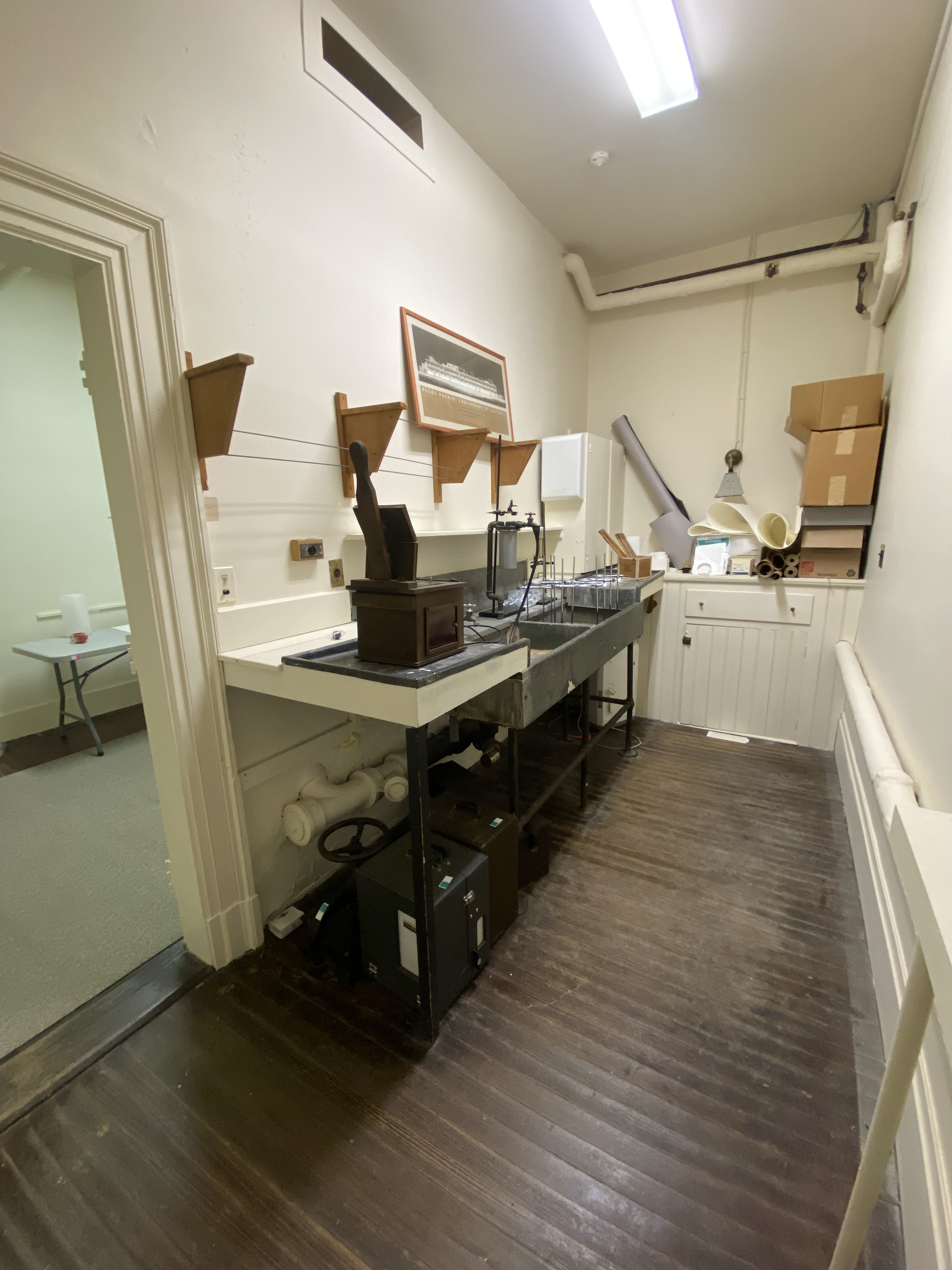
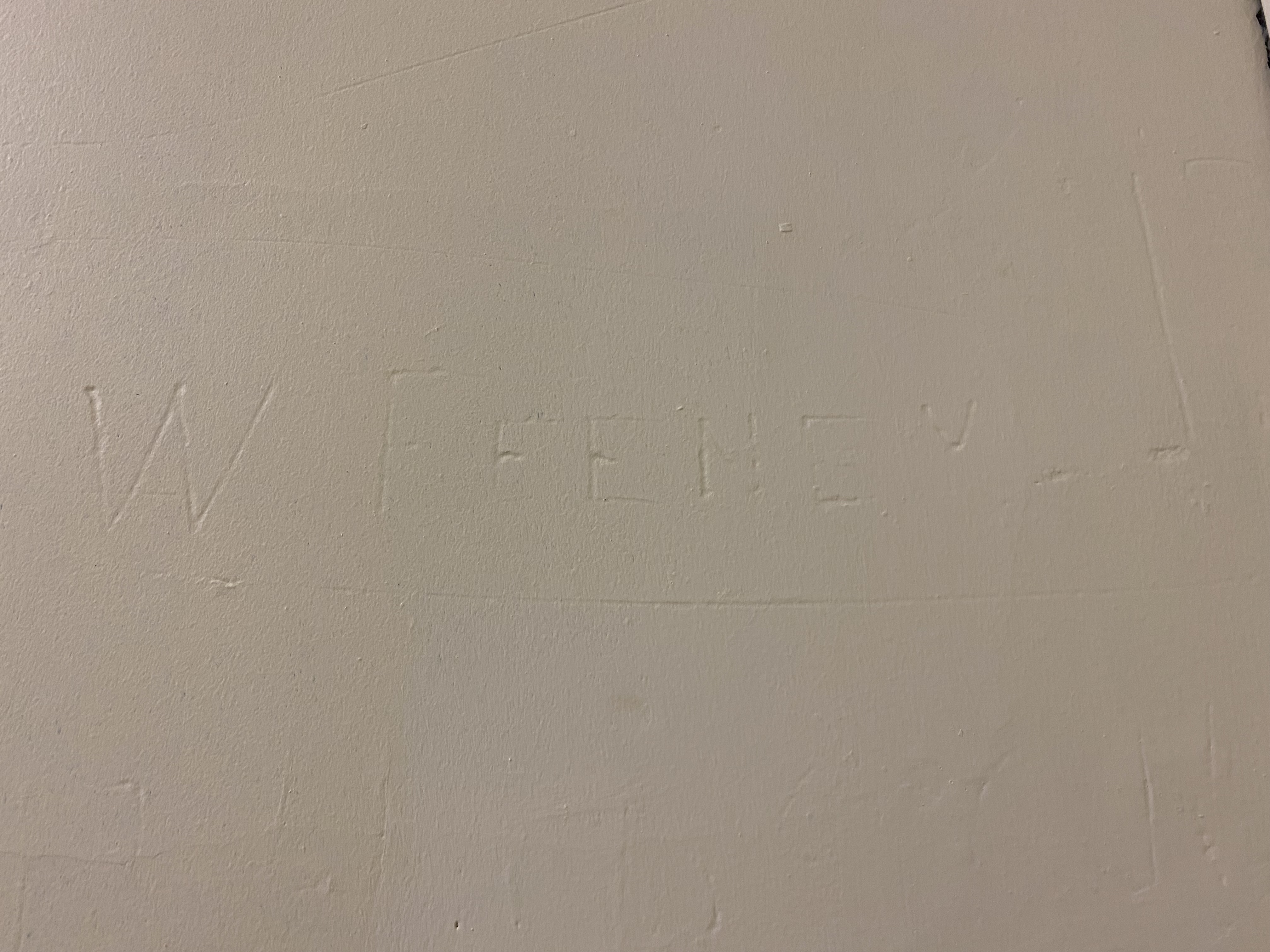
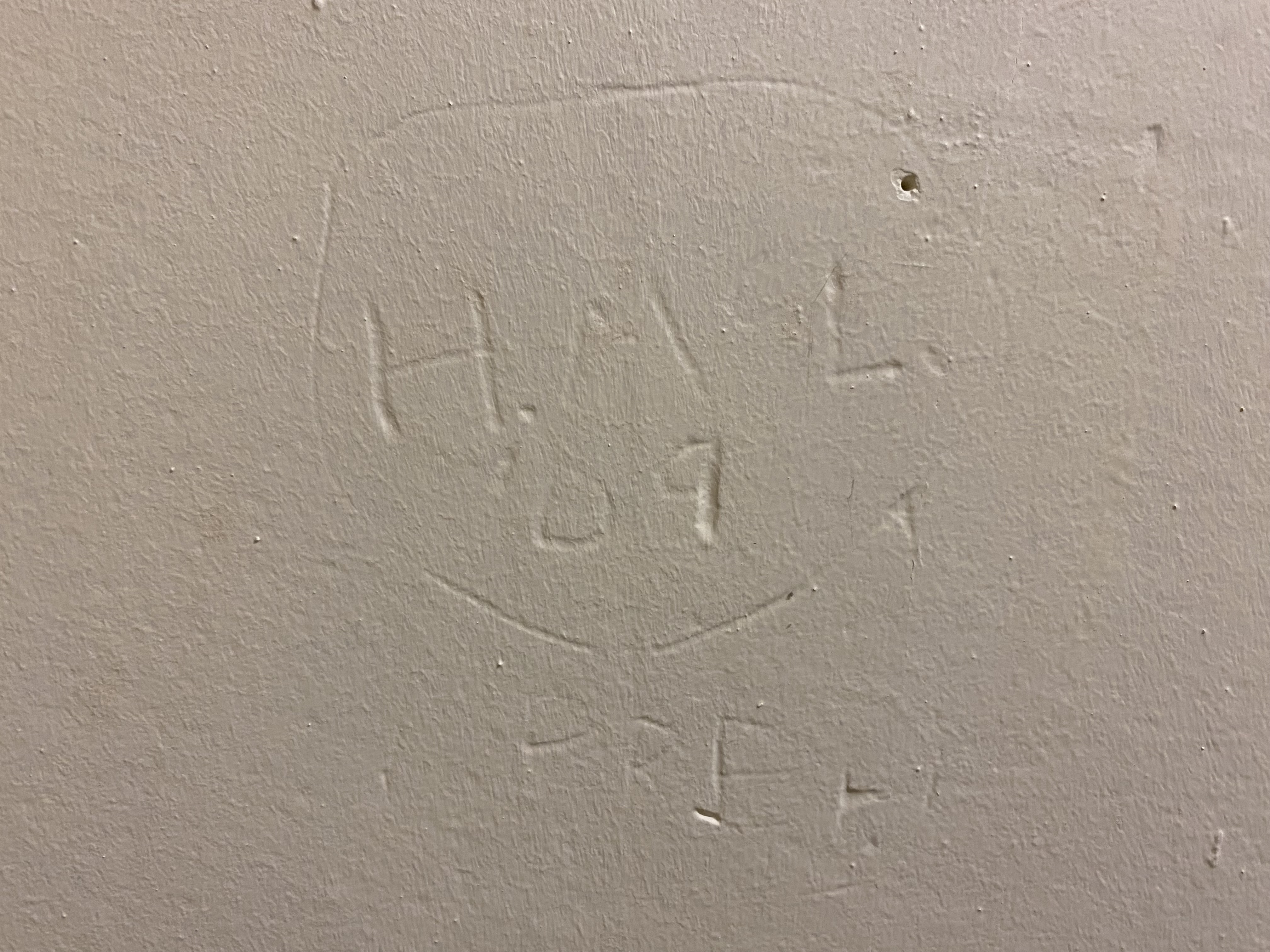
In 1904, a dark room was provided for the Camera Club, located in the basement of the Peabody. The Phillipian stated the space “is thoroughly equipped and is as fine as can be found in New England.” Before Phase 1 of the Peabody Project began, much of the original dark room space was still intact. One of my personal favorite details was the original carved signatures still on the wall left by past Camera Club students.

Original dark room at the Peabody before the recent building renewal project.
Student signatures on the wall of the dark room at the Peabody.
Note – that’s not 2009, it’s 1909!

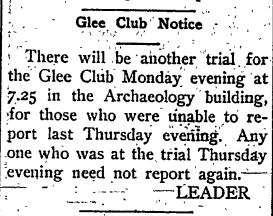
Mandolin and Banjo Club were some of the music clubs that met in the Archaeology Building for auditions, meetings, and practices. Glee Club was another student organization that commonly gathered at the Peabody and communications for this club are seen throughout the decades of The Phillipian.

I love seeing such a close connection between the Peabody and the Music Department, especially now that we’re neighbors with the new Music building, Falls Hall!

Glee Club communication in 1910.

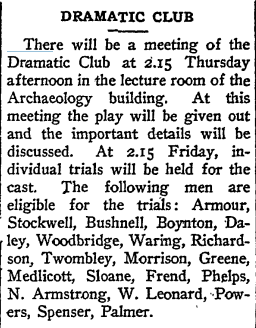
As we’ve seen above, many campus Arts organizations spent time at the Peabody. The Dramatic Club would meet to discuss scripts for upcoming plays and hold individual trials for those looking to participate in performances.

Dramatic Club communication from 1912.

Other clubs such as Chess, Astronomy, Spanish, Philo Congress, Bible Class, Foreign Missions, Yale Club, Harvard Club, Stamp Club, Nature Club, Forum, and Mirror all met at the Peabody throughout the first half of the 1900s. Even The Phillipian and football team held gatherings at one point. By the 1950s we see the Peabody becoming more active in exhibitions and many of these clubs move to other locations on campus, many finding a home at the Peabody House behind the Archaeology Building.

“…where his spirit still lives.”

Jumping ahead to 2011, a Phillipian article features Halloween traditions and campus lore passed down over the decades of PA’s history. The Peabody is mentioned to experience “frequent slamming doors, moving items and eerie noises that creak through the attic floors.” The strange activities convinced Peabody staff that the building was haunted by Warren K. Moorehead (1866-1939). Moorehead was the first curator at the Peabody from 1901 to 1924 and became the Peabody’s second director from 1924 to 1938.

The Peabody has many interesting stories of these experiences over the years. One story mentioned in The Phillipian, depicts a foreman being locked in the back stairwell. I can personally share that my first Reunion Weekend with the Peabody I experienced an alum being locked in one of our bathrooms during an event (the locks were on the inside of the door…) I considered this my “welcome” initiation from Moorehead, as the newest member to the Peabody team.

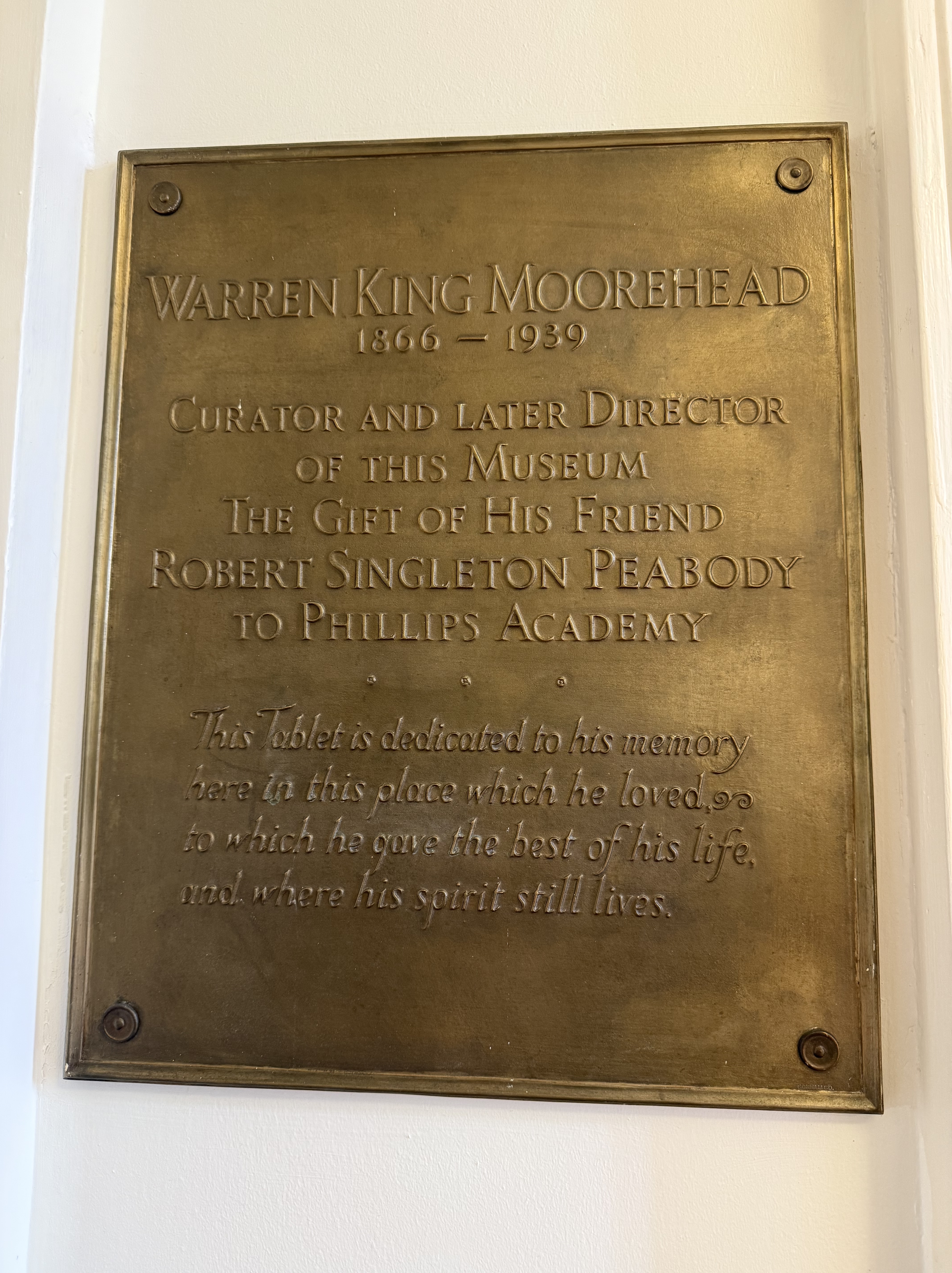
Over the years, our director has written notes to Moorehead to communicate our intentions and care of the building along with updates of upcoming changes such as our building renewal project. These notes are stored behind a plaque commemorating Moorehead, located by the front doors of the building. Much of the activity has quieted since writing these notes.

Plaque commemorating Warren K. Moorehead.

Tales from The Phillipian, PART 1: Smoke Talks, Fire, and a Grill in the Peabody Basement?!

Contributed by Emma Lavoie

Peabody staff always get excited when we unearth hidden stories from the Peabody Institute’s past. The Phillipian Archives is one such place that has held many a story. First printed in 1857, The Phillipian is a weekly student newspaper that continues today at Phillips Academy Andover. The student paper describes itself as “completely uncensored and entirely student-run,” offering a snapshot of what campus life is like both past and present, and in the case of this blog, some of the most outrageous and bizarre activities related to the Peabody.

In a few months, the Peabody Institute will be undergoing Phase 2 of some much-needed renewal work. The building and collections will be off-line Winter and Spring terms. The Peabody will continue to support modified classroom lessons and student activities, outside of the Peabody building. Student requests to access collections will be considered on a case-by-case basis.

In honor of the upcoming building project, this (part 1) blog shares some of the Peabody building’s history.

A Special Place at the Corner of Phillips and Main

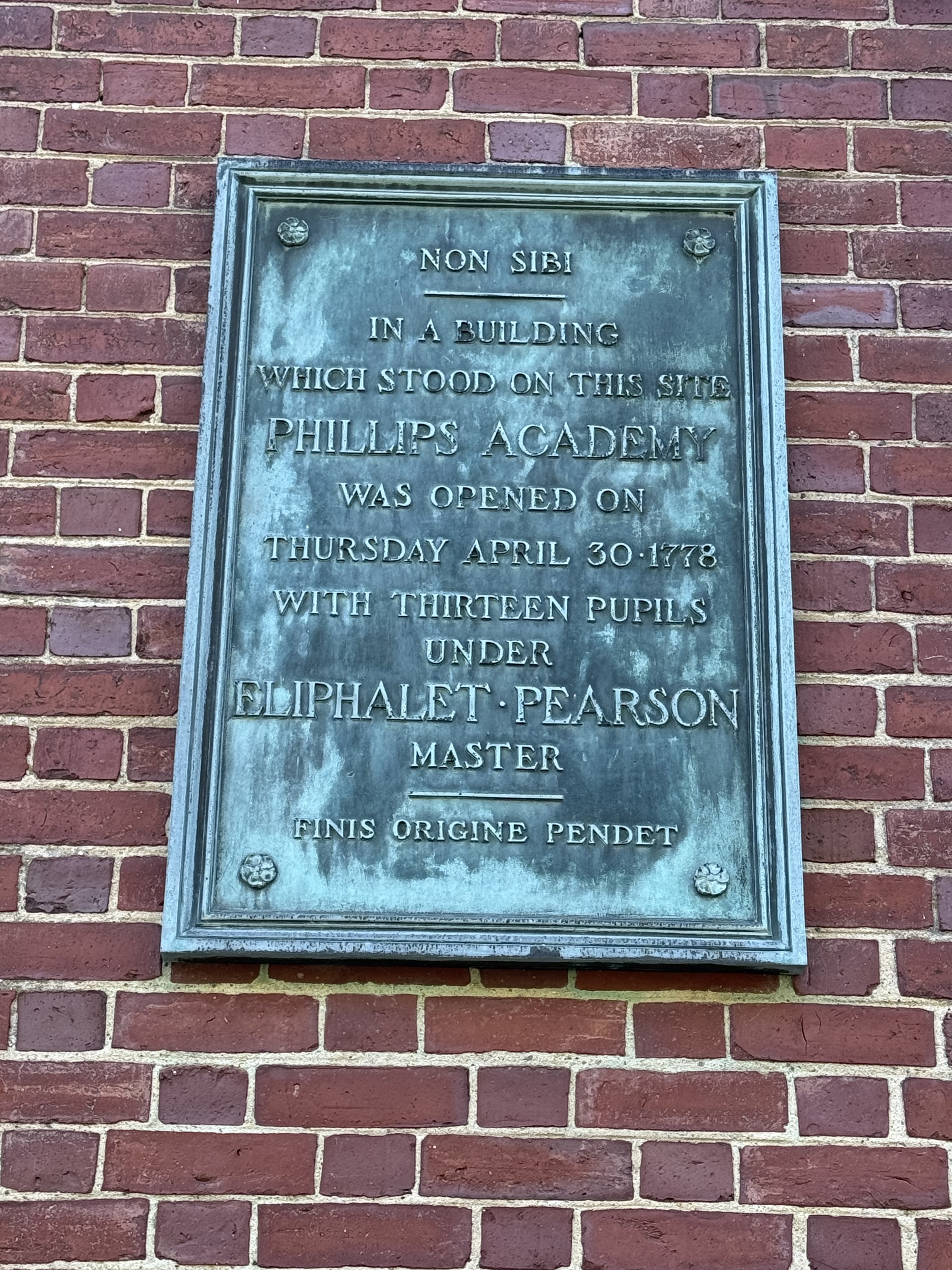
The first Founder’s Day for Phillips Academy was held in October 1913. At this time a bronze plaque was unveiled and placed on the Peabody Insitute building (known then as the Archaeology Department) commemorating the site where the first school-building on campus was opened in 1778. This plaque can still be seen on the Peabody building today!

Bronze plaque on the Peabody Institute building exterior from 1913.

The site at the corner of Phillips and Main streets has an interesting history, one that began well before the Peabody. The site first housed the 1778 carpenter’s shop used as the first classroom building at Phillips Academy.

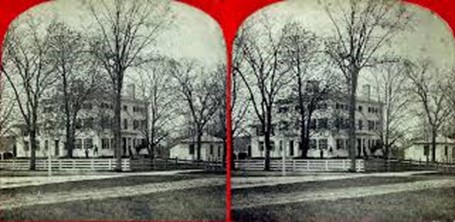
Around 1845, the shop was moved from the site and eventually razed. Samuel Farrar, treasurer of Phillips Academy and the Andover Seminary, built a three-story, Federal-style house on the location. The house has since been moved further down on Phillips Street and is known as Farrar House.

Farrar House – Image courtesy of Andover Historic Preservation, Memorial Hall Library, Andover, MA

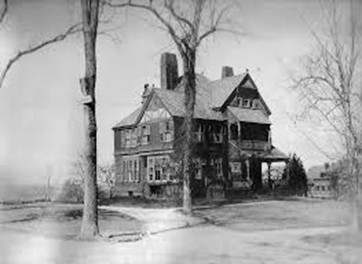
In 1882, a home was built on the site for J. Wesley Churchill, a professor at the Andover Theological Seminary. Later in 1901, the house was moved to another location on Main Street to make way for the new Archaeology Building which later became the Peabody. The house is known as Churchill House on campus today.

Churchill House – Image courtesy of Andover Historic Preservation, Memorial Hall Library, Andover, MA

In a Phillipian article from 1917, the history of Founder’s Day and the significance of the 175 Main street site is shared, noting a 1916 dedication of the new Peabody House by Dr. Charles Peabody (first Peabody Director and son of the Archaeology Department’s founder, Robert S. Peabody).

In this column, it was mentioned that ceremonies were not held to celebrate Founder’s Day as “this year, more than at any other time, matters of lesser importance should give way to more serious questions.” This was in reflection of the current impact of the Spanish Influenza and WWI.

Smoke Talks (Smoking and collections don’t mix…)

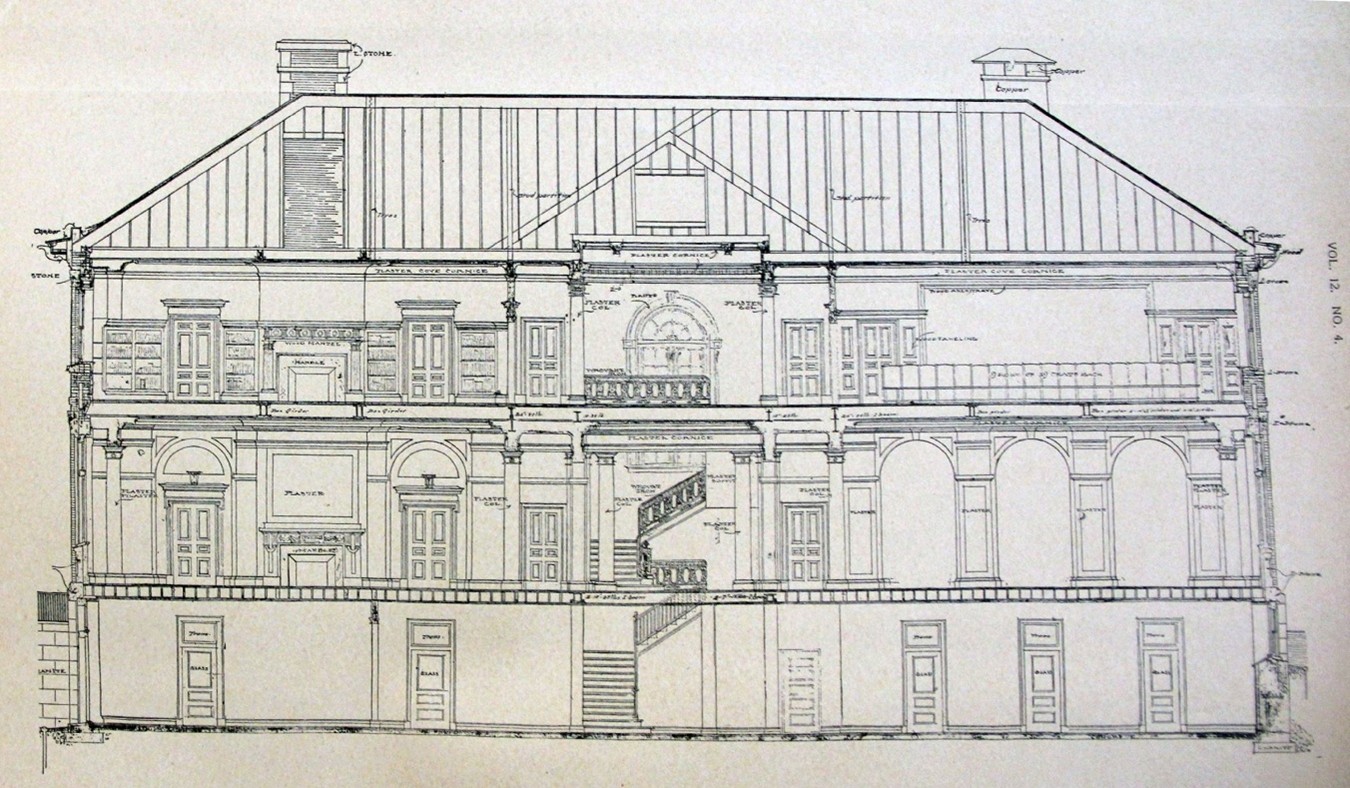
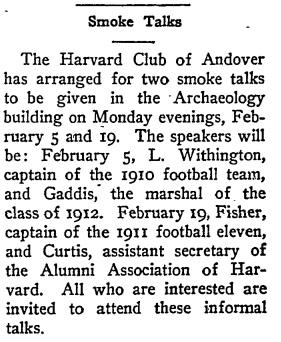
In the early years of the new Department of Archaeology building, Curator Warren K. Moorehead would give “smoke talk” lectures on the second floor of the building. Some of the original molding from the proscenium arch is still visible today at the Peabody. Beyond these lectures, student clubs would hold their own “smoke talks” in the Peabody, which served as the Student Union building for many years on campus. How did these lectures get their name? For the cigars smoked during these meetings by students and speakers alike!

A column from The Phillipian in 1912
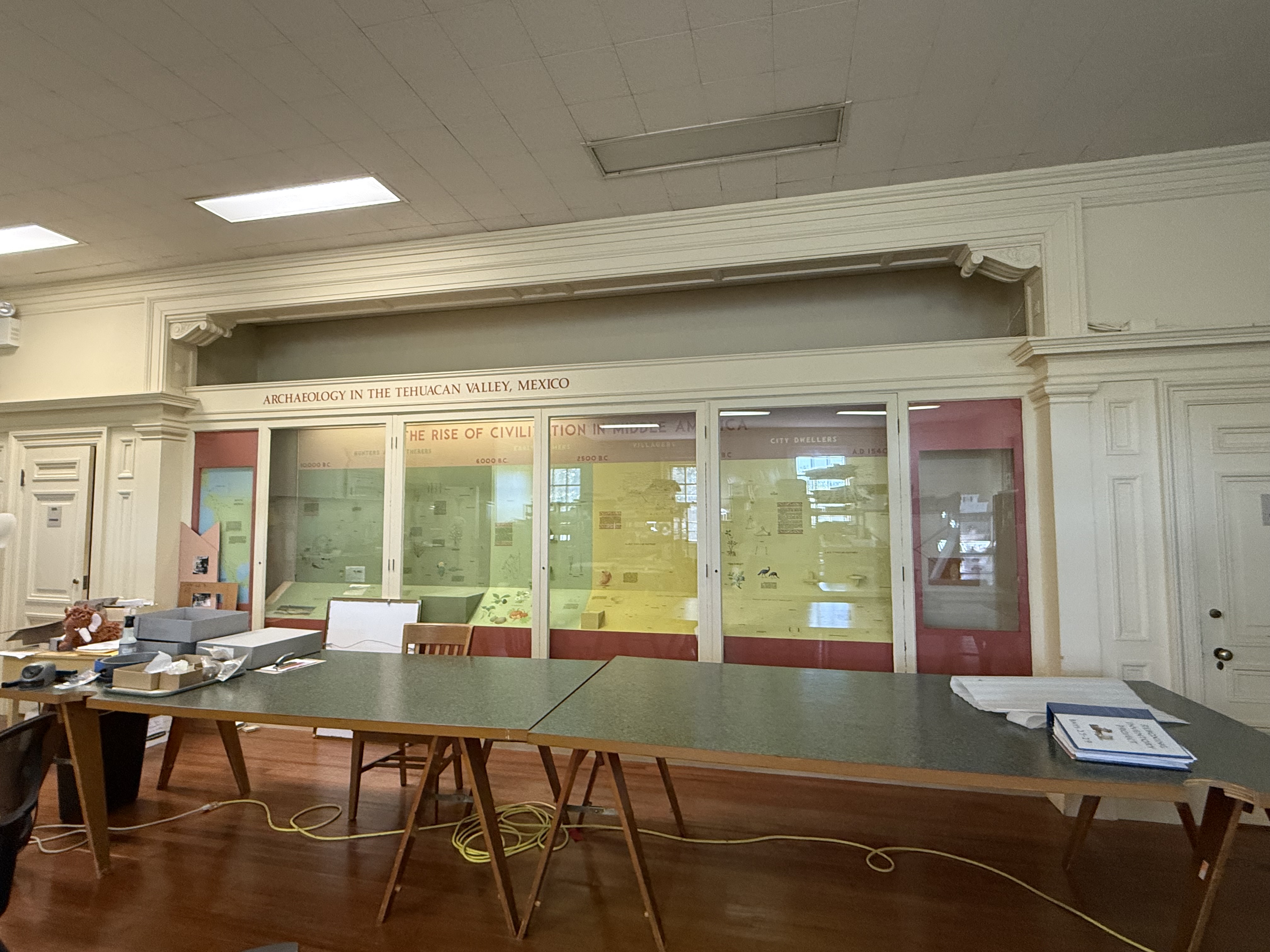
Features of the old proscenium arch can still be seen at the Peabody today. In 1967, an exhibit wall with case was placed in the middle of the arch.

A Grill in the Basement (Now they’re pushing their luck…)

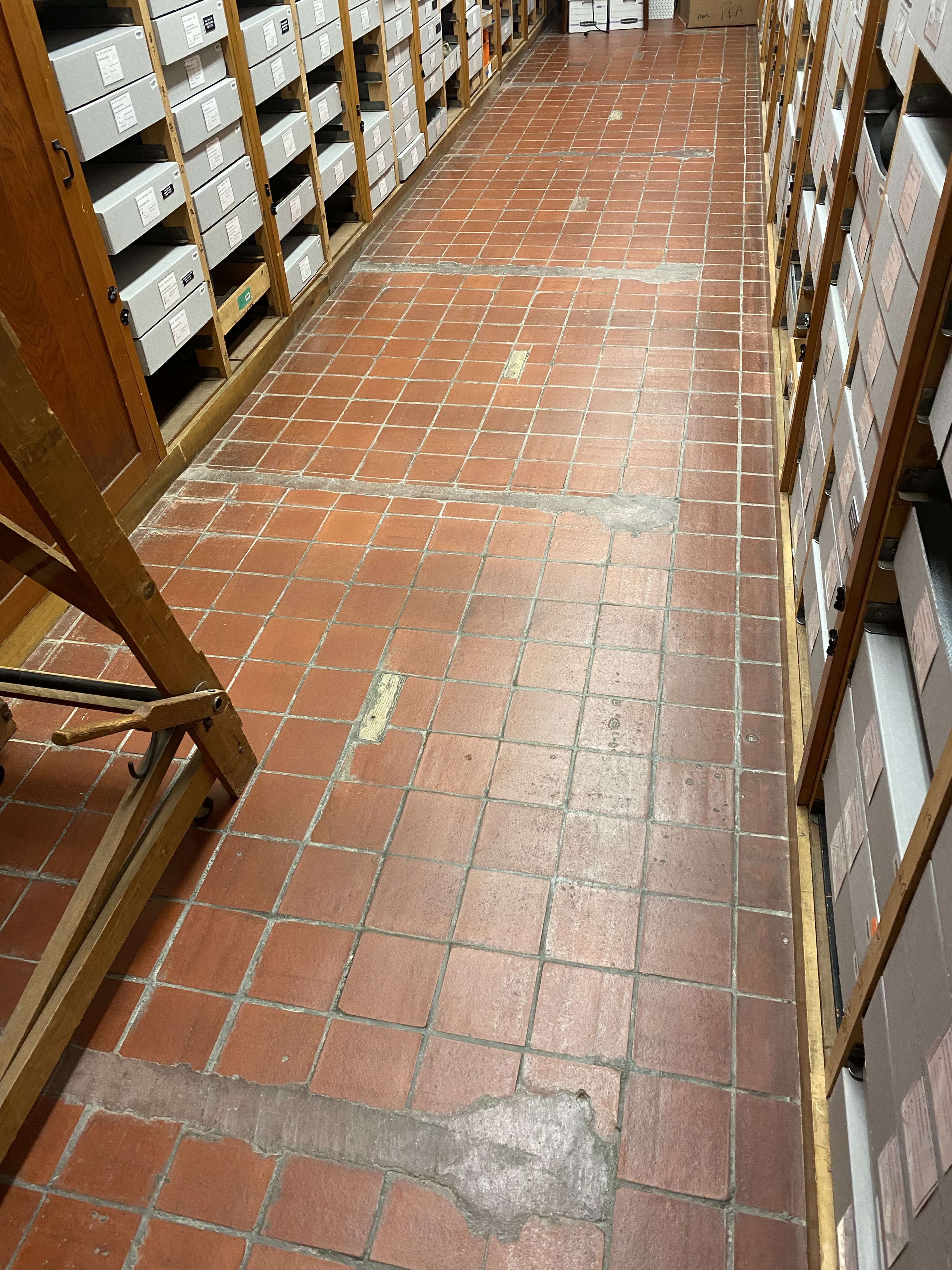
Beginning in 1913, The Phillipian mentions meetings at “the Grill” in the basement of the Peabody (known as the Department of Archaeology at the time). At one point, the Peabody had a kitchen complete with grill, stall seats, and tables for student gatherings. Improvements were made in 1913 giving the space a new red tile floor, dark brown wood paneling around the walls, a new stove, and a large suction flue to draw out heat and odors. In the past the odors of students’ cooking would circulate upstairs disturbing the Peabody staff.

Later in 1915, the Grill was moved to the newly constructed Peabody House located behind the Department of Archaeology building. The new space included a kitchen with large grill and private dining room for special dinners and banquets. There rooms are similar in design to the original grill room in the Archaeology Building.

Before Phase 1 of the Peabody Building Project, the original red tile floor from the Student Union Grill room was still visible in the basement of the building. In the photo you can see where the booths and tables made up the seating stalls.

Peabody House….and Fire (Well, it was bound to happen at some point…)

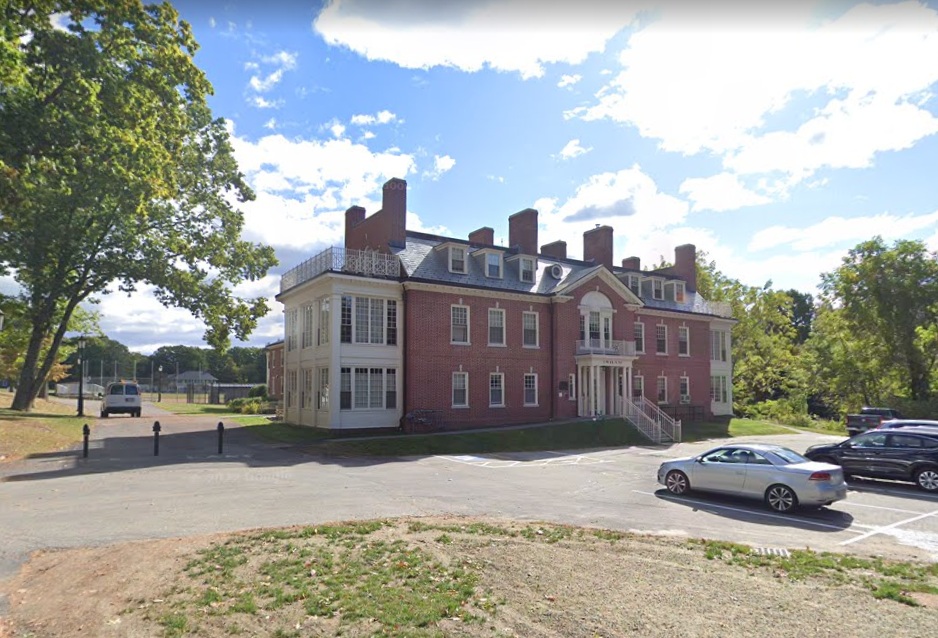
The Peabody House was opened in 1916 as an extension of the Department of Archaeology with the intent of giving students a building for their own use. Construction of the building used some of the funds contributed by Robert S. Peabody, founder of the Archaeology department at Phillips Academy and donor of the Archaeology Building. An article from The Phillipian describes the new building with an exterior of brick and stone, “which will correspond with the style of architecture of the Archaeology building and the new dormitories.” The first floor housed a student lounge and reading room with a large fireplace and large French windows. The second floor was similar in design to the first floor with space for the late Robert S. Peabody’s books and a large portrait of him. The room was used for club meetings as well as student assemblies and special banquets.

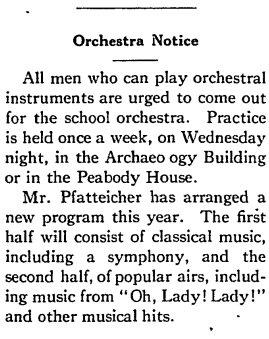
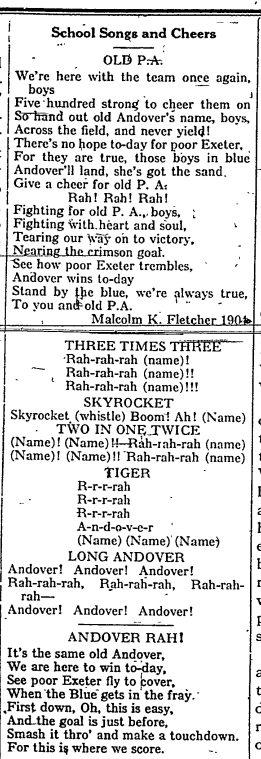
Some activities held in the Peabody House, highlighted in The Phillipian, are a notice to join the school Orchestra, with practices held once a week in the Archaeology Building or Peabody House. My personal favorite was an announcement to students for a mass meeting at the Peabody House to practice school songs and cheers. One entry from 1917 describes three hundred men present at the evening meeting called by head cheerleader, Howard Smith.

Two columns from 1917 advertising for the orchestra and sharing PA cheers and songs!

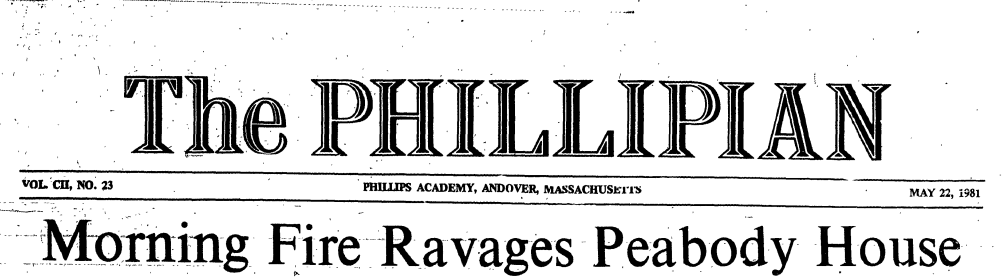
Jumping ahead to several decades later, headlines read “Morning Fire Ravages Peabody House.” In the early hours of May 18, 1981, a fire broke out in the Peabody House, destroying the first and second floors as well as the attic. There were no reported injuries, however, many of the Afro-Latino American Society’s possessions were lost on the second floor. Faulty electrical wiring is suspected to be the cause of the fire.

“[I was in] awe at how extremely hot the flames were, how much smoke there was and how terrifying it was to see the fire’s power.” – Headmaster Theodore R. Sizer

“[There was] steam and yellow light and flames bursting out of the roof.” – PA Student, Upper

We hope you enjoyed PART 1 of this two-part blog post. Stay tuned for PART 2, coming next month! To be continued…

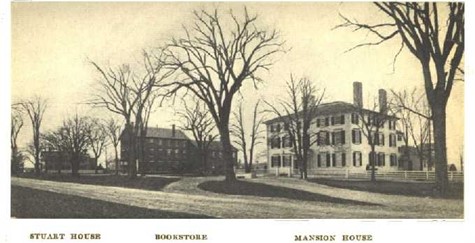
A ‘Key’ Find at the Samuel Phillips Jr. Mansion House, 2025 Excavations.

Contributed by Katie Lincoln

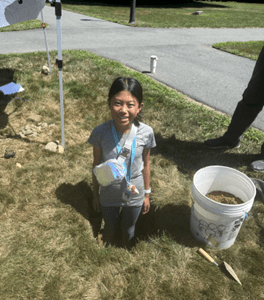
Almost every summer since 2016, young archaeologists from Phillips Academy’s summer session program embark on a mission to excavate the site of the eighteenth century Samuel Philips Jr. Mansion House, located on the West Quad of campus. The infamous Mansion House was built in 1782 by the academy’s founder and stood for 105 years, before burning down in 1887. News articles from the period suggest that the demise of the Mansion House was a result of arson; many speculating that the proprietor, Charles Carter, started the fire. During its long period of occupation, the Mansion House served as not only a home, but later an inn and tavern for students, community members, and travelers. The site’s long history and relatively undisturbed context creates an ideal setting for archaeological excavation and student learning.

Over the past seven years, students have succeeded in discovering portions of the house, including multiple chimneys and a basement feature. This year, students set out with high expectations, choosing to place four excavation units in spaces just outside of the Mansion and two units in the southwest portion of the quad, near the sites of historic outbuildings, a nineteenth century printing house, and an early nineteenth century pathway.

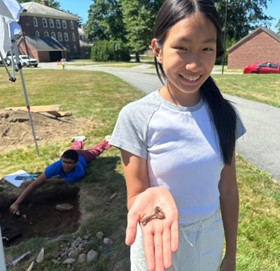
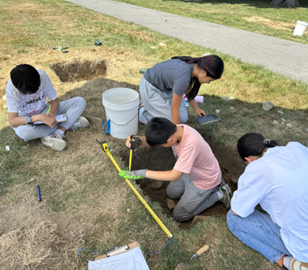
Students in each excavation team had a blast taking turns performing the primary tasks of an archaeologist: digging, screening, measuring, and note-taking. Many, if not all, students even got to unearth artifacts from their units! Some of our favorites included a small ferrous key, an impressed glass tumbler, and half a pair of scissors which all came from the two excavation units placed in the southwest portion of the quad.

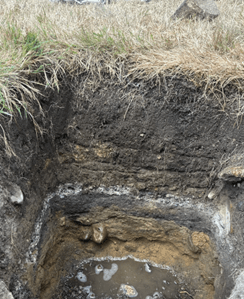
Further excavation in this area revealed a feature relating to the historic pathway present on early nineteenth century maps of campus. Pictured below is a dense, gravelly layer of soil discovered at 40 cm. This layer, interpreted here as the pathway, was intermixed with nineteenth century materials including glass, brick fragments, and some ceramic.

Students excavating the other four units in the northern portion of the quad found shallow cultural layers followed by a sterile C horizon, between 20 and 35 cm. While the artifact density of these units was limited, students still enjoyed finding an abundance of brick, metal nails, and some small ceramic fragments. The very shallow deposits found in these units informed the team that no building activity likely occurred in these areas. Additionally, the relatively low artifact density suggests that these areas were not regularly used like in a dooryard or garden area.

Overall, students in the 2025 field program successfully applied archaeological methods to ‘unlock’ more of the mysteries surrounding the Samuel Phillips Jr. Mansion House. This year’s field season serves to inform of the deep cultural deposits in the southwest portion of the quad and the significant research potential it could provide for future field seasons.

Thanks to the entire student field crew and cheers to a wonderful field season!

Save the Date! 2025 #PAGivingDay

Contributed by Emma Lavoie

Mark your calendars! PA Giving Day is Wednesday, March 26, 2025!

PA Giving Day represents a critical milestone in our fundraising efforts for the Peabody. Last year we raised 65% of the Peabody’s annual support from 57 donors in just one day. This year our goal is to exceed previous success by engaging even more PA alumni and friends of the Peabody in this collective day of giving.

For those inspired to give early, please visit the PA Giving Day page here! Please be sure to select the “Peabody Institute of Archaeology” under the “designation” section. Any gift made in advance of the event will count toward PA Giving Day totals.
This year we hope to have more match challenges and even more support! Be sure to follow our social media on PA Giving Day for some inspiring posts from students who have been impacted by the Peabody.

Cutshamache and Cochichawick

Contributed by Ryan Wheeler

What is now called Andover, North Andover, and parts of Lawrence, Massachusetts were once Cochichawick. This is the Indigenous name for the place where many of us work and live. The name persists in Lake Cochichewick in North Andover, Essex County’s largest lake. Indigenous leader Cutshamache transferred the land to English colonists, not through a deed, but rather in an agreement ultimately attested before the General Court of the Massachusetts Bay Colony:

At a General Court, at Boston 6th of the 3rd m, 1646 (in the Gregorian calendar, May 16, 1646)

Cutshamache, sagamore of the Massachusets, came into the Court, and acknowledged that for the sum of 6 pounds & a coat, which he had already received, he had sold to Mr. John Woodbridge, in behalf of the inhabitants of Cochichawick, now called Andover, all his right, interest, and privilege in the land six miles southward from the town, two miles eastward to Rowley bounds, be the same more or less, northward to Merrimack River, provided that the Indian called Roger & his company may have liberty to take alewifes in Cochichawick River, for their own eating; but if they either spoil or steal any corn or other fruit, to any considerable value, of the inhabitants there, this liberty of taking fish shall forever cease; and the said Roger is still to enjoy four acres of ground where now he plants. This purchase the Court allows of, and have granted the said land to belong to the said plantation forever, to be ordered and disposed of by them, reserving liberty to the Court to lay two miles square of their southerly bounds to any town or village that hereafter may be erected thereabouts, if so they see cause.

Cutshamache acknowledged this before the magistrates, and so the Court approved thereof, and of the rest in this bill to be recorded, so as it prejudice no former grant.

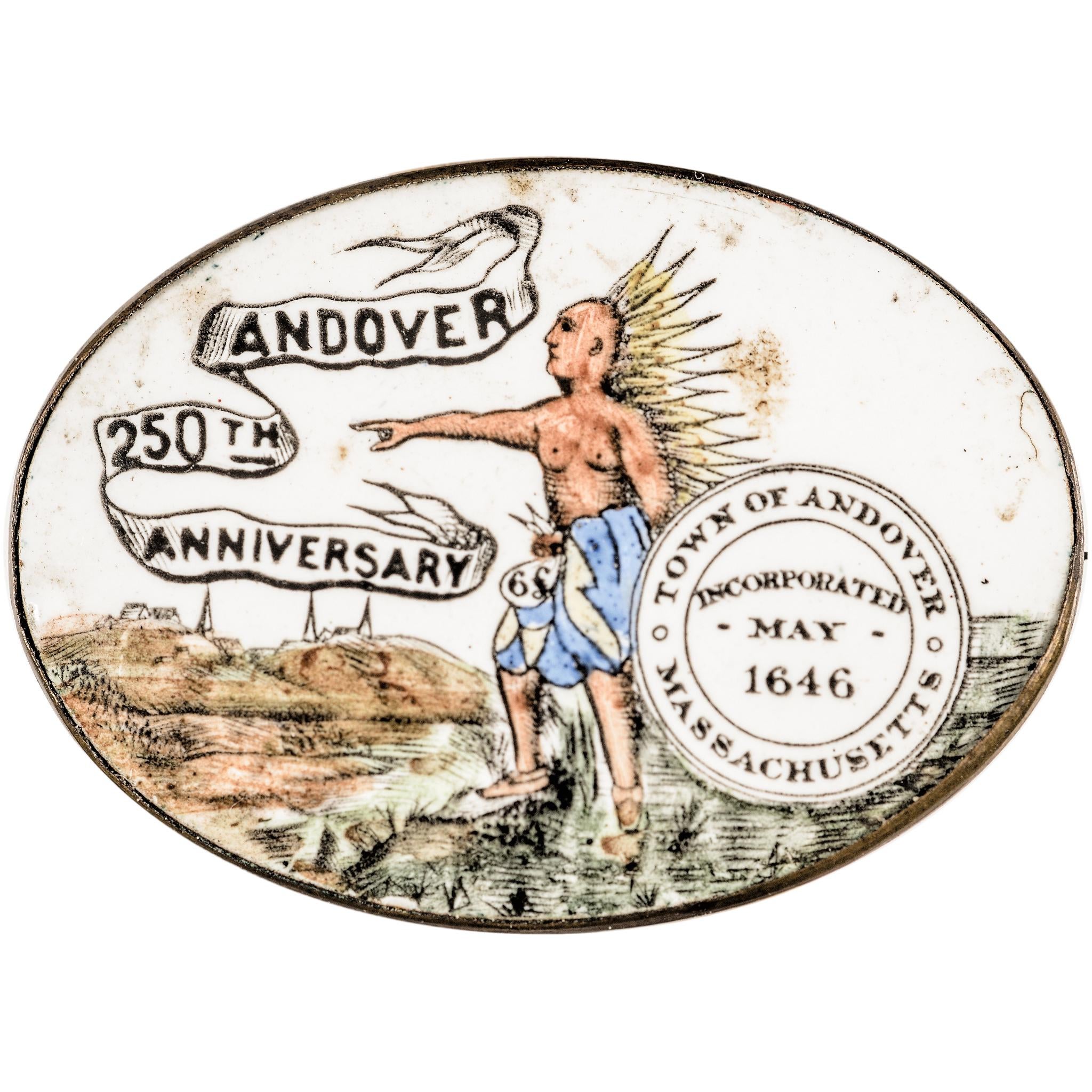
Enamel pin created in 1895 by John E. Whiting to commemorate Andover’s 250th anniversary, the origin of the town seal featuring Cutshamache. Collection of the Robert S. Peabody Institute of Archaeology.

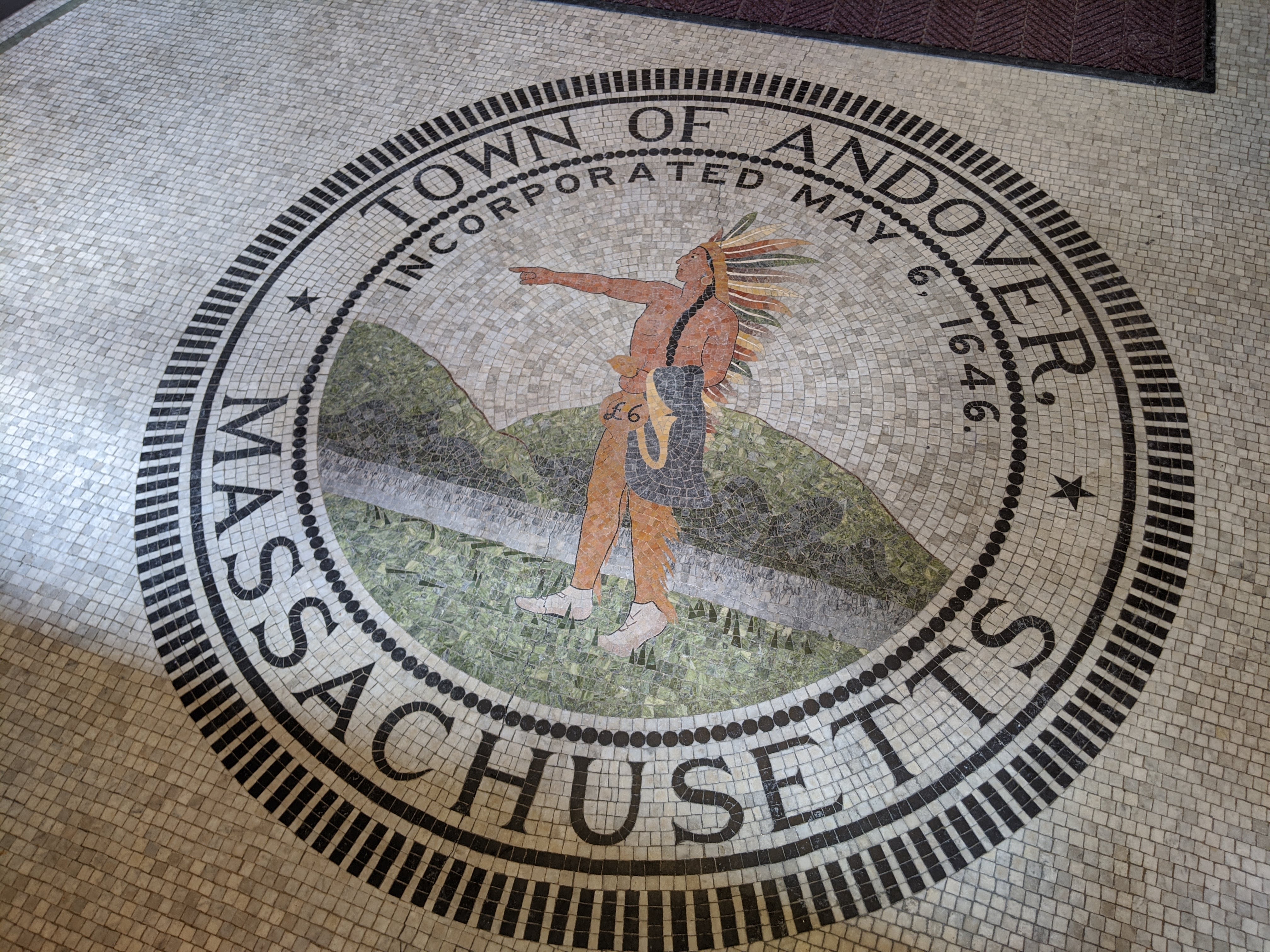
The story and its protagonist feature prominently in Andover’s 1895 town seal, where we see Cutshamache holding the coat, part of his payment for the land. Cutshamache appears frequently in the seventeenth century records of the English colony in Massachusetts, ranging from his involvement in the Pequot War to skepticism about missionary John Eliot’s preaching (see Drake 1856). Frank Speck (1928:141), in his discussion of the Punkapog Band of Massachusett, mentions that “the name and pronunciation of Kitchamakin or Cutshamekin are still remembered.” For us, his involvement in selling a large portion of Andover, North Andover, and Lawrence to John Woodbridge sometime in the early 1640s is of greatest interest. Local histories, in books, articles, and now online, frequently repeat the story, and tweak it to fit whatever narrative is being told. In some cases, the currency is converted into modern dollars (a pretty complicated exercise), and in other variants, Cutshamache is described as a Pennacook leader (see the Wikipedia entry for the Town of Andover). The latter makes sense, since the Pennacook, helmed by their leader Passaconaway, are associated with the area around Andover. However, Cutshamache does not appear to have been Pennacook, but was rather a Massachusett leader who lived in what is now Dorchester. The General Court statement clearly identifies him as such. But, this is puzzling, since Dorchester is pretty far from Andover. So what’s going on?

Many authors suggest a family connection between Passaconaway and Cutshamache, possibly based on Sidney Perley’s assertion (1912:35), though I have found no primary sources to support this and this suggested link may just be a way to help explain Cutshamache’s involvement in the sale of the Andover lands. Passaconaway does seem to have created alliances through marriage that crosscut ethnicity and relied more on cultural similarities, creating a heterogeneous coalition distinct from the more homogenous Massachusett (see Cook 1976:29; Stewart-Smith 1998:24-25). What’s more intriguing is the sale of Haverhill in 1642 by Native leaders Passaquo and Saggahew required the consent of Passaconaway (in fact, his consent is mentioned twice in the text of the deed). See the original document and transcript on the Essex National Heritage Area website. The General Court acknowledgment of the Andover, North Andover, and Lawrence sale does not mention Passaconaway, suggesting several possibilities. Perhaps Cutshamache’s less formal court appearance resulted in an omission. But, the court statement includes considerable detail, including the preservation of land and fishing rights for Roger and his company, Indigenous residents of the area.

Tile mosaic version of Andover’s town seal in the foyer of the Town Hall by Perley Gilbert and Elias Galassi. Photograph by Ryan Wheeler, February 3, 2020.

Archaeologist Eric Johnson (1999:155), in his book chapter on Native political geography, provides a different way of thinking about Indigenous groups in the area during the seventeenth century that helps inform Cutshamache’s sale of Cochichawick. Johnson says, “What does a map of bounded tribes imply about political organization? It implies stasis and homogeneity, both within and among political units.” He attributes this to the desire of colonial European observers to describe unfamiliar people and places in a familiar way—through the lens of political organization in seventeenth century Europe. This plagues our understanding today—we want carefully delineated maps that show the boundaries of Indigenous lands, matching those of city, county, and state political entities. Johnson (1999:158) argues for a different model to understand the geography of the area that takes into account the dynamic and heterogeneous polities. Further, he suggests that groups in the region consisted of autonomous communities that regularly underwent expansion, contraction, and internal upheaval, depending on a variety of socio-political strategies at play among leaders and group members. Alliances, often transitory, could result in confederacies of autonomous groups, as well as splintering and new alliances. Confederations were based on real and fictive kinship relationships between principal leaders and those of local communities; autonomy of local communities varied greatly depending on the leadership qualities of the principal leader, overall group size, geographic distances between communities, and genealogical connections (Johnson 1999:161). Within this context, Kathleen Bragdon (2009:206-209), in her second book on the Native people of the Northeast, points to connections between Indigenous communities across the region, stating, “linkages between the Pennacooks and Pawtuckets of the Merrimac drainage of what is now northeastern Massachusetts and southern New Hampshire, show connections ranging as far south and east as Natick and Charlestown. Other historical evidence shows marriage ties between Pennacooks and Pawtuckets with Niantics and Wamesits as well.”

Intertribal relations just at the time of European conquest illustrate the linkages that likely characterize the area. After the devastating epidemic of 1619, Indigenous allies of the French raided the lower Merrimack. Passaconaway was the Pennacook sachem at the time. His Pawtucket counterpart, Nanepashemet, was killed around present-day Medford or Malden and his widow assumed the role of sachem. Two of her sons married Passaconaway’s daughters, cementing the Pennacook-Pawtucket alliance. According to historian David Stewart-Smith (1998:24-25), Passaconaway (also called Papisseconnewa) was acknowledged as the leader of Pawtucket, Agawam, and Piscataqua, though each group retained local leaders as well. He explains that it is helpful to think of the larger tribal designations as “aggregations of allied family territories,” including Pennacook, Pawtucket, Massachusett, Nipmuc, and others (Stewart-Smith 1998:28). The divisions were not hard lines, but rather fluctuated with marriages and other connections.

View of Lake Cochichewick from the Brooks School, North Andover Massachusetts, January 15, 2012. John Phelan, CC BY 3.0 https://creativecommons.org/licenses/by/3.0, via Wikimedia Commons

Historian Peter Leavenworth (1999:277) explains the ways in which Pennacook-Pawtucket lands moved into English ownership in the seventeenth century, principally through legal means, but also via violent incursions. He also documents important instances where Indigenous people resisted land loss. Leavenworth describes a violent attack against the Pennacook during King Philip’s War (1675-78), but helps us understand that the extensive transfers of land, through deeds or appearances in the General Court like Cutshamache’s, occurred during the 1640s, following the smallpox epidemic of 1633-34 and decisions by Passaconaway, including the belief that Indigenous people could share land with the English. According to Leavenworth (1999:281), there were serious misunderstandings in terms of what was happening, especially as these more informal land “sales” occurred: English colonists believed they were buying large tracts of land, while the Indigenous “sellers” believed they retained their usufruct rights. This is reflected in Cutshamache’s sale of Cochichawick, which references Roger and his group’s continuing rights to at least some small part of the landscape and fishing rights (check out this interactive map site that shows Rogers Brook in Andover, namesake of the seventeenth century Indigenous inhabitant). Leavenworth also documents an interesting shift in acceptable payment—at first the English were buying land for clothing, tools, ornaments and other trade goods, but apparently by 1650, the Indigenous people of the area would only accept currency. Cutshamache’s sale involves both—6 pounds in money, and a coat (interestingly, an earlier order by the General Court in 1642 directed that a coat be given to Cutshamache, perhaps the coat referenced in the 1646 appearance?).

So, there’s a lot to unpack in Cutshamache’s sale of Cochichawick. Most notable are the traditional cultural patterns that involved seasonal movements, settlement, and marriage that linked widely dispersed groups versus our modern desire to have Indigenous people fit into neat territories that align with historical and modern municipal, county, state, and national boundaries. It’s also impossible to think about this outside the devastating disruptions wrought by European incursions and the attendant diseases and demographic shifts (Strobel 2020:71-75). For example, Daniel Gookin, one of the English colonists, recorded 3,000 Pawtucket men in the earliest days of European conquest, but by 1674, the tribe had been reduced to “not above 250 men.” Within this milieu—traditional Indigenous practices, the disease and disruptions brought by the English, and attempts to adapt—land moved from Native to European hands.

For an Indigenous perspective, check out the detailed histories, timelines, and more on the Massachusett Tribe at Ponkapoag’s website. Here you can learn about the modern day Massachusett, their history, as well as ongoing initiatives, like work on the newly created Massachusetts state seal commission. If you would like to learn more about the Abenaki tribes in nearby New Hampshire and Vermont, start with the website of the Cowasuck Band of the Pennacook-Abenaki. There you can learn about history and contemporary initiatives of the Abenaki, who have close ties to the Native inhabitants of the Andover area.

References Cited and Further Reading

Bragdon, Kathleen J.

2009 Native People of Southern New England 1650 – 1775. University of Oklahoma Press, Norman.

Cook, Sherburne F.

1976 The Indian Population of New England in the Seventeenth Century. University of California Publications in Anthropology Vol. 12. University of California Press, Berkeley.

Drake, Samuel G.

1856 Biography and History of the Indians of North America, from its first discovery. Sanborn, Carter, and Bazin, Boston.

Johnson, Eric S.

1999 Community and Confederation: A Political Geography of Contact Period Southern New England. In The Archaeological Northeast, edited by Mary Ann Levine, Kenneth E. Sassaman, and Michael S. Nassaney, pp. 155-168. Bergin & Garvey, Westport, CT.

Leavenworth, Peter S.

1999 “The Best Title That Indians Can Claime:” Native Agency and Consent in the Transferal of Penacook-Pawtucket Land in the Seventeenth Century. The New England Quarterly 72(2):275-300.

Perley, Sidney

1912 Indian Land Titles, Essex County, Massachusetts. Riverside Press, Cambridge (for Essex Book and Print Club).

Speck, Frank G.

1928 Territorial Subdivisions of the Wampanoag, Massachusett, and Nauset Indians. Indian Notes and Monographs No. 44. Museum of the American Indian, Heye Foundation, New York.

Stewart-Smith, David

1998 The Pennacook Indians and the New England Frontier, circa 1604 – 1733. PhD dissertation, Union Institute, Cincinnati OH.

Strobel, Christoph

2020 Native Americans of New England. Praeger, Santa Barbara CA.