Kay WalkingStick/Hudson River School + Peabody Institute

Contributed by Marla Taylor

What do, parfleche, ceramics, paintings, and basketry all have in common? They are all currently on display at the Addison Gallery of American Art here at Phillips Academy as part of the Kay WalkingStick/Hudson River School exhibition.

Kay WalkingStick (Cherokee) is a contemporary artist and educator known for her landscape paintings. This exhibition originated at the New-York Historical Society and has been joined by over a dozen pieces from the Addison’s permanent collection as well as three from the Peabody Institute.

In another wonderful collaboration with the Addison Gallery, the Peabody loaned two Mohican culture baskets and a vessel made by Wampanoag artist Ramona Peters to be placed in dialogue with Kay’s work. The items were thoughtfully selected and contribute to an intentional conversation between traditional painting techniques and Indigenous art.

You can explore the exhibition yourself through virtual tour.
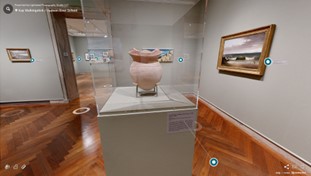
We really appreciate the opportunity to collaborate with the Addison and highlight pieces from the Peabody Institute. Check it out if you are in the area!
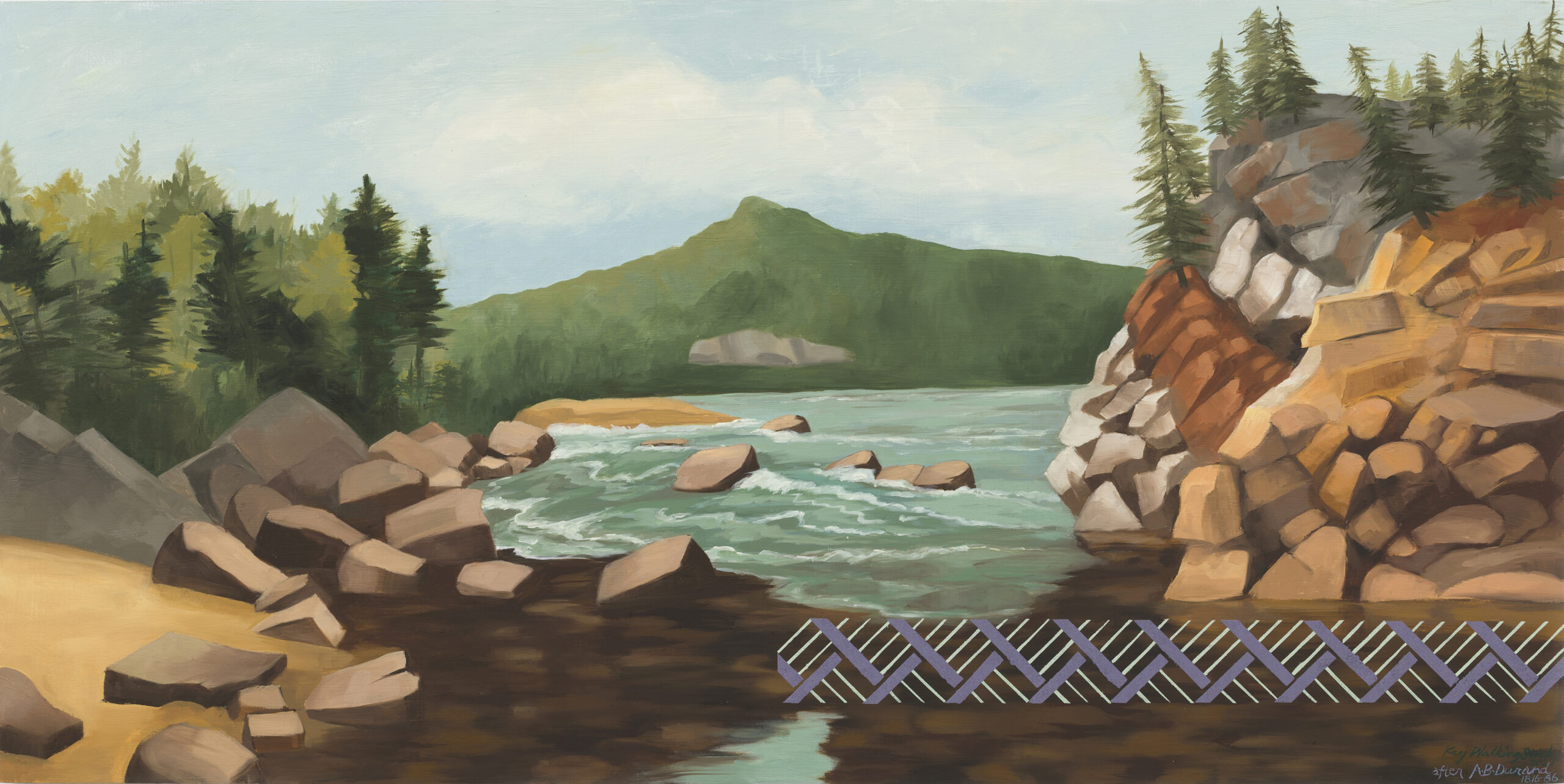
Kay WalkingStick, Durand’s Homage to the Mohawks, 2021. Oil on panel. Colby College Museum of Art, Waterville, Maine; The Lunder Collection. Photo by JSP Art Photography. Copyright Kay WalkingStick

Wax On, then 57 years later, Wax Off: Deinstallation of the Last Exhibit Case

Contributed by John Bergman-McCool

The first steps in the deinstallation process: items are removed and inventoried.

This month we began deinstalling our institution’s last remaining exhibit case. The case resides on the second floor in what was, until recently, our only environmentally controlled storage housing. The case was installed in 1967 and held materials recovered during excavations led by Scotty MacNeish in Mexico’s Tehuacán Valley. The display has sat largely hidden from view behind shelving since 2012, when this room was converted into a housing area.

Summer curatorial assistant, Cyrus, removing items from the case.

Beginning this spring, the room slowly changed from collection housing into offices and workspace for collections staff. As part of the transformation, collections were moved into the basement, boards covering the windows were removed, and collections supplies and worktables were assembled. The final piece to resolve was this exhibit case. With the help of our summer curatorial assistants, Kyra Smith and Cyrus Marion, we were finally able to tackle its deinstallation.

The case is a fantastic example of exhibit design from the ‘60s and includes charming hand-painted illustrations that have a lot of character. However, the materials within have been “on display” for decades and they need a rest. Moreover, with the window coverings removed, the room and case were exposed to unfiltered ultraviolet light, an agent of deterioration.

The key to the exhibit case.

Perhaps as an auspicious sign, a key to the exhibit case happened to be in one of the repurposed desks that we moved in for the new office space. With the case opened, we investigated how the items had been installed. Most were secured to the walls with bee’s wax. The wax held up remarkably well for the past six decades. In fact, it was somewhat difficult to remove the items from the wall. Once off the wall, the wax was more accessible and could be removed with heat. We did not remove the wax from botanical items due to their sensitivity to rapid changes in temperature.

The items were rehoused and moved into our basement storage for a much-needed rest. The deinstallation of this case marks the end of our institution’s intentional move away from exhibitions, which began in 2017.