
Contributed by Ryan J. Wheeler
Another busman’s holiday, this time with a visit to the archaeology branch of the National Museum of Ireland in Dublin! Located near Trinity College, this free museum is well worth a visit. One is initially struck by the gold items, many dating from thousands of years ago. Many of these luxury goods are similar to those found in mainland Europe dating to the same era, reflecting the widespread geographic connections of Ireland and neighboring areas. If you are looking for items from the Vikings or Medieval Ireland, you will find those in abundance. There’s even a small but jampacked Egyptian room.


Ireland is also well known for its peat bogs, and the National Museum includes many treasures found during peat cutting operations, including bog bodies—human remains preserved by the oxygen free environment of the bog—as well as wooden tools and implements, and more gold. Archaeologists are excited by these anerobic preservation conditions, as they reveal items that usually rot quickly on terrestrial sites. To me, however, even more exciting than all the gold, was the Lurgan Logboat, a 4,000 year old dugout canoe found in 1902 in County Galway.
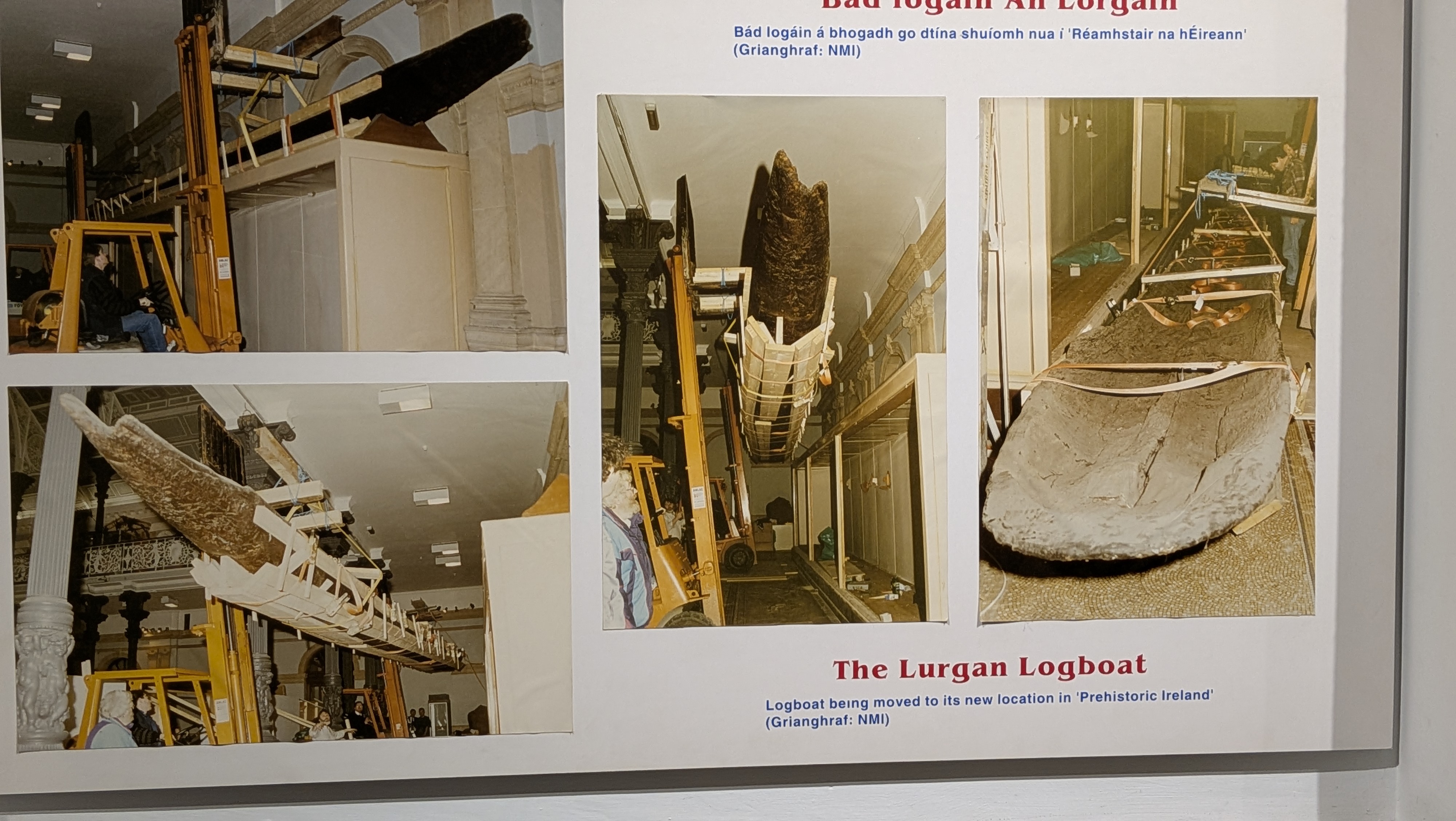
I became interested in logboats—or dugout canoes as we call them stateside—as a graduate student of the late Barbara Purdy. Barbara was interested in anerobic deposits in Florida and recognized that log canoes were part of this unusual material culture. Many archaeologists in the 1970s and ‘80s rejected dugout canoes as not particularly interesting and unworthy of dedicated research. Barbara’s work, however, set the stage for discoveries in the late ‘90s and early 2000s, when archaeologists came to realize that canoes represented a significant part of ancient technology and may have been instrumental in the first human settlement of the western hemisphere.

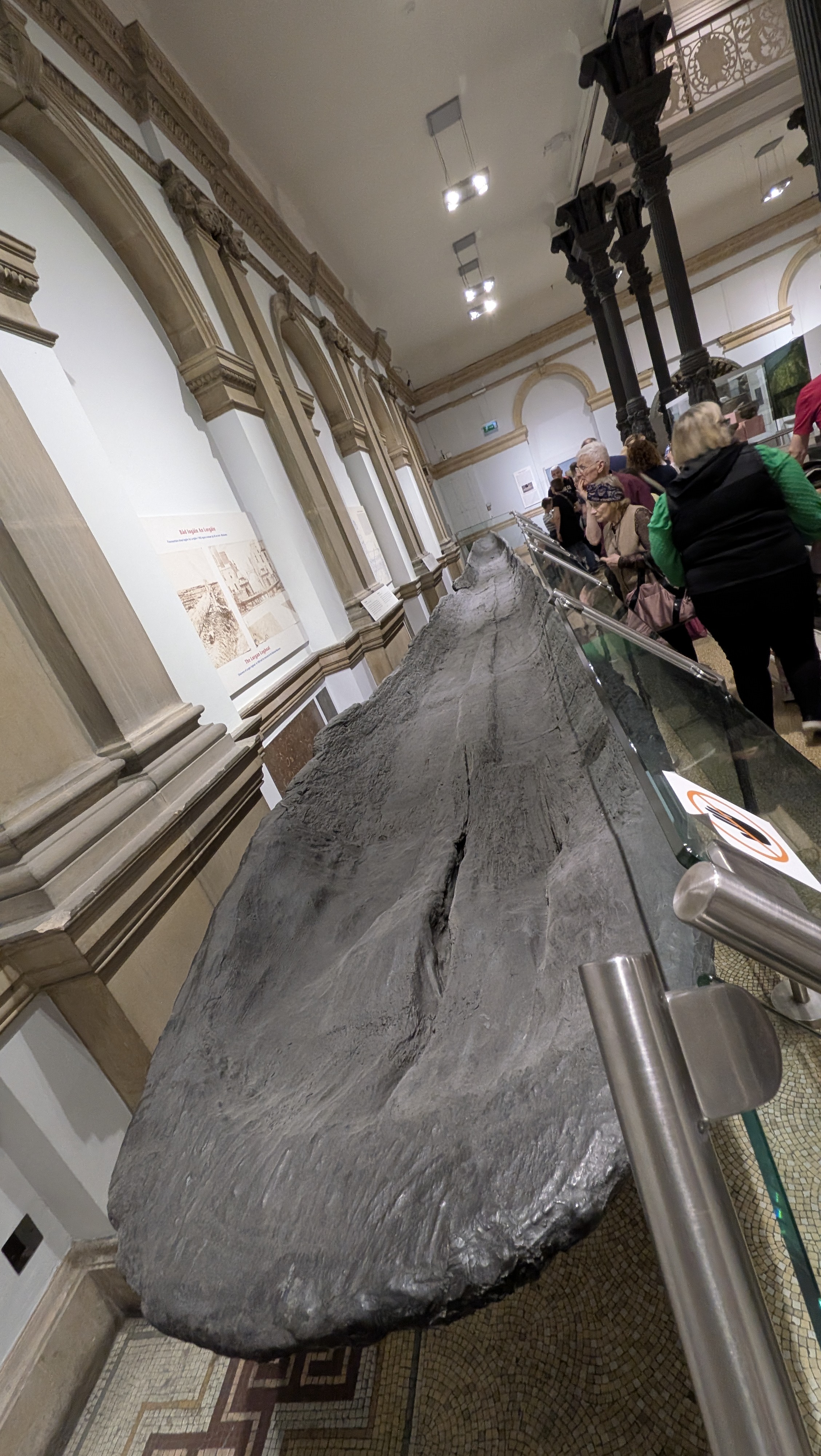
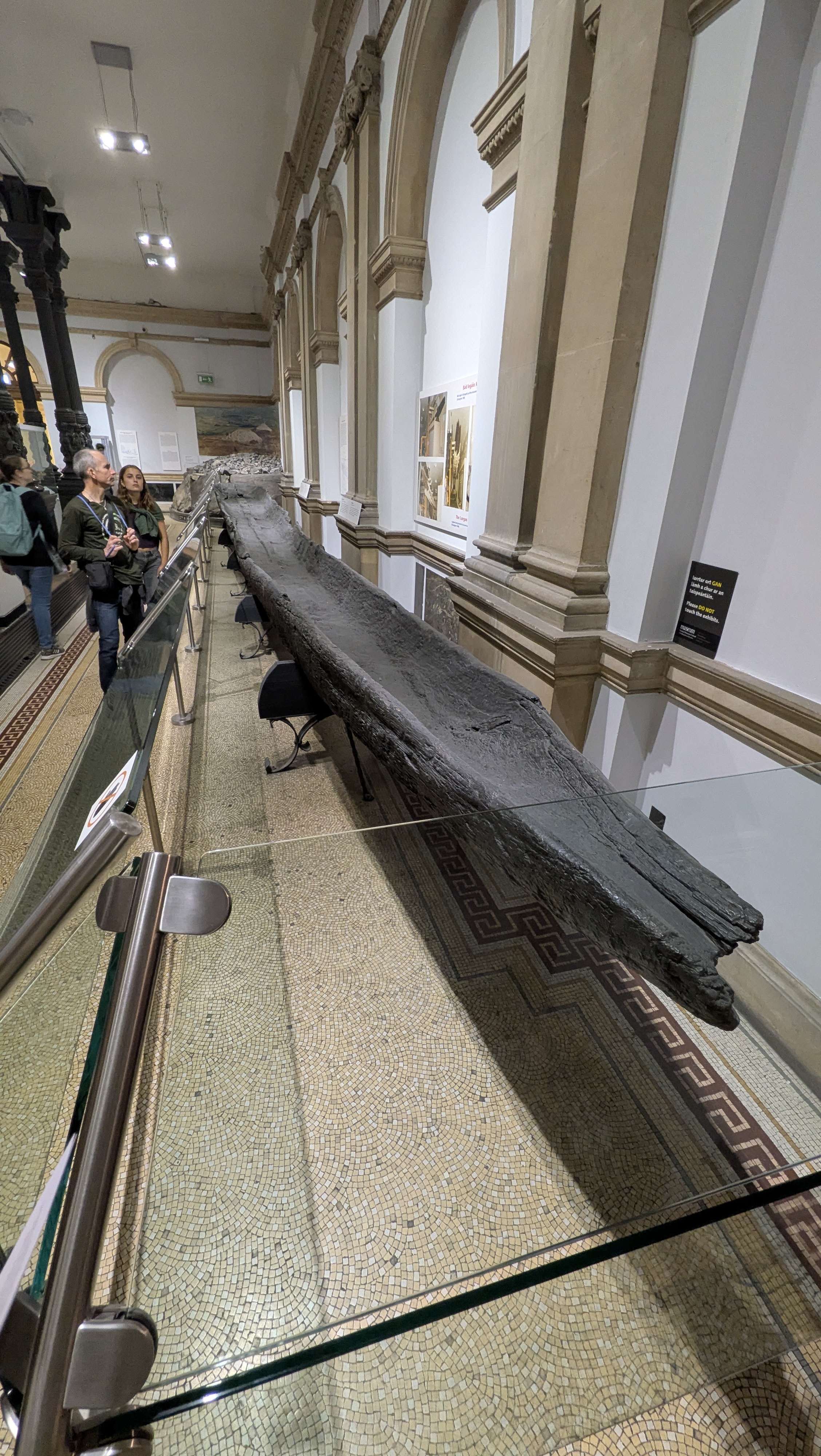
The Lurgan boat is not unlike dugout canoes known from eastern North America, though it is particularly long—nearly 50 feet long or more (which is not unheard of, the Weeden Island canoe from Florida is 50 feet!). Constructed of Irish oak, hollowed out by charring and scrapping, it might be more similar to cargo hauling dugout canoes known from the Midwest and Great Lakes area, though its tremendous length is reminiscence of the long, straight canoes from Florida, made for fishing and travel on shallow creeks and bay. An unusual central ridge described by those who found the canoe as a “moulding” on its deck is unlike anything I’ve seen before and is reminiscent of a keelson. Holes along the gunwales may have been for outriggers or ropes. Some archaeologists have pointed to the Lurgan boat as evidence of changing climate, as such a large vessel would have been impractical on the small lake where it was found, while others have suggested the canoe was for ceremonial display. Regardless, it stands with the gold and other shiny objects as a real treasure!

