Mount Up, follow up.

Contributed by John Bergman-McCool

In January I wrote about a student volunteer project aimed at improving housing for moccasins that we steward at the Peabody (link). The purpose of the project is to give moccasins at the Peabody more space and internal support to maintain their shape. At the time of posting the blog, the project was in an initial design phase with students making practice mounts and internal supports. Since then the students and I worked through iterations of mounts and with feedback from our Curator of Collections, Marla Taylor, we arrived at the final design.
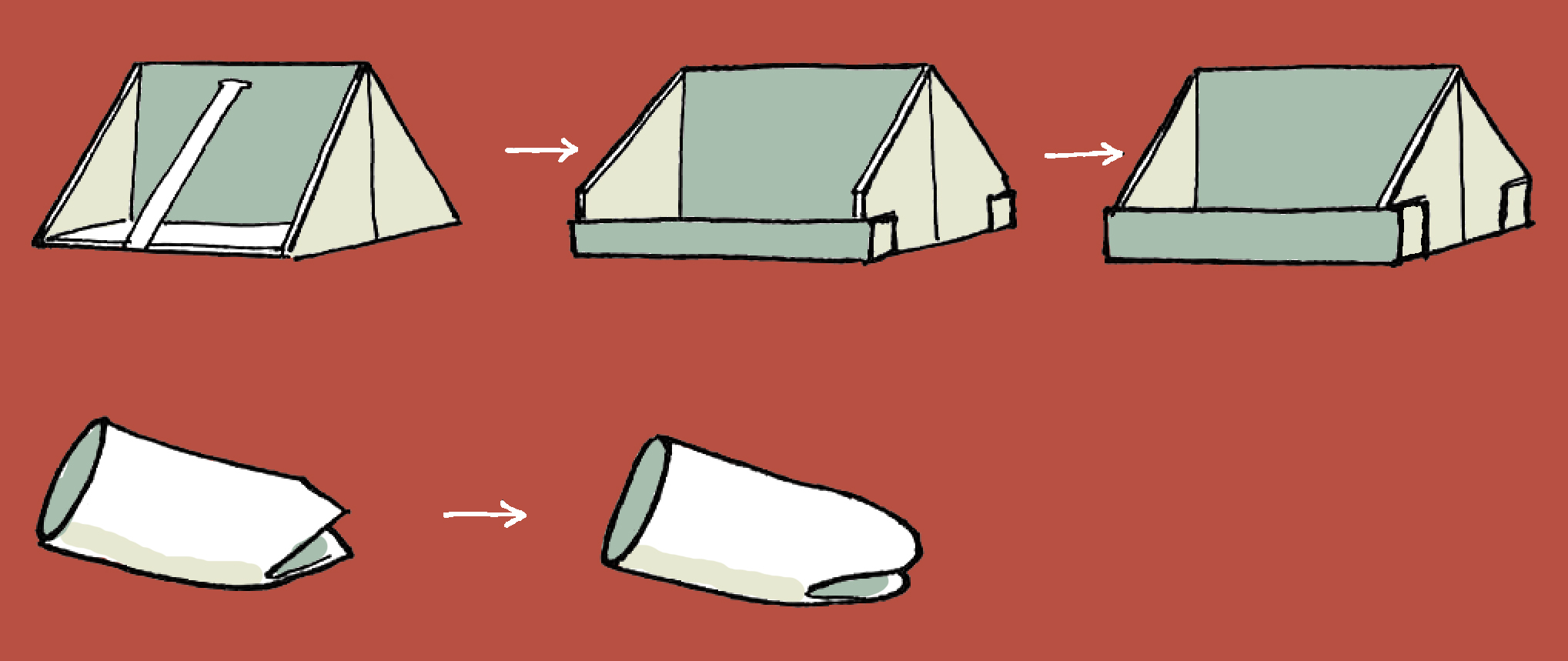
Top: evolution of mount design. Bottom: changes to the interior support pillow from a “v” toe to one that matches the shape of the moccasin.

With the mount finalized we selected a pair of moccasins to rehouse and moved on to solve how to make interior mounts. We intended to make an internal support “pillow” of stockinet filled with polyester fiber. However, the height of the moccasins meant that the pillow alone couldn’t support the ankle area.

We consulted a great presentation at the 2017 Association of Tribal Archives, Libraries, and Museums (link) on making internal moccasin supports, for ideas on how to provide stability. We landed on making a support pillow for the toe area and a stiff tube for the heal and ankle area.
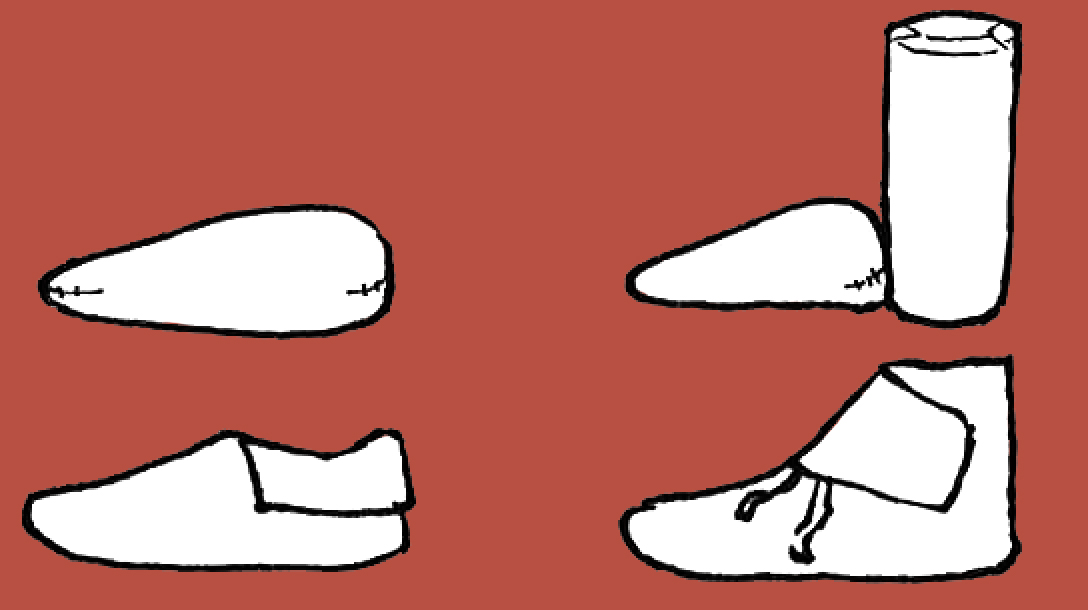
Internal supports for low and high moccasins

The stiff support is made from ethafoam planks cut into cylinders. The cylinders are wrapped with cotton batting to provide cushioning, then they are covered in stockinet. We measured the circumference of the area above one of the ankles and made sure the ethafoam, batting and stockinet added up to that dimension.
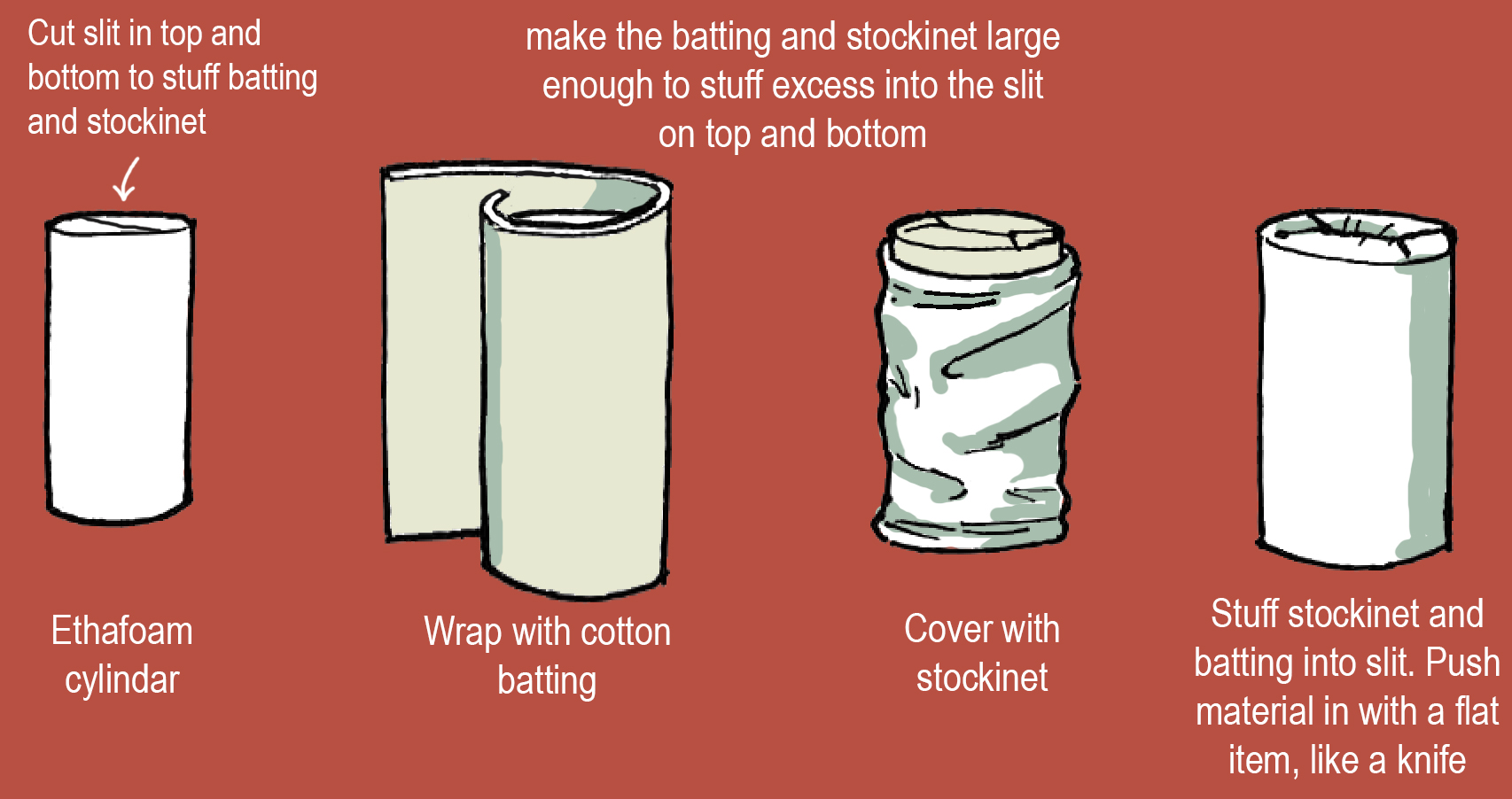
Steps for constructing a cushioned rigid support. It is important to use enough batting and stockinet to be able to push it into the slit.

The final step involved covering the mount with soft Tyvek. With that, we have our first moccasin mount! Once students are back from spring break, we will continue our rehousing of moccasins.
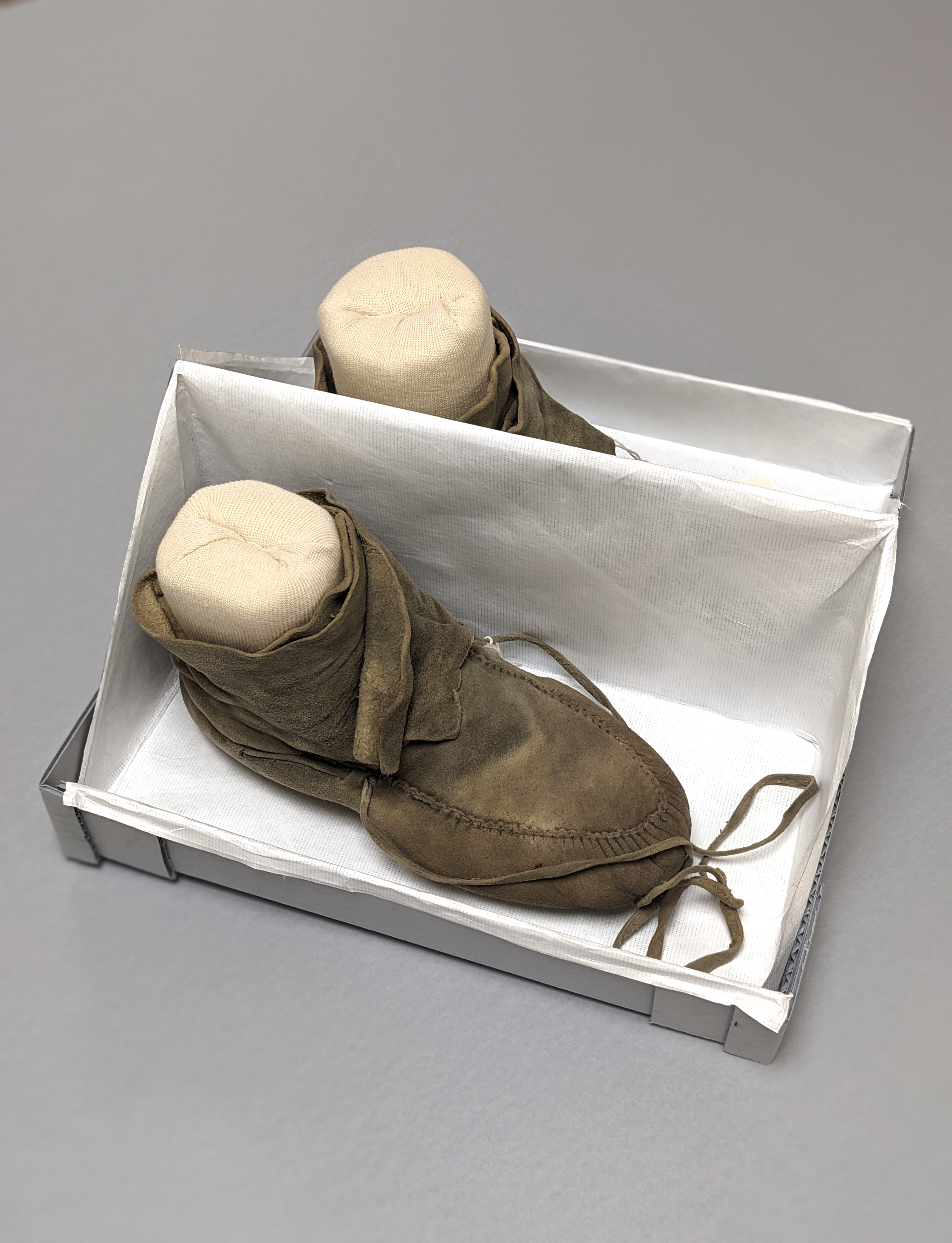
Here is the final mount. The students did a great job!

Mount Up!

Contributed by John Bergman-McCool

This term, the Peabody has a student volunteer workforce assisting us with making mounts for the moccasins that we care for. Currently, the moccasins are wrapped in tissue and housed in boxes. This housing situation is stable, but it can be improved. On the positive side, the boxes protect their contents from dust and debris. They are also stackable, which was a space-saving necessity prior to the renovation. Inside the boxes, the tissue prevents movement, but the moccasins are resting on their sides. In addition, some of the boxes are overfilled and need to be de-densified.

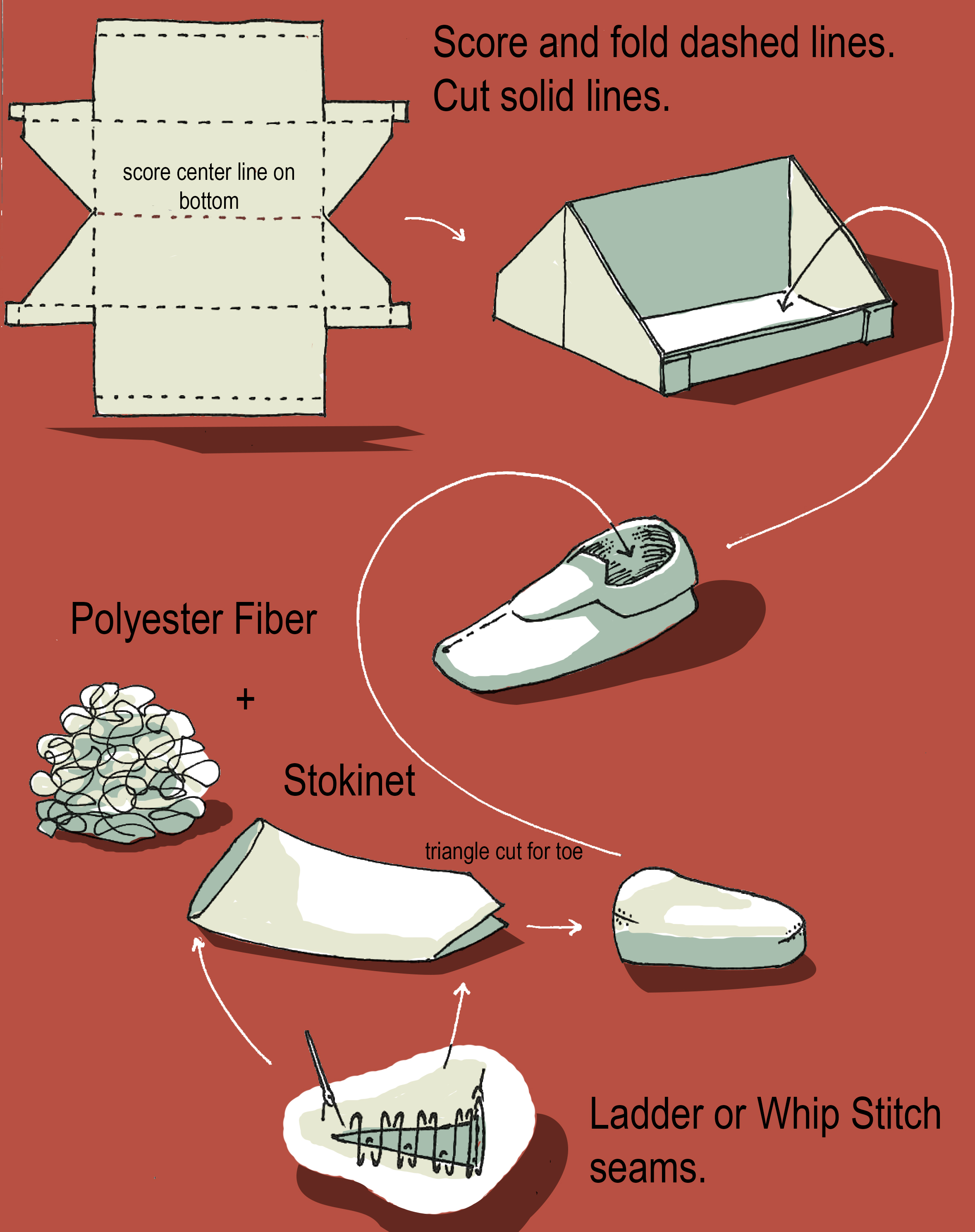
Workflow for Moccasin Mount.

Our goals for this project are two-fold. The first is to design and construct external supports for pairs of moccasins that prevent them from rolling on to their sides or off the mount.

The second goal is to create soft internal supports. Leather items, like moccasins, can be subject to flattening if they do not have additional support. Since the moccasins are laying on their sides in the boxes, the flattening can lead to additional deformation. If left unaddressed, flattening and deformation will cause permanent creasing which requires careful conservation to reverse.

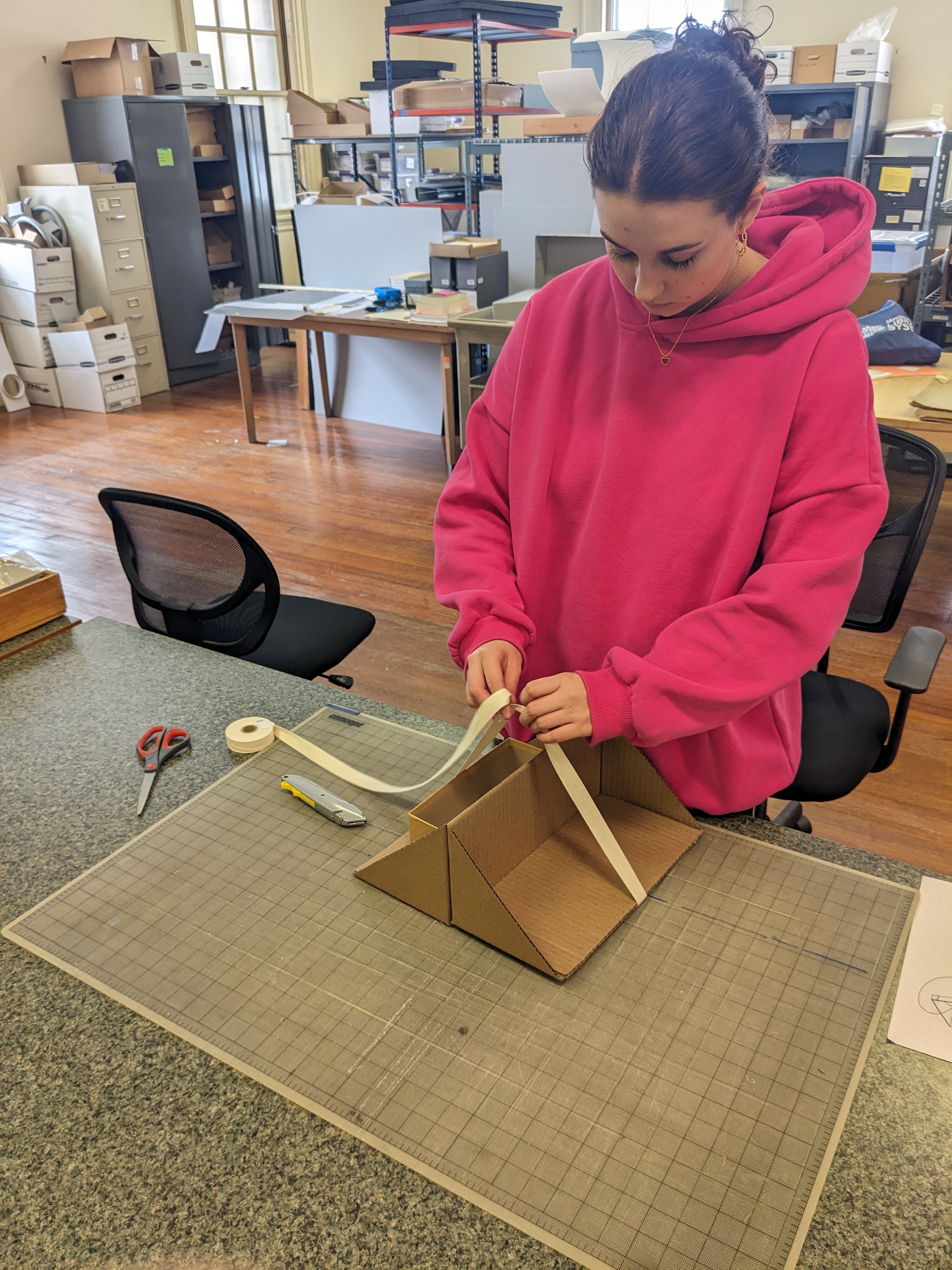
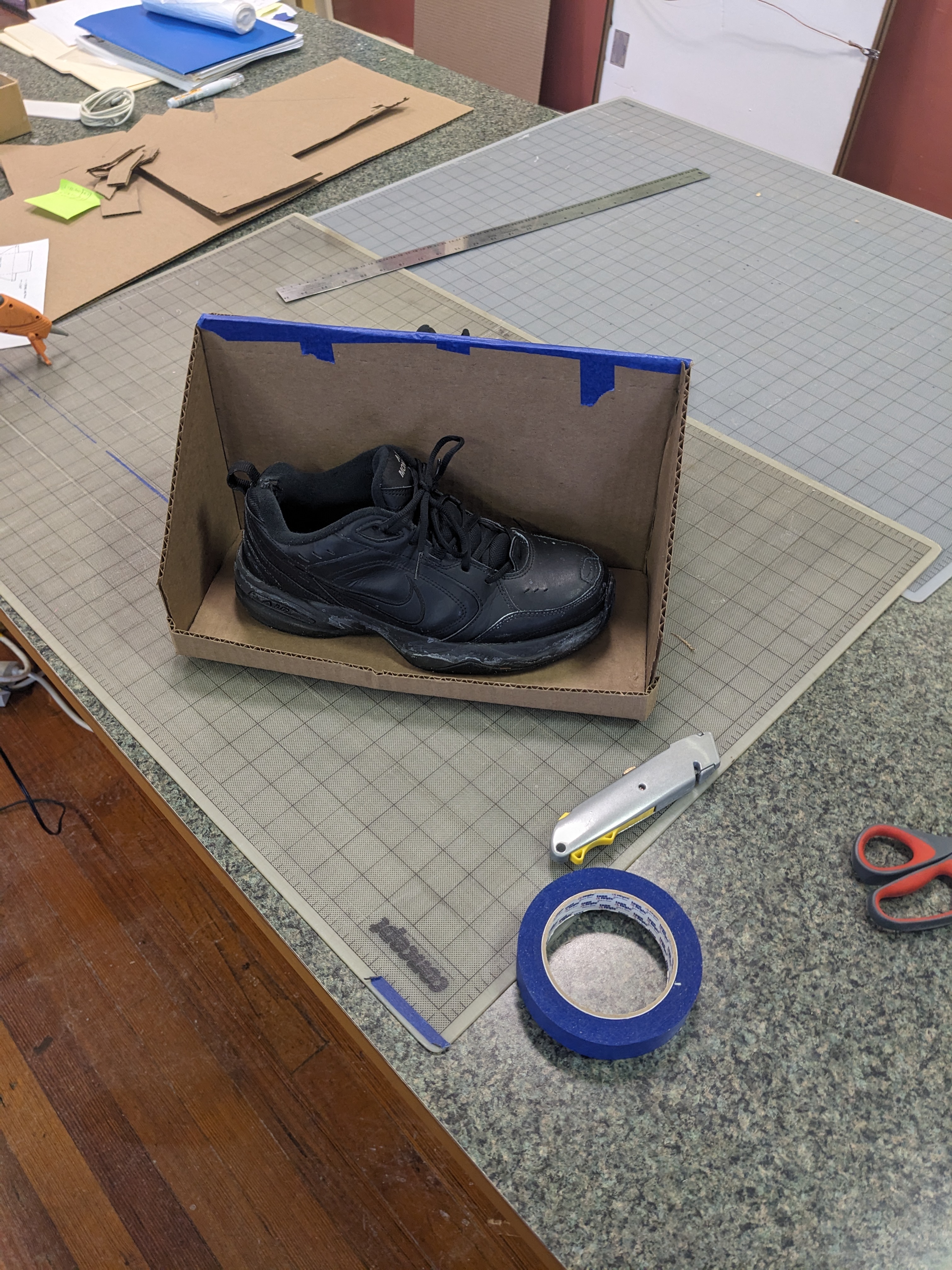
For the first step, the volunteers practiced making external mounts for their own footwear using cardboard. A few elements of the mount were altered after we saw the construction of the initial design. When the design is finalized, the volunteers will be using archival blue board covered in soft Tyvek fabric to house the moccasins.

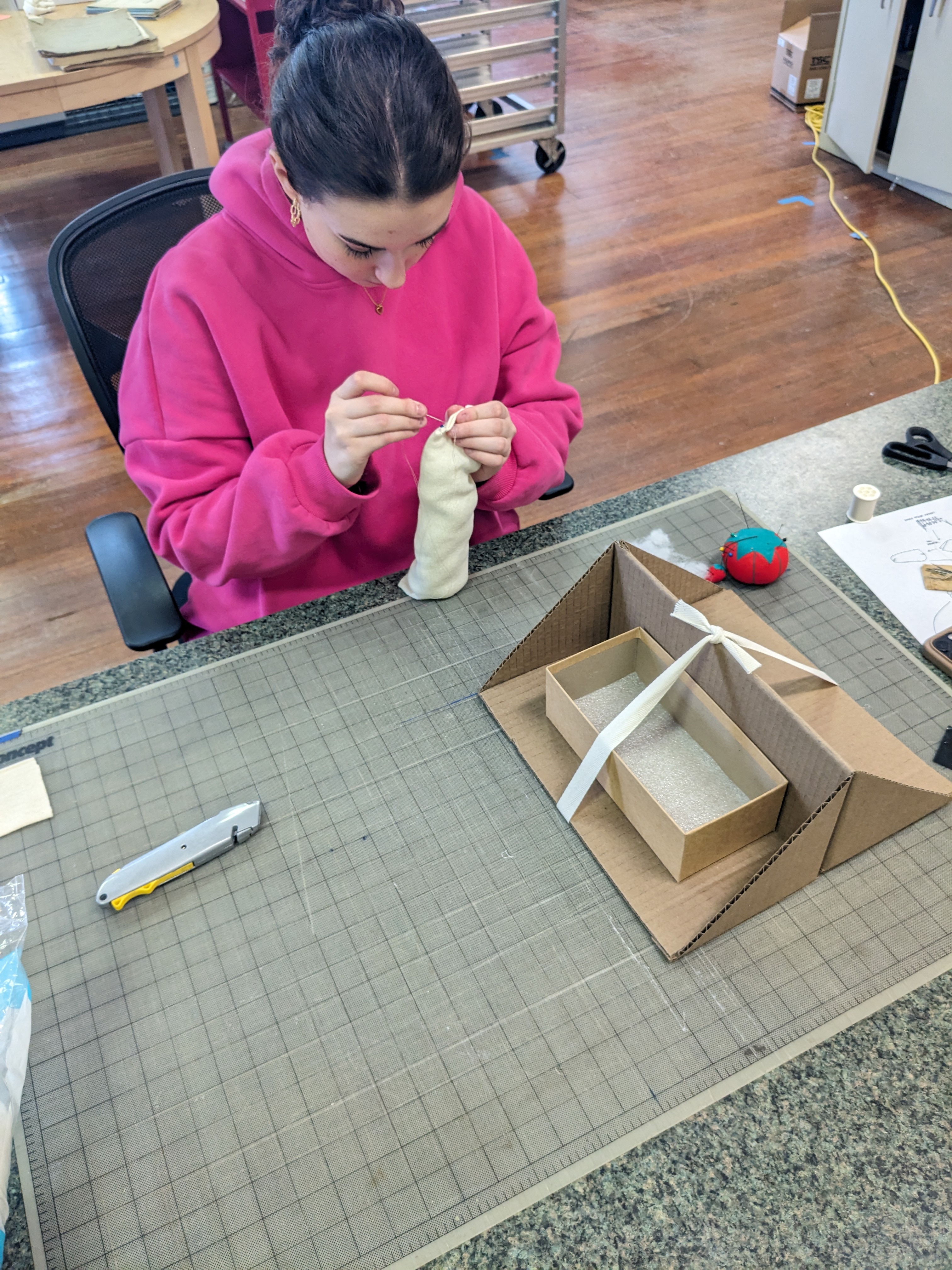
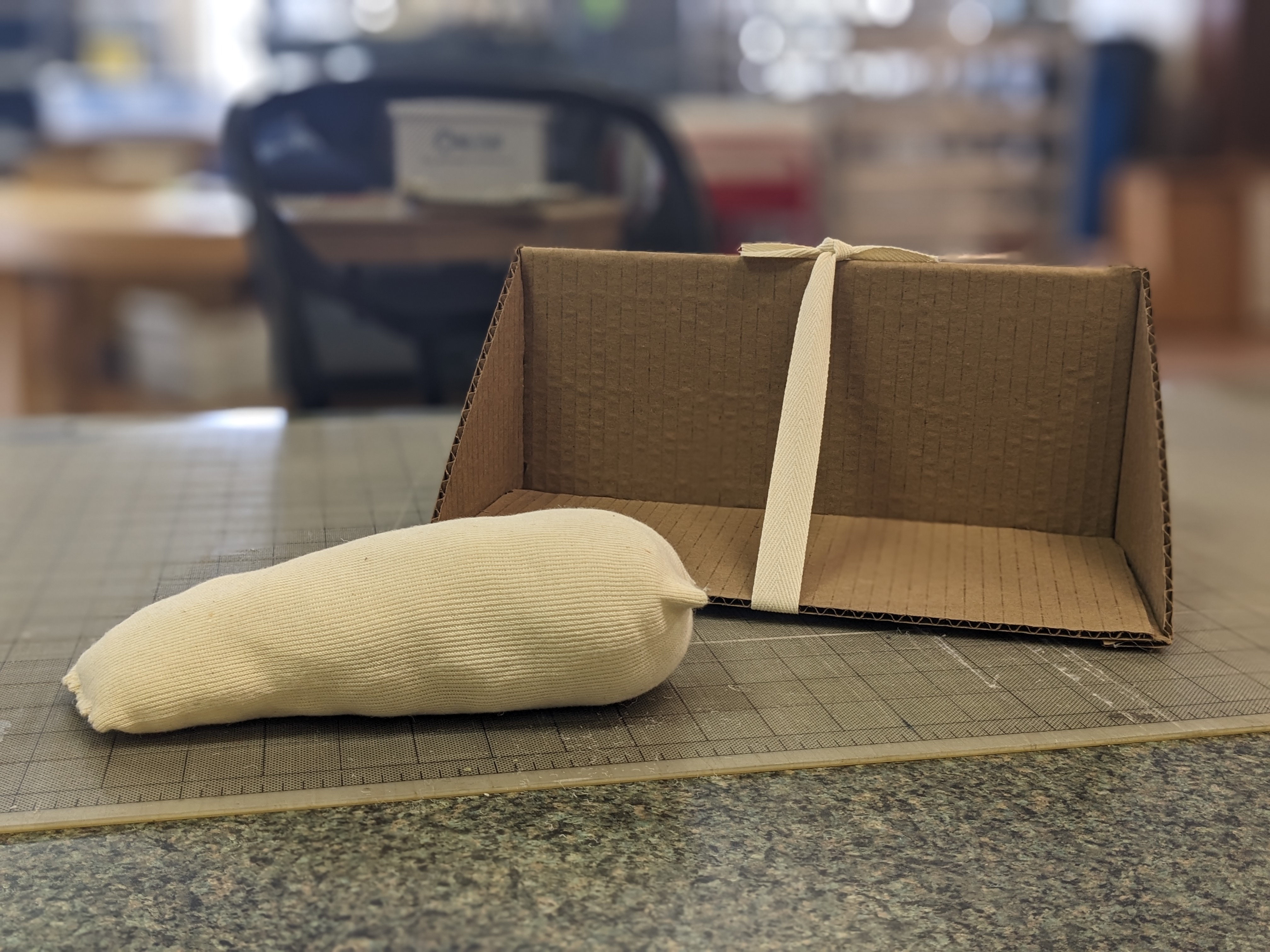
The next step will be to practice making internal supports. These supports are essentially tubes constructed of stockinet filled with polyester fiber. The ends are stitched together to ensure the poly-fil doesn’t come out of the tube. Once fabricated, these will be inserted into the moccasin,  helping keep their shape and resist the flattening effect of gravity.

The volunteers are making great strides with their practice work, which means they will soon start making mounts for the moccasins. We will keep you posted with an update in the future.

If you are interested in seeing what kinds of mounts your institution can make use of, please see this pdf from History Nebraska. It was an excellent source of inspiration.