Tamaulipas Maize

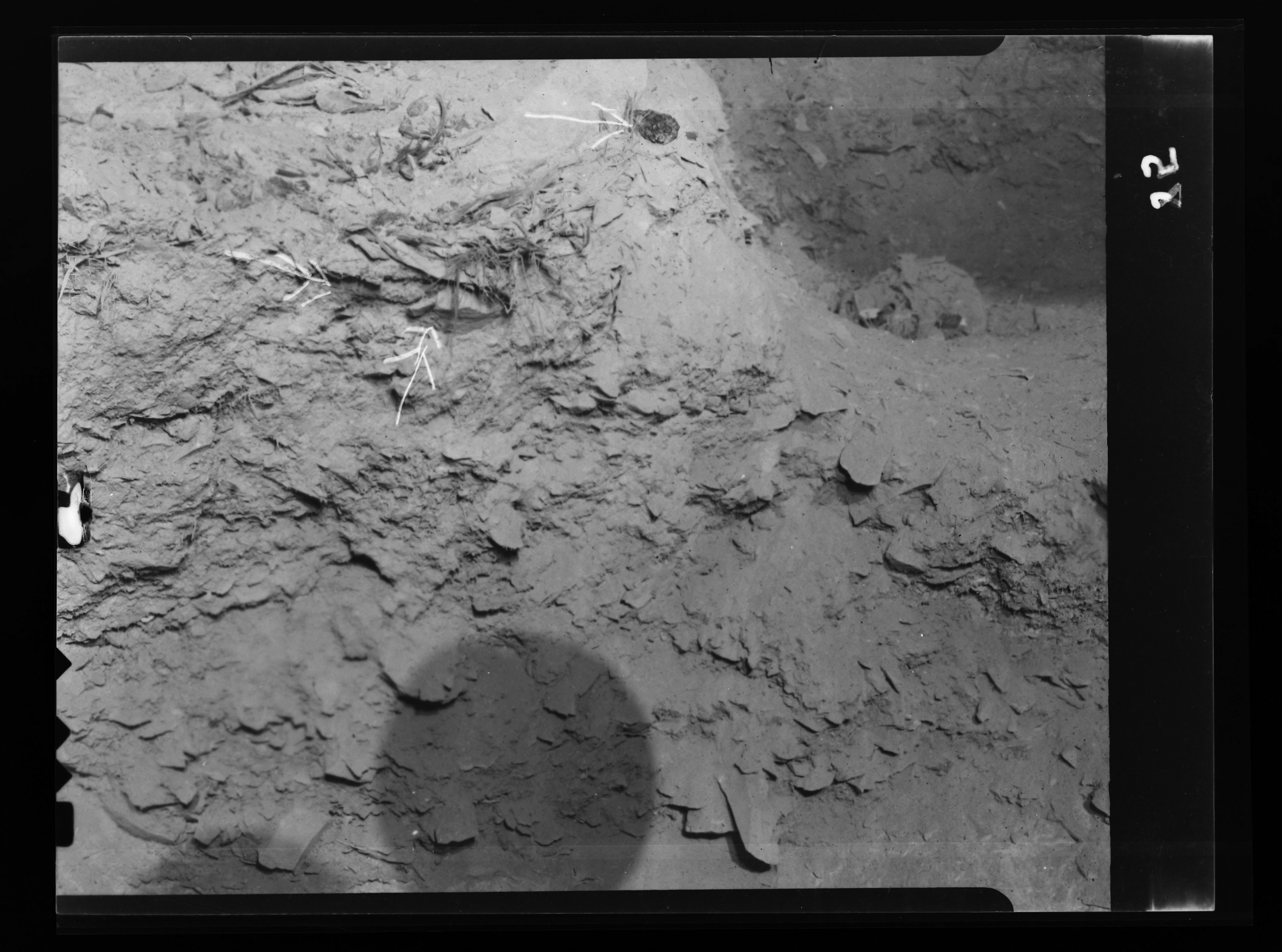
Excavation profile with arrows indicating the location of Maize, La Perra Cave, Sierra de Tamaulipas.

Contributed by John Bergman-McCool

This blog represents the thirteenth entry in a blog series – Peabody 25 – that will delve into the history of the Peabody Institute through objects in our collection. 

If you travel on state routes through the Northeast this time of year, you will likely witness a continuous stream of hand-painted signs advertising sweet corn. On a recent road trip through Maine, the oft-repeating signs got me thinking about all the places I’ve seen corn cultivated: Washington State, Arizona, the Midwest cornbelt and New England. A quick search on the internet reveals that modern corn varieties can be grown in USDA hardiness zones 3-11 (that’s just about everywhere!). Currently corn is an important crop for many economies across the globe (map of world corn production).

With corn seemingly grown nearly everywhere, you may wonder when and where did it first originate? This question has been the subject of debate among scientists for more than a century. Richard “Scotty” MacNeish, former director of the Robert S. Peabody Institute of Archaeology and influential twentieth century archaeologist, played an important role in untangling maize’s history of domestication.

While a doctoral candidate in 1945, MacNeish was sent to Texas and northern Mexico to look for evidence supporting the theory that Mesoamerican migration into North America led to the development of mound building cultures. MacNeish found no link, but he did locate a series ruins, campsites, and dry caves that had the potential for long sequences of human occupation in Tamaulipas, a state in northern Mexico.

In 1948, MacNeish returned for a field season that included the excavation of three cave sites in the Sierra de Tamaulipas. The caves housed a surprising amount of very well preserved botanical remains. During the closing moment of the excavation in Tamaulipas, the crew had all but closed up shop and shipped off their specimens and equipment when three small maize (corn) cobs were recovered from La Perra cave. The excavations in Tamaulipas pushed the age of maize cultivation back to 2,500 BC. The discovery of what was then the earliest evidence of domestication in the Americas would shape the direction of MacNeish’s archaeological research.
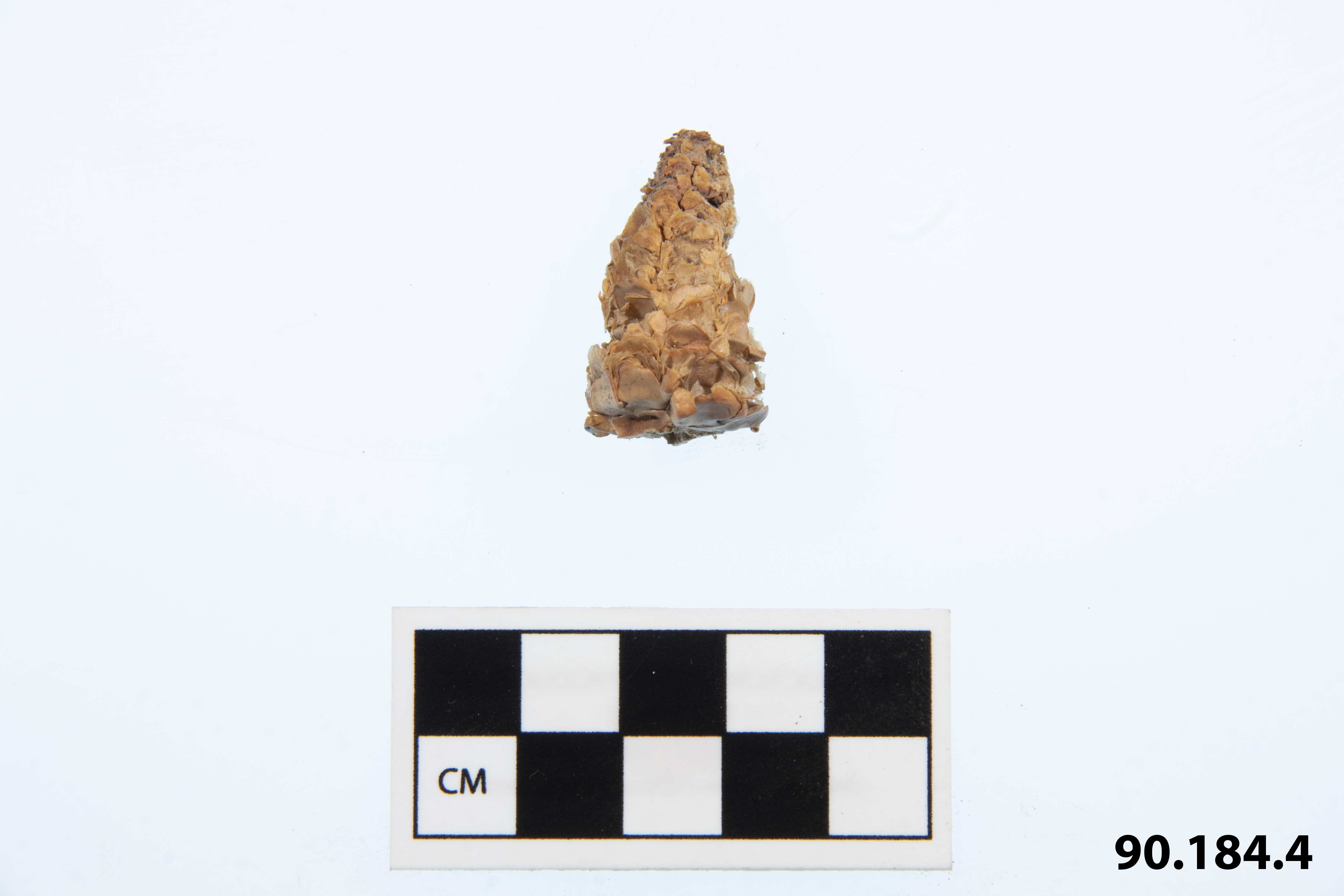
Pre Nal-Tel maize fragment from La Perra Cave, Sierra de Tamaulipas.

A little over a decade later, spurred by colleagues in botany, MacNeish would search farther south for earlier evidence of maize cultivation. In 1961, after years of survey in Central America and southern Mexico, MacNeish found promising dry caves in the Tehuacán valley of Mexico. There he led a multidisciplinary team in the excavation of six cave sites. Among the many discoveries were maize remains recovered from layers dating to 4,700 BC. Tehuacán was theorized as the ancient seat of maize domestication.

Radiocarbon dating techniques utilized by MacNeish in Tamaulipas and Tehuacán required large amounts of carbon, frequently charcoal, that would be destroyed during the dating process. The resulting age was then assigned to artifacts (corn, stone tools, bone, etc.) that were found in the same layer as the charcoal. Developments in radiocarbon made in the 1980s meant that much smaller samples were required, reducing the chance that sampled artifacts would be completely destroyed. When this direct method was applied to maize from Tehuacán and squash from Tamaulipas, the results were up to 2,500 years younger than previously thought.
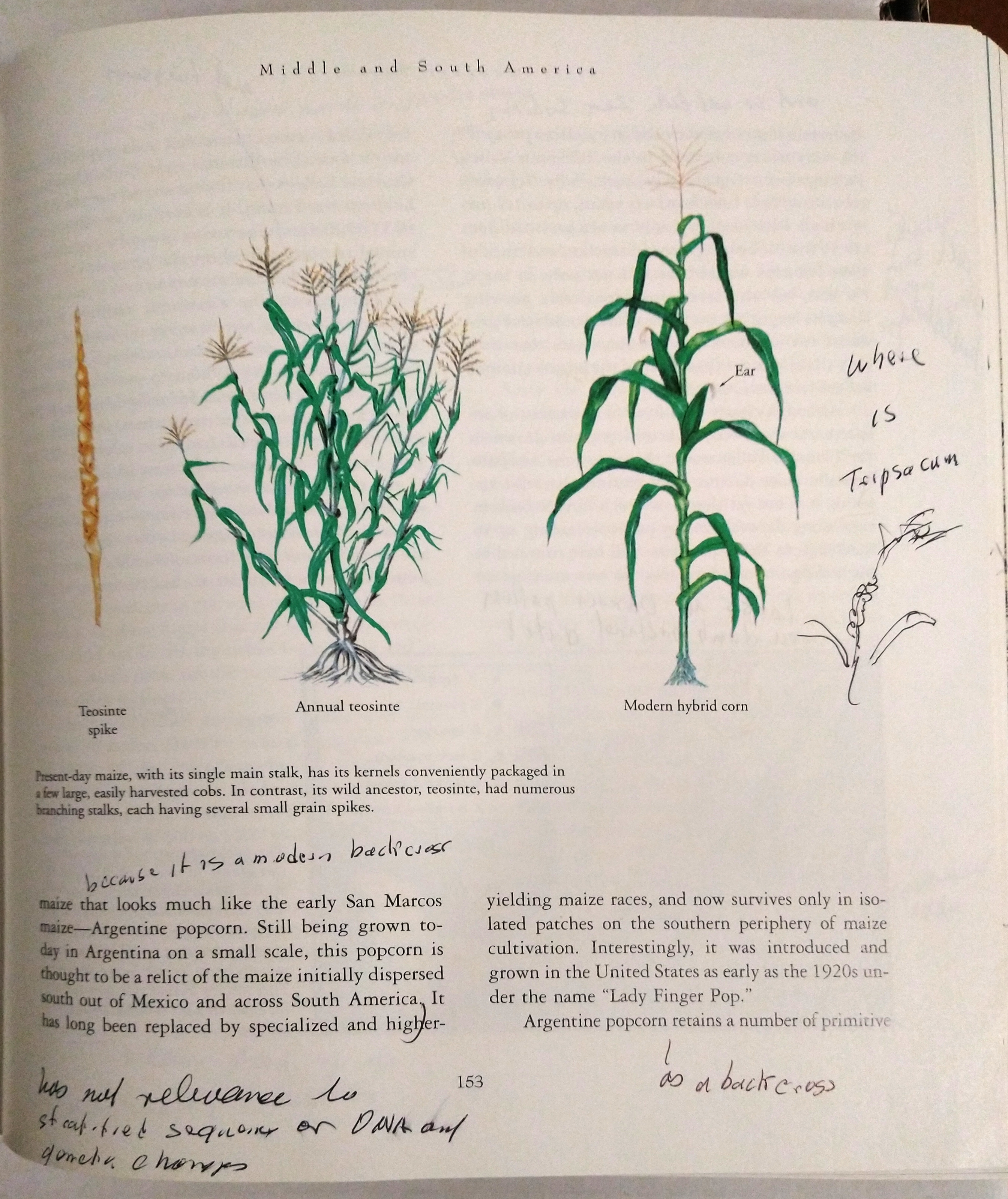
MacNeish’s comments in the margins of Bruce Smith’s 1995 book The Emergence of Agriculture.

The revisions resulted in prickly disputes about the age of domestication in the Americas. Eventually the dust up resulting from the new dating technique settled, due in part to new dates obtained from squash seeds that rooted domestication to an earlier date of 8,000 BC in Mexico.

MacNeish remained resolute that the dates he derived were accurate up until he passed in 2001. In 2012, Archaeologists returned to the cave sites in the Tehuacán Valley in search of maize remains. The team recovered new maize samples that corroborated the younger age for Tehuacán maize.

Recent research within the fields of microbiology and DNA have focused on the teosinte plant and the Balsas River as the probable ancestor and location for earliest cultivation of maize. Analysis of the DNA suggests that the plant was cultivated as early as 7,000 BC.

The fact that MacNeish did not locate the cradle of corn, shouldn’t take anything away from the massive effort he and his colleagues undertook during their search. As for the Tamaulipas maize, MacNeish himself credits his project in Tamaulipas for planting the seeds that would develop into the multidisciplinary approach he would adopt for much of his subsequent career.
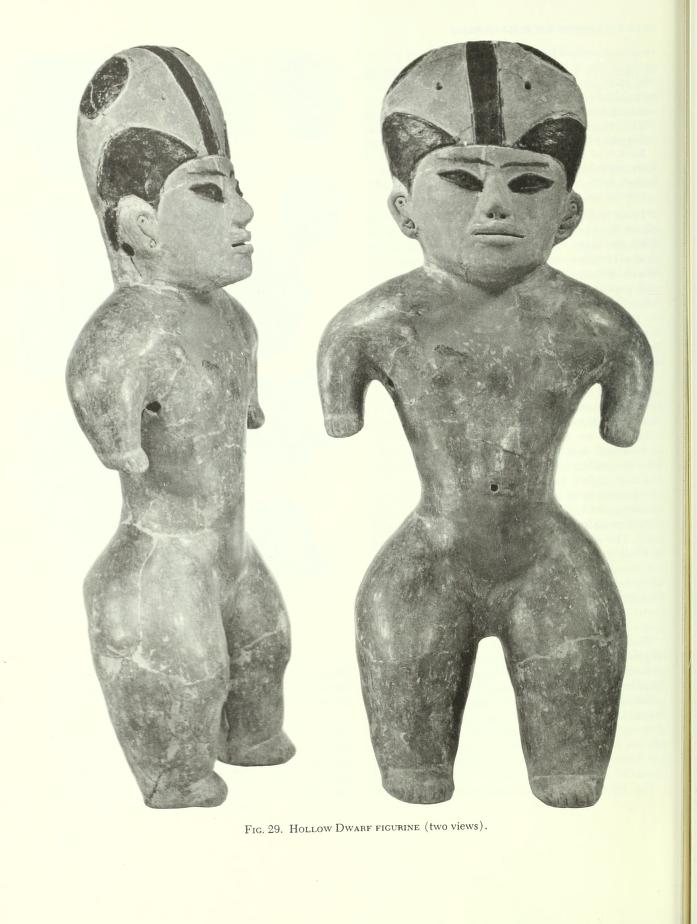
The Tehuacan Hollow Dwarf Figurine

This blog represents the twelfth entry in a blog series – Peabody 25 – that will delve into the history of the Peabody Institute through objects in our collection.  A new post will be out with each newsletter, so keep your eyes peeled for the Peabody 25 tag!


In the early 1960s, future Peabody director Richard “Scotty” MacNeish undertook several important excavations in the Tehuacán Valley, located in the Mexican state of Puebla. Peabody curator Fred Johnson and Peabody director Doug Byers assisted MacNeish with his project, and provided the institutional support needed for National Science Foundation funding. During the 1970s the data gathered and analyzed by MacNeish was published in a five volume book series which garnered a lot of attention from the archaeological community—these are now available on InternetArchive. While his most prominent contribution to the field involved his research on the evolution of corn, he also provided a great deal of information toward the study of ceramics in the Tehuacán Valley region, particularly when it came to the ceramic figurines that were discovered during his excavations.

In total, MacNeish discovered a total of 74 figurine specimens from the Ajalpan locality of the Tehuacán Valley. While many of these figurines were fragmentary, one was excavated as a nearly whole specimen. This example is made of Ajalpan Coarse red paste and is finished with a thin wash and red pigmented paint which has been applied to some areas. This figurine is quite large, measuring 50 cm tall, 22 cm wide at the shoulders and 9 cm wide at the waist. As with many of the other figurine examples, the Ajalpan Figurine has a large head with an elongated torso and stubby arms and legs. Dubbed the “Dwarf Figurine” by MacNeish because of the figure’s large head and squat torso, these features may be attributed more to style and artistic convention.  The large, almond shaped eyes and headdress worn by the figurine led MacNeish to draw comparisons to its resemblance to Egyptian figures.


figurine
Photos of the Hollow Dwarf Figurine.

The presence of the so-called hollow dwarf figurines in the Tehuacán Valley suggested to MacNeish that there were connections between the Late Ajalpan phase of Tehuacán and the San Lorenzo phase of the Olmec area to the east, though it is unclear if contemporary archaeologists would agree. While MacNeish was working in the 1960s it was not uncommon to link interesting or unusual finds to the enigmatic Olmec culture. MacNeish suggested that there were considerable stylistic similarities between the Ajalpan figurines and examples from Olmec sites. He also pointed to the presence at Tehuacán of plain tecomates (a globe shaped vessel with no neck), Ponce Black ceramic sherds, and bowls with thickened rims as evidence of links between the two areas.

Today the Ajalpan Figurine resides in the one remaining exhibit constructed during MacNeish’s tenure at the Peabody.

The William Duncan Strong Collection

This blog represents the twelfth entry in a blog series – Peabody 25 – that will delve into the history of the Peabody Institute through objects in our collection.  A new post will be out with each newsletter, so keep your eyes peeled for the Peabody 25 tag!

The Peabody Institute holds many collections from across North America. In the early 20th century, institutions often traded objects with one another in order to expand holdings and develop more diverse collections. One of the collections the Peabody received in trade is the William Duncan Strong collection, which consists of objects from Labrador. Strong was a prolific archaeologist and anthropologist who was known for his direct historical approach to studying Indigenous cultures of North and South America.

William Duncan Strong was born in Portland, Oregon in 1899. He attended the University of California at Berkeley where he initially studied zoology before switching his focus to Anthropology. While at Berkeley, he studied under Alfred L. Kroeber, a well-known American anthropologist who Strong considered a mentor and friend. Strong received his Ph. D. in 1926. His dissertation, titled “An Analysis of Southwestern Society,” was subsequently published in American Anthropologist, the flagship journal of the American Anthropological Association. Throughout his career, Strong conducted ethnographic and archaeological studies throughout southern California, Nebraska, the Pacific Northwest, the Great Plains, Peru, and Labrador.

william-duncan-strong-6f5667e9-c454-4b90-82e6-bc08deefff3-resize-750
William Duncan Strong. Photo Source: Alchetron.com/william-duncan-strong

The Labrador collection is one of the largest collections housed at the Peabody. It was given to the Peabody by the Field Museum in Chicago in exchange for materials from Pecos Pueblo. The Labrador collection contains many interesting artifacts from the Arctic region. Strong assembled the collection as part of a 1927-28 expedition to the Arctic led by Commander Donald B. MacMillan. MacMillan was known for his arctic cruises, which often included a variety of scientists and observers. Most of Strong’s time was spent in ethnographic research with the Montagnais-Naskapi, but he also found time to excavate several Inuit villages—this is where the Peabody collection originated.

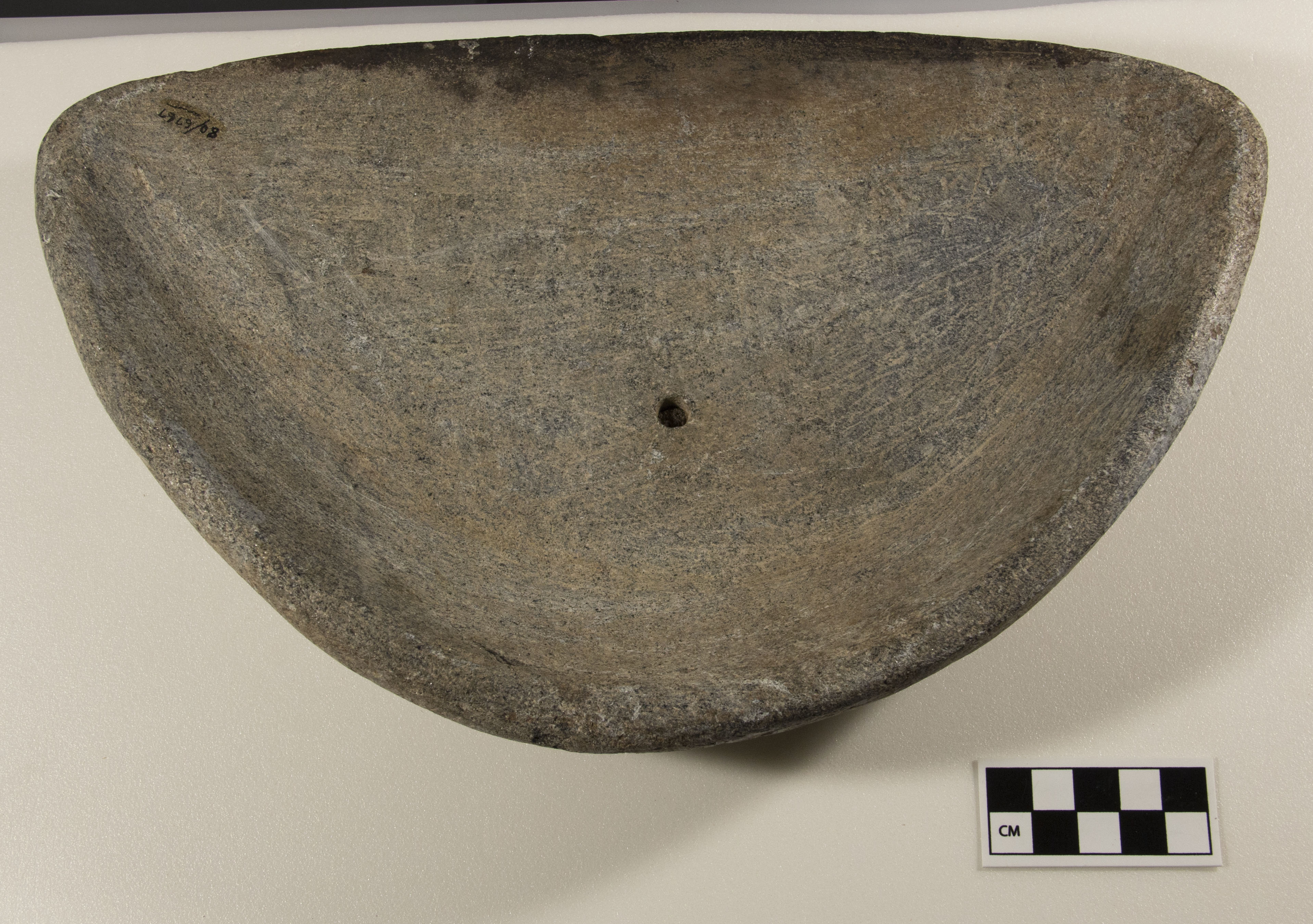
One of the artifacts that I found the most intriguing was what looked like a boat carved out of stone. I asked about what this object was since I had never come across anything like it.  I thought perhaps it was some kind of kettle but I was informed that it was actually a lamp called a Kudlik.

Lamp
One of the Kudliks present in our collection.

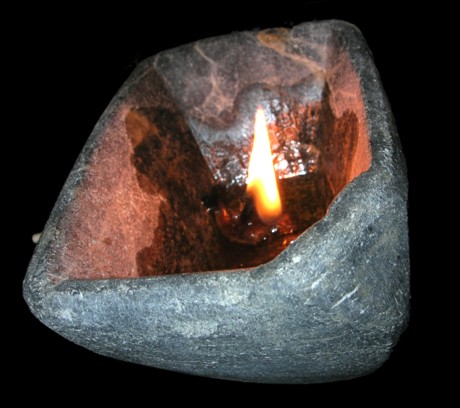
These lamps were typically used by people in the Arctic to light and heat their dwellings, to melt snow, and to cook. They were usually made out of soapstone, which was carved into a dish-like object with a shallow perforation in the center. This is where the wick, which was fashioned from cottongrass or moss, would be placed. The surrounding dish was then most commonly filled with seal blubber, although whale blubber was also used in whaling communities. The wick would soak in blubber, which would then allow it to remain lit and provide people with light.

paleoeskimo lamp burning
A picture of a Kudlik in use. Photo Credit: elfshotgallery.blogspot.com

It is always very interesting to see how people in the past used various objects from their environment to create tools that we still use to this day!

Radiocarbon Dates Association, Inc.

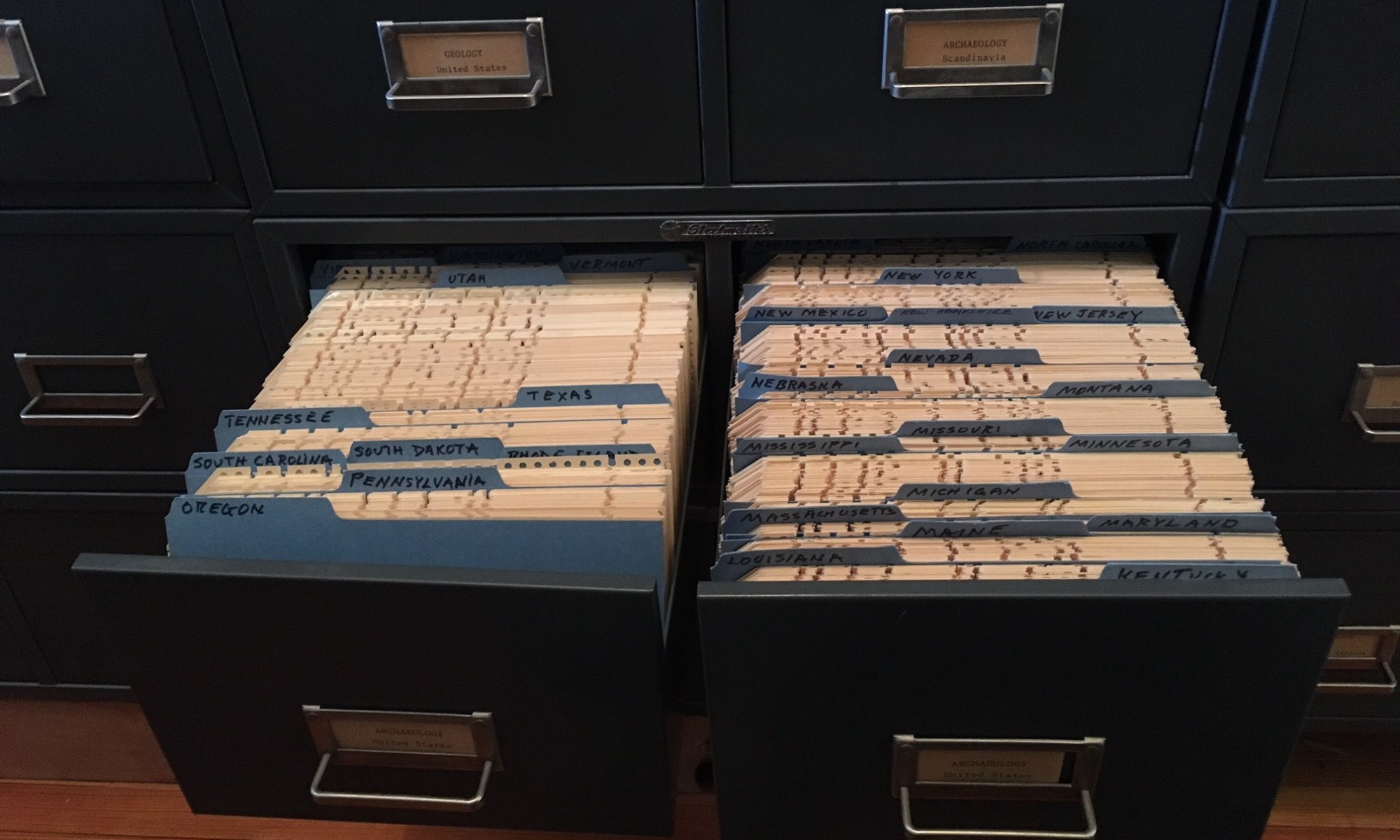
Drawers of punch cards

This blog represents the eleventh entry in a blog series – Peabody 25 – that will delve into the history of the Peabody Institute through objects in our collection.  A new post will be out with each newsletter, so keep your eyes peeled for the Peabody 25 tag!

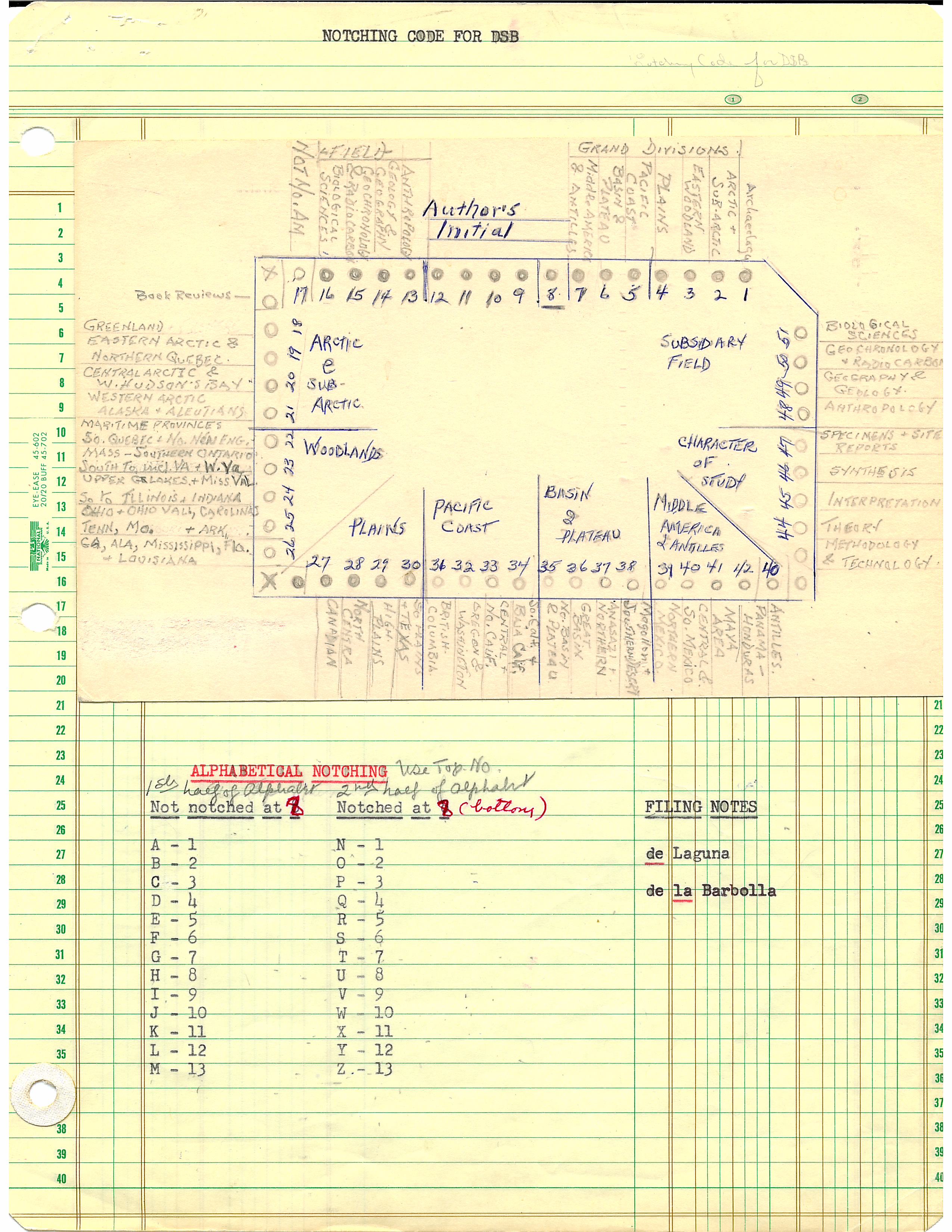
One of the more unusual collections I came across during my survey of the Peabody’s archives last year was a group of notched 5×8-inch cards containing radiocarbon dating information. It took me a while to figure out what these cards were, and as it turns out, both the format and the content have interesting back stories. These “punch cards,” widely used as a form of data storage in the late nineteenth to twentieth century, represent an endeavor to create a data set of known radiocarbon dates from sites around the world and share it with researchers.

Dr. Willard Frank Libby, a chemist who studied radioactivity and worked on the development of the atomic bomb during World War II, invented radiocarbon dating in the 1940s. He recognized its potential for fields such as archaeology and geology (and received a Nobel Prize in Chemistry in 1960 for these efforts). His research quickly came to the attention of Doug Byers and Fred Johnson at the Peabody, who were already using scientific dating techniques such as pollen analysis and dendrochronology. When the American Anthropological Association formed the Committee on Radioactive Carbon 14 in 1948, to liaise between the archaeological community and Libby and provide him with archaeological samples on which to test his method, Johnson was appointed its Chairman.

(See the additional resources below for publications on radiocarbon dating authored or edited by Johnson, who became so involved with this subject that in a 1958 letter he wrote, “… now I wish to heaven that I had never heard of radiocarbon”)!

Beginning in 1953, conferences on radiocarbon dating began to be held at the Peabody. In October 1956, the Committee for Distribution of Radiocarbon Dates was established at one such conference. The R.S. Peabody Foundation was listed as the committee’s address. A $1,500 grant by the Wenner-Gren Foundation in 1957 was used to finance a survey sent to 1,500 scientists to gauge interest in radiocarbon dates punch cards. Enough interest was shown that the enterprise moved forward. In 1958, Radiocarbon Dates Association, Inc., was established, with Johnson as President and Byers as Secretary-Treasurer. Subscriptions were purchased by museums and universities across the world.

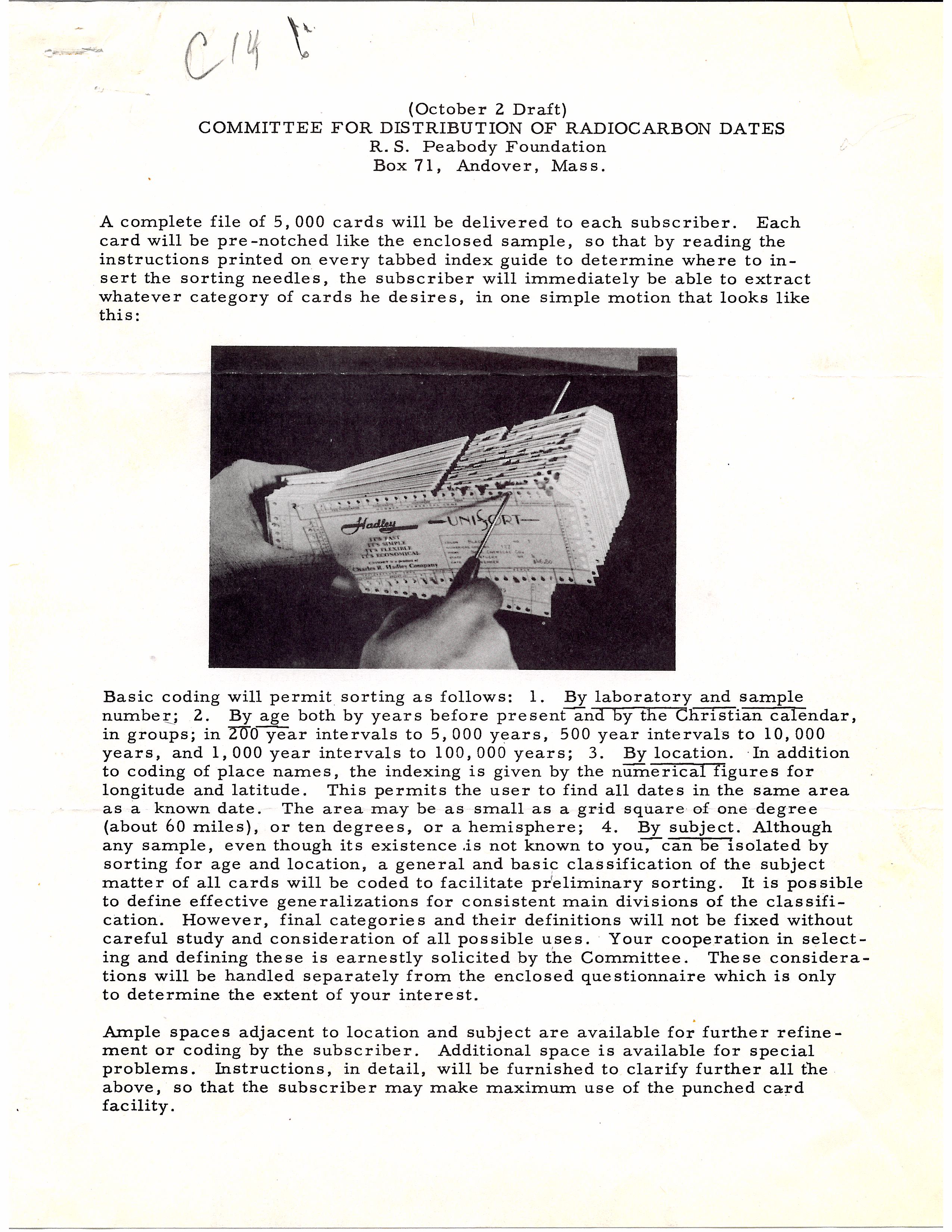
Committee for Distribution of Radiocarbon Dates informational page
Committee for Distribution of Radiocarbon Dates informational page accompanying survey

Mockup of radiocarbon dates punch cards

The cards were published and sent to subscribers in batches, along with sorting and coding equipment, and index guides. Each card contained information about a sample, such as its geographic location, its material (plant remains, oak, i.e.), where it was processed, its date, a citation if published, and occasionally a narrative description of where it was collected. This information was collected from the approximately forty laboratories carrying out this type of dating. Through the notches on the cards, using the sorter, subscribers could parse out samples having a common trait, like doing a search of records through a computer database with a particular term.

Punch cards were inspired by notched papers designed in the eighteenth century for looms, to help automate patterns in weaving.  By the late nineteenth century, the idea had been adapted to other uses. Herman Hollerith, working at the United States Census Bureau, applied his Electric Tabulating System invention to census data processing. This game-changing system led to the formation of IBM, and punch cards dominated data processing for most of the twentieth century, and were used with early computers until about a generation ago.

After the launch of Radiocarbon Dates Association, Inc., in the late 1950s, the production and distribution of the cards are not mentioned as much in the Peabody’s Annual Reports (my main source of information for this post!). A 1973 letter shows that the name had been shortened to Radiocarbon Dates, and that the main address had been moved to Braintree, MA, c/o John Ramsden. That is the last trace of the project that I’ve found here, besides the cards themselves. Fred Johnson donated his radiocarbon dating-related papers to the University of California, Los Angeles, where Willard Libby taught for a substantial amount of his career (and which hold his papers as well). More information about the project exists in those records, which were used by Keith Baich in his 2010 Portland State University master’s thesis, American Scientists, Americanist Archaeology: The Committee on Radioactive Carbon 14, which heavily features Fred Johnson.

Additional resources:

Finding aid for the Frederick Johnson Papers at UCLA: http://www.oac.cdlib.org/findaid/ark:/13030/kt296nc30m/entire_text/

Finding aid for the Willard F. Libby Papers at UCLA: http://www.oac.cdlib.org/findaid/ark:/13030/kt9j49q5hh/admin/#ref7

Baich, Keith David, “American Scientists, Americanist Archaeology: The Committee on Radioactive Carbon 14” (2010). Dissertations and Theses. Paper 168.
http://pdxscholar.library.pdx.edu/open_access_etds/168

Johnson, Frederick, et al. “Radiocarbon Dating: A Report on the Program to Aid in the Development of the Method of Dating.” Memoirs of the Society for American Archaeology, no. 8, 1951, pp. 1–65. JSTOR, JSTOR, www.jstor.org/stable/25146610.

Johnson, Frederick. “Radiocarbon Dating and Archeology in North America.” Science, vol. 155, no. 3759, 1967, pp. 165–169. JSTOR, JSTOR, www.jstor.org/stable/1721124.

The Temporary Archivist position is supported by a generous grant from the Oak River Foundation of Peoria, Ill. to improve the intellectual and physical control of the museum’s collections. We hope this gift will inspire others to support our work to better catalog, document, and make accessible the Peabody’s world-class collections of objects, photographs, and archival materials. If you would like information on how you can help please contact Peabody director Ryan Wheeler at rwheeler@andover.edu or 978 749 4493.

Report from the Advisory Committee on Archaeology, 1914

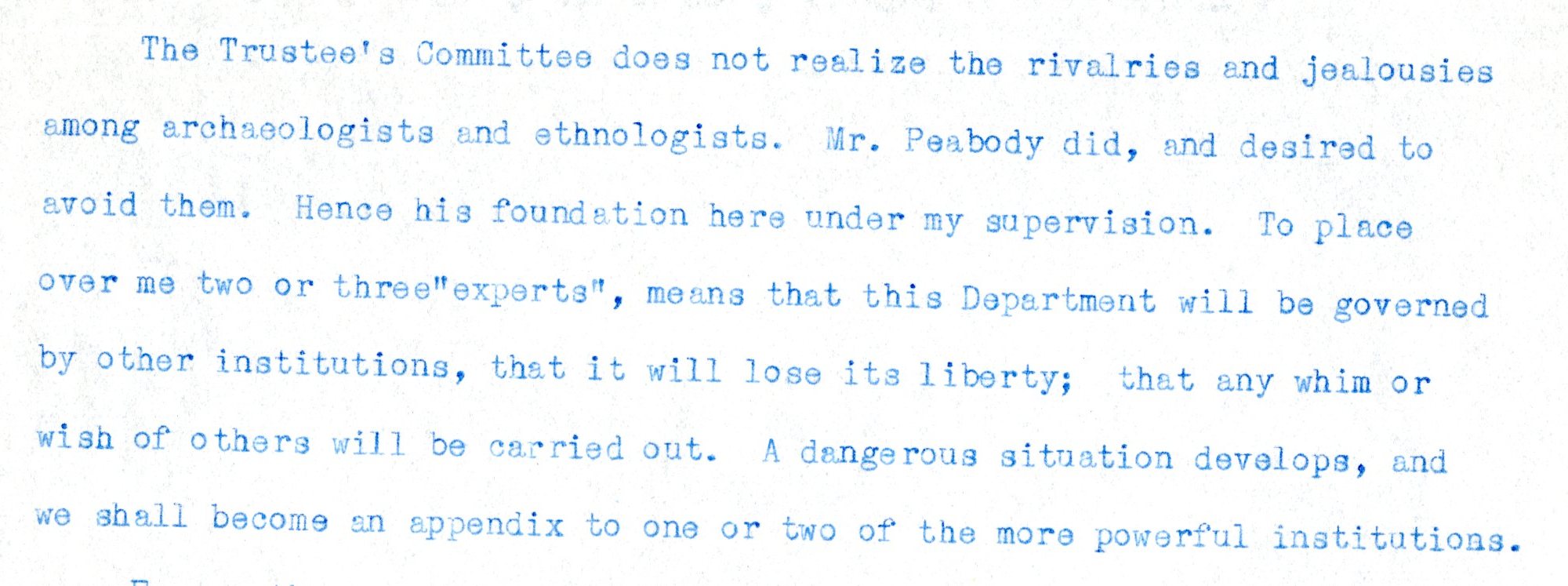
Warren Moorehead complains about a special advisory committee in a letter to the Headmaster.

This blog represents the ninth entry in a blog series – Peabody 25 – that will delve into the history of the Peabody Museum through objects in our collection.  A new post will be out with each newsletter, so keep your eyes peeled of the Peabody 25 tag!

Bureaucracy and oversight committees are not modern phenomena.  In the earliest years of the Peabody, contemporaneously known as the Department of Archaeology, the work done was overseen by a subcommittee of the Trustees of Phillips Academy. However, the Trustees recognized the limitations of their own knowledge in the world of archaeology and appointed a Special Advisory Committee on Archaeology in 1914.

The special committee was tasked with assessing mundane logistical needs of the Department as well as providing direction and feedback on proposed research.  Composed of five prominent anthropologists; Franz Boas, William Henry Holmes, Roland Dixon, Hiram Bingham, and Frederic Ward Putnam, the committee made the following suggestions:

  1. Install a synoptic exhibit, strictly limited in size and scope, of the life of man from geological time to the beginnings of history
  2. Limit public lectures to no more than 4 each year
  3. End formal classes in archaeology for the students at Phillips Academy and instead encourage individual students as their interests dictate
  4. The work of ‘research’ should include two separate divisions; one to investigate large definite problems of archaeology, and the other to aid competent archaeologists in the execution of such of their plans
  5. Appoint a small permanent advisory committee of experts of easy access, whose duty it shall be to report to the Trustees upon all plans for exploration, organization of study collections, museum research, and publication.

These recommendations were received with mixed feelings by curator Warren K. Moorehead.  He appreciated many of the committee’s suggestions, but strongly objected to the creation of a permanent oversight committee.  Convinced that they would meddle in his research plans and enmesh him in red tape, Moorehead clearly expressed his displeasure:

August Blog scans004

Warren Moorehead complains about a special advisory committee in a letter to the Headmaster.


However, the committee composed of Dixon and Bingham, existed for several years.  They limited Moorehead to his ongoing work in Maine and simultaneously decided to embark on an expedition in the Southwest.  This decision directly led to the appointment of Alfred V. Kidder as the Director of Southwest Explorations and his seminal work at Pecos Pueblo, New Mexico.

Dapper Digging

Contributed by Lindsay Randall

This blog represents the eighth entry in a blog series – Peabody 25 – that will delve into the history of the Peabody Museum through objects in our collection.  A new post will be out with each newsletter, so keep your eyes peeled of the Peabody 25 tag!

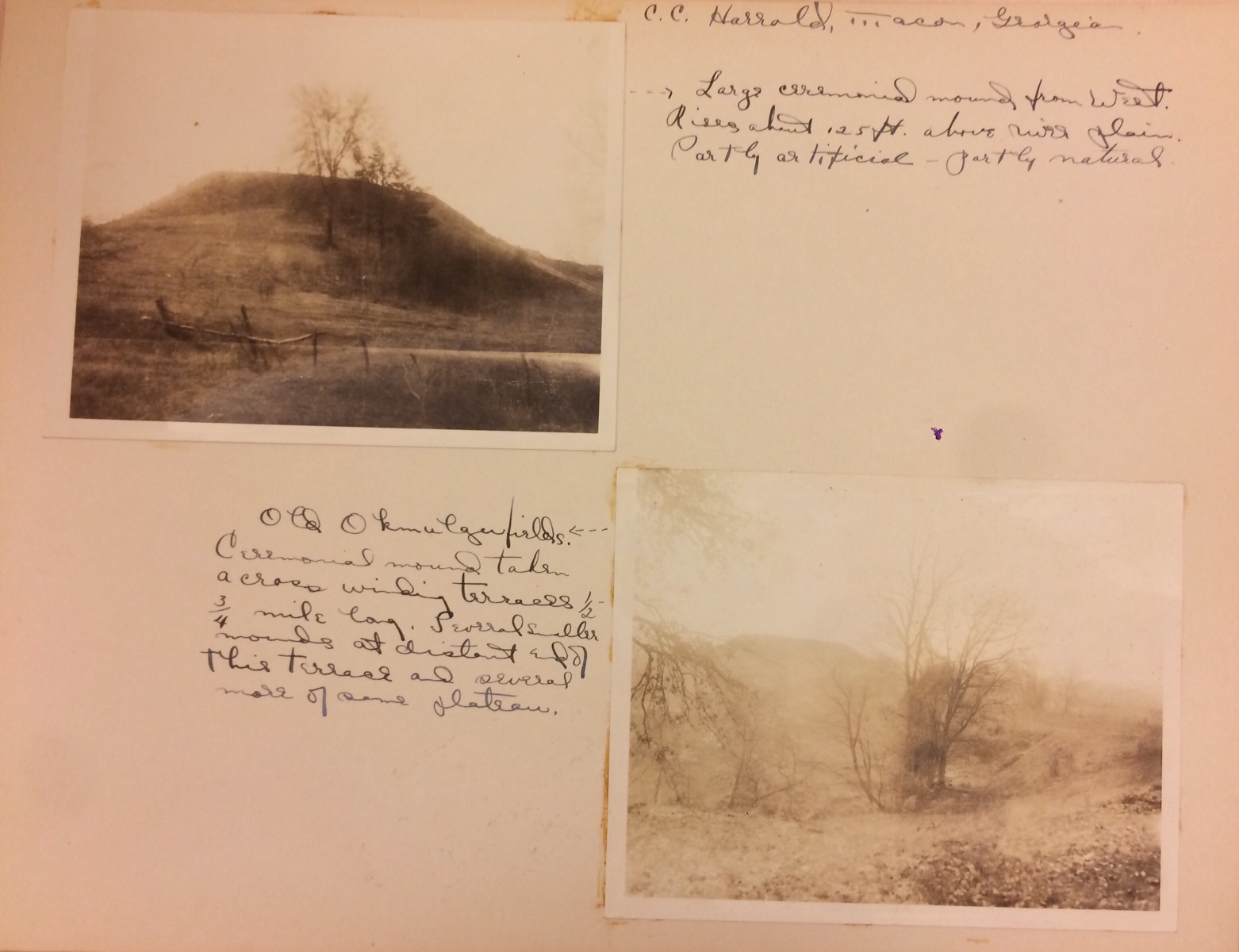
Excavations at the Etowah Mound site in Georgia have revealed a great deal about the Mississippian culture. Based on the archaeological materials found at the site, it is likely that during its occupation about 1,100 to 500 years ago,  it was one of the most significant and influential cities in southeastern North America. A hallmark of the Mississippian culture, is the linkage through economics, politics, and other societal influences of large villages, such as Etowah, with smaller communities that surround it.

Due to its historical prominence, the Etowah Mound site is considered an important archaeological site in the United States.

The site has three large platform mounds in addition to a plaza and smaller mounds. The largest of the mounds towered over the landscape, reaching the height of a six-story building.  The mounds were used in a variety of ways: platforms that supported buildings, ceremonial sites, as well as burial locations for elite members of the society.

1115
Images of some of the Etowah mounds from the Peabody collections

In 1925 the Trustees of Phillips Academy sponsored the first systematic excavation under the direction of Warren K. Moorehead. This three year investigation occurred during a transitional time in the history of archaeology when excavators were moving away from an antiquarian focus on objects and developing more scientifically rigorous methods.  Moorehead’s interest in Etowah may have been a reaction to Alfred V. Kidder’s stratigraphic excavations at Pecos Pueblo in New Mexico, where new ideas about chronology and multidisciplinary work were tested.

Despite new methodologies and practices in archaeological investigations, many excavations were still carried out in ways that would make any archaeologist today cringe.  The importance of stratigraphy was still not fully understood or appreciated by all archaeologists, including Moorehead, when the Etowah excavations were being undertaken. Modern attempts to sort out and understand Moorehead’s excavations have proved challenging. In their 1996 book Shell Gorgets: Styles of the Late Prehistoric and Protohistoric Southeast archaeologists Jeffrey Brain and Philip Phillips lament Moorehead’s lack of precision, poor recordkeeping, and disregard for context and stratigraphy. Perhaps it’s best that Moorehead announced in 1930 that he had decided “to abandon further field operations and concentrate on a study of type distributions in the United States during the next six years.”

As we reviewed Moorehead’s photographs of the 1925-1928 excavations at Etowah, we were often incredulous about the images of a tractor bulldozing a mound or workers (dressed in 3 piece suits no less!) hacking away at the side of a large mound. We understand today that a great deal of contextual information was lost using these clumsy techniques.

Although these images affect our sensibilities, it cannot be denied that they are also important. These photographs help to document just how much the field of archaeology has changed and grown in the past 100 years. What started out as a gentlemen’s pastime has transformed into a profession associated with state-of-the art scientific techniques and theories that allow investigation of “hidden histories.” We understand that in another hundred years the images of our pristine and scientifically driven investigations might too cause heartburn in those archaeologists looking back on our work!

The site is now a Georgia state park and is designated as a National Historic Landmark (1964) and is listed on the National Register of Historic Places (1966)

The Macaw Factor

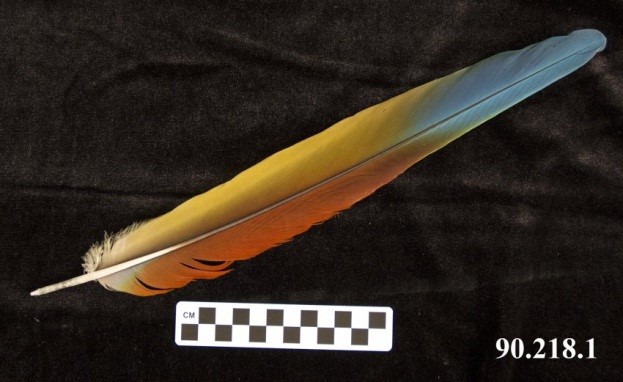
Macaw feather from the Peabody collection

Contributed by Quinn Rosefsky

This blog represents the sixth entry in a blog series – Peabody 25 – that will delve into the history of the Peabody Museum through objects in our collection. A new post will be out with each newsletter, so keep your eyes peeled for the Peabody 25 tag!

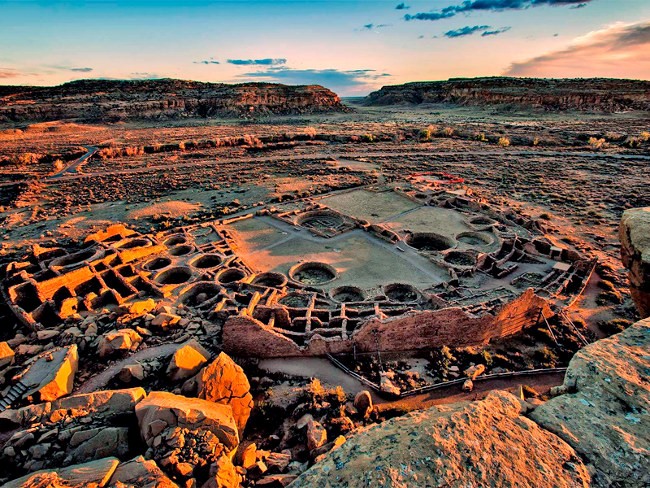
Overview of Chaco Canyon, New Mexico

At the Robert S. Peabody Museum, it seems as though there is almost no limit to the range of phenomena one can explore. When the topic Chaco Canyon was suggested, I thought looking at trade routes would be interesting. It quickly became clear that what I was about to enter was the world of a great culture which I thought had mysteriously “disappeared” about 800 years ago. What I quickly learned was that these people, the “Ancestral Puebloans,” had not disappeared. Research has shown that the Puebloans had adapted to climate change in the area by dispersing. “Today, twenty Puebloan groups in New Mexico, as well as the Hopi in Arizona, claim Chaco as their ancestral homeland and are tied to this place through oral traditions and clan lineages. A number of Navajo clans are also affiliated with Chacoan sites through their traditional stories.” (National Park Service: https://www.nps.gov/chcu/faqs.htm)

Chaco Canyon, located on a section of the Colorado Plateau in northwest New Mexico, was home to the Chacoan culture which flourished from AD 1000 to 1150. A UNESCO World Heritage Site, the people who lived there were very sophisticated. They used astronomical alignments, geometry, and impressive building techniques, allowing for multi-storied masonry houses.  They had a complex road system stretching hundreds of miles, linking Chaco to other communities. One of their buildings, four or five stories high, Pueblo Bonito, contained about 650 rooms.

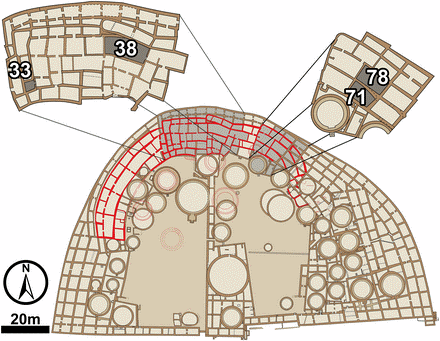
Plan view of Pueblo Bonito
Plan view of Pueblo Bonito with the earliest construction highlighted in red. The locations of the elite burial crypt, room 33, and the three rooms with dated macaw samples are highlighted. From Adam Watson and colleagues’ article on Chaco macaws in Proceedings of the National Academy of Sciences Vol. 112(27): http://www.pnas.org/content/112/27/8238)

The Chacoans traded with people in the Mongollon and Hohokam regions to the south and with people from Mexico and Central America.  Long-distance travel by Ancestral Puebloan people was common and among the goods they acquired were turquoise, seashells, copper and chocolate, none of which were found locally. They also traded for scarlet macaws, a bird with a natural habitat 1000 miles to the south.


The Robert S. Peabody Museum has several “modern” macaw tail feathers in its collection, one of which is shown below. Preserved feathers  from 1000 years ago would be quite rare.

Scarlet macaws measure about thirty-two inches long, of which more than half is a pointed tail. They can live up to seventy-five years and eat mostly fruits, nuts and seeds. We know macaws, essentially large parrots, as intelligent birds that are quick to echo our deepest secrets using speech, a magical quality, especially because macaws have no vocal cords. That parrots are rated among the top five in the animal world for intelligence and cognition should come as no surprise. It is likely that the people of Chaco Canyon would have been awed by such an animal.

Scarlet macaws are native to the gulf coast of Mexico, Central America, and South America. The question to ask is for what purpose macaws were brought back to Pueblo Bonito?

Thirty four macaws were recovered from Pueblo Bonito and other sites in Chaco Canyon. Room 33 (see illustration above) was used as a burial crypt for 200-250 years. Macaws were found in rooms 38, 71, and 78. Archaeologist Adam Watson and his colleagues postulated that scarlet macaws were a powerful cosmological symbol and that their presence from the early tenth century reinforced and stimulated a rising social inequality. Those who possessed the birds had access to key cosmological beings and forces as well as links with far distant cultural groups. There is little doubt that the ability of the birds to speak played into this perception.

What is currently exciting is how recent radiocarbon dating of scarlet macaw skeletons from Chaco Canyon has given further insight into the question of their presence. What has been shown is that, based on acquisition and control of valued items such as chocolate and macaws, an elite class at the top of a social and political hierarchy dominated Chacoan life. (Watson et al. 2015)

What the elites achieved and their importance is amply demonstrated in their “great houses” and the acquisition of “exotic” goods from distant regions (ibid.) Included in these exotic goods were macaws. Feathers from macaws were found on prayer sticks, costumes, and masks. According to Watson and his colleagues,“…the flight of or just the appearance of certain birds or the use of their feathers is believed to motivate the fall of rain or snow, as well as the seasons, the sunshine, and the heat.”

Originally, it was believed that trade in items such as macaws at Chaco dated from around AD 1040. With radiocarbon dating done in 2010 on skeletal remains of the macaws from Pueblo Bonito, the dates of the florescence have been moved back to AD 775-875.

Whether or not the macaws were brought back to Pueblo Bonito in single journeys or in successive stages has been debated extensively. Some have raised the possibility that macaws were also bred locally in Chaco Canyon itself, although the arid region is not a natural habitat for such birds. The discovery of breeding pens, perches, bones, and eggshell fragments has led to speculation about on site breeding, but evidence suggests such macaws did not reach maturity.

“There are no indications that the people of Pueblo Bonito bred scarlet macaws. Only one of the sample birds was of breeding age and none were exceptionally young. There is also no mention of eggshells in any of the excavation notes, although one room where many of the bird remains were found was probably an aviary.” (“Scarlet macaws point to early complexity at Chaco Canyon.” A’ndrea Elyse Messer, 2015: http://news.psu.edu/story/361255/2015/06/22/research/scarlet-macaws-point-early-complexity-chaco-canyon).

One of many phenomena to explore at the Peabody, the scarlet macaw feathers represent a tangible example of extensive trade routes present in the New World prior to European contact.

Birch bark, maple sap, and a visit to the White Earth Reservation

Contributed by Ryan Wheeler

This blog represents the fifth entry in a blog series – Peabody 25 – that will delve into the history of the Peabody Museum through objects in our collection. A new post will be out with each newsletter, so keep your eyes peeled for the Peabody 25 tag!

The winter 2017 issue of the Andover magazine includes a great piece by Jane Dornbusch on our repatriation of a sacred birch bark scroll to the White Earth Nation in Minnesota. In a nutshell, Peabody curator Warren Moorehead received a number of items from the White Earth Anishinaabeg in 1909 during his investigation of fraud on the reservation. That collection—principally men’s ceremonial regalia and beaded bandolier bags—also included a pictographic bark scroll used in the ceremonies of the Midewiwin, or Grand Medicine Society. Jane’s story also mentions my visit to White Earth in March 2016. The following essay was written right after I returned from Minnesota and provides a few additional details about that visit.

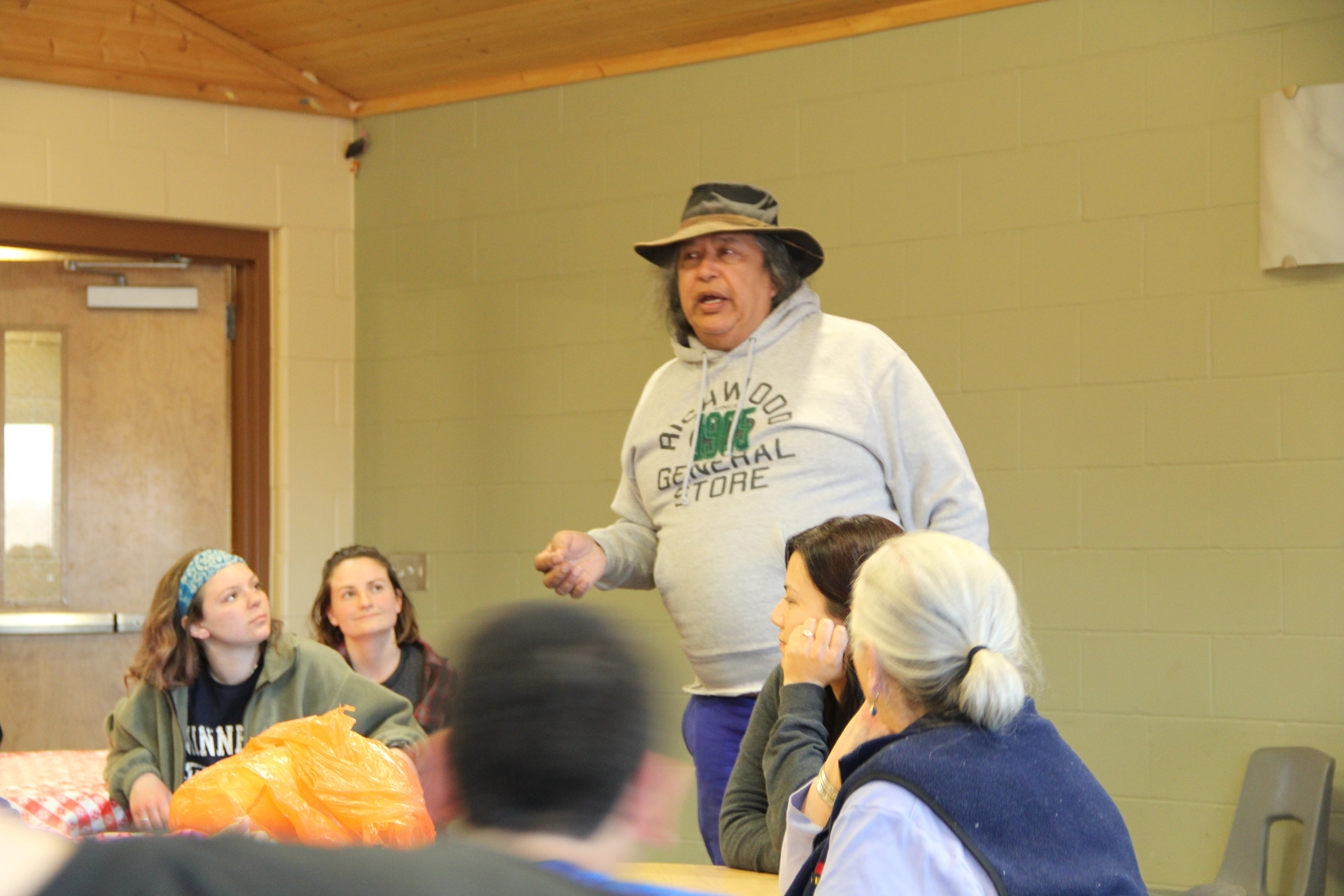
Image of White Earth Land Recovery Project Executive Director Bob Shimek talking to tribal members and college service learning students, March 2016.
White Earth Land Recovery Project Executive Director Bob Shimek talks to tribal members and college service learning students, March 2016.

At the end of March 2016 I flew into Fargo and drove east, headed for the White Earth Indian Reservation. As I drove I passed an occasional cluster of houses, farmland with lots of black, rich soil, as well as lakes, streams, and groves of trees dotting the horizon of a really big sky. I learned later from Bob Shimek, executive director of the White Earth Land Recovery Project, that I had driven across a variety of ecosystems, from oak savanna to pothole prairie.

That first evening in Minnesota I sat in the White Earth community center along with college students on a spring break service learning trip while Bob told us about the White Earth Anishinaabeg. We heard about the land and how this Indian reservation—established in 1867—was designed to succeed, starting with 829,440 acres of forest lands with timber and game, good farmland, lakes and streams with fish. Greedy timber companies and their henchmen defrauded tribal members of their lands and by 1934 less than 800 acres were held by the Anishinaabeg.

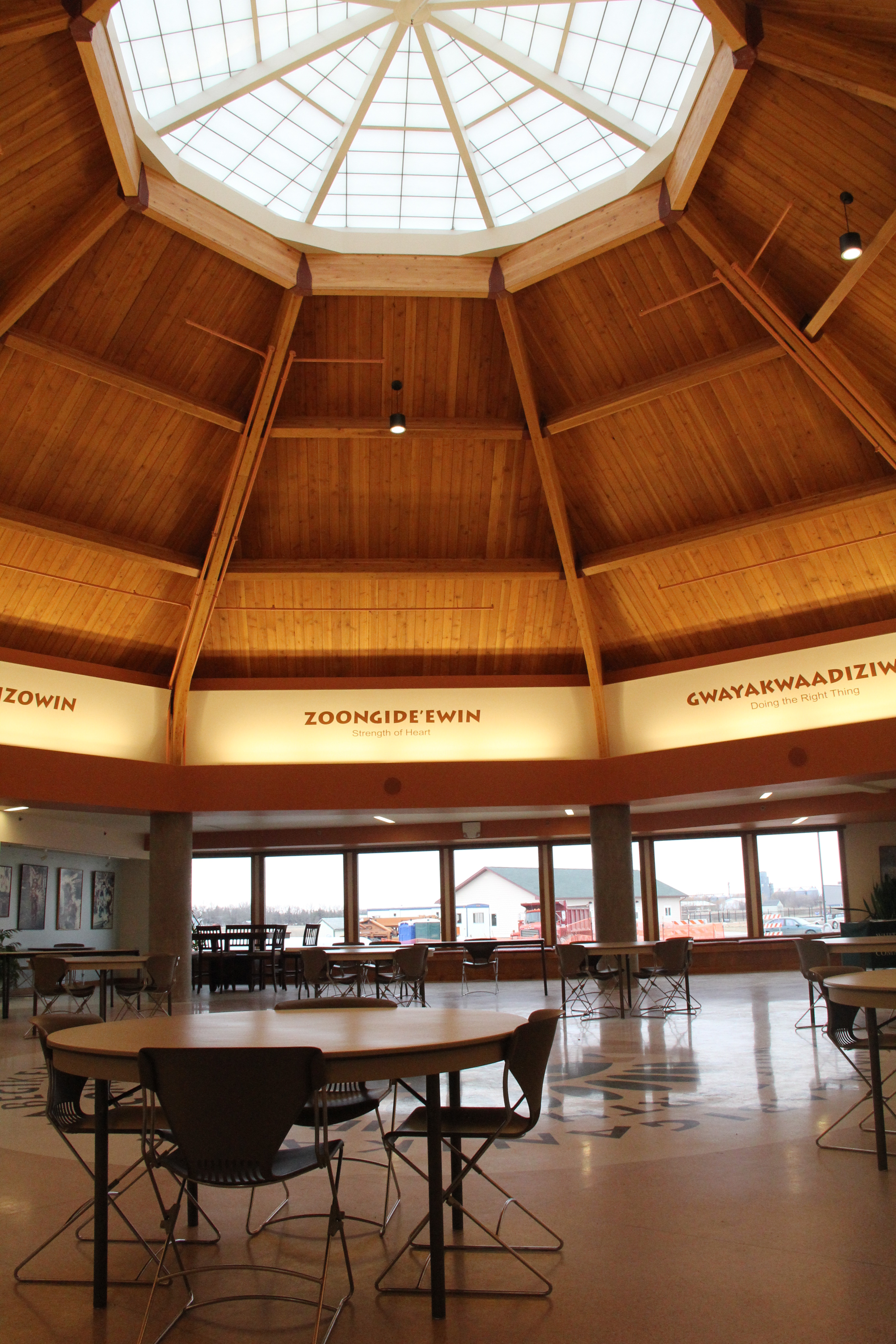
Image of the drum hall at the White Earth tribal college, taken March 2016.
Drum hall at the White Earth tribal college, March 2016.

Since the 1930s the White Earth Anishinaabeg have done what Bob Shimek refers to as nation building. Efforts include a casino in Mahnomen, an annual indigenous farming conference, the Gizhiigin Art Place, a tribal college, the Niijii radio station, and more. Even repatriation, the recovery of sacred objects stored in museums for decades, is nation building. A lot of these nation building activities revolve around traditional food and foodways, like wild rice and maple sugar.

When the sap runs it is all hands on deck. Even the service learning students abandoned other projects and were recruited to haul sap to the boilers. Like New England, maple sugaring is a big deal in northern Minnesota. Among the Anishinaabeg maple sugar has a deep meaning—hauling and boiling sap recalls the origins of the Anishinaabeg. Ojibwe oral literature tells how in the beginning the maple trees were full of thick, sweet syrup that could be easily collected. Manabozho—the Ojibwe trickster and culture hero—decided the people had it too easy and made the syrup thin and watery. He gave the Anishinaabeg the technology to process the sap, but only during the end of winter. The rest of the year was to be spent fishing, hunting, and in other endeavors needed to earn a living.

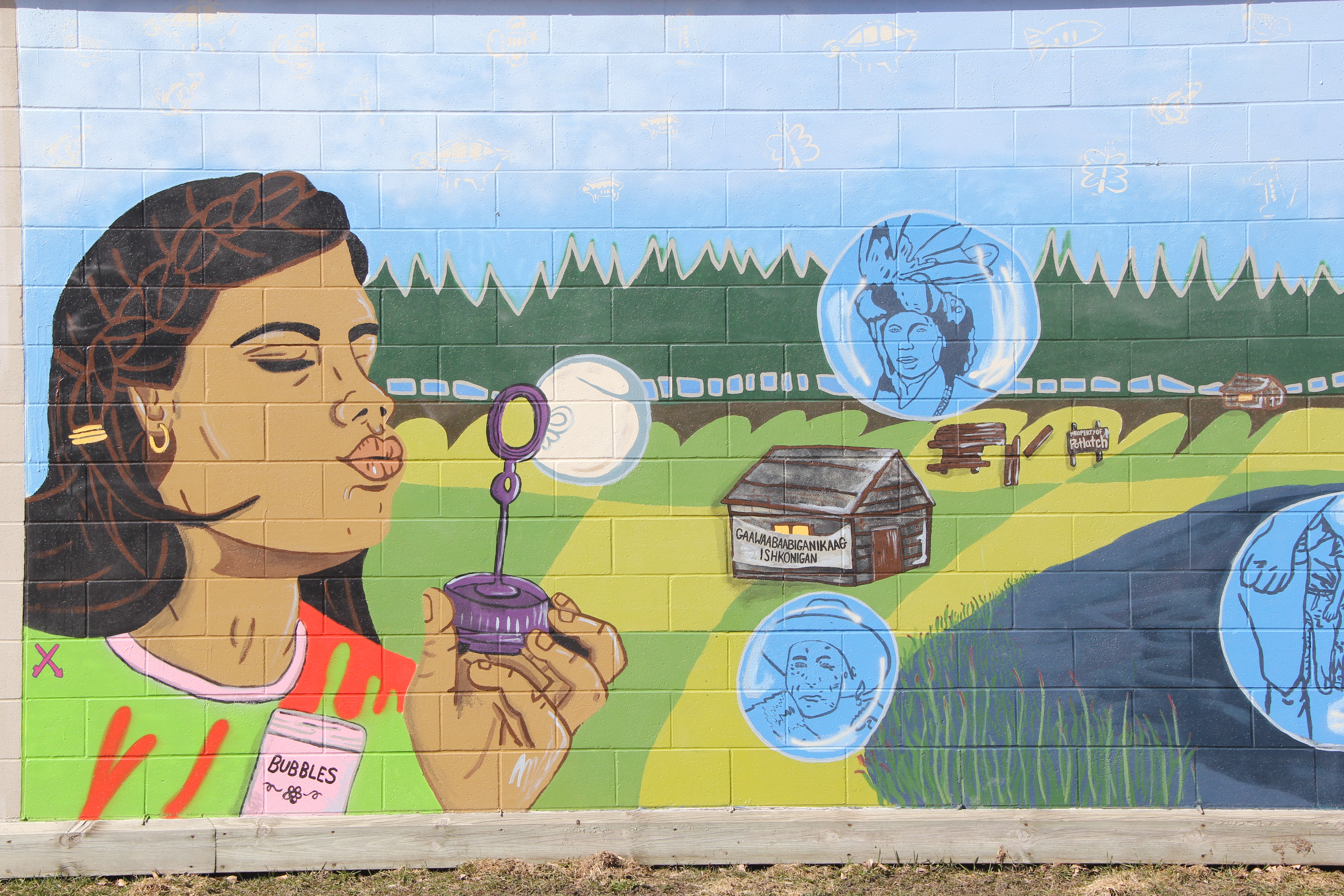
Image of mural on the Niiji radio building, White Earth Reservation, taken March 2016.
Mural at the Niiji radio station, White Earth Reservation, March 2016.

But afterwards, in the evening, there was time for more learning. My last night at White Earth I attended the Big Drum ceremony. This began with a potluck dinner, followed by a pipe ceremony, and then Keller Paap, one of the ceremony leaders, told the story of the Big Drum in Ojibwe. This was pretty remarkable, but things got even more interesting.

Keller and Anton Treuer, another ceremony leader, invited the college students to sit around the drum. Then they told the story of the Big Drum ceremony in English. But there was more. Paap is from Wisconsin and teaches at Waadookodading, an Ojibwe language immersion school, while Treuer is on the faculty at Bemidji State University. Together they shared the stories of religious suppression and how this didn’t change until 1978’s American Indian Religious Freedom Act, along with the importance of teaching and learning the Ojibwe language.

Image of three college students talking with tribal member Diana King, taken March 2016.
College service learning students talking with White Earth tribal member Diana King, March 2016.

So, there are lots of stories at White Earth. Some are written on birch bark scrolls, others are found in the pages of the Congressional inquiry into fraud and deceit, some drip in slightly sweet maple sap, while others still float on the night air in words of Ojibwe. For us, however, perhaps most remarkable is that we—Andover, Phillips Academy, the Peabody Museum—are a tiny part of the story too.

In January 2017 we met with representatives of the tribe again and agreed to the repatriation of several additional objects that, like the birch bark scroll, are examples of cultural patrimony under the Native American Graves Protection and Repatriation Act. Anton Treuer will be speaking at All School Meeting on Wednesday, April 5, 2017.

Pottery, Shells, and Maine

This blog represents the fourth entry in a blog series – Peabody 25 – that will delve into the history of the Peabody Museum through objects in our collection. A new post will be out with each newsletter, so keep your eyes peeled for the Peabody 25 tag!

Contributed by: Lindsay Randall

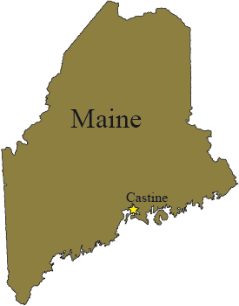
Peabody curator Warren K. Moorehead, beginning in 1915, excavated in the Castine area of Maine in search of sites related to the Red Paint People. Moorehead believed the Red Paint People to be an ancient culture that was distinct from the more recent Algonquian tribes that still live in Maine today. He recognized a number of unusual artifact types found in Red Paint cemeteries and the liberal use of red ochre in burials, hence the name Red Paint. Ideas about the origins and relationships of the Red Paint or Moorehead Burial Tradition (as it is now called) are changing and often still hotly contested by archaeologists and tribes today. The Abbe Museum in Bar Harbor, Maine presents a timeline of contemporary Wabanaki peoples in Maine, demonstrating continuity of modern American Indians back to the earliest occupation of the state.

Map showing the location of Castine, ME.

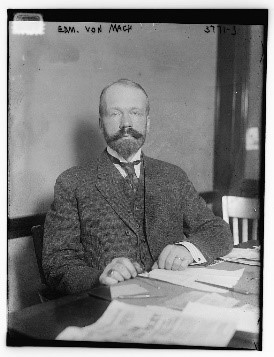
While Moorehead’s Castine investigation did not locate Red Paint site, numerous shell heaps were found. One of the most amazing sites to be excavated was located on the property of Professor Edmund Von Mach. Von Mach was an instructor in art and fine arts at Harvard, Wellesley and other schools in the Boston area and published books on painting and art history. He gained some notoriety during and after World War I for encouraging Americans to support the German cause and his book Official Diplomatic Documents Relating to the Outbreak of the War was withdrawn due to inaccuracies by the publisher.

Portrait of Edmund Von Mach

Von Mach’s politics aside, the shell heap was a very impressive monument, measuring approximately 660 feet long and having a depth between 3 and 5 feet. The vast majority of the shells present were quahog clams, quite common to the area.  Given that a total of twenty four hundred artifacts were recovered, combined with the sheer expanse of the heap and its numerous layers, it is believed that the site was a permanent settlement used by tribes about 2,500 years ago.

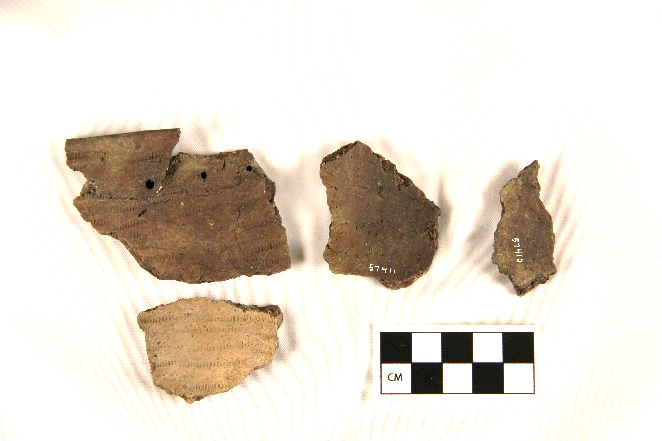
Throughout the summer, several hundred people visited the site to see what unique pieces of the past were being unearthed. Some of the most interesting artifacts discovered were fragments of pottery.

Four pottery pieces from the Von Mach Shell Heap collection at the Peabody Museum.

The pottery is unusual in New England as the soil conditions are very acidic and often deteriorate fragile artifacts. Ceramic specimens are more common in other parts of the country, like the American Southwest.

The only reason that the pottery was not dissolved by the acidic soils surrounding it is that the shells were deposited in the same area. Leaching of calcium carbonate from the shells neutralized the harmful acidic soil. Altering the soil matrix in this manner allows for almost unprecedented preservation of sensitive material.

The pottery helps us to learn about technology and artwork in the community. The introduction and development of ceramics into Maine around 2,700 years ago was very important.  It is during this same period that the populations increased and became more sedentary in permanent villages.

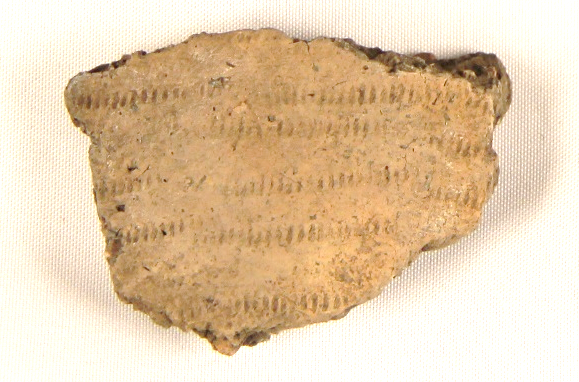
The majority of the pottery pieces in our collections are small and fragile, despite being preserved in the shell heaps.  The ceramic pieces also are decorated with stamped and incised lines.  This method of decoration not only reflects the aesthetics of the time, but may have helped reduce air bubbles prior to firing.

Close-up of one of the incised pottery fragments

Interestingly, archaeologists are now investigating the language that we use to describe archaeological sites. In her 2014 PhD dissertation at UMass Amherst Katie Kirakosian looks at the terms used by archaeologists like Warren Moorehead and his contemporaries to describe shell-bearing sites like Von Mach’s and how these terms have influenced our thinking about the sites and the people that made them. Kirakosian concludes that use of terms like “shell midden” to describe these sites (and, by extension, their Native constructors) denies their complexity and can result in a narrow and biased narrative.

For more information see Moorehead’s book: Archaeology of Maine

Jacob’s Cavern

Detail of breccia

This blog represents the third entry in a blog new series – Peabody 25 – that will delve into the history of the Peabody Museum through objects in our collection. A new post will be out with each newsletter, so keep your eyes peeled for the Peabody 25 tag!

Contributed by Marla Taylor

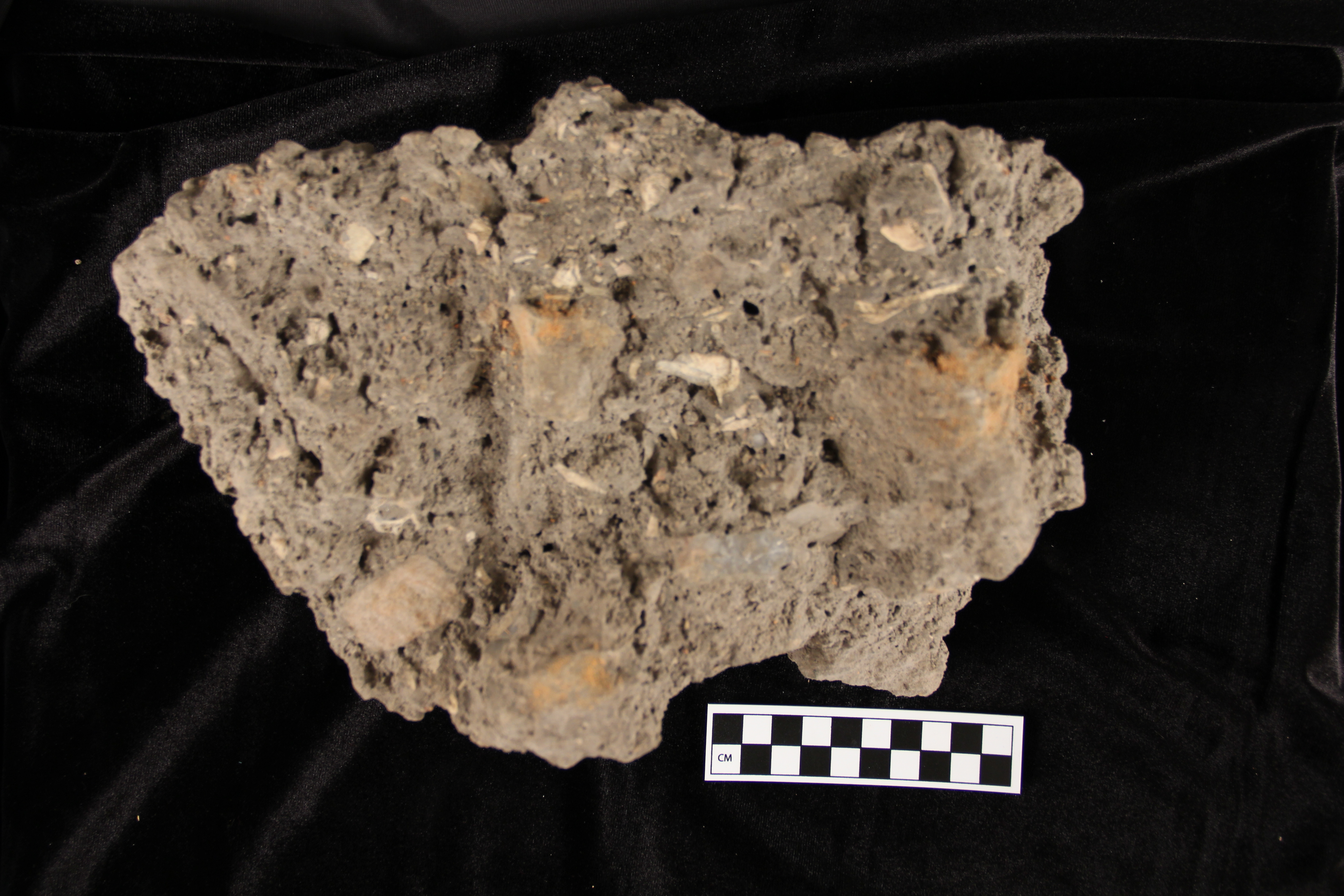
The unassuming and muddled looking object below is a piece of loosely formed breccia from Jacob’s Cavern in McDonald County, Missouri.

Breccia from Jacob's Cavern
Breccia from Jacob’s Cavern

Breccia is a type of rock that is composed of broken fragments of other rocks that have been cemented together by a fine-grained matrix – this process can take thousands of years. While this piece is not yet solid rock, it is on the way.  In this case, the matrix (or glue) is ash from thousands of fires that sustained life in the cavern for hundreds of years.

Acting on a tip from a local named E.H. Jacobs, Charles Peabody and Warren Moorehead traveled to Jacob’s Cavern in April of 1903 to examine the site.  Upon arrival, they found a large rockshelter of limestone with hundreds of stalactites and stalagmites, and the floor was covered with a thick layer of fine ash up to 1.5 meters (nearly 5 feet) deep! This ash is most likely the direct result of untold numbers of small fires in the cavern to keep the occupants warm over the years of use.

Peabody and Moorehead excavated the thick layer of ashes in using a careful grid system and uncovered hundreds of artifacts.  The stone tools were primarily projectile points and blades with relatively few large tools like axes.  They also found a ‘considerable’ number of bone needles and awls.  These small bone tools are essential in daily life to create, maintain, and repair clothing and other basic equipment.  The sheer volume of ash and artifacts in the cavern indicates long-term occupation.

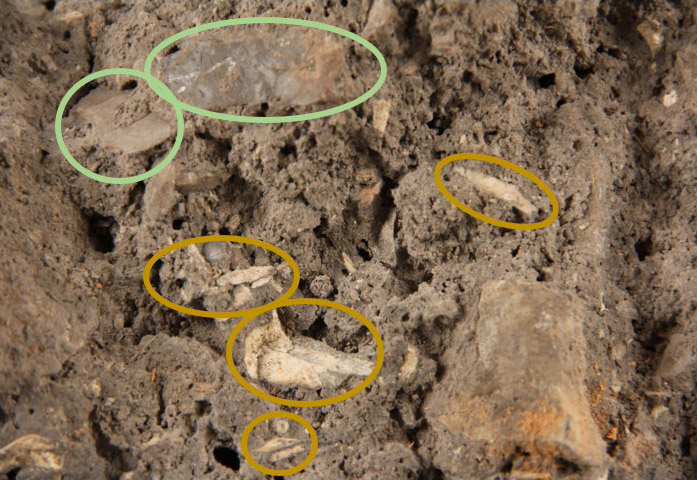
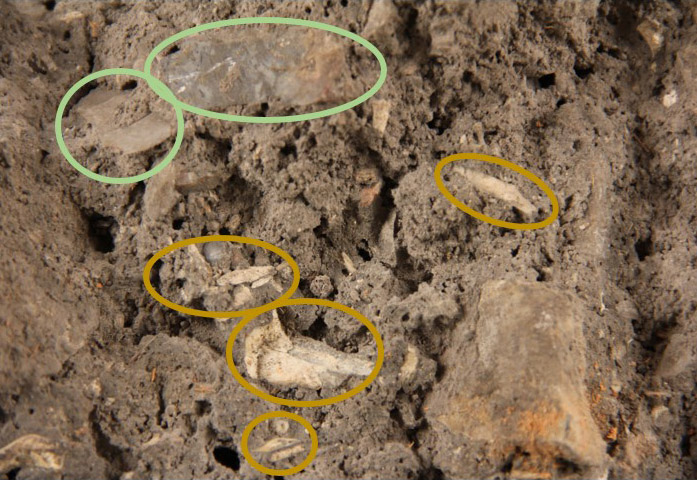
All evidence of human occupation – stone and bone tools, food debris – in the cavern was found in the layer of ashes and intermingled with breccia.  And, most notably, many artifacts are visible within the breccia (see the photo below).  This means that they were created, used, and discarded before the formation of the breccia and were left undisturbed for possibly thousands of years.

Detail of breccia
Detail of breccia with stone tools circled in green and bone fragments circled in yellow.

Peabody and Moorehead brought samples of the breccia and hundreds of collected artifacts back to the Peabody in 1903 while excavations continued by Mr. Jacobs for another couple years.  Published in 1904, the report of their work became the first Bulletin published by the Department of Archaeology.  The entirety of this report can be found here.

The work done by Peabody and Moorehead with Jacob’s Cavern became a foundation for later work at the Peabody.  Explore and excavate a little-known site, bring the materials back to Andover for study, publish about that work, and provide invaluable new research and insight into the field of archaeology.