A ‘Key’ Find at the Samuel Phillips Jr. Mansion House, 2025 Excavations.

Contributed by Katie Lincoln

Almost every summer since 2016, young archaeologists from Phillips Academy’s summer session program embark on a mission to excavate the site of the eighteenth century Samuel Philips Jr. Mansion House, located on the West Quad of campus. The infamous Mansion House was built in 1782 by the academy’s founder and stood for 105 years, before burning down in 1887. News articles from the period suggest that the demise of the Mansion House was a result of arson; many speculating that the proprietor, Charles Carter, started the fire. During its long period of occupation, the Mansion House served as not only a home, but later an inn and tavern for students, community members, and travelers. The site’s long history and relatively undisturbed context creates an ideal setting for archaeological excavation and student learning.
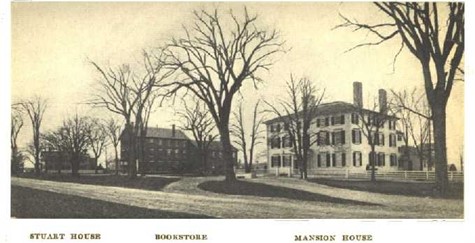
Over the past seven years, students have succeeded in discovering portions of the house, including multiple chimneys and a basement feature. This year, students set out with high expectations, choosing to place four excavation units in spaces just outside of the Mansion and two units in the southwest portion of the quad, near the sites of historic outbuildings, a nineteenth century printing house, and an early nineteenth century pathway.

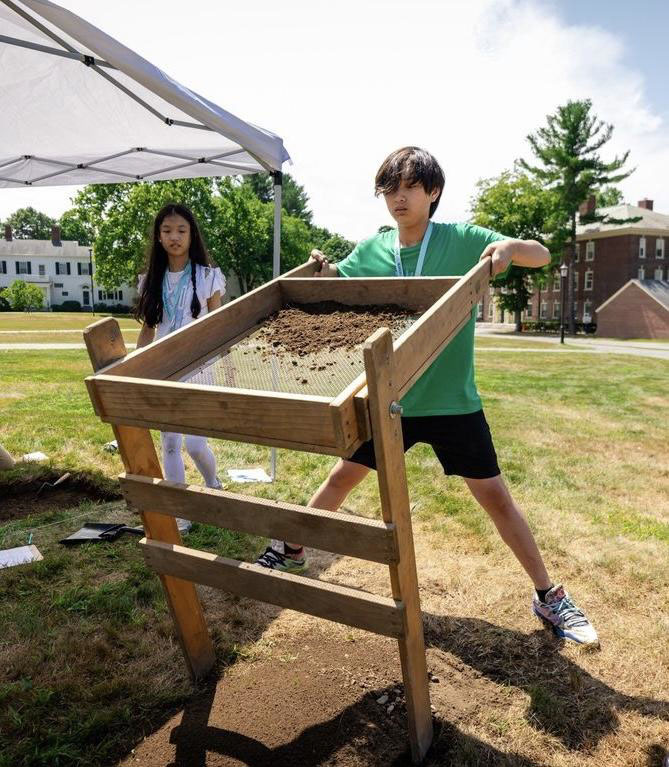
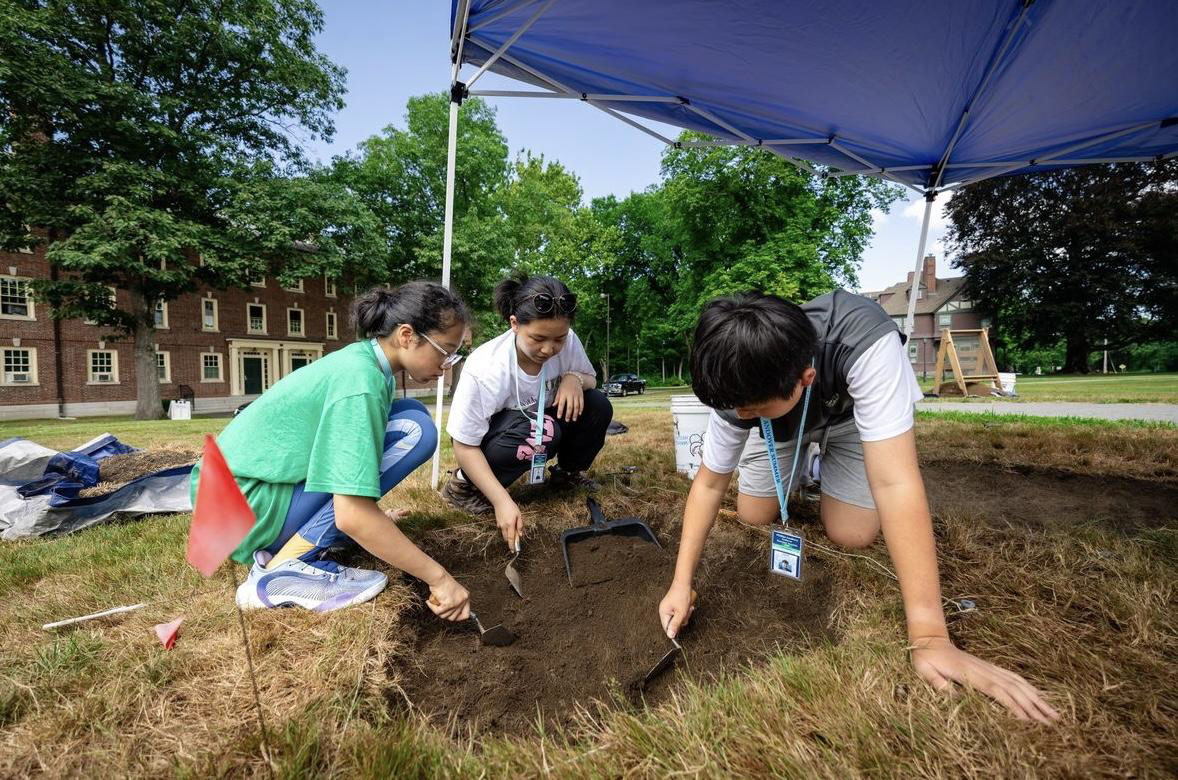
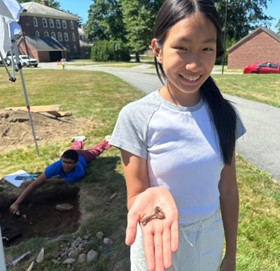
Students in each excavation team had a blast taking turns performing the primary tasks of an archaeologist: digging, screening, measuring, and note-taking. Many, if not all, students even got to unearth artifacts from their units! Some of our favorites included a small ferrous key, an impressed glass tumbler, and half a pair of scissors which all came from the two excavation units placed in the southwest portion of the quad.
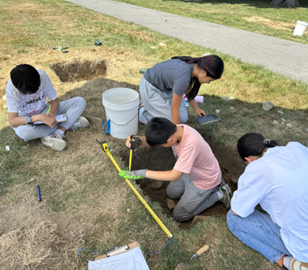
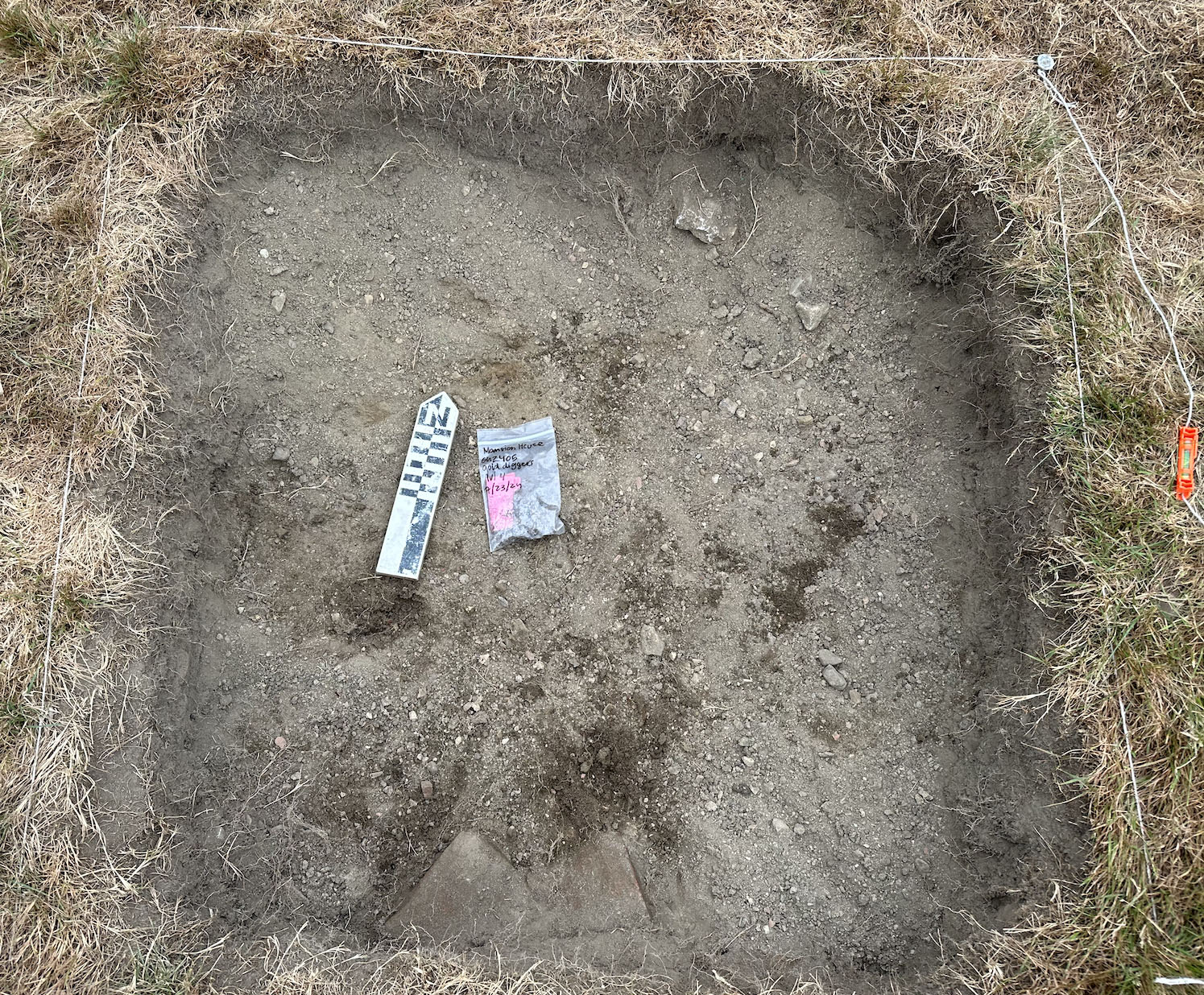
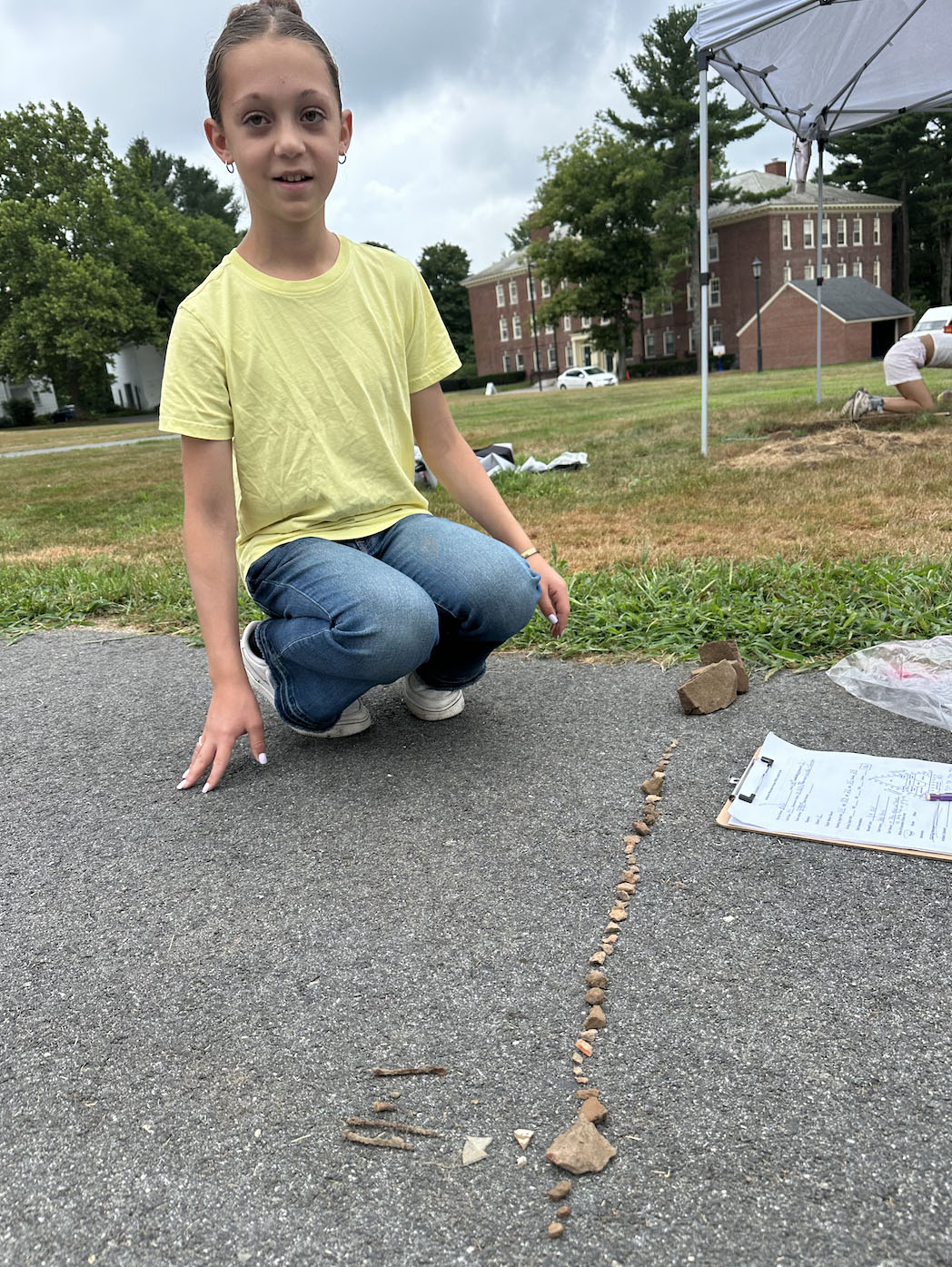
Further excavation in this area revealed a feature relating to the historic pathway present on early nineteenth century maps of campus. Pictured below is a dense, gravelly layer of soil discovered at 40 cm. This layer, interpreted here as the pathway, was intermixed with nineteenth century materials including glass, brick fragments, and some ceramic.
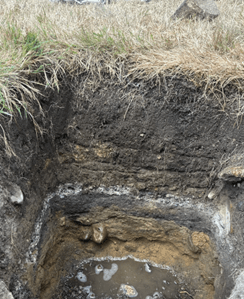
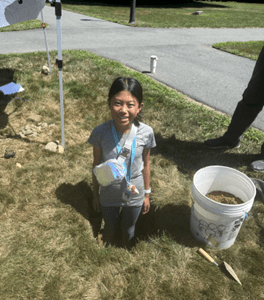
Students excavating the other four units in the northern portion of the quad found shallow cultural layers followed by a sterile C horizon, between 20 and 35 cm. While the artifact density of these units was limited, students still enjoyed finding an abundance of brick, metal nails, and some small ceramic fragments. The very shallow deposits found in these units informed the team that no building activity likely occurred in these areas. Additionally, the relatively low artifact density suggests that these areas were not regularly used like in a dooryard or garden area.

Overall, students in the 2025 field program successfully applied archaeological methods to ‘unlock’ more of the mysteries surrounding the Samuel Phillips Jr. Mansion House. This year’s field season serves to inform of the deep cultural deposits in the southwest portion of the quad and the significant research potential it could provide for future field seasons.

Thanks to the entire student field crew and cheers to a wonderful field season!
Leather, Buttons, and Brick…Oh My! 2024 ‘Dig This!’ excavations go off without a hitch!

Contributed by Katie Lincoln

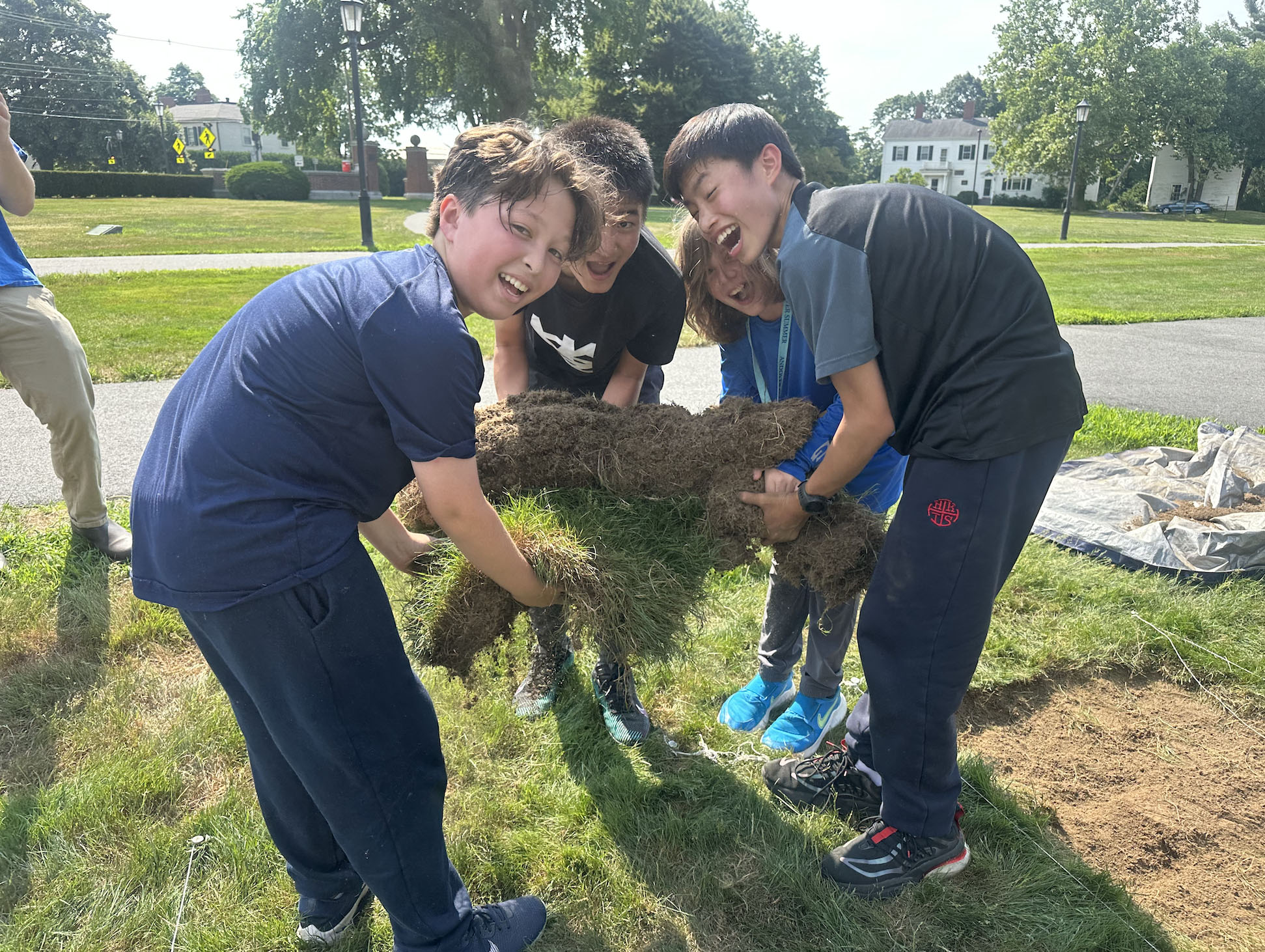
As Phillips Academy’s Lower School Institute (LSI) Dig This! course comes to the end of its seventh field season, students and instructors are so excited to share stories of the many artifacts they discovered at the school’s very own excavation site. At the start of the 2024 season, students were introduced to the story of the Mansion House, an eighteenth century home which belonged to the founder of the academy, and now lies buried underneath the lawn of the West Quad on Phillips Academy campus. The Mansion House stood on the property for 105 years before being burned down through an act of arson, which was never solved or prosecuted. The remains of the house laid just centimeters underneath the surface of the quad for a little over 100 years before LSI’s summer session course began the long process of meticulously digging it up.

After being introduced to the legacy of the Mansion House and its past excavations, the 2024 archaeology crew set out to build upon this research by investigating parts of the site which have never been previously tested. Specifically, six teams were each assigned a 1 X 1 meter unit and asked to investigate a given region of the West Quad, whether it be just outside of the Mansion House walls, in the area suspected to hold a nineteenth century privy, or the very place where a neighboring nineteenth century printing house was known to have stood. Equipped with shovels, trowels, and screens, the six teams got to work and all quickly began to gather archaeological data.

While no team this summer unearthed ash layers relating to the infamous 1887 fire, which resulted in the destruction of the Mansion House, several groups discovered an abundance of charcoal and burned brick. Additionally, the two groups assigned to dig in the hypothesized privy, EU 2404+2405, uncovered a plethora of cultural materials, including a button, many ceramic shards, and faunal bones. Specifically, a small black glass button, which was unearthed in EU2405, became of great interest to the students. Because black glass beads were only in fashion during the ten-year period when England’s Queen Victoria was in mourning, the button students found can be dated to that decade between 1861 to 1870. How exciting!

Students stationed in the area believed to be where the nineteenth century printing house once stood uncovered a considerable amount of leather. It is unknown if this leather came from shoes or book bindings, however the find itself is incredible given how well the material preserved over time!

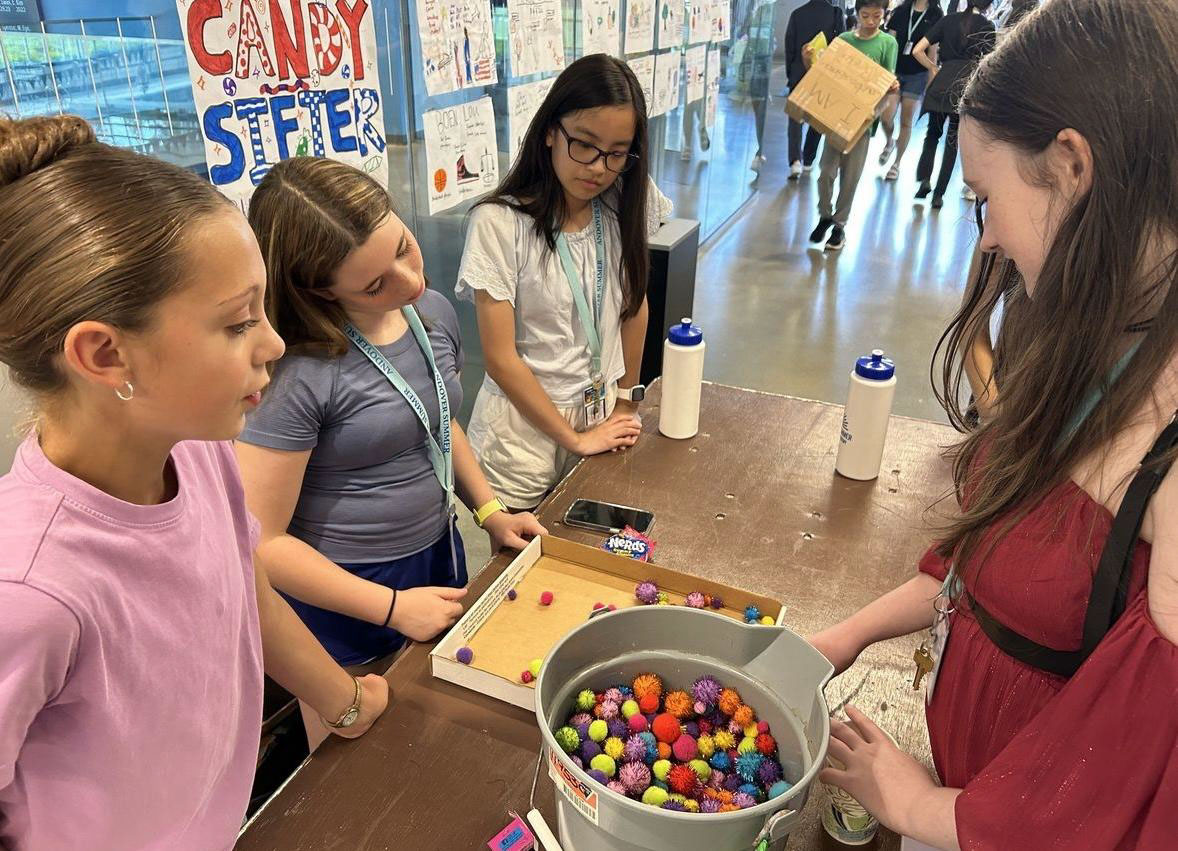
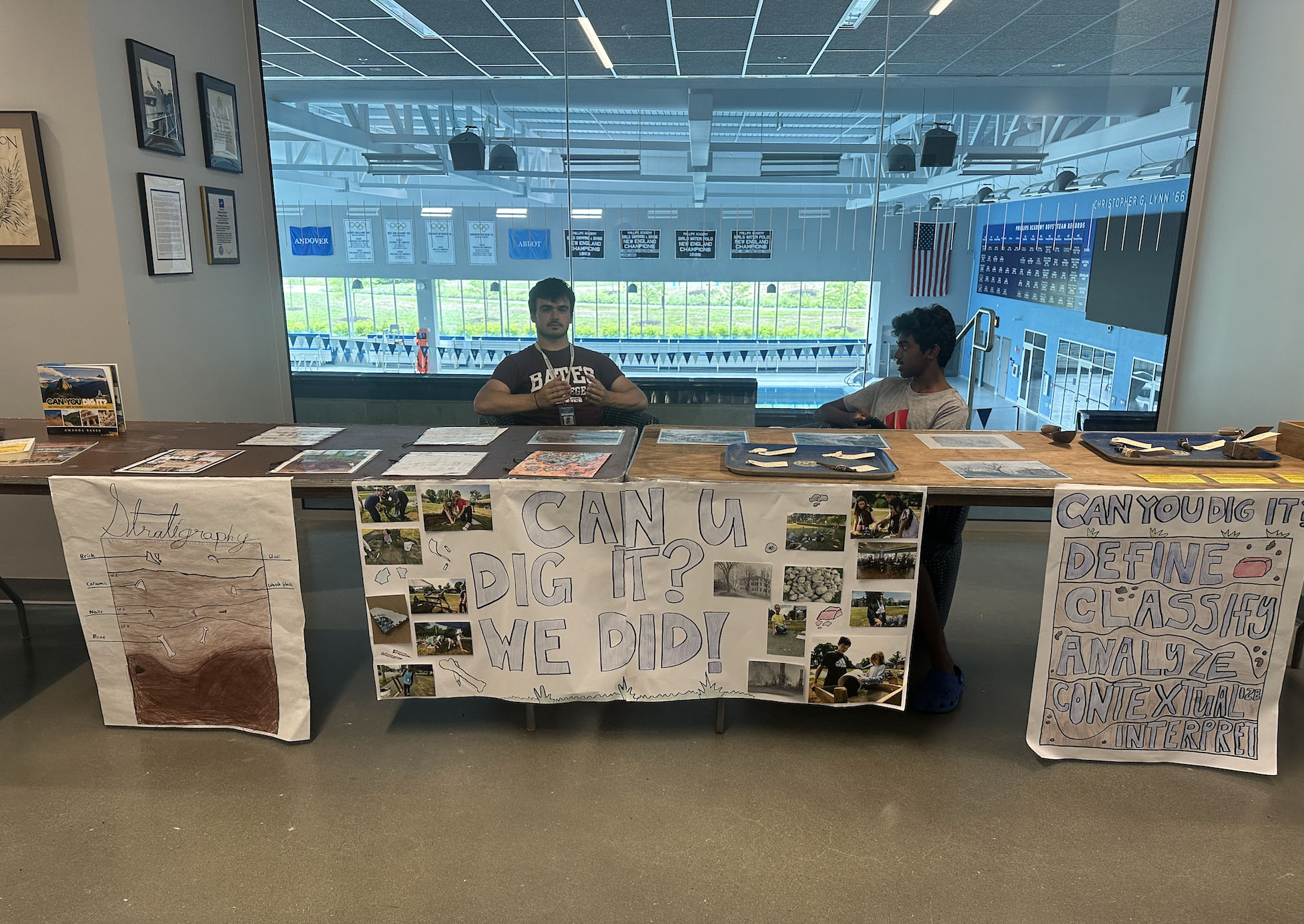
Despite the fact that the 2024 Dig This! crew did not uncover any features relating to the Mansion House, privy, or printing house, students still reveled in the amount of cultural material found and were very excited to show it off at their LSI student exhibition. Students specifically enjoyed the opportunity to set up an archaeology simulation, where they explained the process of digging and let others take a stab at excavating exciting treasures in the form of candy!

Cheers to another amazing summer of learning in the dirt!