
Contributed by Ryan J. Wheeler
Phillips Academy’s March 2026 spring break allowed for a family trip to Rome. These family vacations are often something of a busman’s holiday, with numerous excursions to museums, galleries, and ancient ruins. This week in Rome was no exception, and included lots of ruins, a day trip to Ostia Antica, as well as a visit to the newly opened mini-museum at the Colosseum subway station, and, truthfully, many, many more sights.
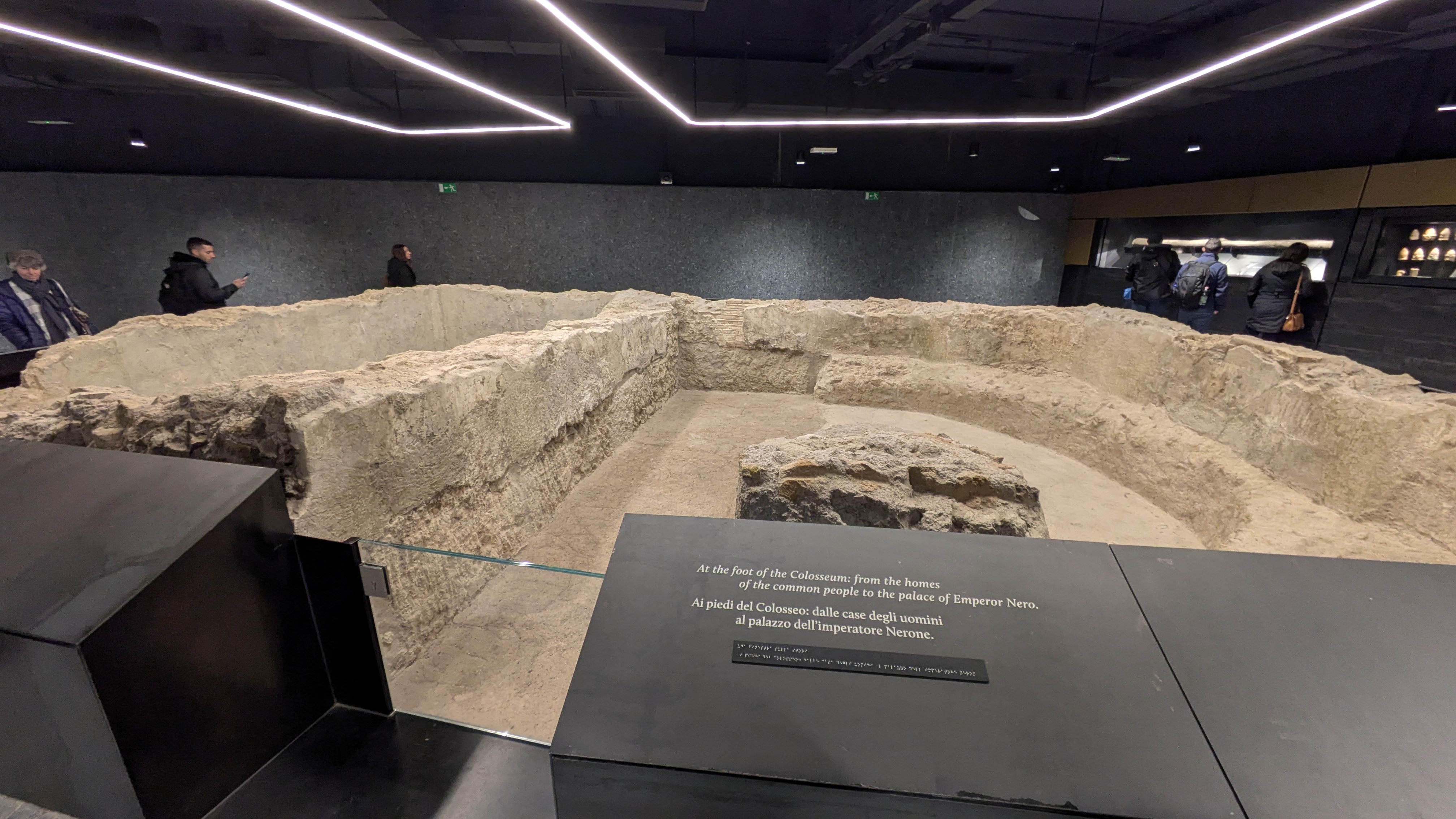
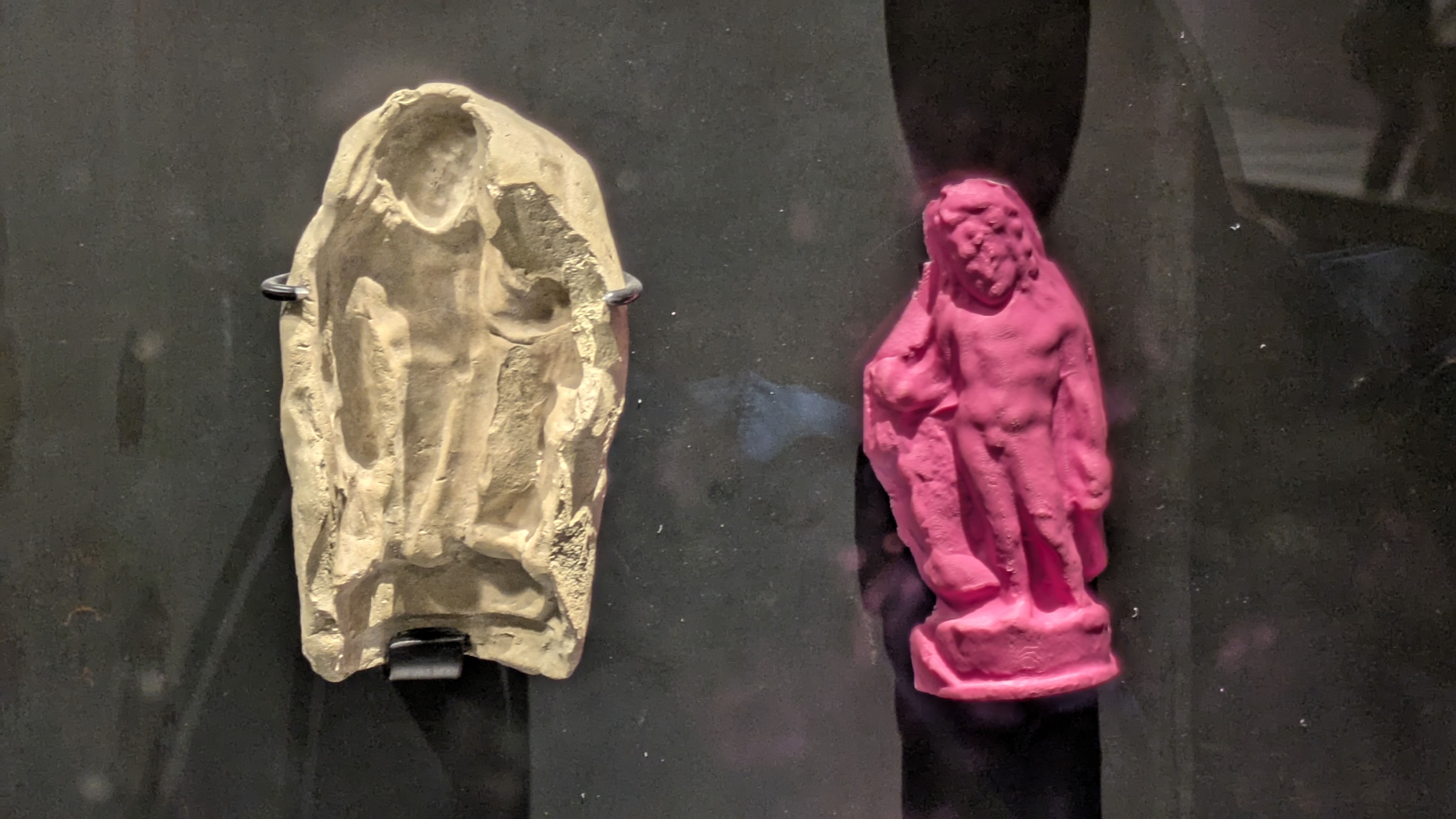
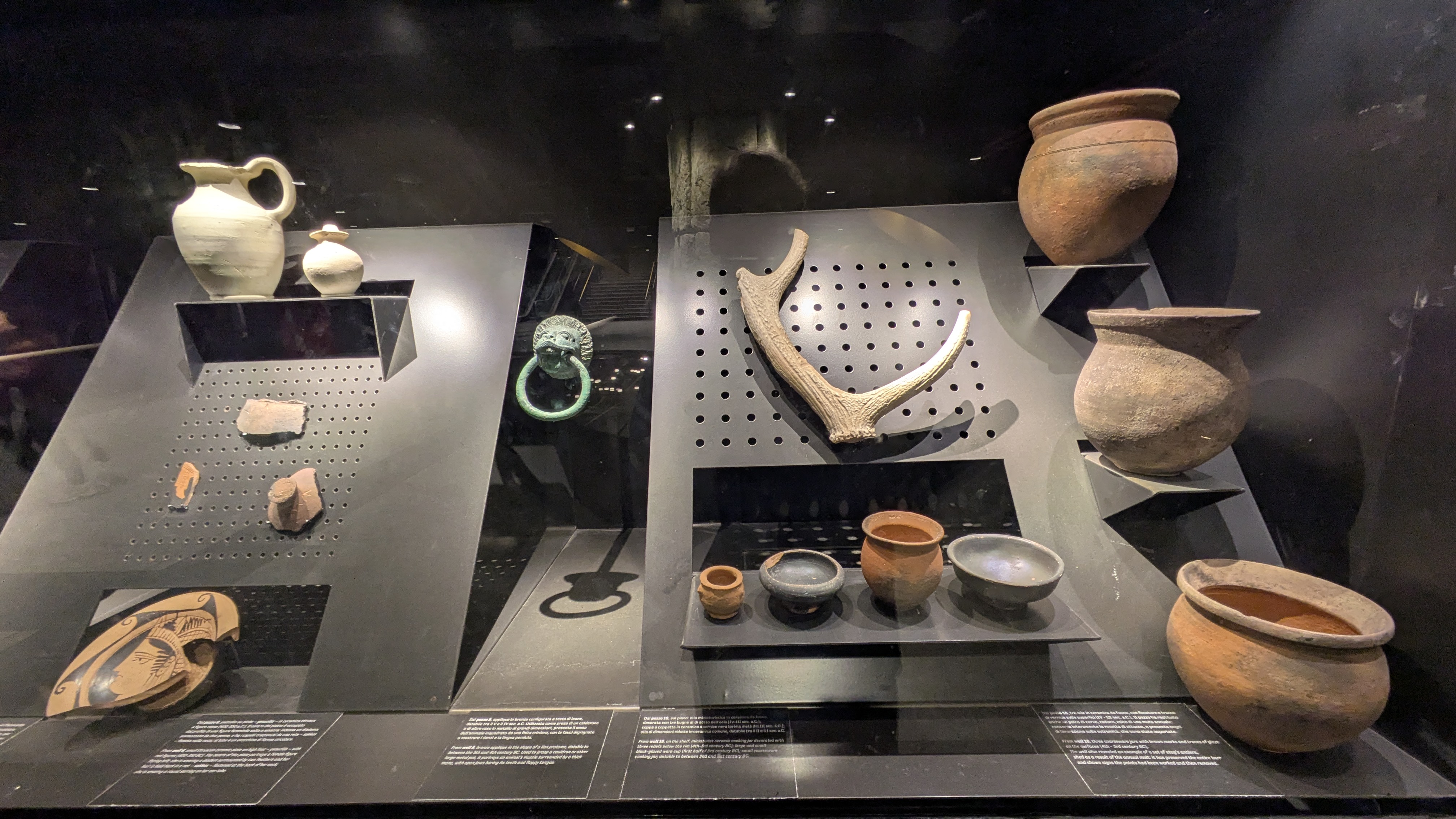
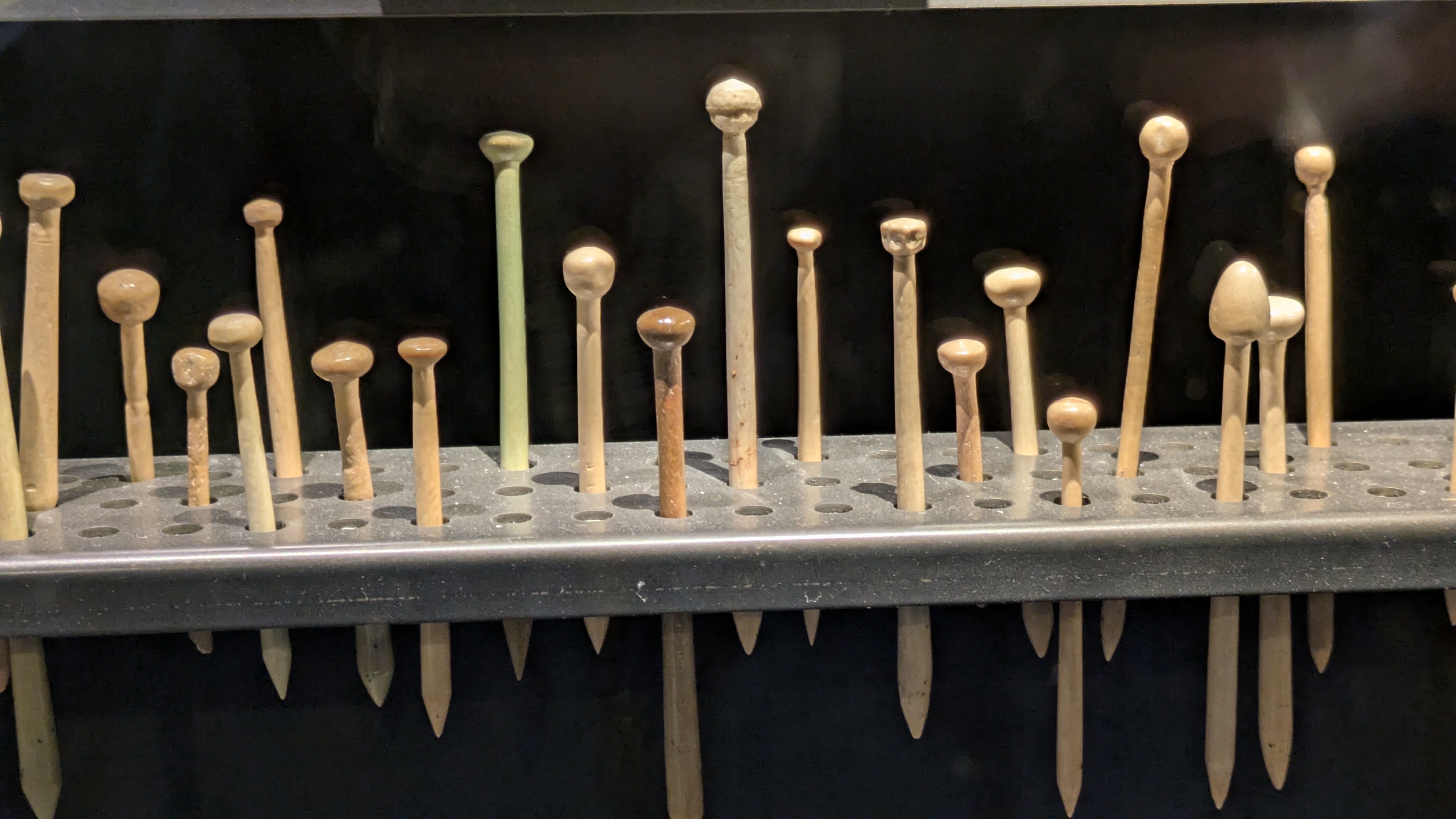
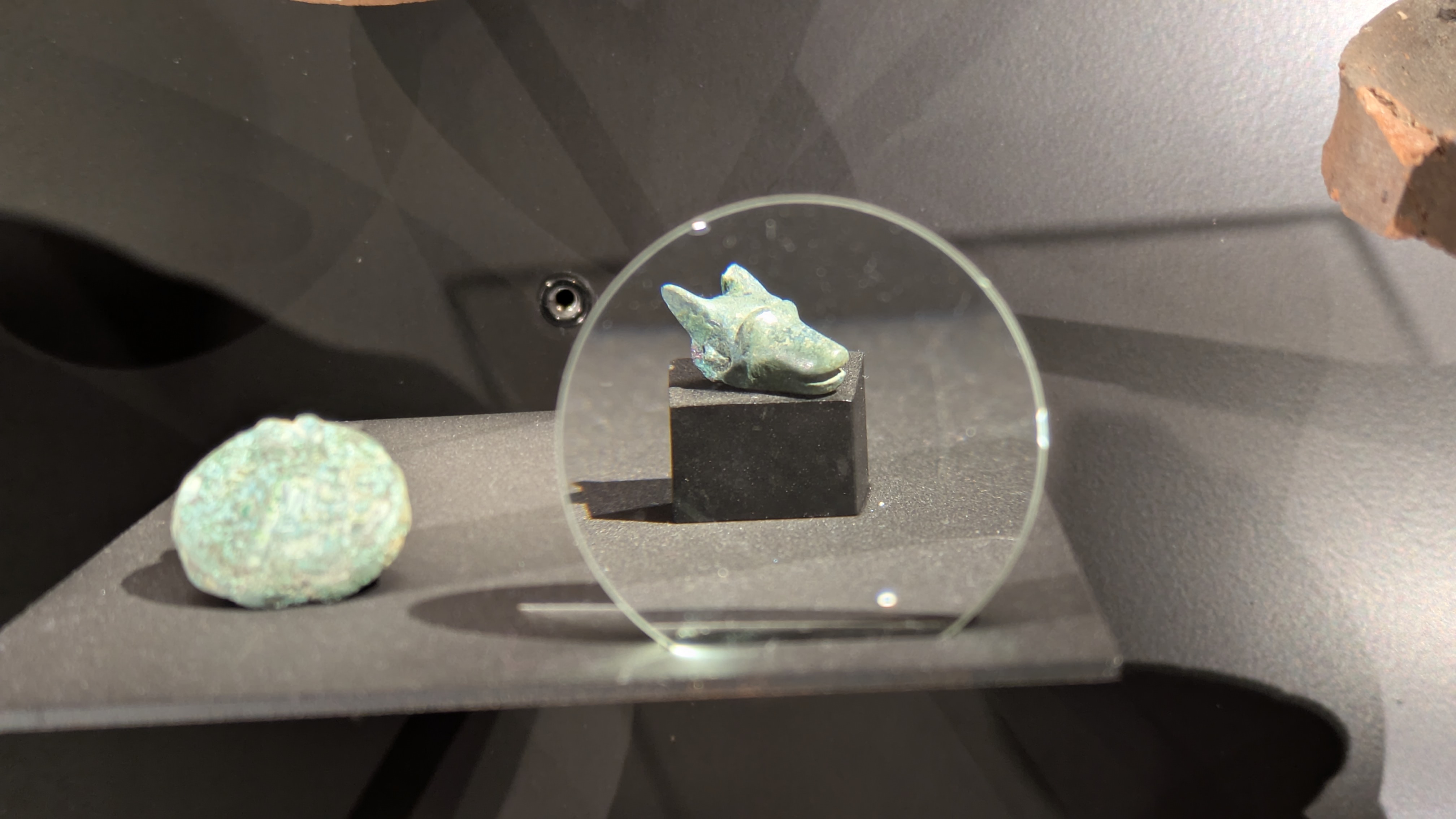
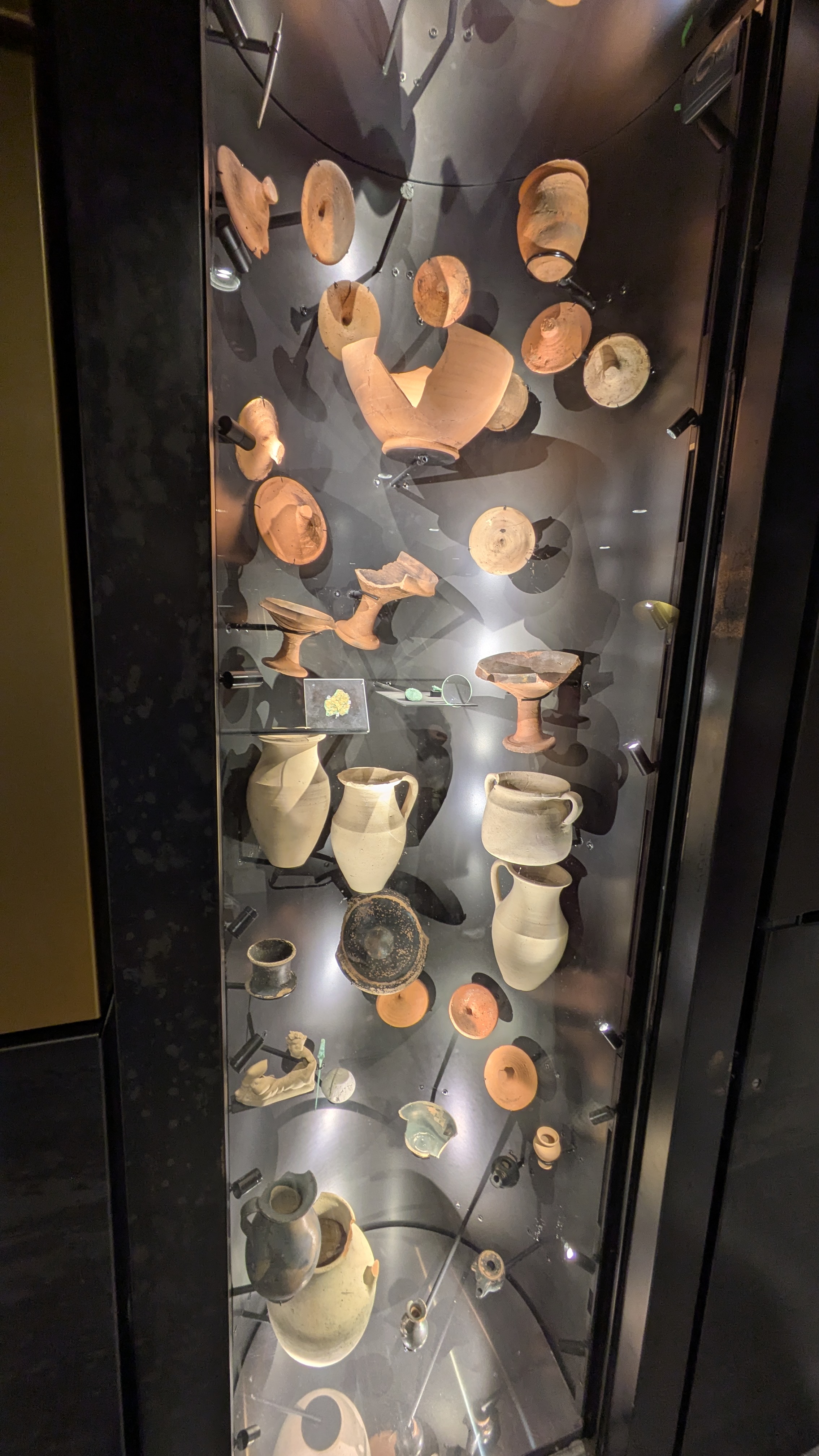
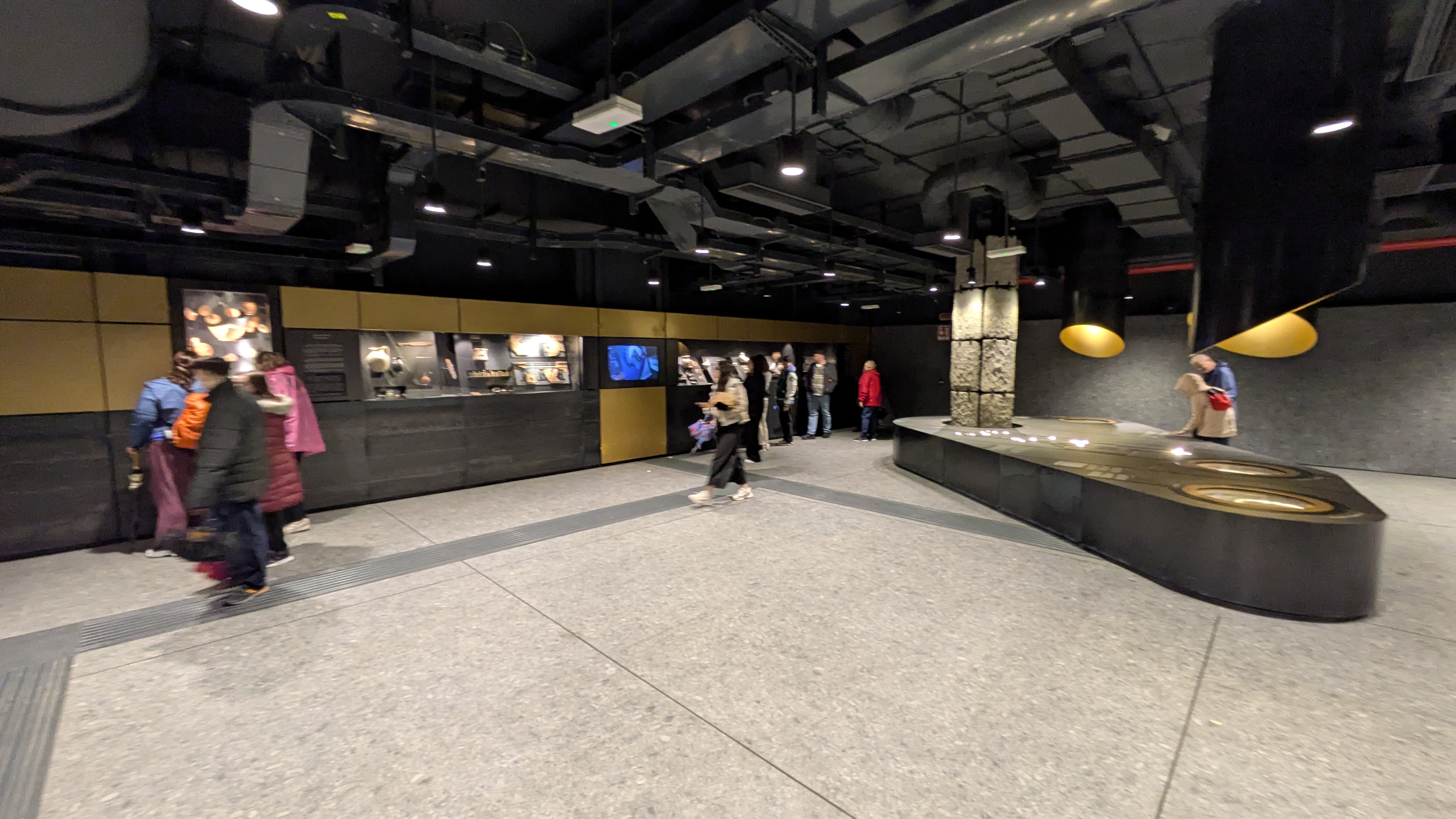
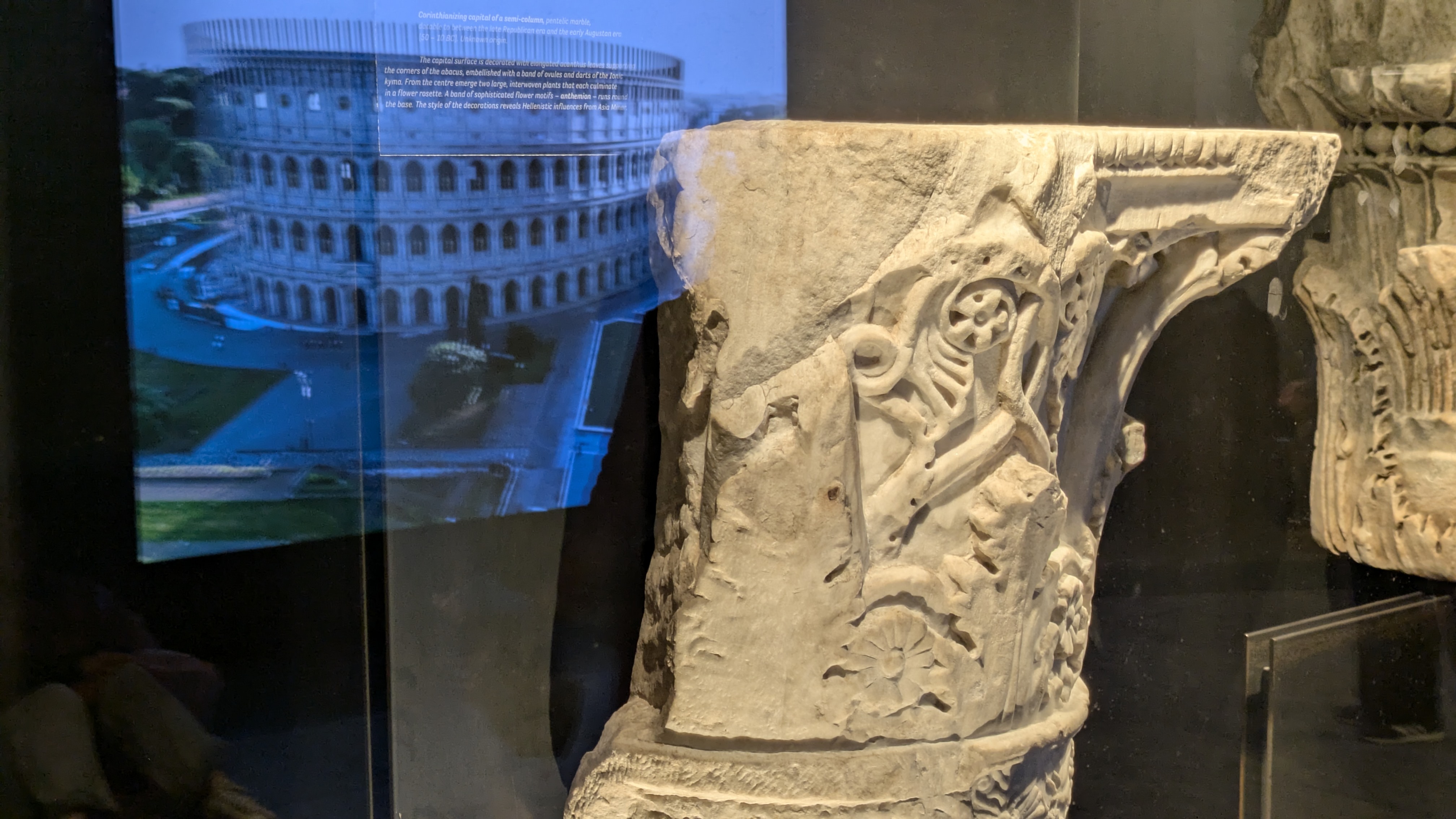
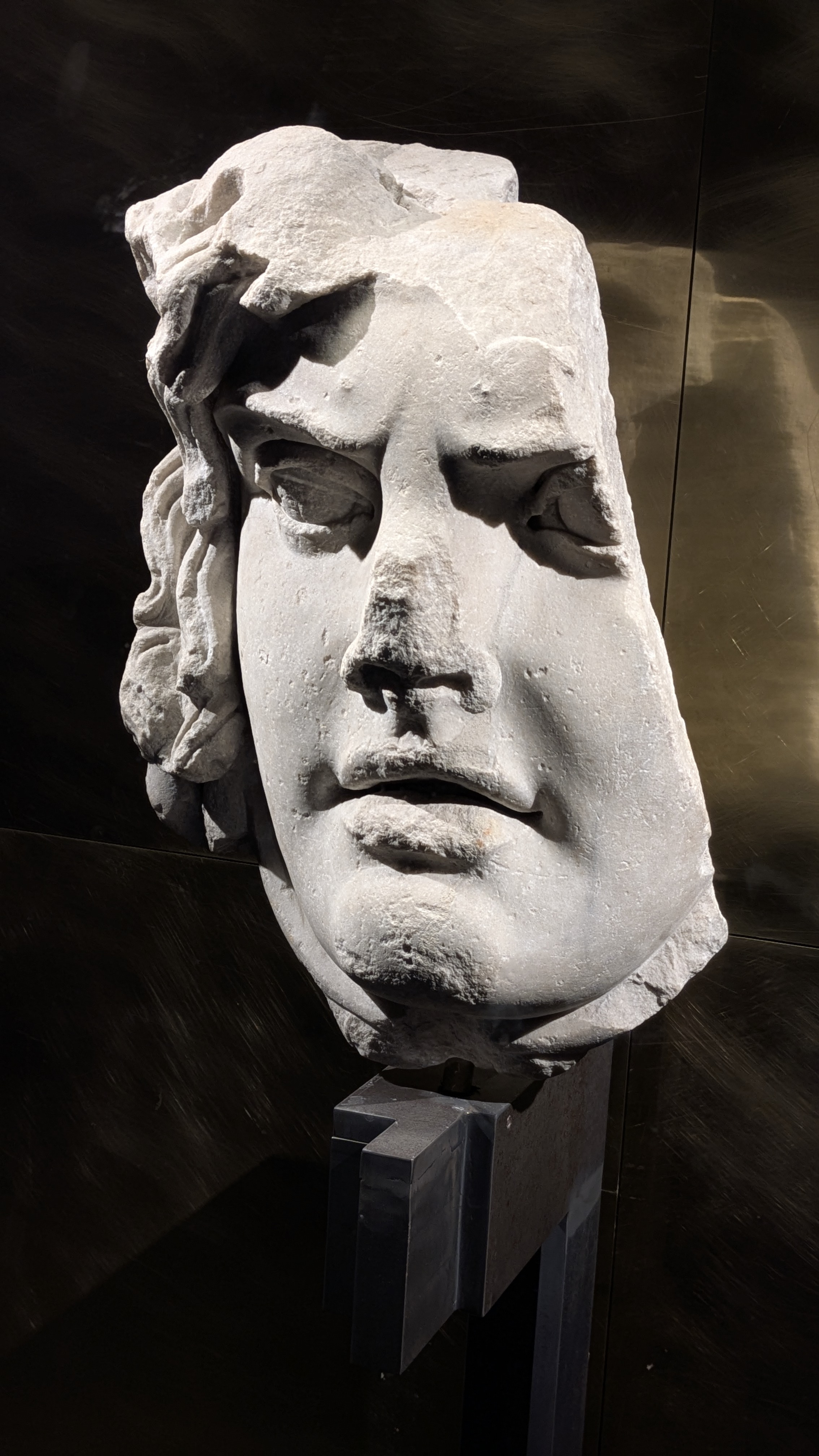
I visited Rome once before, as somewhat of a treat after receiving my master’s degree in 1992—that trip included a whole swath of Italian cities and only allowed for some Roman highlights (like the Colosseum).
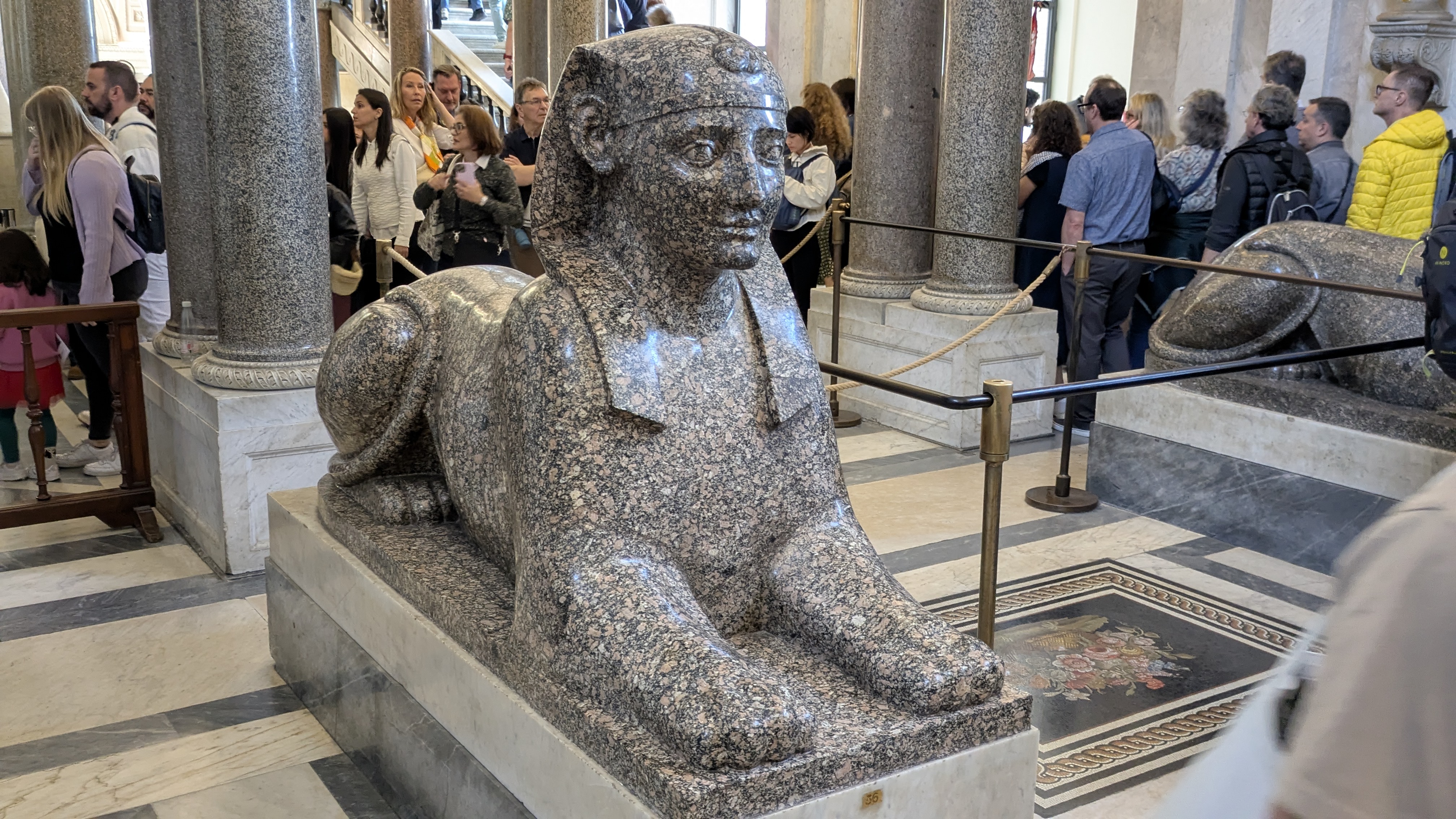
What I came to appreciate on this trip with a little surprising—just how much Egypt influenced ancient Rome. I feel like I should have known this, especially since my graduate coursework included some wonderful Roman, Greek, and Egyptian art history classes from the late Barbara Barletta.
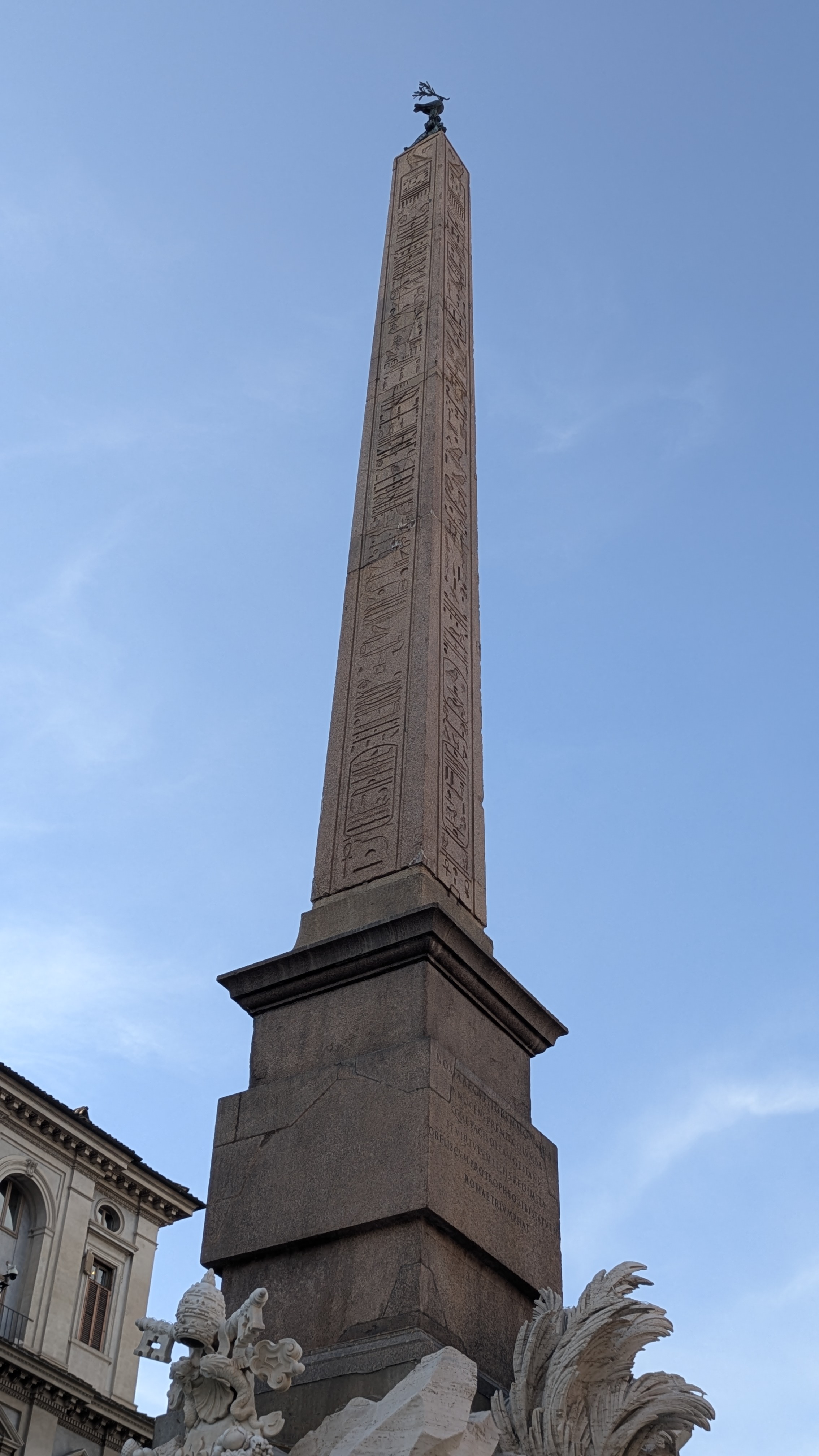
Not far from where we stayed—and in the Piazza della Rotonda—right in front of the Pantheon—we encountered an Egyptian obelisk. Apparently, there are around twelve or thirteen obelisks throughout Rome, some Roman recreations of Egyptian architecture, others actually brought from Egypt. The one by the Pantheon is covered in hieroglyphics, including cartouches that link it to Ramses II.
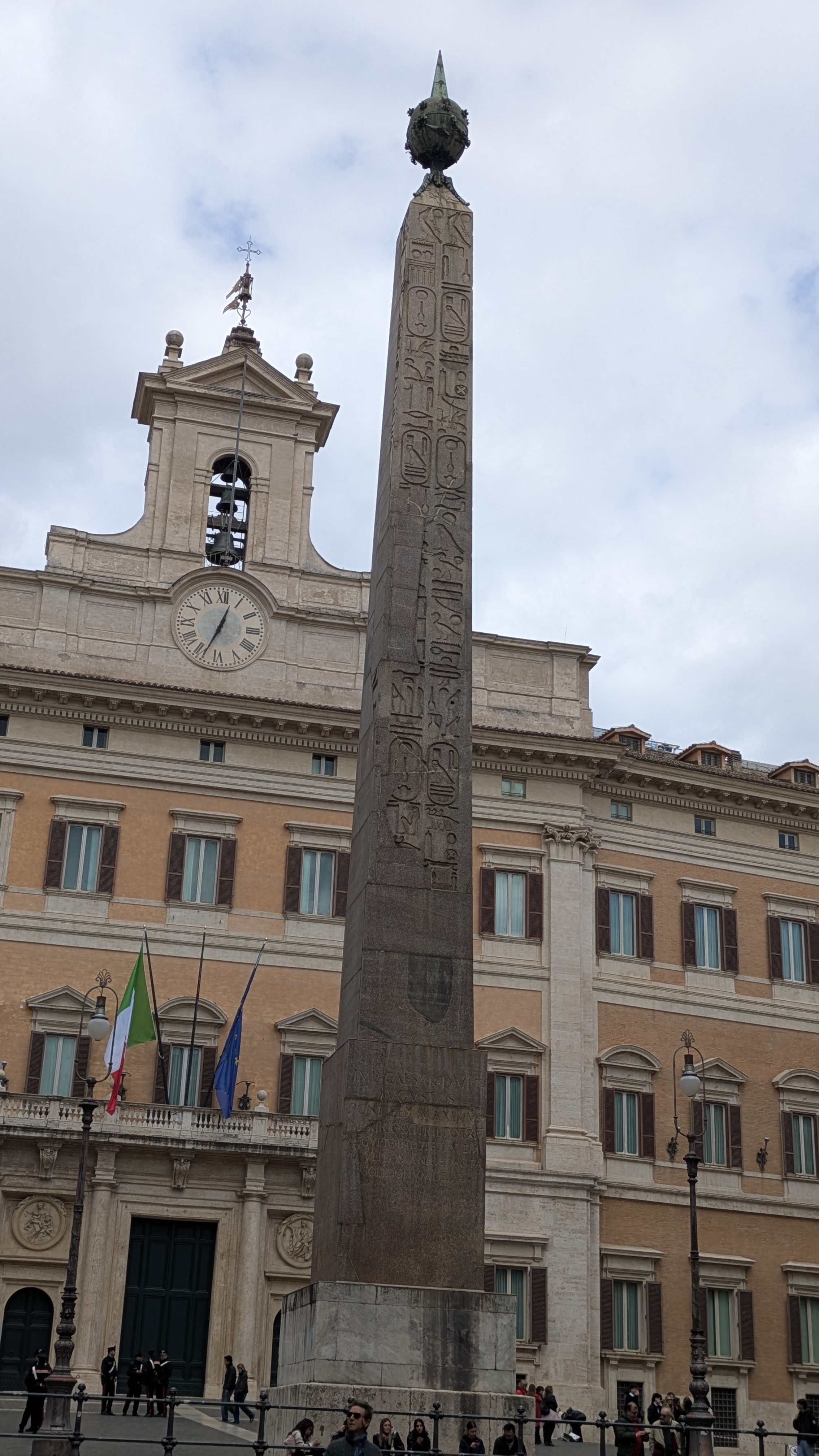
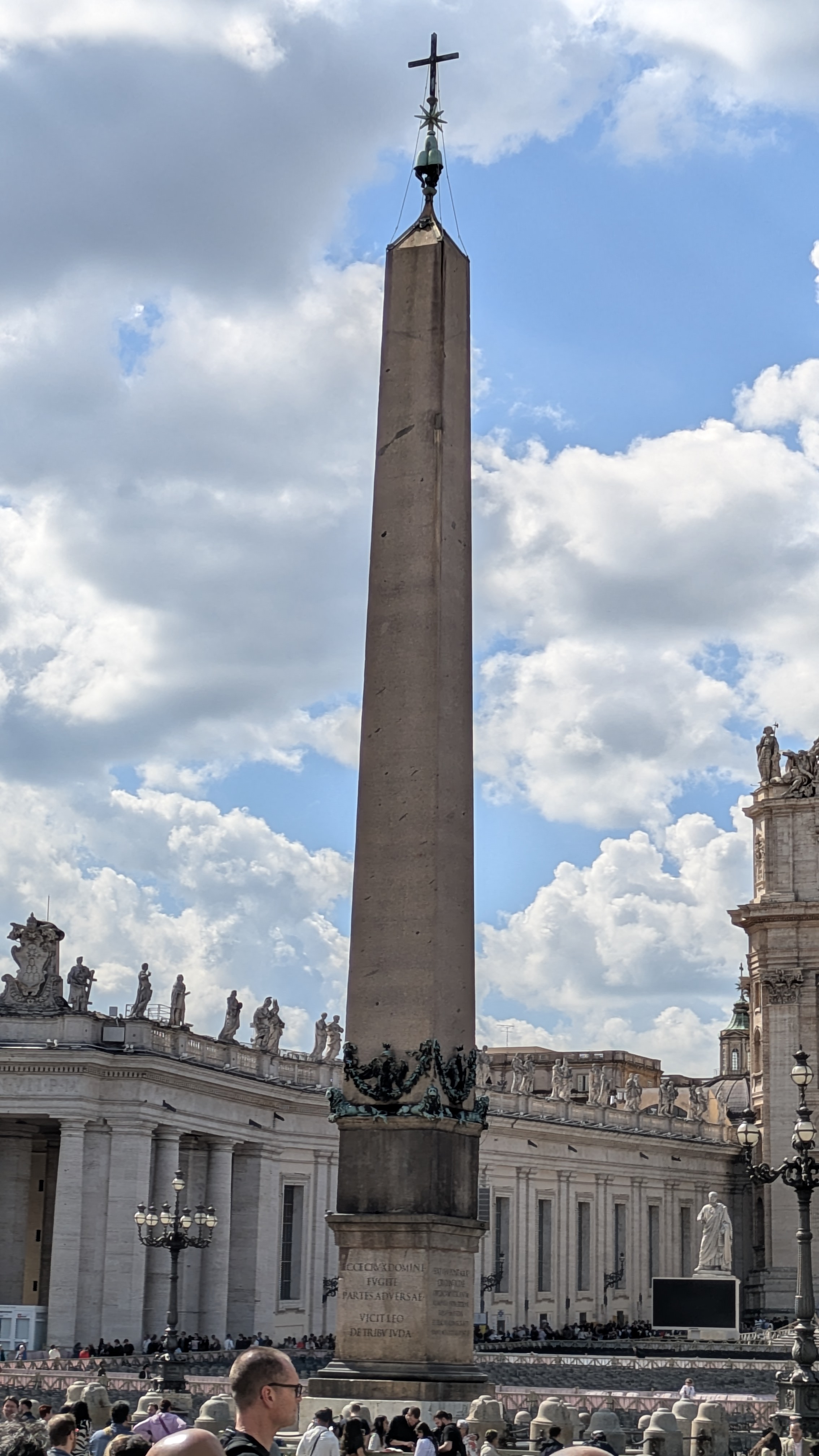
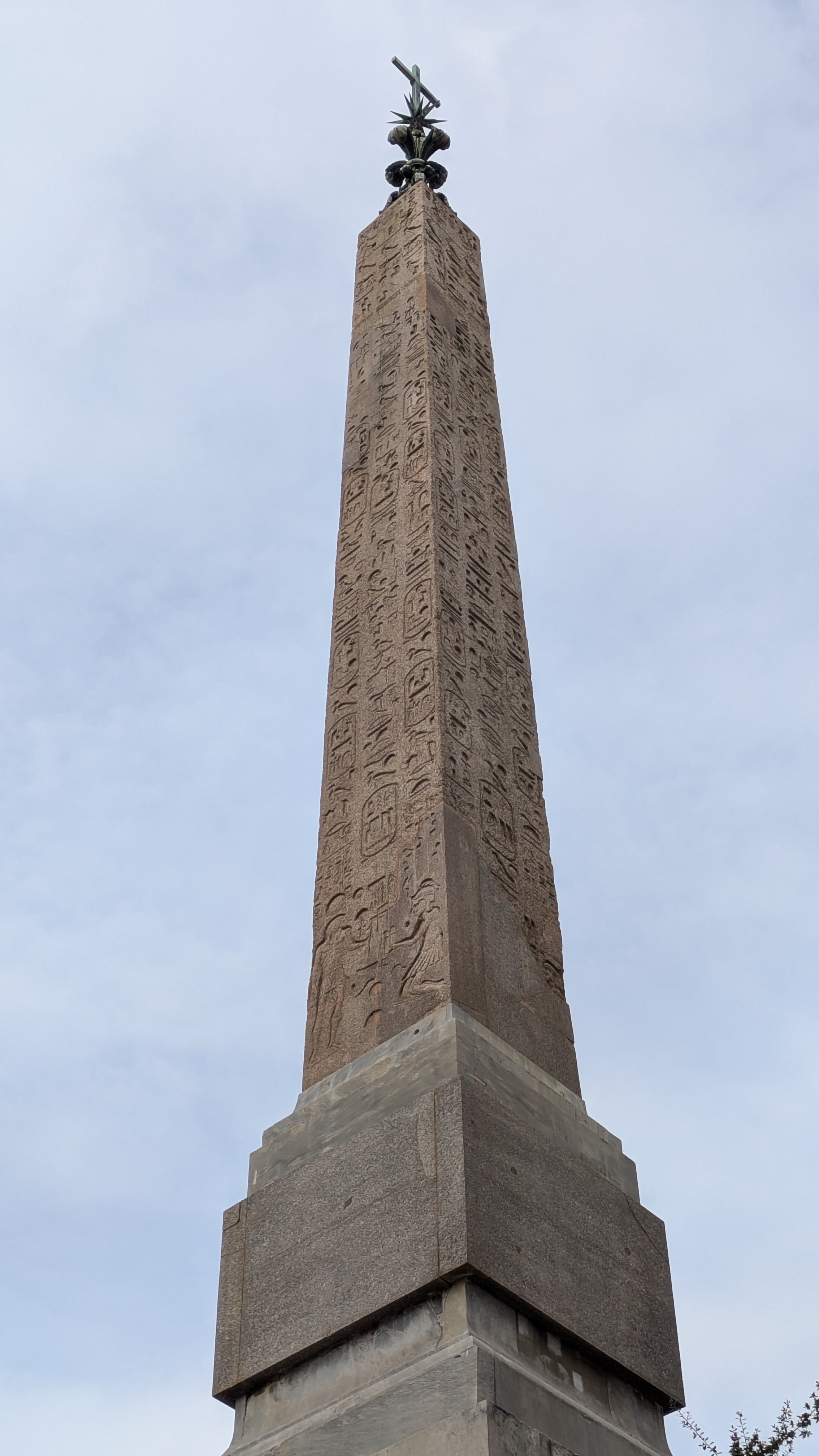
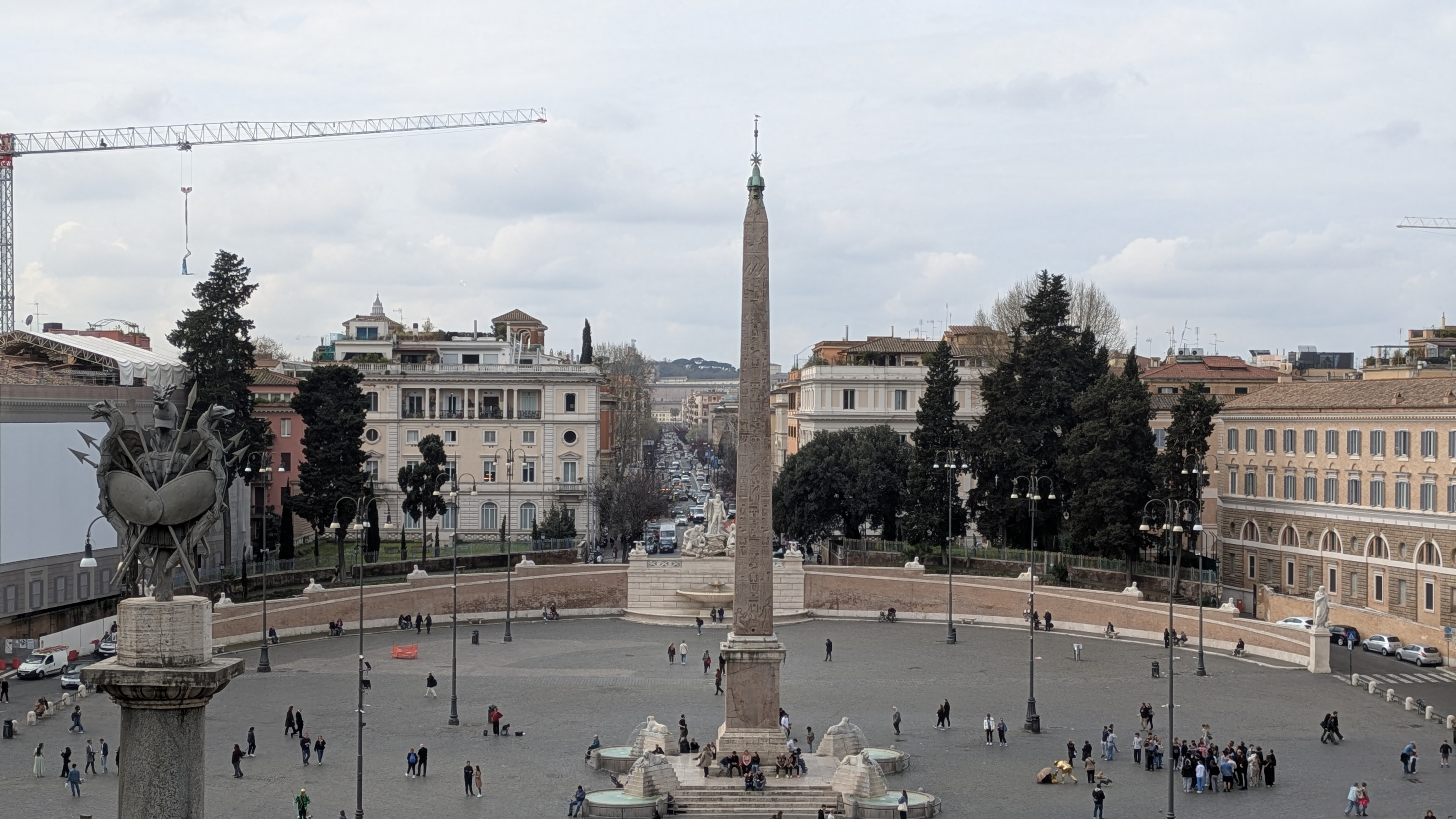
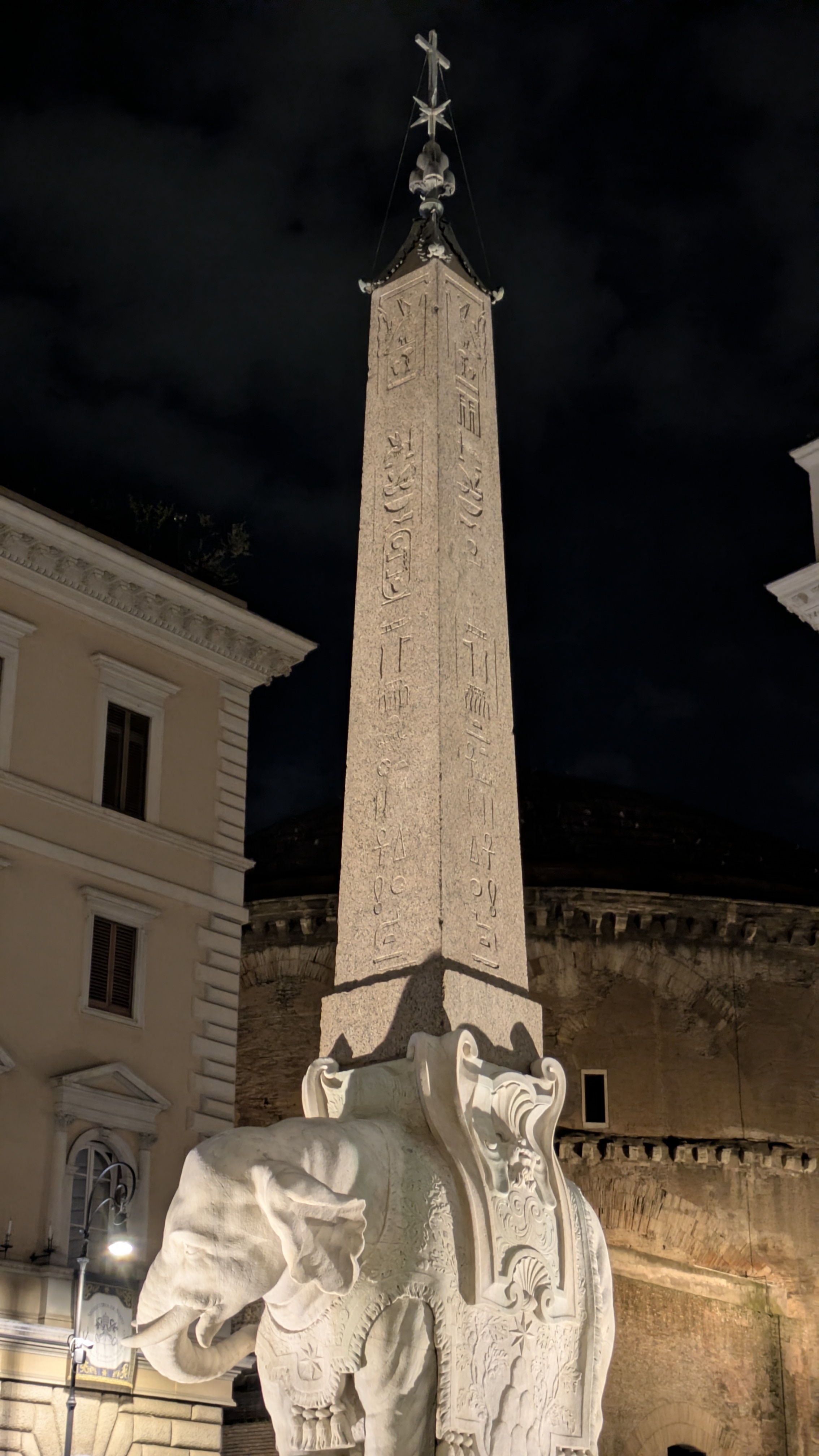
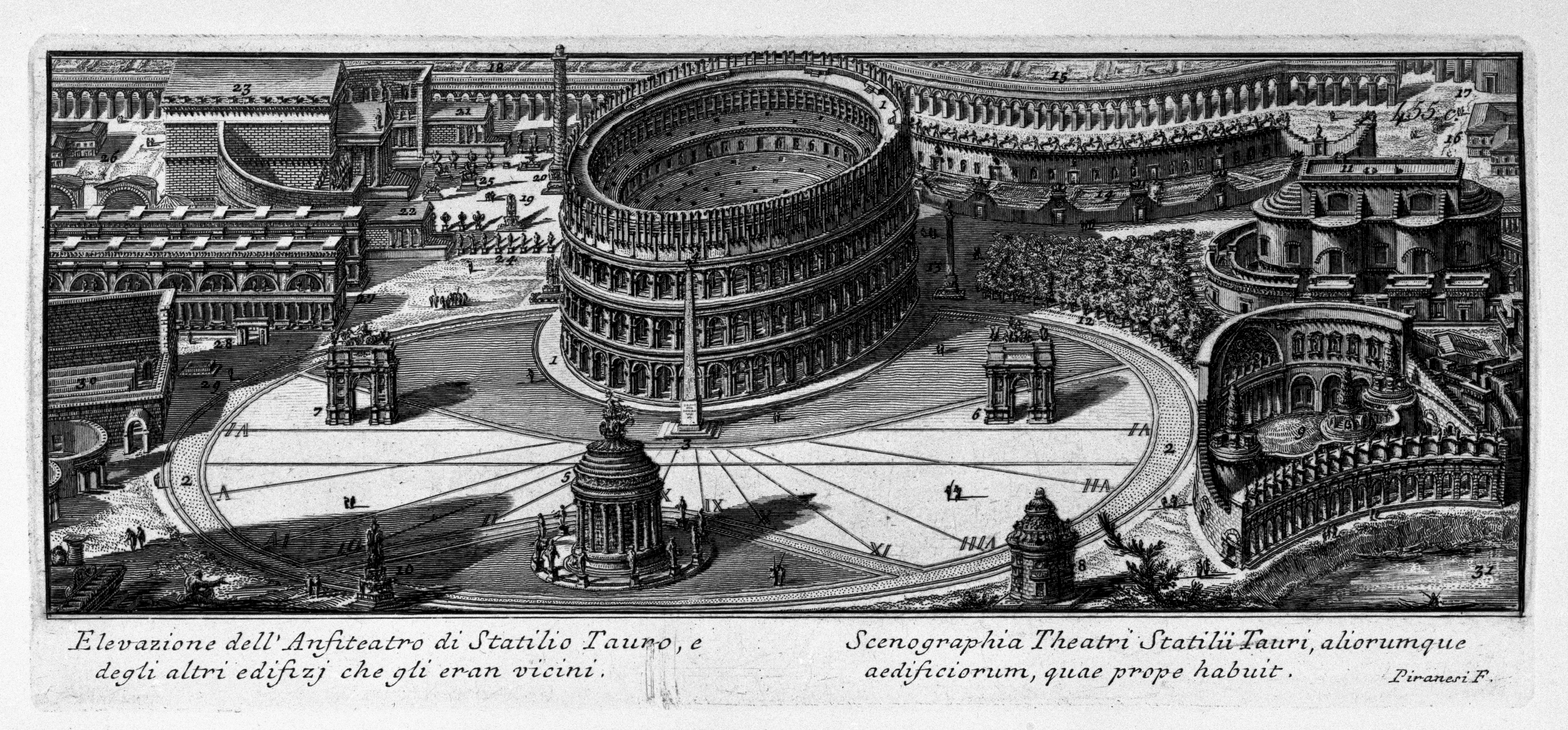
A complete tour of Egyptian obelisks in Rome was not on our itinerary, but we did manage to see quite a few, including the Flaminio Obelisk, originally from Heliopolis, dating to the thirteenth century BCE and brought to Rome by Augustus in 10 BCE (now in the Piazza del Popolo); the Sallustian Obelisk (at the top of the Spanish Steps, opposite Santissima Trinita die Monti—its hieroglyphs seems to copy those of the Flaminio Obelisk); the 1667 Elephant and Obelisk in the Piazza della Minerva, designed by Gian Lorenzo Bernini and incorporating a sixth century BCE obelisk; and the Obelisk of Montecitorio or Psamtik II, which had formed the gnomon of a Roman sundial. In fact, the lure of the obelisks was so great that I wandered off to get a closer look at the obelisk in St. Peter’s Square at the Vatican.
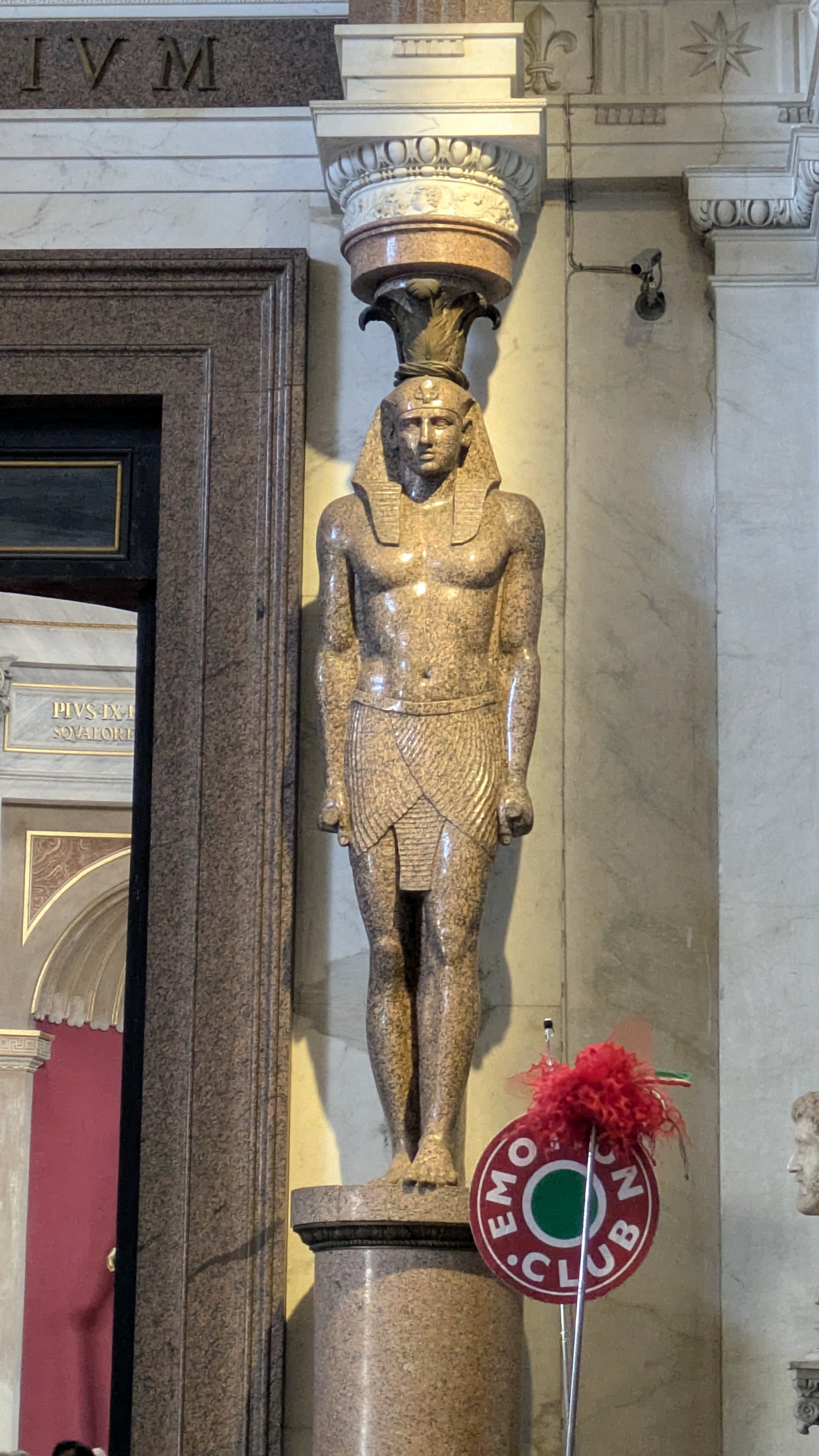
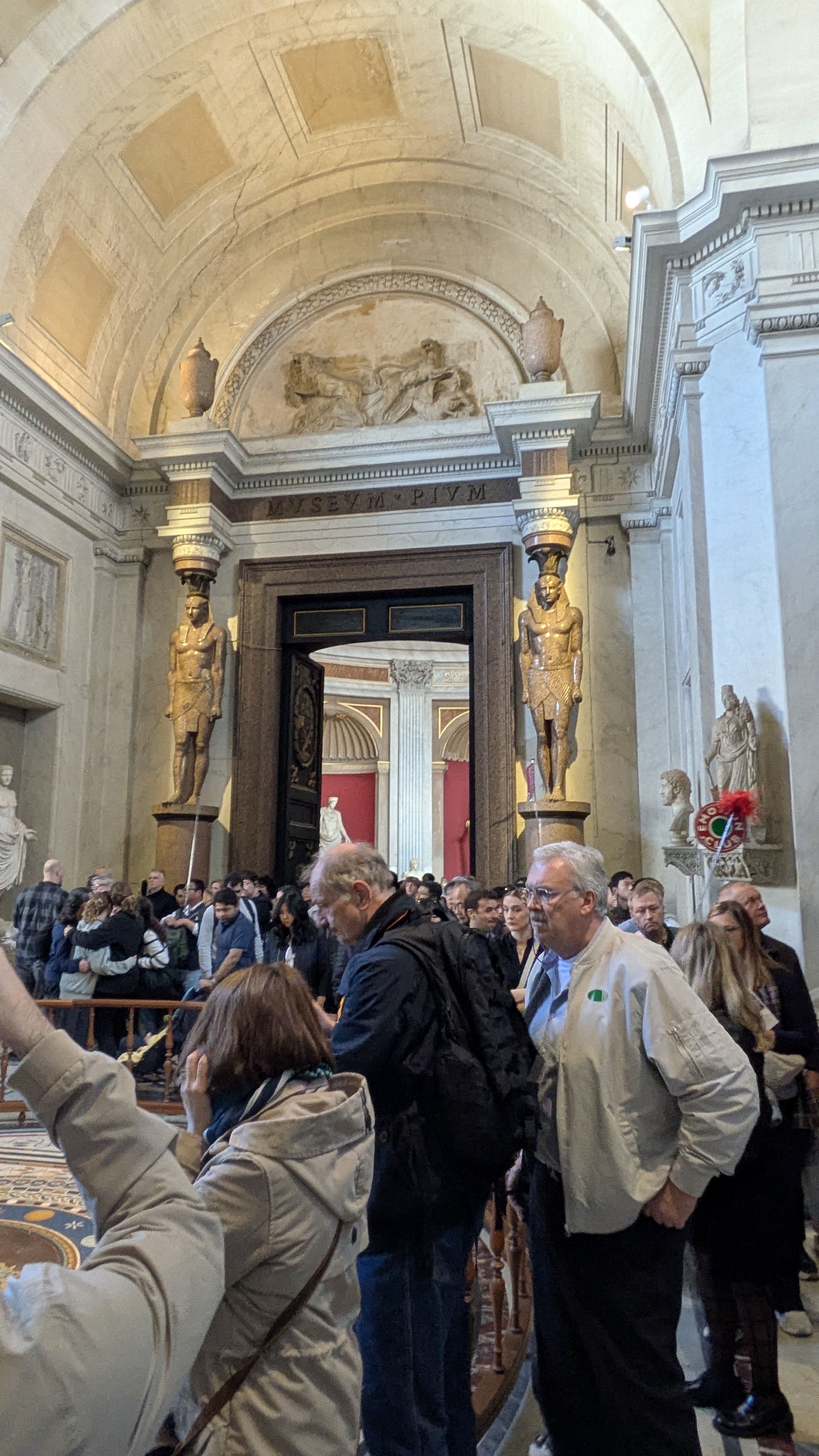
Sadly, time did not permit a tour of the Egyptian gallery at the Vatican Museums, but we did spot several interesting pieces of Egyptian statuary as we pushed through the crush of humanity along with the other 35,000 daily visitors. I was particularly taken with a pair of Egyptian style pillar-statutes in the Greek Cross Hall. You can tell these are Roman copies of Egyptian artwork by their pose—the first century Romans went for symmetry, alternating right and left feet forward, while the Egyptian convention dictated the left leg forward.
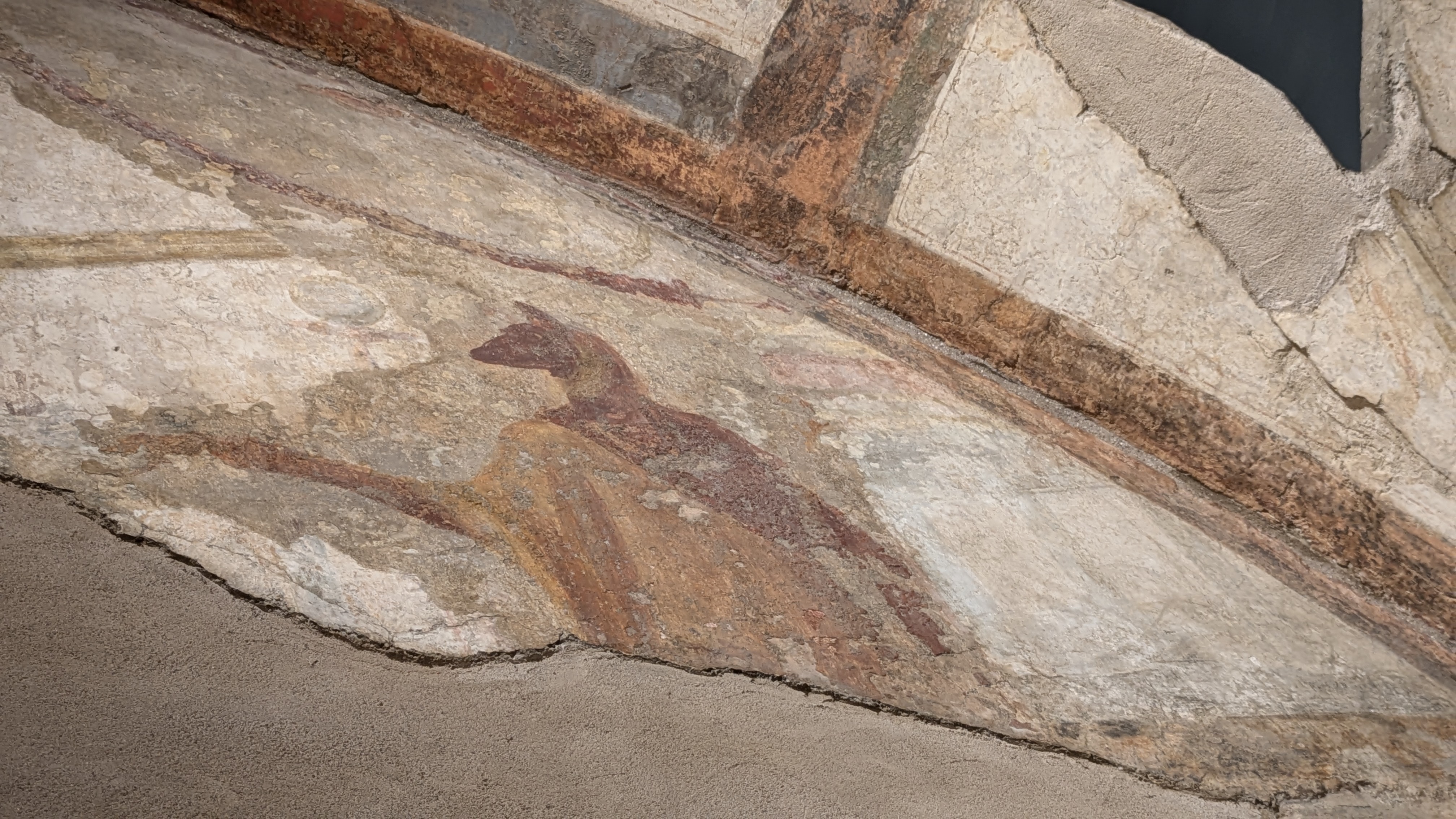
Many of the ancient obelisks had been parts of temples, removed and reset in later times. We also got a sense of just how pervasive Egyptian art, architecture, and deities were in ancient Rome with a glimpse at a fresco showing Anubis, the jackal-headed Egyptian god of death, in the ruins of a Roman house pre-dating the construction of the Baths of Caracalla by several hundred years.
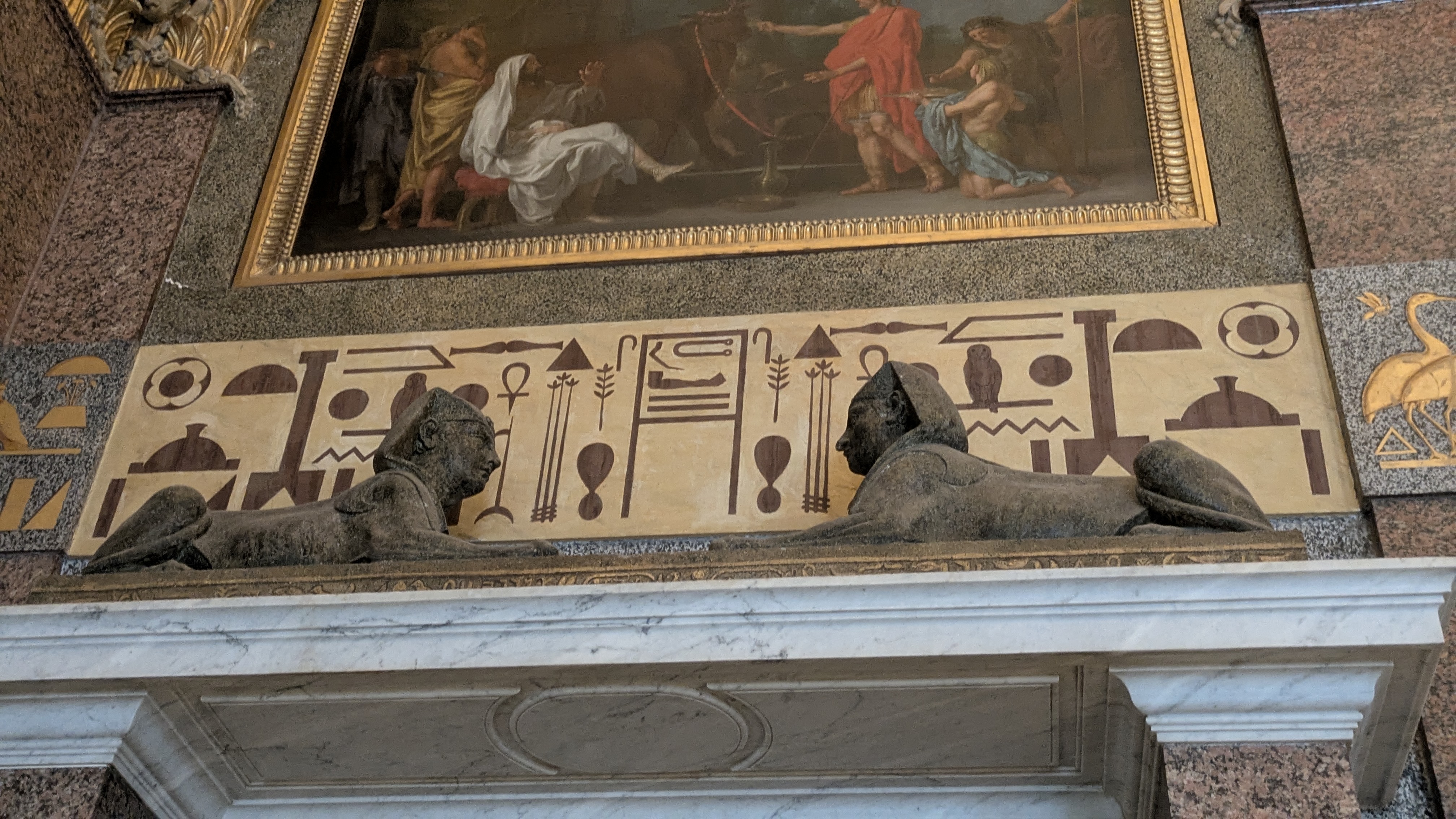
Egyptian influences continued well into later periods, as evident in the late eighteenth century Egyptian Room in the Galleria Borghese, which includes non-sensical hieroglyphic decoration, lots of red granite, Egyptian style ornamental architecture, and Greco-Romanized Egyptian gods in the ceiling frescoes. So, not only was Egypt an inspiration to the ancient Romans, but borrowing designs, materials, and items continued for a long time!
A zippy cab ride back to the airport provided a quick glimpse of a pyramid in Rome as well (though I was too slow to snap a pic). The pyramid, built around 18 BCE, serves as the tomb of Caius Cestius, a Roman official, who may have been involved in Roman campaigns against Meroe, explaining his interest in the steep pyramids that contrast with those at Giza. Originally out in the countryside, the pyramid has been incorporated into more recent city walls and enveloped by the bustling metropolis.
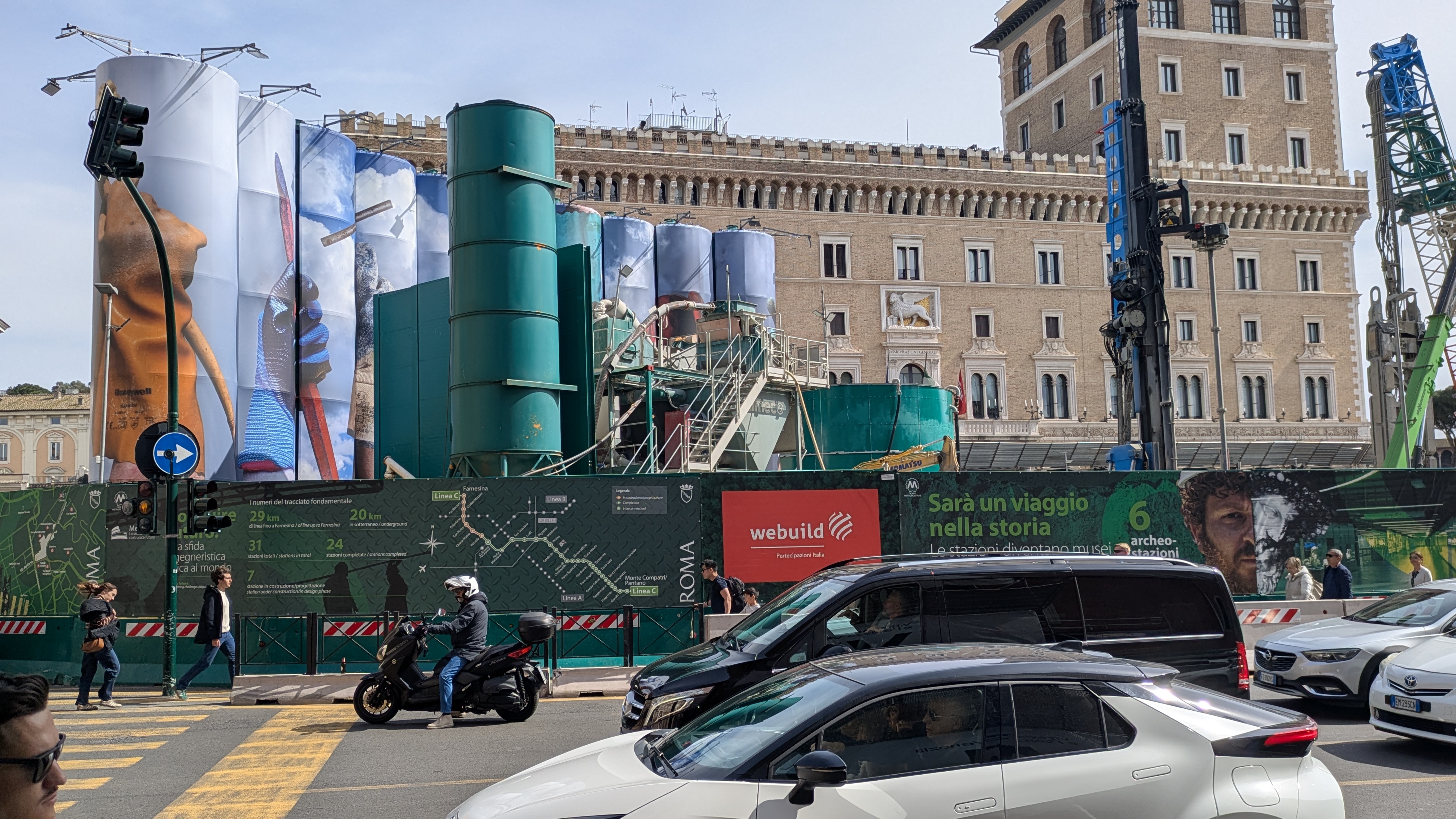
We agreed that we needed to return to Rome at some point, and I’m positive we will find more Egyptian pieces! We learned about additional mini-museums being created at new and expanded subway stops, so we will have those at the top of our itinerary.

 The Peabody