
Contributed by John Bergman-McCool
In a past blog post, I shared that we regularly monitor glue traps for signs of insect activity around our building. The traps are not a method for controlling insect populations, rather, they alert us to the presence of unwanted pests that pose a danger to the collections. When unwanted bugs are found we have a set of tools we can employ to remove them while minimizing risk to the health of our collection and colleagues. These tools include vacuuming and freezing collections.
Now, I imagine that many readers (probably most of you) are not excited by pictures of bugs, but earlier this fall, we trapped an unknown insect that I felt was worthy of the spotlight.
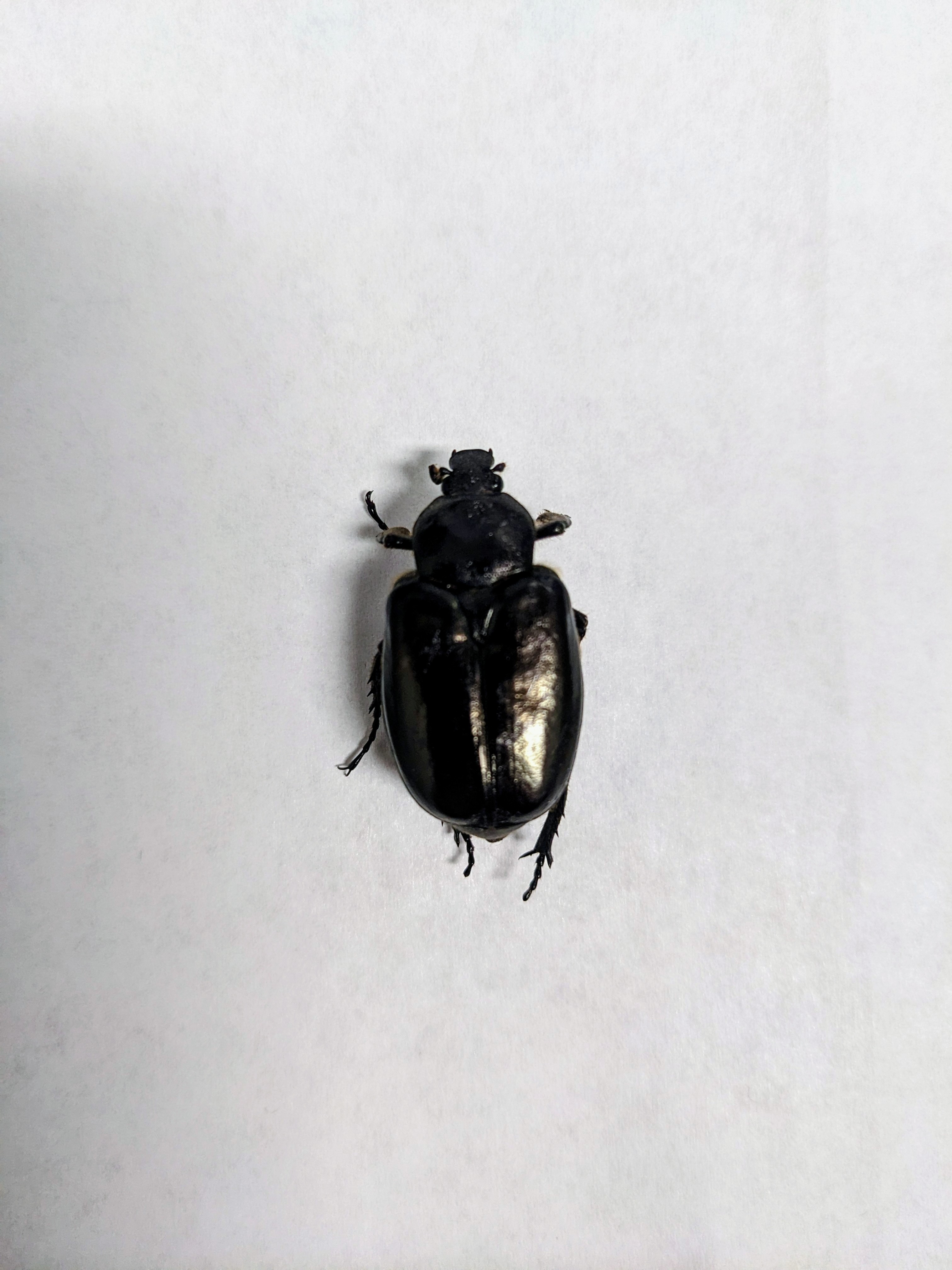
This remarkable beetle is the largest insect that I’ve seen in our traps. Beyond it’s massive size, any new or unknown bug is cause for excitement for a few reasons. First, we typically see the same three or four insects throughout the year. Second, we need to find out whether the insect is cause for alarm.
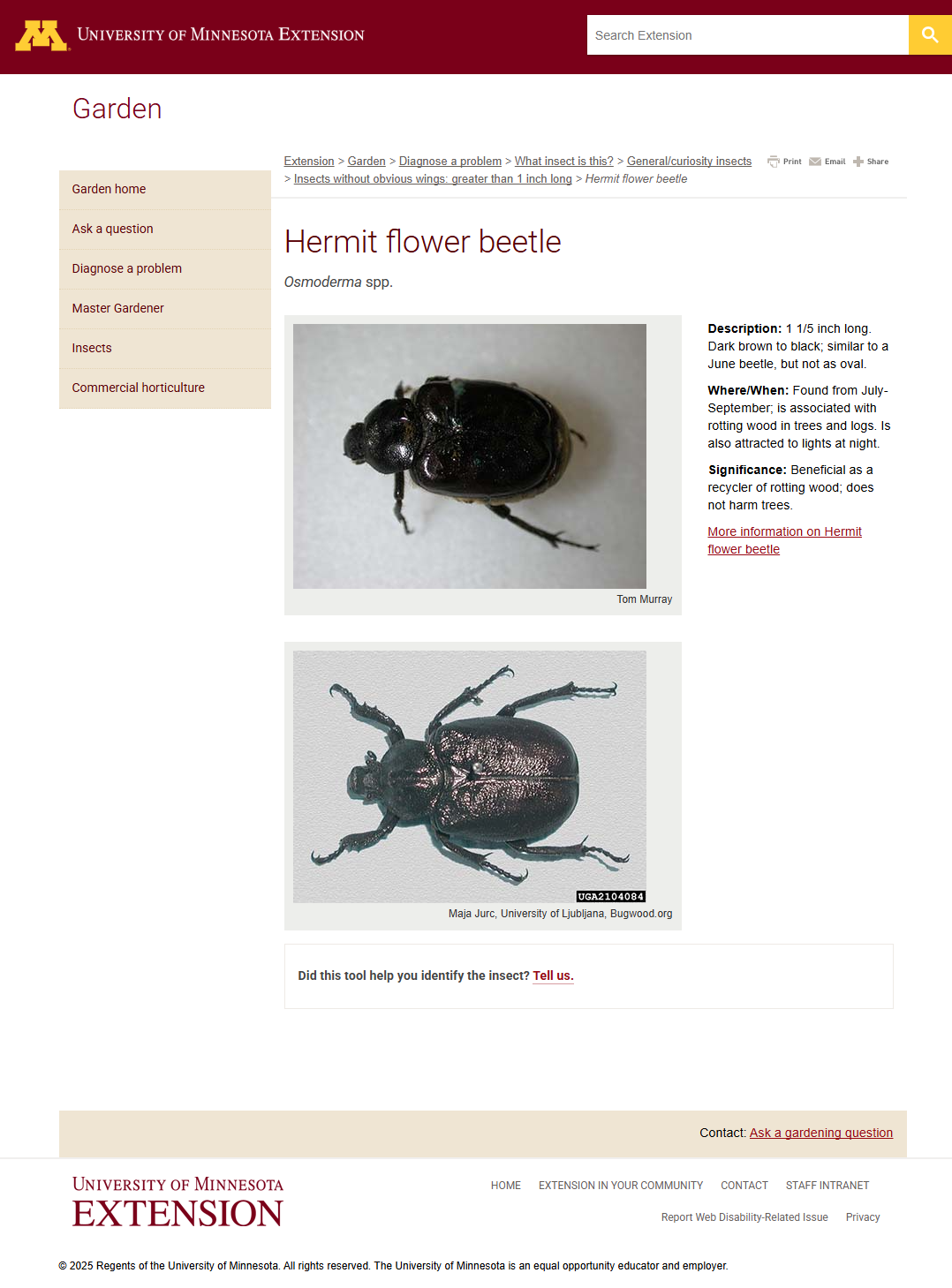
I snapped a few pictures and loaded them into Google’s ‘search by image’ function. Pretty quickly I learned that this guy is a Hermit Flower Beetle (or that is my best guess). They pose no danger to the collection. The larva live inside dead or rotting logs and play an important role in recycling wood and the nutrient cycle. The adults are frequently found around flowers. Somehow this one wandered into our building and ended up in one of our traps.
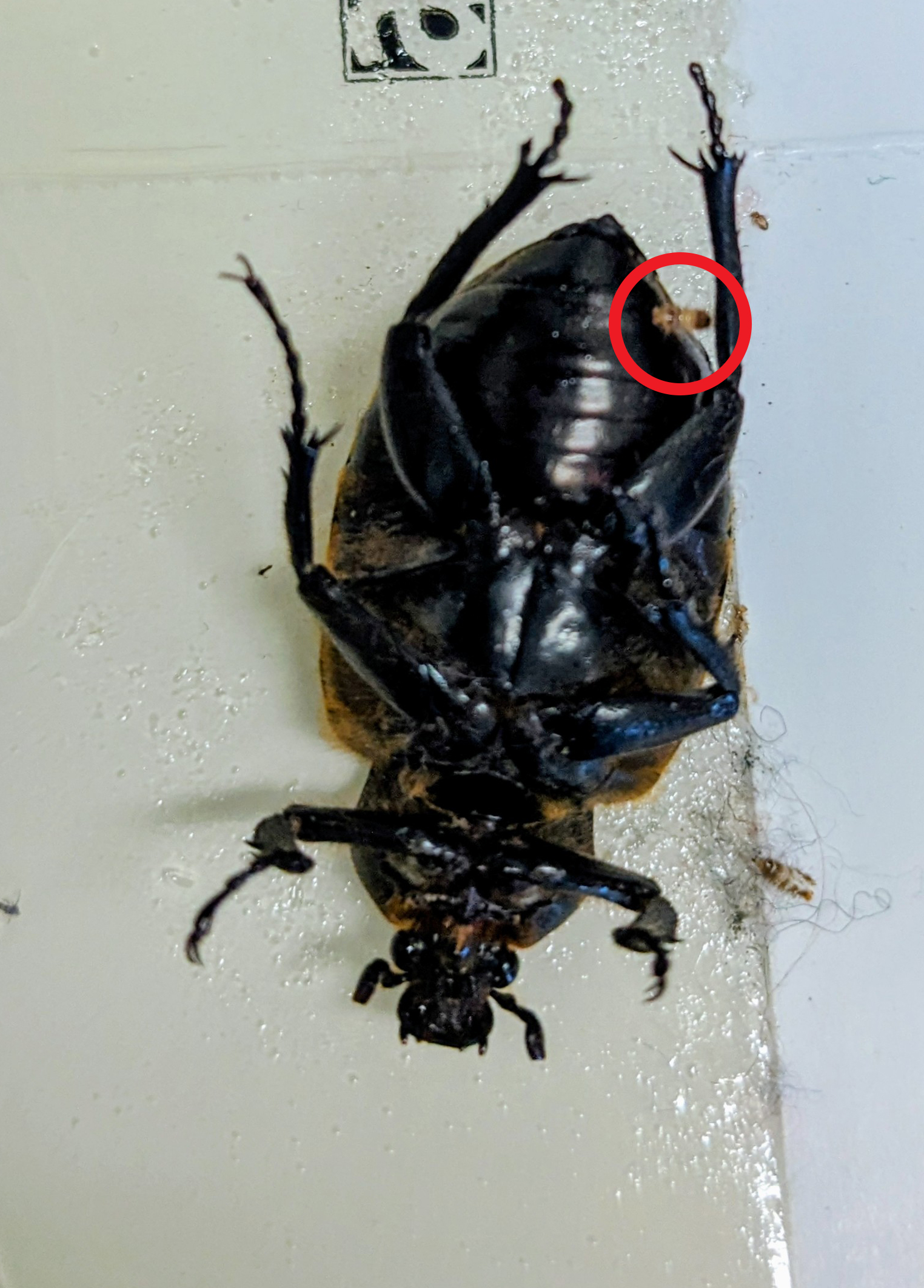
Unfortunately, once in our trap, the beetle died and became a food source for a carpet beetle, an insect we absolutely do not want in our collection. Even if an insect is not actively detrimental, it can always pose a risk.
 The Peabody