2023 Summer Reading List: Our Peabody Picks

Contributed by Emma Lavoie

As the school year comes to a close and we take time to slow down (thank you vacation time), what better time this season then to grab a book and settle down on a porch swing. It’s time to grab your library card, load up your Kindle, or get yourself to your local bookstore. Our staff and friends of the Peabody have done it again… Back by popular demand! The Peabody shares their favorite finds for this summer’s reading list. We even threw in a podcast as a bonus for any listeners! We hope you have a wonderful summer dear readers and enjoy exploring these “Peabody Picks.”

Happy reading!

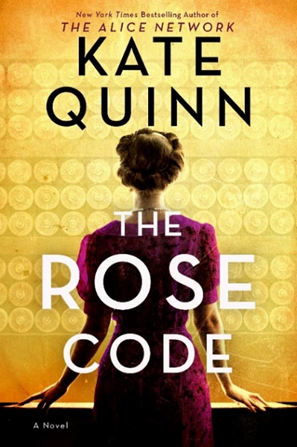
The Rose Code by Kate Quinn – Recommended by Emma Lavoie, Administrative Assistant

If you read one historical fiction book this year, THIS SHOULD BE IT! As England prepares for World War II, three women from very different walks of life answer the call to mysterious county estate Bletchley Park, where the best minds in Britain train to break German military codes. Osla translates decoded enemy secrets, Mab works the legendary code-breaking machines, and Beth is one of the Park’s few female cryptanalysts. Eventually war, loss, and the impossible pressure of secrecy will tear the three apart. Flash forward seven years later, these friends-turned-enemies are reunited by a mysterious encrypted letter – the key to which lies buried in the long-ago betrayal that destroyed their friendship and left one of them confined to an asylum. A mysterious traitor has emerged from the shadows of their Bletchley Park past, and now Osla, Mab, and Beth must resurrect their old alliance and crack one last code together against the backdrop of the royal wedding of Elizabeth and Philip.

“The reigning queen of historical fiction.”Fiona Davis, New York Times bestselling author of The Lions of Fifth Avenue

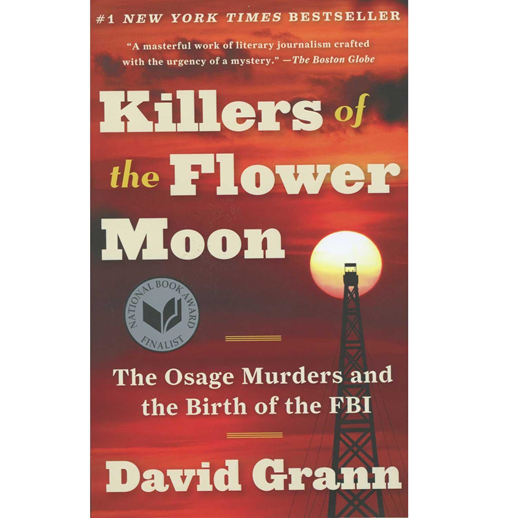
Killers of the Flower Moon by David Grann – Recommended by Michael Agostino, Peabody Volunteer

Set in the 1920s, this book features people of the Osage Nation who were relocated to barren lands in Oklahoma which were later discovered to be rich in oil. Per capita, members of the Osage nation quickly became the richest people in the world and targets for murder. This book carefully describes efforts by lawmen to solve these crimes and bring the murderers to justice. The lawmen were led by J. Edgar Hoover and his organization soon became the FBI – in what became one of the organization’s first major homicide investigations. Together with the Osage and Texas Ranger, Tom White, they began to expose one of the most sinister conspiracies in American History. A true-life murder mystery about one of the most monstrous crimes in American history, Killers of the Flower Moon, is highly acclaimed, receiving numerous awards, and was recently made into a movie starring Leonardo DiCaprio and Robert Deniro.

 “A masterful work of literary journalism crafted with the urgency of a mystery…. Contained within Grann’s mesmerizing storytelling lies something more than a brisk, satisfying read. Killers of the Flower Moon offers up the Osage killings as emblematic of America’s relationship with its indigenous peoples and the ‘culture of killing’ that has forever marred that tie.” The Boston Globe

Swords and Deviltry (Fafhrd & the Gray Mouser #1) by Fritz Leiber – Recommended by Ryan Wheeler, Peabody Director

First in the influential fan-favorite series, Swords and Deviltry collects four fantastical adventure stories from Fritz Leiber, the author who coined the phrase “sword and sorcery” and helped birth an entire genre. This collection of short stories and novellas follows the adventures of barbarian Fafhrd and conjurer turned sword fighter Gray Mouser written by Leiber in the 1950s and 60s and collected in 1970. If you like Robert E. Howard and Conan the Barbarian, you will love this! And if you do, there are a total of seven of these collected volumes chronicling the exploits of Fafhrd and the Gray Mouser, in this and other dimensions.

“A Grand Master of Science Fiction and Fantasy.”Science Fiction Writers of America

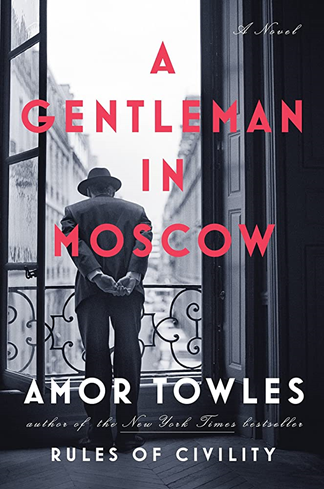
A Gentlemen in Moscow by Amor Towles – Recommended by Richard Davis, Peabody Volunteer

In 1922, Count Alexander Rostov is deemed an unrepentant aristocrat by a Bolshevik tribunal, and is sentenced to house arrest in the Metropol, a grand hotel across the street from the Kremlin. Rostov, an indomitable man of erudition and wit, has never worked a day in his life, and must now live in an attic room while some of the most tumultuous decades in Russian history are unfolding outside the hotel’s doors. Unexpectedly, his reduced circumstances provide him entry into a much larger world of emotional discovery. Brimming with humor, a glittering cast of characters, and one beautifully rendered scene after another, this singular novel casts a spell as it relates the count’s endeavor to gain a deeper understanding of what it means to be a man of purpose.

“How delightful that in an era as crude as ours this finely composed novel stretched out with old-World elegance.”The Washington Post

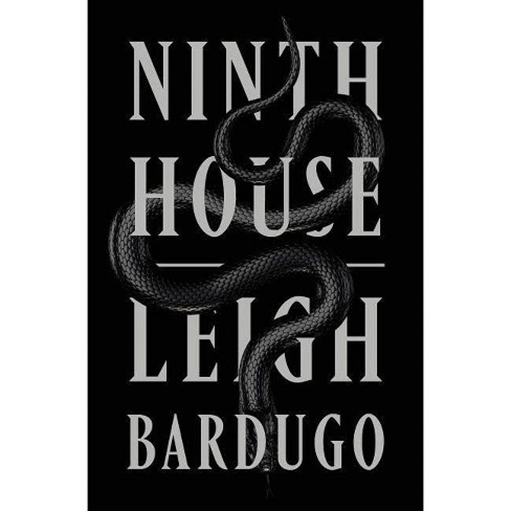
Ninth House by Leigh Bardugo – Recommended by Marla Taylor, Curator of Collections

Galaxy “Alex” Stern is the most unlikely member of Yale’s freshman class. Alex dropped out of school early and into a world of dead-end jobs and much, much worse. In fact, by age twenty, she is the sole survivor of a horrific, unsolved multiple homicide. Some might say she’s thrown her life away, but Alex is offered a second chance: to attend one of the world’s most prestigious universities on a full ride. What’s the catch, and why her? Still searching for answers, Alex arrives in New Haven tasked by her mysterious benefactors with monitoring the activities of Yale’s secret societies. Their eight windowless “tombs” are the well-known haunts of the rich and powerful, from high-ranking politicos to Wall Street’s biggest players. But their occult activities are more sinister and more extraordinary than any paranoid imagination might conceive. They tamper with forbidden magic. They raise the dead. And, sometimes, they prey on the living.

“The best fantasy novel I’ve read in years, because it’s about real people. Bardugo’s imaginative reach is brilliant, and this story – full of shocks and twists – is impossible to put down.”Stephen King

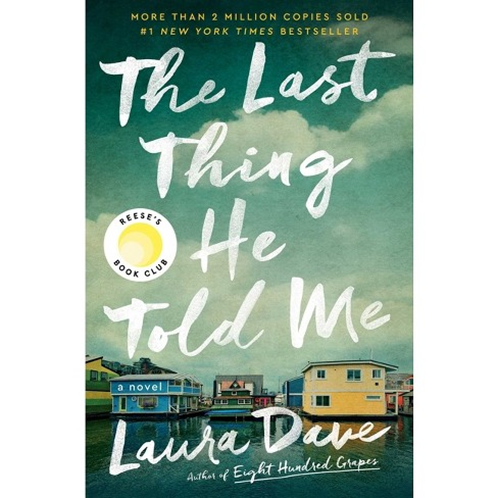
The Last Thing He Told Me by Laura Dave – Recommended by Beth Parsons, Office of Academy Resources, Director for Museums and Educational Outreach

Before Owen Michaels disappears, he manages to smuggle a note to his beloved wife of one year: Protect her. Despite her confusion and fear, Hannah Hall knows exactly to whom the note refers: Owen’s sixteen-year-old daughter, Bailey. Bailey, who lost her mother tragically as a child. Bailey, who wants absolutely nothing to do with her new stepmother. As Hannah’s increasingly desperate calls to Owen go unanswered; as the FBI arrests Owen’s boss; as a US Marshal and FBI agents arrive at her Sausalito home unannounced, Hannah quickly realizes her husband isn’t who he said he was. And that Bailey just may hold the key to figuring out Owen’s true identity—and why he really disappeared. Hannah and Bailey set out to discover the truth, together. But as they start putting together the pieces of Owen’s past, they soon realize they are also building a new future. One neither Hannah nor Bailey could have anticipated.

“In this novel, now an Apple TV+ series, Laura Dave has given readers what they crave most – a thoroughly engrossing yet comforting distraction.”BookPage

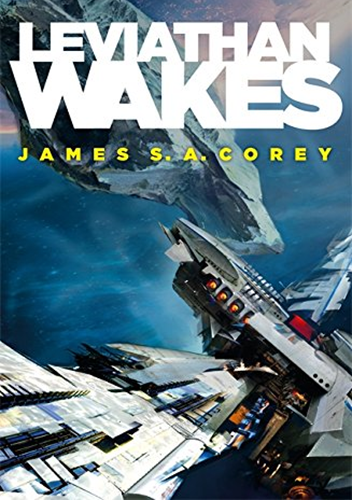
Leviathan Wakes by James A. Corey – Recommended by Nick Andrusin, Temporary Educator and Collections Assistant

Humanity has colonized the solar system—Mars, the Moon, the Asteroid Belt and beyond—but the stars are still out of our reach. Jim Holden is XO of an ice miner making runs from the rings of Saturn to the mining stations of the Belt. When he and his crew stumble upon a derelict ship, the Scopuli, they find themselves in possession of a secret they never wanted. A secret that someone is willing to kill for—and kill on a scale unfathomable to Jim and his crew. War is brewing in the system unless he can find out who left the ship and why. Detective Miller is looking for a girl. One girl in a system of billions, but her parents have money and money talks. When the trail leads him to the Scopuli and rebel sympathizer Holden, he realizes that this girl may be the key to everything. Holden and Miller must thread the needle between the Earth government, the Outer Planet revolutionaries, and secretive corporations—and the odds are against them. But out in the Belt, the rules are different, and one small ship can change the fate of the universe. Also now a Prime Original TV Series called The Expanse.

“This is the future the way it was supposed to be.”The Wall Street Journal

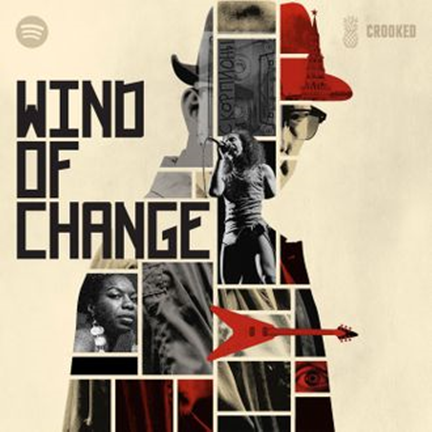
Wind of Change Podcast by Pineapple Street Studios and Crooked Media – Recommended by John Bergman-McCool, Collections Assistant

It’s 1990. The Berlin Wall has just come down. The Soviet Union is on the verge of collapse. A heavy metal band from West Germany, the Scorpions, releases a power ballad, “Wind of Change.” The song becomes the soundtrack to the peaceful revolution sweeping Europe – and one of the biggest rock singles ever. According to some fans, it’s the song that ended the Cold War. Decades later, New Yorker writer (and podcast host) Patrick Radden Keefe hears a rumor from a source: the Scorpions didn’t actually write “Wind of Change.” The CIA did. This is Patrick’s journey to find the truth. Among former operatives and leather-clad rockers, from Moscow to Kyiv to a GI Joe convention in Ohio, It’s a story about spies doing the unthinkable, about propaganda hidden in pop music, and a maze of government secrets.

“Wind of Change is a beautifully constructed listen, never less than entertaining.”The Guardian

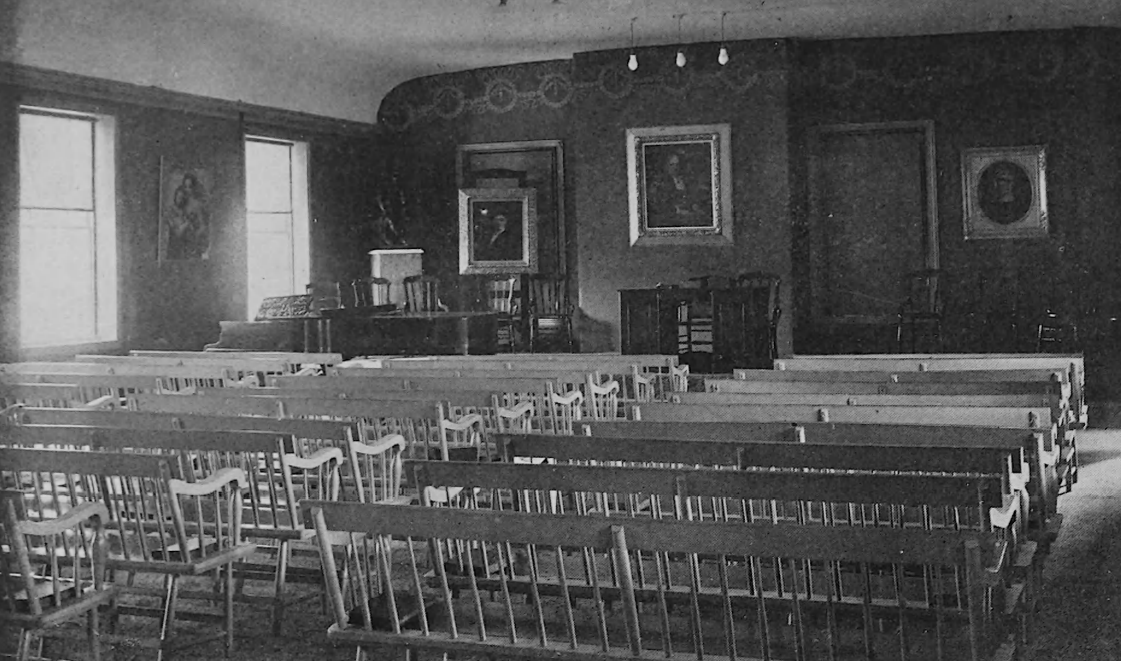
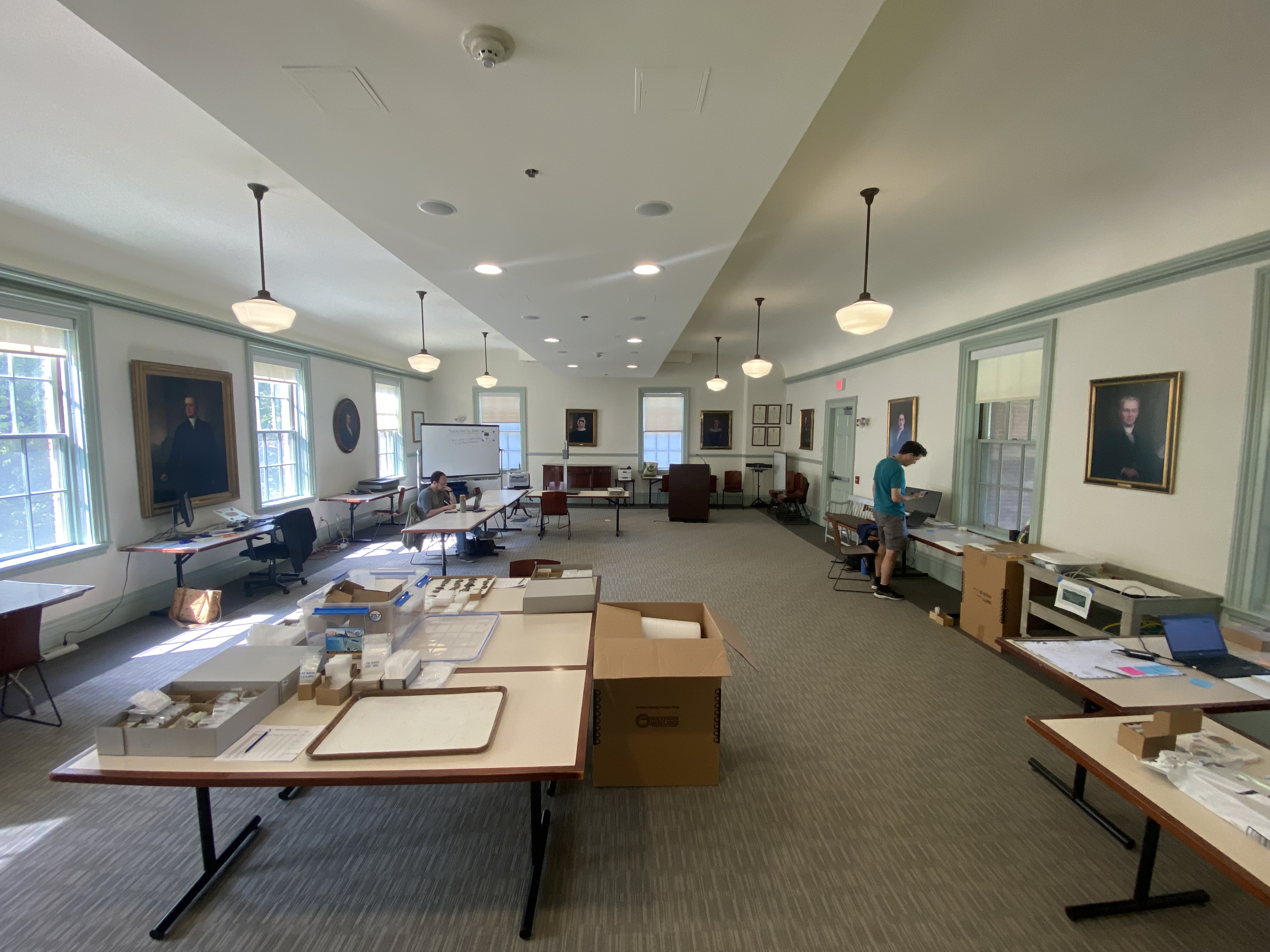
Welcome to the School Room: A Temporary Home for Peabody Staff

Contributed by Emma Lavoie

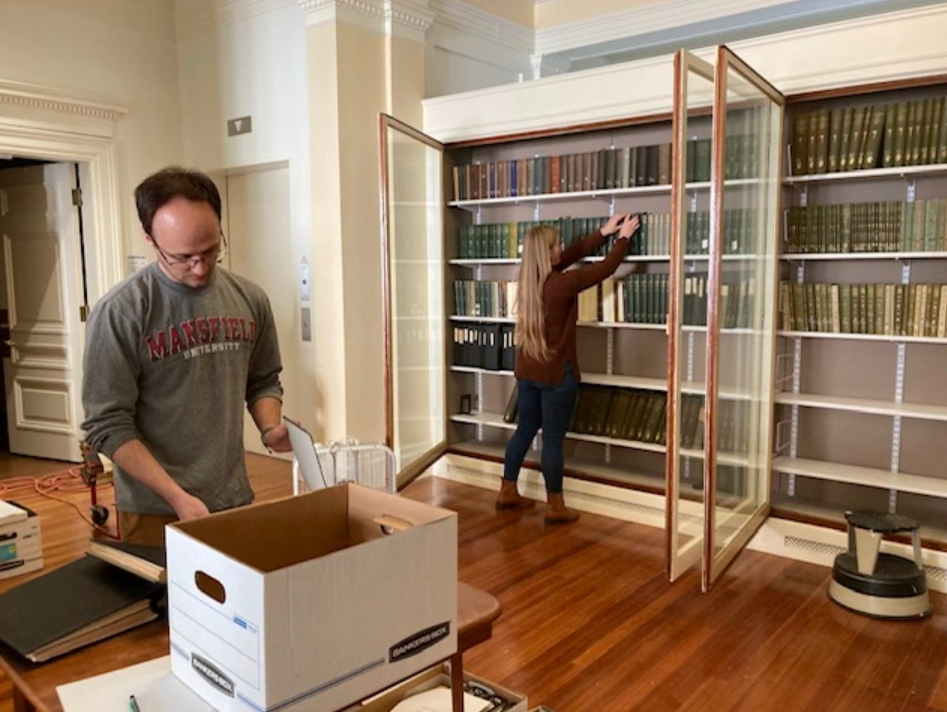
Hello from Abbot Campus! The Peabody staff have successfully moved to the School Room in Abbot Hall where we will be residing throughout the course of Phase 1 of the Peabody building renewal project. Our staff officially moved out of the Peabody at the end of April – see our Curator of Collections, Marla Taylor’s blog for updates on the building renewal project! We will continue to provide updates on the building project throughout the summer, so keep an eye out for more blogs coming soon!

Although our circumstances and environment have changed, the Peabody staff have continued most of their operations such as managing the care and organization of the collections, teaching lesson units across campus, and continuing consultation and repatriation work with tribal communities.

Abbot Academy students in the School Room at Abbot Hall, 1828-1829

After a few weeks of settling in, we’ve been able to welcome our Peabody volunteers back to our temporary space and have even hosted our Peabody Advisory Committee members for our annual Peabody Spring PAC meeting. In addition, the Peabody was fortunate to sponsor contemporary indigenous artists Dominique, Mia, ad Maxine Toya, for their annual spring visit to PA campus.

The Toya family teaches a week long workshop for students in Thayer Zaeder’s ceramic classes. We were lucky enough this year to host our PAC meeting and the Toya’s workshop in the same week, giving opportunity for our PAC members to meet the Toya’s and observe their work with students. For more about this workshop and past visits check out this blog by Peabody Director, Ryan Wheeler. For photos from the Toya’s most recent visit, check out our Smug Mug album here!

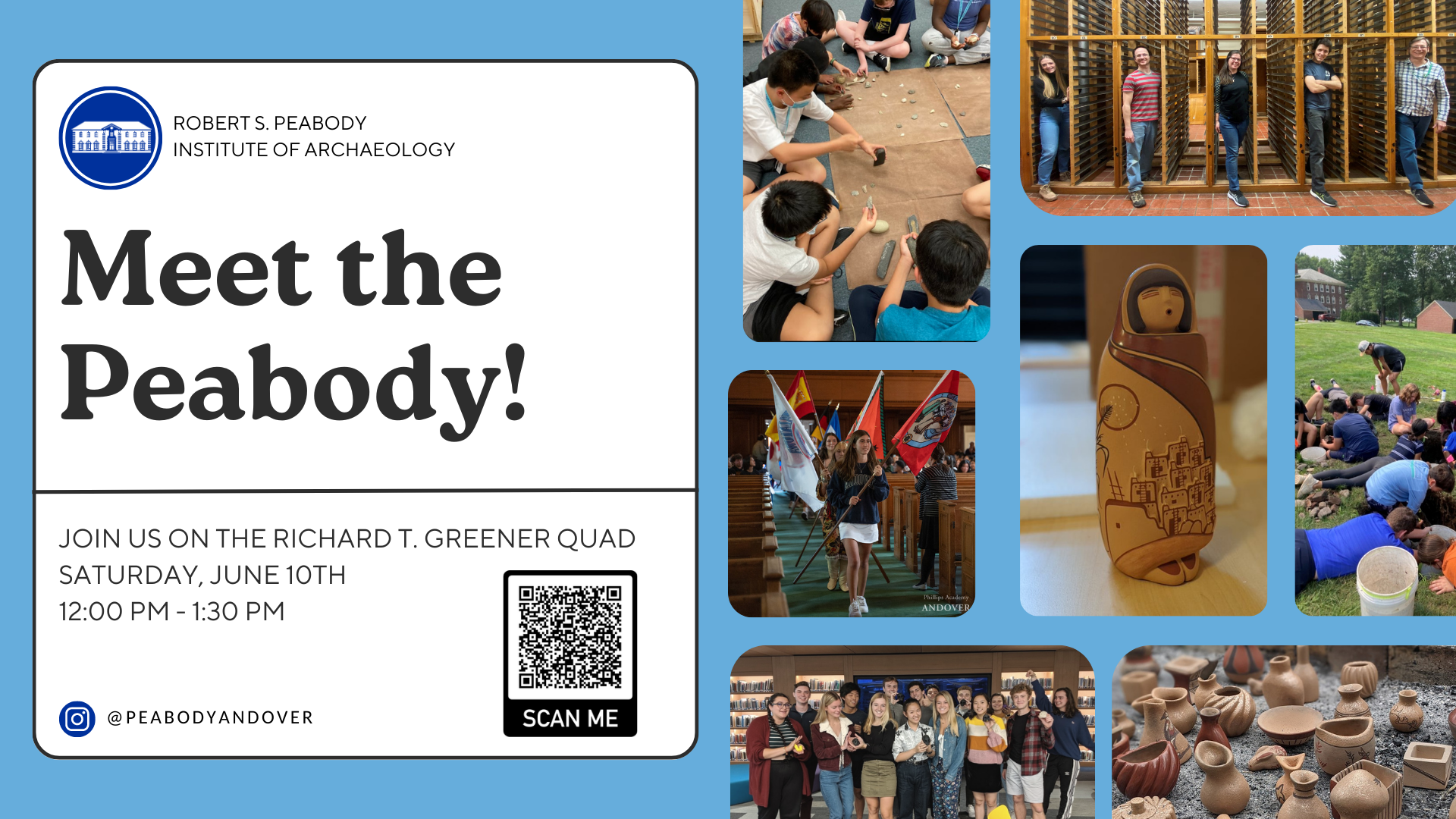
As summer approaches, we look forward to continuing partnership with the Andover Summer, Dig This! Class and greeting alumni back to the Andover campus during Reunion Weekend. Despite the Peabody building being closed during this time, the Peabody staff and several Peabody Advisory Committee members will be hosting a table during reunion lunch on the Richard T. Greener Quad from 12:00 PM – 1:30 PM on Saturday, June 10th. This will give alumni and visitors the ability to meet the Peabody and learn more about our current activities, initiatives, and building project updates.

Join the Peabody on Greener Quad at PA Reunion Weekend, Saturday, June 10th!

To celebrate our one month anniversary in the Abbot Hall School Room, the Communications Department was generous enough to host an Abbot Hall Meet & Greet as a welcome to the Peabody and opportunity for us to meet our new neighbors. Thank you Communications Team!

Award Recognitions at SAA

Contributed by Emma Lavoie

Around this time, we post a blog about our visit to the annual meeting of the Society for American Archaeology (SAA). The meeting was held March 29th – April 2nd, 2023 in Portland, Oregon, at the Oregon Convention Center.

The SAA Annual Meeting is the largest gathering of archaeologists of the Americas, attracting thousands of archaeologists each year from around the world (over 45 countries!) This conference offers archaeologists the ability to present and share research, network and explore the exhibit hall, and participate in excursions, receptions, and career development opportunities.

The Society for American Archaeology was founded in 1934 and held its first meeting at Phillips Academy Andover (That’s right! The very campus the Peabody calls home) in December 1935. Longtime Peabody Director, Doug Byers, served as the editor of the Society’s flagship publication – American Antiquity. Past Peabody Director, Richard “Scotty” MacNeish, served as president of SAA at one time as well.

Today, the SAA is comprised of over 7,000 members and our Peabody staff and Peabody Advisory Committee (PAC) continue to be involved with SAA. Peabody personnel regularly present papers and posters in meeting sessions, host a booth in the meeting’s exhibit hall, and sponsor the Robert S. Peabody Institute of Archaeology Award for Archaeology and Education.

For more on the Peabody’s previous visits to the SAA Annual Meeting check out our blogs here, here, and here!

Robert S. Peabody Institute of Archaeology Award for Archaeology and Education

The Robert S. Peabody Institute Award for Archaeology and Education recognizes excellence of individuals or institutions in using archaeological methods, theory, and/or data to enliven, enrich, and enhance other disciplines, and to foster the community of archaeology education practitioners. The Peabody Award will spotlight these contributions and promote teaching ideas, exercises, activities, and methods across the educational spectrum, from K-12 through higher education and including public education broadly conceived.

This year’s recipient of the Peabody Award is Pima Community College Centre for Archaeological Field Training. Pima Community College Centre for Archaeological Field Training has earned the Robert S. Peabody Institute of Archaeology Award for Archaeology and Education for their long-term commitment to archaeology education. Through the Pima Community College Archaeology Centre’s certificate program, which includes a Southwest Prehistory pathway, a field Methods pathway, and a GIS and Technology pathway, students learn the fundamentals of archaeological methods, ethics, and technology while attending community college and earning a certificate at affordable rates. Pima Community College’s programs provide an important career pathway for prospective archaeologists in a time when there are increasing demands for CRM professionals. Importantly, the program provides a career pathway for local students that does not require a four-year university education. PCC’s Archaeology Program, and the unique educational services it provides, exemplify what should be replicated across the country to provide affordable, equitable, and accessible education to students thinking about careers in archaeology.

Outstanding Public Archaeology Initiative Award

The Outstanding Public Archaeology Initiative Award continues the tradition begun by the Award for Excellence in Public Education (1997-2020) of recognizing exemplary public engagement efforts but refocuses on discrete projects (defined as a project with a clear start and end date). This award recognizes the best short-term initiatives such as (but not limited to) the following: exhibits, lesson plans, products, or other short-term outreach projects.

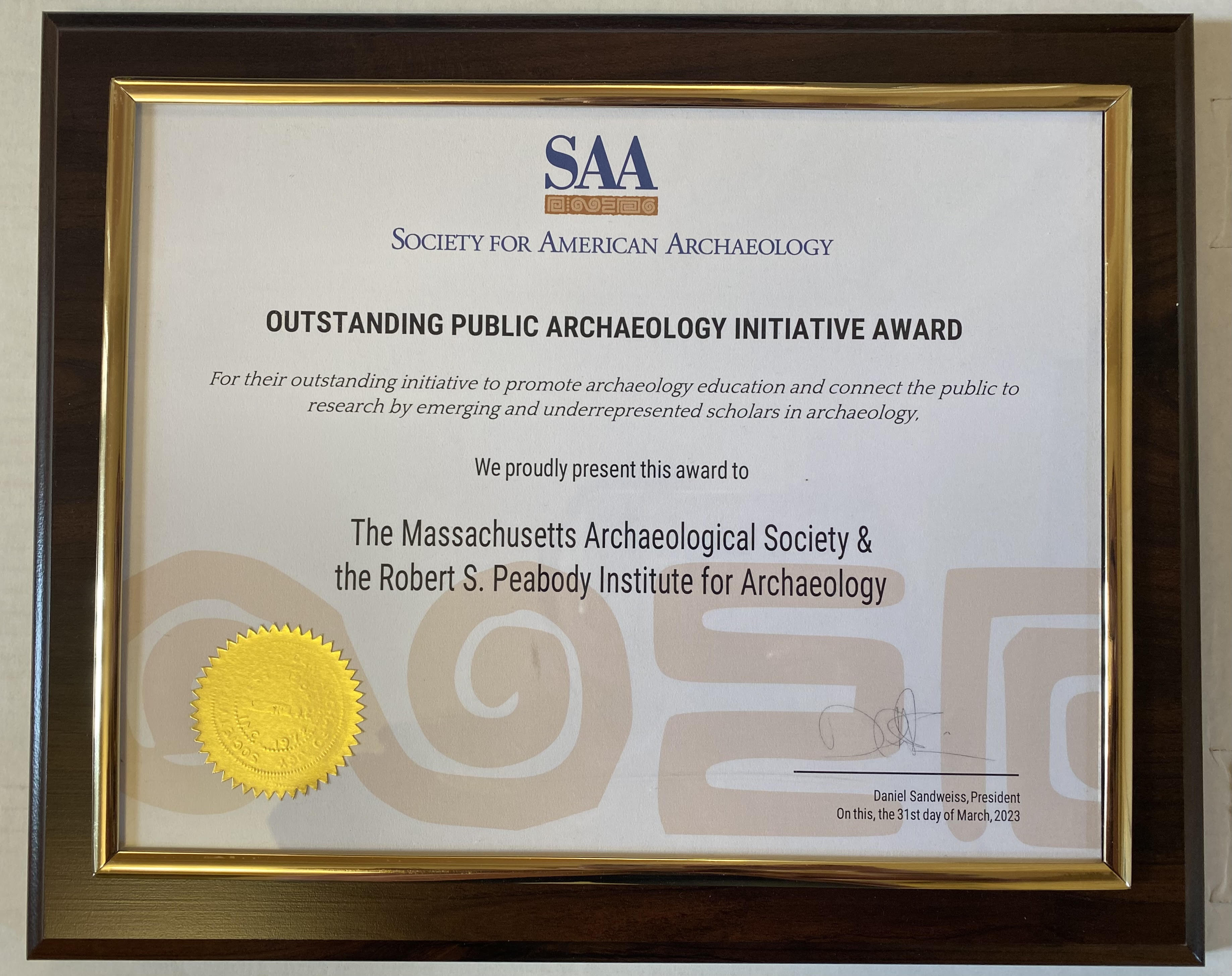
This year’s recipient was none other than The Massachusetts Archaeological Society (MAS) and the Robert S. Peabody Institute of Archaeology (RSP)! The Massachusetts Archaeological Society and the Robert S. Peabody Institute have earned the Outstanding Public Archaeology Initiative Award for their live presentation and video series “Diggin’ In: Digital Conversations with Archaeologists.” The series consisted of five seasons, with 49 total episodes. These were broadcast live over Zoom reaching an initial audience of 350 over Zoom for the live program, then 7,000 views on YouTube. The program’s goals were to connect the public to research by emerging or underrepresented scholars in archaeology and spotlight innovative or marginalized research topics, themes, and methodologies. The focus of “Diggin’ In” on these critical aspects of archaeology helped to generate media coverage of these themes. This initiative demonstrates the critical role archaeologists can play in communicating contemporary themes in archaeology to the public.

SAA Award presented to the Massachusetts Archaeological Society and Robert S. Peabody Institute at the SAA’s 88th Annual Meeting earlier this month.

For more information about the Diggin’ In series, check out this article for the New England Museum Association’s digital publication. The article was written by Diggin’ In co-hosts and creators, Lindsay Randall (previous Curator of Education for the Peabody and current MAS Vice Chair/Secretary) and Suanna Crowley (MAS Trustee).

You can check out all seasons of the Diggin’ In series on our Peabody YouTube page!

For those interested in attending the SAA’s annual meetings, the 89th Annual Meeting will be held April 17 – April 21, 2024 in New Orleans, Louisiana, at the New Orleans Marriott and the Sheraton New Orleans. We hope to see you there next year!

Save the Date! #PAGivingDay is March 29, 2023!

Contributed by Emma Lavoie

Mark your calendars! Save the date! PA Giving Day begins Wednesday, March 29, 2023! This year, the PA Giving Day event will run from 9am on Wednesday, March 29th to noon on Thursday, March 30th (Eastern Time).

Support the Peabody by making a gift of any size and help us jump-start this amazing day! For those inspired to give early, please complete the PA Giving Day form here! Please be sure to select the Peabody Institute of Archaeology under the “designation” section. Any gift made in advance of the event will count toward PA Giving Day totals. Your donation will also be included in all applicable matches. This is a wonderful way to maximize your giving and inspire others to do the same.

To date, we have $11,000 in match funds, but are still hoping to have more!

Keep a look out for exciting posts and takeovers across our social media channels leading up to PA Giving Day! Support what you love, support the Peabody!

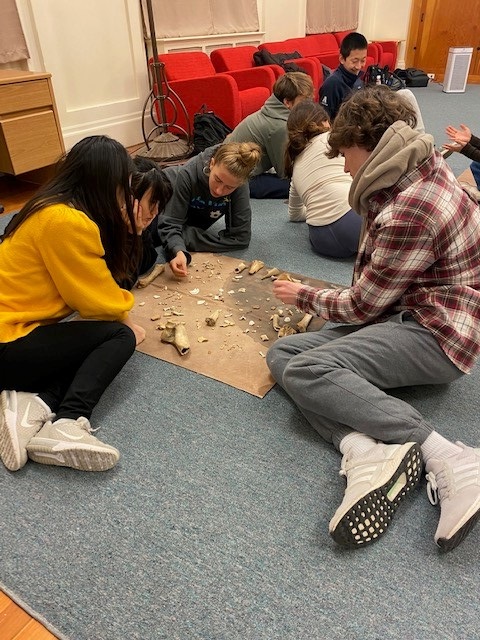
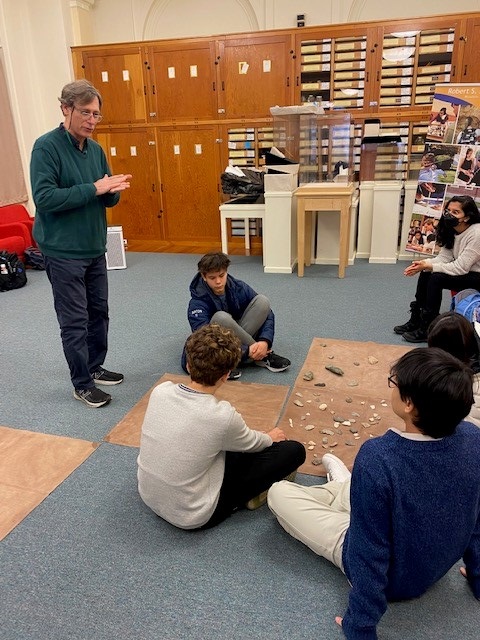
Students examine a mock excavation of a local archaeological site, one that highlights Andover’s historical status as a Native American trading center.

Behind the Photograph: Flammable Film

Contributed by Emma Lavoie

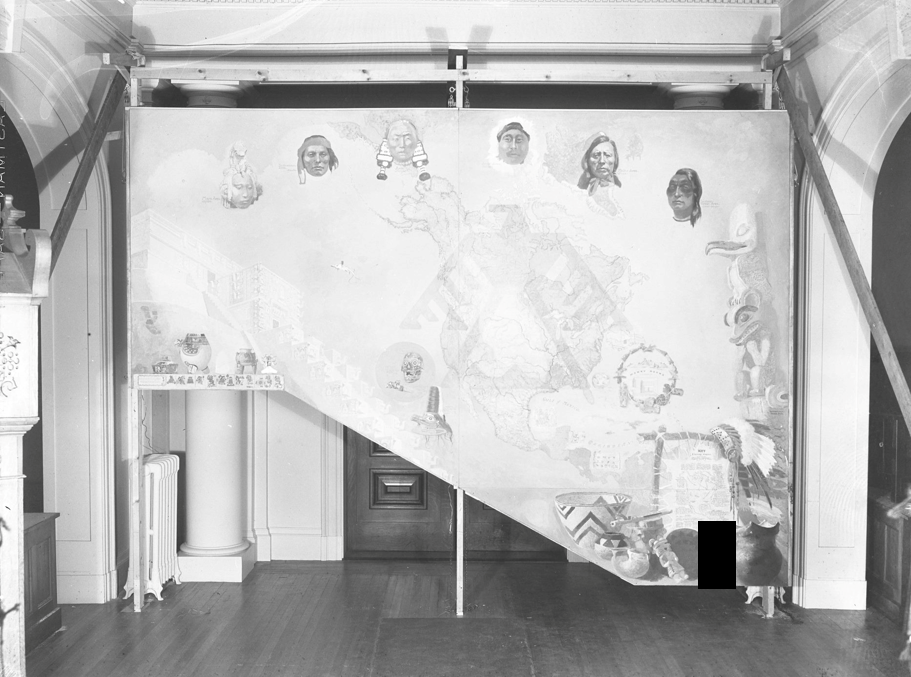
Stuart Travis mural at the Robert S. Peabody Institute of Archaeology

Ever wonder what lies behind a photograph? Beyond the simple description scrawled on the back of each image? The Peabody collection contains more than 600,000 artifacts, photographs, and documents. The Peabody’s photograph collection, specifically, is extensive and contains many interesting, yet untold stories. To bring these stories and photographs to light, we would like to share them with YOU, fellow readers, in our blog series, Behind the Photograph. You can find these stories using our BehindThePhoto tag on our blog.

The Mural

As the Peabody enters the pre-construction phase of a much-needed renovation project, I’ve been looking back at some of our old photos of the building. This image in particular is fascinating, as it was taken during the installation of the Peabody’s Stuart Travis mural in 1938. Those of you who have visited the Peabody may find the room in this image familiar – it’s the interior of our front entrance door! Although those columns behind the mural have since been removed, the crown molding, floor, and archways are still present at the Peabody today. Around the perimeter of the image you’ll find what looks to be an old grandfather clock against the wall to the left. If you peer closely just through both archways (to the right and left) you’ll see glimpses of exhibit cases where the Peabody’s first floor galleries housed exhibits and displayed artifacts.

The Peabody’s mural was created by American artist, illustrator, and designer, Stuart Travis (1868-1942). Stuart Travis is well-known to the Phillips Academy Andover community. Not only can you find his work at the Peabody, but all over – the Oliver Wendell Holmes Library, Paresky Commons, the Gelb science building, and the wrought iron gate at the entrance to the Moncrieff Cochran Bird Sanctuary. Stuart Travis is buried in the Chapel Cemetery here on campus.

The mural was installed in the Peabody’s central staircase where it continues to reside today. Titled “Culture Areas of North America,” this mural reflects ideas about anthropology and archaeology in the 1930s and 1940s. The mural features many drawings of artifacts from various sites and museum collections, some drawings even link to archaeological works by long-time Peabody Director, Warren K. Moorehead (1924-1938) as well as Director, Douglas Byers (1938-1968) and Curator, Fred Johnson (1936-1968).

The mural was dated 1938, however, Stuart Travis continued to make additions through 1942. The mural was later restored in 1997 by Christy Cunningham-Adams through the generous support of the Abbot Academy Fund. If you look closely at the image, you’ll see the mural was created in sections (i.e. the very fine line located down the middle of the mural). One interesting detail you cannot see from the photo, but rather in person is the various pencil notes and markings that still remain on the mural. This leads me to believe that perhaps the mural was never quite finished or rather, some new additions planned for the mural never came to fruition.

For more information about the Peabody’s Stuart Travis mural, check out this blog by Peabody Director, Ryan Wheeler – Culture Areas of North America: The Peabody’s Stuart Travis Mural.

Another fascinating find and story is this blog from our past temporary archivist, Irene Gates, who discovered six small notebooks belonging to Stuart Travis depicting illustrations and information about the Indigenous communities represented in the mural.

The Film

Mural history aside, the material image itself has quite the hazardous history (or should we say fiery?) The original image of the mural installation was made on a nitrate negative, a type of film used as a base for photographic roll film created by George Eastman in 1889. Nitrate was used for photographic and professional 35mm motion picture film until the 1950s.

What many may (or may not) know is nitrate film is highly flammable and also toxic when decomposing with age. New nitrate film could ignite with the heat of a cigarette, while decomposing nitrate film can ignite spontaneously at temperatures as low as 120 degrees Fahrenheit. Once ignited, nitrate film burns rapidly, fueled by its own oxygen, and releasing toxic fumes.

Before you jump to thoughts of flammable film spontaneously combusting in the Peabody’s collections, let me assure you THERE IS NO nitrate film currently located at the Peabody. But at one point in time there used to be nitrate film in the Peabody’s archival photograph collection, YIKES! As of July 2010, all nitrate negatives were digitized and then discarded due to the film’s potential hazard to the Peabody collections and building.

With that out of the way, let’s dive in to the history of nitrate film and how much of this history went up in smoke. We see its legacy in Alfred Hitchcock’s Sabotage – a bus operator tells a young boy he cannot bring two reels of nitrate film onboard, it’s flammable after all. Then in Quentin Taratino’s Inglourious Basterds – nitrate film’s volatile chemistry is used for his alternate history story of a plot to assassinate high-ranking officials of the Nazi party, including Hitler.

Nitrate fires were infrequent compared to the rapid spread of cinema, however, when disaster occurred at the hands of nitrate film, the results were quite devastating. One such fire occurred at Paris’s 1897 Charity Bazaar, claiming 126 lives many of which were women. In 2019, a French drama miniseries debuted on Netflix called Le Bazar de la Charité (The Bonfire of Destiny) depicting this destructive time in history.

The 1940s saw numerous fires in New York City involving nitrate film. Investigators found no evidence of negligence by personnel or the careless use of cigarettes. In fact, it appeared the nitrate film spontaneously ignited due to abnormally hot summers. Since burning nitrate produces its own oxygen, submerging the film in water is futile. In addition, the fumes given off by its ignition are highly toxic and hamper any efforts to suppress the fire. These fumes contain oxides of nitrogen which, if inhaled, can be fatal. Unfortunately, nitrate film must burn itself out.

Besides its combustive properties, nitrate is extremely fragile. Overtime, the film naturally shrinks and deteriorates, even when treated with care.  Film archivists in the 1970s and 80s expressed urgency for the preservation of nitrate film using the slogan, “Nitrate Won’t Wait,” with images of the destruction of vault fires such as the 1978 vault fire at the National Archives and Records Service in Suitland, Maryland, which destroyed 12.6 million feet of historical newsreel footage and outtakes donated by Universal Pictures. As a result of this, many nitrate negatives and film have been digitized or reprinted on polyester stock (the replacement to nitrate beginning in the 1950s).

How to Spot Decomposition in Nitrate Film (sourced from the Science & Media Museum Blog)

1.) Fading picture with amber discoloration

2.) Film becomes brittle; emulsion becomes adhesive and film sticks together

(At stages 1 and 2, film can be copied)

3.) Film has a noxious odor

(At stage 3 some parts of the film may be copied)

4.) Film is soft and covered with a viscous froth

5.) Film is deteriorating into a brownish acrid powder

  (At stages 4 and 5, film should be immediately destroyed by local fire department)

On the other side of the argument, many believe nitrate film is a viable artifact that doesn’t have to be destroyed or hidden away. In 2015, the Nitrate Picture Show was created by the Eastman Museum to raise awareness of nitrate and preserve what remains. The Eastman Museum currently houses 24,054 reels of nitrate film. 

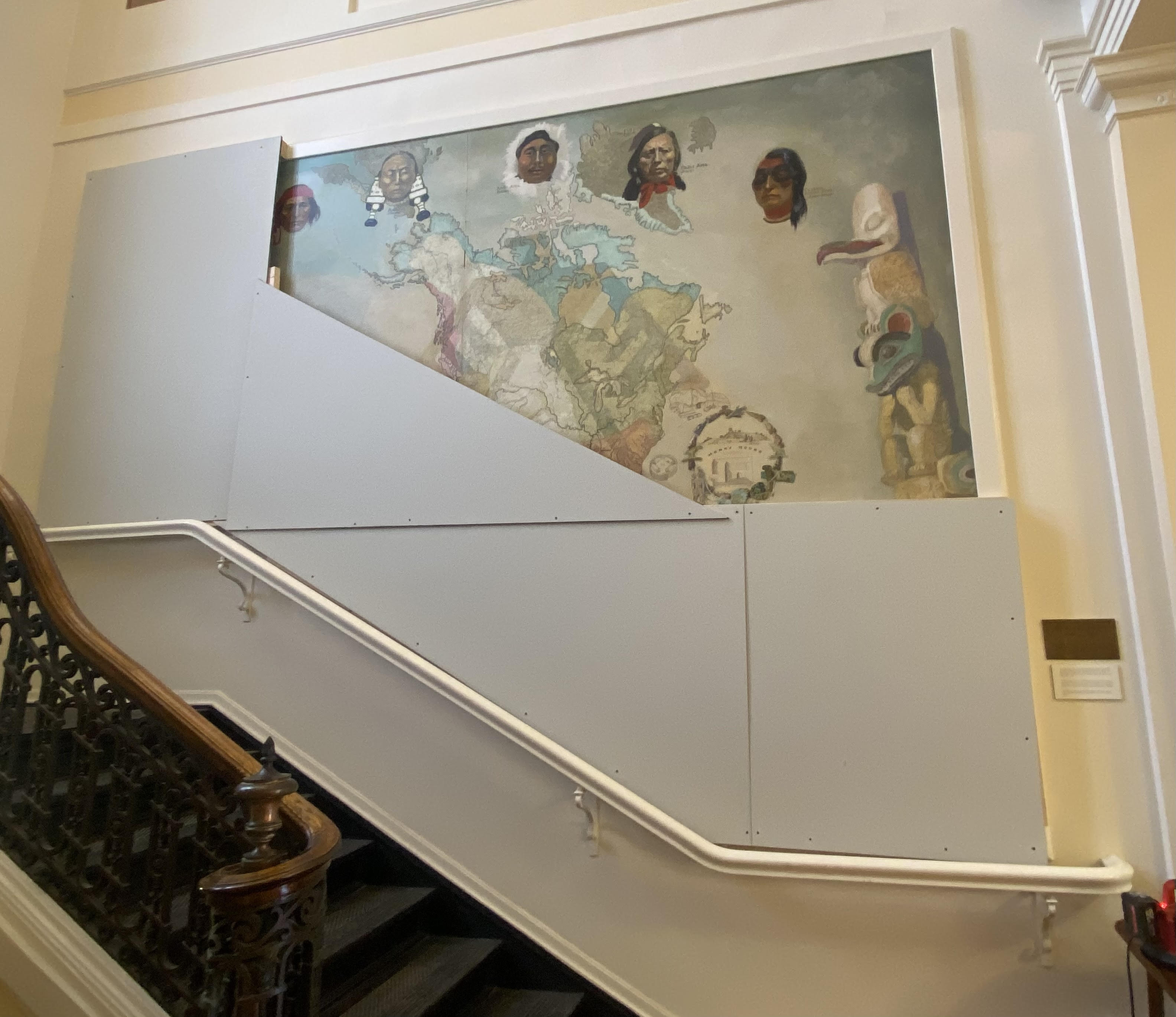
Circling back to our mural image – I’d like to provide the current status of our Peabody mural during the pre-construction phase of our planned renovation work. We are taking protective measures to keep it safe during upcoming renovation work. Here you can see a temporary wall being placed over the mural as a protective layer.

The Peabody mural receiving a temporary wall for protection during building renovations.

Introducing our Peabody Annual Report 2021-2022

Contributed by Emma Lavoie

Our Peabody annual report for academic year 2021-2022 has just been released! This report highlights student participation at the Peabody, including more than 1,300 students who visited for classes, work duty, and more! In addition, our annual report features new acquisitions, classes, and workshops along with updates on our collection and NAGPRA work. Thank you to everyone who supported the completion of another wonderful year at the Peabody!

You can read the report in its entirety HERE.

Listen If You Dare! The Perfect Podcast List for the Spooky Season

Contributed by Emma Lavoie

It’s almost Halloween, so get in the spirit by checking out our list of the best spooky podcasts you definitely don’t want to listen to alone in the dark. From haunted places to haunting history, these podcasts will have you on the edge of your seat or hiding under the covers. Happy haunts and happy listening this Halloween!

#1 Spooked

Another season of Spooked has RISEN… cross over (if you dare) into the world of the unexplained, listening to true-life supernatural stories, told first-hand by people who can barely believe it happened themselves. This podcast challenges skeptics of the supernatural, daring listeners to confront the unknown. Be afraid.

#2 Dark House

For true crime fans who also love a good ghost story, Dark House features America’s most notorious homes. From infamous crime scenes to abandoned mansions, hosts and House Beautiful editors Hadley Mendelsohn and Alyssa Fiorentino unpack the twisted history of a different house in each episode. They research who lived (and died) there and share the creepy stories that suggest their spirits never left.

#3 The No Sleep Podcast

Too afraid to listen to true-crime podcasts because they’re all about things that actually happened? Give this podcast a try. Each episode will have you feeling like you are telling spooky stories around a virtual campfire. Run, don’t walk!

#4 Haunted Road

Amy Bruni, star of the hit TV shows Kindred Spirits and Ghost Hunters, takes listeners on a chilling guided tour through some of the most haunted locations in America with the help of expert paranormal investigators who have actually been there. Do you have chills yet?

#5 Lore

This podcast is about dark historical events that blur the lines between history and lore. Lore explores the mysterious creatures, tragic events, and unusual places that fill the pages of our history… sometimes the truth is more frightening than fiction.

#6 American Shadows

Join host Lauren Vogelbaum as she spans two centuries of omitted lore from our country’s history books. This show focuses on the darker stories from American history: the people, places, and things that are hidden and forgotten in the shadows. From better-known tales like the conspiracy to steal Lincoln’s body, to less-known stories, like the rainmaker who flooded San Diego. American Shadows explores the hidden tales relegated to the dusty corners of US history, one journey at a time.

#7 Unobscured

History is full of stories we think we know. They are old and dark, but time has robbed us of perspective and clarity. They’ve become obscured and misunderstood. Which is why this series exists: to dig deep and shed light on some of history’s darkest moments. To help us better understand where we’ve come from. To make it Unobscured. Each season pairs narrative storytelling from Aaron Mahnke, creator of the hit podcast Lore, with prominent historian interviews. Check out Season 1 about the Salem Witch Trials. You may even find an interview with a familiar friend of the Peabody, Emerson Baker, Phillips Academy alum, history professor at Salem State University, and author of A Storm of Witchcraft: The Salem Trials and the American Experience.

#8 Midnight Library

Not just another podcast show, but a place you can go. Climb the stairs of this strange, Victorian mansion and curl up by the grand fireplace to hear tales of times long ago. Be transported through time to learn about ancient customs and mysterious happenings all from the comfort of the Midnight Library. Be sure to stay in the cordoned off areas, and you’ll be fine…

Looking for a spooky podcast for kids? Check out the podcast – Grimm, Grimmer, Grimmest

Designed for kids – Grimm, Grimmer, Grimmest is a wildly enchanting fairy tale podcast, featuring classic fairy tales that bring to life a world full of curious creatures and mischievous foes. Created in partnership with bestselling children’s book author, Adam Gidwitz, each episode retells a tale to a group of inquisitive kids, who anticipate plot twists, crack jokes, and share their own perspectives on these very Grimm tales. Another unique feature to this children’s podcast is each episode is rated as “Grimm,” “Grimmer,” or “Grimmest.”

For more haunted listening, check out these honorable mentions.

Behind the Photograph: “A Good Maine Dinner”

Contributed by Emma Lavoie

Warren K. Moorehead and crew in camp, Penobscot River, Maine, 1912. Photograph by Charles A. Perkins. Robert S. Peabody Institute of Archaeology, Photograph Collection

Ever wonder what lies behind a photograph? Beyond the simple description scrawled on the back of each image? The Peabody collection contains more than 600,000 artifacts, photographs, and documents. The Peabody’s photograph collection, specifically, is extensive and contains many interesting, yet untold stories. To bring these stories and photographs to light, we would like to share them with YOU, fellow readers, in our blog series, Behind the Photograph. You can find these stories using our BehindThePhoto tag on our blog.

The year is 1912, the site is an expedition campsite located along the Penobscot River in Maine. On the right a crew member sits on the ground with his back to the camera, legs stretched out in front of him, ankles crossed, balancing his dinner on his lap. Near the tent we see three individuals close together. One sitting through the smoky haze of the campfire, another standing with his plate in his hands – last to get his meal or maybe in line for seconds? An apron on the third individual identifies the camp cook. To the left two individuals sit on tree stumps with dinner plates on their laps, enjoying “a good Maine dinner,” as the title of this photograph describes. The individual in black, farthest to the left, is none other than Warren K. Moorehead, the Peabody’s first curator and Peabody director from 1924 to 1938.

Warren K. Moorehead and Maine Expeditions

During this decade, Maine was a popular destination for archaeological field projects sponsored by the Peabody (known then as the Archaeology Department at Phillips Academy Andover.) Warren K. Moorehead’s first expedition to Maine was organized in 1912. The camping image above was taken along the Penobscot River during this expedition. This venture was so successful that Moorehead sent both survey and excavation crews to Maine each summer for the next three years. During this period, crews surveyed a large portion of Maine’s rivers and excavated dozens of sites. Maine remained the primary destination for the Peabody’s field projects for the remainder of this decade. Although Moorehead’s archaeological interests were focused elsewhere after 1920, he continued to send crews to Maine as late as 1926.

Glass Plate Negative

Much of the Peabody photographic collection is fragile. The Maine expeditions took place at a time when photography, as well as archaeology, was undergoing radical change. With the introduction of smaller and less expensive film cameras, the large and cumbersome view cameras with glass plate negatives were quickly replaced. This transition is reflected in the Moorehead photographic collection.

This image is one of 130 glass plate negatives in the Moorehead photographic collection at the Peabody. Most of these glass plate negatives (including this image) are 5 x 7” in size and appear to have been taken with a Rochester Optical Company, New Model (1890) view camera.  There are a few larger negatives in the Peabody’s photographic collection that are about 6 x 8” in size that were taken with an Improved Model Seneca view camera (1906). The Seneca view camera is still located at the Peabody to this day!

1906 Improved Model Seneca view camera at the Peabody

For further reading about Warren K. Moorehead and his archaeological excavations in Maine check out Warren K. Moorehead’s text, The Archaeology of Maine.

Summer Reading List: Our Peabody Staff Picks

Contributed by Emma Lavoie

Ah, summertime. The Andover Summer session has ended, students have left campus, the weather is warm (too warm at times), and it’s time for some relaxation and rejuvenation before we start the new school year. What better way to enjoy the rest of your summer than with a good book! But with so many books out there, how do you choose?

Thankfully, members of the Peabody staff are here to share their “Peabody Picks” with you dear readers! Below are some of our favorite reading recommendations based on what our staff is currently reading or has read this summer. Enjoy!

Ryan Wheeler, Director – Decolonizing “Prehistory”: Deep Time and Indigenous Knowledges in North America

Decolonizing “Prehistory” combines a critical investigation of the documentation of the American deep past with perspectives from Indigenous traditional knowledges and attention to ongoing systems of intellectual colonialism. It’s a 2021 collection of essays edited by Gesa Mackenthun and Christen Mucher. I was initially pointed to the first chapter by a colleague—that’s by the late Annette Kolodny and titled Competing Narratives of Ancestry in Donald Trump’s America and the Imperatives for Scholarly Intervention. The other essays are equally provocative and engaging! It can be read online for free here!  

“This book packs a double revelation and, with it, an important message for the environmental movement.” – Heather Menzies, Watershed Sentinel

Marla Taylor, Curator of Collections – The Invisible Life of Addie LaRue by V.E. Schwab

In a moment of desperation, a young woman makes a Faustian bargain to live a life of freedom.  But, the deal is not what she expected.  Thus begins the extraordinary life of Addie LaRue, and a dazzling adventure that will play out across centuries and continents, across history and art, as a young woman learns how far she will go to leave her mark on the world.

“Completely absorbed me enough to make me forget the real world.” – Jodie Picoult, Washington Post

John Bergman-McCool, Assistant Curator – The End of Everything: (Astrophysically Speaking) by Katie Mack

The Universe had a beginning, and it will have an end. Modern cosmology — the study of the nature and evolution of the cosmos itself — has allowed physicists to explain the history of the Universe from the first tiny fraction of a second until today. But what’s next? We now have the tools to extend our knowledge into the distant future and speculate about the ultimate fate of all reality.

“A thrilling tour of potential cosmic doomsdays….Mack’s infectious enthusiasm for communicating the finer points of cosmological doom elevates The End of Everything over any other book on the topic.” –The Wall Street Journal

Lindsay Randall, Curator of Education and Outreach – STIFF: The Curious Lives of Human Cadavers by Mary Roach

While it has no right to be – given the topic – Mary Roach has written a book that is hilariously funny as she takes the reader on a tour of what can happen to human bodies after death. I enjoyed 99.99999% of the book, with the only downside being the part that describes what maggots sound like when feeding… Now I am forever like Ron, the poor unsuspecting media relations guy who was only trying to be nice as he drove Mary around, as I too used to like Rice Crispies.

“One of the funniest and most unusual books of the year….Gross, educational, and unexpectedly sidesplitting.” Entertainment Weekly

Emma Lavoie, Administrative Assistant – The Mystery of Mrs. Christie by Marie Benedict

The New York Times and USA Today bestselling author of The Only Woman in the Room returns with a thrilling reconstruction of one of the most notorious events in literary history: Crime novelist, Agatha Christie’s mysterious 11-day disappearance in 1926. History and true crime lovers, this book is for you!

“A stunning story… The ending is ingenious, and it’s possible that Benedict has brought to life the most plausible explanation for why Christie disappeared for 11 days in 1926.” – The Washington Post

Beth Parsons, Office of Academy Resources, Director for Museums and Educational Outreach – The Personal Librarian by Marie Benedict and Victoria Christopher Murray

A remarkable novel about J. P. Morgan’s personal librarian, Belle da Costa Greene, the Black American woman who was forced to hide her true identity and pass as white in order to leave a lasting legacy that enriched our nation. An interesting tie to Andover, she is the daughter of Richard T. Greener (Andover alumnus, ‘1865), the first Black graduate of Harvard and a well-known advocate for equality.

“Historical fiction at its best…The Personal Librarian spins a complex tale of deceit and allegiance as told through books.” Good Morning America

David Spidaliere, Collection Project Assistant – Engaging Archaeology: 25 Case Studies in Research Practice by Stephen W Silliman

Bringing together 25 case studies from archaeological projects worldwide, Engaging Archaeology candidly explores personal experiences, successes, challenges, and even frustrations from established and senior archaeologists who share invaluable practical advice for students and early-career professionals engaged in planning and carrying out their own archaeological research.

“Unique and thoughtful, Stephen W. Silliman’s guide is an essential course book for early-stage researchers, advanced undergraduates, and new graduate students, as well as those teaching and mentoring. It will also be insightful and enjoyable reading for veteran archaeologists.” Wiley-Blackwell Publishing

Jessica Dow, Collection Project Assistant – Uprooted: On the Trail of the Green Man by Nina Lyon

Who, or what, is the Green Man, and why is this medieval image so present in our precarious modern times? An encounter with the Green Man at an ancient Herefordshire church in the wake of catastrophic weather leads Nina Lyon into an exploration of how the foliate heads of Norman stonemasons have evolved into today’s cult symbols.

“Lyon’s search for the meanings of the folk image and symbol of rebirth take her from neopagan Cornish festivals to the forests of south-west Germany. She is both political and sardonic.” The Guardian
Richard Davis, Peabody Volunteer – Fatal Journey: The Final Expedition of Henry Hudson by Peter C. Mancall

The English explorer Henry Hudson devoted his life to the search for a water route through America, becoming the first European to navigate the Hudson River in the process. In the winter of 1610, after navigating dangerous fields of icebergs near the northern tip of Labrador, Hudson’s small ship became trapped in winter ice. Provisions grew scarce and tensions mounted amongst the crew. A story of exploration, desperation, and icebound tragedy, Fatal Journey vividly chronicles the undoing of the great explorer, not by an angry ocean, but at the hands of his own men.

“Mancall’s account of the doomed voyage is exciting, tense, and tragic…. This is an excellent re-examination of [Hudson] and his final, sad effort.” – Booklist Magazine

Michael Agostino, Peabody Volunteer – Kindred: Neanderthal Life, Love, Death and Art by Rebecca Wragg Sykes

A wonderful non-fiction book where the author assembles many decades of Neanderthal research into a clear description of how they lived, survived challenges, and created art. I especially like the detail she provided on how the many stone artifacts were sourced and created. This fueled my imagination as I work with the many pieces in the Peabody collection.

“‘Kindred’ is important reading not just for anyone interested in these ancient cousins of ours, but also for anyone interested in humanity.” The New York Times

Andover Summer Returns: Dig This! class at it again

Contributed by Emma Lavoie

The Peabody is keeping busy this summer with volunteers, interns, events and visits, researchers, and of course hosting the Andover Summer Session class, Dig This!

Dig This! students in class and learning to read an excavation site.

During the month of July, the Peabody hosts the Dig This! class, a course offered by Phillips Academy’s Andover Summer Session. This Lower School initiative takes a closer look at some crucial episodes in the development of this country to hone skills and understanding of dynamic interactions that took place between Native peoples and European newcomers, which continue to shape the United States to this day.

Using the Peabody Institute’s collections, together with extensive library and internet materials, students actively explore a series of case and character studies to understand the minds and strategies of important individuals from some of the most significant events in history. In addition, students attend field trips to nearby historical sites that bring these stories to life.

Dig This! students on field trips to the Peabody Museum of Archaeology & Ethnology at Harvard and Old Sturbridge Village

Students then get to participate in their own archaeological excavation of the Mansion House at Phillips Academy – the home of PA founder, Samuel Phillips, Jr. It’s always so exciting to see what these students discover as they take part in this unique opportunity to witness history.

Dig This! students excavating the Mansion House site

Be on the lookout for more updates on students’ findings through our social media this month and maybe even a blog from one of our Dig This! class instructors!

We hope you all are having a wonderful summer!