Fowled in Collection

Contributed by Marla Taylor

This skeleton is from a site near Glorieta, New Mexico – just southeast of Santa Fe – and collected by Alfred Kidder during his work at Pecos Pueblo.

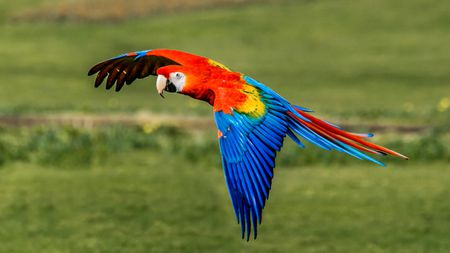
As discussed in a previous blog, The Macaw Factor, the presence of macaws in the southwest is certainly note-worthy.  These birds have a natural habitat approximately 1000 miles to the south and were clearly transported to the region as status symbols.  They may have been kept for their feathers or displayed as a sign of wealth and connections.

Two scarlet macaws
Scarlet macaws

As we continue to move through the collection, who knows what we will find next!

Further reading:

Hill, Erica. “The Contextual Analysis of Animal Interments and Ritual Practice in Southwestern North America.” Kiva 65, no. 4 (2000): 361-98. http://www.jstor.org/stable/30246334.

Wu, Katherine J. “A Macaw Breeding Center Supplied Prehistoric Americans With Prized Plumage.” Smithsonian.com, August 13, 2018.


Peabody at the Smithsonian

Contributed by Marla Taylor

Did you know that you can find artifacts from the Peabody in Washington, D.C.?  Well, you can!

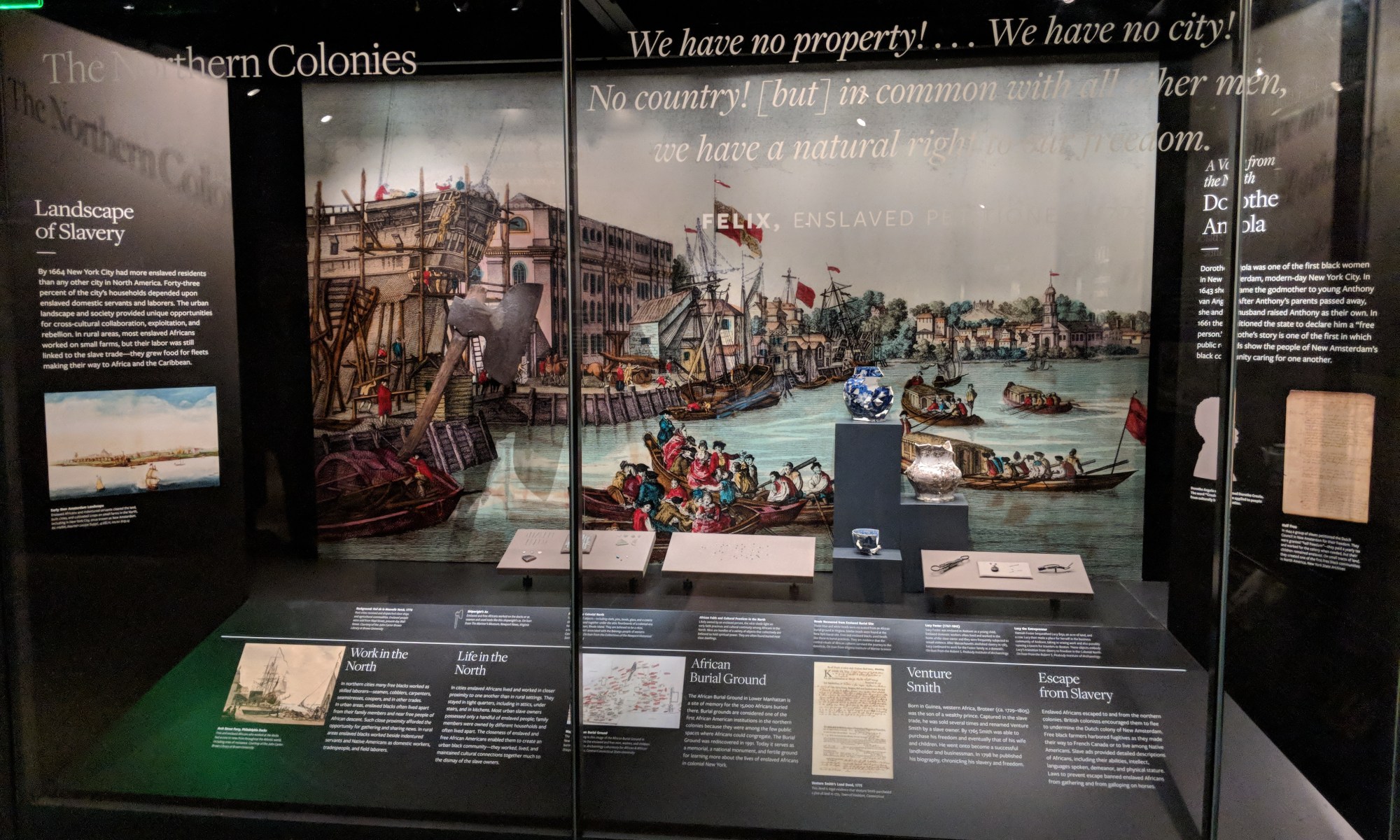
In 2018, the National Museum of African American History and Culture (NMAAHC) contacted the Peabody to request the loan of objects associated with Lucy Foster, a free Black woman, who lived in the Ballardvale section of Andover, for their Slavery and Freedom exhibition. Here is how the NMAAHC describes the exhibition:

The Slavery and Freedom inaugural exhibition is at the physical heart of the Smithsonian’s National Museum of African American History and Culture. The exhibition invites visitors to explore the complex and intertwined histories of slavery and freedom through the personal stories of those who experienced it. Chronicling the early 15th century through 1876, the exhibition explores the cultural, economic, and political legacies of the making of modern slavery and the foundation of American freedoms. Visitors will encounter both free and enslaved African Americans’ contributions to the making of America in body, mind, and spirit. They will glimpse a vision of freedom—an American freedom—pushed to its fullest and most transformational limits through the everyday actions of men and women. Most importantly, they will walk away with an understanding of how the story of slavery and freedom is a shared American history with deep roots linking all people together and that still impacts American society today.

The discovery of Lucy Foster’s homestead was an accident in 1945 as archaeologists Adelaide and Ripley Bullen were looking for evidence of an ancient Native American settlement. Lucy’s early nineteenth century homestead was instead one of the first African American archaeological sites excavated in the United States. To learn more about the excavation and the artifacts recovered, check out these sources:

Adelaide and Ripley Bullen’s 1945 article on the Lucy Foster site

Vernon Baker’s 1978 “blue book” on Lucy Foster’s ceramics

Vernon Baker’s 1972 book chapter on Lucy Foster

Anthony Martin’s 2018 article Homeplace Is also Workplace: Another Look at Lucy Foster in Andover, Massachusetts

You can also find many of Lucy’s belongings in our online collection.

The Lucy Foster site objects are displayed in Slavery and Freedom in “The Northern Colonies: Expanding Merchant Capital” section of the museum. These objects allow the NMAAHC to tell the story of women and their work in the north and bring to light the personal voice and story of Lucy Foster. Foster was born in Boston in 1767 and was sold into the household of Job and Hannah Foster at age four, in 1771. She worked as a domestic in their household until Job’s death in 1789, when she moved with Hannah to her new husband Philemon Chandler’s household. After Chandler’s death, they moved back to the Foster household until Hannah’s death in 1815. Lucy then established her own household on land willed to her by Hannah. Lucy died of pneumonia on November 1, 1845. Occasional mentions of Lucy in historical documents, coupled with the archaeological remains, has allowed a glimpse into her life.

The NMAAHC requested these objects because Lucy’s story is unique. She is one of two People of Color from this area with documentary and archaeological records to tell her story. Lucy was part of both free and enslaved communities in Andover, and these objects show how she continually used her sewing and cooking skills to carve a place for herself in the Andover community. These objects embody the presence of women and their work as fundamental to the northern states and are a rare example of objects from the early nineteenth century concretely connected to an enslaved person.

If you are in the D.C. area, be sure to stop by and say “hello” to Lucy!

Transcribing the Collection

Contributed by Marla Taylor

The Peabody Institute has been working for some time now to establish full physical and intellectual control over our collection. You can read about our progress here, here, here, and here.

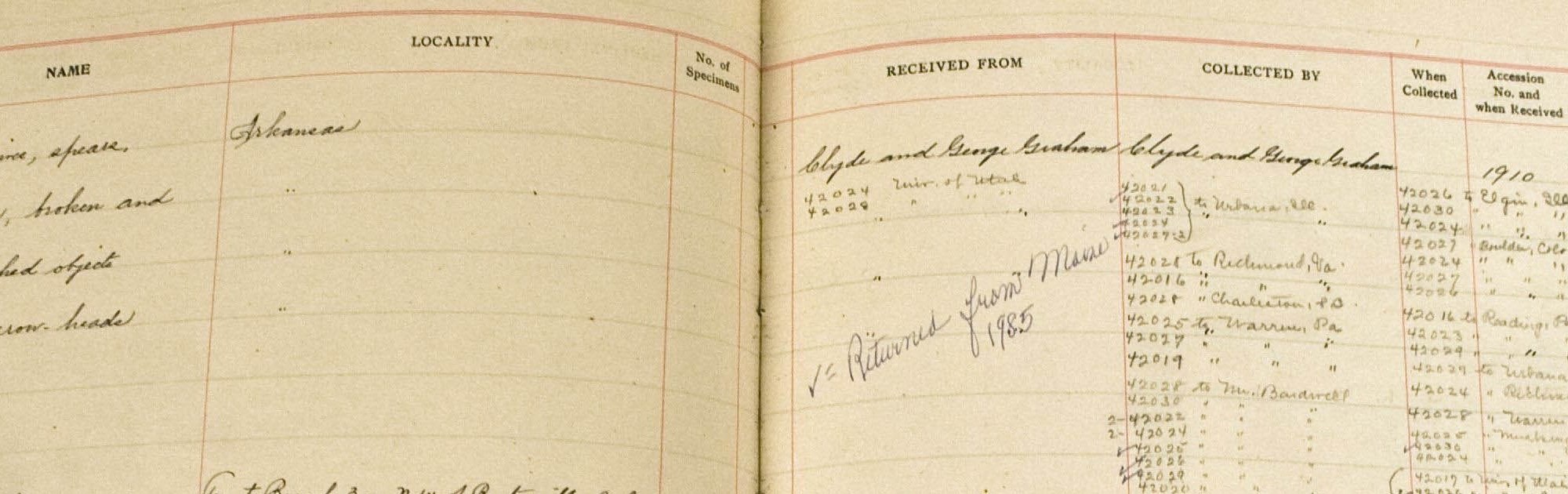
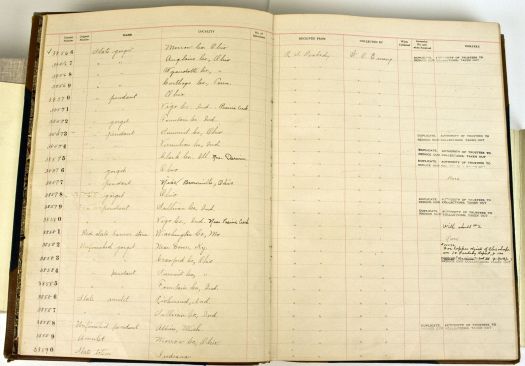
But, physically inventorying the collection is only half the project. The Peabody also needs to document and account for all the artifacts that came into, and left, the collection over the years. Currently, about 56,000 catalog records are present in our database, PastPerfect, versus the nearly 120,000 unique catalog numbers that have been assigned over the years. Original cataloging records at the Institute are largely on paper in two formats – ledger books that document the first phase of collections and individual catalog cards that were in use through the 1980s. Often, a single line of handwritten text or a 3×5 index card contains all the documented information for a specific artifact. That data is invaluable for making objects relevant and accessible to researchers, faculty, students, and in our ongoing repatriation work with Native American tribes.

example accession ledger page
A page from one of the accession ledgers

Recently, I presented this problem to the Board of the Abbot Academy Fund as part of their biannual grant cycle. Focusing on the need to transcribe the hand-written ledger books – 78,094 individual line entries in 14 ledger books. I am thrilled to report that the Abbot Academy Fund has chosen to support our Transcribing the Collection initiative!

The grant funds a temporary project transcriptionist who will type each line of the original accession ledgers from early twentieth century cursive into an Excel document. The project will be complete in the fall of 2019.

Once all this information is recorded, the Peabody will collaborate with PastPerfect to migrate the data into our database. The ultimate goal is to make the collection more accessible to staff, researchers, students and tribes.

I will keep you updated!

The Transcribing the Collection project is made possible by a grant from the Abbot Academy Fund, continuing Abbot’s tradition of boldness, innovation, and caring.

Weaving through the collection

Have you explored the Peabody collection online lately?  If not, you should!

Nearly 375 baskets in our collection have recently been added to the online catalog.  Explore baskets from many regions of the country – southwest, California, northwest, and New England.  The baskets are cataloged by shape – Jar/bottle form, Tray form, Bowl form, Burden/gathering basket, Cap/hat, and Container.

We are proud to house baskets made by Molly Neptune Parker, Jeremy Frey, and Clara Darden.  Our collection also contains several rare baskets like these Salinin and Yuki examples from Central California.

Check it out and weave your way through the collection!

Ayacucho animals migrate to the Peabody

Contributed by Marla Taylor

Artifact collections are not meant to stagnate – museum collections are meant to be researched, examined, and shared.  In a perfect world, all loans are returned promptly and paper-work is meticulous. But, let’s be real, in an institution with 100+ years of history, this is not often the case. Fortunately, some past researchers remember you when it is time to relocate collections.

Circa 1972, Scotty MacNeish sent faunal material from the Ayacucho Valley of Peru to Dr. Kent Flannery of the University of Michigan for analysis. Dr. Flannery is a prominent zooarchaeologist who specializes in investigating the origins of agriculture in Mesoamerica and the Near East.  Many know Flannery from his 1976 book The Early Mesoamerican Village and his 1982 article The Golden Marshalltown: A Parable for the Archeology of the 1980s. Dr. Flannery completed the Ayacucho faunal analysis and sent data and a written chapter (for Volume I of the Prehistory of the Ayacucho Basin) back to MacNeish. But the artifacts were not returned until July, 2018.

Dr. Flannery, and the Museum of Anthropological Archaeology at the University of Michigan, shipped us 493 bags and 11 small boxes of faunal material.  A loan from 45 years ago, of course, did not have much paperwork, though we did locate the original Peruvian export permits and customs documents. But, all bags and boxes are now inventoried and part of the Peabody collection. The material is from Jaywamachay Cave, Ruyru Rumi Cave, and Chumpas Cave in the Ayacucho Valley.

Why does this matter? These collections can now be made available to a new generation of researchers and are reunited with other materials from MacNeish’s Ayacucho work.

If you want to learn more about the Ayacucho Valley and MacNeish’s work, check out the First Annual Report and Second Annual Report on the Ayacucho Archaeological Botanic Project. Some of the published volumes are available for free via the HathiTrust Digital Library.

Collections Summer Summary

Contributed by Marla Taylor

Another summer is nearly gone and the school year is about to begin.  Sometimes, I get asked “what do you do when the students aren’t here?” Well… everything!

In the past couple of months, the collections department has inventoried and rehoused over 100 artifact drawers! This included an ambitious project (and maybe a little bit crazy) to reorganize the ceramics from the Scotty MacNeish collection. MacNeish stored the ceramics by typology – useful for analysis, but really unhelpful for collections management.  Objects with the same catalog number were spread out over 8 to 12 different drawers and were not easy to locate for researcher or class use. It took over a week to empty, consolidate, and inventory 55 drawers. But now everything is easy to access!

I have also been teaching Annie Greco, inventory specialist, and Rachel Manning, our new collections assistant, the basics of pest management and mitigation. We inspected artifacts for insect activity and damage and then learned how to properly clean objects that have been affected. Fortunately, nothing serious was found and it was a valuable exercise for all of us.

Annie and Rachel pest
Annie and Rachel examine an artifact for pest activity.

Also, outside research does not follow the school year patterns. I have been working with several professors to facilitate access to Peabody collections for a variety of projects.

Summer at the Peabody is a different pace than the school year, but not any slower!

More boxes of boxes

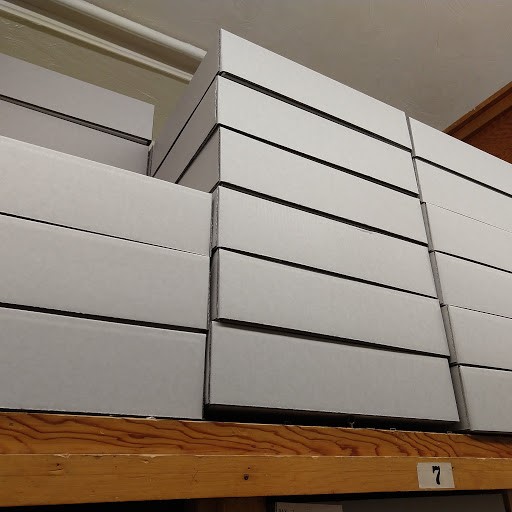
Today we unloaded another truck full of custom boxes from Hollinger Metal Edge.  This batch of 1,500 boxes is our final purchase with the Box Us In! Abbot grant that was generously funded by the Abbot Academy Fund in 2015, continuing Abbot’s tradition of boldness, innovation, and caring.

The ongoing project to obtain physical and intellectual control over our collections continues!

Welcome, Annie

Annie Greco just joined the Peabody team as our new Inventory Specialist.  She comes to us fresh from the University of Massachusetts Boston graduate program in archaeology and experience as a field archaeologist in New England.   Annie is already using her knowledge of New England tool typologies and excellent research skills to make a dent in the reboxing project!

Annie’s position is generously funded by Barbara and Les Callahan. Les is Phillips Academy Class of 1968 and Barbara is a member of the Peabody Advisory Committee; both have been active advocates and supporters of our mission.

We hope this gift will inspire others to support our work to better catalog, document, and make accessible the Peabody’s world-class collections of objects, photographs and archival materials. If you would like information on how you can help please contact Peabody director Ryan Wheeler at rwheeler@andover.edu or 978 749 4493.

Annie

Collections Reboxing project –Update

Contributed by Marla Taylor

When I last shared an update in December of 2016, we had boxed only 52 drawers in our quest to gain full physical control of our collection.  With the diligent work of students, volunteers, and inventory specialist Rachel Manning, we have now inventoried and boxed over 400 drawers!  More than 75,000 individual artifacts have been counted and documented – including projectile points, bone awls, ceramic sherds, and delicately crafted beads.

At the end of the month, our team will grow again with another Temporary Inventory Specialist – Annie Greco.  Annie’s position is generously funded by Barbara and Les Callahan. Les is Phillips Academy Class of 1968 and Barbara is a member of the Peabody Advisory Committee; both have been active advocates and supporters of our mission. I hope that our next update includes even better news!

Our deepest appreciation goes to the Oak River Foundation for their continued generosity and support of the Peabody’s goal to improve the intellectual and physical control of the museum’s collections.

We hope this gift will inspire others to support our work to better catalog, document, and make accessible the Peabody’s world-class collections of objects, photographs and archival materials. If you would like information on how you can help please contact Peabody director Ryan Wheeler at rwheeler@andover.edu or 978 749 4493.

Disaster planning can be fun

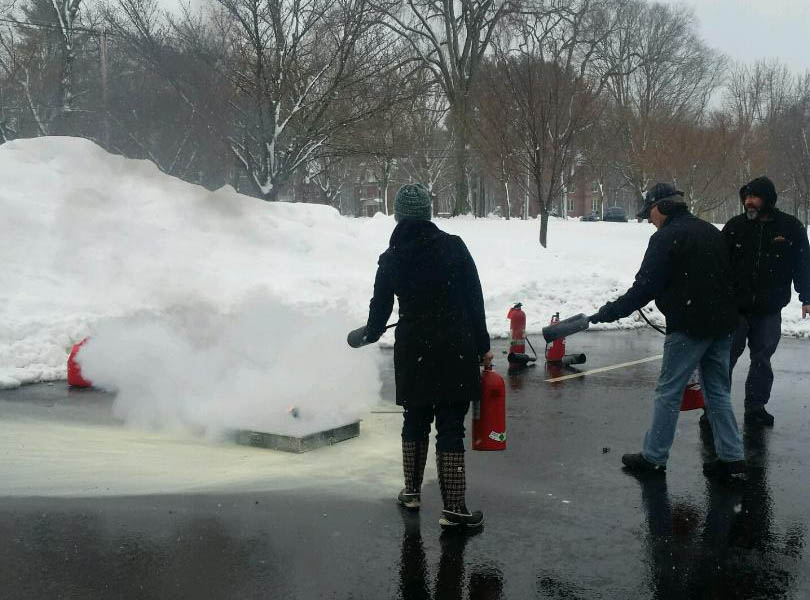
Fire extinguisher in use

Contributed by Marla Taylor

Sitting on my office shelf in a red binder is the Peabody disaster plan.  No institution ever wants to use it, but it is essential to be prepared.  Our plan is in need of its regular update, and fortunately for us, the Addison Gallery of American Art (also part of Phillips Academy) hosted a three-day seminar and full-scale emergency response disaster training for the protection of cultural assets in March.  Over 100 people took part in the workshop, including several members of Peabody staff.

The workshop included presentations from conservators, companies who specialize in disaster clean-up, and organizations that can help think through the disaster plan with us.  We learned the basics of painting conservation, how to mitigate water damage, how to dry/salvage wet books and papers, and how to identify and deal with pests in the collection.  Training stations were presented so that we could try all of these methods ourselves and have the opportunity to ask specific questions relating to our own collections.

The big highlight for me was the triage scenario meticulously installed at the Addison.  The Addison repainted one of their temporary galleries to appear smoke damaged, and they displayed pieces of art that had been previously damaged to replicate how fire damage may present itself in a museum.  As a team, we were given only 10 minutes to remove the damaged artwork (without additional damage!), set up work flow to begin cleaning objects, and isolate the most damaged pieces.  This was fun and realistic.

Now comes the hard work – applying all of this new knowledge to our own disaster planning process.

The emergency response and disaster planning workshop was generously made possible by a grant from the Abbot Academy Fund, continuing Abbot’s tradition of boldness, innovation, and caring.