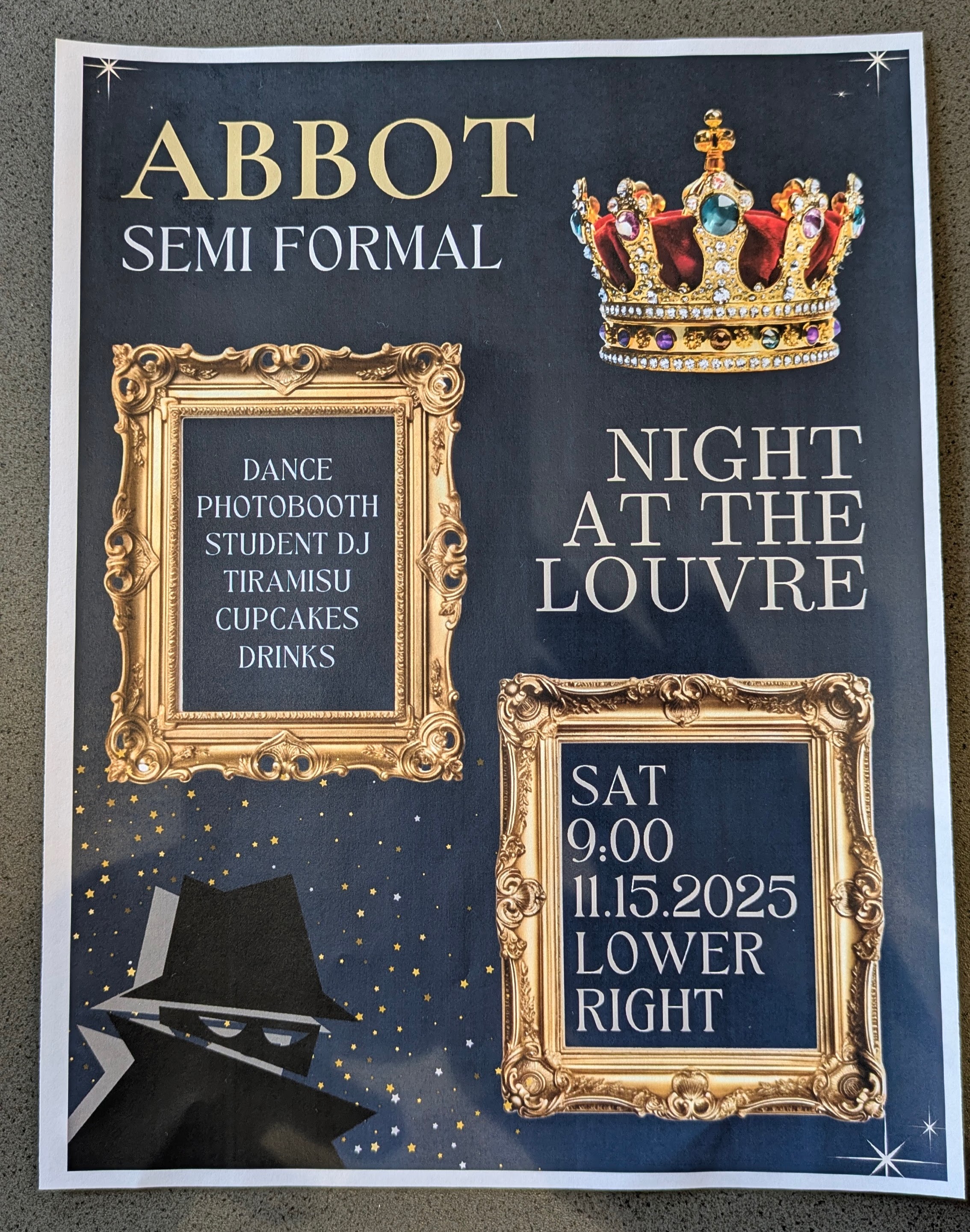
Flyer for a dance at Phillips Academy capitalized on the Louvre heist, November 2025.
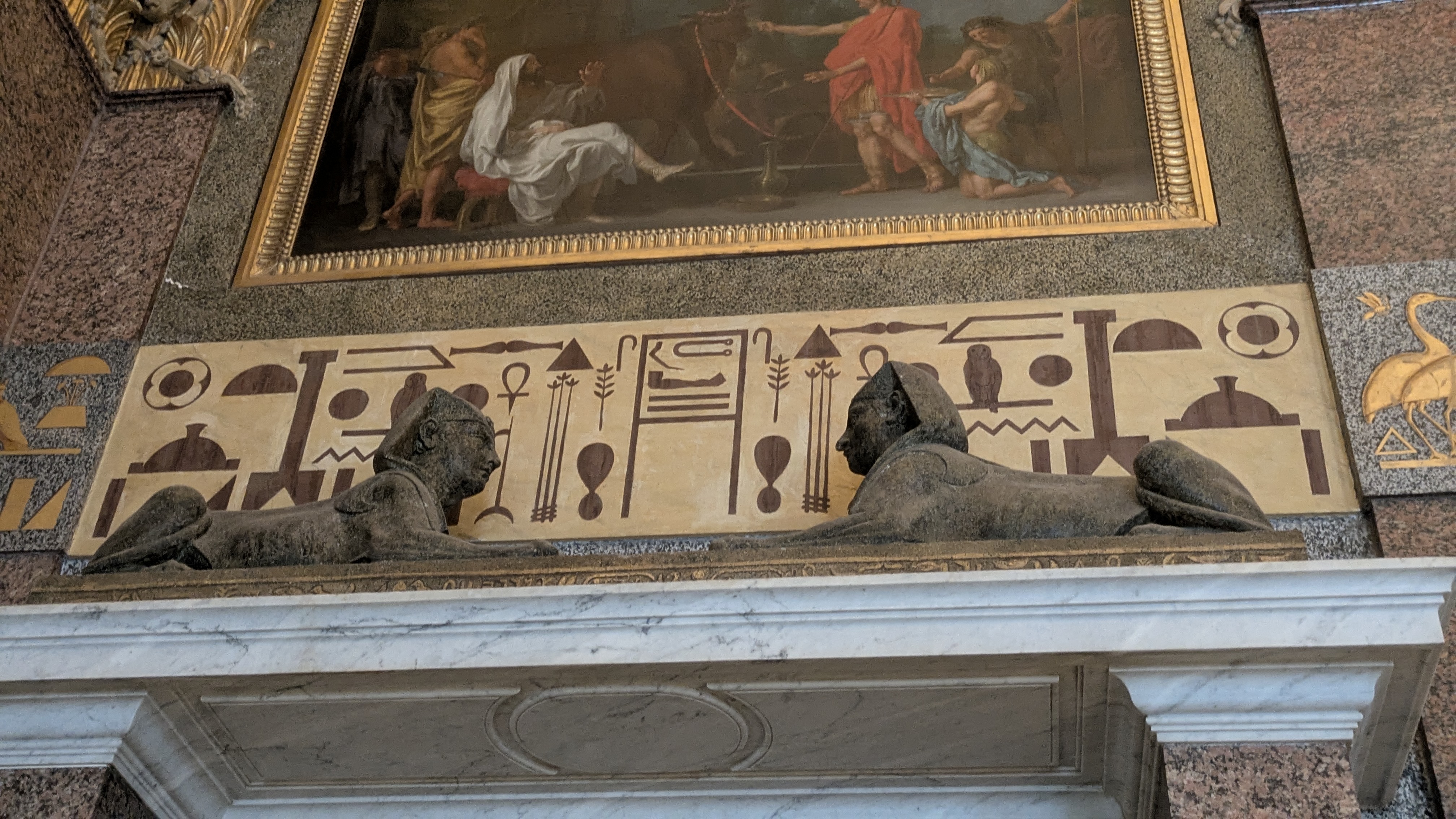
The brazen theft of crown jewels from the Louvre on October 19, 2025 fed the ongoing public fascination with museum heists. From details like which mobile work platform was used to access the museum to issues with security, there was almost endless interest and speculation. Even the dapper high school student mistaken for a French detective captured the world’s attention. Not surprisingly, the museum heist is a classic movie and tv trope from the recent The Mastermind (2025) to How to Steal a Million (1966) to the multiple versions of The Thomas Crown Affair (1968, 1999—and apparently a new one in production!), and many others. Fictional literature about heists could occupy a library. Even students here at Phillips Academy hosted a Louvre heist-themed dance! The exciting and glittery portrayals of museum heists, however, often veer far from the real blend of cunning, avarice, ineptitude, and the real mess that museum thefts leave in their wake. Just a few days before the Louvre heist, thieves gained access to the Oakland Museum’s storage spaces, taking over 1,000 objects, including many Native American items.
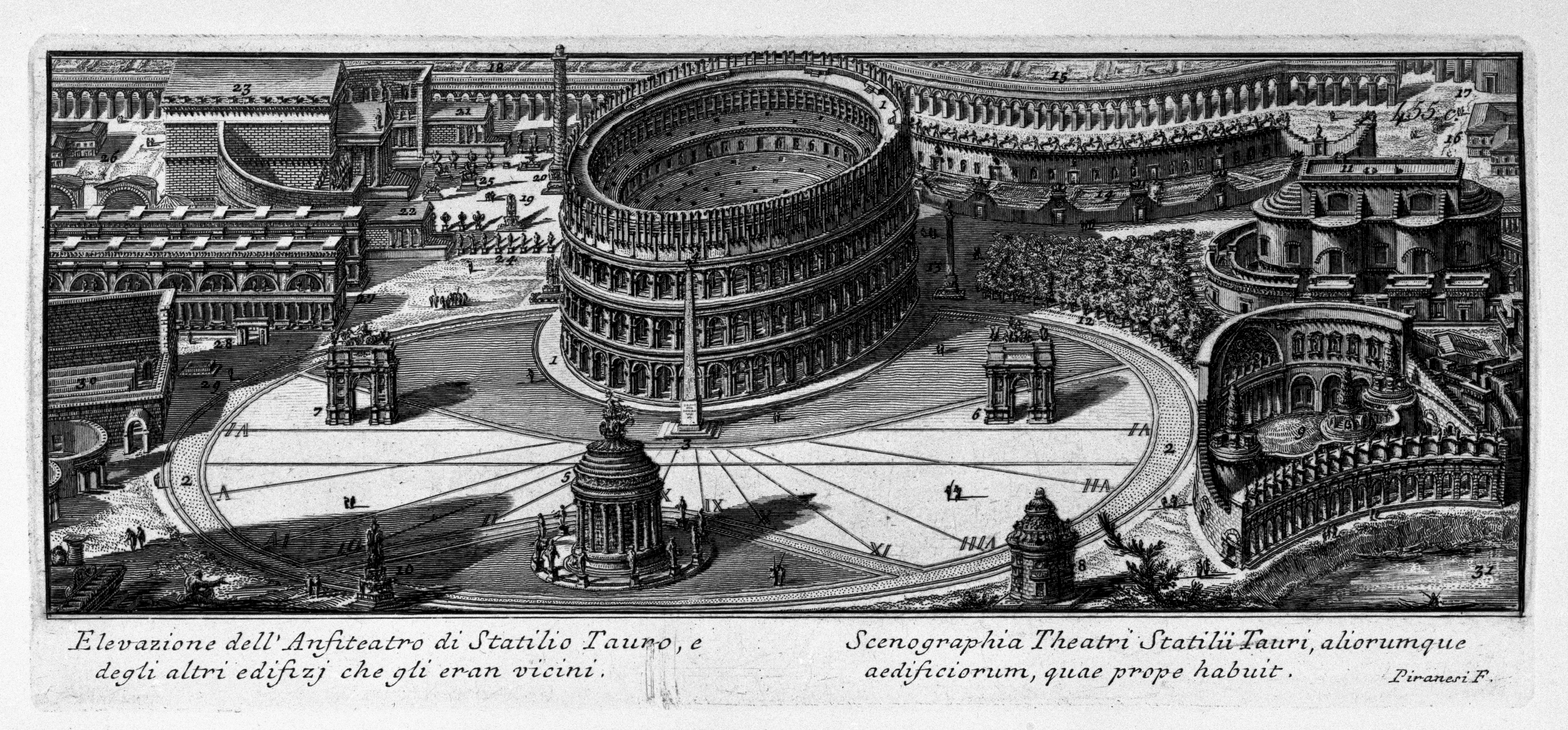
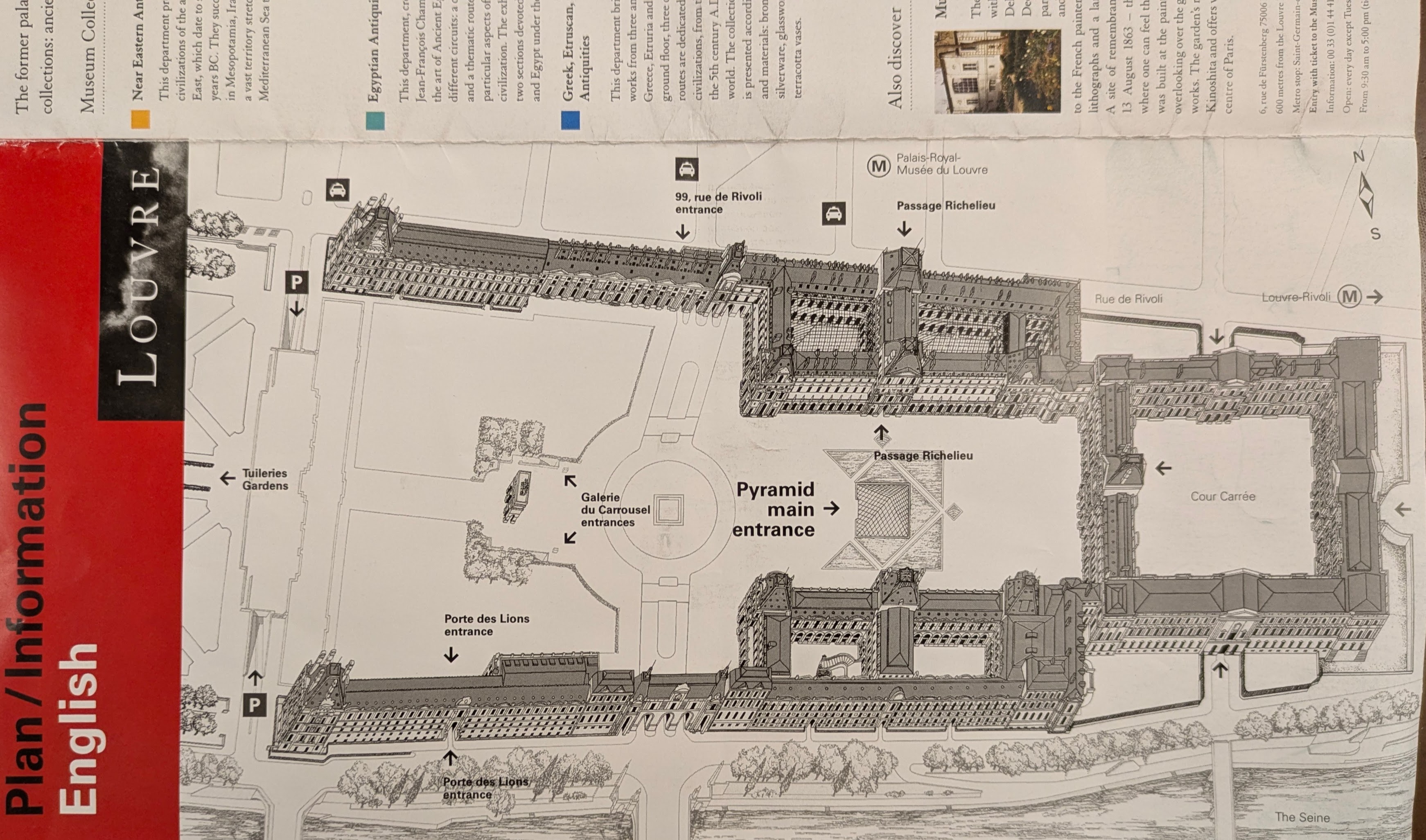
Plan of the Louvre from Phillips Academy student trip, 2015.
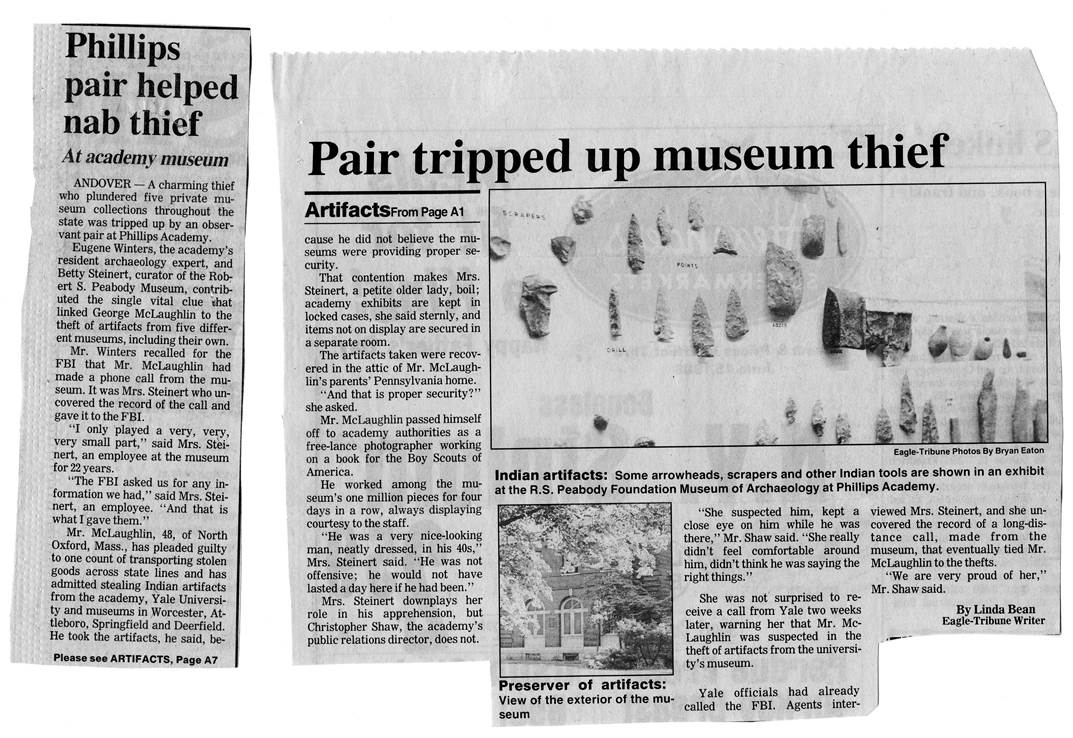
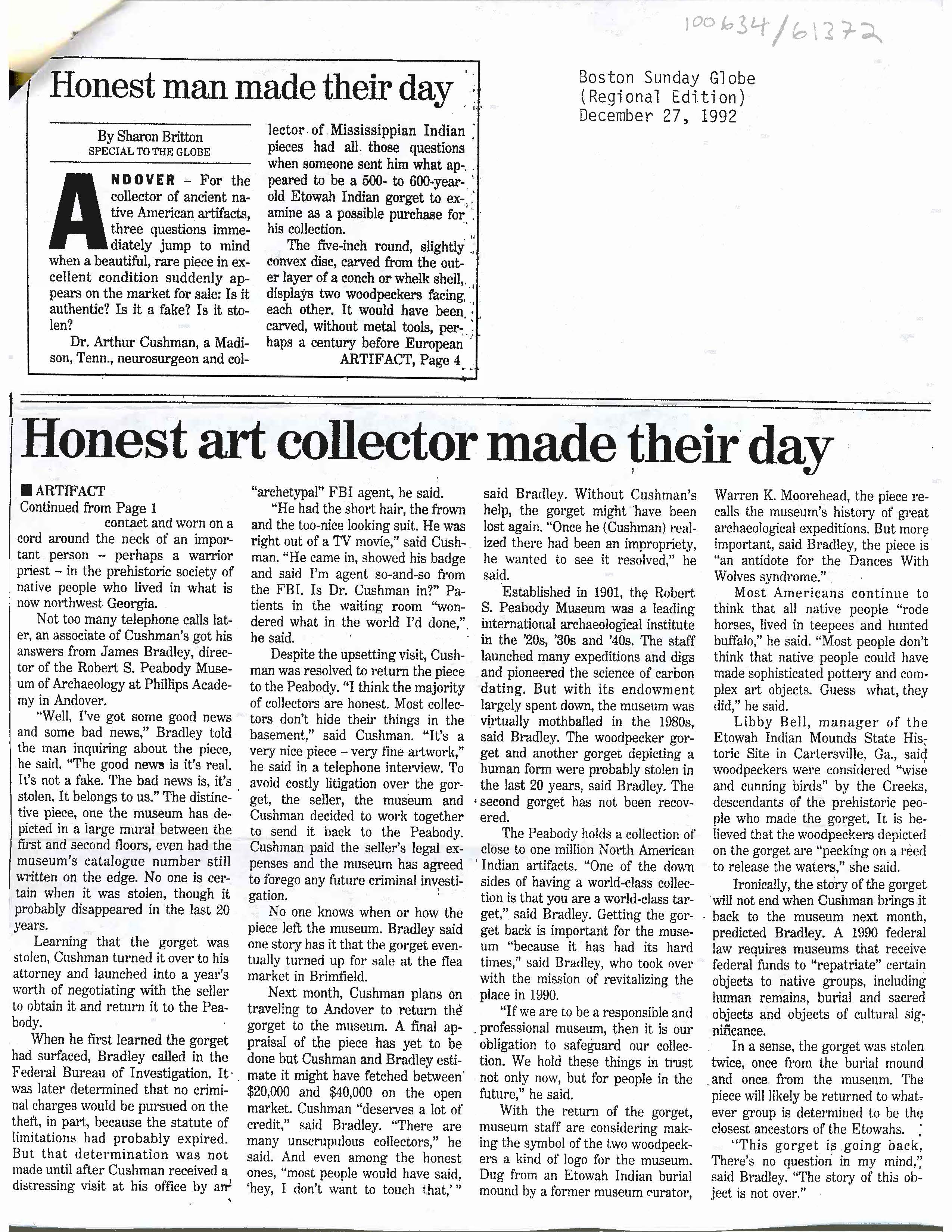
When I joined the Peabody Institute in 2012, former director Jim Bradley told me to be on alert for missing items, presumed stolen at some unknown point in the museum’s past. Early in Jim’s tenure as director, he had been involved in the recovery of a shell gorget from the Etowah site in Georgia. Since that time several collectors have returned items from Etowah and Maine, and others have been tracked down with the aid of the FBI art crimes team. What we now understand is that the Peabody Institute experienced two thefts—one in late 1970 or early 1971, and another in 1986.
Eagle-Tribune article from 1986 recounts George McLaughlin’s theft of artifacts from the Peabody Museum.
Marla Taylor and John Bergman-McCool recount the theft by George McLaughlin in 1986 in their 2020 blog post. McLaughlin gained access to the Peabody’s collection housing areas at a time when the institution lacked professional staff. That made it easier, but he also stole from other museums across New England and several private collectors. He was ultimately caught by the FBI and prosecuted, but not before removing most of the catalog numbers from the thousands of stone tools that he had taken. It was unclear what McLaughlin’s plans were, but it seems he was readying items for sale. And while the FBI arrest prevented that, to this day we have a large number of items that have lost their original provenience—in other words, a big mess.
Boston Sunday Globe article recounts the return of the Etowah shell gorget (December 27, 1992).
I’ve shared before about an earlier theft at the Peabody Institute (also, see my article in the April 2018 SEAC newsletter). Based on correspondence, we are confident that items from Georgia and Maine were stolen in late 1970 or early 1971 while exhibits were being refreshed and updated. These items had been on display when they were photographed to illustrate Dean Snow’s 1976 book The Archaeology of North America. It seems like they were taken while awaiting reinstallation in the exhibits. As I mentioned above, a number of these items have been returned, either by conscientious collectors or through an investigation by the FBI art crimes team, begun in January 2018 when one of the Etowah items was returned to us. Many of these items are funerary objects and subject to repatriation under the Native American Graves Protection & Repatriation Act (NAGPRA). Their continued absence complicates those repatriation efforts.
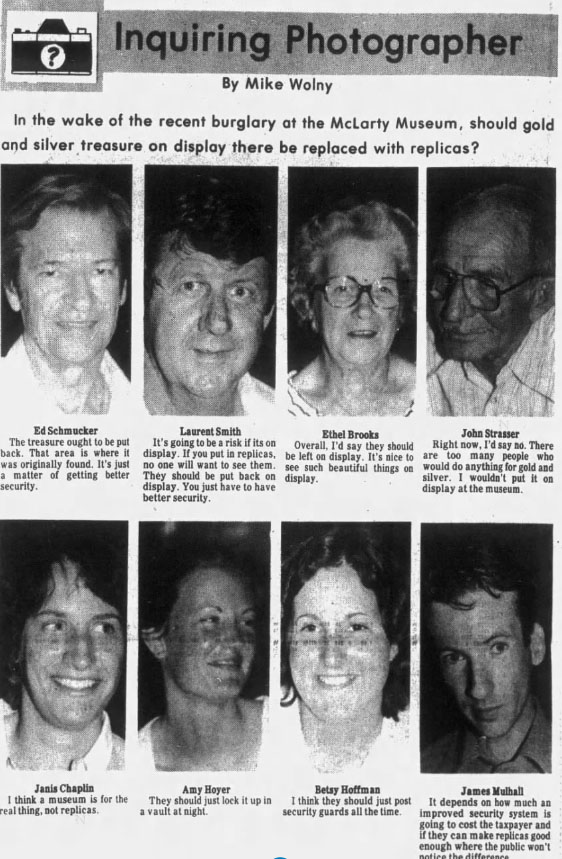
The Indian River Press Journal sought reader opinions about the 1980 theft of Spanish shipwreck treasure from the McLarty Museum and if treasure items should continue to be exhibited (Friday, March 8, 1980, page 8).
Unlike the glamourous (or humorous) fictional depictions of museum heists, these are often crimes of opportunity, driven by greed or misguided ideas about the role of museums in caring for and sharing art and culture. I think one example from my past career as Florida’s state archaeologist aptly captures the stupidity of the museum heist. Our collections in Florida included impressive holdings recovered from the shipwrecks of Spanish treasure galleons. Loans to the McLarty Museum near the survivor’s camp of the 1715 fleet wreck included gold coins and gold bars. In 1980, thieves defeated locks and security systems, but when confronted with the reality of disposing of a gold bar, things took a weird turn. They used a hack saw to begin cutting a gold bar into more saleable (or tradeable) pieces before being apprehended. The gold bar was recovered, but the saw cut end remains at large. During our annual 100% inventory of precious metals and coins our outside auditor frequently questioned what was going on with the clearly chopped up gold, so much so that we finally tucked some of the paperwork and news coverage with the piece to allay fears that we were helping ourselves. The thief in that case ultimately criticized press coverage, telling the court that he was “by no means a professional burglar” and that the theft was just a “reckless impulse.” So, enjoy that museum heist movie or book, but remember, it’s a far cry from the real mess made by these thefts.
As we prepare updated Native American Graves Protection & Repatriation Act (NAGPRA) summaries and the required notices following claims and decisions about affiliation we are frequently confronted with the names of collectors. Some of these are quite familiar to us, Warren K. Moorehead, for example, who was our first curator and then our director. We recognize that the names of collectors often hold significant clues that may help make connections between now widely distributed holdings—what we refer to as “split and shared collections,” or aid in understanding localities or other entanglements. I’ve started developing short biographies of some of the collectors, with the hope that knowing when and where they were active might inform some of these other considerations. To develop the biographies, I usually rely on genealogical information to fill in birth and death dates, geography, personal and professional connections, and other details. Many of these collectors were in contact with Warren Moorehead and their names appear in his correspondence files or in his books, especially those volumes that highlight collectors and collections. In other cases, the collectors have some connection to our parent organization, Phillips Academy—either as students, alumni, or faculty. Here are a few recent biographies:
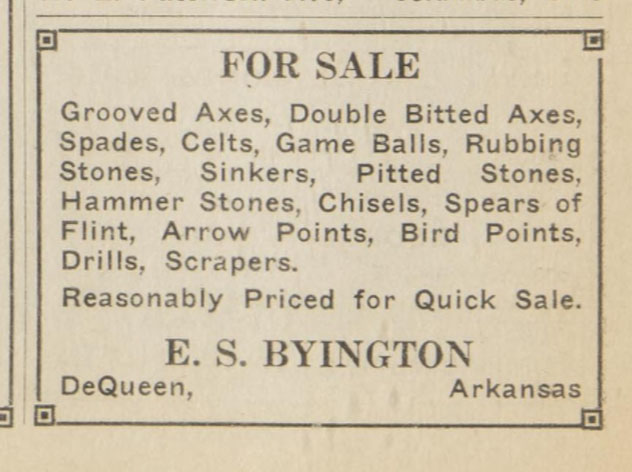
Byington’s advertisement in The Philatelic West, 1928.
Edward Spencer Byington (often styled as E.S. Byington) was a civil engineer in DeQueen, Sevier County, Arkansas (1866-1941). He worked for several railroad companies, including DeQueen & Eastern. Byington often bought and sold artifacts, and his ads can be found in several publications—see for example, The Philatelic West (1926), and Hobbies, the Magazine (1931). One of Byington’s ancestors was Cyrus Byington, an early settler and missionary to the region, who had traveled to the area with Choctaw people being forced from their homes in Mississippi. E.S. Byington was an affiliate of Warren K. Moorehead and advocated for establishment of an “Association of Indian Relic Collectors & Dealers.” Correspondence with Moorehead indicates he was collecting artifacts during railroad construction and maintenance. Byington is listed as the source of at least 131 items in the Peabody Institute holdings.
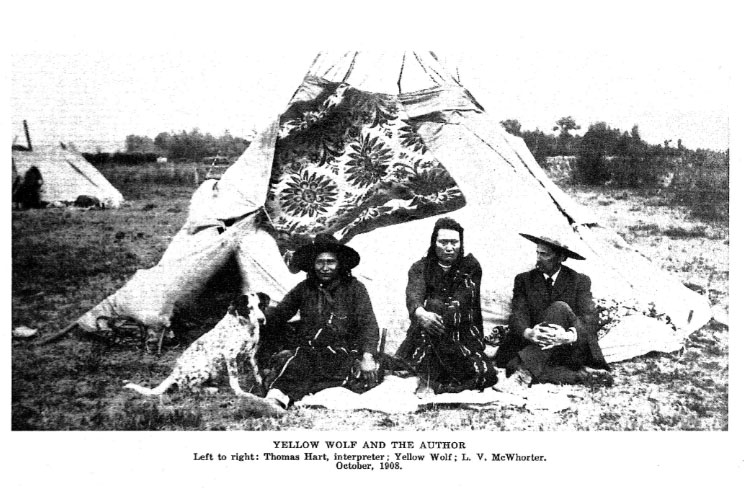
McWhorter (far right) with interpreter Thomas Hart (far left) and Yellow Wolf, October 1908–from McWhorter’s book Yellow Wolf: His Own Story (1940)
Lucullus Virgil McWhorter (often styled as L.V. McWhorter) was an American farmer and rancher, frontiersman, and writer who was a regular source of Native American material heritage for Warren K. Moorehead at the Peabody Institute (1860-1944). McWhorter compiled information on Indigenous communities and history of the Pacific Northwest, and is generally regarded as an advocate and ally of the Native American individuals and tribes that he worked with, including Yellow Wolf and the Nez Perce. See Washington State University for the McWhorter papers and finding aid, which frequently mention Moorehead: https://archiveswest.orbiscascade.org/ark:80444/xv98497. McWhorter is listed as the source of at least 507 items in the Peabody Institute holdings.
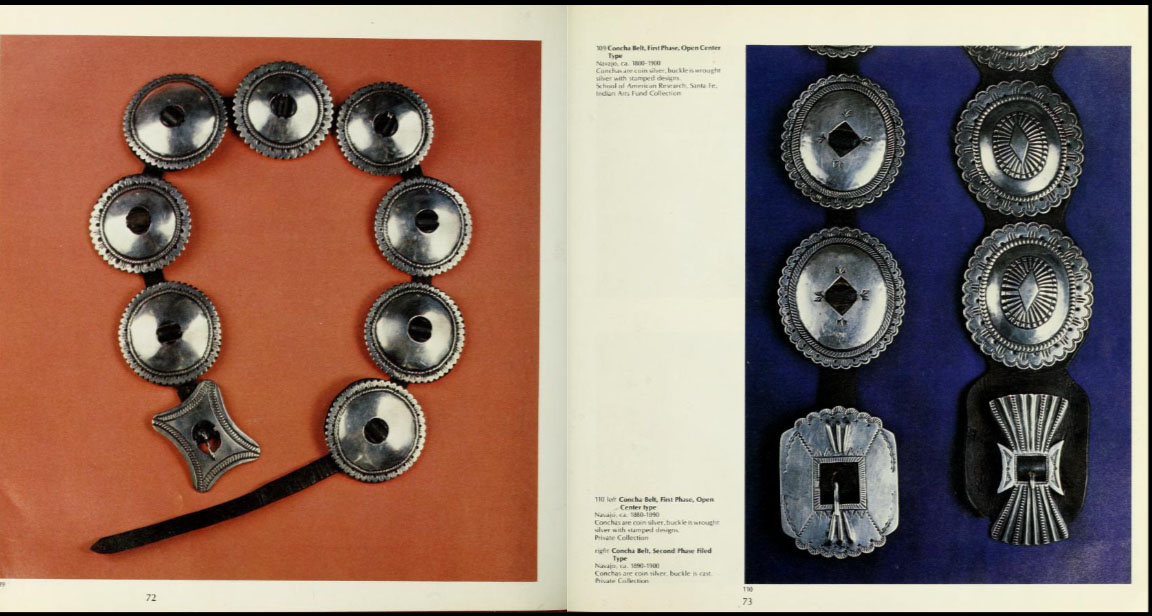
Diné silverwork illustrated in Enduring Visions, the exhibit catalog co-authored by Donnelley Erdman.
Donnelley Erdman (1938-2024) was a graduate of Phillips Academy (Class of 1956), an architect and instructor at Rice University. In 1978-79 he was involved in an exhibition of Southwestern material culture at the Aspen Center for the Visual Arts, Aspen, Colorado. See Philip M. Holstein and Donnelley Erdman (1979) Enduring Visions: One Thousand Years of Southwestern Indian Art, Aspen Art Museum (exhibit catalog). Erdman is listed as the source of at least 195 items in the Peabody Institute holdings.
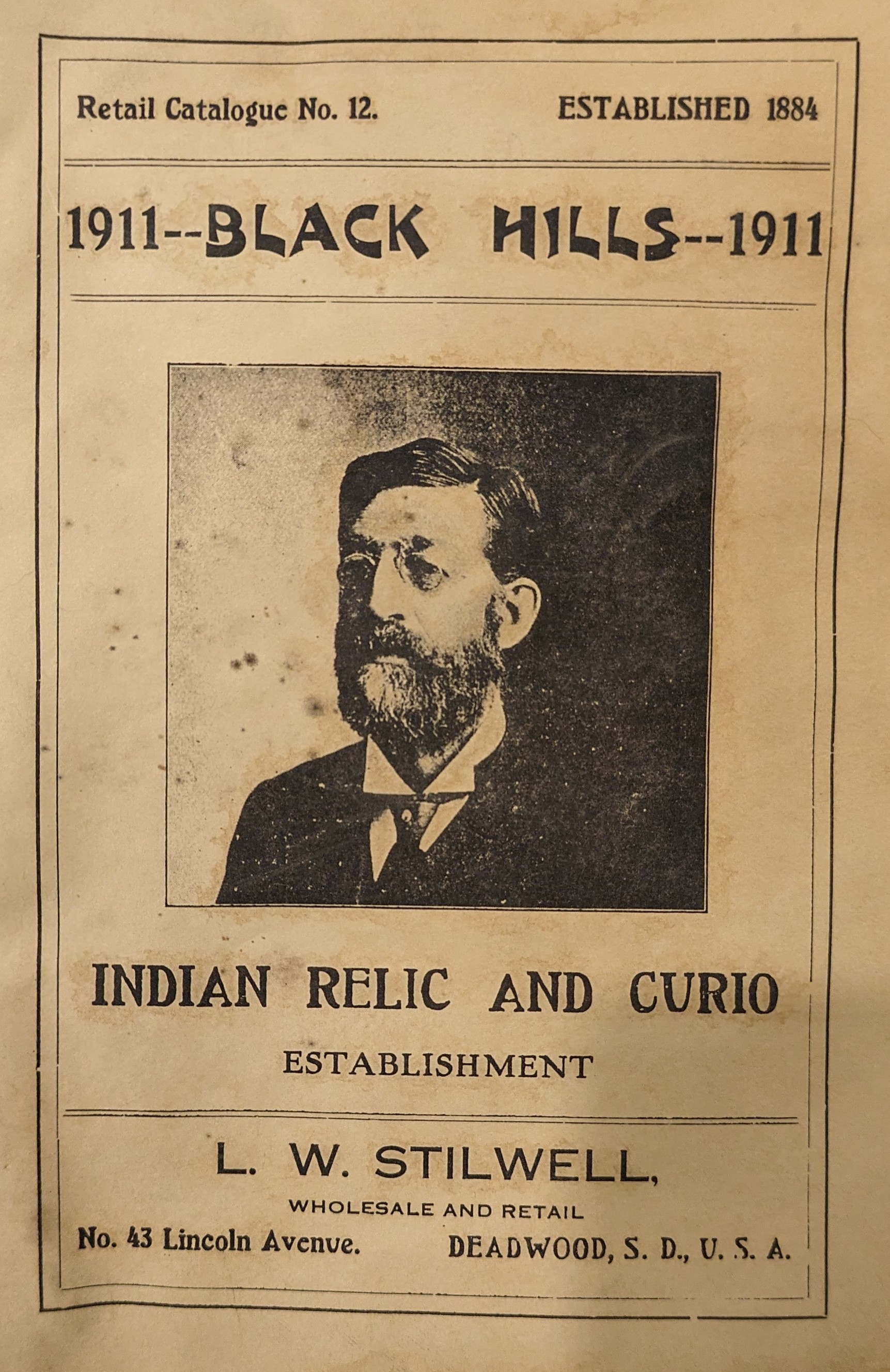
The cover of Stilwell’s 1911 catalog.
Lucien White Stilwell (often styled as L.W. Stilwell) was born in New York and grew up in Wisconsin (1843-1932). Following graduation from Ripon College, Stilwell moved to Cairo, Illinois and engaged in the grocery business. Throughout the 1860s and 1870s he was engaged in the grocery business via several partnerships, briefly worked for the Elgin Watch Company before relocating to Deadwood, South Dakota in 1879. In Deadwood, Stilwell was involved in banking, but it was here that he began to develop and expand his business in buying and selling Native American and natural history items. Throughout the 1880s he frequently advertised in collecting magazines, including Young Oologist, Mason’s Coin Collectors Magazine, The Agassiz Association Journal, The Museum, Hoosier Naturalist, The Philatelic West, and others, as well as short publications on geology. In the early 1900s he published catalogs advertising his “Indian Relic and Curio” establishment. He sold his business to Kenneth J. Crawford Company in 1928. Condensed from a longer biography by John N. Lupia III: https://www.numismaticmall.com/encyclopedic-dictionary-of-numismatic-philatelic-biographies/stilwell-lucien-white Stilwell is listed as the source of at least 18 items in the Peabody Institute holdings.
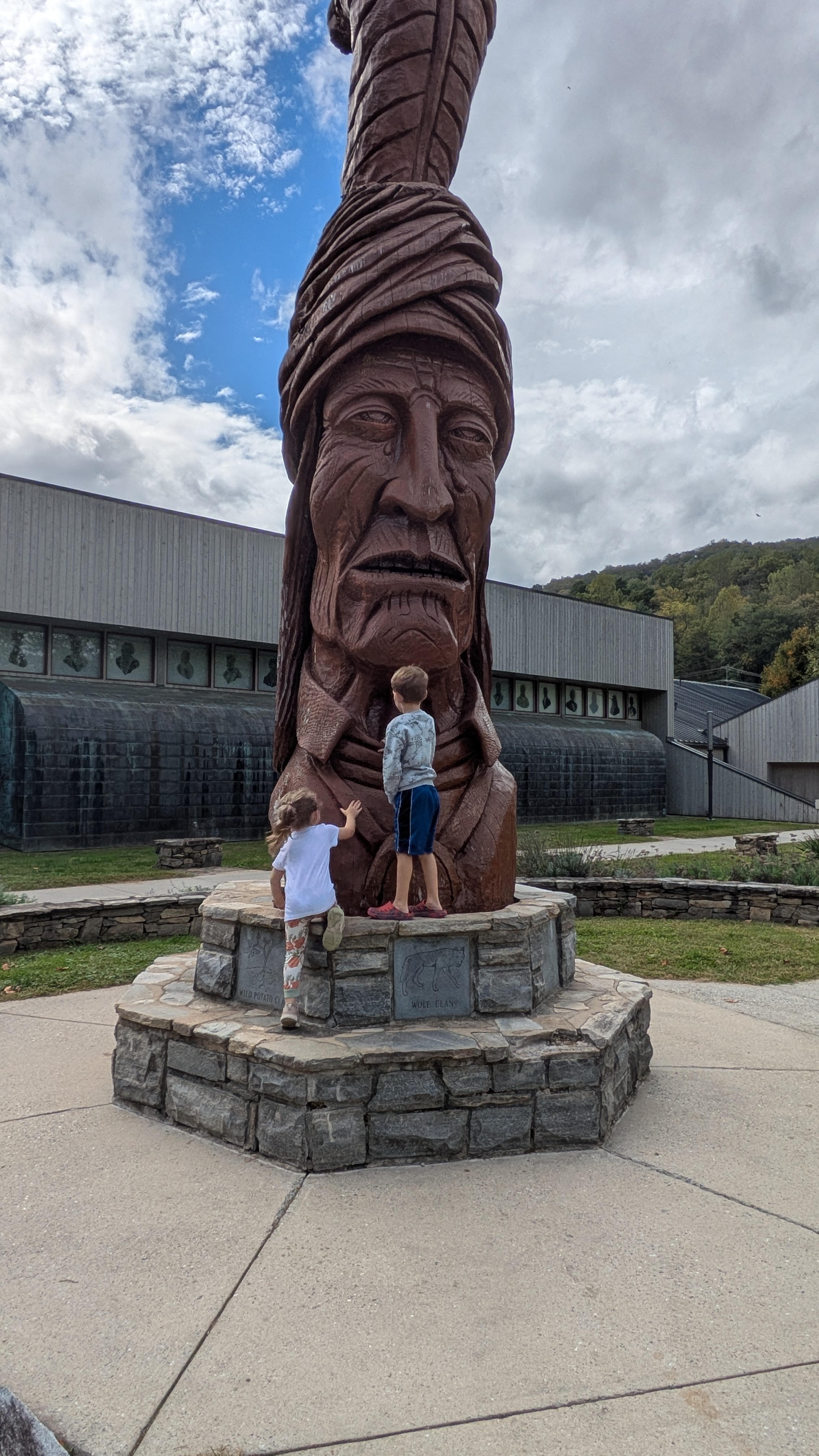
It was really fun to encounter Peter Toth’s monumental wood carving of Sequoyah outside the Museum of the Cherokee People. Toth created over 70 of these sculptures as part of his Trail of the Whispering Giants project. I met the artist in 1983 when he was carving a tribute to the Seminole on Fort Lauderdale beach.
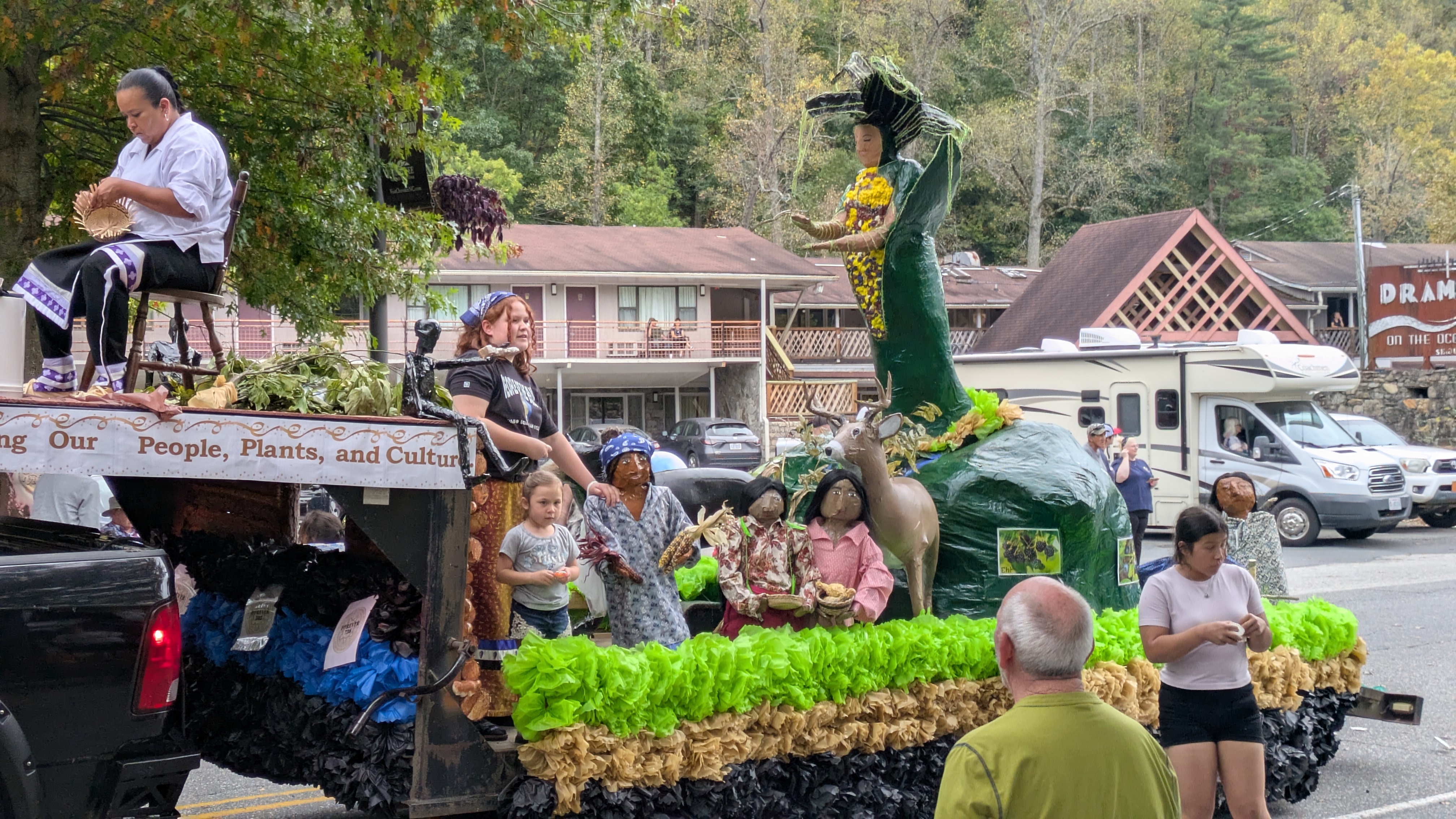
Four members of the Peabody Institute team attended the 2025 Association of Tribal Archives, Libraries, and Museums (ATALM) conference held in Cherokee, North Carolina this October, continuing our tradition of sending personnel that goes back about a decade. This year’s conference saw over 1,000 museum, archive, and library professionals convene at the meeting facilities of the Eastern Band of Cherokee Indians, coinciding with the festivities of the 113th Cherokee Indian Fair. The fair featured a parade, agricultural and cultural events, stick ball, an art show, and more.
The Cherokee Day parade featured contestants in the Miss Cherokee pageant, lots of agriculture themed floats, marching bands, a drum line. And candy. So. Much. Candy!
Back at the conference, attendees had lots of opportunities to network and learn at expert sessions and demonstrations. Highlights for the Peabody team were visits to the Museum of Cherokee People, Qualla Arts & Crafts Mutual Co-op, the Oconaluftee Indian Village, the informal NAGPRA networking session, the Repatriation Talking Circle, and One Square Inch of Ceremony (and additional workshops with Lily Hope, Tlingit artist, educator, and community facilitator). Marla Taylor, Peabody curator of collections, participated in the session Institutional Approaches to NAGPRA Duty of Care, along with colleagues from museums, universities, and the Muscogee (Creek) Nation.
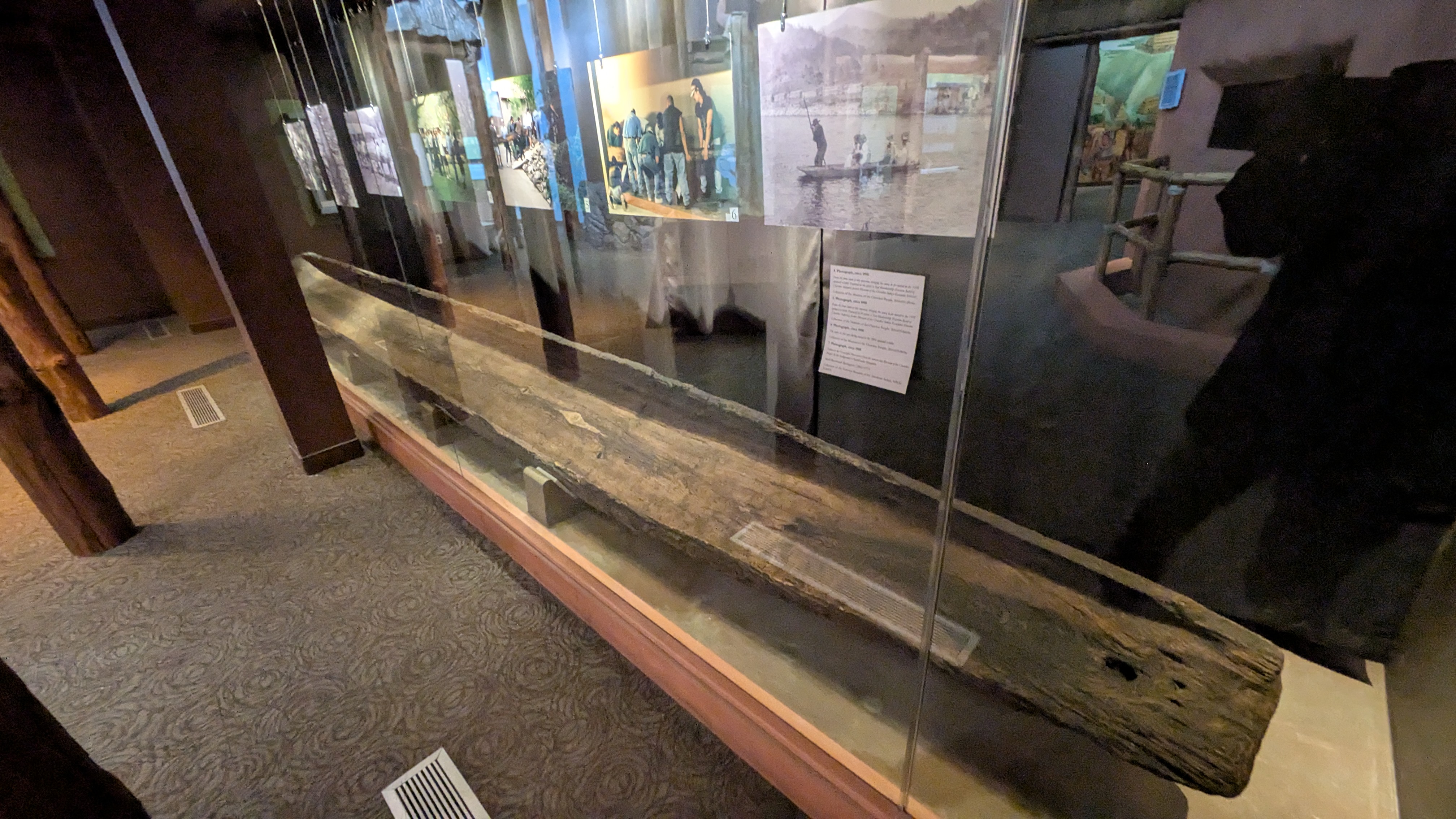
Canoes are everywhere! Exciting to see this dugout canoe at the Museum of the Cherokee People. The museum, one of the earliest Tribal museums in the US, has a series of great interpretive panels questioning how best to tell the Cherokee story. For example, why do museums always begin with PaleoIndians? Back to the canoe–this great example of a dugout is about 200 years old and was found in the 1970s on the Chattahoochee River near Helen, Georgia.
Many great meals were shared as well, but the best part was reconnecting with old friends, meeting colleagues regularly seen on Zoom in person, and making new friends. If you haven’t attended an ATALM conference, we highly recommend it!
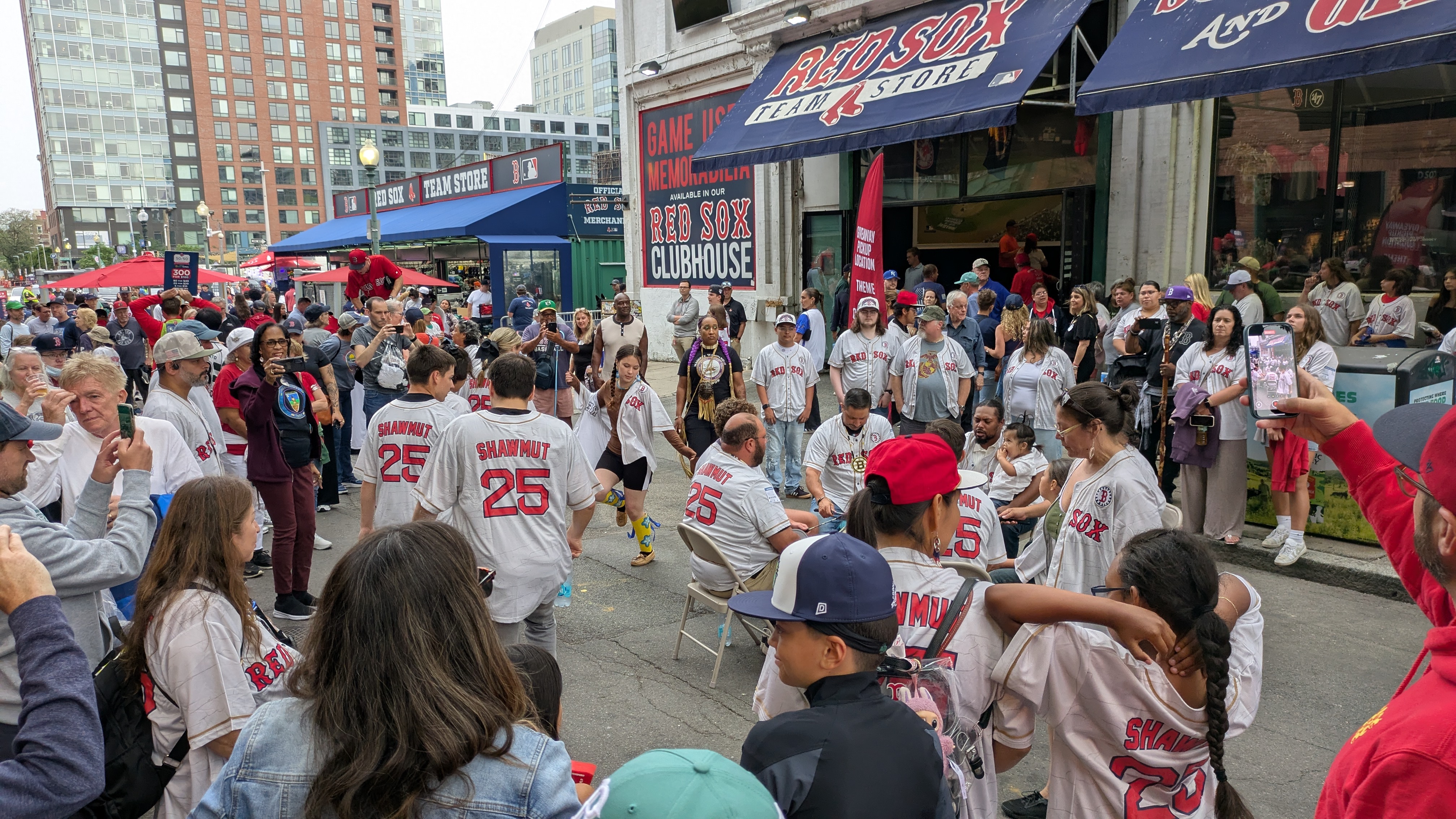
Fans wearing their Shawmut jerseys enjoying the drum circle before the game on August 6, 2025.
According to the Red Sox website, “The jersey design is inspired by Eastern Woodland ancestors whose names were once known, and contemporary Native artists Sage Carbone and Brittney Walley. The back of the jersey features “Shawmut” on the name plate, derived from the Algonquian word “Mashauwomuk” which refers to present-day Boston.”
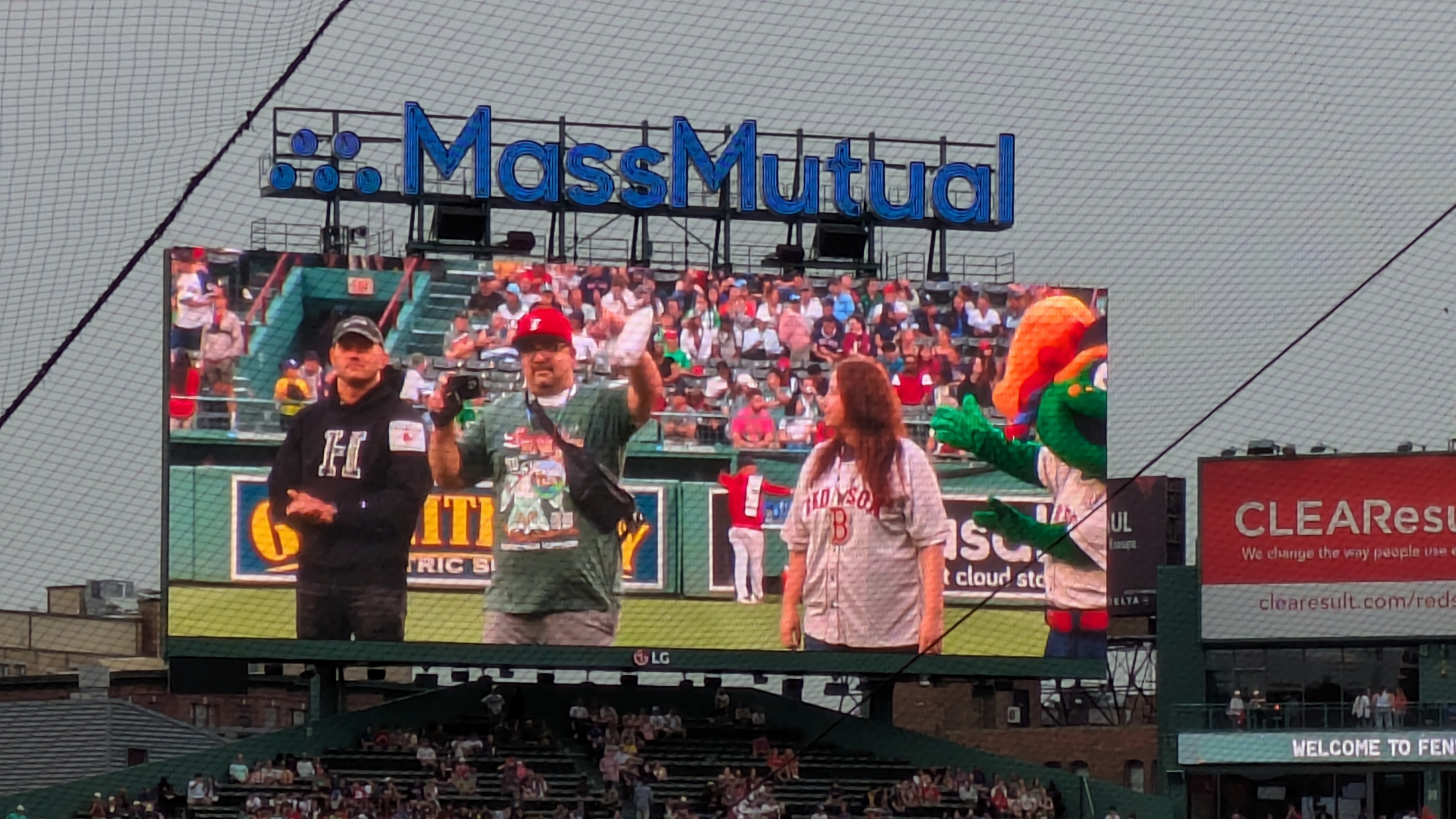
Along with the jersey, which my son and I were excited about, pre-game activities included a drum circle and on-field recognition of about 30 local Native American leaders and educators.
Recognition of Native leaders and educators before the game–David Shane Lowry waves to the crowd.
It was a good game against Kansas City, despite a rare Red Sox loss this season. The Native theme night got me wondering about Native Americans and the Red Sox, and baseball in general—beyond Jim Thorpe.
After a little research, I learned a lot—for example, recently Traci Sorell and Arigon Starr published a graphic novel Contenders: Two Native Baseball Players, One World Series, which tells the true story of John Meyers and Charles Bender, who in 1911 became the first Native baseball players to face off in a World Series. There’s a great academic article by Jeffrey Powers-Beck that explores the history of Native Americans and baseball, which begins with Louis Francis Sockalexis in 1897—decades before Jackie Robinson broke the color-barrier in MLB. About 50 Native American tribal citizens who have or continue to play baseball, as well as many others with Indigenous heritage—Baseball Almanac has a list: https://www.baseball-almanac.com/legendary/american_indian_baseball_players.shtml
Charlie Vascellaro’s 2012 article The Real Indians of Baseball explains that Indian boarding schools—including the infamous Carlisle Indian Industrial School—added baseball to their curriculum and produced many of the Native American players in the minor and major leagues. As Tribes and families continued to resist forced removal of children and the boarding school era waned, fewer Native players joined MLB. Looking at the Baseball Almanac list, almost all Native players played games before 1950, with a minority playing since then. Many were nicknamed “chief,” and in some cases became the models for derogatory team names, like the Cleveland Indians (now the Guardians), inspired by Penobscot player Louis Sockalexis.
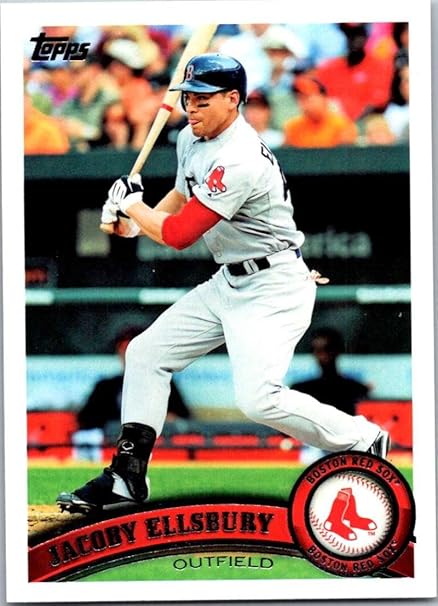
2011 Topps Baseball Series 2#351 Jacoby Ellsbury Boston Red Sox Official MLB Trading Card.
And what about the Red Sox? Well, I was delighted to learn that Jacoby Ellsbury played for the Boston Red Sox from 2007 through 2013. An enrolled member of the Colorado River Indian Tribes, Ellsbury is the first Native American of Navajo descent to play Major League Baseball. Jacoby Ellsbury played for the Sox in two World Series appearances, winning the championship in both 2007 and 2013. After signing with the New York Yankees, several injuries and a contract dispute sidelined Ellsbury in 2019. According to NDNsports.com, Ellsbury was recently elected to the Oregon State Athletics Hall of Fame—his home state—and despite some truly impressive stats and records, missed the 2024 vote for the National Baseball Hall of Fame.
We look forward to the next Native pride event at Fenway and wearing our jerseys to the next game. Play ball!
Further reading
Powers-Beck, Jeffrey. ‘Chief’: The American Indian Integration of Baseball, 1897-1945. American Indian Quarterly 25, no. 4 (2001): 508–38. http://www.jstor.org/stable/1186015.
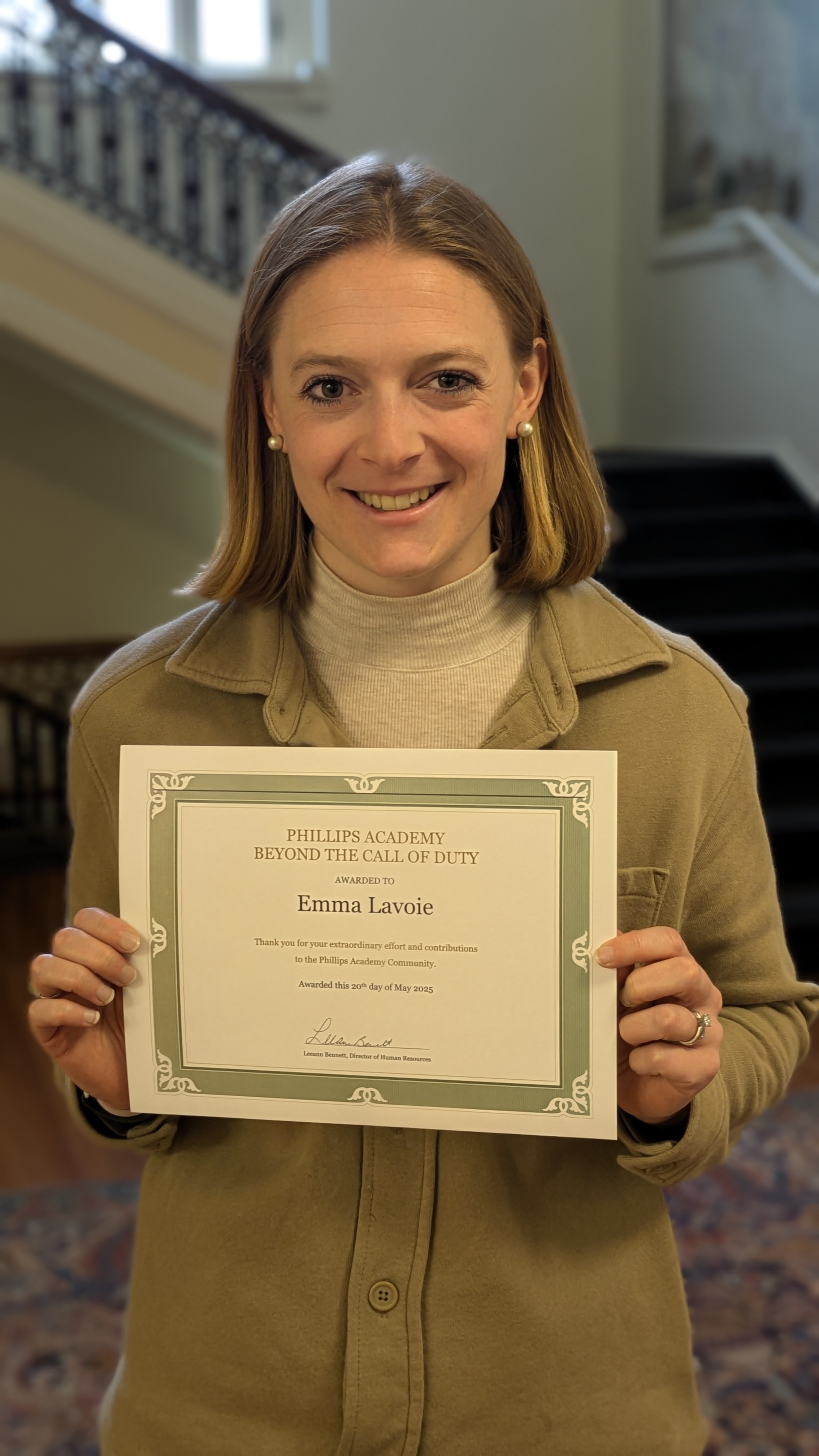
The Peabody’s own Emma Lavoie was recognized with Phillips Academy’s Beyond the Call of Duty Award at the spring staff and administrators award celebration on May 20!
Emma shows off her Beyond the Call of Duty Award.
The award announcement states, “The Beyond the Call of Duty Award is designed to acknowledge and celebrate staff who demonstrate exceptional support/customer service to colleagues within their own department, across campus, our students, parents or alumni. All nominees should embody the non-sibi spirit!”
This describes Emma precisely! Emma’s job title is staff assistant, responsible for business and communication here at the Peabody, but she does so much more–Emma has taught lessons and helped with lessons, produces beautiful communication and social media pieces, cataloged material culture, organizes travel for staff members and visitors, keeps us organized, networks with other programs and departments on campus, comes early or stays late to help with events (which she has often planned and organized), serves on the Phillips Academy staff council, and much, much more.
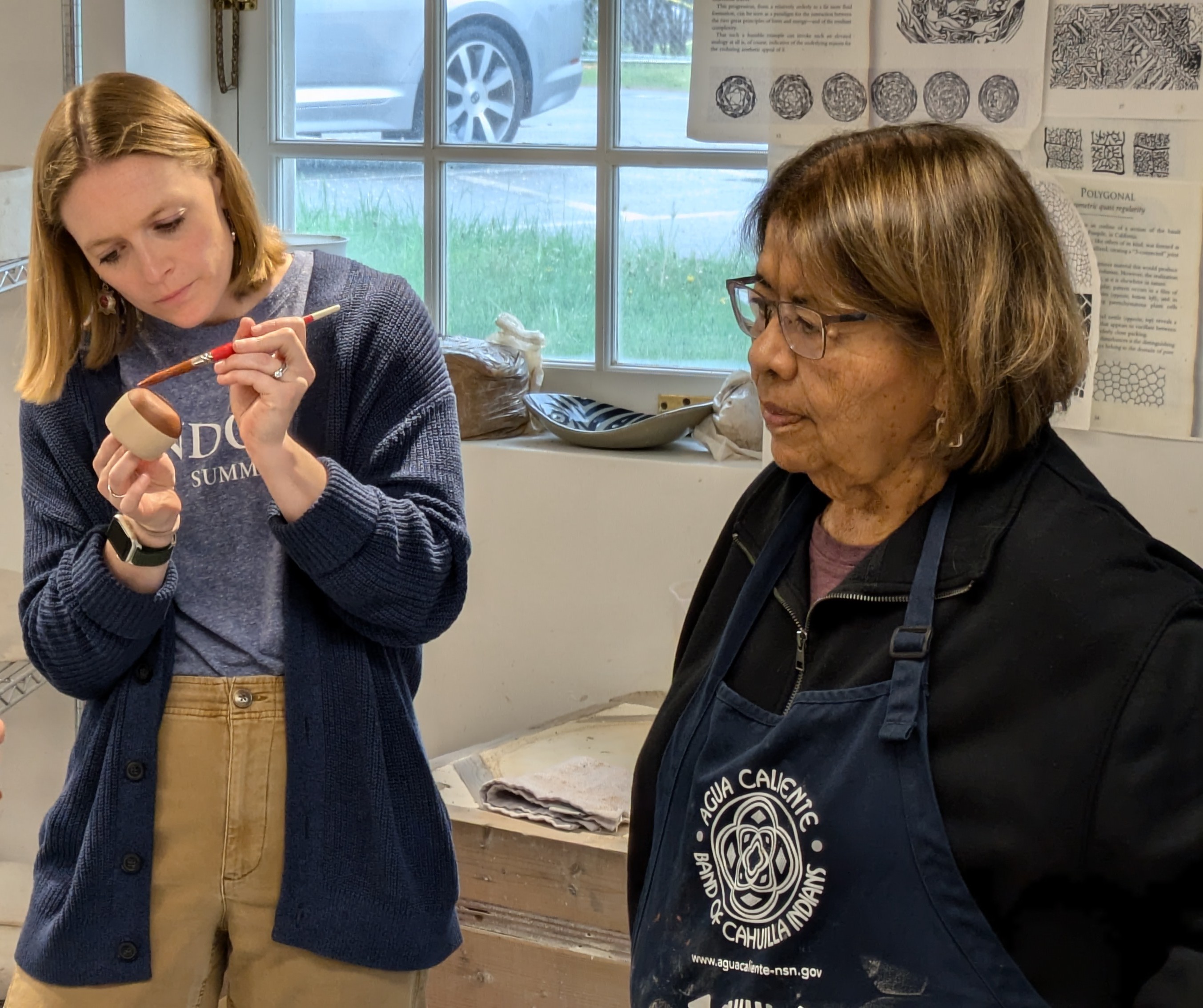
Emma decorating her ceramic creation under the watchful eye of Maxine Toya–Emma makes all the travel arrangements for visiting Native artists, like the Toya Family, Pueblo of Jemez.
Award recipients will receive two days added to their vacation bank as well as a gift of PA apparel from the Campus Closet.
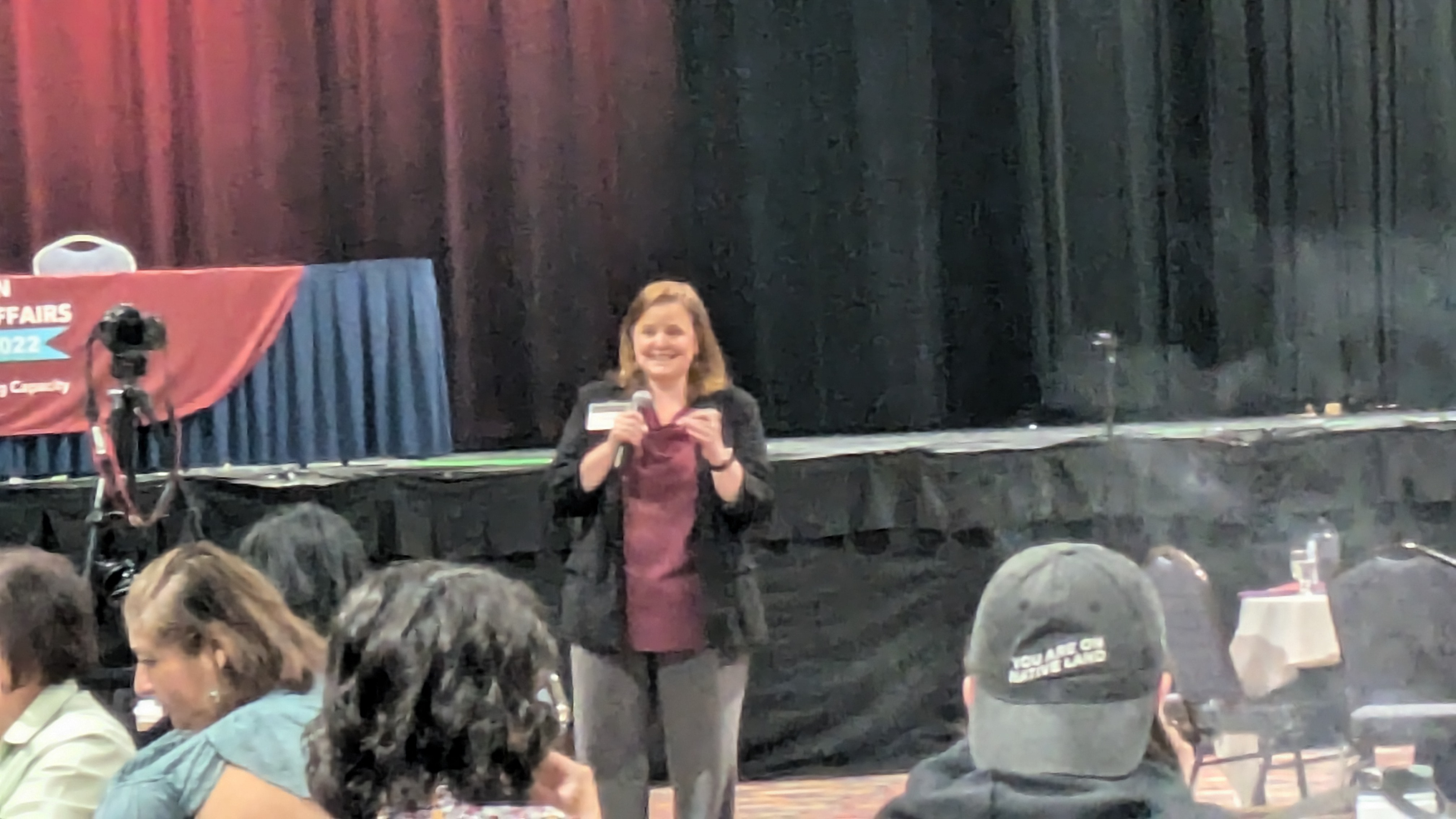
This year marked the 10th annual repatriation conference organized by the Association on American Indian Affairs (AAIA). The conference was hosted at the end of February by the Tunica-Biloxi Tribe’s Paragon Resort in Marksville, Louisiana. The Peabody Institute of Archaeology was one of several co-sponsors, celebrating ten years of the conference, dedicated to learning and sharing our work in repatriation.
Melanie O’Brien, program manager of the National Park Service NAGPRA program, leads training at the annual repatriation conference.
A highlight of the conference is spending time with friends and colleagues from Tribes, federal agencies, and museums who all share in the day to day work of repatriation. While NAGPRA and repatriation have made headlines over the course of the last year, with reporting by ProPublica and many local news outlets, as well as the attention garnered by the new regulations and duty of care provisions, most people don’t completely understand the behind the scenes and day to day work involved in repatriation. Spending time with other engaged in the work is really meaningful. It’s also a great opportunity to meet new people and learn new things.
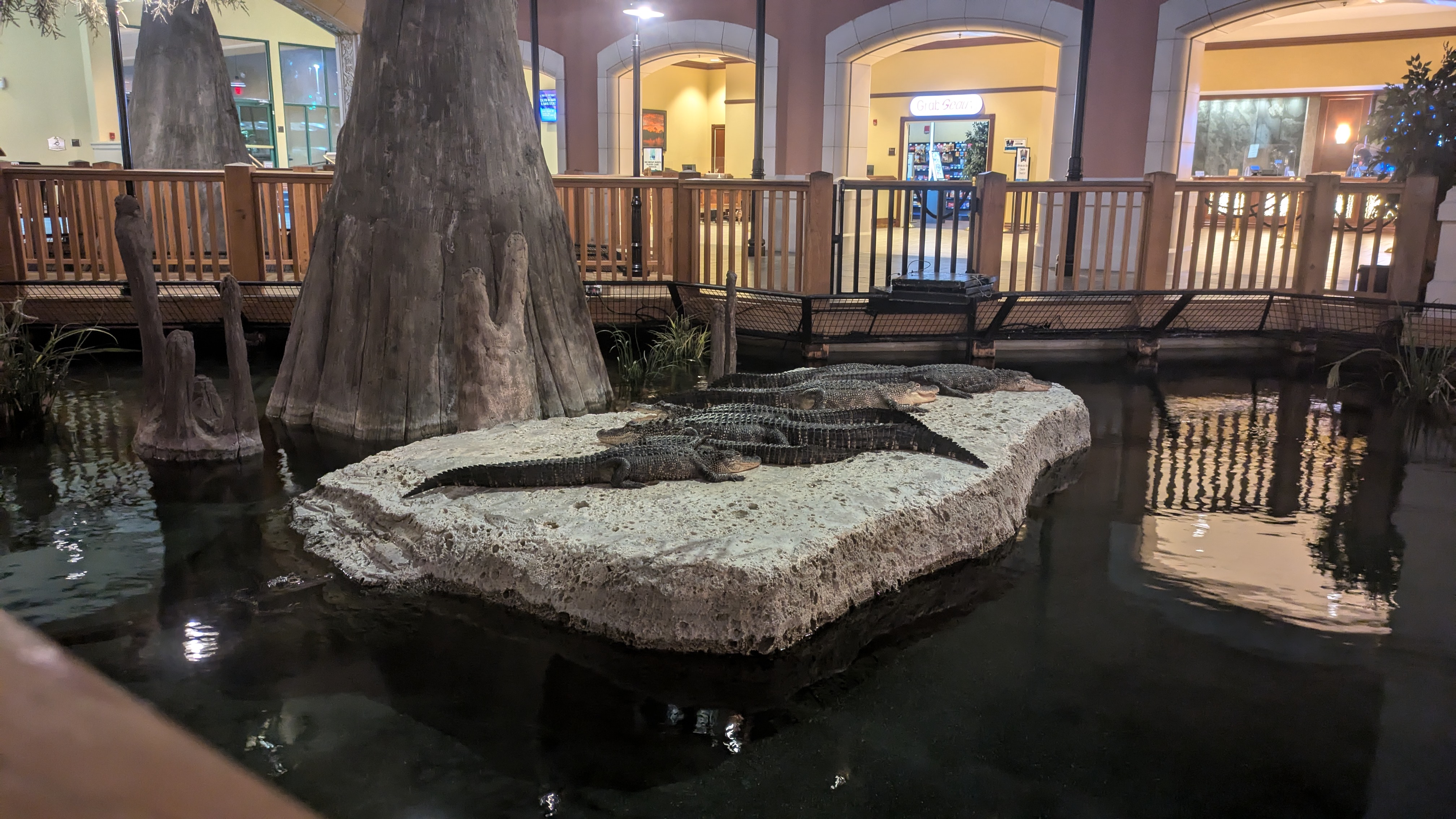
A fun feature of the Tunica-Biloxi Tribe’s resort and casino is a replica bayou in the lobby complete with about twenty alligators (we counted, or tried to).
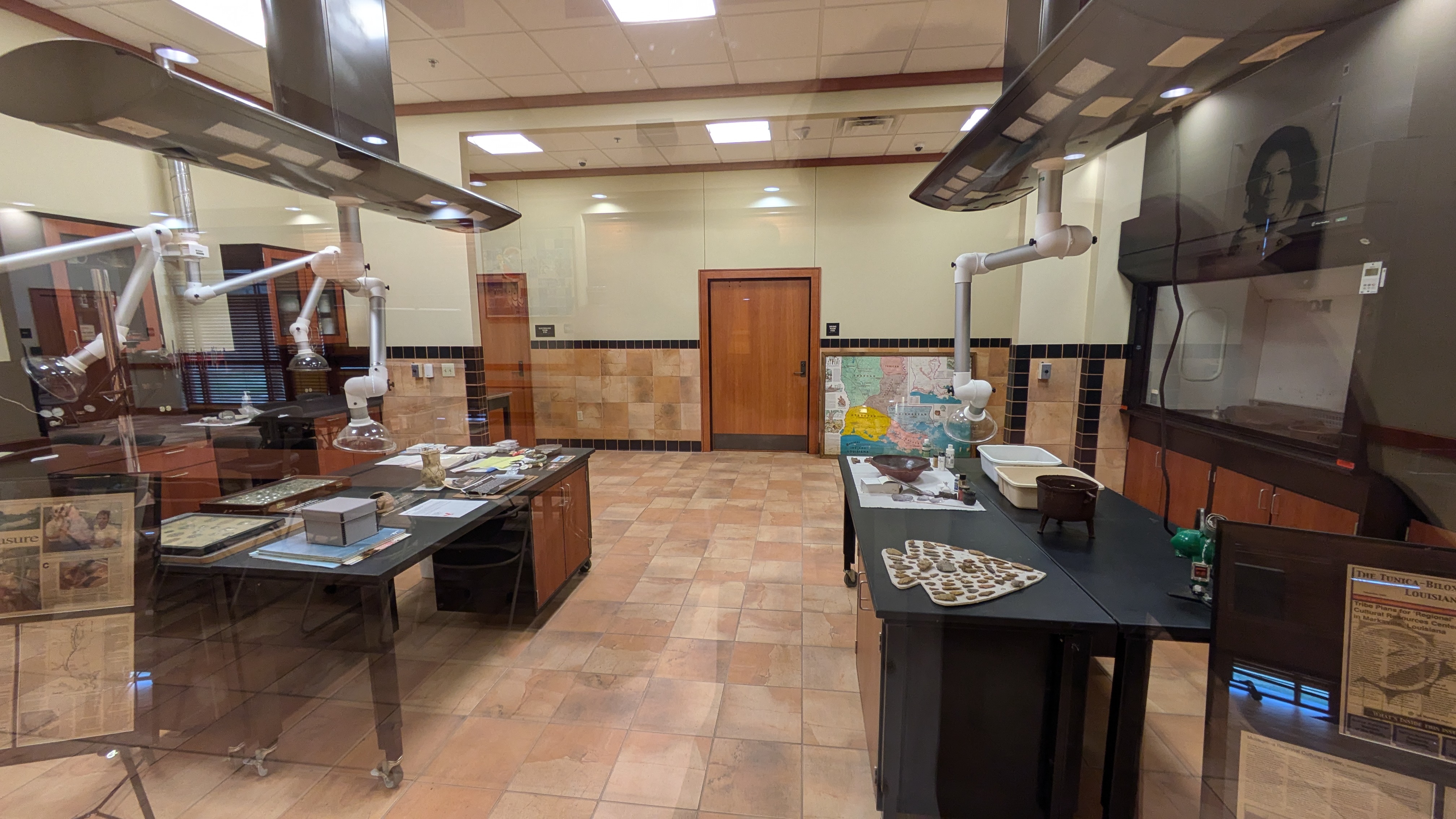
Another highlight was an opportunity to visit the Tunica-Biloxi Tribe’s museum and cultural center, which features the Tunica Treasure. The Tunica Treasure was found by looters in the late 1960s who disturbed a Tunica cemetery in West Feliciana Parish. The treasure included late eighteenth century trade goods and Native-made items, including one of the largest caches of glass beads in the Western Hemisphere. The Tribe’s success in recovering the historic belongings in state court helped them regain federal recognition, which had been lost during the federal government’s termination era. While some might be surprised to see burial items displayed, its important to remember that each Tribe makes their own decisions about what happens with their cultural heritage, reflecting their sovereignty.
Conservation lab built and operated by the Tunica-Biloxi Tribe in their work to preserve the Tunica Treasure.
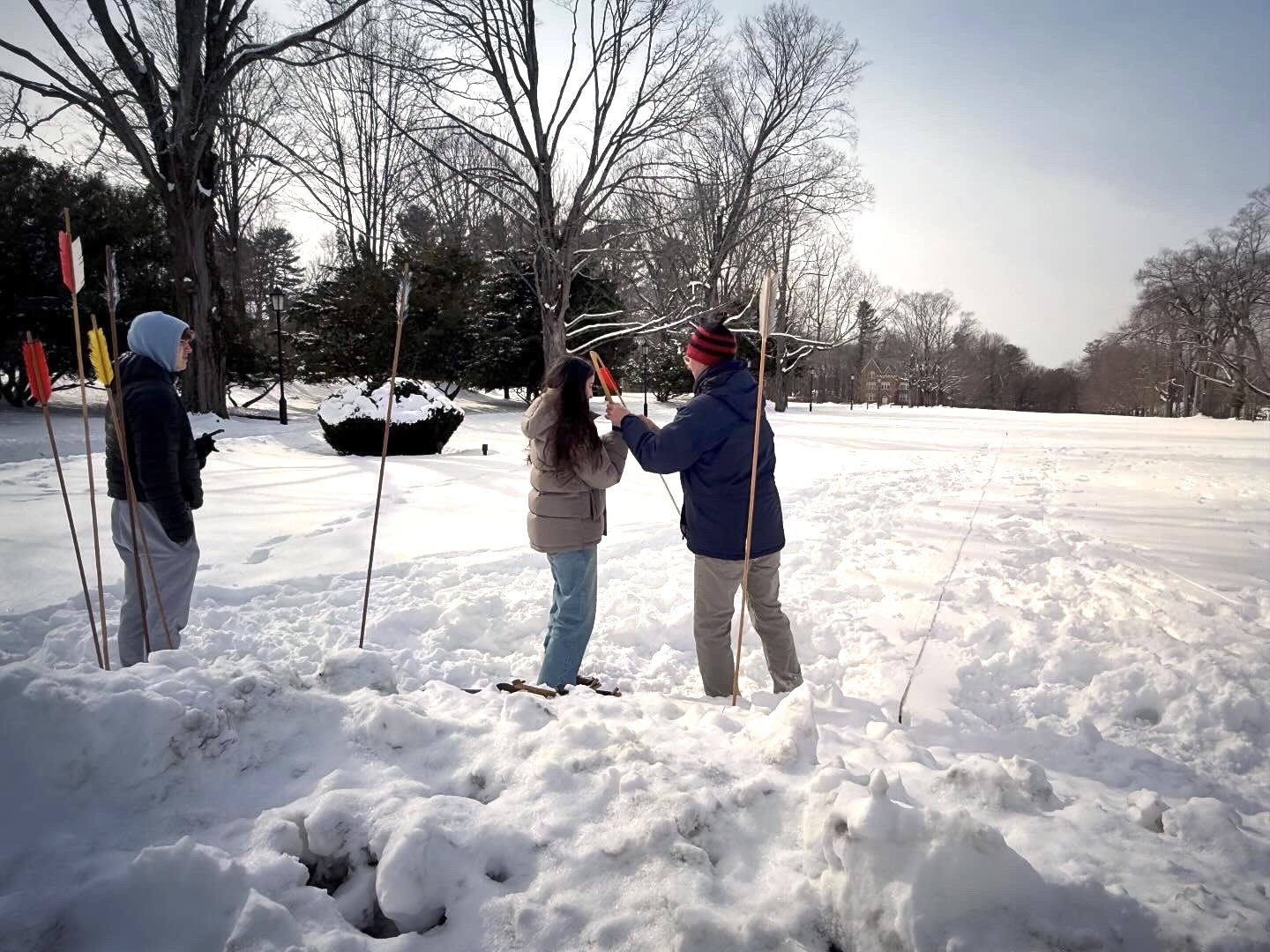
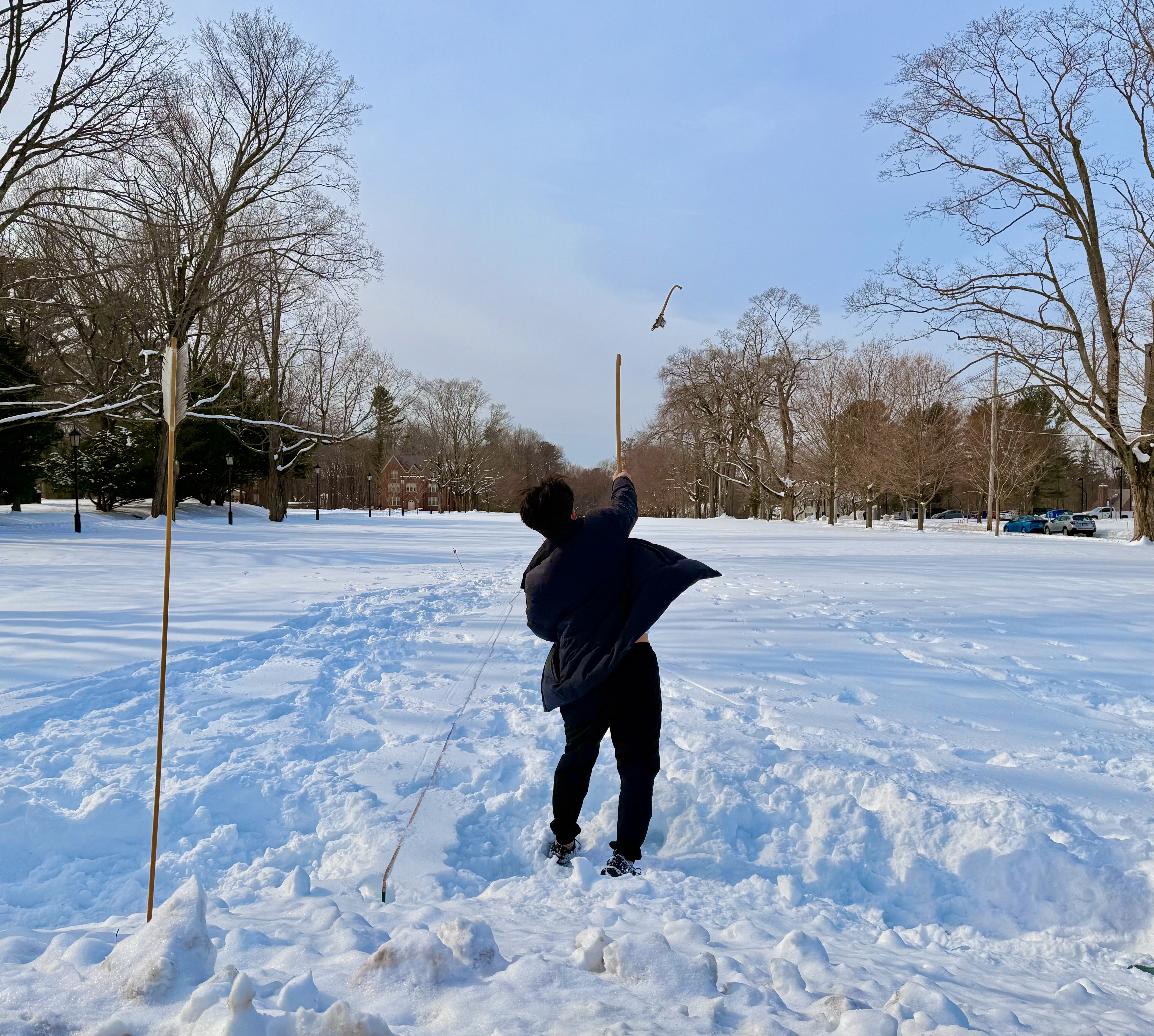
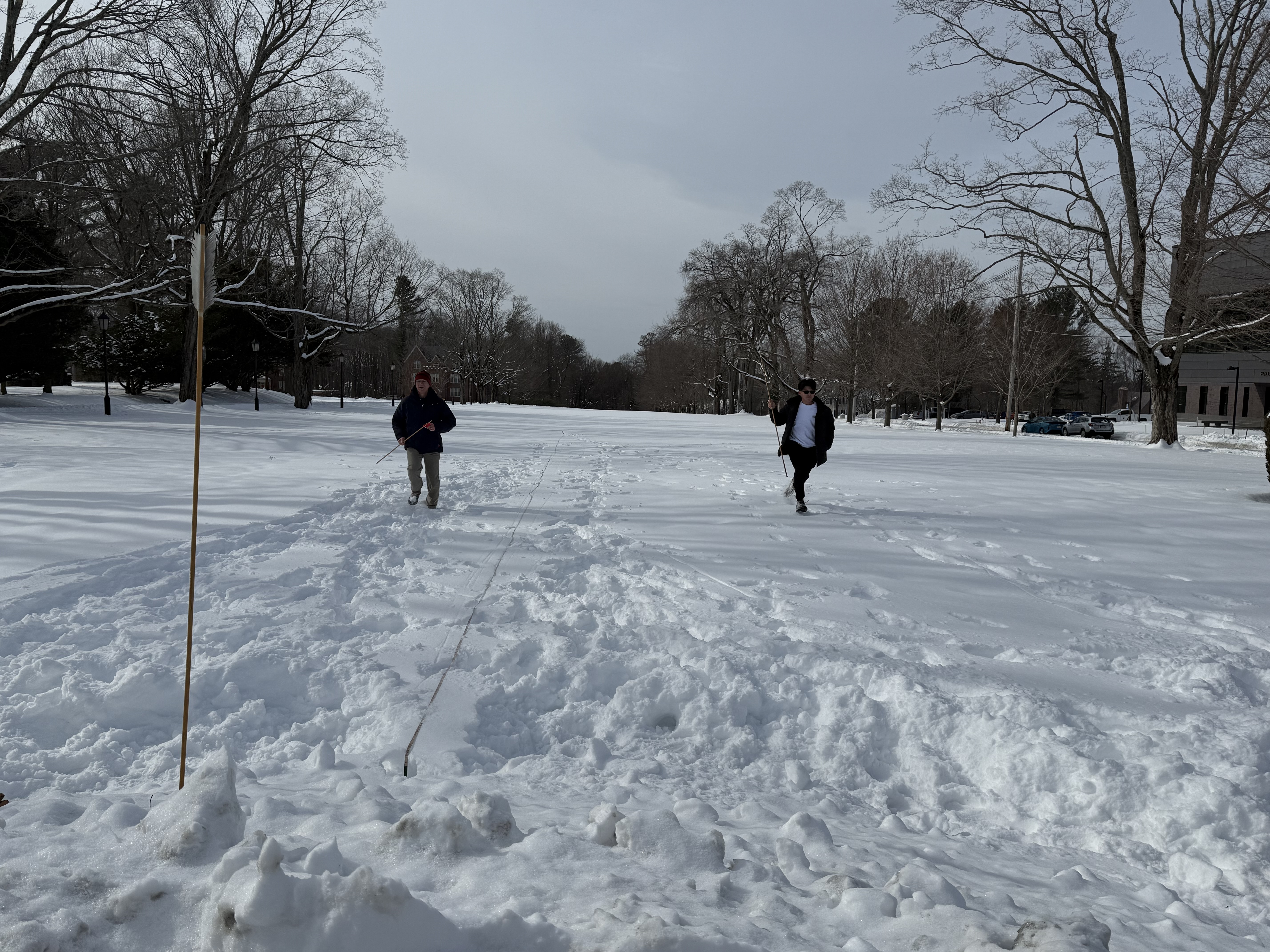
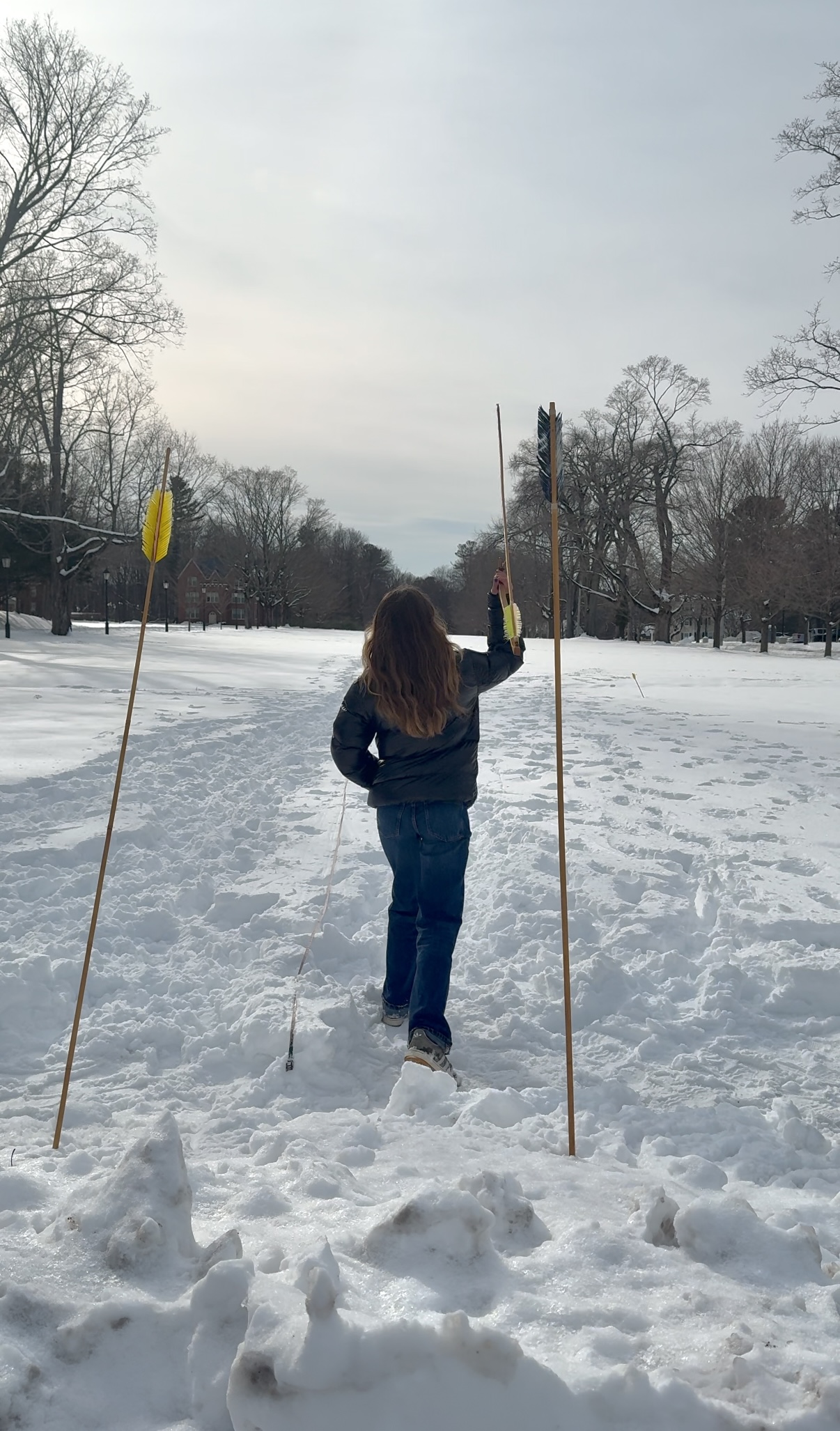
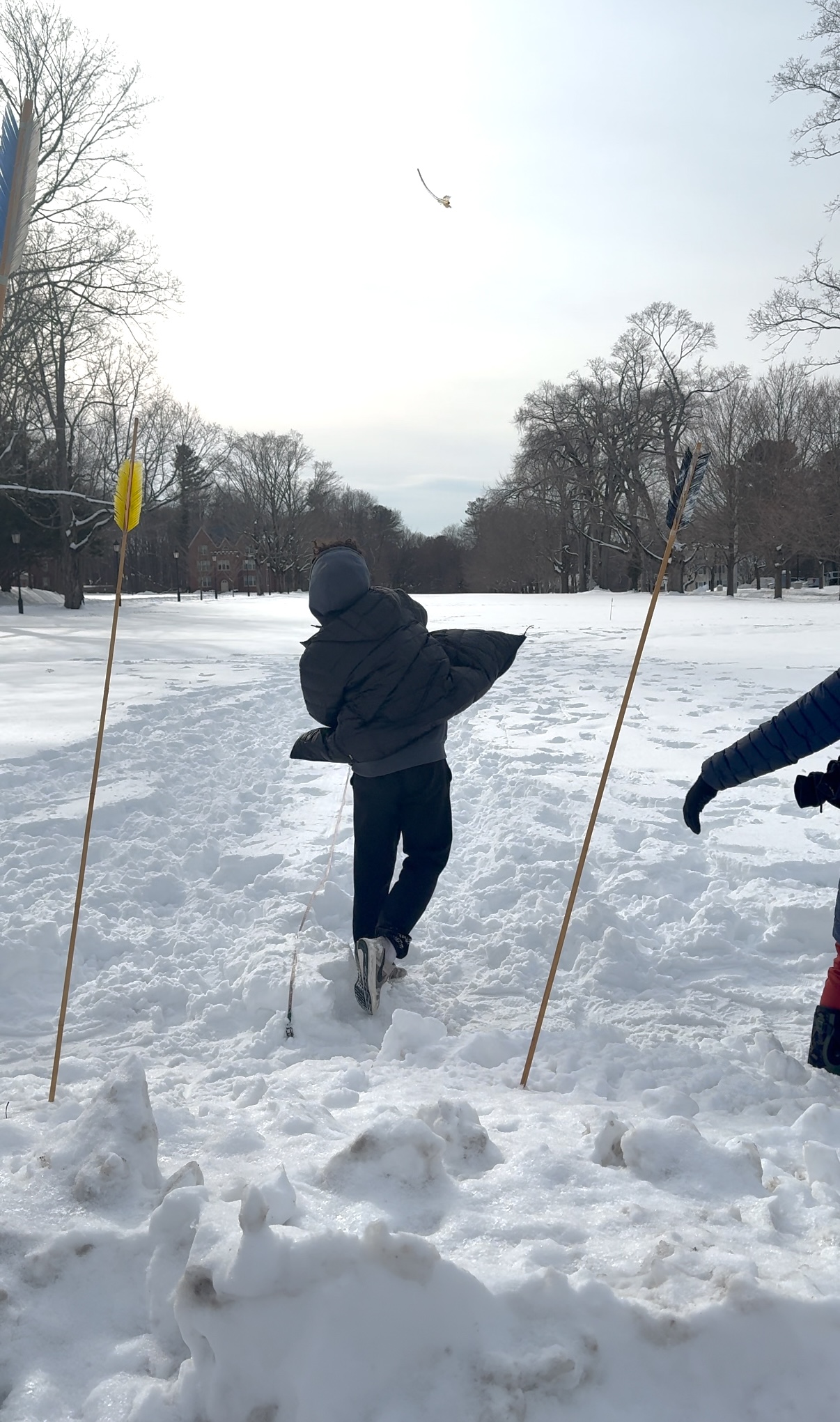
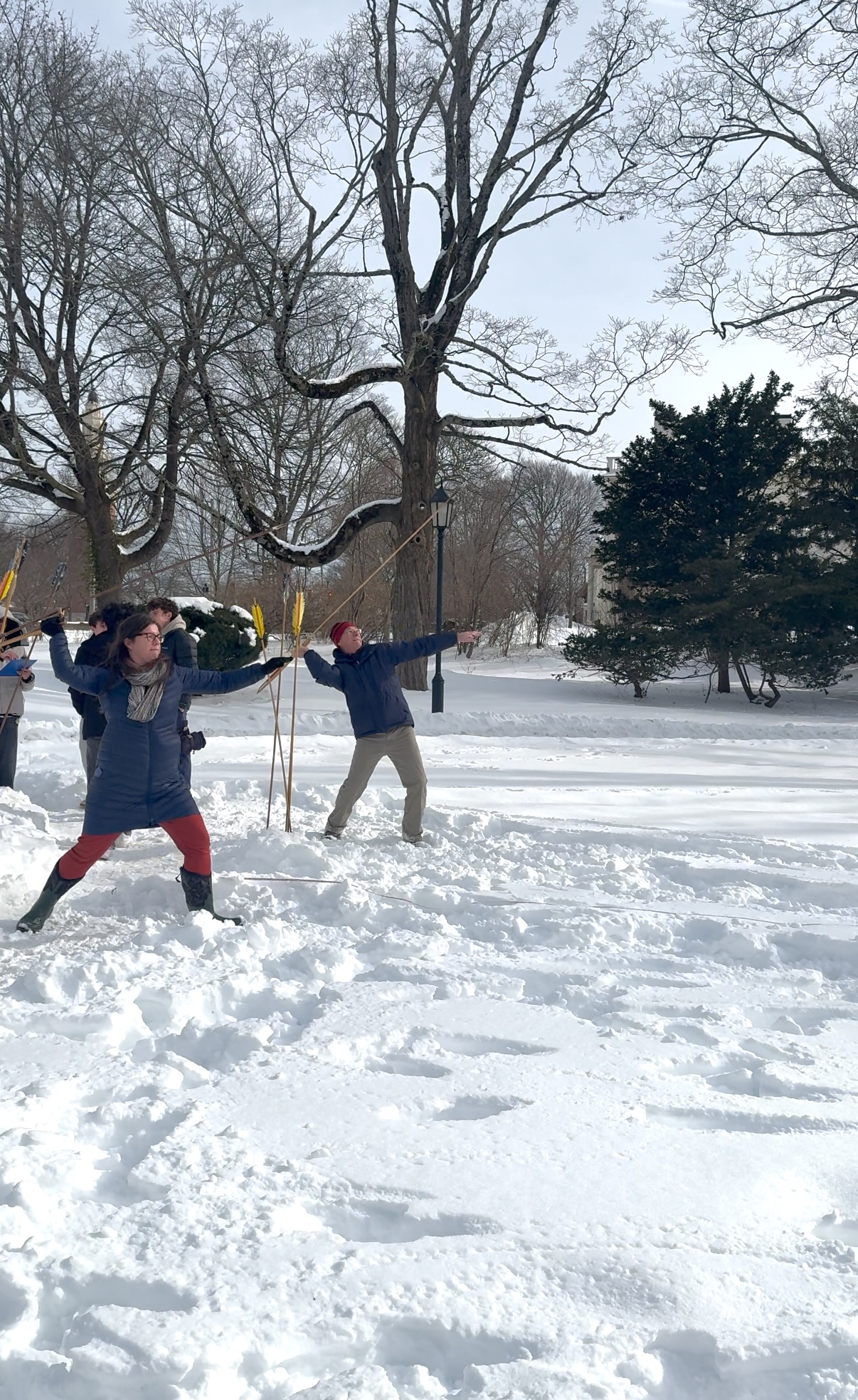
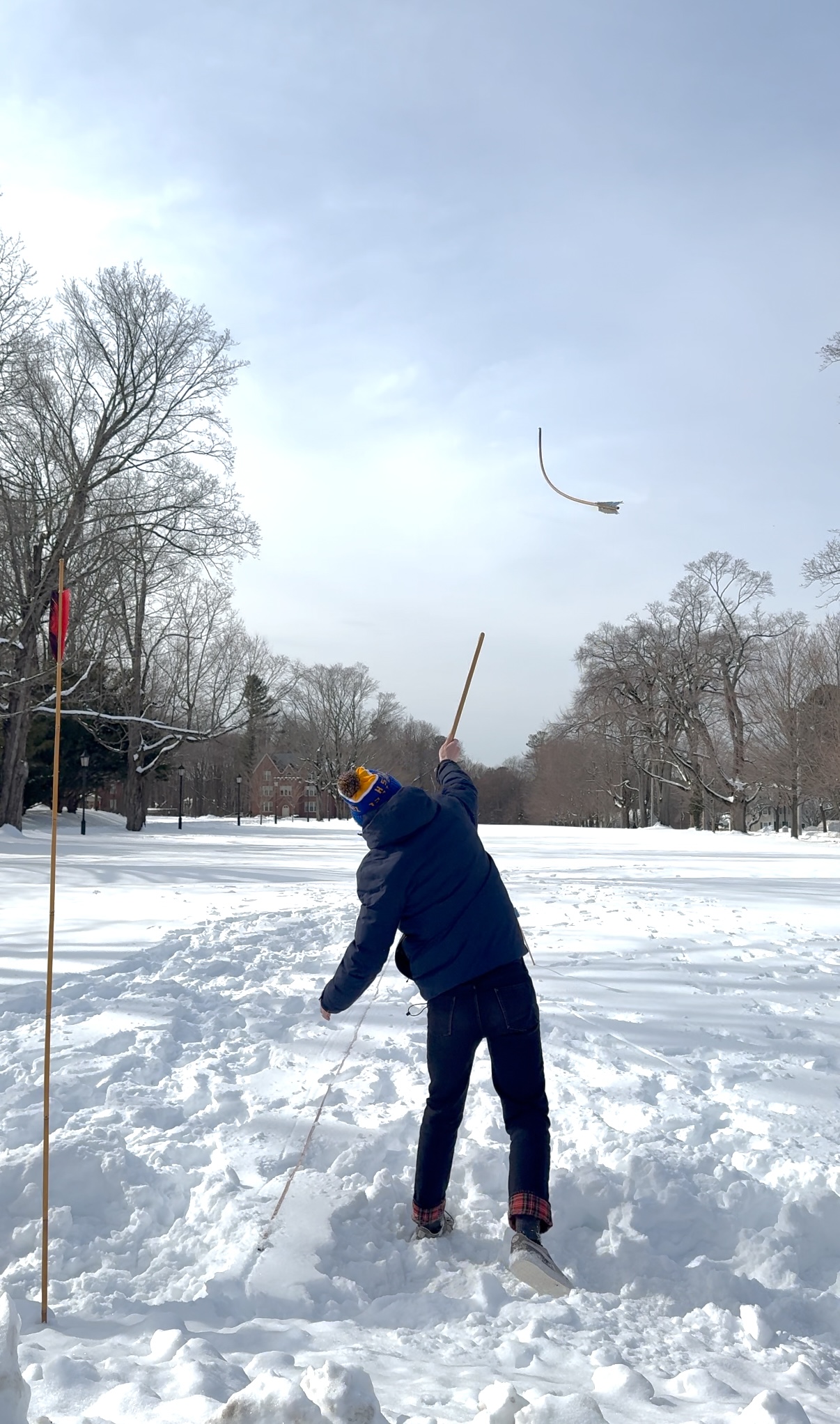
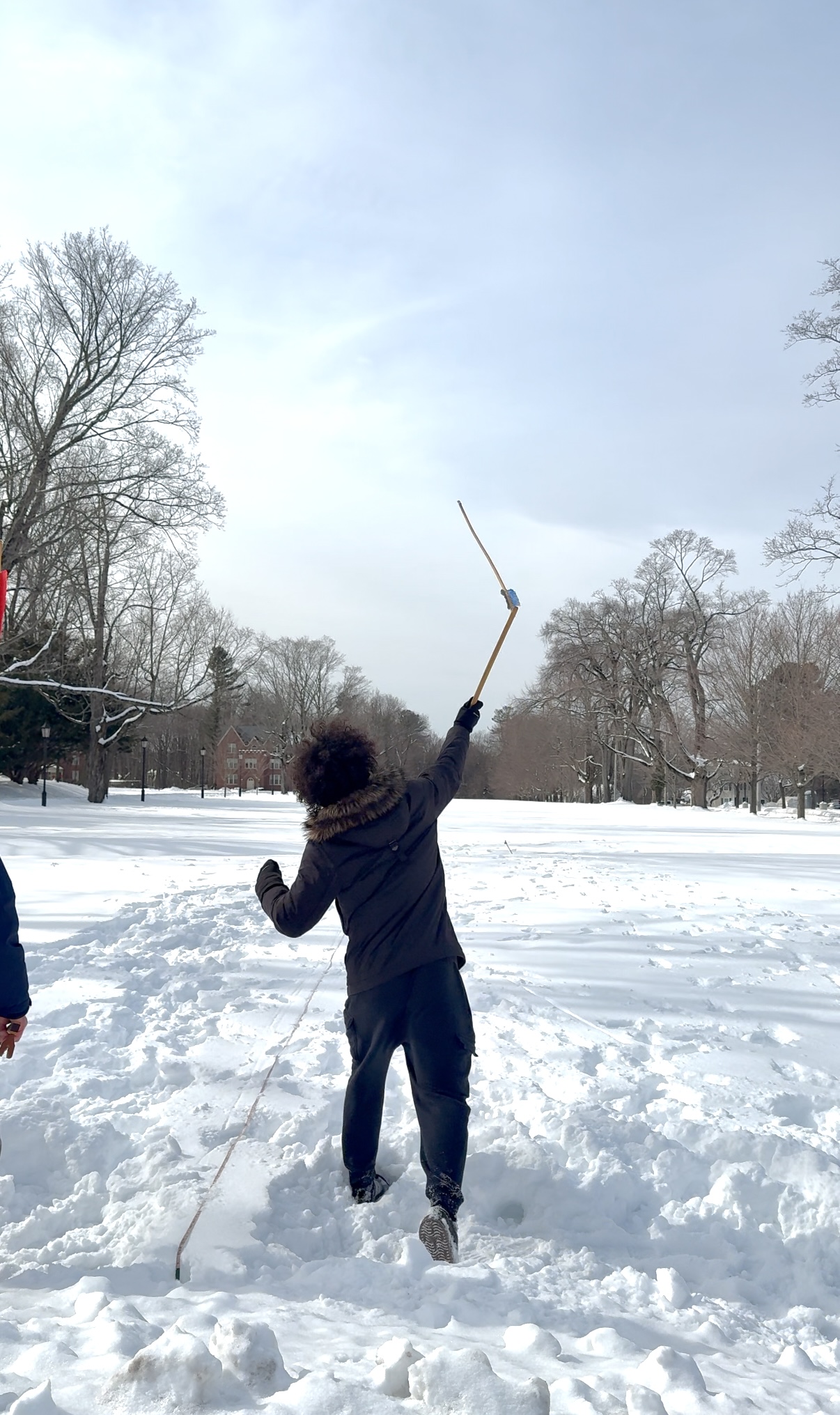
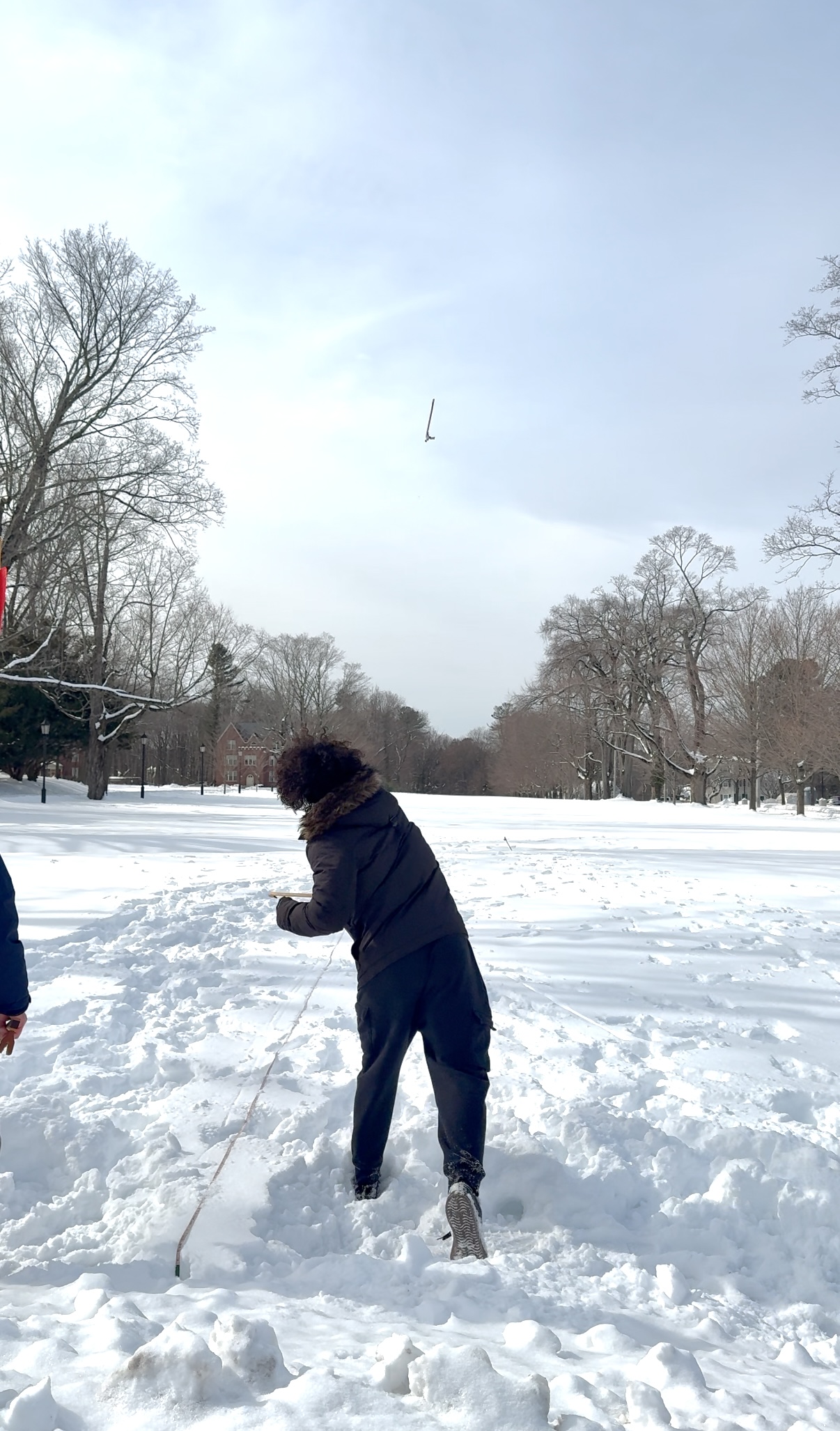
Rebecca Bowers’ Math 360 students spent a cold February day exploring the ancient hunting technology of the throwing board or atlatl. Peabody educators provided an introduction to the atlatl–which first appears around 21,000 years ago in Upper Paleolithic France and was used throughout much of the world. Acting as a lever and extension of the arm, the atlatl allows users to throw six foot darts at great velocity and distance. Students examined Arctic throwing boards, as well as a replica of the fawn or doe spear thrower hook from Mas d’Azil cave in France. Ms. Bowers provided some formulas to model projectile mathematics. Students collected their own data with multiple trials on the Vista. At least one throw exceeded 170 feet, which is pretty impressive!
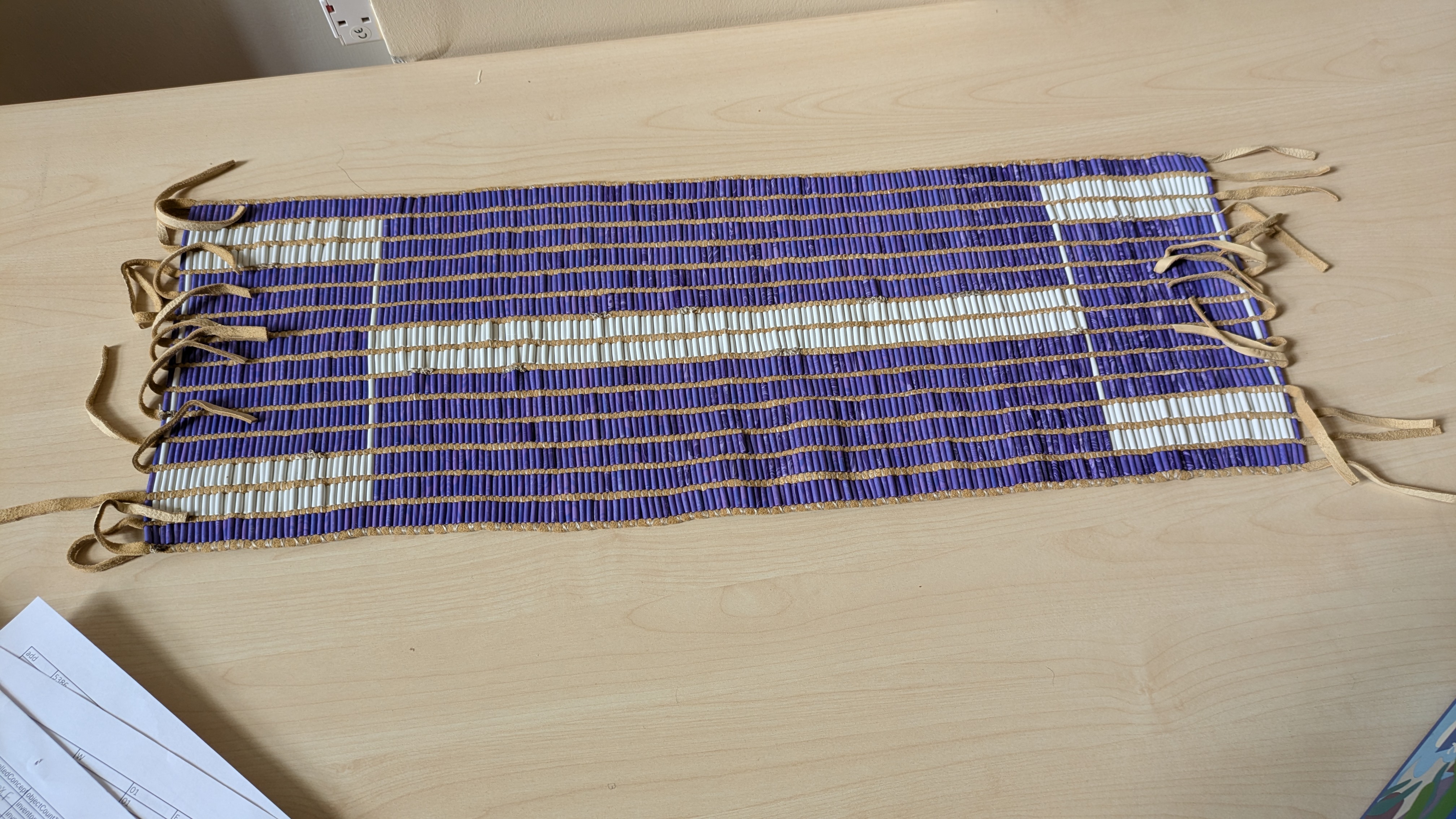
Earlier this year the Peabody Institute was fortunate to add two impressive wampum belt replicas to its collection of contemporary Native American art.
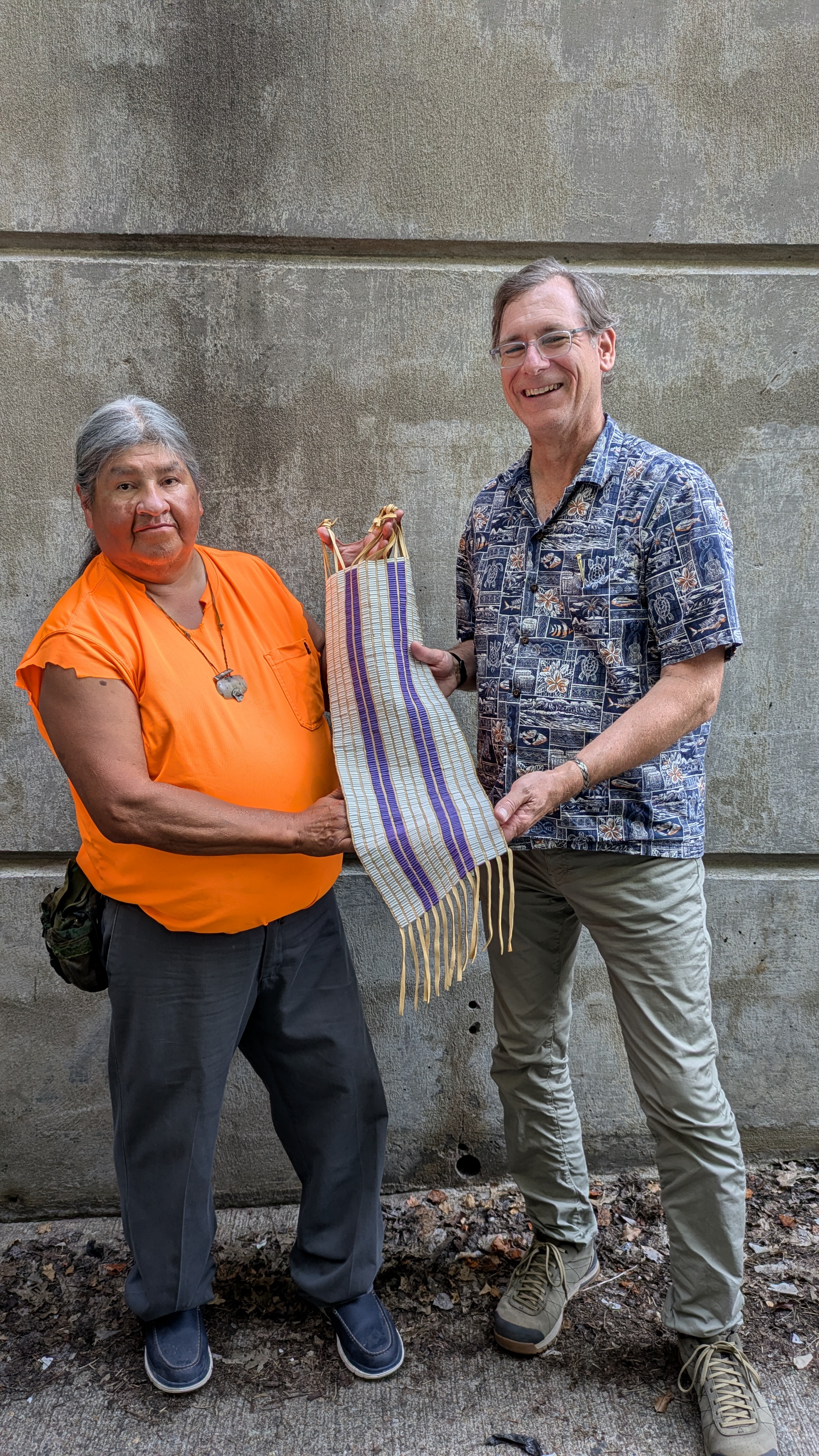
Tony Gonyea, Faith Keeper, Onondaga Nation presents Gaswéñdah, a two row wampum belt replica to Peabody director Ryan Wheeler.
Tony Gonyea, Faith Keeper of the Onondaga Nation, is well known for crafting modern wampum belt replicas, melding traditional designs and techniques with modern materials. A 2014 article by Wendy Gonyea on the Onondaga Nation’s website tells us that Tony’s oñgwehoñwe name is Wah’hasoñhdah, “He’s adding on.” Tony explains that to create a belt, “It takes hours upon hours into the evening. Working a little at a time, but when a belt is finished the end product is amazing. It feels nearly as powerful as the original.”
Tony Gonyea’s friendship belt replica.
Both belts have already made appearances in community programs and classes, and we anticipate that Tony’s belts will remain popular with Peabody Institute visitors.
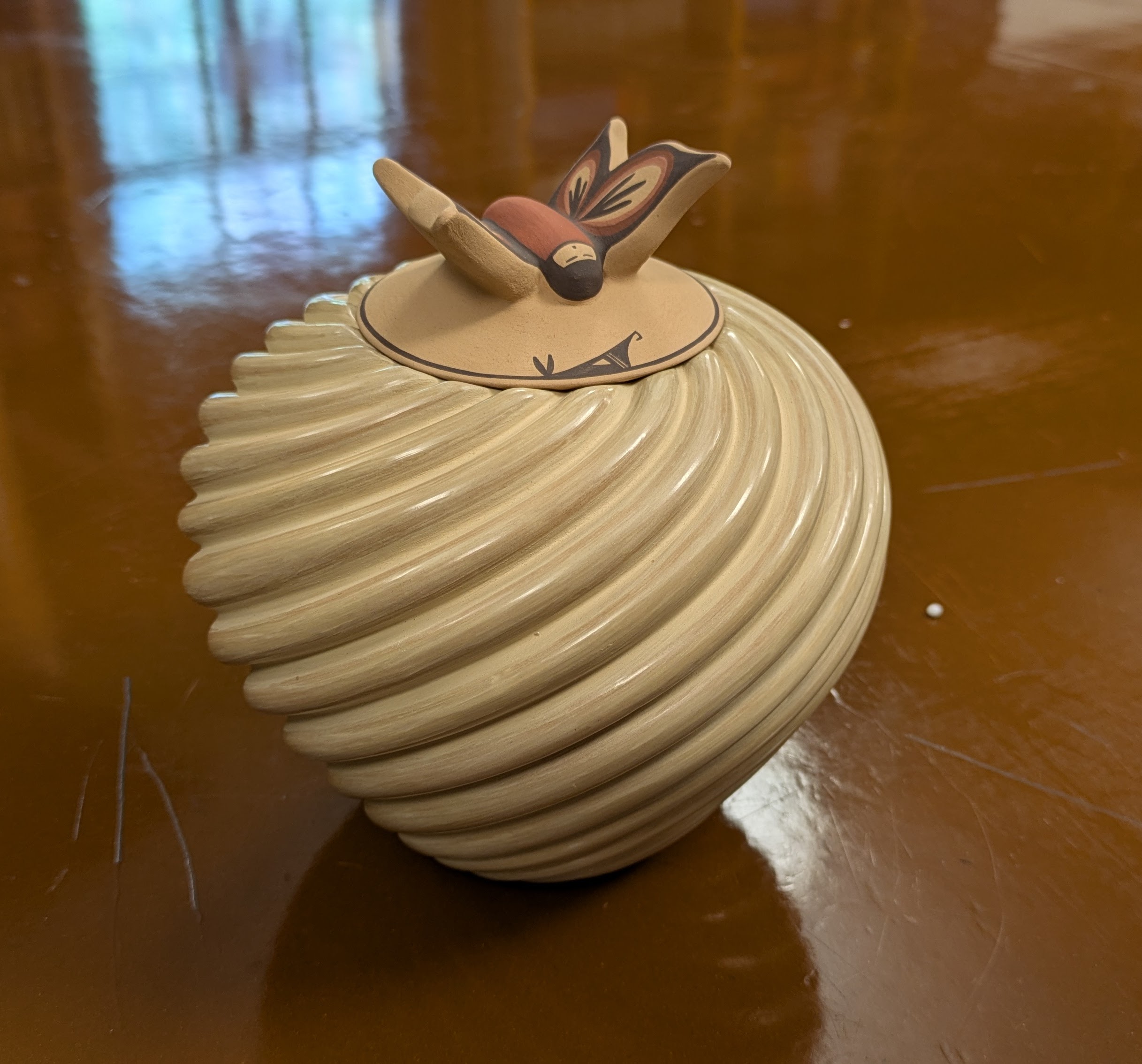
Mia Toya’s melon swirl vessel with distinctive butterfly lid. I particularly like the creamy slip, which sets this piece apart from others in the Peabody collections.
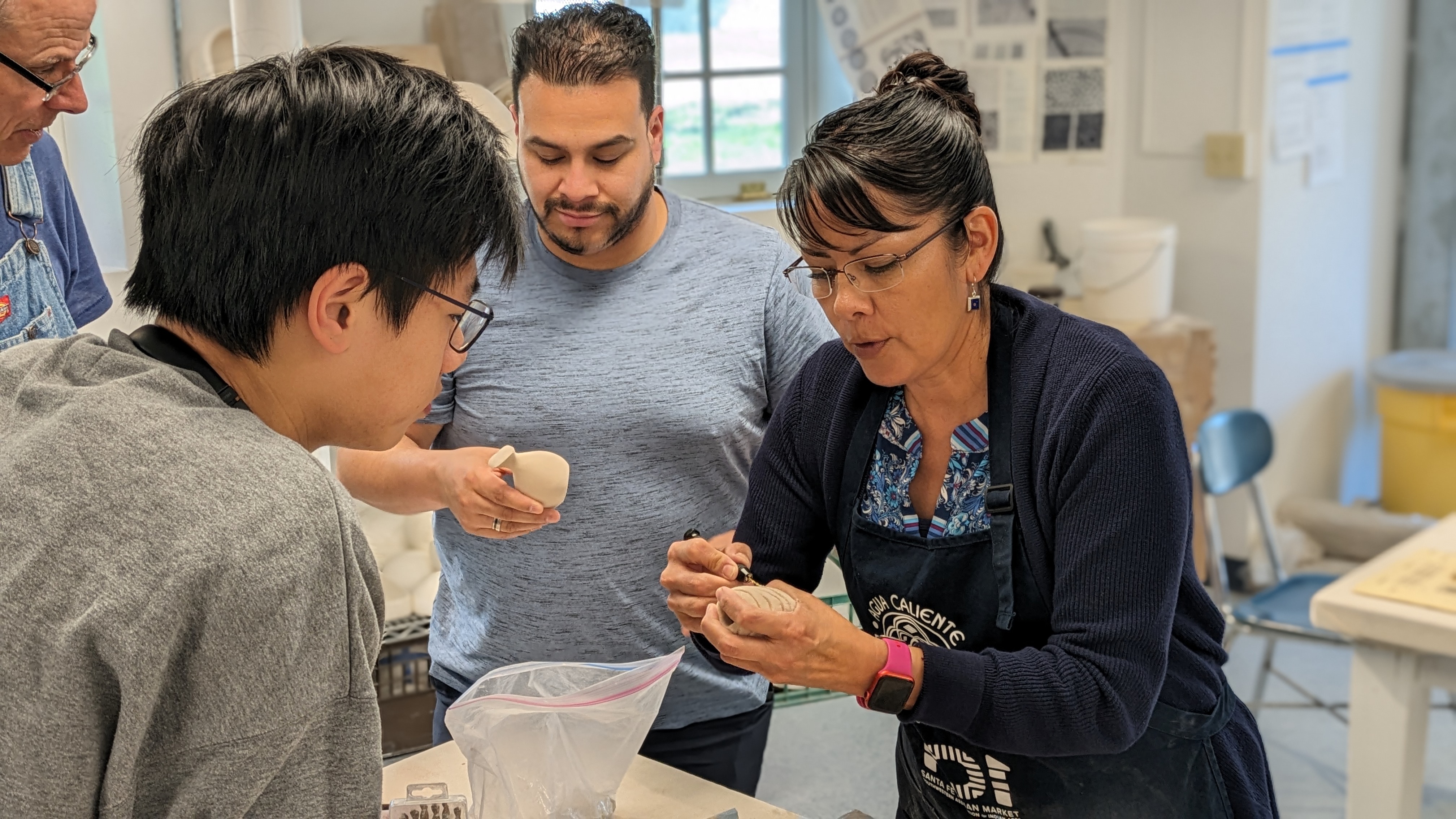
Early this fall–just after Santa Fe Indian Market–we were fortunate to add to the Peabody Institute collections this lovely melon swirl vessel by Mia Toya (Pueblo of Jemez). Mia and her family have a long relationship with the Peabody and Phillips Academy, regularly coming to campus to conduct week-long workshops on Pueblo pottery making with students in Thayer Zaeder’s studio ceramics classes.
Mia helps a student perfect their piece in Thayer Zaeder’s campus ceramics studio, May 2024.
Mia is a member of the Corn Clan and was inspired to continue the long lived tradition of working with clay from many members of her family who are well known artists, including her mom Maxine, grandmother Marie G. Romero, aunt Laura Gachupin, and her sister Dominique. Mia began working with clay at the age of 14 and continues to add her unique style of art to this day, constructing pieces using hand coiling methods, stone polished slips, and figural elements like her distinctive butterfly lids.
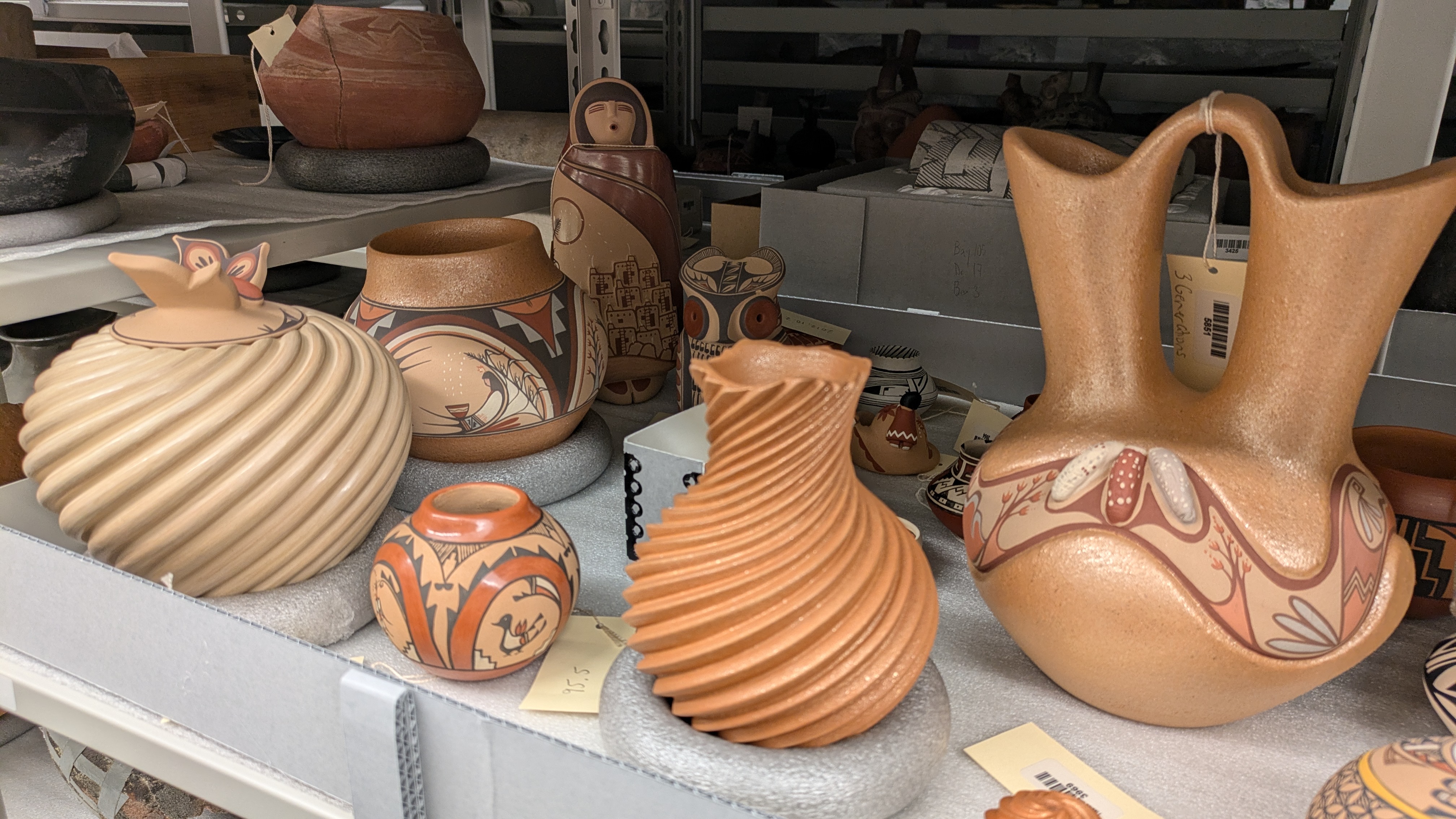
Mia’s piece (far left) joins other Toya Family creations in the Peabody Institute collections, including collaborations between Dominique and Maxine Toya, Maxine’s storyteller and owl figures, Dominique’s distinctive micaceous swirl vessels, and a piece by Mia’s grandmother Marie G. Romero (second from the left).
Watching Mia work with students, its not surprising that in addition to being an accomplished artist, she’s also an educator. Mia teaches second grade at Jemez Day School. A Bureau of Indian Education social media post from 2016 includes a quote from Mia, reflecting on becoming a National Board Certified teacher, “I always knew I wanted to teach in this school–to serve the kids in my community and be one of their role models. Being a National Board Certified teacher helps me give my best to my students, community, and Tribe every day.”
June brought a family trip to London, including a visit to the British Museum. Many websites list the top ten items that you should not miss at the museum, and the British Museum itself has a leaflet with their recommended highlights. The British Museum is sort of ground zero for archaeology, anthropology, and colonialism, as well as mounting calls for repatriation (many people are surprised that the British Museum is prevented from repatriating cultural items by law, and can only deaccession items that are deemed duplicates, damaged, or no longer of public interest). A surprise was a number of pieces by contemporary artists that stand in juxtaposition to items from the past. It was particularly neat to encounter several ceramic pieces by Diego Romero in the case along with older and ancient pieces of Pueblo pottery. After the visit, I decided that I’d shared my own British Museum top ten list and my own repatriation recommendations.
Diego Romero’s contemporary Pueblo pottery commemorates the Pueblo Revolt of 1680; at the British Museum Romero’s work appears with older and ancient pieces.
No. 1 Hoa Hakananai’a (meaning ‘lost, hidden, or stolen friend’)
Hoa Hakananai’a is one of two Moai from Rapa Nui (Easter Island) held by the British Museum. According the exhibit text, both Moai were taken from Rapa Nui in 1868 by Commodore Richard Powell and the crew of a British survey ship, HMS Topaze. The Admiralty presented Hoa Hakananai’a to Queen Victoria, who ultimately gave him to the British Museum, rejoining Moai Hava, who went directly from the Admiralty to the museum. Near the base of the colossal figure of Hoa Hakananai’a are offerings made by representatives from Rapa Nui. The Rapa Nui requested repatriation in 2019 and the exhibit text explains that conversations about return are ongoing.
Should the British Museum repatriate Hoa Hakananai’a and Moai Hava? Yes.
No. 2 Parthenon Marbles
Perhaps central to requests for repatriation of cultural items from the British Museum are the sculpted frieze panels from the Parthenon–long called the Elgin Marbles, after the individual who originally took the panels. These impressive carvings once adorned the Parthenon–the Temple of Athena–on the Acropolis in Athens and date from nearly 2,500 years ago. The pamphlets that are usually available to explain why the panels shouldn’t be repatriated were all gone by the time we were there, but the British Museum website explains, “It is universally recognised that the sculptures that survive are best seen and conserved in museums.” Is it? The website goes on to note that in 2009, a new museum was constructed in Athens to showcase the panels. Greece has asked for the return of the carvings numerous times. Two notes from our visit. First, our friend Bill, a big comic and graphic novel connoisseur, noted that the so-called “South Metopes,” the panels depicting a battle between centaurs and Lapiths at the marriage feast of Peirithoos, followed the graphic, sequential storytelling now best known from comic books. Once he pointed this out, it completely changed my appreciation for the panels. Secondly, if you look out the windows of Gallery 18, where the sculptures and carvings are exhibited, you could see someone making breakfast in a flat directly behind the museum. I found the juxtaposition of these culturally and politically charged items with the quotidian of daily life to bring the entire, global conversation about the marbles into stark relief.
The gallery featuring the Parthenon Marbles was a popular destination when we visited in June.
Should the British Museum repatriate the Parthenon Marbles? Yes.
No. 3 Hopewell platform pipes
I’m definitely deviating from the top ten lists provided by the British Museum and other writers at this point, but for a student of archaeology of the Southeastern United States, I was really looking forward to seeing the Hopewell platform pipes. The Hopewell pipes, of stone, with beautifully carved birds and animals in miniature, were removed from Mound City in Ohio by E.G. Squier and Edwin Davis–remember Squier and Davis? Authors of 1848’s Ancient Monuments of the Mississippi Valley, one of the earliest archaeological publications of the Smithsonian Institution, sent this remarkable group of nearly fifty carvings abroad. According to the catalog for the 1977 exhibition Sacred Circles, “These little sculptures have a meaning that far outstrips their size. One feels their importance. It has something to do with the salient presentation of each animal, quail, hawk, bear, panther, snake, beaver or squirrel.” Acknowledging the high arts, architecture, and far-flung influences of the Hopewell, UNESCO recently designated eight of these monumental earthwork complexes as world heritage sites. Many institutions in the United States hold material heritage of Hopewell, and consultation with Tribes and Nations, as well as affiliations are beginning to happen.
Hopewell platform pipes from Ohio displayed at the British Museum.
Should the British Museum repatriate the Hopewell platform pipes? Yes.
No. 4 Sutton Hoo ship burial
I was excited to see the items from the seventh century Sutton Hoo ship burial. In 1939, in Suffolk, avocational archaeologist Basil Brown worked with landowner Edith Pretty to excavate the remains of an Anglo-Saxon ship burial, including a trove of weapons and jewels, including gold and garnet items and a fabulous portrait helmet of iron and copper alloy, that some have thought might be King Raedwald of East Anglia.
The Sutton Hoo portrait helmet.
Many learned a little about Sutton Hoo from the 2021 Netflix movie The Dig starring Carey Mulligan and Ralph Fiennes. Sadly The Dig didn’t tell us much about the discovery or the project itself, even changing elements of the story and characters, like Mercie Lack and Barbara Wagstaff, teachers and amateur photographers who volunteered to help and captured amazing images of the fragile and rapidly deteriorating find (they became a man in the movie–why?). Okay, so, you probably are thinking Sutton Hoo, Suffolk, solidly in England, no question of repatriation, right? Well, a 2020 blog on Cultural Restitution called for the return of the Sutton Hoo helmet and other items from the ship burial to regional and local museums. The blog, based on an argument forwarded by historian James Barr, notes all the reasons the British Museum would oppose such a repatriation–Edith Pretty donated the items to the museum, the 1963 act that prohibits repatriation, as well as environmental and ethical concerns. Interestingly, we encountered a similar position in 2014 after the Peabody Institute of Archaeology’s repatriation of Mesolithic era painted pebbles to France’s National Museum of Archaeology (Édouard Piette, who had discovered the pebbles and donated them to the national museum, stipulated that they should never leave the so-called Piette Room). We felt pretty good about the repatriation, but upon visiting the area where the pebbles were found, locals complained that the pebbles weren’t coming home to them, but rather hoarded in Paris. Hmmm, good questions.
Should the British Museum repatriate the Sutton Hoo ship burial? Yes.
No. 5 Lewis Chessmen
A Lewis Chessmen queen seems to be considering her plight.
A gallery or two over from Sutton Hoo and you find the twelfth century Lewis Chessmen, carved of walrus ivory and found in the nineteenth century in the Outer Hebribean Isle of Lewis in Scotland. Some went to the National Museum of Scotland–we saw them on our trip in 2017–but the bulk were sold to the British Museum. The source of the ivory and where the figures were made (maybe Norway!) is debated, but they are delightful, including berserkers chomping on their shields and queens doing what only could be described as a medieval face palm. You might think, wait, these are from the UK, so all good for the British Museum to keep, right? I wasn’t too surprised, however, to see that there have been efforts to return the chessmen not only to Scotland, but in 2010 Scottish MP Angus MacNeil called for the chessmen to return to Museum nan Eilean (museum of the islands) at Lews Castle in Stornoway, the major town of the Outer Hebrides. A 2017 Global Heritage blog post notes, “Recognition that the Lewis Chessmen are part of the heritage of the Western Isles of Scotland has come in the last few years after much lobbying, when the British Museum decided to loan six chess pieces to the Museum nan Eilean.”
Should the British Museum repatriate the Lewis Chessmen? Yes.
No. 6 Rosetta Stone
The Rosetta Stone was one of the more popular objects–I lament that I didn’t get a photo of the three young men capturing a selfie.
The Rosetta Stone is sort of like the British Museum’s Mona Lisa–a lot of people were crammed in to get a look and it’s a little smaller than you think it will be. A group of young men in their 20s did a selfie. The Rosetta Stone includes translations of a text in three writing systems–classical hieroglyphics, Demotic script (a simplified hieroglyphics), and Ancient Greek. This allowed nineteenth century scholars–especially French archaeologist Jean-Francois Champollion–to crack the code of ancient Egyptian hieroglyphics, earning the Rosetta Stone a place in archaeology’s top ten. In 2022, Monica Hanna, dean at the Arab Academy for Science, Technology & Maritime Transportation, organized a petition calling for the repatriation of the Rosetta Stone, noting, “the British Museum’s holding of the stone is a symbol of Western cultural violence against Egypt.” The petition garnered over 4,000 signatures. Zahi Hawass, well-known Egyptian archaeologist–circulated a similar petition–which got over 100,000 signatures. According to reporting in 2022, the British Museum argued that an 1801 treaty included legally transferred ownership of the famous tablet.
Should the British Museum repatriate the Rosetta Stone? Yes.
No. 7 North West palace of Ashurnasirpal gate
The lamassu figure from Ashurnasirpal’s palace throne room entrance is paired with the replica of the Balawat Gate (to the left in this picture).
Of all the cultural treasures housed at the British Museum, the Ashurnasirpal gate is perhaps one of the most striking. I first learned about these massive carvings of winged human-headed lions (or lamassu) guardians from the royal palace at Nimrud (modern northern Iraq) in grad school. The late Barbara Barletta taught a fantastic art history course on Ancient Mesopotamia and Egypt. The tests were very different from those in archaeology, and were based around projected slides that corresponded to questions on the test. I became proficient at making quick sketches in my notes so I could keep track of which architectural features and cultural items were which. Erected during the reign of neo-Assyrian king Ashurnasirpal II, almost 3,000 years ago, the figure was excavated by Sir Austen Henry Layard in 1851. A similar, perhaps matching figure is at the Met in New York. I can’t find any specific calls for repatriation by governments of Iraq, but they have been increasingly involved in the return of looted cultural items, including cuneiform tablets that landed at the Museum of the Bible and Cornell University. In 2023 Iraqi-American artist Michael Rakowitz offered his 2018 sculpture The Invisible Enemy Should Not Exist–his version of a massive lamassu–in exchange for repatriation of the Ashurnasirpal carving. An article about Rakowitz’s offer indicate that he specifically wanted to see the return of the Ashurnasirpal carving to respond to the destruction of a lamassu dating to 700 BCE at the Nergal Gate in Nineveh, which was purposely destroyed by the Islamic State in 2015.
Should the British Museum repatriate the Ashurnasirpal gate? Yes.
No. 8 Aztec serpent pectoral
The mosaic on the Aztec serpent (or caterpillar!) pectoral is made of thousands of chips of turquoise with spondylus shell highlights.
The serpent pectoral is one of several turquoise mosaics from Mesoamerica associated with the Aztec and Mixtec of central Mexico, dating from 1,400 to 1,521. Carved of cedar wood, the undulating body of the double-headed serpent is covered with an intricate mosaic of turquoise and shell. The back side is flat, and unadorned, leading most to describe this as a pectoral, which could have been worn suspended on the chest of a person or larger statue. A catalog note by Vila Llonch notes, “The Nahuatl term ‘coatl’ can be translated as both serpent and twin. The Mexica considered serpents to be powerful, multifaceted creatures that could bridge the spheres (the underworld, water and sky) owing to their physical and mythical characterisitics.” Joshua Fitzgerald offers another interpretation, suggesting the pectoral is not a snake, but rather a caterpillar, representing less bad omens, and more a physical representation of how to think about life stages. The pectoral was purchased by the British Museum from a dealer, representing “an Italian gentleman” in 1894, after considerable negotiations about the price, as well as intrigue involving Duchessa Massimo (Teresa Maria Doria-Pamphili-Landi) and the Massimo Family of Rome. It’s almost impossible to look at a book about the Aztecs or Mesoamerican archaeology without encountering the mosaic pectoral–it’s famous! I can’t find specific instances of Mexico calling for the return of the mosaic pectoral, but a 2022 article by Amah-Rose Abrams points out increasing opposition by Mexico to international auctions, as well as a legacy of protecting cultural heritage from pilfering and removal that dates back to at least 1911, following the Mexican Revolution. In that piece, Mexico’s culture minister, Alejandra Frausto Guerrero, is quoted, stating “any piece of national heritage that is permanently outside the country, not temporarily for an exhibition or cultural cooperation, comes from an illegal act.”
Should the British Museum repatriate the Aztec serpent pectoral? Yes.
No. 9 Nisga’a house pole
The Nisga’a and Haida house poles overlooking the British Museum lunch area.
Two house poles–what many might call totem poles–occupy an area near where you can have lunch at the British Museum. One is Haida, the other Nisga’a, from Angeedaw on the Nass River in British Columbia. I was particularly interested to see the Nisga’a house pole, since a presentation at the November 2023 AAIA repatriation conference highlighted the rematriation of another Nisga’a house pole from the National Museums of Scotland. Both pts’ann were taken by anthropologist Marius Barbeau, who was commissioned to acquire these items from the UK museums. The online entry for the Nisga’a pole includes this text:
The receipt in the Canadian Museum reads: ‘M.Barbeau Nass River Aug 30 1932. [To] Smith and his clan For totem pole of Eagle-Beaver, their property, which they cede in complete clan agreement without further claim (assuming responsibility of division of price between themselves) to M.Barbeau for his disposal according to authority received. Received payment in full (signed) William Smith his mark. (witness) Albert Allen. $310’ The difference in sale and cost figures being accounted for by travel and other expenses?
Apparently, similar documents exist for the rematriated pts’ann, but family stories contradict the receipted account, according to an October 17, 2023 story in IndigiNews. That story–and the presentations at the November repatriation conference–explained that these pts’ann were carved as memorials to deceased family members and are considered more than objects, but as ancestors themselves. The Angeedaw pts’ann is about 25 feet tall with carvings of mythological creatures, an eagle, and beavers.
Should the British Museum repatriate the Nisga’a house pole? Yes.
No 10 Citico shell gorget
Note–I’m not including any images of the shell gorget, as this is so clearly a funerary item.
In a case near the Hopewell pipes described above was a beautiful example of a Citico style shell gorget. I was surprised to encounter this cultural item at the British Museum, as I had become quite familiar with these objects in repatriation work here at the Robert S. Peabody Institute of Archaeology. These gorgets, made from the outer whorl of a large whelk shell and depicting stylized rattlesnakes, appear almost exclusively in burials of the late Mississippian era in the southeastern United States. A similar gorget from Etowah, a major mound complex near Atlanta, Georgia, was on exhibit at the Smithsonian’s National Museum of Natural History when I was there last summer. All of the examples from Etowah and Little Egypt here at the Peabody are awaiting repatriation, either as associated or unassociated funerary objects. My degree of familiarity with these gorgets increased in 2018 when we began working with the FBI to recover several stolen shell gorgets–which was partially successful. That work led me to scour publications, auction catalogs, and online auctions for shell gorgets in the hopes of recognizing one of the stolen ones. Helpful in all that is an exhaustive catalog of shell gorgets compiled by Jeffrey P. Brain and Philip Phillips, published by the Harvard Museum Press in 1996. The British Museum example, which apparently came to the museum in 1884 from William Bragge, does not appear in the Brain and Phillips catalog. Bragge was a nineteenth century engineer, antiquarian, and collector, with a specialty in tobacco; the British Museum holds 1,899 objects that are related to Bragge’s collecting efforts, including objects from far-flung Indigenous cultures, often pipes or smoking-related paraphernalia.
Should the British Museum repatriate the Citico shell gorget? Yes.