David Thulman Receives Cordell Award

The Peabody Advisory Committee has selected archaeologist David Thulman as recipient of the Linda S. Cordell Memorial Research Award for 2016. This award supports research at the Robert S. Peabody Museum of Archaeology using the collections of the museum. The endowment was named in honor of Dr. Linda S. Cordell, a distinguished archaeologist, specializing in the American Southwest. Linda was Senior Scholar at the School for Advanced Research in Santa Fe, New Mexico, a member of the National Academy of Sciences, recipient of the A.V. Kidder Medal for eminence in American Archaeology, and a valued member of the Peabody Advisory Committee.

Photo of archaeologist David ThulmanDave is an Assistant Professorial Lecturer at George Washington University where he teaches courses on human rights and ethics, cultural property, the archaeology of North America, and the peopling of the Americas.  He received the Linda S. Cordell Memorial Research Award to support his ongoing documentation of Paleoindian and Early Archaic period artifacts. Dave has already collected over 5000 early stone tool images, mainly from the Southeast, and new data from the Peabody’s collections would be used in several shape analyses, particularly looking at shape differences and assessing the degree of regional variation. He notes that current shape analyses of Paleoindian tools has been done on small datasets and that his “intent is to analyze hundreds of Paleoindian and Early Archaic artifacts to produce robust statistical inferences about temporal and spatial group relationships.” Dave received his PhD in 2006 from Florida State University in Tallahassee and serves as president of the non-profit Archaeological Research Cooperative, Inc. (ARCOOP).

For more on the Linda S. Cordell Memorial Research Award see our blog: http://bit.ly/22pgzV5


Linda S. Cordell Memorial Research Award

This award supports research at the Robert S. Peabody Institute of Archaeology using the collections of the museum. The endowment was named in honor of Dr. Linda S. Cordell, a distinguished archaeologist, specializing in the American Southwest.

Linda Cordell and student participants in Pecos Pathways, near Santa Fe, New Mexico

History

Linda S. Cordell (1943-2013) was Professor Emerita at the University of Colorado Boulder, a Senior Scholar at the School for Advanced Research on the Human Experience, in Santa Fe, external faculty at the Santa Fe Institute, and the former director of the University of Colorado Museum of Natural History, Boulder. A member of the National Academy of Sciences and the American Academy of Arts and Sciences, she received the A. V. Kidder medal for eminence in American Archaeology from the American Anthropological Association, and a Lifetime Achievement Award from the Society for American Archaeology. She was a dedicated and long-time member of the Peabody Advisory Committee and is greatly missed by her colleagues at the museum. Linda’s publications on the archaeology of the Southwest are well-known to scholars and the general public.

Linda’s commitment to scholarship and research was the catalyst for the creation of an endowed award in her memory at the Peabody Institute.

Criteria

Professionals in archaeology, anthropology, and allied social, natural and physical sciences. PhD candidates, junior faculty at colleges and universities, and Native American scholars are encouraged to apply.

Application Information

Applications will include: 1) completed application form; 2) one letter of recommendation from faculty advisor (if Ph.D. candidate), academic department chair (if junior faculty), or professional reference; 3) current curriculum vita. The Linda S. Cordell Memorial Research Award application is available from Ryan Wheeler. Applications will be reviewed and ranked by the Linda S. Cordell Memorial Research Award sub-committee, with awards announced annually in the spring. Any destructive sampling or analysis will require approval from Peabody Collections Oversight Committee. Recipients may be invited to share their research with students and faculty at Phillips Academy. Awards support research at the Robert S. Peabody Institute of Archaeology using the collections of the museum.

Applications should be submitted to the Director, Robert S. Peabody Institute by September 1 or April 1. Submissions, including letters of recommendation, should be submitted by e-mail. Award recipients will be selected and notified in spring. The Award may be used anytime during the twelve month period following notification.

Support the Endowment

To make a gift in support of the Linda S. Cordell Memorial Research Award please contact Ryan Wheeler or visit our online giving page.

Recipients

2014

Zac Singer in front of the Peabody storage cabinets that house the Bull Brook collectionUniversity of Connecticut PhD candidate Zac Singer was the first recipient of the Linda S. Cordell Memorial Research Award, which supported his reanalysis of the Neponset site collection, specifically focusing on the middle Paleoindian (circa 10,000 to 11,000 years ago) assemblage from the site. Singer will use the data to complement his excavation and analysis of a Paleoindian site on the Mashantucket Pequot Reservation in southeastern Connecticut. This research will expand understanding of Paleoindian life in the Northeast, including study of lithic sources and stone tool manufacture; the work also will document a significant but little-studied Peabody Museum collection.

2015

Jessica Watson examines the faunal materials from the Hornblower II siteJessica Watson is a PhD candidate at University at Albany-SUNY. Her research involves analysis of animal bones from the Frisby-Butler and Hornblower II sites on Martha’s Vineyard. These collections were donated to the Peabody in 2012 by Jim Richardson and represent excavations made in 1982 with the late archaeologist Jim Peterson. Jessica says her dissertation research will use “faunal assemblages from sites in the Northeastern U.S. … (to) examine human-environmental interactions by identifying changes in animal populations during early European colonization (ca. 1600-1700).” Her dissertation is tentatively titled Ecological Effects of Colonization on Mammals and Birds along the Northeastern Atlantic Coast.
Photo of archaeologist Adam KingAdam King is Research Associate Professor at the South Carolina Institute of Archaeology and Anthropology, University of South Carolina. His Cordell project focuses on Warren Moorehead’s 1925-1927 excavations at the Etowah site village near Cartersville, Georgia. King says, “my goal is to use the artifacts and documents produced to help evaluate the … ideas about the distribution of village areas at the site and the possibility that the Late Wilbanks village was burned.” He plans to examine pottery collections from the site and collect carbon samples for radiocarbon dating. Adam’s  dissertation on the Etowah site was published as Etowah: The Political History of a Chiefdom Capital (2003) and his research was instrumental in NAGPRA determinations of affiliation made by the Peabody in the 1990s.

2016

Dave Thulman is an Assistant Professorial Lecturer at George Washington UnivPhoto of archaeologist David Thulmanersity where he teaches courses on human rights and ethics, cultural property, the archaeology of North America, and the peopling of the Americas.  He received the Linda S. Cordell Memorial Research Award to support his ongoing documentation of Paleoindian and Early Archaic period artifacts. Dave has already collected over 5000 early stone tool images, mainly from the Southeast, and new data from the Peabody’s collections will be used in several shape analyses, particularly looking at shape differences and assessing the degree of regional variation. He notes that current shape analyses of Paleoindian tools has been done on small datasets and that his “intent is to analyze hundreds of Paleoindian and Early Archaic artifacts to produce robust statistical inferences about temporal and spatial group relationships.” Dave received his PhD in 2006 from Florida State University in Tallahassee and serves as president of the non-profit Archaeological Research Cooperative, Inc. (ARCOOP).
An Evening with Pueblo Potters

Please join us for a special evening with award-winning Pueblo potters Dominique Toya, Maxine Toya, Nancy Youngblood, and Joseph Youngblood Lugo.

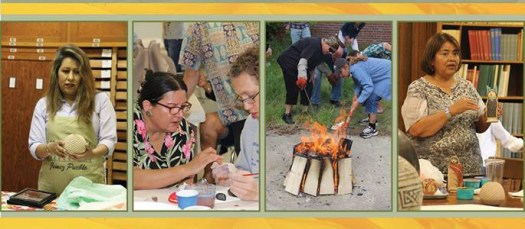
collage of Pueblo potters, from left to right: Dominique Toya, Nancy Youngblood, pottery firing 2015, and Maxine Toya

Learn about contemporary Pueblo pottery making with these gifted artists while they visit Andover to work with Thayer Zaeder’s studio pottery classes. Dominique and Nancy have collaborated to create pieces that meld their unique approaches to traditional pottery construction, bringing together swirl melon bowls, glistening micaceous slips, carved designs, and blackware firing techniques. Maxine makes delightful figurines that draw on deep Pueblo traditions. Joseph Youngblood Lugo continues the Santa Clara tradition of carved blackware pottery, adding contemporary themes and motifs. These artists are passionate about their work and will share how they have melded traditional and innovative materials and methods to create contemporary works of art.

7-9pm, Wednesday, May 25, 2016
Hors d’oeuvres, beer, and wine
$20.00 per person

Please RSVP – contact Crystal McGuire – Office of Alumni Engagement at cmcguire@andover.edu or 978-749-4282

BOOK REVIEW: Laguna Pueblo: A Photographic History

Laguna Pueblo: A Photographic History. By Lee Marmon and Tom Corbett. (Albuquerque: University of New Mexico Press, 2015. Preface, acknowledgments, illustrations, notes, index. Pp. xx, 200. $39.95 cloth.)

Contributed by Ryan Wheeler

Origin stories among the Keresan speakers of New Mexico recount the beginning of Laguna Pueblo when two men—Prayer-Stick Boy and White Hands—were entrusted with leading the first people to a lake at the foot of a sacred mountain, destined to be their home on earth. White Hands ultimately guides the people to their home, but only after Prayer-Stick Boy attempts to settle the people elsewhere, which visits a life now burdened by troubles and hardship upon the pueblo. Part of the story—not shared with anthropologists—documents a second group of travelers that followed Earth Mother’s instructions explicitly and also reside at Laguna, but live as supernaturals in parallel to the original denizens of the pueblo. The interaction between the mortal and immortal residents is central to Laguna culture.

Photographer Lee Marmon’s trajectory as an artist shares a similar arc to those first people of Laguna. He is a product of the interesting melding of Native and non-Native people, and, as is mentioned more than once in Laguna Pueblo: A Photographic History, is like many artists: rebellious, free-spirited, with a zest for independence. In some ways he sounds a bit more like Prayer-Stick Boy—the original Laguna rebel than his righteous counterpart White Hands. Perhaps, however, the intercession of the Laguna supernaturals have helped shape his keen eye for subject and composition as a photographer. The book includes over 105 duotone photographs, most taken by Marmon between 1949 and 1990. The text deftly tells the stories of the landscapes and people photographed.

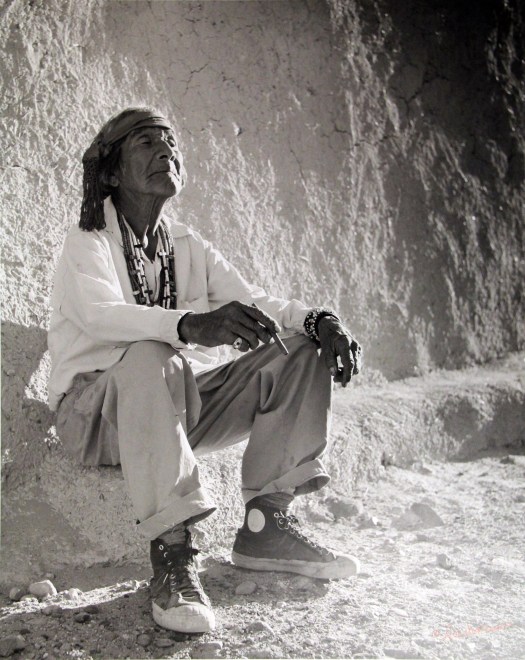
Lee Marmon's photo White Man's Moccasins.
White Man’s Moccasins. Photo by Lee Marmon (1954). Marmon relates that Old Man Jeff–the subject–was reluctant, but eventually agreed to pose for the cigar that he’s holding.

The book begins with an introduction that tells the story of the unlikely friendship between Marmon and physician Tom Corbett (Phillips Academy Class of 1956). The idea of producing a book was in the air for a long time and we learn that Corbett played a critical role in introducing the world to Marmon’s photographs, including a publishing company that produced posters of some of the most iconic images, like White Man’s Moccasins. Tom Corbett—in honor of his 50th reunion—donated a marvelous collection of Marmon’s photos to the Peabody Museum and arranged for a visit by the artist, as well as an exhibition at the Oliver Wendell Holmes Library on campus.

The trials and tribulations of Laguna’s people—from the consequences of uranium mining to government attempts to suppress language, religion, and native foodways—is etched on the faces in Marmon’s photography. Intriguing is Marmon’s medium—the photograph—most associated in Indian Country with Edward S. Curtis, who photographed Native America in the first decades of the 20th century for a massive book project financed by J.P. Morgan. But unlike Curtis, who we now know staged photos to enshrine the myth of a fading race, Marmon’s images are full of honesty, portraits of persistence and hard work, the punishment visited on the Laguna people for Prayer-Stick Boy’s treachery.

It’s not surprising that Laguna Pueblo has garnered significant praise since its publication in February 2015, including winner of the 2016 Western Heritage Award for Photography Book, the 2015 Southwest Book Award from the Border Regional Library Association, the 2015 New Mexico-Arizona Book Awards for Arts Book and Best Book, and the 2015 Southwest Books of the Year Selection.

Visit the University of New Mexico Press for more information and to order your copy today.

Where the Past Meets the Future–The Peabody’s 2015-2020 Strategic Plan

We are happy to share the Peabody Museum’s draft strategic plan for 2015-2020, which charts the course for significant projects ranging from improvements to the historic museum building to enhanced physical and intellectual control over archive, photographic, and object holdings.

The plan emphasizes elements of Phillips Academy’s 2014 strategic plan, especially around the pillars of Creativity and Innovation and Equity and Inclusion. Many of the most requested class units at the Peabody explicitly deal with issues of race, ethnicity, and gender, often in the context of Native American history. The new plan underscores the importance of anthropological perspectives in teaching in these areas and encourages continued good partnerships with Native American communities. The pedagogy of collaborative learning is central to the Peabody’s strategic plan, which stresses hands on learning, project- and problem-based learning, experiential learning, and informed discussion in all of the Museum’s student focused programs. Plans to significantly improve collections storage will increase accessibility and ensure that collections are available for use well into the future. Centralized storage of collections within the Peabody building will set the stage for expanded classroom space in the future and allow us to better care for our significant collections.

To read the plan please visit our website  http://www.andover.edu/Museums/MuseumOfArchaeology/Documents/PeabodyPlan2015_2020.pdf

Feedback is welcome! Please contact museum director Ryan Wheeler to share and discuss your ideas. E-mail: rwheeler@andover.edu or Phone: 978.749.4493

Oak River Foundation Supports Peabody Collections with $100,000 Grant

Contributed by Ryan Wheeler

The Peabody Museum received a grant of $100,000 from the Oak River Foundation of Peoria, Ill., to support work pertaining to the intellectual and physical control of the museum’s collections.

IMG_9137_edited
A portion of the Peabody’s archive.

The first year of funding will support the work of a museum archivist who will organize the Peabody archives, which contain significant materials related to work by Warren Moorehead, Doug Byers, Fred Johnson, Scotty MacNeish, and others. This project will facilitate digitization of archival collections through our partnership with the Boston Public Library’s Digital Commonwealth, a statewide consortium of libraries, museums, archives, and historical societies from across Massachusetts. Researchers regularly use our archives, and this project will aid in locating materials and making collections more broadly available.

IMG_5590_edited
Students with some of the ceramic figurines from Scotty MacNeish’s excavations in Mexico’s Tehuacán Valley.

The second year of funding will support the process of cataloging the Peabody’s significant object collections related to Scotty MacNeish’s excavations in Mexico, Peru, and the American Southwest, as well as collections from the Northeast. We also hope to substantially increase the number of records in the museum’s database and include all cataloged artifacts in our online catalog, PastPerfect (http://peabody.pastperfect-online.com/40391cgi/mweb.exe?request=random).

The work supported by the Oak River Foundation is just a small part of the overall effort to increase physical and intellectual control of the Peabody’s collections. We hope this gift will inspire others to support work to better catalog, document, and make accessible the Peabody’s world-class collections of objects, photographs, and archival materials. If you would like to support this work, please contact me at 978-749-4493 or rwheeler@andover.edu.

Peabody Student Symposium

IMG_9042_editedJoin the Peabody and the Gene Winter Chapter of the Massachusetts Archaeological Society for a night highlighting student work and research. Three groups of students will present their research ranging from historic preservation to 3D printing artifacts to 19th century portrayals of Native Americans.
Tuesday, February 16, 7:00pm

Robert S. Peabody Museum of Archaeology, corner of Main and Phillips streets, Andover, Mass.

Family Drop-in Days at the Peabody

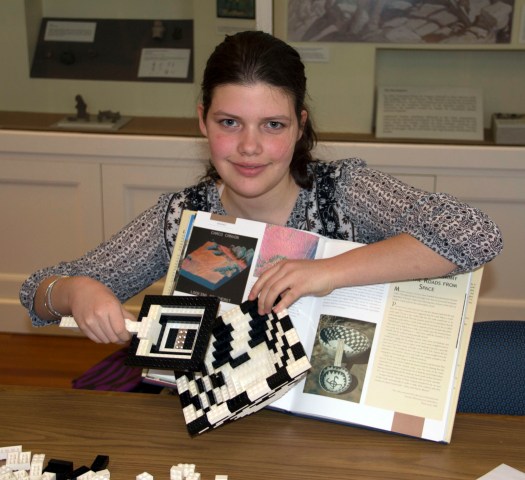
25_IMG_7969_edited

Drop in for a fun-filled morning of archaeology activities at the Peabody!

Build a LEGO model of your favorite ancient ruin, examine stone tools close up, play Native American musical instruments, and make your own Hohokam style etched shell. All families are welcome to join us; there’s something for every age!

Friday, February 19 from 9:00am to 12:00 noon and Friday, March 25 from 9:00am to 12:00 noon.

Robert S. Peabody Museum of Archaeology, corner of Main and Phillips streets, Andover, Mass.

Call 978.749.4490 or e-mail rspeabody@andover.edu for more information.

Peabody Receives Toomey Foundation Award for Upcoming Symposium

Contributed by Ryan Wheeler

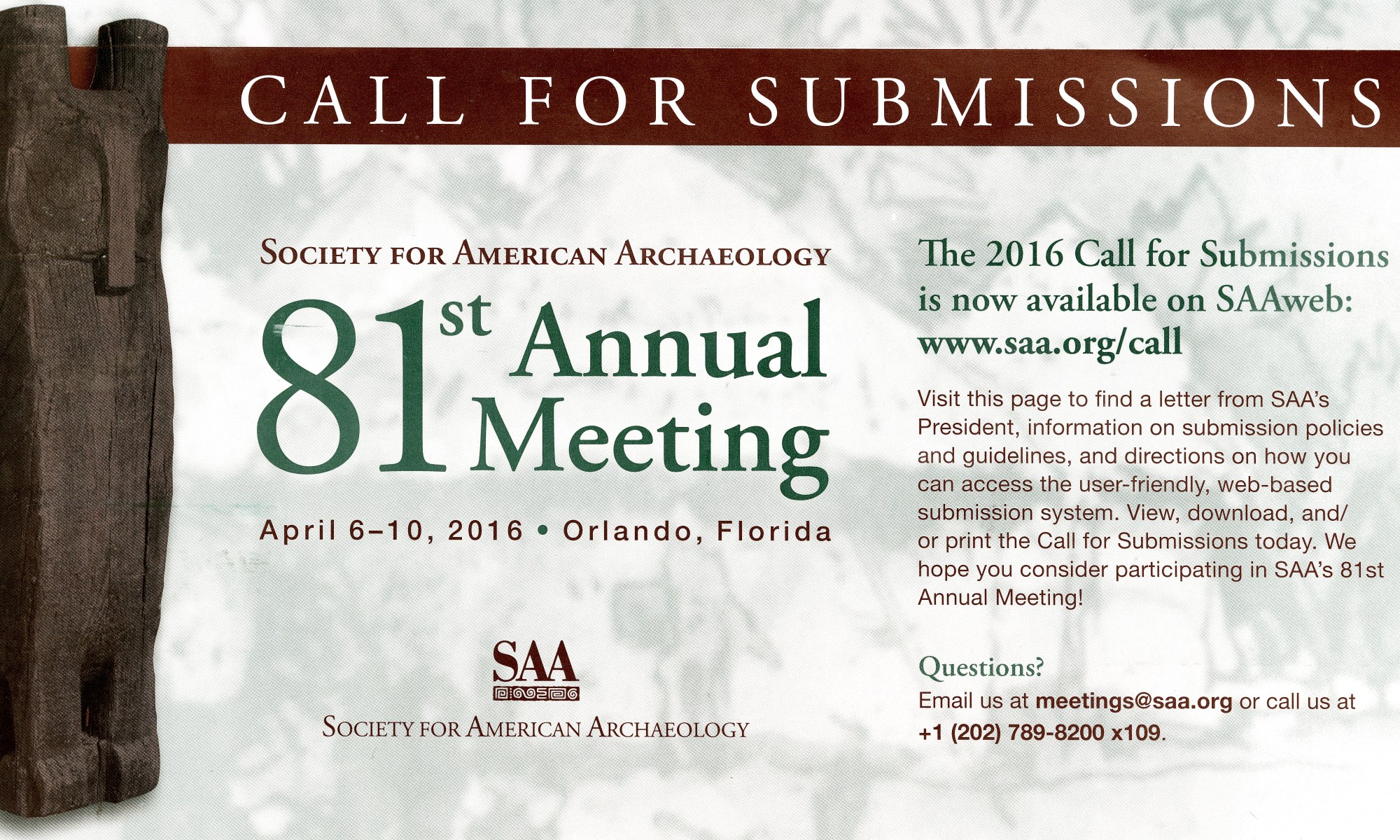
The Toomey Foundation for the Natural Sciences awarded the Peabody Museum $5,000 to support “The Archaeology, Art, and Iconography of Florida’s Watery Landscapes,” a symposium to be held at the 81st annual meeting of the Society for American Archaeology (SAA), scheduled to take place this April in Orlando, Fla. Organized by Joanna Ostapkowicz of National Museums Liverpool and Peabody Museum director Ryan Wheeler, the symposium will include a number of presentations highlighting sites, excavations, and objects from waterlogged deposits that allowed preservation of wood and other perishable materials.

SAA_2016003.jpg

The symposium was inspired by conversations between Ostapkowicz and Wheeler after they met at the SAA meeting in 2013 and recognized that archaeological sites in Florida had produced an amazing array of carved wooden artifacts, but that many of these ancient American Indian objects were understudied. Since then, Ostapkowicz and Wheeler have collaborated on a project that seeks better radiocarbon dates, wood identification, and physical documentation of four wood carvings from Hontoon Island and Tomoka River in central Florida. The Hontoon owl totem—a six-foot-tall, stylized carving discovered in the 1950s—is among the sculptures being studied and has been selected as the emblem of the SAA meeting in April.

The symposium will feature Lee Newsom of Pennsylvania State University and Vernon J. Knight of the University of Alabama as discussants, and will include the following presentations:

“ ‘Totem’ Owls, Otters and Pelicans: 14C Dating Central Florida’s Prehistoric Sculptures,” presented by Joanna Ostapkowicz, Ryan Wheeler, Lee Newsom, Fiona Brock, and Christophe Snoeck

“Wood Preservation Dilemmas of Florida’s Prehistoric Saltwater Sites: Famous Key Marco and Recent Weedon Island,” presented by Phyllis Kolianos

“The Original Spaghetti Junction: Using Canoe Locations to Trace Routes of an Ancient Transportation Network in Florida,” presented by Julia Byrd

“Mortuary Ritual at the Fort Center Mound-Charnel Pond Complex (8GL12): New Insights from an Accidental (Re)Discovery,” presented by Daniel Seinfeld

“The Pineland Site Complex: A Southwest Florida Coastal Wetsite,” presented by Karen Walker and William Marquardt

“The Karst Spring Vent as Receptacle with Meaning: Chassahowitzka Headsprings Weeden Island Period Dolphin Fin Effigy,” presented by Michael Arbuthnot and Michael Faught

“Fort Center’s Iconographic Bestiary: A Fresh Look at Fort Center’s Zoomorphic Wood Carvings,” presented by S. Margaret Spivey

“Early Archaic through Middle Archaic Design Elements on Artifacts from the Basin at Little Salt Spring (8SO18), Sarasota County, Florida,” presented by Steven Koski and John Gifford

IMG_6095
Joanna Ostapkowicz measures the Hontoon owl totem in its display at the National Park Service’s Timucuan Ecological Preserve, Jacksonville, Fla., December 2014.