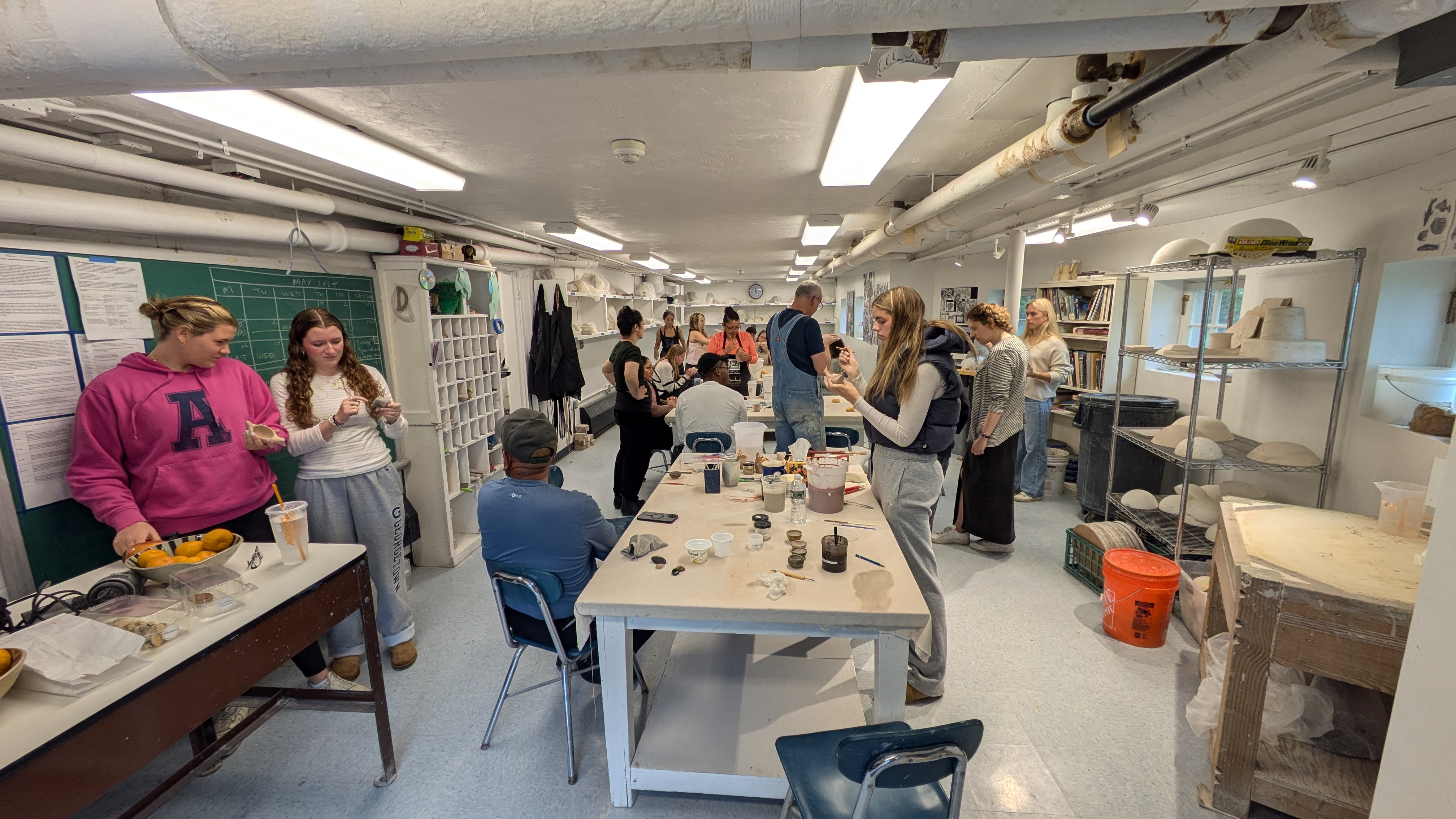
Ceramic students participating in pottery-making workshops
We were honored to have the Toya family back this Spring term for their annual visit to conduct week long, hands-on workshops on Pueblo pottery-making with Thayer Zaeder’s studio ceramic students.
Each year students have the opportunity to make their own pieces using native clays and temper from New Mexico and traditional decorative techniques of painting and polishing. The workshops culminate in a traditional Jemez firing.
Students walk away with an unforgettable keepsake of their time as well as a greater appreciation for contemporary Indigenous art and culture.
We are so grateful for all the time and expertise the Toya family has shared with PA students!
Check out this video by PA’s Communications team highlighting the Toya’s work on campus.
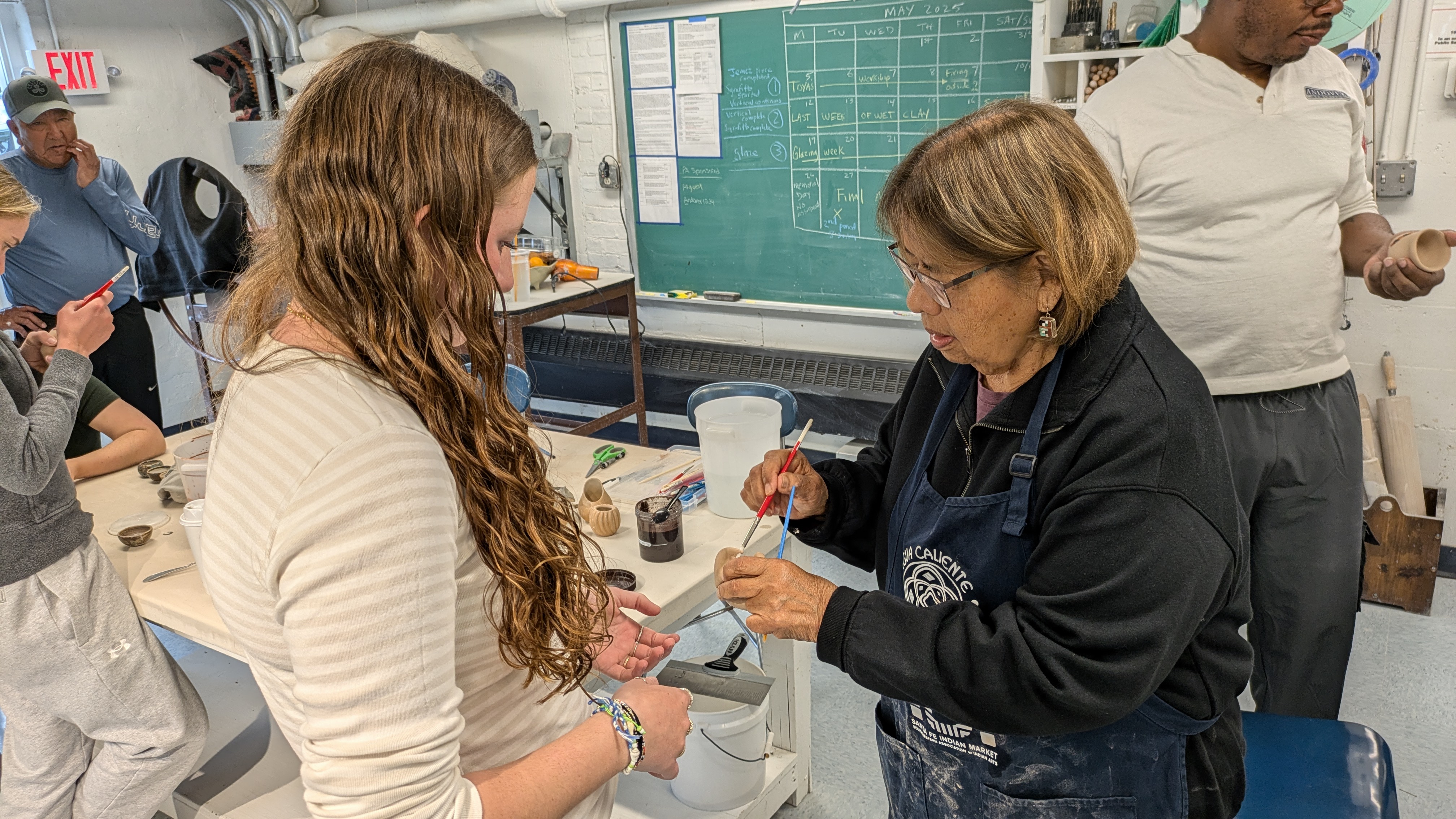
Maxine Toya working with a student on painting their piece.
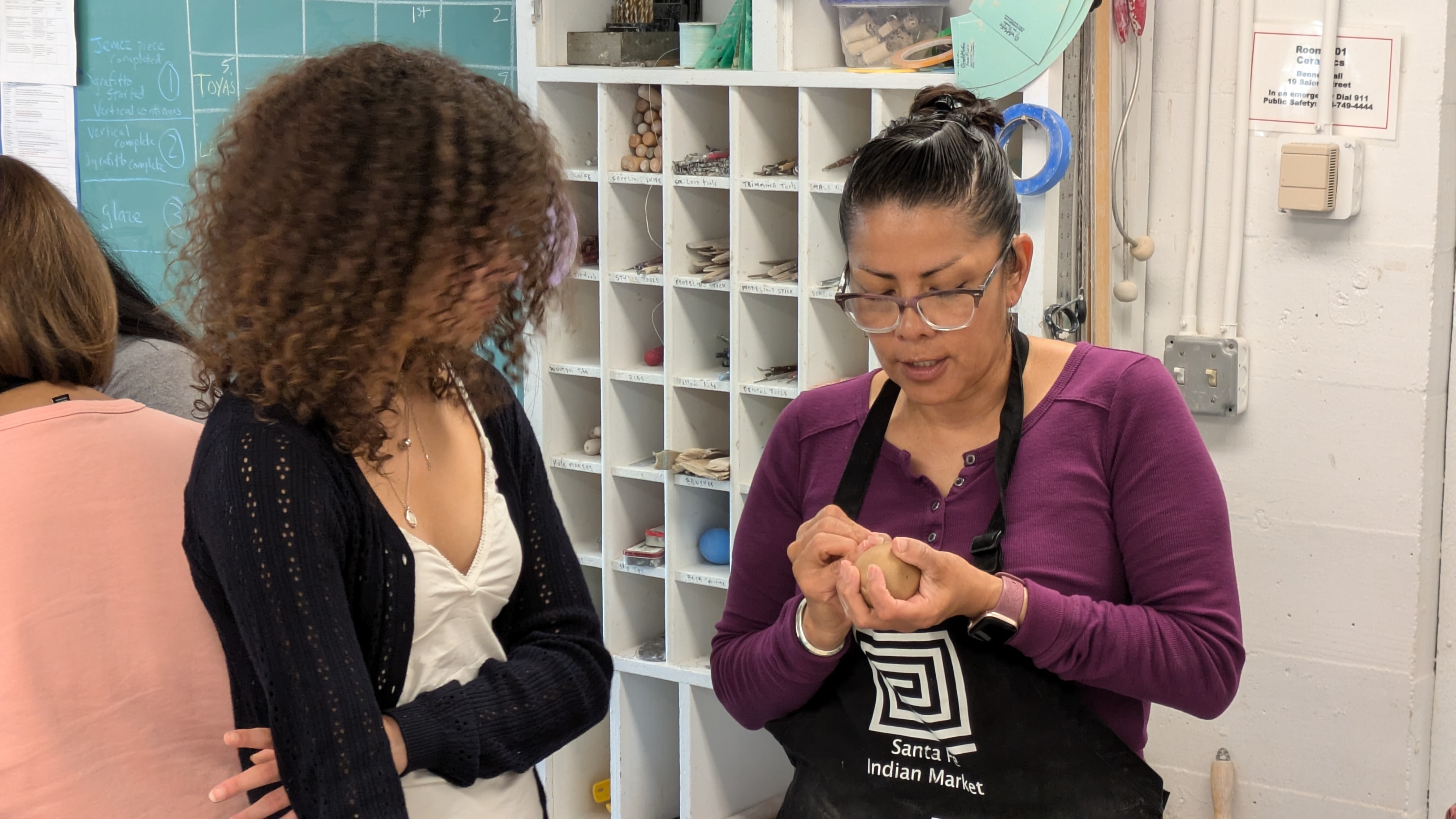
Mia Toya working with a student on polishing their piece.
Last month we were delighted to welcome back Ramson Lomatewama to Phillips Academy Andover (PA) where he worked with students and campus community members in fused glass workshops.
Ramson Lomatewama is an award-winning Hopi glass artist, kachina doll carver, jewelry maker, and published poet from Hotevilla, Arizona. This is his second year working with the Peabody Institute to bring fused glass workshops to the PA campus community. Ramson has also participated in various virtual, and in-person talks at PA, sharing his poetry, art, and life stories with students and the broader public. You can view these virtual talks on our Peabody YouTube page.
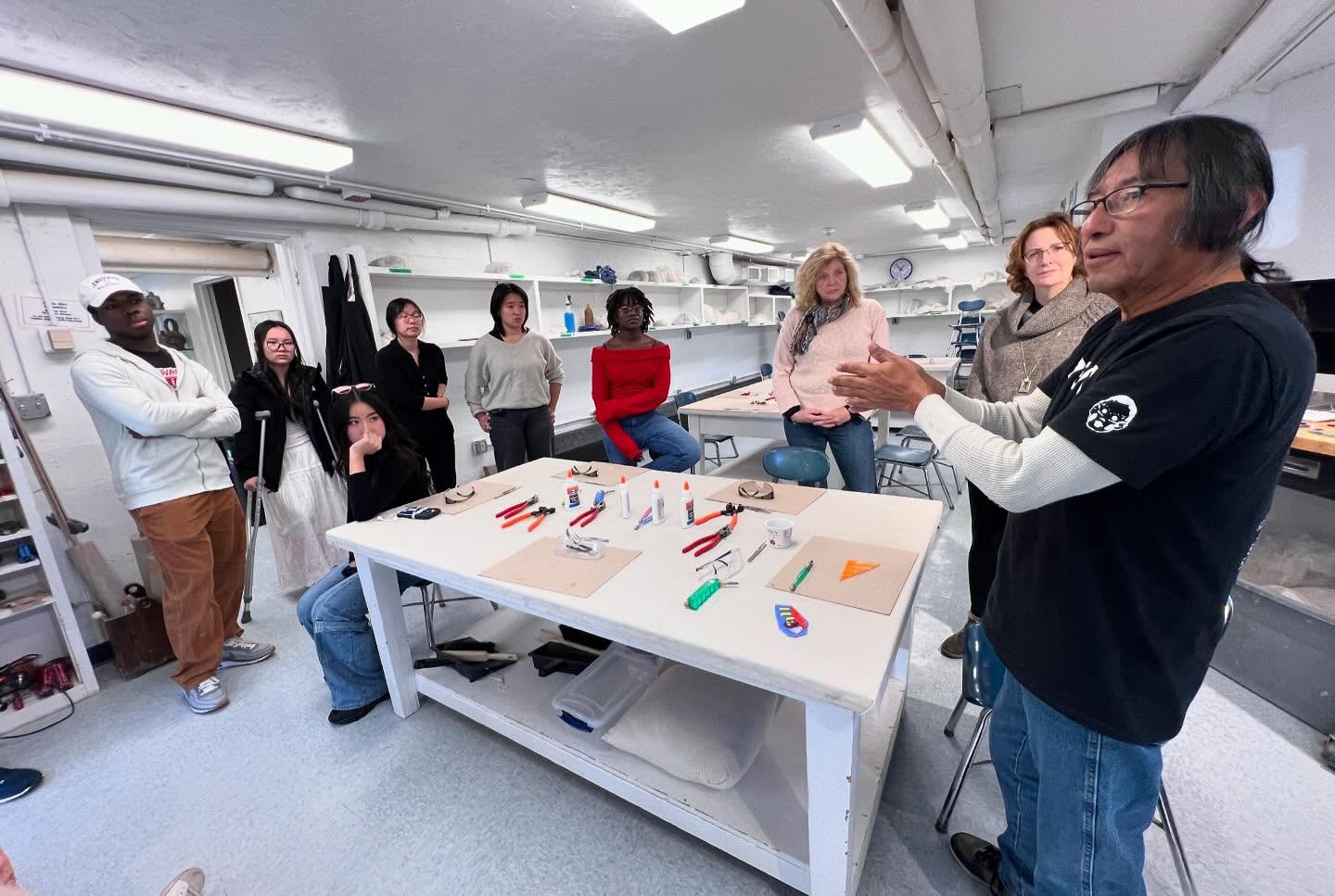
Ramson speaking to one of the fused glass community workshops.
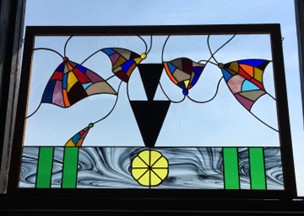
Ramson creates stained glass, blown glass, and fused glass art. Ramson’s glass art is viewed as “a contemporary expression of ancient and artistically rich people… evoking a beautiful, yet humbling mindscape which we all long to find.” He is the first hot glass artist from the Hopi Tribe. Ceremonies and cultural activities continue to play a major role in his life. He has showed works at the Santa Fe Indian Market, the Museum of Northern Arizona, Fusing Traditions, a traveling exhibition, and the San Diego Museum of Man (now known as the Museum of Us).
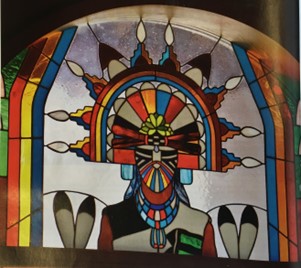
Stained glass artwork by Ramson Lomatewama.
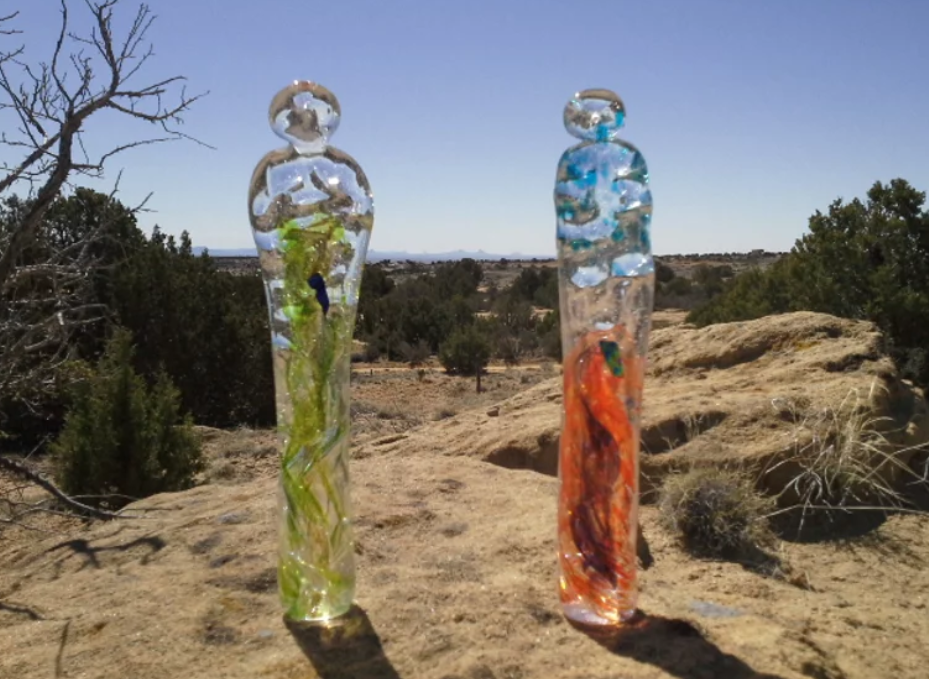
Blown glass ‘spirit figure’ sculptures by Ramson.
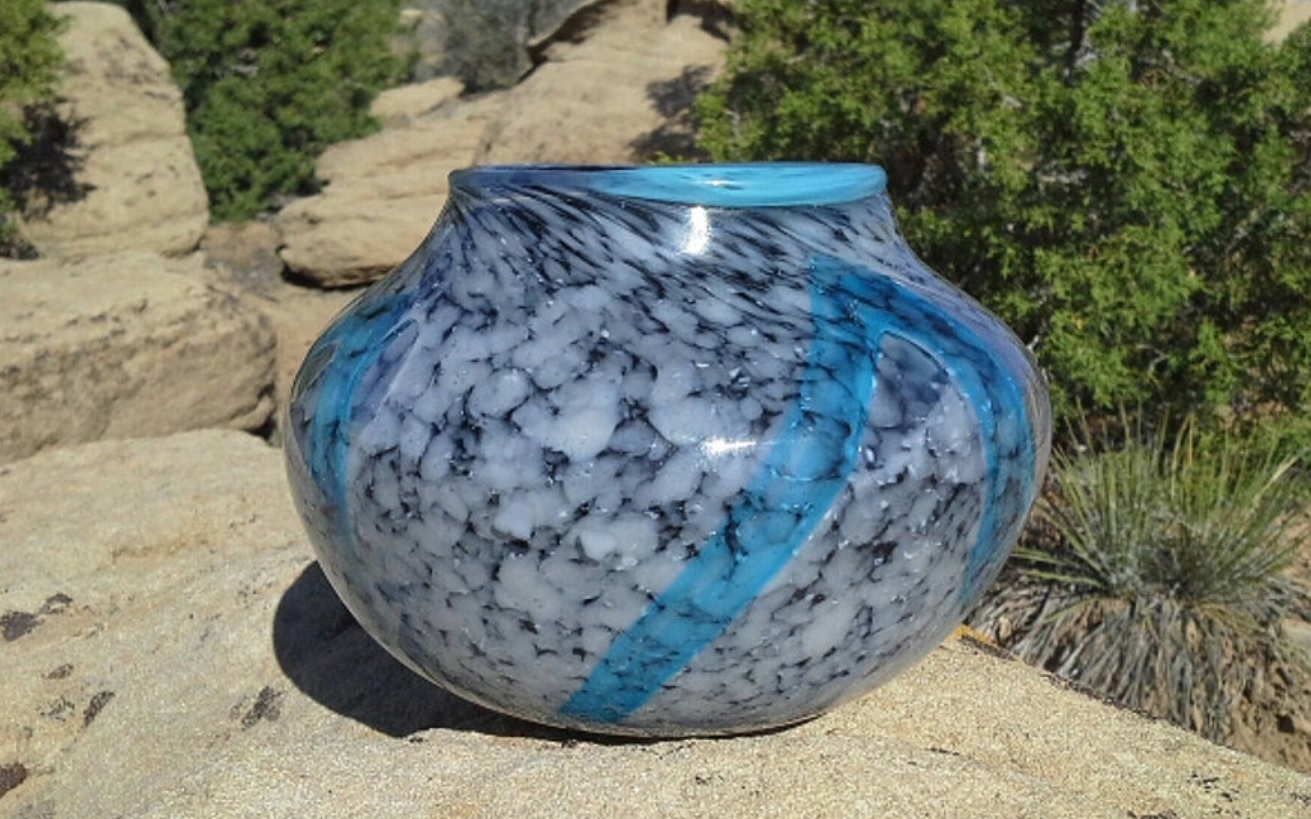
Blown glass vessel by Ramson.
Ramson is an educator on several levels. Early in his career, he was a middle school and high school teacher, and for many years, served as adjunct faculty at North Central College in Naperville, Illinois. Ramson also taught glass art for Hopitutuqayki (The Hopi School), an arts apprenticeship program located on the Hopi reservation. Ramson’s studio, Hotevilla Glassworks, is the first and only Hopi owned working glass studio. Check it out here!
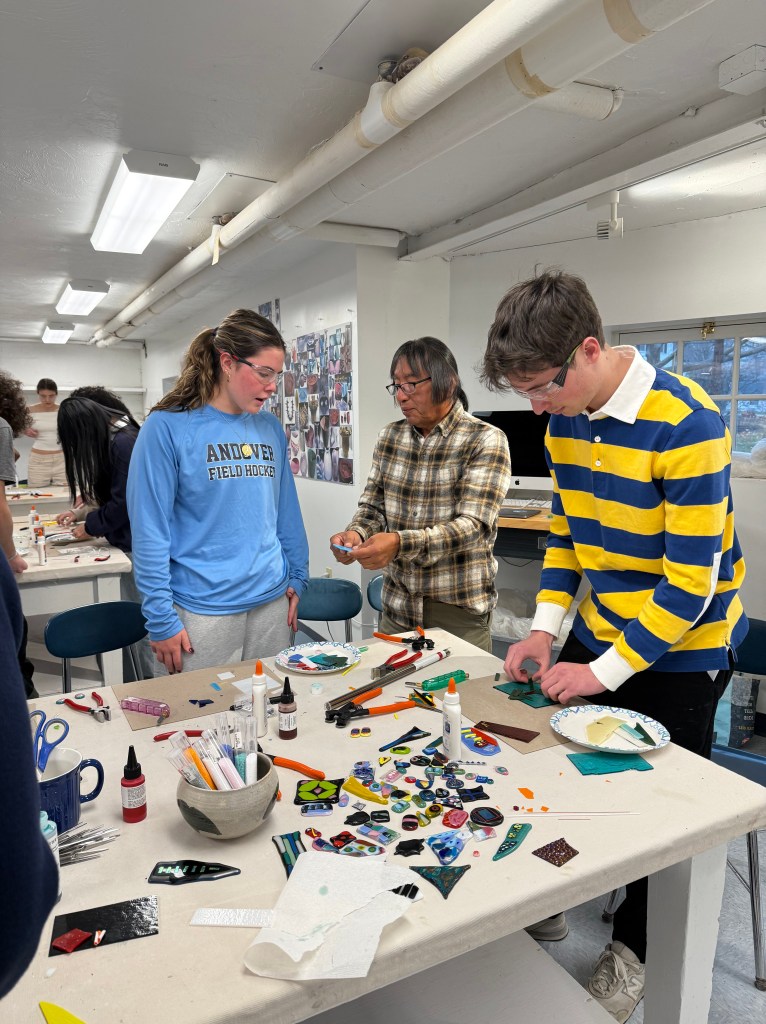
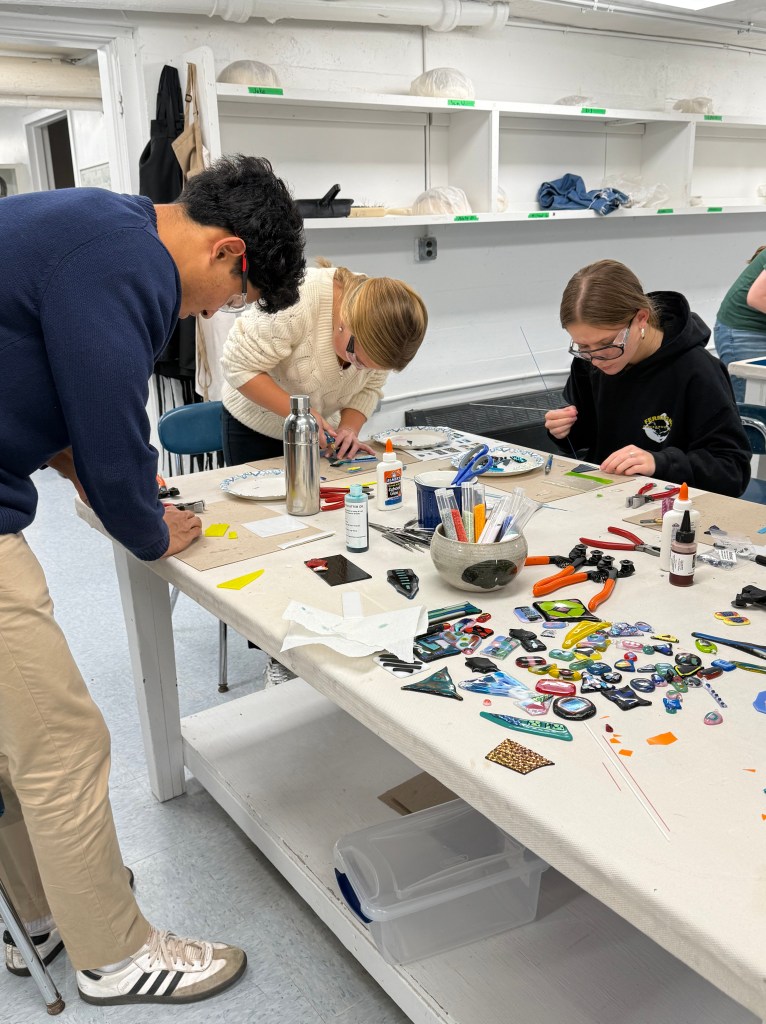
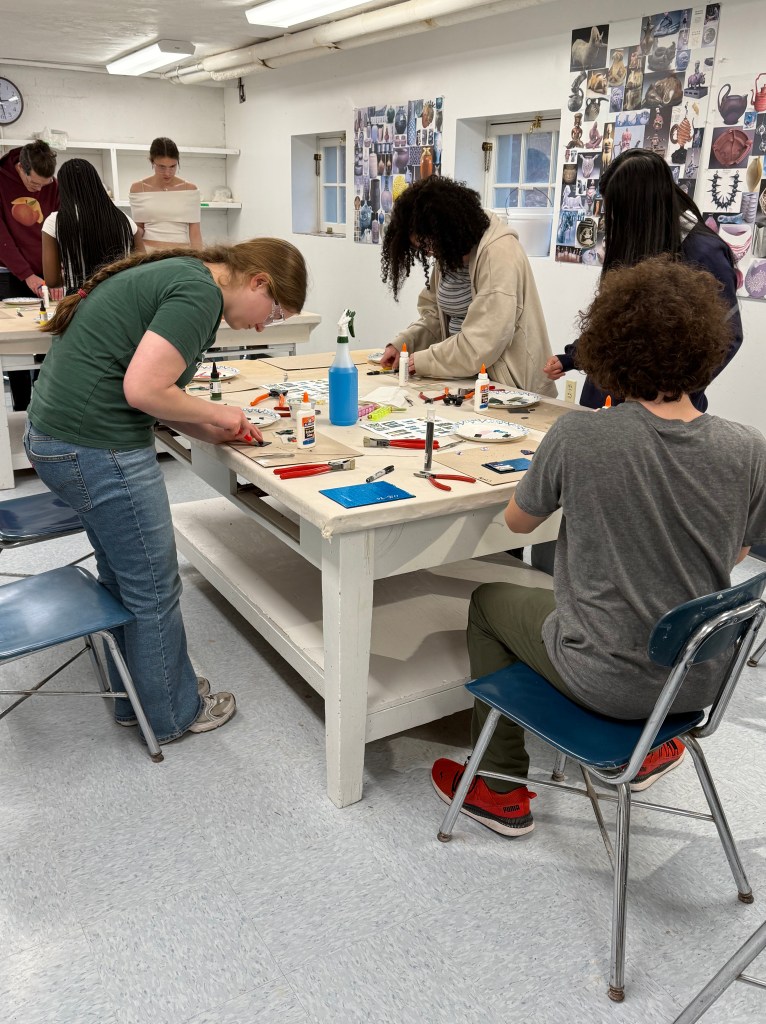
Students at work, creating their own fused glass pieces in their class workshops.
Working with fused glass seemed a little daunting at the beginning of the workshops, but a quick demonstration by Ramson with helpful instructions gave students the courage and motivation to dive in. The plethora of glass pieces to work with – stringers, millefiori, frit, swizzle sticks, dichroic, and ribbons – came in many shapes, textures, and colors. Students worked side by side creating their pieces of art, asking Ramson questions about his techniques and listening to stories about his life and art journey.
“Working with fused glass, you need to be prepared to forfeit control…” was Ramson’s important insight that would hold true from assembling our glass pieces to the final kiln firing of our pieces. No matter the shape or size of your glass piece – after firing – it would melt down to around 6mm thick. Ramson calls this the “6mm rule.” I found it best to go into a fused glass design with no plan, as your final product would tend to come out a little different from what you’d imagine… most of the time it would look even better!
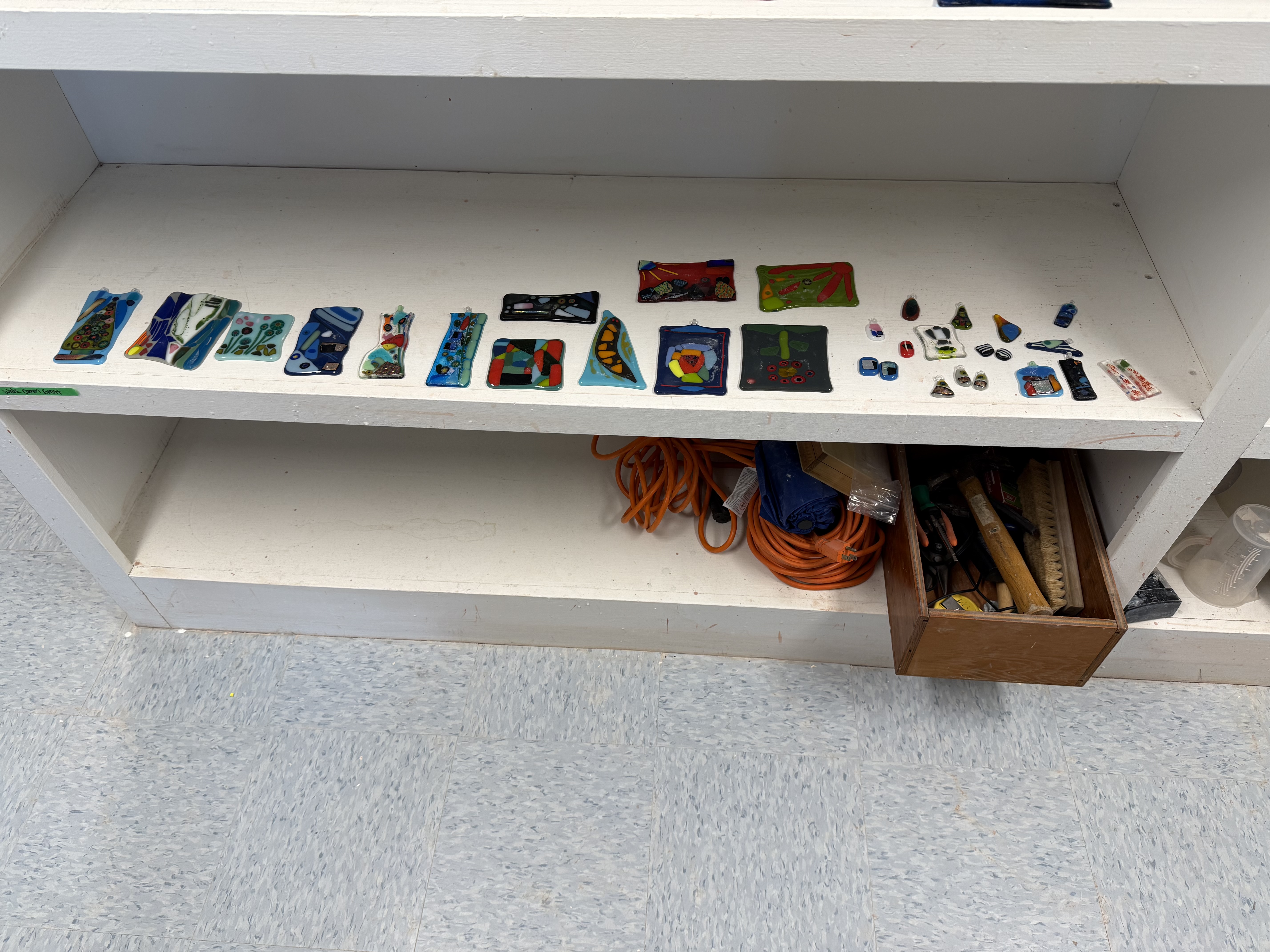
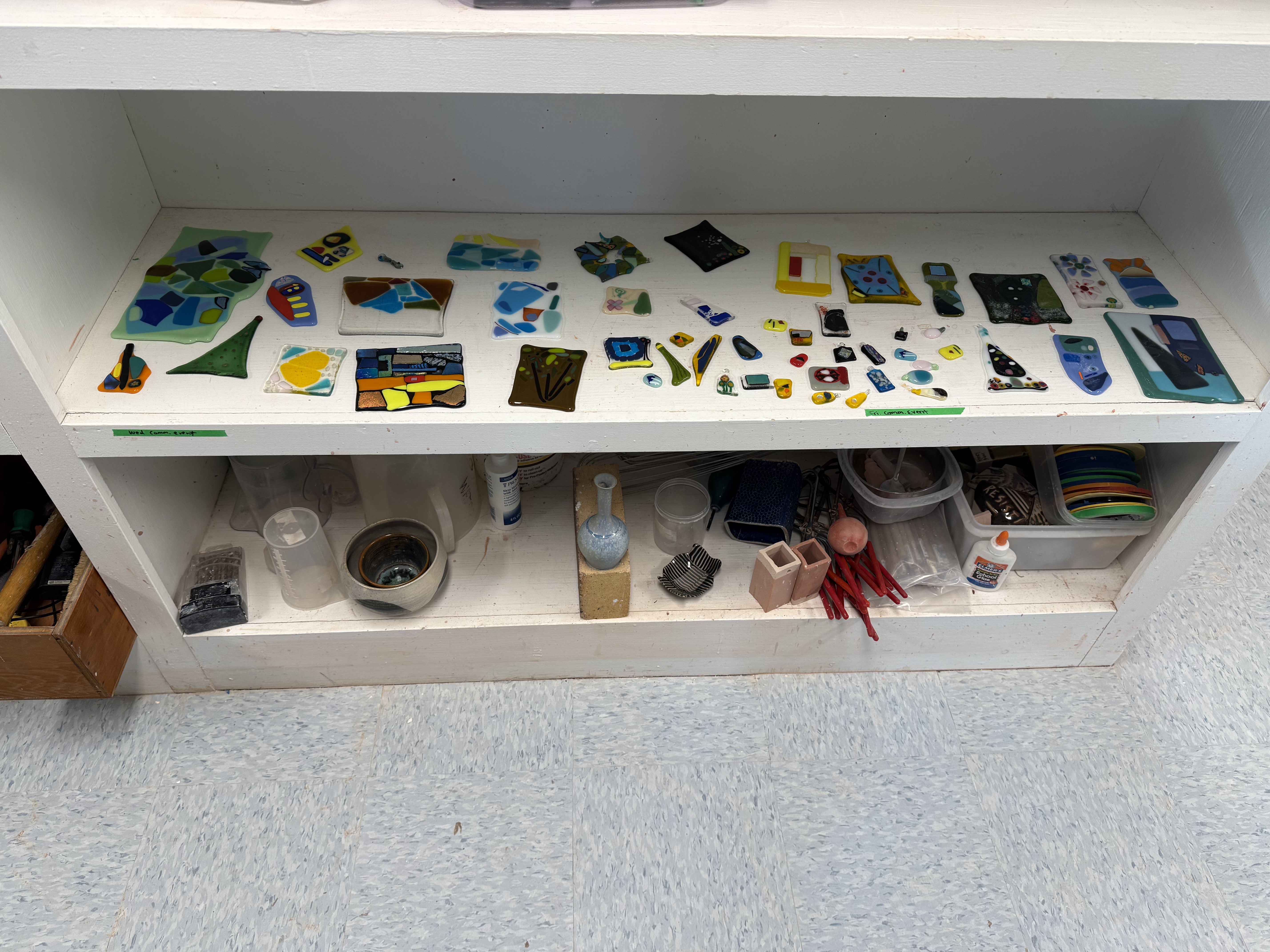
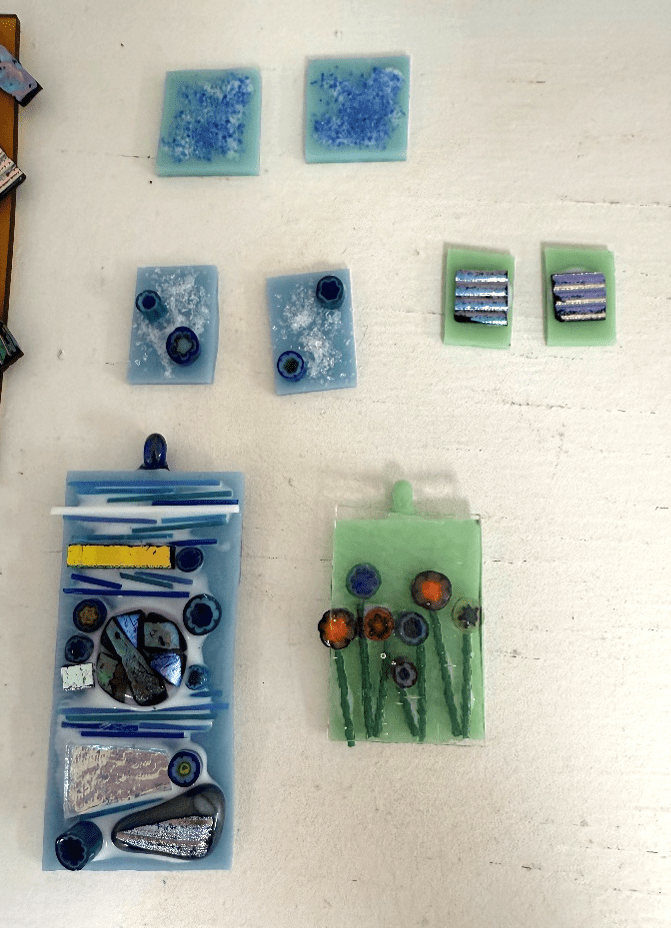
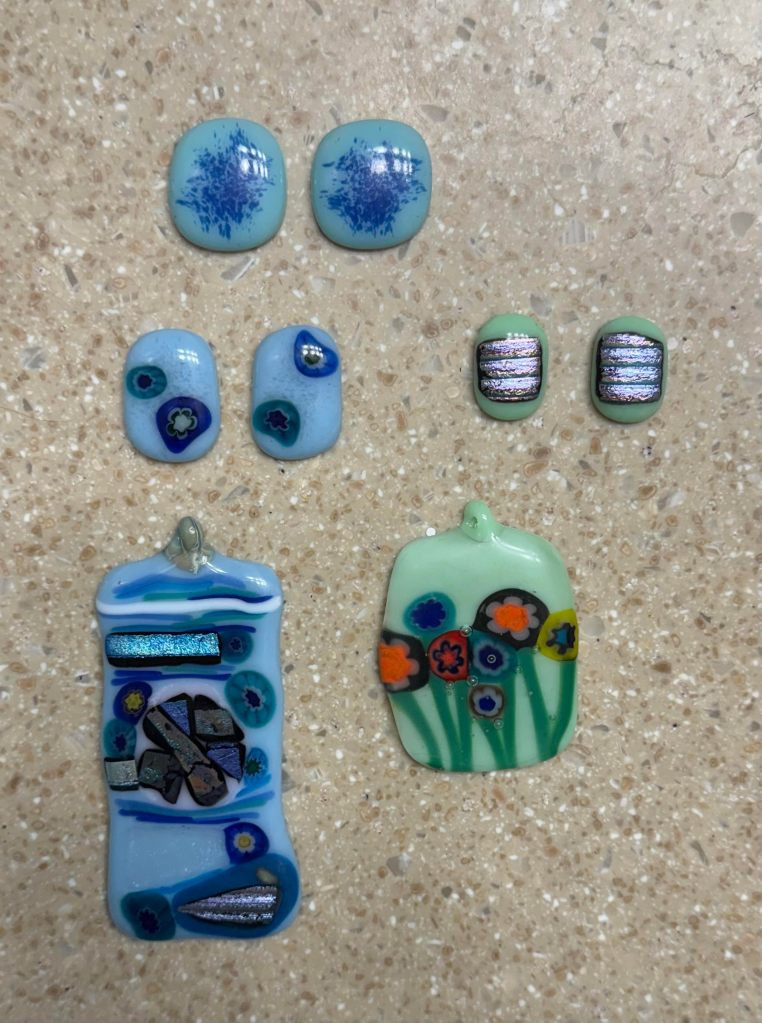
This year I created two pendants and (hopefully) some pieces to assemble into earrings. You can see my “before and after” photos of my glass pieces at the end of this blog. In the meantime, see below for some finished pieces by PA community members.
Finished fused glass pieces from the PA community workshops.
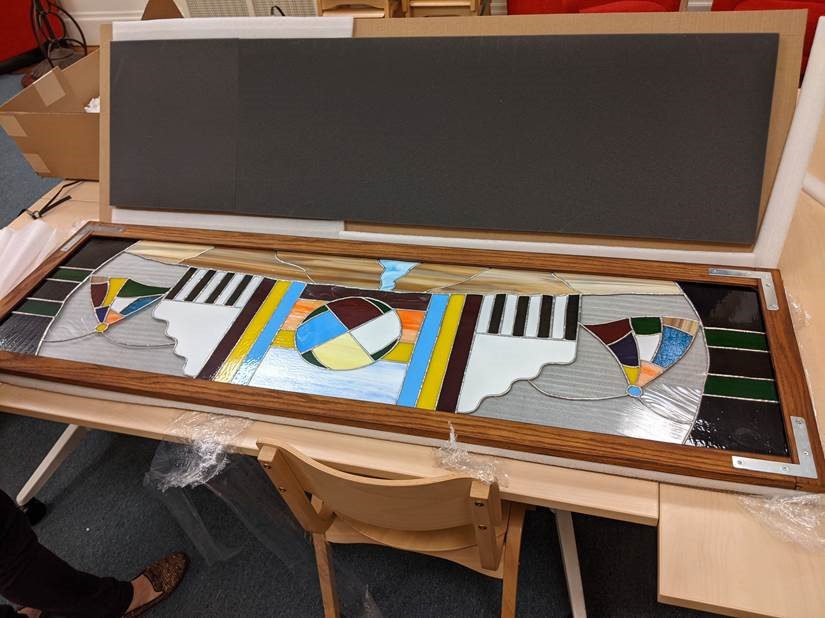
We are very fortunate to have acquired a stained-glass piece that Ramson created for the Peabody. We look forward to completing its installation in the Peabody’s front transom window once the next iteration of the building renovation is complete.
Ramson’s stained glass piece, commissioned by the Peabody.
We are very grateful for the time that Ramson dedicates to working with and educating our PA students and campus community! We hope to have him back next year! For more information about Ramson and the PA fused glass workshops, check out this article by the Andover Magazine (i.e. page spread #10-11, Digging Deeper article).
We recently commissioned Chase Kahwinhut Earles to create a pair of traditional Caddo style earspools for our permanent collection. We are thrilled with the result! Chase is a talented ceramic artist who works with traditional methods and materials to create vessels and other objects. Along with traditional forms and designs, Chase’s work also includes contemporary pieces and his own exploration of Star Wars through an Indigenous lens. His work has garnered numerous awards and accolades; private collectors and museums regularly commission and acquire his work. Check out his webpage for more of his work and videos of his process: https://www.caddopottery.com/
Ceramic and copper earspools by Chase Kahwinhut Earles, photograph by Chase Kahwinhut Earles.
These earspools were made with hand-dug clay, pit fired, with an embossed copper covering, much like examples found at archaeological sites in the southeastern United States. The star motif on this pair of earspools is reminiscent of designs known from Spiro, an ancient city in eastern Oklahoma, and from neighboring areas.
We look forward to seeing these earspools used in classes, especially curator of education Lindsay Randall’s Trade Connections lesson designed for History 100. Ear ornaments, made from a variety materials and styles, are well known throughout the western hemisphere, including jade and jadeite, wood, copper, shell, obsidian, and other stones.
With the completion of our inventory, we have even more drawers to share with you that were repurposed by friends of the Peabody!
Hundreds of old collection drawers were given away throughout the Peabody’s collection inventory and rehousing project. These drawers were then transformed into furniture, décor, art, trays, storage, organizers, and gifts.
Our past blogs featured many different and unique drawer projects and we loved seeing the creativity used in giving these old drawers a new purpose. You can check these projects out here and here.
The wooden drawers were a part of the original storage for the Peabody collections, housing over 600,000 artifacts. To learn more about the history of these drawers in the Peabody Institute and collection check out our blog, Behind the Photograph: Unpacking the Peabody Collection.
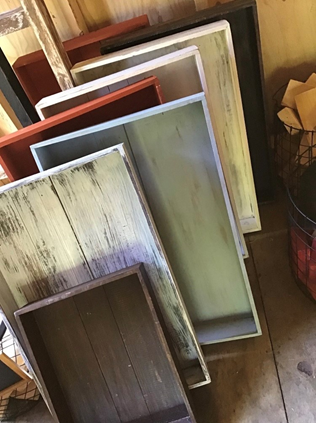
The following drawer features were contributed by friends of the Peabody both on and off Phillips Academy campus. First up are several painted drawers used for various décor purposes. A little paint and stain can go a long way in repurposing the look of a drawer.
Painted and stained drawers
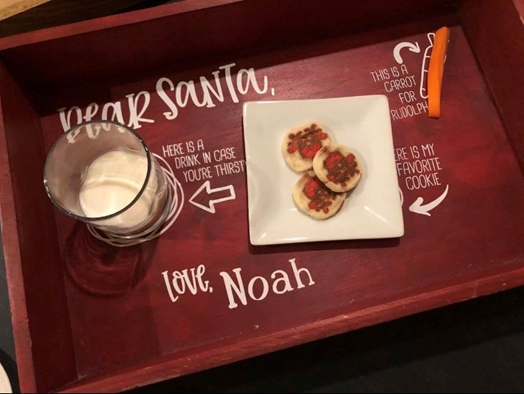
This particular drawer is a charming holiday tray, painted and customized as a fun way to leave cookies and milk out for Santa. Don’t forget the carrot for Rudolph too!
Holiday tray created out of an original Peabody drawer
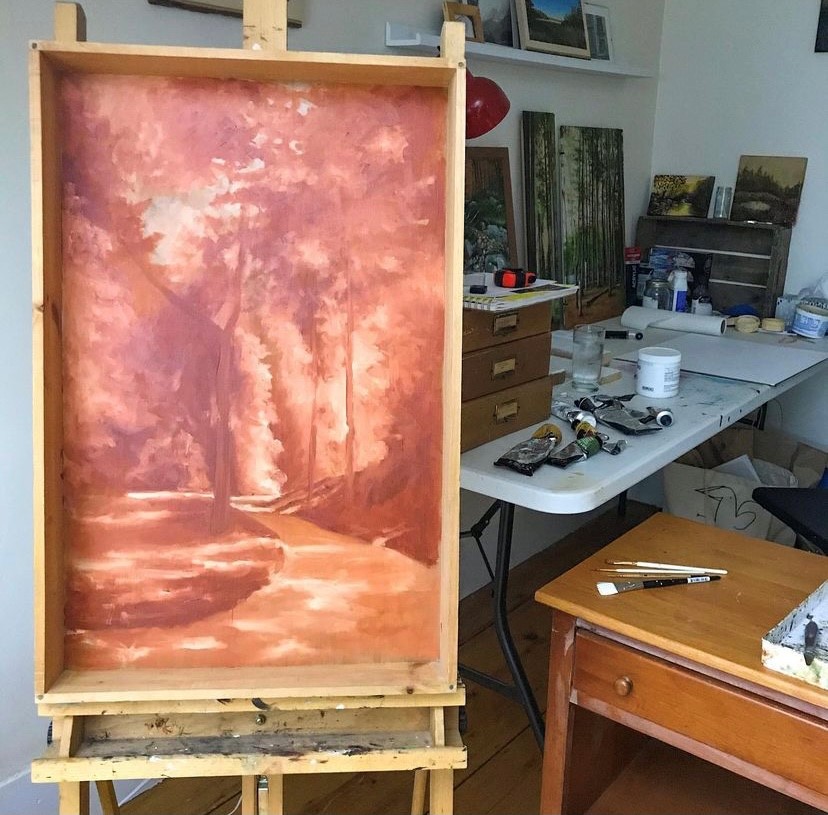
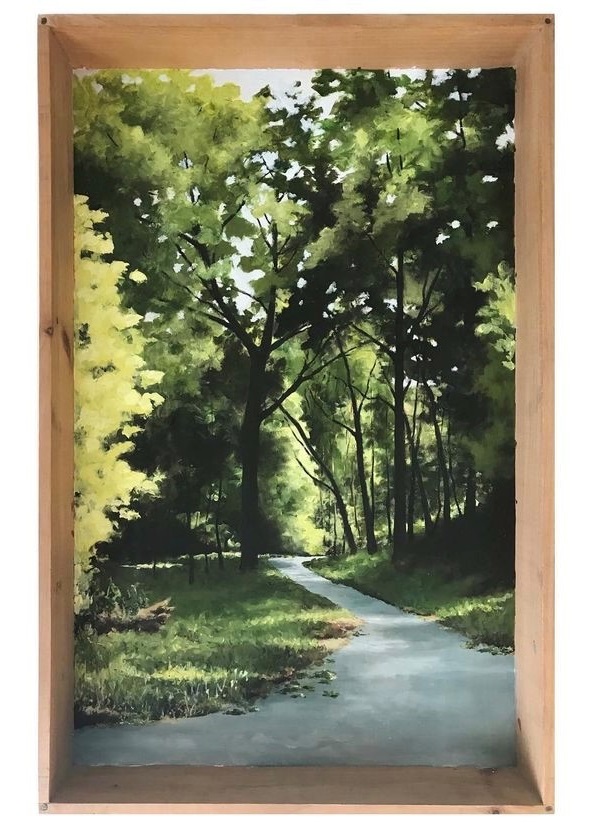
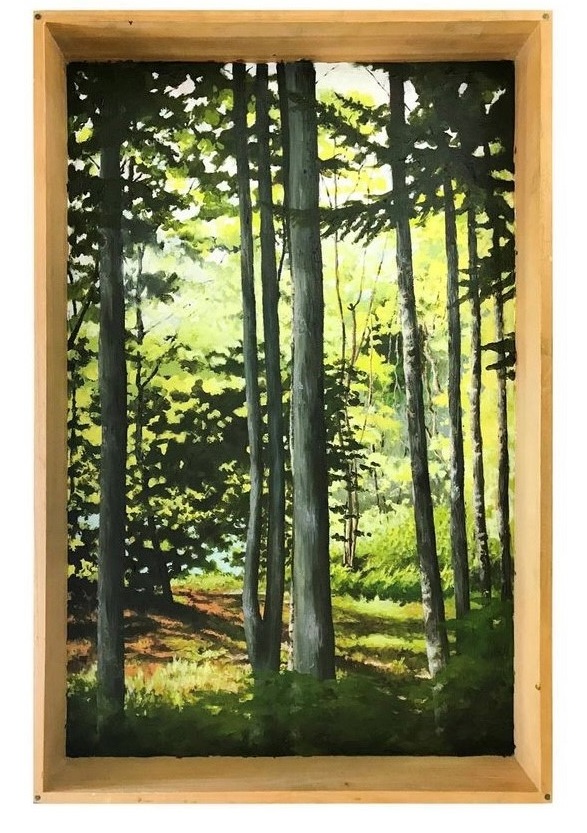
Some of our old drawers were transformed into incredible pieces of art by Jamie K. Gibbons, Head of Education at the Addison Gallery of American Art. Follow and support her work here!
Artwork by Jamie K. Gibbons, Addison Gallery of American Art
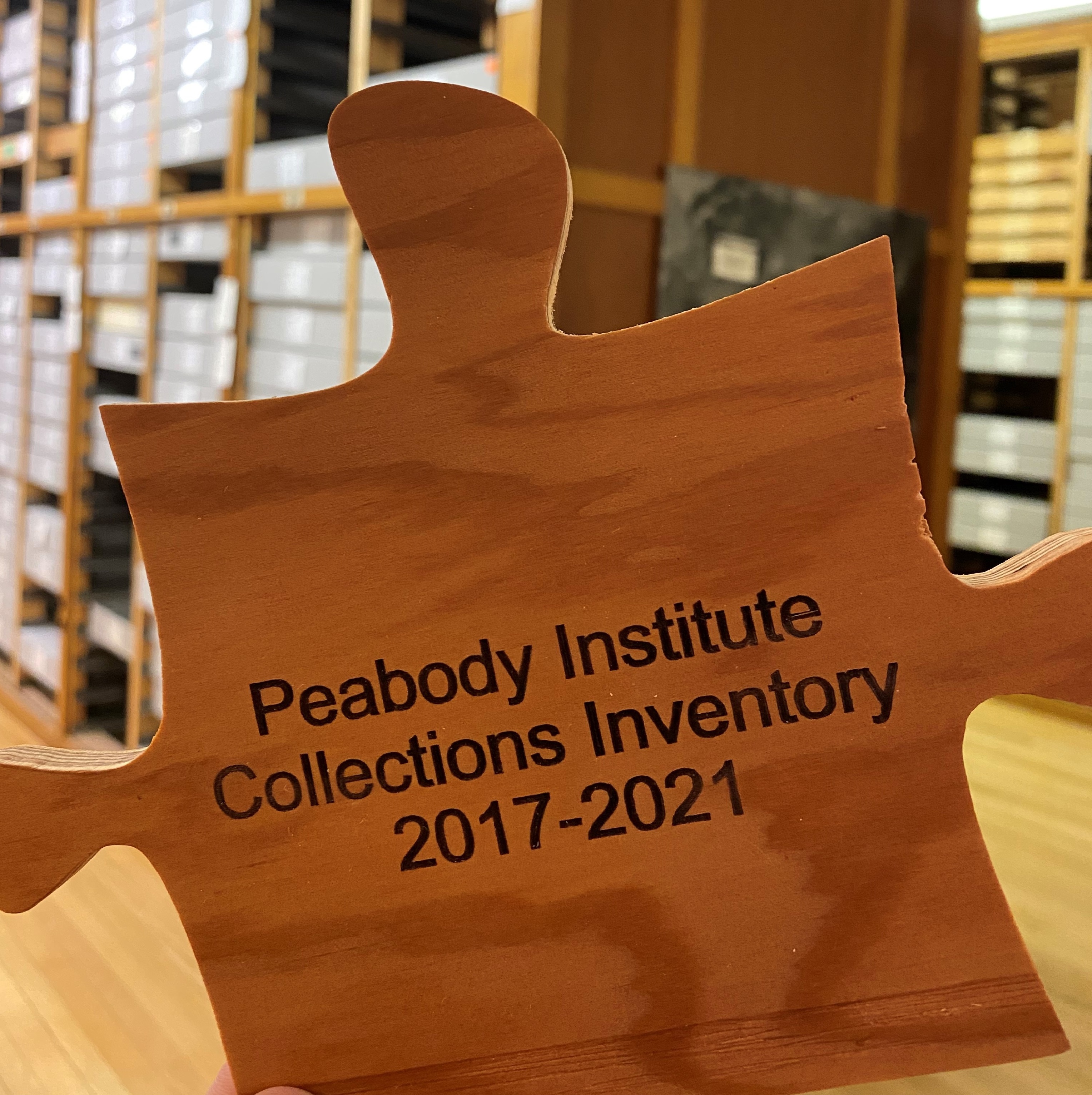
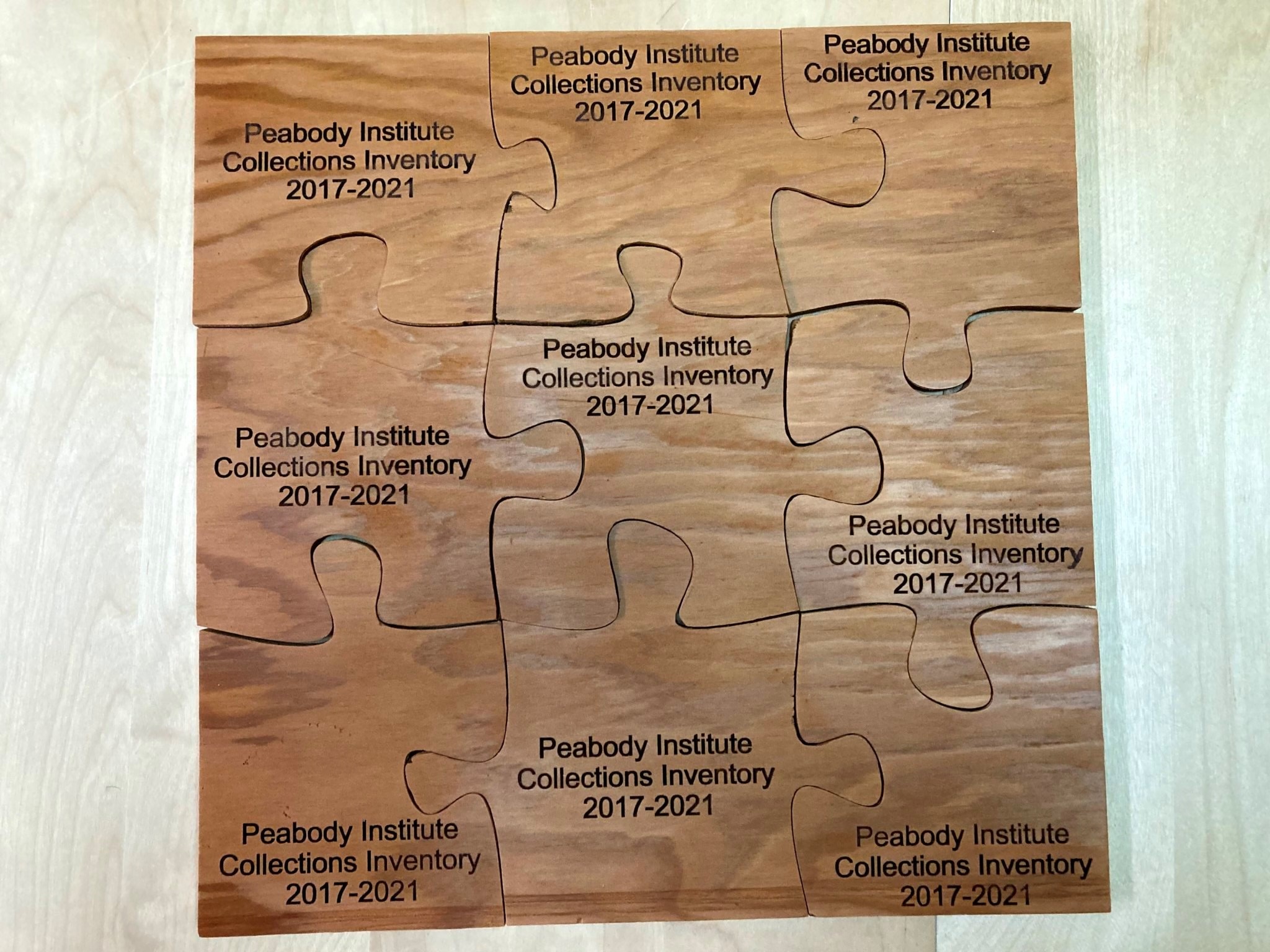
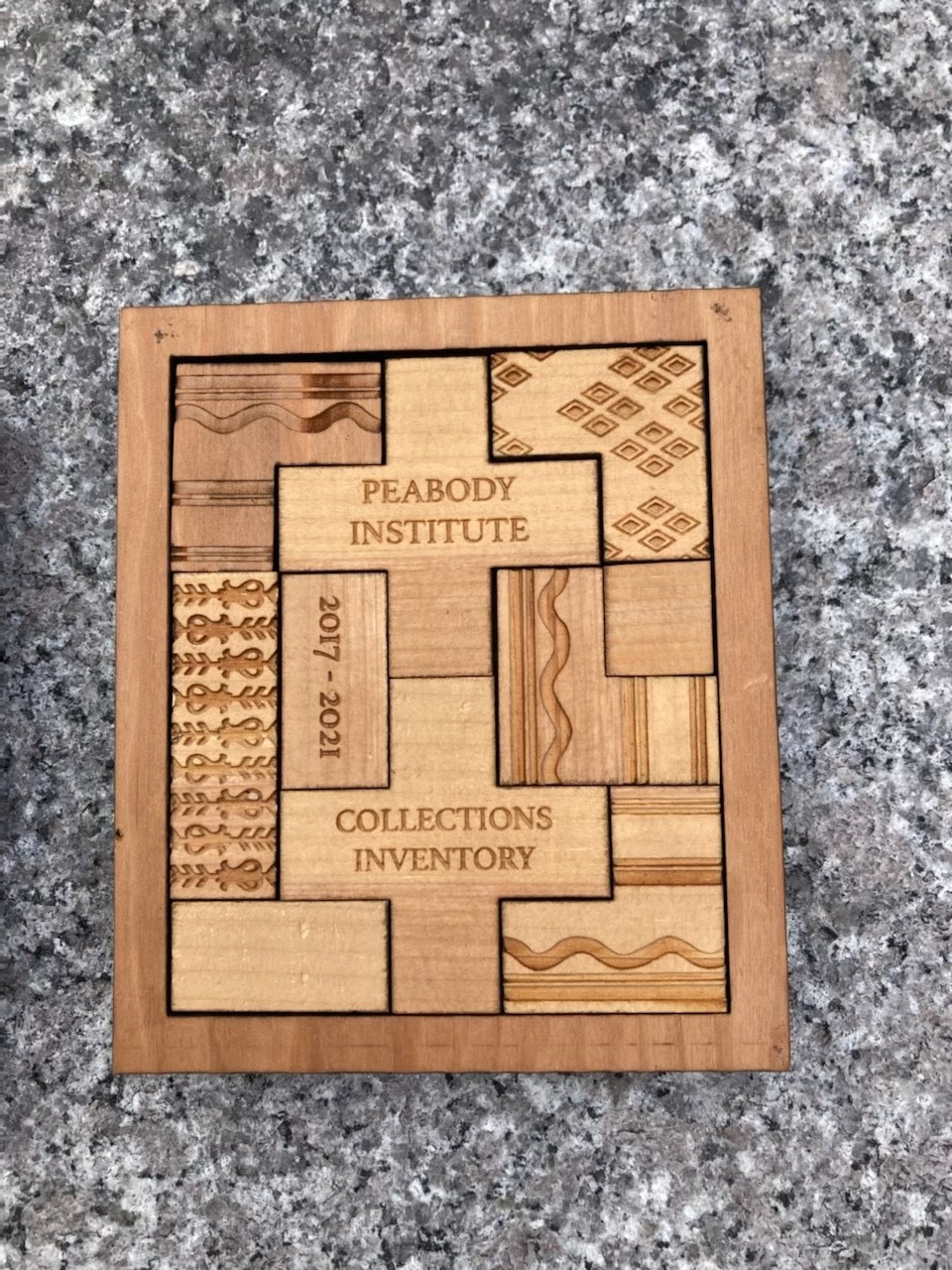
To commemorate the Peabody’s Inventory completion and thank donors, staff, and volunteers who played a role in the process, puzzle pieces were created from drawers by Get On Board – Signs and More as well as puzzle boxes by the Makerspace at the Oliver Wendell Holmes Library (OWHL) on Phillips Academy Andover campus.
Puzzle pieces and puzzle box made out of drawers
A huge thank you to all of those who have repurposed drawers and have shared their projects with us. If you’d like to feature your repurposed drawer project, please email your photos to Emma Lavoie, Peabody Administrative Assistant, at elavoie@andover.edu.
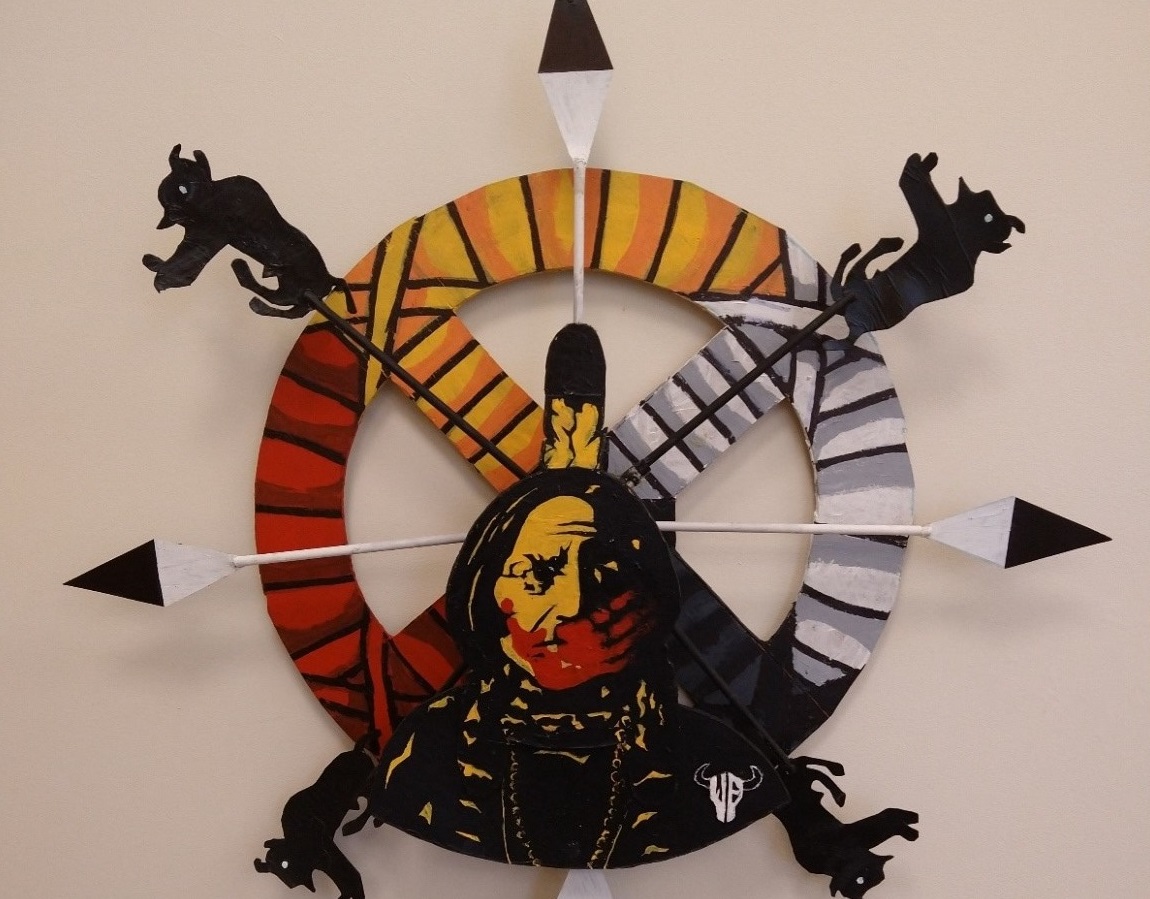
We are pleased to announce that the Peabody has installed an interactive artwork by Jonny Yates (aka Jonny White Bull). Jonny is a member of the Standing Rock Sioux Tribe and lives in McLaughlin, South Dakota. He is a talented jewelry maker, stylist, and chef, known for his own version of burger dogs, nachos with homemade chips, and other delicacies.
The piece, titled lalá, or grandfather, in the Lakota language, is a reference to Jonny’s ancestor Sitting Bull, who is depicted here. Jonny is the consummate “maker,” who loves creating carved and painted bone jewelry, drawings, and three-dimensional pieces made from cardboard, milk jugs, and other found materials.
Jonny invites everyone to spin his kinetic artwork and reflect on your own ancestors. You can find lalá in the Hornblower Gallery on the first floor of the Peabody.
CONTEMPORARY ART AT THE PEABODY
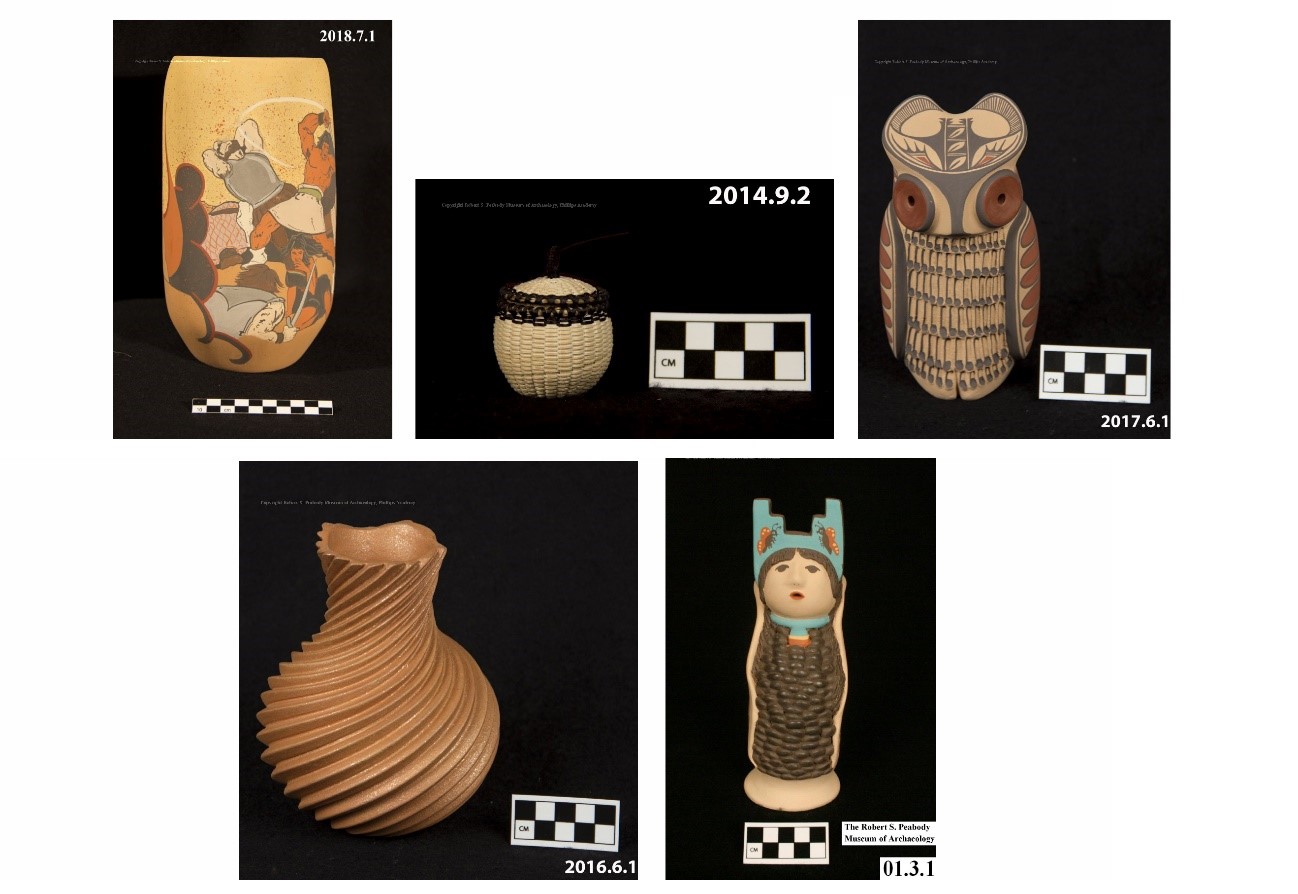
Jonny Yate’s piece joins a small but growing collection of contemporary Native art at the Peabody. When possible, the Peabody has purchased and commissioned artwork from Native artists with the support of donors and members of the Peabody Advisory Community. Artists with work in the collection include Dominique Toya, Maxine Toya, Bessie Yepa, Jeremy Frey, and Jason Garcia. These artists highlight some of the unique relationships that have developed between the Peabody and Native artists over the years. As an example, the Andover community has been fortunate to have several visits by Pueblo potters Dominique, Maxine, and Mia Toya over the years. During these visits, the Toyas share traditional pottery methods with students in Thayer Zaeder’s ceramics classes. They are very talented artists and quite passionate educators. You can read more about their most recent visit here.
Contemporary art in the Peabody Collection. From upper left: Jason Garcia, Jeremy Frey, Maxine Toya, Dominique Toya, and Bessie Yepa.
THE INSTALL
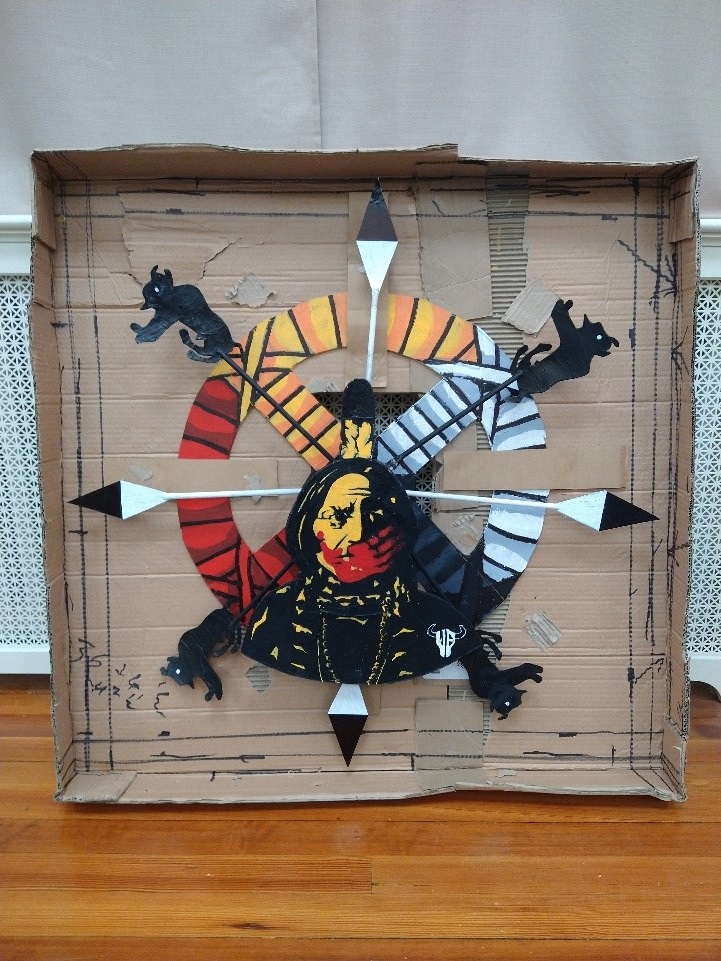
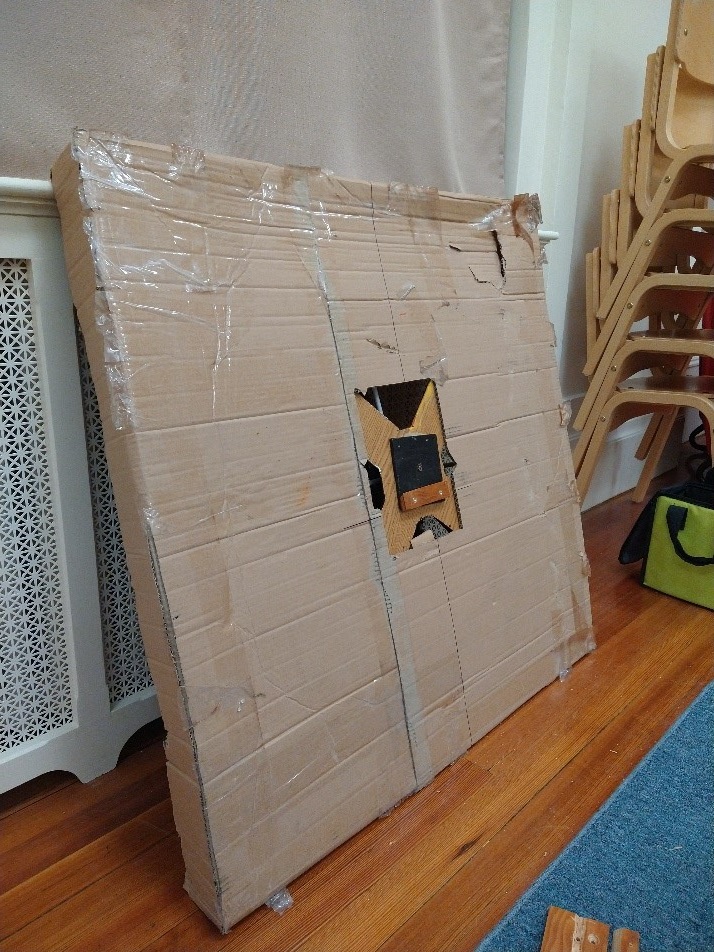
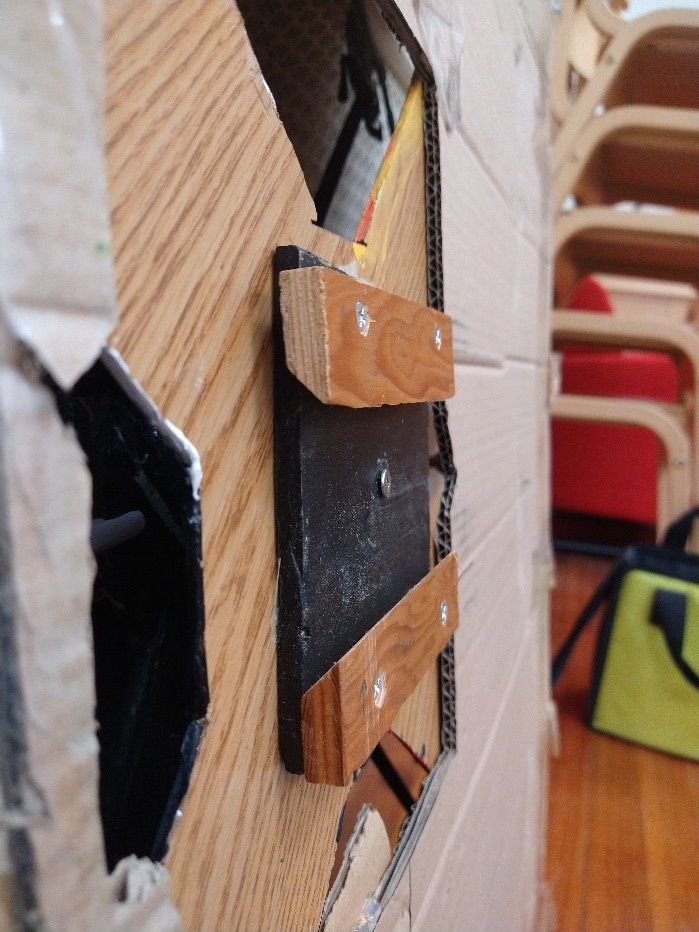
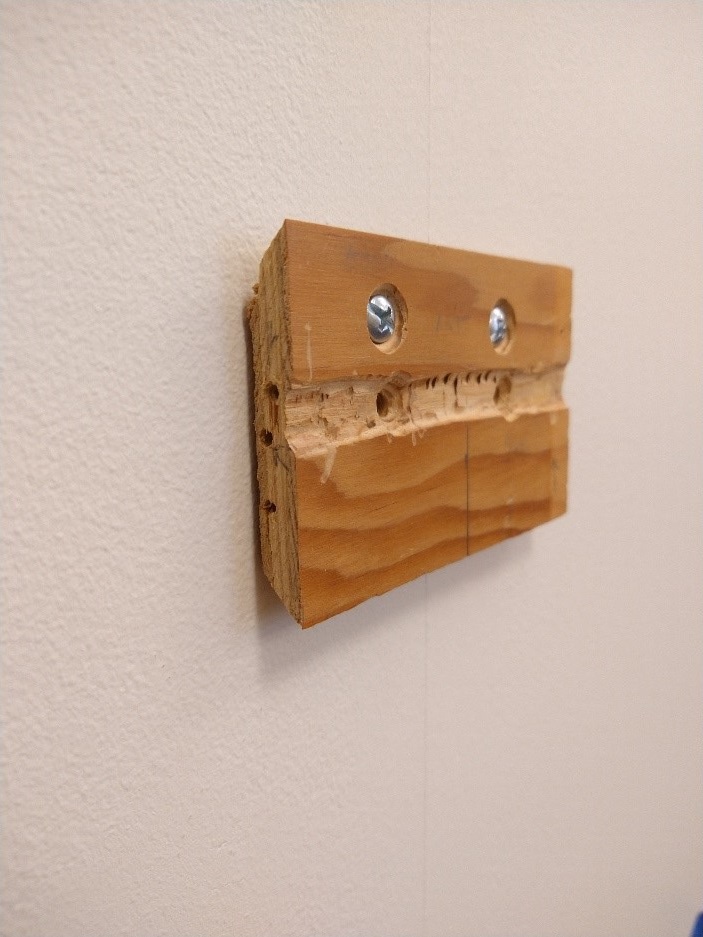
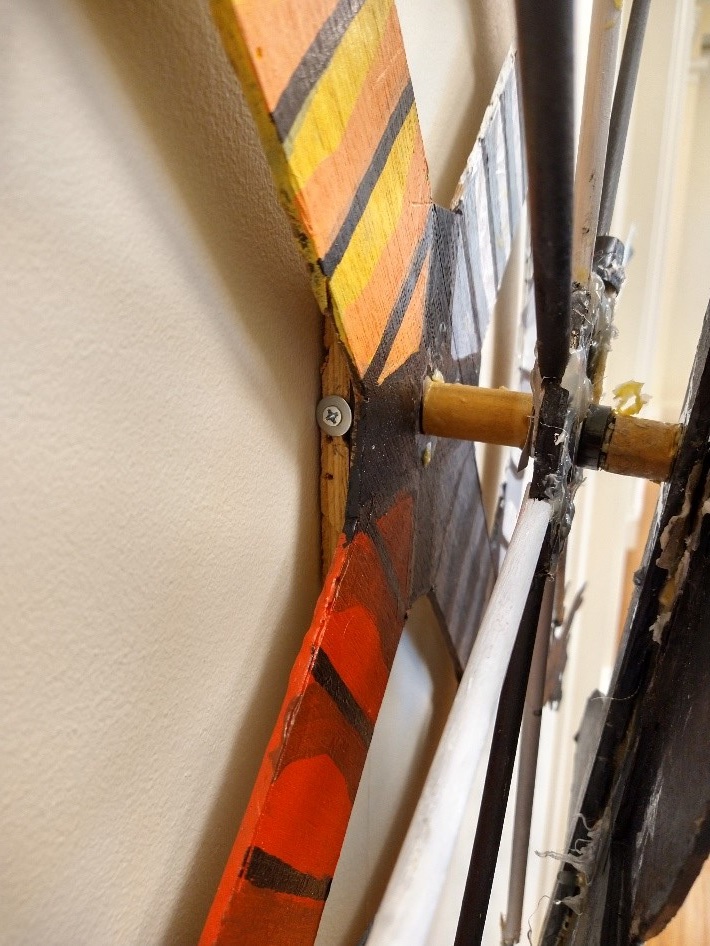
Hanging Jonny’s kinetic artwork presented a unique challenge; how could we make the piece available for a hands-on experience for students and visitors while keeping it safely installed. Research institutions, such as the Peabody, do not normally put collections on display, so we carefully considered our options. We chose to use cleats to secure the piece to the wall and a makeshift security clip to keep the piece from sliding out of the cleat. In place of a detailed narrative of the installation process, here are a series of photos of how we chose to approach the process. We hope you come by sometime and experience it for yourself.
lalá arrived hanging in a travel case
Access to the back was necessary for adding hanging hardware. The piece was safely removed before cutting a hole in the travel case, it was then re-hung.
Cleats were installed on the back top and bottom.
A receiving cleat was anchored to the drywall to secure the artwork.
Security clip (screw and washer) ensures that the artwork won’t slip off the receiving cleat while being spun.


 The Peabody