For the past 5 years I have been co-facilitating the development of the Indigenous Collections Care (ICC) Guide. The ICC Guide is now nearly complete and I wanted to share some updates.
The inspiration for the ICC Guide grew out of email exchanges I had with ICC co-facilitator Laura Byrant (Director of Repatriation for the Gilcrease Museum) about how to best to steward collections that were awaiting physical repatriation. We realized there was often a tension between museum practices and tribal priorities for cultural collections. Conversations with colleagues revealed that there was little or no established guidance on how to incorporate Indigenous cultural care needs into collections stewardship practices. We created a working group to discuss the issue and the seeds of the ICC Guide were sewn.
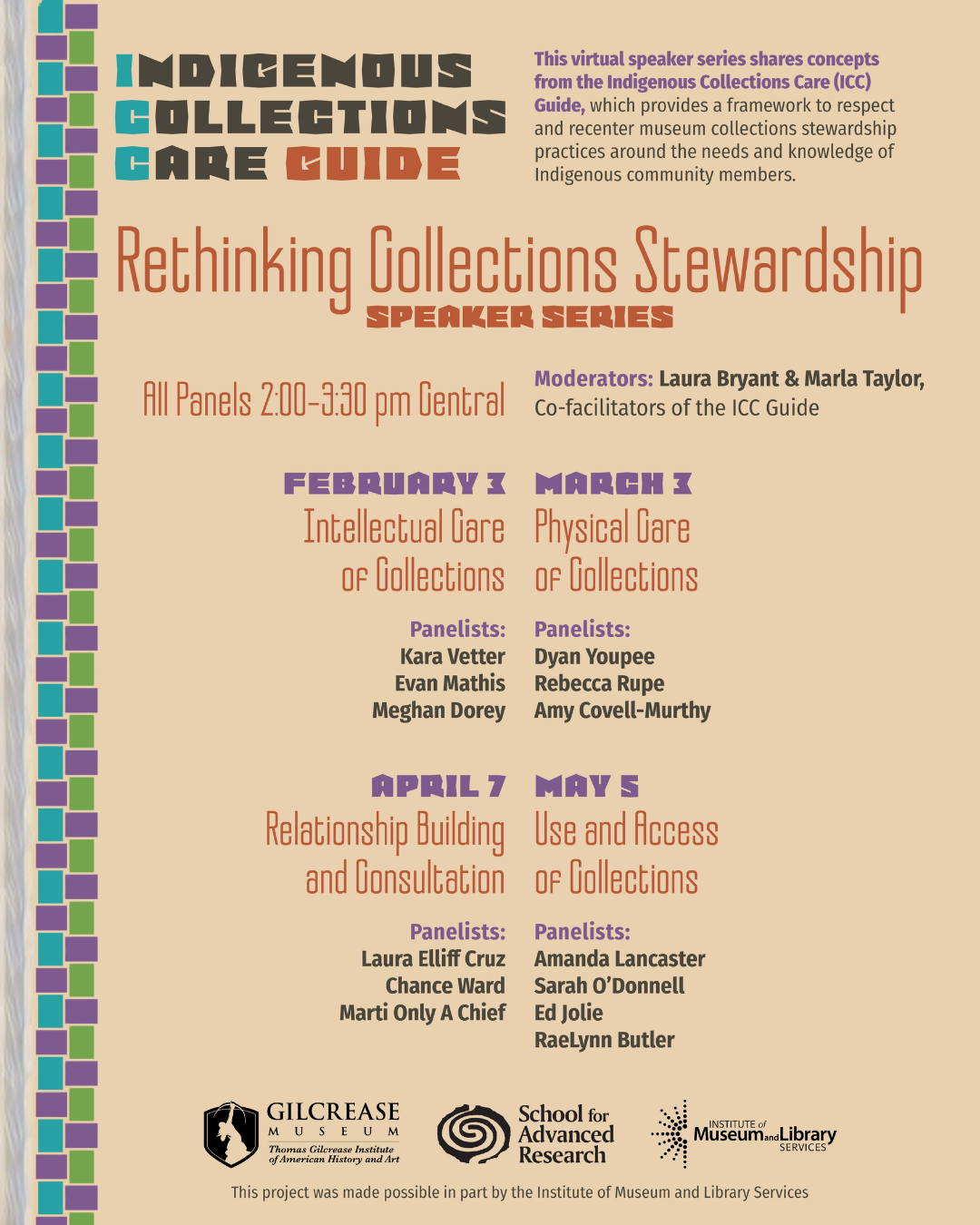
With an IMLS National Leadership Grant for Museums in 2023 and a strategic partnership with the School for Advanced Research (SAR) in Santa Fe, NM, the ICC Guide was collaboratively written and covers every aspect of collections stewardship. It provides frameworks to recenter collections stewardship practices in ways that respect the needs and knowledge of Indigenous community members. It serves as a bridge between Indigenous community perspectives and traditional museum collections management—on the individual, community, and institutional level—helping those involved in all aspects of collections to engage in a meaningful conversation about culturally appropriate care.
The approach outlined in the ICC Guide is grounded in meaningful consultation with communities whose cultural materials can be found in institutional collections. In fact, the guide has been reviewed by approximately 120 individuals, including over 70 Tribal representatives.
So far, registration and attendance at these webinars has been fantastic. The panelists have done a tremendous job of sharing their expertise and engaging the audience. We are so grateful for their time and efforts.
Of course, the culmination of all of this will be when the ICC Guide is ready to be shared with the museum field and the public. When will that be? We are in the final editing stages and soliciting one more round of feedback. We don’t have a date set quite yet but I can say that it will be in the Fall of 2026. You can sign-up on our website to be notified when the ICC Guide is available.
Please email me (mtaylor@andover.edu) with any questions you may have. I am so excited to share this work with the broader museum/repatriation/tribal community!
The New England Museum Association (NEMA) held their annual meeting in November in Manchester, New Hampshire. Billed as a Wellness Check: A Holistic View of Museums in the First Quarter Century, topics ranged from how climate change can affect collections to telling LGBTQ stories to supporting mental health for museum staff. It was illuminating and validating to hear so many colleagues exploring how to make their museums as welcoming, financially sustainable, and diverse as possible.
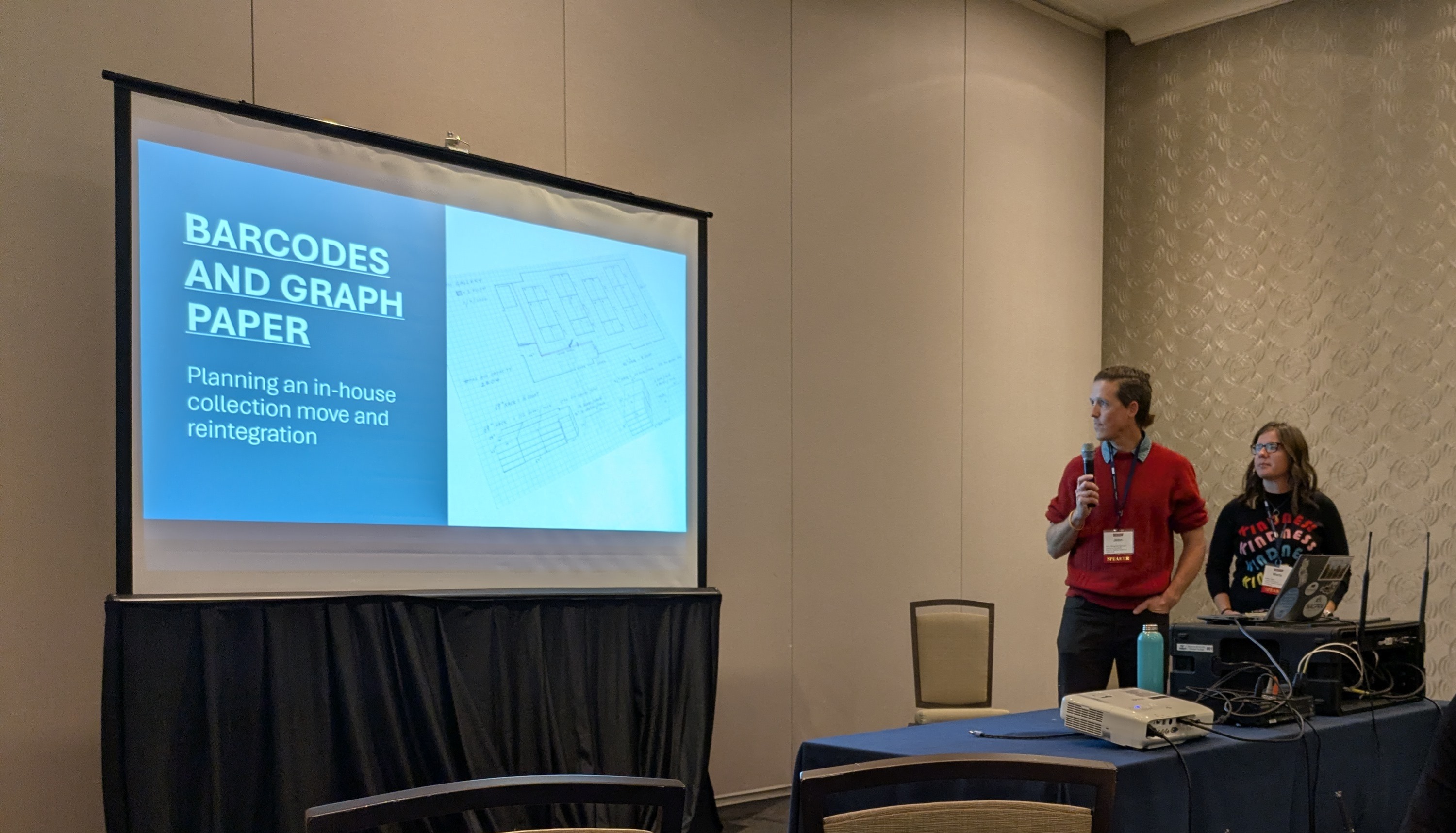
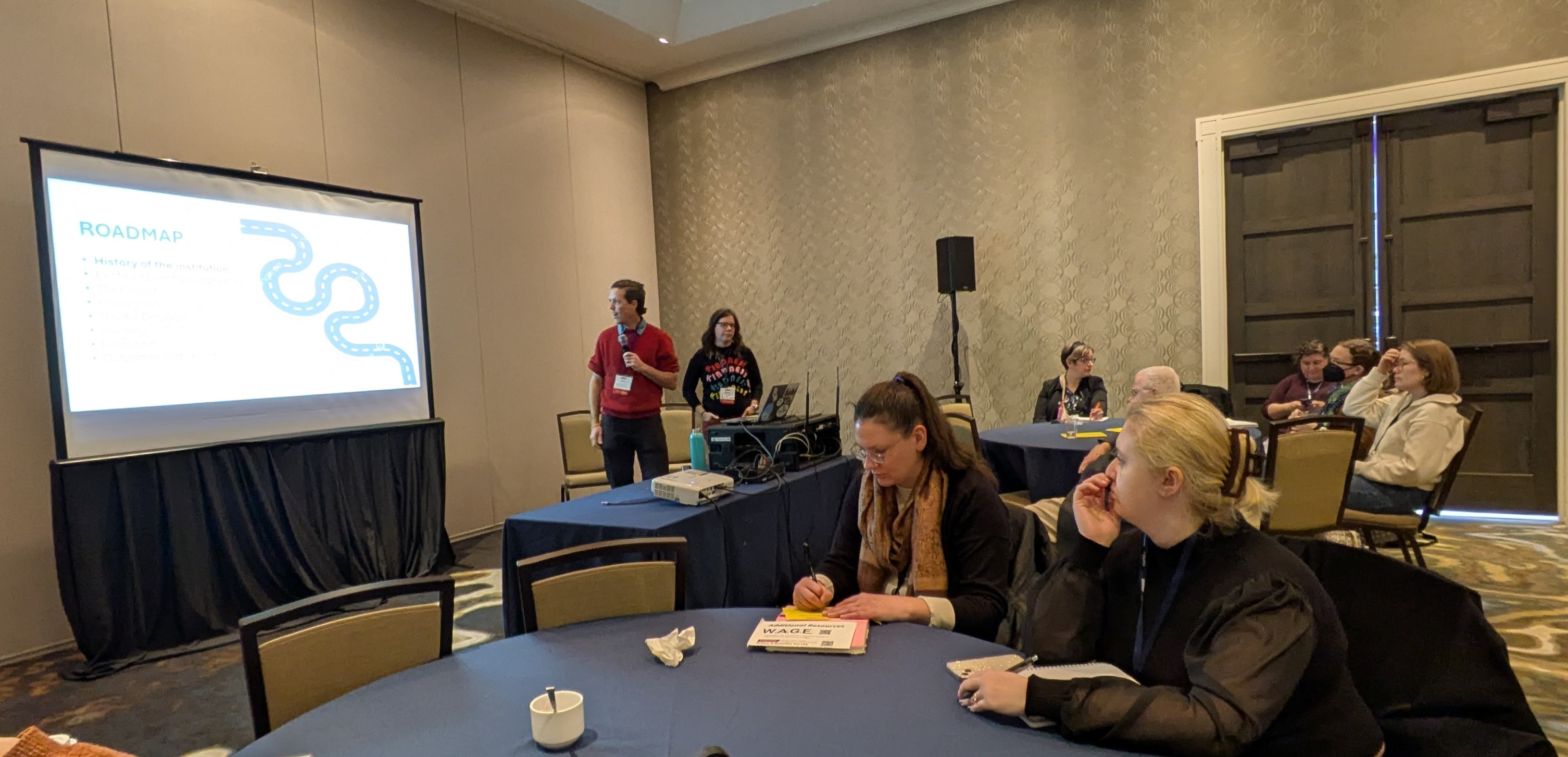
John Bergman-McCool, the Peabody’s Collections Coordinator, and I had the opportunity to share about the collections move that was part of the recent building project. Our session, Barcodes and Graph Paper, was well attended and we hope people were able to take away a nugget of advice or experience that will help them. It was a pleasure to be able to share this information alongside an amazing colleague who was invaluable to the process.
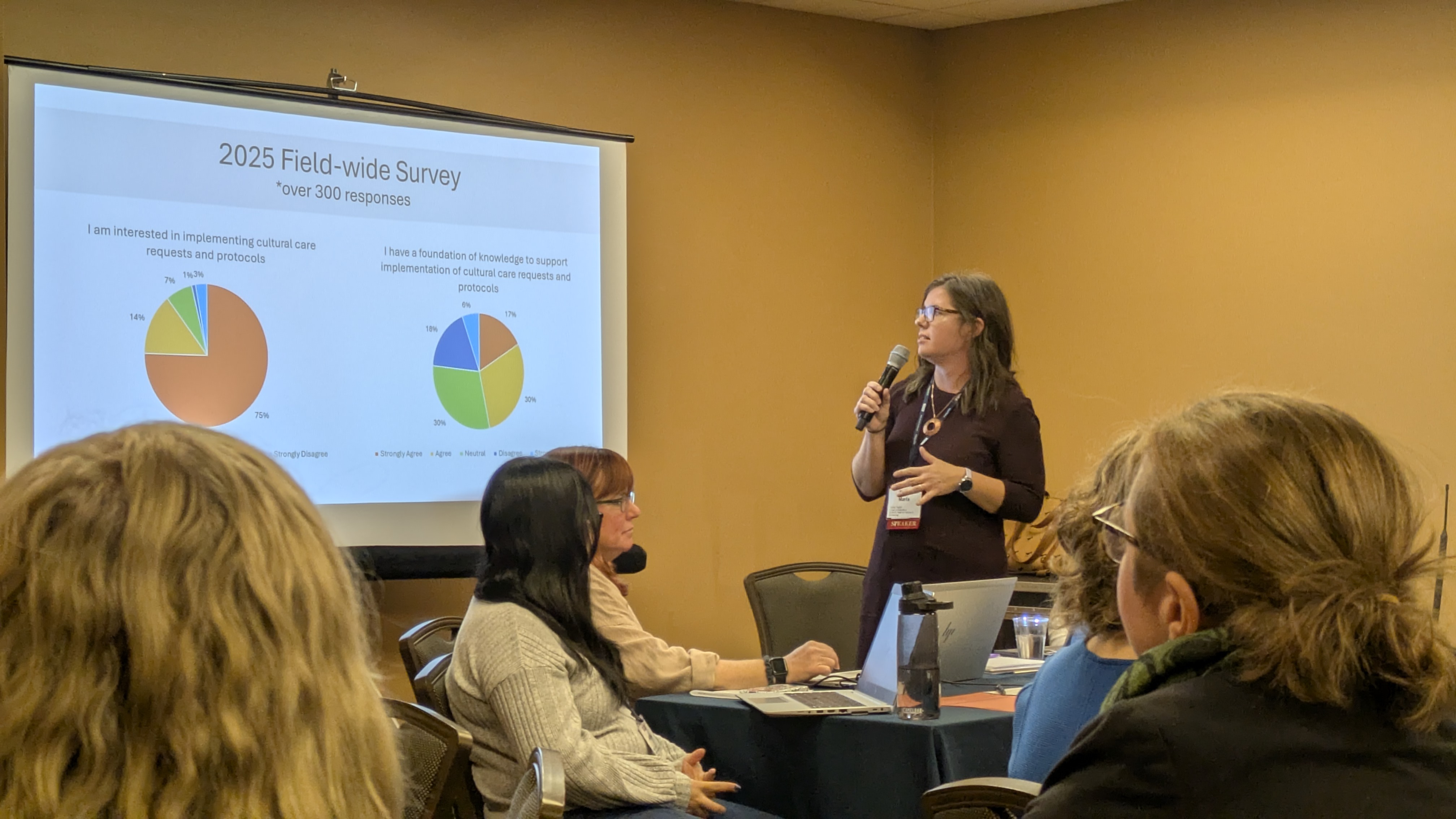
I was also a part of a session that focused on resources for museum professionals who are interested in engaging with best practices for stewarding Indigenous collections. Along with several incredible colleagues, I shared information about the Indigenous Collections Care (ICC) Guide and the Northeast NAGPRA Community of Practice (NECP).
Local Contexts was also a part of our panel. If you are in the museum world and don’t know about Local Contexts and their work – you should. “Local Contexts is a global initiative that supports Indigenous communities with tools that can reassert cultural authority in heritage collections and data. By focusing on Indigenous Cultural and Intellectual Property and Indigenous Data Sovereignty, Local Contexts helps Indigenous communities repatriate knowledge and gain control over how data is collected, managed, displayed, accessed, and used in the future.” (https://localcontexts.org/)
I am proud to be a part of the ICC Guide and NECP. Both of those communities are valuable resources to museum professionals and NAGPRA practitioners.
It was an honor to be a part of both of these sessions!
What happens when a project is successful but doesn’t quite resolve the larger storyline or need? A sequel!
I share with you – Peabody Building Renovations: the Sequel.
The first phase of the work, completed in early 2024, focused on improving collections care. This included new shelving, an HVAC system, updated security, and an elevator in the building. To facilitate this, the entire collection had to be moved to temporary storage and back again. Phase I was a huge amount of work for all of the Peabody staff and I can confidently say that the collection is now in a better environment than it was before.
This next phase will largely ignore the collections spaces and instead focus on updating classrooms, creating offices, and modernizing systems. By using the space more efficiently, we will create two additional classrooms for use by Peabody educators or PA faculty. Staff members will have discrete office spaces and there will be room to grow.
One of the biggest improvements will be the addition of an HVAC system to the classrooms and office spaces. As someone who has worked in these spaces for as long as I have, I would have to say that this is the part that I am looking forward to the most. Currently, it can be really hot in the summer (over 80 degrees in the classroom) and quite chilly in the winter. We all have our methods to deal with the discomfort, but I am excited to have air conditioning!
All of this of course comes with some disruption to our regular activities. Staff will once again be moved to a temporary location and access to the collection will be restricted.
As of December 1st, Peabody collections will be largely unavailable and classroom spaces will be out of commission. Repatriation work and collections inquiries from Tribal communities will be prioritized but other access will be restricted. Please contact me, mtaylor@andover.edu, with any questions or requests.
PA classes may be taught in a modified format with limited collections based on availability. Please contact Lainie Schultz, Curator of Education, to request a class.
The Peabody should be back in commission by September of 2026. I will be able to share periodic updates on the process through the blog and we are so excited to welcome you into our updated space next year. Stay tuned!
If you are interested in supporting Phase 2, please contact Jen Pieroni, Director for Advancement Initiatives, Office of Academy Resources.
Did you know how beautiful New Mexico is? I had the opportunity to travel to the Albuquerque and Santa Fe areas this July and can definitely recommend making the trip.
The Peabody Institute actually has a long relationship with New Mexico. In the 1920s, Alfred Kidder excavated Pecos Pueblo on behalf of Phillips Academy (what is now the Peabody Institute). The ripple effects of that work included repatriation work with the Pueblo of Jemez, a long-term loan with the Pecos National Historical Park, inter-institutional collaboration, relationships with Jemez artists, and incredible learning opportunities for the students at Phillips Academy.
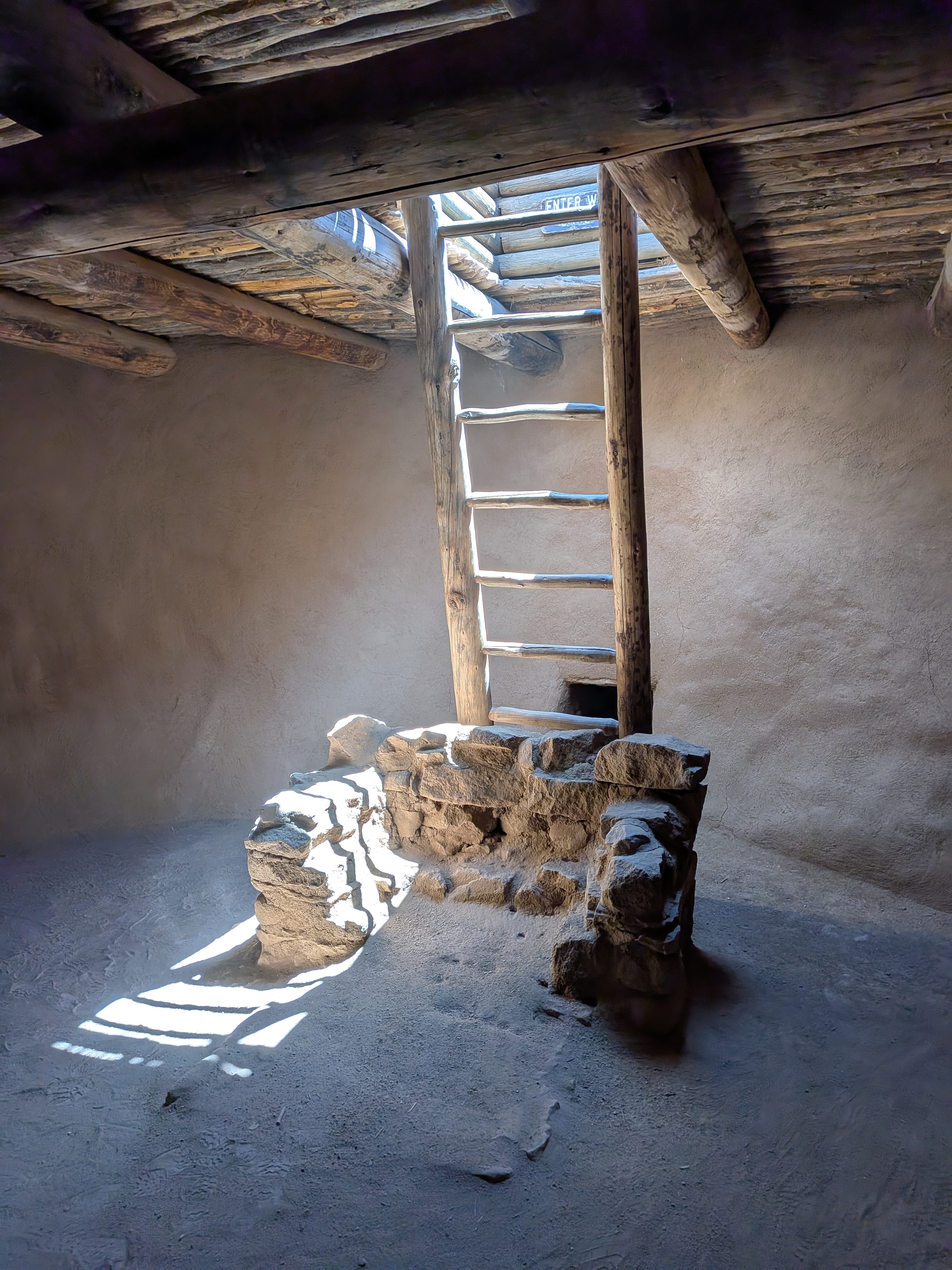
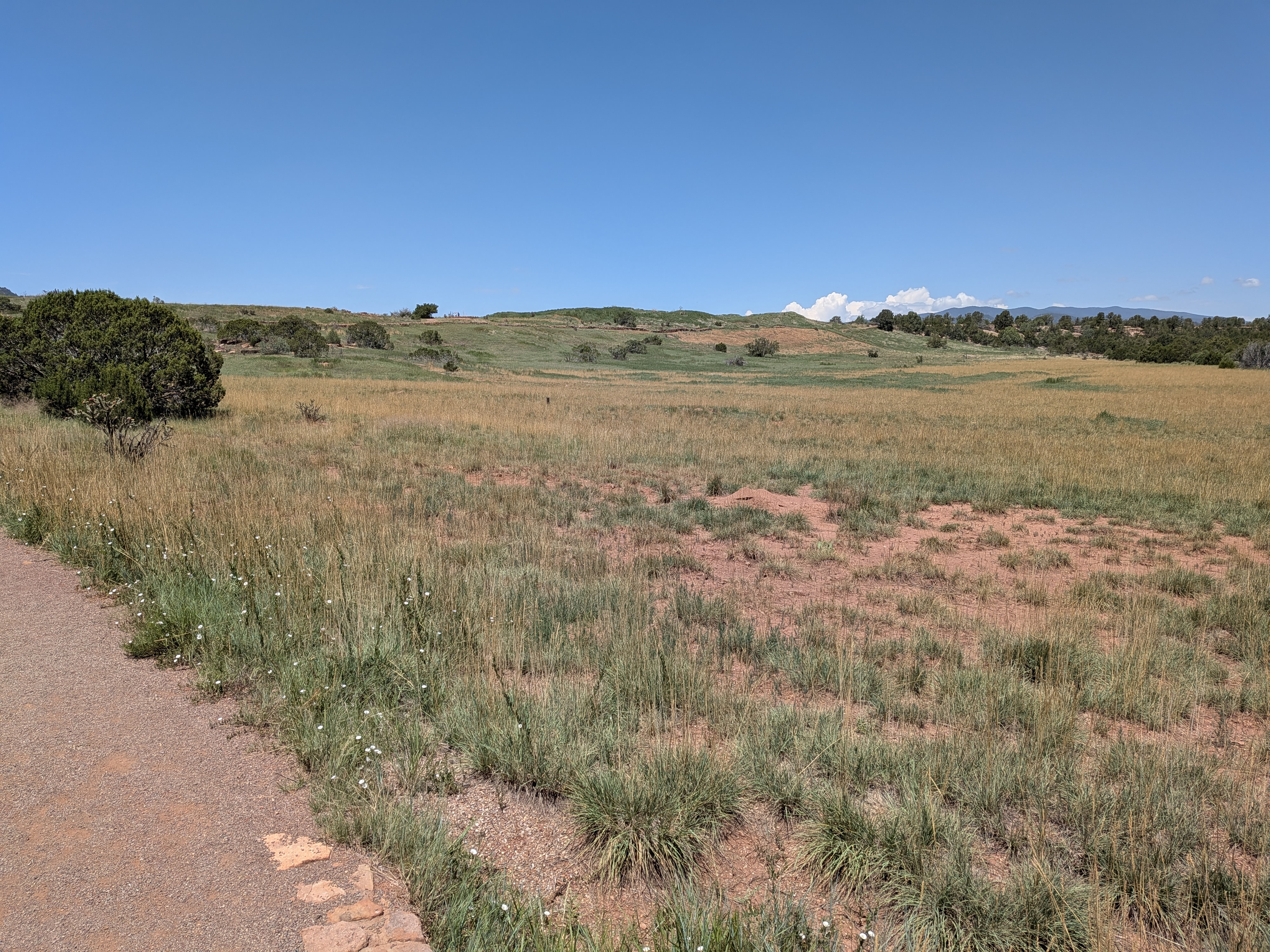
While I had been to the Pueblo of Jemez before this summer, I had not had the opportunity to see the Pecos archaeological site or Pecos National Historical Park before. It was truly a pleasure to experience the site in-person and get an understanding of how Pecos sits in the landscape. I was also able to view their wonderful exhibit, spend time with the Museum Curator to view the collections on loan from the Peabody, and meet several dedicated park staff members. I am grateful for the opportunity to spend that time with them all.
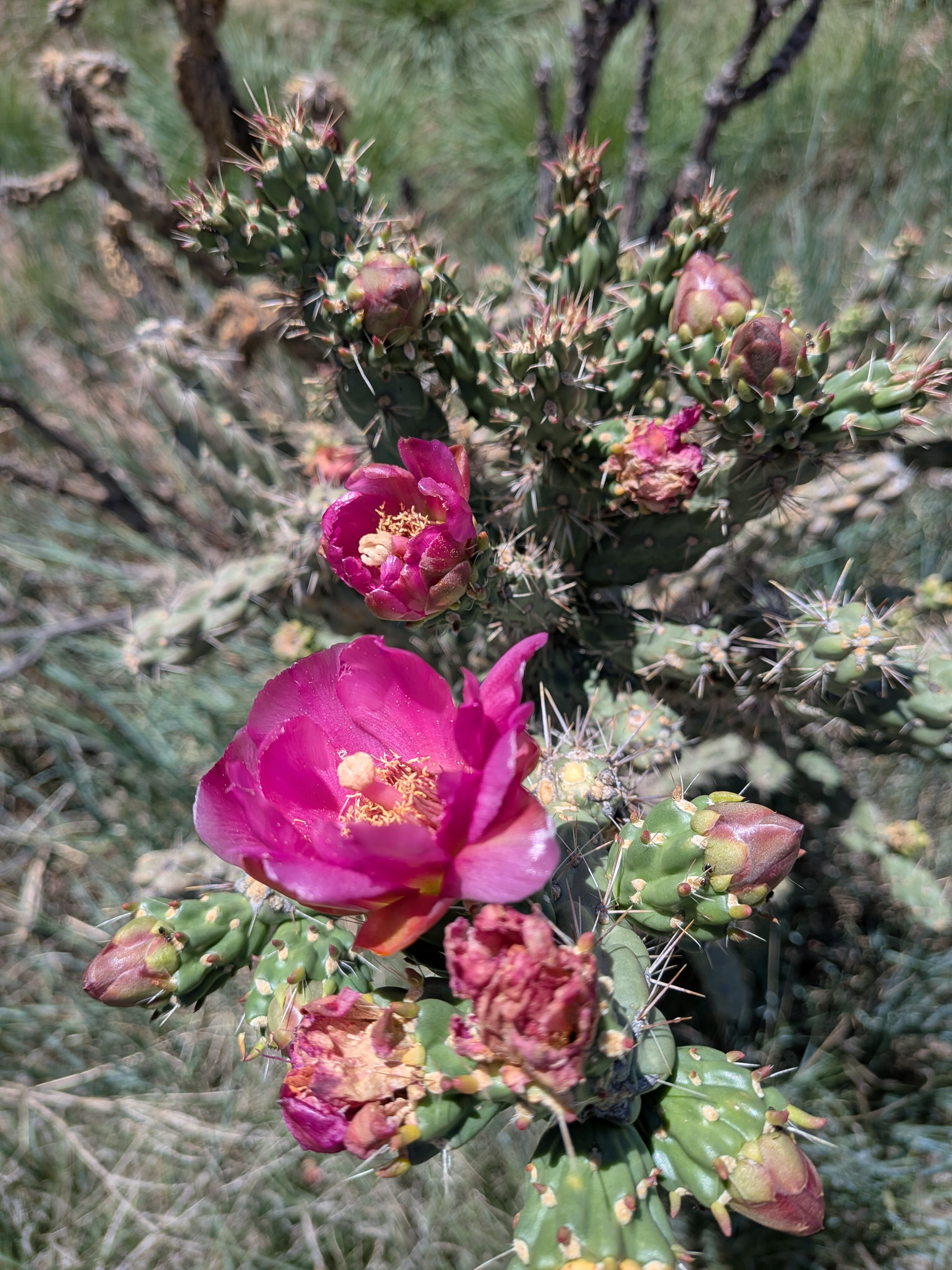
Inside the kiva at PecosCactus flowers!The view from Pecos
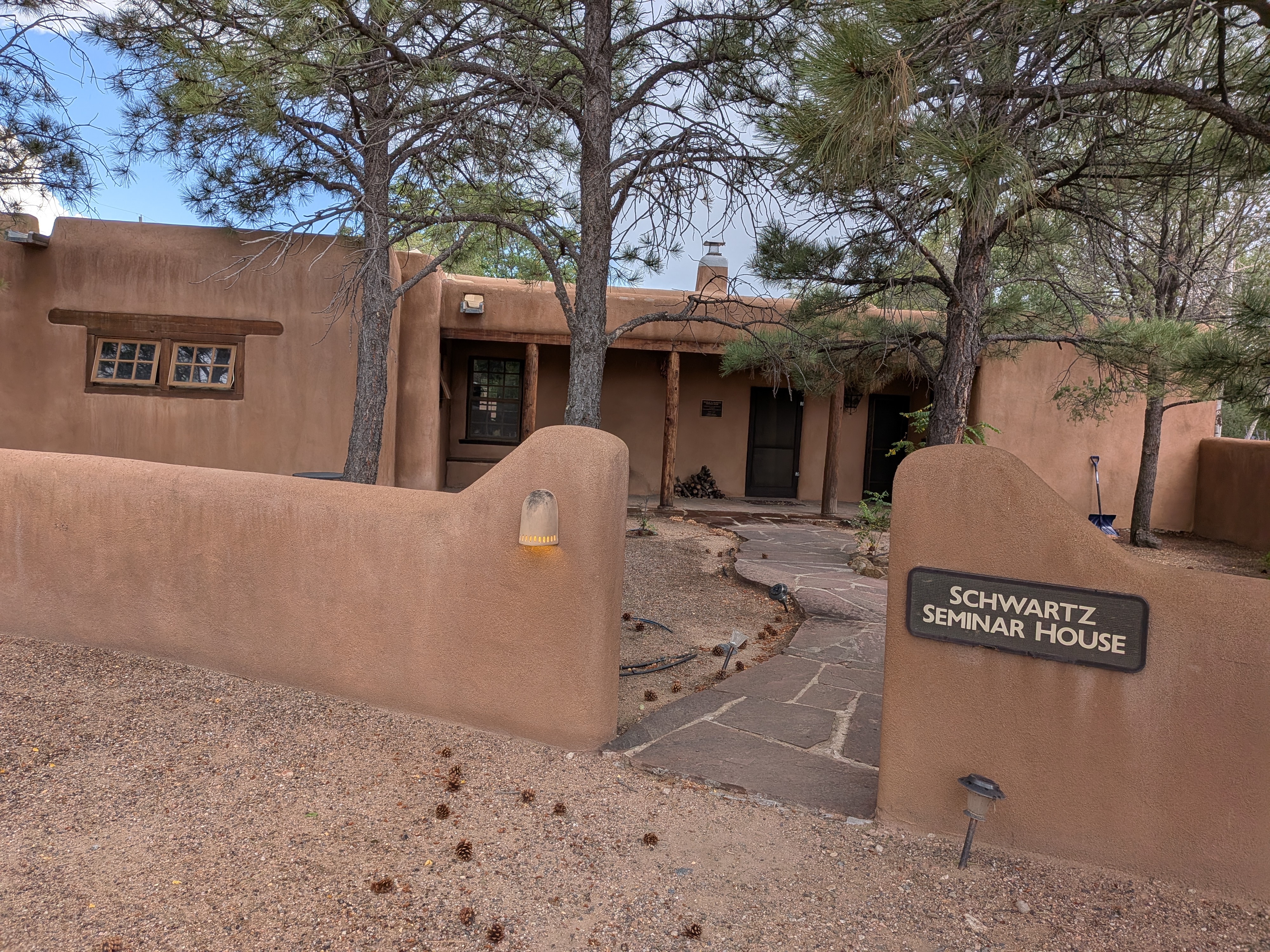
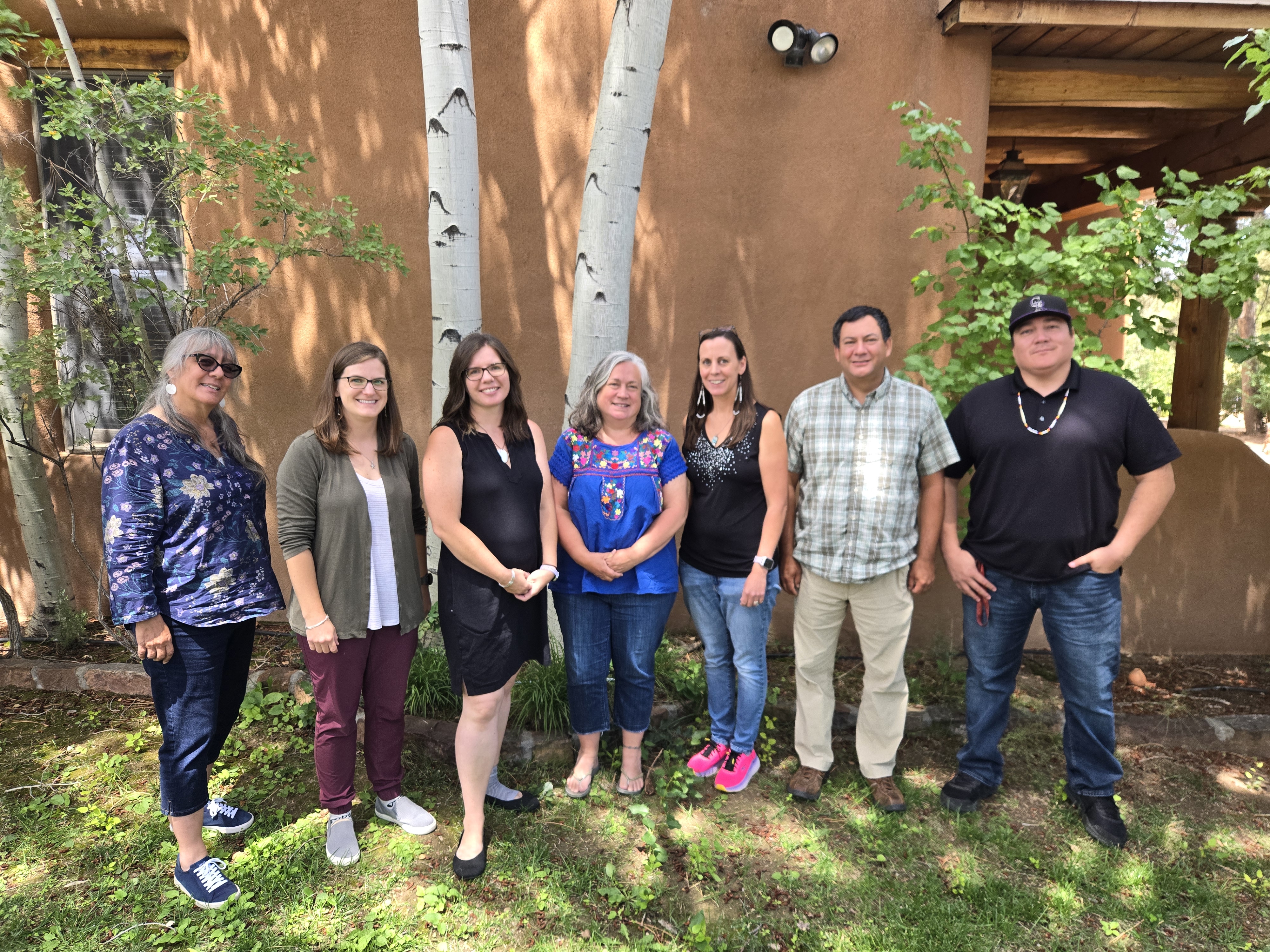
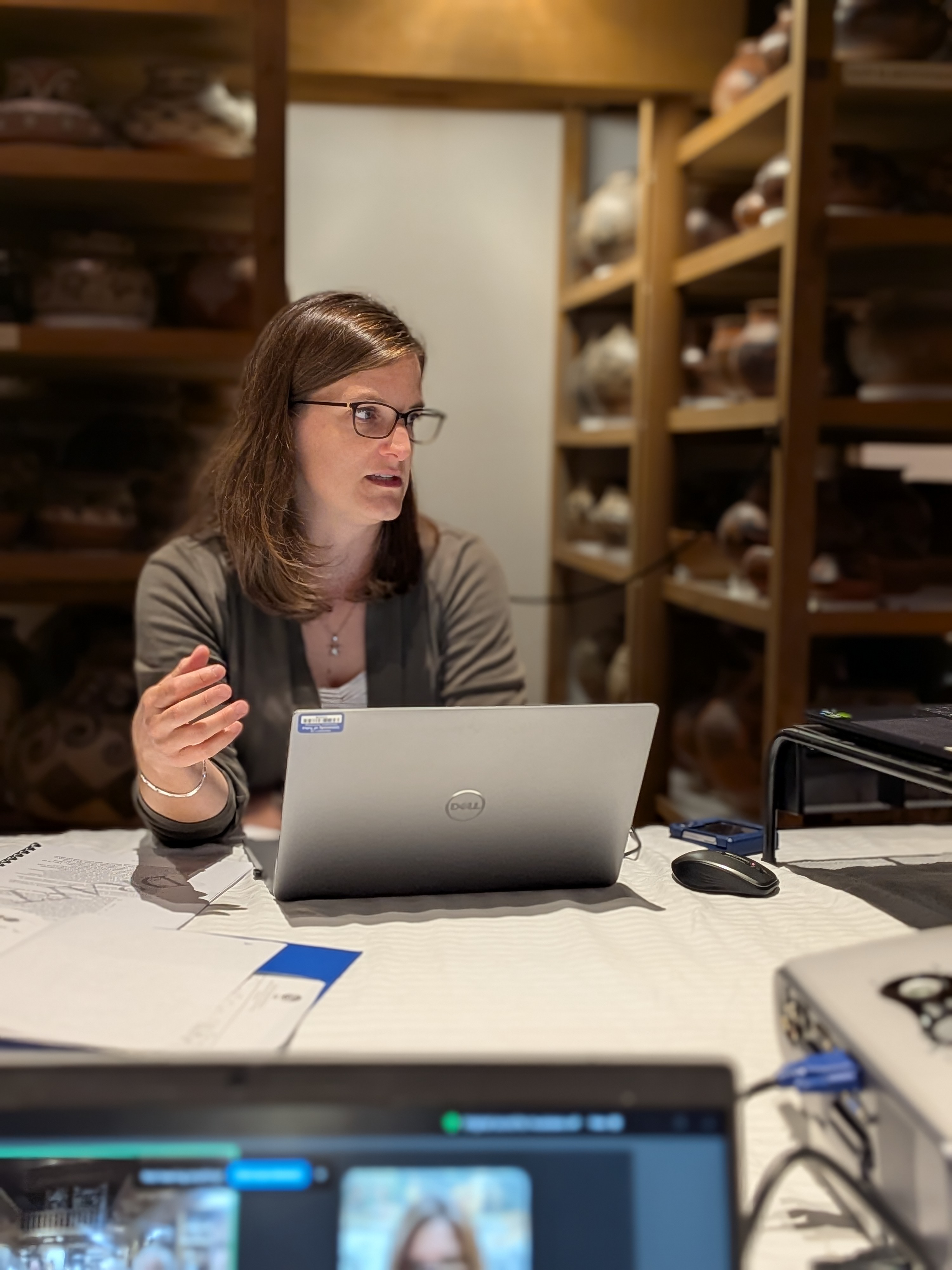
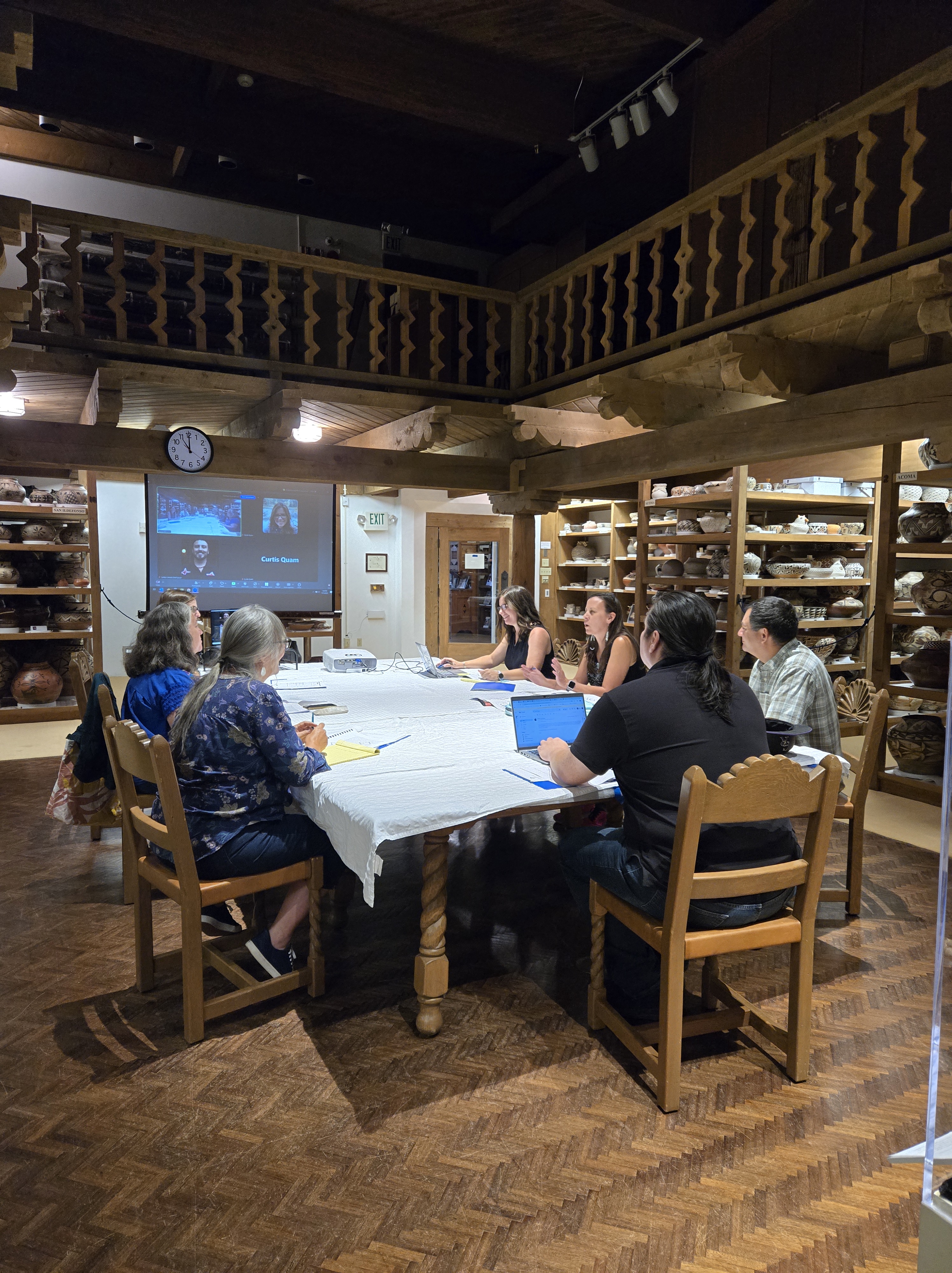
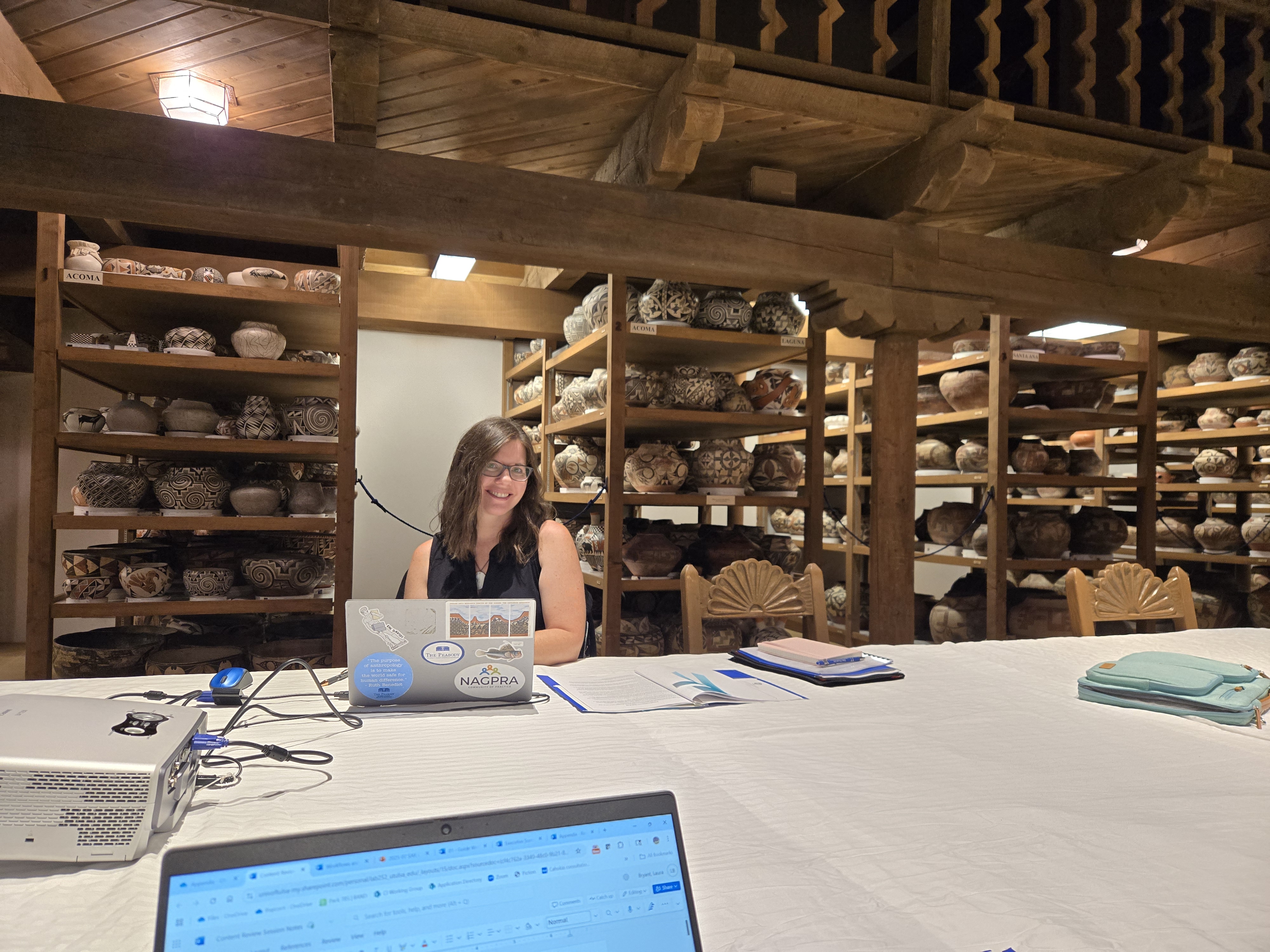
After my time at Pecos, I went to the School for Advanced Research in Santa Fe to facilitate the final review session of the Indigenous Collections Care (ICC) Guide. This is a project that I have been working on for awhile and it was excited to be entering the final stages. Although the review session had to be rescheduled due to complications with our IMLS grant, we had a wonderful group of people to discuss the ICC Guide and help us move forward into the final stages of development.
The ICC Guide provides a framework to respect and recenter collections stewardship practices around the needs and knowledge of Indigenous community members. The Guide speaks to individuals engaged in collections stewardship within museums and collecting institutions. It is aimed specifically at museum professionals, emerging and established, and individuals who are seeking clarification, support, and validation to pursue culturally appropriate care.
Next steps are to send the Guide out for copy-editing and graphic design. A final version will be ready to be shared in the summer of 2026.
My time in New Mexico was amazing and I hope you can visit there sometime soon!
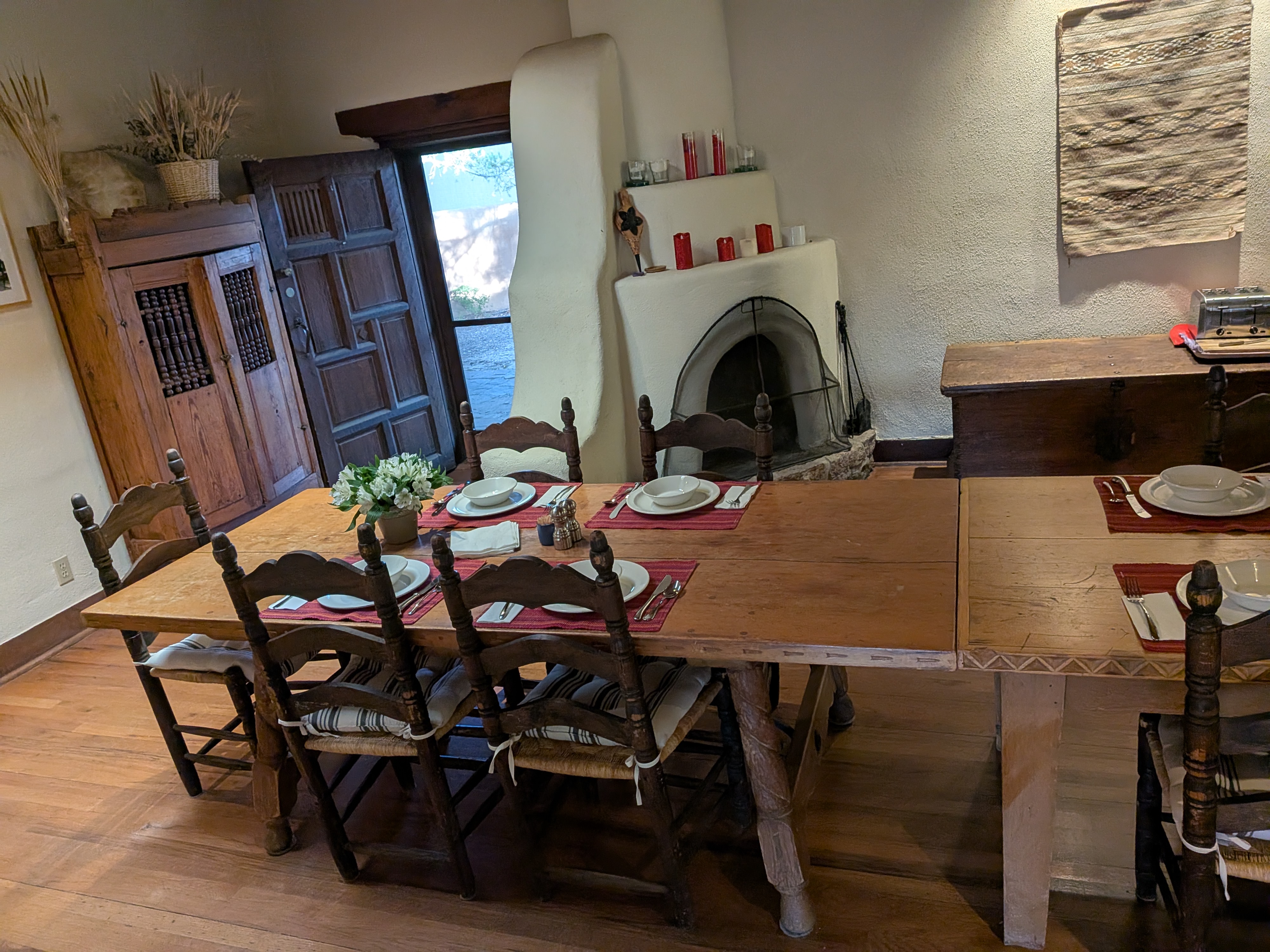
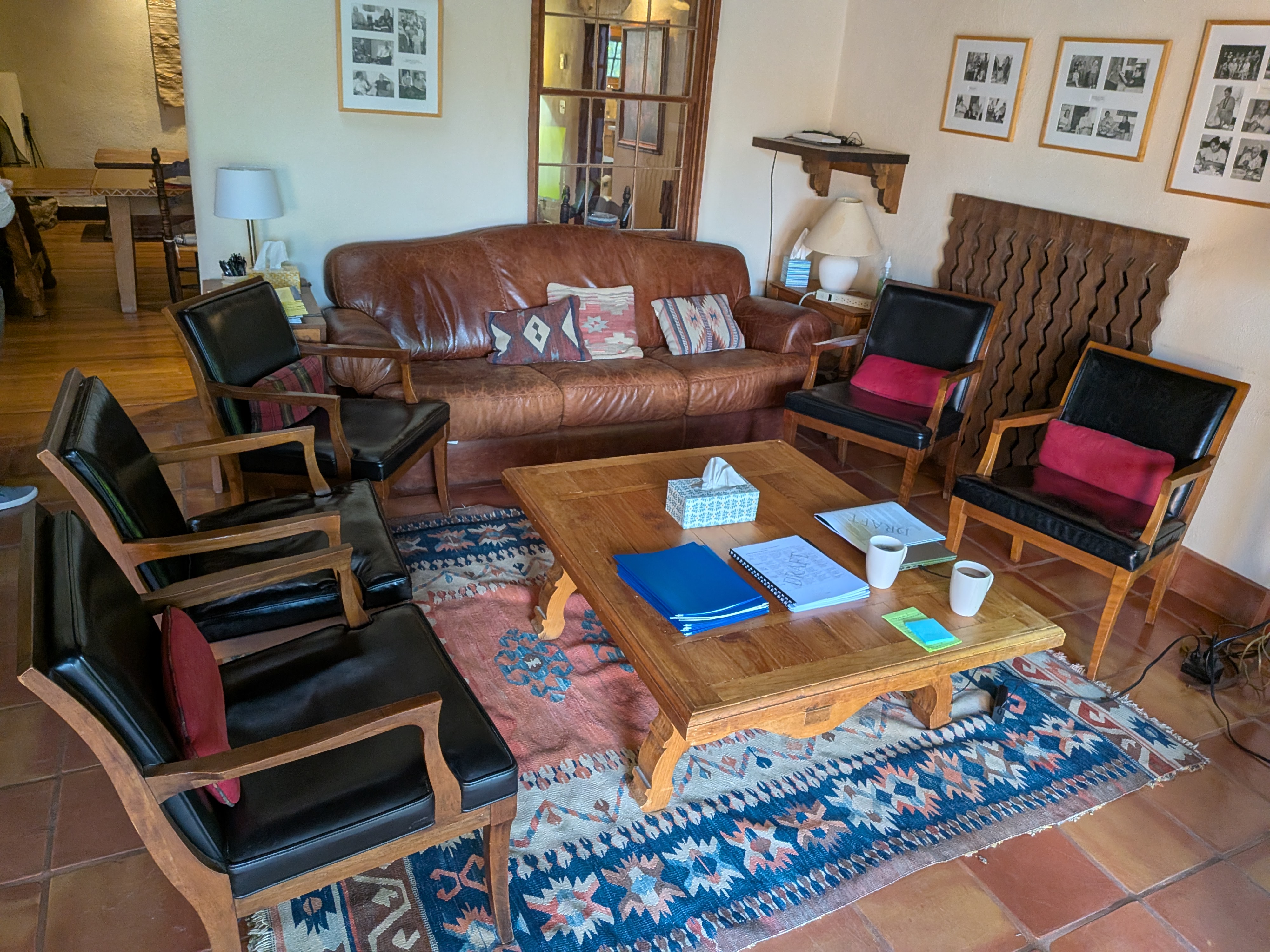
SAR Seminar HouseThe ICC Guide review groupSAR Seminar HouseICC co-facilitator, Laura BryantMeeting at the Indian Arts Research Center at SARSAR Seminar House
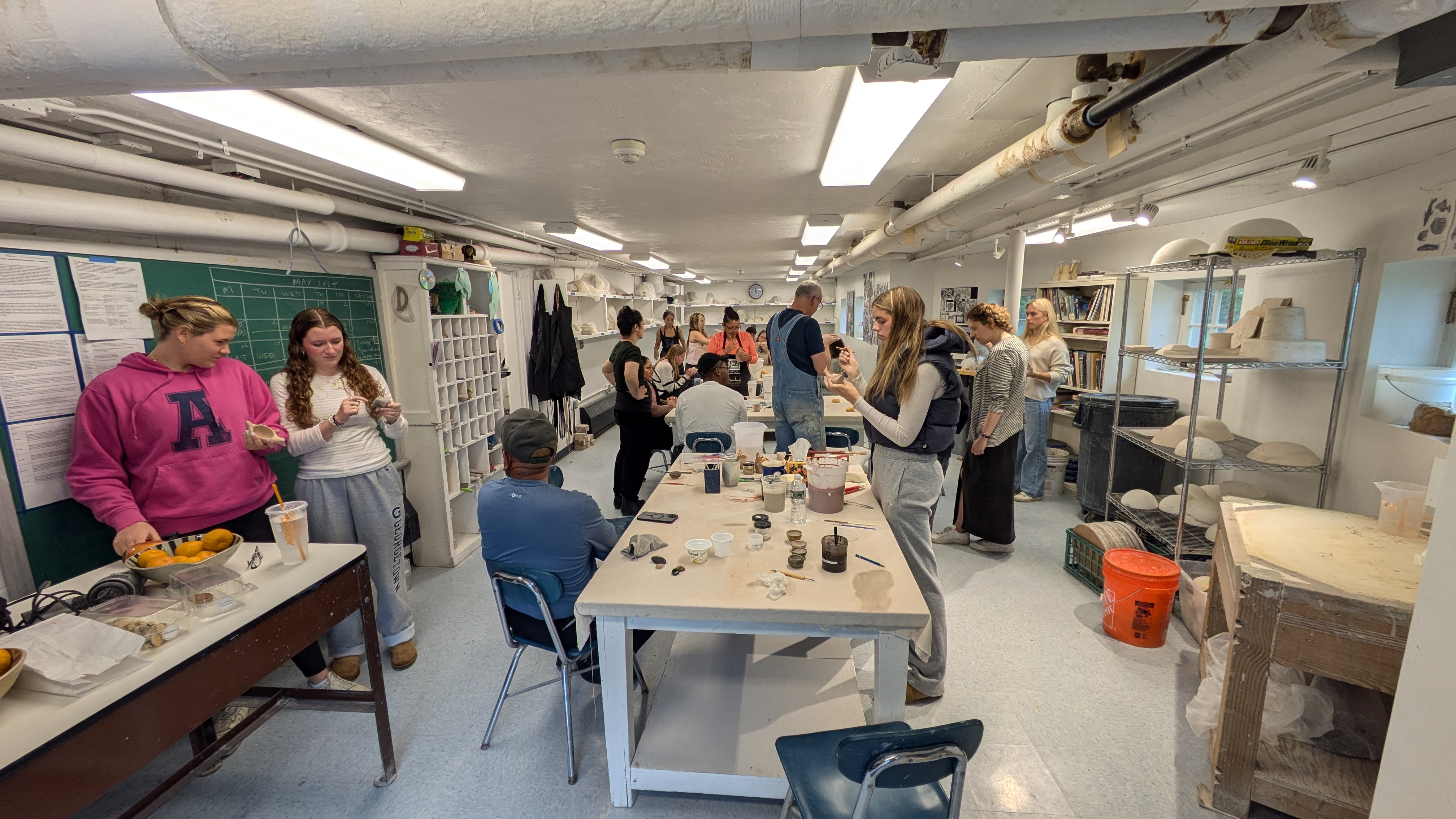
Ceramic students participating in pottery-making workshops
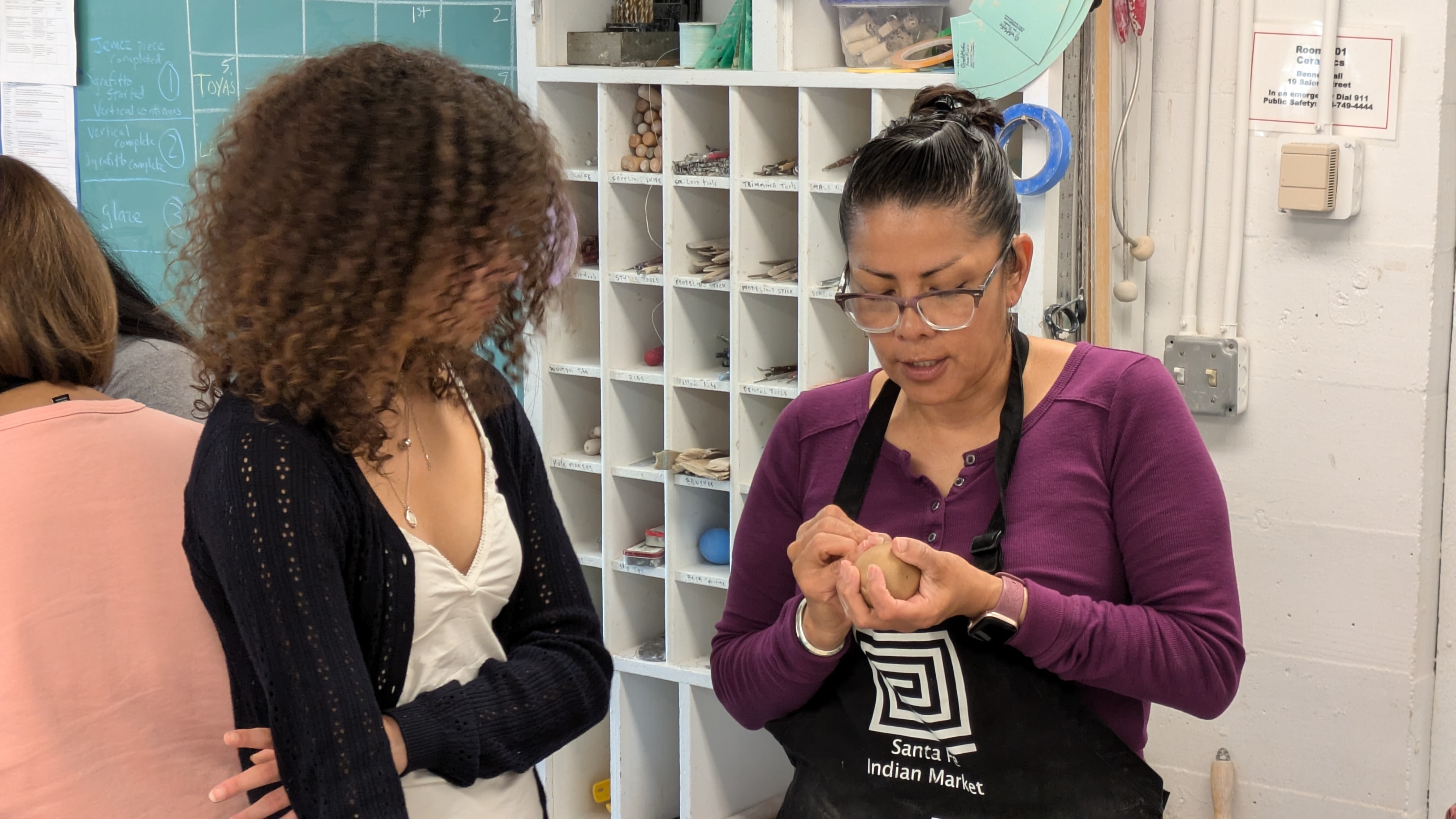
We were honored to have the Toya family back this Spring term for their annual visit to conduct week long, hands-on workshops on Pueblo pottery-making with Thayer Zaeder’s studio ceramic students.
Each year students have the opportunity to make their own pieces using native clays and temper from New Mexico and traditional decorative techniques of painting and polishing. The workshops culminate in a traditional Jemez firing.
Students walk away with an unforgettable keepsake of their time as well as a greater appreciation for contemporary Indigenous art and culture.
We are so grateful for all the time and expertise the Toya family has shared with PA students!
Check out this video by PA’s Communications team highlighting the Toya’s work on campus.
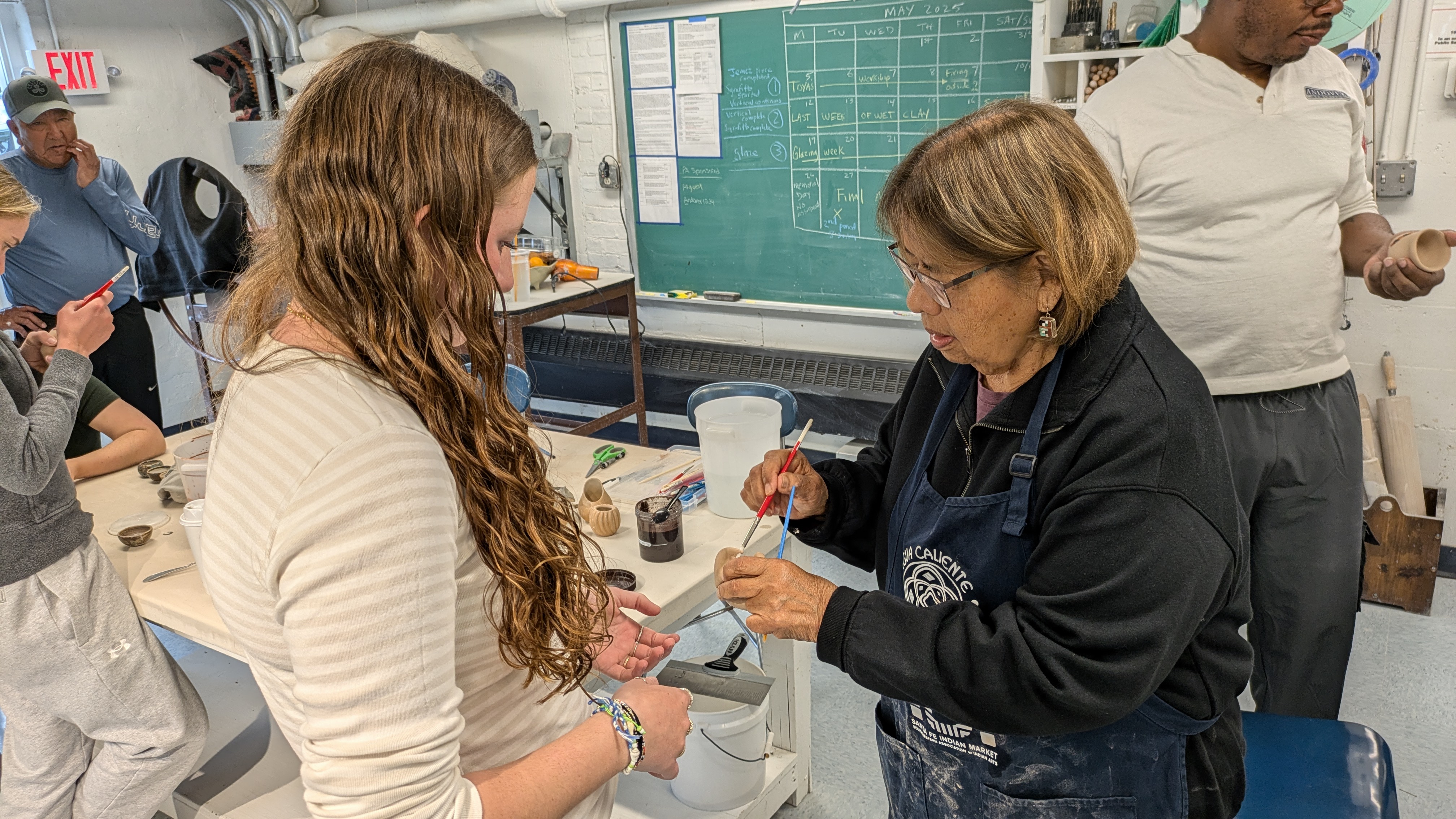
Maxine Toya working with a student on painting their piece.
Mia Toya working with a student on polishing their piece.
Last month we were delighted to welcome back Ramson Lomatewama to Phillips Academy Andover (PA) where he worked with students and campus community members in fused glass workshops.
Ramson Lomatewama is an award-winning Hopi glass artist, kachina doll carver, jewelry maker, and published poet from Hotevilla, Arizona. This is his second year working with the Peabody Institute to bring fused glass workshops to the PA campus community. Ramson has also participated in various virtual, and in-person talks at PA, sharing his poetry, art, and life stories with students and the broader public. You can view these virtual talks on our Peabody YouTube page.
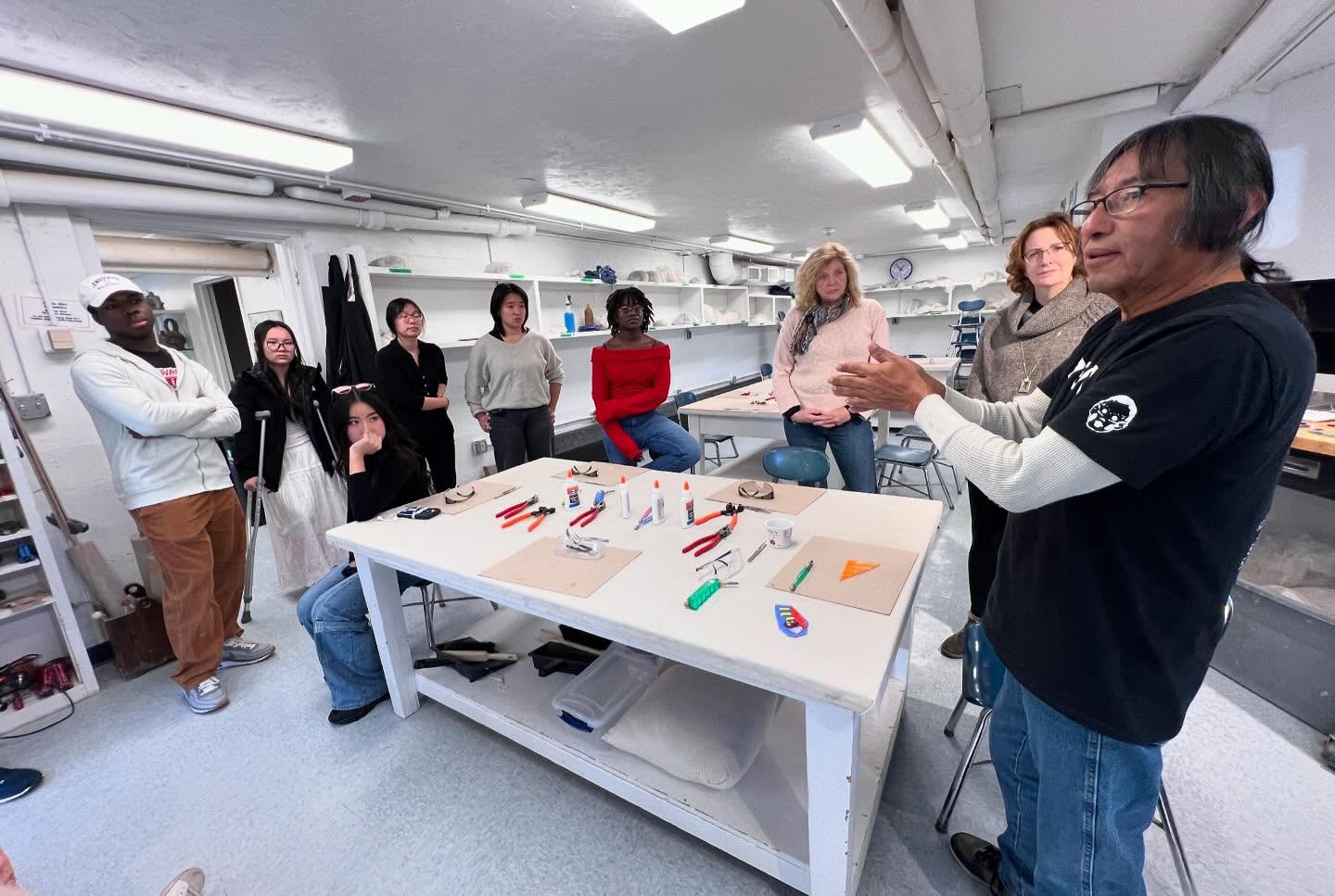
Ramson speaking to one of the fused glass community workshops.
Ramson creates stained glass, blown glass, and fused glass art. Ramson’s glass art is viewed as “a contemporary expression of ancient and artistically rich people… evoking a beautiful, yet humbling mindscape which we all long to find.” He is the first hot glass artist from the Hopi Tribe. Ceremonies and cultural activities continue to play a major role in his life. He has showed works at the Santa Fe Indian Market, the Museum of Northern Arizona, Fusing Traditions, a traveling exhibition, and the San Diego Museum of Man (now known as the Museum of Us).
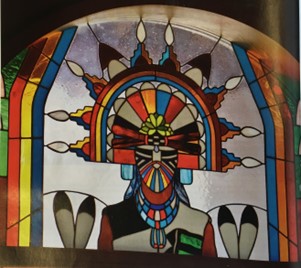
Stained glass artwork by Ramson Lomatewama.
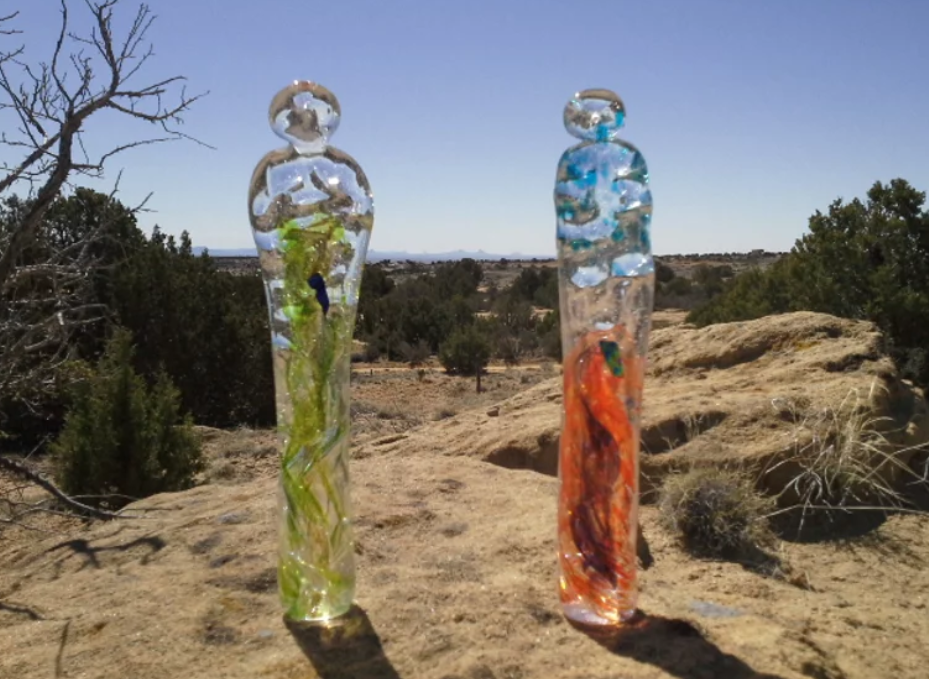
Blown glass ‘spirit figure’ sculptures by Ramson.
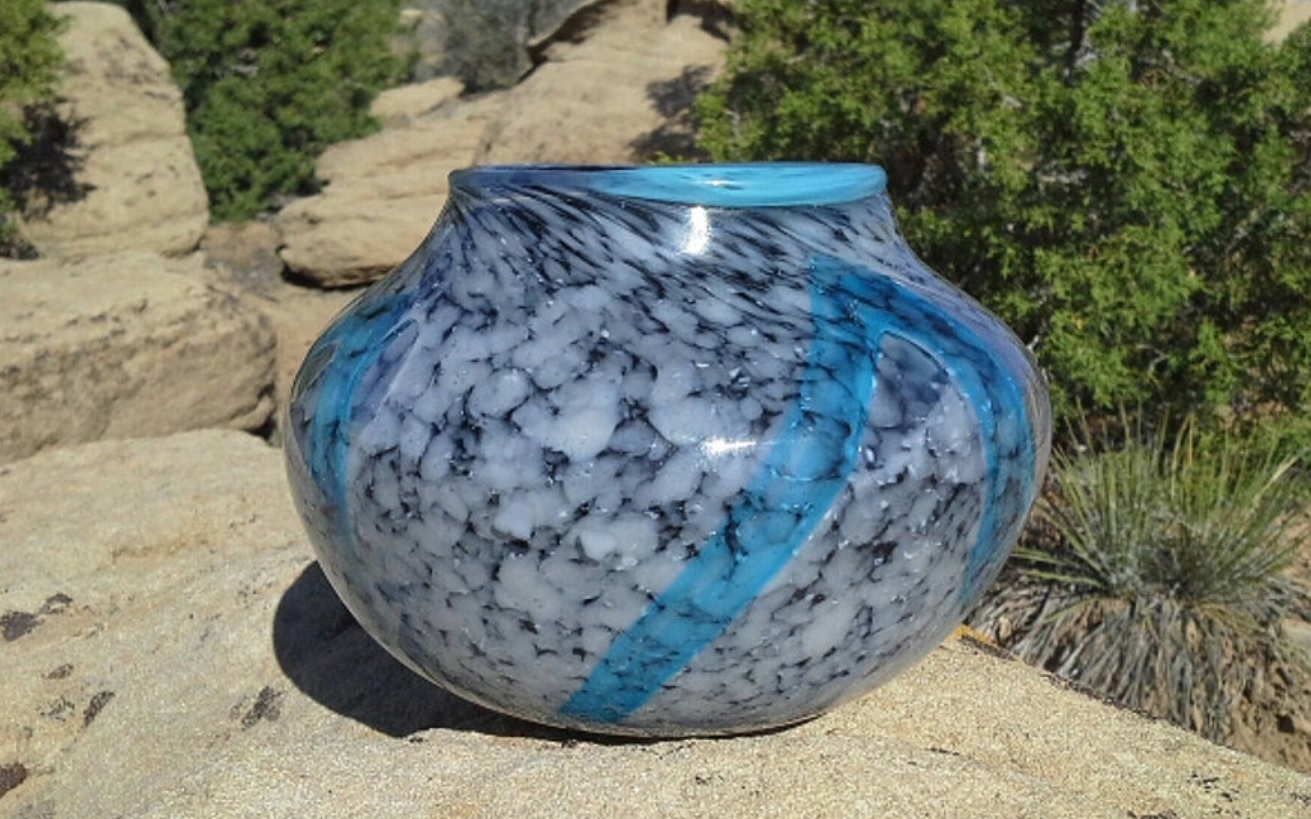
Blown glass vessel by Ramson.
Ramson is an educator on several levels. Early in his career, he was a middle school and high school teacher, and for many years, served as adjunct faculty at North Central College in Naperville, Illinois. Ramson also taught glass art for Hopitutuqayki (The Hopi School), an arts apprenticeship program located on the Hopi reservation. Ramson’s studio, Hotevilla Glassworks, is the first and only Hopi owned working glass studio. Check it out here!
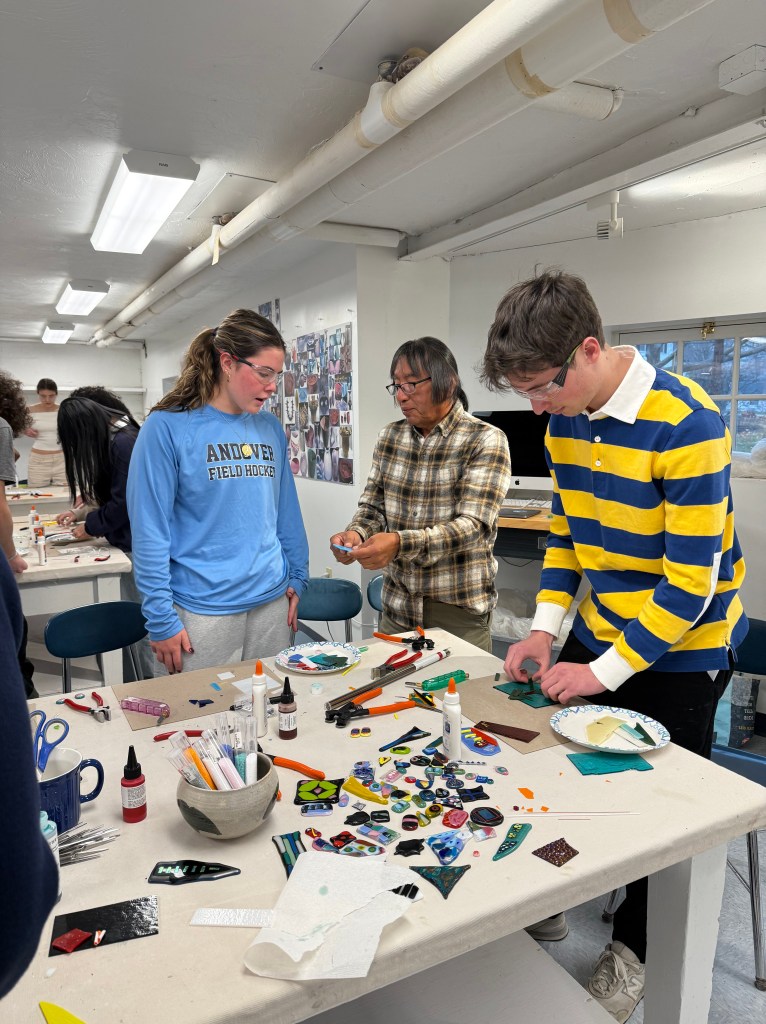
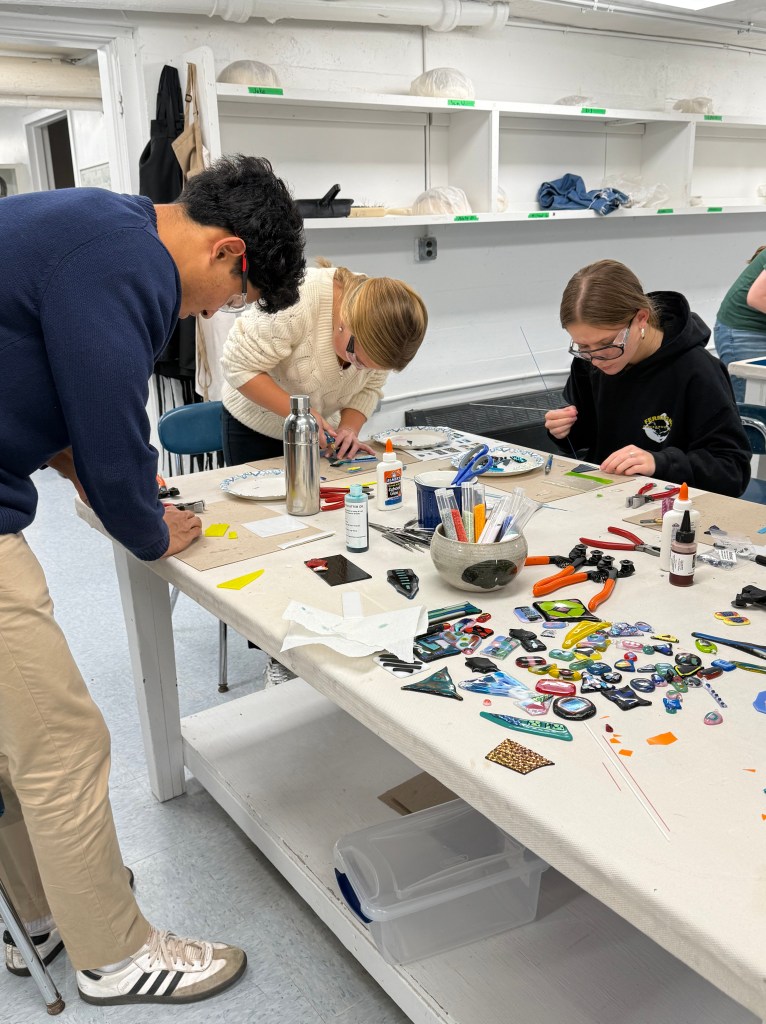
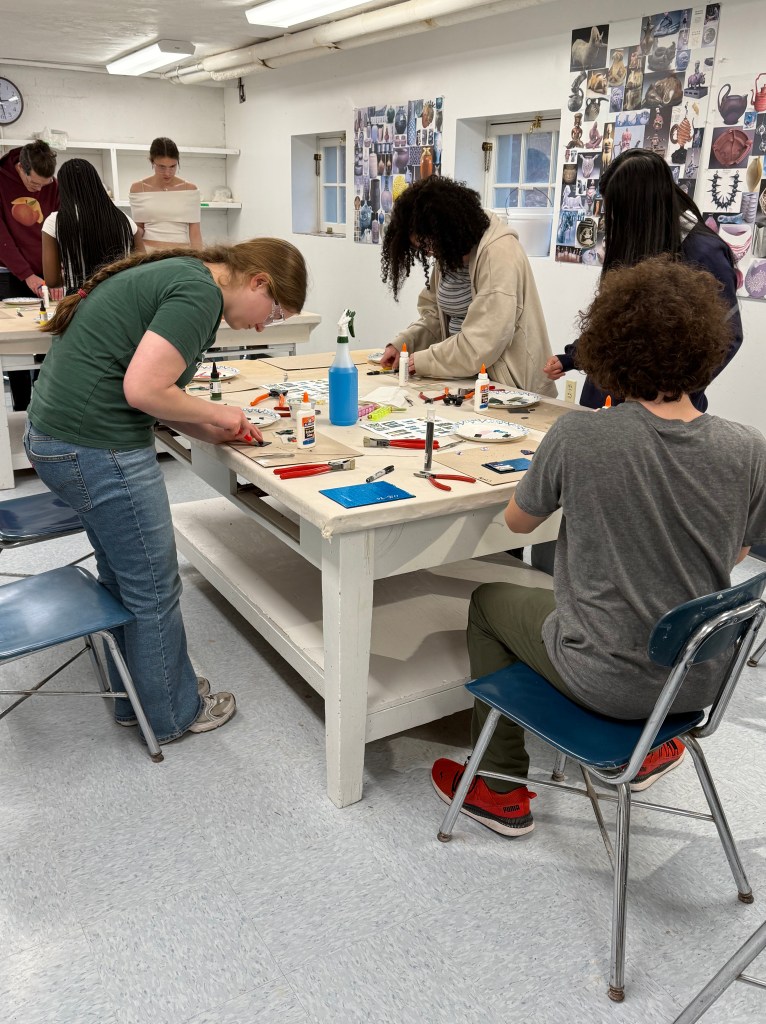
Students at work, creating their own fused glass pieces in their class workshops.
Working with fused glass seemed a little daunting at the beginning of the workshops, but a quick demonstration by Ramson with helpful instructions gave students the courage and motivation to dive in. The plethora of glass pieces to work with – stringers, millefiori, frit, swizzle sticks, dichroic, and ribbons – came in many shapes, textures, and colors. Students worked side by side creating their pieces of art, asking Ramson questions about his techniques and listening to stories about his life and art journey.
“Working with fused glass, you need to be prepared to forfeit control…” was Ramson’s important insight that would hold true from assembling our glass pieces to the final kiln firing of our pieces. No matter the shape or size of your glass piece – after firing – it would melt down to around 6mm thick. Ramson calls this the “6mm rule.” I found it best to go into a fused glass design with no plan, as your final product would tend to come out a little different from what you’d imagine… most of the time it would look even better!
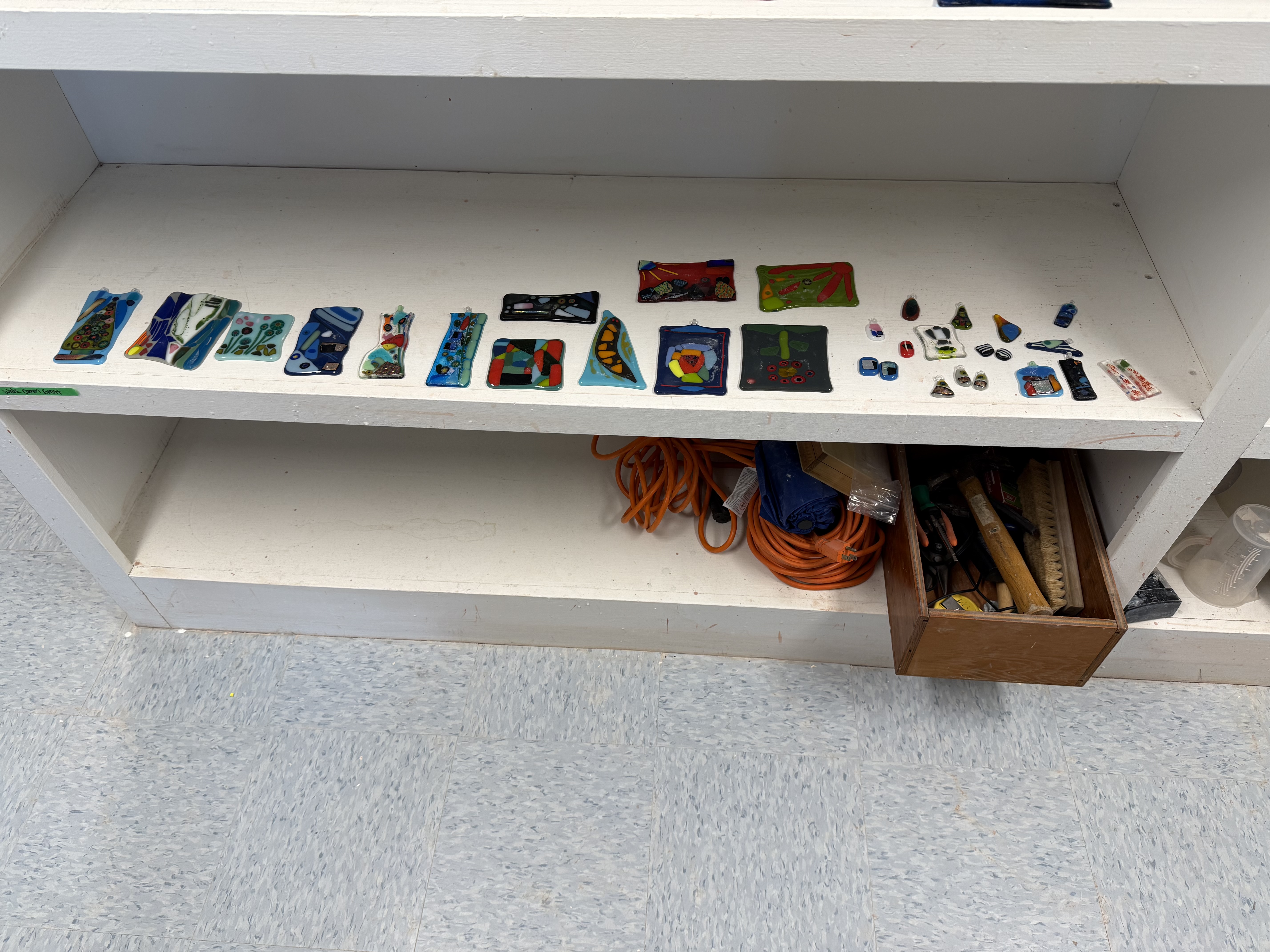
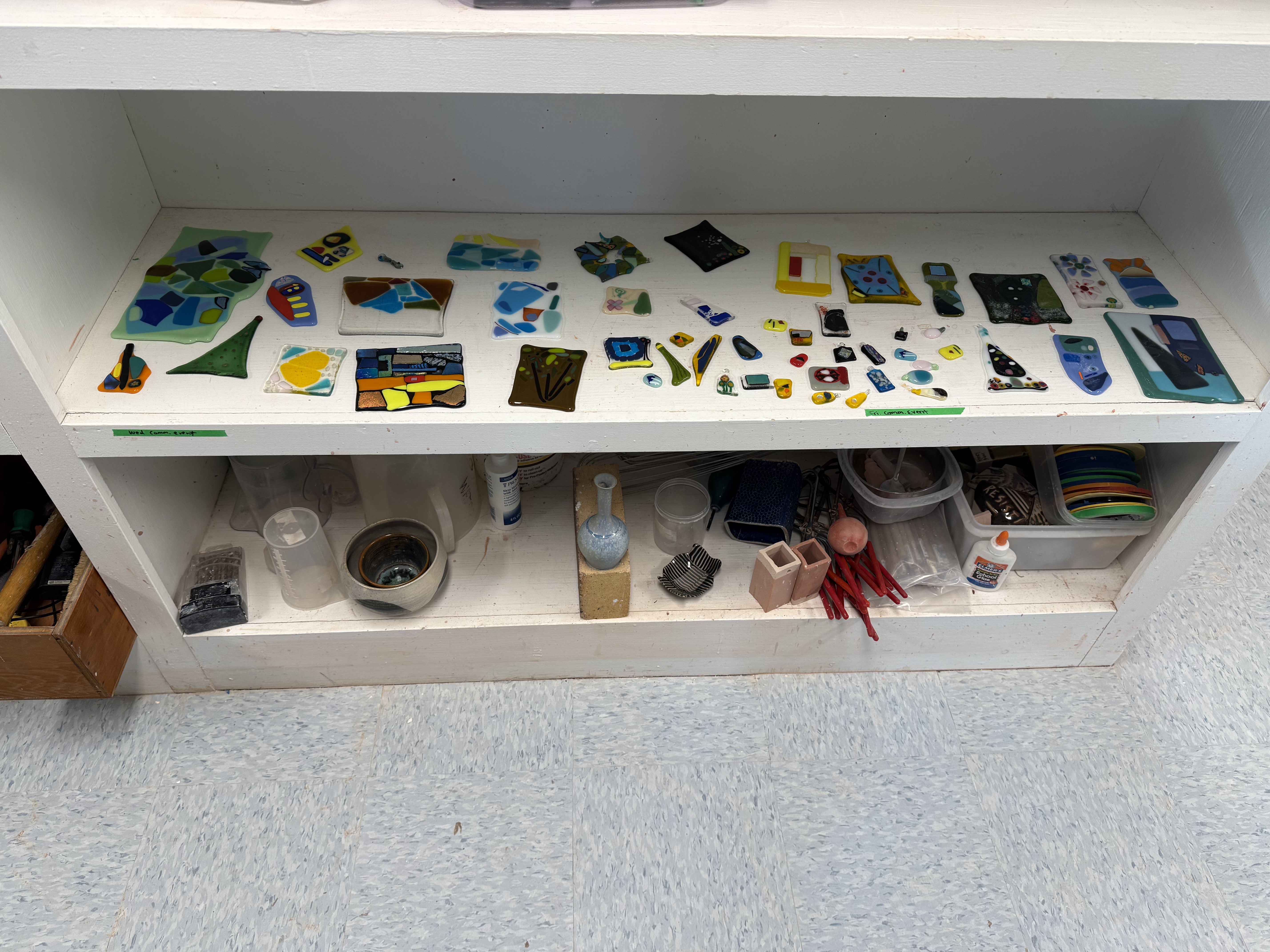
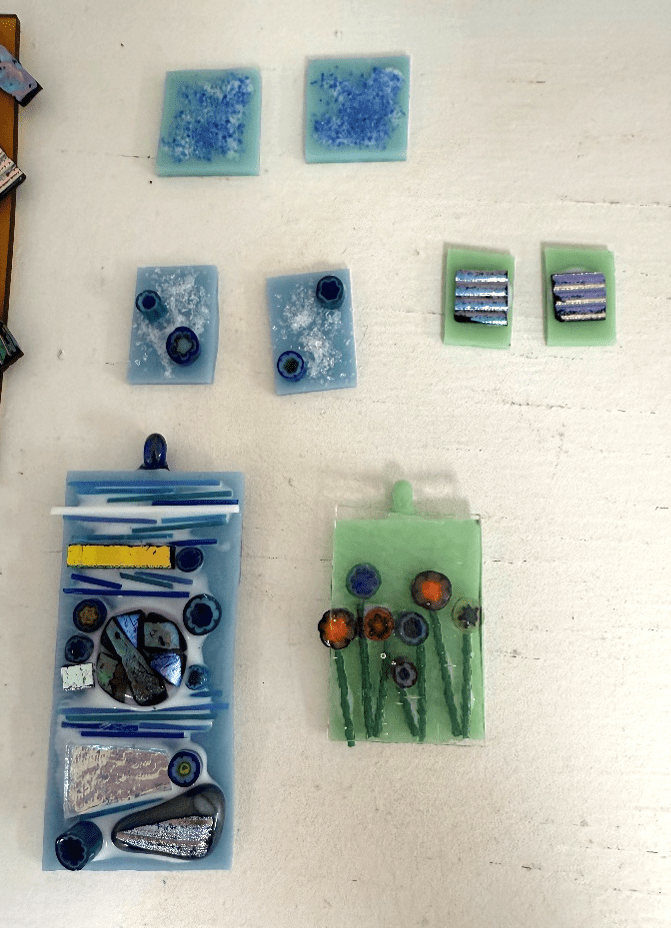
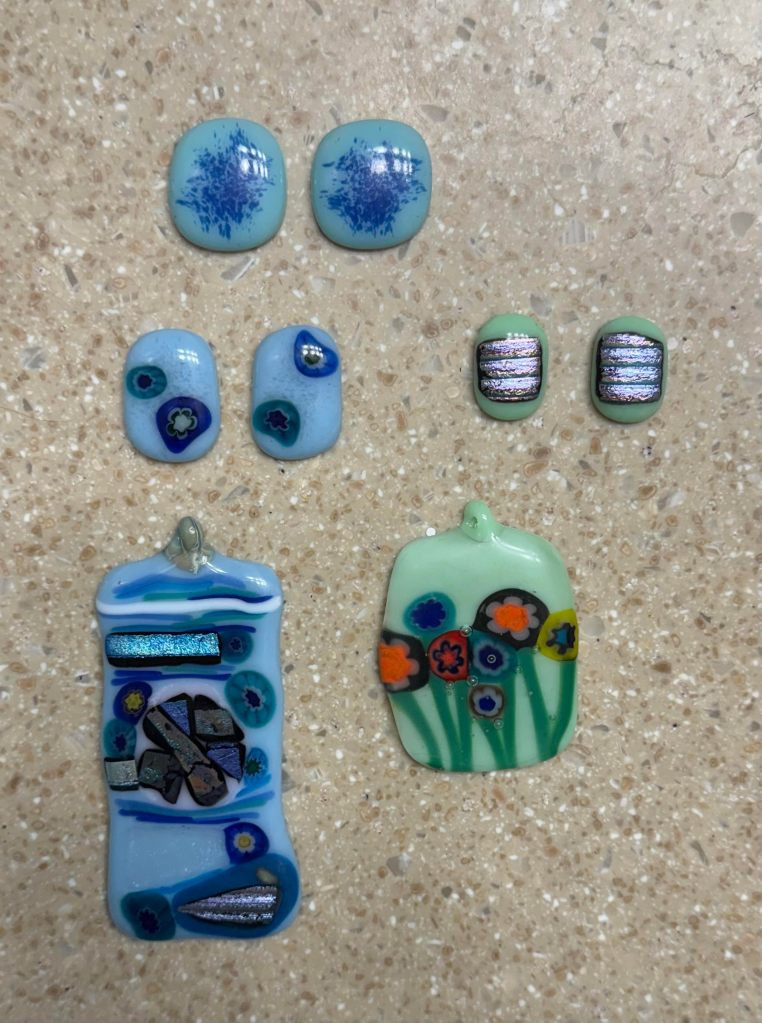
This year I created two pendants and (hopefully) some pieces to assemble into earrings. You can see my “before and after” photos of my glass pieces at the end of this blog. In the meantime, see below for some finished pieces by PA community members.
Finished fused glass pieces from the PA community workshops.
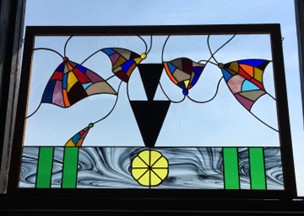
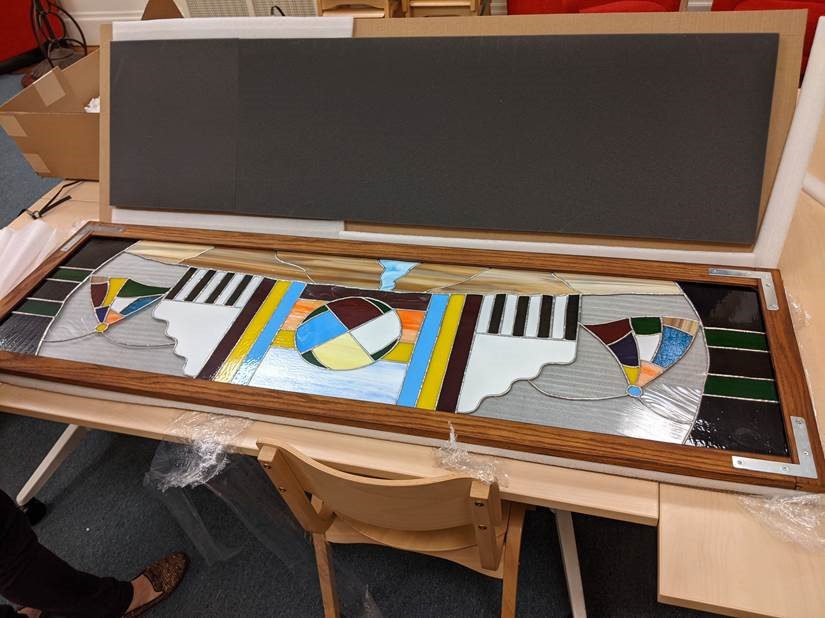
We are very fortunate to have acquired a stained-glass piece that Ramson created for the Peabody. We look forward to completing its installation in the Peabody’s front transom window once the next iteration of the building renovation is complete.
Ramson’s stained glass piece, commissioned by the Peabody.
We are very grateful for the time that Ramson dedicates to working with and educating our PA students and campus community! We hope to have him back next year! For more information about Ramson and the PA fused glass workshops, check out this article by the Andover Magazine (i.e. page spread #10-11, Digging Deeper article).
Over the past month I have had the good fortune to represent the Peabody Institute at two professional conferences. Learning from others in a shared space can be really energizing and informative. I also really enjoy attending conferences and getting to connect with colleagues that I usually only see in a tiny Zoom window on my computer screen.
First, I attended the New England Museum Association (NEMA) Annual Conference in Newport, Rhode Island. NEMA is a great conference that brings together people in the area to discuss a wide range of museum-related topics. This year, I noticed more sessions that focused on telling LGBTQ+ stories, exploring ‘hidden histories,’ and how institutions can support emerging professionals.
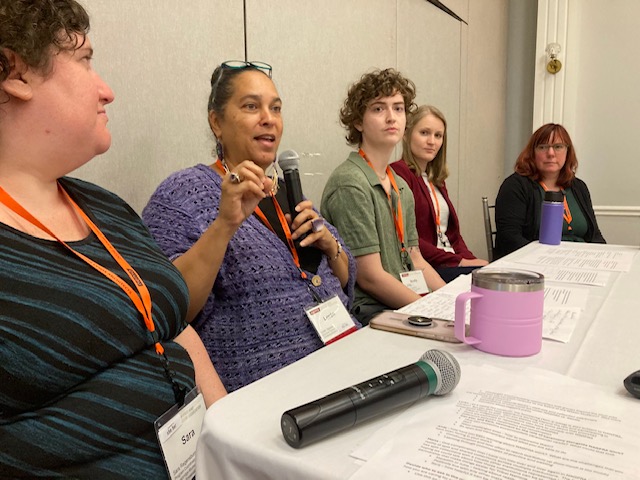
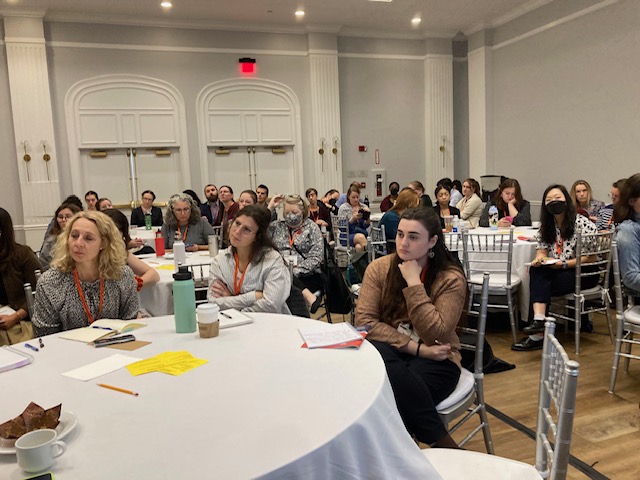
I was the facilitator for a panel titled Implementing NAGPRA: A Conversation with NAGPRA Practitioners. The panel was composed of individuals who are part of the Northeast NAGPRA Community of Practice and was a conversation to demystify the repatriation process, learn from colleagues, and identify opportunities for collaboration. The session was well attended and we had a fabulous conversation amongst ourselves and with the audience.
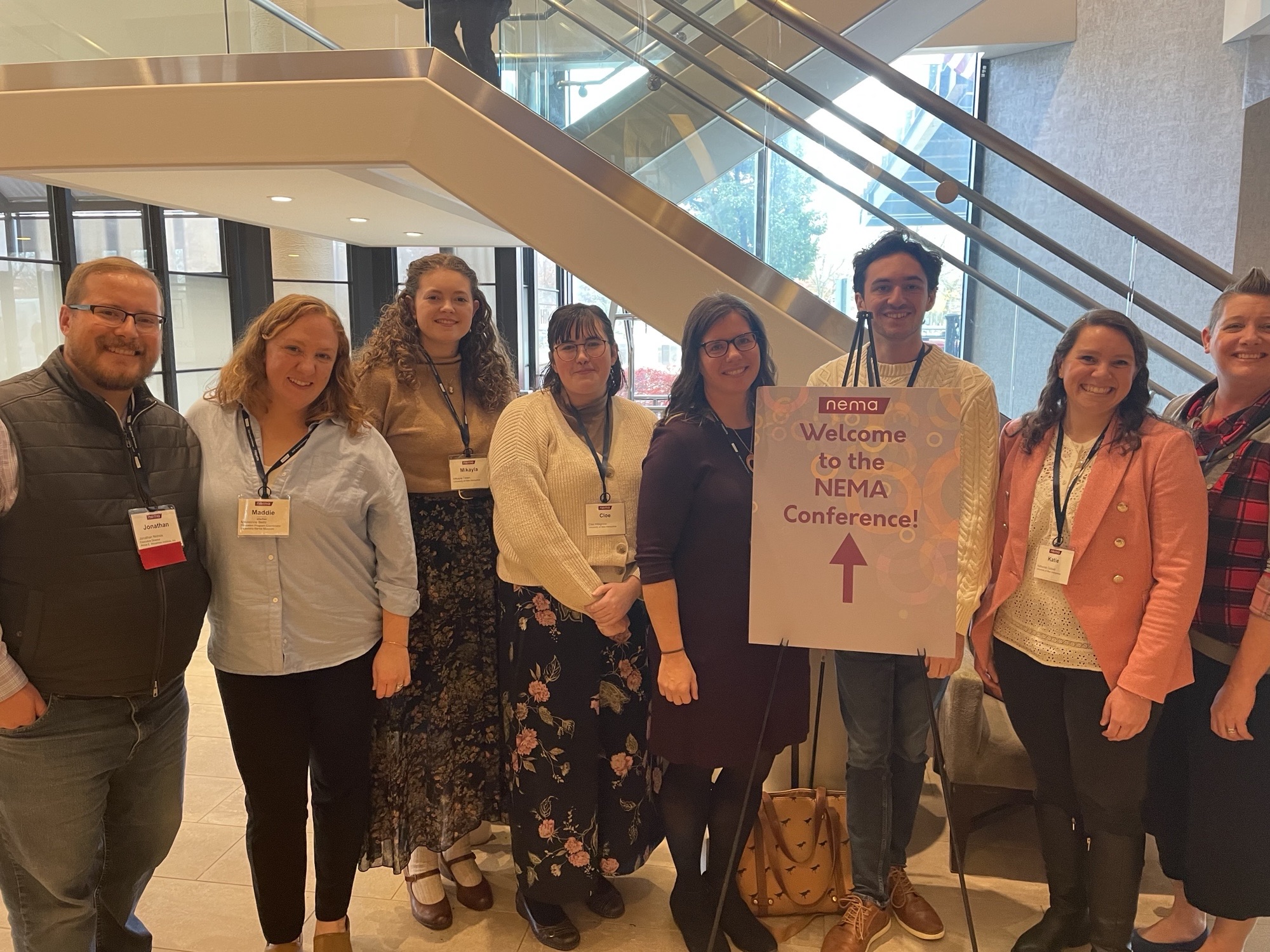
NEMA Session Panel SpeakersNEMA Session Audience
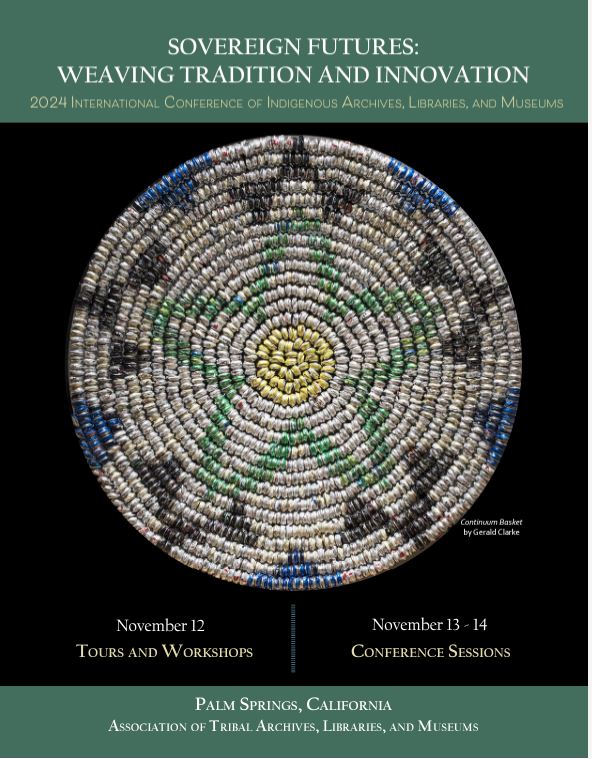
After a short (but long) day in Newport, I traveled the following week to Palm Springs, California for the Association of Tribal Archives, Libraries, and Museums (ATALM) Annual Conference. I love ATALM. It is a conference full of helpful information on everything from repatriation to pesticide management in collections to archival management. I appreciate that so many of the conversations really center on uplifting Indigenous voices and perspectives in all aspects of museum and cultural heritage work. It is a space that is invigorating and inspiring to me as a professional.
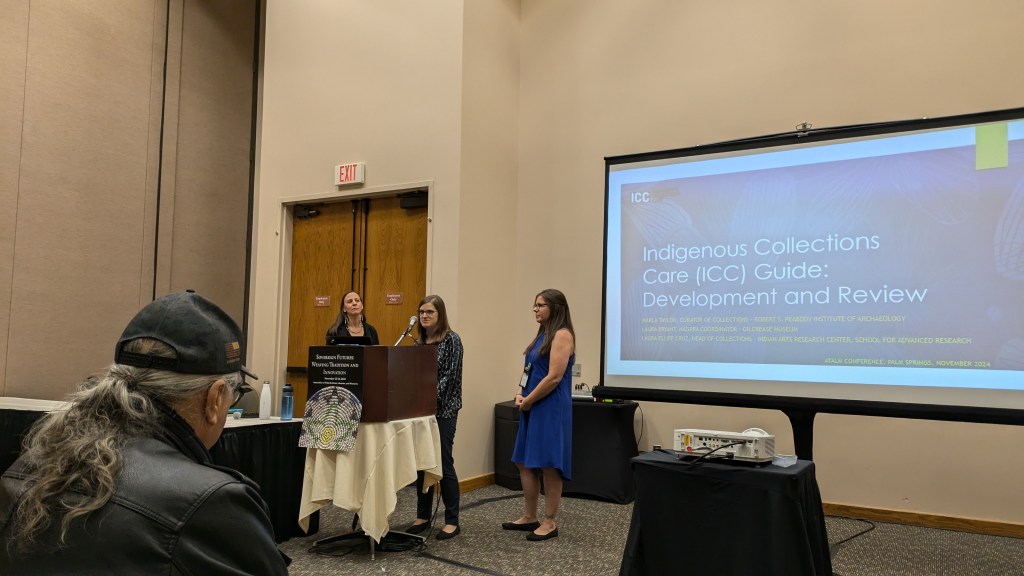
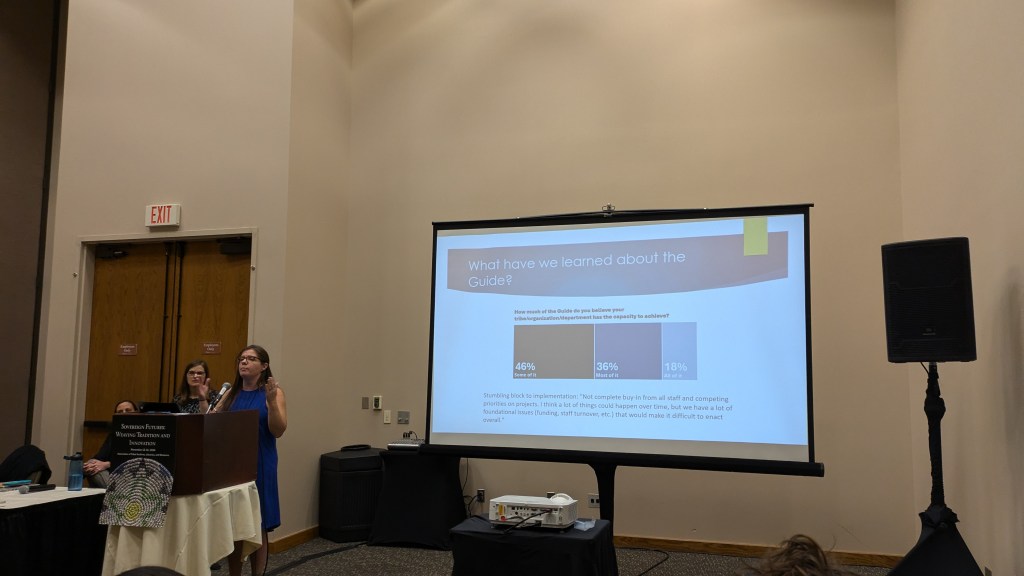
I was part of a session at ATALM to share information about the review process for the development of the ICC Guide. That session was well attended and we received lots of supportive feedback.
The fall season tends to be super hectic with all the conference travel, but it is a great way to connect with the larger profession.
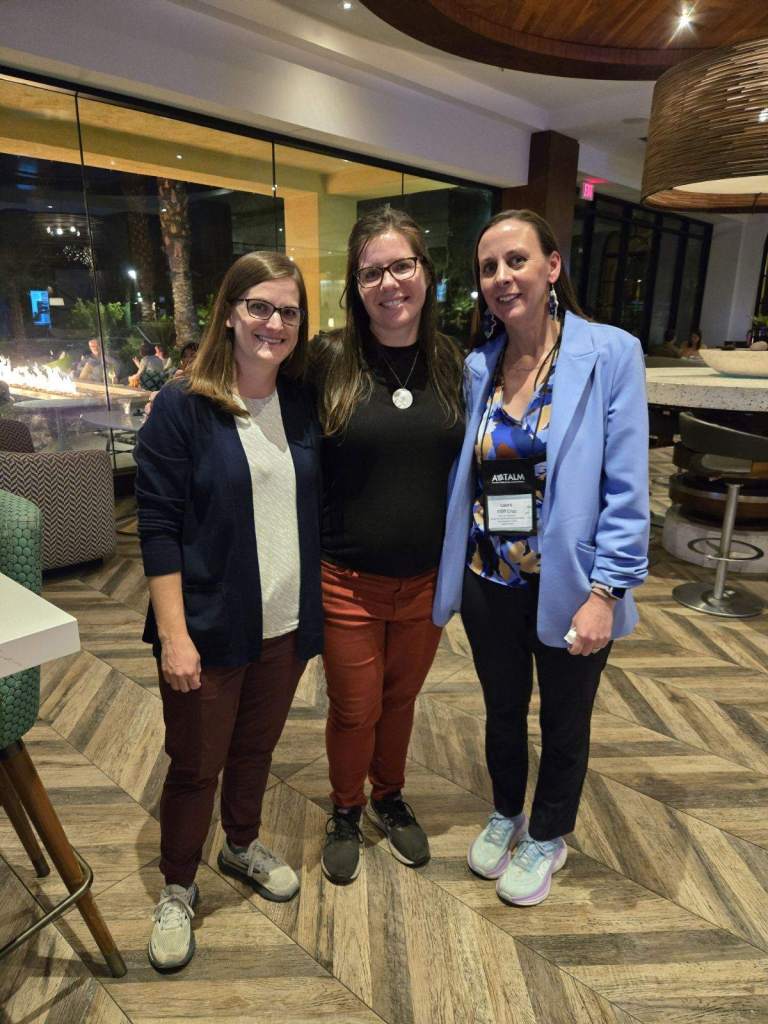
Presenting at ATALMMy co-presenters and IPresenting at ATALM
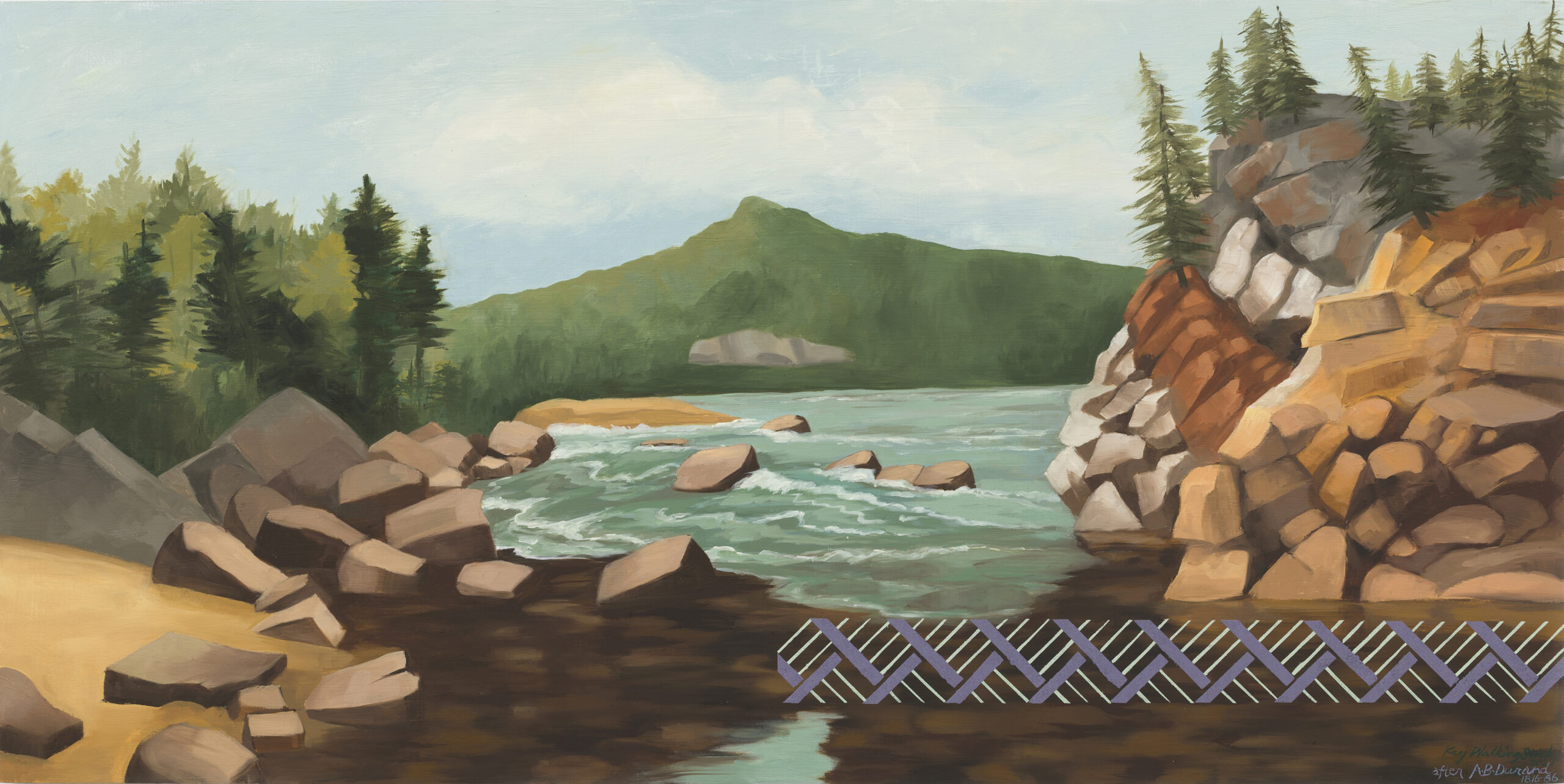
What do, parfleche, ceramics, paintings, and basketry all have in common? They are all currently on display at the Addison Gallery of American Art here at Phillips Academy as part of the Kay WalkingStick/Hudson River School exhibition.
Kay WalkingStick (Cherokee) is a contemporary artist and educator known for her landscape paintings. This exhibition originated at the New-York Historical Society and has been joined by over a dozen pieces from the Addison’s permanent collection as well as three from the Peabody Institute.
In another wonderful collaboration with the Addison Gallery, the Peabody loaned two Mohican culture baskets and a vessel made by Wampanoag artist Ramona Peters to be placed in dialogue with Kay’s work. The items were thoughtfully selected and contribute to an intentional conversation between traditional painting techniques and Indigenous art.
We really appreciate the opportunity to collaborate with the Addison and highlight pieces from the Peabody Institute. Check it out if you are in the area!
Kay WalkingStick, Durand’s Homage to the Mohawks, 2021. Oil on panel. Colby College Museum of Art, Waterville, Maine; The Lunder Collection. Photo by JSP Art Photography. Copyright Kay WalkingStick
Hi my name is Kyra Smith and I was one of the curatorial assistants at the Peabody this summer! I’m a recent archaeology master’s graduate from Boston University where I focused on Indigenous archaeologies, food sovereignty, and the archaeology of the South Pacific Islands. Having previously worked in the archaeology department of another museum in undergrad, I was thrilled to apply for this position as a curatorial assistant, especially at an institution that is so dedicated to NAGPRA. I was so invested in the position I had my family ship me my sister’s 1998 Toyota Camry from Washington State- which in the state of Massachusetts counts as an Antique Vehicle!
Working at the Peabody over these last ten weeks has been an exercise in flexibility, learning as we go along, and exposure to things we’ve never seen or interacted with before. There are so many things I could write about, but the story I want to share as my time here comes to an end is how the Peabody got its own pet mammoth.
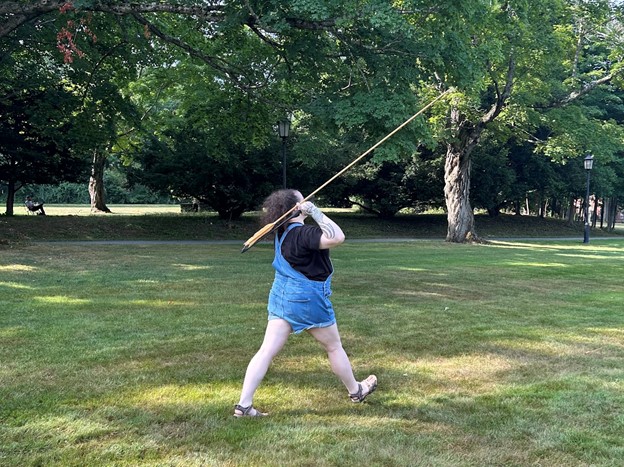
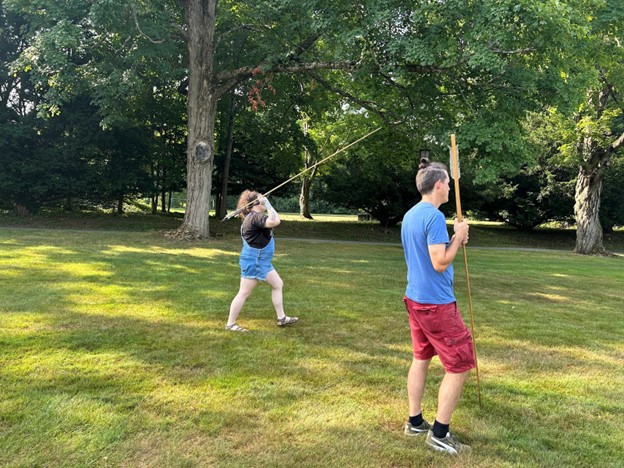
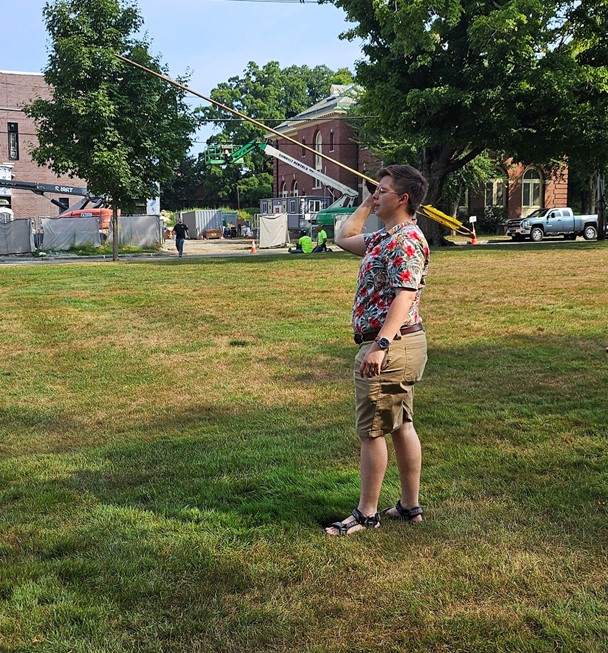
On a particularly hot and humid Friday, I finally got to use an atlatl for the first time. Ever since undergrad I have heard professors and archaeologists talk about atlatls, and even how they used to take students to try throwing them in previous years. Ever since then I have been biding my time until the opportunity arose- and oh was it worth the wait.
John, Cyrus, and I went out onto the Vista bright and early before it got too hot, and John took us through the basics. If you have ever used one of those plastic arms to play fetch with your dog- it’s nothing like that at all, which I learned very quickly. I imagine it was quite the sight for the construction workers on break in the shade of a nearby tree to see us attempting to throw the arrows taller than we were with varying degrees of success. After Cyrus and I (sort of) got the hang of it we were going to do target practice at the international standard target, but sadly that had to wait as the aforementioned construction workers were still under that tree which was too close to the target for comfort.
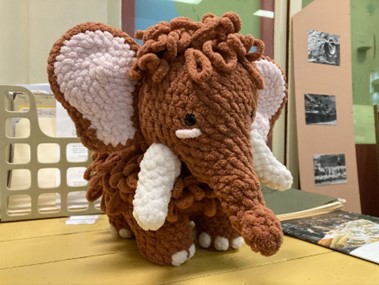
So, we went back inside to rest our arms and cool down, and by then an idea had begun to form. One that was inspired by our conversations about whether we were successful hunters of our theoretical mammoth/mastodon. That idea would have to wait because about an hour later we went back out to try aiming the arrows instead of attempting to throw them as far as humanly possible. It is much easier to attempt to throw them as far as humanly possible than it is to hit a large, completely still target. Still, Cyrus and I were able to land a couple hits each on the actual target and not into the bush next to it, and we called that a win. We may never know if we were skilled enough at throwing the atlatl to take on a mammoth, so instead I made a mammoth for the museum.
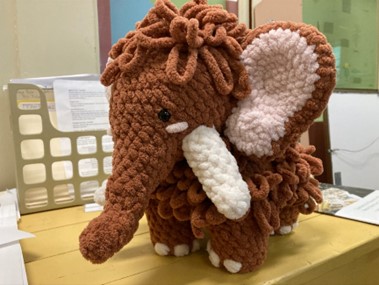
In my free time, when I’m not at the Peabody, I learned how to crochet amigurumi, which is a Japanese name for a style of stuffed crochet animals. That weekend after we threw the atlatls, I found a pattern online and spent some time crocheting a mammoth to be a mascot and companion at the museum. And thus, Josie was born! She was named by Marla, and now lives at the Peabody, where Marla promises she will never be used as target practice when throwing atlatls. For anyone else interested in crocheting or amigurumi, I got the pattern for Josie from CrochetGrove on Etsy.
Josie also represents one of my favorite aspects of working in a museum, as they are fundamentally institutions created for the purpose of preserving and storing information, things, and stories for perpetuity, there will always be a record of my impact whether it’s the work I did, the things I made, or the stuffed mammoths I created. Sure, the things I’m doing may not be monumental, but they are fundamental things that have left a trail of my action on parts of the museum like the catalog, or the new housing for artifacts with my initials on it, and the drawers in the collections storage where Cyrus and I curated and displayed artifacts from all over the world so that the museum and its staff can better tell the stories of the materials they care for. It’s a reminder of how much the little things mean in the greater scheme of things.
*******************************************
As Kyra aptly said in their post above, the Peabody Institute provided plenty of opportunities to expand our creative and intellectual spirit. As a Historical Archaeology graduate student at UMass Boston, I had minor collections experience and applied to the summer curatorial assistant position to undergo formal museum collections training. Having admired the Peabody Institute’s commitment to NAGPRA and tTribal relations for years, I was eager to witness the processes and procedures that go into the day-to-day work. However, what I was not expecting was the range of creations and artifacts I would be interacting with. My archaeological background is rooted in the Northeast United States and focuses on environmental analysis, so my mind was blown when one of our first tasks was rehousing ancient botanical remains from Tehuacán Valley, Mexico. Coming face-to-face to some of the world’s oldest domesticated maize was an experience I will never forget.
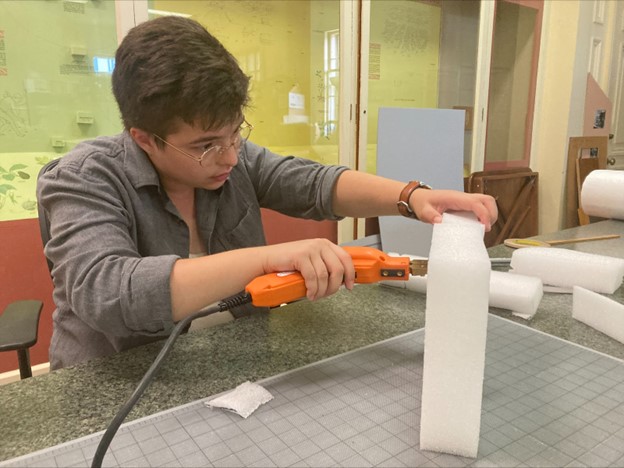
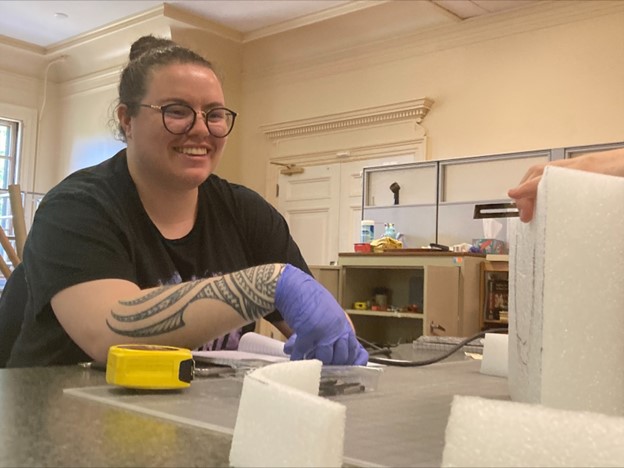
Kyra and I spent a lot of time with ceramics, lithics, and textiles from regions we were pretty unfamiliar with. Despite our lack of regional understanding, the Peabody staff always provided context and demonstrated deep respect for all creations. As we created mounts for modern Guatemalan and ancient Peruvian textiles we learned their patterns and language; as I rehoused lithics I would consider the generational knowledge and studied craftsmanship it would take to form them. Creating spaces to house and display archaeological and ethnographic creations ranging from the Lucy Foster household in Andover to Meso-America to Paleolithic Europe was an honor and I am proud to have contributed to the updated collection spaces and stories the Peabody staff can tell.
The Peabody Institute has a very storied past that was illuminated through organizing both the library and Eugene Winter’s archive. As it was founded in 1901 with contributions from many different kinds of archaeologists, the library seems to contain the entire history and complicated legacy of North American archaeology. In addition to the library, Eugene Winter, Honorary Curator and lifelong contributor to the Peabody, had left behind an archive after his passing. Kyra and I spent some time exploring his legacy through the resources, photographs, and ephemera he had designated important enough to keep. Interacting with both the collections, library and archives created an meta-institutional feedback loop as a reminder that working in archaeology requires positionality, empathy, and acceptance of “not-knowing.” We will never be able to alter the decisions made in the past, but we can always alter our perspectives in the present and contribute to a future that centers people and not only their “things.”
As Kyra noted, working at the Peabody for the past ten weeks might not have been monumental to its legacy, but the work that has been completed by the longer-term staff is monumental to the field. The Peabody staff have taught me fundamental collection management skills that are coated in careful consideration, empathy, and a desire to create a better future that I am extremely grateful to inherit.
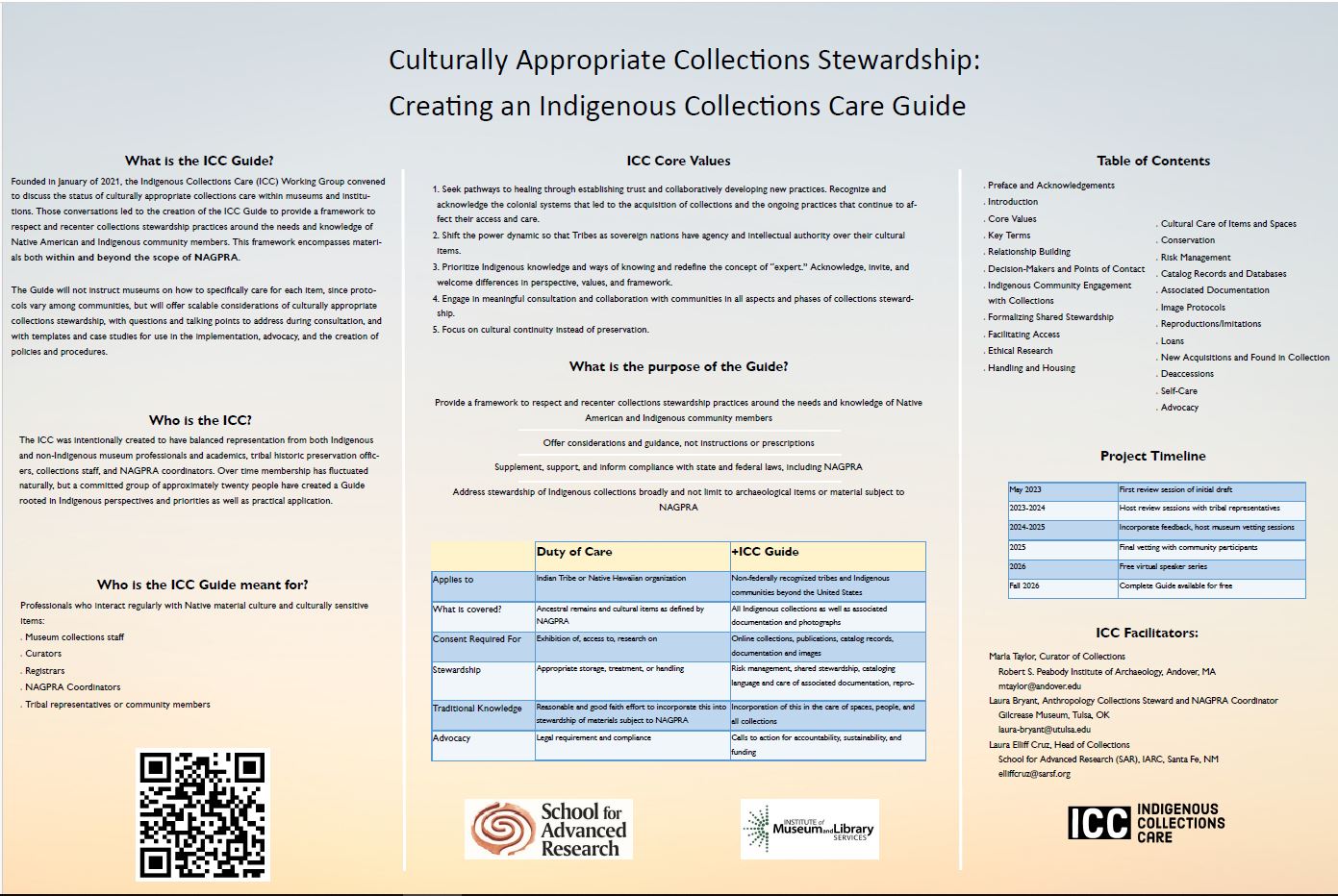
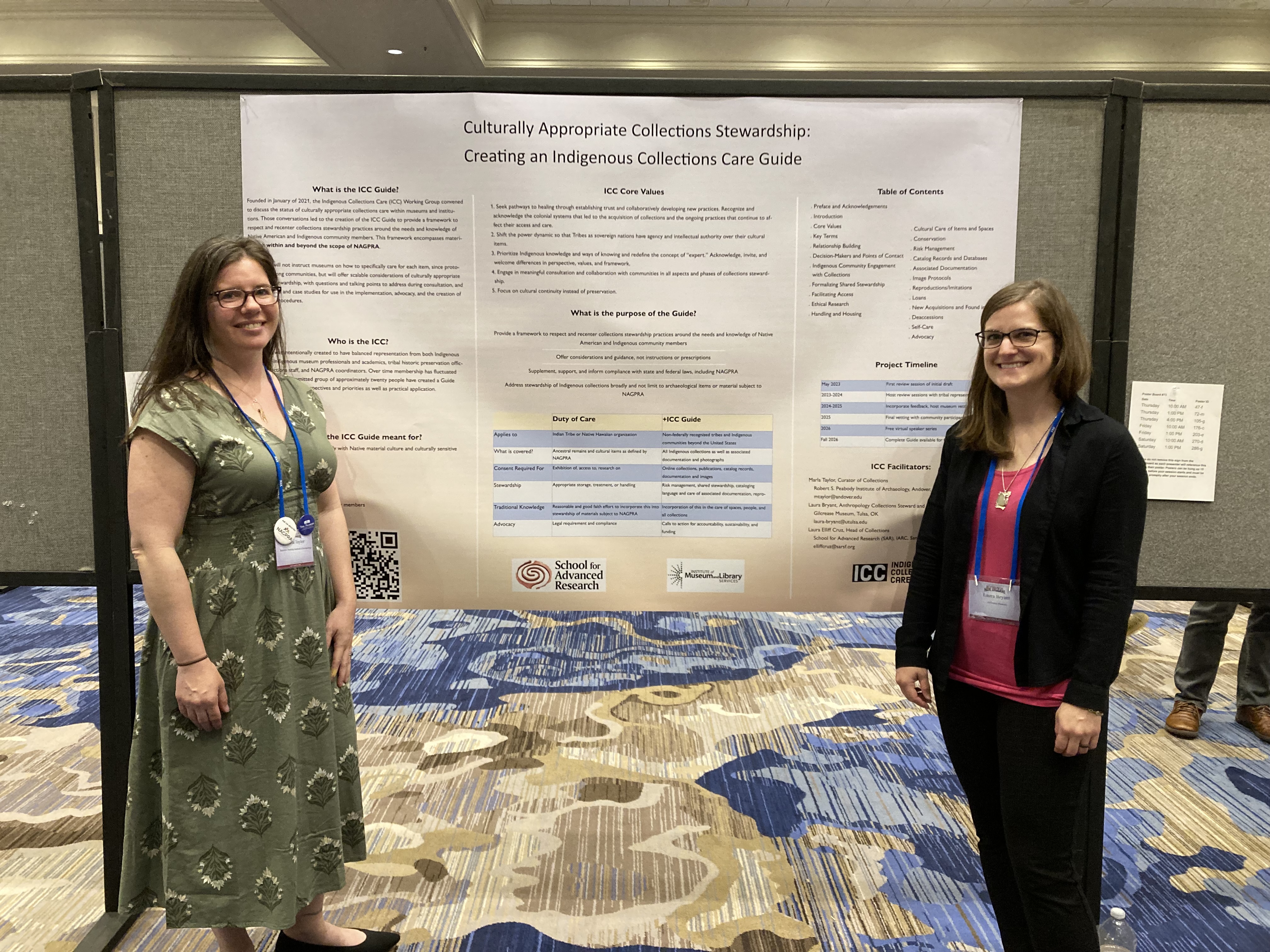
At the SAA meeting in New Orleans, I had the pleasure of representing the Indigenous Collections Care (ICC) Guide in the poster session – In Search of Solutions: Exploring Pathways to Repatriation for NAGPRA Practitioners (Part V): NAGPRA in Policy, Protocol, and Practice.
The ICC poster discussed the development of the ICC Guide, what is covered in the document, and how it can support NAGPRA compliance. The ICC Guide provides a framework to respect and recenter collections stewardship practices around the needs and knowledge of Native American and Indigenous community members. This framework encompasses materials both within and beyond the scope of NAGPRA.
I was excited for the opportunity to share the ICC Guide project with an archaeological audience. I had so many positive conversations with folks and really enjoyed connecting with everyone. It was a great conference and great experience!

 The Peabody