The Making of the Peabody Annual Report

Contributed by Emma Lavoie

To many institutions, the annual report is one of the most important pieces of information. A single document, yet a powerful tool in communicating an institution’s performance during each fiscal year. Each fall the Peabody presents their annual report to the public, highlighting their achievements, overall performance of the past year, as well as their goals and objectives for the coming year. Not only does the annual report provide a snap shot of what a year at the Peabody looks like, it provides transparency of the institution to the public and its local community.

The making of the Peabody annual report includes several staff members who collaborate in the documentation, writing, and gathering of the material across several departments within the Peabody. These include: Administration (Ryan, Director), Education and Outreach (Lindsay, Curator of Education and Outreach and Ryan, Director), Collections (Marla, Curator of Collections), and Peabody Donors and Support (Beth, PA Director for Museums and Educational Outreach). Once the information is gathered and content is written, I take over to design the overall layout of the annual report.

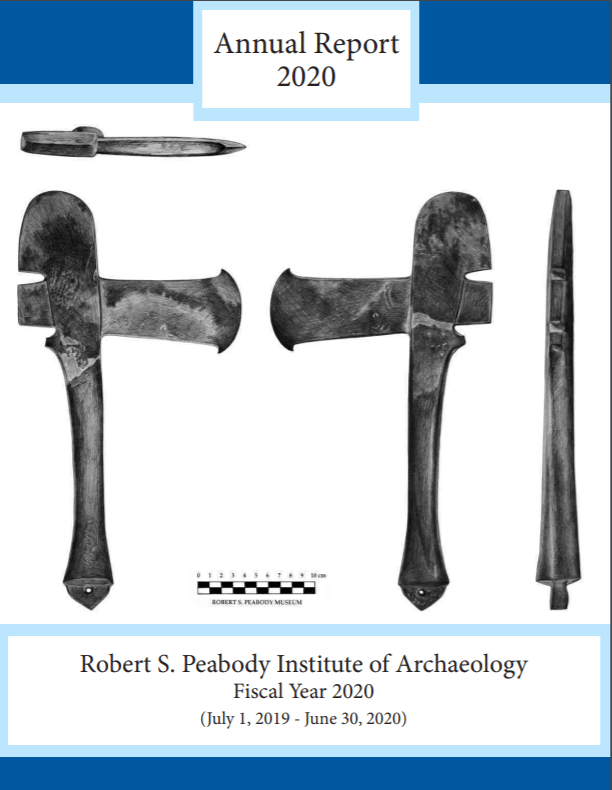
A page from the 2020 Peabody Annual Report

Using the Adobe InDesign software, I create each page spread using the information that staff give me. When designing, it is important to always keep in mind the overall flow of information and that the format/design features are cohesive throughout the document. Something new I incorporated into the report this year were black and white photographs from the Peabody archives. I used these photographs as transitions between specific sections of the report to provide a natural break, while still maintaining the overall flow of the report. I also had a little fun creating a new page dedicated to our collections remote work during Covid-19.

Photograph from the Peabody archives used in the 2020 Peabody Annual Report

I really enjoy designing the annual report and watching all the work Peabody staff put into the year unfold with the design of each page. Not only does it provide an opportunity for each department to feature their success and performance, its where all the Peabody’s work finally comes together.

You can view the 2020 Peabody Annual Report here. Enjoy!

What’s on the Window?

Contributed by Ryan Wheeler

Returning to the Peabody Institute on a more regular basis this month led me to rediscovery an interesting little artifact on the window of my office. When I first joined the Peabody in 2012, my colleagues pointed this out to me, but it has remained largely covered up by window blinds since an initial peek.

Singleton Peabody Moorehead’s name scratched on the windowpane in the director’s office.

The artifact in question is a scratched signature on a glass windowpane: S. P. Moorehead. Singleton Peabody Moorehead was our first curator’s youngest son.

When I first saw this little relic of past occupants, I imagined the younger Moorehead scratching the signature using his father’s emerald ring. That ring is a prominent feature in pictures of Moorehead, and I can imagine a mischievous child borrowing the ring and testing the stone’s hardness on the nearest handy surface: his father’s office window.

Robert Singleton Peabody, our founder, lent his name to the younger Moorehead. In fact, S. P. Moorehead was born in October 1900, right around the time that his father Warren and Robert Peabody were imagining the Department of Archaeology, our name in the early part of the twentieth century. Robert had befriended the elder Moorehead and hired him about a decade earlier to help amass a collection of Native American objects. He also provided convalescent facilities when Moorehead was recovering from tuberculosis. In fact, Singleton Moorehead was born at Saranac, New York where his father was recovering at Peabody’s cabin.

Moorehead’s entry in the 1918 Phillips Academy yearbook.

So who was Singleton Peabody Moorehead? He grew up on Hidden Field Road on the Phillips Academy campus, and graduated from the school in 1918. During his time at Phillips, Singleton, or “Sing,” played football, swam, and served as art editor for the Academy’s yearbook Pot-Pourri. He also participated in archaeological projects, including Alfred V. Kidder’s excavations at Pecos Pueblo, New Mexico. Both of Warren Moorehead’s sons, Ludwig and Singleton, served in World War I. After a brief military service, Singleton attended Harvard, where he received undergraduate and graduate degrees in architecture (BA in 1922 and M. Arch. in 1927). At Harvard, he continued his association with archaeologists, including a friendship with Philip Phillips. One wonders to what extent Moorehead’s exposure to archaeology prepared him for the Colonial Williamsburg project that became his life’s work?

Moorehead’s elevation of Colonial Williamsburg Block 17; Block 8: Duke of Gloucester Street.

Singleton joined the Boston architectural firm Perry, Shaw and Hepburn in 1928 and almost immediately began work at the firm’s field office in Williamsburg, Virginia. Here he was involved in the restoration work of Colonial Williamsburg, ultimately joining the Colonial Williamsburg Foundation in 1934, where he worked as director of architecture from 1944 through 1948, and then as a consultant. So, if you’ve visited Colonial Williamsburg, you know Singleton Moorehead’s work! Perhaps one of the best-known structures at Colonial Williamsburg is the capitol building, reconstructed based on elevations, archival descriptions, and archaeological investigations conducted under the director of the Perry, Shaw and Hepburn architects. Another Colonial Williamsburg favorite is Chowning’s Tavern; a 2016 newspaper story on the 1939 reconstruction attributes much of the character of Chowning’s to Moorehead, who was interested in the quotidian aspects of eighteenth century architecture.

Moorehead’s birds-eye view of Pecos Pueblo, from Alfred Kidder’s 1958 “blue book” Pecos Notes.

He married Cynthia Beverley Tucker Coleman, a descendant of St. George Tucker, a colonial resident of Williamsburg. A New York Times (December 12, 1964) obituary notes his involvement in many other historic preservation and architectural projects, as well as contributions to two books, Colonial Williamsburg: Its Buildings and Gardens (1949) and The Public Buildings of Williamsburg (1958), and authorship of many articles. One such crossover project was Kidder’s revisit of his Pecos excavation, including detailed architectural plans executed by Singleton and published as one of the Peabody Foundation “blue books” in 1958.

S. P. Moorehead died in December 1964 and is interred in the Bruton Parish Church cemetery in Williamsburg.

Further Reading

Lounsbury, Carl R. (1990) Beaux-Arts Ideals and Colonial Reality: The Reconstruction of Williamsburg’s Capitol. Journal of the Society of Architectural History 49(4):373-389.

New York Times (1964) Singleton P. Moorehead Dead: Colonial Williamsburg Planner. December 13, 1964, p. 86.

Singleton P. Moorehead Streetscapes, John D. Rockefeller Jr. Library, Colonial Williamsburg Foundation https://rocklib.omeka.net/collections/show/11

Henry Inman Portraits at the Peabody

Contributed by Ryan Wheeler

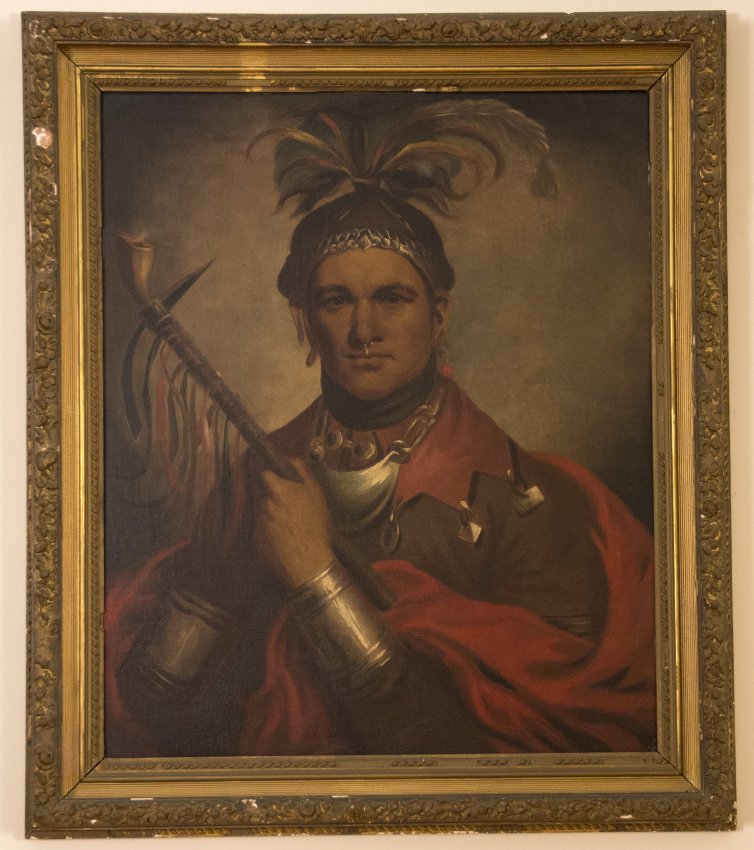
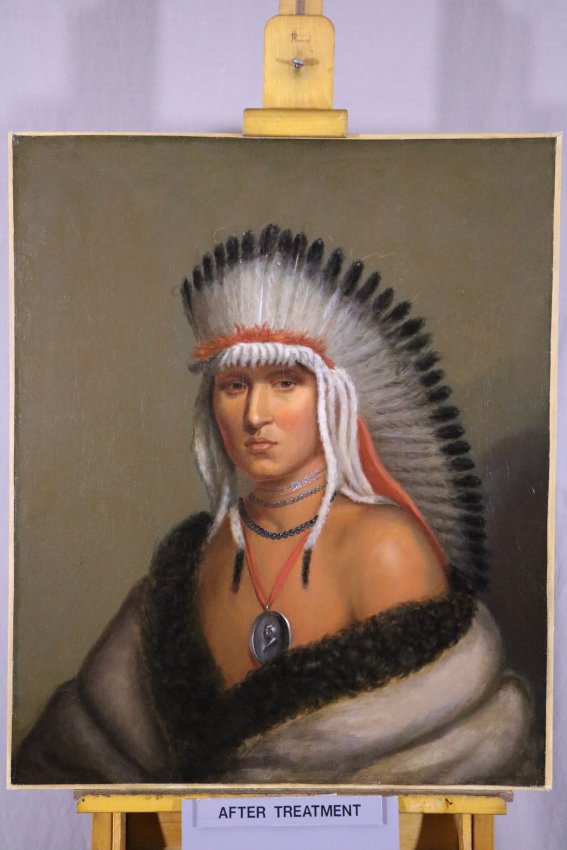
Three distinctive oil paintings attributed to artist Henry Inman (1801-1846) are among the collections of the Robert S. Peabody Institute of Archaeology. These paintings are part of a larger group of portraits created by Inman to produce the hand colored lithographs that appeared in the three volumes of The History of Indian Tribes of North America (1836-1844) by Thomas McKenney and James Hall. Specifically, the Peabody paintings depict Petalesharo (90.181.10), Ki-On-Twog-Ky, or Cornplanter (90.181.11), and Mohongo and Child (90.181.12). The source material for the Inman paintings were original works created principally in Washington DC by portrait painter Charles Bird King (1785-1862). The bulk of the King originals were destroyed in a fire in 1865.

Image shows an oil painting of a Native American man with feather headdress and spontoon pipe, metal gorget at the neck and metal gauntlets.
Henry Inman’s portrait of Ki-On-Twog-Ky, or Cornplanter.

Today, original editions of the McKenney and Hall volumes and individual lithographs are valuable and highly sought after, but at the time the project was not a financial success. Many of the Inman portraits (at least 100 or more) were given to the Tilestone and Hollingsworth Paper Company of Milton, MA, who had supplied paper for the book project. The families of Edmund Tilestone and Amor Hollingsworth made a gift of the paintings to the Harvard Peabody Museum of Archaeology and Ethnology in 1882. In the late 1970s and early 1980s the Harvard museum sold many of the Inman paintings in their collection, ultimately retaining twenty-five.

Image of cleaned oil painting showing Native American man with eagle feather headdress, silver peace medal necklace, and fur robes.
Henry Inman’s portrait of Petalesharo after a recent cleaning.

Comparison with the list of Harvard’s original holdings indicates that the three Inman portraits at the Robert S. Peabody Institute of Archaeology did not come from that source. The frames also are quite different; the paintings at Harvard have simple wood frames, with descriptive plaques affixed, while those at the Robert S. Peabody Institute of Archaeology have ornate frames with gold leaf. In correspondence on file, former museum director Richard S. MacNeish told then director James Bradley that the paintings were part of the original gift from Robert S. Peabody. Stebbins and Renn (2014:288) report that Harvard received 107 of the Inman paintings from the Tilestone and Hollingsworth heirs, but that Inman had originally painted 117 and the whereabouts of the remaining paintings is unclear. It is possible that Robert S. Peabody acquired the three paintings when they were exhibited in Philadelphia.

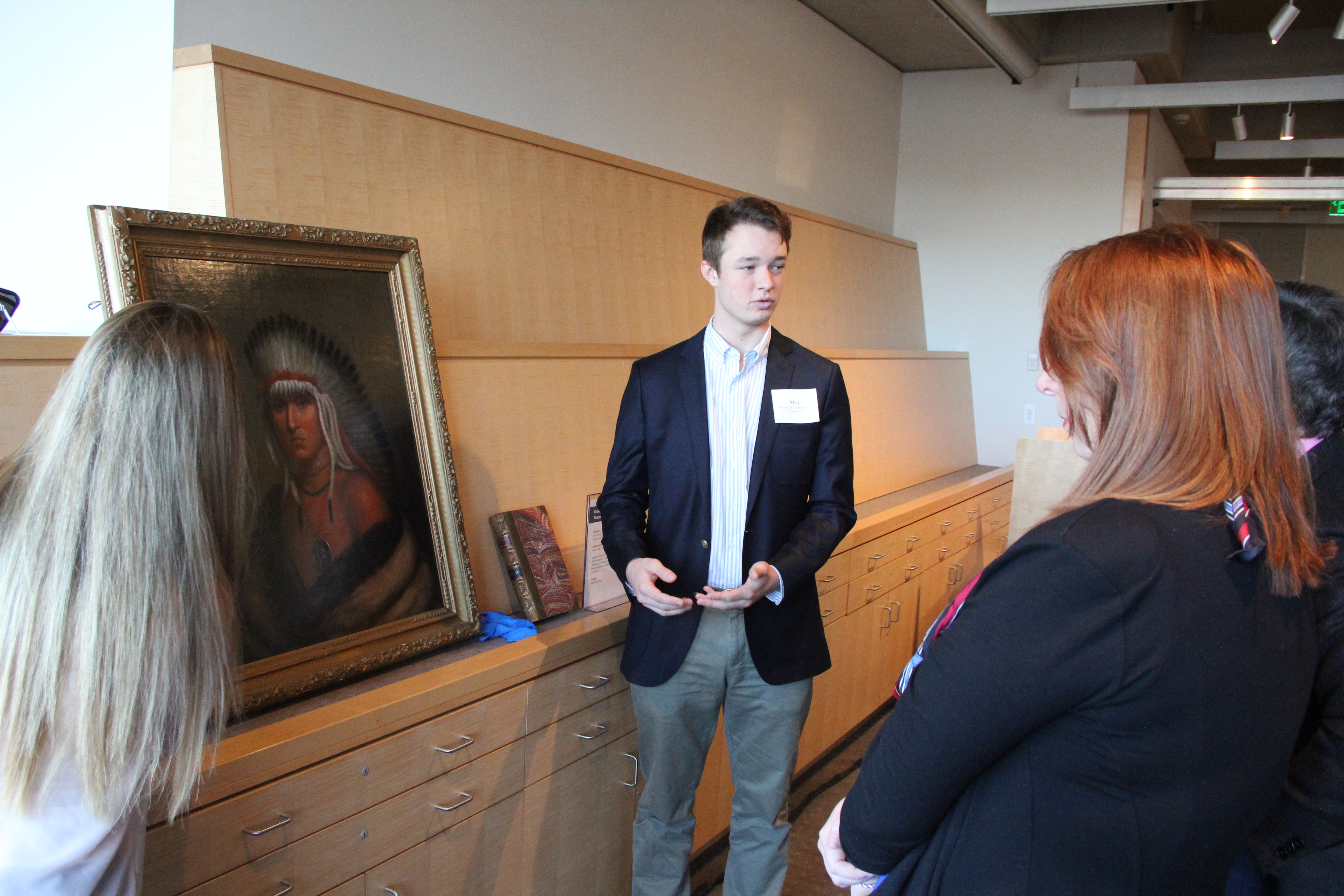
Image shows two students standing on either side of an oil painting of a Native American and explaining their work to onlookers.
Phillips Academy students share their independent research on the Henry Inman paintings with members of the Board of Trustees.

The paintings reflect the classical style of portraits painted in the nineteenth century, and do not attempt to portray people in an imagined “primitive” setting as the photographs of Edward S. Curtis do at the end of the century. Clothing and personal items reflect the blend of traditional and Anglo-European attire resulting from varying levels of cultural assimilation. History and Social Sciences instructor Marcelle Doheny uses the paintings in her senior elective, Race and Identity in Indian Country, and they were part of an independent student project in 2015-2016 that examined Anglo-European portrayals of Native Americans.

Image shows an oil painting in an elaborate gold gilt frame that depicts an attractive Native American woman holding her baby. She wears a red blouse which covers the baby's shoulders. A silver Indian Peace Medal around her neck is held by the baby.
Henry Inman’s portrait of Mohongo and child in storage at the Peabody.

The biographical notes that accompany the McKenney and Hall publication provide additional details about the lives of these individuals, at least as documented by the editors. Mohongo’s (1809-1836) story is particularly striking, as she was one of a group of Osage persuaded to make a European tour in 1827. While in Europe, she gave birth to twins, but only one survived. The tour organizer, who had brought the Osage to Europe to perform as a Wild West Show, was arrested for debt in Paris, leaving the rest of the party to fend for themselves. Ultimately, the Marquis de Lafayette learned of the situation and arranged for passage back to North America. During the sea voyage more members of the party perished, but Mohongo and her child survived, ultimately arriving in Norfolk, Virginia, where Charles Bird King painted their portrait. We believe that the peace medal worn by Mohongo depicts Andrew Jackson, who was president at the time. Mohongo and her child made their way back to Missouri. The book, An Osage Journey to Europe, 1827-1830: Three French Accounts edited and translated by William Least Heat-Moon and James K. Wallace, documents the episode.

Several exhibits—for example, the Indian Gallery of Henry Inman, which toured museums from 2006 to 2012—have assembled small collections of the extant Inman paintings, but the examples at the Peabody have never been included, likely because curators and art historians have not known about them.

Other Sources

Christie’s East. 1981. American Paintings and Watercolors of the 18th, 19th and 20th Centuries (auction catalog). New York.

Ewers, John C. 1954. Charles Bird King, painter of Indian visitors to the nation’s capital. Annual Report of the Board of Regents of the Smithsonian Institution, 1953. Pp. 463-473. Publication 4149. Government Printing Office, Washington DC.

Gerald Peters Gallery. 2008. Henry Inman, Twenty-four Indian Portraits (catalog). New York.

Gerdts, William H., and Carrie Rebora. 1987. The Art of Henry Inman. National Portrait Gallery, Smithsonian Institution, Washington, DC.

Stebbins, Theodore E., Jr., and Melissa Renn. 2014. American Paintings at Harvard, Volume 1: Paintings, Watercolors, and Pastels by Artists Born before 1826. Harvard Art Museums and Yale University Press, New Haven.

Viola, Herman J. 1976. The Indian Legacy of Charles Bird King. Smithsonian Institution Press and Doubleday & Company, New York.

Viola, Herman J. 1983. Indians of North America: Paintings by Henry Inman from the D. Harold Byrd, Jr. Collection. Buffalo Bill Historical Center, Cody, WY.

John Lowell Thorndike

Contributed by Ryan Wheeler

The Peabody lost a great friend with the recent passing of John Lowell Thorndike ’45 (1926 – 2020).

Image of John Thorndike, an older man with black rim glasses, a striped bow tie, and tweed jacket standing in front of a microphone at a museum event.
John Lowell Thorndike ’45 at the Peabody in 1998. Collections of the Robert S. Peabody Institute of Archaeology.

John was critical in the recent history of the Peabody, serving as chair of the Visiting Committee in the 1990s and early 2000s. This was a turbulent period, seeing everything from the reopening of the Peabody in 1990, engagement with Native American tribes through repatriation, and an attempt to become a public-facing institution with relevance on campus, culminating in a near-closure in 2002. He and Marshall Cloyd ’58, played a big part in the decision to keep the Peabody open and refocus our efforts on programming for Phillips Academy students.

I was fortunate in getting to know John a little, as he would visit campus at least once a year to attend the luncheon presentation of the Augustus Thorndike Jr. Internship, which he founded with his brother Nicholas (PA Class of 1951). Students selected as interns spent a year preparing a historical biographic sketch of an interesting Phillips Academy person, often an alumnus or faculty member.

John remained intensely interested in the activities of the Peabody in the years after 2002. He was particularly interested in our relationship with the Pueblo of Jemez and our continued work on repatriation of Native American ancestral remains and funerary belongings. We often had a chance to sit and talk before and after the luncheons, and John and I frequently had e-mail or phone exchanges after he received our monthly newsletter. John was particularly delighted when our ceramic artist friends from Jemez, Dominique and Maxine Toya, joined one of the Thorndike luncheons. They were on campus that week to work with Thayer Zaeder’s ceramics classes, continuing our long relationship with the pueblo.

John also shared with me his pleasure in seeing the publication of our book, Glory, Trouble, and Renaissance at the Robert S. Peabody Museum of Archaeology, by the University of Nebraska Press in 2018. John was not able to attend our launch party at the Peabody, but he called me shortly after receiving his copy in the mail and expressed his delight at our success, the considerable work done by Peabody director Malinda Stafford Blustain and Peabody staff members. He grudgingly and humbly acknowledged that he had some small role in that success, in the understated style of the New England gentleman that he was.

Our condolences to John’s family and friends. He will be missed.

A wonderful tribute appeared in the Boston Globe, recounting Mr. Thorndike’s many philanthropic and family pursuits: https://www.legacy.com/obituaries/bostonglobe/obituary.aspx?n=john-lowell-thorndike&pid=196302666

Tamaulipas Orchid

Contributed by Ryan Wheeler

Early in his archaeological career Richard “Scotty” MacNeish, the Peabody’s fifth director, used funds from the Wenner-Gren Foundation to investigate caves and rock shelters in northern Mexico. MacNeish had found that some of these sites contained preserved plant remains, basketry, twine, and other perishable artifacts while a graduate student at the University of Chicago. Early in 1949 his crew chief discovered tiny corn cobs in La Perra Cave in the Sierra de Tamaulipas. The rich biodiversity of this area in northern Mexico, near the Gulf Coast and Texas border, had attracted other scientists interested in the flora and fauna of the so-called cloud forests. Perhaps it is not surprising that the ancient people of the area experimented with plants, including early crops like corn. MacNeish’s work in the Sierra de Tamaulipas pushed corn origins back to 4,500 years ago (about half of the now-acknowledged age).

A man in a white t-shirt and khaki pants sits in an excavation pit and removes samples.
Scotty MacNeish removes samples from La Perra Cave, Sierra de Tamaulipas, March 1949. Collection of the Robert S. Peabody Institute of Archaeology 2018.0.0741.

The Peabody houses a small type collection of materials from MacNeish’s work in Tamaulipas, including artifacts, photographs, and fieldnotes. Last year we collaborated with the Boston Public Library’s Digital Commonwealth project to digitize the archival records associated with MacNeish’s Tamaulipas project, primarily to facilitate access by Mexican archaeologists working in the region. Those files are available on InternetArchive. We also digitized many of the photos from the project, available via PastPerfect Online. Recently, Peabody staff member Emma Lavoie has been cataloging the artifacts from Tamaulipas. Looking over Emma’s shoulder one day at the many preserved plant remains, I was surprised to see part of an ancient orchid!

Image of dried plant remains in a labeled plastic bag.
Dried pseudobulbs and roots of orchid from Sierra de Tamaulipas. Collection of Robert S. Peabody Museum of Archaeology 2019.6.396.

The Orchidaceae are one of the largest families of flowering plants, known to most of us from the cultivated examples with colorful and fragrant blooms available at grocery stores and garden centers. Commercial growing of orchids as houseplants began in the nineteenth century as the demand for “parlor plants” increased and diverse hybrids were created, many with fantastically shaped and colored blooms. Most of the orchids available for sale are of the genus Phalaenopsis. In the wild there is considerable diversity too, with terrestrial and epiphytic examples and a range of shapes, sizes, colors, and scents. Perhaps the best-known orchid is vanilla, a terrestrial form from Mexico.

We do not know what genus or species the dried pseudobulbs and roots of the Tamaulipas orchid represent. Notes on file show that botanist C. E. Smith, a student of Paul Mangelsdorf at Harvard, identified the orchid. Mangelsdorf worked closely with MacNeish on his early corn project, and Smith pioneered the field of archaeological botany. Quick searches of the literature did not reveal many examples of archaeological specimens of orchids in the Americas. We do know from some of the few preserved screen-fold books made by the Mixtec, Aztec, and their contemporaries that a variety of orchids were used in medicine, some may been collected for their hallucinogenic properties, and others were used to produce a special glue used in featherwork.

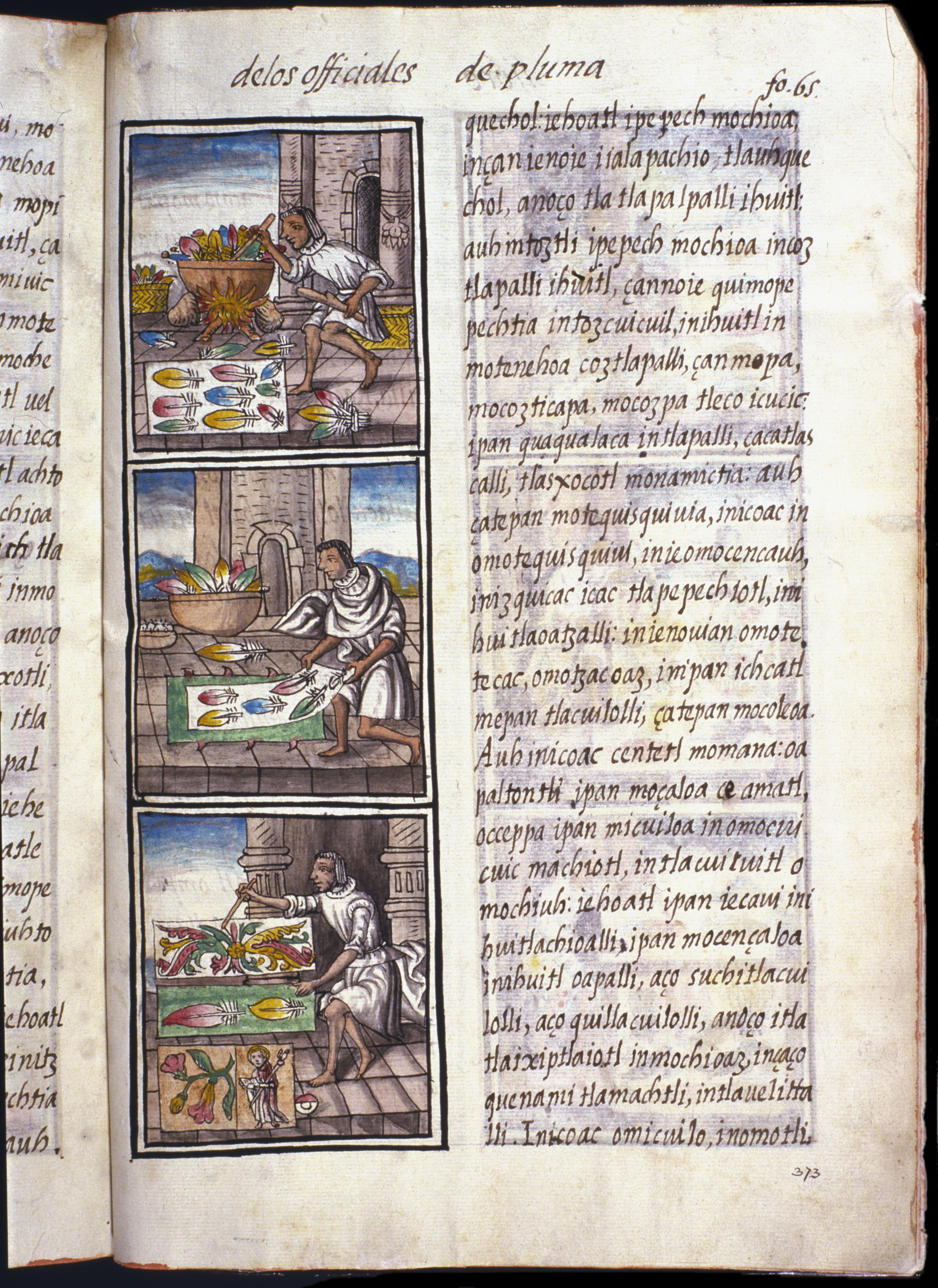
Image of a page from an illuminated manuscript showing three scenes of Aztex featherwork in the left hand column.
Image of Aztec featherwork from Sahagun’s sixteenth century Florentine Codex.

Carlos Ossenbach, in his 2005 study “History of the Orchids in Central America, Part 1: From Prehispanic Times to the Independence of the New Republics,” laments that the destruction of the majority of the screen-fold books by the Spanish also destroyed considerable information on the use of orchids in Mesoamerica. Between 1547 and 1577 Bernardino de Sahagún compiled his History of Things of New Spain (also called the Florentine Codex), which includes considerable information on the use of plants, including orchids, among the Aztec. Here Sahagún documents the use of the Encyclia pastoris orchid for glue making, when he describes how the pseudobulbs of the orchid are cut and soaked in water to produce a sticky substance called tzacutli. The complete codex can be viewed online: https://www.wdl.org/en/item/10096/view/1/35/ Researchers have documented at least twenty-three different orchid species and their use by the Aztec, Maya, and their neighbors, primarily as medicines, adhesives, fixers for pigments, and as ornamental specimens.

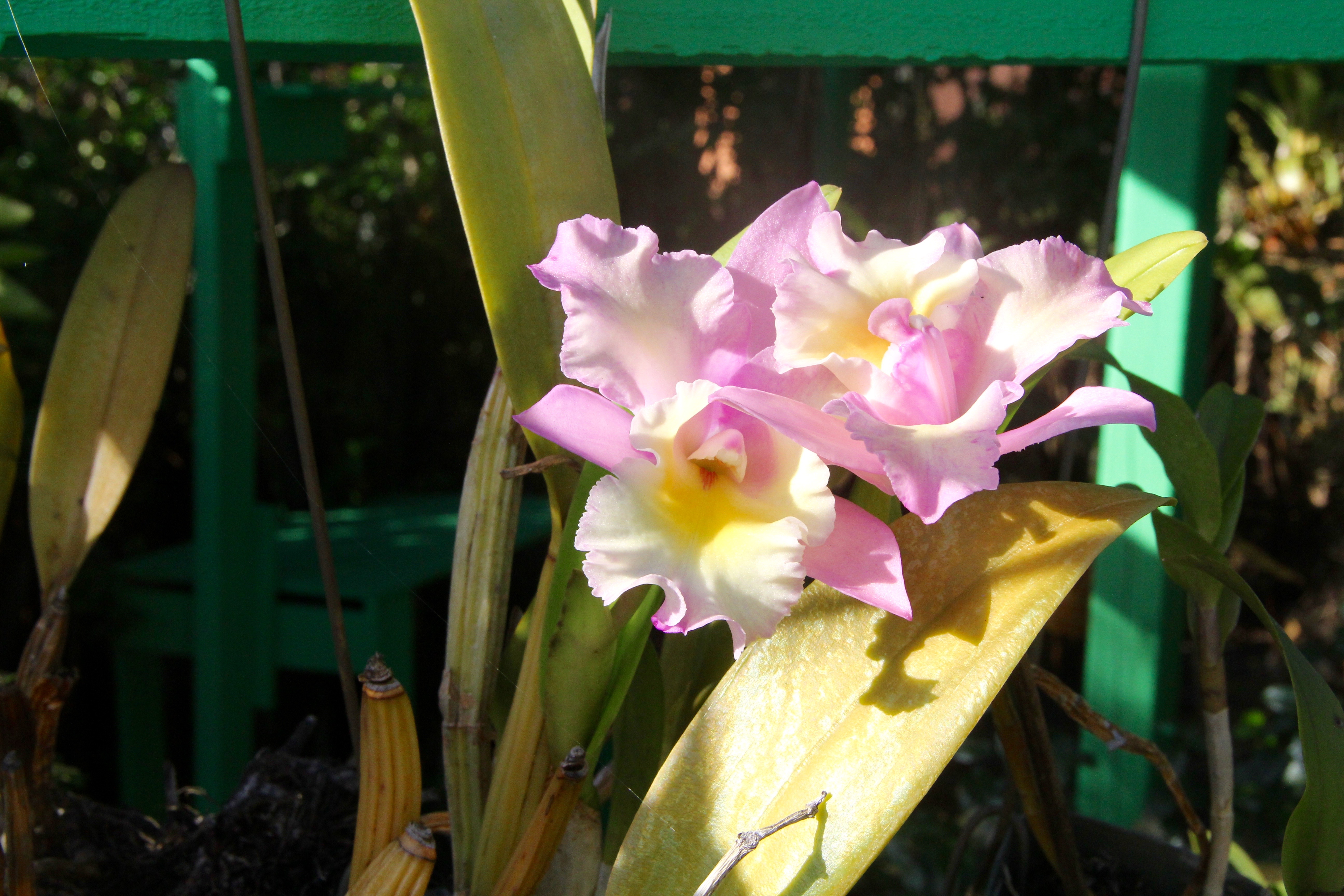
Image of pick and white orchids.
Orchids in Ryan Wheeler’s mom’s shadehouse, Fort Lauderdale, Florida.

The Tamaulipas orchid reminded me of the many terrestrial and aerial orchids that we often encountered at archaeological sites in Florida. Limestone and shelly soils encouraged their growth. It also brought back memories of my work at the Miami Circle site in late 1999. During the fieldwork I stayed with my parents and I was fortunate to accompany my mom on an orchid ramble one Saturday. A bus packed with orchid enthusiasts left Fort Lauderdale and visited at least half a dozen orchid growers in Homestead and Redlands, south of Miami. During the ramble we entered a raffle. I was surprised to receive a call Sunday evening. The gentleman calling informed me I had won a raffle prize and asked if I could collect it after work on Monday. After another intense day at the Miami Circle I navigated my Ford F-150 long-bed pickup through Miami’s crowded streets, onto Florida’s Turnpike, and then onto the Homestead extension. It was dark by the time I found the orchid grower. We entered the massive greenhouse and the grower–the gentleman who had called me the night before–gestured to one of the tables covered with orchids. I assumed I had won one of the orchids. He corrected me in a mellifluous English accent, I had won ALL of the orchids on the bench, approximately 100! He helped me load them into the F-150 and I headed north. My parents were disbelieving upon my return home. After I persuaded them to come outside, however, they acknowledged the enormity of the prize. My dad helped me unload and we struggled to find room in my mom’s orchid shade house. Some are still thriving today, while others were lost to hurricanes.

I’m interested in our Tamaulipas orchid. Could we determine the genus and species? Would that help us better understand why the orchid was in a cave deposit? Maybe as a drug,  or for glue making, or as a mind-altering hallucinogen? Perhaps we can connect with a specialist and answer some of these questions!

Early Sites

Contributed by Ryan Wheeler

Richard “Scotty” MacNeish (1918 – 2001) was a preeminent archaeologist of the mid to late twentieth century. Along with roles at the National Museum of Canada, the University of Calgary, and Boston University, Scotty was the fifth director of the Robert S. Peabody Foundation for Archaeology (now the Robert S. Peabody Institute of Archaeology). First associated with the Peabody in the early 1960s, he worked closely with Frederick Johnson and Douglas Byers, who assisted him with the Tehuacán Archaeological-Botanical Project, probing caves in central Mexico for the world’s earliest corn. Throughout his career, MacNeish sought the intertwined origins of agriculture and civilization, working in various parts of Mexico, Peru, China, Belize, and North America.

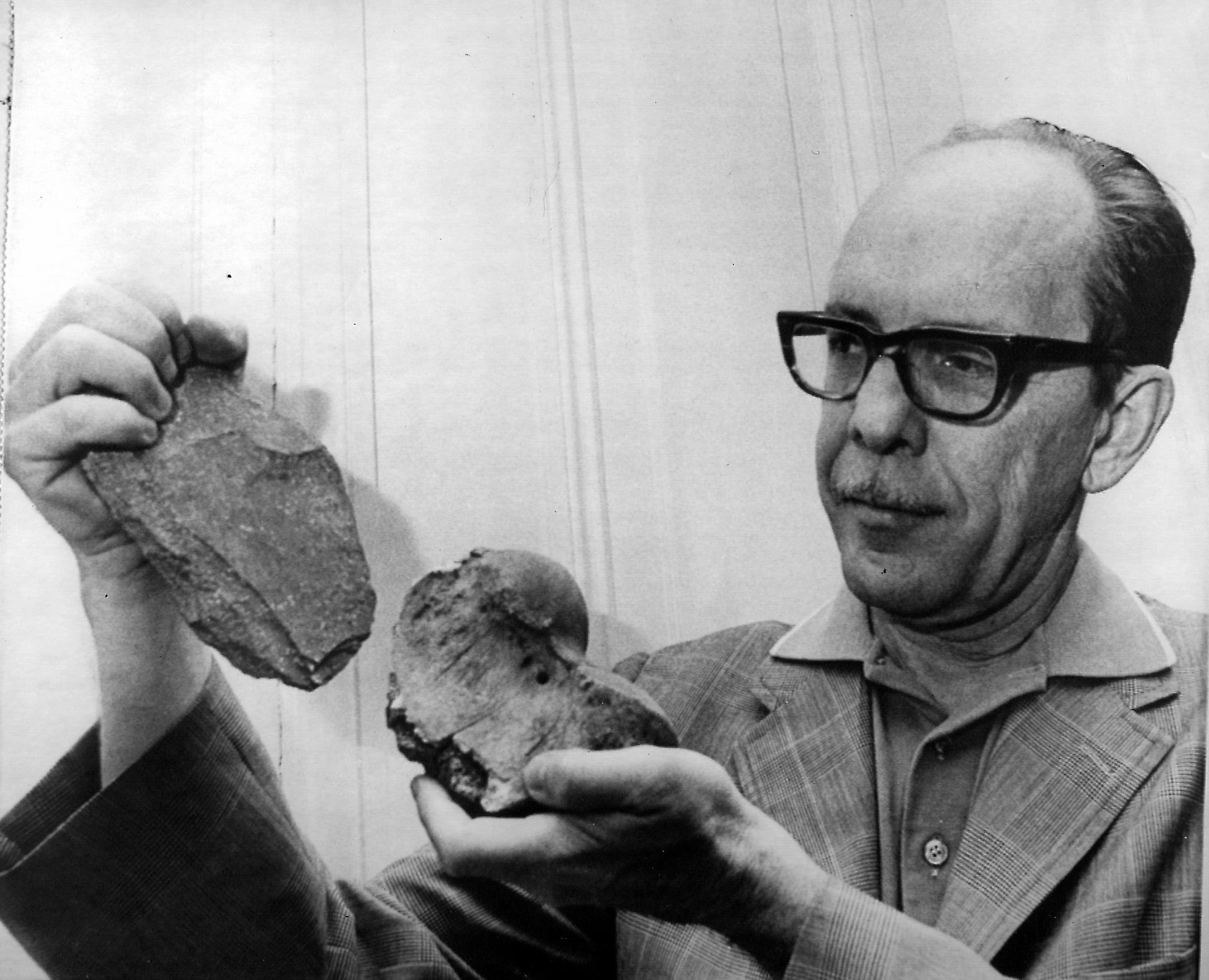
Image of Scotty MacNeish, wearing heavy black framed glasses and a tweed blazer holding a large, crude stone chopper tool and the end of a large sloth leg bone.
Richard “Scotty” MacNeish with a stone chopper tool and giant sloth bone fragment from Pikimachay Cave in highland Peru. MacNeish believed the earliest human occupation of the cave dated between 22,200 to 14,700 years ago.

Along with impressive ceramic chronologies and pretty old—if not the oldest—examples of corn, Scotty often also reported evidence of great human antiquity in the Americas. At a site highland Peru MacNeish claimed that the earliest levels had evidence of crude stone tools and Pleistocene megafauna dating to well over 14,000 years ago.

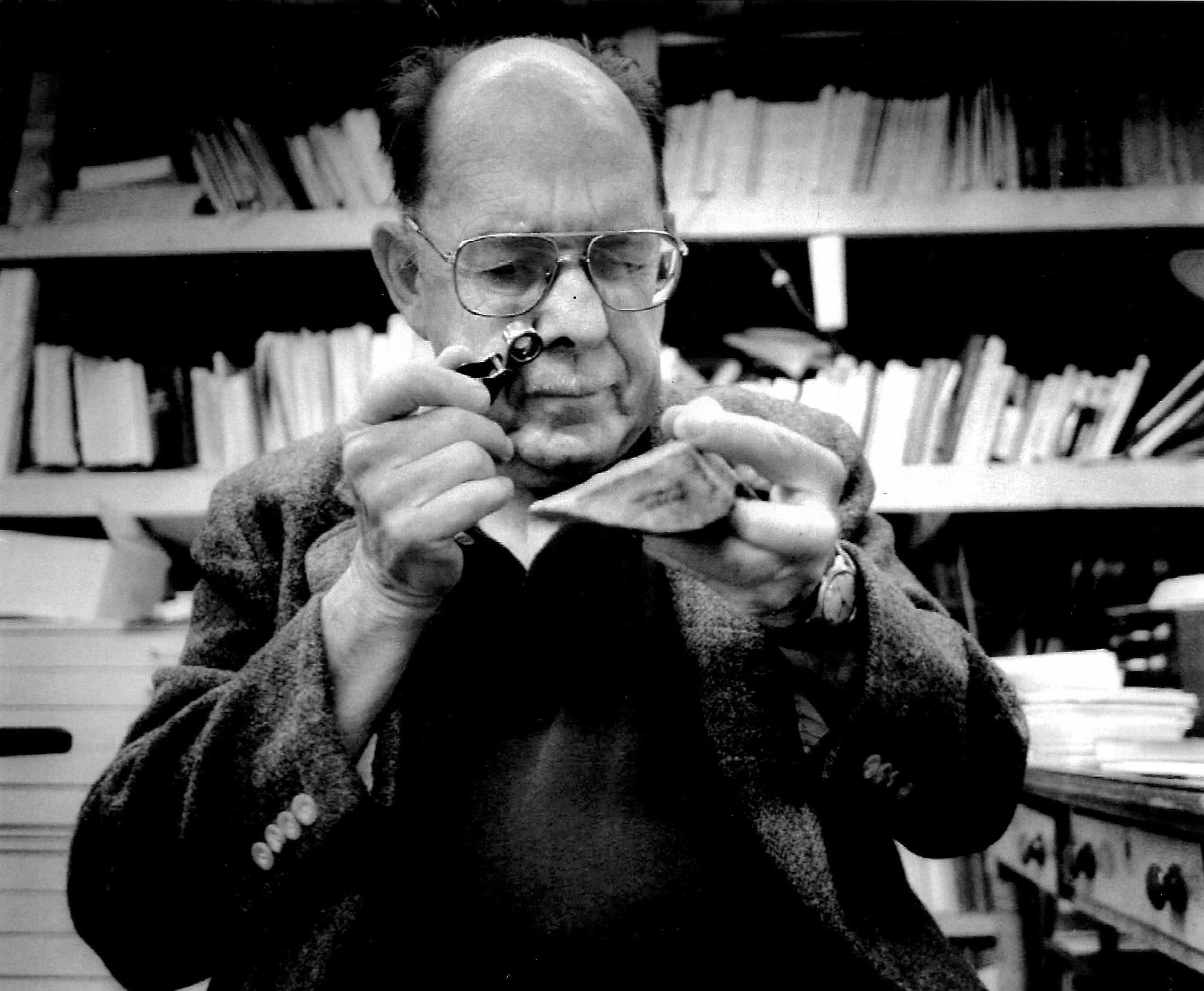
Image of Scotty MacNeish, an older, balding man with wire frame glasses using a jeweler's loupe to examine a point stone tool from Pendejo Cave, New Mexico. Bookshelves are in the background, slightly out of focus.
Richard “Scotty” MacNeish in February 1992 examines a stone chopper tool from Pendejo Cave in New Mexico.

At Pendejo Cave on the Fort Bliss military base in New Mexico he claimed even earlier dates, including occupation levels between 25,000 and 31, 000 years ago. This was at a time when Clovis—named for the type site of distinctive fluted spear points dating to around 12,000 to 13,000 years ago—was considered the earliest human occupation of the Americas. Scotty was a strong proponent of the pre-Clovis hypothesis, which now dominates in archaeology.

Image of brown road signs and Bureau of Land Management sign pointing the way to the Calico Hill Early Man Site. The background is the Mojave Desert of California, with low hills in the distance and dirt and desert plants in the foreground.
Signage for the Calico Hill Early Man Site near Yerma, California, May 1979. From a slide recently acquired by Ryan J. Wheeler.

But Scotty MacNeish wasn’t the only twentieth century archaeologist with claims for early sites. In the 1960s California archaeologist Ruth DeEtte Simpson recruited Louis Leakey to aid in investigation of a site on Bureau of Land Management property in the central Mojave Desert. This was the Calico Hill Early Man site, which produced crude chipped stone tools, some possibly dating between 100,000 and 200,000 years ago! As you might imagine, these early dates caused quite a stir and led many archaeologists to reject the Calico Hill site. Some argued about issues with dating, while others posited that the stone tools were really just natural phenomenon. Prior to his death in 1972, the Calico site may have caused a rift between Louis and Mary Leakey. And despite criticism, Simpson continued excavations.

Image of archaeologist Ruth Simpson, an older woman with short gray hair, a yellow plaid shirt, holding a plaque. In the background is an old field vehicle from the 1950s or 1960s.
Archaeologist Ruth “Dee” Simpson receiving an award on the twentieth reunion of the Calico Hill Early Man site excavations, November 1984. From a slide recently acquired by Ryan J. Wheeler.

A conference on the site failed to garner critical support from other archaeologists—many lauded the careful techniques employed, but balked at the early dates (see report by Walter Shuiling 2015). In his 1978 review of early sites in the Journal of Anthropological Research, MacNeish writes, “The most disputed of these is Calico Hills of California with geological estimates ranging from 50,000 to 200,000 years ago.” He goes on to say that, despite doubts about the site and its contents, he believes the tools are “pebble and slab choppers, spokeshave-like tools, large side scraper and plano-convex scraping planes or cores” like those at other early, pre-Clovis sites.

It is probably not surprising, given his support for the site, that Ruth Simpson invited MacNeish to participate in a thirtieth anniversary celebration of the Calico Hill Early Man site. The event, sponsored by the Friends of Calico, the San Bernardino County Museum, and the Bureau of Land Management, was held over two weekends in 1994. MacNeish delivered his talk, Pleistocene Man & Animals in the Pendejo Caves on Saturday, November 5, 1994. MacNeish acquired a set of nice resin casts of the artifacts from Calico Hill at this time, which he gifted to the Peabody. These include the Rock Wren biface—another large chopper-like tool—that has been dated to a more recent era with thermoluminescence dating.

Archaeologist Ruth Simpson, an older woman with short gray hair wearing a khaki field shirt, poses with a friend--an older, unidentified woman with gray curly hair, wearing a floral shirt and blue jacket. Vehicles are parked in the background, and low desert hills of the Mojave are further back with a dark blue sky.
Archaeologist Ruth “Dee” Simpson (left) with a friend at the Calico Hill Early Man site, November 1986.

The Calico Hill Early Man site, however, does have a little company in the contention for earliest possible human habitation in the Americas. A recent paper in Nature reports on the remains of a 130,000 year old mastodon site with some evidence of intentional bone breakage. Interestingly, the Cerutti Mastodon Site is in San Diego, about 186 miles from Calico Hill in the Mojave Desert. Like Calico Hill, most archaeologists have dismissed the San Diego site. Despite the skepticism around the claims for very early sites, archaeologists have continued to push back the earliest dates for humans in the Americas, with some sites dating to between 14,000 and 19,000 years ago.

Friends of the Peabody Repurpose More Drawers

Contributed by Emma Cook

We have had a tremendous interest in our old storage drawers in the last few months. As collections were rehoused in new cartons, we were able to give away over 100 drawers!

Our last blog featured drawers that underwent cosmetic changes, such as being repainted and stained as well as drawers repurposed into storage, furniture, and a jewelry organizer. You can see these projects here.

We are pleased to share that the Peabody Collection Team has reached their end-of-year goal in rehousing and inventorying 1,444 wooden drawers, which is about 67% of the Peabody’s collection. This means staff is about two-thirds of the way through the entire inventory of the Peabody’s collections!

The vast majority of the old drawers have now found new homes and purposes with many friends of the Peabody. We not only thank you all for your interest and for taking these drawers, but for giving these drawers a new life.

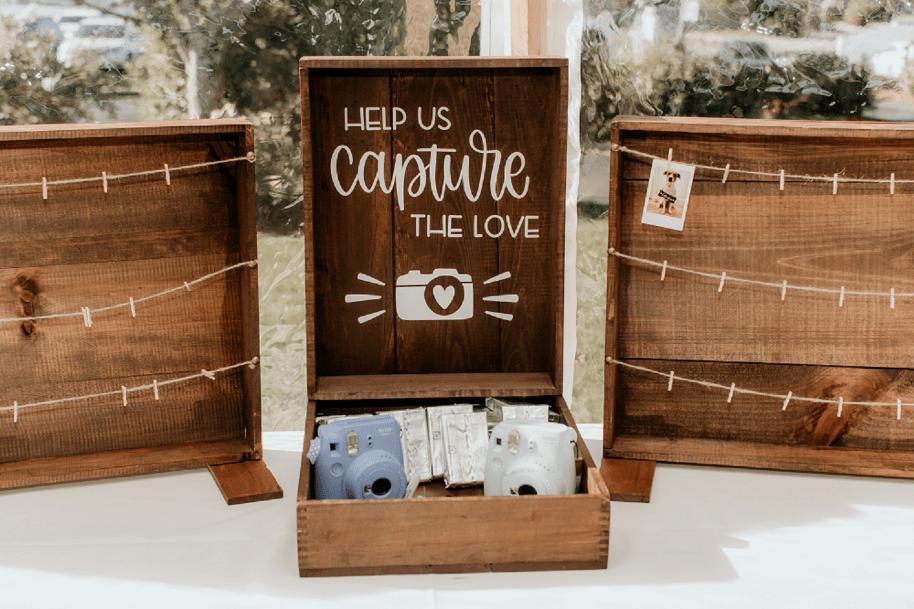
This month’s feature of drawers covers projects both big and small. Our first feature uses the drawers as wedding decorations, creating a photo capture area for guests to take photos and leave a message for the celebrating couple.

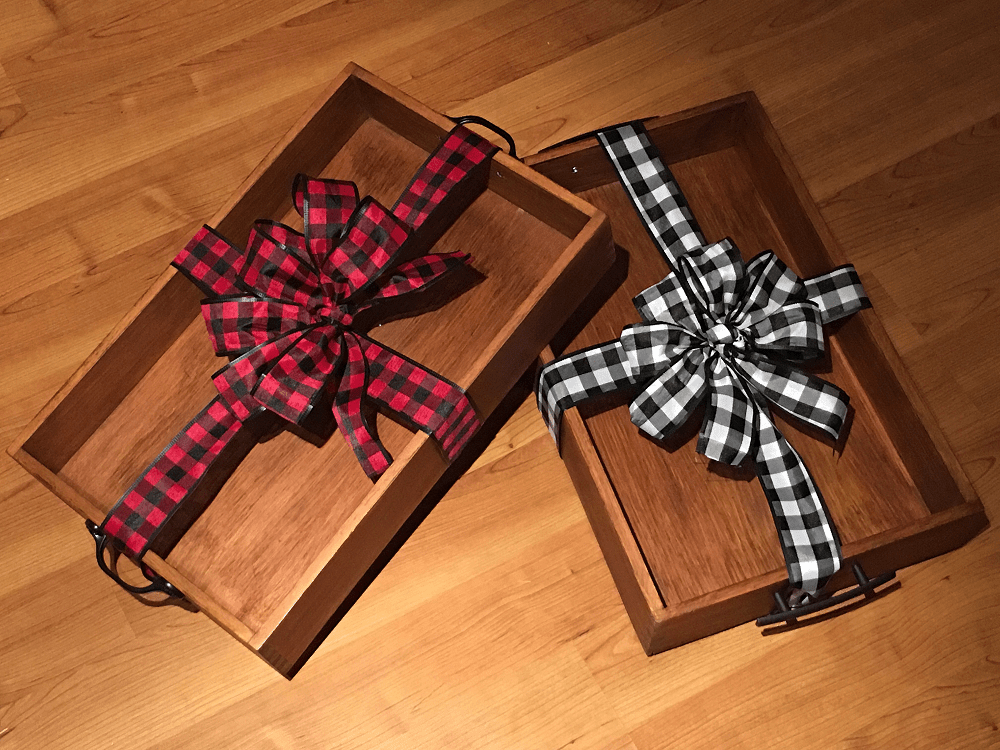
Another project is tea trays – a great DIY gift idea for family and friends this holiday season!

An example of one of the larger-scale projects for these drawers is a studio storage wall. This unique idea is fashionable as it is functional – doubling as both a storage space and accent wall for this home studio.

We have also received a lot of interest and support from our fellow Phillips Academy faculty and staff. Some of our wooden drawers have been used for material at the new Maker’s Space for students at the Oliver Wendell Holmes Library on campus. Keep an eye out for our next blog update showcasing more of these drawer projects! If you have repurposed some of the Peabody drawers, we would love to see your creations! Please share your photos with us at elavoie@andover.edu.

Half-Life: Radiocarbon Dating Tehuacán Carbon Samples

Contributed by Emma Cook

In my last blog I discussed soil analysis and its importance in dating and understanding a site. Another form of analysis used in the Tehuacán Archaeological-Botanical Project by Richard “Scotty” MacNeish was a process called radiocarbon dating, a technique developed by University of Chicago physicist Willard Libby. Carbon samples were collected during excavation and sent for carbon dating to be used for the Tehuacán Chronology Project.

There are two techniques for dating in archaeological sites: relative and absolute dating. Relative dating, in a stratigraphic context, is the idea that objects closer to the surface are more recent in time relative to objects found deeper in the ground. This relates to the law of superposition, which in its plainest form, states soil layers in undisturbed sequences will have the oldest materials at the bottom of the sequence and the newest material closer to the surface. Although this form of dating can work well in certain cases, it does not work for all.

Jars of Carbon Samples from various sites in the Tehuacán Valley.

Many sites include soil layers that have been disturbed and this can happen several ways. Natural disasters, such as floods, can erase top layers of sites. Rodents can move around layers in a site as they burrow underground, sometimes moving items from one context to another. Even current human activity can change the stratigraphy of a site through construction, post holes, and pits.

This takes us to our second dating technique. Absolute dating represents the absolute age of a sample before the present. Examples of objects that can be used to find absolute dates are historical documents and calendars. However, when working in an archaeological site without documents, it is hard to determine an absolute date. If a site has organic material present, radiocarbon dating can be used to determine an absolute date. Radiocarbon dating is a universal dating technique that is used around the world and can be used to date materials ranging from about 400 to 50,000 years old. Radiocarbon dating may even work on very recent materials.

Part of this carbon sample sent to Isotopes lab for radiocarbon dating.

Organisms such as plants and animals all contain radiocarbon (14C). When these organisms die, they stop exchanging carbon with the environment. When this occurs, they begin to lose amounts of 14C overtime through a process called radioactive decay. The half-life of 14C is about 5,730 years. Radiocarbon dating measures the amount of stable and unstable carbon in a sample to determine its absolute date. As a result, the older the organic material, the less 14C it has relative to stable versions of the isotope.

The carbon samples recovered from the Tehuacán Valley were collected specifically with this in mind. Many of these samples had labels or notes stating that some of each sample was sent to labs for radiocarbon testing. The carbon samples are organic material and their properties of radiocarbon were used to determine the age of the material, which in turn, helped date each site.

Map of the Tehuacán Valley and some of the sites the carbon samples came from.

The following sites are represented in some of the jars of carbon samples I catalogued from the Tehuacán Archaeological-Botanical Project.

Site Number                        Site Name                     Radiocarbon years

Tc 35                                         El Riego                                 6800 to 5000 B.C.

Tc 50                                         Coxcatlan Cave                  5000 to 3400 B.C.

Tc 307                                      Abejas                                     3400 to 2300 B.C.

Tc 272                                      Purron Cave                          2300 to 1500 B.C.

Ts 204                                     Ajalpan                                     1500 to 800 B.C.

These results were published in Volume Four of MacNeish’s Prehistory of the Tehuacan Valley: Chronology and Irrigation and can be found on Page 5. MacNeish and Tehuacán Chronology Project director, Frederick Johnson, selected carbon samples to be sent for testing, which resulted in the determination of 218 radiocarbon dates. Johnson played a prominent role in radiocarbon dating, serving as the chair of the Committee on Radioactive Carbon 14 set up by the American Anthropological Association. This project not only produced a chronology for the Tehuacán sequence of excavated sites, but later contributed (along with 400 additional radiocarbon dates) to the chronology for all of Mesoamerica. The dates, however, were made within the first two decades of radiocarbon dating and lack the accuracy and precision now available with newer techniques, especially with the older dates.

To read more about the Tehuacán Archaeological-Botanical Project and the Tehuacán Chronology Project visit Internet Archive.

Further Reading

Libby, Willard F. Radiocarbon Dating, 2nd ed., University of Chicago Press, Chicago, IL, 1955. Print.

MacNeish, Richard S. et al., The Prehistory of the Tehuacan Valley: Chronology and Irrigation. Vol. 4. University of Texas Press, Austin, TX, 1972. Print.

Stromberg, Joseph. “A New Leap Forward for Radiocarbon Dating.” Smithsonian.com, October 18, 2012. Web. https://www.smithsonianmag.com/science-nature/a-new-leap-forward-for-radiocarbon-dating-81047335/

Taylor, R.E. and Ofer Bar-Yosef. Radiocarbon Dating: An Archaeological Perspective. 2nd ed., Routledge, New York, NY, 2016. Print.

Transcribing the Collection

Contributed by Marla Taylor

The Peabody Institute has been working for some time now to establish full physical and intellectual control over our collection. You can read about our progress here, here, here, and here.

But, physically inventorying the collection is only half the project. The Peabody also needs to document and account for all the artifacts that came into, and left, the collection over the years. Currently, about 56,000 catalog records are present in our database, PastPerfect, versus the nearly 120,000 unique catalog numbers that have been assigned over the years. Original cataloging records at the Institute are largely on paper in two formats – ledger books that document the first phase of collections and individual catalog cards that were in use through the 1980s. Often, a single line of handwritten text or a 3×5 index card contains all the documented information for a specific artifact. That data is invaluable for making objects relevant and accessible to researchers, faculty, students, and in our ongoing repatriation work with Native American tribes.

example accession ledger page
A page from one of the accession ledgers

Recently, I presented this problem to the Board of the Abbot Academy Fund as part of their biannual grant cycle. Focusing on the need to transcribe the hand-written ledger books – 78,094 individual line entries in 14 ledger books. I am thrilled to report that the Abbot Academy Fund has chosen to support our Transcribing the Collection initiative!

The grant funds a temporary project transcriptionist who will type each line of the original accession ledgers from early twentieth century cursive into an Excel document. The project will be complete in the fall of 2019.

Once all this information is recorded, the Peabody will collaborate with PastPerfect to migrate the data into our database. The ultimate goal is to make the collection more accessible to staff, researchers, students and tribes.

I will keep you updated!

The Transcribing the Collection project is made possible by a grant from the Abbot Academy Fund, continuing Abbot’s tradition of boldness, innovation, and caring.

Weaving through the collection

Have you explored the Peabody collection online lately?  If not, you should!

Nearly 375 baskets in our collection have recently been added to the online catalog.  Explore baskets from many regions of the country – southwest, California, northwest, and New England.  The baskets are cataloged by shape – Jar/bottle form, Tray form, Bowl form, Burden/gathering basket, Cap/hat, and Container.

We are proud to house baskets made by Molly Neptune Parker, Jeremy Frey, and Clara Darden.  Our collection also contains several rare baskets like these Salinin and Yuki examples from Central California.

Check it out and weave your way through the collection!