My name is Jack Angelo and I am a board member and Blog Lead in Andover’s Anthropological Society, a student club we created here at Phillips Academy last year. I first became interested in Anthropology because of the many different topics it could cover, allowing someone to perform curiosity-based research about whatever subject matter interests them. When the other board members and I created the club, we knew most of our members’ research and curiosity would be directed towards our more major projects working in tandem with the Peabody Institute. But, understanding that the larger, focused research projects did not allow total intellectual freedom for the whole club, and that it did not spread our club’s messaging to the whole campus, we decided to create the Andover Anthropological Society Blog Site.
Our blog has now run for almost nine months and has served as an amazing display of the various topics our members are interested in, such as Corporate Consumerism in America, The Rise of Digital Tribalism, and the History of Art in Quarantine. Each post reflects what genuinely interests our writers, allowing people to contribute to the club without having to take part in our larger projects. In this way, the blog has developed into exactly the kind of free representational space we hoped for.
Additionally, the blog is a public source for anybody to read to understand our club’s messaging or to just further their interest in anthropology. We wanted to make sure that what we’re doing in AAS isn’t limited to the people who show up to meetings. By putting our work online, we’re giving the whole Andover community access to the topics we’re exploring and the research our members are doing. If someone’s curious about anthropology but doesn’t know where to start, or if they just want to read about a specific topic, the blog is there for them.
Ultimately, the AAS Blog is about making anthropology accessible. We wanted to create something that anyone could engage with, regardless of whether they’re in the club or have any background in the field. By keeping our work public and covering topics that connect to everyday life, we’ve built a resource that’s open to the entire Andover community.
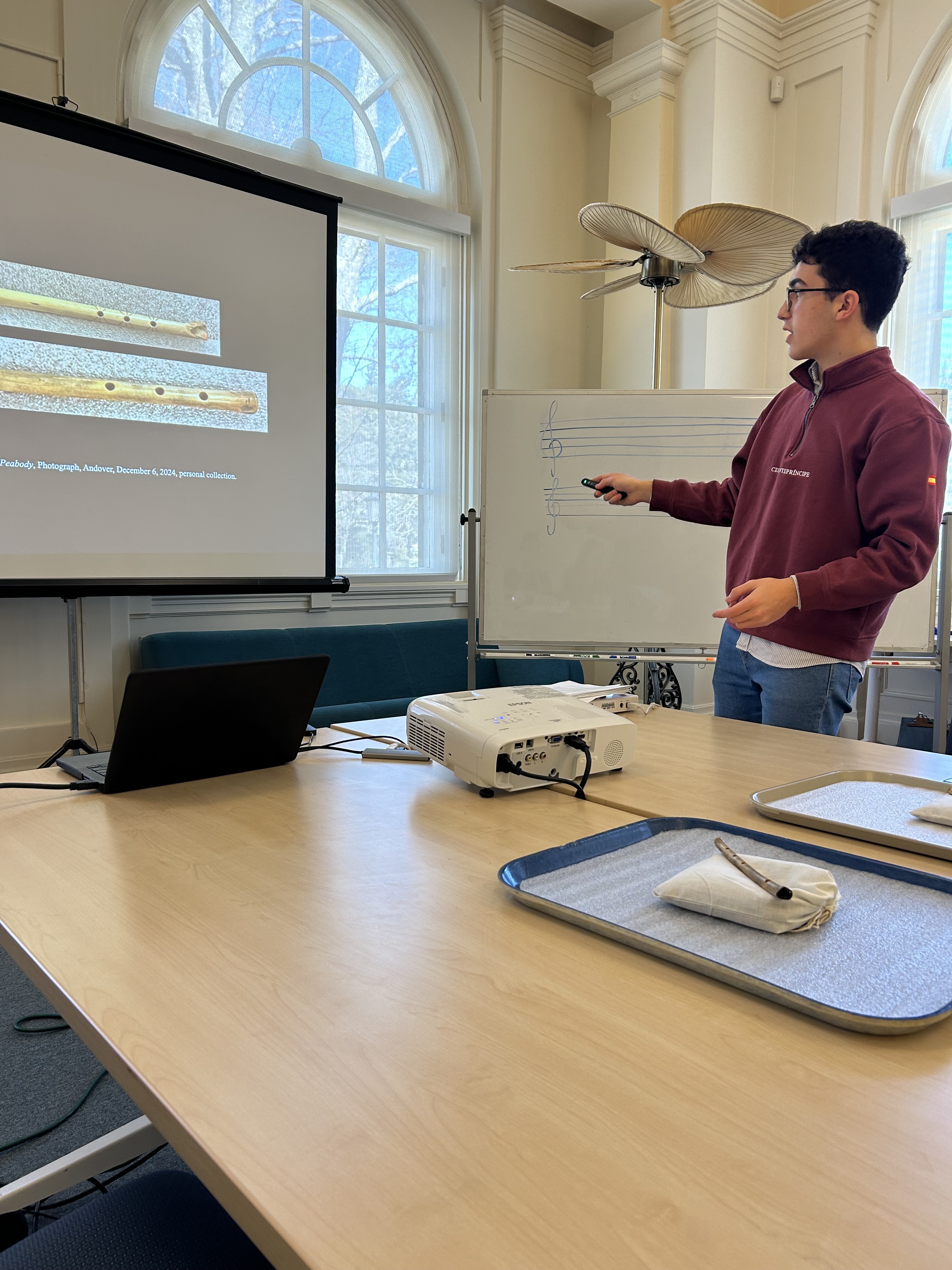
I stumbled upon the Pecos bone flutes on a bright September afternoon that was supposed to be about beaver pelts and fur trade ledgers. My history class had followed Ms. Doheny to the Robert S. Peabody Institute for a lecture, but after the talk I lingered and asked the speaker, Dr. Lainie Schultz, whether the museum kept any musical instruments. That single question carried me into the archives, where Curator Marla Taylor opened a drawer and revealed two slender bones—one golden eagle, one hawk—pierced and polished, flutes waiting in perfect silence.
Music has framed my life since I was four in Madrid: first as a hobby, then as devotion, from my early passion for Romantic music to the shimmering modernism of Debussy, whose Masques I played at fifteen beneath the stone arches of Dubrovnik’s Rector’s Palace. Yet nothing in my previous musical experience had prepared me for the quiet authority of these flutes. Their accession records were almost empty, their makers unnamed, but the Tribal Historic Preservation Officer of Jemez Pueblo had granted permission for their study. Phillips Academy’s Abbot Independent Scholar program let me transform my curiosity into a full-term research project under the supervision of Dr. Schultz and Dr. Elizabeth Aureden from the music department.
The work began with patient looking. The eagle bone flute—just under twenty centimeters—bears four clean finger-holes; the hawk bone flute is shorter, its stops conical and ringed by three tiny oblique grooves. My initial efforts left me frustrated—despite my solid musical background, I couldn’t answer any of my research questions. Guided by Indigenous scholars, I began to understand the silence and endless questions as a wise teacher. By combining archival materials with present-day Indigenous resources, chiefly from Jemez musician Marlon Magdalena, I built a relationship with the eagle bone flute and experienced the music as something much deeper than pure sound.
In his song “Eagle’s Blessings,” which I shared during my presentation to the Massachusetts Archaeological Society in April, Marlon brings the flute to life. When I first heard it, I was nearing the end of my research, which had been mostly historical and archival. I had tried to learn about other Indigenous music, but this performance tied everything together. Throughout the term, I feared profaning the cultural or religious significance of the eagle bone flute. I understood its sacredness, and as a religious person involved in interfaith activities, I recognize the importance of respecting religious artifacts.
Marlon’s explanation before he played brought everything into focus. He explained that eagle bones are sacred, held only by tribal members and used to lift prayers skyward. When he played, I felt how, through his breath, he gave life back to the eagle and honored her. Suddenly, the silence became understandable. Even though I could not draw solid scientific conclusions, I forged a connection I will never forget.
This project has awakened a passion for ethnomusicology that I am now exploring with the music department, under the guidance of Ms. Ángela Varo-Moreno, studying the presence of LGBTQ+ subcultures in techno music. I would like to end by thanking everyone at the Peabody, at Phillips Academy Andover, and at Pecos and Jemez Pueblos—and other Indigenous communities—who have safeguarded the knowledge that reached me and made this project possible. It has been a gift I will always keep in my heart.
Alberto presenting his final project at the Peabody, finishing up his independent study.
Every Wednesday, I come to the Peabody Institute to be in the company of pharaohs and emperors, not through books but from 2000-year-old coins held in the institute’s collections. I help to identify these coins and record observations into the Peabody’s catalogue system. I’m extremely fortunate to experience “living history” from these remnants of ancient Rome, Hellenistic Egypt, and the Byzantine world.
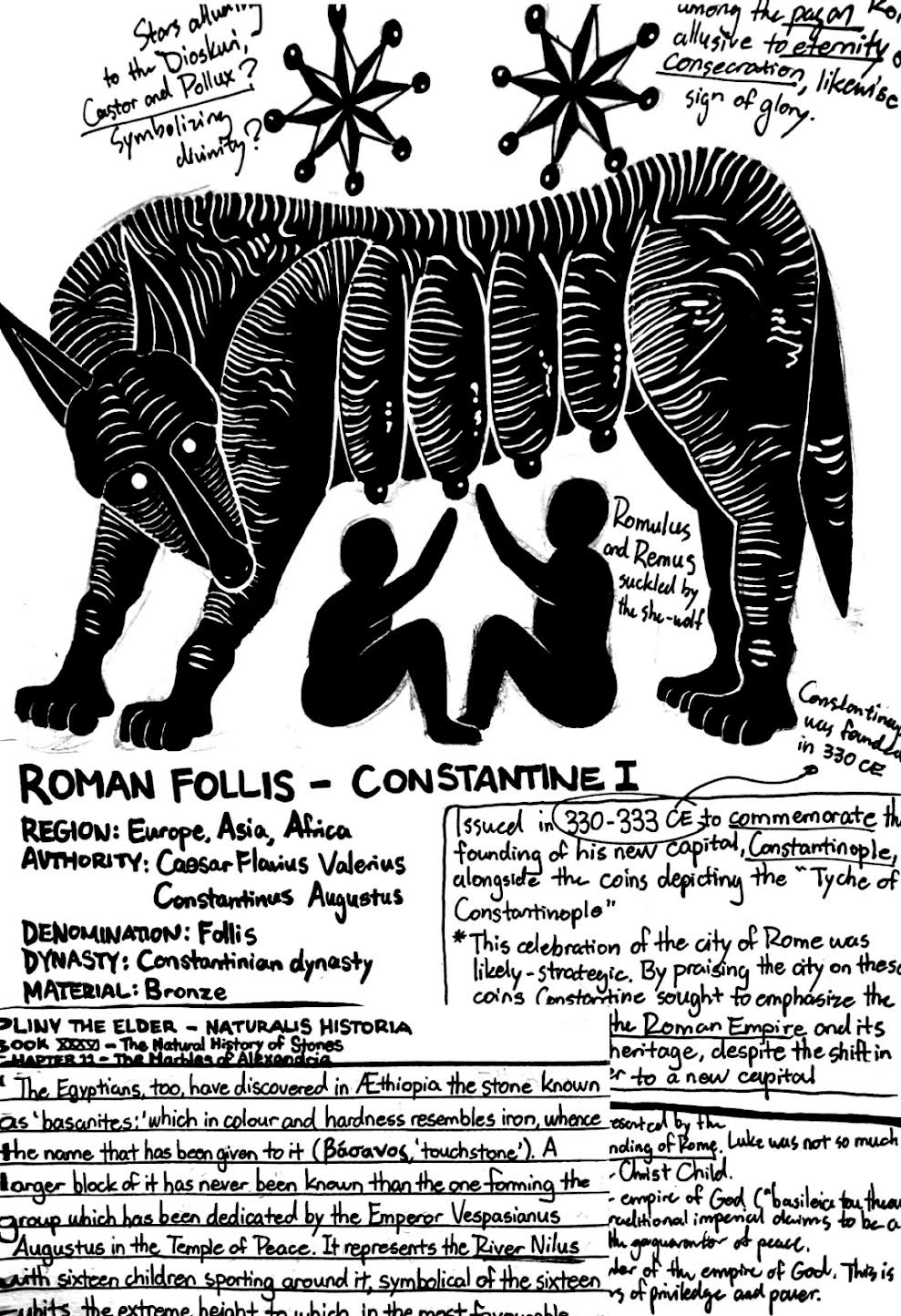
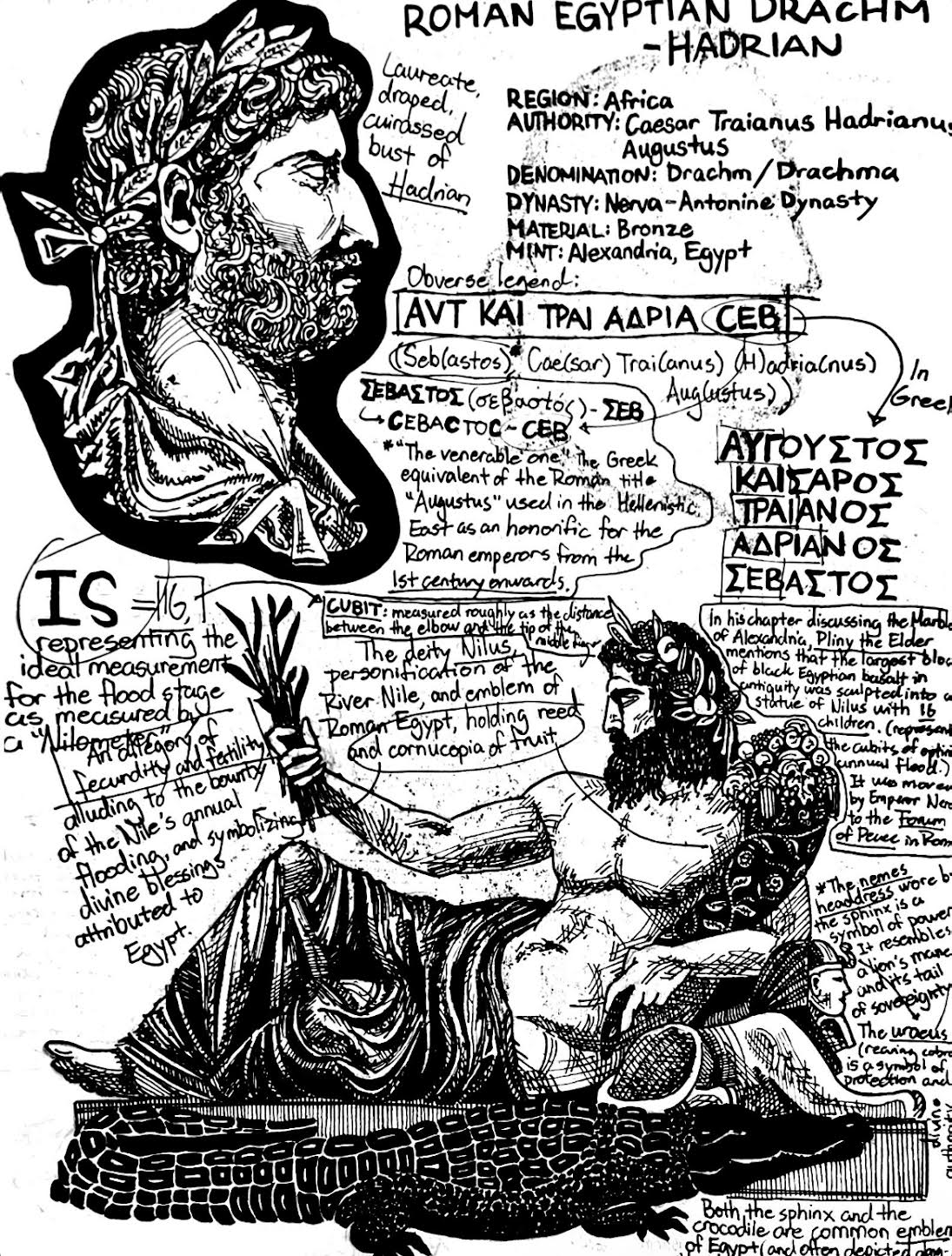
As the mass media of the ancient world, coins carried big messages. The images depicting rulers, gods, animals, or symbols were carefully chosen and deeply meaningful. Every coin has a story to tell about culture and politics. Together, they offer new perspectives on historical events that we thought we already understood.
From my notes. Left: sketches and notes of a coin showing Rome’s foundation myth to commemorate Constantinople’s founding under Constantine (Rome reborn). Right: Roman coin minted in Egypt during Hadrian’s reign depicting the River Nile as a reclining deity.
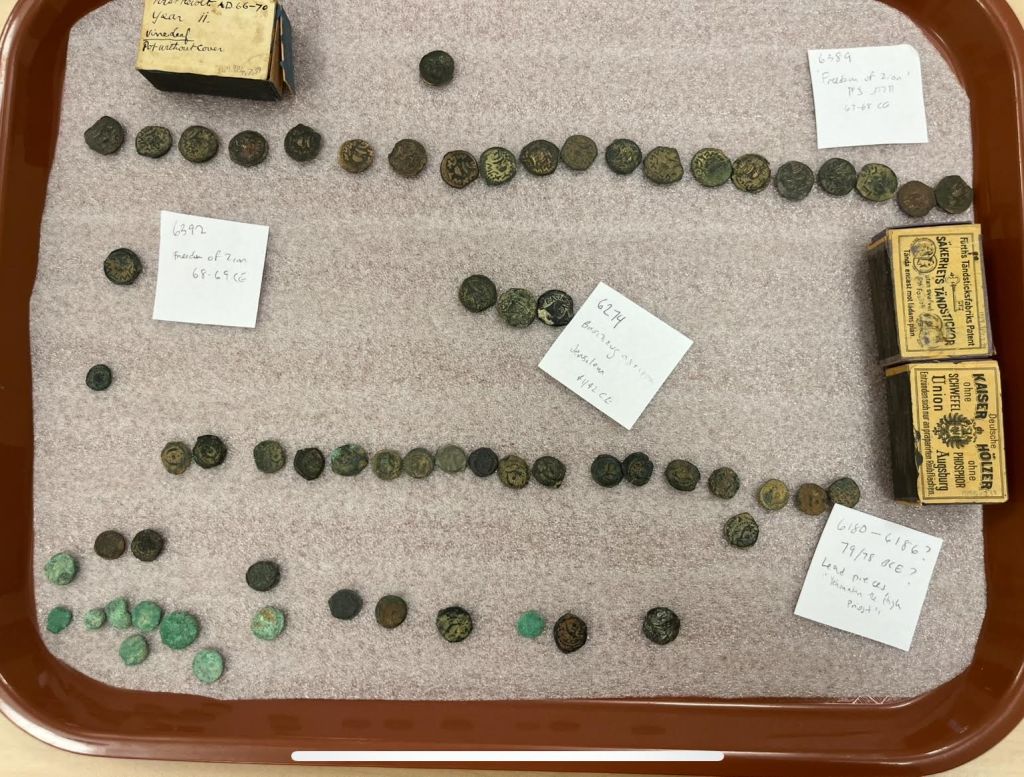
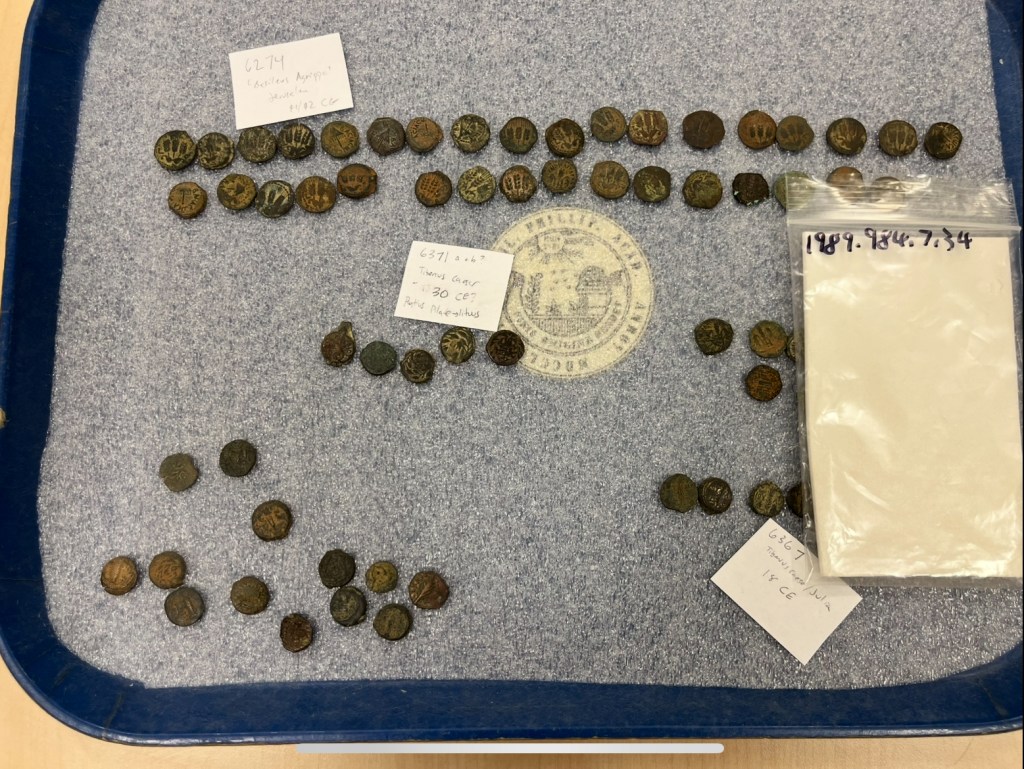
I first became involved in this research when I met Dr. Elena Dugan, who teaches Religion and Philosophy at Phillips Academy Andover, and was researching Jewish coins that dated back 2,000 years. These coins were struck for only four years, 66-70 CE, during which time, the Jewish population in modern-day Israel rebelled against their Roman occupiers. Long after their war against the Romans and their eventual defeat, their cry of freedom endured as inscriptions on these coins, surpassing even the Romans themselves. Dr. Dugan quite literally held the legacies of these men and women in her hands. How extraordinary is that!
Top: Coins with inscriptions calling for the “Freedom of Zion,” along with coins minted during the times of King Herod Agrippa I and Yehonatan the High Priest. Bottom: Biblical coins of Pontius Pilate and Emperor Tiberius.
I would soon uncover such stories myself. Through Byzantine coins within the Peabody’s collections, I came to appreciate the story of Justinian, a Roman emperor bold enough to dream big. He dreamed of restoring the Roman Empire, which by his time was territorially less than half of its former glory. He dreamed of a reunified Mediterranean and the spread of Christianity. Fueled by determination, he led years of campaigns until the city of Rome was once again truly part of the empire.
But the dream didn’t last. Enemies in the East drew his attention away from Rome and the West, which was soon lost again. Any last hope was swept away by a devastating plague, which killed half of the Roman population (now every time I pick up one of Justinian’s coins, I feel an urge to wash my hands!). Rome’s wealth was drained, and Justinian lost his new territories as quickly as he gained them. In the end, he sadly died believing his dream had failed.
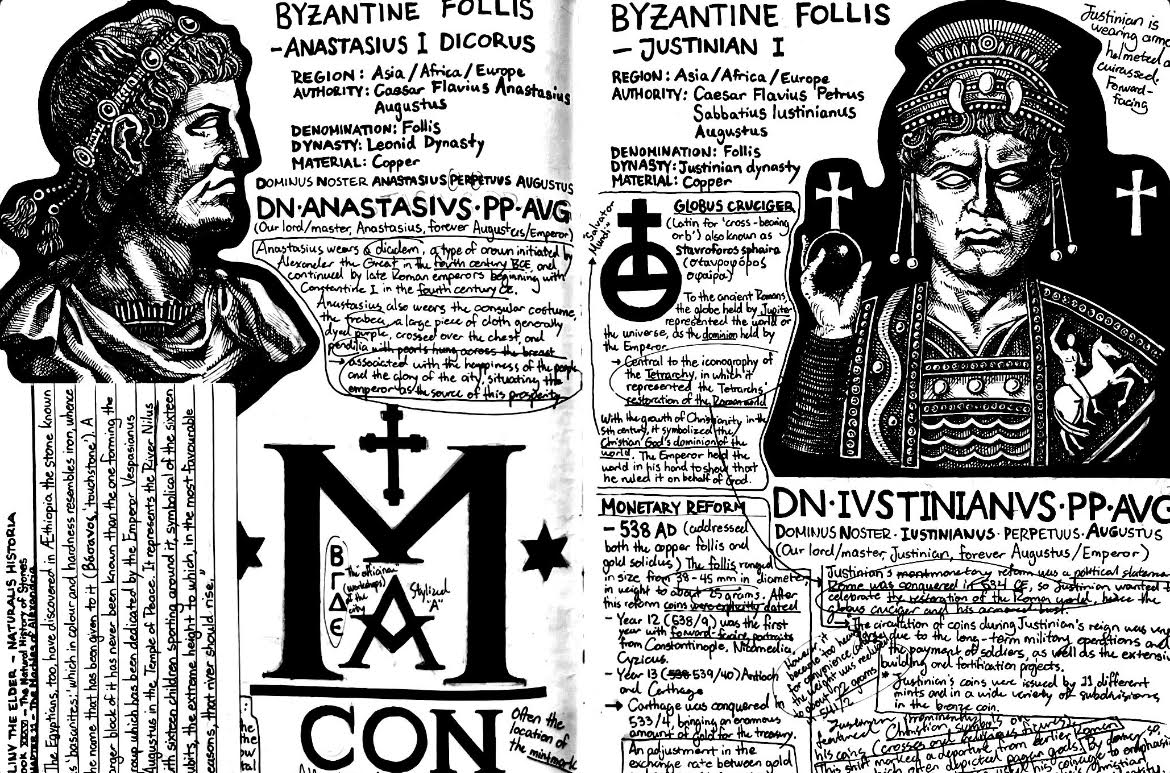
But it hadn’t. Though Justinian didn’t expand Rome’s borders, he redefined her identity. His image on coins, boldly facing his audience and clad in armor, was copied by every emperor who followed. He had inspired others to dream. Alongside his portrait appeared Christian symbols, marking Rome’s turn from her pagan past toward new ideals. Never again would she reach the heights Justinian had brought her to.
If all that remains of him and his dream are coins and a few lines in a textbook, then so be it. But let’s not forget them!
Left: Emperor Anastasius depicted in traditional imperial dress with a diadem and toga. Right: Depiction of Emperor Justinian facing the audience, fully in armor, and holding the globe and cross. While Anastasius followed strong traditions, Justinian was more than eager to distinguish himself.
This experience has strengthened my love for history. It has brought me closer to people in the distant past and their values. Their love of liberty. Their audacity to dream. These values stir a certain nostalgia in me, and suddenly, these people don’t feel so distant after all. Their worlds may have disappeared, but they are far from forgotten. It’s hard to believe that such an experience can come from objects that measure less than my pinky finger. But, after all, conveying messages is also a coin’s purpose, alongside economic ones.
This journey has truly expanded my curiosity and built my understanding of history. I’m incredibly grateful to the Peabody Institute for not only allowing an inexperienced ninth grader to interact with these priceless artifacts but also for patiently teaching me the research process, providing the right tools, and encouraging me to share my story.
What a highlight this has been as part of my school year! I’ll be sure to return on many more Wednesdays!
Last spring, I was new to Phillips Academy. I’d just arrived on campus, still figuring out where I fit in, still mapping the place out in my head. One thing that kept catching my eye was this mysterious building I passed every week on my way to the music department. It looked… important. But quiet. Tucked away. That building was the Peabody Institute.
It was mid-renovation then and closed to visitors, but every time I walked by, I’d find myself wondering what was inside. What kind of objects were hidden away behind those walls? What kind of people once used them? It sent me spiraling in the best way.
I started doing some research and realized that while the Peabody is this incredible institution with a deep collection of cultural material, it wasn’t very connected to student life. Almost hidden in plain sight. And that just felt like a missed opportunity. I wanted to find a way to change that.
This idea took deeper root over the summer, especially after I visited Egypt. I’ve always been interested in anthropology, but that trip sparked something new in me: an obsession with archaeology. There’s something magical about holding, or even just seeing, an artifact that someone used hundreds of years ago. Imagining their life, their world, their hopes or rituals. In those moments, I feel connected to something bigger: a lineage of humans that came before and will come after. It feels like time folds in on itself.
So I reached out to the Peabody over the summer and asked if there was a way students could get more involved. We came up with the idea for a club, and when I returned to campus in the fall, I asked my friend Elliot Weir to help me lead it. That’s how the Andover Anthropological Society was born.
But the story doesn’t really start there. My fascination with culture and human behavior goes way back. I grew up in a family of nomads—the product of two people who seemed to be in constant motion. I’m an Armenian New Yorker, but I moved to Hong Kong when I was young, then to Miami, and spent years bouncing between Brazil, Europe, and the U.S. These days, my dad is based in Riyadh, so Saudi Arabia feels like another kind of home.
All this movement, this third culture existence, has taught me that “home” isn’t always a place. It’s a mindset, a perspective, a lens you carry with you. It’s made me deeply curious about how people live, how they think, and how history shapes identity. Whether it’s thinking about how Armenians process collective trauma, or how gender roles are shifting in Saudi Arabia, I’m drawn to the stories that sit under the surface. Anthropology, to me, is a way of making sense of it all.
And that’s what the Andover Anthropological Society is about. Yes, we work with artifacts. Yes, we meet weekly at the Peabody and dig into real collections and archival files. But more than anything, we’re trying to connect—to the past, to different worldviews, and to each other.
If you’re someone who finds joy in questioning things, in imagining the lives behind the objects, or in just getting a little lost in the mysteries of human culture, you’re always welcome. The Peabody may have looked quiet last spring, but it’s anything but.
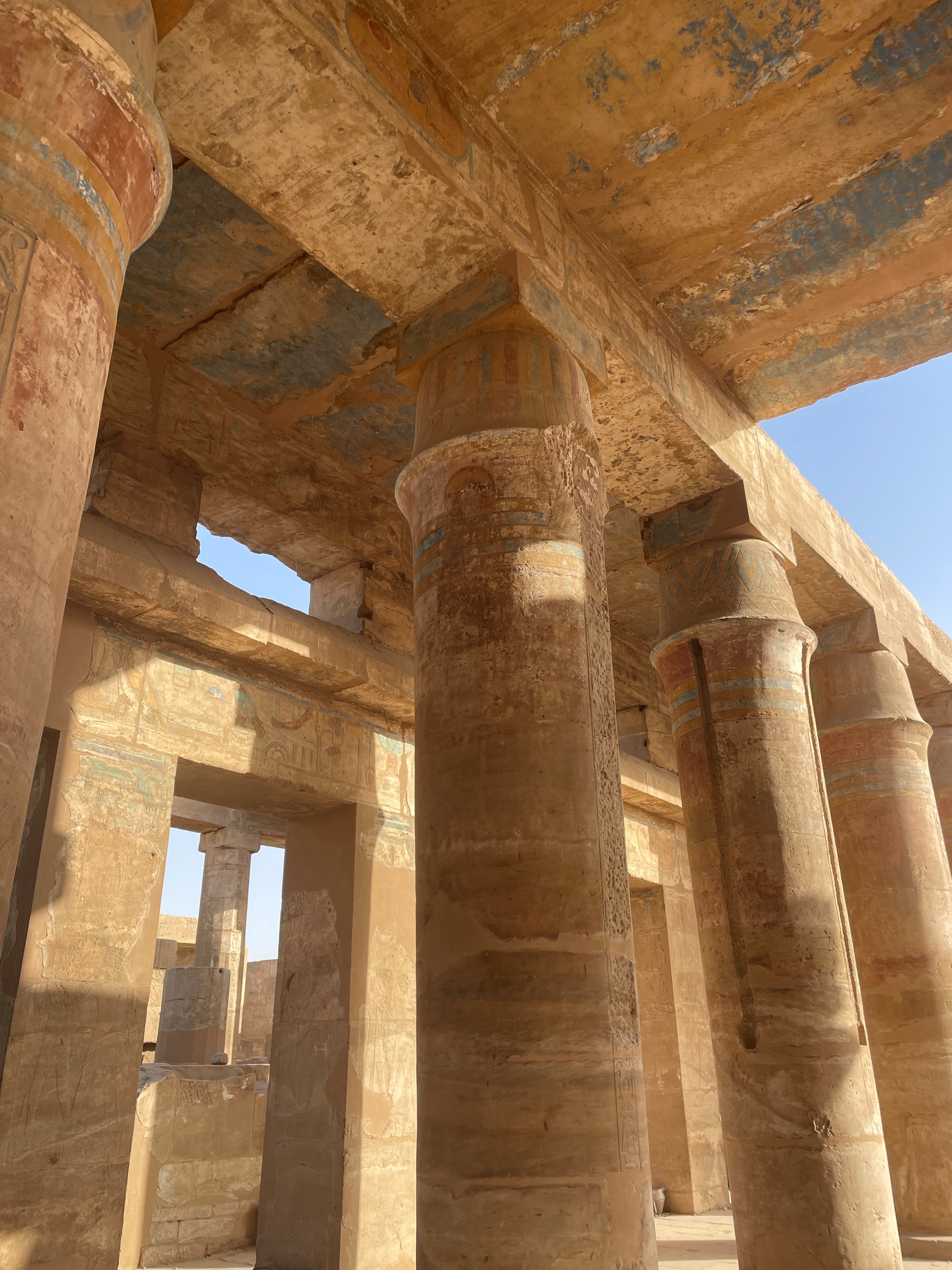
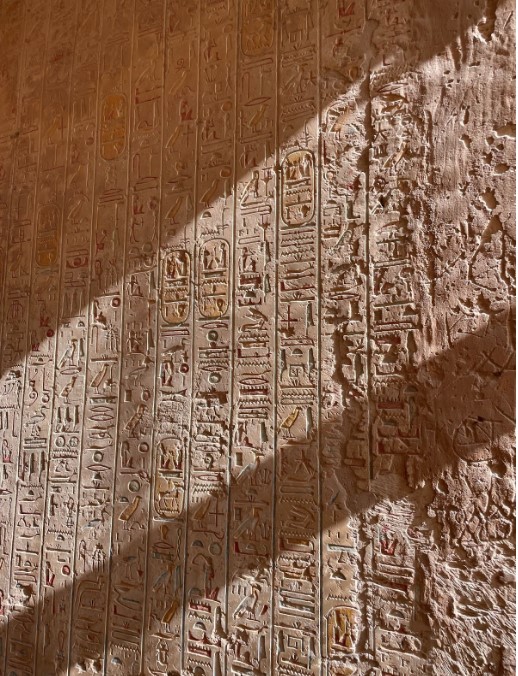
Mortuary Temple of HatshepsutValley of the Kings
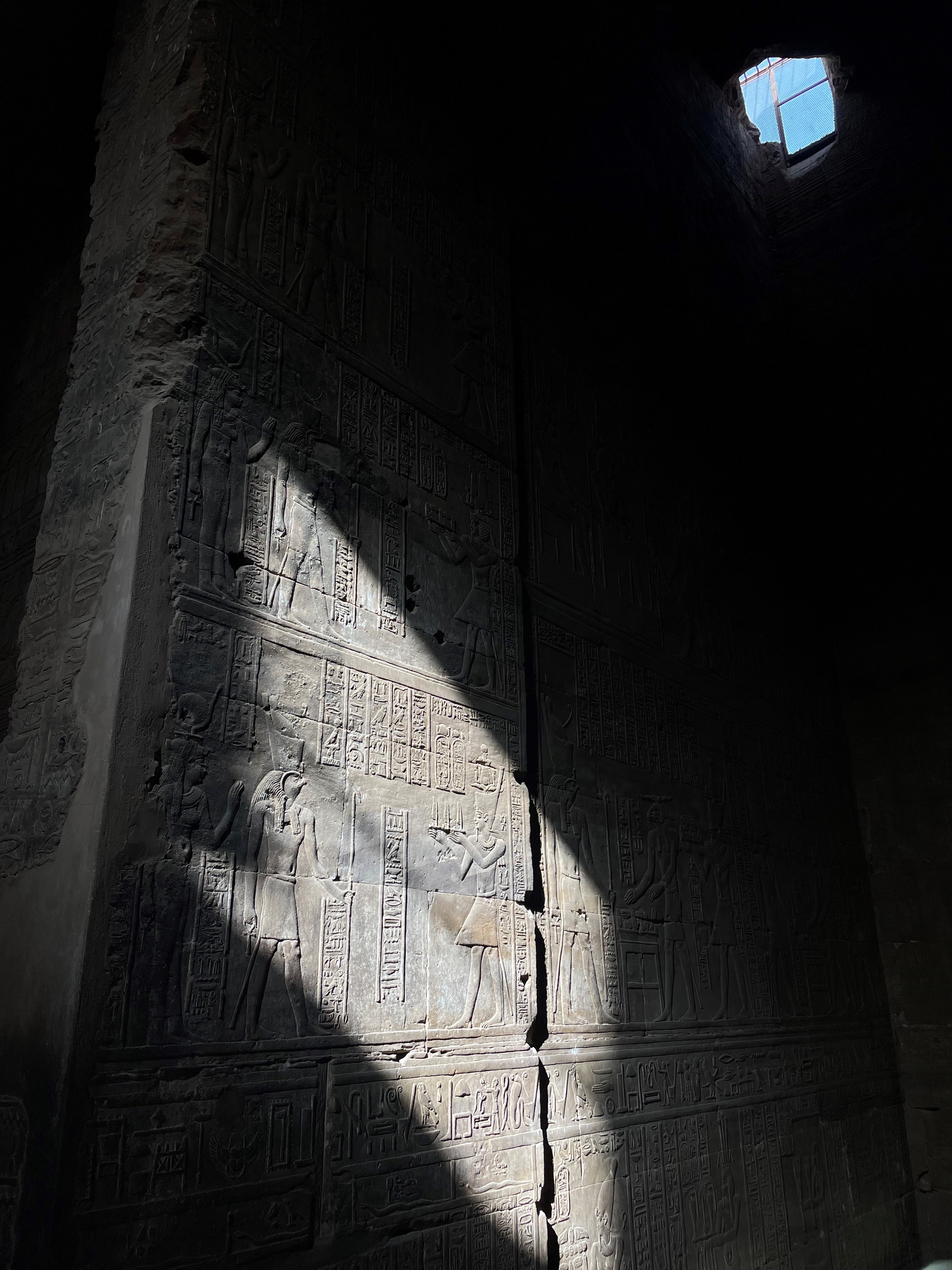
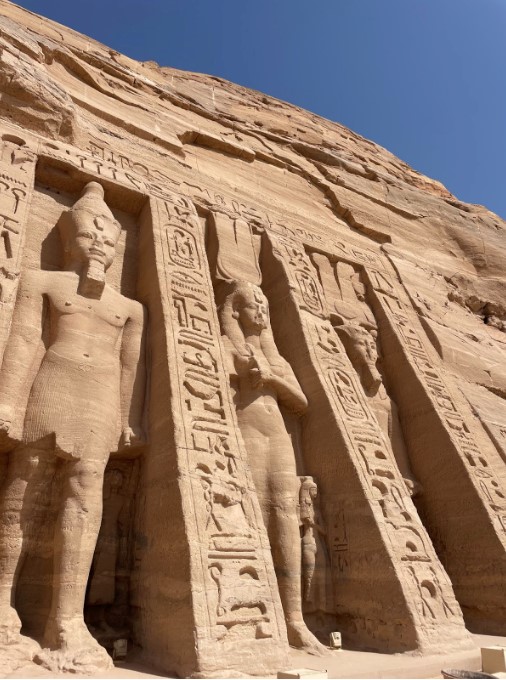
The Temple of EdfuTemple of Nefertari
Why some of our members joined:
“I decided to join the Andover Anthropological Society because studying anthropology yields a greater understanding of yourself and the world around you. In the same way that books can inform you on lives you’ve never lived, anthropology enables you to understand cultures you have never interacted with, providing perspective on your own culture and appreciation for others’.” – A.J. McQuide ‘26
“I am a junior [9th grader] from Miami, and I joined the Anthropological Society because I am interested in learning and understanding how human societies and cultures develop. I was inspired to join this club by my visit to my country-of-origin, Armenia. In Armenia, I traveled across the country visiting and seeing historical landmarks and ancient artifacts. This visit sparked a desire to understand what role these places and items played in my ancestors’ lives as well as other peoples’.” – Sebastian Djerejian ‘28
“I am an upper [11th grader] from North Andover. I knew that the Peabody was an amazing resource with many Native American artifacts that I had never seen before. I wanted to explore these collections through the Andover Anthropological Society.” – Elliot Weir ‘26
“In middle school we had a guest speaker come in to talk about how humans developed technologically, and to me that was such an interesting idea. How did we discover so much of what we know? So, for a long time, I have been interested in anthropology but hadn’t had any spaces to pursue it, which is why I was happy to join the anthropology club here at Andover.” – David Frahm ‘26
“I am a new upper [11th grader] from Verona, Italy. I joined the Anthropology club because I wanted to develop skills to be able to identify artifacts more efficiently. I’m especially interested in exploring how specific objects were used differently across the United States, and what they can reveal about the daily lives of the people who made and used them.” – Amelie Piergentili ‘26
“I am an upper [11th grader] from London, UK, and I am thrilled to say that I am a part of Andover Anthropology club. I frequently looked at the Peabody Museum as an incredible resource that I longed to explore – Anthropological Society gave this to me.” – Isabella Mazzi ‘26
“I am an upper from London, England and was always interested in History and discovering how we got to where we are now. I love connecting with different cultures and meeting new people interested in the same things I am so the Anthropology club offered an incredible way to do just this.” – Katerina Browder ‘26
Among the newest student clubs on offer to the Phillips Academy community as of this term is the Andover Anthropological Society: a group of students of superior intelligence who recognized ahead of their peers that doing research with cultural materials is incredibly fun, and an excellent use of one’s free time.
Now with a membership of ten, club members selected as their inaugural project an accession of Arctic materials surface-collected by Patricia Hume near Utqiagvik (previously Barrow), Alaska during six summers between 1959-1969, and donated to the Peabody Institute in 1998. Meeting weekly at the Peabody, so far the AAS has received collections handling training and begun to build direct experience doing close-looking analysis of cultural materials; perused the Pat Hume accession file and visited storage, doing archival research AND learning some basics of museum practice (I’m very efficient); learned about the Bureau of American Ethnology and delved into 20th century ethnographies from the region (thank you, OWHL reference librarians!); and started to explore various themes and approaches for their group project. These have included connecting collections to Iñupiaq language, exploring notions of gender and household structures, and questioning anthropological terms like “effigy” to build more robust interpretations of people’s material expressions of spirituality and religion – just to name a few.
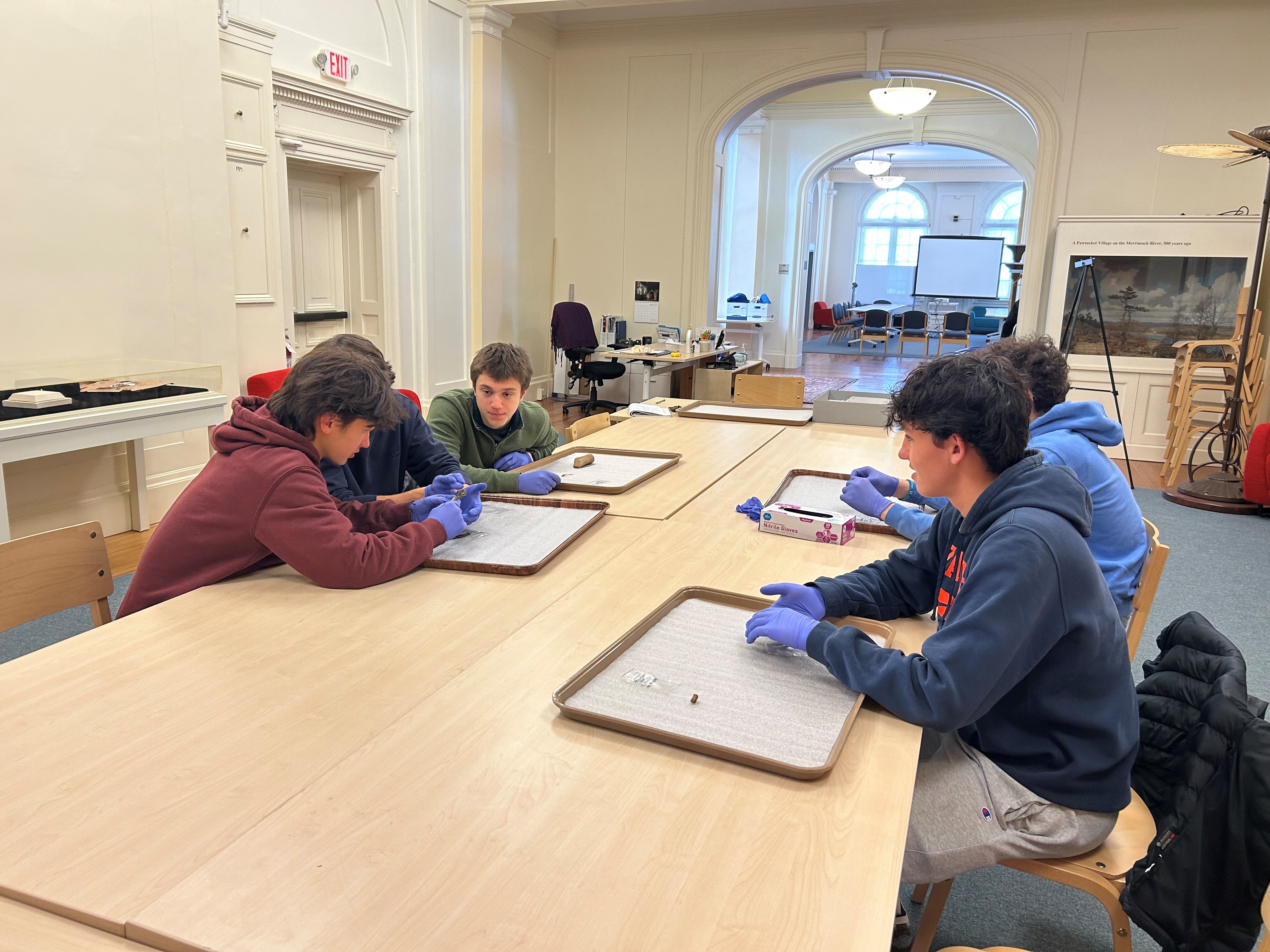
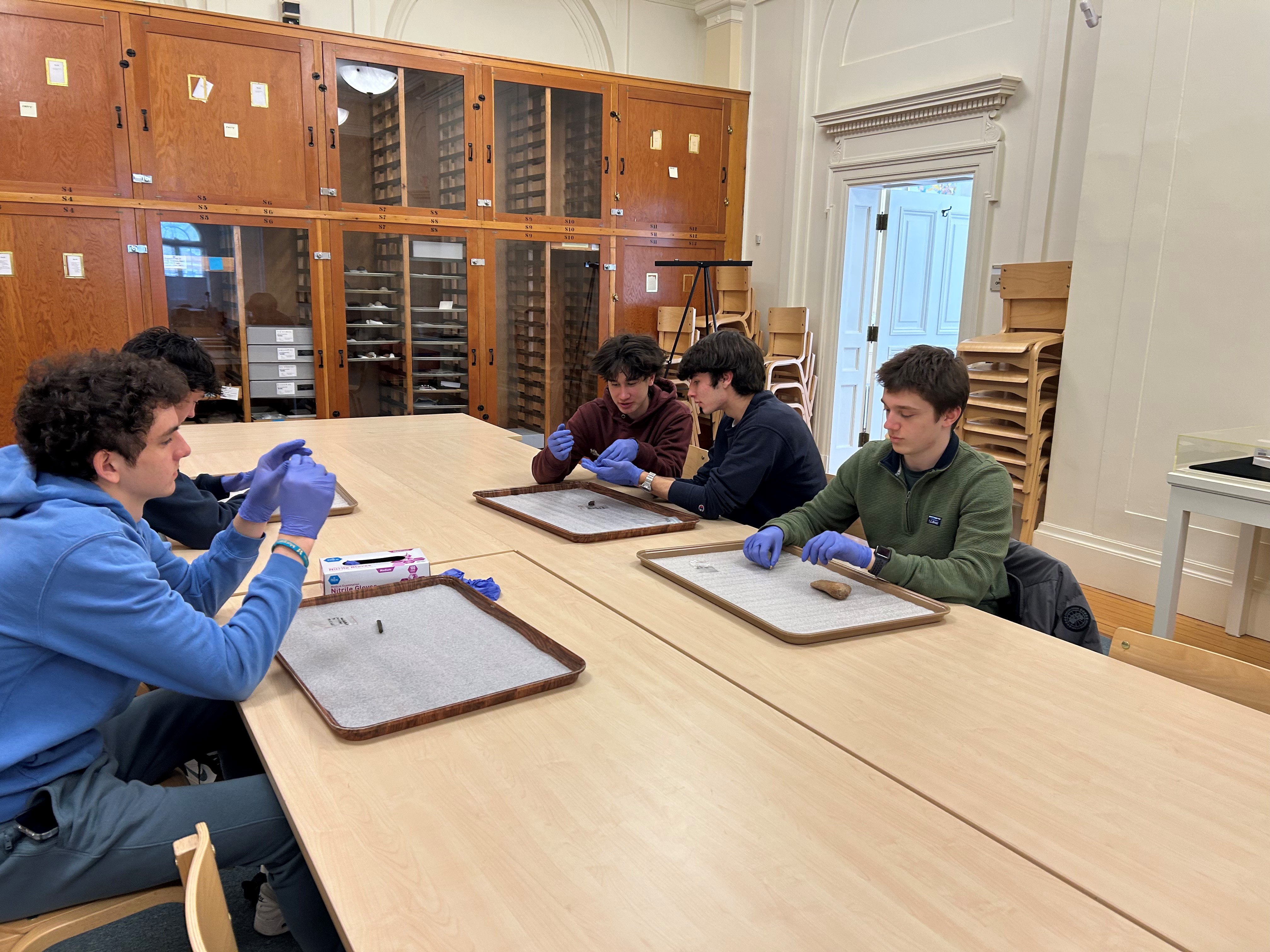
AAS members closely examining “household” items from the Pat Hume accession and debating whether I was messing with them in my claims for what they were. [Not pictured: all the female members of the club. I promise it was just unlucky they had to leave before I could take any photos…]
Whichever direction(s) the club ends up taking, what they learn will enter into the Peabody’s database, enhancing our own understandings of these collections here and the ways in which we’ll be able to connect others to them in the future.
I happen to have the privilege of serving as faculty advisor for this club, and it has been a joy getting to know these students, and having them teach me about Iñupiat culture. Bookmark this blog and stay tuned to learn more about the AAS from the AAS itself!
Hello, my name is Mike Agostino and I am a volunteer here at the Peabody Institute of Archeology. I am a recently retired scientist from the field of bioinformatics. My work in this field, for over 30 years, concerned the analysis of gene and protein sequences. I love the field so much that I am presently an instructor on the subject for the Harvard Extension School. I am also writing the second edition of a textbook I published on this topic more than 12 years ago.
Peabody volunteer, Mike, analyzes various projectile points in the Peabody collection.
As a resident of Andover, I frequently went past the Peabody and often wondered what treasures it held. When a good friend, Richard Davis, said he volunteered here and told me about the work, I immediately wanted to join him. To say this is a dream come true is not an exaggeration. I have always been interested in archaeology and spent many years looking down on the ground for the artifacts people said were all around us. But I never found any! To work with and learn about dozens, if not hundreds of specimens each day is amazing. As I hold these objects in my hands, I try to imagine their history: was it careful fabrication by an adult expert, or was it made during a learning period of a youngster? Was it used to bring home a meal, build a boat or dwelling, or for the creation of clothes? Did it come from local stone, or did it travel many miles to be found at a new locale? My imagination is further enhanced or tempered by the kind and knowledgeable staff of the Peabody who are training and patiently helping me identify what is in my hand. I have only been at the Peabody for less than two years and there is so much to learn!
After years as a scientist, I feel right at home with my principal responsibilities: the careful handling, description, cataloging, and storage of the specimens. Attention to detail is absolutely required and very satisfying. We record their identities, or best guesses because many are just fragments. The intact specimens are something to behold. Some arrowheads or axes are impossibly beautiful, and the precision of shaping and symmetry with such a hard material is just astounding. The skills of the people, past and present, are just amazing.
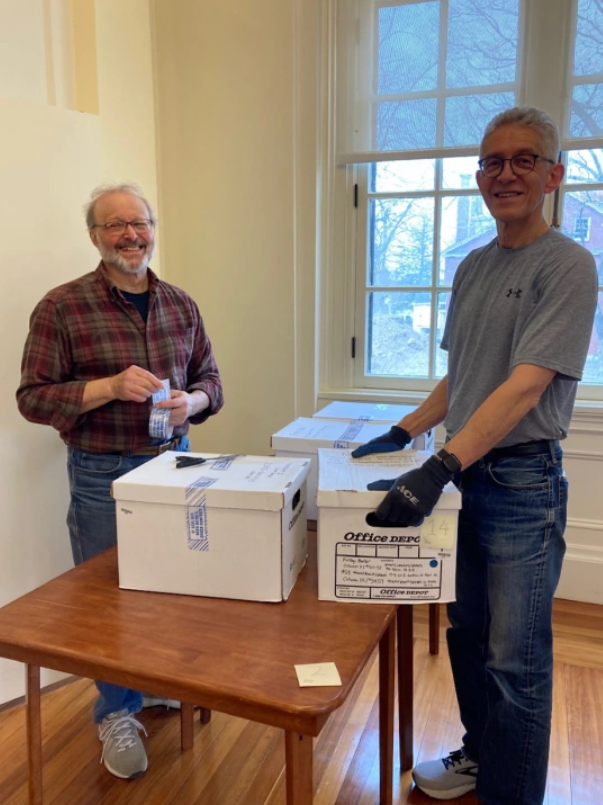
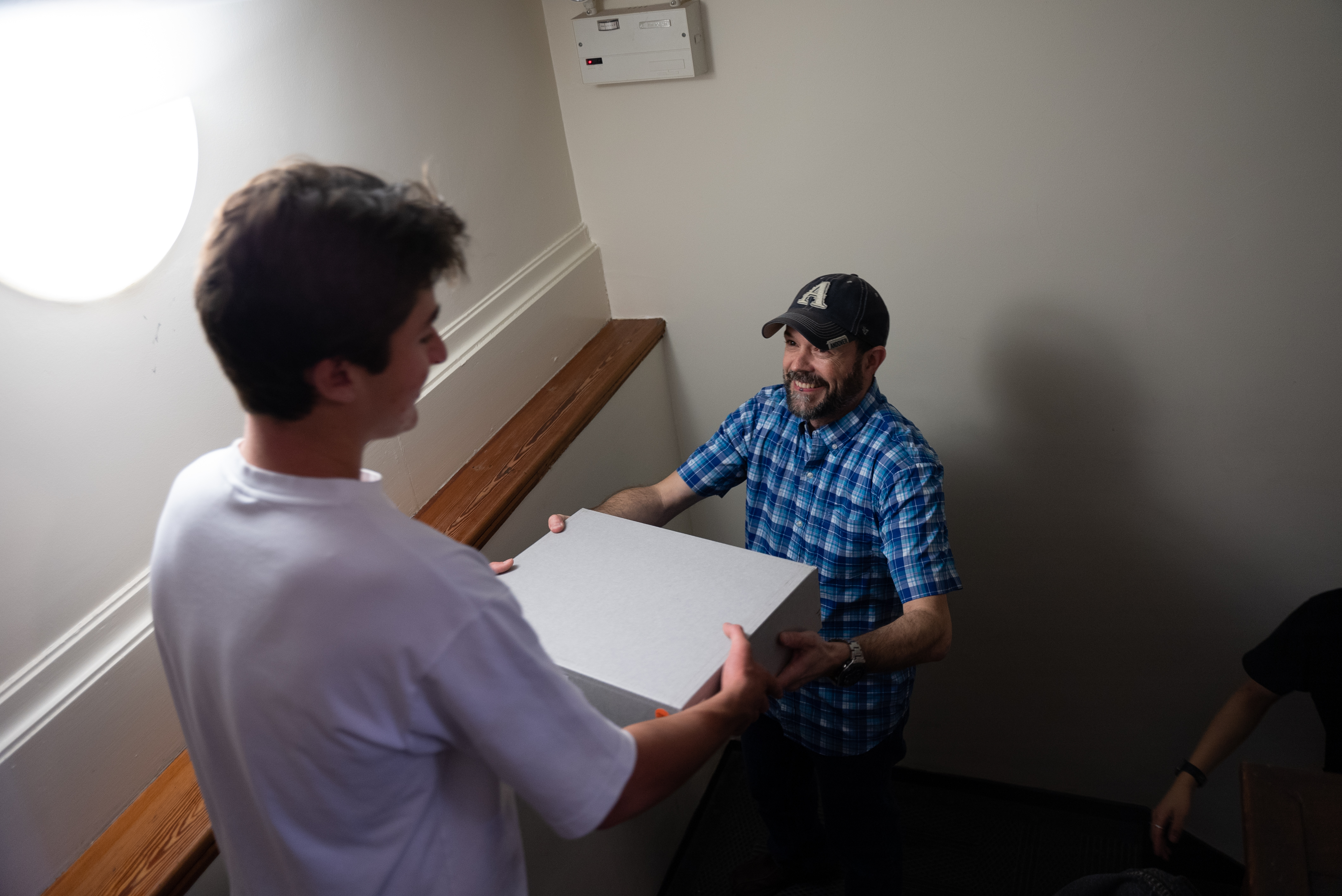
Peabody volunteers, Richard (left) and Mike (right), moving boxes for the Peabody’s building project.
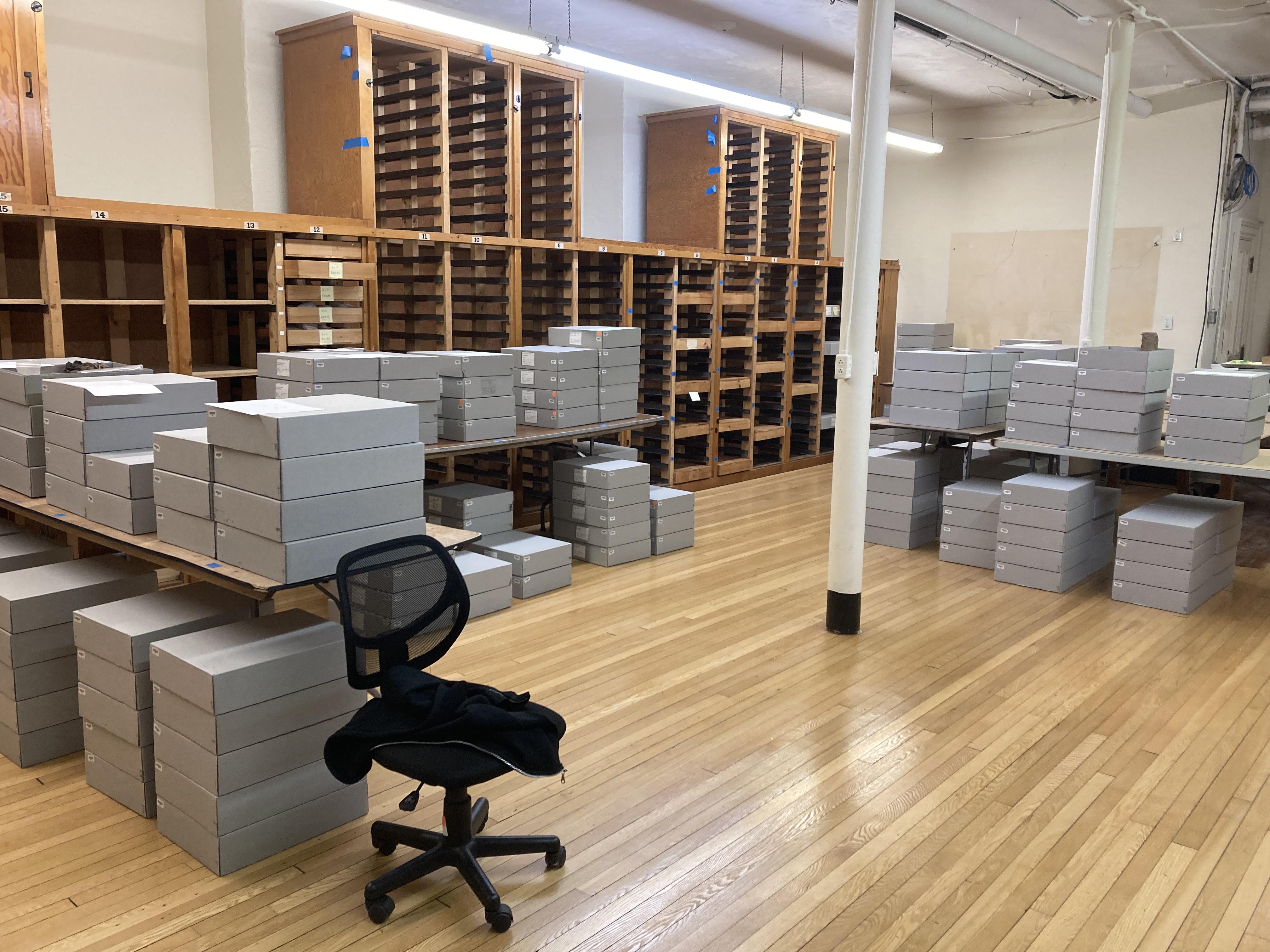
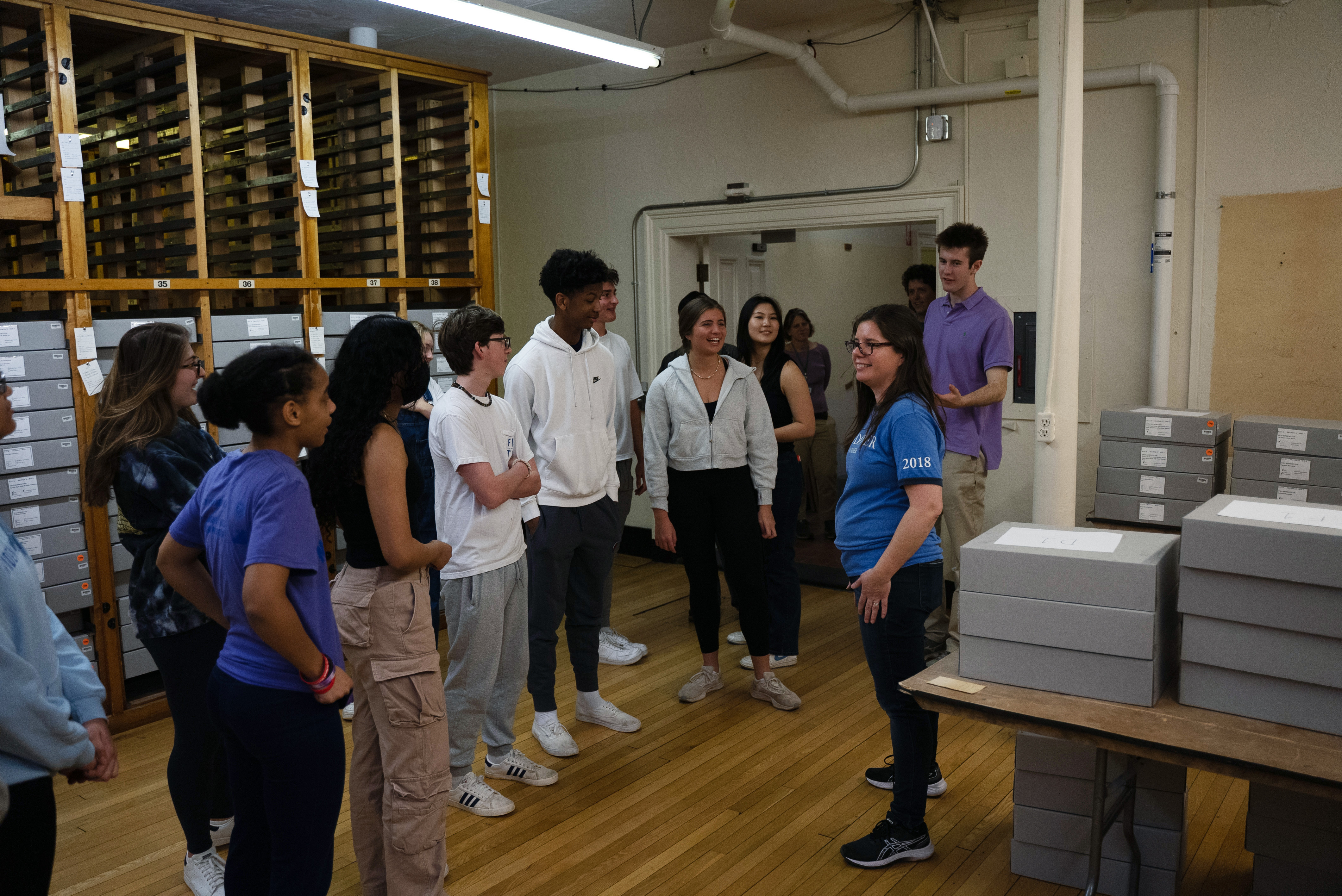
I have also helped with activities associated with the huge renovation project of the building (for pictures and updates, see the blog postings by Marla Taylor). I am impressed with how everyone has remained calm considering hundreds of boxes, and specimens too large for boxes, had to be carefully moved up one or two floors from the basement to temporary locations elsewhere in the building. With the absence of an elevator, I helped move many boxes up the stairs out of harm’s way. My smart watch said I went up 80 flights of stairs one day! And I am only there one day a week, so the staff had a monumental challenge. We are now waiting for the renovations to be completed and then we will return the specimens to a much-improved setting. Even with the new elevator, reshelving hundreds of boxes won’t be easy, but I am looking forward to the project and the “new” institute.
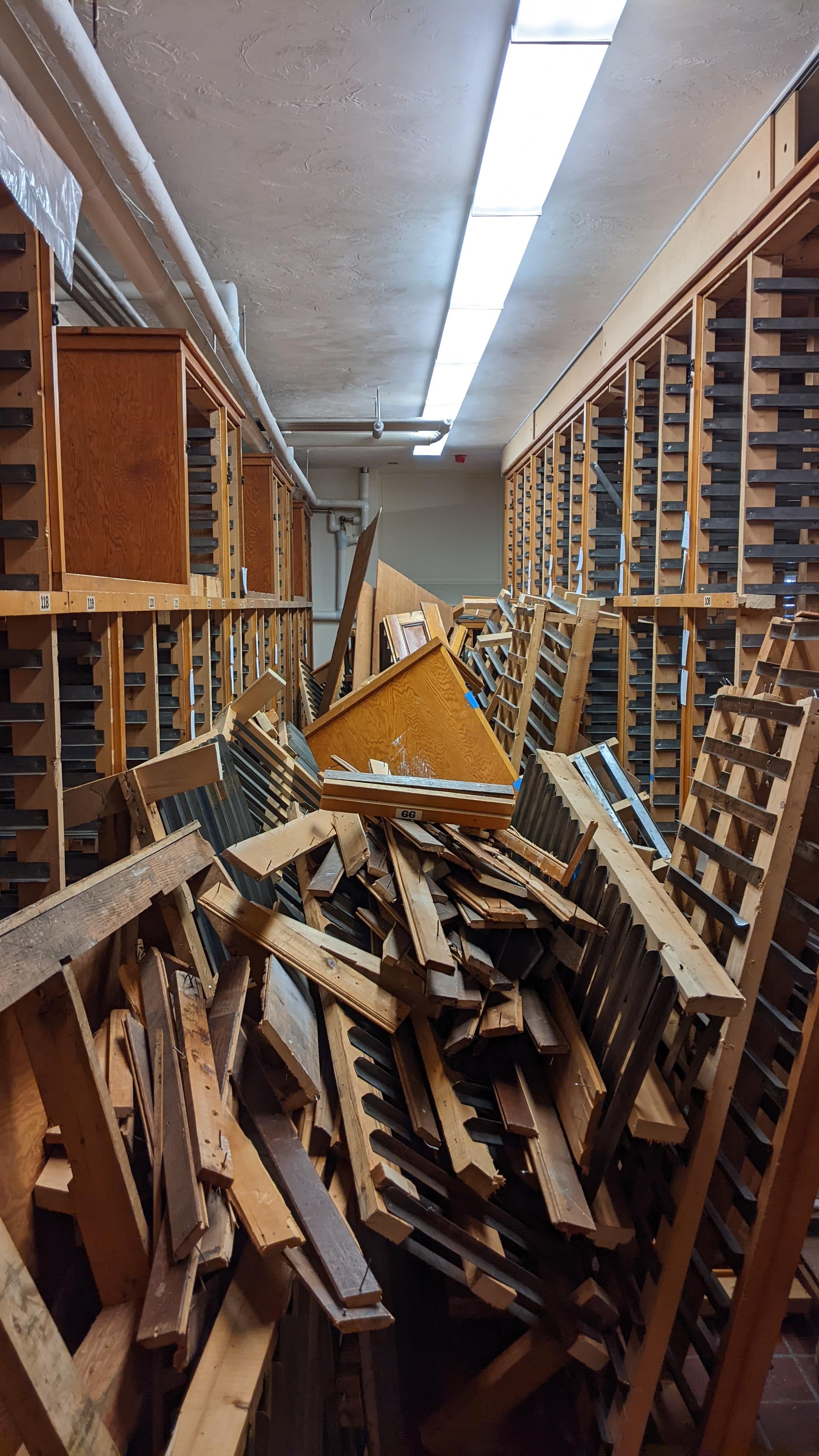
It is finally happening – the Peabody Institute building project is underway!
It has been quite a whirlwind preparing for this project over the past months (planning began in earnest about a year ago).
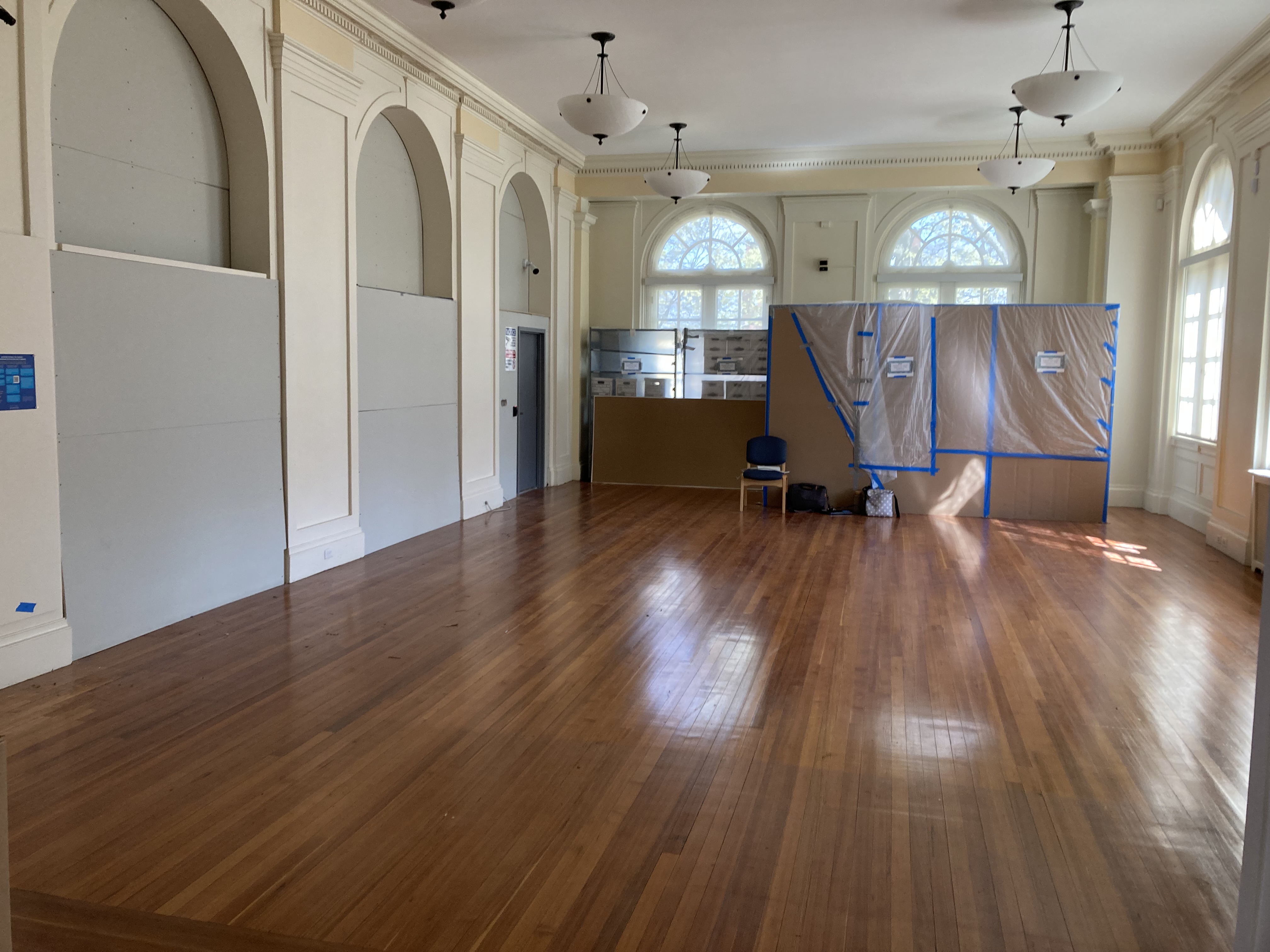
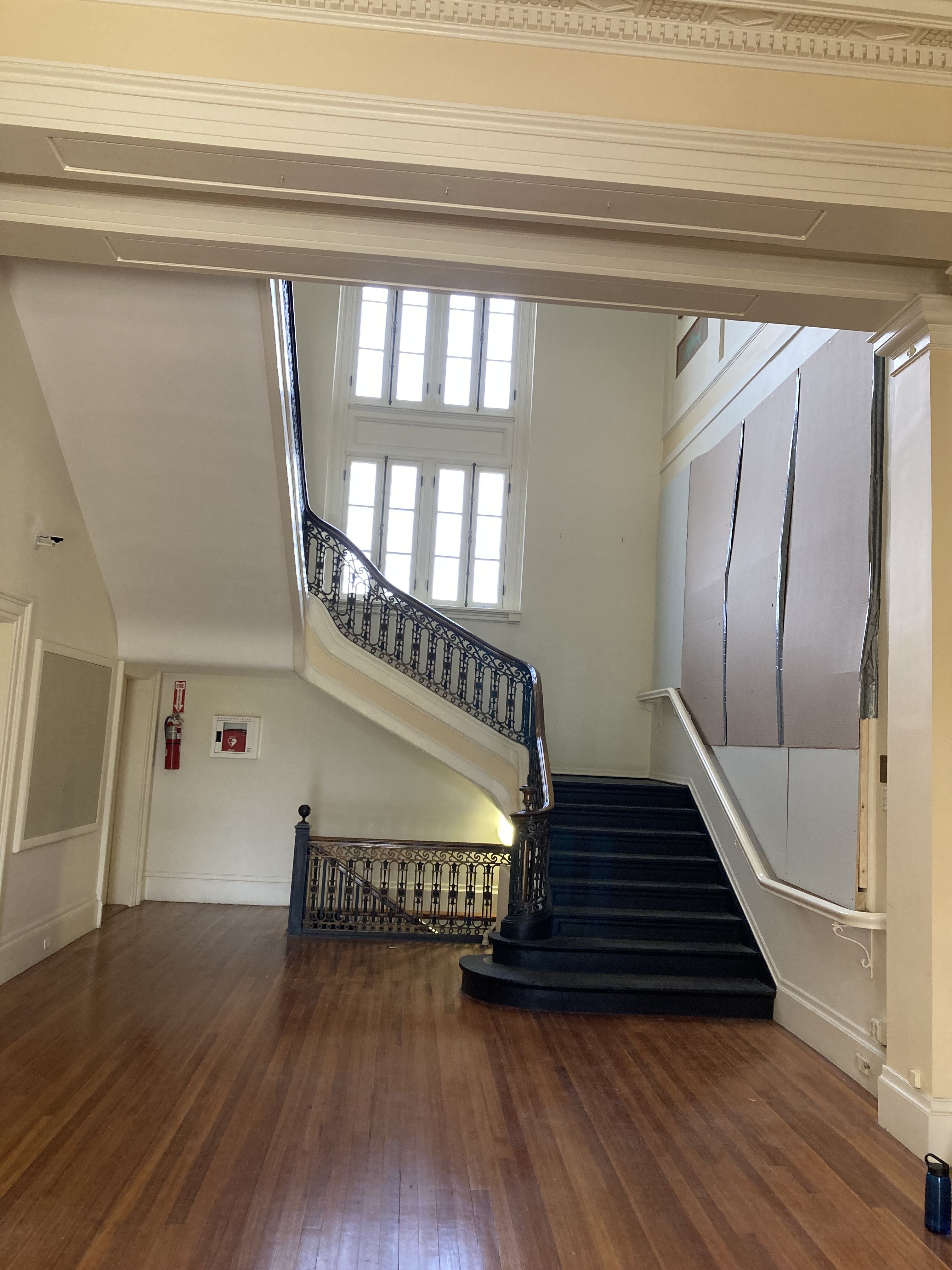
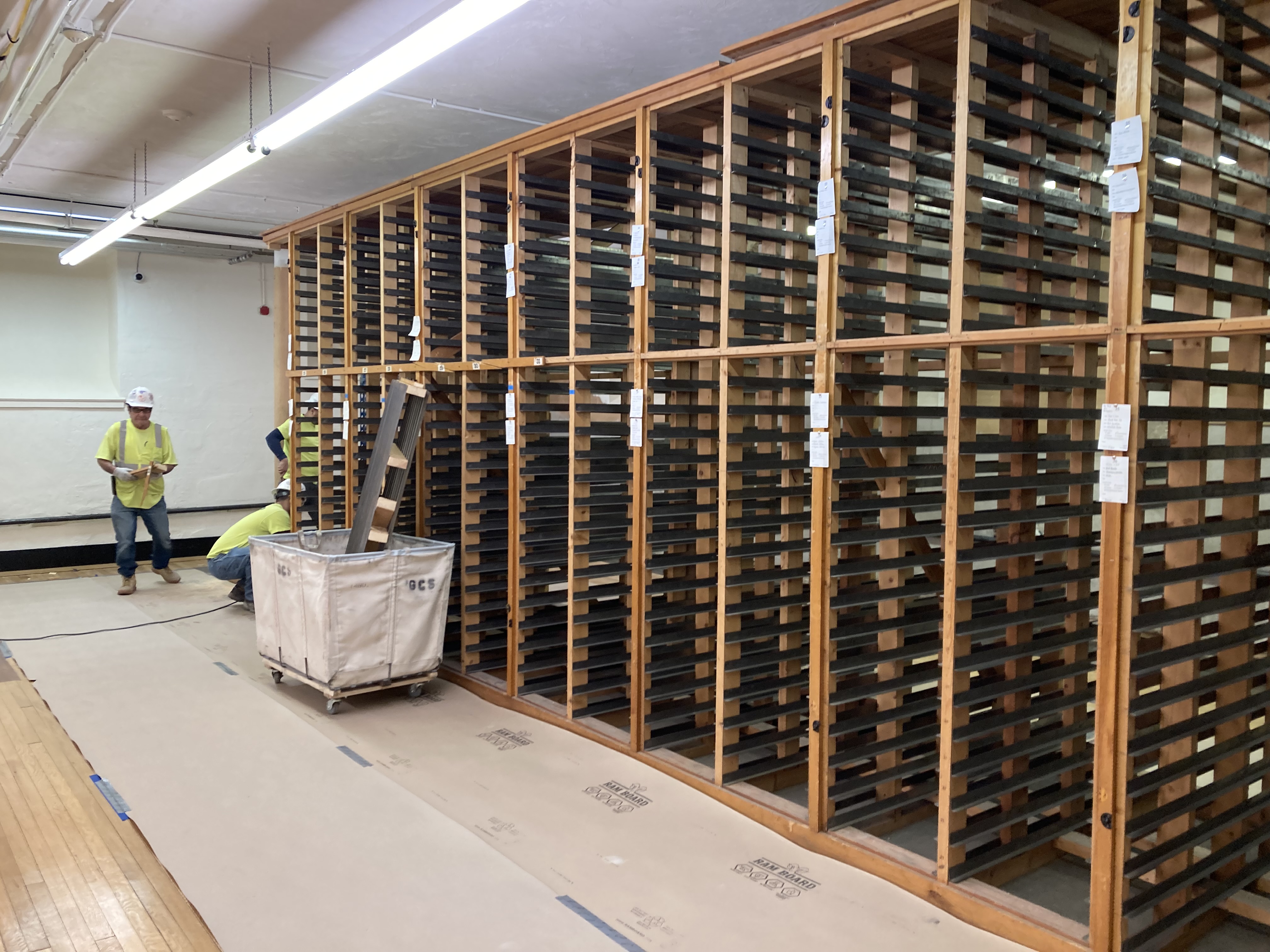
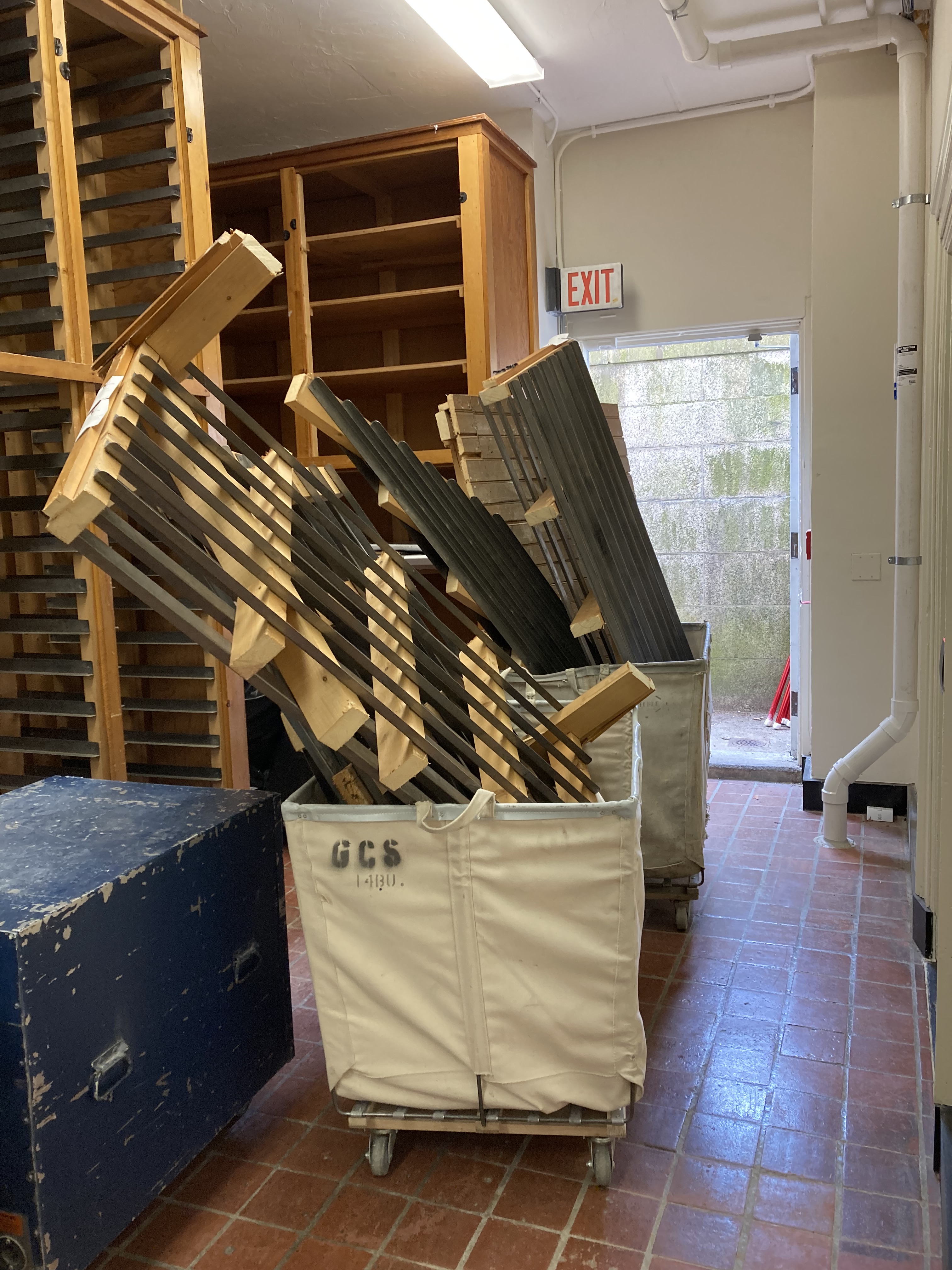
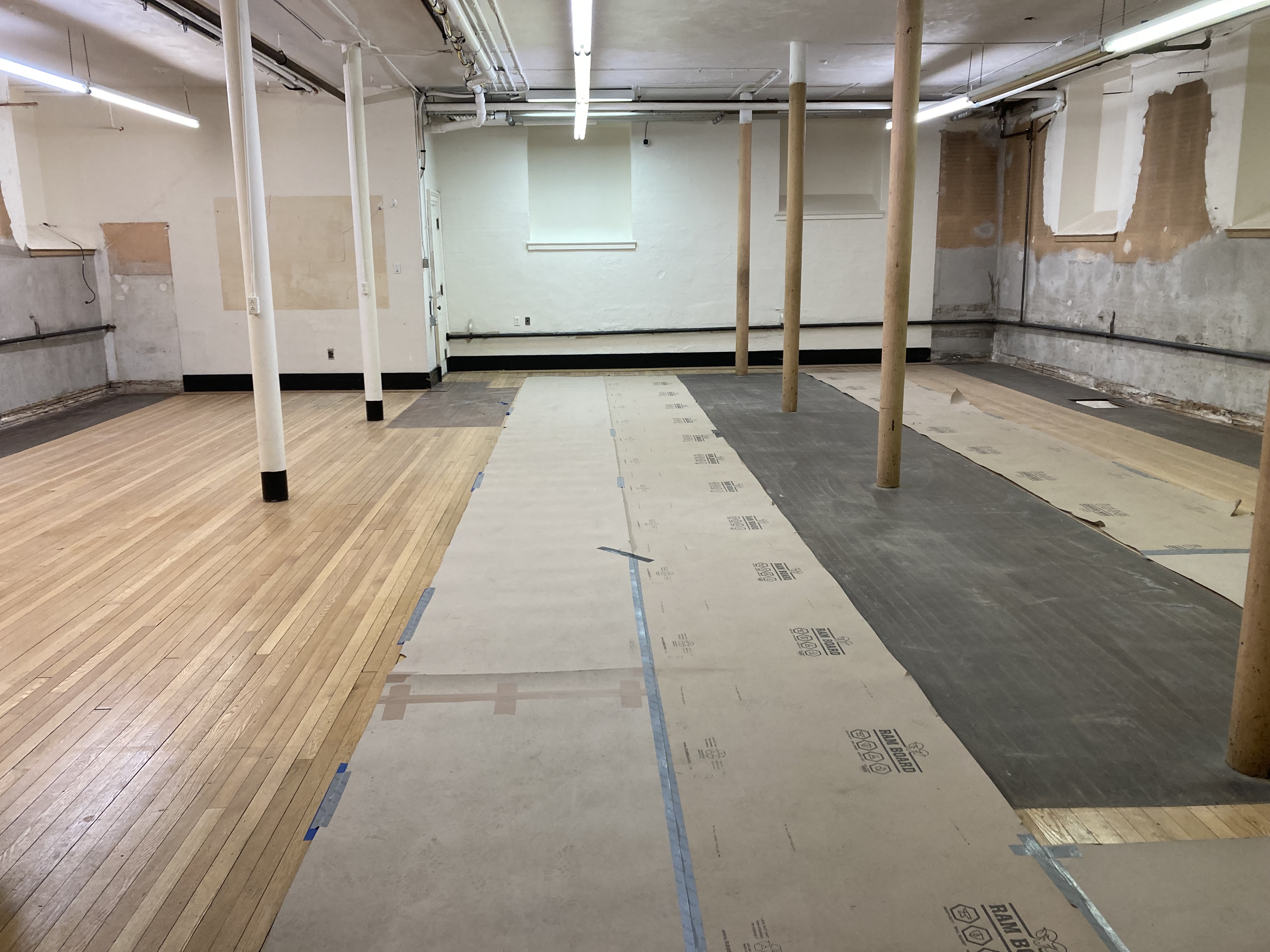
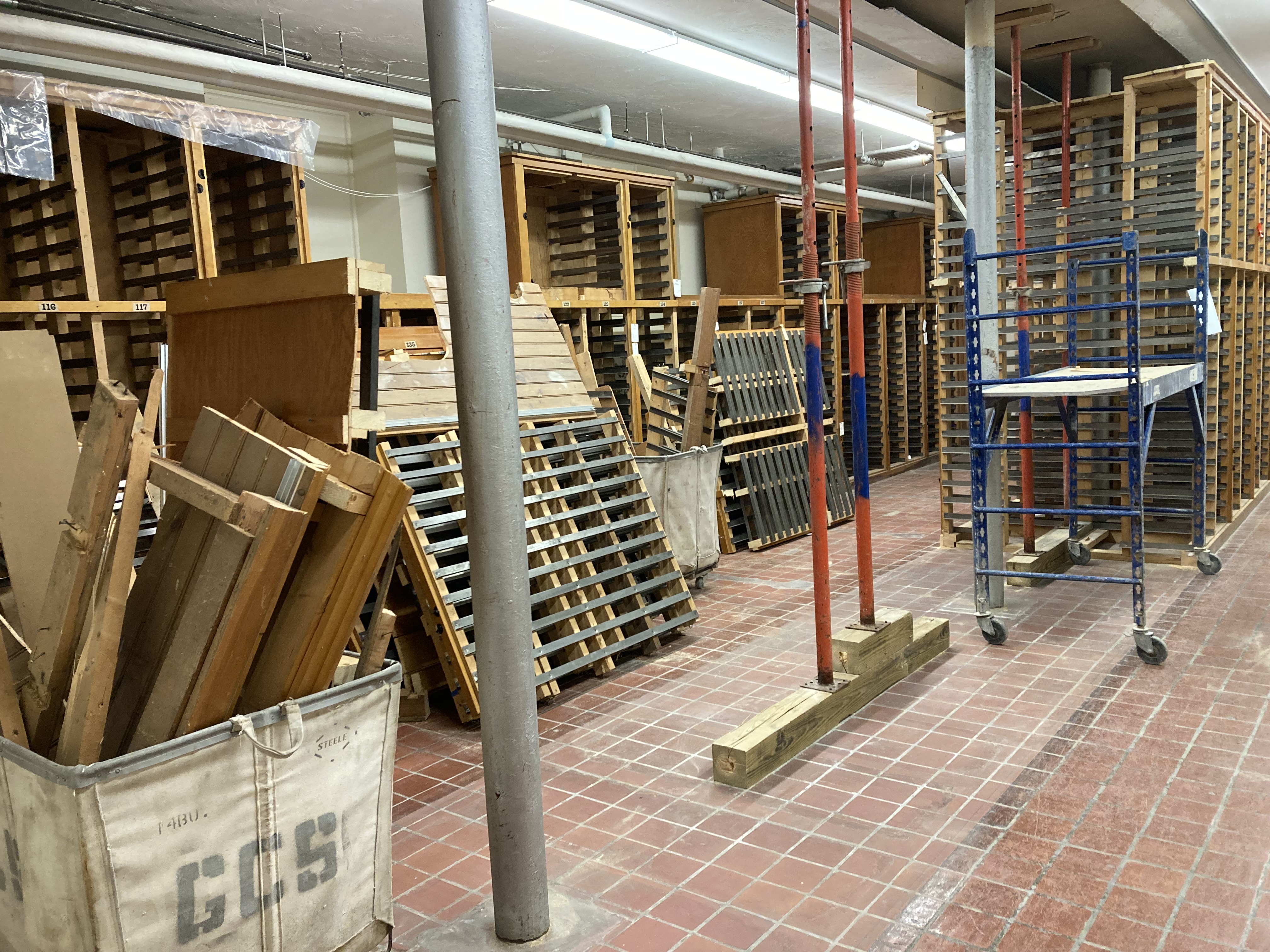
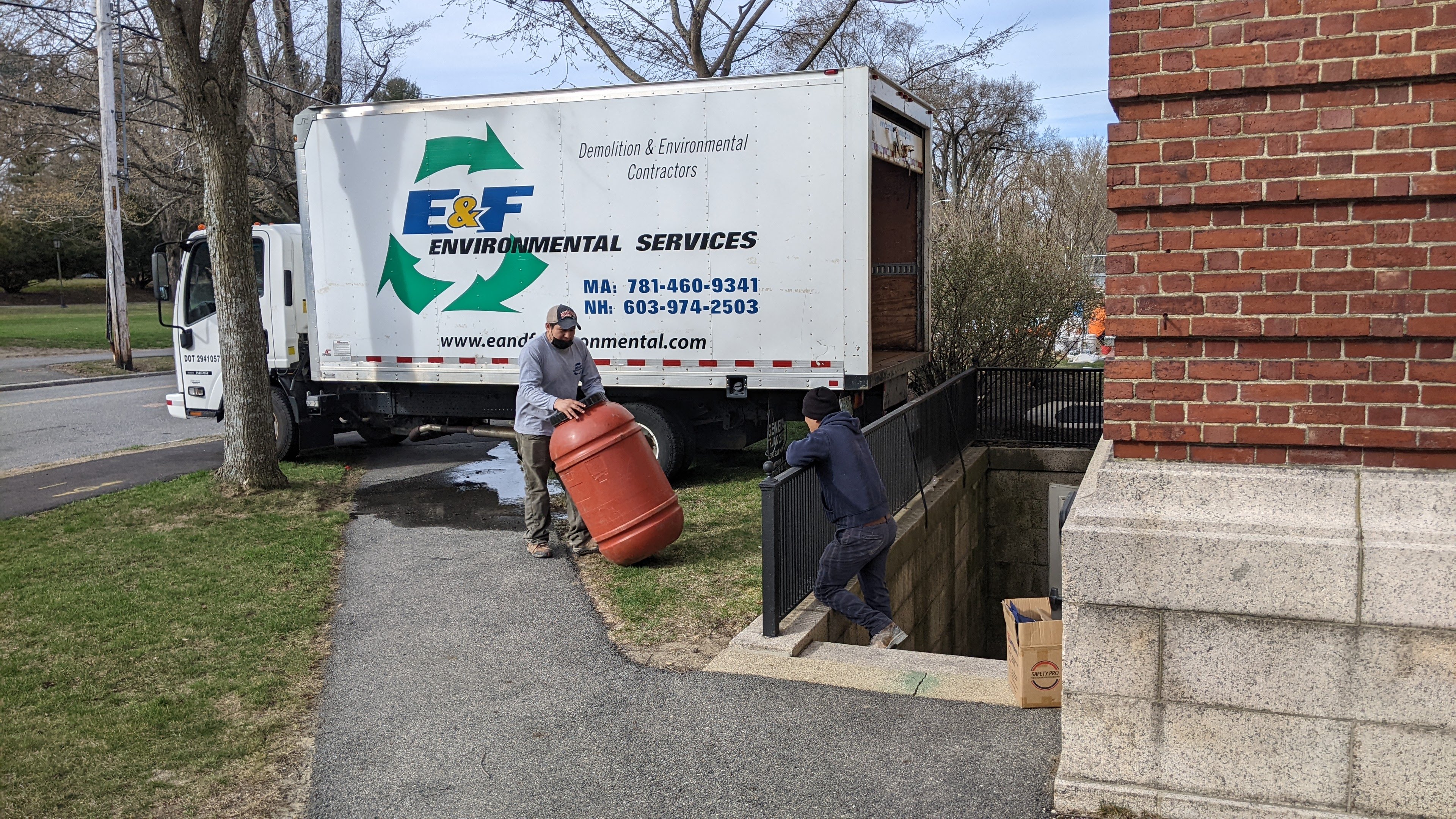
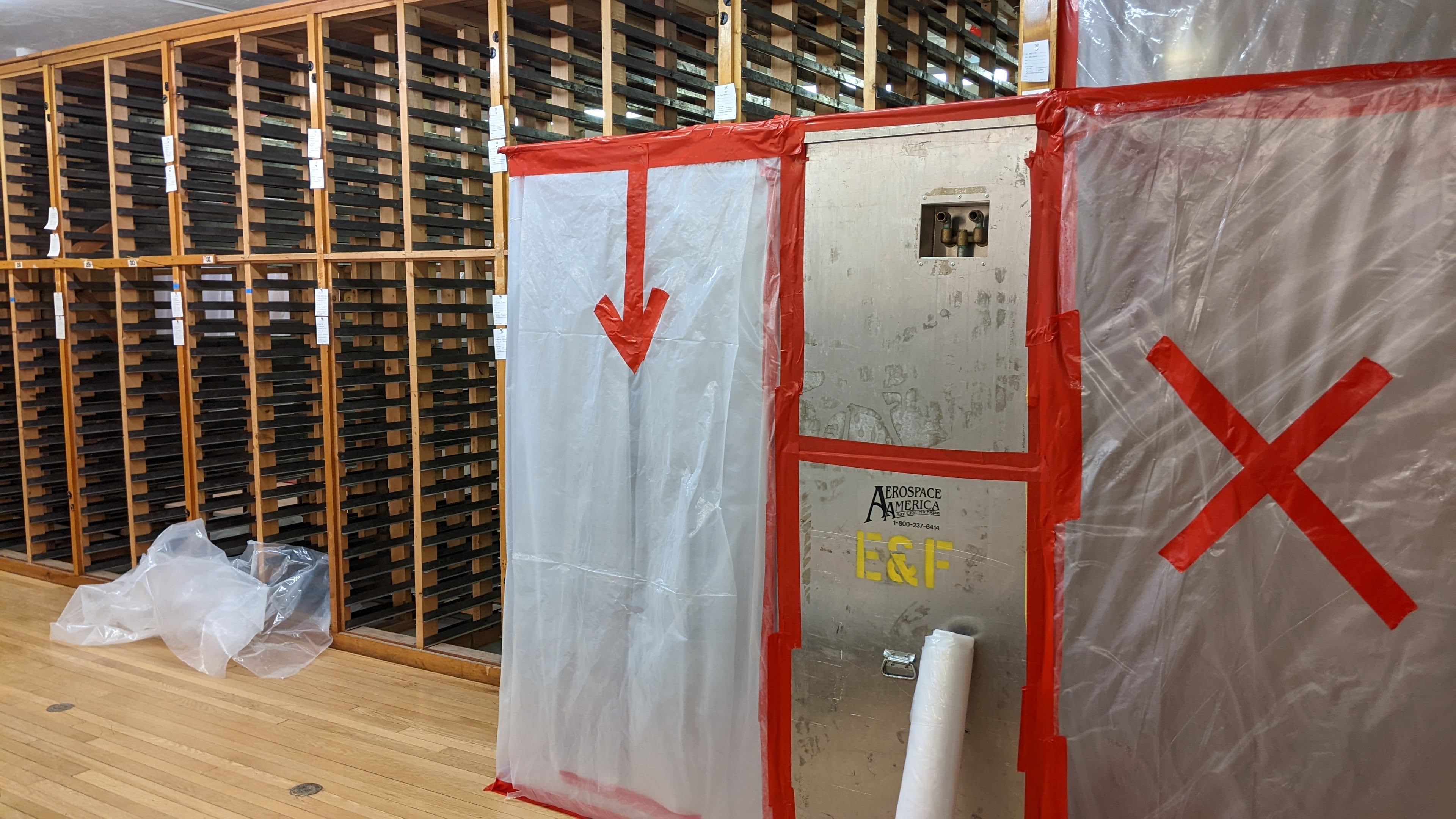
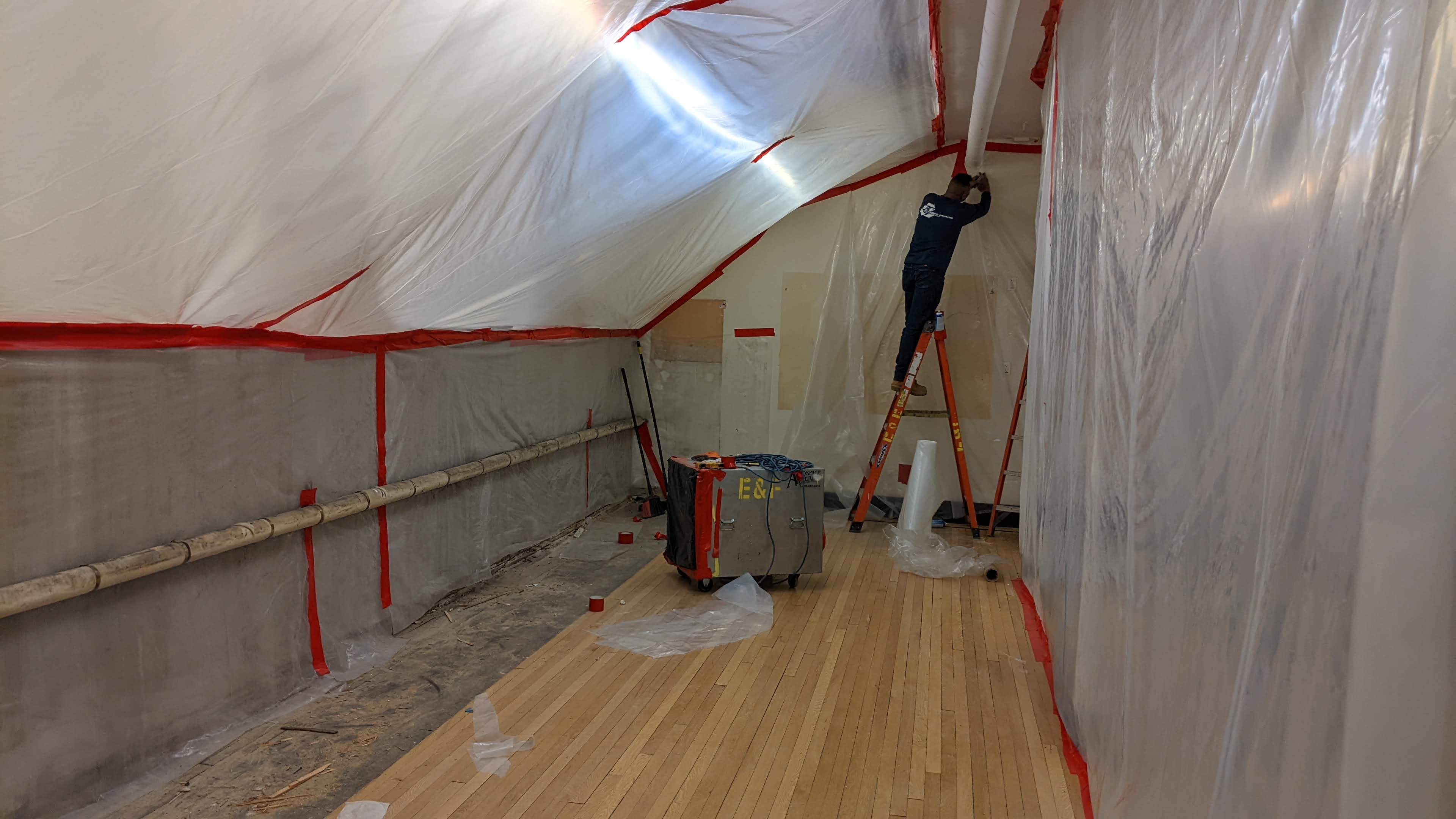
Since my last update, the full collection has been relocated within the building, asbestos has been remediated, the old storage bays have been demolished, and staff transitioned to working at small folding tables. We made the move to our temporary office space on-campus and are beginning to settle in.
So much credit goes to the Peabody staff members (and past interns) who collaborated to facilitate keeping the collection safe and organized during this process – thank you all!
We will keep you updated on progress as we are able.
This project will rely on philanthropic support from our donor community. To help advance this critical renovation, please contact Beth Parsons, director for museums and educational outreach, at 978-749-4523 or bparsons@andover.edu.
This blog is the culmination of work done by Independent Researcher/Volunteer Adam Way to explore how the Peabody Institute has been portrayed by Phillips Academy students in The Phillipian over the years. Adam shared two previous blog posts about his work (Combing Through the Phillipianand Combing Through The Phillipian: End of an Era) and recently completed the project. His final blog is a summary of what he learned.
The relationship between The Phillipian and the Peabody Institute has existed since the Institute’s founding back in 1901, and while the strength of that relationship has waxed and waned, it has persisted nonetheless. During my time combing through over a century’s worth of The Phillipian issues, I have noticed a few substantial changes, mainly the amount of coverage that the Peabody Institute received, the type of coverage, and the student’s view of Peabody.
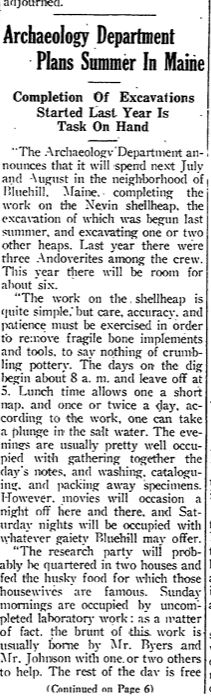
The first major difference that appears when looking through The Phillipian archives is that the number of times that the Peabody is addressed/mentioned decreases drastically towards the present. In 1910, the Peabody Institute, then the Department of Archaeology, was mentioned 153 times throughout the year, with the following years yielding similar results. A significant amount of the times that the Peabody Institute was mentioned in these early years can be attributed to the existence of extracurriculars that took place within the building. Events such as meetings of the Banjo or Drama clubs and other such student activities that took place in the Peabody make up a large portion of mentions, while the rest is composed of articles detailing the academic work and scholarship being conducted by the Institute.
April 15, 1916
The constant high volume of mentions during the early years of the Peabody Institute, unfortunately, do not last forever. It appears that the turning point was, more or less, when Warren K. Moorehead retired from his position as director and was replaced by Douglas Byers. While the overall number of yearly mentions had been on a steady decline since the beginning of the century, the number had remained relatively consistent and the articles were primarily focused on academic work and lectures at the Peabody Institute. This changed when Byers and curator Fred Johnson took over, as it appears that these two did not have as close of a relationship with the ThePhillipian as Moorehead did. This trend continued, and arguably was exacerbated under Richard “Scotty” MacNeish. I believe that this divide can be attributed to a shift in focus from teaching in the classroom to fieldwork, as all three of these former directors placed a heavy emphasis on fieldwork, while there was a lack of a consistent archaeology and/or anthropology class during this period (with other factors playing into that decision like student interest). Luckily, in the time since MacNeish, the Peabody Institute has regained a stronger, and more frequent, presence in the The Phillipian.
April 3, 1937
The next major change that I noticed while conducting this research, was that the type of coverage that the Peabody received changed over the years. Initially, I noticed this change through the club announcements. As time went on, the number of clubs using the Peabody, or at least publishing that they were in The Phillipian, was declining. Nothing about this appeared to be out of the ordinary as clubs moved to other buildings and Peabody House was constructed for the purpose of holding social events and clubs. The part that seemed strange to me was when members of the Peabody staff and faculty would leave without a single mention of their departure and only a brief mention when their replacement had been found, as was the case with Dick Drennan in 1977. However, as time progressed, the type of coverage in this area also shifted. Not only was there an article detailing the departure of the previous director, Malinda Stafford Blustain, but there was a subsequent article about the hiring of her replacement, Ryan Wheeler. It appears that the relationship between the The Phillipian and the Peabody Institute is steadily returning to its former strength.
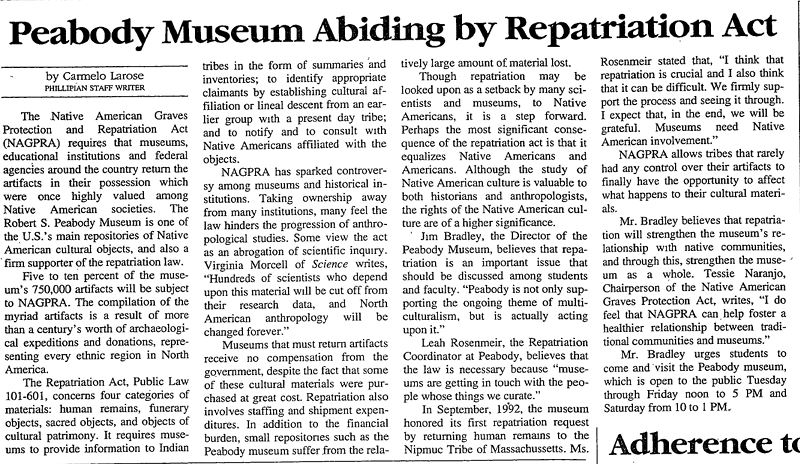
The last major change that I have noticed is the waxing and waning of student interest in the Peabody Institute over the years. As with the other two variables that changed over time, student interest seemed to peek early on before dropping drastically as time progressed. After Moorehead’s departure and the subsequent drop in attention received from The Phillipian, the Peabody became increasingly referred to as a “hidden gem” and “unused asset.” There were even pieces written as a joke that say a student died of boredom due to their visit to the Peabody. Pieces like these are written in good fun, however, it does highlight the disparity between how involved students once were and how involved they are now. As with the other two changes that I noticed, this too is changing for the better in recent years. While there are still joke articles, there are fewer instances where the Peabody is labeled as an “unused asset.” There appears to have been a positive reception of student travel programs in the recent past as well as current lectures and other programs offered by the Peabody Institute.
October 7, 1994
While my time combing through The Phillipian has come to a close, I am glad to see that the Robert S. Peabody Institute of Archaeology is making a resurgence within the paper. The records showed that the institution has been through some difficult times and yet has prevailed and is strengthening its place within the Academy and student life.
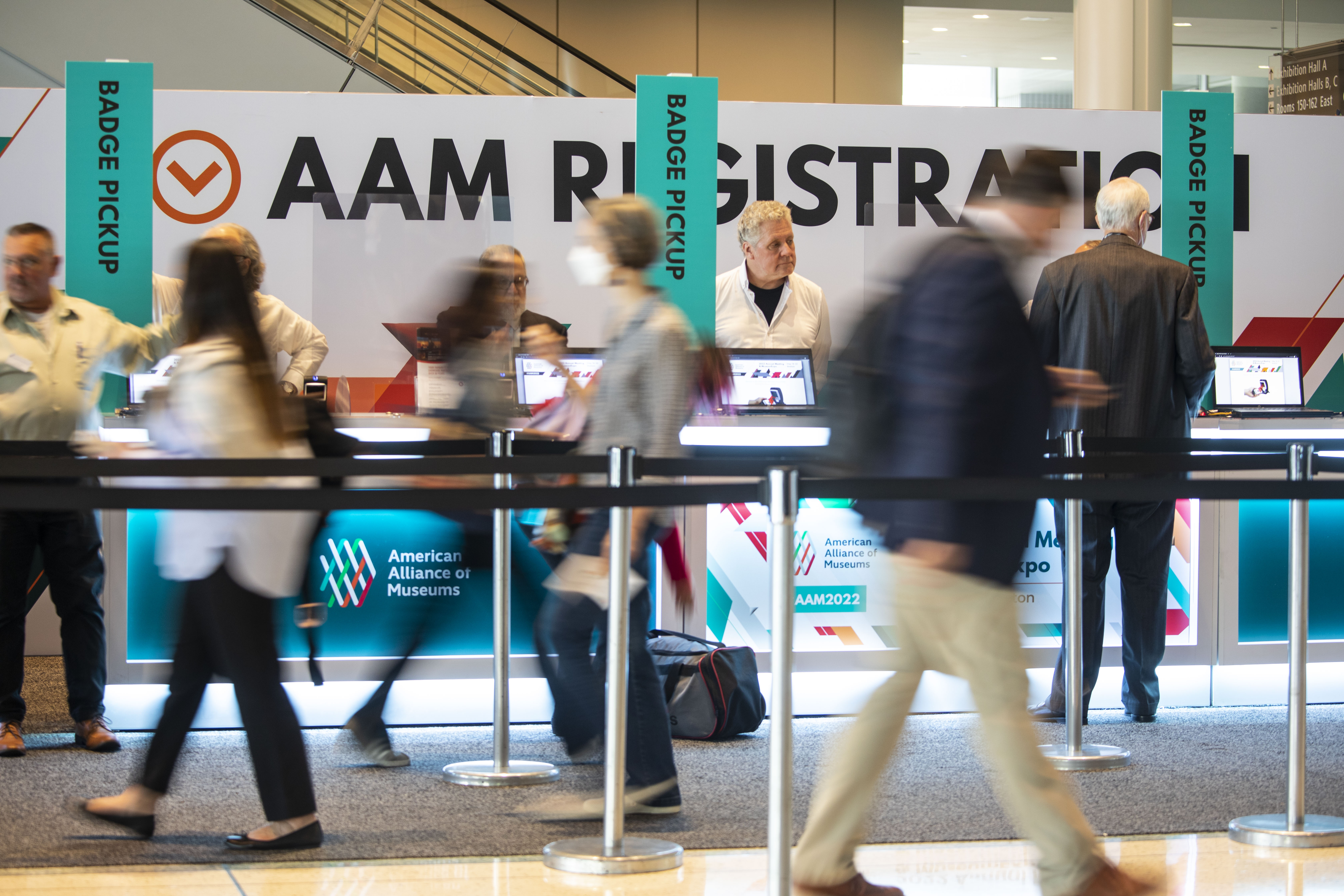
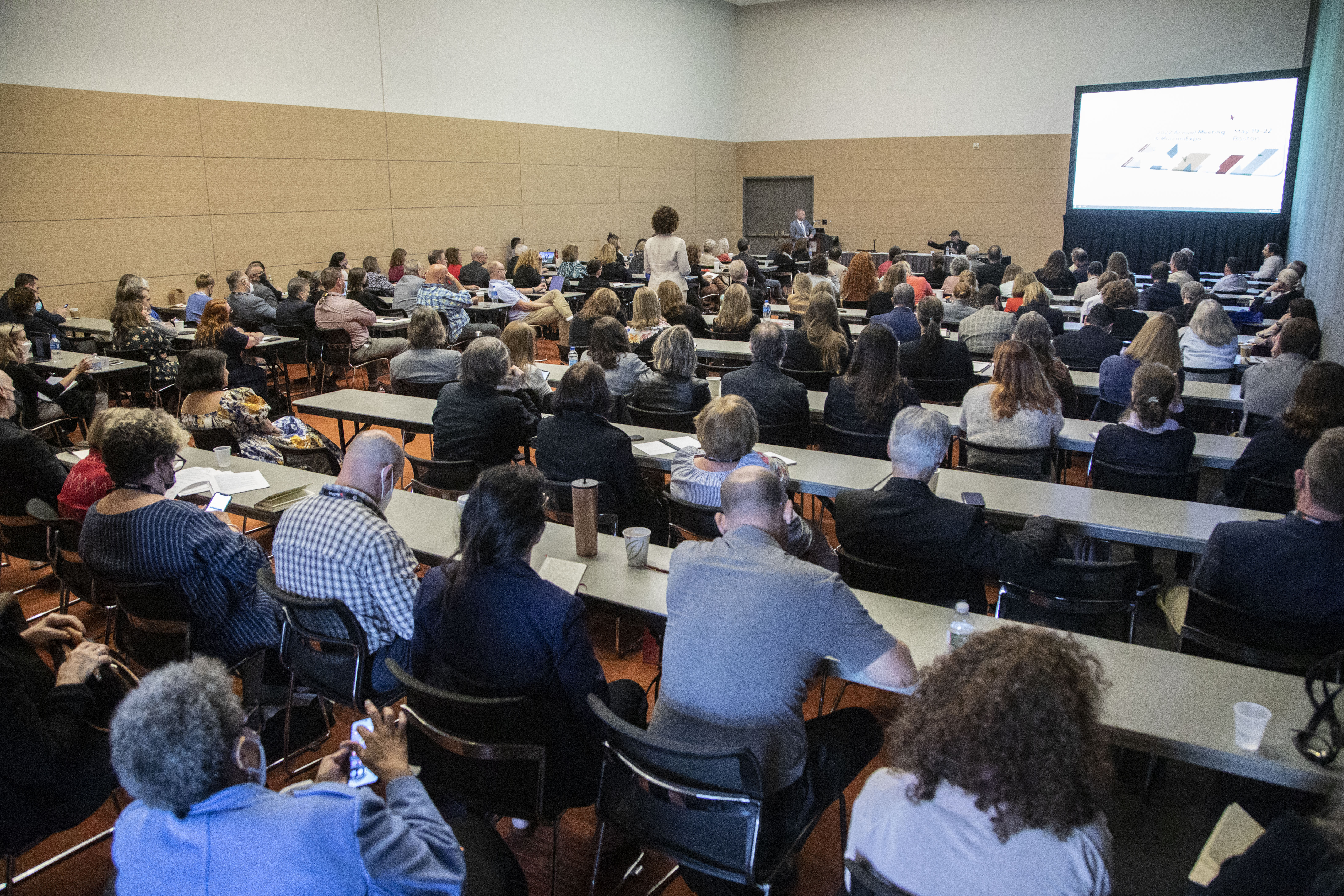
The American Alliance of Museums (AAM) held their Annual Meeting in Boston in May. Like many other conferences, this was the first in-person meeting in two years. The Peabody Institute was fortunate enough to present our work in a few different formats.
I was part of two sessions – Research Requires Consultation and Centering Culturally Appropriate Care: Re-examining Stewardship of Native American Cultural Items.
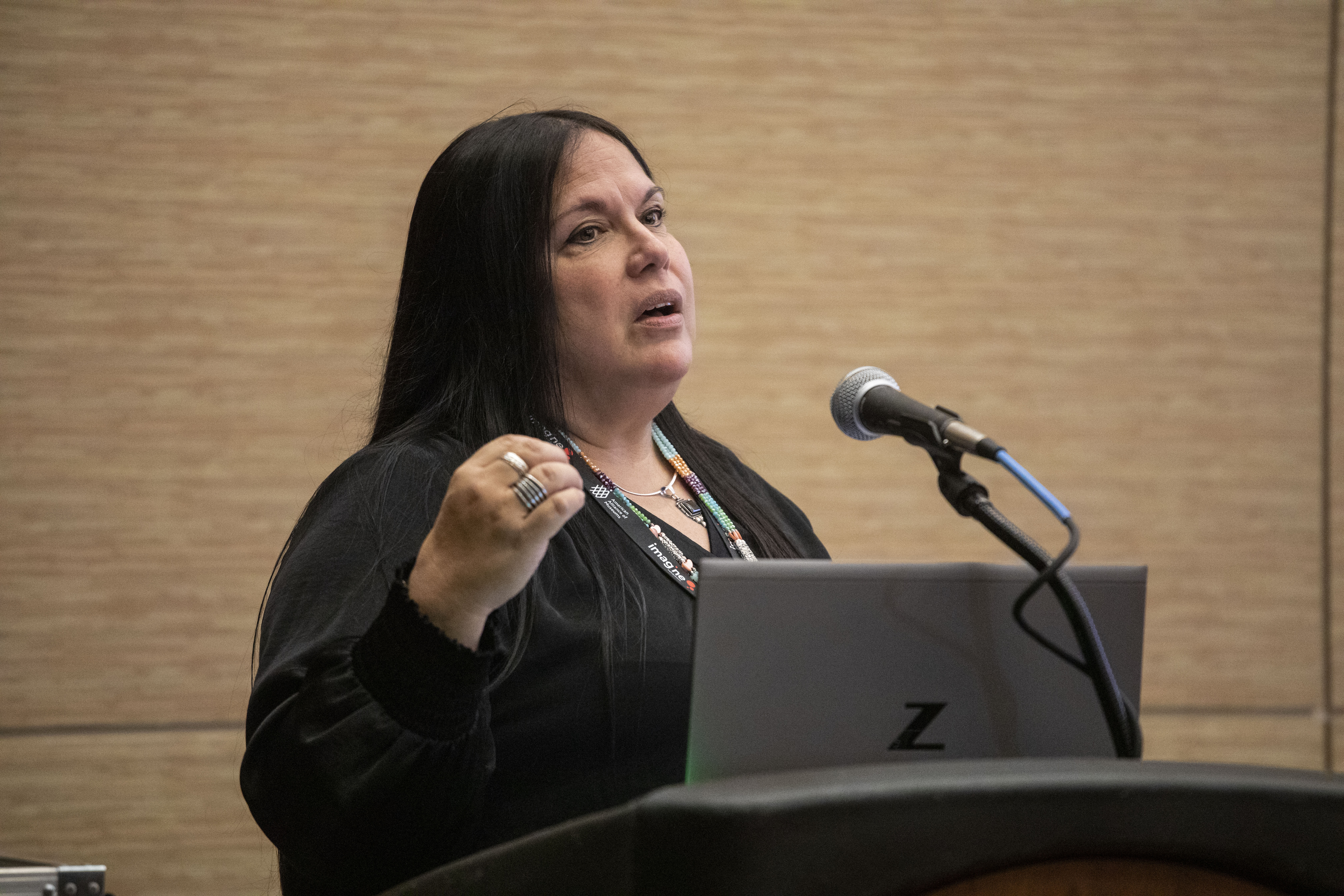
The session discussing research presented the Peabody Institute’s research policy that requires consultation and approval from an authorized tribal representative as part of any application for access to collections. You can find details about the policy here. My co-presenters were the NAGPRA Coordinator for the Osage Nation and the Senior Director of Heritage and Environmental Resources for the Seminole Tribe of Florida. Together we discussed the power of respecting tribal sovereignty by requiring these conversations about all levels of research into the cultural heritage of Native American communities.
Centering Culturally Appropriate Care presented the work of the Indigenous Collections Care Working Group (ICC) that I co-founded with my colleague Laura Bryant, Anthropology Collections Manager and NAGPRA Coordinator at the Gilcrease Museum in Tulsa, OK. The ICC has been working to develop a Guide as a reference tool for people (including museum professionals) who interact regularly with Native American collections, including those at all levels of experience and exposure. We are excited to be focusing on this conversation and developing a resource that is truly needed in the museum world. You can learn more about our work here.
Alt text: A busy registration deskAlt text: A speaker at a podiumAlt text: A full session roomAlt text: Attendees seated at tablesAlt text: Attendees in the poster hall
But I was not the only one from the Peabody Institute presenting at AAM!
Ryan Wheeler, Peabody Institute director, was part of a session called #NoMoreStolenAncestors: Repatriation and the NMAI Act. Facilitated by the Seminole Tribe of Florida, the session explored the issues with curating human remains, obstacles to repatriation, ways to improve the process. The Seminole have been pushing for policy change at the Smithsonian Institution’s National Museum of Natural History and has had some success. You can learn about their work here, here, and here.
Lindsay Randall, curator of education, co-authored a poster examining the explosive growth in digital technologies in small organizations and how it can be used to deliver high-quality content to museum audiences. The poster shone a spotlight on the Diggin’ In series produced by the Peabody Institute and the Massachusetts Archaeological Society. You can find all the Diggin’ In talks on the Peabody’s YouTube channel here.
It was an honor to share our work with our colleagues in the museum field and receive such supportive feedback. We look forward to presenting at many more conferences – hopefully in person!
My name is Deirdre Hutchison, and I am currently studying for my B.A. in history at UMass Lowell. As part of a semester internship, I had the opportunity to research the provenance of several unidentified Native American photographs held by the Robert S. Peabody Institute of Archaeology. My first blog outlined initial findings and potential areas of investigation. To summarize that blog, the photos, mounted on board, illustrate a 1905 event at the 101 Ranch in Oklahoma.
As I navigated various connections, photographer James B. Kent became a more prominent fixture of my research. Kent was a regular photographer at the 101 Ranch, and the Millers tapped him to design and compile the souvenir booklet for “Oklahoma’s Gala Day” at the ranch on June 11, 1905. –. Kent, it seems, was an integral part of photography at the 101 Ranch, ultimately becoming the head of the moving pictures department by 1927.
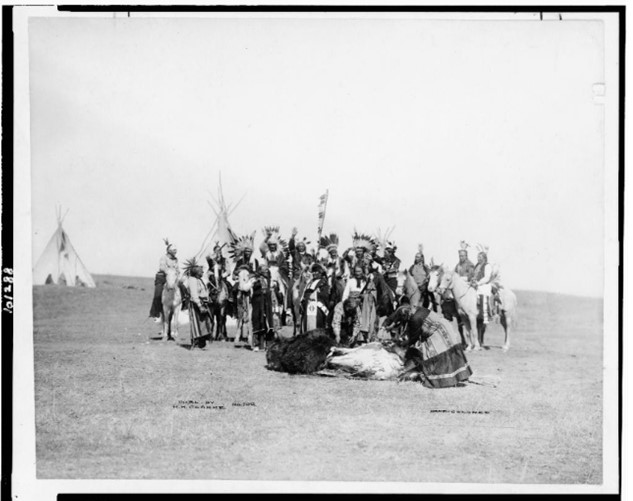
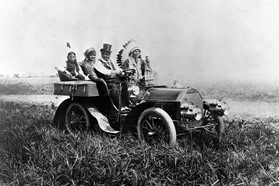
The 101 Ranch souvenir booklet is discussed by Michael Wallis in his book The Real Wild West. According to Wallis, it contains multiple images taken by Kent – including the picture of Geronimo skinning a buffalo held by the Peabody (discussed in my previous blog). The booklet also contains one of the most famous images of Geronimo, “Geronimo in an Automobile.” . Working with the archival staff at the Gilcrease Museum in Tulsa, I hope to view the images to confirm Kent’s pictures and perhaps discern other possible photo matches.
Isolating Kent’s work is relevant because he was not the only photographer working at the famous extravaganza on June 11, 1905. The Millers masterfully orchestrated spectacle – 65,000 people attended – could not be supported by just one photographer. Multiple photographers were present capturing various promotional images at the behest of the brothers. This is immediately evident in the Library of Congress photo of “Geronimo Skinning a Buffalo” that identifies O. Drum as the photographer. The strikingly similar images of the Peabody and the Library of Congress differ in only small ways. It seems a bank of photographers captured the same scene, each image similar, but slightly different: a person with a head facing a different direction, an extra person, women bending, or a western-clad gentleman caught talking with those being prepped for the publicity shoot.
Another name that kept popping up in my research and commonly associated with a broad range of images, including Kent’s, was the publisher H. H. Clarke. Not only did Clarke produce black and white photographs, but he also manufactured color versions for global distribution, and several of his postcards bear the notation Made in Germany. Clarke’s color versions are considered unique as he employed a hand-coloring technique rather than standard lithography. Other examples of this work are at the Cherokee Strip Museum (Cheryl DeJager, Cherokee Strip Museum, personal communication).
Printed in Germany , published by H.H. Clarke. Personal collection of Deirdre HutchisonUnidentified photograph from the Peabody Institute
Although Clarke published images by Kent and other photographers, establishing a direct link between them is difficult. However, sifting through metadata across several institutions, I discovered interesting connections that explore the publishing and manufacture of images onto postcards. For example, in the early twentieth century, professional and amateur photographers could sell their negatives directly to distributors such as Clarke or major publishing houses such as The Albertype Company. The Library of Congress cites Albertype and Clarke for one of two images listed of Geronimo in a car.
Clarke published three photos I initially matched with the Library of Congress. However, with only a thumbnail view available, I could not say with conviction they were identical to the Peabody images. After corresponding with the Prints and Photographs Division at the Library of Congress, enlarged views are now accessible online which allowed me to confirm that two photos were identical to those at the Peabody, but a discrepancy arose with the third. A close inspection reveals small but salient differences between the image at the Peabody and the one at the Library of Congress. For example, in the Peabody image, women are standing over the buffalo, but in the Library of Congress, they are bending over. Furthermore, in the Peabody image, a man stands to the buffalo’s left with his back to the camera, notable for his western-style suit, boots, and derby hat. Kent was known for always wearing his signature derby hat, leading me to speculate he was directing the people for the staged photograph and was caught on camera by another photographer.
Ponca Indian Scouts, Library of CongressPonca Indian Scouts, Peabody Institute
When I started this project, I naively thought I would find solid evidence pertaining to Warren Moorehead’s acquisition of the images. As the museum’s first curator and renowned Native American expert, I thought, how could there not be a connection? Yet, every avenue of research proved fruitless with Moorehead. The narrative unfolded around the Miller Brothers, James “Bennie” Kent, and H. H. Clarke. The interconnectedness of these people provided many answers; the photographs were staged publicity images, taken at the 101 Ranch and predominantly early 1900s. Unraveling this fascinating story has been immensely rewarding, yet it seemed unlikely I would find any correlation between the images and their arrival at the museum.
Despite this disappointment, potential connections with the Peabody Institute and theories of acquisition emerged when reviewing my data, though initially not with Moorehead. Ernest Whitworth Marland was in business with the Millers and became Governor of Oklahoma. Frank Phillips of Phillips Oil was also involved with the Millers and the 101 Ranch. Both men were natives of Pennsylvania, as was Robert S. Peabody. Each man was wealthy, prominent, and quite conceivably moved in the same upper echelons of society. It is possible either of these could have passed photographs to Moorehead or the Peabody. Considering the student body of Phillips Academy, any alum could have given the images as a donation to their alma mater. Equally so, any faculty member may have been gifted the photos. All of these are plausible scenarios. However, another tenuous link emerged, excitedly leading me back to Moorehead. The collections description for the three Library of Congress images mentioned earlier notes that they are mounted photographs, as are the ones at the Peabody.
Another facet that piqued my interest was the descriptions accompanying records at the National Archives. “Geronimo in a Car” is cited as taken on June 11, 1905, at the Millers’ Oklahoma Gala Day, along with other images; all are 8×10 or larger, just like the Peabody images. Although far from compelling, there are commonalities.
What I found most compelling with the National Archives photo of “Geronimo in a Car” was that it states a copy was sent to the Office of the Commissioner of Indian Affairs. The Office of Indian Affairs later became the Bureau of Indian Affairs. Moorehead was appointed to the board of commissioners for the Bureau of Indian Affairs by President Roosevelt in 1908.
Geronimo Driving a Car. Oklahoma Gala Day, June 11, 1905. Wall Street Journal
As an emerging historian, I like to focus on facts. Unfortunately, facts can be notoriously distorted by time, memory, and absent material evidence. However, the absence of proof does not equate to the absence of the action. Although I had discounted Moorehead as the conduit, I have circled back and believe he is a strong acquisition candidate based on my latest discoveries. That particular mystery may never be solved, but it does not detract from the powerful narrative of Native American presence and treatment in mainstream society in the early twentieth century.







 The Peabody