AI seems to be everywhere these days. A recent real-world example of AI creep came during this year’s Super Bowl where roughly 25% of the ads that aired were about AI or utilized AI to generate ad content. In general, the ads promised increased productivity and greater inclusion of AI in our everyday lives.
Aside from the occasional Google Lens image search, I haven’t found a productive use for artificial intelligence in my everyday life. A recent study of ChatGPT interaction logs illustrated that, by rank, people engage AI most for creative composition, “romantic” role-playing, planning, and as a source of general information. Productive uses for AI, including coding and academic composition, came in farther down the list.
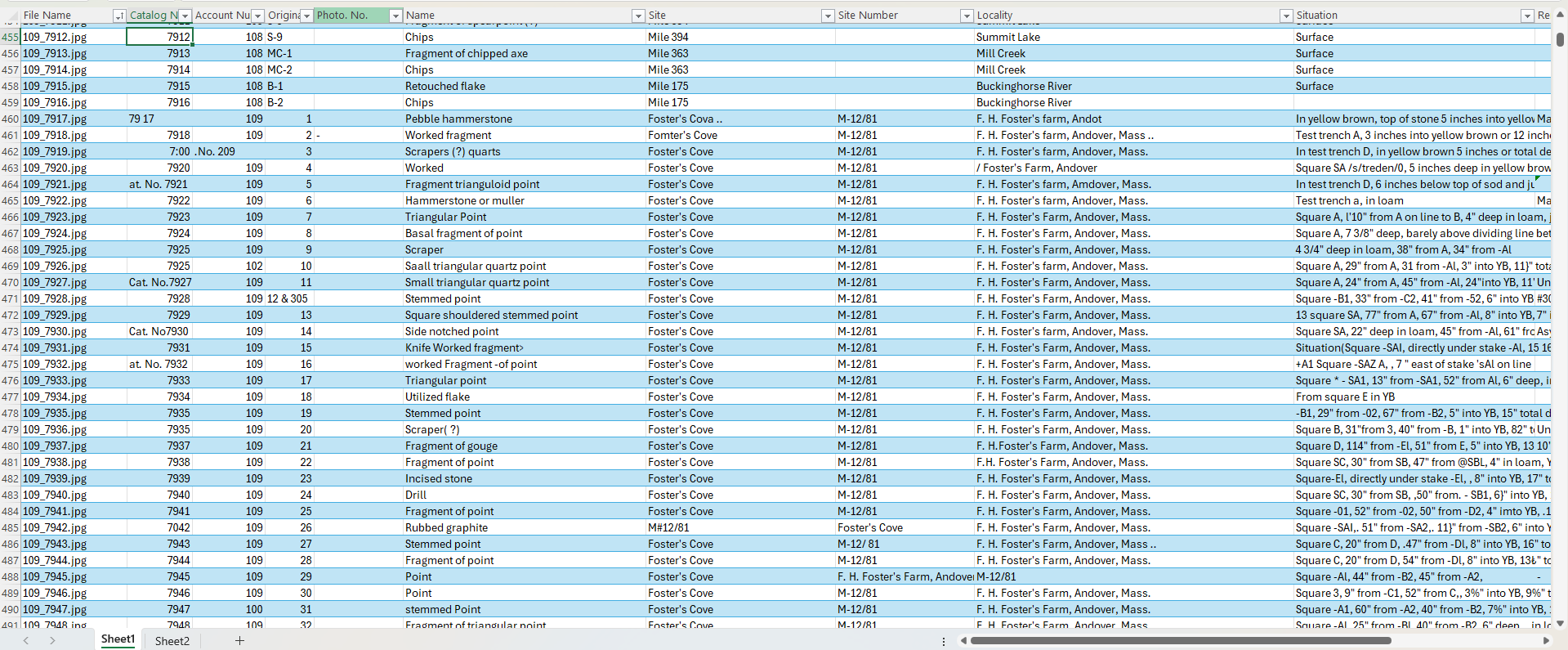
In my work at the Peabody, I engage in data management tasks that are repetitive or deal with large amounts of data. I have learned to use Excel tools to make my work more efficient (VLOOKUP- if you know, you know). However, some tasks are more complicated and in recent years we have explored AI as a tool for processing them.
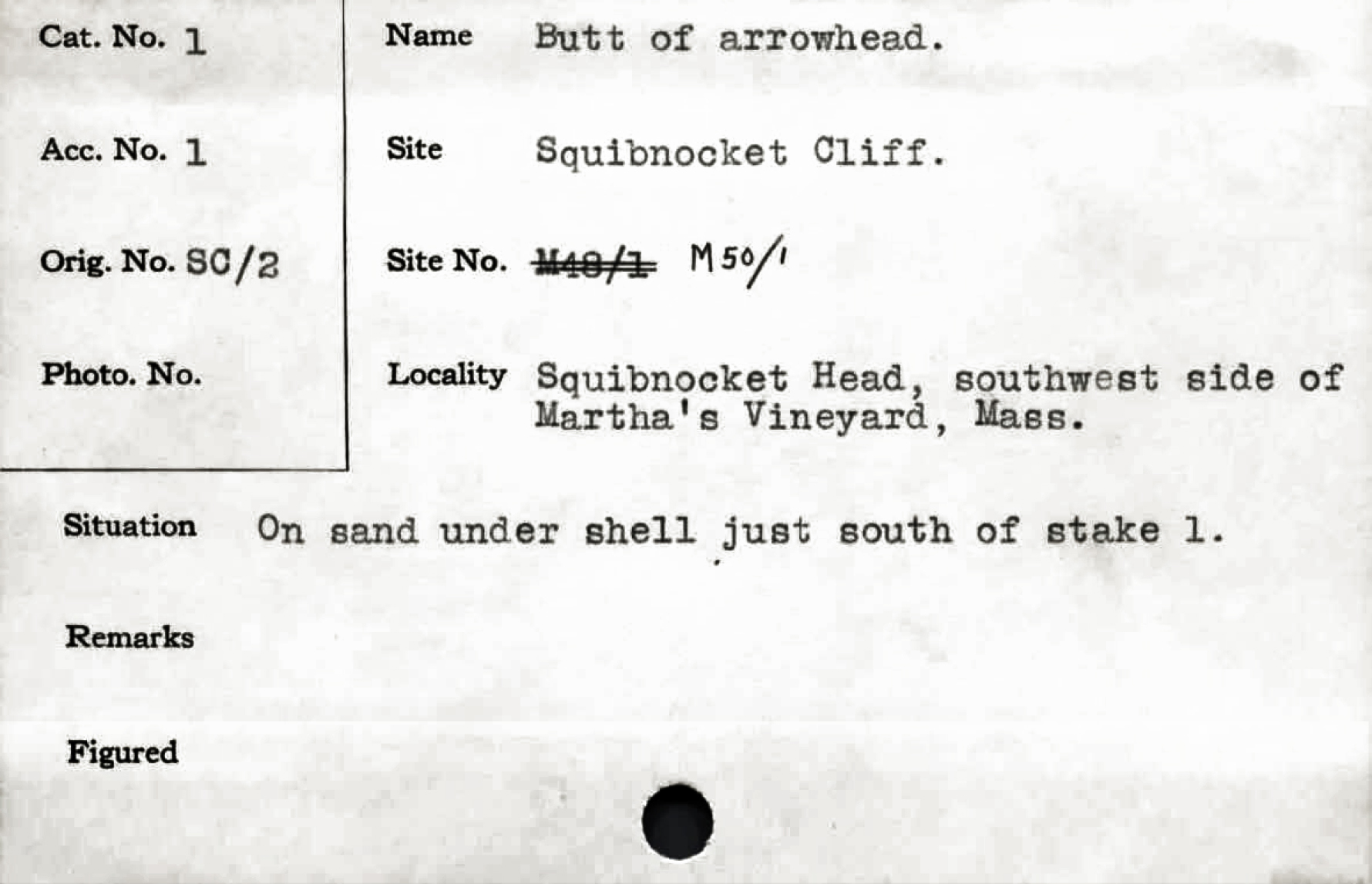
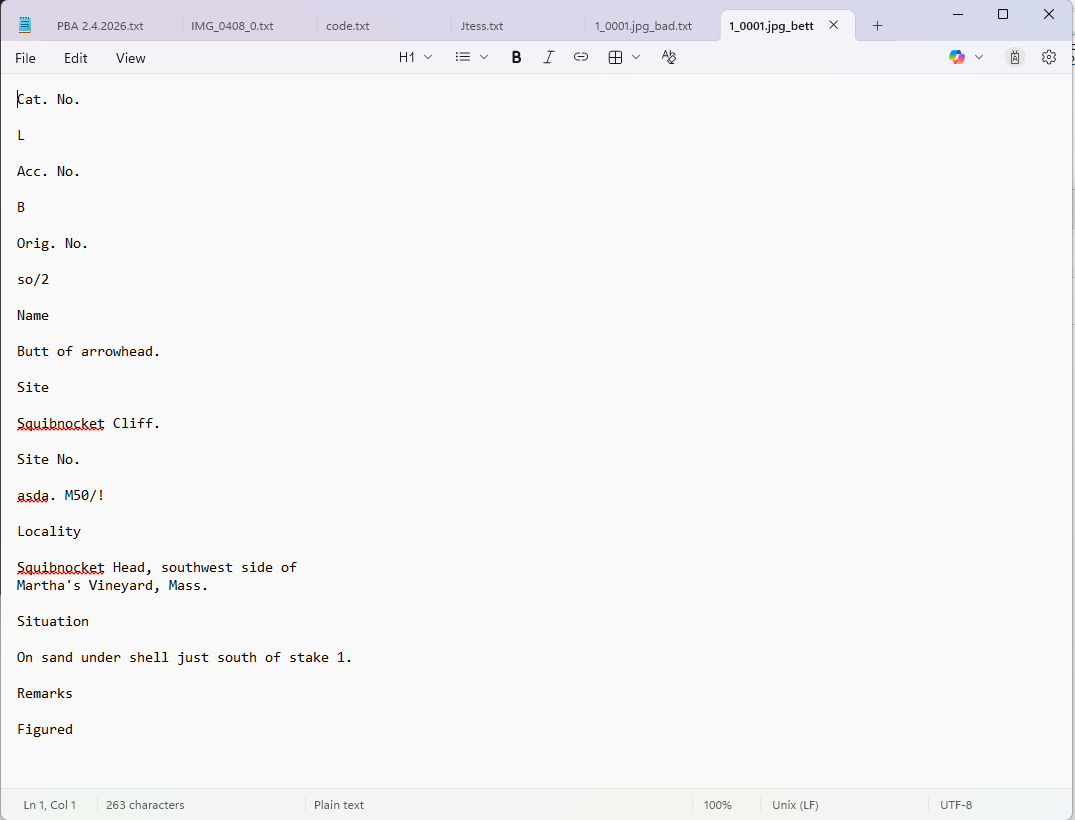
Example of catalog card with provenience information to extract.
One such complicated process is transcribing institutional records. We have roughly 50,000 catalog cards that are associated with our collections that were accessioned between the 1930s and 1970s. These cards hold valuable information on provenience and provenance for our collections and should be included in our database. Extracting the text from these cards would normally require time-consuming transcription of text by hand into an excel document.
As an example, in 2019 we were awarded an Abbot Academy Fund grant to hire a temporary staff member to transcribe our handwritten accession books. The process took a little over a year and, eventually, three staff members were tasked with completing the project. By comparison, the catalog cards would likely take just as much or more time to process.
Unlike the handwritten ledgers, the typed catalog cards have the benefit of being able to be converted to searchable text through the use of Optical Character Recognition (OCR). Many of us have converted a PDF into a searchable document with OCR. The technology is standard in many PDF readers these days.
Various attempts have been made over the years to use OCR to extract the text from our catalog cards. The process is complicated because, in the case of these cards, a block of text is useless unless it can be related to the field it originated from. OCR is also an imperfect technology; it can include a lot of errors. Despite these problems, it can be helped with a bit of training.
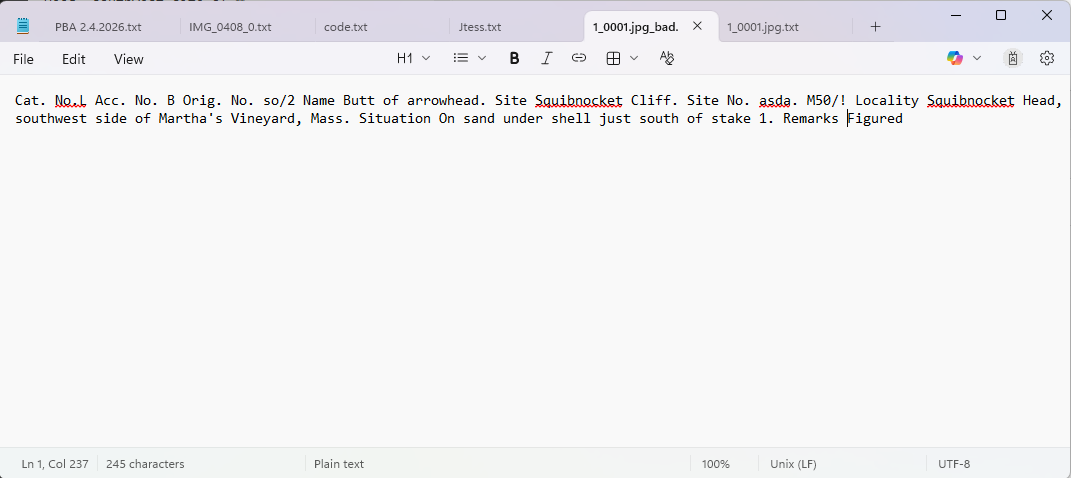
Normally, OCR spits out text in a single block, which is not helpful for isolating fields of text.It also includes many errors.
PA students embarked on the first attempt to read and extract the catalog card data. They created a computer program which read and extracted text from the cards and placed the text in corresponding fields. Even better, their model could be trained through the use of Machine Learning thereby improving the program’s accuracy over time. OCR, on its own, utilizes pattern-recognition which does not qualify as Artificial Intelligence. Once Machine Learning was incorporated the program fell squarely within the realm of AI.
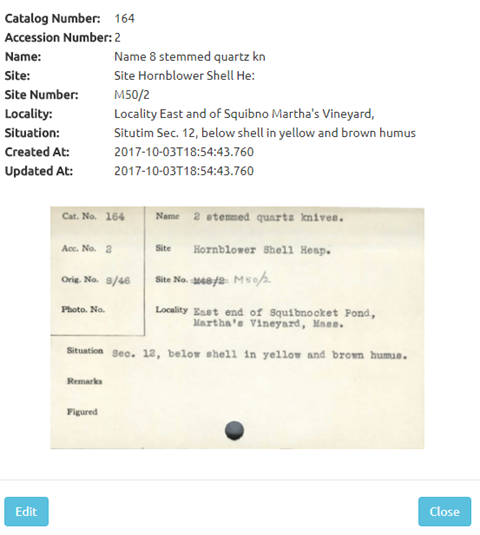
This is an example of the PA student’s program user interface. The output could be improved by editing the text fields above the image of the catalog card.
Output from the program was quality checked by humans; this was one of my weekly tasks when I first started working at the Peabody. In theory, the errors I and others corrected were fed back into the program. Once the output was loaded, the program would improve with subsequent readings.
Unfortunately, the student who spearheaded this program graduated and the project fizzled out without seeing results from the Machine Learning. Not long after, I found that I was consistently going to the catalog cards for provenience information. I realized that the project had serious benefits for our data management and I decided to take it on in my free time.
I found Tesseract OCR, a free and powerful tool for extracting text from images. I learned to use it in concert with tools to target specific areas of the cards so that the extracted text could be associated with its field of origin. The results were not great, so I learned how to improve the quality by correcting errors and feeding them back into the program. I basically recreated a very crude, inelegant and less functional version of the student program.
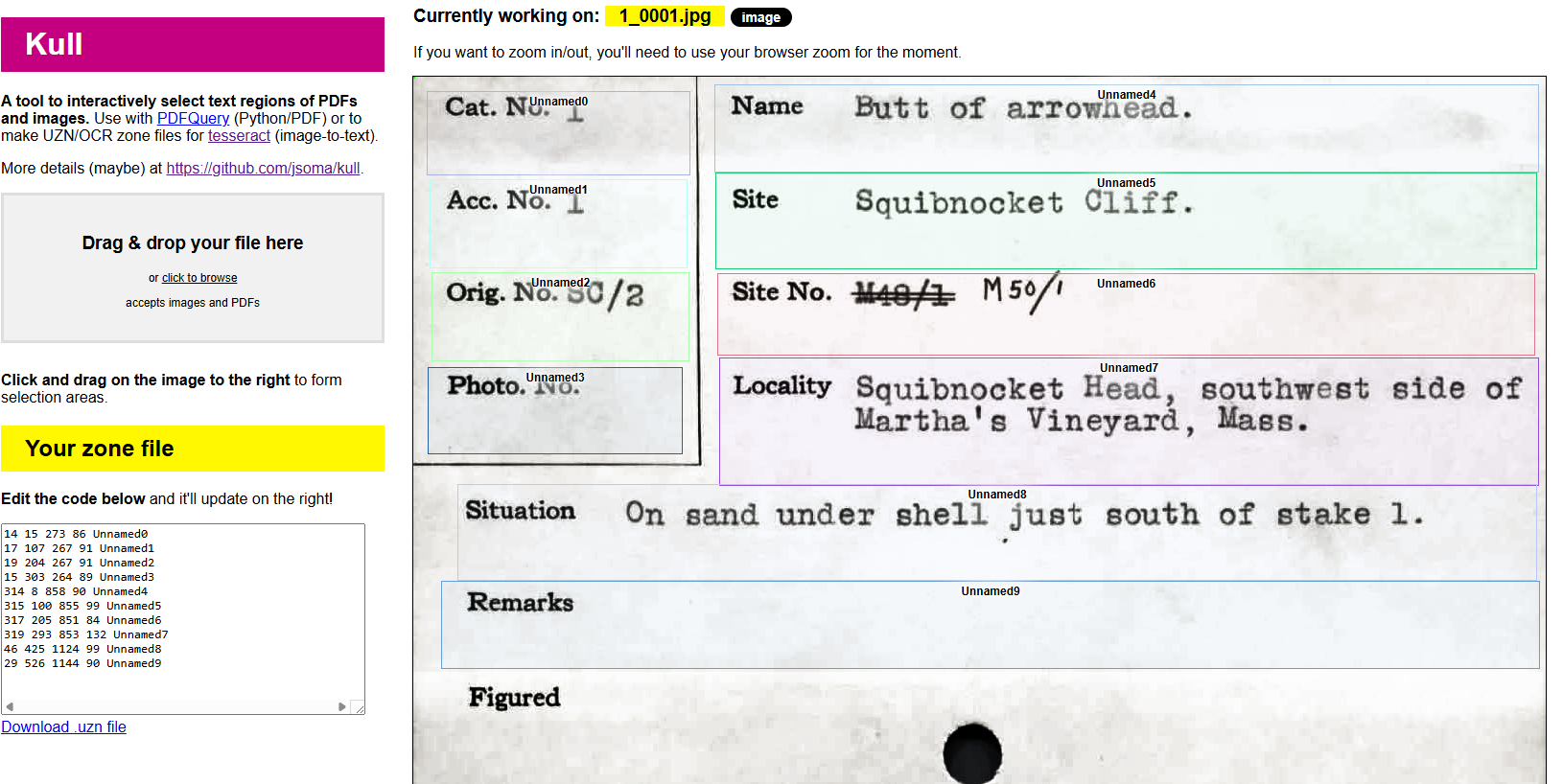
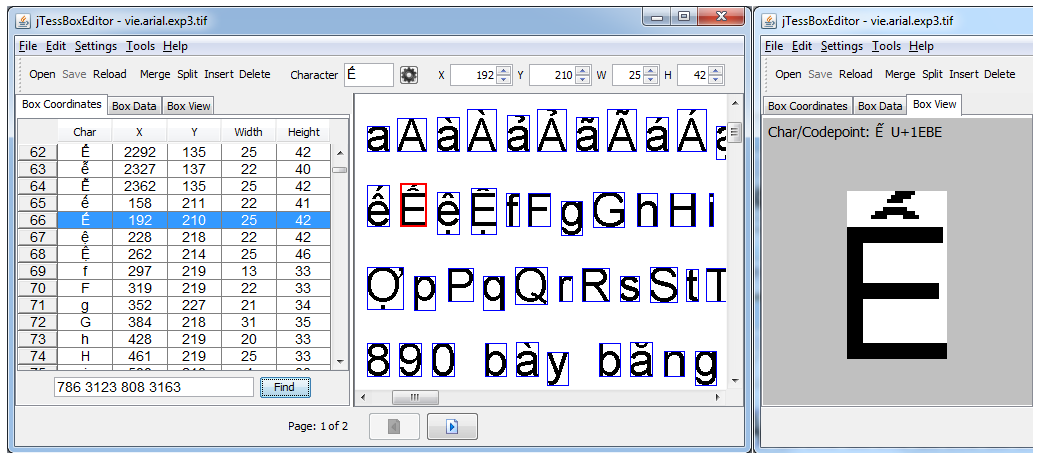
Kull, a free tool for pointing Tesseract at specific fields to read.OCR output with field separation.So many errors in my Tesseract output.To train Tesseract, box files are created around each character to correct the programs output. Way too much work!
Early training showed that the program was probably not going to improve without a lot of input. I decided to stop working on the project at that point.
In the intervening years, AI tools have been developed that can read text with greater accuracy. We learned of a museum professional using Microsoft’s Power Automate to read catalog cards. We reached out and got a basic roadmap for how we could make the program work.
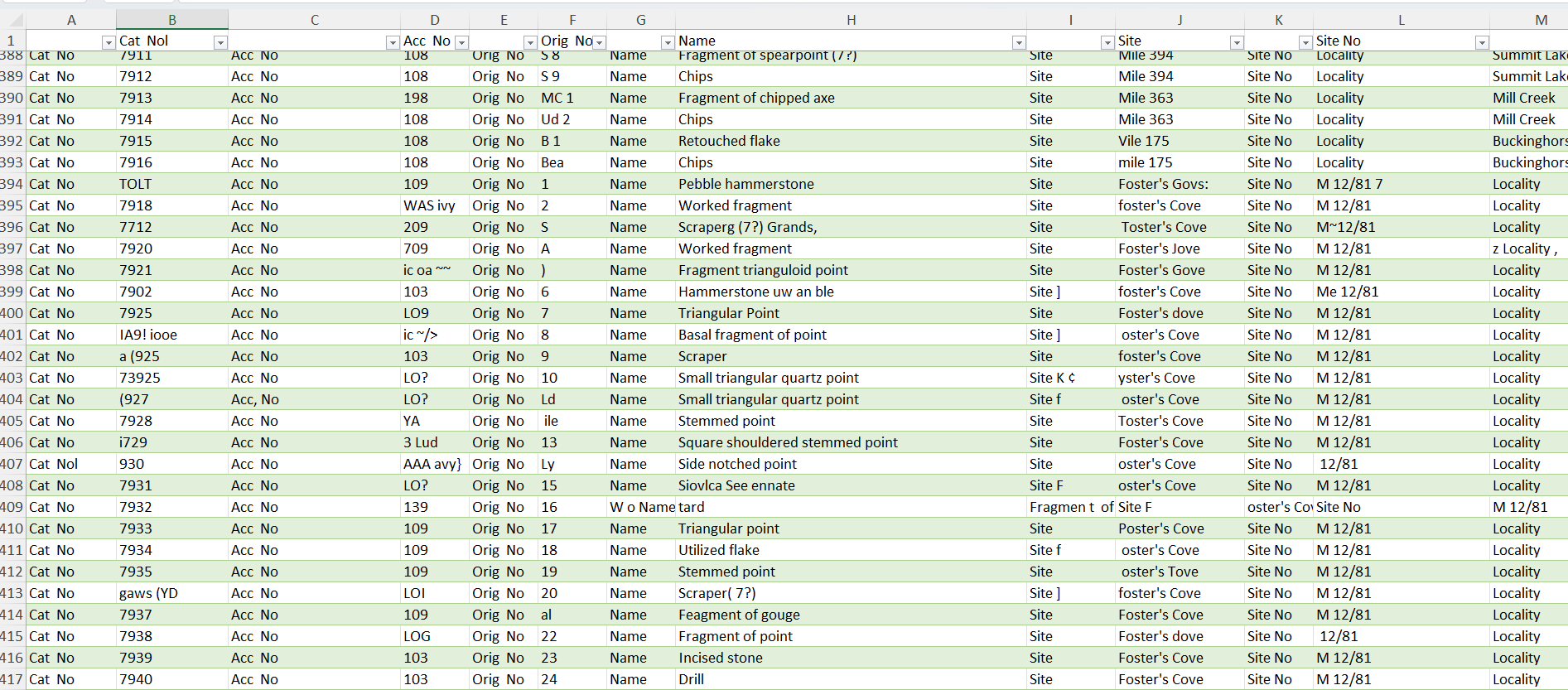
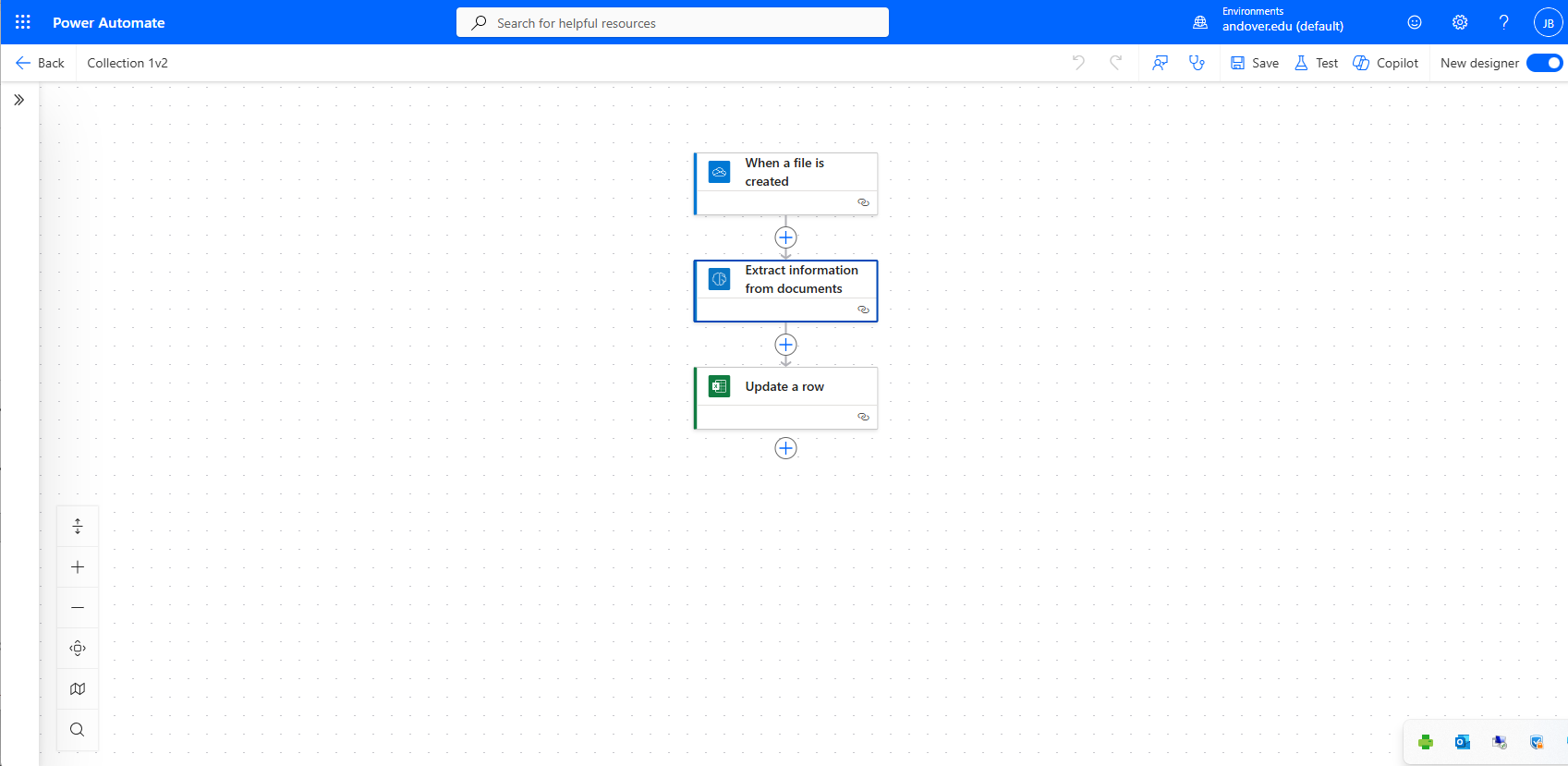
This is the visual workflow I set up. Once an image is placed in the folder, the model reads the card and extracts text into an excel file.This data is still a bit messy, but it is a huge improvement over what I obtained using Tesseract.
Very briefly, the AI Hub within Power Automate allows you to create a visual workflow that skips the need to write code. In addition to the workflow, I trained a model on ten examples of catalog cards. The training process allows you to select fields for the model to read. With the model trained and a workflow created, I was able to generate an Excel document where the extracted fields would be output.
The process of understanding how to set up the workflow, how to trigger it, and how to send the output into Excel were challenging. It required tinkering and several YouTube videos to get it function. It was not easy, but it was achievable, eventually.
And now, the Peabody has entered the AI age. If you need any advice on how to set up a workflow for reading documents, please feel free to reach out to me. Best of luck in your AI exploits.
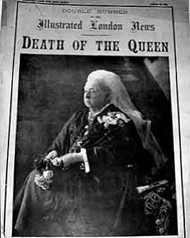
Front page of the Illustrated London News. January 26, 1901.
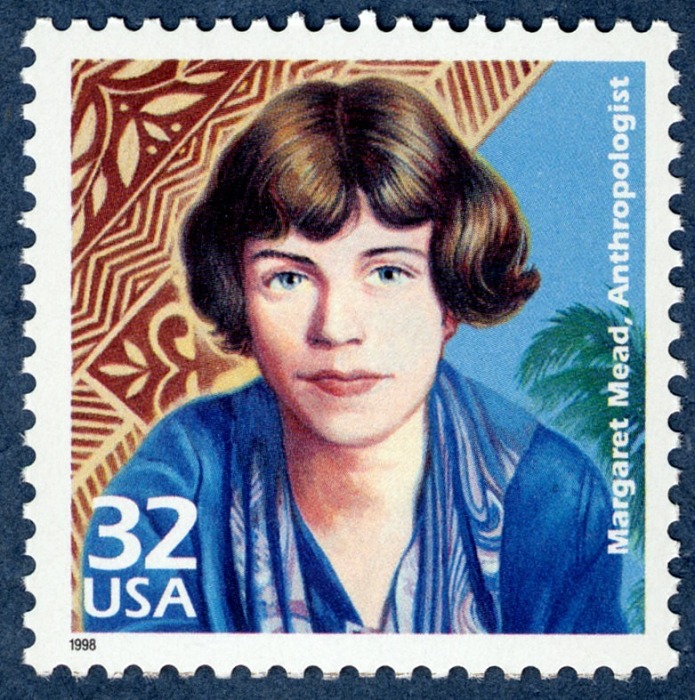
Margaret Mead stamp, US Postal Service souvenir sheet, Celebrate The Century: 1920s. May 28,1998. Copyright United States Postal Service. All rights reserved.
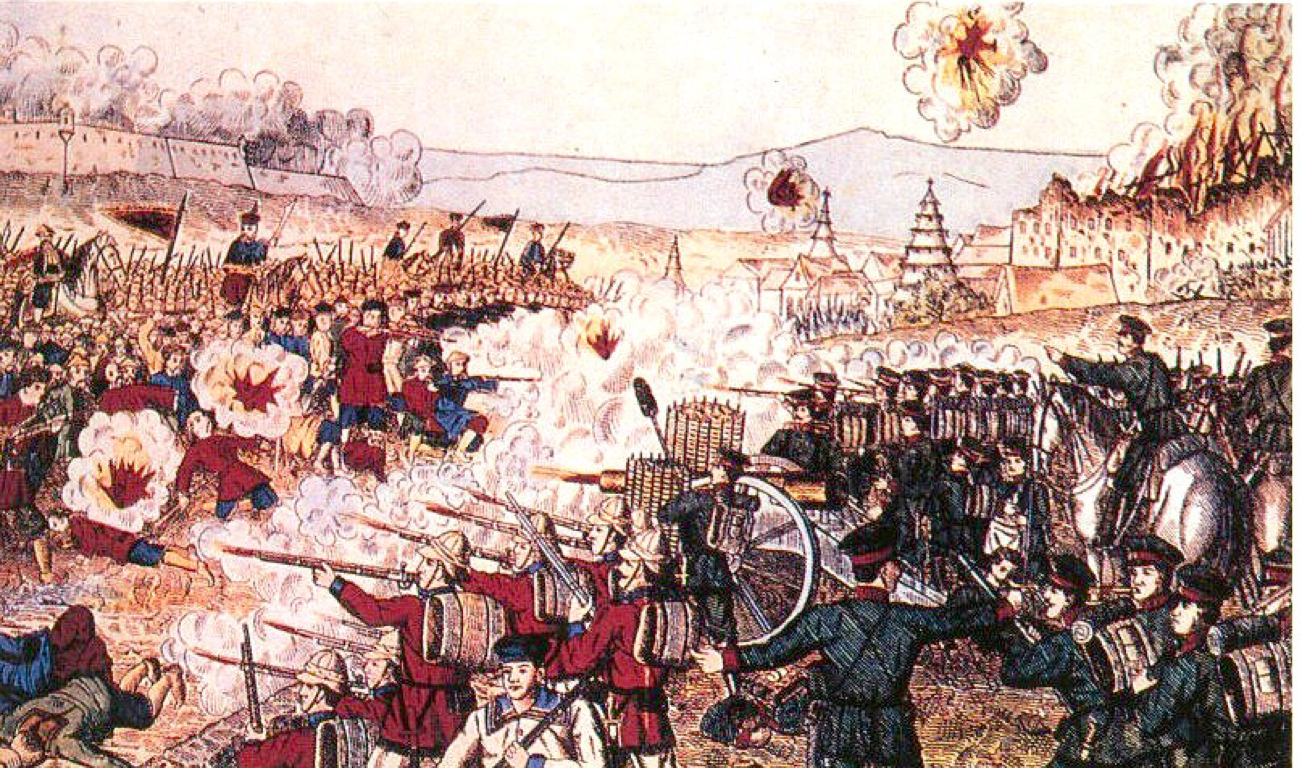
British and Japanese forces engage Boxers in battle.
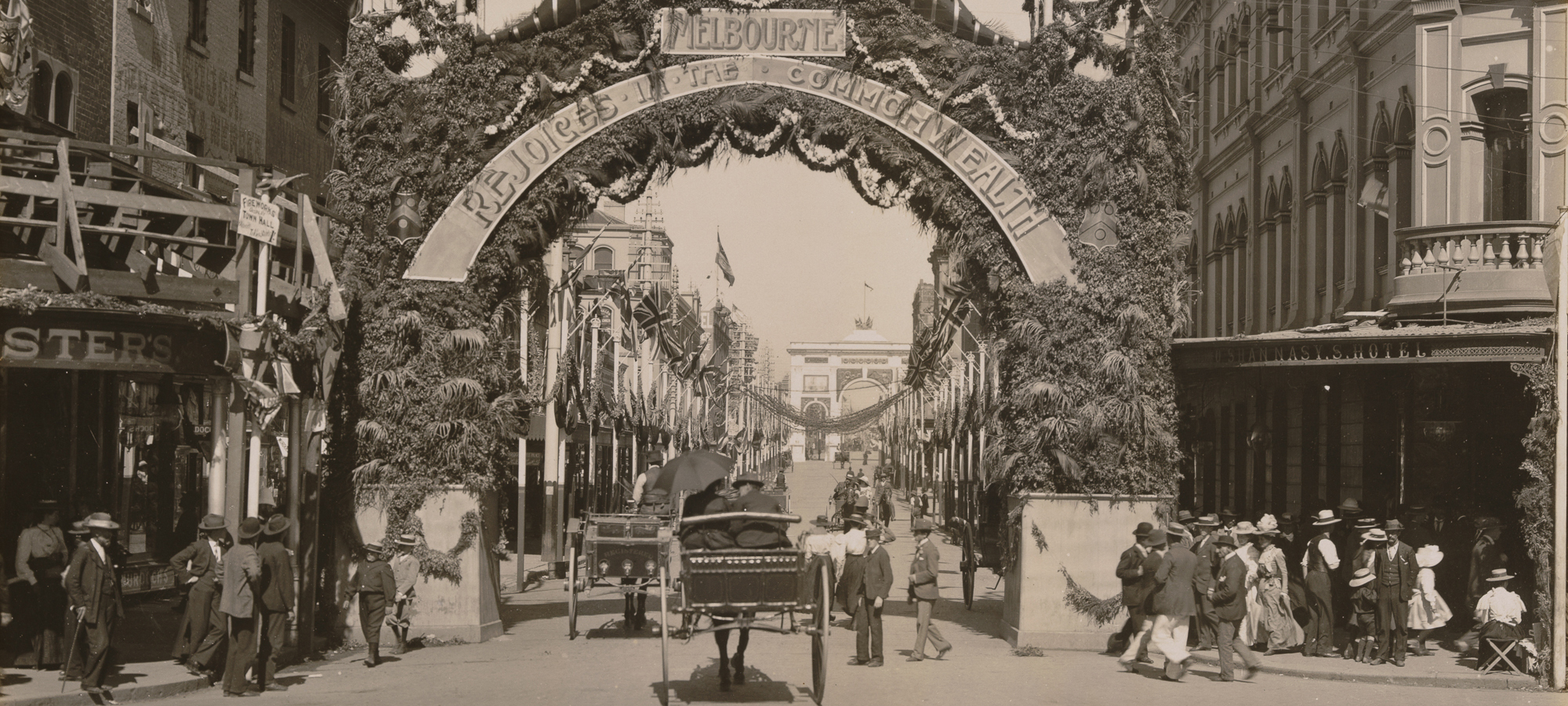
“Melbourne Rejoices in the Commonwealth.” Parliament of Australia.
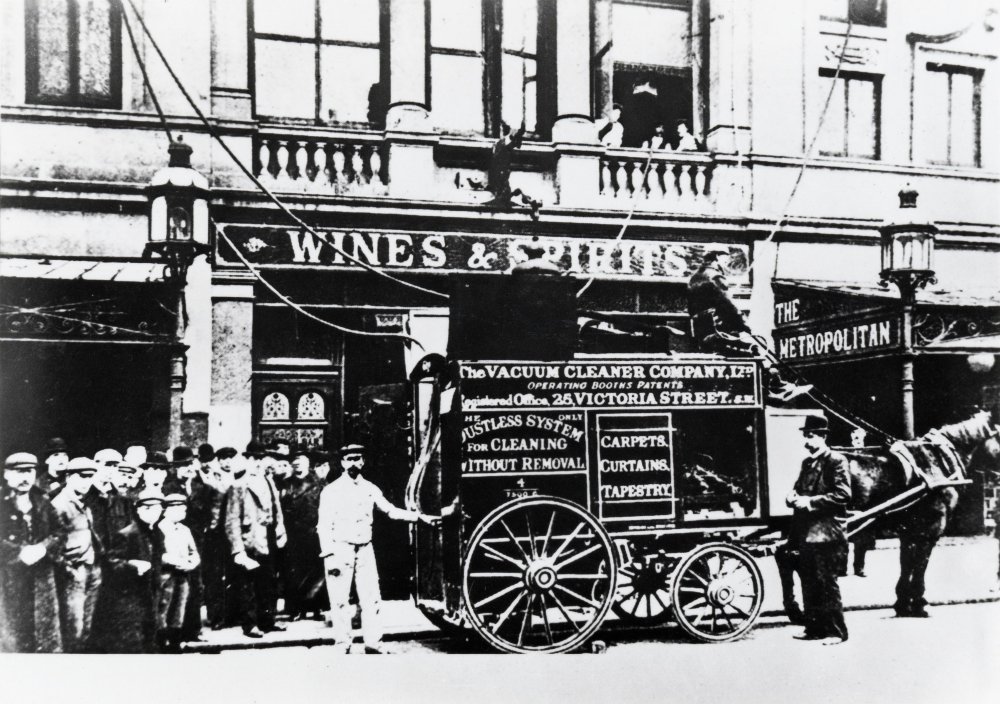
Booth’s vacuum cleaner at work, 1903. Science Museum Group Collection.
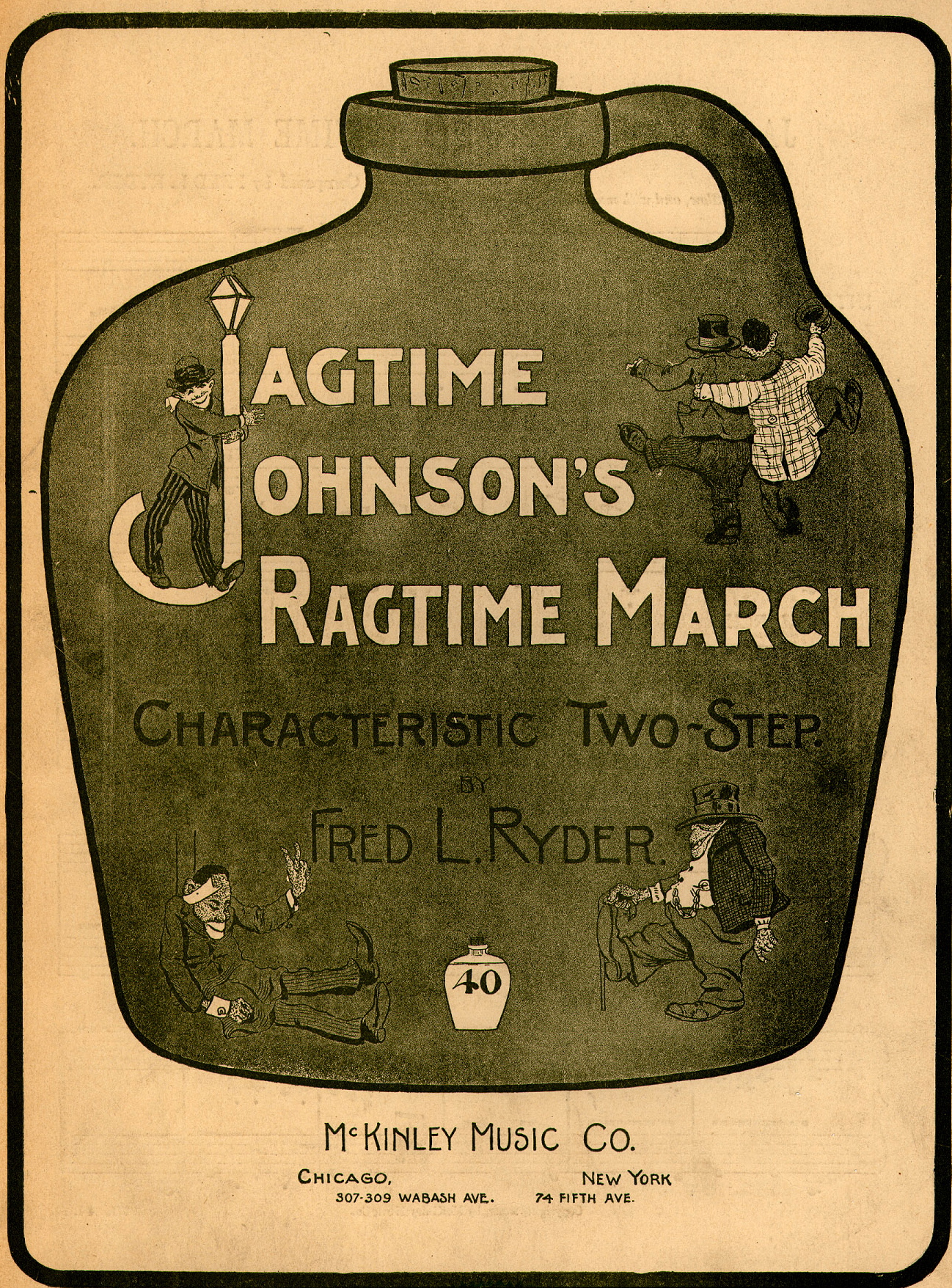
Jagtime Johnson’s Ragtime March; 1901 sheet music cover.
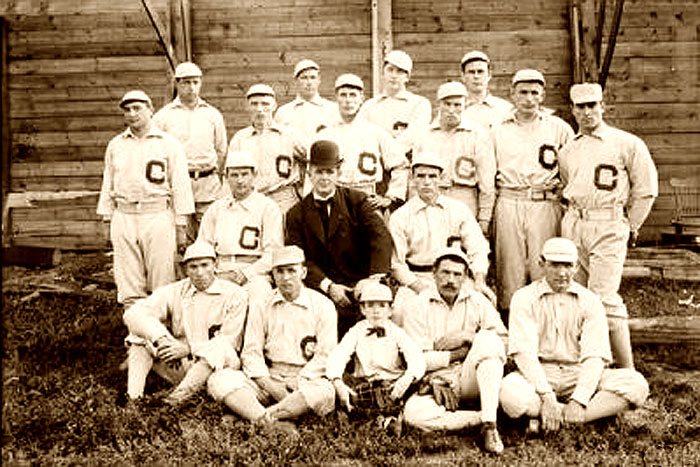
1901 Chicago White Stockings.
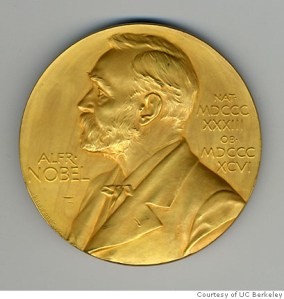
Nobel Prize medal.
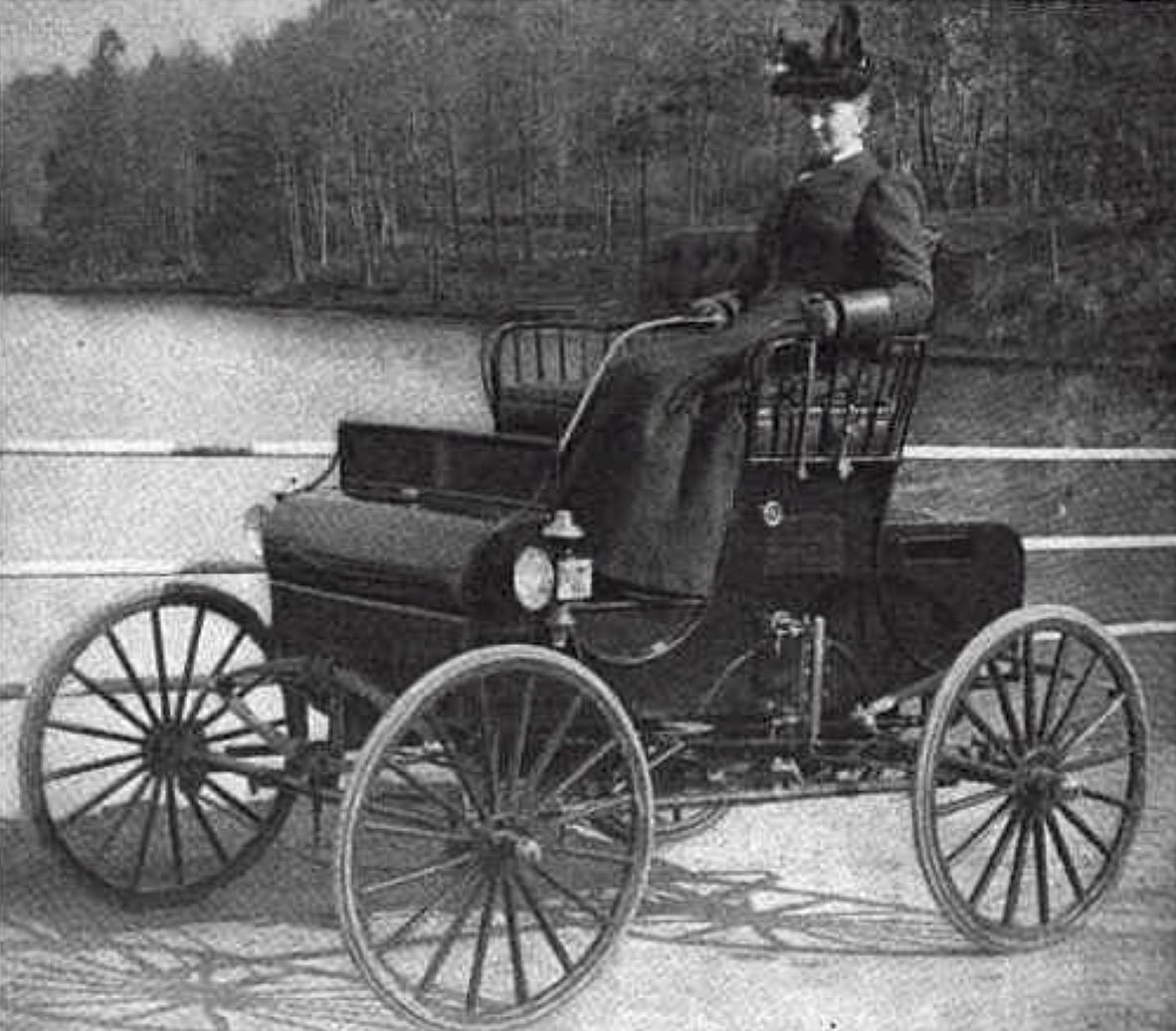
1901 Kidder Steam Runabout, Kidder Motor Vehicle Company advertisement. New Haven, CT.
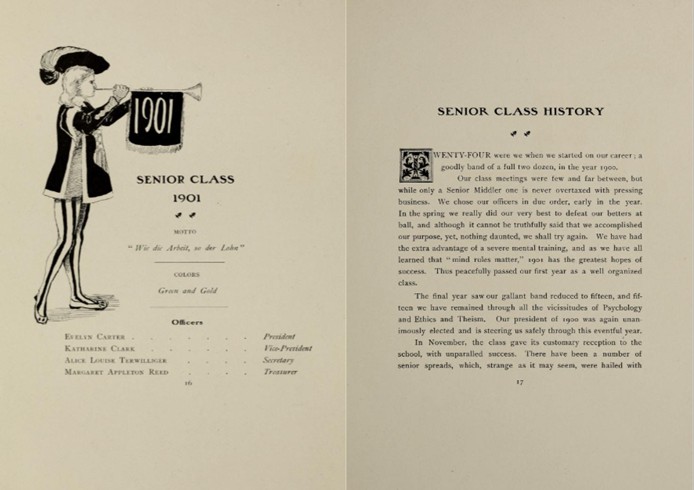
Spread from the 1901 Circle, Abbot Academy Yearbook.
Hitting a major birthday like a 125th is no small thing. Even institutions established to preserve history in perpetuity – like, say, an archaeology museum – rarely last even a fraction of that time. The Robert S. Peabody Institute of Archaeology reaches this milestone on March 21, and it offers a moment for introspection: how did we manage to make it this long? What has the Peabody done in that time? What from our past continues to inspire us today – whether as something we seek to sustain or that guides us toward new directions?
I hope you aren’t now looking at me to answer any of these questions. These are thoughts to let tumble around the entirety of this anniversary year, and beyond. (Possibly we should all start our quasquicentennial with a (re)reading of “Glory, Trouble, and Renaissance at the Robert S. Peabody Museum of Archaeology” – because, yes, Emma, I am fancy!).
Instead, I want to go all the way back to the beginning. If we are going to ask how far the Peabody has gone, we have to know where the Peabody started. This makes me wonder: What was the world the Peabody was born into? What did 1901 look like? With the help of Google, below is an absurdly partial snapshot of life as the Peabody came onto the scene.
[Word of warning: despite my best intentions, it turns out that when you’re doing a Google search, in English, with an internet connection in MA, and an education obtained almost entirely in the US, Canada, and Australia; and when you’re trying to find examples of events that you think will be “recognizable” and “interesting” – you end up with a pretty biased list. You would almost think from my snapshot below that the only noteworthy things to happen came out of the US and Great Britain (which I think is wrong?). Please bear in mind AAALLLLLL the other places and people and happenings not remotely referenced here while reading.]
In no particular order and with truly no claims of significance:
A lot a lot a lot of people died. Some of these deaths were noted by historians, and even the general public. These included: Queen Victoria (at the time the longest reigning monarch of Great Britain); President William McKinley (the third US sitting president to be assassinated); and Cecil Franklin Patch Bancroft (the 8th Principal of Andover’s Phillips Academy).
A lot a lot a lot of people were born. Even more than the number of people who died. Eventually history would care about some of them. These included: Louis Armstrong, Walt Disney, Hirohito, Langston Hughes, Margaret Mead, and Ed Sullivan.
As typical, there were far too many military engagements. Such as: the Second Boer War in South Africa (then ongoing); the Philippine-American War (then ongoing); the War of a Thousand Days/Colombian civil war (then ongoing); and the Boxer Uprising/Yihetuan Movement in China (formally ended with the signing of the Boxer Protocol).
Other political-type stuff happened: The six British colonies of Australia federated to form the Commonwealth of Australia. The US’s Platt Amendment made Cuba a US protectorate. The US and Great Britain signed the Hay-Pauncefote Treaty, giving the US exclusive right to build and manage a canal in Panama. In his first annual message to Congress, US President Theodore Roosevelt stressed the need to treat Native Americans as individuals rather than as members of separate sovereign nations, and to break up tribal funds in the same way allotment broke up tribal lands.
We got some cool new technologies: Guglielmo Marconi sent the first transatlantic radio transmission; it said “S.” The first United Kingdom Fingerprint Bureau was established at Scotland Yard, using Edward Henry’s classification system; it worked way better than phrenology. Hubert Cecil Booth patented a dust removing suction cleaner and started offering mobile cleaning services; his vacuum was large enough to frighten horses (it was also drawn by horses. This sounds messy). Satori Kato introduced his vacuum-dried coffee granules – aka instant coffee – at the Pan-American Exposition in Buffalo, NY. (Also where President McKinley was shot. Yikes.).
There was a bunch of art and culture: Beatrix Potter published the Tale of Peter Rabbit. Elisabeth Förster-Nietzsche posthumously published her brother Friedrich’s The Will to Power. H.G. Wells got it close with The First Men in the Moon (would have nailed it with first man on the moon…). Anton Chekhov’s play “Three Sisters” premiered at the Moscow Art Theatre. Vincent Van Gogh had his first retrospective, in a gallery in Paris. Pablo Picasso had his first major exhibit, also in a gallery in Paris. Sergei Rachmaninoff composed Piano Concerto No. 2; Claude Debussy offered Pour le piano; and Edward Elgar started his Pomp and Circumstance series with Marches No. 1 and 2 ( graduation ceremonies had no idea what was coming for them). But Americans REALLY loved parlor ballads, ragtime, and marching band music; they still could not get enough of Sousa’s Band’s Stars and Stripes Forever.
Are sports art and culture? Let’s just call it sports: The Winnipeg Victorias edged out the Montreal Shamrocks to win the Stanley Cup. Fútbol Club Atlético River Plate was founded in Argentina. The American League was established and the Chicago White Stockings (adorable!) won the first AL pennant. The Pittsburg Pirates took the National League pennant.
The first Nobel Prizes were awarded in Stockholm to Wilhelm Röntgen (Physics), Jacobus Henricus van ‘t Hoff (Chemistry), Emil von Behring (Medicine), Sully Prudhomme (Literature), and jointly to Frédéric Passy and Jean Henry Dunant (Peace).
In other odds and ends: J.P. Morgan incorporated U.S. Steel as the first billion-dollar corporation. Mr. Walgreen opened the first Walgreens. The first successful loop-the-loop roller coaster opened on Coney Island (it was called the Loop-the-Loop). Connecticut set the first speed limit law (12 mph in cities; 15 mph on country roads) and forced cars to stop if they were scaring horses. Schoolteacher Annie Edson Taylor celebrated her 63rd birthday by going over Niagara Falls in a barrel and surviving, proving…something?
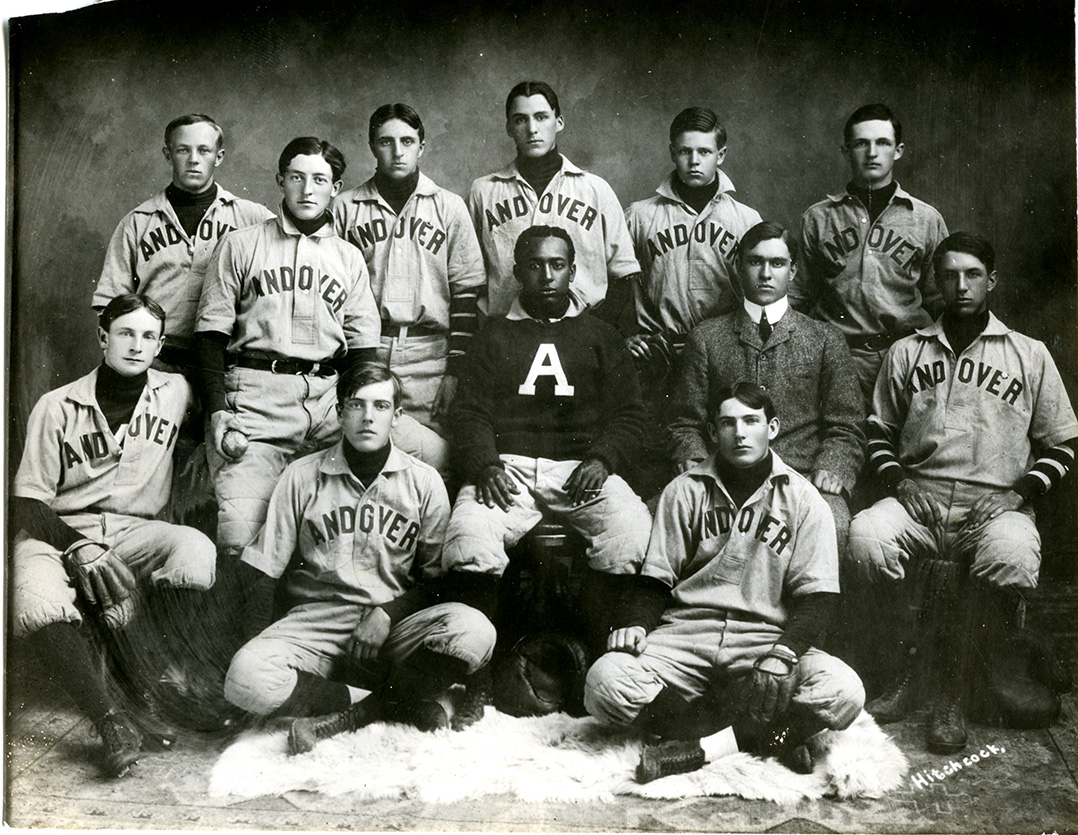
Immediately closer to home: fifteen young women graduated from Abbot Academy, and William Clarence Matthews graduated from Phillips Academy. No one knew it yet, but Matthews would go from leading the batting average on Harvard’s baseball team to playing on the Burlington, Vermont team of the Northern League, making him the only Black player in any white professional baseball league at the time. When he was barred from playing in the Major League he had to settle for being a lawyer instead, eventually getting appointed to the Justice Department by President Calvin Coolidge. Big mistake, MLB. Huge.
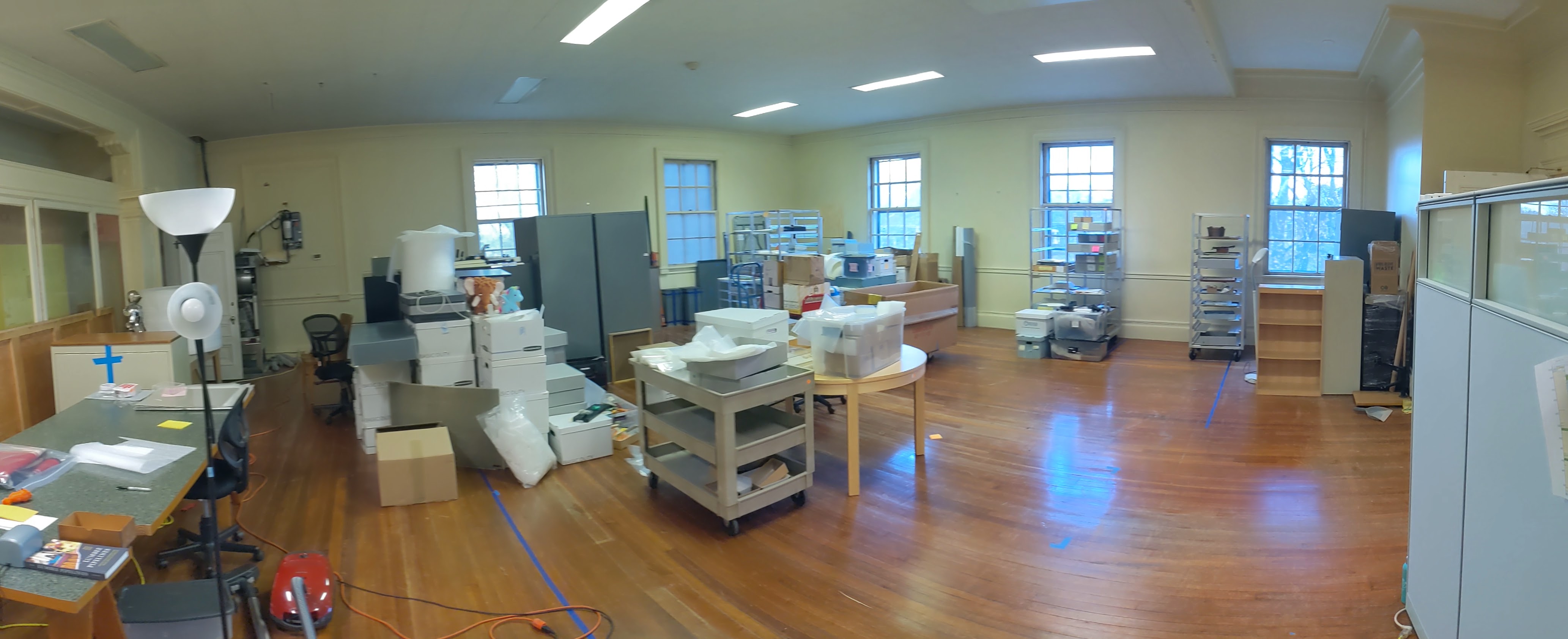
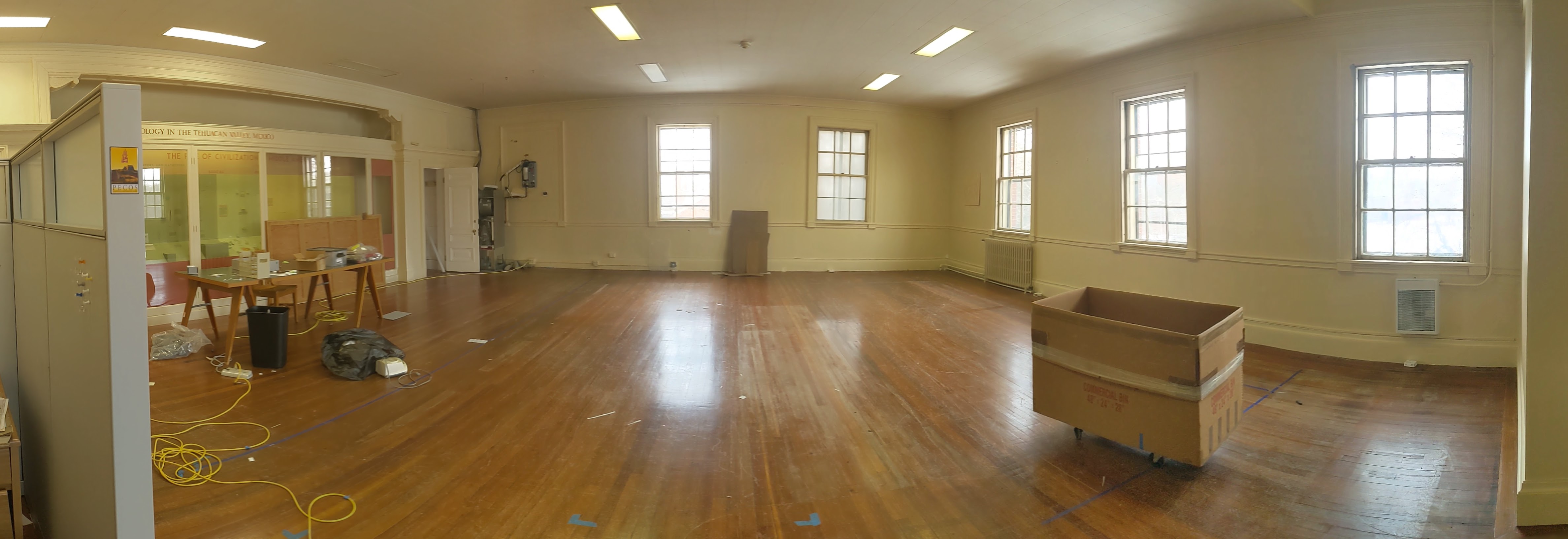
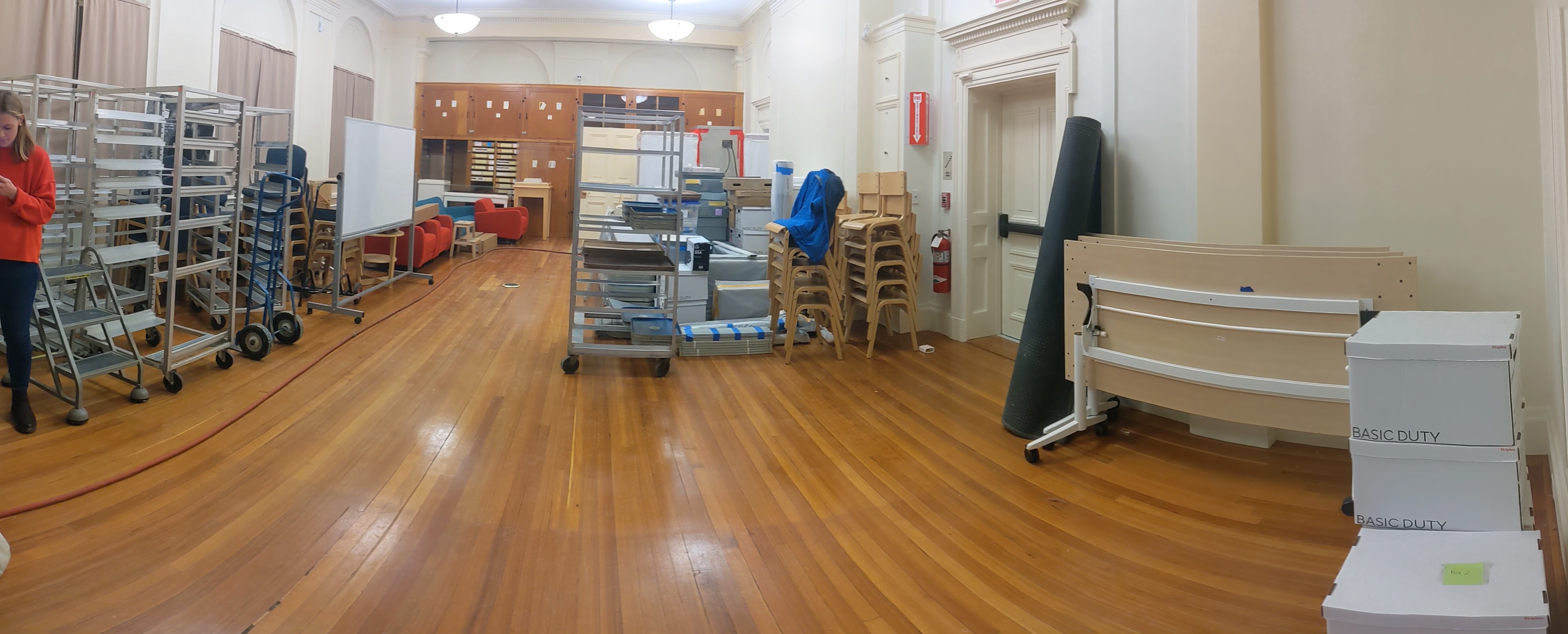
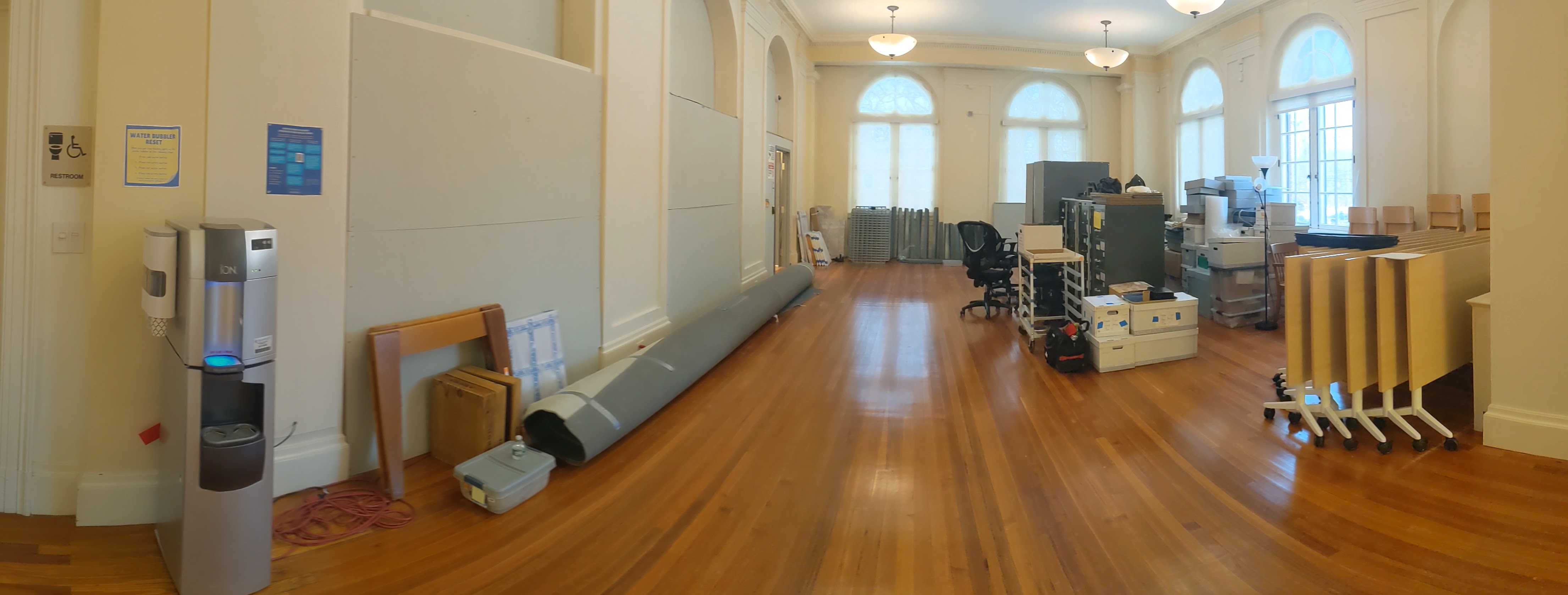
With construction in our building slated to start this month we have been busy packing up the Peabody. The collections are staying onsite in the recently renovated basement, but everything else that isn’t nailed down from the first floor through the attic has been moved to our temporary office in George Washington Hall (known on campus as “GW”) or to an offsite storage facility.
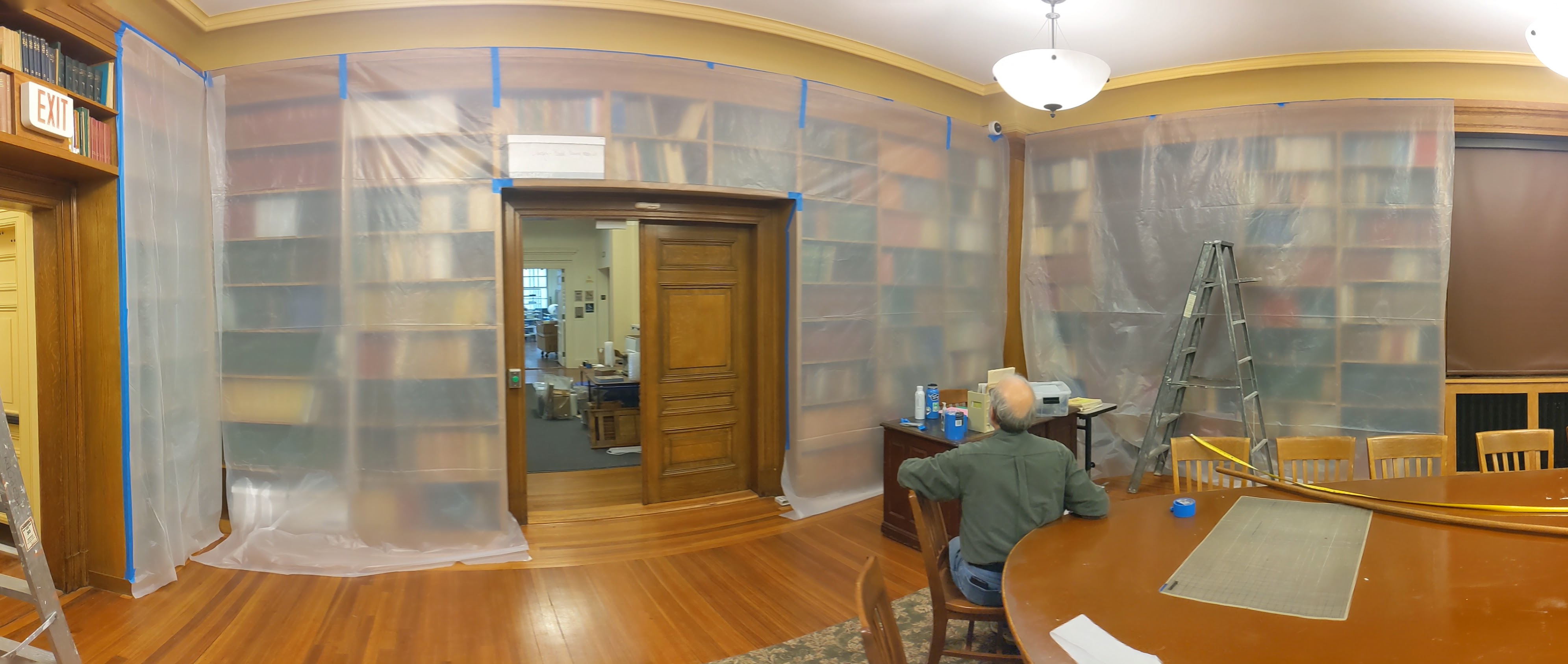
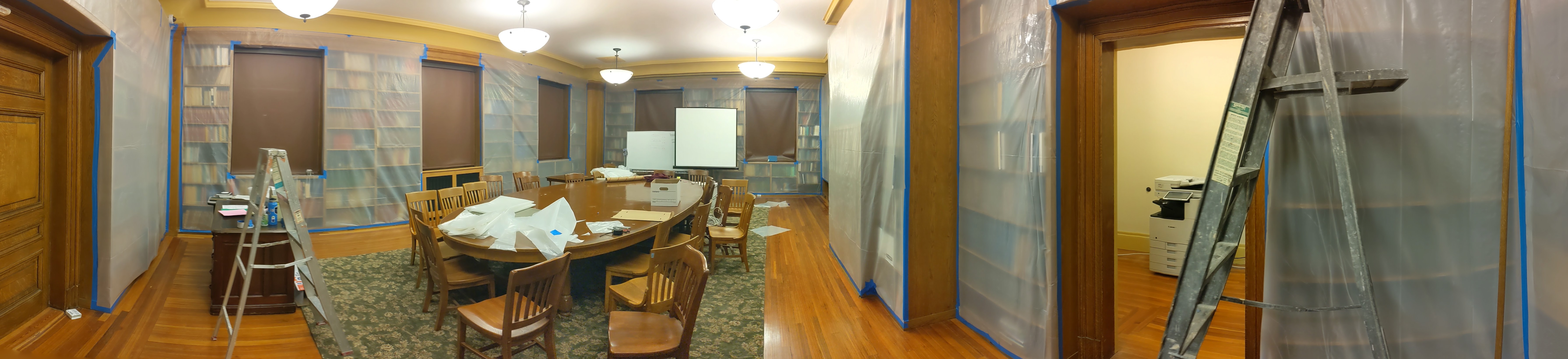
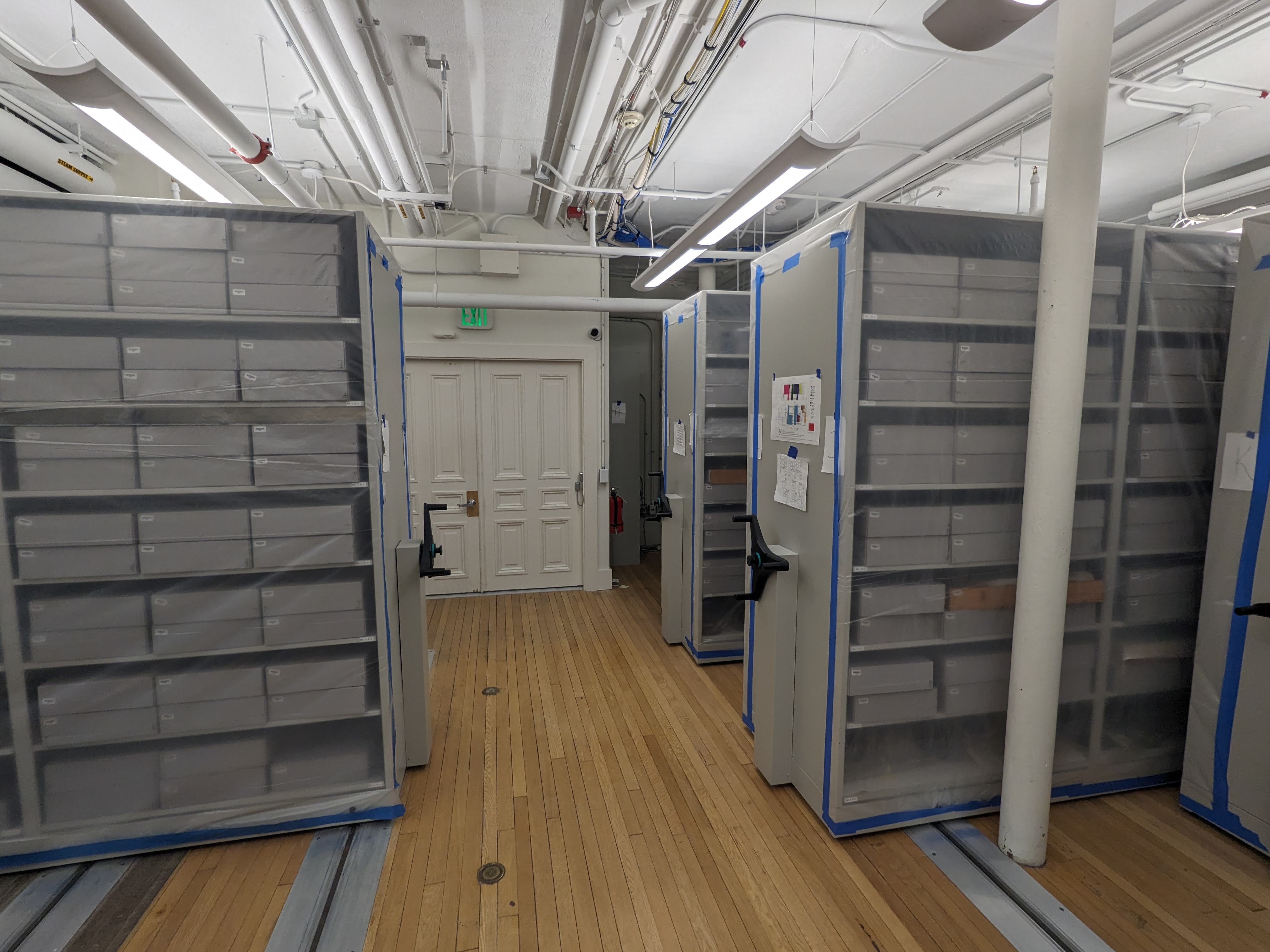
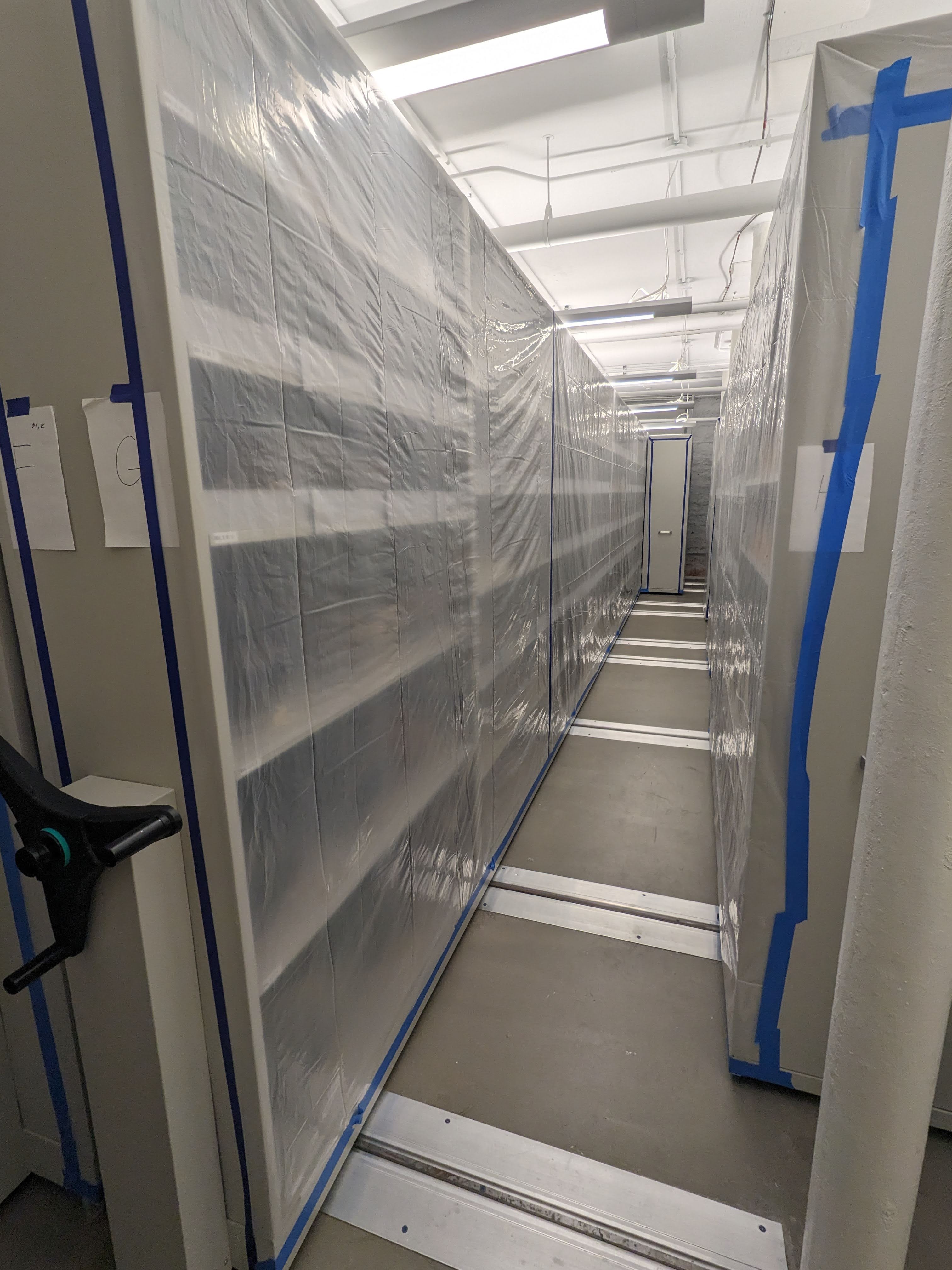
In addition to packing, we have taken steps to protect the collections during construction. Though very little construction is planned in the basement, renovations in the rest of the building will inevitably result in dust and small bits of debris in the collections areas. To keep everything clean, and avoid weeks of post construction cleaning, we have covered the metal shelving in plastic sheeting. The library has been prepared in a similar fashion.
This week, we made the move to our temporary office in the former Dean of Student’s Office in GW Hall. We’re thankful to have been welcomed by many of our new neighbors. Stop by and say hi if you are in the area.
My name is Jack Angelo and I am a board member and Blog Lead in Andover’s Anthropological Society, a student club we created here at Phillips Academy last year. I first became interested in Anthropology because of the many different topics it could cover, allowing someone to perform curiosity-based research about whatever subject matter interests them. When the other board members and I created the club, we knew most of our members’ research and curiosity would be directed towards our more major projects working in tandem with the Peabody Institute. But, understanding that the larger, focused research projects did not allow total intellectual freedom for the whole club, and that it did not spread our club’s messaging to the whole campus, we decided to create the Andover Anthropological Society Blog Site.
Our blog has now run for almost nine months and has served as an amazing display of the various topics our members are interested in, such as Corporate Consumerism in America, The Rise of Digital Tribalism, and the History of Art in Quarantine. Each post reflects what genuinely interests our writers, allowing people to contribute to the club without having to take part in our larger projects. In this way, the blog has developed into exactly the kind of free representational space we hoped for.
Additionally, the blog is a public source for anybody to read to understand our club’s messaging or to just further their interest in anthropology. We wanted to make sure that what we’re doing in AAS isn’t limited to the people who show up to meetings. By putting our work online, we’re giving the whole Andover community access to the topics we’re exploring and the research our members are doing. If someone’s curious about anthropology but doesn’t know where to start, or if they just want to read about a specific topic, the blog is there for them.
Ultimately, the AAS Blog is about making anthropology accessible. We wanted to create something that anyone could engage with, regardless of whether they’re in the club or have any background in the field. By keeping our work public and covering topics that connect to everyday life, we’ve built a resource that’s open to the entire Andover community.
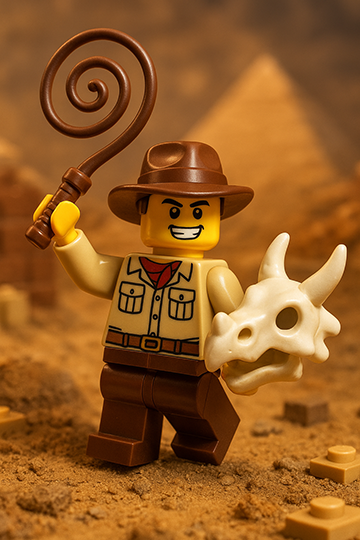
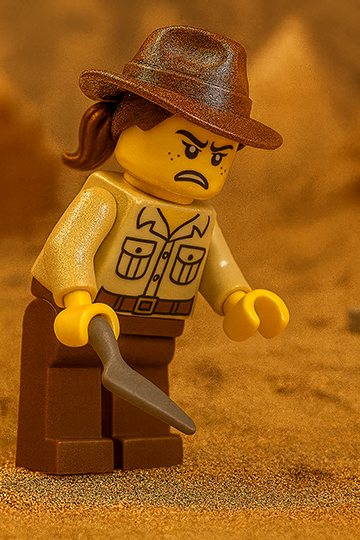
Sometimes it’s hard to be an archaeologist. You tell people what you do and watch their excitement dim as you say “No. Not dinosaurs.” Sometimes people think you’re Indiana Jones, so that’s a little better, but then you have to explain that actually looting’s not ok, and maybe we should discuss the ethics of collecting? Plus, you’ve never once fought a Nazi. (You do, however, wear an awesome hat.)
Not an archaeologist. (Via ChatGPT. I didn’t even need to prompt the pyramid.)
Some would argue this is the greatest real-world problem archaeologists today face. Incredibly, hope for the field has finally arrived – and it’s all thanks to LEGO.
FIRST® LEGO® League (FLL) is a global program designed to encourage children in hands-on STEM learning. Among its major activities is the FIRST LEGO League Challenge, an annual competition for students aged 9-16 that has them working in teams to design, build, and code their own LEGO robot and complete a research-driven Innovation Project that identifies and solves a real-world problem related to a specific scientific theme. This year, the Challenge theme was UNEARTHED, inviting FLL teams to learn about the field of archaeology, identify a real-world problem faced by archaeologists, and propose an innovative solution.
Never have archaeologists been so popular! As soon as the Challenge kicked off, the Peabody began receiving requests from teams hoping to meet with an archaeologist and find out what challenges they’d want to see solved. And, of course, we weren’t remotely alone in this. I had a lot of fun this fall checking in with colleagues at other institutions, as we collectively realized how big the FLL Challenge is. The Society of American Archaeologists (SAA) even convened a panel of experts (including our own Ryan Wheeler!) for a webinar specifically designed for participants in the UNEARTHED season, just to help manage all the requests people were receiving. Exploring Archaeological Challenges: A Webinar for FIRST® LEGO® League and Robotics Teams was recorded and posted on the SAA’s YouTube channel, massively eclipsing in viewership all the channel’s other recordings combined.
We also heard from teams once they had their projects and were ready for feedback on the problems they’d selected and the solutions they’d proposed. Projects broadly sought either to help archaeologists do their jobs more easily with sustainable solutions, or to help non-archaeologists better understand the field and access archaeological information. Ideas included such products as a Swiss Army trowel, and an artifact cleaning and processing machine with residue-testing capabilities. They sought to help people grasp the size of ancient monuments through comparison with a football stadium for scale, and harnessed the sun to power absolutely anything you could imagine. They ranged in size, scope, and ambition, and all were far more sophisticated than I have represented here.
We might have initially been both a little concerned and a little amused when we first learned about this competition (an FLL reel Ryan found on Instagram had a lot more fire and explosions than we generally like to associate with archaeology!), but the projects that teams have come up with have truly been impressive. Most impressive of all has been the amount of thought and attention these young students have put into learning about the field of archaeology, and the care they have put into making it better for the future. I can only imagine what might be the long-term impacts of this program on the next generation of archaeologists.
Though perhaps their biggest problem will be convincing people that, no. Usually they do have thumbs.
In a past blog post, I shared that we regularly monitor glue traps for signs of insect activity around our building. The traps are not a method for controlling insect populations, rather, they alert us to the presence of unwanted pests that pose a danger to the collections. When unwanted bugs are found we have a set of tools we can employ to remove them while minimizing risk to the health of our collection and colleagues. These tools include vacuuming and freezing collections.
Now, I imagine that many readers (probably most of you) are not excited by pictures of bugs, but earlier this fall, we trapped an unknown insect that I felt was worthy of the spotlight.
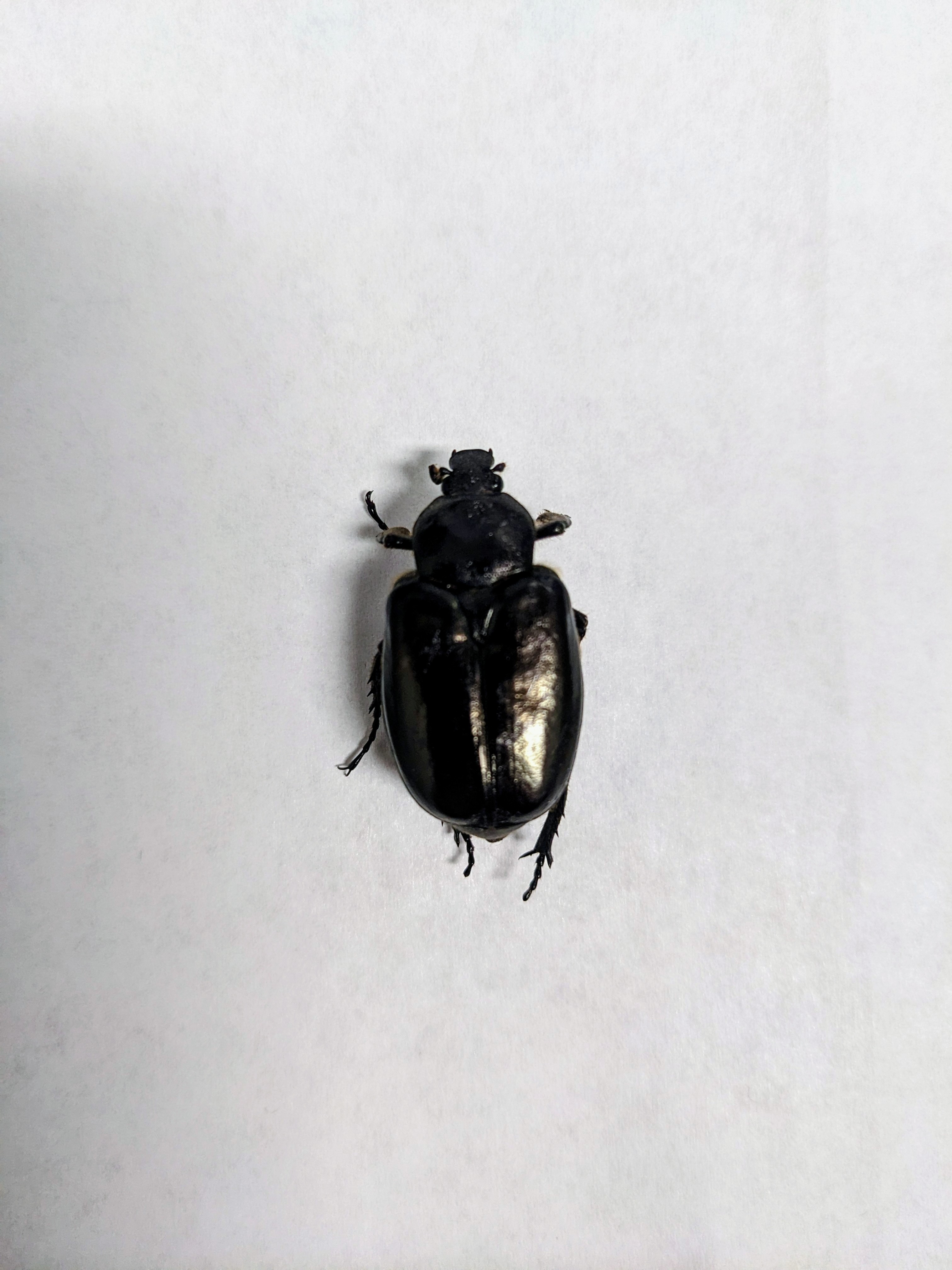
Unknown Beetle removed from glue trap for easier identification
This remarkable beetle is the largest insect that I’ve seen in our traps. Beyond it’s massive size, any new or unknown bug is cause for excitement for a few reasons. First, we typically see the same three or four insects throughout the year. Second, we need to find out whether the insect is cause for alarm.
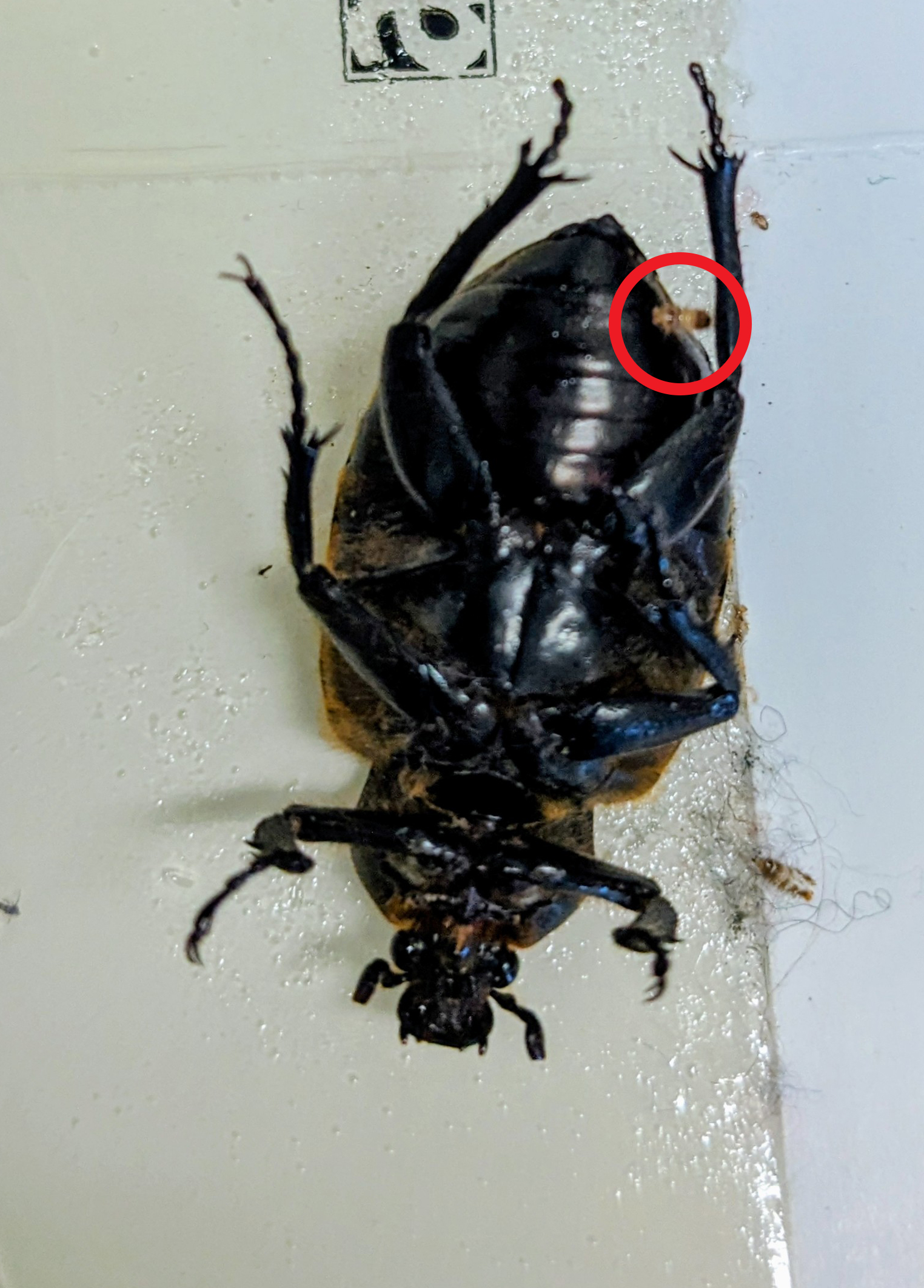
I snapped a few pictures and loaded them into Google’s ‘search by image’ function. Pretty quickly I learned that this guy is a Hermit Flower Beetle (or that is my best guess). They pose no danger to the collection. The larva live inside dead or rotting logs and play an important role in recycling wood and the nutrient cycle. The adults are frequently found around flowers. Somehow this one wandered into our building and ended up in one of our traps.
The University of Minnesota Extension webpage is a helpful identification resource
Unfortunately, once in our trap, the beetle died and became a food source for a carpet beetle, an insect we absolutely do not want in our collection. Even if an insect is not actively detrimental, it can always pose a risk.
Previously unknown Hermit Flower Beetle still in glue trap with carpet beetle outlined in red
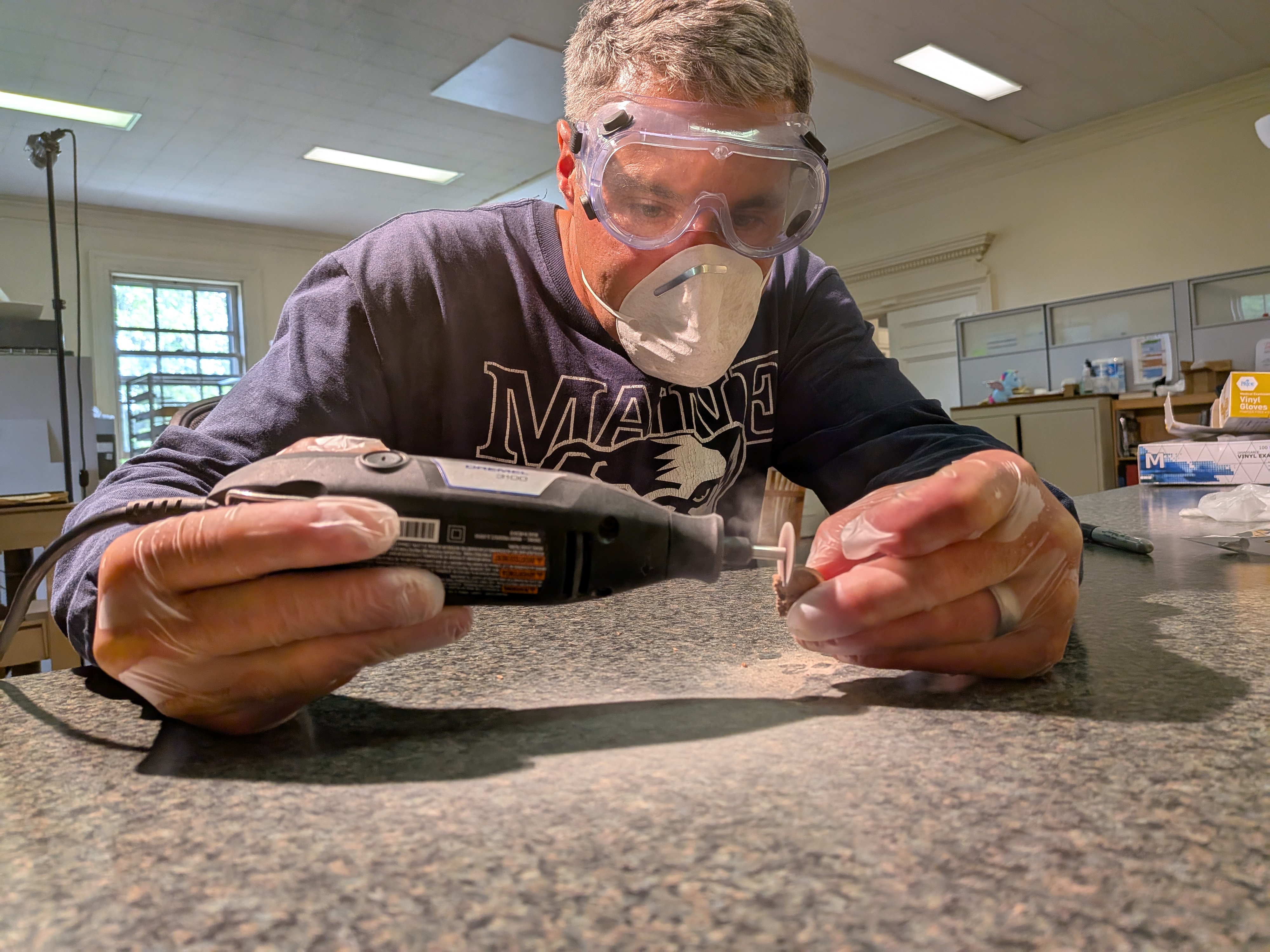
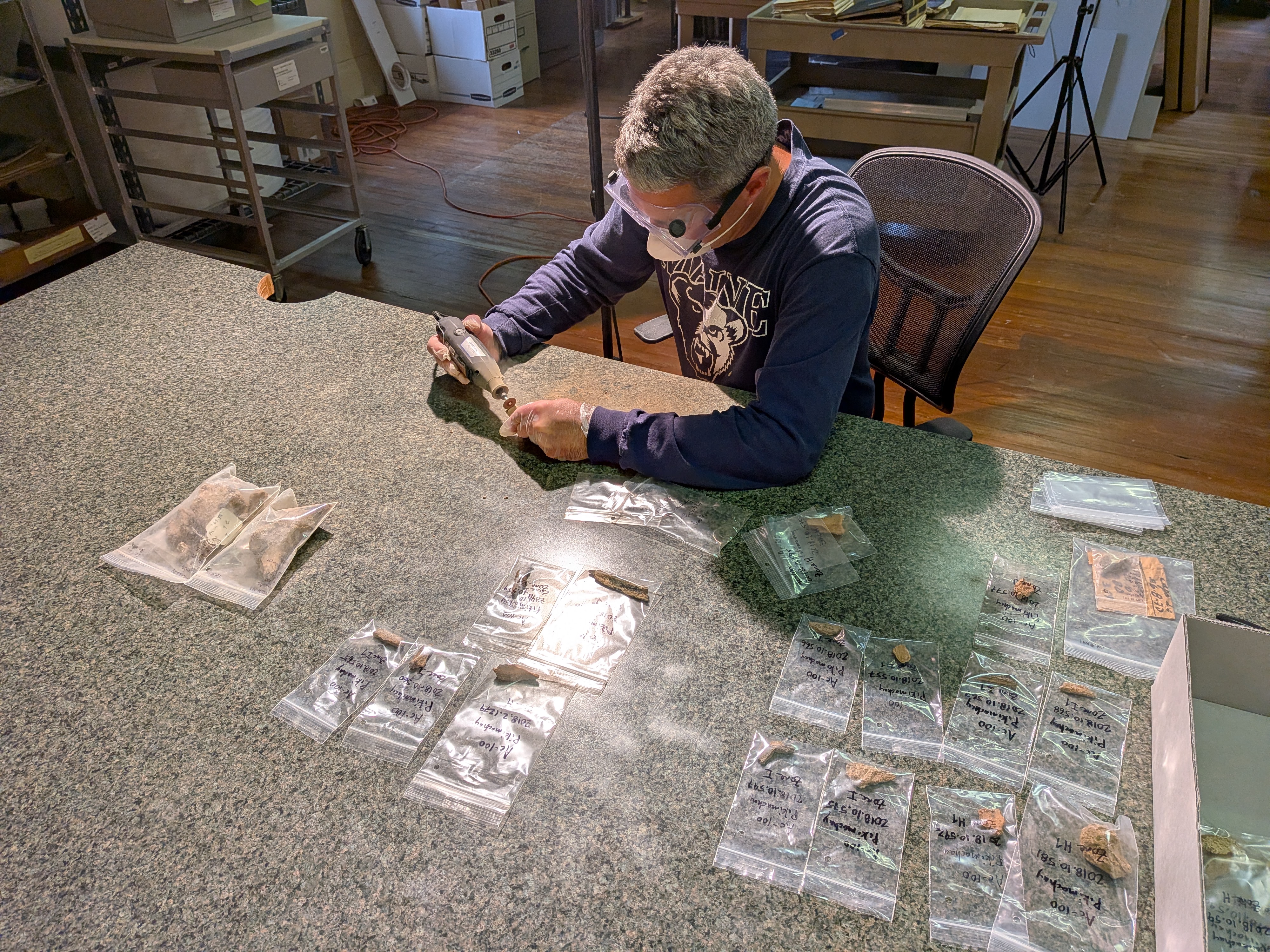
Figure 1. Visiting researcher, Dr. Rademaker taking samples for isotope analysis.
Last May the Robert S. Peabody Institute hosted visiting researcher, Dr. Kurt Rademaker. Dr. Rademaker is an Associate Professor and Director of the Center for the Study of the First Americans Laboratory at Texas A&M University. His research interests include early human ecology and settlement dynamics of the central Andean highlands.
Dr. Rademaker came to the Peabody to view materials collected by Richard “Scotty” MacNeish from the Ayacucho Valley in the Andean highlands. Between 1969 and 1972, MacNeish led an interdisciplinary team that searched for evidence of the origins of agriculture and civilization in South America.
Based on previous work conducted on the Peruvian coast, MacNeish and others hypothesized that agriculture originated in Peru’s Andean highlands. The Ayacucho Valley encapsulates diverse habitats spanning a range of elevations. It also contains dry caves with long stratigraphic sequences, two criteria MacNeish utilized in his study of the origins of agriculture in the Mexico’s Tehuacán Valley.
Botanical remains discarded by humans, including domesticated plants, can be well-preserved in dry caves, while long stratigraphic sequences give archaeologists the ability to see how things change over long spans of time. MacNeish was looking for evidence of human cultural development, including domesticated plants across time and habitats.
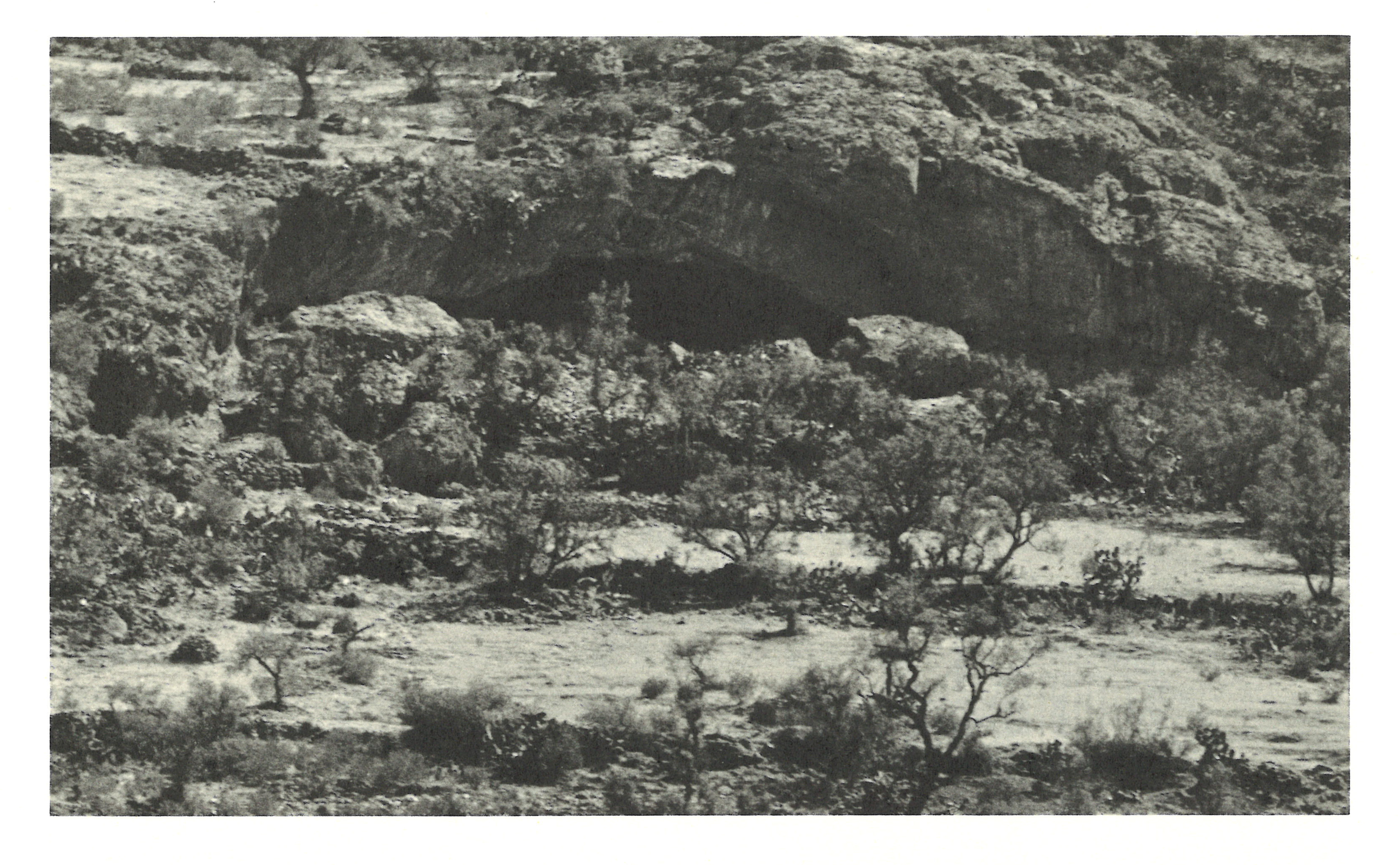
Figure 2. Pikimachay Cave as seen from the east.
Interestingly, and unrelated to the question of plant domestication, MacNeish’s summary of excavations at one site, Pikimachay, concluded that humans and now-extinct Pleistocence animals may have interacted. This was based on the presence of artifacts and extinct animal remains in the same pre-ceramic stratigraphic layer. The claim was supported by radiocarbon dating which returned dates of roughly 14,000 and 23,000 years before present. However, this conclusion has always been somewhat controversial since the dating methods do not meet scientific standards of quality control, not to mention they contradicted widely held notions of the peopling of the Americas.
Radiocarbon dating, at the time, required a large amount of sample material. MacNeish gathered material from several sources spanning a wide area. In the intervening years, isotope analysis has improved to the point where only one gram of sample material is needed. Now a single bone with clear stratigraphic origin can be sampled.
Additionally, sample preparation can now isolate carbon from the item being dated and remove carbon from the surrounding sediment. Previous methods couldn’t parse these sources and may have resulted in dating the burial environment. This can help determine if the sample was moved from it’s original stratigraphy by burrowing animals or other natural forces.
The story of when people arrived in the Americas has changed over time as new discoveries led archaeologists to question existing hypotheses. At the time of MacNeish’s Ayacucho project, the commonly held belief was that the first people arrived at the end of the Ice Age, by way of the Beringia land bridge and ice-free corridors. The earliest evidence of human presence was at Clovis, New Mexico, dated 13,250 to 12,800 years before present. His discovery meant that people may have arrived in North America much earlier if they were established in Peru 14,000 to 23,000 years ago.
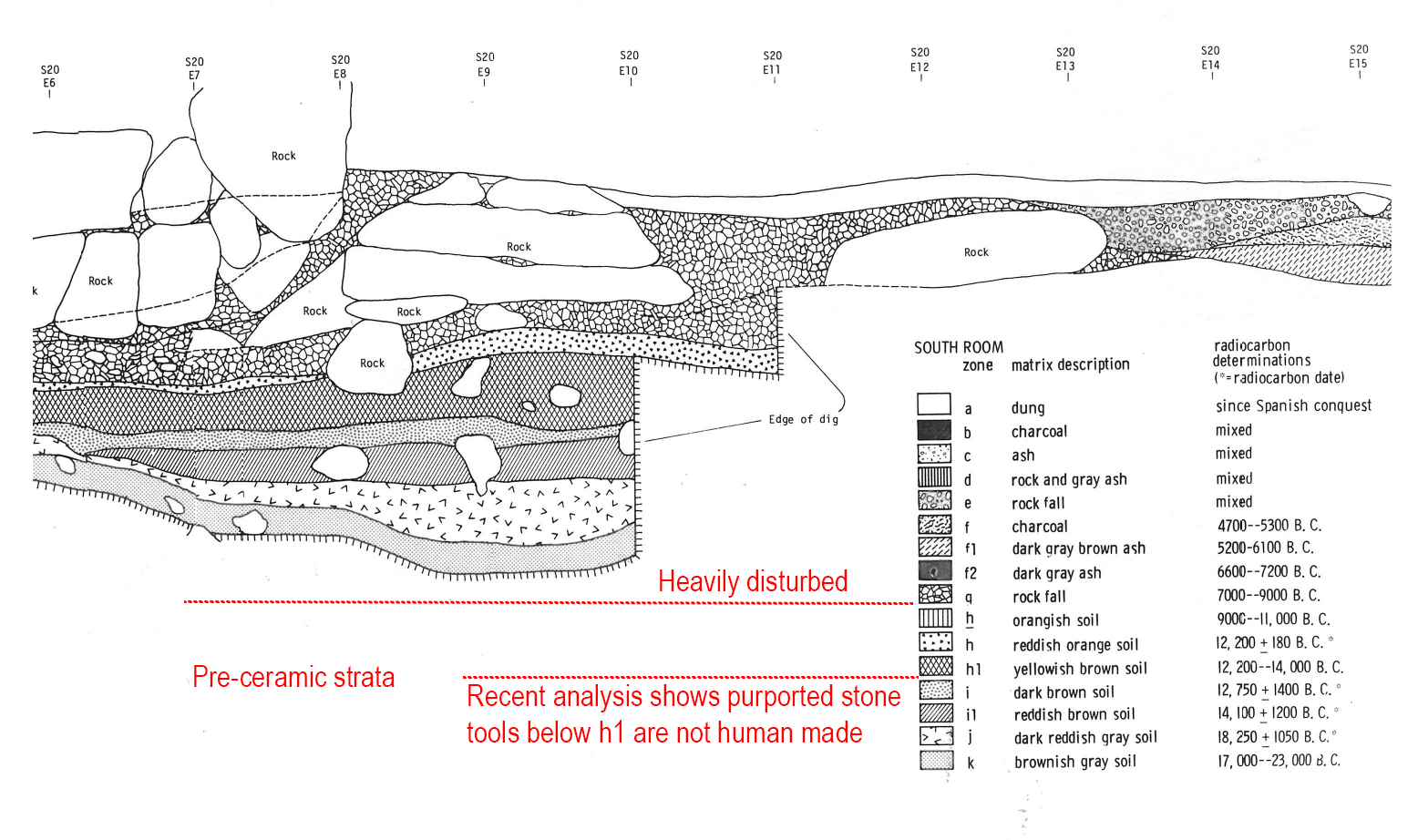
Revisiting MacNeish’s Ayacucho materials offers an intriguing opportunity to confirm his findings. Recent work has revealed that the stone tools found in the lowest strata (see figure 3) were naturally occurring and not made by people, perhaps ruling out the oldest dates MacNeish obtained. However, the researchers confirmed that human-made tools and cut animal bones are present in earlier layers (strata h, h and h1).
Figure 3. Stratigraphy from the South Room in Pikimachay. Samples will be taken from pre-ceramic layers. Layers above the pre-ceramic strata are heavily disturbed by pot hunting, animal activity and construction from animal corrals.
Dr. Rademaker has proposed sampling as many animal bones as possible from pre-ceramic stratigraphic layers. If any remains are from the Pleistocene Epoch, then MacNeish’s results will be supported and will add further support to a pre-clovis peopling of the Americas. If the remains are younger, from the Holocene Epoch, then it is likely that they were deposited in lower strata through some manner of disturbance.
Figure 4. Pikimachay samples arrayed for processing.
During Dr. Rademaker’s visit he spent several days reviewing archival materials including field notes, radiocarbon sample data and correspondence. The final day of the visit, Dr. Rademaker collected a sub-set of samples; roughly 1/3 of the total proposed. The bones they were taken from are quite old and may not contain the collagen necessary for isotope analysis. If these samples prove to have viable collagen and they return good dates, Dr. Rademaker will return to collect the remaining samples.
This summer I went to visit a friend in Vienna. I hadn’t seen her in [*cough*] years, so my inspiration was mainly just to hang out with her. It was only after I had my plane tickets and the trip was drawing near that I actually started looking into what there was to do in Vienna.
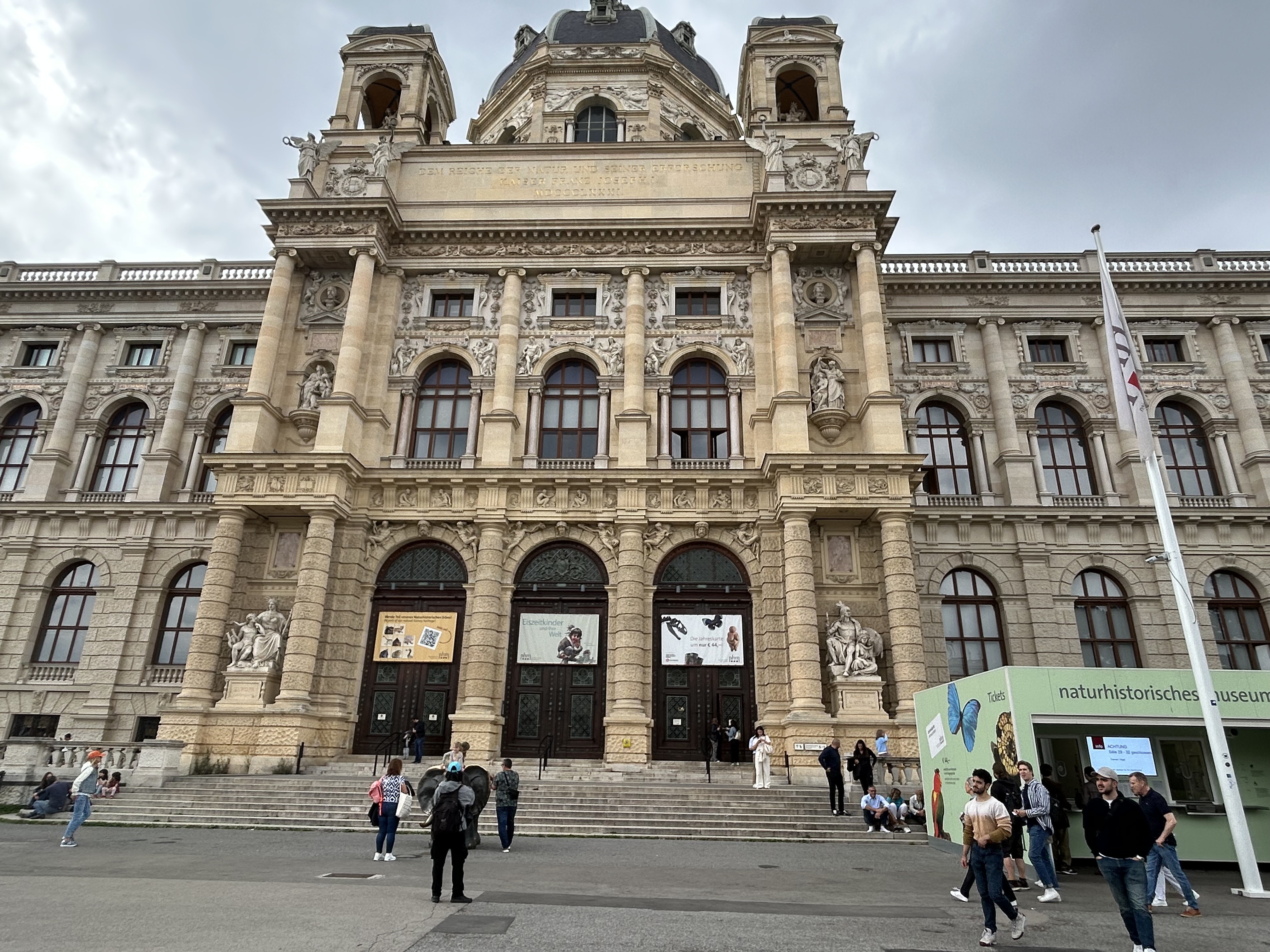
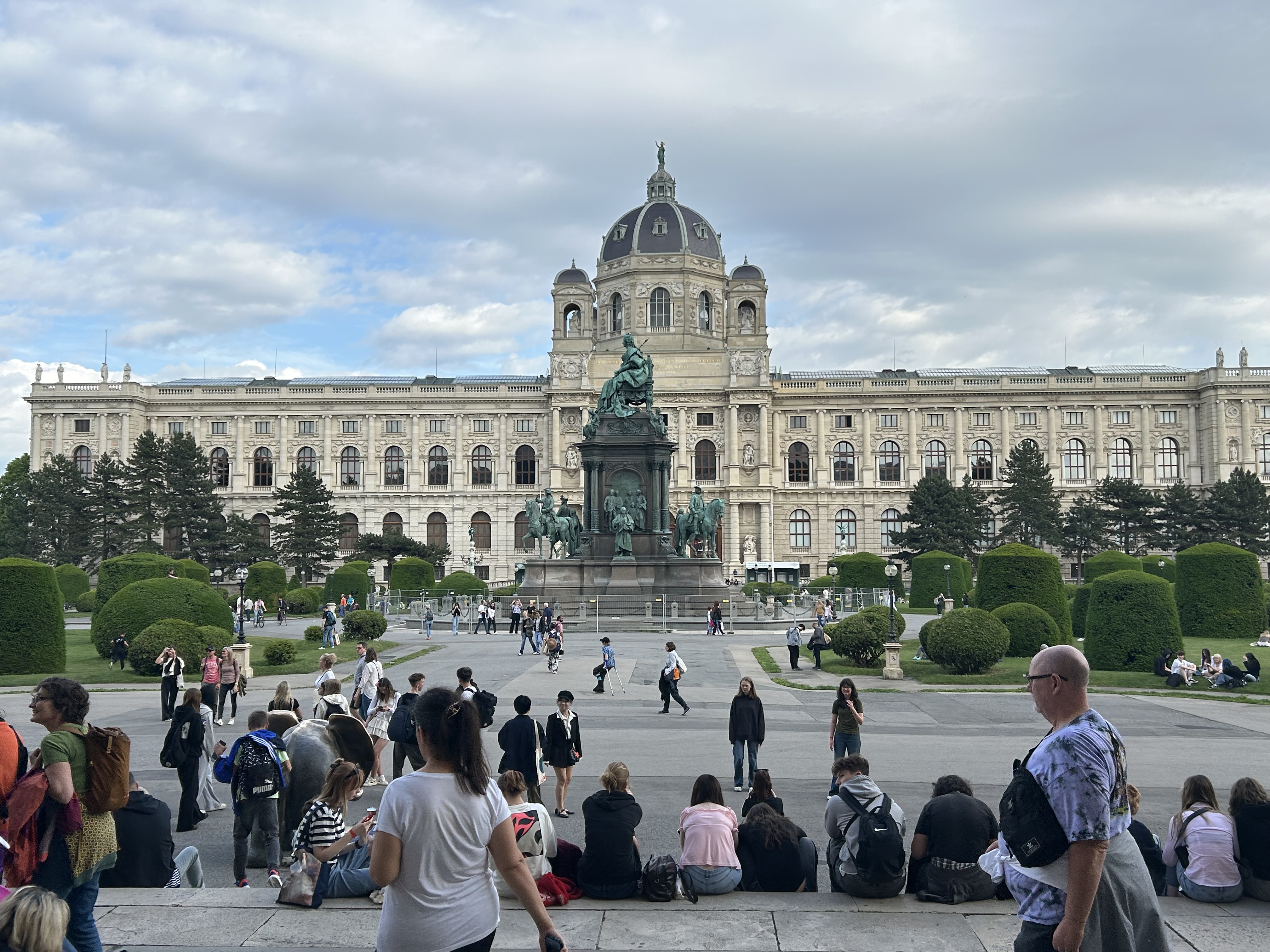
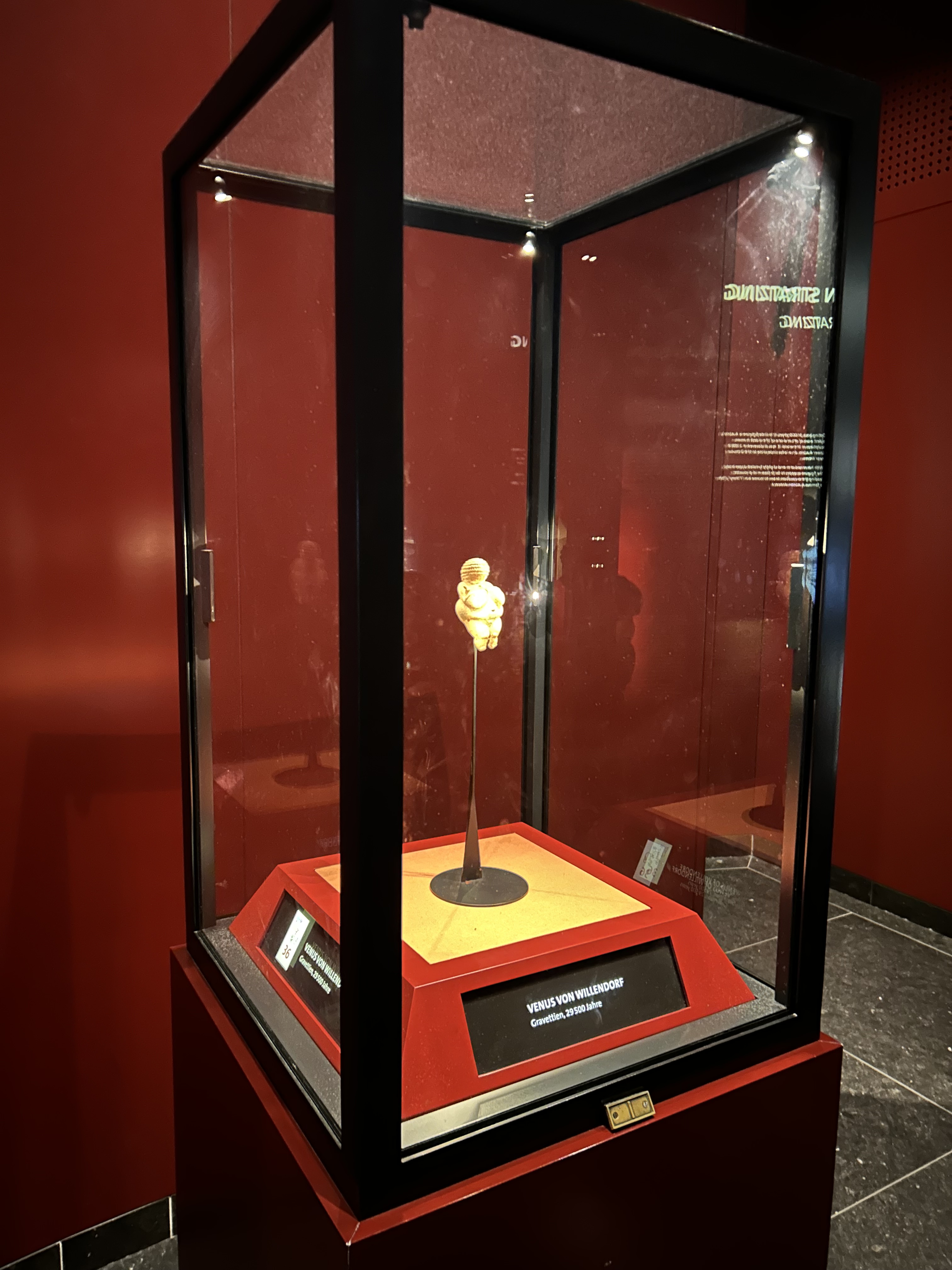
Turns out, the Venus of Willendorf is there. For a museum nerd I don’t tend to visit that many museums when I travel, but the Venus of Willendorf is famous enough (there’s even a cast of the original here at the Peabody) and I am nerd enough for that to justify seeking her out. This meant dragging my friend to the Naturhistorisches Museum Wien.
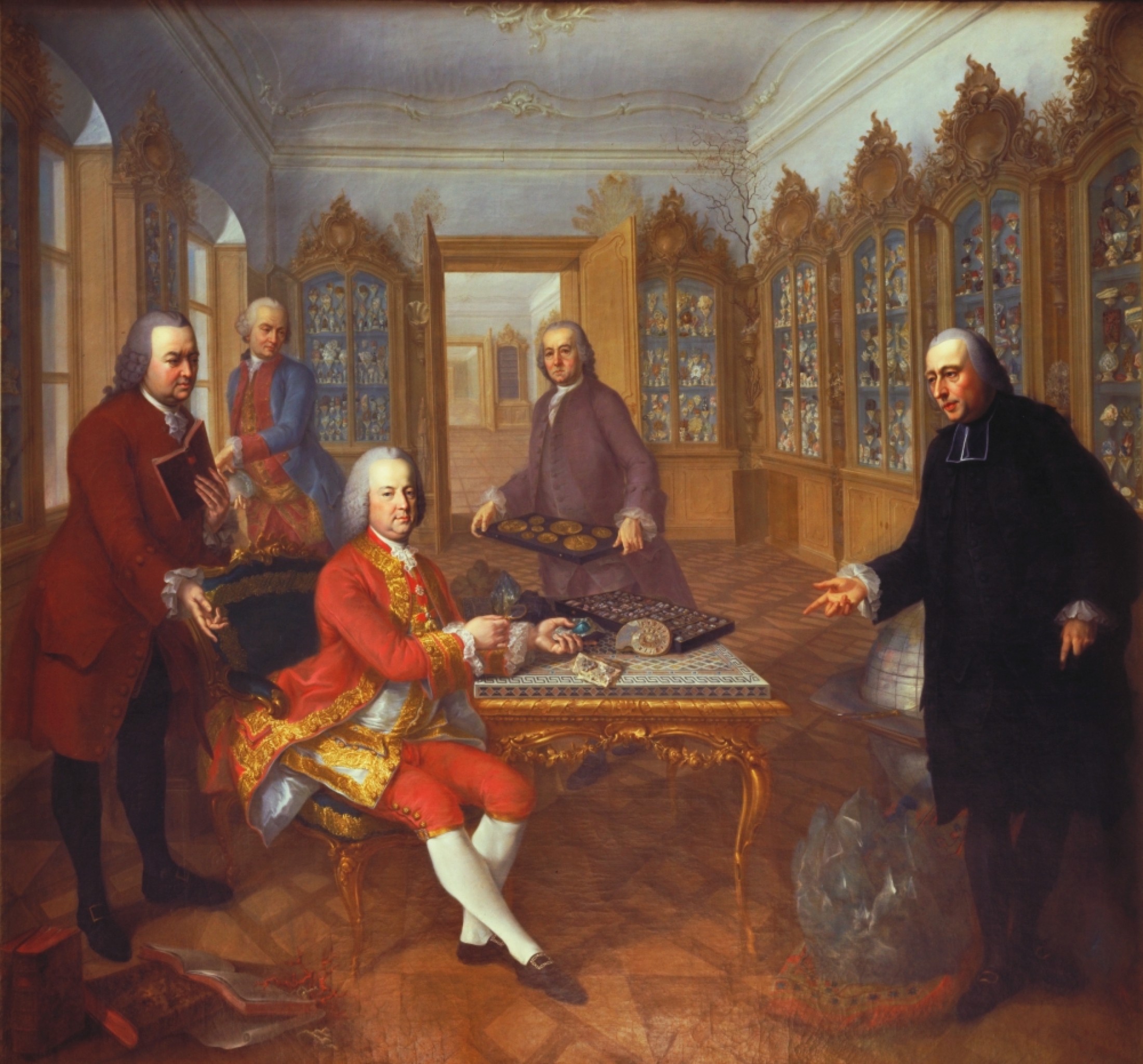
If you had asked me beforehand what I expected of the place, I’m not sure what I would have said. I’m familiar enough with the broad-strokes histories of museums and their ties to imperialism: As nations started to push further and further out into the world during the Age of Exploration, voyagers brought back evidence of their encounters with new environments in new places, creating displays that combined minerals, plants, animals, and man-made “curiosities.” These collections offered opportunities for viewers to learn about the world, as centered by their home locations, but equally they offered opportunities for displayers to demonstrate their status and wealth, the power of their influence and access – not just how they saw the world but how they wanted others to see them in it. If you look for it, this history is written into the architecture and design of museums, and I have been academically trained to look for it. So maybe if you had asked me beforehand what I expected of the Naturhistorisches Museum I would have said “nothing new.”
Reader, I was wrong.
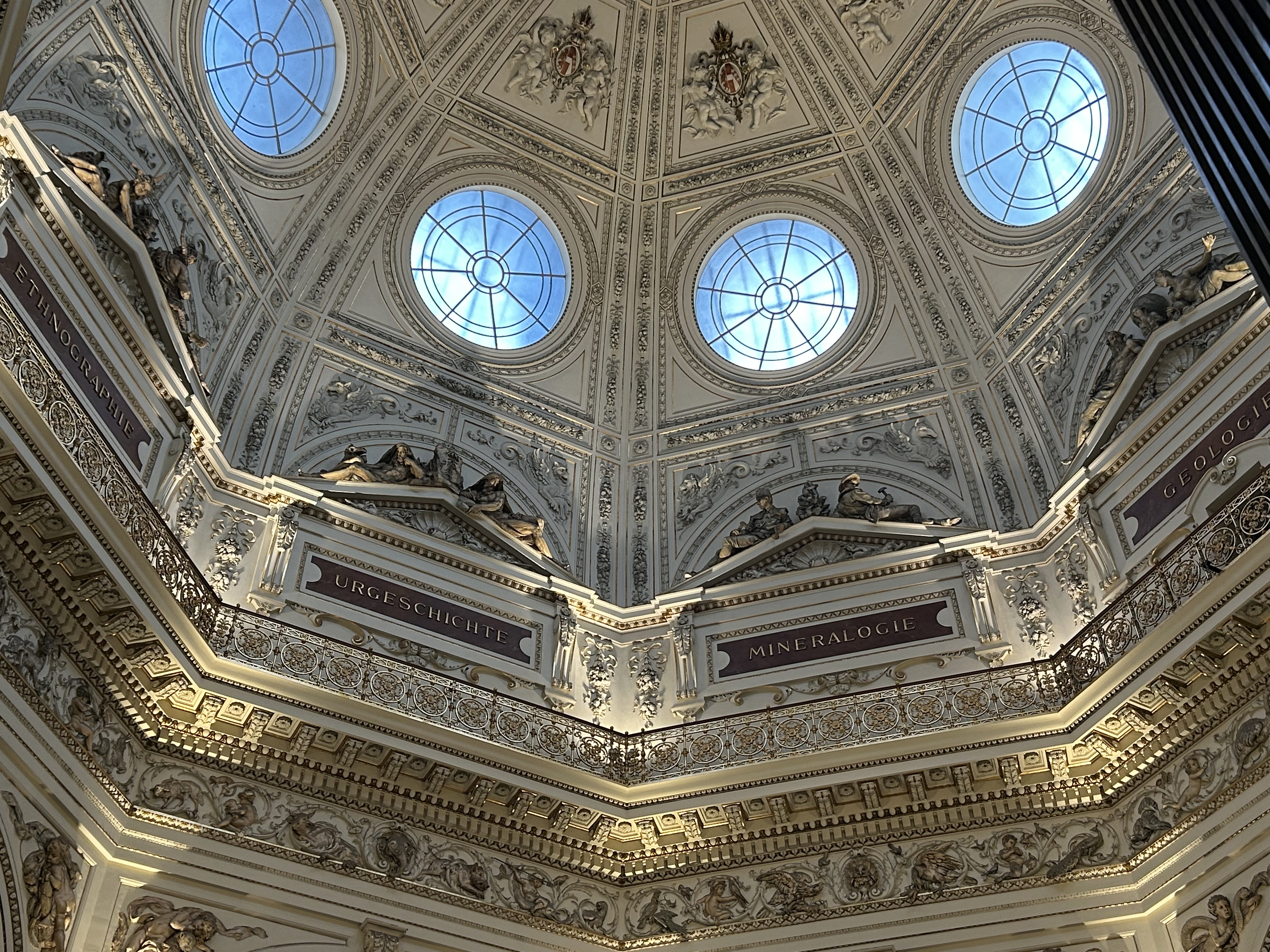
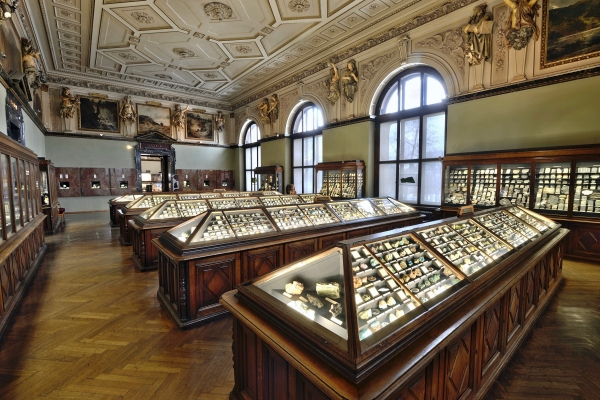
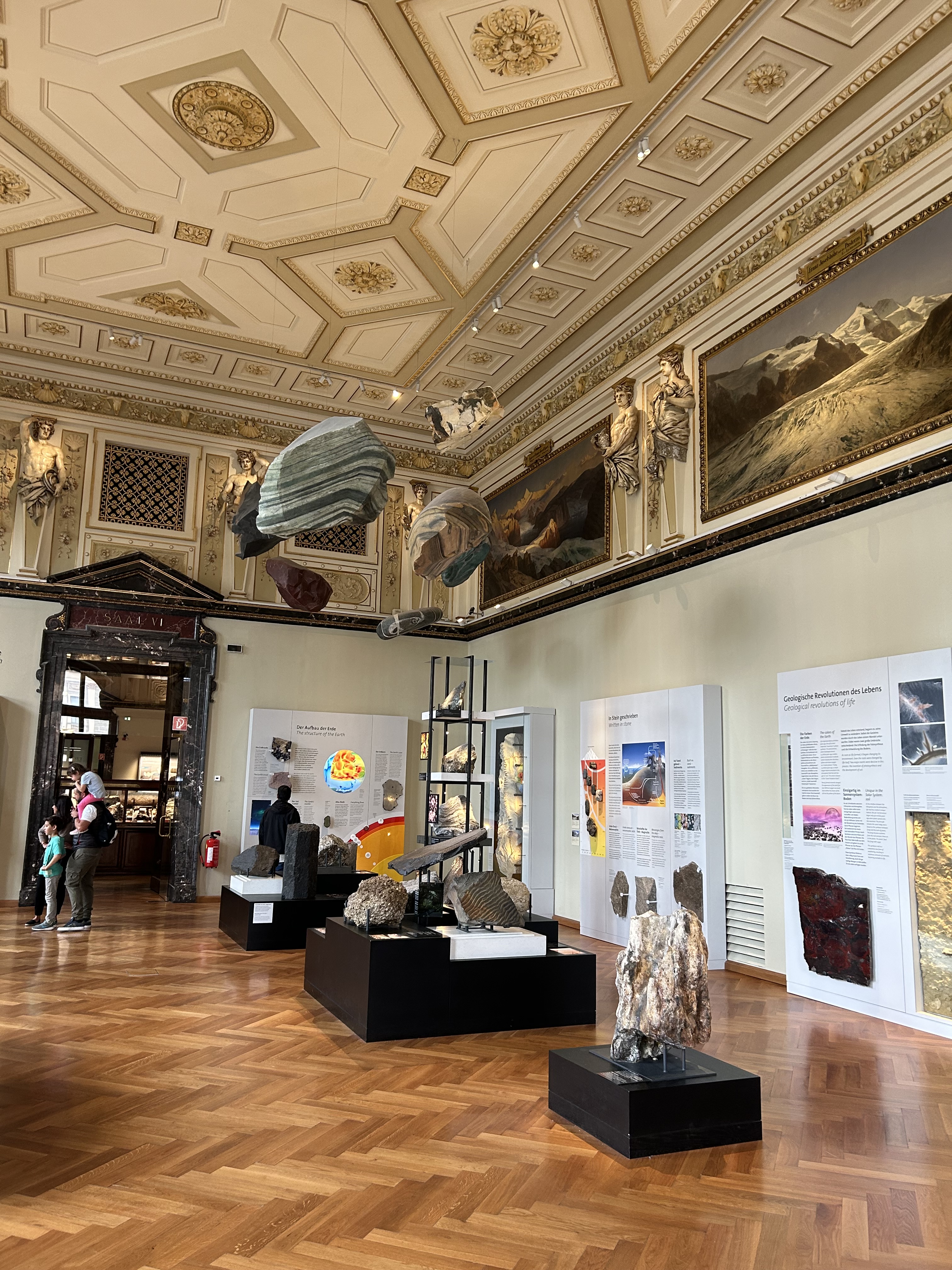
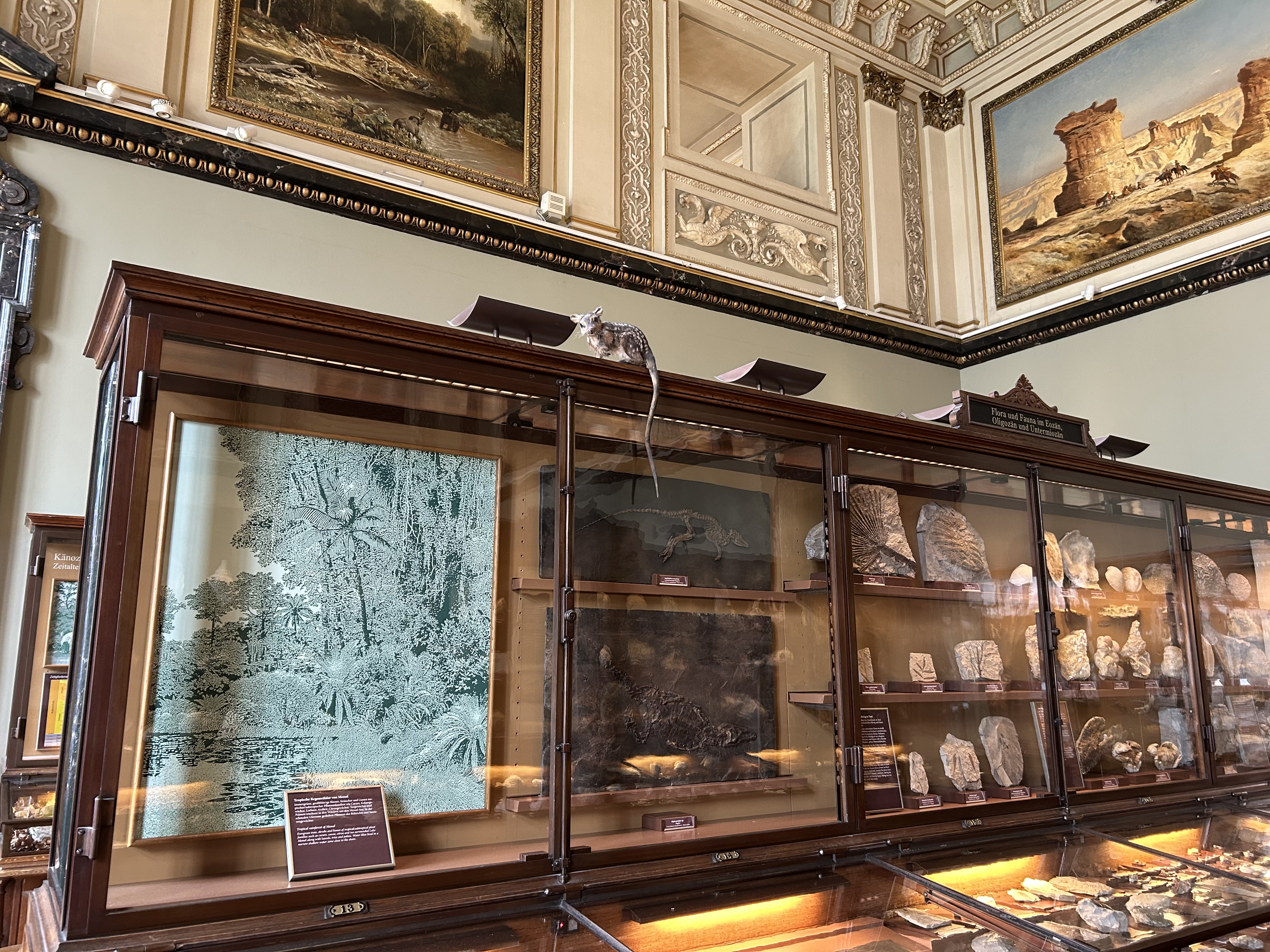
This place was every piece of museum history I had ever learned, jacked up on steroids. It was everything I had been taught to expect dialed up to a ten, with a little extra more thrown in just for fun. It was contemporary best practice crammed into 19th century display cases surrounded by imperial displays of awe and wonder, and I was there for every moment of it. Just please don’t ask me much about the exhibits themselves! I was far too distracted to notice.
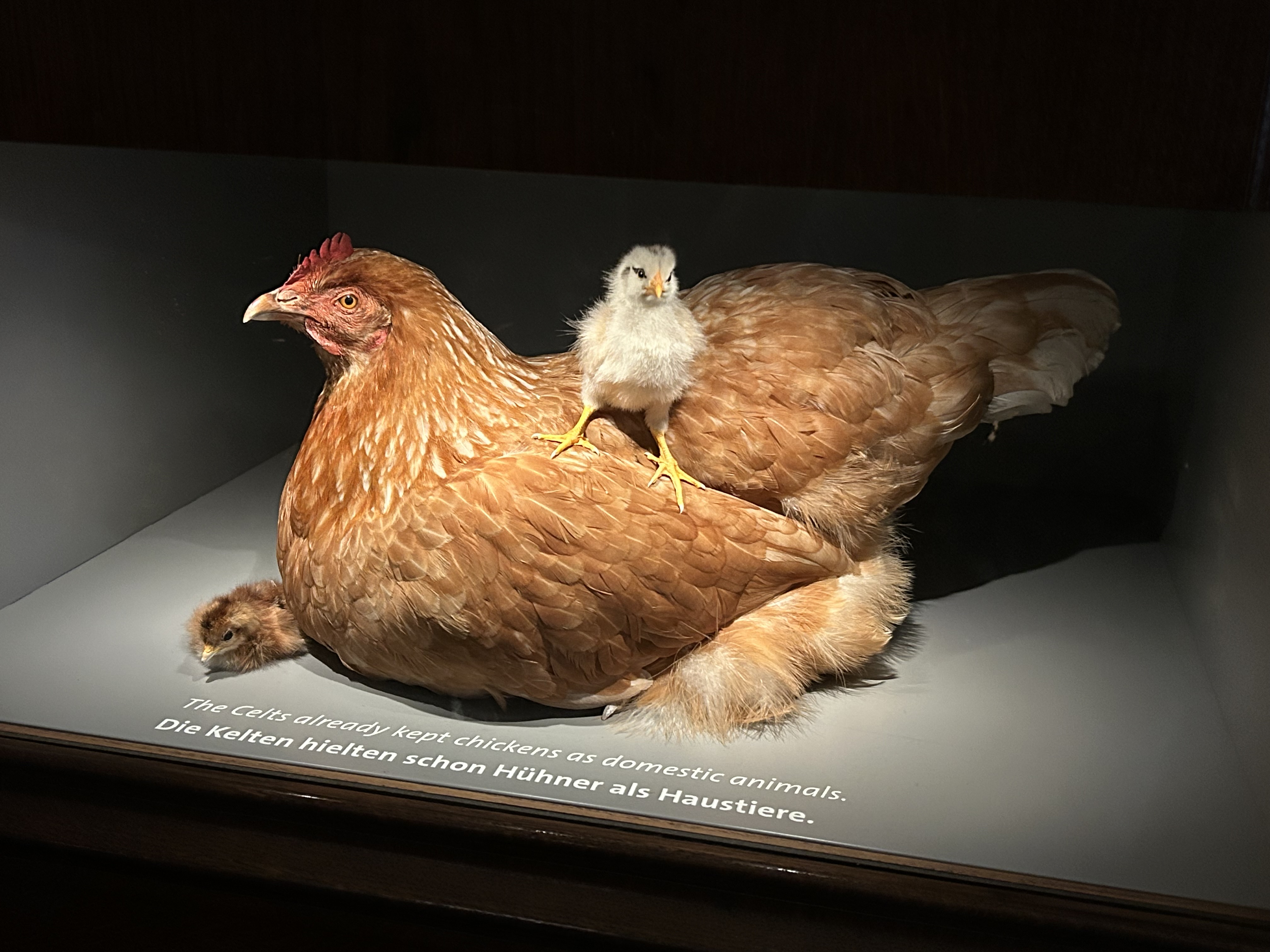
Just the front doors…Looking across to the Kunsthistorisches MuseumInterior domeThe (very) grand staircaseTraditional 19th century displayPlanet Earth couldn’t fit into 19th century display cases?Neither could this dude?The chickens couldOh, right! The Venus was…fine.
All work and no play makes Robert S. Peabody a dull boy!
As much as our staff and volunteers love digging deep into research and academic writings, we do love a good book or podcast! As summer descends upon us, prepare yourselves for another installment of our Peabody Picks summer list!
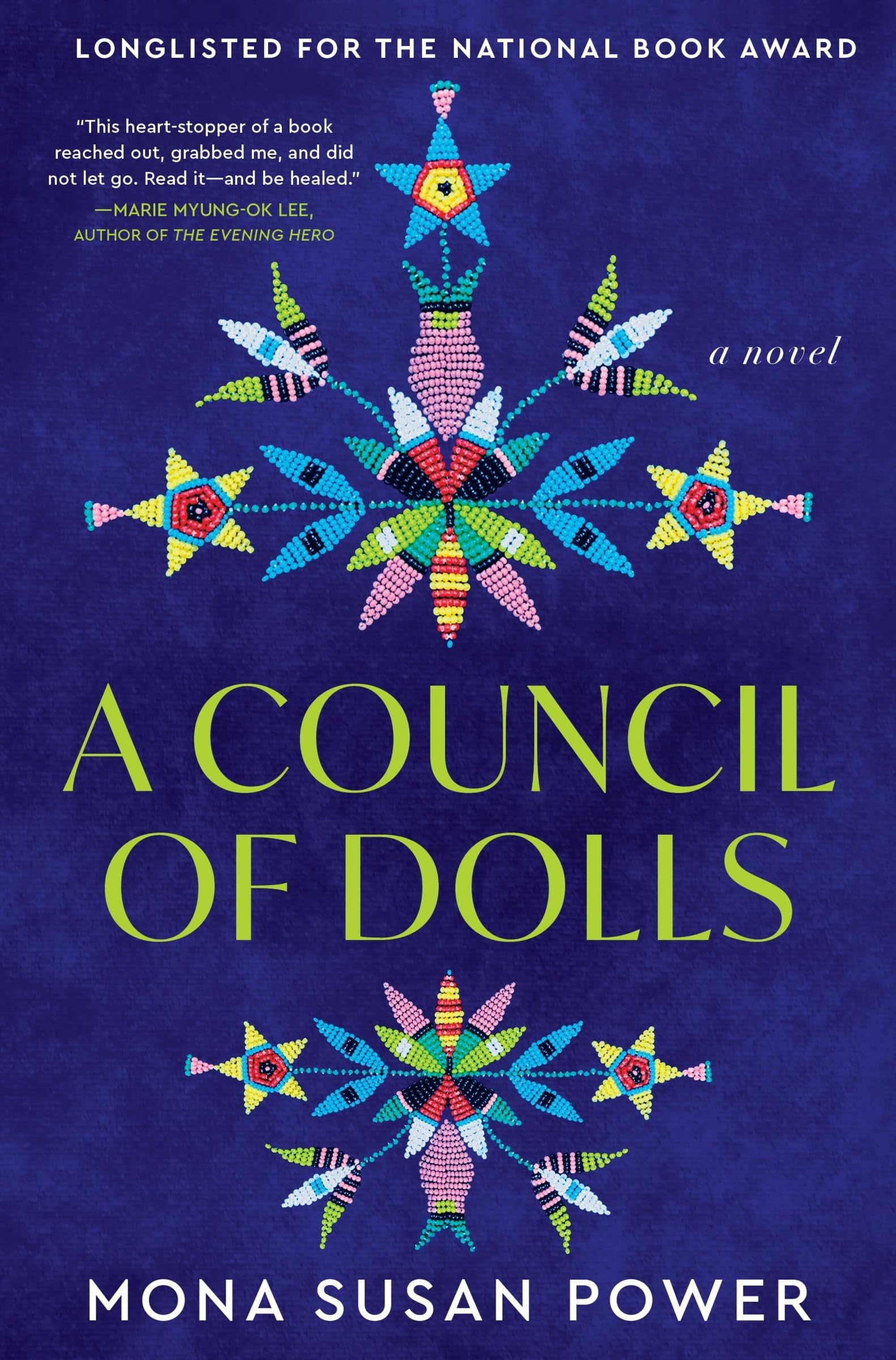
A Council of Dolls is a 2023 historical fiction family saga novel about multiple generations of Yanktonai Dakota women grappling with the effects of settler colonialism, told partially through the point of view of their dolls.
A modern masterpiece, A Council of Dolls is gorgeous, quietly devastating, and ultimately hopeful, shining a light on the echoing damage wrought by Indian boarding schools, and the historical massacres of Indigenous people. With stunning prose, Mona Susan Power weaves a spell of love and healing that comes alive on the page.
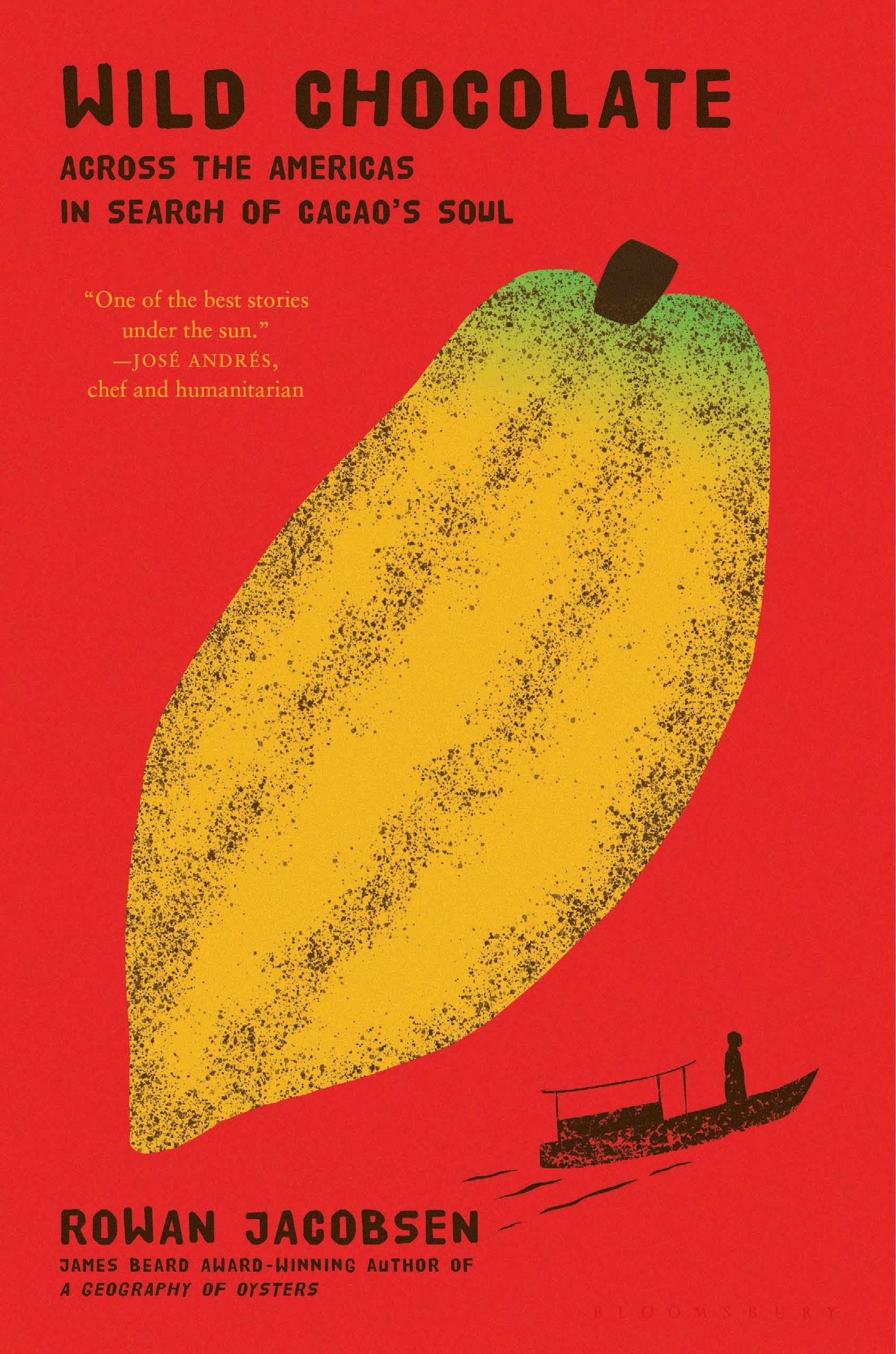
From James Beard Award-winner Rowan Jacobsen, the thrilling story of the farmers, activists, and chocolate makers fighting all odds to revive ancient cacao and produce the world’s finest bar.
When Rowan Jacobsen first heard of a chocolate bar made entirely from wild Bolivian cacao, he was skeptical. The waxy mass-market chocolate of his childhood had left him indifferent to it, and most experts believed wild cacao had disappeared from the rainforest centuries ago. But one dazzling bite of Cru Sauvage was all it took. Chasing chocolate down the supply chain and back through history, Jacobsen travels the rainforests of the Amazon and Central America to find the chocolate makers, activists, and indigenous leaders who are bucking the system that long ago abandoned wild and heirloom cacao in favor of high-yield, low-flavor varietals preferred by Big Chocolate.
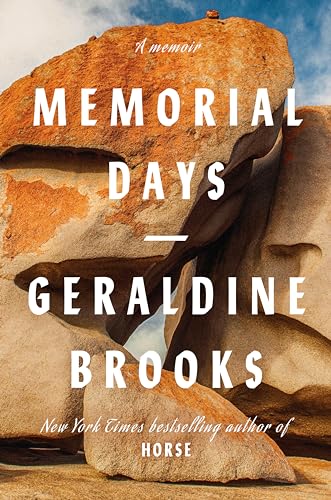
Many cultural and religious traditions expect those who are grieving to step away from the world. In contemporary life, we are more often met with red tape and to-do lists. This is exactly what happened to Geraldine Brooks when her partner of more than three decades, Tony Horwitz – just sixty years old and, to her knowledge, vigorous and healthy – collapsed and died on a Washington, D. C. sidewalk on Memorial Day 2019. The demands were immediate and many. Without space to grieve, the sudden loss became a yawning gulf.
Three years later, she booked a flight to a remote island off the coast of Australia with the intention of finally giving herself the time to mourn. In a shack on a pristine, rugged coast she often went days without seeing another person. There, she pondered the varied ways those of other cultures grieve, such as the people of Australia’s First Nations, the Balinese, and the Iranian Shiites, and what rituals of her own might help to rebuild a life around the void of Tony’s death.
A spare and profoundly moving memoir that joins the classics of the genre, Memorial Days is a portrait of a larger-than-life man and a timeless love between souls that exquisitely captures the joy, agony, and mystery of life.
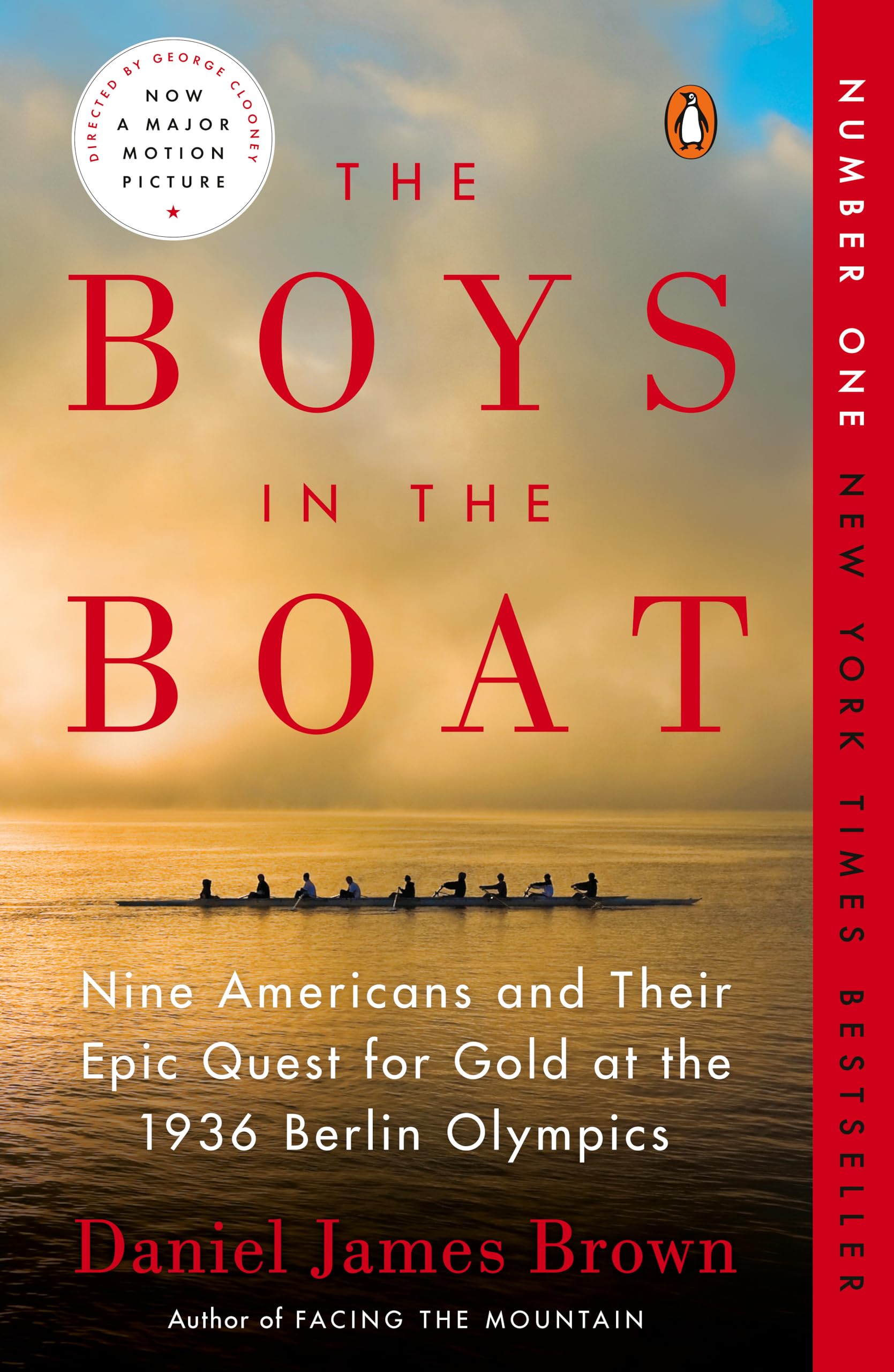
For readers of Unbroken, out of the depths of the Depression comes an irresistible story about beating the odds and finding hope in the most desperate of times—the improbable, intimate account of how nine working-class boys from the American West showed the world at the 1936 Olympics in Berlin what true grit really meant.
It was an unlikely quest from the start. With a team composed of the sons of loggers, shipyard workers, and farmers, the University of Washington’s eight-oar crew team was never expected to defeat the elite teams of the East Coast and Great Britain, yet they did, going on to shock the world by defeating the German team rowing for Adolf Hitler. The emotional heart of the tale lies with Joe Rantz, a teenager without family or prospects, who rows not only to regain his shattered self-regard but also to find a real place for himself in the world. Drawing on the boys’ own journals and vivid memories of a once-in-a-lifetime shared dream, Brown has created an unforgettable portrait of an era, a celebration of a remarkable achievement, and a chronicle of one extraordinary young man’s personal quest.
Werner Herzog was born in September 1942 in Munich, Germany, at a turning point in the Second World War. Until age 11, Herzog did not even know of the existence of cinema. His interest in films began at age 15, but since no one was willing to finance them, he worked the night shift as a welder in a steel factory. He started to travel on foot. He made his first phone call at age 17, and his first film in 1961 at age 19. The wildly productive working life that followed—spanning the seven continents and encompassing both documentary and fiction—was an adventure as grand and otherworldly as any depicted in his many classic films.
Every Man for Himself and God Against All is at once a personal record of one of the great and self-invented lives of our time, and a singular literary masterpiece that will enthrall fans old and new alike. In a hypnotic swirl of memory, Herzog untangles and relives his most important experiences and inspirations, telling his story for the first and only time.
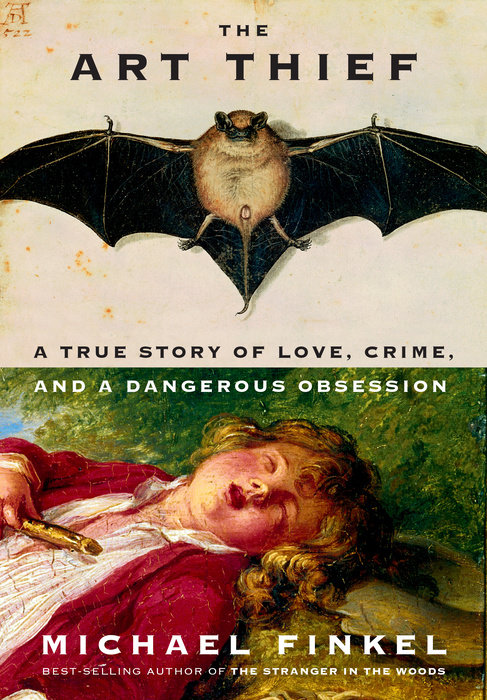
One of the most remarkable true-crime narratives of the twenty-first the story of the world’s most prolific art thief, Stéphane Breitwieser.
In The Art Thief, Michael Finkel brings us into Breitwieser’s strange and fascinating world. Unlike most thieves, Breitwieser never stole for money. Instead, he displayed all his treasures in a pair of secret rooms where he could admire them to his heart’s content. Possessed of a remarkable athleticism and an innate ability to circumvent practically any security system, Breitwieser managed to pull off a breathtaking number of audacious thefts. Carrying out more than two hundred heists over nearly eight years—in museums and cathedrals all over Europe—Breitwieser, along with his girlfriend who worked as his lookout, stole more than three hundred objects, until it all fell apart in spectacular fashion.
Geddy Lee is one of rock and roll’s most respected bassists. For nearly five decades, his playing and work as co-writer, vocalist and keyboardist has been an essential part of the success story of Canadian progressive rock trio Rush.
Long before Rush accumulated more consecutive gold and platinum records than any rock band after the Beatles and the Rolling Stones, before the seven Grammy nominations or the countless electrifying live performances across the globe, Geddy Lee was Gershon Eliezer Weinrib, after his grandfather murdered in the Holocaust. As he recounts the transformation, Lee looks back on his family, in particular his loving parents and their horrific experiences as teenagers during World War II. He talks candidly about his childhood and the pursuit of music that led him to drop out of high school. He tracks the history of Rush which, after early struggles, exploded into one of the most beloved bands of all time. He shares intimate stories of his lifelong friendships with bandmates Alex Lifeson and Neil Peart—deeply mourning Peart’s recent passing—and reveals his obsessions in music and beyond. This rich brew of honesty, humor, and loss makes for a uniquely poignant memoir.
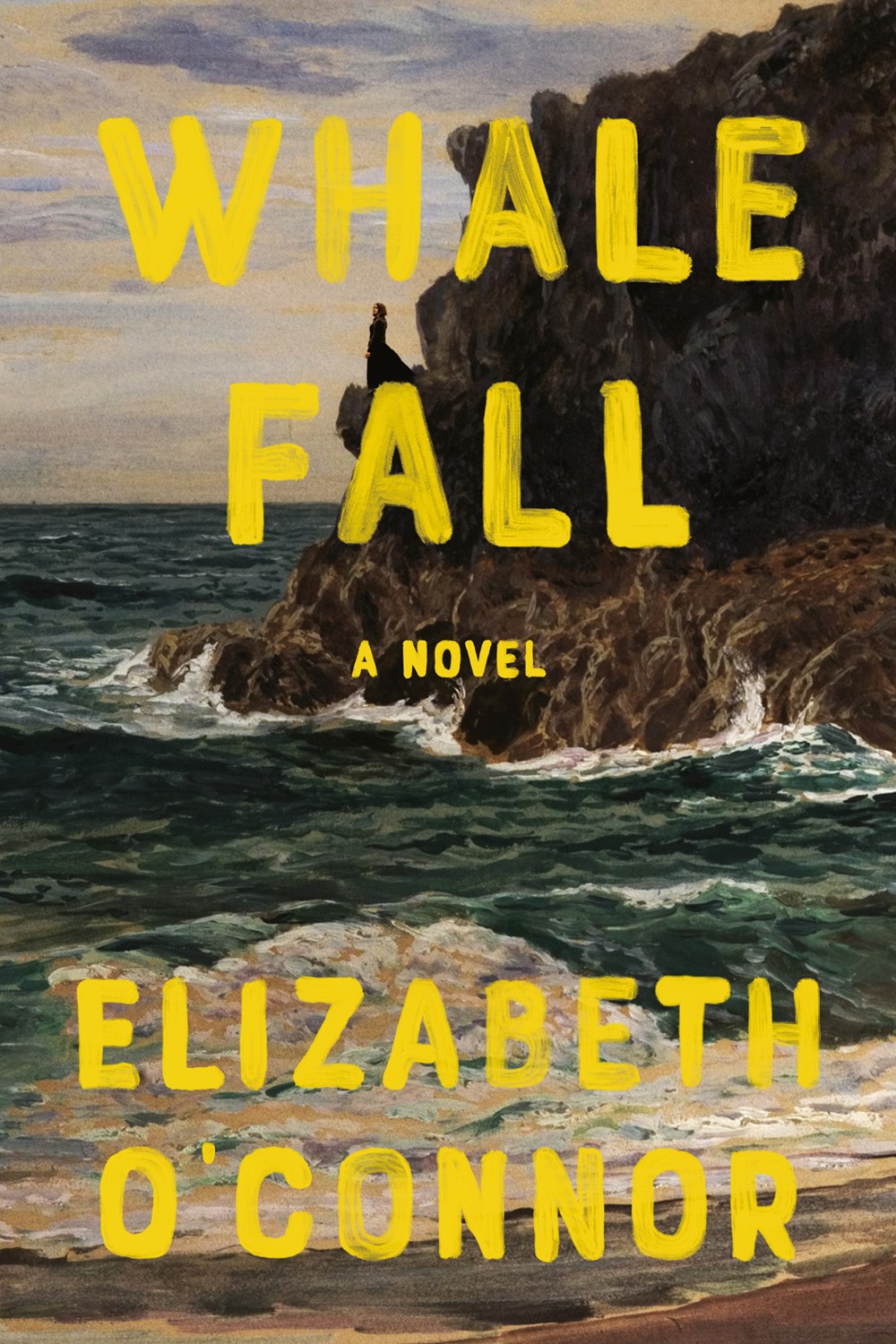
In 1938, a dead whale washes up on the shores of remote Welsh island. For Manod, who has spent her whole life on the island, it feels like both a portent of doom and a symbol of what may lie beyond the island’s shores. Manod can’t shake her welling desire to explore life beyond the beautiful yet blisteringly harsh islands that her hardscrabble family has called home for generations.
The arrival of two English ethnographers who hope to study the island culture, then, feels like a boon to her—both a glimpse of life outside her community and a means of escape. The longer the ethnographers stay, the more she feels herself pulled towards them, despite her misgivings that her community is being misconstrued and exoticized.
With shimmering prose tempered by sharp wit, Whale Fall tells the story of what happens when one person’s ambitions threaten the fabric of a community, and what can happen when they are realized. O’Connor paints a portrait of a community and a woman on the precipice, forced to confront an outside world that seems to be closing in on them.
Our Ancestors Were Messy, is a podcast covering the gossip, scandals, and pop culture that made headlines in the Black newspapers of segregated communities during the pre-Civil Rights era. On each episode, host Nichole Hill and her guests follow the story of an ancestor in search of opportunity, adventure, love, and a way to beat Jim Crow. Hill and her guests learn the mess – and eventual history – their ancestors make along the way.
“I could pretend that I like this podcast because it’s a way to learn about Black history in a way that goes beyond standard narratives of victimization or individual exceptionalism. The stories it tells allow people to be people, with all the messiness and drama and pop culture of their everyday lives in the pre-Civil Rights era. But really I love this podcast because it is just great gossip. Why you trying to make me learn in my free time??” – Lainie Schultz, Peabody Staff
The Thing About Austen is a podcast about Jane Austen’s world — the people, objects, and culture that shape Austen’s fiction. Come for the historical context and stay for the literary shenanigans. Think of us as your somewhat cheeky tour guides to the life and times of Jane Austen.
“Two professors of literature talk about the material culture in Austen’s stories and their significance to societal culture during the Georgian and Regency eras. From Mr. Darcy’s portrait in Pride and Prejudice to the homemade alphabet in Emma and Captain Wentworth’s umbrella in Persuasion – there are so many interesting stories and histories to unpack from the items detailed in Jane Austen’s stories. Some of my favorite episodes are #83 The thing about the Ha-Ha and #52 The thing about Bath’s Baths (per their recommendation, I did try the hot spring water in the Roman Baths on a recent visit… the taste, not so great, but the experience, 5 stars!) – Emma Lavoie, Peabody Staff
Buried Bones, Hosted by Kate Winkler Dawson and Paul Holes
Genre: Historical True Crime
Buried Bones dissects some of history’s most dramatic true crime cases from centuries ago. Together, journalist Kate Winkler Dawson and retired investigator Paul Holes explore these very old cases through a 21st century lens.
“I have been a fan of Buried Bones for a few years now. Each episode is a dive into a homicide in the past that is explored simultaneously by a journalist/historian (Kate) and a retired forensic investigator (Paul). I really enjoy the blend of history and scientific analysis as the two hosts discuss the crime. Kate deftly narrates the historical event while Paul provides a reasoned analysis from a modern forensic science perspective. I always learn something!” – Marla Taylor, Peabody Staff
Welcome to Salem, Massachusetts! Join tour guides Jeffrey Lilley and Sarah Black as they talk all things Witch City. Learn its history, meet its people, and discover the magic.
“This podcast goes beyond the history of the Salem Witch Trials and explores the vast history of Salem and the people who live there. What does a drunk elephant, haunted pepper, a witch solving a murder, and tunnels (IYKYK) all have in common? They all relate back to Salem! This podcast has everything you need to know for your next trip to the Witch City. I personally love the episode interviews with current business owners in Salem.” – Emma, Peabody Staff
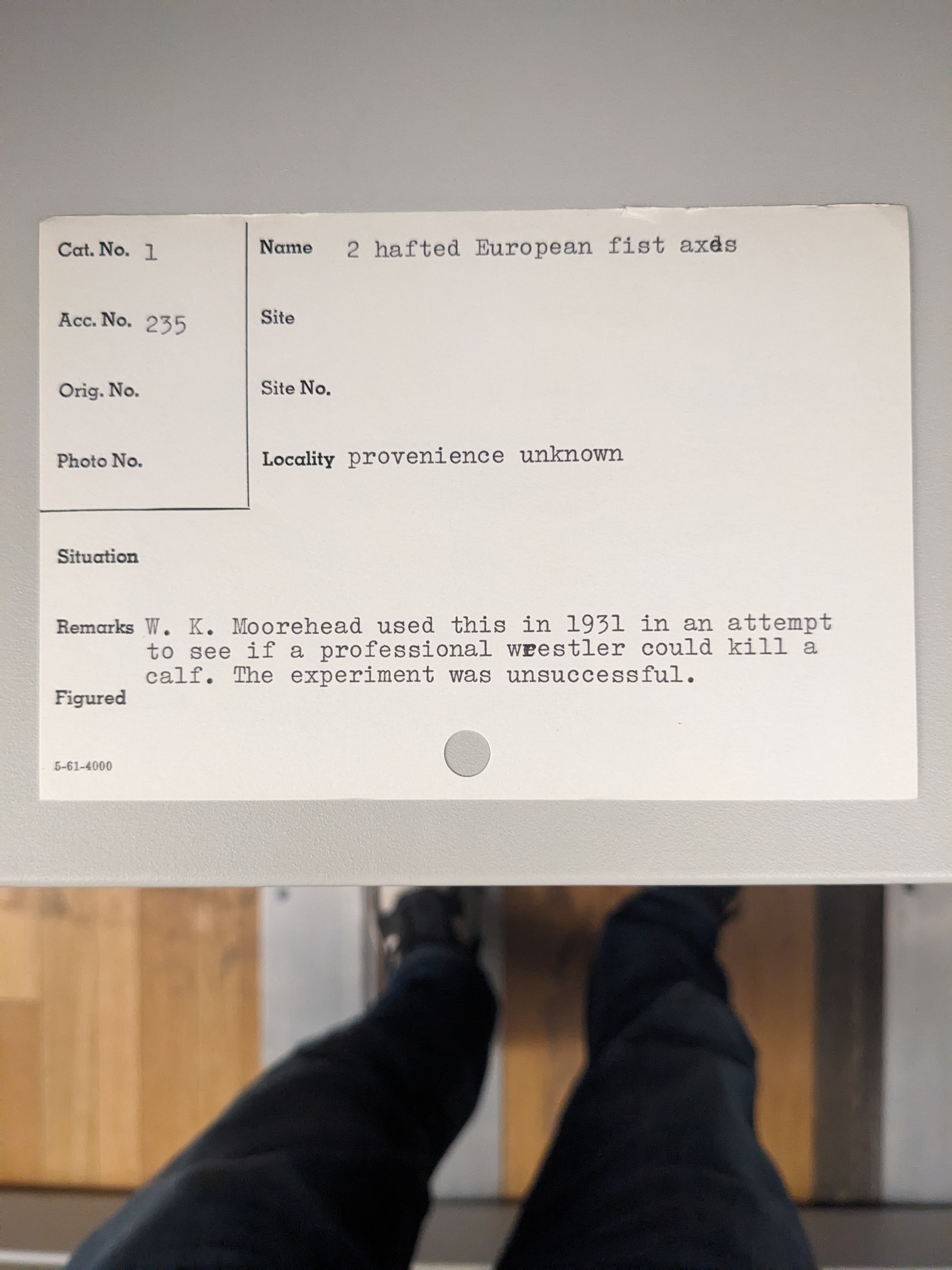
A few years ago, I came across a catalog card with an interesting account in the remarks section. The card read “W. K. Moorehead used this in 1931 in an attempt to see if a professional wrestler could kill a calf. The experiment was unsuccessful.” There is a lot to unpack from this card. It references experimental archaeology, professional wrestling, and, judged by today’s standards, ethically questionable behavior. I figured that there had to be a story to unearth, but with more pressing work to do, I filed this note away for another time.
The catalog card describing the handaxes.
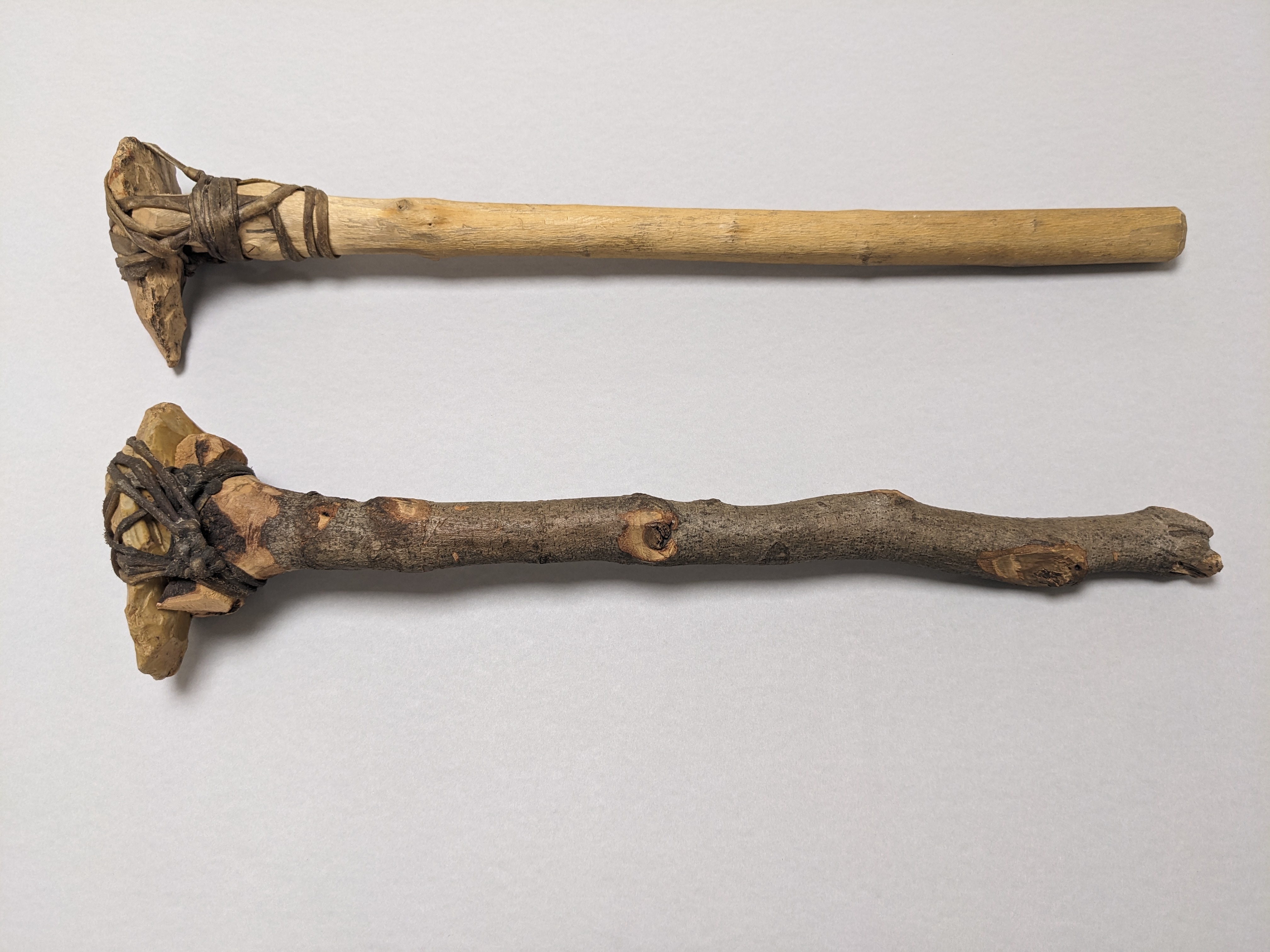
The catalog card describes two hafted European ‘fist axes’ (or handaxes). The provenience of the items is unknown. The Peabody acquired a collection of similar European tools shortly before these items were cataloged. It’s possible that the hafted handaxes are somehow related.
The handaxes used in Moorehead’s experiment.
Over the past few years this card occasionally comes to mind, or I will see the handaxes. When they do, I will do a quick search of the internet for any related newspaper articles, journals, or archival clues. I’ve looked through our institutional records but haven’t found anything that appears to be related.
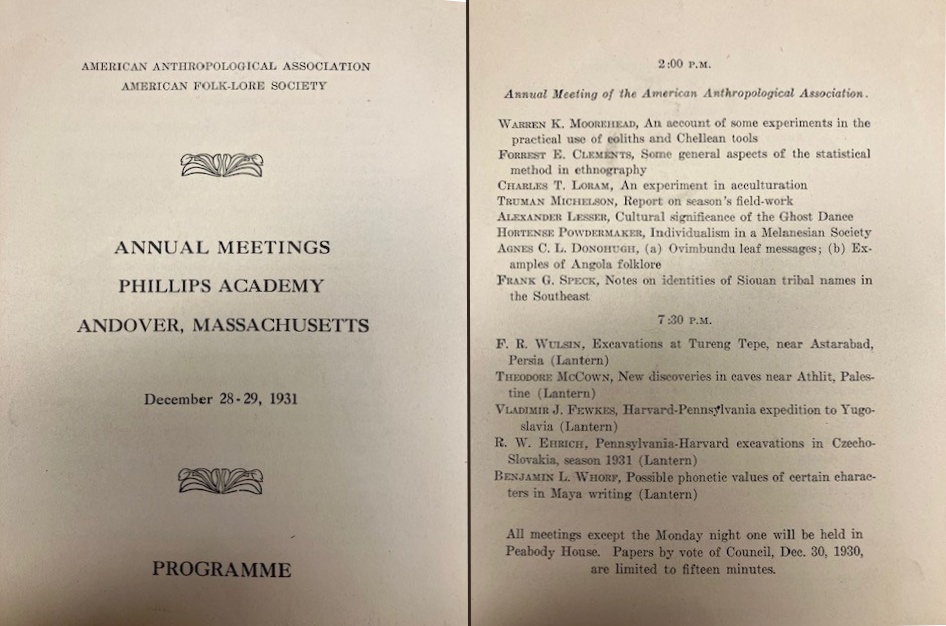
A breakthrough came when I found the minutes from the combined 1931 Annual Meeting of the American Anthropological Association (AAA) and American Folk-Lore Society. The meeting was held at Peabody House at Phillips Academy on December 28-29. The minutes included a description of a talk given by Warren K. Moorehead titled “An account of some experiments in the practical use of eoliths and Chellean tools.”
Selected pages from the program for the 1931 American Anthropological Association annual meeting.
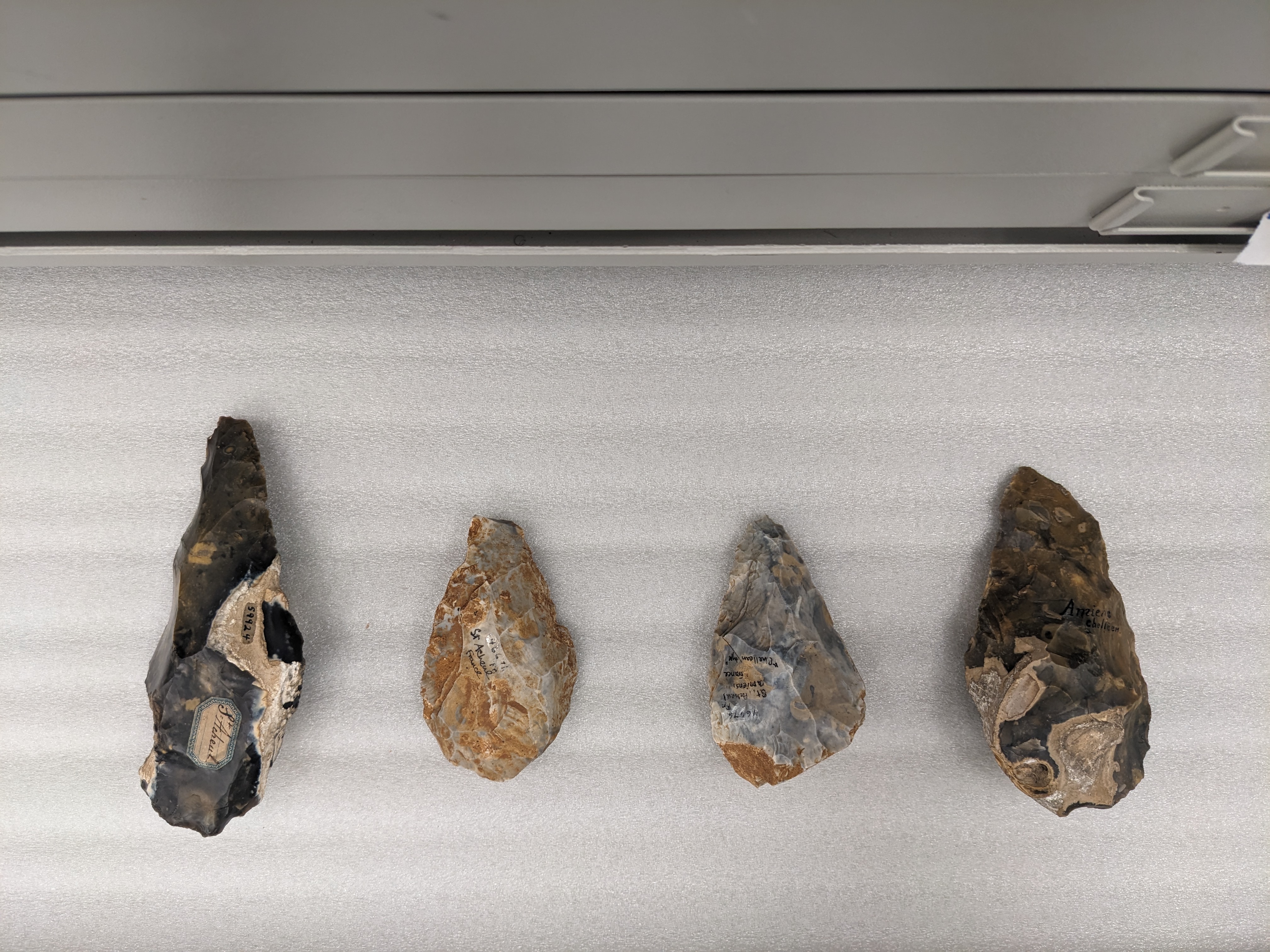
The Chellean tools Moorehead references belong to what is today known as the Acheulean stone tool industry. They are named after a site in Saint-Acheul, France where their classification as a prehistoric tool was first broadly accepted. Acheulean handaxes are distinct and have come to define Acheulean stone tool technology overall. The hafted hand axes in question are unquestionably Acheulean in form, with the hafting being a recent addition.
A few examples of other Acheulean handaxes the Peabody stewards.
The distribution of these tools is wide-ranging geographically and temporally. The oldest examples date to 1.76 million years ago. An end date for their use has been placed between 300,000 and 100,000 years BP. Some handaxes are very large, measuring 2 feet, while others are quite small, just 6 inches.
They have been found in Africa, Europe and west, south and east Asia. They are very old examples of stone tool technology and would have been made by hominids, such as Homo erectus.
-A quick note about eoliths. These were once thought to be stone tools and were subject to heated debate for many decades. They have been found in deposits that vastly predate the Acheulean. They are now recognized as naturally occurring geofacts and are not of human origin.
Finding the meeting minutes describing Moorehead’s presentation seemed to be one step closer to an account of the experiment-gone-wrong mentioned in the catalog card. Armed with more information and a date to work with, I did another round of searching on the internet and within our archives.
Eventually, I contacted the Ohio History Connection (OHC). Moorehead was the first curator at the Ohio Archaeological and Historical Society (OAHS) before coming to Phillips Academy. After his death in 1939, Moorehead’s family gave many of his papers to OAHS. Our two institutions share some of the same correspondences and we have reached out to them in the past.
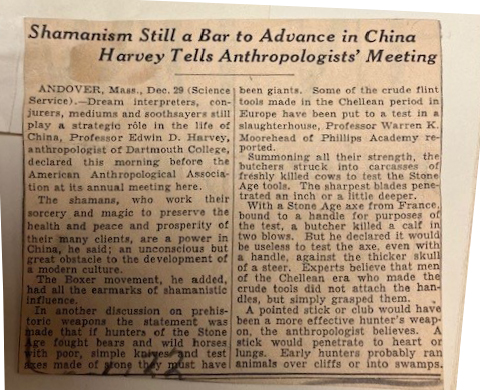
Amazingly, OHC responded with a newspaper clipping from the New York Times that provided more context about the talk Moorhead gave at the 1931 AAA meeting. The article mentions that the tools were used by butchers in a slaughterhouse on carcasses and one living animal. The butchers declared the tools to be ineffectual, and Moorehead proposed that sticks or clubs would have been better suited as hunting tools.
The New York Times article from December 30, 1931 describing Moorhead’s experiement (fourth paragraph through to end).
Today, experimentation of this nature on live animals would be ethically inconceivable. Scientific research is meant to manipulate variables in controlled situations to study factors relevant to the proposed question. Moorehead’s experiment didn’t take into account the many varied sizes of handaxes and whether they should be hafted or simply held in hand. Testing a range of sizes and handling methods might lead to better results. However, this and any future replication or refinement of Moorhead’s conditions would certainly lead to increasing levels of harm to animals.
A researcher who has engaged in experimental archaeology shared via correspondence some of the alternatives and ethical considerations of modern experimentation in the field. Colleagues testing projectile point penetration utilized targets made from meat and meat substitutes, such as ballistic gel and clay. The meat used for the targets needed to be ethically sourced (from a hunter or butcher for example) and would otherwise have been discarded if it not used in the experiment.
Sometimes substitutions for animal remains are unavoidable. An article on the topic of animal resources in experimental archaeology outlines concerns of sample procurement. Scientific studies often require large sample sizes. Animal remains are non-renewable resources that have limited availability. These samples are linked to the death of animals, no matter how they are procured. In these situations, modern researchers must strike a balance between scientific rigor and ethical integrity.
Returning to the catalog card and newspaper article concerning this experiment; it is interesting to note that the professional wrestler in one, is a slaughterhouse butcher in the other. I was hoping any notes Moorehead used to prepare his presentation or other related correspondence could provide more information, but I have yet to find them.
Both the card and article declare the experiment to be a failure, seemingly as tools for hunting and maybe butchery. To be sure, the hafting has left very little of the cutting edge of one of these tools available for penetration.
Subsequent experiments with Acheulean handaxes have found them to be effective tools for a wide range of tasks aside from hunting including butchering animals, stripping wood, processing plants and digging. These experiments are supported by surface wear pattern studies. It is unclear whether these tools were ever used for hunting, which Moorehead’s sensational experiment somewhat confirms.
Websites with more information on Acheulean culture:













 The Peabody


#/media/File:1901_Kidder_Steam_Runabout.jpg)