Fusing Glass with Hopi Artist, Ramson Lomatewama

Contributed by Emma Lavoie

Last month we were delighted to welcome back Ramson Lomatewama to Phillips Academy Andover (PA) where he worked with students and campus community members in fused glass workshops.

Ramson Lomatewama is an award-winning Hopi glass artist, kachina doll carver, jewelry maker, and published poet from Hotevilla, Arizona. This is his second year working with the Peabody Institute to bring fused glass workshops to the PA campus community. Ramson has also participated in various virtual, and in-person talks at PA, sharing his poetry, art, and life stories with students and the broader public. You can view these virtual talks on our Peabody YouTube page.
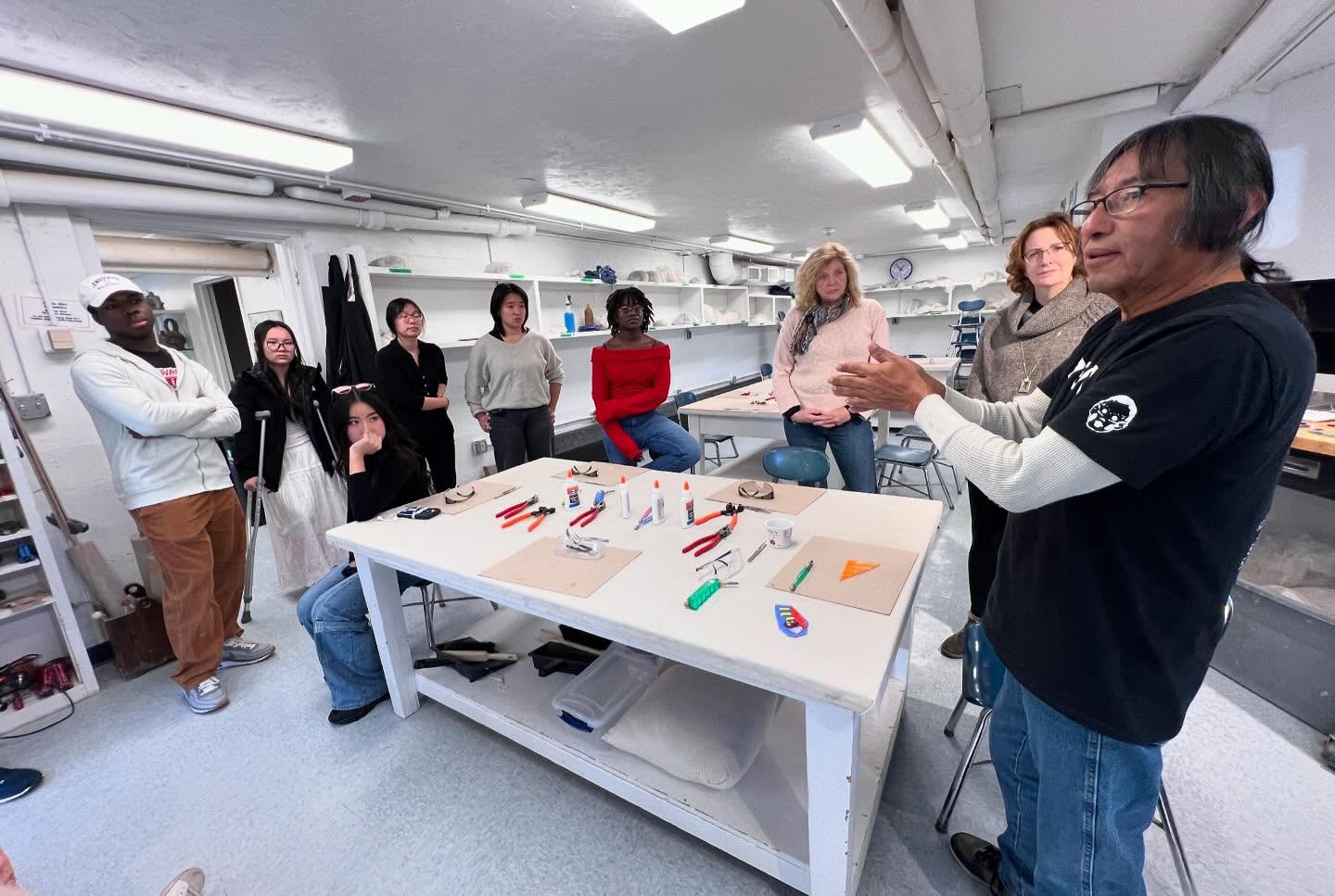
Ramson speaking to one of the fused glass community workshops.

Ramson creates stained glass, blown glass, and fused glass art. Ramson’s glass art is viewed as “a contemporary expression of ancient and artistically rich people… evoking a beautiful, yet humbling mindscape which we all long to find.” He is the first hot glass artist from the Hopi Tribe. Ceremonies and cultural activities continue to play a major role in his life. He has showed works at the Santa Fe Indian Market, the Museum of Northern Arizona, Fusing Traditions, a traveling exhibition, and the San Diego Museum of Man (now known as the Museum of Us).
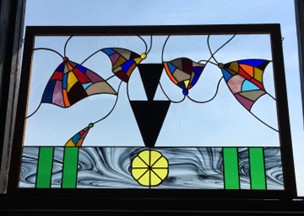
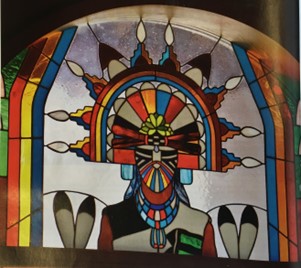
Stained glass artwork by Ramson Lomatewama.
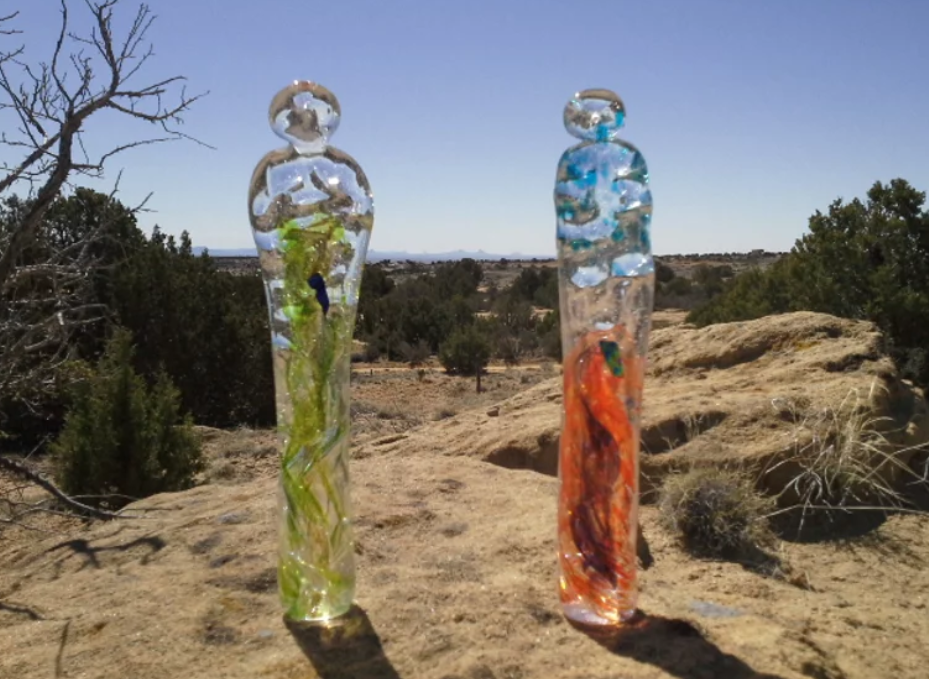
Blown glass ‘spirit figure’ sculptures by Ramson.
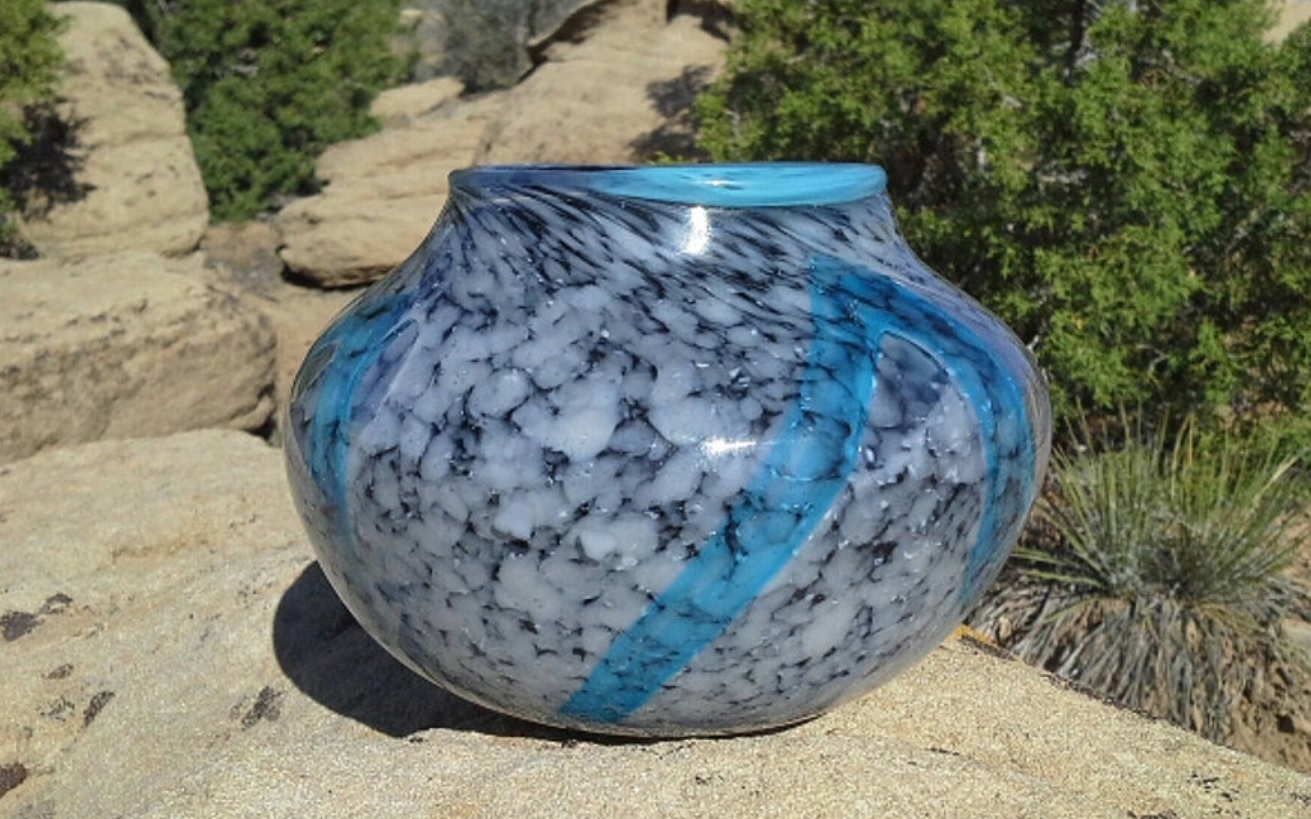
Blown glass vessel by Ramson.

Ramson is an educator on several levels. Early in his career, he was a middle school and high school teacher, and for many years, served as adjunct faculty at North Central College in Naperville, Illinois. Ramson also taught glass art for Hopitutuqayki (The Hopi School), an arts apprenticeship program located on the Hopi reservation. Ramson’s studio, Hotevilla Glassworks, is the first and only Hopi owned working glass studio. Check it out here!
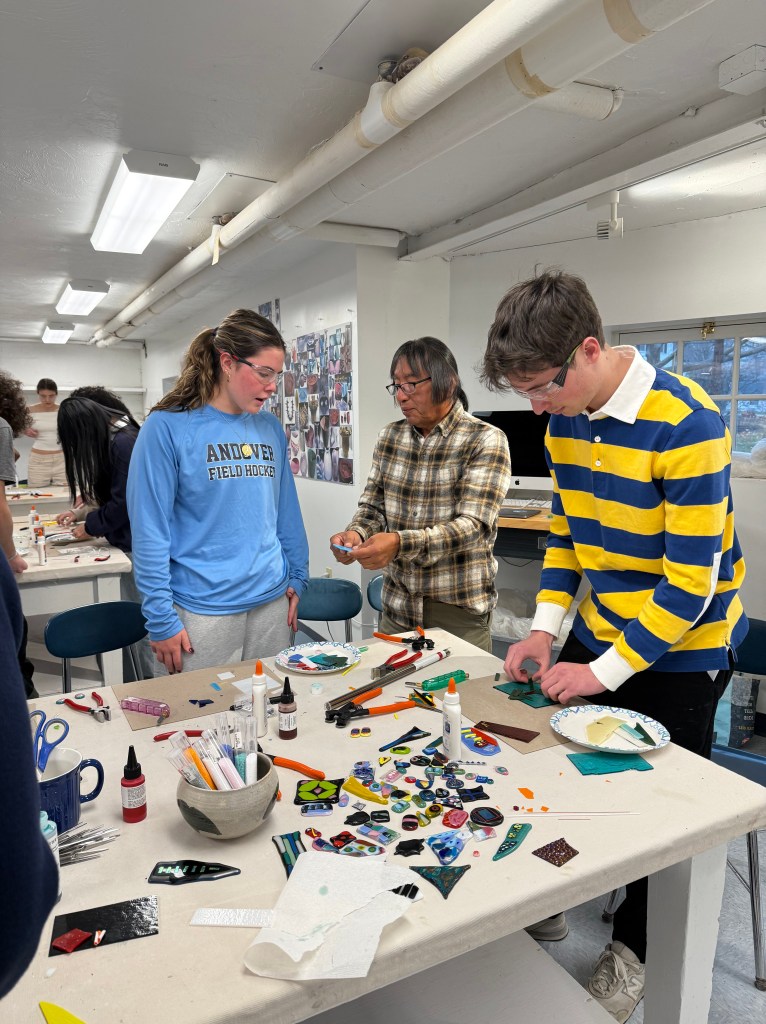
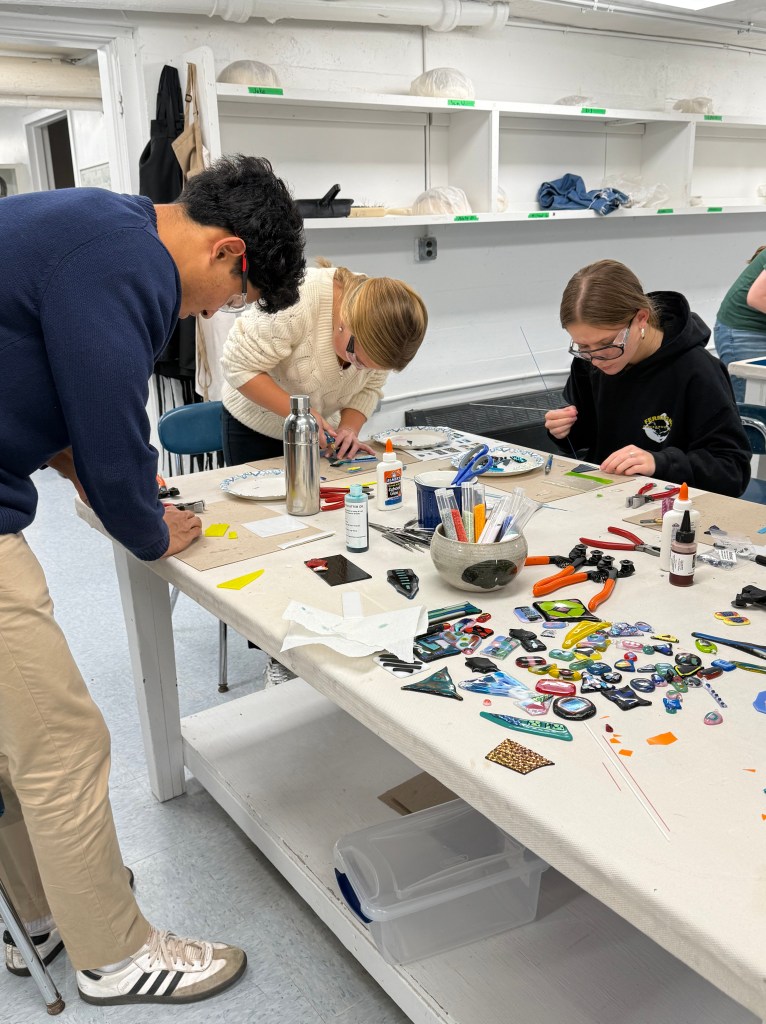
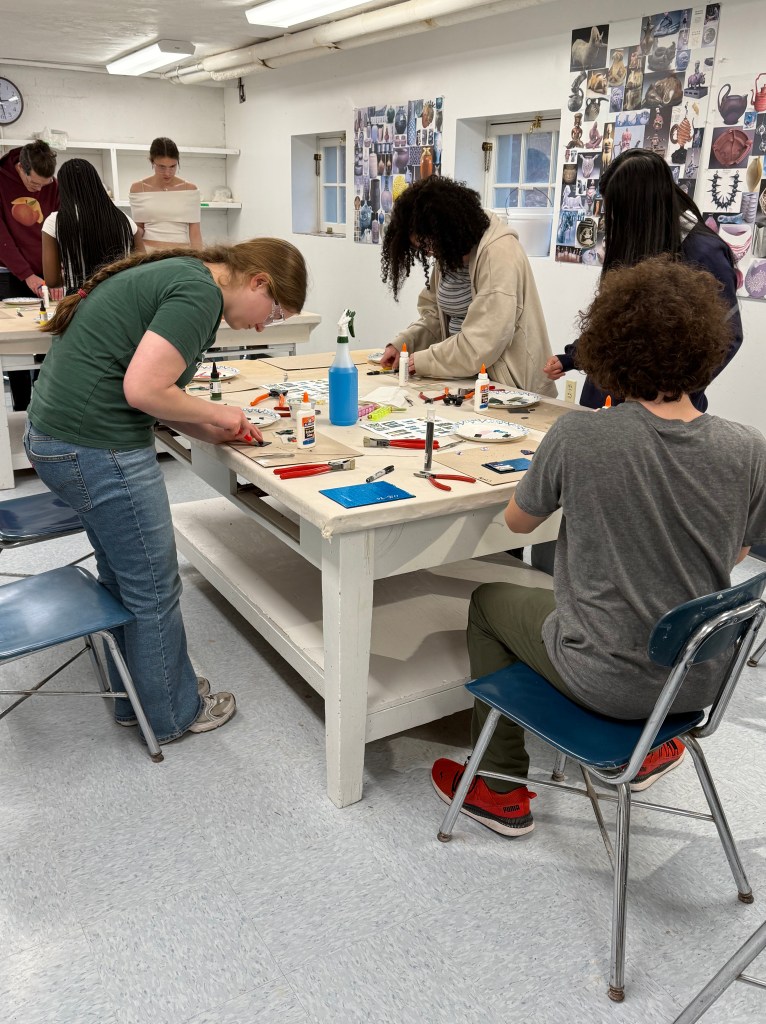
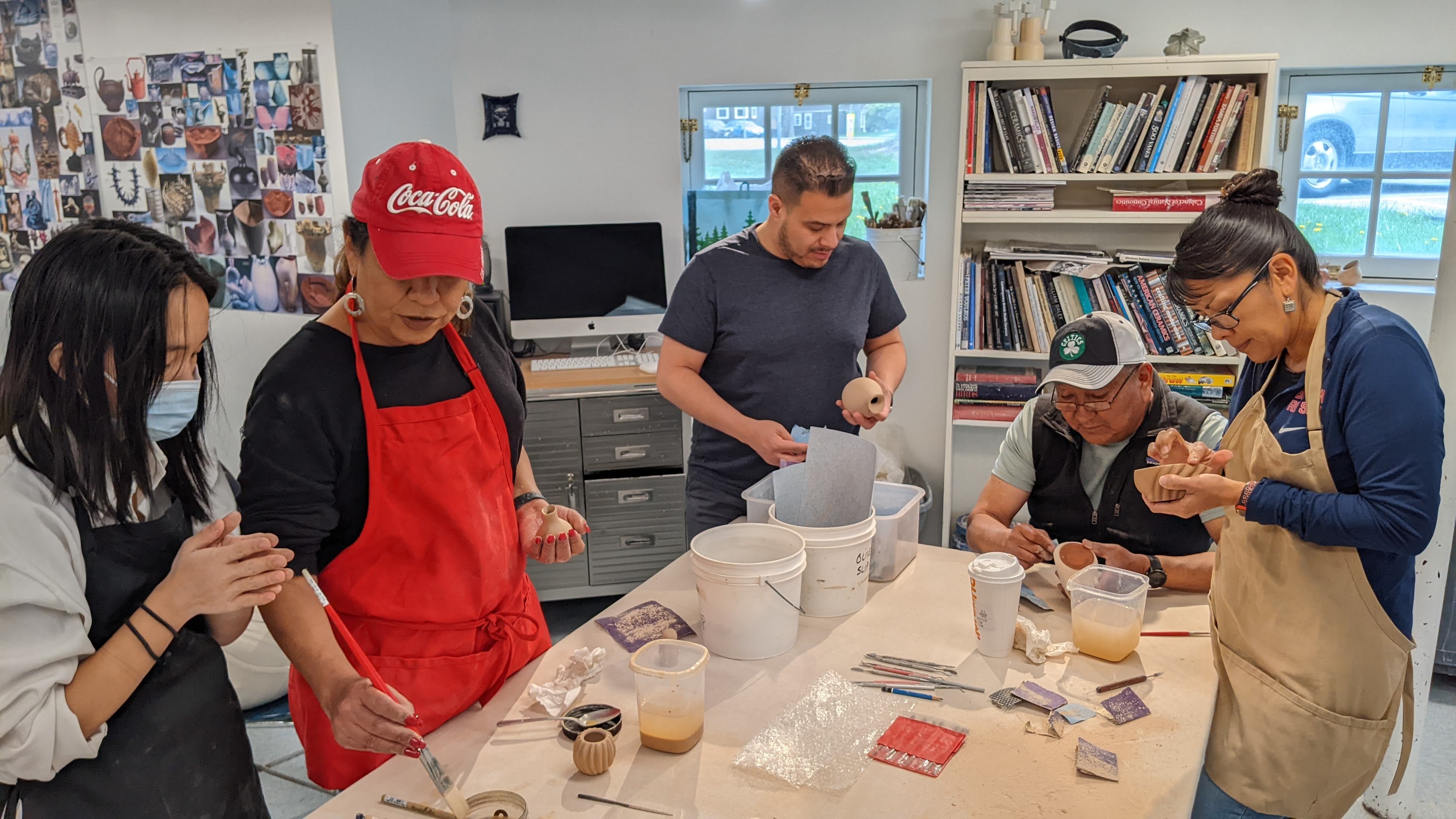
Students at work, creating their own fused glass pieces in their class workshops.

Working with fused glass seemed a little daunting at the beginning of the workshops, but a quick demonstration by Ramson with helpful instructions gave students the courage and motivation to dive in. The plethora of glass pieces to work with – stringers, millefiori, frit, swizzle sticks, dichroic, and ribbons – came in many shapes, textures, and colors. Students worked side by side creating their pieces of art, asking Ramson questions about his techniques and listening to stories about his life and art journey.

“Working with fused glass, you need to be prepared to forfeit control…” was Ramson’s important insight that would hold true from assembling our glass pieces to the final kiln firing of our pieces. No matter the shape or size of your glass piece – after firing – it would melt down to around 6mm thick. Ramson calls this the “6mm rule.” I found it best to go into a fused glass design with no plan, as your final product would tend to come out a little different from what you’d imagine… most of the time it would look even better!

This year I created two pendants and (hopefully) some pieces to assemble into earrings. You can see my “before and after” photos of my glass pieces at the end of this blog. In the meantime, see below for some finished pieces by PA community members.
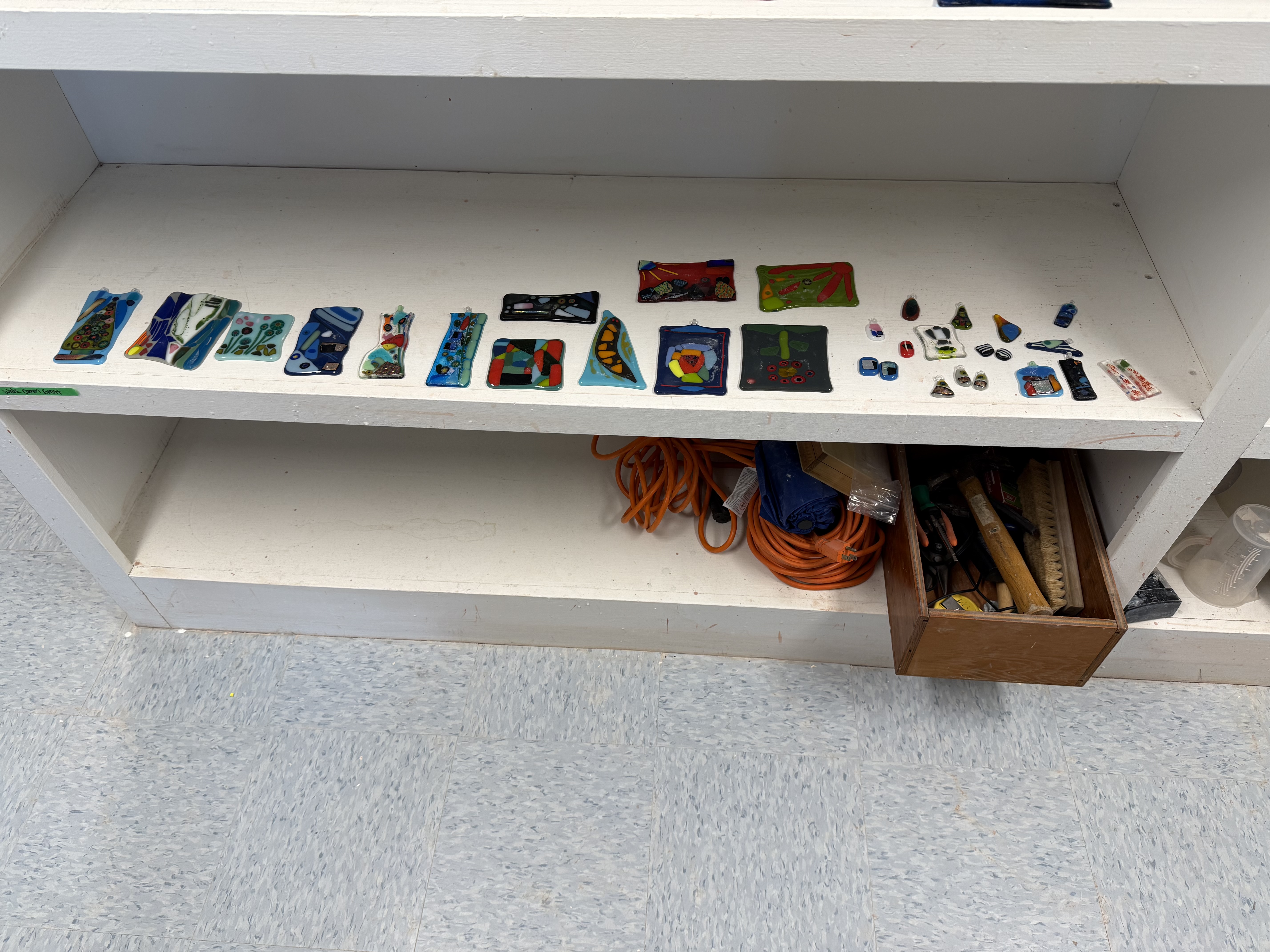
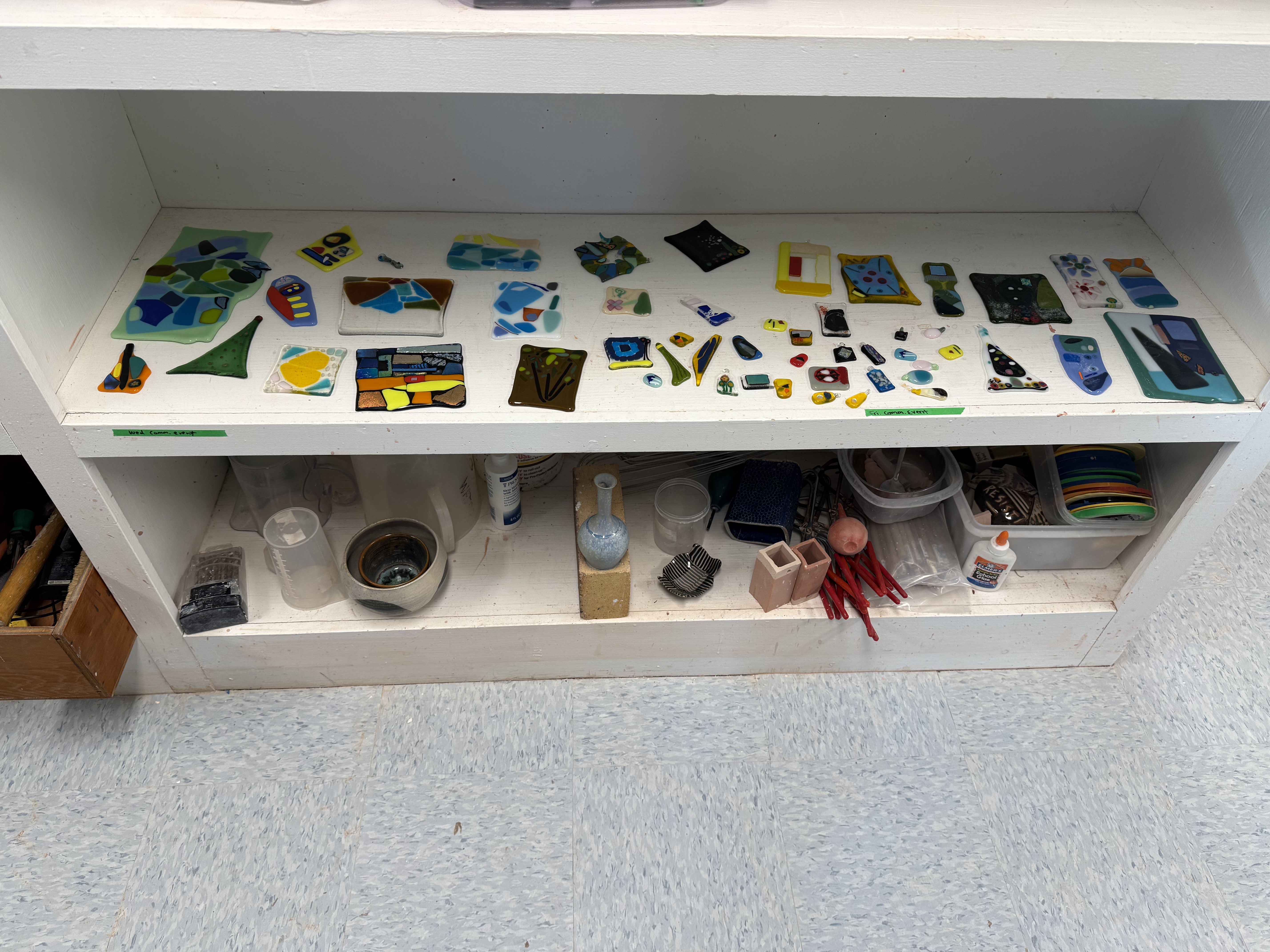
Finished fused glass pieces from the PA community workshops.

We are very fortunate to have acquired a stained-glass piece that Ramson created for the Peabody. We look forward to completing its installation in the Peabody’s front transom window once the next iteration of the building renovation is complete.
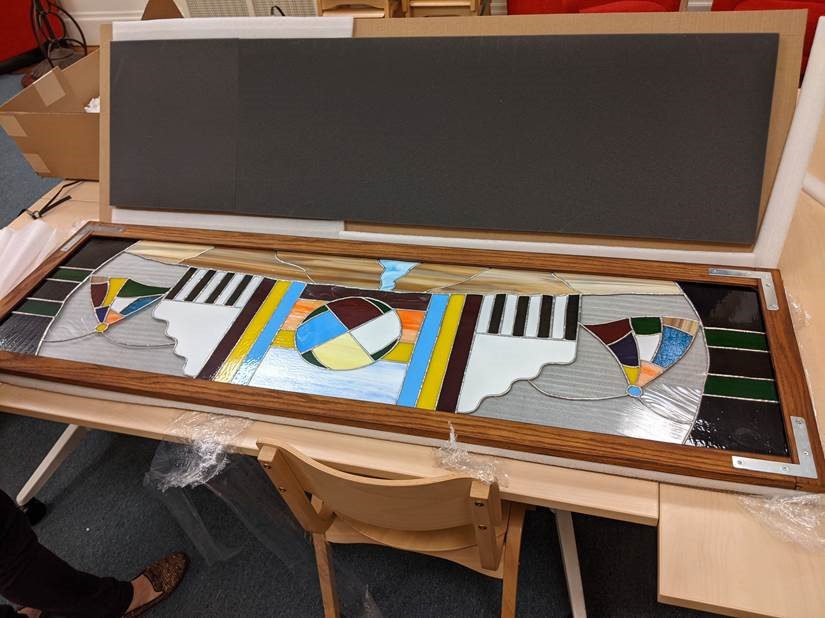
Ramson’s stained glass piece, commissioned by the Peabody.

We are very grateful for the time that Ramson dedicates to working with and educating our PA students and campus community! We hope to have him back next year! For more information about Ramson and the PA fused glass workshops, check out this article by the Andover Magazine (i.e. page spread #10-11, Digging Deeper article).
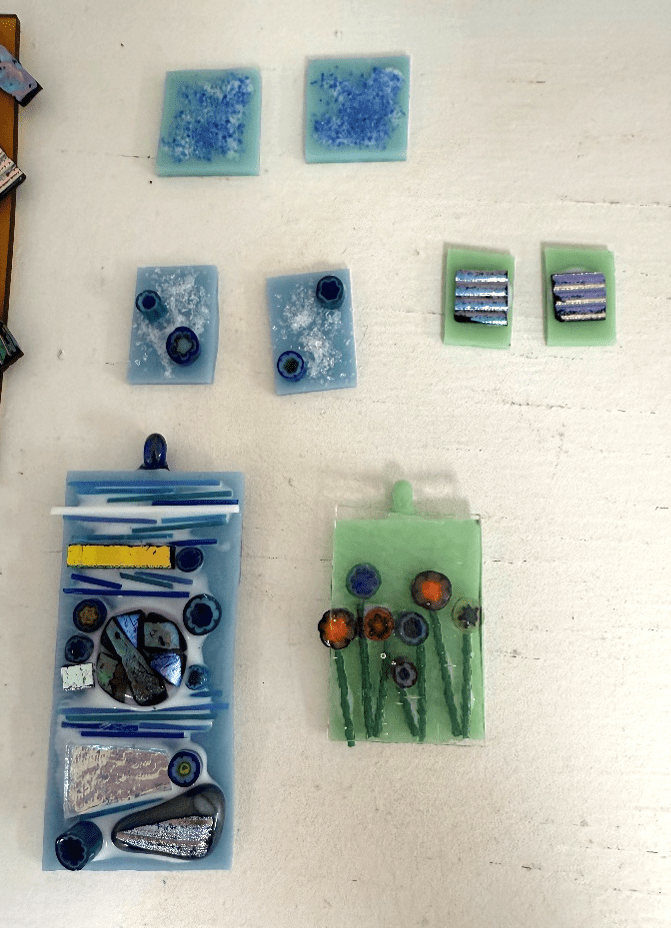
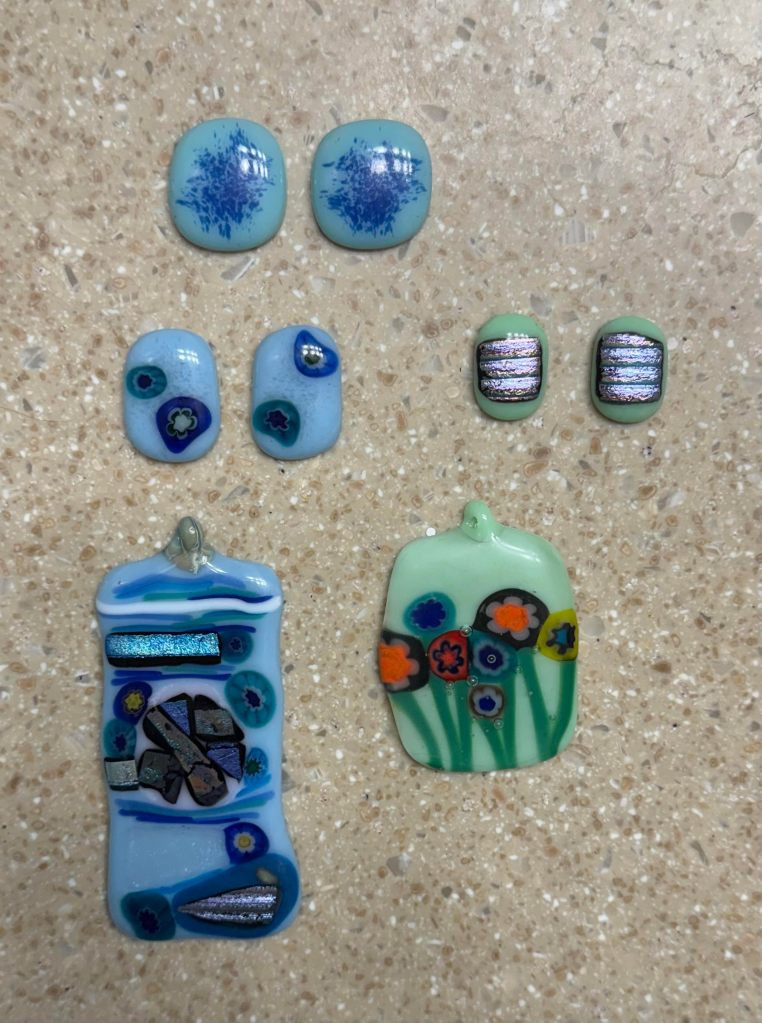
My fused glass pieces – before and after!
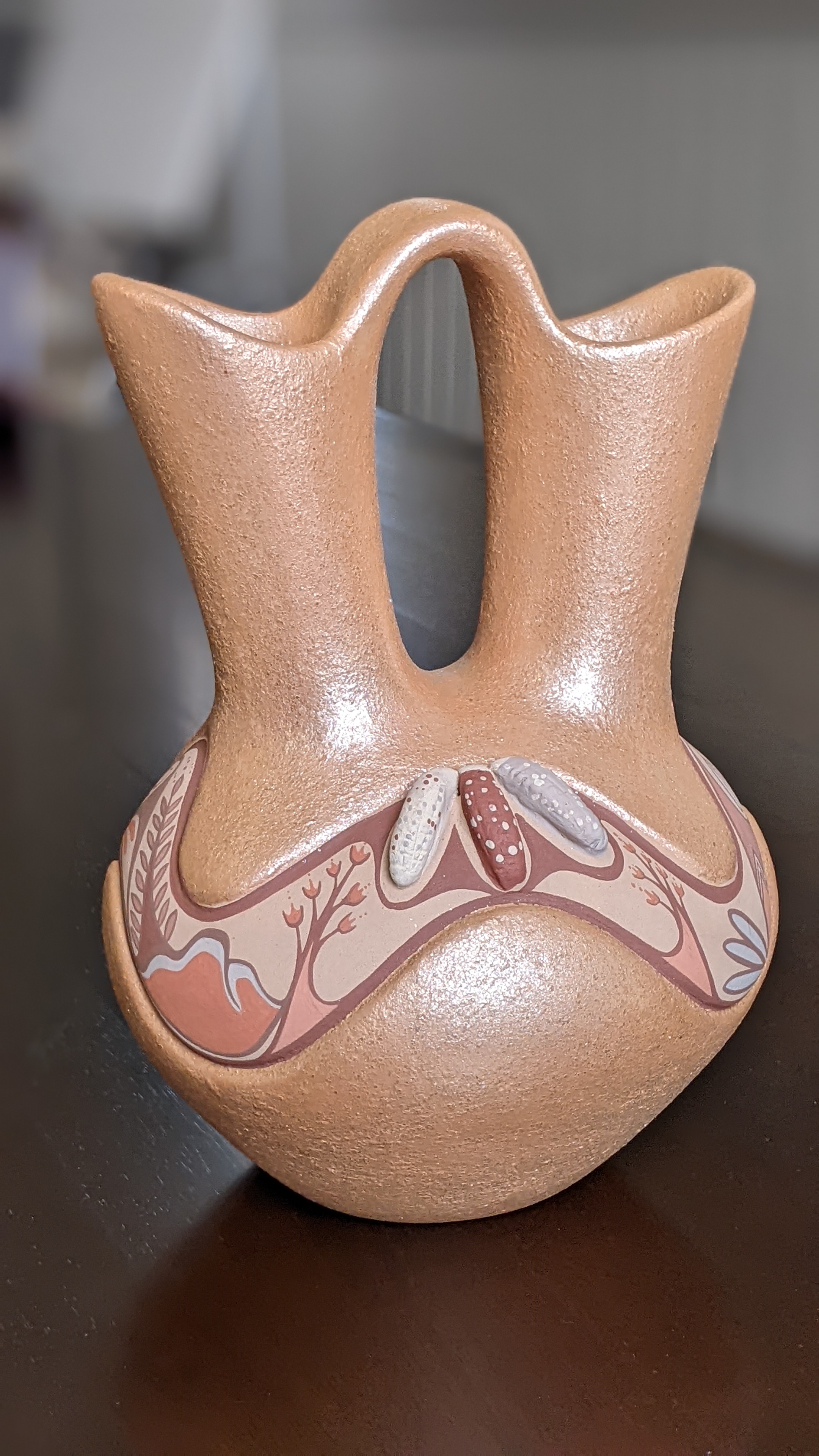
New Acquisition: Three Generations

Contributed by Ryan Wheeler

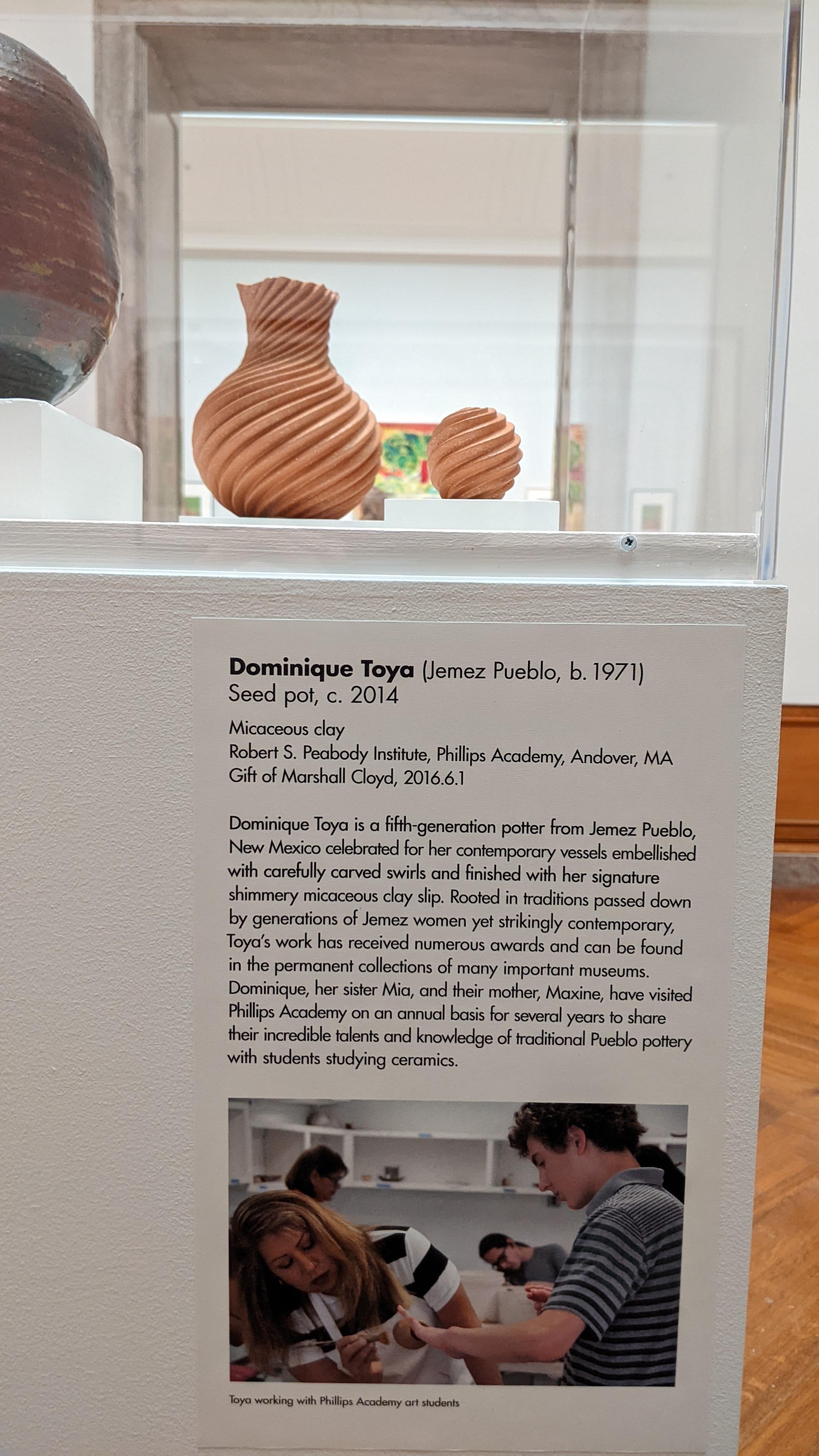
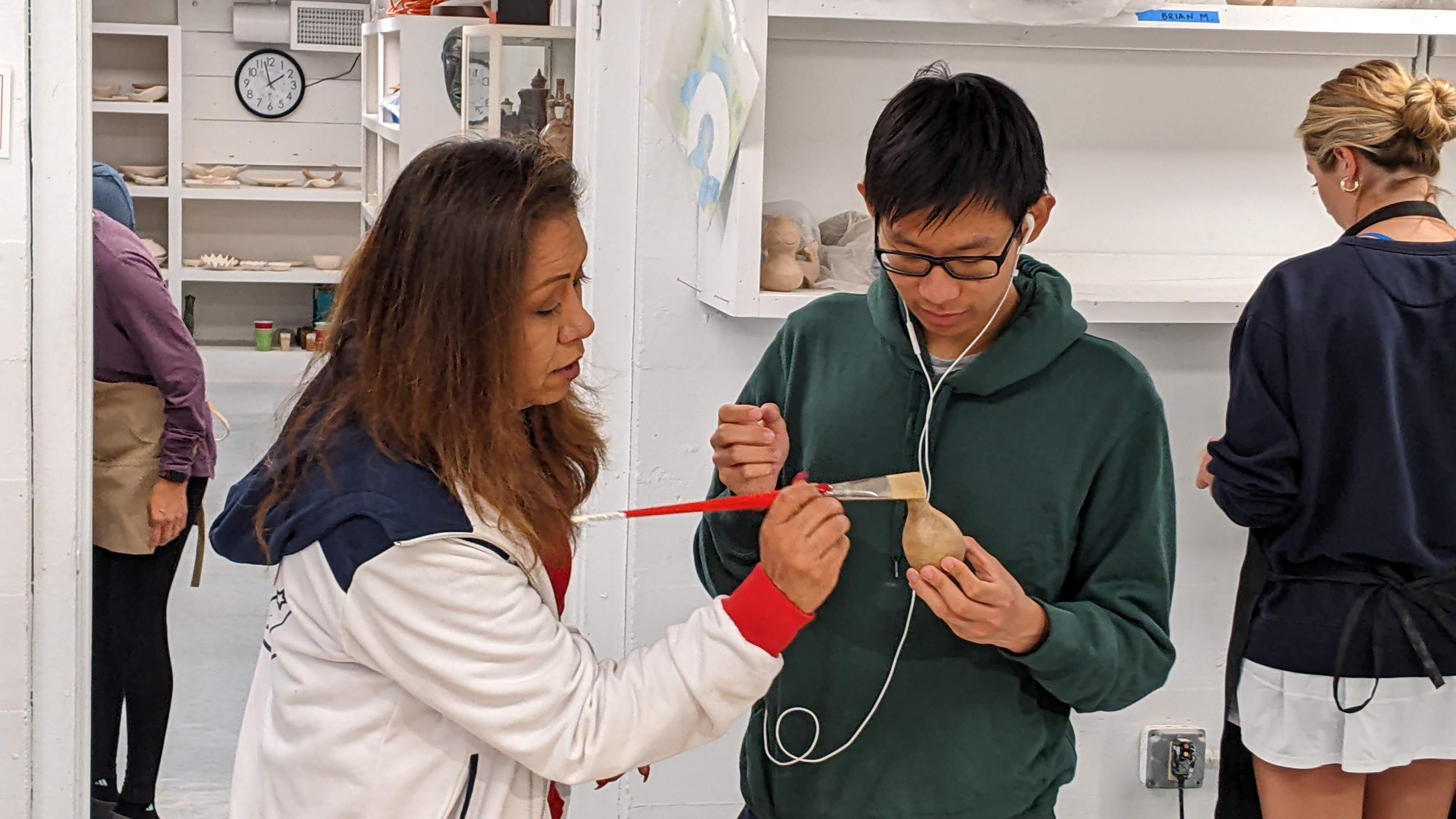
The Peabody has several amazing pieces of pottery made by members of the Toya Family of Jemez Pueblo. On their first visit to the Peabody in 2013, Maxine and Dominique Toya noticed a small vessel on our open shelving. What caught their attention was a delicately painted corn stalk, representing their clan. They wondered aloud who might have used these design, and we were all delighted to find that Maxine’s mom and Dominique’s grandmother, Marie G. Romero, had made the piece. Marshall Cloyd ’58 generously helped us acquire several of Dominique’s creations, including a small seed jar with distinctive carved ribs and mica slip. Since then we have added a number of wonderful pieces to the Peabody collection, including one of Maxine’s owl figures and a collaboration featuring Dominque’s beautifully crafted vessel bearing Maxine’s hand painted deer and corn stalk designs.

In May, we acquired a special piece called Three Generations. Dominique said, “this was the last wedding vase my grandmother, the late Marie G. Romero, created before she passed away. My mom and I have kept it sitting at our studio until we finally decided to finish her. I’m going to sand her and apply mica on the top and bottom and mom will paint a design in the middle where the band is and paint the ears of corn. This piece will be called Three Generations and will be the only piece that is signed by me, my mom, and I’ll sign my grandmother’s name since she created her.” The Toyas fired Three Generations on April 3 and brought her to us during their workshop with students in May. This is a large piece, at least 11 inches tall, and the overall shape, finishing, and delicate painting is truly impressive. Dominique commented that, “my mom outdid herself again with the amazing painting!!!” and we couldn’t agree more!

Race, Power, and Difference

Contributed by Lindsay Randall

I was recently invited, along with my frequent collaborator (also known as my partner-in-crime), Dr. Bethany Jay, to present at University of Southern Maine’s inaugural symposium, Race, Power, and Difference: A symposium for Maine Educators.

program
Conference program and other documents from the symposium.

The symposium featured Dr. Tiffany Mitchell who kept the audience laughing throughout her keynote address that focused on how educators could go beyond one-dimensional narratives about people of color in the classroom, using her own experiences to emphasize points.

Bethany and I were there to present our work on how to incorporate practical strategies and hands-on learning regarding slavery. Our work with the Southern Poverty Law Center’s Teach Hard History program and lessons that we each use with our own students served as the basis for our discussion with the participants.

toler
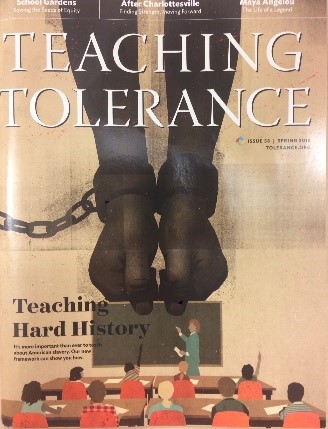
The Teaching Tolerance magazine focusing on teaching American Slavery.

I shared our Little Spots Allow’d Them lesson, while Bethany walked everyone through a set of documents from the ZB Oakes collection.

zb.png
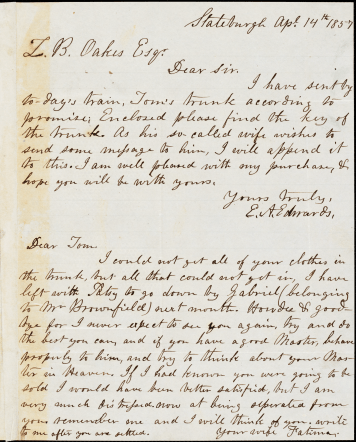
One of the documents from the ZB Oakes collections that Bethany used for her documentary analysis activity.

***Interestingly, ZB Oakes was a slave auctioneer who lived in Charleston, SC in the 1800s. His papers are part of the collections at the Boston Public Library because they were seized during the Civil War by a Massachusetts regiment comprised of free blacks and brought back to Frederick Douglass – as almost a trophy about what he helped accomplish!

Our session was one of the most attended of the day, with some participants having to stand and a continual stream of adding more chairs to the already cramped room. It clearly demonstrated that educators KNOW that this is an important topic and yet struggle for finding appropriate resources. Throughout the presentation and activities the participants were continually engaged and asking great questions – of us and other attendees – about strategies that they might use or modify to fit their unique student populations.

bethany
Bethany setting the stage about what the session will cover and how the activities will run.

And to make things even MORE exciting – one of the fellow presenters was Dr. Nate Hamilton! Nate frequently collaborates with Bethany and me and has been a part of the Peabody extended family for years. It was nice to see him in his “natural habitat” of Maine for once!

nate.jpg
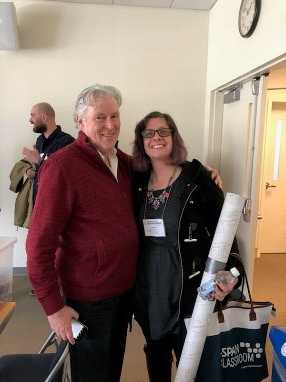
Nate and I enjoyed running into each other after our session.

Disaster planning can be fun

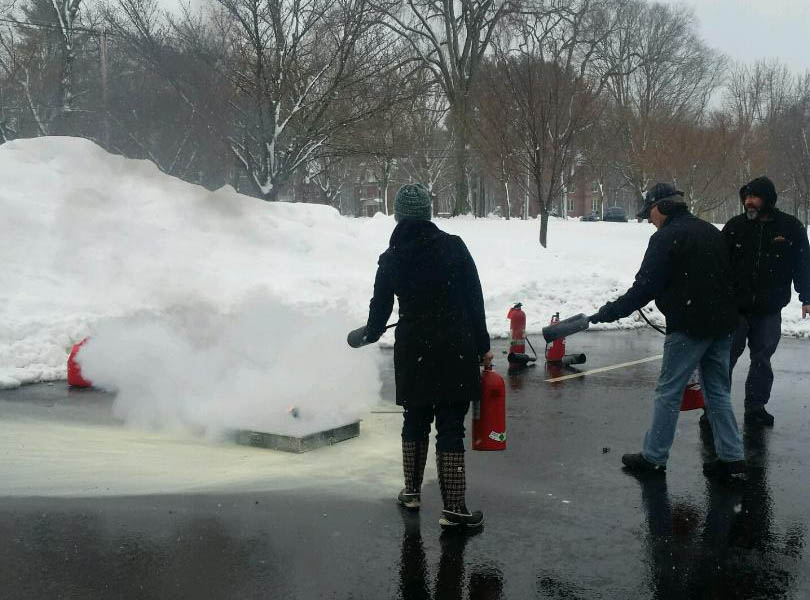
Fire extinguisher in use

Contributed by Marla Taylor

Sitting on my office shelf in a red binder is the Peabody disaster plan.  No institution ever wants to use it, but it is essential to be prepared.  Our plan is in need of its regular update, and fortunately for us, the Addison Gallery of American Art (also part of Phillips Academy) hosted a three-day seminar and full-scale emergency response disaster training for the protection of cultural assets in March.  Over 100 people took part in the workshop, including several members of Peabody staff.

The workshop included presentations from conservators, companies who specialize in disaster clean-up, and organizations that can help think through the disaster plan with us.  We learned the basics of painting conservation, how to mitigate water damage, how to dry/salvage wet books and papers, and how to identify and deal with pests in the collection.  Training stations were presented so that we could try all of these methods ourselves and have the opportunity to ask specific questions relating to our own collections.

The big highlight for me was the triage scenario meticulously installed at the Addison.  The Addison repainted one of their temporary galleries to appear smoke damaged, and they displayed pieces of art that had been previously damaged to replicate how fire damage may present itself in a museum.  As a team, we were given only 10 minutes to remove the damaged artwork (without additional damage!), set up work flow to begin cleaning objects, and isolate the most damaged pieces.  This was fun and realistic.

Now comes the hard work – applying all of this new knowledge to our own disaster planning process.

The emergency response and disaster planning workshop was generously made possible by a grant from the Abbot Academy Fund, continuing Abbot’s tradition of boldness, innovation, and caring.

Summer collaboration with Salem State University

more excavating
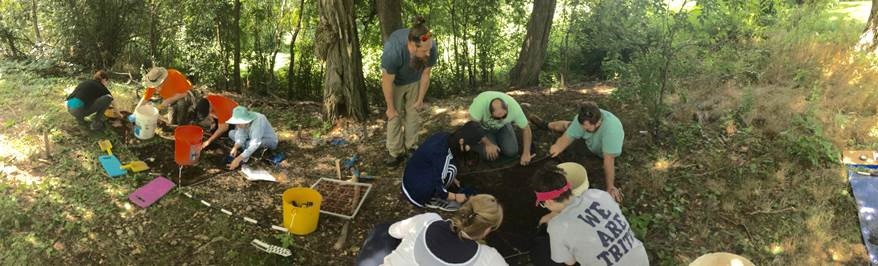
Excavating at RNH

Contributed by Lindsay Randall

The Peabody Museum once again partnered with Dr. Bethany Jay, professor of history at Salem State University, to run the graduate summer institute class, Preserving the Past: Using Archaeology to Teach History.

The week long class focuses on how archaeology can be used in middle and high school classrooms as a way to talk about minorities who are often left out of the historical record.  Each day was focused on a different minority group such as Native Americans, women, enslaved people, and free blacks.

Each day gives students background content to ground them in the topic, a tour of a historic or other site, and hands-on lesson plans. This year’s lesson plans included the Peabody’s “Maps and Dreams,” which utilizes Native American petroglyphs as well as a map in Phillips Andover’s Knafel Map Collection and “Little Spots Allow’d Them,” which focuses on the archaeology of the Royall House and Slave Quarters. They also were able to see the mock excavation activity about Katherine Nanny Naylor which the Commonwealth Museum hosts as part of their Archaeology of the Big Dig.

The last day is always the highlight of the class. Dr. Nate Hamilton of University of Southern Maine generously lenthis time and expertise to the class, allowing the students to participate in a real excavation at the Rebecca Nurse Homestead in Danvers MA.

Also this summer, Dr. Brad Austin of Salem State University brought his class Teaching Difficult Topics: Native American History to the Peabody. The class spent the day working with the Peabody’s History 300 lessons “alterNATIVE uses” and “Trail Where They Cried.”

In “alterNATIVE uses” students examine both a stone and metal projectile point to better understand how iron and trade affect both Native and European communities during the 1600 and 1700s. Each student was given a replica stone and metal projectile point along with the lesson plan.

Brad Austin's class working on analyzing points in the 'alterNATIVE uses' lesson
Brad Austin’s class working on analyzing points in the ‘alterNATIVE uses’ lesson

In the “Trail Where They Cried” the students learned how to make the complex history of Cherokee Removal more accessible to students through a Choose Your Own Adventure style activity.

Both activities were a big hit and the students have asked to use more of the Peabody’s teaching resources.

Stay Woke: Finding Prejudice in the Research Process

stay woke

Contributed by Lindsay Randall

Stay Woke: Deriving from “stay awake,” to stay woke is to keep informed of what going on around you in times of turmoil and conflict, specifically on occasions when the media is being heavily filtered.

In the past few years, the Peabody Museum has collaborated with members of the Phillips Academy community on projects that not only have benefited the Academy’s students, but also have allowed us as professionals to learn new ways to look at a variety of topics and issues that are beyond our areas of expertise.

For example, recently the Peabody partnered with the Oliver Wendell Holmes Library to create a 50-minute workshop for students that will be part of the school’s programming for Martin Luther King Jr. Day in January. The process we followed in developing this workshop was quite interesting, since the way in which librarians Liza Oldham, Beth Tompkins, and Stephanie Aude view or think about issues is very different from how I approach the same topics. It was exciting to sit together, throw ideas around, and build on one another’s suggestions to create a workshop that will enlighten and engage PA students.

We began our development process by agreeing on the focus of the workshop: digital landscapes (the librarians’ expertise), with a particular emphasis on Native Americans (my expertise). Then we began generating ideas. One was to concentrate on the issue of mascots or native people as costumes. Another was to focus on how Native Americans are represetneted in the media. Next, Stephanie mentioned it would be interesting to investigate how subjects are tagged in blogs or other online resources. From there, Beth started talking about how the Library of Congress tags subjects and mentioned some that she felt were problematic.

IMG_5932

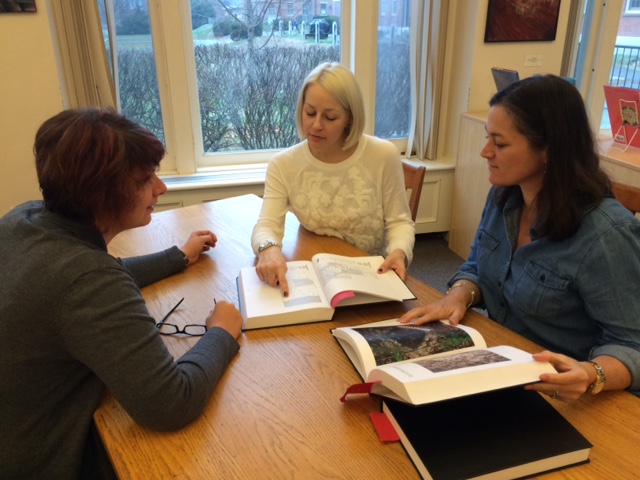
Librarians Liza Oldham and Beth Tompkins and I meeting 

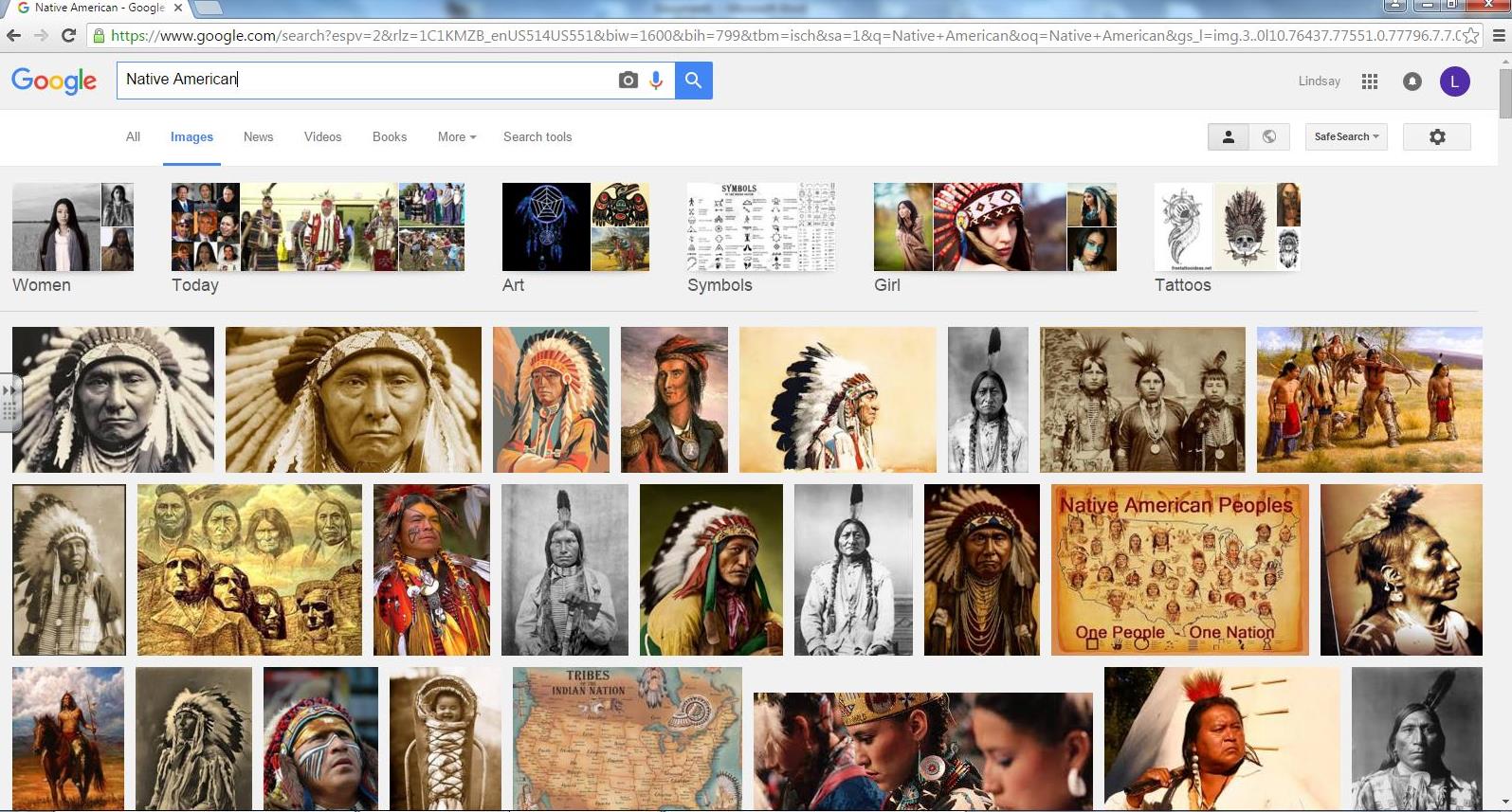
I then brought up a Google image search activity that I had performed with students regarding how native people are perceived. If you enter “African American,” “Asian American,” or almost any other racial group as a search term in Google, you will receive contemporary photos. If you enter “Native American” as a search term, most of the images you will receive are from the 1800s. This means the manner in which Google generates its images, although unintentional, reinforces the damaging belief that native people only live in the past and do not exist today.

AfricanAmerican

Screen grab of Google image search for “African American

NativeAmerican

Screen grab of Google image search for “Native American”

After conducting additional Google image searches and looking at some of the search terms or categories in the Library of Congress, we decided to focus the workshop on how digital resources related to Native Americans were categorized and grouped, and compared that to other groups. Approaching race in the United States in this manner seamlessly melded our two areas of focus into a simple yet cutting-edge way to look at race in our society. Such a multifaceted approach and understanding of the complexities of race in the United States and elsewhere is critical for our students to have if they are to become global citizens.

Here is the description of our workshop that the Office of Community and Multicultural Development (CAMD; https://www.andover.edu/StudentLife/CAMD/Pages/default.aspx) will be sharing campus wide in its MLK Jr. Day programming materials:

Stay Woke: Finding Prejudice in the Research Process 

Contemporary prejudice is often insidious. It doesn’t announce itself with a clear sign – “Look at this clearly defined racism!” – but rather creeps in, makes itself at home, and becomes such a part of everyday life that it’s hard to see. Understanding the prejudices that are built into the digital and organizational landscapes we use constantly, like Google and libraries, is vital to modern ethical development. Through hands-on activities and discussions, participants will begin to explore the complex issues surrounding this topic and improve their awareness and digital literacy.

We are very excited to run this workshop, and I look forward to sharing more about it and its outcomes with everyone in January!