Archaeology with No Thumbs

Contributed by Lainie Schultz

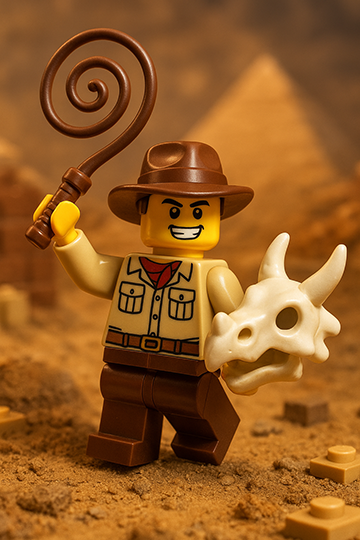
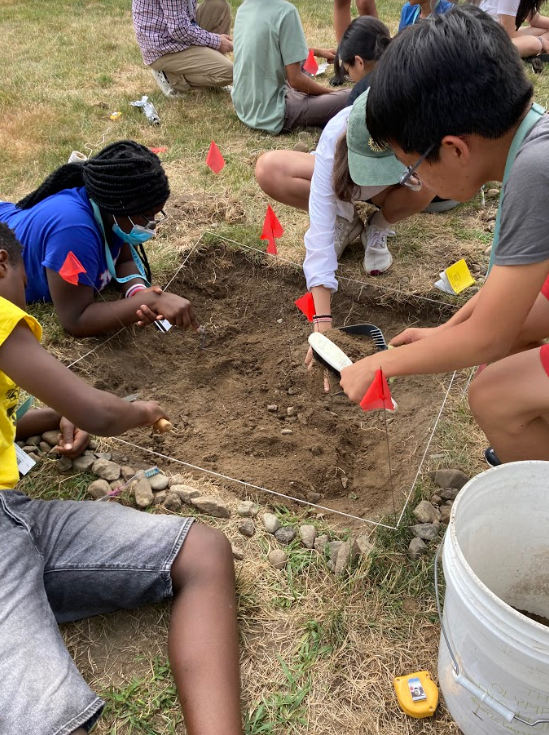
Sometimes it’s hard to be an archaeologist. You tell people what you do and watch their excitement dim as you say “No. Not dinosaurs.”  Sometimes people think you’re Indiana Jones, so that’s a little better, but then you have to explain that actually looting’s not ok, and maybe we should discuss the ethics of collecting? Plus, you’ve never once fought a Nazi. (You do, however, wear an awesome hat.)

Not an archaeologist. (Via ChatGPT. I didn’t even need to prompt the pyramid.)

Some would argue this is the greatest real-world problem archaeologists today face. Incredibly, hope for the field has finally arrived – and it’s all thanks to LEGO.

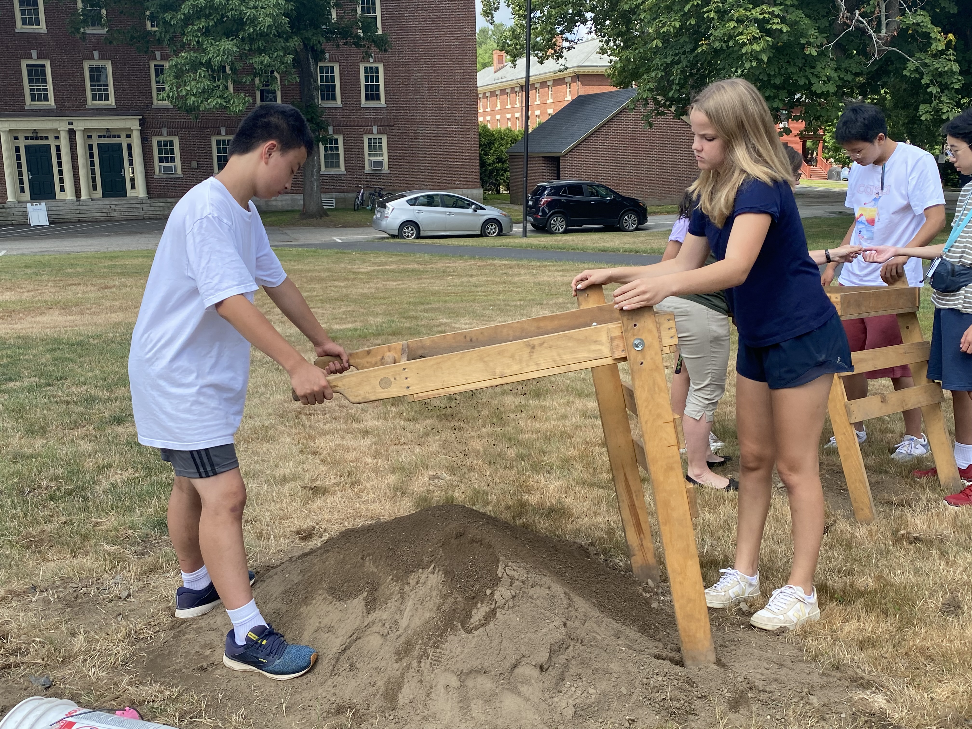
FIRST® LEGO® League (FLL) is a global program designed to encourage children in hands-on STEM learning. Among its major activities is the FIRST LEGO League Challenge, an annual competition for students aged 9-16 that has them working in teams to design, build, and code their own LEGO robot and complete a research-driven Innovation Project that identifies and solves a real-world problem related to a specific scientific theme. This year, the Challenge theme was UNEARTHED, inviting FLL teams to learn about the field of archaeology, identify a real-world problem faced by archaeologists, and propose an innovative solution.

Never have archaeologists been so popular! As soon as the Challenge kicked off, the Peabody began receiving requests from teams hoping to meet with an archaeologist and find out what challenges they’d want to see solved. And, of course, we weren’t remotely alone in this. I had a lot of fun this fall checking in with colleagues at other institutions, as we collectively realized how big the FLL Challenge is. The Society of American Archaeologists (SAA) even convened a panel of experts (including our own Ryan Wheeler!) for a webinar specifically designed for participants in the UNEARTHED season, just to help manage all the requests people were receiving. Exploring Archaeological Challenges: A Webinar for FIRST® LEGO® League and Robotics Teams was recorded and posted on the SAA’s YouTube channel, massively eclipsing in viewership all the channel’s other recordings combined.

We also heard from teams once they had their projects and were ready for feedback on the problems they’d selected and the solutions they’d proposed. Projects broadly sought either to help archaeologists do their jobs more easily with sustainable solutions, or to help non-archaeologists better understand the field and access archaeological information. Ideas included such products as a Swiss Army trowel, and an artifact cleaning and processing machine with residue-testing capabilities. They sought to help people grasp the size of ancient monuments through comparison with a football stadium for scale, and harnessed the sun to power absolutely anything you could imagine. They ranged in size, scope, and ambition, and all were far more sophisticated than I have represented here.

We might have initially been both a little concerned and a little amused when we first learned about this competition (an FLL reel Ryan found on Instagram had a lot more fire and explosions than we generally like to associate with archaeology!), but the projects that teams have come up with have truly been impressive. Most impressive of all has been the amount of thought and attention these young students have put into learning about the field of archaeology, and the care they have put into making it better for the future. I can only imagine what might be the long-term impacts of this program on the next generation of archaeologists.

Though perhaps their biggest problem will be convincing people that, no. Usually they do have thumbs.

Knees help, too. (Made with ChatGPT)

Tales from The Phillipian, PART 2: Dinosaurs, Turtle Racing, and Spirits

Contributed by Emma Lavoie

Peabody staff always get excited when we unearth hidden stories from the Peabody Institute’s past. The Phillipian Archives is one such place that has held many a story. First printed in 1857, The Phillipian is a weekly student newspaper that continues today at Phillips Academy Andover. The student paper describes itself as “completely uncensored and entirely student-run,” offering a snapshot of what campus life is like both past and present, and in the case of this blog, some of the most outrageous and bizarre activities related to the Peabody.

As promised, we hope you enjoy PART 2!

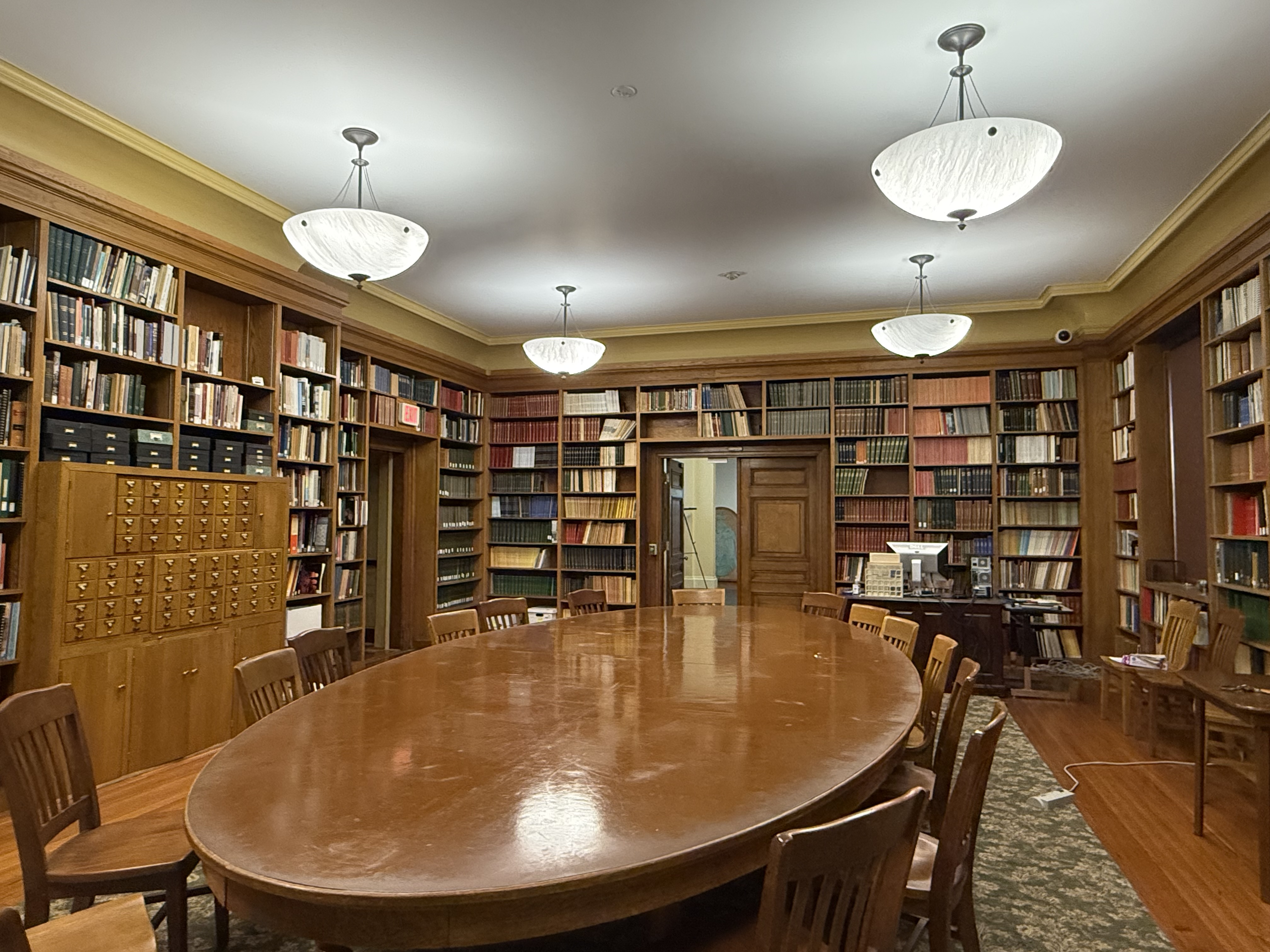
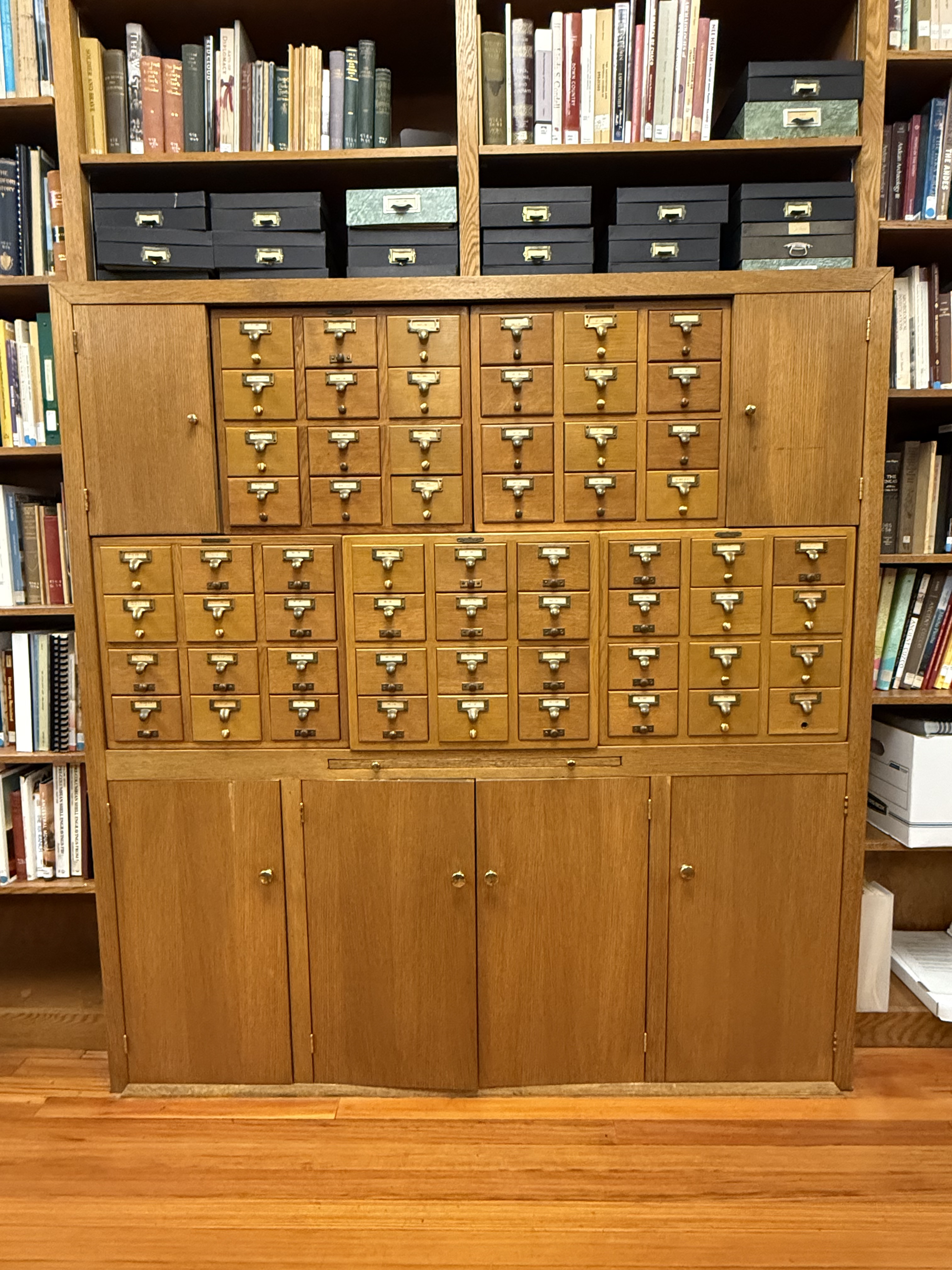
Peabody Card Catalog and Reading Room

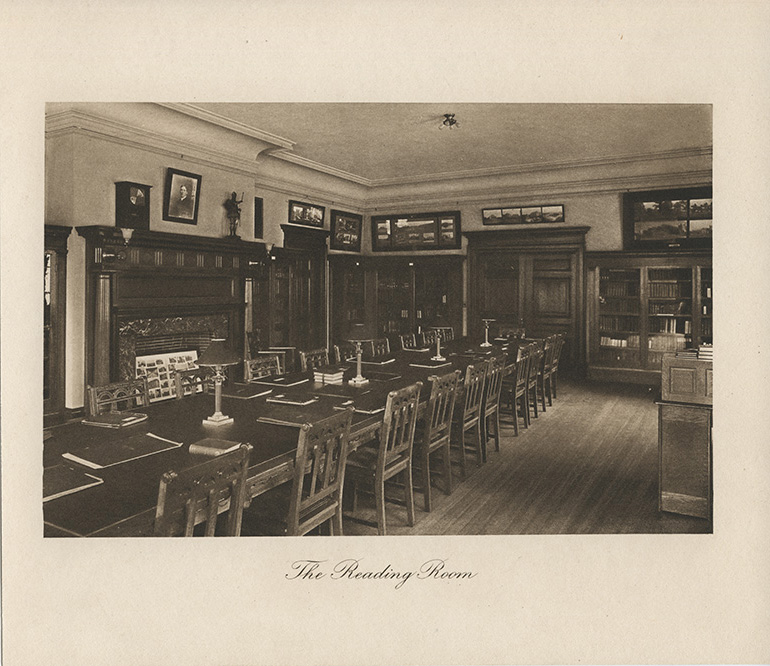
In 1903, a reading room with library was opened on the second floor of the Peabody, furnished with easy-back chairs, a large center table, writing tables, and a few large lounging chairs. There was a list of rules included in this Phillipian article for students using the reading room:

  • Observe suitable quiet
  • That others may not be disturbed while reading
  • Not to cut, tear or in any way deface the periodicals
  • To remove hats and caps while in the room

By 1904, a Phillipian article stated the reading room as “well filled nearly every hour…the attendance averages about three hundred a day or nearly the entire school.”

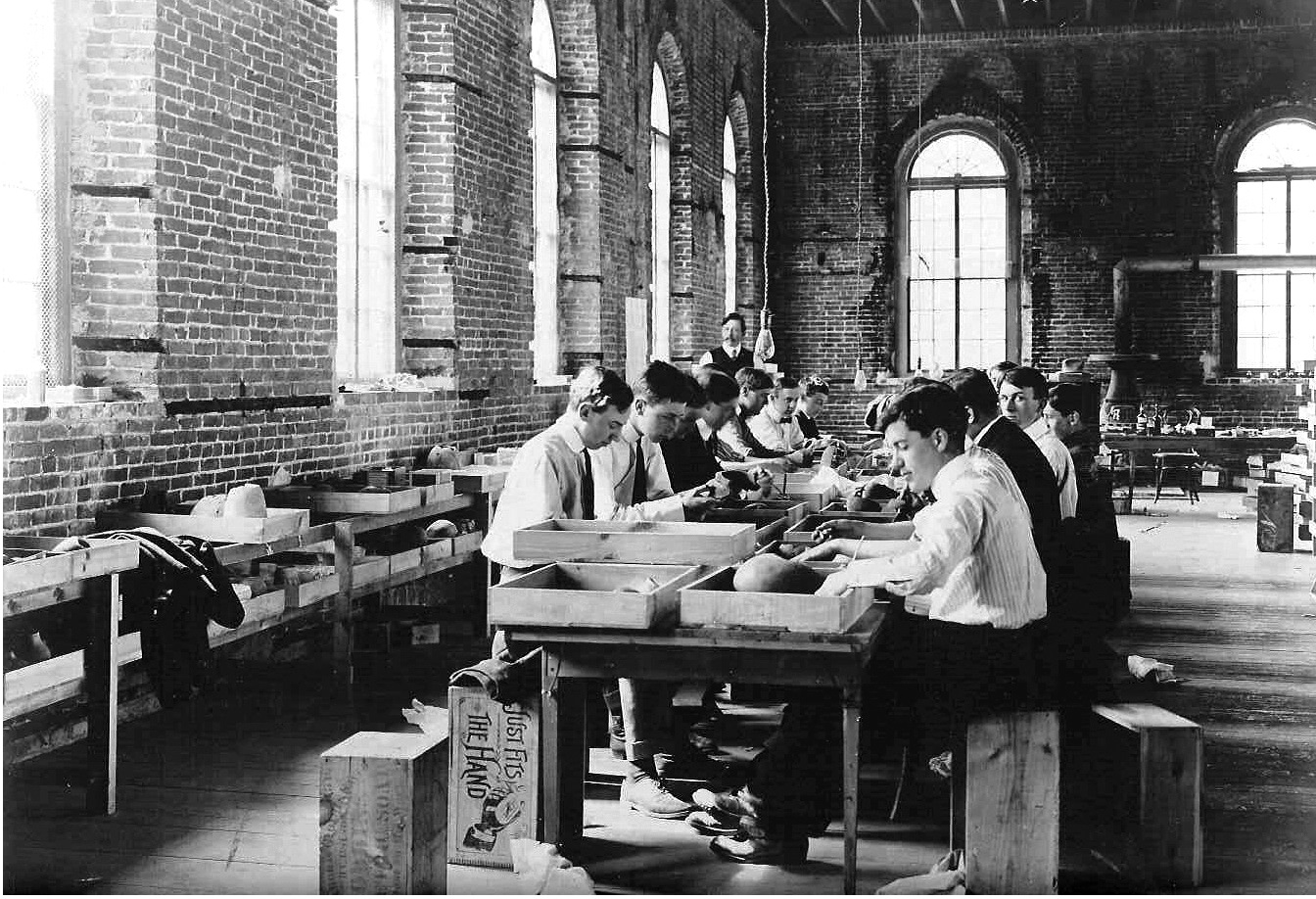
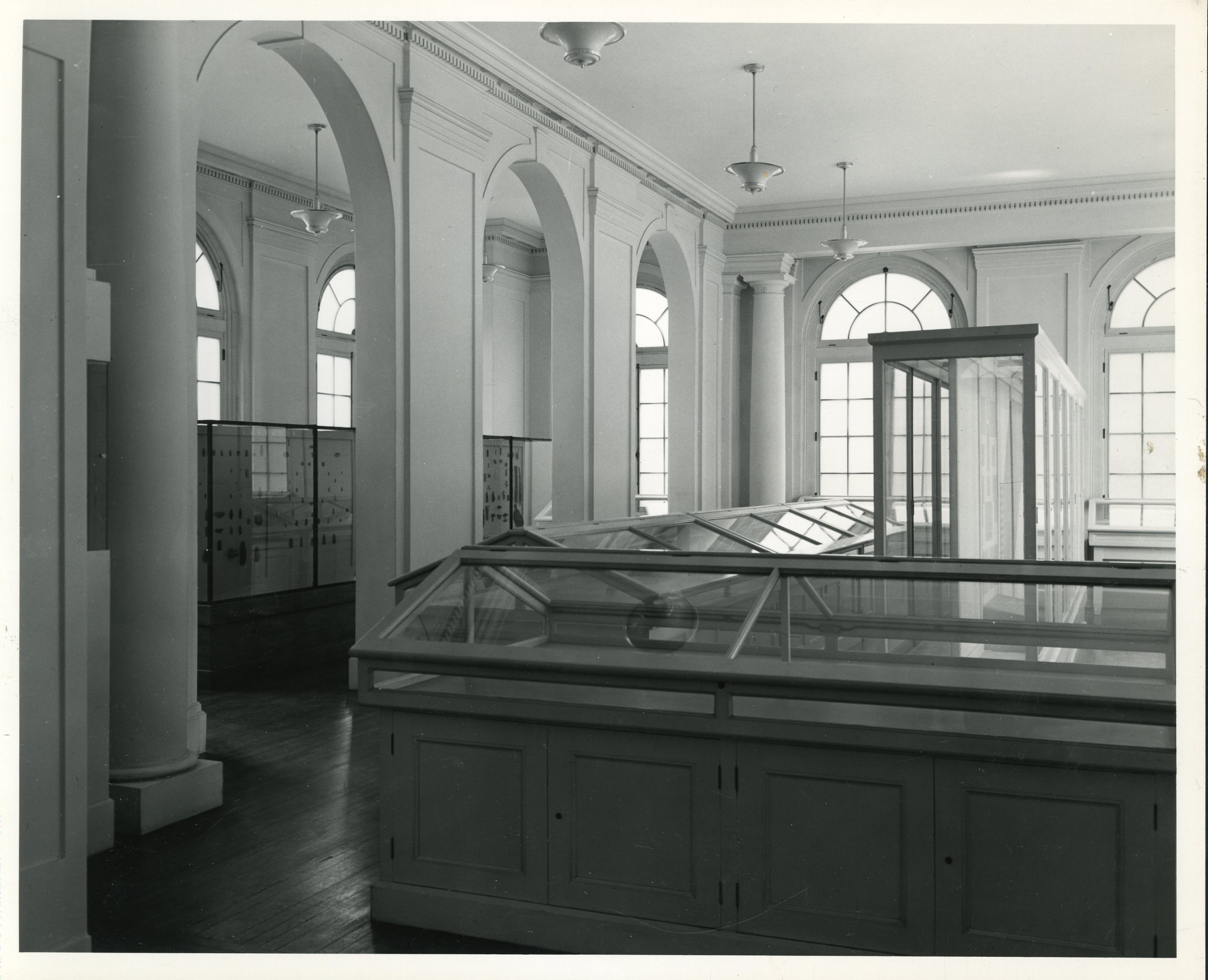
Image from the Peabody Archives of the old reading room.
From the same vantage point – the current Peabody Library. Note: the original card catalog system now covers the original fireplace.

In 1904, work began on an index card catalog for the Peabody Institute’s library. This catalog would be similar to the Library of Congress plan which was being used at the time in the Seminary Library (but the catalog ended up being Dewey Decimal, arrgh!) This index card catalog is still occasionally used today at the Peabody Institute, though the entire library is catalogued in the North of Boston Library Exchange.

The original card catalog is still in use at the Peabody today!

Rumor Has It (Dinosaurs in the Chapel and Turtle Racing)

There had been rumors of turtle racing in the Peabody basement and other areas on campus. Mention of one turtle (named Alec) being kidnapped in a 1935 article may prove these rumors as true! Don’t worry, Alec was returned safe and sound.

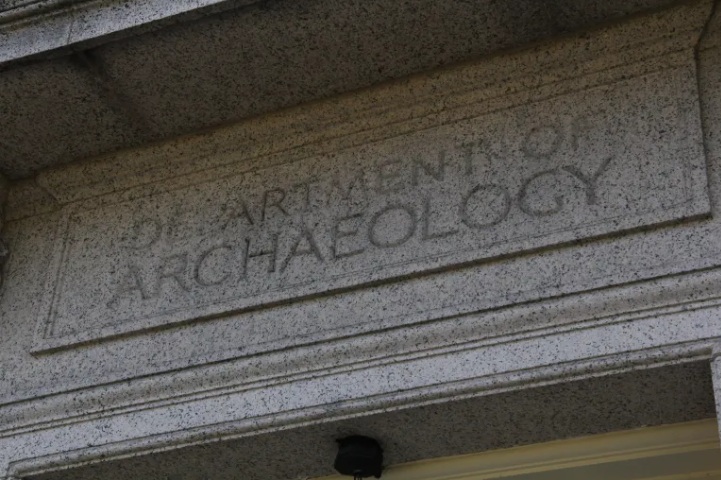
In a “This Andover” column of The Phillipian in 1941, the Archaeology Department (now the Peabody Institute) was supposedly spreading rumors that several prehistoric dinosaurs live in the Cochran Chapel organ pipes.

“It is they [the dinosaurs], the rumor goes on having it, that furnish Dr. Pfatteicher’s lowest notes during Sunday services.”

Flute Recitals by the Peabody Director

On several occasions, Peabody Director, Dr. Charles Peabody performed flute recitals for students in the Academy chapel. On January 20th in 1915, Peabody was joined by Dr. Carl F. Pfatteicher, who played the organ. Pfatteicher was the director of music at the time, a post he held until 1947. During his time at Phillips Academy, he facilitated choir, glee club, and a small orchestra. Many of these groups met and practiced in the Archaeology Building or Peabody House. I think it’s safe to say that Dr. Charles Peabody and Dr. Carl Pfatteicher were good friends. The music played at this recital were the following:

Sonata in C Major – Mozart

Tres Lent from Sonata in G Major – Guillaume Lekeu

Barcarolle – Harold Nasan

Invocation – Eugene Lacroix

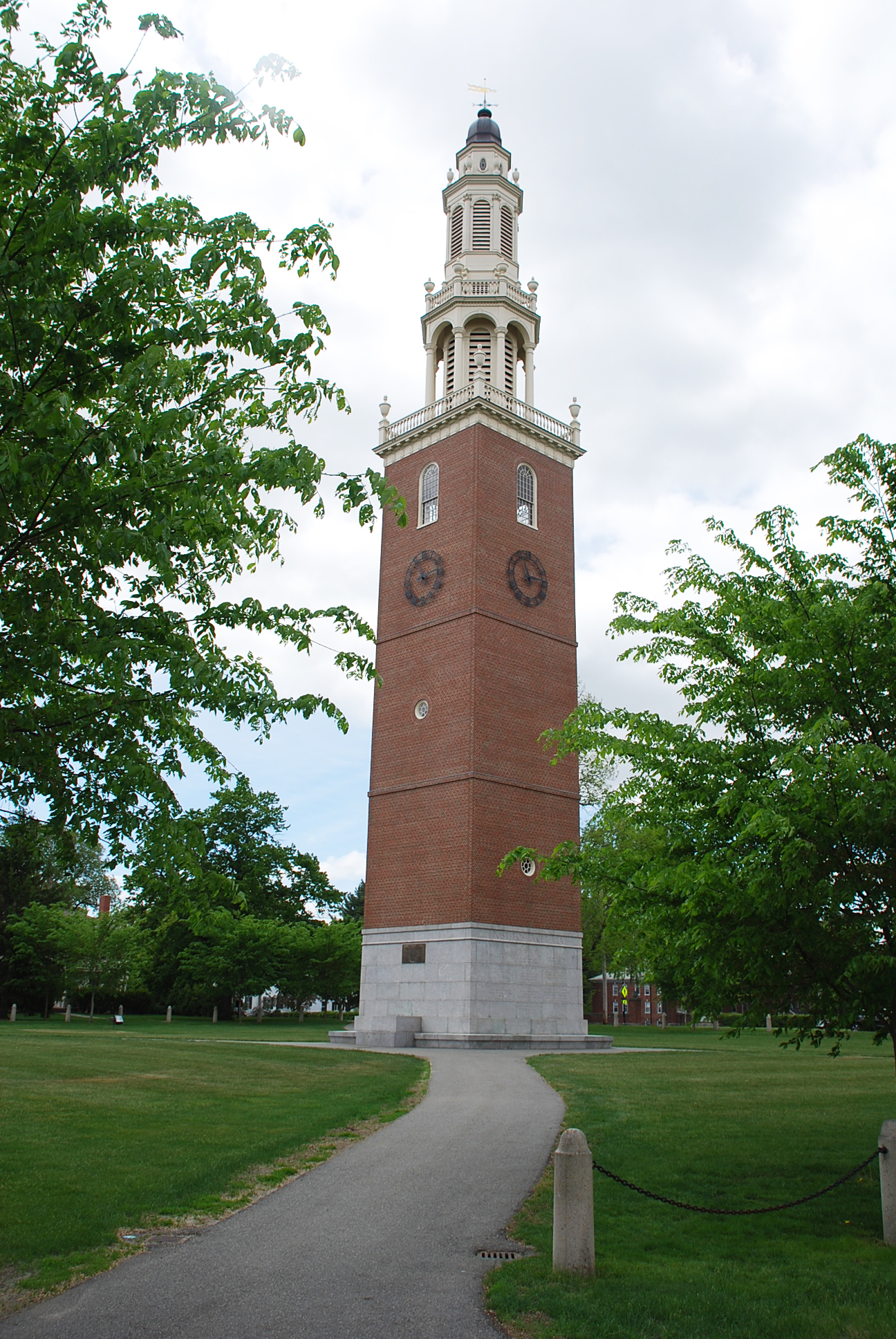
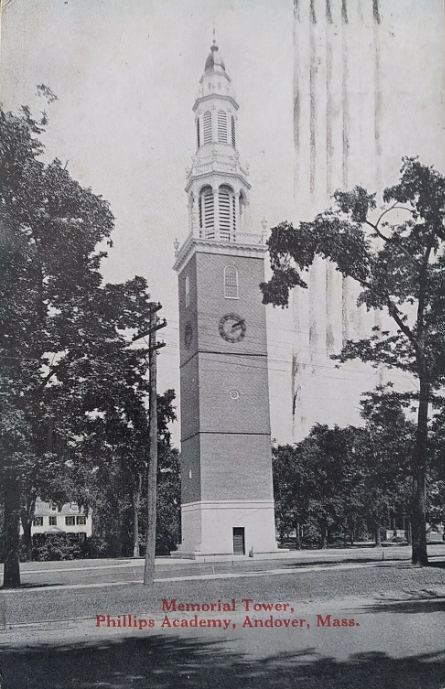
Fun Fact: Dr. Carl F. Pfatteicher was asked to help select the bells to be placed in the newly constructed Memorial Bell Tower on campus. He enjoyed giving regular carillon concerts, playing the bells sometimes at dawn. Many students did not appreciate this and one year managed to lock Dr. Pfatteicher in the tower.

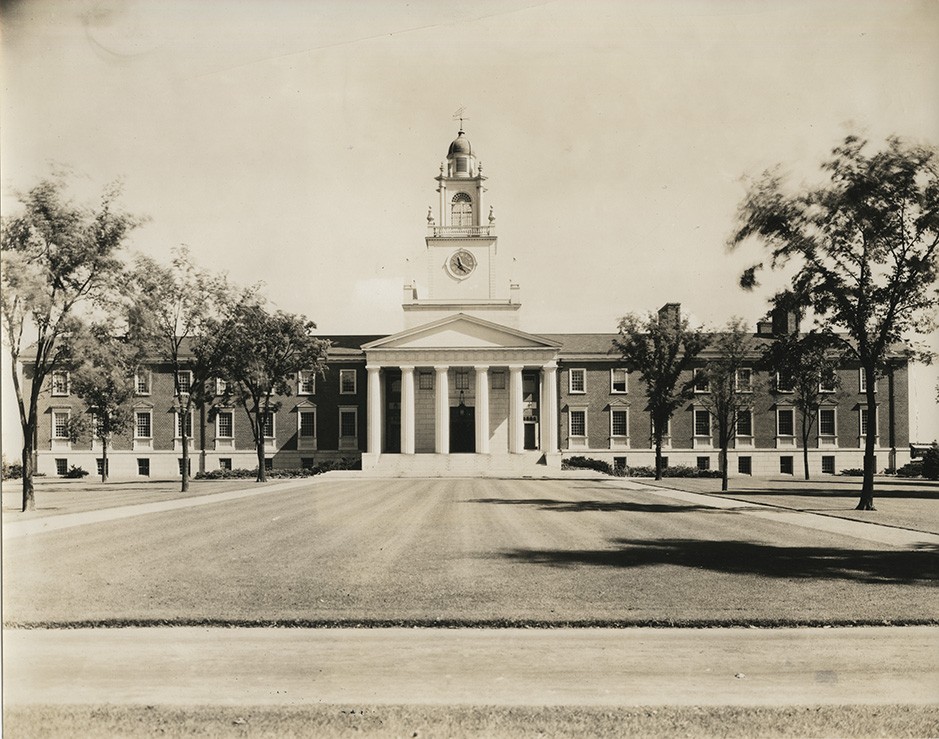
Memorial Bell Tower, Phillips Academy Andover
Completed in 1922 by architect Guy Lowell
(the same architect of the Peabody building!)

“A Place for Students to Gather” – Clubs Find a Home at the Peabody

The Peabody was founded with three goals in mind – to educate students about the world of archaeology, to promote archaeological research, and to be a place for students to gather. As part of this vision, students and student clubs have been utilizing the Archaeology Building since its inception in 1903. Below are just a few examples of student club communications in The Phillipian related to the Peabody.

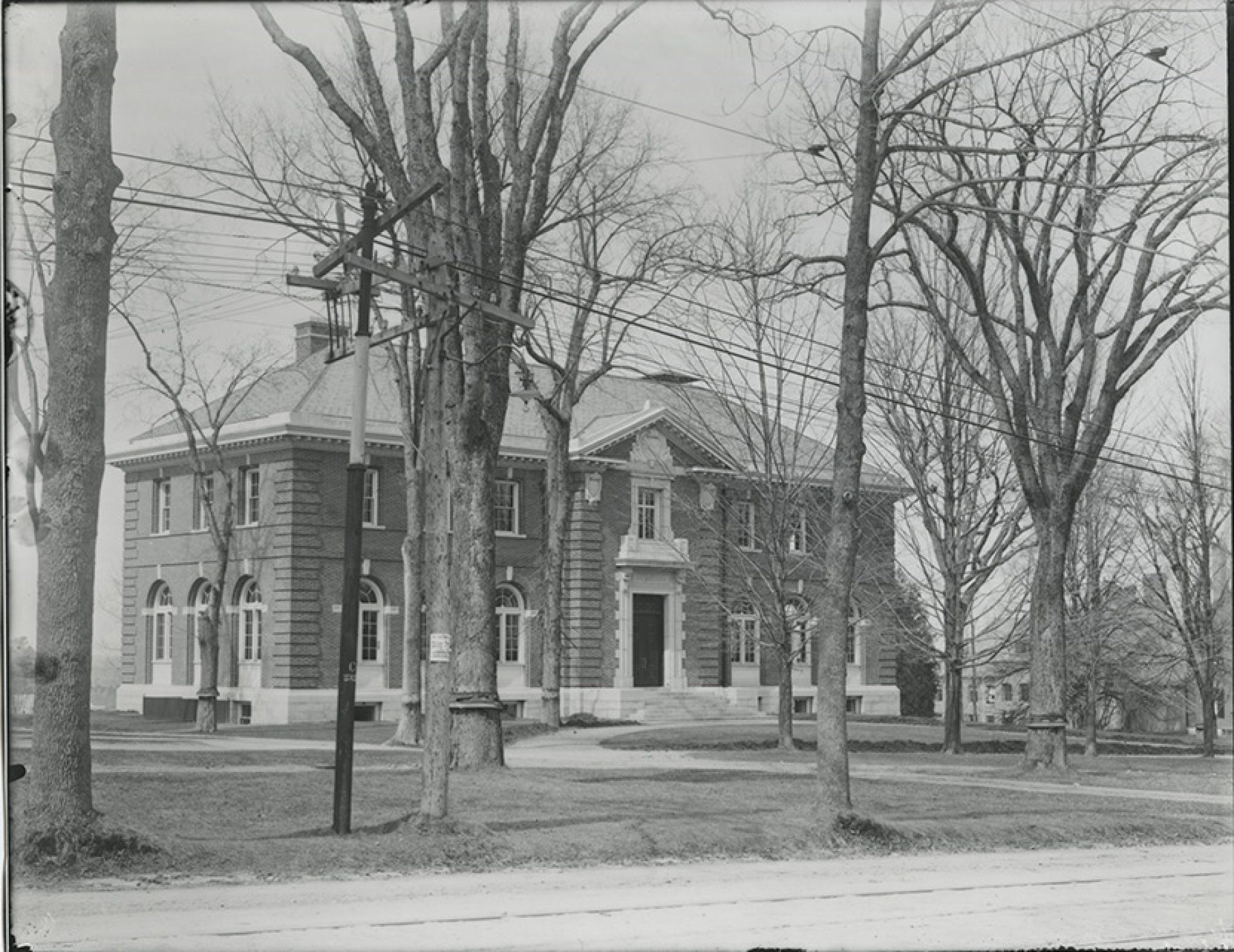
Class of 1910 in front of the Department of Archaeology (later known as the Peabody Institute of Archaeology.)

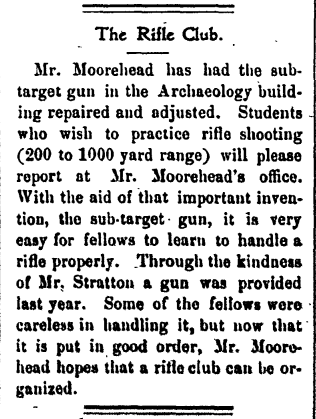
An advertisement in a 1904 column mentions organizing a student Rifle Club at the Archaeology Building and reporting to the office of Peabody Curator, Mr. Moorehead for those interested in shooting practice.

Courtesy of The Phillipian archives.

Fun Fact: The Sub-Target Rifle Machine and similar target practice devices were popular in the early part of the 20th century. They recorded information about marksmanship, position of the gun, etc. without firing live rounds.

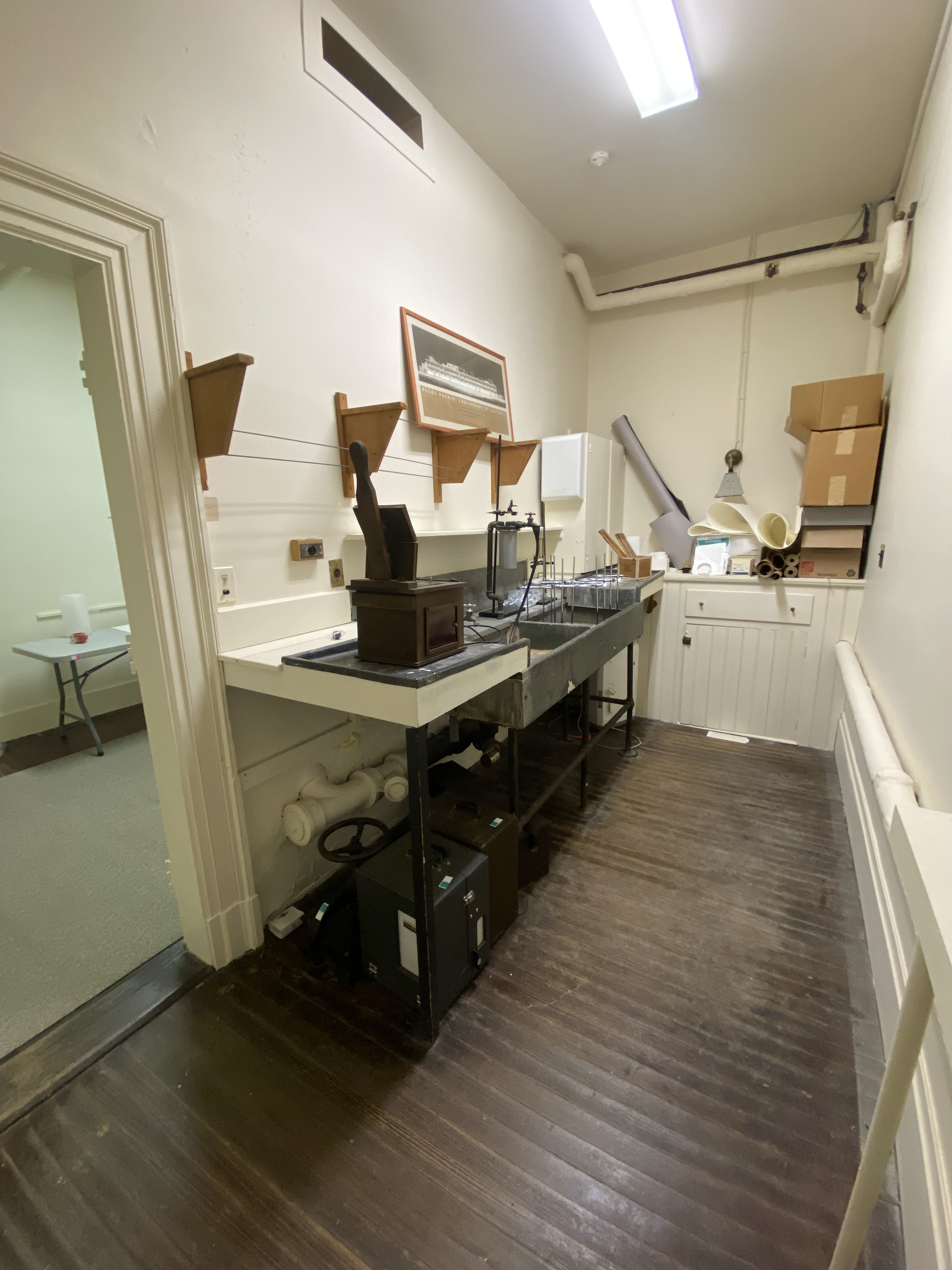
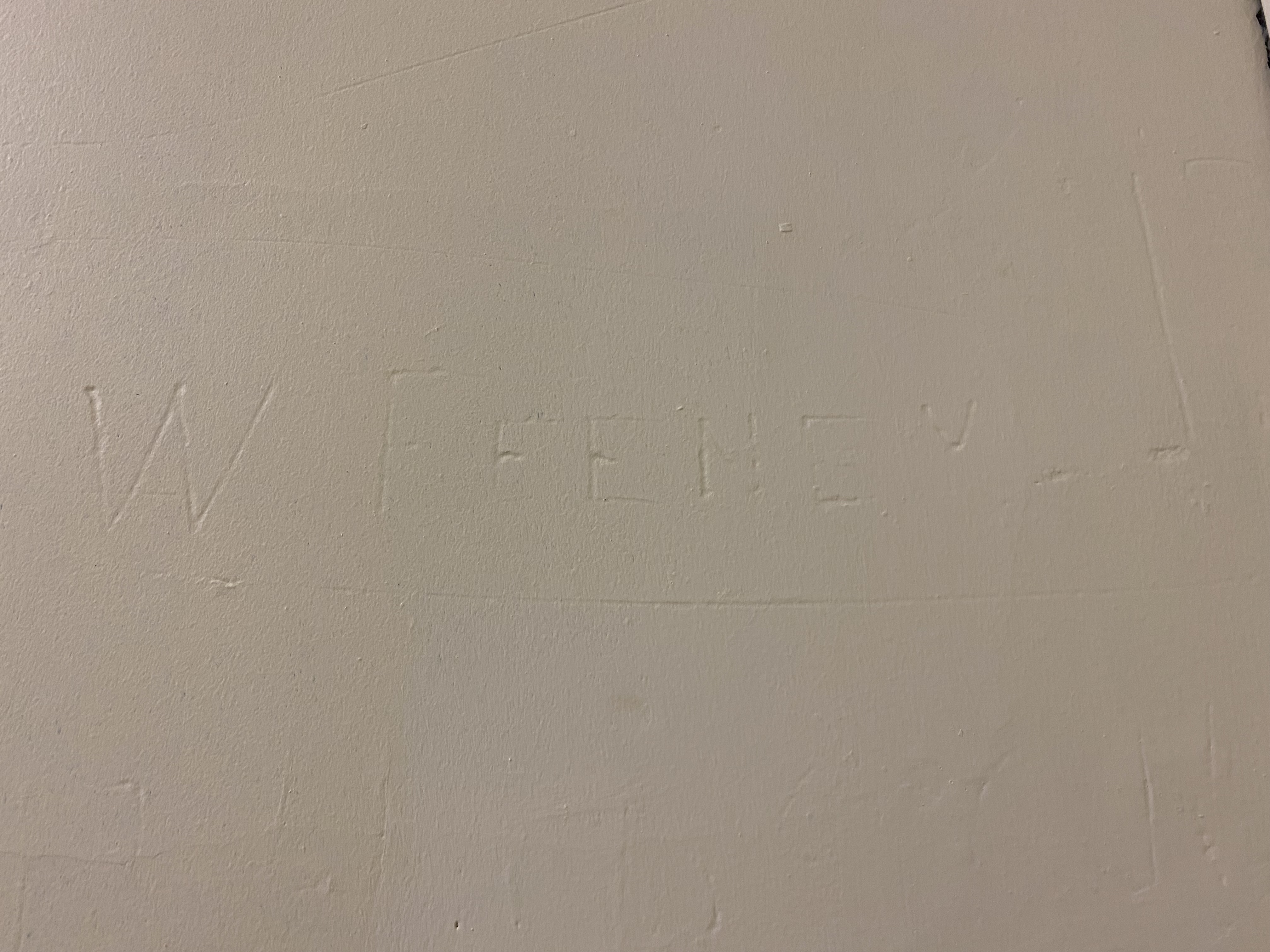
In 1904, a dark room was provided for the Camera Club, located in the basement of the Peabody. The Phillipian stated the space “is thoroughly equipped and is as fine as can be found in New England.” Before Phase 1 of the Peabody Project began, much of the original dark room space was still intact. One of my personal favorite details was the original carved signatures still on the wall left by past Camera Club students.

Original dark room at the Peabody before the recent building renewal project.
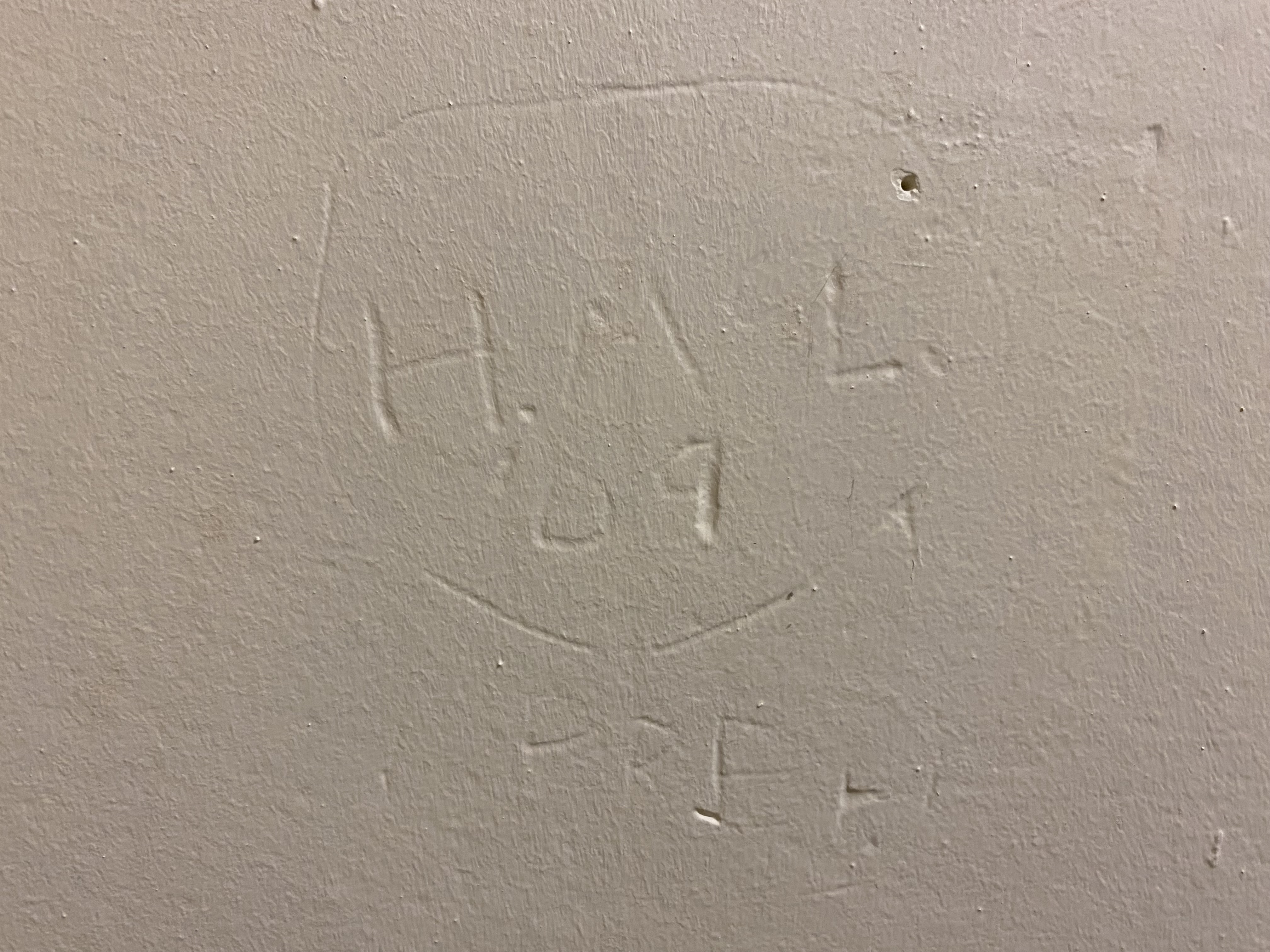
Student signatures on the wall of the dark room at the Peabody.
Note – that’s not 2009, it’s 1909!

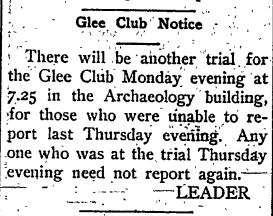
Mandolin and Banjo Club were some of the music clubs that met in the Archaeology Building for auditions, meetings, and practices. Glee Club was another student organization that commonly gathered at the Peabody and communications for this club are seen throughout the decades of The Phillipian.

I love seeing such a close connection between the Peabody and the Music Department, especially now that we’re neighbors with the new Music building, Falls Hall!

Glee Club communication in 1910.

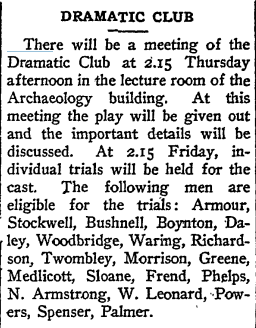
As we’ve seen above, many campus Arts organizations spent time at the Peabody. The Dramatic Club would meet to discuss scripts for upcoming plays and hold individual trials for those looking to participate in performances.

Dramatic Club communication from 1912.

Other clubs such as Chess, Astronomy, Spanish, Philo Congress, Bible Class, Foreign Missions, Yale Club, Harvard Club, Stamp Club, Nature Club, Forum, and Mirror all met at the Peabody throughout the first half of the 1900s. Even The Phillipian and football team held gatherings at one point. By the 1950s we see the Peabody becoming more active in exhibitions and many of these clubs move to other locations on campus, many finding a home at the Peabody House behind the Archaeology Building.

“…where his spirit still lives.”

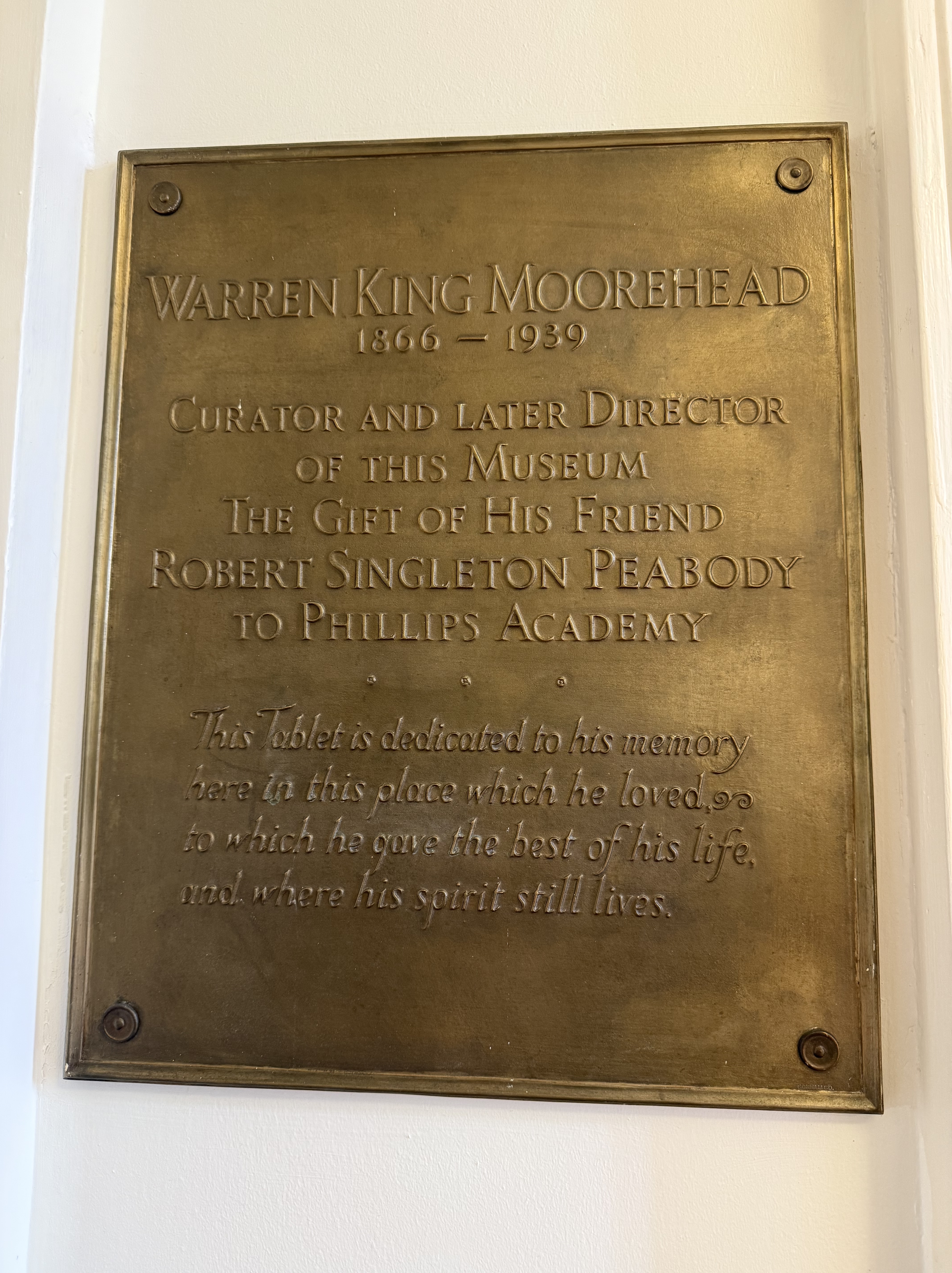
Jumping ahead to 2011, a Phillipian article features Halloween traditions and campus lore passed down over the decades of PA’s history. The Peabody is mentioned to experience “frequent slamming doors, moving items and eerie noises that creak through the attic floors.” The strange activities convinced Peabody staff that the building was haunted by Warren K. Moorehead (1866-1939). Moorehead was the first curator at the Peabody from 1901 to 1924 and became the Peabody’s second director from 1924 to 1938.

The Peabody has many interesting stories of these experiences over the years. One story mentioned in The Phillipian, depicts a foreman being locked in the back stairwell. I can personally share that my first Reunion Weekend with the Peabody I experienced an alum being locked in one of our bathrooms during an event (the locks were on the inside of the door…) I considered this my “welcome” initiation from Moorehead, as the newest member to the Peabody team.

Over the years, our director has written notes to Moorehead to communicate our intentions and care of the building along with updates of upcoming changes such as our building renewal project. These notes are stored behind a plaque commemorating Moorehead, located by the front doors of the building. Much of the activity has quieted since writing these notes.

Plaque commemorating Warren K. Moorehead.

Revisit Visit

Contributed by John Bergman-McCool

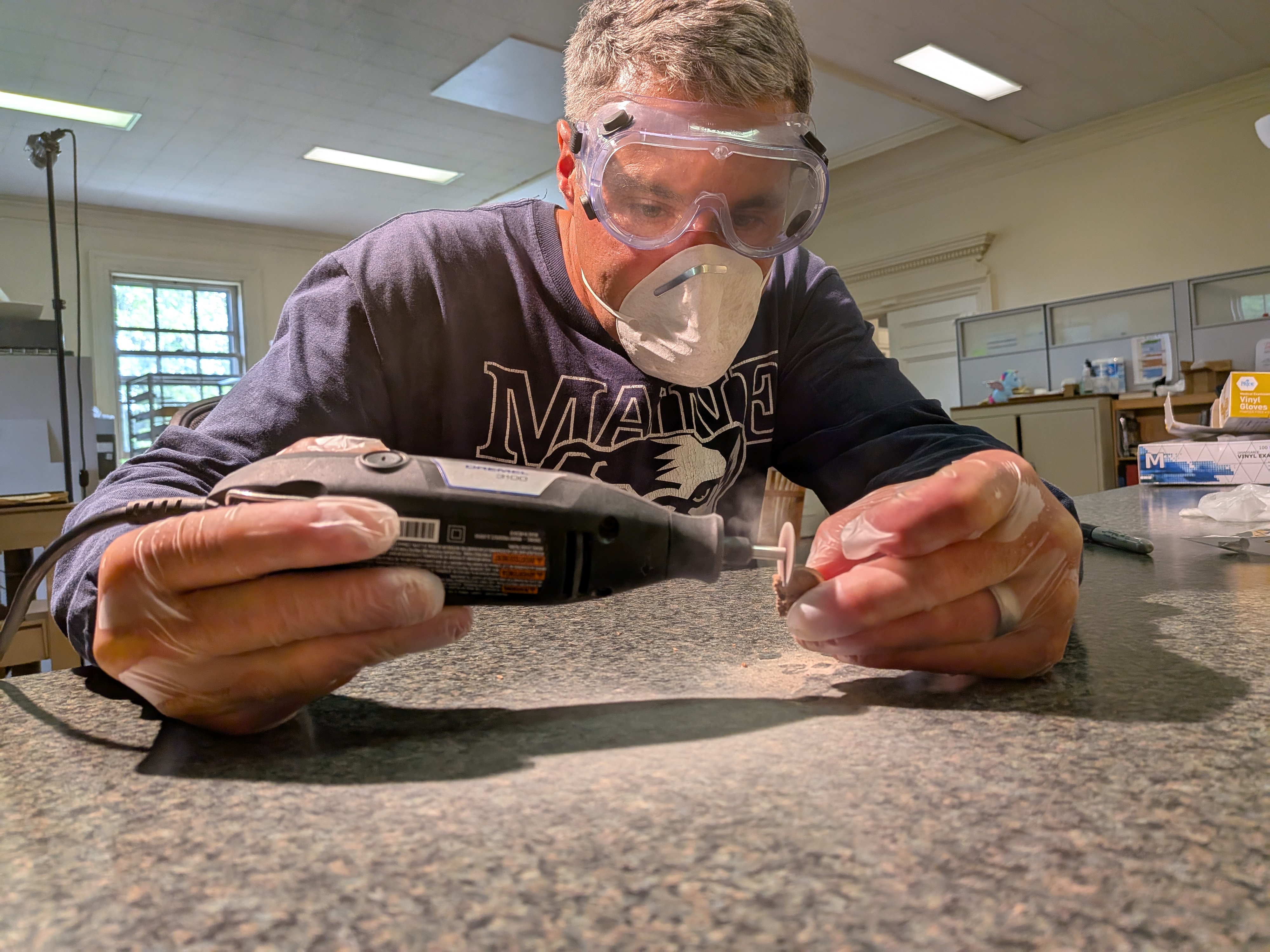
Figure 1. Visiting researcher, Dr. Rademaker taking samples for isotope analysis.

Last May the Robert S. Peabody Institute hosted visiting researcher, Dr. Kurt Rademaker. Dr. Rademaker is an Associate Professor and Director of the Center for the Study of the First Americans Laboratory at Texas A&M University. His research interests include early human ecology and settlement dynamics of the central Andean highlands.

Dr. Rademaker came to the Peabody to view materials collected by Richard “Scotty” MacNeish from the Ayacucho Valley in the Andean highlands. Between 1969 and 1972, MacNeish led an interdisciplinary team that searched for evidence of the origins of agriculture and civilization in South America.

Based on previous work conducted on the Peruvian coast, MacNeish and others hypothesized that agriculture originated in Peru’s Andean highlands. The Ayacucho Valley encapsulates diverse habitats spanning a range of elevations. It also contains dry caves with long stratigraphic sequences, two criteria MacNeish utilized in his study of the origins of agriculture in the Mexico’s Tehuacán Valley.

Botanical remains discarded by humans, including domesticated plants, can be well-preserved in dry caves, while long stratigraphic sequences give archaeologists the ability to see how things change over long spans of time. MacNeish was looking for evidence of human cultural development, including domesticated plants across time and habitats.

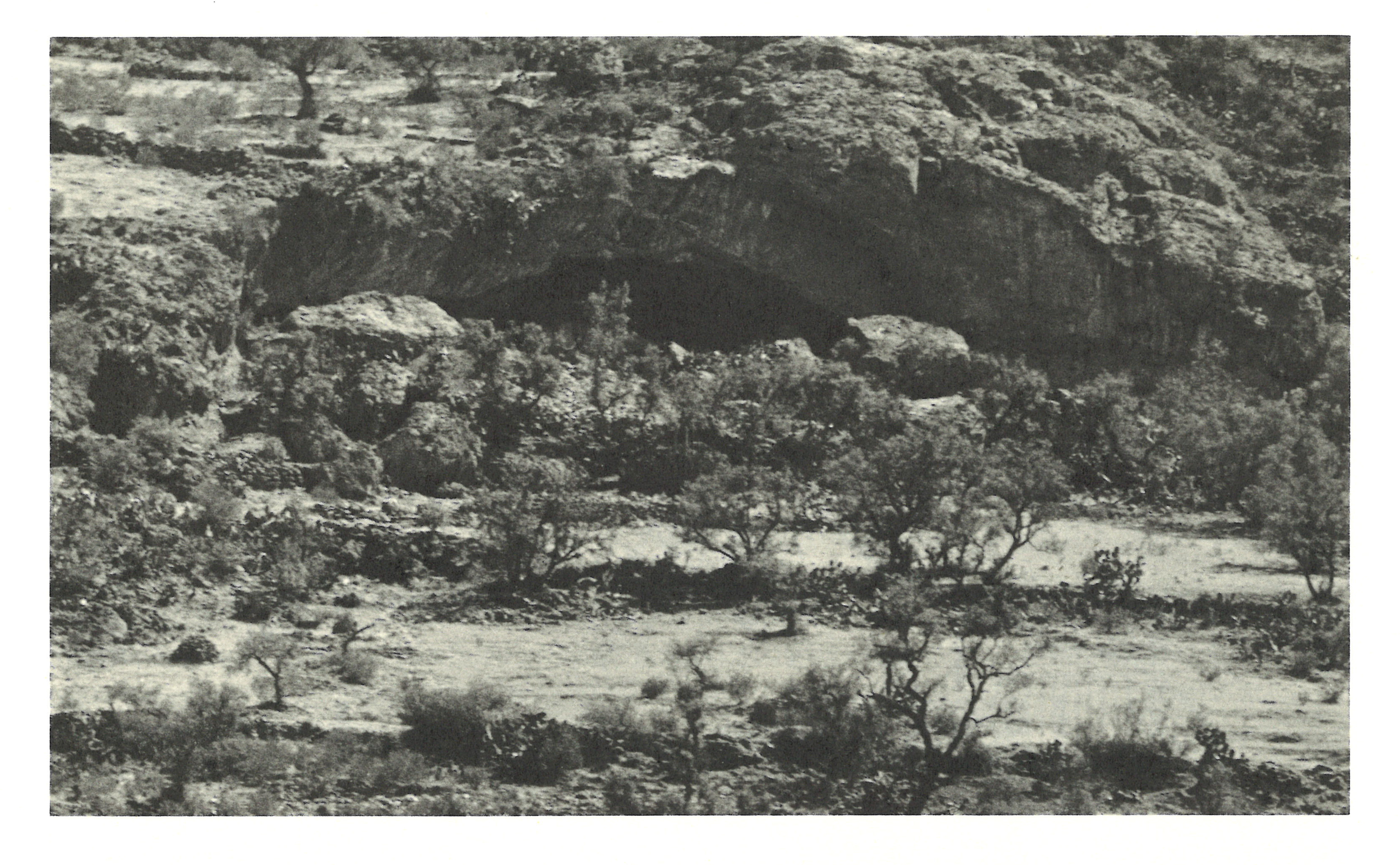
Figure 2. Pikimachay Cave as seen from the east.

Interestingly, and unrelated to the question of plant domestication, MacNeish’s summary of excavations at one site, Pikimachay, concluded that humans and now-extinct Pleistocence animals may have interacted. This was based on the presence of artifacts and extinct animal remains in the same pre-ceramic stratigraphic layer. The claim was supported by radiocarbon dating which returned dates of roughly 14,000 and 23,000 years before present. However, this conclusion has always been somewhat controversial since the dating methods do not meet scientific standards of quality control, not to mention they contradicted widely held notions of the peopling of the Americas.

Radiocarbon dating, at the time, required a large amount of sample material. MacNeish gathered material from several sources spanning a wide area. In the intervening years, isotope analysis has improved to the point where only one gram of sample material is needed. Now a single bone with clear stratigraphic origin can be sampled.

Additionally, sample preparation can now isolate carbon from the item being dated and remove carbon from the surrounding sediment. Previous methods couldn’t parse these sources and may have resulted in dating the burial environment. This can help determine if the sample was moved from it’s original stratigraphy by burrowing animals or other natural forces.

The story of when people arrived in the Americas has changed over time as new discoveries led archaeologists to question existing hypotheses. At the time of MacNeish’s Ayacucho project, the commonly held belief was that the first people arrived at the end of the Ice Age, by way of the Beringia land bridge and ice-free corridors. The earliest evidence of human presence was at Clovis, New Mexico, dated 13,250 to 12,800 years before present. His discovery meant that people may have arrived in North America much earlier if they were established in Peru 14,000 to 23,000 years ago.

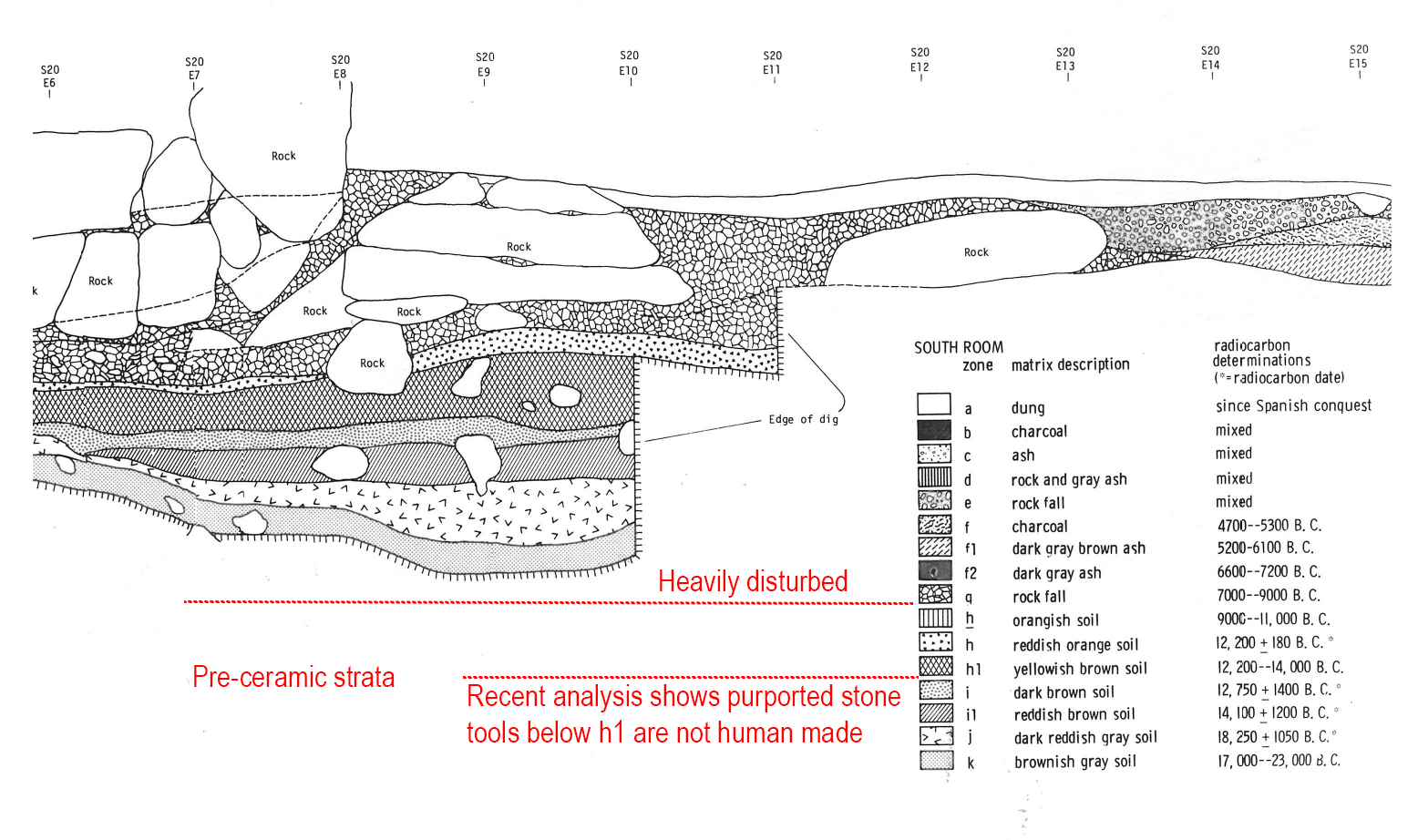
Revisiting MacNeish’s Ayacucho materials offers an intriguing opportunity to confirm his findings. Recent work has revealed that the stone tools found in the lowest strata (see figure 3) were naturally occurring and not made by people, perhaps ruling out the oldest dates MacNeish obtained. However, the researchers confirmed that human-made tools and cut animal bones are present in earlier layers (strata h, h and h1).

Figure 3. Stratigraphy from the South Room in Pikimachay. Samples will be taken from pre-ceramic layers. Layers above the pre-ceramic strata are heavily disturbed by pot hunting, animal activity and construction from animal corrals.

Dr. Rademaker has proposed sampling as many animal bones as possible from pre-ceramic stratigraphic layers. If any remains are from the Pleistocene Epoch, then MacNeish’s results will be supported and will add further support to a pre-clovis peopling of the Americas. If the remains are younger, from the Holocene Epoch, then it is likely that they were deposited in lower strata through some manner of disturbance.

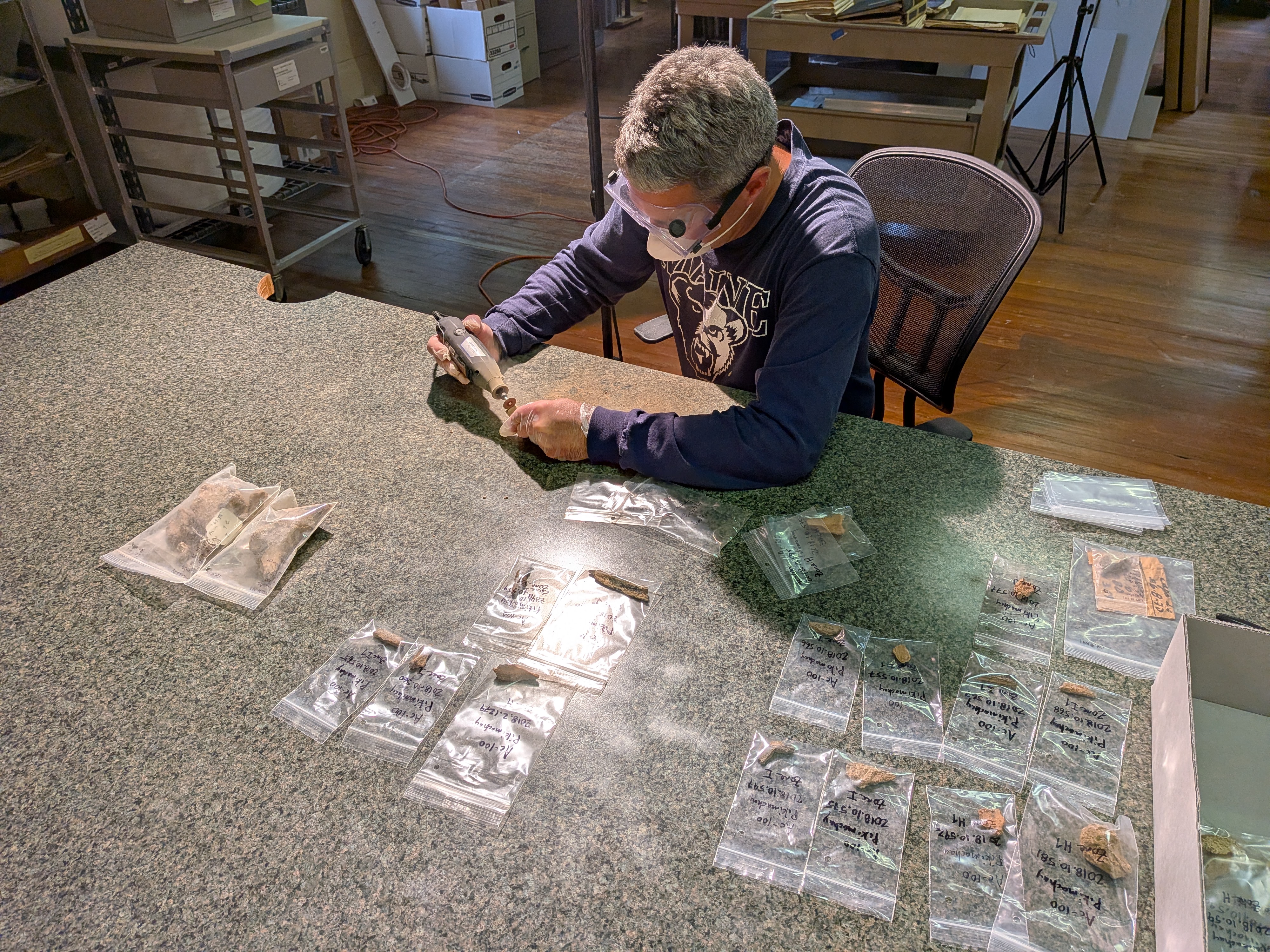
Figure 4. Pikimachay samples arrayed for processing.

During Dr. Rademaker’s visit he spent several days reviewing archival materials including field notes, radiocarbon sample data and correspondence. The final day of the visit, Dr. Rademaker collected a sub-set of samples; roughly 1/3 of the total proposed. The bones they were taken from are quite old and may not contain the collagen necessary for isotope analysis. If these samples prove to have viable collagen and they return good dates, Dr. Rademaker will return to collect the remaining samples.

Tales from The Phillipian, PART 1: Smoke Talks, Fire, and a Grill in the Peabody Basement?!

Contributed by Emma Lavoie

Peabody staff always get excited when we unearth hidden stories from the Peabody Institute’s past. The Phillipian Archives is one such place that has held many a story. First printed in 1857, The Phillipian is a weekly student newspaper that continues today at Phillips Academy Andover. The student paper describes itself as “completely uncensored and entirely student-run,” offering a snapshot of what campus life is like both past and present, and in the case of this blog, some of the most outrageous and bizarre activities related to the Peabody.

In a few months, the Peabody Institute will be undergoing Phase 2 of some much-needed renewal work. The building and collections will be off-line Winter and Spring terms. The Peabody will continue to support modified classroom lessons and student activities, outside of the Peabody building. Student requests to access collections will be considered on a case-by-case basis.

In honor of the upcoming building project, this (part 1) blog shares some of the Peabody building’s history.

A Special Place at the Corner of Phillips and Main

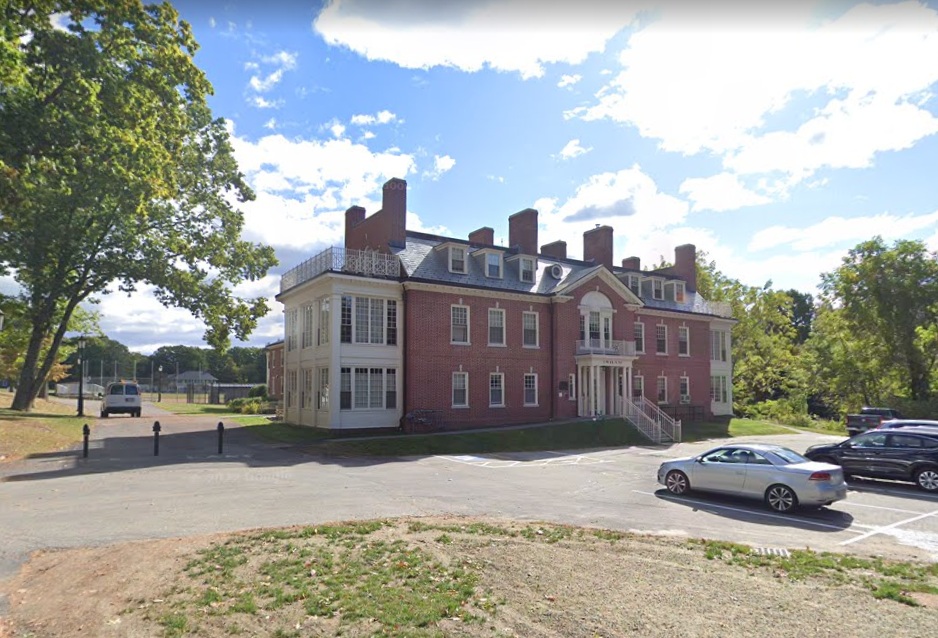
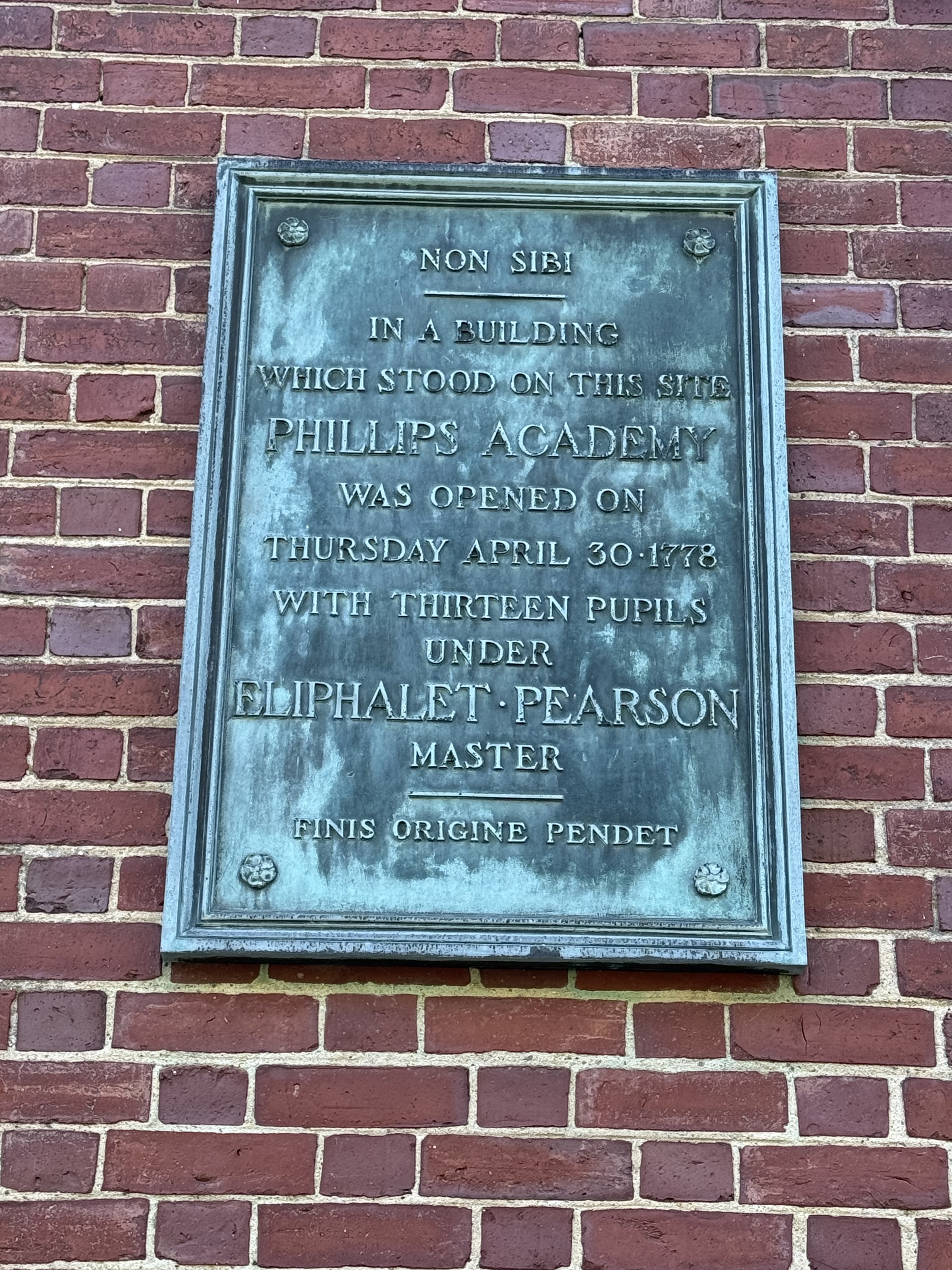
The first Founder’s Day for Phillips Academy was held in October 1913. At this time a bronze plaque was unveiled and placed on the Peabody Insitute building (known then as the Archaeology Department) commemorating the site where the first school-building on campus was opened in 1778. This plaque can still be seen on the Peabody building today!

Bronze plaque on the Peabody Institute building exterior from 1913.

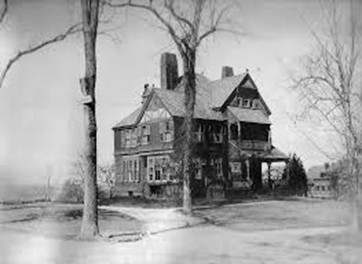
The site at the corner of Phillips and Main streets has an interesting history, one that began well before the Peabody. The site first housed the 1778 carpenter’s shop used as the first classroom building at Phillips Academy.

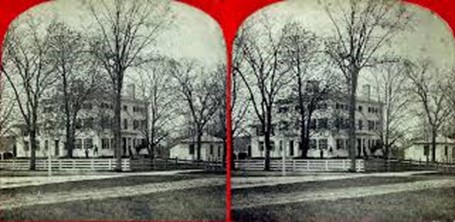
Around 1845, the shop was moved from the site and eventually razed. Samuel Farrar, treasurer of Phillips Academy and the Andover Seminary, built a three-story, Federal-style house on the location. The house has since been moved further down on Phillips Street and is known as Farrar House.

Farrar House – Image courtesy of Andover Historic Preservation, Memorial Hall Library, Andover, MA

In 1882, a home was built on the site for J. Wesley Churchill, a professor at the Andover Theological Seminary. Later in 1901, the house was moved to another location on Main Street to make way for the new Archaeology Building which later became the Peabody. The house is known as Churchill House on campus today.

Churchill House – Image courtesy of Andover Historic Preservation, Memorial Hall Library, Andover, MA

In a Phillipian article from 1917, the history of Founder’s Day and the significance of the 175 Main street site is shared, noting a 1916 dedication of the new Peabody House by Dr. Charles Peabody (first Peabody Director and son of the Archaeology Department’s founder, Robert S. Peabody).

In this column, it was mentioned that ceremonies were not held to celebrate Founder’s Day as “this year, more than at any other time, matters of lesser importance should give way to more serious questions.” This was in reflection of the current impact of the Spanish Influenza and WWI.

Smoke Talks (Smoking and collections don’t mix…)

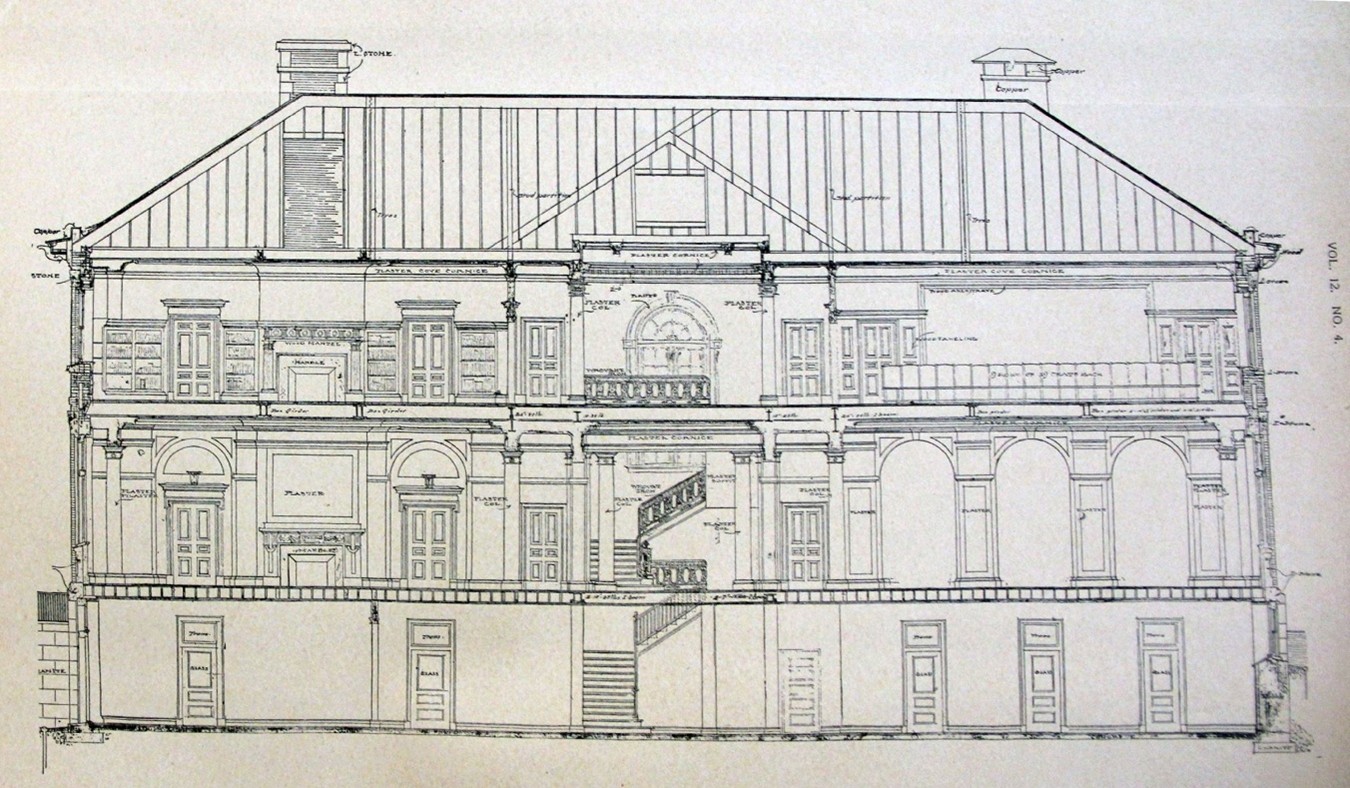
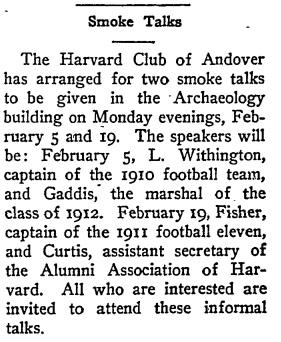
In the early years of the new Department of Archaeology building, Curator Warren K. Moorehead would give “smoke talk” lectures on the second floor of the building. Some of the original molding from the proscenium arch is still visible today at the Peabody. Beyond these lectures, student clubs would hold their own “smoke talks” in the Peabody, which served as the Student Union building for many years on campus. How did these lectures get their name? For the cigars smoked during these meetings by students and speakers alike!

A column from The Phillipian in 1912
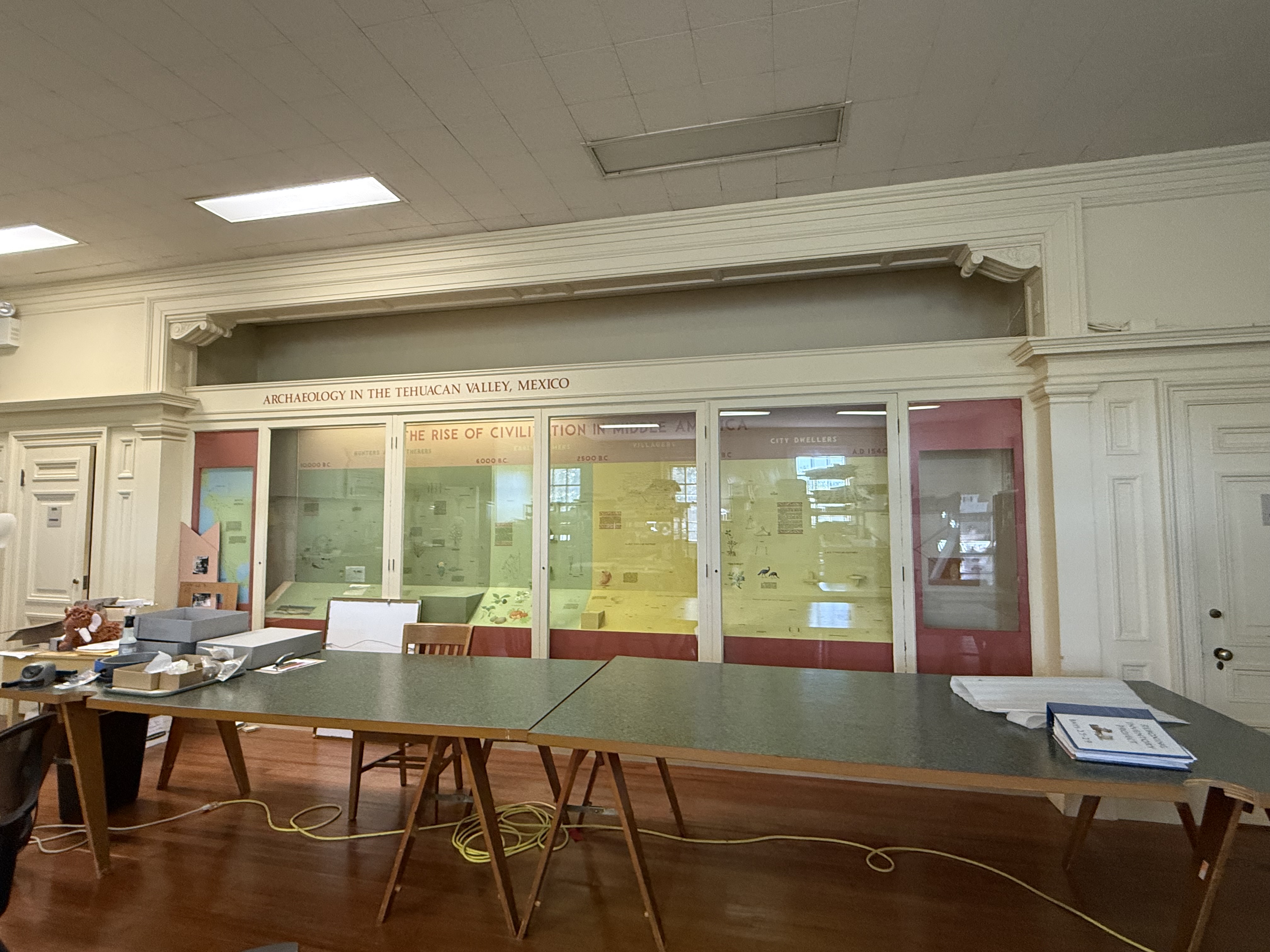
Features of the old proscenium arch can still be seen at the Peabody today. In 1967, an exhibit wall with case was placed in the middle of the arch.

A Grill in the Basement (Now they’re pushing their luck…)

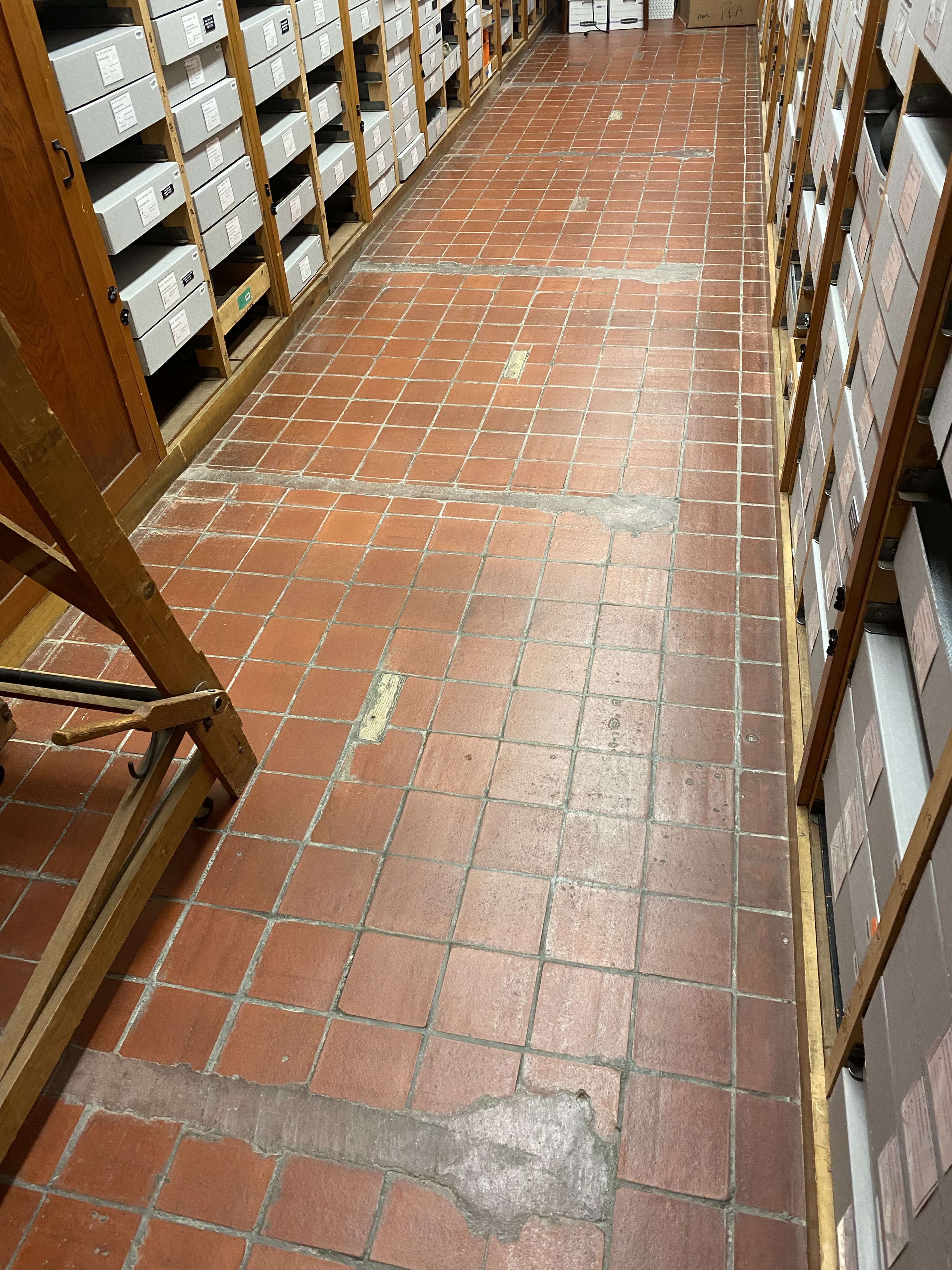
Beginning in 1913, The Phillipian mentions meetings at “the Grill” in the basement of the Peabody (known as the Department of Archaeology at the time). At one point, the Peabody had a kitchen complete with grill, stall seats, and tables for student gatherings. Improvements were made in 1913 giving the space a new red tile floor, dark brown wood paneling around the walls, a new stove, and a large suction flue to draw out heat and odors. In the past the odors of students’ cooking would circulate upstairs disturbing the Peabody staff.

Later in 1915, the Grill was moved to the newly constructed Peabody House located behind the Department of Archaeology building. The new space included a kitchen with large grill and private dining room for special dinners and banquets. There rooms are similar in design to the original grill room in the Archaeology Building.

Before Phase 1 of the Peabody Building Project, the original red tile floor from the Student Union Grill room was still visible in the basement of the building. In the photo you can see where the booths and tables made up the seating stalls.

Peabody House….and Fire (Well, it was bound to happen at some point…)

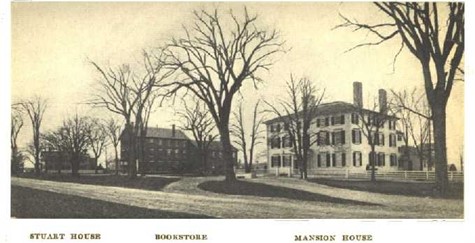
The Peabody House was opened in 1916 as an extension of the Department of Archaeology with the intent of giving students a building for their own use. Construction of the building used some of the funds contributed by Robert S. Peabody, founder of the Archaeology department at Phillips Academy and donor of the Archaeology Building. An article from The Phillipian describes the new building with an exterior of brick and stone, “which will correspond with the style of architecture of the Archaeology building and the new dormitories.” The first floor housed a student lounge and reading room with a large fireplace and large French windows. The second floor was similar in design to the first floor with space for the late Robert S. Peabody’s books and a large portrait of him. The room was used for club meetings as well as student assemblies and special banquets.

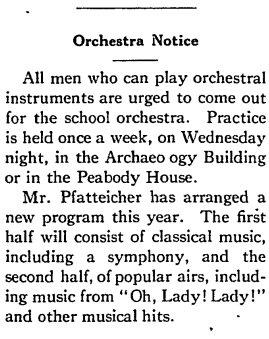
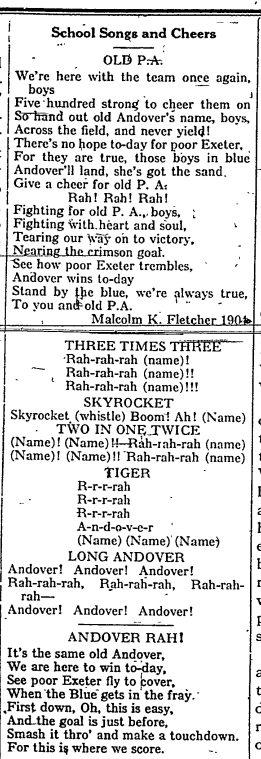
Some activities held in the Peabody House, highlighted in The Phillipian, are a notice to join the school Orchestra, with practices held once a week in the Archaeology Building or Peabody House. My personal favorite was an announcement to students for a mass meeting at the Peabody House to practice school songs and cheers. One entry from 1917 describes three hundred men present at the evening meeting called by head cheerleader, Howard Smith.

Two columns from 1917 advertising for the orchestra and sharing PA cheers and songs!

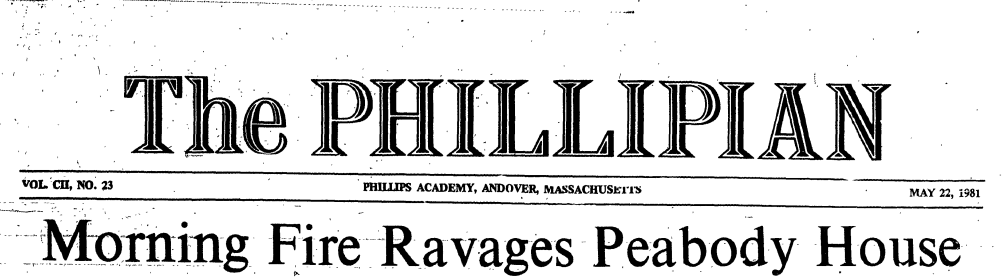
Jumping ahead to several decades later, headlines read “Morning Fire Ravages Peabody House.” In the early hours of May 18, 1981, a fire broke out in the Peabody House, destroying the first and second floors as well as the attic. There were no reported injuries, however, many of the Afro-Latino American Society’s possessions were lost on the second floor. Faulty electrical wiring is suspected to be the cause of the fire.

“[I was in] awe at how extremely hot the flames were, how much smoke there was and how terrifying it was to see the fire’s power.” – Headmaster Theodore R. Sizer

“[There was] steam and yellow light and flames bursting out of the roof.” – PA Student, Upper

We hope you enjoyed PART 1 of this two-part blog post. Stay tuned for PART 2, coming next month! To be continued…

A ‘Key’ Find at the Samuel Phillips Jr. Mansion House, 2025 Excavations.

Contributed by Katie Lincoln

Almost every summer since 2016, young archaeologists from Phillips Academy’s summer session program embark on a mission to excavate the site of the eighteenth century Samuel Philips Jr. Mansion House, located on the West Quad of campus. The infamous Mansion House was built in 1782 by the academy’s founder and stood for 105 years, before burning down in 1887. News articles from the period suggest that the demise of the Mansion House was a result of arson; many speculating that the proprietor, Charles Carter, started the fire. During its long period of occupation, the Mansion House served as not only a home, but later an inn and tavern for students, community members, and travelers. The site’s long history and relatively undisturbed context creates an ideal setting for archaeological excavation and student learning.

Over the past seven years, students have succeeded in discovering portions of the house, including multiple chimneys and a basement feature. This year, students set out with high expectations, choosing to place four excavation units in spaces just outside of the Mansion and two units in the southwest portion of the quad, near the sites of historic outbuildings, a nineteenth century printing house, and an early nineteenth century pathway.

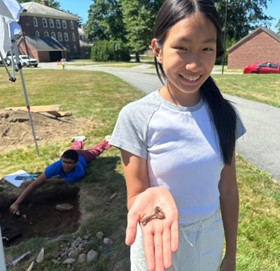
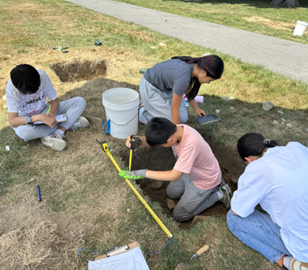
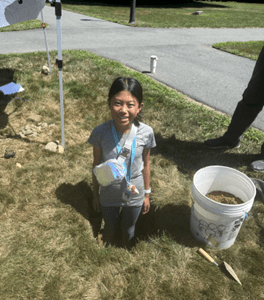
Students in each excavation team had a blast taking turns performing the primary tasks of an archaeologist: digging, screening, measuring, and note-taking. Many, if not all, students even got to unearth artifacts from their units! Some of our favorites included a small ferrous key, an impressed glass tumbler, and half a pair of scissors which all came from the two excavation units placed in the southwest portion of the quad.

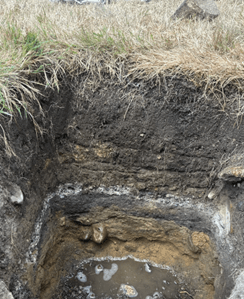
Further excavation in this area revealed a feature relating to the historic pathway present on early nineteenth century maps of campus. Pictured below is a dense, gravelly layer of soil discovered at 40 cm. This layer, interpreted here as the pathway, was intermixed with nineteenth century materials including glass, brick fragments, and some ceramic.

Students excavating the other four units in the northern portion of the quad found shallow cultural layers followed by a sterile C horizon, between 20 and 35 cm. While the artifact density of these units was limited, students still enjoyed finding an abundance of brick, metal nails, and some small ceramic fragments. The very shallow deposits found in these units informed the team that no building activity likely occurred in these areas. Additionally, the relatively low artifact density suggests that these areas were not regularly used like in a dooryard or garden area.

Overall, students in the 2025 field program successfully applied archaeological methods to ‘unlock’ more of the mysteries surrounding the Samuel Phillips Jr. Mansion House. This year’s field season serves to inform of the deep cultural deposits in the southwest portion of the quad and the significant research potential it could provide for future field seasons.

Thanks to the entire student field crew and cheers to a wonderful field season!

Work Duty is Back!

Contributed by John Bergman-McCool

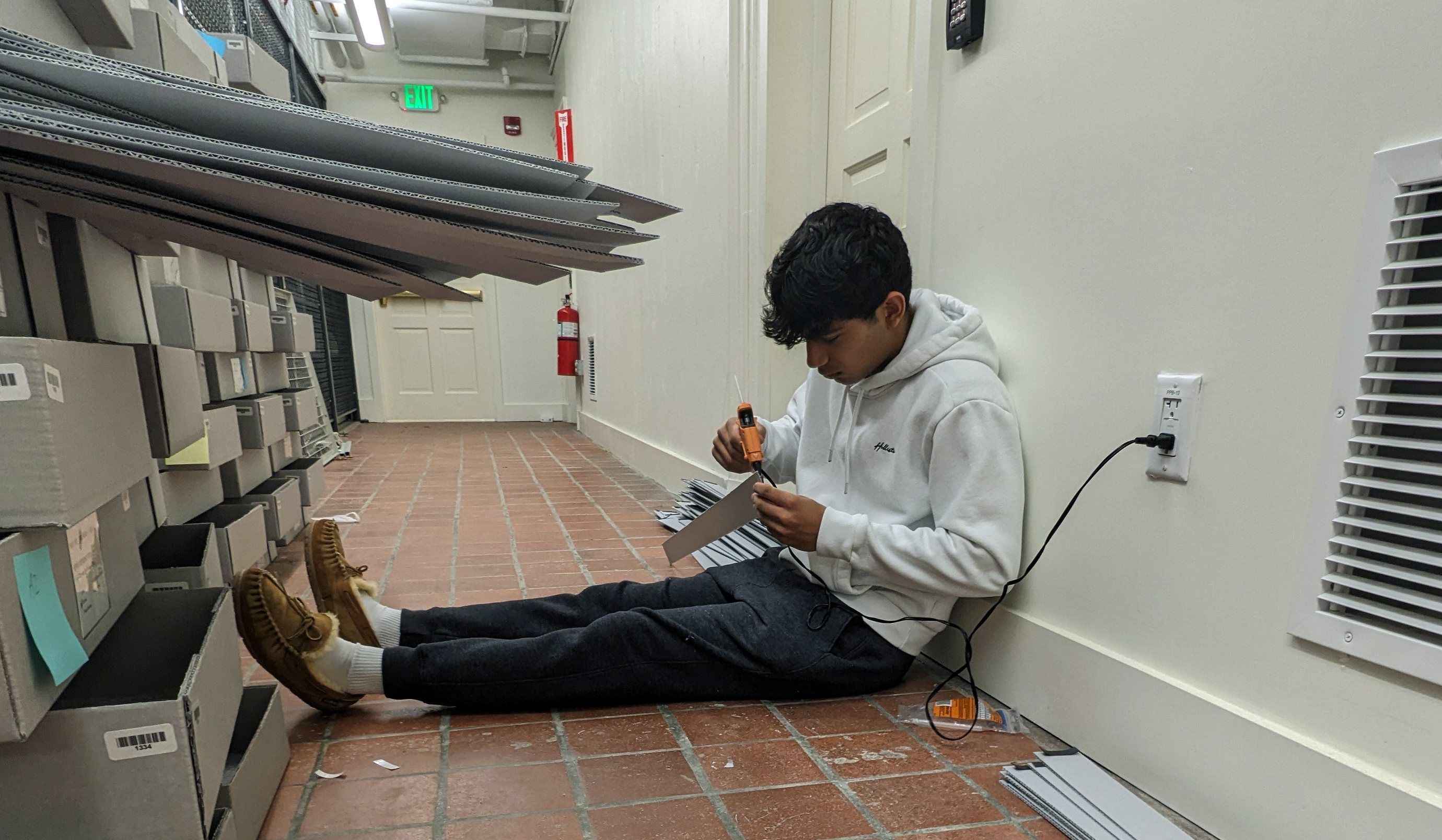
Work duty students are back assisting with collections projects.

We are excited to announce that after a year-and-a-half hiatus, work duty resumed at the Peabody two weeks ago! Preparations in the months leading up to building renovations, scheduled for the winter of 2023, meant that Peabody staff couldn’t devote resources to overseeing work duty students. Once the renovations began, the building would be unsafe for students and staff.

The most daunting pre-construction project was moving thousands of collection boxes from the basement into temporary housing on the first floor. Help from work duty students would have been welcomed, but had we taken on students in the fall they would be looking for new assignments that winter, which didn’t seem fair to the students. We decided that work duty should be cancelled at the Peabody for the 2022-2023 academic year.

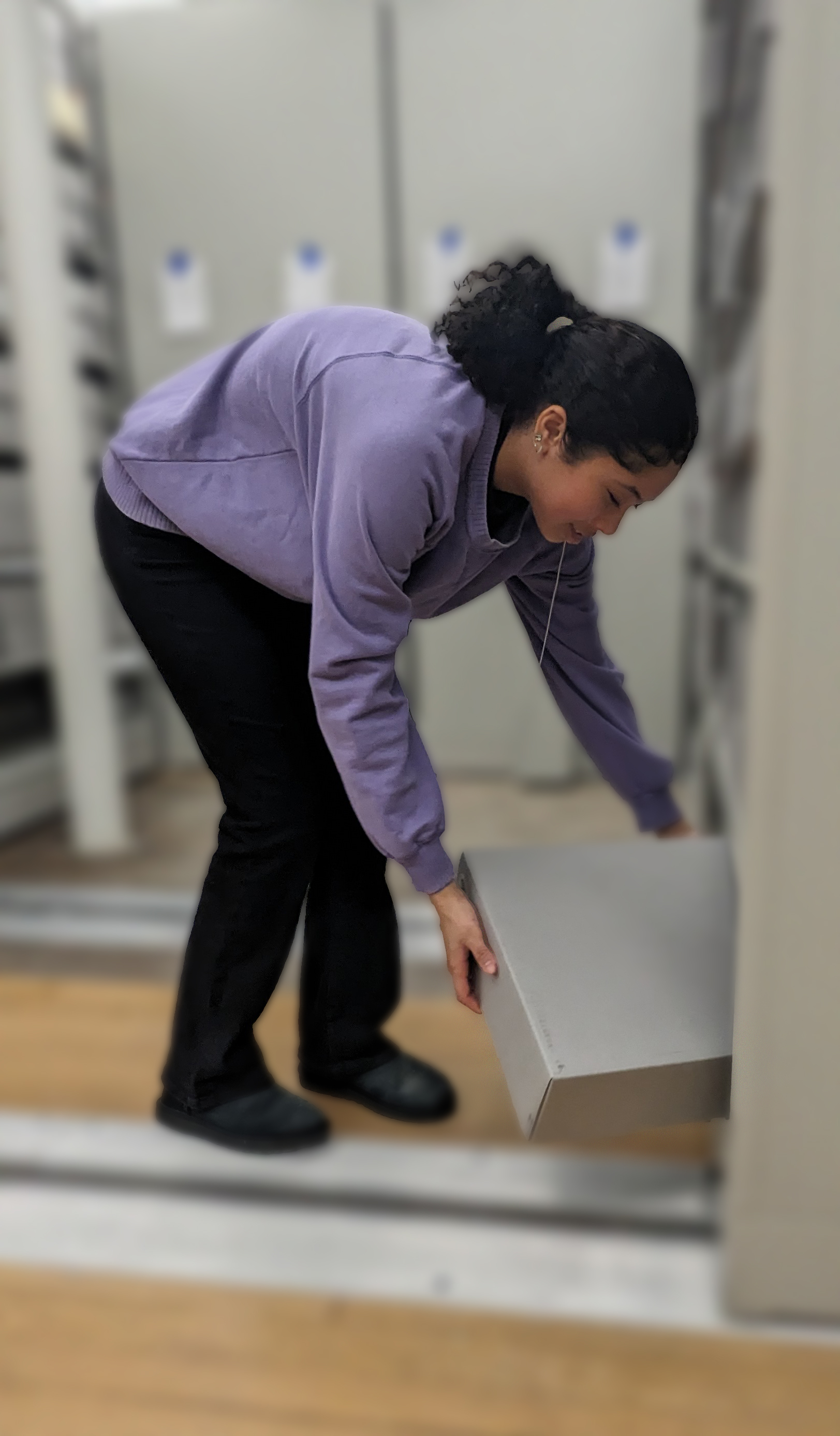
Collections boxes are moving into their new housing! This image was intentionally blurred to obscure the details of our new collections housing until the move has been completed.

Last fall, as construction began winding down, we were eager to bring work duty back. Organizing the collection in the newly renovated basement would be a larger undertaking than any of the pre-construction preparations. Generally, we knew students would be allowed back in the building this academic year, but we didn’t know an exact date. The Dean of Student’s office generously offered to take on students who were interested in working at the Peabody until we could safely bring them back.

Ultimate week is the perfect time to relax while working on a collections project.

Now that the students have returned, they have been assisting us with preparing the basement to receive collections from throughout the building. They have added foam to shelving, helped sort items by geographic region, and solved inevitable mysteries that crop up in the wake of a large move. Their help has made it possible for staff to focus on moving our collection into the basement.

We are very happy to have students back and look forward to the spring term when we can welcome the wider Phillips community into the building.

Cats and Bears

Contributed by John Bergman-McCool

Lately, the process of fully cataloging Adopt-A-Drawers has resulted in some interesting discoveries. The most recent of these comes from artifacts collected by Richard “Scotty” MacNeish in Tamaulipas, Mexico.

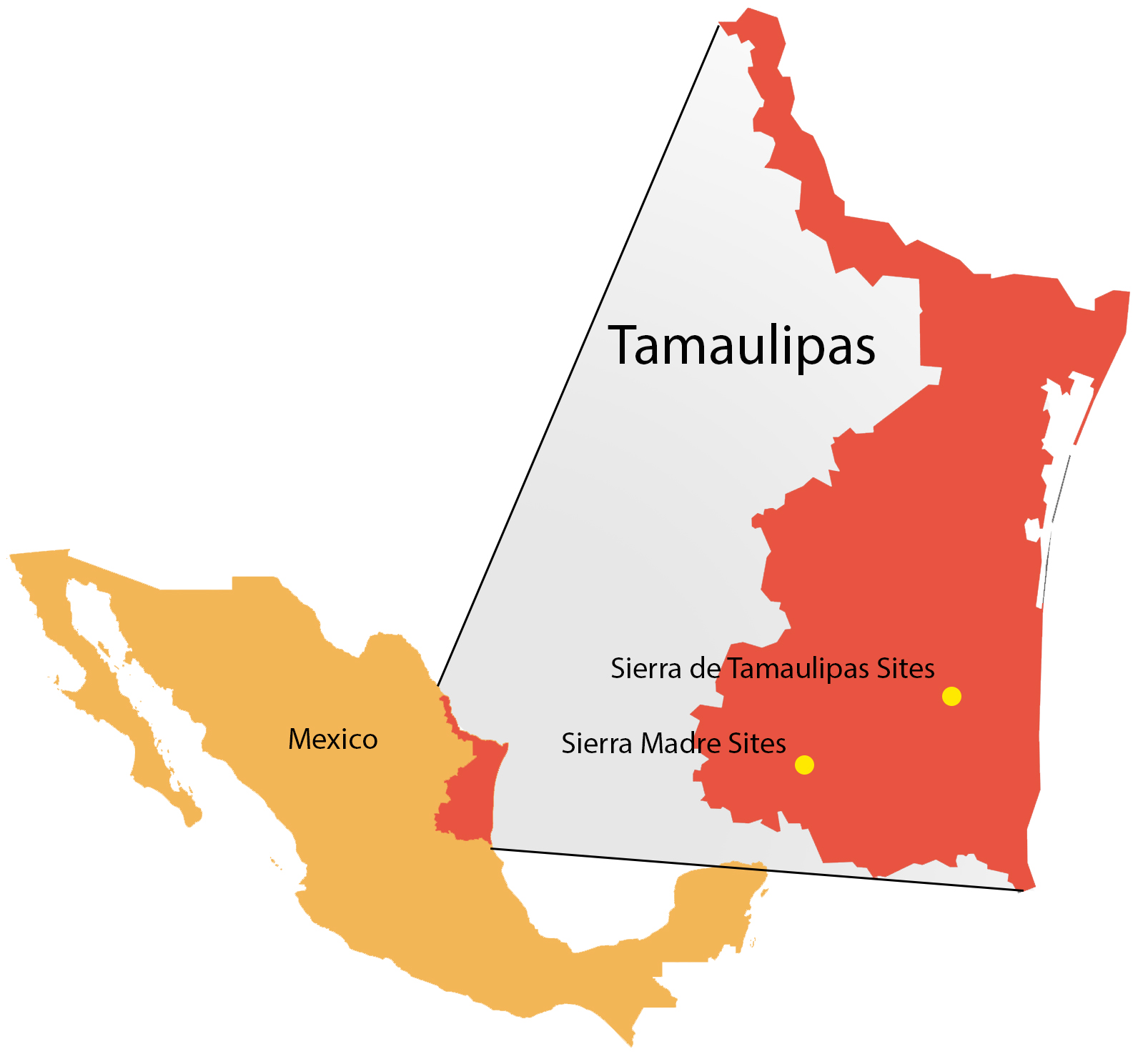
MacNeish went to Tamaulipas in 1945 hoping to find sites that predated the production of ceramics. In particular, he was searching for sites with long cultural sequences that he could use to tell the story of the development of human culture in Mesoamerica. During three field seasons, spanning  ten years, MacNeish identified and excavated several village and cave sites in the Sierra de Tamaulipas and the Sierra Madre Oriental, two mountain ranges in Tamaulipas.

MacNeish’s Tamaulipas excavation areas.

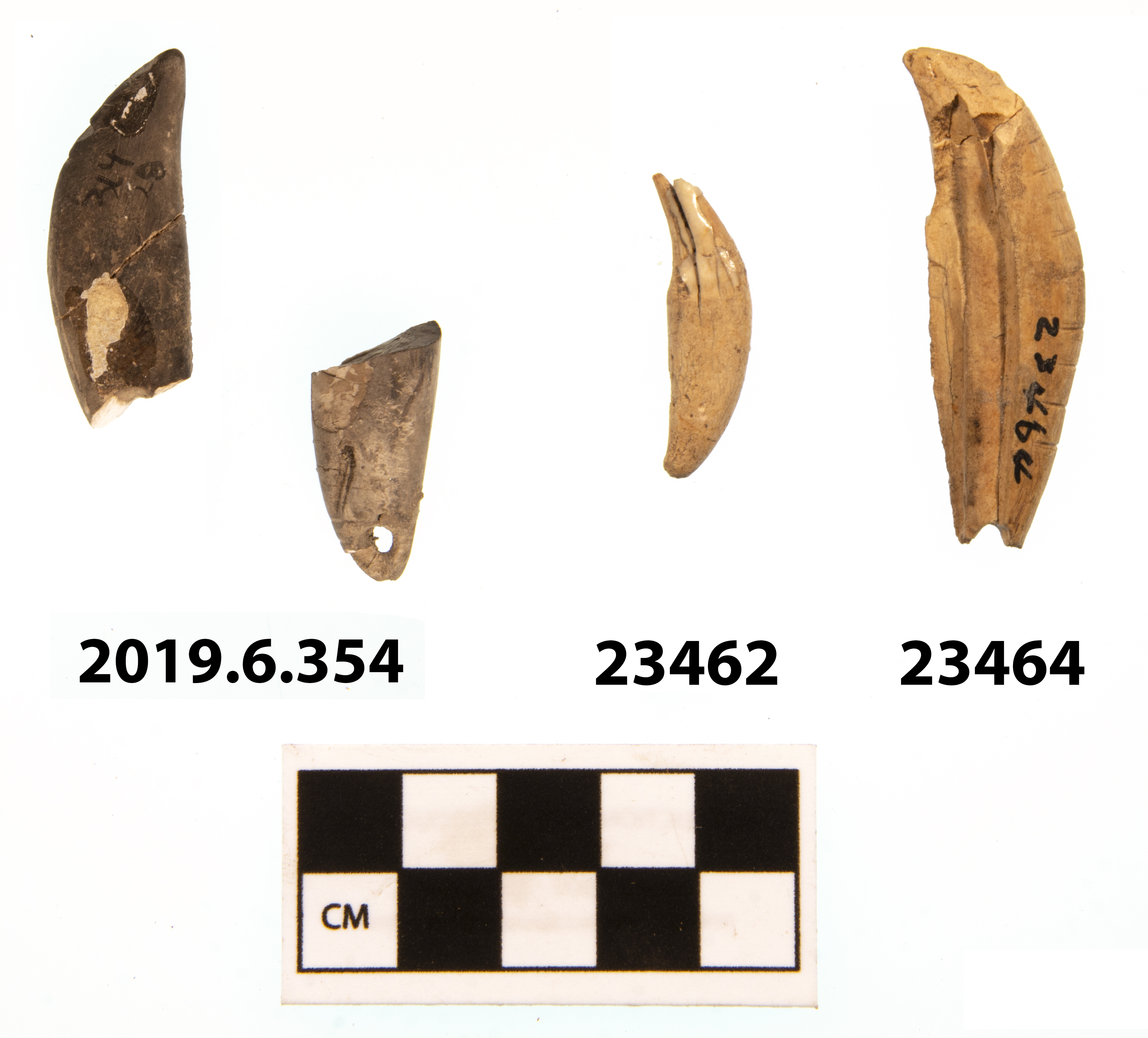
MacNeish recovered a wide variety of items from the well-preserved cave deposits in Tamaulipas. Of these were two fragmentary bear canine-shaped pendants recovered from Armadillo Cave in the Sierra de Tamaulipas. They appear to have been burnt and MacNeish believed that they were fashioned from sandstone. When compared with real canines from a bear and unknown canid, it is clear that they are an imitation. For example, the Tamaulipas pendants have no enamel and they lack the same degree of detail. However, they do approximate the shape very effectively.

Left: Two Tamaulipas bear canine-shaped pendant fragments. Middle: Dog or coyote canine pendant from Ohio. Right: Bear canine pendant from Ohio.

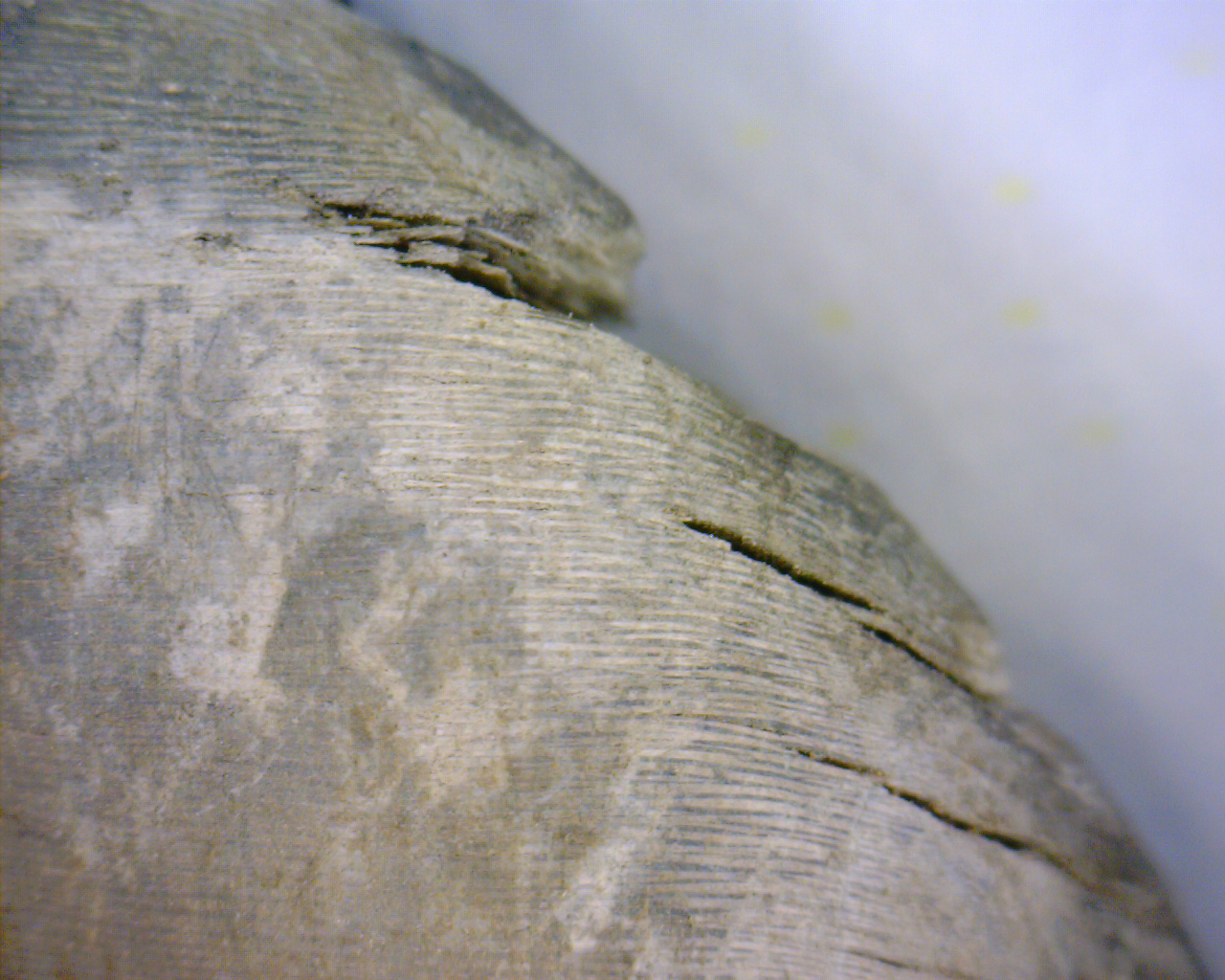
One of the pendants was fractured below a possible enamel layer so they were both inspected under magnification. Surprisingly, they show signs of very thin layering more reminiscent of the annuli of shell. I asked our Director, Dr. Ryan Wheeler to take a look at them. Among those who work here at the Peabody, he is the resident expert on shell artifacts. Dr. Wheeler agreed they were shell.

Magnified View of bear canine-shaped pendant from Tamaulipas, showing annuli.

The fact that the pendants were made of shell led us to think about a possible connection with the Hopewell Culture. Several shell imitations of bear canines have been recovered from Hopewell mound sites. Additionally, the Hopewell developed a very large interaction sphere, traveling far and wide for trade materials. The Hopewell procured copper from Lake Superior, silver from Canada, obsidian from Wyoming, mica from the Blue Ridge Mountains and shell from the Gulf of Mexico.

We wondered if these pendants could have been a Hopewell trade object. Fortunately, the Peabody archives include MacNeish’s Tamaulipas excavation paperwork (digitized here). The first step to establishing a possible link was to determine the items’ age. Using charcoal from distinct layers excavated from the cave deposits, MacNeish was able to radiocarbon date the deposits. The layer containing the shell pendants dates to the Almagre Phase, roughly 2,200 to 1800BCE. This correlates to the Archaic period in the Ohio valley, about 2,000 years before the Hopewell developed. The Hopewell connection was out.

I also searched for bear remains found in northern Mexican archaeological contexts. A very quick review of available resources indicated that bear remains are not all that common in the region. The only positive return came in the form of bear long bones found at Casas Grandes in Chihuahua, Mexico. This was interesting, because the historical range of both Mexican grizzly and black bears include much of northern Mexico, including Tamaulipas state. It is very likely that humans and bear interacted in the past.

At Dr. Wheeler’s suggestion I reached out to Dr. Brad Lepper, Senior Archaeologist with the Ohio History Connection and José Luis Aguilar Guajardo, archaeologist in Tamaulipas, Mexico. They both responded with helpful information. Dr. Lepper was interested in the presence of the shell pendant and was unaware of anything similar coming from Archaic sites. He suggested consulting Cheryl Claassen’s book Beliefs and Rituals in Archaic Eastern North America for possible archaic examples, which I haven’t yet had a chance to read.

Dr. Lepper provided several examples from the Ohio History Connection’s collection of Middle Woodland Hopewell bear canine pendants (here and here) and their imitations (here and here). Some of the canines were split, or contained fresh water pearls from the Ohio River. Imitations were made from mica, copper, shell, bone, ceramic and stone.

José Luis Aguilar Guajardo was also very interested in the bear canine-shaped pendants. He was unaware of anything similar coming from sites in the Sierra de Tamaulipas mountains. He indicated that shell was a semi-precious material used for making ornamentation by the Indigenous people in the area. The Sierra de Tamaulipas mountains are quite close to the Gulf of Mexico, a source for shell materials.

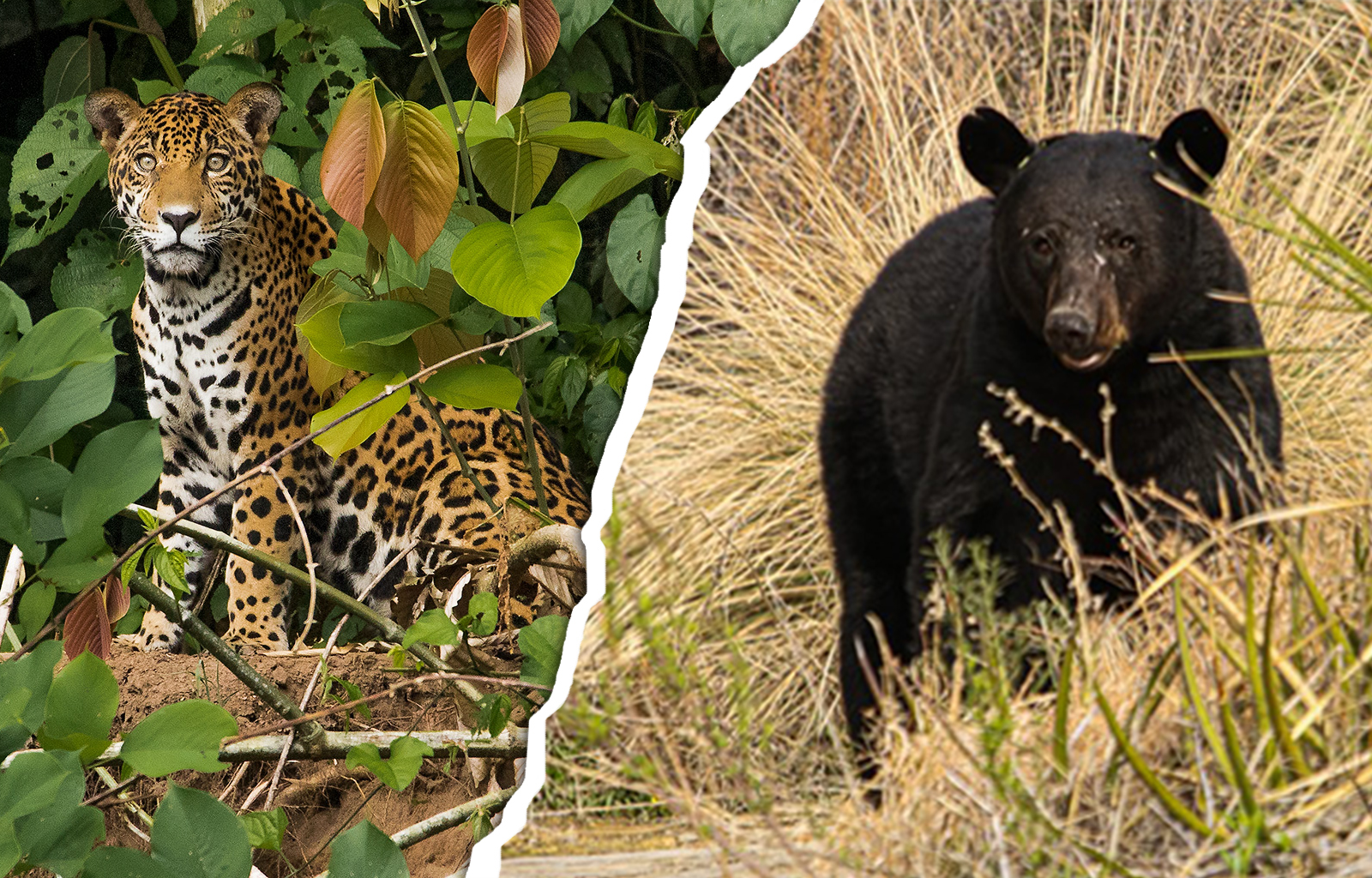
José was clear that black bears can still be found in the Sierra de Tamaulipas, and supported the possibility that they were bear-shaped. However, he suggested the possibility that they were inspired by the jaguar instead. According to José, jaguar were abundant in the area and were revered by the Indigenous people.

How to assign an animal label to the pendants becomes an interesting problem. Bear and jaguar canines can look similar in size and appearance. Understanding what the maker of the pendants intended them to represent is difficult when they cannot be asked about them directly. Both animals’ habitats overlapped in northern Mexico.

Though they don’t provide a definitive answer, some helpful articles, and their authors, that explore the importance of bear and jaguar imagery in north and Mesoamerica include: Bear Imagery and Ritual in Northeast North America, Thomas E. Berres, David M. Stothers and David Mather; Predators of Culture: Jaguar Symbolism and Mesoamerican Elites, Nicolas J. Saunders; and Rohonas and Spotted Lions: The Historical and Cultural Occurrence of the Jaguar, Panthera onca, among the Native Tribes of the American Southwest, Steve Pavlik. There are probably many, many others.

Perhaps, as José Luis Aguilar Guajardo has suggested in personal communications, Sierra de Tamaulipas falls into an area in which jaguars were strongly revered. In a very simplistic summary of the above articles, cranial remains of bears in archaeological contexts in North America have been considered a sign of bear ceremonialism. They don’t appear in MacNeish’s Tamaulipas excavations. Jaguar hides were an element of Aztec royal clothing and one of the accoutrements used by Aztec shamans. A small fragment of possible jaguar hide was recovered from the Sierra Madre excavations in Tamaulipas.

Future excavations in the area will likely bring more evidence to bear on the ritual and symbolic practices of the people of Tamaulipas.

Resources:

Archaic Bear Tooth Pendants and other related artifacts

Donaldson, William S. and Stanley Wortner

1995      The Hind Site and the Glacial Kame Burial Complex in Ontario. Ontario Archaeology 59:5-95.

Bear Imagery and Ritual

Berres, Thomas E., David M. Strothers and David Mather

2004      Bear Imagery and Ritual in Northeast North America: An Update and Assessment of A. Irving Hallowell’s Work. Midcontinental Journal of Archaeology 29(1):5-42.

Jaguar Imagery and Ritual

Pavlik, Steve

2003      Rohonas and Spotted Lions: The Historical and Cultural Occurrence of the Jaguar, Panthera  onca, among the Native Tribes of the American Southwest. Wicazo Sa Review 18(1):157-175.

Saunders, J. Nicolas

1994      Predators of Culture: Jaguar Symbolism and Mesoamerican Elites. World Archaeology  26(1):104-117.

Andover Summer Returns: Dig This! class at it again

Contributed by Emma Lavoie

The Peabody is keeping busy this summer with volunteers, interns, events and visits, researchers, and of course hosting the Andover Summer Session class, Dig This!

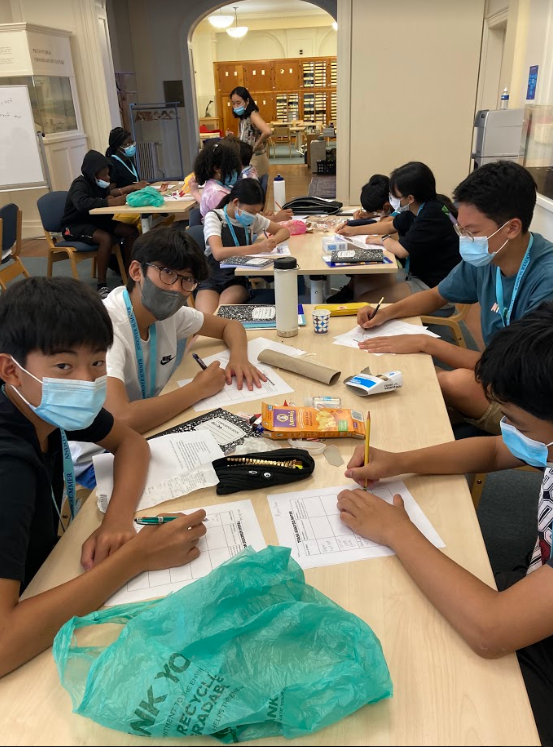
Dig This! students in class and learning to read an excavation site.

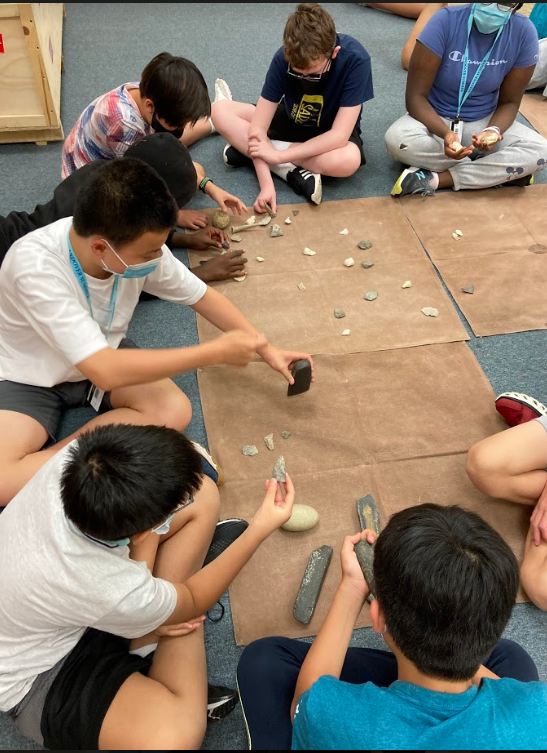
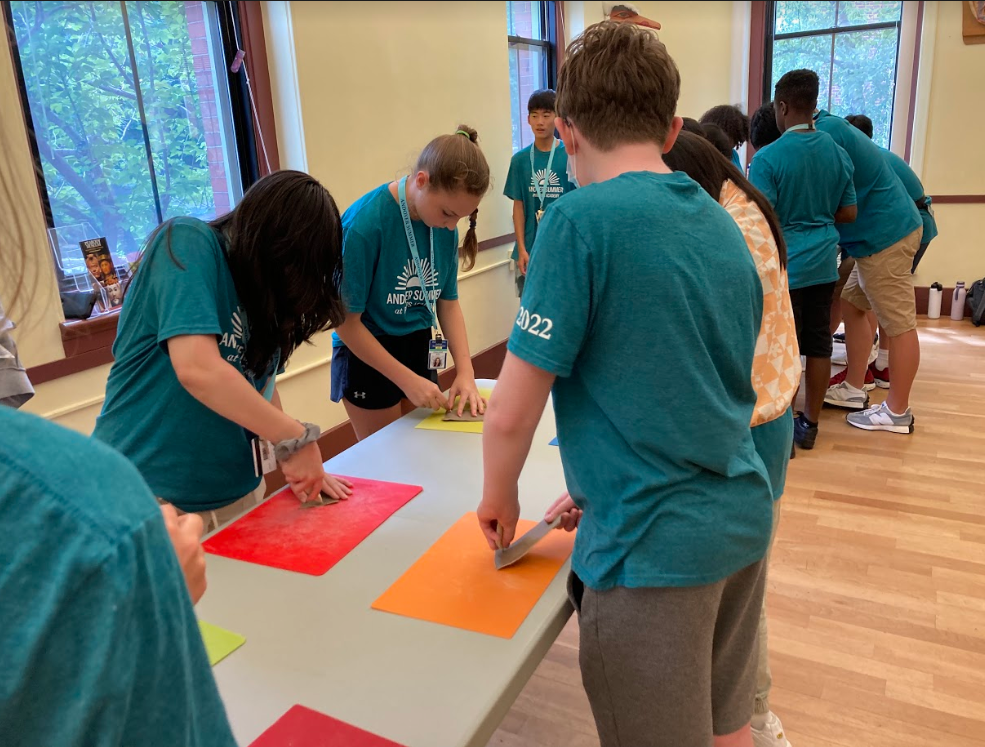
During the month of July, the Peabody hosts the Dig This! class, a course offered by Phillips Academy’s Andover Summer Session. This Lower School initiative takes a closer look at some crucial episodes in the development of this country to hone skills and understanding of dynamic interactions that took place between Native peoples and European newcomers, which continue to shape the United States to this day.

Using the Peabody Institute’s collections, together with extensive library and internet materials, students actively explore a series of case and character studies to understand the minds and strategies of important individuals from some of the most significant events in history. In addition, students attend field trips to nearby historical sites that bring these stories to life.

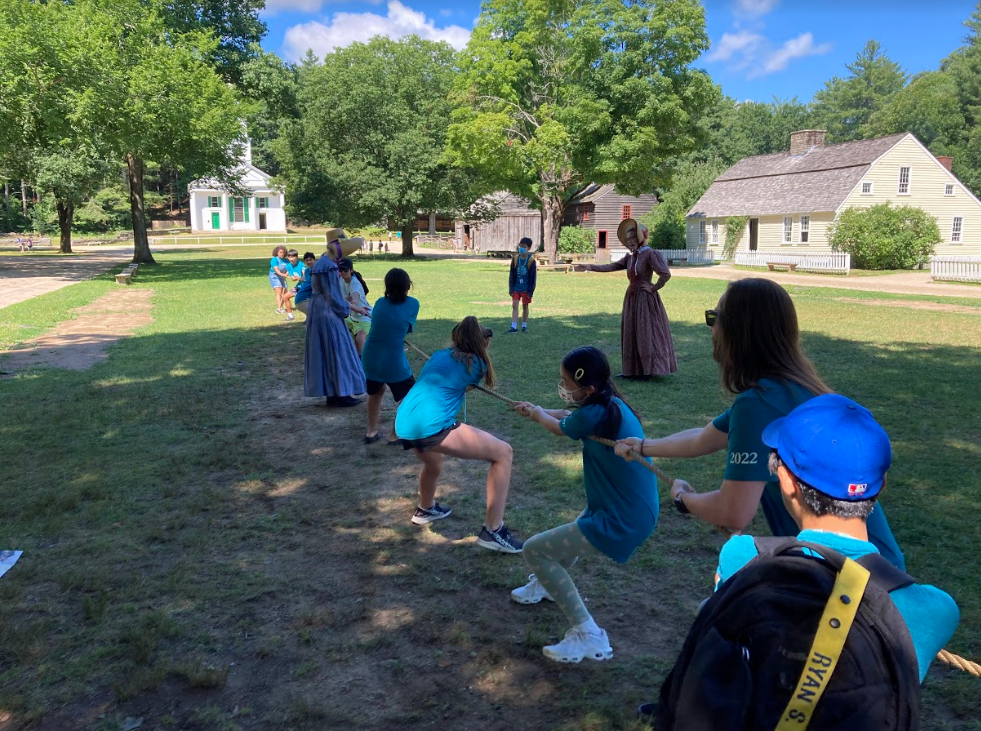
Dig This! students on field trips to the Peabody Museum of Archaeology & Ethnology at Harvard and Old Sturbridge Village

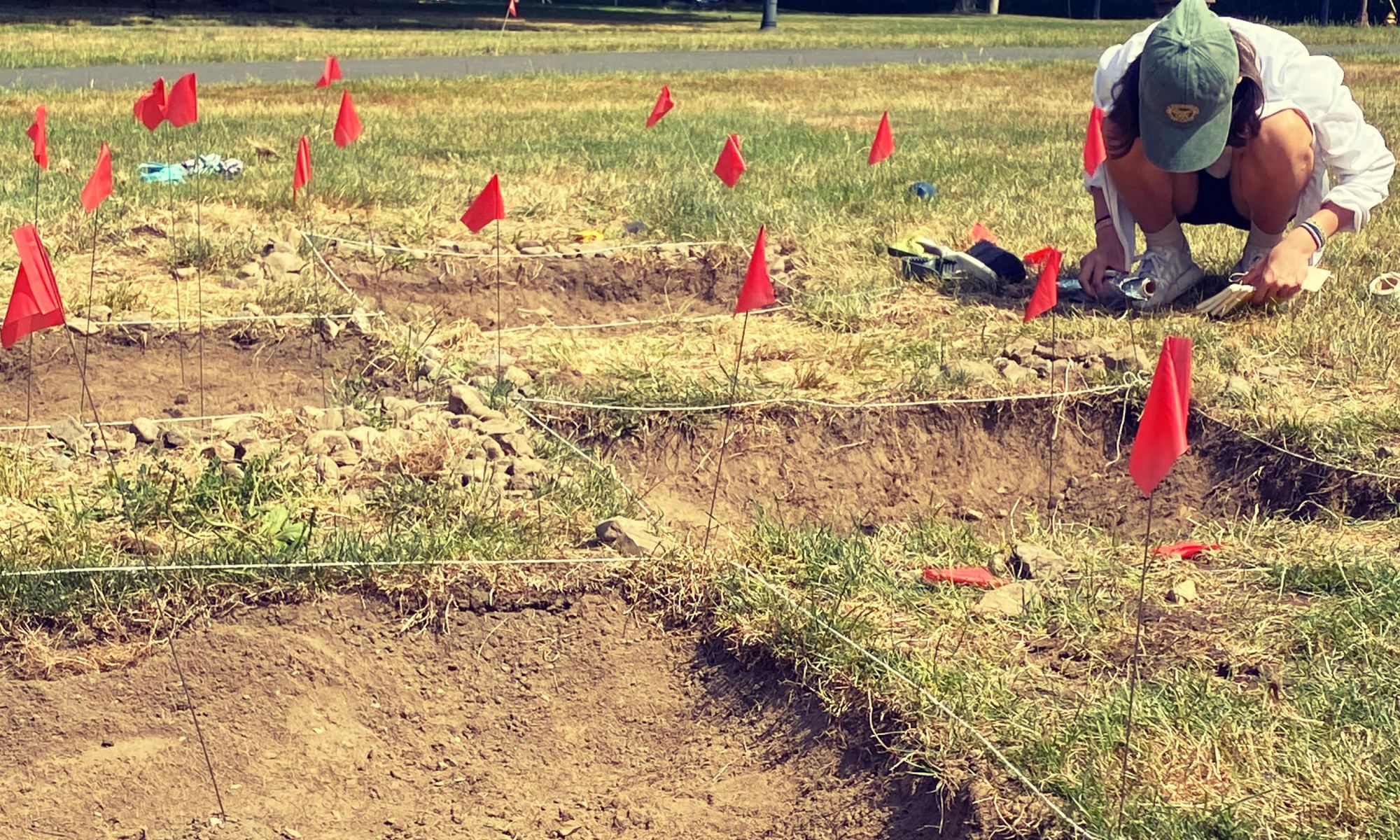
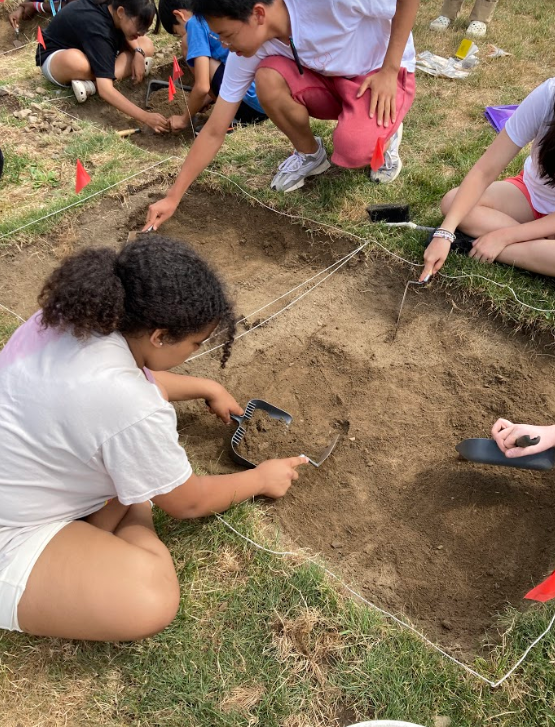
Students then get to participate in their own archaeological excavation of the Mansion House at Phillips Academy – the home of PA founder, Samuel Phillips, Jr. It’s always so exciting to see what these students discover as they take part in this unique opportunity to witness history.

Dig This! students excavating the Mansion House site

Be on the lookout for more updates on students’ findings through our social media this month and maybe even a blog from one of our Dig This! class instructors!

We hope you all are having a wonderful summer!

Behind the Photograph – W.K. Moorehead and the Fort Ancient Excavation

Contributed by Emma Lavoie

Our last newsletter sparked the interest of many readers with a featured black and white photograph of seven individuals posing with shovels, trowels, and cigars in hand. Their eyes focused intently on the camera, full of hope and mystery – reminds me of a moment like the Carpe Diem scene from Dead Poet’s Society. By popular demand, we share some additional information about this photograph.

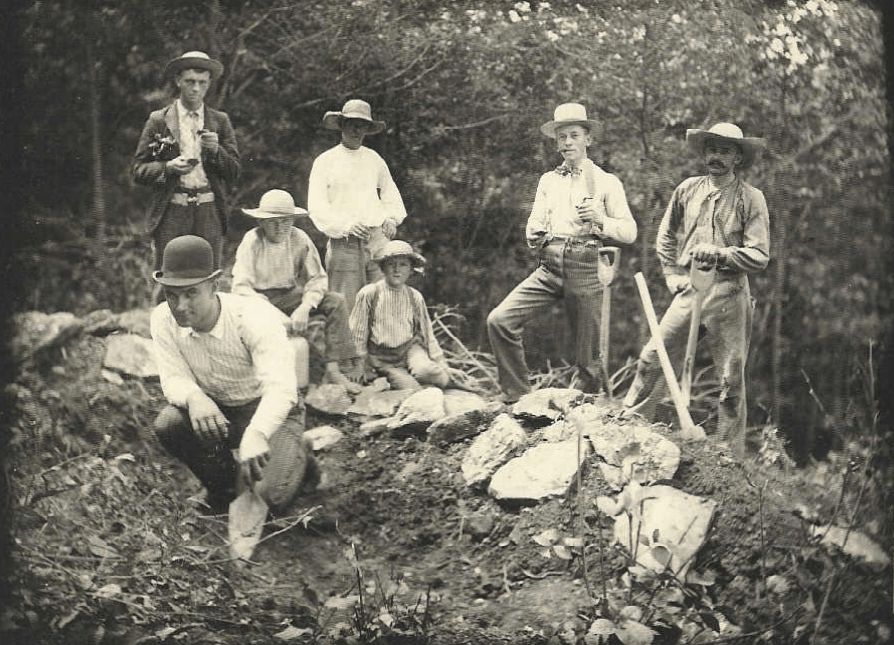
Plate XIV – The Excavation of a Stone Heap near Station 246, Fort Ancient Site, Ohio. Photographed by C.J. Strong. Warren K. Moorehead (second from right), Joseph Wigglesworth (closest to camera on left with trowel), and unidentified field crew members.

This photograph was taken at the Fort Ancient site in Warren County, Ohio in the late nineteenth century. The photograph is of Warren K. Moorehead (second from right) and some of his field crew. Another man is identified in the photograph as Joseph Wigglesworth (closest to camera on left with trowel), a collector and amateur archaeologist from Wilmington, Delaware. You can view the original image in Moorehead’s publication of the Fort Ancient site here.

Fort Ancient is a series of earthen embankments, known as earthworks, with 18,000 feet of earthen walls enclosing 100 acres near the Little Miami River. People of the Hopewell culture (100 B.C. to 500 A.D.) built these walls and many other features both within the enclosure and on the steep valleys that surround the site. Investigations at Fort Ancient began in the early 1800s as mapping expeditions, expanding to surface collecting and full-scale excavations near the end of the century.

Warren K. Moorehead was the first curator for the Ohio Archaeological and Historical Society (now the Ohio History Connection). In 1893, Frederic Ward Putnam hired Moorehead to conduct excavations at Fort Ancient and obtain artifacts for the Columbian Exposition. One of Moorehead’s major contributions to archaeology was the preservation of Fort Ancient as an archaeological park. Later in his career, Moorehead served as the curator and then director of the Phillips Academy Department of Archaeology (now the Robert S. Peabody Institute of Archaeology) in Andover, Massachusetts, where he conducted important excavations at the Cahokia site in Illinois and the Etowah site in Georgia.

The Fort Ancient site is maintained by the Ohio History Connection and is a National Historic Landmark and listed on the National Register of Historic Places. Along with its earthworks, the site includes a museum about Ohio’s ancient history. You can explore the site’s website here!
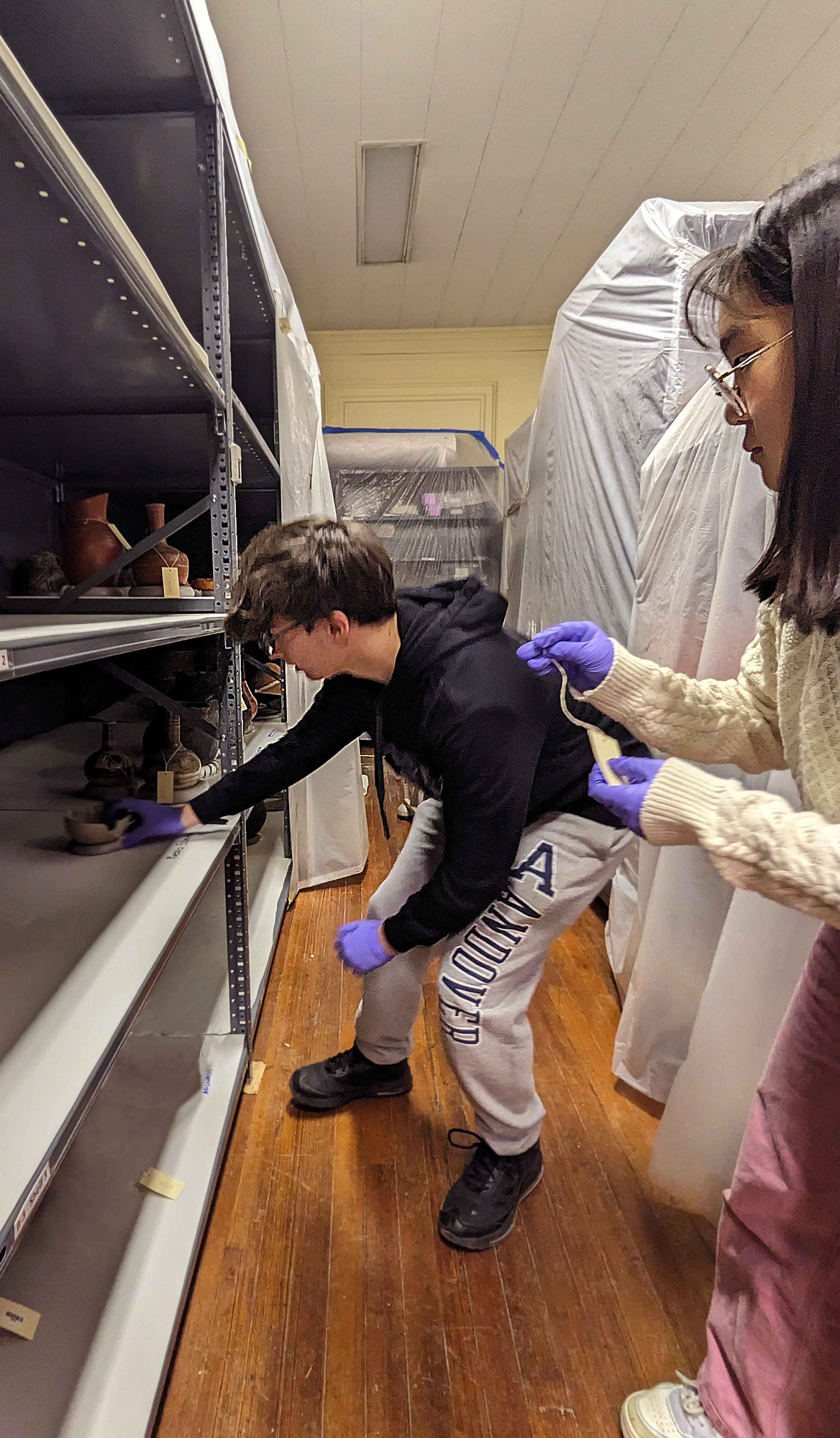
Click on the following links for more information on the Fort Ancient site, Warren K. Moorehead, or Moorehead’s publication on Fort Ancient.