
This blog represents the ninth entry in a blog series – Peabody 25 – that will delve into the history of the Peabody Museum through objects in our collection. A new post will be out with each newsletter, so keep your eyes peeled of the Peabody 25 tag!
Bureaucracy and oversight committees are not modern phenomena. In the earliest years of the Peabody, contemporaneously known as the Department of Archaeology, the work done was overseen by a subcommittee of the Trustees of Phillips Academy. However, the Trustees recognized the limitations of their own knowledge in the world of archaeology and appointed a Special Advisory Committee on Archaeology in 1914.
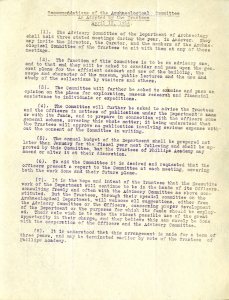
The special committee was tasked with assessing mundane logistical needs of the Department as well as providing direction and feedback on proposed research. Composed of five prominent anthropologists; Franz Boas, William Henry Holmes, Roland Dixon, Hiram Bingham, and Frederic Ward Putnam, the committee made the following suggestions:
- Install a synoptic exhibit, strictly limited in size and scope, of the life of man from geological time to the beginnings of history
- Limit public lectures to no more than 4 each year
- End formal classes in archaeology for the students at Phillips Academy and instead encourage individual students as their interests dictate
- The work of ‘research’ should include two separate divisions; one to investigate large definite problems of archaeology, and the other to aid competent archaeologists in the execution of such of their plans
- Appoint a small permanent advisory committee of experts of easy access, whose duty it shall be to report to the Trustees upon all plans for exploration, organization of study collections, museum research, and publication.
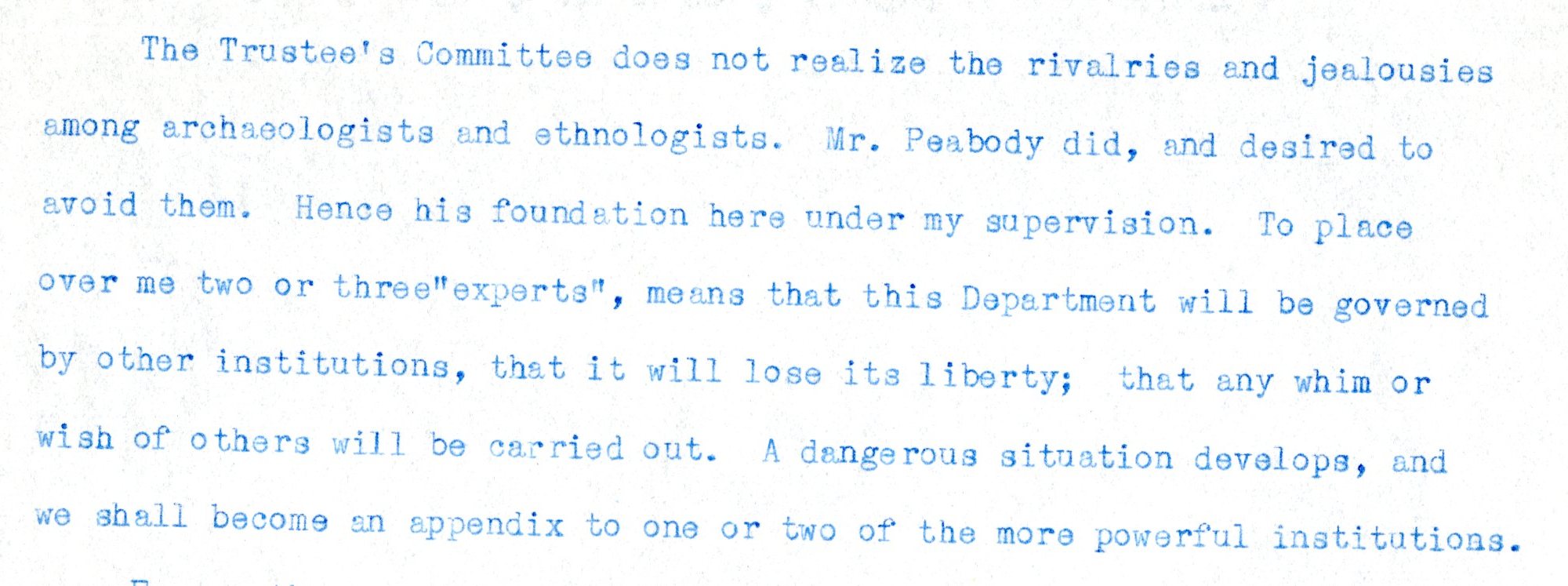
These recommendations were received with mixed feelings by curator Warren K. Moorehead. He appreciated many of the committee’s suggestions, but strongly objected to the creation of a permanent oversight committee. Convinced that they would meddle in his research plans and enmesh him in red tape, Moorehead clearly expressed his displeasure:

However, the committee composed of Dixon and Bingham, existed for several years. They limited Moorehead to his ongoing work in Maine and simultaneously decided to embark on an expedition in the Southwest. This decision directly led to the appointment of Alfred V. Kidder as the Director of Southwest Explorations and his seminal work at Pecos Pueblo, New Mexico.
 The Peabody
2 Replies to “Report from the Advisory Committee on Archaeology, 1914”