
Contributed by Ryan Wheeler
The return to in-person classes means that this fall’s Human Origins includes many of the hands-on project-based assignments that have become a hallmark of the course.
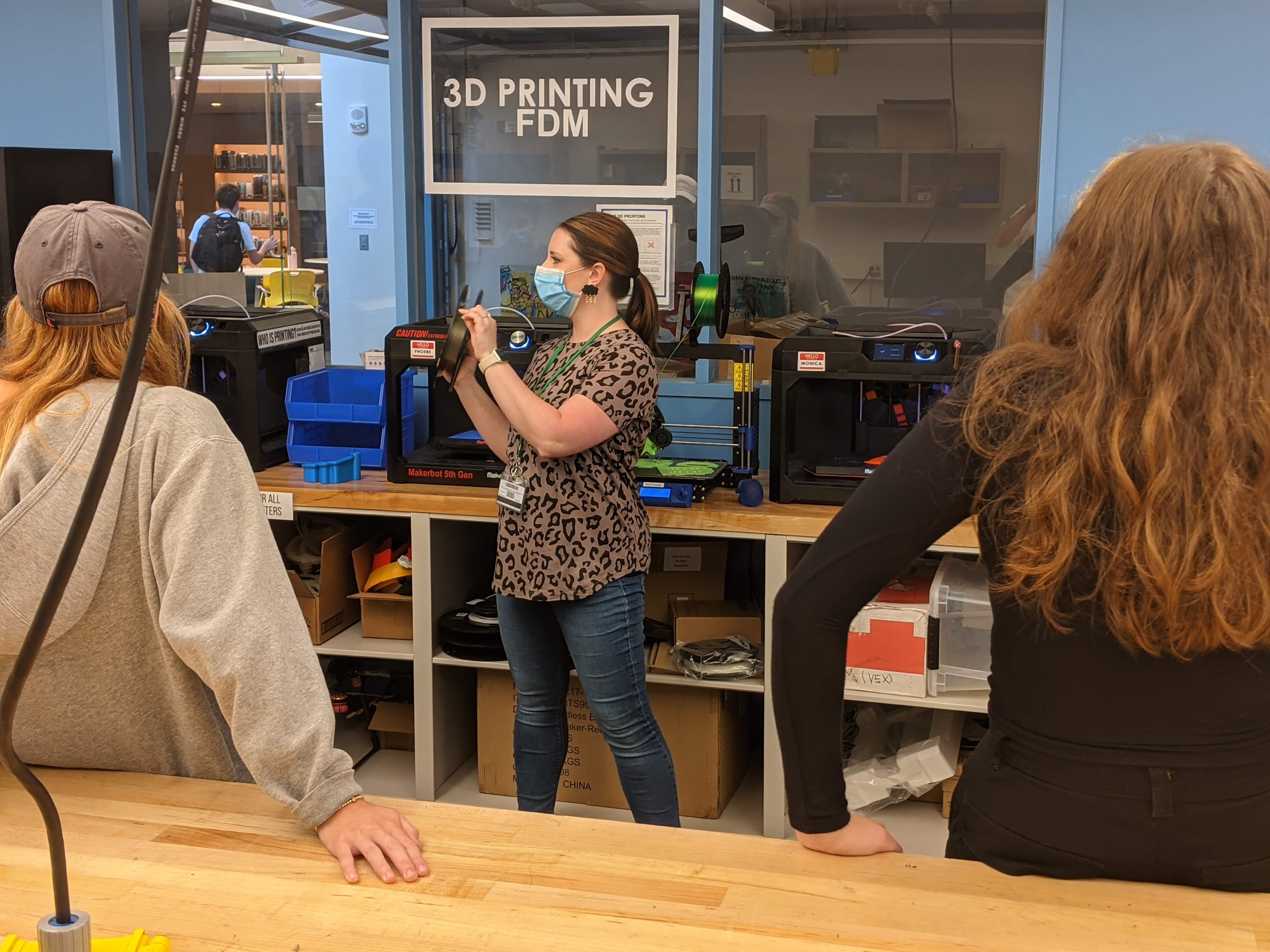
Students in Human Origins—an interdisciplinary science elective—visited with Claudia Wessner, Oliver Wendell Holmes Library Makerspace guru—who introduced the class to our hominin 3D printing project, including different 3D printing technologies, some of the ways that archaeologists use 3D printing and scanning, and Virtual Reality (VR) technology. Ms. Wessner also showed students how to use the Makerspace 3D printers for their projects.
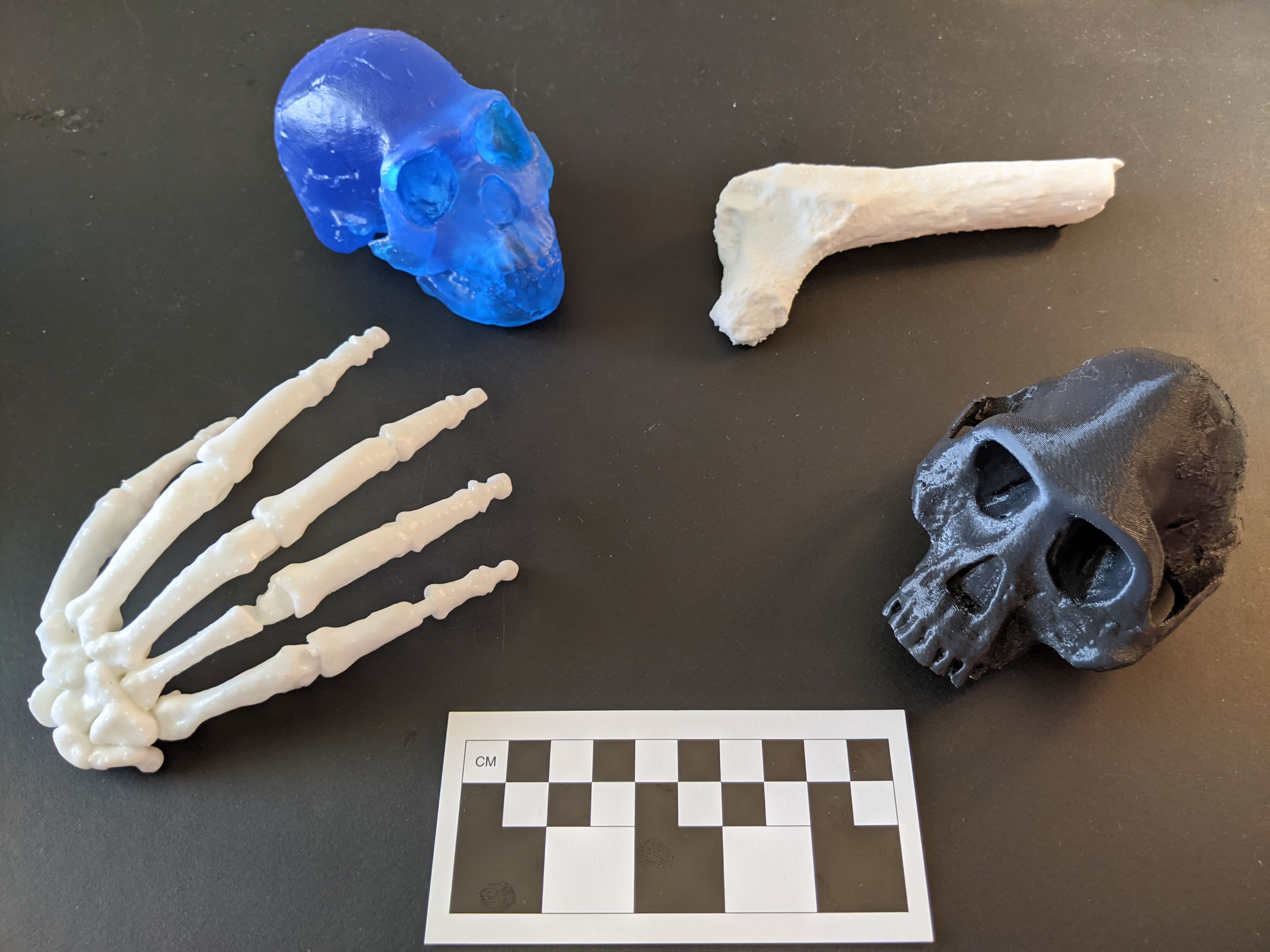
Each project team will select a fossil hominin to 3D print in the Makerspace. Hominins are humans and their close extinct ancestors, including fossils dating back about 6 to 7 million years ago. Students will present their scaled prints, along with basic info on the fossil, during class in a few weeks. This project was inspired by the inclusion of 3D scans of Homo naledi in Morphosource, a database of 3D scans of fossils and biological specimens hosted by Duke University. Since the Homo naledi scans were made available in 2015, many additional fossil scans have been added, including other hominins.

During our September 2021 visit to the Makerspace, Ms. Wessner introduced us to Nefertari: Journey to Eternity-A Tombscale VR Experience. VR technology uses a headset interface so users can experience a virtual world, in this case an Egyptian tomb that has been scanned and recreated. We also discussed The Dawn of Art, Google’s VR version of Chauvet Cave in France, featuring some of the world’s oldest cave paintings.

To learn more about 3D scanning and printing in paleontology and archaeology take a look at the Virtual Curation Lab at Virginia Commonwealth University and University of South Florida’s Digital Heritage and Humanities Collection, each featuring different ways that 3D technology is used today.
Check back as we update this blog with the student 3D prints!
 The Peabody