
Submitted by John Bergman-McCool
In the late 1940s, former Manhattan Project scientist and Nobel Prize chemist, Willard Libby, developed a powerful tool for dating archaeological remains using radioactive decay. Organic materials, such as wood, absorb radioactive carbon-14 isotopes from the environment. Upon death C-14 decays at a steady rate of ½ every 5,730 years, a phenomenon called a half-life. To simplify the process massively; the remaining C-14 in organic remains can be measured to determine the date of death.
This dating method was complicated by nuclear testing, which doubled the amount of C-14 in the environment. The global impact of human activity on the climate and environment, including nuclear testing, led to the proposal of a new geologic era that began in 1950, the Anthropocene. Although not officially accepted as a new epoch due to lack of consensus regarding the start date, there is no denying the atomic age has changed the planet.
When I was a baby archaeologist, freshly graduated with an undergraduate degree, the second project I worked on was an archaeological survey on the Hanford Nuclear Reservation in Washington State. The Hanford site was part of the Manhattan project and home to reactors and processing plants that supplied plutonium to the military during the Second World War. After the war, plutonium production at the site was fueled by the cold war arms race and continued for almost thirty years. It is now considered the most contaminated site in America.
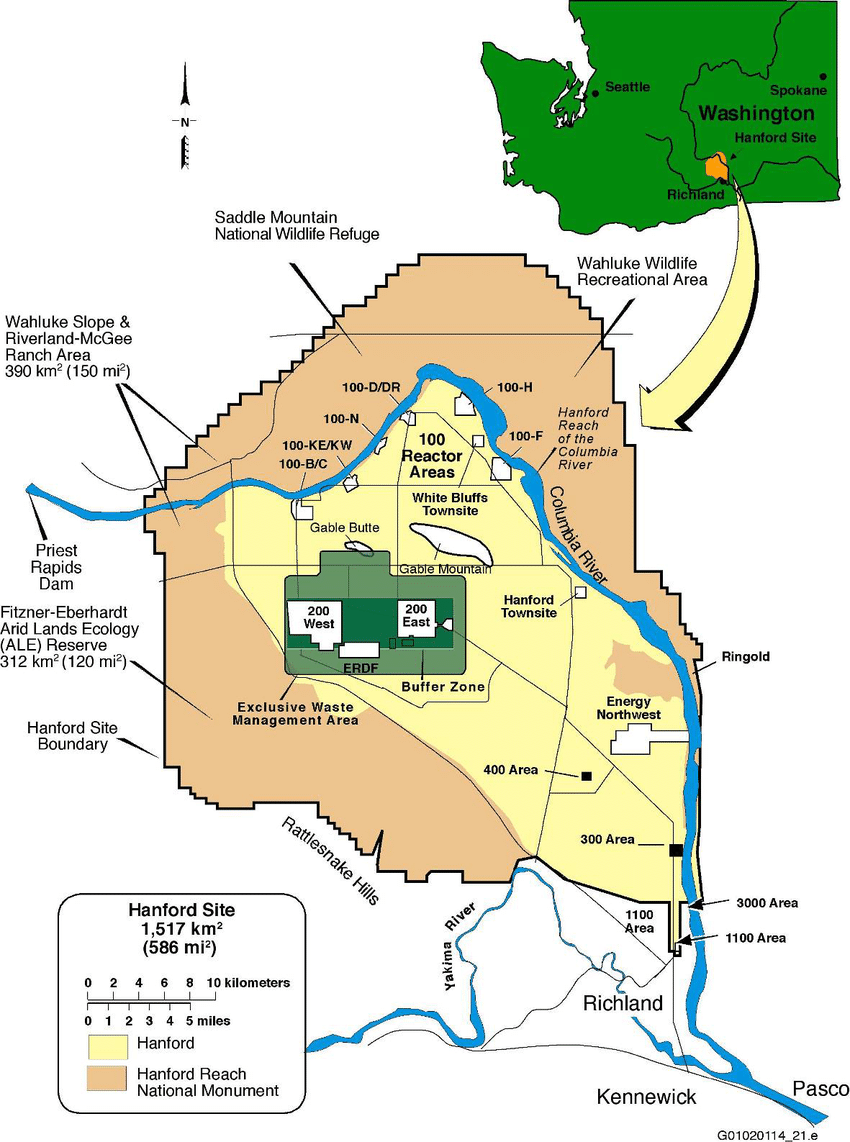
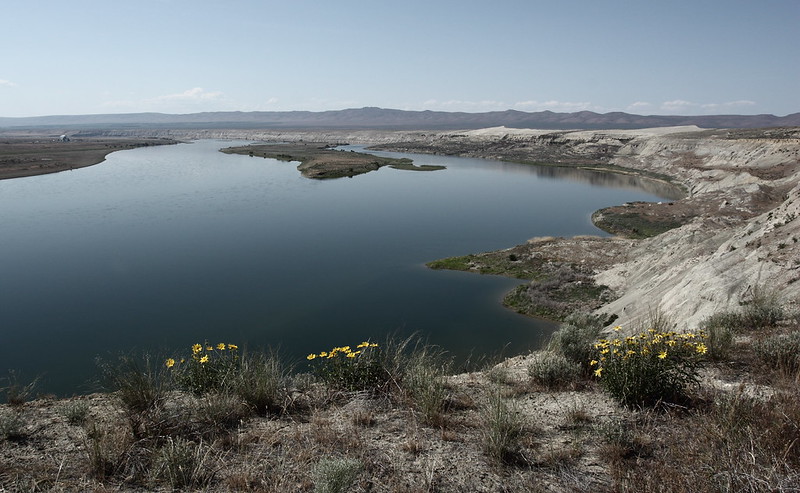
By the time I worked at the Hanford Site, the reactors were decommissioned and entombed in steel sarcophagi, a process called ‘cocooning.’ Cleanup at the site had been going on for decades. Our survey area, though large, was located far away from the reactor sites. From my perspective, the nuclear reservation was huge, seemingly empty and very quiet.
The survey project covered thousands of acres and included mile-long transects. The landscape of the Columbia Plateau is beautiful. The ground is covered in sandy soil and dotted with sage brush. On hot days the smell of sage is dizzying.
We found and recorded can dumps, historic artifact scatters, and a handful of isolated stone tools. The area has an Indigenous history that dates back at least 11,000 years. More recently, the site was used as ranch land and was home to homesteads, farmsteads, and townsites. When the site was commissioned, the existing communities were evicted and the towns razed.
If I had concerns about working on a nuclear reservation, hours of safety training helped quiet some anxiety I had going into the project. I was still new to archaeology, so my attention was mostly focused on learning and doing a good job. We had one heat-exhaustion scare, so hot temperatures seemed like the project’s most pressing danger.
However, one day while working on the banks of the Columbia River, where the post-eviction remains of the town of Hanford looked like they were bulldozed into the river, nuclear activists in kayaks came close enough to ask us what we had witnessed on the site. This encounter, along with others like test wells and magenta and yellow barricades denoting radioactive hazards cut through the seeming normalcy of the project.
My memories of the project at Hanford have been freshly recalled because I’ve been listening to the Time Zero podcast. Time Zero tells the tale of the nuclearized world. Its creator, Sean J Patrick Carney is an artist, writer, and composer.
Carney tells the story of nuclear development through the eyes of Indigenous and non-native activists, historians, downwinders, artists, and archaeologists. Rather than a dry retelling of the history of nuclear development, the people and locations he presents keep the content engaging. At times the podcast delves into a critique of pop culture and at other times revisits catastrophes both well-trodden and lesser known.
As an example, growing up in eastern Washington State, I heard whispers of cancers attributed to but never concretely pinned to the Hanford site. Time Zero briefly covered the Green Run, the 1949 planned release of radioactive Iodine-131 from Hanford that would allow the government to develop technologies for tracking nuclear particles in the environment.
A National Parks Service history of the Green Run explained that the experiment was botched, releasing twice the amount iodine than planned. Unforeseen weather conditions blew the particles all across central Oregon and eastern Washington. While this release was considerable, the total amount of radioactive iodine over the three decades of work at Hanford was nine thousand times that of the Green Run.
The podcast is dense and full of too many facts to recount in this blog. If you are a fan of reading, the podcast has an accompanying Substack with free access. It includes images that provide context for readers and listeners alike.
The relevancy of Time Zero is particularly potent now, as the tech sector is seeking energy for data centers central to the development of AI technologies. Nuclear is often mentioned as a clean and safe option and advocates of nuclear energy argue for ramping up construction of new power plants.
Yet, the history of nuclear technology across the world, and in the United States specifically, includes instances of removal and contamination of people caused by extraction, production, and testing of nuclear products. As Carney and his Indigenous collaborators point out, no one in the U.S. has borne the burden of the Atomic age more directly than the Indigenous communities.
Indigenous lands have been and still are considered expendable to the nuclear industry. Most of the uranium mining, bomb-testing, and planned storage of waste materials has targeted Native lands. It’s a legacy that is at risk of being repeated if the tech industry is to be believed.
The Anthropocene dawned somewhere between 300 and 70 years ago. The lasting impact of the epoch is outsized compared to its young age. Half-lifes of spent nuclear fuel are geologic in scale and almost unfathomable. Plutonium decays at a rate of ½ every 24,100 years. It will be considered safe in 240,000 years. Uranium decays at ½ every 4.46 billion years (roughly the age of our planet). Nuclear’ s longevity is probably the most impactful takeaway from Time Zero.
Go check out the podcast and site. Though the material is heavy, there is hope that comes from art and activism.
Time Zero website:
https://timezeropod.substack.com/
Testing on native lands:
https://nuclearprinceton.princeton.edu/nuclear-weapons-testing
The Green Run:

