In 1990 President George H. W. Bush (Phillips Academy Class of 1942) signed into law the Native American Graves Protection and Repatriation Act (NAGPRA). The passage of NAGPRA signaled a major shift in the relationship between Native Americans and museums, requiring that the latter inventory collections and identify human remains, funerary objects, sacred objects, and objects of cultural patrimony and contact the appropriate tribal groups to arrange repatriation. For tribal peoples this represented major human rights legislation.
Former Peabody director James Bradley and repatriation coordinator Leah Rosenmeier embraced the new law and worked diligently through the 1990s and into the early 2000s to identify NAGPRA collections, to determine tribal affiliations, and to ensure timely repatriation. Much of the focus during this time was on human remains and associated funerary objects. Major consultations include those that involved Alfred V. Kidder’s excavations at Pecos Pueblo in the early twentieth century, Warren Moorehead’s excavations at the Etowah and Little Egypt sites in Georgia, and excavations at sites in Maine.
Today the Peabody continues its commitment to working with tribes and indigenous peoples to ensure that ancestral remains, funerary objects, sacred objects, and objects of cultural patrimony are repatriated in a respectful and timely fashion. Much work has been done and much remains to be done.
The Peabody supports the United Nations Declaration on the Rights of Indigenous Peoples and is committed to the repatriation provisions outlined in that document. The United Nations Declaration on the Rights of Indigenous Peoples explicitly affirms that indigenous people have a right to repatriation of ceremonial objects and human remains.
We look forward to hearing from the representatives of tribes in the United States or indigenous groups abroad to answer questions, to schedule visits to view collections, to receive guidance on care and storage of collections, or to begin the consultation process. We also are happy to discuss NAGPRA and repatriation with staff members from other institutions. Please contact Peabody director Ryan Wheeler (rwheeler@andover.edu or 978 749 4493) to begin a conversation today.
Since the announcement of Homo naledi’s discovery in 2015, this South African fossil hominin has made an appearance in the multidisciplinary science course Human Origins, taught at the Peabody and offered as a senior science elective by Phillips Academy.
Over 100 specimens of Homo naledi have been scanned and made available via Duke University’s MorphoSource website. This represents unprecedented access to the fossils. Typically, we rely on older casts (our plaster casts from Wenner-Gren’s twentieth century casting program have become quite fragile!) or models made from photos and measurements.
Reconstruction of Homo naledi hand from MorphoSource website.
Last year in Human Origins Phillips Academy Makerspace guru Claudia Wessner helped us 3D print Homo naledi’s femur, which includes some unusual features, including a distinct sulcus or furrow on the femoral neck that is not known in other hominins. Students and instructor alike puzzled over the femur, and compared it to other casts and models in the Peabody collection.
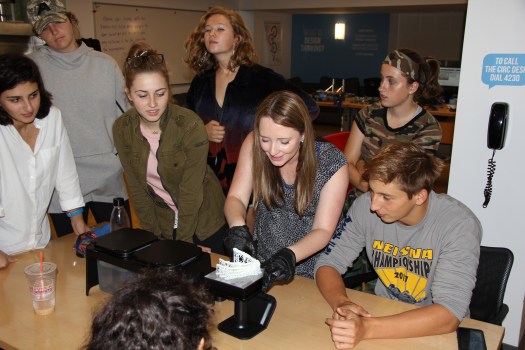
This year Ms. Wessner was kind enough to host us again and discuss different types of 3D scanning and printing and help us think how these might be useful in paleoanthropology and physical anthropology.
Human Origins students look on as Claudia Wessner prepares the resin print of Homo naledi’s hand for a bath in alcohol.
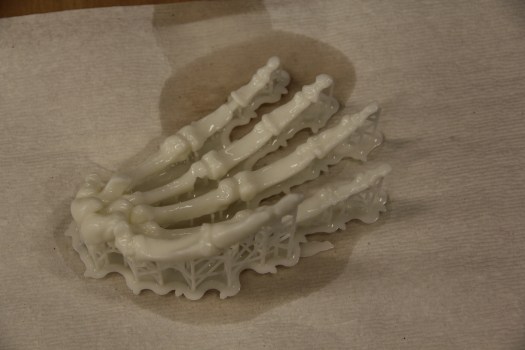
Instead of the femur, we chose to do a 3D print of Homo naledi’s hand, also available via the MorphoSource website. We were treated to side by side 3D prints using the Makerspace’s filament and resin printers. While the prints with the filament printer were interesting, the resin print is at a level comparable with a cast or model, in terms of finish and detail. Lee Berger and his colleagues, involved in discovery and study of Homo naledi, have pointed out that the hand is quite similar to that of a modern human, but also has curved bones likely related to tree climbing. Students in Human Origins 2017 got a chance to see Homo naledi’s hand up close and compare with bones of a modern human, noting the similarities and differences.
Resin 3D hand print.
In the intervening months between the 2016 and 2017 Human Origins classes we’ve learned a lot more about Homo naledi. Lee Berger’s book, Almost Human, was published, adding lots of exciting details to the discovery and quest to date the remains, and perhaps most important, we now understand the dating of the fossils. In May 2017 we learned that Homo naledi dates between 236,000 and 335,000 years ago, making them a cousin, rather than great-grandparent of modern humans. It is fascinating to imagine, however, that a hominin that combined aspects of Australopithecines and much more modern features existed around the same time as the earliest anatomically modern humans.
Comparison of hands, from upper left, clockwise: 3D resin print of Homo naledi; plastic anatomical model, modern human; 3D filament print, Homo naledi; real bone anatomical model, modern human.
An end of the term assignment, Human Origins in the News, asks students to find recent and relevant news stories and share them with the class. One story—from September 2017—reports on new fossils found at the Rising Star Cave system. Also members of the new genus and species, these fossils may help understand how Homo naledi accessed the cave and if they were being interred there.
Beyond the classroom, Homo naledi inspired some excitement in one of the seniors who took the course in 2016. I was delighted when she wrote to me in May 2017 to report that Lee Berger’s Almost Human book was out–she had pre-ordered on Amazon and her copy had arrived. A few months later she had a chance to hear Dr Berger deliver a lecture on Homo naledi at the Chautauqua Institute in New York.
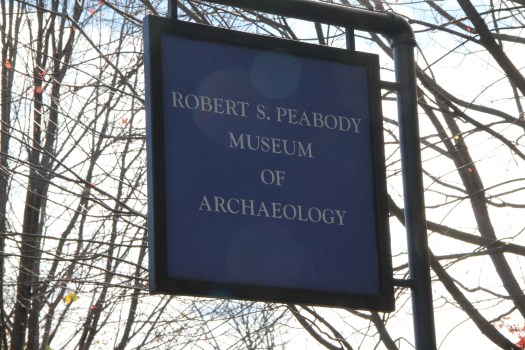
The Peabody has a new name! The Phillips Academy Board of Trustees, at their November 5, 2017 meeting, approved the Peabody’s new name. We are now known as the Robert S. Peabody Institute of Archaeology. Part of our proposal for a name change–included below–addresses the history of our institution’s name, issues of identity, and practical concerns:
Throughout the Peabody’s strategic planning work in 2014 and 2015 there was frequent discussion about the need for focused work on branding. These conversations included Museum personnel, members of the Peabody Advisory Committee, and the broader Phillips Academy community. There was general agreement that one issue was the name Robert S. Peabody Museum of Archaeology. Discussants pointed out that the name “Peabody” often leads to confusion with the other, larger institutions in Salem, Cambridge, and New Haven, and that the term “museum” is misleading.
The topic of branding was revisited during the Peabody Advisory Committee’s 2016 summer retreat and November 2016 meeting and the group proposed a name change.
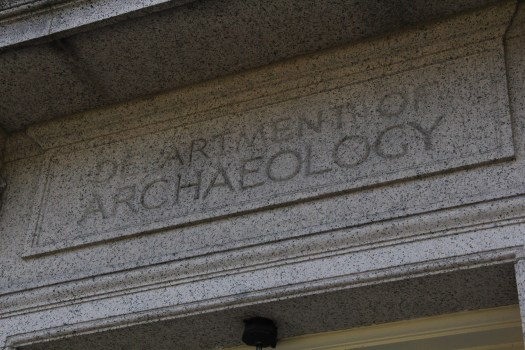
“Department of Archaeology” engraved in the granite entablature above the door was part of architect Guy Lowell’s original 1901 building design and reflects Robert S. Peabody’s interest in seeing the institution as an integral part of campus pedagogy.
The topic of a potential name change has been considered in three ways:
1) Historical— Past names for our institution include Department of Archaeology (1901-1938); Robert S. Peabody Foundation for Archaeology (1938-1995); and Robert S. Peabody Museum of Archaeology (1990-present). The most recent name change occurred in the 1990s and was made to reflect the interest in creating an exhibition driven institution like the Addison Gallery of American Art. That program ended in 2002 with a shift to our current focus on teaching and learning.
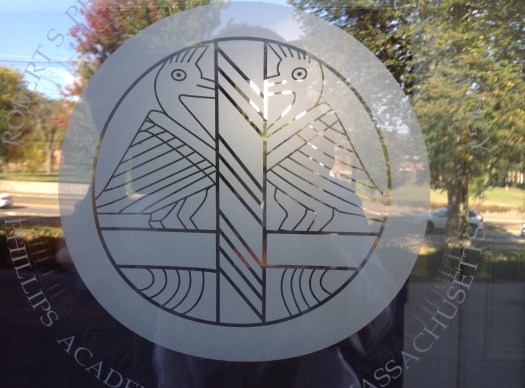
The logo from the Peabody’s front doors is based on a shell gorget from the Etowah site in Georgia.
2) Identity—Museum personnel and advisory committee members have discussed whether or not we are a museum. For example, Eugene Dillenberg’s 2011 article in Exhibitionist emphasizes exhibitions as the core defining aspect of a museum, with exhibits as the primary mission and goal of the institution. The Peabody’s current mission is to provide archaeological and anthropological learning opportunities to the students of Phillips Academy, returning to Robert Peabody’s original vision for the institution, which was to introduce students to the emerging disciplines of archaeology and anthropology, to conduct scientific research, and to provide a place for student activities. There also was general agreement that it was important to retain the name “Peabody,” despite the proliferation of Peabody museums in New England. The sense was that we would continue to be called “The Peabody” on campus and in the broader Phillips Academy community.
Blue sign for the Robert S. Peabody Museum of Archaeology on Andover’s Main Street.
3) Practical—the word “museum” creates considerable confusion as people come here expecting a more typical museum experience. While we are happy to have people come for tours and events (and classes, of course!) we are a pretty disappointing experience to a growing number of casual visitors. As we become more well-known in the area more people have become curious about what is inside the building and come in to find out.
In his gift letter to the Board of Trustees and the Academy administrators in 1901 Robert S. Peabody shared that he did not want to create a museum on campus, but rather to find ways to introduce students to the fields of archaeology and anthropology. We’ve come to recognize the prescience and vision of Peabody’s original idea for our institution. We trust the name change will help avoid confusion and emphasize our commitment to teaching and learning on campus and beyond.
In June 2017 I had the opportunity to visit China in preparation for a potential student trip—part of the Phillips Academy Learning in the World program. My traveling companions included Anne Martin-Montgomery and Jingya Ma, who aided in developing the itinerary, which delves into China’s ancient past. With a dizzying number of UNESCO World Heritage Sites (52 on the list, with even more proposed sites), our goal was to create a student travel experience that blends adventure, archaeology, and learning.
Distinctive pointed bottomed water jar from Banpo site.
Painted Neolithic pottery from Banpo, showing an anthropomorphic fish or “mermaid.”
Holographic exhibit at Banpo.
Burials at Banpo site.
One destination was Xi’an in Shaanxi Province. Xi’an boasts lots of historical and archaeological sites, most notably the mausoleum of Qin Shi Huang. The mausoleum is best known for Emperor Qin’s terracotta army, which doesn’t disappoint. Pictures don’t do it justice and it is fun to look at the sea of soldiers lined up, ready to march up ramps and out the false doors. The site—located in Bingmayong outside of Xi’an, was mobbed with visitors, all ready to pose for a selfie with some of the emperor’s immortal warriors. Xi’an, however, includes other ancient sites, which can be found in other suburbs like Bànpō.
Bànpō Neolithic Village is tucked into a neighborhood of this Xi’an suburb. It was found in the 1950s during construction for an industrial site, and if you peek over the fence today you will see a factory complex, including a billiard table manufactory.
Interior of Banpo excavation hall–the moat is in the foreground, posthole outlines of structures can be seen as well.
Bànpō was the oldest site on our itinerary, dating to the Neolithic Yangshao culture, with occupation going back to 6,500 years ago. Like Emperor Qin’s mausoleum, the excavation site is covered by a fairly substantial structure, so visitors can observe the outlines of houses, the moat, burials, and in place features. Exhibit halls showcase artifacts from the site, along with dioramas of Yangshao life. Markings on the early pottery from the site have suggested to some precursors to the writing systems known from the Bronze Age.
At the rear of the museum property are the remains of the Bànpō Matriarchal Clan Village, which apparently offered a living history interpretation of Neolithic life. This has been replaced with a newer area that showcases Neolithic activities on the weekend, including thatching your hut, fire making, and other early technology and skills.
Marxist ideology has heavily influenced the interpretation of Bànpō, emphasizing that this was a matriarchal culture. This is not surprising, since in Marxist thought matriarchal clan based society was a hallmark of early stages in a unilinear social evolution that moved inevitably toward patriarchal family based society. These ideas have been largely abandoned today, though the site is replete with signage that emphasizes this interpretation.
Ryan Wheeler with Banpo woman and man.
A cute 2015 graphic novel style guide book tells the story of the site and the Yangshao culture. The matriarchal focus is still there (one of the main characters is Bànpō girl), but there is lots of accessible info on foodways, pottery making techniques, and the layout of the village.
We are looking forward to visiting Bànpō again and catching some of the Neolithic lifeways demonstrations. Interactive and hands on activities have become the norm in US museums, but we encountered few such programs in China.
I’ve been interested in indirect cooking technology since the early 1990s when I worked with archaeologists Barbara Purdy and Ray McGee in an excavation of an Archaic period site in central Florida where we found evidence of this ancient American Indian culinary technique. At the site, submerged beneath the waters of Lake Monroe and not too far from Orlando, in levels pre-dating ceramic pottery, we found fragments of fired-clay objects. Ray and I were fascinated by the shapes—balls, patties, cylinders, and biconical forms—and speculated about their purpose. They were similar to clay and stone objects found at other early sites and thought to be used in a variety of indirect cooking, either for boiling or steaming. Ray ultimately studied the clay objects for his 1994 University of Florida master’s thesis, which combined aspects of experimental archaeology and materials science. I was lucky enough to be around to help with his study, which began with replicas of the Lake Monroe clay objects. We dug clay from near the site, it was processed to remove impurities, and used to make numerous clay object replicas, which were then subject to extensive experimental trials. Ray demonstrated that not only could the clay objects be used for boiling, but that the different shapes had different thermal properties. And, not only did the clay objects survive successive heating and drenching cycles, the objects fragmented to closely match the fragments we had found in archaeological deposits. Thousands of years before the first pottery was made and used in the Southeastern United States, the clay ball chefs understood how to manipulate clay into ceramic objects and the distinct differences between shapes with greater and lesser surface area and other details. In a final experiment Ray and I tried to cook with the clay objects, heating water in wooden bowls to boil shrimp and corn meal. The meal was successful!
Several shapes of fired-clay cooking objects: balls, patties, biconical forms, and cylinders.
During spring term 2017 I’ve been fortunate to mentor a senior independent research project, or IP. The student’s spring project is a continuation of a project begun in winter term, which investigates ancient pottery making technology, with a particular focus on temper—additives to clay that help with making pottery vessels, firing survivability, and use life after firing. I shared Ray McGee’s thesis with the IP student, who was equally fascinated by the clay objects and their use in cooking. Much of the student IP focused on collecting and using native clay sourced from West Newbury, MA, and then experimenting with firing vessels made using a variety of traditional tempers, including sand, crushed shell, and decomposed granite, as well as untempered clay. The almost innumerable variables have presented some real challenges, but also open a tiny window into pottery making thousands of years ago. We agreed too that part of the project this spring would include making, firing, and using replicas of the fired-clay objects, using the varying tempers and shapes described above. An article in Indian Country Today indicates that hot stones were used by American Indians in the Northeast in both steaming pits and boiling.
Our attempt today to use the fired-clay objects in boiling followed much like the experiment that Ray McGee and I conducted during his thesis research in the early 1990s. The clay objects had been prepared, dried, and pit fired several weeks earlier. We noted that the cylinder-shaped objects were rather delicate, and many of the objects had small cracks. In general, the ball and biconical forms were intact, while the patties had more cracks. A supply of the fired-clay objects were added to a small oak wood fire, which quickly climbed in temperature, ultimately leveling off around 1500 degrees Fahrenheit. After objects had been in the fire a small number were cycled through a wooden bowl containing about a quart of water. The water temperature rose quickly, though it got a bit murky from charcoal. We decided that we had the capability to boil water. We prepared a fresh bowl of water and corn meal grits—three cups of water and one cup of grits—as directed by the package. We cycled fired-clay objects in and out of the bowl until the water was absorbed and the grits were cooked—about five minutes. A little salt and butter made the grits a tasty treat. Next we replicated the experiment with about half a pound of shell-on shrimp. More water was used and by this point we had become more proficient at cycling the clay objects from the fire to the bowl and back. The water boiled and shrimp were quickly cooked. Lemon and butter completed this course. For the most part the clay objects were holding up, though more of the cylinders broke and some of the patty shapes also cracked and split in the fire. Some broke while they were in the wooden bowl. The ball and biconical shapes seemed to hold up the best and were perhaps best suited to our purpose—getting the water boiling quickly. After the shrimp, we were a bit more ambitious and agreed to try a handful of spaghetti pasta. This would be a real test, since the water would have to boil continuously for 9 to 10 minutes. We added more clay objects to the fire, recognizing that we might need more to keep the water going. Quickly cycling the clay objects in and out of the fire produced a rolling boil that easily cooked the noodles. Our wooden bowl, however, suffered, and we had two pretty substantial cracks that developed on either side. Adding more water and fewer cooking objects may have helped—it seemed like 2 or 3 at a time in the wooden bowl were enough to keep the boil going.
Phillips Academy senior adding heated fired-clay objects to his cooking pot.
Data crunching and correlating is ongoing in this student project, and at least one additional outdoor firing is planned in order to test a few additional variables and observations gleaned from experiment and research. The fired-clay cooking objects, however, are evidence of indirect cooking in antiquity, long before the creation of pottery vessels. It’s not clear if fired-clay cooking objects were made and used in the Northeast in the long distant past, and the more recent accounts mention cooking with hot stones. Pottery was adopted in the Northeast around 3,000 years ago, perhaps introduced from neighboring areas. In Florida and other parts of the Southeast, pottery is much older—made and used at least 5,000 years ago—and appears to be an in situ development. Perhaps the fired-clay cooking objects were precursors of pottery and gave people insights into manipulating clay and the properties of fired-clay. As this student project has demonstrated, making pottery by hand and firing it in the open air presents considerable challenges that could only be overcome with significant knowledge of clay, temper, fuel, weather conditions, and more.
In 2017 archaeologists Meg Conkey, Dan Sandweiss, Ryan Wheeler, and Nancy Gonlin founded the Journal of Archaeology and Education. The journal is hosted at the University of Maine’s Digital Commons website.
JAE originated with Peabody Advisory Committee chair Dan Sandweiss during strategic planning work and inspired by the Robert S. Peabody Museum of Archaeology’s long history of using archaeology in the classroom, one which got a boost in 2002 when this focus became our raison d’être. There has been a growing interest in learning around archaeology—from college and university curricula to service learning, as well as archaeology in the high school classroom and initiatives like Project Archaeology. Despite many connections with allies at the Society for American Archaeology and the Archaeological Institute of America, practitioners in this area are diverse and only loosely connected.
An open-access, online journal is one major step to foster a sense of community and create a platform to share everything from practice to theory and research. This format ensures equal access to interested parties, something which we all believe is critical. During the Society for American Archaeology’s 2017 meeting in Vancouver we held the inaugural meeting of the JAE editorial board, which includes members from museums, educational institutions, academia, government, and more. Editorial board members spent some time getting to know one another and brainstormed ways to encourage article submissions to the new journal.
JAE Mission Statement
The Journal of Archaeology and Education is a peer-reviewed, open-access journal dedicated to disseminating research and sharing practices in archaeological education at all levels. We welcome submissions dealing with education in its widest sense, both in and out of the classroom—from early childhood through the graduate level—including public outreach from museums and other institutions, as well as professional development for the anthropologist and archaeologist. The journal’s founders recognize the significant role that archaeology can play in education at all levels and intend for the Journal of Archaeology and Education to provide a home for the growing community of practitioners and scholars interested in sharing their first-hand experiences and research.
Nancy Gonlin—JAE Editor
Nancy Gonlin is a Senior Associate Professor at Bellevue College, Washington. She earned her Ph.D. in Anthropology at The Pennsylvania State University, is a Registered Professional Archaeologist, and a former Dumbarton Oaks Fellow of Harvard University. Her specialization is the Classic Maya civilization of Mexico and Central America. Nancy is on the Editorial Board of Ancient Mesoamerica, published by Cambridge University Press. She has taught for over 25 years and is highly regarded for her pedagogical contributions – she is the 2012 recipient of Bellevue College’s Margin of Excellence. As an active member of the Society for American Archaeology, Nancy serves on the Committee on Curriculum and has been appointed as the upcoming Chair of the Book Award Committee. She co-author Copán: The Rise and Fall of an Ancient Maya Kingdom, and co-edited Commoner Ritual and Ideology in Ancient Mesoamerica, Ancient Households of the Americas, and Human Adaptation in Ancient Mesoamerica. Nancy’s fifth book will be a co-edited volume on a new field of research in archaeology, The Archaeology of the Night.
As an online only, open access journal, JAE is designed for quick and timely publication of accepted papers. To that end, each year will constitute a volume and each article will be a separate numbered issue. As soon as an article is accepted in final version, copy-edited, and laid out, it can be published instantly.
The Peabody Advisory Committee has selected Katie Kirakosian and John Andrew Campbell as recipients of the Linda S. Cordell Memorial Research Award for 2017. This award supports research at the Robert S. Peabody Museum of Archaeology using the collections of the museum. The endowment was named in honor of Dr. Linda S. Cordell, a distinguished archaeologist, specializing in the American Southwest. Linda was Senior Scholar at the School for Advanced Research in Santa Fe, New Mexico, a member of the National Academy of Sciences, recipient of the A.V. Kidder Medal for eminence in American Archaeology, and a valued member of the Peabody Advisory Committee.
Dr. Kirakosian received her PhD from UMass Amherst in 2014 and is currently adjunct faculty at several schools in Rhode Island. Her project focuses on archival materials from Warren Moorehead, Douglas Byers, and Frederick Johnson to continue her dissertation research and prepare a book on the history of archaeology in Massachusetts using social network analysis. Dr. Kirakosian published some of her previous research using Peabody collections in the 2015 issue of the Bulletin of the History of Archaeology: http://www.archaeologybulletin.org/articles/10.5334/bha.260/
Mr. Campbell is a PhD candidate at the Memorial University of Newfoundland. His research at the Peabody includes a re-examination of collections from the Dennysville site in Maine, as well as several other sites in New Brunswick. His dissertation research is focused on protohistoric and contact period Wabanaki peoples in Maine and the Canadian Maritimes.
For more on the Linda S. Cordell Memorial Research Award see our blog: http://bit.ly/22pgzV5
This blog represents the fifth entry in a blog series – Peabody 25 – that will delve into the history of the Peabody Museum through objects in our collection. A new post will be out with each newsletter, so keep your eyes peeled for the Peabody 25 tag!
The winter 2017 issue of the Andover magazine includes a great piece by Jane Dornbusch on our repatriation of a sacred birch bark scroll to the White Earth Nation in Minnesota. In a nutshell, Peabody curator Warren Moorehead received a number of items from the White Earth Anishinaabeg in 1909 during his investigation of fraud on the reservation. That collection—principally men’s ceremonial regalia and beaded bandolier bags—also included a pictographic bark scroll used in the ceremonies of the Midewiwin, or Grand Medicine Society. Jane’s story also mentions my visit to White Earth in March 2016. The following essay was written right after I returned from Minnesota and provides a few additional details about that visit.
White Earth Land Recovery Project Executive Director Bob Shimek talks to tribal members and college service learning students, March 2016.
At the end of March 2016 I flew into Fargo and drove east, headed for the White Earth Indian Reservation. As I drove I passed an occasional cluster of houses, farmland with lots of black, rich soil, as well as lakes, streams, and groves of trees dotting the horizon of a really big sky. I learned later from Bob Shimek, executive director of the White Earth Land Recovery Project, that I had driven across a variety of ecosystems, from oak savanna to pothole prairie.
That first evening in Minnesota I sat in the White Earth community center along with college students on a spring break service learning trip while Bob told us about the White Earth Anishinaabeg. We heard about the land and how this Indian reservation—established in 1867—was designed to succeed, starting with 829,440 acres of forest lands with timber and game, good farmland, lakes and streams with fish. Greedy timber companies and their henchmen defrauded tribal members of their lands and by 1934 less than 800 acres were held by the Anishinaabeg.
Drum hall at the White Earth tribal college, March 2016.
Since the 1930s the White Earth Anishinaabeg have done what Bob Shimek refers to as nation building. Efforts include a casino in Mahnomen, an annual indigenous farming conference, the Gizhiigin Art Place, a tribal college, the Niijii radio station, and more. Even repatriation, the recovery of sacred objects stored in museums for decades, is nation building. A lot of these nation building activities revolve around traditional food and foodways, like wild rice and maple sugar.
When the sap runs it is all hands on deck. Even the service learning students abandoned other projects and were recruited to haul sap to the boilers. Like New England, maple sugaring is a big deal in northern Minnesota. Among the Anishinaabeg maple sugar has a deep meaning—hauling and boiling sap recalls the origins of the Anishinaabeg. Ojibwe oral literature tells how in the beginning the maple trees were full of thick, sweet syrup that could be easily collected. Manabozho—the Ojibwe trickster and culture hero—decided the people had it too easy and made the syrup thin and watery. He gave the Anishinaabeg the technology to process the sap, but only during the end of winter. The rest of the year was to be spent fishing, hunting, and in other endeavors needed to earn a living.
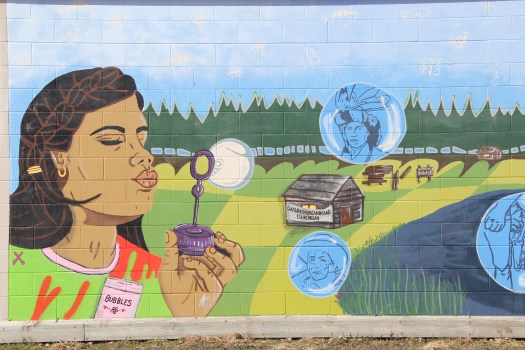
Mural at the Niiji radio station, White Earth Reservation, March 2016.
But afterwards, in the evening, there was time for more learning. My last night at White Earth I attended the Big Drum ceremony. This began with a potluck dinner, followed by a pipe ceremony, and then Keller Paap, one of the ceremony leaders, told the story of the Big Drum in Ojibwe. This was pretty remarkable, but things got even more interesting.
Keller and Anton Treuer, another ceremony leader, invited the college students to sit around the drum. Then they told the story of the Big Drum ceremony in English. But there was more. Paap is from Wisconsin and teaches at Waadookodading, an Ojibwe language immersion school, while Treuer is on the faculty at Bemidji State University. Together they shared the stories of religious suppression and how this didn’t change until 1978’s American Indian Religious Freedom Act, along with the importance of teaching and learning the Ojibwe language.
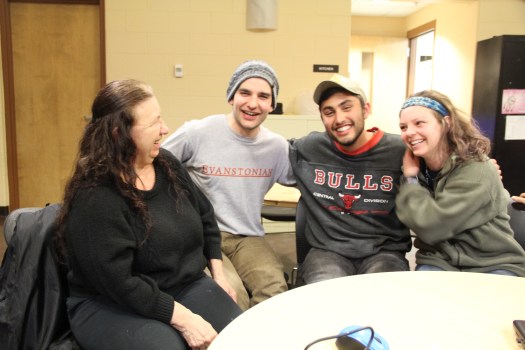
College service learning students talking with White Earth tribal member Diana King, March 2016.
So, there are lots of stories at White Earth. Some are written on birch bark scrolls, others are found in the pages of the Congressional inquiry into fraud and deceit, some drip in slightly sweet maple sap, while others still float on the night air in words of Ojibwe. For us, however, perhaps most remarkable is that we—Andover, Phillips Academy, the Peabody Museum—are a tiny part of the story too.
In January 2017 we met with representatives of the tribe again and agreed to the repatriation of several additional objects that, like the birch bark scroll, are examples of cultural patrimony under the Native American Graves Protection and Repatriation Act. Anton Treuer will be speaking at All School Meeting on Wednesday, April 5, 2017.
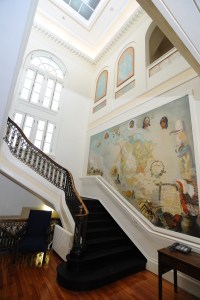
The central staircase of the Peabody includes a mural of American Indian life and history titled “Culture Areas of North America” by Stuart Travis (1868-1942). Travis was an accomplished and prolific American artist, illustrator, and designer who studied at the Académie Julian in Paris. His works—mostly drawings and watercolors—appeared frequently in magazines, books, and advertisements in the early twentieth century. Travis first came to Phillips Academy in 1928 to create the mural “History and Traditions of the School and Vicinity” in the Oliver Wendell Holmes Library. He continued to work at Phillips Academy, where he painted a total of three murals; he also designed the stone and wood gate that now leads to the Moncrieff Cochran Sanctuary.
Stuart Travis Mural at the Robert S. Peabody Museum of Archaeology. Photography by Gil Talbot.
The Peabody mural measures 13’11” by 10’2” and reflects ideas about anthropology and archaeology in the 1930s and 1940s. Major elements include the Maya Pyramid of the Magician at Uxmal on the left and a totem pole of the Northwest Coast on the right, with a map of cultures areas of North and Middle America occupying a central position, surmounted by six portraits across the top of the mural. Details and insets abound, illustrating artifacts, archaeological sites, ethnographic items, and scenes from Aztec and Maya codices. Illustrations of artifacts are drawn from the British Museum, the Museum of the American Indian (now the National Museum of the American Indian), the American Museum of Natural History, the Robert S. Peabody Museum of Archaeology, as well as several other prominent institutions.
Major Maya archaeological sites are labeled on the central map, but the majority of the map surface only depicts watersheds and topography, suggesting that Travis may have planned to add even more detail to the mural. The shadow of a thunderbird is painted over the central map, with a note explaining the widespread belief in supernatural birds in the Americas. Other details include an inset illustrating details of the Cahokia, Etowah, and Hopewell sites—likely a nod to long-time Peabody Director Warren K. Moorehead’s work. In all, there are over 30 American Indian artifacts illustrated (some in low relief), ranging from an example of Mi’kmaq writing on birch bark to a Tlingit “raven hat.” Many of these artifacts were probably drawn from contemporary books and articles on archaeology, while some may have been suggested by Museum staff. Detailed notes about the artifacts were likely included so the mural could be used as a teaching tool for visitors.
Travis dated the mural 1938, but continued with additions through 1942. The mural was restored in 1997 by Christy Cunningham-Adams through the generous support of the Abbott Academy Association.
A quick Google search reveals that Ruth Benedict still looms large in the minds of contemporary anthropologists. Benedict (1887-1948) is known for many things—she was a favorite student of anthropology icon Franz Boas, she conducted multidisciplinary work across anthropology, psychology, and social science, and was close friend and confidant of Margaret Mead. Mead wrote a marvelous biography of her friend that gives her impressions alongside published and unpublished works by Benedict. Biographies continue to appear, including two dual bios of Mead and Benedict. Benedict wrote and talked about the paradigm shift in our field that she witnessed in the twentieth century as Boasian humanism gave way to scientific approaches. She famously argued that anthropology needed both.
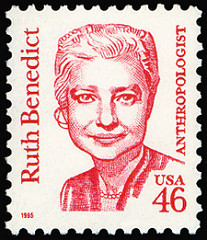
1995 commemorative US postage stamp featuring Ruth Benedict.
Benedict has fared pretty well in the internet age. Blogger Jason Antrosio, writing at Living Anthropologically, pits Benedict against social geographer Jared Diamond, arguing that Benedict did what Diamond does, only better, more eloquently, with at least as much erudition, more personally, and at least seventy-five years before Diamond. Antrosio’s satiric comparison specifically looks at Diamond and Benedict’s take on what traditional societies have to teach the Western world. Likewise, Alex Golub, in his blog Savage Minds, argues that Benedict’s concise prose presages today’s best blog writing. Perhaps not surprisingly, some of Benedict’s more pithy insights appear on internet sites dedicated to quotation. One of these quotes has gotten a lot of attention recently—here it is:
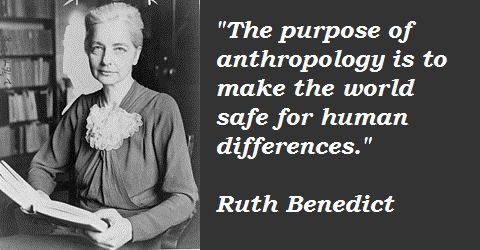
“The purpose of anthropology is to make the world safe for human differences”
Along with a presence on the quotation websites, this quote has made the rounds as an internet meme (framed against a nice photo of Benedict) and, perhaps most famously, was featured in remarks made by President Barack Obama during a press conference with Afghan President Ghani on March 24, 2015. The President referred to his own mother’s training as an anthropologist, as well as Ghani’s background. The remark, however, doesn’t specifically attribute the quote to Benedict. Simon Kuper, writing in The Financial Times, has dubbed Barack Obama the “anthropologist-in-chief” and a number of others have pointed out that President Obama’s interest in anthropology has tracked a growing interest in our discipline.
One version of the popular Ruth Benedict internet meme.
Specifically too, that quotation has resonated with a lot of people, myself included. I added it to my e-mail signature sometime over the summer—a place that I usually reserve for my contact info alone. I did notice, however, that while the quote appeared on a lot of websites, there was never any specific source cited. Archaeologist Meg Conkey told me recently that she too like the quote, but was unsure of its origins. She asked me if I knew and pointed out a Reddit post about the quote. The Reddit post argues that “Ruth Benedict never said it, not in any of her published writings. It seems to be merely myth. It is never specifically cited, nor does it make historical sense. In her own time, anthropology was a SCIENCE, not a political party.” The post includes a long list of internet memes, blog posts, and other websites that all attributed the quote to Benedict, but with no specific reference to back it up.
The quote aside for a moment, it is pretty clear that Benedict’s work had a strong political element. In many ways, as a cultural relativist, she sought to challenge American exceptionalism with her work. Benedict, along with anthropologist Gene Weltfish, prepared a pamphlet titled “The Races of Mankind” in 1943, intended as a guide for American troops operating overseas. This became an appendix to later editions of her 1940 book Race: Science and Politics, which makes both a humanistic and scientific case for the equality of all races.
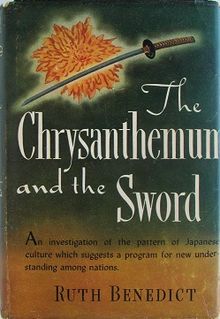
A first edition copy of Ruth Benedict’s book The Chrysanthemum and the Sword.
During WWII Benedict prepared an “ethnography at a distance” study of Japanese culture for the U.S. Office of War Information, which appeared in 1946 as The Chrysanthemum and the Sword: Patterns of Japanese Culture. Along with her earlier work, Patterns of Culture, Chrysanthemum remains one of Benedict’s iconic projects. And it may provide a clue about that quote. This is what Benedict writes on page 14 of Chrysanthemum:
“The tough-minded are content that differences should exist. They respect differences. Their goal is a world made safe for differences, where the United States may be American to the hilt without threatening the peace of the world, and France may be France, and Japan may be Japan on the same conditions.”
Anthropologists certainly are a tough-minded lot, even if we get a bit loosey-goosey on our quotations. I suppose this is a consequence of progress, as brainyquotes.com replaces Bartlett’s.
A trip to the bookshelf provides another clue. On page 402 of their textbook Anthropology: The Human Challenge (15th edition) William Haviland and his co-authors include a nice profile of Ruth Benedict. There they say:
As Benedict herself once said, the main purpose of anthropology is “to make the world safe for human differences.”
So, she did say this, or at least something a lot like this. For the precise, we should likely reconsider using those quotes or their exact placement. It’s not surprising, however, that we still have a special place for Benedict in our discipline. Blogger Antrosio makes a nice point that Benedict, however, isn’t perfect, and that she suffers from the same flaws that afflict Jared Diamond:
“This history reveals the major theme missing from both Benedict and Diamond–an anthropology of interconnection. That as Eric Wolf described in Europe and the People Without History. Peoples once called primitive–now perhaps more politely termed tribal or traditional–were part of a co-production with Western colonialism.”
Johannes Fabian, in his 1983 book Time and the Other: How Anthropology Makes Its Object, makes much the same argument. Despite the shortcomings, Benedict has a lot to offer, from ideas about cultural relativism and race, to the direction that anthropology can take in the twenty-first century. As the contemporary scientific paradigm breaks free of its dialectic with humanism, can humanism assert itself in whatever comes next?






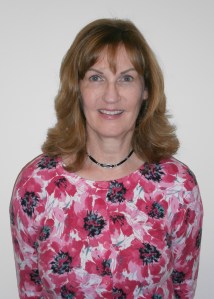 Nancy Gonlin is a Senior Associate Professor at Bellevue College, Washington. She earned her Ph.D. in Anthropology at The Pennsylvania State University, is a Registered Professional Archaeologist, and a former Dumbarton Oaks Fellow of Harvard University. Her specialization is the Classic Maya civilization of Mexico and Central America. Nancy is on the Editorial Board of Ancient Mesoamerica, published by Cambridge University Press. She has taught for over 25 years and is highly regarded for her pedagogical contributions – she is the 2012 recipient of Bellevue College’s Margin of Excellence. As an active member of the Society for American Archaeology, Nancy serves on the Committee on Curriculum and has been appointed as the upcoming Chair of the Book Award Committee. She co-author Copán: The Rise and Fall of an Ancient Maya Kingdom, and co-edited Commoner Ritual and Ideology in Ancient Mesoamerica, Ancient Households of the Americas, and Human Adaptation in Ancient Mesoamerica. Nancy’s fifth book will be a co-edited volume on a new field of research in archaeology, The Archaeology of the Night.
 Dr. Kirakosian received her PhD from UMass Amherst in 2014 and is currently adjunct faculty at several schools in Rhode Island. Her project focuses on archival materials from Warren Moorehead, Douglas Byers, and Frederick Johnson to continue her dissertation research and prepare a book on the history of archaeology in Massachusetts using social network analysis. Dr. Kirakosian published some of her previous research using Peabody collections in the 2015 issue of the Bulletin of the History of Archaeology:
  Mr. Campbell is a PhD candidate at the Memorial University of Newfoundland. His research at the Peabody includes a re-examination of collections from the Dennysville site in Maine, as well as several other sites in New Brunswick. His dissertation research is focused on protohistoric and contact period Wabanaki peoples in Maine and the Canadian Maritimes.
 The Peabody