Peabody staff always get excited when we unearth hidden stories from the Peabody Institute’s past. The Phillipian Archives is one such place that has held many a story. First printed in 1857, The Phillipian is a weekly student newspaper that continues today at Phillips Academy Andover. The student paper describes itself as “completely uncensored and entirely student-run,” offering a snapshot of what campus life is like both past and present, and in the case of this blog, some of the most outrageous and bizarre activities related to the Peabody.
As promised, we hope you enjoy PART 2!
Peabody Card Catalog and Reading Room
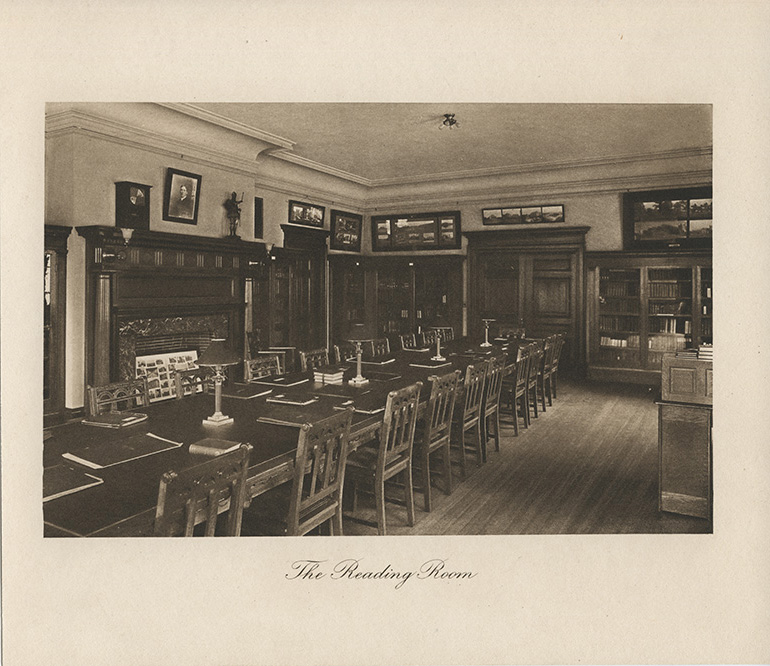
In 1903, a reading room with library was opened on the second floor of the Peabody, furnished with easy-back chairs, a large center table, writing tables, and a few large lounging chairs. There was a list of rules included in this Phillipian article for students using the reading room:
Observe suitable quiet
That others may not be disturbed while reading
Not to cut, tear or in any way deface the periodicals
To remove hats and caps while in the room
By 1904, a Phillipian article stated the reading room as “well filled nearly every hour…the attendance averages about three hundred a day or nearly the entire school.”
Image from the Peabody Archives of the old reading room.
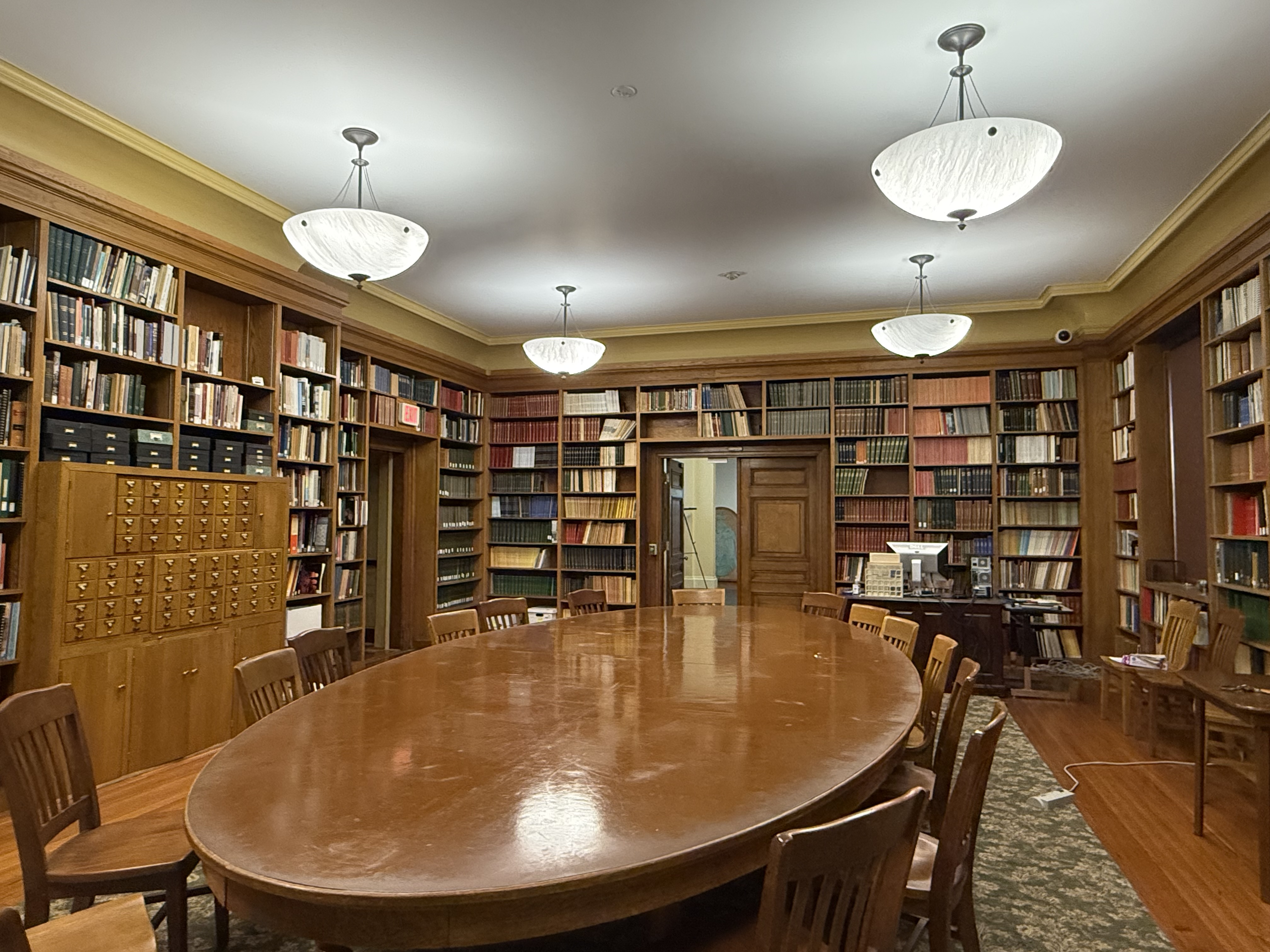
From the same vantage point – the current Peabody Library. Note: the original card catalog system now covers the original fireplace.
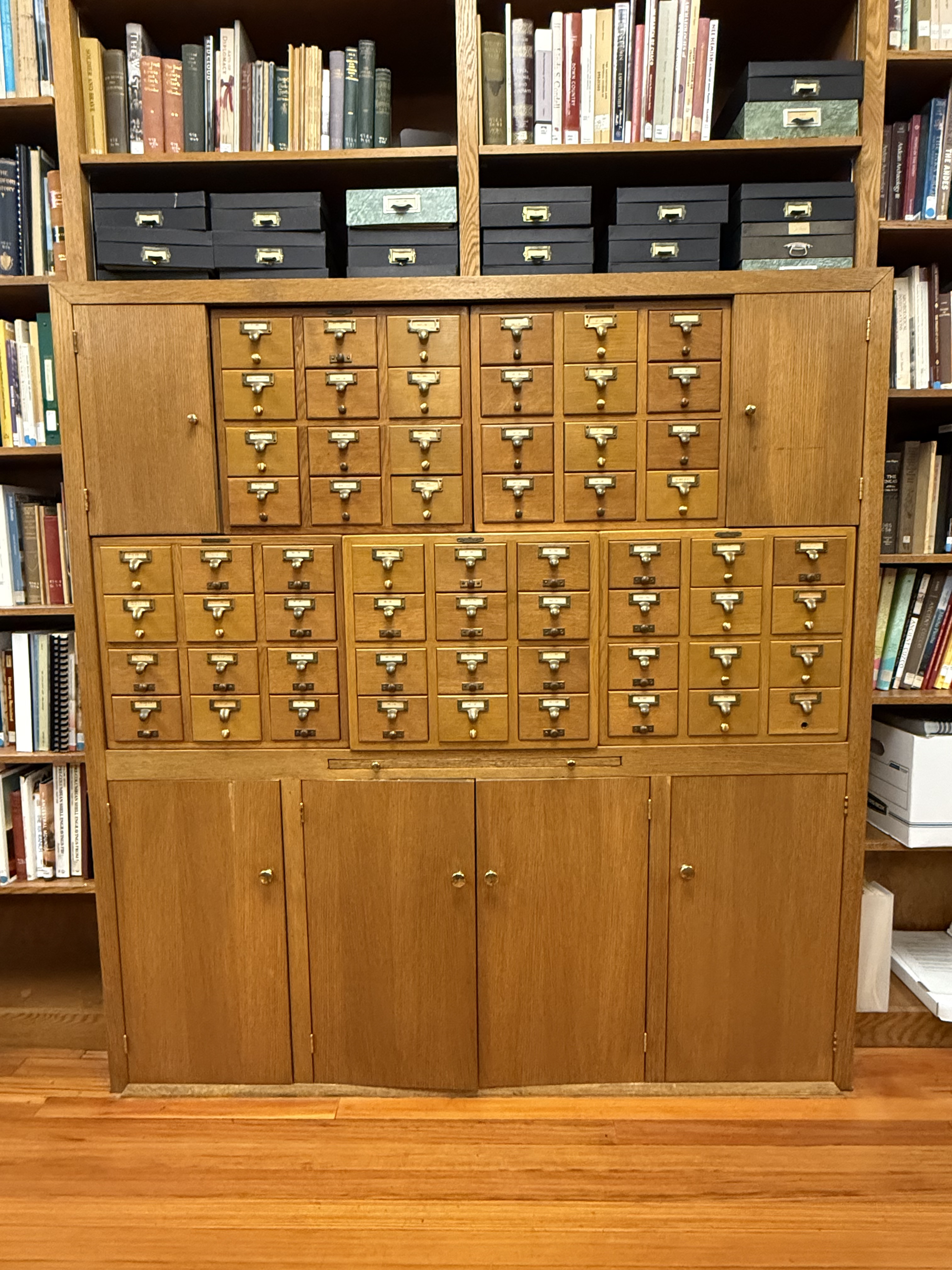
In 1904, work began on an index card catalog for the Peabody Institute’s library. This catalog would be similar to the Library of Congress plan which was being used at the time in the Seminary Library (but the catalog ended up being Dewey Decimal, arrgh!) This index card catalog is still occasionally used today at the Peabody Institute, though the entire library is catalogued in the North of Boston Library Exchange.
The original card catalog is still in use at the Peabody today!
Rumor Has It (Dinosaurs in the Chapel and Turtle Racing)
There had been rumors of turtle racing in the Peabody basement and other areas on campus. Mention of one turtle (named Alec) being kidnapped in a 1935 article may prove these rumors as true! Don’t worry, Alec was returned safe and sound.
In a “This Andover” column of The Phillipian in 1941, the Archaeology Department (now the Peabody Institute) was supposedly spreading rumors that several prehistoric dinosaurs live in the Cochran Chapel organ pipes.
“It is they [the dinosaurs], the rumor goes on having it, that furnish Dr. Pfatteicher’s lowest notes during Sunday services.”
Flute Recitals by the Peabody Director
On several occasions, Peabody Director, Dr. Charles Peabody performed flute recitals for students in the Academy chapel. On January 20th in 1915, Peabody was joined by Dr. Carl F. Pfatteicher, who played the organ. Pfatteicher was the director of music at the time, a post he held until 1947. During his time at Phillips Academy, he facilitated choir, glee club, and a small orchestra. Many of these groups met and practiced in the Archaeology Building or Peabody House. I think it’s safe to say that Dr. Charles Peabody and Dr. Carl Pfatteicher were good friends. The music played at this recital were the following:
Sonata in C Major – Mozart
Tres Lent from Sonata in G Major – Guillaume Lekeu
Barcarolle – Harold Nasan
Invocation – Eugene Lacroix
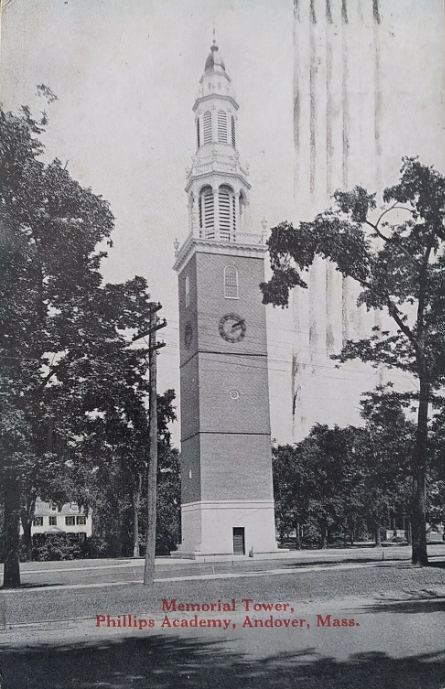
Fun Fact: Dr. Carl F. Pfatteicher was asked to help select the bells to be placed in the newly constructed Memorial Bell Tower on campus. He enjoyed giving regular carillon concerts, playing the bells sometimes at dawn. Many students did not appreciate this and one year managed to lock Dr. Pfatteicher in the tower.
Memorial Bell Tower, Phillips Academy Andover Completed in 1922 by architect Guy Lowell (the same architect of the Peabody building!)
“A Place for Students to Gather” – Clubs Find a Home at the Peabody
The Peabody was founded with three goals in mind – to educate students about the world of archaeology, to promote archaeological research, and to be a place for students to gather. As part of this vision, students and student clubs have been utilizing the Archaeology Building since its inception in 1903. Below are just a few examples of student club communications in The Phillipian related to the Peabody.
Class of 1910 in front of the Department of Archaeology (later known as the Peabody Institute of Archaeology.)
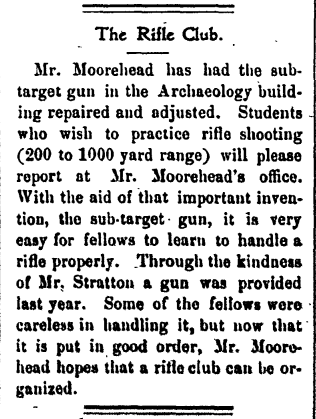
An advertisement in a 1904 column mentions organizing a student Rifle Club at the Archaeology Building and reporting to the office of Peabody Curator, Mr. Moorehead for those interested in shooting practice.
Courtesy of The Phillipian archives.
Fun Fact: The Sub-Target Rifle Machine and similar target practice devices were popular in the early part of the 20th century. They recorded information about marksmanship, position of the gun, etc. without firing live rounds.
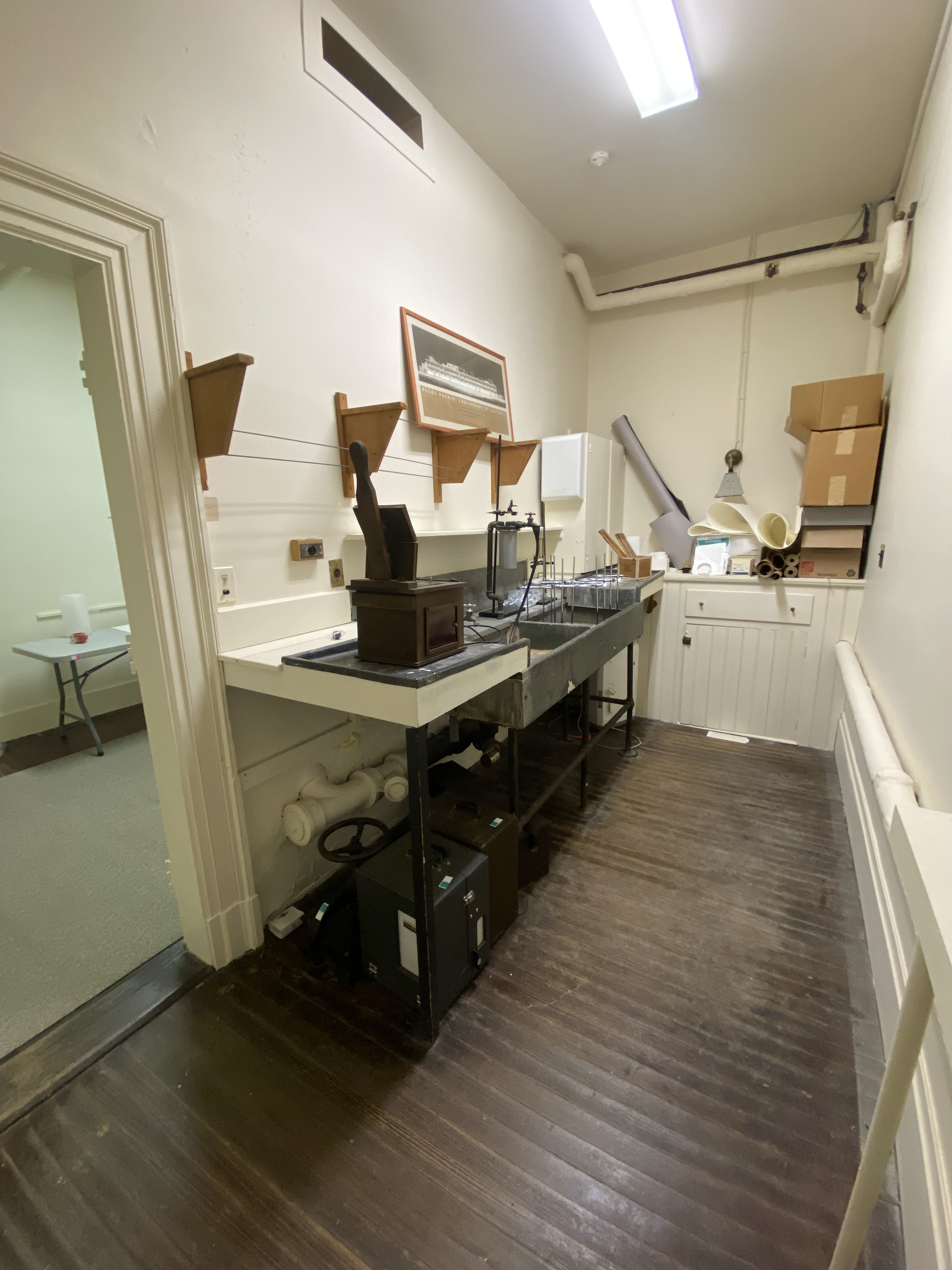
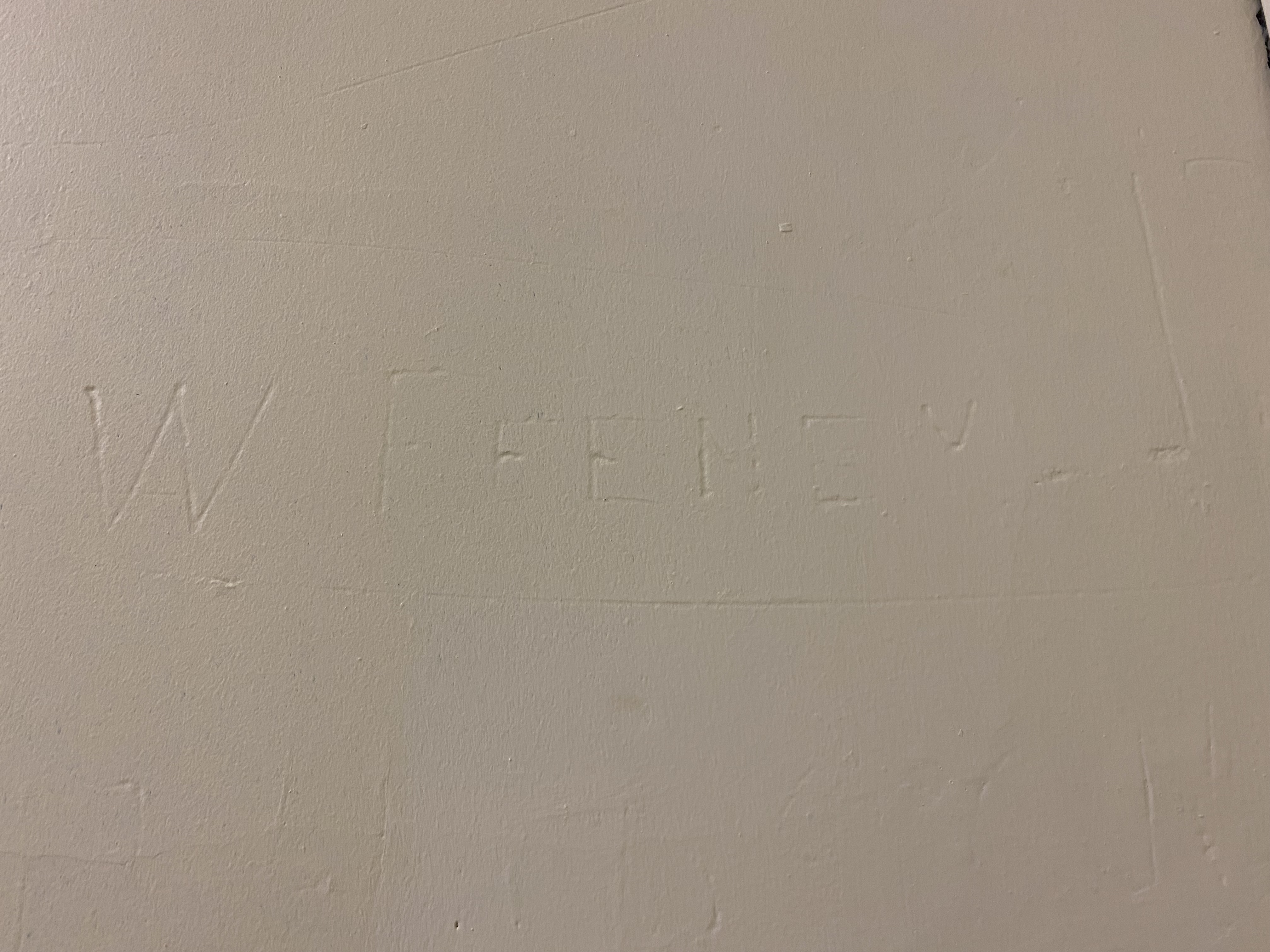
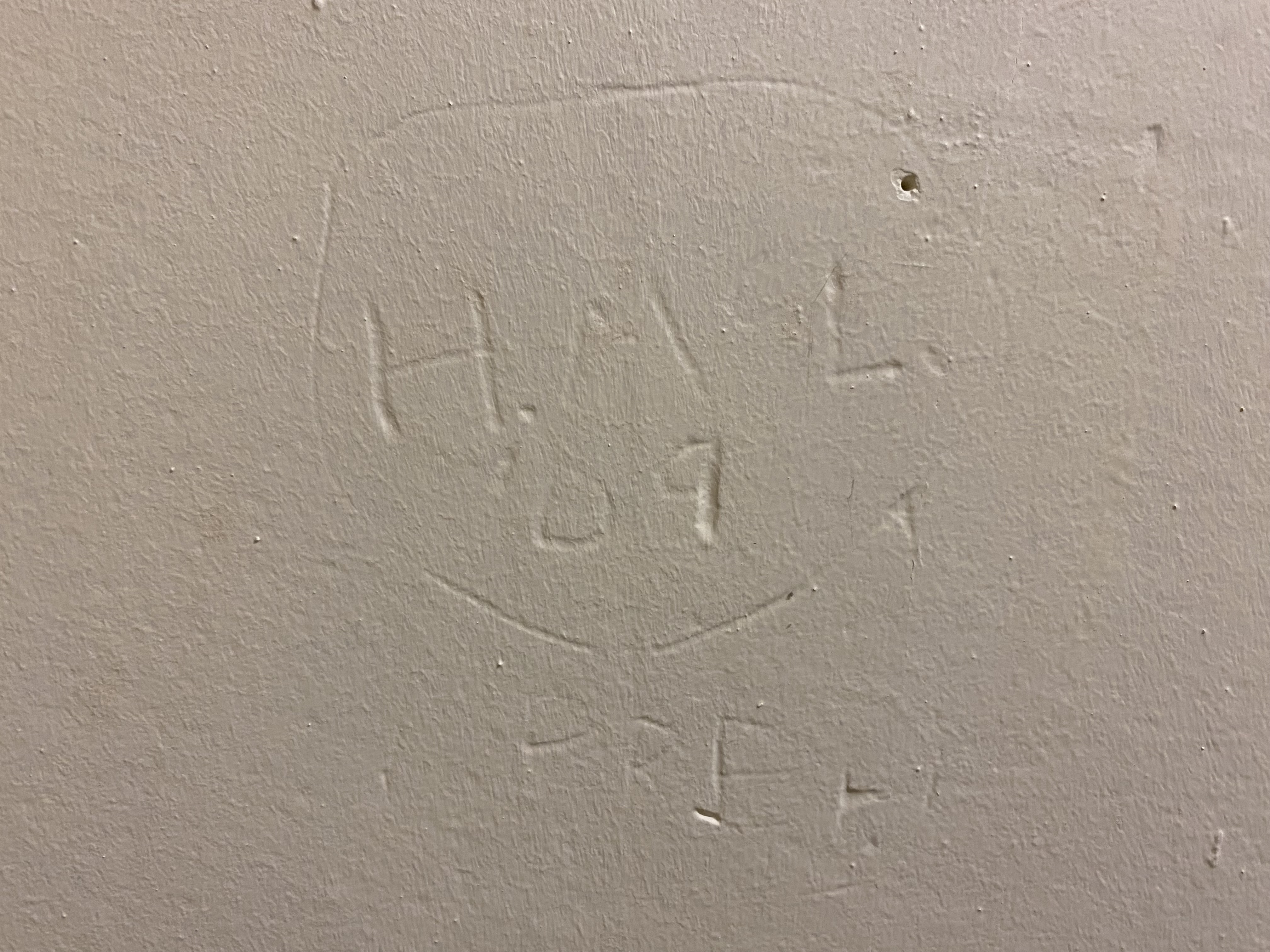
In 1904, a dark room was provided for the Camera Club, located in the basement of the Peabody. The Phillipian stated the space “is thoroughly equipped and is as fine as can be found in New England.” Before Phase 1 of the Peabody Project began, much of the original dark room space was still intact. One of my personal favorite details was the original carved signatures still on the wall left by past Camera Club students.
Original dark room at the Peabody before the recent building renewal project.
Student signatures on the wall of the dark room at the Peabody. Note – that’s not 2009, it’s 1909!
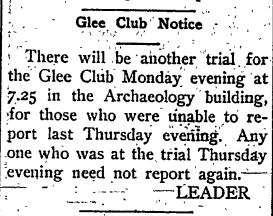
Mandolin and Banjo Club were some of the music clubs that met in the Archaeology Building for auditions, meetings, and practices. Glee Club was another student organization that commonly gathered at the Peabody and communications for this club are seen throughout the decades of The Phillipian.
I love seeing such a close connection between the Peabody and the Music Department, especially now that we’re neighbors with the new Music building, Falls Hall!
Glee Club communication in 1910.
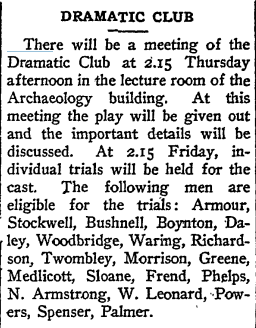
As we’ve seen above, many campus Arts organizations spent time at the Peabody. The Dramatic Club would meet to discuss scripts for upcoming plays and hold individual trials for those looking to participate in performances.
Dramatic Club communication from 1912.
Other clubs such as Chess, Astronomy, Spanish, Philo Congress, Bible Class, Foreign Missions, Yale Club, Harvard Club, Stamp Club, Nature Club, Forum, and Mirror all met at the Peabody throughout the first half of the 1900s. Even The Phillipian and football team held gatherings at one point. By the 1950s we see the Peabody becoming more active in exhibitions and many of these clubs move to other locations on campus, many finding a home at the Peabody House behind the Archaeology Building.
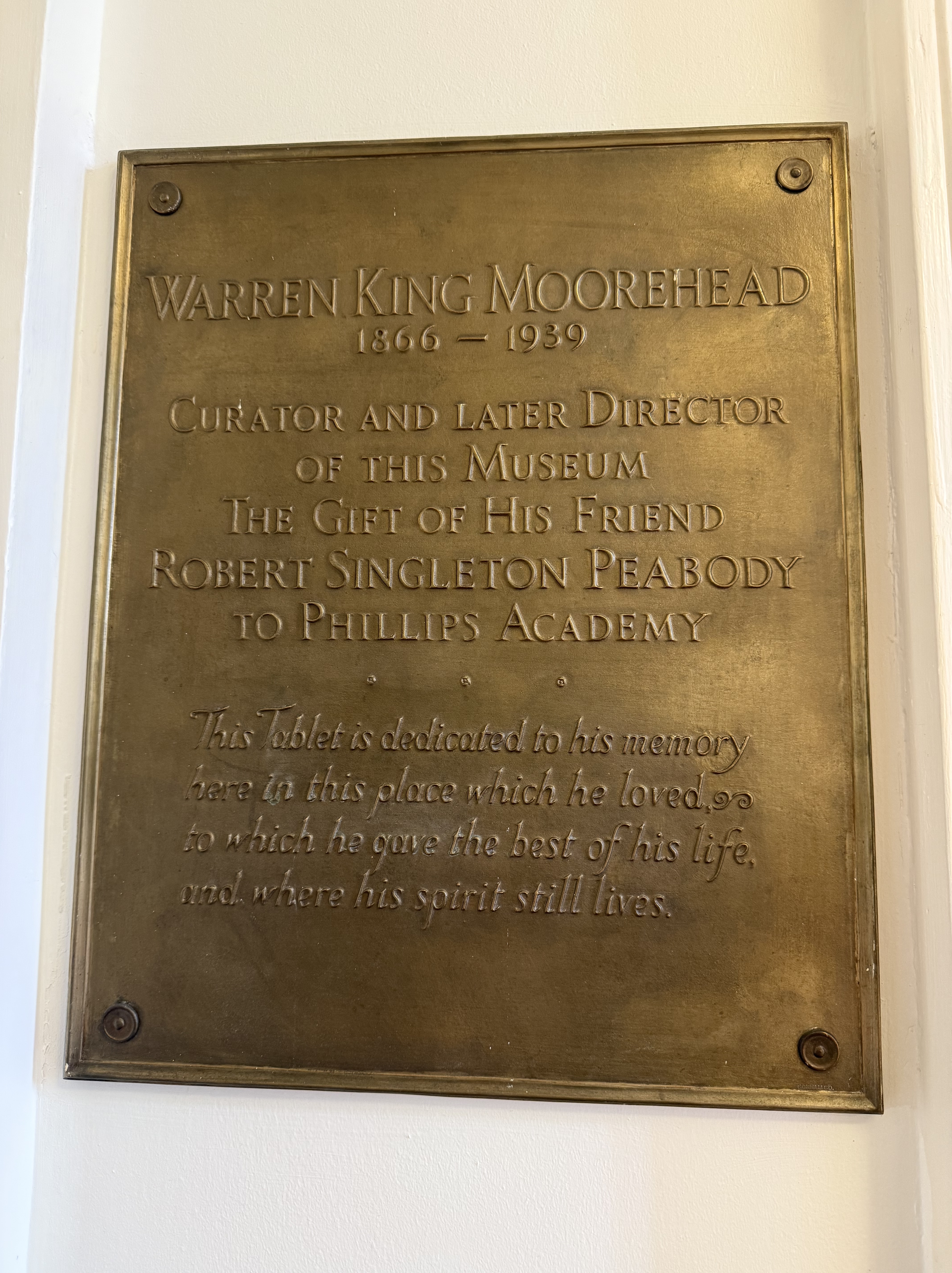
“…where his spirit still lives.”
Jumping ahead to 2011, a Phillipianarticle features Halloween traditions and campus lore passed down over the decades of PA’s history. The Peabody is mentioned to experience “frequent slamming doors, moving items and eerie noises that creak through the attic floors.” The strange activities convinced Peabody staff that the building was haunted by Warren K. Moorehead (1866-1939). Moorehead was the first curator at the Peabody from 1901 to 1924 and became the Peabody’s second director from 1924 to 1938.
The Peabody has many interesting stories of these experiences over the years. One story mentioned in The Phillipian, depicts a foreman being locked in the back stairwell. I can personally share that my first Reunion Weekend with the Peabody I experienced an alum being locked in one of our bathrooms during an event (the locks were on the inside of the door…) I considered this my “welcome” initiation from Moorehead, as the newest member to the Peabody team.
Over the years, our director has written notes to Moorehead to communicate our intentions and care of the building along with updates of upcoming changes such as our building renewal project. These notes are stored behind a plaque commemorating Moorehead, located by the front doors of the building. Much of the activity has quieted since writing these notes.
Peabody staff always get excited when we unearth hidden stories from the Peabody Institute’s past. The Phillipian Archives is one such place that has held many a story. First printed in 1857, The Phillipian is a weekly student newspaper that continues today at Phillips Academy Andover. The student paper describes itself as “completely uncensored and entirely student-run,” offering a snapshot of what campus life is like both past and present, and in the case of this blog, some of the most outrageous and bizarre activities related to the Peabody.
In a few months, the Peabody Institute will be undergoing Phase 2 of some much-needed renewal work. The building and collections will be off-line Winter and Spring terms. The Peabody will continue to support modified classroom lessons and student activities, outside of the Peabody building. Student requests to access collections will be considered on a case-by-case basis.
In honor of the upcoming building project, this (part 1) blog shares some of the Peabody building’s history.
A Special Place at the Corner of Phillips and Main
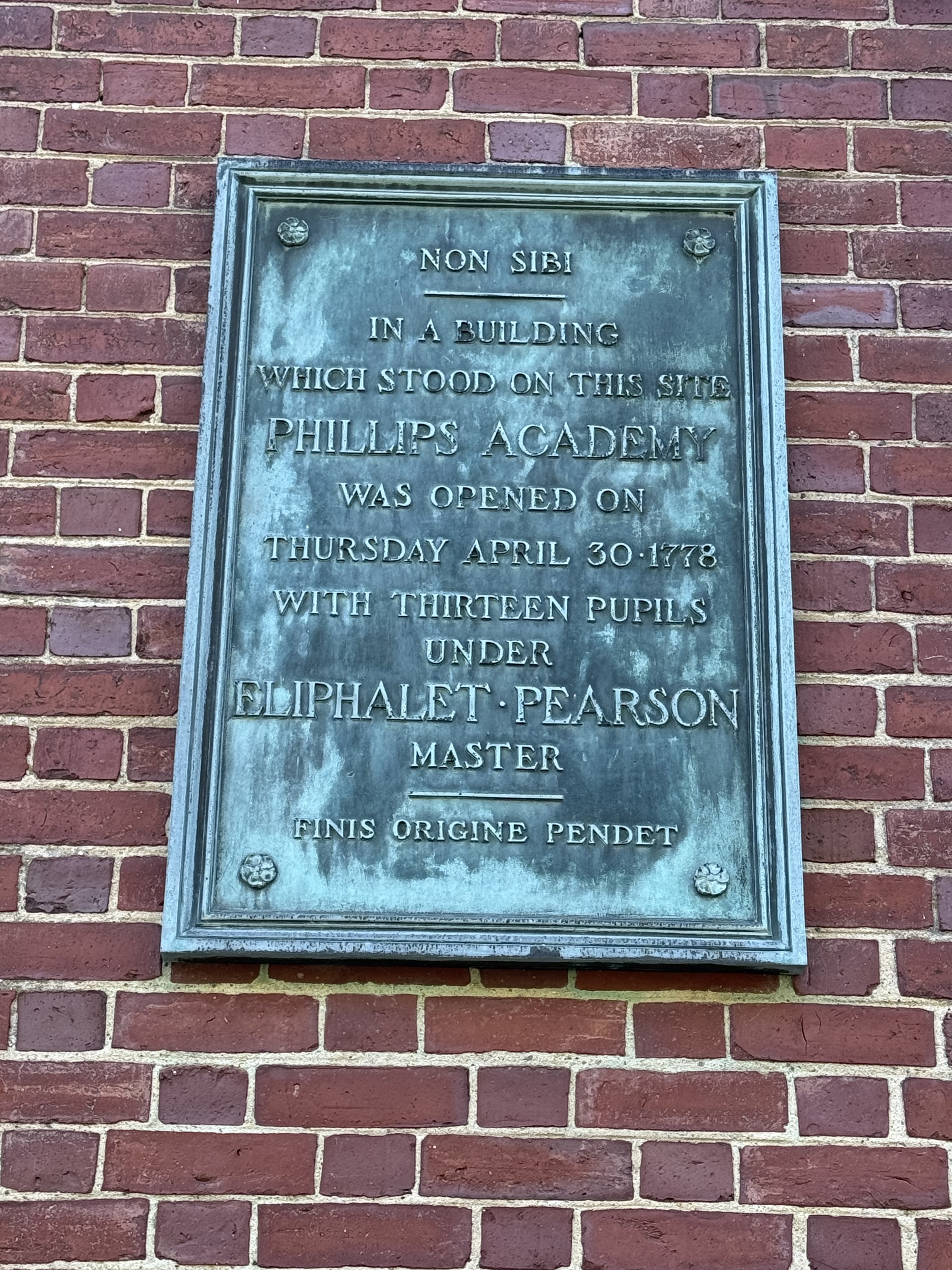
The first Founder’s Day for Phillips Academy was held in October 1913. At this time a bronze plaque was unveiled and placed on the Peabody Insitute building (known then as the Archaeology Department) commemorating the site where the first school-building on campus was opened in 1778. This plaque can still be seen on the Peabody building today!
Bronze plaque on the Peabody Institute building exterior from 1913.
The site at the corner of Phillips and Main streets has an interesting history, one that began well before the Peabody. The site first housed the 1778 carpenter’s shop used as the first classroom building at Phillips Academy.
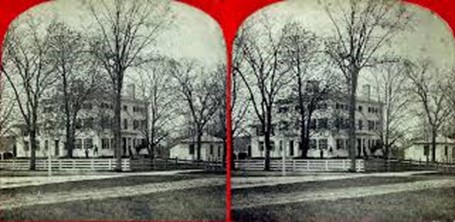
Around 1845, the shop was moved from the site and eventually razed. Samuel Farrar, treasurer of Phillips Academy and the Andover Seminary, built a three-story, Federal-style house on the location. The house has since been moved further down on Phillips Street and is known as Farrar House.
Farrar House – Image courtesy of Andover Historic Preservation, Memorial Hall Library, Andover, MA
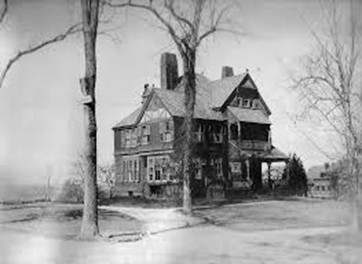
In 1882, a home was built on the site for J. Wesley Churchill, a professor at the Andover Theological Seminary. Later in 1901, the house was moved to another location on Main Street to make way for the new Archaeology Building which later became the Peabody. The house is known as Churchill House on campus today.
Churchill House – Image courtesy of Andover Historic Preservation, Memorial Hall Library, Andover, MA
In a Phillipian article from 1917, the history of Founder’s Day and the significance of the 175 Main street site is shared, noting a 1916 dedication of the new Peabody House by Dr. Charles Peabody (first Peabody Director and son of the Archaeology Department’s founder, Robert S. Peabody).
In this column, it was mentioned that ceremonies were not held to celebrate Founder’s Day as “this year, more than at any other time, matters of lesser importance should give way to more serious questions.” This was in reflection of the current impact of the Spanish Influenza and WWI.
Smoke Talks (Smoking and collections don’t mix…)
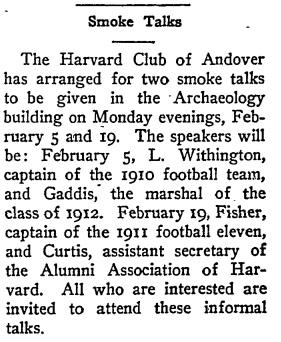
In the early years of the new Department of Archaeology building, Curator Warren K. Moorehead would give “smoke talk” lectures on the second floor of the building. Some of the original molding from the proscenium arch is still visible today at the Peabody. Beyond these lectures, student clubs would hold their own “smoke talks” in the Peabody, which served as the Student Union building for many years on campus. How did these lectures get their name? For the cigars smoked during these meetings by students and speakers alike!
A column from The Phillipian in 1912
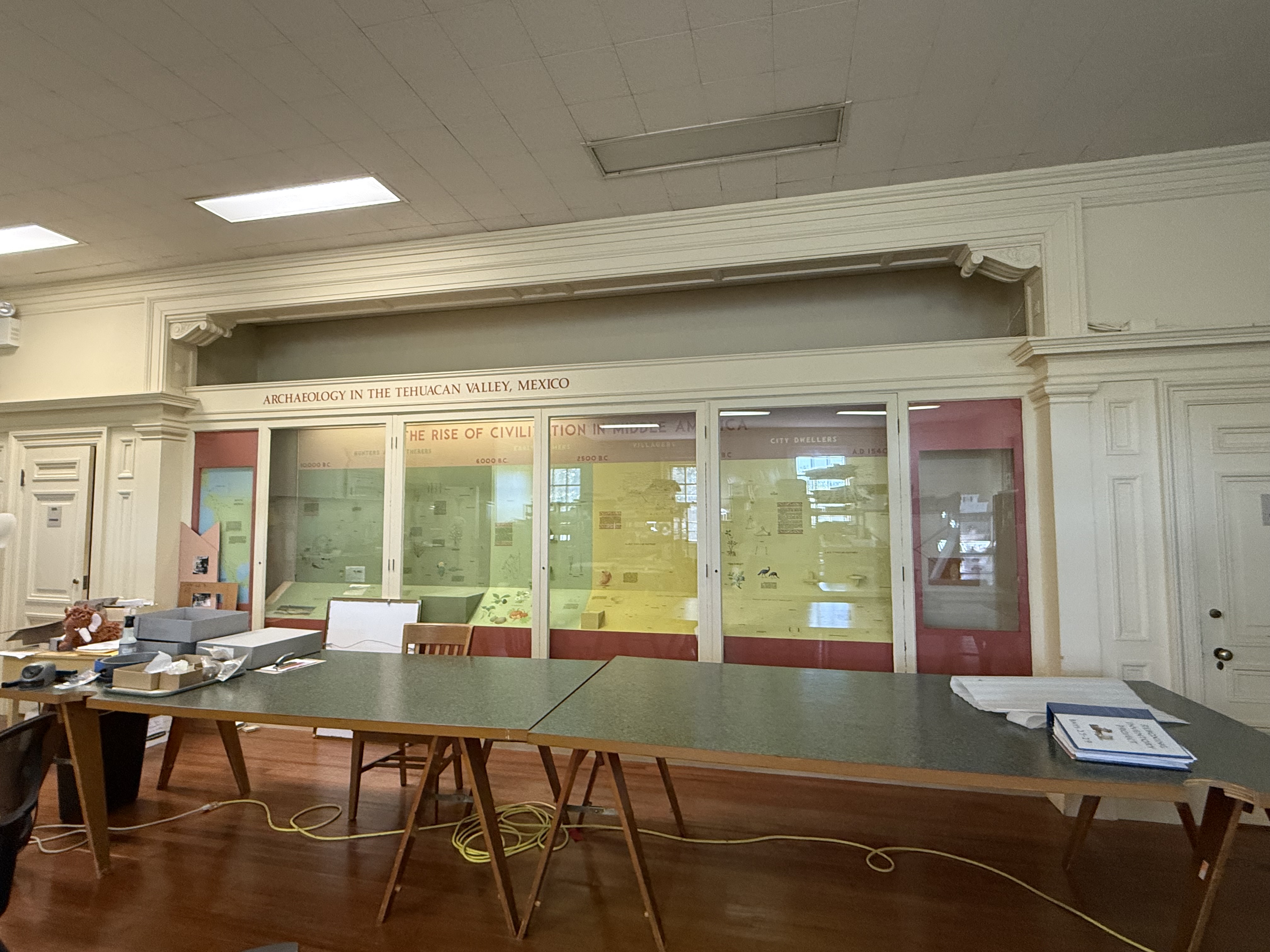
Features of the old proscenium arch can still be seen at the Peabody today. In 1967, an exhibit wall with case was placed in the middle of the arch.
A Grill in the Basement (Now they’re pushing their luck…)
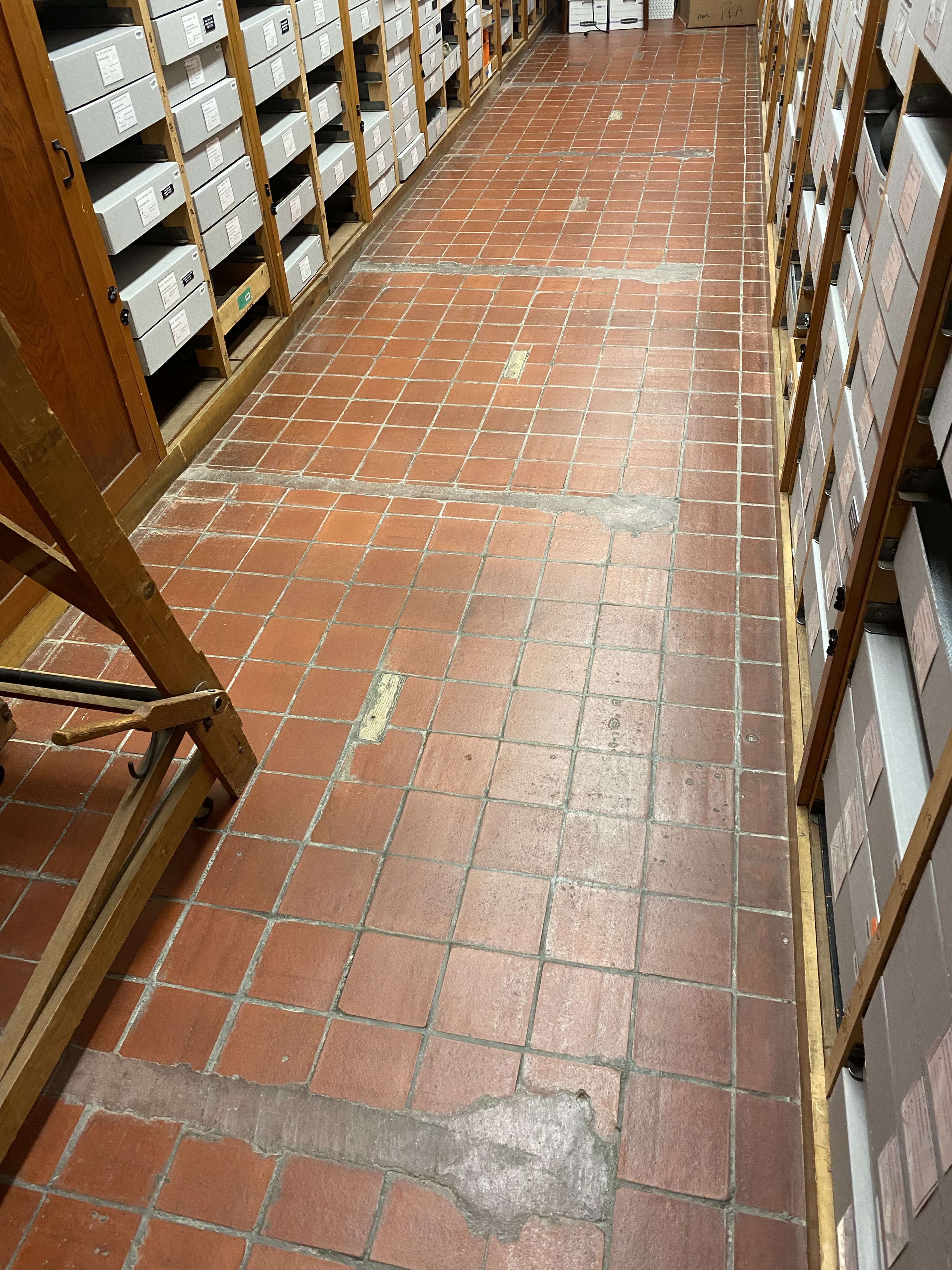
Beginning in 1913, The Phillipian mentions meetings at “the Grill” in the basement of the Peabody (known as the Department of Archaeology at the time). At one point, the Peabody had a kitchen complete with grill, stall seats, and tables for student gatherings. Improvements were made in 1913 giving the space a new red tile floor, dark brown wood paneling around the walls, a new stove, and a large suction flue to draw out heat and odors. In the past the odors of students’ cooking would circulate upstairs disturbing the Peabody staff.
Later in 1915, the Grill was moved to the newly constructed Peabody House located behind the Department of Archaeology building. The new space included a kitchen with large grill and private dining room for special dinners and banquets. There rooms are similar in design to the original grill room in the Archaeology Building.
Before Phase 1 of the Peabody Building Project, the original red tile floor from the Student Union Grill room was still visible in the basement of the building. In the photo you can see where the booths and tables made up the seating stalls.
Peabody House….and Fire(Well, it was bound to happen at some point…)
The Peabody House was opened in 1916 as an extension of the Department of Archaeology with the intent of giving students a building for their own use. Construction of the building used some of the funds contributed by Robert S. Peabody, founder of the Archaeology department at Phillips Academy and donor of the Archaeology Building. An article from The Phillipian describes the new building with an exterior of brick and stone, “which will correspond with the style of architecture of the Archaeology building and the new dormitories.” The first floor housed a student lounge and reading room with a large fireplace and large French windows. The second floor was similar in design to the first floor with space for the late Robert S. Peabody’s books and a large portrait of him. The room was used for club meetings as well as student assemblies and special banquets.
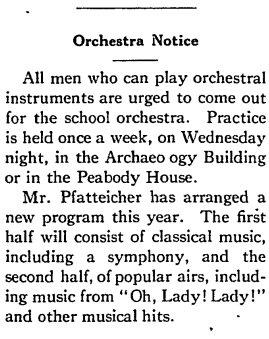
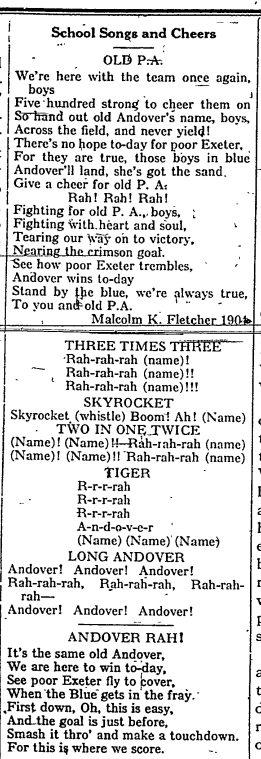
Some activities held in the Peabody House, highlighted in The Phillipian, are a notice to join the school Orchestra, with practices held once a week in the Archaeology Building or Peabody House. My personal favorite was an announcement to students for a mass meeting at the Peabody House to practice school songs and cheers. One entry from 1917 describes three hundred men present at the evening meeting called by head cheerleader, Howard Smith.
Two columns from 1917 advertising for the orchestra and sharing PA cheers and songs!
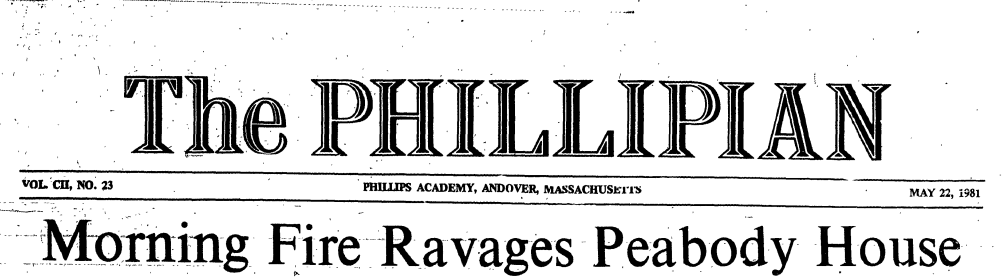
Jumping ahead to several decades later, headlines read “Morning Fire Ravages Peabody House.” In the early hours of May 18, 1981, a fire broke out in the Peabody House, destroying the first and second floors as well as the attic. There were no reported injuries, however, many of the Afro-Latino American Society’s possessions were lost on the second floor. Faulty electrical wiring is suspected to be the cause of the fire.
“[I was in] awe at how extremely hot the flames were, how much smoke there was and how terrifying it was to see the fire’s power.” – Headmaster Theodore R. Sizer
“[There was] steam and yellow light and flames bursting out of the roof.” – PA Student, Upper
We hope you enjoyed PART 1 of this two-part blog post. Stay tuned for PART 2, coming next month! To be continued…
Did you know how beautiful New Mexico is? I had the opportunity to travel to the Albuquerque and Santa Fe areas this July and can definitely recommend making the trip.
The Peabody Institute actually has a long relationship with New Mexico. In the 1920s, Alfred Kidder excavated Pecos Pueblo on behalf of Phillips Academy (what is now the Peabody Institute). The ripple effects of that work included repatriation work with the Pueblo of Jemez, a long-term loan with the Pecos National Historical Park, inter-institutional collaboration, relationships with Jemez artists, and incredible learning opportunities for the students at Phillips Academy.
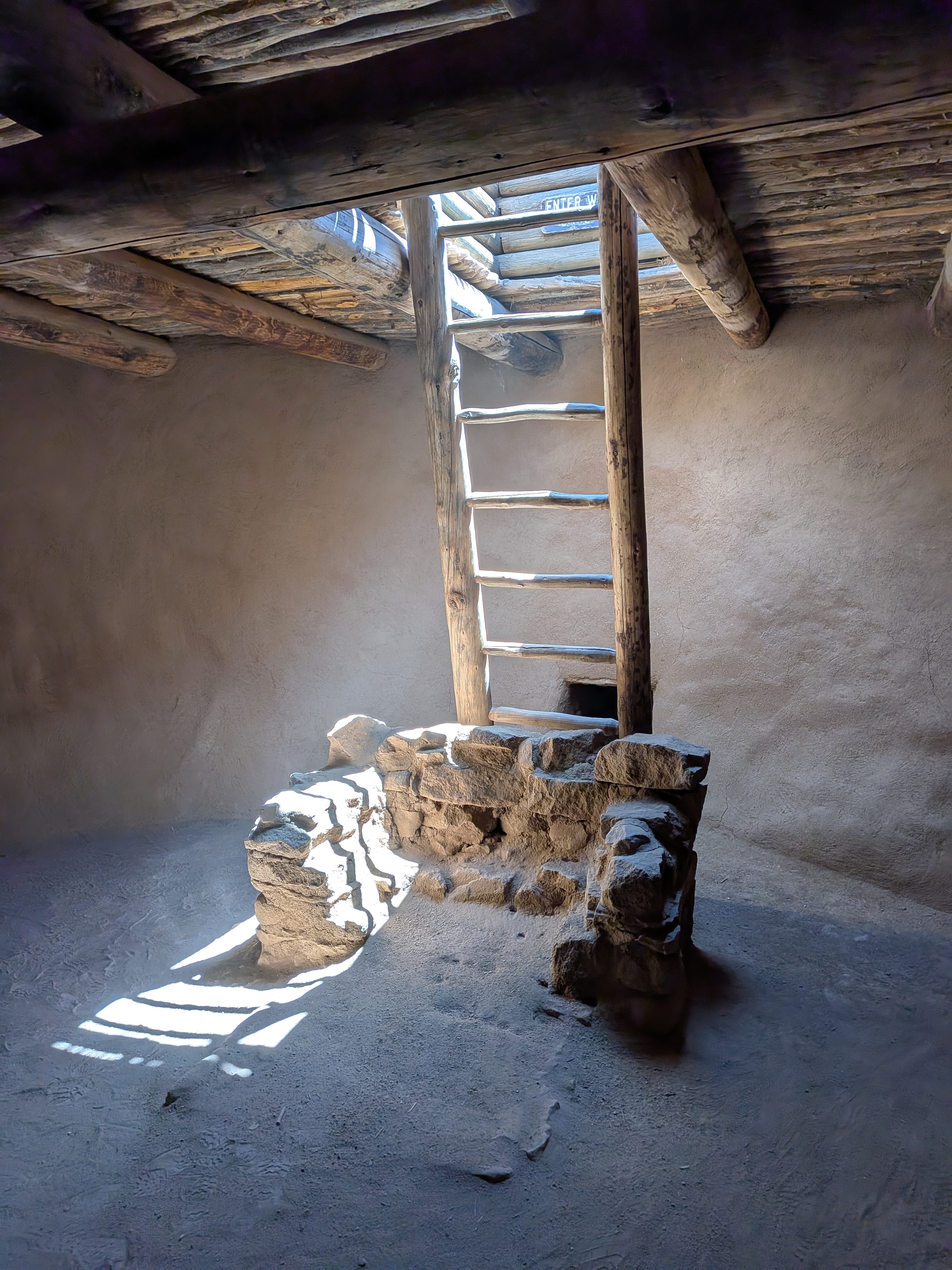
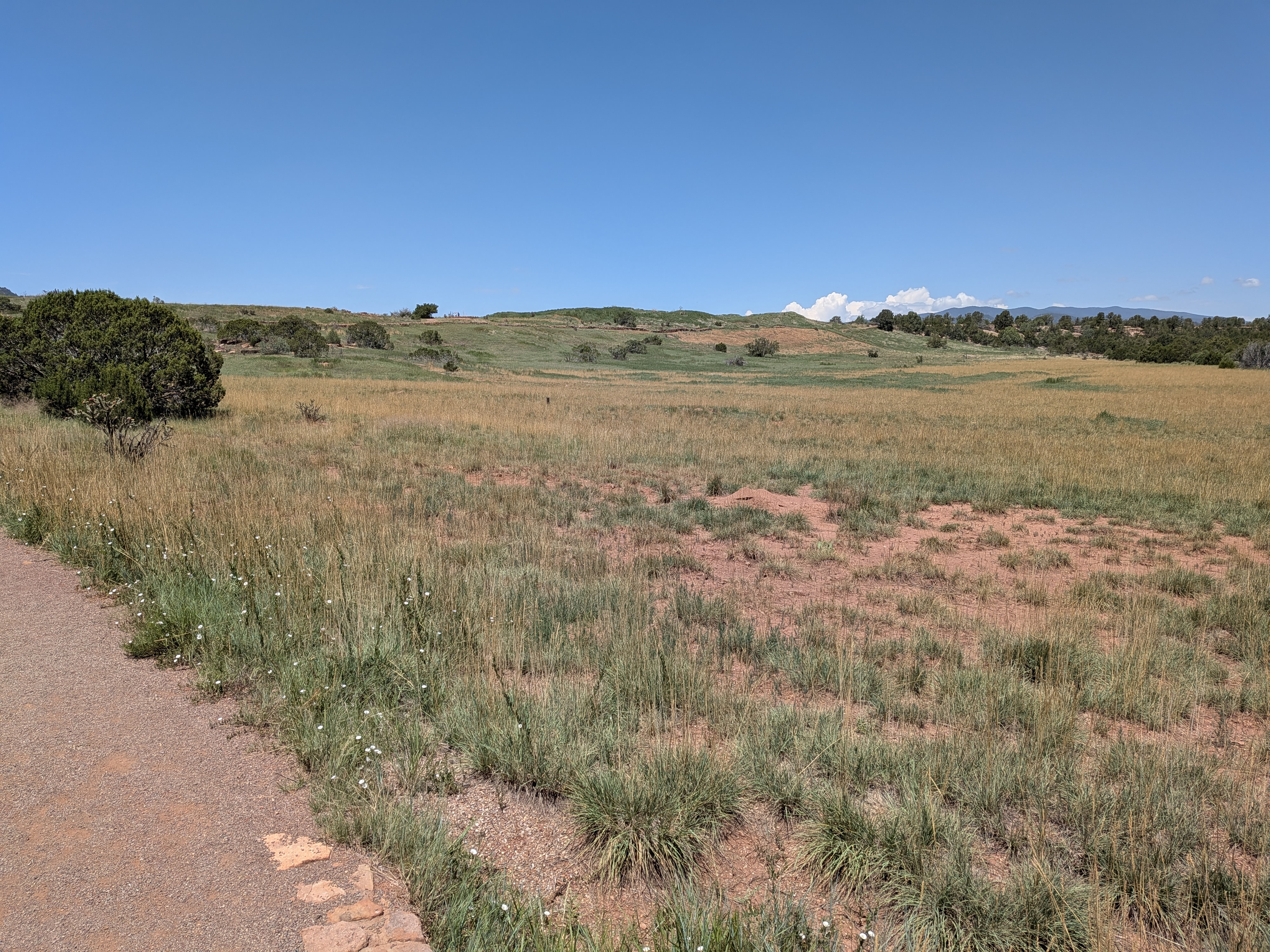
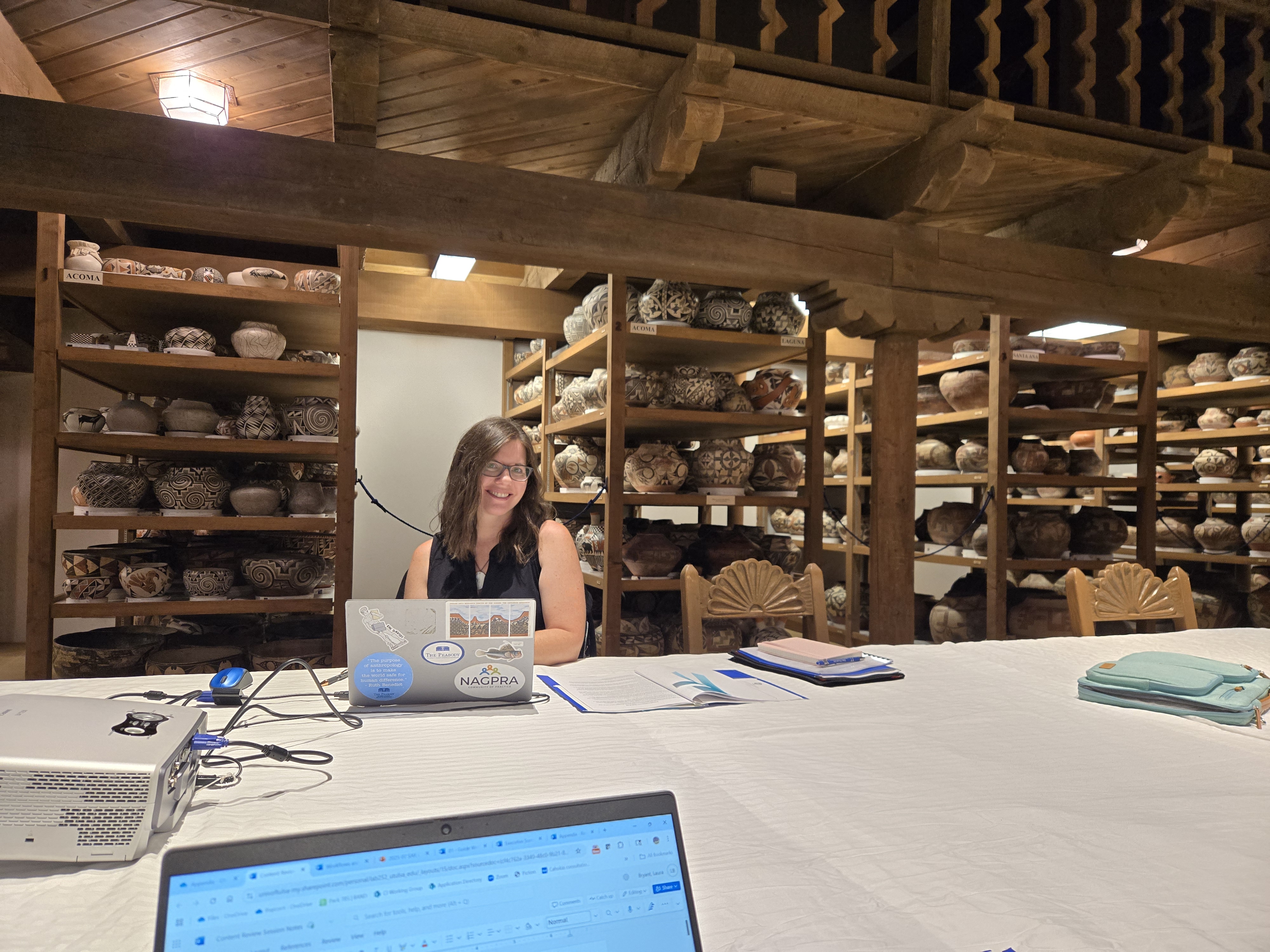
While I had been to the Pueblo of Jemez before this summer, I had not had the opportunity to see the Pecos archaeological site or Pecos National Historical Park before. It was truly a pleasure to experience the site in-person and get an understanding of how Pecos sits in the landscape. I was also able to view their wonderful exhibit, spend time with the Museum Curator to view the collections on loan from the Peabody, and meet several dedicated park staff members. I am grateful for the opportunity to spend that time with them all.
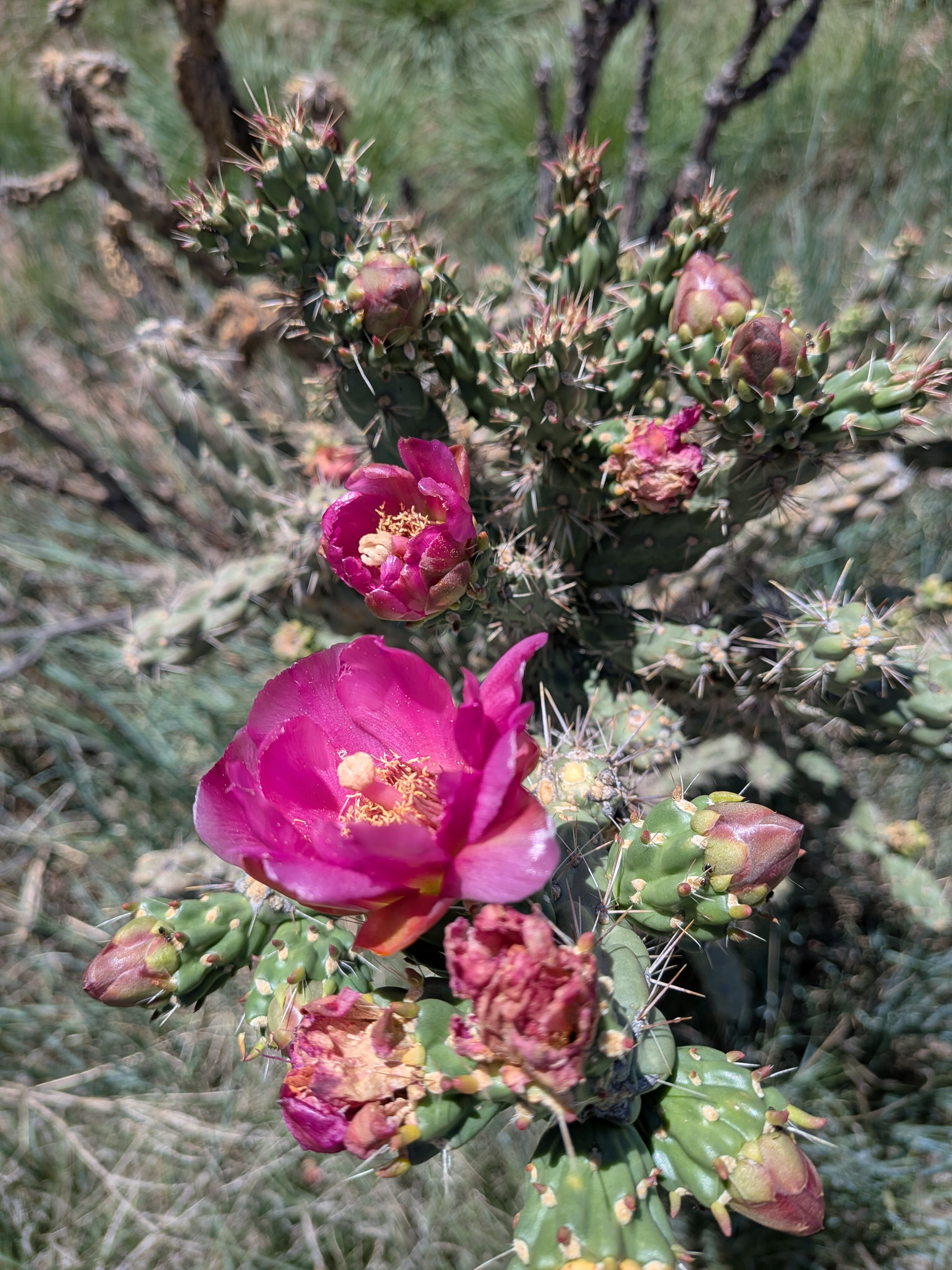
Inside the kiva at PecosCactus flowers!The view from Pecos
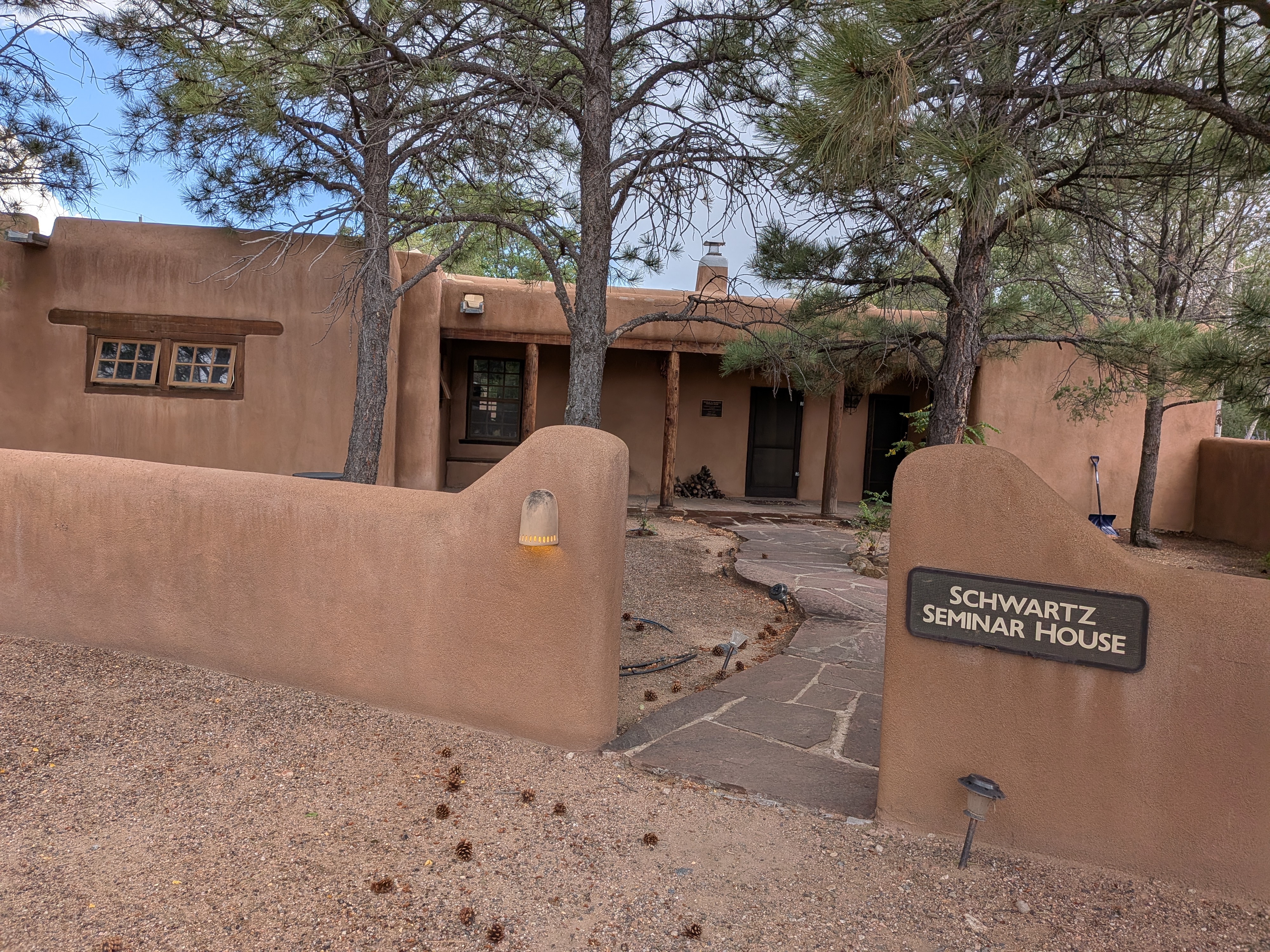
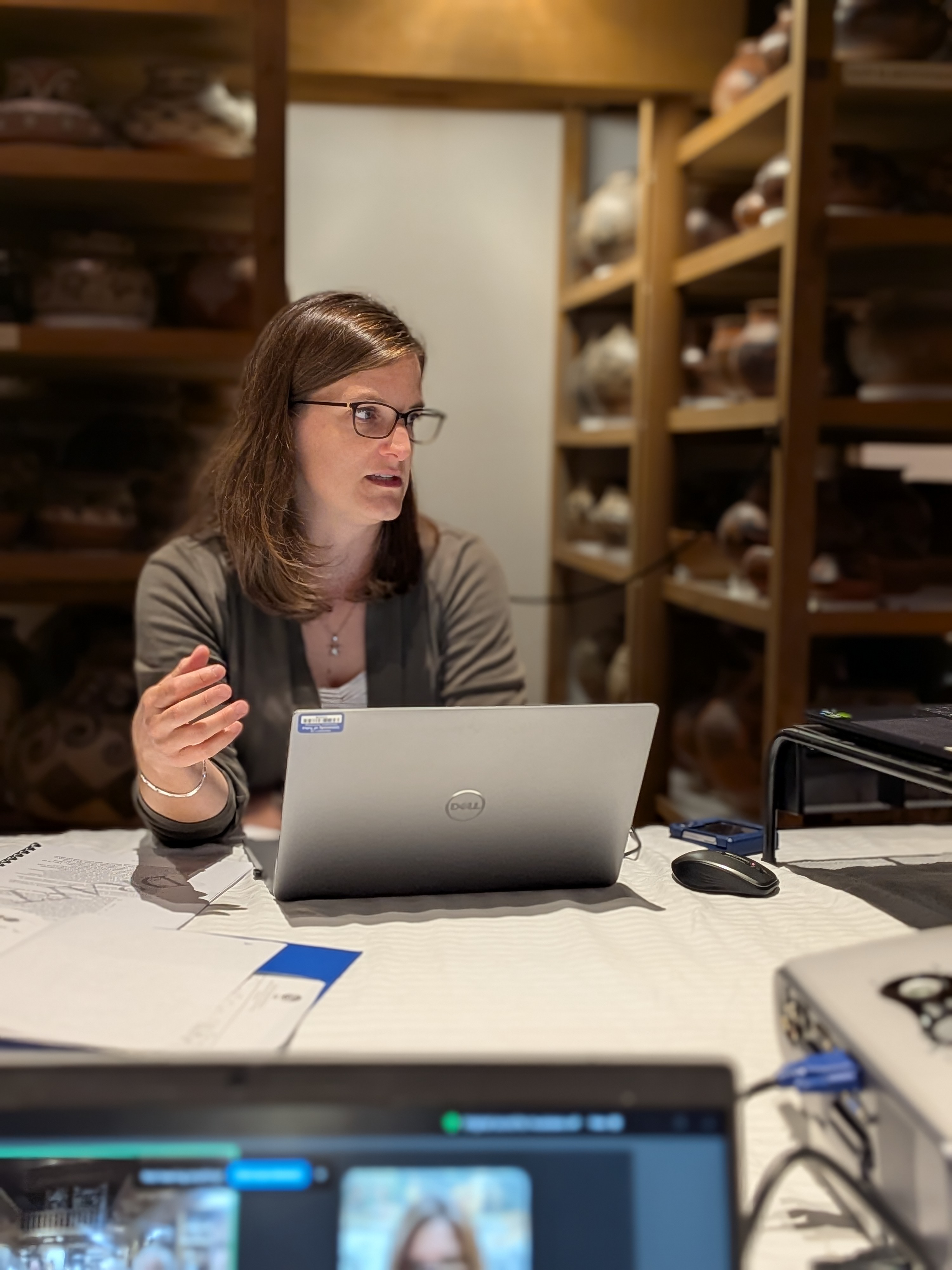
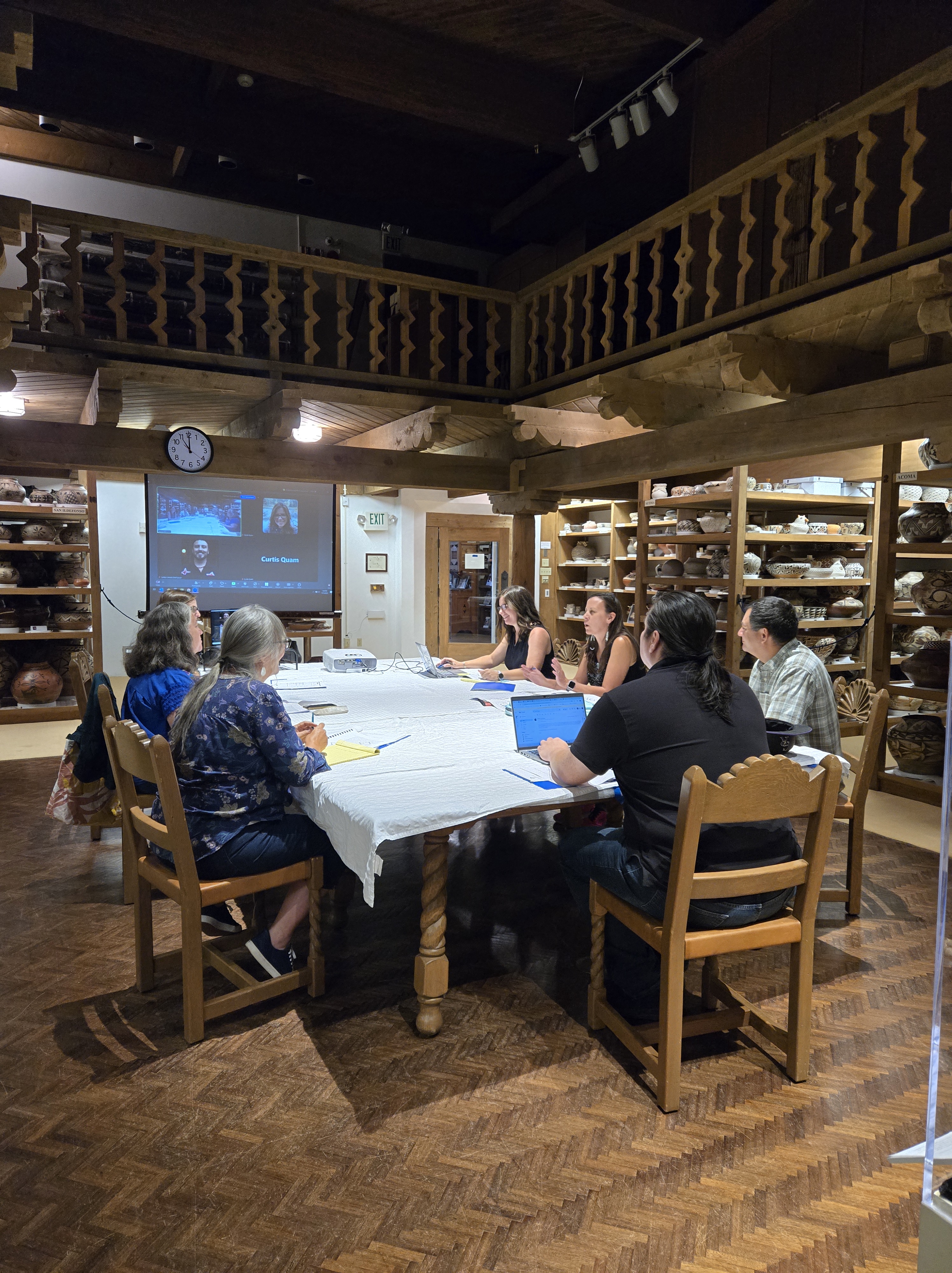
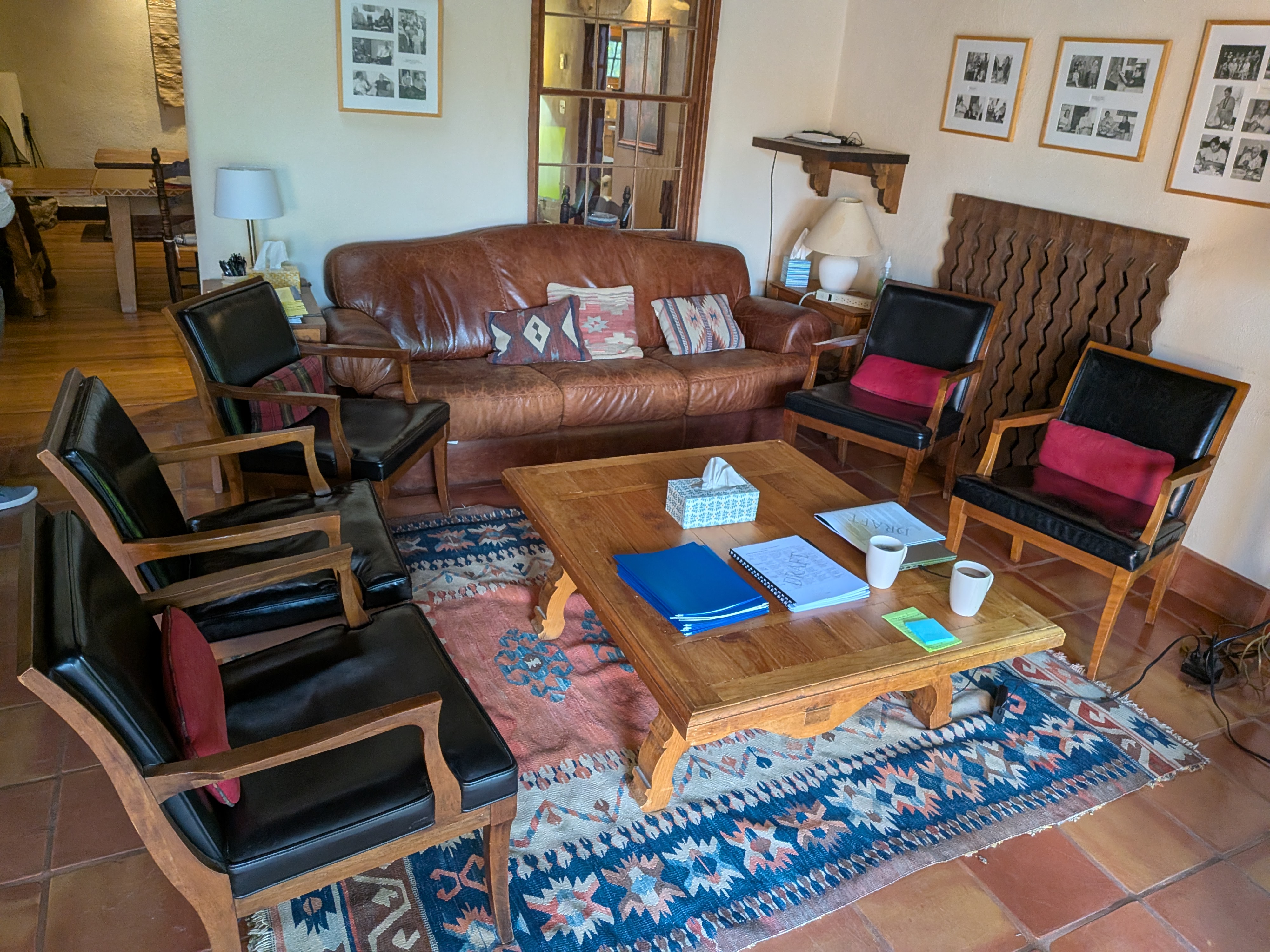
After my time at Pecos, I went to the School for Advanced Research in Santa Fe to facilitate the final review session of the Indigenous Collections Care (ICC) Guide. This is a project that I have been working on for awhile and it was excited to be entering the final stages. Although the review session had to be rescheduled due to complications with our IMLS grant, we had a wonderful group of people to discuss the ICC Guide and help us move forward into the final stages of development.
The ICC Guide provides a framework to respect and recenter collections stewardship practices around the needs and knowledge of Indigenous community members. The Guide speaks to individuals engaged in collections stewardship within museums and collecting institutions. It is aimed specifically at museum professionals, emerging and established, and individuals who are seeking clarification, support, and validation to pursue culturally appropriate care.
Next steps are to send the Guide out for copy-editing and graphic design. A final version will be ready to be shared in the summer of 2026.
My time in New Mexico was amazing and I hope you can visit there sometime soon!
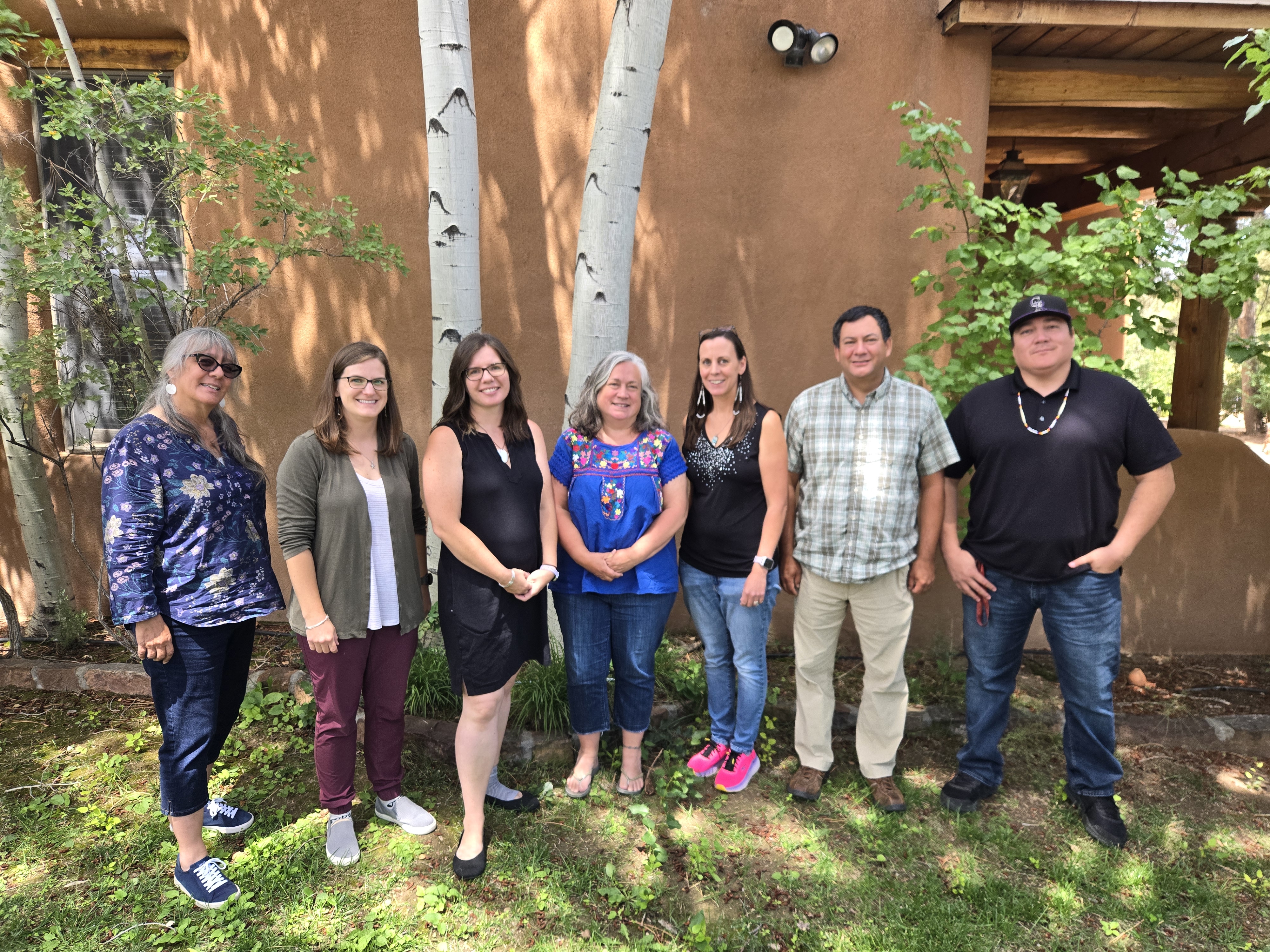
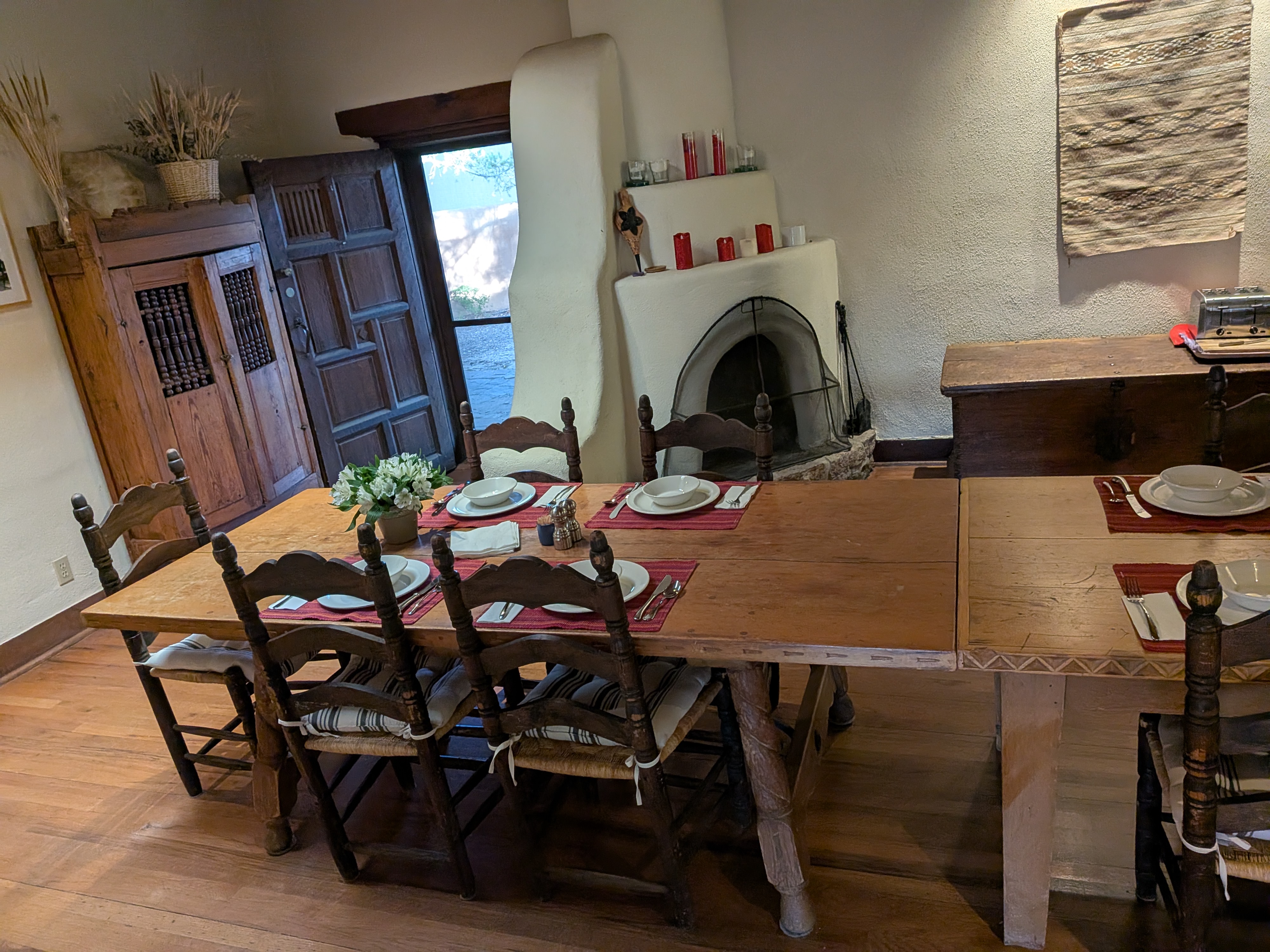
SAR Seminar HouseThe ICC Guide review groupSAR Seminar HouseICC co-facilitator, Laura BryantMeeting at the Indian Arts Research Center at SARSAR Seminar House
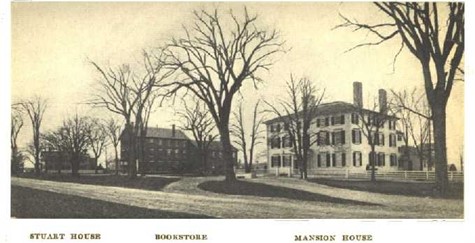
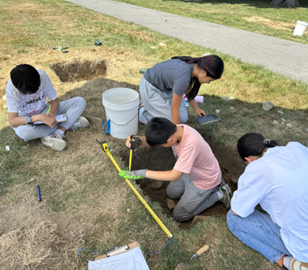
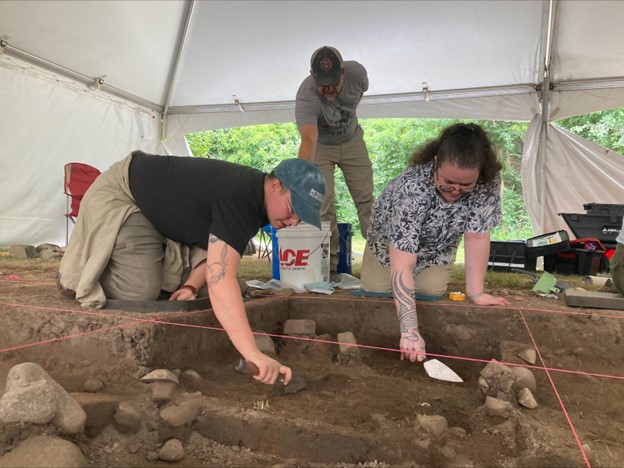
Almost every summer since 2016, young archaeologists from Phillips Academy’s summer session program embark on a mission to excavate the site of the eighteenth century Samuel Philips Jr. Mansion House, located on the West Quad of campus. The infamous Mansion House was built in 1782 by the academy’s founder and stood for 105 years, before burning down in 1887. News articles from the period suggest that the demise of the Mansion House was a result of arson; many speculating that the proprietor, Charles Carter, started the fire. During its long period of occupation, the Mansion House served as not only a home, but later an inn and tavern for students, community members, and travelers. The site’s long history and relatively undisturbed context creates an ideal setting for archaeological excavation and student learning.
Over the past seven years, students have succeeded in discovering portions of the house, including multiple chimneys and a basement feature. This year, students set out with high expectations, choosing to place four excavation units in spaces just outside of the Mansion and two units in the southwest portion of the quad, near the sites of historic outbuildings, a nineteenth century printing house, and an early nineteenth century pathway.
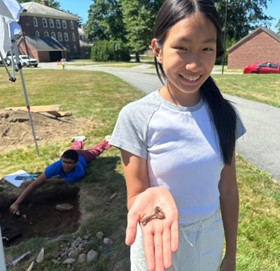
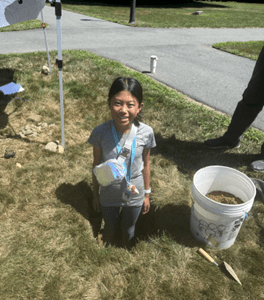
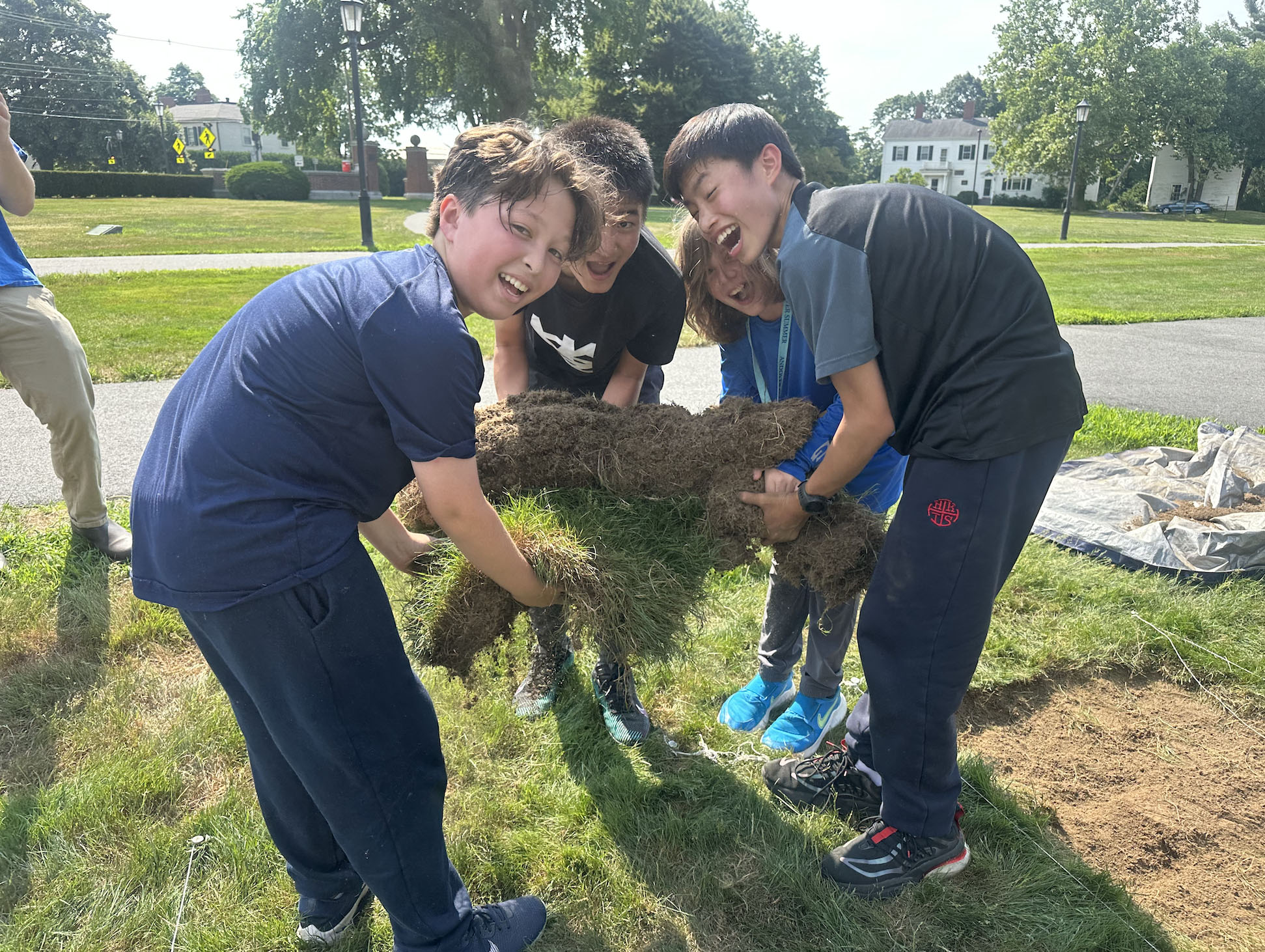
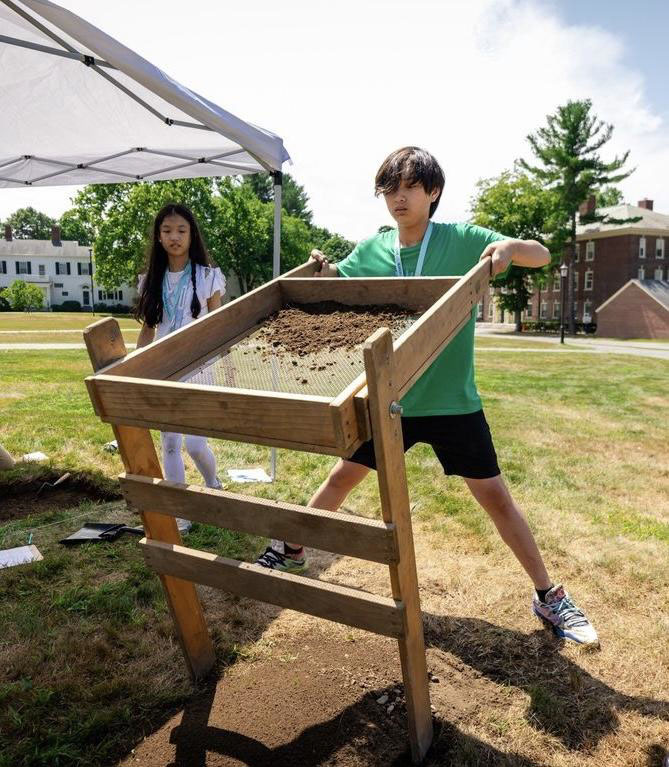
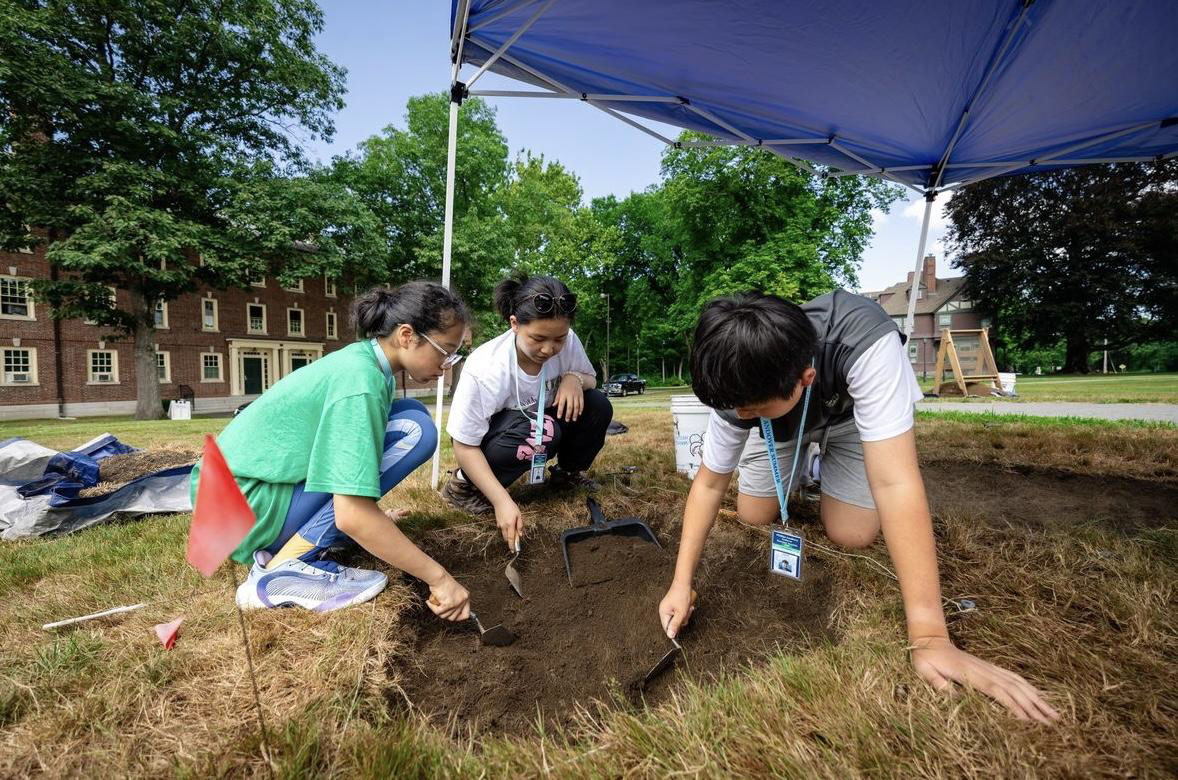
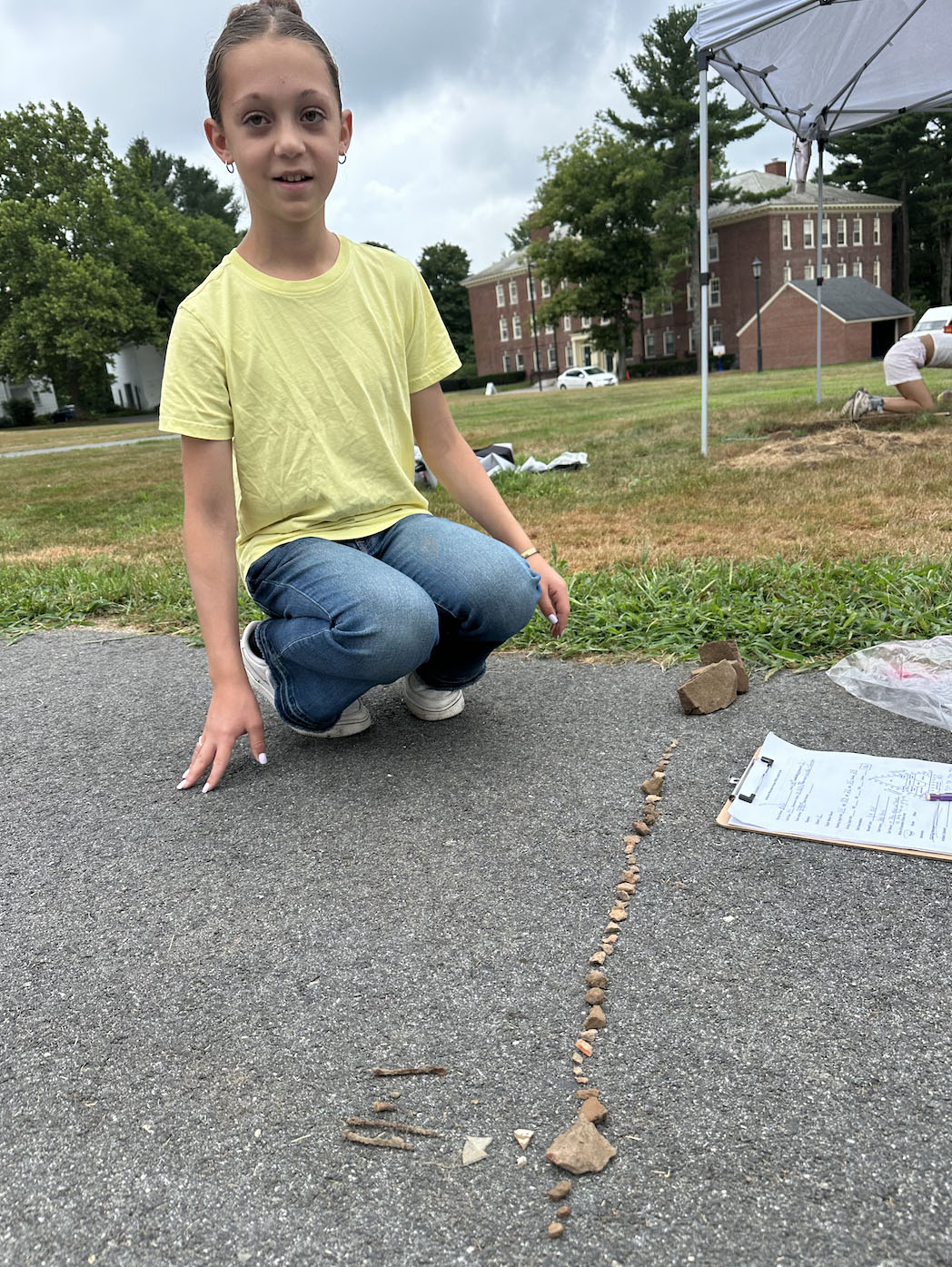
Students in each excavation team had a blast taking turns performing the primary tasks of an archaeologist: digging, screening, measuring, and note-taking. Many, if not all, students even got to unearth artifacts from their units! Some of our favorites included a small ferrous key, an impressed glass tumbler, and half a pair of scissors which all came from the two excavation units placed in the southwest portion of the quad.
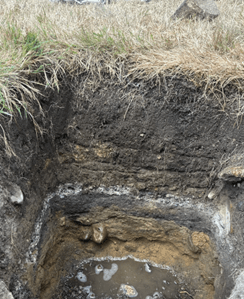
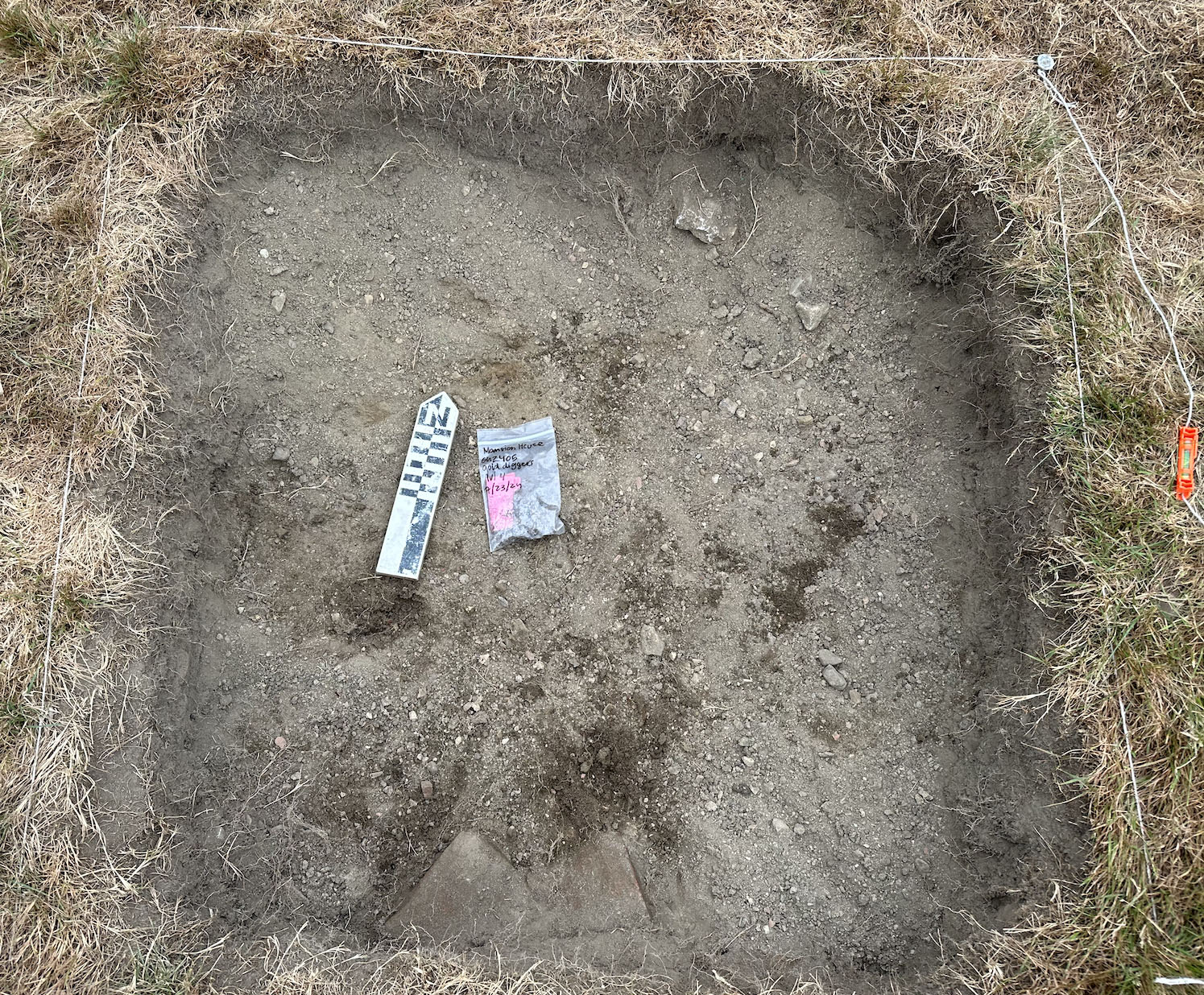
Further excavation in this area revealed a feature relating to the historic pathway present on early nineteenth century maps of campus. Pictured below is a dense, gravelly layer of soil discovered at 40 cm. This layer, interpreted here as the pathway, was intermixed with nineteenth century materials including glass, brick fragments, and some ceramic.
Students excavating the other four units in the northern portion of the quad found shallow cultural layers followed by a sterile C horizon, between 20 and 35 cm. While the artifact density of these units was limited, students still enjoyed finding an abundance of brick, metal nails, and some small ceramic fragments. The very shallow deposits found in these units informed the team that no building activity likely occurred in these areas. Additionally, the relatively low artifact density suggests that these areas were not regularly used like in a dooryard or garden area.
Overall, students in the 2025 field program successfully applied archaeological methods to ‘unlock’ more of the mysteries surrounding the Samuel Phillips Jr. Mansion House. This year’s field season serves to inform of the deep cultural deposits in the southwest portion of the quad and the significant research potential it could provide for future field seasons.
Thanks to the entire student field crew and cheers to a wonderful field season!
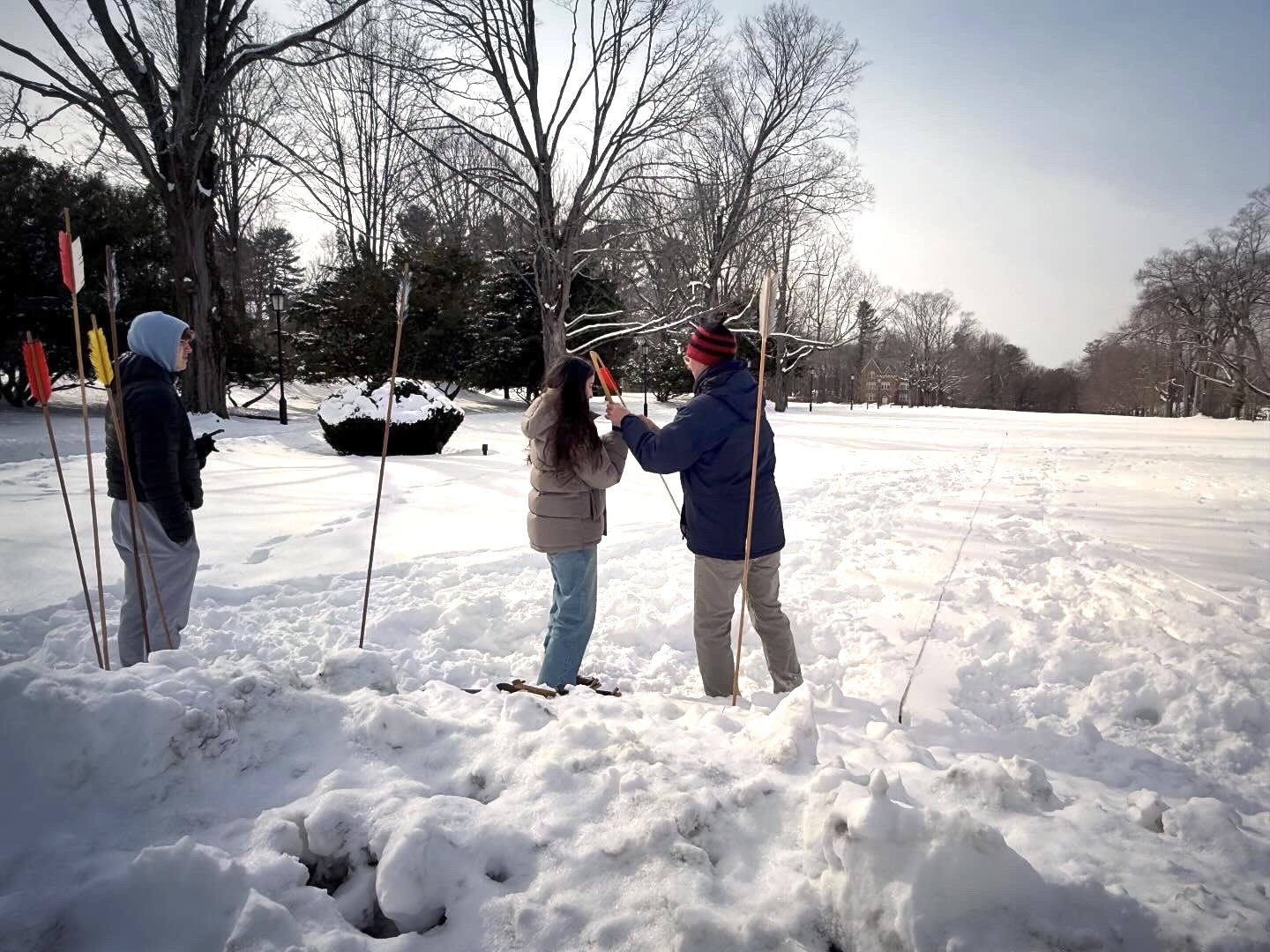
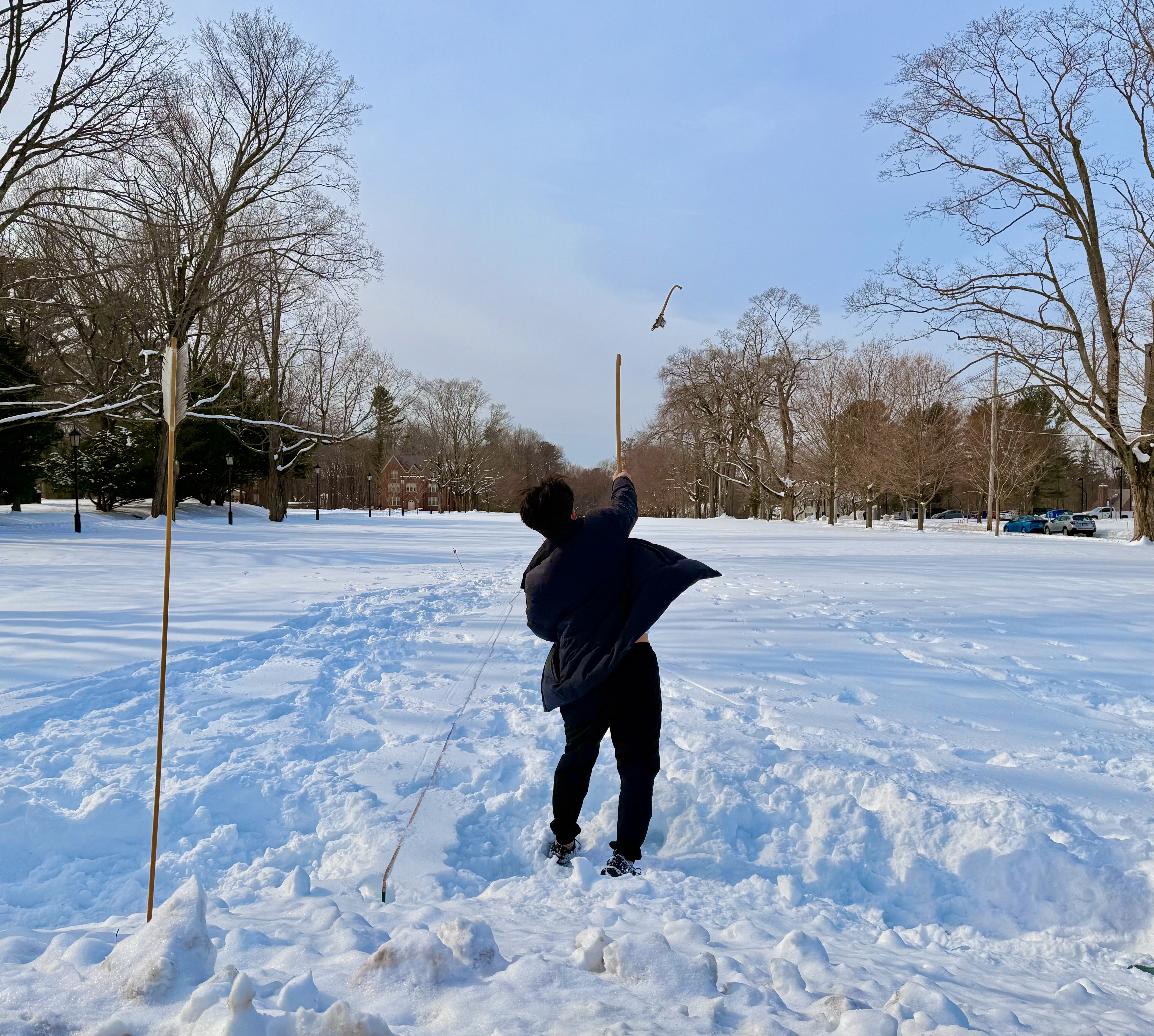
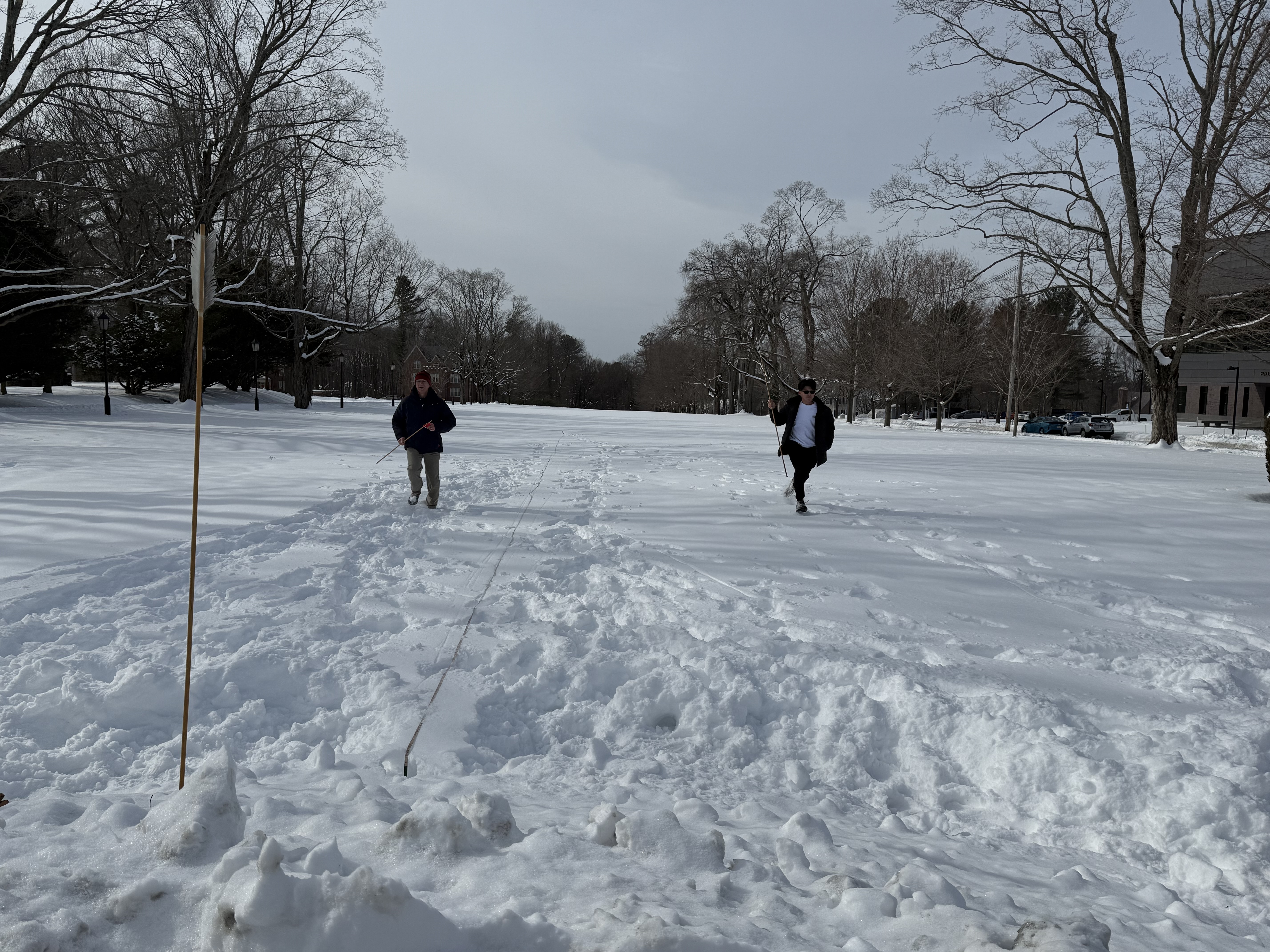
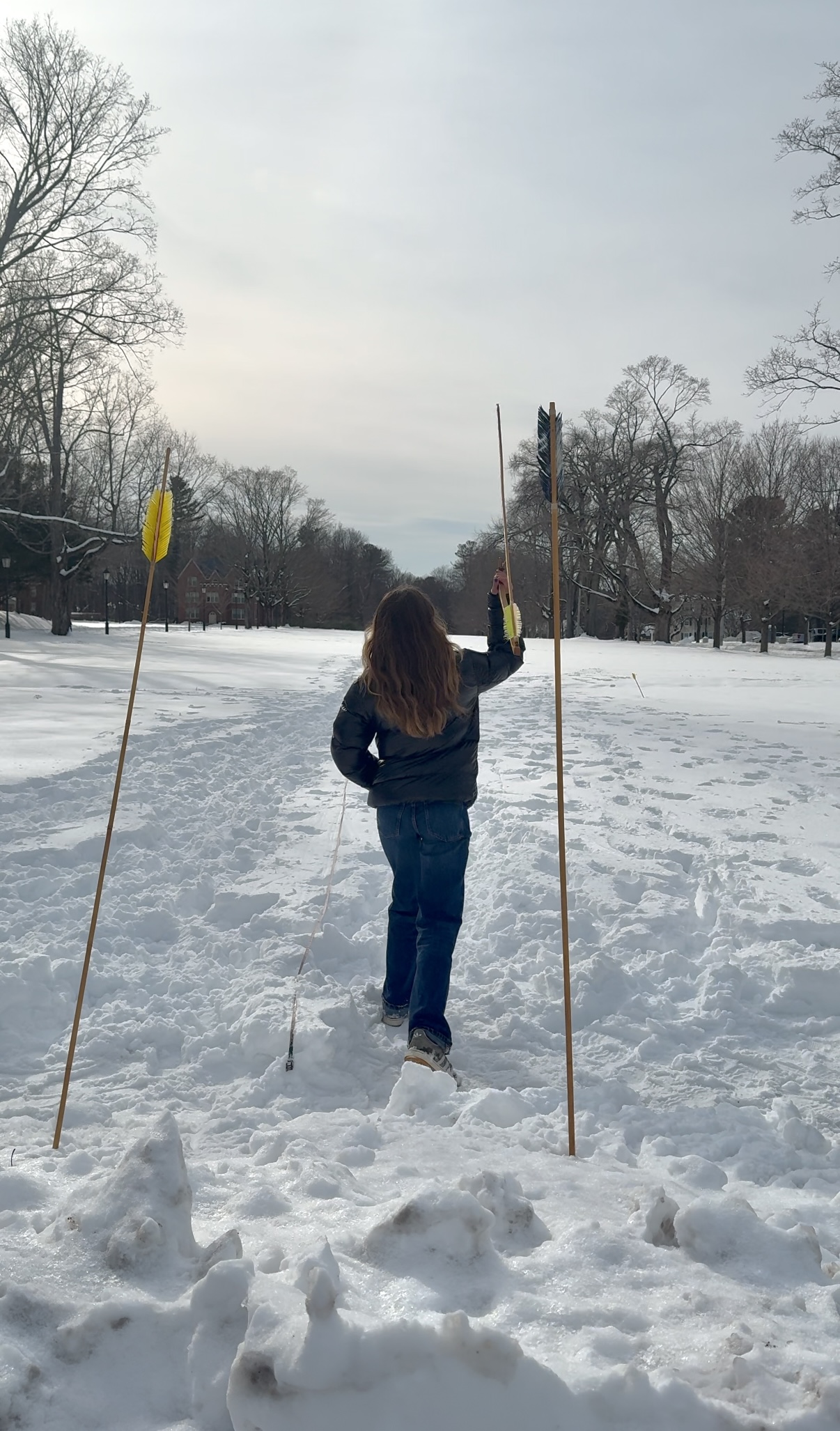
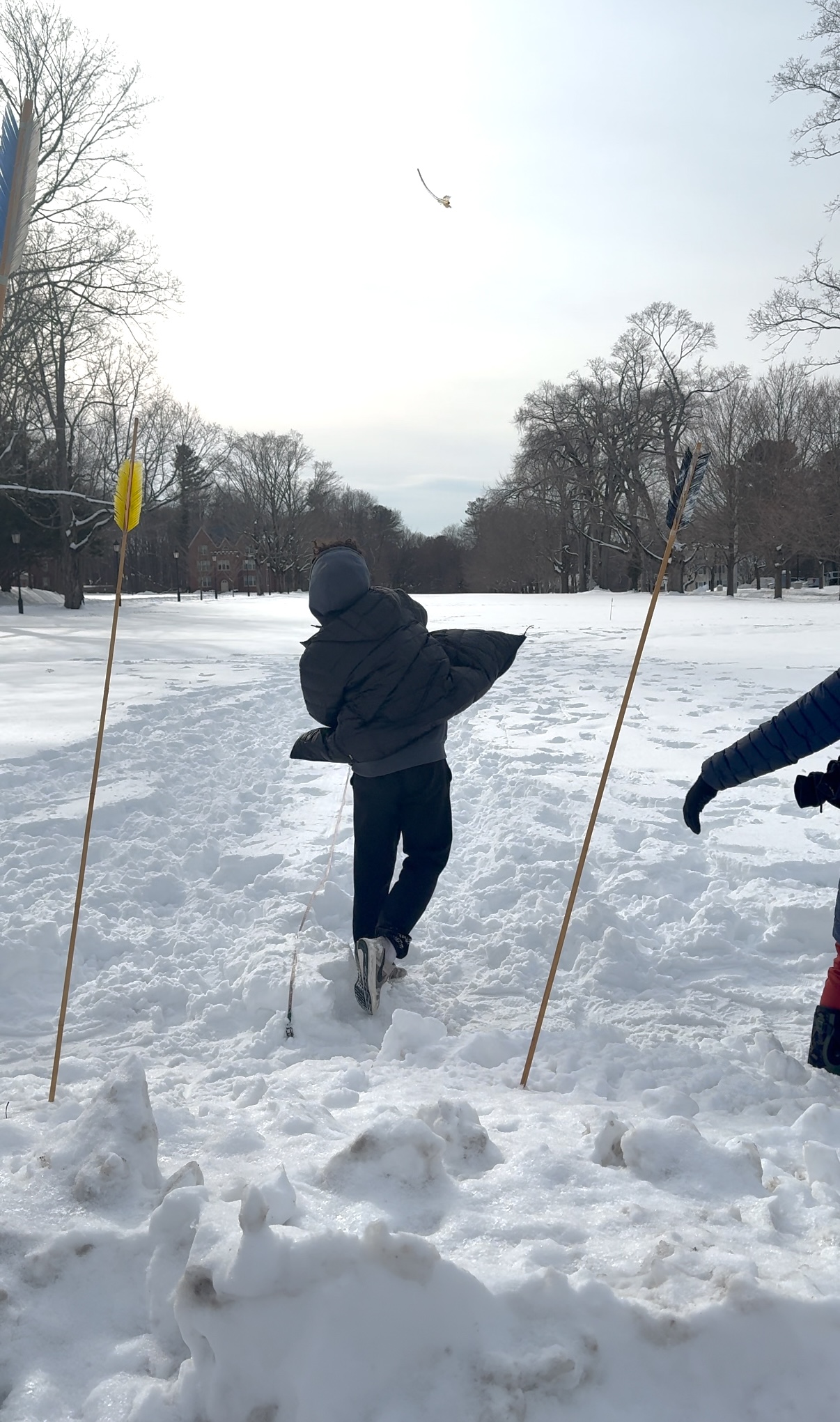
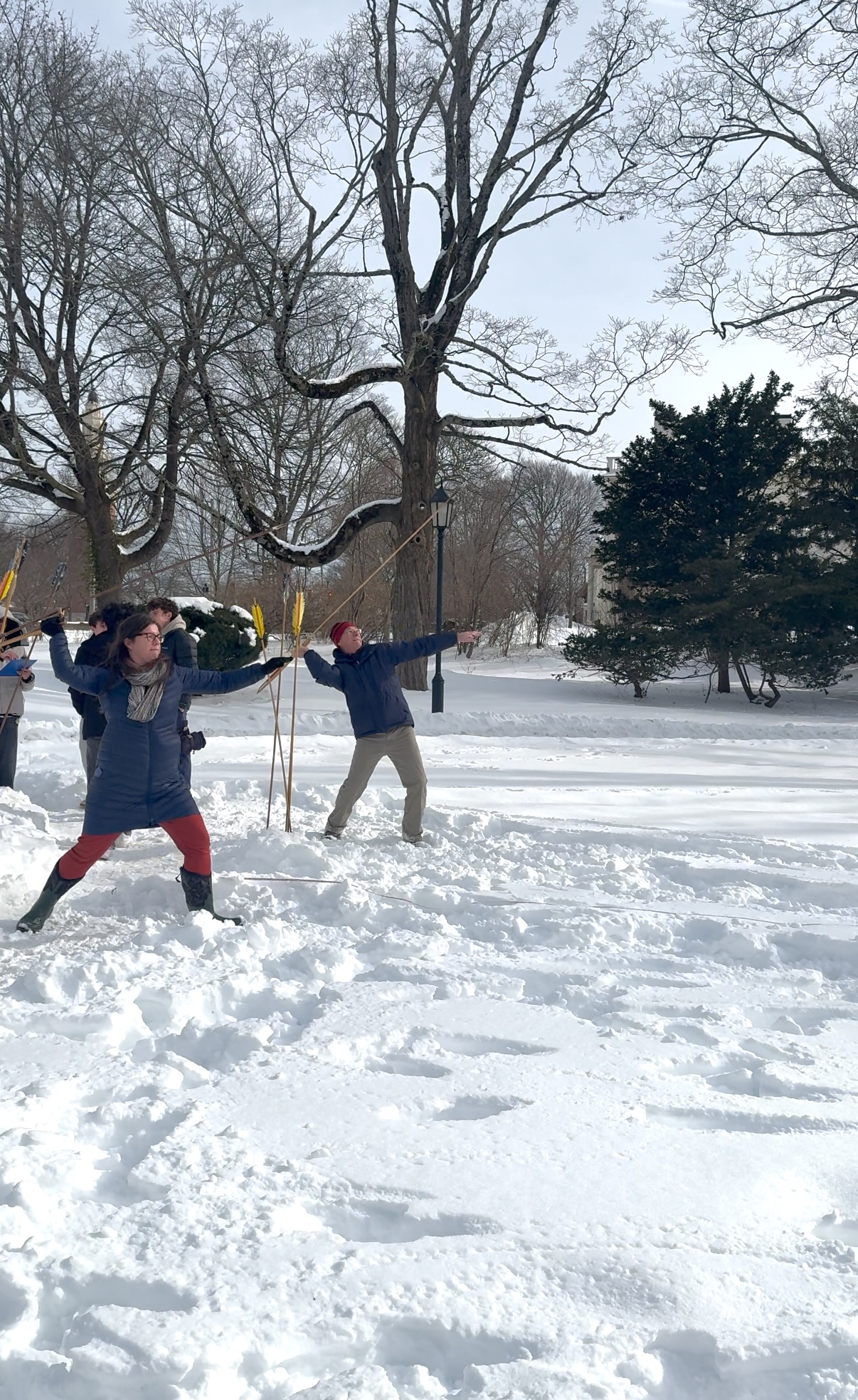
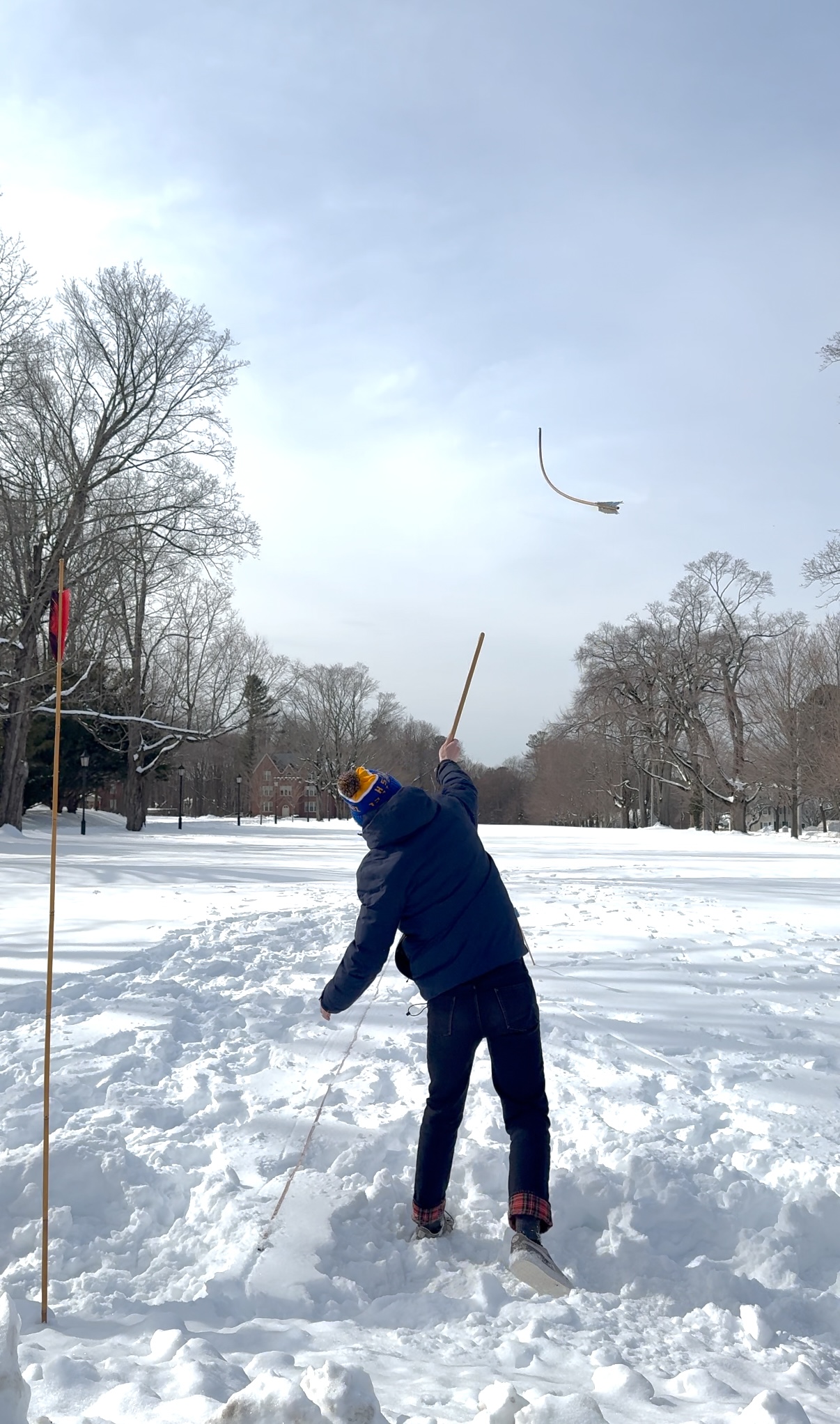
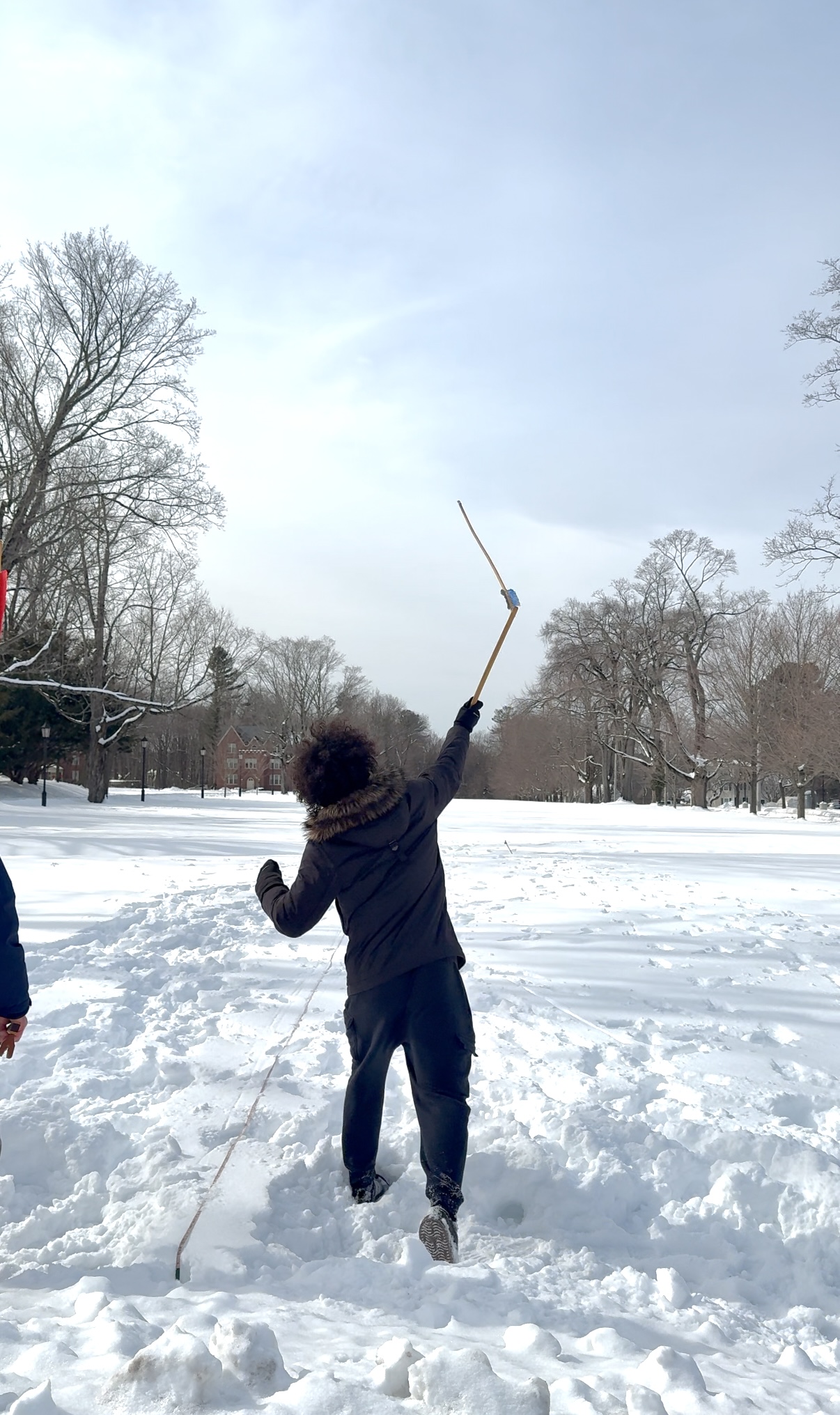
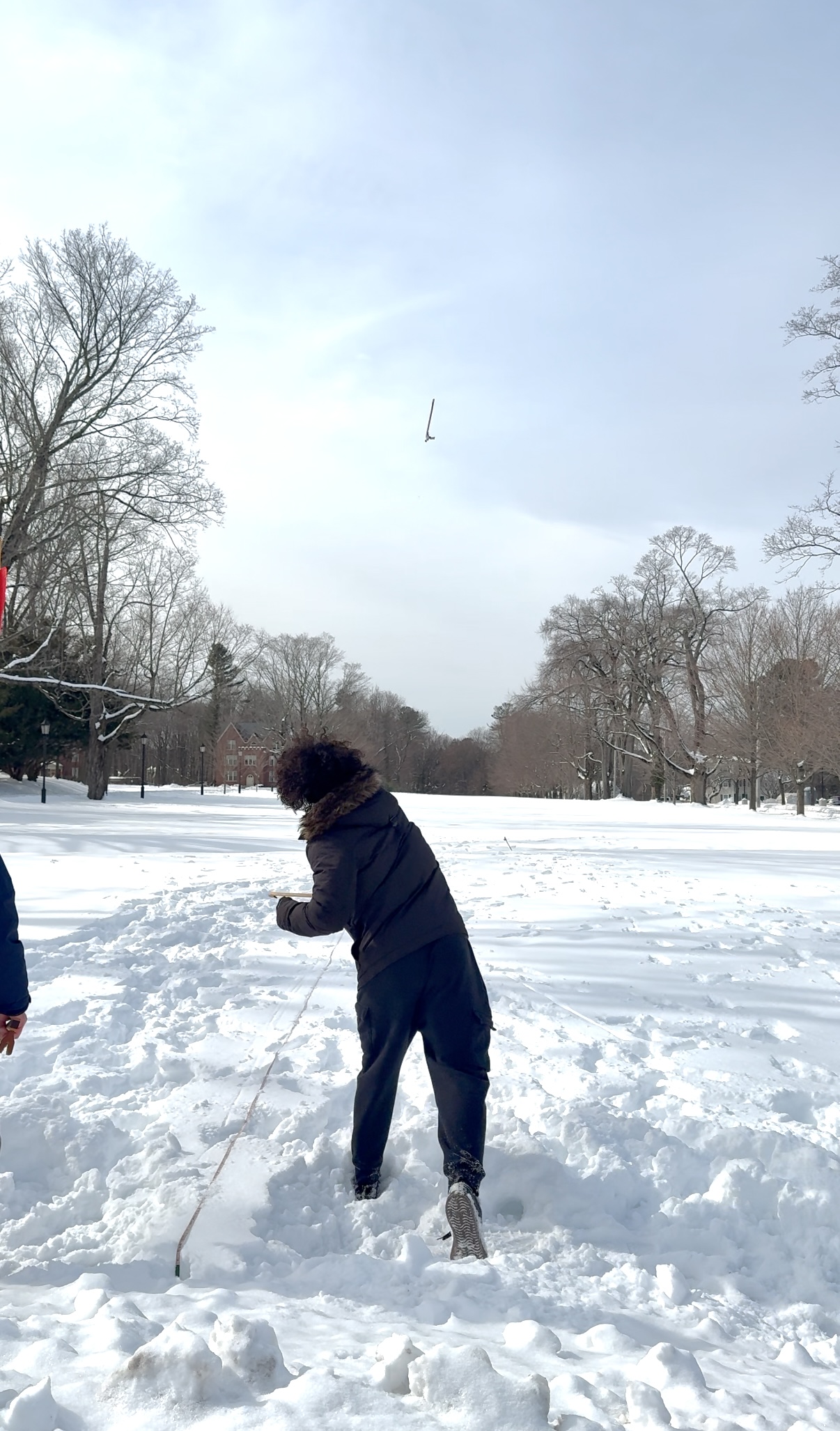
Rebecca Bowers’ Math 360 students spent a cold February day exploring the ancient hunting technology of the throwing board or atlatl. Peabody educators provided an introduction to the atlatl–which first appears around 21,000 years ago in Upper Paleolithic France and was used throughout much of the world. Acting as a lever and extension of the arm, the atlatl allows users to throw six foot darts at great velocity and distance. Students examined Arctic throwing boards, as well as a replica of the fawn or doe spear thrower hook from Mas d’Azil cave in France. Ms. Bowers provided some formulas to model projectile mathematics. Students collected their own data with multiple trials on the Vista. At least one throw exceeded 170 feet, which is pretty impressive!
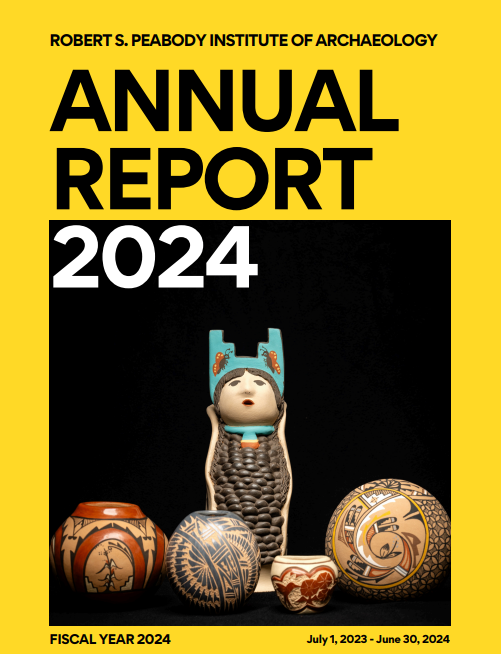
Our Peabody annual report for academic year 2023-2024 has just been released! This report features educational participation at the Peabody, building project updates, work duty, and more! In addition, our annual report features new acquisitions, institutional highlights, and workshops along with updates on our collection and NAGPRA work. Thank you to everyone who supported the completion of another wonderful year at the Peabody!
As Phillips Academy’s Lower School Institute (LSI) Dig This! course comes to the end of its seventh field season, students and instructors are so excited to share stories of the many artifacts they discovered at the school’s very own excavation site. At the start of the 2024 season, students were introduced to the story of the Mansion House, an eighteenth century home which belonged to the founder of the academy, and now lies buried underneath the lawn of the West Quad on Phillips Academy campus. The Mansion House stood on the property for 105 years before being burned down through an act of arson, which was never solved or prosecuted. The remains of the house laid just centimeters underneath the surface of the quad for a little over 100 years before LSI’s summer session course began the long process of meticulously digging it up.
After being introduced to the legacy of the Mansion House and its past excavations, the 2024 archaeology crew set out to build upon this research by investigating parts of the site which have never been previously tested. Specifically, six teams were each assigned a 1 X 1 meter unit and asked to investigate a given region of the West Quad, whether it be just outside of the Mansion House walls, in the area suspected to hold a nineteenth century privy, or the very place where a neighboring nineteenth century printing house was known to have stood. Equipped with shovels, trowels, and screens, the six teams got to work and all quickly began to gather archaeological data.
While no team this summer unearthed ash layers relating to the infamous 1887 fire, which resulted in the destruction of the Mansion House, several groups discovered an abundance of charcoal and burned brick. Additionally, the two groups assigned to dig in the hypothesized privy, EU 2404+2405, uncovered a plethora of cultural materials, including a button, many ceramic shards, and faunal bones. Specifically, a small black glass button, which was unearthed in EU2405, became of great interest to the students. Because black glass beads were only in fashion during the ten-year period when England’s Queen Victoria was in mourning, the button students found can be dated to that decade between 1861 to 1870. How exciting!
Students stationed in the area believed to be where the nineteenth century printing house once stood uncovered a considerable amount of leather. It is unknown if this leather came from shoes or book bindings, however the find itself is incredible given how well the material preserved over time!
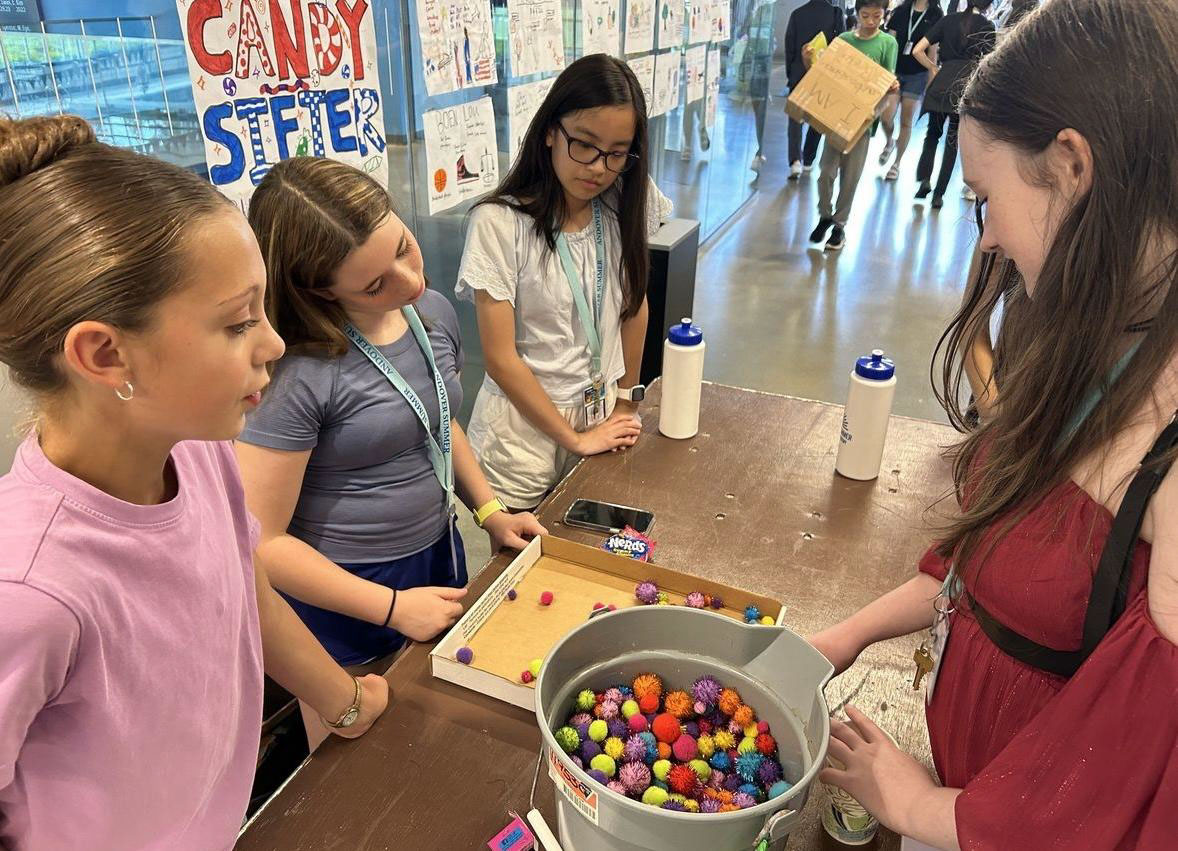
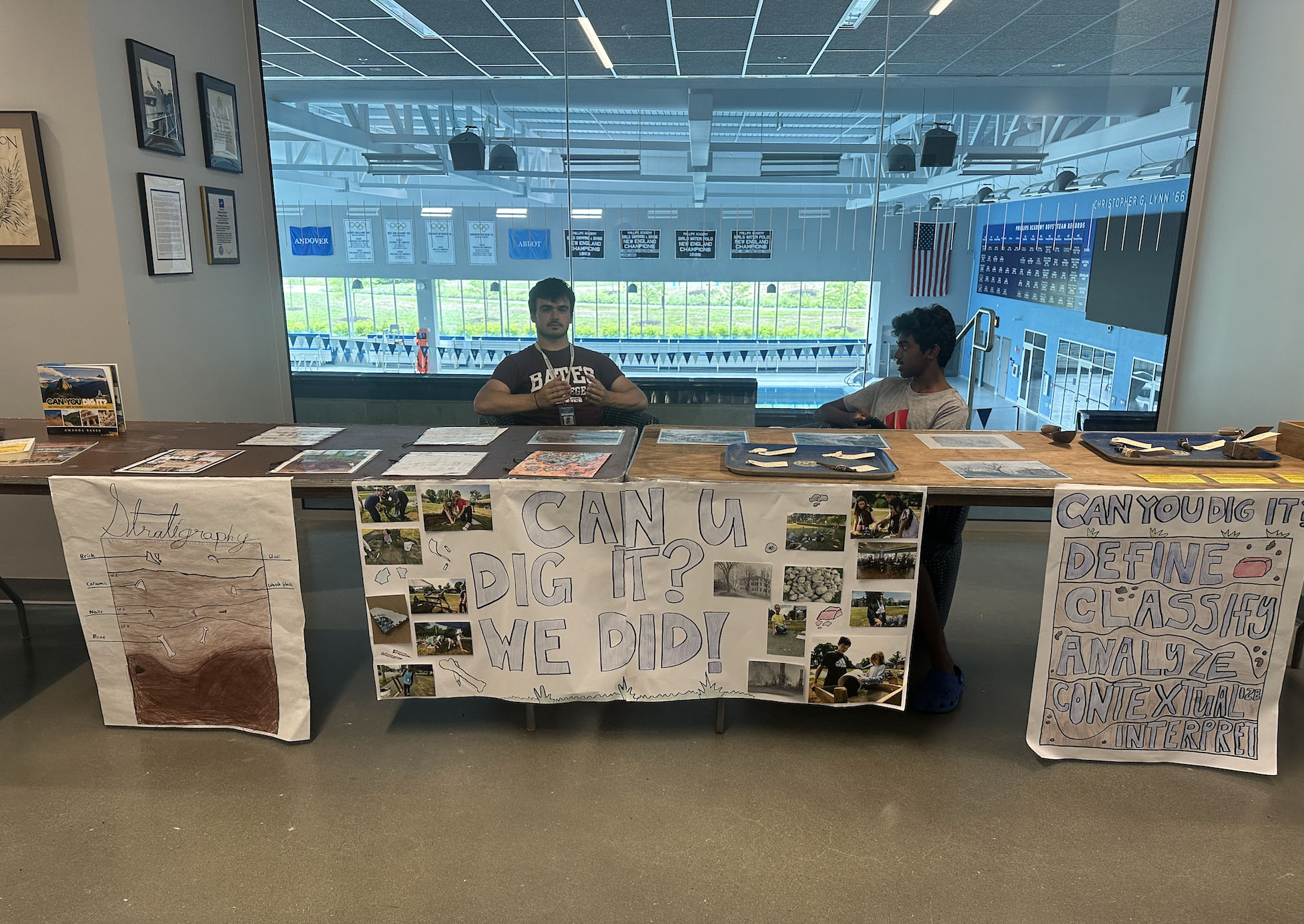
Despite the fact that the 2024 Dig This! crew did not uncover any features relating to the Mansion House, privy, or printing house, students still reveled in the amount of cultural material found and were very excited to show it off at their LSI student exhibition. Students specifically enjoyed the opportunity to set up an archaeology simulation, where they explained the process of digging and let others take a stab at excavating exciting treasures in the form of candy!
Cheers to another amazing summer of learning in the dirt!
Hi my name is Kyra Smith and I was one of the curatorial assistants at the Peabody this summer! I’m a recent archaeology master’s graduate from Boston University where I focused on Indigenous archaeologies, food sovereignty, and the archaeology of the South Pacific Islands. Having previously worked in the archaeology department of another museum in undergrad, I was thrilled to apply for this position as a curatorial assistant, especially at an institution that is so dedicated to NAGPRA. I was so invested in the position I had my family ship me my sister’s 1998 Toyota Camry from Washington State- which in the state of Massachusetts counts as an Antique Vehicle!
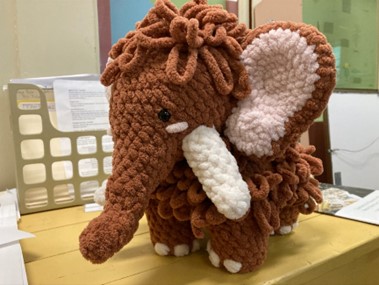
Working at the Peabody over these last ten weeks has been an exercise in flexibility, learning as we go along, and exposure to things we’ve never seen or interacted with before. There are so many things I could write about, but the story I want to share as my time here comes to an end is how the Peabody got its own pet mammoth.
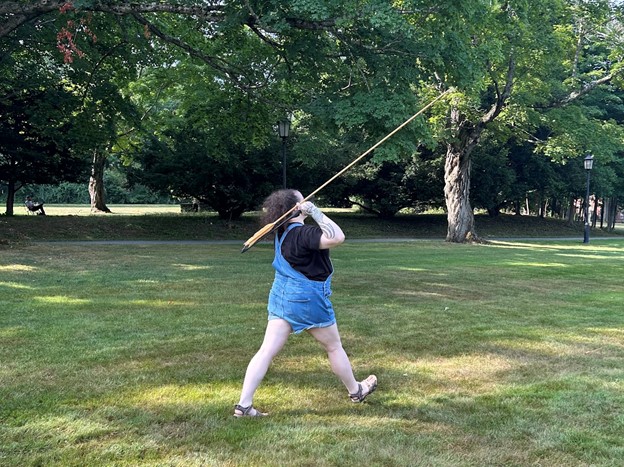
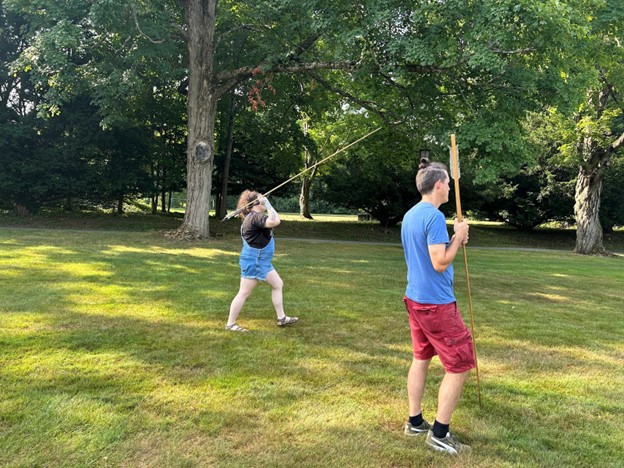
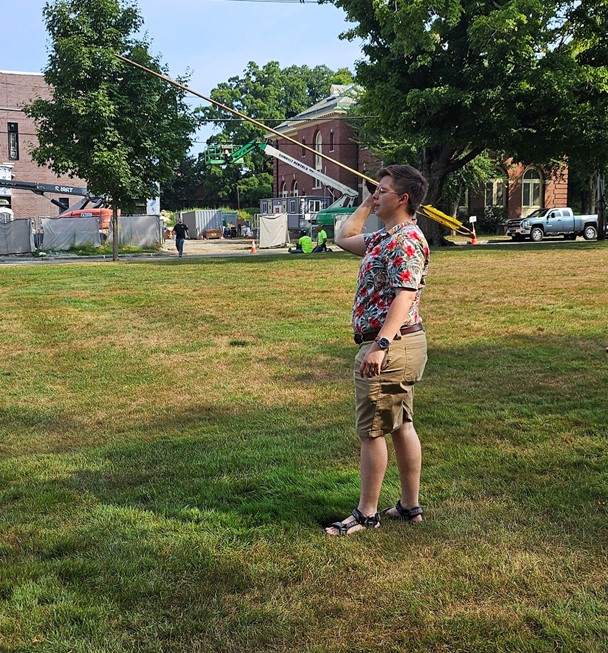
On a particularly hot and humid Friday, I finally got to use an atlatl for the first time. Ever since undergrad I have heard professors and archaeologists talk about atlatls, and even how they used to take students to try throwing them in previous years. Ever since then I have been biding my time until the opportunity arose- and oh was it worth the wait.
John, Cyrus, and I went out onto the Vista bright and early before it got too hot, and John took us through the basics. If you have ever used one of those plastic arms to play fetch with your dog- it’s nothing like that at all, which I learned very quickly. I imagine it was quite the sight for the construction workers on break in the shade of a nearby tree to see us attempting to throw the arrows taller than we were with varying degrees of success. After Cyrus and I (sort of) got the hang of it we were going to do target practice at the international standard target, but sadly that had to wait as the aforementioned construction workers were still under that tree which was too close to the target for comfort.
So, we went back inside to rest our arms and cool down, and by then an idea had begun to form. One that was inspired by our conversations about whether we were successful hunters of our theoretical mammoth/mastodon. That idea would have to wait because about an hour later we went back out to try aiming the arrows instead of attempting to throw them as far as humanly possible. It is much easier to attempt to throw them as far as humanly possible than it is to hit a large, completely still target. Still, Cyrus and I were able to land a couple hits each on the actual target and not into the bush next to it, and we called that a win. We may never know if we were skilled enough at throwing the atlatl to take on a mammoth, so instead I made a mammoth for the museum.
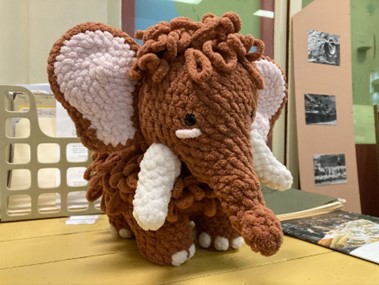
In my free time, when I’m not at the Peabody, I learned how to crochet amigurumi, which is a Japanese name for a style of stuffed crochet animals. That weekend after we threw the atlatls, I found a pattern online and spent some time crocheting a mammoth to be a mascot and companion at the museum. And thus, Josie was born! She was named by Marla, and now lives at the Peabody, where Marla promises she will never be used as target practice when throwing atlatls. For anyone else interested in crocheting or amigurumi, I got the pattern for Josie from CrochetGrove on Etsy.
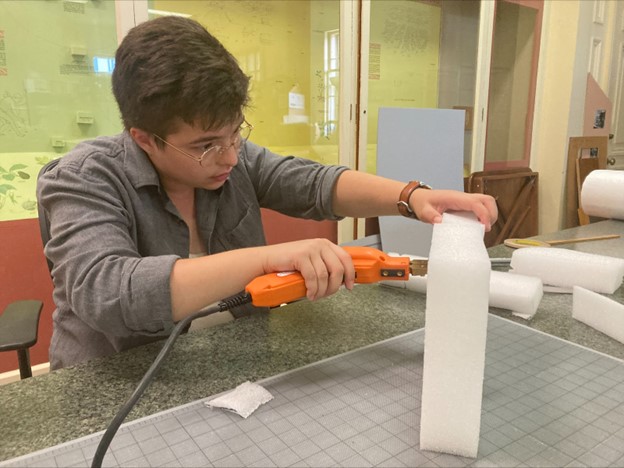
Josie also represents one of my favorite aspects of working in a museum, as they are fundamentally institutions created for the purpose of preserving and storing information, things, and stories for perpetuity, there will always be a record of my impact whether it’s the work I did, the things I made, or the stuffed mammoths I created. Sure, the things I’m doing may not be monumental, but they are fundamental things that have left a trail of my action on parts of the museum like the catalog, or the new housing for artifacts with my initials on it, and the drawers in the collections storage where Cyrus and I curated and displayed artifacts from all over the world so that the museum and its staff can better tell the stories of the materials they care for. It’s a reminder of how much the little things mean in the greater scheme of things.
*******************************************
As Kyra aptly said in their post above, the Peabody Institute provided plenty of opportunities to expand our creative and intellectual spirit. As a Historical Archaeology graduate student at UMass Boston, I had minor collections experience and applied to the summer curatorial assistant position to undergo formal museum collections training. Having admired the Peabody Institute’s commitment to NAGPRA and tTribal relations for years, I was eager to witness the processes and procedures that go into the day-to-day work. However, what I was not expecting was the range of creations and artifacts I would be interacting with. My archaeological background is rooted in the Northeast United States and focuses on environmental analysis, so my mind was blown when one of our first tasks was rehousing ancient botanical remains from Tehuacán Valley, Mexico. Coming face-to-face to some of the world’s oldest domesticated maize was an experience I will never forget.
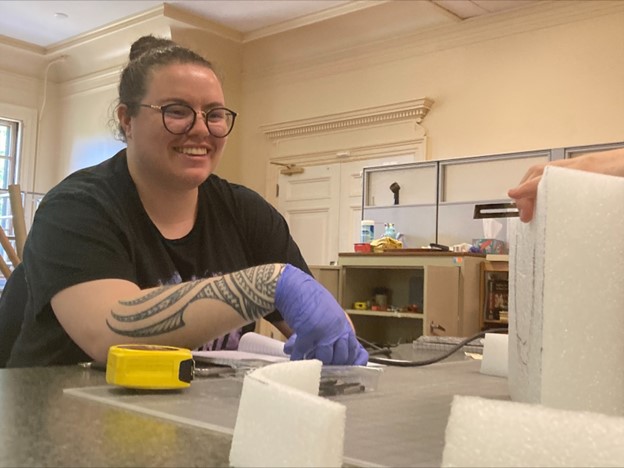
Kyra and I spent a lot of time with ceramics, lithics, and textiles from regions we were pretty unfamiliar with. Despite our lack of regional understanding, the Peabody staff always provided context and demonstrated deep respect for all creations. As we created mounts for modern Guatemalan and ancient Peruvian textiles we learned their patterns and language; as I rehoused lithics I would consider the generational knowledge and studied craftsmanship it would take to form them. Creating spaces to house and display archaeological and ethnographic creations ranging from the Lucy Foster household in Andover to Meso-America to Paleolithic Europe was an honor and I am proud to have contributed to the updated collection spaces and stories the Peabody staff can tell.
The Peabody Institute has a very storied past that was illuminated through organizing both the library and Eugene Winter’s archive. As it was founded in 1901 with contributions from many different kinds of archaeologists, the library seems to contain the entire history and complicated legacy of North American archaeology. In addition to the library, Eugene Winter, Honorary Curator and lifelong contributor to the Peabody, had left behind an archive after his passing. Kyra and I spent some time exploring his legacy through the resources, photographs, and ephemera he had designated important enough to keep. Interacting with both the collections, library and archives created an meta-institutional feedback loop as a reminder that working in archaeology requires positionality, empathy, and acceptance of “not-knowing.” We will never be able to alter the decisions made in the past, but we can always alter our perspectives in the present and contribute to a future that centers people and not only their “things.”
As Kyra noted, working at the Peabody for the past ten weeks might not have been monumental to its legacy, but the work that has been completed by the longer-term staff is monumental to the field. The Peabody staff have taught me fundamental collection management skills that are coated in careful consideration, empathy, and a desire to create a better future that I am extremely grateful to inherit.
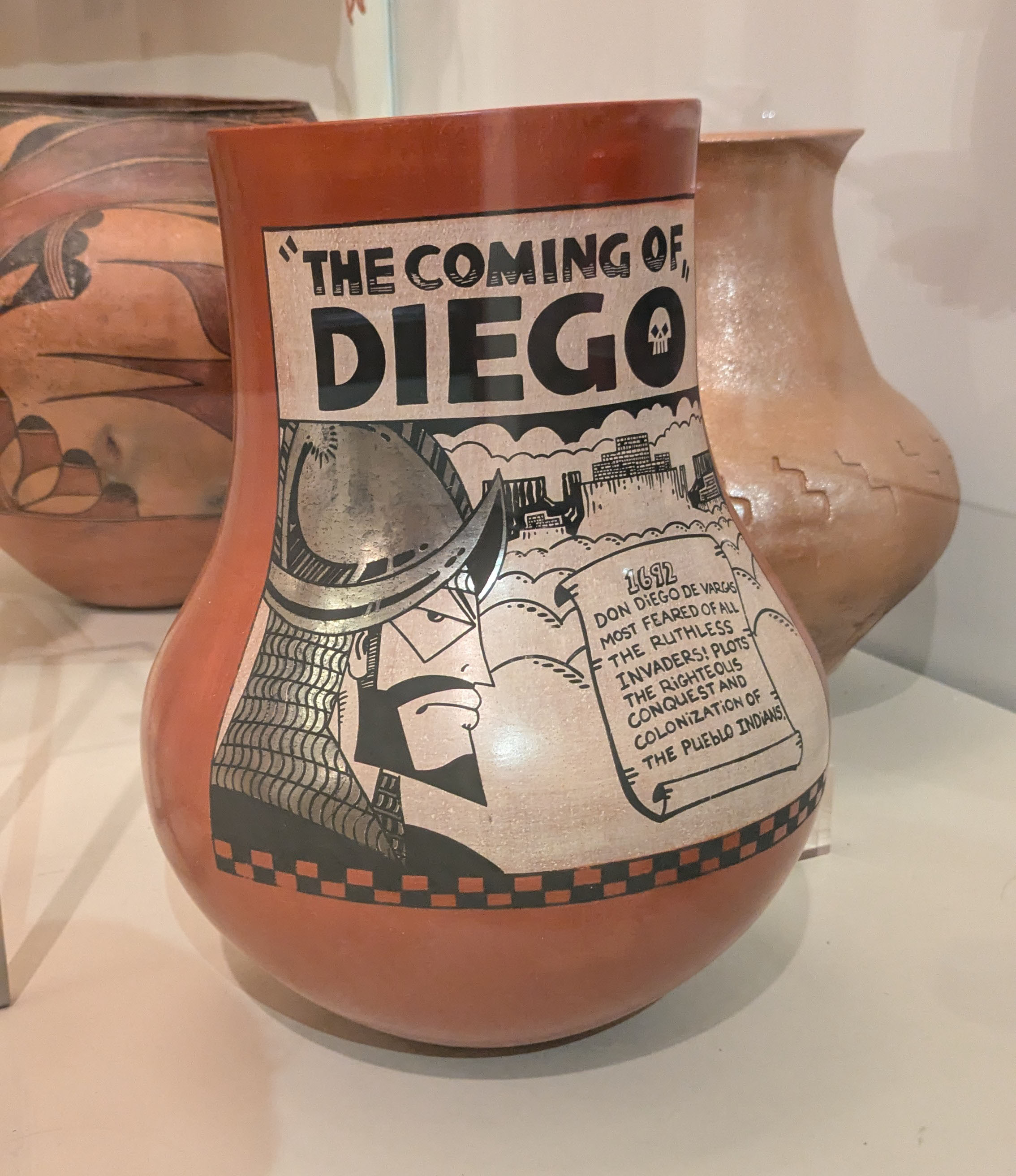
June brought a family trip to London, including a visit to the British Museum. Many websites list the top ten items that you should not miss at the museum, and the British Museum itself has a leaflet with their recommended highlights. The British Museum is sort of ground zero for archaeology, anthropology, and colonialism, as well as mounting calls for repatriation (many people are surprised that the British Museum is prevented from repatriating cultural items by law, and can only deaccession items that are deemed duplicates, damaged, or no longer of public interest). A surprise was a number of pieces by contemporary artists that stand in juxtaposition to items from the past. It was particularly neat to encounter several ceramic pieces by Diego Romero in the case along with older and ancient pieces of Pueblo pottery. After the visit, I decided that I’d shared my own British Museum top ten list and my own repatriation recommendations.
Diego Romero’s contemporary Pueblo pottery commemorates the Pueblo Revolt of 1680; at the British Museum Romero’s work appears with older and ancient pieces.
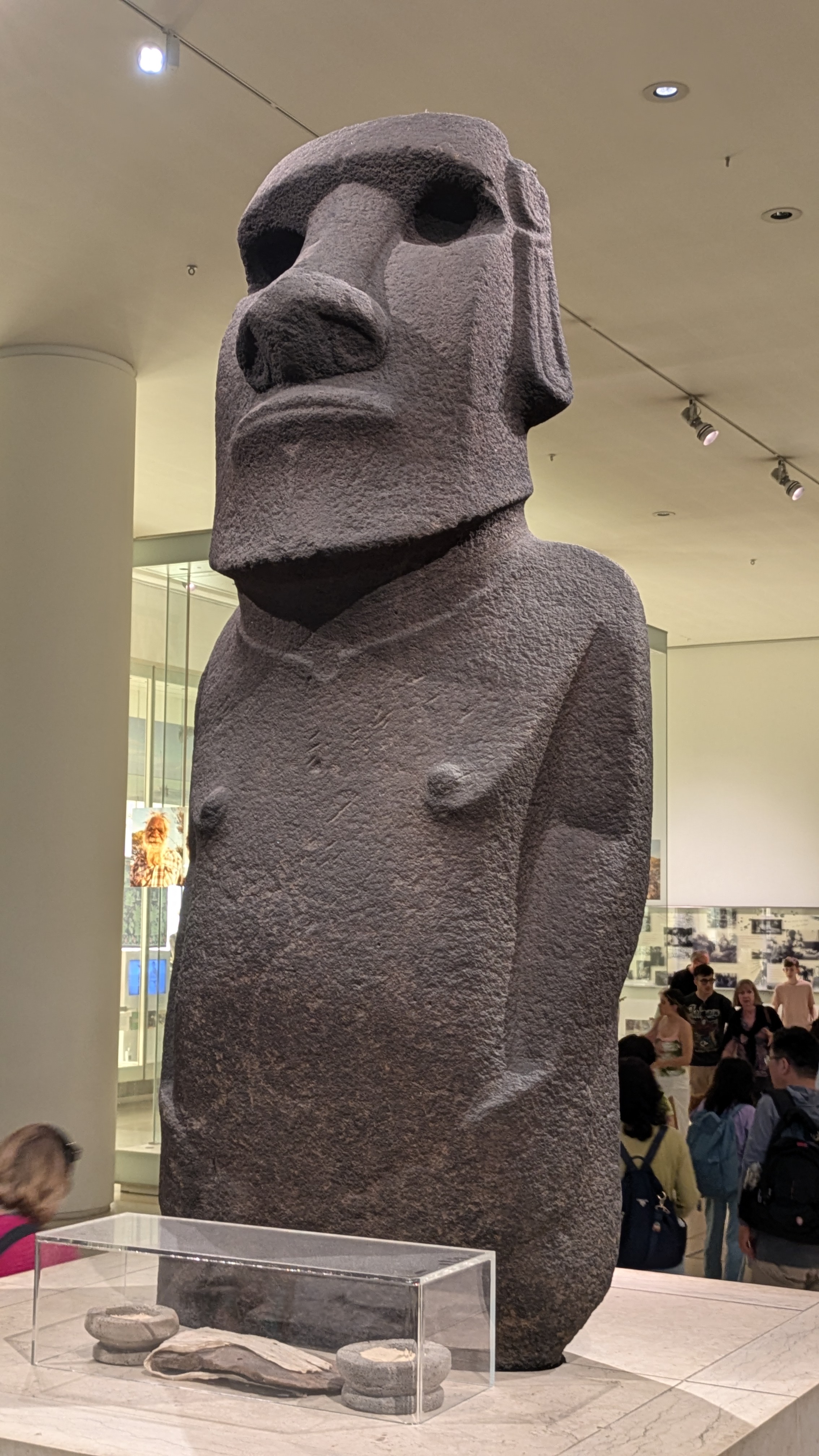
No. 1 Hoa Hakananai’a (meaning ‘lost, hidden, or stolen friend’)
Hoa Hakananai’a is one of two Moai from Rapa Nui (Easter Island) held by the British Museum. According the exhibit text, both Moai were taken from Rapa Nui in 1868 by Commodore Richard Powell and the crew of a British survey ship, HMS Topaze. The Admiralty presented Hoa Hakananai’a to Queen Victoria, who ultimately gave him to the British Museum, rejoining Moai Hava, who went directly from the Admiralty to the museum. Near the base of the colossal figure of Hoa Hakananai’a are offerings made by representatives from Rapa Nui. The Rapa Nui requested repatriation in 2019 and the exhibit text explains that conversations about return are ongoing.
Should the British Museum repatriate Hoa Hakananai’a and Moai Hava? Yes.
No. 2 Parthenon Marbles
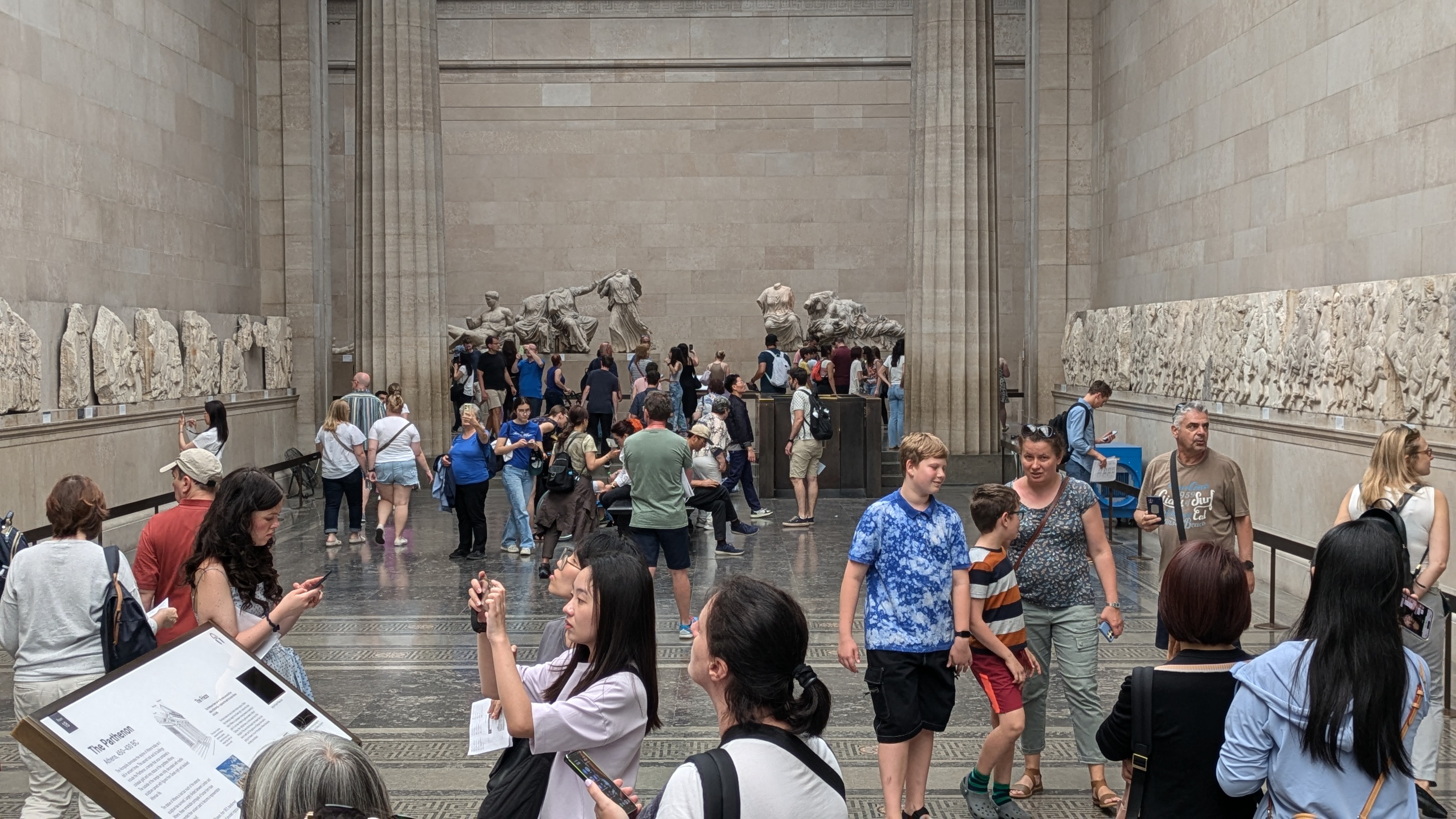
Perhaps central to requests for repatriation of cultural items from the British Museum are the sculpted frieze panels from the Parthenon–long called the Elgin Marbles, after the individual who originally took the panels. These impressive carvings once adorned the Parthenon–the Temple of Athena–on the Acropolis in Athens and date from nearly 2,500 years ago. The pamphlets that are usually available to explain why the panels shouldn’t be repatriated were all gone by the time we were there, but the British Museum website explains, “It is universally recognised that the sculptures that survive are best seen and conserved in museums.” Is it? The website goes on to note that in 2009, a new museum was constructed in Athens to showcase the panels. Greece has asked for the return of the carvings numerous times. Two notes from our visit. First, our friend Bill, a big comic and graphic novel connoisseur, noted that the so-called “South Metopes,” the panels depicting a battle between centaurs and Lapiths at the marriage feast of Peirithoos, followed the graphic, sequential storytelling now best known from comic books. Once he pointed this out, it completely changed my appreciation for the panels. Secondly, if you look out the windows of Gallery 18, where the sculptures and carvings are exhibited, you could see someone making breakfast in a flat directly behind the museum. I found the juxtaposition of these culturally and politically charged items with the quotidian of daily life to bring the entire, global conversation about the marbles into stark relief.
The gallery featuring the Parthenon Marbles was a popular destination when we visited in June.
Should the British Museum repatriate the Parthenon Marbles? Yes.
No. 3 Hopewell platform pipes
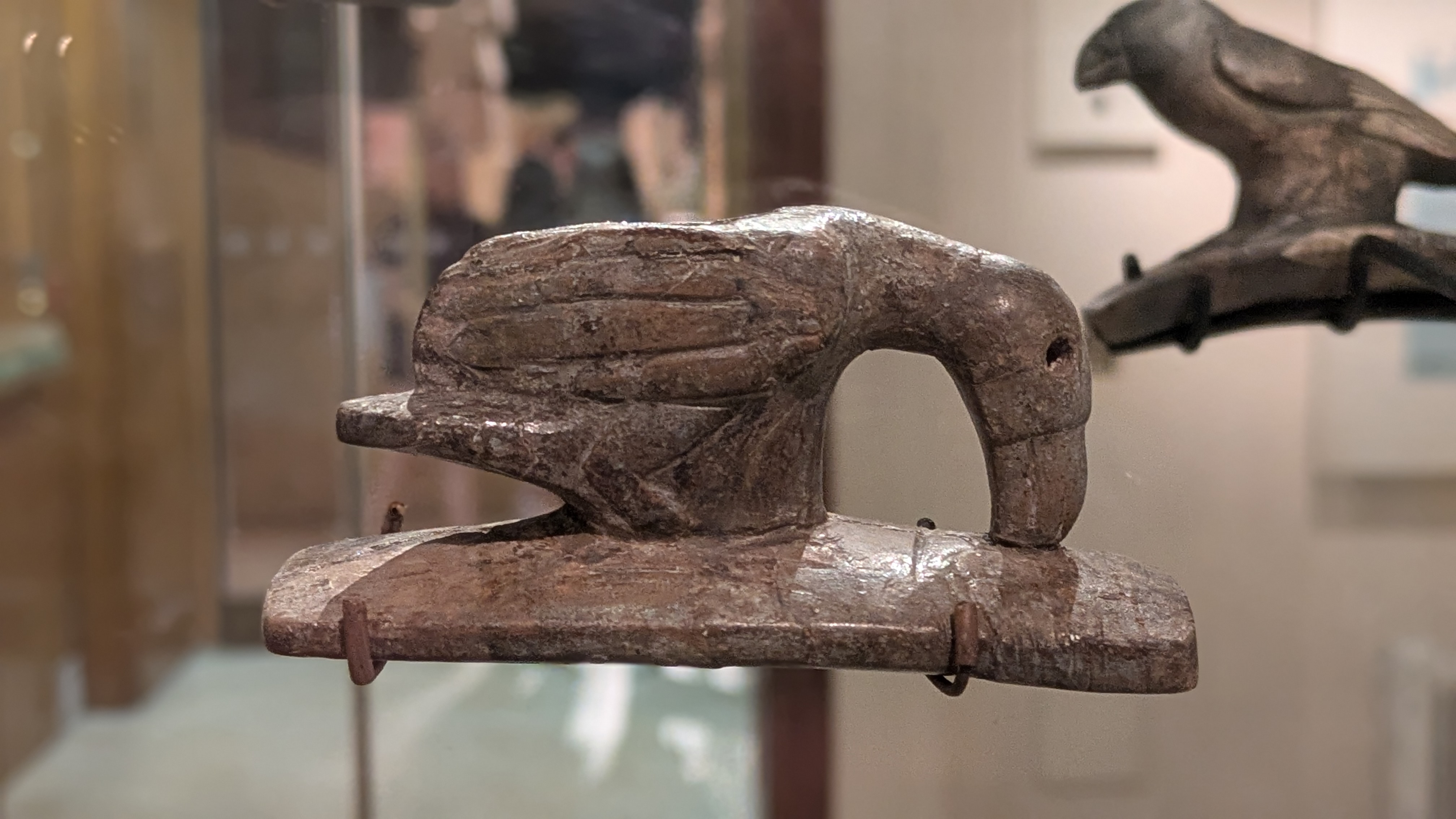
I’m definitely deviating from the top ten lists provided by the British Museum and other writers at this point, but for a student of archaeology of the Southeastern United States, I was really looking forward to seeing the Hopewell platform pipes. The Hopewell pipes, of stone, with beautifully carved birds and animals in miniature, were removed from Mound City in Ohio by E.G. Squier and Edwin Davis–remember Squier and Davis? Authors of 1848’s Ancient Monuments of the Mississippi Valley, one of the earliest archaeological publications of the Smithsonian Institution, sent this remarkable group of nearly fifty carvings abroad. According to the catalog for the 1977 exhibition Sacred Circles, “These little sculptures have a meaning that far outstrips their size. One feels their importance. It has something to do with the salient presentation of each animal, quail, hawk, bear, panther, snake, beaver or squirrel.” Acknowledging the high arts, architecture, and far-flung influences of the Hopewell, UNESCO recently designated eight of these monumental earthwork complexes as world heritage sites. Many institutions in the United States hold material heritage of Hopewell, and consultation with Tribes and Nations, as well as affiliations are beginning to happen.
Hopewell platform pipes from Ohio displayed at the British Museum.
Should the British Museum repatriate the Hopewell platform pipes? Yes.
No. 4 Sutton Hoo ship burial
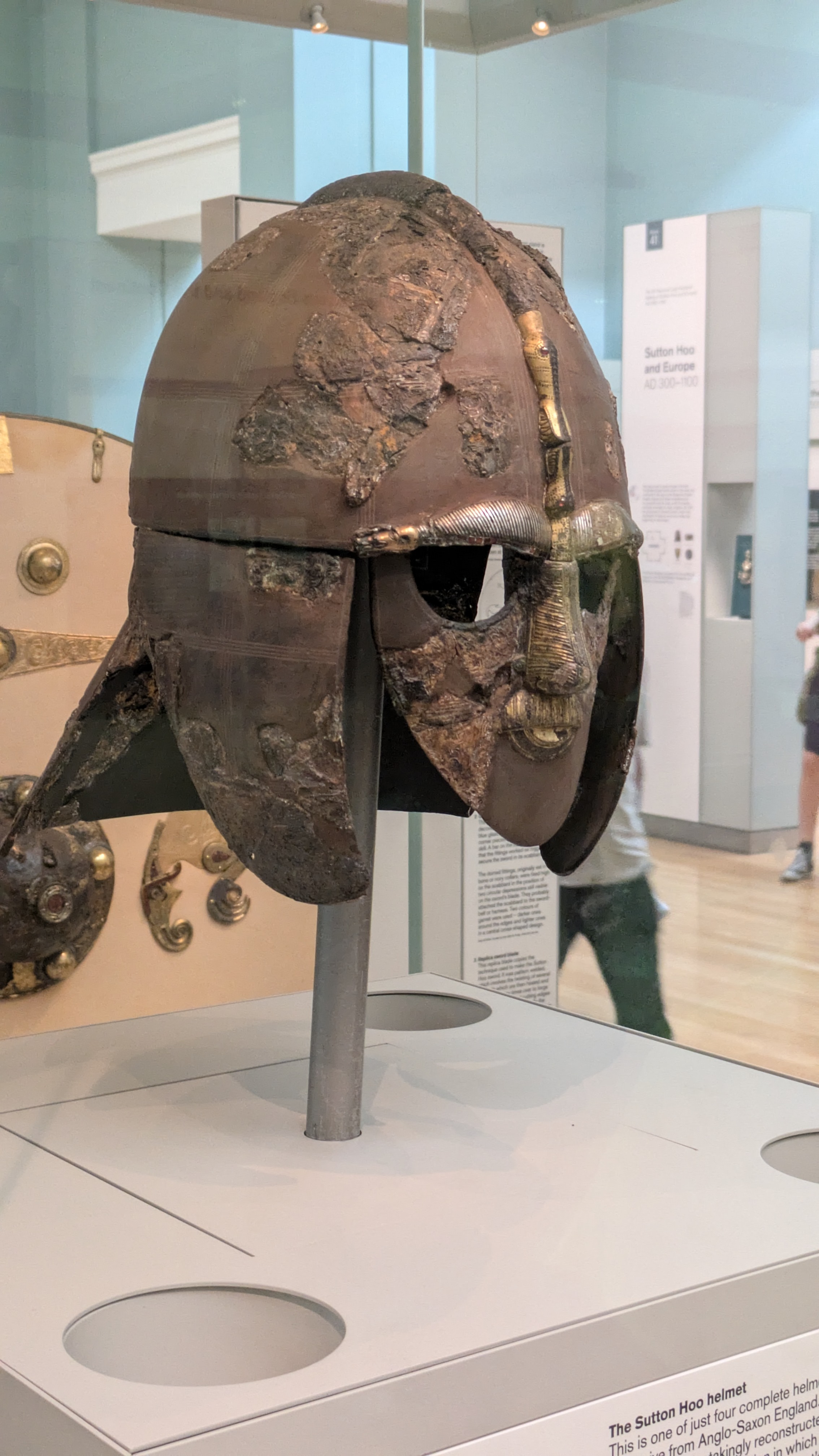
I was excited to see the items from the seventh century Sutton Hoo ship burial. In 1939, in Suffolk, avocational archaeologist Basil Brown worked with landowner Edith Pretty to excavate the remains of an Anglo-Saxon ship burial, including a trove of weapons and jewels, including gold and garnet items and a fabulous portrait helmet of iron and copper alloy, that some have thought might be King Raedwald of East Anglia.
The Sutton Hoo portrait helmet.
Many learned a little about Sutton Hoo from the 2021 Netflix movie The Dig starring Carey Mulligan and Ralph Fiennes. Sadly The Dig didn’t tell us much about the discovery or the project itself, even changing elements of the story and characters, like Mercie Lack and Barbara Wagstaff, teachers and amateur photographers who volunteered to help and captured amazing images of the fragile and rapidly deteriorating find (they became a man in the movie–why?). Okay, so, you probably are thinking Sutton Hoo, Suffolk, solidly in England, no question of repatriation, right? Well, a 2020 blog on Cultural Restitution called for the return of the Sutton Hoo helmet and other items from the ship burial to regional and local museums. The blog, based on an argument forwarded by historian James Barr, notes all the reasons the British Museum would oppose such a repatriation–Edith Pretty donated the items to the museum, the 1963 act that prohibits repatriation, as well as environmental and ethical concerns. Interestingly, we encountered a similar position in 2014 after the Peabody Institute of Archaeology’s repatriation of Mesolithic era painted pebbles to France’s National Museum of Archaeology (Édouard Piette, who had discovered the pebbles and donated them to the national museum, stipulated that they should never leave the so-called Piette Room). We felt pretty good about the repatriation, but upon visiting the area where the pebbles were found, locals complained that the pebbles weren’t coming home to them, but rather hoarded in Paris. Hmmm, good questions.
Should the British Museum repatriate the Sutton Hoo ship burial? Yes.
No. 5 Lewis Chessmen
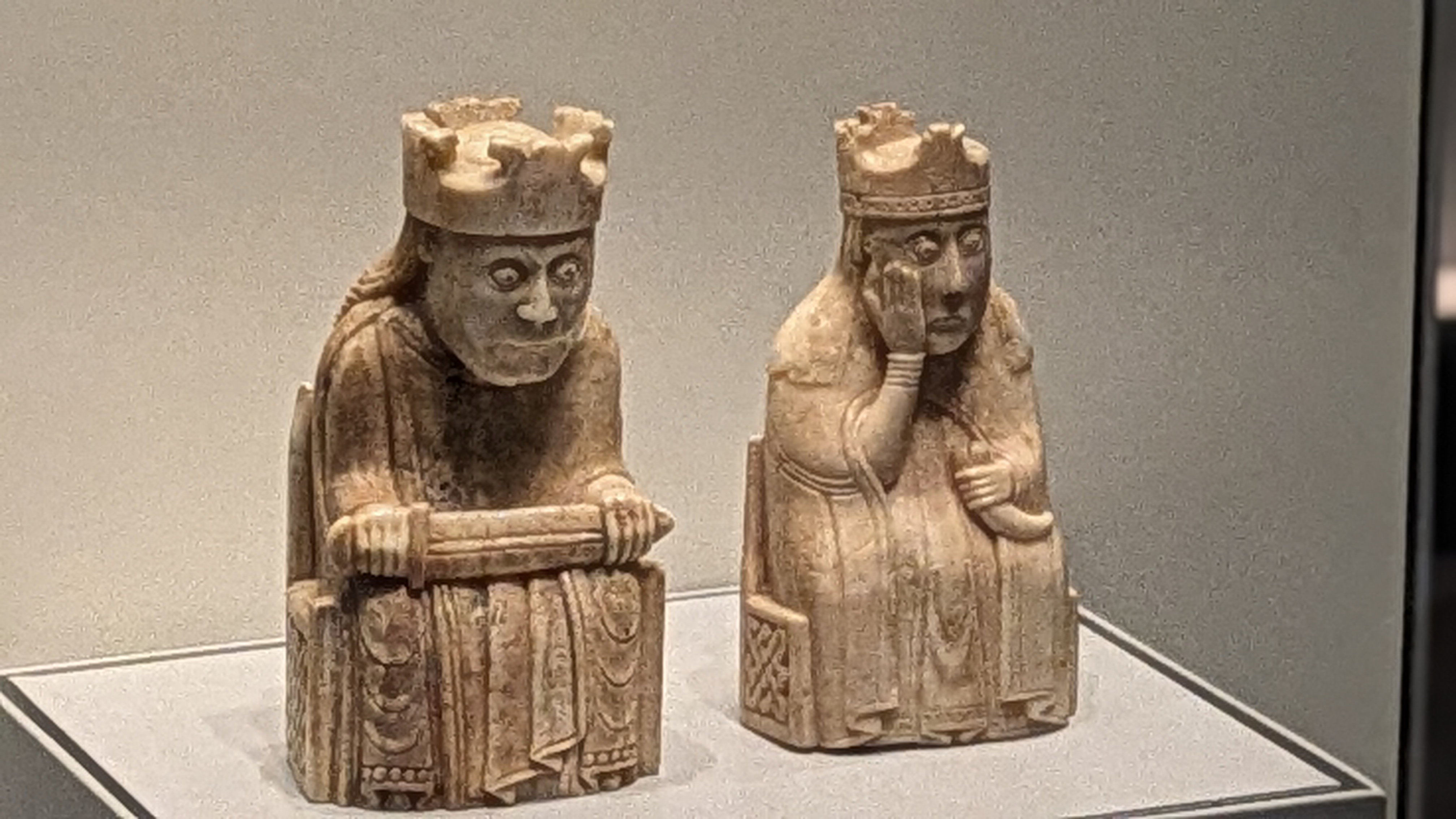
A Lewis Chessmen queen seems to be considering her plight.
A gallery or two over from Sutton Hoo and you find the twelfth century Lewis Chessmen, carved of walrus ivory and found in the nineteenth century in the Outer Hebribean Isle of Lewis in Scotland. Some went to the National Museum of Scotland–we saw them on our trip in 2017–but the bulk were sold to the British Museum. The source of the ivory and where the figures were made (maybe Norway!) is debated, but they are delightful, including berserkers chomping on their shields and queens doing what only could be described as a medieval face palm. You might think, wait, these are from the UK, so all good for the British Museum to keep, right? I wasn’t too surprised, however, to see that there have been efforts to return the chessmen not only to Scotland, but in 2010 Scottish MP Angus MacNeil called for the chessmen to return to Museum nan Eilean (museum of the islands) at Lews Castle in Stornoway, the major town of the Outer Hebrides. A 2017 Global Heritage blog post notes, “Recognition that the Lewis Chessmen are part of the heritage of the Western Isles of Scotland has come in the last few years after much lobbying, when the British Museum decided to loan six chess pieces to the Museum nan Eilean.”
Should the British Museum repatriate the Lewis Chessmen? Yes.
No. 6 Rosetta Stone
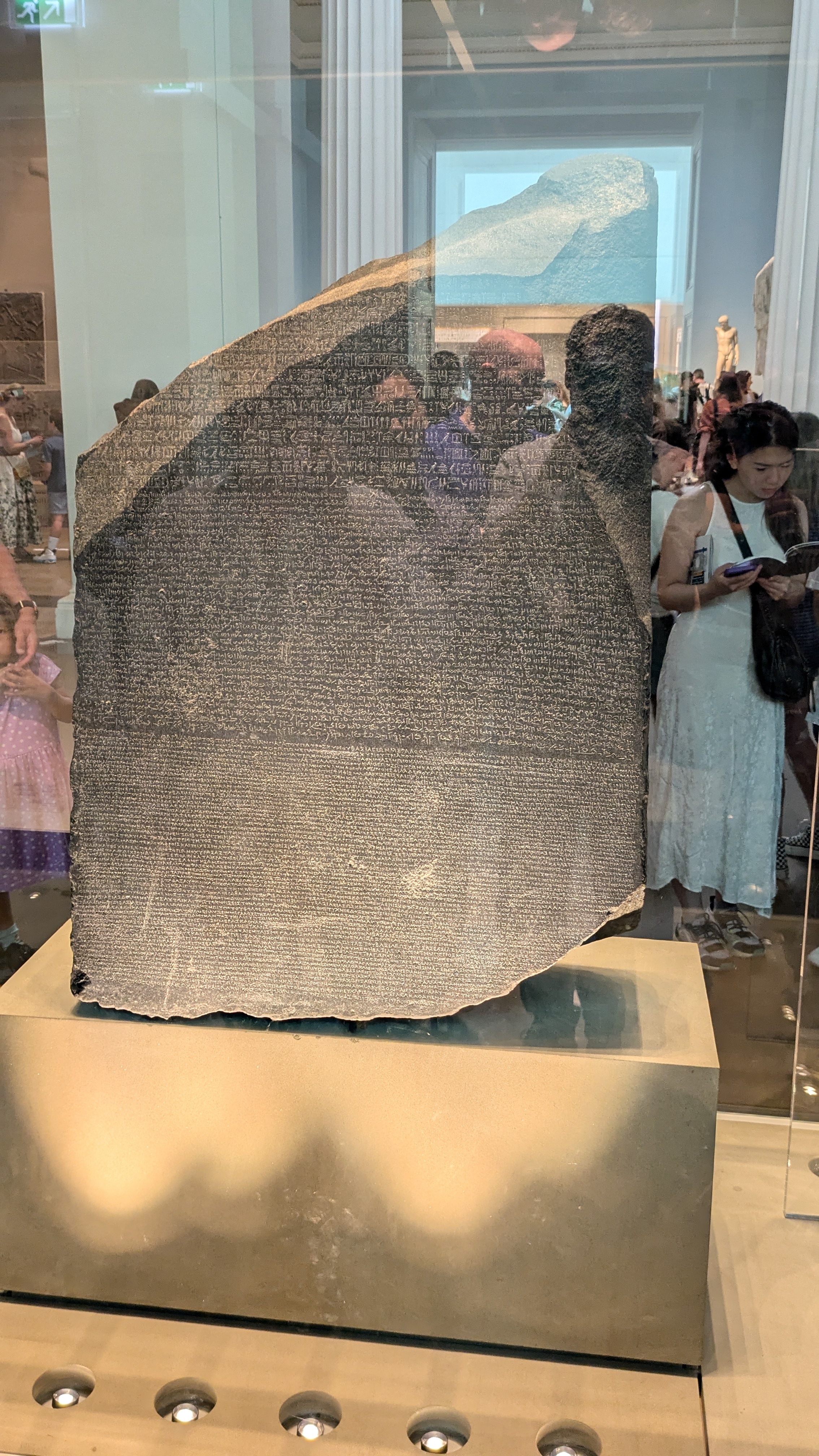
The Rosetta Stone was one of the more popular objects–I lament that I didn’t get a photo of the three young men capturing a selfie.
The Rosetta Stone is sort of like the British Museum’s Mona Lisa–a lot of people were crammed in to get a look and it’s a little smaller than you think it will be. A group of young men in their 20s did a selfie. The Rosetta Stone includes translations of a text in three writing systems–classical hieroglyphics, Demotic script (a simplified hieroglyphics), and Ancient Greek. This allowed nineteenth century scholars–especially French archaeologist Jean-Francois Champollion–to crack the code of ancient Egyptian hieroglyphics, earning the Rosetta Stone a place in archaeology’s top ten. In 2022, Monica Hanna, dean at the Arab Academy for Science, Technology & Maritime Transportation, organized a petition calling for the repatriation of the Rosetta Stone, noting, “the British Museum’s holding of the stone is a symbol of Western cultural violence against Egypt.” The petition garnered over 4,000 signatures. Zahi Hawass, well-known Egyptian archaeologist–circulated a similar petition–which got over 100,000 signatures. According to reporting in 2022, the British Museum argued that an 1801 treaty included legally transferred ownership of the famous tablet.
Should the British Museum repatriate the Rosetta Stone? Yes.
No. 7 North West palace of Ashurnasirpal gate
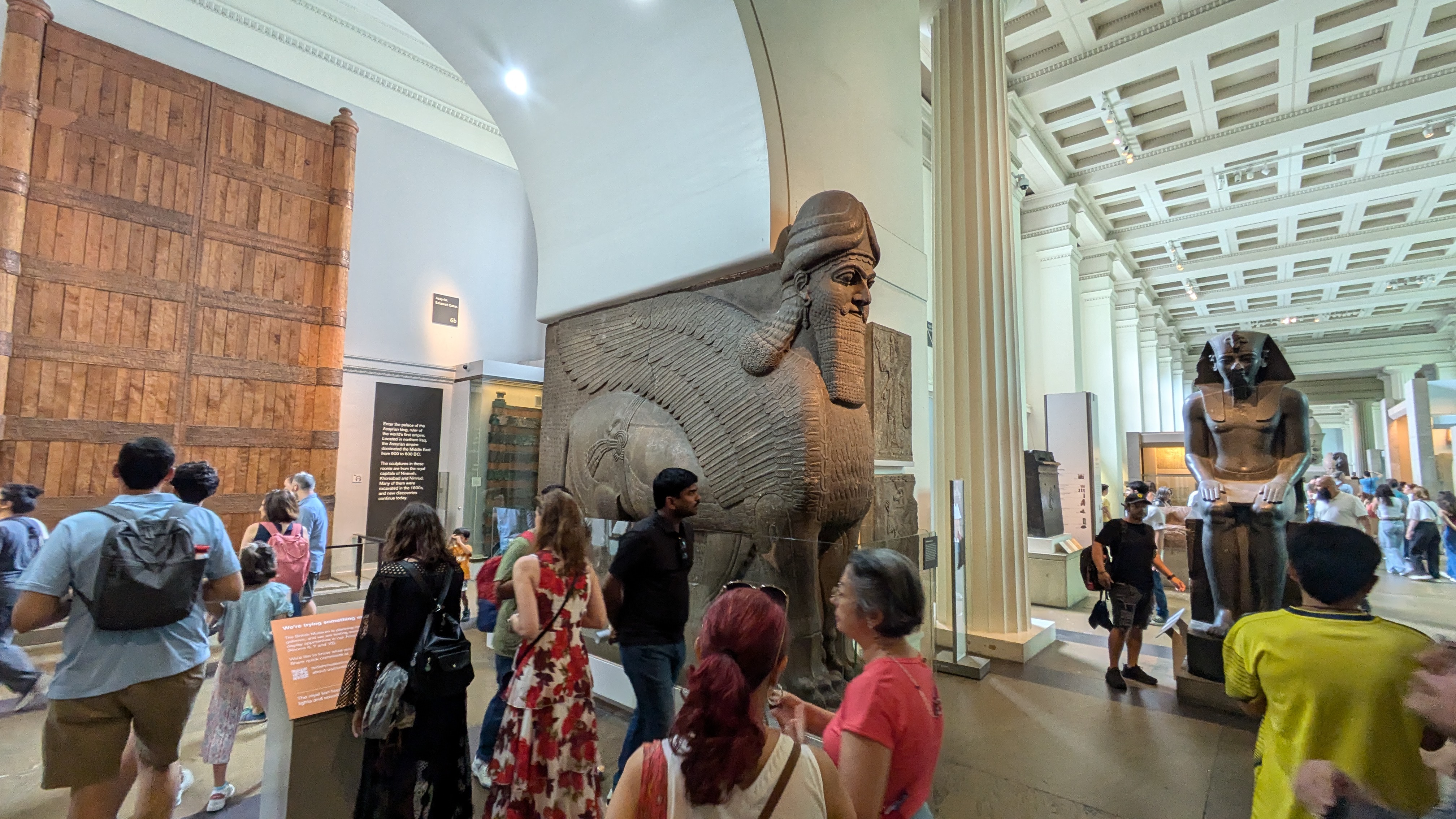
The lamassu figure from Ashurnasirpal’s palace throne room entrance is paired with the replica of the Balawat Gate (to the left in this picture).
Of all the cultural treasures housed at the British Museum, the Ashurnasirpal gate is perhaps one of the most striking. I first learned about these massive carvings of winged human-headed lions (or lamassu) guardians from the royal palace at Nimrud (modern northern Iraq) in grad school. The late Barbara Barletta taught a fantastic art history course on Ancient Mesopotamia and Egypt. The tests were very different from those in archaeology, and were based around projected slides that corresponded to questions on the test. I became proficient at making quick sketches in my notes so I could keep track of which architectural features and cultural items were which. Erected during the reign of neo-Assyrian king Ashurnasirpal II, almost 3,000 years ago, the figure was excavated by Sir Austen Henry Layard in 1851. A similar, perhaps matching figure is at the Met in New York. I can’t find any specific calls for repatriation by governments of Iraq, but they have been increasingly involved in the return of looted cultural items, including cuneiform tablets that landed at the Museum of the Bible and Cornell University. In 2023 Iraqi-American artist Michael Rakowitz offered his 2018 sculpture The Invisible Enemy Should Not Exist–his version of a massive lamassu–in exchange for repatriation of the Ashurnasirpal carving. An article about Rakowitz’s offer indicate that he specifically wanted to see the return of the Ashurnasirpal carving to respond to the destruction of a lamassu dating to 700 BCE at the Nergal Gate in Nineveh, which was purposely destroyed by the Islamic State in 2015.
Should the British Museum repatriate the Ashurnasirpal gate? Yes.
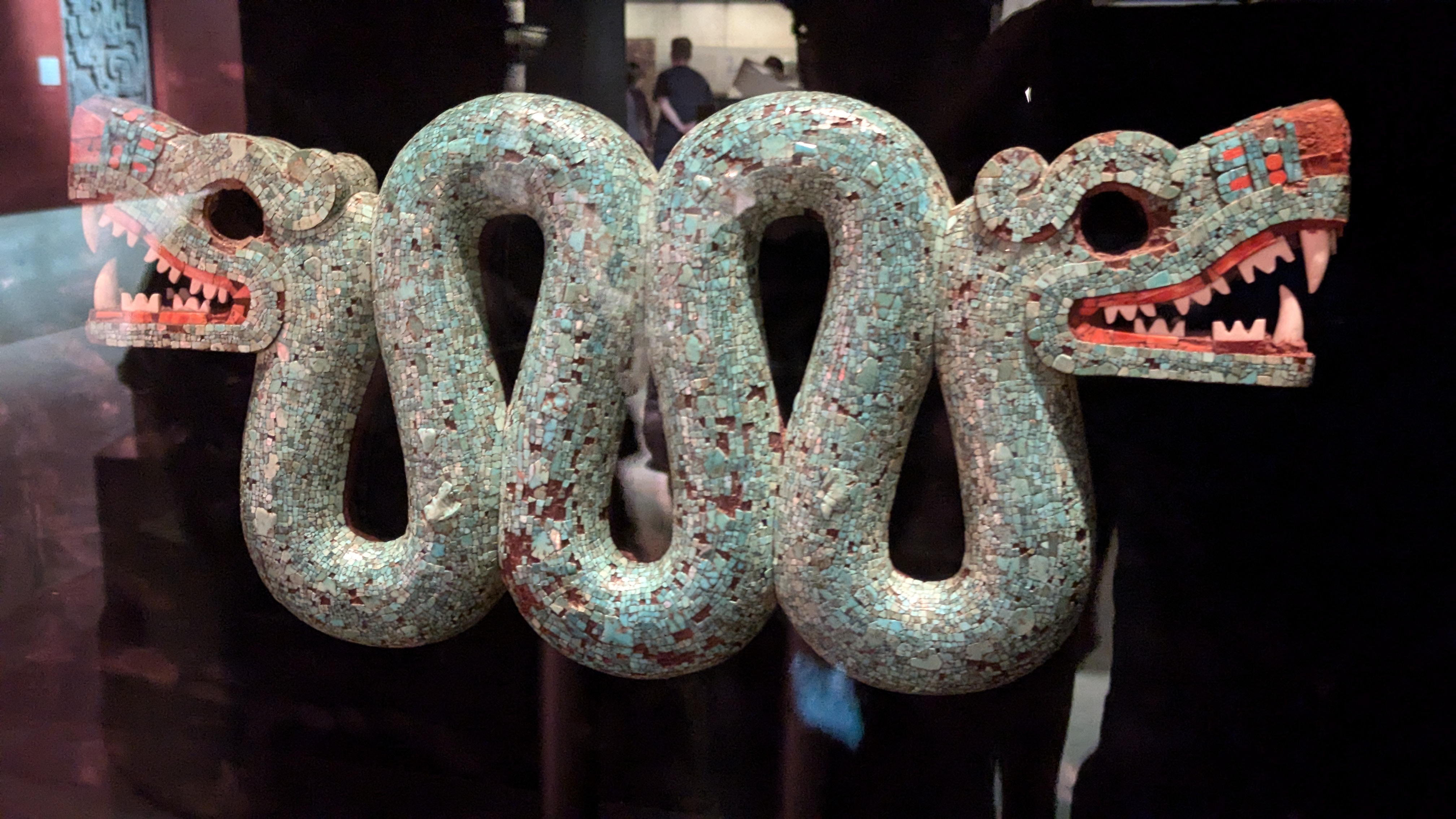
No. 8 Aztec serpent pectoral
The mosaic on the Aztec serpent (or caterpillar!) pectoral is made of thousands of chips of turquoise with spondylus shell highlights.
The serpent pectoral is one of several turquoise mosaics from Mesoamerica associated with the Aztec and Mixtec of central Mexico, dating from 1,400 to 1,521. Carved of cedar wood, the undulating body of the double-headed serpent is covered with an intricate mosaic of turquoise and shell. The back side is flat, and unadorned, leading most to describe this as a pectoral, which could have been worn suspended on the chest of a person or larger statue. A catalog note by Vila Llonch notes, “The Nahuatl term ‘coatl’ can be translated as both serpent and twin. The Mexica considered serpents to be powerful, multifaceted creatures that could bridge the spheres (the underworld, water and sky) owing to their physical and mythical characterisitics.” Joshua Fitzgerald offers another interpretation, suggesting the pectoral is not a snake, but rather a caterpillar, representing less bad omens, and more a physical representation of how to think about life stages. The pectoral was purchased by the British Museum from a dealer, representing “an Italian gentleman” in 1894, after considerable negotiations about the price, as well as intrigue involving Duchessa Massimo (Teresa Maria Doria-Pamphili-Landi) and the Massimo Family of Rome. It’s almost impossible to look at a book about the Aztecs or Mesoamerican archaeology without encountering the mosaic pectoral–it’s famous! I can’t find specific instances of Mexico calling for the return of the mosaic pectoral, but a 2022 article by Amah-Rose Abrams points out increasing opposition by Mexico to international auctions, as well as a legacy of protecting cultural heritage from pilfering and removal that dates back to at least 1911, following the Mexican Revolution. In that piece, Mexico’s culture minister, Alejandra Frausto Guerrero, is quoted, stating “any piece of national heritage that is permanently outside the country, not temporarily for an exhibition or cultural cooperation, comes from an illegal act.”
Should the British Museum repatriate the Aztec serpent pectoral? Yes.
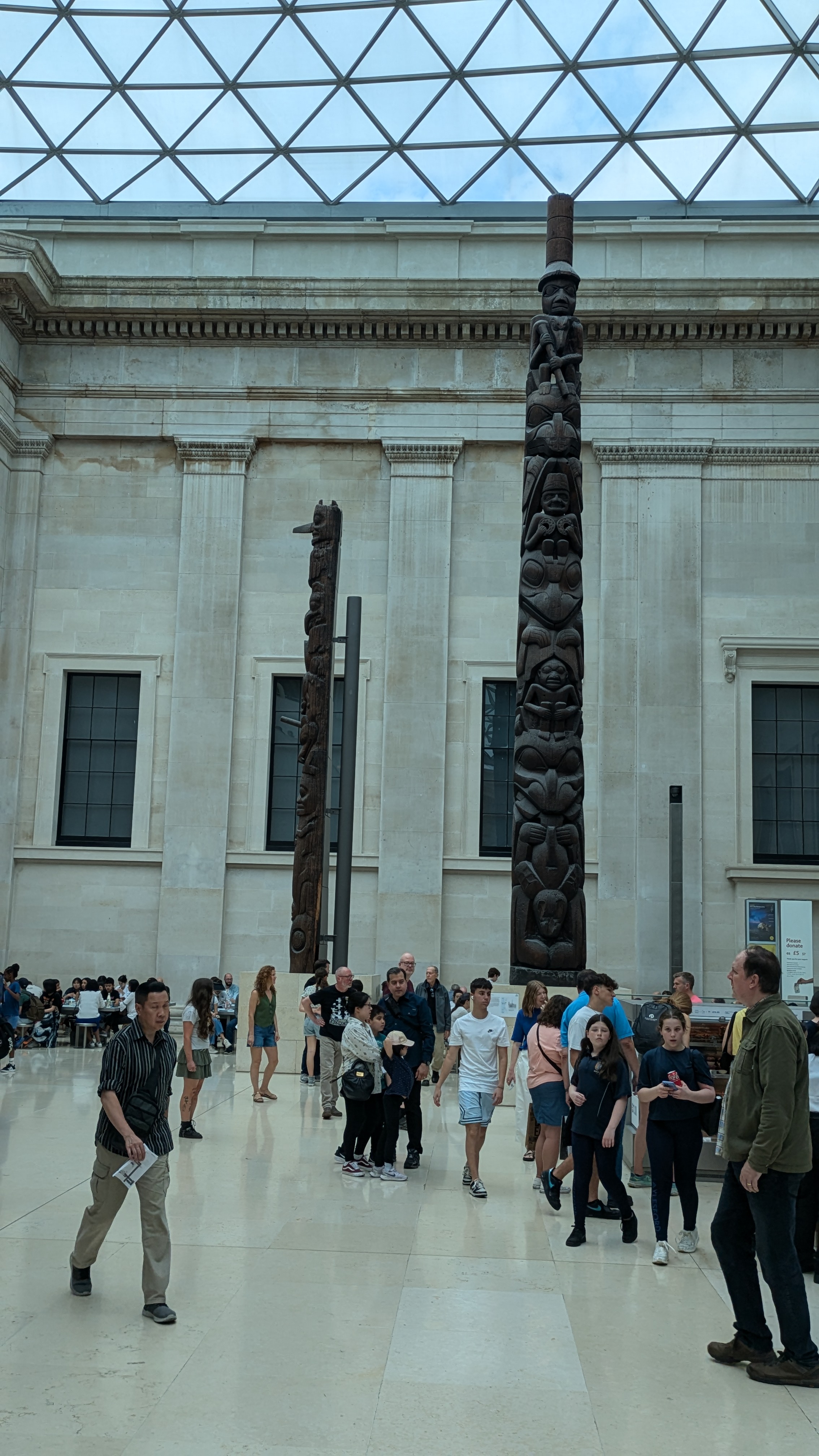
No. 9 Nisga’a house pole
The Nisga’a and Haida house poles overlooking the British Museum lunch area.
Two house poles–what many might call totem poles–occupy an area near where you can have lunch at the British Museum. One is Haida, the other Nisga’a, from Angeedaw on the Nass River in British Columbia. I was particularly interested to see the Nisga’a house pole, since a presentation at the November 2023 AAIA repatriation conference highlighted the rematriation of another Nisga’a house pole from the National Museums of Scotland. Both pts’ann were taken by anthropologist Marius Barbeau, who was commissioned to acquire these items from the UK museums. The online entry for the Nisga’a pole includes this text:
The receipt in the Canadian Museum reads: ‘M.Barbeau Nass River Aug 30 1932. [To] Smith and his clan For totem pole of Eagle-Beaver, their property, which they cede in complete clan agreement without further claim (assuming responsibility of division of price between themselves) to M.Barbeau for his disposal according to authority received. Received payment in full (signed) William Smith his mark. (witness) Albert Allen. $310’ The difference in sale and cost figures being accounted for by travel and other expenses?
Apparently, similar documents exist for the rematriated pts’ann, but family stories contradict the receipted account, according to an October 17, 2023 story in IndigiNews. That story–and the presentations at the November repatriation conference–explained that these pts’ann were carved as memorials to deceased family members and are considered more than objects, but as ancestors themselves. The Angeedaw pts’ann is about 25 feet tall with carvings of mythological creatures, an eagle, and beavers.
Should the British Museum repatriate the Nisga’a house pole? Yes.
No 10 Citico shell gorget
Note–I’m not including any images of the shell gorget, as this is so clearly a funerary item.
In a case near the Hopewell pipes described above was a beautiful example of a Citico style shell gorget. I was surprised to encounter this cultural item at the British Museum, as I had become quite familiar with these objects in repatriation work here at the Robert S. Peabody Institute of Archaeology. These gorgets, made from the outer whorl of a large whelk shell and depicting stylized rattlesnakes, appear almost exclusively in burials of the late Mississippian era in the southeastern United States. A similar gorget from Etowah, a major mound complex near Atlanta, Georgia, was on exhibit at the Smithsonian’s National Museum of Natural History when I was there last summer. All of the examples from Etowah and Little Egypt here at the Peabody are awaiting repatriation, either as associated or unassociated funerary objects. My degree of familiarity with these gorgets increased in 2018 when we began working with the FBI to recover several stolen shell gorgets–which was partially successful. That work led me to scour publications, auction catalogs, and online auctions for shell gorgets in the hopes of recognizing one of the stolen ones. Helpful in all that is an exhaustive catalog of shell gorgets compiled by Jeffrey P. Brain and Philip Phillips, published by the Harvard Museum Press in 1996. The British Museum example, which apparently came to the museum in 1884 from William Bragge, does not appear in the Brain and Phillips catalog. Bragge was a nineteenth century engineer, antiquarian, and collector, with a specialty in tobacco; the British Museum holds 1,899 objects that are related to Bragge’s collecting efforts, including objects from far-flung Indigenous cultures, often pipes or smoking-related paraphernalia.
Should the British Museum repatriate the Citico shell gorget? Yes.
It’s been a few months since we shared our last building update and so much has transpired since staff have been back in the Peabody. These last few months have been busy for the Peabody staff, as they worked on moving the collections, moving furniture back into the building from offsite storage, and organizing/cleaning the building to welcome Phillips Academy classes in the spring term.
The largest and most involved of these projects, is moving the collections from temporary spaces around the building to our newly renovated, sustainable, and secure collections space, putting all holdings in one place! This project is ongoing and requires a great deal of care as the collections team transport items to their new housing and mapping out how items’ locations are organized and tracked. We also are extremely grateful for our Peabody volunteers and work duty students who have helped with this project!
Creating new housing for collection itemsTracking locations in the new collection space
In addition to moving the collections, the Peabody is organizing our classroom spaces to welcome back students this term. With our furniture back onsite and in place, we are ready to have students back through our doors (just in time!) with classes starting this week!
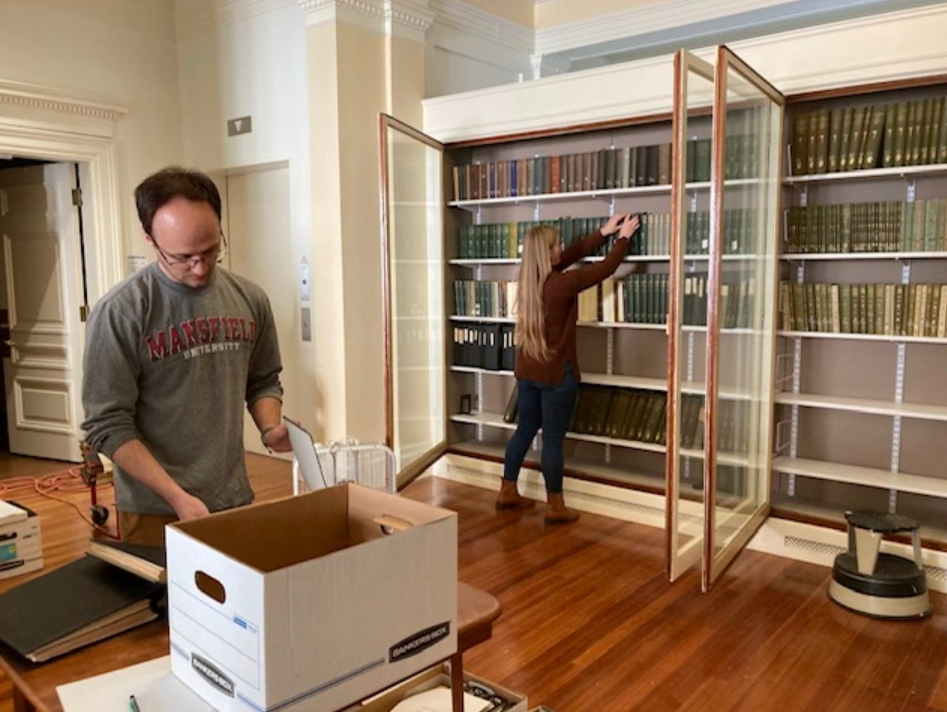
The Peabody library – now fully accessible – received a deep clean and is ready to serve as classroom and meeting space for students and out colleagues across campus.
Peabody staff returning books to shelves on the second floor landing.
With things returning to normal, we are only opening our doors at this time for Phillips Academy classes and events. This is a “soft opening” as we continue organizing our new collection spaces and preparing for our next round of building renovation. We will continue to keep the updates coming as we enter the warmer months of spring. Stay tuned for some exciting content from the Peabody to be shared on our social channels this PA Giving Day – Wednesday, March 27th!