Hello, my name is Mike Agostino and I am a volunteer here at the Peabody Institute of Archeology. I am a recently retired scientist from the field of bioinformatics. My work in this field, for over 30 years, concerned the analysis of gene and protein sequences. I love the field so much that I am presently an instructor on the subject for the Harvard Extension School. I am also writing the second edition of a textbook I published on this topic more than 12 years ago.
Peabody volunteer, Mike, analyzes various projectile points in the Peabody collection.
As a resident of Andover, I frequently went past the Peabody and often wondered what treasures it held. When a good friend, Richard Davis, said he volunteered here and told me about the work, I immediately wanted to join him. To say this is a dream come true is not an exaggeration. I have always been interested in archaeology and spent many years looking down on the ground for the artifacts people said were all around us. But I never found any! To work with and learn about dozens, if not hundreds of specimens each day is amazing. As I hold these objects in my hands, I try to imagine their history: was it careful fabrication by an adult expert, or was it made during a learning period of a youngster? Was it used to bring home a meal, build a boat or dwelling, or for the creation of clothes? Did it come from local stone, or did it travel many miles to be found at a new locale? My imagination is further enhanced or tempered by the kind and knowledgeable staff of the Peabody who are training and patiently helping me identify what is in my hand. I have only been at the Peabody for less than two years and there is so much to learn!
After years as a scientist, I feel right at home with my principal responsibilities: the careful handling, description, cataloging, and storage of the specimens. Attention to detail is absolutely required and very satisfying. We record their identities, or best guesses because many are just fragments. The intact specimens are something to behold. Some arrowheads or axes are impossibly beautiful, and the precision of shaping and symmetry with such a hard material is just astounding. The skills of the people, past and present, are just amazing.
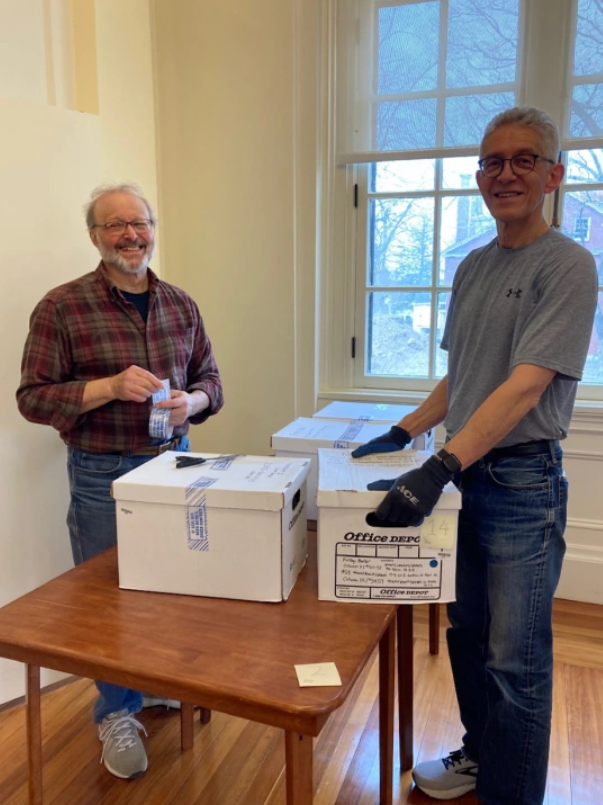
Peabody volunteers, Richard (left) and Mike (right), moving boxes for the Peabody’s building project.
I have also helped with activities associated with the huge renovation project of the building (for pictures and updates, see the blog postings by Marla Taylor). I am impressed with how everyone has remained calm considering hundreds of boxes, and specimens too large for boxes, had to be carefully moved up one or two floors from the basement to temporary locations elsewhere in the building. With the absence of an elevator, I helped move many boxes up the stairs out of harm’s way. My smart watch said I went up 80 flights of stairs one day! And I am only there one day a week, so the staff had a monumental challenge. We are now waiting for the renovations to be completed and then we will return the specimens to a much-improved setting. Even with the new elevator, reshelving hundreds of boxes won’t be easy, but I am looking forward to the project and the “new” institute.
At this year’s American Society for Eighteenth Century Studies (ASECS) conference, I had the opportunity to participate in the roundtable Teaching the Global Eighteenth Century. Phillips Academy instructor in history and social sciences Natalya Baldyga and I presented Assimilation, Acculturation, Catachresis, and Syncretism: Employing Archaeology to Foreground Indigenous Resistance in the Spanish Southwest, sharing our experiences teaching the Pueblo Revolt of 1680 to History 200 classes at the Academy.
Contemporary Indigenous artist Jason Garcia’s take on the Pueblo Revolt combines traditional materials and methods with graphic designs depicting Po’Pay, the architect of the revolt, as a comic book superhero. These two pieces are in the collection of the Robert S. Peabody Institute of Archaeology–you can see the vessel on the right in the inaugural exhibition of the Smithsonian’s National Museum of the American Latino.
If you are not familiar with the Pueblo Revolt, it is a pivotal moment in the history of the Southwest and the modern descendants of those who fought Spanish colonization at the end of the seventeenth century. Our abstract has a little more information on the Revolt and our approach:
Using the case study of the Pueblo Revolt of 1680, our presentation illustrates how archaeological artifacts can be employed to unsettle and decenter colonial narratives by refocusing the North American story of the early eighteenth century on Indigenous peoples of the Spanish Southwest. Too often, Anglophone histories associate the long eighteenth century in the Americas with English colonialism in general, and with the American Revolution in particular. We ask students to consider instead the “first American Revolution,” in which the Pueblo Peoples, led by the Tewa religious leader Po’pay, confronted missionaries and soldiers in the Spanish borderlands of what is now New Mexico. In our classes, students explore both artifacts from the Pueblo Revolt and contemporary Puebloan artistic responses to the historical event, foregrounding Indigenous resistance and survival over tales of erasure and domination. This approach both reorientates students’ understanding of colonial North American history towards wider global narratives of European expansion, and, perhaps more importantly, introduces students to multiple ways that Indigenous peoples adapted to, resisted, and overcame the efforts to erase their cultural identities and physical existence.
Drs. Wheeler and Baldyga also celebrated their anniversary during the conference.
The Peabody Institute has long offered various versions of a Pueblo Revolt lesson, but the current iteration has greatly benefitted from Dr. Baldyga’s experience and training. Together we’ve developed the lesson, typically delivered in the world history survey course for tenth grade, providing students with anthropological concepts, like assimilation and catachresis, that they can use in other settings, as well as foregrounding contemporary Indigenous perspectives and objects directly related to the Revolt. Conversations with other participants in the workshop were productive, especially in their pedagogical approach to topics like the production of sugar.
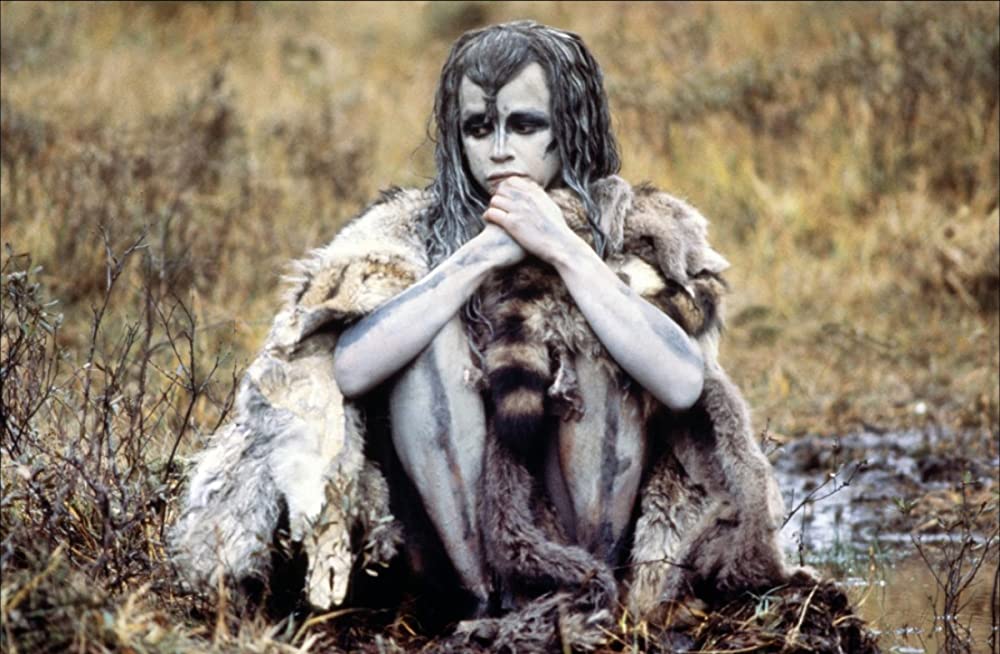
On February 15, 2023 we learned about the death of Raquel Welch. You might think, what does Raquel Welch have to do with archaeology? Well, a lot and a little. After her performance in the 1966 sci-fi film Fantastic Voyage Welch signed a contract with 20th Century Fox and was then “loaned” to Hammer films for One Million Years B.C., a low-budget cave-person movie. In One Million Welch played Loana, probably best remembered for her fur-trimmed bikini, battles against Ray Harryhausen’s Dynamation dinosaurs, and settling conflicts between the Rock and Shell tribes.
Raquel Welch as the out-sized heroine of One Million Years B.C. (1966).
I’ve always been a big fan of Ray Harryhausen’s stop-motion creature effects, including greats like The Valley of Gwangi (1969), 20 Million Miles to Earth (1957), The 7th Voyage of Sinbad (1958), Mysterious Island (1961), Jason and the Argonauts (1963), and many more. And yes, most archaeologists like dinosaurs, but cringe at the idea that archaeology has anything to do with them or that ancient humans ever even saw one—modern humans first appear around 300,000 years ago, about 65 million years after dinosaurs became extinct. A million years ago is solidly in the middle of the Pleistocene, a geological epoch that began around 2.5 million years ago. During the Pleistocene, we had lots of animals that you would recognize today—plenty of reptiles and birds and mammals—as well as megafauna like mastodons and mammoths, giant sloths, glyptodons, and more. We did have people, including Homo erectus.
One Million B.C. movie poster (1940).
So One Million Years B.C. gets a lot wrong. First, the idea of 1 million B.C. bugs me. B.C. means “before Christ,” though more people are moving to a version like BCE, which means “before the common or current era,” in other words the year 1 that our modern calendar has fixed as a starting point. So 1 million years B.C. is literally 1,000,000 years ago plus another 2,000 or so years. What’s 2,000 when we are talking millions?! I checked, and, perhaps not surprisingly, there were no scientific consultants on the film. Ray Harryhausen famously quipped that they weren’t making movies for scientists and doubted said scientists would go to see such films anyway (so wrong!). In her memoir, Raquel: Beyond the Cleavage, Welch talks about her own attempt to provide some notes to the film’s director Don Chaffey, but he wasn’t interested. What I didn’t know until recently, however, is that One Million Years B.C. is a remake of the 1940 film One Million B.C., which starred Victor Mature, Carole Landis, and Lon Chaney Jr. No Harryhausen effects there, however, there was a pig dressed in a Triceratops suit, lots of out-sized lizards, and even some animals more appropriate to the time like a woolly mammoth and an armadillo dressed as its megafauna ancestor Glyptodon.
This got me wondering what the earliest cave-people movie was, and led me to D.W. Griffith’s Man’s Genesis: A Psychological Comedy Founded on Darwin’s Theory of the Genesis of Man (1912). You can see some of the film on Youtube: https://www.youtube.com/watch?v=zQ3gaYbb38I. Griffith was involved in the production of the 1940 One Million, and all the films have some similar themes, namely conflict and sex. They don’t stop with the Raquel Welch version.
Peter Elliott is the go-to actor for non-human primates, including the titular role in 1988’s Missing Link.
One Million Years B.C. did pretty well at the box office, but it’s really just one film in a long line of cave-people movies. Both Charlie Chaplin and Buster Keaton made their versions, likely riffing on Man’s Genesis (Keaton invents golf in 1923’s Three Ages). A few years ago I challenged my Human Origins students to look at stereotypes about Neanderthals and they found the 1962 movie Eegah, which is sort of a mashup of 60’s beach party movies and the cave-people genre. The $15,000 budget may give you a sense of the film. Don Chaffey, the director of One Million Years B.C. revisited the genre in 1971 with Creatures the World Forgot (sans Raquel Welch, but with a very similar plot and movie poster!), and the 1980s has numerous entries with Ringo Starr’s comedy Caveman (1981), a defrosted Neanderthal in Iceman (1984), Rae Dawn Chong in Quest for Fire (1981), Daryl Hannah in The Clan of the Cave Bear (1986), based on the Jean M. Auel books, and even Peter Elliott (with narration by Michael Gambon) as the last Australopithecus in Missing Link (1988).
Ringo Starr and friends in 1981’s comedy Caveman.
Ringo Starr aside, Quest for Fire and The Clan of the Cave Bear are two of the best-known cave-people movies since Welch’s One Million. What’s interesting is that Quest was a box office success and garnered some critical acclaim, while Clan was a flop. Both lack dinosaurs, so that’s good. And, both explore a lot of the same themes that come up in these movies over and over—conflict between different species of humans, sex and love, and the role of technology in becoming human. Many of the critics noted that Quest had a lot of humor, either intended or not, and that’s perhaps part of the charm as film critic Roger Ebert noted. Archaeologists and anthropologists at the time were not so kind. Philip Leiberman, writing in the American Anthropologist, delivers a strident critique of the “primitive” languages developed by author Anthony Burgess for Quest, noting that, “Burgess just doesn’t seem to know anything about phonological studies, developmental studies of the acquisition of speech by children, psychoacoustic studies of speech perception,” etc. Owen Lovejoy, writing in Archaeology magazine, describes Quest as a disaster on several fronts, noting specifically that “critical human qualities such as kinship, economics, infant care, symbolism and religion, language, technology, and so on, are simply glossed over as though they appeared magically with the Upper Palaeolithic,” though he does appreciate the lack of dinosaurs. One important point that Lovejoy makes is that the film tries to be a serious attempt to depict the distant human past and that, perhaps, our inability as anthropologists to synthesize this for the public is what is lacking. Quest didn’t benefit from scientific advisors, beyond Burgess’s work to make the primitive languages and Desmond Morris’s work on animal behavior and vocalizations.
Rae Dawn Chong as Ika in Quest for Fire.
The cinema isn’t done with the cave-people genre yet. In 2008, 10,000 BC (again with the BC!) joined the ranks as a visually stunning epic that suffers from many past sins, including some serious anachronisms. I haven’t watched 10,000 BC, but it involves cave-people, Pleistocene fauna, as well as people riding horses and traveling in ships. The movie did pretty well at the box office. Reflecting on this genre of cave-people movies makes me realize that there is a lot of interest in the distant past, but, as Owen Lovejoy noted in his review of Quest for Fire, us anthropologists and archaeologist haven’t been so good at providing a compelling narrative. In fact, a lot of the interspecies conflict in these films can really be attributed to pervasive ideas in studies of human evolution that have emphasized different species based on very slight differences in skeletal anatomy. The more we learn, we find that Neanderthals and modern humans are very similar and shared genetics when they existed in the same place. Maybe Quest for Fire got that right? Godspeed Raquel.
Compare posters for Don Chaffey’s 1971 Creatures the World Forgot with the Raquel Welch classic One Million Years B.C., also directed by Chaffey for Hammer.
This blog is the culmination of work done by Independent Researcher/Volunteer Adam Way to explore how the Peabody Institute has been portrayed by Phillips Academy students in The Phillipian over the years. Adam shared two previous blog posts about his work (Combing Through the Phillipianand Combing Through The Phillipian: End of an Era) and recently completed the project. His final blog is a summary of what he learned.
The relationship between The Phillipian and the Peabody Institute has existed since the Institute’s founding back in 1901, and while the strength of that relationship has waxed and waned, it has persisted nonetheless. During my time combing through over a century’s worth of The Phillipian issues, I have noticed a few substantial changes, mainly the amount of coverage that the Peabody Institute received, the type of coverage, and the student’s view of Peabody.
The first major difference that appears when looking through The Phillipian archives is that the number of times that the Peabody is addressed/mentioned decreases drastically towards the present. In 1910, the Peabody Institute, then the Department of Archaeology, was mentioned 153 times throughout the year, with the following years yielding similar results. A significant amount of the times that the Peabody Institute was mentioned in these early years can be attributed to the existence of extracurriculars that took place within the building. Events such as meetings of the Banjo or Drama clubs and other such student activities that took place in the Peabody make up a large portion of mentions, while the rest is composed of articles detailing the academic work and scholarship being conducted by the Institute.
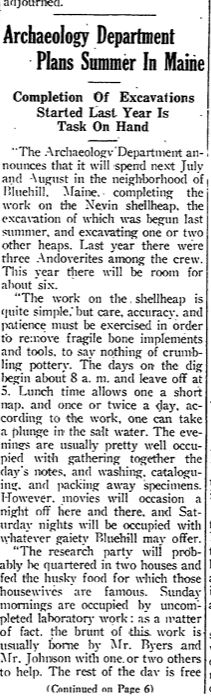
April 15, 1916
The constant high volume of mentions during the early years of the Peabody Institute, unfortunately, do not last forever. It appears that the turning point was, more or less, when Warren K. Moorehead retired from his position as director and was replaced by Douglas Byers. While the overall number of yearly mentions had been on a steady decline since the beginning of the century, the number had remained relatively consistent and the articles were primarily focused on academic work and lectures at the Peabody Institute. This changed when Byers and curator Fred Johnson took over, as it appears that these two did not have as close of a relationship with the ThePhillipian as Moorehead did. This trend continued, and arguably was exacerbated under Richard “Scotty” MacNeish. I believe that this divide can be attributed to a shift in focus from teaching in the classroom to fieldwork, as all three of these former directors placed a heavy emphasis on fieldwork, while there was a lack of a consistent archaeology and/or anthropology class during this period (with other factors playing into that decision like student interest). Luckily, in the time since MacNeish, the Peabody Institute has regained a stronger, and more frequent, presence in the The Phillipian.
April 3, 1937
The next major change that I noticed while conducting this research, was that the type of coverage that the Peabody received changed over the years. Initially, I noticed this change through the club announcements. As time went on, the number of clubs using the Peabody, or at least publishing that they were in The Phillipian, was declining. Nothing about this appeared to be out of the ordinary as clubs moved to other buildings and Peabody House was constructed for the purpose of holding social events and clubs. The part that seemed strange to me was when members of the Peabody staff and faculty would leave without a single mention of their departure and only a brief mention when their replacement had been found, as was the case with Dick Drennan in 1977. However, as time progressed, the type of coverage in this area also shifted. Not only was there an article detailing the departure of the previous director, Malinda Stafford Blustain, but there was a subsequent article about the hiring of her replacement, Ryan Wheeler. It appears that the relationship between the The Phillipian and the Peabody Institute is steadily returning to its former strength.
The last major change that I have noticed is the waxing and waning of student interest in the Peabody Institute over the years. As with the other two variables that changed over time, student interest seemed to peek early on before dropping drastically as time progressed. After Moorehead’s departure and the subsequent drop in attention received from The Phillipian, the Peabody became increasingly referred to as a “hidden gem” and “unused asset.” There were even pieces written as a joke that say a student died of boredom due to their visit to the Peabody. Pieces like these are written in good fun, however, it does highlight the disparity between how involved students once were and how involved they are now. As with the other two changes that I noticed, this too is changing for the better in recent years. While there are still joke articles, there are fewer instances where the Peabody is labeled as an “unused asset.” There appears to have been a positive reception of student travel programs in the recent past as well as current lectures and other programs offered by the Peabody Institute.
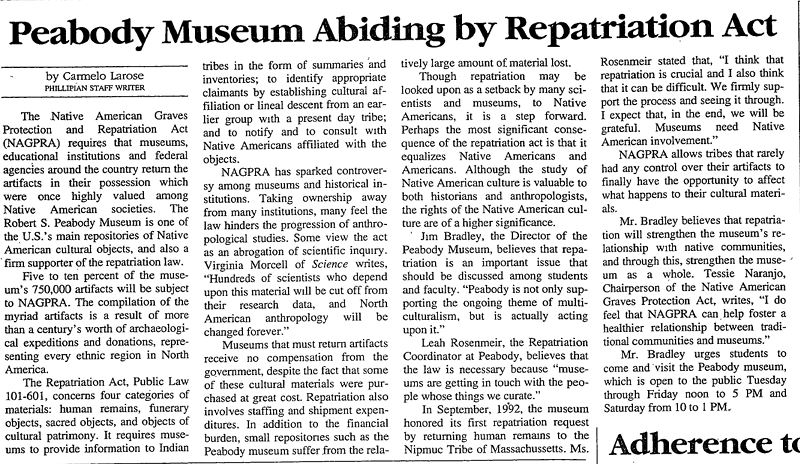
October 7, 1994
While my time combing through The Phillipian has come to a close, I am glad to see that the Robert S. Peabody Institute of Archaeology is making a resurgence within the paper. The records showed that the institution has been through some difficult times and yet has prevailed and is strengthening its place within the Academy and student life.
Following up on my September 7, 2022 post about our family visit to Arizona and New Mexico, specifically about hikes at Petroglyph National Monument in Albuquerque, I wanted to share another highlight: Bandolier National Monument. We learned a lot by visiting the National Park Service interpretive center and hiking through the amazing Ancestral Puebloan sites in Frijoles Canyon, including more petroglyphs, and cavates—expanded hollows in the volcanic rock that formed parts of living rooms and storage structures.
Tsankawi–an Ancestral Pueblo part of Bandolier National Monument in New Mexico.
We got up early to drive from Jemez Springs to Santa Fe, allowing for a good visit to Bandolier. As we drove through Valles Caldera—another National Park Service site with tremendous cultural significance to Walatowa, the Pueblo of Jemez—we made a note that we needed to come back to explore on foot. Impressive deposits of obsidian and volcanic tuff lined parts of the highway in this area, a testament to the volcanic activity that produced the caldera some 1.25 million years ago. Part of our reason for the earlier departure was that the parking area at Frijoles Canyon fills up early, so we wanted to make sure we got in. It was worth it, as the recent rains had many desert plants in bloom amidst the Ancestral Pueblo ruins, culturally connected to many of the modern day Pueblo communities in both New Mexico and Arizona.
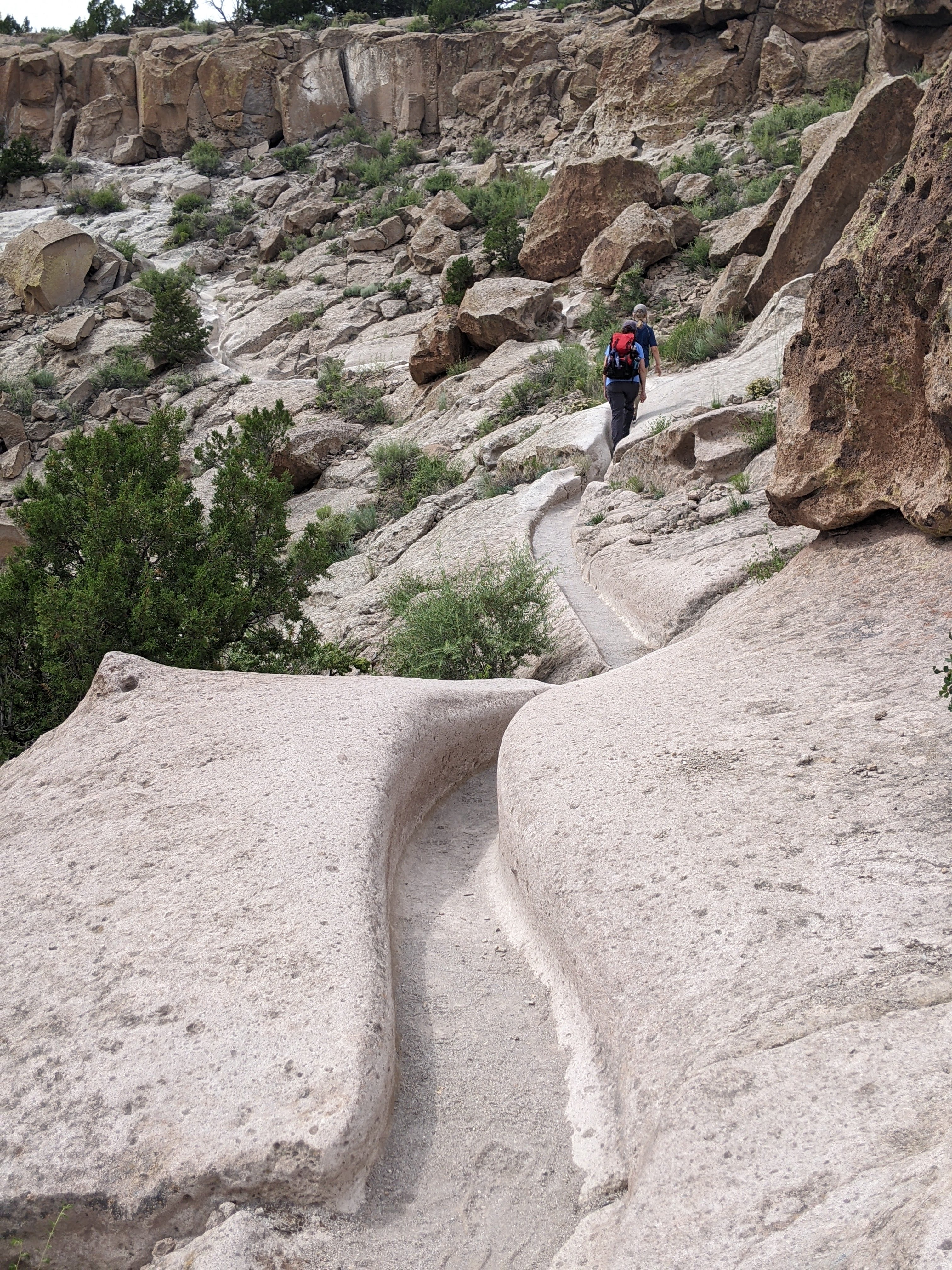
The deeply inscribed trail at Tsankawi, carved and worn into the soft volcanic rock of the mesa.
The rangers at the NPS interpretive center also recommended that we visit Tsankawi, another unit of the national monument and another Ancestral Pueblo, that we would pass on our way into Santa Fe—though it’s not particularly well marked or easy to find. We are grateful for this recommendation, as the hike through this largely unreconstructed Ancestral Pueblo had some amazing features. In Tewa the name for Tsankawi means “village between two canyons at the clump of sharp, round cacti.”
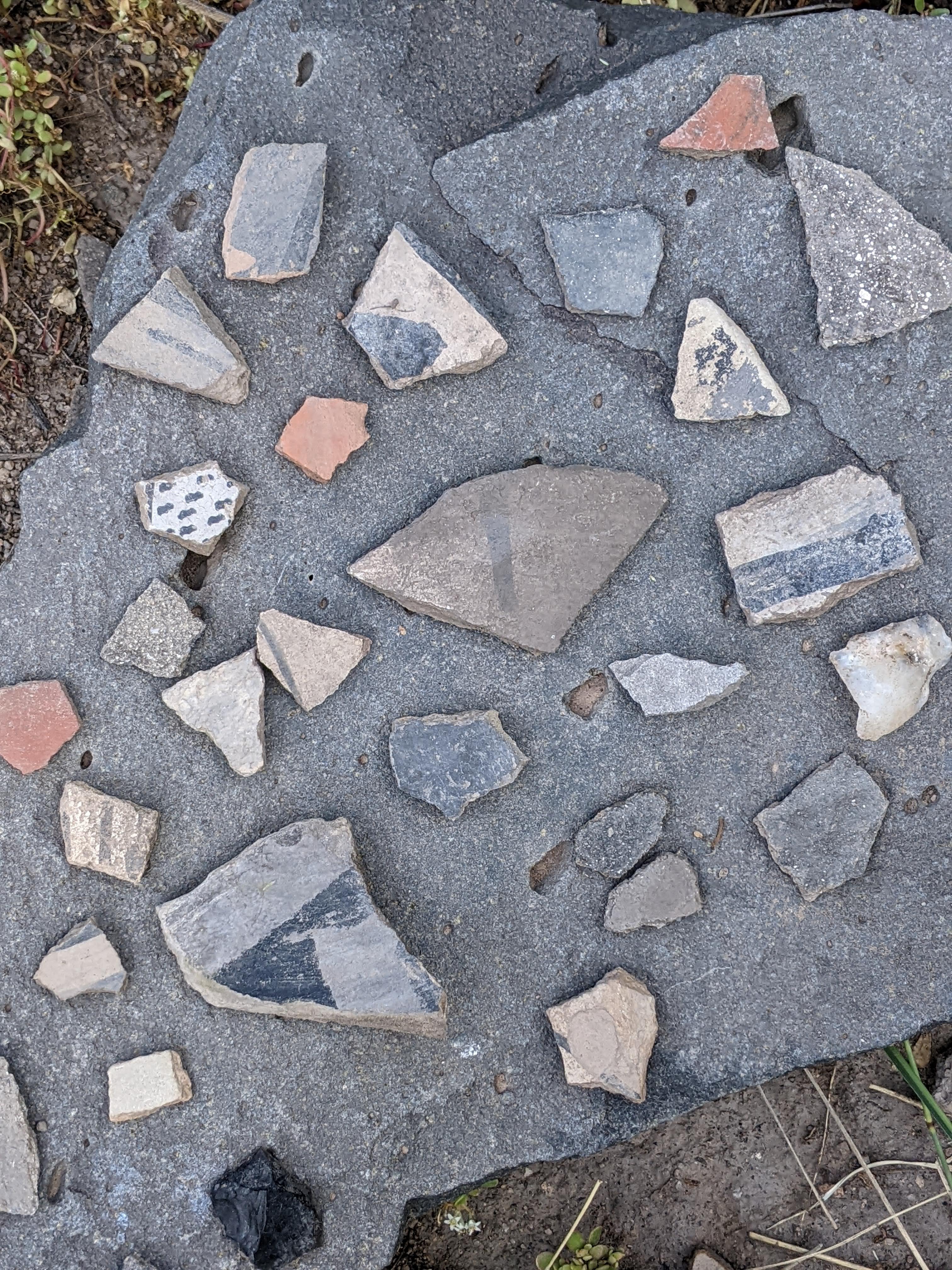
Ceramic sherds and an obsidian fragment on the surface of the Ancestral Pueblo Tsankawi. The only other visitors to the Pueblo reminded us not to take anything–we bonded over this moment.
Tsankawi is situated on another volcanic mesa and requires climbing some ladders to access much of the Ancestral Pueblo. Once on the mesa, visitors find the ruins of an ancient Pueblo village, more of the cavates like those in Frijoles Canyon, petroglyphs, as well as a deeply inscribed trail that leads along the top and sides of the mesa. This feature was what really captured my attention, because it was clearly an ancient feature of the place. Following the trail, it became clear that you were literally following in the footsteps of the Ancestral Pueblo people who once lived here and whose modern descendants live nearby in places like the Pueblo of San Ildefonso.
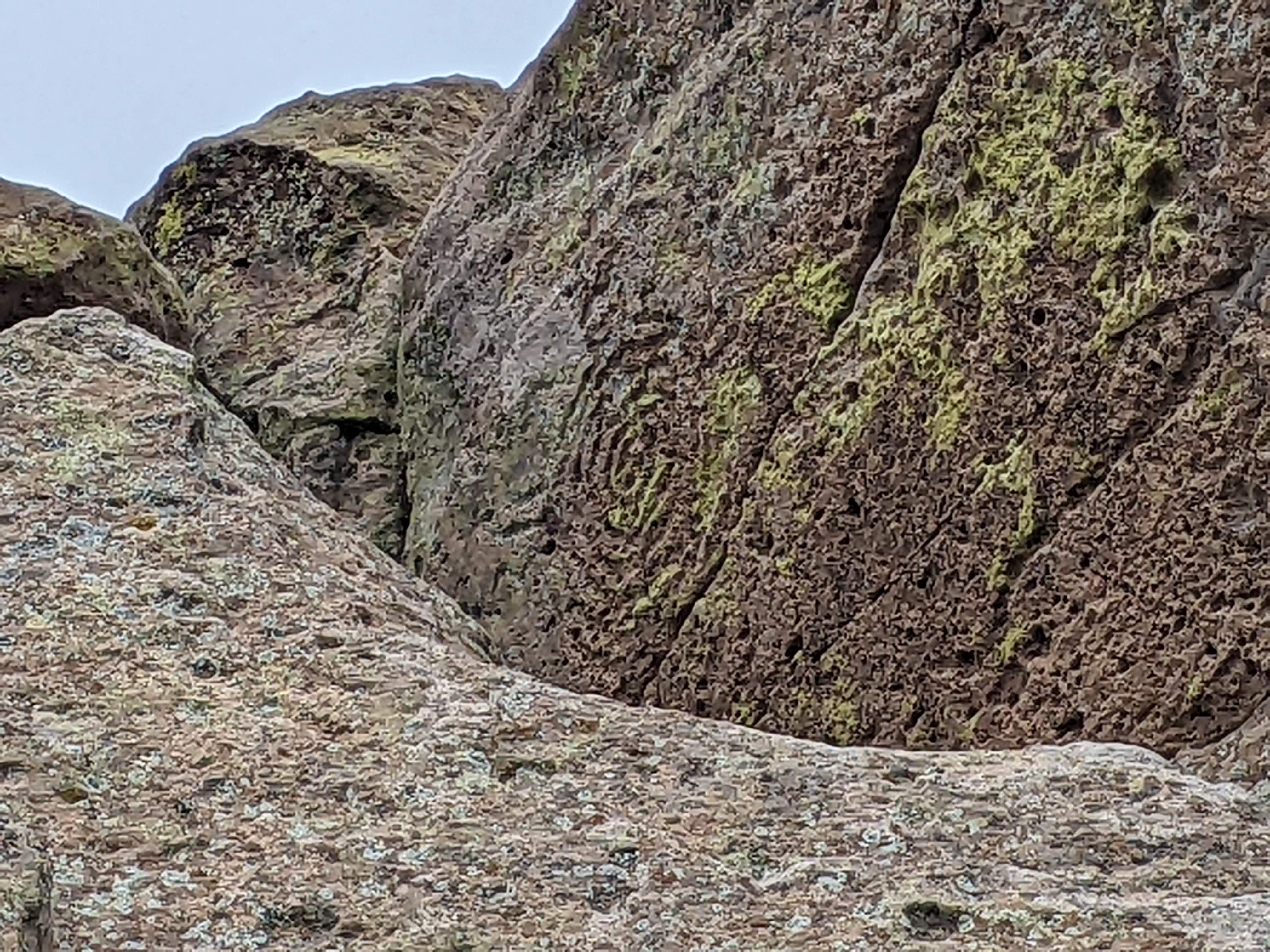
Petroglyphs at Tsankawi.
Perhaps not surprisingly, it was sherds of jet-black pottery from Tsankawi that archaeologist Edgar Lee Hewitt asked Maria and Julian Martinez to replicate for museum exhibits early in the twentieth century. Their experiments to replicate the pottery and then their own innovations launched Maria’s career as the famous potter of San Ildefonso Pueblo and the black-on-black pottery with shiny, abstract designs still sought after today. Early in Maria’s career, Peabody Institute staff member Carl Guthe worked with her to write Pueblo Pottery Making: A Study at the Village of San Ildefonso, published in 1924 by Yale University Press. This was part of Alfred Kidder’s broader Pecos Pueblo project—based out of the Peabody Institute from 1915 to 1929—and an acknowledgment of the connections between modern Pueblo communities and their ancestors. Guthe’s research also brought several of Maria and Julian’s pieces into the museum, including a marvelous platter and a rare demonstration set with examples of each stage in the manufacture of the black-on-black pottery. Several of these pieces are on loan to the Addison Gallery of American Art for an upcoming exhibit Women and Abstraction: 1741-Now.
Several years ago as we organized the Peabody Institute’s extensive photographic collection, we came across a group of black-and-white prints that had not been flattened. These images relate to Warren Moorehead’s 1920’s era excavation of the Etowah mound group in Georgia. Any attempt to unroll the images would produce a tear and threatened to damage the prints. We did some research on techniques that might help these older prints relax a little, to no avail. Help was nearby, however, in the form of the Northeast Document Conservation Center or NEDCC, one of the leading paper and media conservation organizations in the country. We’ve used them before to digitize oversized maps and to scan black-and-white negatives.
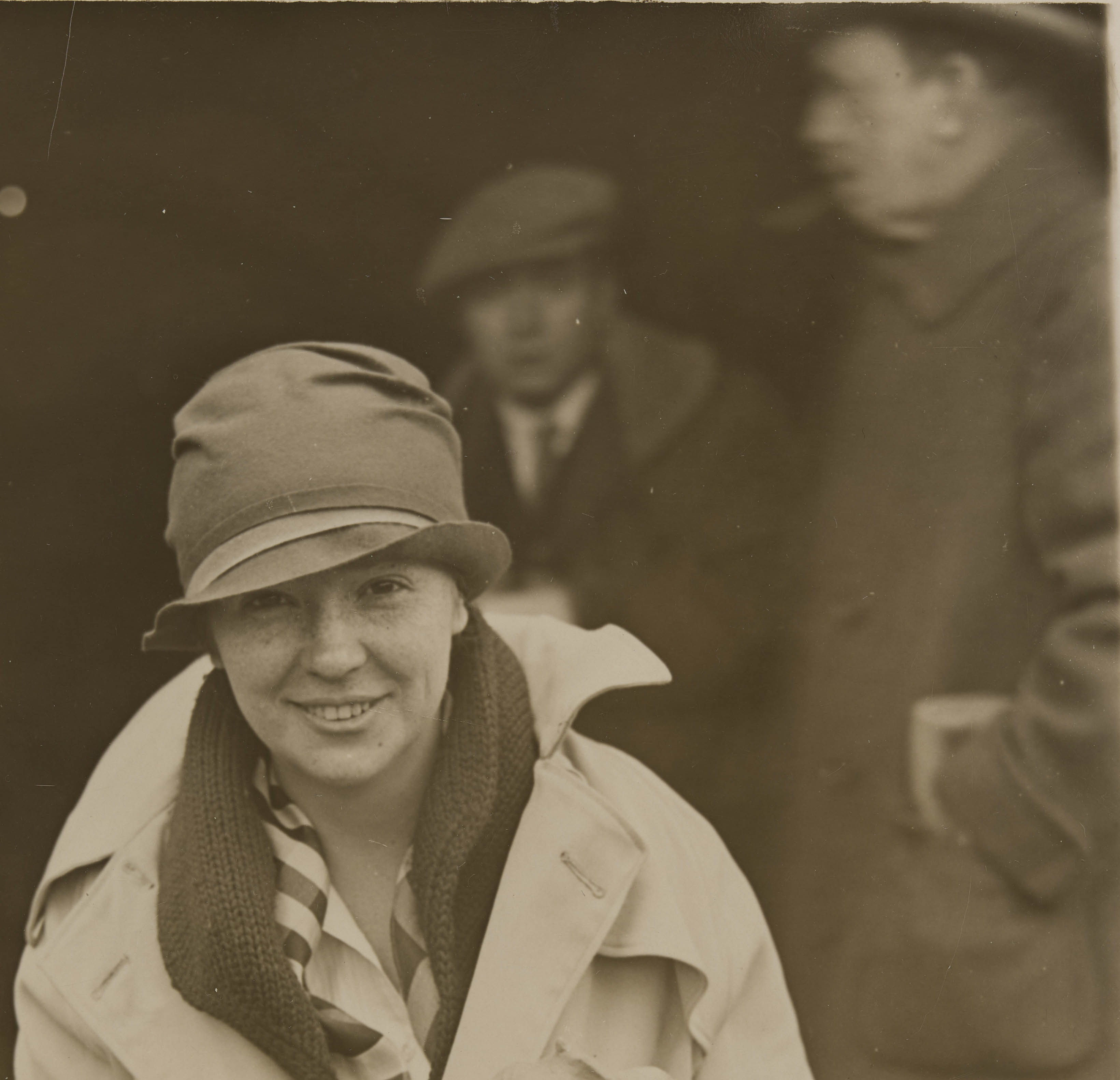
The images were returned to us after conservation recently, and we also received high resolution digital versions. Most of the photos show items from the Etowah site, but one picture was of Margaret Ashley Towle, one of the pioneering female archaeologists of the southeastern United States. The image is marked on the reverse as “Etowah Ga 1928 Miss Ashley” and has our recent catalog number 2020.3.283. It is a wonderful complement to Frank Schnell Jr’s 1999 chapter “Margaret E. Ashley: Georgia’s First Professional Archaeologist,” which appeared in Grit-Tempered: Early Women Archaeologists in the Southeastern United States. She was also featured, sans photo, in Irene Gates’s Women of the Peabody blog in 2018.
Image of Margaret Ashley at the Etowah site, 1928. In the right background is a slightly out of focus image of archaeologist Warren Moorehead. The image has been cropped to exclude several cultural items from the site. Robert S. Peabody Institute of Archaeology 2020.3.283.
Margaret Ashley was already well-versed in archaeology and was a skilled outdoorswoman when she worked with Warren Moorehead at the Etowah site, and went on to assist with his projects in Maine and to continue her own research in the Southeast. She also contributed to Moorehead’s Etowah Papers publication and published on her technique for illustrating pottery. According to Frank Schnell’s chapter in Grit-Tempered, Ashley married Moorehead’s main field assistant Gerald Towle in 1930. Unfortunately, Ashley’s marriage coincided with a significant hiatus to her training and research. We do know that after Towle’s death, Ashley completed her Ph.D. at Columbia with her dissertation later appearing as The Ethnobotany of Pre-Columbian Peru, number 30 of the Wenner-Gren Foundation’s Viking Fund Publications in Anthropology (1961). Colleagues working in the Andes report that Ashley’s publication remains a significant resource. Ashley spent several decades as an unpaid research associate at the Harvard Botanical Museum where she worked with botanist Paul Mangelsdorf, who had also been encouraging Richard “Scotty” MacNeish’s interests in agriculture, also around this same time.
We are delighted that we have been able to recover this early photo of Margaret Ashley Towle. If you get a chance, get a copy of Grit-Tempered–the biographical entries also include Adelaide Bullen, another pioneering archaeologist with connections to the Peabody Institute!
At the recent 8th annual Association on American Indian Affairs (AAIA) Repatriation Conference I participated in the final panel. This session, called “The View from the Top,” invited directors from a number of museums, universities, and agencies to talk about what they were doing to overcome obstacles and improve their repatriation process under the Native American Graves Protection & Repatriation Act (NAGPRA). The other institutions represented were Harvard’s Peabody Museum of Archaeology & Ethnology, the Alabama Department of Archives & History, UC Berkeley, Michigan State University, the University of Michigan, and the Illinois State Museum. Many of these are big university programs and still hold thousands of ancestors and funerary belongings. Since we spoke alphabetically, I went last and had a little opportunity to reflect on what others had said.
Many of the institutions had similar challenges and a variety of solutions. Several of the presenters mentioned that the law privileges museum decision-making, creating an imbalance. To counter this greater import was now given to Indigenous information, like oral history or expert opinion. Indigenous activism, often on campus, had focused attention on the need for increased engagement and compliance with NAGPRA. In California, state legislation had served this role. Most of the leaders spoke about listening and learning from Indigenous members of their campus communities and from those Tribal representatives leading repatriation efforts. One of the big topics that garnered audience interest was moratoriums on both research and acceptance of collections that might include ancestors or other cultural items subject to NAGPRA. I shared that we had not enacted moratoriums, but rather had modified our collections policies to allow for research only after consultation with culturally and geographically affiliated Tribes. And, that this applied to all of our collections, noting that it was difficult if not impossible to distinguish between NAGPRA and Not-NAGPRA collections outside of consultation with Tribes.
The Peabody also has not enacted a moratorium on accepting collections, largely because we recognize that this might be the only pathway to repatriation for some ancestors and cultural items. It was also our practice when I worked in Florida—we had laws and rules in place that allowed our state agency to accept ancestral remains for the purpose of repatriation. Steve Murray, director of the Alabama Department of Archives & History, shared in the session that they had done something similar recently. Several audience members pointed out concerns about such transfers, noting a lack of trust, and also suggested that donors be directed to Tribes. Being in touch with Tribes when these situations arise is critical, but direct transfers might not always be possible. In fact, the Peabody has had a long history of accepting collections with ancestral remains and cultural items for the purpose of repatriation. In some cases, these transfers have reunited split or shared collections, while others have supported smaller museums or historical societies that lack repatriation expertise, and others have seen ancestors and cultural items move out of private hands where they could be sold or discarded.
In reflecting on this discussion since the conference, I’ve thought a couple of things. Mainly, that what is great about NAGPRA is also what is awful. The law and rule encourage creative solutions, but in order to do that there exist small gaps or interstices where institutions can lean one way or the other. Tribal perspectives and expertise can be given greater weight in determining affiliation, or the law can be interpreted very strictly, creating situations that impede repatriation. Also, there is no “one size fits all;” what works for the Peabody is not going to work elsewhere. I think too that the current focus on moratoriums is unfortunate, though I certainly understand that response. There has been too long a time when culturally unaffiliated ancestral remains and cultural items could be subjected to destructive testing or other forms of research without Tribal consent. I worry, however, that moratoriums are not really policies and do not encourage collaboration between institutions and potentially foreclose transfers that could help speed repatriation. Maybe this comes from my time in public service in Florida, but I believe museums have a responsibility not to just focus on their own NAGPRA compliance, but to support each other for the collective good.
This summer included a family vacation to parts of Arizona and New Mexico. That meant a drive and some short hikes in Petrified Forest National Park and the Painted Desert, as well as time in Albuquerque and Santa Fe and points in between. Unfortunately, COVID preempted our attendance at the Santa Fe Indian Market, but we are already planning a short visit next summer!
Petroglyphs at Piedras Marcados Canyon, part of Petroglyph National Monument, Albuquerque, New Mexico. Photo by Ryan Wheeler, April 12, 2019.
Petroglyph National Monument is one of the places that I was looking forward to revisiting with my family. Most of the petroglyphs here were made by Native Americans, but there are some added by the Spanish, cowboys, or other visitors. I had a chance to make a visit during the Society for American Archaeology’s annual meeting in 2019, but at that time I had only went to the interpretive center (no actual petroglyphs there, but a great introductory film) and one of the canyons with petroglyphs—Piedras Marcadas, literally “marked stones.” According to the National Park Service, there are about 400 petroglyphs visible at Piedras Marcadas, but that’s only one of three separate locales within the monument. What struck me most during that 2019 visit was the proximity to suburban Albuquerque. The canyon is literally in the backyard of a residential neighborhood! What we learned during our recent visit was that community activism in the 1980s had helped save the petroglyphs and create the monument in 1990—not all that long ago.
View of Albuquerque from Boca Negra Canyon, August 2022.
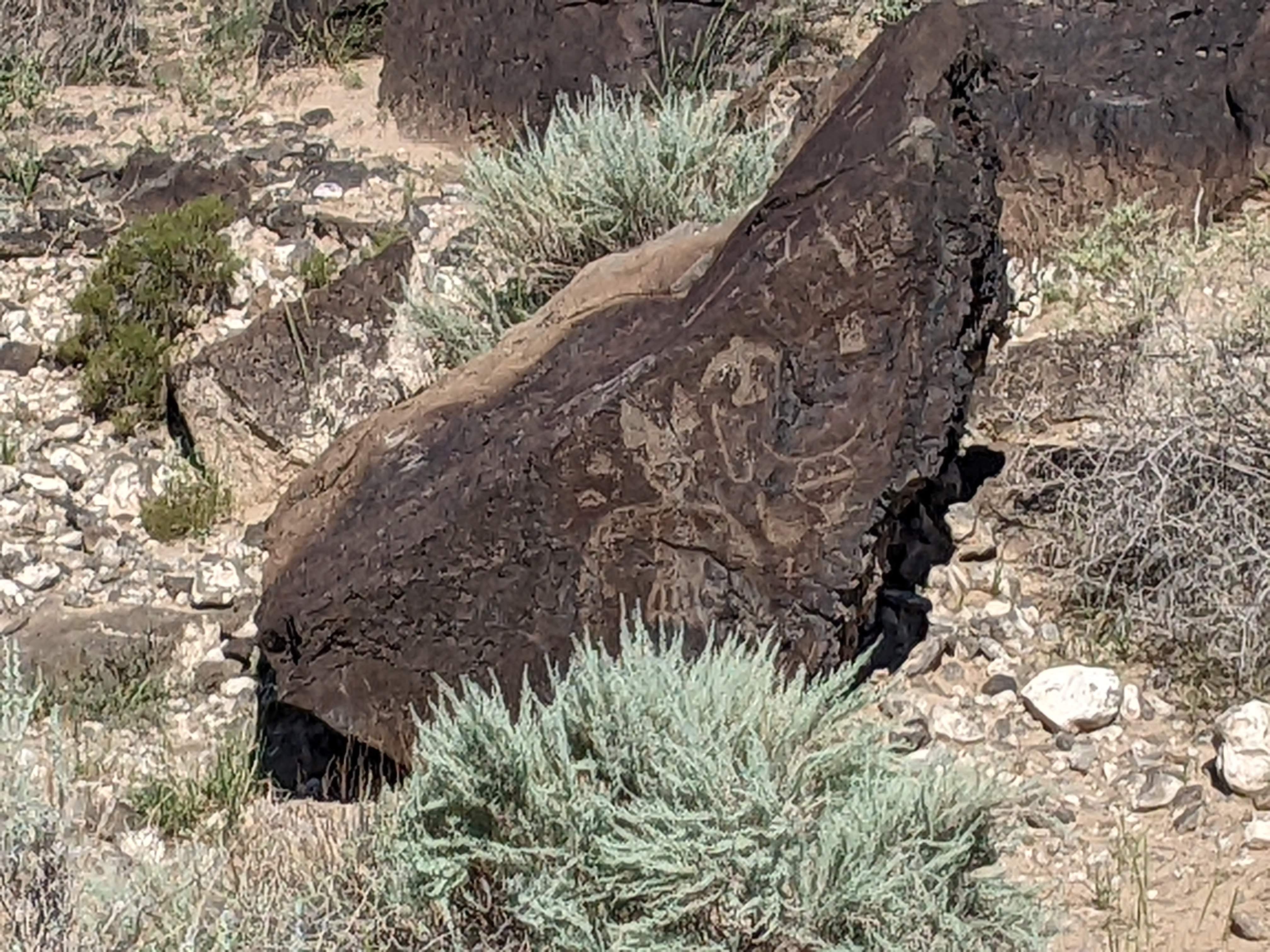
This summer we decided to visit Rinconada Canyon, which is only about a mile from the Petroglyph National Monument interpretive center. The park service says you can see about 300 petroglyphs at Rinconada. Despite being right off Unser Boulevard, this site doesn’t have a residential development right next door, so it feels a little bit wilder. The loop trail took us past the canyon wall, which is littered with volcanic boulders. The boulders have a desert varnish of blacks and dark browns, making a good surface for the inscribed petroglyphs that expose the lighter colored rock below the surface. One of the most interesting parts of the monument is the decision not to interpret the meanings of the glyphs, though you can learn a little about this from Native Americans interviewed in the interpretive center film. We went early enough that we didn’t get baked.
Macaw and geometric petroglyphs, Boca Negra Canyon, August 2022.
On a bit of a whim, we decided to visit Boca Negra Canyon, the third petroglyph site in the monument. While apparently only having 100 or so petroglyphs that can be viewed by visitors, this was really the most spectacular of the three locales. At Boca Negra you climb up the mesa and really have an opportunity to get close to the petroglyphs. It’s a little more up and down of a hike, but worth it for the views and the chance to see the petroglyphs close up. The geology of the area is fascinating too. The inscribed boulders are the product of a volcanic eruption around 130,000 years ago. Magma poured out of vents and fissures in the area, creating a sheet of basaltic rock over the softer Santa Fe Formation. The softer sediments on which the volcanic rocks were deposited slowly eroded away, leaving the broken boulders.
Petroglyphs at Rinconada Canyon, August 2022.
The petroglyphs at all three monument locations were made by ancestors of the modern Pueblo people, dating between 400 and 700 years ago, though some are much older. The petroglyphs have been dated based on weathering, but also variations in style and content. There are birds, insects, animals, hands, humanoids, spirals, and other geometric forms. The petroglyphs remain culturally significant to Pueblo people and other Native Americans in the region.
Mark your calendars! PA Giving Day begins Wednesday, March 30, 2022! This year, the PA Giving Day event will run from Wednesday, March 30, 9 a.m. to Thursday, March 31, 12 p.m. EDT.
For those inspired to give early, please complete the PA Giving Day form here! Please be sure to select the Robert S. Peabody Institute under the “designation” section. Any gift made in advance of the event will count toward PA Giving Day totals.
Last year the Peabody Institute garnered 70 gifts! This year we hope to have more challenges and even more support! Keep a look out for exciting posts and takeovers across our social media channels leading up to PA Giving Day!
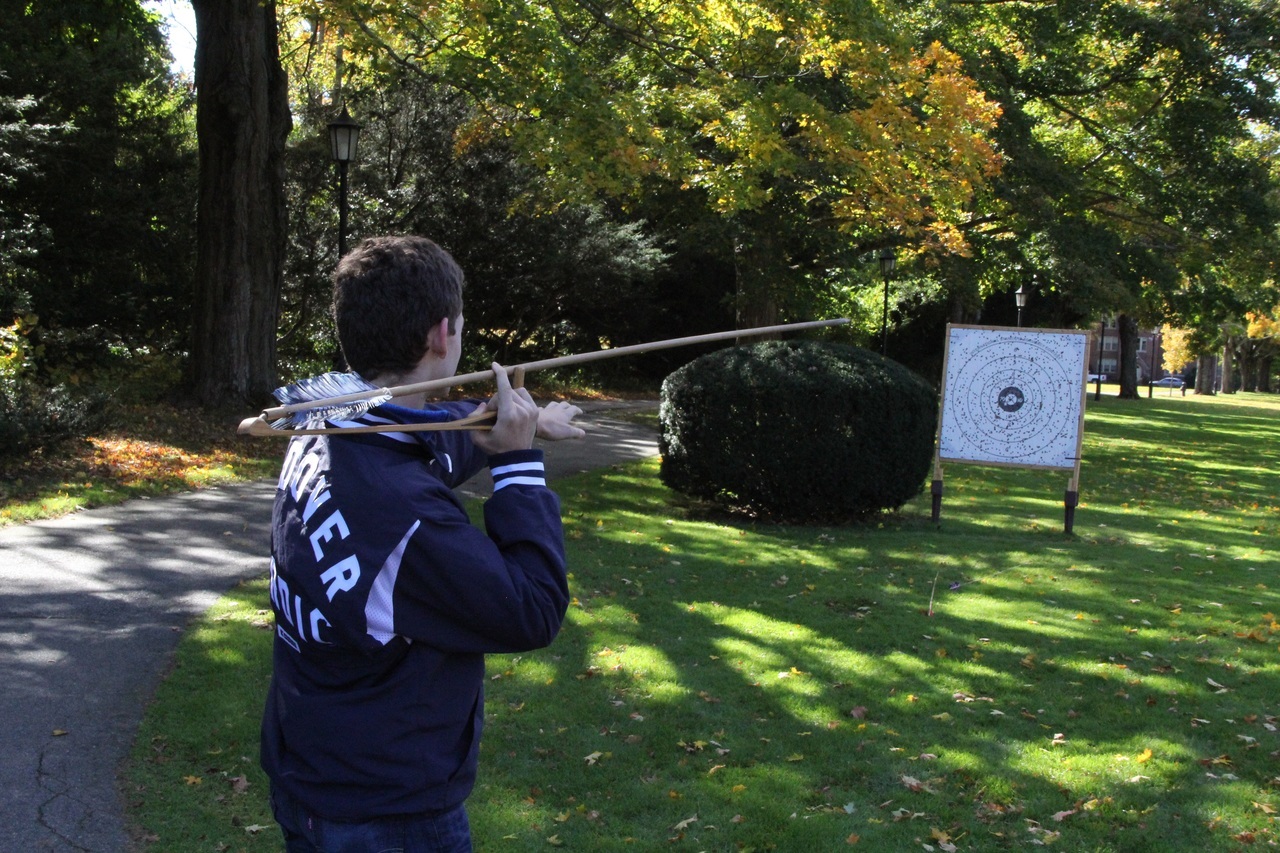
PA student preparing to throw an atlatl on the Vista
Over Thanksgiving break, I was catching up on some news and saw an article that caught my eye – Smithsonian African American Museum Launches Online Interactive Access. First, a headline like that will always catch my attention. Second, it stirred a memory of an email exchange that I had with a registrar from the National Museum of African American History and Culture (NMAAHC) back in July.
The Peabody Institute is proud to have a handful of items on loan to the NMAAHC to tell the story of Lucy Foster, a free Black woman who lived here in Andover from 1771-1845. Lucy’s story is part of the Slavery and Freedom exhibition. This loan has been active since 2019 and will continue until at least early 2023 (and may be extended!).
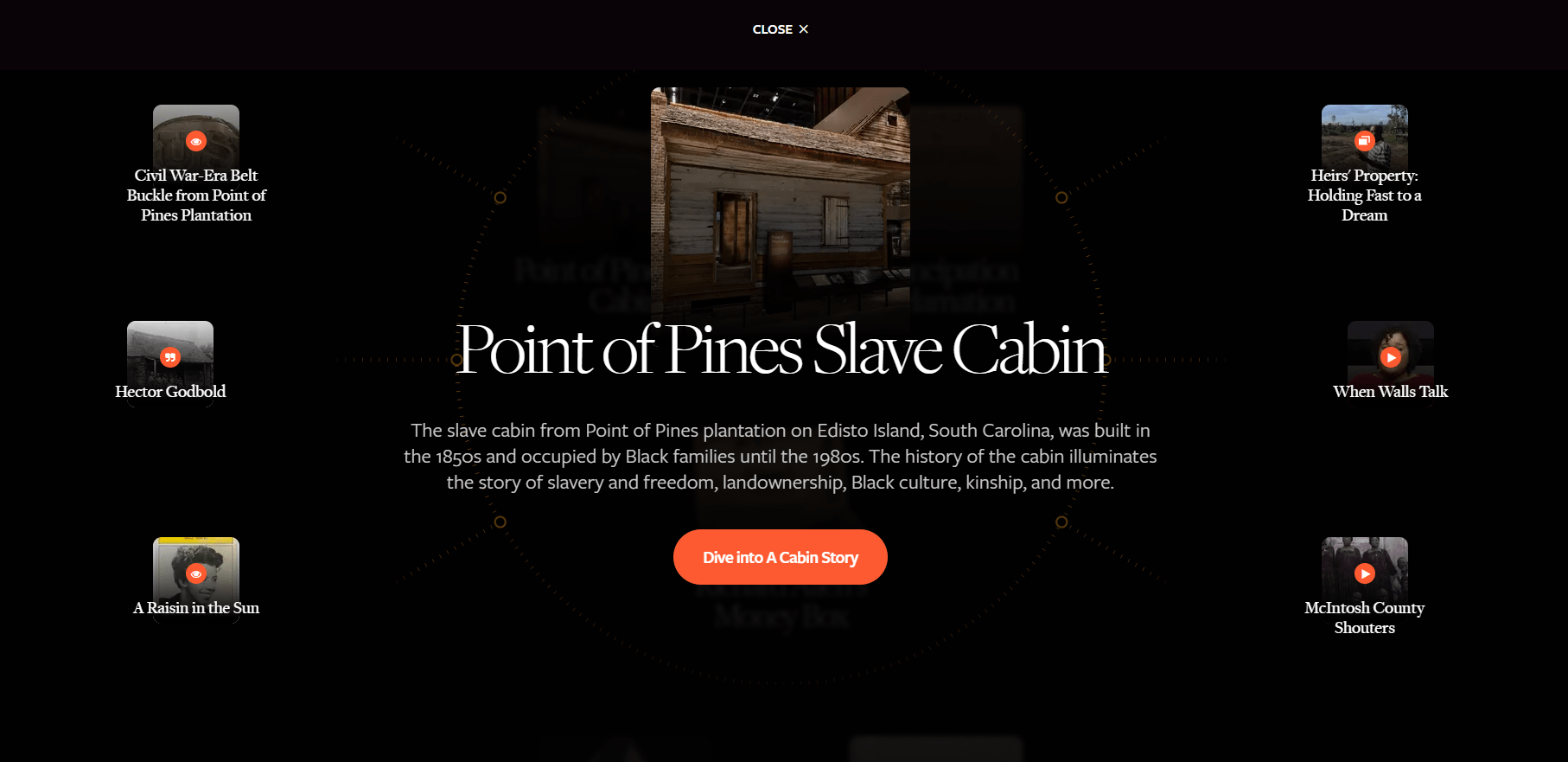
A few months ago, a registrar from the NMAAHC asked for permission to include the items on loan from the Peabody in their new digital initiative, the Searchable Museum. The Searchable Museum offers rich interactive, digital experiences based on the NMAAHC’s inaugural exhibitions, historical collections, narratives, and educational resources. The Slavery and Freedom exhibition was the first to be developed as a digital experience. I gladly granted permission to include Lucy Foster and her story.
While I was excited to see items from the Peabody as part of this incredible resource, I was also quickly drawn into the rest of the content. I especially enjoyed learning about the Point of Pines Slave Cabin. In 2013, a team from NMAAHC traveled to Edisto Island, South Carolina and began the meticulous process of dismantling and relocating a cabin that had been occupied by Black families from the 1850s until the 1980s. The cabin is a vehicle to tell the story of the people who lived there, the power of land ownership, the architecture of slavery, and modern housing discrimination.
The Searchable Museum is well organized and information is presented in clear terms – I strongly recommend that you all check it out!












 The Peabody