What happens when a project is successful but doesn’t quite resolve the larger storyline or need? A sequel!
I share with you – Peabody Building Renovations: the Sequel.
The first phase of the work, completed in early 2024, focused on improving collections care. This included new shelving, an HVAC system, updated security, and an elevator in the building. To facilitate this, the entire collection had to be moved to temporary storage and back again. Phase I was a huge amount of work for all of the Peabody staff and I can confidently say that the collection is now in a better environment than it was before.
This next phase will largely ignore the collections spaces and instead focus on updating classrooms, creating offices, and modernizing systems. By using the space more efficiently, we will create two additional classrooms for use by Peabody educators or PA faculty. Staff members will have discrete office spaces and there will be room to grow.
One of the biggest improvements will be the addition of an HVAC system to the classrooms and office spaces. As someone who has worked in these spaces for as long as I have, I would have to say that this is the part that I am looking forward to the most. Currently, it can be really hot in the summer (over 80 degrees in the classroom) and quite chilly in the winter. We all have our methods to deal with the discomfort, but I am excited to have air conditioning!
All of this of course comes with some disruption to our regular activities. Staff will once again be moved to a temporary location and access to the collection will be restricted.
As of December 1st, Peabody collections will be largely unavailable and classroom spaces will be out of commission. Repatriation work and collections inquiries from Tribal communities will be prioritized but other access will be restricted. Please contact me, mtaylor@andover.edu, with any questions or requests.
PA classes may be taught in a modified format with limited collections based on availability. Please contact Lainie Schultz, Curator of Education, to request a class.
The Peabody should be back in commission by September of 2026. I will be able to share periodic updates on the process through the blog and we are so excited to welcome you into our updated space next year. Stay tuned!
If you are interested in supporting Phase 2, please contact Jen Pieroni, Director for Advancement Initiatives, Office of Academy Resources.
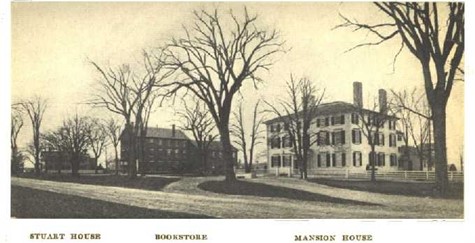
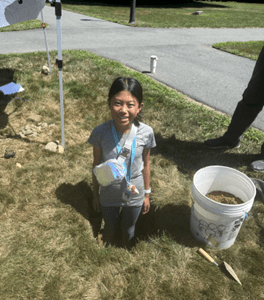
Almost every summer since 2016, young archaeologists from Phillips Academy’s summer session program embark on a mission to excavate the site of the eighteenth century Samuel Philips Jr. Mansion House, located on the West Quad of campus. The infamous Mansion House was built in 1782 by the academy’s founder and stood for 105 years, before burning down in 1887. News articles from the period suggest that the demise of the Mansion House was a result of arson; many speculating that the proprietor, Charles Carter, started the fire. During its long period of occupation, the Mansion House served as not only a home, but later an inn and tavern for students, community members, and travelers. The site’s long history and relatively undisturbed context creates an ideal setting for archaeological excavation and student learning.
Over the past seven years, students have succeeded in discovering portions of the house, including multiple chimneys and a basement feature. This year, students set out with high expectations, choosing to place four excavation units in spaces just outside of the Mansion and two units in the southwest portion of the quad, near the sites of historic outbuildings, a nineteenth century printing house, and an early nineteenth century pathway.
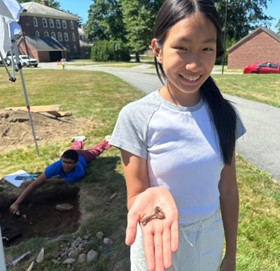
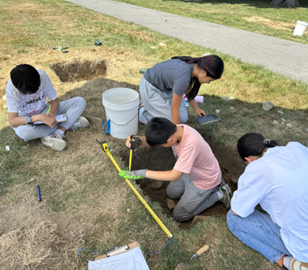
Students in each excavation team had a blast taking turns performing the primary tasks of an archaeologist: digging, screening, measuring, and note-taking. Many, if not all, students even got to unearth artifacts from their units! Some of our favorites included a small ferrous key, an impressed glass tumbler, and half a pair of scissors which all came from the two excavation units placed in the southwest portion of the quad.
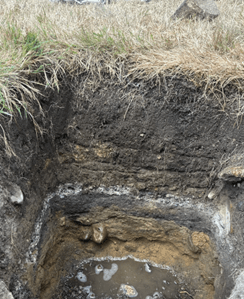
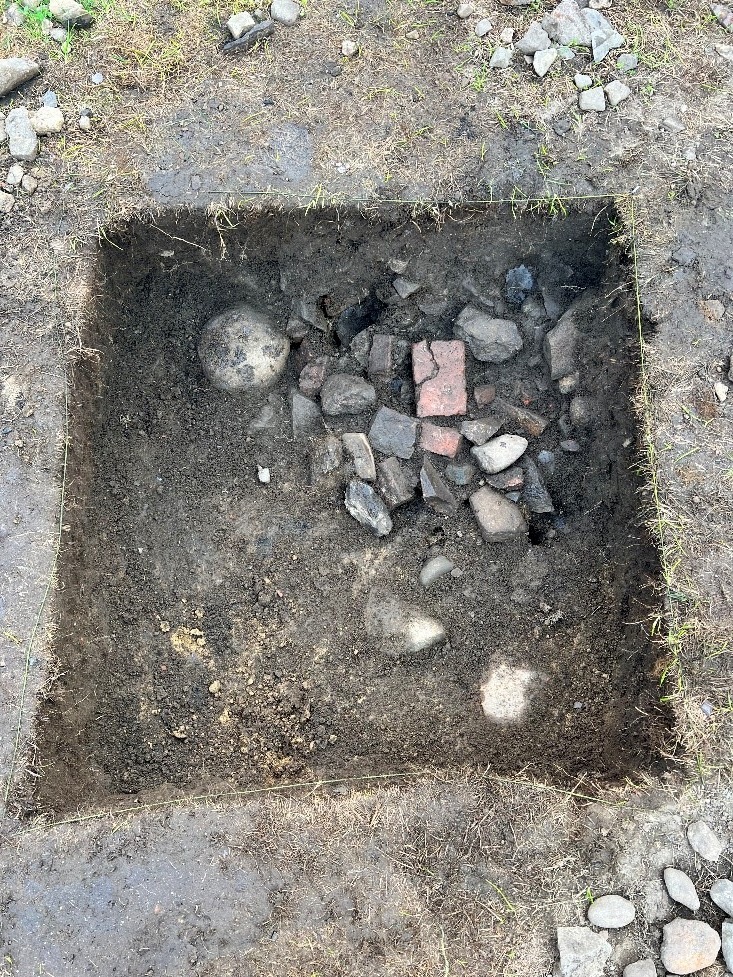
Further excavation in this area revealed a feature relating to the historic pathway present on early nineteenth century maps of campus. Pictured below is a dense, gravelly layer of soil discovered at 40 cm. This layer, interpreted here as the pathway, was intermixed with nineteenth century materials including glass, brick fragments, and some ceramic.
Students excavating the other four units in the northern portion of the quad found shallow cultural layers followed by a sterile C horizon, between 20 and 35 cm. While the artifact density of these units was limited, students still enjoyed finding an abundance of brick, metal nails, and some small ceramic fragments. The very shallow deposits found in these units informed the team that no building activity likely occurred in these areas. Additionally, the relatively low artifact density suggests that these areas were not regularly used like in a dooryard or garden area.
Overall, students in the 2025 field program successfully applied archaeological methods to ‘unlock’ more of the mysteries surrounding the Samuel Phillips Jr. Mansion House. This year’s field season serves to inform of the deep cultural deposits in the southwest portion of the quad and the significant research potential it could provide for future field seasons.
Thanks to the entire student field crew and cheers to a wonderful field season!
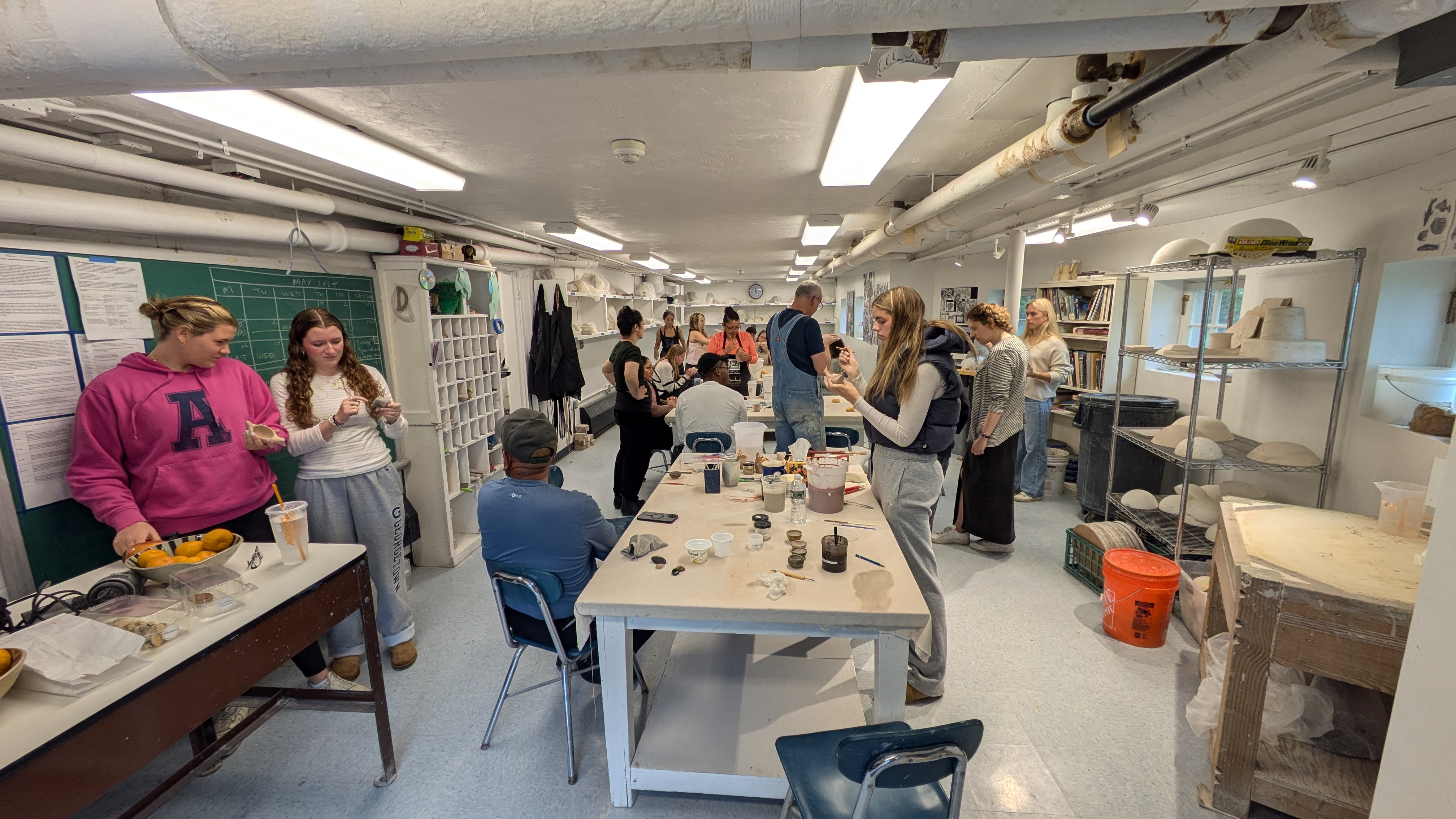
Ceramic students participating in pottery-making workshops
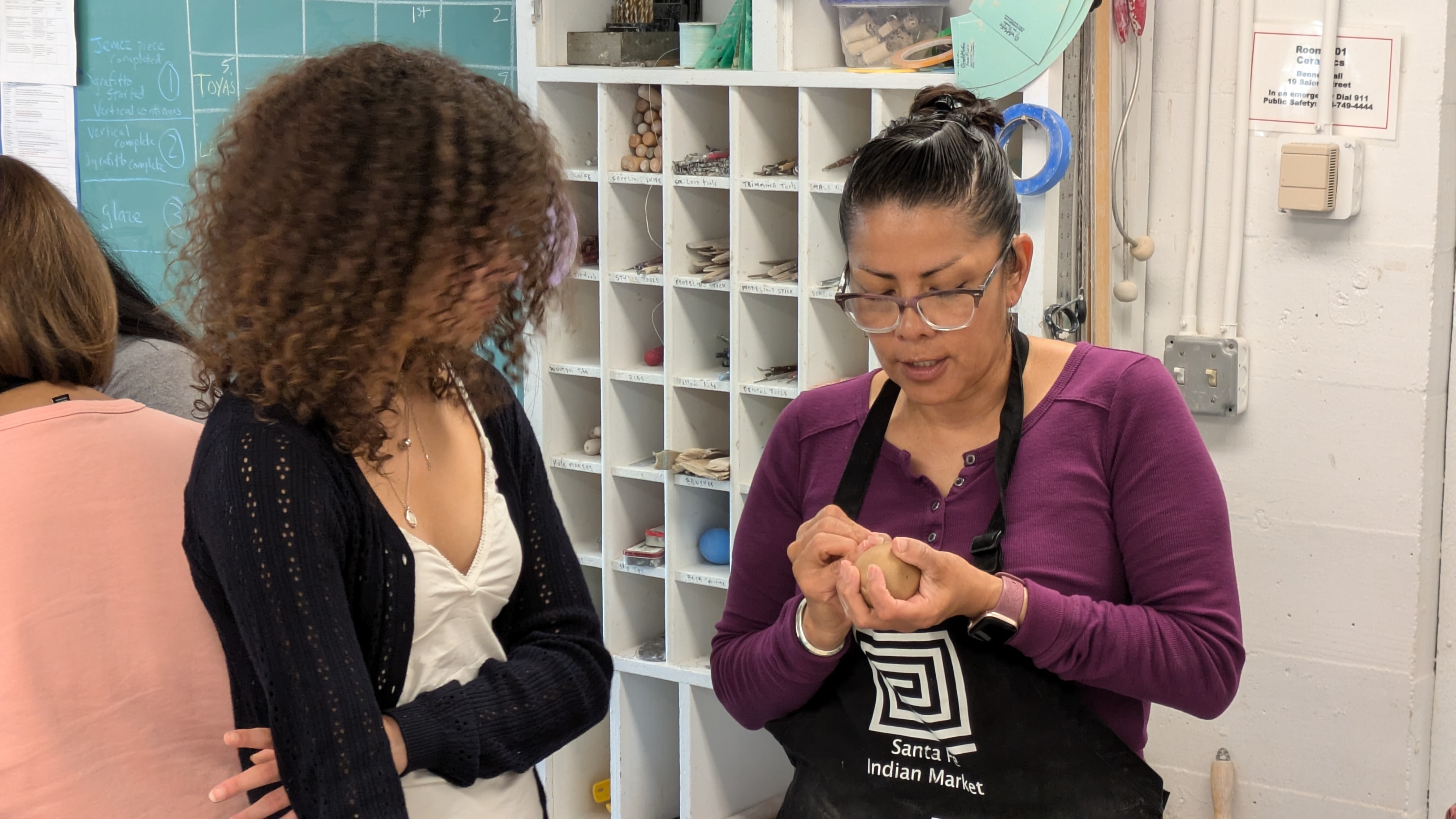
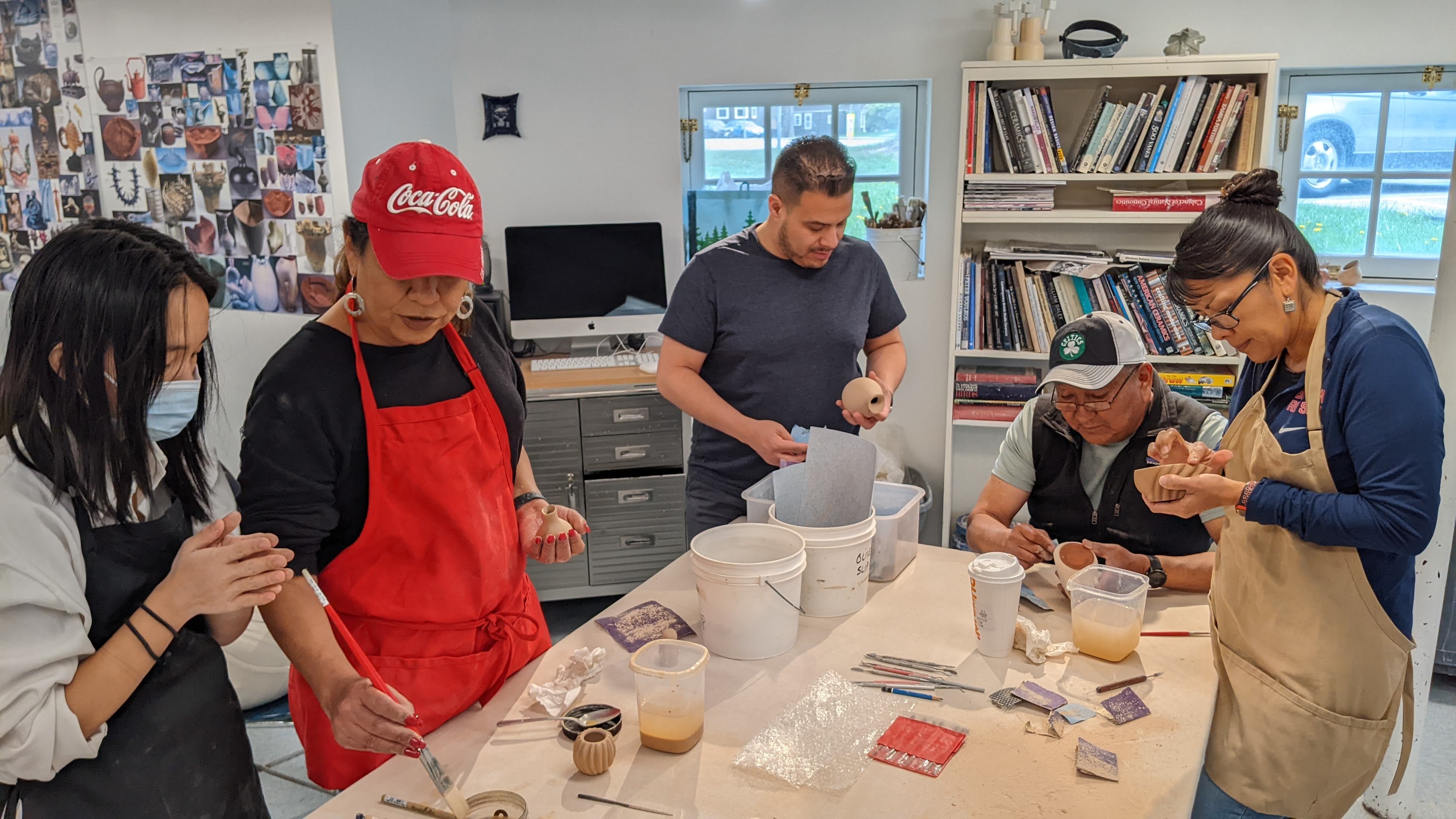
We were honored to have the Toya family back this Spring term for their annual visit to conduct week long, hands-on workshops on Pueblo pottery-making with Thayer Zaeder’s studio ceramic students.
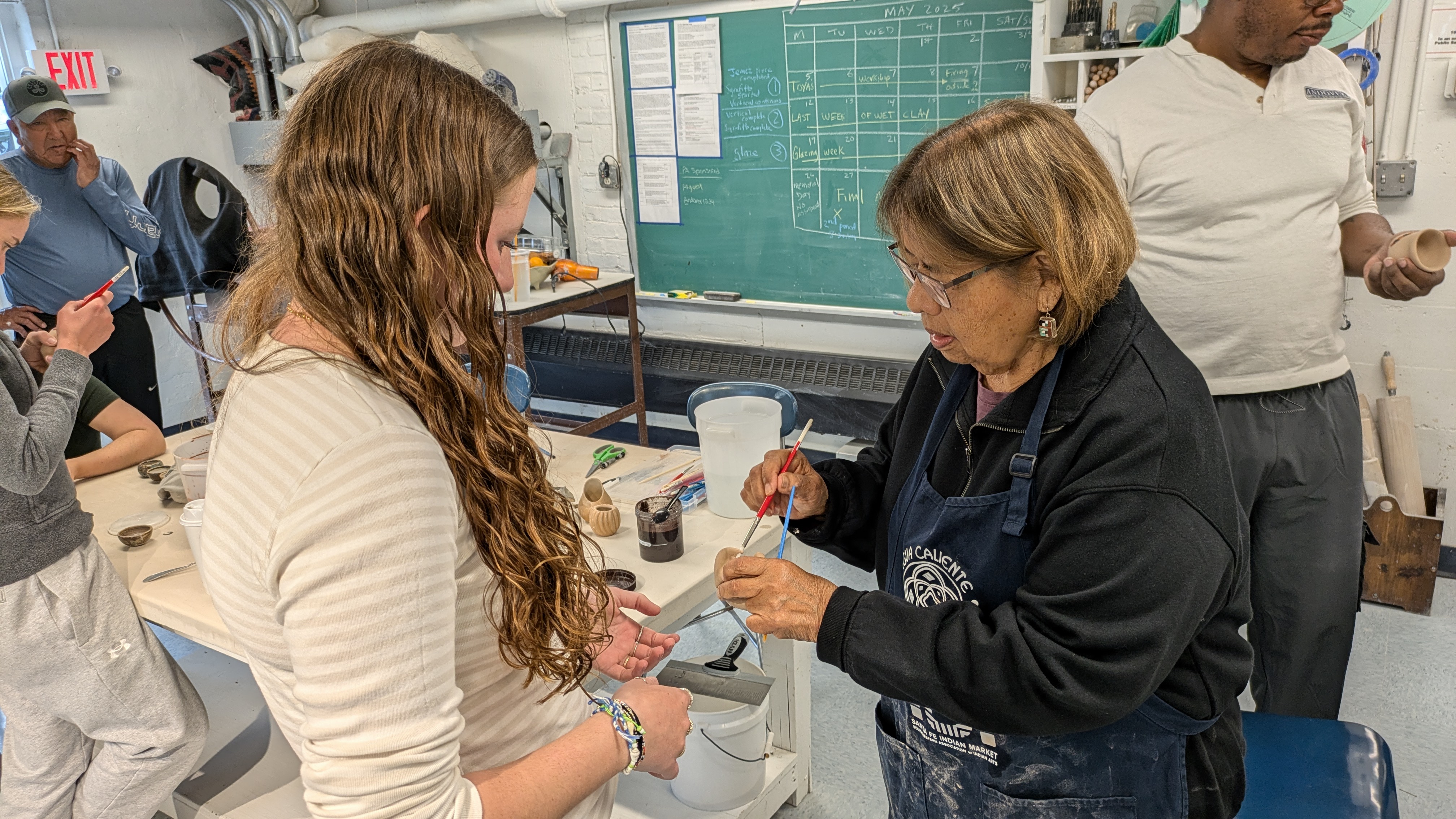
Each year students have the opportunity to make their own pieces using native clays and temper from New Mexico and traditional decorative techniques of painting and polishing. The workshops culminate in a traditional Jemez firing.
Students walk away with an unforgettable keepsake of their time as well as a greater appreciation for contemporary Indigenous art and culture.
We are so grateful for all the time and expertise the Toya family has shared with PA students!
Check out this video by PA’s Communications team highlighting the Toya’s work on campus.
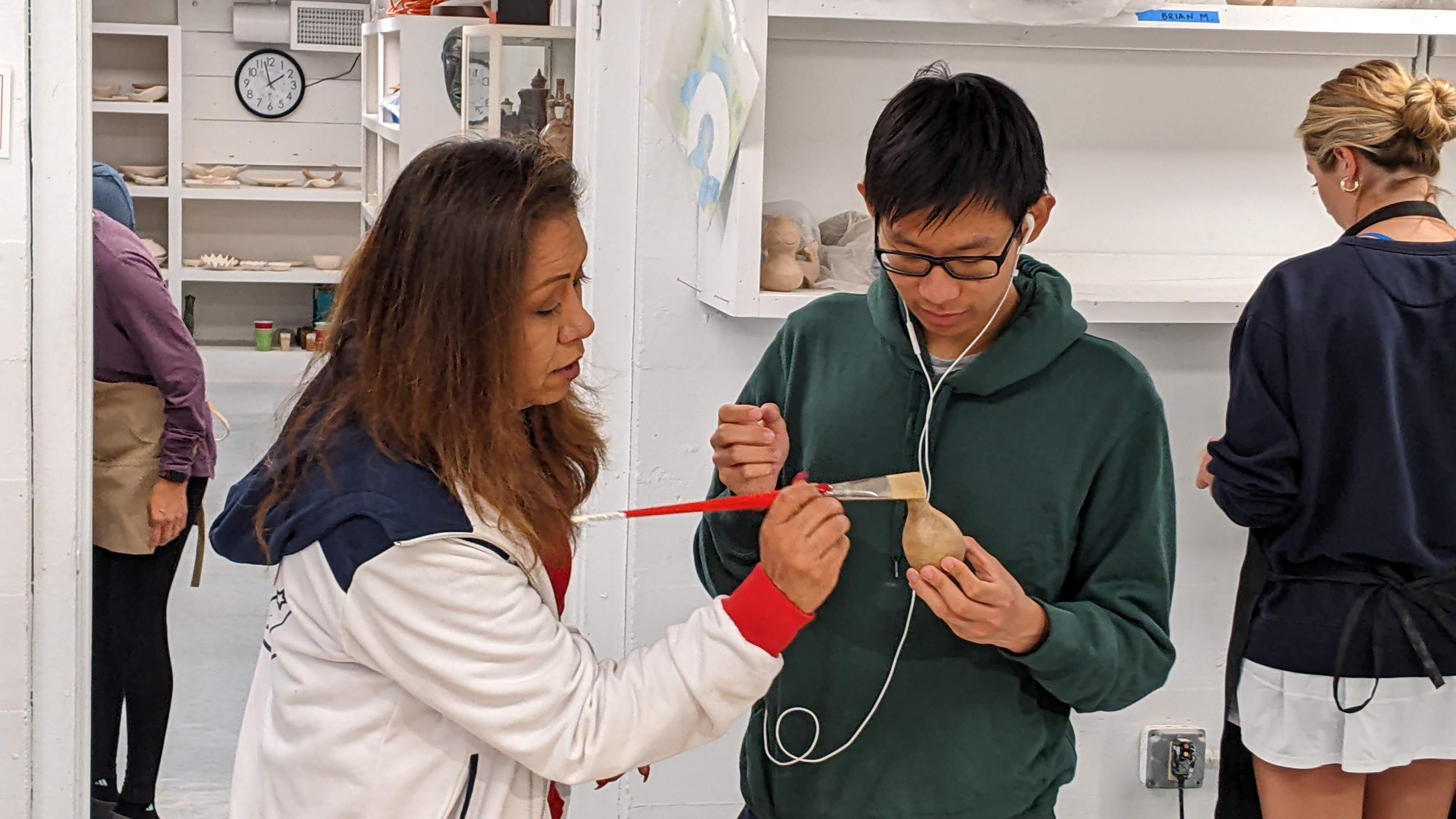
Maxine Toya working with a student on painting their piece.
Mia Toya working with a student on polishing their piece.
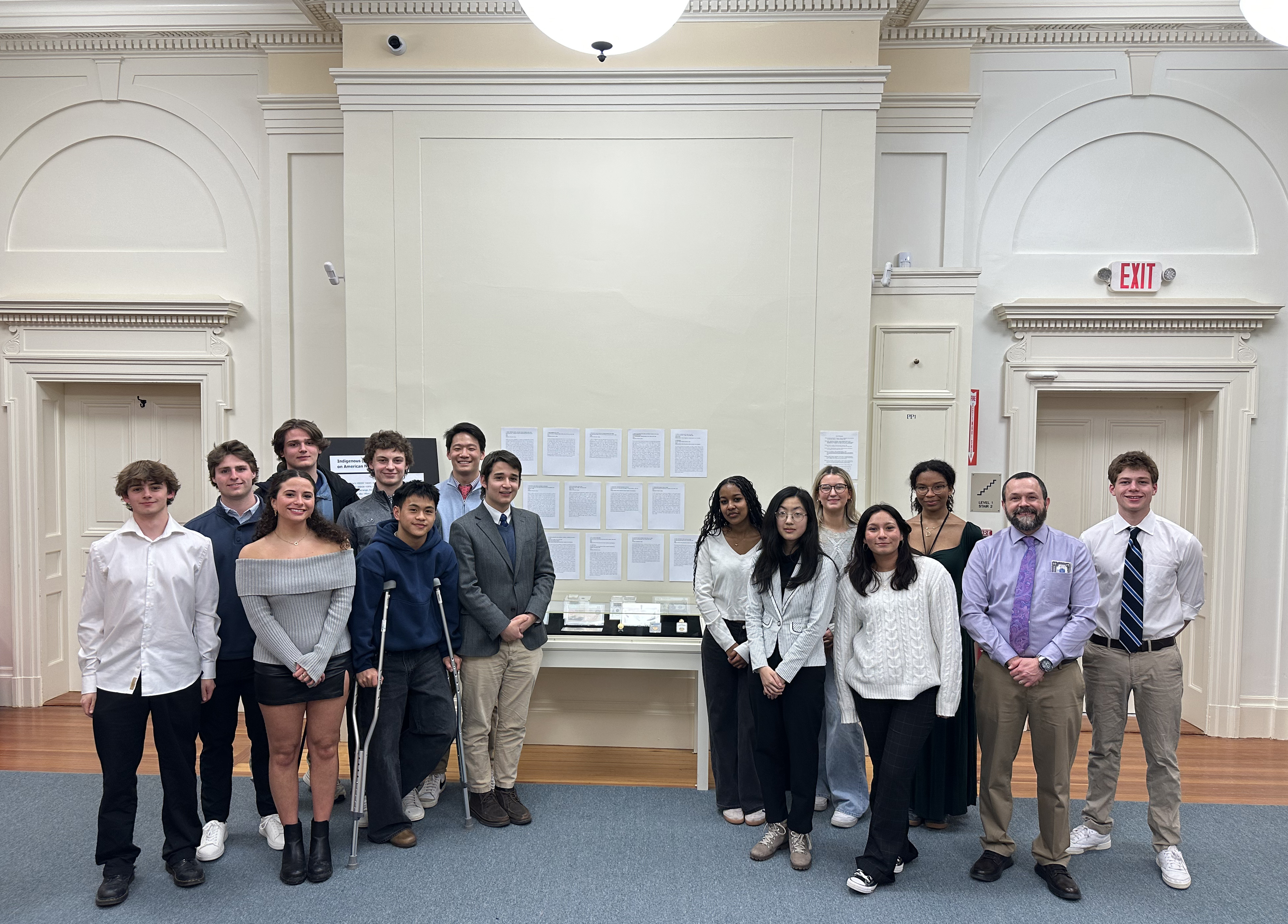
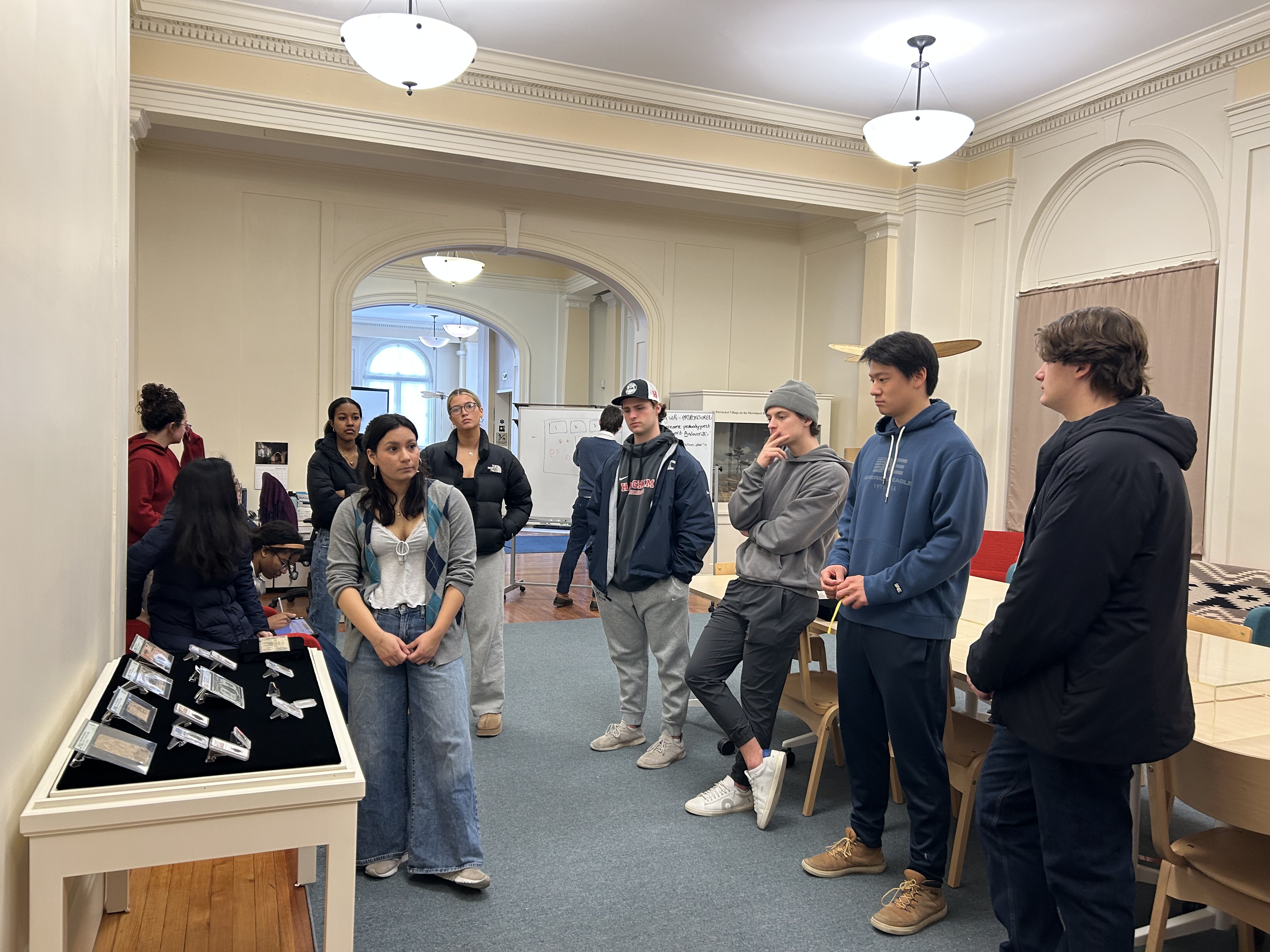
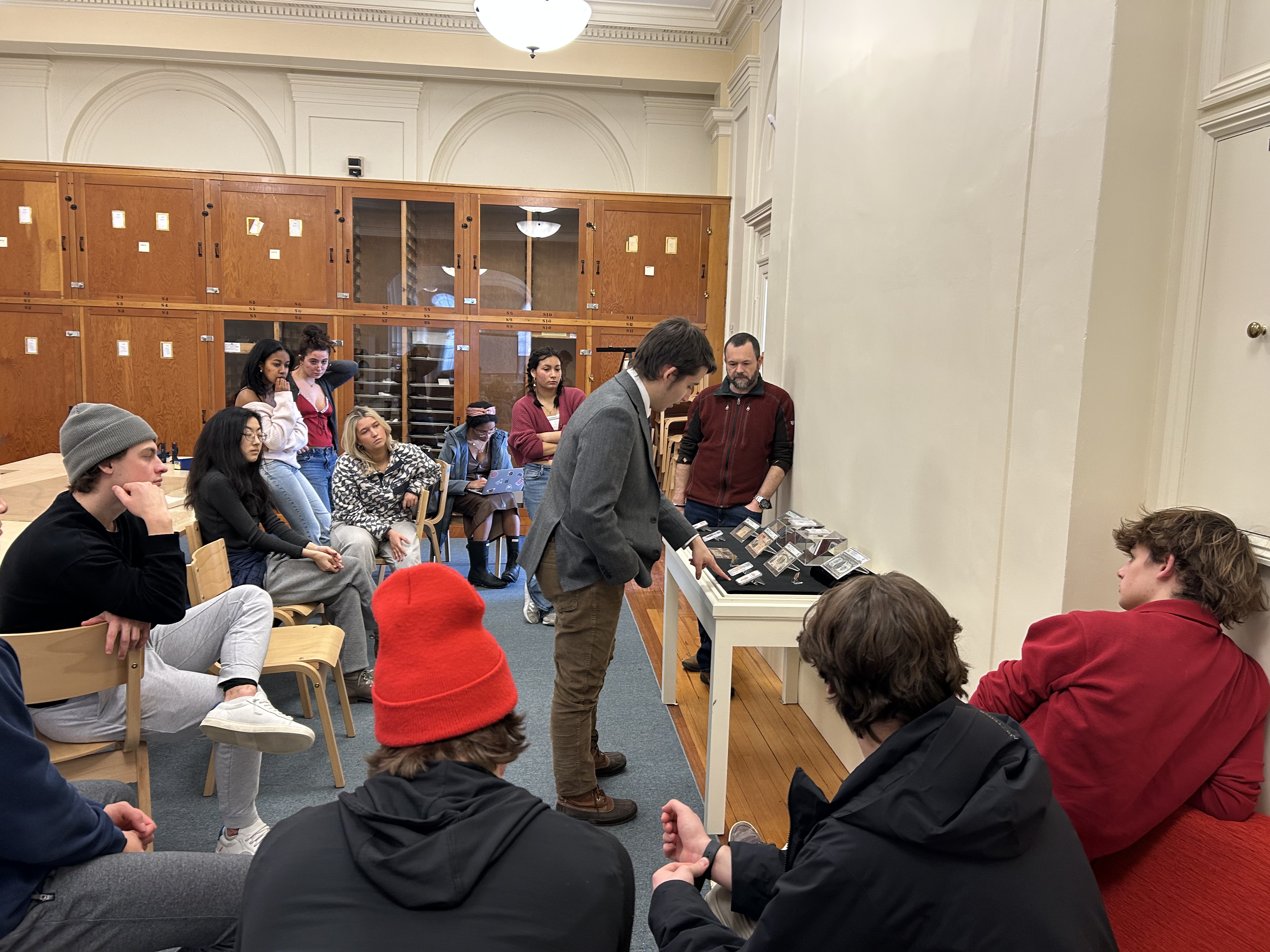
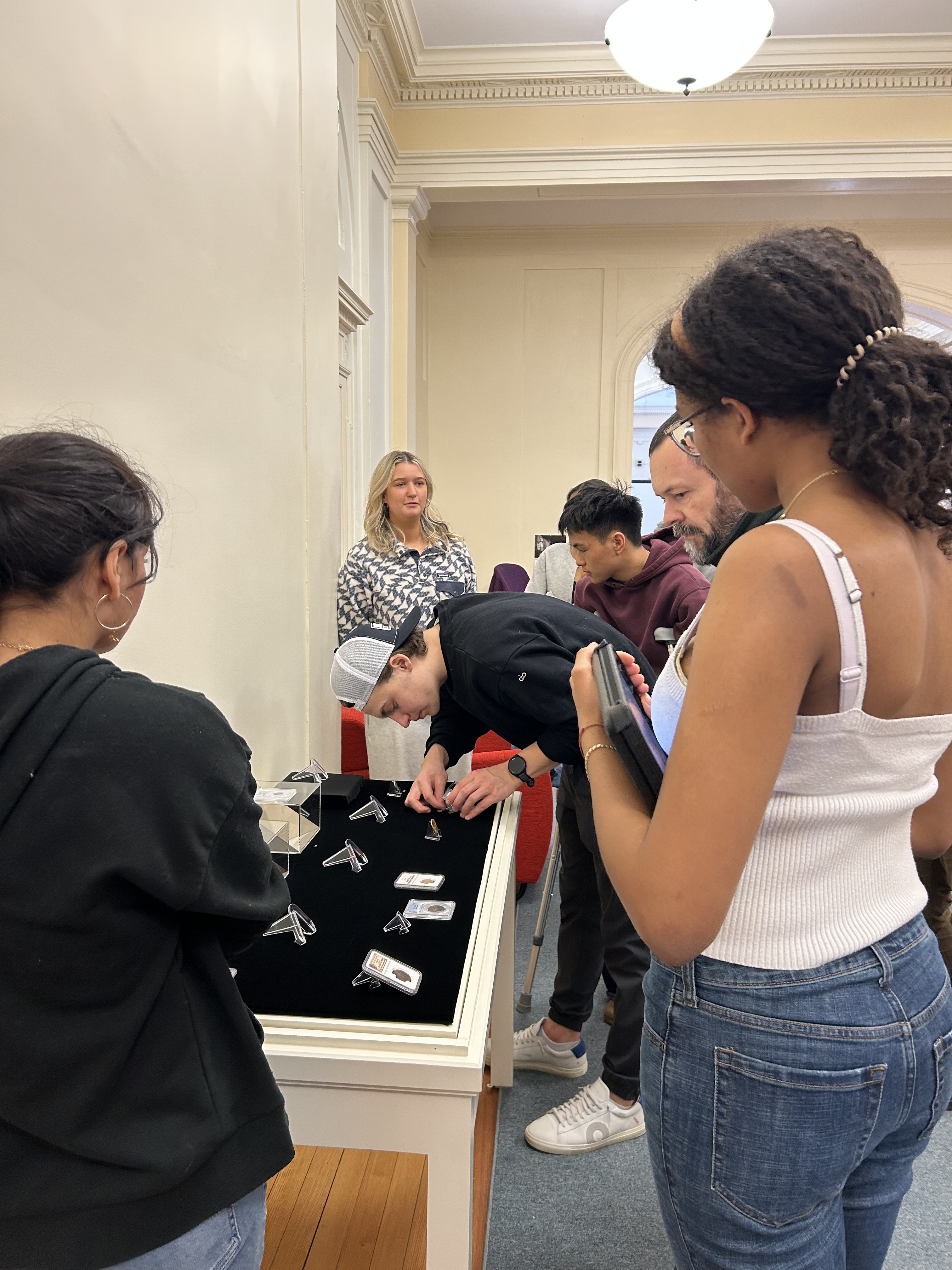
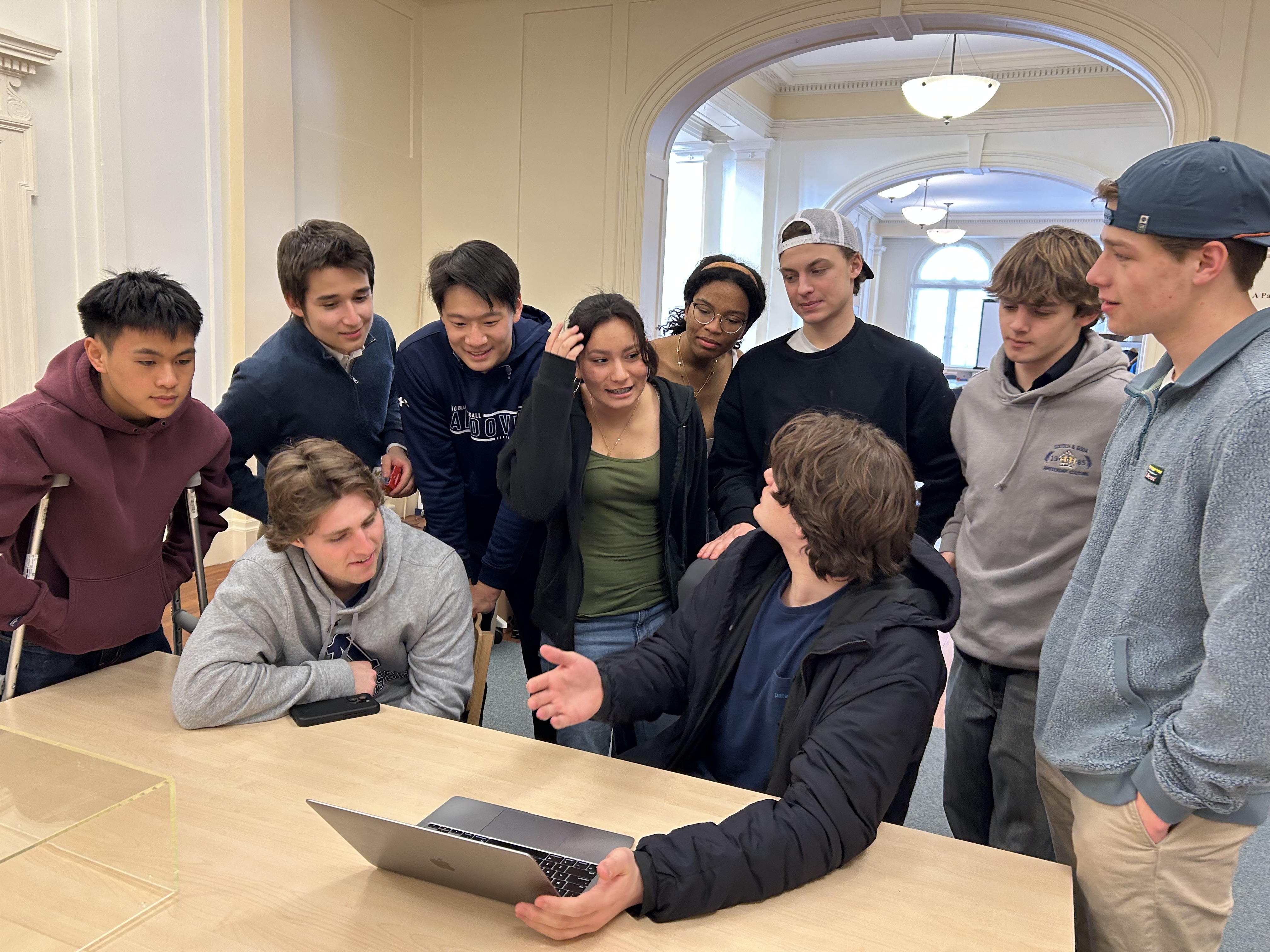
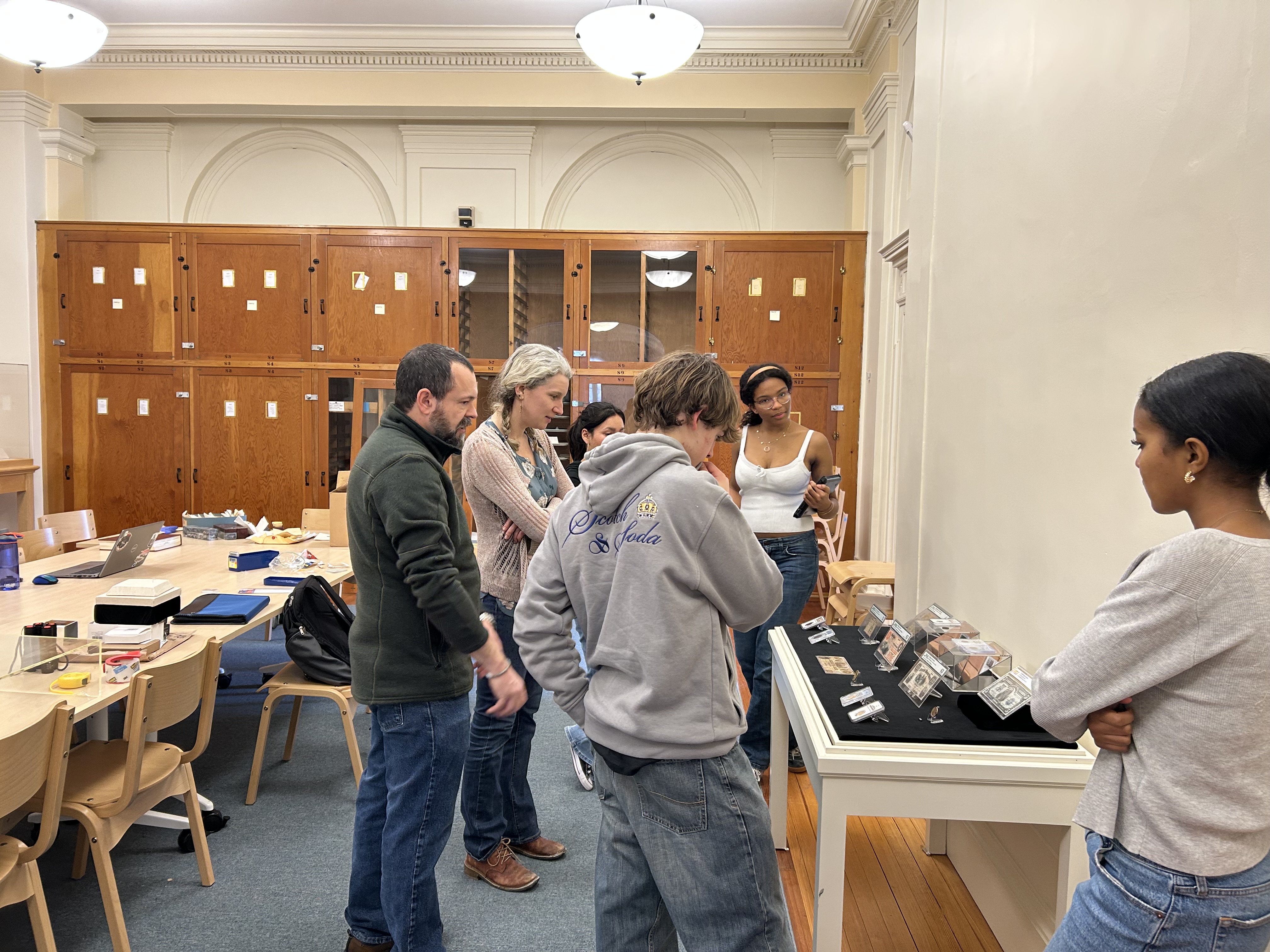
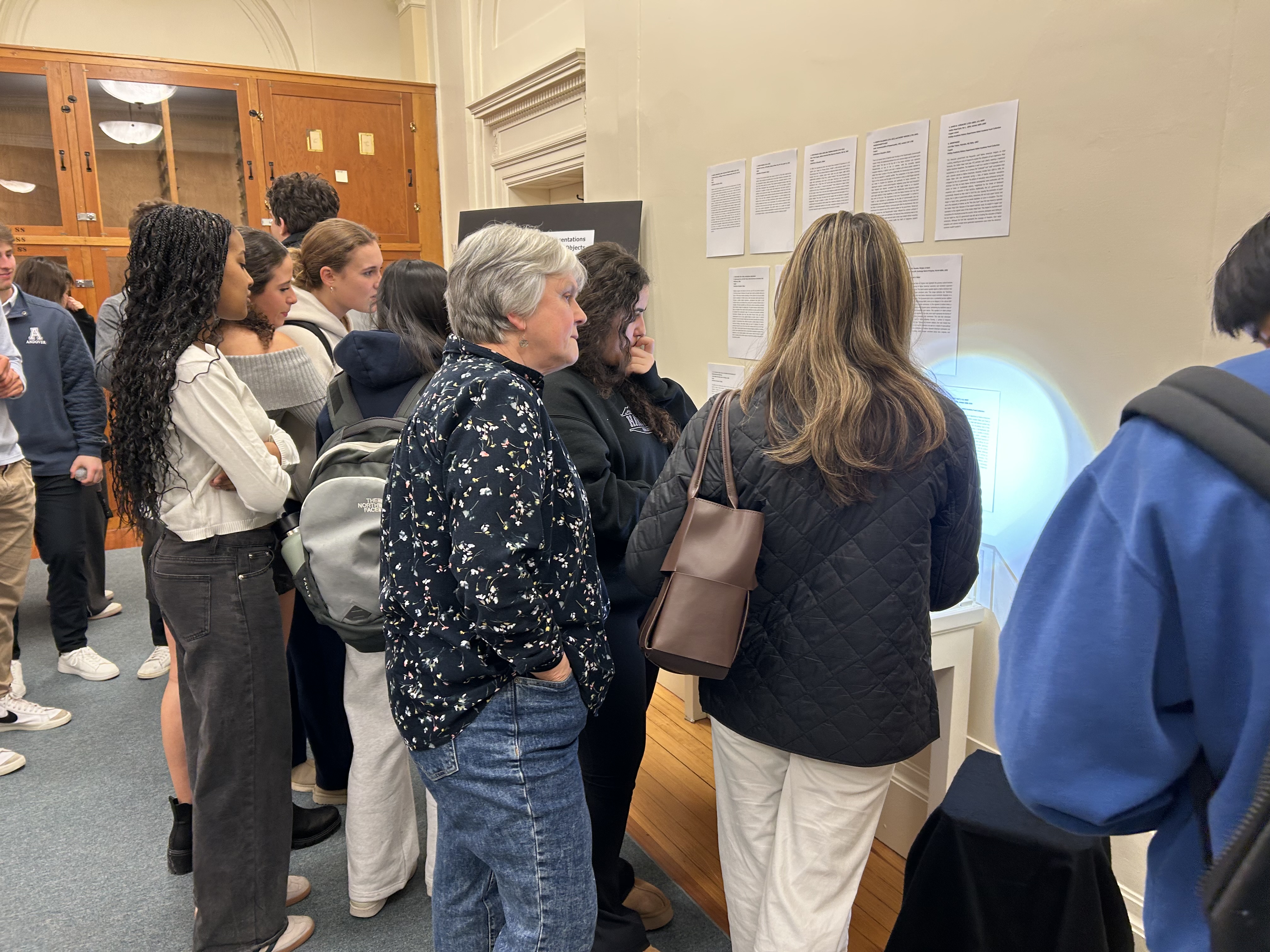
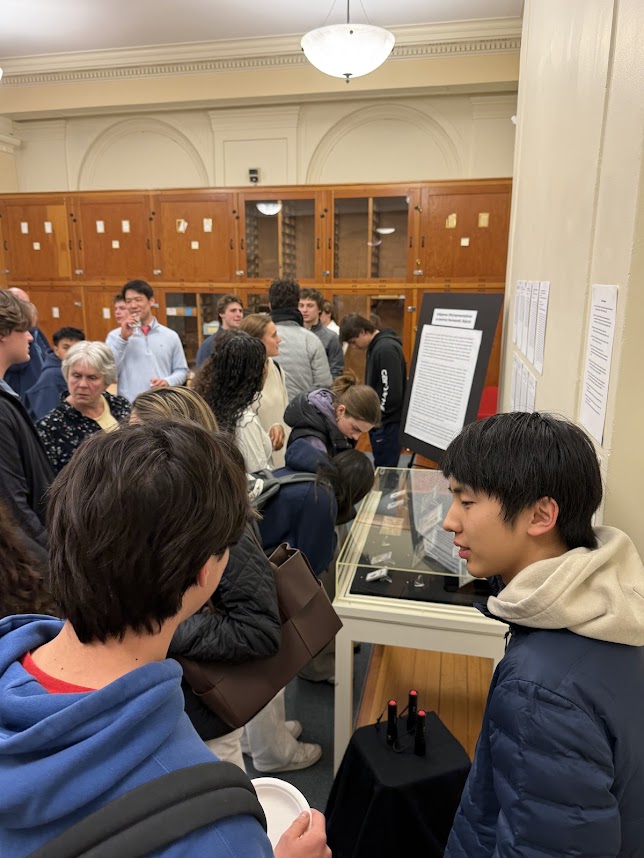
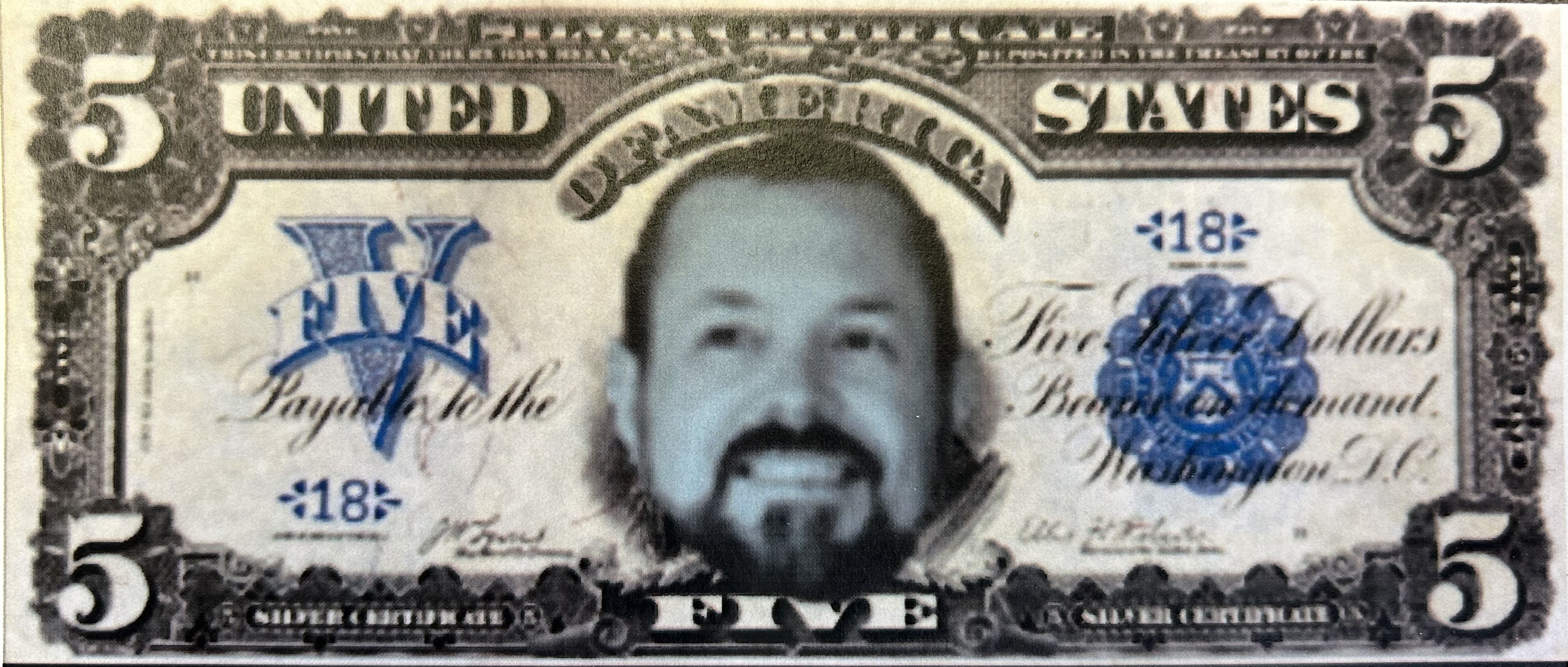
The Peabody Institute is currently host to the exhibit “Indigenous (Mis)representations on American Numismatic Objects,” displaying items from the History and Social Science department, the personal collections of Donny Slater, and the hard work of the students in his class HSS507: History in Your Pocket – American Stories, Ideals, and Economics as Told through Coins and Currency.
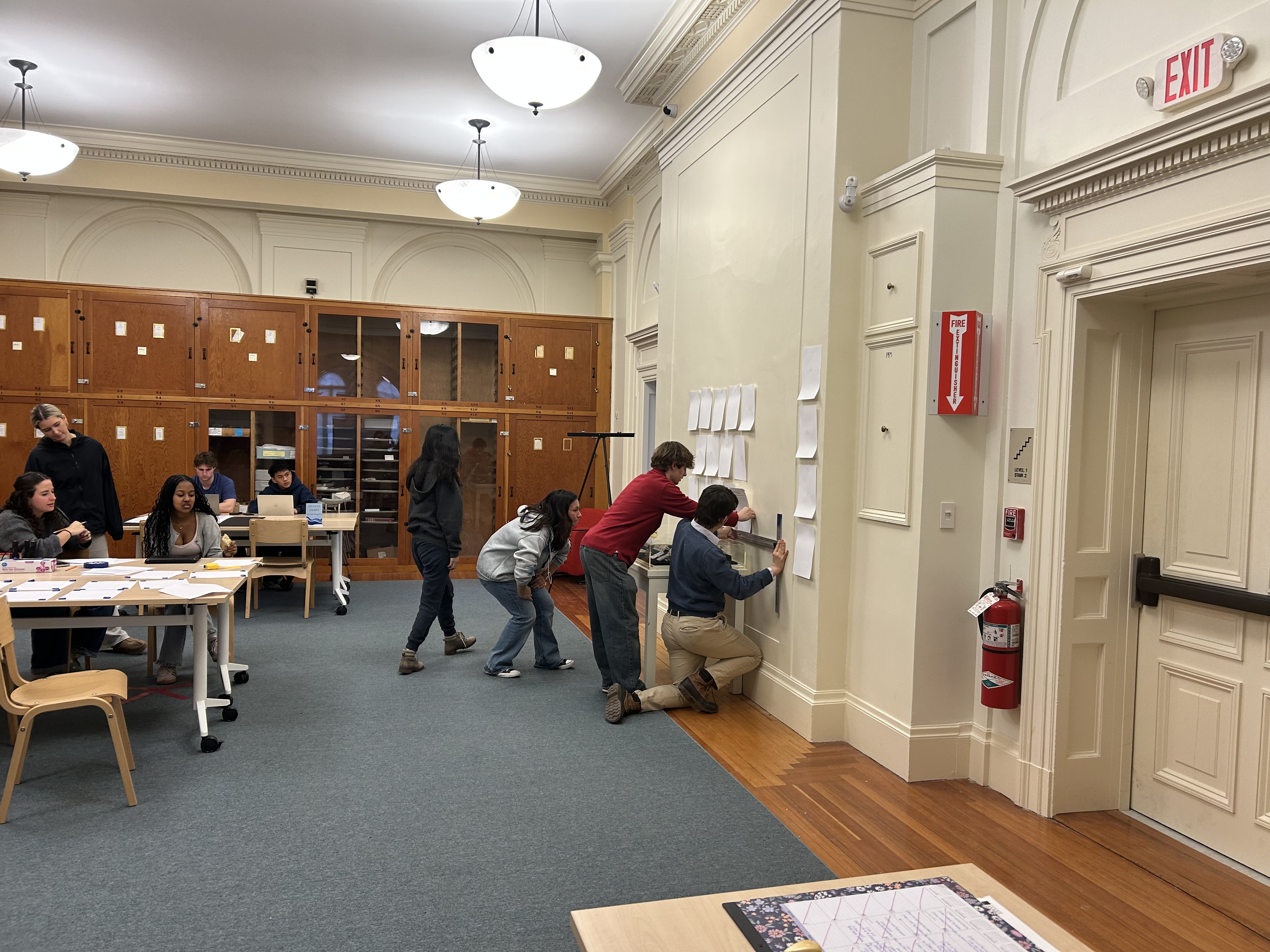
Combining historical investigation and close examination of the images depicted on American coins, bank notes, and tokens dating from 1744 to 2000, Donny’s students connected the use of Native American iconography on these objects of exchange to efforts to build a national identity that hid the violence of Westward Expansion at the country’s core, choosing this as the story they wanted to share with the Andover community. While the Peabody provided the class with the space and the display case, all the work of the design and installation came from the students themselves.
Everyone was deeply engaged in the process, and the results speak for themselves.
The exhibit will remain up through Alumni weekend, ending June 9, 2025.
Pre-installation day 1: finding the layout to match the narrativePre-installation day 2: debating and finalizing arrangementInstallation day 1: setting the caseSelecting that just-right sans serif fontSharing with fellow-coin enthusiast Elena Dugan (PhilRel)Installation day 2: mounting labels and finishing touchesOpening night!
Student (Mis?)representations of Their Teacher Donny Slater
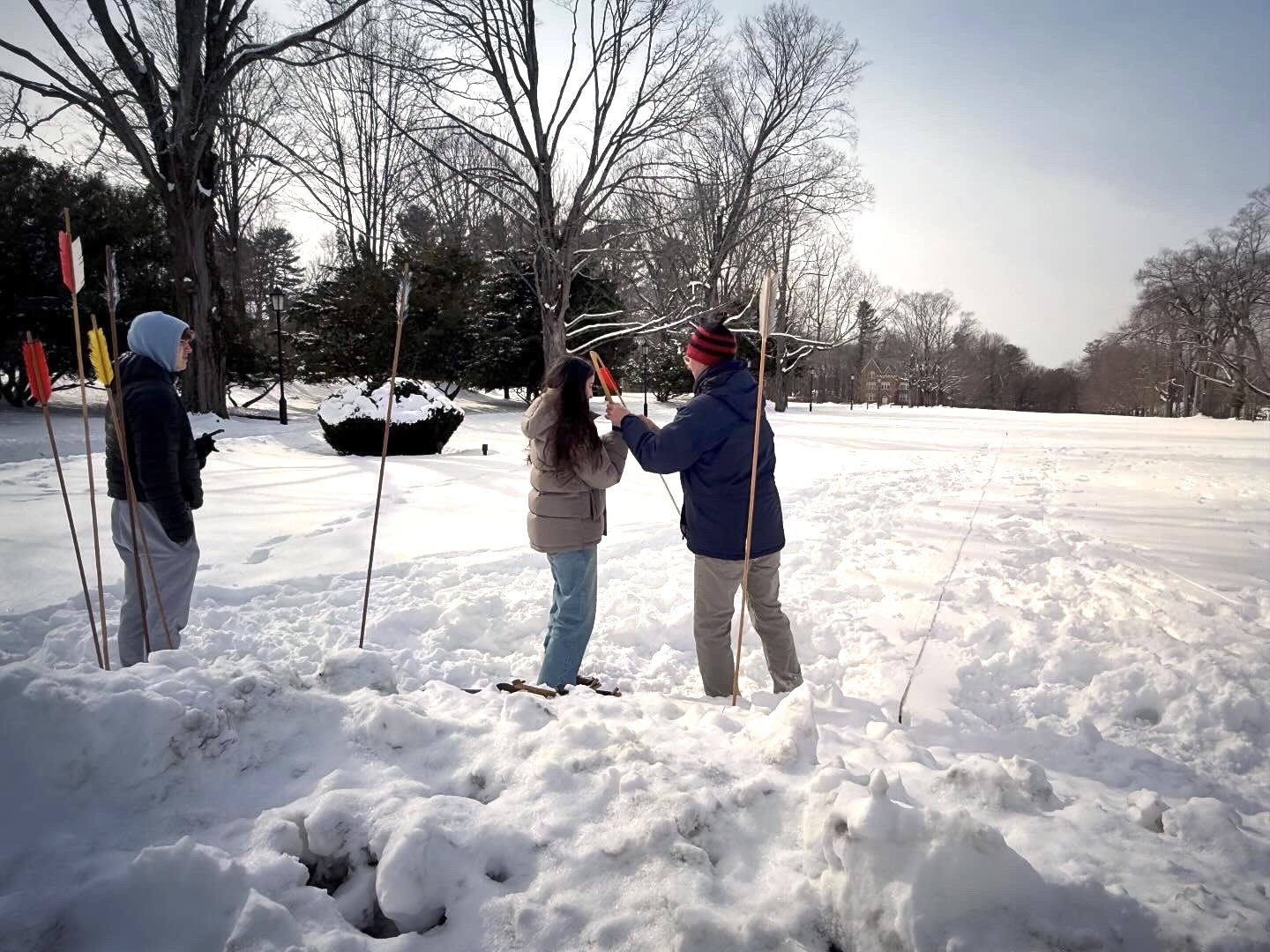
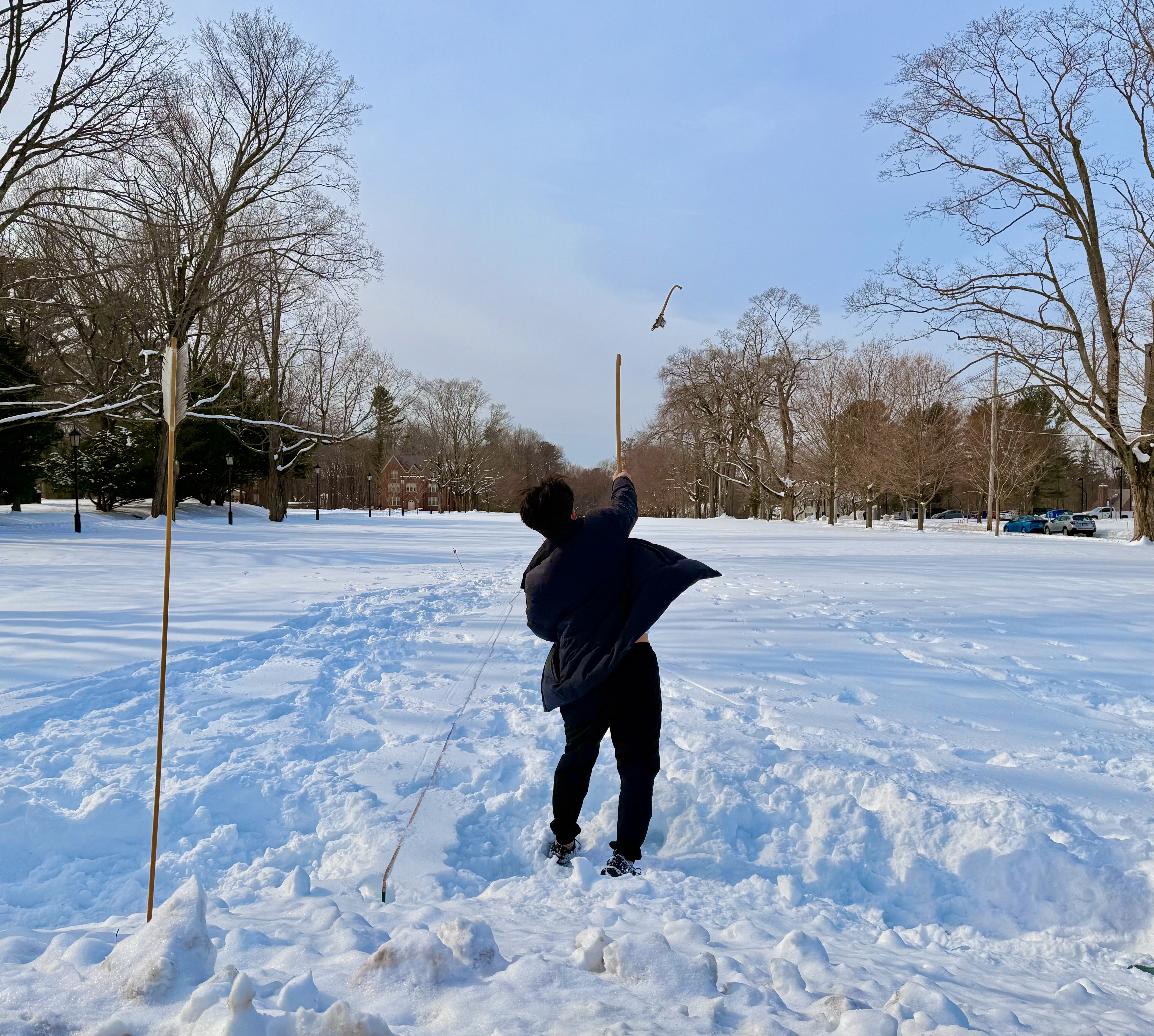
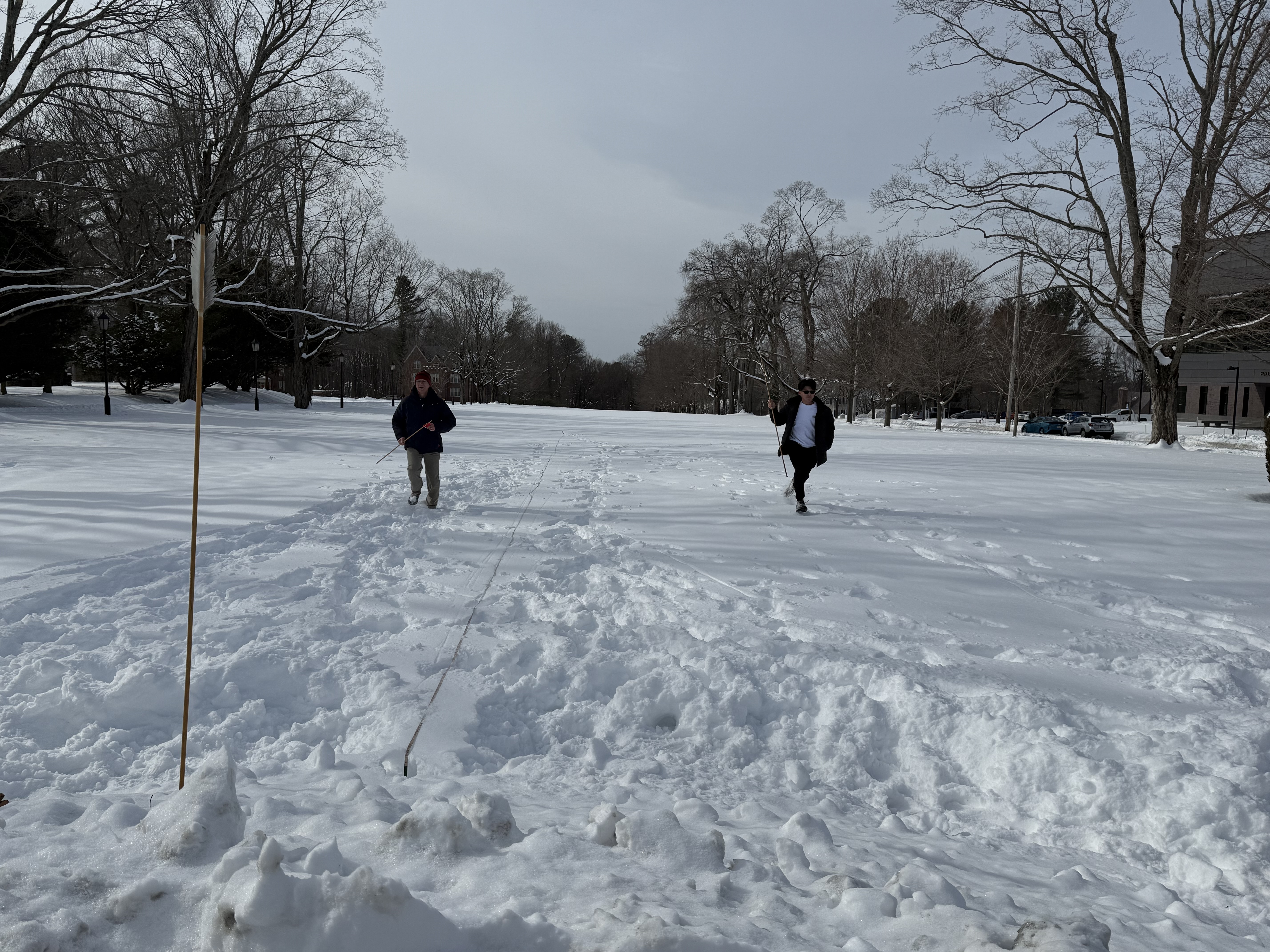
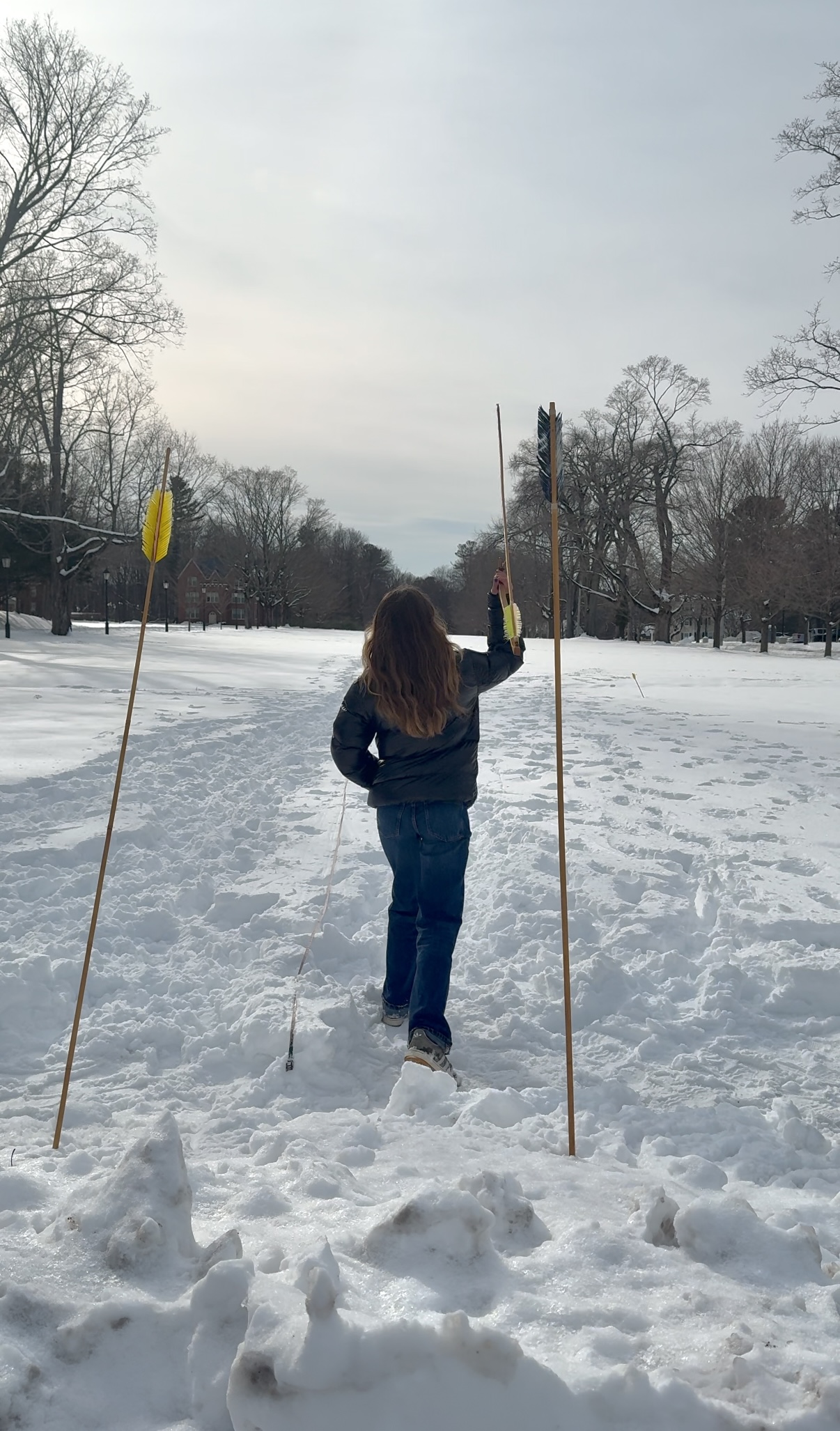
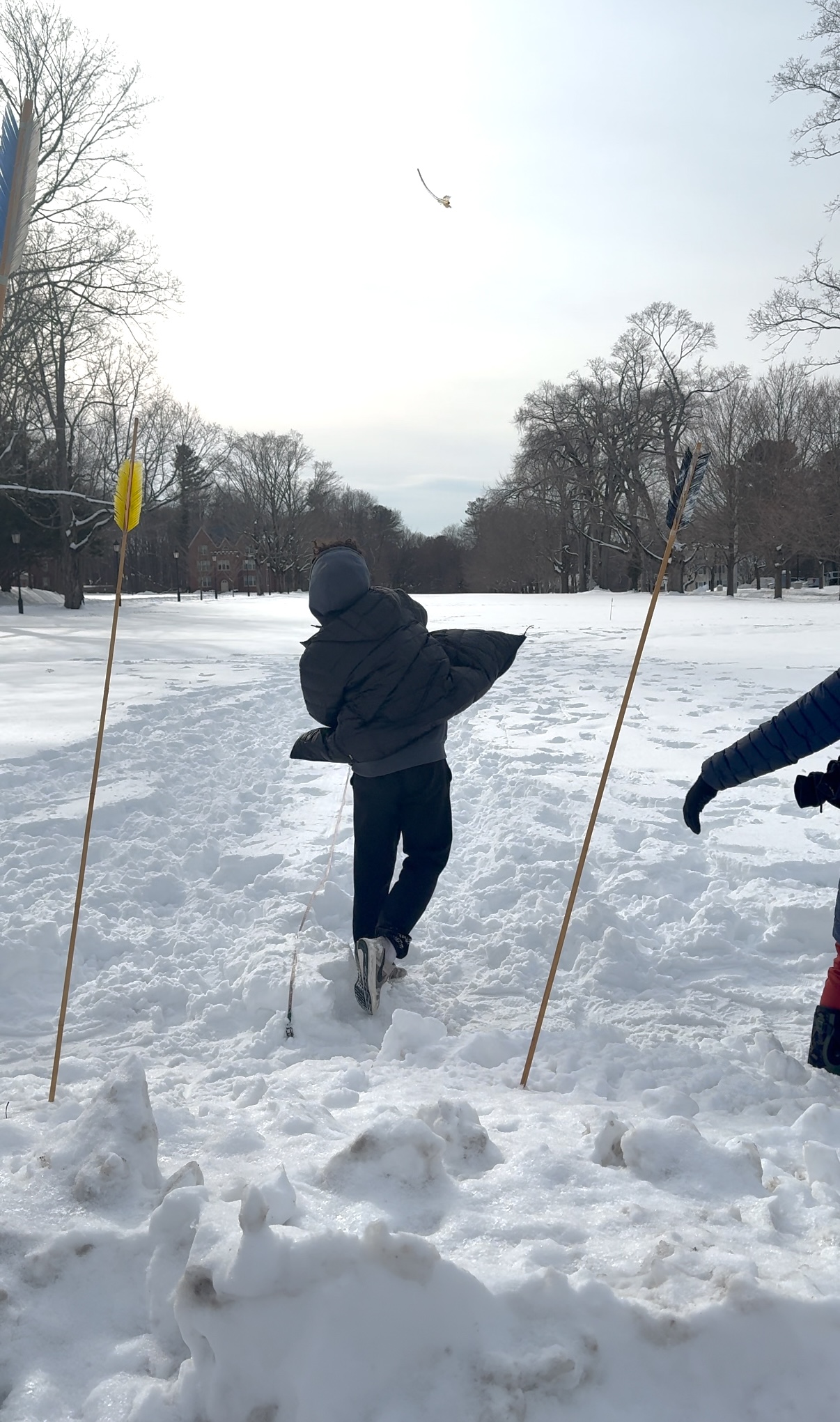
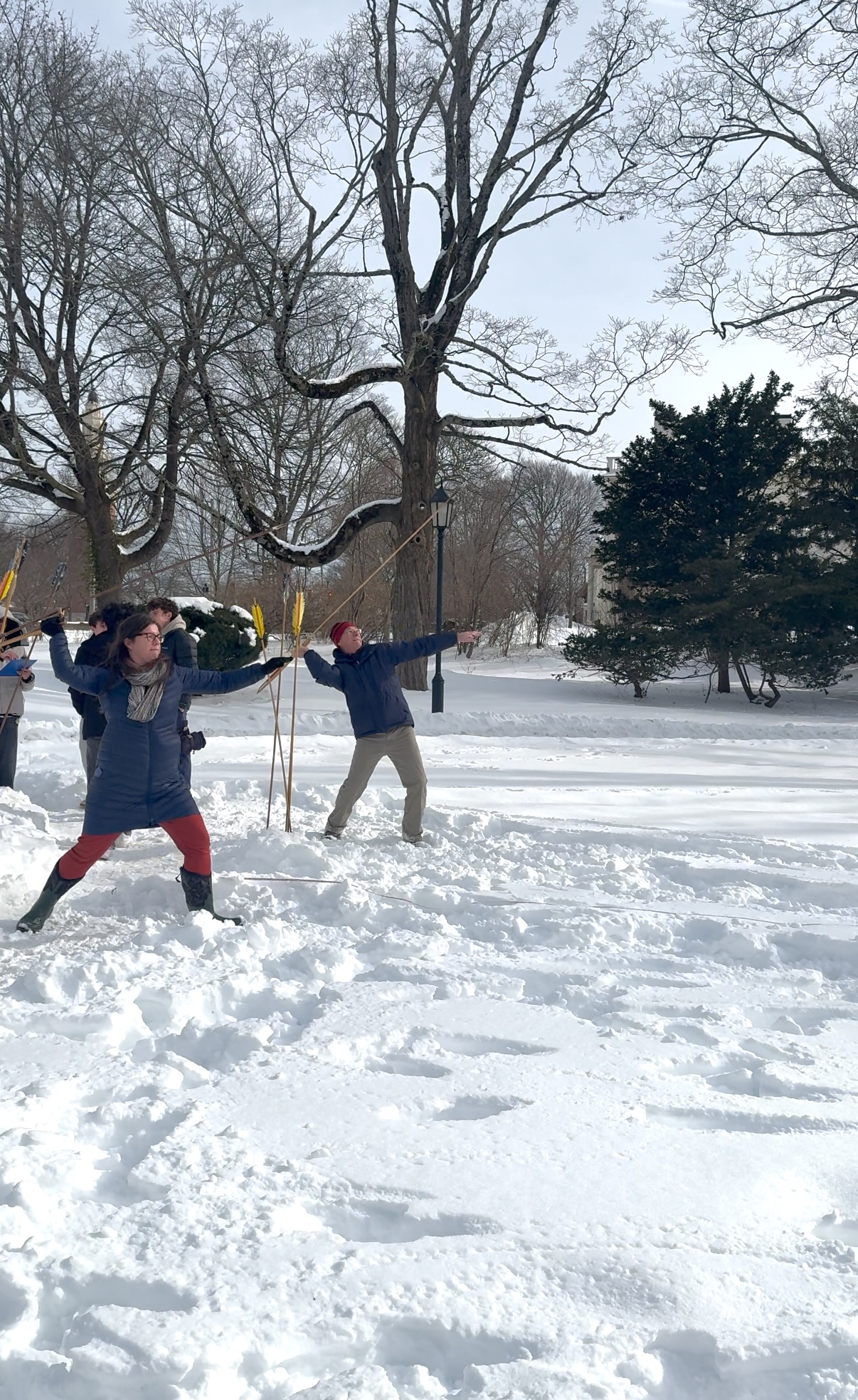
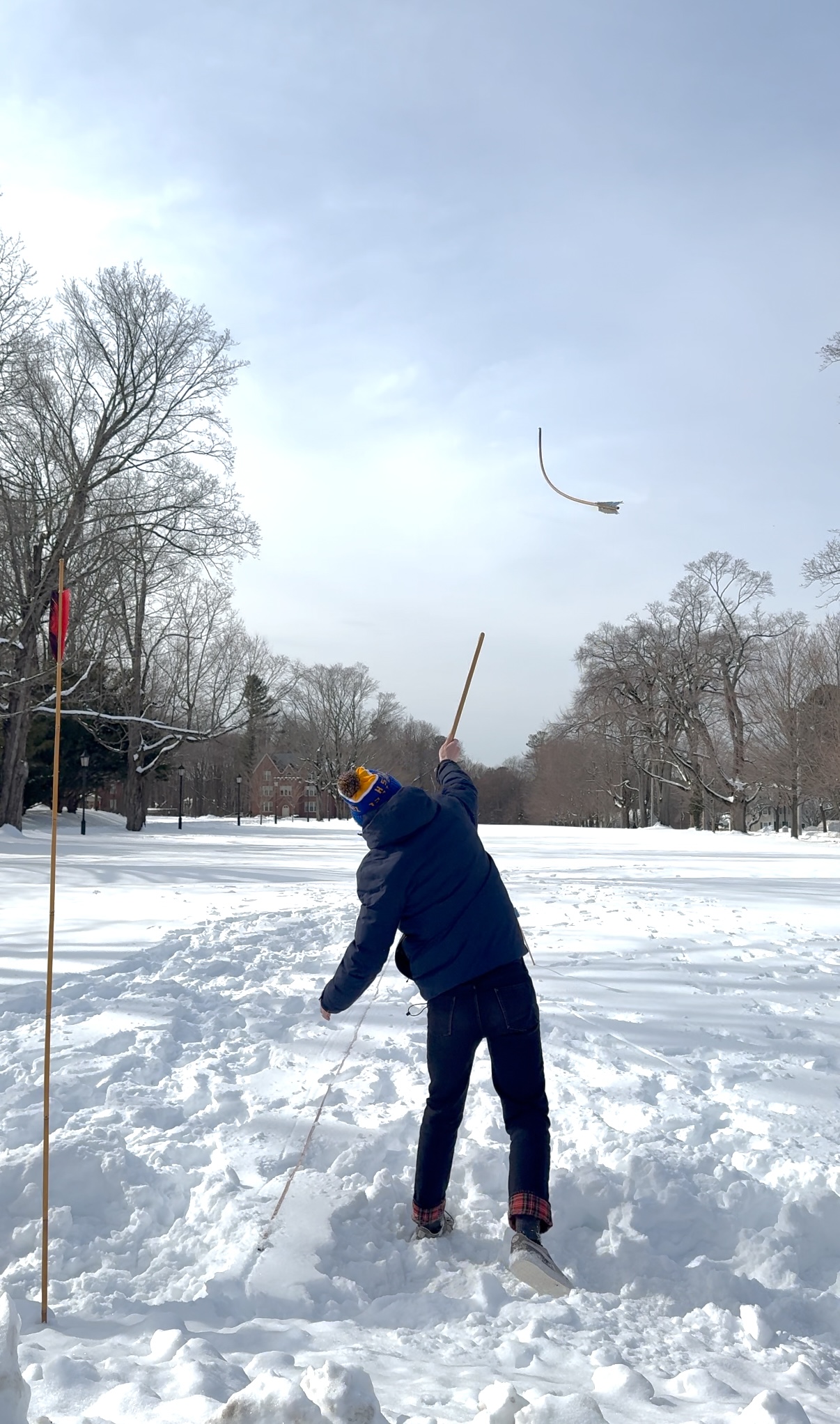
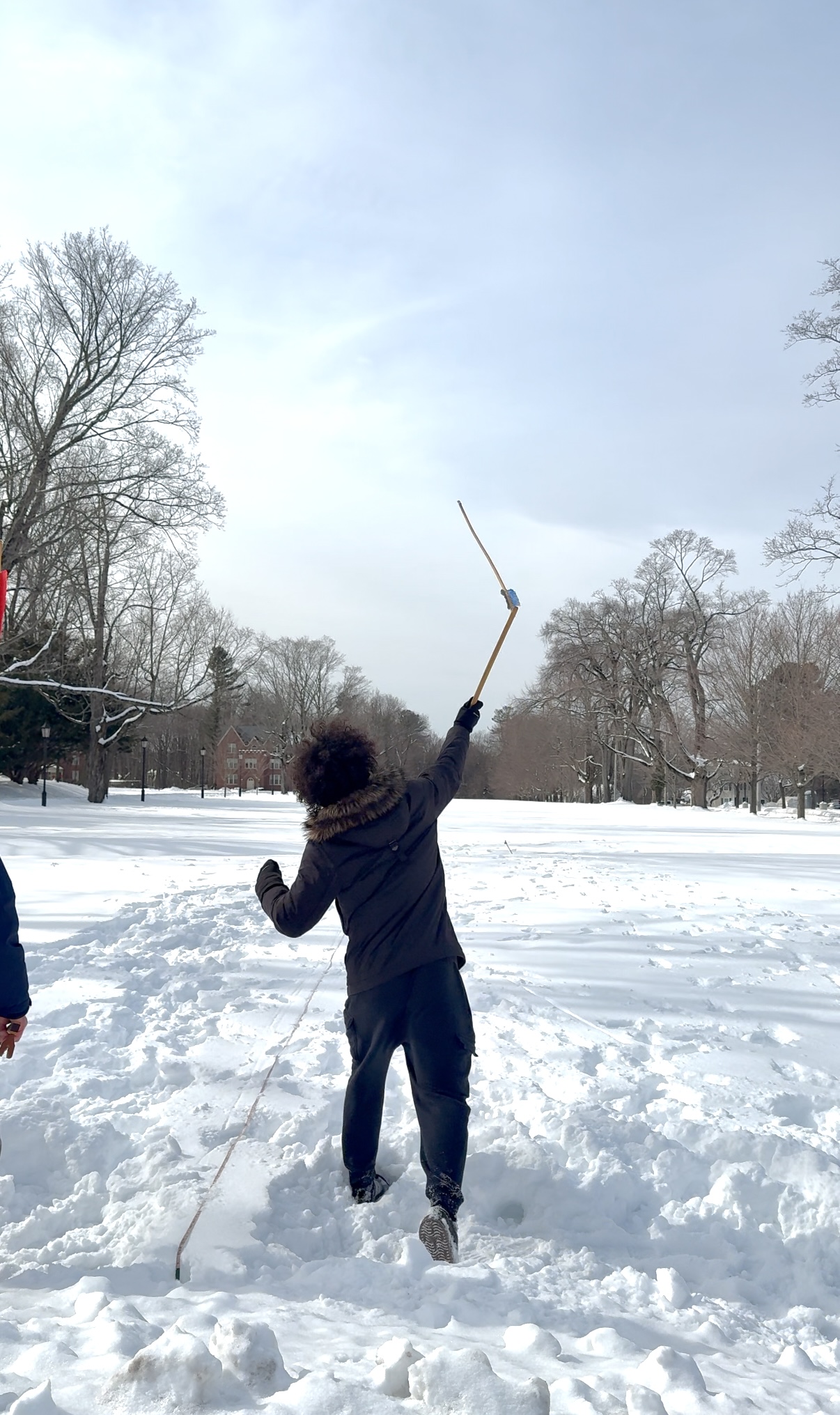
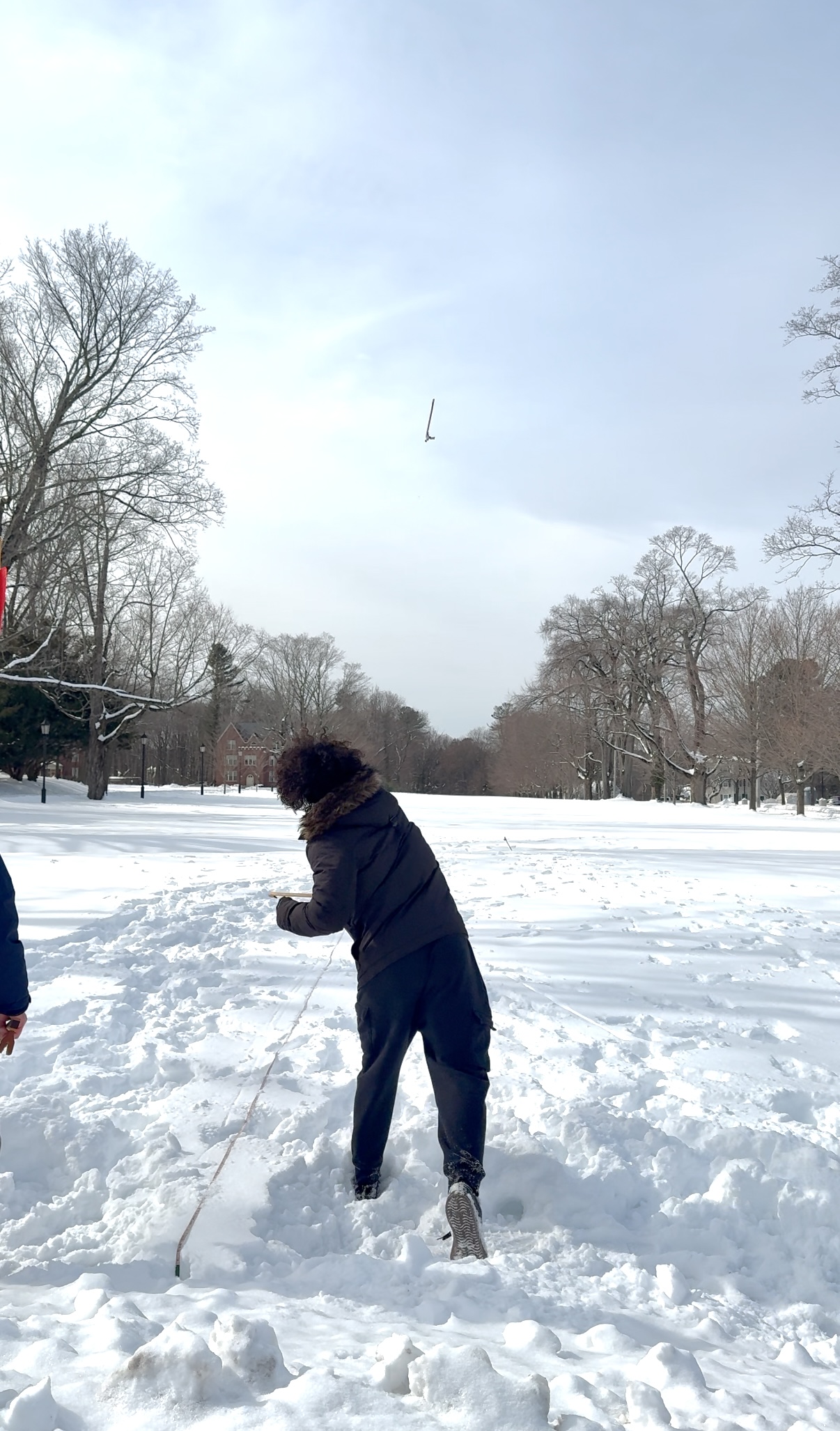
Rebecca Bowers’ Math 360 students spent a cold February day exploring the ancient hunting technology of the throwing board or atlatl. Peabody educators provided an introduction to the atlatl–which first appears around 21,000 years ago in Upper Paleolithic France and was used throughout much of the world. Acting as a lever and extension of the arm, the atlatl allows users to throw six foot darts at great velocity and distance. Students examined Arctic throwing boards, as well as a replica of the fawn or doe spear thrower hook from Mas d’Azil cave in France. Ms. Bowers provided some formulas to model projectile mathematics. Students collected their own data with multiple trials on the Vista. At least one throw exceeded 170 feet, which is pretty impressive!
It’s been a few months since we shared our last building update and so much has transpired since staff have been back in the Peabody. These last few months have been busy for the Peabody staff, as they worked on moving the collections, moving furniture back into the building from offsite storage, and organizing/cleaning the building to welcome Phillips Academy classes in the spring term.
The largest and most involved of these projects, is moving the collections from temporary spaces around the building to our newly renovated, sustainable, and secure collections space, putting all holdings in one place! This project is ongoing and requires a great deal of care as the collections team transport items to their new housing and mapping out how items’ locations are organized and tracked. We also are extremely grateful for our Peabody volunteers and work duty students who have helped with this project!
Creating new housing for collection itemsTracking locations in the new collection space
In addition to moving the collections, the Peabody is organizing our classroom spaces to welcome back students this term. With our furniture back onsite and in place, we are ready to have students back through our doors (just in time!) with classes starting this week!
The Peabody library – now fully accessible – received a deep clean and is ready to serve as classroom and meeting space for students and out colleagues across campus.
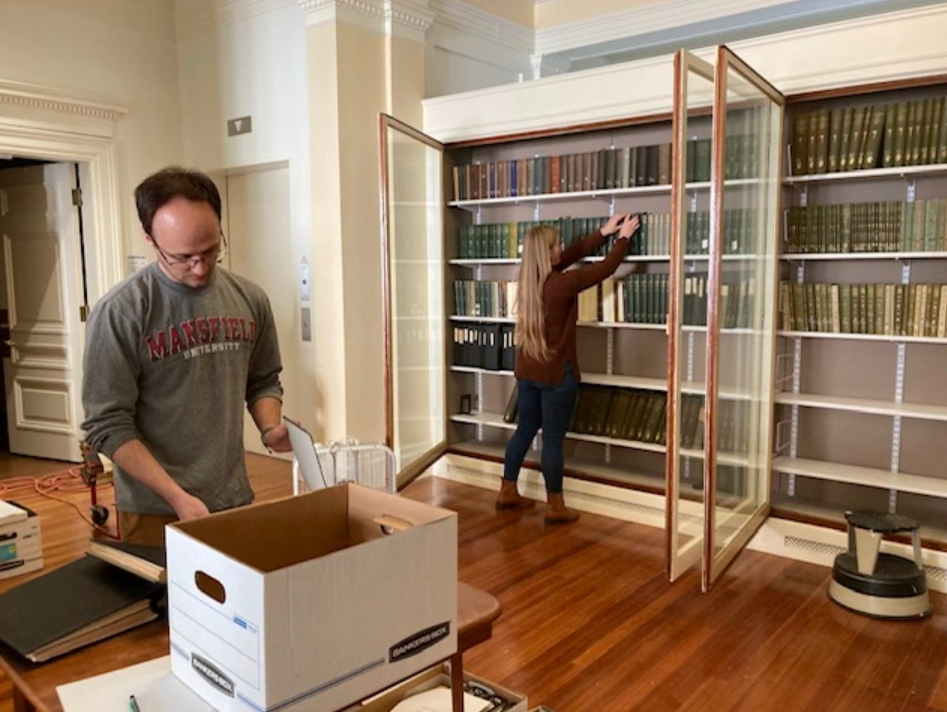
Peabody staff returning books to shelves on the second floor landing.
With things returning to normal, we are only opening our doors at this time for Phillips Academy classes and events. This is a “soft opening” as we continue organizing our new collection spaces and preparing for our next round of building renovation. We will continue to keep the updates coming as we enter the warmer months of spring. Stay tuned for some exciting content from the Peabody to be shared on our social channels this PA Giving Day – Wednesday, March 27th!
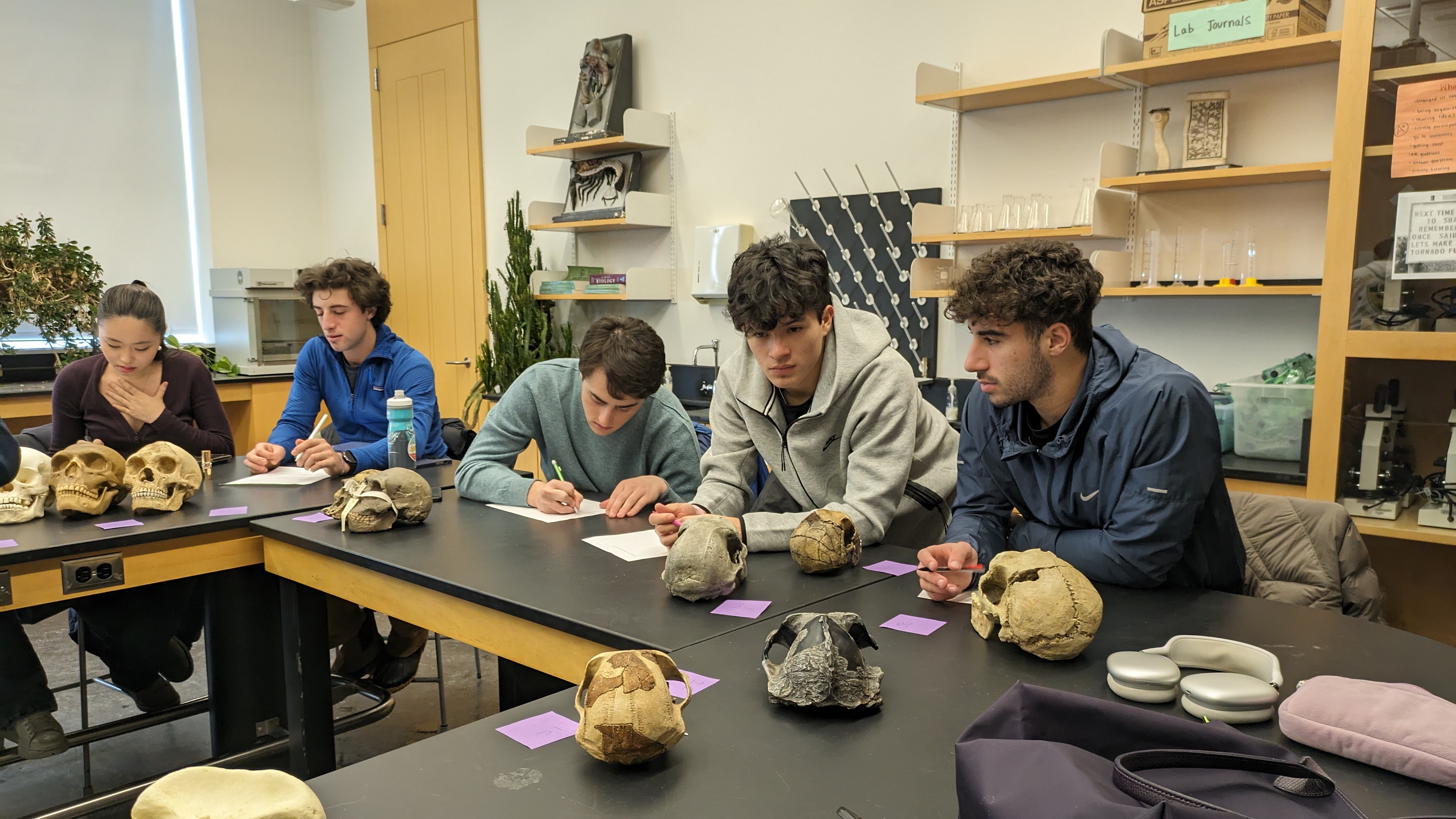
Bigfoot, ancient aliens, Homo naledi, Australopithecines, stone tools, painted pebbles, scientific racism, repatriation. How are these topics connected? Students in the senior science elective Human Origins find out. A lot of it has to do with the history of anthropology–the scientists that studied fossil humans also studied race. The two fields continue to influence one another, not always in the most positive ways. The course is divided into modules that explore science and pseudoscience, human biological evolution and the development of technology and imagery, and the concept of race and scientific racism.
Human Origins students explore some of the Peabody Institute’s fossil human crania casts and models.
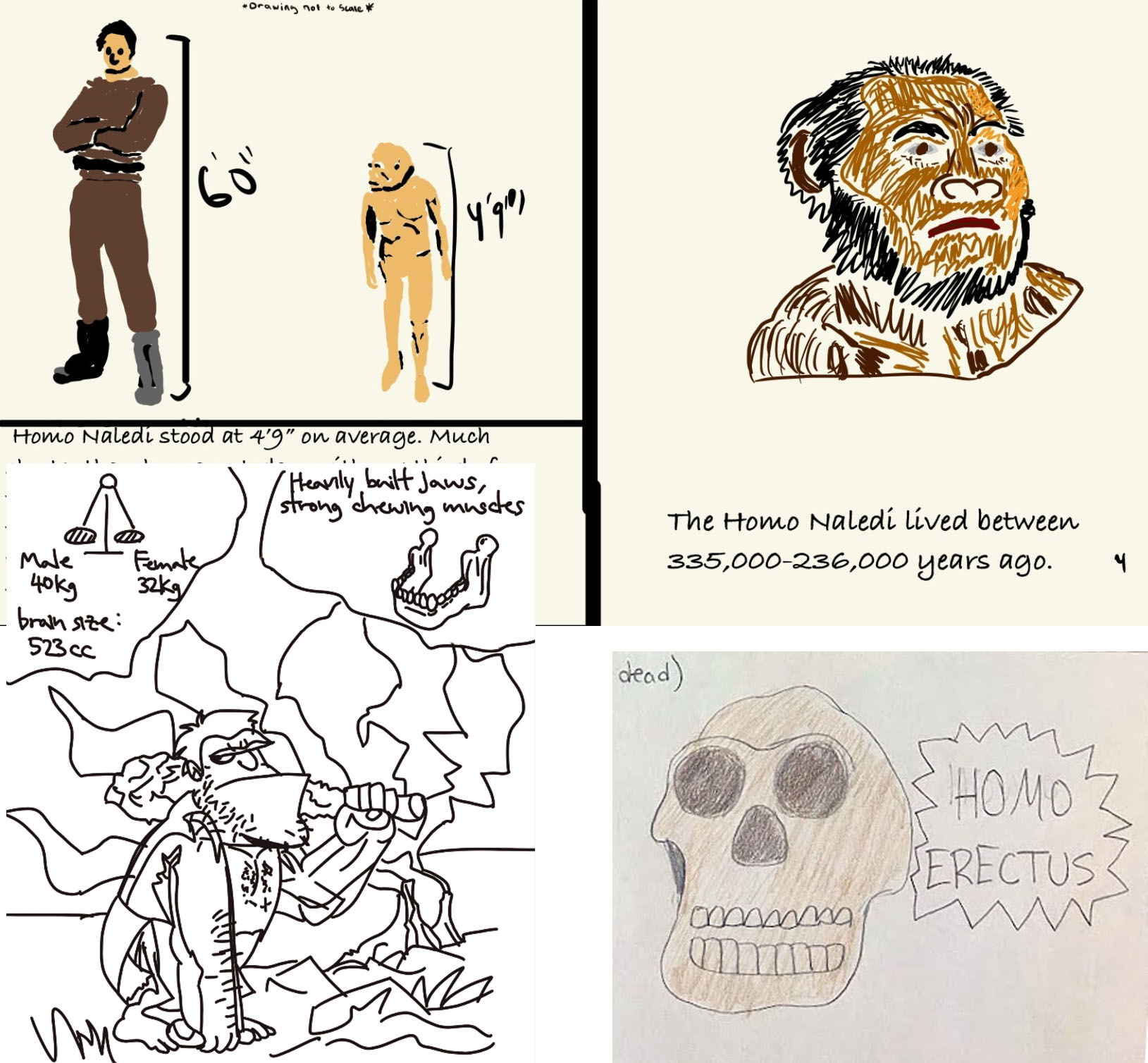
Some of my favorite assignments are team projects that involve producing a trailer for a new tv series on pseudoscience, a new comic pages project that focused on specific fossil humans, and Human Origins in the News, where student teams lead class. We just finished midterm, and I was wowed by the new comic pages assignment. I’ve wanted to develop a comics assignment and I’m really pleased with the results–student teams researched particular fossils and then developed a few comic pages in response to a series of prompts. Students are now making their own chipped stone tools and starting to plan their podcasts for the end of the term.
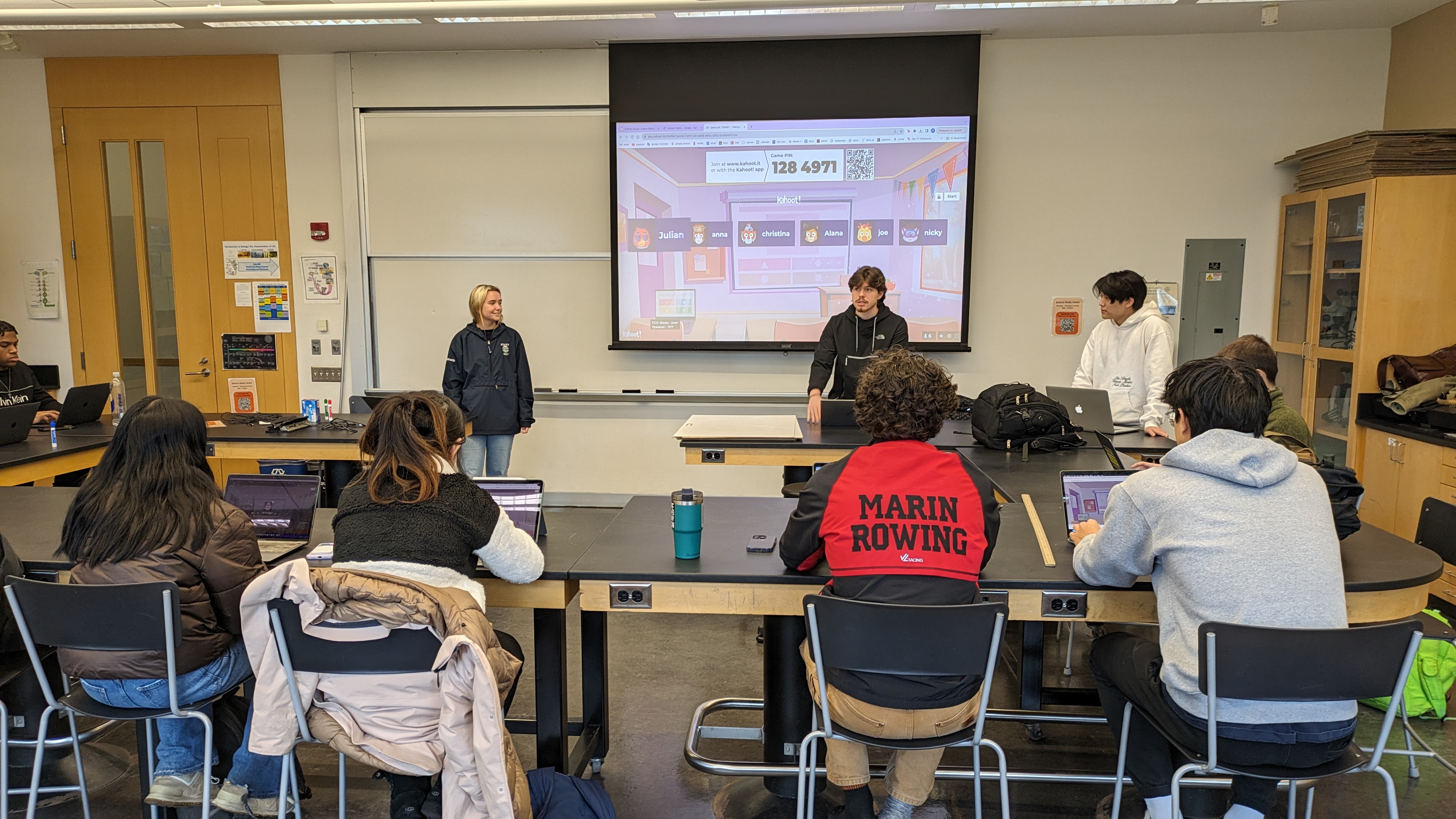
Human Origins students lead class during our “short period” on most Mondays with Human Origins in the News.
A couple of big changes this term include teaching during winter term–usually we’ve offered Human Origins in the fall–and we’ve been meeting the class in the Gelb science building, as Phase 1 of the Peabody Institute renovation wraps up. I’m really grateful to my colleagues in the science division for sharing the Gelb classroom with me. It will be nice to return to the Peabody Institute in the near future. We’ll at least be close-by next week when we explore the atlatl and throw spears on the Chandler-Wormley Vista!
A sample from the comic pages created by Human Origins students this term.
This summer, 23 young archaeologists set out to investigate one of the first buildings constructed by Samuel Phillips Jr. after he founded Phillips Academy. During the first week of the Andover Summer program, the students of the Lower School’s Dig This course were introduced to the story of the Mansion House and the mysterious fire that destroyed it in 1887. According to primary accounts, the fire seemed to have started in two different places in the house. This account was made even more suspicious by sources that said the caretakers, Mr. and Mrs. Carter, had their bags packed the day of the fire and walked away with insurance money. With this interesting piece of information, the students were excited to uncover more clues about the Mansion House and the people who inhabited it. The students worked in groups of 3 to 4 at six excavation units. These units were spread across the site in areas that, using past excavation results and Ground Penetrating Radar maps, had a good chance of finding evidence of the Mansion House.
Figure 1. Commemorative Plaque of the Mansion House
The first day of excavations was met with enthusiasm, apprehension, and later exhaustion as the students realized how much work goes into opening a unit. Nonetheless, we persevered and by the end of the first week of excavations many groups had already finished Level 1. Some had even found glass and metal artifacts which, of course, created healthy competition between groups and motivated the students as they continued in the second week of excavations.
Figure 2. Two students working in Excavation Unit 1
During the second week, things got interesting. The students working in Excavation Unit 5 came across an 1802 “Draped Bust” Liberty penny which caused a ripple of excitement for both the students and the instructors. This coin gave an important terminus post quem (TPQ) for the level and showed the students how old the artifacts we were finding really were.
Additionally, in Excavation Unit 2 Level 2, a brick feature began to reveal itself in the northeast corner. This unit was placed near a 2018 excavation unit that uncovered part of a chimney, so it is likely these features were related and Unit 2 uncovered another part of the chimney which helps in understanding how large the chimneys would have been and the layout of the Mansion House. The images below show the brick feature when it began to be discovered in Level 2 and the brick feature in Level 3 before backfilling.
Figure 3. Brick feature in Excavation Unit 2 Level 2Figure 4. Brick feature in Excavation Unit 2 Level 3.
The third and final week of excavations supported the archaeological adage that you always find the most interesting stuff right before you’re going to leave a project. This week, two new features were discovered. One was in Excavation Unit 6, which was intended to find one of the foundational walls of the structure. This feature also included a brick, though it is unclear if it relates to another chimney of the house. There was also a large stone and some smaller stones found near it, though, likely not enough to constitute a foundational wall of the building.
Figure 5. Students working in Excavation Unit 6
That being said, one of the biggest finds of the project included a huge rectangular stone with other large stones overlapping it. This feature was found in Excavation Unit 1 which was placed north of Excavation Unit 2 in the hopes of uncovering part of the foundation of the house. Given the size of the stone and the overlapping rock around it, it is pretty likely that this feature relates to the foundation or a wall of the Mansion House. On the last day of excavations this unit surprised us further by containing a large amount of metal artifacts in the southwest corner of the unit. A fork, a hinge, a handle, and a plethora of other artifacts were uncovered in the last level of this unit. We probably could have found more in the next level if we didn’t have to backfill the next day. This unit is definitely one to revisit in future years!
Figure 6. Stone feature in Excavation Unit 1 Level 3.
While neither unit contained a feature, Excavation Unit 3 and Excavation Unit 4 contained a lot of charcoal and mortar. Excavation Unit 3 specifically had extremely dark, somewhat ashy soil which was likely due to the fire. Ideally future Dig This! classes will uncover more of this ashy, dark soil and the data can be compiled to give a better understanding of how the fire destroyed the mansion house.
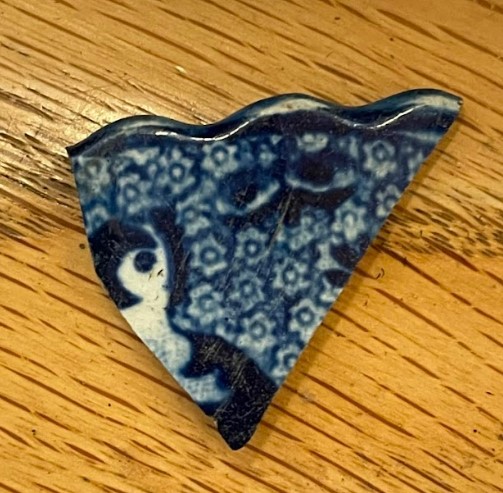
During the last week of the course, the students were busy washing their artifacts and picking a few to display at their end of the year exhibition. These artifacts included a locking mechanism, large nails, blue transfer print ceramics, a marble, a hinge, and a fork! All of the artifacts found during this summer’s course were transferred to the Peabody Institute to be cataloged and analyzed with the rest of the Mansion House artifacts.
Figure 7. Fork found in Excavation Unit 1Figure 8. Ceramic sherd found in unit 2.Figure 9. Locking mechanism found in unit 5.
Overall, the students had a great summer excavating the Mansion House and learning how to be archaeologists by following proper archaeological methods and recording techniques. I look forward to seeing what next summer’s Dig This class will find!
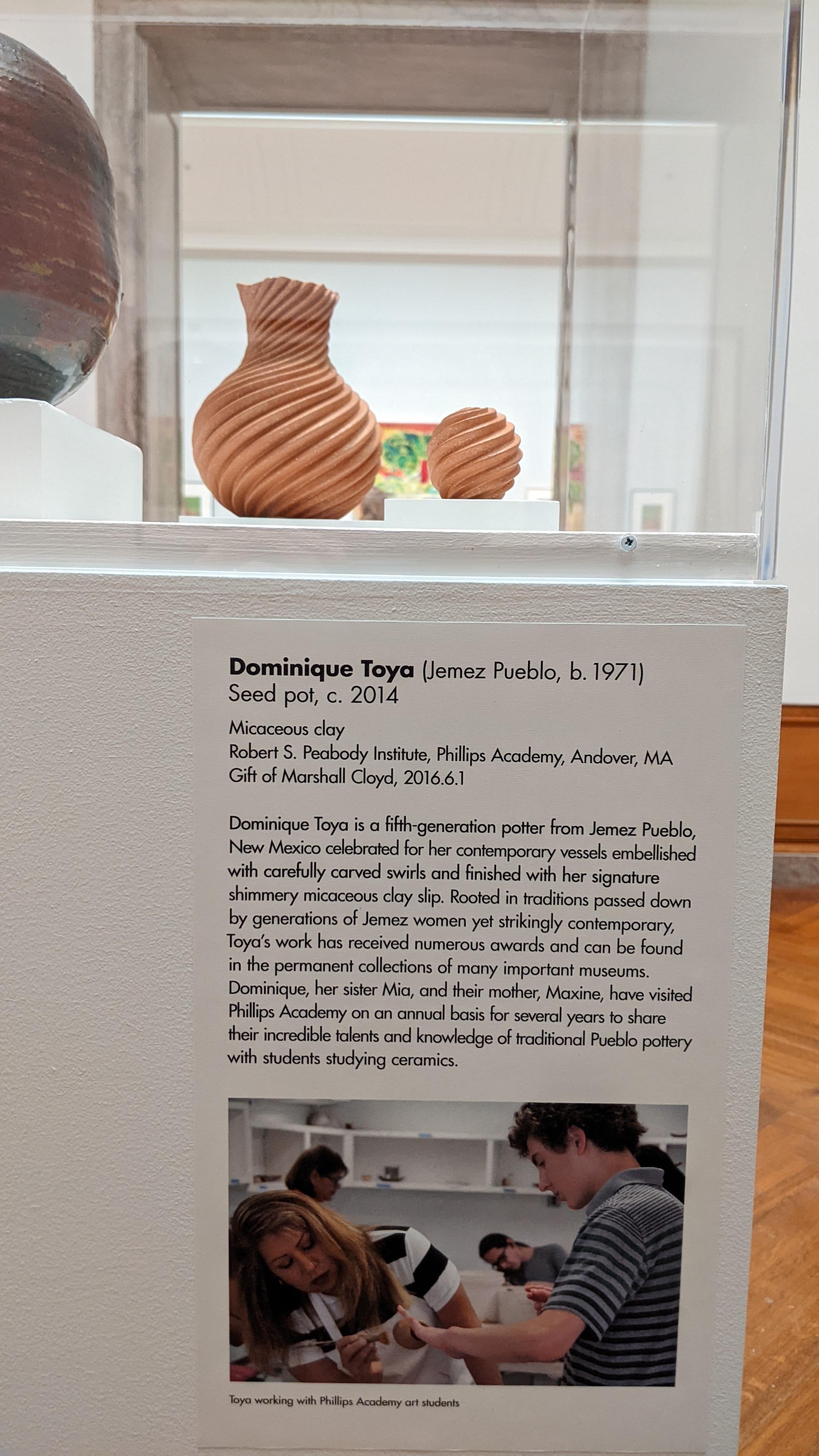
The Peabody has several amazing pieces of pottery made by members of the Toya Family of Jemez Pueblo. On their first visit to the Peabody in 2013, Maxine and Dominique Toya noticed a small vessel on our open shelving. What caught their attention was a delicately painted corn stalk, representing their clan. They wondered aloud who might have used these design, and we were all delighted to find that Maxine’s mom and Dominique’s grandmother, Marie G. Romero, had made the piece. Marshall Cloyd ’58 generously helped us acquire several of Dominique’s creations, including a small seed jar with distinctive carved ribs and mica slip. Since then we have added a number of wonderful pieces to the Peabody collection, including one of Maxine’s owl figures and a collaboration featuring Dominque’s beautifully crafted vessel bearing Maxine’s hand painted deer and corn stalk designs.
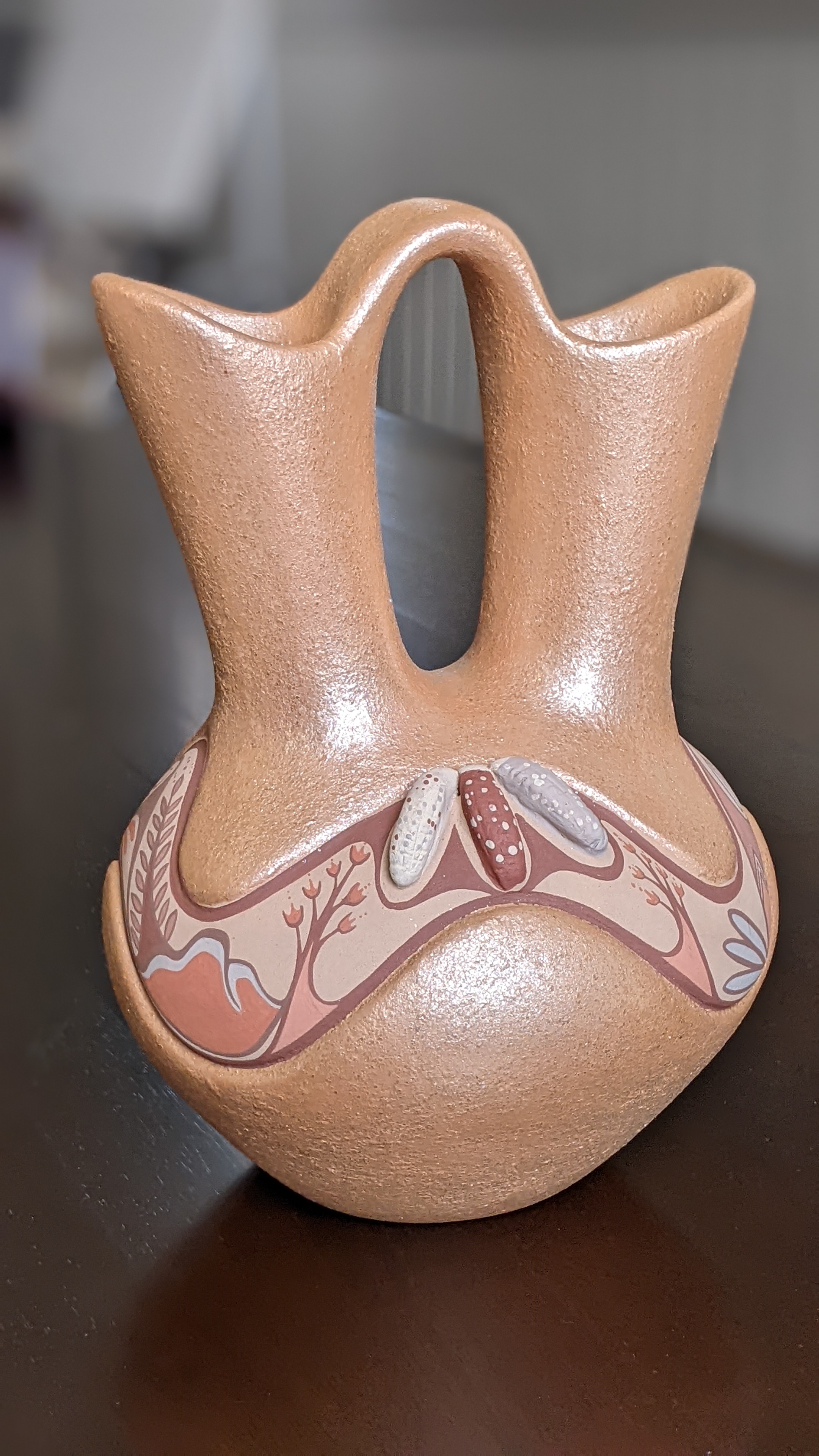
In May, we acquired a special piece called Three Generations. Dominique said, “this was the last wedding vase my grandmother, the late Marie G. Romero, created before she passed away. My mom and I have kept it sitting at our studio until we finally decided to finish her. I’m going to sand her and apply mica on the top and bottom and mom will paint a design in the middle where the band is and paint the ears of corn. This piece will be called Three Generations and will be the only piece that is signed by me, my mom, and I’ll sign my grandmother’s name since she created her.” The Toyas fired Three Generations on April 3 and brought her to us during their workshop with students in May. This is a large piece, at least 11 inches tall, and the overall shape, finishing, and delicate painting is truly impressive. Dominique commented that, “my mom outdid herself again with the amazing painting!!!” and we couldn’t agree more!
At this year’s American Society for Eighteenth Century Studies (ASECS) conference, I had the opportunity to participate in the roundtable Teaching the Global Eighteenth Century. Phillips Academy instructor in history and social sciences Natalya Baldyga and I presented Assimilation, Acculturation, Catachresis, and Syncretism: Employing Archaeology to Foreground Indigenous Resistance in the Spanish Southwest, sharing our experiences teaching the Pueblo Revolt of 1680 to History 200 classes at the Academy.
Contemporary Indigenous artist Jason Garcia’s take on the Pueblo Revolt combines traditional materials and methods with graphic designs depicting Po’Pay, the architect of the revolt, as a comic book superhero. These two pieces are in the collection of the Robert S. Peabody Institute of Archaeology–you can see the vessel on the right in the inaugural exhibition of the Smithsonian’s National Museum of the American Latino.
If you are not familiar with the Pueblo Revolt, it is a pivotal moment in the history of the Southwest and the modern descendants of those who fought Spanish colonization at the end of the seventeenth century. Our abstract has a little more information on the Revolt and our approach:
Using the case study of the Pueblo Revolt of 1680, our presentation illustrates how archaeological artifacts can be employed to unsettle and decenter colonial narratives by refocusing the North American story of the early eighteenth century on Indigenous peoples of the Spanish Southwest. Too often, Anglophone histories associate the long eighteenth century in the Americas with English colonialism in general, and with the American Revolution in particular. We ask students to consider instead the “first American Revolution,” in which the Pueblo Peoples, led by the Tewa religious leader Po’pay, confronted missionaries and soldiers in the Spanish borderlands of what is now New Mexico. In our classes, students explore both artifacts from the Pueblo Revolt and contemporary Puebloan artistic responses to the historical event, foregrounding Indigenous resistance and survival over tales of erasure and domination. This approach both reorientates students’ understanding of colonial North American history towards wider global narratives of European expansion, and, perhaps more importantly, introduces students to multiple ways that Indigenous peoples adapted to, resisted, and overcame the efforts to erase their cultural identities and physical existence.
Drs. Wheeler and Baldyga also celebrated their anniversary during the conference.
The Peabody Institute has long offered various versions of a Pueblo Revolt lesson, but the current iteration has greatly benefitted from Dr. Baldyga’s experience and training. Together we’ve developed the lesson, typically delivered in the world history survey course for tenth grade, providing students with anthropological concepts, like assimilation and catachresis, that they can use in other settings, as well as foregrounding contemporary Indigenous perspectives and objects directly related to the Revolt. Conversations with other participants in the workshop were productive, especially in their pedagogical approach to topics like the production of sugar.















 The Peabody