Last week, the Peabody had the pleasure of hosting Dr. Paulette Steeves as she examined portions of the MacNeish collection. Dr. Steeves is currently a Lecturer of Indigenous archaeology and anthropology and the Interim Director of the certificate program in Native American Studies at UMass Amherst. Her research focuses on the peopling of the Western hemisphere, but not through the traditional Bering Strait theory.
Dr. Steeves uses indigenous theory and methodology to explore sites in the Americas that date back as far as 60,000 years ago. This is actually a big deal and an anti-establishment approach to the subject. Dr. Steeves is looking into the materials collected by Scotty MacNeish during his work in the 1960s in Peru and Mexico for additional evidence. MacNeish was also a proponent of the idea of early colonization and much of his collection has remained unanalyzed for decades.
Dr. Steeves was thrilled to see the collection and to meet MacNeish himself on her visit. We look forward to hosting her again for many research visits to come!
The bulk of the Peabody’s collection is stored in the basement. It has been challenging over the years to control the temperature and humidity in the basement – an essential factor in maintaining an artifact collection. A small fluctuation of both temperature and humidity is normal and expected as seasons change. However, extreme variation lead to damage – bone can become fragile, ceramics can develop weak-points, and even stone tools can become brittle.
For the past four years, I have been tracking the environment throughout Peabody and noticed these strong fluctuations. By taking readings of the temperature and humidity in all our storage spaces once an hour (through the use of a datalogger), I determined that the influx of outdoor air through these poorly sealed windows is large contributing factor. There is only one way to fix this.
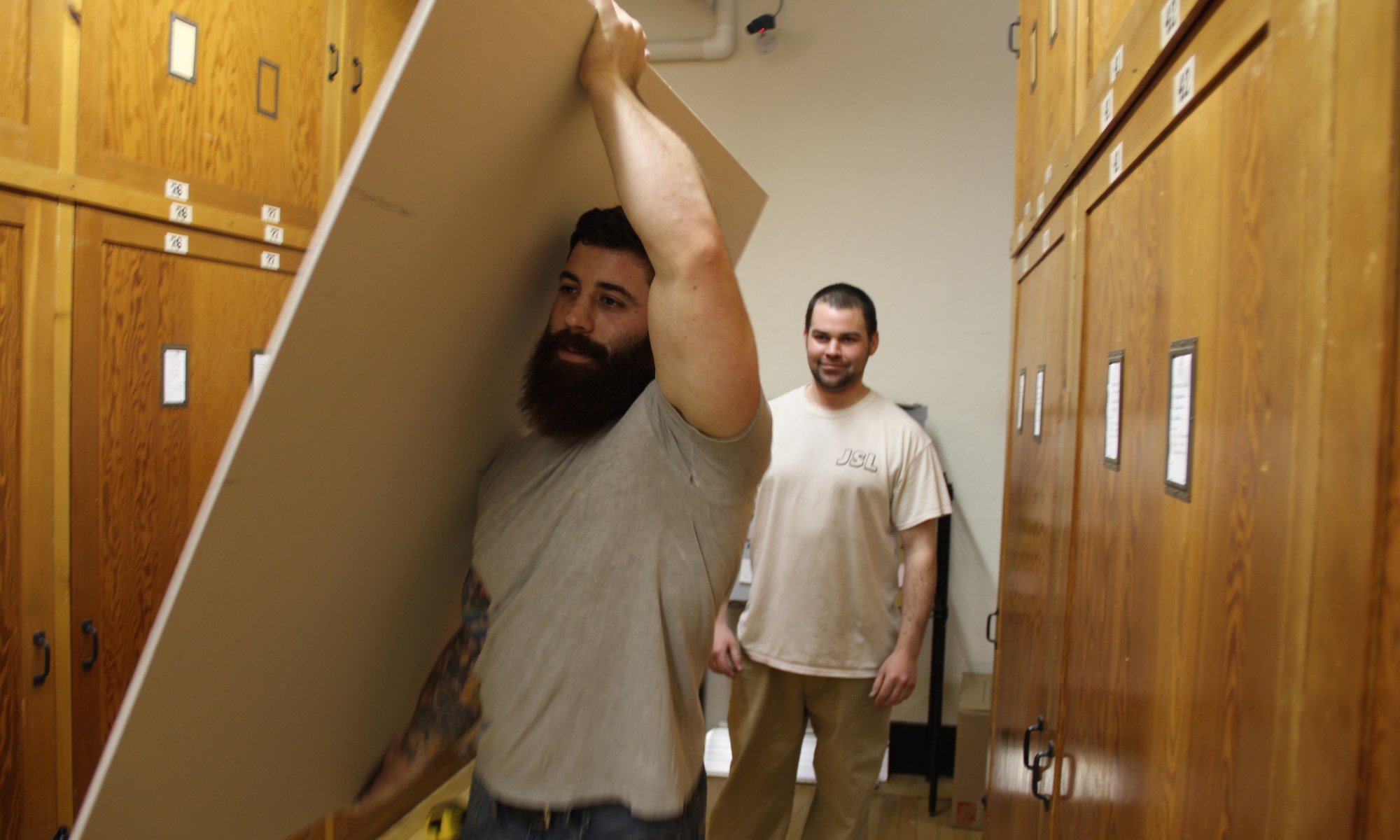
In collaboration with the Office of Physical Plant on campus, we are implementing a plan to mitigate some of this fluctuation. Contractors are working to seal the windows in the basement to stop outside air from sneaking into the storage.
This will stabilize the environment and lead to fewer changes in both temperature and humidity. The first step on the road to environmental control!
Thanks to Catherine Hunter, Peabody Museum research associate, our full basketry collection of 329 is inventoried and described. In September, Catherine turned over 7 binders of material including research into known artists, glossaries, information on weaving techniques, and a basic description of each basket. This massive project took Catherine nearly a year!
The next phase is to photograph each of these gorgeous baskets and improve their storage and accessibility. Last week, Marla Taylor, Samantha Hixson, and Catherine took a trip to the Peabody Museum of Archaeology and Ethnology at Harvard University to examine their basketry storage. The visit was full of inspiration and incredibly helpful as we continue to work on this project.
Keep your eyes peeled for the inclusion of these amazing baskets in our online collection database!
Catherine Hunter with some of the Peabody’s baskets
Catherine Hunter, Samantha Hixson, and Marla Taylor visit the Harvard Peabody basketry collection.
My name is Samantha Hixson and I am the new collections assistant here at the Peabody. I come to you from New Mexico where the weather is warm and has left me completely unprepared for New England winters (although Marla and Lindsay promise that they’ll get me through it).
I have previously worked at the Museum of Indian Arts and Culture in Santa Fe, New Mexico as well as the Smithsonian Institution’s National Museum of the American Indian in Washington, DC. It’s these places that got me excited to work within museums, focusing specifically on Native American collections. So you can imagine how excited I was when I was hired to work at the Peabody, it’s the perfect job for me! I’ve also had some other very interesting archaeological/ethnographic experiences, but those are for other posts.
I’ve started getting my feet wet in a couple projects already (with the promise of a lot more to come) and am most excited about the re-housing of the collection as well the Adopt A Drawer program. I think it’s great that these collections are getting new homes and more personal interactions, however brief.
If you’re in the neighborhood of the museum, come stop by; I’d love to meet you!
The new Peabody Collections Assistant, Samantha Hixson
Students enrolled in Human Origins (SCIE 470) this fall will come face to face with our distant human ancestors as well as contemporary issues like race and scientific racism that are part and parcel of paleoanthropology’s legacy. Between reading and discussion on a variety of topics, ranging from the so-called “Hobbit” fossil—Homofloresiensis to the debate over multiregionalism, students will do some experimental archaeology, including flint knapping, fire making, and throwing a dart with an atlatl. We also will be visiting “The Nest”—the makerspace at the Oliver Wendell Holmes Library, where we will be 3D printing casts of the newest fossil discovery from South Africa—Homo naledi and comparing them to traditional plaster casts and resin models of other fossil hominins. Other hands-on projects will include looking for clues to human evolution in the bones of a modern human, bone flute making, and creating our own Mesolithic symbol system, akin to the painted pebbles found in Mas d’Azil cave in the French Pyrenees. Throughout the course students will explore some of the most recent discoveries and newest ideas about human evolution and the scientific discourse and debate that ensue. Students will be challenged to develop their critical thinking skills as we evaluate these new discoveries in light of broader discourse on race and the scientific method.
Biology instructor Jerry Hagler looks on as students in Human Origins make bone flutes using bow drills, spring 2016.
Human Origins is an interdisciplinary science course developed collaboratively by biology instructor Jerry Hagler and personnel at the Peabody Museum and was first taught in 2007. Since then it has been offered most years as a senior elective. The pace of new discoveries—like Svante Pääbo’s work on the introgression of Neanderthal DNA into the modern human genome in 2011—means that the curriculum is constantly shifting, making for an exciting and lively class. Dr. Hagler is on sabbatical this year so Dr. Wheeler–Peabody Museum director–is leading the course.
Ben is business development analyst and developer at Dispel, a New York based technology start-up specializing in online security. He is a graduate of Yale University. Ben aided with collections organization during his Phillips Academy work duty service at the Peabody. Ben says of his experiences, “the Peabody Museum was a source of endless adventure during my time at Andover. I am happy to have spent countless hours there through work duty, various classes, and through one of the Peabody’s sponsored trips (BALAM-Bilingual Archaeological Learning Adventure in Mesoamerica). I am pleased to have the opportunity to make sure the Peabody remains a welcoming place for students and to help grow that mission of inclusion, education, and exploration.”
Jenny Elkus ’92
Jenny Elkus is an architect at Elkus Manfredi Architects in Boston. She is a graduate of Harvard University and Harvard’s Graduate School of Design. Jenny has fond memories of using the Peabody’s library as a senior at Phillips Academy in the early 1990s—she notes that it was much quieter at the Peabody then!
Agnes Hsu-Tang
Agnes Hsu-Tang received her PhD in Chinese art and archaeology from the University of Pennsylvania in 2004. Agnes is an accomplished scholar, cultural heritage policy advisor, and is well-known as the host of several award-winning TV documentaries, including the History Channel’s Mankind: The Story of All of Us. Dr. Hsu-Tang serves on a number of boards, including the University of Pennsylvania Museum of Archaeology & Anthropology and the Institute for the Study of the Ancient World at NYU. Along with her scholarly achievements, Dr. Hsu-Tang is an accomplished musician and serves as a managing director of the Metropolitan Opera. She is adjunct associate research scholar in the Department of East Asian Languages and Cultures at Columbia University.
Margot Steiner ’17
Margot is a three year upper from New York City. She especially likes working with textiles and rearranging artifacts during her volunteer time at the Peabody. Although she only started working at the Peabody this year Margot had always enjoyed coming as a lower and junior. Her weaving class last year really pushed her to start volunteering after seeing the Peruvian burial shawl. Outside of the Peabody Margot can be found in Silent Study tackling her work in order to get her much needed 8 hours of sleep!
Katherine Hall ’17
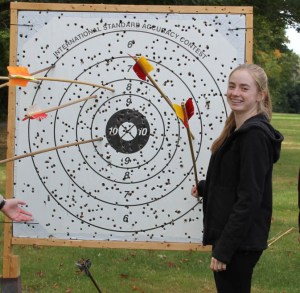
Katherine is a three year upper from Andover, Mass. She began working at the Peabody Museum in the fall of 2014, and she has enjoyed working on various research, cataloging, and creative projects during her time here. Outside of her life at the Peabody, Katherine is active in local theater, enjoys rock climbing, and tutors other students in math. She is excited to be a part of the advisory committee!
Please join us for a special evening with award-winning Pueblo potters Dominique Toya, Maxine Toya, Nancy Youngblood, and Joseph Youngblood Lugo.
Learn about contemporary Pueblo pottery making with these gifted artists while they visit Andover to work with Thayer Zaeder’s studio pottery classes. Dominique and Nancy have collaborated to create pieces that meld their unique approaches to traditional pottery construction, bringing together swirl melon bowls, glistening micaceous slips, carved designs, and blackware firing techniques. Maxine makes delightful figurines that draw on deep Pueblo traditions. Joseph Youngblood Lugo continues the Santa Clara tradition of carved blackware pottery, adding contemporary themes and motifs. These artists are passionate about their work and will share how they have melded traditional and innovative materials and methods to create contemporary works of art.
7-9pm, Wednesday, May 25, 2016
Hors d’oeuvres, beer, and wine
$20.00 per person
Please RSVP – contact Crystal McGuire – Office of Alumni Engagement at cmcguire@andover.edu or 978-749-4282
On the third Tuesday of every month, the Massachusetts Archaeological Society – Gene Winter Chapter invites a guest speaker to their meeting at the Peabody Museum. For the past six years, Phillips Academy students have been invited to speak about their experiences with archaeology at one of these meetings.
On February 16th, seven students, in three groups, shared their research and work on a variety of topics.
Youth for Restoration: Preserving Local History
Viraj Kumar’s ’17 interest in local history led him to create a non-profit organization that works to preserve and restore local history in Poughquag, New York. He discussed his experiences working with the community on a 19th century grist mill.
Printing History: 3D Rendering of Artifacts
Four students, Alana Gudinas ’16, Jacob Boudreau ’16, Mia LaRocca ’16, and Sarah Schmaier ‘16, were challenged to scan three artifacts from the Peabody Museum’s collection and print them as 3D models. They discussed the process and highlight some of the implications of this technology for museums and other institutions.
More than Meets the Eye: 19th Century Portrayals of Native Americans
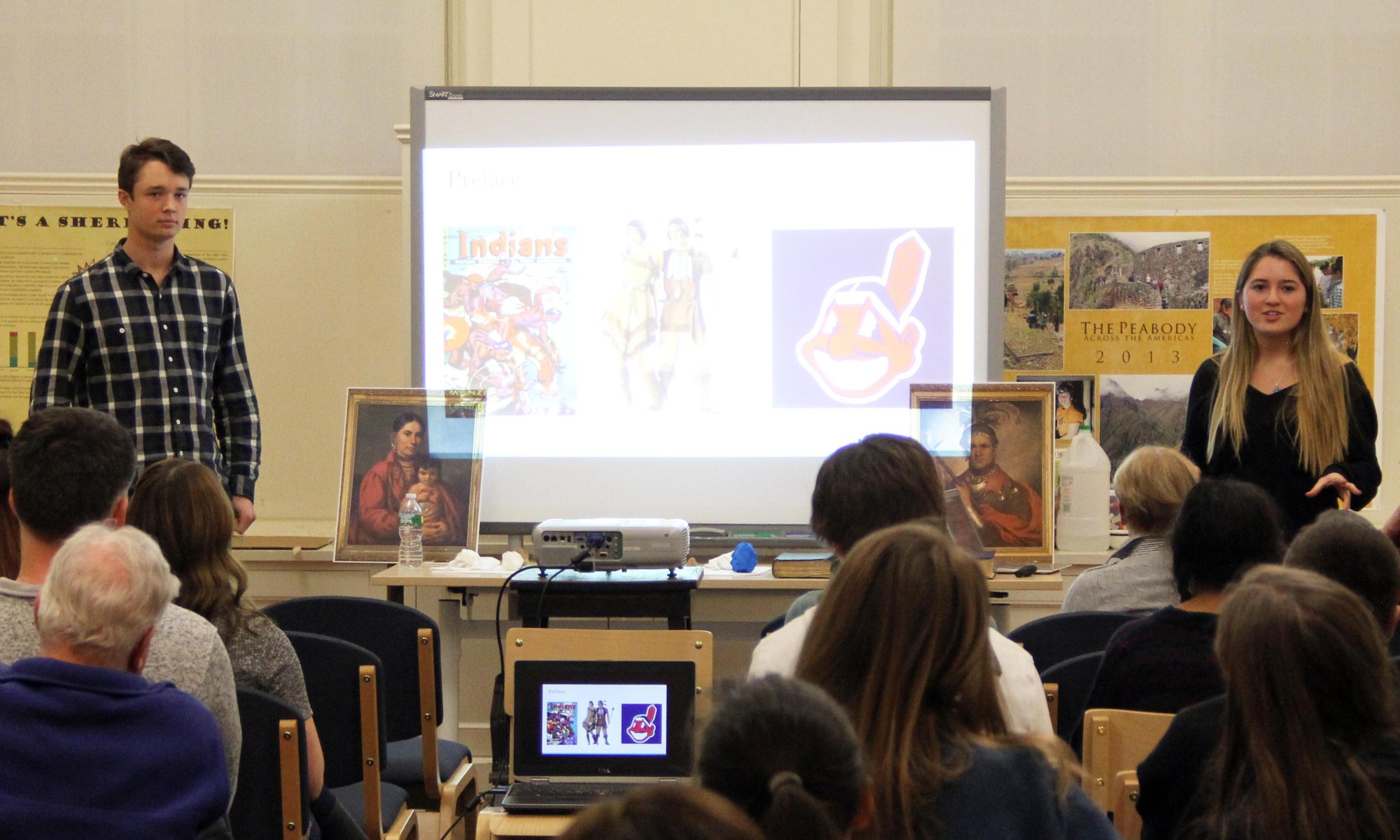
In the 1830s, the first director of the Bureau of Indian Affairs launched an ambitious effort to collect over one hundred portraits of Native Americans. Veronica Nutting ’16 and Alex Armour’16 investigated three of these paintings at the Peabody–how and when they got here, why they’re important, and how they compare to contemporary depictions of Native Americans.
Jacob presents his experience to the MAS
Speaking to an audience of nearly 50 chapter members, professional archaeologists, and members of the PA community, all the presentations were very well received. Congratulations to all the students for their hard work!
Check out this article from the Phillipian to learn even more.
We are happy to share the Peabody Museum’s draft strategic plan for 2015-2020, which charts the course for significant projects ranging from improvements to the historic museum building to enhanced physical and intellectual control over archive, photographic, and object holdings.
The plan emphasizes elements of Phillips Academy’s 2014 strategic plan, especially around the pillars of Creativity and Innovation and Equity and Inclusion. Many of the most requested class units at the Peabody explicitly deal with issues of race, ethnicity, and gender, often in the context of Native American history. The new plan underscores the importance of anthropological perspectives in teaching in these areas and encourages continued good partnerships with Native American communities. The pedagogy of collaborative learning is central to the Peabody’s strategic plan, which stresses hands on learning, project- and problem-based learning, experiential learning, and informed discussion in all of the Museum’s student focused programs. Plans to significantly improve collections storage will increase accessibility and ensure that collections are available for use well into the future. Centralized storage of collections within the Peabody building will set the stage for expanded classroom space in the future and allow us to better care for our significant collections.
Contributed by Claudia Wessner, Makerspace Coordinator and Library Experience Designer
Huge progress has been made in the collaborative project between The Nest, the makerspace at Phillips Academy, and the Peabody Museum! From the first day we received the Next Engine 3D Scanner, we had hopes of testing out this new technology in a fun and interesting way. After talking to Marla Taylor, we both thought it was a no brainer to form a collaboration between the museum, the makerspace and a group of work duty students (Alana Gudinas ’16, Jacob Boudreau ’16, Mia LaRocca ’16, and Sarah Schmaier ’16) to further explore the scanning possibilities.
In a previous post, Marla discussed the parameters in which the artifacts were selected. Once we brought the artifacts over to the Nest, we were able to make custom stands for two of the three artifacts so that they would be stable on the scanner. Then we got to work!
So, how does it work?
Before the scanning starts, we set up preferences such as resolution, color mode, and the number of incremental scans, as well as positioning the object in the camera’s field of view. The higher the desired resolution, the longer the scanning process will take. Most of the objects we scanned took around one hour.
Lasers scan the artifact
The scanner begins by taking a 2D image of the object then shoots out an array of red laser beams to capture the depth and texture of the object. Next, it completes a series of slow incremental rotations, based on the level of resolution selected, and performs the same 2D/3D rendering for each increment. The Next Engine software slowly builds the 3D model before your eyes as it layers the data captured by the scanner.
Fully rendered 3D model from the scan
After the scanning is complete, the 3-dimensional model of the artifact appears in the Next Engine software. Depending on how the artifact is scanned, there may be some holes in the model. This would be where the lasers may not have been able to reach, such as the top or the bottom of the artifact. There are ways to avoid holes by completing several scans of the same object (top, bottom, full 360) and then fusing them together. This is something I am looking forward to experimenting with in the future, but for our initial exploration we did a single scan.
In order to fill the holes in our model, I “polished” it using the Next Engine software. The program will automatically find and select holes in the model. Then you can use a paintbrush tool to select the areas in which you’d like to fill. This can also take some time and experimentation, especially with very high resolution scans where image rendering can use a lot of computing power.
Scan with the ‘holes’
The ‘holes’ have been digitally filled in
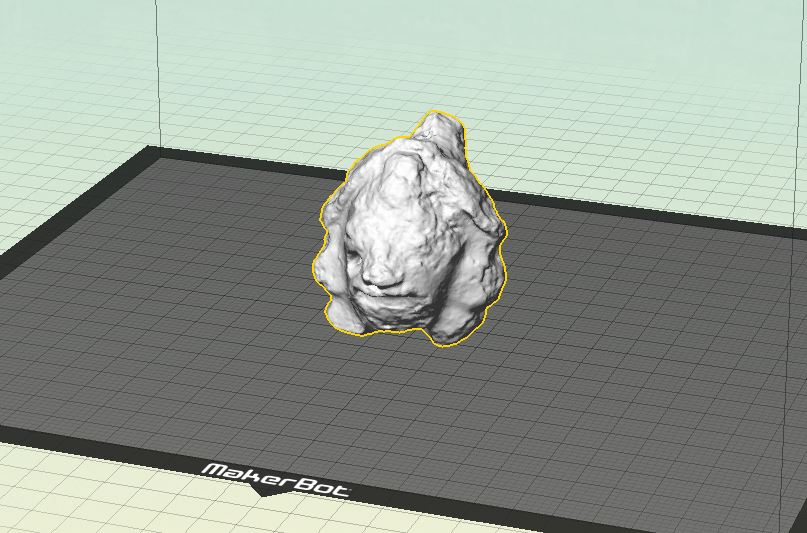
Once the editing of the model is complete, it is ready to prepare for printing by saving it as a .stl file and opening it in the Makerbot Desktop software. In the software you can scale, rotate, and place your object in the desired location on the build plate. You can also preview how long the print will take. This artifact, which was approximately four inches tall, took about 5 hours to print.
The 3D scan is ready to print
The Makerbot 3D printer uses a material called PLA that is stored in a spool in the back of the machine. The PLA is heated in an extruder and lays down very thin layers of material to build the object from the bottom up. Think of it like a glorified glue gun! The makerbot will automatically add “support material” that will support the object as it is printing so that everything stays intact. Once it is finished printing, any support material easily breaks off from the print.
The 3D printed artifact!
We are so excited about the results of our project! We are looking forward to scanning more artifacts in the Peabody collection and refining our skills with this new technology! Stay tuned!




 Benjamin Burke ’11
 Agnes Hsu-Tang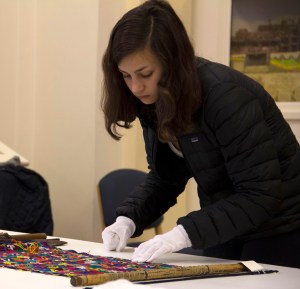
 Katherine Hall ’17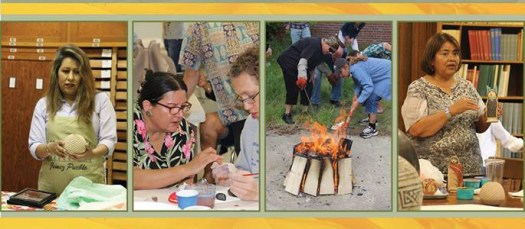






 The Peabody