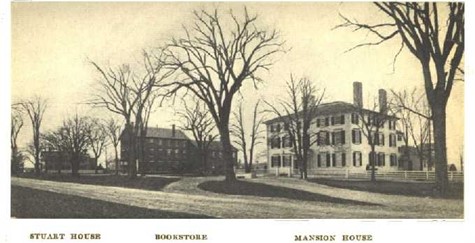
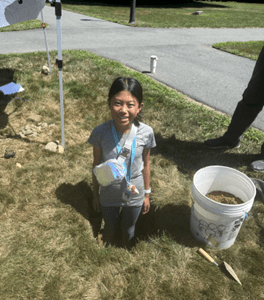
Almost every summer since 2016, young archaeologists from Phillips Academy’s summer session program embark on a mission to excavate the site of the eighteenth century Samuel Philips Jr. Mansion House, located on the West Quad of campus. The infamous Mansion House was built in 1782 by the academy’s founder and stood for 105 years, before burning down in 1887. News articles from the period suggest that the demise of the Mansion House was a result of arson; many speculating that the proprietor, Charles Carter, started the fire. During its long period of occupation, the Mansion House served as not only a home, but later an inn and tavern for students, community members, and travelers. The site’s long history and relatively undisturbed context creates an ideal setting for archaeological excavation and student learning.
Over the past seven years, students have succeeded in discovering portions of the house, including multiple chimneys and a basement feature. This year, students set out with high expectations, choosing to place four excavation units in spaces just outside of the Mansion and two units in the southwest portion of the quad, near the sites of historic outbuildings, a nineteenth century printing house, and an early nineteenth century pathway.
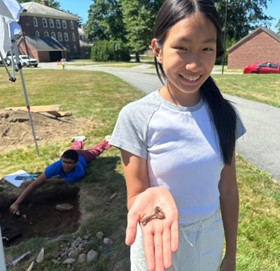
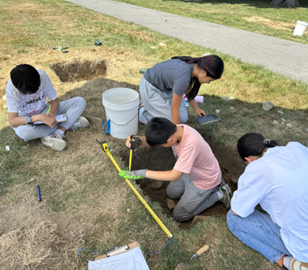
Students in each excavation team had a blast taking turns performing the primary tasks of an archaeologist: digging, screening, measuring, and note-taking. Many, if not all, students even got to unearth artifacts from their units! Some of our favorites included a small ferrous key, an impressed glass tumbler, and half a pair of scissors which all came from the two excavation units placed in the southwest portion of the quad.
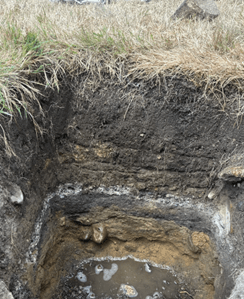
Further excavation in this area revealed a feature relating to the historic pathway present on early nineteenth century maps of campus. Pictured below is a dense, gravelly layer of soil discovered at 40 cm. This layer, interpreted here as the pathway, was intermixed with nineteenth century materials including glass, brick fragments, and some ceramic.
Students excavating the other four units in the northern portion of the quad found shallow cultural layers followed by a sterile C horizon, between 20 and 35 cm. While the artifact density of these units was limited, students still enjoyed finding an abundance of brick, metal nails, and some small ceramic fragments. The very shallow deposits found in these units informed the team that no building activity likely occurred in these areas. Additionally, the relatively low artifact density suggests that these areas were not regularly used like in a dooryard or garden area.
Overall, students in the 2025 field program successfully applied archaeological methods to ‘unlock’ more of the mysteries surrounding the Samuel Phillips Jr. Mansion House. This year’s field season serves to inform of the deep cultural deposits in the southwest portion of the quad and the significant research potential it could provide for future field seasons.
Thanks to the entire student field crew and cheers to a wonderful field season!
All work and no play makes Robert S. Peabody a dull boy!
As much as our staff and volunteers love digging deep into research and academic writings, we do love a good book or podcast! As summer descends upon us, prepare yourselves for another installment of our Peabody Picks summer list!
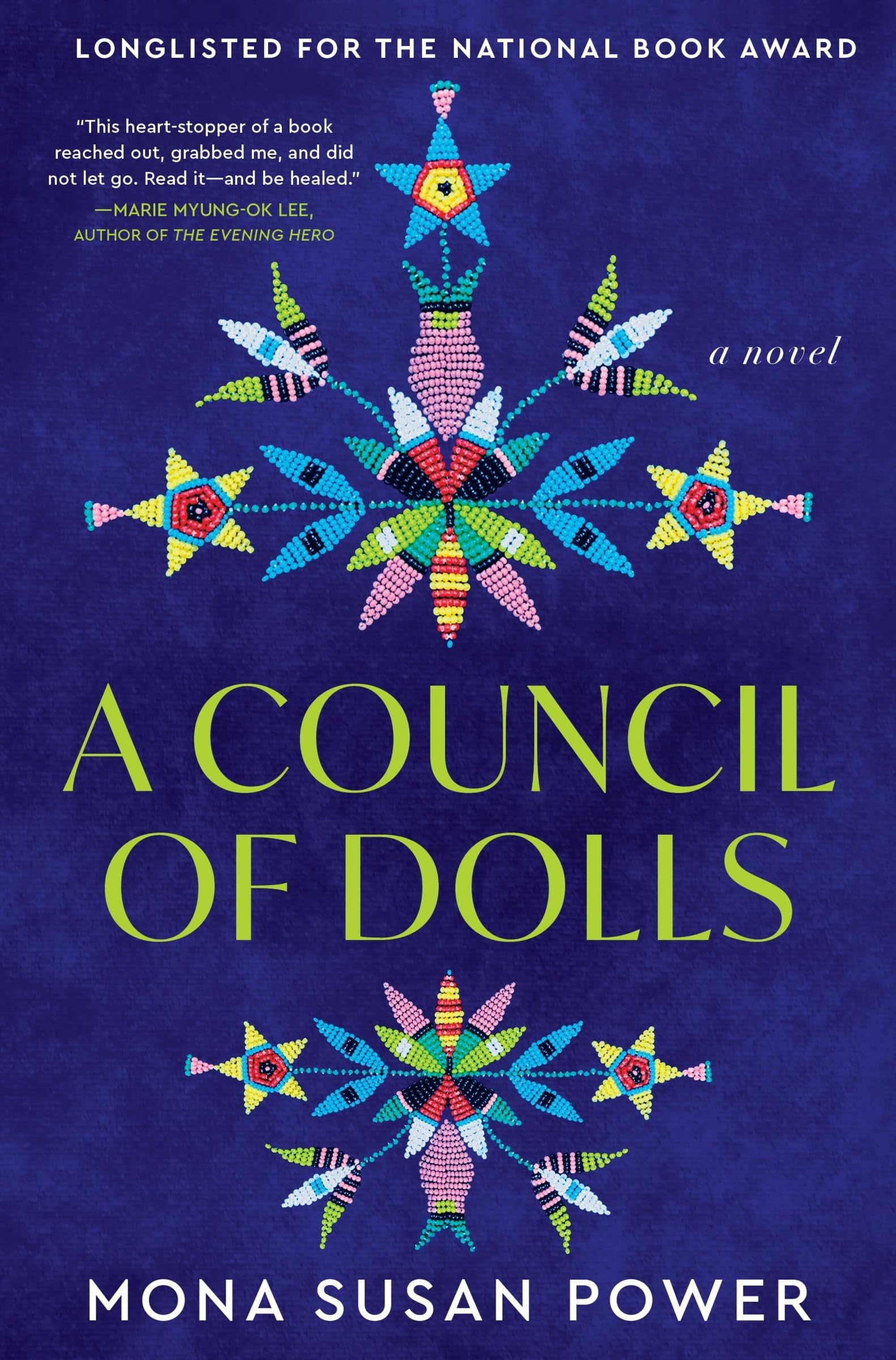
A Council of Dolls is a 2023 historical fiction family saga novel about multiple generations of Yanktonai Dakota women grappling with the effects of settler colonialism, told partially through the point of view of their dolls.
A modern masterpiece, A Council of Dolls is gorgeous, quietly devastating, and ultimately hopeful, shining a light on the echoing damage wrought by Indian boarding schools, and the historical massacres of Indigenous people. With stunning prose, Mona Susan Power weaves a spell of love and healing that comes alive on the page.
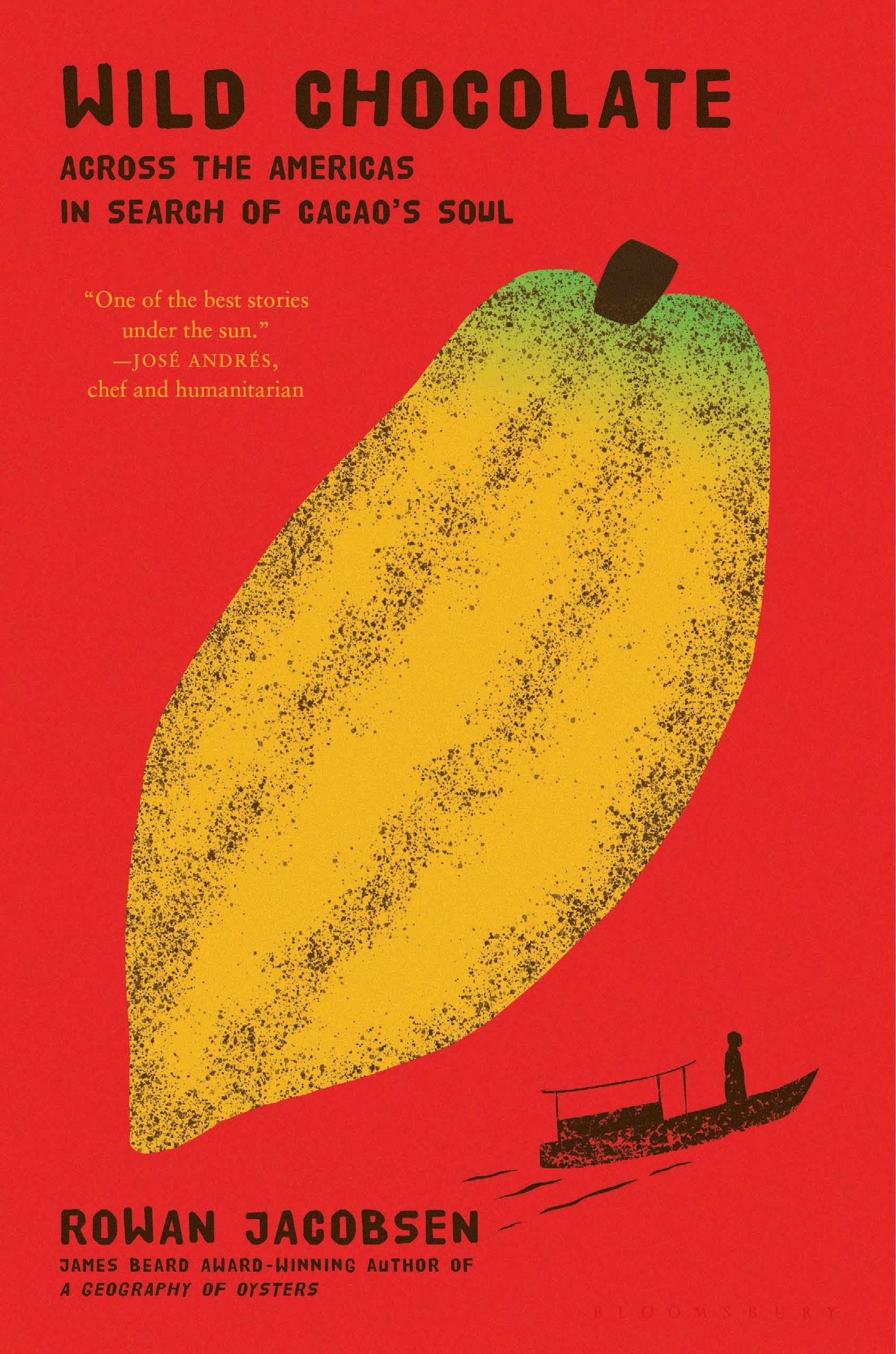
From James Beard Award-winner Rowan Jacobsen, the thrilling story of the farmers, activists, and chocolate makers fighting all odds to revive ancient cacao and produce the world’s finest bar.
When Rowan Jacobsen first heard of a chocolate bar made entirely from wild Bolivian cacao, he was skeptical. The waxy mass-market chocolate of his childhood had left him indifferent to it, and most experts believed wild cacao had disappeared from the rainforest centuries ago. But one dazzling bite of Cru Sauvage was all it took. Chasing chocolate down the supply chain and back through history, Jacobsen travels the rainforests of the Amazon and Central America to find the chocolate makers, activists, and indigenous leaders who are bucking the system that long ago abandoned wild and heirloom cacao in favor of high-yield, low-flavor varietals preferred by Big Chocolate.
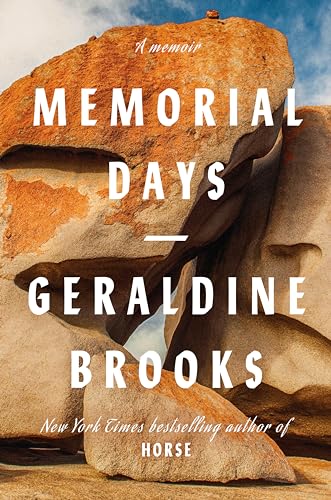
Many cultural and religious traditions expect those who are grieving to step away from the world. In contemporary life, we are more often met with red tape and to-do lists. This is exactly what happened to Geraldine Brooks when her partner of more than three decades, Tony Horwitz – just sixty years old and, to her knowledge, vigorous and healthy – collapsed and died on a Washington, D. C. sidewalk on Memorial Day 2019. The demands were immediate and many. Without space to grieve, the sudden loss became a yawning gulf.
Three years later, she booked a flight to a remote island off the coast of Australia with the intention of finally giving herself the time to mourn. In a shack on a pristine, rugged coast she often went days without seeing another person. There, she pondered the varied ways those of other cultures grieve, such as the people of Australia’s First Nations, the Balinese, and the Iranian Shiites, and what rituals of her own might help to rebuild a life around the void of Tony’s death.
A spare and profoundly moving memoir that joins the classics of the genre, Memorial Days is a portrait of a larger-than-life man and a timeless love between souls that exquisitely captures the joy, agony, and mystery of life.
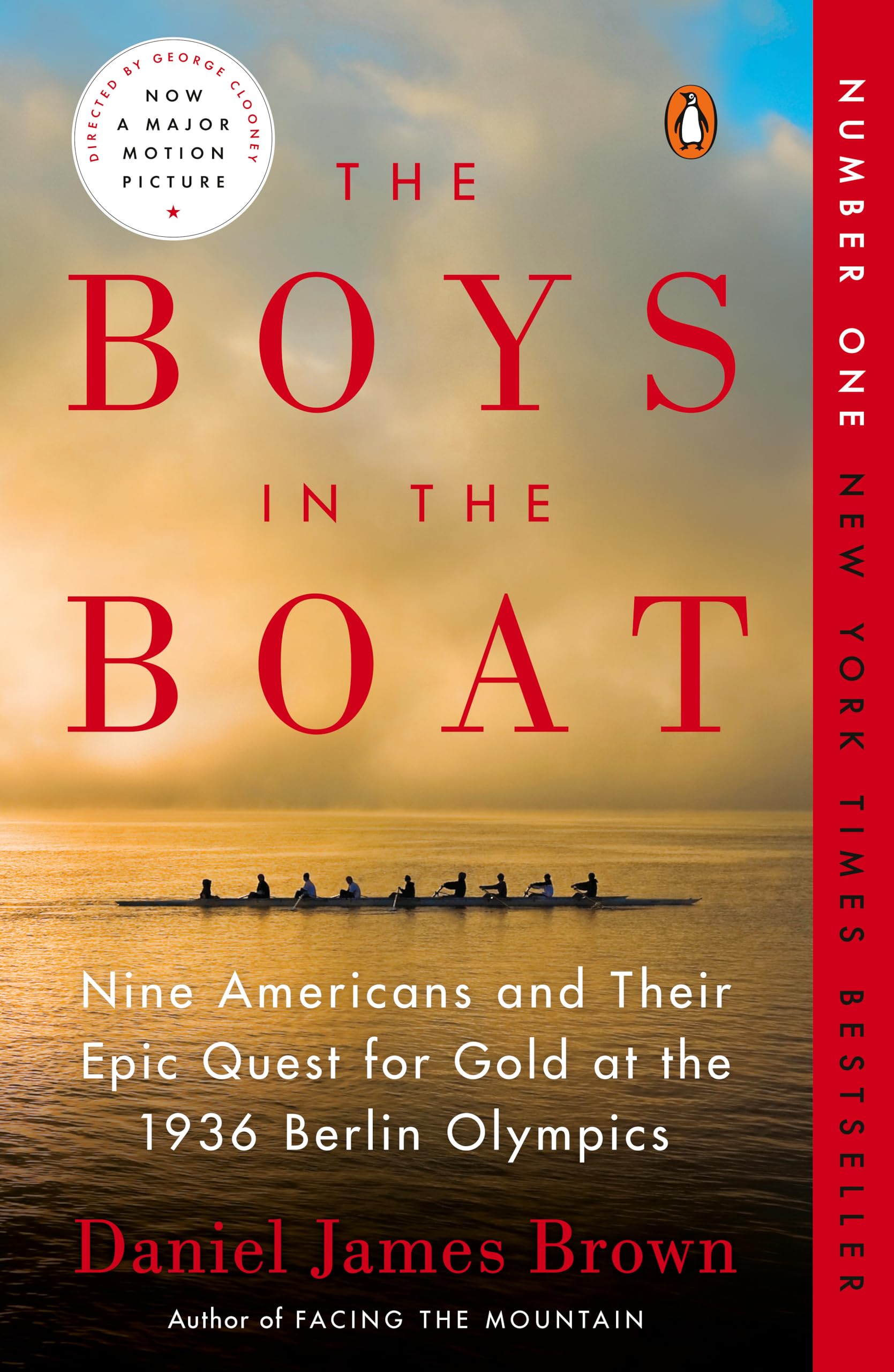
For readers of Unbroken, out of the depths of the Depression comes an irresistible story about beating the odds and finding hope in the most desperate of times—the improbable, intimate account of how nine working-class boys from the American West showed the world at the 1936 Olympics in Berlin what true grit really meant.
It was an unlikely quest from the start. With a team composed of the sons of loggers, shipyard workers, and farmers, the University of Washington’s eight-oar crew team was never expected to defeat the elite teams of the East Coast and Great Britain, yet they did, going on to shock the world by defeating the German team rowing for Adolf Hitler. The emotional heart of the tale lies with Joe Rantz, a teenager without family or prospects, who rows not only to regain his shattered self-regard but also to find a real place for himself in the world. Drawing on the boys’ own journals and vivid memories of a once-in-a-lifetime shared dream, Brown has created an unforgettable portrait of an era, a celebration of a remarkable achievement, and a chronicle of one extraordinary young man’s personal quest.
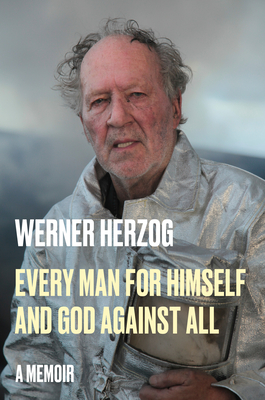
Werner Herzog was born in September 1942 in Munich, Germany, at a turning point in the Second World War. Until age 11, Herzog did not even know of the existence of cinema. His interest in films began at age 15, but since no one was willing to finance them, he worked the night shift as a welder in a steel factory. He started to travel on foot. He made his first phone call at age 17, and his first film in 1961 at age 19. The wildly productive working life that followed—spanning the seven continents and encompassing both documentary and fiction—was an adventure as grand and otherworldly as any depicted in his many classic films.
Every Man for Himself and God Against All is at once a personal record of one of the great and self-invented lives of our time, and a singular literary masterpiece that will enthrall fans old and new alike. In a hypnotic swirl of memory, Herzog untangles and relives his most important experiences and inspirations, telling his story for the first and only time.
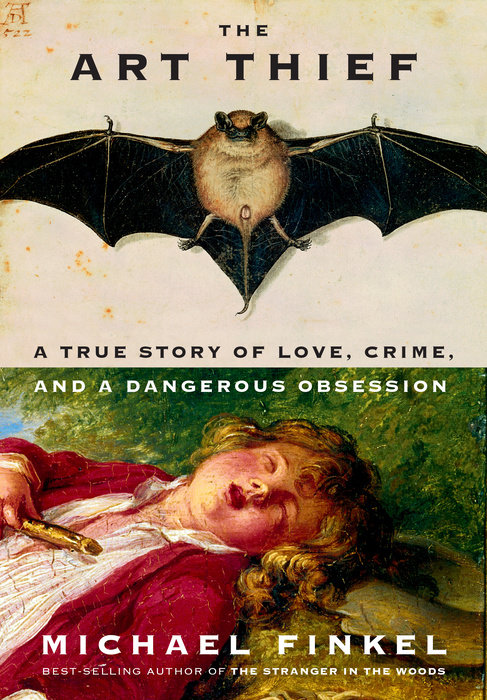
One of the most remarkable true-crime narratives of the twenty-first the story of the world’s most prolific art thief, Stéphane Breitwieser.
In The Art Thief, Michael Finkel brings us into Breitwieser’s strange and fascinating world. Unlike most thieves, Breitwieser never stole for money. Instead, he displayed all his treasures in a pair of secret rooms where he could admire them to his heart’s content. Possessed of a remarkable athleticism and an innate ability to circumvent practically any security system, Breitwieser managed to pull off a breathtaking number of audacious thefts. Carrying out more than two hundred heists over nearly eight years—in museums and cathedrals all over Europe—Breitwieser, along with his girlfriend who worked as his lookout, stole more than three hundred objects, until it all fell apart in spectacular fashion.
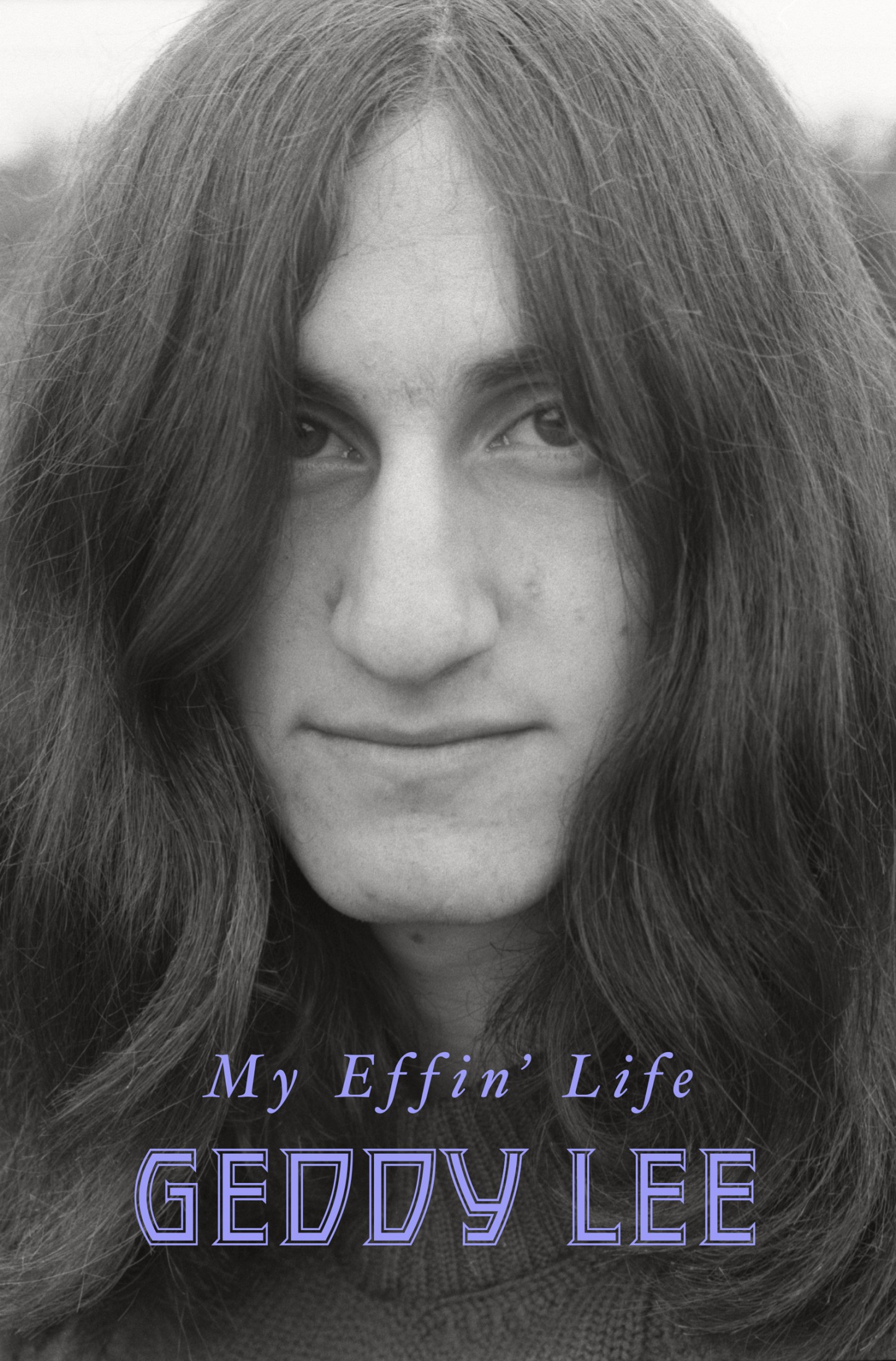
Geddy Lee is one of rock and roll’s most respected bassists. For nearly five decades, his playing and work as co-writer, vocalist and keyboardist has been an essential part of the success story of Canadian progressive rock trio Rush.
Long before Rush accumulated more consecutive gold and platinum records than any rock band after the Beatles and the Rolling Stones, before the seven Grammy nominations or the countless electrifying live performances across the globe, Geddy Lee was Gershon Eliezer Weinrib, after his grandfather murdered in the Holocaust. As he recounts the transformation, Lee looks back on his family, in particular his loving parents and their horrific experiences as teenagers during World War II. He talks candidly about his childhood and the pursuit of music that led him to drop out of high school. He tracks the history of Rush which, after early struggles, exploded into one of the most beloved bands of all time. He shares intimate stories of his lifelong friendships with bandmates Alex Lifeson and Neil Peart—deeply mourning Peart’s recent passing—and reveals his obsessions in music and beyond. This rich brew of honesty, humor, and loss makes for a uniquely poignant memoir.
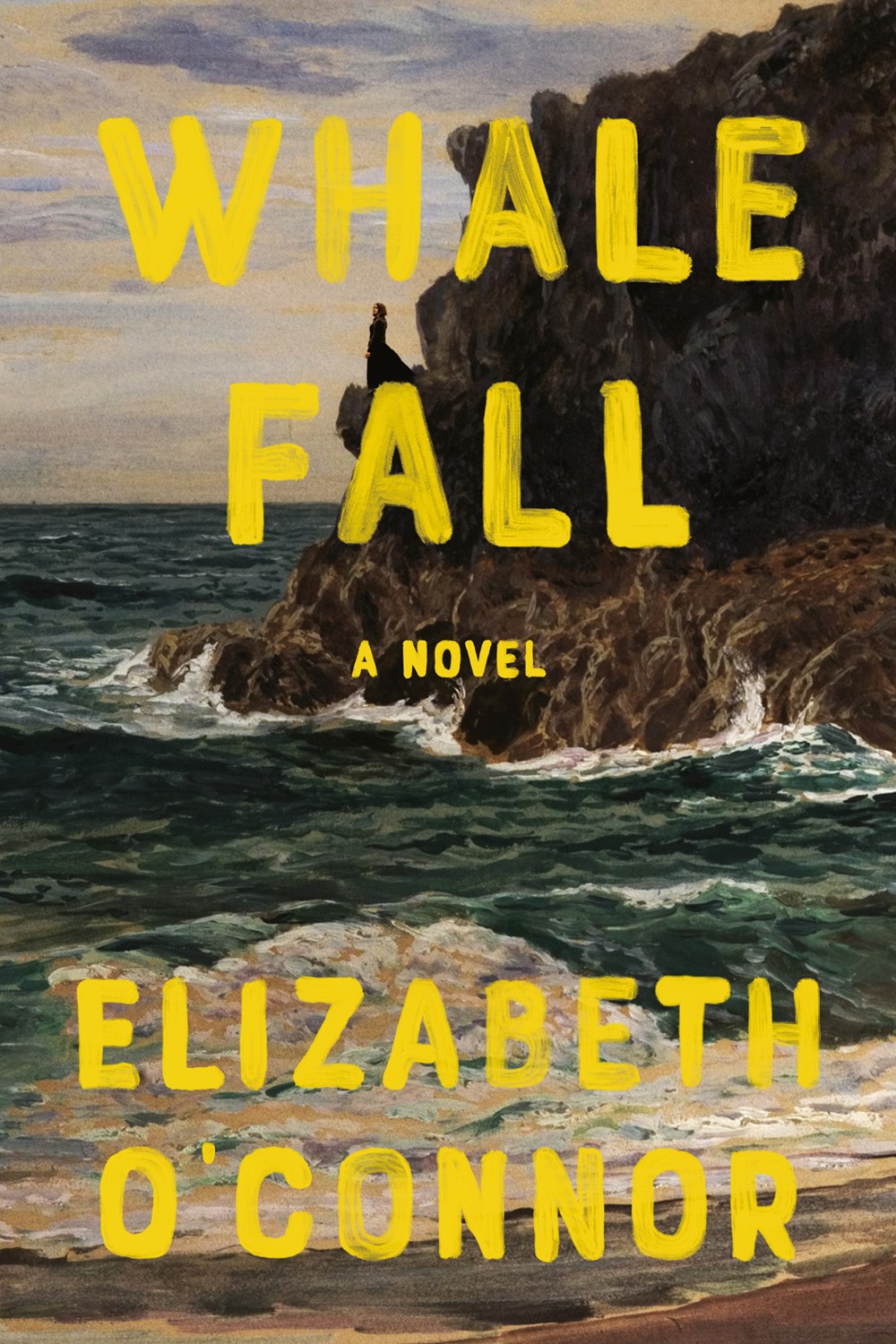
In 1938, a dead whale washes up on the shores of remote Welsh island. For Manod, who has spent her whole life on the island, it feels like both a portent of doom and a symbol of what may lie beyond the island’s shores. Manod can’t shake her welling desire to explore life beyond the beautiful yet blisteringly harsh islands that her hardscrabble family has called home for generations.
The arrival of two English ethnographers who hope to study the island culture, then, feels like a boon to her—both a glimpse of life outside her community and a means of escape. The longer the ethnographers stay, the more she feels herself pulled towards them, despite her misgivings that her community is being misconstrued and exoticized.
With shimmering prose tempered by sharp wit, Whale Fall tells the story of what happens when one person’s ambitions threaten the fabric of a community, and what can happen when they are realized. O’Connor paints a portrait of a community and a woman on the precipice, forced to confront an outside world that seems to be closing in on them.
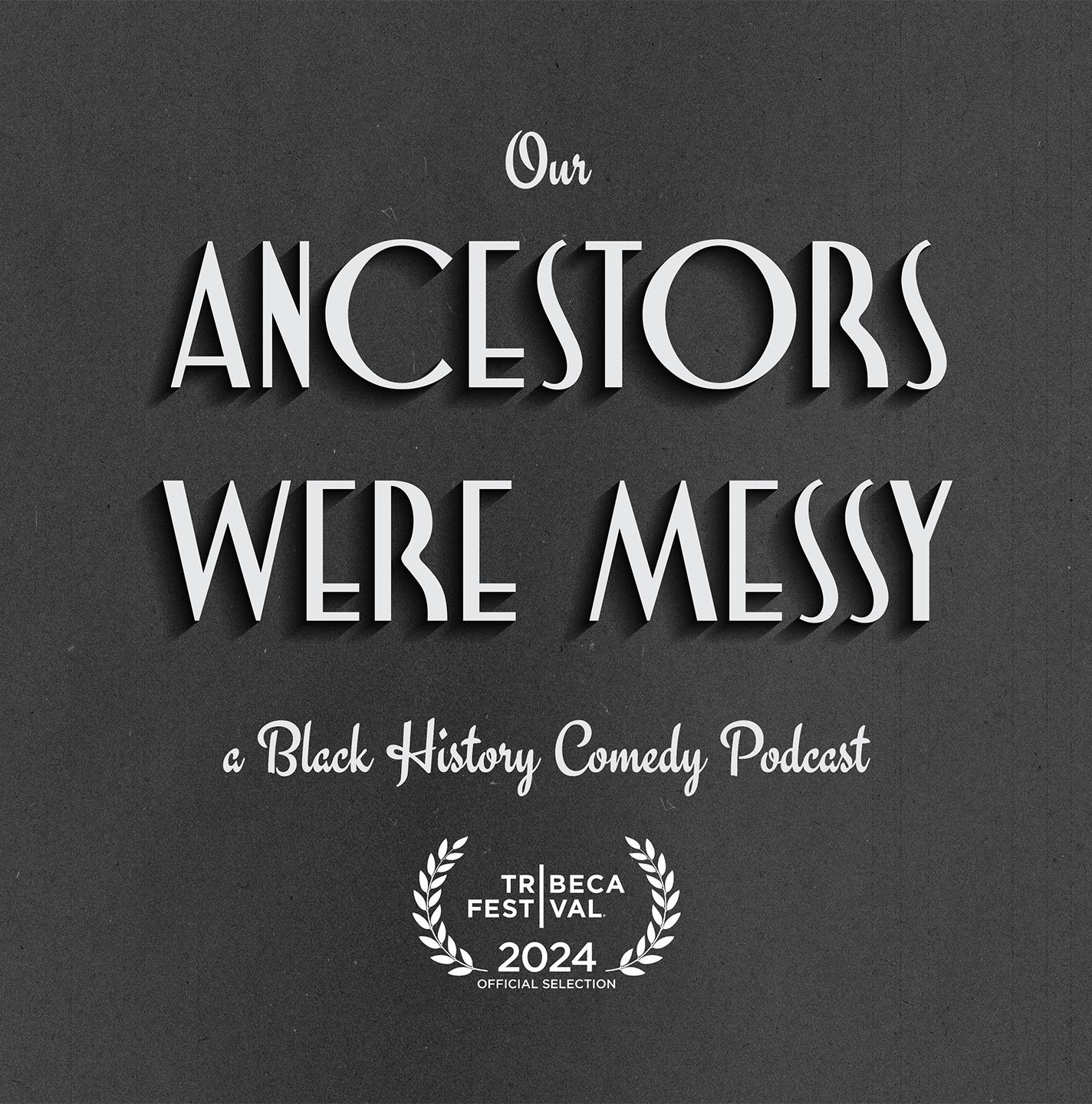
Our Ancestors Were Messy, is a podcast covering the gossip, scandals, and pop culture that made headlines in the Black newspapers of segregated communities during the pre-Civil Rights era. On each episode, host Nichole Hill and her guests follow the story of an ancestor in search of opportunity, adventure, love, and a way to beat Jim Crow. Hill and her guests learn the mess – and eventual history – their ancestors make along the way.
“I could pretend that I like this podcast because it’s a way to learn about Black history in a way that goes beyond standard narratives of victimization or individual exceptionalism. The stories it tells allow people to be people, with all the messiness and drama and pop culture of their everyday lives in the pre-Civil Rights era. But really I love this podcast because it is just great gossip. Why you trying to make me learn in my free time??” – Lainie Schultz, Peabody Staff
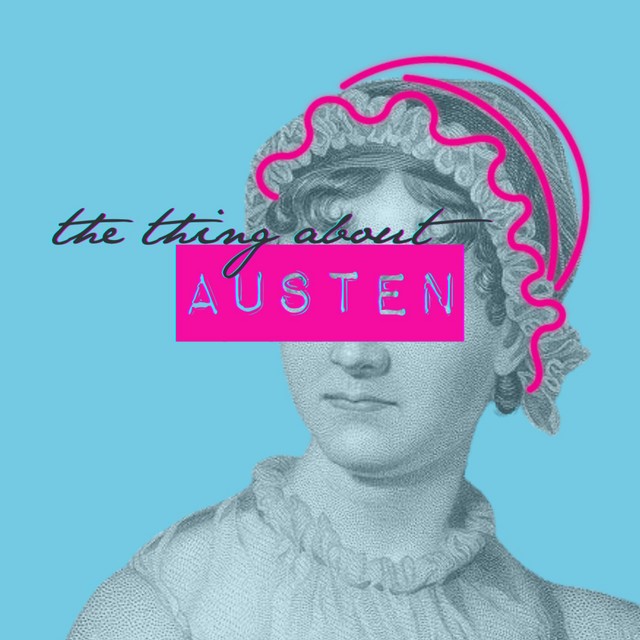
The Thing About Austen is a podcast about Jane Austen’s world — the people, objects, and culture that shape Austen’s fiction. Come for the historical context and stay for the literary shenanigans. Think of us as your somewhat cheeky tour guides to the life and times of Jane Austen.
“Two professors of literature talk about the material culture in Austen’s stories and their significance to societal culture during the Georgian and Regency eras. From Mr. Darcy’s portrait in Pride and Prejudice to the homemade alphabet in Emma and Captain Wentworth’s umbrella in Persuasion – there are so many interesting stories and histories to unpack from the items detailed in Jane Austen’s stories. Some of my favorite episodes are #83 The thing about the Ha-Ha and #52 The thing about Bath’s Baths (per their recommendation, I did try the hot spring water in the Roman Baths on a recent visit… the taste, not so great, but the experience, 5 stars!) – Emma Lavoie, Peabody Staff
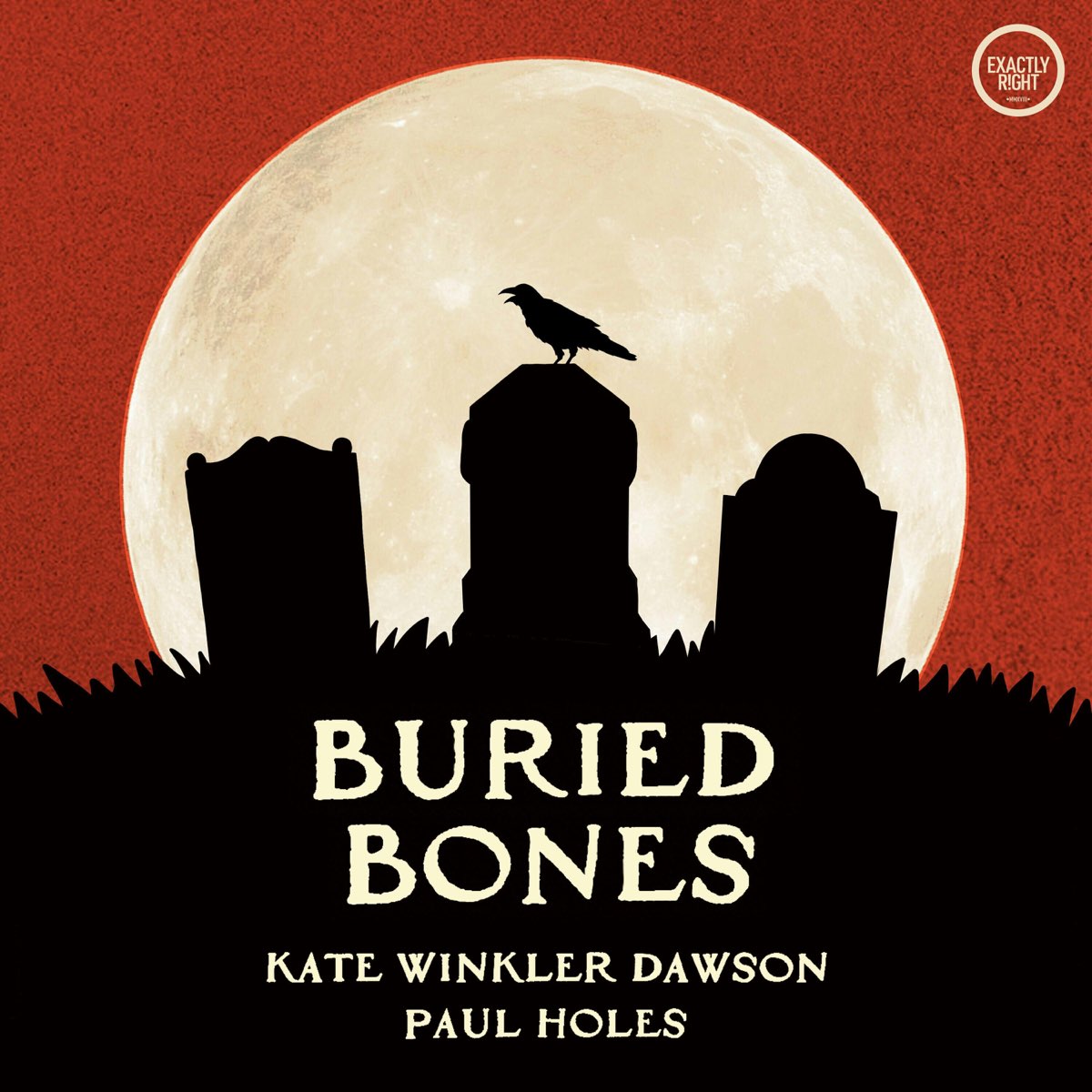
Buried Bones, Hosted by Kate Winkler Dawson and Paul Holes
Genre: Historical True Crime
Buried Bones dissects some of history’s most dramatic true crime cases from centuries ago. Together, journalist Kate Winkler Dawson and retired investigator Paul Holes explore these very old cases through a 21st century lens.
“I have been a fan of Buried Bones for a few years now. Each episode is a dive into a homicide in the past that is explored simultaneously by a journalist/historian (Kate) and a retired forensic investigator (Paul). I really enjoy the blend of history and scientific analysis as the two hosts discuss the crime. Kate deftly narrates the historical event while Paul provides a reasoned analysis from a modern forensic science perspective. I always learn something!” – Marla Taylor, Peabody Staff
Welcome to Salem, Massachusetts! Join tour guides Jeffrey Lilley and Sarah Black as they talk all things Witch City. Learn its history, meet its people, and discover the magic.
“This podcast goes beyond the history of the Salem Witch Trials and explores the vast history of Salem and the people who live there. What does a drunk elephant, haunted pepper, a witch solving a murder, and tunnels (IYKYK) all have in common? They all relate back to Salem! This podcast has everything you need to know for your next trip to the Witch City. I personally love the episode interviews with current business owners in Salem.” – Emma, Peabody Staff
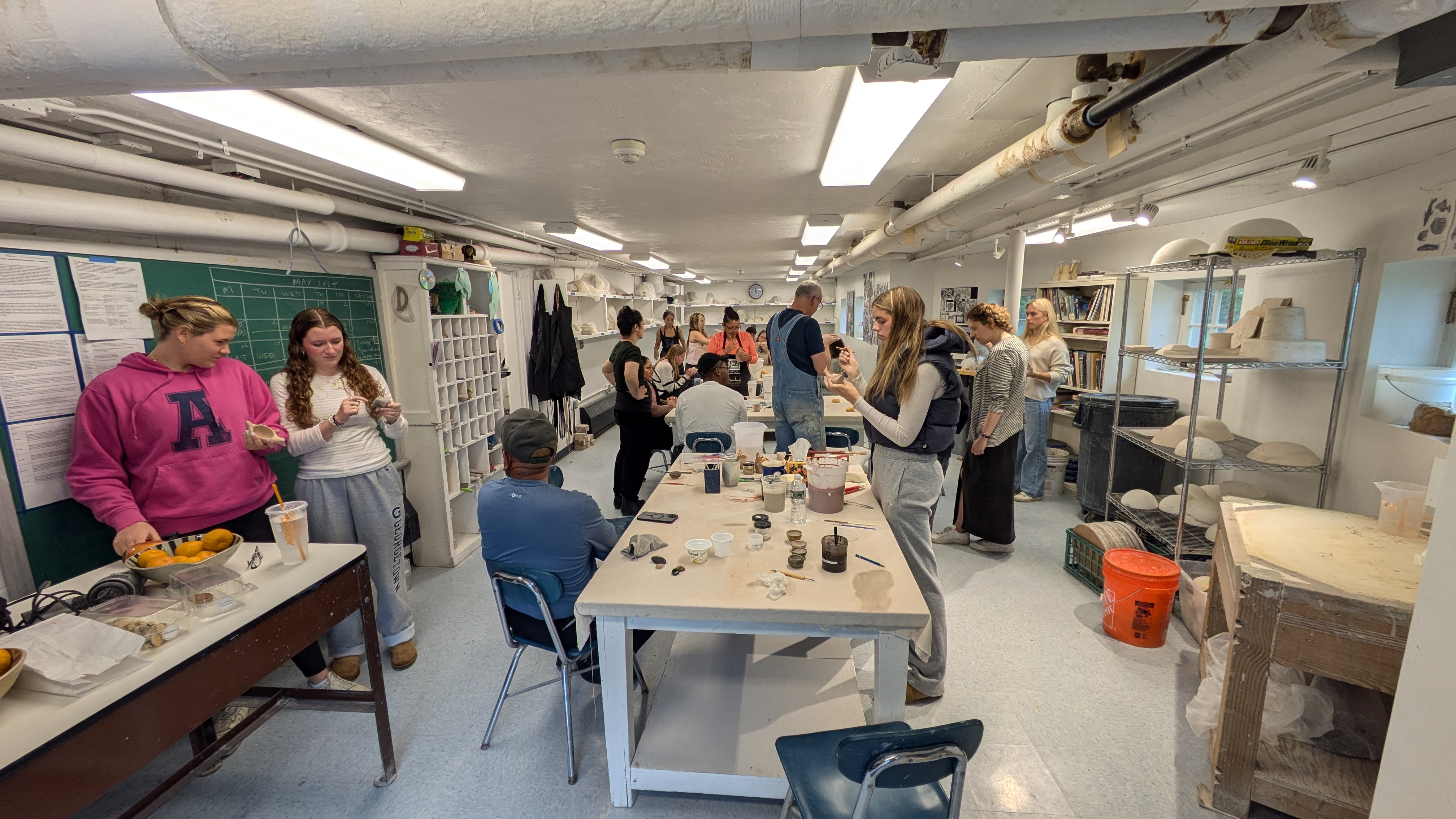
Ceramic students participating in pottery-making workshops
We were honored to have the Toya family back this Spring term for their annual visit to conduct week long, hands-on workshops on Pueblo pottery-making with Thayer Zaeder’s studio ceramic students.
Each year students have the opportunity to make their own pieces using native clays and temper from New Mexico and traditional decorative techniques of painting and polishing. The workshops culminate in a traditional Jemez firing.
Students walk away with an unforgettable keepsake of their time as well as a greater appreciation for contemporary Indigenous art and culture.
We are so grateful for all the time and expertise the Toya family has shared with PA students!
Check out this video by PA’s Communications team highlighting the Toya’s work on campus.
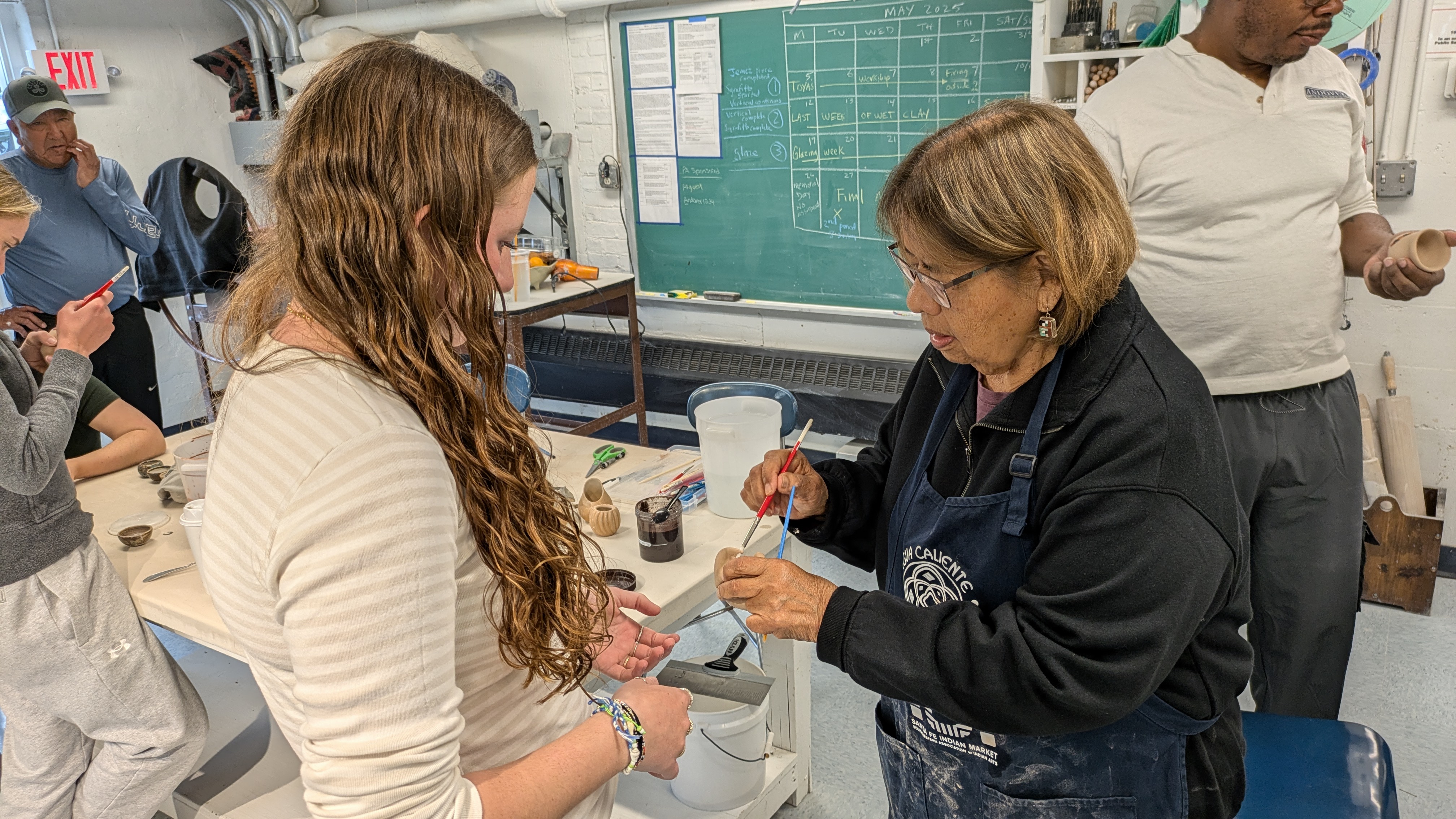
Maxine Toya working with a student on painting their piece.
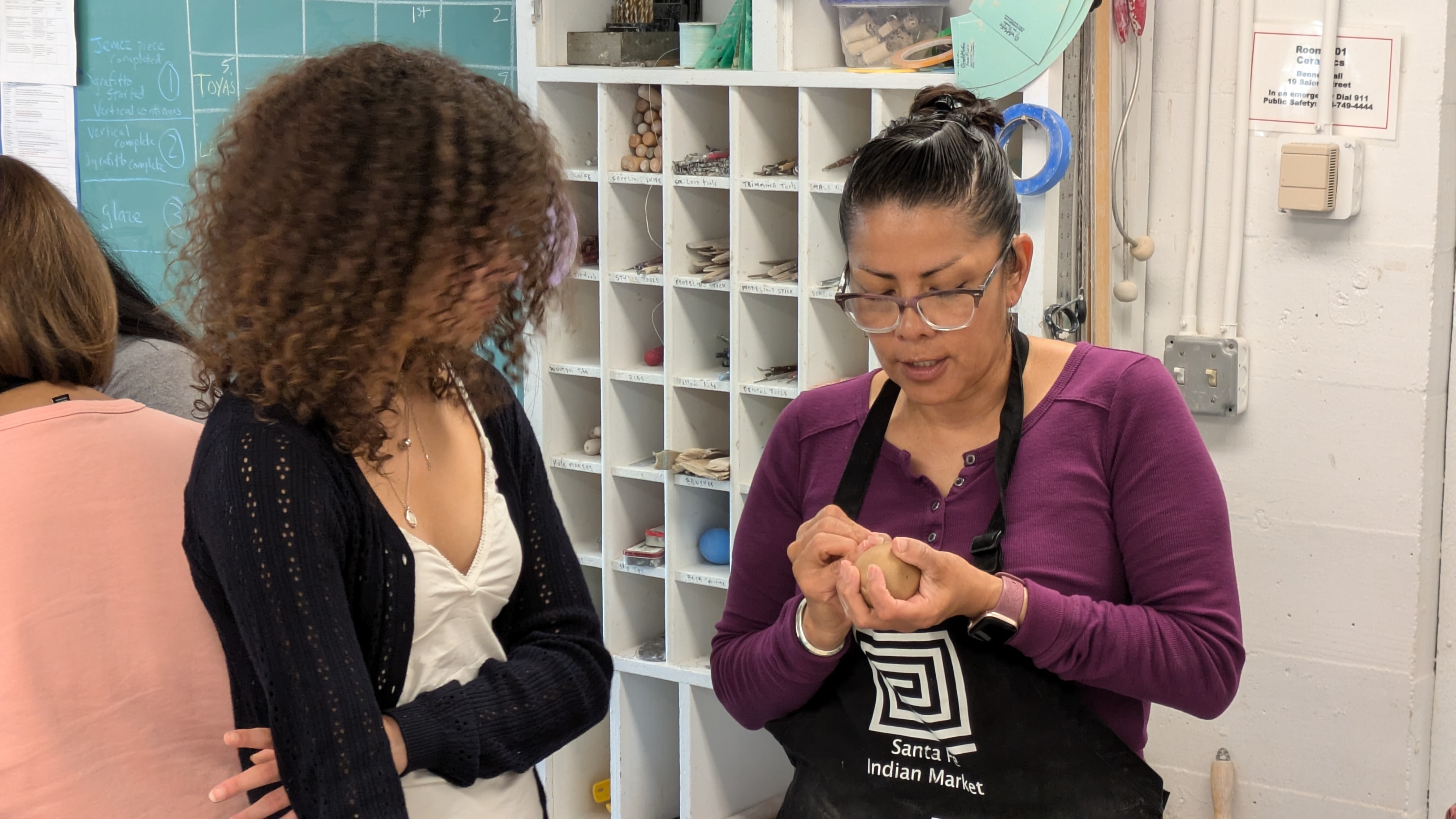
Mia Toya working with a student on polishing their piece.
I stumbled upon the Pecos bone flutes on a bright September afternoon that was supposed to be about beaver pelts and fur trade ledgers. My history class had followed Ms. Doheny to the Robert S. Peabody Institute for a lecture, but after the talk I lingered and asked the speaker, Dr. Lainie Schultz, whether the museum kept any musical instruments. That single question carried me into the archives, where Curator Marla Taylor opened a drawer and revealed two slender bones—one golden eagle, one hawk—pierced and polished, flutes waiting in perfect silence.
Music has framed my life since I was four in Madrid: first as a hobby, then as devotion, from my early passion for Romantic music to the shimmering modernism of Debussy, whose Masques I played at fifteen beneath the stone arches of Dubrovnik’s Rector’s Palace. Yet nothing in my previous musical experience had prepared me for the quiet authority of these flutes. Their accession records were almost empty, their makers unnamed, but the Tribal Historic Preservation Officer of Jemez Pueblo had granted permission for their study. Phillips Academy’s Abbot Independent Scholar program let me transform my curiosity into a full-term research project under the supervision of Dr. Schultz and Dr. Elizabeth Aureden from the music department.
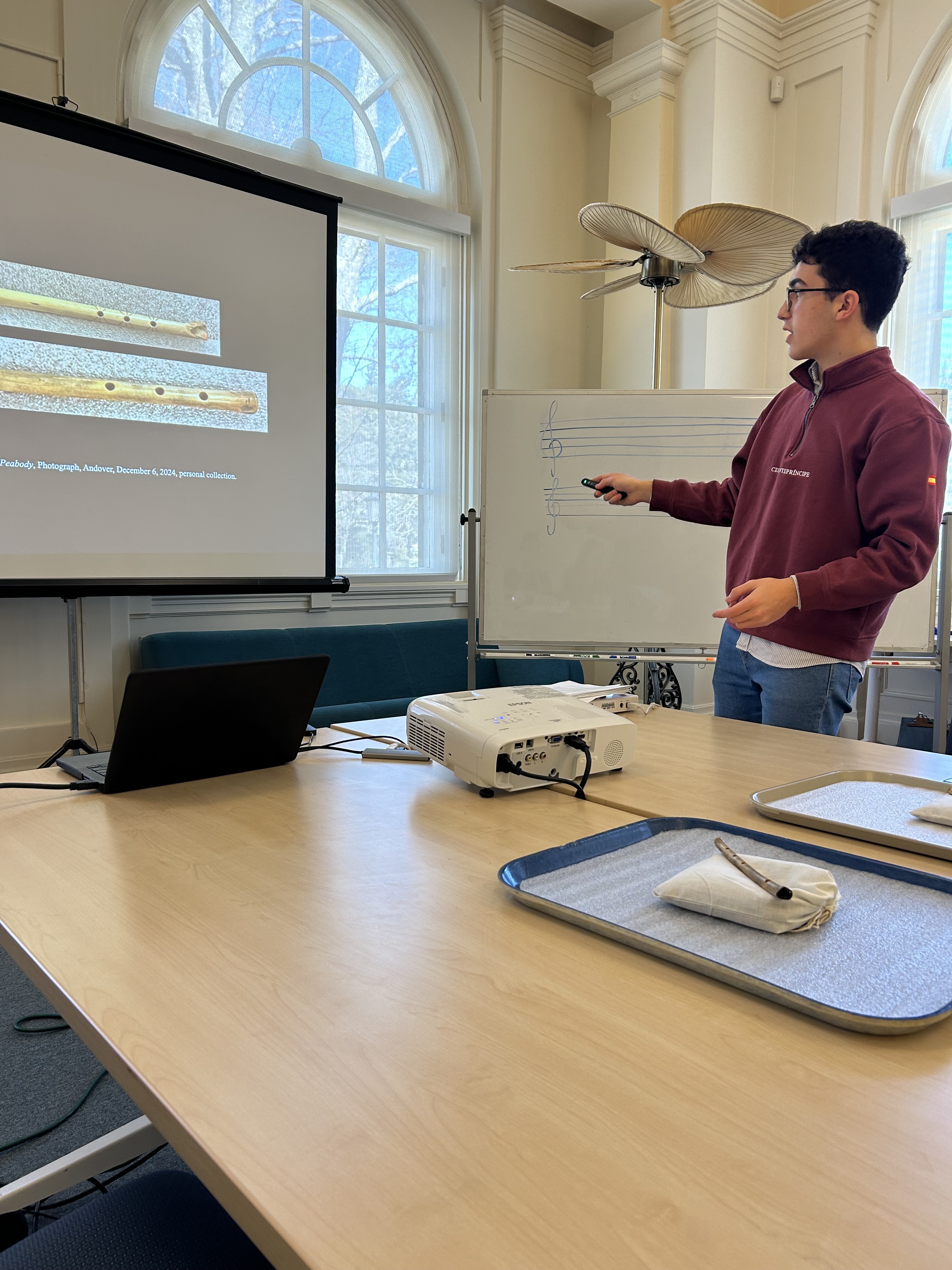
The work began with patient looking. The eagle bone flute—just under twenty centimeters—bears four clean finger-holes; the hawk bone flute is shorter, its stops conical and ringed by three tiny oblique grooves. My initial efforts left me frustrated—despite my solid musical background, I couldn’t answer any of my research questions. Guided by Indigenous scholars, I began to understand the silence and endless questions as a wise teacher. By combining archival materials with present-day Indigenous resources, chiefly from Jemez musician Marlon Magdalena, I built a relationship with the eagle bone flute and experienced the music as something much deeper than pure sound.
In his song “Eagle’s Blessings,” which I shared during my presentation to the Massachusetts Archaeological Society in April, Marlon brings the flute to life. When I first heard it, I was nearing the end of my research, which had been mostly historical and archival. I had tried to learn about other Indigenous music, but this performance tied everything together. Throughout the term, I feared profaning the cultural or religious significance of the eagle bone flute. I understood its sacredness, and as a religious person involved in interfaith activities, I recognize the importance of respecting religious artifacts.
Marlon’s explanation before he played brought everything into focus. He explained that eagle bones are sacred, held only by tribal members and used to lift prayers skyward. When he played, I felt how, through his breath, he gave life back to the eagle and honored her. Suddenly, the silence became understandable. Even though I could not draw solid scientific conclusions, I forged a connection I will never forget.
This project has awakened a passion for ethnomusicology that I am now exploring with the music department, under the guidance of Ms. Ángela Varo-Moreno, studying the presence of LGBTQ+ subcultures in techno music. I would like to end by thanking everyone at the Peabody, at Phillips Academy Andover, and at Pecos and Jemez Pueblos—and other Indigenous communities—who have safeguarded the knowledge that reached me and made this project possible. It has been a gift I will always keep in my heart.
Alberto presenting his final project at the Peabody, finishing up his independent study.
A Dialogue Between Director for Advancement Initiatives, Jennifer Pieroni, and former Peabody Institute Work Duty student and current Peabody Advisory Board member, Ben William Burke ’11.
Archaeology isn’t just about uncovering and studying ancient items—at Andover, it’s about shaping a more informed, ethical, and engaged society. By learning archaeology, Andover students gain experiences to understand the world better, think critically, and contribute meaningfully to the future by better understanding the past.
At a recent Peabody Institute meeting, I met Ben William Burke ’11, whose enthusiasm for the Peabody was inspiring. As a new member of the Andover community, I wanted to understand why the Peabody had left such an indelible mark on Ben and why he continues to support it today.
By email, Ben shared: “As a work duty student at The Peabody, I received unparalleled access to its extensive collection and cultural immersion programs. These experiences brought me face to face with — and taught me the value of — perspectives different from mine. In those moments, I was challenged to understand before correcting, to empathize before judging, and to build on the past in a way that respects it.”
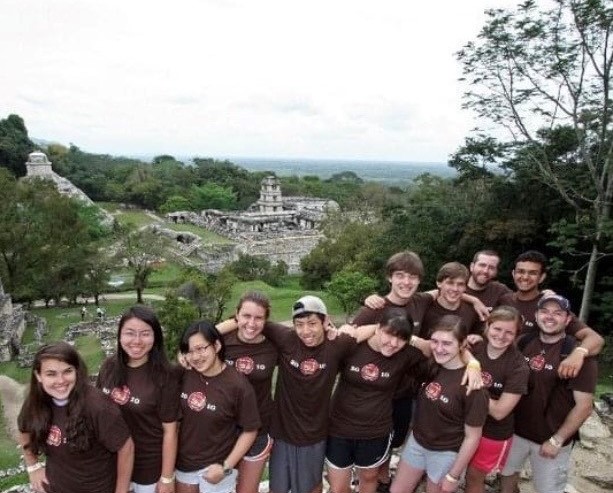
Ben Burke ’11 (Back row, third from the right) on the BALAM student trip. This was a multi-week cultural immersion and archaeological adventure through the greater Yucatán Peninsula sponsored by the Peabody Institute.
Today’s Andover students gain the transformational learning opportunity of being a part of an organization that leads in the field of repatriation and reflects Non Sibi by teaching students that archaeology is not just about personal discovery but about responsibility: to the past, to descendant communities, and future generations. Through hands-on study, students engage in meaningful, ethical work prioritizing respect over self-interest.
Ben noted, “There is not an avenue in my life that isn’t positively affected by The Peabody’s lessons in empathy and respect. I support The Peabody because I understand the value in learning to value other’s perspectives – especially when they are different from my own.”
Supporting the Peabody means investing in education that shapes responsible scholars and professionals. By supporting the Peabody with an annual gift, you can help elevate a place where teaching and learning are deeply connected to respect, collaboration, and cultural preservation. Join us in ensuring that the study of archaeology serves our Andover students and also society as a whole.
Among the newest student clubs on offer to the Phillips Academy community as of this term is the Andover Anthropological Society: a group of students of superior intelligence who recognized ahead of their peers that doing research with cultural materials is incredibly fun, and an excellent use of one’s free time.
Now with a membership of ten, club members selected as their inaugural project an accession of Arctic materials surface-collected by Patricia Hume near Utqiagvik (previously Barrow), Alaska during six summers between 1959-1969, and donated to the Peabody Institute in 1998. Meeting weekly at the Peabody, so far the AAS has received collections handling training and begun to build direct experience doing close-looking analysis of cultural materials; perused the Pat Hume accession file and visited storage, doing archival research AND learning some basics of museum practice (I’m very efficient); learned about the Bureau of American Ethnology and delved into 20th century ethnographies from the region (thank you, OWHL reference librarians!); and started to explore various themes and approaches for their group project. These have included connecting collections to Iñupiaq language, exploring notions of gender and household structures, and questioning anthropological terms like “effigy” to build more robust interpretations of people’s material expressions of spirituality and religion – just to name a few.
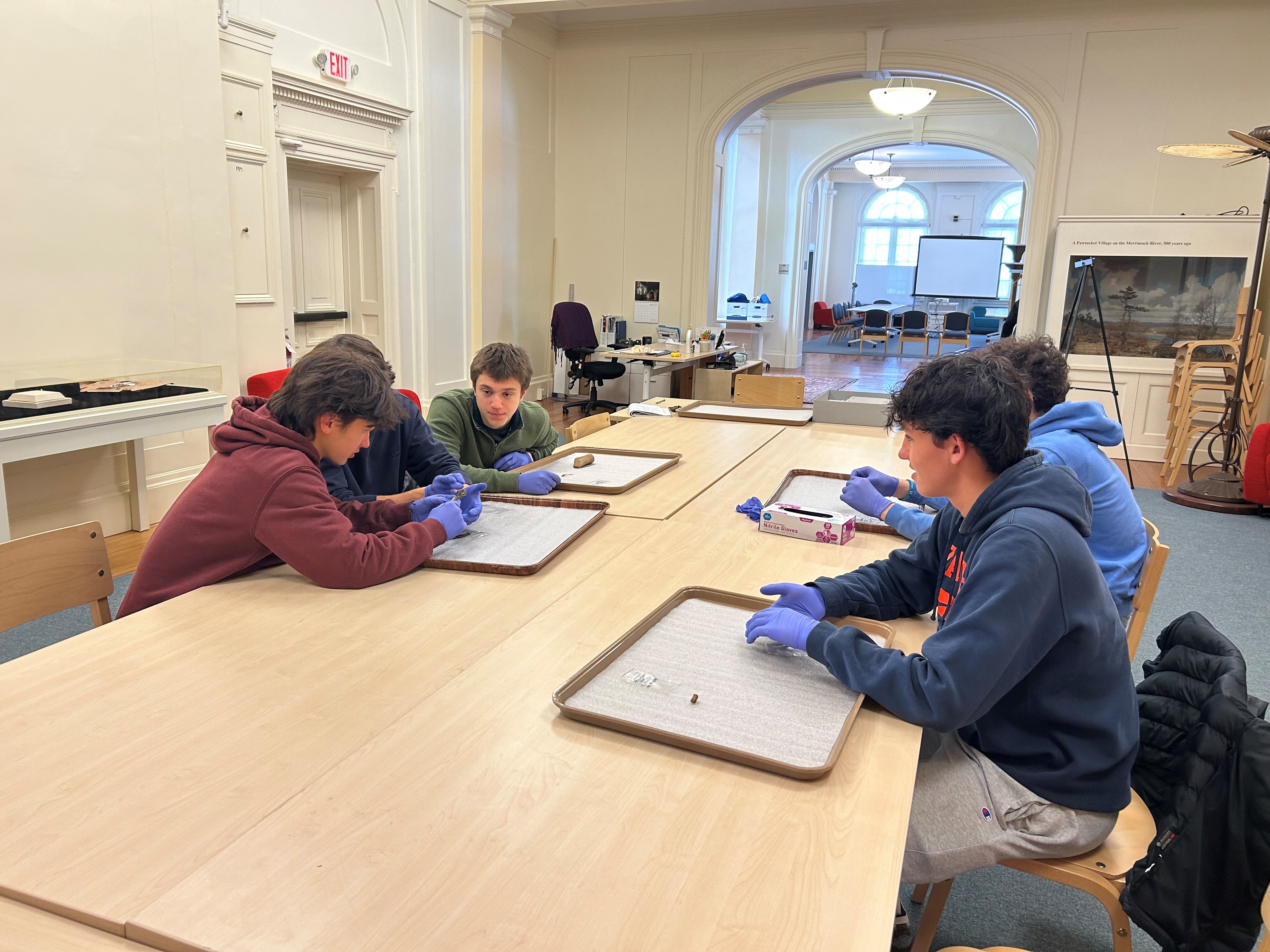
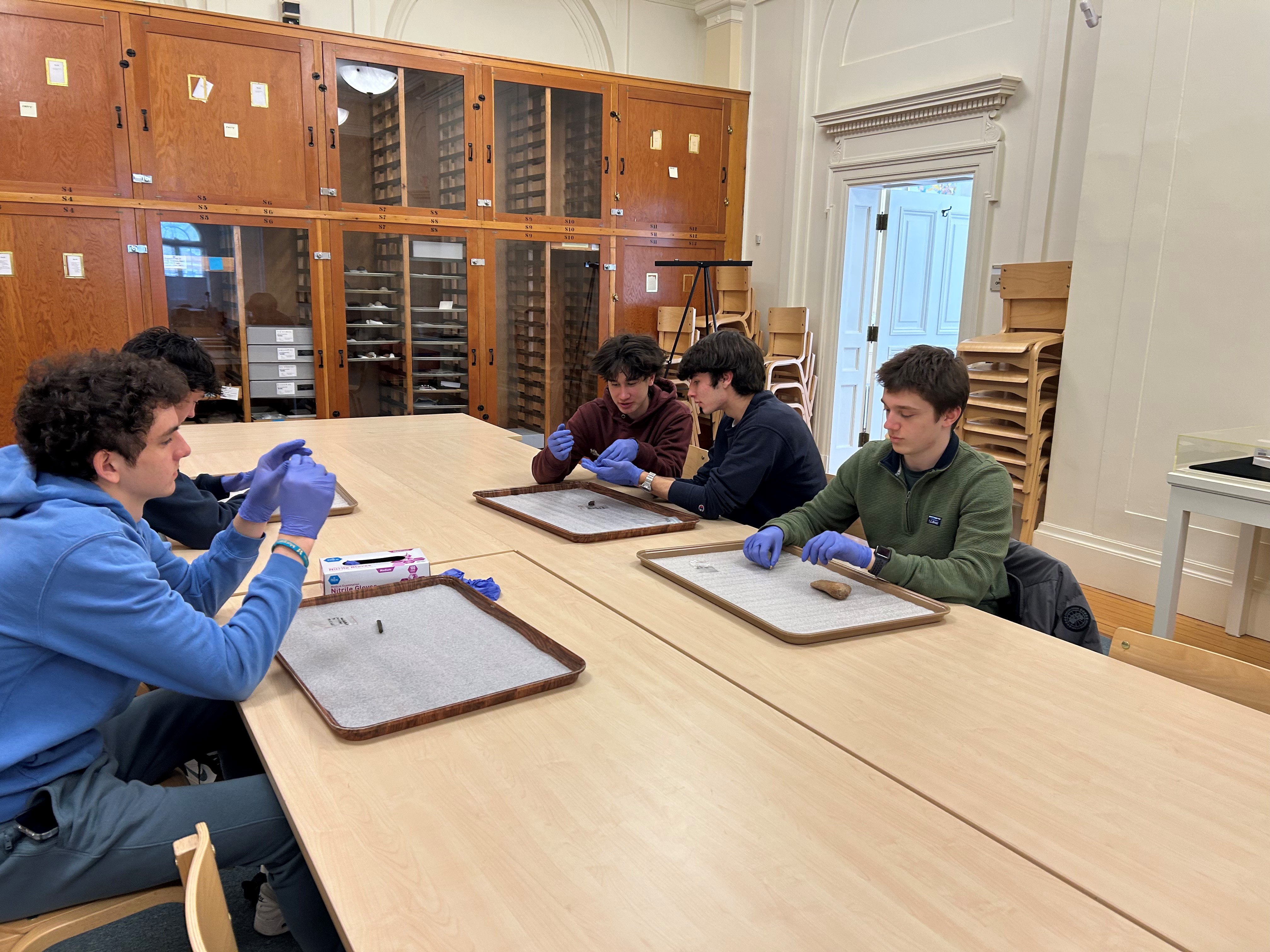
AAS members closely examining “household” items from the Pat Hume accession and debating whether I was messing with them in my claims for what they were. [Not pictured: all the female members of the club. I promise it was just unlucky they had to leave before I could take any photos…]
Whichever direction(s) the club ends up taking, what they learn will enter into the Peabody’s database, enhancing our own understandings of these collections here and the ways in which we’ll be able to connect others to them in the future.
I happen to have the privilege of serving as faculty advisor for this club, and it has been a joy getting to know these students, and having them teach me about Iñupiat culture. Bookmark this blog and stay tuned to learn more about the AAS from the AAS itself!
For the past two years, the Peabody has been dealing with an endlessly noisy neighbor. Falls Music Center, a new home for music at Phillips Academy, has been under construction since early 2023.
The noise started early in construction as a massive mountain of dirt was excavated from the building site. Next came the drilling for the geothermal wells. We could feel the vibrations in the ground as the wells reached 500 feet deep in an effort to maintain PA’s commitment to sustainability. Alas, despite our repeated (yet playful) requests, we were not allowed to sift through the back dirt to look for pieces of Phillips Academy history.
Over the next months, the building rose behind us and carried all the sounds of construction as the steel frame went up and carefully crafted practice and performance spaces were built. Most spaces within Falls Music Center are acoustically separated to isolate noises and capture the most “live” sound possible. The sounds were a constant background to much of our work moving back into the Peabody after our building project.
My favorite discovery during the construction was that the window in the main stairwell of the Peabody looks directly into the glass stairwell of the Falls Music Center. I have to admit that more than once I tried to wave at the construction workers. Unfortunately, no one waved back.
Towards the end of 2024 the fences around Falls Music Center came down, the sidewalks were repaved, the grounds were cleaned up, and the sounds diminished. I can’t say that we have missed them, but we definitely notice their absence.
Now, Falls Music Center is open to students and I look forward to a new type of noise – the stray notes from the incredible student musicians and sound of increased student presence in our little corner of PA.
Last month we were delighted to welcome back Ramson Lomatewama to Phillips Academy Andover (PA) where he worked with students and campus community members in fused glass workshops.
Ramson Lomatewama is an award-winning Hopi glass artist, kachina doll carver, jewelry maker, and published poet from Hotevilla, Arizona. This is his second year working with the Peabody Institute to bring fused glass workshops to the PA campus community. Ramson has also participated in various virtual, and in-person talks at PA, sharing his poetry, art, and life stories with students and the broader public. You can view these virtual talks on our Peabody YouTube page.
Ramson speaking to one of the fused glass community workshops.
Ramson creates stained glass, blown glass, and fused glass art. Ramson’s glass art is viewed as “a contemporary expression of ancient and artistically rich people… evoking a beautiful, yet humbling mindscape which we all long to find.” He is the first hot glass artist from the Hopi Tribe. Ceremonies and cultural activities continue to play a major role in his life. He has showed works at the Santa Fe Indian Market, the Museum of Northern Arizona, Fusing Traditions, a traveling exhibition, and the San Diego Museum of Man (now known as the Museum of Us).
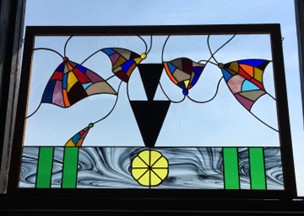
Stained glass artwork by Ramson Lomatewama.
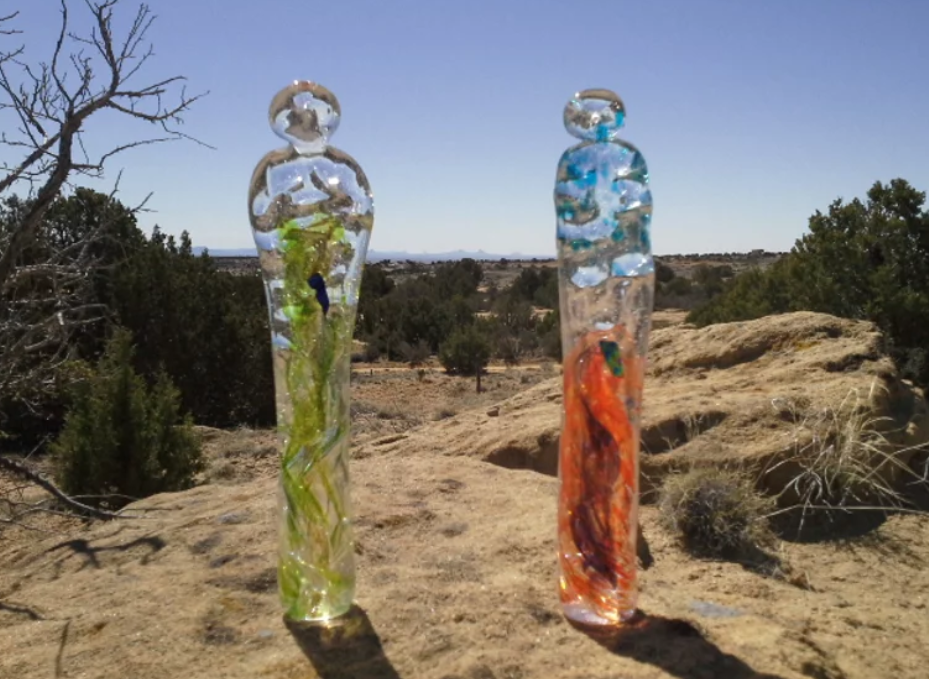
Blown glass ‘spirit figure’ sculptures by Ramson.
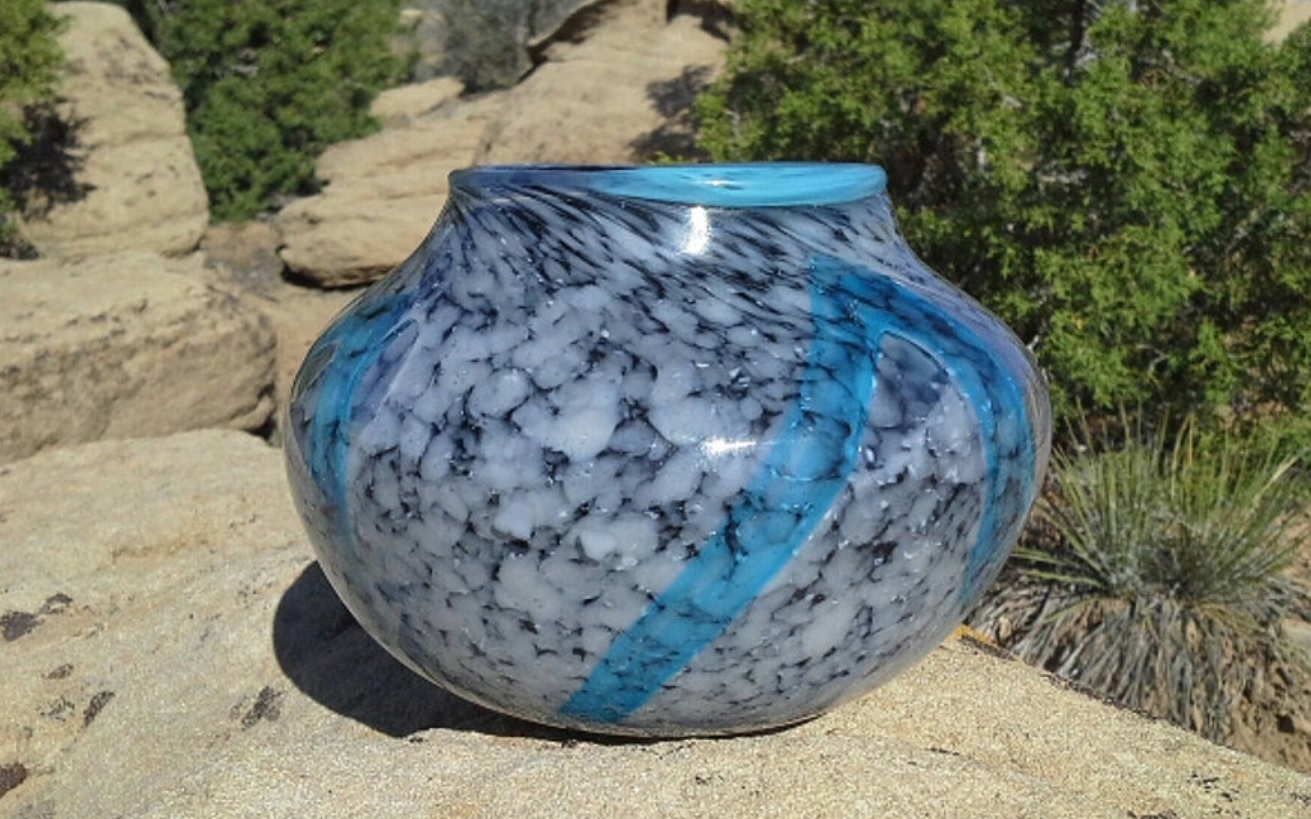
Blown glass vessel by Ramson.
Ramson is an educator on several levels. Early in his career, he was a middle school and high school teacher, and for many years, served as adjunct faculty at North Central College in Naperville, Illinois. Ramson also taught glass art for Hopitutuqayki (The Hopi School), an arts apprenticeship program located on the Hopi reservation. Ramson’s studio, Hotevilla Glassworks, is the first and only Hopi owned working glass studio. Check it out here!
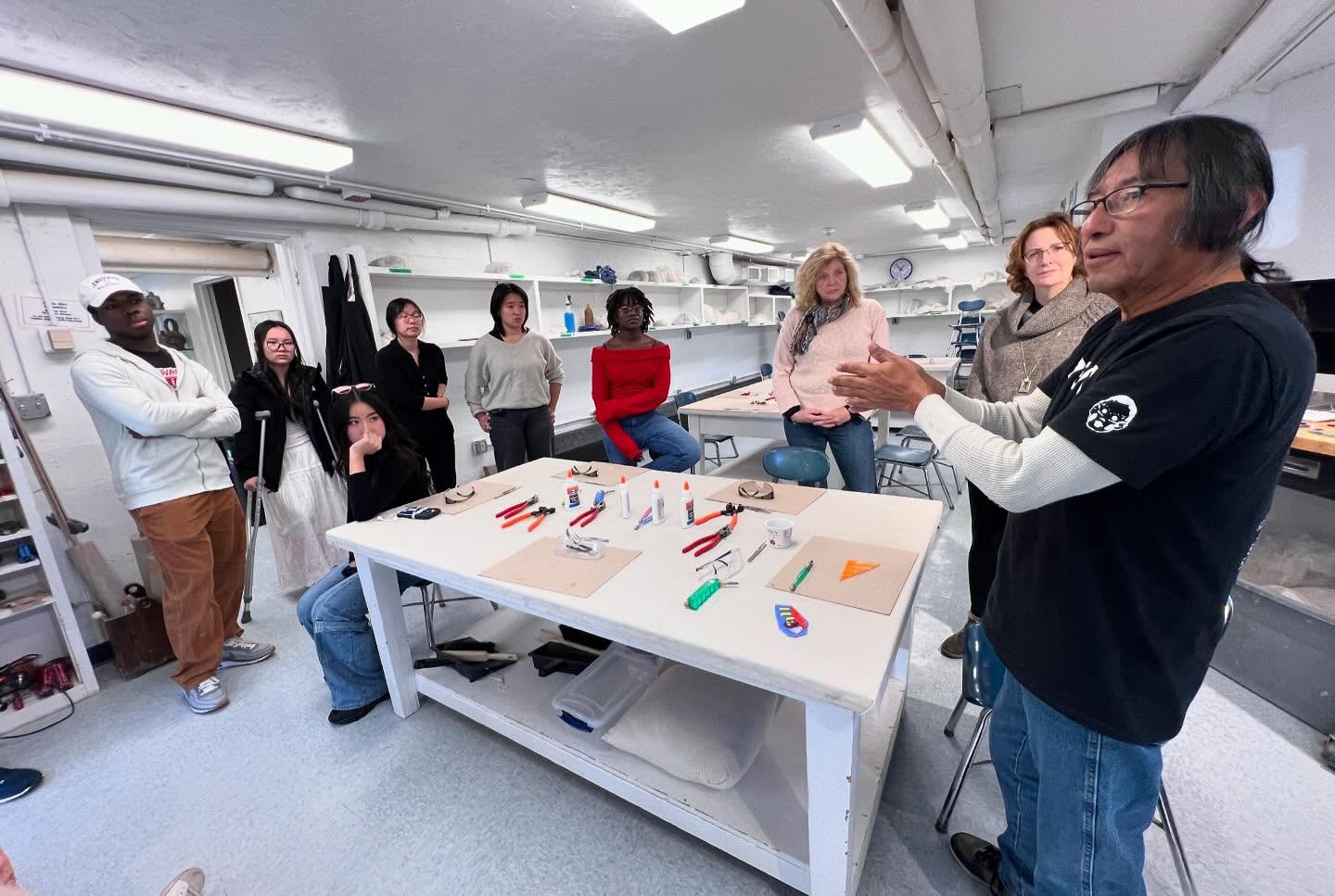
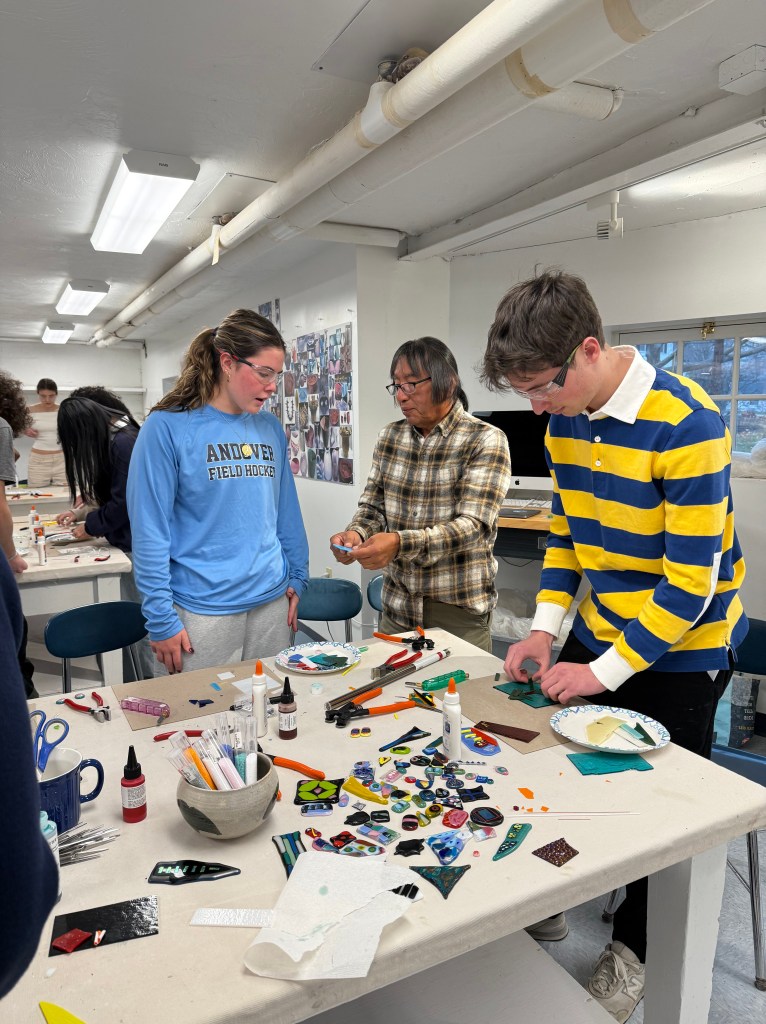
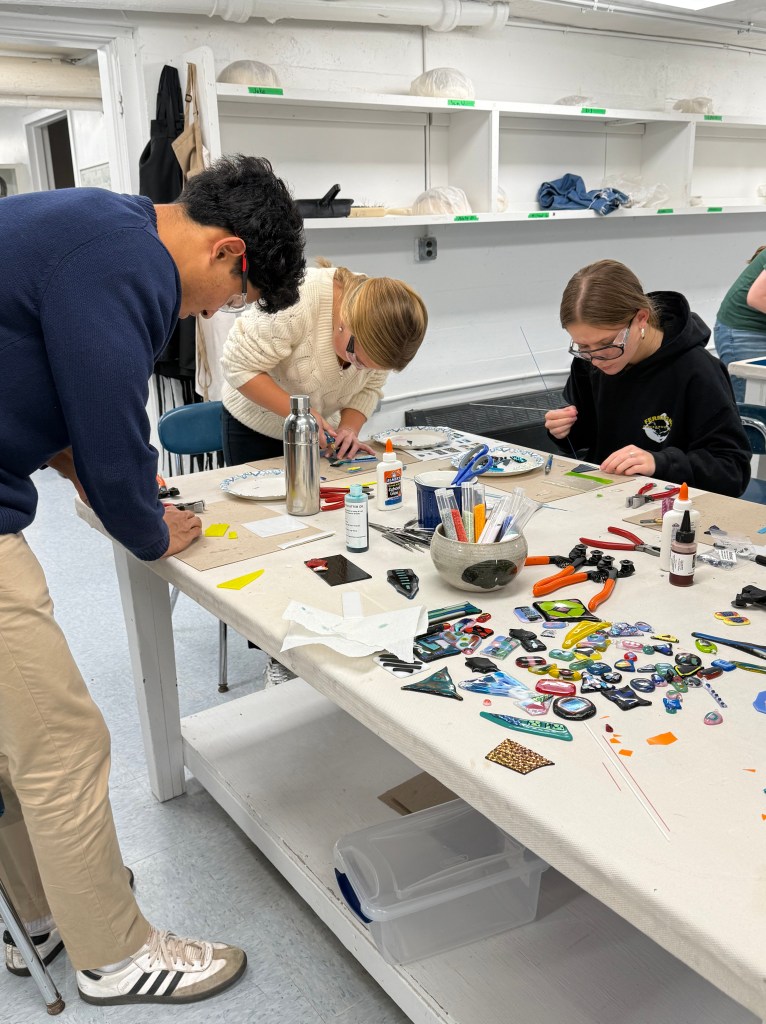
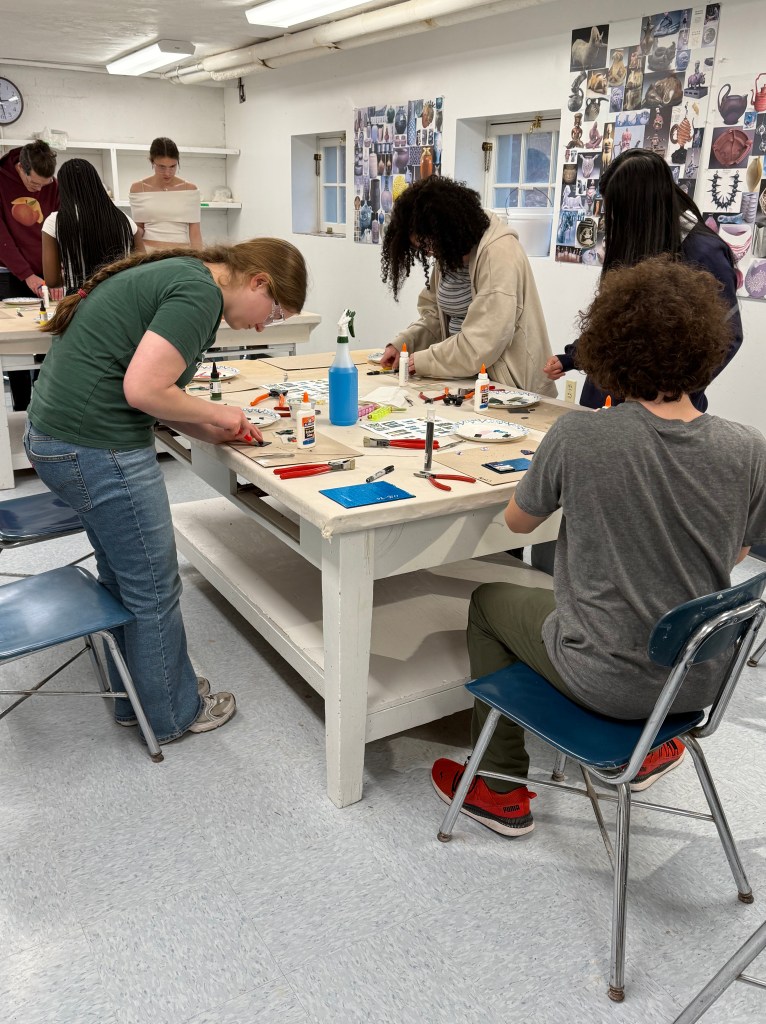
Students at work, creating their own fused glass pieces in their class workshops.
Working with fused glass seemed a little daunting at the beginning of the workshops, but a quick demonstration by Ramson with helpful instructions gave students the courage and motivation to dive in. The plethora of glass pieces to work with – stringers, millefiori, frit, swizzle sticks, dichroic, and ribbons – came in many shapes, textures, and colors. Students worked side by side creating their pieces of art, asking Ramson questions about his techniques and listening to stories about his life and art journey.
“Working with fused glass, you need to be prepared to forfeit control…” was Ramson’s important insight that would hold true from assembling our glass pieces to the final kiln firing of our pieces. No matter the shape or size of your glass piece – after firing – it would melt down to around 6mm thick. Ramson calls this the “6mm rule.” I found it best to go into a fused glass design with no plan, as your final product would tend to come out a little different from what you’d imagine… most of the time it would look even better!
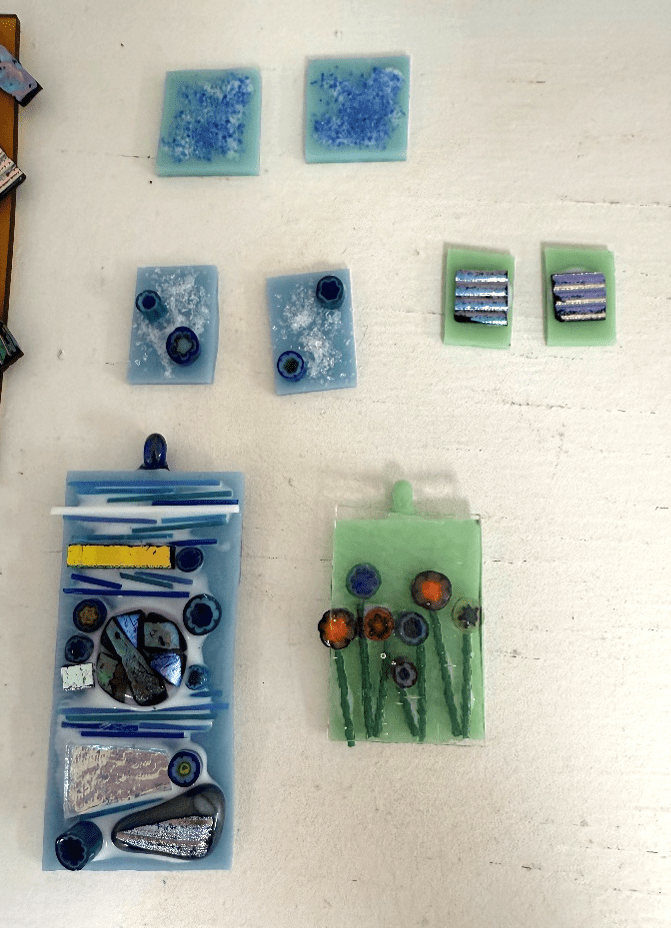
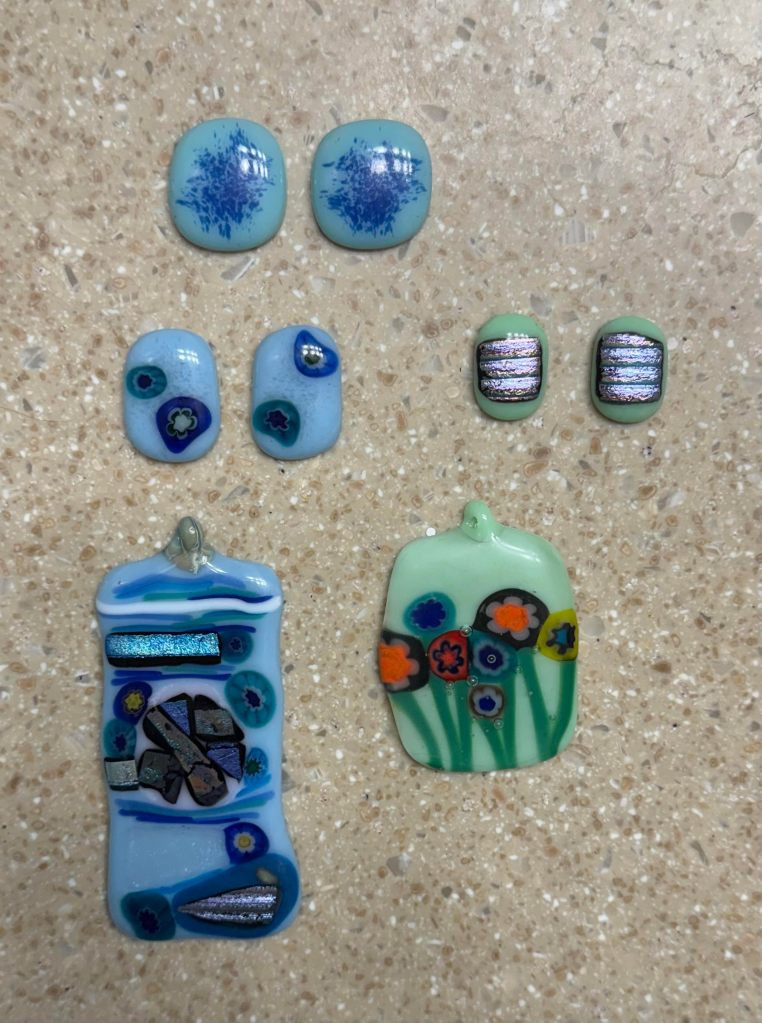
This year I created two pendants and (hopefully) some pieces to assemble into earrings. You can see my “before and after” photos of my glass pieces at the end of this blog. In the meantime, see below for some finished pieces by PA community members.
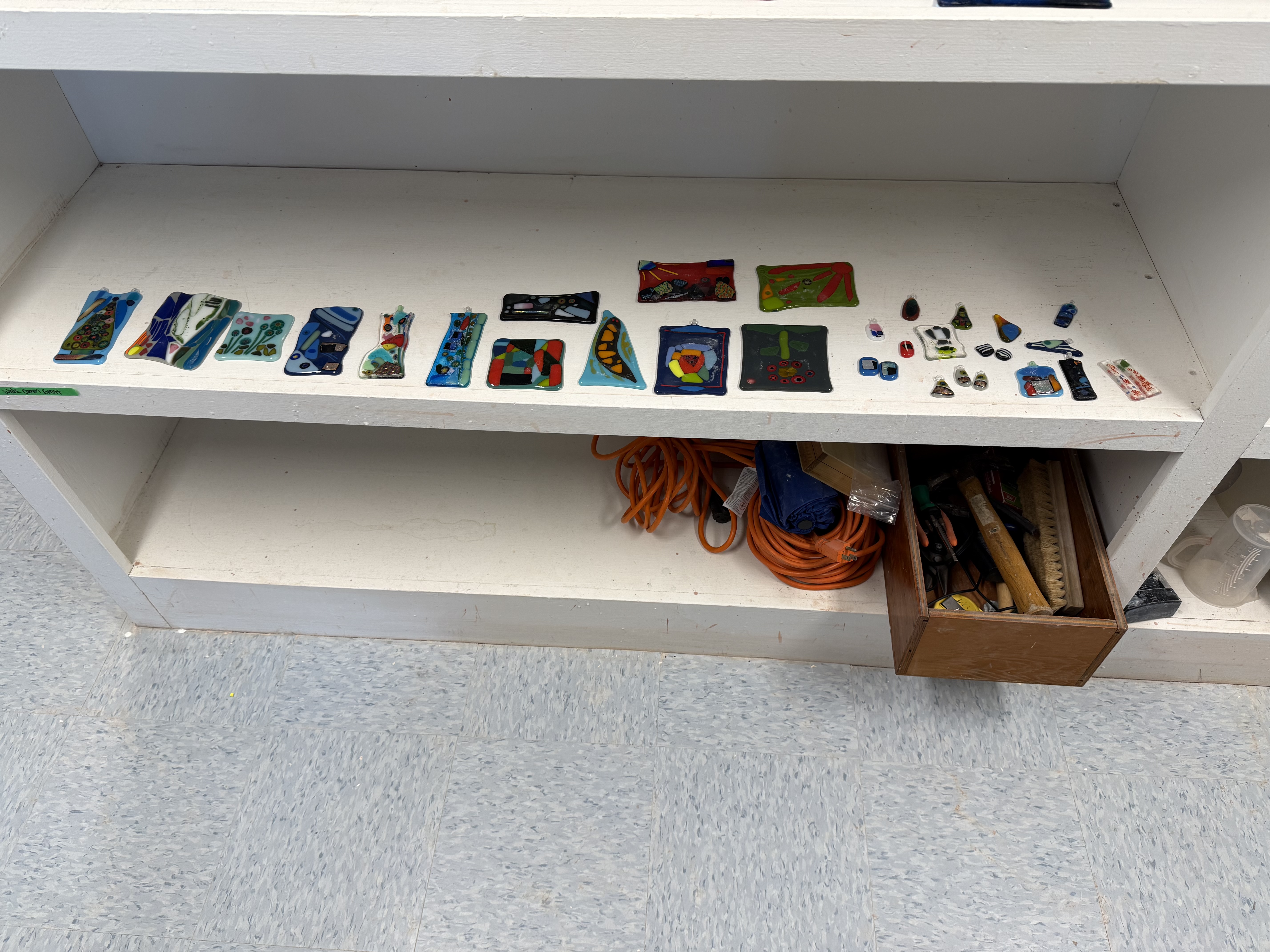
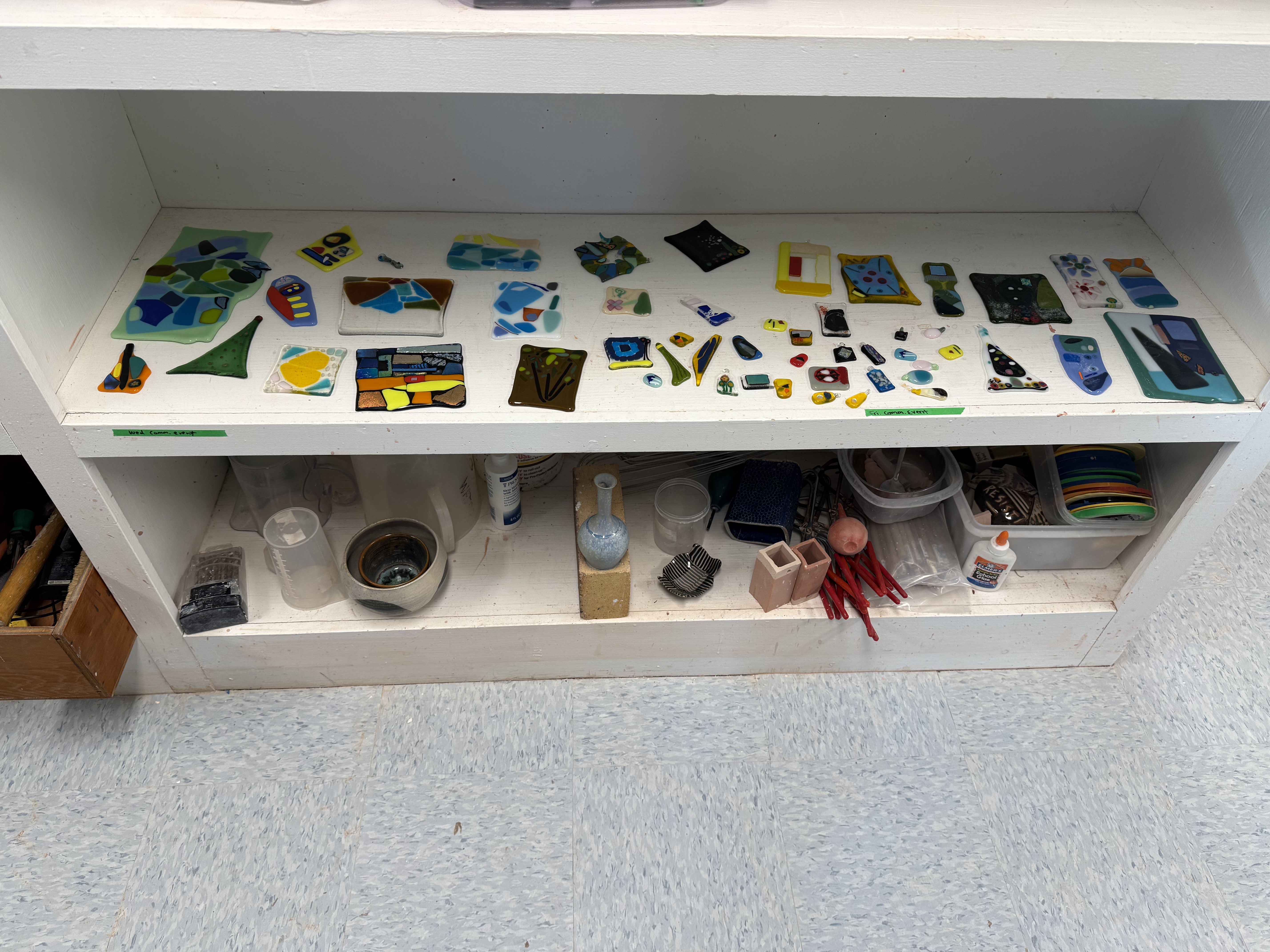
Finished fused glass pieces from the PA community workshops.
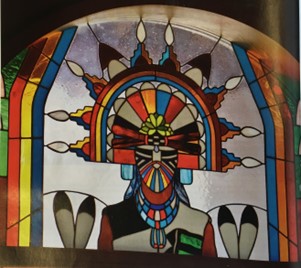
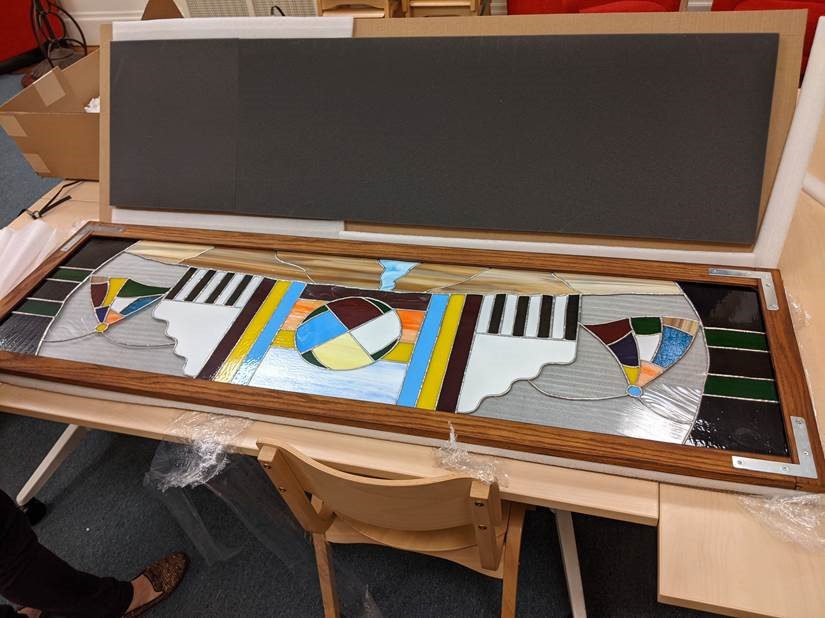
We are very fortunate to have acquired a stained-glass piece that Ramson created for the Peabody. We look forward to completing its installation in the Peabody’s front transom window once the next iteration of the building renovation is complete.
Ramson’s stained glass piece, commissioned by the Peabody.
We are very grateful for the time that Ramson dedicates to working with and educating our PA students and campus community! We hope to have him back next year! For more information about Ramson and the PA fused glass workshops, check out this article by the Andover Magazine (i.e. page spread #10-11, Digging Deeper article).
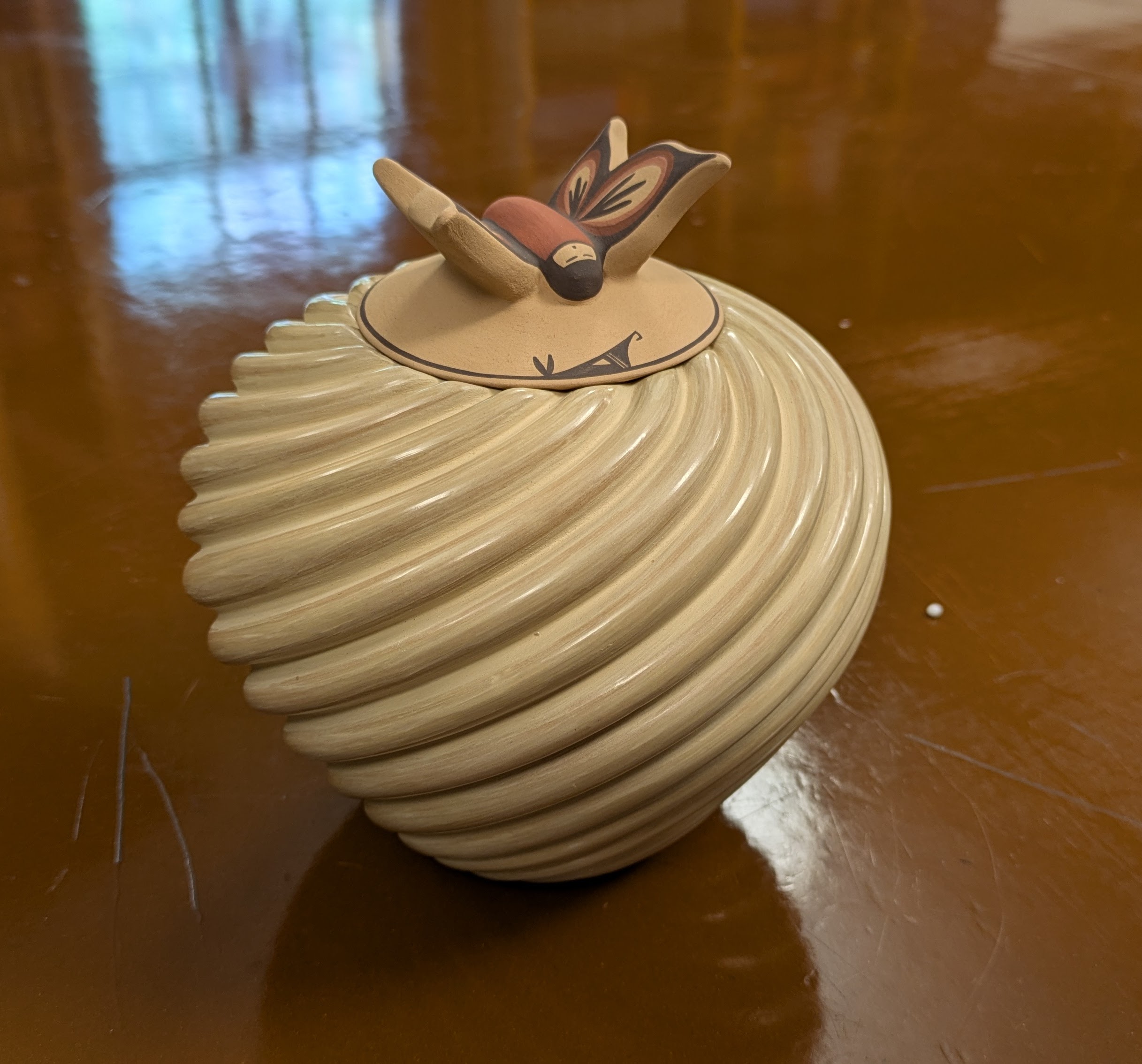
Mia Toya’s melon swirl vessel with distinctive butterfly lid. I particularly like the creamy slip, which sets this piece apart from others in the Peabody collections.
Early this fall–just after Santa Fe Indian Market–we were fortunate to add to the Peabody Institute collections this lovely melon swirl vessel by Mia Toya (Pueblo of Jemez). Mia and her family have a long relationship with the Peabody and Phillips Academy, regularly coming to campus to conduct week-long workshops on Pueblo pottery making with students in Thayer Zaeder’s studio ceramics classes.
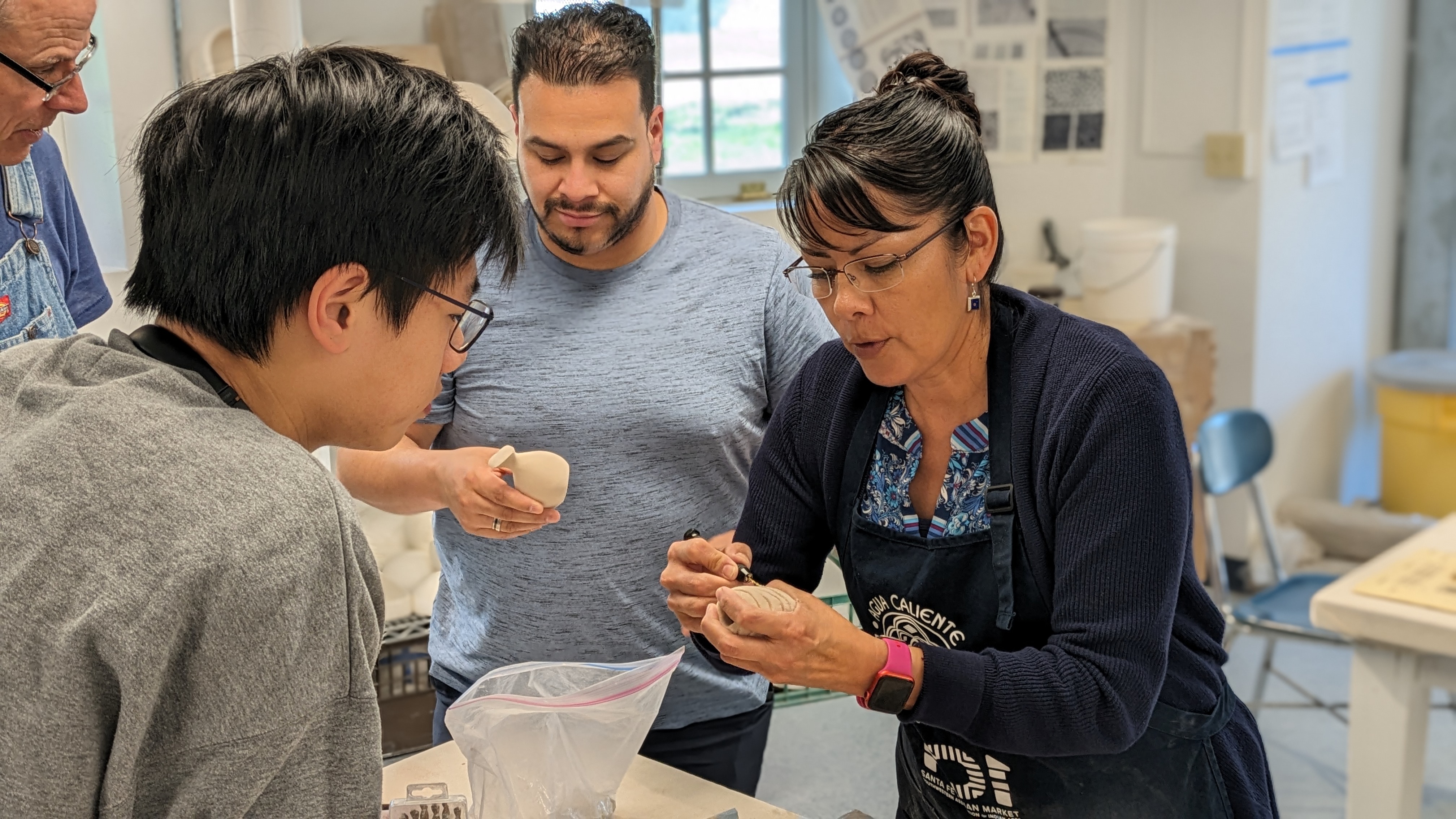
Mia helps a student perfect their piece in Thayer Zaeder’s campus ceramics studio, May 2024.
Mia is a member of the Corn Clan and was inspired to continue the long lived tradition of working with clay from many members of her family who are well known artists, including her mom Maxine, grandmother Marie G. Romero, aunt Laura Gachupin, and her sister Dominique. Mia began working with clay at the age of 14 and continues to add her unique style of art to this day, constructing pieces using hand coiling methods, stone polished slips, and figural elements like her distinctive butterfly lids.
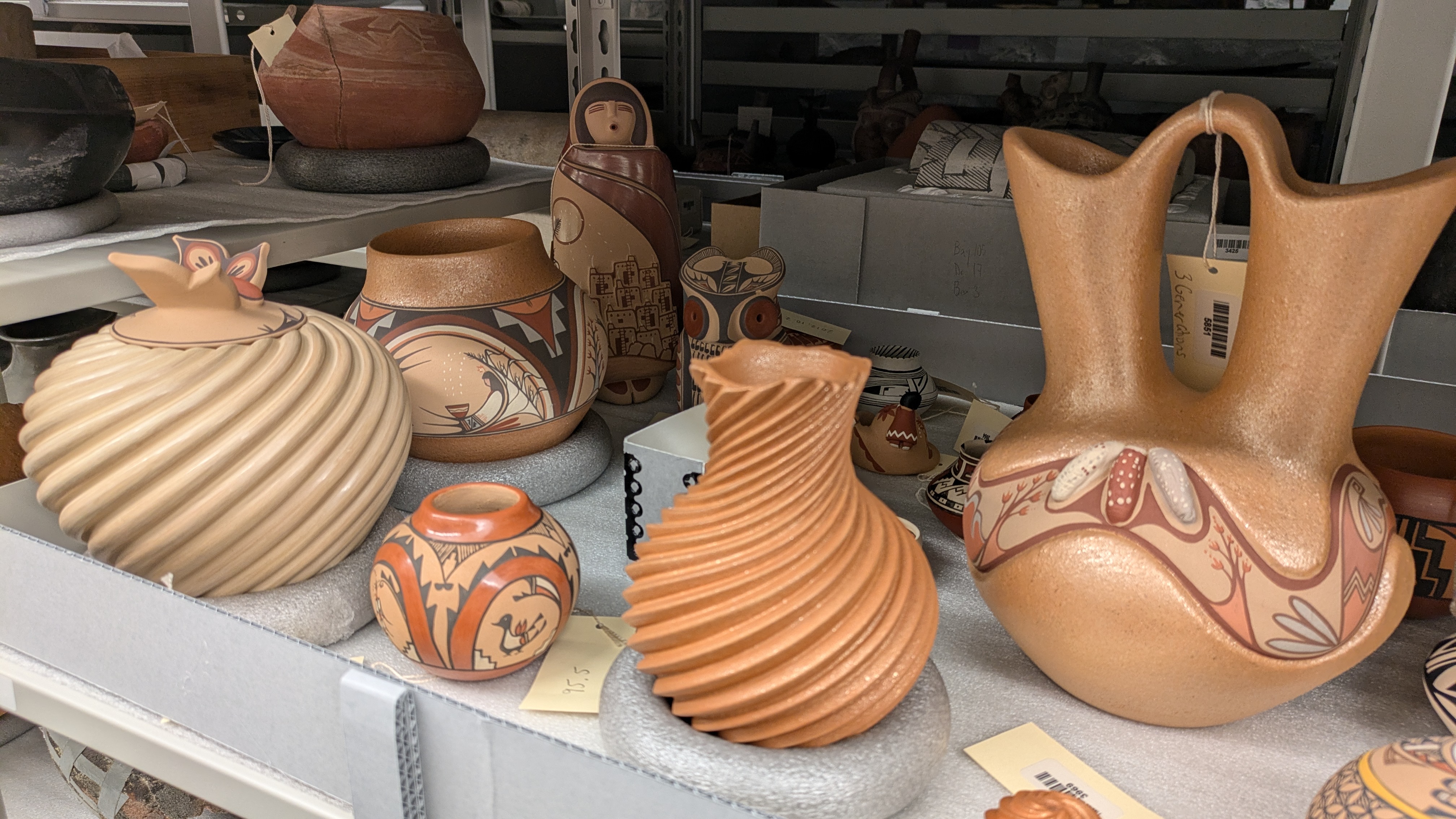
Mia’s piece (far left) joins other Toya Family creations in the Peabody Institute collections, including collaborations between Dominique and Maxine Toya, Maxine’s storyteller and owl figures, Dominique’s distinctive micaceous swirl vessels, and a piece by Mia’s grandmother Marie G. Romero (second from the left).
Watching Mia work with students, its not surprising that in addition to being an accomplished artist, she’s also an educator. Mia teaches second grade at Jemez Day School. A Bureau of Indian Education social media post from 2016 includes a quote from Mia, reflecting on becoming a National Board Certified teacher, “I always knew I wanted to teach in this school–to serve the kids in my community and be one of their role models. Being a National Board Certified teacher helps me give my best to my students, community, and Tribe every day.”
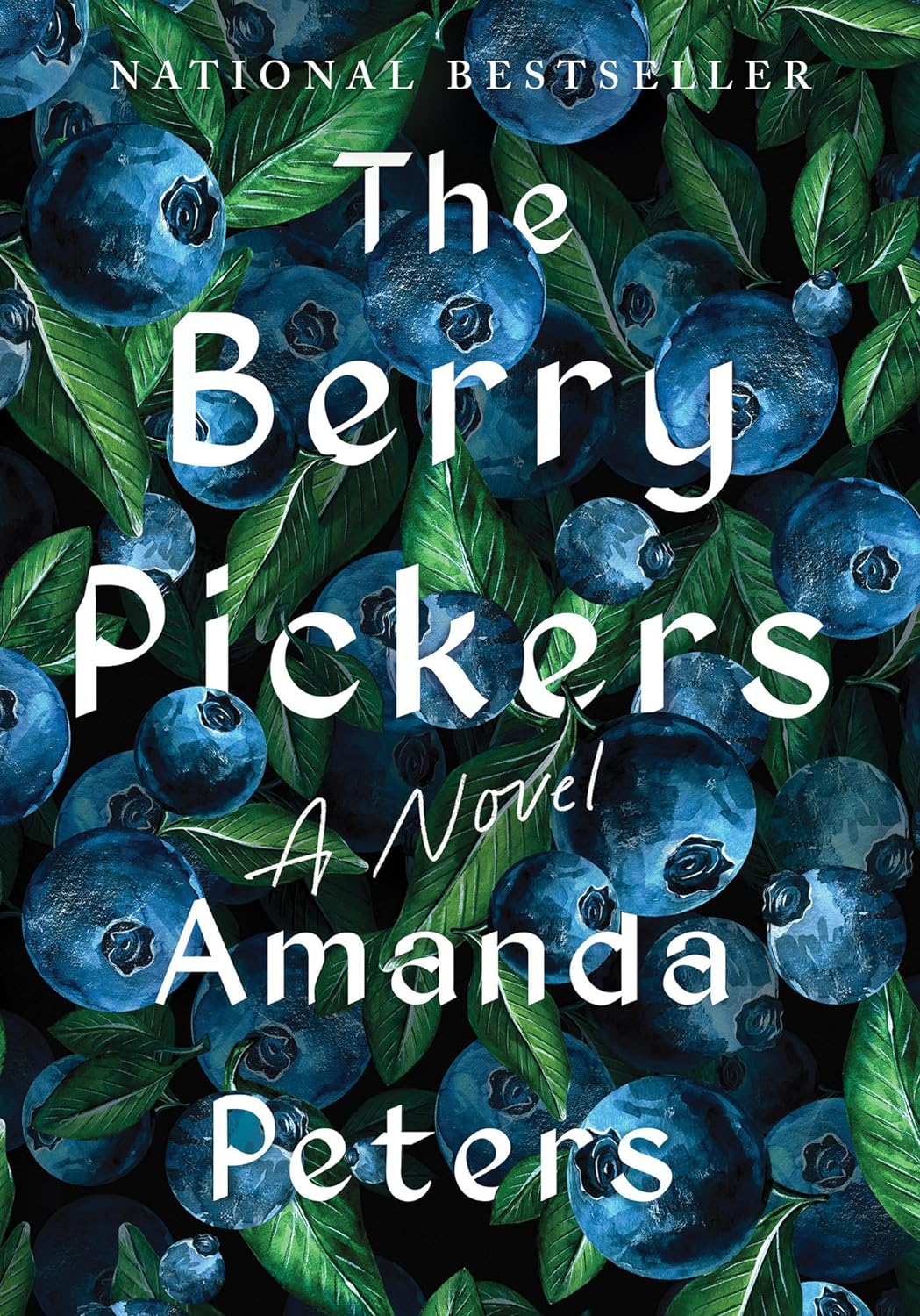
A four-year-old Mi’kmaq girl goes missing from the blueberry fields of Maine, sparking a tragic mystery that haunts the survivors, unravels a community, and remains unsolved for nearly fifty years.
The Berry Pickers is a heartbreaking, riveting tale of Indigenous family separation. We follow an Indigenous Mi’kmaq family in Nova Scotia who travels every summer to Maine to pick blueberries as migrant workers. In the summer of 1962, 4-year-old Ruthie, the youngest of the family’s five children, disappears from the fields. The last to see her is the second youngest, 6-year-old Joe, who takes the loss especially hard and carries his guilt in the years to come.
The book is told through two alternating character perspectives – one being Ruthie’s brother Joe and the second being a young girl named Norma. Growing up in Maine as the only child of affluent and overprotective parents, Norma, struggles to find the truth behind her recurring dreams and visions (that seem more like memories than imagination). As time and secrets unfold, these two storylines ultimately converge.
This is a treasure of a book – filled with loss and sadness yet manages to be hopeful as well. Amanda Peters (Mi’kmaq, Glooscap First Nation) has a lot of empathy for her characters and gently invites readers to examine the affects of intergenerational trauma, racist residential institutions, and the specific ways Indigenous families were treated – in a deeply personal way.
This story is both powerful and moving. Although told quietly, it did not take away from its impact.
Next on my list to read is Amanda Peter’s newest book, Waiting for the Long Night Moon: Stories. This is her debut collection of short fiction that describes Indigenous experiences across time and space – from contact with European settlers, to the forced removal of Indigenous children, to the present-day fight for the right to clean water.
The book will be available August 2024 in Canada and January 2024 in the U.S.