The Exploits of the JAE: Open Access Publishing Meets Archaeology and Education

Contributed by Ryan Wheeler

Poster sessions are a great way to share information and connect with people at the annual meeting of the Society for American Archaeology. Exhibitors have two hours to share their research and projects, connecting at length with attendees that stop by to chat–a bit less pressure than the regular sessions and symposia! At the recent 89th annual meeting of the SAA, the Journal of Archaeology & Education was represented at the Thursday afternoon posters after hours session. For those that couldn’t make it, here are some highlights of our poster:

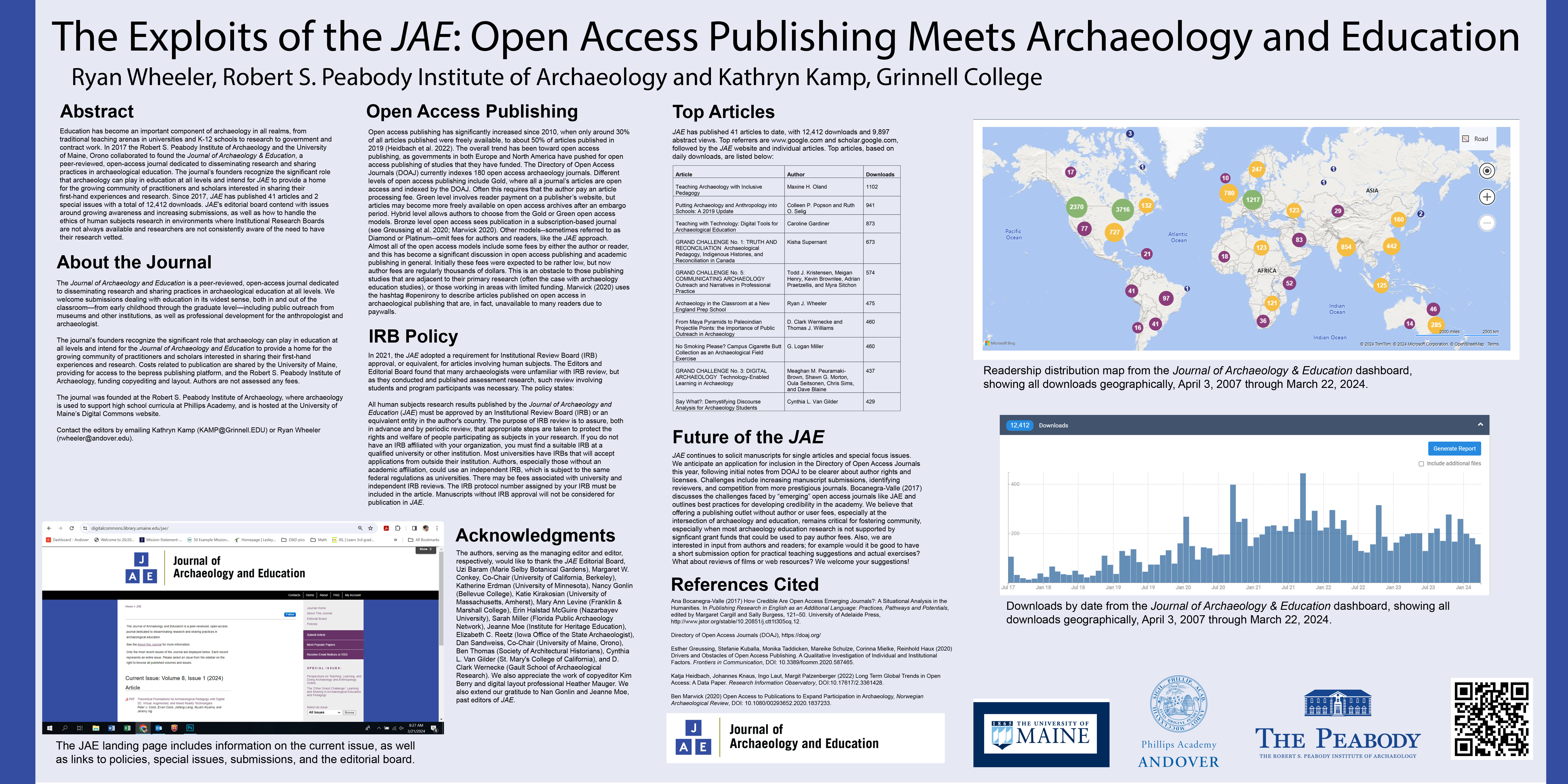
JAE poster from the recent SAA annual meeting.

Abstract

Education has become an important component of archaeology in all realms, from traditional teaching arenas in universities and K-12 schools to research to government and contract work. In 2017 the Robert S. Peabody Institute of Archaeology and the University of Maine, Orono collaborated to found the Journal of Archaeology & Education, a peer-reviewed, open-access journal dedicated to disseminating research and sharing practices in archaeological education. The journal’s founders recognize the significant role that archaeology can play in education at all levels and intend for JAE to provide a home for the growing community of practitioners and scholars interested in sharing their first-hand experiences and research. Since 2017, JAE has published 41 articles and 2 special issues with a total of 12,412 downloads. JAE’s editorial board contend with issues around growing awareness and increasing submissions, as well as how to handle the ethics of human subjects research in environments where Institutional Research Boards are not always available and researchers are not consistently aware of the need to have their research vetted.

About the Journal

The Journal of Archaeology and Education is a peer-reviewed, open-access journal dedicated to disseminating research and sharing practices in archaeological education at all levels. We welcome submissions dealing with education in its widest sense, both in and out of the classroom—from early childhood through the graduate level—including public outreach from museums and other institutions, as well as professional development for the anthropologist and archaeologist.


The journal’s founders recognize the significant role that archaeology can play in education at all levels and intend for the Journal of Archaeology and Education to provide a home for the growing community of practitioners and scholars interested in sharing their first-hand experiences and research. Costs related to publication are shared by the University of Maine, providing for access to the bepress publishing platform, and the Robert S. Peabody Institute of Archaeology, funding copyediting and layout. Authors are not assessed any fees.


The journal was founded at the Robert S. Peabody Institute of Archaeology, where archaeology is used to support high school curricula at Phillips Academy, and is hosted at the University of Maine’s Digital Commons website. Contact the editors by emailing Kathryn Kamp (KAMP@Grinnell.EDU) or Ryan Wheeler (rwheeler@andover.edu).

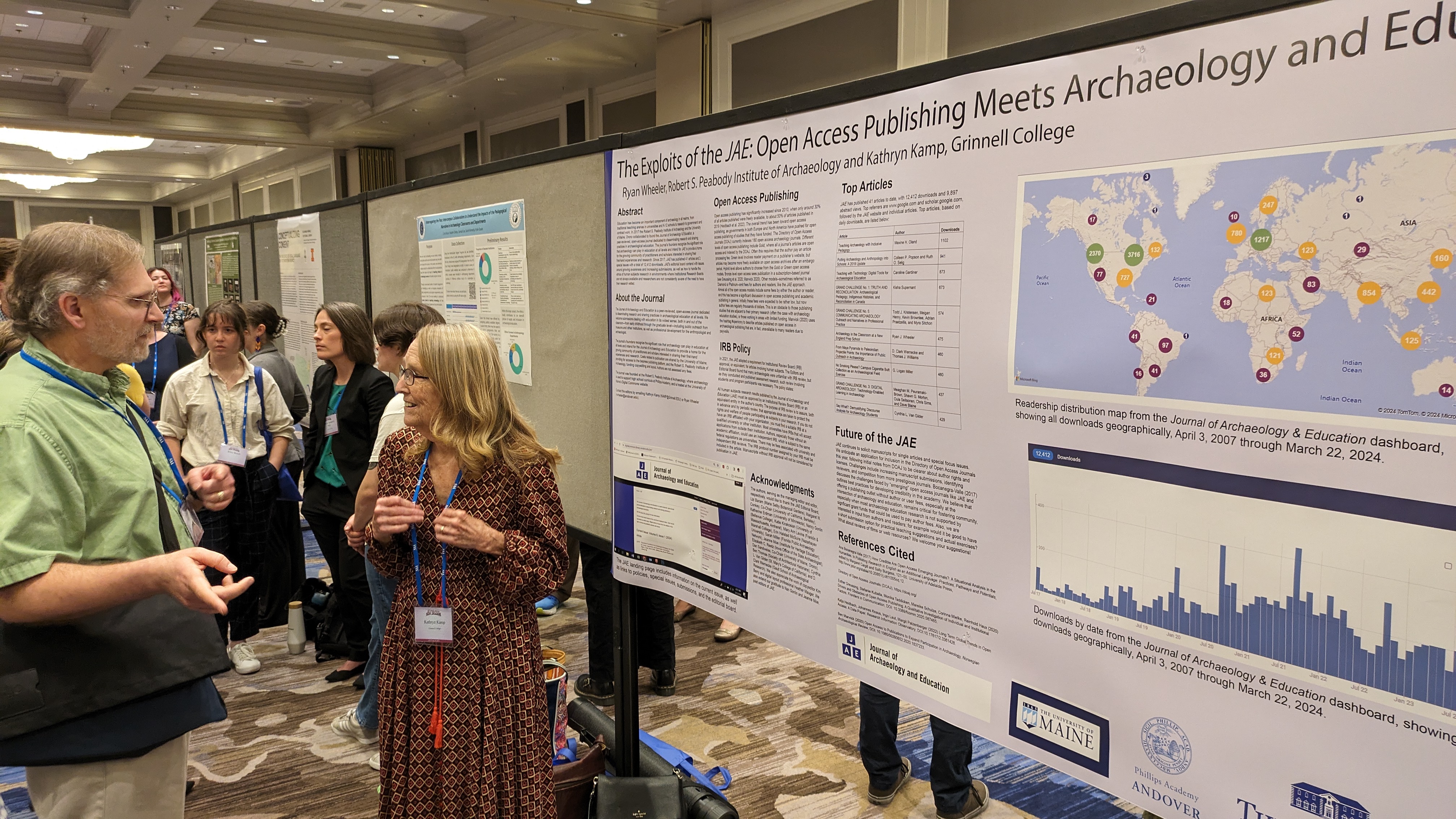
JAE editor Kathryn Kamp talks to attendees at the poster session.

Open Access Publishing

Open access publishing has significantly increased since 2010, when only around 30% of all articles published were freely available, to about 50% of articles published in 2019 (Heidbach et al. 2022). The overall trend has been toward open access publishing, as governments in both Europe and North America have pushed for open access publishing of studies that they have funded. The Directory of Open Access Journals (DOAJ) currently indexes 180 open access archaeology journals. Different levels of open access publishing include Gold, where all a journal’s articles are open access and indexed by the DOAJ. Often this requires that the author pay an article processing fee. Green level involves reader payment on a publisher’s website, but articles may become more freely available on open access archives after an embargo period. Hybrid level allows authors to choose from the Gold or Green open access models. Bronze level open access sees publication in a subscription-based journal (see Greussing et al. 2020; Marwick 2020). Other models–sometimes referred to as Diamond or Platinum–omit fees for authors and readers, like the JAE approach. Almost all of the open access models include some fees by either the author or reader, and this has become a significant discussion in open access publishing and academic publishing in general. Initially these fees were expected to be rather low, but now author fees are regularly thousands of dollars. This is an obstacle to those publishing studies that are adjacent to their primary research (often the case with archaeology education studies), or those working in areas with limited funding. Marwick (2020) uses the hashtag #openirony to describe articles published on open access in archaeological publishing that are, in fact, unavailable to many readers due to paywalls.

IRB Policy

In 2021, the JAE adopted a requirement for Institutional Review Board (IRB) approval, or equivalent, for articles involving human subjects. The Editors and Editorial Board found that many archaeologists were unfamiliar with IRB review, but as they conducted and published assessment research, such review involving students and program participants was necessary. The policy states:


All human subjects research results published by the Journal of Archaeology and Education (JAE) must be approved by an Institutional Review Board (IRB) or an equivalent entity in the author’s country. The purpose of IRB review is to assure, both in advance and by periodic review, that appropriate steps are taken to protect the rights and welfare of people participating as subjects in your research. If you do not have an IRB affiliated with your organization, you must find a suitable IRB at a qualified university or other institution. Most universities have IRBs that will accept applications from outside their institution. Authors, especially those without an academic affiliation, could use an independent IRB, which is subject to the same federal regulations as universities. There may be fees associated with university and independent IRB reviews. The IRB protocol number assigned by your IRB must be included in the article. Manuscripts without IRB approval will not be considered for publication in JAE.

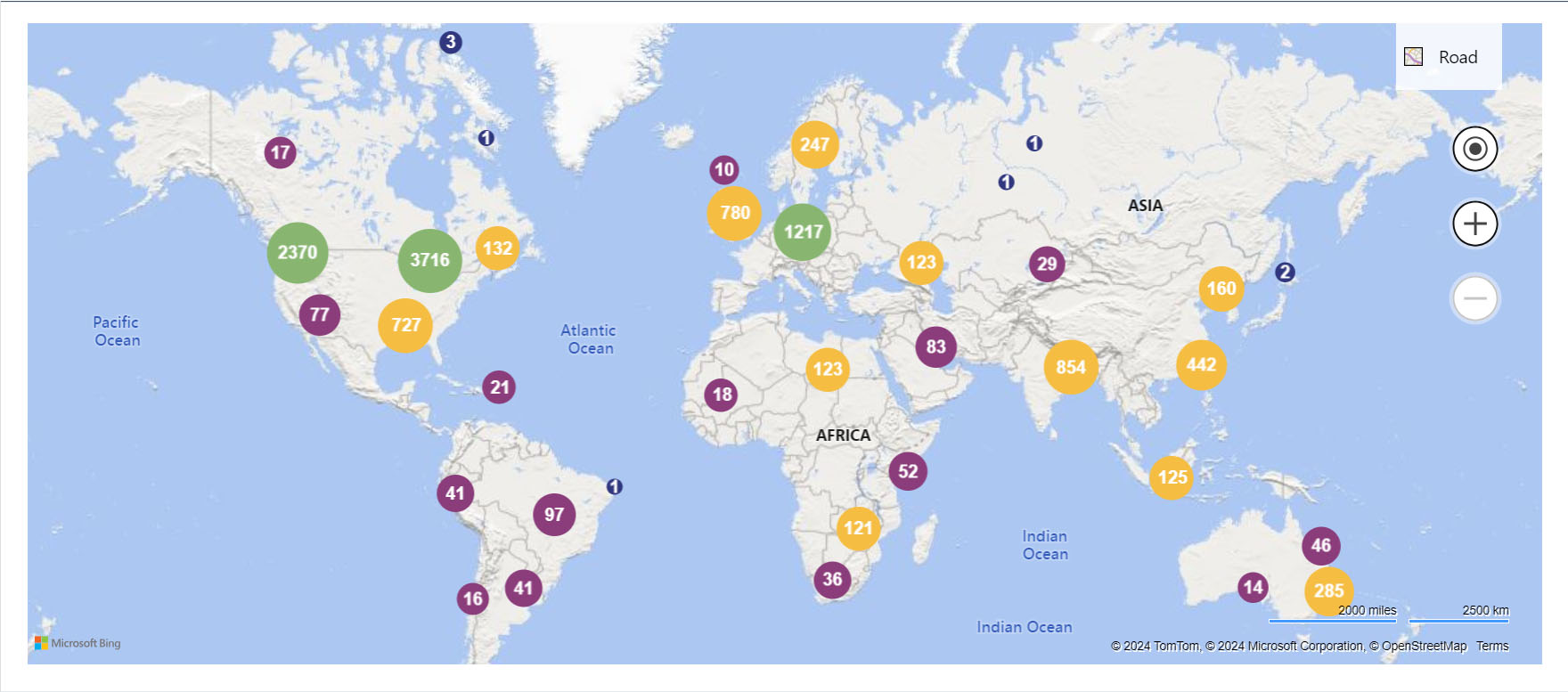
Geographic depiction of downloads from the JAE dashboard.

Top Articles

AE has published 41 articles to date, with 12,412 downloads and 9,897 abstract views. Top referrers are http://www.google.com and scholar.google.com, followed by the JAE website and individual articles. Top articles, based on daily downloads, are listed below:

ArticleAuthorDownloads
Teaching Archaeology with Inclusive PedagogyMaxine H. Oland1102
Putting Archaeology and Anthropology into Schools: A 2019 UpdateColleen P. Popson and Ruth O. Selig941
Teaching with Technology: Digital Tools for Archaeological EducationCaroline Gardiner873
GRAND CHALLENGE No. 1: TRUTH AND RECONCILIATION  Archaeological Pedagogy, Indigenous Histories, and Reconciliation in CanadaKisha Supernant673
GRAND CHALLENGE No. 5: COMMUNICATING ARCHAEOLOGY Outreach and Narratives in Professional PracticeTodd J. Kristensen, Meigan Henry, Kevin Brownlee, Adrian Praetzellis, and Myra Sitchon574
Archaeology in the Classroom at a New England Prep SchoolRyan J. Wheeler475
From Maya Pyramids to Paleoindian Projectile Points: the Importance of Public Outreach in ArchaeologyD. Clark Wernecke and Thomas J. Williams460
No Smoking Please? Campus Cigarette Butt Collection as an Archaeological Field ExerciseG. Logan Miller460
GRAND CHALLENGE No. 3: DIGITAL ARCHAEOLOGY  Technology-Enabled Learning in ArchaeologyMeaghan M. Peuramaki-Brown, Shawn G. Morton, Oula Seitsonen, Chris Sims, and Dave Blaine437
Say What?: Demystifying Discourse Analysis for Archaeology StudentsCynthia L. Van Gilder429

Future of JAE

JAE continues to solicit manuscripts for single articles and special focus issues. We anticipate an application for inclusion in the Directory of Open Access Journals this year, following initial notes from DOAJ to be clearer about author rights and licenses. Challenges include increasing manuscript submissions, identifying reviewers, and competition from more prestigious journals. Bocanegra-Valle (2017) discusses the challenges faced by “emerging” open access journals like JAE and outlines best practices for developing credibility in the academy. We believe that offering a publishing outlet without author or user fees, especially at the intersection of archaeology and education, remains critical for fostering community, especially when most archaeology education research is not supported by significant grant funds that could be used to pay author fees. Also, we are interested in input from authors and readers; for example would it be good to have a short submission option for practical teaching suggestions and actual exercises? What about reviews of films or web resources? We welcome your suggestions!

JAE managing editor ready to engage attendees at the poster session.

References Cited

Ana Bocanegra-Valle (2017) How Credible Are Open Access Emerging Journals?: A Situational Analysis in the Humanities. In Publishing Research in English as an Additional Language: Practices, Pathways and Potentials, edited by Margaret Cargill and Sally Burgess, 121–50. University of Adelaide Press, http://www.jstor.org/stable/10.20851/j.ctt1t305cq.12.


Directory of Open Access Journals (DOAJ), https://doaj.org/


Esther Greussing, Stefanie Kuballa, Monika Taddicken, Mareike Schulze, Corinna Mielke, Reinhold Haux (2020) Drivers and Obstacles of Open Access Publishing. A Qualitative Investigation of Individual and Institutional Factors. Frontiers in Communication, DOI: 10.3389/fcomm.2020.587465.


Katja Heidbach, Johannes Knaus, Ingo Laut, Margit Palzenberger (2022) Long Term Global Trends in Open Access: A Data Paper. Research Information Observatory, DOI:10.17617/2.3361428.


Ben Marwick (2020) Open Access to Publications to Expand Participation in Archaeology, Norwegian Archaeological Review, DOI: 10.1080/00293652.2020.1837233.

Human Origins, winter edition

Contributed by Ryan Wheeler

Bigfoot, ancient aliens, Homo naledi, Australopithecines, stone tools, painted pebbles, scientific racism, repatriation. How are these topics connected? Students in the senior science elective Human Origins find out. A lot of it has to do with the history of anthropology–the scientists that studied fossil humans also studied race. The two fields continue to influence one another, not always in the most positive ways. The course is divided into modules that explore science and pseudoscience, human biological evolution and the development of technology and imagery, and the concept of race and scientific racism.

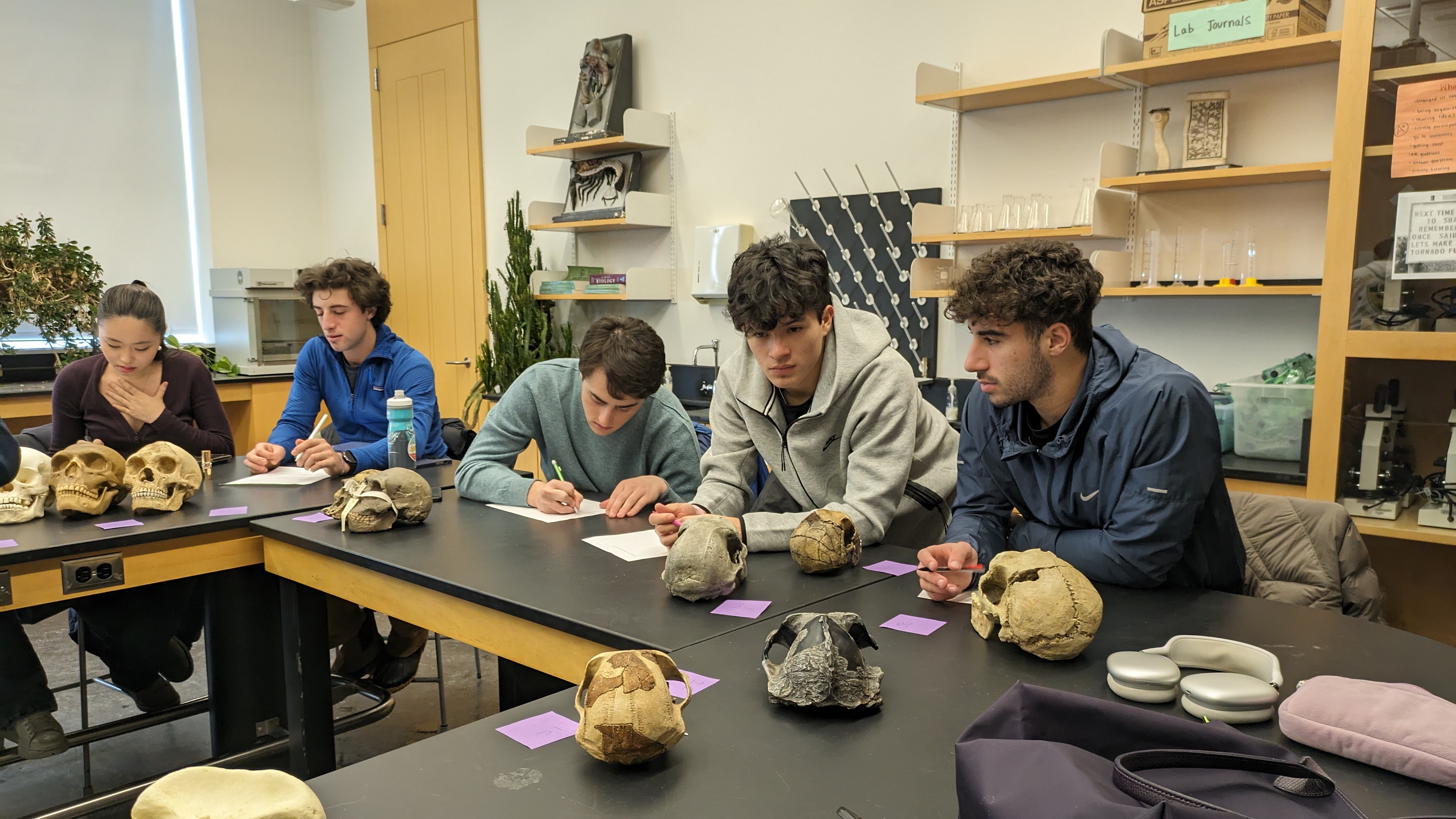
Human Origins students explore some of the Peabody Institute’s fossil human crania casts and models.

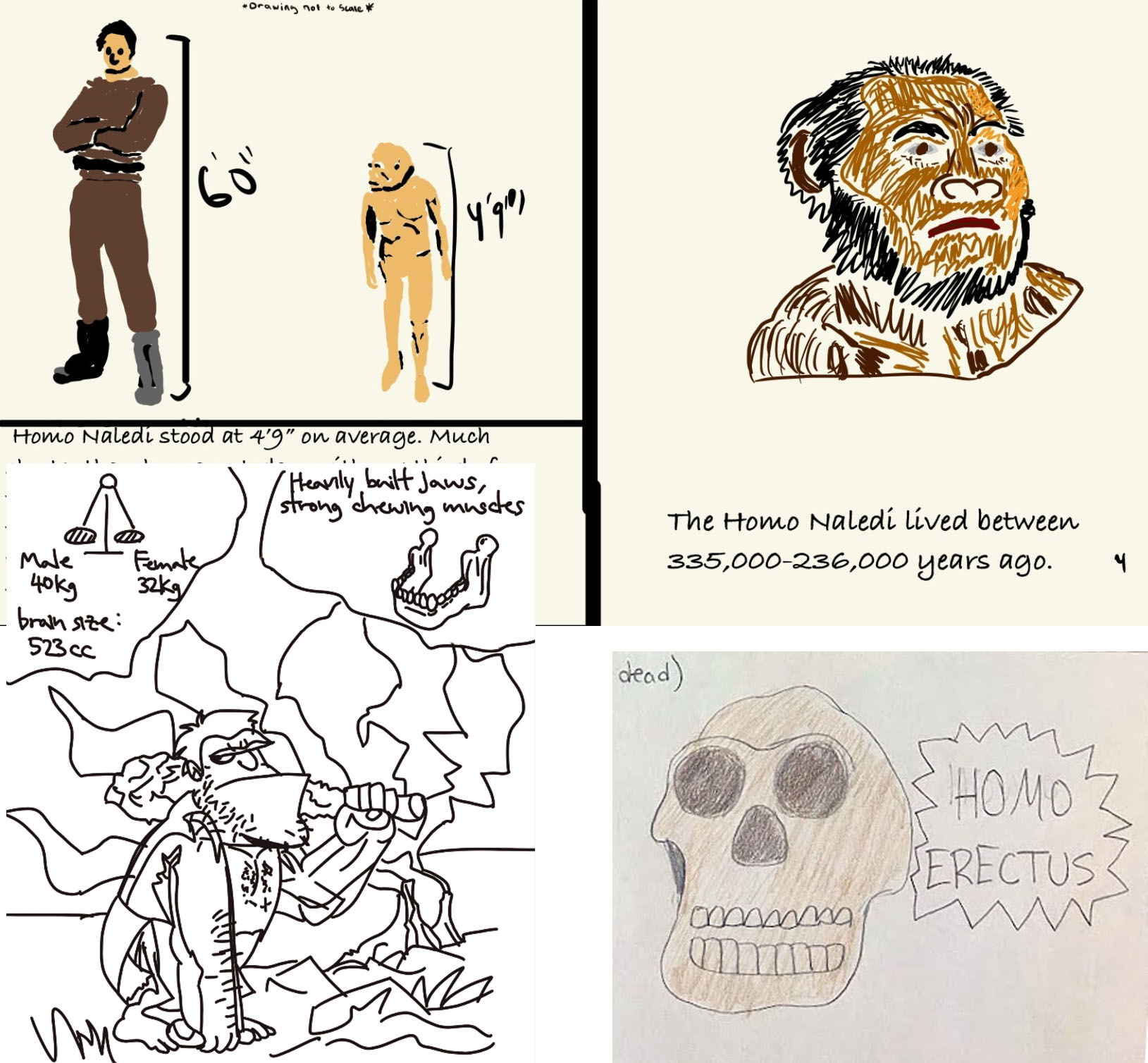
Some of my favorite assignments are team projects that involve producing a trailer for a new tv series on pseudoscience, a new comic pages project that focused on specific fossil humans, and Human Origins in the News, where student teams lead class. We just finished midterm, and I was wowed by the new comic pages assignment. I’ve wanted to develop a comics assignment and I’m really pleased with the results–student teams researched particular fossils and then developed a few comic pages in response to a series of prompts. Students are now making their own chipped stone tools and starting to plan their podcasts for the end of the term.

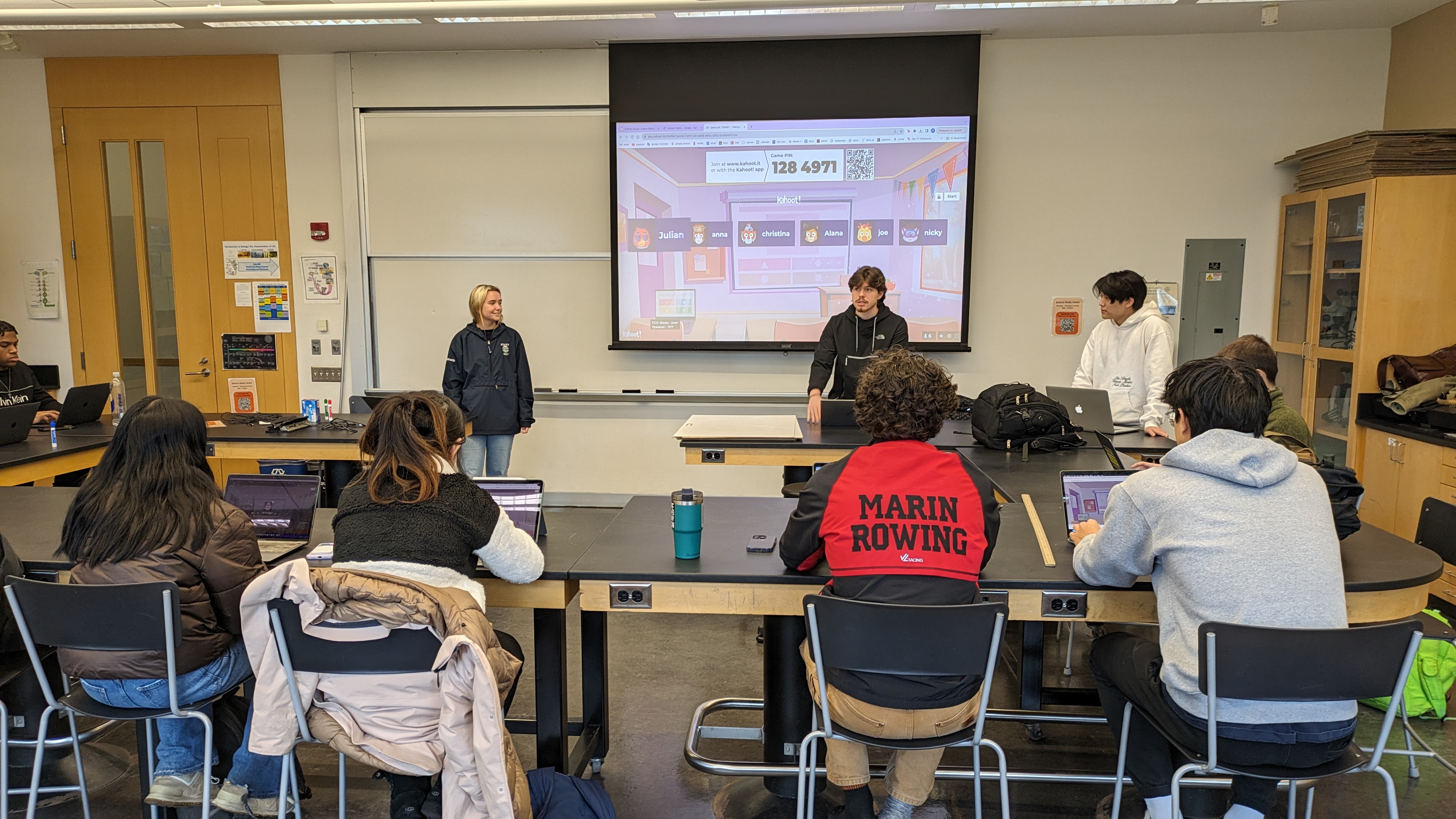
Human Origins students lead class during our “short period” on most Mondays with Human Origins in the News.

A couple of big changes this term include teaching during winter term–usually we’ve offered Human Origins in the fall–and we’ve been meeting the class in the Gelb science building, as Phase 1 of the Peabody Institute renovation wraps up. I’m really grateful to my colleagues in the science division for sharing the Gelb classroom with me. It will be nice to return to the Peabody Institute in the near future. We’ll at least be close-by next week when we explore the atlatl and throw spears on the Chandler-Wormley Vista!

A sample from the comic pages created by Human Origins students this term.

Dominique Toya

Contributed by Ryan J. Wheeler

I’ve sat down several times to write this. It’s hard, for a couple of reasons. Dominique will always remain a remarkable person, funny, talented, generous of spirit, and with a laugh that made everyone around her soar. I think I’ve delayed writing because I feared I wouldn’t find the right words. Also, I was afraid that with the words would come a finality.

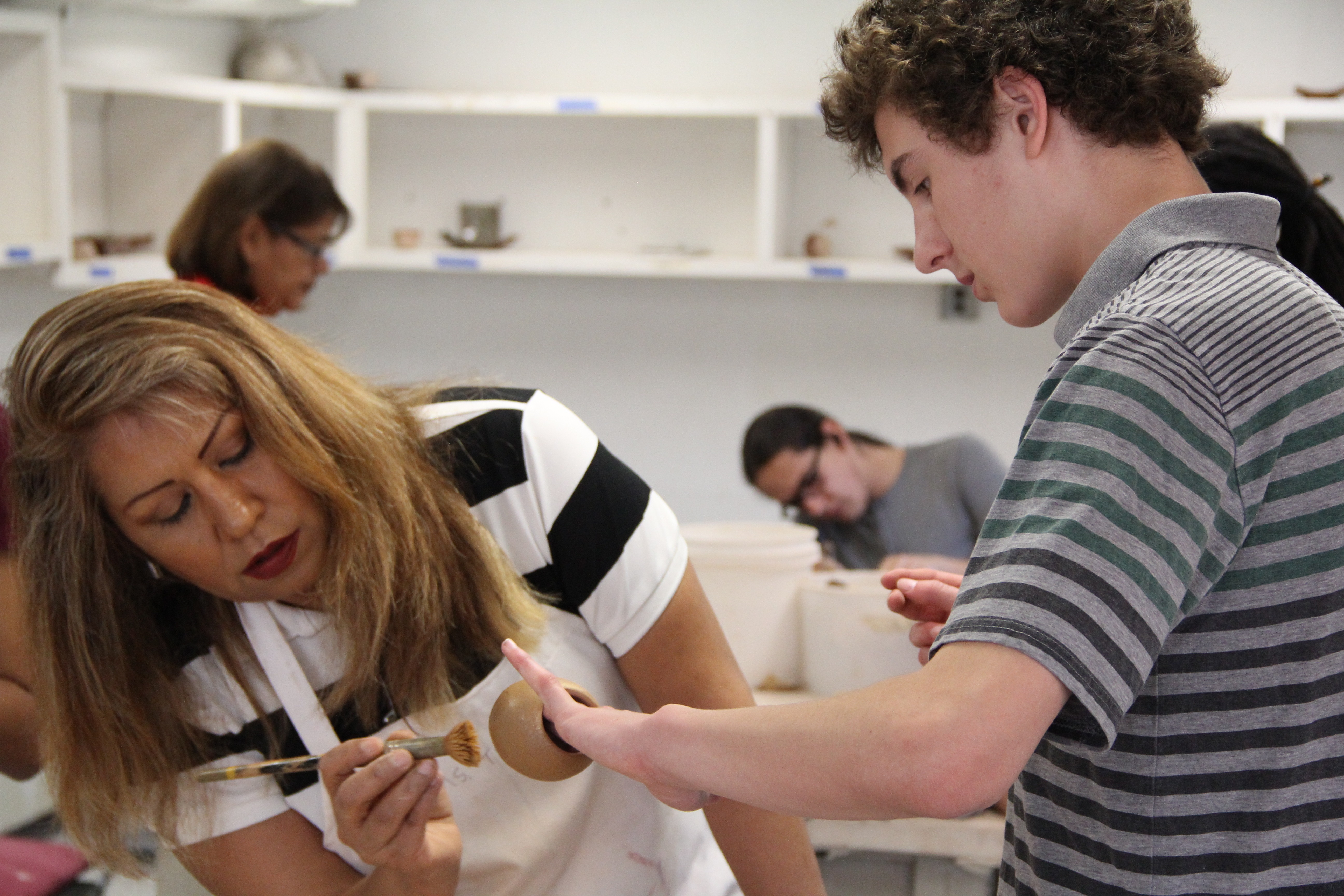
Dominique demonstrates the addition of mica to a student’s piece, May 2016.

Last month saw the passing of a truly remarkable individual. We remain shocked and saddened by the loss of Dominique Toya (1971-2023), who we have been fortunate to know since 2013. Dominique was a fifth generation potter, born to the Corn Clan at the Pueblo of Jemez. Dominique’s particular style of pottery saw the fusion of traditional methods and materials with innovative shapes and surface treatments. Collaboration with her family and other artists produced stunning and innovative results.

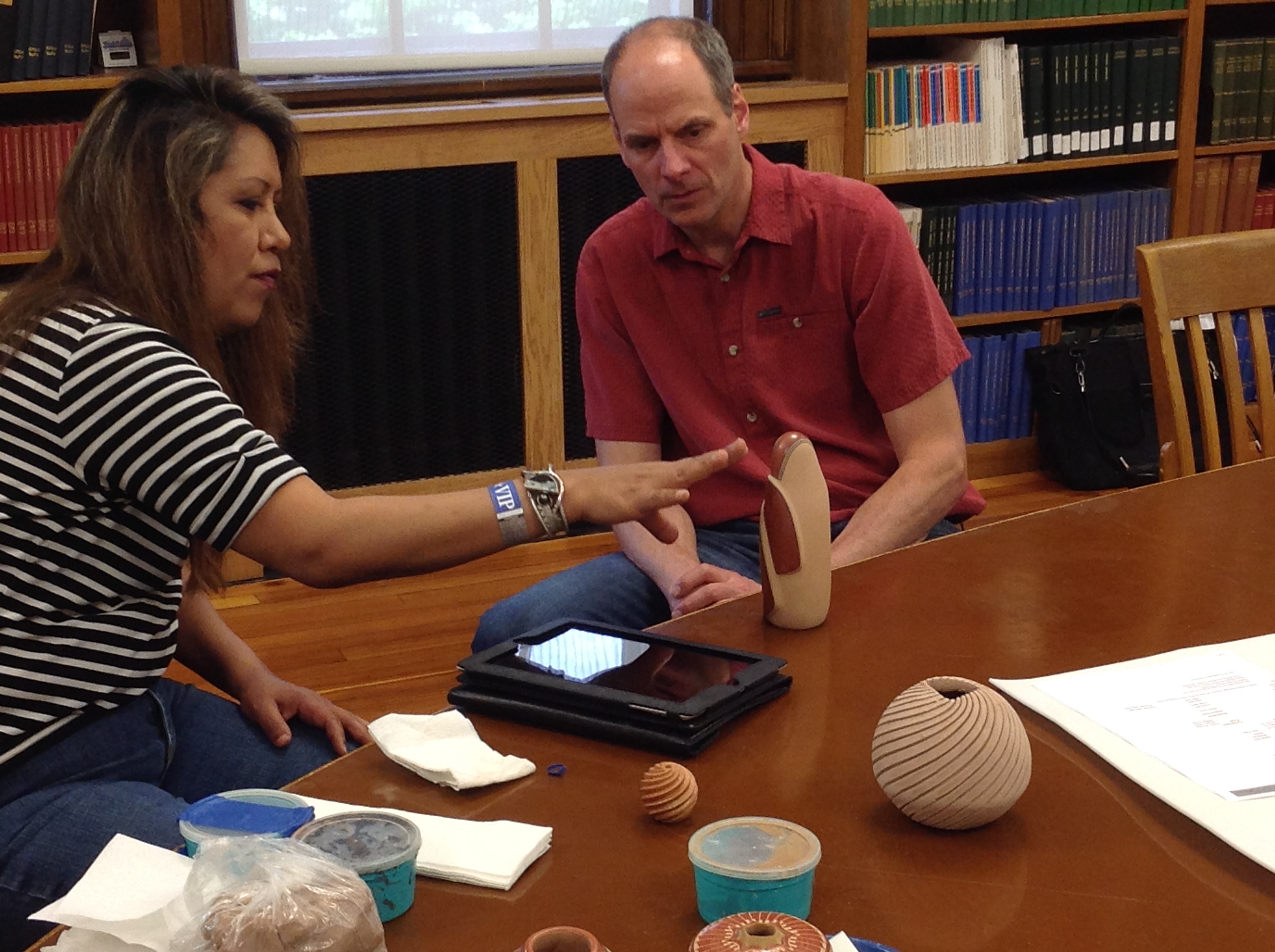
Dominique shares points out the polished details on her mom’s town crier figure to Phillips Academy ceramics instructor Thayer Zaeder, May 2014.

Dominique and her mom Maxine and sister Mia, often with other friends and family, traveled to Andover every year since 2014 to share Pueblo pottery making with Phillips Academy students, faculty, and friends. These weeklong workshops allowed students to make their own ceramic pieces with clay from New Mexico, finished, decorated, guided, and encouraged by the Toya Family. One year I conducted interviews with students following the finale of the class—an open-air firing. Considering all that Phillips Academy has to offer, I was a bit surprised when many of the students said their time with Dominique and her family was their best Andover experience. I shouldn’t have been surprised. Dominique was far more than a gifted artist; she was an ambassador of Indigenous art, and above all, a generous teacher.

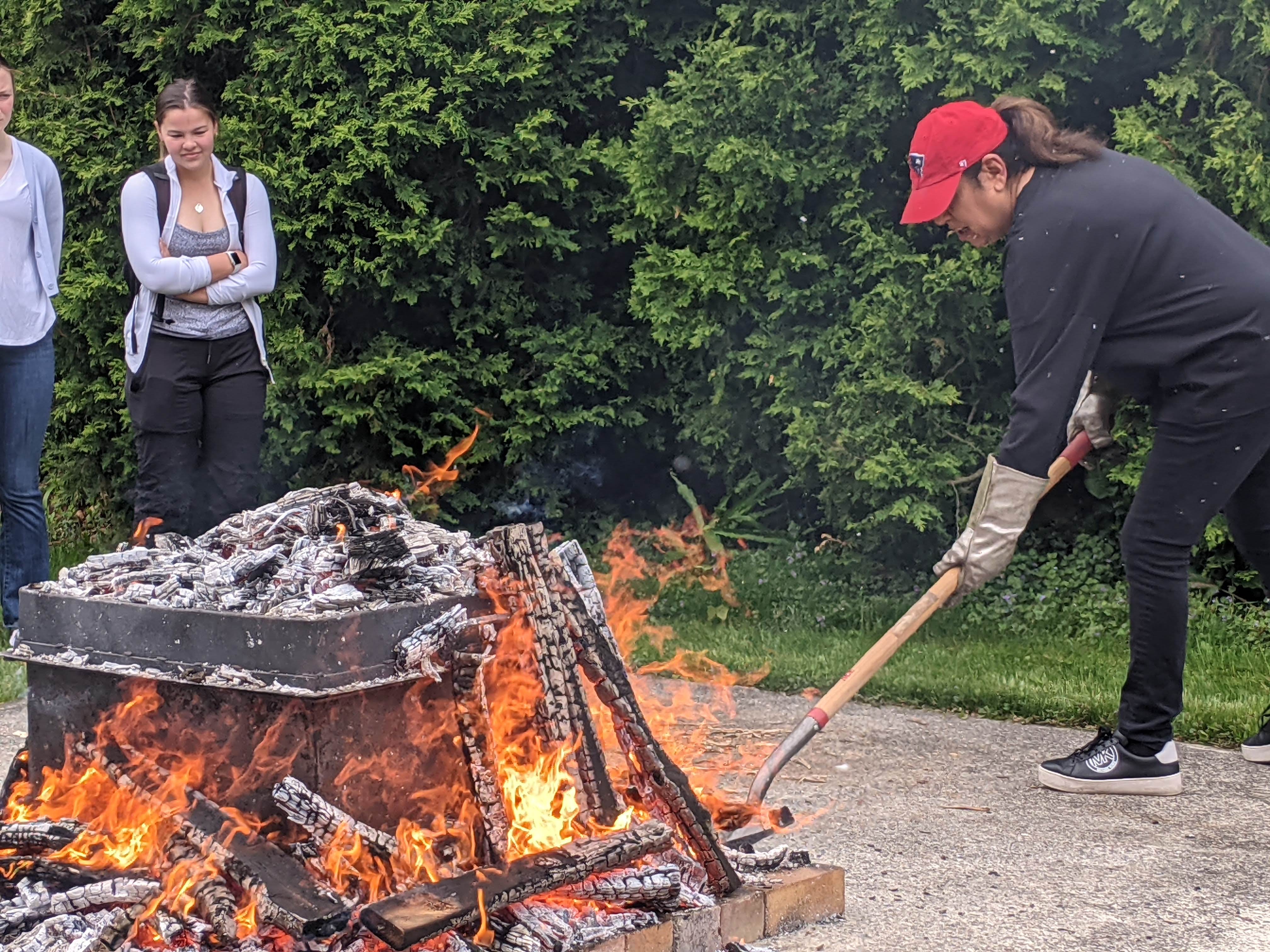
Dominique tends the open air pottery firing at the end of May 2022’s weeklong workshop as students look on.

I cherish the Toya Family’s time on campus, Dominique’s laughter and sense of humor, but also watching her help students design and complete pieces, often helping them figure out how to solve problems or challenges (often ones that they had created!). Dominique played a big role in many communities–she was involved in the Southwestern Association for Indian Arts, from exhibiting and frequently winning awards at the annual Santa Fe Indian Market, judging and mentoring, to service on the SWAIA board. Dominique also was a drag performer and frequently traveled to participate in the International Court System, including the Imperial Sovereign Court of New Mexico, where she was crowned Empress 10. The International Court System is a venerable and well-known LGBTQ organization, raising funds for social issues, education, and other charitable causes. Dominique and her mom often donated their pieces for those fundraising efforts. During the Jemez and Pecos feast days, Dominique and her family prepared traditional foods, like Jemez enchiladas and oven bread, welcoming friends and visitors into their home to celebrate.

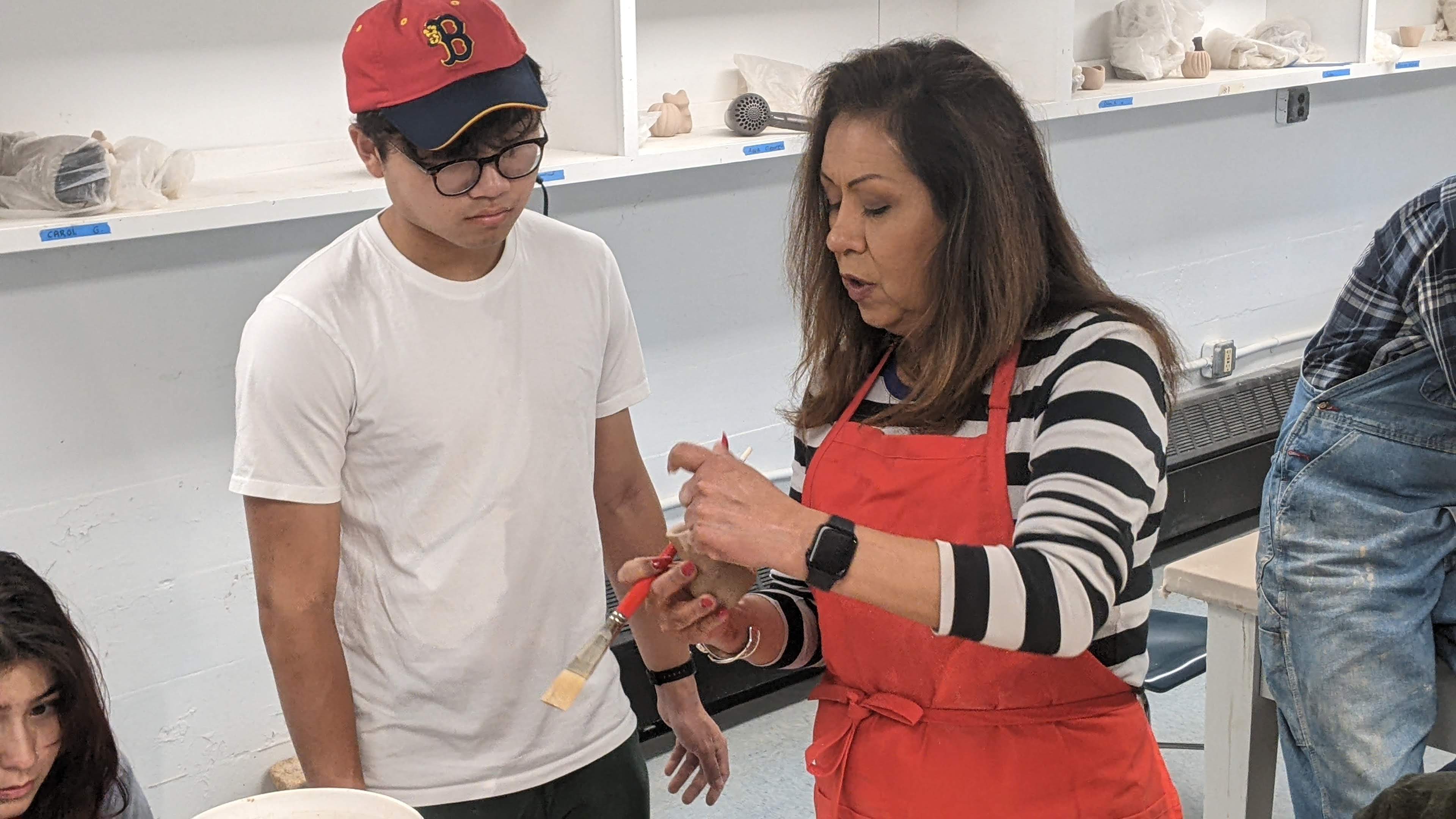
Dominique shares some tips on finishing a piece with an Academy student, May 2023.

I’m grateful that Dominique chose to be part of the Peabody Institute and Phillips Academy communities as well. Dominique, you taught us all a lot about art, Indigenous art, clay, the magic of mica, the business (and politics) of Native American art, but most of all, the art of being yourself. I’ll end with some of the student reflections from the Toya Family workshop in 2017: “Working with the Pueblo potters is really fun—we learned a lot and they have an amazing sense of humor.” “To be able to incorporate these techniques into my pieces gave me a new level of respect for pottery.” “This is one of the best things I’ve done all term, actually all year.” “These artists are so cool and they really care about their art and about your art.” Dominique, thank you for sharing and Godspeed.

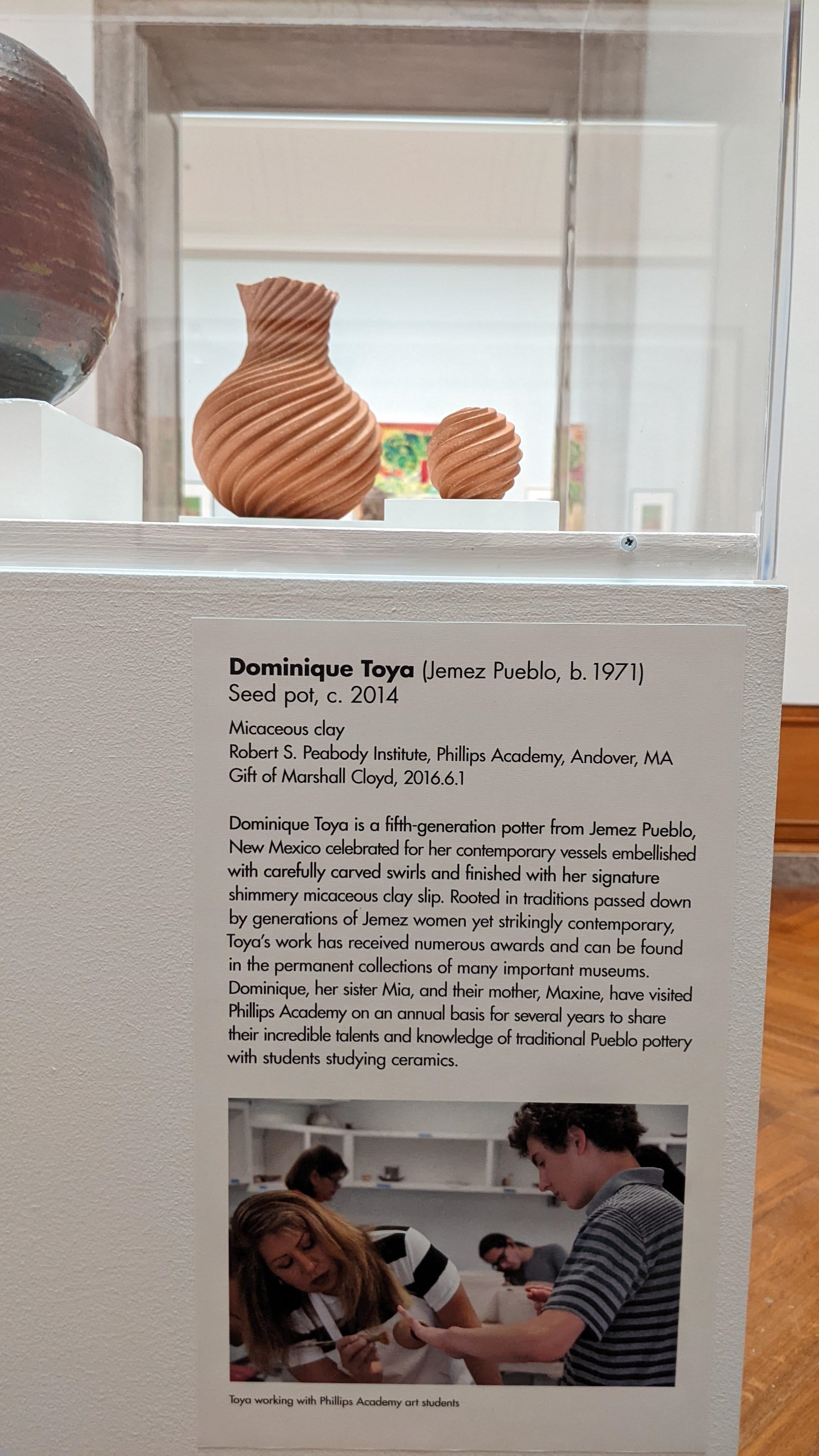
The Peabody Institute is fortunate to have several of Dominique’s pieces, including these two swirl vessels that were featured in the spring 2023 show “Women in Abstraction” at the Addison Galley of American Art.

If you’d like to learn a little more about Dominique, this is a great article from New Mexico Magazine: https://www.newmexicomagazine.org/blog/post/dominique-toya/

PA Students Visit Harvard’s 25th Annual Powwow

Contributed by Emma Lavoie

Last month, the Peabody Institute sponsored a day trip to Harvard University for Phillips Academy students. The 25th Annual Powwow was hosted by the Harvard University Native American Program (HUNAP). After a three-year hiatus due to the Covid-19 pandemic, the HUNAP program was able to welcome the return of their Powwow.

Flyer for HUNAP’s 25th Annual Powwow

This year’s theme for the HUNAP Powwow was Protect Indigenous Futures! The event was held on Orange Shirt Day, a national day of remembrance and reconciliation for victims of residential schools, which sought to separate Native children from their families and forcibly assimilate them. The Powwow honored survivors and victims of residential schools throughout Canada and the United States.

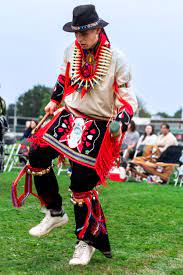
The Powwow ceremony is an Indigenous gathering with traditional dances and music held by Tribal nations from the New England area. The event welcomed hundreds of attendees from Harvard, neighboring Native communities, and the Greater Boston area.

Photos from the HUNAP Powwow
Photos by Catherine Dondero and Courtesy of Harvard University

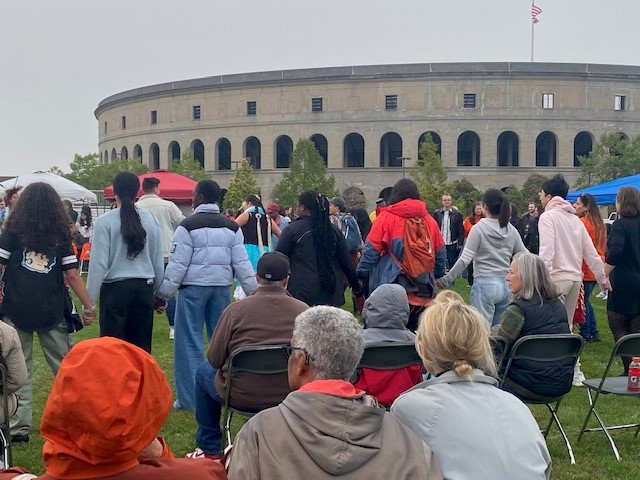
Students took part in community dances, which welcomed all event attendees into the arena to dance together. Many PA students took part in these community dances and got to experience the ceremony traditions first-hand.

PA students participating in community dances

This event was a wonderful opportunity for students to experience Indigenous cultural traditions and ceremonies. Students also had the opportunity to connect with Indigenous students, community members, HUNAP students, and Tribal nations from the Greater Boston area, New England, and those visiting from other parts of the United States and Canada.

Want to hear more about this event from the students’ perspective? Check out this article from Phillips Academy’s student paper, The Phillipian.

For more details about the HUNAP 25th Annual Powwow, explore this article from The Harvard Gazette and video coverage of the event by Harvard University.

Summer Session Selections

Contributed by Nick Andrusin

We may be down (the road, on Abbot campus) but were not out! As everyone on campus has probably seen there is a big ol’ fence surrounding the Peabody Institute, concealing dirt mountains, front loaders, and a bunch of contractors. This has been going on since April, boy time flies! Despite being out of the building for the last several months (and for several months to follow) we are still here and still part of teaching and learning at Phillips Academy, albeit in a more restricted fashion. Most recently, our director Ryan Wheeler and I helped out the Andover Summer Session with a few different classes. Supplementing the classes with knowledge and items from our collection to enhance the learning of the summer students. 

One class was Ella Houlihan’s Intro to Bio class. The students were learning about human evolution, and the Peabody has just the collection to help teach this topic. We brought over about 15 skull casts from all over the hominid family tree and tasked the students to develop their own traits, categories, and potential connections. From there we went over what scientist use to group skulls and layout the human family tree. Pointing out that it’s all rather complicated and even the professionals do not agree.

Students analyze various skull casts in a class activity

We also helped teach a couple classes in Dr. Tessa Hite’s class Mapping our World: The Art and Science Behind Maps. We went over the basic history of Andover, how it moved from Indigenous proprietorship to English ownership. To tie into that we covered concepts of colonization and decolonization, how one culture or society can impose themselves onto another and how efforts are undertaken to amend this. From there we had the students use maps to compare European versus Native American town names (think Mattapoisett vs Andover) and then research the original Indigenous place names. This was done to prompt questions such as “What does, or doesn’t this map tell us” Or “why does it feel empty with Native based town names?” This was done to get the students thinking about the reasoning behind the way the maps are set up and used.

The Peabody is more than happy to help in classes whenever we have an opportunity! Even with more restricted access to the collection, we can get creative and pull something together, as long as you don’t mind the dust!

2023 Summer Reading List: Our Peabody Picks

Contributed by Emma Lavoie

As the school year comes to a close and we take time to slow down (thank you vacation time), what better time this season then to grab a book and settle down on a porch swing. It’s time to grab your library card, load up your Kindle, or get yourself to your local bookstore. Our staff and friends of the Peabody have done it again… Back by popular demand! The Peabody shares their favorite finds for this summer’s reading list. We even threw in a podcast as a bonus for any listeners! We hope you have a wonderful summer dear readers and enjoy exploring these “Peabody Picks.”

Happy reading!

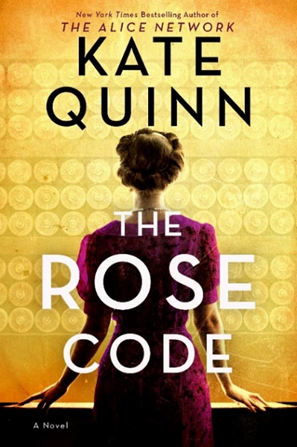
The Rose Code by Kate Quinn – Recommended by Emma Lavoie, Administrative Assistant

If you read one historical fiction book this year, THIS SHOULD BE IT! As England prepares for World War II, three women from very different walks of life answer the call to mysterious county estate Bletchley Park, where the best minds in Britain train to break German military codes. Osla translates decoded enemy secrets, Mab works the legendary code-breaking machines, and Beth is one of the Park’s few female cryptanalysts. Eventually war, loss, and the impossible pressure of secrecy will tear the three apart. Flash forward seven years later, these friends-turned-enemies are reunited by a mysterious encrypted letter – the key to which lies buried in the long-ago betrayal that destroyed their friendship and left one of them confined to an asylum. A mysterious traitor has emerged from the shadows of their Bletchley Park past, and now Osla, Mab, and Beth must resurrect their old alliance and crack one last code together against the backdrop of the royal wedding of Elizabeth and Philip.

“The reigning queen of historical fiction.” – Fiona Davis, New York Times bestselling author of The Lions of Fifth Avenue

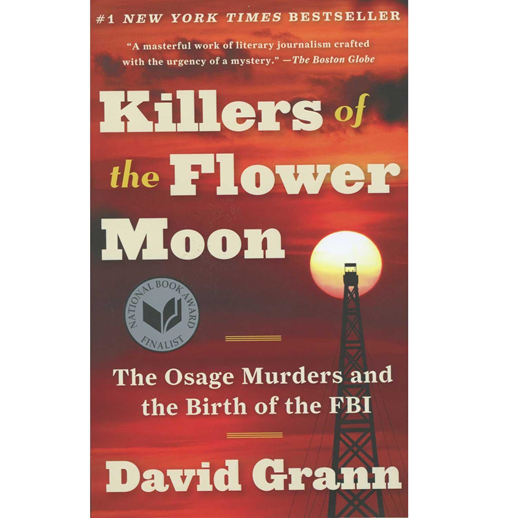
Killers of the Flower Moon by David Grann – Recommended by Michael Agostino, Peabody Volunteer

Set in the 1920s, this book features people of the Osage Nation who were relocated to barren lands in Oklahoma which were later discovered to be rich in oil. Per capita, members of the Osage nation quickly became the richest people in the world and targets for murder. This book carefully describes efforts by lawmen to solve these crimes and bring the murderers to justice. The lawmen were led by J. Edgar Hoover and his organization soon became the FBI – in what became one of the organization’s first major homicide investigations. Together with the Osage and Texas Ranger, Tom White, they began to expose one of the most sinister conspiracies in American History. A true-life murder mystery about one of the most monstrous crimes in American history, Killers of the Flower Moon, is highly acclaimed, receiving numerous awards, and was recently made into a movie starring Leonardo DiCaprio and Robert Deniro.

 “A masterful work of literary journalism crafted with the urgency of a mystery…. Contained within Grann’s mesmerizing storytelling lies something more than a brisk, satisfying read. Killers of the Flower Moon offers up the Osage killings as emblematic of America’s relationship with its indigenous peoples and the ‘culture of killing’ that has forever marred that tie.”  – The Boston Globe

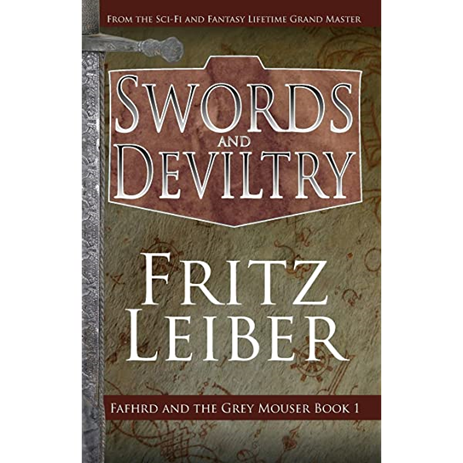
Swords and Deviltry (Fafhrd & the Gray Mouser #1) by Fritz Leiber – Recommended by Ryan Wheeler, Peabody Director

First in the influential fan-favorite series, Swords and Deviltry collects four fantastical adventure stories from Fritz Leiber, the author who coined the phrase “sword and sorcery” and helped birth an entire genre. This collection of short stories and novellas follows the adventures of barbarian Fafhrd and conjurer turned sword fighter Gray Mouser written by Leiber in the 1950s and 60s and collected in 1970. If you like Robert E. Howard and Conan the Barbarian, you will love this! And if you do, there are a total of seven of these collected volumes chronicling the exploits of Fafhrd and the Gray Mouser, in this and other dimensions.

“A Grand Master of Science Fiction and Fantasy.” – Science Fiction Writers of America

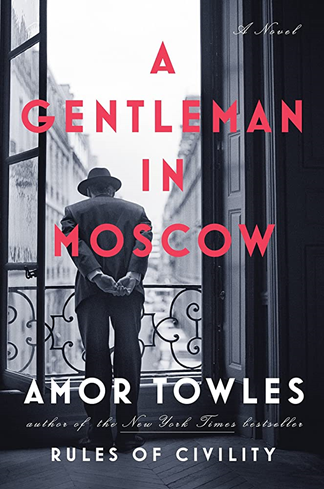
A Gentlemen in Moscow by Amor Towles – Recommended by Richard Davis, Peabody Volunteer

In 1922, Count Alexander Rostov is deemed an unrepentant aristocrat by a Bolshevik tribunal, and is sentenced to house arrest in the Metropol, a grand hotel across the street from the Kremlin. Rostov, an indomitable man of erudition and wit, has never worked a day in his life, and must now live in an attic room while some of the most tumultuous decades in Russian history are unfolding outside the hotel’s doors. Unexpectedly, his reduced circumstances provide him entry into a much larger world of emotional discovery. Brimming with humor, a glittering cast of characters, and one beautifully rendered scene after another, this singular novel casts a spell as it relates the count’s endeavor to gain a deeper understanding of what it means to be a man of purpose.

“How delightful that in an era as crude as ours this finely composed novel stretched out with old-World elegance.” – The Washington Post

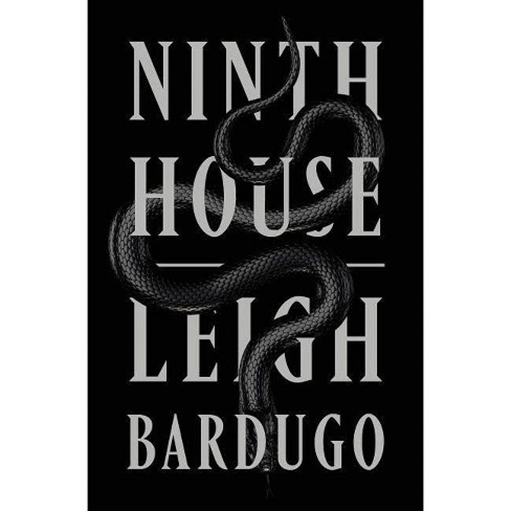
Ninth House by Leigh Bardugo – Recommended by Marla Taylor, Curator of Collections

Galaxy “Alex” Stern is the most unlikely member of Yale’s freshman class. Alex dropped out of school early and into a world of dead-end jobs and much, much worse. In fact, by age twenty, she is the sole survivor of a horrific, unsolved multiple homicide. Some might say she’s thrown her life away, but Alex is offered a second chance: to attend one of the world’s most prestigious universities on a full ride. What’s the catch, and why her? Still searching for answers, Alex arrives in New Haven tasked by her mysterious benefactors with monitoring the activities of Yale’s secret societies. Their eight windowless “tombs” are the well-known haunts of the rich and powerful, from high-ranking politicos to Wall Street’s biggest players. But their occult activities are more sinister and more extraordinary than any paranoid imagination might conceive. They tamper with forbidden magic. They raise the dead. And, sometimes, they prey on the living.

“The best fantasy novel I’ve read in years, because it’s about real people. Bardugo’s imaginative reach is brilliant, and this story – full of shocks and twists – is impossible to put down.” – Stephen King

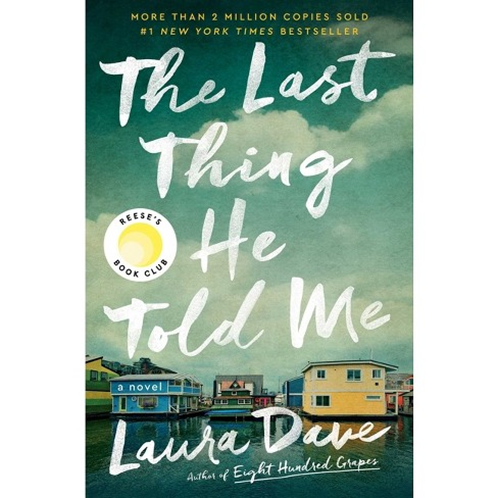
The Last Thing He Told Me by Laura Dave – Recommended by Beth Parsons, Office of Academy Resources, Director for Museums and Educational Outreach

Before Owen Michaels disappears, he manages to smuggle a note to his beloved wife of one year: Protect her. Despite her confusion and fear, Hannah Hall knows exactly to whom the note refers: Owen’s sixteen-year-old daughter, Bailey. Bailey, who lost her mother tragically as a child. Bailey, who wants absolutely nothing to do with her new stepmother. As Hannah’s increasingly desperate calls to Owen go unanswered; as the FBI arrests Owen’s boss; as a US Marshal and FBI agents arrive at her Sausalito home unannounced, Hannah quickly realizes her husband isn’t who he said he was. And that Bailey just may hold the key to figuring out Owen’s true identity—and why he really disappeared. Hannah and Bailey set out to discover the truth, together. But as they start putting together the pieces of Owen’s past, they soon realize they are also building a new future. One neither Hannah nor Bailey could have anticipated.

“In this novel, now an Apple TV+ series, Laura Dave has given readers what they crave most – a thoroughly engrossing yet comforting distraction.” – BookPage

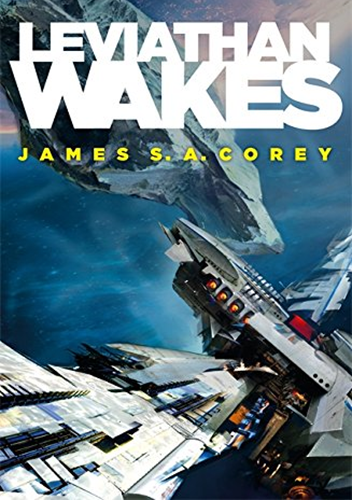
Leviathan Wakes by James A. Corey – Recommended by Nick Andrusin, Temporary Educator and Collections Assistant

Humanity has colonized the solar system—Mars, the Moon, the Asteroid Belt and beyond—but the stars are still out of our reach. Jim Holden is XO of an ice miner making runs from the rings of Saturn to the mining stations of the Belt. When he and his crew stumble upon a derelict ship, the Scopuli, they find themselves in possession of a secret they never wanted. A secret that someone is willing to kill for—and kill on a scale unfathomable to Jim and his crew. War is brewing in the system unless he can find out who left the ship and why. Detective Miller is looking for a girl. One girl in a system of billions, but her parents have money and money talks. When the trail leads him to the Scopuli and rebel sympathizer Holden, he realizes that this girl may be the key to everything. Holden and Miller must thread the needle between the Earth government, the Outer Planet revolutionaries, and secretive corporations—and the odds are against them. But out in the Belt, the rules are different, and one small ship can change the fate of the universe. Also now a Prime Original TV Series called The Expanse.

“This is the future the way it was supposed to be.” – The Wall Street Journal

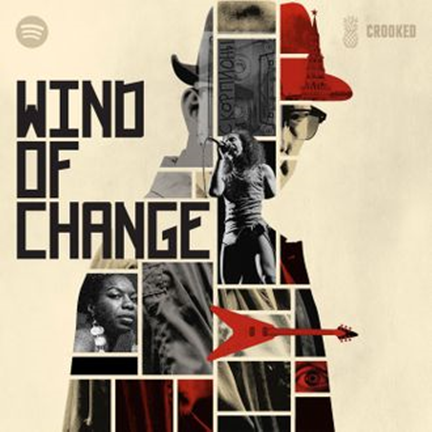
Wind of Change Podcast by Pineapple Street Studios and Crooked Media – Recommended by John Bergman-McCool, Collections Assistant

It’s 1990. The Berlin Wall has just come down. The Soviet Union is on the verge of collapse. A heavy metal band from West Germany, the Scorpions, releases a power ballad, “Wind of Change.” The song becomes the soundtrack to the peaceful revolution sweeping Europe – and one of the biggest rock singles ever. According to some fans, it’s the song that ended the Cold War. Decades later, New Yorker writer (and podcast host) Patrick Radden Keefe hears a rumor from a source: the Scorpions didn’t actually write “Wind of Change.” The CIA did. This is Patrick’s journey to find the truth. Among former operatives and leather-clad rockers, from Moscow to Kyiv to a GI Joe convention in Ohio, It’s a story about spies doing the unthinkable, about propaganda hidden in pop music, and a maze of government secrets.

“Wind of Change is a beautifully constructed listen, never less than entertaining.” – The Guardian

Pueblo Revolt at ASECS

Contributed by Ryan Wheeler

At this year’s American Society for Eighteenth Century Studies (ASECS) conference, I had the opportunity to participate in the roundtable Teaching the Global Eighteenth Century. Phillips Academy instructor in history and social sciences Natalya Baldyga and I presented Assimilation, Acculturation, Catachresis, and Syncretism: Employing Archaeology to Foreground Indigenous Resistance in the Spanish Southwest, sharing our experiences teaching the Pueblo Revolt of 1680 to History 200 classes at the Academy.

Contemporary Indigenous artist Jason Garcia’s take on the Pueblo Revolt combines traditional materials and methods with graphic designs depicting Po’Pay, the architect of the revolt, as a comic book superhero. These two pieces are in the collection of the Robert S. Peabody Institute of Archaeology–you can see the vessel on the right in the inaugural exhibition of the Smithsonian’s National Museum of the American Latino.

If you are not familiar with the Pueblo Revolt, it is a pivotal moment in the history of the Southwest and the modern descendants of those who fought Spanish colonization at the end of the seventeenth century. Our abstract has a little more information on the Revolt and our approach:

Using the case study of the Pueblo Revolt of 1680, our presentation illustrates how archaeological artifacts can be employed to unsettle and decenter colonial narratives by refocusing the North American story of the early eighteenth century on Indigenous peoples of the Spanish Southwest. Too often, Anglophone histories associate the long eighteenth century in the Americas with English colonialism in general, and with the American Revolution in particular. We ask students to consider instead the “first American Revolution,” in which the Pueblo Peoples, led by the Tewa religious leader Po’pay, confronted missionaries and soldiers in the Spanish borderlands of what is now New Mexico. In our classes, students explore both artifacts from the Pueblo Revolt and contemporary Puebloan artistic responses to the historical event, foregrounding Indigenous resistance and survival over tales of erasure and domination. This approach both reorientates students’ understanding of colonial North American history towards wider global narratives of European expansion, and, perhaps more importantly, introduces students to multiple ways that Indigenous peoples adapted to, resisted, and overcame the efforts to erase their cultural identities and physical existence.

Drs. Wheeler and Baldyga also celebrated their anniversary during the conference.

The Peabody Institute has long offered various versions of a Pueblo Revolt lesson, but the current iteration has greatly benefitted from Dr. Baldyga’s experience and training. Together we’ve developed the lesson, typically delivered in the world history survey course for tenth grade, providing students with anthropological concepts, like assimilation and catachresis, that they can use in other settings, as well as foregrounding contemporary Indigenous perspectives and objects directly related to the Revolt. Conversations with other participants in the workshop were productive, especially in their pedagogical approach to topics like the production of sugar.

Listen If You Dare! The Perfect Podcast List for the Spooky Season

Contributed by Emma Lavoie

It’s almost Halloween, so get in the spirit by checking out our list of the best spooky podcasts you definitely don’t want to listen to alone in the dark. From haunted places to haunting history, these podcasts will have you on the edge of your seat or hiding under the covers. Happy haunts and happy listening this Halloween!

#1 Spooked

Another season of Spooked has RISEN… cross over (if you dare) into the world of the unexplained, listening to true-life supernatural stories, told first-hand by people who can barely believe it happened themselves. This podcast challenges skeptics of the supernatural, daring listeners to confront the unknown. Be afraid.

#2 Dark House

For true crime fans who also love a good ghost story, Dark House features America’s most notorious homes. From infamous crime scenes to abandoned mansions, hosts and House Beautiful editors Hadley Mendelsohn and Alyssa Fiorentino unpack the twisted history of a different house in each episode. They research who lived (and died) there and share the creepy stories that suggest their spirits never left.

#3 The No Sleep Podcast

Too afraid to listen to true-crime podcasts because they’re all about things that actually happened? Give this podcast a try. Each episode will have you feeling like you are telling spooky stories around a virtual campfire. Run, don’t walk!

#4 Haunted Road

Amy Bruni, star of the hit TV shows Kindred Spirits and Ghost Hunters, takes listeners on a chilling guided tour through some of the most haunted locations in America with the help of expert paranormal investigators who have actually been there. Do you have chills yet?

#5 Lore

This podcast is about dark historical events that blur the lines between history and lore. Lore explores the mysterious creatures, tragic events, and unusual places that fill the pages of our history… sometimes the truth is more frightening than fiction.

#6 American Shadows

Join host Lauren Vogelbaum as she spans two centuries of omitted lore from our country’s history books. This show focuses on the darker stories from American history: the people, places, and things that are hidden and forgotten in the shadows. From better-known tales like the conspiracy to steal Lincoln’s body, to less-known stories, like the rainmaker who flooded San Diego. American Shadows explores the hidden tales relegated to the dusty corners of US history, one journey at a time.

#7 Unobscured

History is full of stories we think we know. They are old and dark, but time has robbed us of perspective and clarity. They’ve become obscured and misunderstood. Which is why this series exists: to dig deep and shed light on some of history’s darkest moments. To help us better understand where we’ve come from. To make it Unobscured. Each season pairs narrative storytelling from Aaron Mahnke, creator of the hit podcast Lore, with prominent historian interviews. Check out Season 1 about the Salem Witch Trials. You may even find an interview with a familiar friend of the Peabody, Emerson Baker, Phillips Academy alum, history professor at Salem State University, and author of A Storm of Witchcraft: The Salem Trials and the American Experience.

#8 Midnight Library

Not just another podcast show, but a place you can go. Climb the stairs of this strange, Victorian mansion and curl up by the grand fireplace to hear tales of times long ago. Be transported through time to learn about ancient customs and mysterious happenings all from the comfort of the Midnight Library. Be sure to stay in the cordoned off areas, and you’ll be fine…

Looking for a spooky podcast for kids? Check out the podcast – Grimm, Grimmer, Grimmest

Designed for kids – Grimm, Grimmer, Grimmest is a wildly enchanting fairy tale podcast, featuring classic fairy tales that bring to life a world full of curious creatures and mischievous foes. Created in partnership with bestselling children’s book author, Adam Gidwitz, each episode retells a tale to a group of inquisitive kids, who anticipate plot twists, crack jokes, and share their own perspectives on these very Grimm tales. Another unique feature to this children’s podcast is each episode is rated as “Grimm,” “Grimmer,” or “Grimmest.”

For more haunted listening, check out these honorable mentions.

Disney’s Encanto and Intergenerational Trauma

Contributed by Lindsay Randall

SPOILERS ahead for the movie Encanto.

During an incredibly cold weekend in January, I was bundled up on my couch and looking for a movie to stream. I finally settled one that Disney+ had just recently released, Encanto.  I had no idea what the movie was about, past the short blurb that was provided on the info page before the movie started:

After finishing the movie, I will only admit to really enjoying it and any rumors you may have heard from my cats about me being a blubbering, crying mess throughout it, are lies. All lies!

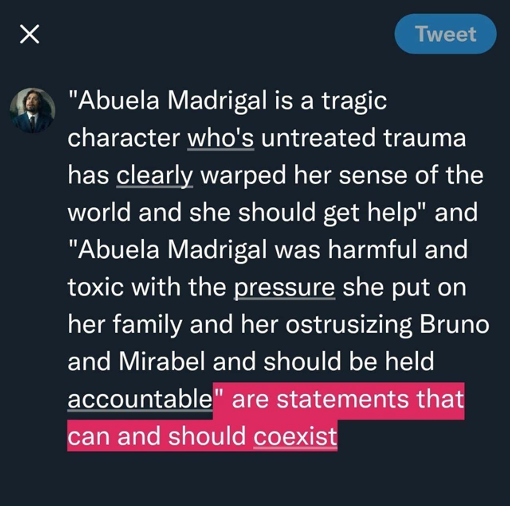
Disney’s Encanto is a movie different from most. Despite what some viewers have said about Abuela being the villain of the story, there is no “villain” personified that the characters must defeat, as is typical in such movies. Instead all the characters must overcome something more overwhelming and real, which is threatening their home: intergenerational trauma. 

At the beginning of the movie, the matriarch of the Madrigal family, Abuela Alma faces armed violence and suffers incredible loss, while fleeing with her husband and three babies. After a harrowing night, in which her husband dies, she receives a miracle of a magic candle that helps to create a magical casita (house) inside a magically hidden town.

The candle grants all members of the Madrigal family unique gifts….. all except young Mirabel. This lack of a gift causes some underlying tensions between Mirabel and her family and serves as the main vehicle for the story. Then there is a missing uncle, cracks in the casita, diminishing powers, some adorable rats, and an ear-worm of a song (we don’t talk about Bruno!) to round out the story. 

The experience that Abuela has in the first few minutes of the movie has a continued impact on her relationship with her children and grandchildren, as well as on their own development.

After many fraught interactions (and songs!) Abuela tells her granddaughter Mirabel  “I was given a miracle, a second chance, but I was so afraid to lose it that I lost sight of who our miracle was for….. I am so sorry… We are broken because of me.” Showing that you can break the cycle of trauma. 

It was incredibly interesting to see a children’s movie deal with such a weighty topic in such a sensitive a way that does not diminish the damaging influence it has, but also shows that there is a possibility to begin to heal from this particular type of trauma. 

Many of our classes at the Peabody touch upon some aspect of historical trauma in indigenous communities, with the boarding school experience being one of the main ones that we explore.  Given the prevalence that it has in our teaching, I look forward to making connections to a movie many of our students will know as a means to enhance their understanding of such a profound topic.

To read more about the reactions to Encanto: 

Reconnecting with old friends

Contributed by Marla Taylor

In late January, the Peabody Institute hosted a special school group visit of students at Cape Cod Academy. Why is this school group more special than any other? Well, it actually had a lot more to do with the teacher – Alex Hagler.

Alex has been a part of the Peabody’s extended family for nearly 13 years. They started as a volunteer in 2009 and have worked at the Peabody in several capacities: work duty student, volunteer, and temporary employee. Alex has been kind enough to contribute to the blog in the past and you can read their thoughts in a student reflection and retrospective submission from several years ago.

Now, Alex is a Latin teacher at Cape Cod Academy and introduces archaeology to their students as part of the curriculum. One of the best places for that, of course, is here at the Peabody Institute. Alex, and a co-teacher, brought six students to explore our TARPS mock excavation exercise and take a tour of the collections spaces. The students asked fabulous questions and learned important lessons about archaeology and Native American culture. 

Welcoming Alex back as a teacher with their own students was a powerful “full circle” moment for us here. It is so rewarding to have an ongoing relationship with the students and alumni who connected with the Peabody while here at Phillips Academy. 

If you are one of those students who enjoyed your time at the Peabody – reach out! We would love to connect with you again.