In August 2021, the Journal of Archaeology & Education’s editorial board met via Zoom to consider a policy regarding Institutional Review Board or IRB approvals for research published in the journal. The IRB originated with the passage of the National Research Act in 1974 after a series of congressional hearings on human-subjects research, but can trace its origins to research that lacked informed consent, like the Tuskegee Syphilis Study, which began in the 1930s.
The JAE board agreed that since studies involving assessment and other types of educational research would normally require at least a minimal review, we needed to have an explicit statement that alerted author’s to the need for IRB approvals prior to executing their studies. Shortly after the meeting the JAE policy website was amended to include the following guidance:
All human subjects research results published by the Journal of Archaeology and Education (JAE) must be approved by an Institutional Review Board (IRB) or an equivalent entity in the author’s country. The purpose of IRB review is to assure, both in advance and by periodic review, that appropriate steps are taken to protect the rights and welfare of people participating as subjects in your research. If you do not have an IRB affiliated with your organization, you must find a suitable IRB at a qualified university or other institution. Most universities have IRBs that will accept applications from outside their institution. Authors, especially those without an academic affiliation, could use an independent IRB, which is subject to the same federal regulations as universities. There may be fees associated with university and independent IRB reviews. The IRB protocol number assigned by your IRB must be included in the article. Manuscripts without IRB approval will not be considered for publication in JAE.
IRB policies at journals in medicine, psychology, and other fields that rely heavily on human-subjects research are usually brief. We felt, however, that the JAE policy needed to provide extra guidance as archaeologists expand their research to encompass educational studies on the effectiveness of teaching, assessment, work with students, and more. If you have questions about the JAE policy or how it might apply to your research, please contact the editors Jeanne Moe or Ryan Wheeler.
The return to in-person classes means that this fall’s Human Origins includes many of the hands-on project-based assignments that have become a hallmark of the course.
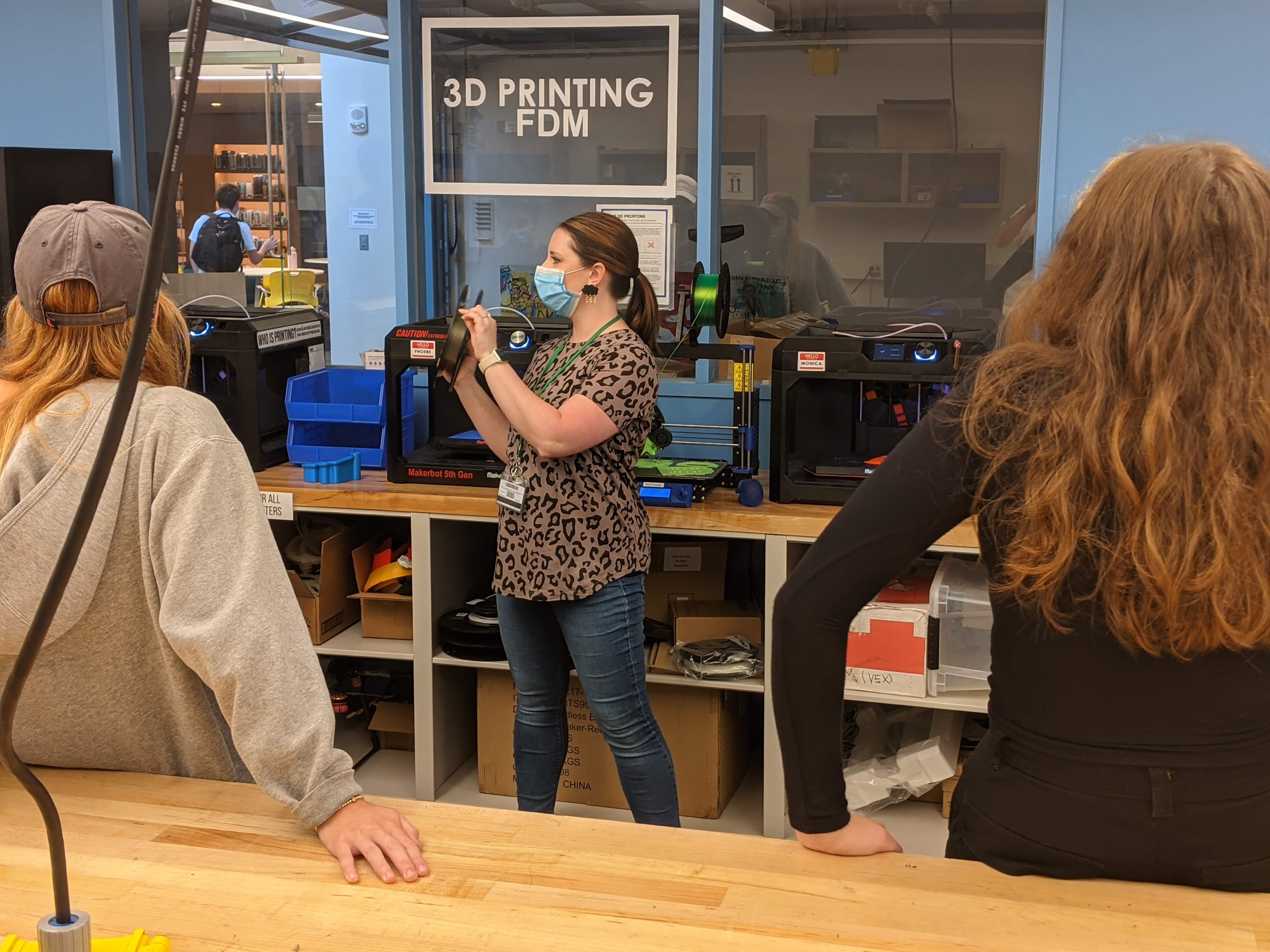
Makerspace guru Claudia Wessner introduces Human Origins students to 3D printing.
Students in Human Origins—an interdisciplinary science elective—visited with Claudia Wessner, Oliver Wendell Holmes Library Makerspace guru—who introduced the class to our hominin 3D printing project, including different 3D printing technologies, some of the ways that archaeologists use 3D printing and scanning, and Virtual Reality (VR) technology. Ms. Wessner also showed students how to use the Makerspace 3D printers for their projects.
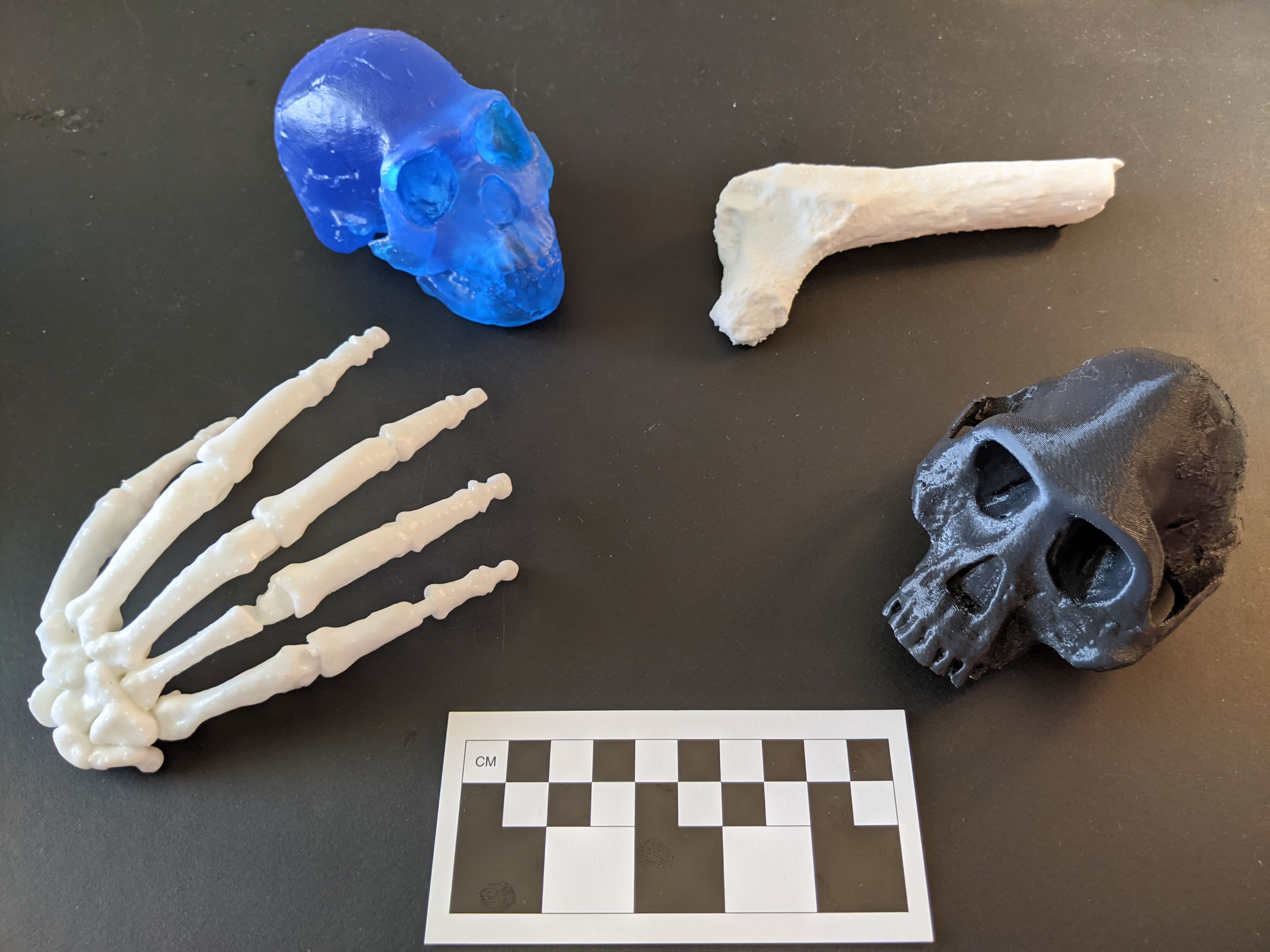
An assortment of 3D hominin prints.
Each project team will select a fossil hominin to 3D print in the Makerspace. Hominins are humans and their close extinct ancestors, including fossils dating back about 6 to 7 million years ago. Students will present their scaled prints, along with basic info on the fossil, during class in a few weeks. This project was inspired by the inclusion of 3D scans of Homo naledi in Morphosource, a database of 3D scans of fossils and biological specimens hosted by Duke University. Since the Homo naledi scans were made available in 2015, many additional fossil scans have been added, including other hominins.
CT scan of a Neanderthal from Duke University’s Morphosource databank.
During our September 2021 visit to the Makerspace, Ms. Wessner introduced us to Nefertari: Journey to Eternity-A Tombscale VR Experience. VR technology uses a headset interface so users can experience a virtual world, in this case an Egyptian tomb that has been scanned and recreated. We also discussed The Dawn of Art, Google’s VR version of Chauvet Cave in France, featuring some of the world’s oldest cave paintings.
Human Origins students got to explore Nefertari’s tomb in VR or Virtual Reality.
In July, I start to think about the upcoming fall course Human Origins. Last year I spent most of the summer retooling the course into an online experience. I owe a lot to the advice of my spouse, who passed along many of her experiences teaching online in spring 2020. I was pleased with the result—an iterative, assignment driven course, taught exclusively online, that even managed to keep some hands on activities. In fact, I plan to keep many elements of the online course—students in the fall will use Padlet for many of their assignments, we will dedicate at least two weeks to flint knapping, and we will keep the three major themes: pseudoscience, human evolution, and race. I will continue to look for ways to decolonize the syllabus as well. Considering the frequency of new discoveries (Google “Dragon Man,” for example), the focus is more on how to think about human evolution, rather than the details. The frequent new discoveries in the field continue to challenge the two competing models of human evolution, making us wonder, maybe we really need a new theory?
3D prints of fossil hominin skulls made by students in Human Origins, fall 2019.
I hope that we can revisit 3D printing again in the fall. Once many of the skeletal elements of Homo naledi became available on Morphosource, 3D printing became part of the course. For a few years, we visited the campus makerspace and looked at prints of Homo naledi’s more unusual features, including the hand and femur. In fall 2019, students worked in teams to 3D print their own miniature versions of fossil human skulls, learning details about each find and species as part of the assignment. Those miniature 3D prints got me thinking about earlier models and teaching tools for this subject, and my own first interests in human evolution.
Part of the foldout “March of Progress” graphic from Time Life’s Early Man book, circa 1970.
My first inkling that human evolution was something to be interested in came from a mid-1970s rebroadcast of a documentary called Natural History of Our World: The Time of Man (first aired, December 14, 1969). I wanted to watch this for two reasons: 1) Richard Basehart, who played Admiral Nelson in one of my favorite TV shows, Voyage to the Bottom of the Sea, provided the narration, and 2) I wanted to know more about the fossils shown in the teaser ads! I think my parents were a little baffled, but they let me stay up and watch it. I don’t remember much about that show, but it included some pretty incredible shots of volcanic activity and, of course, Basehart’s distinctive voice. Not long after that, my dad brought home a set of the Time Life nature books, with the 1970 edition of Early Man right on the top (it looks like Early Man was first published in 1965, but there were many reissues). That book captivated me! Books on dinosaurs, fossils, and evolution (for someone who was a kid, or perhaps anyone, really), were in short supply in the 1970s. I still share that book with students in Human Origins, and we talk about the many errors of the “March of Progress” graphic that launched a thousand memes. For a kid in the ‘70s interested in evolution, that book—authored by a serious scientist, H. Clark Howell—was a treasure.
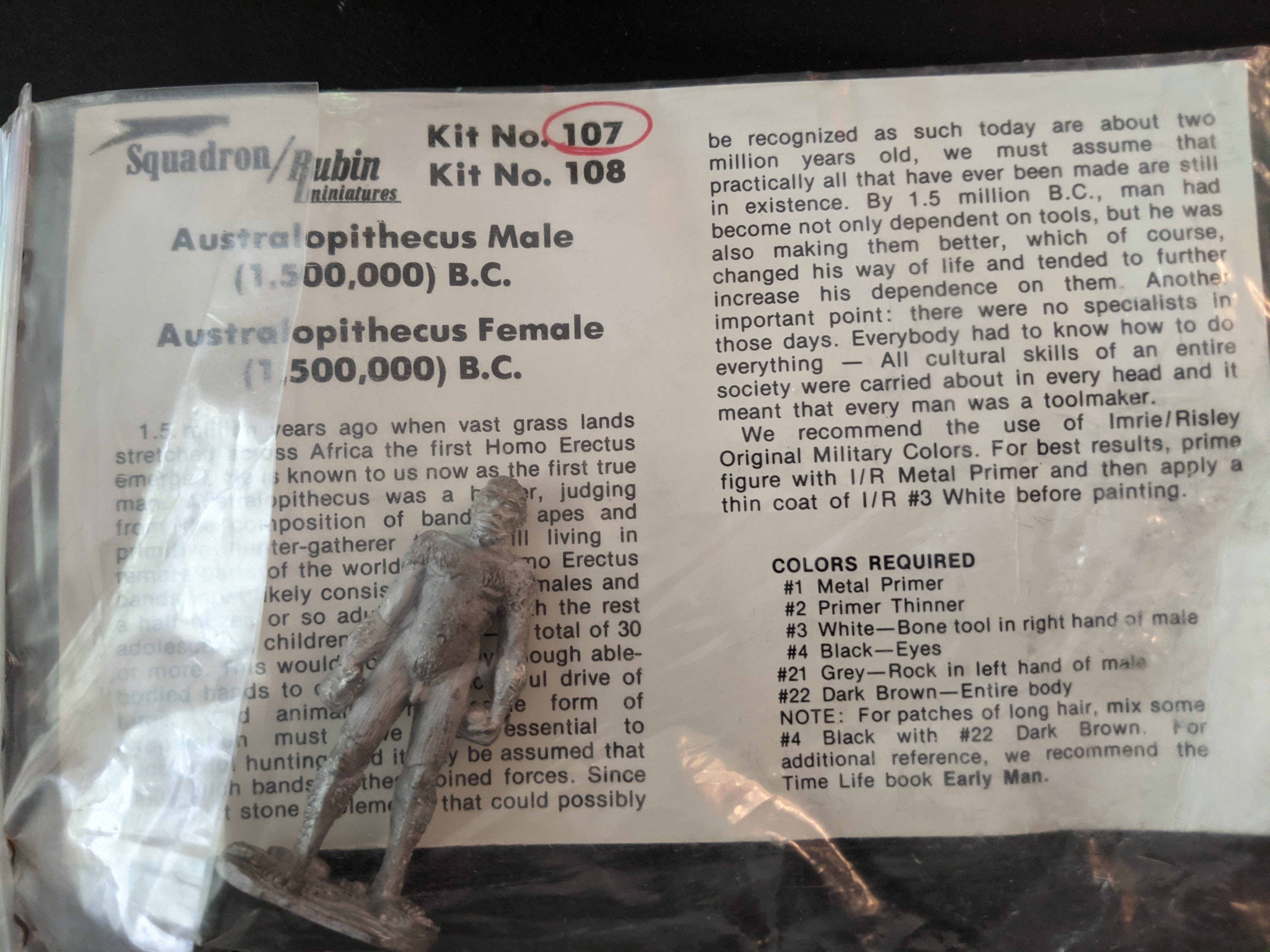
Squadron Rubin’s “Neanderthal man” figure with original packaging and color chart.
So imagine my delight when I found a tangible, material version of those fossil people. The discovery was in an unlikely place—the local hobby shop. I was interested in model kits, but the little metal figures of warriors, Vikings, and dragons were especially exciting. These were becoming more popular with the rise of the role playing game Dungeons & Dragons, and various alliances and licensing deals between the D&D publishers and companies like Grenadier who made these miniatures, or minis. There among the heros and monsters of D&D (think of the current TV show Stranger Things), were some old stock made by a company called Squadron Rubin. These were figures of all the fossil humans found in the pages of the Time Life Early Man book, and the color cards even referenced the book! Some Googling indicates that artist, sculptor, and businessperson Raymond Rubin was behind these figures. The main figures made by Squadron Rubin were of historical soldiers, spanning the Picts to Vietnam and every period in between. The idea was that you could buy these, glue as necessary, and paint following the color chart provided, building up your army. Eventually Rubin collaborated with others to launch Grenadier, the company that dominated the metal miniature business for a while. I wish I knew more of the story behind how the world of metal miniatures intersected with human evolution, but I was happy that it had!
The Squadron Rubin Australopithecus male figure with color chart!
The Squadron Rubin fossil people are 1:32 scale, so most are around or just under 2 inches tall. And, they aren’t frenzied savages like the “cavemen” depicted by Frank Frazetta or other artists around the same time. The artistic recreations in the Early Man book supplied the inspiration, and the figures are usually just posing, often in male-female pairs. I’ve managed to locate examples of Squadron Rubin Neanderthals, Australopithecines, and Cro-Magnon people, and I suspect there were other species depicted as well. Occasionally, they turn up on eBay.
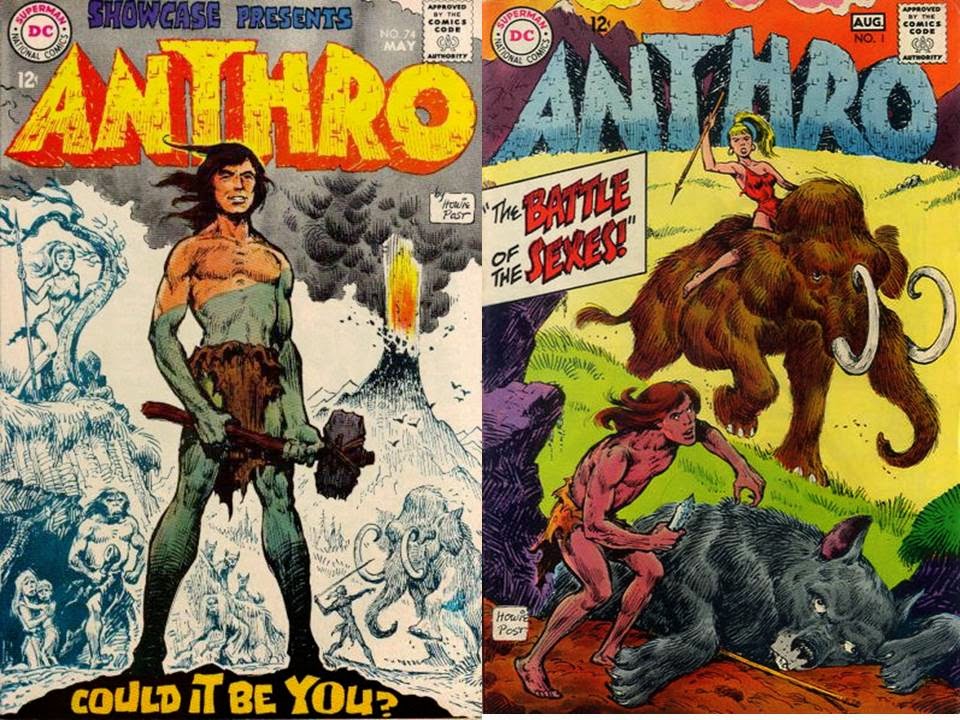
Covers from DC Comic’s “Anthro,” which pitted the first Cro-Magnon (or modern human) against an array of cave brutes and prehistoric monsters, late 1960s.
The Squadron Rubin figures, along with the many other depictions of fossil humans in popular writing, TV ads, comic books, movies, artwork, and sculptures give us a glimpse into thinking about human evolution and fossil people through time. I often ask the Human Origins students to find and research examples of how fossil humans were depicted in popular culture. Are the treatments sympathetic, savage, sexualized, or something else? Often this has to do with ideas about how closely modern humans are linked to these ancient people. The recognition of genetic connections between modern humans and Neanderthals in 2011 marked one shift in our relationship to “cavemen.” Once we understood there was a connection between us and them, depictions of ancient people began to shift, becoming more sympathetic and sensitive to our ancestors. But, it depends a lot on the artist, medium, and specific circumstances.
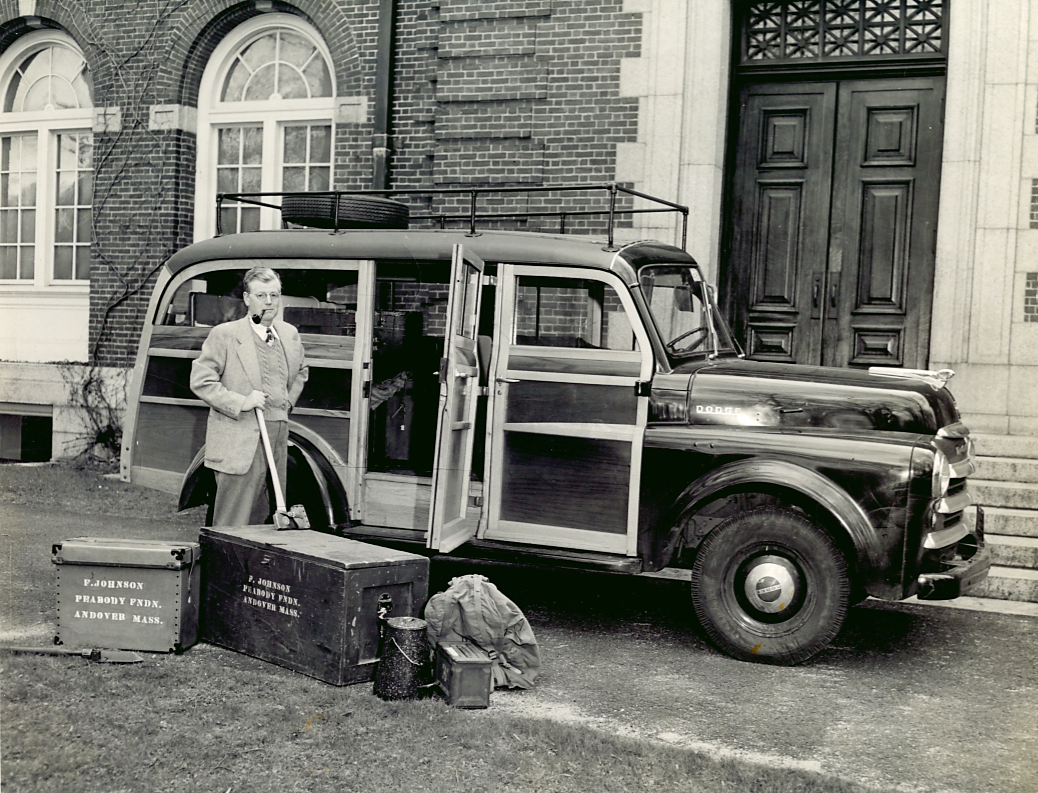
Pipe in mouth and axe in hand, a man in a tweed suit stands in front of a 1940s Dodge “Woody” station wagon brimming with suitcases and archaeological gear. The crates on the ground by his feet are labeled, “F. JOHNSON, PEABODY FNDN, ANDOVER, MASS.” Who is this man and where could he be traveling to?
The year is 1948 and this traveler in tweed is Frederick Johnson, curator of the Peabody (known as the Robert S. Peabody Foundation for Archaeology at the time) from 1936-1968.
Fred Johnson with expedition gear in front of the Peabody, 1948.
Frederick Johnson (1904-1994) joined the Robert S. Peabody Foundation for Archaeology as Curator in 1936. He held this position until 1968, serving one year as Director before retiring in 1969. During his time at the Peabody, Johnson initiated an archaeological excavation program for students at Phillips Academy. He also organized the Committee for the Recovery of Archaeological Remains (1945-1968) and chaired the American Anthropological Association’s Committee on Radioactive Carbon 14 (1948-1968.)
Johnson is recognized for contributing to the development of an interdisciplinary approach to archaeology, using scientists from various fields to study archaeological problems together. The Boylston Street Fish Weir project (1939) in Boston, MA as well as the Andover-Harvard Yukon Expedition (1944 and 1948) were two examples of this method.
The image of Fred Johnson above was taken before his trip to the Yukon Territory for the last year of the Andover-Harvard Yukon Expedition. This five-month field project combined archaeological and geobotanical research in the unknown northwestern interior of North America and was carried out jointly by the Peabody and Harvard University (funded by additional sources, including the Wenner-Gren Foundation.)
The journey began from North Dakota to Burwash Landing, Yukon with research in parts of the Shakwak and Dezadeash Valleys in southwestern Yukon. The project leaders were Fred Johnson and Professor Hugh Raup, botanist and Director of the Harvard Forest in Harvard, MA. Two Harvard graduate students served as assistants in the botanical and archaeological research, Bill Drury and Dr. Elmer Harp, Jr.
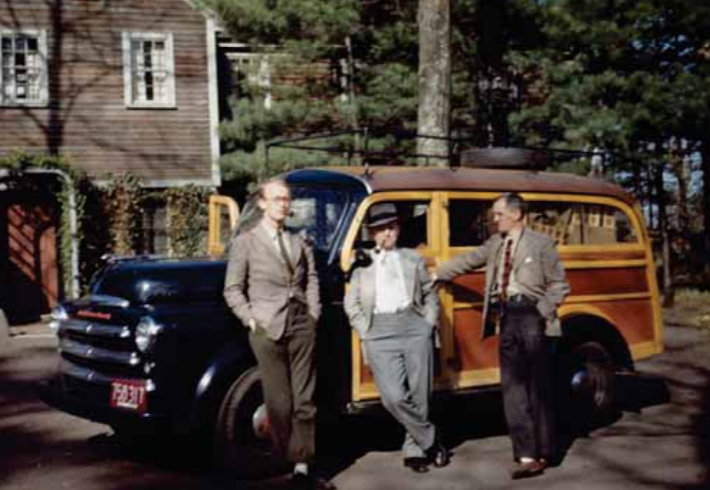
Harp was a recent Harvard graduate and Curator of Anthropology for the Dartmouth College Museum in Hanover, NH. He documented the trip through field notes and his own photographs. Below is one of Harp’s photographs taken at the beginning of their trip. Do you notice anything similar between these two images? That is the same station wagon in each photograph and yes, that is Fred Johnson with his pipe again! Harp and Drury were tasked with driving the expedition’s station wagon from Boston to Whitehorse, Yukon Territory – standard labor assigned to graduate students in the field.
Bill Drury, Fred Johnson, and Elmer Harp at the start of the Andover-Harvard Yukon Expedition, May 4, 1948. Photograph by Dr. Elmer Harp, Jr., Professor of Anthropology Emeritus, Dartmouth College, Hanover, NH.
According to Harp’s recordings from the expedition, Johnson and Raup conducted several projects in the early years of the Yukon project (1943-1944) exploring for evidence of the first appearance of humans in the New World. The 1948 project was to search for archaeological sites along the eastern borders of the Rocky Mountains via the Alcan Highway. This was the first time the highway was opened to civilian traffic since the beginning of WWII. The Andover-Harvard expeditions went on to represent the first systematic explorations of Yukon’s prehistoric past.
May 2021 saw the publication of special issue “Perspectives on Teaching, Learning, and Doing Archaeology and Anthropology Online” in the Journal of Archaeology and Education. Nine timely articles address the big picture and specific case studies in teaching archaeology and anthropology online—something that many of us have gained new experience in during the pandemic. And, while most institutions are looking to a return to in-person teaching, these articles, organized by David Pacifico and Rebecca Robertson, and based on the 2018 American Anthropological Association roundtable session “Teaching and Learning Anthropology Online,” make the case that teaching archaeology and anthropology online is not only possible, but can be done well and comes with some benefits. For example, Russ Bernard makes the case in his article that “online education is the only way to scale up training in statistics and research methods for both graduate students and undergraduate students of anthropology,” helping to forge more and better connections between our academic departments and employment. Michael Wesch, in his contribution, describes anth101.com, an online course that “is organized around 10 big lessons that attempt to help students embody the ‘ethos’ of anthropology, including … the ability to ask big questions, try new things, see patterns, see the big picture, see the little things that matter, and overcome fear, hate, and ignorance to empathize with others and understand cultural differences.” Check out this great special issue and all it has to offer at JAE today! And, many thanks to JAE editor Jeanne Moe and JAE guest editor Katie Kirakosian for their work on the special issue, and to the authors for sharing their work in JAE!
The Journal of Archaeology and Education is a peer-reviewed, open-access journal dedicated to disseminating research and sharing practices in archaeological education at all levels. We welcome submissions dealing with education in its widest sense, both in and out of the classroom—from early childhood through the graduate level—including public outreach from museums and other institutions, as well as professional development for the anthropologist and archaeologist. The journal’s founders recognize the significant role that archaeology can play in education at all levels and intend for The Journal of Archaeology and Education to provide a home for the growing community of practitioners and scholars interested in sharing their first-hand experiences and research.
JAE was founded at the Robert S. Peabody Institute of Archaeology, where archaeology is used to support high school curricula at Phillips Academy, and is hosted at the University of Maine’s Digital Commons website.
Given how wildly successful our Diggin’ In: Digital Lecture series has been, we wanted to expand how our audiences can interact with archaeologists from around the country.
Our new project – dIPPIN’ IN: Quick Conversations with Archaeologists – highlights the variety of jobs and experiences archaeologists can have by asking each person the same five questions:
Describe what kind of archaeology you focus on.
How did you get into archaeology?
Why should we care about archaeology and history?
What is the most exciting thing you ever found?
Anything else people should know about archaeology?
It is fascinating to learn about each archaeologist’s career path and what initially hooked them. And, while some answers have been remarkedly similar many are wildly different!
If you want a glimpse into the exciting field of archaeology through the personal lens of an archaeologist, this series is for you.
As we continue to add to the series, you can find the videos here.
And, if you are an archaeologist who wants to participate or if there is someone you want us to interview – let us know!
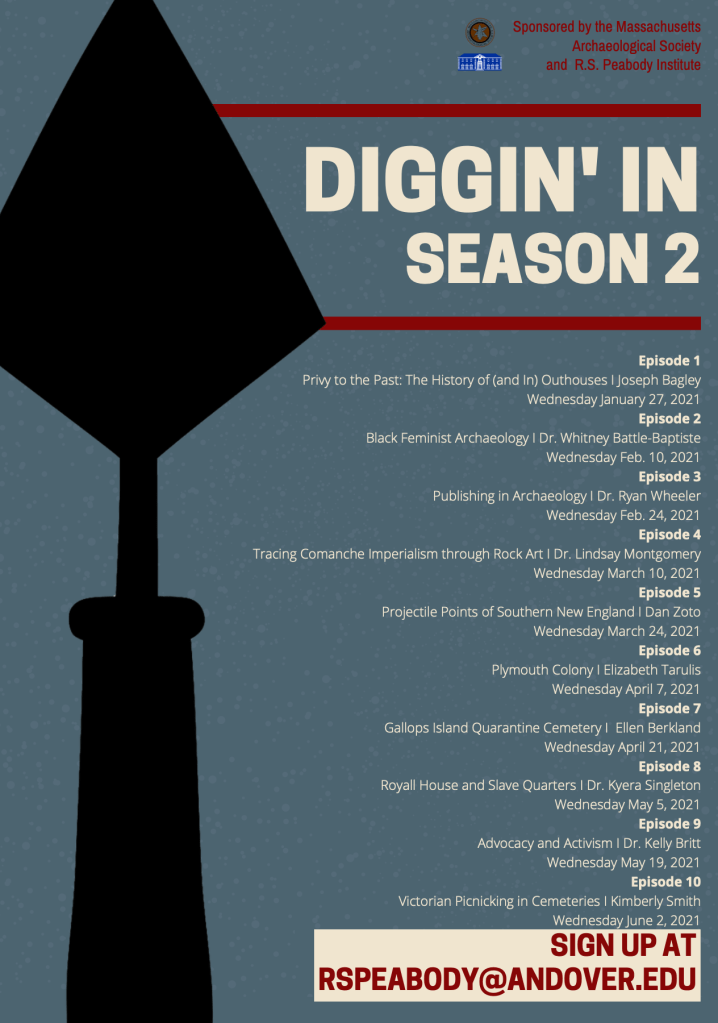
We are tremendously excited to announce the continuation of Diggin’ In: Digital Conversations with Archaeologist. Co-hosted by the Peabody Institute and the Massachusetts Archaeological Society the lecture series brings leading experts and their work directly to our viewers. All lectures are free and open to the public.
Building on the success of the inaugural season of Diggin’ In, which reached over 1000 individuals, Season 2 promises to continue to be especially robust. Outstanding scholars such as Dr. Whitney Battle-Baptist, Dr. Lindsay Montgomery, and Kimberly Smith will cover fascinating topics ranging from Black feminist archaeology, to Comanche rock art, to the artifact patterning of the Victorian practice of picnicking in cemeteries.
Join us on Wednesday January 27, 2021 for the launch of the new season with Joe Bagley, Boston City Archaeologist for his talk Privy to the Past: The History of (and in) Privies. All lectures begin at 1:30 pm.
If you want to attend one or all of these lectures, please sign up at rspeabody@andover.edu to get on the ZOOM invitation list.
Each episode will be recorded and uploaded to YouTube afterwards.
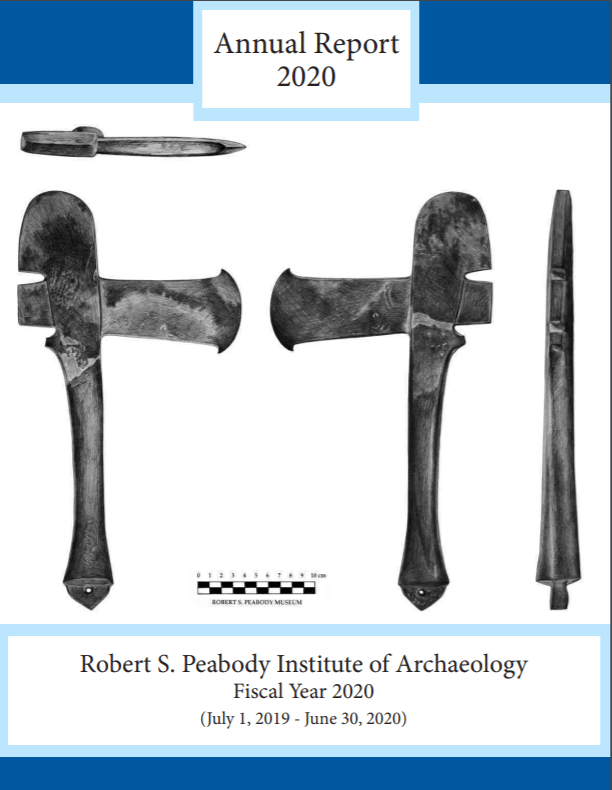
To many institutions, the annual report is one of the most important pieces of information. A single document, yet a powerful tool in communicating an institution’s performance during each fiscal year. Each fall the Peabody presents their annual report to the public, highlighting their achievements, overall performance of the past year, as well as their goals and objectives for the coming year. Not only does the annual report provide a snap shot of what a year at the Peabody looks like, it provides transparency of the institution to the public and its local community.
The making of the Peabody annual report includes several staff members who collaborate in the documentation, writing, and gathering of the material across several departments within the Peabody. These include: Administration (Ryan, Director), Education and Outreach (Lindsay, Curator of Education and Outreach and Ryan, Director), Collections (Marla, Curator of Collections), and Peabody Donors and Support (Beth, PA Director for Museums and Educational Outreach). Once the information is gathered and content is written, I take over to design the overall layout of the annual report.
A page from the 2020 Peabody Annual Report
Using the Adobe InDesign software, I create each page spread using the information that staff give me. When designing, it is important to always keep in mind the overall flow of information and that the format/design features are cohesive throughout the document. Something new I incorporated into the report this year were black and white photographs from the Peabody archives. I used these photographs as transitions between specific sections of the report to provide a natural break, while still maintaining the overall flow of the report. I also had a little fun creating a new page dedicated to our collections remote work during Covid-19.
Photograph from the Peabody archives used in the 2020 Peabody Annual Report
I really enjoy designing the annual report and watching all the work Peabody staff put into the year unfold with the design of each page. Not only does it provide an opportunity for each department to feature their success and performance, its where all the Peabody’s work finally comes together.
You can view the 2020 Peabody Annual Report here. Enjoy!
In August, the Society for American Archaeology (SAA) announced its newest education award, the Robert S. Peabody Institute of Archaeology Award for Archaeology and Education.
The Robert S. Peabody Institute of Archaeology Award for Archaeology and Education recognizes the excellence of individuals or institutions in using archaeological methods, theory, and/or data to enliven, enrich, and enhance other disciplines, and to foster the community of archaeology education practitioners. The Peabody Award will spotlight these contributions and promote teaching ideas, exercises, activities, and methods across the educational spectrum, from K-12 through higher education and public education.
Peabody Advisory Committee member and recent chair Dan Sandweiss ’75 proposed the award to the PAC and SAA. Both organizations agreed that it was a great opportunity to honor those involved in archaeology and education, joining the Journal of Archaeology & Education as another important tool for creating community among those engaged in these endeavors.
One important criterion is that nomination documentation must include materials—like activities or lesson plans—that can be shared with the broader community via SAA’s website.
The award description indicates that anyone may submit a nomination and that nominees do not have to be members of the SAA. Both individuals and programs are eligible. The award committee offered this list as examples of activities that might distinguish a nominee, including archaeology service learning programs, popular archaeology writing, adult or youth training programs, lessons or lesson plans for K-12 educators, archaeological outreach programming, oral history projects, lifelong learning classes or programs, archaeology camp experiences, and collaborative work with other educators or institutions around archaeological pedagogy.
The deadline for submitting a nomination is December 1, 2020 and submission information and guidelines are on the SAA website for the Robert S. Peabody Institute of Archaeology Award in Archaeology and Education. Peabody director Ryan Wheeler is serving as the SAA’s Teaching Awards committee chair and can be contacted with questions about the Peabody Award.
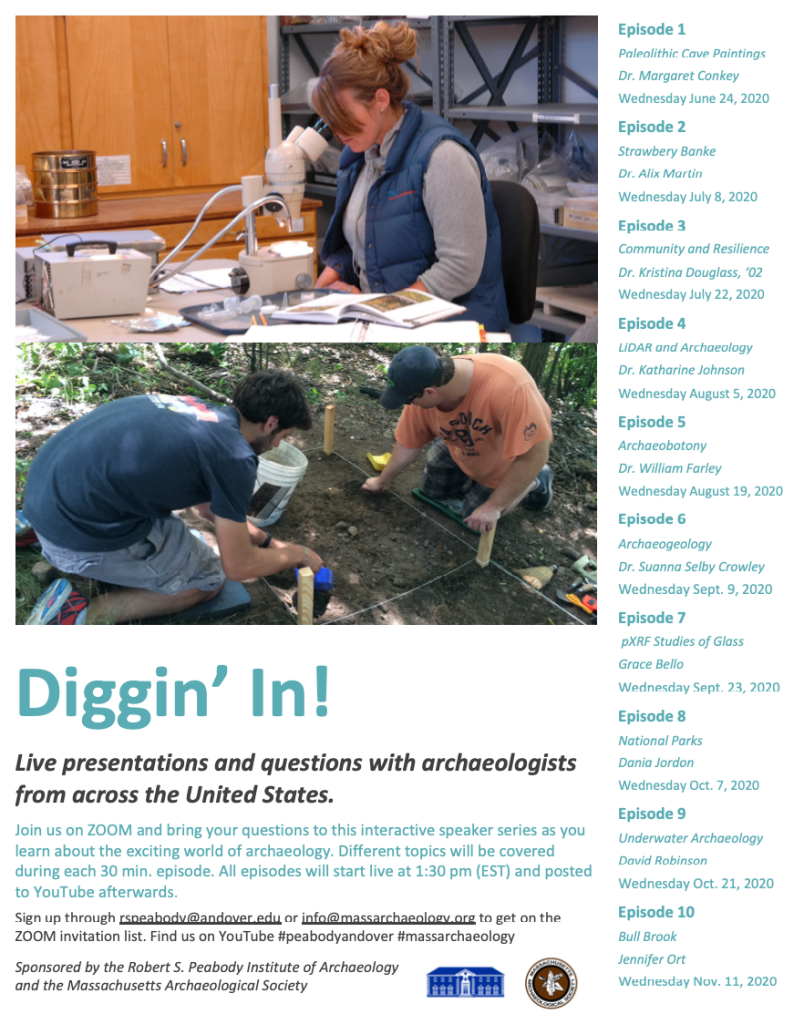
Part of the missions of both R.S. Peabody Institute and the Massachusetts Archaeological Society is to engage and connect with all who are interested in archaeology. Since we are unable to do this in person, both institutions are excited to announce our joint digital speaker series: Diggin’ In.
This series show cases live presentations with archaeologists from across the United States who will take questions directly from you!
Different topics will be covered during each 30 min episodes, which start live at 1:30 pm (EST) every other Wednesday and then will be posted to YouTube afterwards.
Sign up through the following emails to get on the ZOOM invitation list:
While we are excited to welcome all our speakers digitally to our campus and community, we are particularly pleased to have Dr. Meg Conkey and Dr. Kristina Douglass join us.
In addition to her work at University of California, Berkeley and in France, Dr. Conkey is also a current member of the R.S. Peabody’s advisory board.
And while Phillips Academy might be unfamiliar to some of our speakers, that is certainly not the case for Dr. Kristina Douglass who graduated from PA in 2002. It will be fun to welcome her “home” even if it is remotely.










 The Peabody