Several years ago as we organized the Peabody Institute’s extensive photographic collection, we came across a group of black-and-white prints that had not been flattened. These images relate to Warren Moorehead’s 1920’s era excavation of the Etowah mound group in Georgia. Any attempt to unroll the images would produce a tear and threatened to damage the prints. We did some research on techniques that might help these older prints relax a little, to no avail. Help was nearby, however, in the form of the Northeast Document Conservation Center or NEDCC, one of the leading paper and media conservation organizations in the country. We’ve used them before to digitize oversized maps and to scan black-and-white negatives.
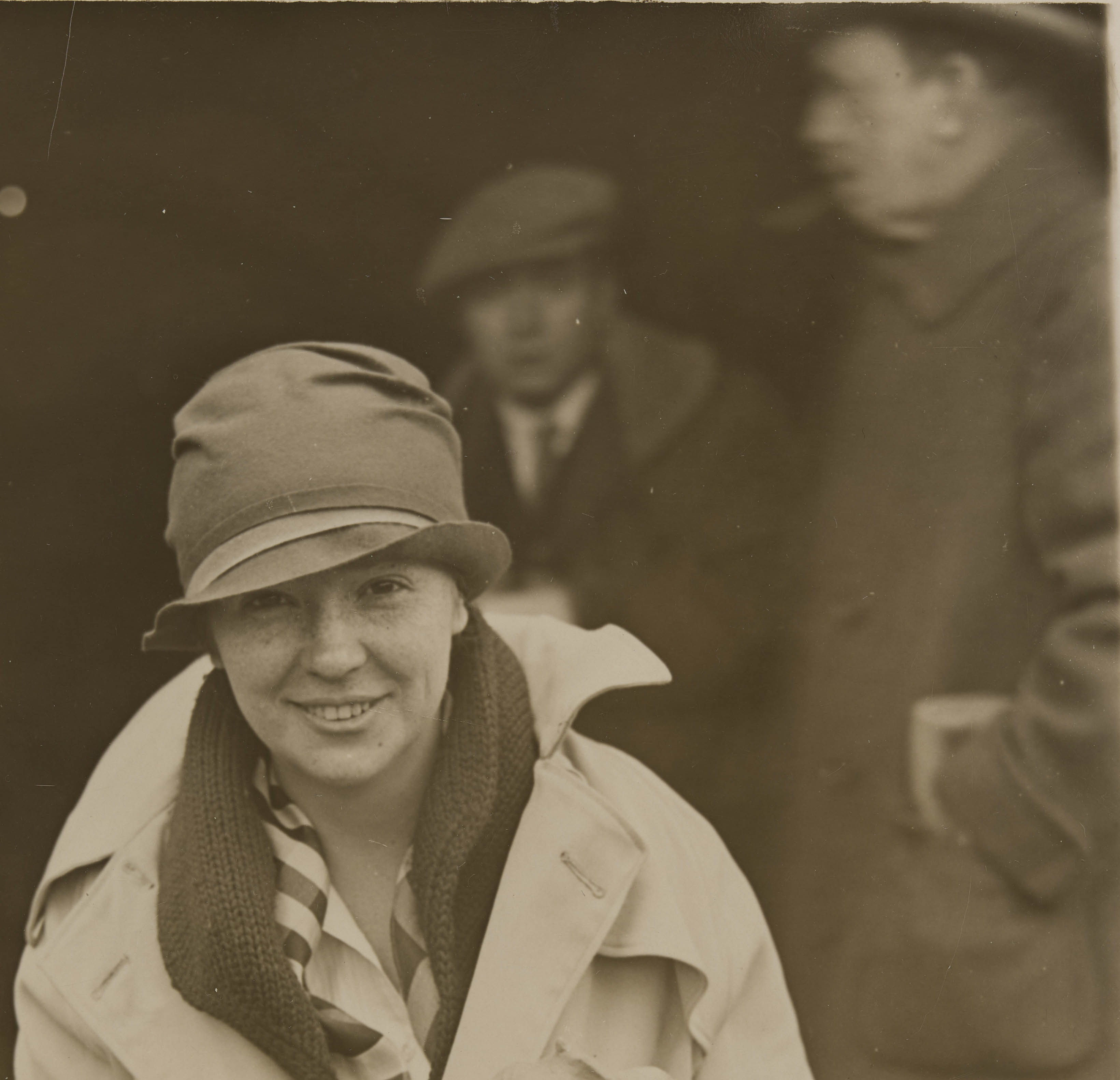
The images were returned to us after conservation recently, and we also received high resolution digital versions. Most of the photos show items from the Etowah site, but one picture was of Margaret Ashley Towle, one of the pioneering female archaeologists of the southeastern United States. The image is marked on the reverse as “Etowah Ga 1928 Miss Ashley” and has our recent catalog number 2020.3.283. It is a wonderful complement to Frank Schnell Jr’s 1999 chapter “Margaret E. Ashley: Georgia’s First Professional Archaeologist,” which appeared in Grit-Tempered: Early Women Archaeologists in the Southeastern United States. She was also featured, sans photo, in Irene Gates’s Women of the Peabody blog in 2018.
Image of Margaret Ashley at the Etowah site, 1928. In the right background is a slightly out of focus image of archaeologist Warren Moorehead. The image has been cropped to exclude several cultural items from the site. Robert S. Peabody Institute of Archaeology 2020.3.283.
Margaret Ashley was already well-versed in archaeology and was a skilled outdoorswoman when she worked with Warren Moorehead at the Etowah site, and went on to assist with his projects in Maine and to continue her own research in the Southeast. She also contributed to Moorehead’s Etowah Papers publication and published on her technique for illustrating pottery. According to Frank Schnell’s chapter in Grit-Tempered, Ashley married Moorehead’s main field assistant Gerald Towle in 1930. Unfortunately, Ashley’s marriage coincided with a significant hiatus to her training and research. We do know that after Towle’s death, Ashley completed her Ph.D. at Columbia with her dissertation later appearing as The Ethnobotany of Pre-Columbian Peru, number 30 of the Wenner-Gren Foundation’s Viking Fund Publications in Anthropology (1961). Colleagues working in the Andes report that Ashley’s publication remains a significant resource. Ashley spent several decades as an unpaid research associate at the Harvard Botanical Museum where she worked with botanist Paul Mangelsdorf, who had also been encouraging Richard “Scotty” MacNeish’s interests in agriculture, also around this same time.
We are delighted that we have been able to recover this early photo of Margaret Ashley Towle. If you get a chance, get a copy of Grit-Tempered–the biographical entries also include Adelaide Bullen, another pioneering archaeologist with connections to the Peabody Institute!
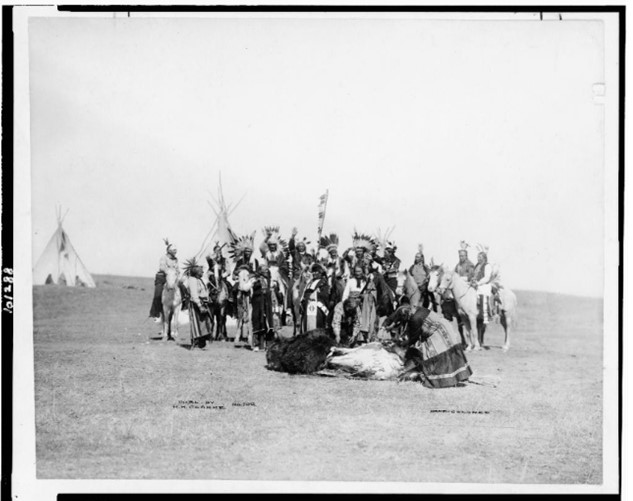
My name is Deirdre Hutchison, and I am currently studying for my B.A. in history at UMass Lowell. As part of a semester internship, I had the opportunity to research the provenance of several unidentified Native American photographs held by the Robert S. Peabody Institute of Archaeology. My first blog outlined initial findings and potential areas of investigation. To summarize that blog, the photos, mounted on board, illustrate a 1905 event at the 101 Ranch in Oklahoma.
As I navigated various connections, photographer James B. Kent became a more prominent fixture of my research. Kent was a regular photographer at the 101 Ranch, and the Millers tapped him to design and compile the souvenir booklet for “Oklahoma’s Gala Day” at the ranch on June 11, 1905. –. Kent, it seems, was an integral part of photography at the 101 Ranch, ultimately becoming the head of the moving pictures department by 1927.
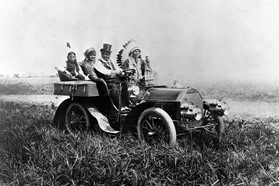
The 101 Ranch souvenir booklet is discussed by Michael Wallis in his book The Real Wild West. According to Wallis, it contains multiple images taken by Kent – including the picture of Geronimo skinning a buffalo held by the Peabody (discussed in my previous blog). The booklet also contains one of the most famous images of Geronimo, “Geronimo in an Automobile.” . Working with the archival staff at the Gilcrease Museum in Tulsa, I hope to view the images to confirm Kent’s pictures and perhaps discern other possible photo matches.
Isolating Kent’s work is relevant because he was not the only photographer working at the famous extravaganza on June 11, 1905. The Millers masterfully orchestrated spectacle – 65,000 people attended – could not be supported by just one photographer. Multiple photographers were present capturing various promotional images at the behest of the brothers. This is immediately evident in the Library of Congress photo of “Geronimo Skinning a Buffalo” that identifies O. Drum as the photographer. The strikingly similar images of the Peabody and the Library of Congress differ in only small ways. It seems a bank of photographers captured the same scene, each image similar, but slightly different: a person with a head facing a different direction, an extra person, women bending, or a western-clad gentleman caught talking with those being prepped for the publicity shoot.
Another name that kept popping up in my research and commonly associated with a broad range of images, including Kent’s, was the publisher H. H. Clarke. Not only did Clarke produce black and white photographs, but he also manufactured color versions for global distribution, and several of his postcards bear the notation Made in Germany. Clarke’s color versions are considered unique as he employed a hand-coloring technique rather than standard lithography. Other examples of this work are at the Cherokee Strip Museum (Cheryl DeJager, Cherokee Strip Museum, personal communication).
Printed in Germany , published by H.H. Clarke. Personal collection of Deirdre HutchisonUnidentified photograph from the Peabody Institute
Although Clarke published images by Kent and other photographers, establishing a direct link between them is difficult. However, sifting through metadata across several institutions, I discovered interesting connections that explore the publishing and manufacture of images onto postcards. For example, in the early twentieth century, professional and amateur photographers could sell their negatives directly to distributors such as Clarke or major publishing houses such as The Albertype Company. The Library of Congress cites Albertype and Clarke for one of two images listed of Geronimo in a car.
Clarke published three photos I initially matched with the Library of Congress. However, with only a thumbnail view available, I could not say with conviction they were identical to the Peabody images. After corresponding with the Prints and Photographs Division at the Library of Congress, enlarged views are now accessible online which allowed me to confirm that two photos were identical to those at the Peabody, but a discrepancy arose with the third. A close inspection reveals small but salient differences between the image at the Peabody and the one at the Library of Congress. For example, in the Peabody image, women are standing over the buffalo, but in the Library of Congress, they are bending over. Furthermore, in the Peabody image, a man stands to the buffalo’s left with his back to the camera, notable for his western-style suit, boots, and derby hat. Kent was known for always wearing his signature derby hat, leading me to speculate he was directing the people for the staged photograph and was caught on camera by another photographer.
Ponca Indian Scouts, Library of CongressPonca Indian Scouts, Peabody Institute
When I started this project, I naively thought I would find solid evidence pertaining to Warren Moorehead’s acquisition of the images. As the museum’s first curator and renowned Native American expert, I thought, how could there not be a connection? Yet, every avenue of research proved fruitless with Moorehead. The narrative unfolded around the Miller Brothers, James “Bennie” Kent, and H. H. Clarke. The interconnectedness of these people provided many answers; the photographs were staged publicity images, taken at the 101 Ranch and predominantly early 1900s. Unraveling this fascinating story has been immensely rewarding, yet it seemed unlikely I would find any correlation between the images and their arrival at the museum.
Despite this disappointment, potential connections with the Peabody Institute and theories of acquisition emerged when reviewing my data, though initially not with Moorehead. Ernest Whitworth Marland was in business with the Millers and became Governor of Oklahoma. Frank Phillips of Phillips Oil was also involved with the Millers and the 101 Ranch. Both men were natives of Pennsylvania, as was Robert S. Peabody. Each man was wealthy, prominent, and quite conceivably moved in the same upper echelons of society. It is possible either of these could have passed photographs to Moorehead or the Peabody. Considering the student body of Phillips Academy, any alum could have given the images as a donation to their alma mater. Equally so, any faculty member may have been gifted the photos. All of these are plausible scenarios. However, another tenuous link emerged, excitedly leading me back to Moorehead. The collections description for the three Library of Congress images mentioned earlier notes that they are mounted photographs, as are the ones at the Peabody.
Another facet that piqued my interest was the descriptions accompanying records at the National Archives. “Geronimo in a Car” is cited as taken on June 11, 1905, at the Millers’ Oklahoma Gala Day, along with other images; all are 8×10 or larger, just like the Peabody images. Although far from compelling, there are commonalities.
What I found most compelling with the National Archives photo of “Geronimo in a Car” was that it states a copy was sent to the Office of the Commissioner of Indian Affairs. The Office of Indian Affairs later became the Bureau of Indian Affairs. Moorehead was appointed to the board of commissioners for the Bureau of Indian Affairs by President Roosevelt in 1908.
Geronimo Driving a Car. Oklahoma Gala Day, June 11, 1905. Wall Street Journal
As an emerging historian, I like to focus on facts. Unfortunately, facts can be notoriously distorted by time, memory, and absent material evidence. However, the absence of proof does not equate to the absence of the action. Although I had discounted Moorehead as the conduit, I have circled back and believe he is a strong acquisition candidate based on my latest discoveries. That particular mystery may never be solved, but it does not detract from the powerful narrative of Native American presence and treatment in mainstream society in the early twentieth century.
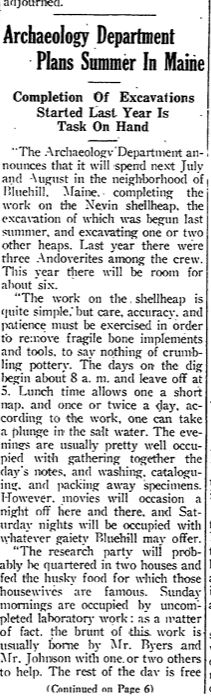
In the June 17, 1938 issue of The Phillipian, it was announced that Dr. Warren King Moorehead would be leaving his post as Director of the Department of Archaeology. This brought about the end of a long and prosperous career that saw Moorehead become an integral part of the Phillips Andover community and a major contributor to the field of archaeology as a whole.
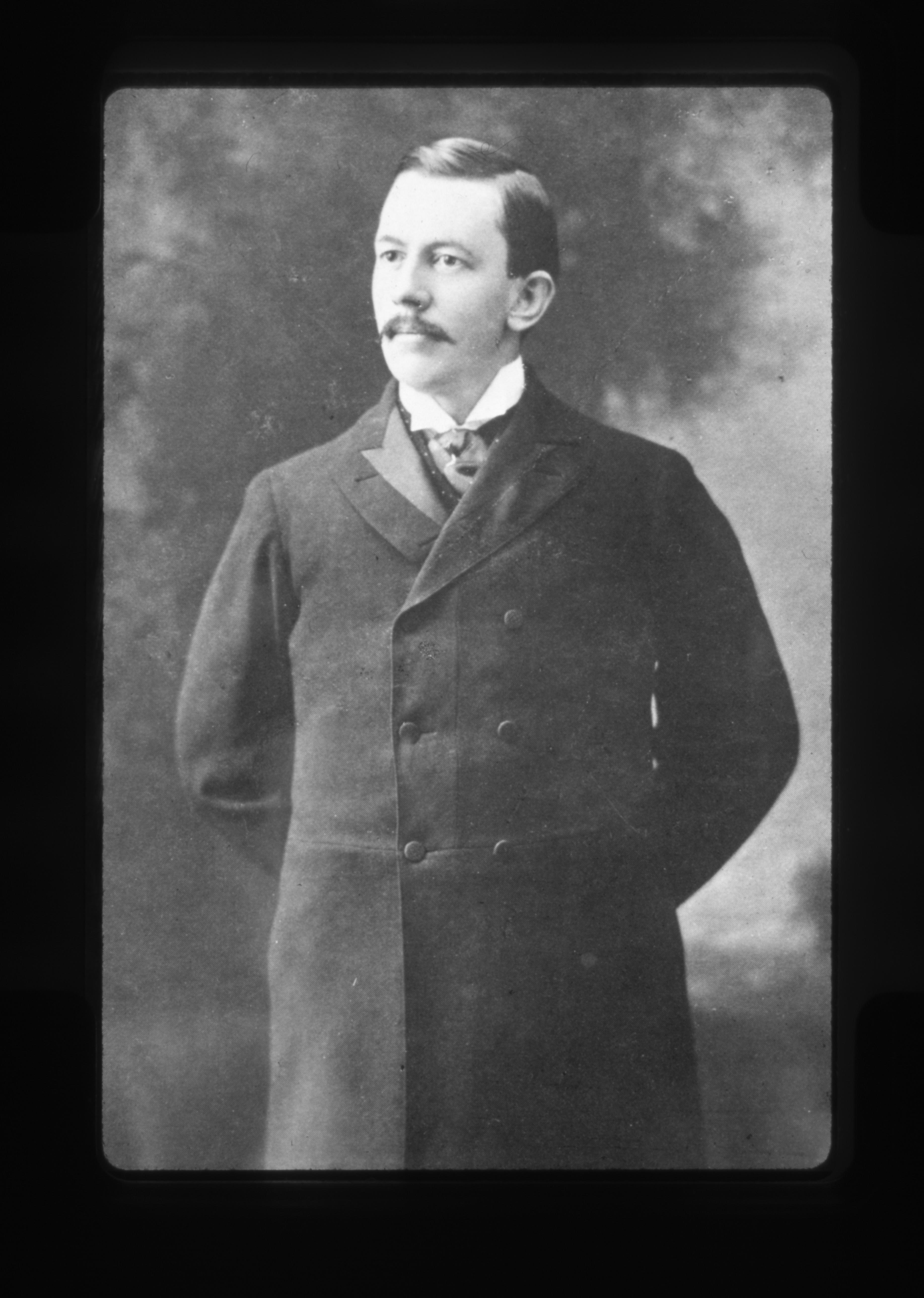
Portrait of Warren K. Moorehead, 1898
Moorehead began his career in the 1880s when he studied at Denison University before becoming an assistant at the Smithsonian Institution and later the curator of the Ohio Archaeological and Historical Society (now the Ohio History Connection). He joined the Department of Archaeology at Phillips Andover at its inception in 1901 and was appointed as the first curator. In fact, he worked closely with Robert S. Peabody, the Department’s founder, to develop the idea of such an institution. During his time as part of the Department, Moorehead received a Master of Arts from Dartmouth and was made a Doctor of Science in 1927 by Oglethorpe University and again in 1930 by Denison University. He became the director of the Department after Dr. Charles Peabody stepped down in 1924.
The article that announces Dr. Moorehead’s retirement is not particularly long but does highlight some of the important aspects of his career. The article spends a majority of its content on his education and on his path to becoming the director. The article does include some of his other accomplishments, such as a partial list of publications, and a mention about his work with the US Board of Indian Commissioners. The article concludes by saying that his position within the archaeology community is undisputed and that he will be travelling to Europe with his wife for the summer.
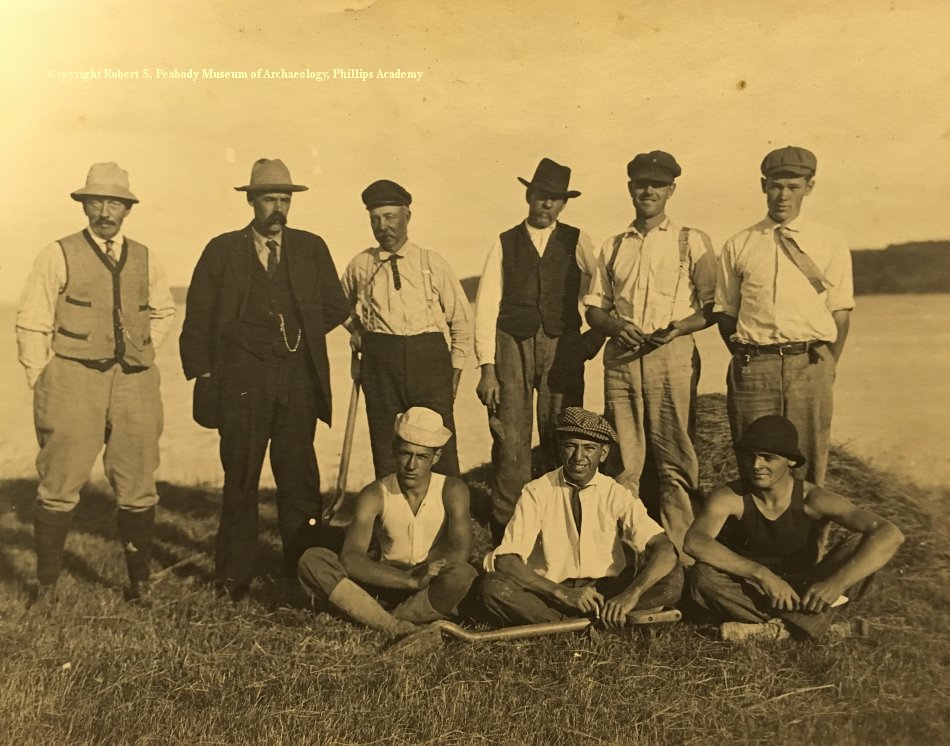
Warren K. Moorehead (far left) with an excavation group
Personally I was surprised with how Moorehead’s departure was presented in The Phillipian, particularly the brevity in which they describe his career. In the numerous issues of The Phillipian throughout the years that I have researched, it became clear just how much Moorehead fought for the rights of Native Americans and how he fought to bring the injustices committed against them to light. This was a frequently recurring topic for Moorehead and yet receives one sentence in his retirement article. This also occurs with his numerous archaeological discoveries from across the country. A significant aspect of Moorehead’s career was his participation in and leadership of numerous excavations and expeditions over the years and, unfortunately, that aspect receives little attention in this article, such as his work throughout New England, the Midwest, and Southeast. Although his methods do not meet today’s standards, Moorehead made multiple important contributions to the field that went unmentioned in his retirement article.
I think that the reason I was so surprised was that the reception that Moorehead received in this article differs from most of his other appearances in The Phillipian. Many of the articles that featured Moorehead over the years went into a fair amount of detail. Whether it was discussing a lecture or one of his expeditions, the reader was usually given more information. Moorehead was seemingly respected and well liked by the students, as evidenced in numerous articles praising his lectures, yet the announcement of his retirement is rather straightforward and relatively unemotional. One possible reason for this could be declining student interest in the Department over the few years prior to his retirement and his habit of giving very similar lectures every year. Moorehead’s sendoff did not mirror his depiction in previous issues of The Phillipian.
Warren King Moorehead was a staple of the Department of Archaeology from its inception in 1901 until his retirement in 1938 having served as both the curator and then as the director. He retired at the age of 72 and spent his brief retirement with his family before passing in January of 1939.
Check out the following Peabody blogs for more information and history about Warren K. Moorehead.
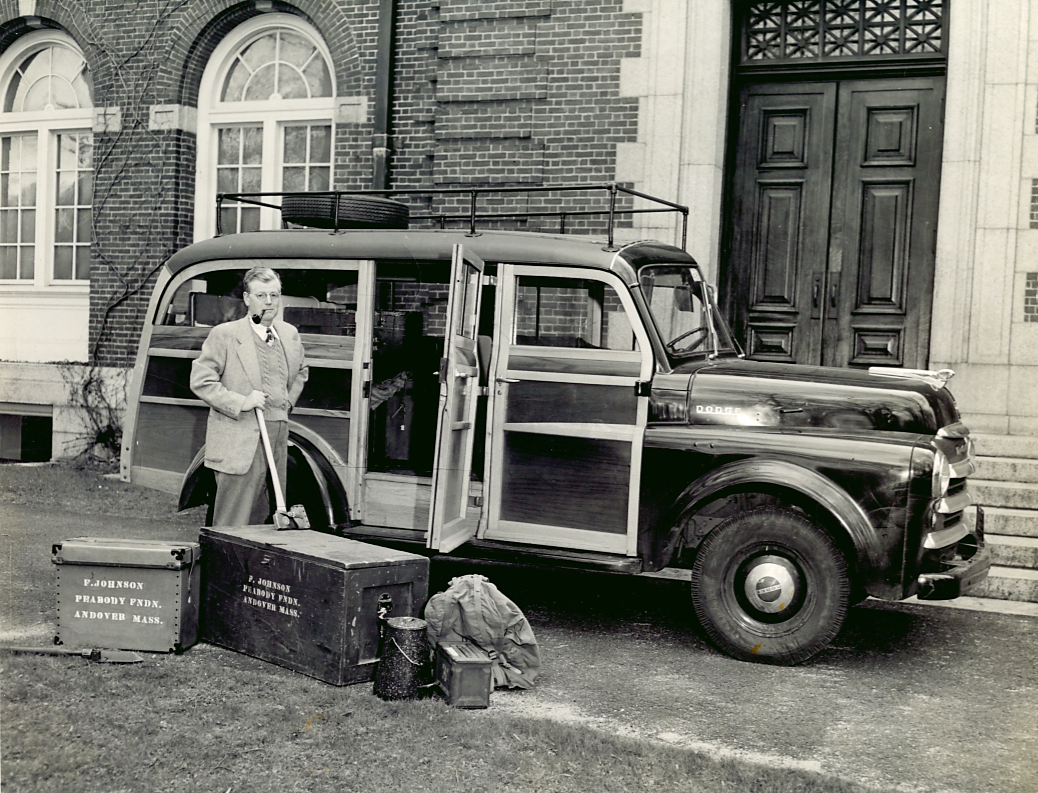
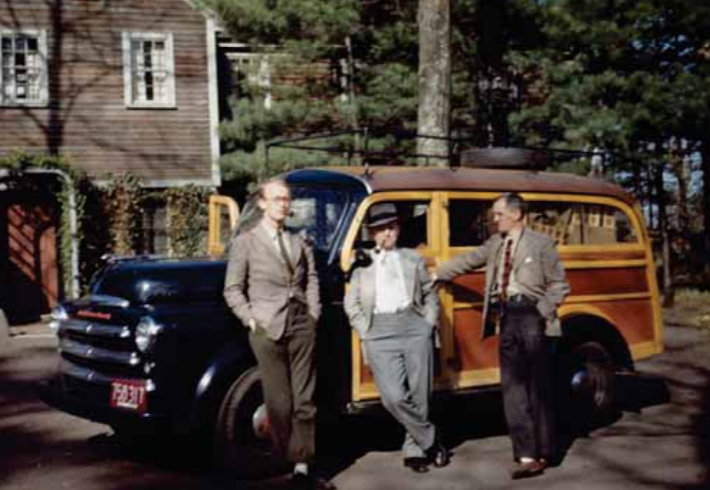
Pipe in mouth and axe in hand, a man in a tweed suit stands in front of a 1940s Dodge “Woody” station wagon brimming with suitcases and archaeological gear. The crates on the ground by his feet are labeled, “F. JOHNSON, PEABODY FNDN, ANDOVER, MASS.” Who is this man and where could he be traveling to?
The year is 1948 and this traveler in tweed is Frederick Johnson, curator of the Peabody (known as the Robert S. Peabody Foundation for Archaeology at the time) from 1936-1968.
Fred Johnson with expedition gear in front of the Peabody, 1948.
Frederick Johnson (1904-1994) joined the Robert S. Peabody Foundation for Archaeology as Curator in 1936. He held this position until 1968, serving one year as Director before retiring in 1969. During his time at the Peabody, Johnson initiated an archaeological excavation program for students at Phillips Academy. He also organized the Committee for the Recovery of Archaeological Remains (1945-1968) and chaired the American Anthropological Association’s Committee on Radioactive Carbon 14 (1948-1968.)
Johnson is recognized for contributing to the development of an interdisciplinary approach to archaeology, using scientists from various fields to study archaeological problems together. The Boylston Street Fish Weir project (1939) in Boston, MA as well as the Andover-Harvard Yukon Expedition (1944 and 1948) were two examples of this method.
The image of Fred Johnson above was taken before his trip to the Yukon Territory for the last year of the Andover-Harvard Yukon Expedition. This five-month field project combined archaeological and geobotanical research in the unknown northwestern interior of North America and was carried out jointly by the Peabody and Harvard University (funded by additional sources, including the Wenner-Gren Foundation.)
The journey began from North Dakota to Burwash Landing, Yukon with research in parts of the Shakwak and Dezadeash Valleys in southwestern Yukon. The project leaders were Fred Johnson and Professor Hugh Raup, botanist and Director of the Harvard Forest in Harvard, MA. Two Harvard graduate students served as assistants in the botanical and archaeological research, Bill Drury and Dr. Elmer Harp, Jr.
Harp was a recent Harvard graduate and Curator of Anthropology for the Dartmouth College Museum in Hanover, NH. He documented the trip through field notes and his own photographs. Below is one of Harp’s photographs taken at the beginning of their trip. Do you notice anything similar between these two images? That is the same station wagon in each photograph and yes, that is Fred Johnson with his pipe again! Harp and Drury were tasked with driving the expedition’s station wagon from Boston to Whitehorse, Yukon Territory – standard labor assigned to graduate students in the field.
Bill Drury, Fred Johnson, and Elmer Harp at the start of the Andover-Harvard Yukon Expedition, May 4, 1948. Photograph by Dr. Elmer Harp, Jr., Professor of Anthropology Emeritus, Dartmouth College, Hanover, NH.
According to Harp’s recordings from the expedition, Johnson and Raup conducted several projects in the early years of the Yukon project (1943-1944) exploring for evidence of the first appearance of humans in the New World. The 1948 project was to search for archaeological sites along the eastern borders of the Rocky Mountains via the Alcan Highway. This was the first time the highway was opened to civilian traffic since the beginning of WWII. The Andover-Harvard expeditions went on to represent the first systematic explorations of Yukon’s prehistoric past.
Contributed by Marla Taylor and John Bergman-McCool
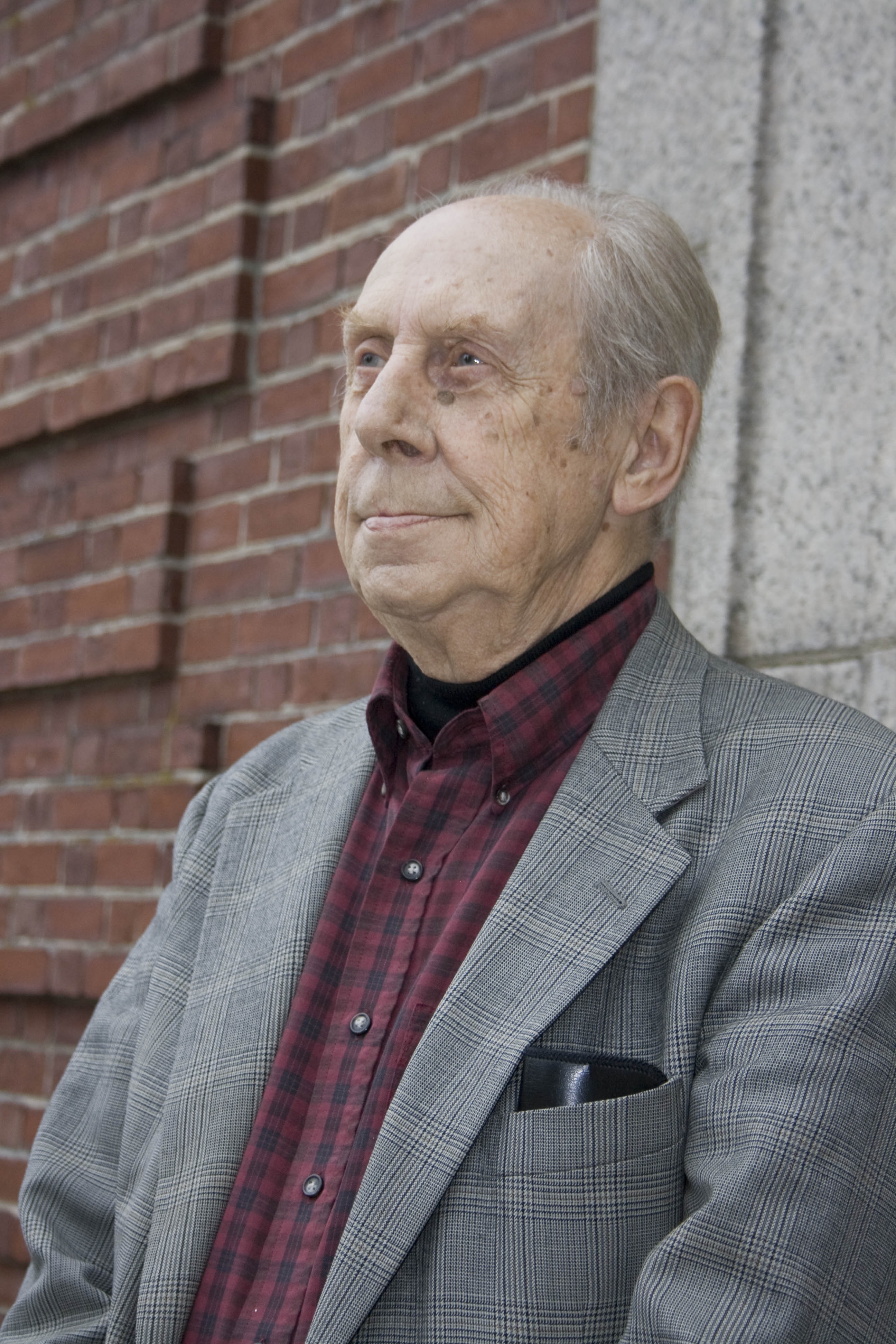
Every museum is full of stories and story-tellers. Our recent work in the inventory process has uncovered an old story that always gets my attention (Marla’s). But, before I begin, I must give credit to Eugene Winter, the Peabody’s late Curator Emeritus, who was a story-teller extraordinaire – I am sharing a shortened version of his memories. (Another time, I will tell you about the time Gene cooked his lunch in an active volcano or walked on a whale. The man was full of stories!)
Gene Winter – the best story-teller I knew
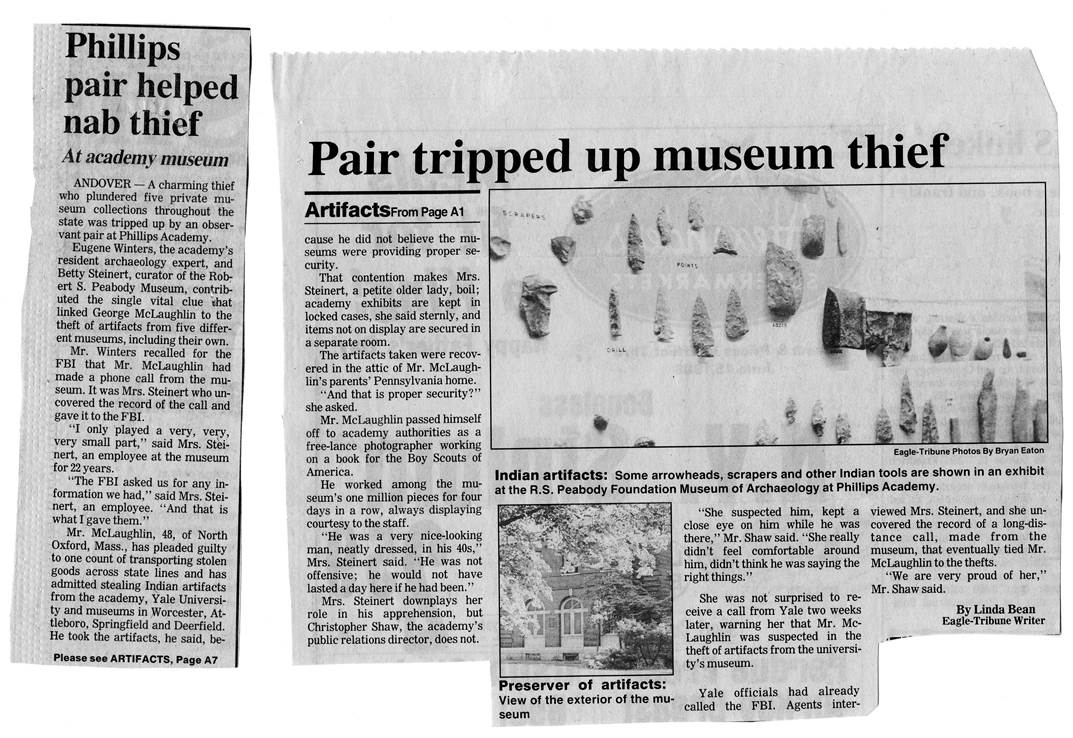
In 1986, Gene welcomed a man named George McLaughlin into the Peabody. McLaughlin claimed to be creating a handbook on archaeology for the local Boy Scouts and was looking to photograph objects in the Peabody’s collection. As a teacher himself, Gene was happy to encourage this project and made arrangements for McLaughlin to return a couple weeks later to access the collection.
However, McLaughlin instead returned the next day and told the administrative assistant, Betty Steinert, that Gene had authorized him to examine the collection – alone. Over the next three days, McLaughlin helped himself to an unknown number of objects from the collection.
Less than a week later, Gene received a call from security at Yale’s Peabody Museum of Natural History. A man matching McLaughlin’s description had stolen artifacts from a grad student’s work area and ran out of the museum before he could be caught. Because McLaughlin had now crossed state lines, the FBI became involved.
Gene and Betty remembered that McLaughlin had used the Peabody’s phone to call his wife about being late for dinner. This crucial piece of information allowed the FBI to locate McLaughlin’s home. Fortunately, McLaughlin was arrested soon after these incidents and all materials in his possession were seized.
Eagle-Tribune article from 1986 recounts George McLaughlin’s theft of artifacts from the Peabody Museum.
In total, McLaughlin victimized six institutions in New England and stole thousands of artifacts valued at over $800,000 in 1986 ($1.9 million in 2020 dollars). He intermingled the artifacts based on his own system and systematically removed their catalog numbers (often the best clue to their original home). By so drastically removing the objects from their context, it was a challenge to return the objects to their appropriate homes.
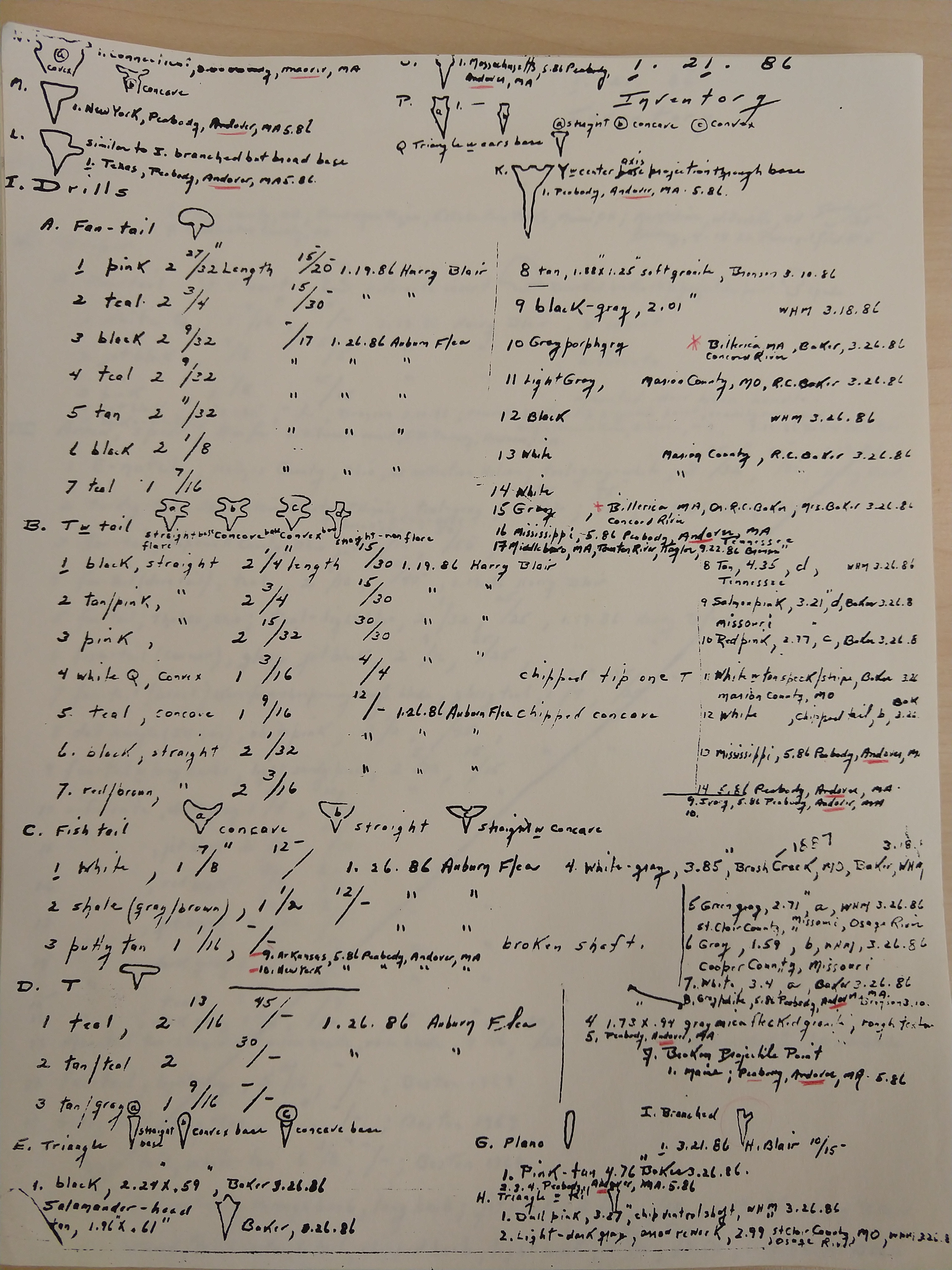
McLaughlin had kept his own version of a ledger identifying the objects and where they came from. And fortunately, Gene was able to recognize a dozen or so very specific objects from the Peabody’s collection. The FBI left it up to the victimized institutions to divide the material in McLaughlin’s collection. The Peabody ended up with nearly 1600 objects from McLaughlin.
Ultimately, McLaughlin was sentenced to a three year suspended sentence and four years of probation. He was also fined $10,000 and ordered to pay a small restitution to each institution.
And therein lays the origin of the Peabody’s FBI collection.
Having come across these materials during our inventory and rehousing project it was time for them to be cataloged by myself (John). One challenge confronted us: McLaughlin had removed any identifying numbers applied by the museums and applied stickers with his own numbers. As the objects were cataloged, a careful inspection was made for remnants of original numbers not completely obliterated during the removal process. There were many with tantalizing hints of legible numbers. In the end though, there were just a few objects with numbers clear enough to associate with our museum’s ledger.
A page of McLaughlin’s inventory
The remaining majority of objects needed new numbers. As mentioned above, McLaughlin had organized the objects and transcribed them into a ledger of sorts. His ledger was too general to make a one-to-one comparison with our own museum’s ledger, but it served as the outline of our numbering system. We added our own prefix, indicating that these objects were stolen and returned by the FBI and followed that with the McLaughlin number. In that way the objects will always carry that part of their strange history.
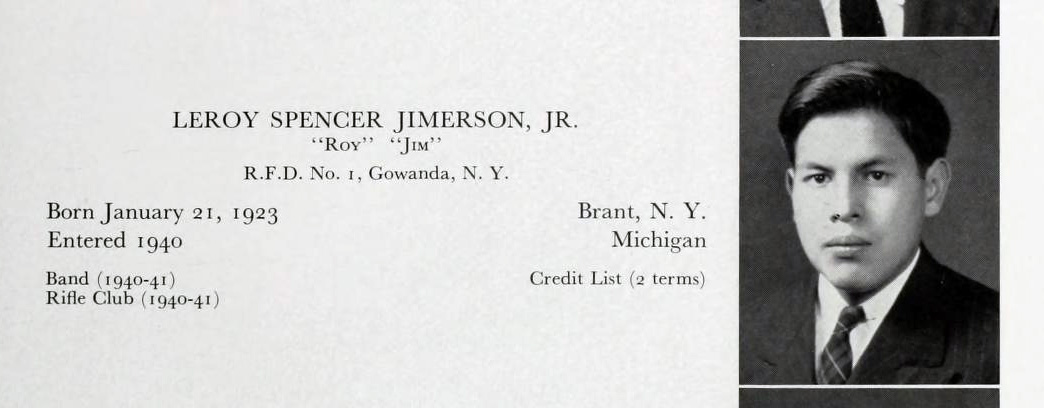
Today’s Phillips Academy students often ask about the students of the past. Since November is Native American Heritage Month, the topic of Indigenous alumni often comes up. Happily, we are in touch with some recent alums, like Emma Slibeck ’20, who led efforts last year to create an Indigenous Land Acknowledgment, and Tristin Moone ’10, past member of the Peabody Advisory Committee. Paige Roberts, Academy archivist, maintains a list of notable Native American alumni, and we were happy to add LeRoy Spencer Jimerson Jr. (January 21, 1923 – September 28, 1991) to that list during some recent collections research.
From the Pot Pourri–Phillips Academy yearbook for 1941
Jimerson was the son of Seneca leader LeRoy Spencer Jimerson Sr. of the Cattaraugus Reservation, Gowanda, New York. He attended Phillips Academy for one year, graduating in 1941. The senior Jimerson was an accomplished carpenter, attended Hampton University (a HBCU in Virginia that has some PA connections in its founding), established a scholarship fund for Native students, and served in Seneca leadership positions throughout his adult life.
After Phillips Academy, LeRoy Jimerson Jr. served in the Navy and pursued interests in electrical engineering and computers. He was an instructor at the Great Lakes Naval Base and at Treasure Island, California. Jimerson, in 1949, received a scholarship to the University of Michigan. Established in 1932 by the Michigan Board of Regents, that scholarship acknowledged the 1817 Treaty of Fort Meigs, which had required tribes to cede millions of acres to the federal government, some of which ultimately went to the university. Perhaps an early version of an institutional land acknowledgment?
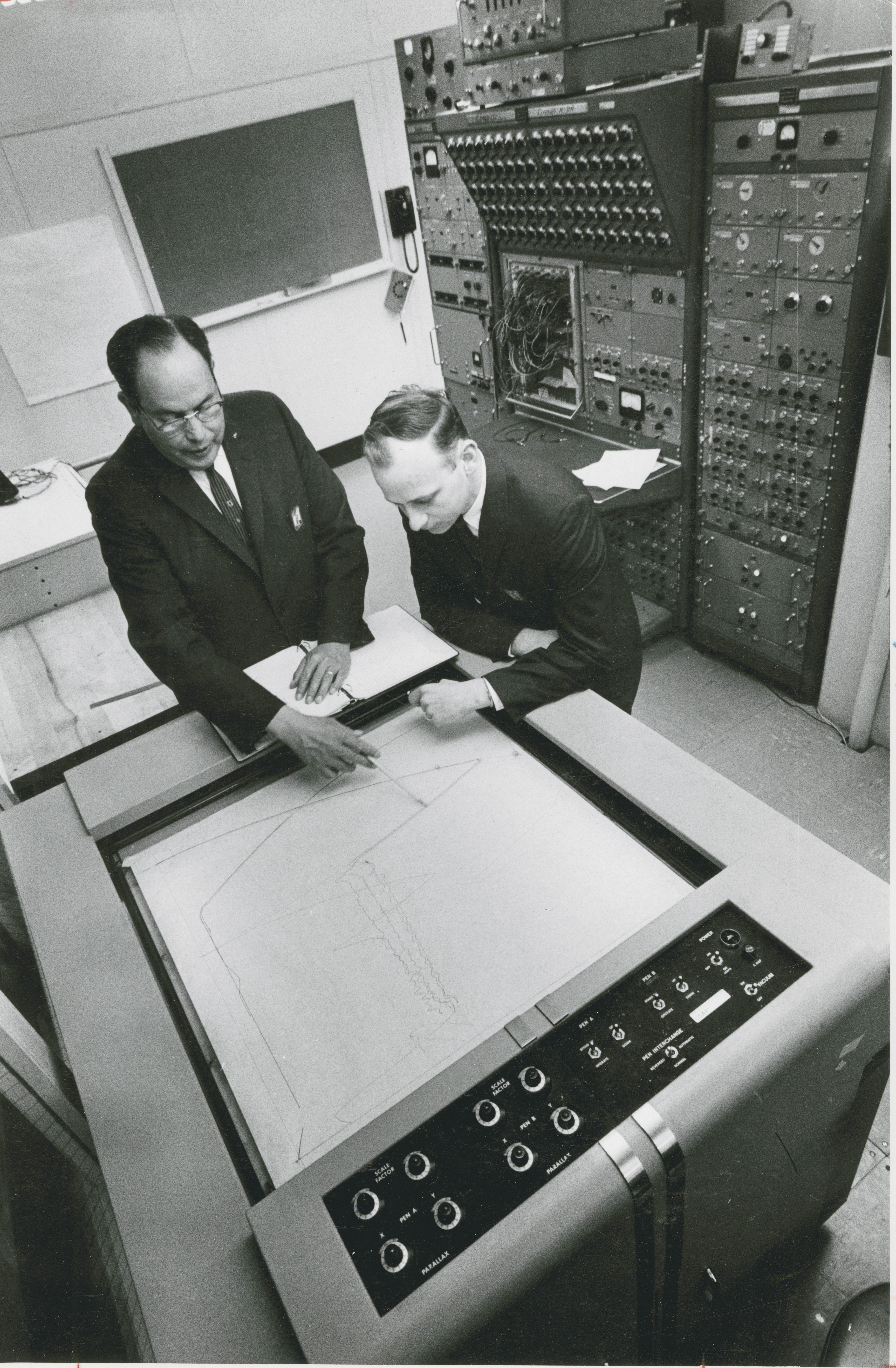
LeRoy Jimerson building an analog computer–from Boys’ Life magazine, 1951
A profile in 1951 Boys’ Life combines quaint anecdotes and stereotypes of life on the reservation with Jimerson’s academic success and interest in computers. The story appeared shortly after Jimerson completed his studies at the University of Michigan, but includes a lot of information on his post-graduate year at Phillips Academy when he “joined the school band, ran as a member of the cross-country squad, distinguished himself as a math student, won a Latin prize, and was elected to a cum laude (honor) society.” In the Boys’ Life article, he describes general acceptance by his fellow Academy students, relating one instance where an international student wanted to know why he wasn’t wearing paint and feathers. Today we recognize this as a micro-aggression, akin to the numerous accounts found on the black@andover Instagram page.
In the 1950s, Jimerson worked for Schlumberger, an oil field services company. Here he was involved in developing a magnetic resonance apparatus with scientist and engineer Francois F. Kirchner. Nuclear magnetic resonance continues to be used in oil prospecting today.
IBM, in Owego, NY, recruited Jimerson in June 1957, where he was quickly promoted to senior engineer. In 1962, McDonnell Aircraft contracted with IBM to provide the guidance systems for Gemini. From 1962 to 1966, Jimerson worked as a computer engineer on the NASA Gemini mission, laying the groundwork for Apollo and the moon landing a few years later. In an interview, Jimerson recalled that, “It was like a blitzkrieg, people didn’t know what hit them” (Time-Life Books 1993:33). According to a document prepared in 2012, Jimerson originated the math flows needed in the computer programming for the Gemini missions. Math flows–in this context–are detailed flowcharts like the one shown here, showing the sequence of algorithms that underlie computer code. At some point in the late 1960s or early 1970s, Jimerson and his family relocated to Herndon, Virginia, though it is not clear if he continued working for IBM.
Jimerson died on September 28, 1991 in Sarasota, Florida, where he had retired with his family in the mid-1980s. The picture that emerges from the few interviews that we located, is that LeRoy Jimerson Jr. was an accomplished scientist and engineer who worked on one of the country’s early and significant space flight programs. His time at Phillips Academy was short and well spent, and a stop along an educational career that included one of the top scientific and technical programs–the University of Michigan. Until recently, LeRoy Jimerson wasn’t on our radar. We are hopeful that Phillips Academy can connect with more Native and Indigenous students–it is clear we have a lot to offer one another.
Further Reading
Buffalo Courier Express (1961) LeRoy Jimerson Obituary. February 23, 1961, p. 27.
Crump, Irving (1951) Indian Cum Laude. Boys’ Life (March 1951):27, 64.
IBM (1962) Putting a Man on the Moon: America’s Next Step. Business Machines (August 1962):18-19.
Jamestown Post Journal (1961) Famed Seneca Indian Leader, LeRoy S. Jimerson, 72, Dies. February 23, 1961.
Kirchner, Francois F., and LeRoy Spencer Jimerson Jr. (1961) 2,996,658 Magnetic Resonance Apparatus (originally filed December 12, 1955). United States Patent Office, Washington DC. https://patents.google.com/patent/US2996658A/en
October is one of my favorite times of the year. I love the changing leaves here in New England, the crisp air, and seeing all the creative Halloween costumes that people come up with. This is also a time for sharing spooky stories and strange experiences…
Have you ever noticed this plaque at the Peabody?
This plaque is next to the front door of the Peabody Institute
Warren K. Moorehead (1866-1939) was the first curator and second director of the Peabody Institute (then known as the Department of Archaeology). If you don’t know anything about him and his relationship with the Peabody, just try searching ‘Moorehead’ on our blog. I’ll wait.
Moorehead was definitely a strong personality. And I, personally, think some part of his spirit does still live at the Peabody.
Several years ago, there were a series of strange disturbances that were happening at the Peabody. I don’t have the space to tell you everything, but here are a couple that I personally experienced:
One morning, Lindsay and I were the first staff in the building and let ourselves into the basement office space. Sprawled across the floor by our kitchen area were paper plates, a glass shelf (an extra for the fridge), and various other little things that had been on top of the microwave. These things could NOT have fallen like this on their own – it looked like something had swiped its arm and pushed everything onto the floor. Lindsay and I had been the last ones out and were now the first ones in. We immediately photographed what we saw (I am so sorry that I can’t find that photo!) and did some follow-up. No motion alarm had gone off all night and our pest management company found no evidence of an animal.
Another time, a couple years ago, I was talking to work duty students and explaining that Moorehead used to exchange or give away artifacts that I really wish had stayed in our collection. Just as I was mid-sentence in a rebuke of his cavalier behavior, a photographic portrait of him fell from the wall and smashed its frame. This portrait had been hanging in the same spot for my entire tenure at the Peabody (at that point, about 10 years) and had never fallen before. The students and I exchanged shocked looks and I quickly apologized to Moorehead for bad-mouthing him.
Moorehead (he is the one standing) now rests on the floor. Although this was printed for an old exhibition, I can’t quite bring myself to get rid of the photo.
Shortly after these incidents, Ryan wrote a note to Moorehead explaining that we were taking care of the building and the collections and that we respected and appreciated him. Ryan slid the note behind the plaque by the front door and the strange occurrences stopped.
I am not big believer in the supernatural, but I do think Moorehead’s spirit does reside in the Peabody in some form. In my opinion, he is a pretty benign ghost who just wants to ensure that the collection and the building are getting their proper respect and care – I strive to meet his standards.
To many institutions, the annual report is one of the most important pieces of information. A single document, yet a powerful tool in communicating an institution’s performance during each fiscal year. Each fall the Peabody presents their annual report to the public, highlighting their achievements, overall performance of the past year, as well as their goals and objectives for the coming year. Not only does the annual report provide a snap shot of what a year at the Peabody looks like, it provides transparency of the institution to the public and its local community.
The making of the Peabody annual report includes several staff members who collaborate in the documentation, writing, and gathering of the material across several departments within the Peabody. These include: Administration (Ryan, Director), Education and Outreach (Lindsay, Curator of Education and Outreach and Ryan, Director), Collections (Marla, Curator of Collections), and Peabody Donors and Support (Beth, PA Director for Museums and Educational Outreach). Once the information is gathered and content is written, I take over to design the overall layout of the annual report.
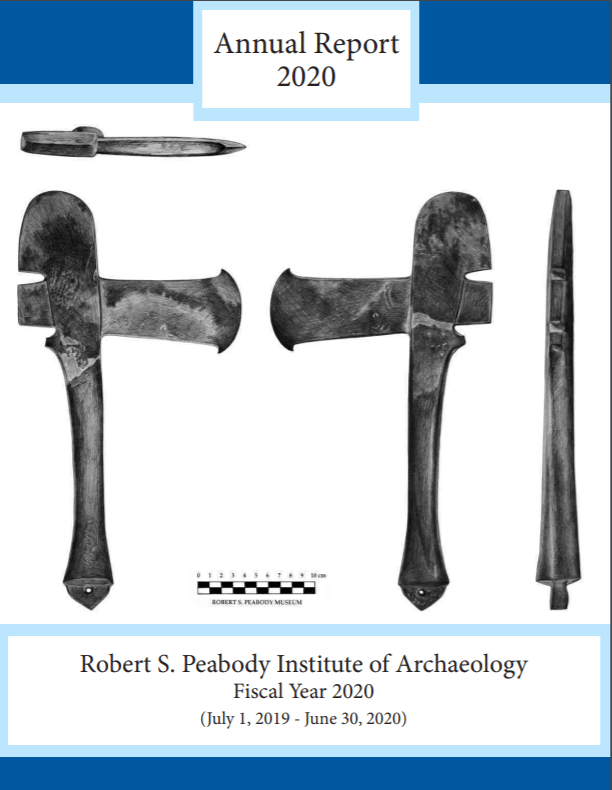
A page from the 2020 Peabody Annual Report
Using the Adobe InDesign software, I create each page spread using the information that staff give me. When designing, it is important to always keep in mind the overall flow of information and that the format/design features are cohesive throughout the document. Something new I incorporated into the report this year were black and white photographs from the Peabody archives. I used these photographs as transitions between specific sections of the report to provide a natural break, while still maintaining the overall flow of the report. I also had a little fun creating a new page dedicated to our collections remote work during Covid-19.
Photograph from the Peabody archives used in the 2020 Peabody Annual Report
I really enjoy designing the annual report and watching all the work Peabody staff put into the year unfold with the design of each page. Not only does it provide an opportunity for each department to feature their success and performance, its where all the Peabody’s work finally comes together.
You can view the 2020 Peabody Annual Report here. Enjoy!
Returning to the Peabody Institute on a more regular basis this month led me to rediscovery an interesting little artifact on the window of my office. When I first joined the Peabody in 2012, my colleagues pointed this out to me, but it has remained largely covered up by window blinds since an initial peek.
Singleton Peabody Moorehead’s name scratched on the windowpane in the director’s office.
The artifact in question is a scratched signature on a glass windowpane: S. P. Moorehead. Singleton Peabody Moorehead was our first curator’s youngest son.
When I first saw this little relic of past occupants, I imagined the younger Moorehead scratching the signature using his father’s emerald ring. That ring is a prominent feature in pictures of Moorehead, and I can imagine a mischievous child borrowing the ring and testing the stone’s hardness on the nearest handy surface: his father’s office window.
Robert Singleton Peabody, our founder, lent his name to the younger Moorehead. In fact, S. P. Moorehead was born in October 1900, right around the time that his father Warren and Robert Peabody were imagining the Department of Archaeology, our name in the early part of the twentieth century. Robert had befriended the elder Moorehead and hired him about a decade earlier to help amass a collection of Native American objects. He also provided convalescent facilities when Moorehead was recovering from tuberculosis. In fact, Singleton Moorehead was born at Saranac, New York where his father was recovering at Peabody’s cabin.
Moorehead’s entry in the 1918 Phillips Academy yearbook.
So who was Singleton Peabody Moorehead? He grew up on Hidden Field Road on the Phillips Academy campus, and graduated from the school in 1918. During his time at Phillips, Singleton, or “Sing,” played football, swam, and served as art editor for the Academy’s yearbook Pot-Pourri. He also participated in archaeological projects, including Alfred V. Kidder’s excavations at Pecos Pueblo, New Mexico. Both of Warren Moorehead’s sons, Ludwig and Singleton, served in World War I. After a brief military service, Singleton attended Harvard, where he received undergraduate and graduate degrees in architecture (BA in 1922 and M. Arch. in 1927). At Harvard, he continued his association with archaeologists, including a friendship with Philip Phillips. One wonders to what extent Moorehead’s exposure to archaeology prepared him for the Colonial Williamsburg project that became his life’s work?
Moorehead’s elevation of Colonial Williamsburg Block 17; Block 8: Duke of Gloucester Street.
Singleton joined the Boston architectural firm Perry, Shaw and Hepburn in 1928 and almost immediately began work at the firm’s field office in Williamsburg, Virginia. Here he was involved in the restoration work of Colonial Williamsburg, ultimately joining the Colonial Williamsburg Foundation in 1934, where he worked as director of architecture from 1944 through 1948, and then as a consultant. So, if you’ve visited Colonial Williamsburg, you know Singleton Moorehead’s work! Perhaps one of the best-known structures at Colonial Williamsburg is the capitol building, reconstructed based on elevations, archival descriptions, and archaeological investigations conducted under the director of the Perry, Shaw and Hepburn architects. Another Colonial Williamsburg favorite is Chowning’s Tavern; a 2016 newspaper story on the 1939 reconstruction attributes much of the character of Chowning’s to Moorehead, who was interested in the quotidian aspects of eighteenth century architecture.
Moorehead’s birds-eye view of Pecos Pueblo, from Alfred Kidder’s 1958 “blue book” Pecos Notes.
He married Cynthia Beverley Tucker Coleman, a descendant of St. George Tucker, a colonial resident of Williamsburg. A New York Times (December 12, 1964) obituary notes his involvement in many other historic preservation and architectural projects, as well as contributions to two books, Colonial Williamsburg: Its Buildings and Gardens (1949) and The Public Buildings of Williamsburg (1958), and authorship of many articles. One such crossover project was Kidder’s revisit of his Pecos excavation, including detailed architectural plans executed by Singleton and published as one of the Peabody Foundation “blue books” in 1958.
S. P. Moorehead died in December 1964 and is interred in the Bruton Parish Church cemetery in Williamsburg.
Further Reading
Lounsbury, Carl R. (1990) Beaux-Arts Ideals and Colonial Reality: The Reconstruction of Williamsburg’s Capitol. Journal of the Society of Architectural History 49(4):373-389.
New York Times (1964) Singleton P. Moorehead Dead: Colonial Williamsburg Planner. December 13, 1964, p. 86.
4 months of working in my basement and now, I’m back in the Peabody basement.
After four months of working from home, the Peabody is in its third week of a return to almost normal collections work. The two inventory specialists, Emily and myself, are working alternating weeks at the Peabody in order to continue our inventory work. With one week completed, it feels good to be back working toward our goal of a complete inventory of the collection. While working remotely will be an ongoing reality, I would like to share some of what I have been up to at home thus far.
With everything shutting down in March, Marla was quick to come up with projects that could be completed remotely. Her post in April outlined collections materials that were less sensitive and therefore reasonable to take home. I started with photographing site records from Peru and then moved to digitizing vacuum treatment paperwork related to Integrated Pest Management of the collections. We all contributed to finalizing the digitization of the original ledger books, our institution’s version of accession books. Now we have a searchable document with 75,000 records!
Everything I’ve worked on from home
My favorite project has been photographing and editing photographic slides held in the collection. They include images documenting past exhibits and openings at the Robert S. Peabody Museum and photographs of the collections. The most interesting slides by far have been of Copeland Marks’s travels in Guatemala and South Korea. Mr. Marks was a textile collector who focused on the traditional clothing of ethnic Maya people living in the Guatemalan highlands. Some of his textiles became part of our collection at the Peabody. He would later write several cookbooks on cuisine covering locales ranging from the Mediterranean to South America. The slides I was working with document his travels in Guatemala spanning the 1960s through the 1980s. The subjects in the photographs cover everyday life, the dramatic volcanic landscape of the highlands and ceremonial life- all of which have been a great escape from the realities of coronavirus lockdown.
00.3.1585- People of San Pedro La Laguna.
It is anybody’s guess when life will return to normal. For the foreseeable future work at the Peabody will be interspersed with the strange blur of working from home with frustratingly cute interruptions from kids and dirty dishes. Until then I have to thank Marla for keeping us safely working from home during these crazy times.
Oh yeah, I can’t forget my other work from home duty- silly lunches for the kids.