Mark your calendars! PA Giving Day is Wednesday, March 26, 2025!
PA Giving Day represents a critical milestone in our fundraising efforts for the Peabody. Last year we raised 65% of the Peabody’s annual support from 57 donors in just one day. This year our goal is to exceed previous success by engaging even more PA alumni and friends of the Peabody in this collective day of giving.
For those inspired to give early, please visit the PA Giving Day page here! Please be sure to select the “Peabody Institute of Archaeology” under the “designation” section. Any gift made in advance of the event will count toward PA Giving Day totals.
This year we hope to have more match challenges and even more support! Be sure to follow our social media on PA Giving Day for some inspiring posts from students who have been impacted by the Peabody.
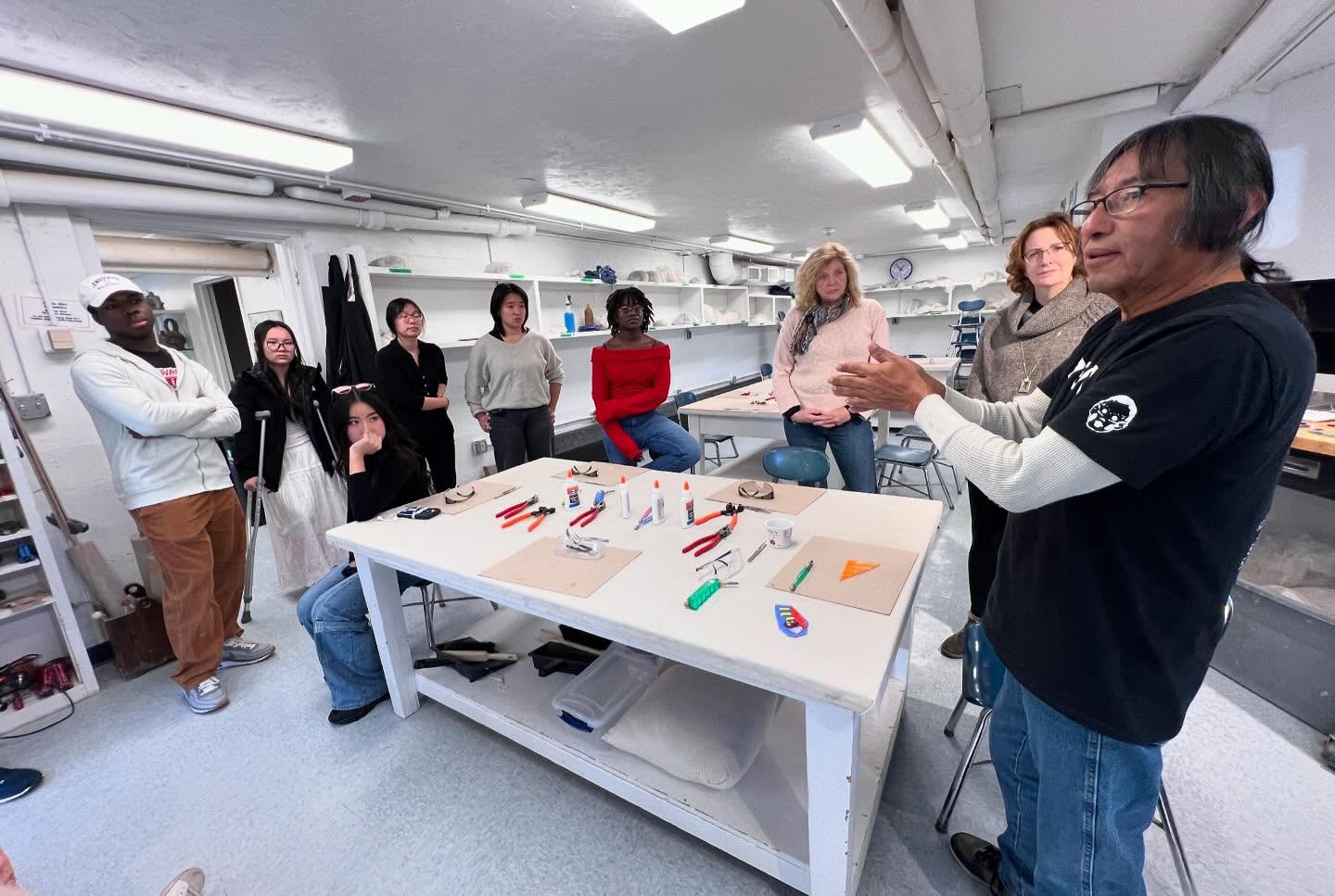
Last month we were delighted to welcome back Ramson Lomatewama to Phillips Academy Andover (PA) where he worked with students and campus community members in fused glass workshops.
Ramson Lomatewama is an award-winning Hopi glass artist, kachina doll carver, jewelry maker, and published poet from Hotevilla, Arizona. This is his second year working with the Peabody Institute to bring fused glass workshops to the PA campus community. Ramson has also participated in various virtual, and in-person talks at PA, sharing his poetry, art, and life stories with students and the broader public. You can view these virtual talks on our Peabody YouTube page.
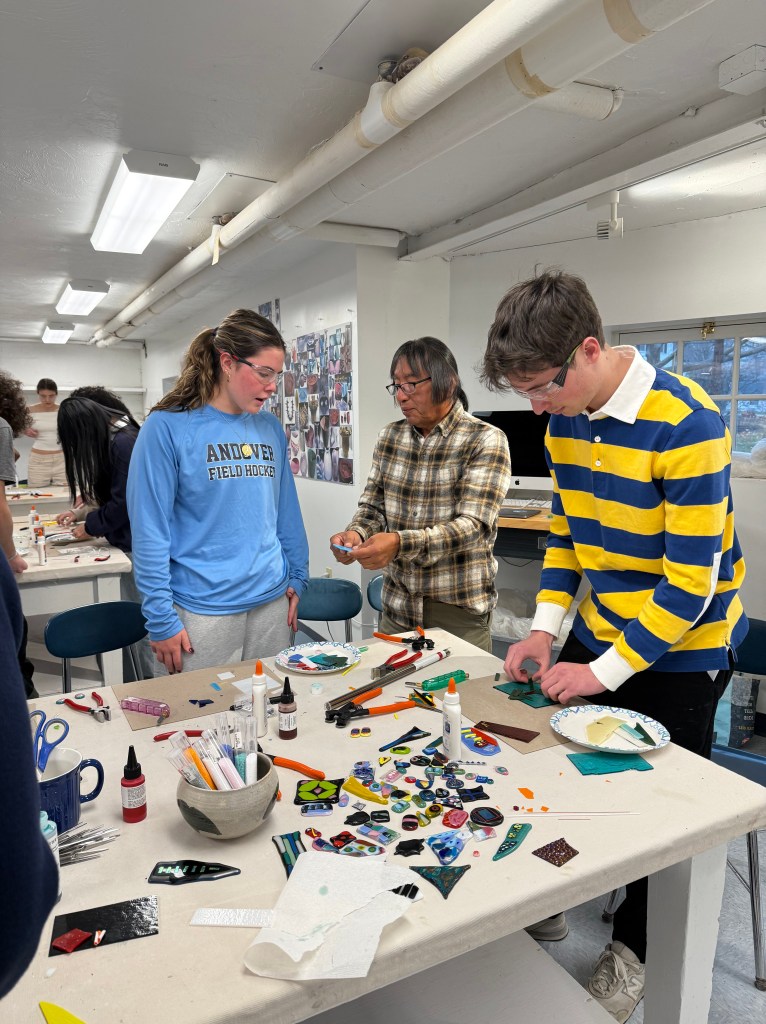
Ramson speaking to one of the fused glass community workshops.
Ramson creates stained glass, blown glass, and fused glass art. Ramson’s glass art is viewed as “a contemporary expression of ancient and artistically rich people… evoking a beautiful, yet humbling mindscape which we all long to find.” He is the first hot glass artist from the Hopi Tribe. Ceremonies and cultural activities continue to play a major role in his life. He has showed works at the Santa Fe Indian Market, the Museum of Northern Arizona, Fusing Traditions, a traveling exhibition, and the San Diego Museum of Man (now known as the Museum of Us).
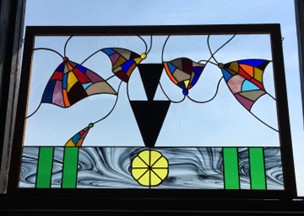
Stained glass artwork by Ramson Lomatewama.
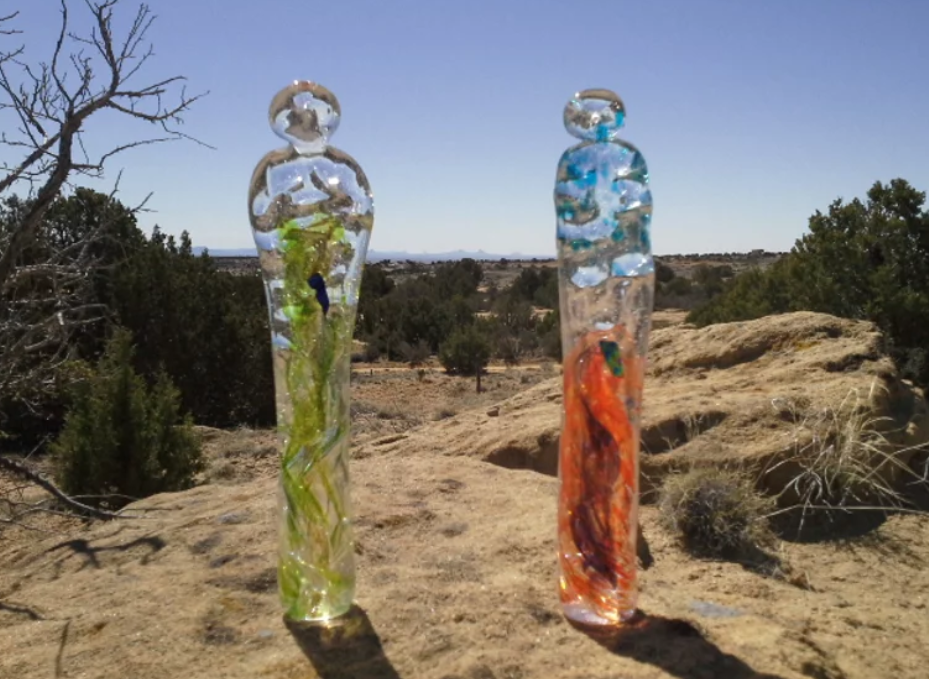
Blown glass ‘spirit figure’ sculptures by Ramson.
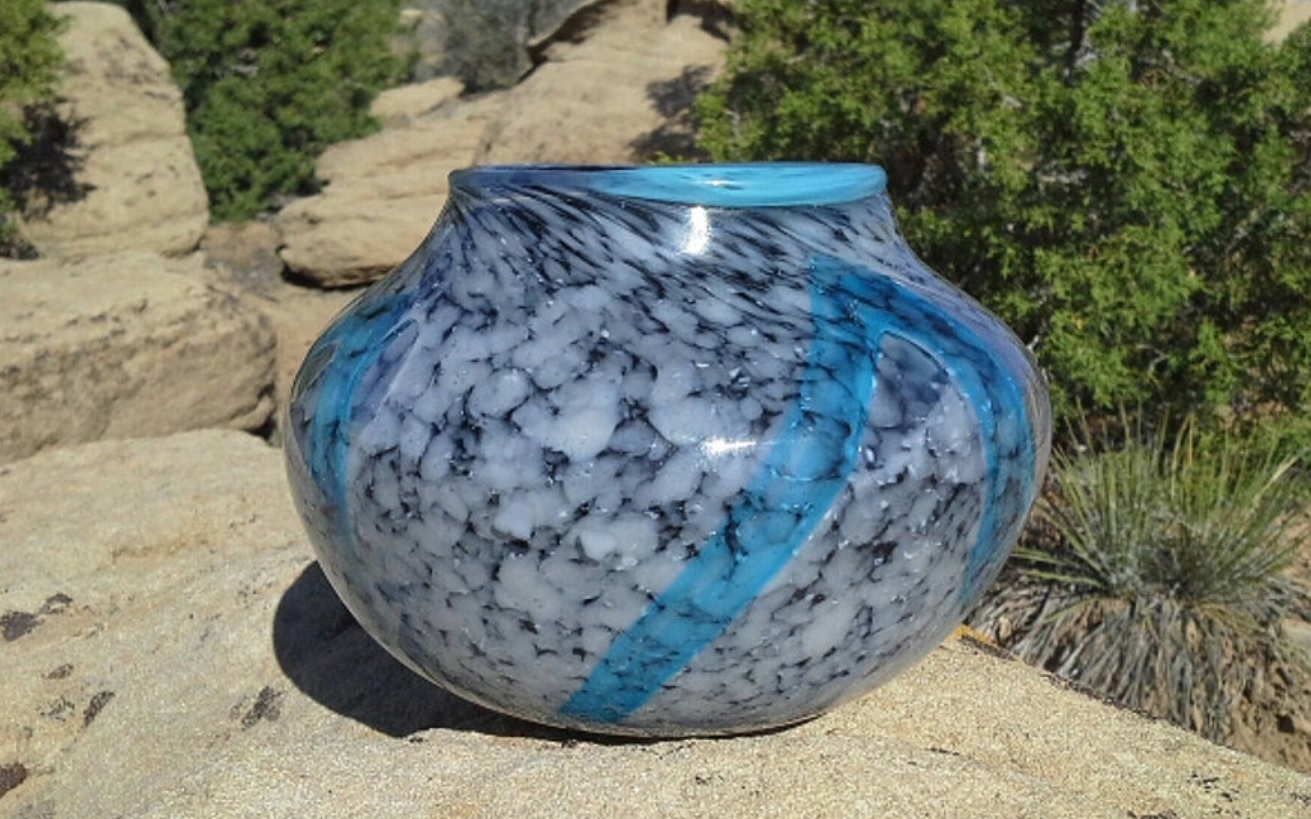
Blown glass vessel by Ramson.
Ramson is an educator on several levels. Early in his career, he was a middle school and high school teacher, and for many years, served as adjunct faculty at North Central College in Naperville, Illinois. Ramson also taught glass art for Hopitutuqayki (The Hopi School), an arts apprenticeship program located on the Hopi reservation. Ramson’s studio, Hotevilla Glassworks, is the first and only Hopi owned working glass studio. Check it out here!
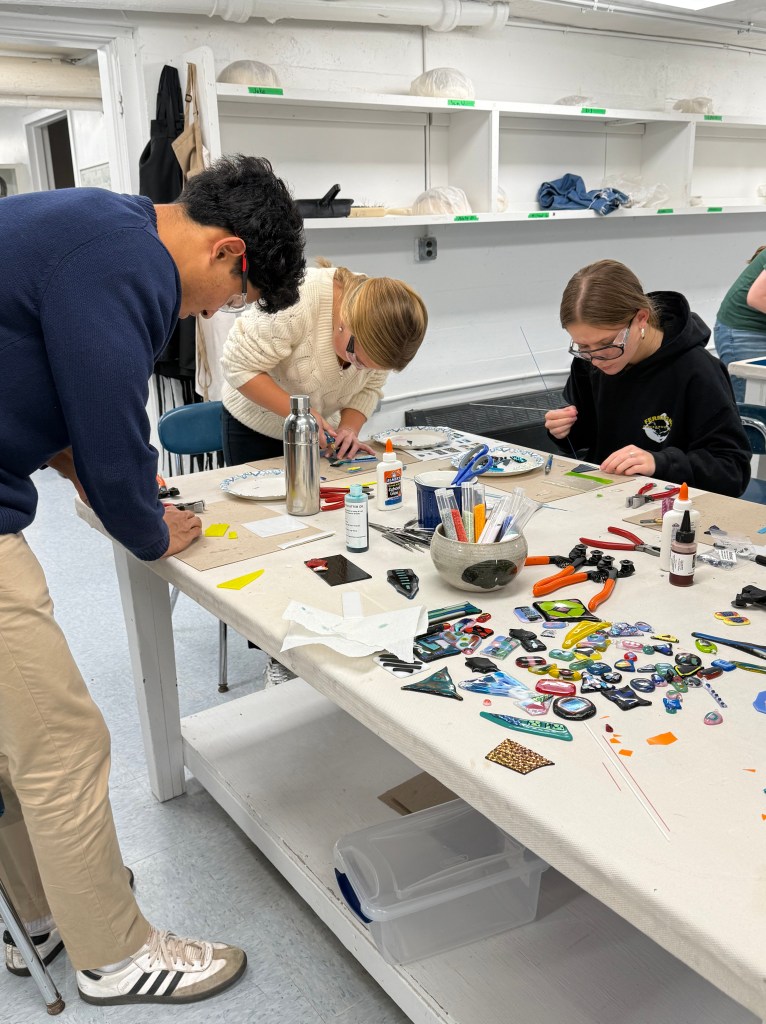
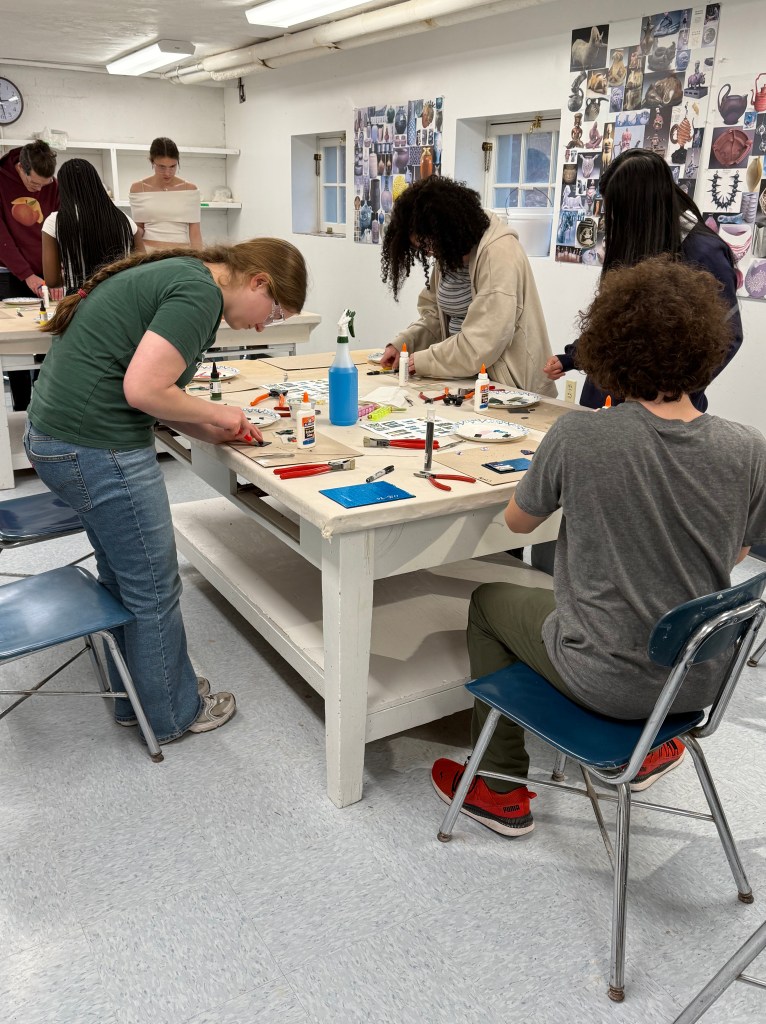
Students at work, creating their own fused glass pieces in their class workshops.
Working with fused glass seemed a little daunting at the beginning of the workshops, but a quick demonstration by Ramson with helpful instructions gave students the courage and motivation to dive in. The plethora of glass pieces to work with – stringers, millefiori, frit, swizzle sticks, dichroic, and ribbons – came in many shapes, textures, and colors. Students worked side by side creating their pieces of art, asking Ramson questions about his techniques and listening to stories about his life and art journey.
“Working with fused glass, you need to be prepared to forfeit control…” was Ramson’s important insight that would hold true from assembling our glass pieces to the final kiln firing of our pieces. No matter the shape or size of your glass piece – after firing – it would melt down to around 6mm thick. Ramson calls this the “6mm rule.” I found it best to go into a fused glass design with no plan, as your final product would tend to come out a little different from what you’d imagine… most of the time it would look even better!
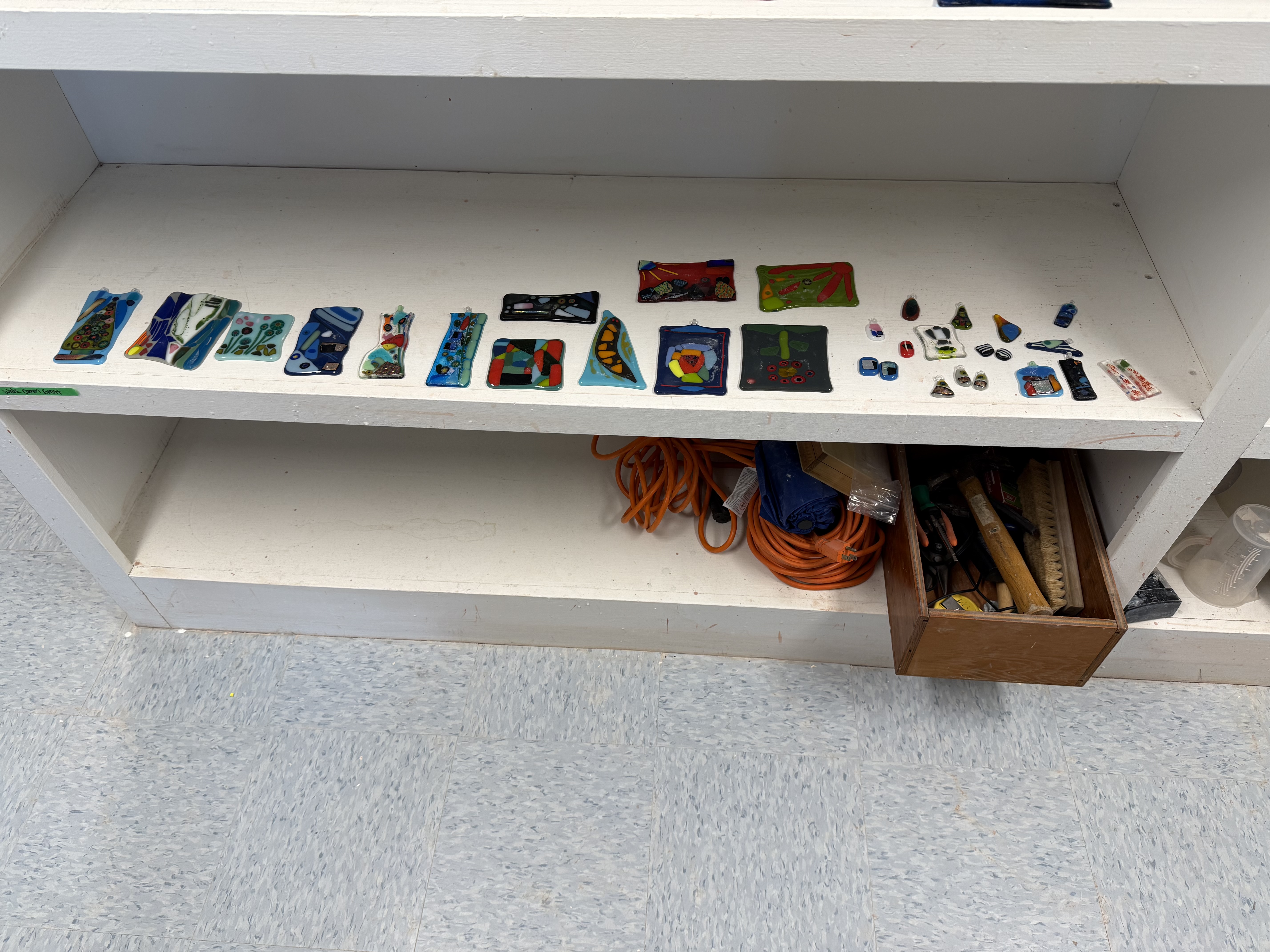
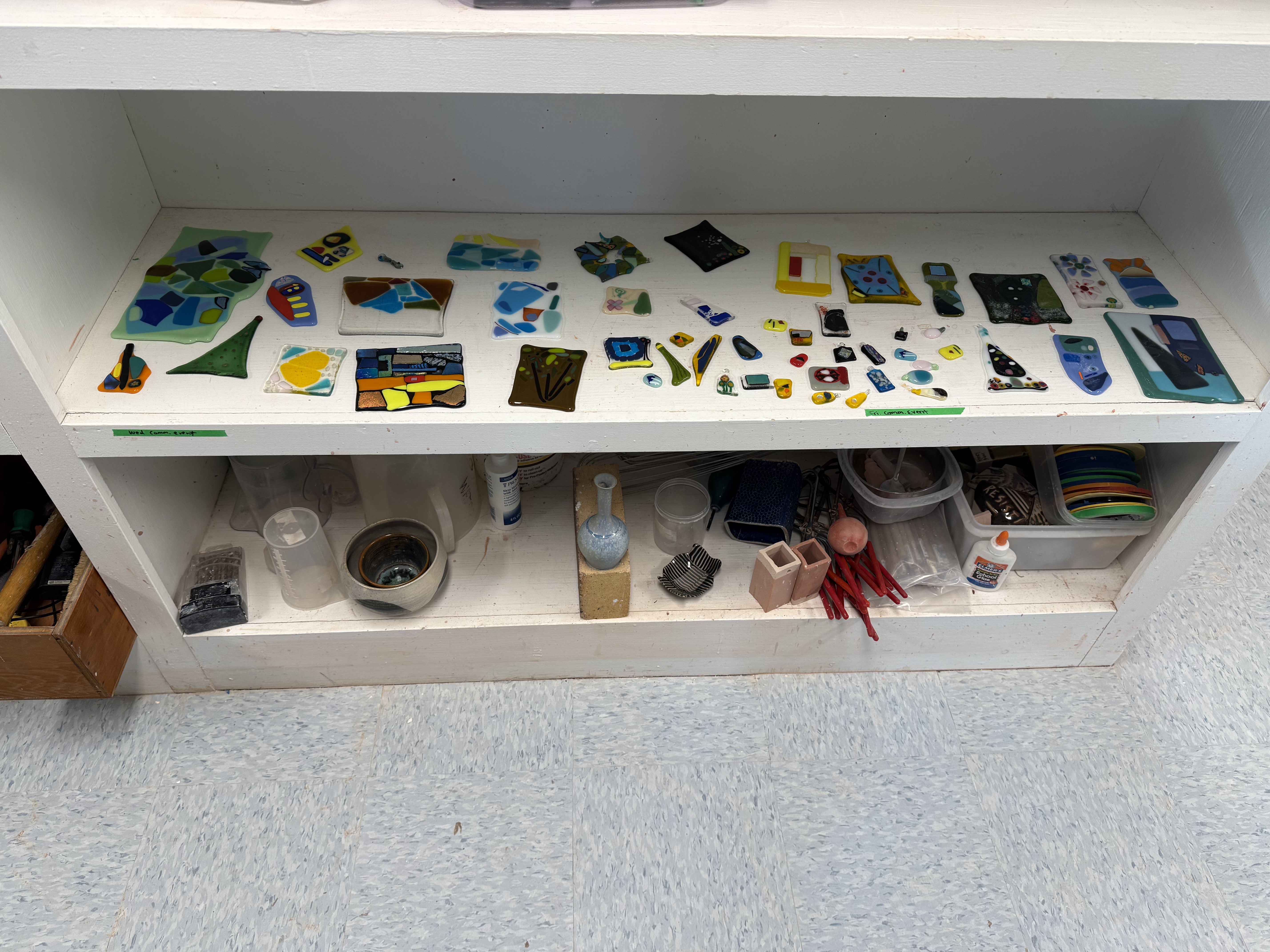
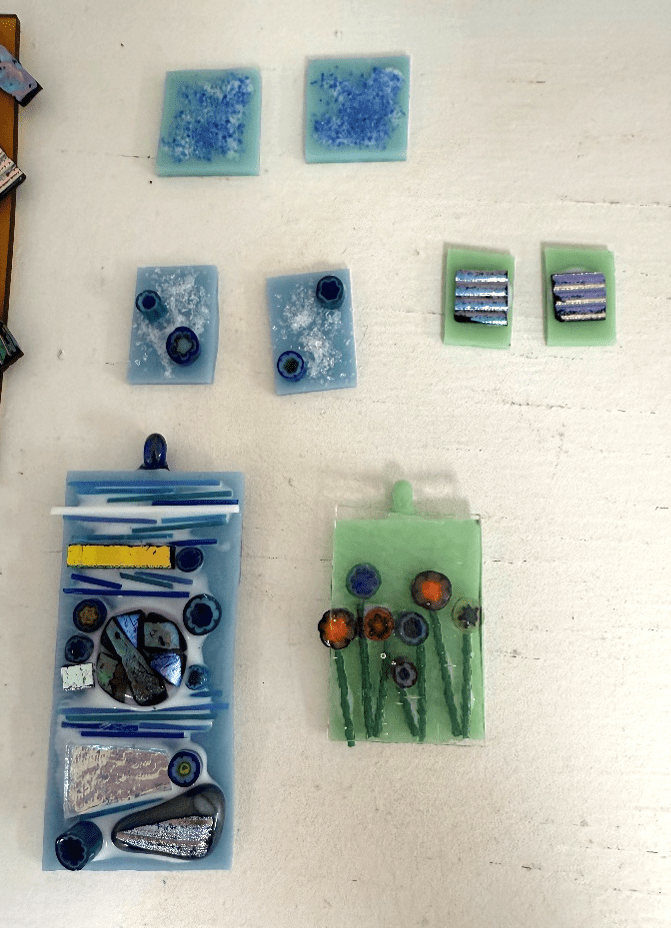
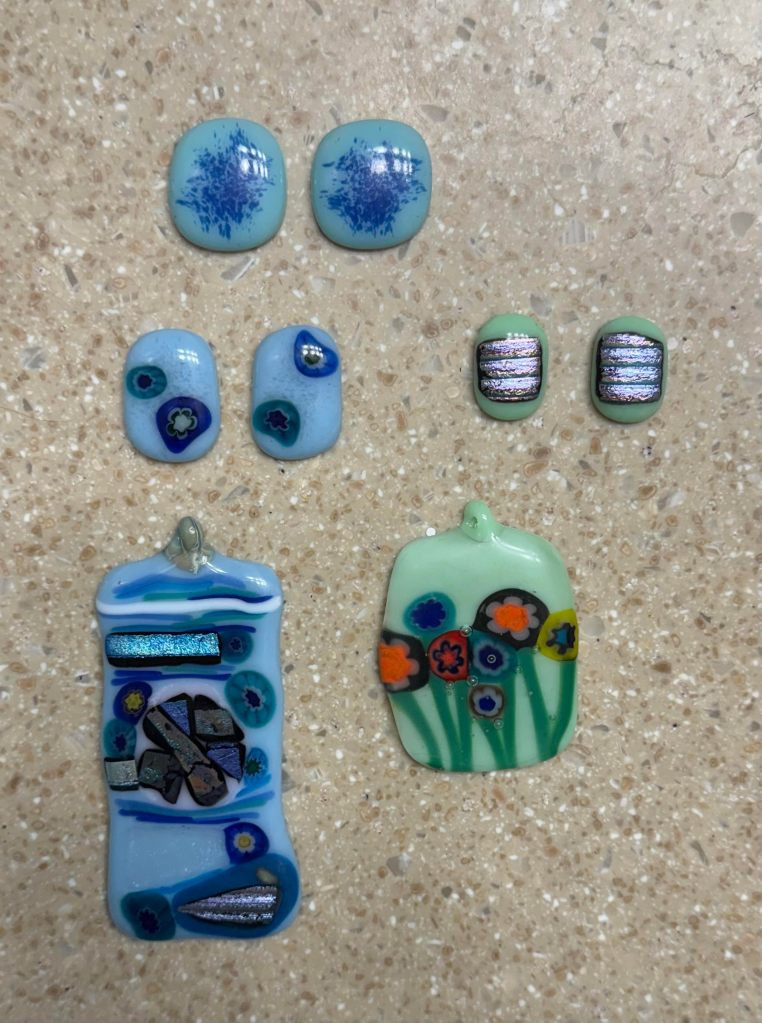
This year I created two pendants and (hopefully) some pieces to assemble into earrings. You can see my “before and after” photos of my glass pieces at the end of this blog. In the meantime, see below for some finished pieces by PA community members.
Finished fused glass pieces from the PA community workshops.
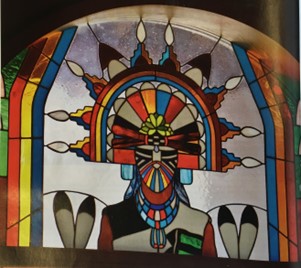
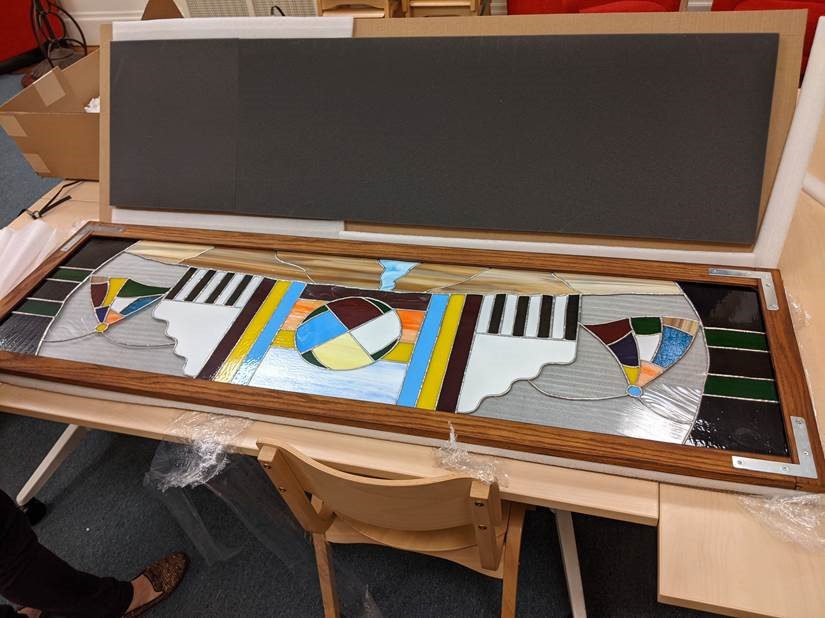
We are very fortunate to have acquired a stained-glass piece that Ramson created for the Peabody. We look forward to completing its installation in the Peabody’s front transom window once the next iteration of the building renovation is complete.
Ramson’s stained glass piece, commissioned by the Peabody.
We are very grateful for the time that Ramson dedicates to working with and educating our PA students and campus community! We hope to have him back next year! For more information about Ramson and the PA fused glass workshops, check out this article by the Andover Magazine (i.e. page spread #10-11, Digging Deeper article).
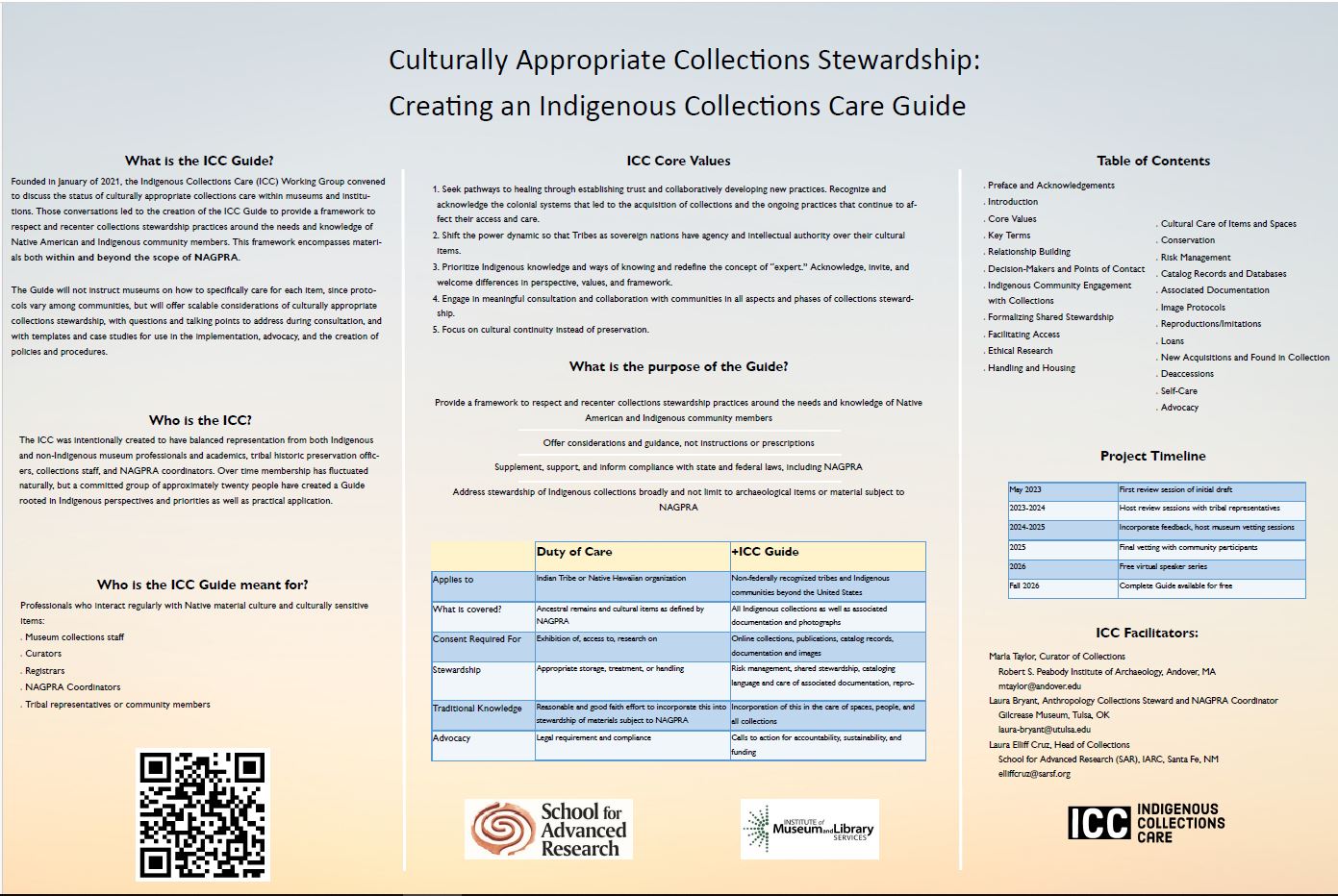
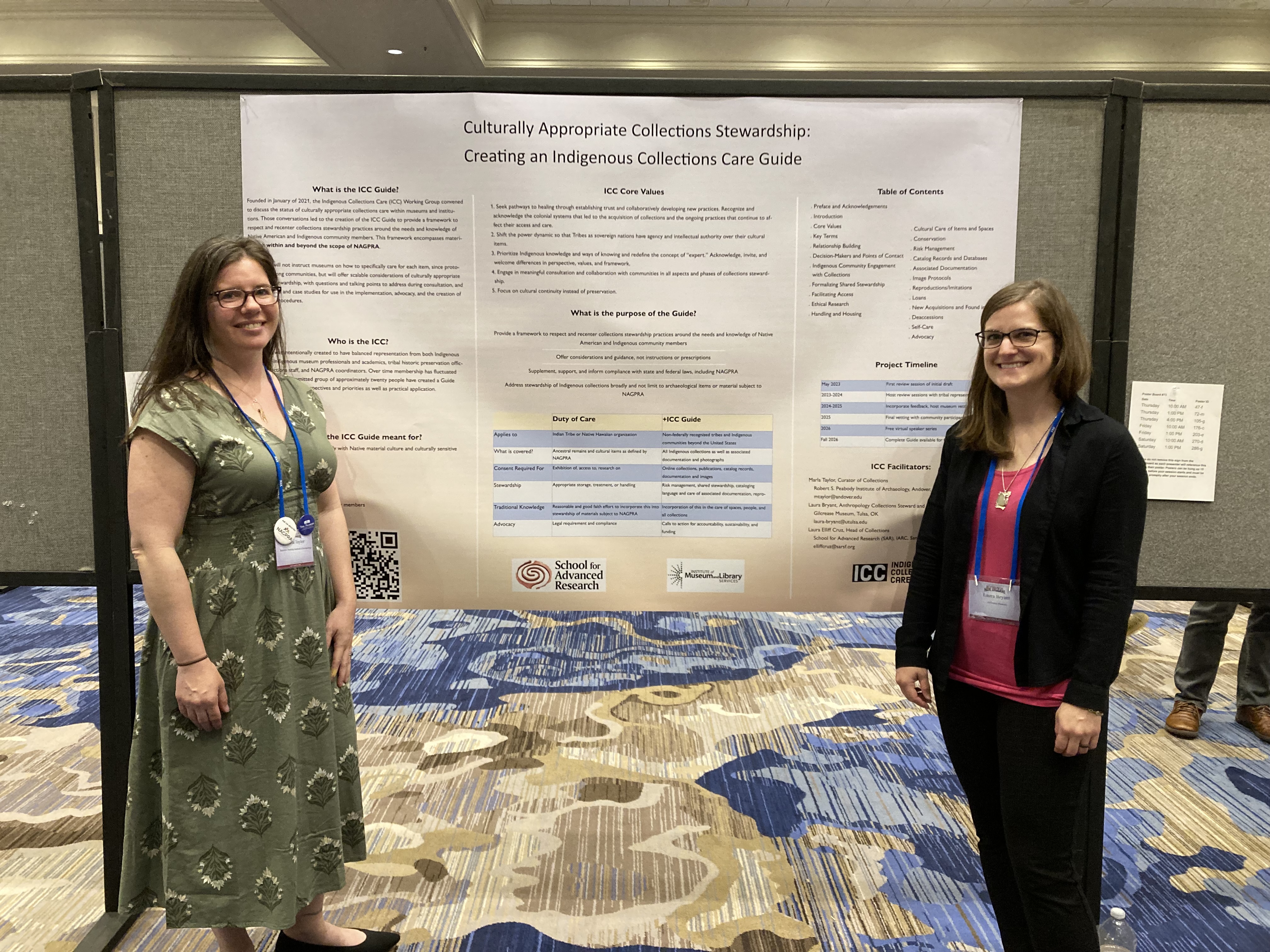
At the SAA meeting in New Orleans, I had the pleasure of representing the Indigenous Collections Care (ICC) Guide in the poster session – In Search of Solutions: Exploring Pathways to Repatriation for NAGPRA Practitioners (Part V): NAGPRA in Policy, Protocol, and Practice.
The ICC poster discussed the development of the ICC Guide, what is covered in the document, and how it can support NAGPRA compliance. The ICC Guide provides a framework to respect and recenter collections stewardship practices around the needs and knowledge of Native American and Indigenous community members. This framework encompasses materials both within and beyond the scope of NAGPRA.
I was excited for the opportunity to share the ICC Guide project with an archaeological audience. I had so many positive conversations with folks and really enjoyed connecting with everyone. It was a great conference and great experience!
Nearly three years ago, I co-founded the Indigenous Collections Care (ICC) Working Group along with Laura Bryant, Anthropology Collections Steward and NAGPRA Coordinator for the Gilcrease Museum in Tulsa, OK. Along with Laura Elliff Cruz, Head of Collections at the Indian Arts Research Center (IARC) in Santa Fe, NM and other group members, the ICC has been working to create an accessible reference tool for professionals who interact regularly with Native American collections.
The ICC grew out of our desire to incorporate the collections care requests of Indigenous communities into our institutional practice and policy. The working group was formed in late 2020 and is composed of approximately 20 people (both Indigenous and non-Indigenous museum professionals and academics, Tribal Historic Preservation Officers, and NAGPRA coordinators) who actively participate in monthly meetings on the creation of an Indigenous Collections Care Guide.
The ICC Guide will not instruct museums on how to specifically care for each item, since protocols vary among communities, but will offer scalable considerations of culturally appropriate collections stewardship, with questions and talking points to address during consultation, and with templates and case studies for use in implementation, advocacy, and the creation of policies and procedures.
In order to facilitate robust review of the ICC Guide by tribal communities, the ICC partnered with an incredible institution, the School for Advanced Research (SAR) in Santa Fe, NM.
I am excited to share that SAR received an IMLS National Leadership Grants for Museums of $175,587 for the IARC’s creation of the Indigenous Collections Care Guide. to support the museum field with an accessible reference tool for museum professionals who interact regularly with Native American collections. The guide will provide museums with a framework to recenter collections stewardship practices around the needs and knowledge of Indigenous community members. At the conclusion of the project, 175 tribal community representatives and museum professionals will have had a voice in the development of the guide, which will be made freely available for tribal community representatives and museums of all sizes. The IMLS reported receiving forty-eight applications for this opportunity, and SAR was one of nineteen projects to receive funding.
What does this mean for the Peabody Institute? Well, first it means that I will be super busy for the next few years! It also means that the Peabody Institute is continuing our leadership role in the broader museum and archaeological conversations around ethical collections stewardship and relationships with tribal communities.
I will keep you posted as work continues over the next few years!
School for Advanced Research
The School for Advanced Research (SAR), a 501(c)(3) nonprofit educational institution, was established in 1907 to advance innovative social science and Native American art. Its sixteen-acre residential campus sits on the ancestral lands of the Tewa people in O’gah’poh geh Owingeh, or Santa Fe, New Mexico. Visit sarweb.org
Institute of Museum and Library Services
The mission of IMLS is to advance, support, and empower America’s museums, libraries, and related organizations through grantmaking, research, and policy development.
The agency carries out its charge as it adapts to meet the changing needs of our nation’s museums and libraries and their communities. IMLS’s mission is essential to helping these institutions navigate change and continue to improve their services. Visit imls.gov
October/November is conference season! I was an active participant in multiple conferences over the past couple months and really enjoyed connecting with colleagues after the worst of COVID.
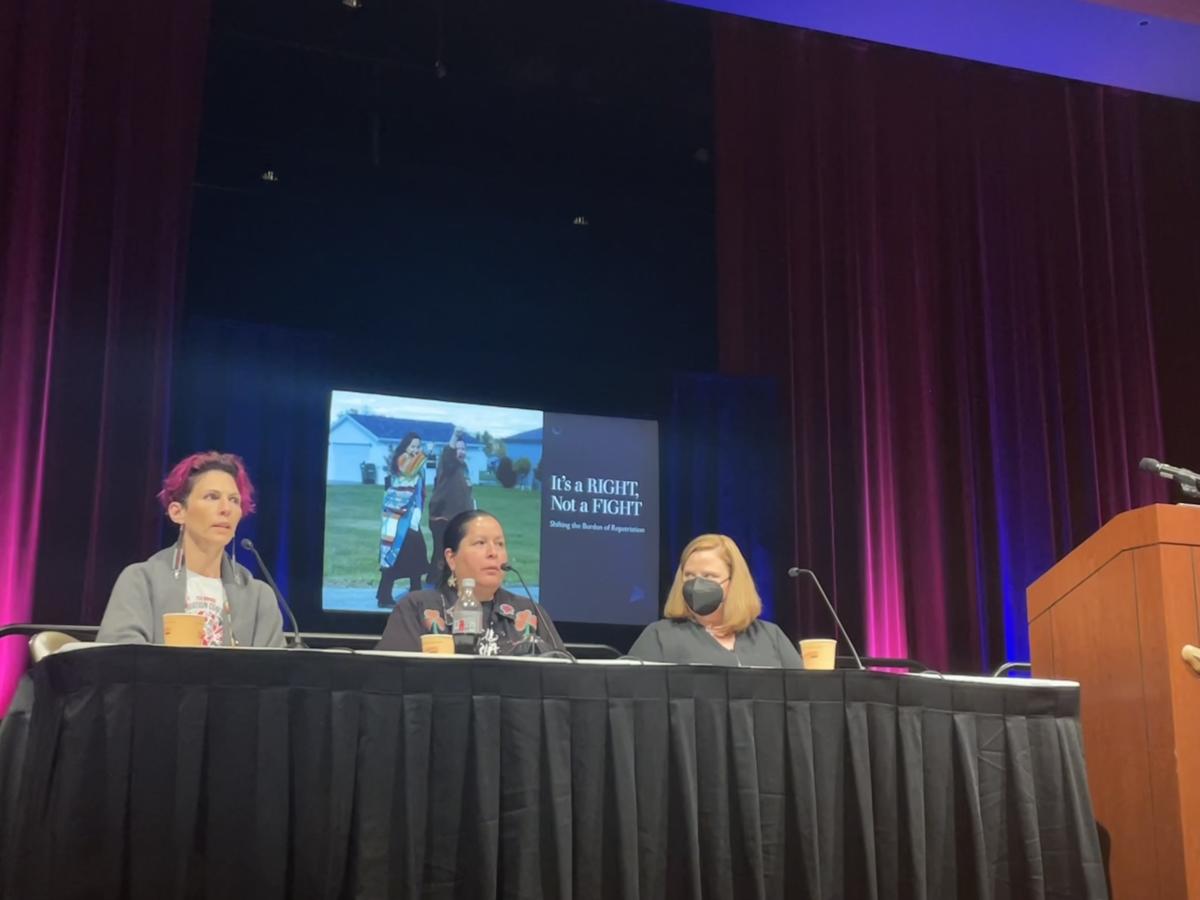
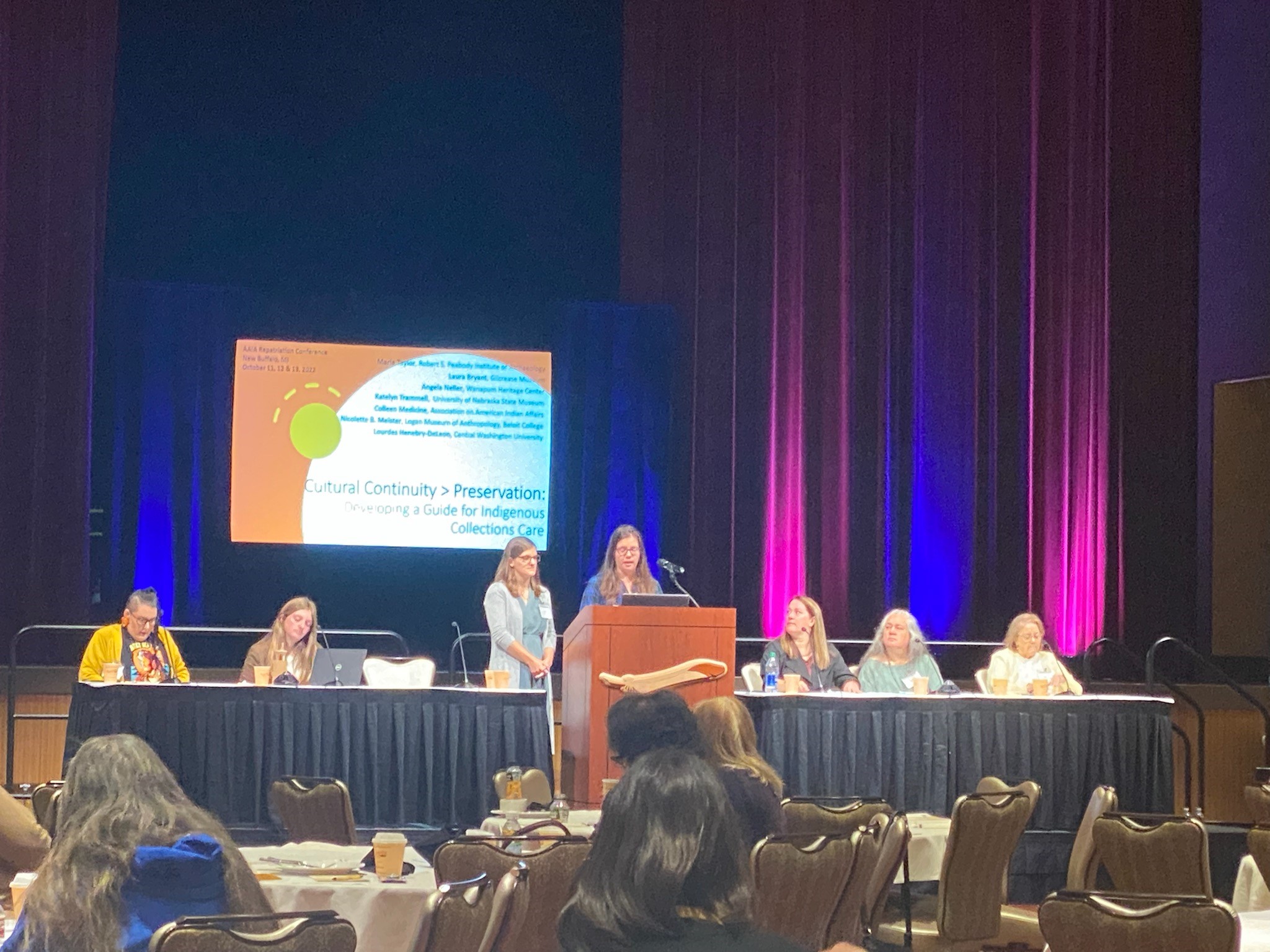
First, I attended the Association on American Indian Affairs (AAIA) 8th Annual Repatriation Conference in New Buffalo, Michigan. The conference “brings together Native Nations, museums, artists, spiritual leaders, academics, lawyers, federal and state agencies, international institutions, collectors and others to work together to reactivate relationships with the past to create a world where diverse Native cultures and values are lived, protected and respected.”
It was a fantastic experience. The Repatriation Conference is a space where I greeted so many colleagues with hugs and made new and important connections. The speakers shared meaningful perspectives and insights and I am proud to be a part of that community. Oh, and the sunrise ceremony by the host Pokagon Band of Potawatomi was an invigorating way to start the day!
The second conference (only one week later!) was the 2022 International Conference of Indigenous Archives, Libraries, and Museums hosted by the Association of Tribal Archives, Libraries, and Museums (ATALM) in Temecula, California. I love ATALM as an experience. I learn so much from those sessions and surrounding myself with innovate professionals, both Indigenous and non-Indigenous, who work so hard to prioritize Indigenous voices and perspectives. A couple of shout-outs to my favorite presentations – Traditional plant-based methods for pest control and Your Neighborhood Museum.
At both the Repatriation Conference and ATALM, I was a presenter and shared the work that colleagues and I have done to create the Indigenous Collections Care (ICC) Working Group and Guide. The ICC is a group of both Indigenous and non-Indigenous museum professionals and academics, Tribal Historic Preservation Officers, collections staff, and NAGPRA coordinators who are working to create a Guide as a reference tool for people who interact regularly with Native American collections. The Guide will offer scalable considerations and templates for implementation, advocacy, and creation of policies and procedures for all areas of collections stewardship. This project has been a major focus of mine over the past couple years and I am proud to share our work with the broader community.
The third and final conference in my marathon was the New England Museum Association 2022 Annual Conference. Now, I was admittedly a little exhausted after traveling from New Hampshire to Michigan to New Hampshire to California and back home to New Hampshire so I only attended NEMA for a day to be a speaker. This session was slightly different and focused on demystifying decolonization/Indigenizing museum collections stewardship. I was joined by colleagues from the Boston Children’s Museum and The Trustees of the Reservation for this conversation. We received positive feedback from everyone and I hope it inspired someone to take a step forward in this work.
While I really did love the opportunity to connect with other professionals, I am happy to be done with conferences for the year! And I have to admit, I am already planning my schedule for 2023…
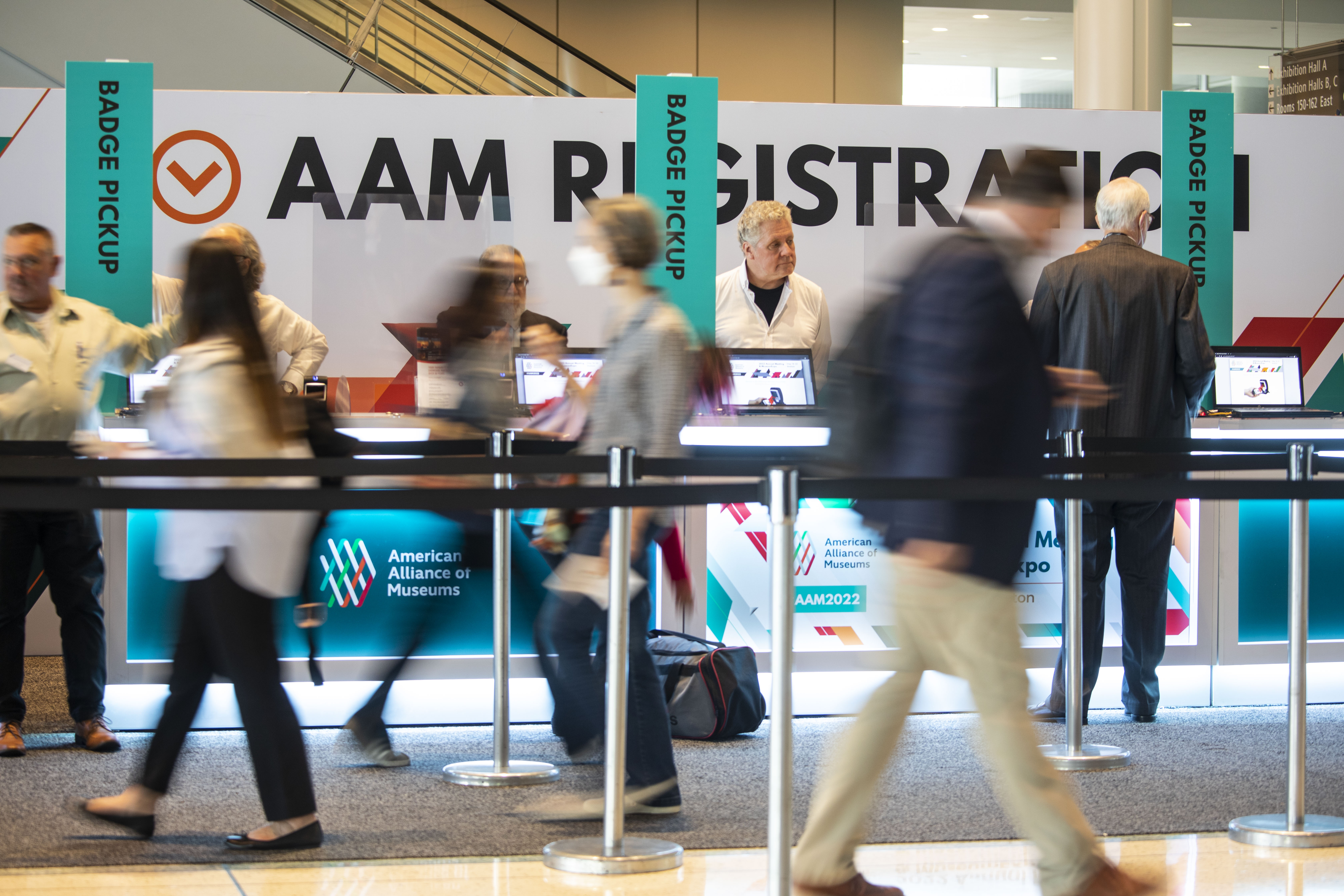
The American Alliance of Museums (AAM) held their Annual Meeting in Boston in May. Like many other conferences, this was the first in-person meeting in two years. The Peabody Institute was fortunate enough to present our work in a few different formats.
I was part of two sessions – Research Requires Consultation and Centering Culturally Appropriate Care: Re-examining Stewardship of Native American Cultural Items.
The session discussing research presented the Peabody Institute’s research policy that requires consultation and approval from an authorized tribal representative as part of any application for access to collections. You can find details about the policy here. My co-presenters were the NAGPRA Coordinator for the Osage Nation and the Senior Director of Heritage and Environmental Resources for the Seminole Tribe of Florida. Together we discussed the power of respecting tribal sovereignty by requiring these conversations about all levels of research into the cultural heritage of Native American communities.
Centering Culturally Appropriate Care presented the work of the Indigenous Collections Care Working Group (ICC) that I co-founded with my colleague Laura Bryant, Anthropology Collections Manager and NAGPRA Coordinator at the Gilcrease Museum in Tulsa, OK. The ICC has been working to develop a Guide as a reference tool for people (including museum professionals) who interact regularly with Native American collections, including those at all levels of experience and exposure. We are excited to be focusing on this conversation and developing a resource that is truly needed in the museum world. You can learn more about our work here.
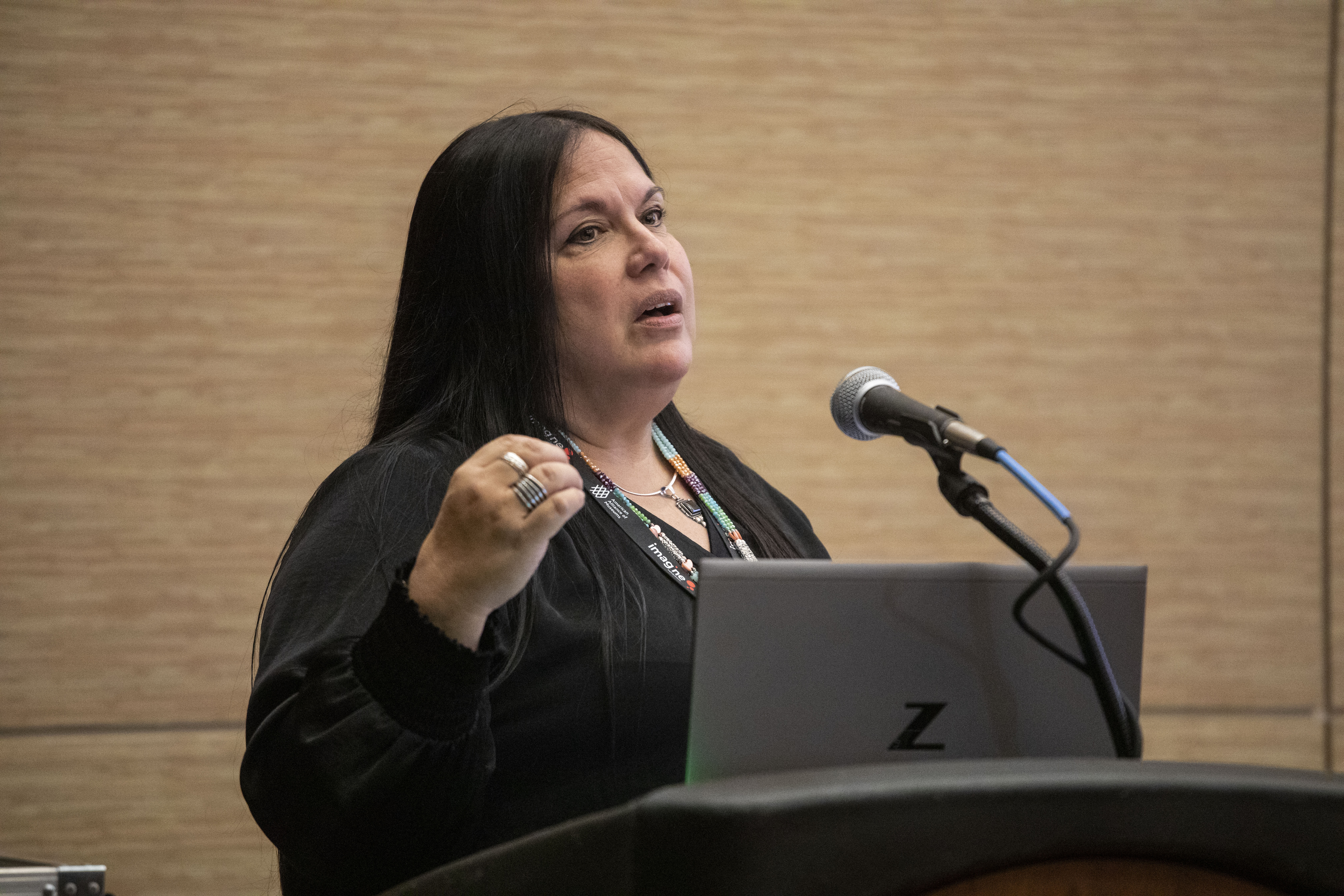
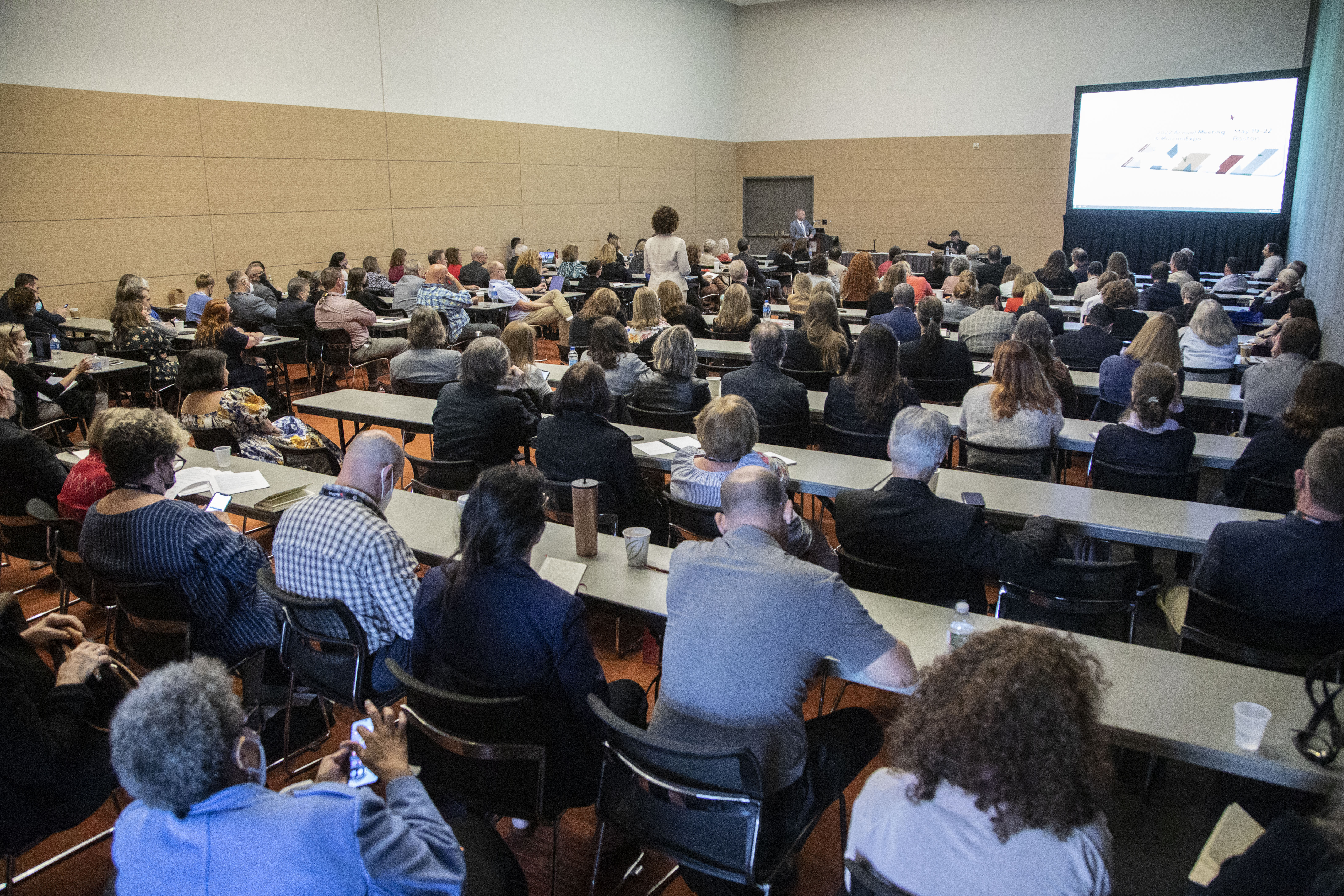
Alt text: A busy registration deskAlt text: A speaker at a podiumAlt text: A full session roomAlt text: Attendees seated at tablesAlt text: Attendees in the poster hall
But I was not the only one from the Peabody Institute presenting at AAM!
Ryan Wheeler, Peabody Institute director, was part of a session called #NoMoreStolenAncestors: Repatriation and the NMAI Act. Facilitated by the Seminole Tribe of Florida, the session explored the issues with curating human remains, obstacles to repatriation, ways to improve the process. The Seminole have been pushing for policy change at the Smithsonian Institution’s National Museum of Natural History and has had some success. You can learn about their work here, here, and here.
Lindsay Randall, curator of education, co-authored a poster examining the explosive growth in digital technologies in small organizations and how it can be used to deliver high-quality content to museum audiences. The poster shone a spotlight on the Diggin’ In series produced by the Peabody Institute and the Massachusetts Archaeological Society. You can find all the Diggin’ In talks on the Peabody’s YouTube channel here.
It was an honor to share our work with our colleagues in the museum field and receive such supportive feedback. We look forward to presenting at many more conferences – hopefully in person!
Mark your calendars! PA Giving Day begins Wednesday, March 30, 2022! This year, the PA Giving Day event will run from Wednesday, March 30, 9 a.m. to Thursday, March 31, 12 p.m. EDT.
For those inspired to give early, please complete the PA Giving Day form here! Please be sure to select the Robert S. Peabody Institute under the “designation” section. Any gift made in advance of the event will count toward PA Giving Day totals.
Last year the Peabody Institute garnered 70 gifts! This year we hope to have more challenges and even more support! Keep a look out for exciting posts and takeovers across our social media channels leading up to PA Giving Day!
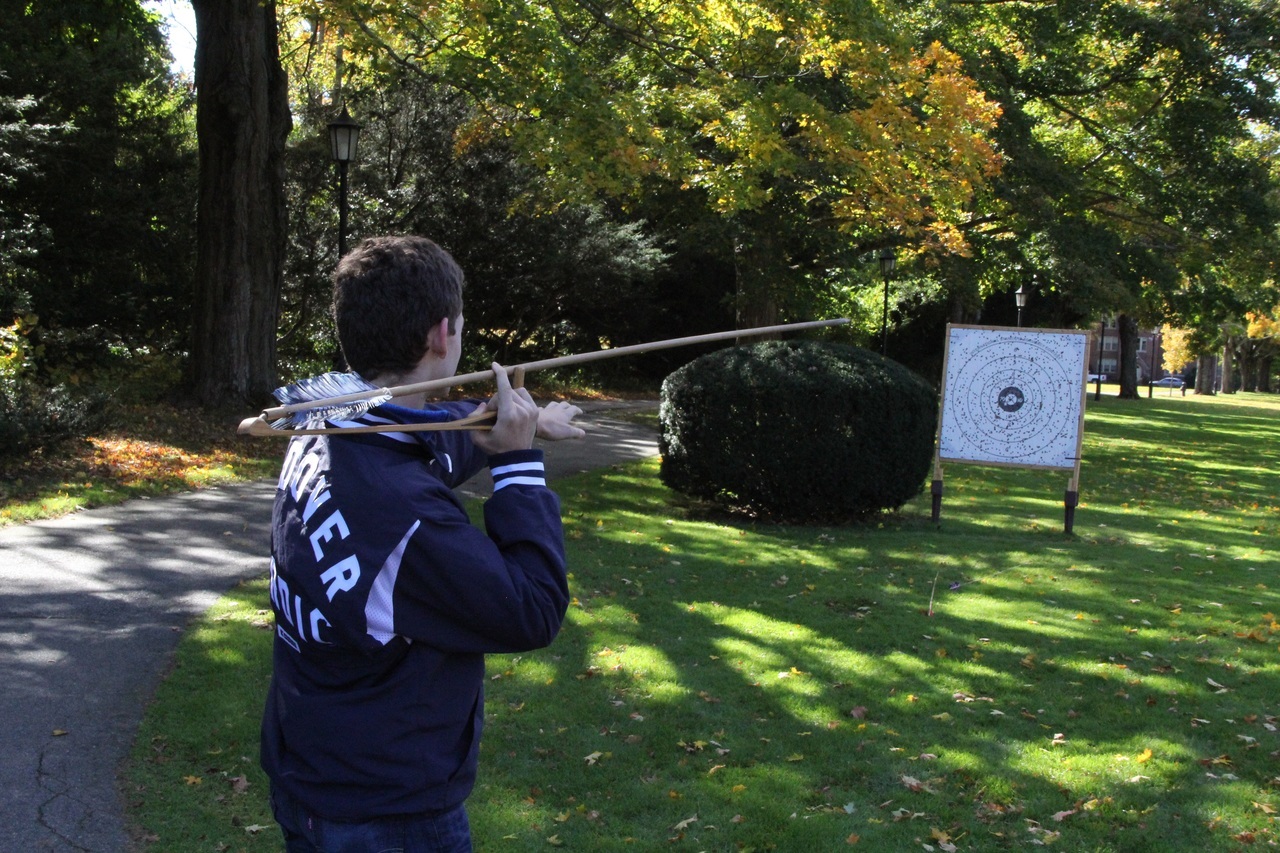
PA student preparing to throw an atlatl on the Vista
In late January, the Peabody Institute hosted a special school group visit of students at Cape Cod Academy. Why is this school group more special than any other? Well, it actually had a lot more to do with the teacher – Alex Hagler.
Alex has been a part of the Peabody’s extended family for nearly 13 years. They started as a volunteer in 2009 and have worked at the Peabody in several capacities: work duty student, volunteer, and temporary employee. Alex has been kind enough to contribute to the blog in the past and you can read their thoughts in a student reflection and retrospective submission from several years ago.
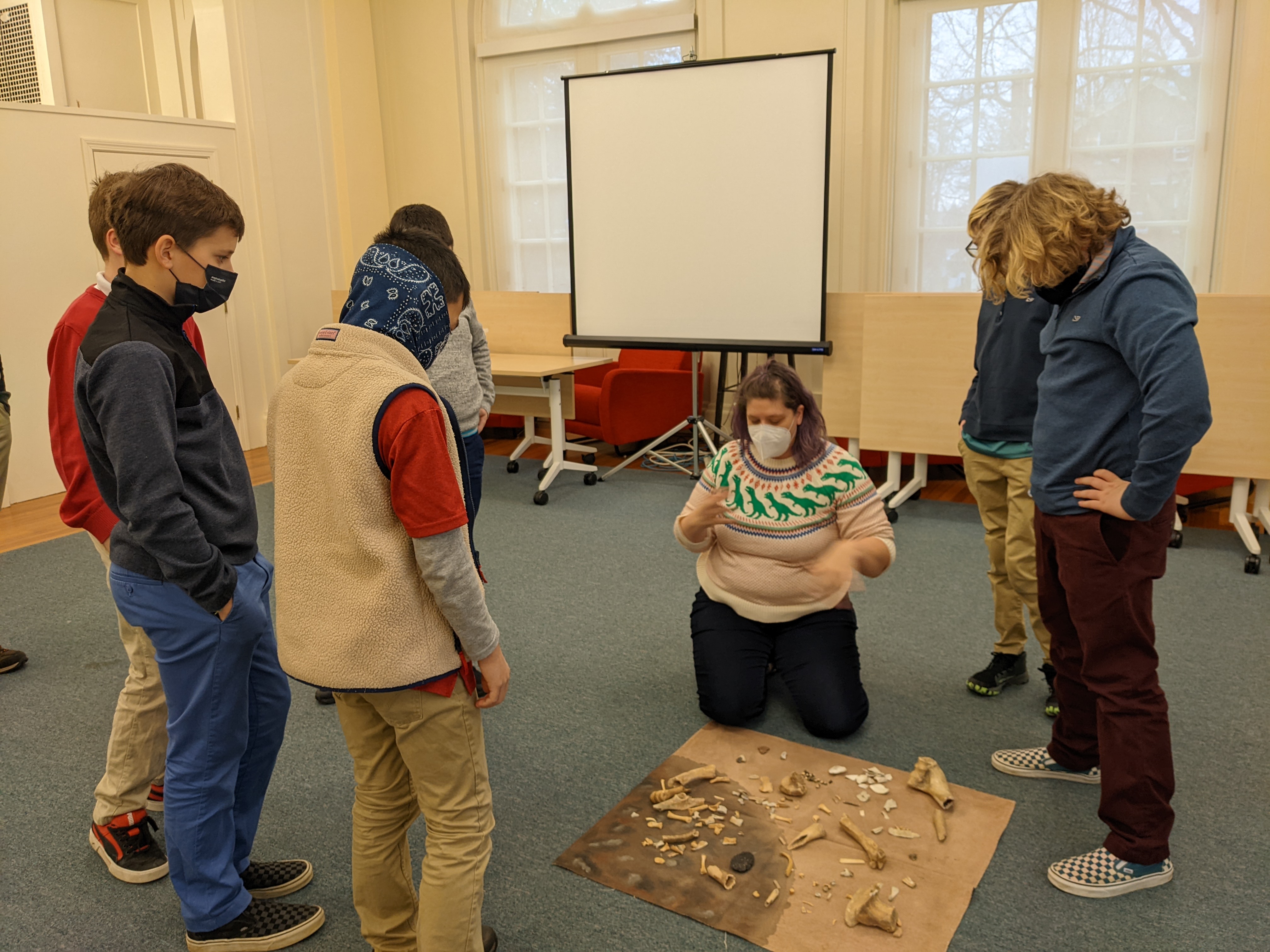
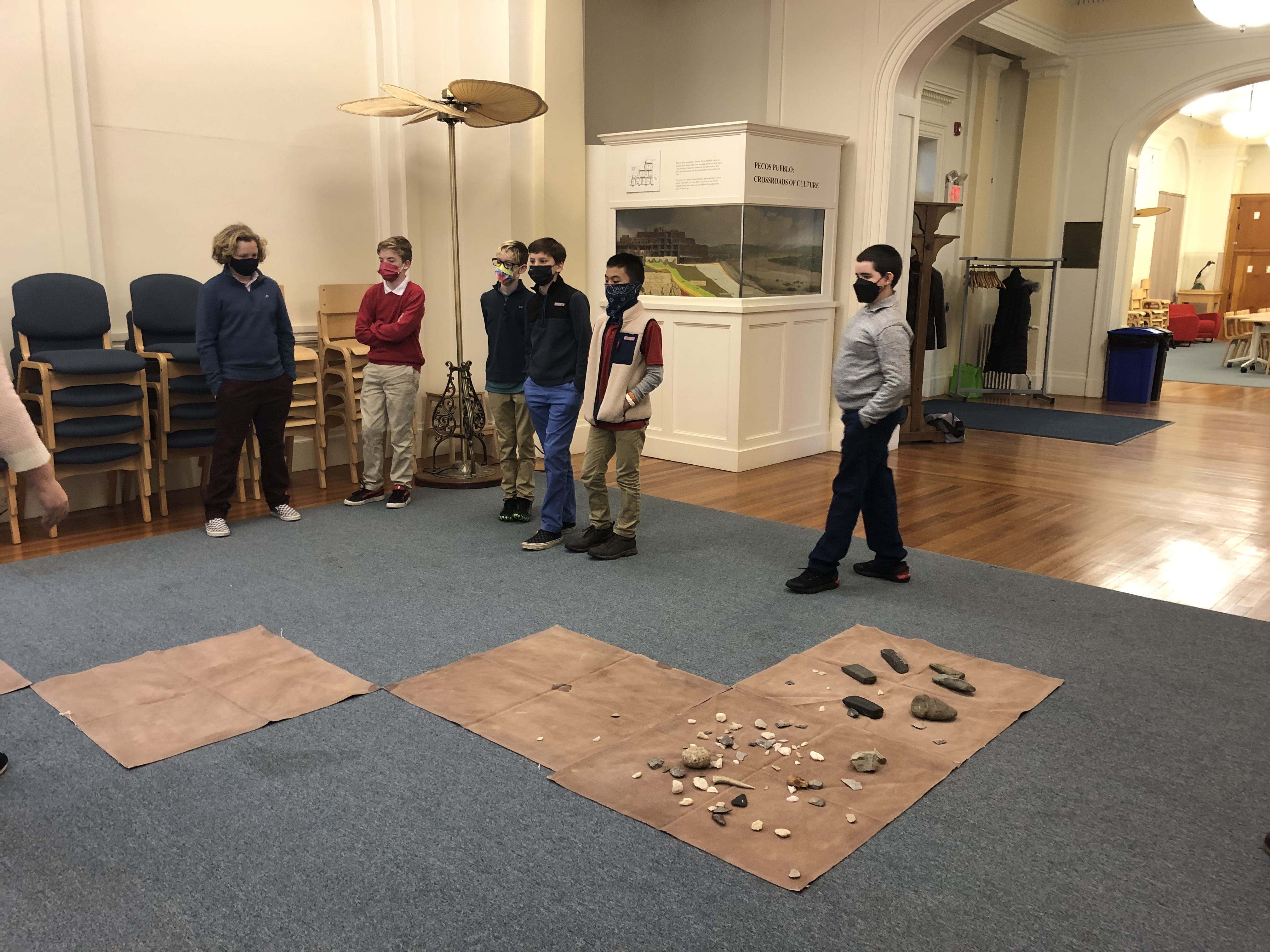
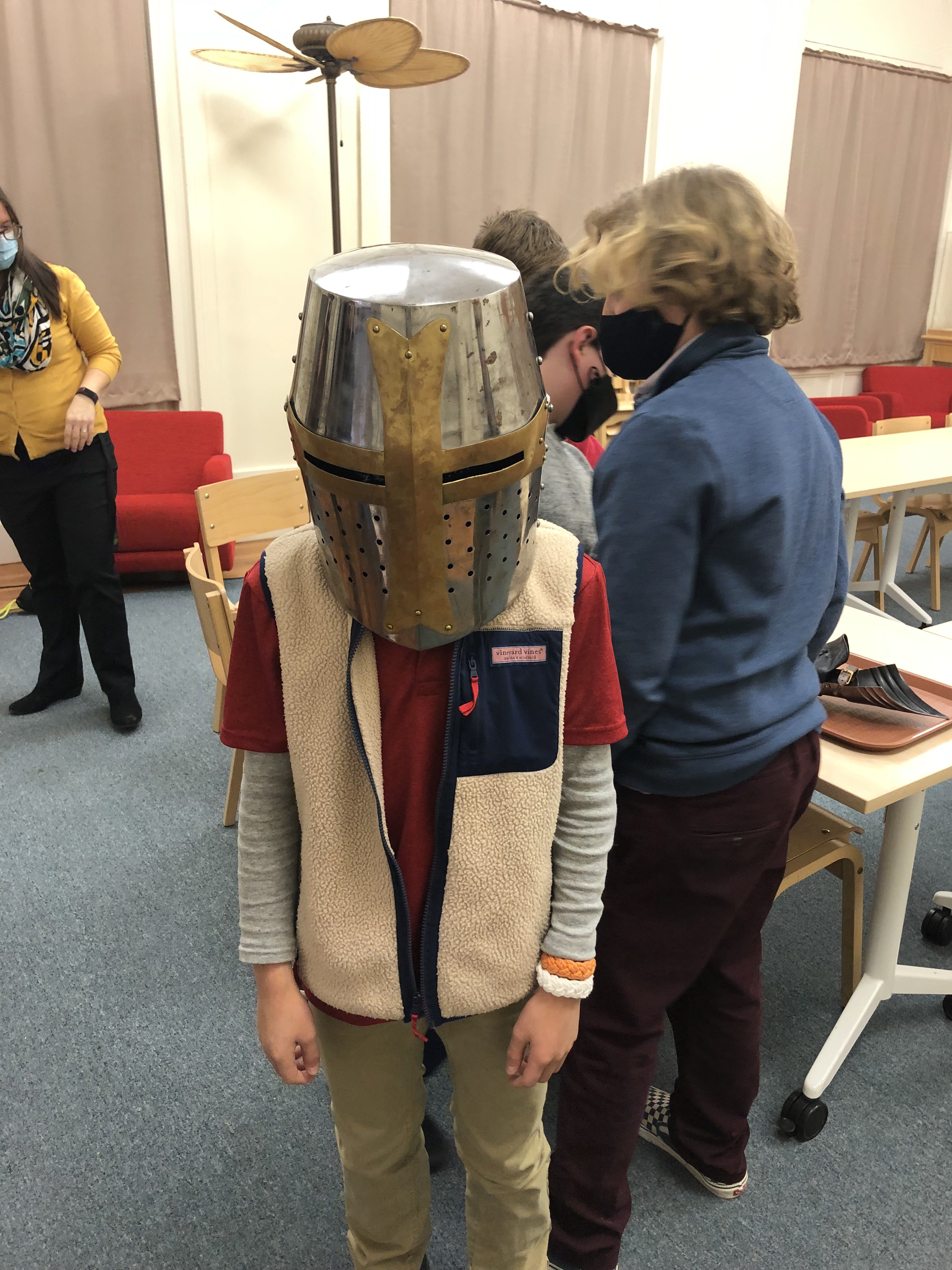
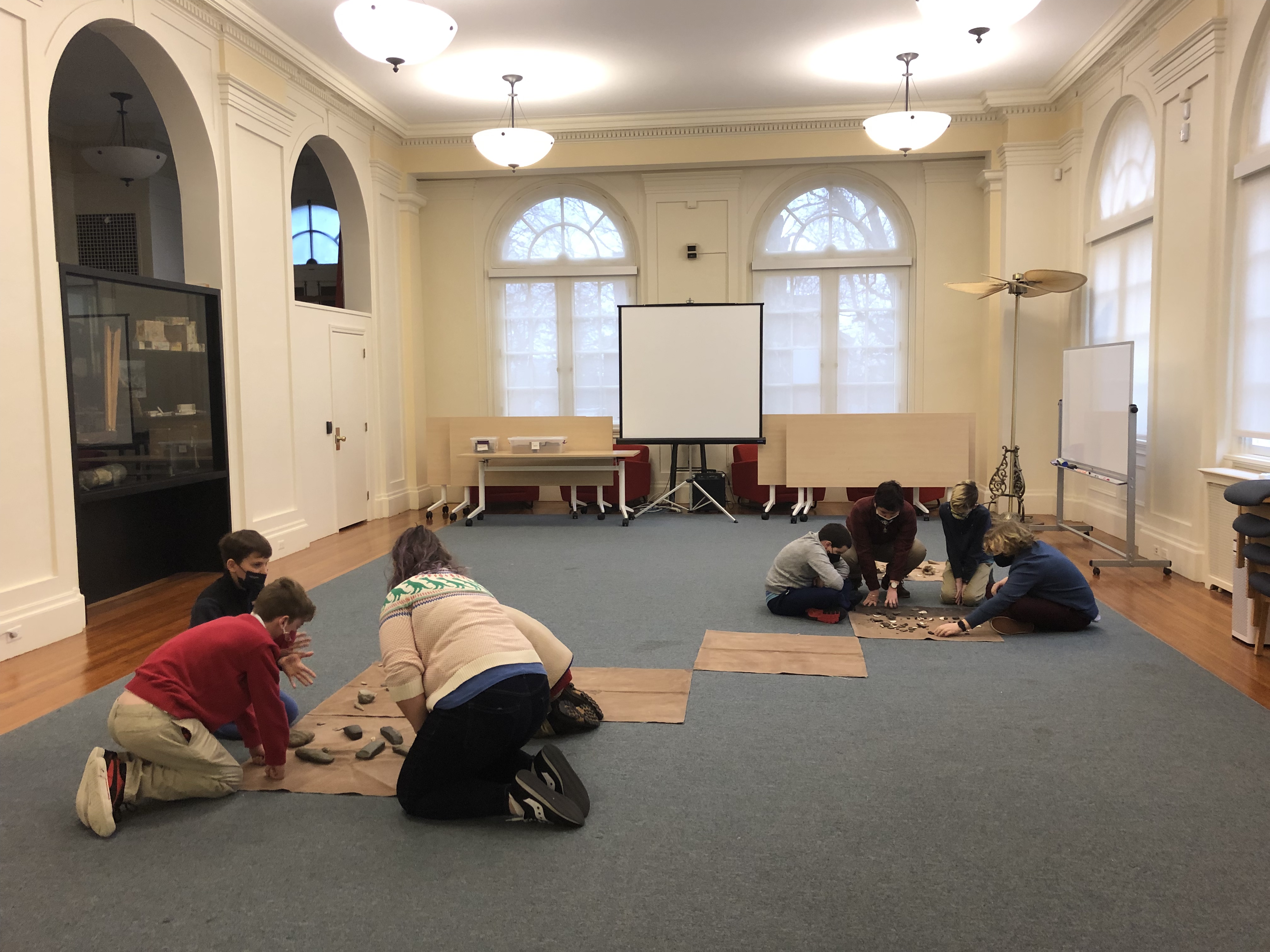
Now, Alex is a Latin teacher at Cape Cod Academy and introduces archaeology to their students as part of the curriculum. One of the best places for that, of course, is here at the Peabody Institute. Alex, and a co-teacher, brought six students to explore our TARPS mock excavation exercise and take a tour of the collections spaces. The students asked fabulous questions and learned important lessons about archaeology and Native American culture.
Welcoming Alex back as a teacher with their own students was a powerful “full circle” moment for us here. It is so rewarding to have an ongoing relationship with the students and alumni who connected with the Peabody while here at Phillips Academy.
If you are one of those students who enjoyed your time at the Peabody – reach out! We would love to connect with you again.
An important part of the Peabody’s educational mission is to support the expansion of archaeology-centered teaching into new areas. While we have primarily focused on how to integrate archaeology into high school and college level education, we have not engaged in sustained efforts for lower grades. We recently had an opportunity to change that.
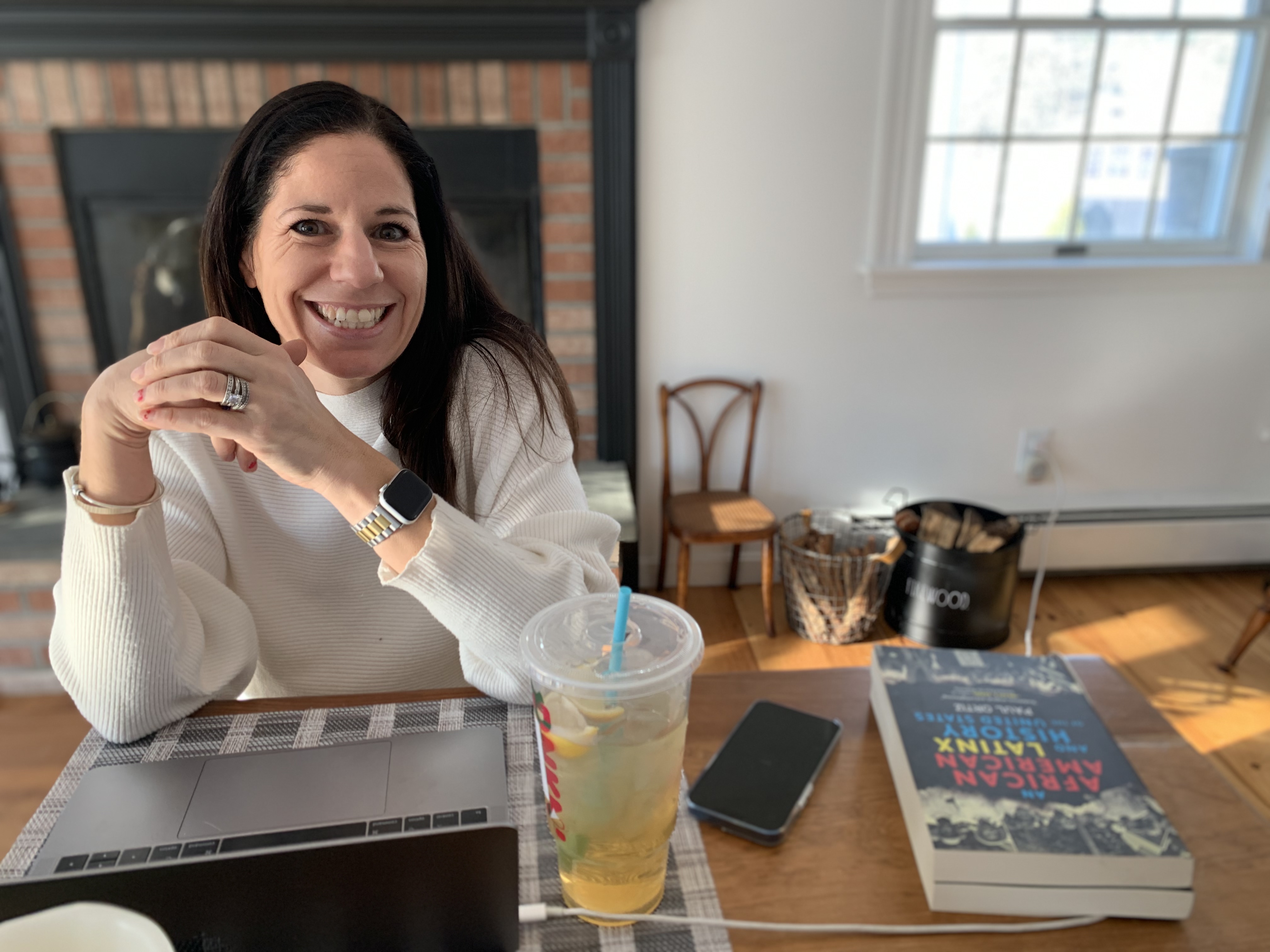
This month I helped Dr. Bethany Jay of Salem State University to outline a new education course that she will be teaching focused on subject matter knowledge listed in the MA frameworks for History and social sciences from prek-8th grade.
Dr. Bethany Jay as we worked on the course.
The course will help future teachers explore the political, economic, and cultural development of the United States with an eye towards social justice. As such, Indigenous people Africans/African Americans, and women will figure prominently in the course discussions of those who impacted American history. Students in the class will see how these groups influenced and were affected by the changing political, cultural, and economic landscape..
We decided to have the class begin with a project focused on rethinking how the First Thanksgiving is taught in elementary classrooms, with a particular focus on centering Native voices. Using resources from the Smithsonian National Museum of the American Indian, exploring Indignous place names in Massachussetts, and finding age appropriate and accurate literature, such as Chris Newell’s book If You Lived During the Plimoth Thaksgiving, students will create multiple lesson plans reflecting the standards of the grades they intend to teach.
There was a lot of material for us to work with when we got to the section on ancient cilviliations and how archaeologists develop theories regarding past cultures – a particular focus of 4th grade. To ensure local connections, we decided to incorporate the paleo-indian Bull Brook site located in Ipswich MA in the discussions.
We also outlined part of the course that would discuss both slavery and contributions of women, using material culture, but that section still needs more work. However, I’m thinking many of the lessons that the Peabody uses could be scaled down to be age appropriate for the elementary level.
It was a lot of fun to work with Dr. Jay on the creation of this class and I cannot wait to collaborate on the second half and to hear how it goes!
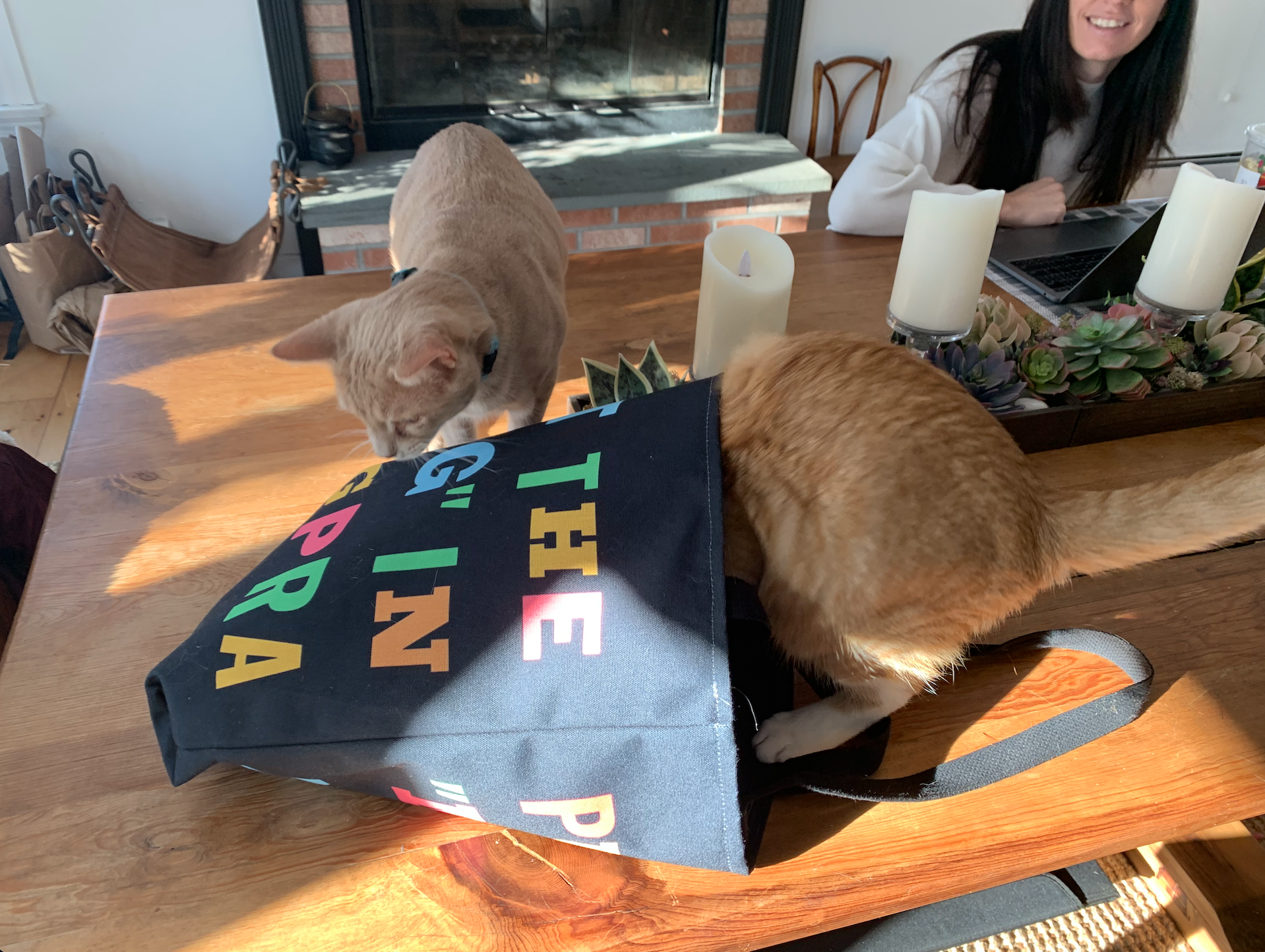
Both Nigel and Bruce decided that they did not want to be left out of the planning process.
Given how wildly successful our Diggin’ In: Digital Lecture series has been, we wanted to expand how our audiences can interact with archaeologists from around the country.
Our new project – dIPPIN’ IN: Quick Conversations with Archaeologists – highlights the variety of jobs and experiences archaeologists can have by asking each person the same five questions:
Describe what kind of archaeology you focus on.
How did you get into archaeology?
Why should we care about archaeology and history?
What is the most exciting thing you ever found?
Anything else people should know about archaeology?
It is fascinating to learn about each archaeologist’s career path and what initially hooked them. And, while some answers have been remarkedly similar many are wildly different!
If you want a glimpse into the exciting field of archaeology through the personal lens of an archaeologist, this series is for you.
As we continue to add to the series, you can find the videos here.
And, if you are an archaeologist who wants to participate or if there is someone you want us to interview – let us know!









 The Peabody