This summer I went to visit a friend in Vienna. I hadn’t seen her in [*cough*] years, so my inspiration was mainly just to hang out with her. It was only after I had my plane tickets and the trip was drawing near that I actually started looking into what there was to do in Vienna.
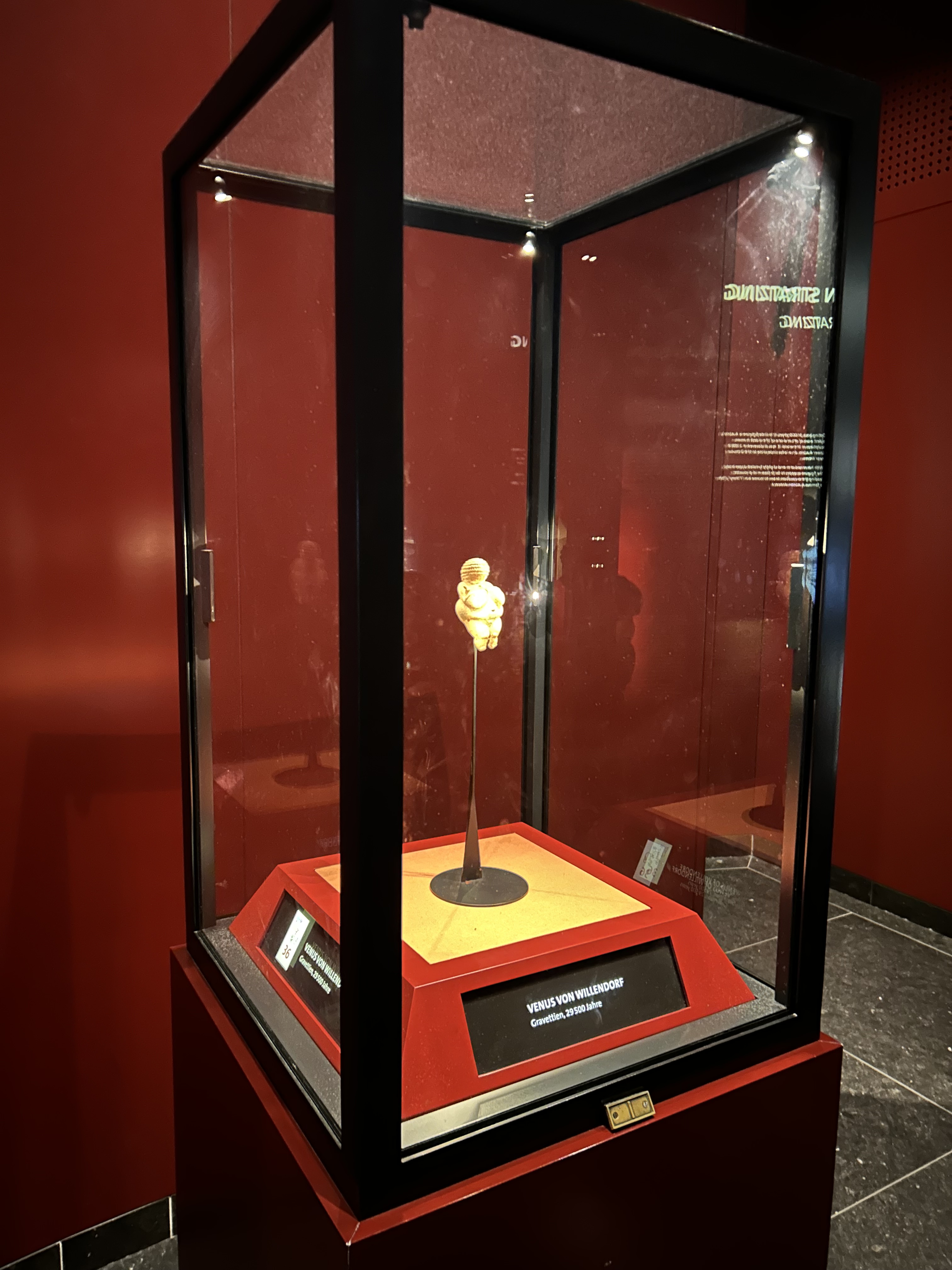
Turns out, the Venus of Willendorf is there. For a museum nerd I don’t tend to visit that many museums when I travel, but the Venus of Willendorf is famous enough (there’s even a cast of the original here at the Peabody) and I am nerd enough for that to justify seeking her out. This meant dragging my friend to the Naturhistorisches Museum Wien.
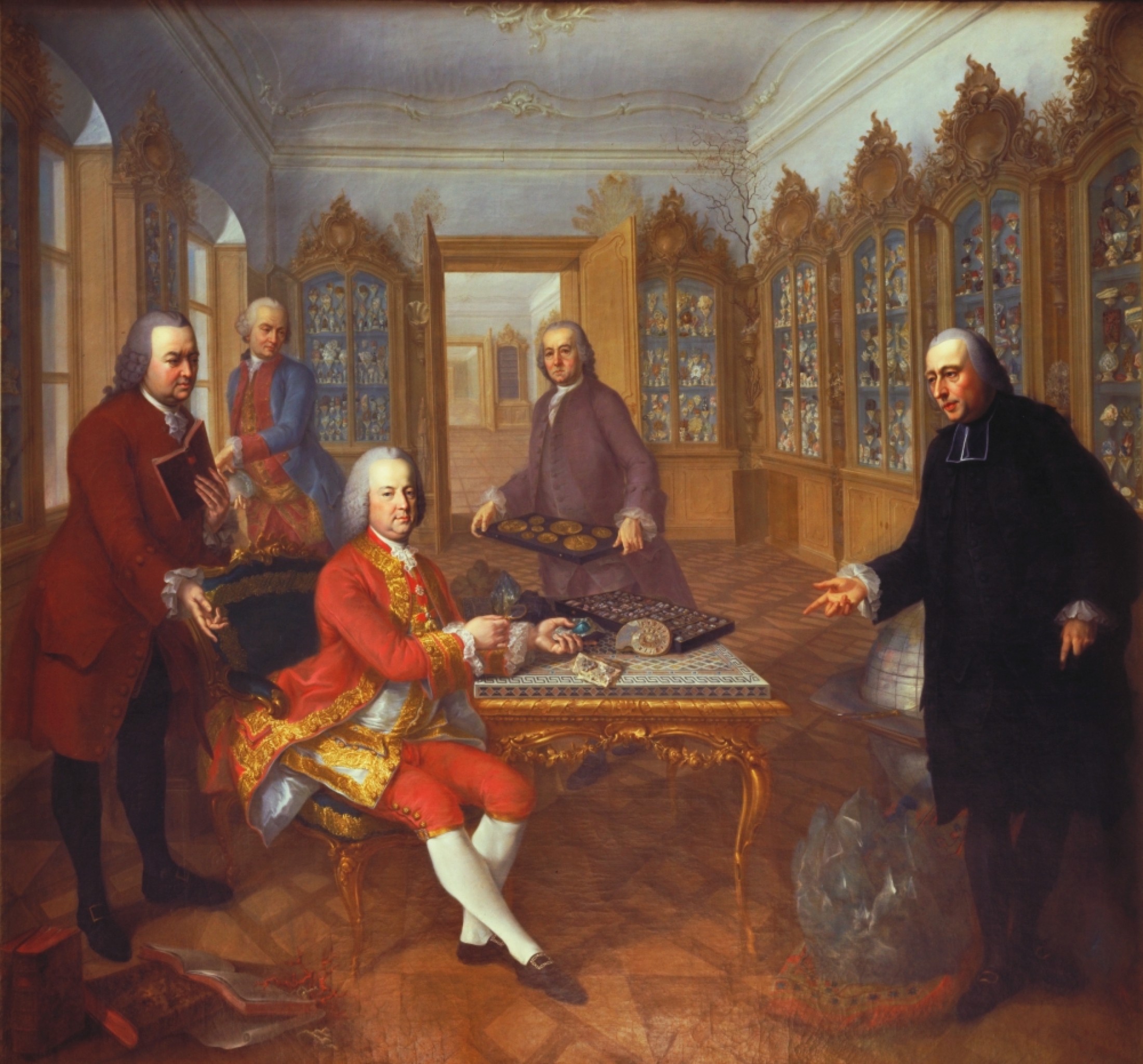
If you had asked me beforehand what I expected of the place, I’m not sure what I would have said. I’m familiar enough with the broad-strokes histories of museums and their ties to imperialism: As nations started to push further and further out into the world during the Age of Exploration, voyagers brought back evidence of their encounters with new environments in new places, creating displays that combined minerals, plants, animals, and man-made “curiosities.” These collections offered opportunities for viewers to learn about the world, as centered by their home locations, but equally they offered opportunities for displayers to demonstrate their status and wealth, the power of their influence and access – not just how they saw the world but how they wanted others to see them in it. If you look for it, this history is written into the architecture and design of museums, and I have been academically trained to look for it. So maybe if you had asked me beforehand what I expected of the Naturhistorisches Museum I would have said “nothing new.”
Reader, I was wrong.
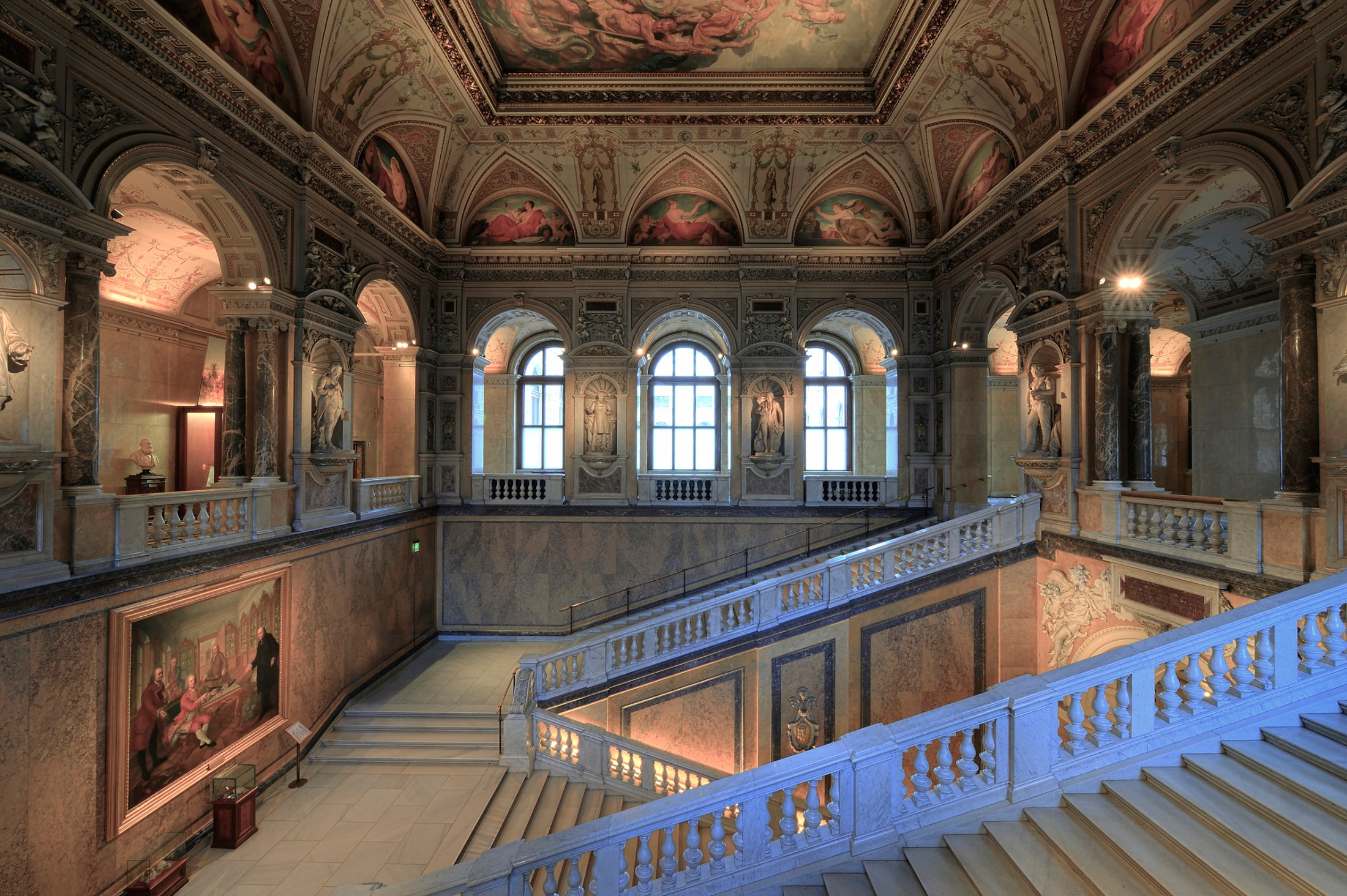
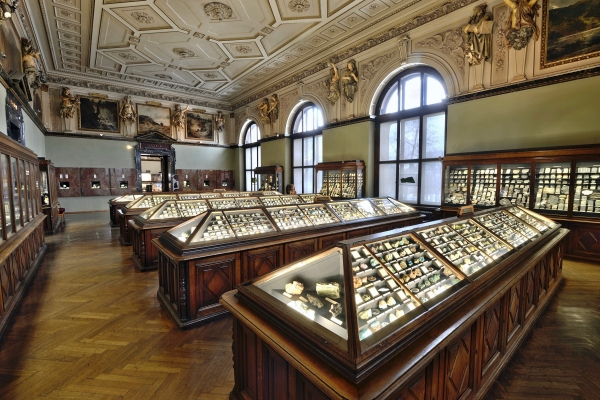
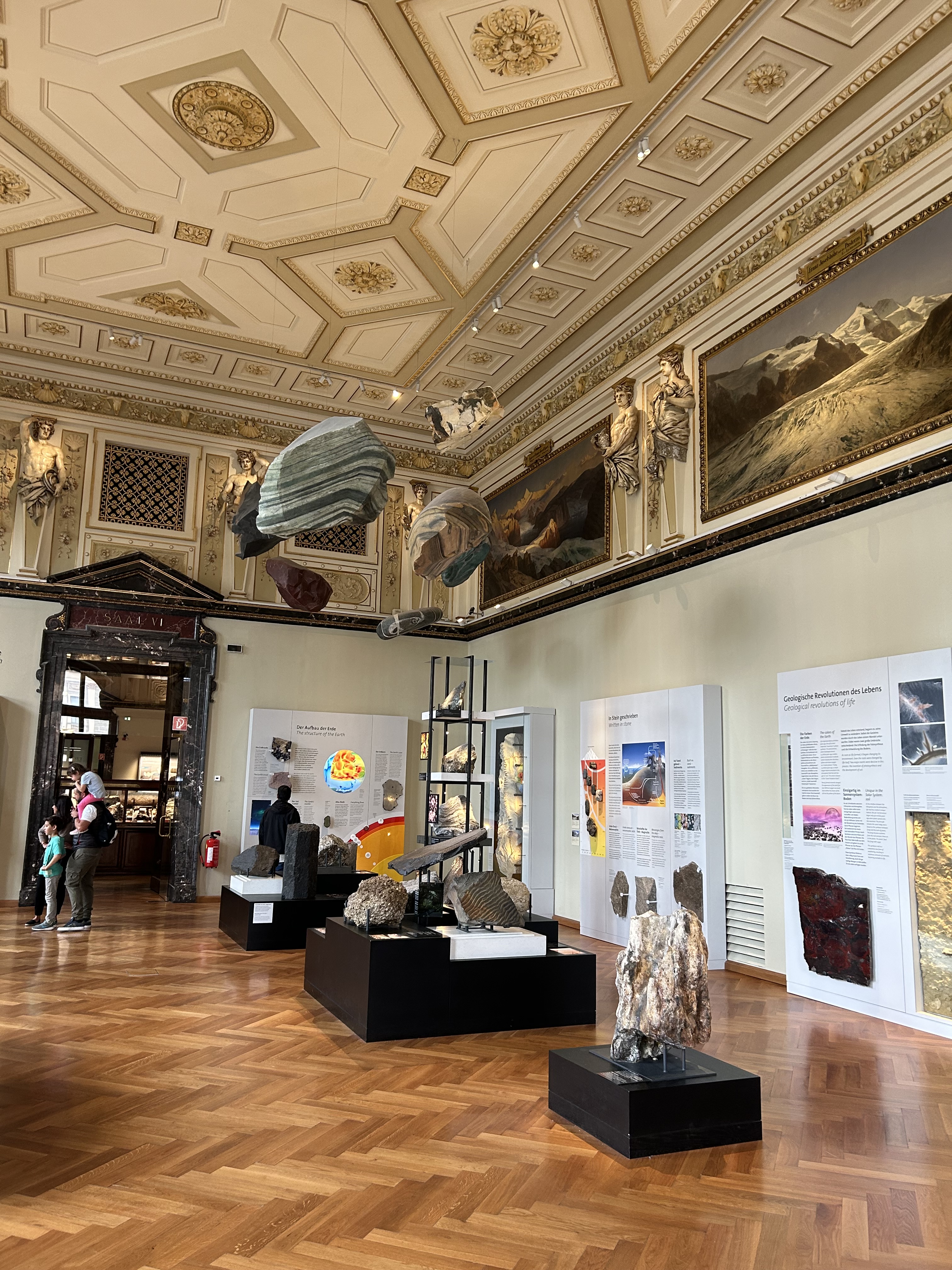
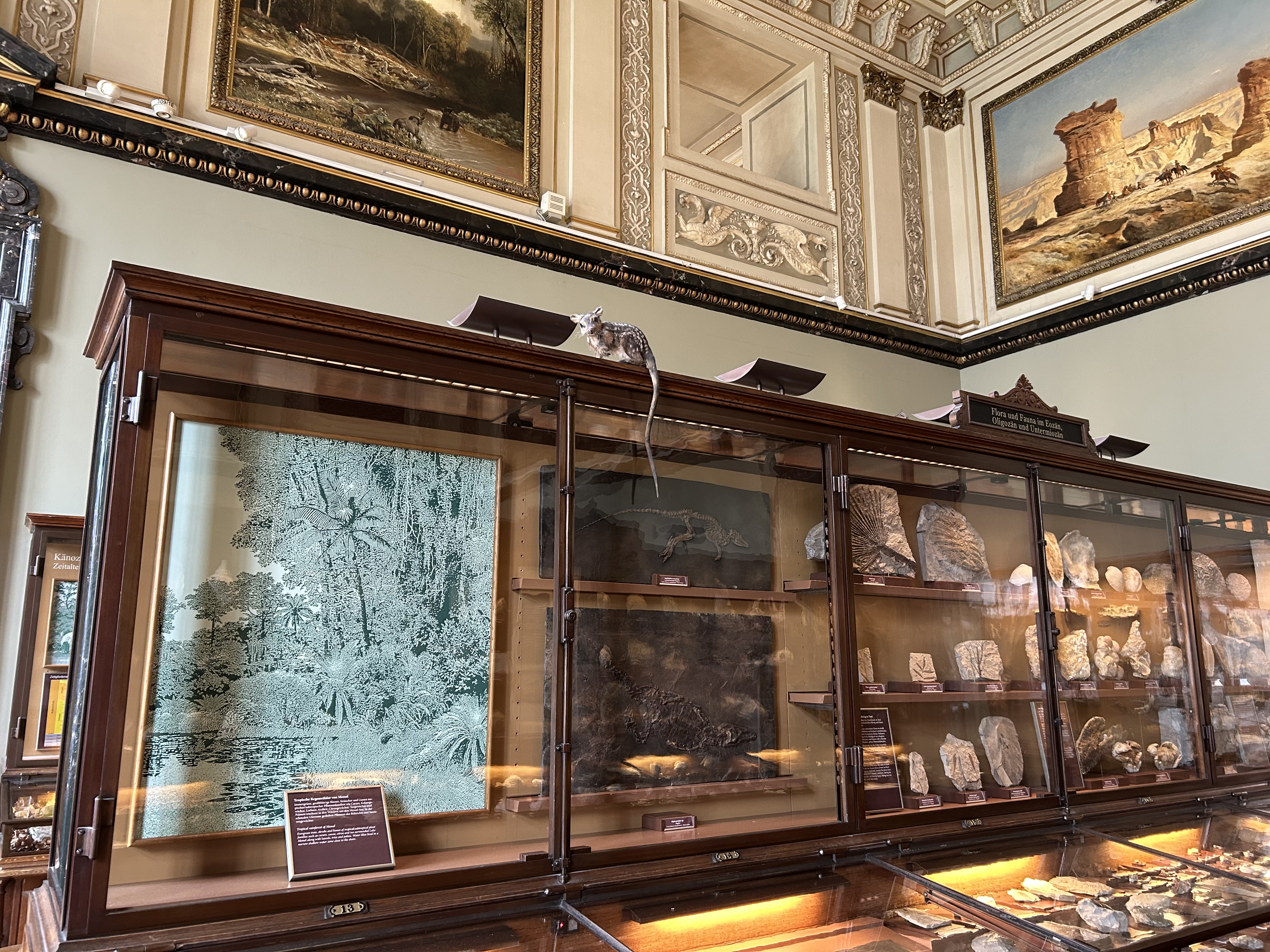
This place was every piece of museum history I had ever learned, jacked up on steroids. It was everything I had been taught to expect dialed up to a ten, with a little extra more thrown in just for fun. It was contemporary best practice crammed into 19th century display cases surrounded by imperial displays of awe and wonder, and I was there for every moment of it. Just please don’t ask me much about the exhibits themselves! I was far too distracted to notice.
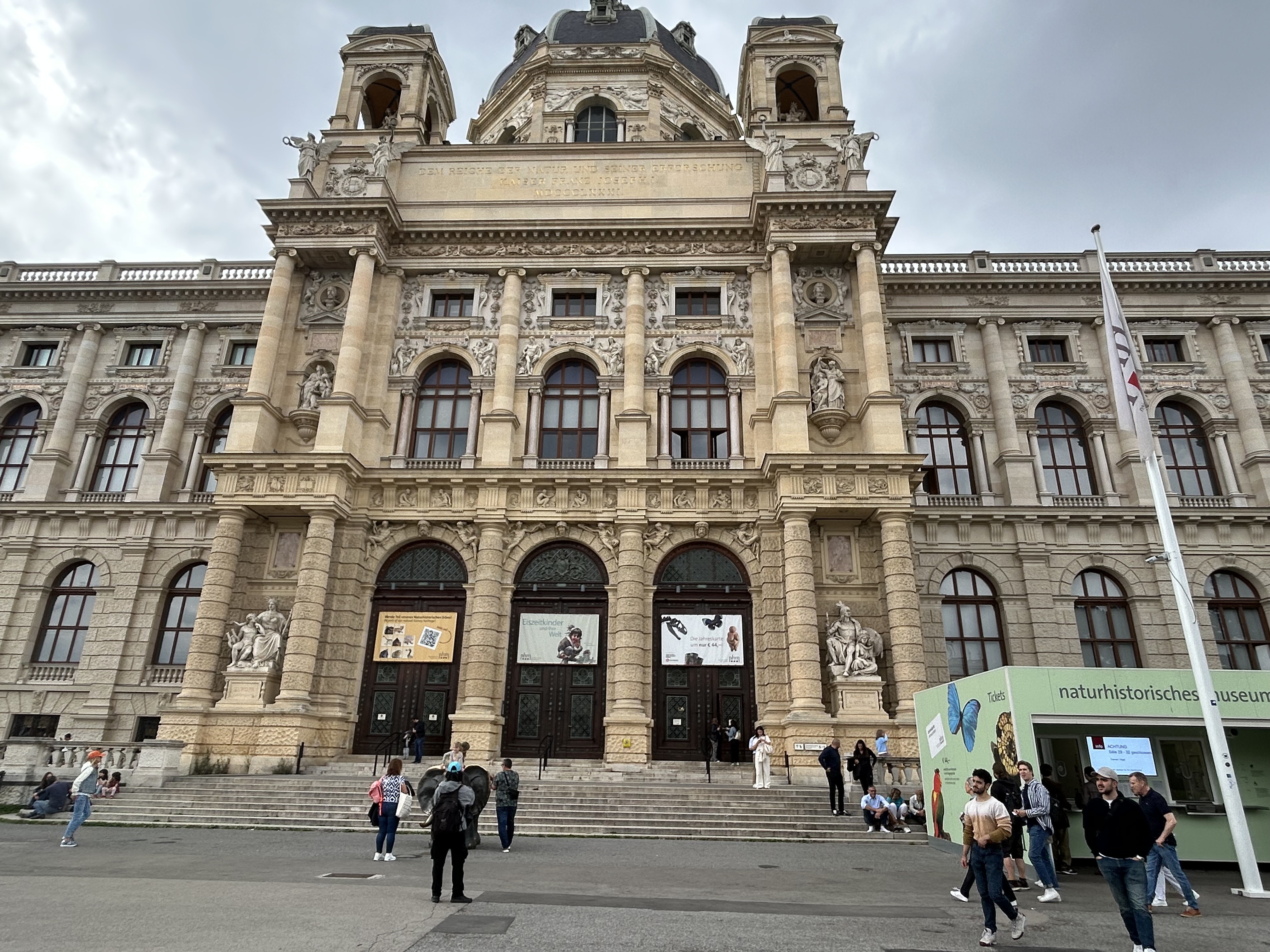
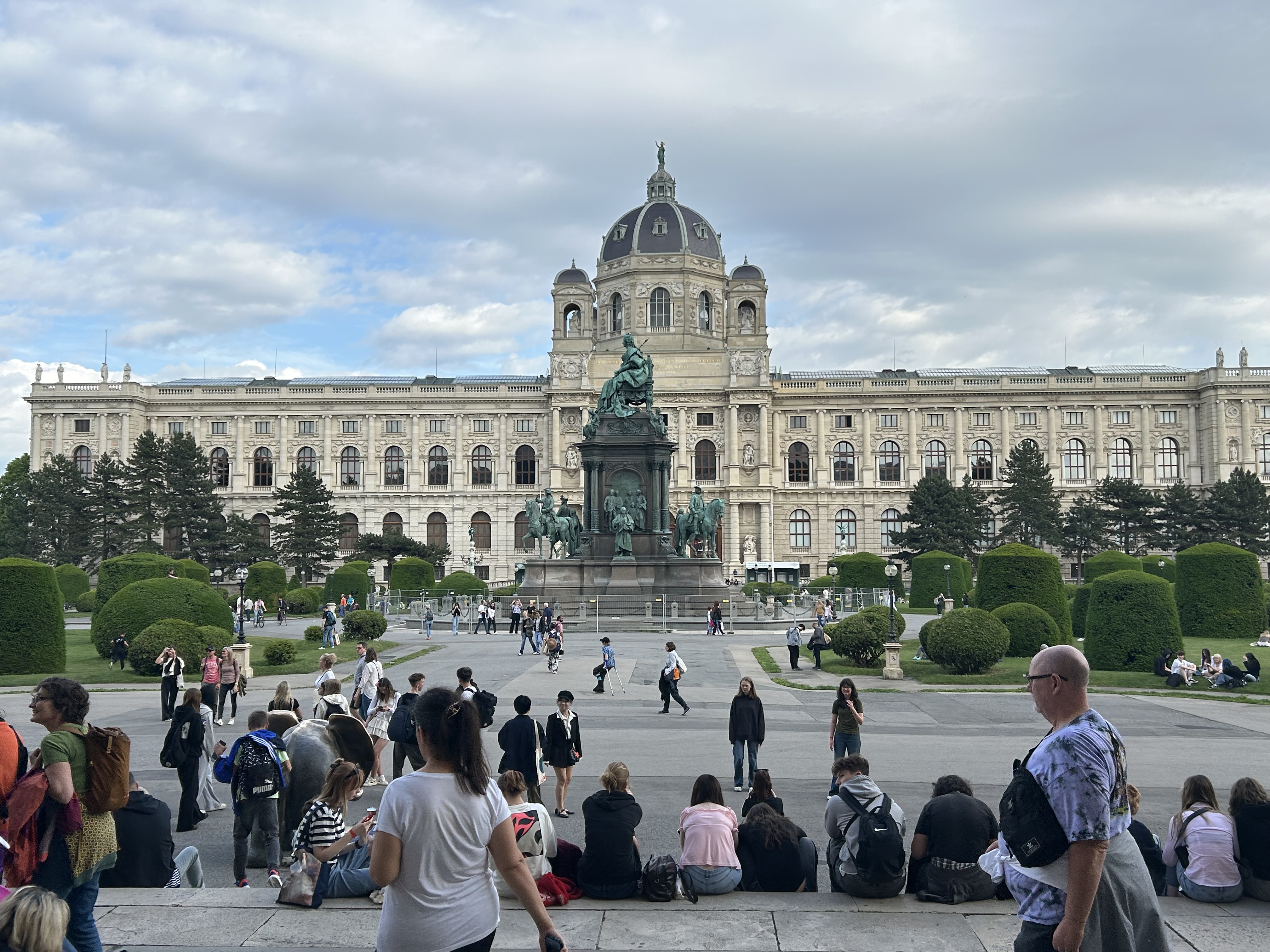
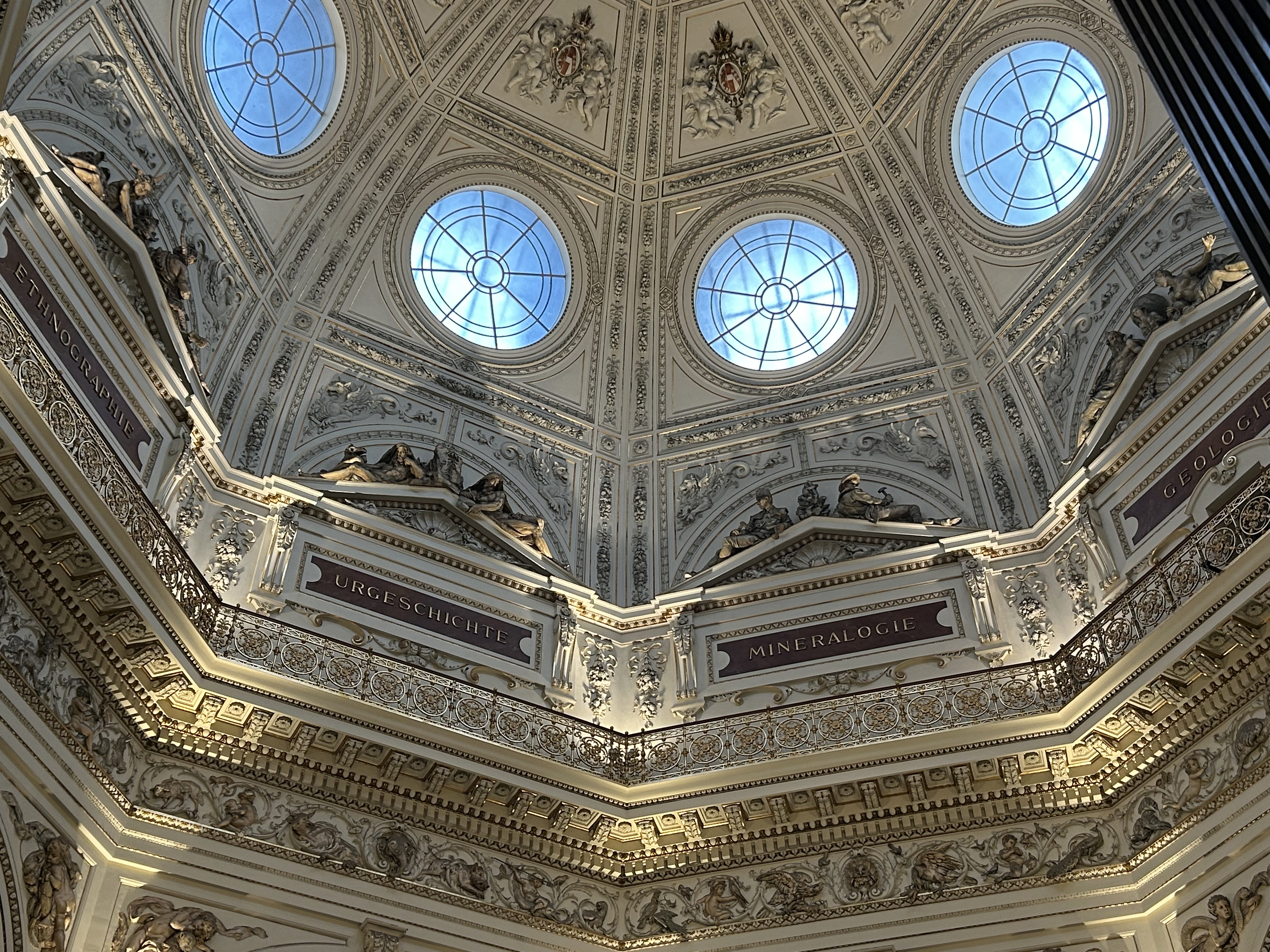
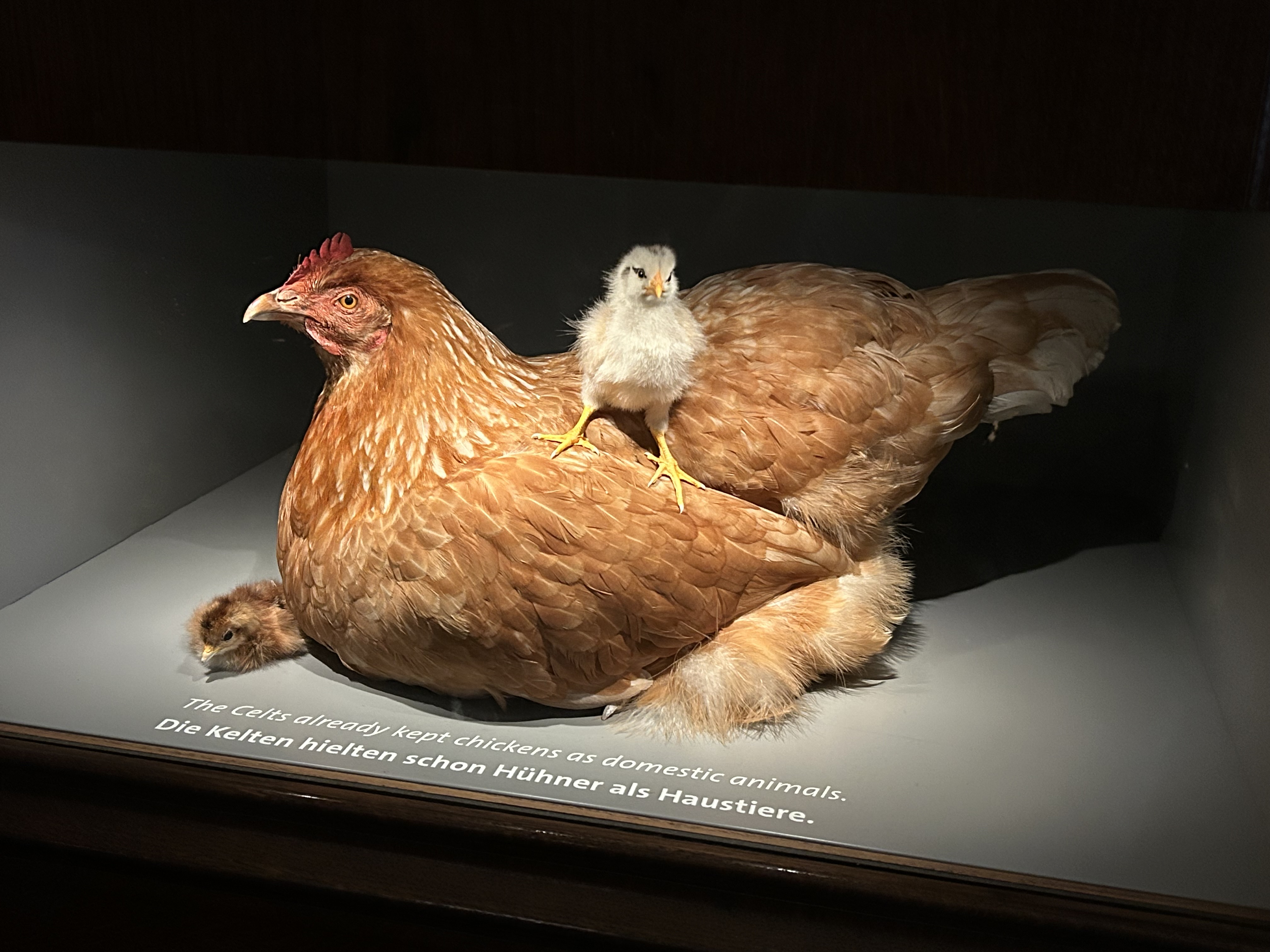
Just the front doors…Looking across to the Kunsthistorisches MuseumInterior domeThe (very) grand staircaseTraditional 19th century displayPlanet Earth couldn’t fit into 19th century display cases?Neither could this dude?The chickens couldOh, right! The Venus was…fine.
Did you know how beautiful New Mexico is? I had the opportunity to travel to the Albuquerque and Santa Fe areas this July and can definitely recommend making the trip.
The Peabody Institute actually has a long relationship with New Mexico. In the 1920s, Alfred Kidder excavated Pecos Pueblo on behalf of Phillips Academy (what is now the Peabody Institute). The ripple effects of that work included repatriation work with the Pueblo of Jemez, a long-term loan with the Pecos National Historical Park, inter-institutional collaboration, relationships with Jemez artists, and incredible learning opportunities for the students at Phillips Academy.
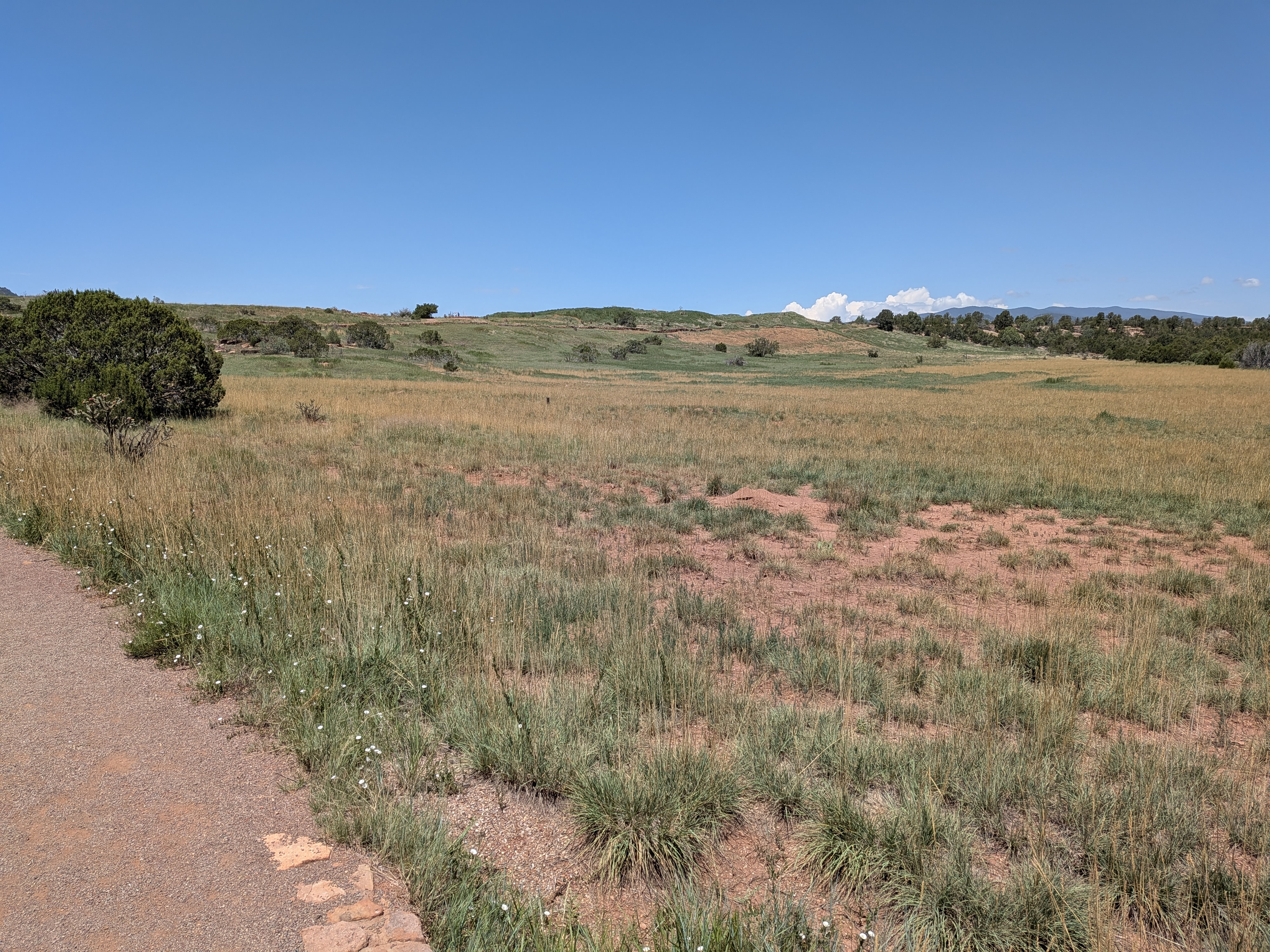
While I had been to the Pueblo of Jemez before this summer, I had not had the opportunity to see the Pecos archaeological site or Pecos National Historical Park before. It was truly a pleasure to experience the site in-person and get an understanding of how Pecos sits in the landscape. I was also able to view their wonderful exhibit, spend time with the Museum Curator to view the collections on loan from the Peabody, and meet several dedicated park staff members. I am grateful for the opportunity to spend that time with them all.
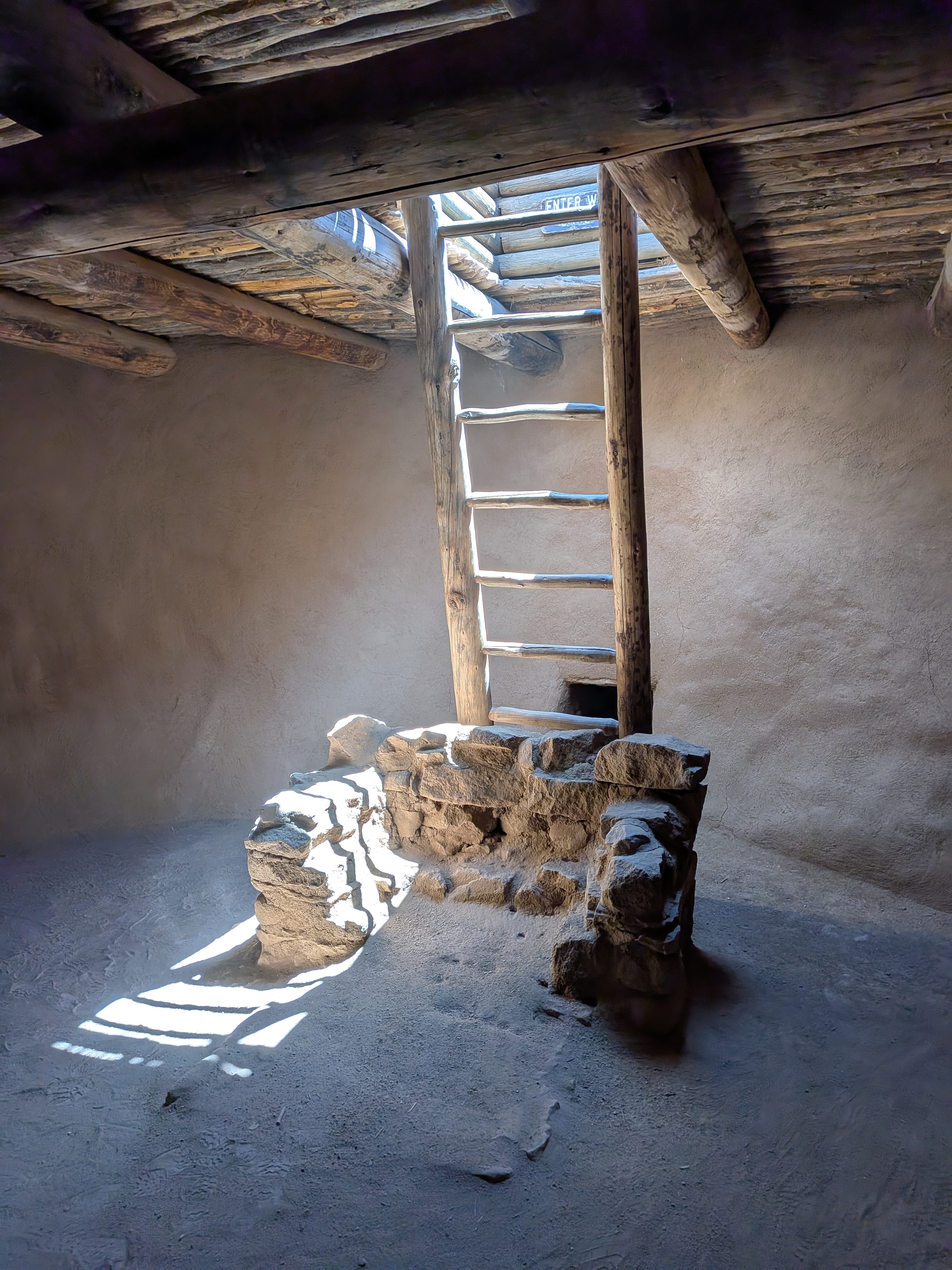
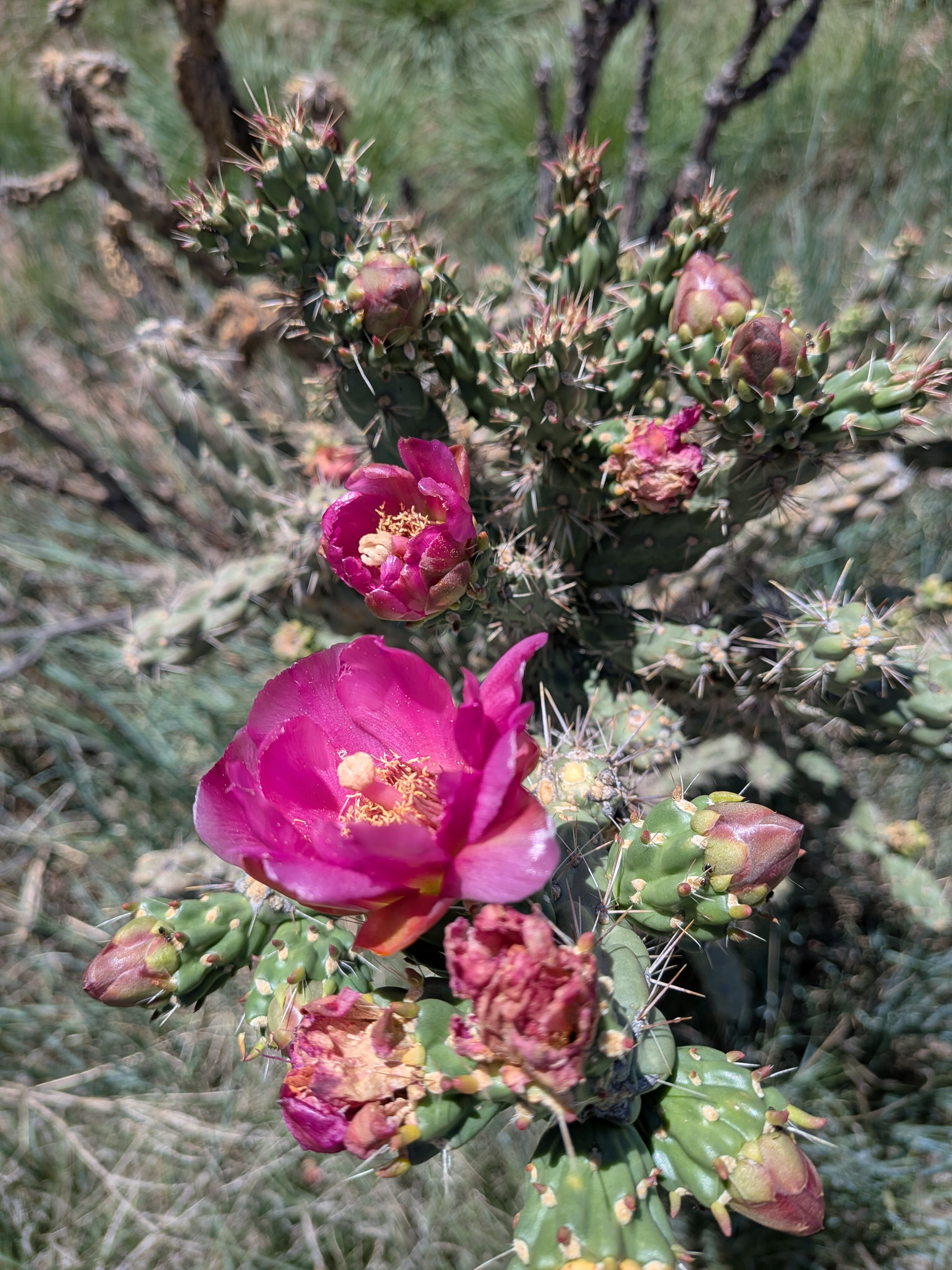
Inside the kiva at PecosCactus flowers!The view from Pecos
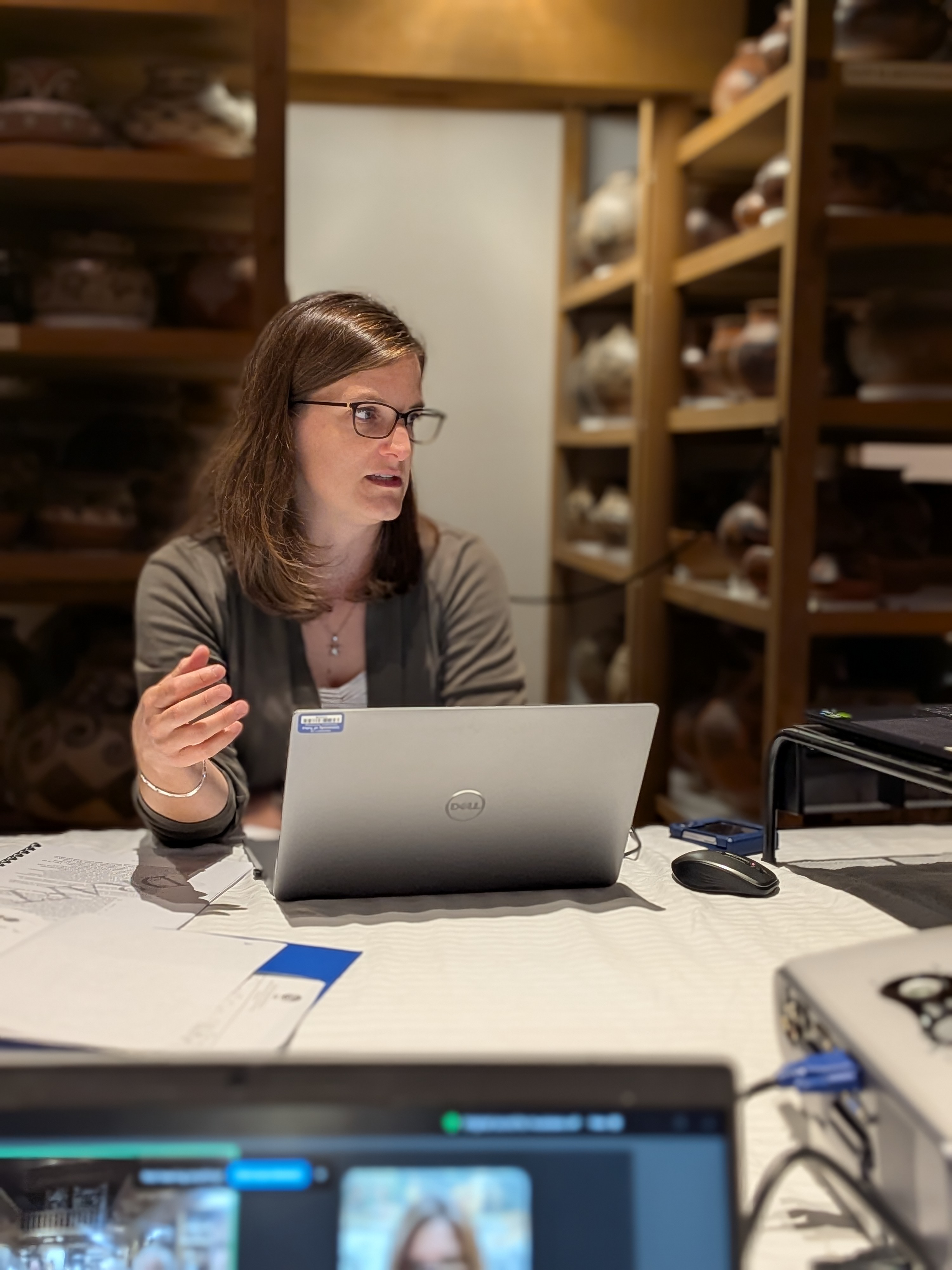
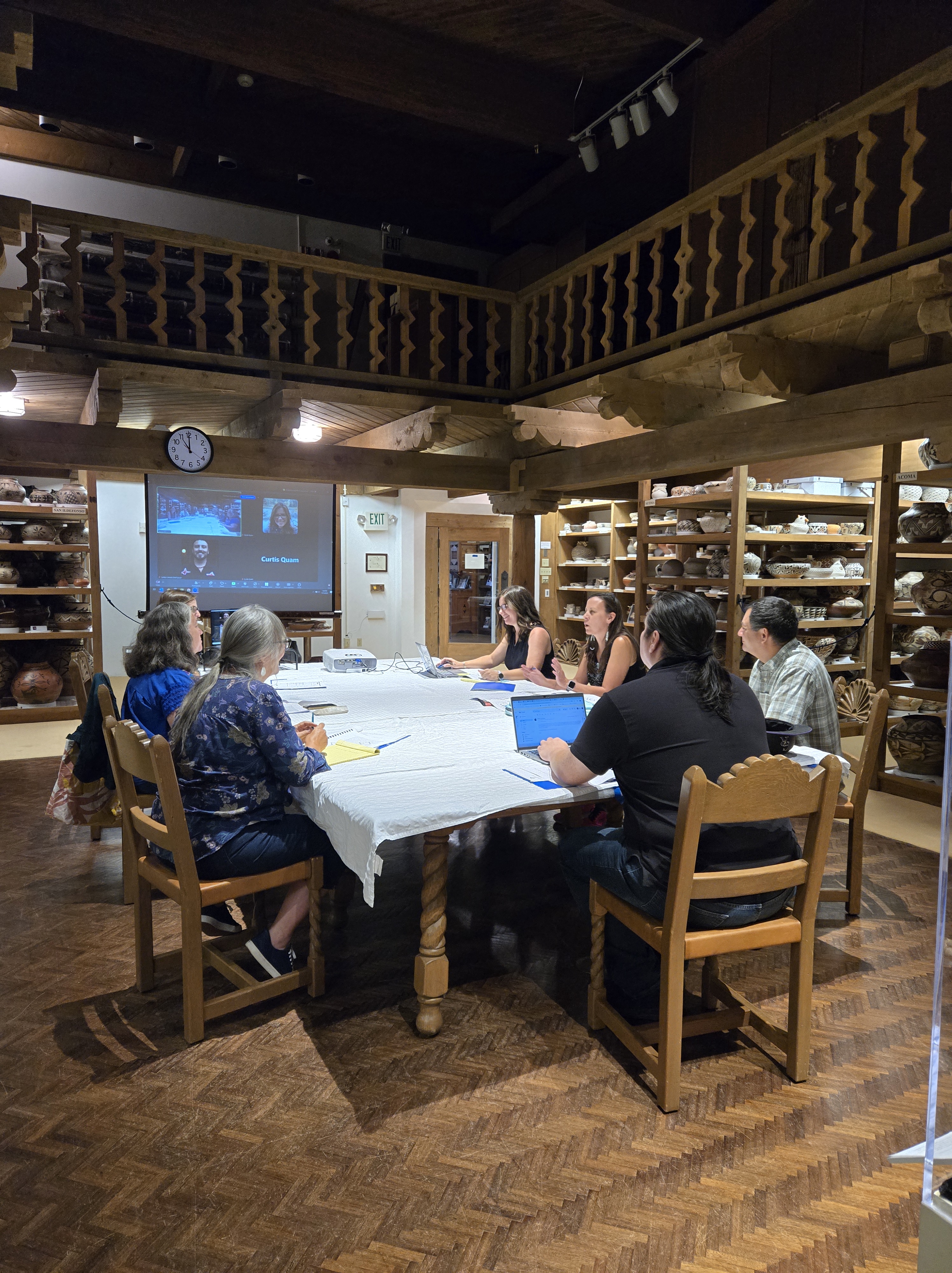
After my time at Pecos, I went to the School for Advanced Research in Santa Fe to facilitate the final review session of the Indigenous Collections Care (ICC) Guide. This is a project that I have been working on for awhile and it was excited to be entering the final stages. Although the review session had to be rescheduled due to complications with our IMLS grant, we had a wonderful group of people to discuss the ICC Guide and help us move forward into the final stages of development.
The ICC Guide provides a framework to respect and recenter collections stewardship practices around the needs and knowledge of Indigenous community members. The Guide speaks to individuals engaged in collections stewardship within museums and collecting institutions. It is aimed specifically at museum professionals, emerging and established, and individuals who are seeking clarification, support, and validation to pursue culturally appropriate care.
Next steps are to send the Guide out for copy-editing and graphic design. A final version will be ready to be shared in the summer of 2026.
My time in New Mexico was amazing and I hope you can visit there sometime soon!
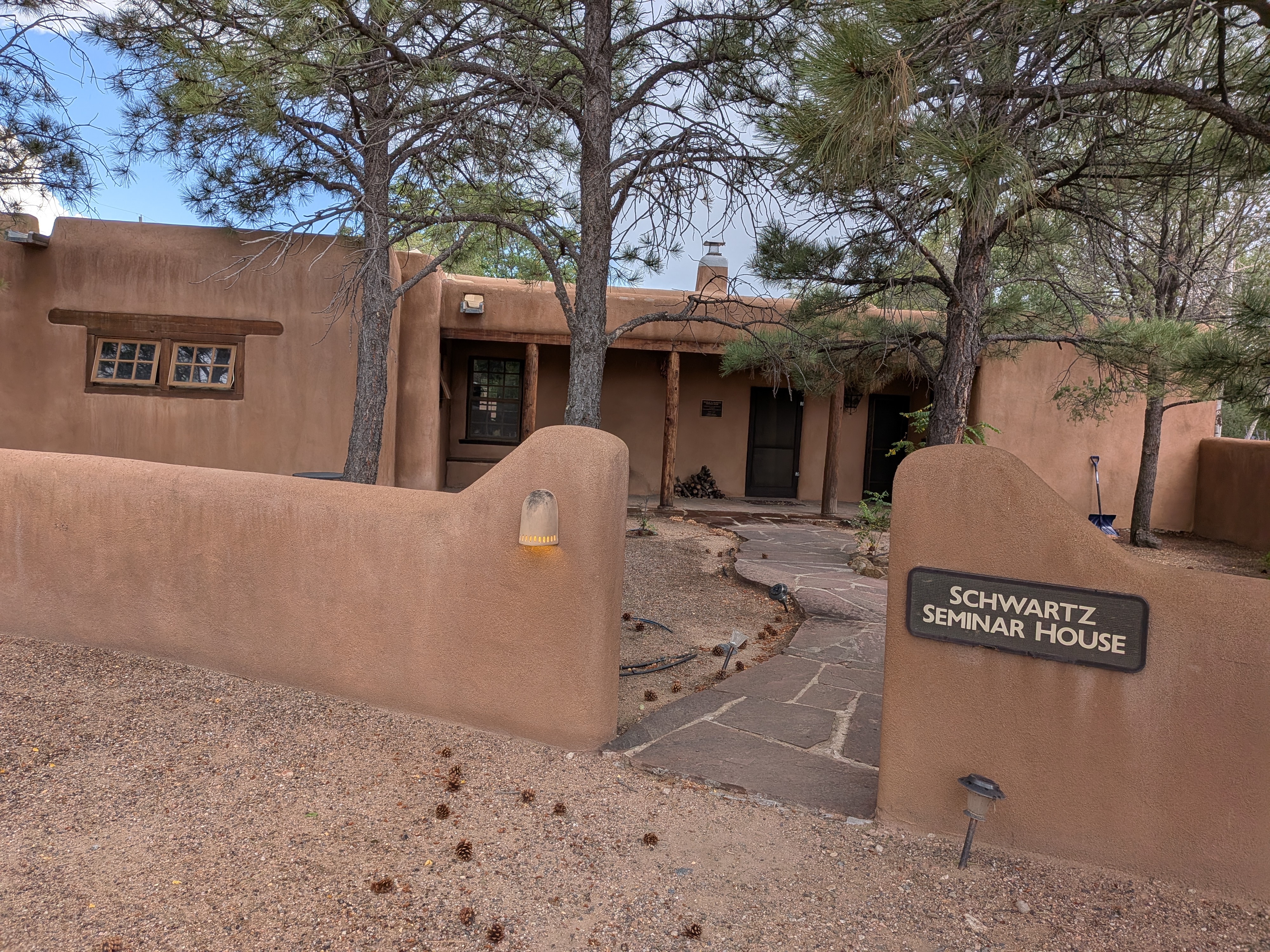
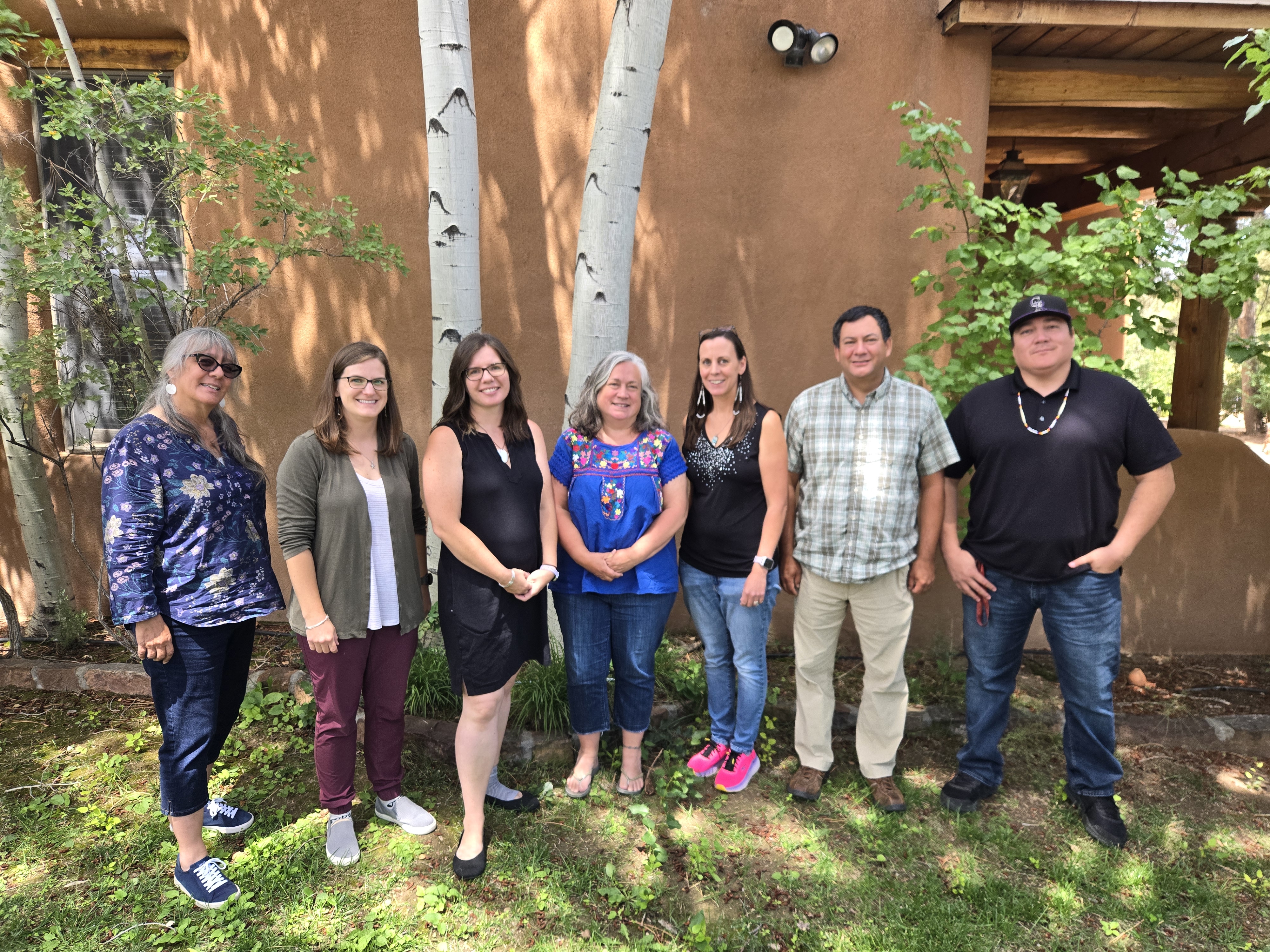
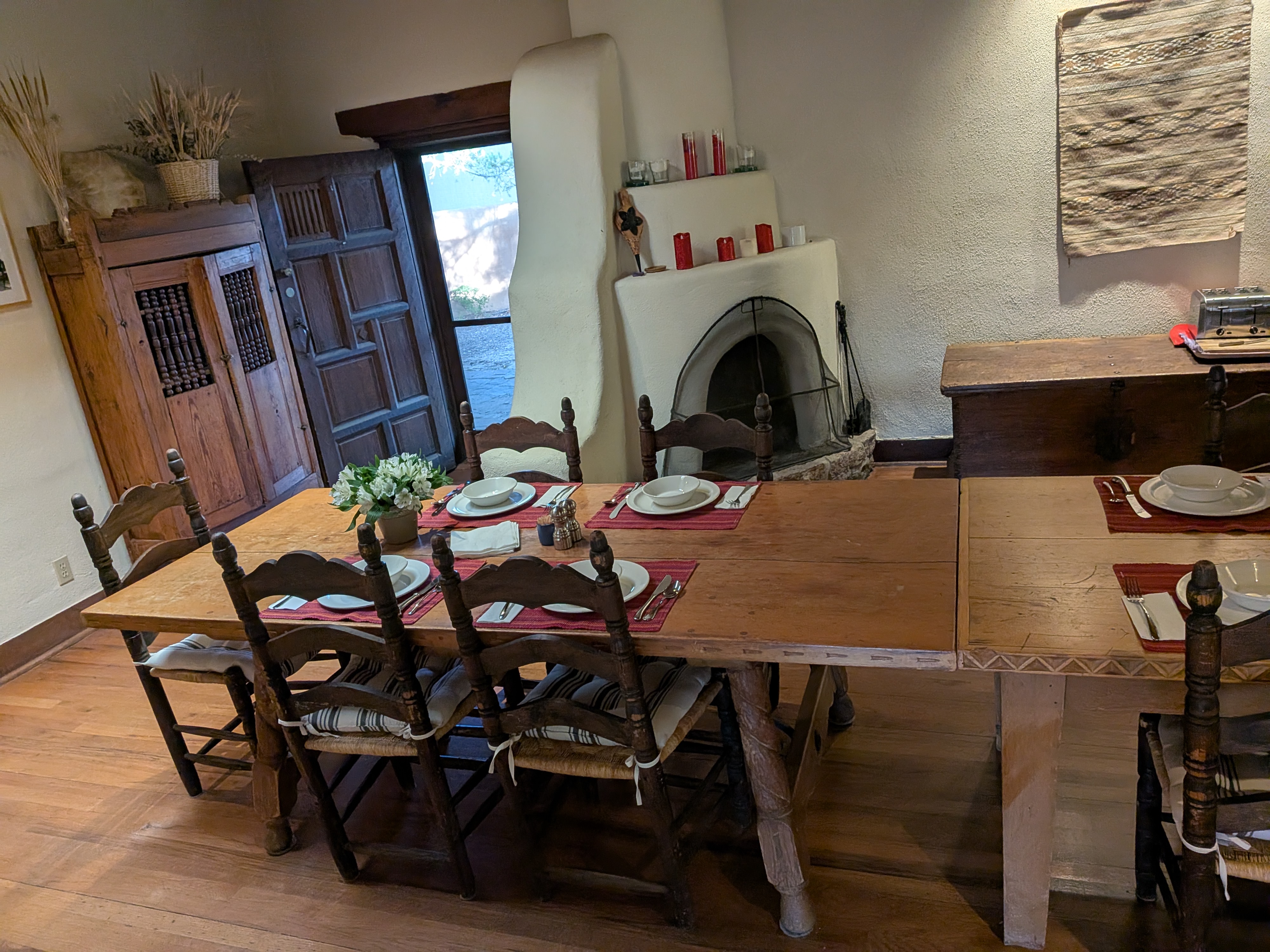
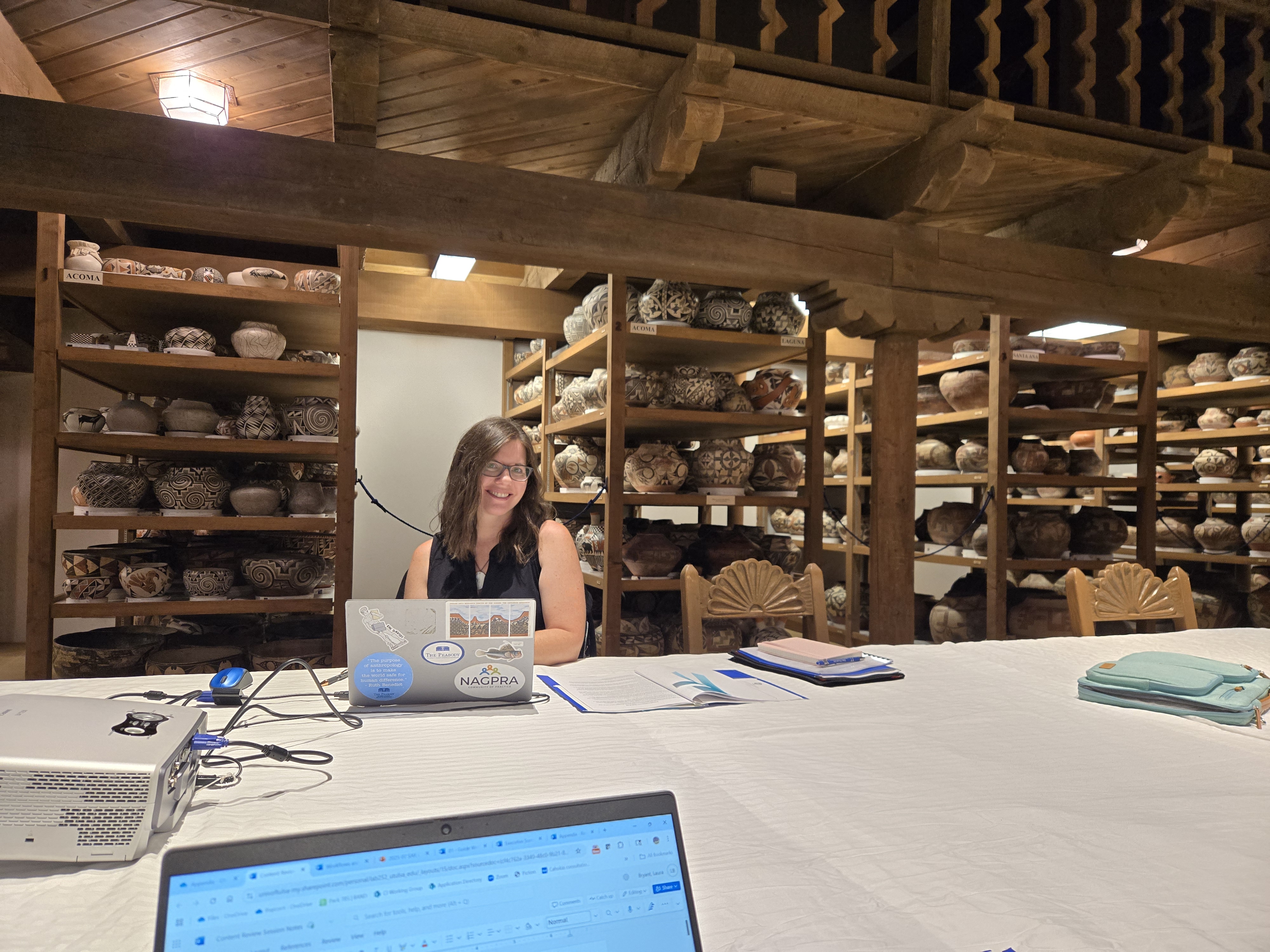
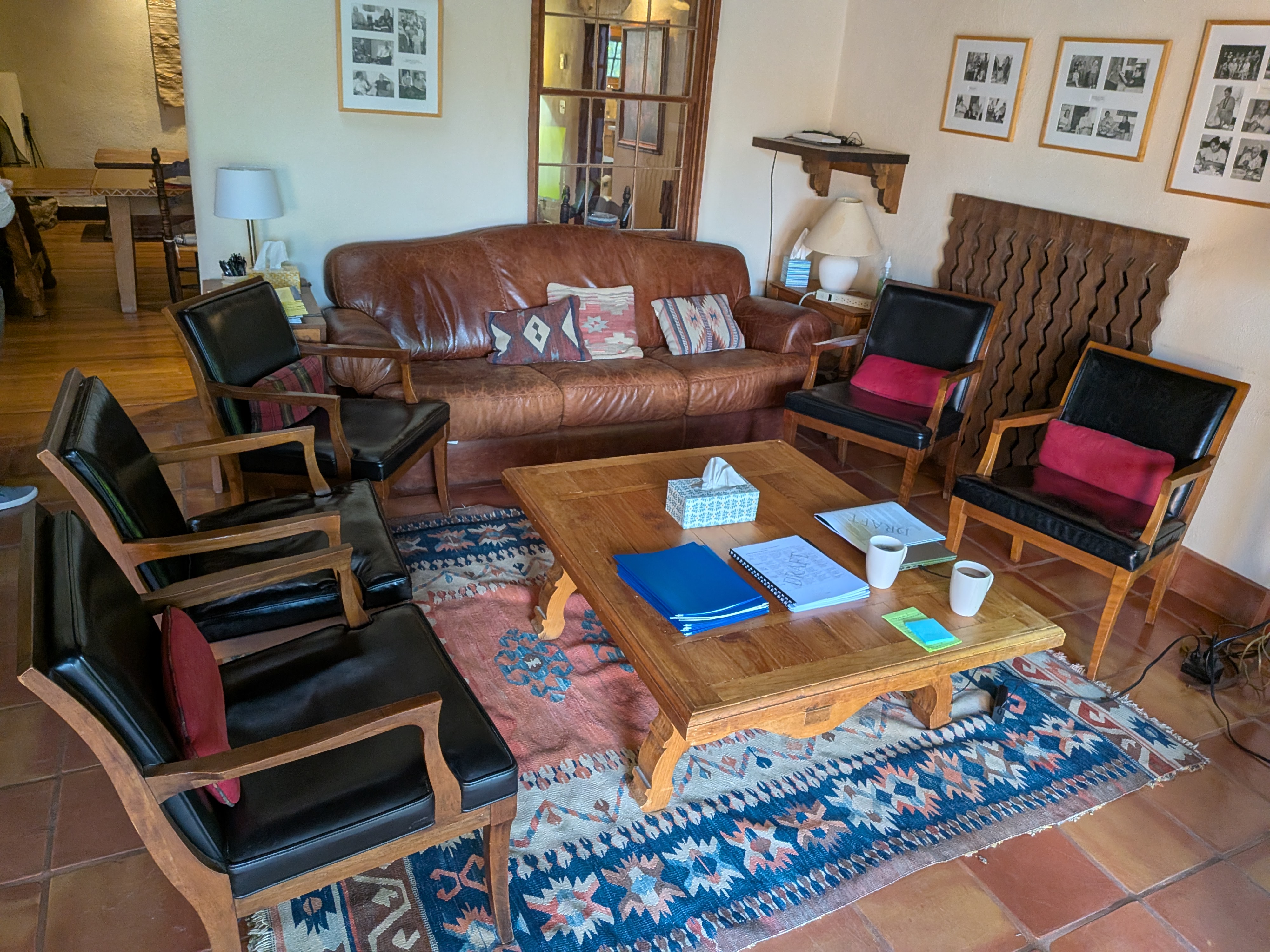
SAR Seminar HouseThe ICC Guide review groupSAR Seminar HouseICC co-facilitator, Laura BryantMeeting at the Indian Arts Research Center at SARSAR Seminar House
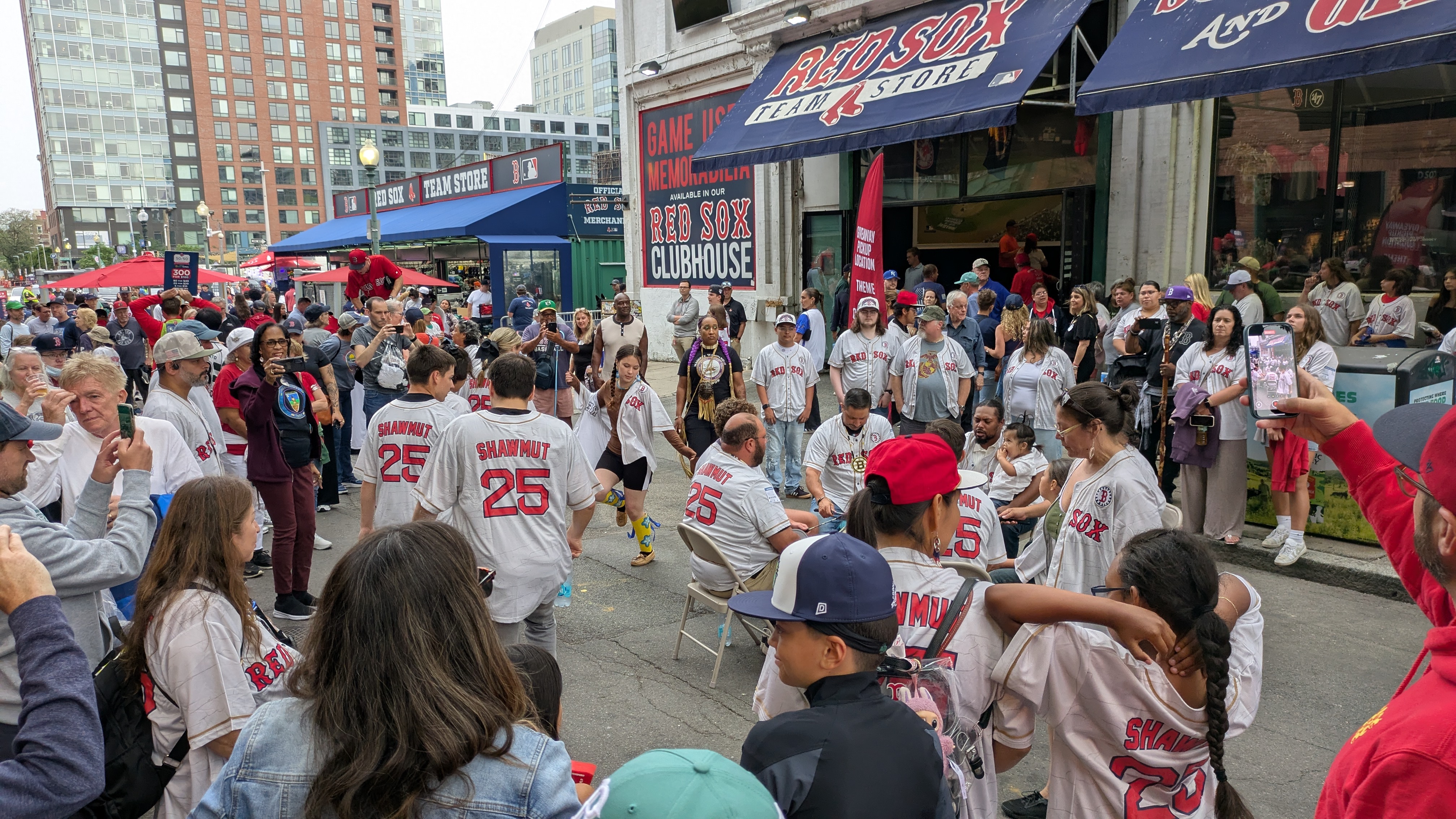
Fans wearing their Shawmut jerseys enjoying the drum circle before the game on August 6, 2025.
According to the Red Sox website, “The jersey design is inspired by Eastern Woodland ancestors whose names were once known, and contemporary Native artists Sage Carbone and Brittney Walley. The back of the jersey features “Shawmut” on the name plate, derived from the Algonquian word “Mashauwomuk” which refers to present-day Boston.”
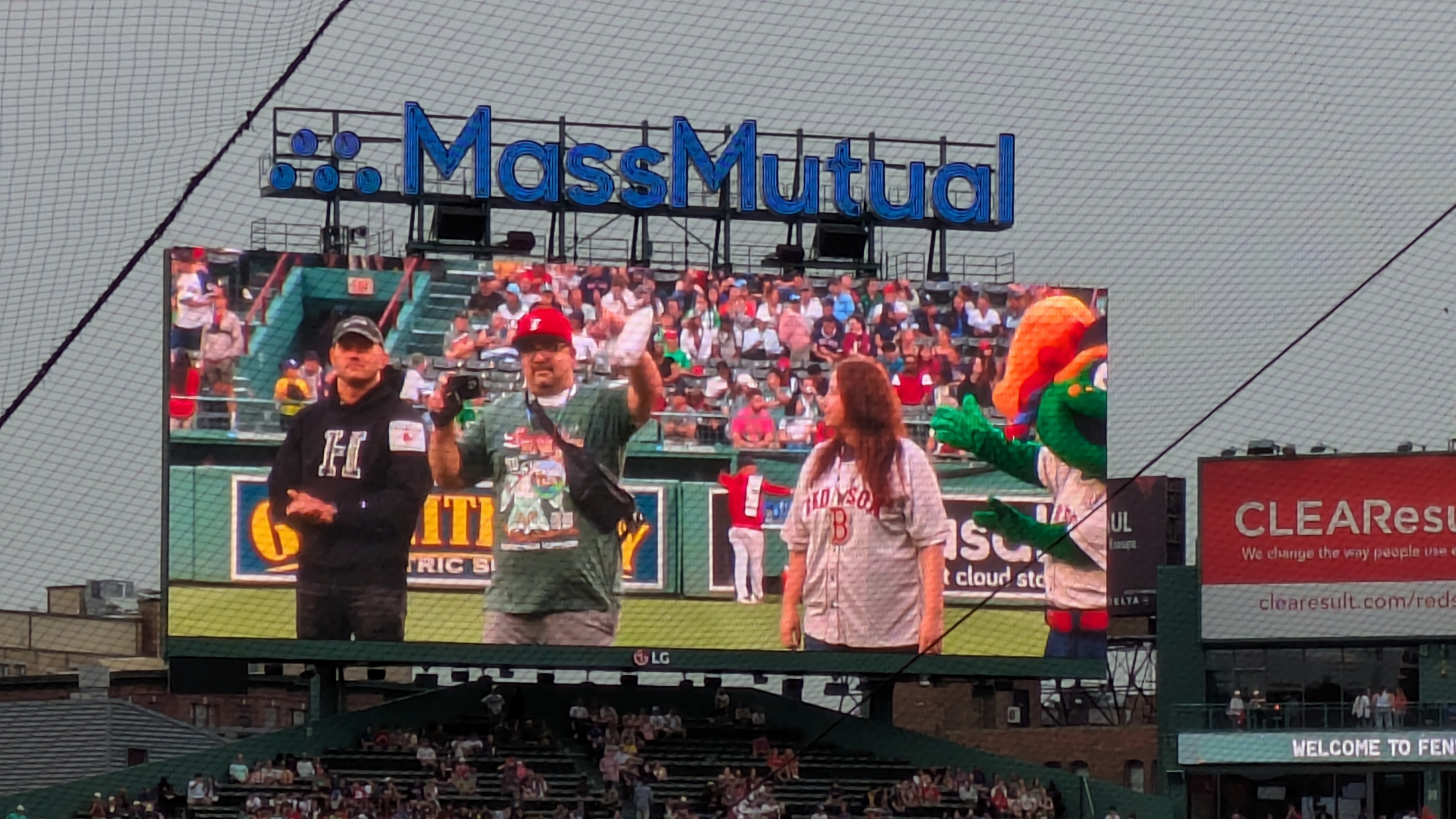
Along with the jersey, which my son and I were excited about, pre-game activities included a drum circle and on-field recognition of about 30 local Native American leaders and educators.
Recognition of Native leaders and educators before the game–David Shane Lowry waves to the crowd.
It was a good game against Kansas City, despite a rare Red Sox loss this season. The Native theme night got me wondering about Native Americans and the Red Sox, and baseball in general—beyond Jim Thorpe.
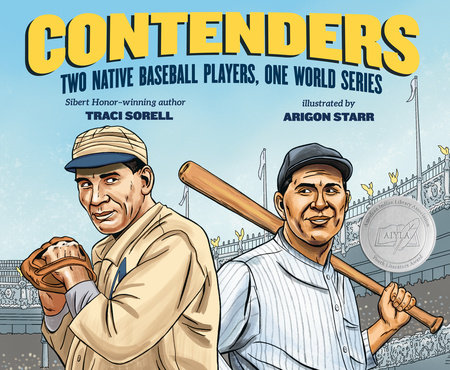
After a little research, I learned a lot—for example, recently Traci Sorell and Arigon Starr published a graphic novel Contenders: Two Native Baseball Players, One World Series, which tells the true story of John Meyers and Charles Bender, who in 1911 became the first Native baseball players to face off in a World Series. There’s a great academic article by Jeffrey Powers-Beck that explores the history of Native Americans and baseball, which begins with Louis Francis Sockalexis in 1897—decades before Jackie Robinson broke the color-barrier in MLB. About 50 Native American tribal citizens who have or continue to play baseball, as well as many others with Indigenous heritage—Baseball Almanac has a list: https://www.baseball-almanac.com/legendary/american_indian_baseball_players.shtml
Charlie Vascellaro’s 2012 article The Real Indians of Baseball explains that Indian boarding schools—including the infamous Carlisle Indian Industrial School—added baseball to their curriculum and produced many of the Native American players in the minor and major leagues. As Tribes and families continued to resist forced removal of children and the boarding school era waned, fewer Native players joined MLB. Looking at the Baseball Almanac list, almost all Native players played games before 1950, with a minority playing since then. Many were nicknamed “chief,” and in some cases became the models for derogatory team names, like the Cleveland Indians (now the Guardians), inspired by Penobscot player Louis Sockalexis.
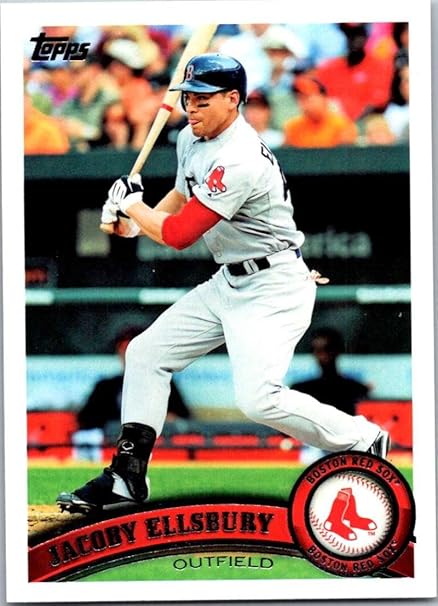
2011 Topps Baseball Series 2#351 Jacoby Ellsbury Boston Red Sox Official MLB Trading Card.
And what about the Red Sox? Well, I was delighted to learn that Jacoby Ellsbury played for the Boston Red Sox from 2007 through 2013. An enrolled member of the Colorado River Indian Tribes, Ellsbury is the first Native American of Navajo descent to play Major League Baseball. Jacoby Ellsbury played for the Sox in two World Series appearances, winning the championship in both 2007 and 2013. After signing with the New York Yankees, several injuries and a contract dispute sidelined Ellsbury in 2019. According to NDNsports.com, Ellsbury was recently elected to the Oregon State Athletics Hall of Fame—his home state—and despite some truly impressive stats and records, missed the 2024 vote for the National Baseball Hall of Fame.
We look forward to the next Native pride event at Fenway and wearing our jerseys to the next game. Play ball!
Further reading
Powers-Beck, Jeffrey. ‘Chief’: The American Indian Integration of Baseball, 1897-1945. American Indian Quarterly 25, no. 4 (2001): 508–38. http://www.jstor.org/stable/1186015.
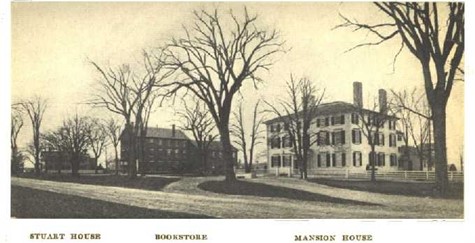
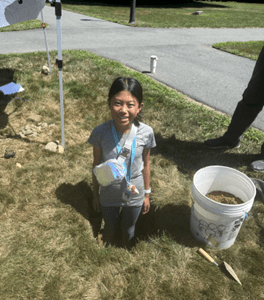
Almost every summer since 2016, young archaeologists from Phillips Academy’s summer session program embark on a mission to excavate the site of the eighteenth century Samuel Philips Jr. Mansion House, located on the West Quad of campus. The infamous Mansion House was built in 1782 by the academy’s founder and stood for 105 years, before burning down in 1887. News articles from the period suggest that the demise of the Mansion House was a result of arson; many speculating that the proprietor, Charles Carter, started the fire. During its long period of occupation, the Mansion House served as not only a home, but later an inn and tavern for students, community members, and travelers. The site’s long history and relatively undisturbed context creates an ideal setting for archaeological excavation and student learning.
Over the past seven years, students have succeeded in discovering portions of the house, including multiple chimneys and a basement feature. This year, students set out with high expectations, choosing to place four excavation units in spaces just outside of the Mansion and two units in the southwest portion of the quad, near the sites of historic outbuildings, a nineteenth century printing house, and an early nineteenth century pathway.
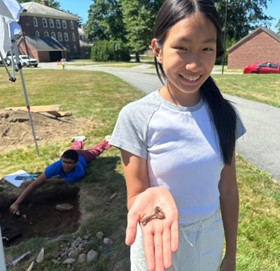
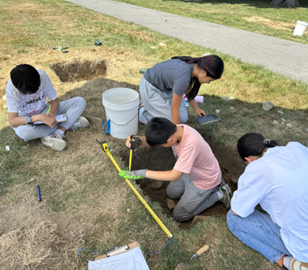
Students in each excavation team had a blast taking turns performing the primary tasks of an archaeologist: digging, screening, measuring, and note-taking. Many, if not all, students even got to unearth artifacts from their units! Some of our favorites included a small ferrous key, an impressed glass tumbler, and half a pair of scissors which all came from the two excavation units placed in the southwest portion of the quad.
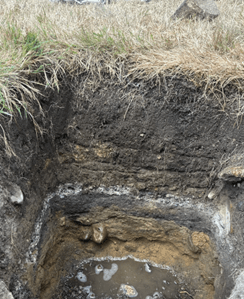
Further excavation in this area revealed a feature relating to the historic pathway present on early nineteenth century maps of campus. Pictured below is a dense, gravelly layer of soil discovered at 40 cm. This layer, interpreted here as the pathway, was intermixed with nineteenth century materials including glass, brick fragments, and some ceramic.
Students excavating the other four units in the northern portion of the quad found shallow cultural layers followed by a sterile C horizon, between 20 and 35 cm. While the artifact density of these units was limited, students still enjoyed finding an abundance of brick, metal nails, and some small ceramic fragments. The very shallow deposits found in these units informed the team that no building activity likely occurred in these areas. Additionally, the relatively low artifact density suggests that these areas were not regularly used like in a dooryard or garden area.
Overall, students in the 2025 field program successfully applied archaeological methods to ‘unlock’ more of the mysteries surrounding the Samuel Phillips Jr. Mansion House. This year’s field season serves to inform of the deep cultural deposits in the southwest portion of the quad and the significant research potential it could provide for future field seasons.
Thanks to the entire student field crew and cheers to a wonderful field season!
All work and no play makes Robert S. Peabody a dull boy!
As much as our staff and volunteers love digging deep into research and academic writings, we do love a good book or podcast! As summer descends upon us, prepare yourselves for another installment of our Peabody Picks summer list!
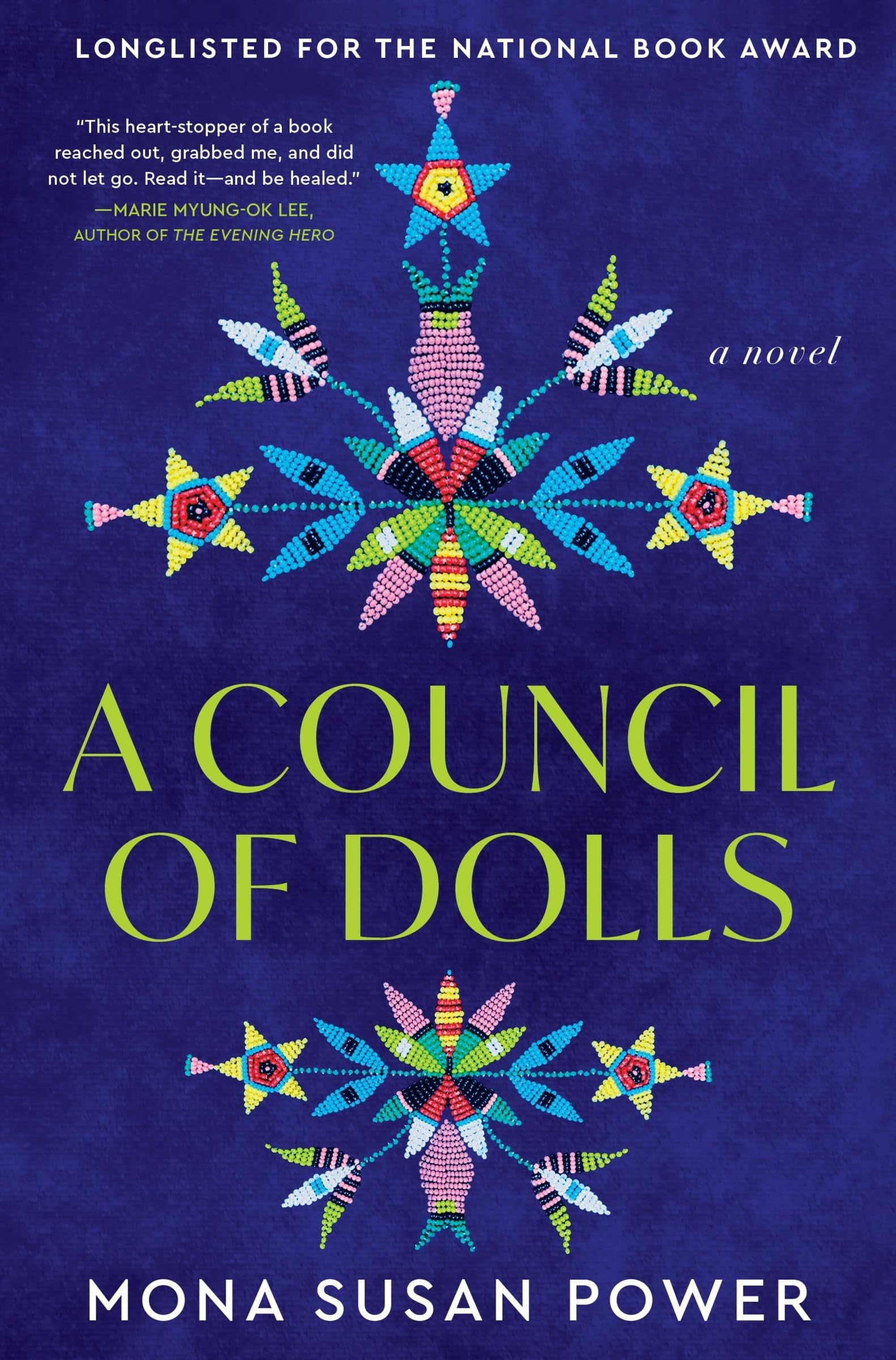
A Council of Dolls is a 2023 historical fiction family saga novel about multiple generations of Yanktonai Dakota women grappling with the effects of settler colonialism, told partially through the point of view of their dolls.
A modern masterpiece, A Council of Dolls is gorgeous, quietly devastating, and ultimately hopeful, shining a light on the echoing damage wrought by Indian boarding schools, and the historical massacres of Indigenous people. With stunning prose, Mona Susan Power weaves a spell of love and healing that comes alive on the page.
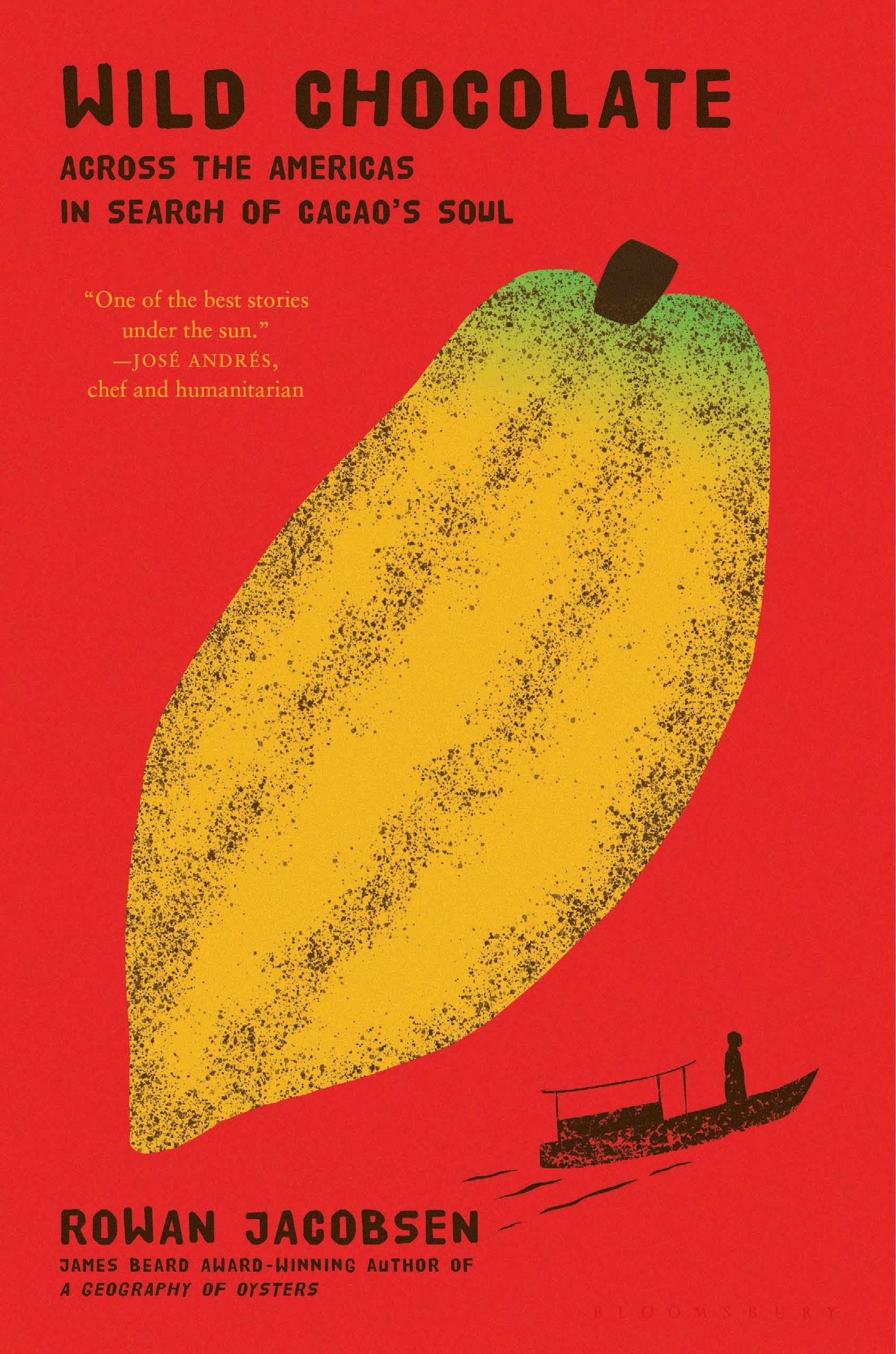
From James Beard Award-winner Rowan Jacobsen, the thrilling story of the farmers, activists, and chocolate makers fighting all odds to revive ancient cacao and produce the world’s finest bar.
When Rowan Jacobsen first heard of a chocolate bar made entirely from wild Bolivian cacao, he was skeptical. The waxy mass-market chocolate of his childhood had left him indifferent to it, and most experts believed wild cacao had disappeared from the rainforest centuries ago. But one dazzling bite of Cru Sauvage was all it took. Chasing chocolate down the supply chain and back through history, Jacobsen travels the rainforests of the Amazon and Central America to find the chocolate makers, activists, and indigenous leaders who are bucking the system that long ago abandoned wild and heirloom cacao in favor of high-yield, low-flavor varietals preferred by Big Chocolate.
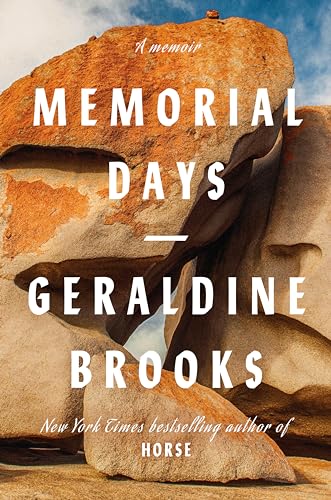
Many cultural and religious traditions expect those who are grieving to step away from the world. In contemporary life, we are more often met with red tape and to-do lists. This is exactly what happened to Geraldine Brooks when her partner of more than three decades, Tony Horwitz – just sixty years old and, to her knowledge, vigorous and healthy – collapsed and died on a Washington, D. C. sidewalk on Memorial Day 2019. The demands were immediate and many. Without space to grieve, the sudden loss became a yawning gulf.
Three years later, she booked a flight to a remote island off the coast of Australia with the intention of finally giving herself the time to mourn. In a shack on a pristine, rugged coast she often went days without seeing another person. There, she pondered the varied ways those of other cultures grieve, such as the people of Australia’s First Nations, the Balinese, and the Iranian Shiites, and what rituals of her own might help to rebuild a life around the void of Tony’s death.
A spare and profoundly moving memoir that joins the classics of the genre, Memorial Days is a portrait of a larger-than-life man and a timeless love between souls that exquisitely captures the joy, agony, and mystery of life.
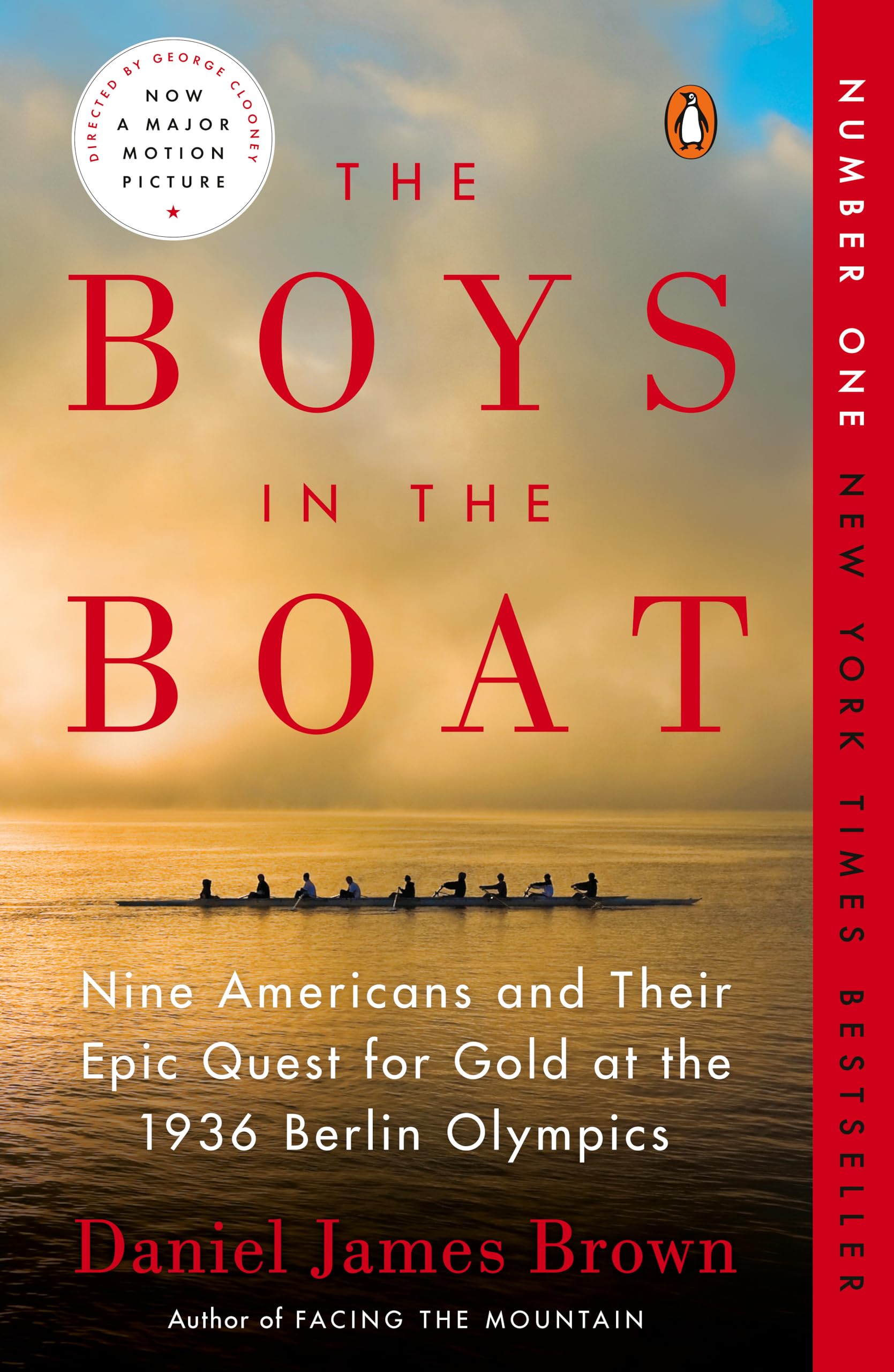
For readers of Unbroken, out of the depths of the Depression comes an irresistible story about beating the odds and finding hope in the most desperate of times—the improbable, intimate account of how nine working-class boys from the American West showed the world at the 1936 Olympics in Berlin what true grit really meant.
It was an unlikely quest from the start. With a team composed of the sons of loggers, shipyard workers, and farmers, the University of Washington’s eight-oar crew team was never expected to defeat the elite teams of the East Coast and Great Britain, yet they did, going on to shock the world by defeating the German team rowing for Adolf Hitler. The emotional heart of the tale lies with Joe Rantz, a teenager without family or prospects, who rows not only to regain his shattered self-regard but also to find a real place for himself in the world. Drawing on the boys’ own journals and vivid memories of a once-in-a-lifetime shared dream, Brown has created an unforgettable portrait of an era, a celebration of a remarkable achievement, and a chronicle of one extraordinary young man’s personal quest.
Werner Herzog was born in September 1942 in Munich, Germany, at a turning point in the Second World War. Until age 11, Herzog did not even know of the existence of cinema. His interest in films began at age 15, but since no one was willing to finance them, he worked the night shift as a welder in a steel factory. He started to travel on foot. He made his first phone call at age 17, and his first film in 1961 at age 19. The wildly productive working life that followed—spanning the seven continents and encompassing both documentary and fiction—was an adventure as grand and otherworldly as any depicted in his many classic films.
Every Man for Himself and God Against All is at once a personal record of one of the great and self-invented lives of our time, and a singular literary masterpiece that will enthrall fans old and new alike. In a hypnotic swirl of memory, Herzog untangles and relives his most important experiences and inspirations, telling his story for the first and only time.
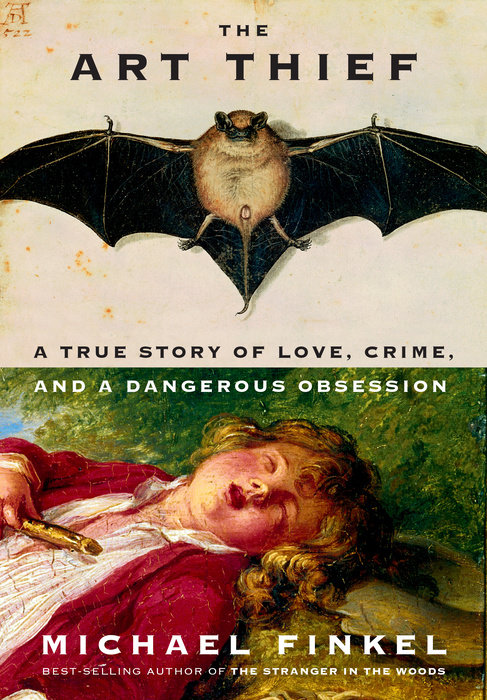
One of the most remarkable true-crime narratives of the twenty-first the story of the world’s most prolific art thief, Stéphane Breitwieser.
In The Art Thief, Michael Finkel brings us into Breitwieser’s strange and fascinating world. Unlike most thieves, Breitwieser never stole for money. Instead, he displayed all his treasures in a pair of secret rooms where he could admire them to his heart’s content. Possessed of a remarkable athleticism and an innate ability to circumvent practically any security system, Breitwieser managed to pull off a breathtaking number of audacious thefts. Carrying out more than two hundred heists over nearly eight years—in museums and cathedrals all over Europe—Breitwieser, along with his girlfriend who worked as his lookout, stole more than three hundred objects, until it all fell apart in spectacular fashion.
Geddy Lee is one of rock and roll’s most respected bassists. For nearly five decades, his playing and work as co-writer, vocalist and keyboardist has been an essential part of the success story of Canadian progressive rock trio Rush.
Long before Rush accumulated more consecutive gold and platinum records than any rock band after the Beatles and the Rolling Stones, before the seven Grammy nominations or the countless electrifying live performances across the globe, Geddy Lee was Gershon Eliezer Weinrib, after his grandfather murdered in the Holocaust. As he recounts the transformation, Lee looks back on his family, in particular his loving parents and their horrific experiences as teenagers during World War II. He talks candidly about his childhood and the pursuit of music that led him to drop out of high school. He tracks the history of Rush which, after early struggles, exploded into one of the most beloved bands of all time. He shares intimate stories of his lifelong friendships with bandmates Alex Lifeson and Neil Peart—deeply mourning Peart’s recent passing—and reveals his obsessions in music and beyond. This rich brew of honesty, humor, and loss makes for a uniquely poignant memoir.
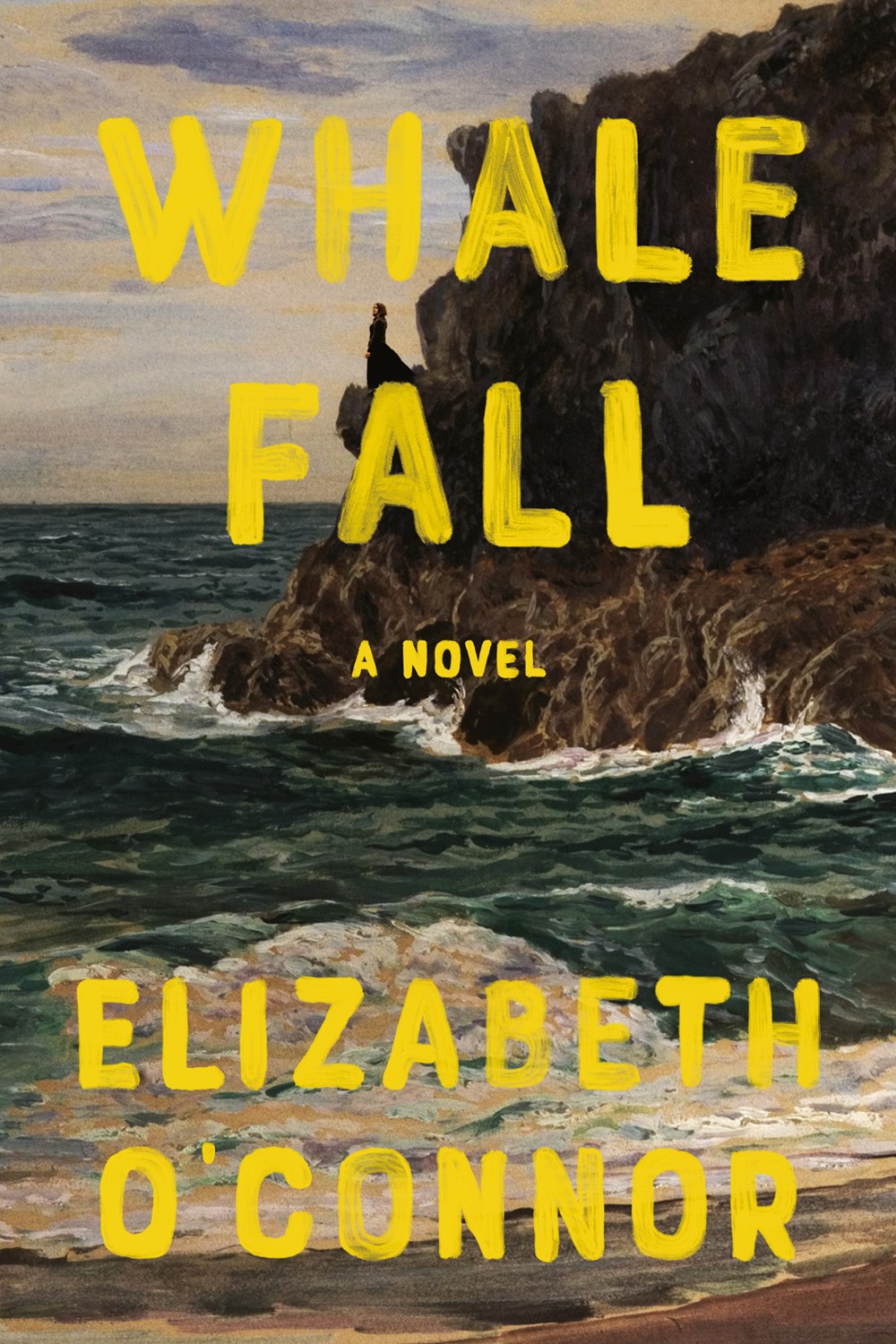
In 1938, a dead whale washes up on the shores of remote Welsh island. For Manod, who has spent her whole life on the island, it feels like both a portent of doom and a symbol of what may lie beyond the island’s shores. Manod can’t shake her welling desire to explore life beyond the beautiful yet blisteringly harsh islands that her hardscrabble family has called home for generations.
The arrival of two English ethnographers who hope to study the island culture, then, feels like a boon to her—both a glimpse of life outside her community and a means of escape. The longer the ethnographers stay, the more she feels herself pulled towards them, despite her misgivings that her community is being misconstrued and exoticized.
With shimmering prose tempered by sharp wit, Whale Fall tells the story of what happens when one person’s ambitions threaten the fabric of a community, and what can happen when they are realized. O’Connor paints a portrait of a community and a woman on the precipice, forced to confront an outside world that seems to be closing in on them.
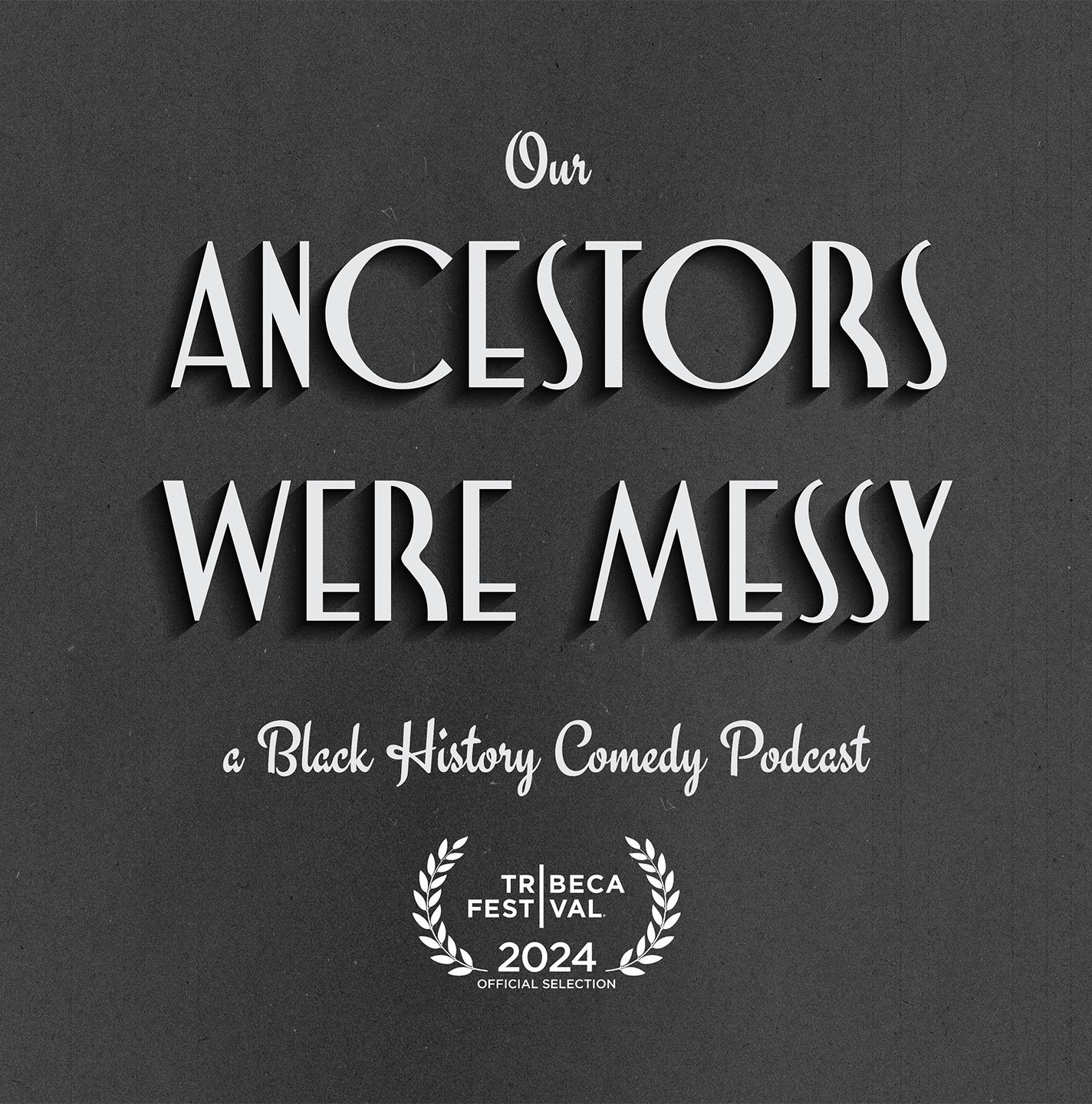
Our Ancestors Were Messy, is a podcast covering the gossip, scandals, and pop culture that made headlines in the Black newspapers of segregated communities during the pre-Civil Rights era. On each episode, host Nichole Hill and her guests follow the story of an ancestor in search of opportunity, adventure, love, and a way to beat Jim Crow. Hill and her guests learn the mess – and eventual history – their ancestors make along the way.
“I could pretend that I like this podcast because it’s a way to learn about Black history in a way that goes beyond standard narratives of victimization or individual exceptionalism. The stories it tells allow people to be people, with all the messiness and drama and pop culture of their everyday lives in the pre-Civil Rights era. But really I love this podcast because it is just great gossip. Why you trying to make me learn in my free time??” – Lainie Schultz, Peabody Staff
The Thing About Austen is a podcast about Jane Austen’s world — the people, objects, and culture that shape Austen’s fiction. Come for the historical context and stay for the literary shenanigans. Think of us as your somewhat cheeky tour guides to the life and times of Jane Austen.
“Two professors of literature talk about the material culture in Austen’s stories and their significance to societal culture during the Georgian and Regency eras. From Mr. Darcy’s portrait in Pride and Prejudice to the homemade alphabet in Emma and Captain Wentworth’s umbrella in Persuasion – there are so many interesting stories and histories to unpack from the items detailed in Jane Austen’s stories. Some of my favorite episodes are #83 The thing about the Ha-Ha and #52 The thing about Bath’s Baths (per their recommendation, I did try the hot spring water in the Roman Baths on a recent visit… the taste, not so great, but the experience, 5 stars!) – Emma Lavoie, Peabody Staff
Buried Bones, Hosted by Kate Winkler Dawson and Paul Holes
Genre: Historical True Crime
Buried Bones dissects some of history’s most dramatic true crime cases from centuries ago. Together, journalist Kate Winkler Dawson and retired investigator Paul Holes explore these very old cases through a 21st century lens.
“I have been a fan of Buried Bones for a few years now. Each episode is a dive into a homicide in the past that is explored simultaneously by a journalist/historian (Kate) and a retired forensic investigator (Paul). I really enjoy the blend of history and scientific analysis as the two hosts discuss the crime. Kate deftly narrates the historical event while Paul provides a reasoned analysis from a modern forensic science perspective. I always learn something!” – Marla Taylor, Peabody Staff
Welcome to Salem, Massachusetts! Join tour guides Jeffrey Lilley and Sarah Black as they talk all things Witch City. Learn its history, meet its people, and discover the magic.
“This podcast goes beyond the history of the Salem Witch Trials and explores the vast history of Salem and the people who live there. What does a drunk elephant, haunted pepper, a witch solving a murder, and tunnels (IYKYK) all have in common? They all relate back to Salem! This podcast has everything you need to know for your next trip to the Witch City. I personally love the episode interviews with current business owners in Salem.” – Emma, Peabody Staff
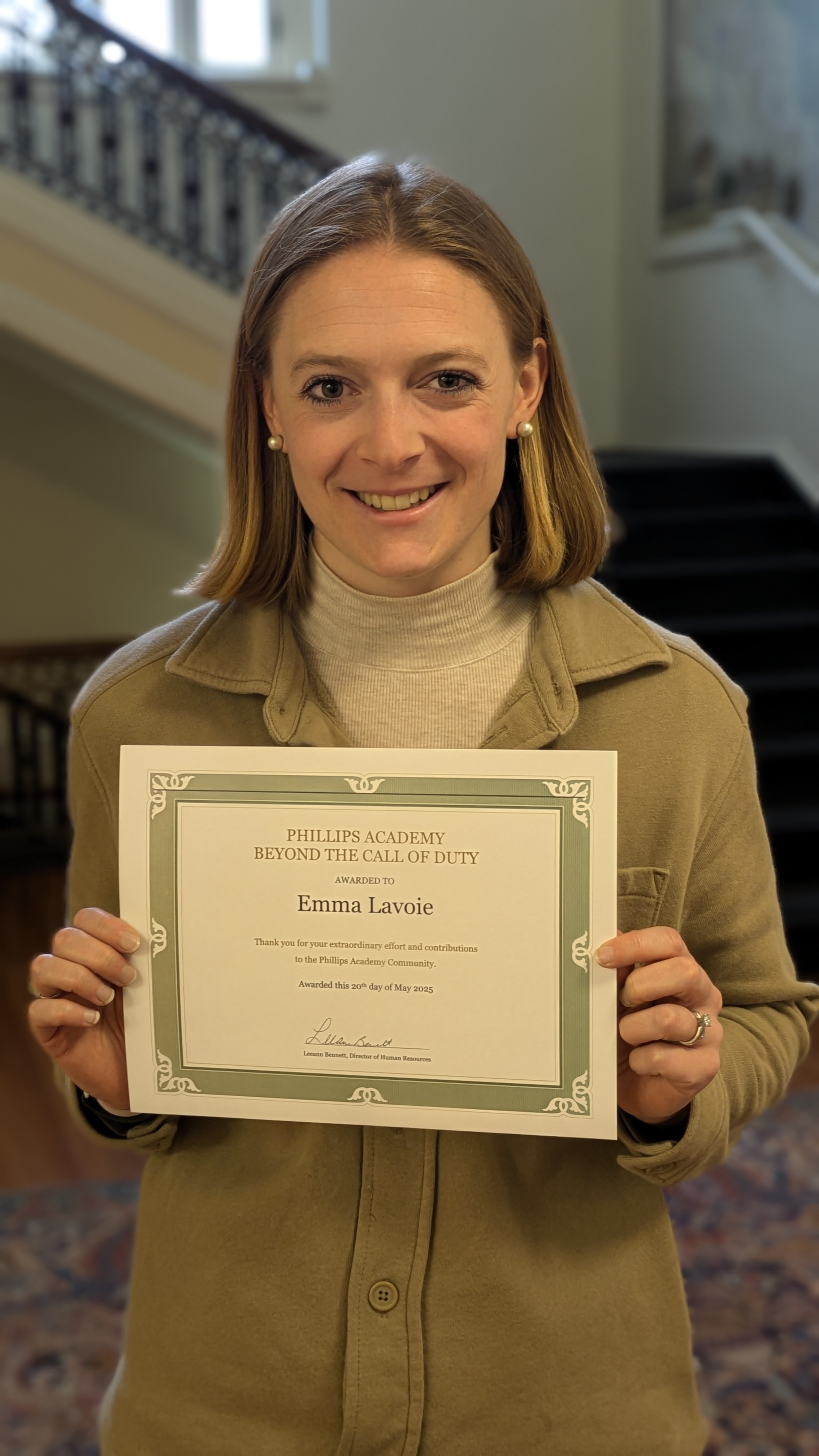
The Peabody’s own Emma Lavoie was recognized with Phillips Academy’s Beyond the Call of Duty Award at the spring staff and administrators award celebration on May 20!
Emma shows off her Beyond the Call of Duty Award.
The award announcement states, “The Beyond the Call of Duty Award is designed to acknowledge and celebrate staff who demonstrate exceptional support/customer service to colleagues within their own department, across campus, our students, parents or alumni. All nominees should embody the non-sibi spirit!”
This describes Emma precisely! Emma’s job title is staff assistant, responsible for business and communication here at the Peabody, but she does so much more–Emma has taught lessons and helped with lessons, produces beautiful communication and social media pieces, cataloged material culture, organizes travel for staff members and visitors, keeps us organized, networks with other programs and departments on campus, comes early or stays late to help with events (which she has often planned and organized), serves on the Phillips Academy staff council, and much, much more.
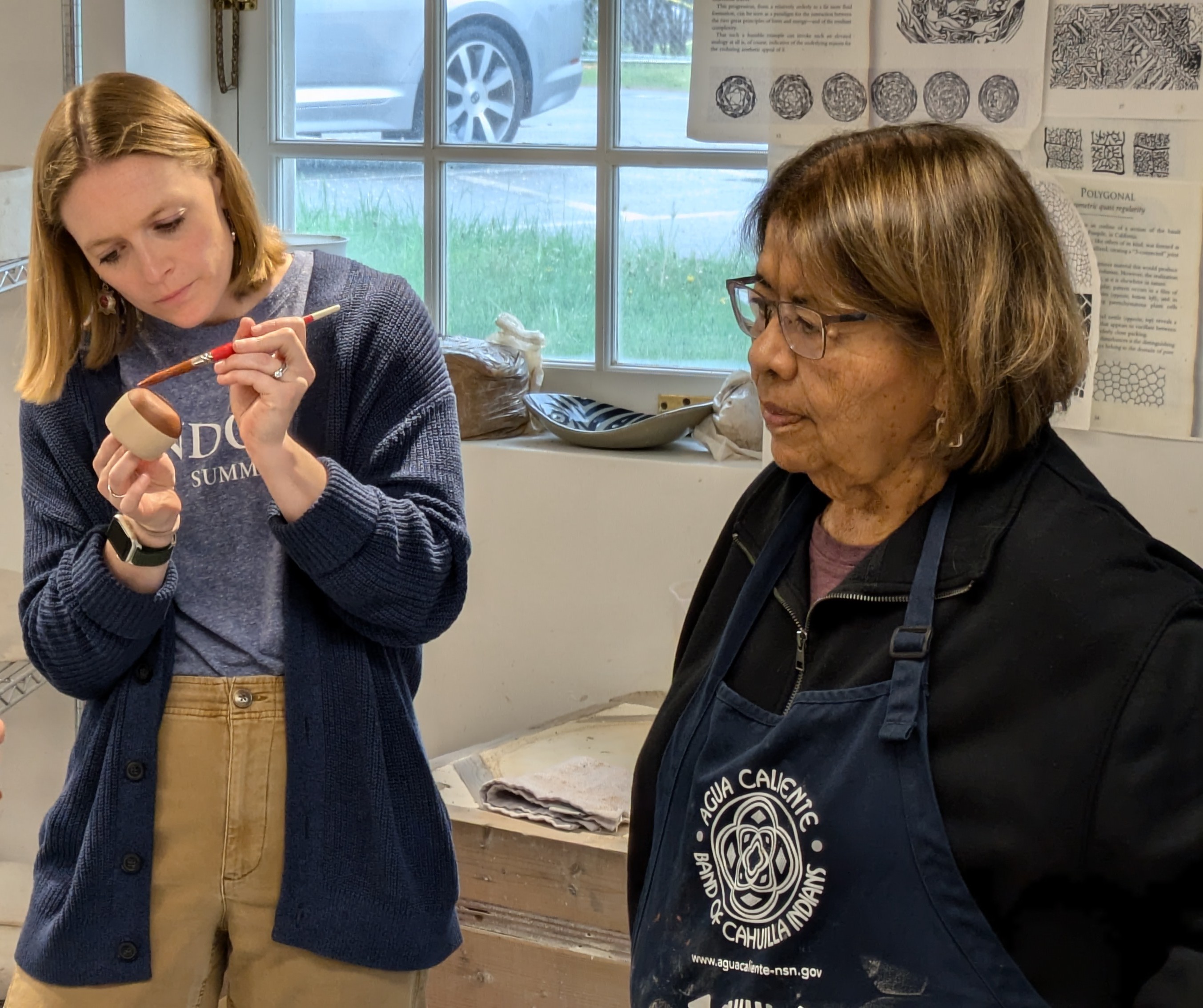
Emma decorating her ceramic creation under the watchful eye of Maxine Toya–Emma makes all the travel arrangements for visiting Native artists, like the Toya Family, Pueblo of Jemez.
Award recipients will receive two days added to their vacation bank as well as a gift of PA apparel from the Campus Closet.
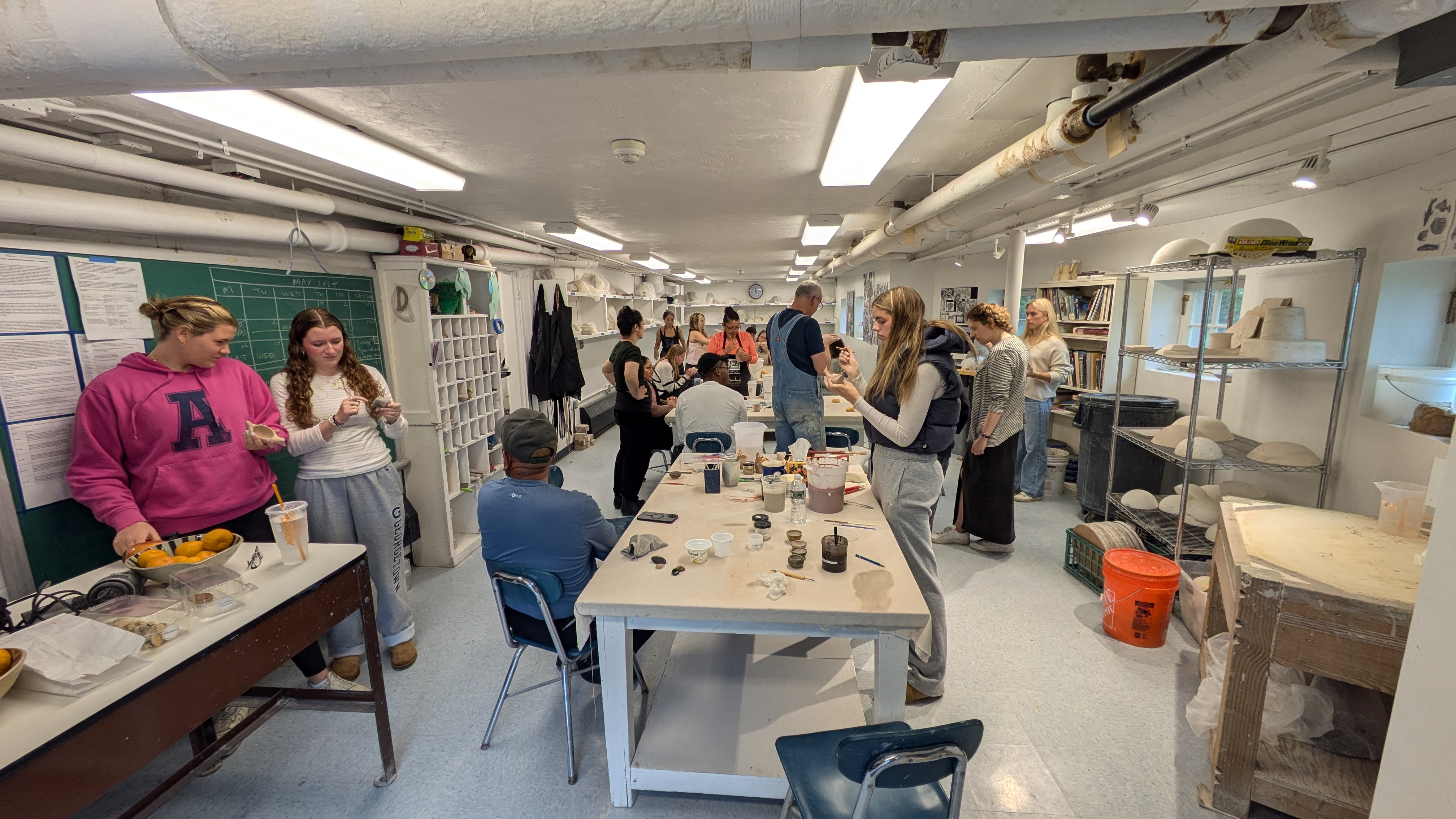
Ceramic students participating in pottery-making workshops
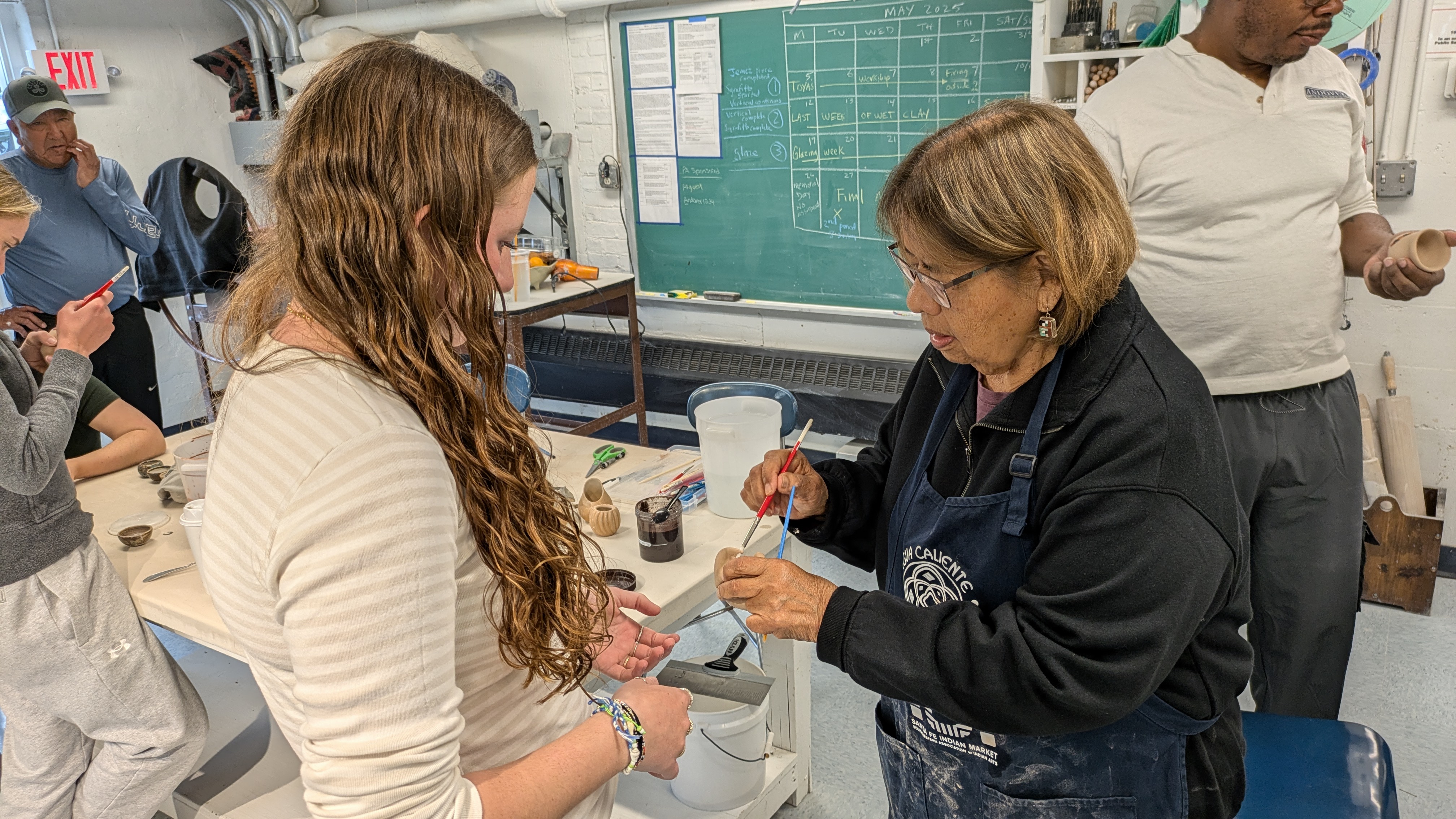
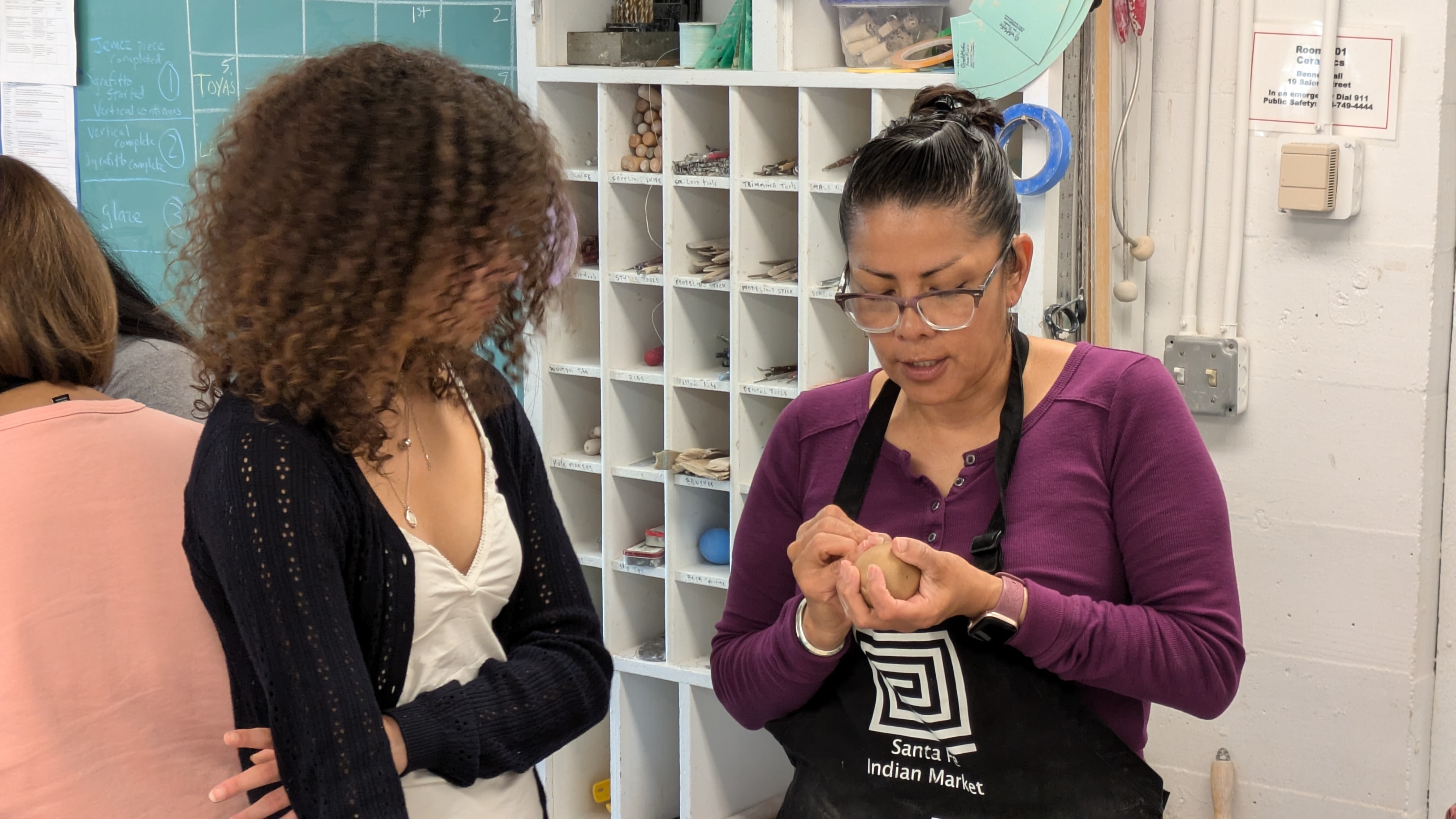
We were honored to have the Toya family back this Spring term for their annual visit to conduct week long, hands-on workshops on Pueblo pottery-making with Thayer Zaeder’s studio ceramic students.
Each year students have the opportunity to make their own pieces using native clays and temper from New Mexico and traditional decorative techniques of painting and polishing. The workshops culminate in a traditional Jemez firing.
Students walk away with an unforgettable keepsake of their time as well as a greater appreciation for contemporary Indigenous art and culture.
We are so grateful for all the time and expertise the Toya family has shared with PA students!
Check out this video by PA’s Communications team highlighting the Toya’s work on campus.
Maxine Toya working with a student on painting their piece.
Mia Toya working with a student on polishing their piece.
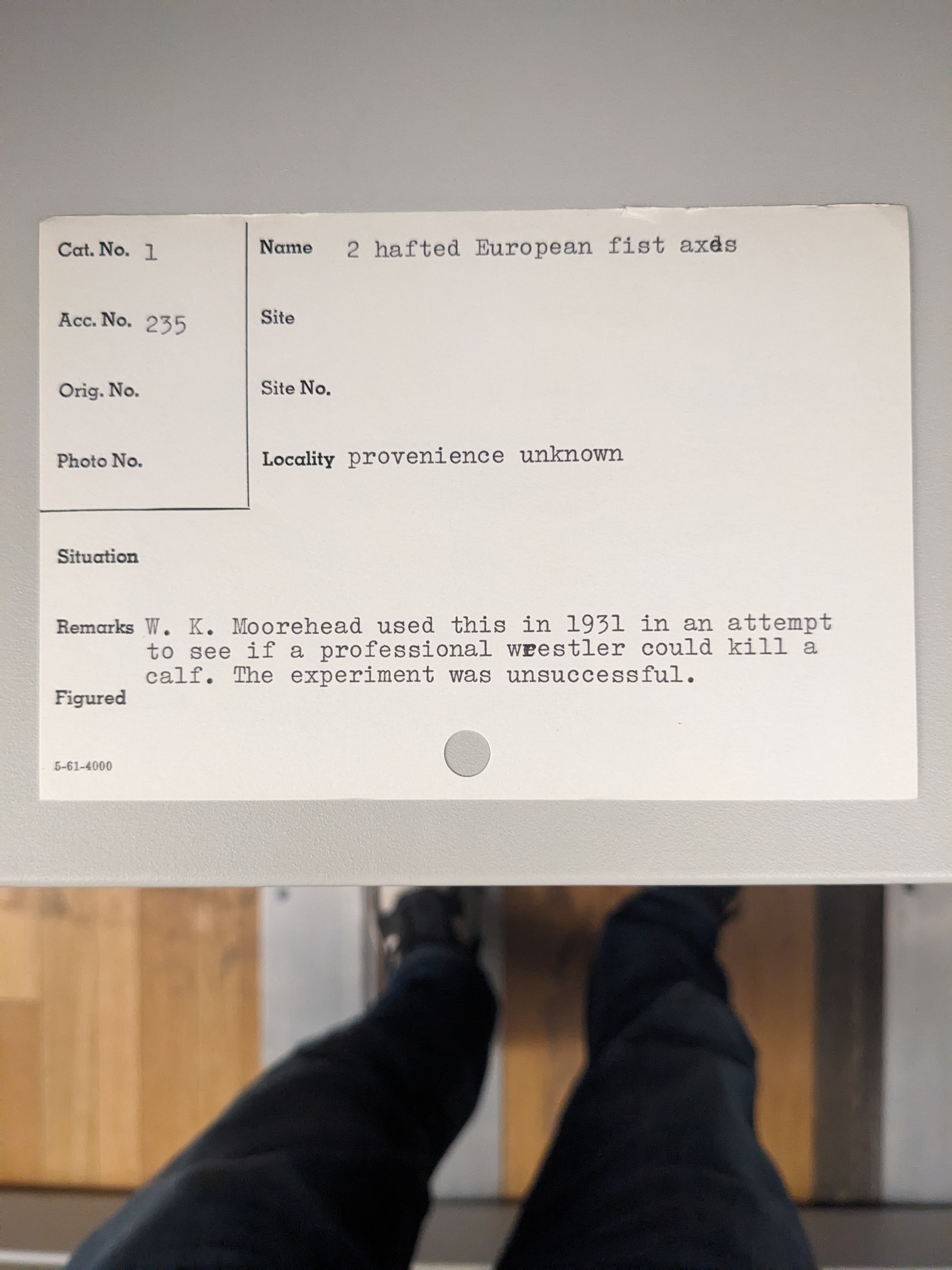
A few years ago, I came across a catalog card with an interesting account in the remarks section. The card read “W. K. Moorehead used this in 1931 in an attempt to see if a professional wrestler could kill a calf. The experiment was unsuccessful.” There is a lot to unpack from this card. It references experimental archaeology, professional wrestling, and, judged by today’s standards, ethically questionable behavior. I figured that there had to be a story to unearth, but with more pressing work to do, I filed this note away for another time.
The catalog card describing the handaxes.
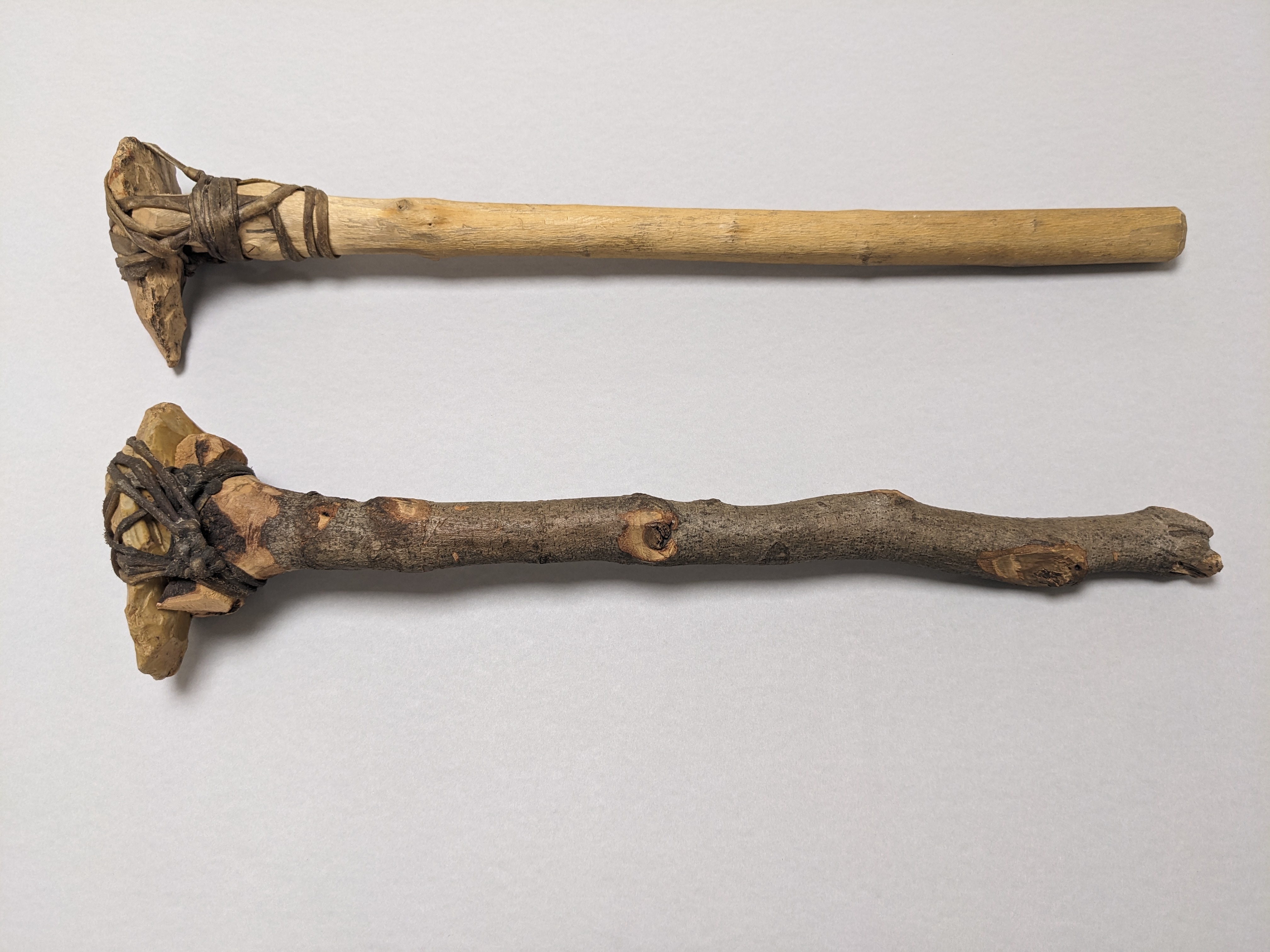
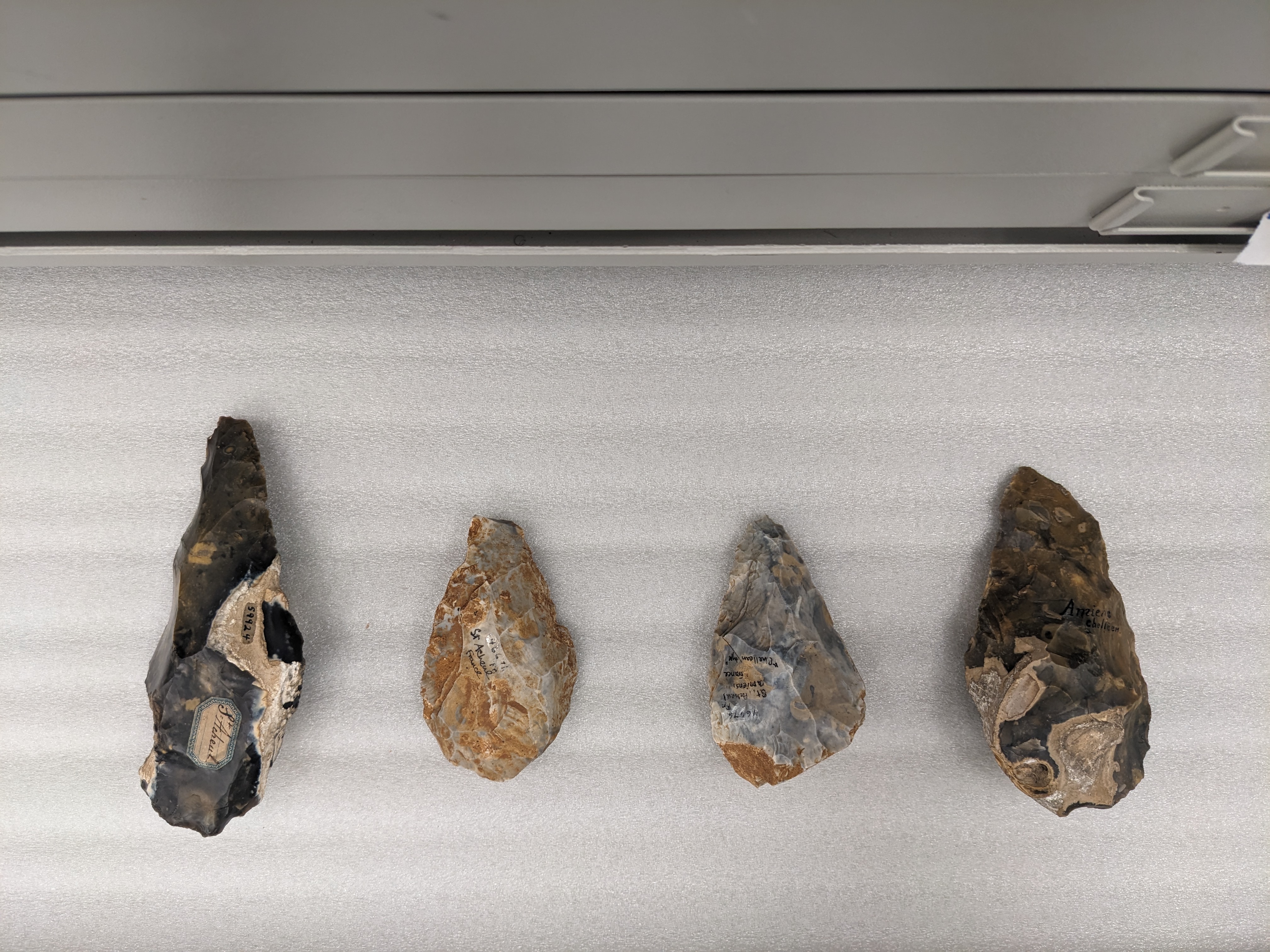
The catalog card describes two hafted European ‘fist axes’ (or handaxes). The provenience of the items is unknown. The Peabody acquired a collection of similar European tools shortly before these items were cataloged. It’s possible that the hafted handaxes are somehow related.
The handaxes used in Moorehead’s experiment.
Over the past few years this card occasionally comes to mind, or I will see the handaxes. When they do, I will do a quick search of the internet for any related newspaper articles, journals, or archival clues. I’ve looked through our institutional records but haven’t found anything that appears to be related.
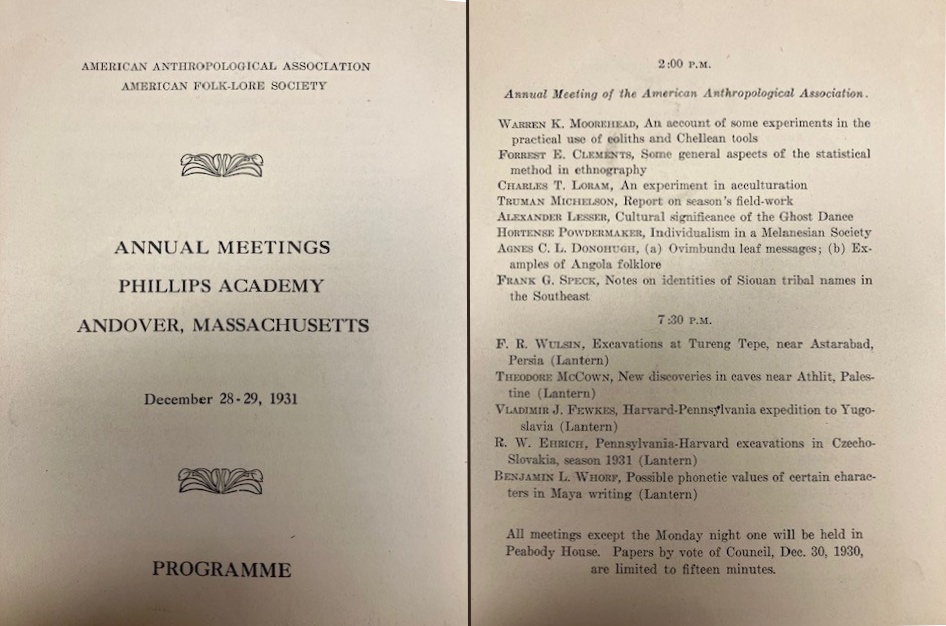
A breakthrough came when I found the minutes from the combined 1931 Annual Meeting of the American Anthropological Association (AAA) and American Folk-Lore Society. The meeting was held at Peabody House at Phillips Academy on December 28-29. The minutes included a description of a talk given by Warren K. Moorehead titled “An account of some experiments in the practical use of eoliths and Chellean tools.”
Selected pages from the program for the 1931 American Anthropological Association annual meeting.
The Chellean tools Moorehead references belong to what is today known as the Acheulean stone tool industry. They are named after a site in Saint-Acheul, France where their classification as a prehistoric tool was first broadly accepted. Acheulean handaxes are distinct and have come to define Acheulean stone tool technology overall. The hafted hand axes in question are unquestionably Acheulean in form, with the hafting being a recent addition.
A few examples of other Acheulean handaxes the Peabody stewards.
The distribution of these tools is wide-ranging geographically and temporally. The oldest examples date to 1.76 million years ago. An end date for their use has been placed between 300,000 and 100,000 years BP. Some handaxes are very large, measuring 2 feet, while others are quite small, just 6 inches.
They have been found in Africa, Europe and west, south and east Asia. They are very old examples of stone tool technology and would have been made by hominids, such as Homo erectus.
-A quick note about eoliths. These were once thought to be stone tools and were subject to heated debate for many decades. They have been found in deposits that vastly predate the Acheulean. They are now recognized as naturally occurring geofacts and are not of human origin.
Finding the meeting minutes describing Moorehead’s presentation seemed to be one step closer to an account of the experiment-gone-wrong mentioned in the catalog card. Armed with more information and a date to work with, I did another round of searching on the internet and within our archives.
Eventually, I contacted the Ohio History Connection (OHC). Moorehead was the first curator at the Ohio Archaeological and Historical Society (OAHS) before coming to Phillips Academy. After his death in 1939, Moorehead’s family gave many of his papers to OAHS. Our two institutions share some of the same correspondences and we have reached out to them in the past.
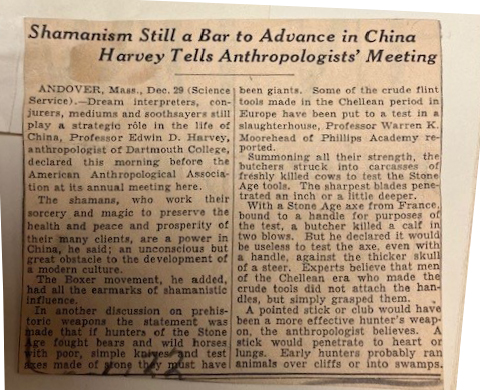
Amazingly, OHC responded with a newspaper clipping from the New York Times that provided more context about the talk Moorhead gave at the 1931 AAA meeting. The article mentions that the tools were used by butchers in a slaughterhouse on carcasses and one living animal. The butchers declared the tools to be ineffectual, and Moorehead proposed that sticks or clubs would have been better suited as hunting tools.
The New York Times article from December 30, 1931 describing Moorhead’s experiement (fourth paragraph through to end).
Today, experimentation of this nature on live animals would be ethically inconceivable. Scientific research is meant to manipulate variables in controlled situations to study factors relevant to the proposed question. Moorehead’s experiment didn’t take into account the many varied sizes of handaxes and whether they should be hafted or simply held in hand. Testing a range of sizes and handling methods might lead to better results. However, this and any future replication or refinement of Moorhead’s conditions would certainly lead to increasing levels of harm to animals.
A researcher who has engaged in experimental archaeology shared via correspondence some of the alternatives and ethical considerations of modern experimentation in the field. Colleagues testing projectile point penetration utilized targets made from meat and meat substitutes, such as ballistic gel and clay. The meat used for the targets needed to be ethically sourced (from a hunter or butcher for example) and would otherwise have been discarded if it not used in the experiment.
Sometimes substitutions for animal remains are unavoidable. An article on the topic of animal resources in experimental archaeology outlines concerns of sample procurement. Scientific studies often require large sample sizes. Animal remains are non-renewable resources that have limited availability. These samples are linked to the death of animals, no matter how they are procured. In these situations, modern researchers must strike a balance between scientific rigor and ethical integrity.
Returning to the catalog card and newspaper article concerning this experiment; it is interesting to note that the professional wrestler in one, is a slaughterhouse butcher in the other. I was hoping any notes Moorehead used to prepare his presentation or other related correspondence could provide more information, but I have yet to find them.
Both the card and article declare the experiment to be a failure, seemingly as tools for hunting and maybe butchery. To be sure, the hafting has left very little of the cutting edge of one of these tools available for penetration.
Subsequent experiments with Acheulean handaxes have found them to be effective tools for a wide range of tasks aside from hunting including butchering animals, stripping wood, processing plants and digging. These experiments are supported by surface wear pattern studies. It is unclear whether these tools were ever used for hunting, which Moorehead’s sensational experiment somewhat confirms.
Websites with more information on Acheulean culture:
I stumbled upon the Pecos bone flutes on a bright September afternoon that was supposed to be about beaver pelts and fur trade ledgers. My history class had followed Ms. Doheny to the Robert S. Peabody Institute for a lecture, but after the talk I lingered and asked the speaker, Dr. Lainie Schultz, whether the museum kept any musical instruments. That single question carried me into the archives, where Curator Marla Taylor opened a drawer and revealed two slender bones—one golden eagle, one hawk—pierced and polished, flutes waiting in perfect silence.
Music has framed my life since I was four in Madrid: first as a hobby, then as devotion, from my early passion for Romantic music to the shimmering modernism of Debussy, whose Masques I played at fifteen beneath the stone arches of Dubrovnik’s Rector’s Palace. Yet nothing in my previous musical experience had prepared me for the quiet authority of these flutes. Their accession records were almost empty, their makers unnamed, but the Tribal Historic Preservation Officer of Jemez Pueblo had granted permission for their study. Phillips Academy’s Abbot Independent Scholar program let me transform my curiosity into a full-term research project under the supervision of Dr. Schultz and Dr. Elizabeth Aureden from the music department.
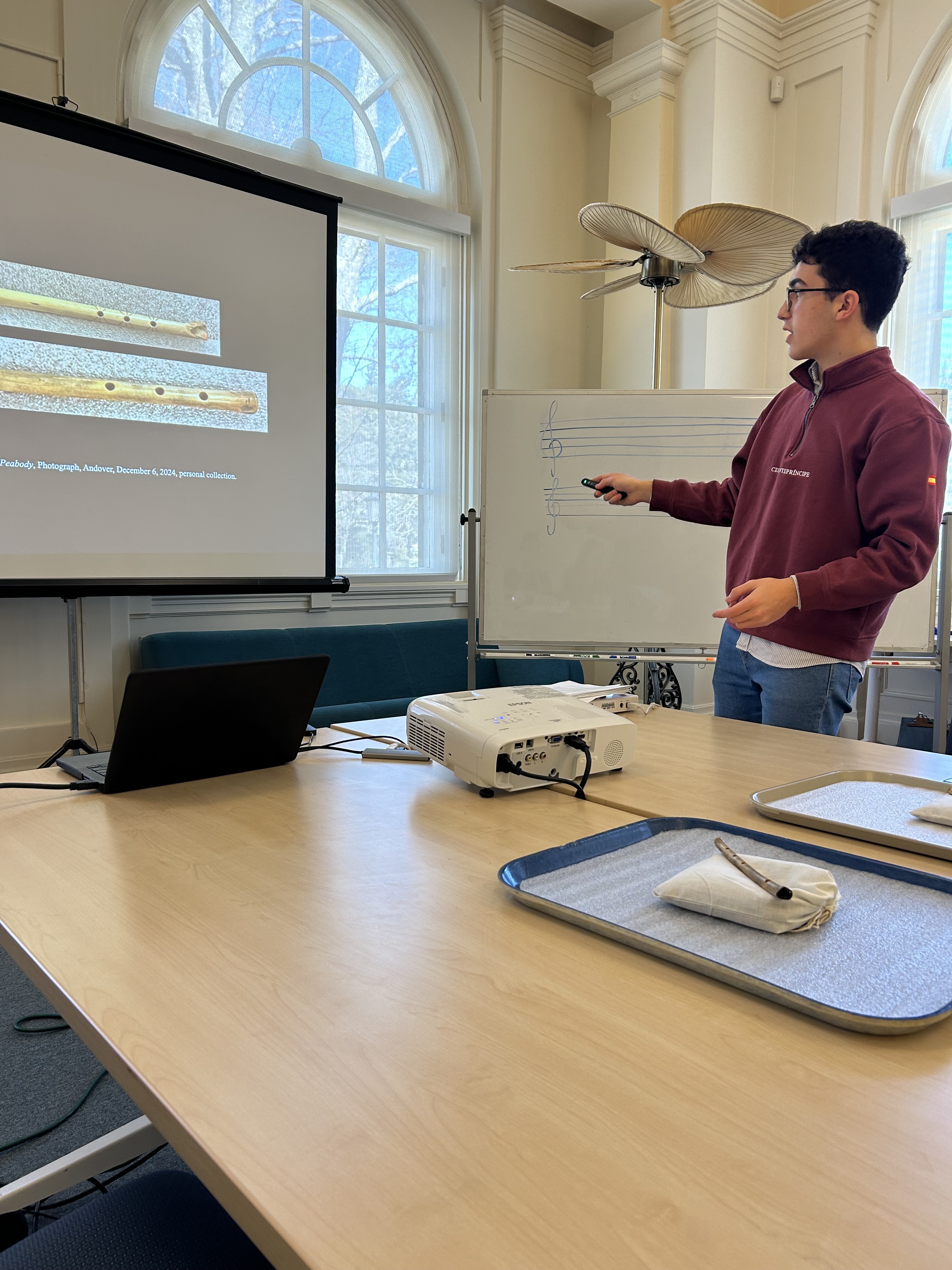
The work began with patient looking. The eagle bone flute—just under twenty centimeters—bears four clean finger-holes; the hawk bone flute is shorter, its stops conical and ringed by three tiny oblique grooves. My initial efforts left me frustrated—despite my solid musical background, I couldn’t answer any of my research questions. Guided by Indigenous scholars, I began to understand the silence and endless questions as a wise teacher. By combining archival materials with present-day Indigenous resources, chiefly from Jemez musician Marlon Magdalena, I built a relationship with the eagle bone flute and experienced the music as something much deeper than pure sound.
In his song “Eagle’s Blessings,” which I shared during my presentation to the Massachusetts Archaeological Society in April, Marlon brings the flute to life. When I first heard it, I was nearing the end of my research, which had been mostly historical and archival. I had tried to learn about other Indigenous music, but this performance tied everything together. Throughout the term, I feared profaning the cultural or religious significance of the eagle bone flute. I understood its sacredness, and as a religious person involved in interfaith activities, I recognize the importance of respecting religious artifacts.
Marlon’s explanation before he played brought everything into focus. He explained that eagle bones are sacred, held only by tribal members and used to lift prayers skyward. When he played, I felt how, through his breath, he gave life back to the eagle and honored her. Suddenly, the silence became understandable. Even though I could not draw solid scientific conclusions, I forged a connection I will never forget.
This project has awakened a passion for ethnomusicology that I am now exploring with the music department, under the guidance of Ms. Ángela Varo-Moreno, studying the presence of LGBTQ+ subcultures in techno music. I would like to end by thanking everyone at the Peabody, at Phillips Academy Andover, and at Pecos and Jemez Pueblos—and other Indigenous communities—who have safeguarded the knowledge that reached me and made this project possible. It has been a gift I will always keep in my heart.
Alberto presenting his final project at the Peabody, finishing up his independent study.
Every Wednesday, I come to the Peabody Institute to be in the company of pharaohs and emperors, not through books but from 2000-year-old coins held in the institute’s collections. I help to identify these coins and record observations into the Peabody’s catalogue system. I’m extremely fortunate to experience “living history” from these remnants of ancient Rome, Hellenistic Egypt, and the Byzantine world.
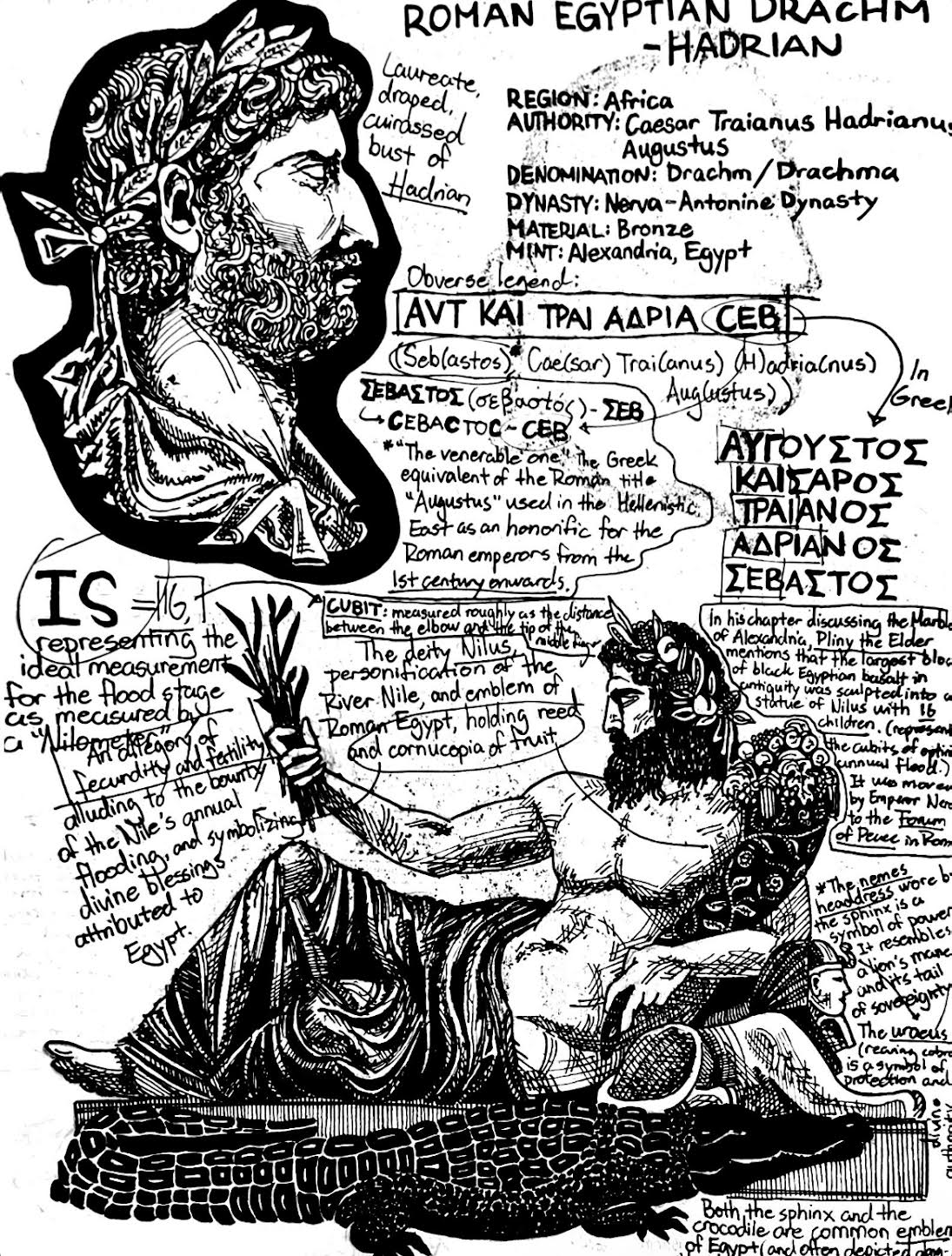
As the mass media of the ancient world, coins carried big messages. The images depicting rulers, gods, animals, or symbols were carefully chosen and deeply meaningful. Every coin has a story to tell about culture and politics. Together, they offer new perspectives on historical events that we thought we already understood.
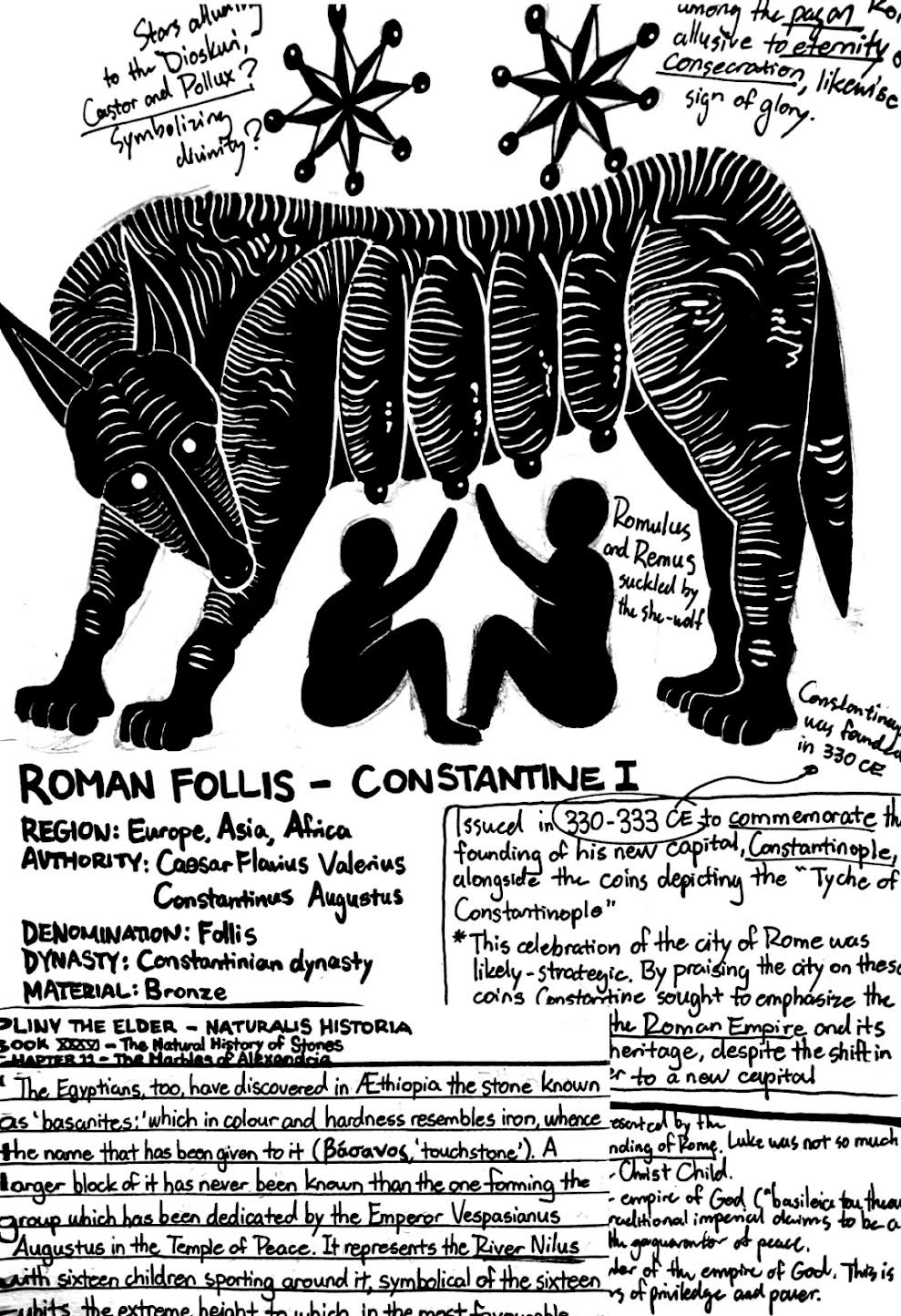
From my notes. Left: sketches and notes of a coin showing Rome’s foundation myth to commemorate Constantinople’s founding under Constantine (Rome reborn). Right: Roman coin minted in Egypt during Hadrian’s reign depicting the River Nile as a reclining deity.
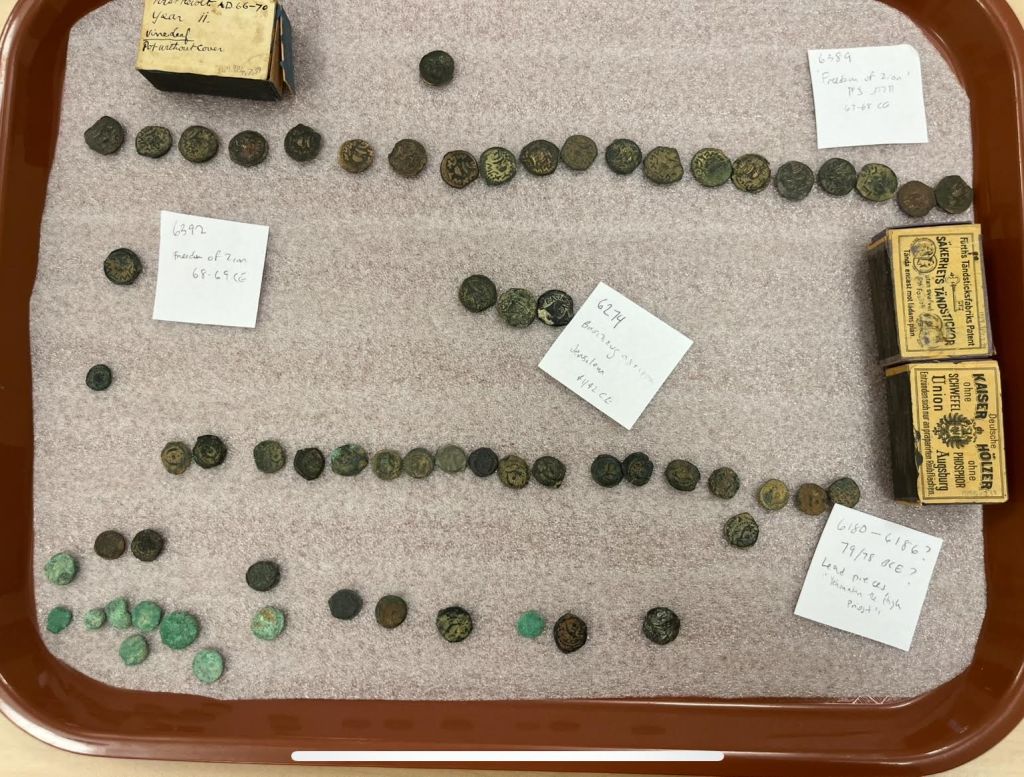
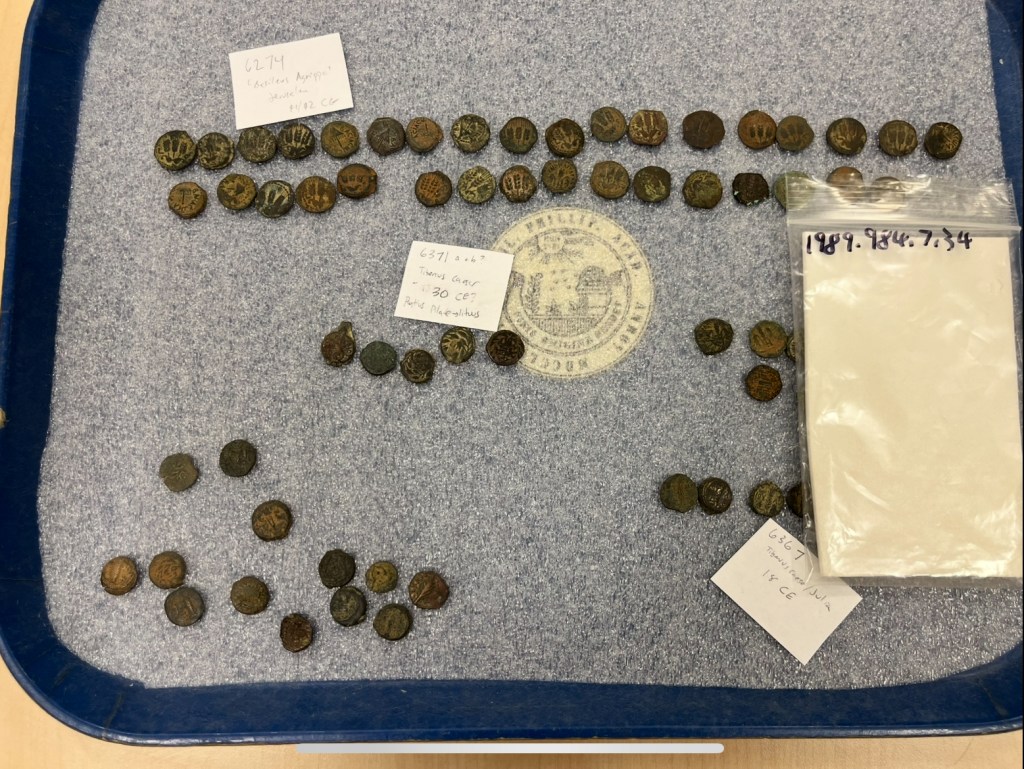
I first became involved in this research when I met Dr. Elena Dugan, who teaches Religion and Philosophy at Phillips Academy Andover, and was researching Jewish coins that dated back 2,000 years. These coins were struck for only four years, 66-70 CE, during which time, the Jewish population in modern-day Israel rebelled against their Roman occupiers. Long after their war against the Romans and their eventual defeat, their cry of freedom endured as inscriptions on these coins, surpassing even the Romans themselves. Dr. Dugan quite literally held the legacies of these men and women in her hands. How extraordinary is that!
Top: Coins with inscriptions calling for the “Freedom of Zion,” along with coins minted during the times of King Herod Agrippa I and Yehonatan the High Priest. Bottom: Biblical coins of Pontius Pilate and Emperor Tiberius.
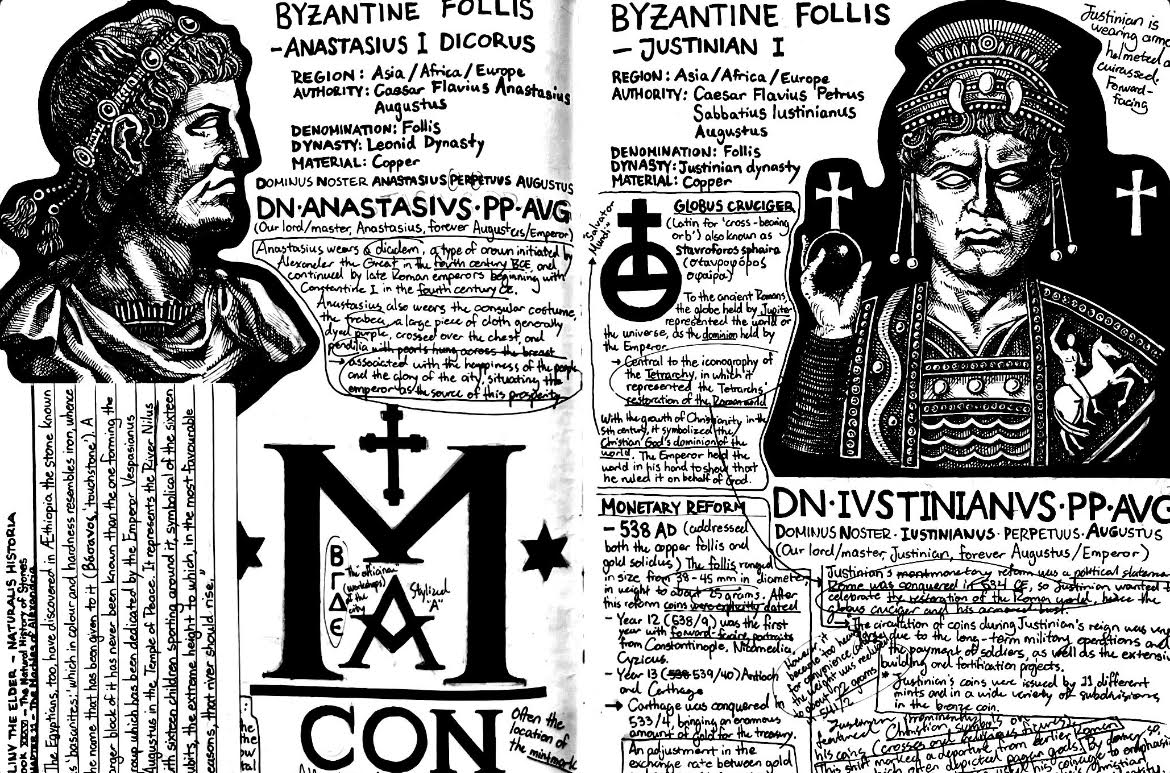
I would soon uncover such stories myself. Through Byzantine coins within the Peabody’s collections, I came to appreciate the story of Justinian, a Roman emperor bold enough to dream big. He dreamed of restoring the Roman Empire, which by his time was territorially less than half of its former glory. He dreamed of a reunified Mediterranean and the spread of Christianity. Fueled by determination, he led years of campaigns until the city of Rome was once again truly part of the empire.
But the dream didn’t last. Enemies in the East drew his attention away from Rome and the West, which was soon lost again. Any last hope was swept away by a devastating plague, which killed half of the Roman population (now every time I pick up one of Justinian’s coins, I feel an urge to wash my hands!). Rome’s wealth was drained, and Justinian lost his new territories as quickly as he gained them. In the end, he sadly died believing his dream had failed.
But it hadn’t. Though Justinian didn’t expand Rome’s borders, he redefined her identity. His image on coins, boldly facing his audience and clad in armor, was copied by every emperor who followed. He had inspired others to dream. Alongside his portrait appeared Christian symbols, marking Rome’s turn from her pagan past toward new ideals. Never again would she reach the heights Justinian had brought her to.
If all that remains of him and his dream are coins and a few lines in a textbook, then so be it. But let’s not forget them!
Left: Emperor Anastasius depicted in traditional imperial dress with a diadem and toga. Right: Depiction of Emperor Justinian facing the audience, fully in armor, and holding the globe and cross. While Anastasius followed strong traditions, Justinian was more than eager to distinguish himself.
This experience has strengthened my love for history. It has brought me closer to people in the distant past and their values. Their love of liberty. Their audacity to dream. These values stir a certain nostalgia in me, and suddenly, these people don’t feel so distant after all. Their worlds may have disappeared, but they are far from forgotten. It’s hard to believe that such an experience can come from objects that measure less than my pinky finger. But, after all, conveying messages is also a coin’s purpose, alongside economic ones.
This journey has truly expanded my curiosity and built my understanding of history. I’m incredibly grateful to the Peabody Institute for not only allowing an inexperienced ninth grader to interact with these priceless artifacts but also for patiently teaching me the research process, providing the right tools, and encouraging me to share my story.
What a highlight this has been as part of my school year! I’ll be sure to return on many more Wednesdays!



 The Peabody