
Contributed by John Bergman-McCool
Every month our collections staff monitor glue traps stationed around the building. The traps provide a way to monitor what kind of insect activity is happening at our Institute. They serve as one of several pillars of our Integrated Pest Management (IPM) program. IPM is a sustainable approach to managing pests that utilizes techniques that minimize risk to human health and the environment. Other pillars in our program include regular cleaning, maintaining temperature and humidity at levels that slow down and discourage insect activity, and isolating and treating affected items with deep cold or hypoxic conditions.
Insects within research and museum collections are a reality, especially within an old building like the Peabody. Some insects do not pose a danger to the collection, but their presence can signify that environmental conditions within the building may be outside of our target range. Other pests can damage the collection, and their presence requires immediate attention. In the past, the presence of one adult carpet beetle out in the open in our ethnographic collection area was enough to kick off a month’s long survey of susceptible items.
Our traps are placed along the walls where many insects prefer to travel and they are open on either side. When caught, the position of the bugs give us a sense of where insects are coming from, either within the building or from the outside. Some insects can live and breed within the building, while others have to leave to find a mate before coming back to lay eggs.
This month, as temperatures outside the building are warming up and the humidity is increasing, we are starting to see an increase in activity within our traps. One trap returned an insect that required closer inspection.
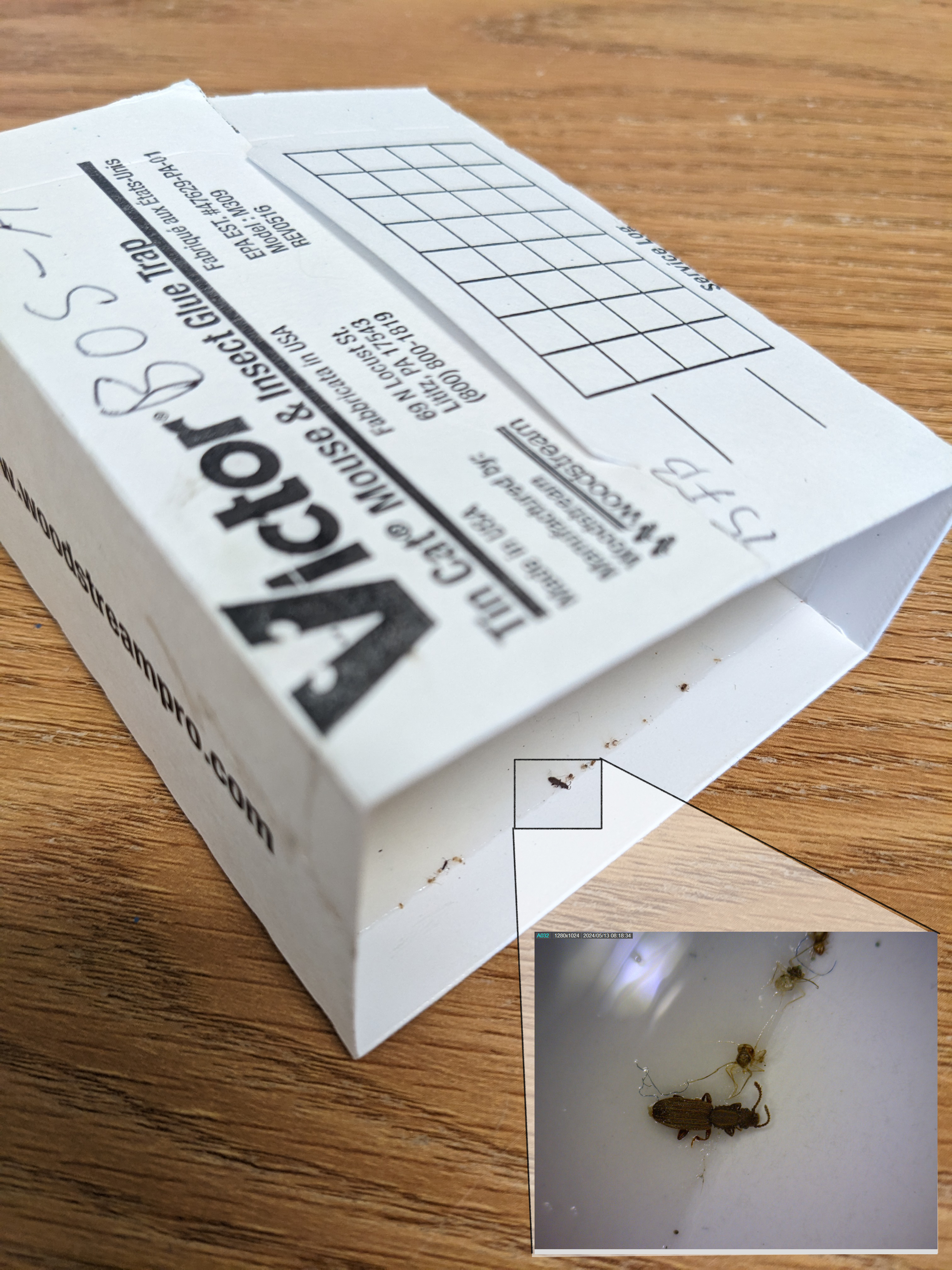
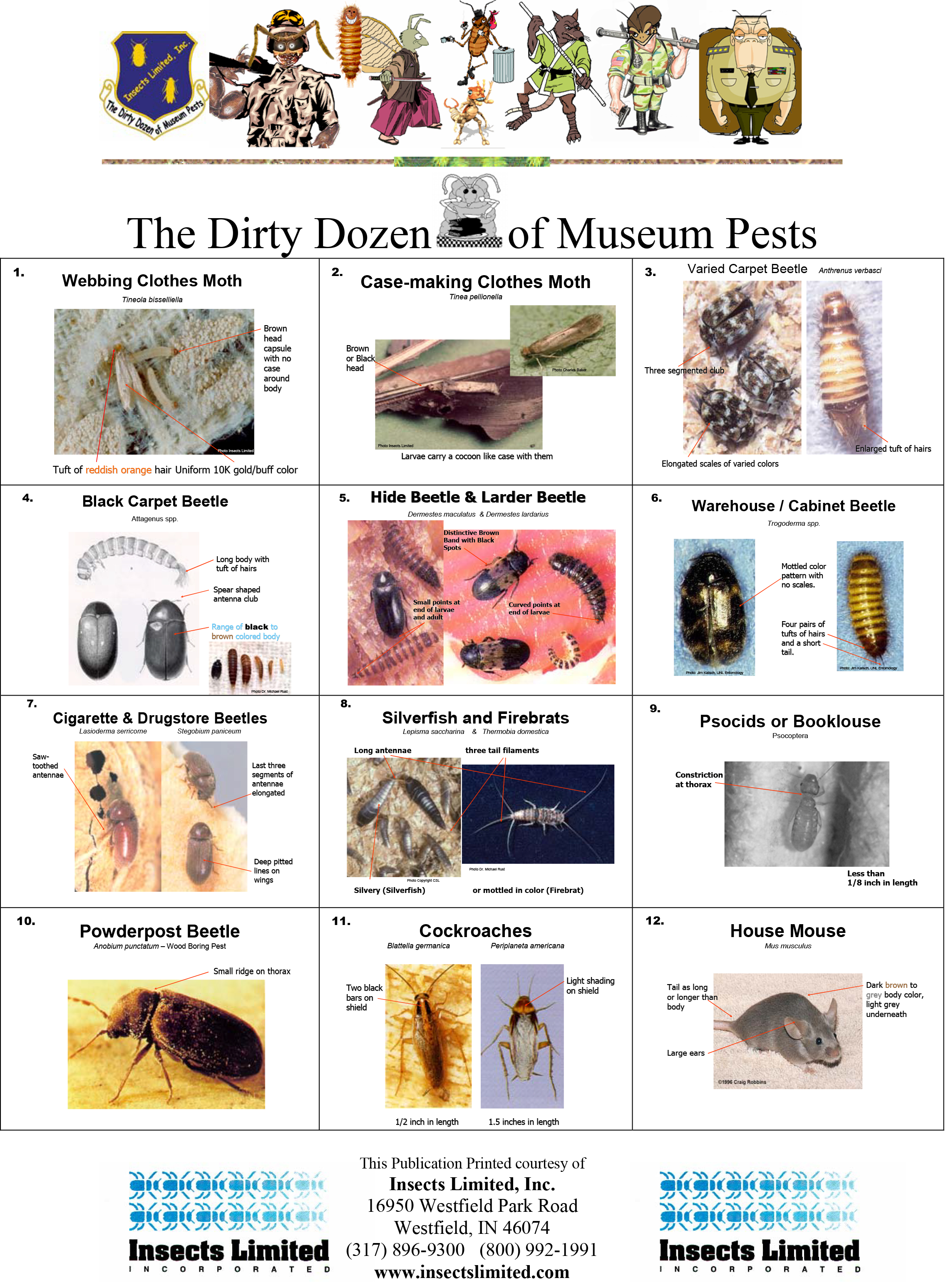
In the above image, there are lots of little specks and one larger. The small specks are psocids (booklice), one of the dirty dozen pests depicted above. Booklice feed on molds, fungi, grains, insect fragments, and other starchy material, including glue from bookbindings (link). If this trap were in our library or archives, we would want to do a good cleaning. There are no at-risk collections where this trap is located, though a vacuum cleaning is warranted.
The larger speck is a beetle of some variety. It came from the room side of the trap, not the door side. It is roughly 1-2 mm in length (very small!) and needs to be examined under magnification. Amazingly, there are many beetles of this size. One that we have seen in traps in the past is the minute brown fungus beetle (MBFB) (link). They are an insect that doesn’t pose a direct risk to the collections, however they can indicate warm and wet environmental conditions. MBFB eat wet organic matter and plaster, and if found in large numbers they may alert us to leaks in the building.
A more alarming possibility is the powderpost beetle (link). This is a truly dangerous pest. They can decimate wood. Adults are rarely seen, and they lay tiny eggs on or just under the wood surface. When the eggs hatch the larva burrow under the surface and tunnel around until they emerge from tiny pin holes when they are adults.
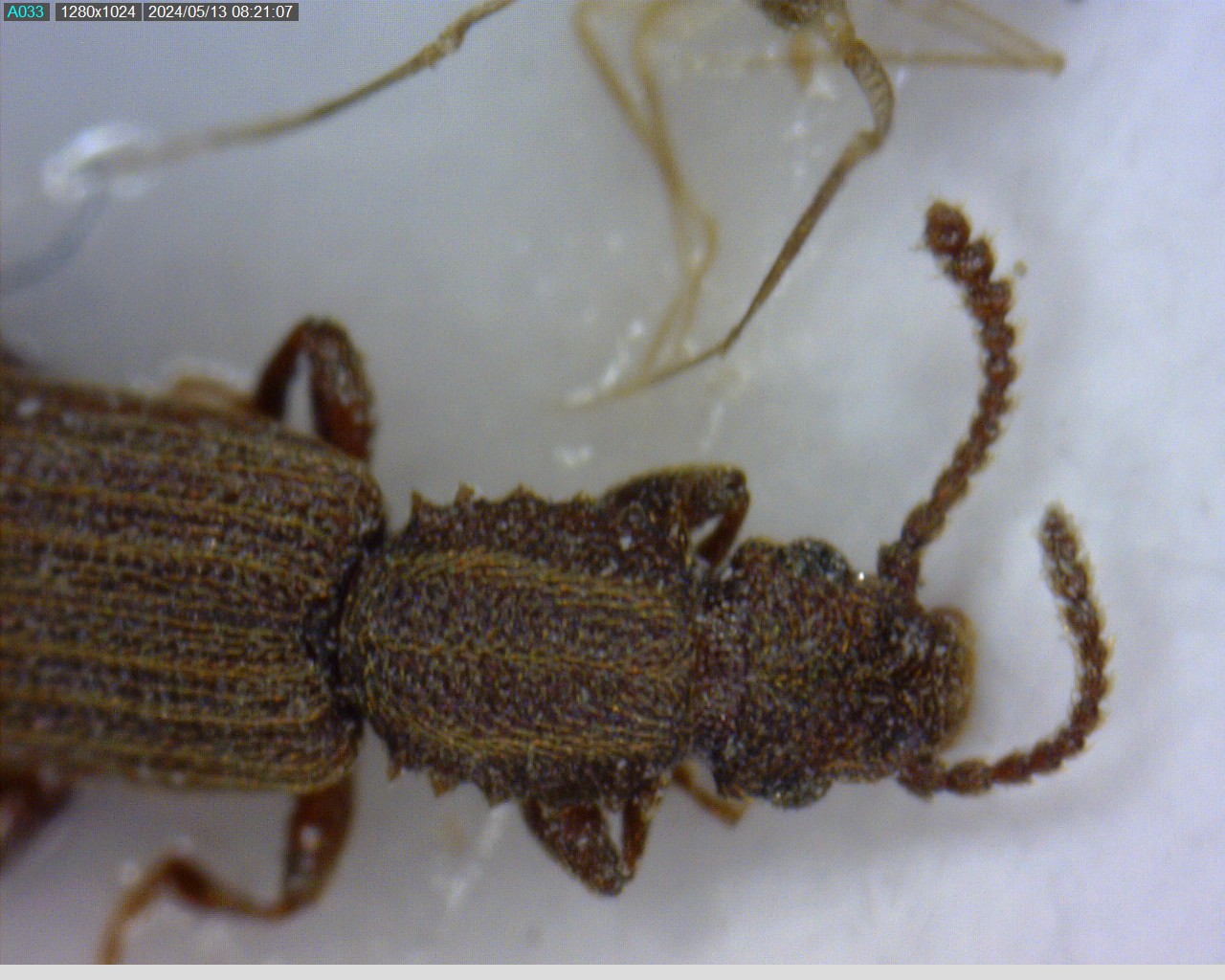
Under magnification our insect doesn’t look like either of these. A very useful tool for identifying unknown insects is the image lookup function in Google images.

With the image loaded into Google, we were pretty quickly able to find very close visual matches that suggest that our beetle is a Saw Tooth Grain Beetle (link, link). This beetle is a common kitchen pest frequently found in oatmeal and grain. There is a possibility that this insect is a random encounter, however they are known to consume tobacco, which we have housed with our collection. We have susceptible items within the collection, but they aren’t housed anywhere near this trap location. This is one to keep our eyes on, so we’ll be monitoring this area for future encounters.
 The Peabody
One Reply to “”